In the spring of 1689, the poet Matsuo Bashō walked north from Edo to see places he knew only from poems. Japanese has a word for them, utamakura: places written about so often that a single name could carry a whole verse. He knew them from poems. Most couples planning a wedding in Japan without visiting first know it the same way: by its names, and by other people’s photographs of them.
Some places were as the poems promised. Others had changed. He wrote that mountains crumble, rivers shift, roads change and old trees give way to young ones, so that the traces of the past can seldom be trusted. Then, at Taga, he found an ancient stone monument still standing after a thousand years, and wept for joy. A place known from a distance is a place known as it was. Planning from the other side of the world needs someone who knows what to look for, and sees the place as it is now.
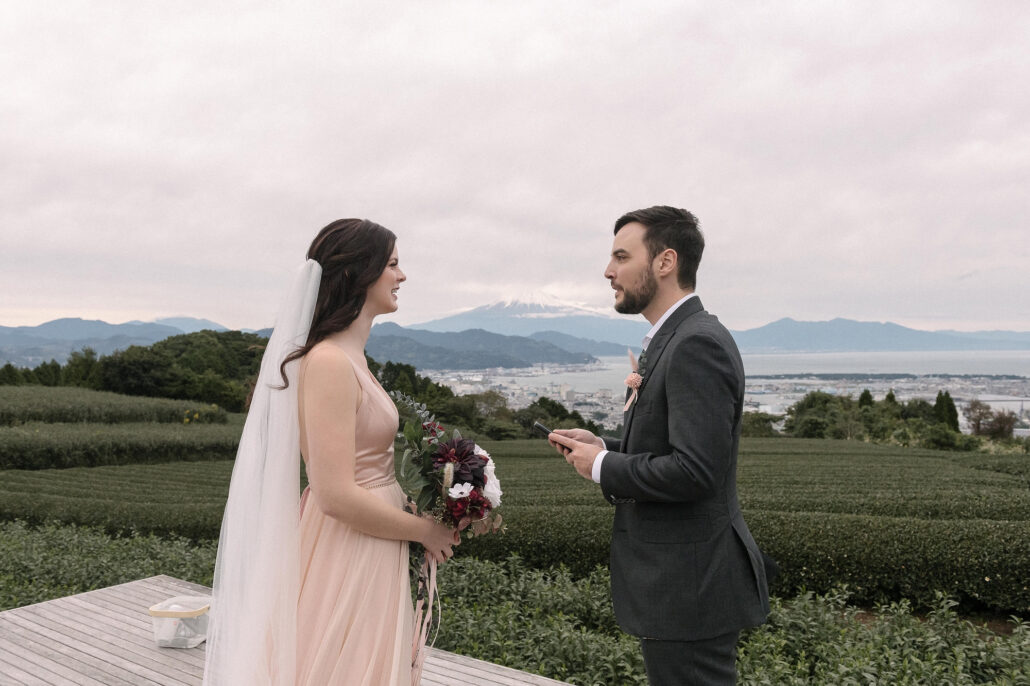
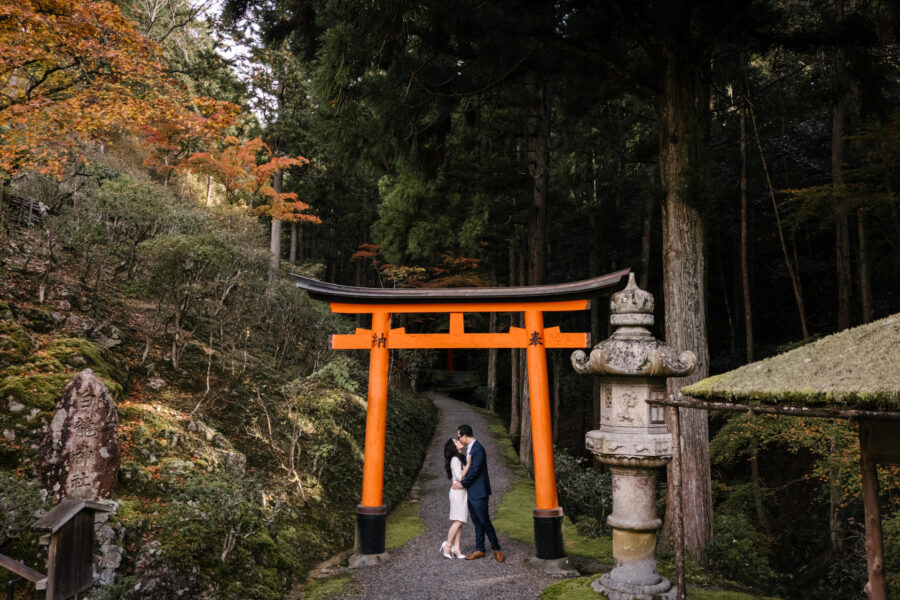
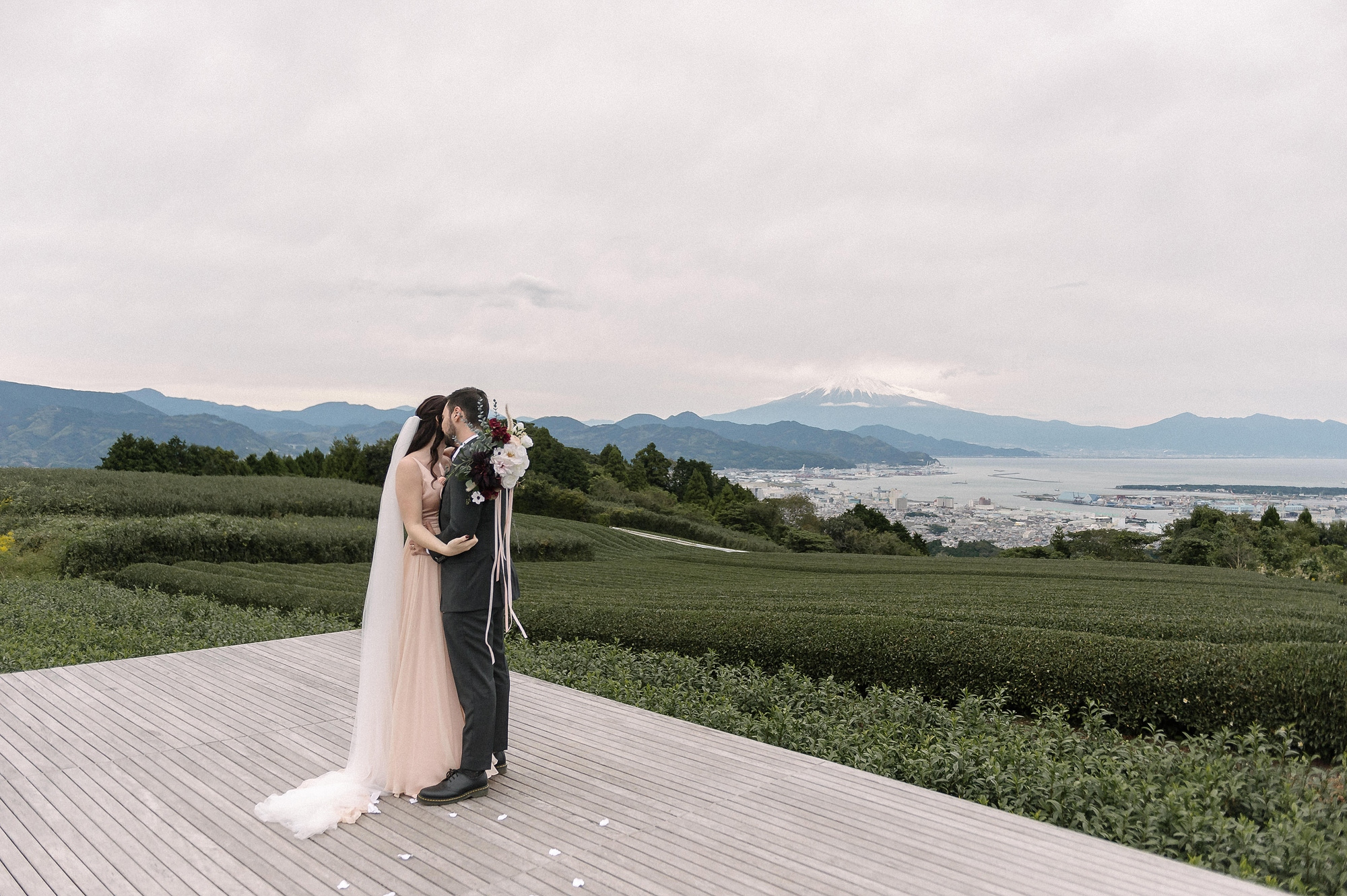
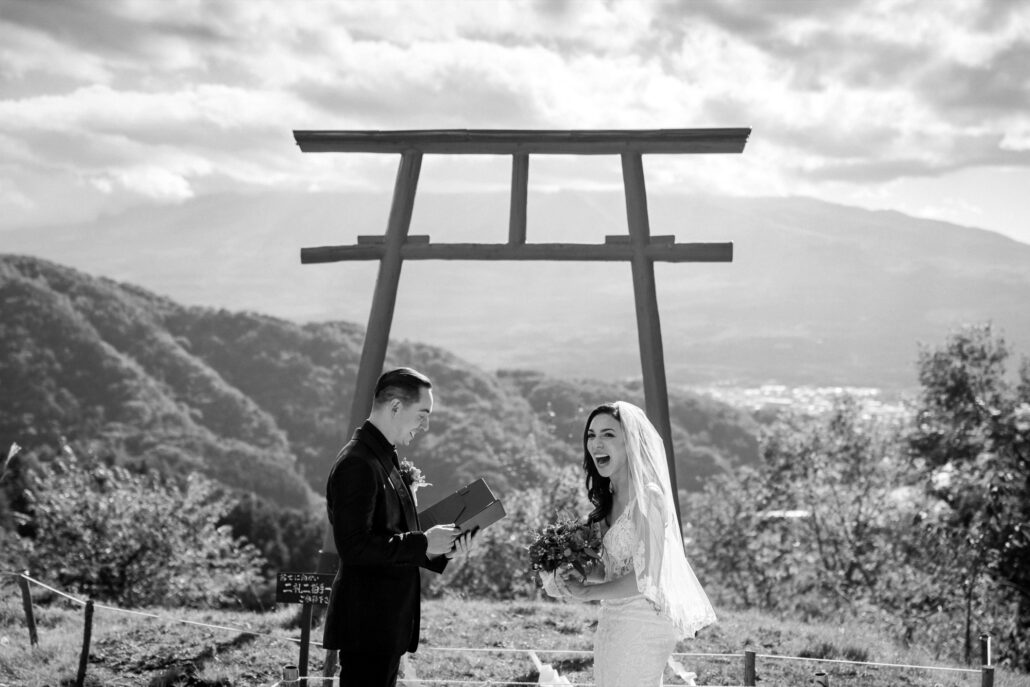
For two and a half years, nobody could come and look. From the spring of 2020 until October 2022, Japan was closed to most tourists. Couples kept writing to us anyway. One began planning from San Diego before he’d even proposed, and married beneath a red gate above Lake Kawaguchi three weeks after the borders opened. Another couple held two dates, lost their first venue to a typhoon, and married in the tea fields of Nihondaira two weeks after reopening. A couple who first wrote to us in November 2019 waited three and a half years and finally eloped in Shibuya. None of them saw where they’d marry until they arrived.
They weren’t unusual for long. In December 2025, a couple from Orlando who had talked about Japan since high school eloped in a private garden in north Kyoto the week they first set foot in the country. Most of our couples still plan this way, borders open or not.
Can You Plan a Wedding in Japan Without Visiting?
Yes, and for most of our couples it’s simply how it’s done. You don’t choose from a catalogue. You choose from a short list of places we already know will suit your season, your guests and the day you’ve described, and the reasons come with it. The work that needs a person standing somewhere in Japan is done by the planners who are already here. You arrive for the part that was always yours.
What are you most afraid you’d miss by not seeing it first? Tell us early, and the walk-through starts there.
What a Venue Tour Can’t Tell You
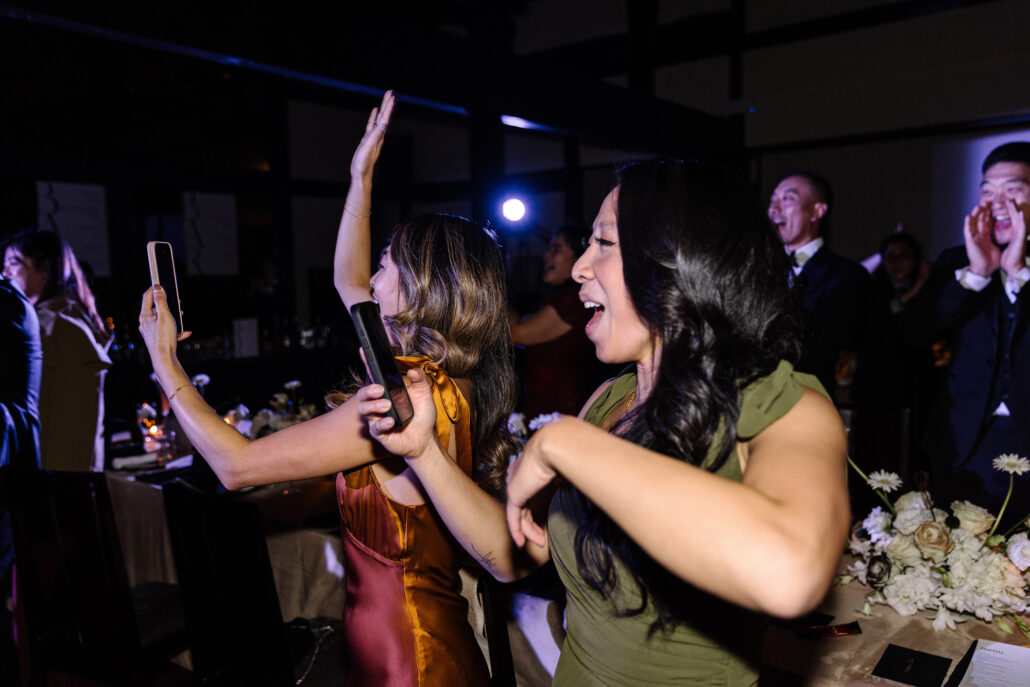
A venue tour is useful. It’s also one hour, on one day, in one season, usually in the middle of an afternoon with nobody else in the building. Venues are like houses for sale: they always look their best when someone is showing you round. A tour shows you the room. It can’t show you the room full.
A tour shows you the room. It can’t show you the room full.
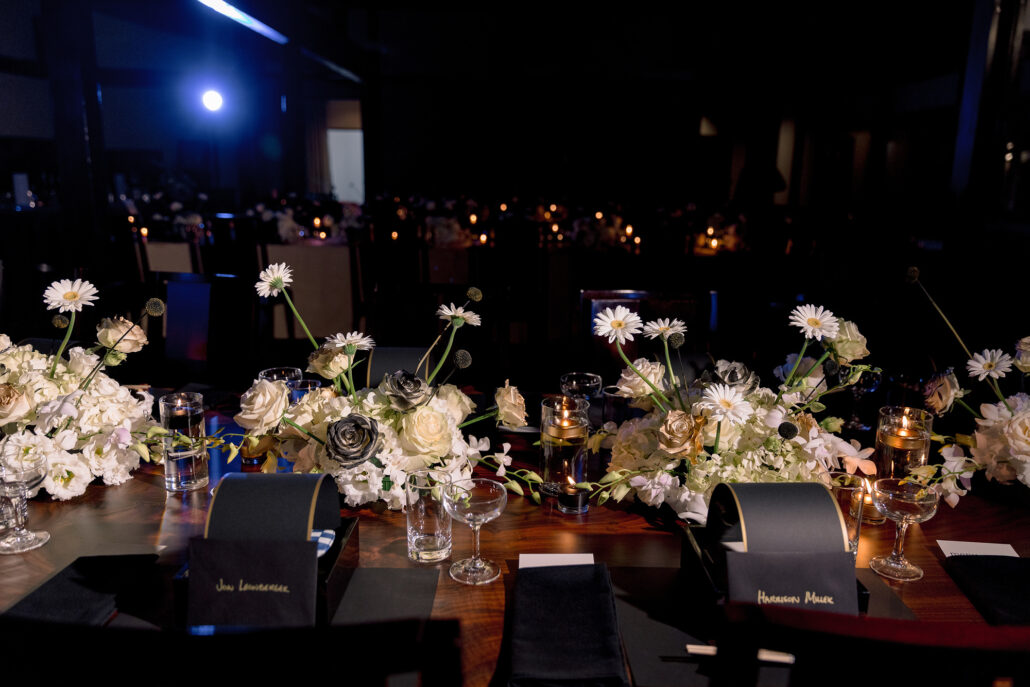
The things that decide how a wedding feels are rarely visible on a tour. Where the light falls at the hour you’d actually marry. Whether you can hear the road from the garden. How long the walk is from the car in formal shoes, and whether it involves stone steps. What happens to the ceremony if it rains, and whether the rain version is as good as the dry one. Whether the kitchen can safely feed the guest with a serious allergy. Whether the music has a curfew.
Those answers come from decades of experience in weddings, in heat and snow and the occasional typhoon: knowing what to look for, and what a place will be like when it’s full. That’s the knowledge couples are really after when they think they need to visit.
Virtual Venue Tours From the Other Side of the World
We travel all over Japan looking for venues for our couples. When we recommend one, it’s one we know from the inside. And if it’s somewhere new we’re exploring for our couples, we walk it and see it with their eyes, and with the eyes of experience, to know how it will feel when it’s full. We can walk you through it on a video call, but the walk-through matters less than what we can tell you while we’re doing it: how the place feels at the time of day you’d marry, where your guests will stand, which corner the photographs always come back to, and what it’s like on a grey day.
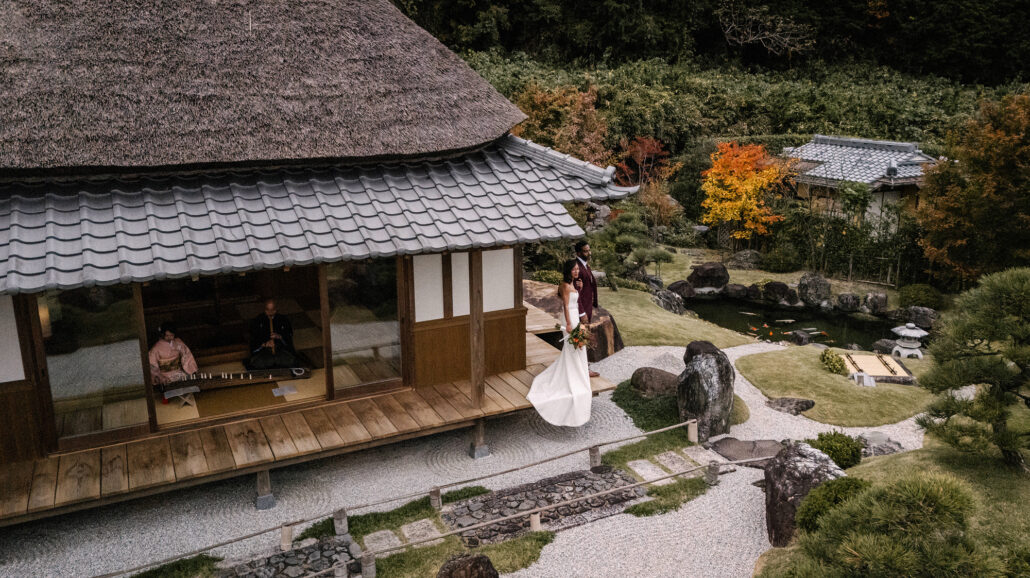
Where we’ve held weddings there before, we can show you those too: whole days, in the weather they were given, with families moving through the rooms. In some ways that’s better than standing in the empty space, because you see the place doing the job you’re hiring it for. Our guide to choosing a wedding venue in Japan goes through the questions we’d ask of any of them.
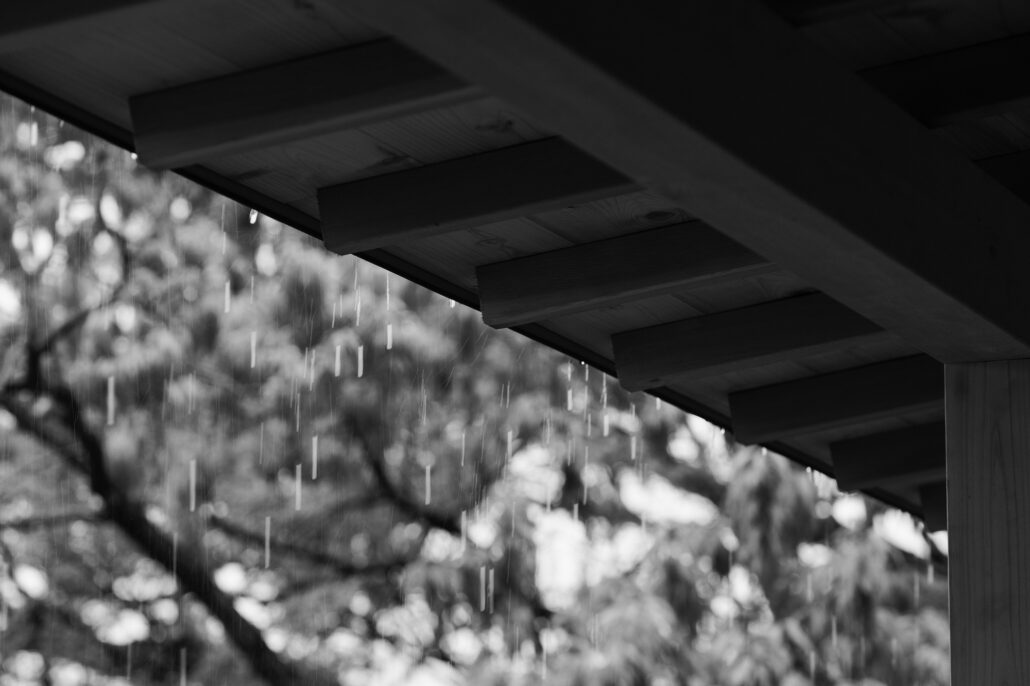
And when a place isn’t right for you, we’ll say so plainly, however beautiful it is. That’s worth more than any tour.
A place known from a distance is a place known as it was.
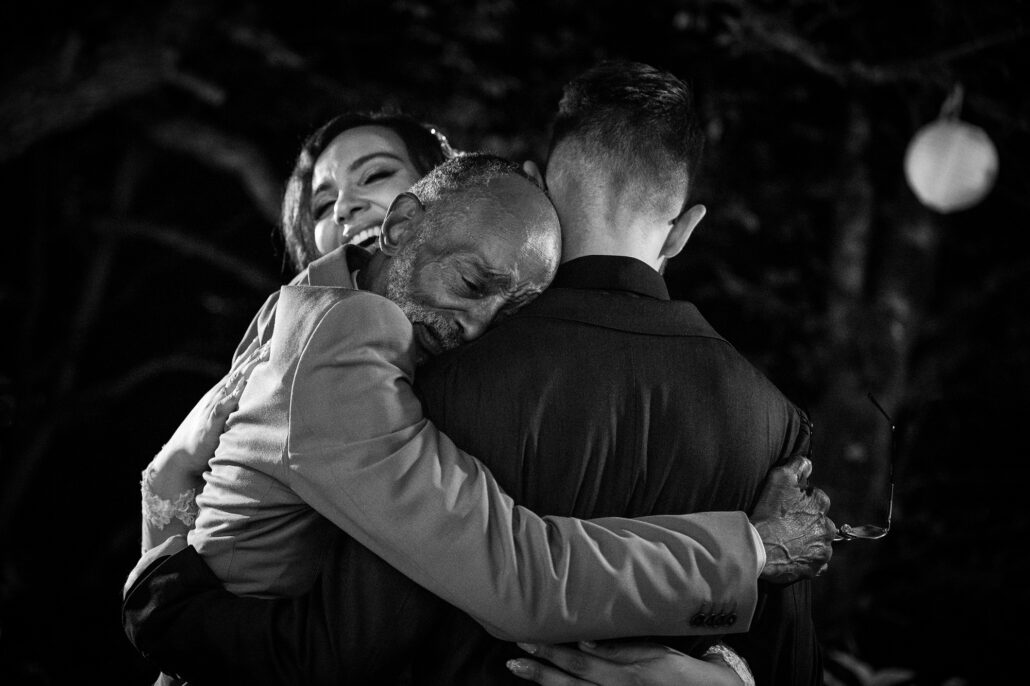
There’s trust in all of this. When a couple can’t see a place or feel it for themselves, they place that trust in their planner: in our eyes, our judgment, and our honesty about what we find. It’s a lot to ask of people you’ve met only on a screen.
Trust like that has to be earned, and this generation of couples is right to make us earn it. They’ve grown up on feeds that show everything from its best angle, reviews that may have been paid for, and venue photographs taken on the one perfect evening of the year. They don’t trust what they’re shown. They trust what holds up under a harder question. So we answer the harder question: what a place does well and what it doesn’t, what we know and what we’ll find out, what something will cost before it becomes a surprise. Trust builds in small things. A reply that answers what was asked. A detail remembered from the first call. A no that turns out to be right. By the time a couple lands in Japan, they may never have seen the place. They’ve seen how we work.
Planning From Abroad: Who Does What
| Part of the planning | What you do, from home | What we do, in Japan |
|---|---|---|
| Choosing the place | Decide from a short list and video walk-throughs | Visit, ask the questions, and confirm what the place allows |
| Contracts | Go through them with us, in English | Read the Japanese, and find what hides in it |
| Permissions | Nothing, beyond your yes | Hold the relationships, and go to the meetings |
| Suppliers | Meet them on calls and approve | Choose, vet, brief and book them |
| The legal marriage | Register at home, as most couples do | Plan the dates around it |
| Flights and rooms | Book them | Tell you where, and when |
What Needs Someone on the Ground in Japan
Some of the work genuinely can’t be done from another country, and that’s the part we’re for.
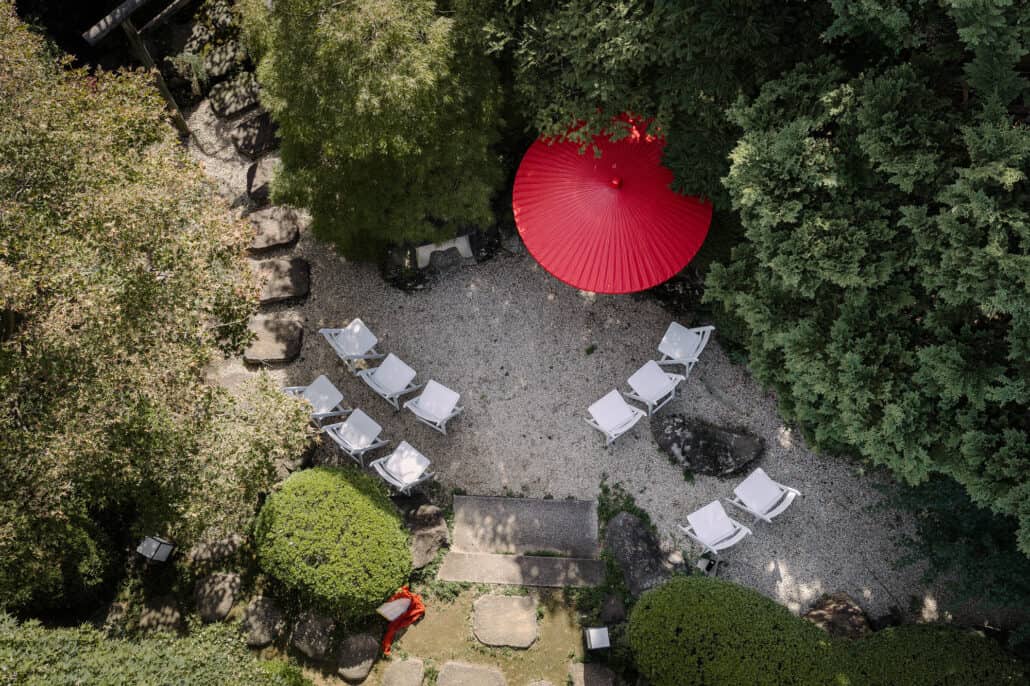
Contracts here are usually in Japanese, and the details that matter tend to hide in them: whether your photographer, florist or musicians are allowed through the door at all (one of the things we’d always check before booking), how long you actually have the room, whether another wedding is happening the same day. Permissions are earned in person: a shrine that agreed to a ceremony only after meetings and return visits, a private garden in north Kyoto that opens because of who’s asking. And when something needs seeing in person, a path after a storm or a room a venue has just changed, we go and look.
The time difference helps more than you’d think. Much of the work happens while you’re asleep, and the answers are waiting when you wake up.
We do a great deal of email. It’s not glamorous. It’s most of the job.
One Less Trip: Marrying Legally at Home
Most of our couples marry legally at home and give Japan the celebration. A legal marriage here is possible, but it takes paperwork before you travel, days of the trip itself and translation afterwards. Doing the legal part at home means none of your time in Japan is spent in an office, and all of it goes to the wedding and the days around it. How getting legally married in Japan works, and the order most couples choose, is in its own guide.
When a Visit to Japan Is Worth It
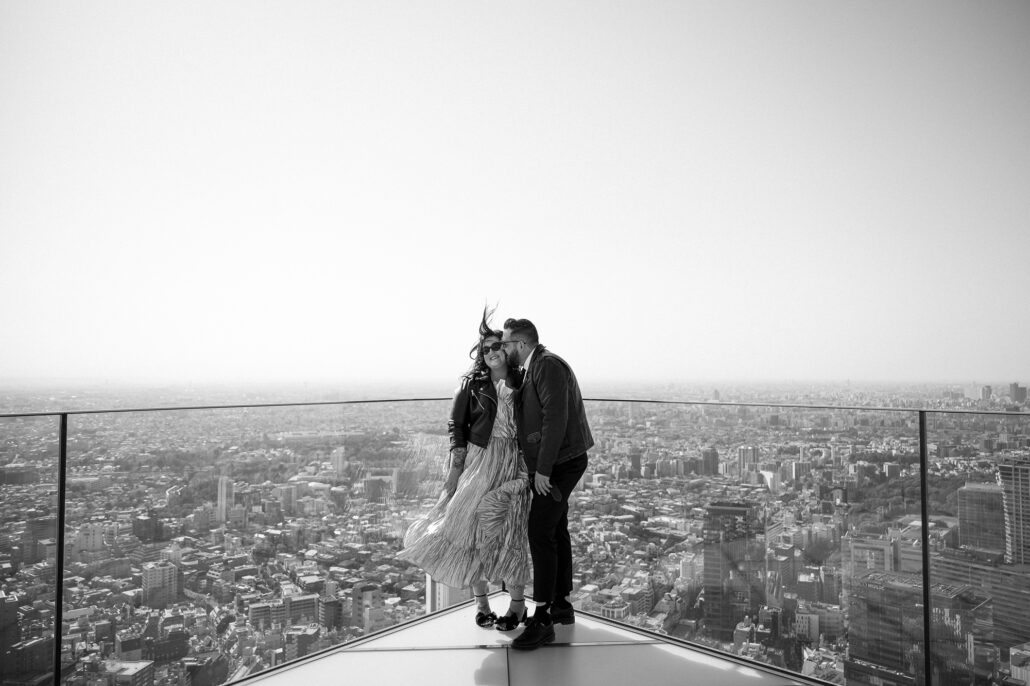
Once you’ve booked and your planning has begun, we’ll arrange visits to the places on your shortlist. One couple flew back to look at venues with us and found the one they’d been hoping for at Asaba Ryokan in Shuzenji. A trip can also be a good moment for engagement photos in Tokyo, or simply for parents who’ll sleep better once they’ve seen it.
But a visit isn’t a test you have to pass before you’re allowed to book. Plenty of couples see their venue for the first time the week of the wedding. Our planning timeline shows what each stage of the year is for, with or without a trip.
Planning a Wedding in Japan Without Visiting: Quick Answers
Can you plan a wedding in Japan without visiting first?
Yes, and most of our couples do. You choose the place, the suppliers and the shape of the day on calls and in writing, from a short list we’ve already matched to your season and guests, and from video walk-throughs. The parts that need someone in Japan, the contracts in Japanese, the permissions and the second look after a storm, are done by your planner on the ground.
Is it risky to book a wedding venue in Japan without seeing it?
The risk isn’t in the seeing; it’s in the places that look right and work wrong: a garden you can hear the road from, a room that can’t take your numbers, a contract that keeps your photographer out. Those are what we screen for before a venue reaches your short list, with decades of weddings behind us. And if a place isn’t right for you, we’ll tell you plainly, however beautiful it is.
Can we do a virtual venue tour of a wedding venue in Japan?
Yes. We walk you through it on a video call and, where we’ve held weddings there, show you those days in their own season and weather, so you can see it full. We’ll tell you where the light falls at your time of day, where your guests will stand, what the rain plan looks like and what the venue’s contract allows, and we’ll say so if it isn’t right for you.
Do we need to visit Japan early for a kimono fitting or a hair and makeup trial?
No. If you’re wearing kimono, you send your measurements before you travel, and the fitting happens a few days before the wedding, once you’ve arrived. Hair and makeup works the same way: your inspiration comes to us ahead of time, and we arrange a trial a few days out. Neither needs a trip of its own.
How far ahead should we plan a wedding in Japan from abroad?
Couples can book us up to eighteen months ahead, and planning starts about a year out. Spring and autumn fill first, and the best guest rooms go early, so the earlier the date is fixed, the more of Japan is still open. Our planning timeline shows what happens in each part of that year, with or without a trip.
Does planning a wedding in Japan from overseas cost more?
No. Most of our couples plan from home, so that’s how the planning is built, and a scouting trip is a choice rather than a requirement. What moves the cost is the place, the number of guests and what has to be brought in. Our weddings with guests average about ¥10M to ¥16M (about US$63K to US$100K), and elopements are most often ¥1M to ¥3M (about US$6.4K to US$19K).
You Don’t Need to See It First
Bashō had to walk north to learn which of the poems still held. Couples marrying in Japan don’t. That walk is ours to make, every season.
For two and a half years, couples planned weddings in a country they couldn’t enter. They married in places they had only ever seen on a screen, and their days are some of our favourite stories in this journal.
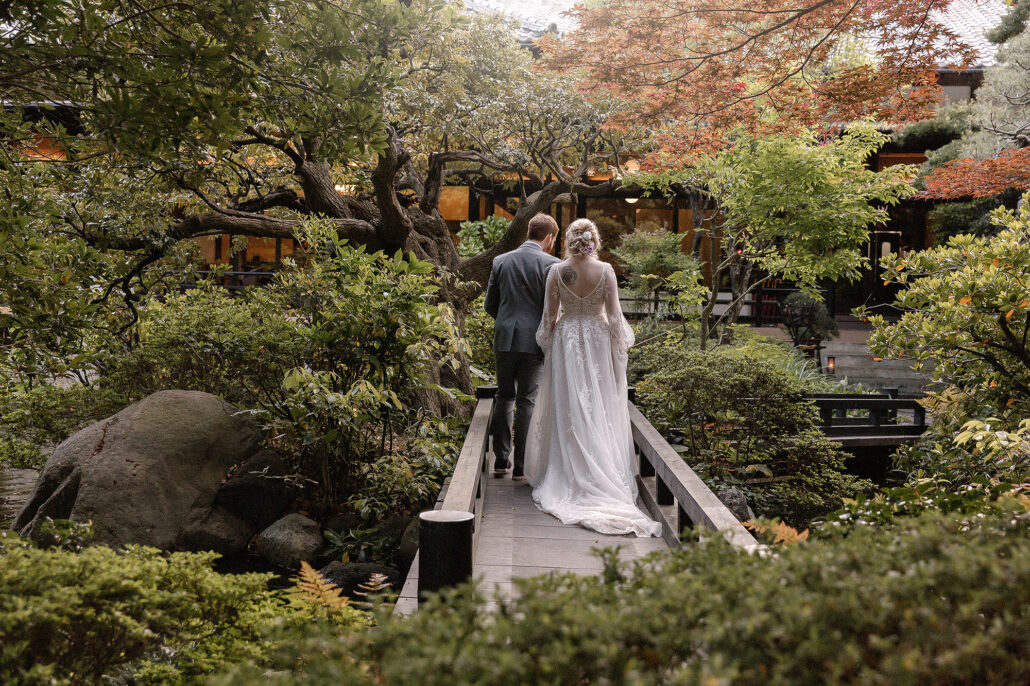
You don’t need to see the place first. You need people who already have.
Written in October 2026. Sources: Matsuo Bashō, Oku no Hosomichi (the 1689 journey, published 1702); Japan’s reopening to individual tourists on 11 October 2022.