The first email was about a cello.
There had been no proposal yet. Japan’s borders were closed, and the wedding existed only as something he hoped might happen the following spring. Almost nothing about the plan could be treated as certain. But one detail was already there: if they could marry in Japan, he wrote, they might like a cellist.
A year later, six members of their family stood with them beneath the red gate above Lake Kawaguchi, for the first Tenku no Torii wedding the shrine had ever allowed. Very likely the last, too.
Almost everything about the route there changed. The cello didn’t.

Before Anything Was Certain
His first message came from San Diego in November 2021. He’d been to Japan several times, and now he wanted to bring his partner for something considerably more important. “I think that Japan is a really magical place,” he wrote, “and that, if we can make this happen, she will treasure the experience of having such an important event unfold there.”
At that point, he hoped the whole wedding might be a surprise. There’s an obvious romance to that idea. There’s also a practical problem. A wedding belongs to two people, and one of them generally has opinions about what she’d like to wear to it.
By the following spring, she’d begun arriving at the idea herself. He was delighted: “She also started to come to the idea on her own, which was such a great sign that this is exactly what we both want!”
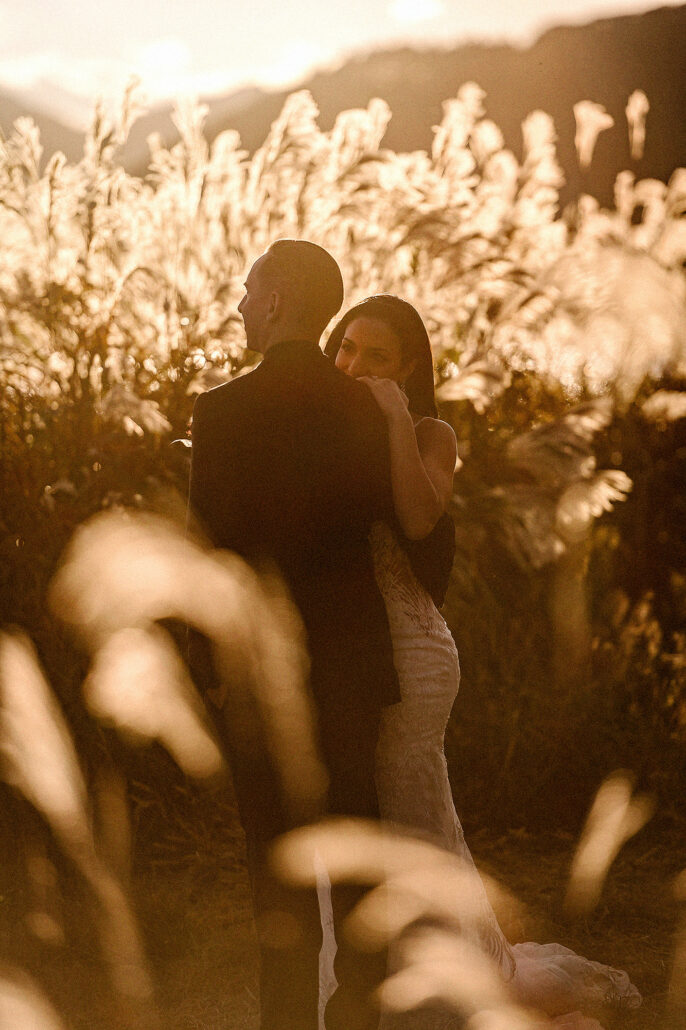
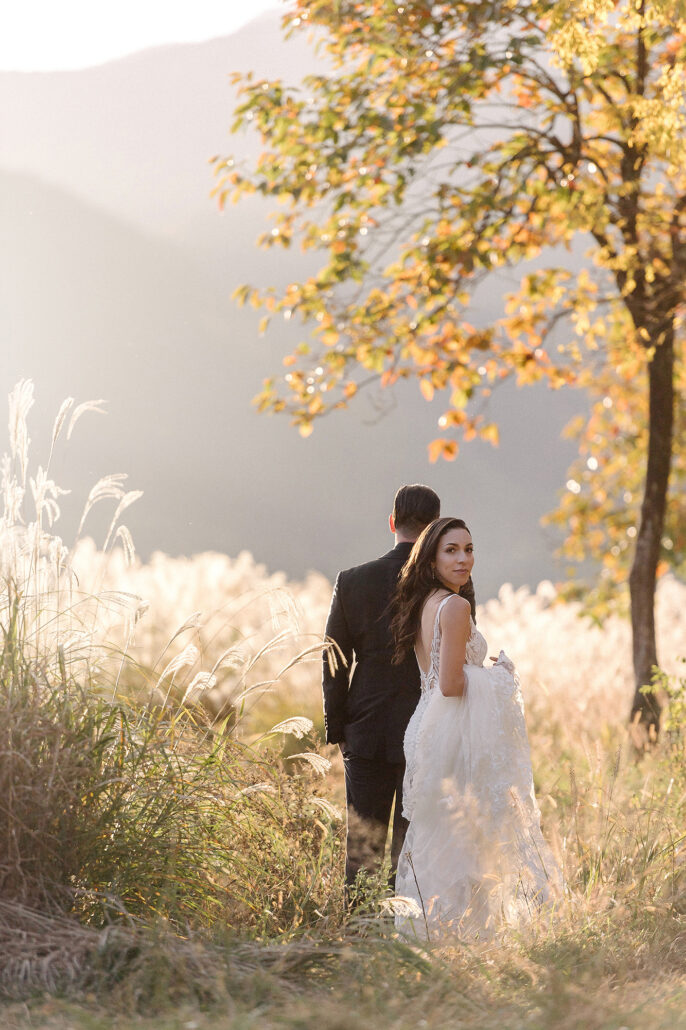
That was the moment the surprise became their plan. She chose her dress. She told us what she imagined: somewhere outside Tokyo, quiet and surrounded by nature. And, if possible, beneath a big tree.
Meanwhile the dates kept moving. Spring became September, and September became November, while Japan stayed closed to independent travellers. In August, he proposed. There was a cellist there too.
On 11 October 2022, Japan finally reopened to independent travellers. Their wedding was three weeks away.


The Gate Above Kawaguchiko
The big tree lasted until she saw Tenku no Torii.
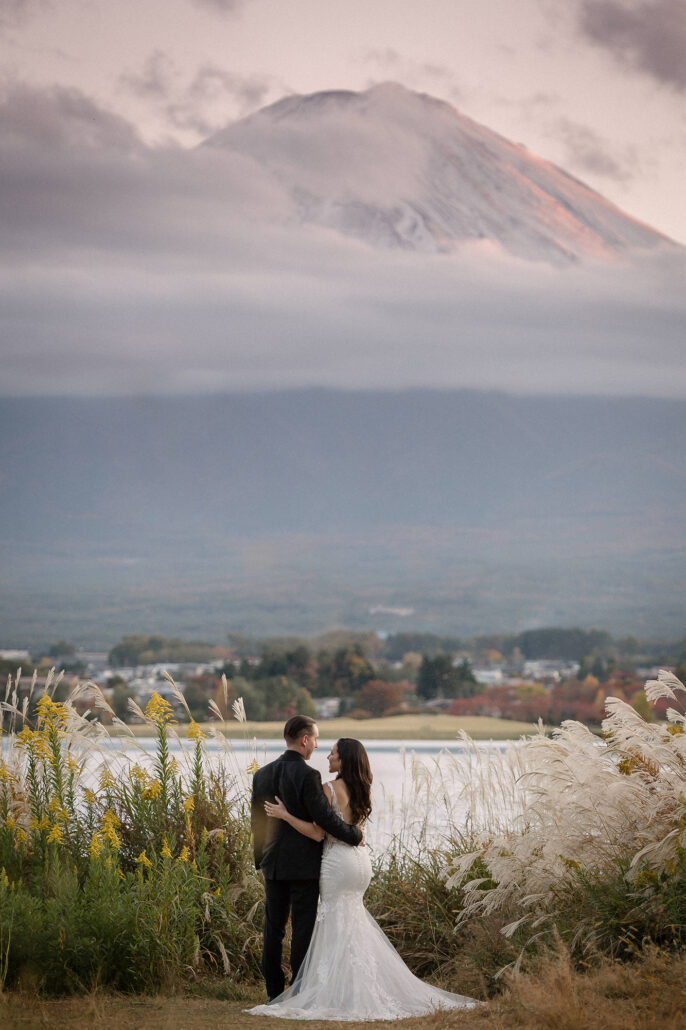
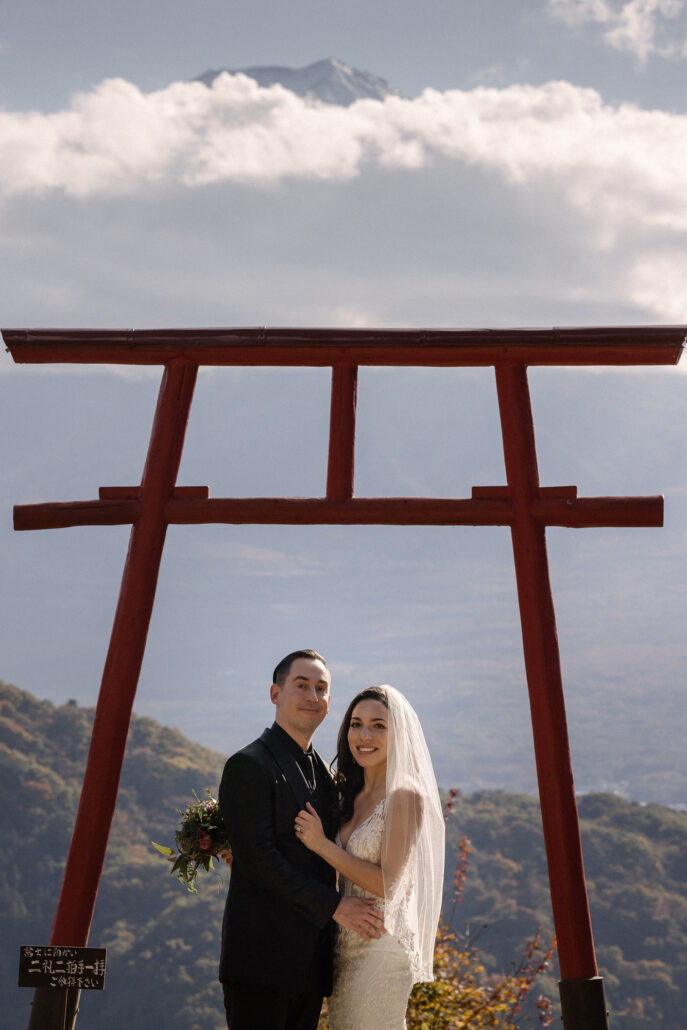
High on the hillside above Lake Kawaguchi, a red torii stands facing Mt Fuji. It belongs to Kawaguchi Asama Shrine, but there’s no shrine building behind it. The gate marks a place from which Fuji itself is worshipped from a distance. The torii frames the mountain, but the mountain is the reason it’s there.
She saw a photograph and asked whether they could marry beneath it. The answer wasn’t obvious. Tenku no Torii wasn’t a wedding venue, and nobody had held a wedding there before.
So we asked. Then we asked again. There were meetings with the shrine and return visits while we worked through what the ceremony would actually involve: six family members, music, their own vows, and an understanding that the place itself would stay the priority. Eventually, the shrine said yes.
The First Tenku no Torii Wedding
The permission came in a very particular moment. Japan had been open again for only three weeks, and the hillside above Kawaguchiko was still unusually quiet.
That quiet won’t last. As travellers return, the gate will draw visitors from first light, and the shrine won’t close it to the public, nor should it. We don’t expect the permission to be repeated. These two found a window that existed for a remarkably short time, and on an afternoon in early November they stepped through it.
If the gate is on your list, come and see it, early in the morning. We’ll find you somewhere just as quiet for your vows.

The forecast had promised rain for much of the week. The morning arrived cold and clear, and from Fufu Kawaguchiko, where they got ready above the lake, Fuji was completely visible. By the time we reached the torii that afternoon, cloud had gathered across the mountain. Only the summit remained.


Under a gate built for looking towards Fuji, nobody needed the mountain to do any more than that.
The Cello Was There From the Beginning
There were six guests: both sets of parents, her sister and her sister’s partner. Close enough that nobody needed to strain to see a face.
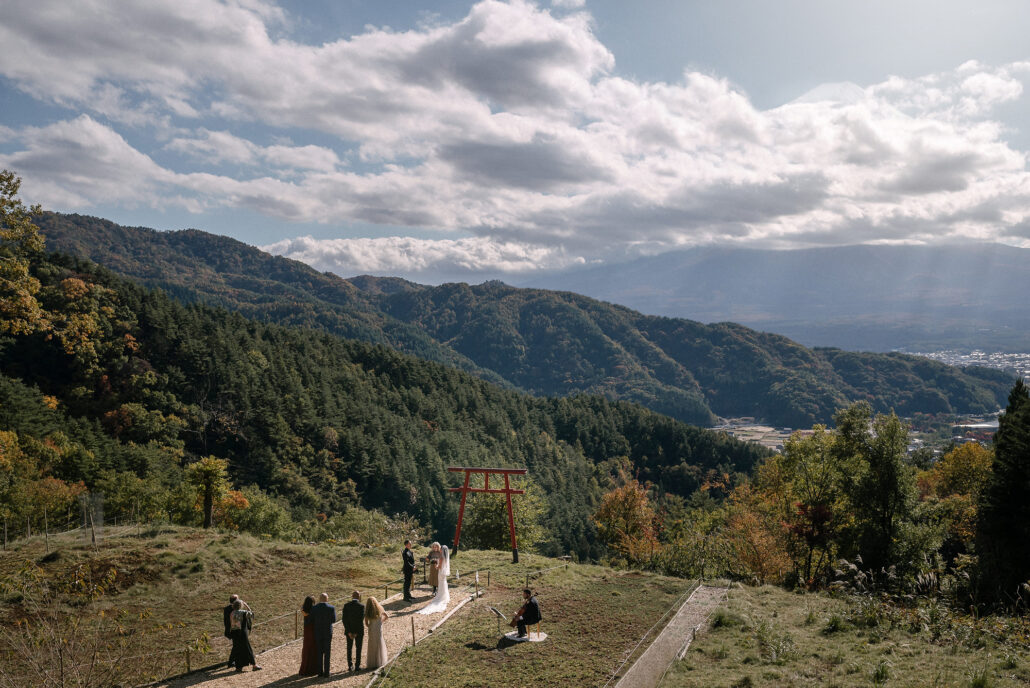
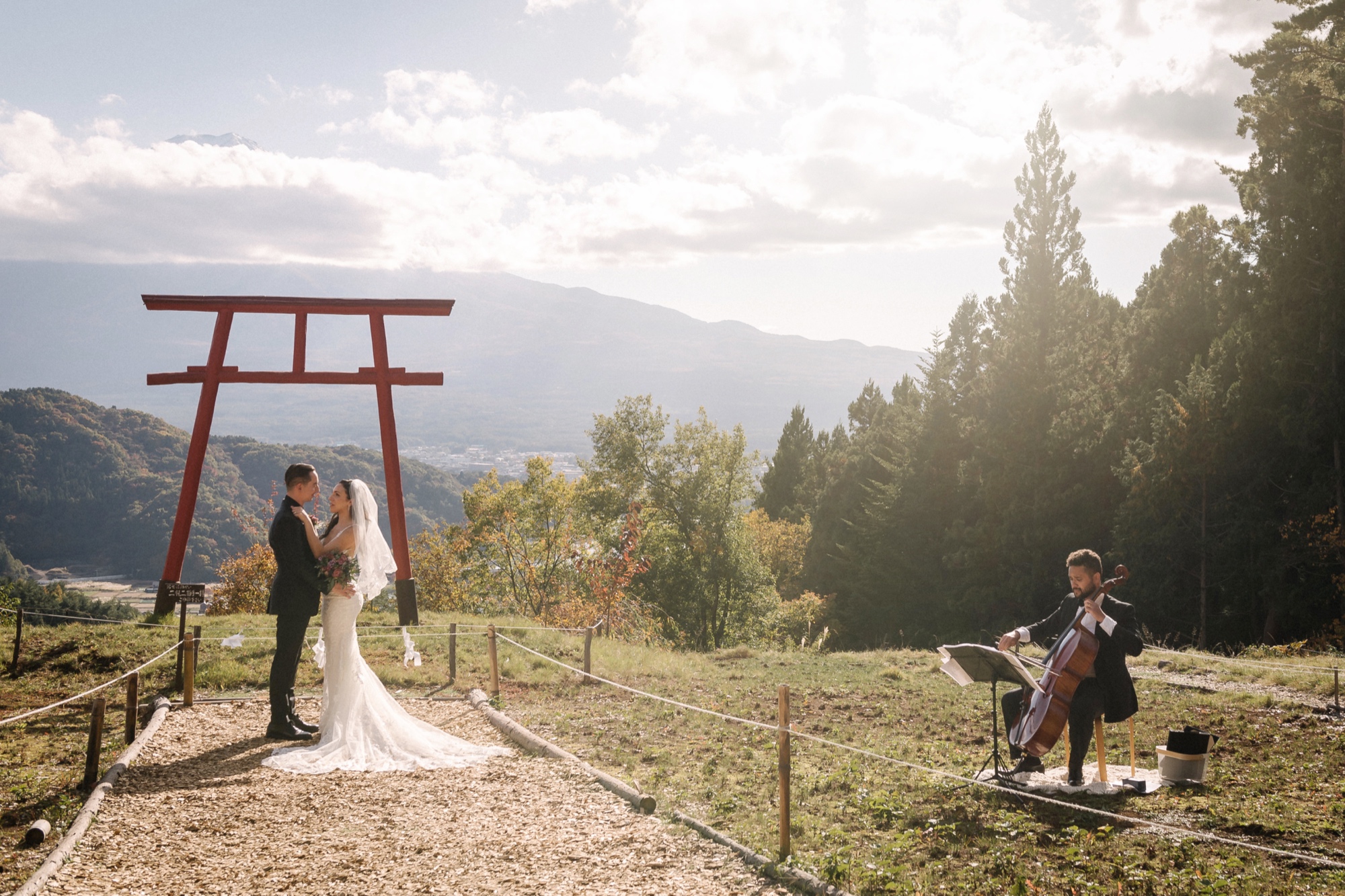
And then there was the cello. The ceremony music drew largely from the proposal, so what had accompanied the question returned for the answer. The guitarist we’d hoped to include wasn’t free, so the cellist recorded the extra parts himself and played live over them beneath the torii. One instrument became several.
Their families arrived to Concerning Hobbits. She walked in to Radiohead’s Let Down. And once they were married, David Bowie’s Life on Mars? carried them back from the gate. That last choice belonged entirely to them. Not everything needs explaining.

The music stopped for the vows. They’d written their own, so for those few minutes there were only their voices, their family, the red gate and the top of Fuji appearing through the cloud behind them.



Six People, All of Them There
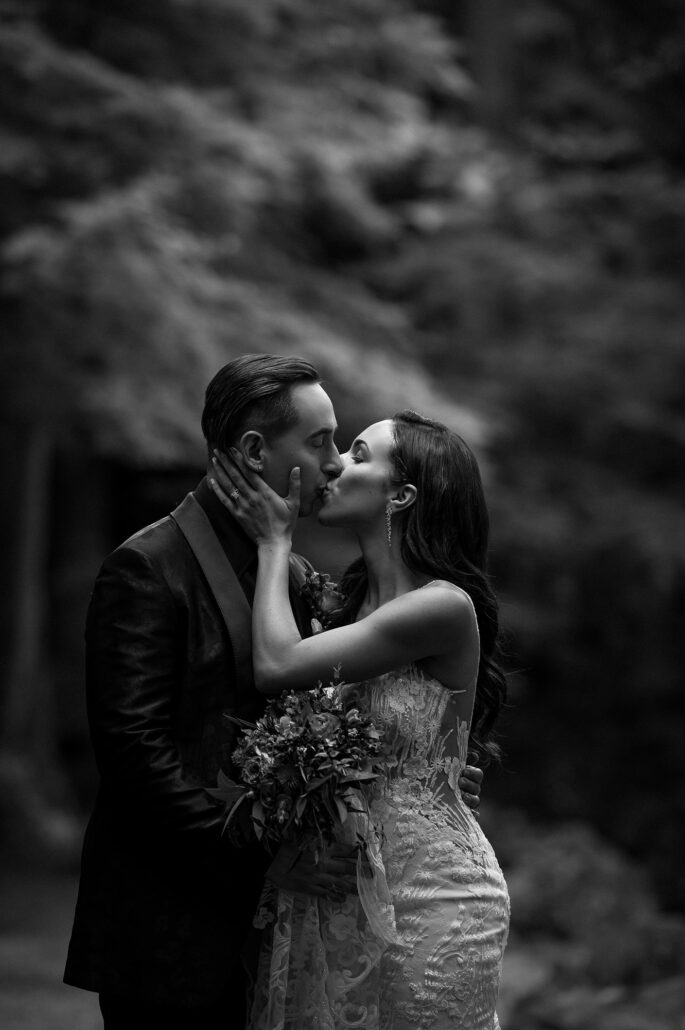
One of the advantages of a wedding this small is that almost nothing happens at a distance. Parents weren’t watching from rows away. Nobody had to wait until dinner for time with the couple.
After the ceremony, the cellist stayed while we photographed the family, moving into Satie’s Gymnopédie and Saint-Saëns’ The Swan. Then there was a toast. That night, both families sat together at one table.


Fufu Kawaguchiko doesn’t host weddings, and its grounds are normally kept for its own guests. For this afternoon, they opened them to us.


The scale of the day made permissions like these possible. Nothing needed to be turned into a venue. The places stayed what they were: a shrine hillside, a hotel above a lake, a gate built to face the mountain. The wedding sat in them lightly.
What Stayed
When that first email arrived, there was no proposal and no date anyone could trust. Japan was closed. Tenku no Torii had never hosted a wedding, and nobody knew whether the shrine would agree to one. Even the weather, right up to the week itself, seemed to have its own ideas.
What he did know, before any of the rest of it, was that he wanted music. A cello at the proposal. A cello beneath the red gate. A cello playing as the two of them walked back towards six people who’d travelled to Japan to stand beside them.
The wedding changed seasons, dates and places before it became real. The important parts survived the move, and the detail he’d put into the very first email was there at the end, under a gate no couple had married beneath before, playing them out.