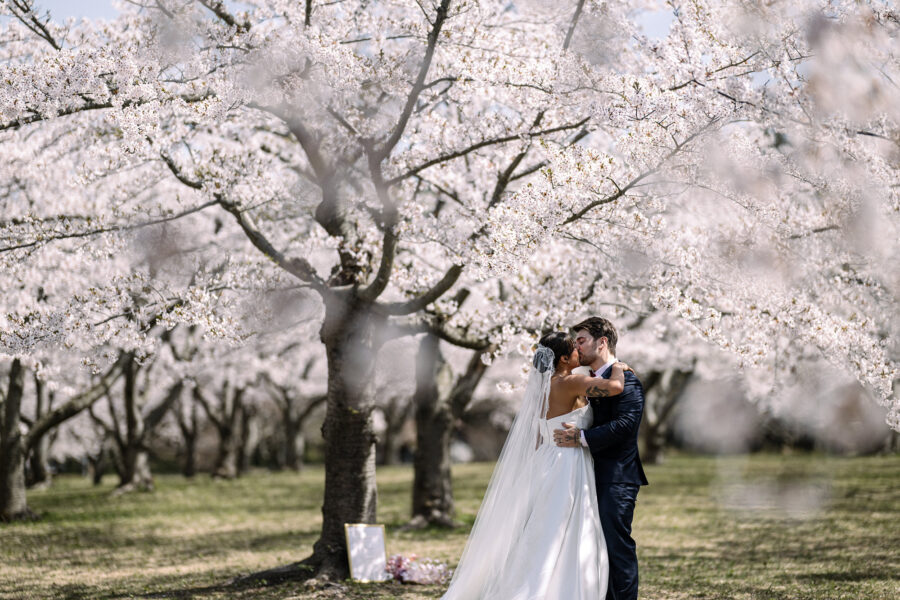
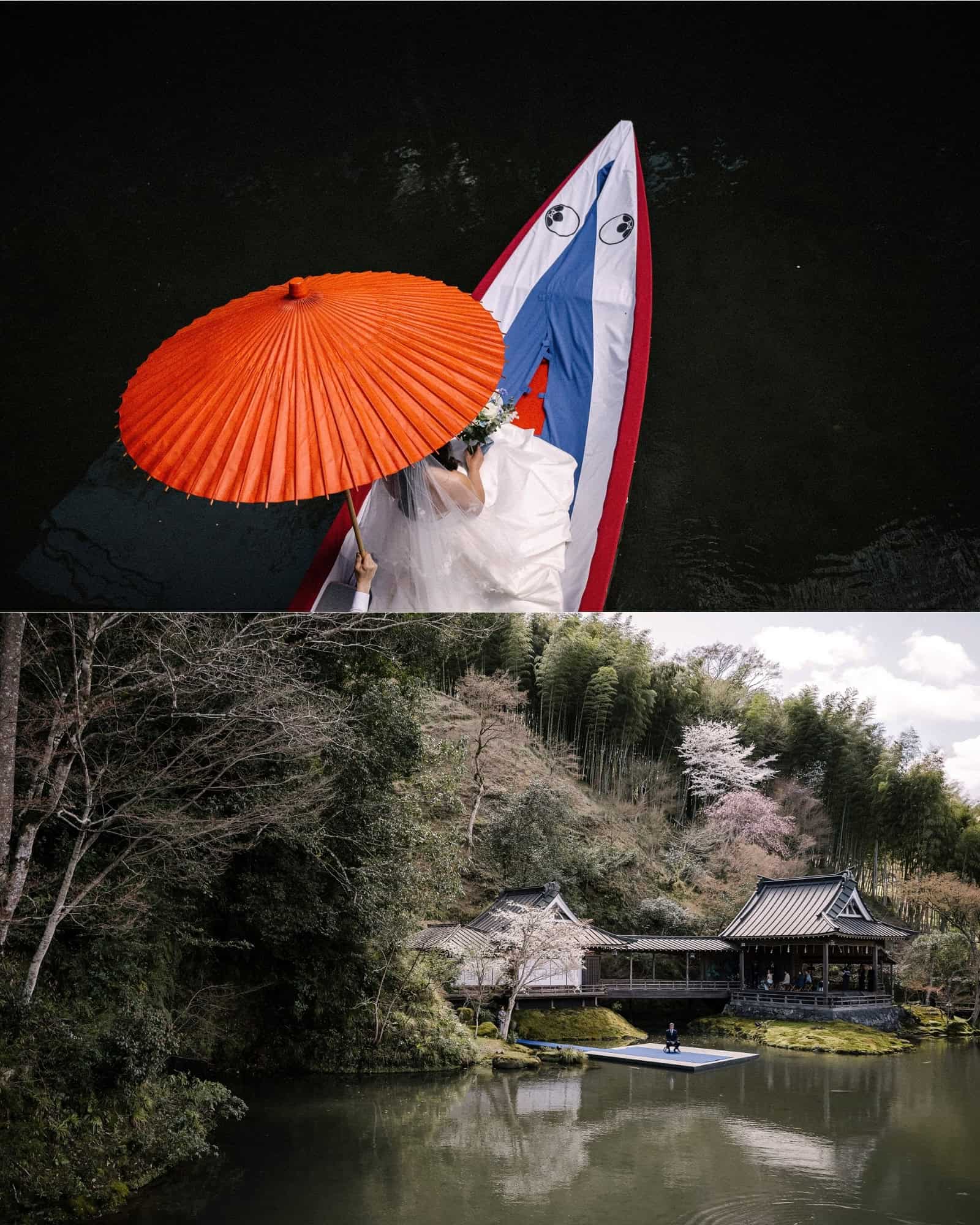
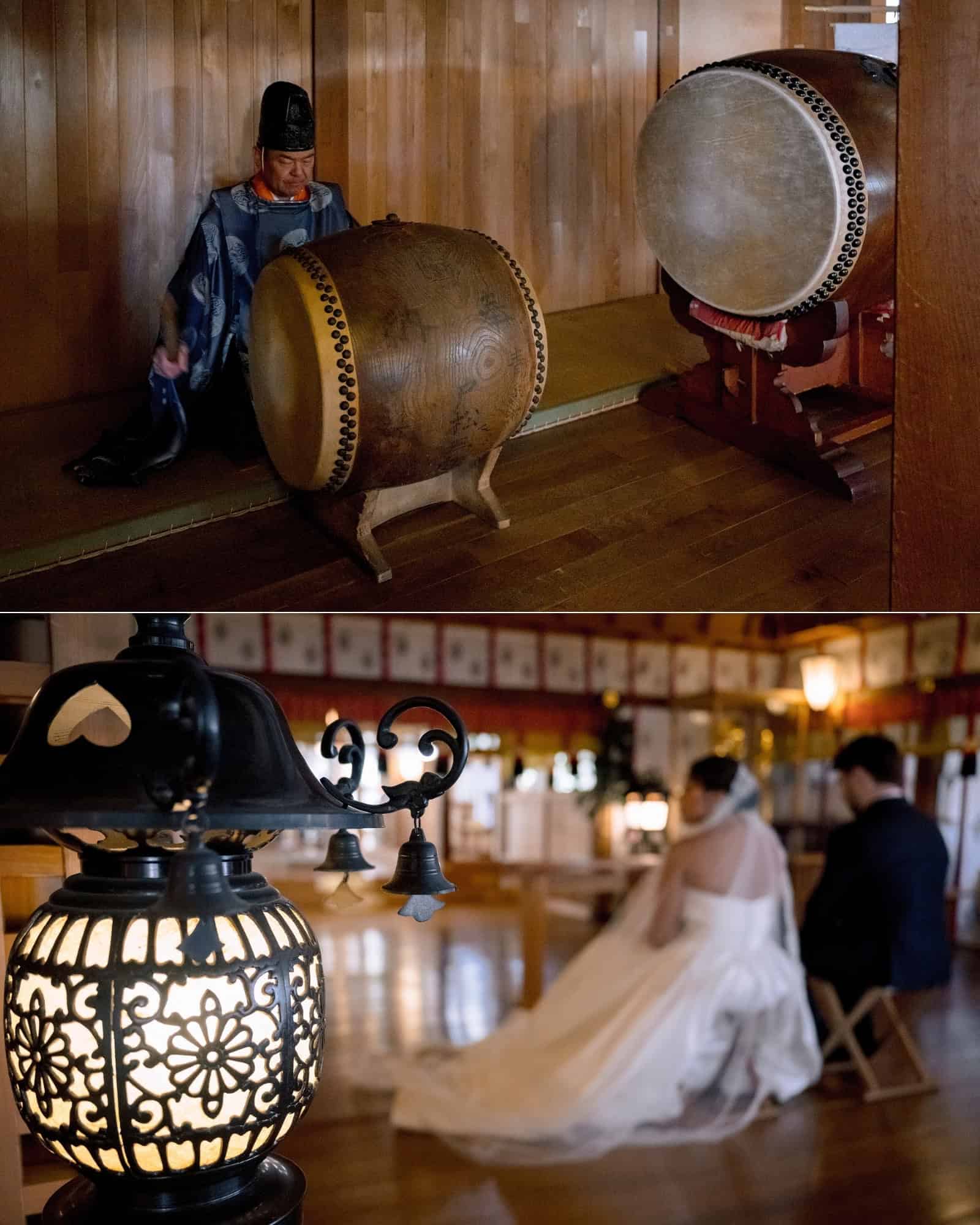
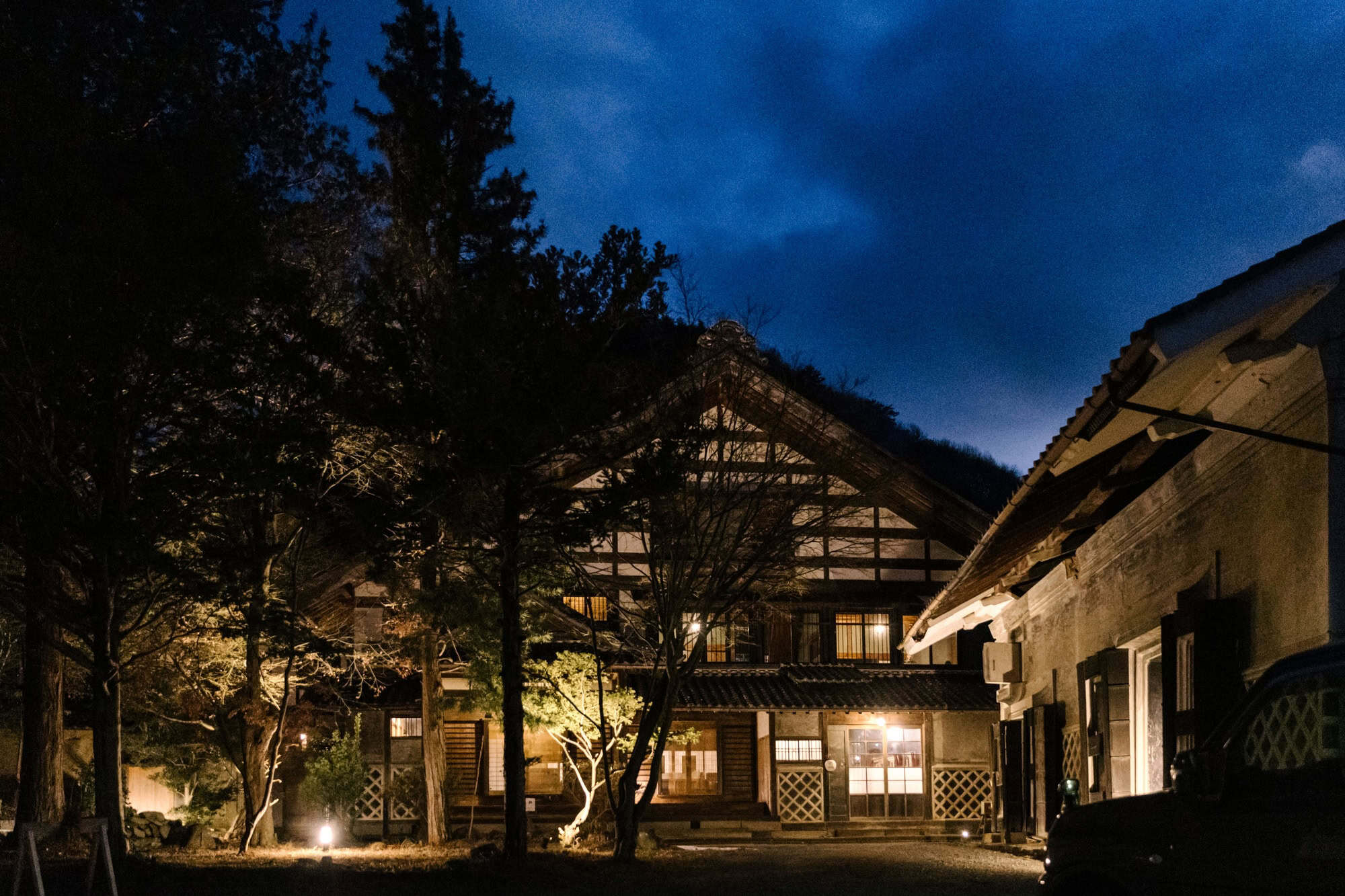
Asaba has been in the same family since 1489. Its Noh stage stands over a pond, bamboo climbs the hill behind it, and in early spring the cherry blossom joins in. Of all the wedding venues in Japan, it’s one we’d go back to any year. It’s also a ryokan, and a ryokan asks you to keep the noise down.
That isn’t a flaw. The quiet is part of why people go. But it shaped the night. When the couple who married there wanted to keep the party going, they moved into a room and closed the doors. The door was doing important work.
So, the short answer first. Choose a venue in Japan for what it will let your day be, not for how it photographs. Five things decide it: whether the place will be yours alone, what it does with rain, how late the night can run, who’s allowed to bring what, and whether everyone you love can reach it, eat well there and, ideally, sleep under its roof.
Each works a little differently here. Below is how Japan does it, and how we bridge the gap as a wedding planner in Japan. Many of our couples choose us before they choose a venue. We think that’s the right order. Before shortlisting venues, start with the things couples wish they knew before planning a wedding in Japan, particularly guest count, outside-vendor rules, season and how you want the night to end.
Will the Place Be Yours?
A Japanese wedding typically happens in a hotel ballroom or as a shrine package, on a set menu and a set format. It’s a polished system, and for the weddings it was built for, it runs very well. A couple crossing the world usually needs something else first: a place that’s theirs.
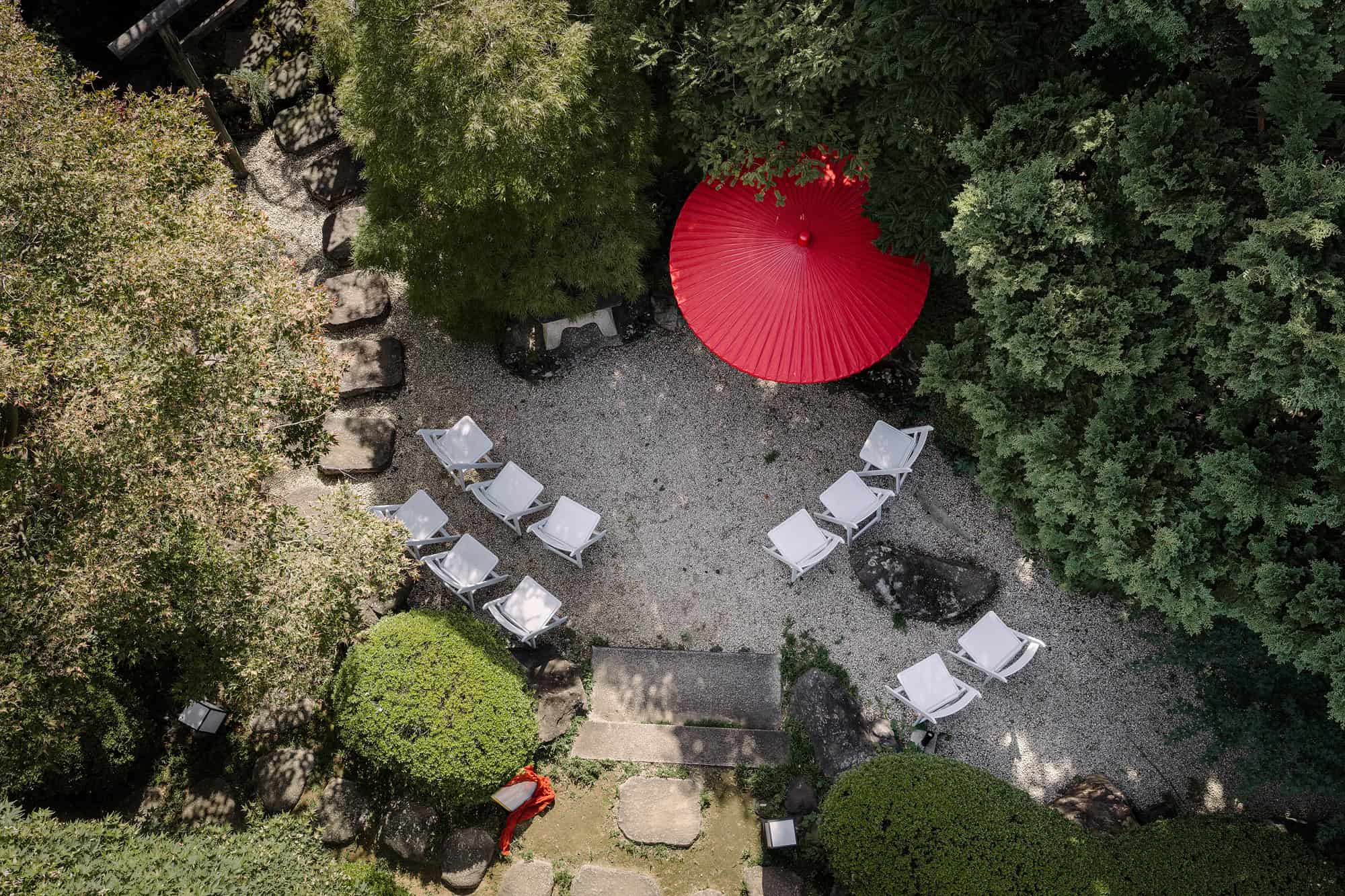
In Nara, the villas we return to at Sasayuri-Ann are each given whole to one party a day. In Kawagoe, Tantoku and its garden hold one wedding at a time, for twenty guests at most. At Jinya, in Tsurumaki Onsen, a buyout means no strangers in the corridors, and two people getting ready in separate rooms can take their time, knowing the only people they’ll meet are their own.
Exclusive use costs more. What it buys is a day without an audience you didn’t invite.
What Happens If It Rains?
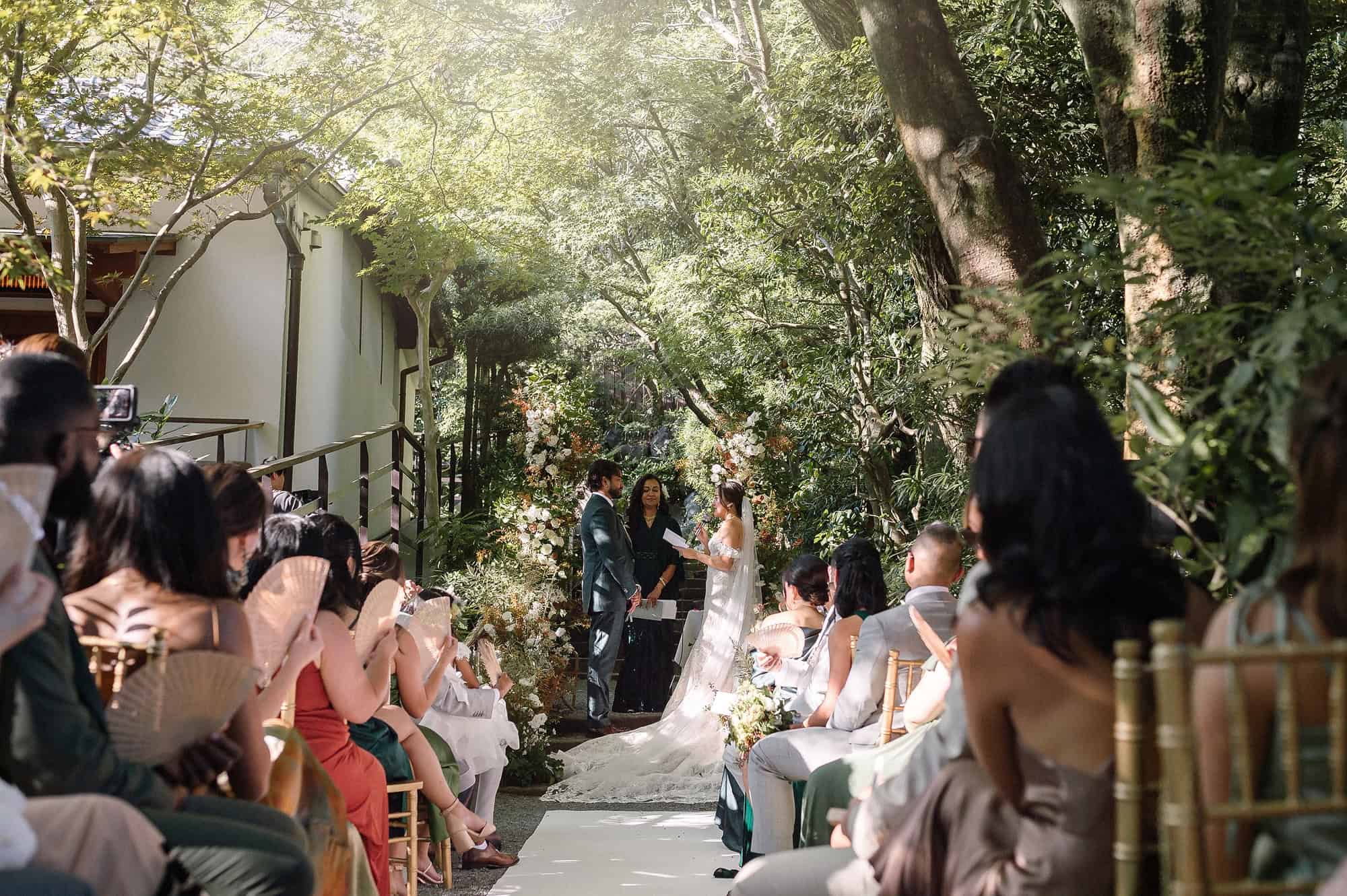
Japan has a rainy season, a spring rain with its own name, and mountains that make their own weather. The old houses were built for all of it, with deep eaves and roofs made to shed water.
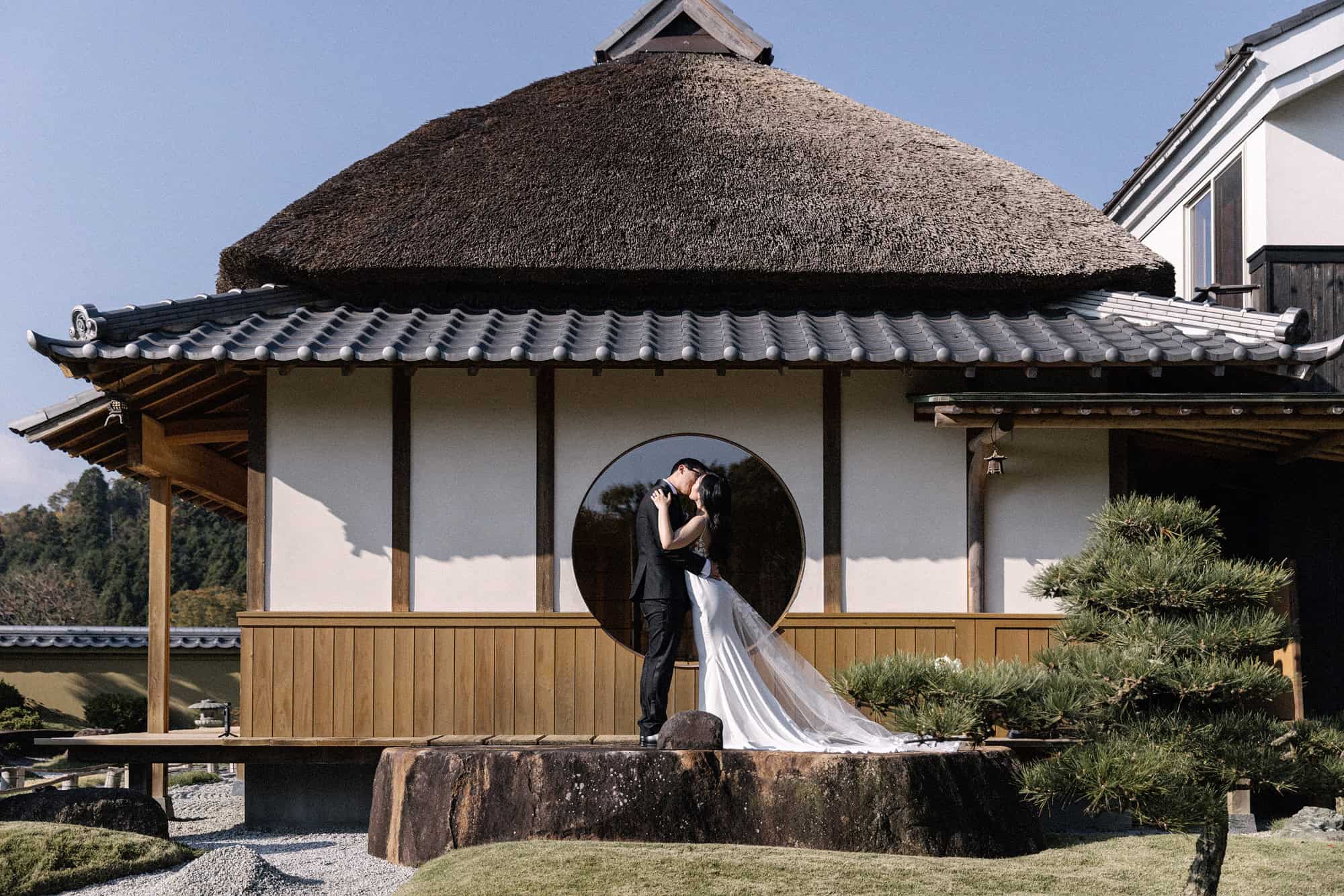
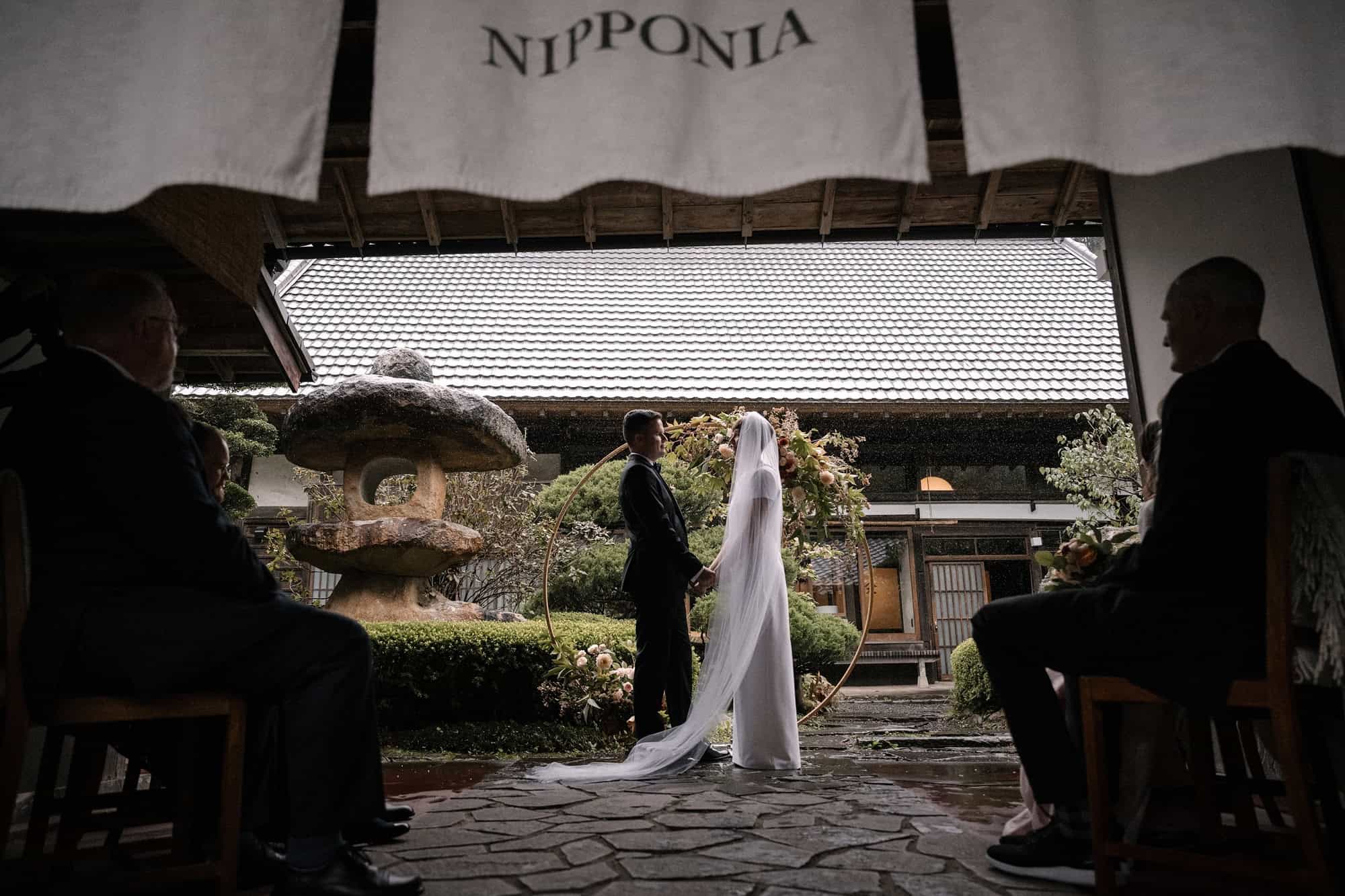
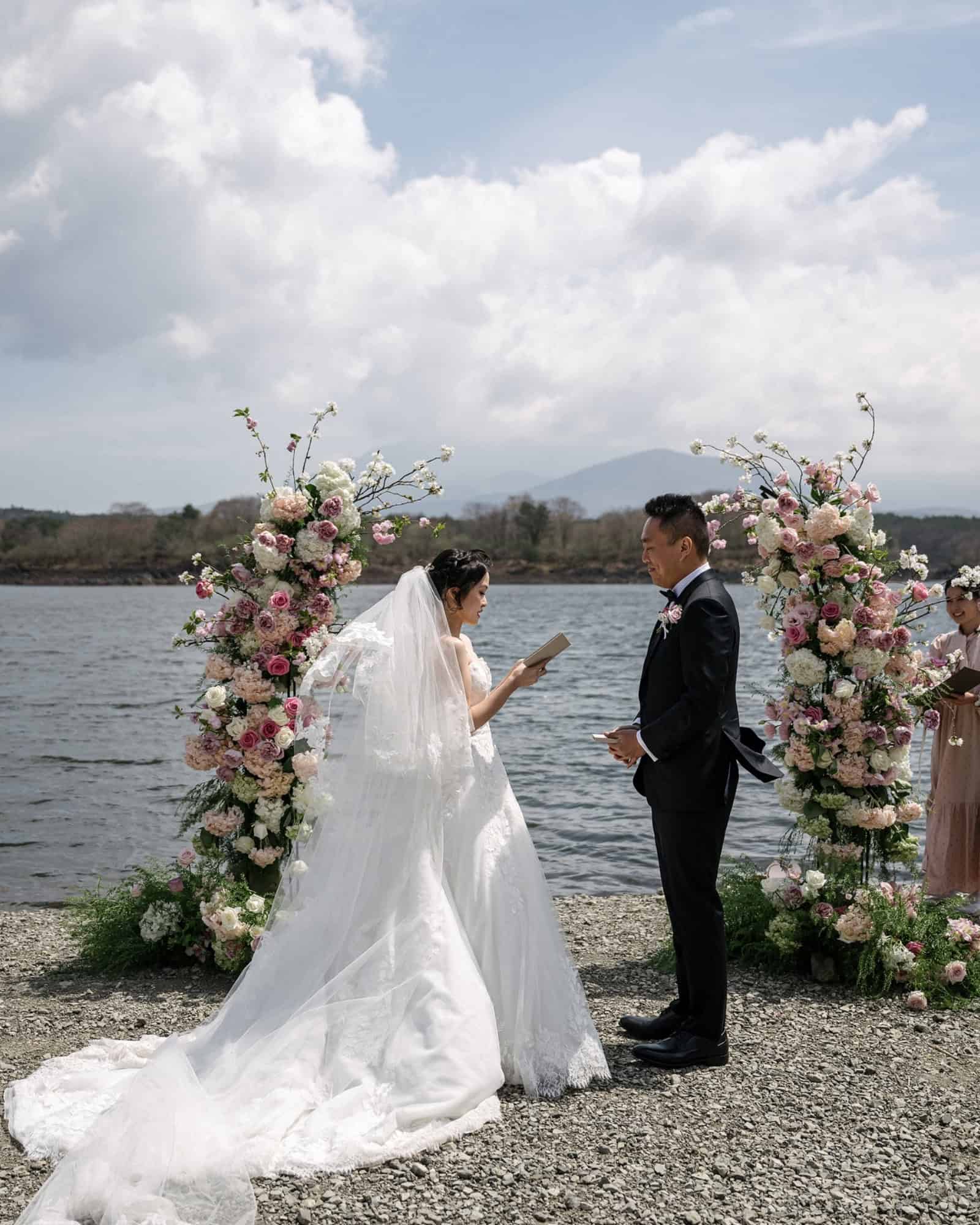
We’d never promise a couple sunshine. What we can promise is a day that doesn’t depend on it. At NIPPONIA Kosuge, a family sat under the eaves of a house about 150 years old while the couple married a few steps away in the garden. The rain, if anything, made the circle tighter. When rain was forecast in the week of one wedding near Mt Fuji, the day moved to a village of thatched houses on Lake Saiko, built with deep eaves for exactly that weather.
Weather is temperature, too. Late autumn in the hills turns cold the moment the sun goes, so for one November wedding at Jinya we asked for folding screens at the entrance of the old hall where everyone gathered after the vows, in case the evening turned. Cold-weather planning is mostly that: arranging the warmth before anyone feels the chill.
If a venue’s rain plan is an afterthought, the day will feel like one.
How Late Can the Music Play, and How Loud?
Japan hosts with order, restraint and consideration. Many venues have a well-established rhythm for how a celebration unfolds, and a ryokan keeps its evenings quiet, because the quiet is what its other guests came for.
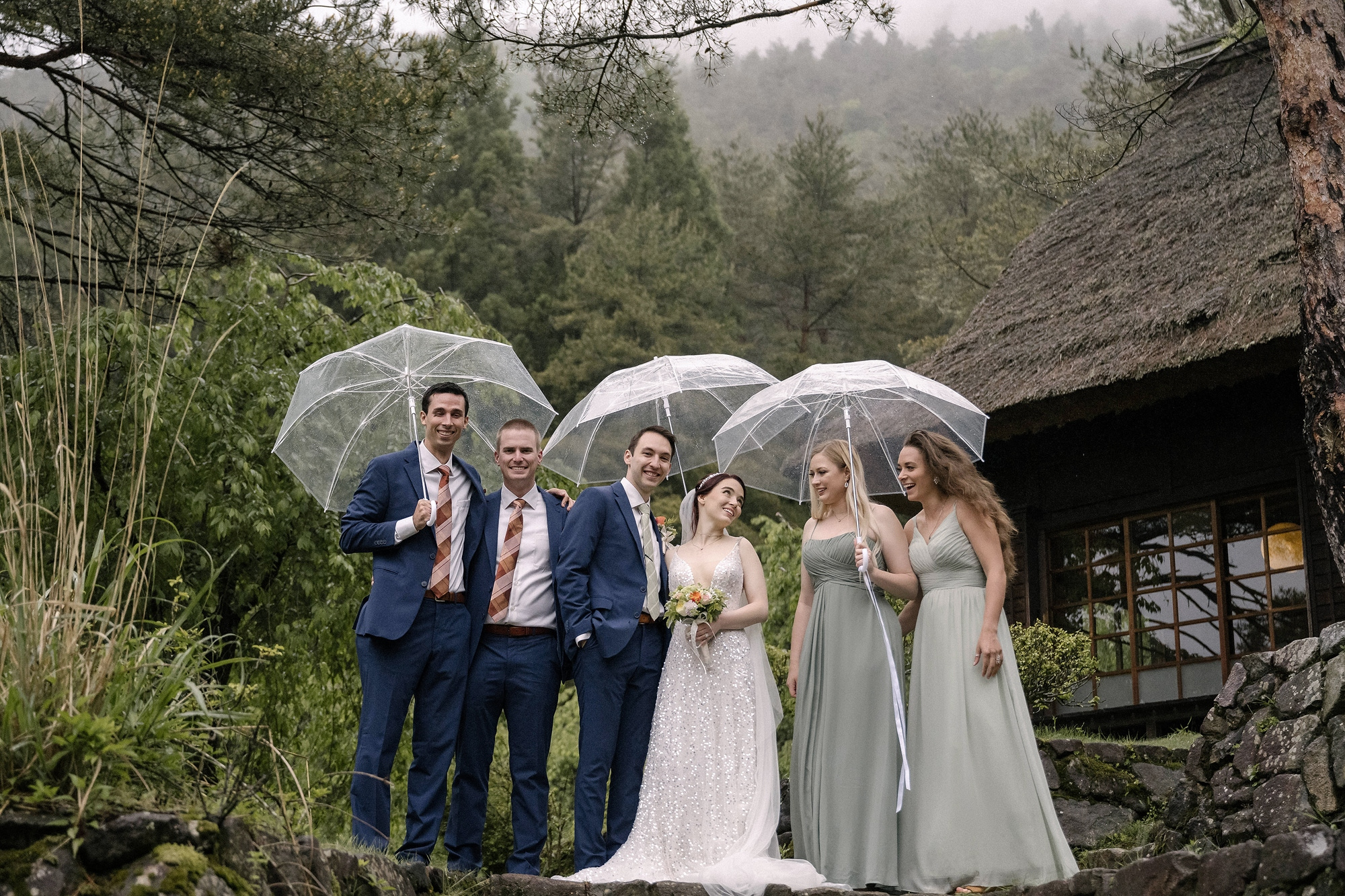
Some families celebrate with the music turned up, tables that run long and dancing that refuses to end. That’s another language of celebration, and it needs a venue that can speak it. At Jinya, a Greek and Japanese wedding held a quiet ceremony and, after the first dance, a party that got louder, looser and better as it went. In the forest at Hakone Retreat, a DJ played on the deck under the stars, then a second took the night indoors.
So before we recommend anywhere, we know where people can dance, until when, and which room takes the party once the garden goes quiet. Volume matters. Timing matters more.
Can You Bring Your Own Team?
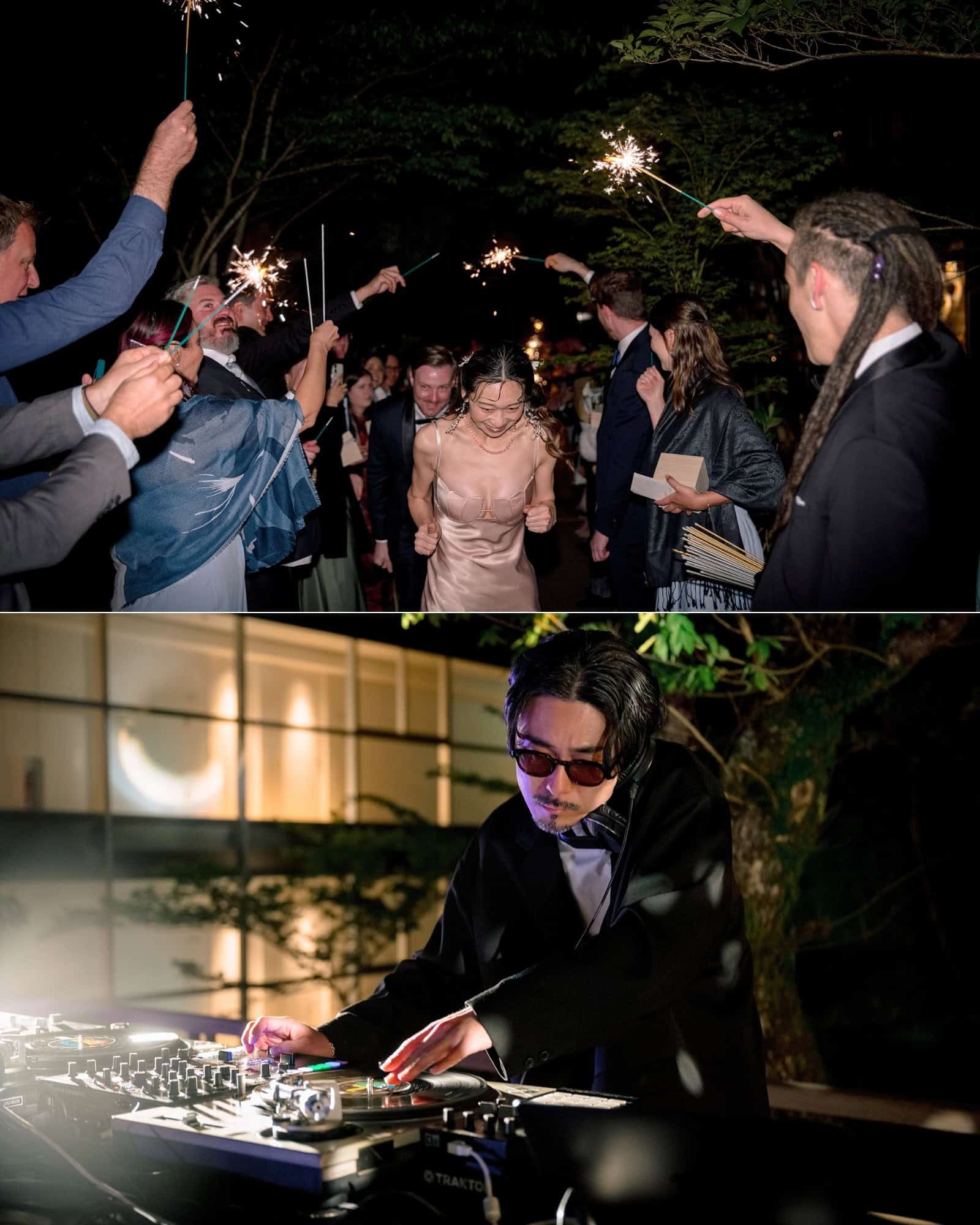
Many of the best venues in Japan work in Japanese, with their own booking procedures and their own lists of approved suppliers, and their coordinators work inside those lists. Some welcome outside planners, florists, chefs and musicians. Some don’t. It decides whether the day is designed around you or fitted into a format. Ask early, too, what a quote includes and what arrives on top of it.
The answer is often better than couples expect. When a couple weighing up Tokyo’s hotels asked where we’d go, we said Four Seasons Otemachi, for the freedom it gives a couple to make a wedding their own and for the warmth of its wedding team. At Jinya, a couple who wanted a real, fully edible multi-tier cake, still rare in Japan, where a big wedding cake is often for display, had one made by an outside pastry chef and brought to the inn.
Knowing which venue will give a couple that room is half of wedding planning in Japan.
Will the Kitchen Cook for Everyone?
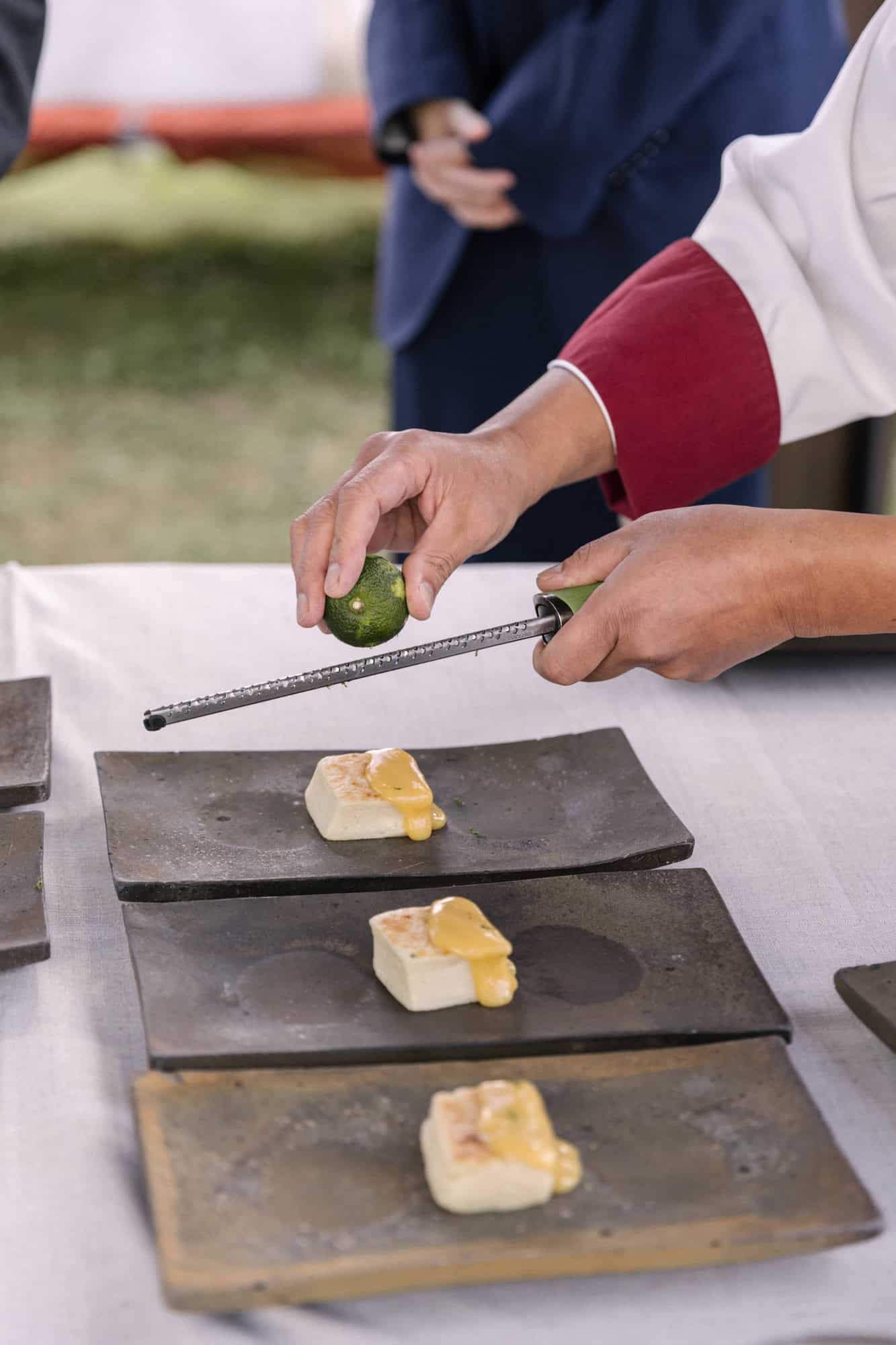
A ryokan kitchen cooks with the season, and much of what it serves comes from the sea. That’s its pride. It also means a table of differing needs is a conversation to have in Japanese, long before the day.
Some venues are kitchens first. Eneko Tokyo is the Tokyo house of Eneko Atxa, the Basque chef behind Azurmendi, and a wedding there moves through four floors like four chapters, from picnic to party. One couple chose Matsuzaka wagyu for dinner, then a Japanese dessert plate of mitarashi dango, matcha purin, yuzu jelly and monaka. When the kitchen is the reason you chose the place, the menu is half the wedding.
Either way, that conversation is ours to have. Every guest’s needs reach the kitchen in Japanese, well ahead of the day. Our guide to wedding food in Japan, from kaiseki to dietary needs goes further.
Who Speaks Japanese, and to Whom?
Most of a venue’s work happens in Japanese: the contract, the kitchen, the priest, the timings, the neighbours. That’s how Japan runs, and it runs well. Someone has to hold those conversations with care and precision, and it shouldn’t be a couple on a video call from another time zone. We hold them, before the day and on it.
It matters in the room, too. At Taiseki-ji, a Buddhist temple founded in 1290 on the lower slopes of Mt Fuji, the temple’s requirements shaped the ceremony. At the reception, the groom spoke in English with a translation for the room, and a guest gave the formal Japanese speech the couple had asked us to preserve. Language moved in both directions.
What Needs Permission?
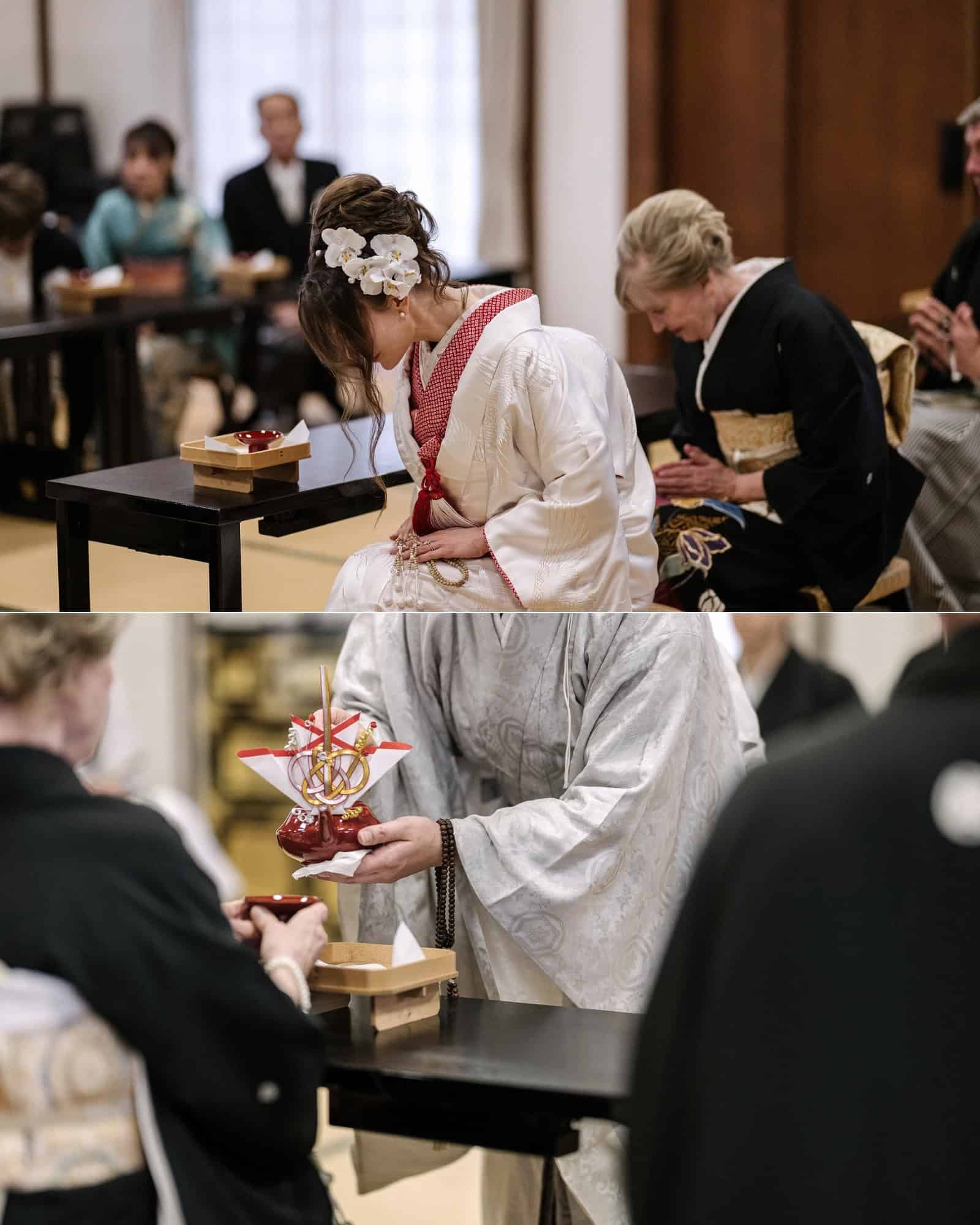
Japan’s most beautiful places are rarely free to use as you like. That’s worth knowing before you fall for one.
Shrines and temples
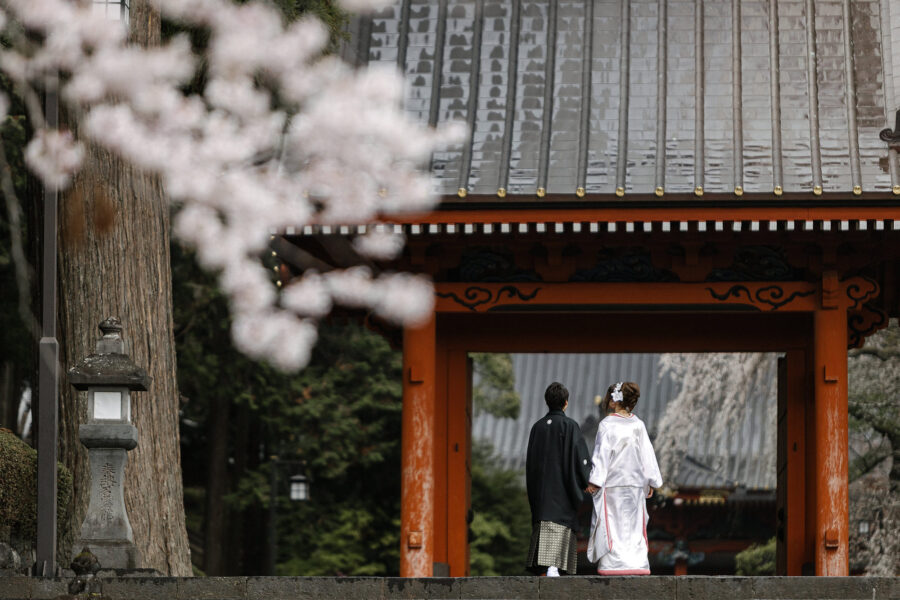
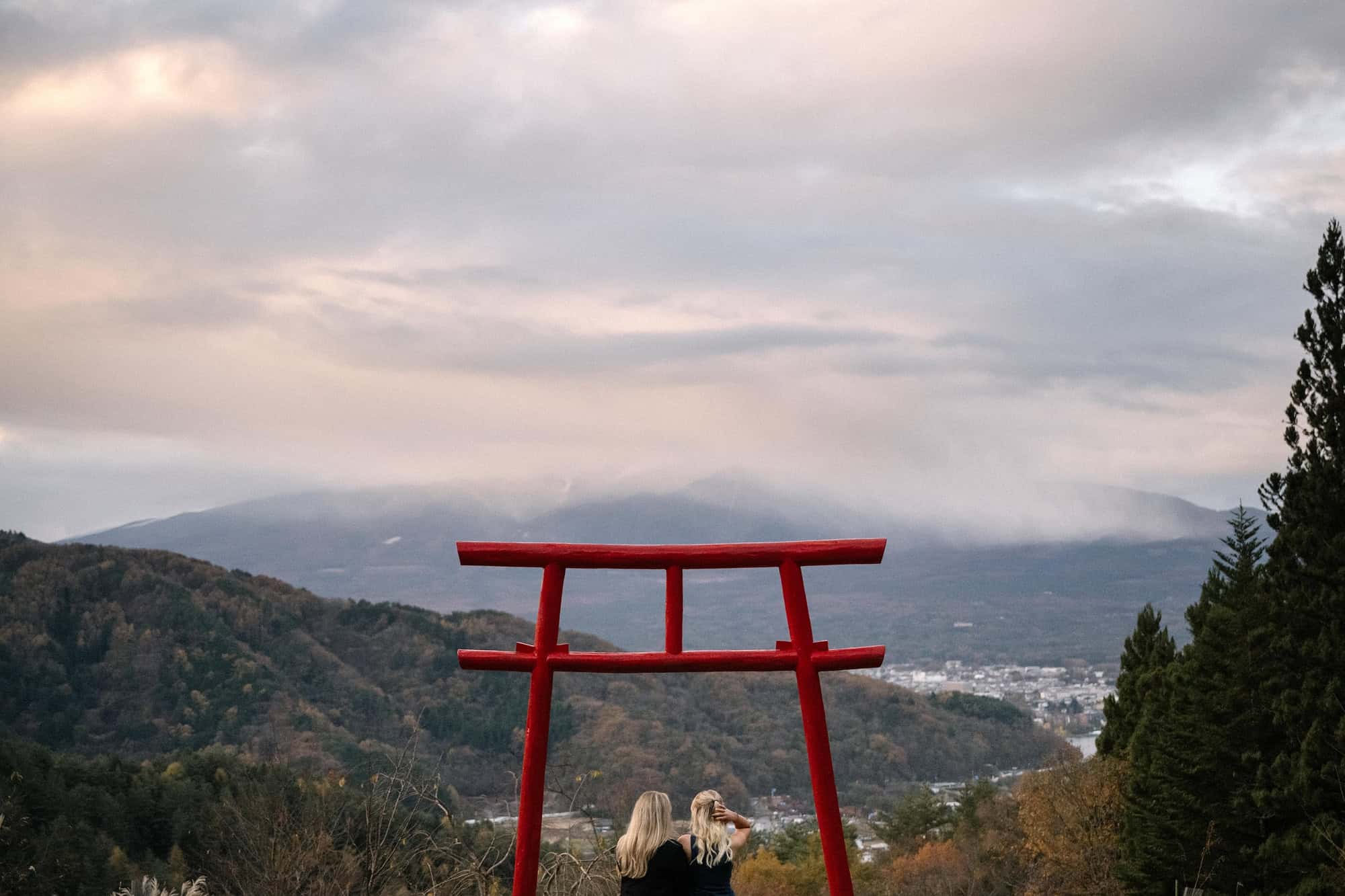
A shrine is a place of worship before it’s a view. The torii on the hillside above Lake Kawaguchiko belongs to a shrine, and photography there needs permission, so for one proposal we arranged a special permit. It was a Sunday in autumn colour season, with the Fujisan Marathon running around the lakes, so the hour mattered as much as the paperwork. The terms are always the shrine’s, and a good planner works quietly inside them. Our guide to a Shinto wedding in Japan explains what a ceremony there involves.
Public parks
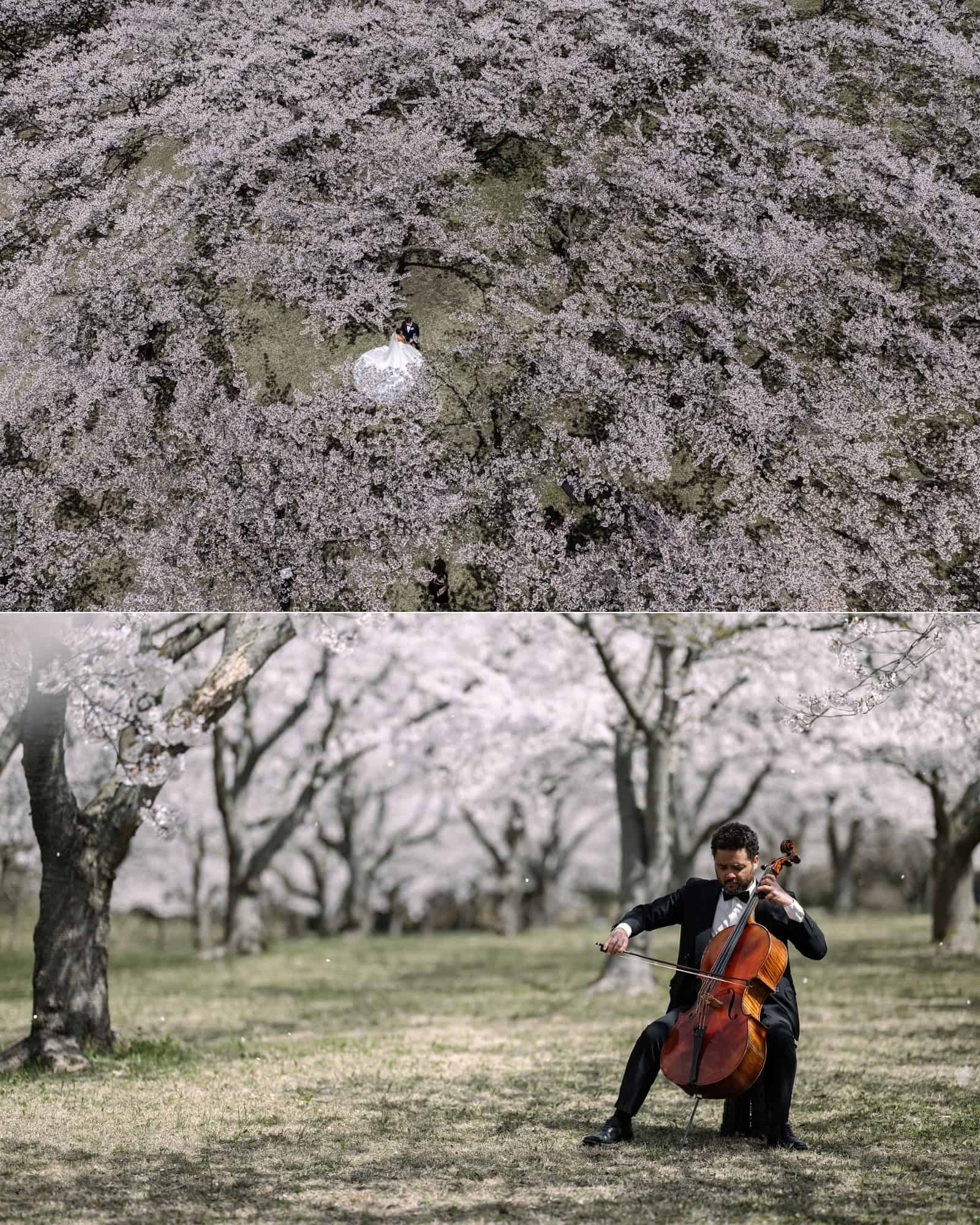
People sometimes ask us for a private cherry blossom ceremony. In a public park in Japan, there’s no such thing. The blossom belongs to everyone, and that’s part of why it matters. Tokyo’s metropolitan parks ask for a permit application for model shoots and filming, and they don’t allow drones at all. Murou Art Forest in Nara requires a city permit for professional photography, wedding shoots included, and keeps its own closing days.
Drones
Japan requires any drone of 100 grams or more to be registered, and flying over densely inhabited districts, or over events where people gather, needs the government’s approval. Aerial plans are made in advance, permitted where needed, and sometimes simply not possible. We’d rather say so early.
Can Everyone You Love Get There?
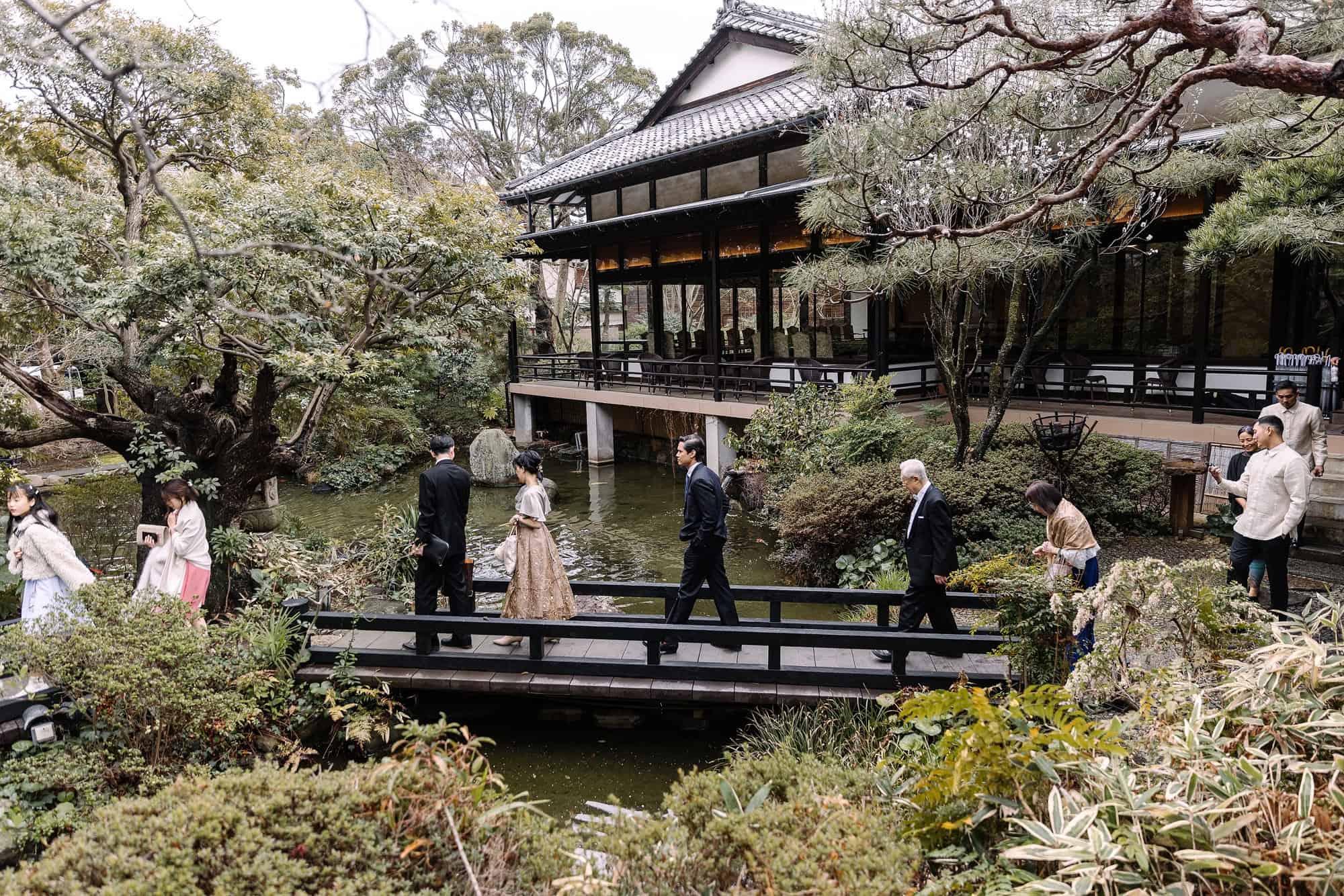
A venue is only as good as the journey to it, for the oldest guest as much as the youngest.
Jinya sits an hour or so from Tokyo: close enough for everyone flying in, far enough out for the trees to take over. NIPPONIA Kosuge is two hours from the capital by car, and worth every minute, but it’s a longer day for some guests than others.
Inside the gate, the family’s day is designed as carefully as the couple’s: where they sit, when they move, how they stay out of the rain. And for the people who can’t travel at all, there’s a way in. At one small wedding at Jinya, the couple asked for a livestream, and the vows were heard in the garden and on screens a long way from Japan at the same moment.
Can Your People Stay?
Accommodation on site changes a wedding more than any styling can. When everyone sleeps under the same roofs, the day loosens. Nobody watches the clock, and the conversations that never fit between a ceremony and a goodbye finally get their room.
At Hakone Retreat, guests from Australia, Japan, New York and Finland stayed overnight in the forest. Nobody had to find a taxi at the end of the night, and the friend you hadn’t seen for years didn’t have to fit into one conversation over a drink.
Even for two, staying matters. One couple who eloped in Niigata spent two nights in Tsukioka Onsen, a hot spring town in the rice fields that began in 1915, when men drilling for oil struck hot water instead. Two nights is what turns a place from a venue into somewhere you live for a while.
Ryokan, Hotel, Private Garden or Open Landscape?
No type of venue is better than another. Each is good at different things.
Ryokan. A ryokan is built to be stayed in. The best give you a whole house, a garden, hot spring water and a kitchen that cooks with the season, and they’re at their finest over two days. They ask for a quieter evening, and in return they look after you completely.
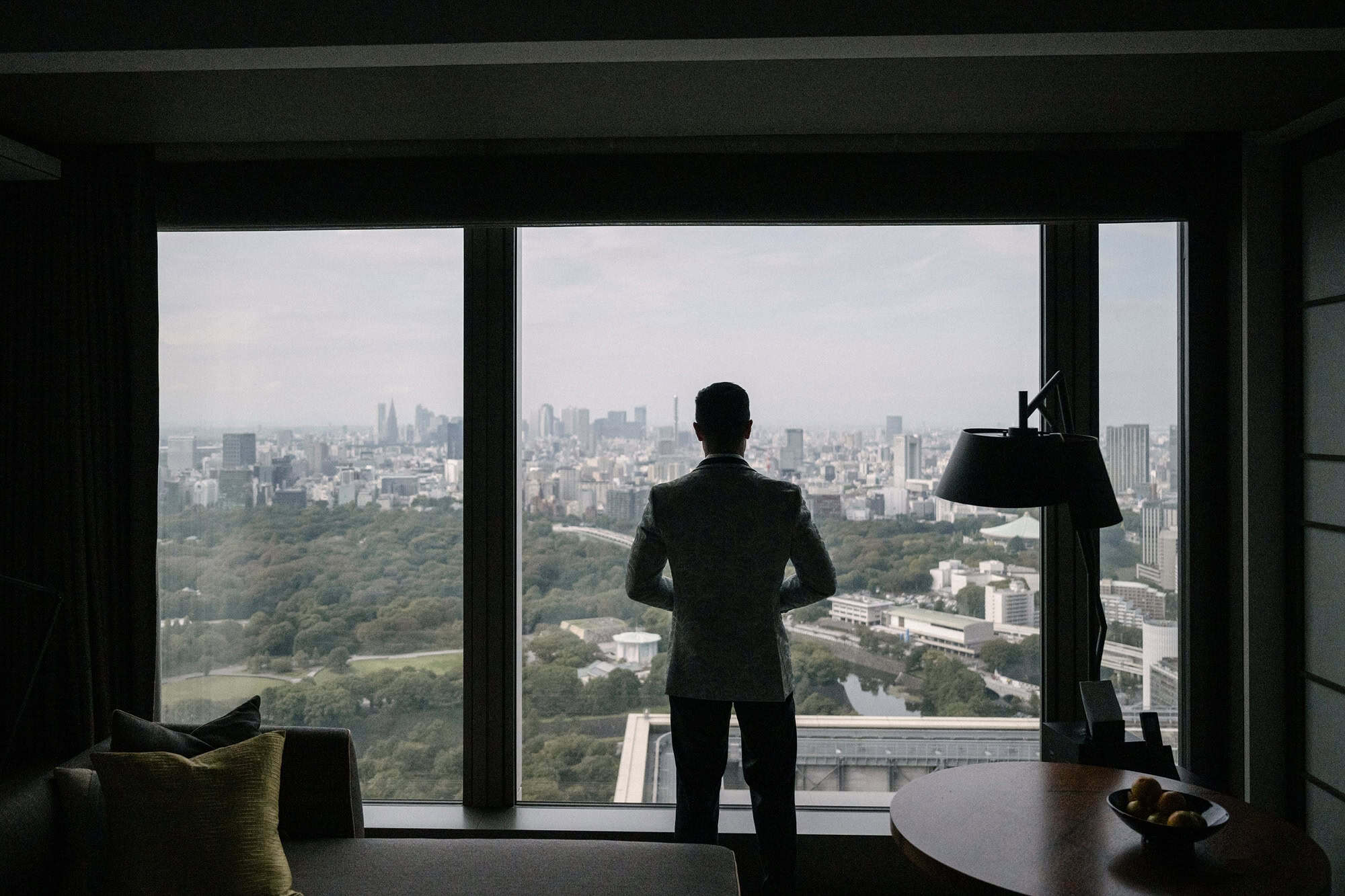
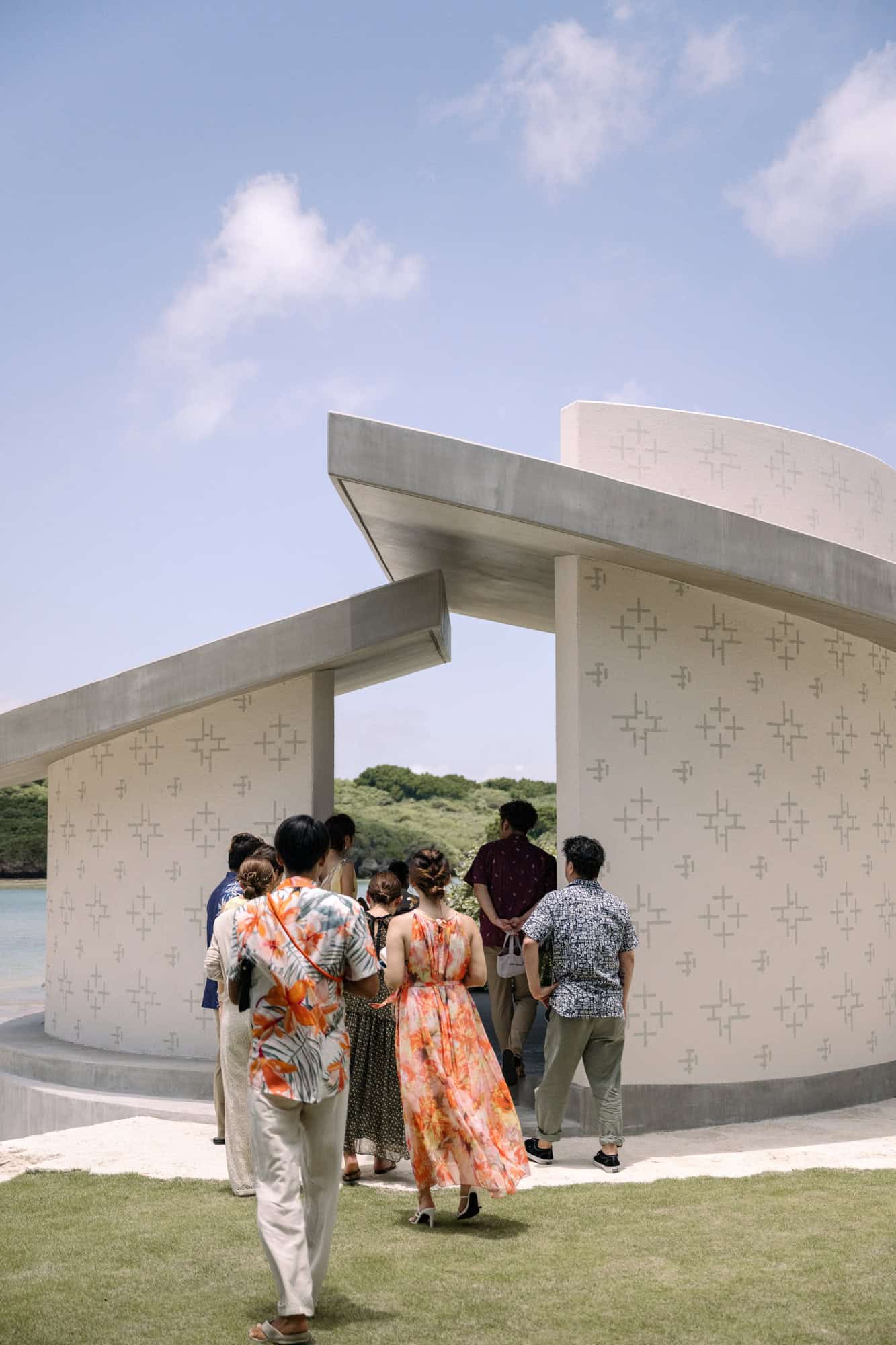
Hotel or resort. A hotel is built for scale and certainty, and the best have manners. At the Four Seasons at Otemachi, the lobby sits behind a wall of glass on the 39th floor, and its designer set a rock installation on a shallow pond in front of it, because looking straight down into the Imperial Palace might be thought discourteous. Resorts are newer to weddings here. Before Rosewood Miyakojima, the brand’s first property in Japan, welcomed its first wedding, we were invited to consult on its approach to destination celebrations, and we were there for that first wedding, in a round chapel beside Okinawa’s clear water.
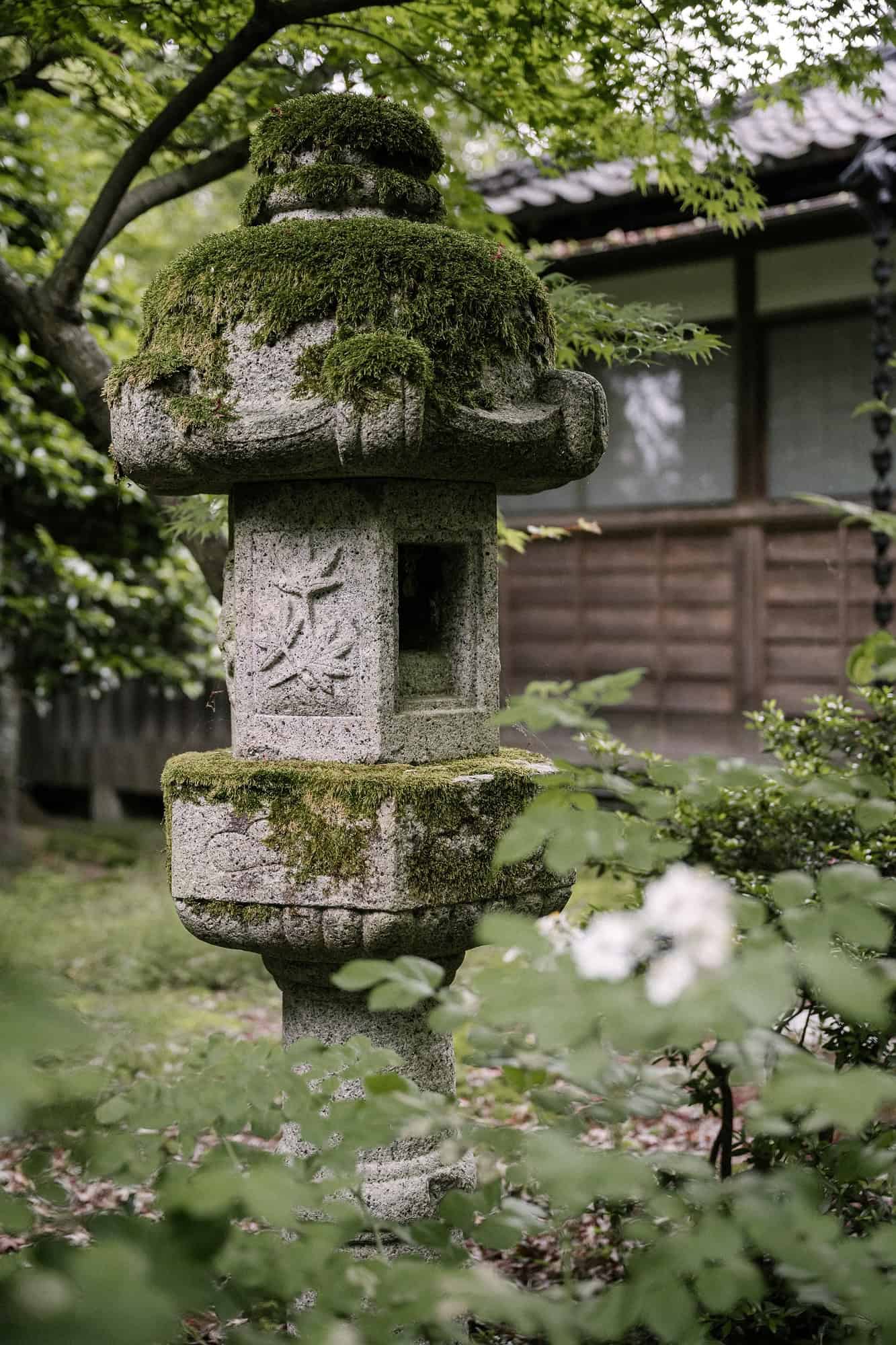
Private garden or house. A private garden is built for closeness. In Shibata, in Niigata, there’s a historic garden that doesn’t open its gate to the public. We arranged it for two people alone, and for one day it was theirs. A garden like this rarely holds a big party. It holds a morning nobody else will ever see.
Open landscape. A lakeshore, a forest or a hillside is built for nothing at all, which is the point. Lake Shoji is a public shore, and a ceremony there took months of permissions inside more than a year of planning. Before it began, the bride’s mother was already making friends with passers-by. Open landscape asks the most of a plan: permits, a second location, a way to bring older guests in and out. Done well, it gives a couple the country itself.
Tokyo, Mt Fuji, Kyoto or Further Afield?
Japan’s wedding map is far wider than two cities, and every region keeps its own hours.
Tokyo and close by. The city gives you hotels with real freedom and rooftops above Shibuya. Jinya, Kawagoe and the forests of Hakone each feel like leaving the city entirely. In late autumn there, the evening comes early and cold, so we planned the day from the sunset backwards.
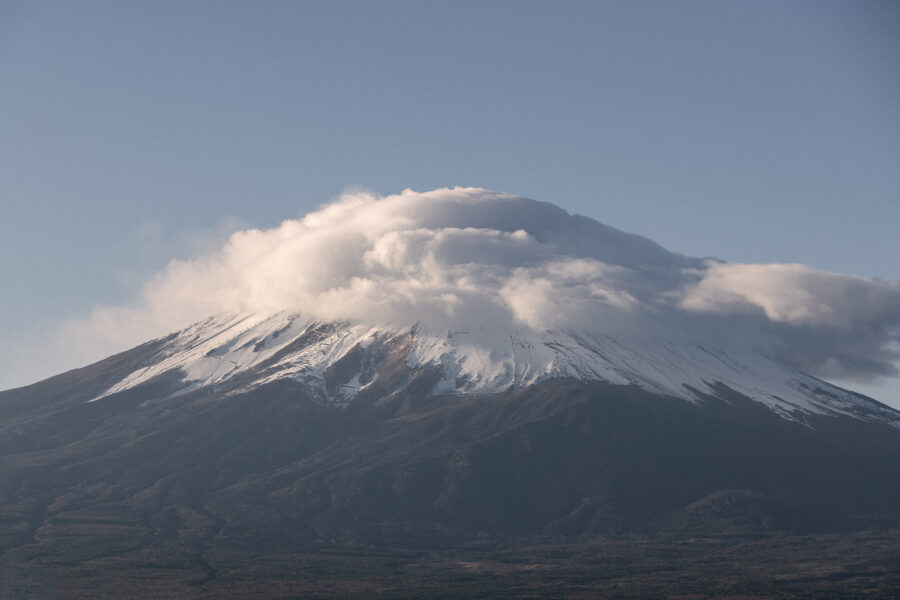
Mt Fuji and its lakes. From Kawaguchiko to the highlands on the Shizuoka side, the mountain keeps its own schedule. A place worth choosing there has to be beautiful all day, so a clear view becomes something you receive with delight rather than something the day owes you.
Kyoto and Nara. Here the places we love are quieter, and the best of them are private. At Ozunu, one of the two villas at Sasayuri-Ann, the main house faces south and east, so the morning arrives across the ridges before it reaches the rooms.
North and south. Every spring, Japan’s cherry blossoms move north, so a wedding in Aomori can meet the season long after Tokyo’s has gone. In Okinawa, Miyakojima is raised coral limestone with no real rivers carrying sediment out to sea, which helps explain the clarity of its water.
Quick Answers About Wedding Venues in Japan
Can we book a whole ryokan for our wedding?
Often, yes. Many of the inns our couples love can be given whole to one celebration, so the garden, the halls and the baths belong to your guests alone for a night or two. It costs more than a private dinner in a shared inn. What it buys is a day without strangers in the corridors, and an evening nobody has to leave.
When should we book a wedding venue in Japan?
Most wedding venues in Japan open their calendars about a year ahead, and a place that hosts one celebration a day has exactly one of your date, so in the blossom and autumn weeks those dates go first. Book your planner before you approach any venue, up to eighteen months out. A few venues we’ve worked with for many years will open a date to our couples sooner.
Can we have a private cherry blossom wedding in Japan?
Not in a public park. The blossom there belongs to everyone, and many parks need a permit for professional photography. Privacy comes from the venue instead: a ryokan garden, a private house, a villa given whole to one party. We look for the places with blossom of their own.
Do wedding venues in Japan allow outside planners and suppliers?
Some do and some don’t. Many work from their own list of approved suppliers, and their coordinators work within it. Others welcome an outside team completely. Ask before you fall for a place: the answer decides how much of the day can be designed around you.
The Best Venues Rarely Appear in a Search
Some of the places our couples love most aren’t listed anywhere. A morning in a Kyoto garden at the height of the autumn colour, with no one else in sight, isn’t something a couple can find by searching. It comes from relationships built over years, and from knowing which doors open, and when.
That’s why so many couples come to us first. Our destination wedding planning in Japan starts with what the day needs to feel like, and the place is chosen for that, with our photography and film part of the same conversation. Then we narrow. A handful of places, each with a reason. One recommendation, with its trade-offs said plainly.
The right places book early. Our wedding planning timeline for Japan explains how far ahead.
A beautiful venue is easy to find in Japan. The right one is found by asking what it will let your day be.