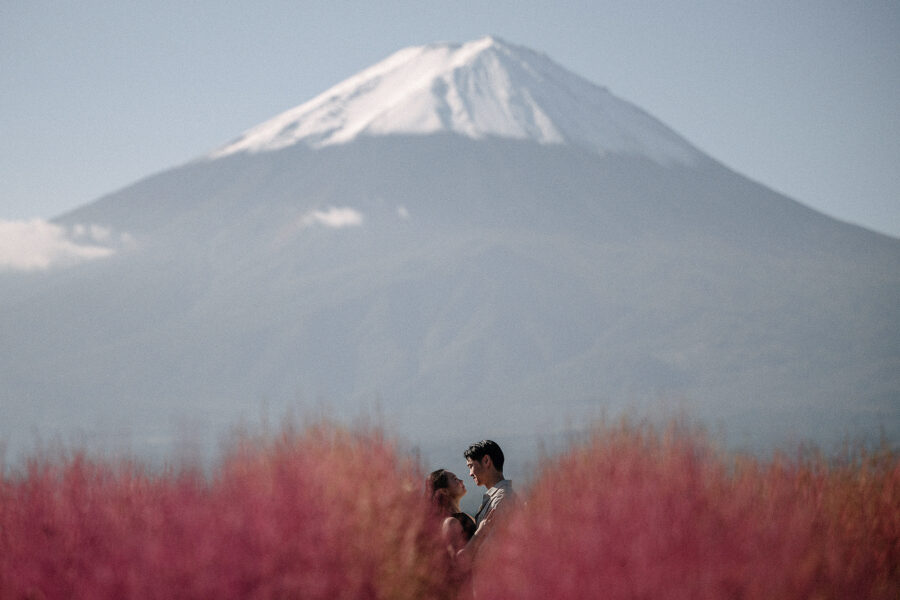
They’d been to Japan once. A few weeks later, the bride wrote to us saying they’d loved it so much they wanted to return, get married here and share it with the people closest to them. Their Asaba Ryokan wedding began with that wish.
There’s a particular pleasure in taking someone to a place you’ve been talking about. You finally get to stop explaining and let them be there with you. These two were giving that idea a ceremony, a crossing over a pond and a seat at the wedding table.
They’d found a place they loved as two people. Now they were asking their families and friends to make the journey too, to have something of their own to remember there. An intimate wedding in Japan gave that wish a shape, and a reason for everyone to come.
Choosing an Asaba Ryokan Wedding
They knew what they were looking for. “Japanese Modern” was how they described it, with indoor and outdoor spaces, a clean, manicured landscape and a setting that made sense for a smaller wedding. Nature mattered, and they felt a city would limit that part of the experience.
They came back to see venues in person with our planning team. Afterwards, the groom wrote, “Out of all the venues, Asaba was our favorite, no surprise.” Sometimes the visit confirms what you already suspect, and the work becomes figuring out how to make a day there feel like yours.
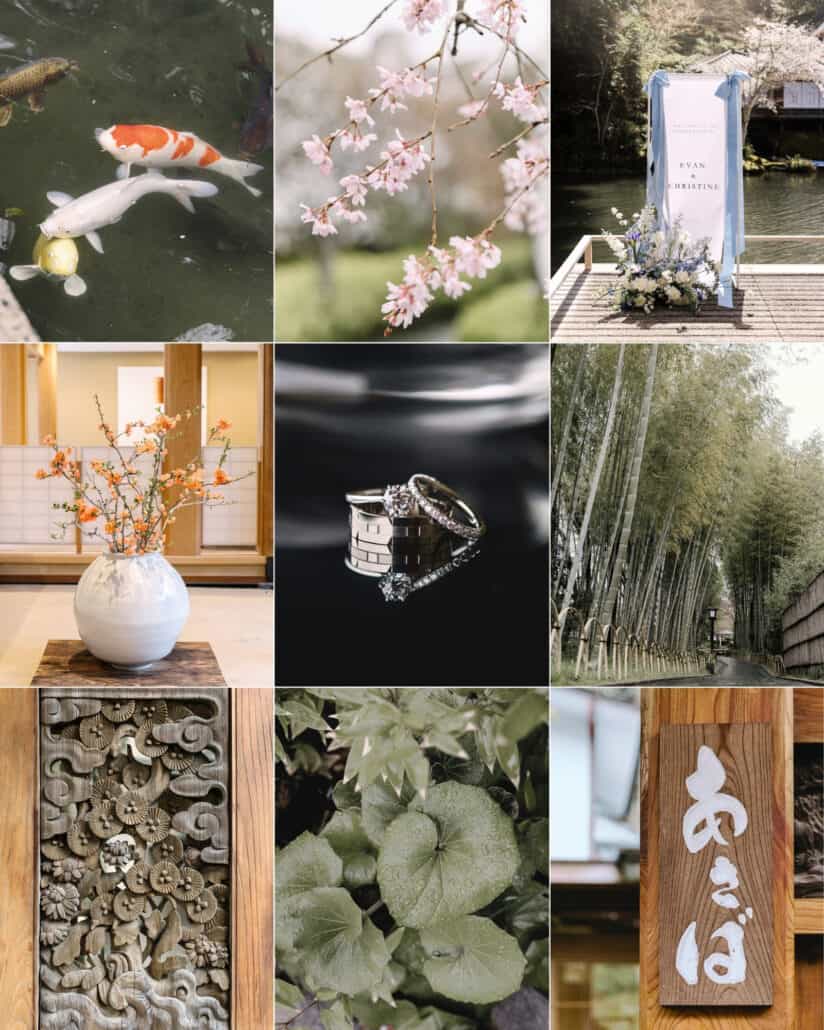
Asaba sits in Shuzenji, an old hot spring town on the Katsura River. The ryokan has been in the same family for more than five centuries, with its beginnings in 1484. Its Noh stage stands over the pond, having made its own journey from Tokyo in the late Meiji period. Bamboo climbs the hill behind it, joined in early spring by cherry blossom.
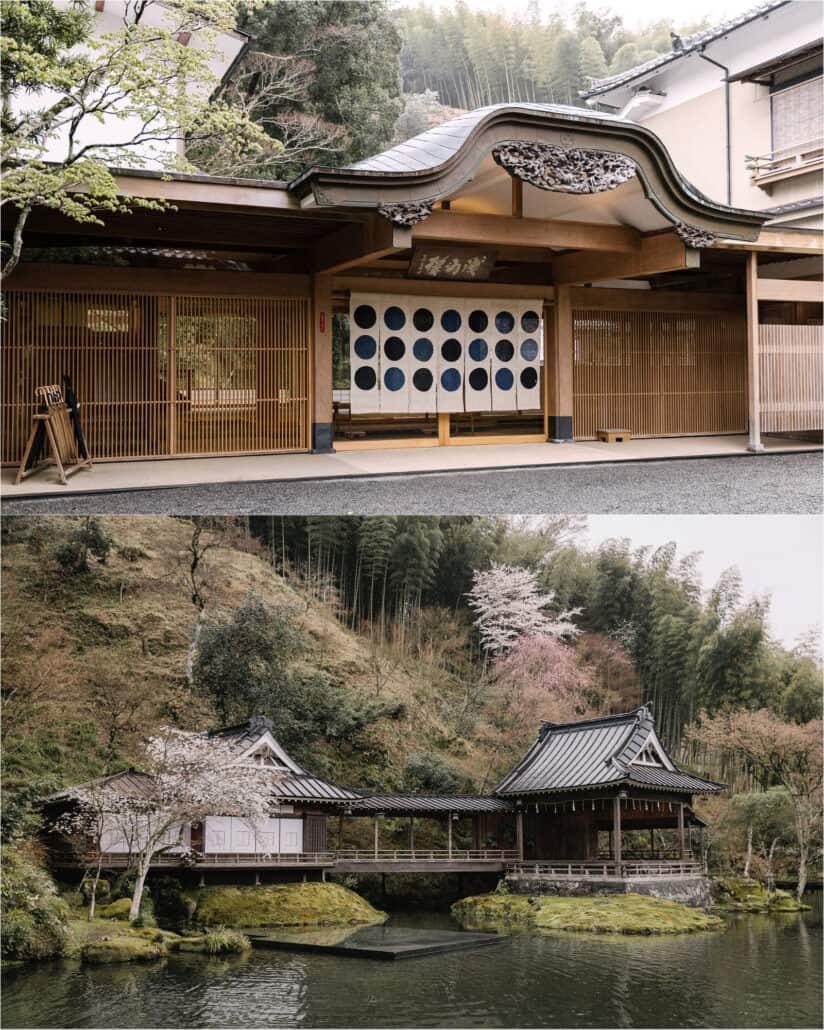
We’d photographed a wedding here before, and the relationship between the inn, the water and the stage stays with you. A ceremony here draws people’s attention across the pond. The landscape becomes part of the way everyone gathers, listens and waits for the bride to arrive.
That suited what these two had asked for. Their Asaba Ryokan wedding could grow out of the place itself: the water to cross, the stage to gather on, the room where everyone would sit down together. They’d chosen somewhere they could inhabit for a while.
Across the Water
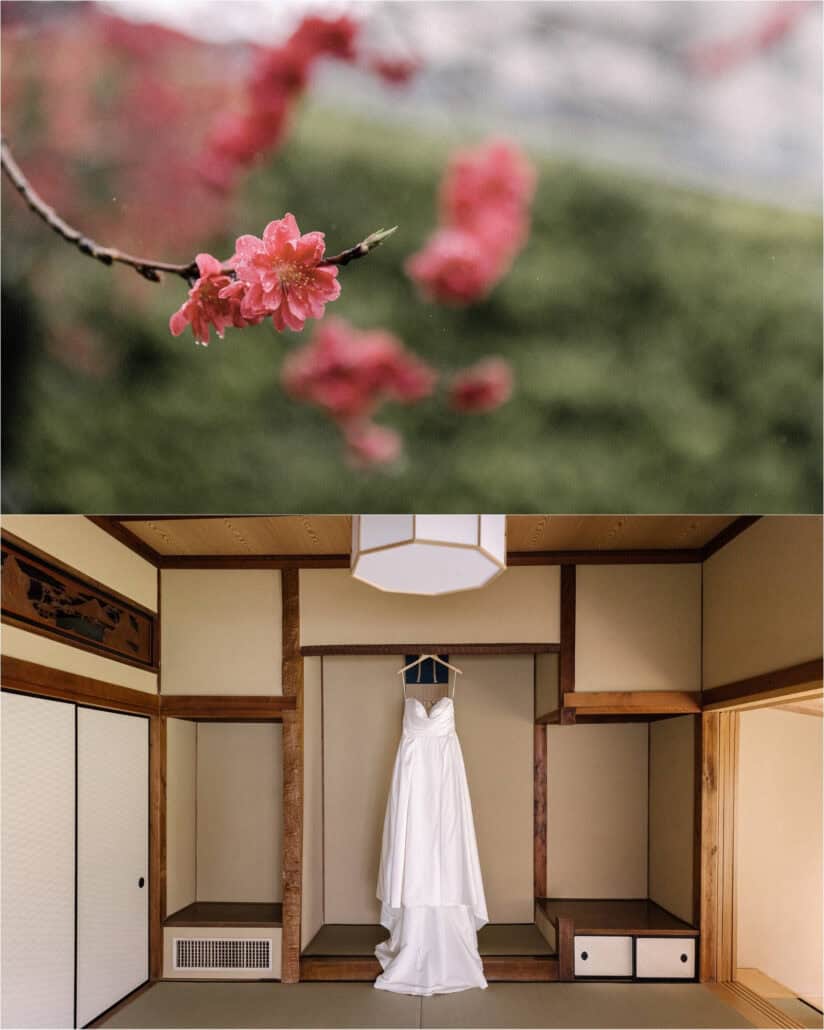
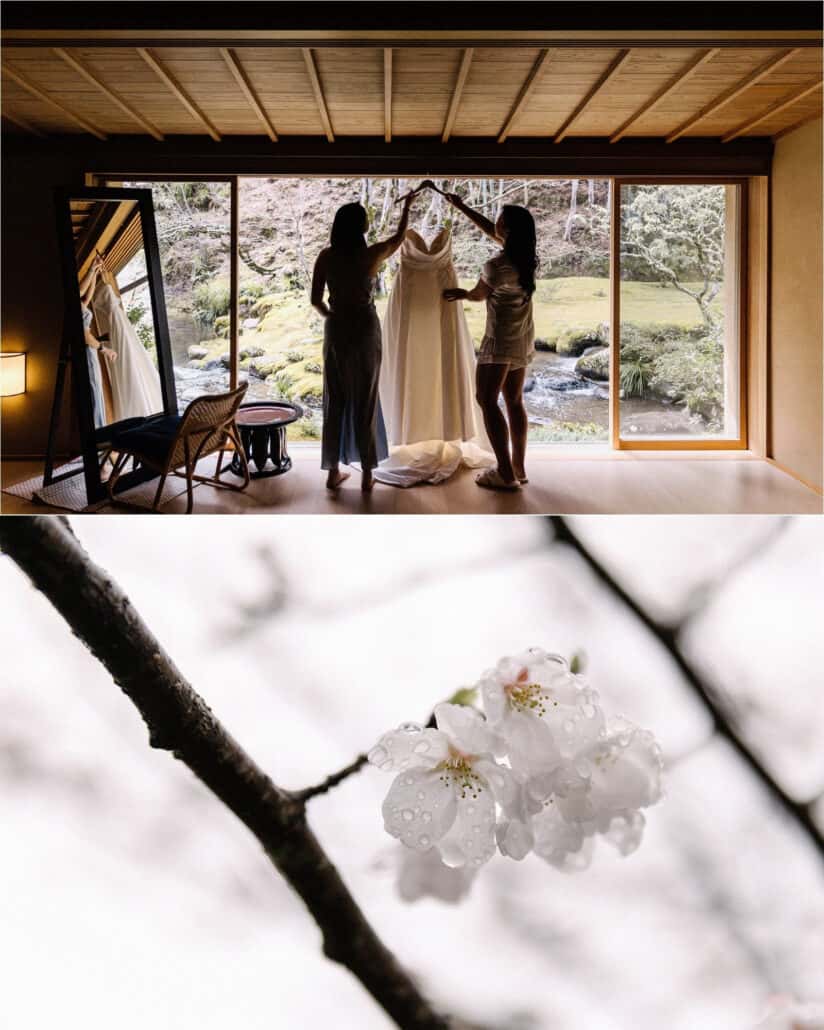
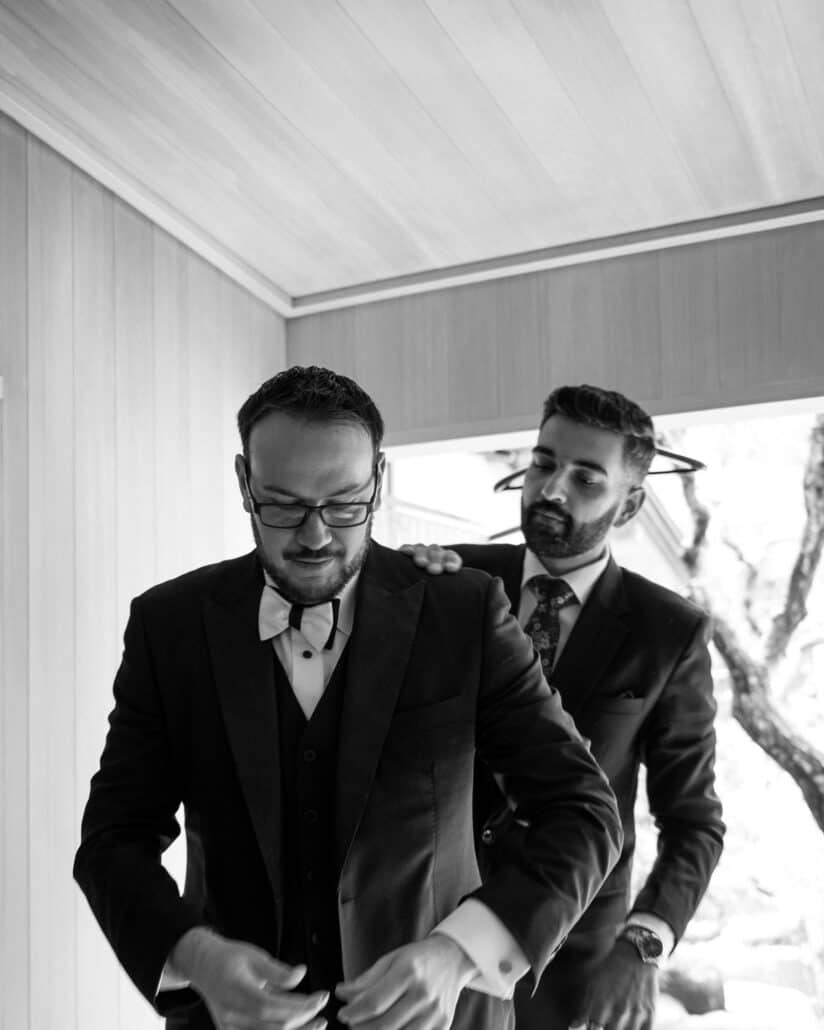
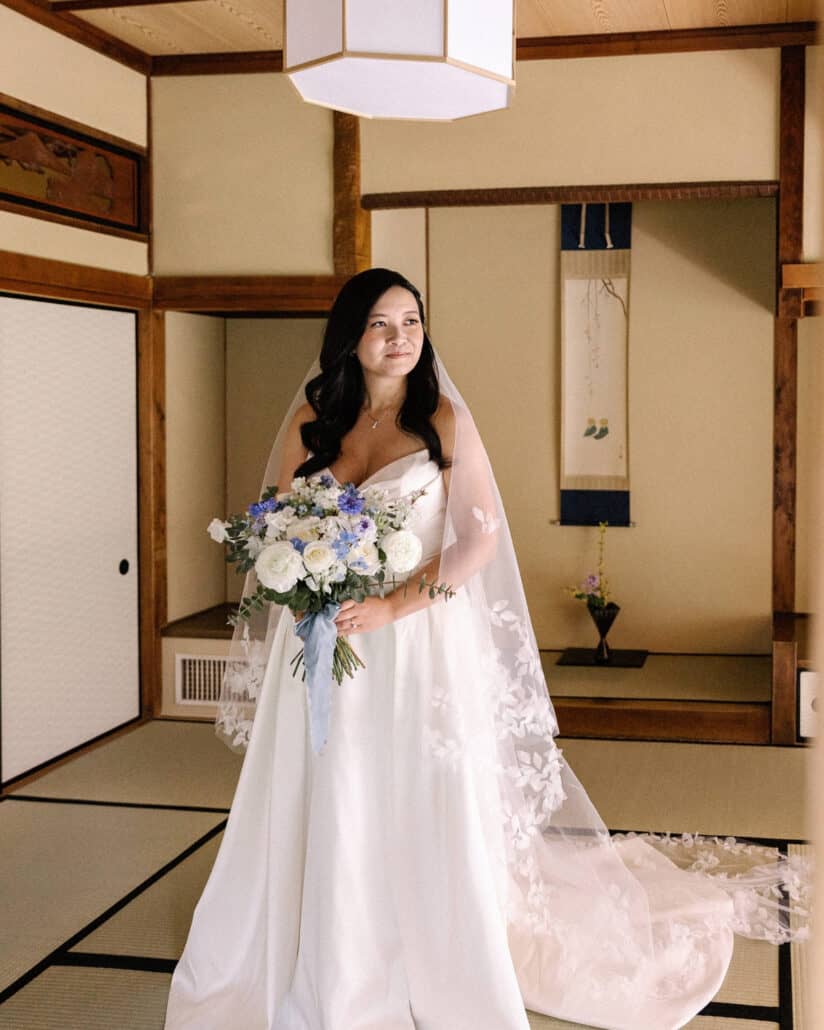
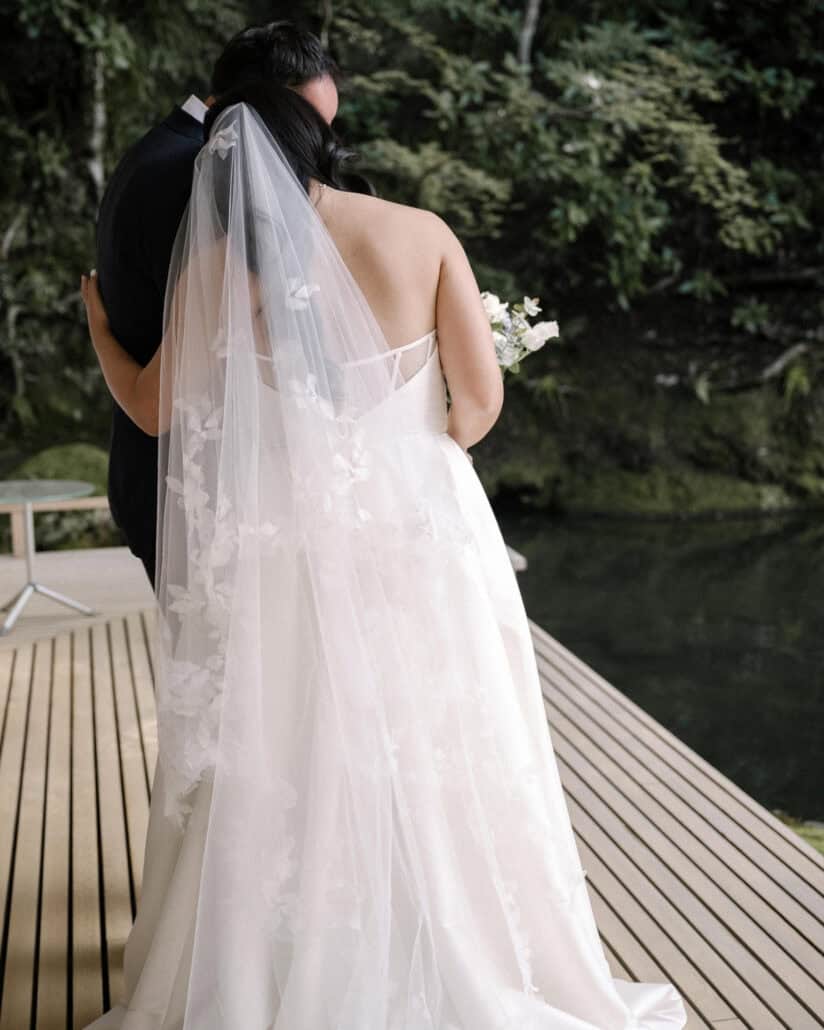
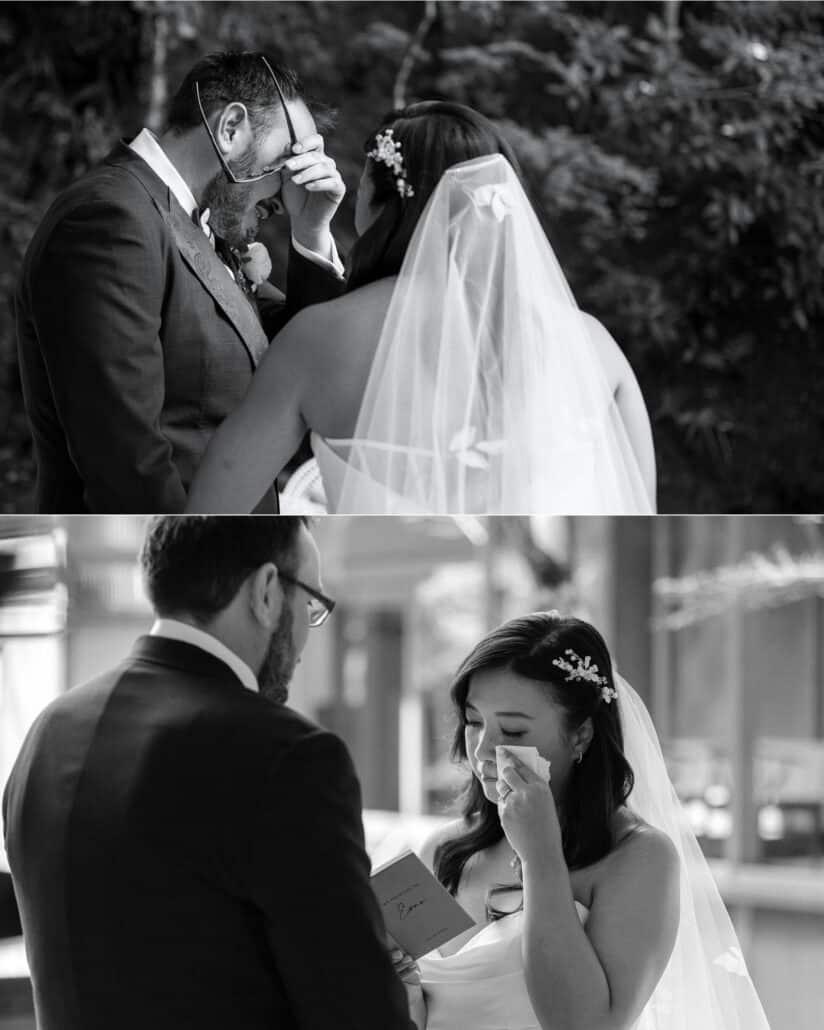
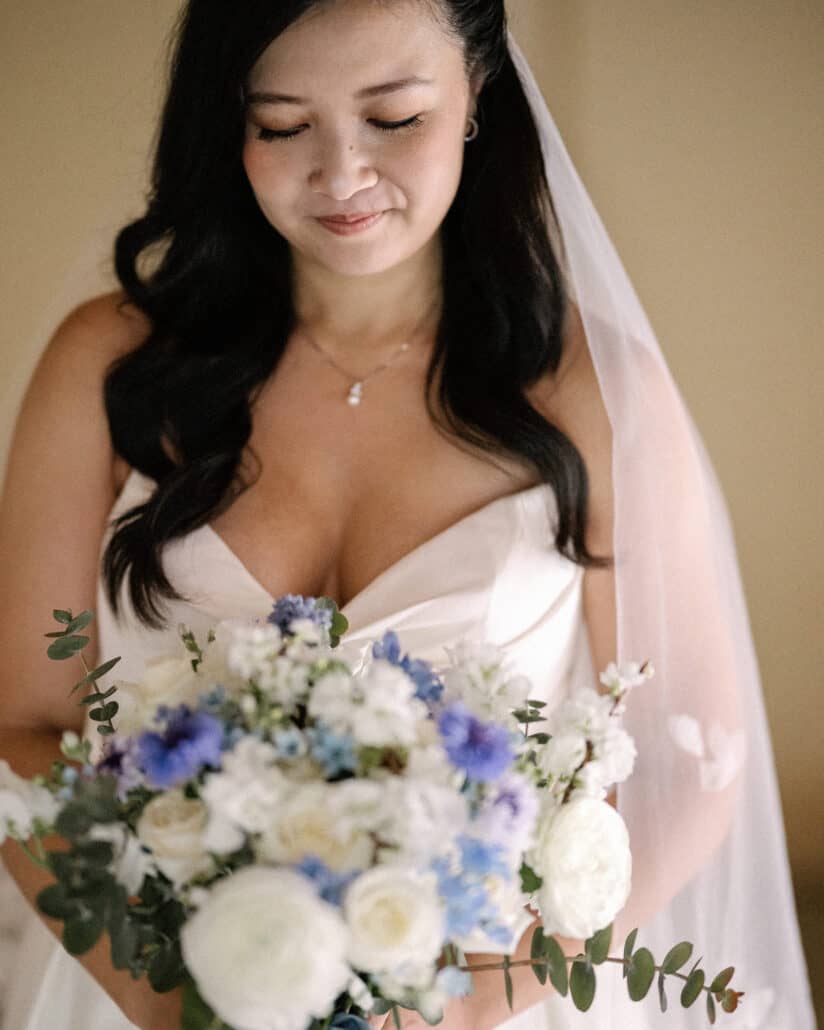
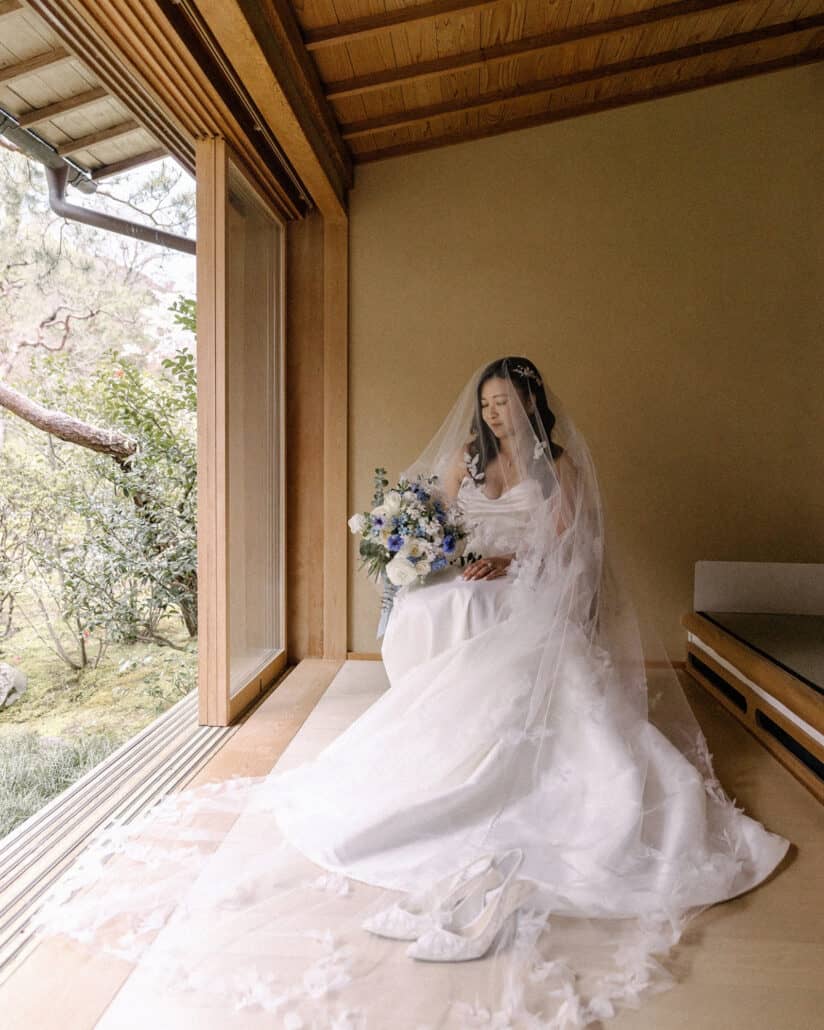
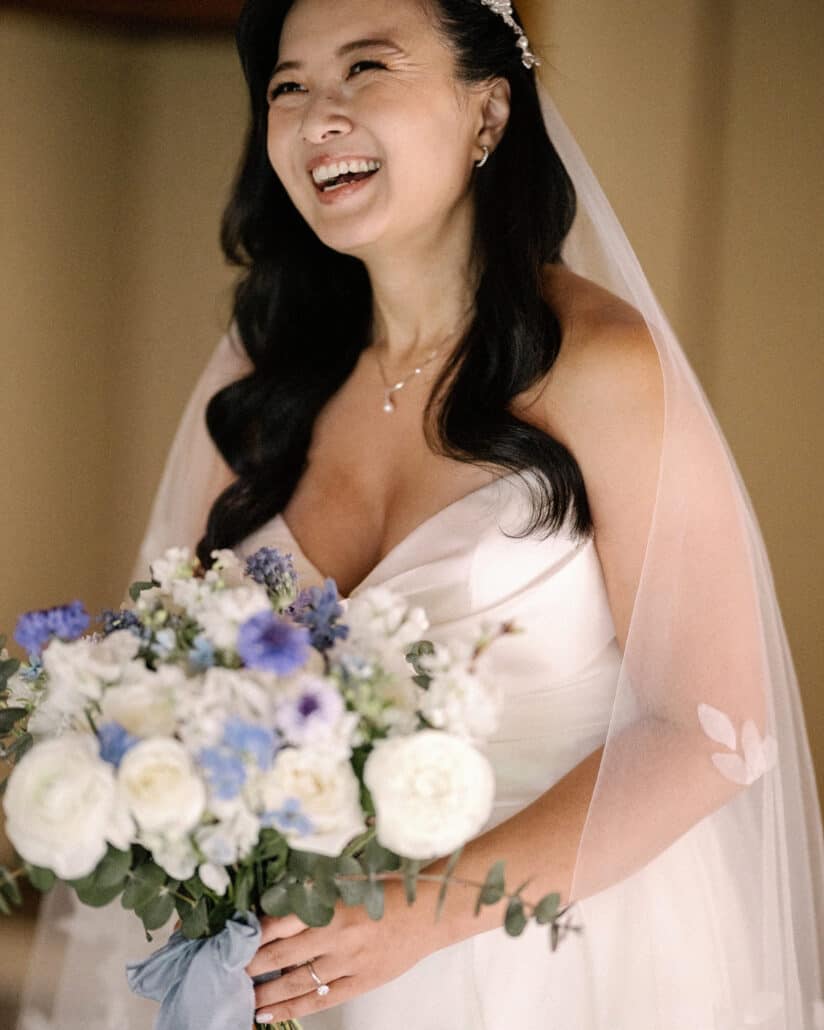
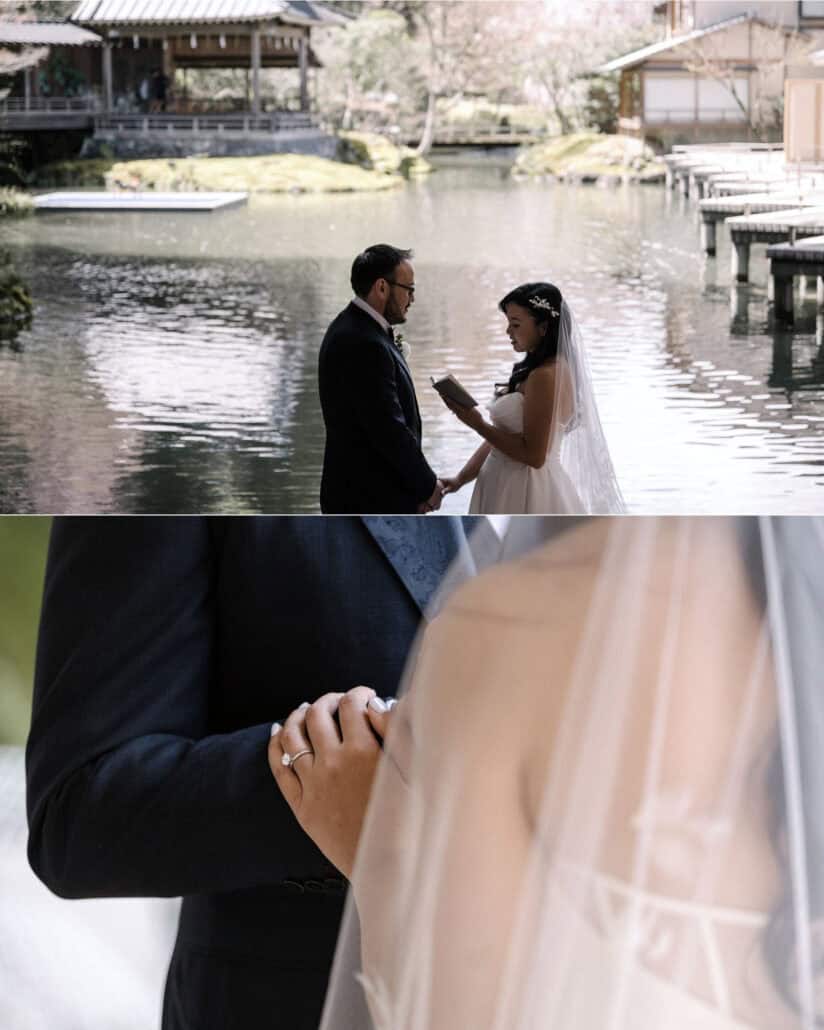
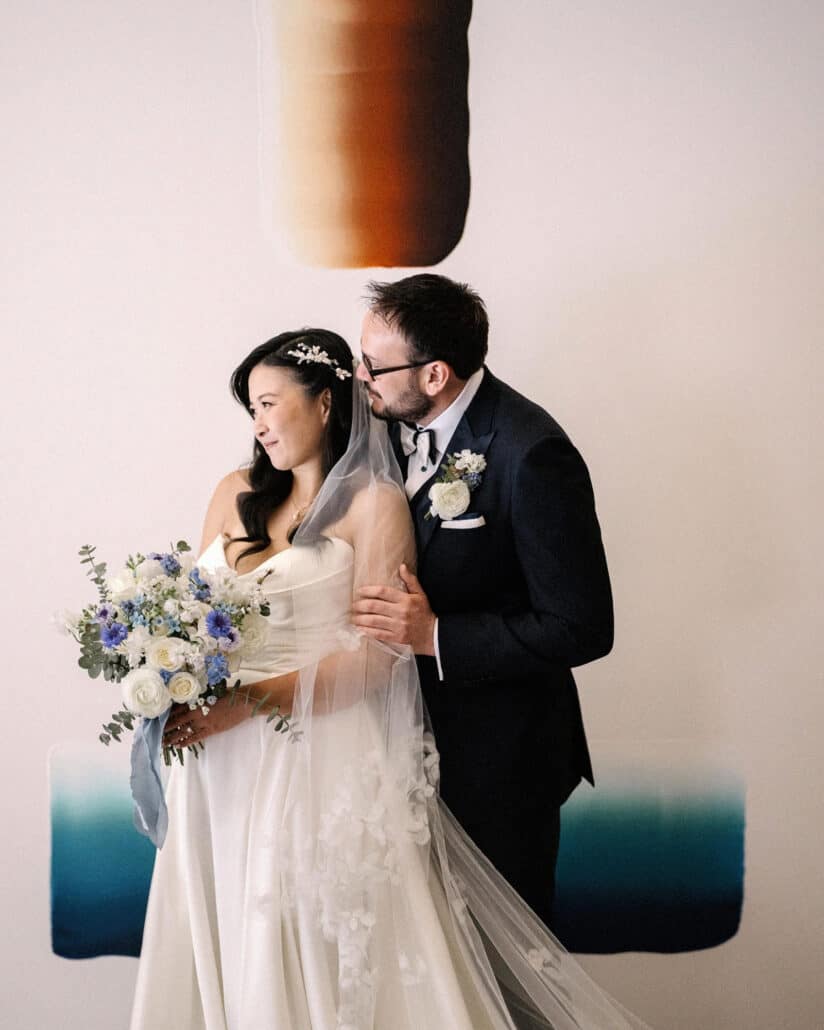
They got ready in separate suites, each with their bridal party, in tatami rooms with garden windows. Her flowers were in baby blues and purples, colours that would carry into the evening. Then they met for their first look on the deck over the pond and read their private vows to each other from two small books. They both cried.
We’ll leave those words with them.
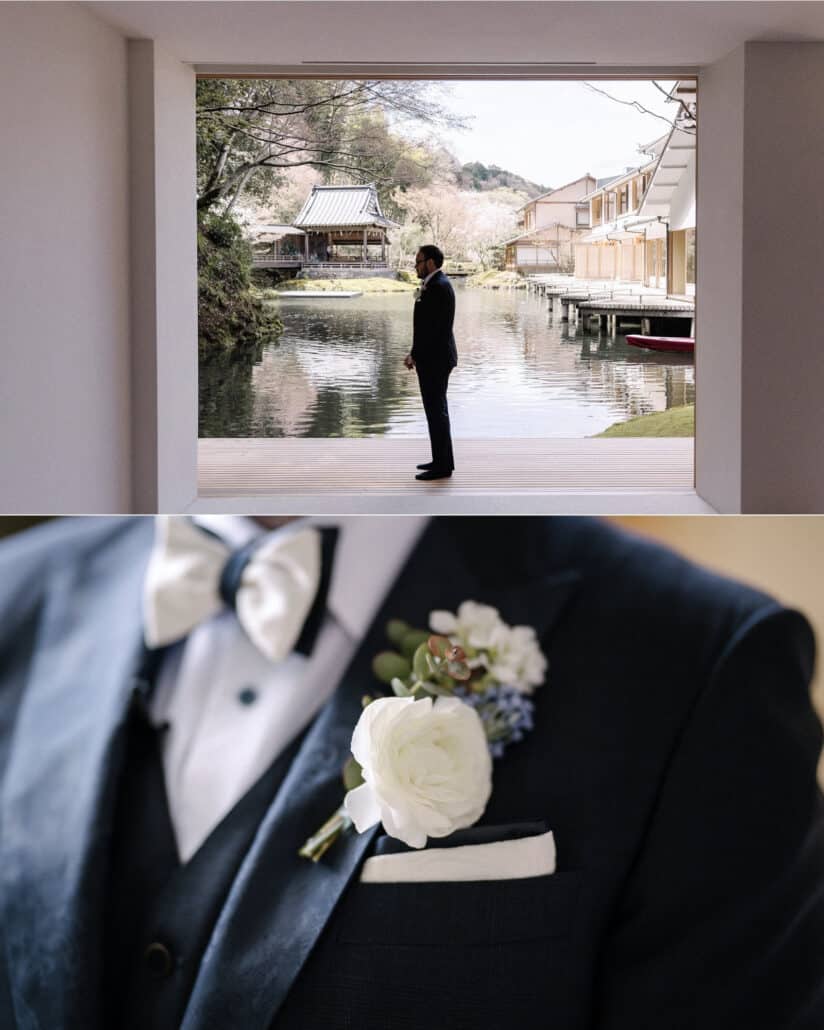
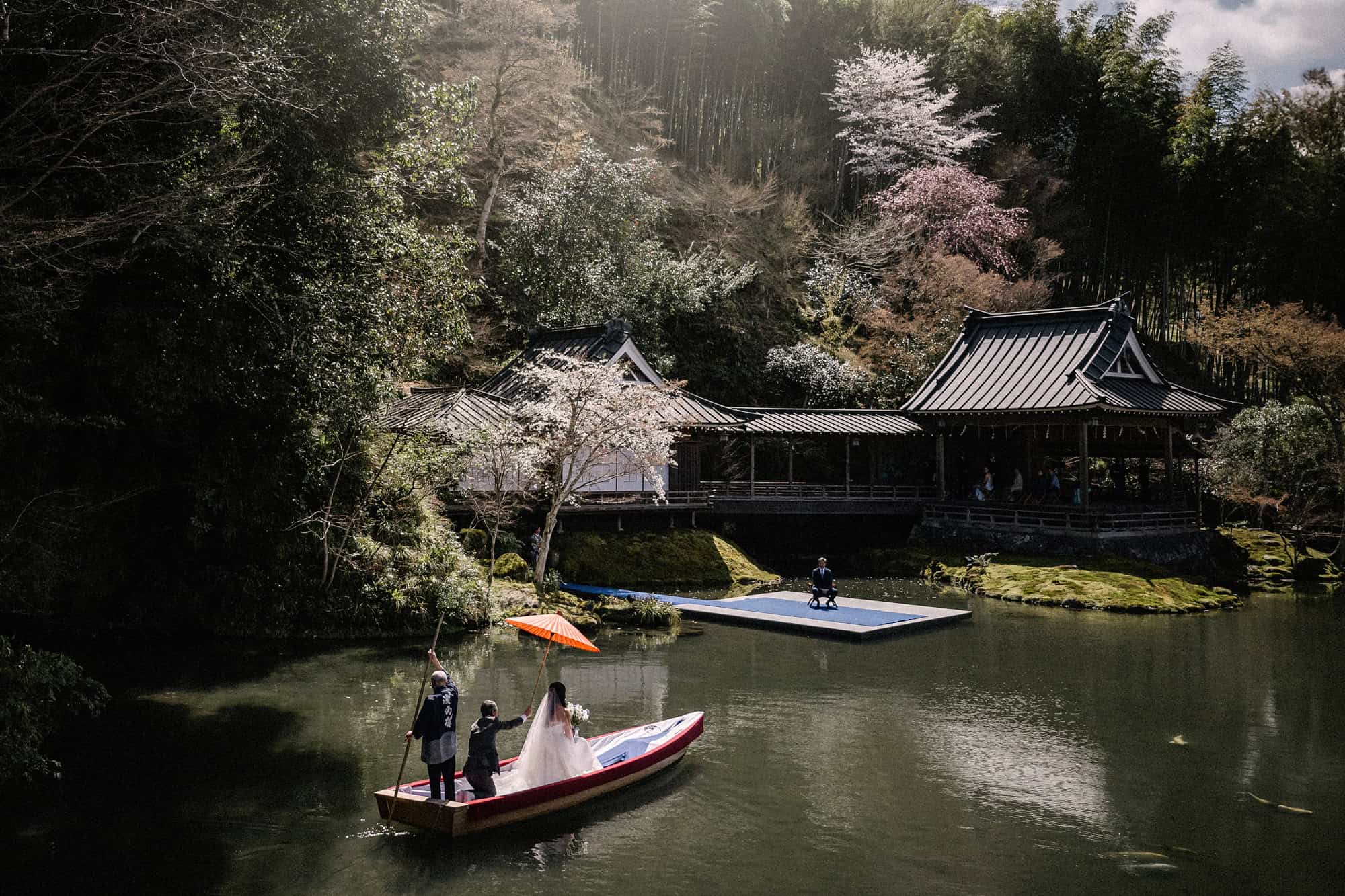
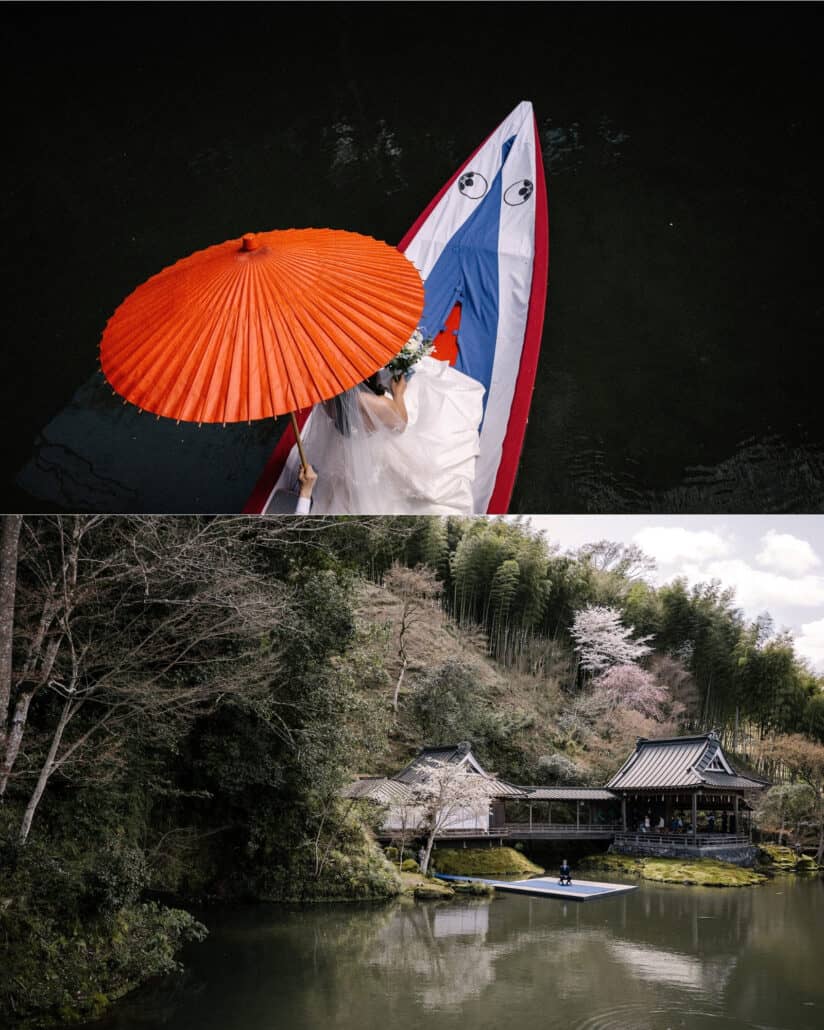
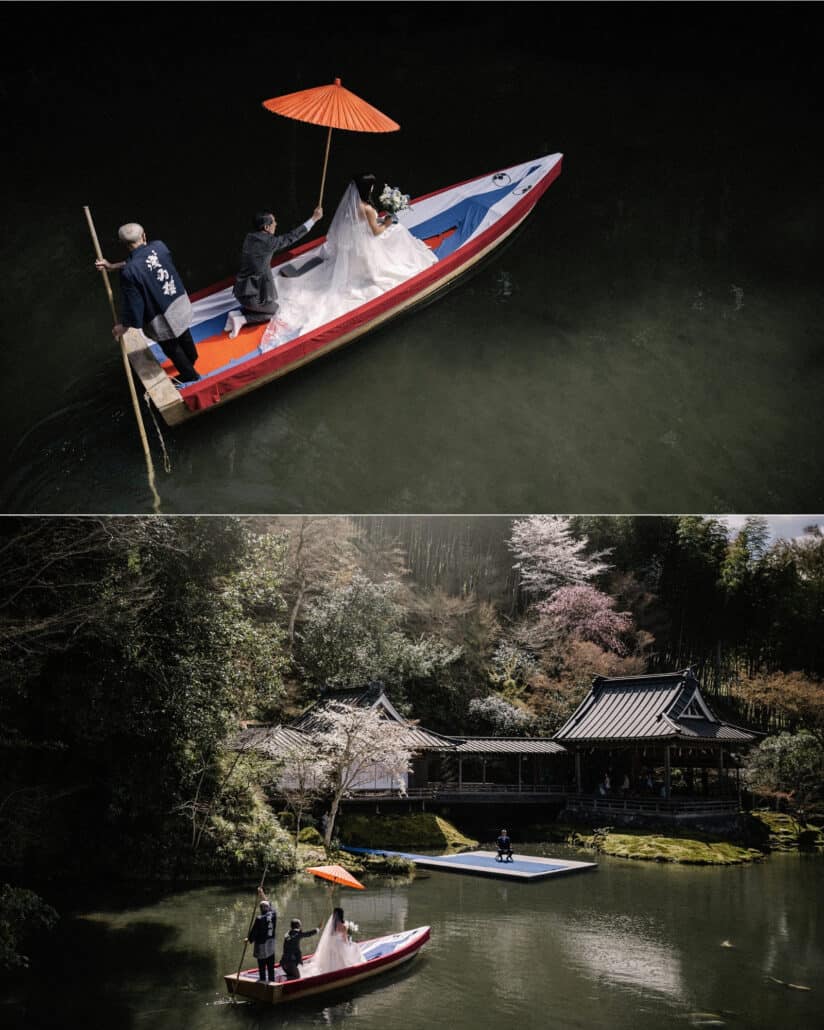
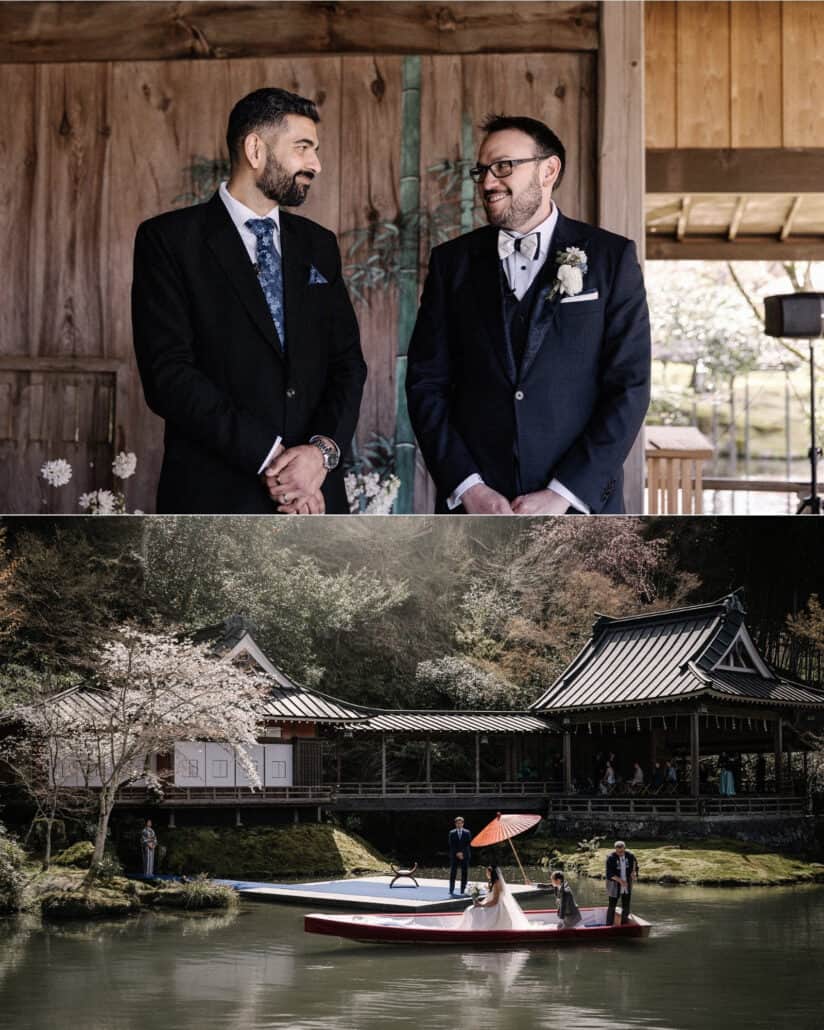
Then she crossed the pond. A boatman poled the small wooden boat across the water, while a member of Asaba’s staff knelt beside her holding a red paper umbrella. The guests watched from the Noh stage, with the hill behind them white and pink with blossom.
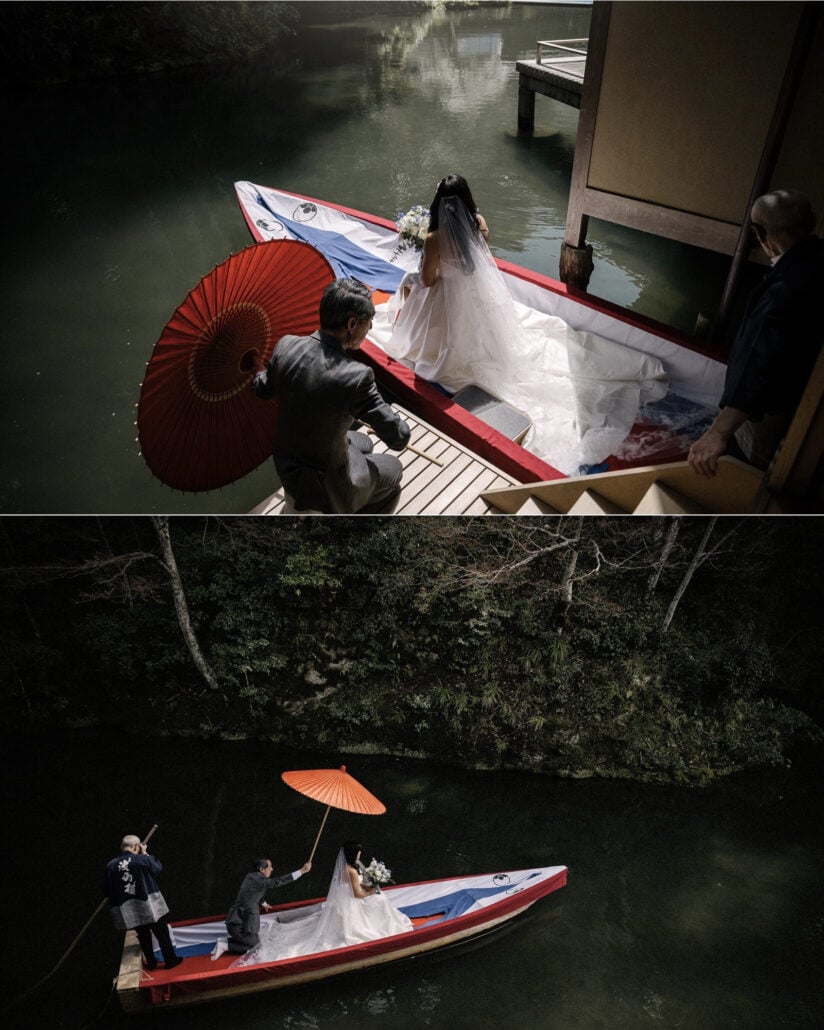
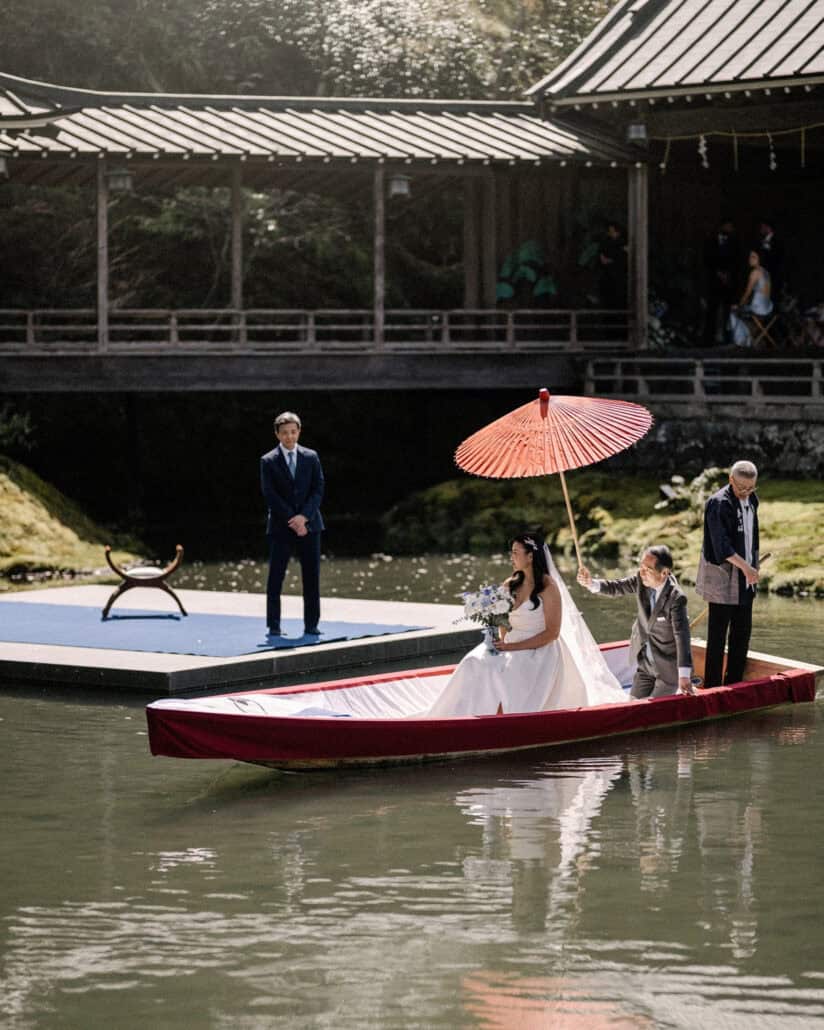
By the water, the musicians played Elvis Presley’s “Can’t Help Falling in Love” on classical guitar and violin. The music drifted out across the ryokan as she came over the water, and for a few minutes the whole place felt ethereal. That familiar melody, carrying across a pond towards a Noh stage, sounded entirely at home. It’s one of the pleasures of a wedding like this: the place the couple has fallen for can hold the songs, traditions and people they bring with them.
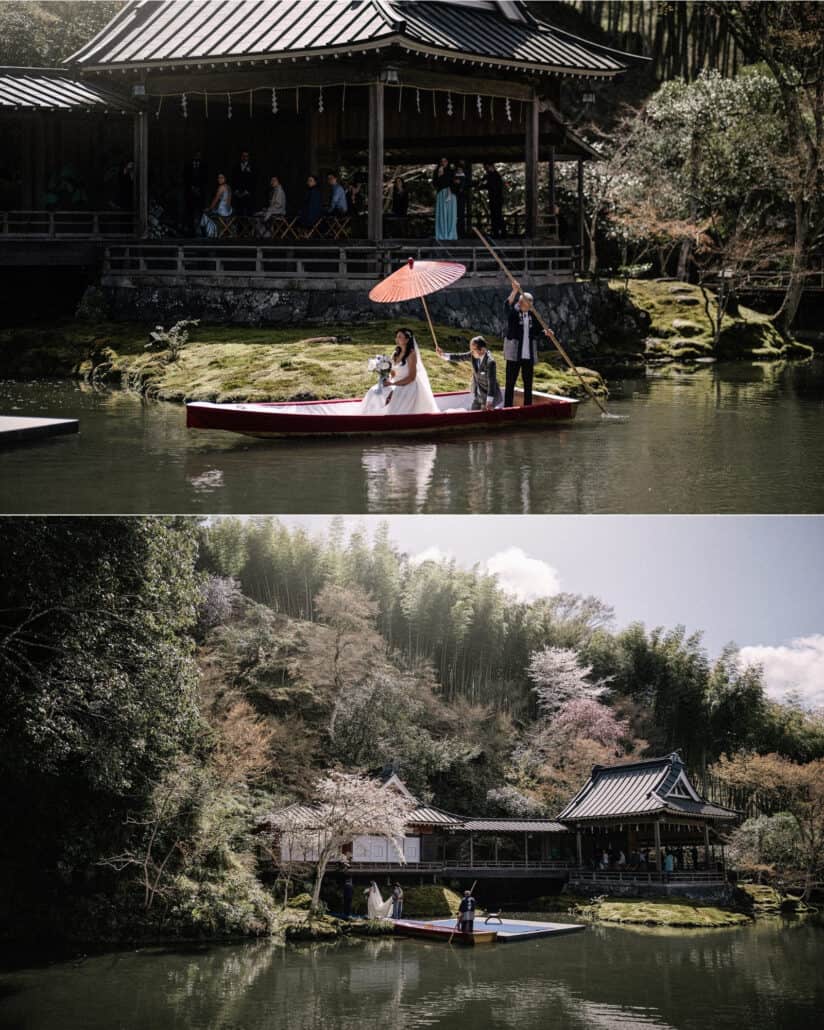
A bride arriving by boat is a considerable entrance. But the detail we keep returning to is her father waiting at the floating platform on the other side, ready to walk her onto the stage. All that water, music and blossom brought her to someone she knew, who’d take her the rest of the way.
Two Families on the Noh Stage
There’d been a change of officiant. The friend who was meant to lead the ceremony had fallen ill, and the best man stepped in at the last minute and did the job with real care. His job description had expanded rather suddenly. Someone they’d asked to stand beside them was now helping lead them through the ceremony. Partway through, he asked everyone to “take a moment to breathe, enjoy this experience, and appreciate not only the beauty of the scenery around us but also the love you share for each other.”
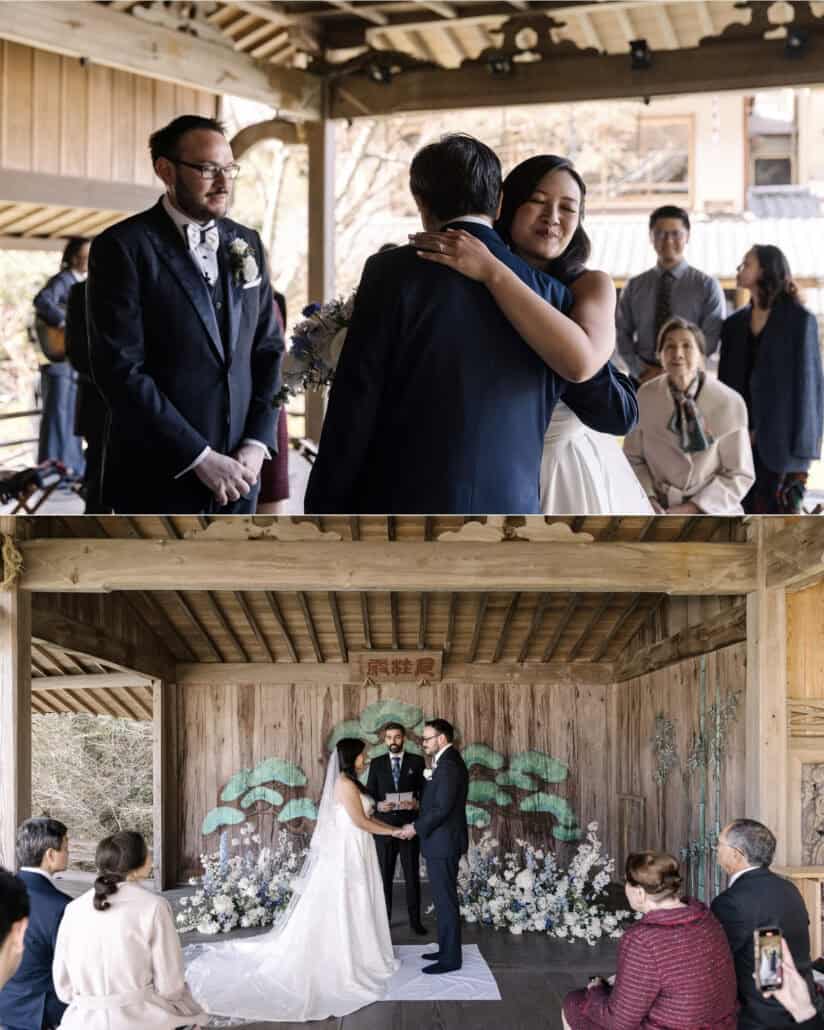
The couple had shaped the script themselves, bringing both families into it. A line they chose was, “Together with you is my favorite place to be.” After all the thought that had gone into choosing where to marry, those words brought the attention back to the two people standing there. They could love a place this much and still find their sense of home in each other.
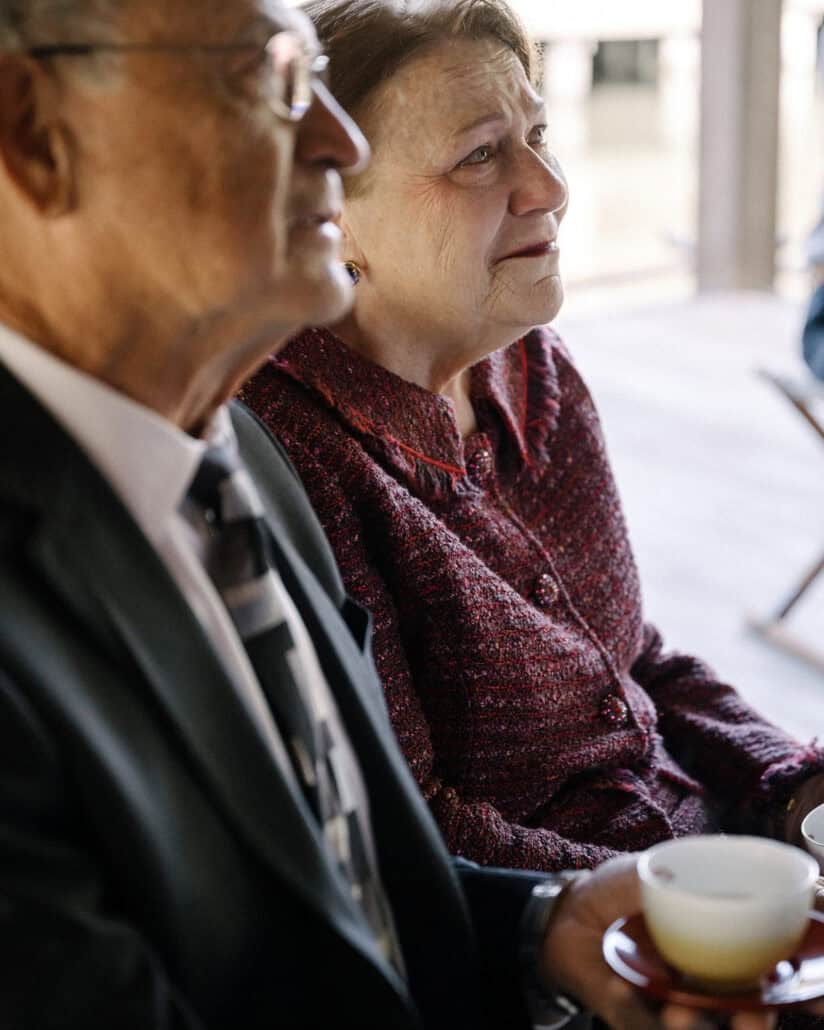
For the bride’s side, they served tea to each set of parents. It was a gesture of respect and thanks, and a way of bringing the families together within the ceremony itself. When they’d learned they could do it on the Noh stage, their response had been, “SO HAPPY that we can do this on the stage.” The capitals had earned their place.
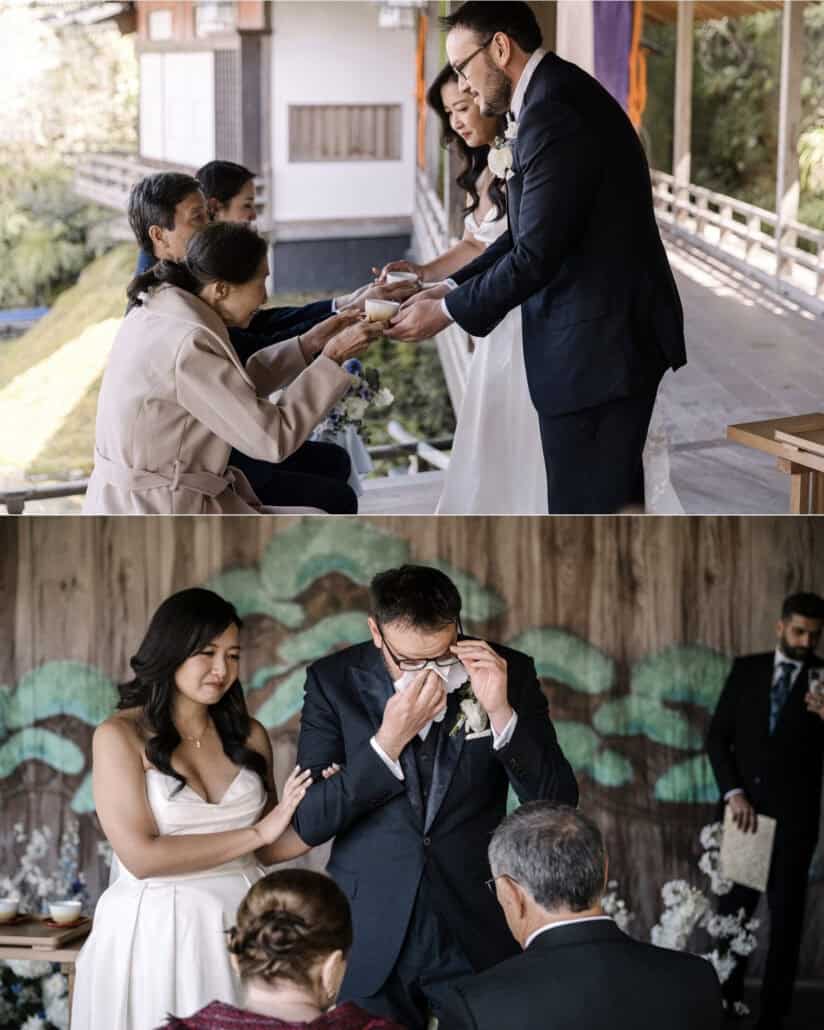
With the painted pine behind them, they served their parents, and the groom wiped his eyes more than once. It takes very little time to hand someone a cup of tea. Saying everything you mean by it can take considerably longer.
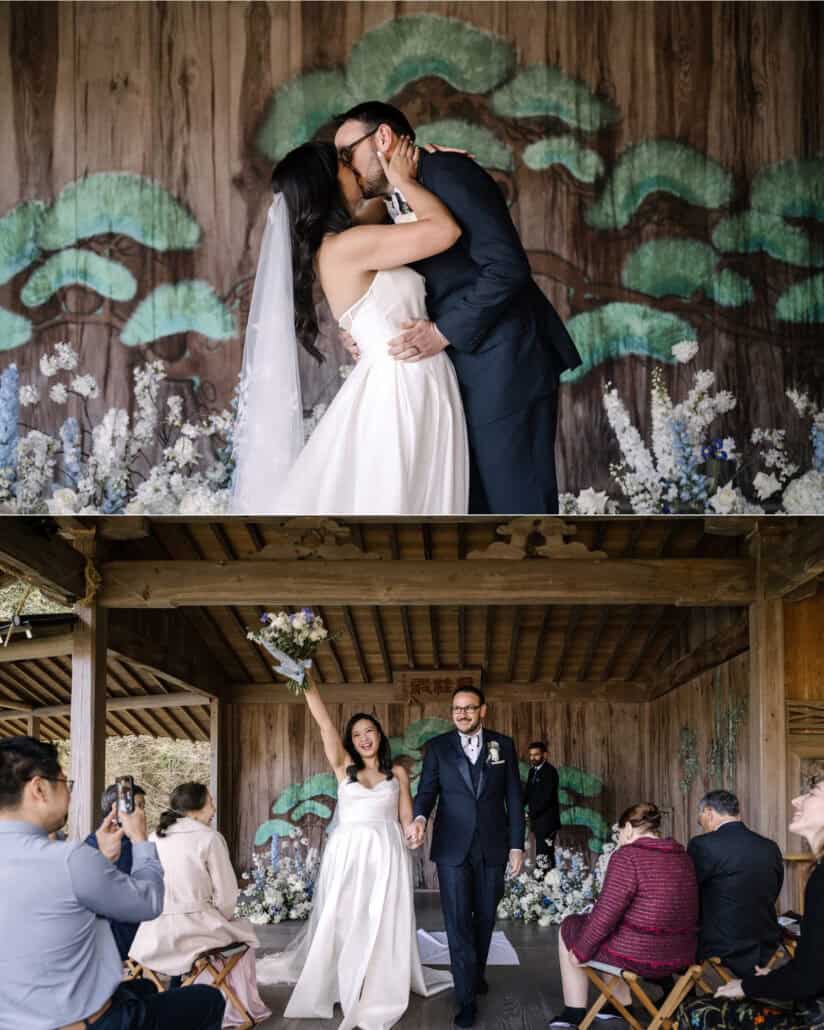
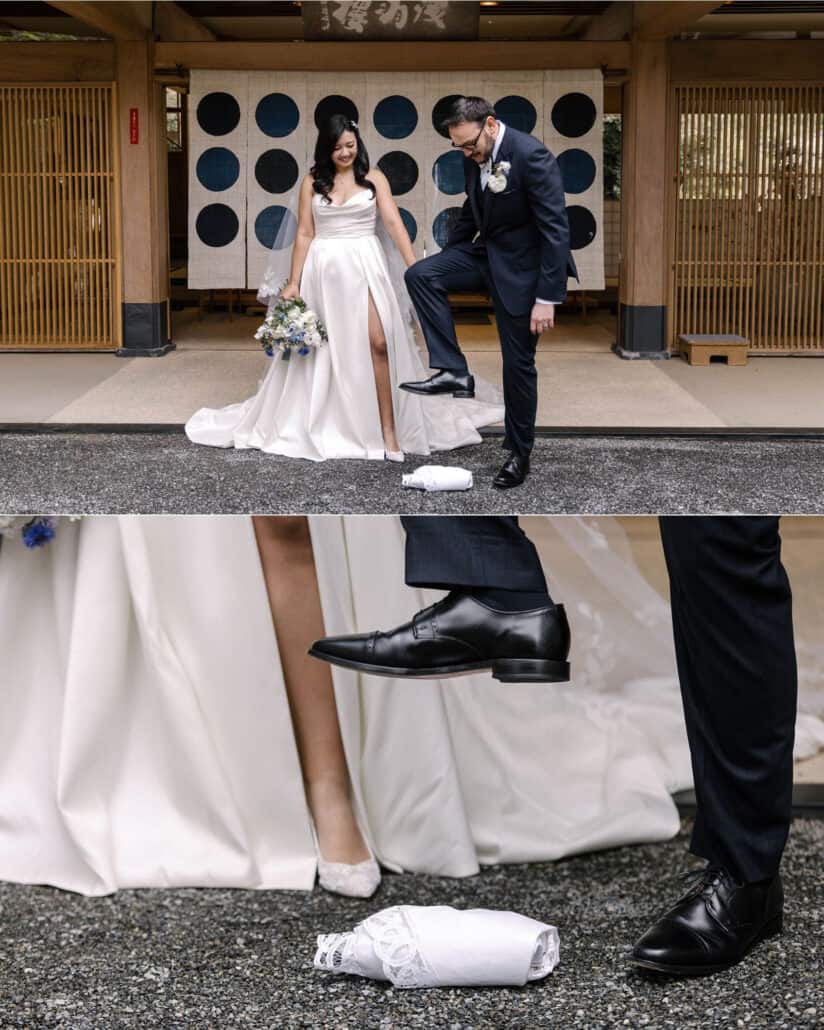
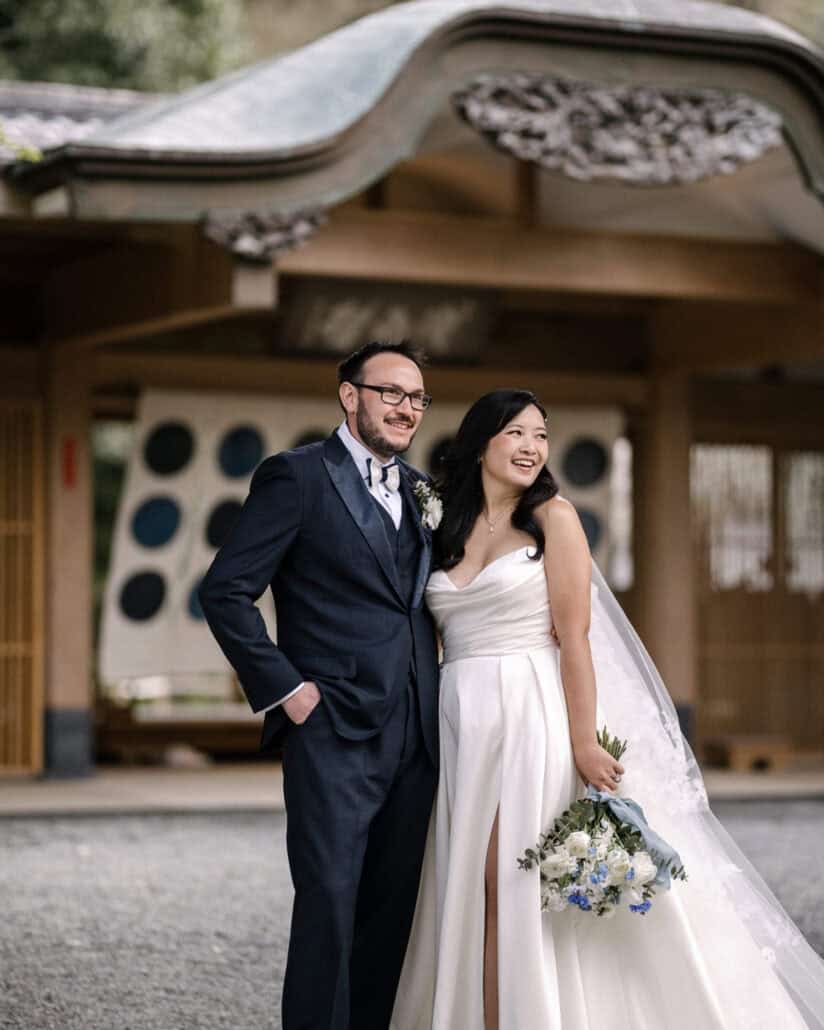
The groom’s family tradition had its place too. A little later, at the ryokan’s entrance, came the Jewish tradition of breaking the glass.
Spring in Shuzenji
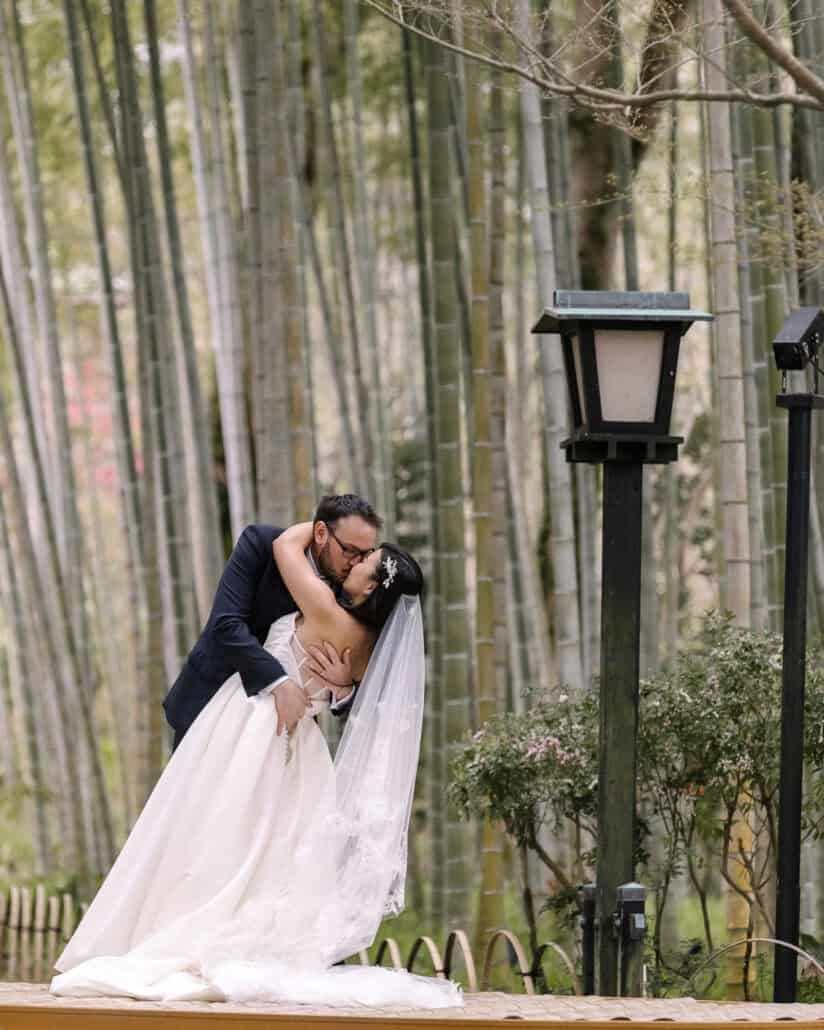
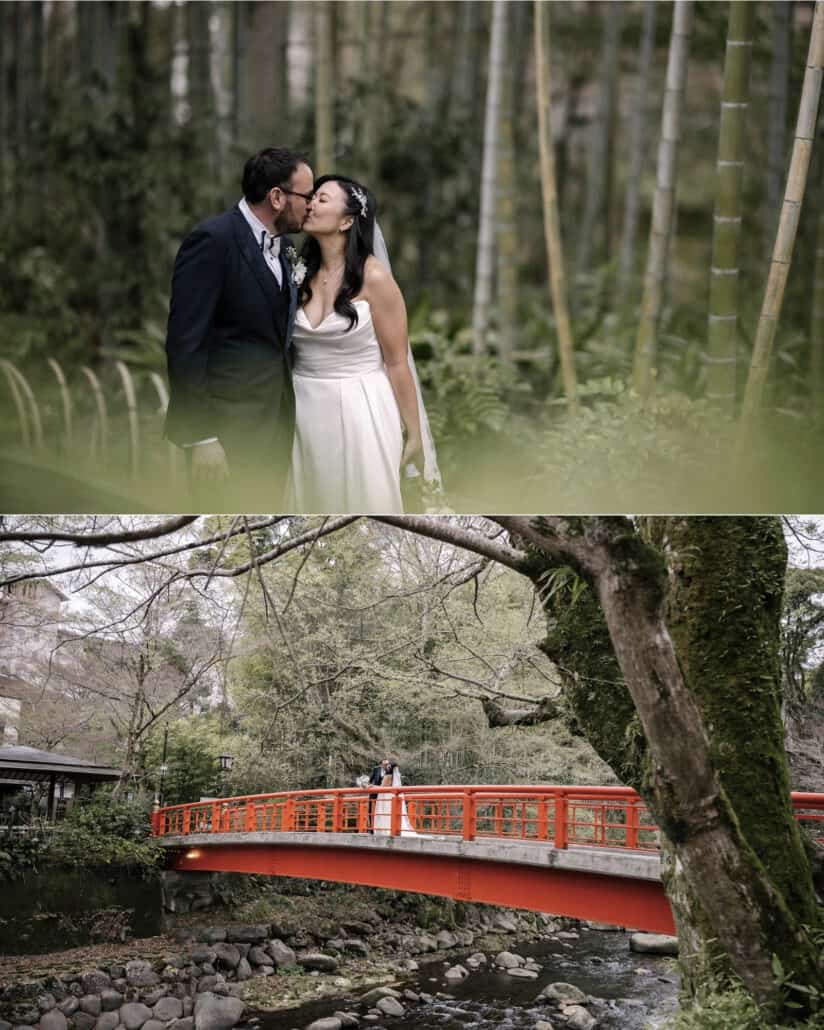
Afterwards, we went out into the town and the blossoms. A nearby cherry grove was in full bloom, and their walk took them over Shuzenji’s red bridges across the Katsura River and along the bamboo path. The setting kept changing within that small stretch of the afternoon.
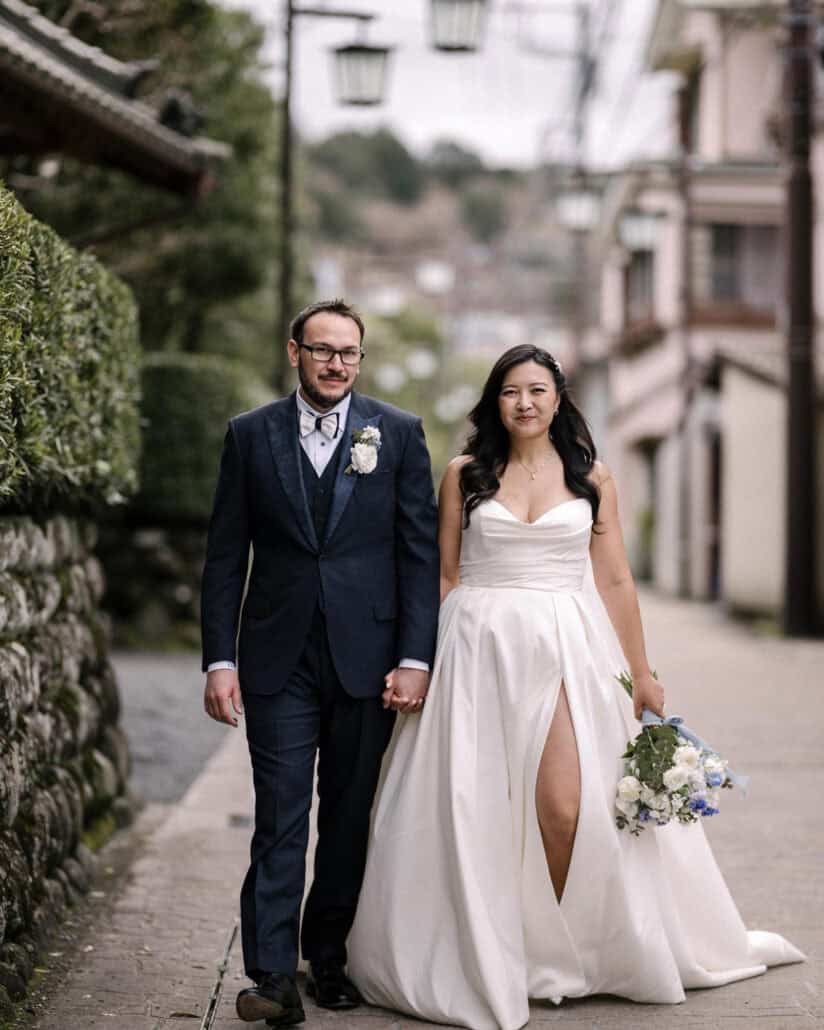
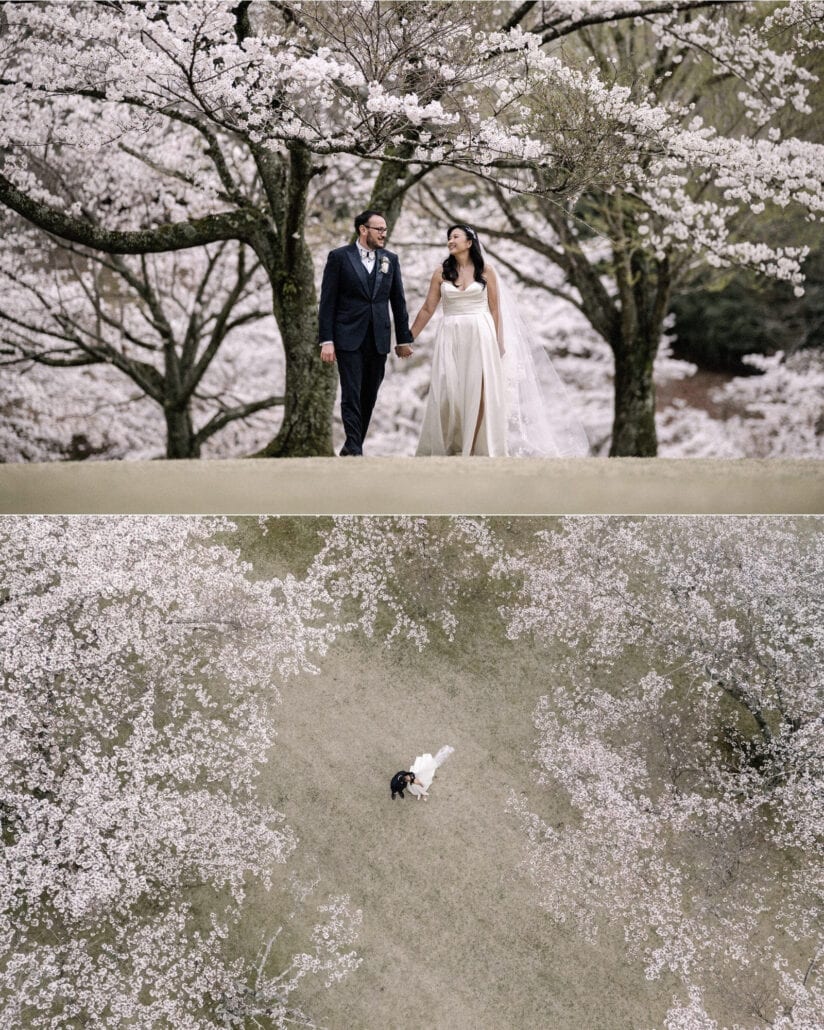
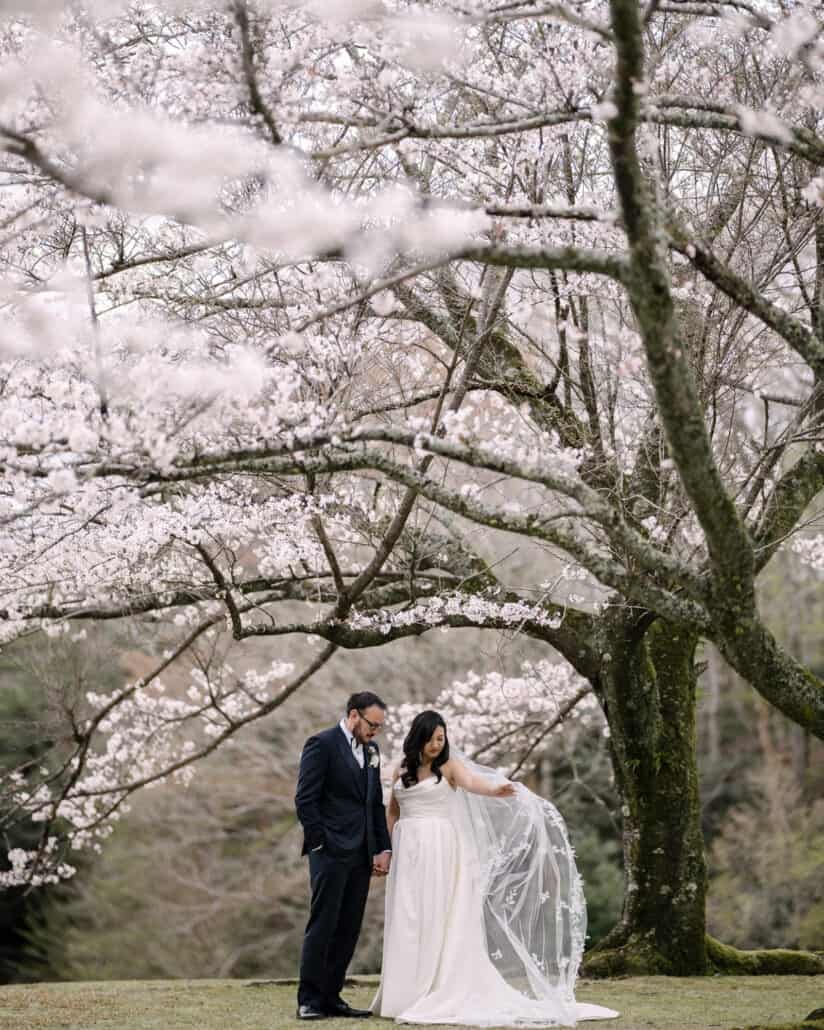
For a spring wedding in Japan, that matters. The season is happening outside the venue too, and part of the pleasure is going out into it together. We talk about the best time to get married in Japan in terms of weather and blossom timing, but the more interesting question is what a particular season lets you do with the day.
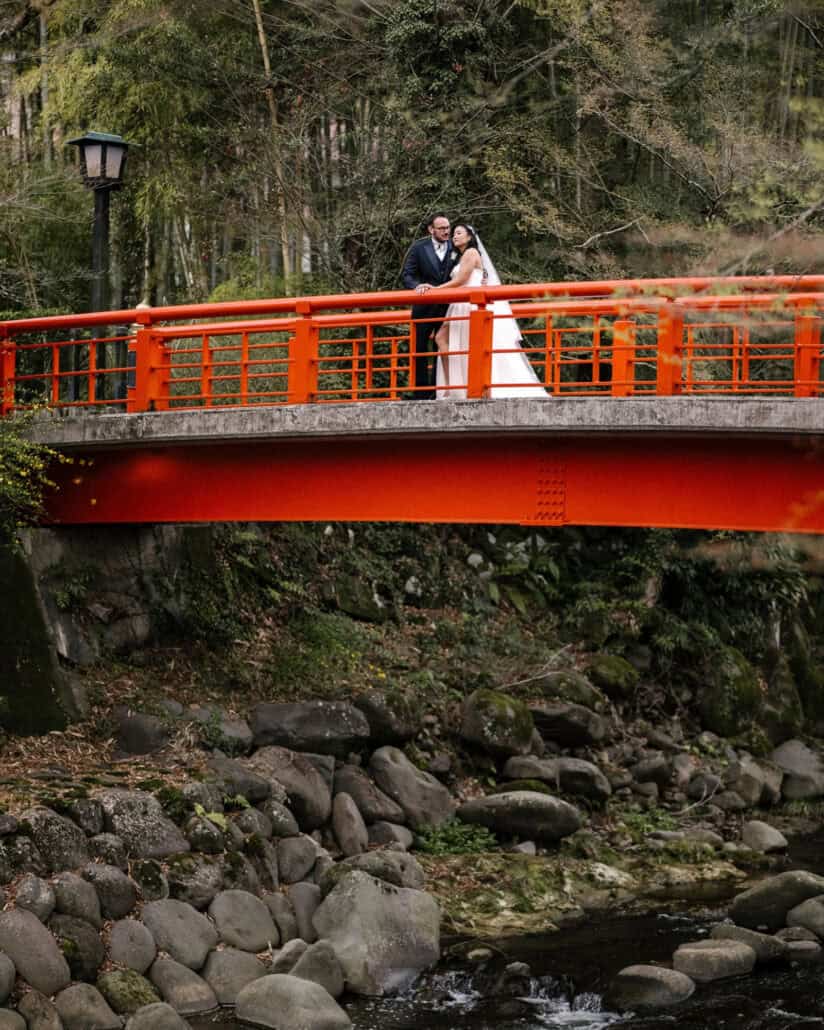
Their first trip had made them want to come back. Now here they were, going for a walk in Japan again, with a ceremony behind them and their people waiting for dinner. We like that a day with an entrance across a pond could also hold this ordinary pleasure: a walk together, somewhere worth looking at.
One Long Table and a Party Behind Closed Doors
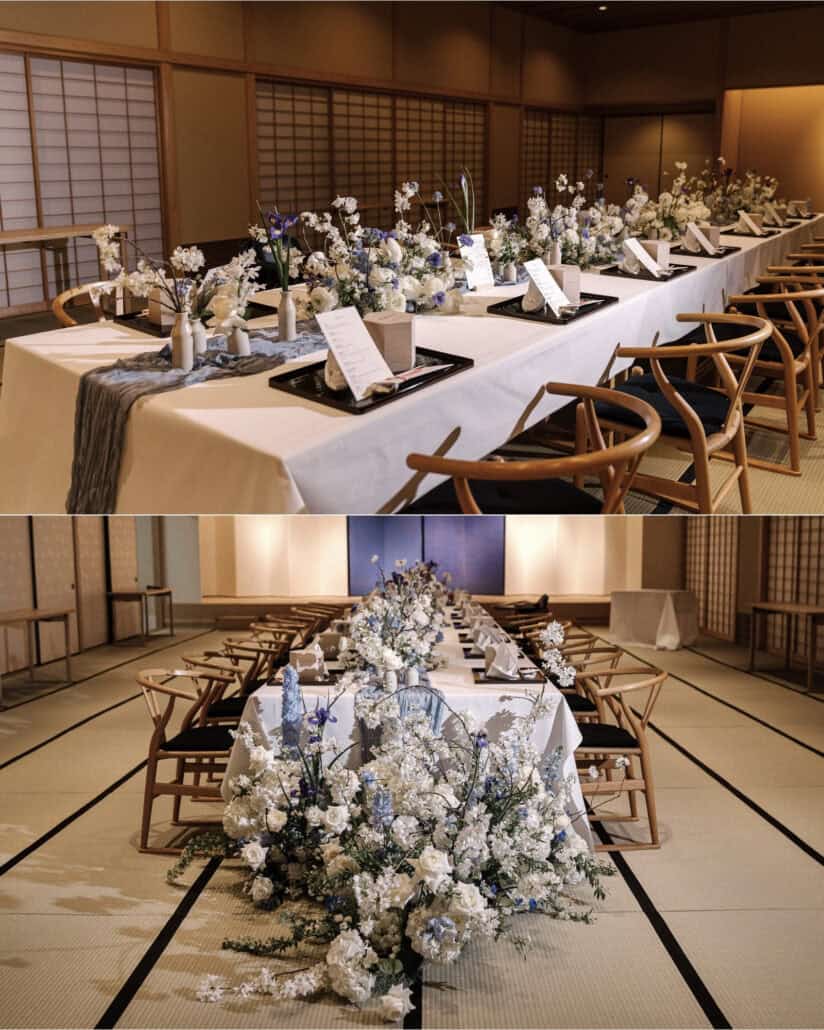
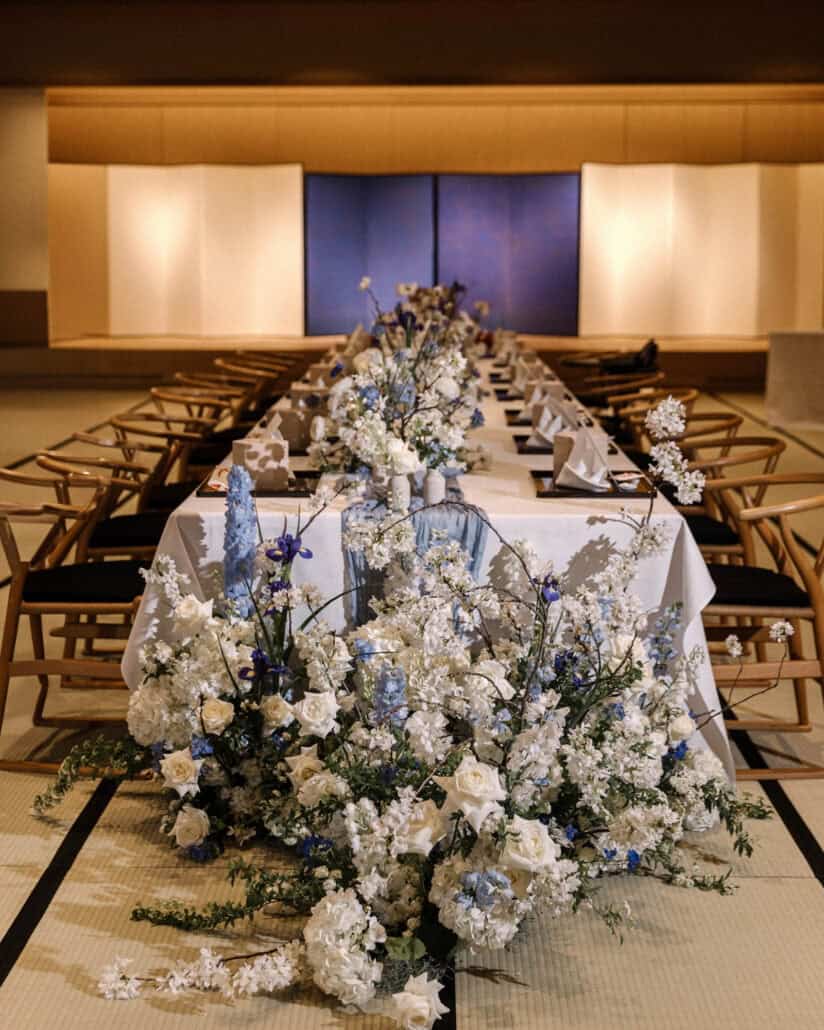
Back at Asaba, one long table was set in a tatami banquet hall, in her blues and whites, with wishbone chairs on the tatami. There was the “Japanese Modern” they’d asked for, carried through into the room where everyone would spend the evening.
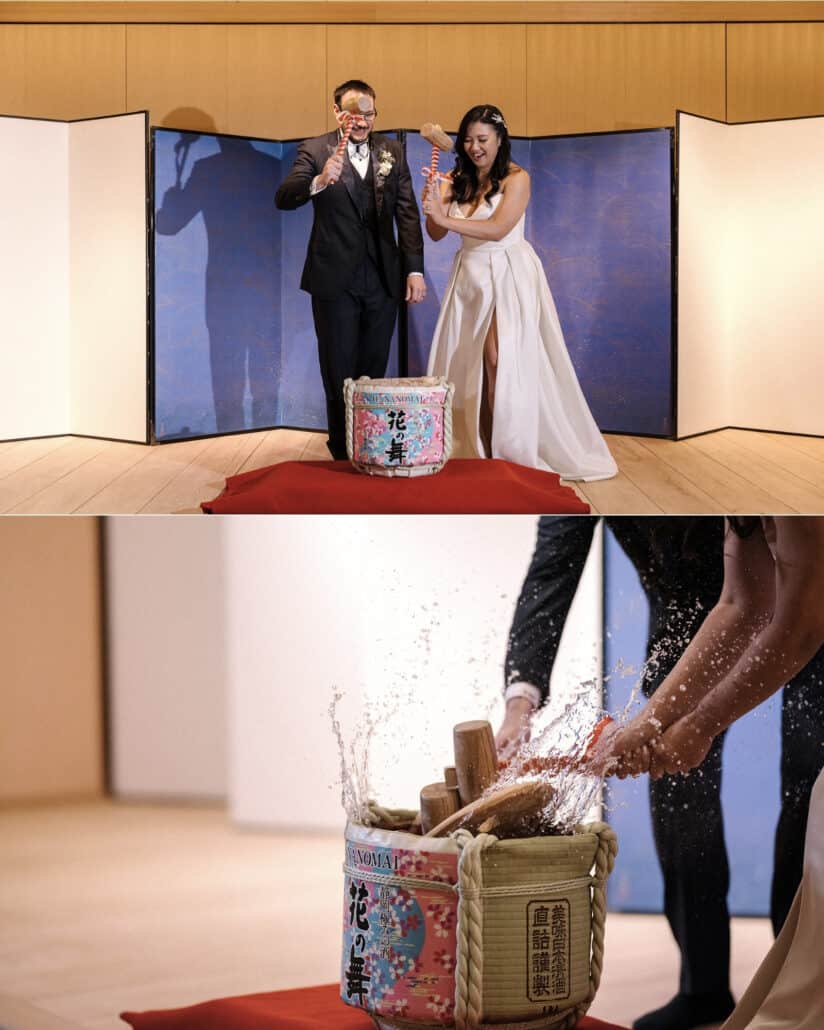
The reception opened with kagami biraki, the breaking open of a sake barrel. They swung hard, and sake went everywhere. Commitment wasn’t an issue.
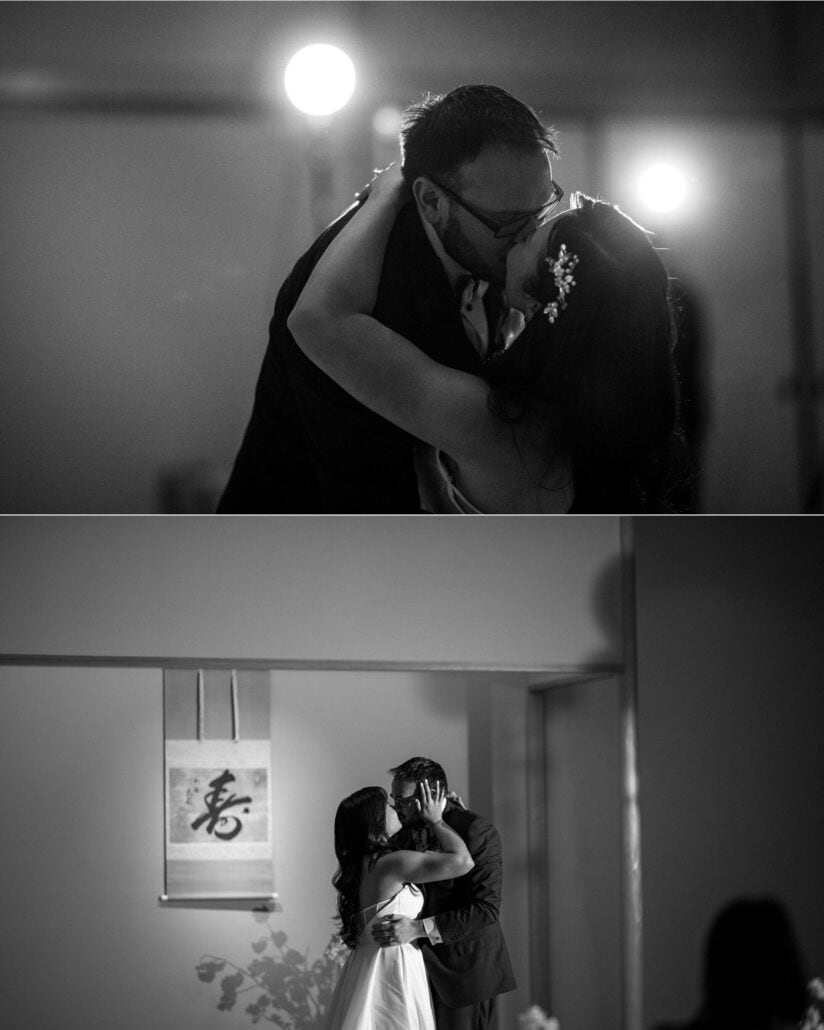
Then came their first dance, dinner and speeches. In the thank-you they’d written for the evening, they recognised everyone who’d come all the way to Japan, “whether it’s family or those who feel like family.” All those different relationships had brought people to the same table.
A ryokan does ask you to keep the noise down. For the after-party, they moved into a room and closed the doors, then carried on: sunglasses, sake in wooden masu on the tatami and music. The door was doing important work.
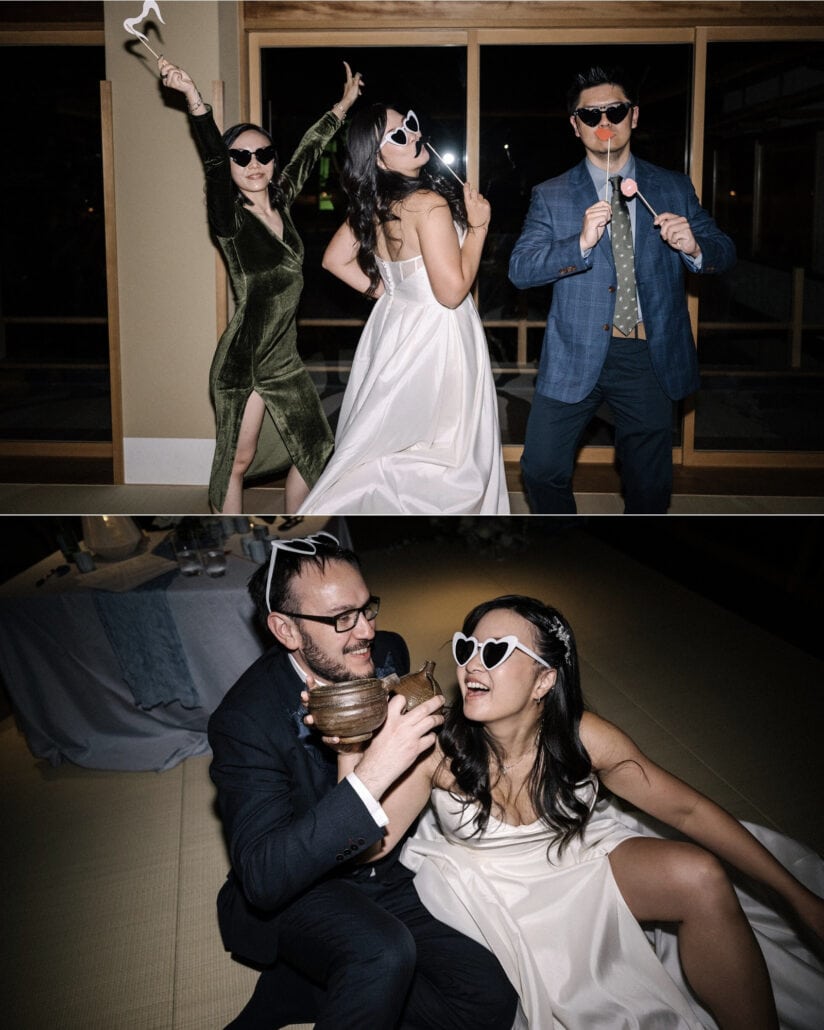
They played Konpira Fune Fune, a traditional ozashiki-asobi, or geisha banquet game, in which two people try to keep their hand movements in time with a song while an object is snatched away and the rules change. It gets faster. Add sake, and your own hand starts making independent decisions. It had everybody in stitches.
The song has its own travelling history. Pilgrims visiting Konpira are said to have helped spread it around Japan, carrying something of their journey home with them. We like that connection here: a couple who’d returned to share Japan, and an old travelling song giving their people another reason to remember it.
Most of us know the people we love in different parts of our lives. Bringing them into one room is rare enough; getting to watch them make one another laugh is something else. For once, the people you’ll want to tell the story to are already in it.
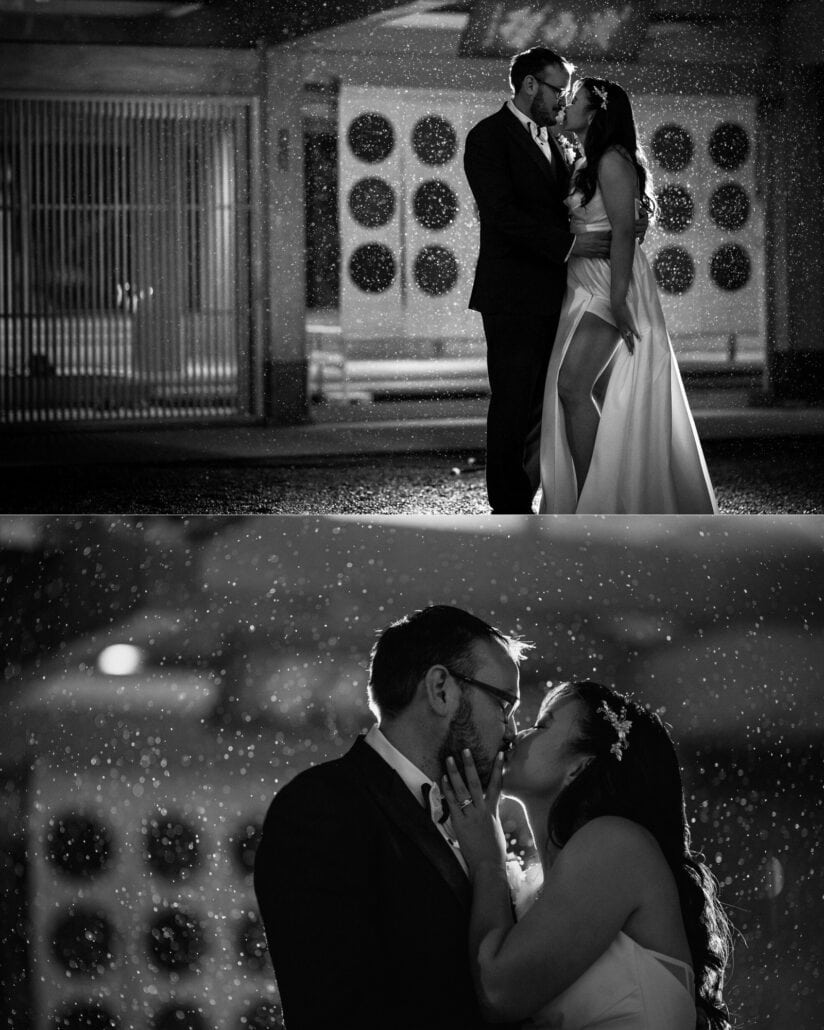
Later, they said goodbye to some of their guests outside in a light rain, then wandered back into the ryokan. The goodbyes are part of it too. You bring all these people together knowing they’ll eventually go back to their separate lives, with a little more of one another in them.
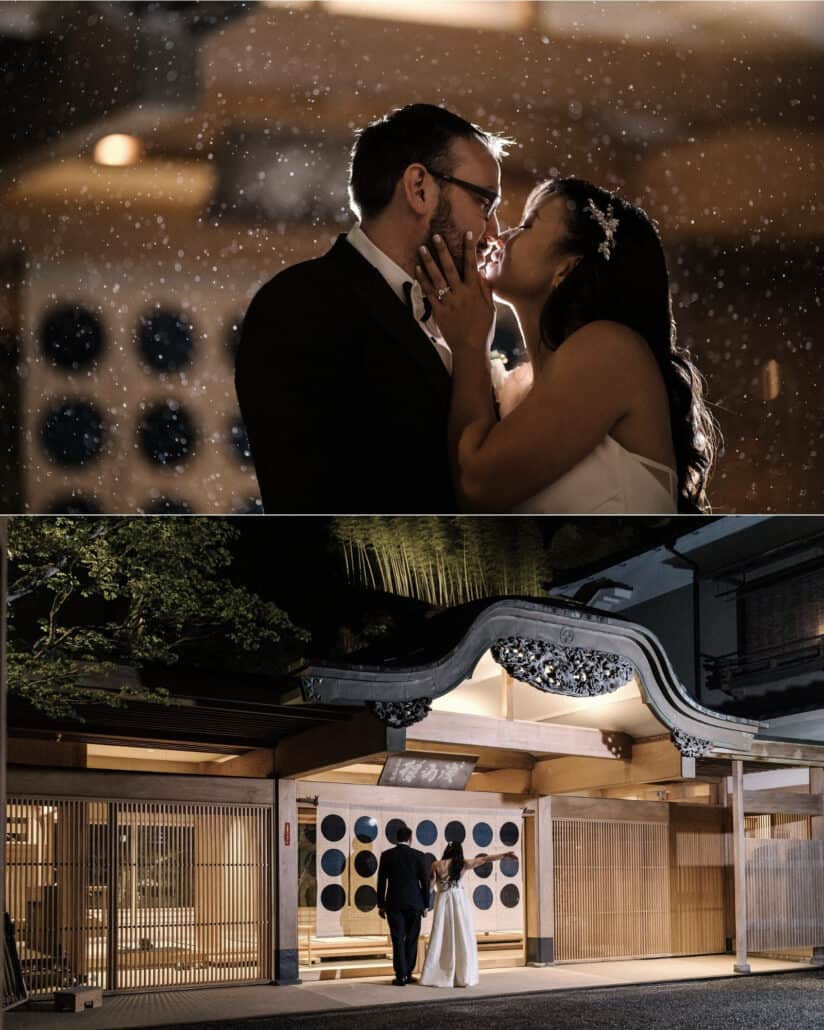
We planned, photographed and filmed the day. The teaser opens with mist over the hills before the boat crossing to the stage, while the highlight takes the story through to the ryokan’s entrance that night. Film gives that journey movement again, from the crossing everyone watched to the gathering finally coming to an end.
An Asaba Ryokan wedding gave them somewhere to gather the people who’d helped make them who they were. They’d first loved Japan between the two of them, and could have kept returning to it that way. Instead, they’d made a place for their families and friends inside something they loved. The next time they talked about Japan, there would be people who could say they remembered it too.
Before Shuzenji, a Little Tokyo
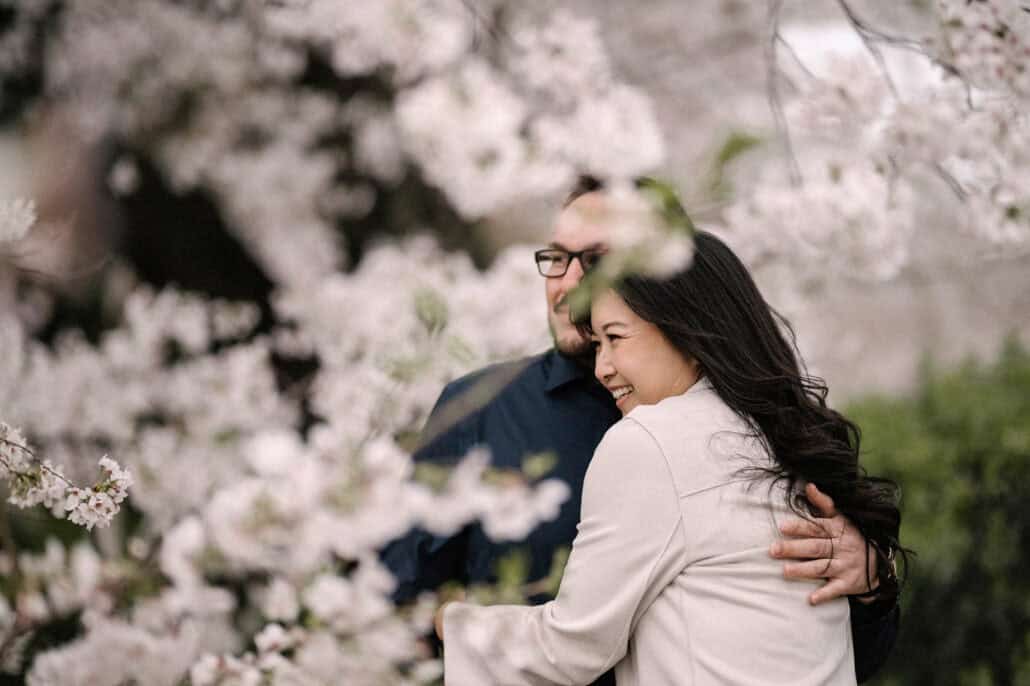
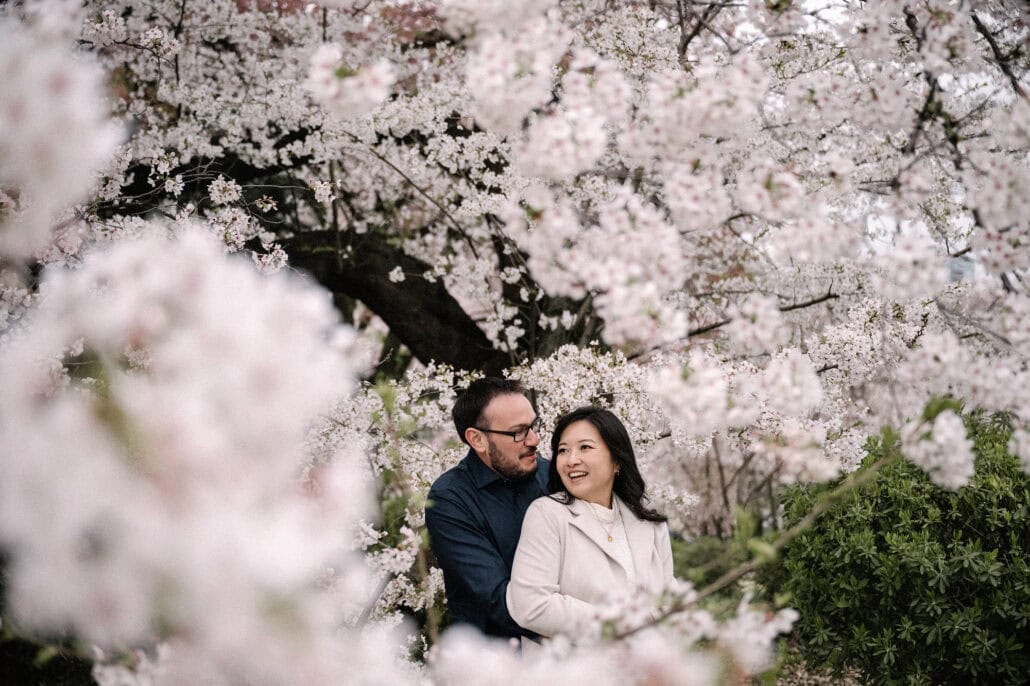
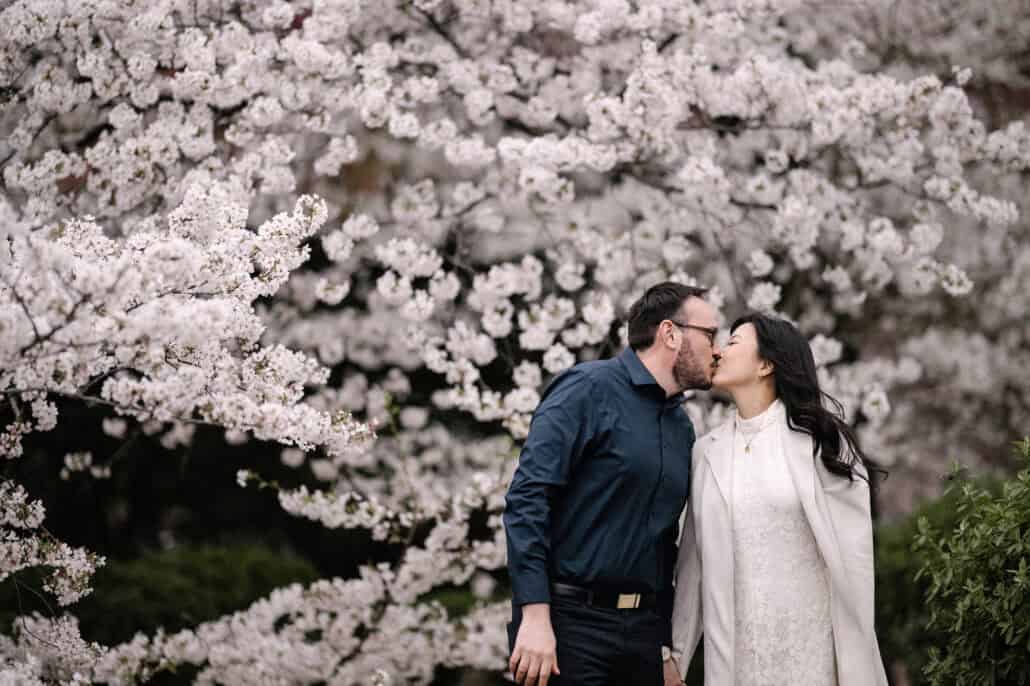
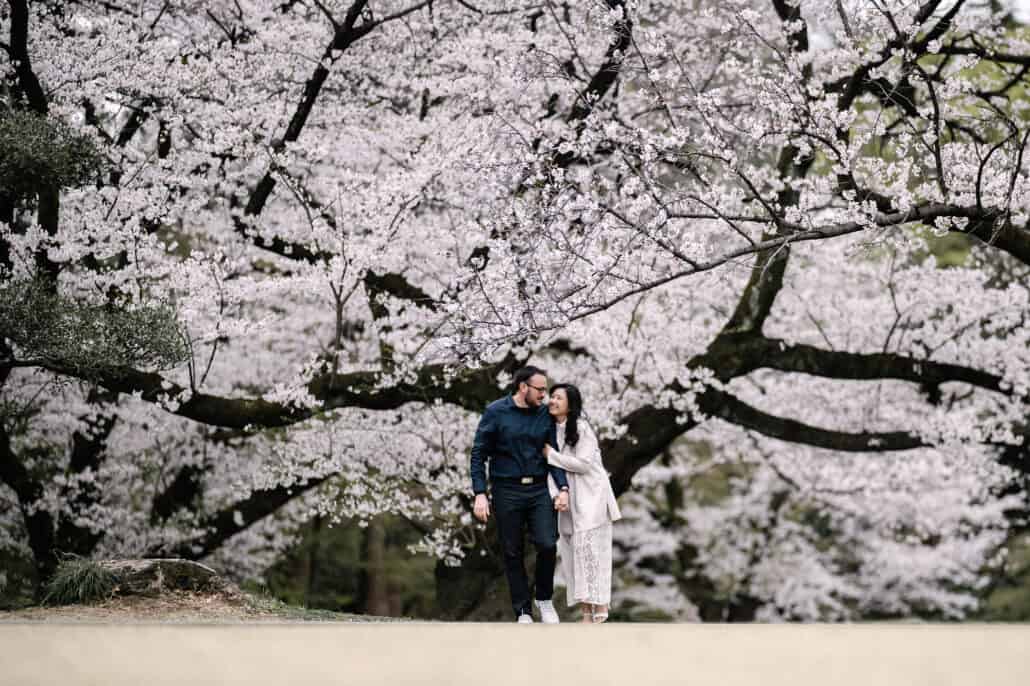
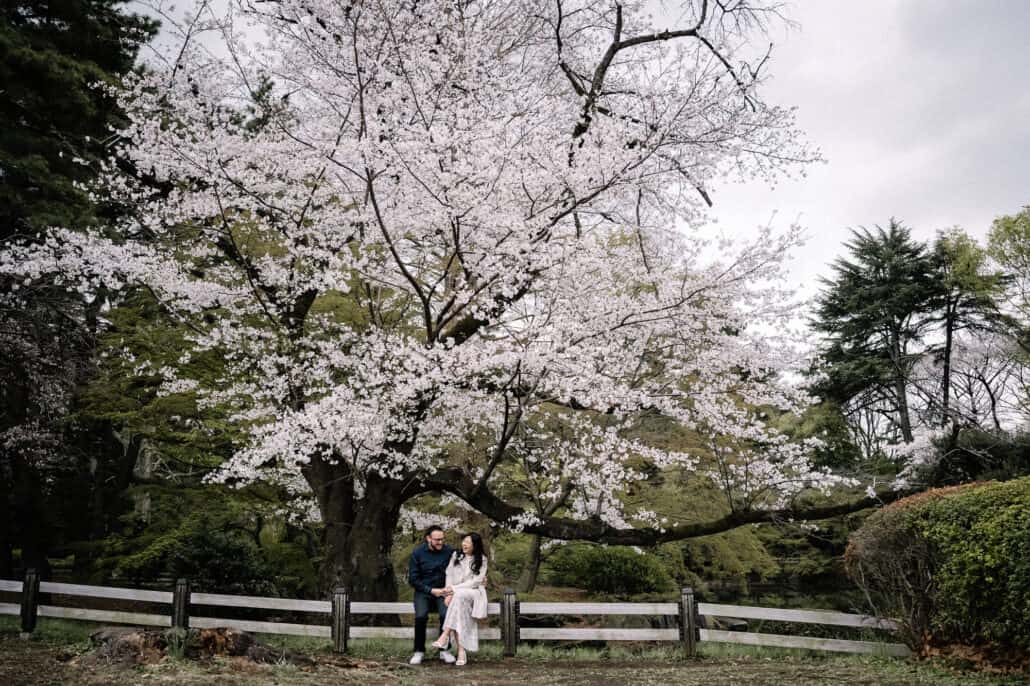
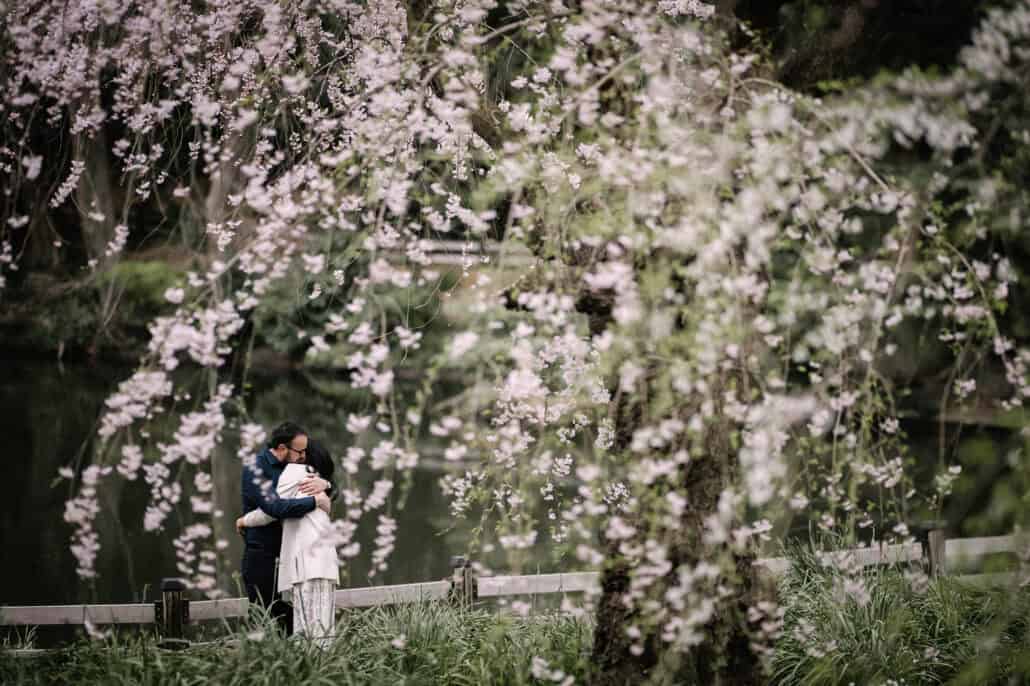
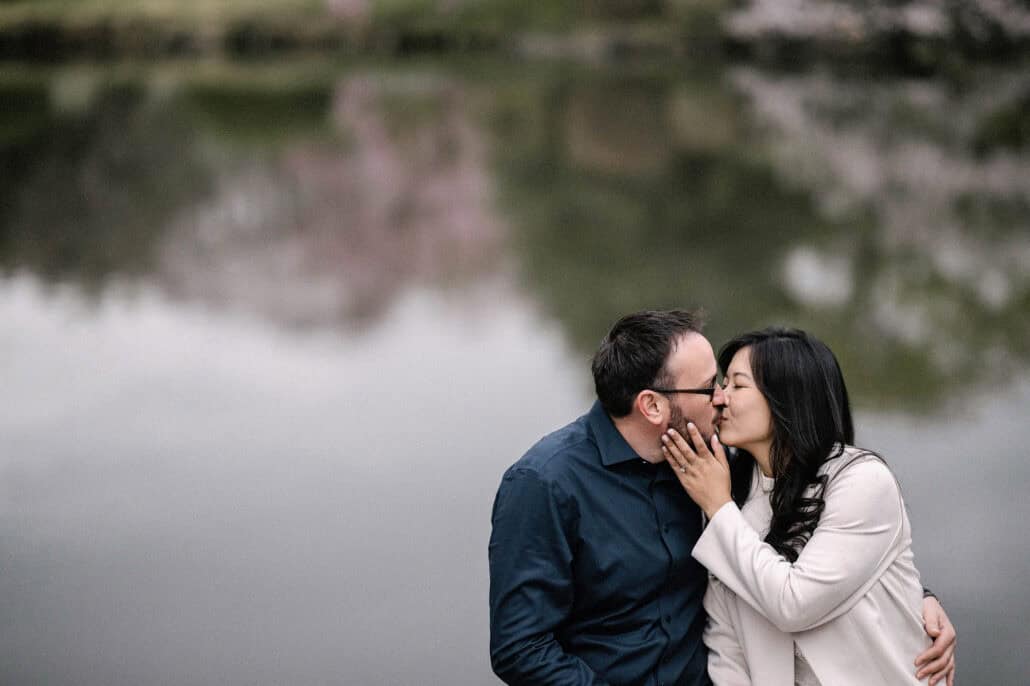
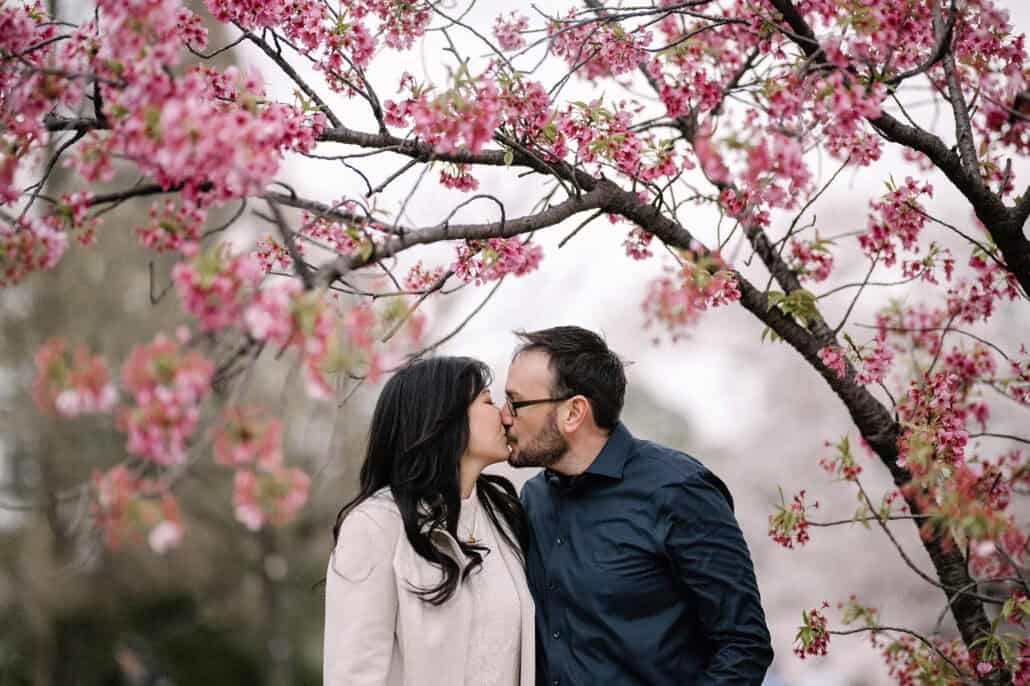
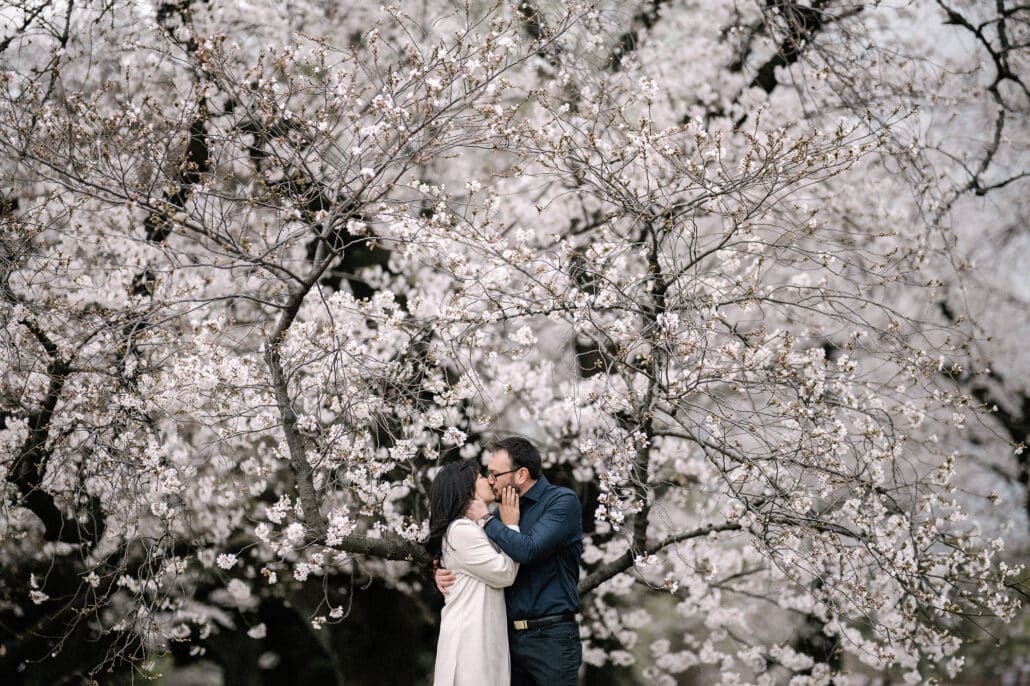
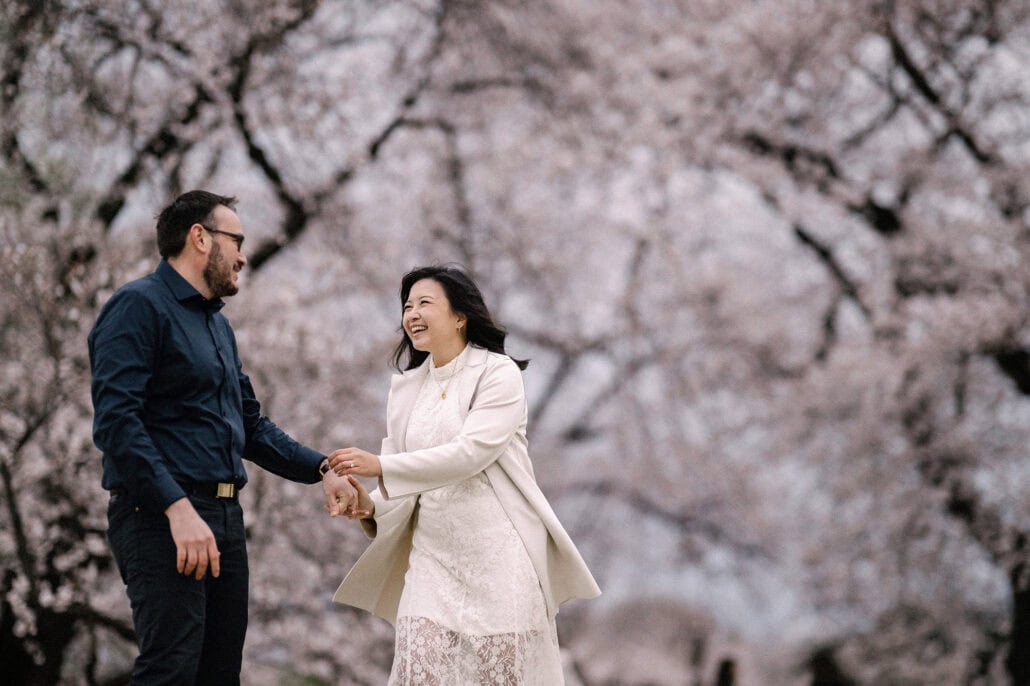
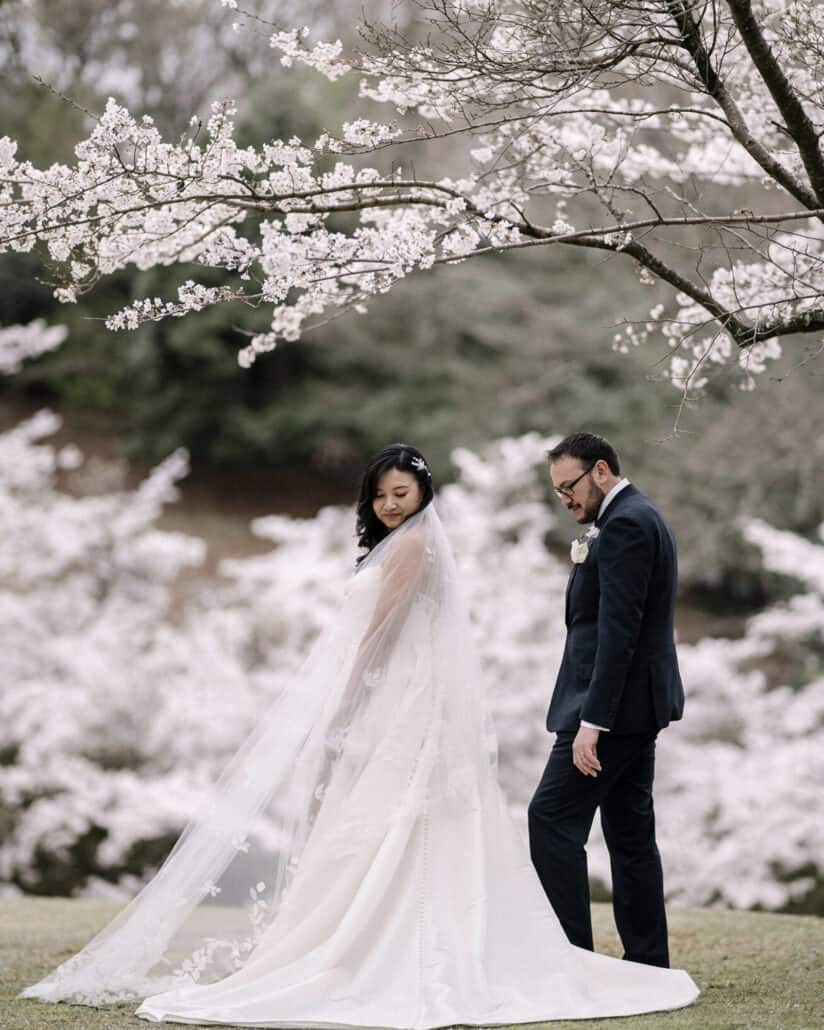
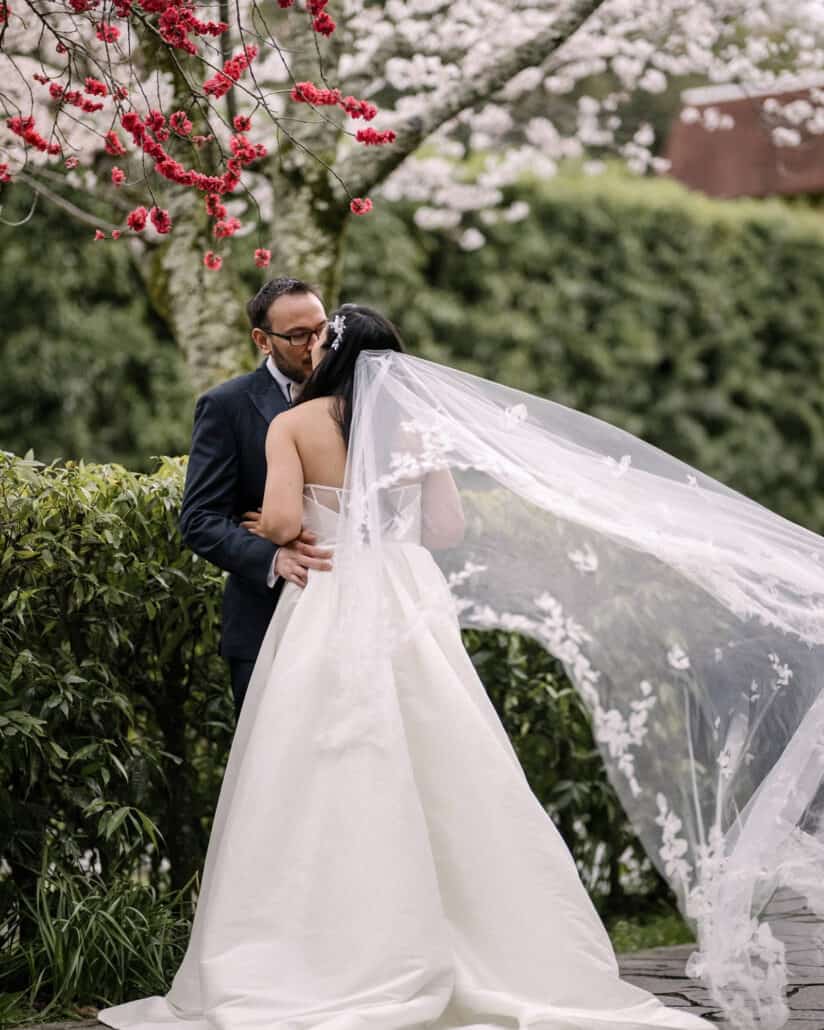
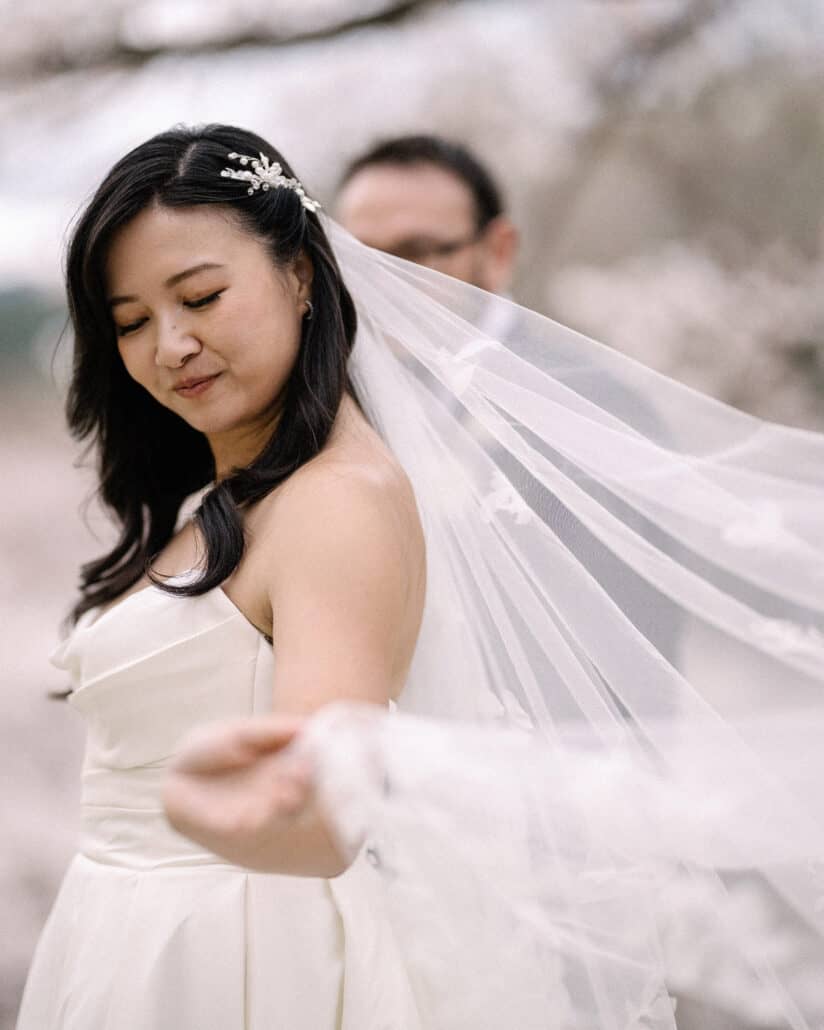
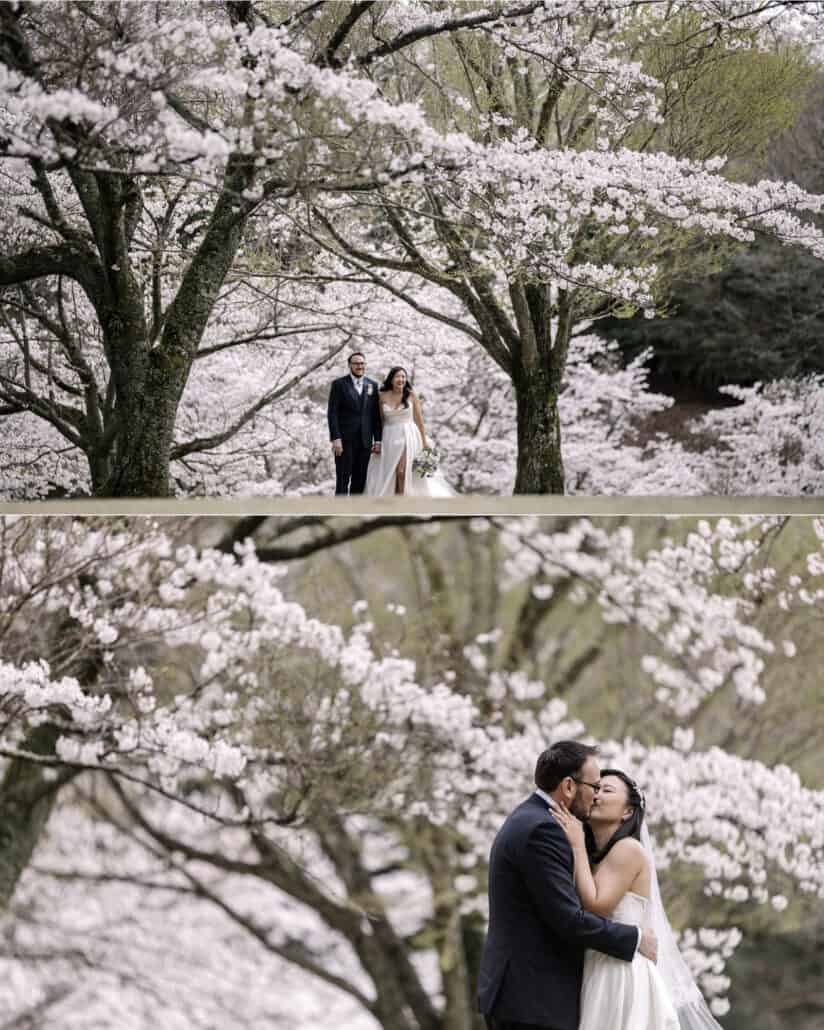
Two days earlier, we’d spent time with them beneath Tokyo’s cherry blossoms for their pre-wedding shoot. By then, our planning team had spent months in conversation with them, getting to know the people as well as the wedding they wanted. That understanding gives the photography and film team a great deal to draw on. Getting to know someone through another person’s eyes is a beginning; we still have to build a relationship with the couple ourselves.
We’re being asked to tell the story of a relationship that was unfolding long before we entered it. Two people bring their histories, their culture, their humour and their own ways of showing affection into the space in front of a camera. Experience helps us make a connection quickly with people whose lives may be very different from ours, and judge when to offer direction, when to wait and when to leave a moment alone. Those decisions depend on understanding the particular people we’re with, and what makes them who they are together.
While we’re learning about them, they’re getting to know us too. There’s trust involved in letting someone look closely at your relationship and decide how to tell its story, and earning that trust is part of the creative work. Time together before the wedding lets that understanding develop through conversation and simply being in one another’s company. It follows us into the day, shaping what we anticipate and what we recognise when it happens in front of us.
Someone seeing the photographs later can appreciate how the day looked. We want the couple to recognise what it was like to be them.