“Isn’t a wedding a wedding?”
A Japanese bride kept asking it while we were planning her wedding in Hakone. Neither she nor her family had ever been to an international wedding, and whenever her Australian fiancé tried to describe the day he had in mind, she couldn’t picture it.
Both are weddings, and both mean everything to the families in the room. What differs is the shape. A Japanese wedding is practised over decades to move a family through one day without a pause. A destination wedding in Japan takes everyone who has travelled for it through several. The weddings where the two meet are the ones that ask the most of us.
A Japanese Wedding, on Its Own Terms
We learned Japanese weddings from the inside, photographing them in the Tokyo hotels that first took a chance on us. What we fell for was the flow.
A Japanese wedding moves from one moment to the next as if it has always known the way. The ceremony ends, and the guests are already being guided to the reception. The bride leaves in one outfit and often comes back through the doors in another. Beside her all day is an attendant, the kaizoe, who carries her train and tells her where to stand next, while a banquet captain decides when the toast comes and when the food arrives.
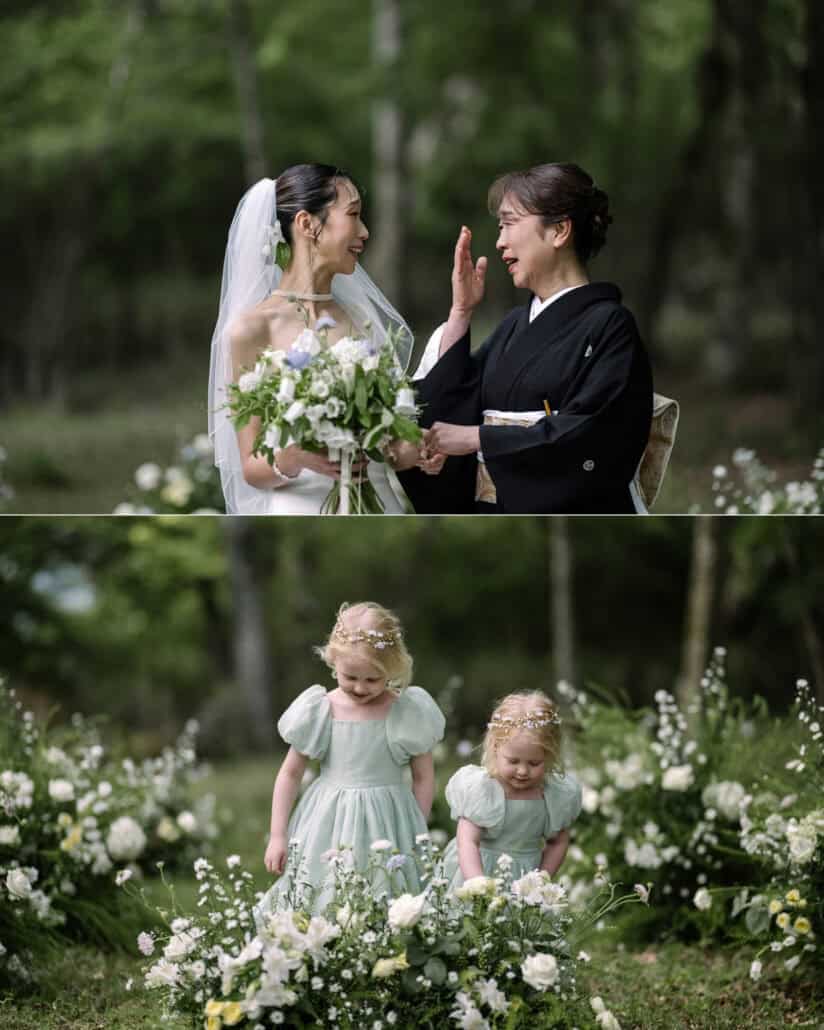
It’s a formal celebration, and it’s deeply felt. The mothers wear black kimono. Near the end, the bride often reads a letter to her parents, and the couple give them flowers. A Japanese family knows exactly what a grandparent’s presence at a wedding means.
Much of it happens indoors, in a hotel, a wedding hall or a chapel, where nothing can interrupt the flow. Watching it done well is what made us want to bring that flow into weddings built differently: outdoors, over several days, with families who’ve flown in from everywhere.
A Destination Wedding in Japan
A destination wedding in Japan is a wedding everyone travels to. Grandparents and nieces, school friends and colleagues, all making the same trip for the same few days. Ours have their formalities too, and everyone dresses for them. What changes is how the celebrating shows.
What it adds is the journey. Hakone isn’t far from Tokyo, but it was far enough that her family packed their bags too. Everyone at that wedding, from both sides, had travelled to be there, and for a little while they were all in one place.
For once, everyone was a guest from somewhere else.
Who on your own guest list would never see Japan without a reason like yours?
It asks more of the planning, and most of it happens long before anyone flies: a year of getting to know the parents, the grandparents, and the things a couple can’t quite put into words. That’s the heart of our destination weddings in Japan, and our guide for couples planning from abroad shows where it starts.
Where a Japanese Wedding and a Destination Wedding Met
Are your two families picturing two different weddings? Theirs were.
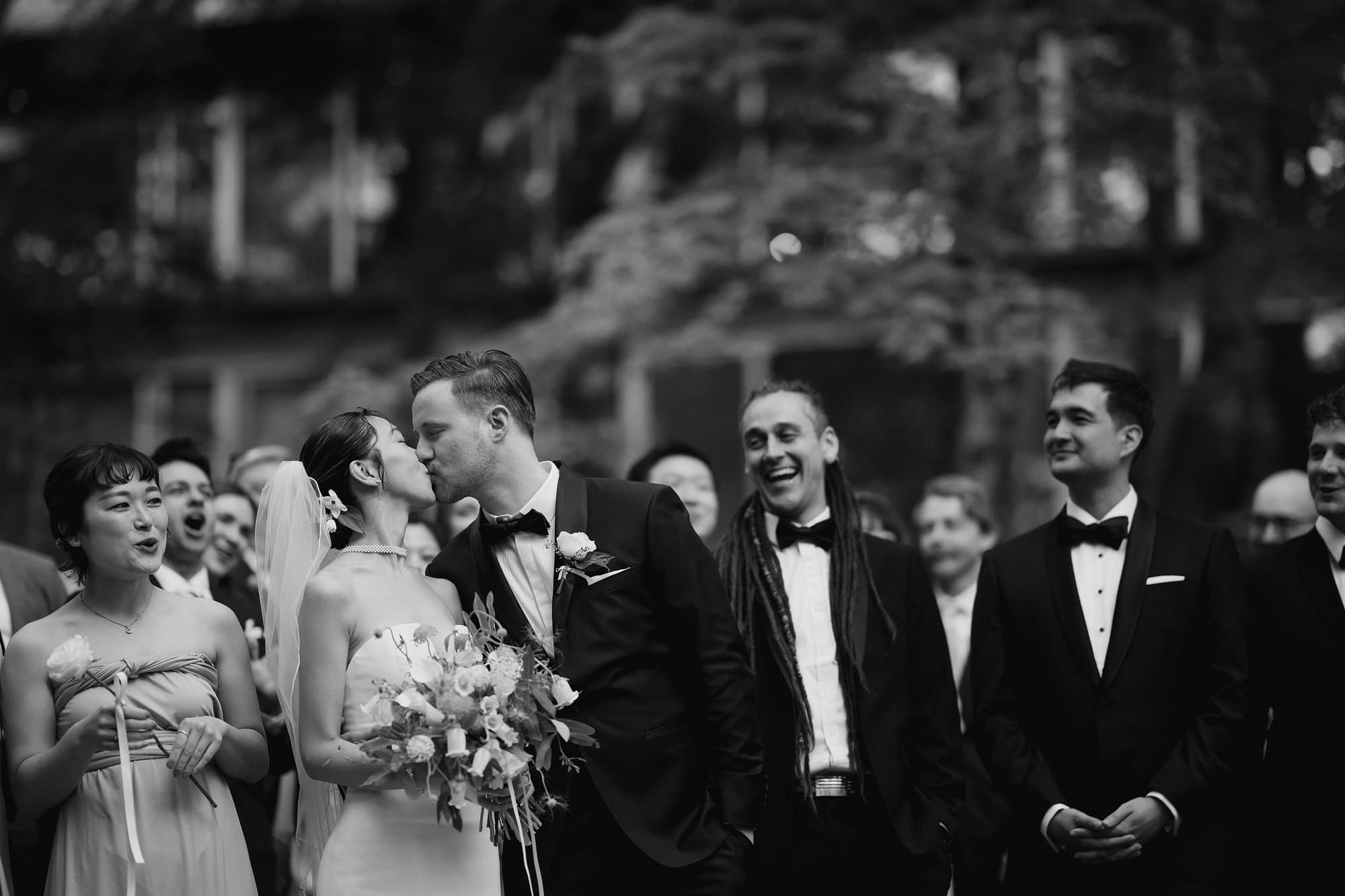
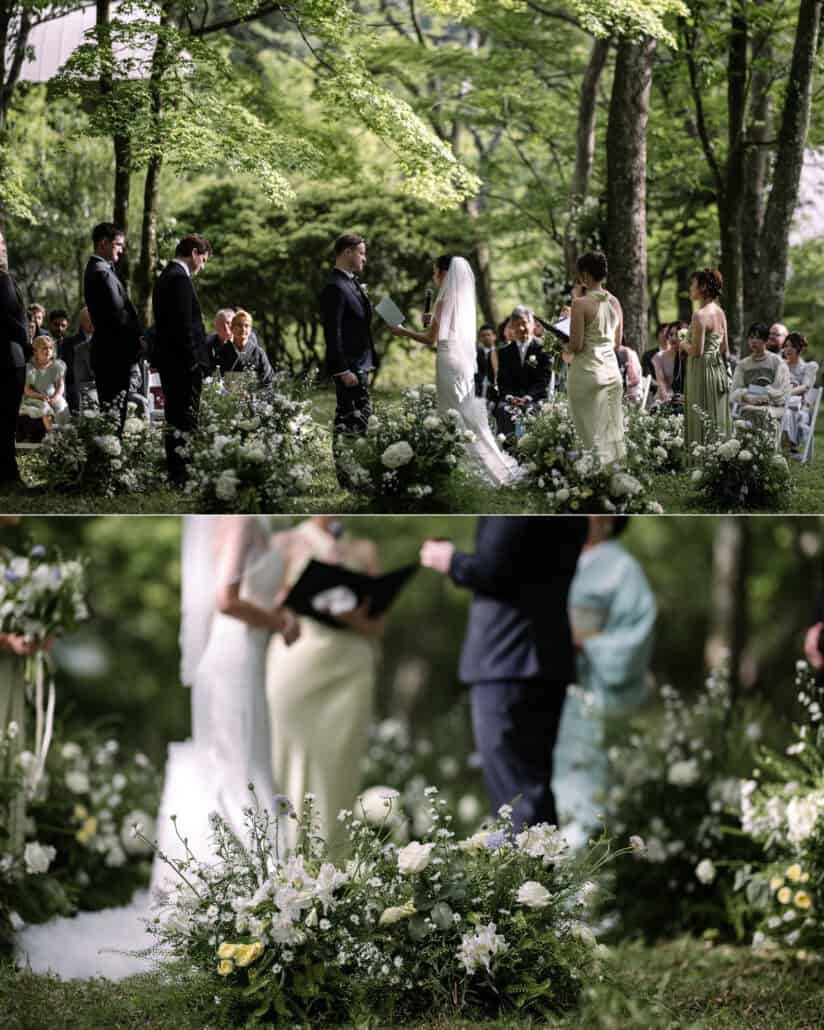
He wanted to marry outside, in a forest. So the ceremony was held in the trees, in English and Japanese, and he read his vows in both languages. In the middle of it they shared san-san-kudo, the three cups of sake from a Shinto wedding, to bring a little of Japan into the vows.
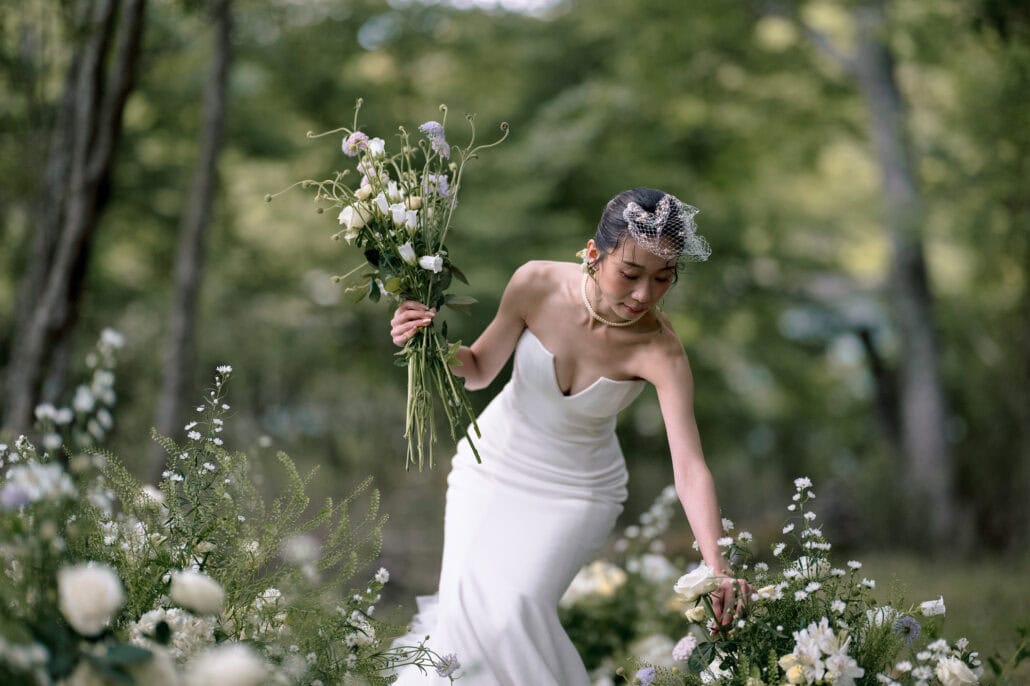
She shaped the rest of the day towards the weddings her family knew. There would be no first dance and no dances with the parents; those were things she couldn’t see herself doing. There was something else for the mothers. After the ceremony she gathered flowers from the arrangements into a bouquet for her mother, because the next day was Mother’s Day. At the reception she gave it to her, and he gave one to his.
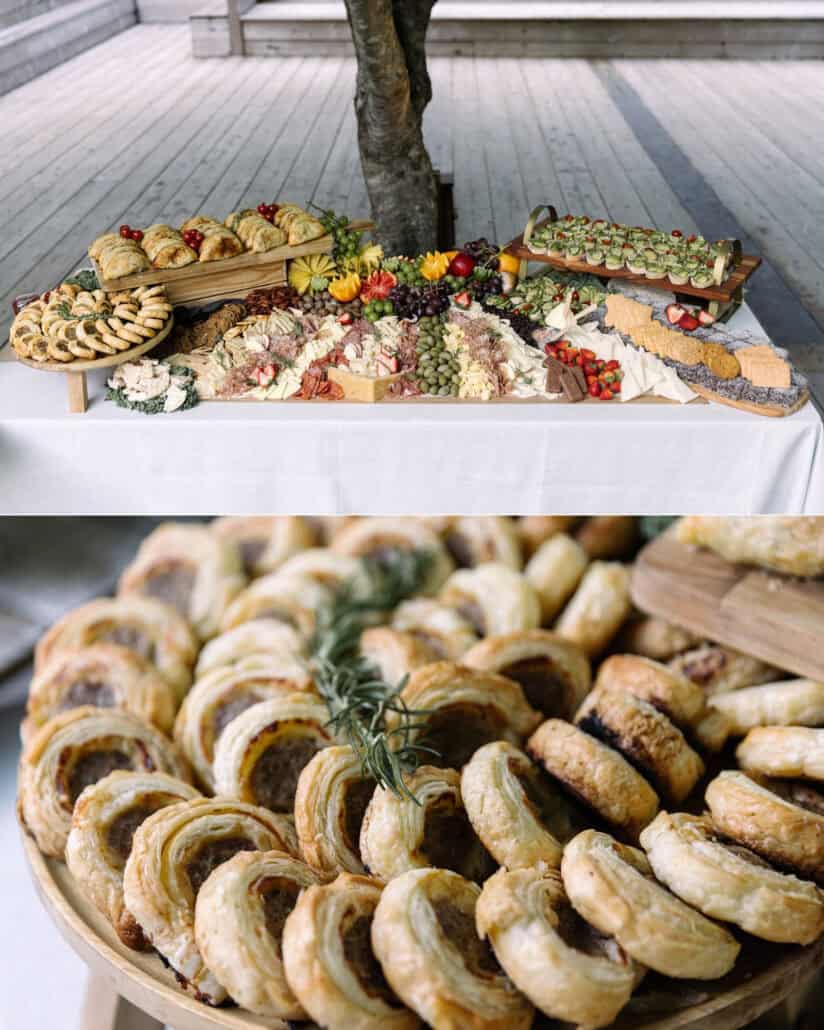
Then cocktail hour, and two ways of being a guest on one terrace. Her family and friends took their plates and sat down together to eat. The grazing table mattered a great deal to him, lamingtons and all. His friends gathered round it, hugging anyone in reach, and started on Tim Tam slams: biting the ends off a chocolate biscuit and drinking through it, which is harder to do with dignity than it sounds.
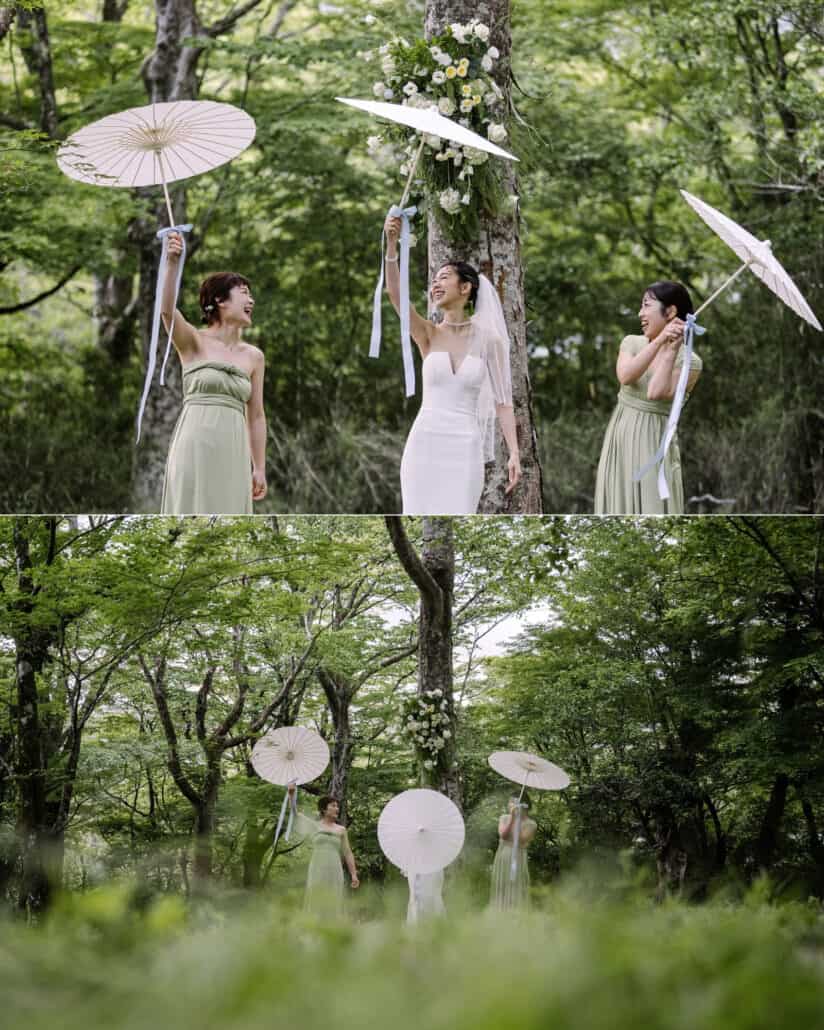
Japanese weddings don’t traditionally have bridesmaids, so her friends weren’t entirely sure what the job was. “Just have fun and hang out” was the first answer, and we laughed about it all day. At a Japanese wedding the kaizoe and the captain guide the bride through the day, and she had neither, so we told her friends the real job was theirs: get her where she needs to be, and help with the dress.
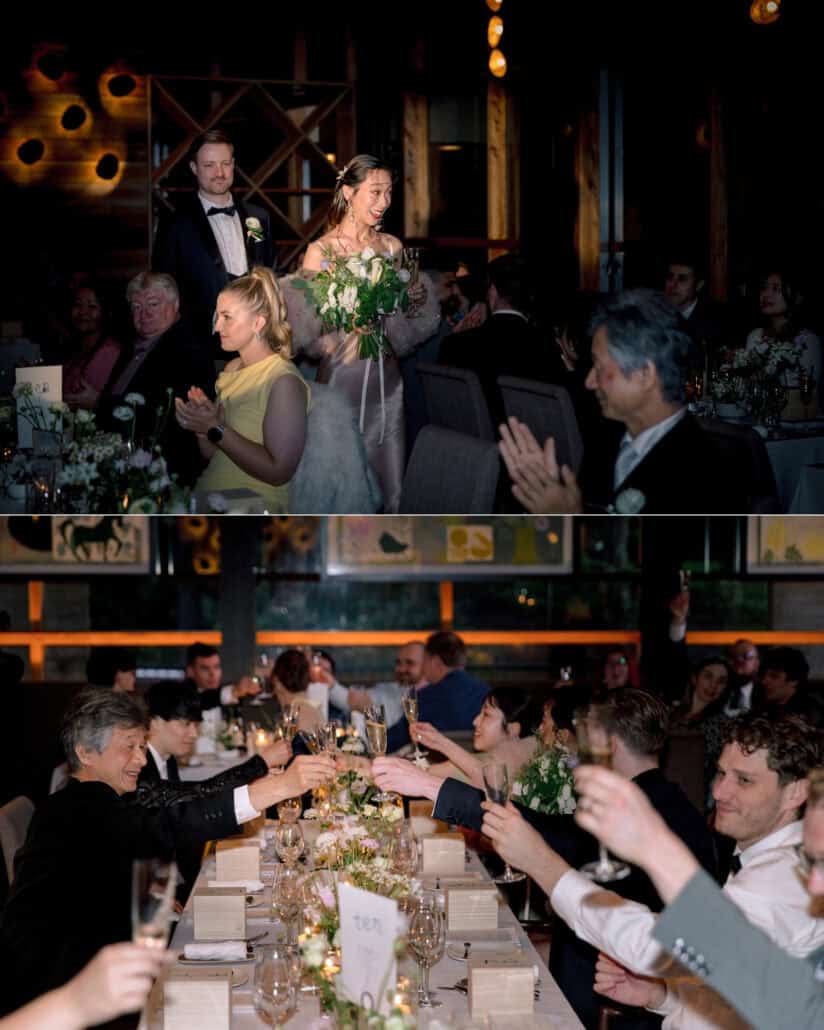
The room had two MCs, one speaking English and one Japanese: a friend from Sydney, and a friend of hers since junior high. Then the speeches started crossing over. Her friend from junior high, the Japanese MC, gave the first speech she had ever made in English. Another speaker switched into Japanese. By the end, each side of the room had been spoken to in its own language by someone from the other.
Japanese Flow at an International Wedding
Each of those was a decision, and each had to hold two families’ idea of a wedding at the same time.
A Japanese wedding runs to the minute, and that’s its strength. An international wedding needs room: for the hugging, and for a party that wants to keep going. Give it too little room and the guests feel hurried. Give it too much and the day loses its shape, and a family who know a wedding by its flow feel it first.
The work is knowing which parts of the Japanese flow hold everything up, and which can bend.
Here the flow held through the ceremony and the dinner, the way her family knew a wedding to move. It bent at cocktail hour, which belonged to his friends, and the party waited for the end of the night.
It’s judgment built over decades of weddings on both sides of the line. Our planners make those calls, with Sumika in kimono making sure Japan is ready, so that two families’ ideas of a wedding can share one day, and each recognises its own.
By the End of the Night
When his party started, his friends took the middle of the floor and her family the edges. Somewhere in the night the edges came in, and by the end everyone was on that floor together. We loved watching it happen, the freedom of it.
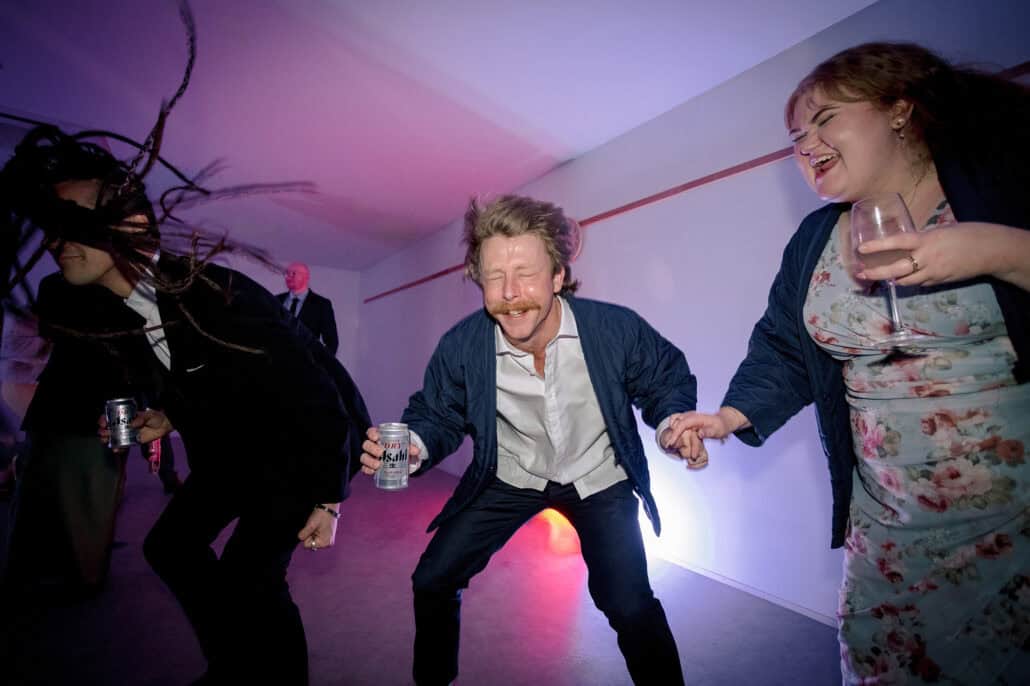
For months we had tried to explain how the two would fit together, and she couldn’t see it. At the end of the night she hugged every one of us. She had spent months asking whether a wedding was a wedding. She never asked again.
His friends left talking about Hakone and went off to explore it. Her family said they’d never been to a wedding like it, and that they’d loved every second. Their Hakone forest wedding has the rest of the story.
What Belongs Only to a Japanese Couple’s Wedding
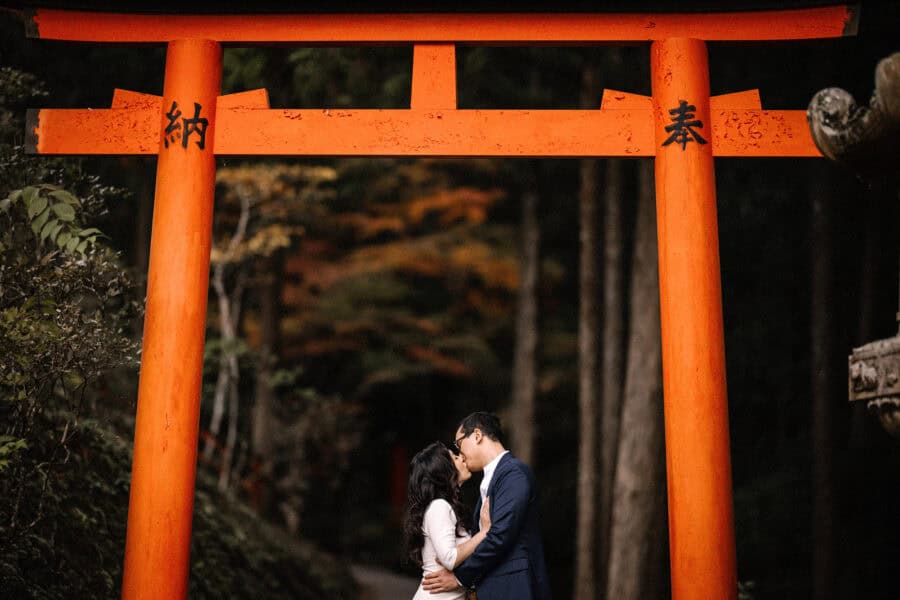
Some customs travel beautifully. San-san-kudo, a sake barrel opened with wooden mallets, a ceremony at a shrine: couples from anywhere can choose them.
Others belong to a Japanese couple’s wedding. Guests at a Japanese wedding bring goshugi, a gift of money in a formal envelope, and follow a careful dress code. At a destination wedding, guests do what they’d do at home and follow the couple’s wishes. Our guide for wedding guests has the detail.
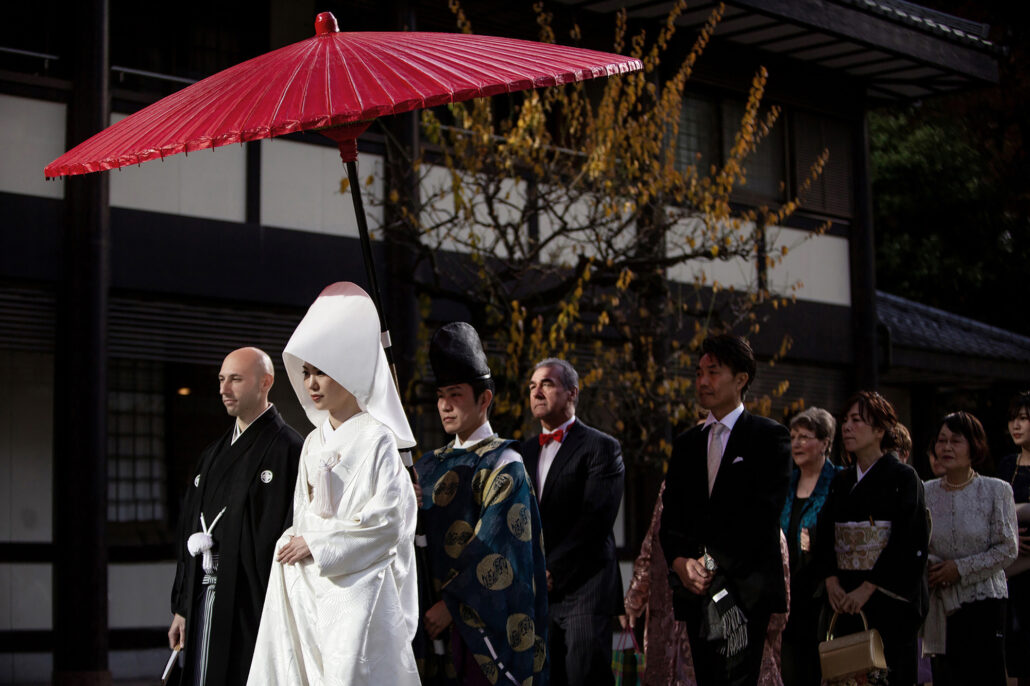
We’ll always love the way Japan runs a wedding. It taught us everything we know about flow.
So, is a wedding a wedding? Yes. Both are a family saying, in front of everyone they love, that this matters.
Japanese Wedding vs Destination Wedding: Quick Answers
What is the difference between a Japanese wedding and a destination wedding in Japan?
A Japanese wedding is a formal and deeply felt day, practised over decades, that carries a family and its guests from ceremony to reception without a pause, often indoors. A destination wedding in Japan brings families from different countries to travel and stay together for several days, so the journey everyone shares becomes part of the wedding.
What happens at a Japanese wedding?
A Japanese wedding has a ceremony, at a chapel, at a shrine or in front of the guests, then a reception run by a banquet captain. An attendant, the kaizoe, looks after the bride all day, and she often changes outfits during the reception. There are toasts and speeches, and the bride often reads a letter to her parents near the end.
Do Japanese wedding customs apply at a destination wedding in Japan?
Customary obligations such as goshugi money gifts and the Japanese dress code belong to a Japanese couple’s wedding. At a destination wedding, guests follow the couple’s wishes, as they would at home. Couples can still choose Japanese rituals they love, such as san-san-kudo, kagami biraki or a ceremony at a shrine.
How do you combine a Japanese wedding with an international one?
Keep the flow that holds a Japanese wedding together, and give the international side room to celebrate in its own way. At one Hakone wedding, the ceremony was in both languages with san-san-kudo, the bridesmaids took on the kaizoe’s role, two MCs worked in English and Japanese, cocktail hour belonged to the groom’s friends, and the party came at the end of the night.