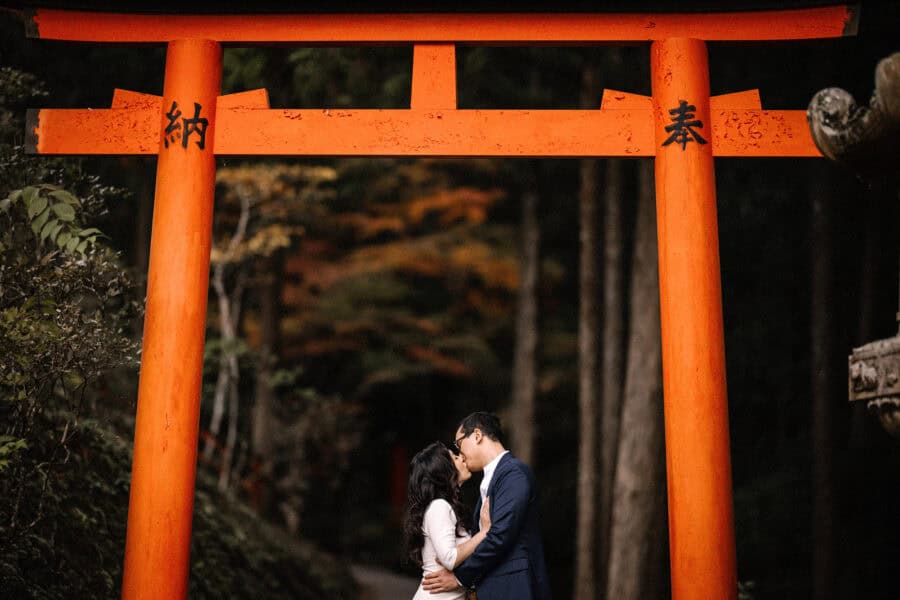
Most couples bring us this question by way of the ceremony: how many people can stand in a moss garden, whether a shrine will welcome guests, how small is too small. The ceremony is the shortest part of the day. Whether to elope or have a wedding is a question about everything around it, and about who you want to remember it with.
So we suggest starting somewhere else. Picture the morning after. Who’s at the breakfast table?
If it’s the two of you, in a quiet room with nowhere to be, that’s an elopement. If it’s a long table of the people who’ve known you longest, slightly jet-lagged and still telling stories from the night before, that’s a wedding. Most couples know the moment they picture it.
Should You Elope or Have a Wedding? Two Kinds of Memory
In 1985 the psychologist Daniel Wegner gave a name to something long-married couples already know. He called it transactive memory. Two people who share a life stop remembering everything separately and begin keeping their memories between them. One holds the name of the restaurant, the other the colour of the sky that night, and the evening only exists whole when they tell it together.
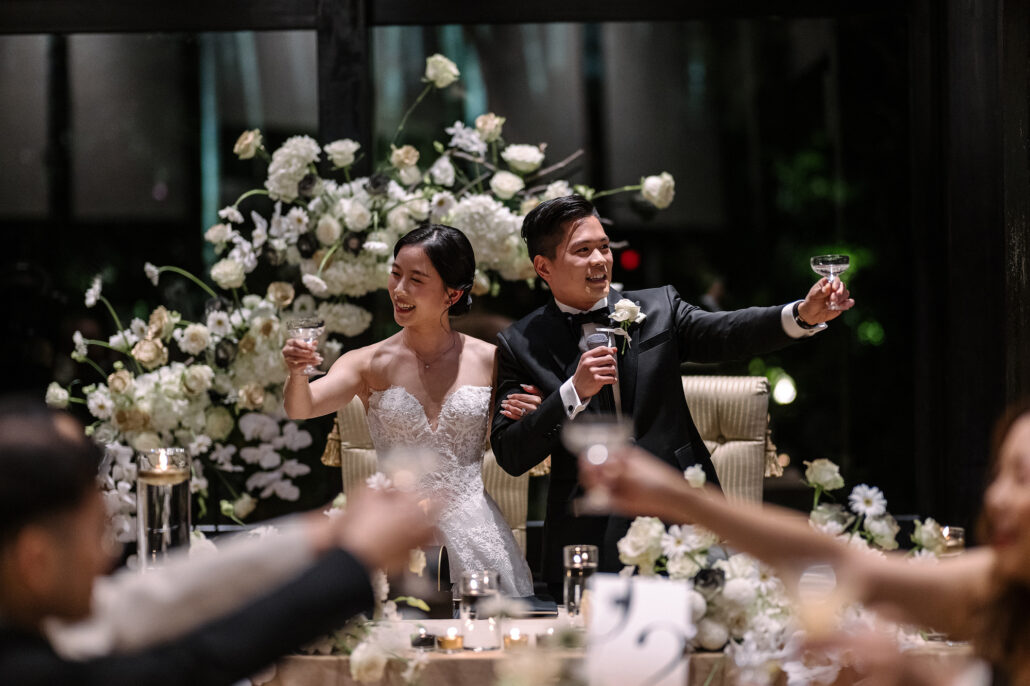
More than seventy years earlier, in 1912, the sociologist Émile Durkheim described the opposite current. When people gather for a ritual, he wrote, a charge passes through the room that none of them would feel alone. He called it collective effervescence. Anyone who has heard forty people laugh at the same line in a speech knows exactly what he meant.
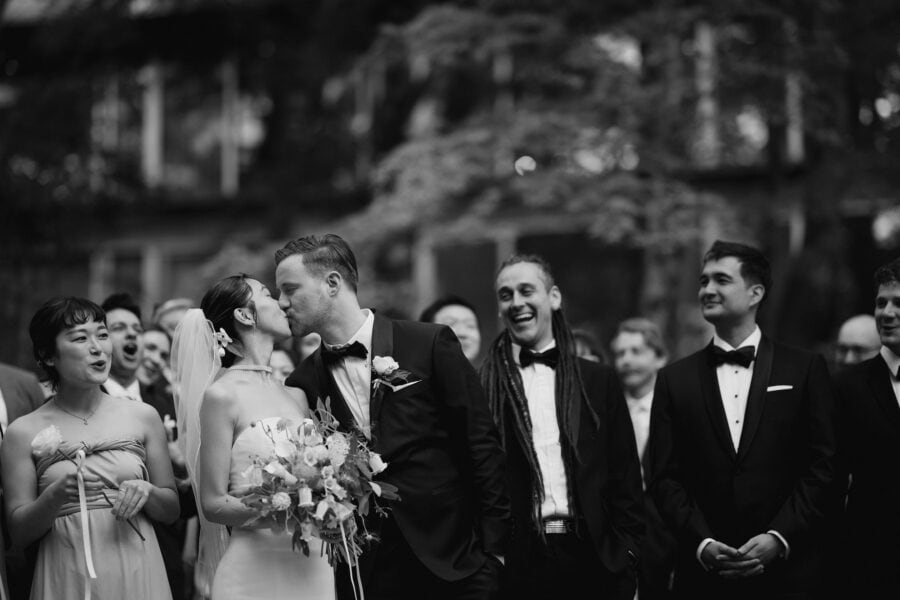
An elopement is the first memory a marriage keeps that way, between two people and the ground they stood on. A wedding is Durkheim’s kind, held by everyone who was there to see it. Neither is the smaller one.
What Eloping in Japan Gives You
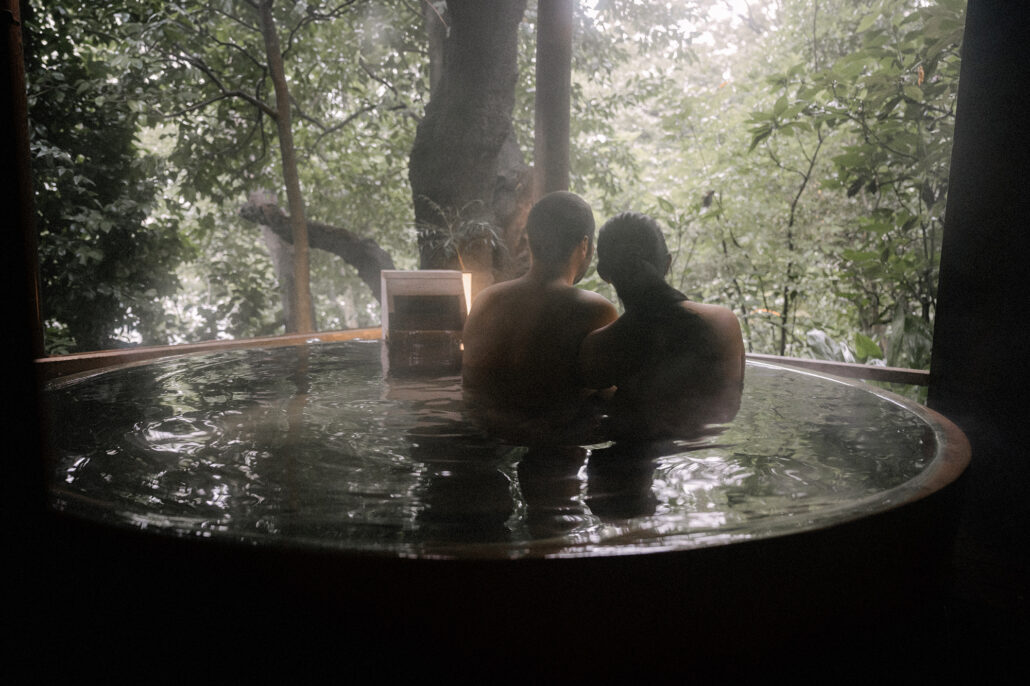
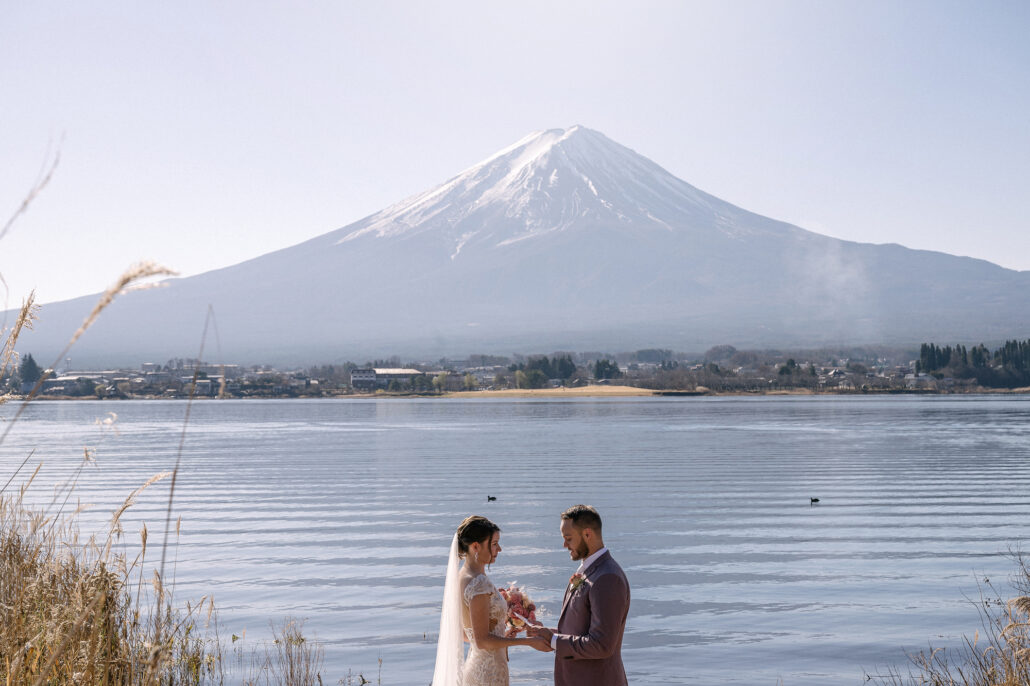
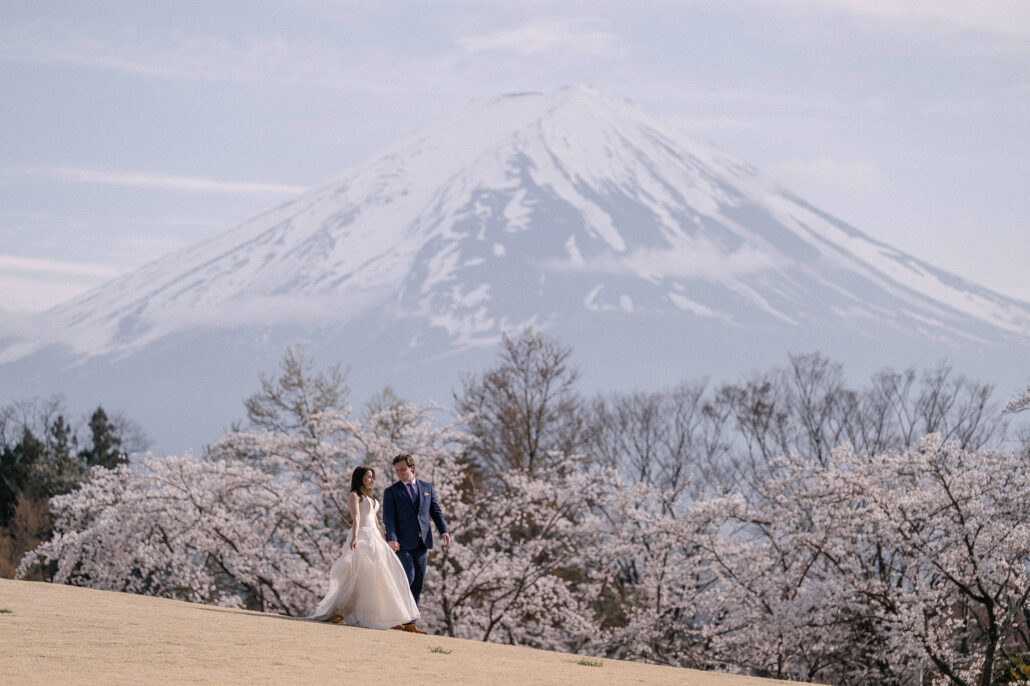
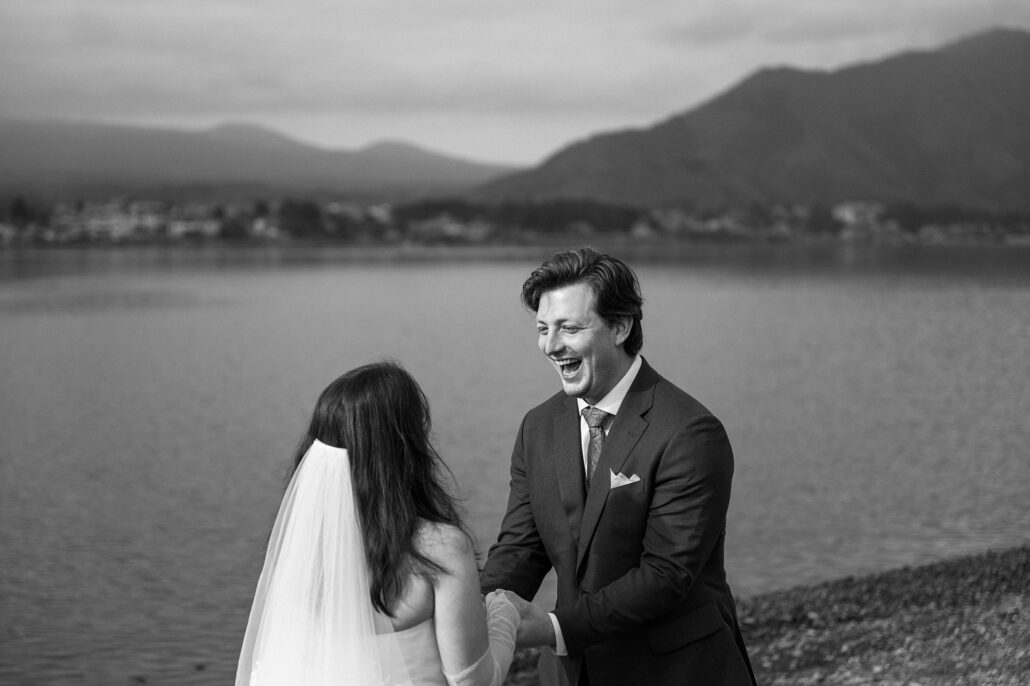
An elopement is the one day built entirely around two people, and so it can be built around a place as well. The day follows the light rather than a programme. If the cloud lifts off Fuji late in the afternoon, you can be there for it. If a forest is so quiet you want another hour in it, you take the hour. Nobody is waiting at a dinner table.
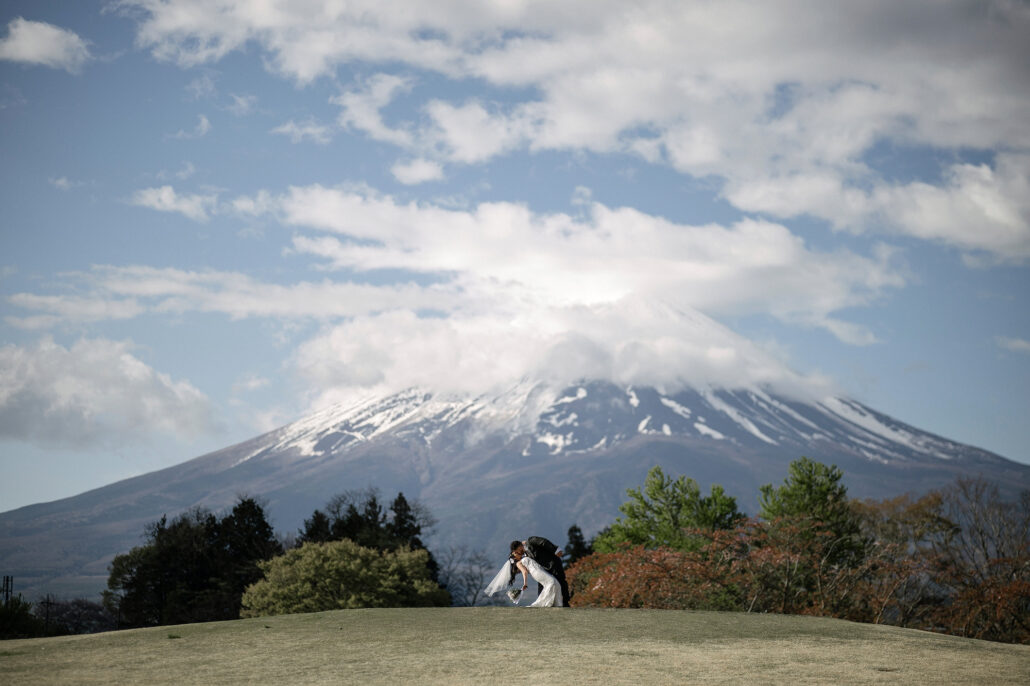
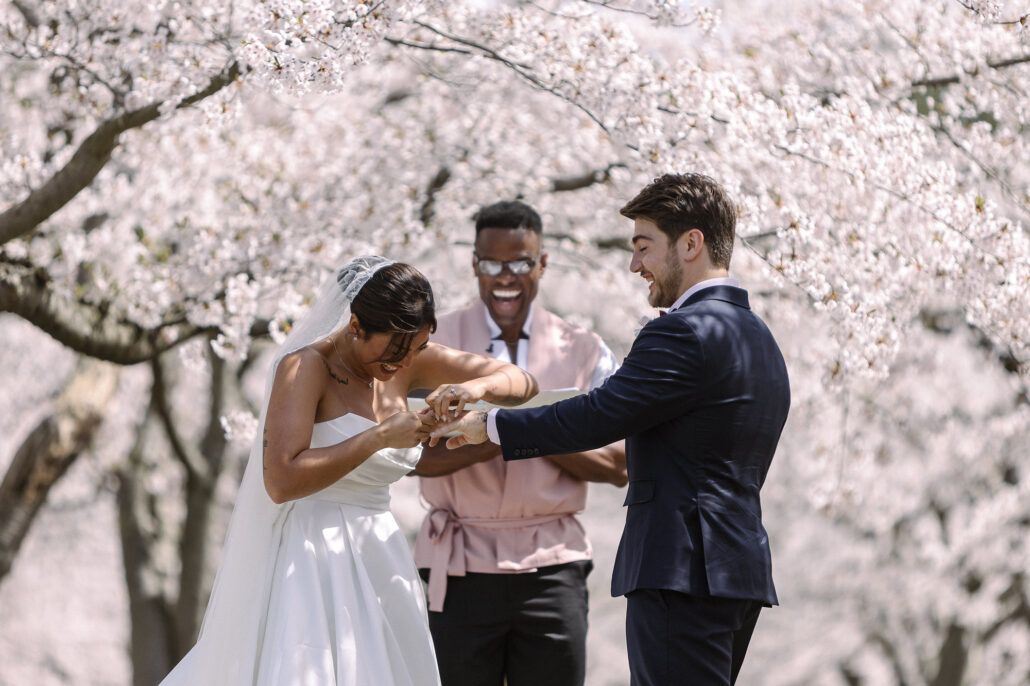
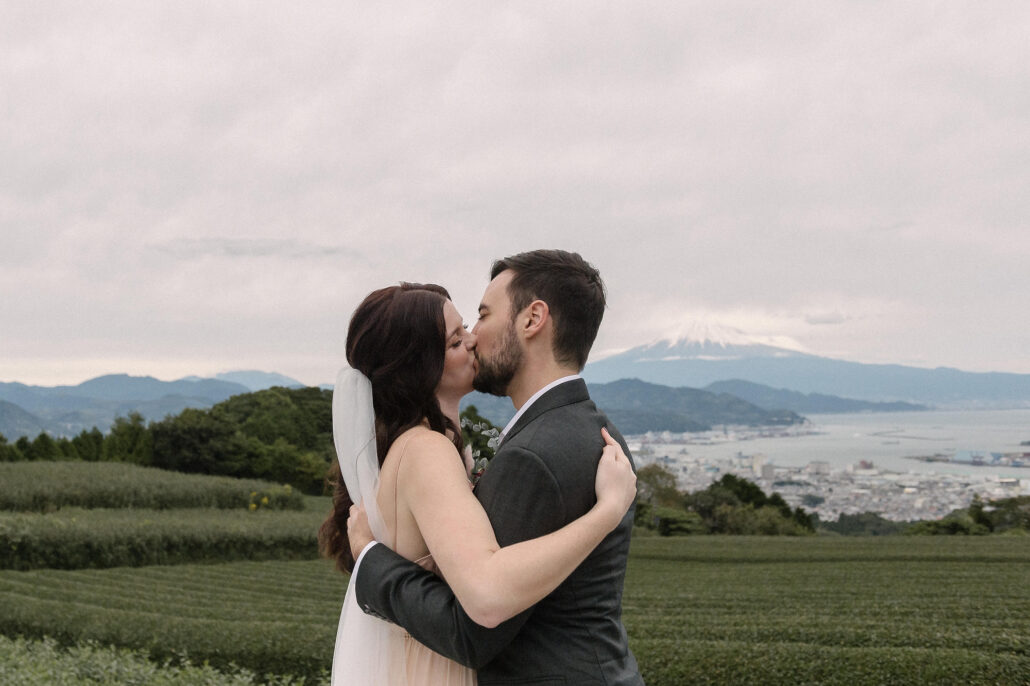
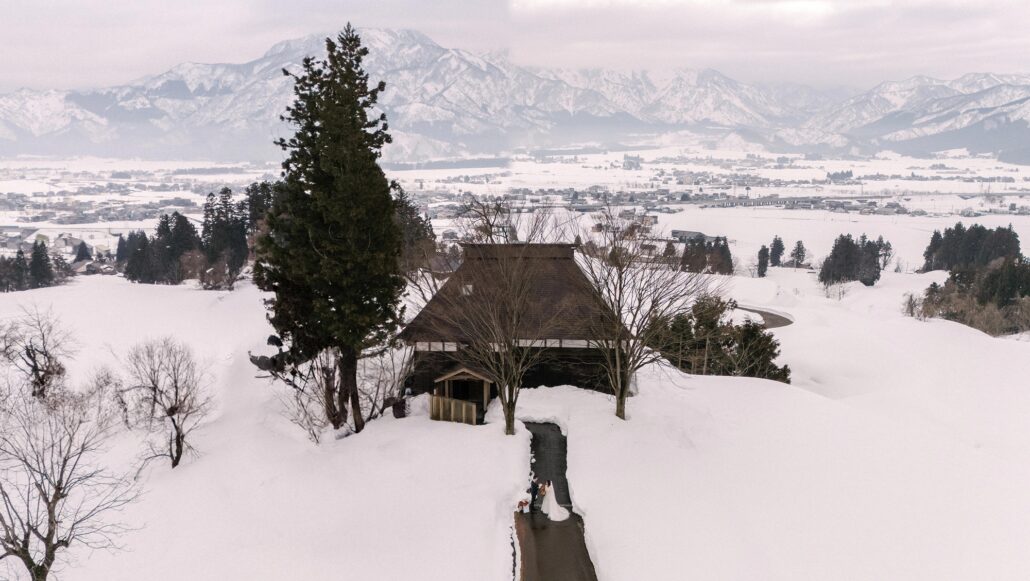
Two people can also go where a group can’t: onto a terrace in a tea field, down to a frozen lakeshore below the mountain at first light, or into a grove in Aomori on the last day of full bloom, where a friend in a pink waistcoat led the ceremony and a cellist played beneath the trees.
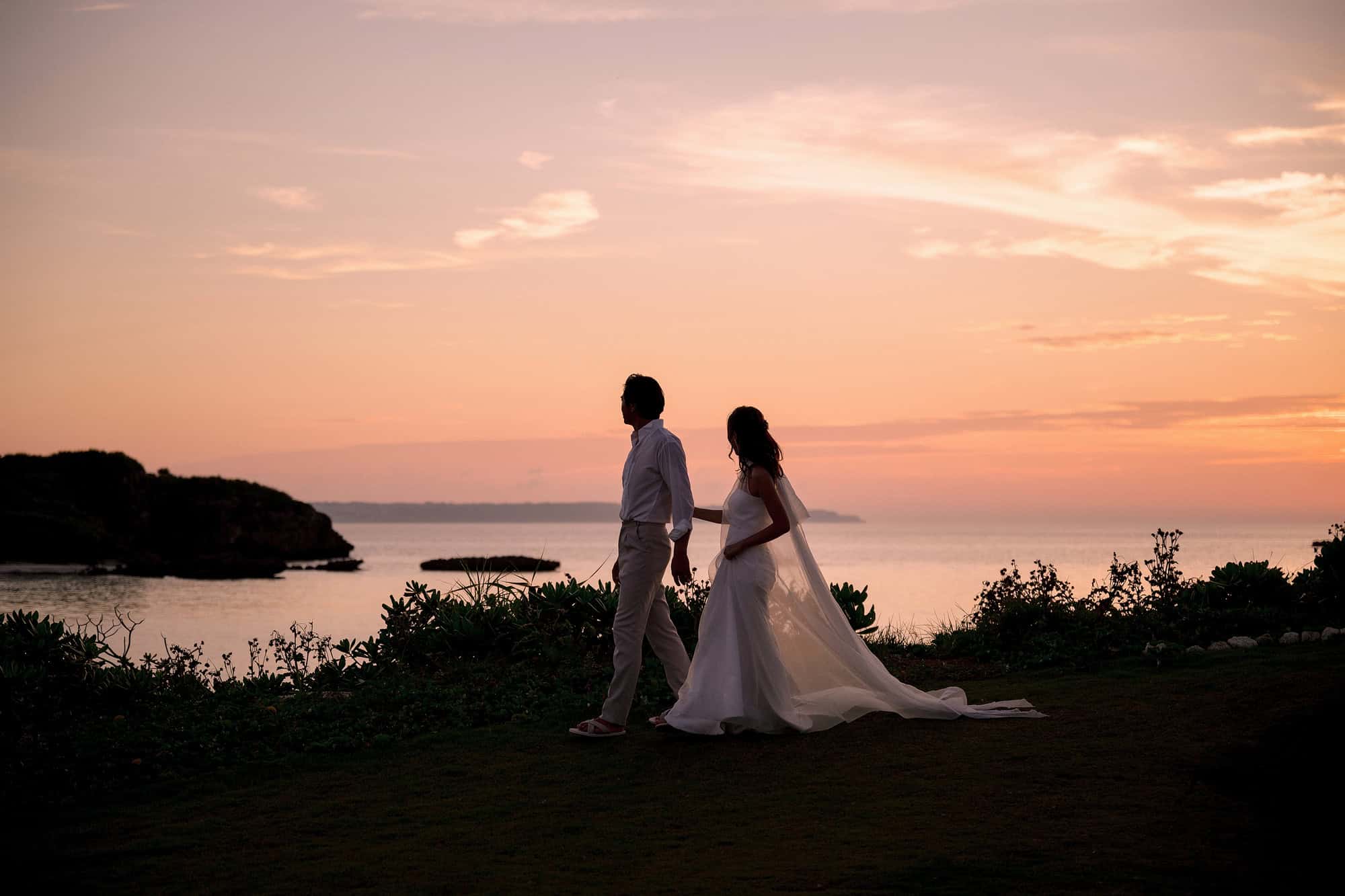
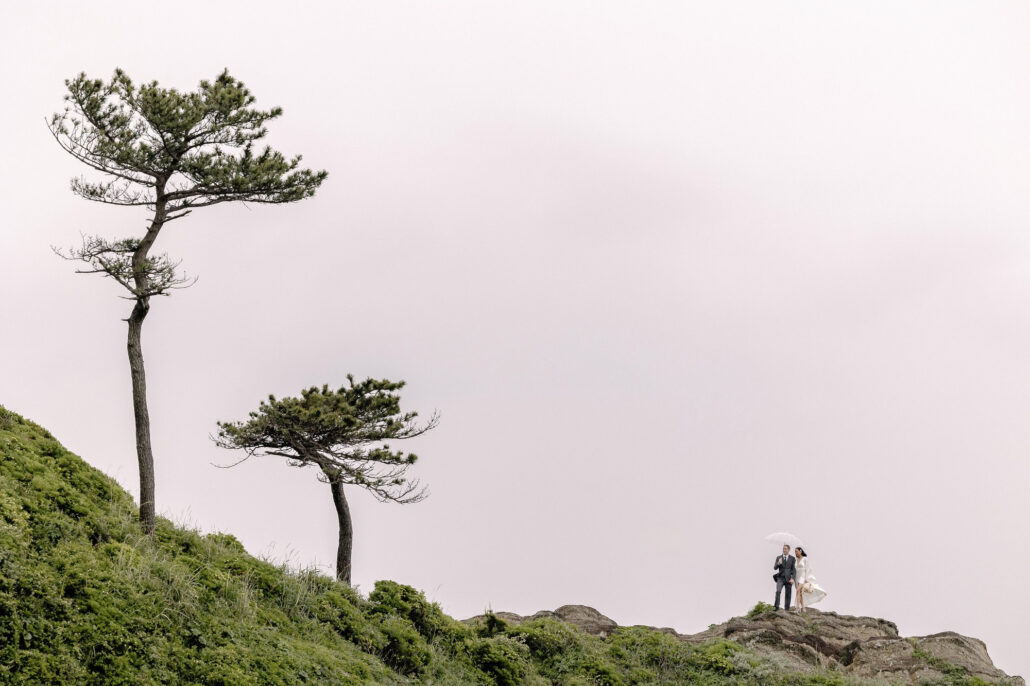
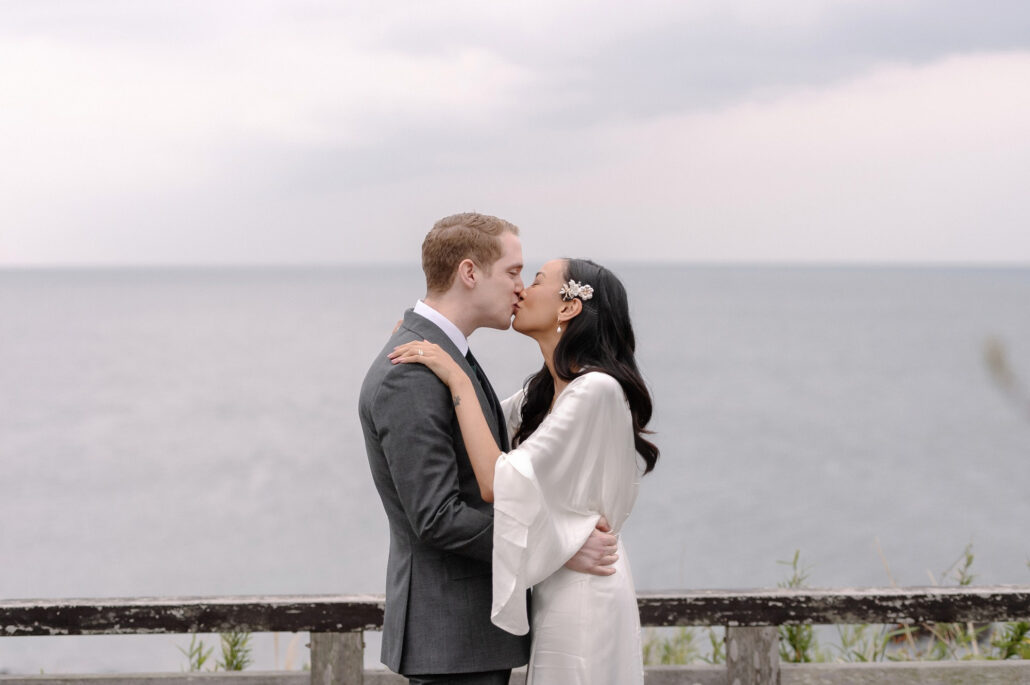
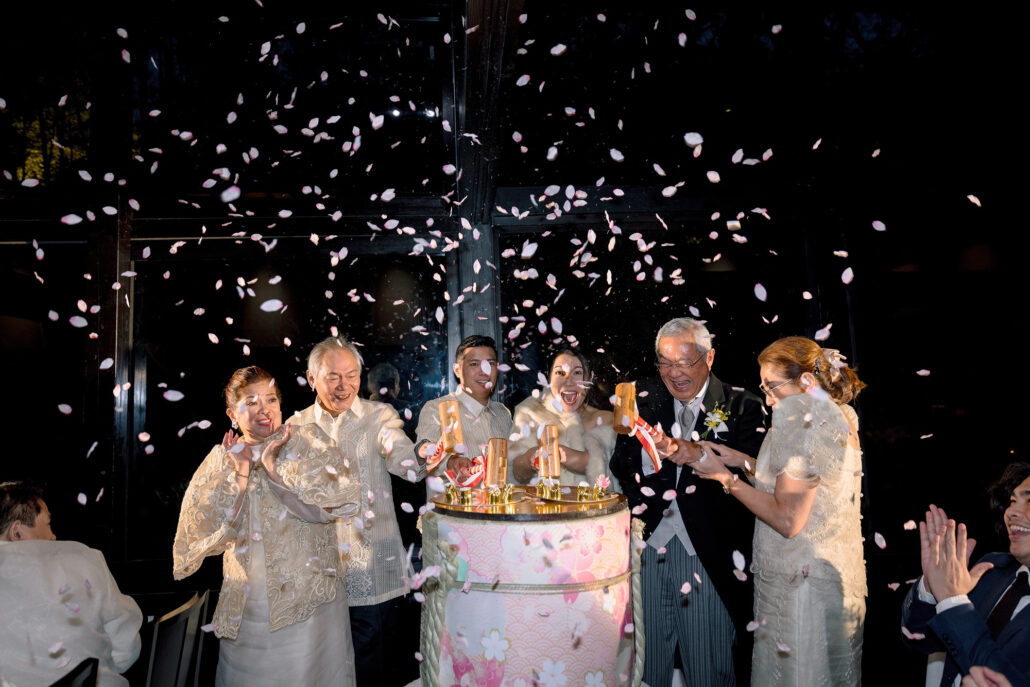
What two people take home from a day like that is a place. One couple who had met while stationed near Yokosuka married on a headland above Sagami Bay they already knew. They picnicked on the rocks that morning and met again on the same coast as a bride and groom, on ground that had held their whole story in Japan. Their families joined from home on a screen, and the two of them opened a small sake cask on the headland, its lid marked 寿, for celebration and long life.
An elopement also asks for one decision early: how the people at home will be part of it. Settled in the planning, it leaves the day free to belong to the two of you and still reach everyone who couldn’t be there. Our guide to how to elope in Japan goes into the rest, from permission to the quiet hour.
What a Destination Wedding in Japan Gives You
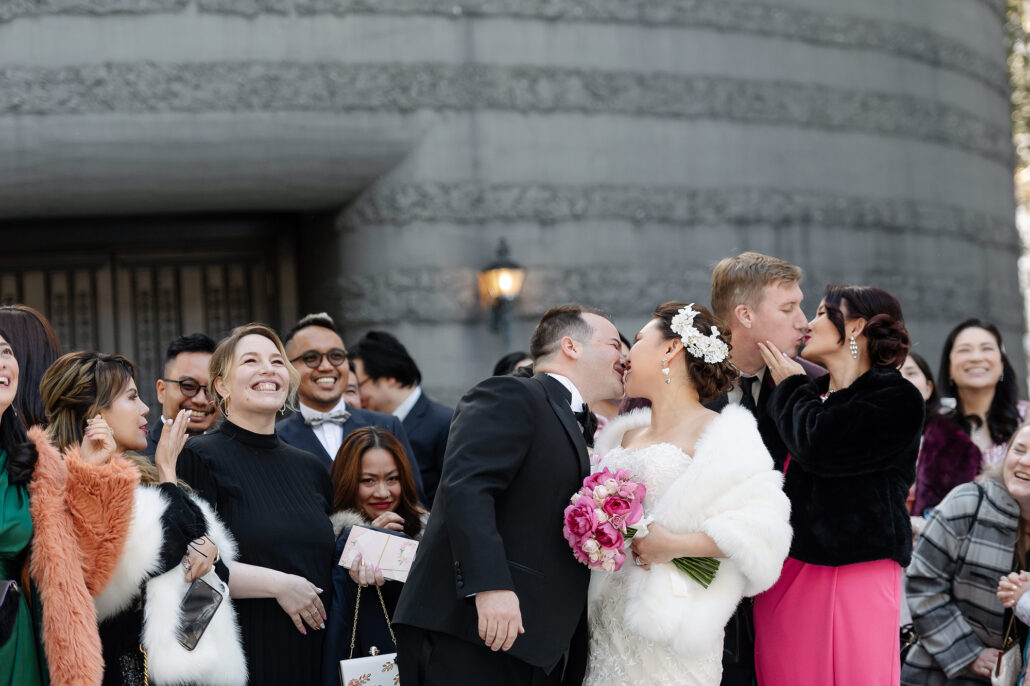
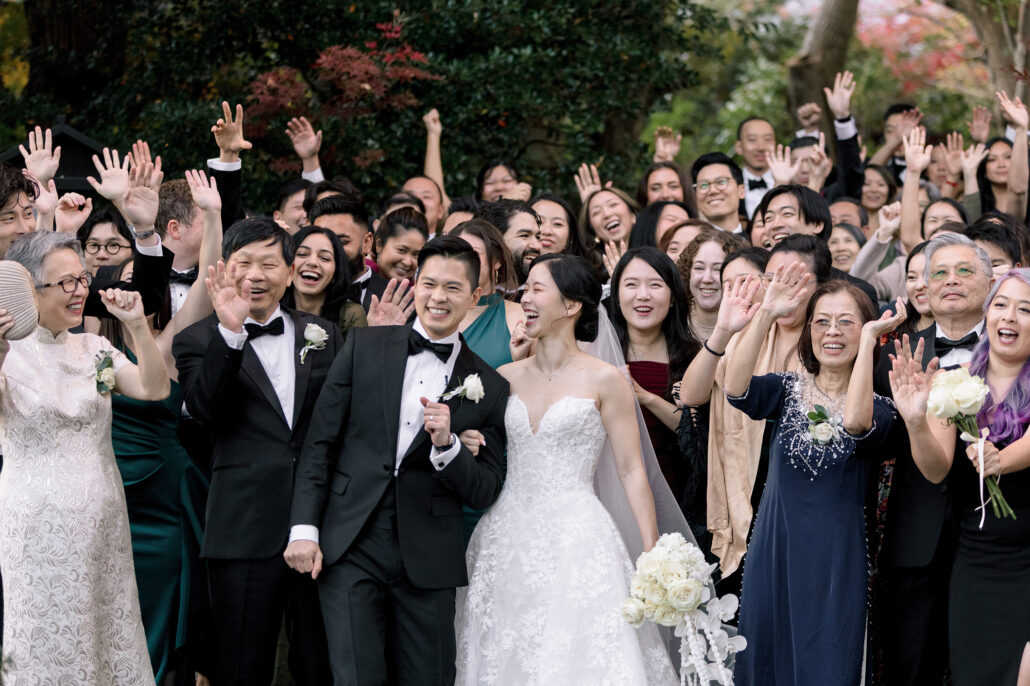
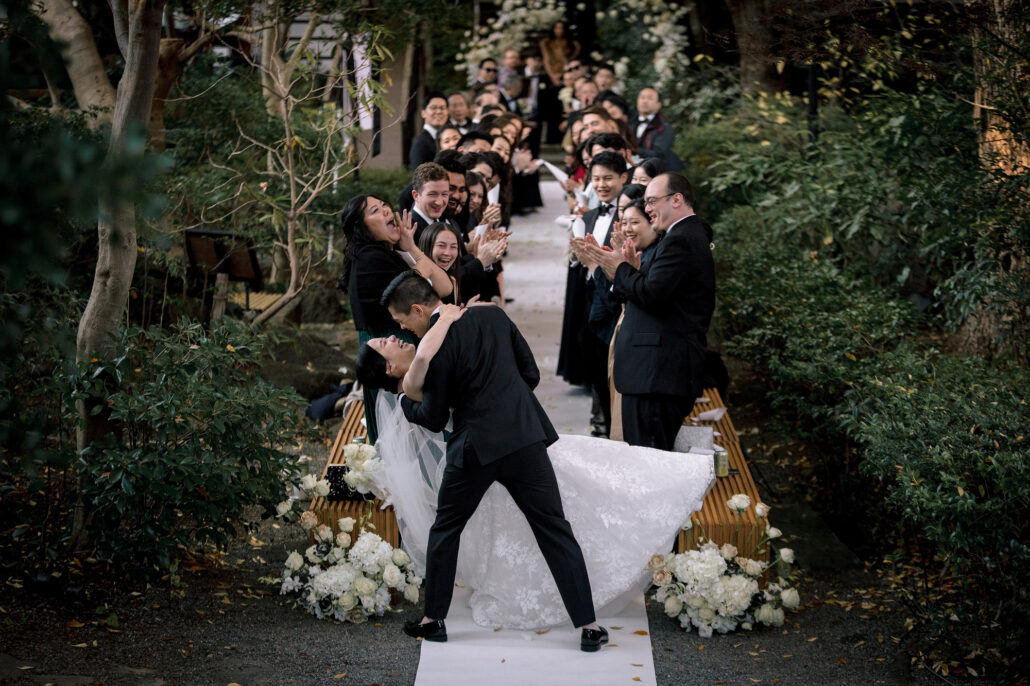
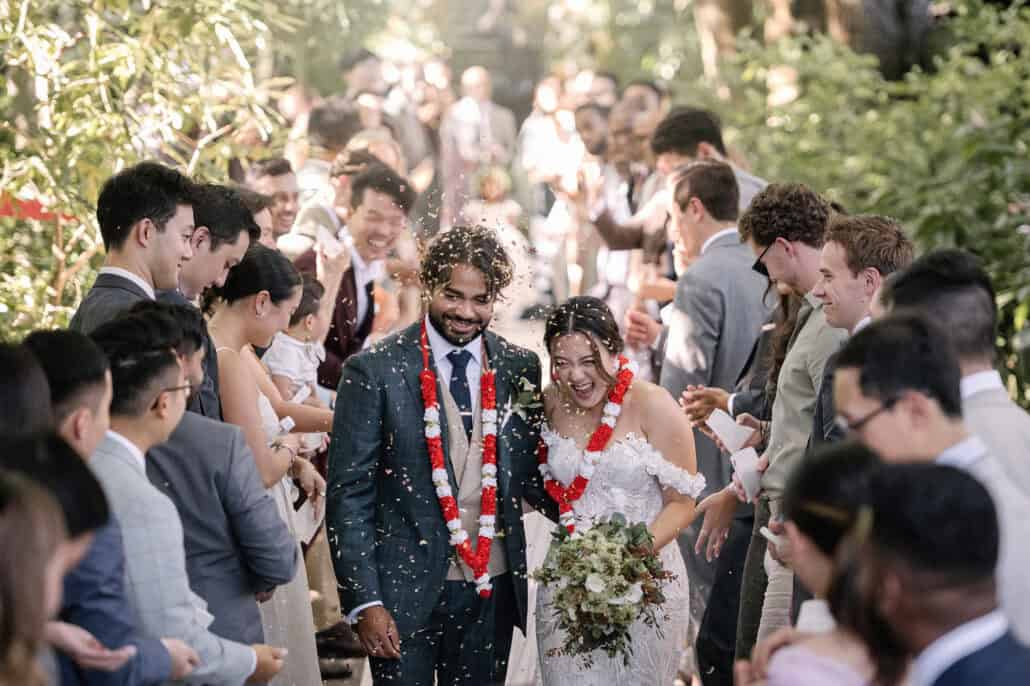
A wedding gives you witnesses, and in Japan it gives you days rather than hours. Guests who’ve crossed the world don’t come for an afternoon. There’s a welcome dinner, the wedding, a slower day after, and somewhere in those days the separate parts of your life stop being separate.
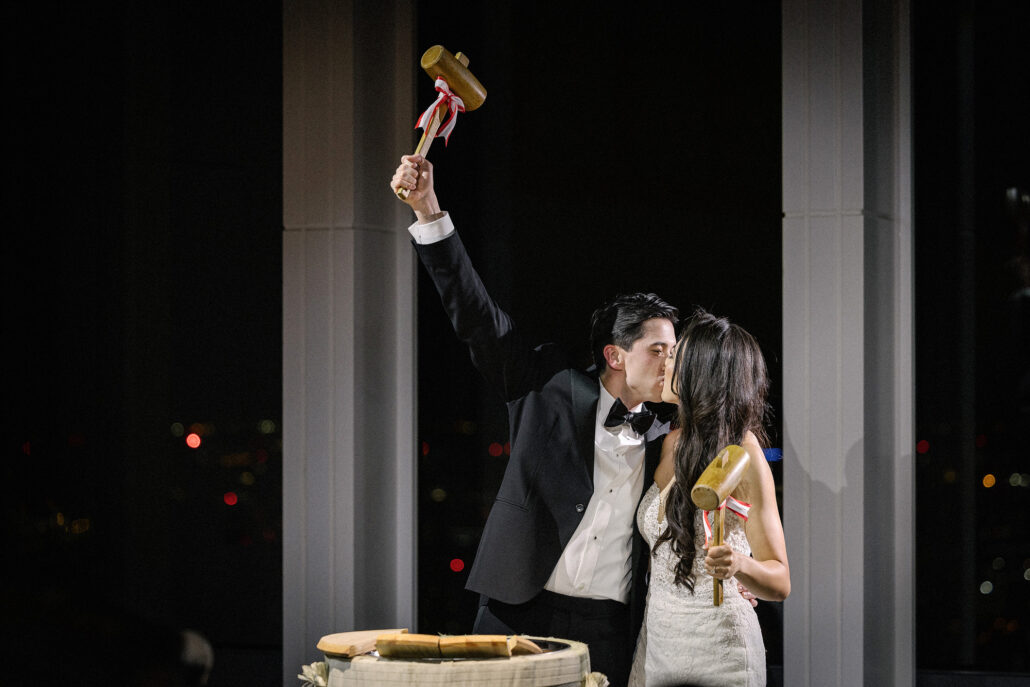
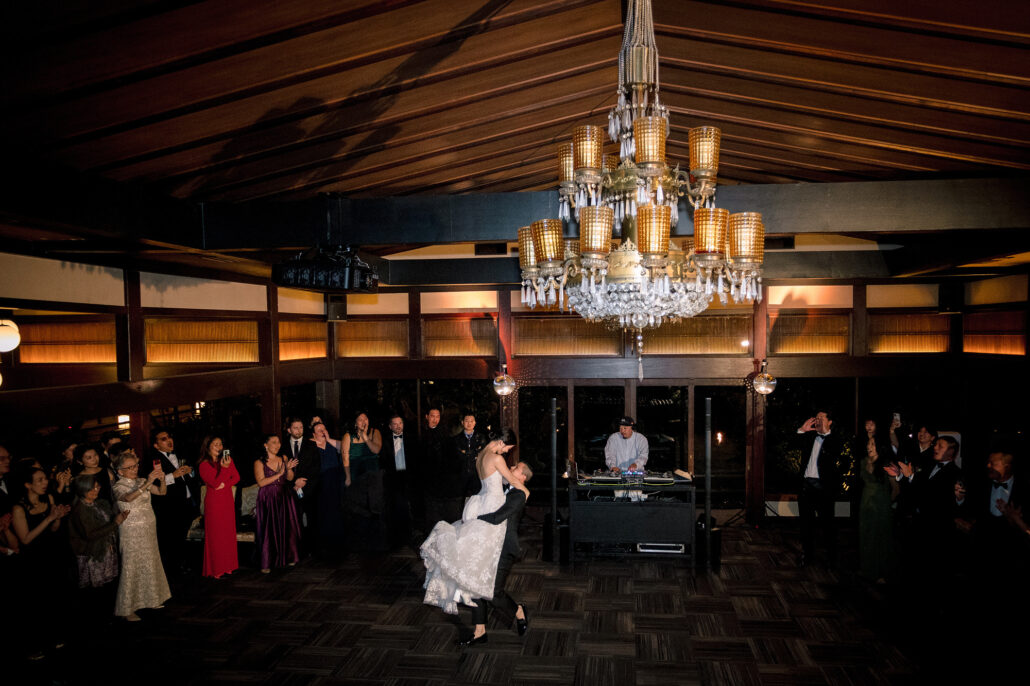
At a May wedding at Jinya, the couple asked for no first dance, just the mochi pounding. So at the end of the cocktail hour a great wooden mortar went up in the hall beside the garden. The two of them brought the mallet down first, in happi coats, and then their families and friends took their turns, one after another, until the rice gave way. Later everyone sat together at one table. Nobody who swung that mallet will ever tell the story alone.
A day like that takes building. Guest count measures attendance; it says very little about what a wedding here involves. Forty people need their rooms, meals, transport and evenings arranged around them, much of it in two languages, in places built on a human scale. That’s the work we take on, and it’s why a wedding in Japan starts about a year out while an elopement can come together faster. Our guide to planning a wedding weekend in Japan shows how we shape the days.
The Middle Way: An Intimate Wedding in Japan
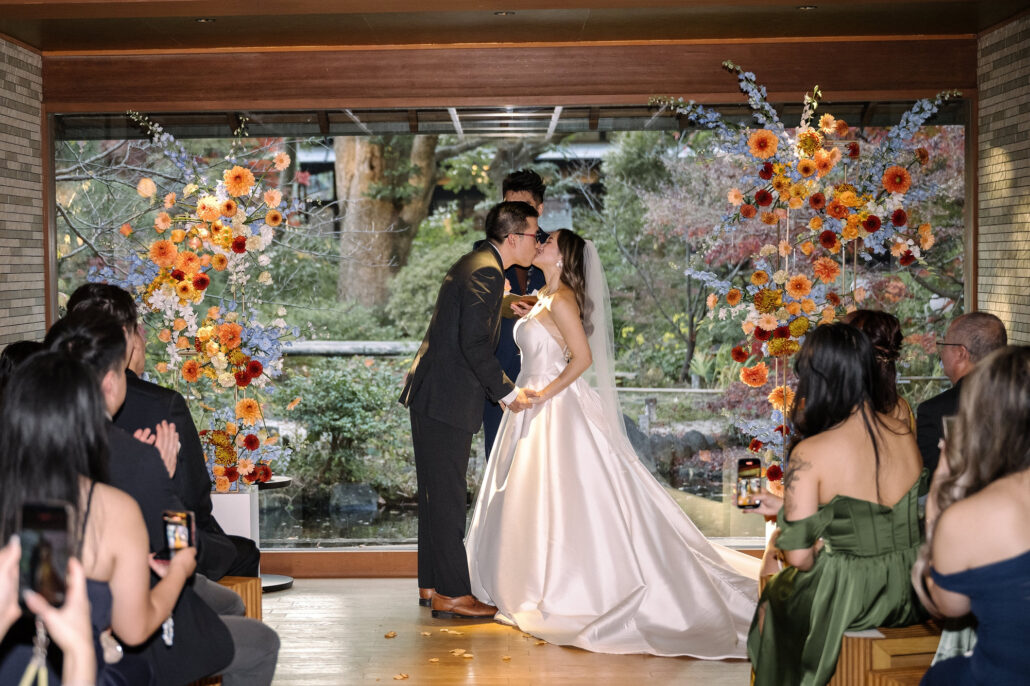
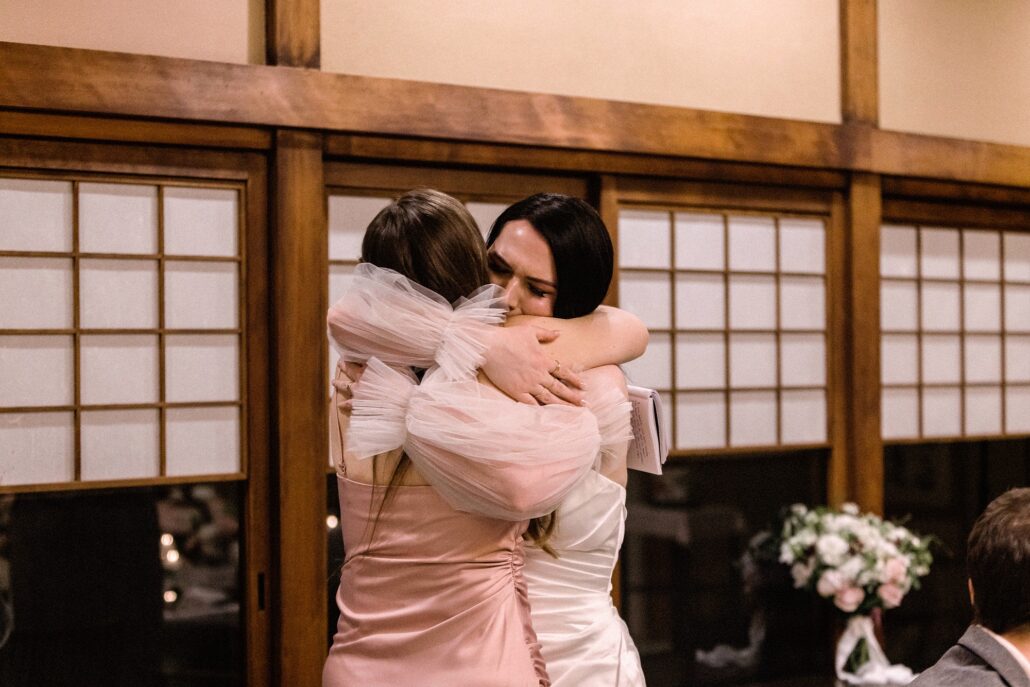
Between the two sits the intimate wedding, at the scale Japan’s old houses and ryokan were built for. A small circle, up to about twenty, keeps much of an elopement’s freedom and adds the people who matter most: parents, siblings, the two friends who’d never forgive you.
Everyone fits around one table. Every speech is heard by everyone. Nobody is a stranger by dessert.
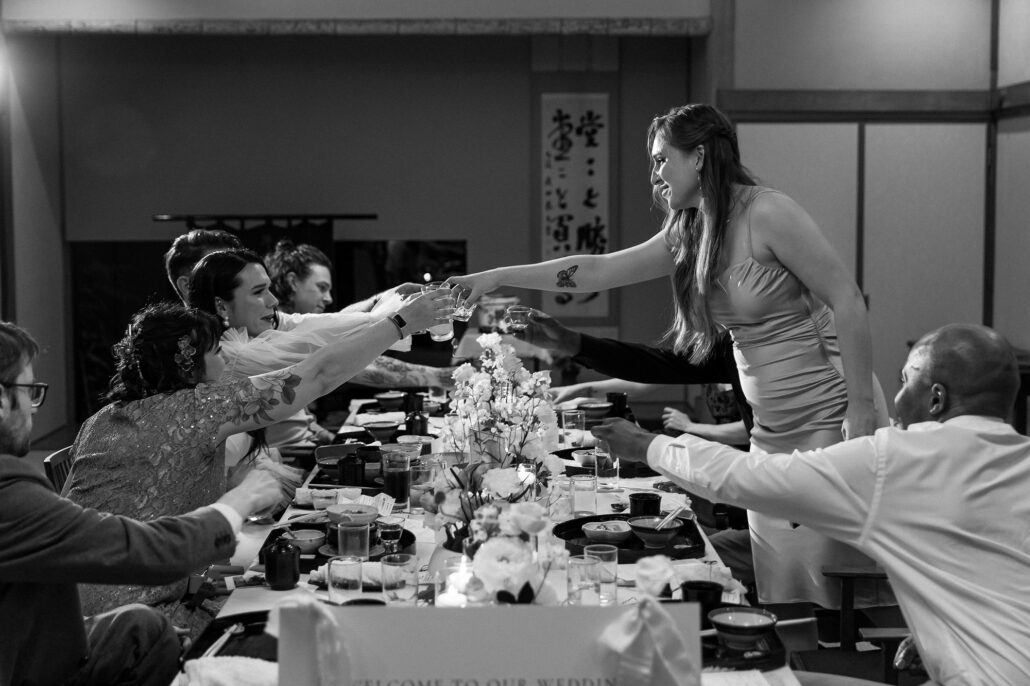
At that scale, a small ryokan can be given to one group for the night. A private dining room becomes the reception, and the kitchen cooks for twelve rather than for a banquet. In the mountains of Yamanashi, one couple who had stayed there the year before came back with their parents and a sibling each for an intimate wedding at NIPPONIA Kosuge, eight people in all, gathered under the eaves of a 150-year-old house while the rain came down the cedar ridges.
Elopement vs Wedding in Japan: Which Goes Deeper?
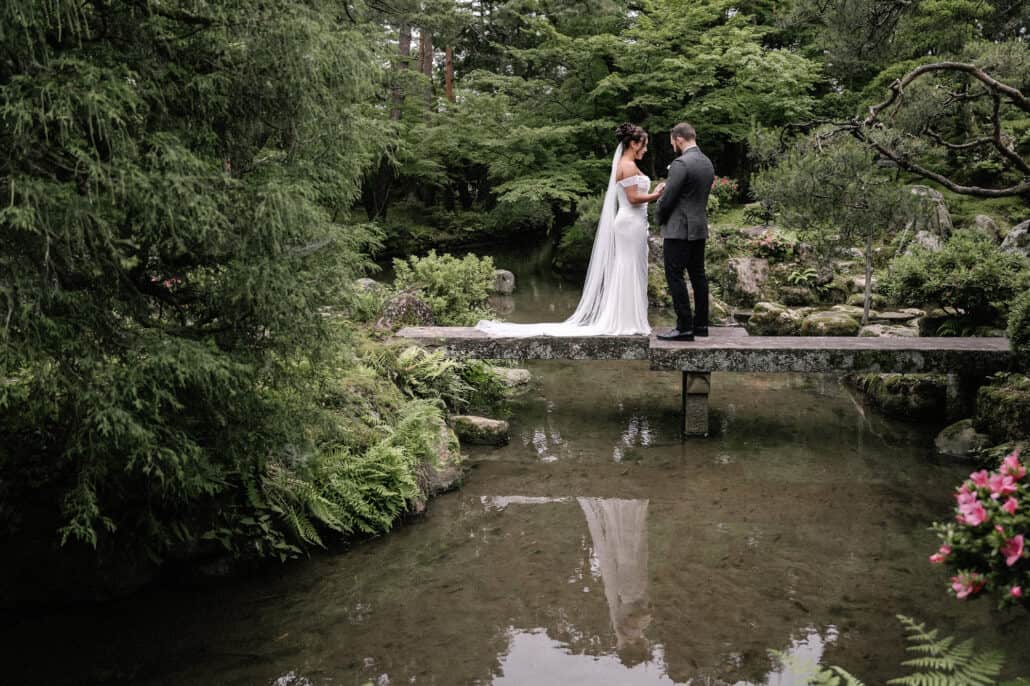
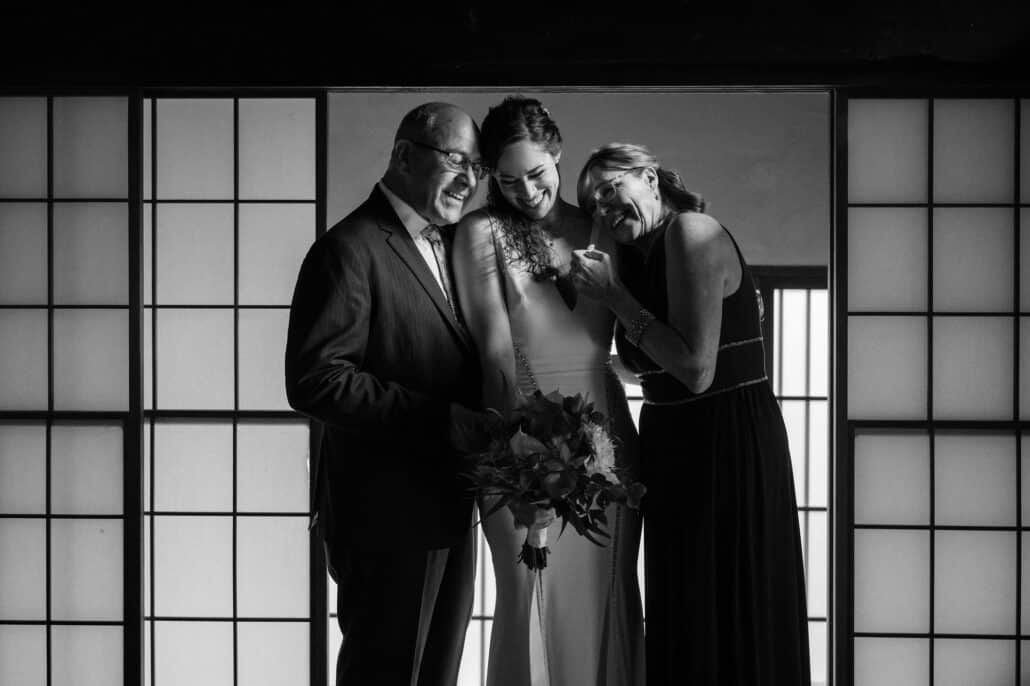
Neither. They go deep in different directions, and Japan is unusually good at both, for the same reason. Its most beautiful places were made for a few people at a time: gardens laid out to be walked slowly, inns of a dozen rooms, tatami rooms built around one low table. An elopement can have a place like that to itself. A wedding at the right size can take one over whole, so the place your people remember is the one they had together.
One ties two people to a place. The other ties everyone you love to it.
Should We Elope or Have a Wedding? The Questions That Decide It
When couples are still torn, these questions settle it.
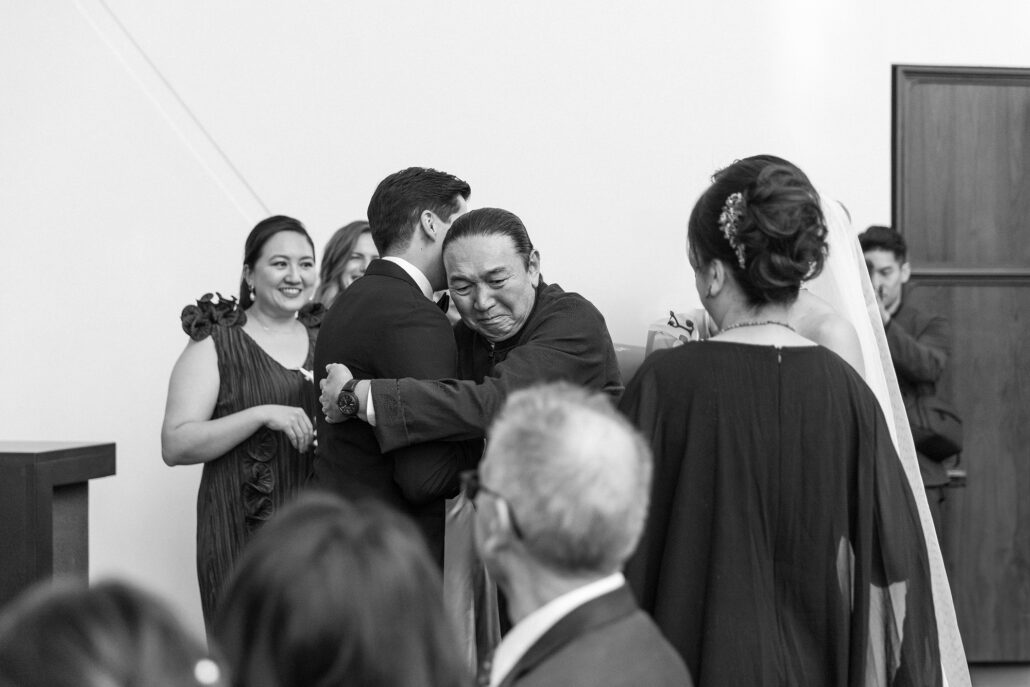
Whose absence would you feel on the day? Not whose absence would cause trouble. Whose would you actually feel? If the answer is a handful of names, you’re describing an intimate wedding. If it’s forty, you’re describing a wedding.
Is it a place you’re coming for, or your people? If one particular shoreline, path or mountain is the reason you first thought of Japan, it’s already answering for you. Two people can be married where forty can’t.
Would your guests be making the trip for you, or would you be asking them to? If the cost or the distance would weigh on the people you love most, an elopement here and a celebration at home may be the kinder answer. A destination wedding works best when the journey is something people want to give.
How much of the planning do you want to carry? An elopement still asks for a great many decisions. A wedding asks for hundreds more. We carry most of them, but not all, and it helps to know early which ones stay with you.
Elope in Japan, Celebrate at Home
Some couples don’t choose. They elope here, just the two of them, and celebrate with everyone at home a few weeks later. Others bring a small circle for an intimate wedding in Japan and hold the larger celebration at home for everyone who couldn’t travel. Most of our couples marry legally at home, which leaves the day in Japan free to be exactly what they want it to be.
The order matters more than the format. Decide what the day in Japan is for, then build the celebration at home around it, never the other way round. We plan what goes home with the day itself, because for everyone who couldn’t travel, the film and the photographs are how they’ll arrive there too.
Elope or Have a Wedding in Japan: Quick Answers
Should we elope or have a wedding in Japan?
It comes down to who you want to remember it with. An elopement gives the two of you a day built around each other and the place, free to follow the light. A wedding gives your people days together in Japan and a memory everyone holds. Picture the breakfast table the morning after: whoever is there is your answer.
What’s the difference between an elopement and an intimate wedding?
An elopement is about the two of you, and the day belongs to you. An intimate wedding adds a small circle of guests, up to about twenty, who share the day with you, often around one table at a ryokan or in a private dining room. Beyond that it’s a wedding, and in Japan thirty to fifty guests is already a full one.
Can we have 100 guests or more at a wedding in Japan?
Yes, though fewer venues can hold a wedding that size. Japan’s old houses, gardens and ryokan were built on a human scale, so thirty to fifty guests already makes a full wedding here, and some of the most beautiful places can be given whole to a group that size. For a hundred or more, the list narrows to the larger venues that can host it well, which is one more reason to start early.
Can we elope in Japan and celebrate at home?
Yes, and many couples do. Most of our couples marry legally at home, so the day in Japan can be exactly the ceremony and the places they want, just the two of them, with a celebration for family and friends when they’re back. Decide what the day in Japan is for first, then build the party at home around it.
Does a wedding take longer to plan than an elopement in Japan?
Yes. A wedding with guests starts about a year out, because venues, rooms, transport and kitchens all have to be arranged around your people, and you can secure your date up to eighteen months ahead. An elopement can come together faster, though the best places and seasons still reward couples who start early.
Is an elopement legally binding in Japan?
Not on its own, and neither is a wedding ceremony. A marriage becomes legal in Japan when it’s registered at a city or ward office. Most of our couples marry legally at home and come to Japan for the ceremony that means something to them. Our guide to getting legally married in Japan explains both routes.
Back to the Breakfast Table
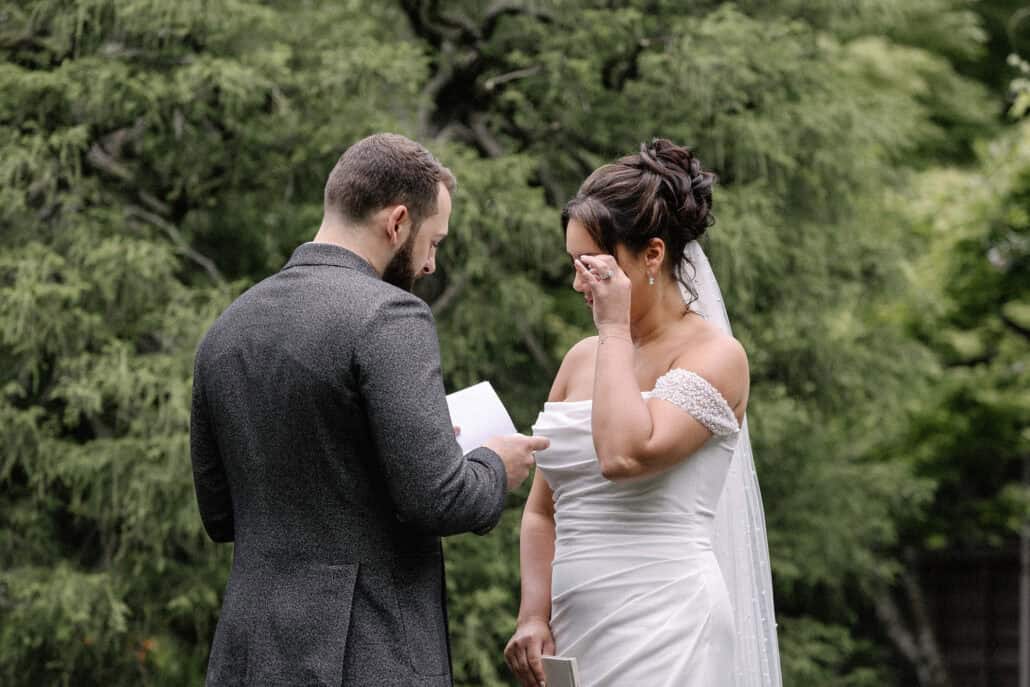
We plan all three, and we’ve seen each one go deep. Under the blossom in Aomori, a groom put his tears down to allergies, and his bride said she was allergic too. In a ryokan hall at Jinya, two families and their friends took turns at the mallet.
The feeling doesn’t grow with the guest list. What changes is who gets to share it.
So picture the morning after. Whoever’s at the table is your answer.