The question hardly ever comes with a name attached. Couples don’t ask for a particular garden. They ask whether the thing they’ve pictured is possible at all: Kyoto in late November, the maples in full colour, moss underfoot, and nobody there but the people they love. A private garden wedding in Kyoto, in the busiest season of the city’s year.
It is possible. The garden, the morning and the quiet are all real. They just aren’t found the way most things are found now.
Yes, If You Know Where to Go
Kyoto does have gardens you can book the ordinary way: hotels with gardens of their own, temples that hold ceremonies, and a few estates that host one wedding at a time. They’re lovely, and they’re listed. The gardens in this post are a different kind. Neither takes weddings that way. A ceremony there, with the garden to yourselves in the busiest weeks of the year, comes through an introduction, and that’s where we come in. They suit small days, an elopement or an intimate wedding with family, and at the peak of autumn they’re how we give couples their vows in Kyoto without an audience they didn’t invite.
Kyoto at the Height of Autumn
Kyoto’s maples reach their fullest across the city from late November into early December, and November is the busiest month of Kyoto’s year by the city’s own count. The temple gardens everyone knows from photographs are at their busiest exactly when they look their best. The stillness in those photographs is real. Most of it is on the other side of a wall.
Gion has started saying so plainly. For several years now, signs on some of its private lanes have asked visitors not to take photographs there, and more recently not to walk down them at all. People live on those lanes. Gion has had to put up signs. A garden in the hills would rather never need one.
None of this is new to the city. Kyoto has always opened some of its doors only to people who come with an introduction.

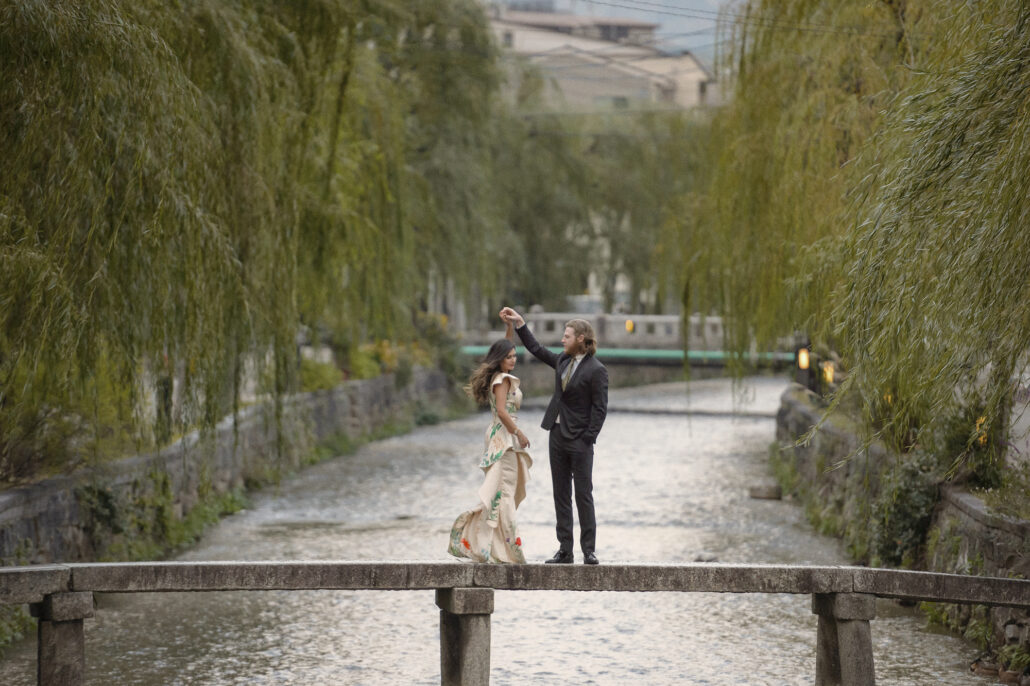

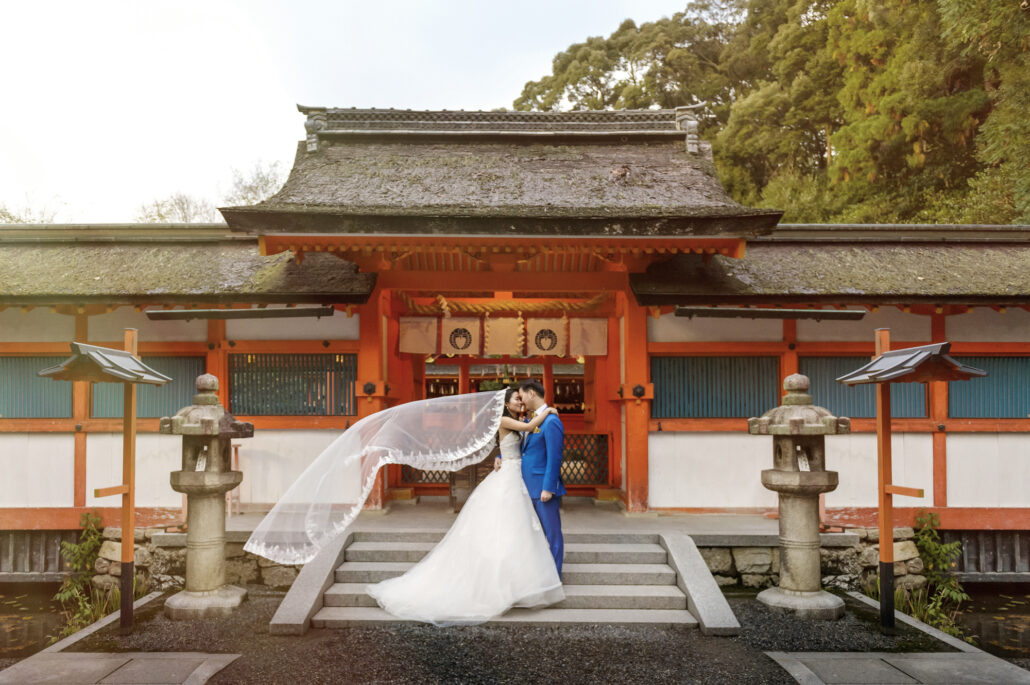
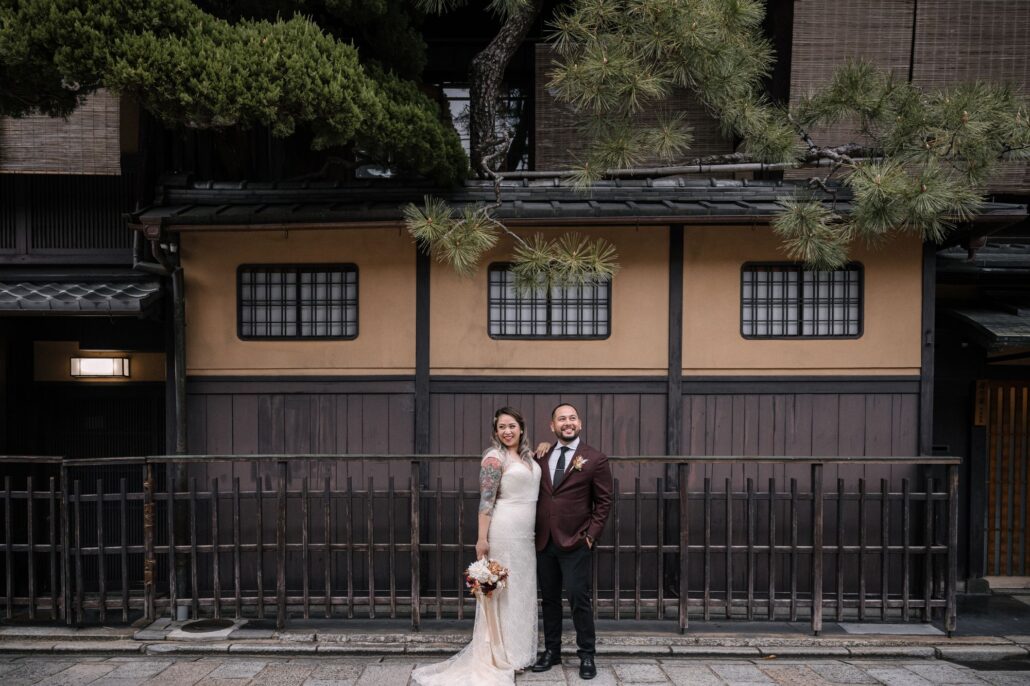
How Introductions Work in Japan
Much of Japan still works through introductions, and Kyoto keeps the rule in its plainest form. In the city’s geisha districts, many ochaya, the teahouses where geiko and maiko entertain, still turn away first-time guests who come without one. There’s a phrase for it: ichigen-san okotowari, no first-timers. It sounds like snobbery until you learn how the house is paid. Nobody settles the bill on the night. It follows later, sometimes much later, and if a guest never pays it, the person who introduced them can find themselves covering it.
In Kyoto, an introduction is a guarantee with someone’s name on it.
Japanese weddings once had a seat for exactly that person. The nakōdo, a go-between, brought two families together, was chosen because both sides trusted them, and sat beside the couple at the wedding. Most couples here marry without one now, but the idea underneath it never left. People open their doors to the person who answers for you.
A private garden works on the same terms. Its owner isn’t in the wedding business. A wedding there is a favour, extended to someone they already trust, on behalf of people that someone is willing to answer for.
Why an Owner Says Yes
What an owner is really deciding is whether the day will leave the place as it was. Will the guests walk where they’re asked to? Will anyone send a drone over the roof, or post the garden with its location tagged before lunch? Will everyone understand that they’re guests in somebody’s garden?
Nobody can answer that for a stranger. We can answer it for the couples we bring, because by the time they arrive we’ve planned together for the best part of a year and we know who’s coming. Relationships like these aren’t made quickly. Ours were made one wedding at a time, and they’re kept by leaving every garden the way we found it. Every wedding we bring is a promise made on a couple’s behalf. The next couple’s welcome depends on it.
How Couples Find Them
Gardens like these don’t sit in wedding directories, because they aren’t wedding venues. A listing turns a garden into a destination, and an owner who opens the gate for a wedding is agreeing to one quiet morning. The quiet is what makes that morning worth having, so it’s looked after.
Couples find them the way Kyoto has always worked: through someone who already knows the owner. What they search for is the experience: a private wedding ceremony in Kyoto, a garden with no one else in it, a way to marry under the maples without a crowd. That’s exactly the right thing to look for. The garden is the part we bring.
The privacy stays with them afterwards, too. A morning like that remains theirs, and never becomes a pin on someone else’s map.
The gardens worth marrying in were never hidden. They were kept.
Two Private Gardens in Kyoto, Two Weddings
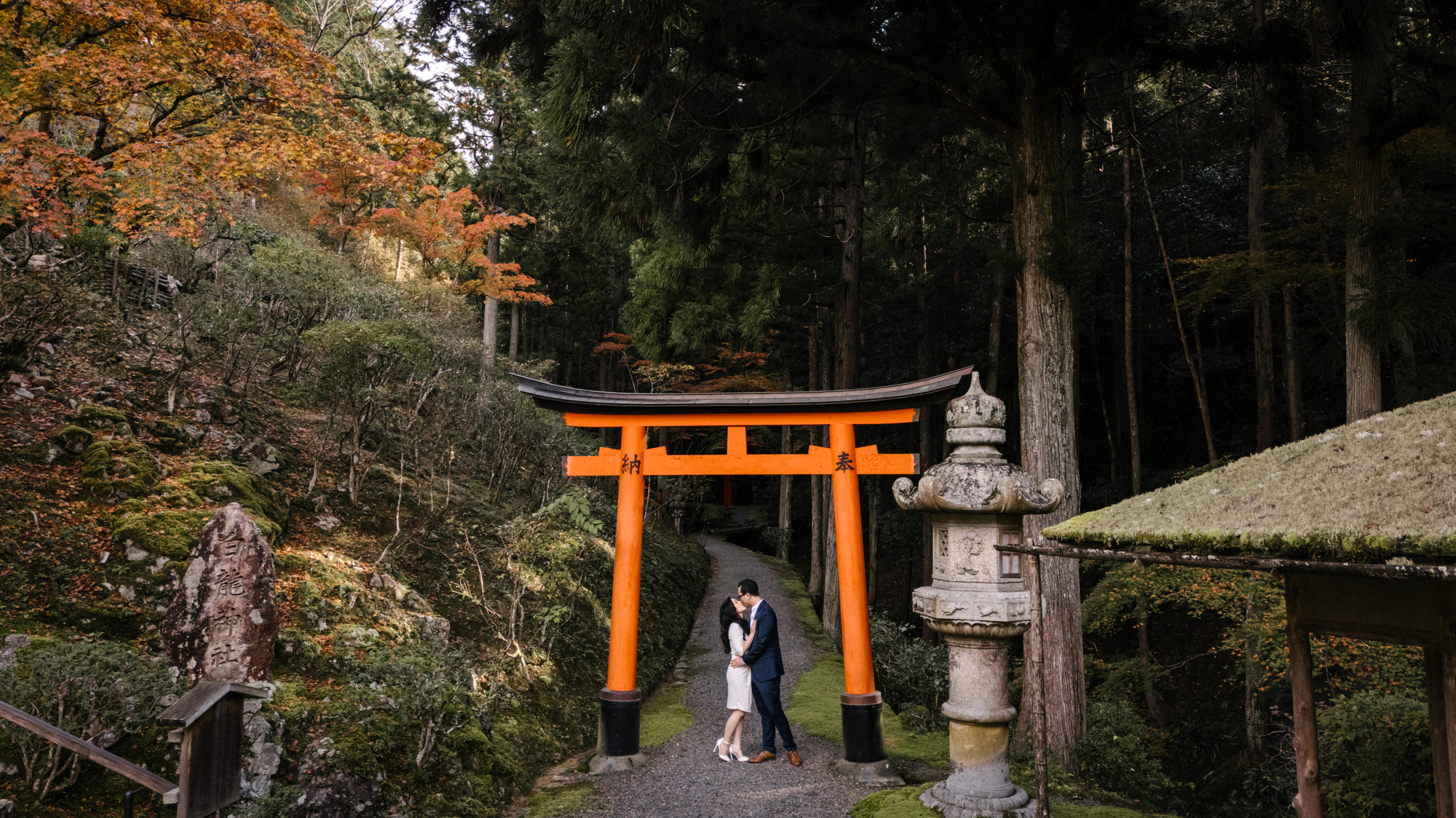
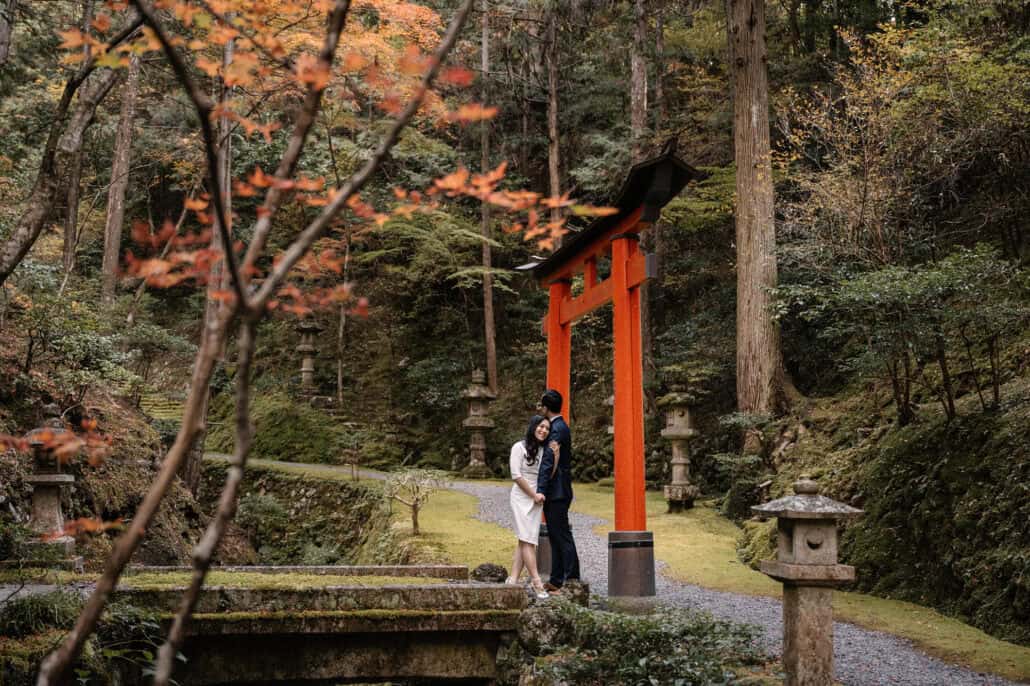
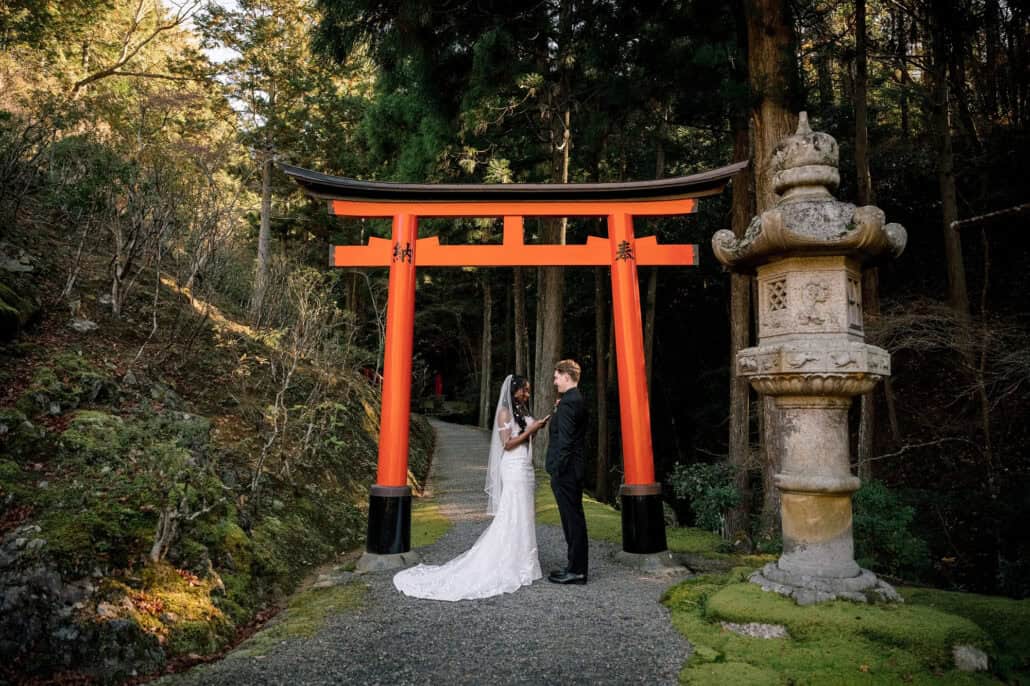
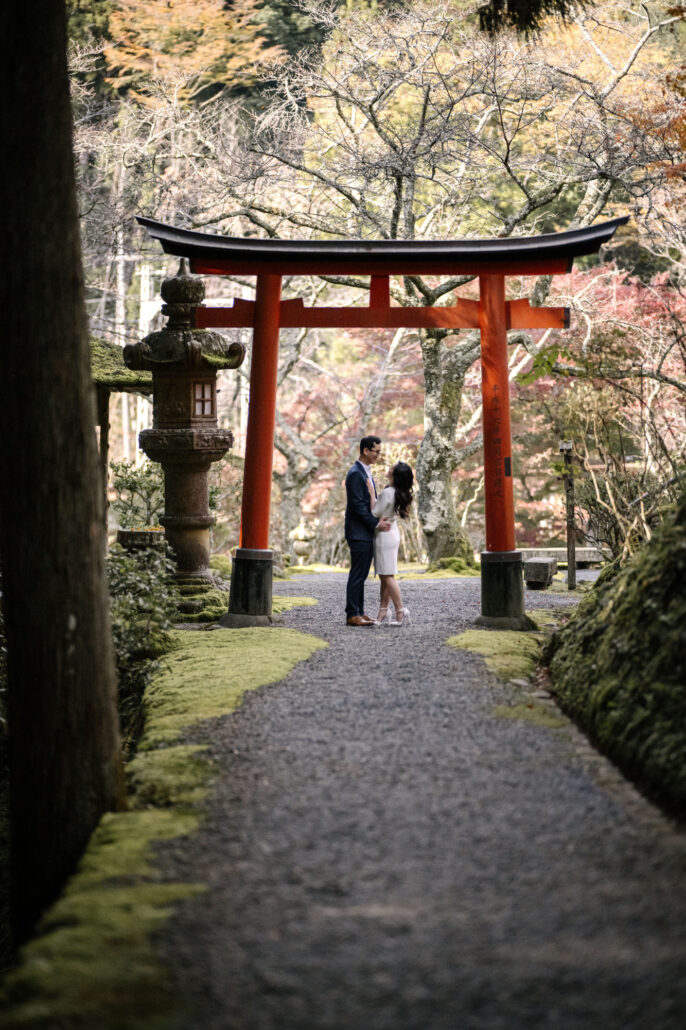
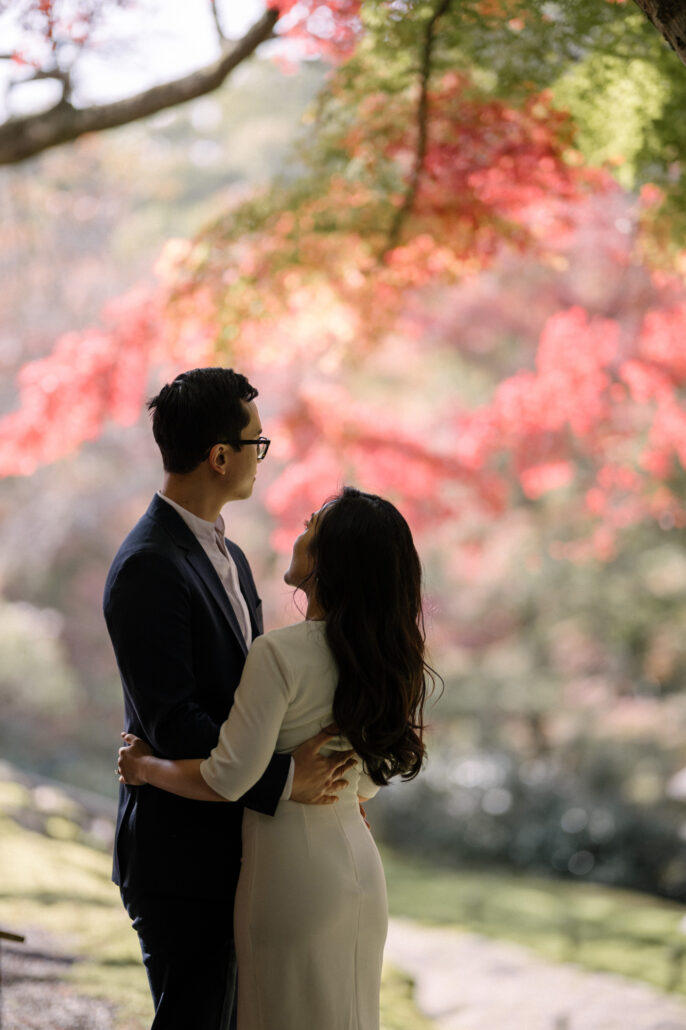
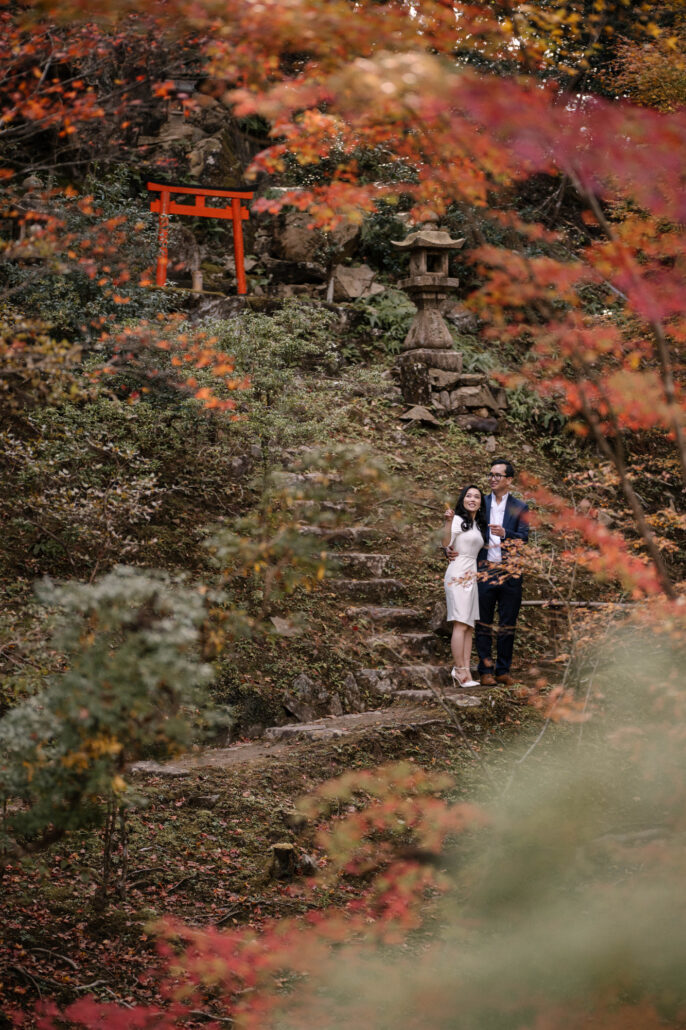
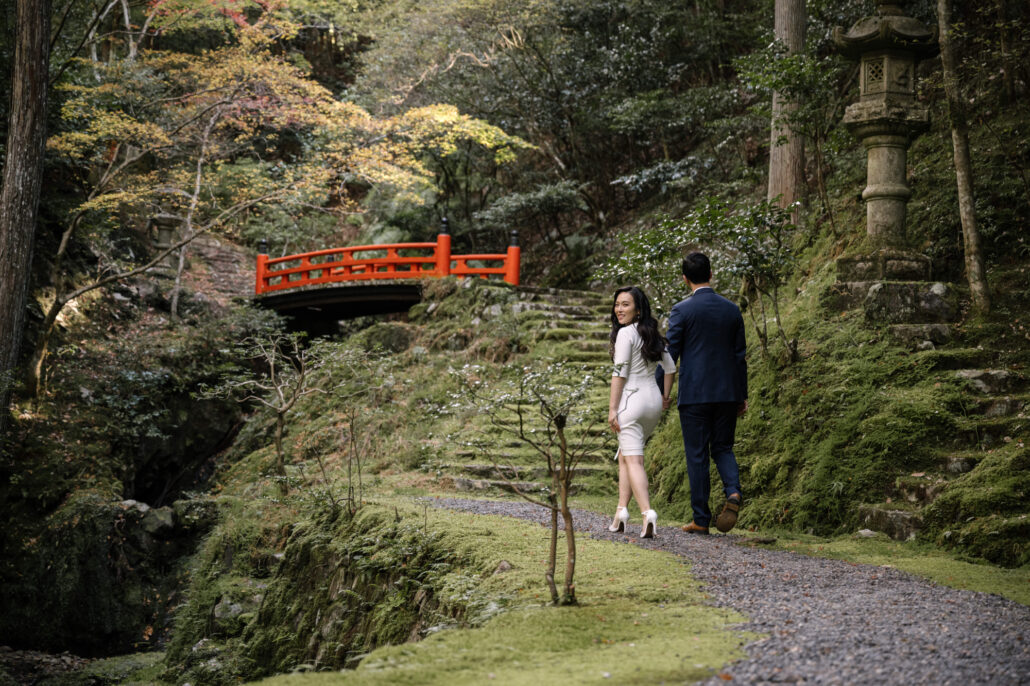
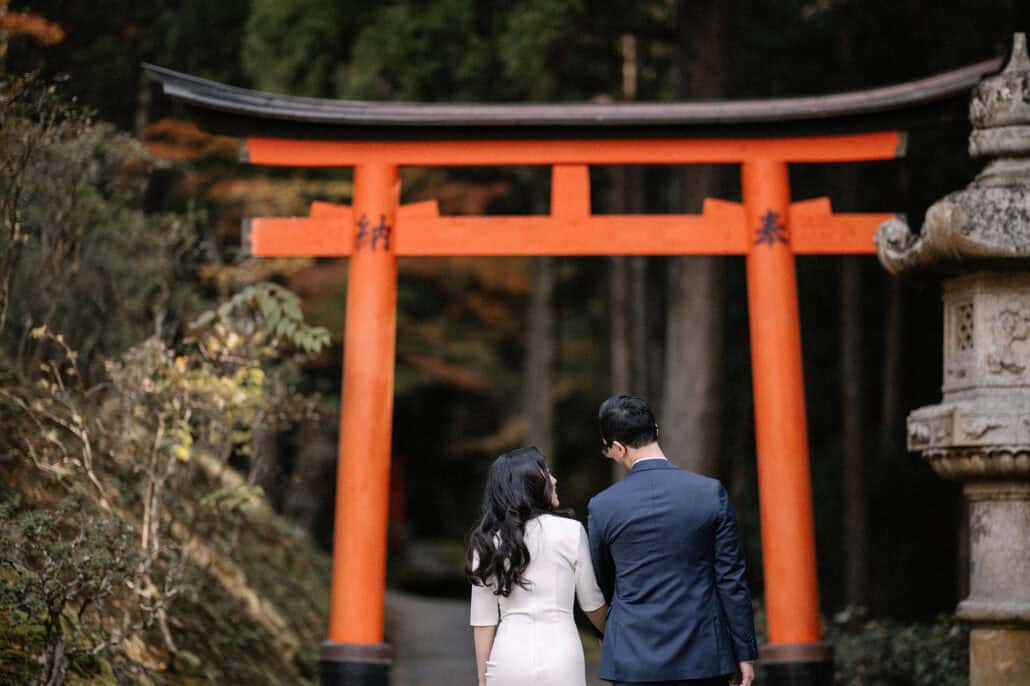
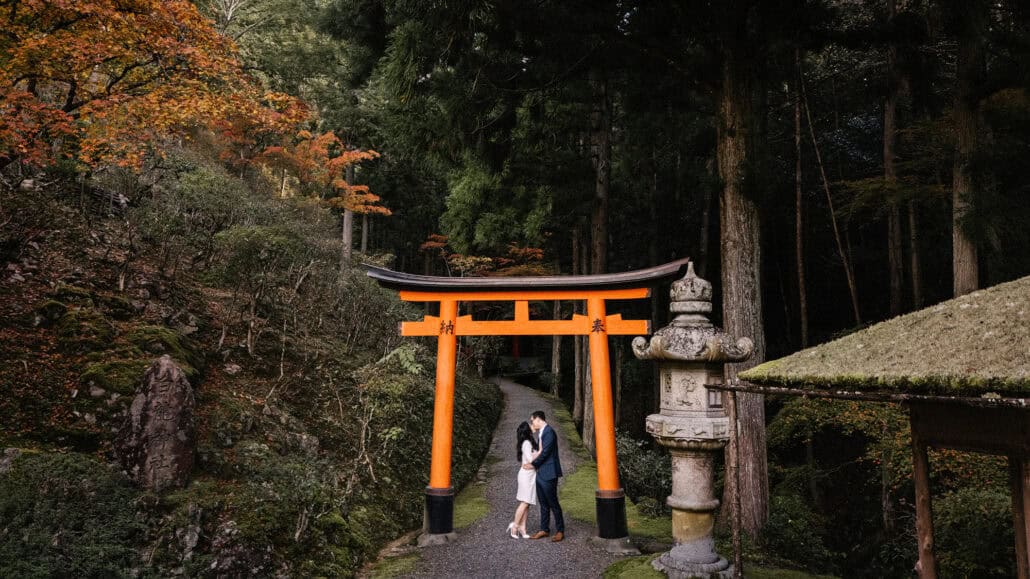
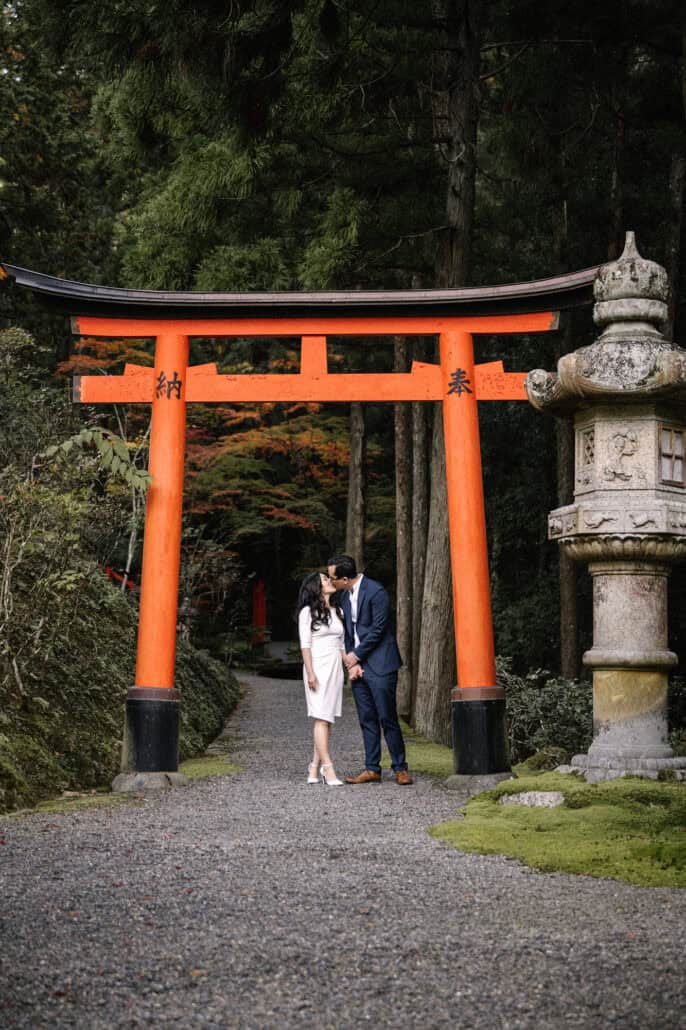
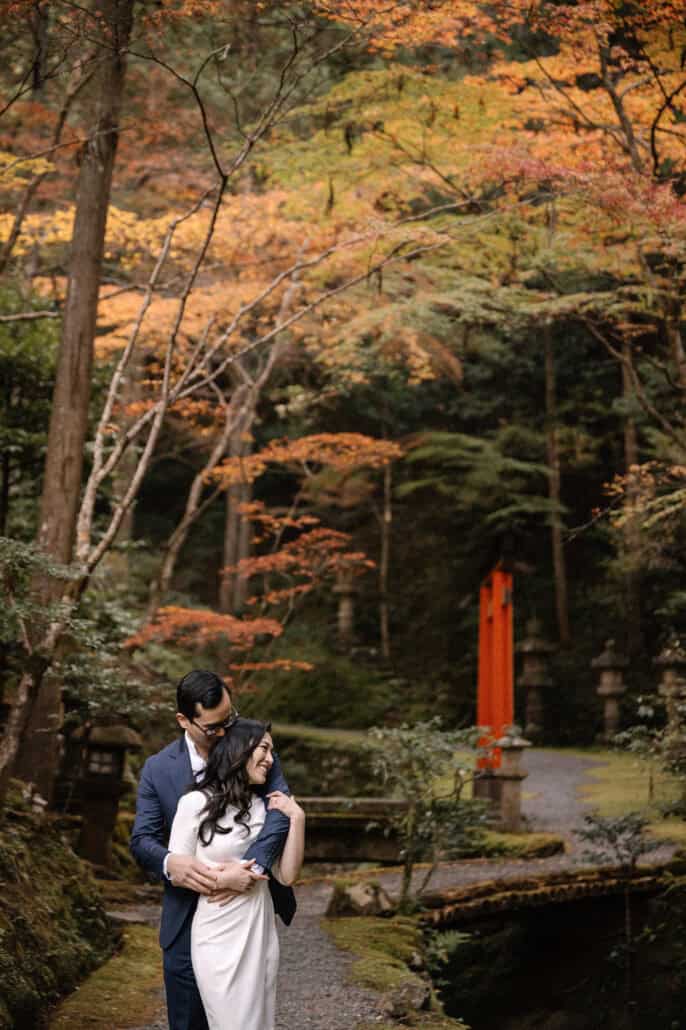
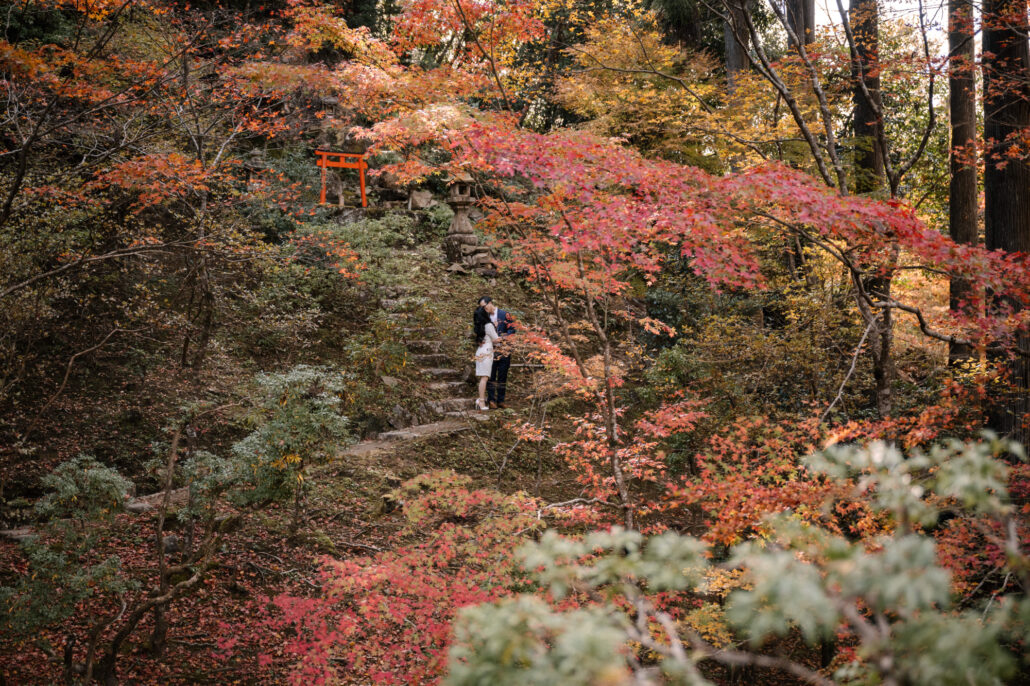
The first is in the hills of north Kyoto: a garden we can hire privately for intimate gatherings, where a mossy path through the cedars leads to a vermilion torii beside a stone lantern. In December 2025 a couple from Orlando eloped there, just the two of them, at the peak of the colour. They’d been talking about Japan since they met in high school, and neither of them had been before the week they married. After fifteen years of imagining it, the first Kyoto they knew was a garden with nobody else in it. They spent the afternoon down in the city among everyone else, and were very happy to. Their Kyoto elopement is here.
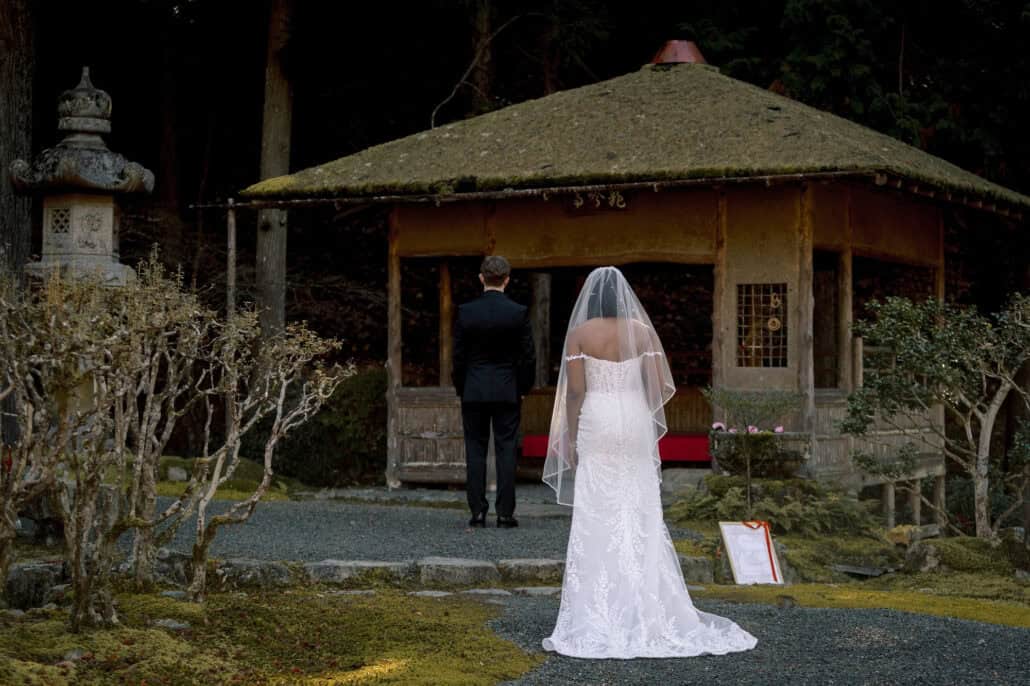
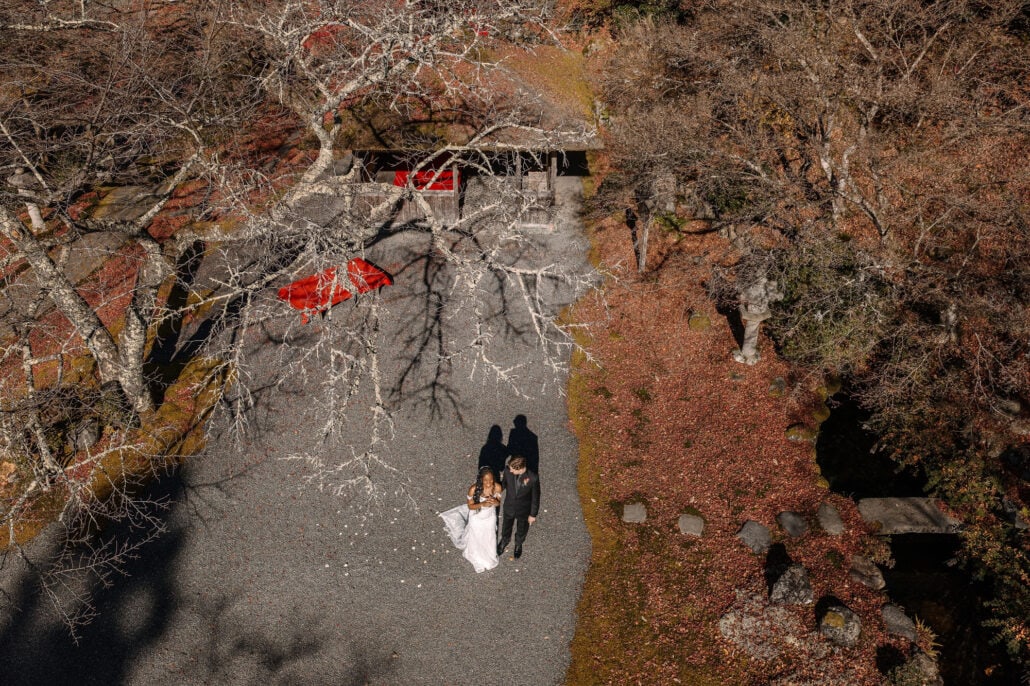
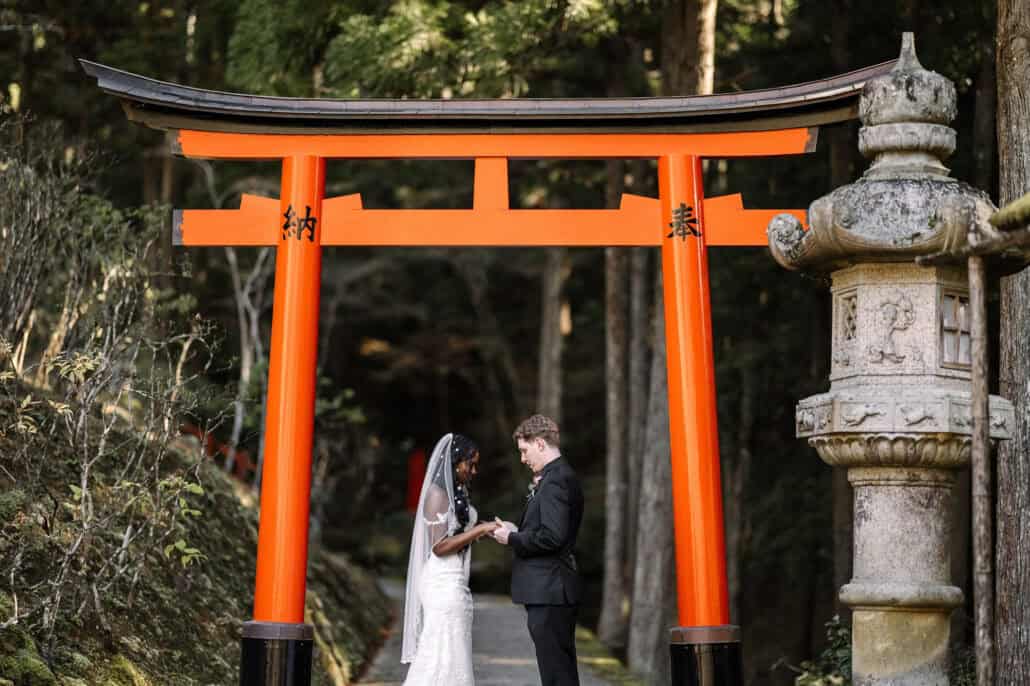
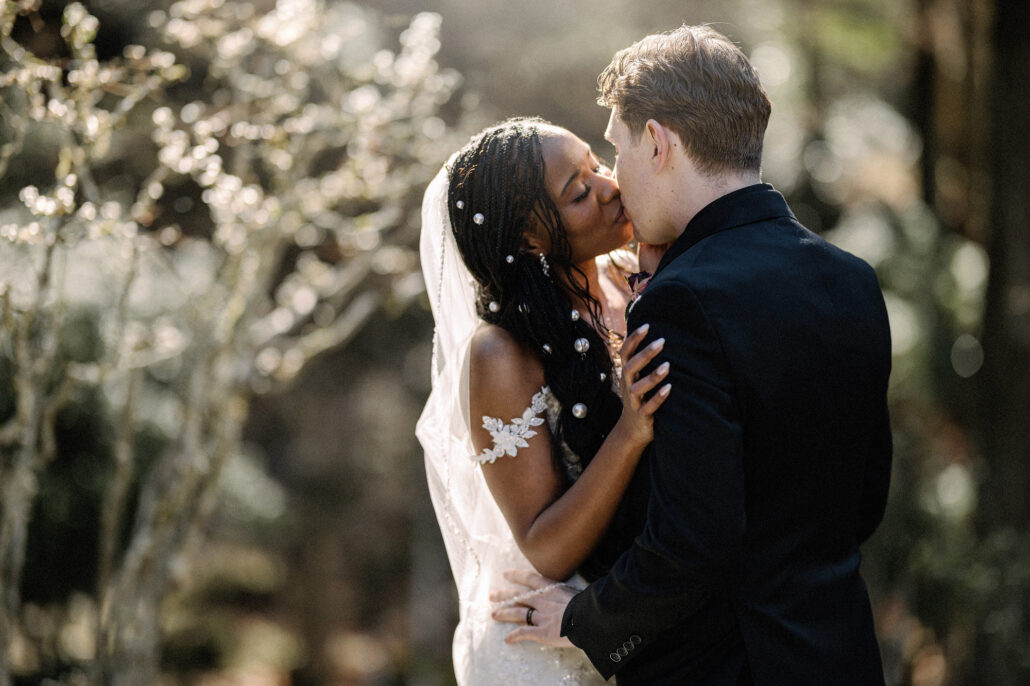
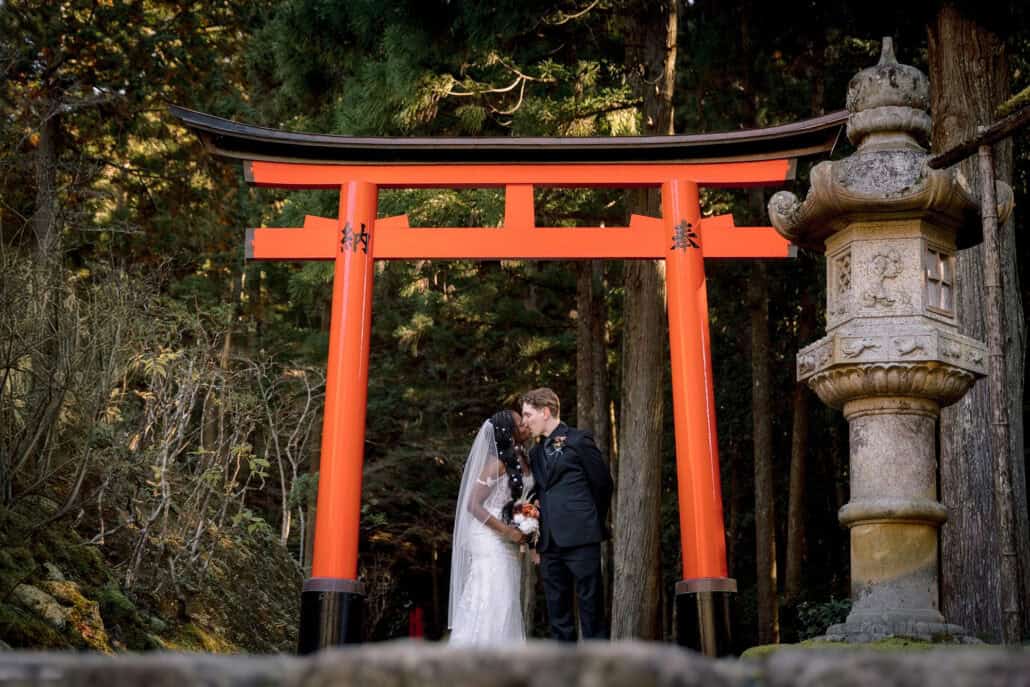

Another couple spent the day before their elopement in the same garden, under the same torii, with the maples in colour.
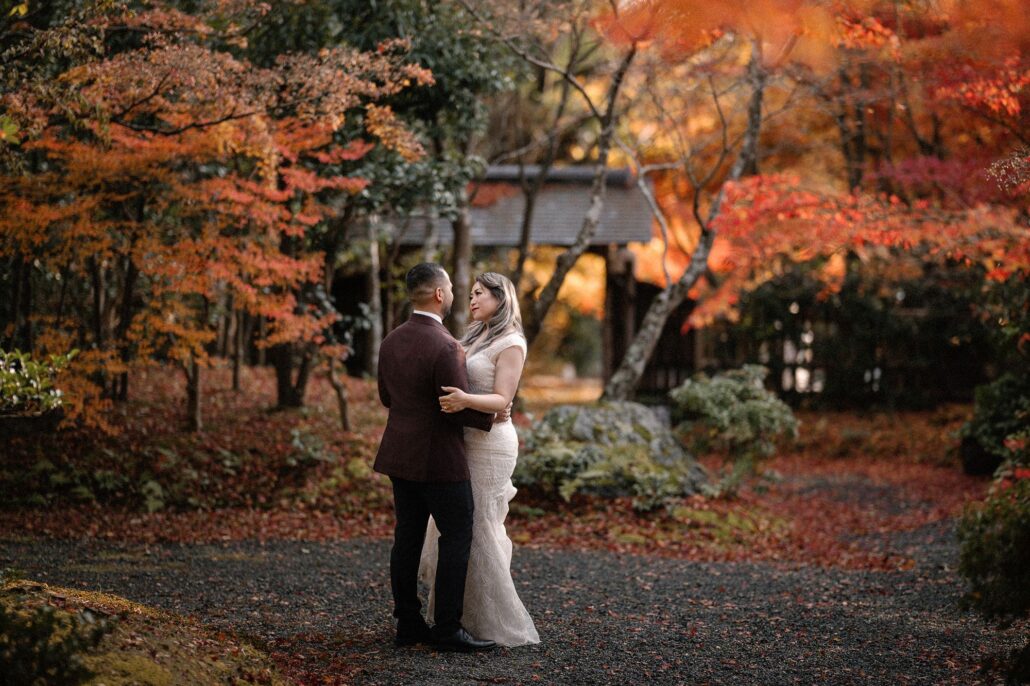
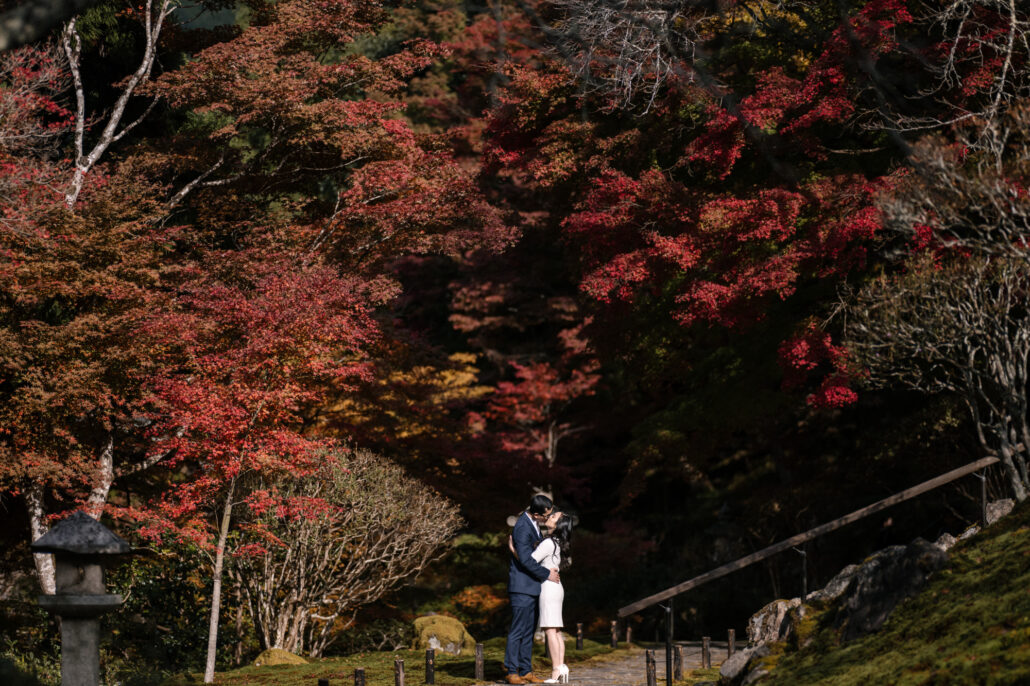
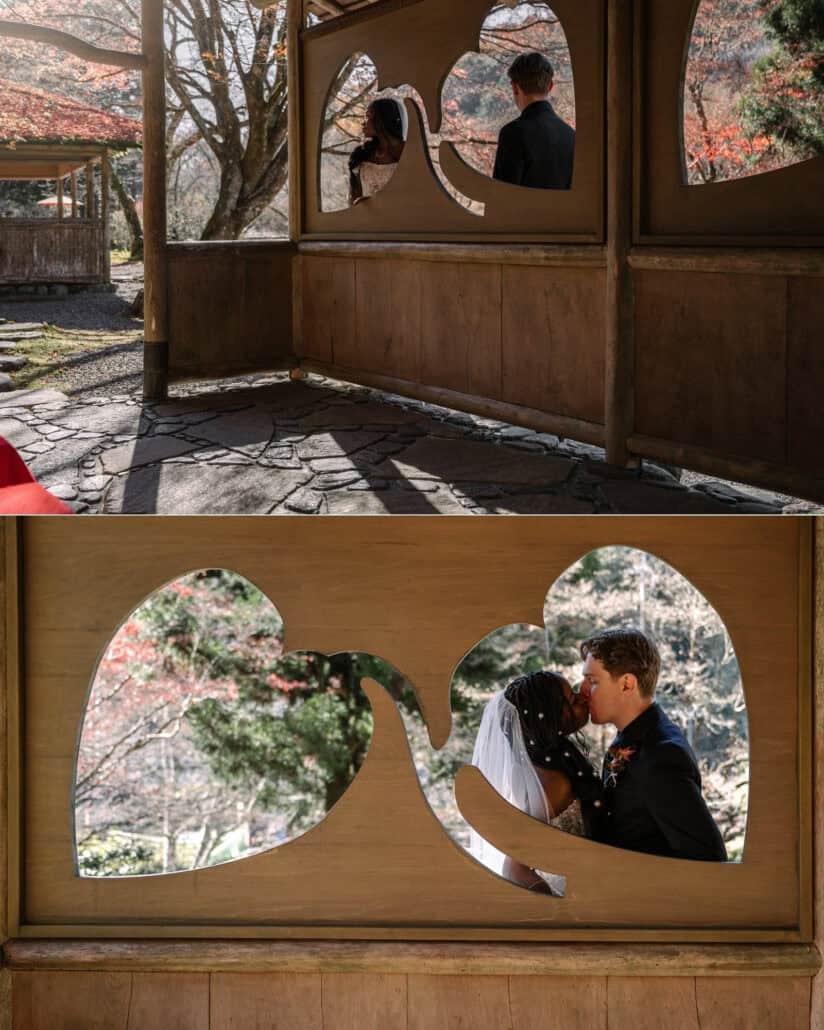
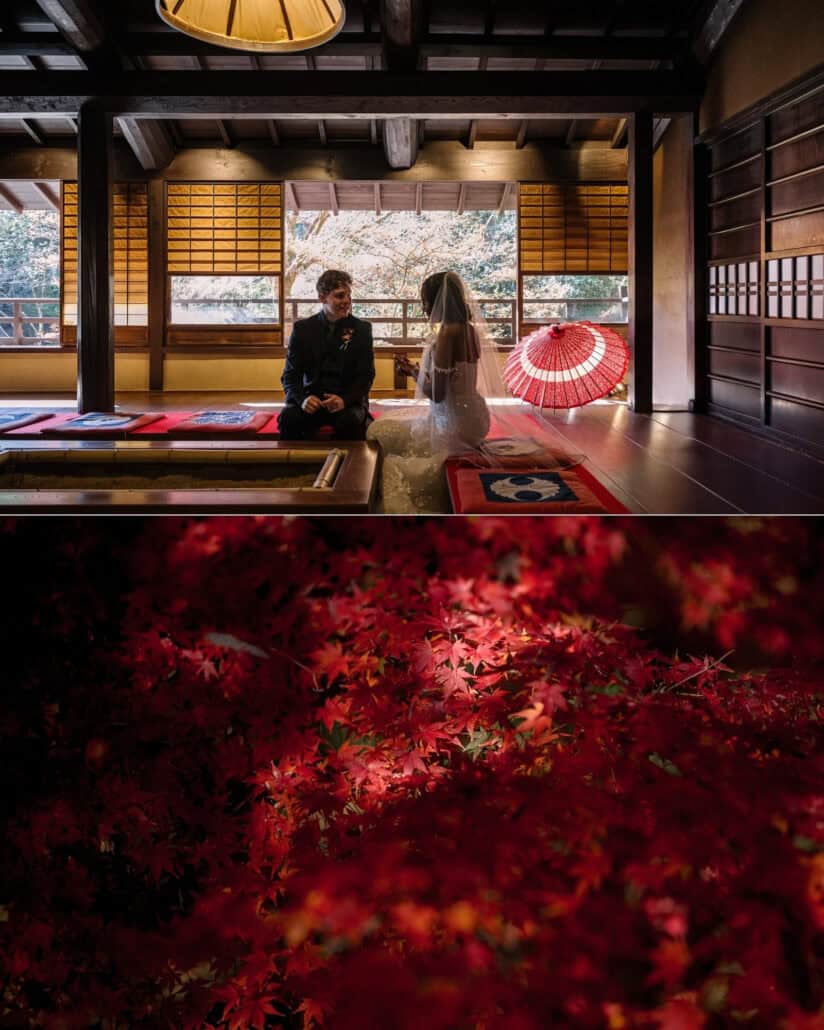
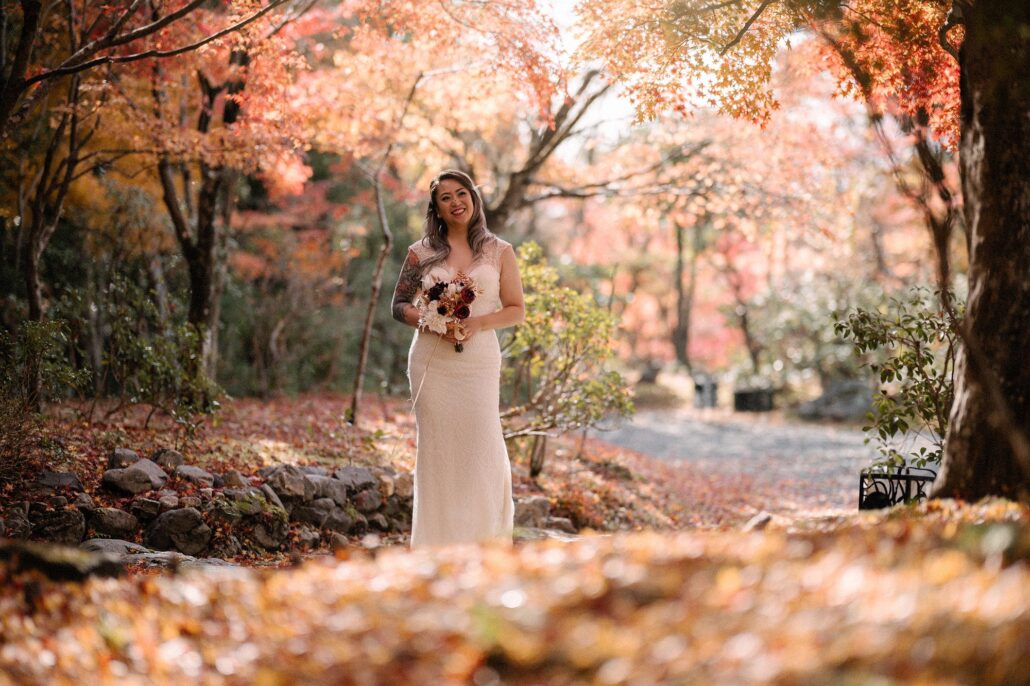
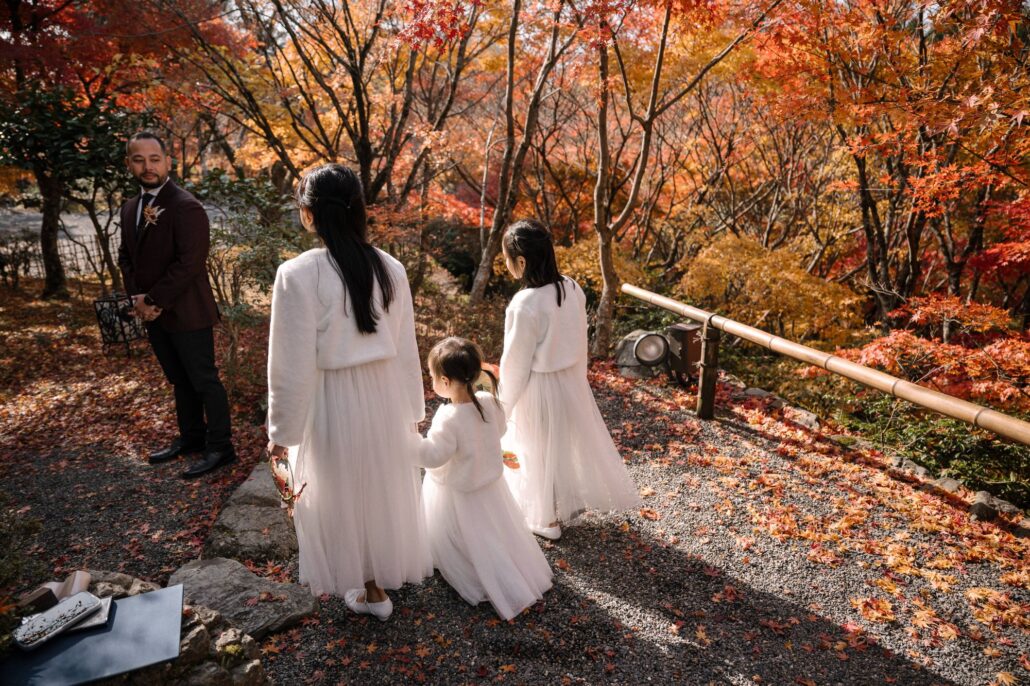
The second garden belongs to an owner who keeps it for people who feel things deeply, and opens it for our couples. In late November 2023 a couple married there with the groom’s mother and their three young daughters, three years after they’d signed their marriage papers. They’d kept the vows for Japan. Afterwards the owner made them tea himself, and nobody was in a hurry to leave. Their wedding under the maples is here.
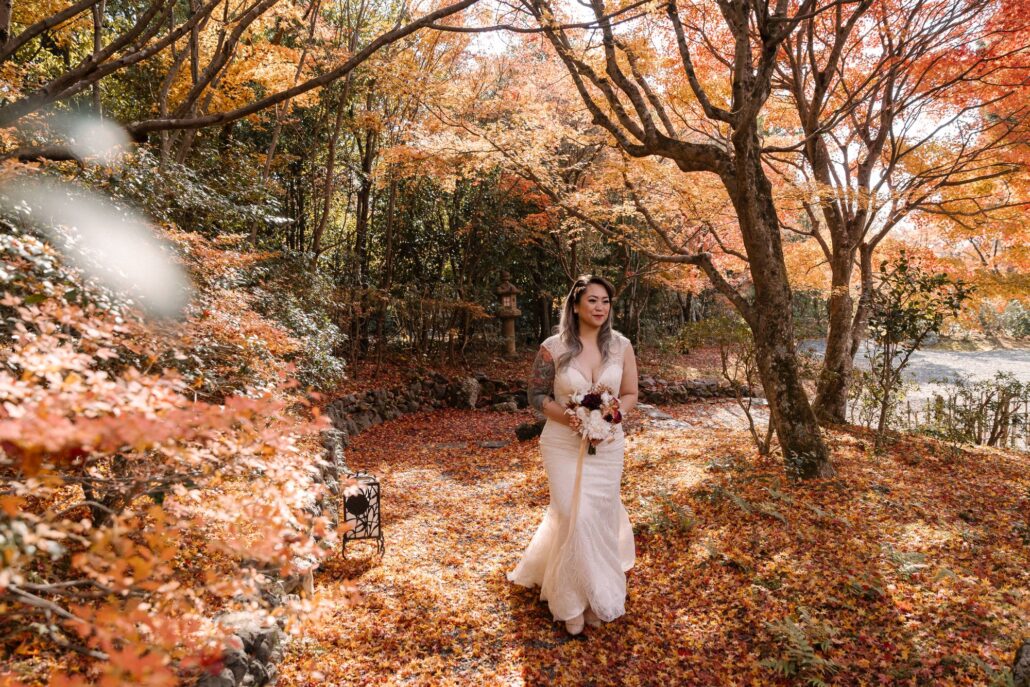
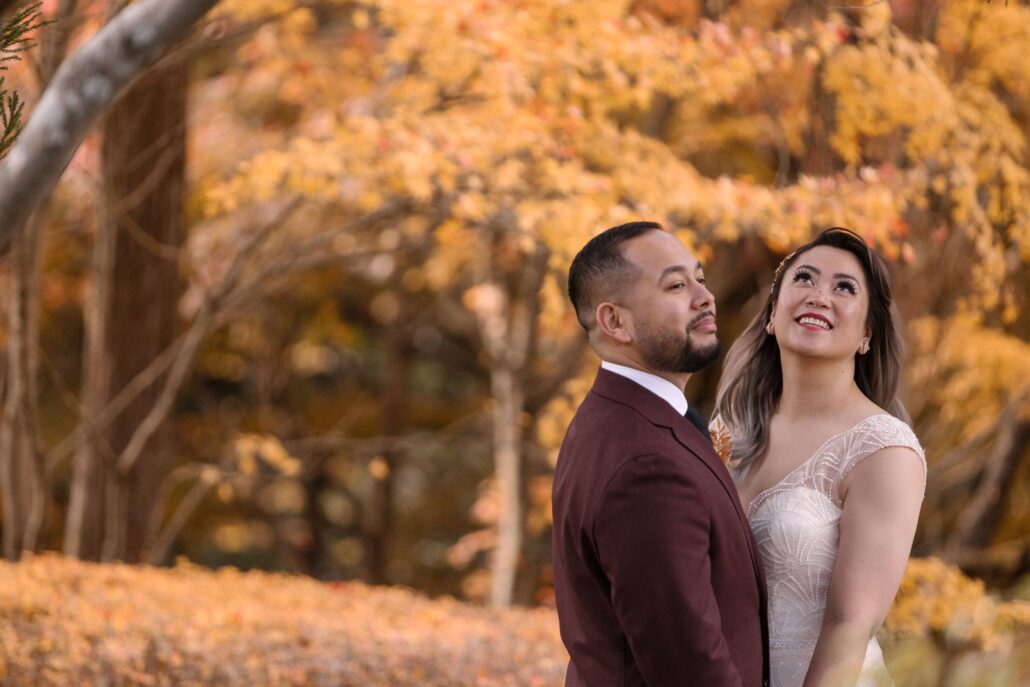
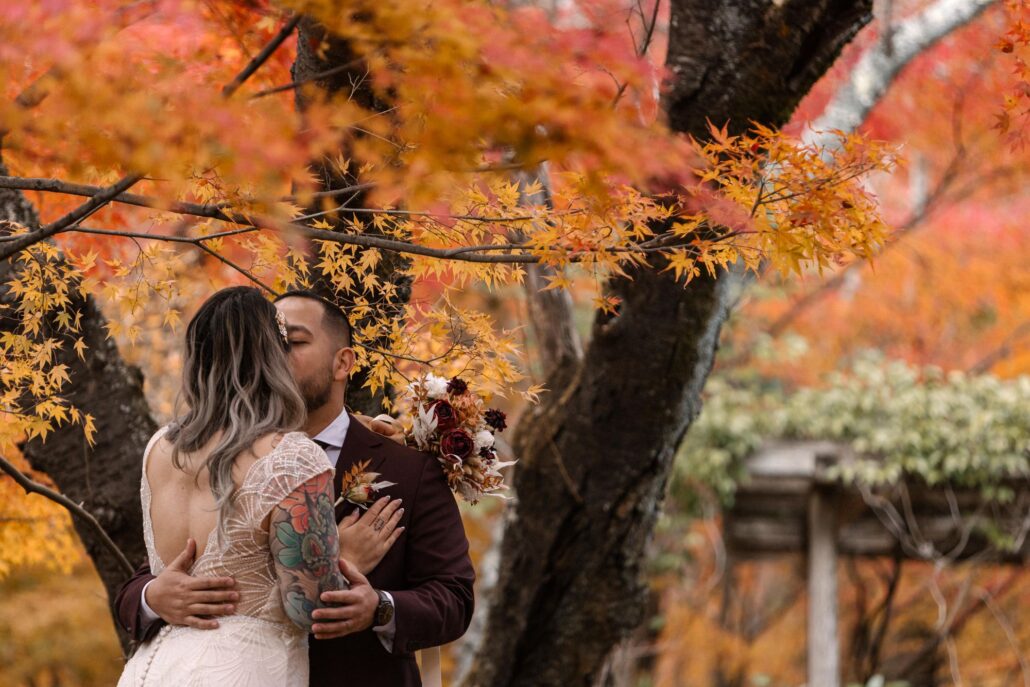
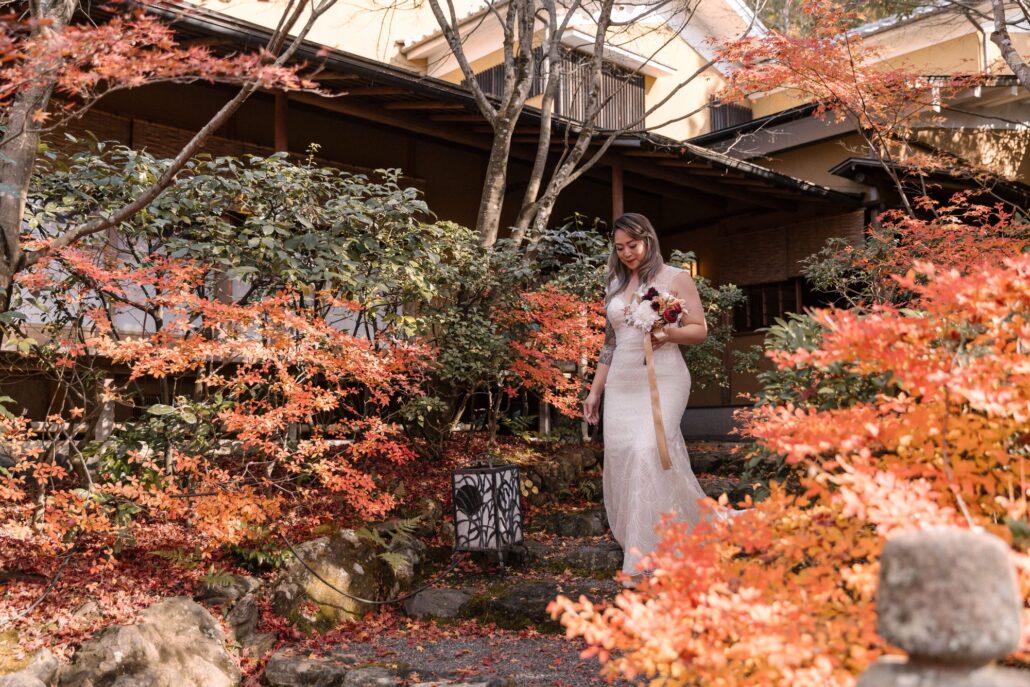
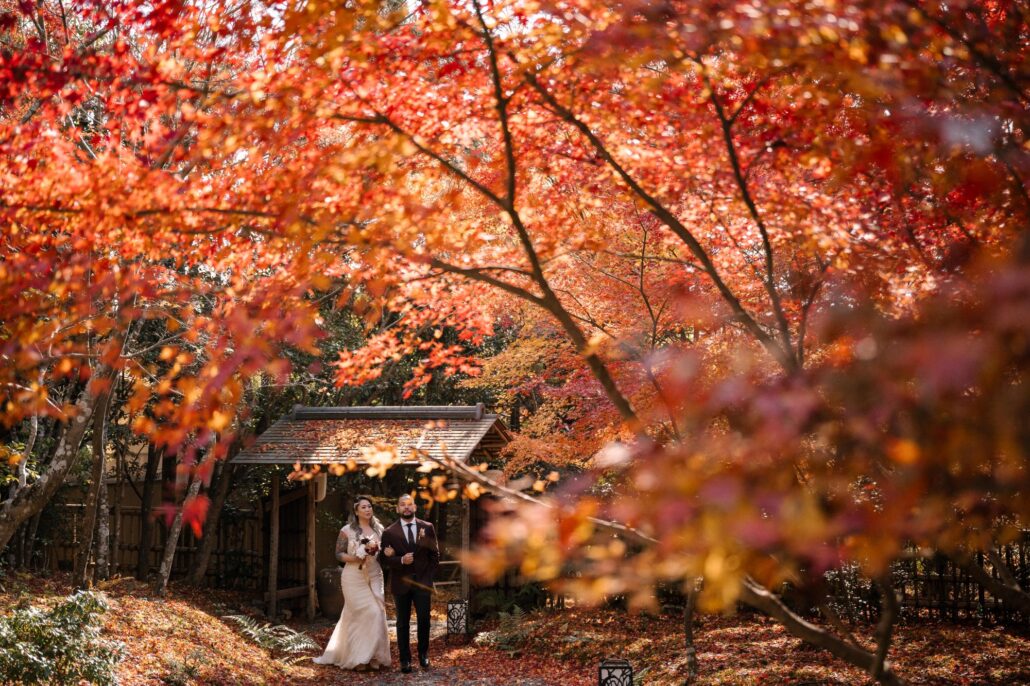
One day was for two people and the other for six. What they shared was a morning that belonged entirely to them, in a city where very little does in late November.
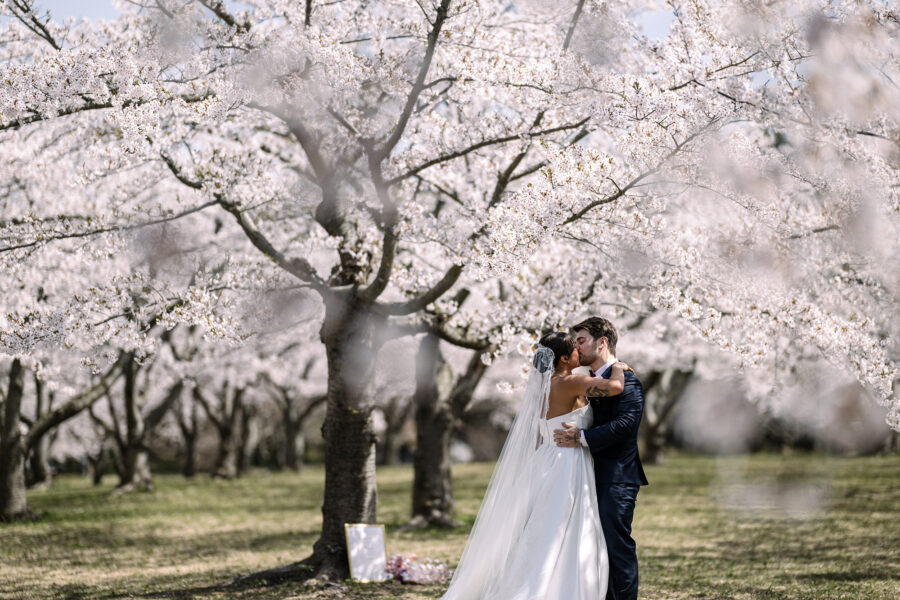
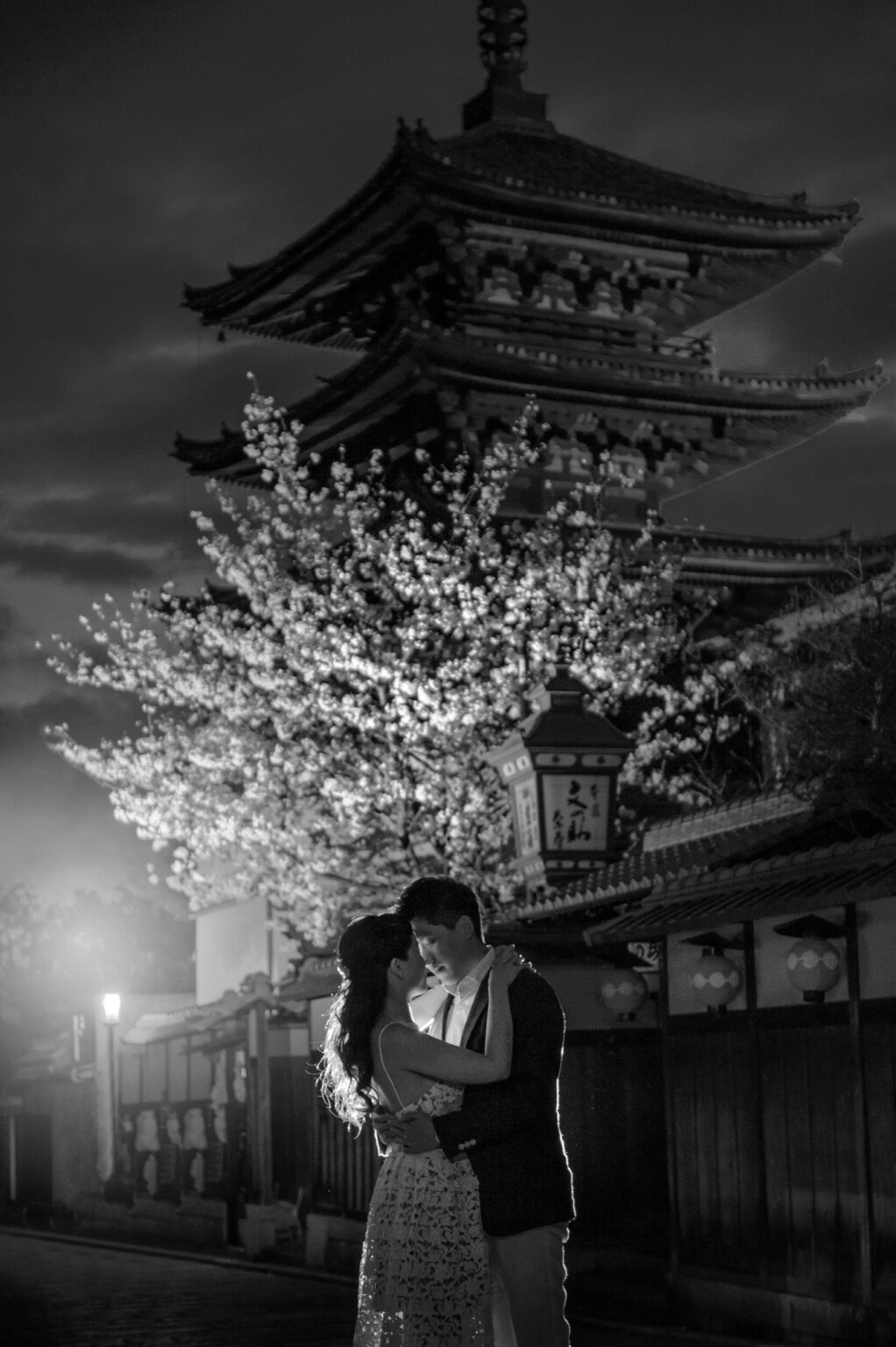
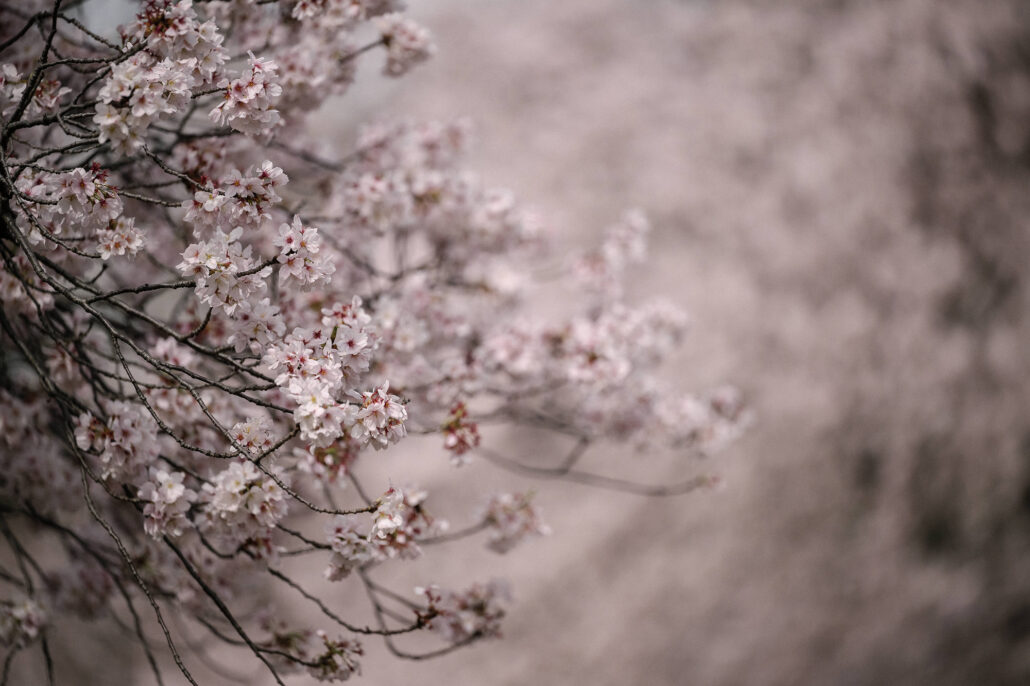
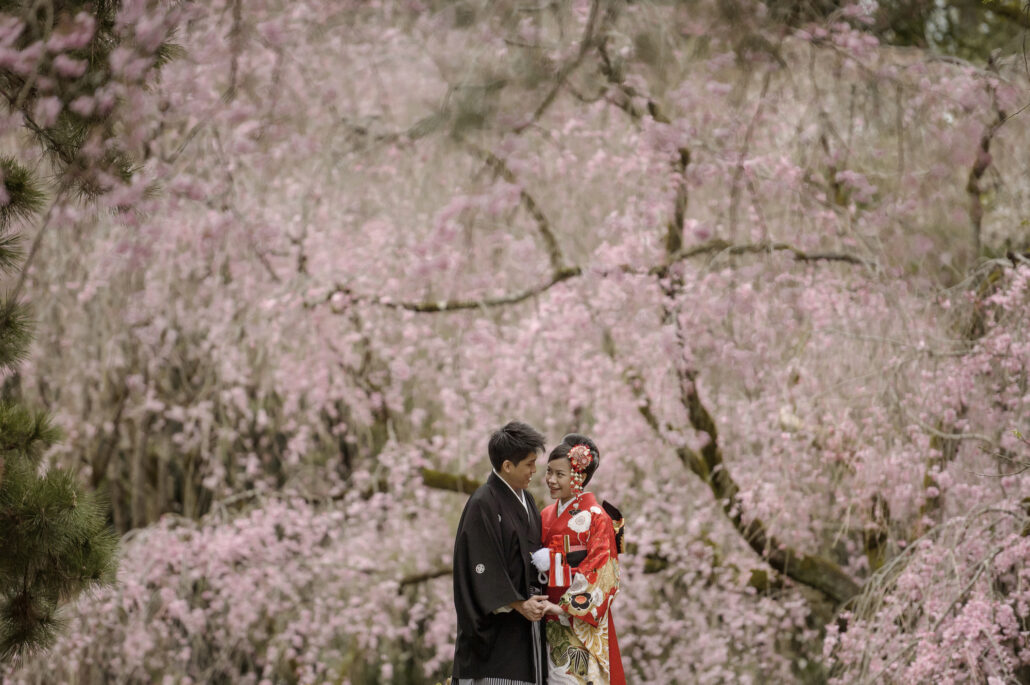
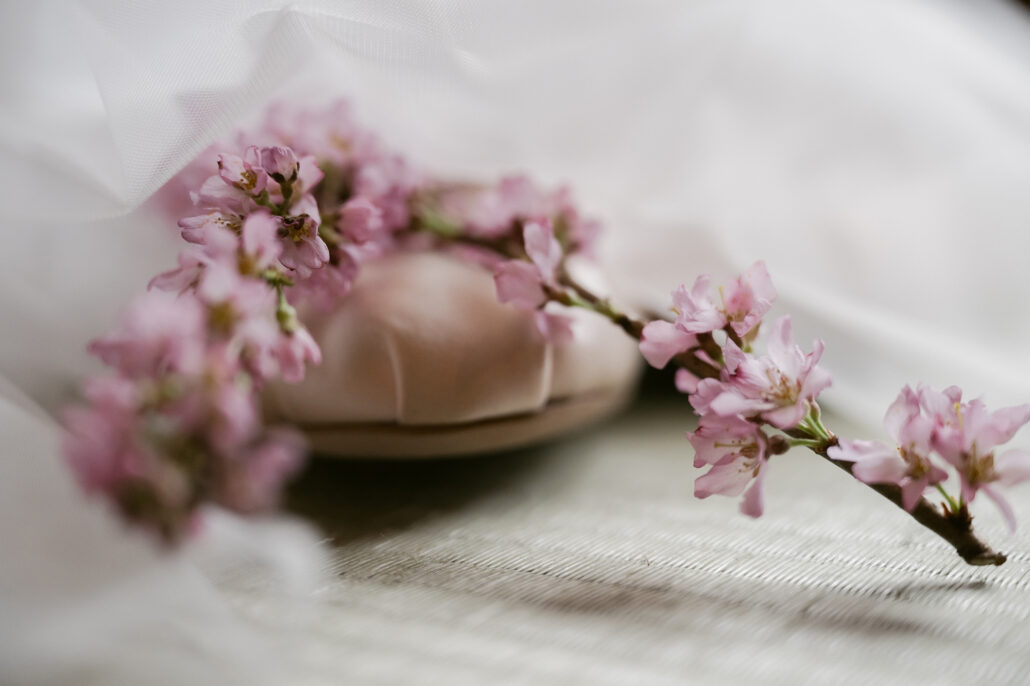
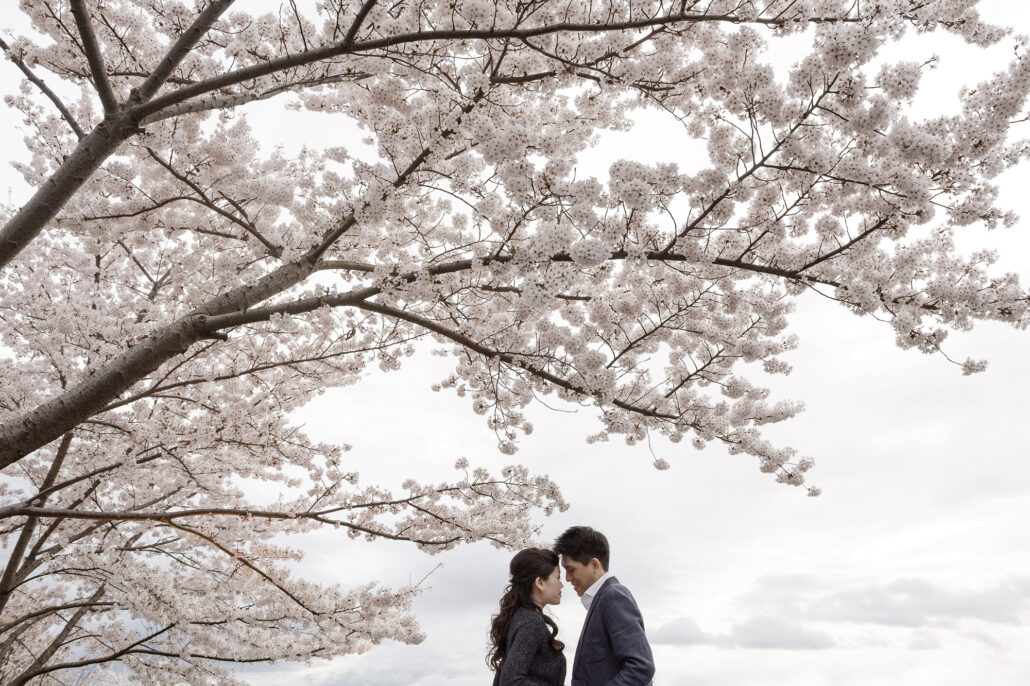
Both weddings were in autumn, but the gardens are just as beautiful in spring. Each has one great cherry tree in its grounds, and one tree is all a spring ceremony needs: the two of you beneath it, the people you love close by, and petals coming down where the maple leaves fell. The tree in the maple garden is spectacularly beautiful, and a spring wedding beneath it is one we’d love to plan.
Spring, beyond the garden walls.
What a Garden Ceremony in Kyoto Can Hold
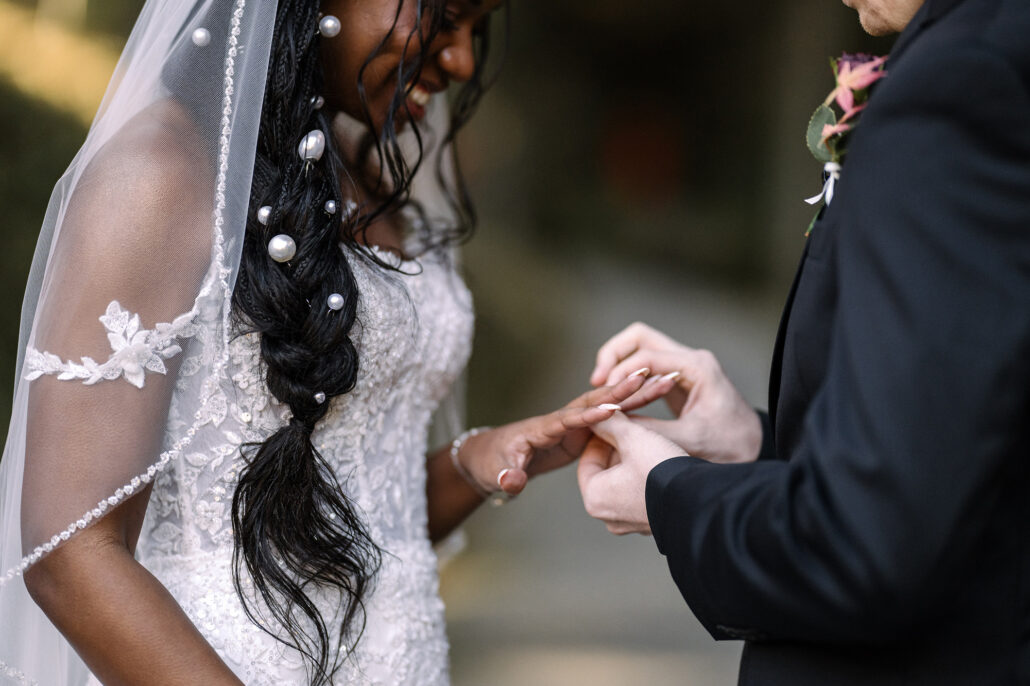
More than people expect, and less than a ballroom. Vows, rings, a sake exchange, a reading, a ribbon tied between two hands, a tea ceremony afterwards: a garden holds whatever ceremony a couple chooses, within its owner’s rules. Our team can lead it, and often does, because after a year of planning together we know the couple and the spirit of the day so well.
What it can’t hold is a crowd. These are small days by nature, and the owner sets the shape of them: how many people, where they stand, what’s photographed and what isn’t. We plan everything else around that, so the couple never has to think about it.
When couples come to us for a wedding in Kyoto, the first thing we talk about is who’s coming. The season comes next, and the garden follows from both.
Beyond Kyoto: A Private Villa Wedding in Nara
Some couples want Kyoto and the countryside too: the city’s gates and lanes, and then the mountains beyond it, the forest, and villages most visitors never see. Within a couple of hours of Kyoto, in the hills of Uda in Nara, there’s a private villa we love to bring them to: Sasayuri-Ann. Its thatched house sits above a rock garden and sculpted pines, the mountain ranges layered behind, with a century-old tea room in its grounds.
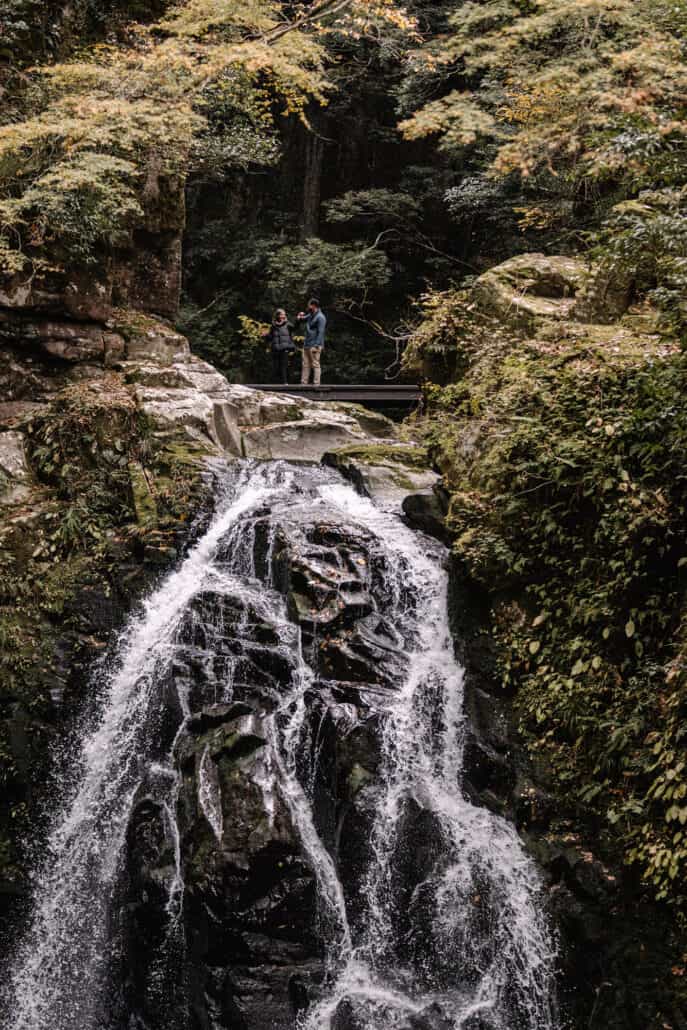
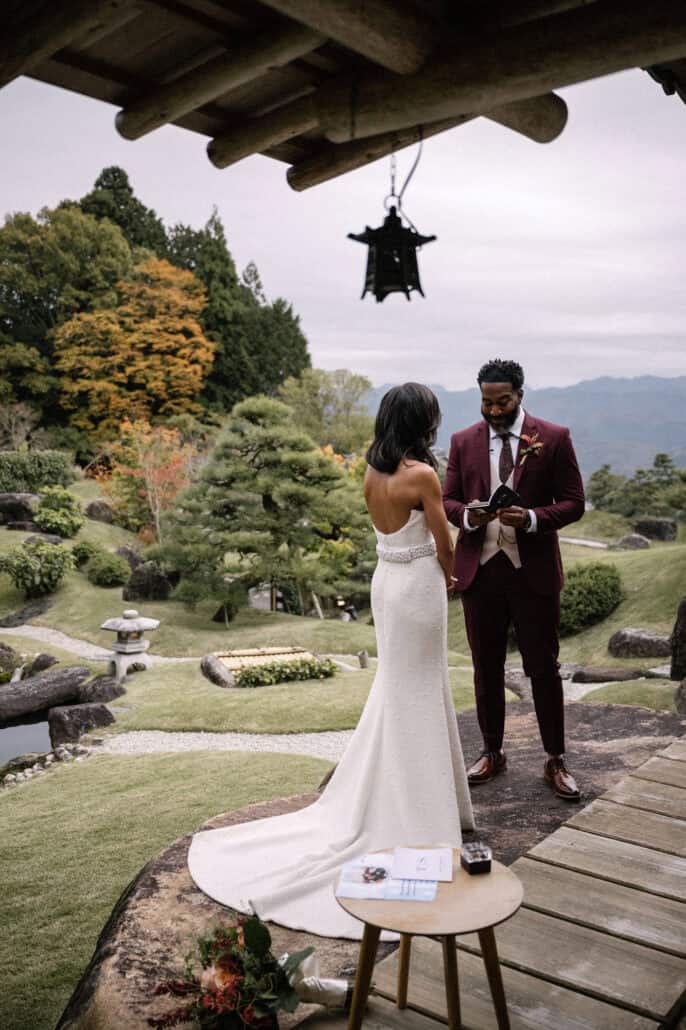
One couple spent a morning in Kyoto the day before their wedding, under Chion-in’s great Sanmon gate and beside the canal at Shirakawa. The next day they walked the forest trail at Akame 48 Falls, where the founder of Iga’s ninja is said to have trained, for a blessing before they married, then said their vows on the villa’s terrace with the mountains behind them. Two master musicians played koto and shakuhachi for the two of them in the tatami room, and matcha was whisked by candlelight in the tea room. They wanted both worlds, and they had them. Their Nara wedding for two, from Kyoto to the hills, is here.
Quick Answers About a Private Garden Wedding in Kyoto
Is a garden wedding in Kyoto legally binding?
The ceremony is yours to shape; the legal part is paperwork, and in Japan it happens at a city or ward office. Most of our couples sign at home before they travel and keep Kyoto for the part they’ll remember. If you’d rather marry legally here, the steps are in our Japan wedding guide.
Can we have guests in a private garden?
Yes, a small number. An elopement is just the two of you; with family or close friends it becomes an intimate wedding. The owner decides how many, and we plan to that.
When is the best time?
For maples, late November into early December, when the colour peaks across the city. It’s also when privacy matters most. In spring, each garden has a great cherry tree of its own. Nobody can date the blossom a year out, so couples book one date and we plan the morning around it.
How far ahead should we plan?
You can book us up to 18 months before the wedding, and planning begins about a year out. In Kyoto, autumn dates go early.
Can we see the garden before we book?
We show couples these places on film first. Visits come once planning has begun.
A Question Without a Name
The question arrives without a name, and it doesn’t need one. A garden in Kyoto doesn’t need to be famous to be the right one for your wedding. It needs an owner willing to open the gate, and someone they trust standing beside you when they do.
The elopement in the north Kyoto garden, on film.
Updated October 2026. Sources: Japan’s Ministry of Justice, Koseki Q&A, on when a marriage becomes legal; Kyoto City’s 2025 tourism survey, on the busiest month; the Japan Meteorological Agency’s Kyoto observations and the Kyoto City Tourism Association, on the autumn colour.