The most photographed viewpoints in Japan are crowded before sunrise. Tripods in a row, a tour bus idling, a dozen phones pointed at the same mountain. Every year somebody chooses one of those places to propose, kneels, and stands up to applause from forty strangers.
Some people love that. Most of the couples who come to us don’t. When they ask where to propose in Japan, what they usually mean is somewhere beautiful enough to deserve the question and quiet enough to hear the answer.
Somewhere beautiful enough to deserve the question and quiet enough to hear the answer.
The short version: in Tokyo, a garden at opening time or a rooftop after dark. In Kyoto, a temple at first light. Beyond the cities, a bamboo grove, an island beach or a mountain meadow with nobody else in it. And at Mt Fuji, a plan that still works when the mountain hides, because the whole of it is out of sight more often than not.
We’ve planned proposals by the Fuji Five Lakes in the snow, under cherry blossom at Hirosaki Castle, on the shore of Lake Kawaguchi and in the thickest fog we’ve ever seen in Hakone. Here’s what they taught us about choosing the place.
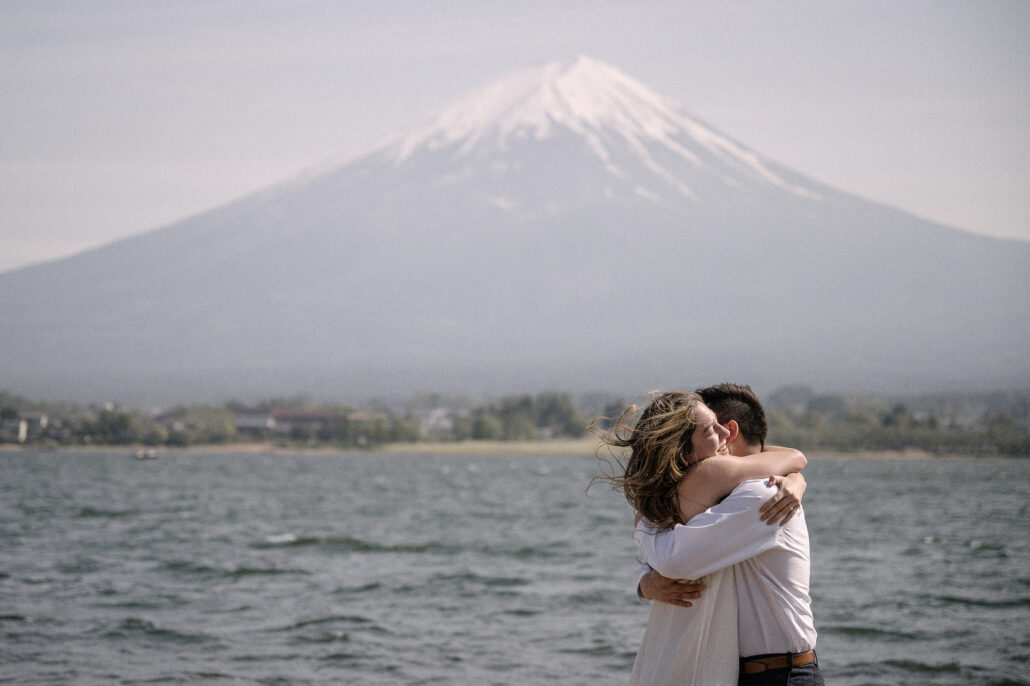
Choose the Feeling Before the Spot
Before you choose a place, decide what the moment should feel like. The two of you in a garden that’s almost silent. A mountain at first light. A city at night, anonymous among millions. The answer narrows the map quickly.
Then think about the person being asked. Someone who’d hate an audience shouldn’t get one. Someone who has talked about Fuji since the day you met probably should get the mountain, on their terms.
The Best Proposal Spots in Japan
These are public places, and most of them suit a proposal you make on your own, with a ring and a phone and nobody else involved. Every one of them has a catch worth knowing first.
Tokyo
Shinjuku Gyoen, the national garden in the middle of the city, has around 900 cherry trees of about 70 varieties. That means blossom there doesn’t last a single week: it runs from early spring well into April, one variety after another. The trick is the hour. Be at the gate when it opens, before the lawns fill. It’s a place for the two of you rather than a photo shoot. Tripods are banned in the busiest weeks, and a phone in your pocket is all you’ll need.
Shibuya Sky, on the roof of Shibuya Scramble Square, lays the whole city out around you. It runs on timed tickets released two weeks ahead, and the roof has rules worth knowing before you build a plan on it: no bags, no hats, no tripods, only a phone or a camera small enough for a pocket. The ring goes in a pocket too. If your clothes don’t have one, the information desk will lend you a bag. Wind or rain can close the roof without warning, so have a second idea ready.
For an evening, the Rooftop Bar at the Andaz Tokyo Toranomon Hills sits on the 52nd floor, with Tokyo Bay and Rainbow Bridge lit up below. It’s open to people who aren’t staying at the hotel, with a reservation, and only to guests aged 20 and over. Ask for the terrace.
If crowds are the thing you’d most like to avoid, Tokyo’s smaller historic gardens are quieter than their reputation. Rikugien is a strolling garden of hills and a large pond, laid out around classical poetry. Kiyosumi is built around a large pond, with stones gathered from all over Japan. At Kyu-Furukawa, a rose terrace runs down the slope to a Japanese garden. All three are places for two people and a phone.
Kyoto
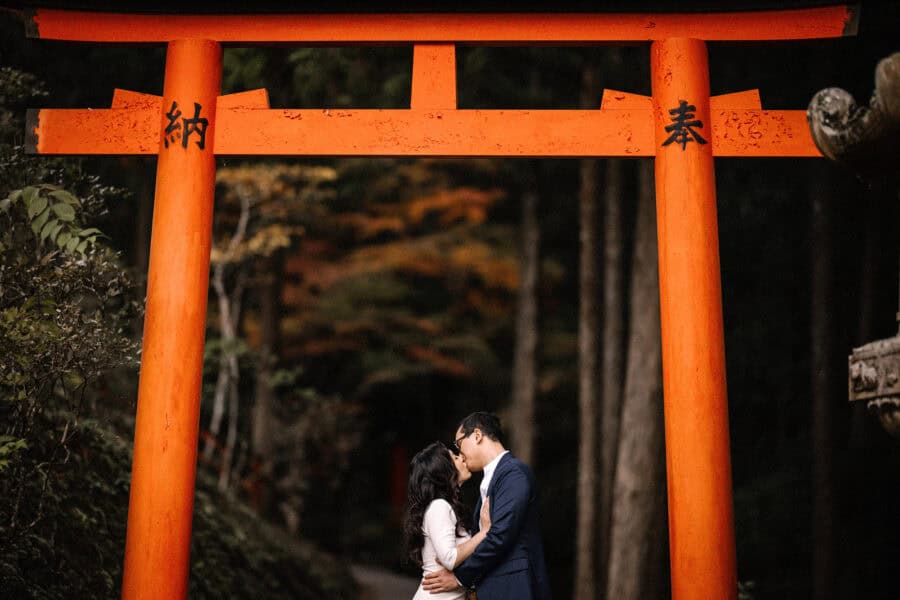
Kyoto’s own tourism office puts it plainly: even the famous sites are free of crowds in the early morning. Several temples open their gates soon after dawn, Kiyomizu-dera and To-ji among them, and a hillside that will hold thousands by lunchtime belongs to a few early walkers.
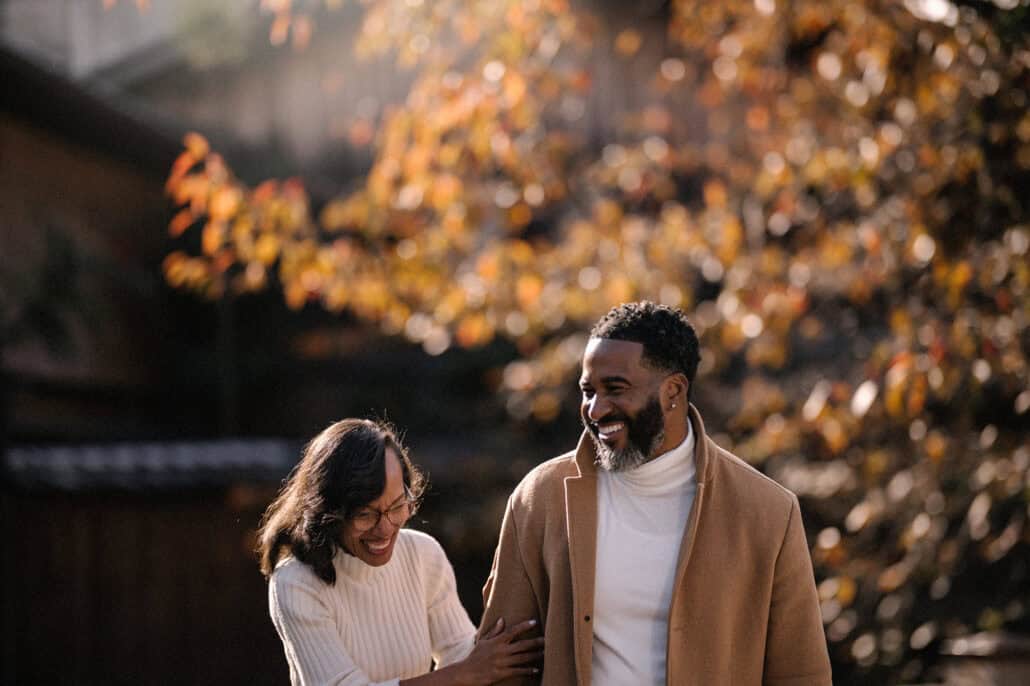
Arashiyama’s bamboo grove is the exception. It’s the picture everyone has in mind, and the place almost nobody gets to themselves, even at first light or late in the evening. The city has asked visitors to stop carving the bamboo, and in late 2025 a stretch of damaged stalks was cut down. It’s a beautiful walk. It isn’t a quiet place to ask.
A Bamboo Grove of Your Own
Which is why we love our bamboo grove in Tochigi. It’s a bamboo farm north of Tokyo, reached through us, and on the day it’s almost entirely yours: tall green stalks, filtered light, and no one waiting for you to finish.
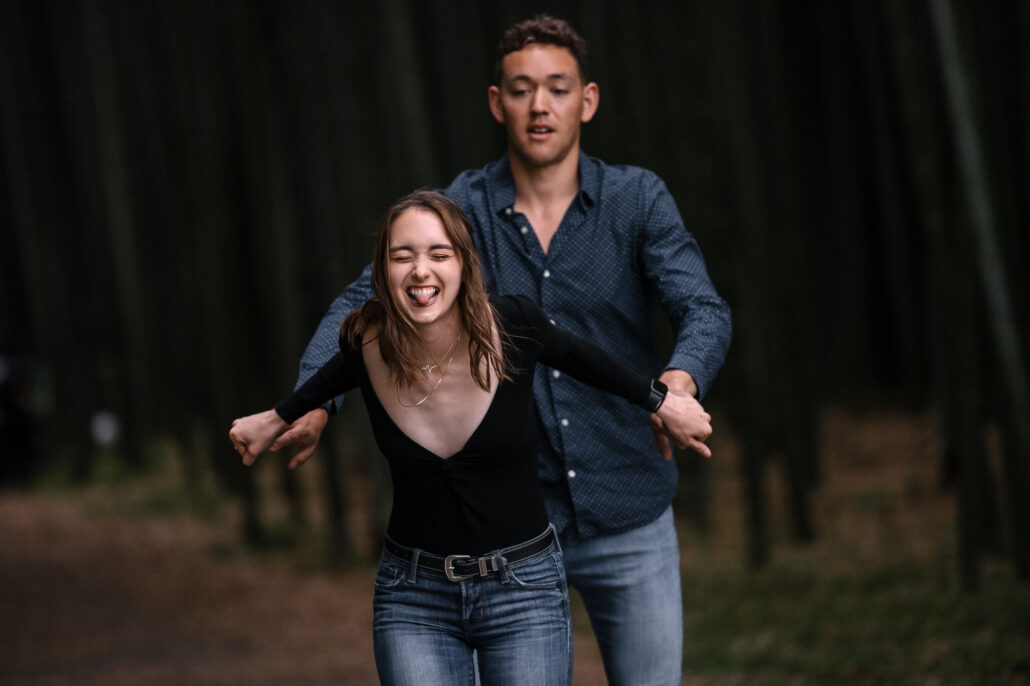
Bamboo has a particular place in Japan. It’s what goes into the kadomatsu at the New Year gate, and Japanese dictionaries suggest why: it stays green through the winter and carries the weight of snow, then grows on in spring. Old encyclopaedias admired it for growing straight, joint by joint. There are worse places to make a promise.
The Islands and the Mountains
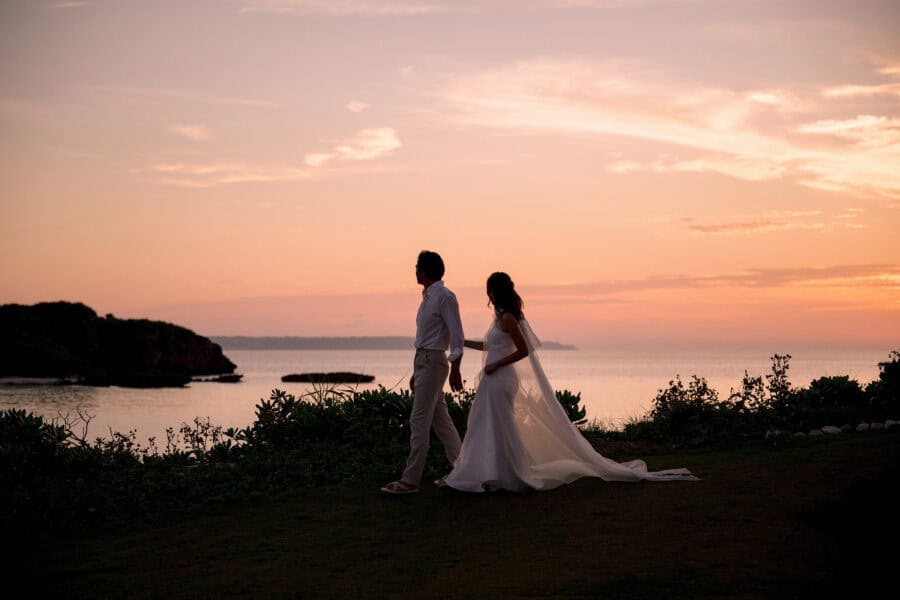
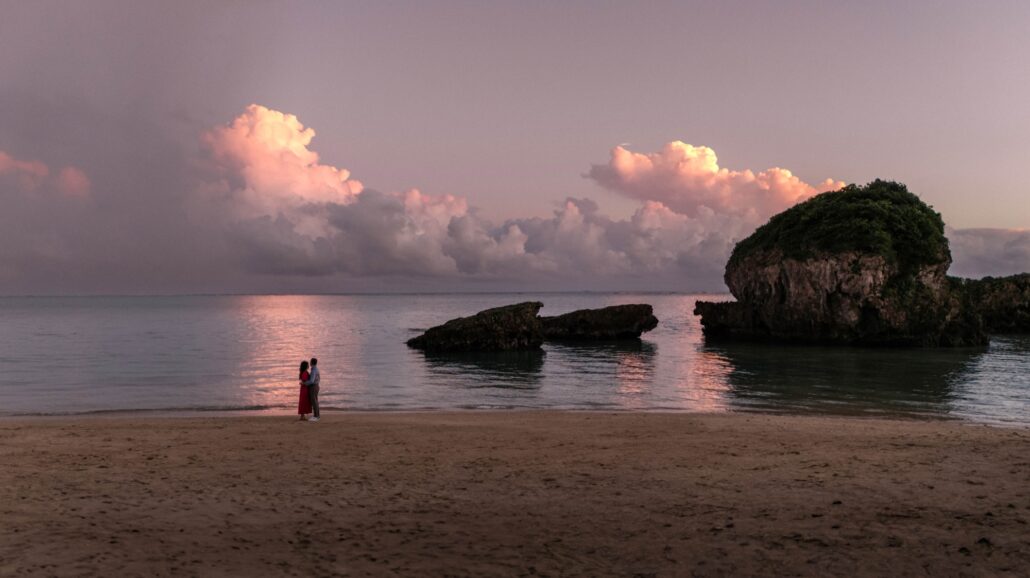
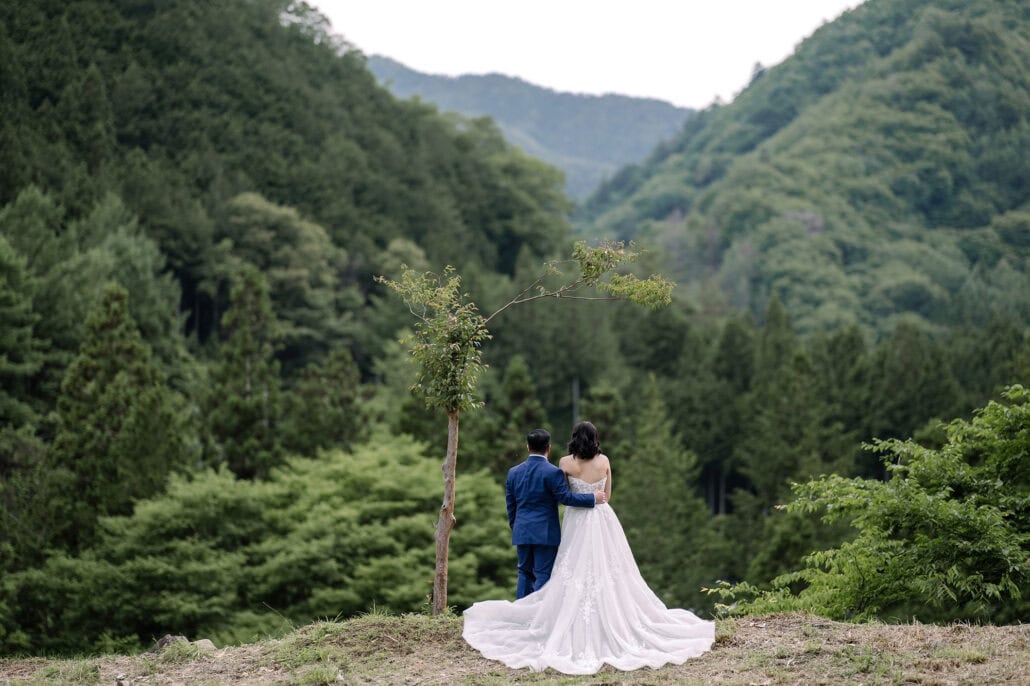
Further south, Miyakojima is an island the colour of its own sea. The locals call it Miyako blue, and the white coral sand makes it brighter still. A beach there at the end of the day needs no improving. In Yamanashi, the mountains hold high meadows and river gorges where you can walk for an hour and meet almost no one.
The List Nobody Publishes
One honest warning about every list of proposal spots, including the one above: you’ll never find a definitive list by searching. Search for long enough and the same names keep coming back. Lake Kawaguchi with Fuji across the water. Tokyo Tower lit up at night. Shibuya Sky. The best-known temples in Kyoto. They’re on every list because they’re famous, and they stay famous because they’re on every list.
They’re on every list because they’re famous, and they stay famous because they’re on every list.
Nobody puts the secret places online. You might find a hint in a forum thread or a travel chat, but the people who found somewhere quiet tend to keep it to themselves, because the whole point was that it felt like theirs. That isn’t anyone refusing to share. It’s just that a list on the internet can only ever be the generic one.
The real places come from people who live there. We travel overseas often for our couples, to places we don’t know nearly as well as Japan, and in every country we work in, we bring in a local photographer to work with us or advise us, because they know the places we’d never find on our own. If you’d like your proposal photographed, do the same: hire a photographer or filmmaker who works there all year and knows the places that never make a list.
If you’d rather nobody photographed it, and you want it to stay between the two of you, the same rule holds. Ask the concierge at your hotel. Or wait until you’ve arrived, and ask everyone you meet: the person behind the café counter, the taxi driver, whoever runs the inn. Local knowledge lives with local people, a little away from where the tourists go.
Plan for the Mountain to Hide
Everybody wants Mt Fuji, and we understand why. There’s nothing like it. What most people don’t know is how often it hides.
Tokyo has photographed the view from the Metropolitan Government Building every morning for decades. In the year to March 2026, the mountain showed on 111 days, about one day in three. Even at its foot, in Fuji City, where staff at city hall have checked the view every day since 1990, the whole mountain is in sight first thing in the morning on only a little over a third of days, and on fewer as the day goes on. One of the city’s own planners put it simply: even this close, seeing Fuji isn’t a given.
Winter gives you the best odds. From Tokyo, the mountain shows on around two days in three in December and January, and on about one in ten in high summer. Our guide to reading Mount Fuji weather explains what we watch for.
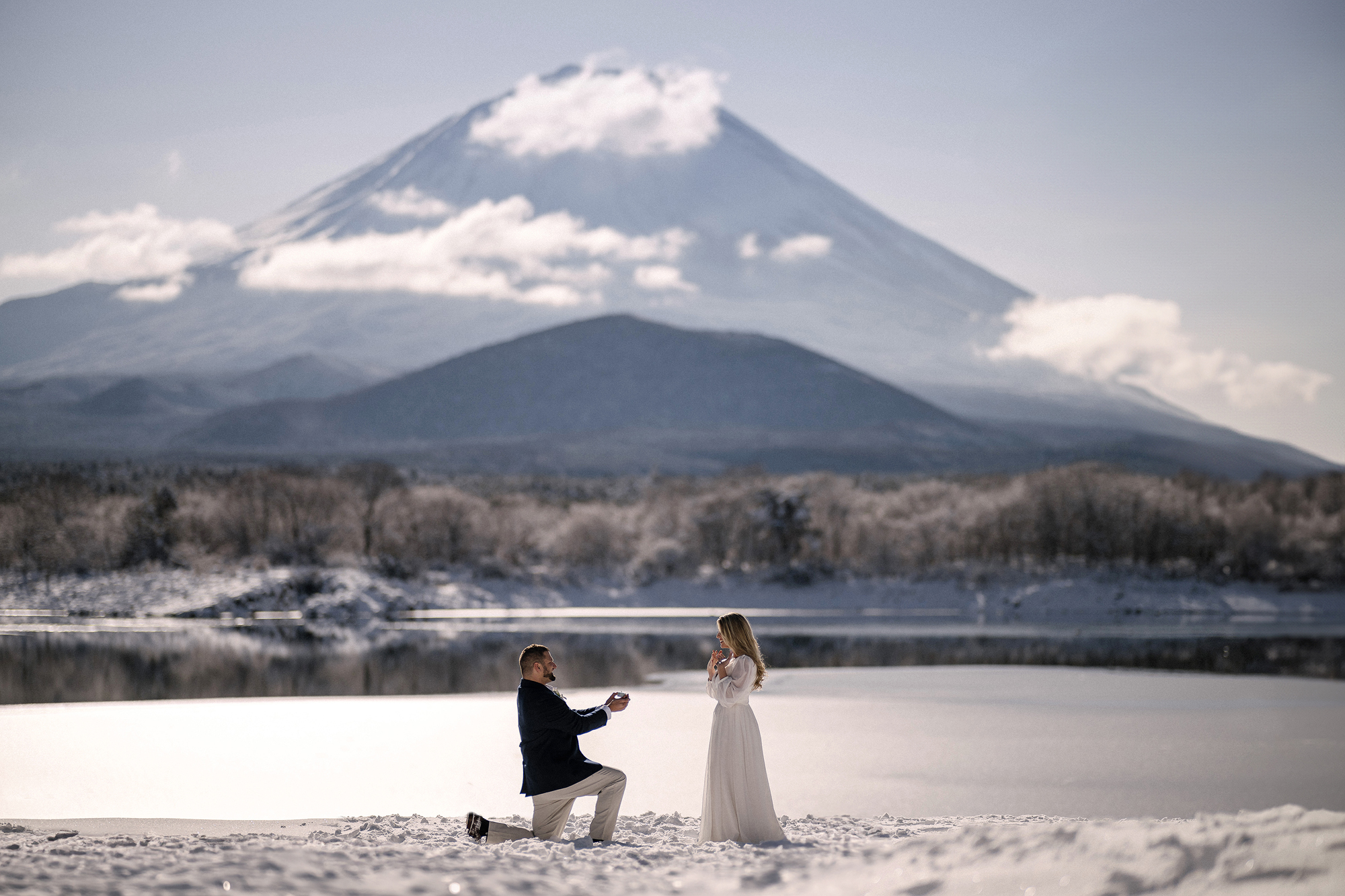
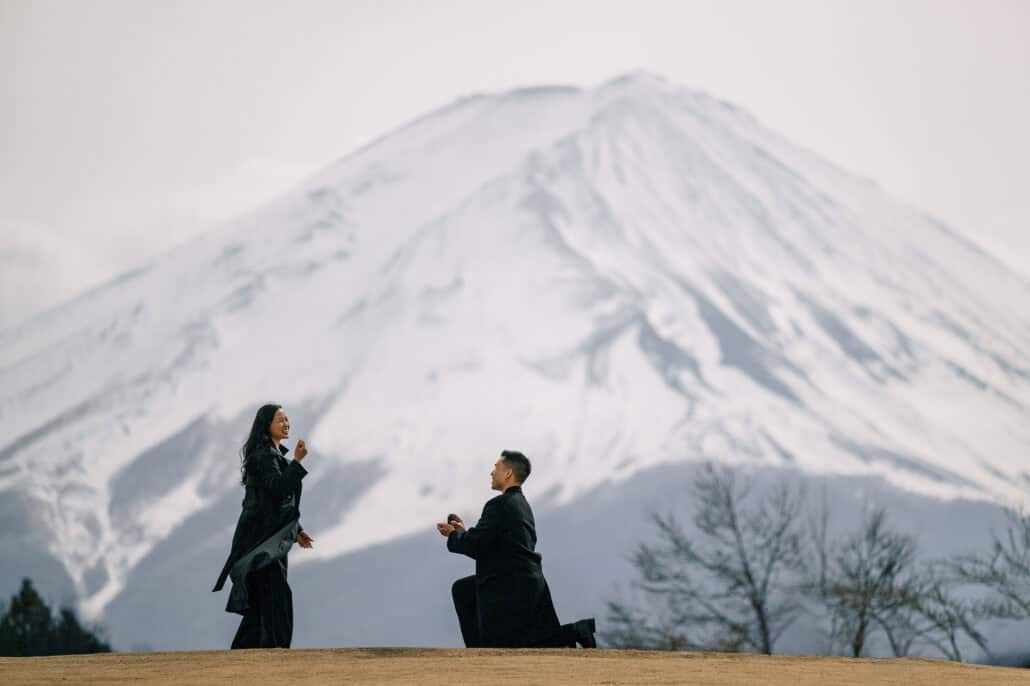
So we say: great risk, great reward. If a Fuji proposal is the dream, we’re always up for it, and we plan the day so it works either way. Spring and autumn are our favourite seasons to try, because if the mountain stays behind the cloud, the blossom or the maples are still there, and we can move the moment to them. Build it around the season, not the mountain.
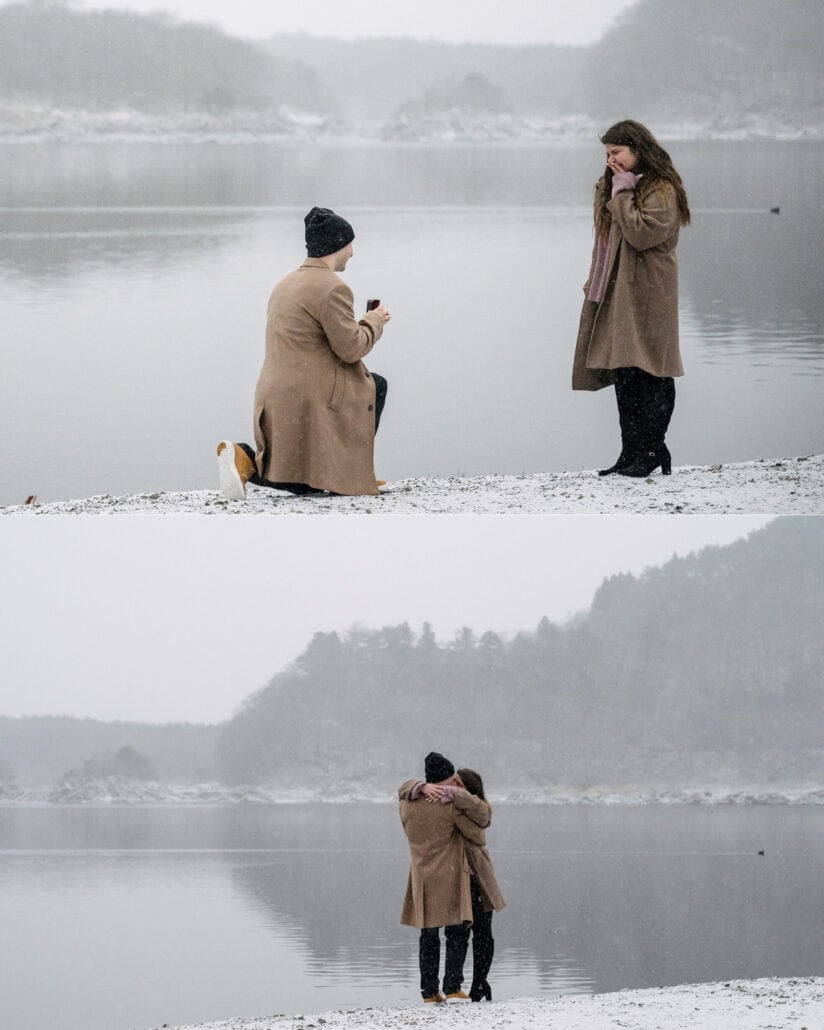
For one surprise proposal, Fuji appeared through a break in the clouds for about half an hour, and again at sundown. Another couple got engaged in a February whiteout, with the mountain somewhere behind the snow.
Public or Private
Japan is a quieter place to show feeling in public than many couples are used to. A proposal on one knee in a busy spot draws a crowd and a lot of phones, and the moment stops belonging to the two of you. It isn’t forbidden, and people are generally kind about it. It’s just rarely the version anyone was hoping for.
Private doesn’t have to mean hidden. It can mean an early hour, when a garden or a shore is still empty. It can mean a place that needs permission, where the only people present are the ones who should be. And it can mean a photographer far enough away that the person being asked doesn’t know they’re there until afterwards.
The Season Changes Everything
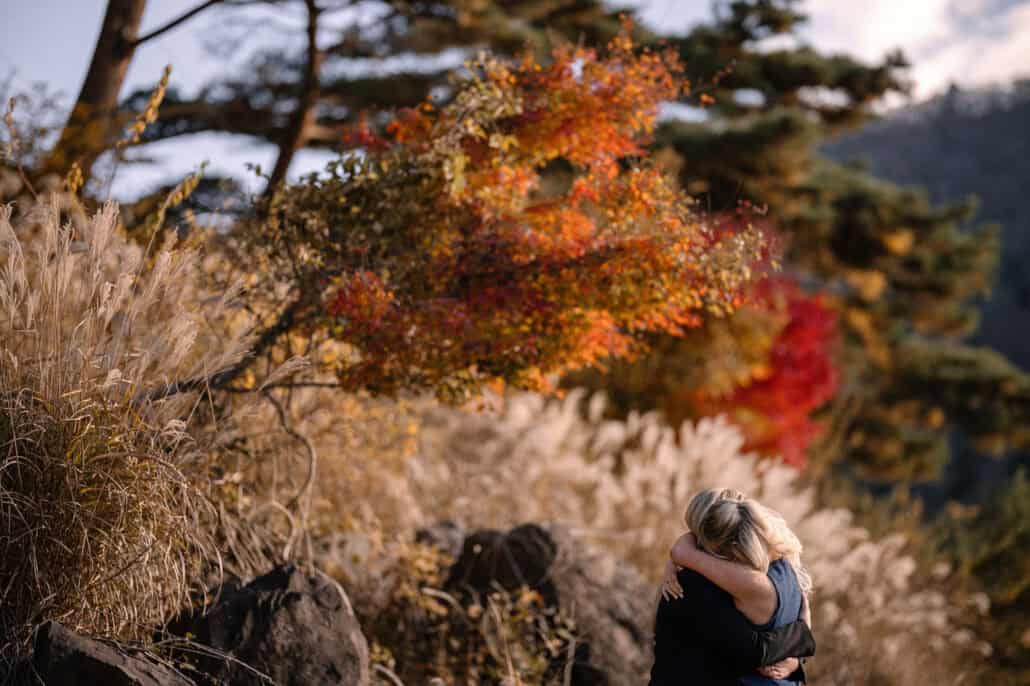
Cherry blossom brings the crowds with it, so a blossom proposal needs an early hour or a garden that isn’t on every list. Autumn colour is spectacular, and busy in the same places. Winter is quiet, clear and cold, and some of the loveliest proposals we’ve seen happened with snow on the ground. Christmas Eve in Japan is a night for couples rather than families, which makes December a natural moment for a question in Tokyo.
The Things Nobody Mentions
Carry the ring in your hand luggage, somewhere a quick check of your pockets won’t reveal it at the wrong moment. Find out whether the place allows tripods or drones before planning a photograph around one, because many gardens, shrines and observation decks don’t. Plan the minutes after the yes: somewhere warm to sit, a bottle that’s already cold, a dinner booked nearby.
And if you’d like photographs, choose a place that welcomes them. Many Tokyo gardens and viewpoints ask for permission before any professional photography, and some don’t allow it at all. Then decide whether the person being asked should know a photographer is there. A surprise works best when the photographer looks like any other visitor until the moment comes.
Quick Answers
Where is the best place to propose in Japan?
Somewhere quiet enough to hear the answer. In Tokyo, a garden at opening time or a rooftop in the evening. In Kyoto, a temple soon after dawn. Beyond the cities, a private bamboo grove, an island beach or a mountain meadow. At Mt Fuji, choose a day with a backup, because the mountain is often hidden.
Is it OK to propose in public in Japan?
Yes. It isn’t forbidden, and people are generally kind about it. But Japan is reserved about public feeling, and a busy spot quickly gathers an audience, so most couples are happier with an early hour or a quieter place.
How often can you see Mt Fuji?
Less often than most people expect. From central Tokyo it was visible on 111 days in the year to March 2026, about one day in three, and on around two days in three in December and January. Even at its foot, the whole mountain shows first thing in the morning on only a little over a third of days.
When is the best time of year to propose in Japan?
Winter gives the best chance of seeing Mt Fuji. Spring and autumn give blossom and maples, which carry the moment if the mountain hides. December has its own pull, because Christmas Eve in Japan is a night for couples.
Can I hire a photographer for a proposal in Japan?
Yes, in places that allow it. Many gardens and observation decks restrict professional photography or need permission in advance, so check first, or plan with someone who knows which places welcome it.
Updated October 2026.
Where the Story Begins
A proposal is the first scene of the wedding, even when the wedding is a year away and on another continent. The place you choose becomes the place you’ll describe to everyone, and maybe one day the place you come back to. Choose it for the two of you, not for the view everyone else is photographing.
Somewhere nobody else is watching is usually the right answer.