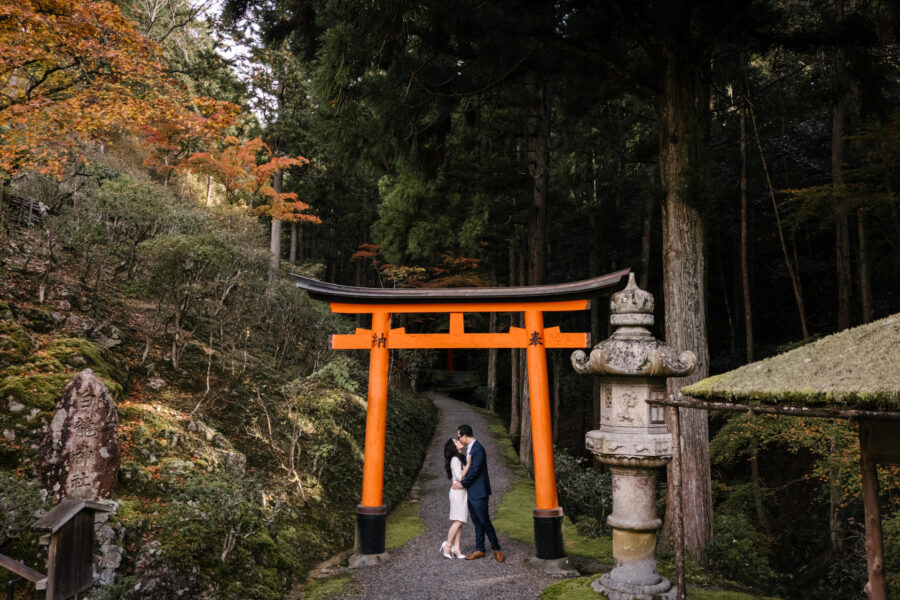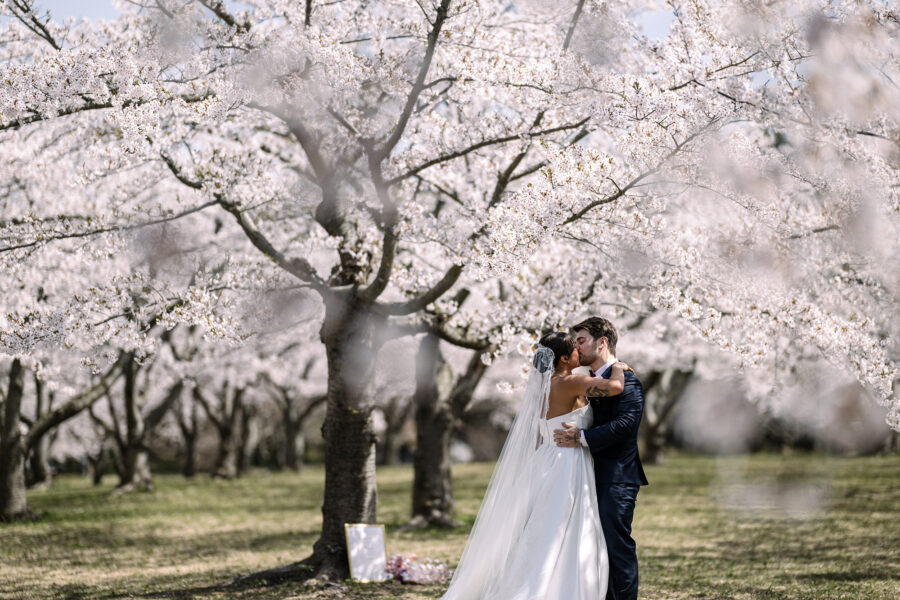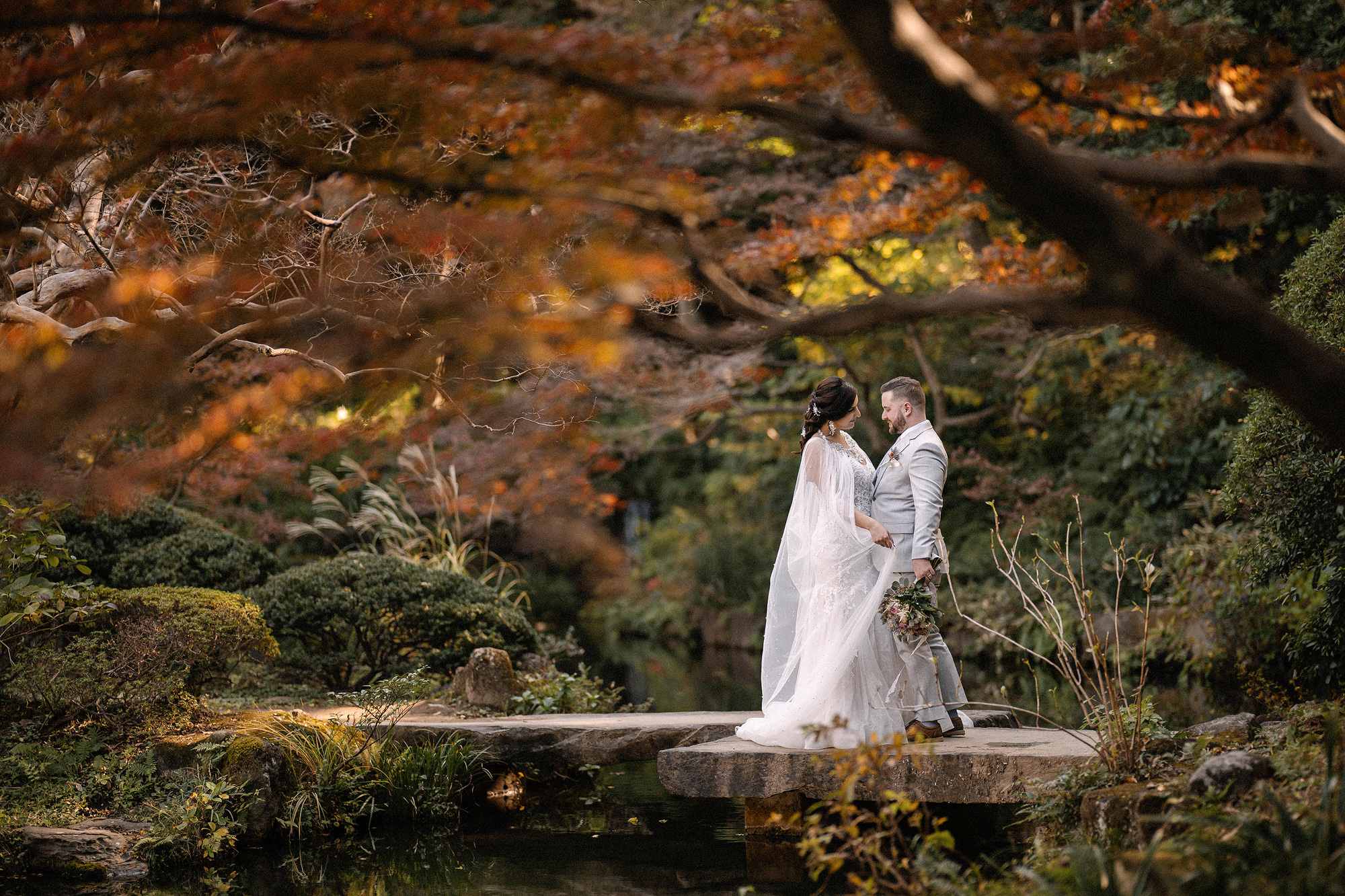
Some of the couples who write to us are already married. It isn’t always the first thing they mention. They ask about an anniversary trip, honeymoon photographs or a vow renewal, and somewhere further down comes the question they actually wrote to ask: if we’re already legally married, can we still have a wedding in Japan?
Yes, and here that’s the ordinary order of things. Being legally married in Japan is a matter of a form accepted at a city or ward office, and no ceremony adds anything to it, whether it’s held at a shrine, in a hotel chapel or under a maple in a private garden. Japanese couples choose the day they hand in that form the way other people choose a wedding date. Some city offices warn couples to allow extra time when several of the old calendar’s lucky days fall together, and on 22 November, whose numbers can be read as ii fūfu, a good married couple. Most of the couples who go on to hold a wedding have registered by the time they hold it.
So a couple who married at a courthouse in Chicago or a registry office in Melbourne arrives in the order Japan already keeps.
Can You Have a Wedding in Japan If You’re Already Married?
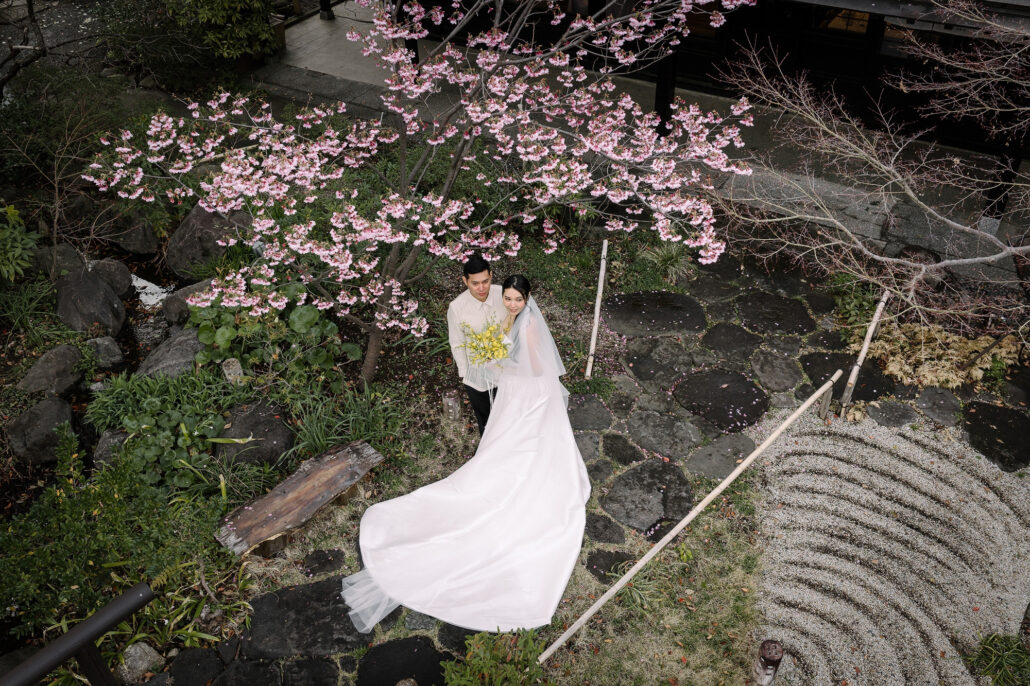
It can be everything the word means to you: your families around one long table and a ceremony you wrote yourselves, or the two of you alone at the edge of a lake at first light. Nothing about it waits on paperwork, because the paperwork is done.
What couples call it varies more than what they want. Some say vow renewal or a celebration of marriage. Others say honeymoon and trust us to read between the lines. Call it whatever feels true. We plan it as a wedding, because to everyone in the room, that’s what it will be.
The reasons for marrying at home first tend to be generous ones. One couple first wrote to us while Japan’s borders were still closed. They waited, and when the borders stayed shut, they married at home in a civil ceremony with their immediate family. That was their wedding, and Japan still mattered. More than a year and a half later they stood beside a pond in a quiet Tokyo garden and read their vows to each other, with no music and no rows of chairs. As we put it when we wrote about their symbolic ceremony in Tokyo:
A legal ceremony establishes a marriage. It doesn’t necessarily contain everything people want to say about one.
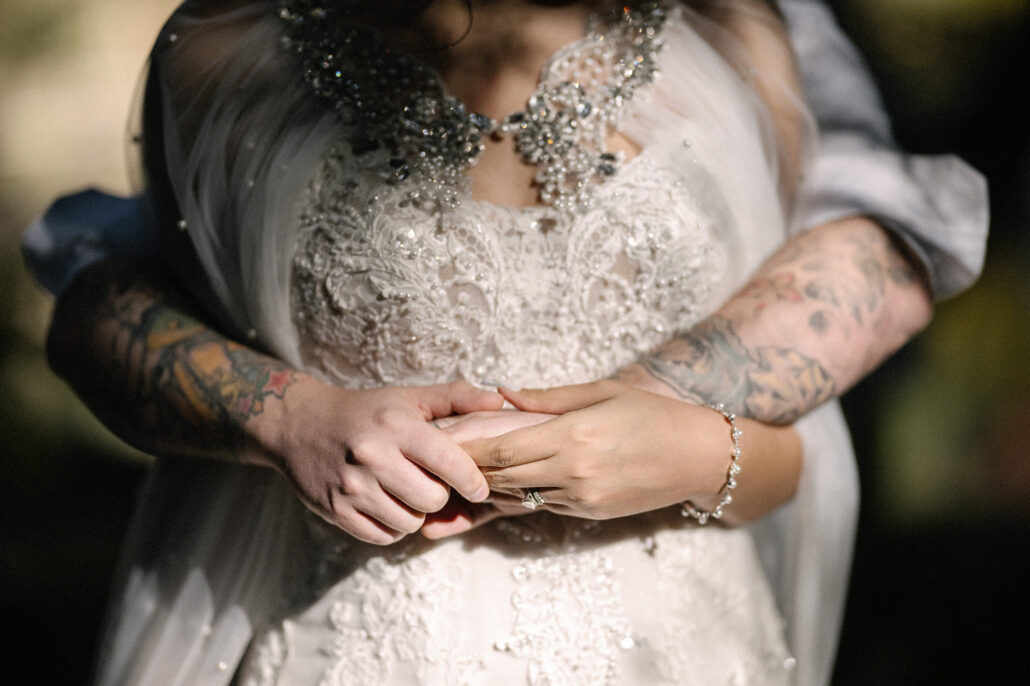
A couple from Jakarta had held their first wedding at home, too. Tokyo was their second chapter, and they used it to say exactly who they are, down to a wardrobe made in Jakarta and Taipei and worn at the top of Toranomon Hills.

What would you want your wedding to hold, if the paperwork were already done?
Married at Home Before or After Japan: Which Comes First?
Either order works. So which date do you want on the certificate, and which one will you mark every year?
Marrying at home first means you arrive with everything signed, and nothing about the trip depends on an office’s opening hours. Marrying at home afterwards suits couples who want the first time they say the words to be the time it matters most, or whose celebration at home is already planned for later in the year. You can sign at a registry office the week before you fly and keep every vow for Japan, or hold a full celebration at home and let Japan be the quieter one. Neither is a rehearsal for the other. One of our couples, whose family is from Fukuoka, registered at a ward office there months before their onsen wedding, with both sets of parents there and the two of them in Japanese dress. The wedding at the old inn was for everyone else.
The part that needs a calendar is the notice period at home. Most places ask you to give notice before you can marry, and some limit how long a licence lasts, so the legal date can’t simply be fitted around the flights. Three examples, checked in October 2026:
| Where you marry | What it asks | How far ahead |
|---|---|---|
| Australia | A Notice of Intended Marriage, given to your authorised celebrant. It can be completed from overseas. | At least one month and no more than 18 months before the wedding |
| England and Wales | Notice, given in person at your local register office | At least 29 days before, with the ceremony within 12 months |
| New York State | A marriage licence from a town or city clerk | The ceremony can’t take place until 24 hours after it’s issued, and the licence is valid for 60 days |
Every other country, state and province sets its own rules, so ask your registry office or celebrant before you fix dates on either side of the world.
Getting Married in Japan as a Foreigner: The Legal Part
Can foreigners get legally married in Japan? Yes. Japan registers marriages between foreign nationals when each of you meets the legal requirements, and city offices treat the day you file as the date of your marriage, once the notification is accepted. The counter will ask for:
- the marriage notification, the konin todoke, signed by both of you and by two witnesses aged 18 or over, of any nationality;
- proof that each of you is free to marry, from your embassy or your own government, with a Japanese translation (for a French partner, the certificate of capacity to marry, the CCAM, from the French Embassy in Tokyo, which posts the banns for ten days and allows about six weeks for couples living abroad);
- your passports, and whatever else that office asks for, often birth certificates with translations.
The details are where couples get caught. A document that settles it at home doesn’t always settle it at the counter: for Americans, in our experience, some offices now want a state-level document, notarised and apostilled, where couples expect one certified by their county to be enough. You’ll normally file at the office for where you’re staying, and some want a local address, so the address matters before the papers do. And certificates have a shelf life; Funabashi, for one, asks for ones issued within the last three months.
The office then issues a certificate of acceptance, the juri shomeisho. For Americans it’s the only proof of the marriage there is, because the US government issues no certificate of its own for a marriage made abroad. Keep a note of the office that registered you, since any future copy comes from there, and have it translated for use at home.
Two changes catch couples out, because so much of the advice online predates them. Since 1 September 2025, the US Embassy and consulates no longer notarise the affidavit Americans used to bring as proof they’re free to marry. The embassy now offers a statement explaining that the US issues no such document, and where a city office still wants something notarised, it points couples to the remote notary services some US states offer. Ask the office what it will accept before anything else is booked. And the waiting period that once applied to women remarrying in Japan was abolished on 1 April 2024.
Will it count at home? As a rule, yes. The United States treats a marriage that was valid where it was made as valid at home, with nothing to report to the embassy, and Australia recognises one that was valid in Japan and would have been valid in Australia. Our guide to getting married in Japan follows every decision that sits around the paperwork.
Can Tourists Get Married in Japan?
Yes, though not every office will take the filing, and the counter keeps its own calendar. When neither of you is Japanese or lives here, an office can’t always decide on the day, and the offices are candid about it. In Tokyo’s Chuo City, a marriage between two visitors takes about four months to review when the case is straightforward, and about six when there’s no precedent. Cases a counter can’t settle go to the Legal Affairs Bureau, where an answer can take weeks or months. Kyoto’s Nakagyo Ward warns that visitors on a short stay may leave before a decision is made, and its counter works only in Japanese.
So if being legally married in Japan matters to you, decide at the very start, before flights or venues, and allow for the answer arriving after you’ve flown home.
Several of the couples who set out to register here have changed course once they saw what it involved, and married at home instead. It gives them back the days, for the wedding and for the honeymoon. A ward office is a fine place to hand in a form. It’s a poor place to spend the third day of a trip you’ve waited years for.
Do the legal part at home, and give Japan the rest.
It can be done, though, and when it truly means something to a couple, we do all the paperwork and go to the counter with them. In October 2026, a couple who wanted the full wedding experience here handed in their papers at a ward office in Tokyo with us beside them, three days before their elopement at Fuji, and the ward accepted them. The preparation had started long before they flew. We’ve handled a great deal of legal paperwork for couples over the years, and the requirements tighten a little every year. For the couples it matters to, it’s worth every form.
Marrying a Japanese Citizen
When one of you is Japanese, the marriage is recorded in the Japanese partner’s family register, the koseki; the foreign partner doesn’t get one of their own. If you marry abroad first, the marriage still has to reach that register. Japan’s Ministry of Justice requires it to be reported within three months, through a Japanese embassy or consulate or the city office that holds the register. And if the family keeps the old calendar, the registration is the day to choose by it.
Can LGBTQ Couples Marry in Japan?
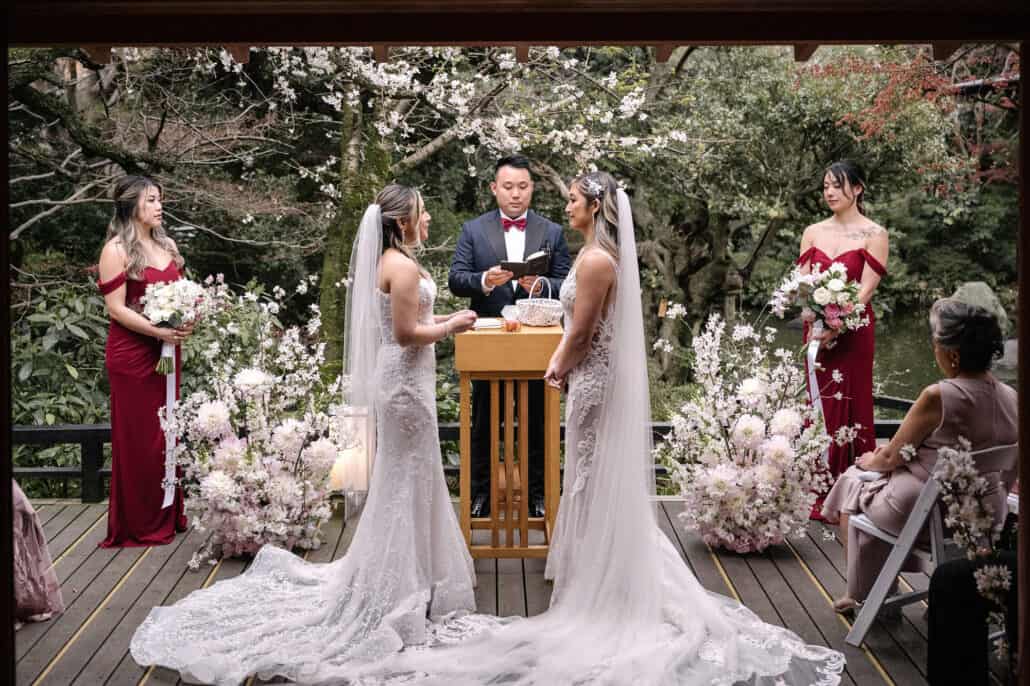
Not legally, not yet. Japan doesn’t register marriages between two women or two men, though its Supreme Court is now deciding whether it must. A wedding here is another matter, and it’s the same wedding as anyone’s. No ceremony in Japan carries legal weight on its own, for any couple, so two brides or two grooms married at home arrive with exactly the freedom of every other couple in this post. At one of our LGBTQ weddings in Japan, the first dance happened under the stars on a terrace scattered with petals, while the guests watched from the doorway and gave them room.
The case is with the full bench of the Supreme Court, which took it up in March 2026 after five of the six high court rulings on it found the current law unconstitutional. A judgment is expected as early as 2027.
What to Know About Getting Legally Married in Japan
- The law and the ceremony are separate events in Japan, and most couples, Japanese couples included, hold them on different days. No ceremony registers a marriage.
- Marrying at home first: give notice in time for your own country’s rules. The wedding in Japan can follow whenever you like.
- Registering in Japan: a marriage notification with two witnesses aged 18 or over, proof that each of you is free to marry, translations, and a city or ward office, normally the one for where you’re staying. The counter works in Japanese.
- Certificates you bring: some offices ask for documents issued within the last three months.
- Americans: since 1 September 2025, no affidavit from the US Embassy. Ask the office what it will accept.
- A Japanese partner who marries abroad: report the marriage within three months.
Checked against official pages, October 2026.
Legally Married in Japan: Quick Answers
Is a wedding in Japan legal in the US?
Yes, once it’s registered at a Japanese city or ward office. A ceremony at a shrine, a chapel or in a garden isn’t a legal marriage in Japan on its own, so there’s nothing for the US to recognise. A marriage that’s registered and valid in Japan is generally valid in the US, with nothing to report to the embassy. Keep the certificate of acceptance and a translation: they’re your proof.
Can we have a Shinto wedding if we’re already married?
Yes. A shrine wedding has never registered a marriage, for Japanese couples either, and most of them have registered before they hold it. Its heart is san-san-kudo, three times three sips of sake from three cups, shared between the two of you. Whether a particular shrine will host a couple from overseas, and how, is a question we ask the shrine early.
How long does it take to get legally married in Japan?
When one of you is Japanese or lives in Japan and the papers are complete, an office can often accept the notification on the day. For two foreign visitors it’s slower: offices such as Tokyo’s Chuo City say the review can take about four months, sometimes longer, and may not finish during your stay. Once it’s accepted, city offices treat the day you filed as the date of your marriage.
Can we have a vow renewal in Japan?
Yes. In Japan a vow renewal and a wedding ceremony have the same legal standing, which is none, so either can be whatever you want it to be: a few words by a lake at dawn, or a full wedding with everyone you love. Couples who married at home give it all kinds of names, and none of them changes the care that goes into planning it.
Which date is our anniversary if we marry twice?
Whichever you choose: the date on the certificate, the day in Japan, or both. If you’re registering at home after the wedding here, decide before you set that date, so the day you mark every year is the one you meant.
The Right Order
Most of the couples we plan for end up with two dates, whether they notice or not: the one on the certificate, and the one they’ll describe for the rest of their lives. Japan treats them as two different things, and it has never made either one smaller. The first belongs to the office that recorded it. The second belongs to you, and to the people who crossed the world to stand beside you.
Sign wherever the signing is easiest, then come and have the wedding. If you’re already married, you’re not late. You’ve done it the way Japan does.
Updated October 2026. This is a planning overview, not legal advice for your nationality: confirm current requirements with your own registry office or embassy, and with the office where you’d file in Japan. Sources: Japan’s Ministry of Justice, Q&A on marriages with foreign nationals and the 2024 Civil Code amendments (both Japanese); Chuo City, Tokyo, marriage between foreign nationals who don’t live in Chuo (Japanese); Kyoto City, Nakagyo Ward, notice for foreign nationals visiting as tourists; Funabashi City, marriage registration (Japanese); U.S. Embassy and Consulates in Japan, Marriage in Japan; Australian Government Attorney-General’s Department, Get married; GOV.UK, Give notice; New York State Department of Health, getting married in New York State; Embassy of France in Japan, marriage before the Japanese authorities (French); Anniversaire, survey of 605 people aged 20 to 39, April 2025, on the order of registration and wedding (Japanese); Jiji Press, Japan’s top court to issue unified ruling on same-sex marriage, 25 March 2026.