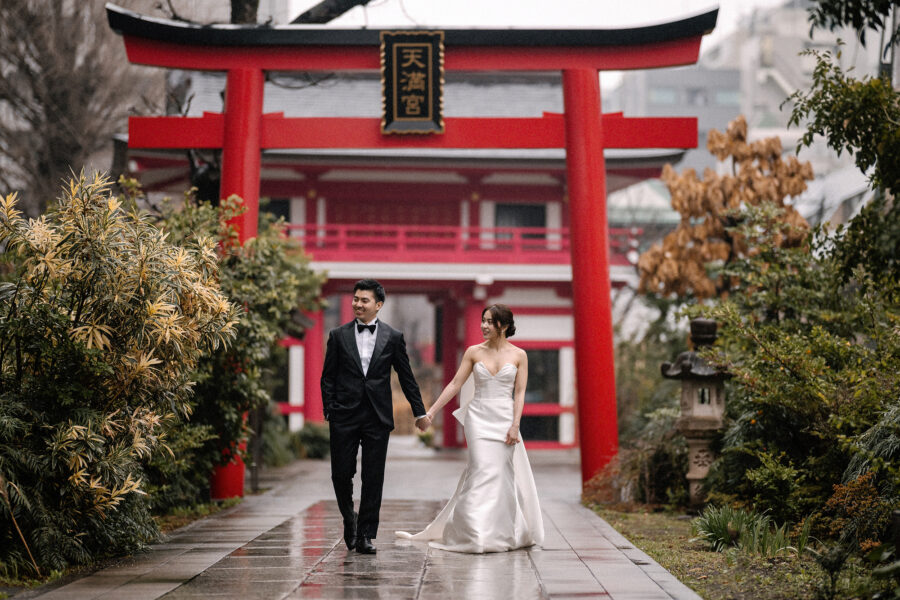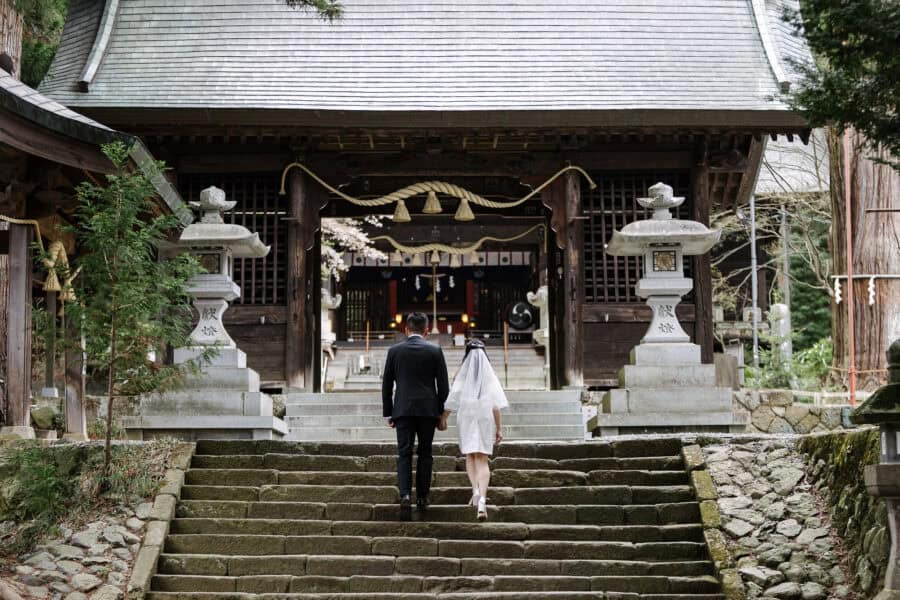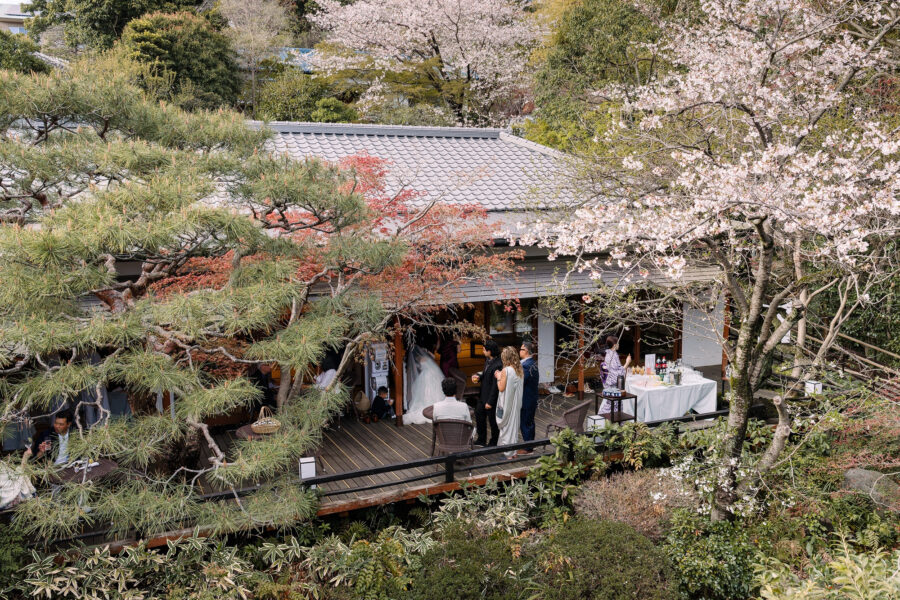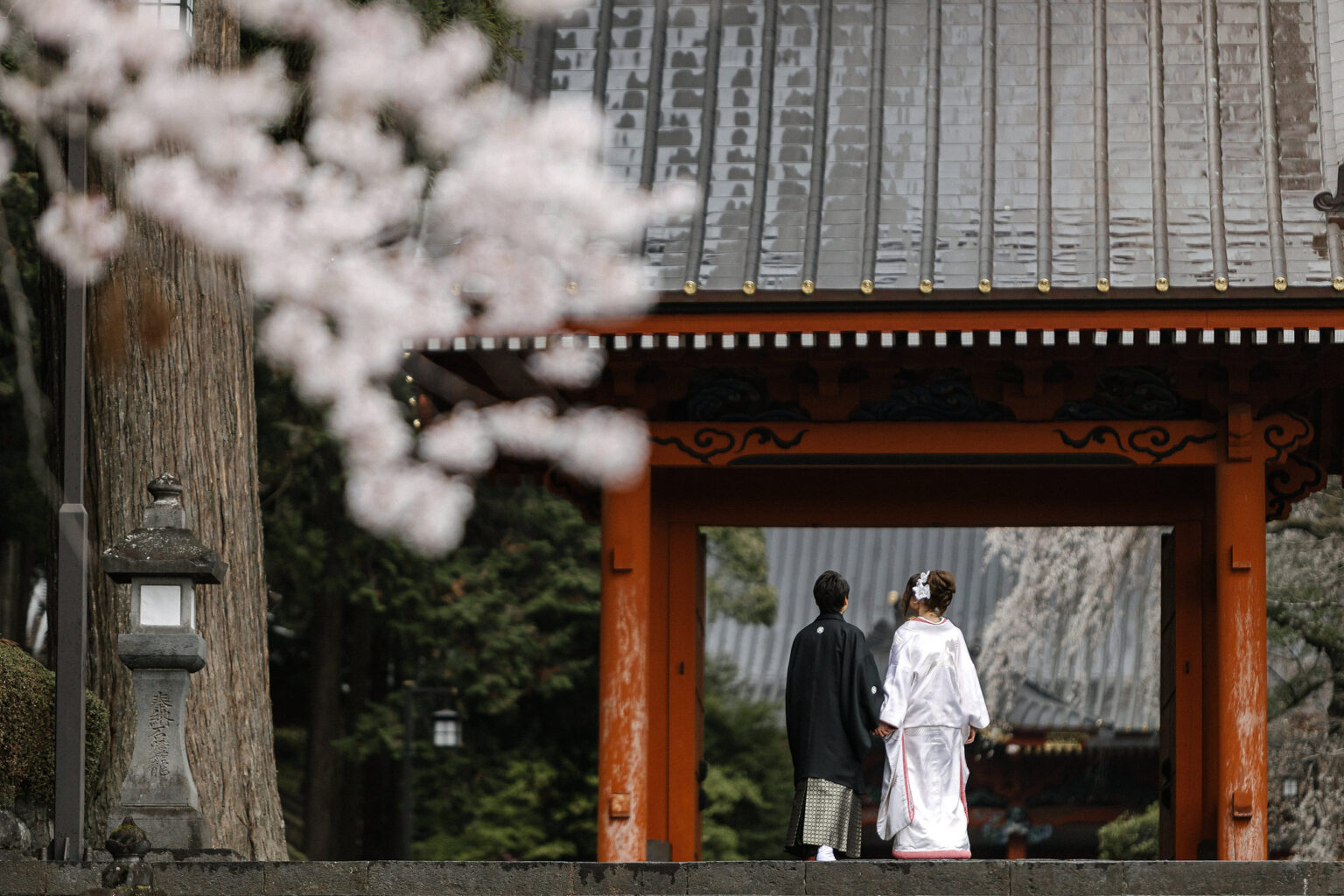
Many of the couples who write to us have already been to Japan. They know the trains leave on the minute, the food is extraordinary and a stranger will walk you three blocks to find your hotel. Others are coming for the first time. What neither knows yet is how weddings work here. Almost nobody outside Japan does.
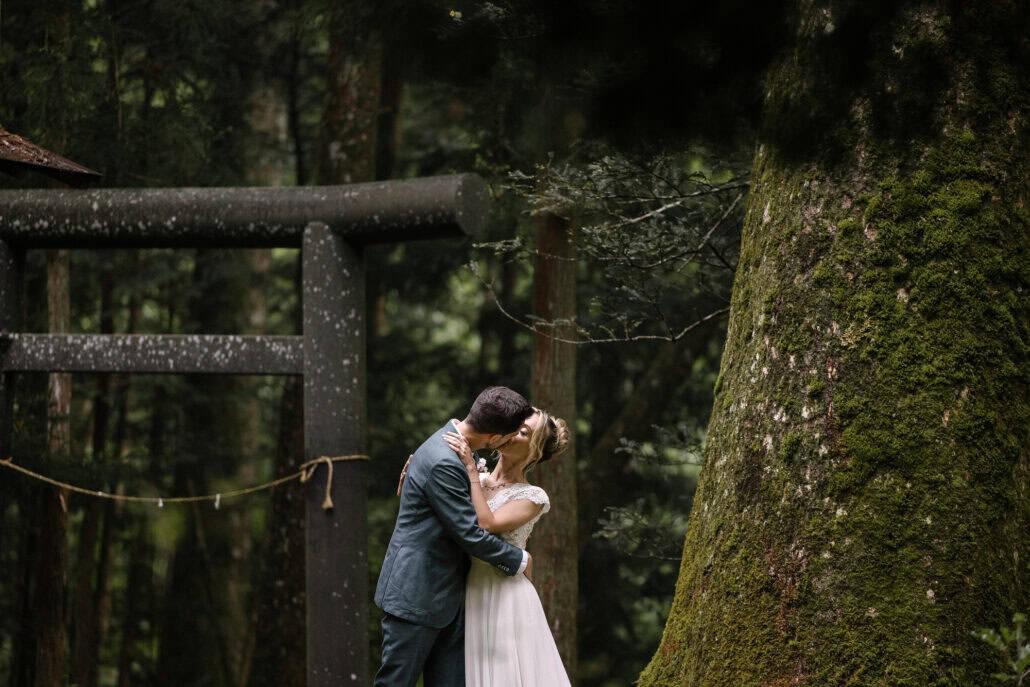
Planning a wedding in Japan as a foreigner starts with four decisions that are easy to tangle: where your marriage becomes legal, what kind of ceremony you want, who helps you plan, and where the celebration happens. They’re connected. They don’t need the same answer.
We’re 37 Frames, a wedding planning, photography and film studio in Tokyo. This is how we’d approach it, from the first decisions to the week you arrive.
The Short Version
- Do the legal part at home and give Japan the ceremony. It’s what most of our couples do. Registering at home saves a lot of paperwork and doesn’t carve three days or more out of your trip, and the ceremony is free to be whatever you want it to be.
- Describe the wedding before you name a place. Who’s coming, what the ceremony should hold, how the evening should feel.
- Choose who works for you before you choose a venue. A venue’s rules can decide parts of your day before you’ve had a say.
- Judge a place by how it hosts you, as well as how it looks. Some venues hold several weddings a day. Others give themselves to one.
- Expect most of the planning to happen in Japanese, and plan for language at the wedding itself, not only in the emails.
- Start early. You can book us up to 18 months ahead, planning begins about a year out, and spring and autumn dates go first.
Can Foreigners Get Married in Japan?
Yes. Foreign nationals can register a marriage in Japan when the legal requirements are met, and a marriage becomes legal when it’s registered at a city or ward office. A ceremony on its own, at a shrine, a temple or in a garden, doesn’t register anything under Japanese law.
So our advice is simple: do the legal part at home, and give Japan the rest. Most of our couples marry at a registry office or courthouse before they fly, then hold the ceremony that matters to them here. They arrive with the paperwork settled, and the ceremony is free to be whatever they want it to be.
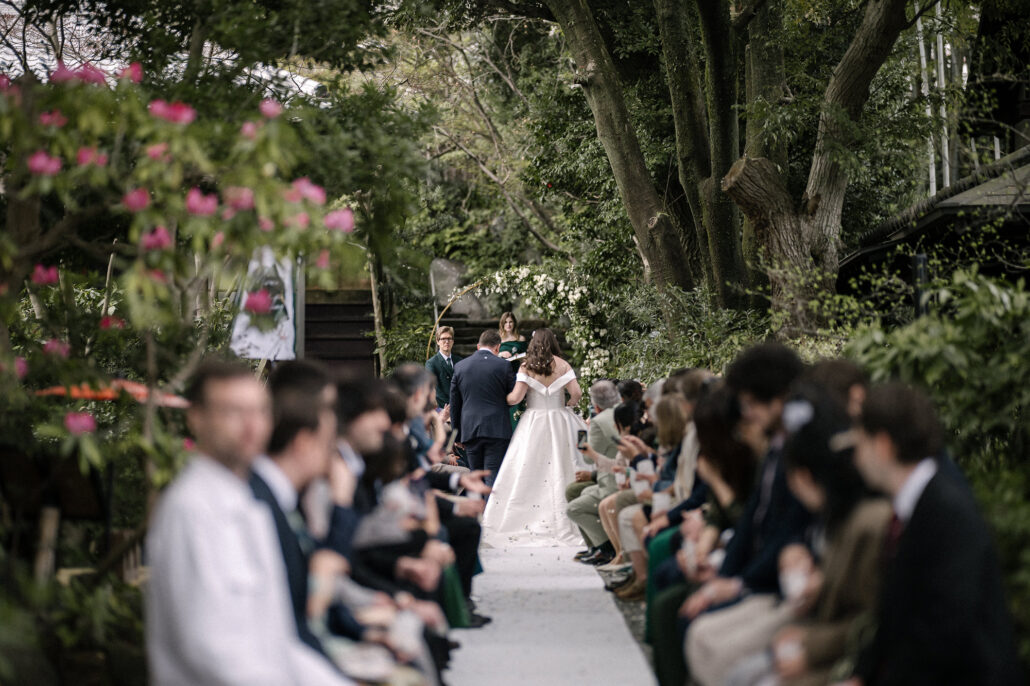
Registering here is possible too. The documents depend on both your nationalities and your circumstances, so start with your embassy or consulate and the office where you’d file, and confirm both before you plan travel around a registration date. As an example, Toshima City’s marriage guidance lists a marriage notification signed by the couple and two adult witnesses, proof that each of you is legally free to marry, your passports, and Japanese translations. It’s also clear that requirements vary, so treat it as one office’s list, not everyone’s.
If you’re both foreign nationals and neither of you lives in Japan, don’t plan on a quick visit to the counter. The offices that have published guidance for two visiting foreign nationals say the review can take weeks or months and may not finish before you fly home. Tokyo’s Chuo Ward estimates about four months, even in simple cases. Registration and celebration are separate processes with separate timetables, which is why most of our couples leave the legal part at home. Ask your own country, too, whether it needs anything to recognise a marriage registered in Japan.
What Kind of Wedding Do You Want?
Before you choose a venue, describe the wedding to each other without naming a place.
Is it the two of you, making your promises and spending the day together? A small gathering and a long dinner? Several generations, a dance floor and time to see everyone again the next morning?
To us, an elopement means the two of you alone. Once family or friends join, it’s an intimate wedding, and their experience becomes part of the plan. A guest count helps. Knowing who those guests are tells us far more about the setting, the rooms and the travel that will suit them.
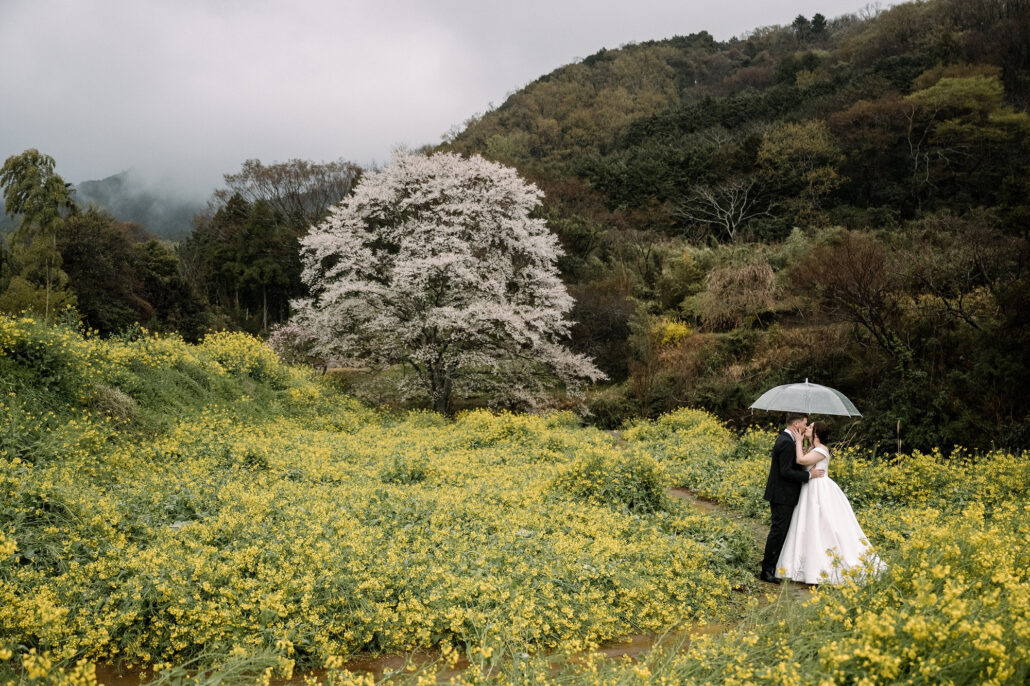
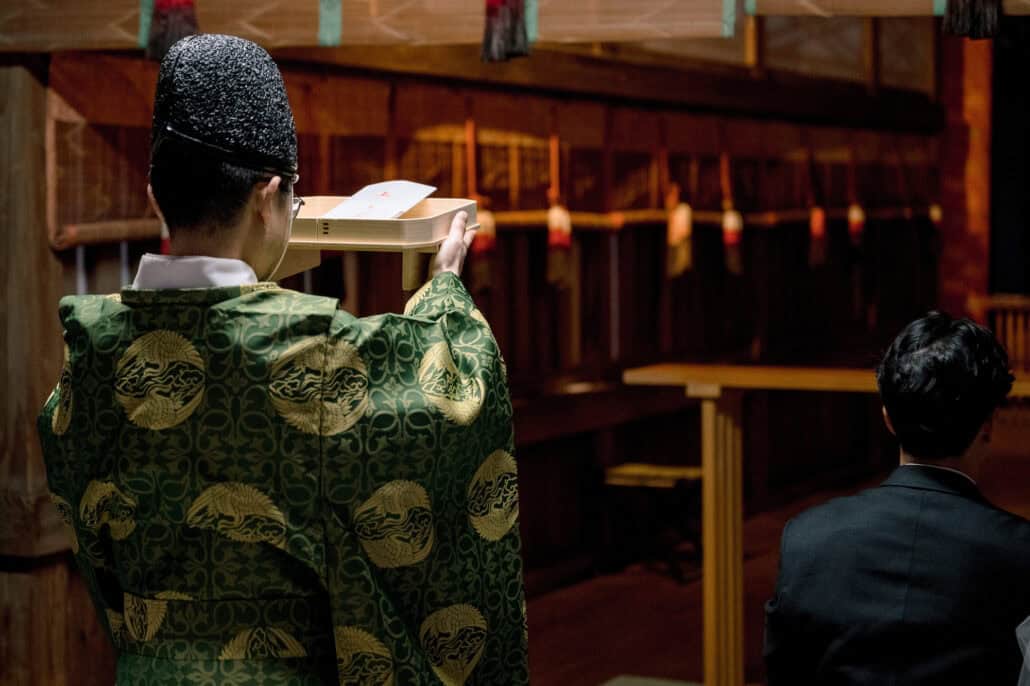
The ceremony deserves its own conversation. Personal vows, readings, music, a religious service, a custom one family can’t imagine marrying without: put it in the brief early. If you’re drawn to a shrine or a temple, ask what ceremony is offered, who leads it, what you’ll be asked to do and what can be made yours. A photograph of the setting can’t tell you any of that. Our guide to Shinto shrine weddings in Japan goes deeper into that choice.
Describe the reception just as clearly. Long speeches, dancing, live music, a dinner that runs late, an after-party: each belongs in the venue conversation from the start. Far better to know the evening you’re imagining before booking than to find out afterwards that the room was built for a different kind of night.
Do You Need a Wedding Planner in Japan?
Not legally, and not every celebration needs the same help. A couple arranging a small ceremony directly with one venue needs something different from a couple bringing international guests to several places over several days. The real question is who takes responsibility for the parts you don’t want to carry, and whether their role covers the whole celebration or one building.
We first wrote this in 2020, in a post about choosing a wedding planner in Japan, and it still holds.
Venue wedding planners work for the venue, not for you. Freelance planners work for you.
Most weddings in Japan are planned by the place that hosts them. Hotels, wedding halls and the purpose-built venues Japanese couples call guest houses each have their own coordinators, and many are excellent. They know the spaces, the kitchen, the staff and how a wedding runs there. Their job is to run that venue’s wedding well, with its menus, its florist, its photographer and its timings.
An independent planner is engaged by you. That can mean finding the venue in the first place, building the wider team, looking after your guests and planning the days around the wedding. In Japan it also means the person holding the plan is the person on the phone, in Japanese, when the weather turns or a road closes.
Job titles don’t tell you everything. Whoever you talk to, a few questions tell you a great deal:
- Which places would you suggest for us, and why those?
- Who speaks to the venue, the shrine and the suppliers, and in which language?
- What’s included, and where does your responsibility stop?
- What’s the plan if it rains, and is the indoor version as good as the outdoor one?
- Can we see a whole wedding you’ve planned, rather than a highlight reel?
That last one matters most. Look at how the day works as well as how it looks: the ceremony, the guests, the moments in between, the dinner, and how much of their own celebration the couple actually got to be inside.
Our service is full planning, and every wedding we plan is photographed by our own team, because the planning and the way a day is photographed shape each other. Film is optional.
How Do You Choose a Wedding Venue From Overseas?
Start with how the place will host you. Then look at how it looks.
Venues built around Japanese weddings, such as large hotels and wedding halls, are very good at what they do. Many host several celebrations a day, so the timings are set, the packages are fixed and their own suppliers come as standard. Bringing in your own florist, dresser or photographer is often possible, and many charge a bring-in fee to do it.
Beyond those, the possibilities widen. A hotel may give your guests the rooms and service they need. A ryokan may give you a shared stay that becomes the heart of the wedding. A garden may be right for the ceremony and need a separate plan for dinner. A private property may offer freedom in one respect and ask for more production in another. Old inns often keep their own rules, too, and the evening goes quiet because the house asks it to. None of these is better in itself. The right one depends on your people and the occasion.
Some of the most beautiful places in Japan aren’t venues at all. A lakeshore, a shrine hillside or a city park each belongs to someone, and each has its own terms. Asking properly takes time, and it’s a large part of the work that happens long before anyone gets dressed.
Whether you see a place in person or on video, walk through the day as it would happen there: where you get ready, where guests arrive, how they reach the ceremony, where everyone gathers afterwards and how the evening ends. A gallery of beautiful photographs can’t answer those questions. Three areas deserve particular attention before you commit:
- Access and privacy. Which spaces are yours, for how long, and who else may be using the property? Do the rooms sit on the same site? Is the route comfortable for the guests you’re bringing?
- Suppliers and permissions. Are your photographer, florist, hair and makeup team and musicians permitted? Are there bring-in fees, equipment limits, or separate approvals for the ceremony and the photographs?
- The whole day’s use. What can happen during setup, the ceremony, dinner and the evening? Confirm sound limits, dancing, finishing times and the weather plan for each part, not only whether there’s a backup room.
A buyout doesn’t answer those questions by itself. Agree the actual use of the property with the people responsible for it.
Our guide to wedding venues in Japan has a fuller set of questions, and ten things couples wish they knew before planning a wedding in Japan covers what’s worth settling before any deposit.
How Much Does a Wedding in Japan Cost?
It depends far more on the place, the number of days and what you want those days to hold than on the date. A ceremony for two, a wedding with guests and a shared stay over several days are different undertakings.
For a clear starting point, these are the figures we publish for our own work. They aren’t averages for Japan.
Our elopements for two start from ¥1,000,000. That includes planning, 37 Frames photography and most location permits. Accommodation, transport, dining, flowers, hair and makeup, a celebrant and any other experiences you choose are additional, and film can be added.
Our bespoke weddings for around 50 to 100 guests start from ¥8,000,000. That’s the overall starting budget, covering our planning and production, 37 Frames photography and the celebration itself, not our fee alone. The venue and the experience you want to create shape it from there. We don’t offer packages.
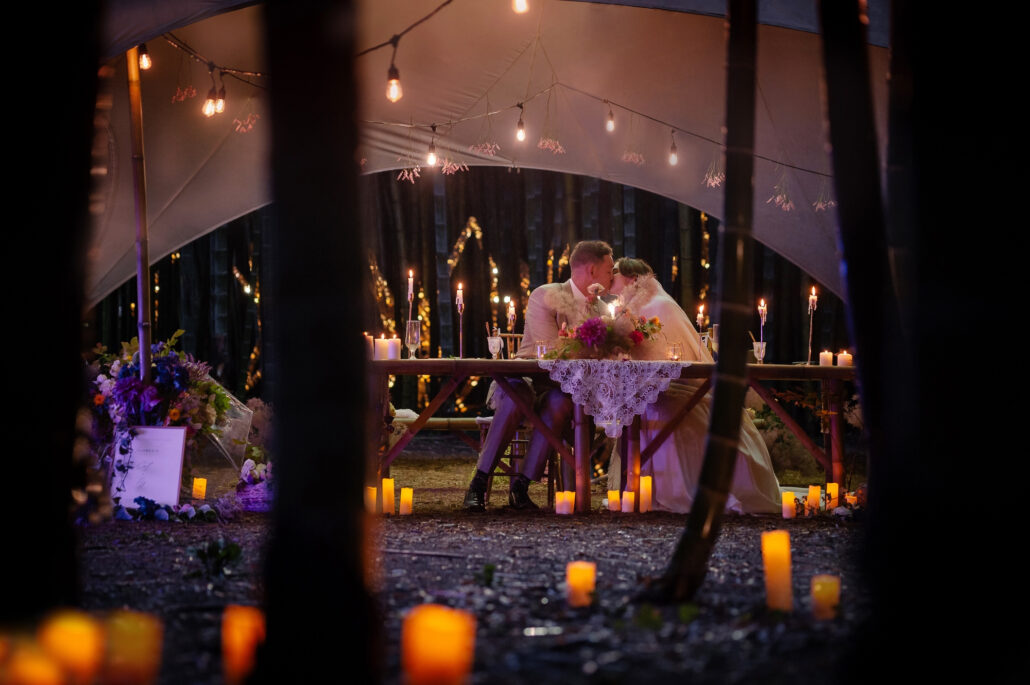
A starting figure only means something once you see what it has to hold. Take a wedding for fifty guests in our bamboo grove outside Utsunomiya, where nothing is there until we bring it: the ceremony stage, a chair for every guest, the sound system and the person running it, the musicians and their transport, the lighting, a bar with its own bartender, glassware and ice, food stalls for the cocktail hour and matcha made for the guests. Then dinner in town, with drinks through to the end of the after-party, a sake barrel to open, a cake and a piano. Then the flowers, the lanterns and noren, umbrellas in case of rain, and buses out from Tokyo and back again. Nobody at the grove or the restaurant speaks English, so every contract and message is written in Japanese and again in English. A building made for weddings already holds most of that. A bamboo grove holds bamboo.
Our planning investment page explains how our fees work, and our guide to what a wedding in Japan costs sets out what the money buys across the country.
When you compare proposals, put them on the same footing: guest count, number of events and nights, use of the property, meals and drinks, professional services, equipment and transport. Check taxes, service charges, supplier travel and any minimum spend or room commitments, and ask which figures are still estimates and when they’ll be confirmed.
Then decide who’s paying for what. A budget that covers every guest’s room is a different budget from one where guests book their own. Either is fine. Both need to be clear before the invitations go out.
We work in Japanese yen. Venue research and tailored quotes are part of our planning, for the couples we’re already planning with.
How Does Planning From Overseas Work?
You should understand the process before you commit to it. Ask where decisions, documents, costs and deadlines will live, how you’ll communicate, and who your day-to-day contact is.
First, the brief
Share a season or dates, an approximate guest count, a budget and what draws you to Japan. Add what you already know matters: privacy, a tradition, a long dinner, a grandparent’s comfort, the photographs, everyone under one roof. It doesn’t need to be polished. A good first conversation has room for the unfinished parts.
When couples write to us, we reply personally with the guides that introduce how we work, our services and our fees. Once you’ve read them, and if we have availability and your plans suit the way we work, we’ll invite you to a call.
Then, the place and the plan
Once you’ve booked and planning has begun, the brief becomes venue research, conversations with suppliers, budgets and a working schedule. That’s also when we can arrange visits to the places we’re considering. You make the choices. We explain what each one involves and hold everything behind it.
Most of that work happens in Japanese: the emails to the venue, the calls to the shrine, the permits, the menus. Translation tools help with the words. They help much less with the rest: how to frame a request, who should be introduced to whom, and the fact that a polite “that’s difficult” usually means no. We’ve written about why the language is sometimes the least important part of the conversation. Our conversations with you are in English, and the point is that you understand each decision, its cost and its limits, without decoding a forwarded email.
We think about the photographs while the plan can still change: the light at the ceremony, how much moving around the day involves, and when you’ll have time with your guests. Those are easier to decide together than to fit around a finished schedule.
Finally, everyone arrives
Confirm the details other people will rely on: guest numbers, meals, transport, what happens in the ceremony, access, and who contacts whom. Keep the current version in one place. Nobody should have to reconstruct the wedding from an email thread and a screenshot of an earlier email thread.
Build your arrival around anything that needs you here, such as a fitting, a hair and makeup trial, a rehearsal or a legal appointment. Leave time to land, too. The wedding shouldn’t begin with you recovering from getting to it.
What Should You Arrange for Your Guests?
Think about what a guest needs to know to make good decisions before they travel.
Tell them which city or region to reach, when to be there, where you’d suggest staying and which transfers you’re arranging. Make it clear what’s hosted and what they’ll pay for themselves. Explain the dress code for the actual setting, including any walking or time outdoors.
Ask about access and dietary needs before the guest list is final. Then ask the venue what it can accommodate, which routes and rooms suit, and what its kitchen needs to know. That’s part of choosing a place that can welcome your people well.
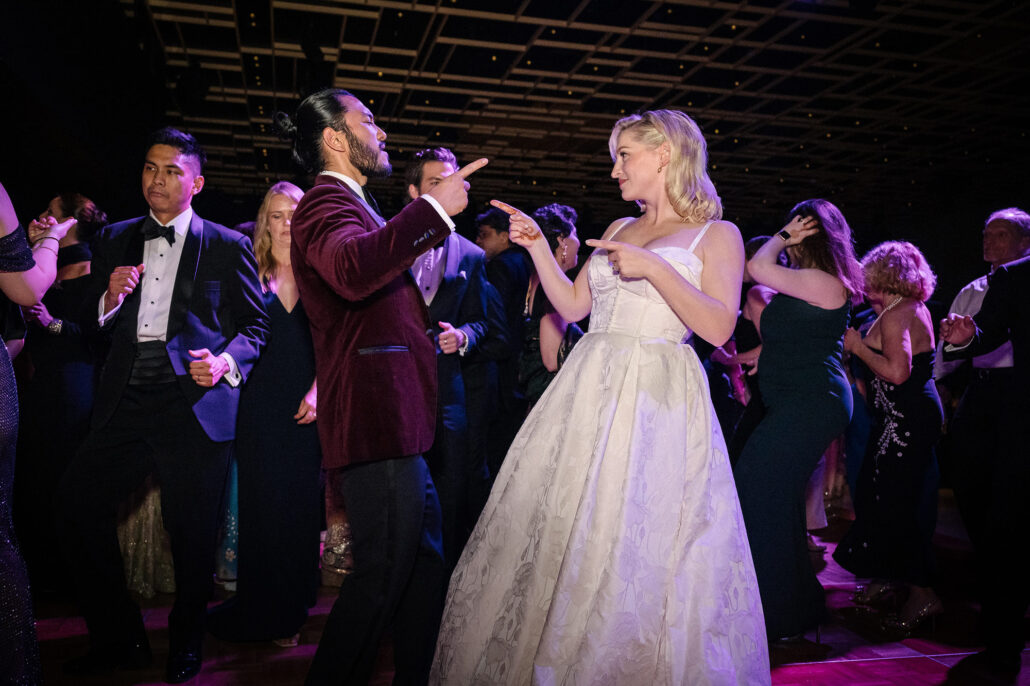
Language deserves its own plan. When two families share one room, someone has to carry a father’s speech from one language into the other and keep the joke intact. A ceremony can be held in both languages, and menus and orders of service printed in both. For speeches, decide whether to interpret, translate on paper or agree a shorter bilingual version. The aim is to keep everyone included without anyone sitting through the evening twice.
Guests should check their own entry requirements with the relevant Japanese embassy or consulate. Our guide to travelling to Japan for a wedding covers visas, packing and the latest changes, our guide to attending a wedding in Japan is written for guests, and our wedding in Japan FAQ answers the questions couples ask us most.
What This Looks Like in Real Weddings
The useful part of a real wedding is the decision inside it. These three show the place, the ceremony and the practical detail being planned together.
Asaba: room for both families’ traditions
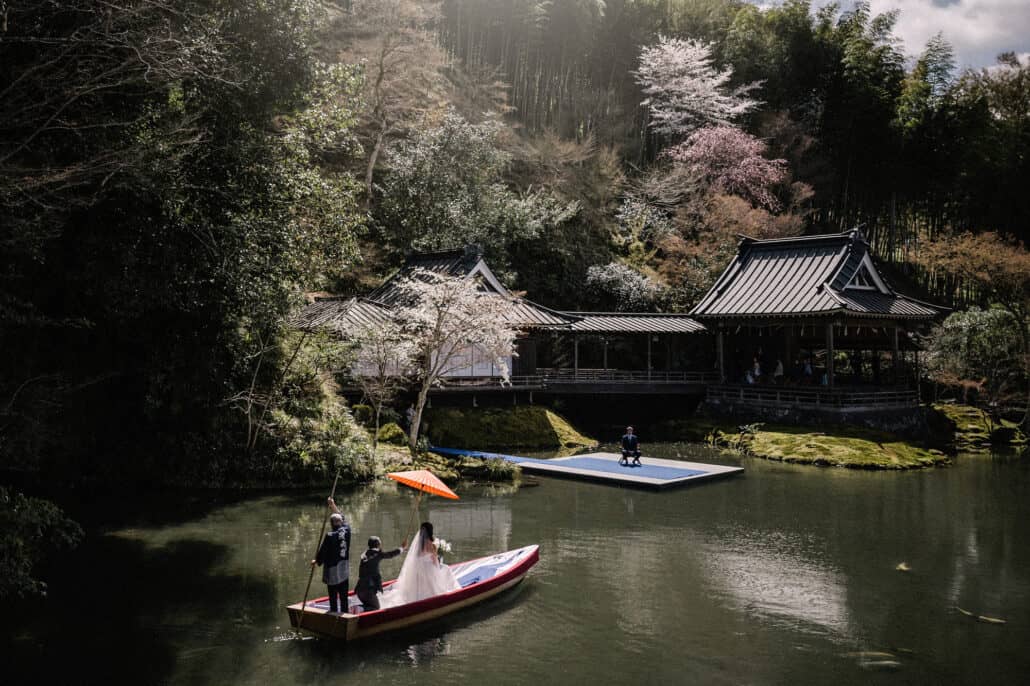
A couple who’d been to Japan once came back to marry at Asaba, an inn in Shuzenji that’s been in the same family for more than five centuries. The bride crossed the pond by boat to the Noh stage, where the guests were waiting, and during the ceremony the couple served tea to each set of parents. A little later, at the ryokan’s entrance, came the Jewish tradition of breaking the glass. The work was in understanding which customs mattered and agreeing, with the inn, where each could happen. The setting stayed itself, and so did both families.
Jinya: planning the whole day for the weather
Another couple planned a gothic fairy tale at Jinya in the middle of the longest run of rain Tokyo has ever recorded, thirty-seven days in a row. Their ceremony was always going to be indoors, in the inn’s restaurant. The rain took everything else: cocktail hour came in from the terrace, matcha was made in front of guests on the tatami, yakitori came off the grill, and the garden became the view in every window. Weather planning covers the whole celebration, even when the ceremony already has a roof.
Kyoto: choosing the hour as carefully as the place
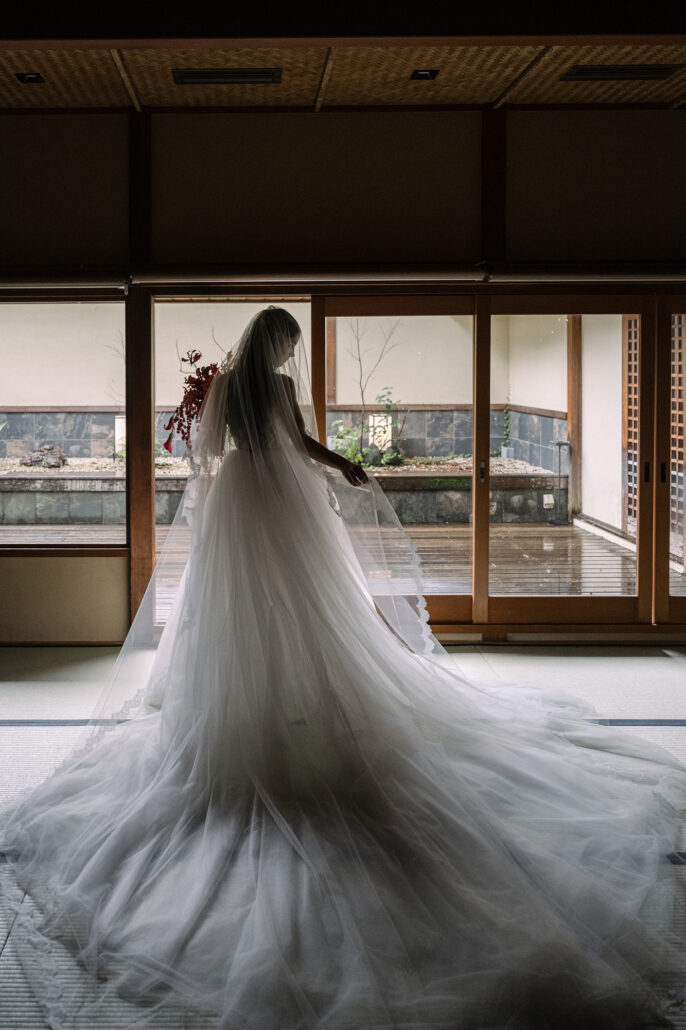
A couple on their first trip to Japan eloped in Kyoto in early December, when the city’s maples are at their fullest, in a private garden in the hills. In early December the mountains take the sun from that garden well before sunset, so the vows came first, and the rest of the day followed the light down into the city, to the willow-lined Shirakawa and the stepping stones on the Kamo River. Privacy and light decided the order of the day together. A location name and a sunset app won’t tell you that.
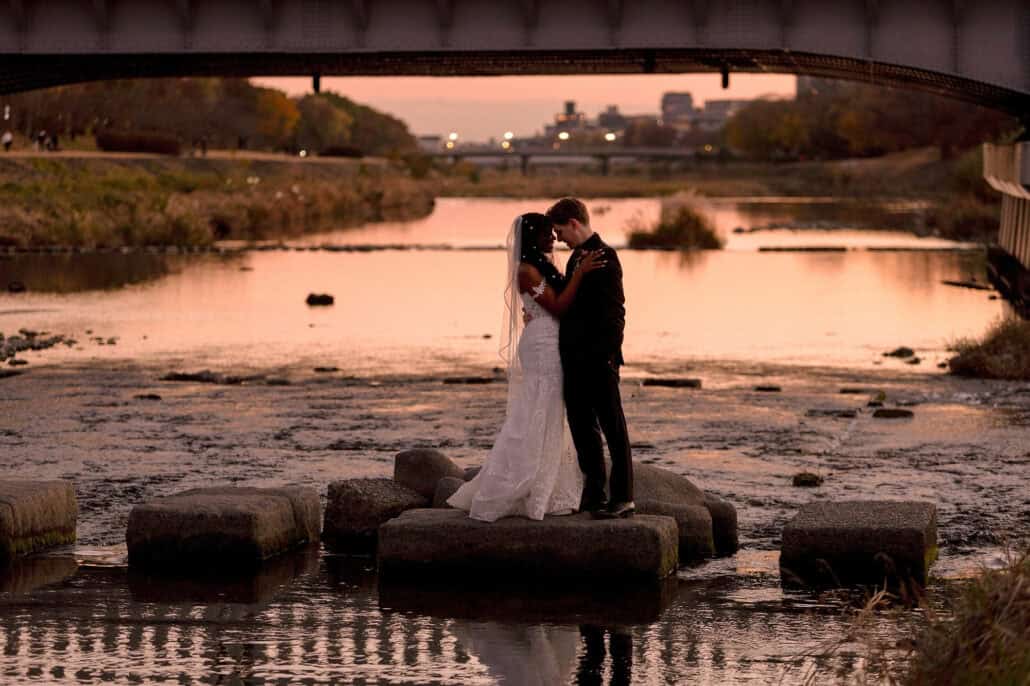
None of those days followed the standard Japanese wedding. All three relied on people generous enough to make room for a couple who asked the right way.
When Should You Start Planning?
For weddings with guests, you can book us and reserve your date up to 18 months ahead, and planning begins around a year before the wedding. Reserving our team isn’t the same as confirming a venue: the venue’s own booking is part of the planning. Spring and autumn go first, especially the best rooms and the places that host one celebration at a time. Our weddings often run midweek, which opens dates and rooms that weekends don’t.
For an elopement, around a year ahead is comfortable. Less can work, depending on the plans and our availability.
Tell us whether the date, the season or the place matters most, and how flexible you are. If one of your families is Japanese, ask early whether the calendar matters to them. Some grandparents care a great deal about lucky days, and our Taian 2027 calendar lists every one. Our Japan wedding planning timeline shows when each decision belongs.
More Questions About Planning a Wedding in Japan
Do we have to visit before the wedding?
No. We can plan from overseas and show you the spaces, choices and practical details before you arrive, on video where it helps. Once planning has begun, we can arrange visits to the places we’re considering, and some couples love that. Others would rather save their time in Japan for the wedding itself.
Can we write our own vows?
Yes, in a ceremony designed around you. Say so before the ceremony is booked. For a religious service, ask the officiant what its format allows and whether personal words need their own moment. Don’t assume every ceremony at the same venue follows the same rules.
Can we bring our own photographer or other suppliers?
Many venues allow outside suppliers, often for a fee, so ask before you commit. For weddings we plan, our planning and photography teams work together from the beginning, and we don’t work alongside outside photography or film teams. Film from our team is optional.
Will a smaller guest list mean a much smaller budget?
Not necessarily. Guest count measures who’s coming, not what has to be built for them. Venue hire, production, professional services and transport don’t fall in step with the number of guests. A smaller celebration is often a chance to spend differently rather than to scale everything down.
What should we send in our first enquiry?
Where you’re based, the year and season or dates you’re thinking of, an approximate guest count and a budget range. Then tell us what you’re looking forward to, what drew you to our work, and the questions you still have. You don’t need a venue first.
The Part You Shouldn’t Have to Carry
You don’t need to become an expert in Japan’s wedding industry to make good choices. The couples who enjoy planning a wedding in Japan most decide early what matters to them, find people who work for them, stay close to the parts they love and let the rest be held. Japan is extraordinarily good at hosting. It just needs to be asked in its own language.
Updated October 2026. This is a planning overview, not legal advice for your nationality: confirm current requirements with the office where you’ll file and with your own embassy. Prices are 37 Frames starting points, not Japan-wide averages. Sources: Japan’s Ministry of Justice, marriage registration with a foreign national (Japanese); Toshima City, marriage notification; Chuo City, Tokyo, marriage between foreign nationals who don’t live in Chuo (Japanese); Kyoto City, Nakagyo Ward, notice for foreign nationals visiting as tourists.