A Shinto wedding in Japan looks as old as the cedars around the shrine. Its modern form dates from 1900.
That May, the Crown Prince who became the Taisho Emperor married before the sacred mirror in the palace sanctuary. A year later, according to Jinja Honcho, the Association of Shinto Shrines, Hibiya Daijingu in Tokyo (now Tokyo Daijingu) offered the same rite to the public, and it spread across Japan.
The heart of it is far older. Before shrines, couples married at home, sharing sake from three cups before a hanging scroll in the alcove. The cups were there first.
The short answer: a Shinto wedding is a religious rite, led by priests, in Japanese, on the shrine’s terms, and many shrines welcome international couples. There are three ways in. The full rite at a shrine. Your own ceremony, then a shrine blessing. Or a garden, ryokan or lakeside ceremony carrying the rituals you love. Here’s how Japan does each, and how we plan it for couples arriving from far away.
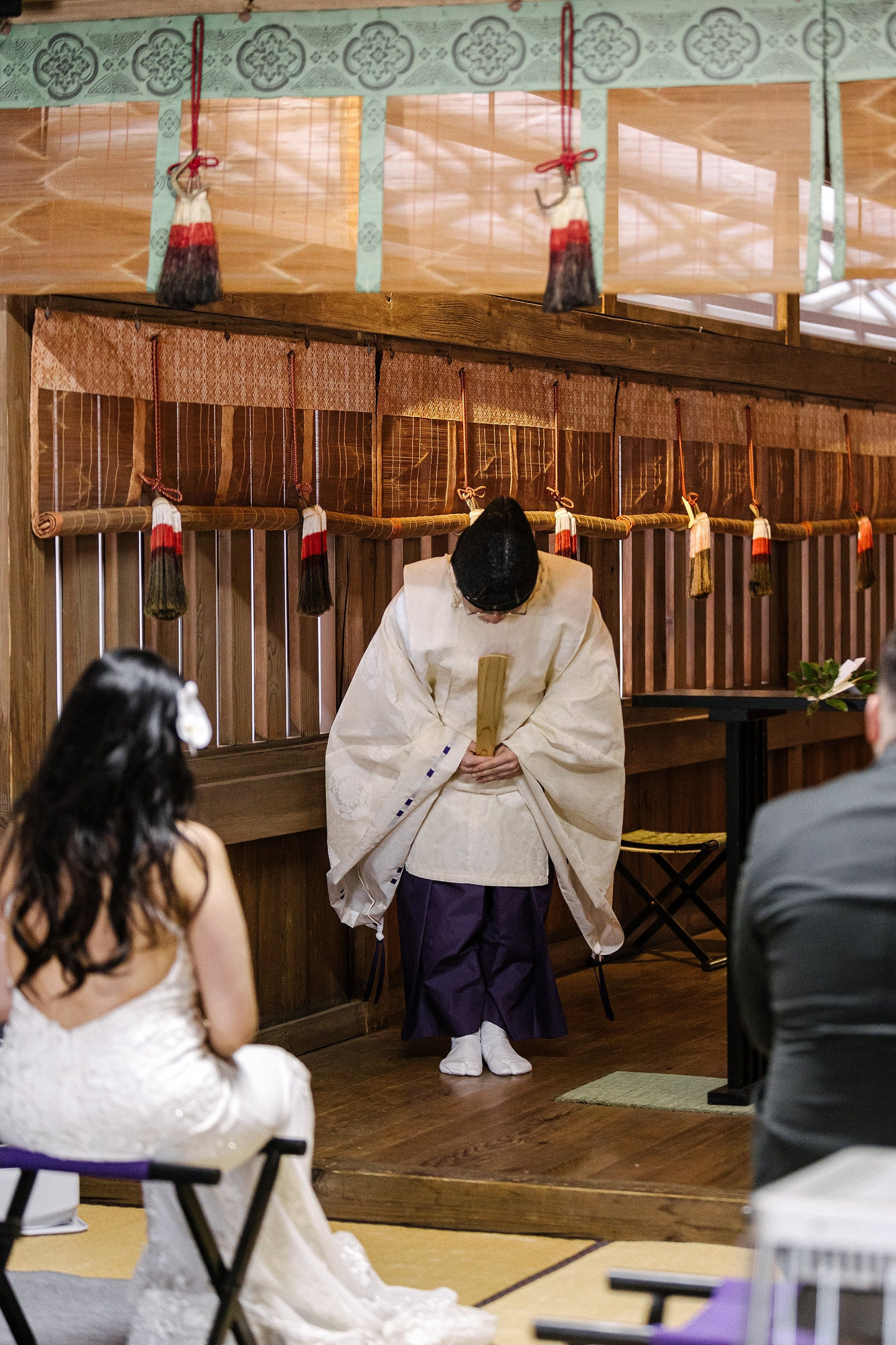
What Is a Shinto Wedding in Japan?
A Shinto wedding, shinzen kekkon, is performed before the kami, the deities of a shrine, with the couple’s families beside them. Jinja Honcho gives a typical order, and notes that every shrine and region differs:
- Purification of everyone present.
- The norito, a prayer reporting the marriage to the kami.
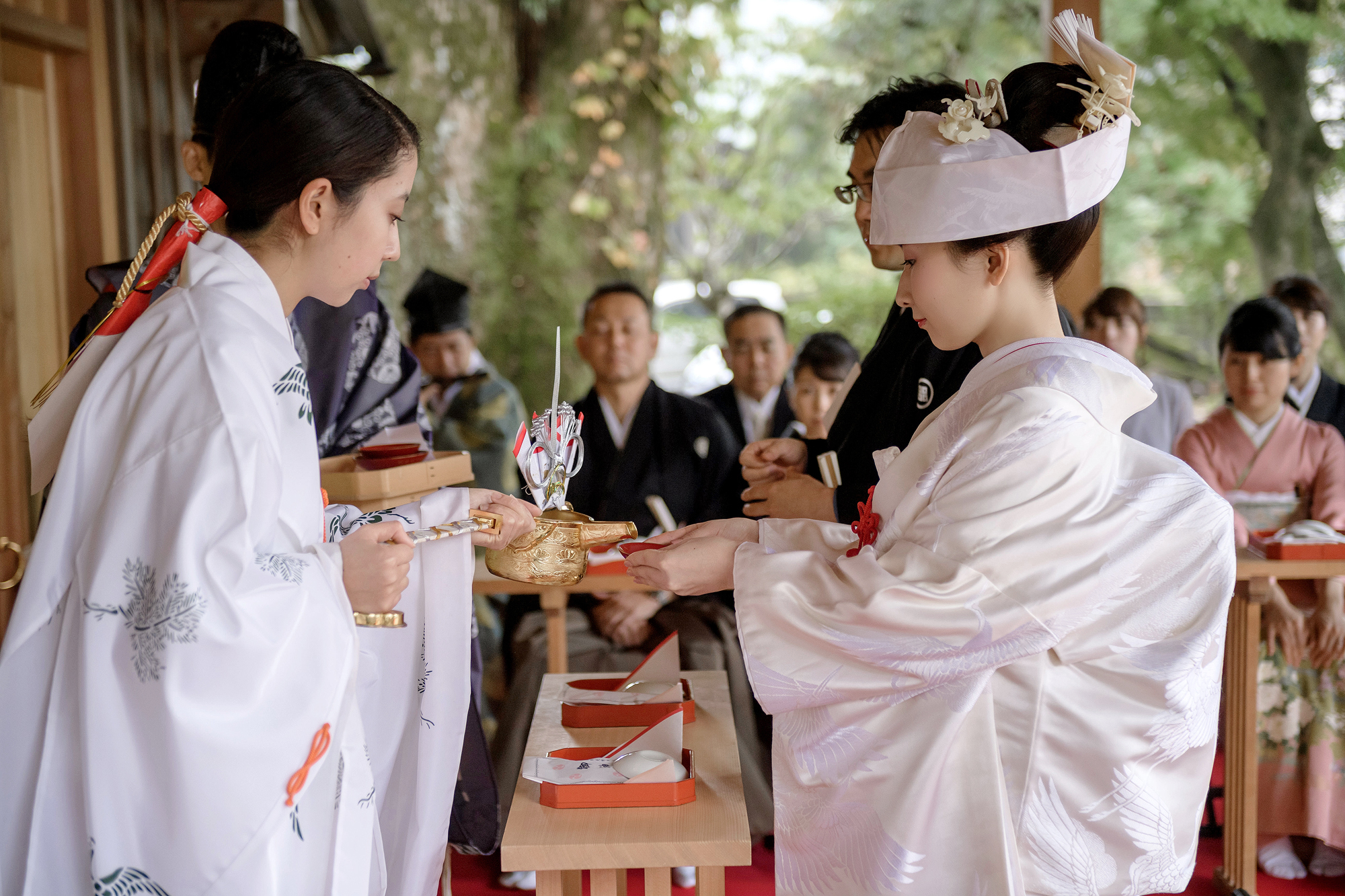
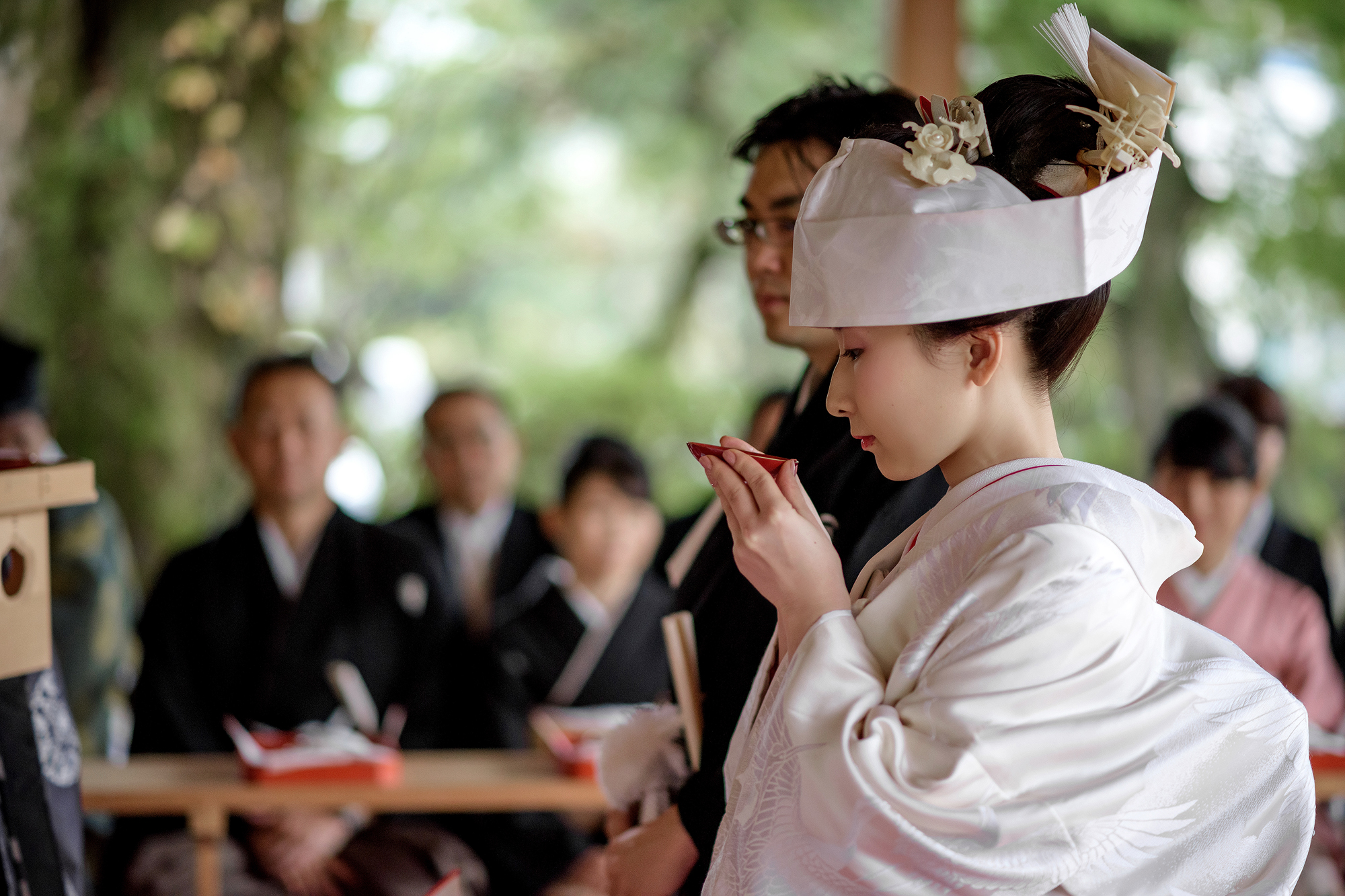
- Sankon no gi, the shared sake, or san-san-kudo.
- The vows, read aloud before the altar.
- Tamagushi, a sacred branch offered with a prayer.
- Shinzoku-hai, sake shared by both families, binding two households.
Some shrines add rings, gagaku music or a sacred dance. At one Tokyo shrine, the whole rite takes about thirty minutes.
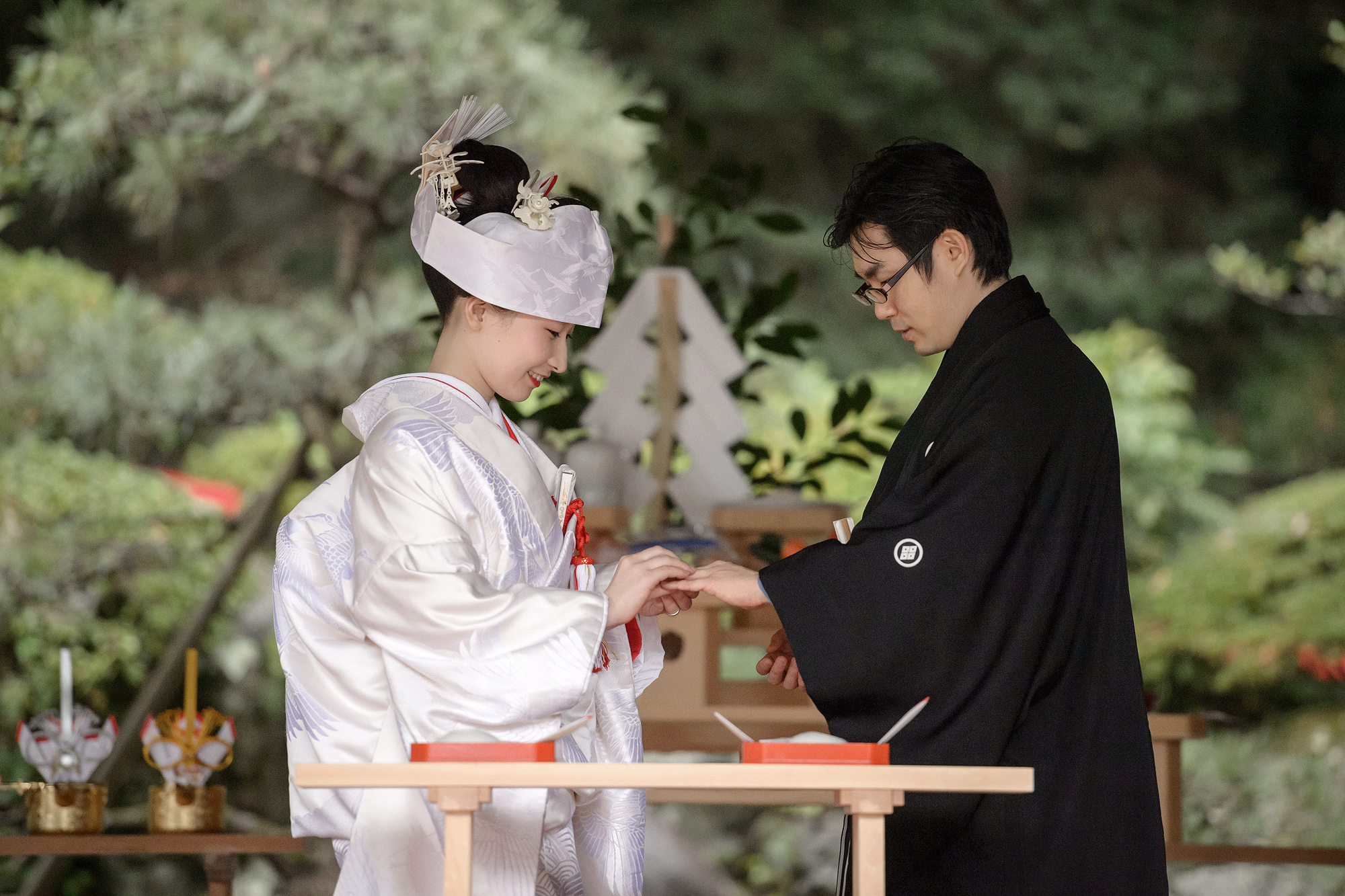
We explain each step to you and your families before the day, so nothing in the hall arrives as a surprise. Inside, the priests lead.
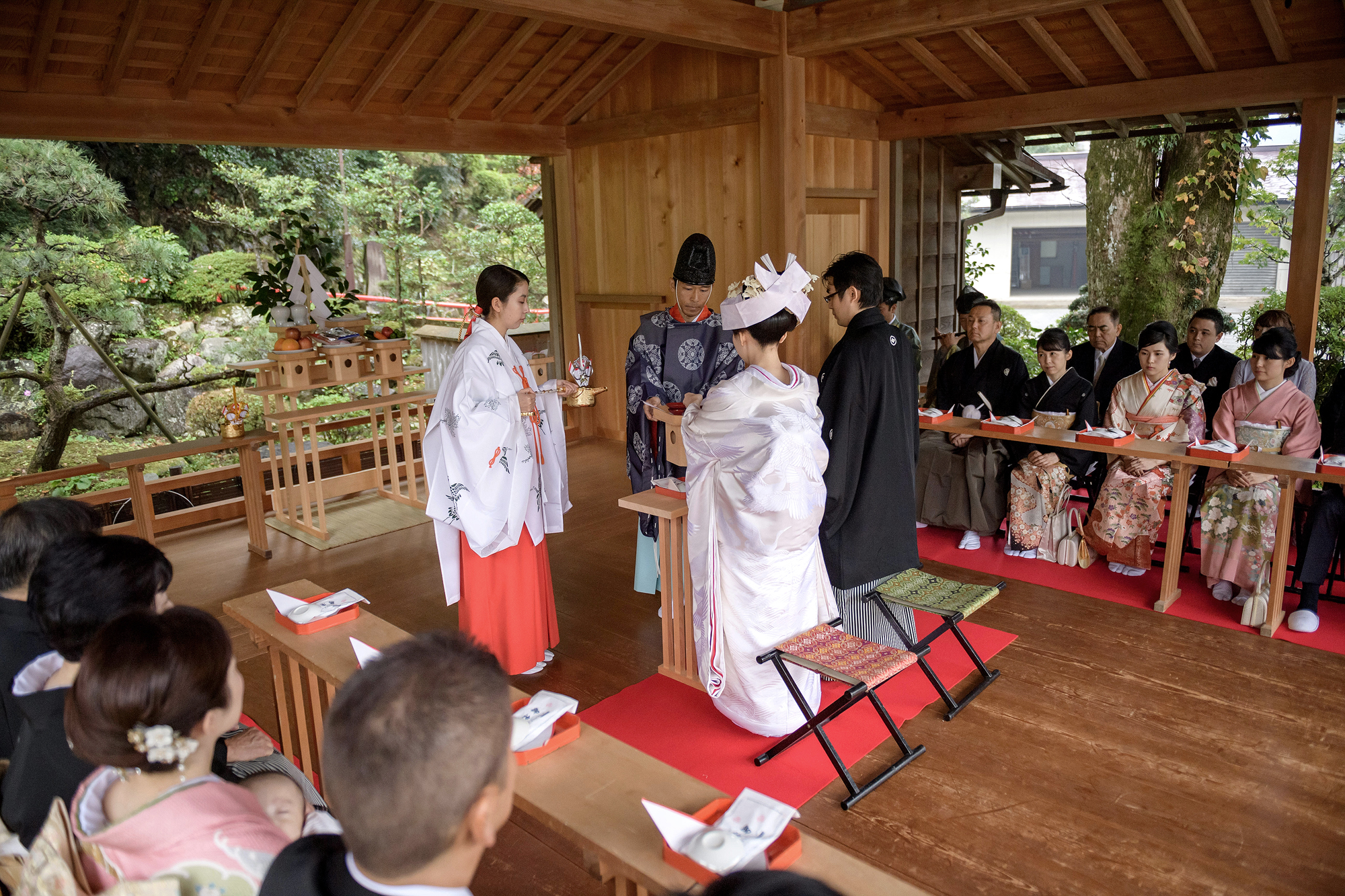
San-san-kudo: three cups, nine sips
The sake is shared from three cups of different sizes, three sips from each. Odd numbers are auspicious in Japan, Jinja Honcho explains, and nine, three taken three times, is the greatest of them. The wish inside it is for a long and happy home.
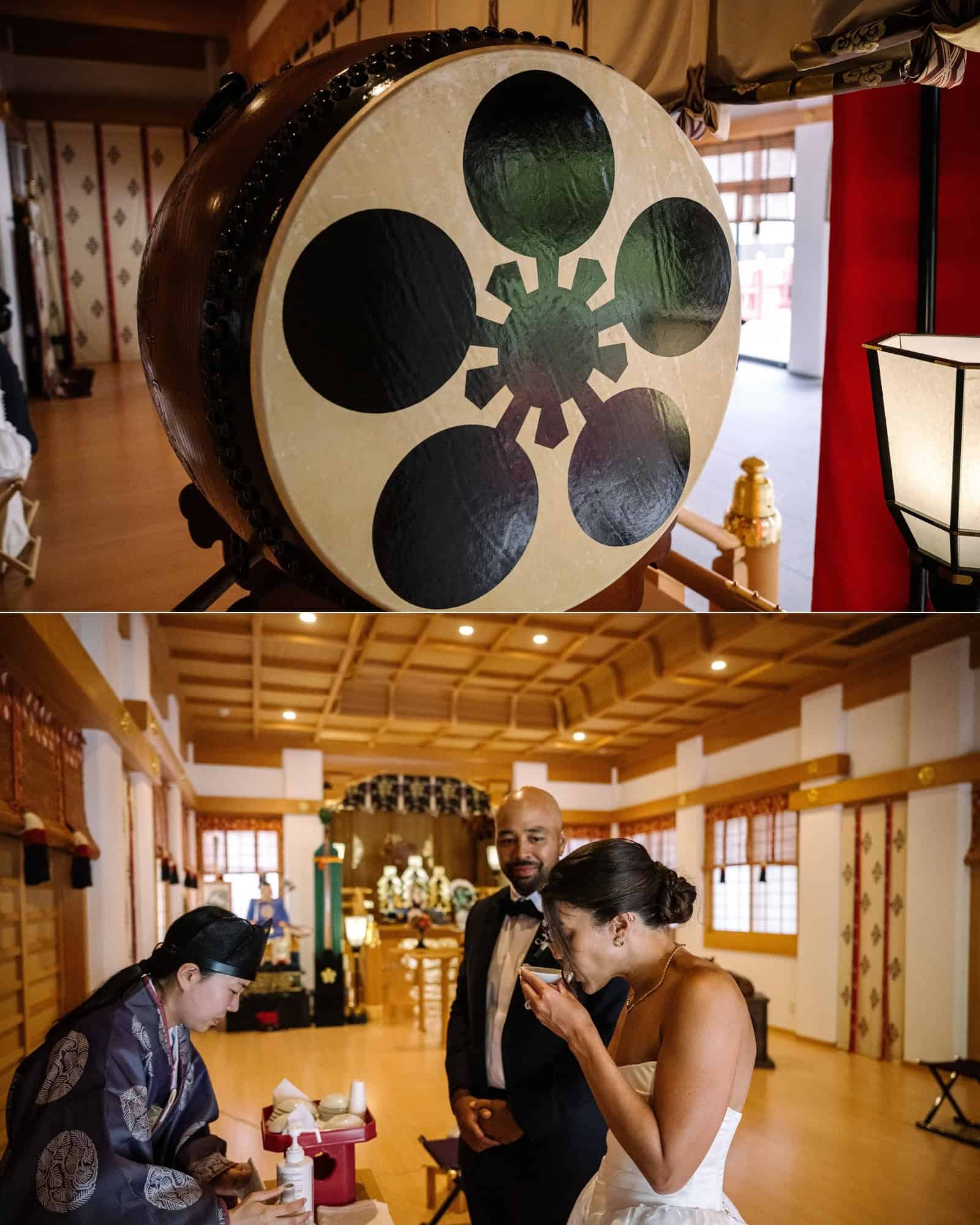
The tamagushi offering
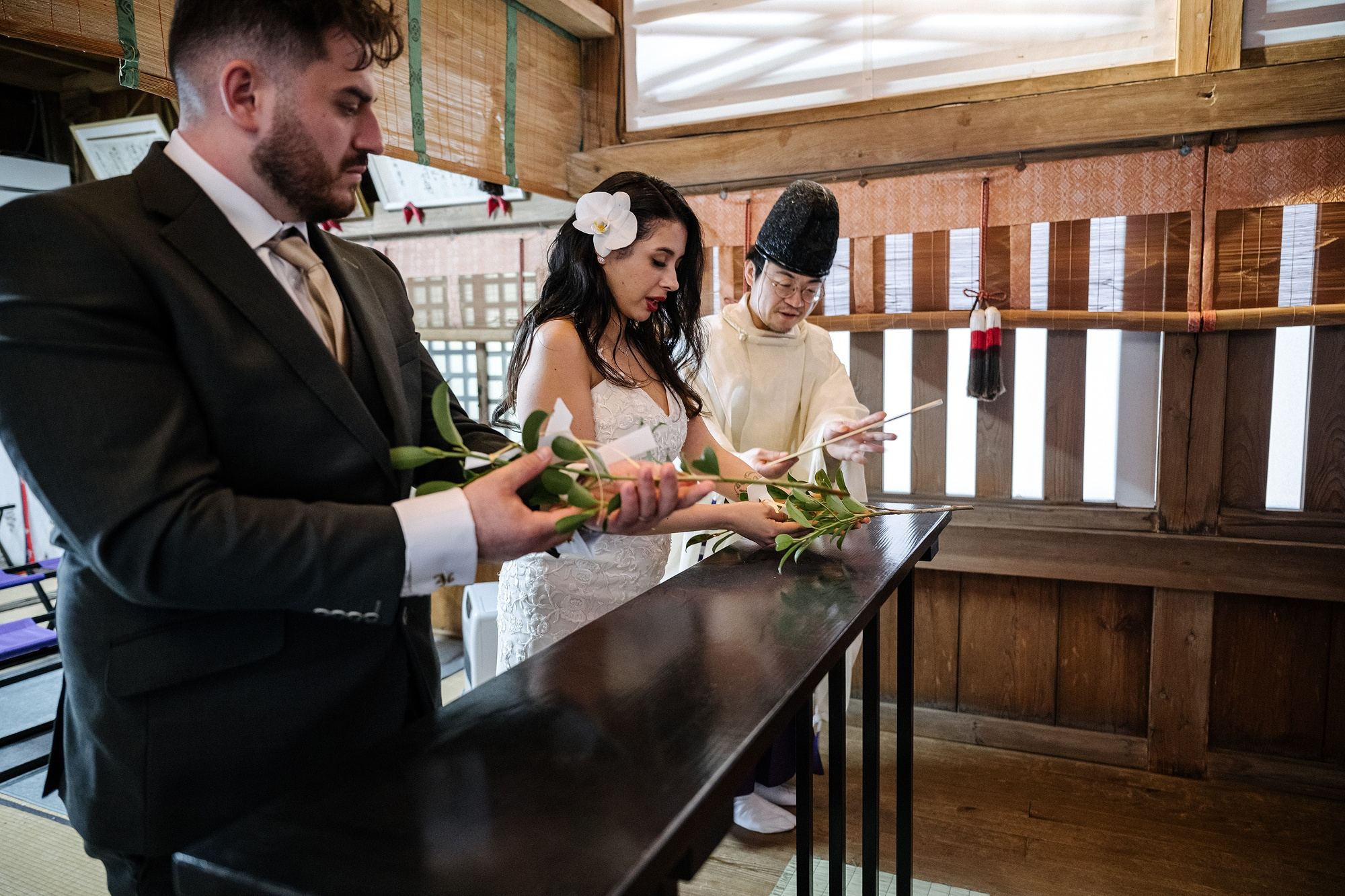
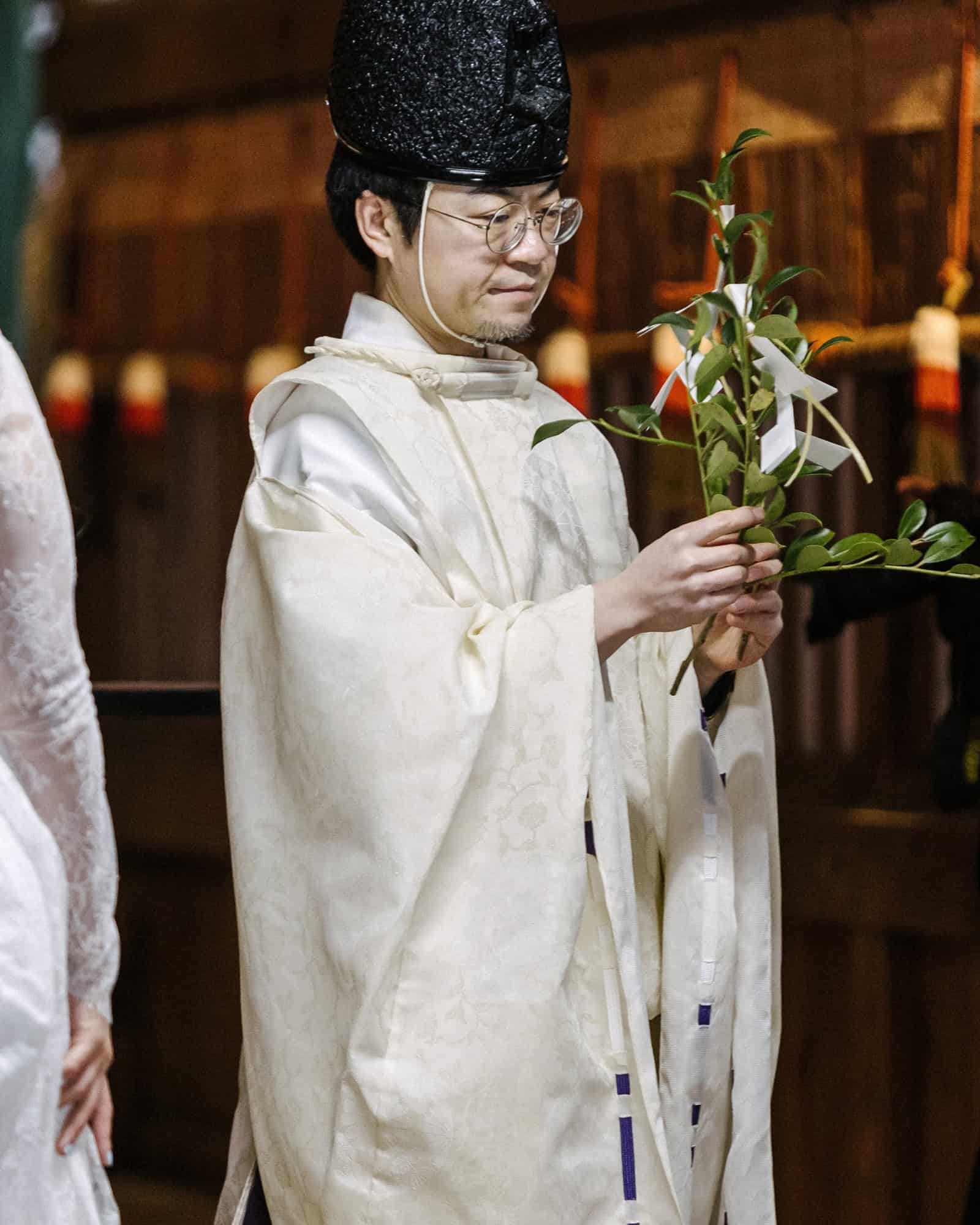
A tamagushi is a branch of sakaki, the evergreen of Shinto offerings, tied with white paper. You receive it from the priest, turn it clockwise until its base points toward the altar, lay it down, then bow twice, clap twice and bow once more. It sounds like a lot to remember. It isn’t. The priests show you each step as it comes.
The priest and the shrine maidens
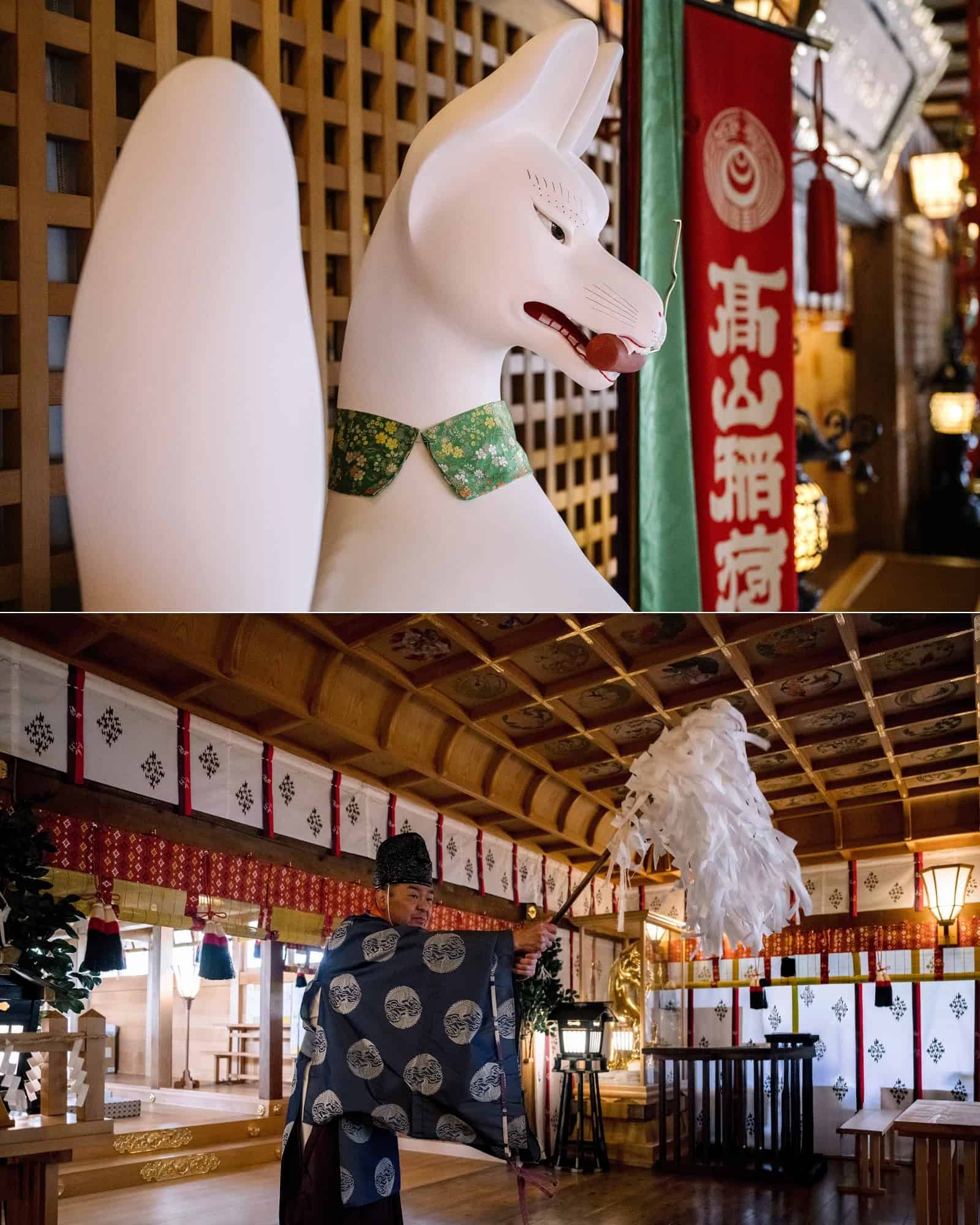
Miko, the shrine maidens, assist the priests. At Meiji Jingu, a typical procession is led by two priests and two miko, the couple following under a red umbrella with their families behind. At Tokyo Daijingu, four miko dance to bless the couple’s new start.
Who may attend
A shrine wedding was built around two families becoming one, though many shrines now welcome friends. One Tokyo shrine will marry a couple alone or with up to forty guests. Numbers decide the shrine and the hall, so we settle them before anyone books a flight.
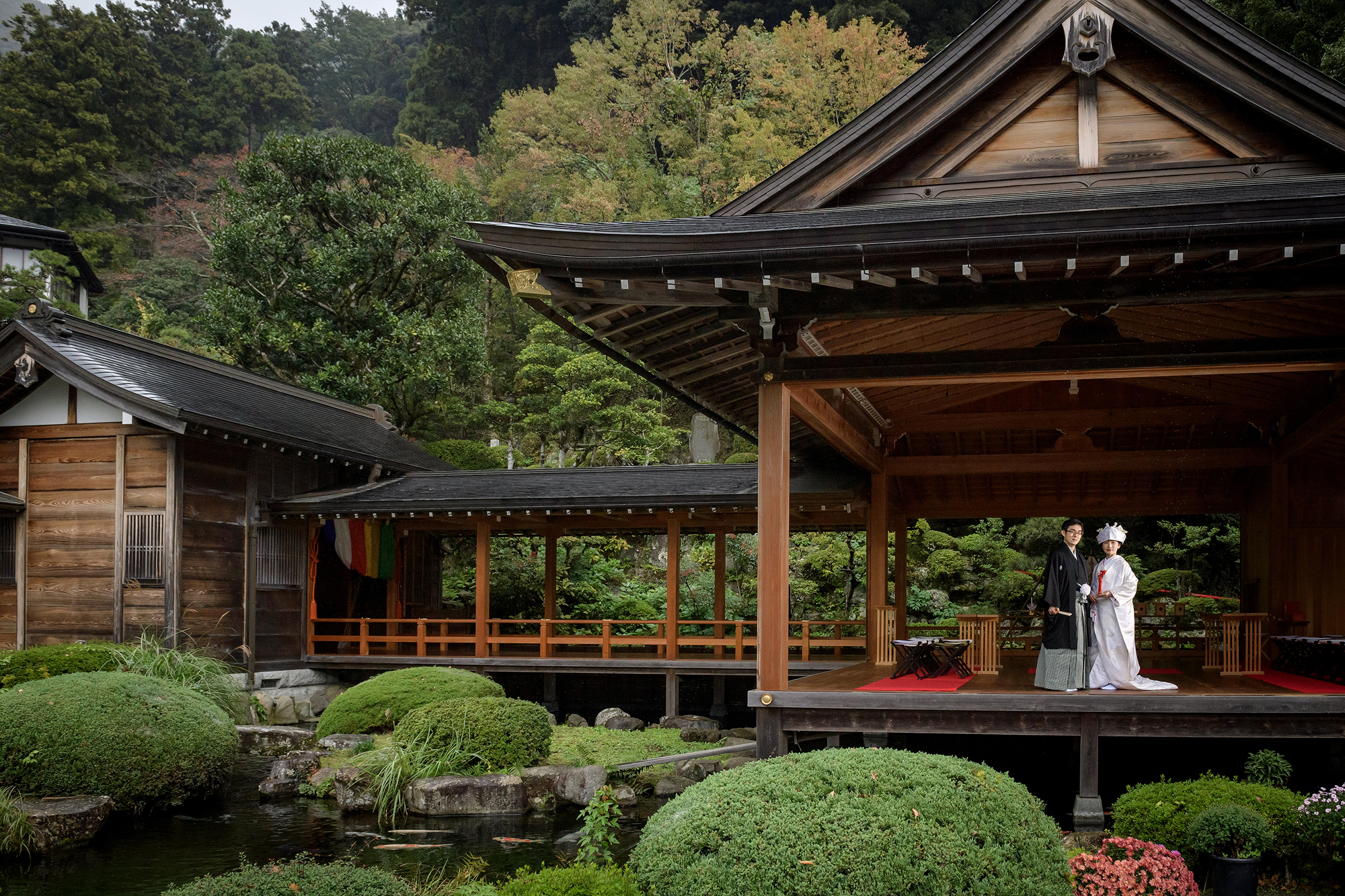
What Is Religious, and What Is Cultural?
The rite at a shrine is religious. The norito reports your marriage to the kami of that place, and the tamagushi is an act of worship.
San-san-kudo is both: the centre of the shrine rite, and older than it, a custom of the household. That’s why we think it can travel, with care, into a ceremony elsewhere.
Kagami biraki has sacred roots. Sake offered at a Shinto rite is shared once the prayers are done, and when it comes in a cask, the lid is opened. Gekkeikan, the Kyoto brewer, explains that the round lid, the kagami or mirror, stands for wholeness and harmony, and opening it spreads good fortune wider.
Our test is simple. Is this a prayer to a shrine’s kami, or a custom families share? Prayer belongs at the shrine. Custom can come to you, if someone explains it properly.
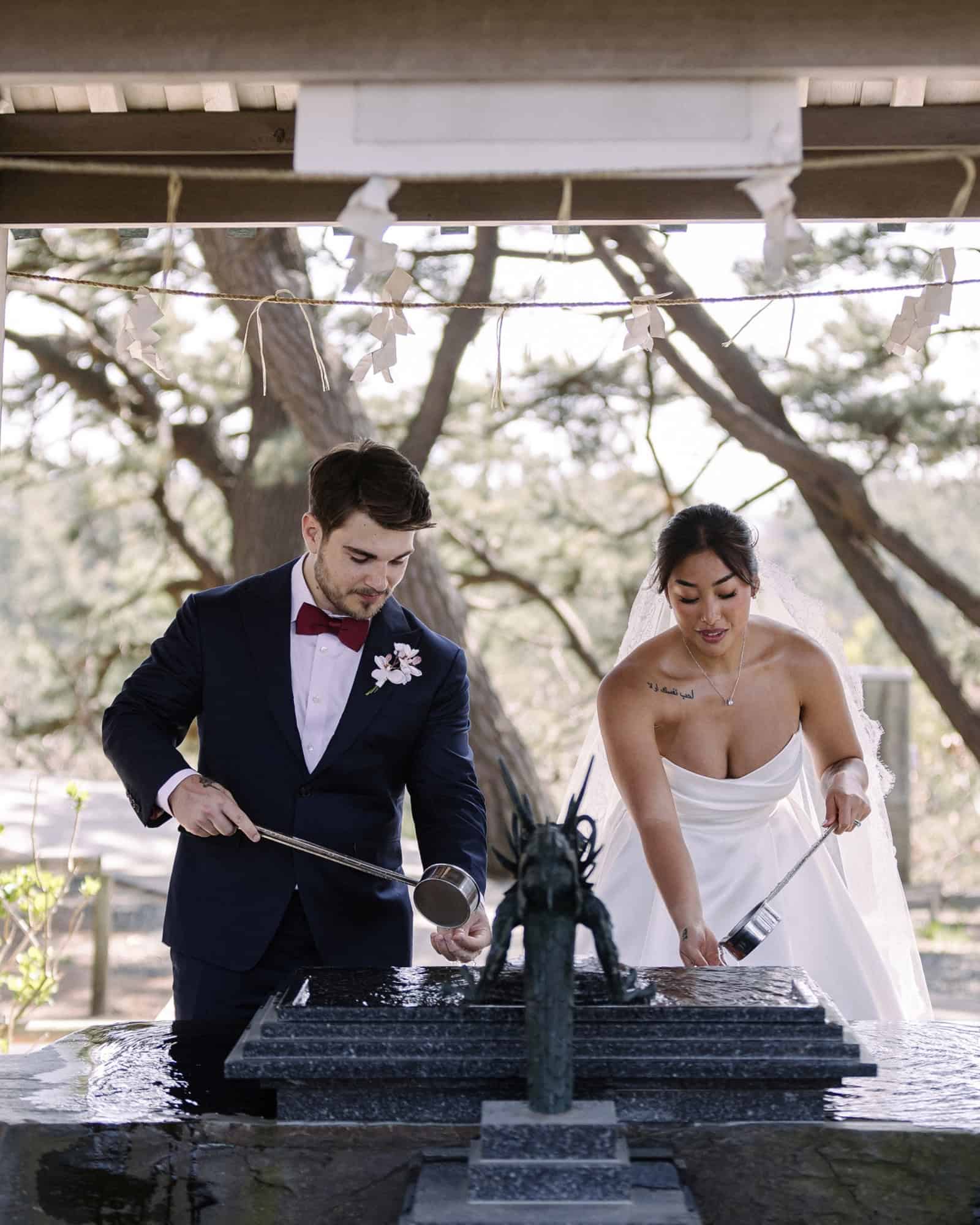
Can Foreigners Have a Shinto Wedding?
Yes, at many shrines. Meiji Jingu’s wedding hall publishes its wedding information in English. One Tokyo shrine offers couples its vows in English, and asks that they come with an understanding of what the rite means. That’s a fair request.
Before you fall for a photograph, know how it works.
The shrine sets the terms. Its order of rites, its music, its guest numbers and its rules on cameras all differ from one shrine to the next. We agree every one of them well before the day.
The rite is in Japanese. The priest leads. Your part is to follow, listen and take it seriously.
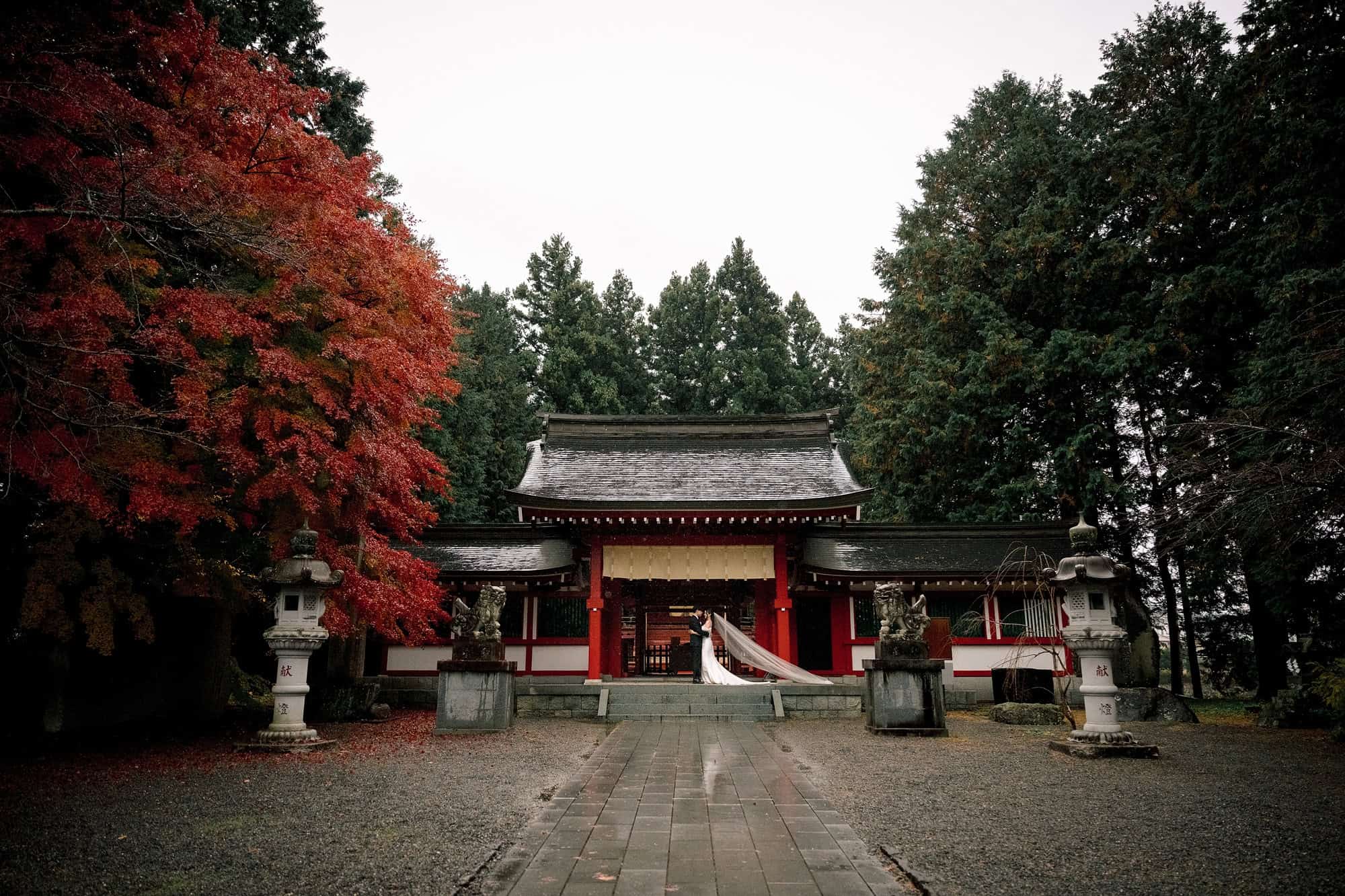
Sacred ground is shared ground. One couple’s ceremony was arranged at a hillside shrine near Mt Fuji. When visitors returned after Japan reopened, the shrine told us it could no longer close the space for anyone. We understood, and so did they. We moved the ceremony to a deck a few minutes from the torii, and the couple found it more private, which mattered to them.
The legal marriage is separate. Under Japan’s Civil Code, a marriage takes effect when it’s registered at a city or ward office, and no ceremony, at a shrine or anywhere else, carries legal weight on its own. Most of our international couples complete the paperwork at home. One couple filed theirs months before at a ward office in Fukuoka, in Japanese dress, with both sets of parents beside them. Their onsen wedding was for everyone else.
What to Wear to a Shinto Wedding
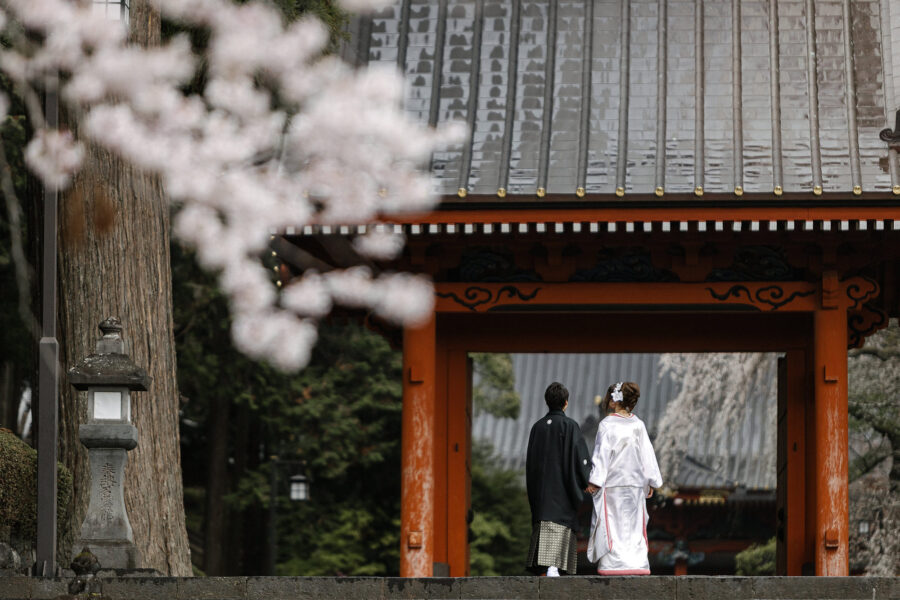
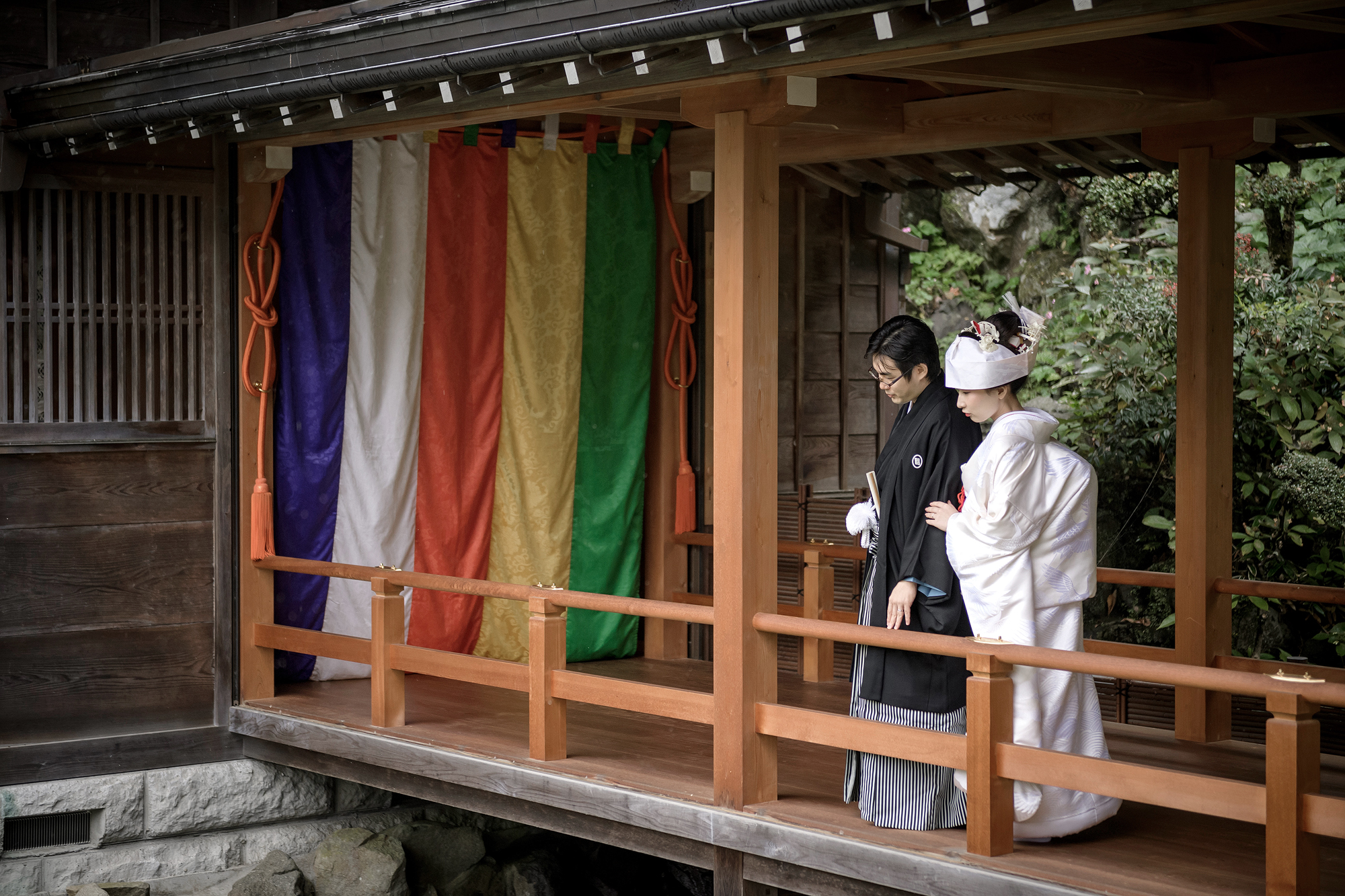
The classic shrine bride wears shiromuku, white from robe to hood. Muku means without impurity, and white was once the dress of sacred rites. Over her hair goes a white wataboshi or the smaller tsunokakushi. The groom wears a black kimono and haori jacket with five family crests, and striped hakama, Japan’s most formal menswear. Many brides change into an iro-uchikake, the same trailing robe in colour, for the reception.
None of it is compulsory everywhere. Meiji Jingu’s wedding hall accepts Japanese or Western dress, and our couples have been blessed in gowns and suits. Kimono takes specialist dressers and time, and our Japanese bridal kimono guide goes deeper. Guests will find the rest in our guide to attending a wedding in Japan.
The Shrine Blessing: A Gentler Way In
Many of our couples who want a shrine don’t marry there. They marry somewhere of their own, in their own words, then go to a shrine to be blessed: a shorter prayer in the hall, still the shrine’s rite, and gentler for anyone meeting Shinto for the first time.
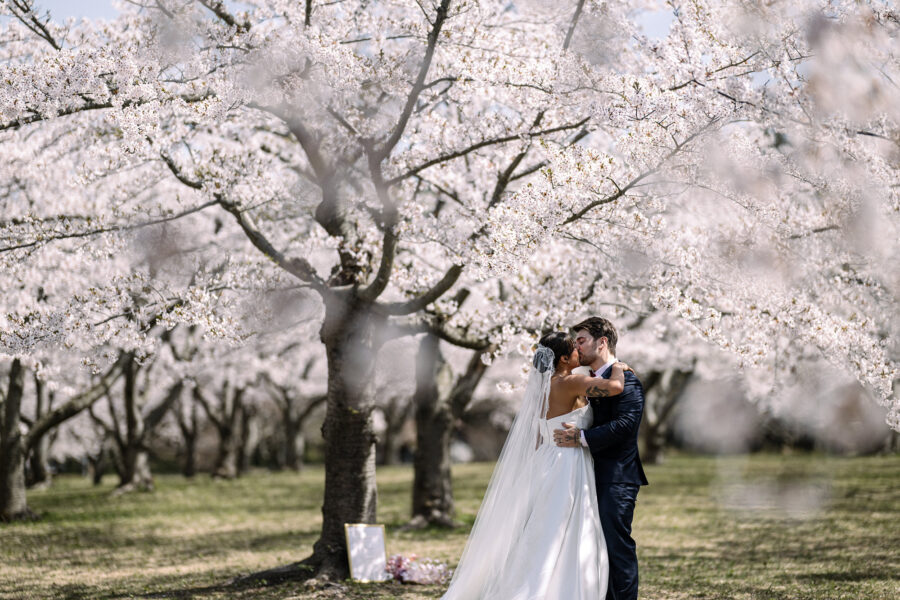
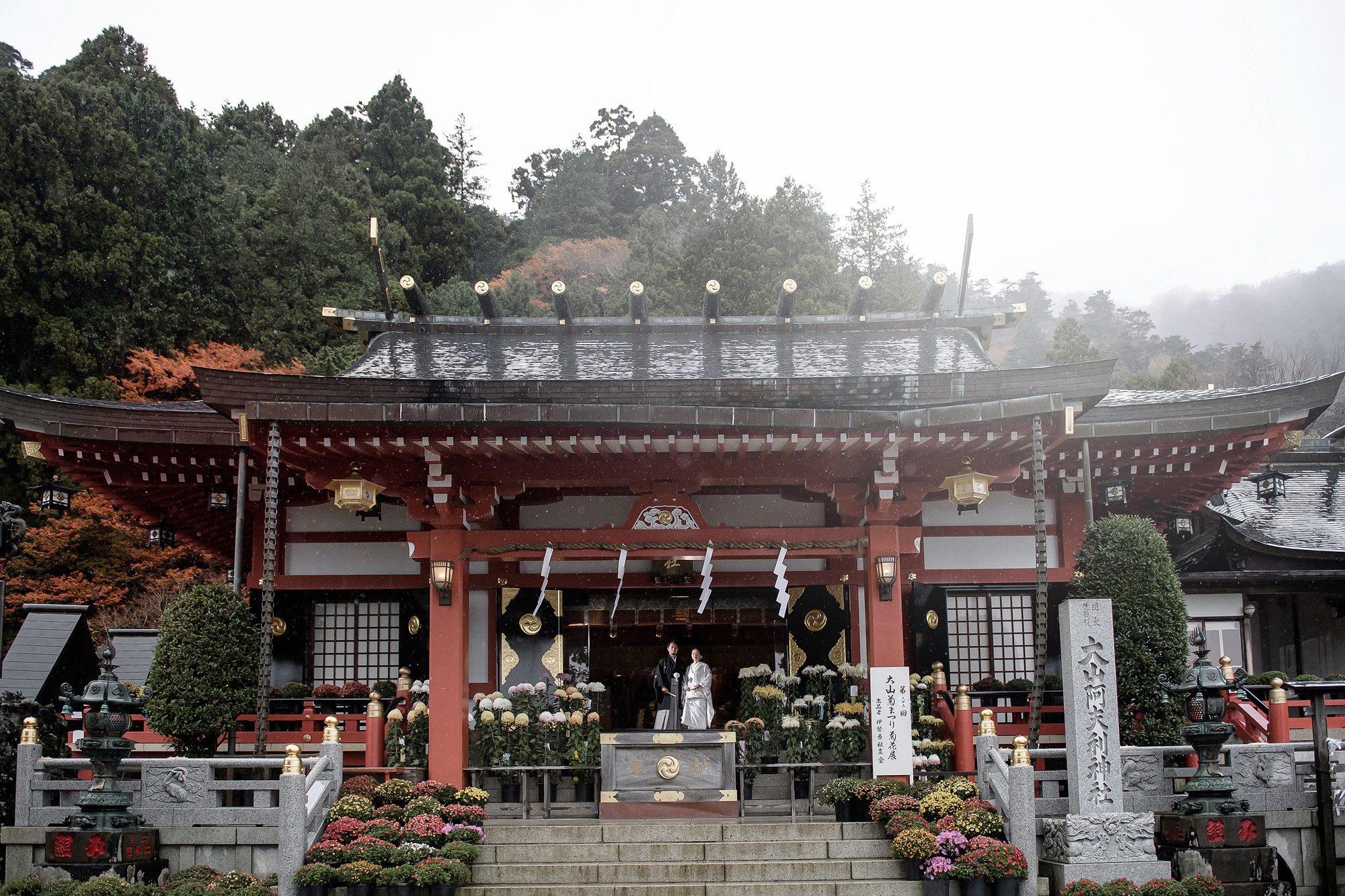
A couple who followed the cherry blossom north to Aomori said their vows under the trees, with a friend leading. That afternoon they went to Takayama Inari Shrine and laid a tamagushi with its base toward the altar. Two deep bows, two claps, one bow. Their marriage was reported to the kami.
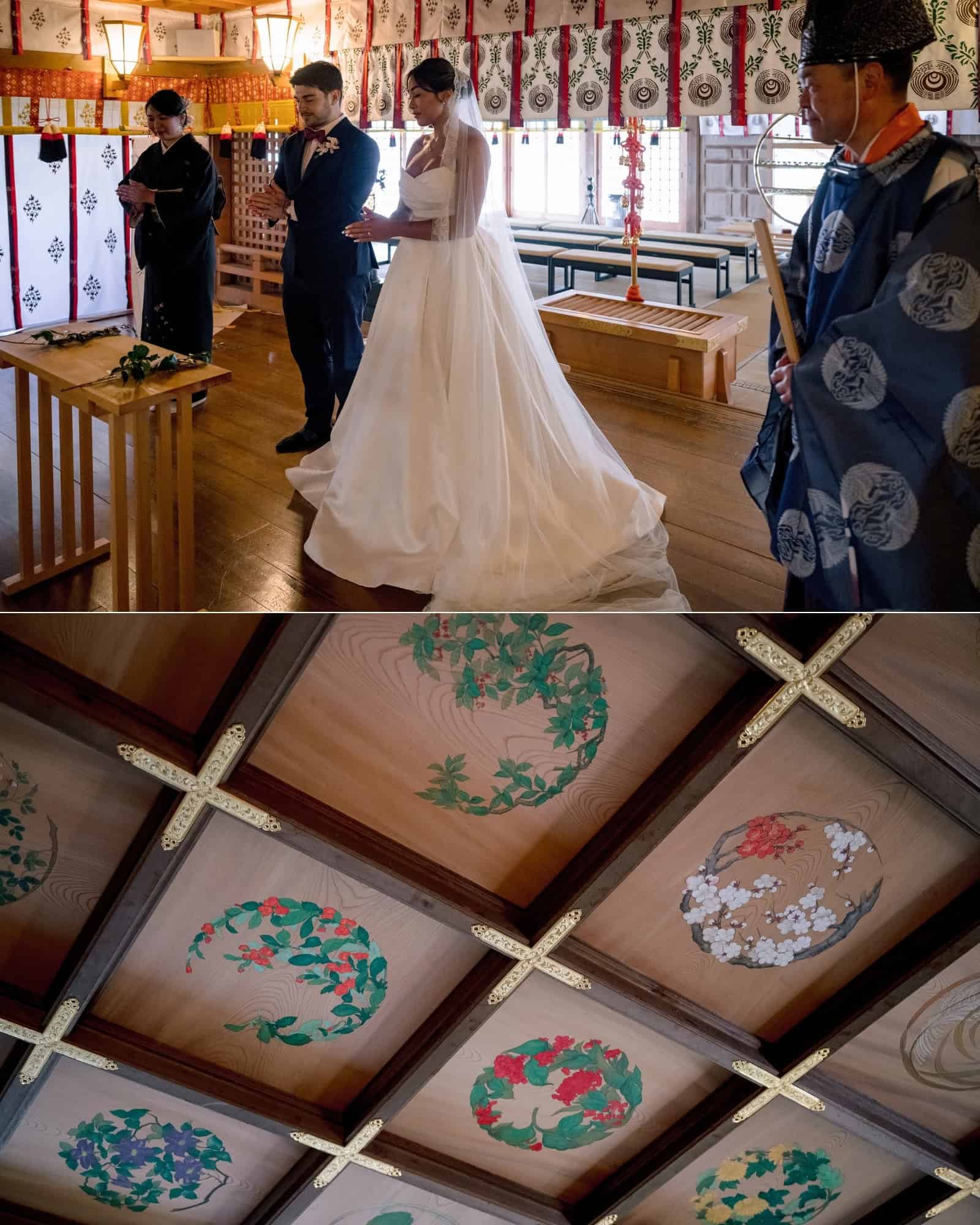
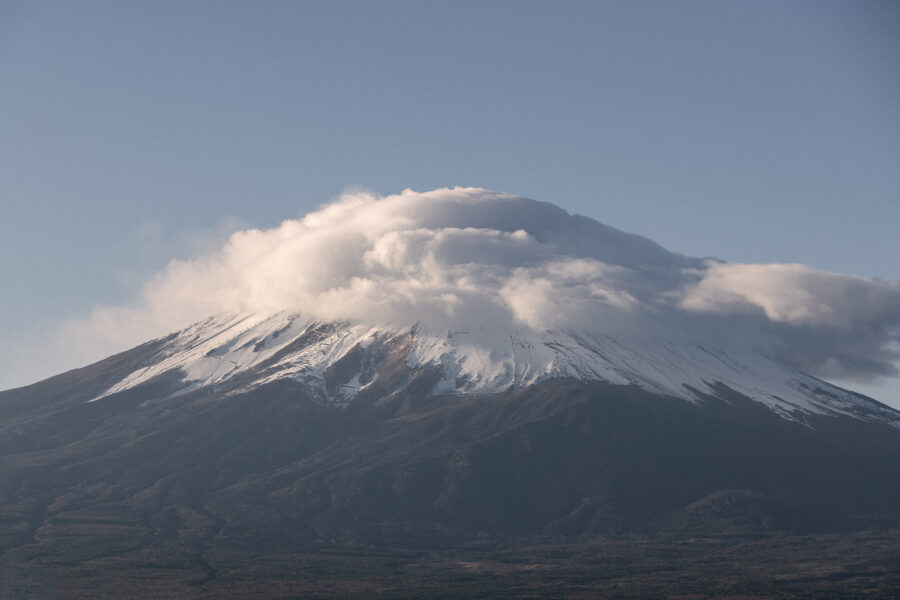
A couple from Australia came on a day when Mt Fuji stayed in cloud. Their blessing was at Fuji Omuro Sengen Jinja, which by its own records began in 699 on the mountain’s slopes and later gained a second shrine by the lake, so people could worship more easily. A shrine built for honouring a mountain from below suited a day without the mountain.
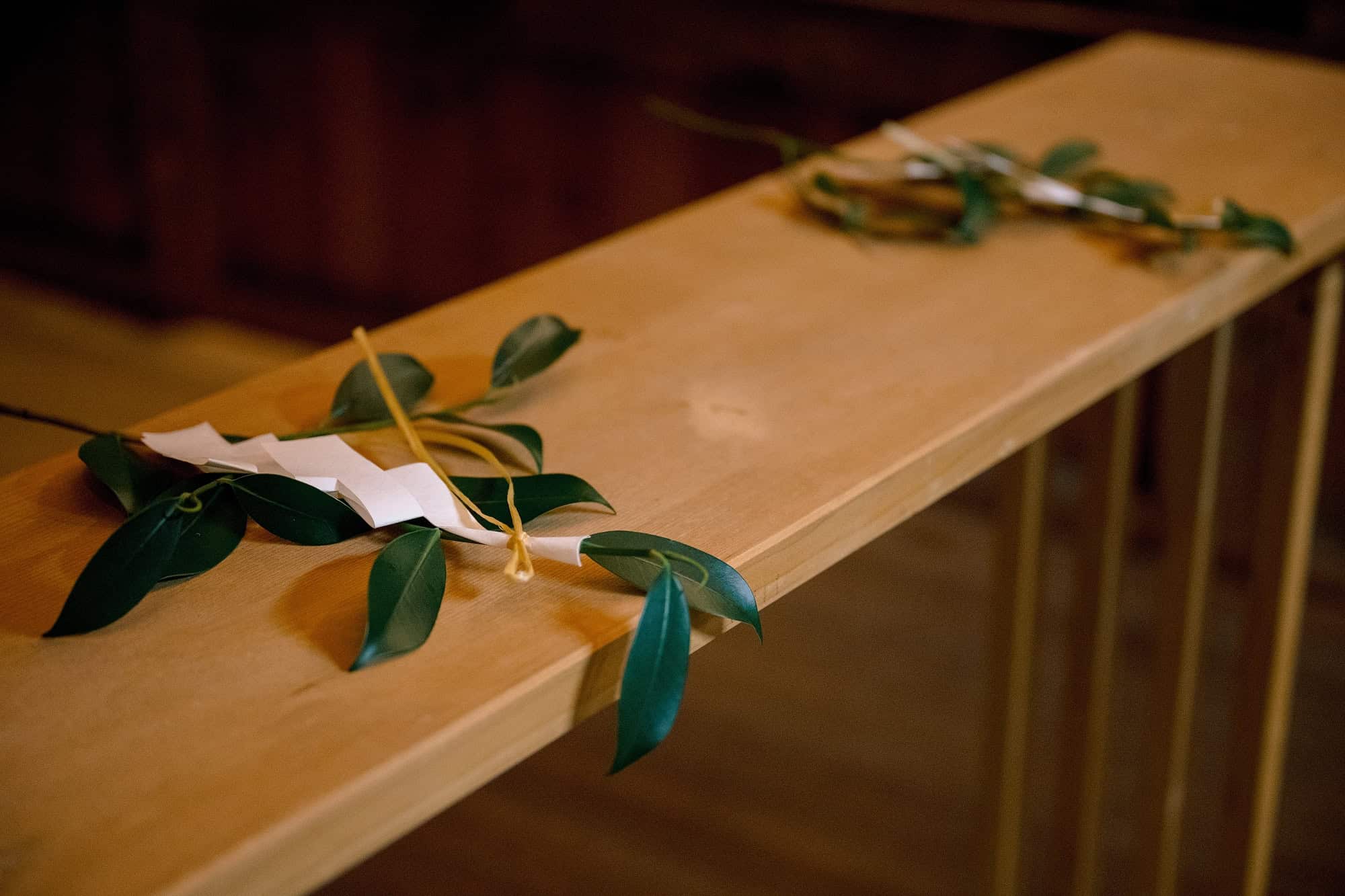
At Naruko Tenjin in Nishi-Shinjuku, said to date from 903, the priests walked another couple through the bows, the sake, the prayer and the bell. A blessing asks nothing of an international couple except presence. The priests carry the rest.
Planning a Shrine Day Around Your Guests
A shrine is a working place of worship, not a venue built for guests who’ve flown halfway round the world. Some halls sit at the top of stone steps. The weather is the weather. This is where a wedding planner in Japan earns their keep.
On the day of that Tokyo blessing it was twenty-seven degrees in the shade, and the garden ceremony before it was in full sun. We promised to get everyone into the shade as fast as we could. The answer came straight back: “No, it’s perfect.” Water went round all the same.
Every plan we write for a shrine day is built around the people in it: dietary needs sent ahead to every kitchen, the oldest guests’ travel worked out first, a rain plan for every step outdoors, cars where the walk gets long, and quiet hours so nobody reaches a shrine hall worn out. The shrine’s rules travel with us, too. At Takayama Inari in Aomori, even our drone flew with the shrine’s permission, inside its rules.
Sometimes care means staying. After that rainy day at Fuji, we stayed on overnight in case the morning cleared. At first light, the mountain was there. Nobody could have promised it. We were close enough when it came.
Why Japan Has So Many Wedding Chapels
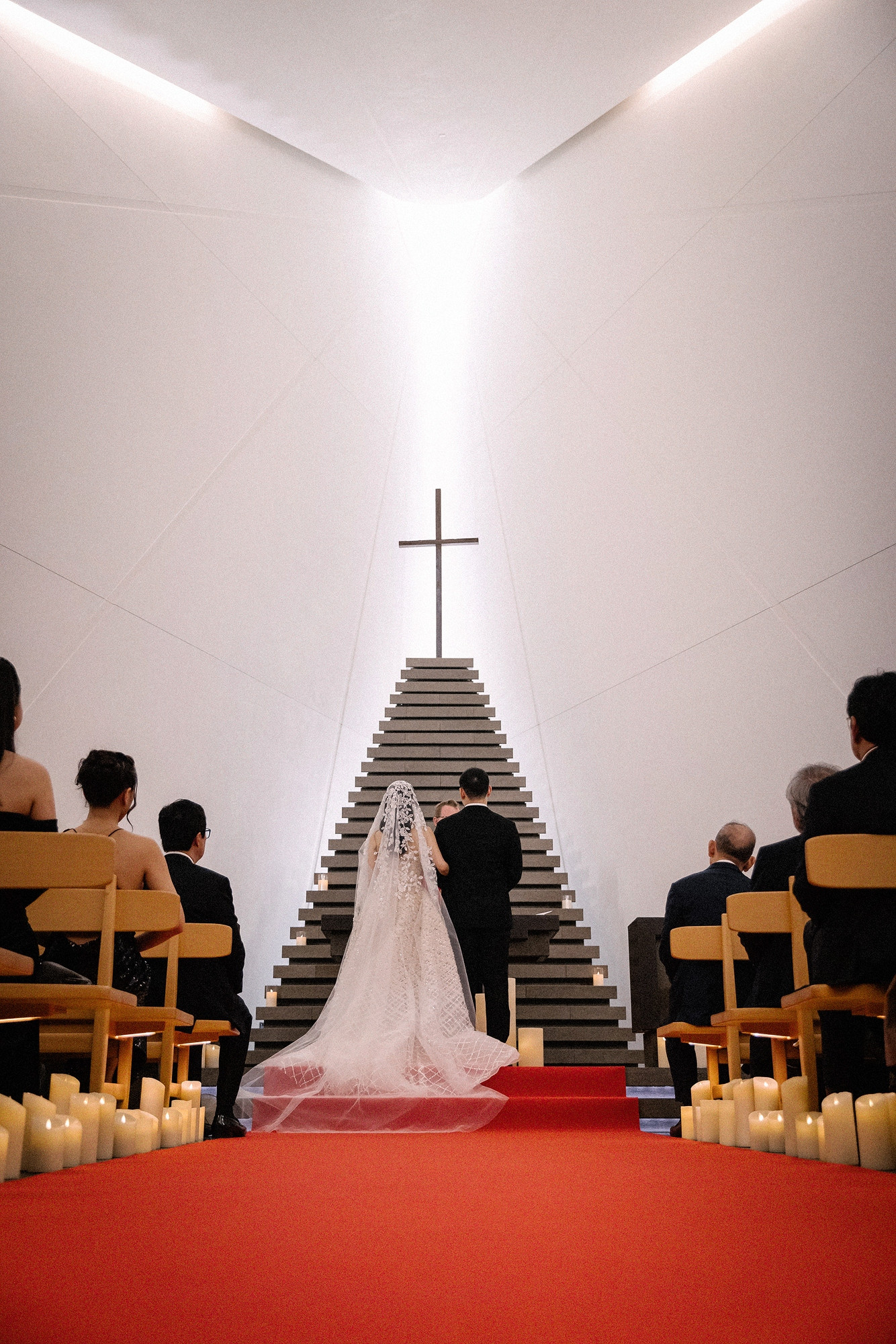
Japan’s National Diet Library traces Christian weddings here to the 1870s, though they only became popular after the war. Kenji Ishii, a professor of Shinto studies at Kokugakuin University, writes that from around 1989 couples turned away from the shrine wedding’s emphasis on one house joining another. The chapel became the ritual of two people joined by love. Most who marry in one, he notes, aren’t Christian.
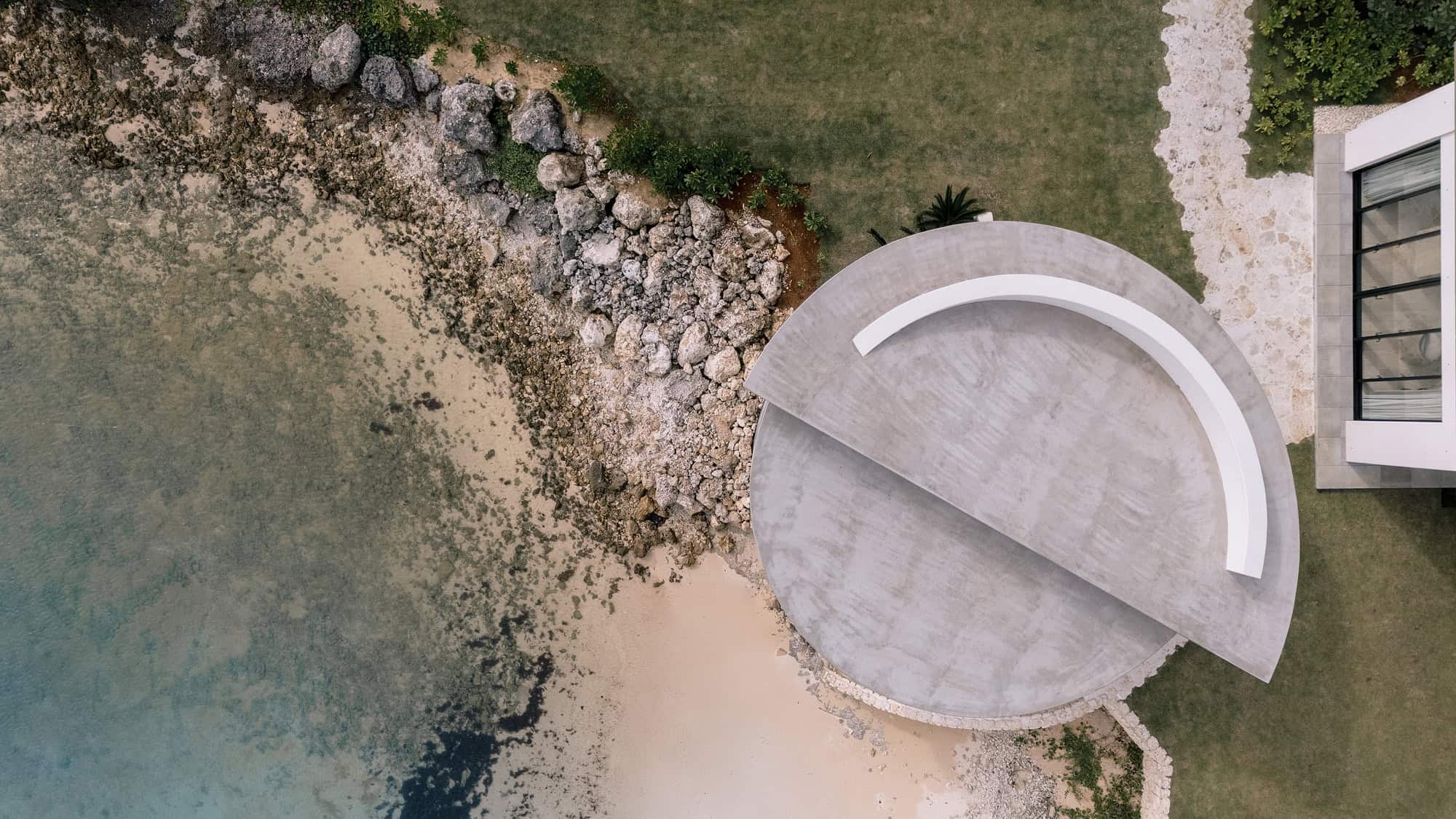
A hotel chapel here is a Japanese form in its own right. At the Andaz Tokyo, the chapel stands alone on the 52nd-floor terrace, wrapped in copper. At Rosewood Miyakojima, a round chapel sits at the water’s edge.
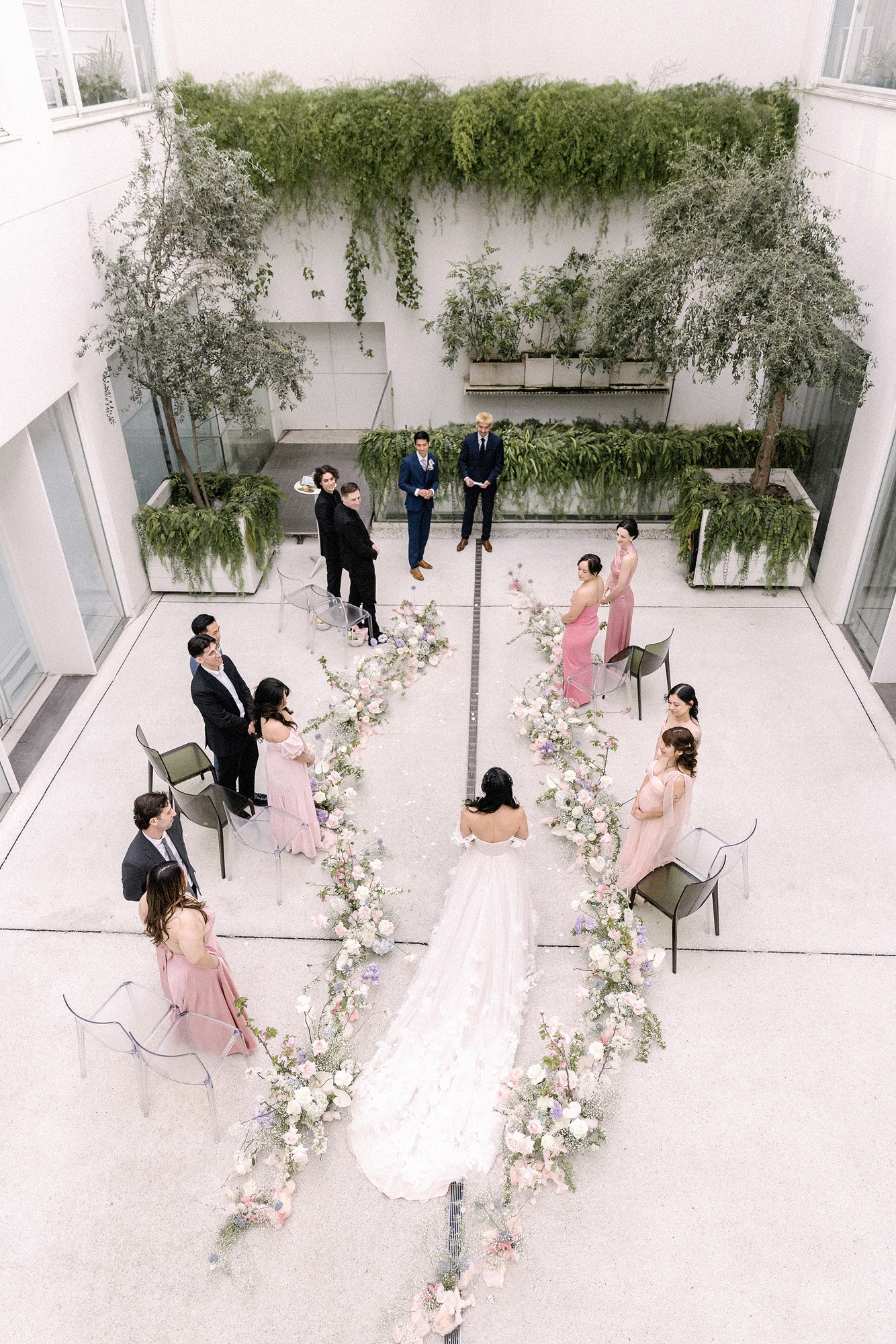
Sometimes a chapel is the wrong note. At Eneko Tokyo, a bride felt the courtyard looked too much like one. Low drifts of flowers and a winding aisle turned it into a clearing.
The Third Path: A Garden, Ryokan or Lakeside Ceremony
Japan already has a name for a ceremony with no particular religion, where family and friends are the witnesses: jinzen-shiki, its modern forerunner dating from the late 1950s. Many of the weddings we plan belong here. A garden, a ryokan, a lakeshore or a forest. Your own words, led by someone who knows you. And the Japanese rituals you choose, explained so every guest can take part.
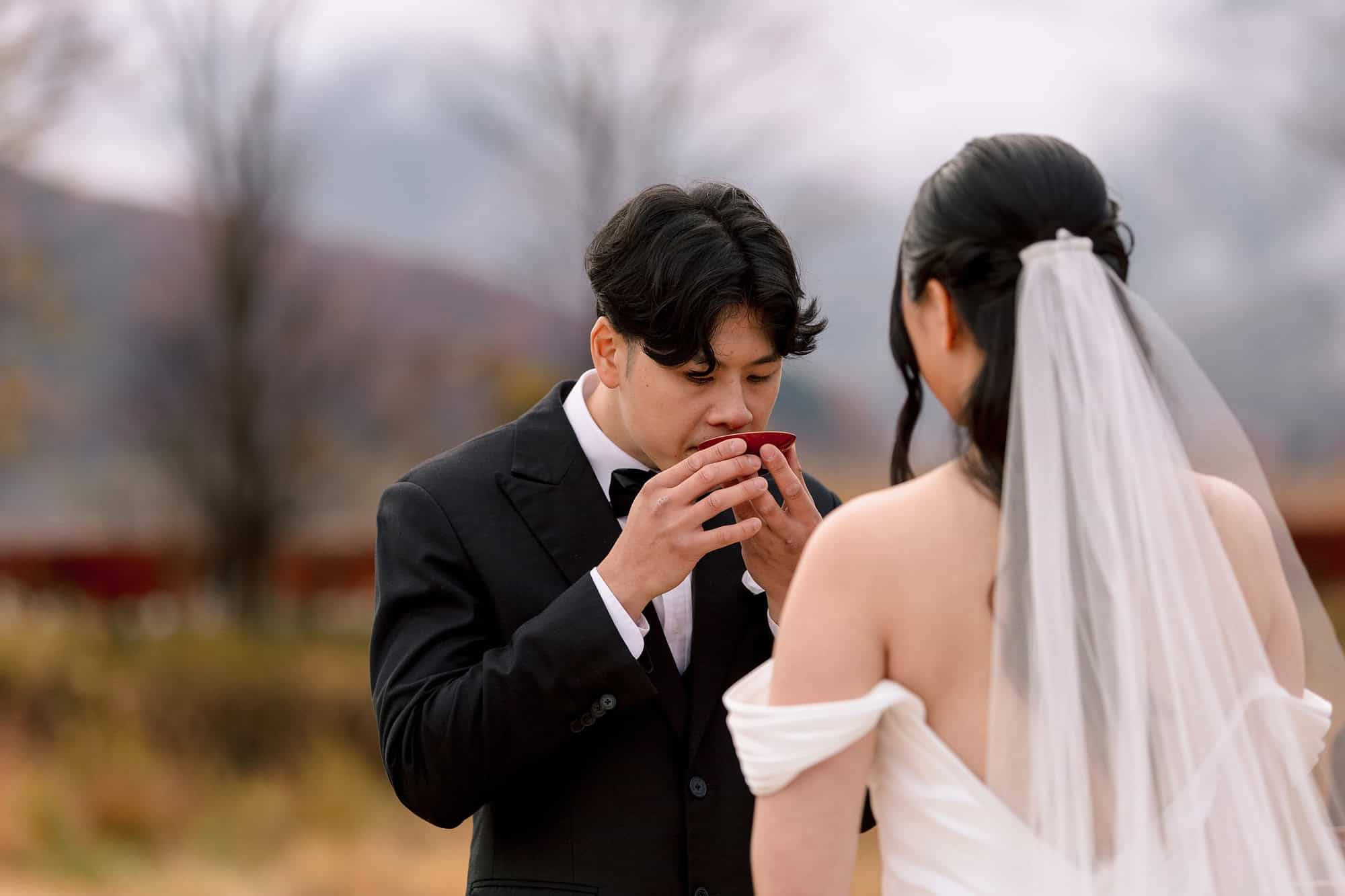
One couple married in a private garden in Kyoto at the peak of autumn. Alongside vows and rings, they asked for a formal sake exchange and a prayer of their own, because faith is part of who they are. The three cups sat beside that prayer without strain. Nothing in it was borrowed for effect. All of it was chosen.
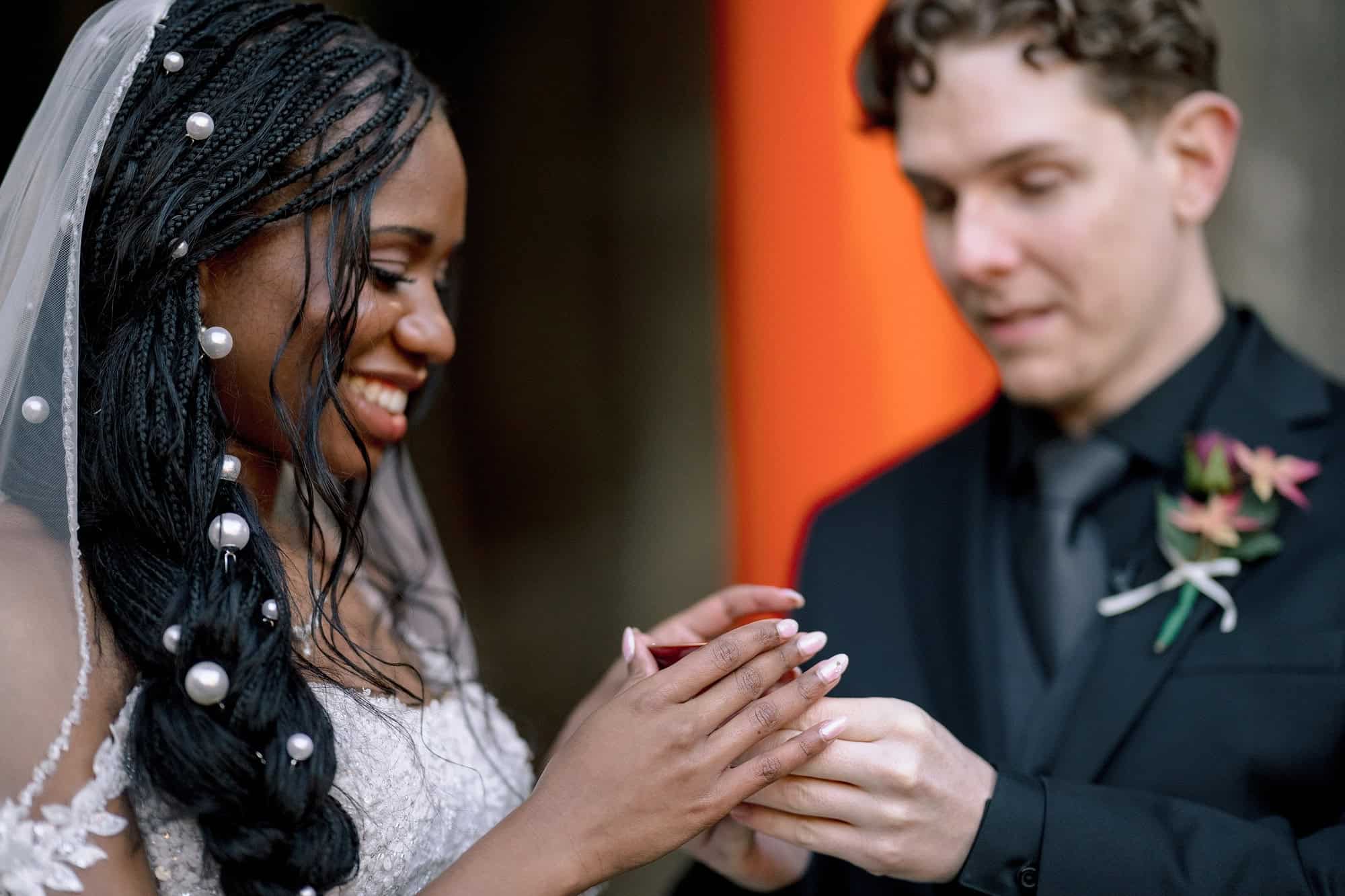
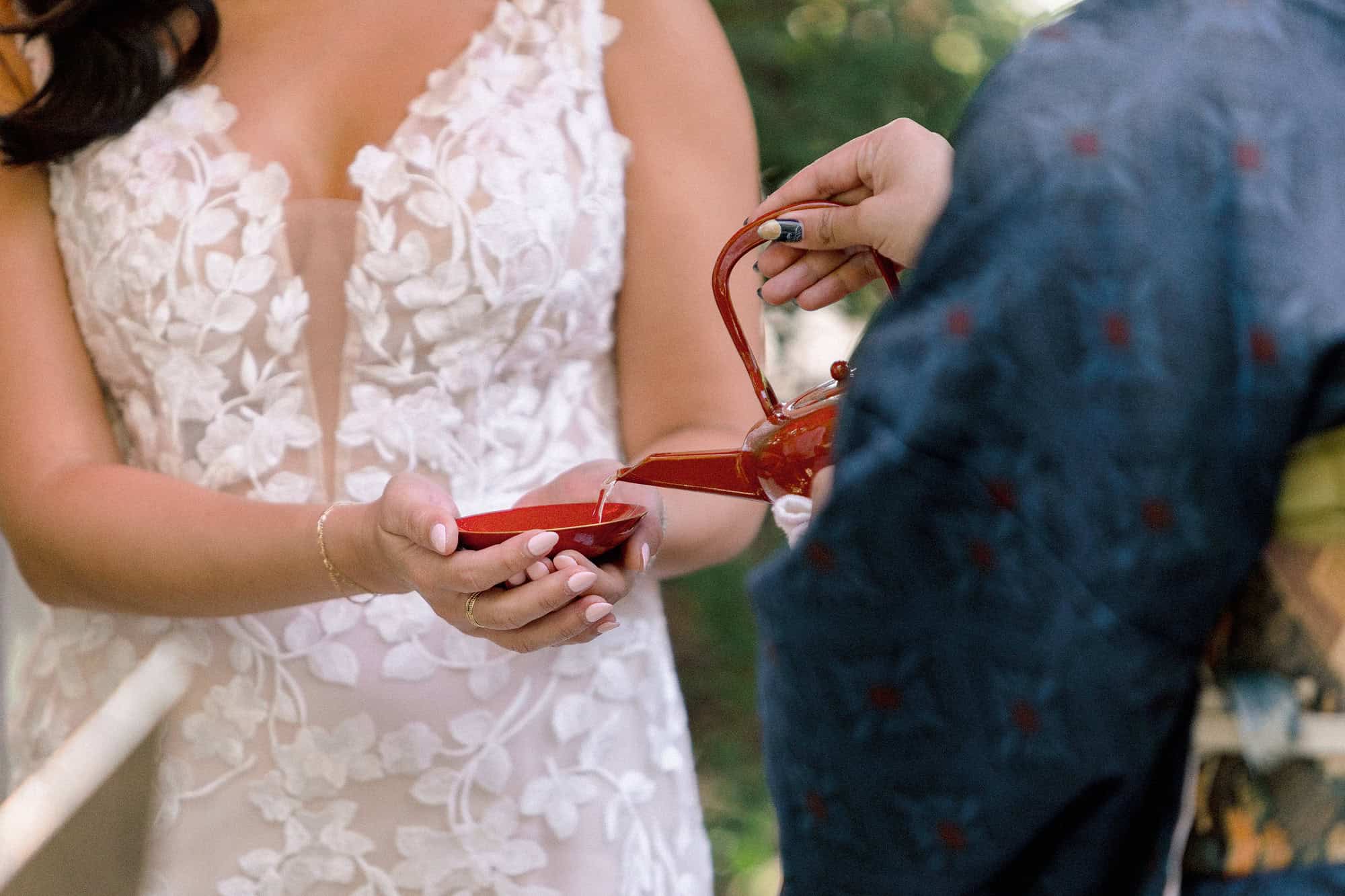
In Kawagoe, a couple from Florida shared the three cups in a dry garden of raked gravel, under a red wagasa, with their friends close enough to reach out and touch. A promise made with the hands as well as the words.
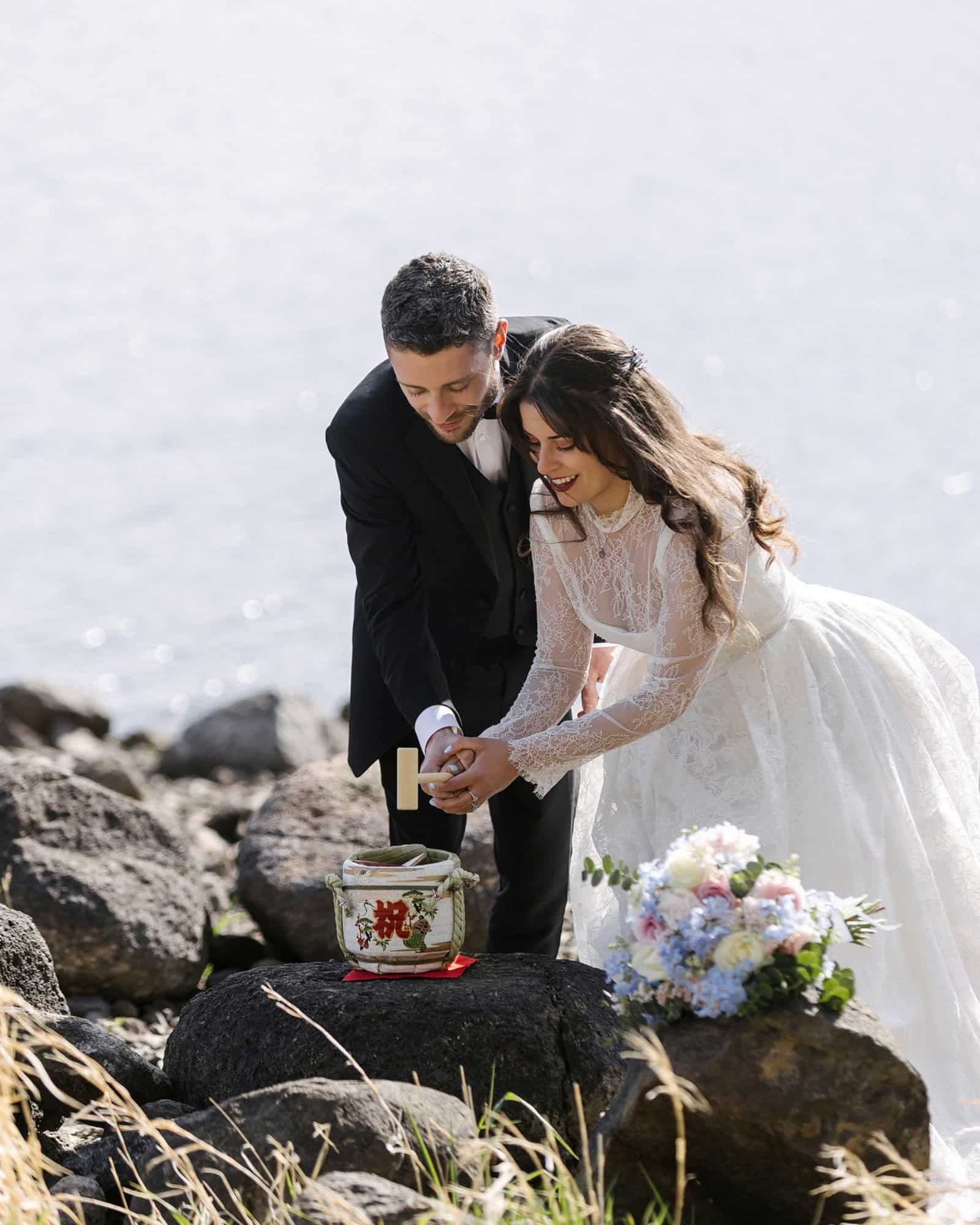
Kagami biraki suits a crowd, and it doesn’t need one. A couple who eloped at Mt Fuji in spring said their vows by Lake Kawaguchi, went to a shrine near the lake for a blessing, and opened a small cask on the shore. Two people, one mallet, both hands on it. A lakeshore needs its own permissions, and our guide to wedding venues in Japan explains what open ground asks of a plan.
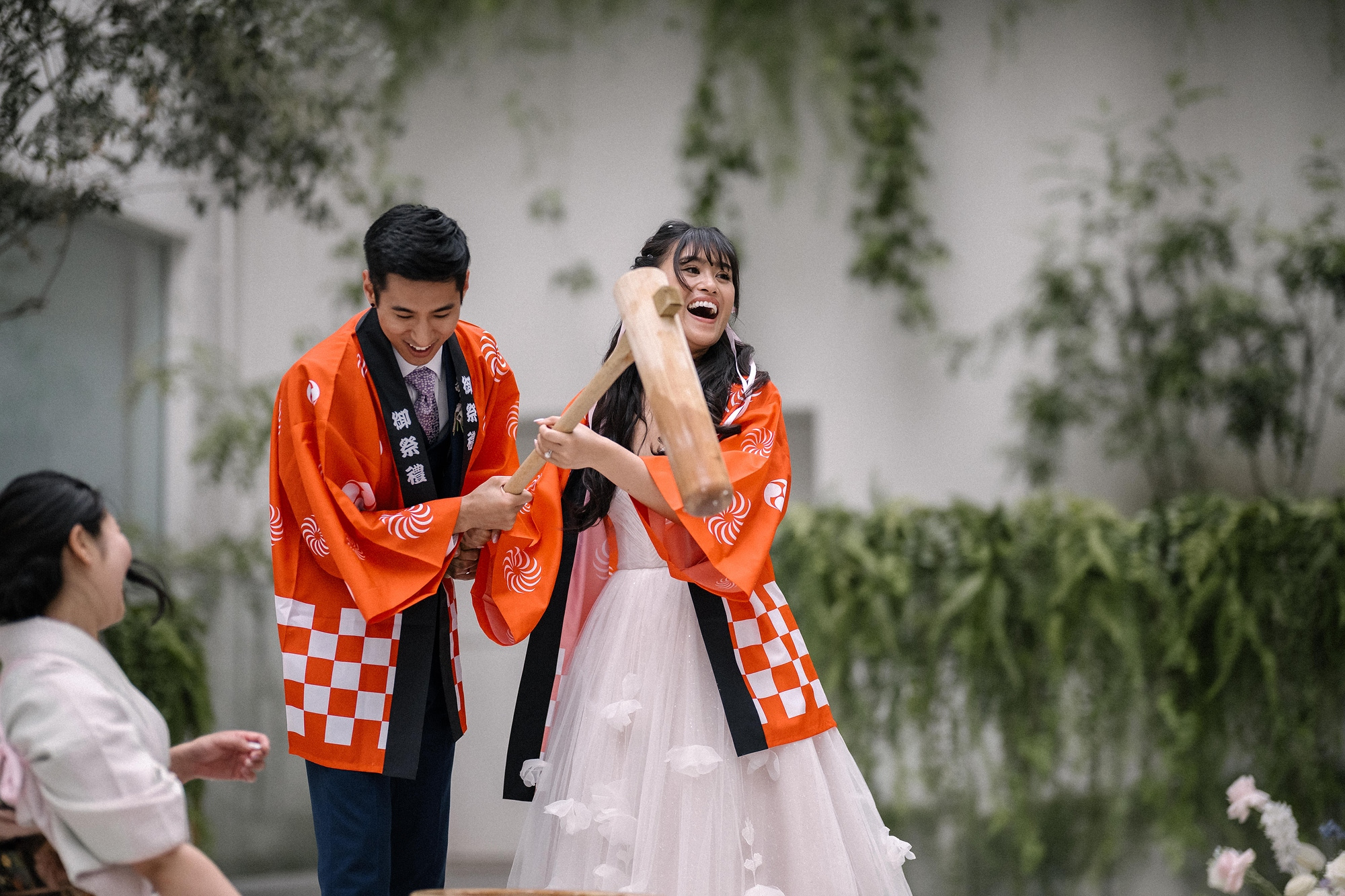
Mochi pounding gives a whole room something to do. Mochi has long been eaten at weddings, Japan’s Ministry of Agriculture notes, its long stretch a wish for long life.
A Temple Wedding in Japan Is Also Possible
A shrine is Shinto, marked by a torii gate. A temple is Buddhist, entered through a sanmon. Buddhist weddings are rarer. Below Mt Fuji, at Taiseki-ji, a temple more than seven centuries old, a couple and their families married among thousands of cherry trees. When the couple had drunk, a priest moved among the guests filling each red cup, so everyone shared the sake.
How to Choose
Start with meaning, then the place. If you’re still deciding what kind of wedding you want in Japan, begin with the ten questions we recommend answering before anything is booked.
Choose a shrine wedding if Shinto is part of your family or faith, or you want the full rite and are ready to meet it on the shrine’s terms. Plan early.
Choose your own ceremony and a shrine blessing if you want your own words and a shrine in the day. It’s the path many of our couples take.
Choose a chapel if the hotel is right for the whole stay and a familiar shape matters to your families.
Choose a garden, ryokan or lakeside ceremony if the place is the point, and bring the rituals with you.
Whichever you choose, our wedding planning in Japan asks that question first: where each ritual belongs, who explains it, and how your guests get there rested. Our photography and film work within every shrine’s rules. You hold the cup. We hold the rest.
Quick Answers
Can foreigners have a Shinto wedding in Japan?
Yes, at many shrines. Meiji Jingu publishes its wedding information in English, and one Tokyo shrine offers its vows in English. Shrines ask that you understand what the rite means, and the ceremony itself is in Japanese, led by the priests. Rules differ between shrines, so ask early.
Is a Shinto wedding legally binding?
No ceremony in Japan is, at a shrine or anywhere else. Under the Civil Code, a marriage takes effect when it’s registered. Most of our international couples do the legal paperwork at home, and the ceremony in Japan is the celebration everyone travels for.
What should guests wear to a Shinto wedding?
Dress as you would for a place of worship at home, and lean formal. At Japanese weddings, married women of the family traditionally wear black tomesode kimono, but suits and dresses are welcome. Choose shoes that cope with gravel and stone steps, because the walk to the hall is part of the day.
Can we write our own vows for a shrine wedding?
The shrine rite has its own pledge, read aloud before the altar, and one Tokyo shrine offers it in English. If you want words you’ve written yourselves, say them in a ceremony of your own, then take them to a shrine for a blessing, as our couples in Aomori and Tokyo did.
Japan doesn’t ask you to become Japanese for a day. It asks you to know what you’re taking part in. Get that right, and three small cups will mean as much to you as they have to everyone who has shared them before.