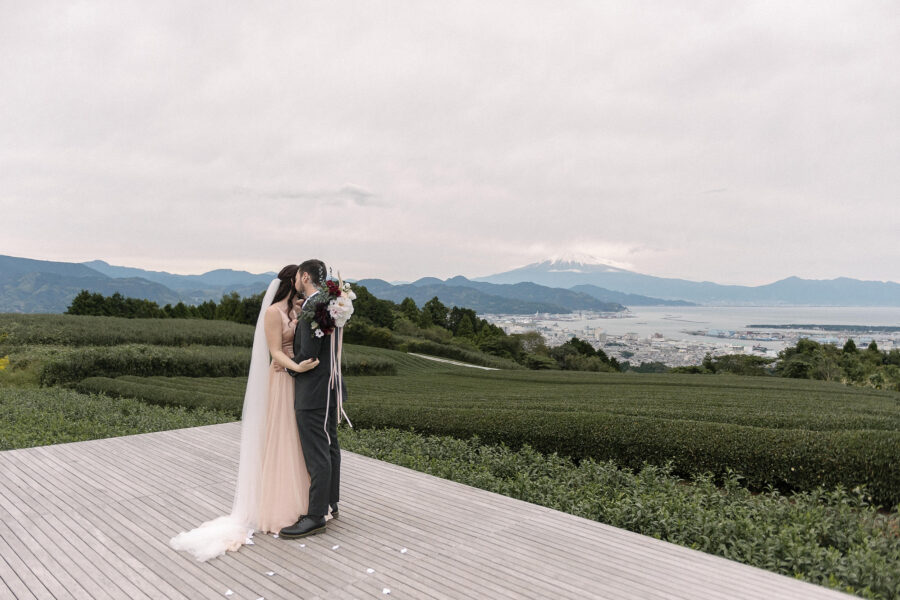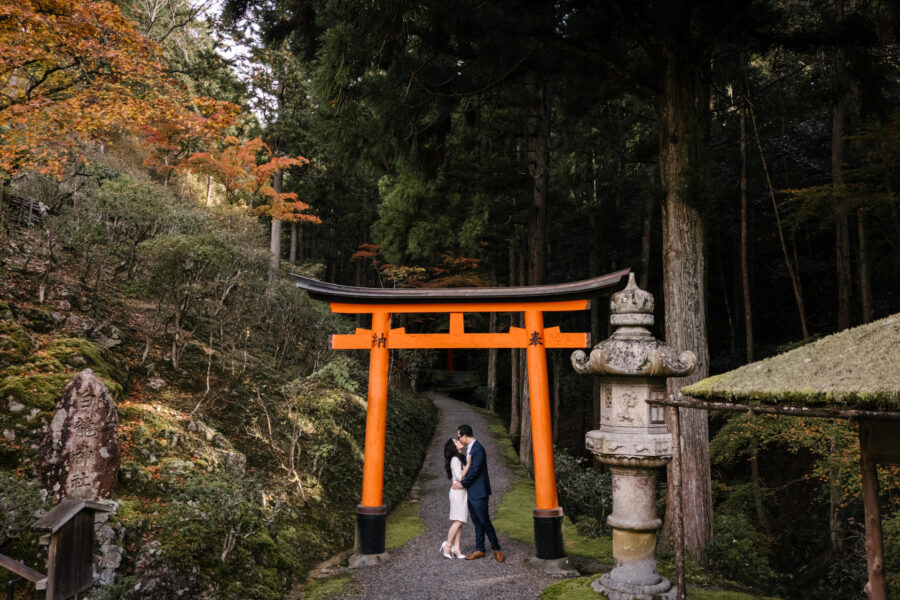
From the Tokyo Metropolitan Government Building, Mt Fuji is visible on about nineteen mornings in an average January. In June, it’s fewer than two.
That’s the fact we’d put first for anyone weighing a winter wedding in Japan. Winter isn’t Japan’s off season. On the Pacific side it’s the clearest season of the year: drier air, more sunshine, longer views. In the mountains and along the Sea of Japan it’s something else entirely, snow country, deep and quiet. Either way, it asks for more planning than spring, and gives back a wedding nobody else had that week.
Winter isn’t Japan’s off season. It’s its clearest.
We’re publishing this at the start of November 2026. Sapporo had its first snow on 28 October, its average date to the day. The same day, snow reached the slopes at Niseko, and at Hakuba and Nozawa Onsen in Nagano. Two days later came Mt Fuji’s first snow, the one we wait for every autumn. We took the hint.
The Short Answer
Winter in Japan runs from December to February, and it divides the country in two. Tokyo, Mt Fuji and the Pacific coast are cold, dry and bright, with Fuji at its most visible. The mountains of Nagano, Niigata and Hokkaido are snow country, where snow is measured in metres every winter. Days are short, so the light is low and soft from morning to late afternoon. Plan for the cold, for roads in snow, and for the New Year week, when much of the country stops. Get those right and winter gives you clear views, quiet places and snow that people fly across the world for.
| Where | What winter brings | Best for |
|---|---|---|
| Tokyo and the Pacific side | Dry, bright days, and Fuji in view from the city | City weddings and long views |
| Mt Fuji and the Five Lakes | The mountain at its most visible, snow on its shoulders, cold clear mornings | Lakeside ceremonies and portraits |
| Hakuba and Nagano | Deep powder, onsen villages, the Northern Alps | Snow weddings with friends who ski |
| Niigata | Snow country, where Kawabata set his novel | Elopements in deep snow |
| Karuizawa | A forest resort town, often snowy, close to Tokyo | Small weddings in the woods |
| Hokkaido and Niseko | Powder from late November, the Sapporo Snow Festival in February | The far north, and the most snow |
| Kyoto | Cold, quiet temples; snow falls often and seldom stays | Small weddings, a quieter city |
Why Winter Is the Clearest Season
Tokyo’s numbers surprise people. In an average January the city gets about 190 hours of sunshine, more than half as much again as June, and the air is far drier: around half humidity, against three-quarters in early summer. Cloud cover is about half June’s.
The mountain shows it best. Tokyo’s environment bureau has photographed Fuji from its building every morning for more than thirty years. December and January average eighteen and nineteen sightings. June, July and August manage about two each. On the mountain’s south side, in Fuji City, the whole of Fuji is in view on about six mornings in ten in December and January, and about one in ten in July.
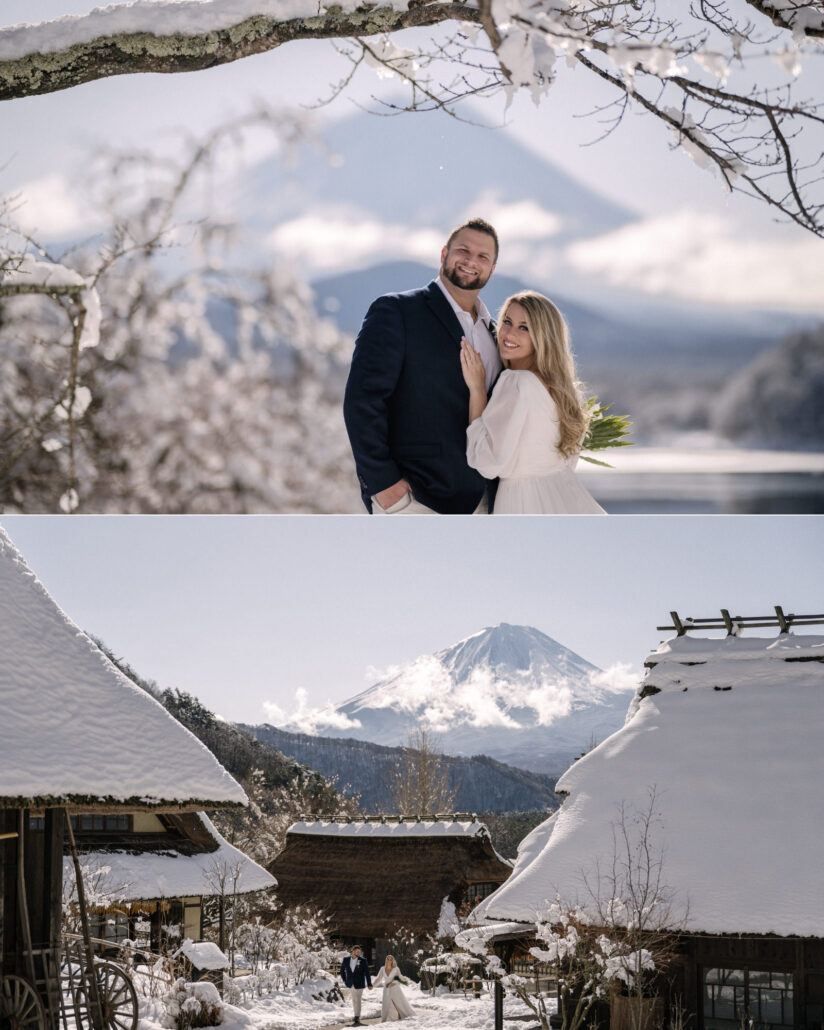
Our own winters show both sides of those numbers. A couple who’d imagined Japan in blossom married by Lake Kawaguchi in December instead, under a mountain standing white and sharp across the water. One February morning by the Fuji Five Lakes, Fuji rose over a half-frozen lake while he proposed in the snow.
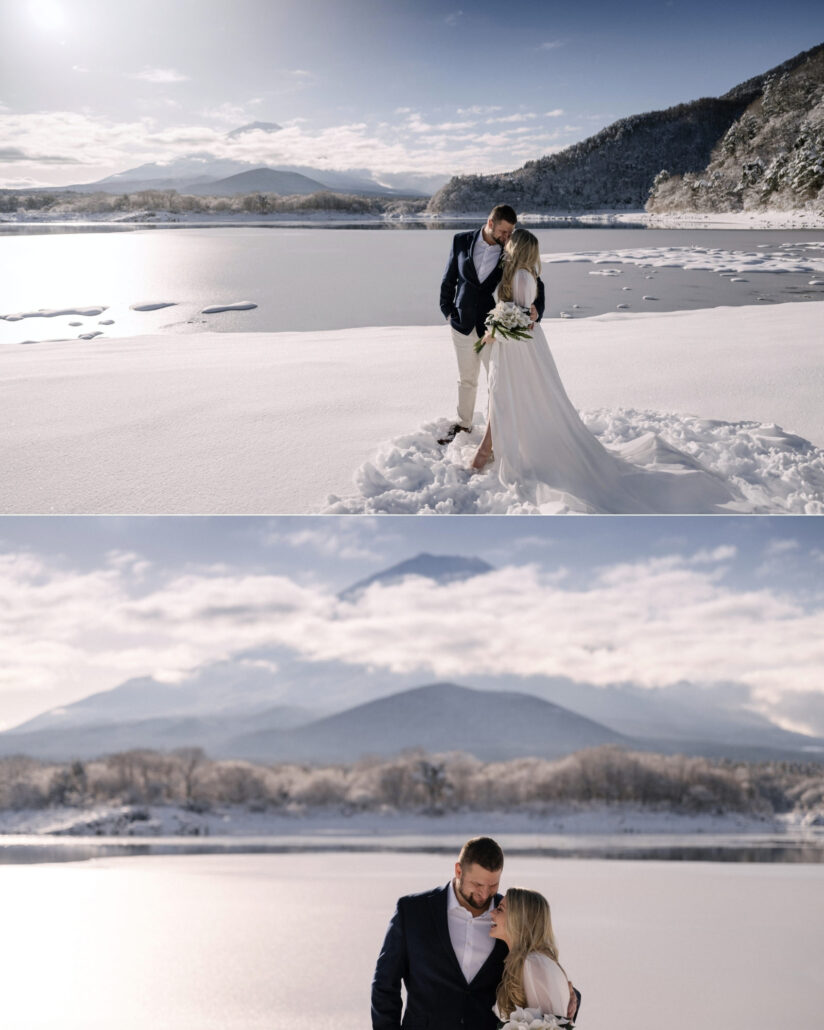


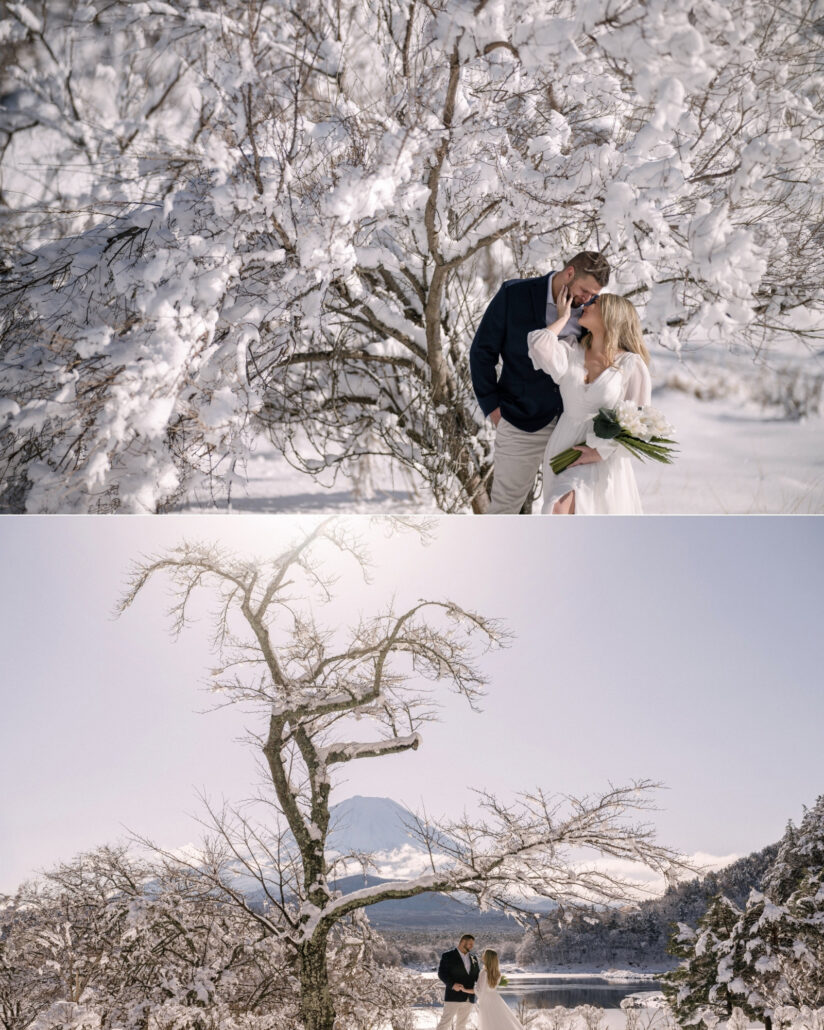
Another February, at Lake Shoji, the snow came in thick enough to hide the mountain completely, and they got engaged on a shore they had entirely to themselves. So the Fuji moments in a day we plan come early, and nothing else waits on them. Our guide to reading Mount Fuji weather explains what we watch for.
We plan Fuji weddings around the mountain’s schedule, not ours. In winter, its schedule is simply more generous.
A Snow Wedding, Honestly
Snow is the reason many couples choose winter, and it’s the part that asks the most of a plan.
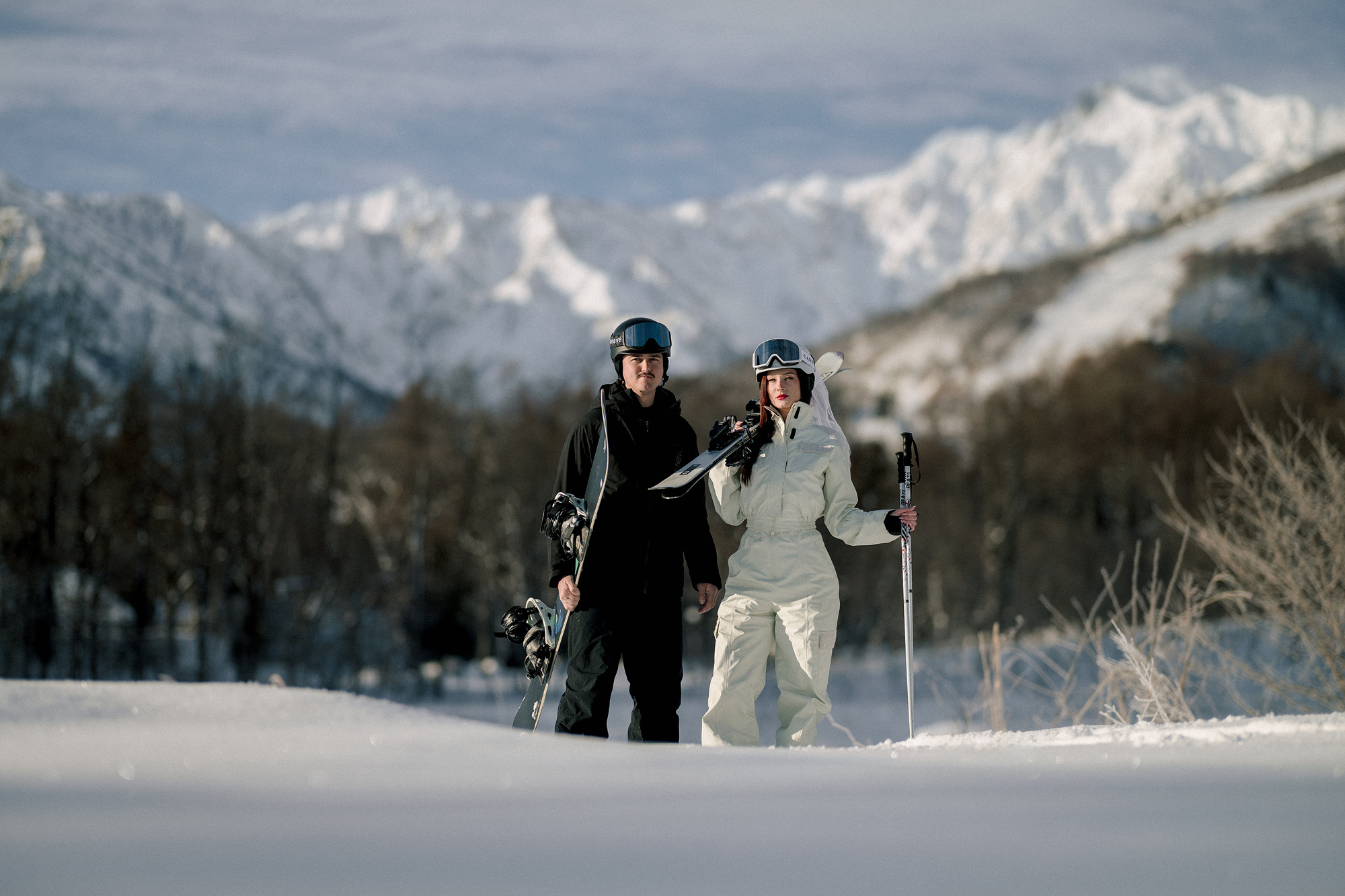
In Hakuba, forty-five centimetres fell on one couple’s wedding day. Getting-ready rooms moved, routes changed, and the ceremony space was cleared again with a snow plough. The vision didn’t change. Only the way to it did. The next morning the sky was clear and blue, the kind of day skiers chase across continents, and she went up the mountain in white again, her veil tucked into a ski helmet.


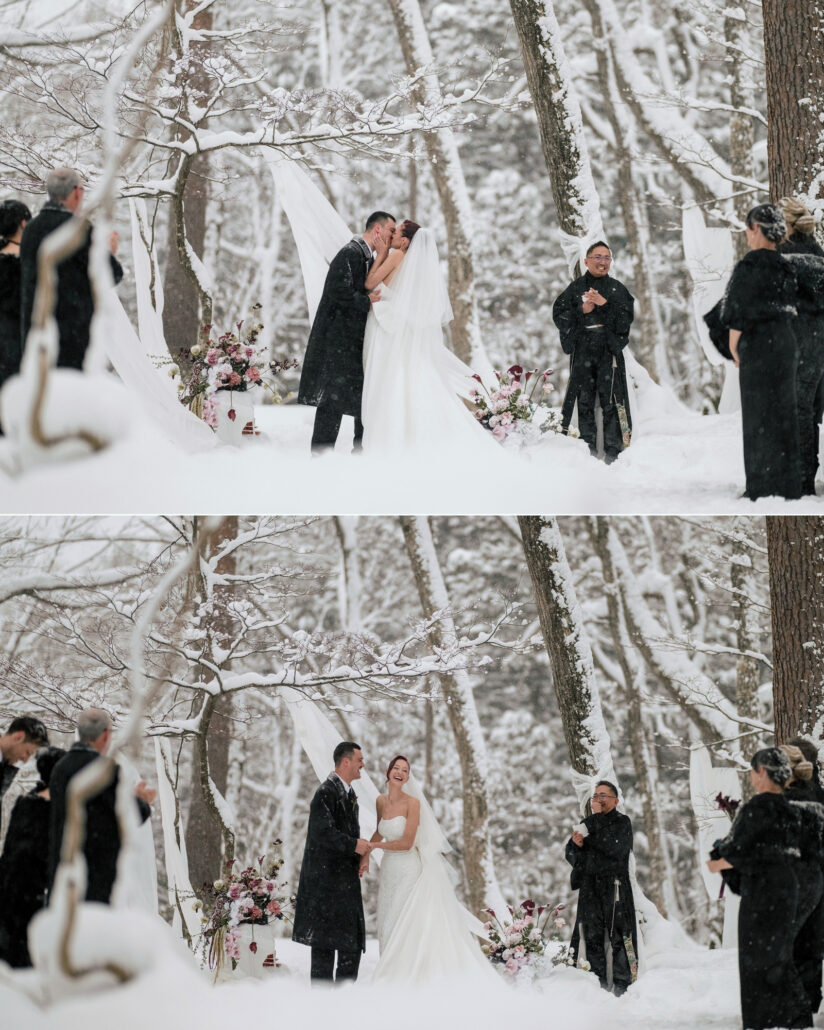
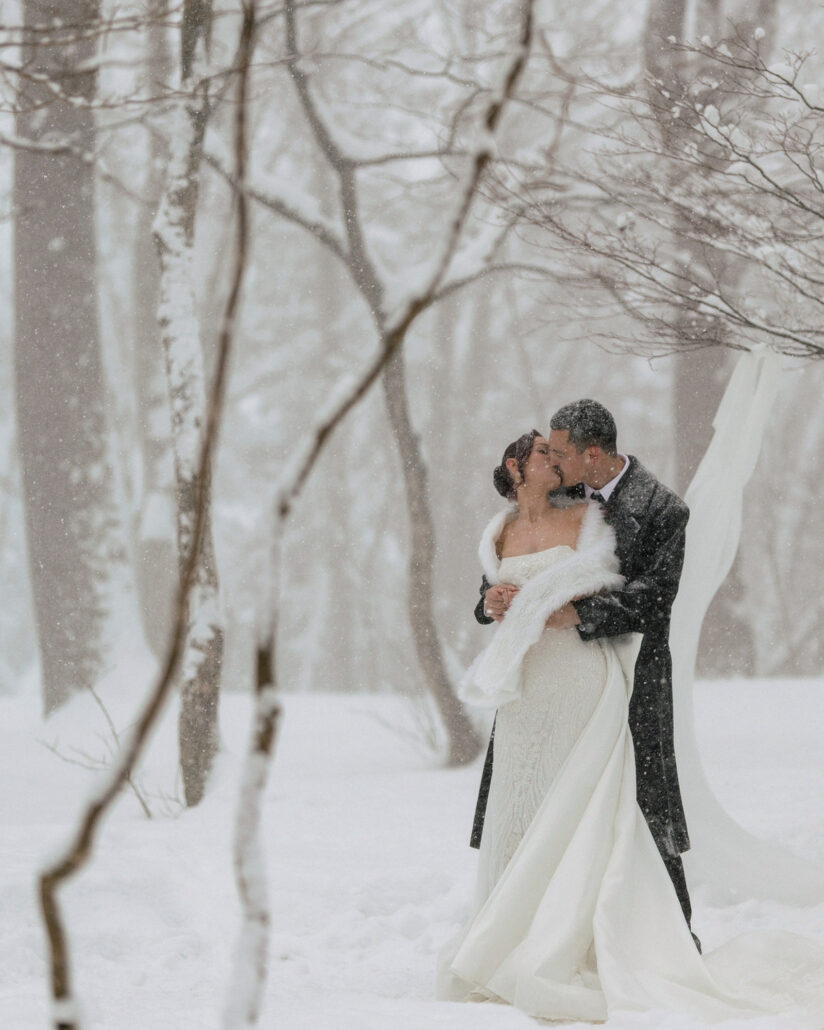
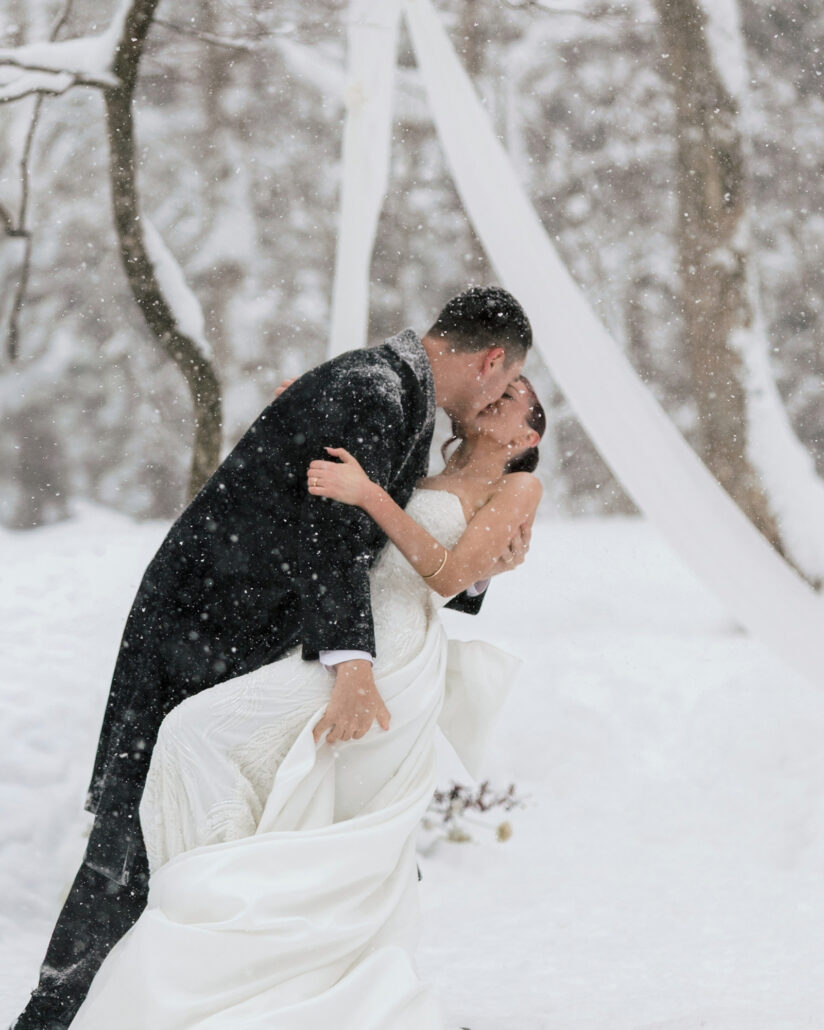
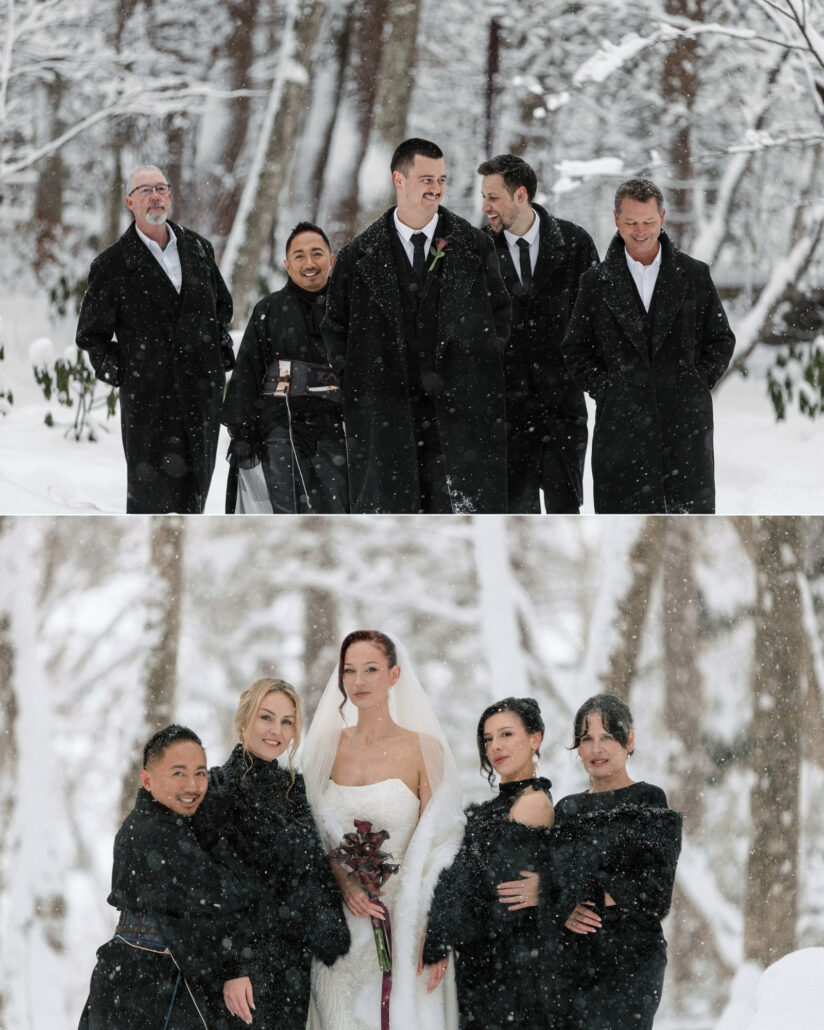
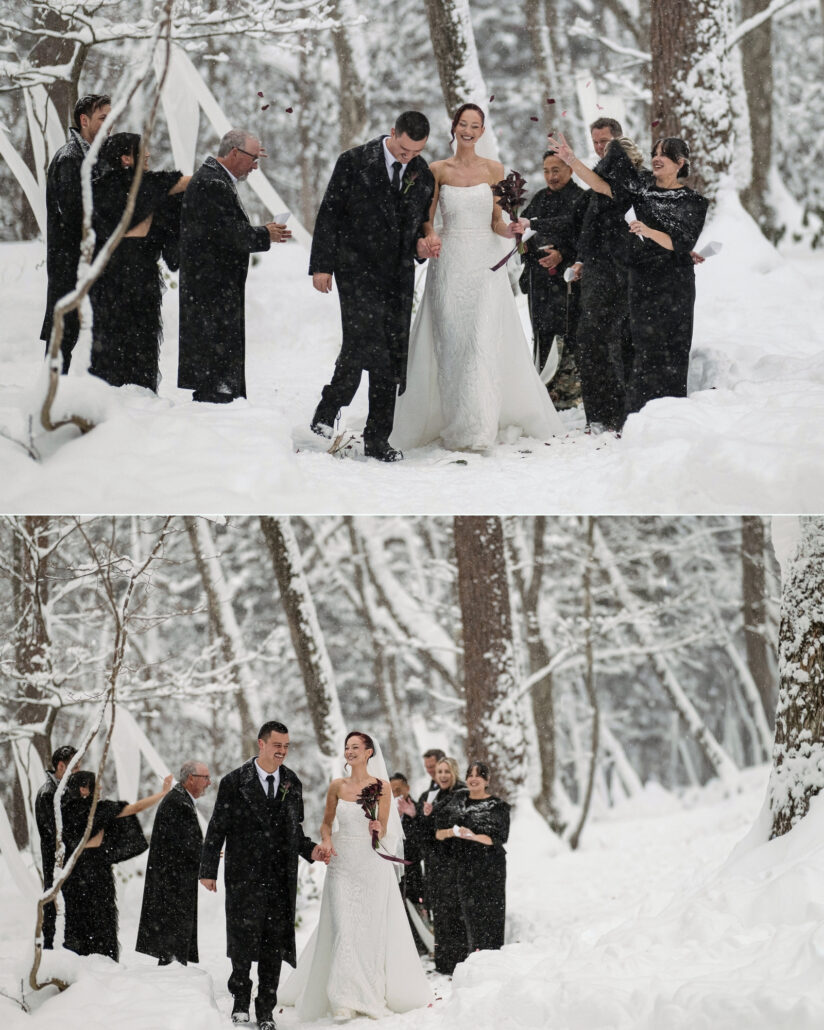
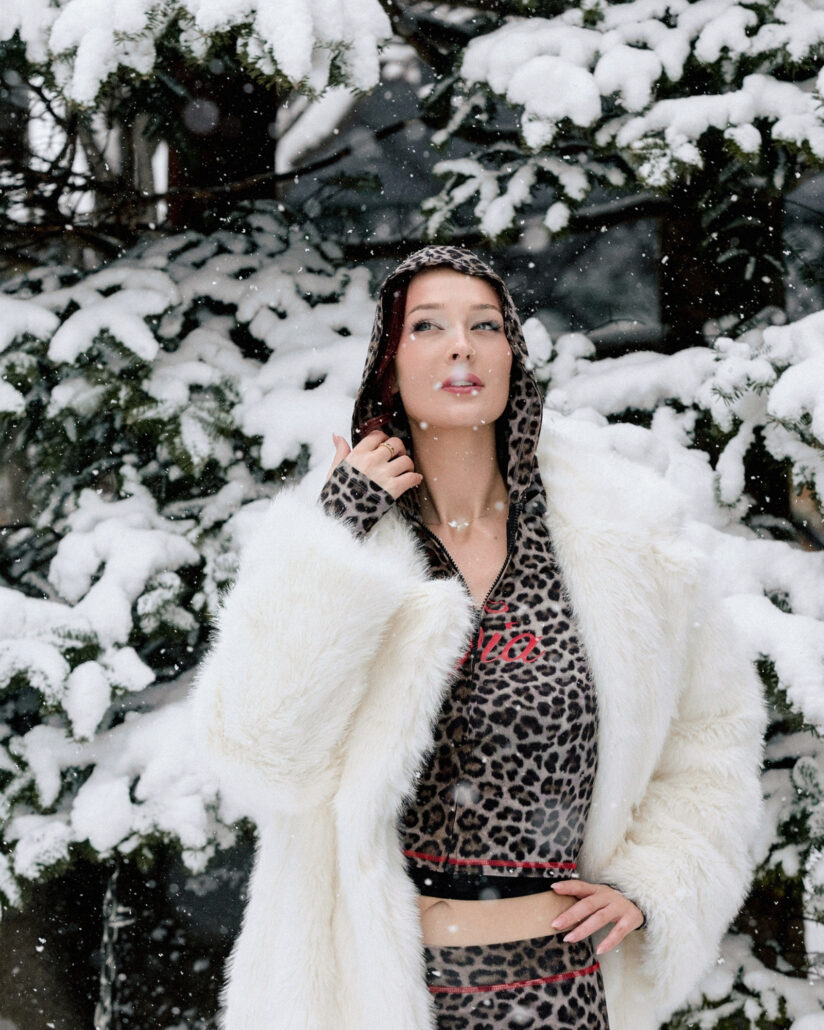
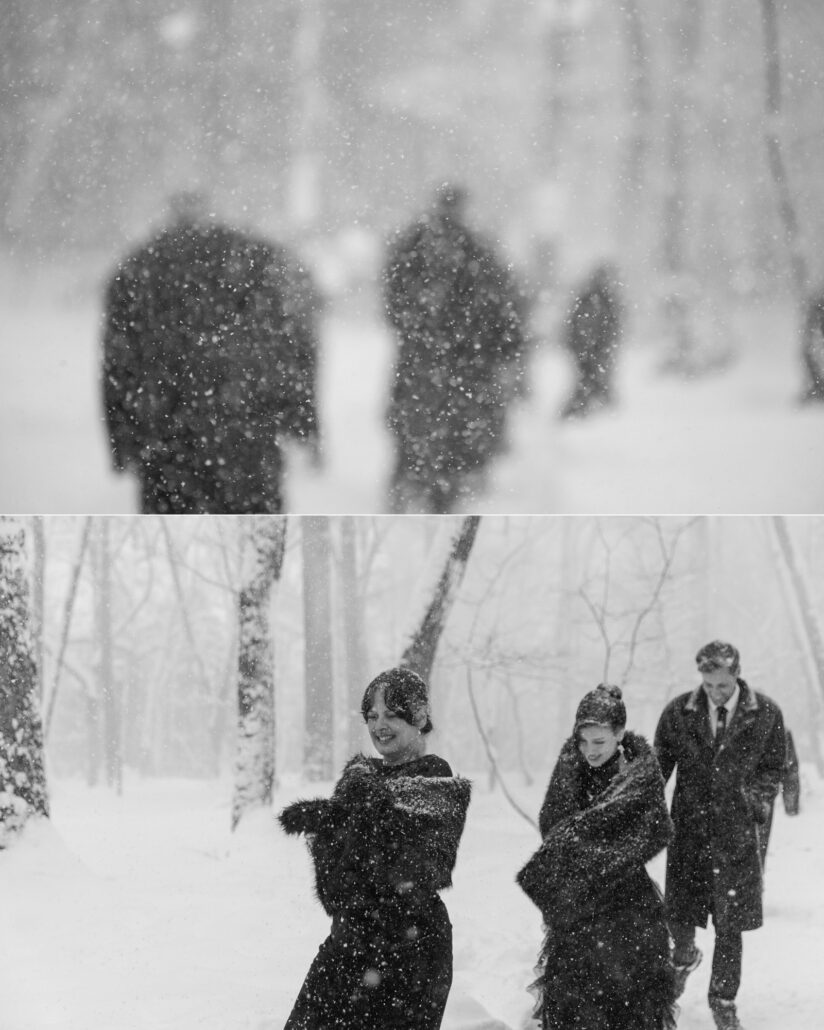
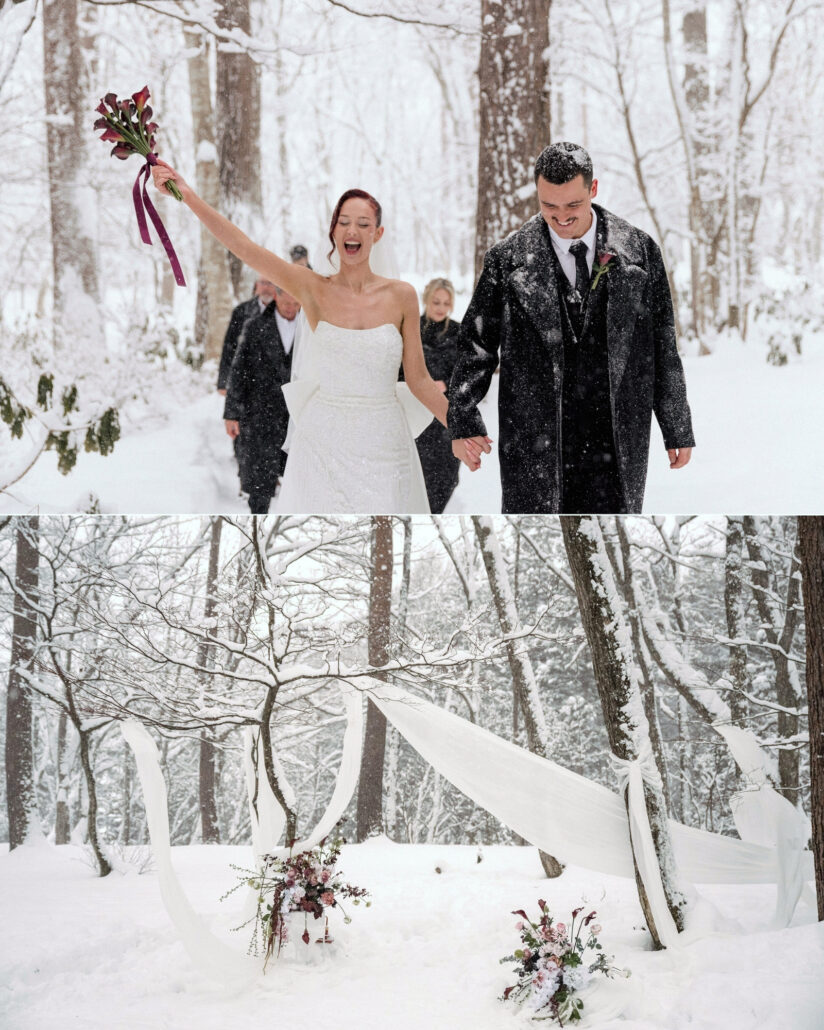
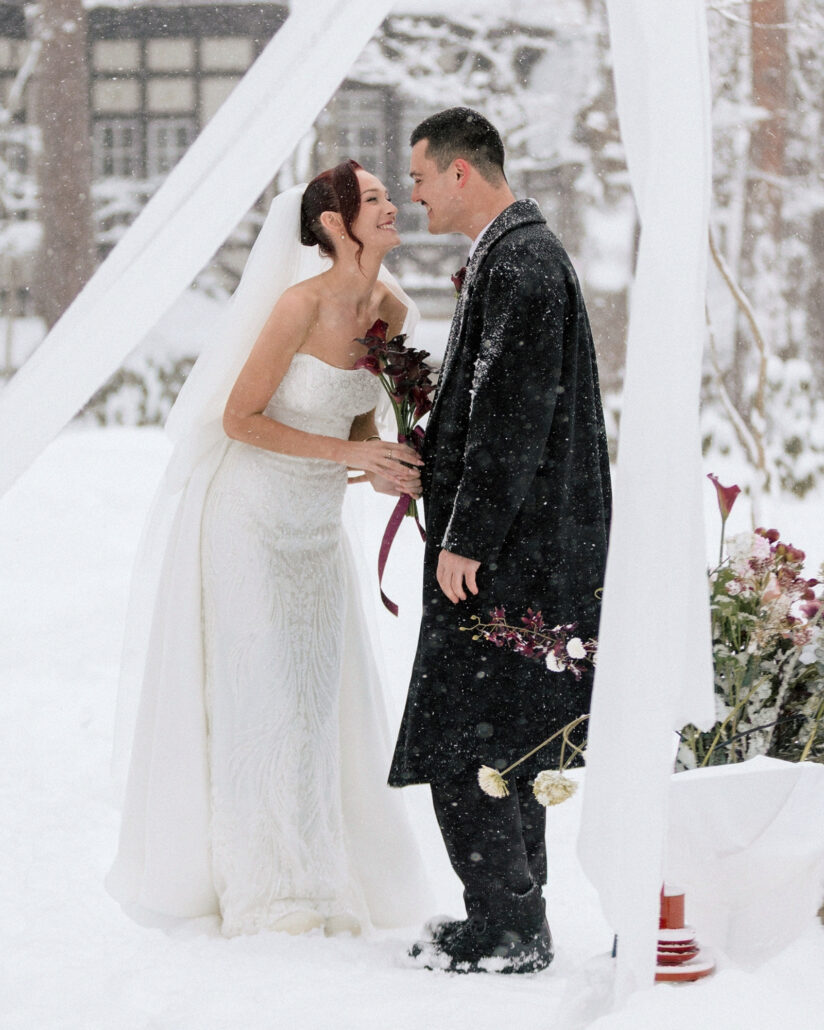

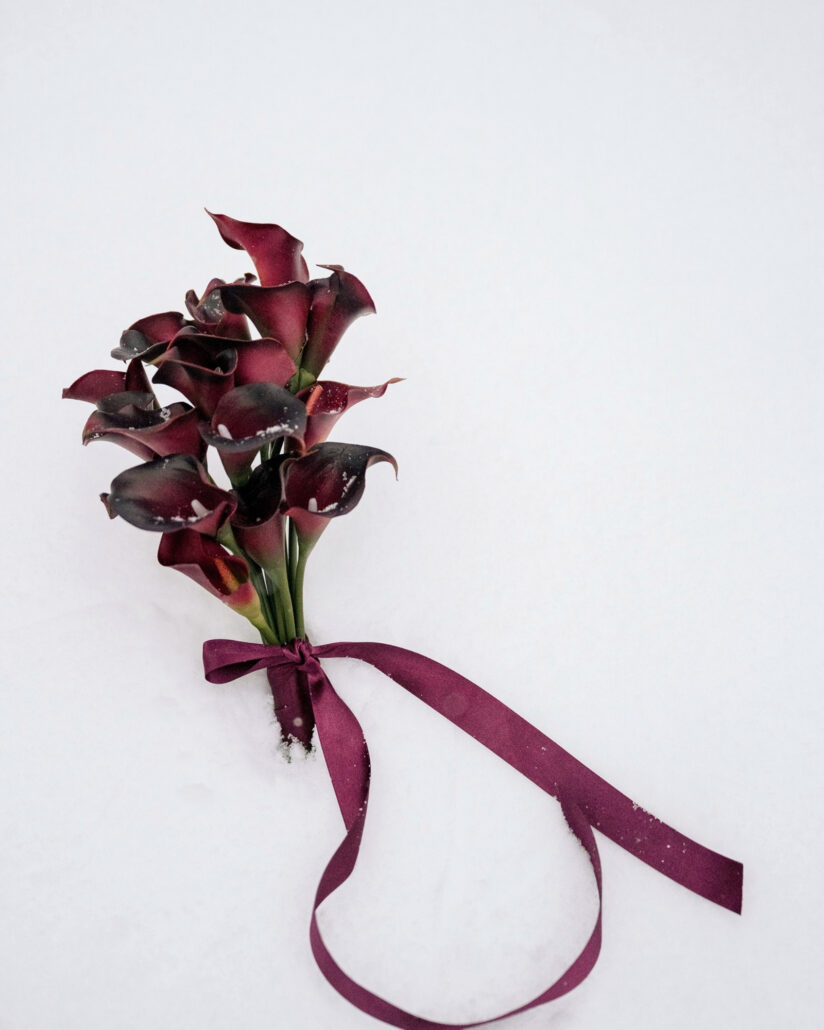
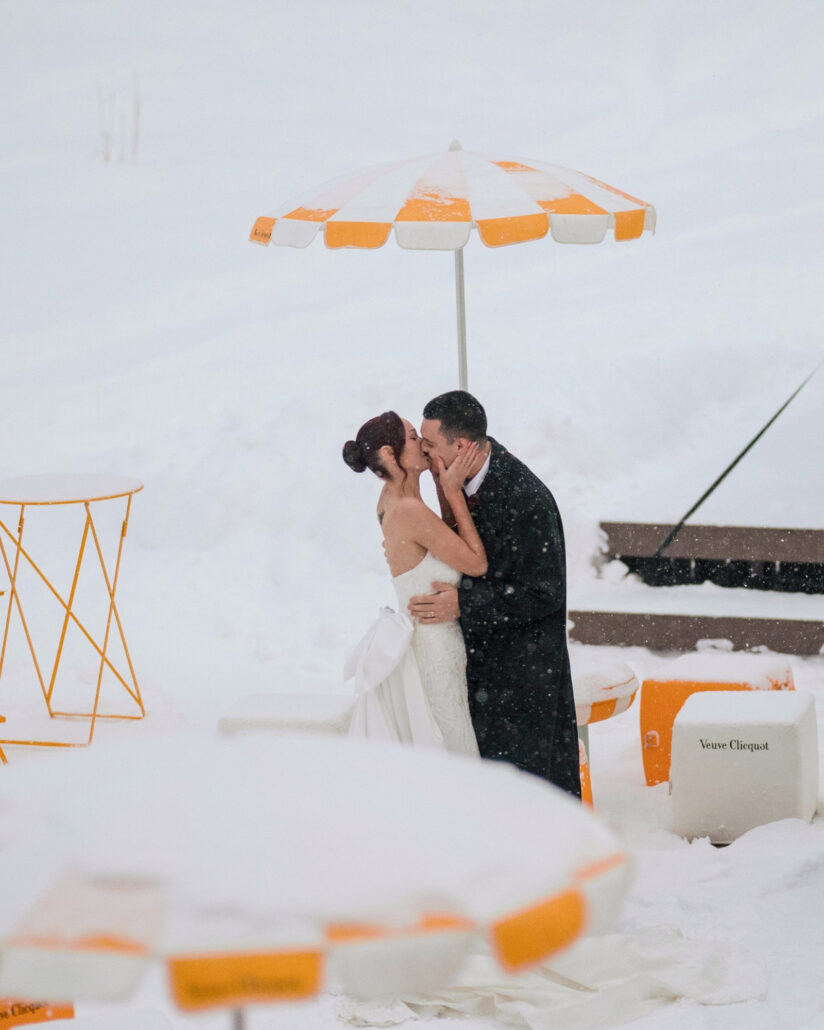
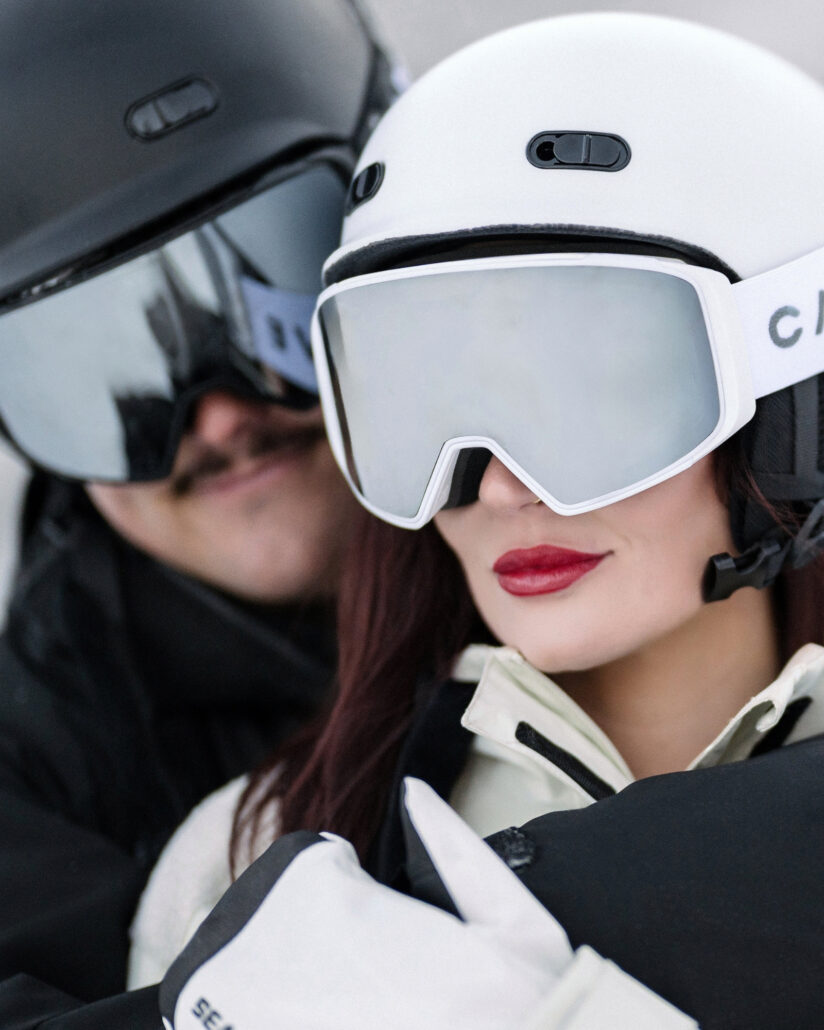


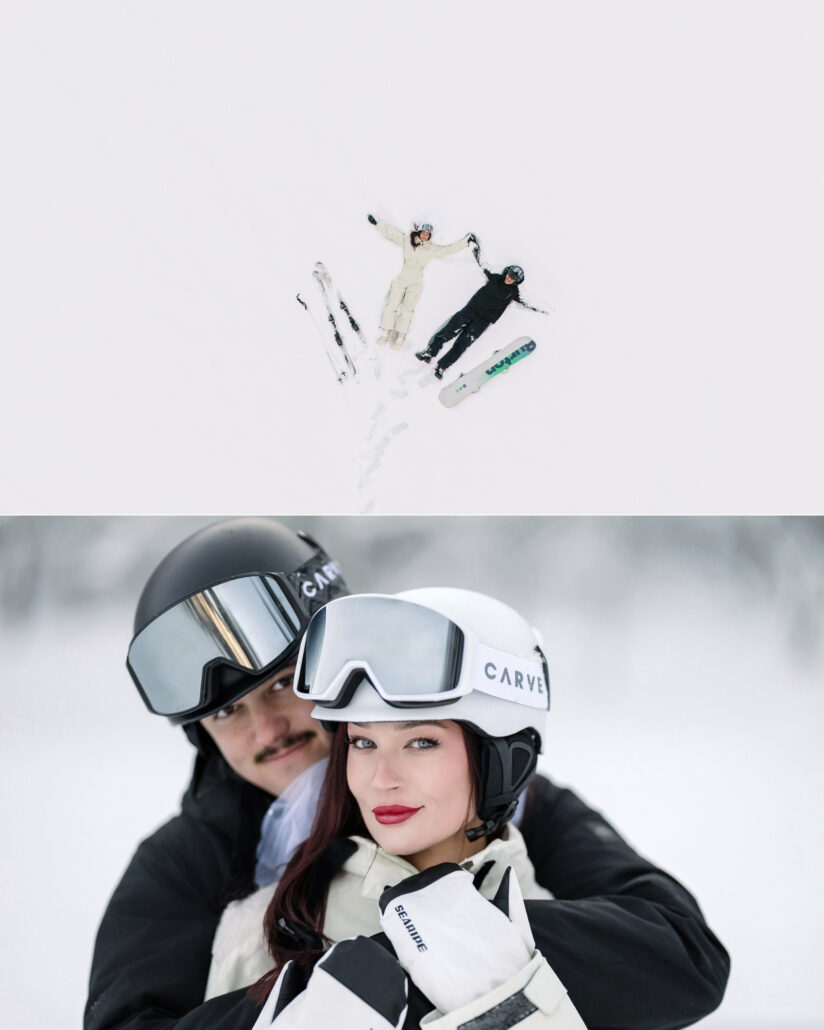

In Karuizawa, a bride who couldn’t decide between Fuji and Karuizawa chose Karuizawa because it had, in her words, “a little bit of snow”. Twenty-seven centimetres fell the day before. Overnight it went to nine below, and in the morning the view from their room had been rewritten. Snow does something particular to a winter interior. Light comes back up from the ground, and rooms that would be dark in February turn soft and bright from below.
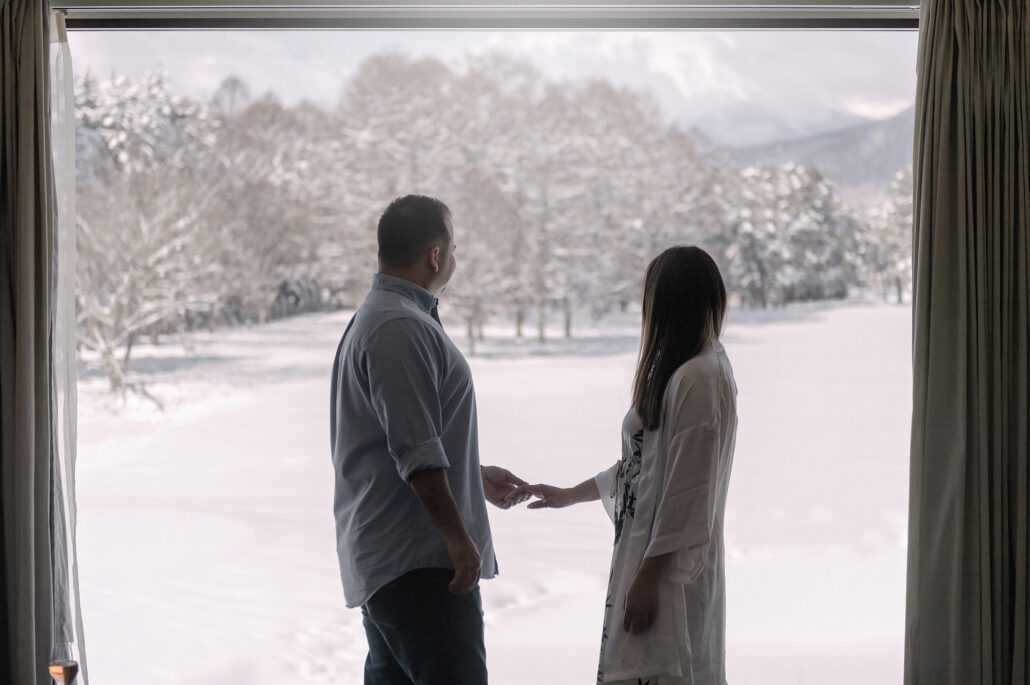
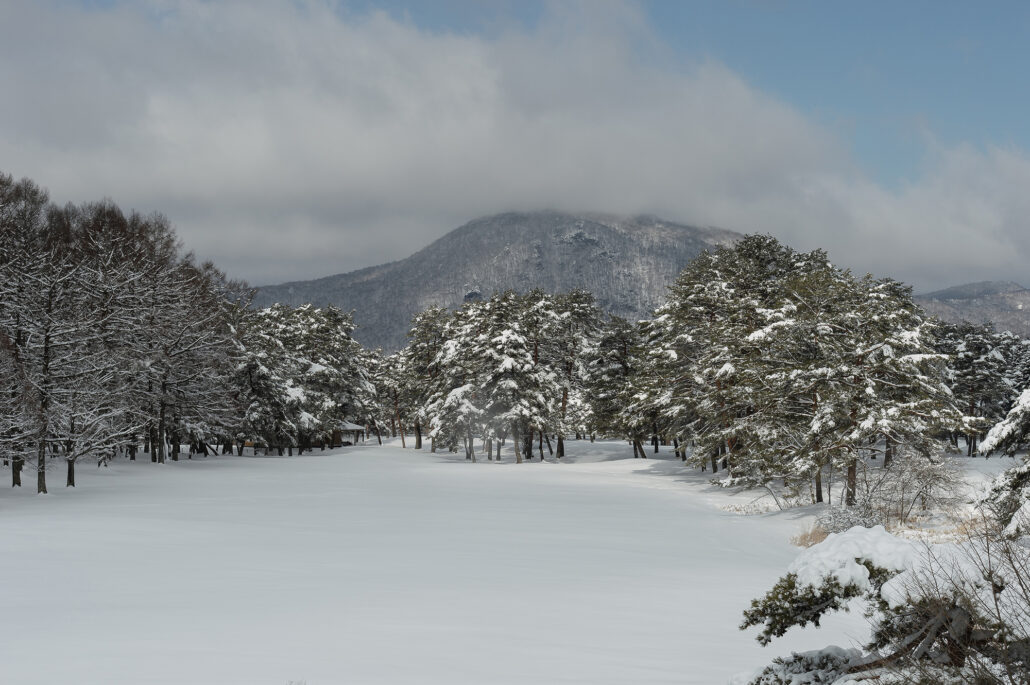
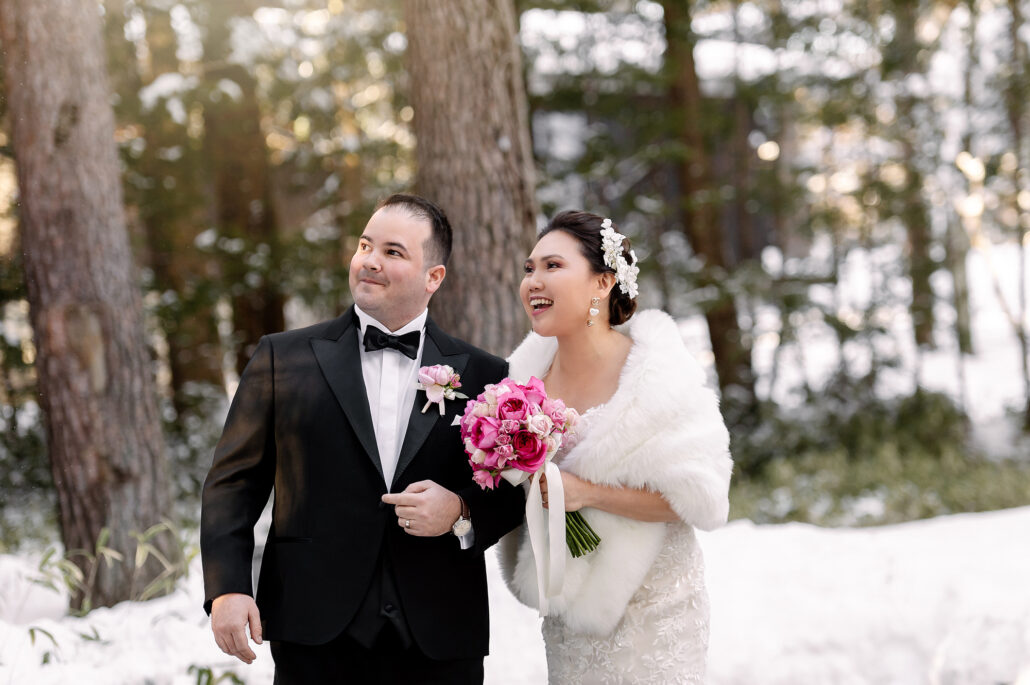
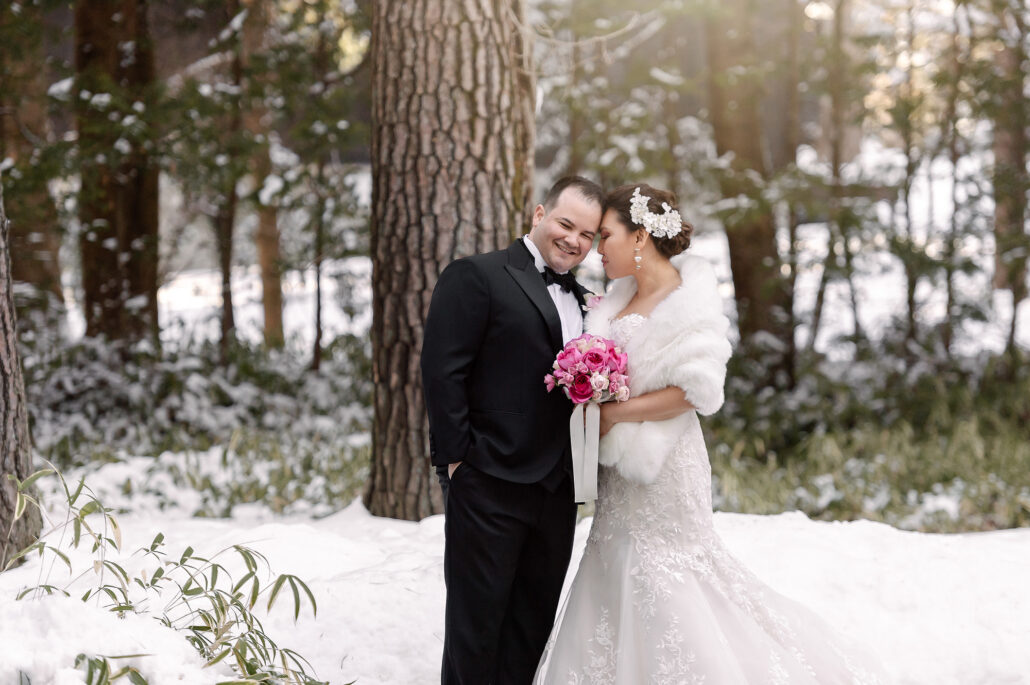
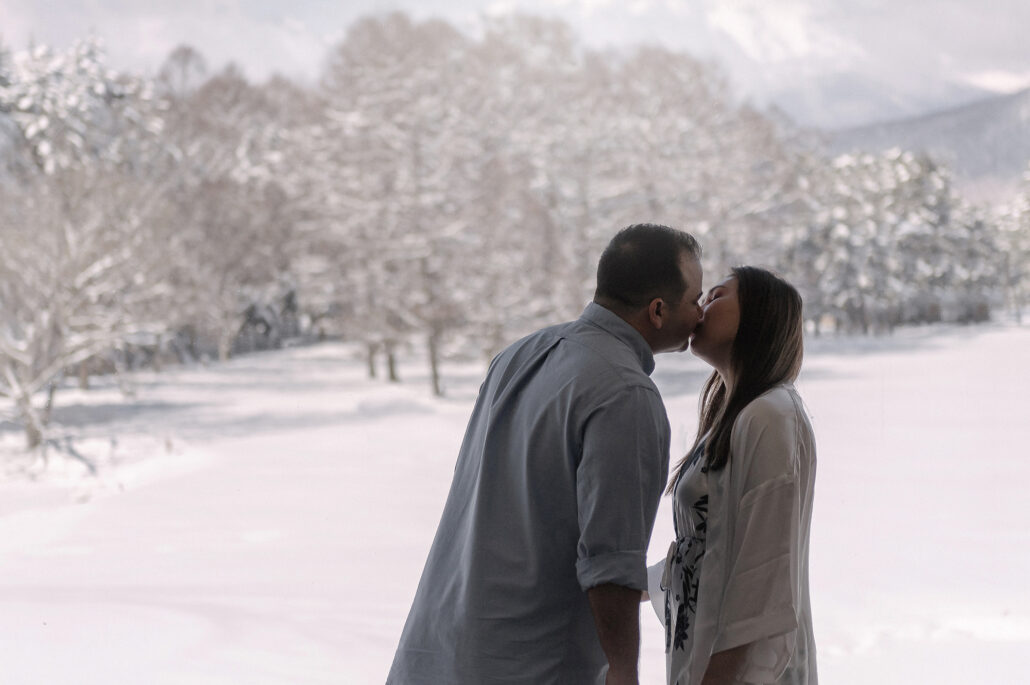
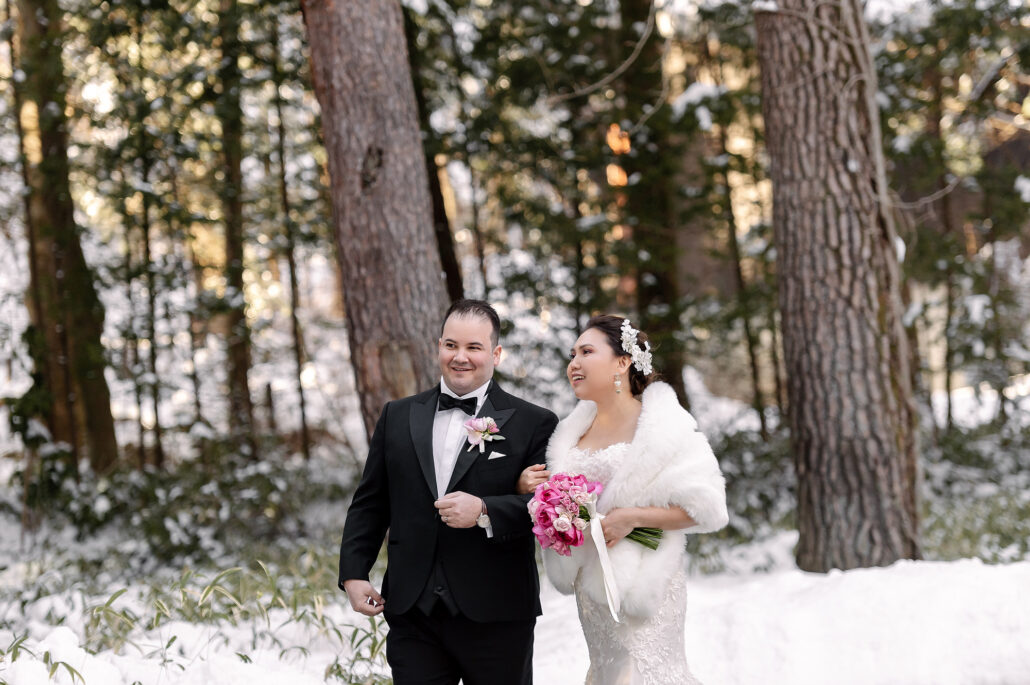
Snow on the ground changes everything around it: how long a drive takes, what shoes a bride can walk in, how far guests can stand from somewhere warm. So we plan for it as if it’s certain. Cars and drivers equipped for snow, because normal tyres on snow or ice are against the law here and some mountain passes close or require chains even on winter tyres. Time between every move. A warm room within a few steps of anything outdoors. Boots for the walk and shoes for the photographs. And an indoor plan as good as the outdoor one, so nobody ends up with the lesser version.
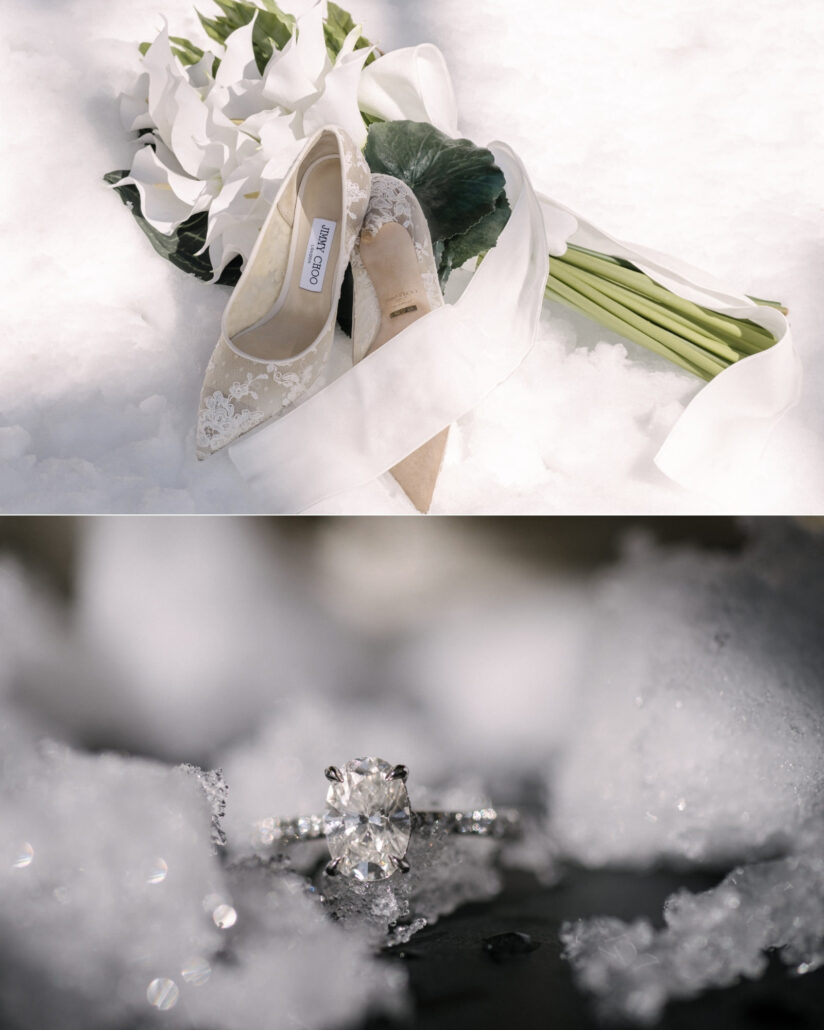
A winter wedding in Japan trades long days for clear ones.
Short Days and Long Light
On the shortest day of the year, Tokyo has under ten hours of daylight, and Sapporo exactly nine. That changes the shape of a day more than anything else in winter. Ceremonies move earlier, portraits follow the light rather than the clock, and the evening arrives with dinner still to come.
There’s a gift in it. In midwinter the sun never climbs high, even at noon, so the light stays low and warm almost all day. The harsh overhead hours of summer simply don’t happen. For us, that’s some of the most beautiful light of the year, and a candlelit dinner that starts in the dark is no hardship at all.
Snow Country Weddings
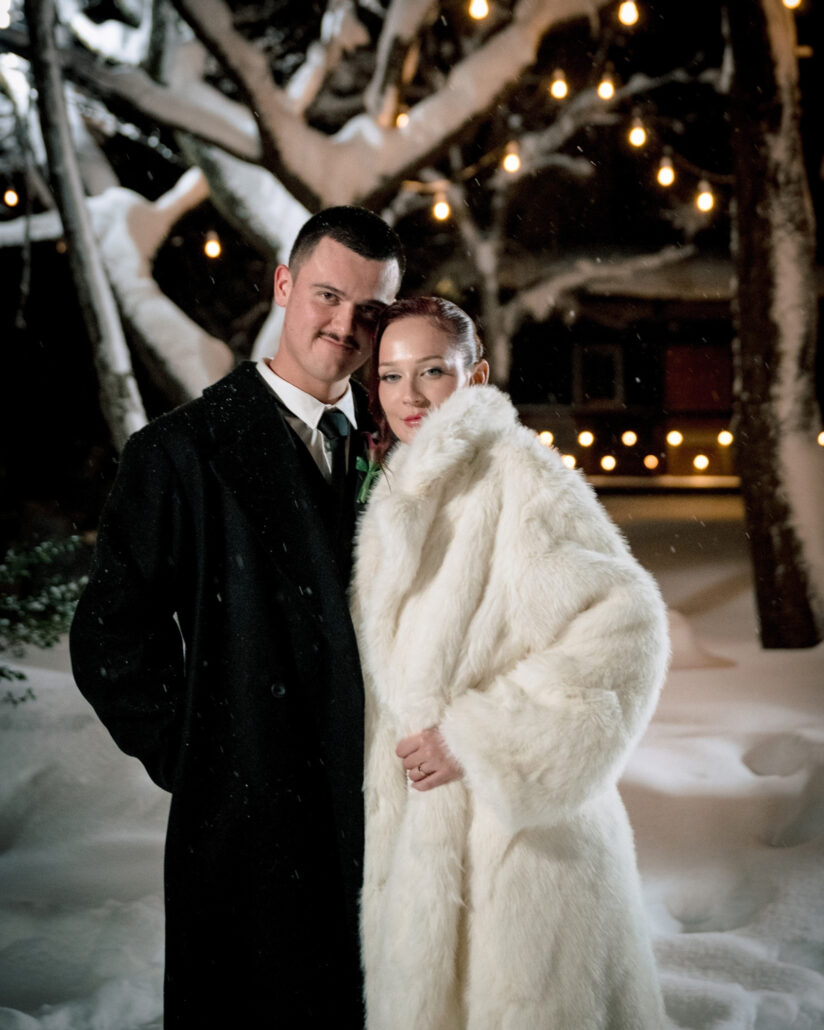
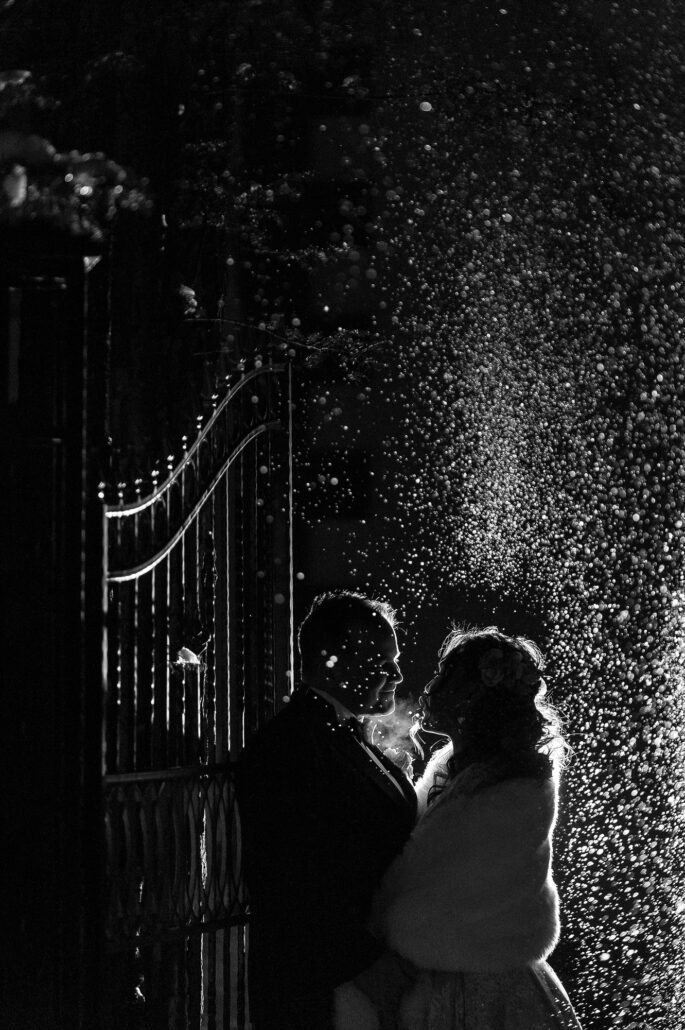
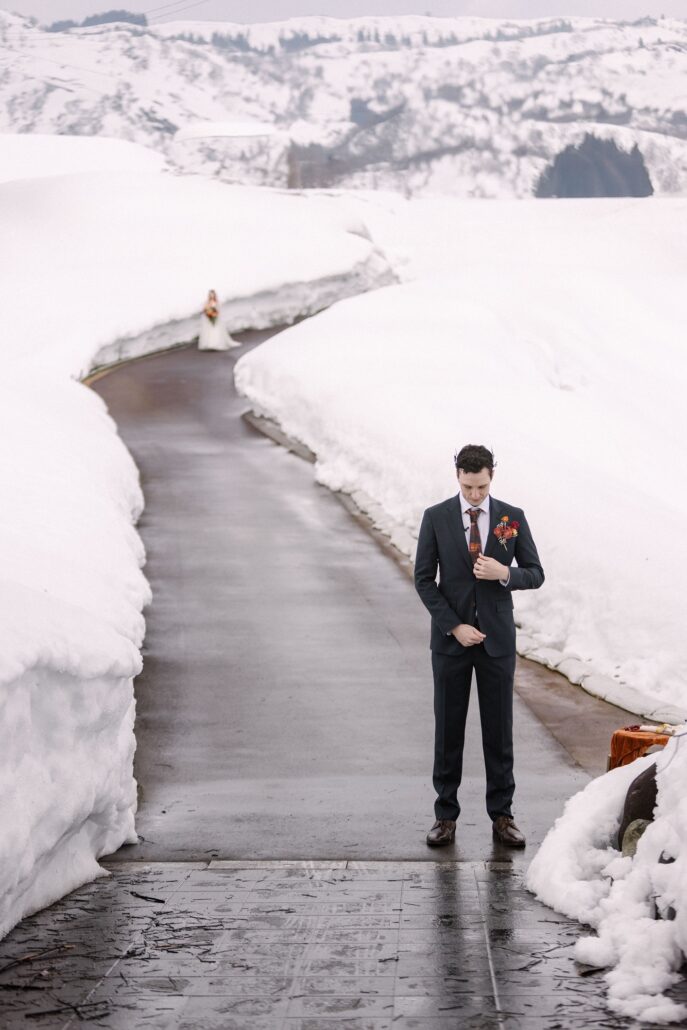
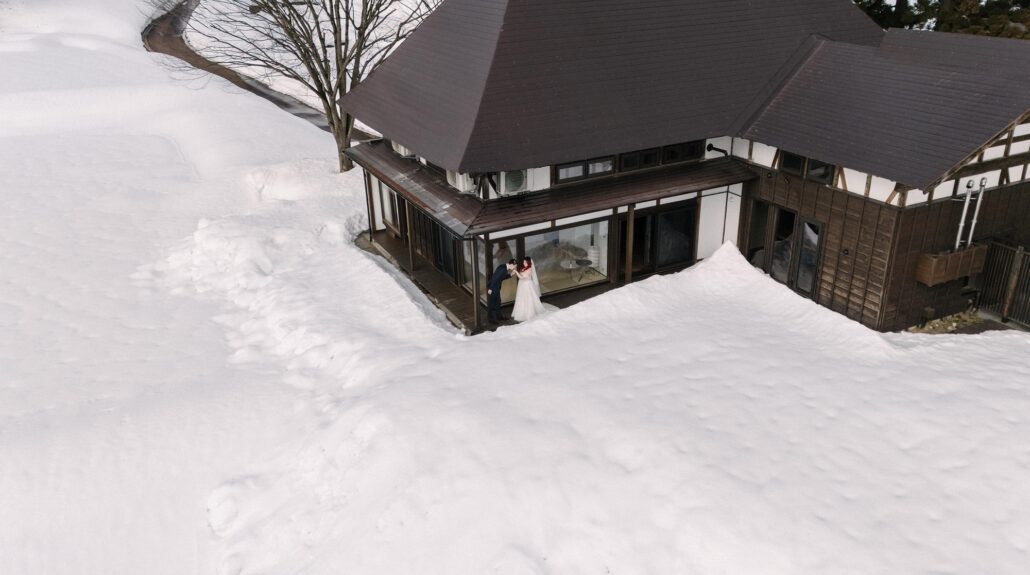
Niigata has a famous opening line. Yasunari Kawabata wrote it in Yuzawa in the 1930s: a train coming out of a long tunnel into snow country. The tunnel is real, and the weather is different at each end. One couple asked for snow, water and a torii, then “city lights and claw machines”, and that January was the snowiest Yuzawa had seen in more than a decade. The garden they’d chosen went under metres of it, so they married on the path to the villa, between two walls of snow taller than either of them. They led the ceremony themselves. That afternoon they took the shinkansen back under the mountains to Tokyo, still in their wedding clothes, and fed coins into claw machines in Akihabara. They liked January so much they took it as their married name.
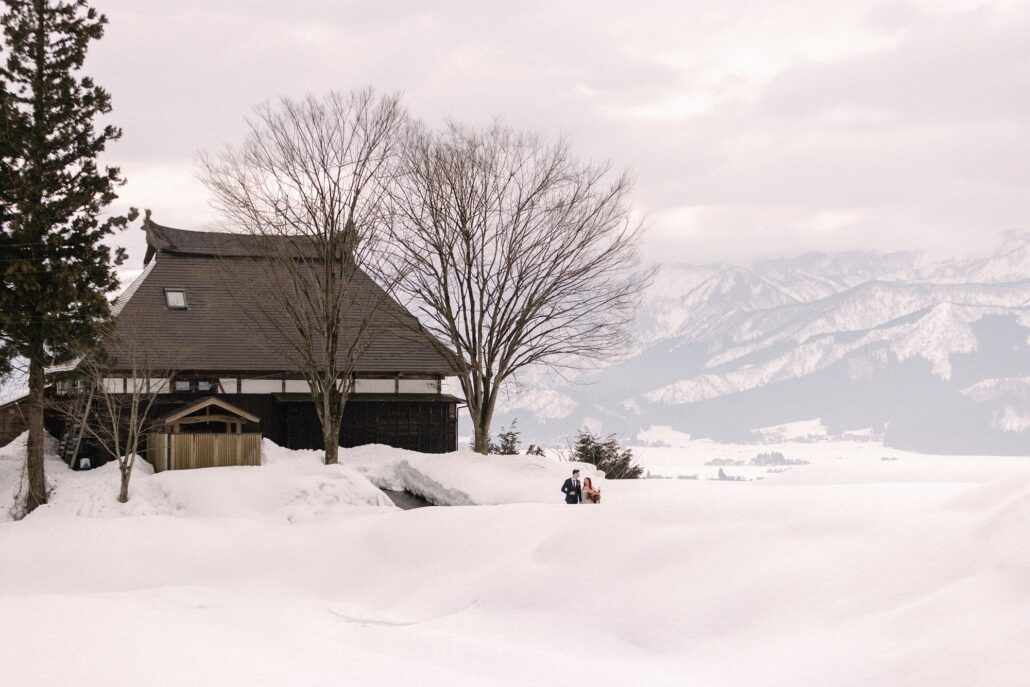
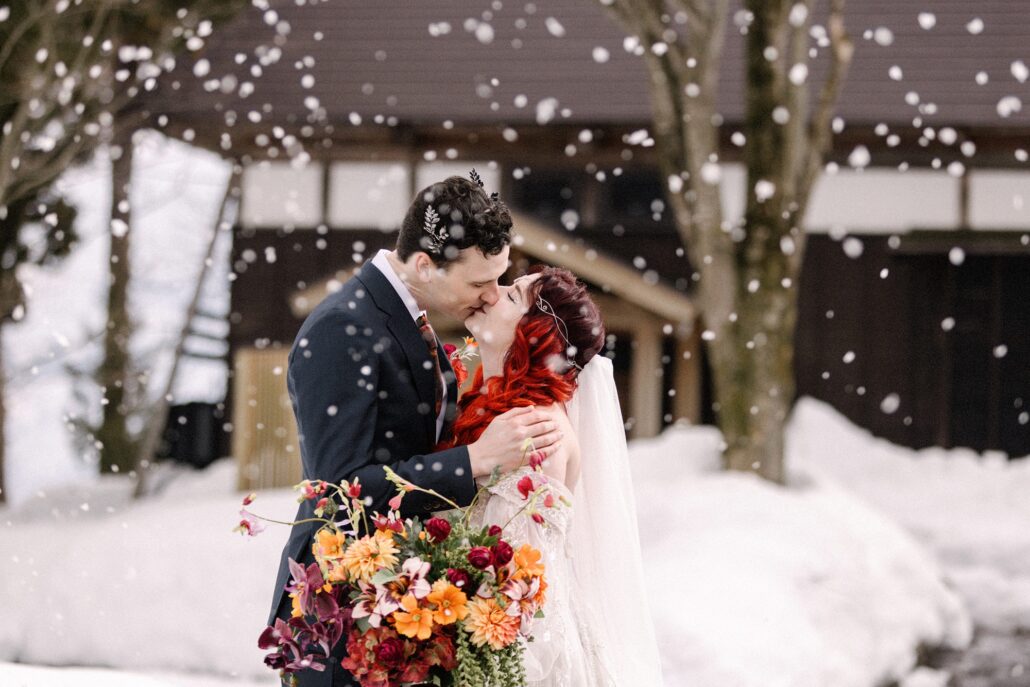
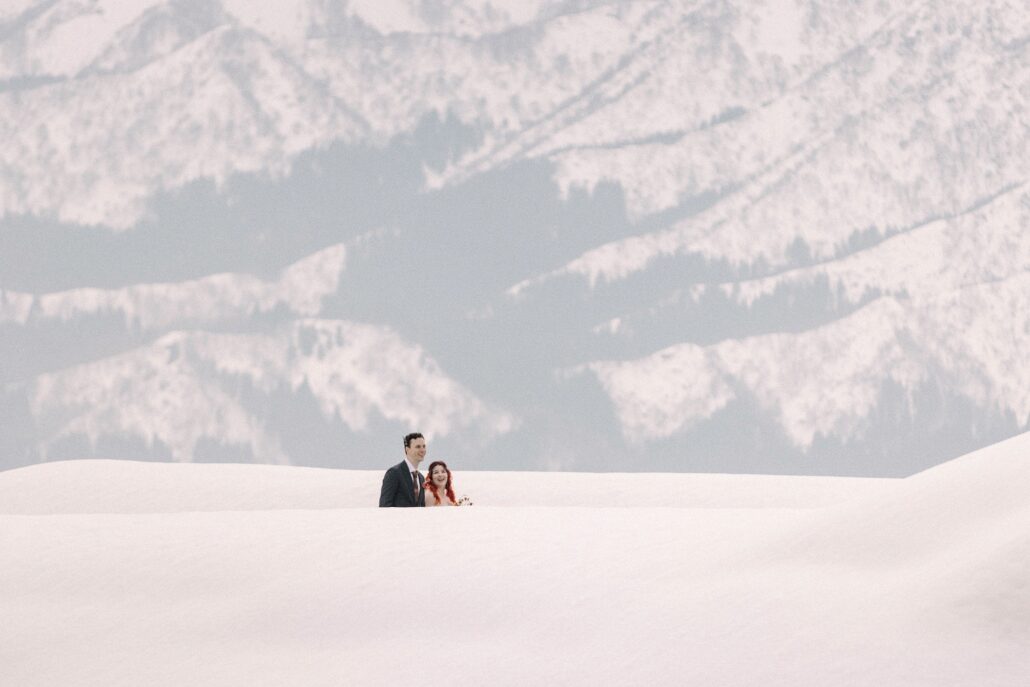
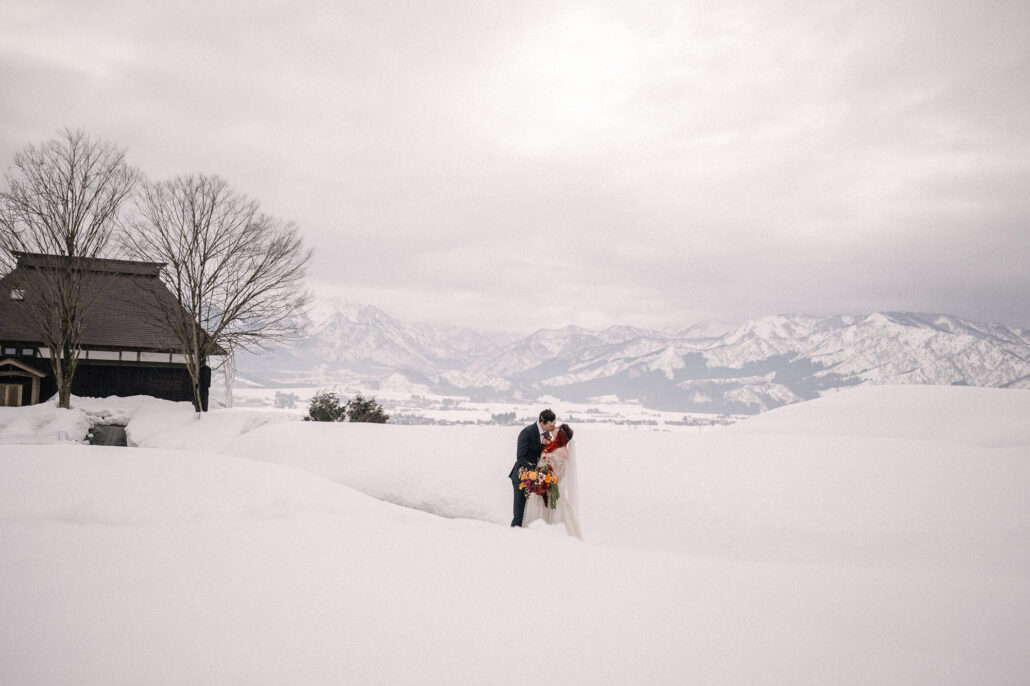
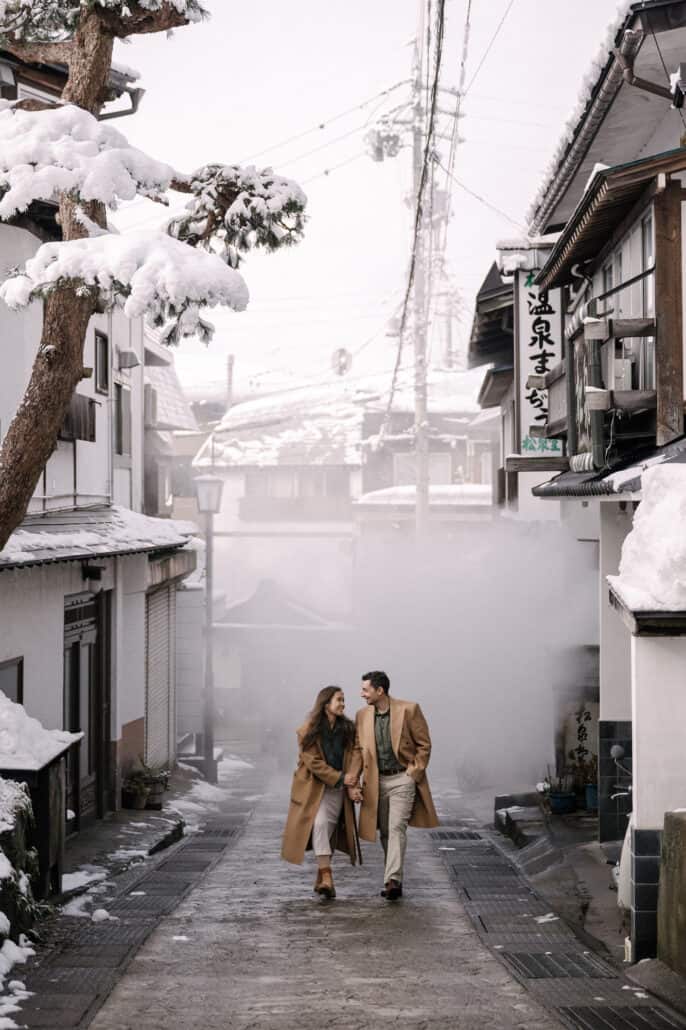
In Nagano, a geologist who loves the backcountry had talked his bride into snowboarding, so their wedding began on the slopes above Nozawa Onsen, among snow-heavy cedars. Down in the village lanes, hot-spring steam rises between the buildings from the public bathhouses, and after the mountain they walked through it in camel coats. The group stayed together in an old travellers’ inn in Matsumoto where feudal lords once rested on the road to Edo, and the next morning, beneath a bare tree with the Northern Alps beyond, her best friend married them.
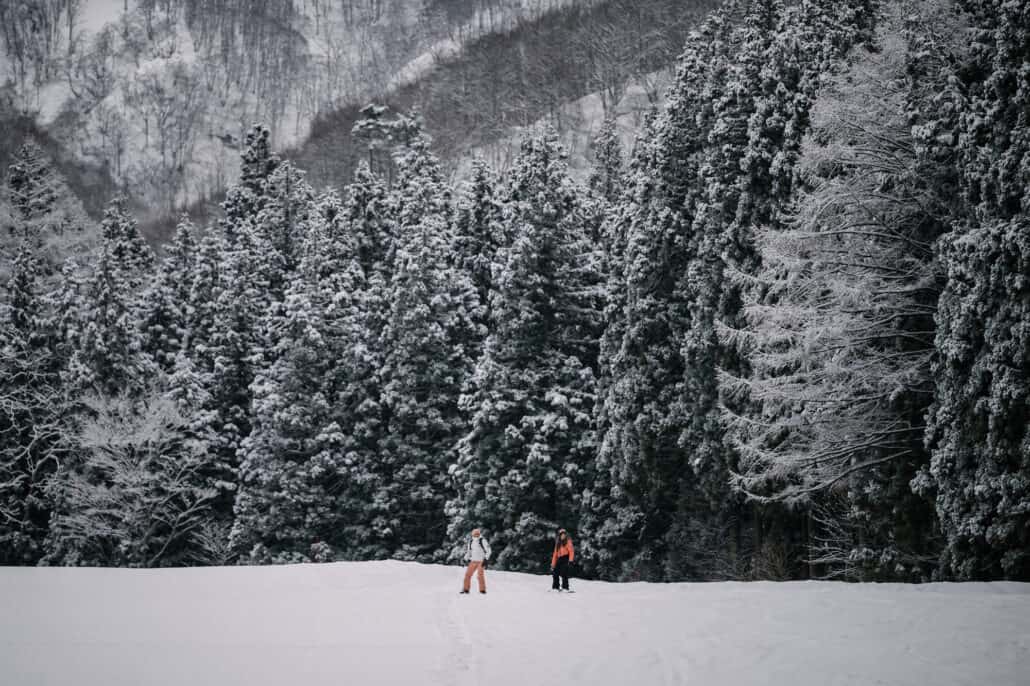
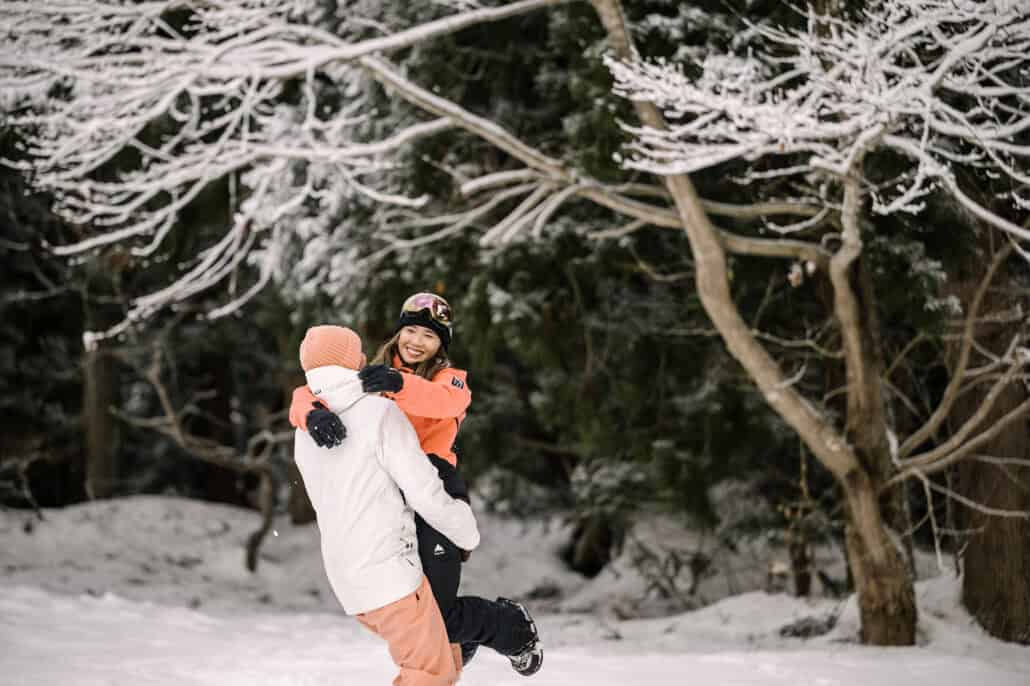
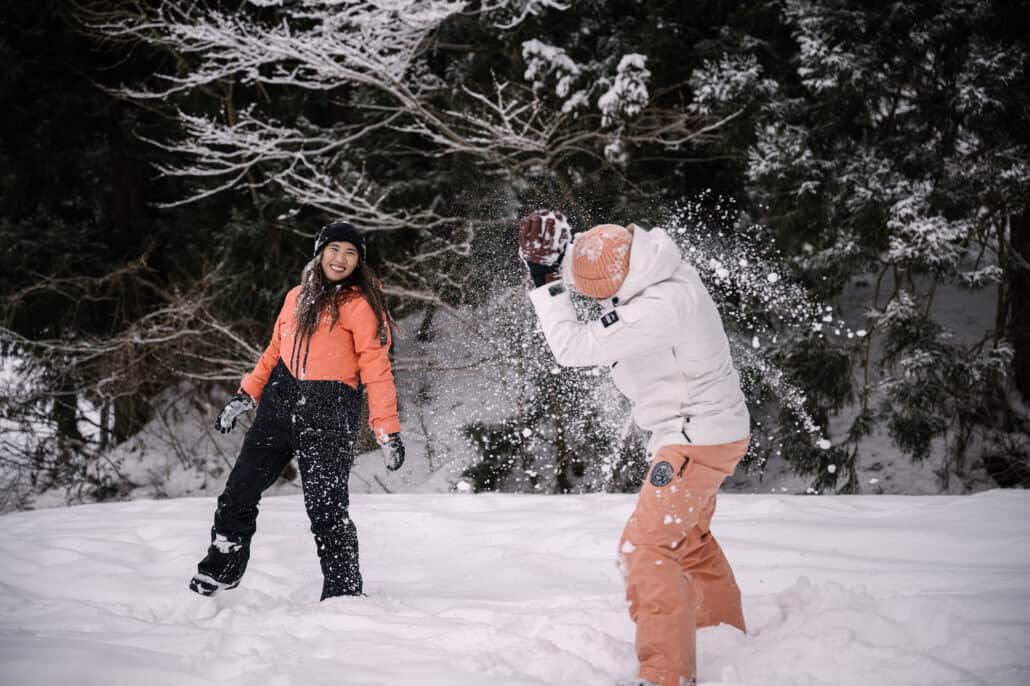
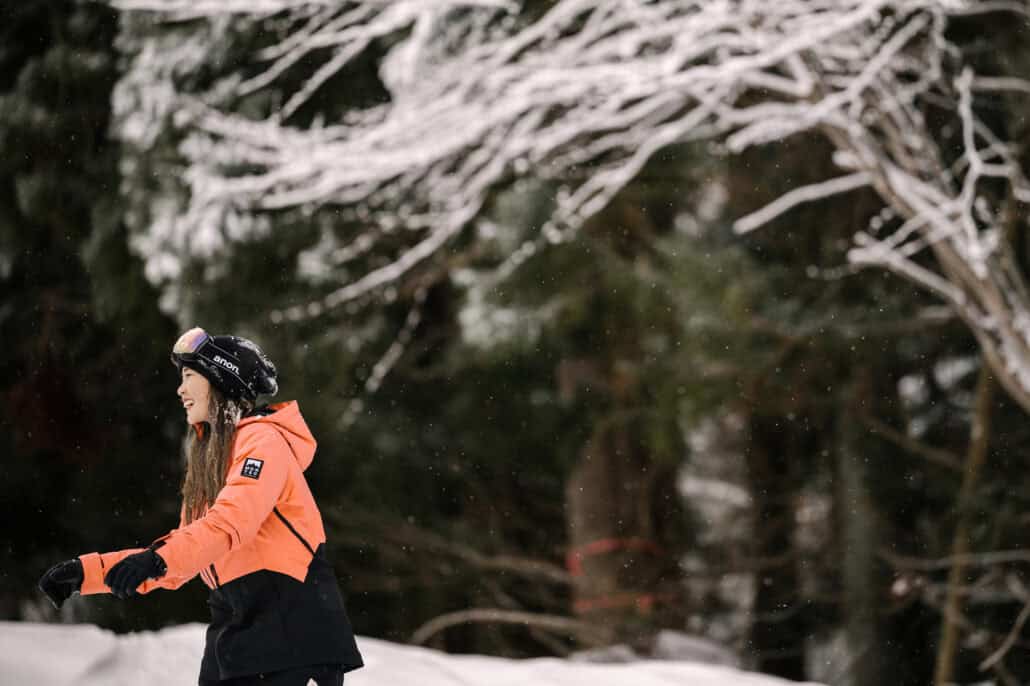
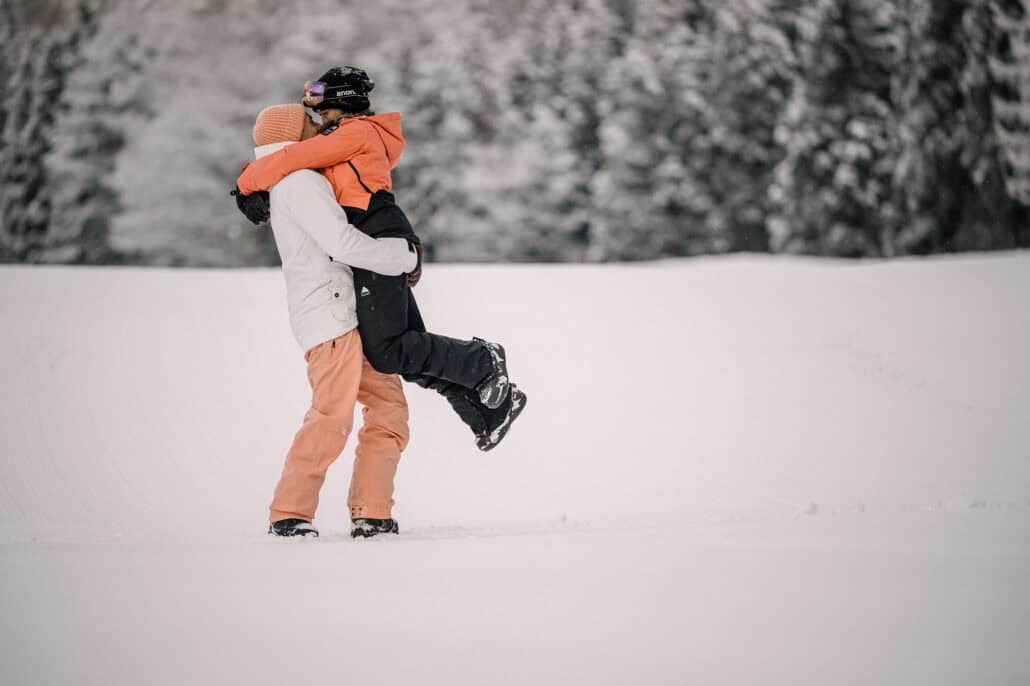
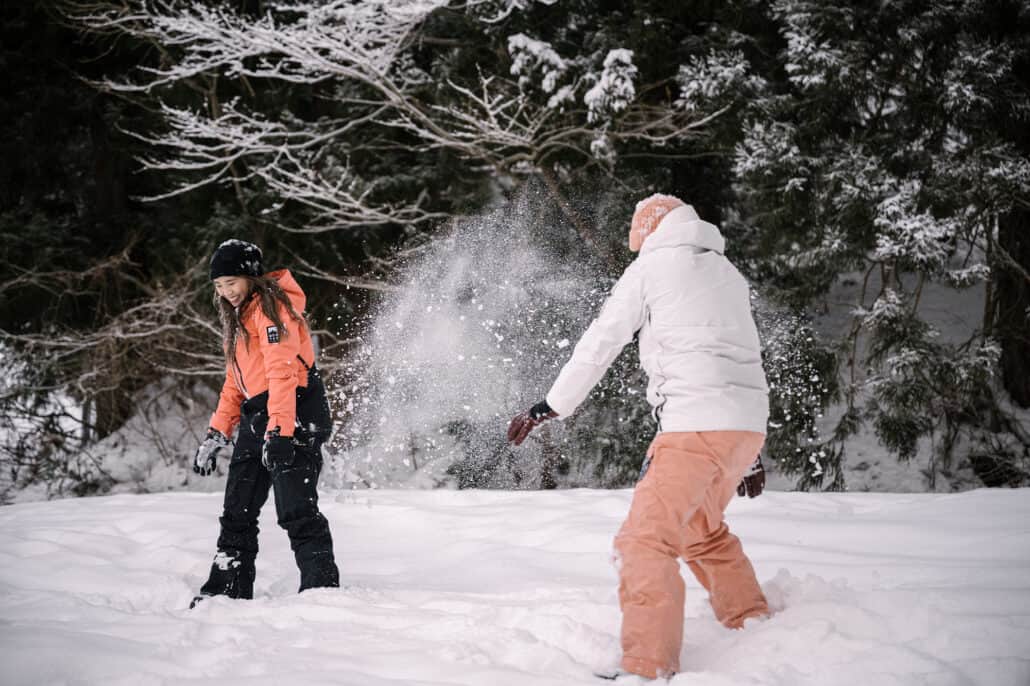
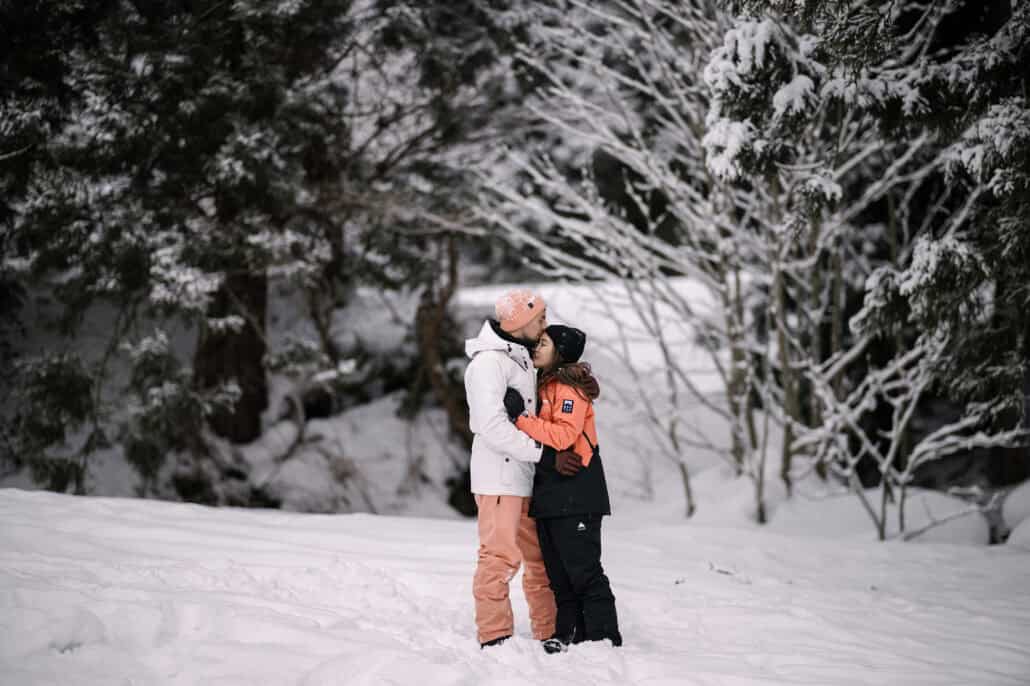
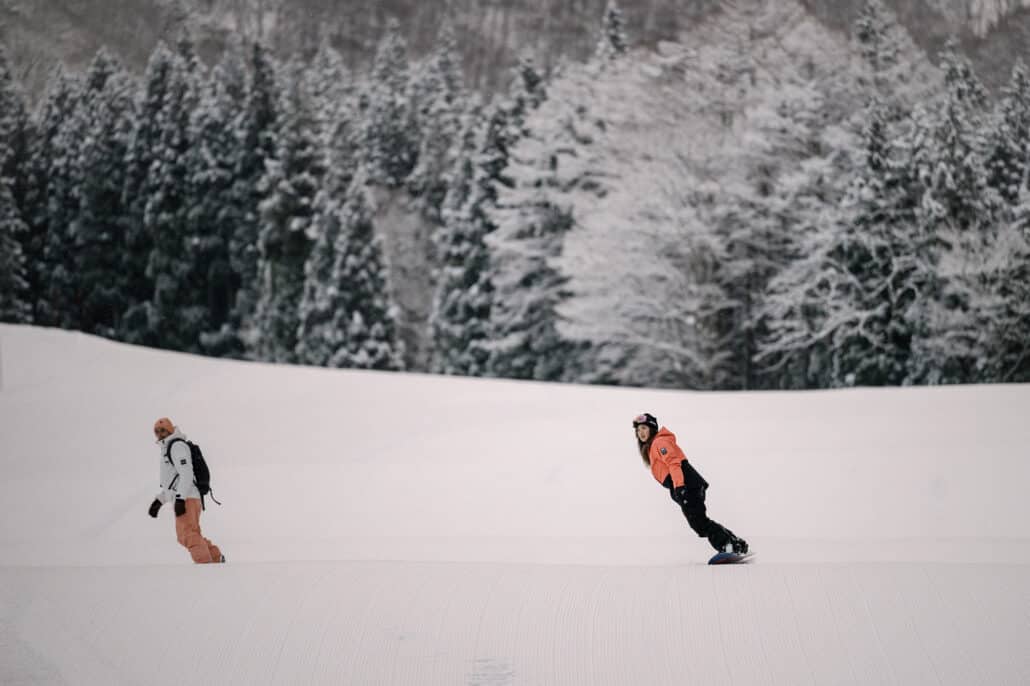
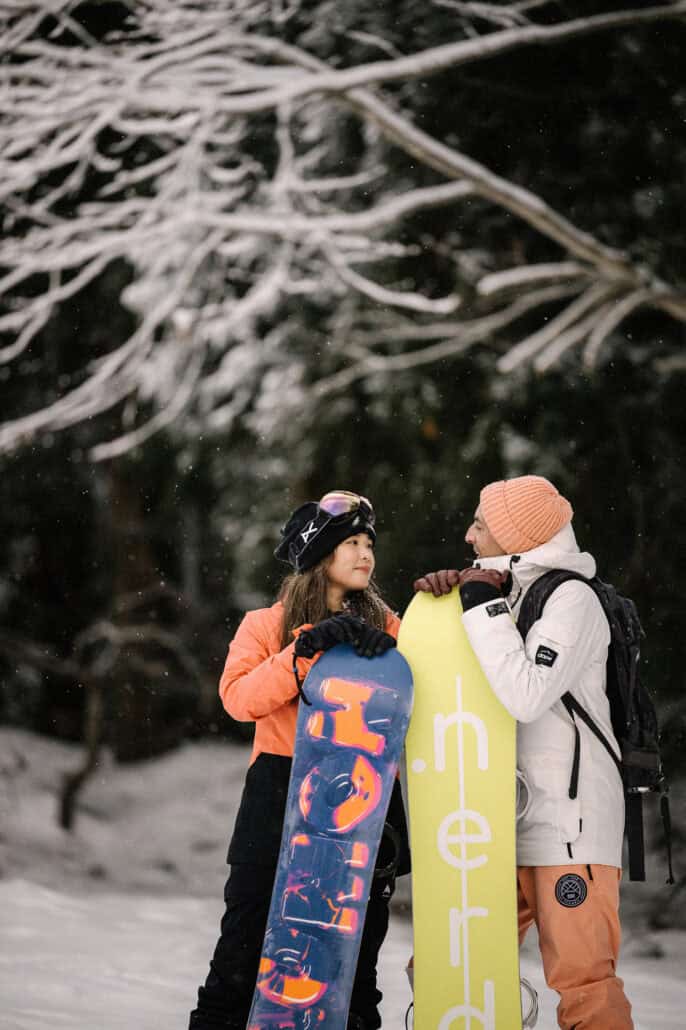
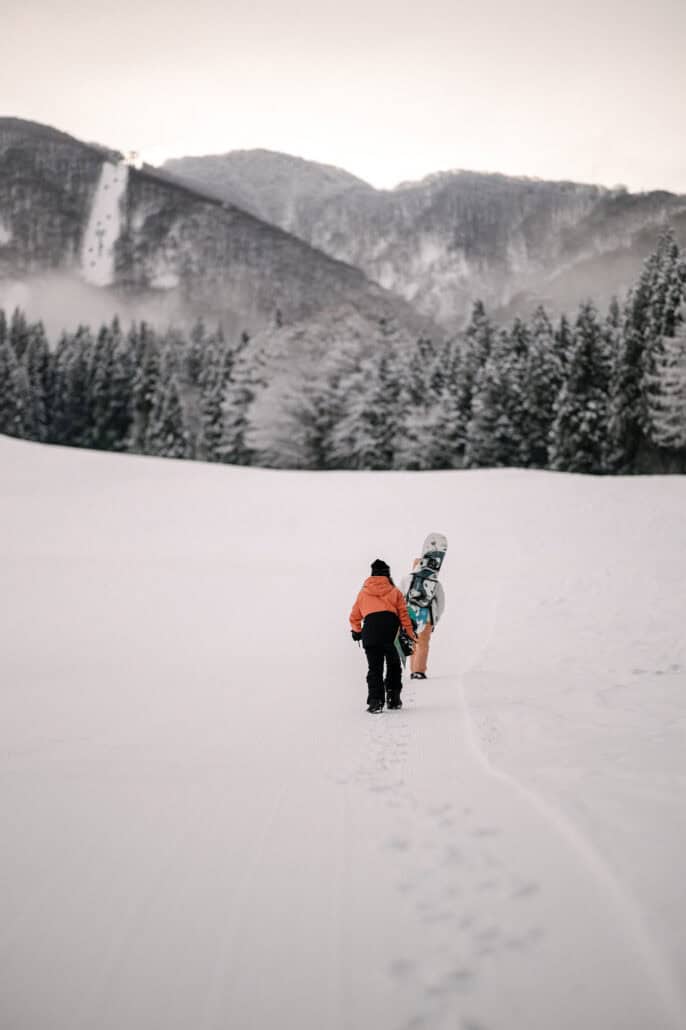
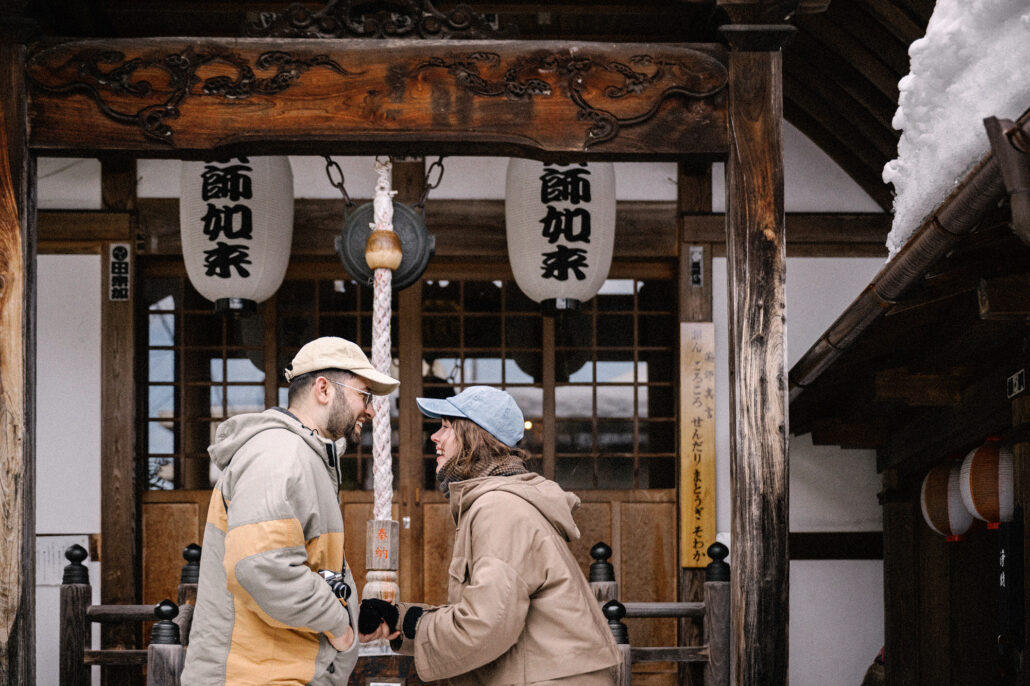
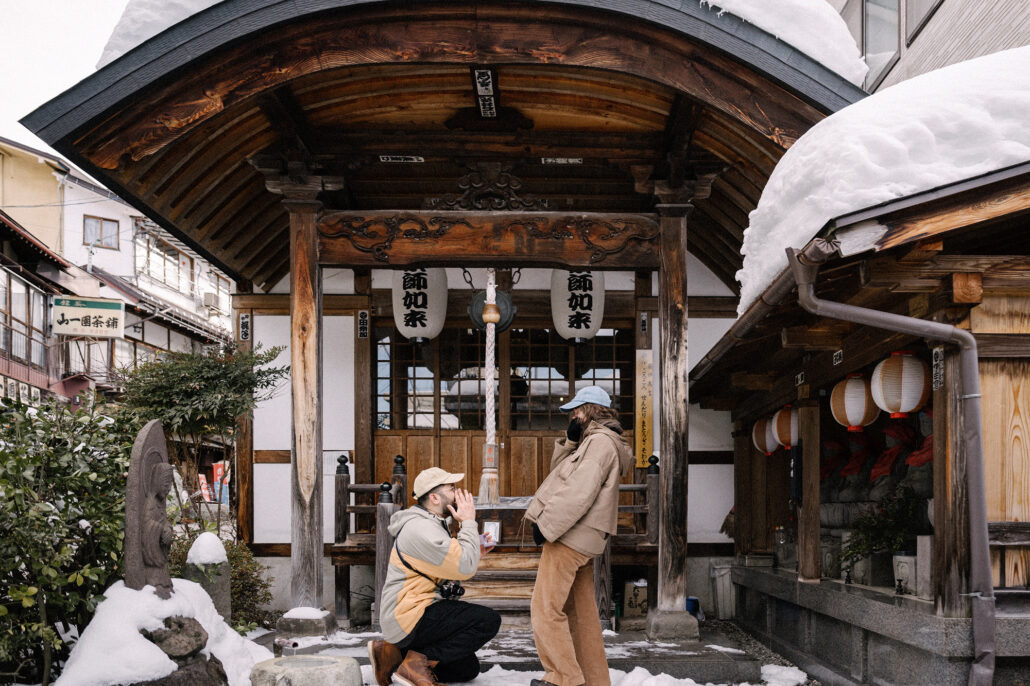
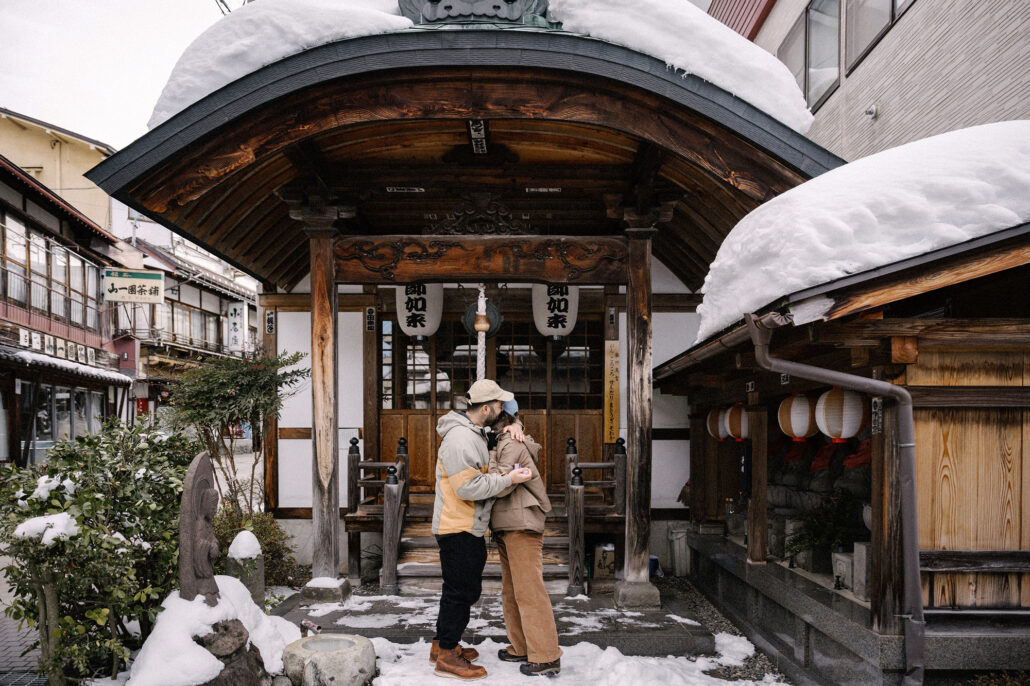
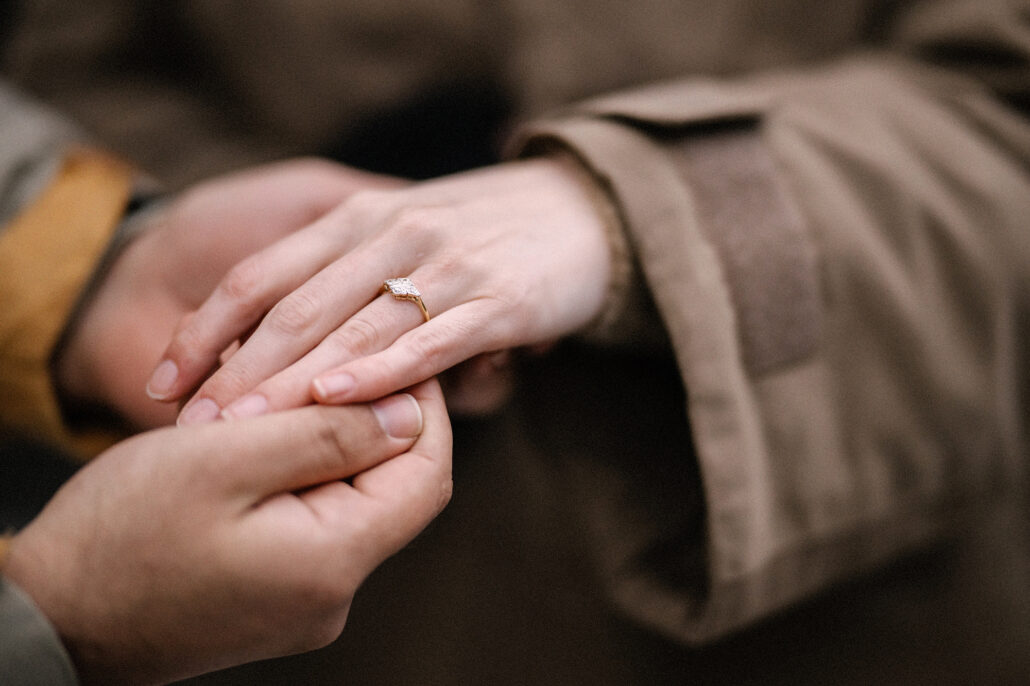
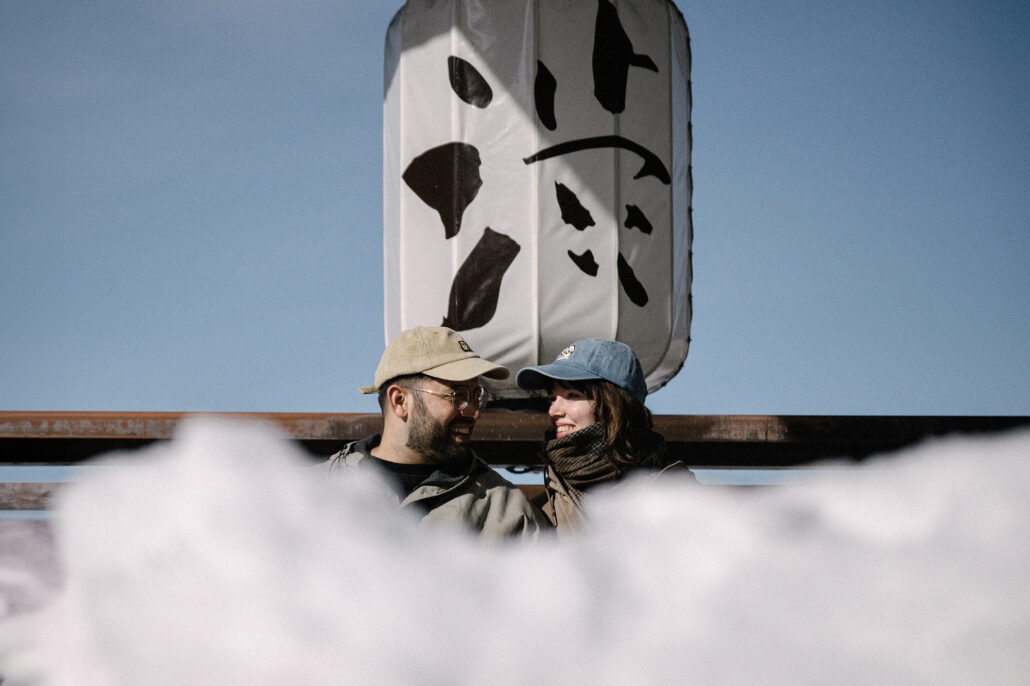
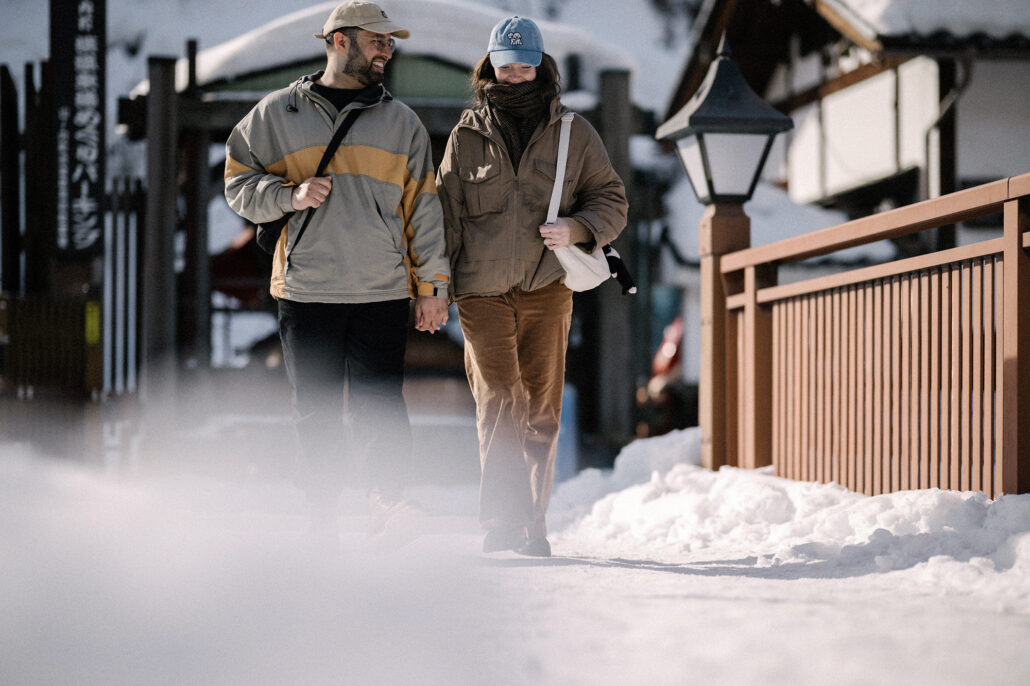
Snow country suits a proposal too. Below the slopes of Shiga Kogen, in an onsen village deep in January snow, he knelt at the steps of a small temple hall. A proposal asks for one private moment, and the village gave them that. Then they took a snow day, something most of us give up at about twelve.
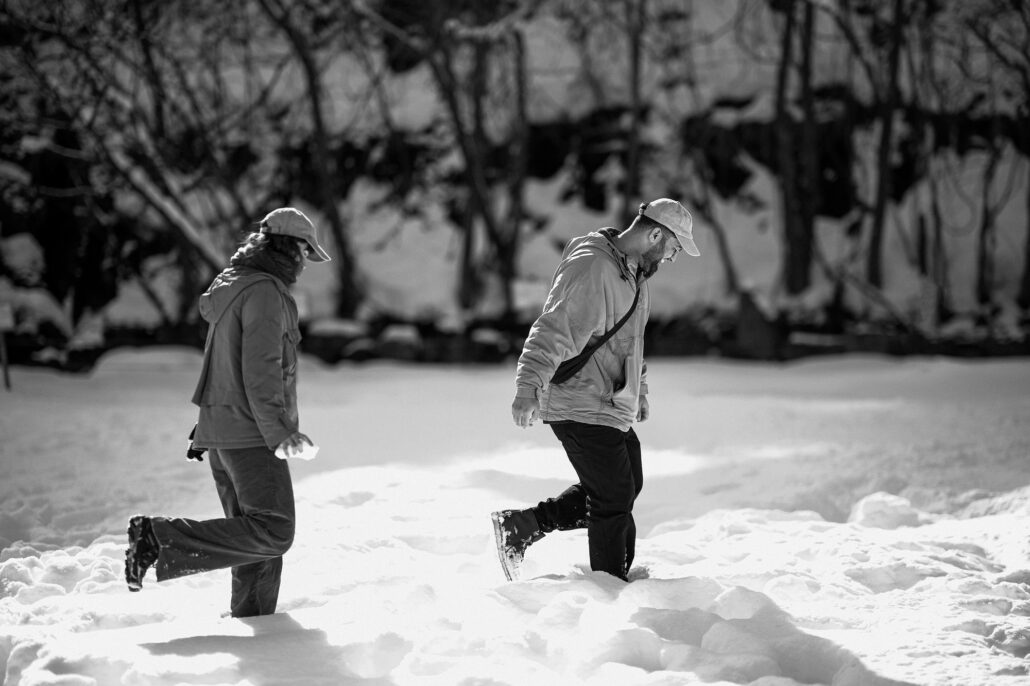
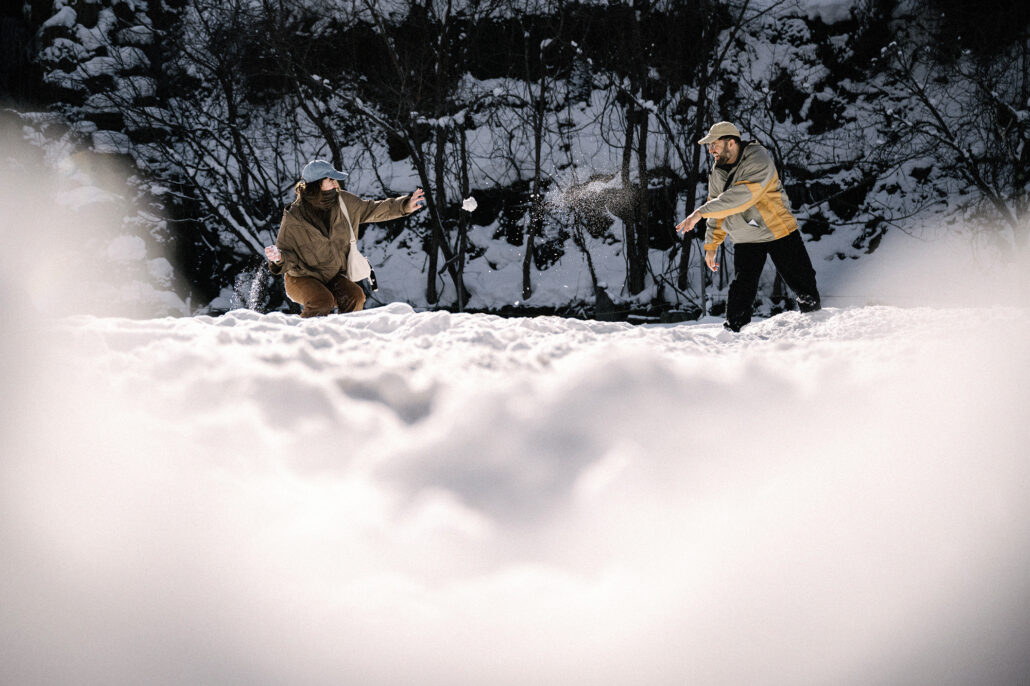
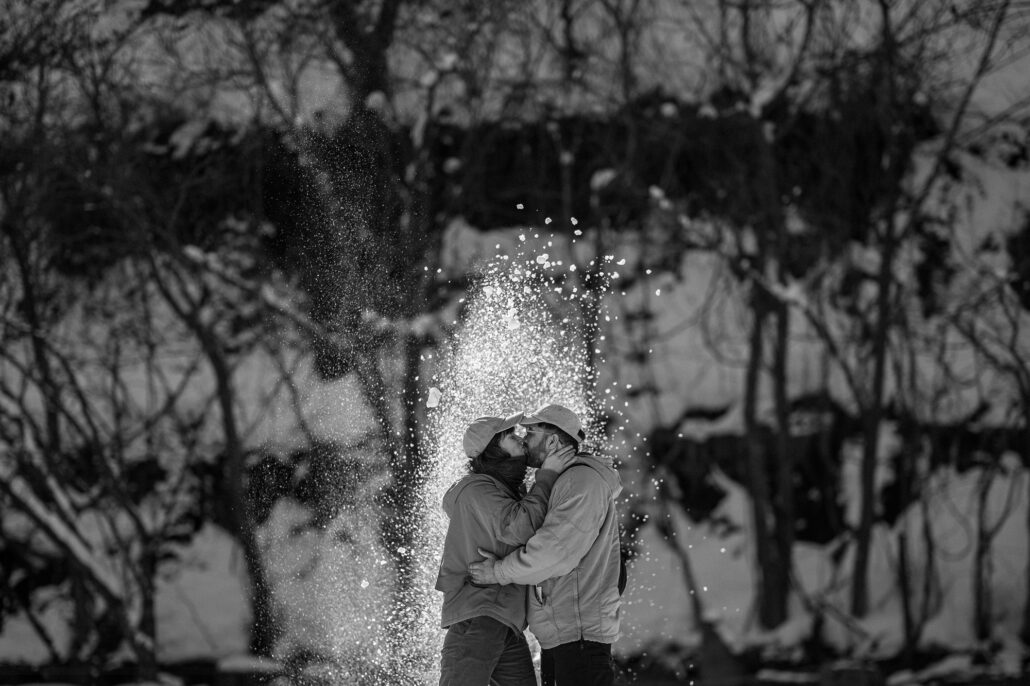
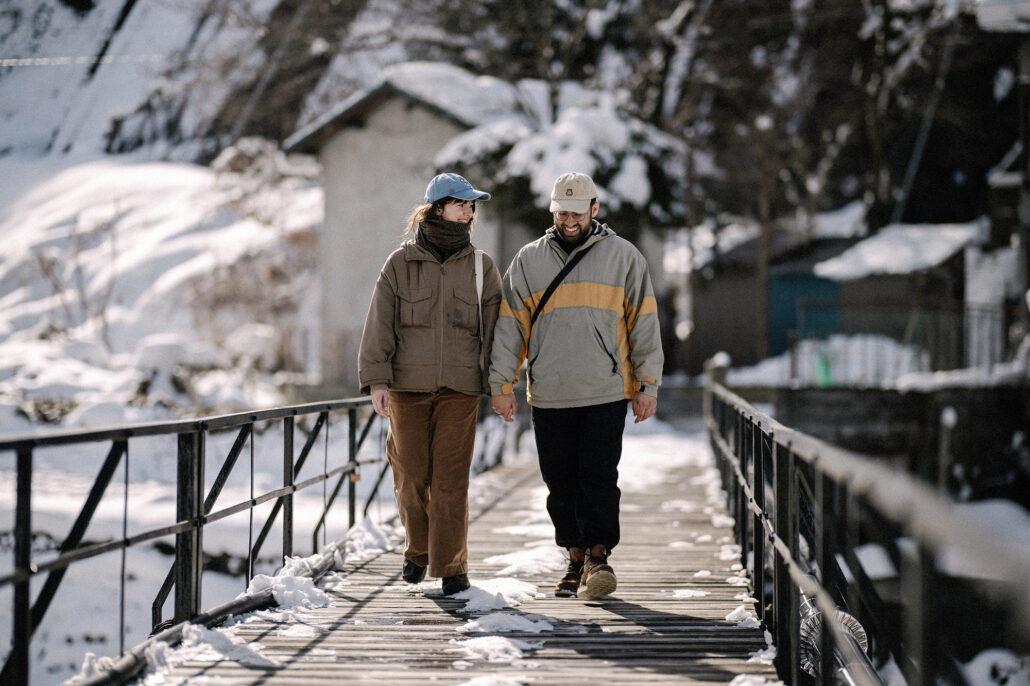
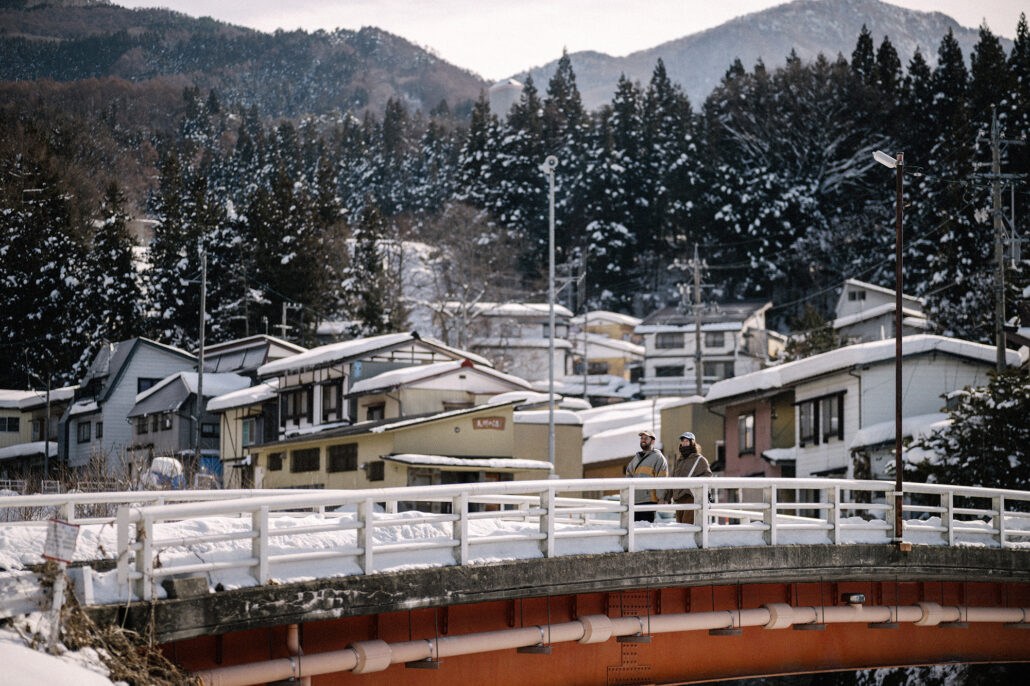
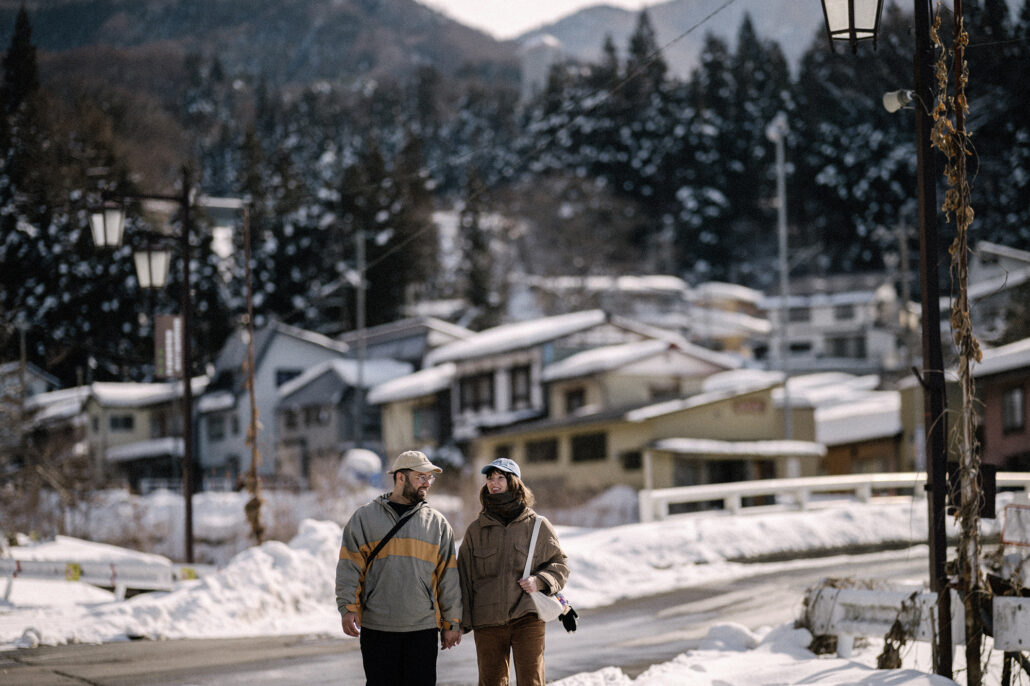
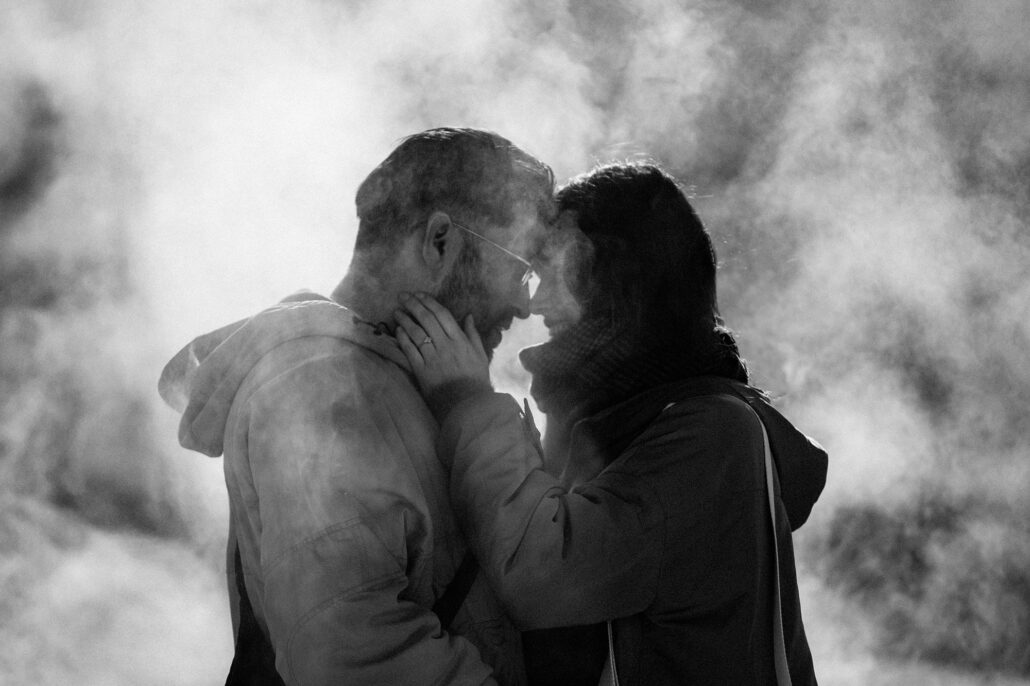
Hakuba’s valley floor averages about six and a half metres of snowfall a year. Niseko’s nearest weather station records more than nine. These are places people travel to for snow, and a wedding there borrows all of that.
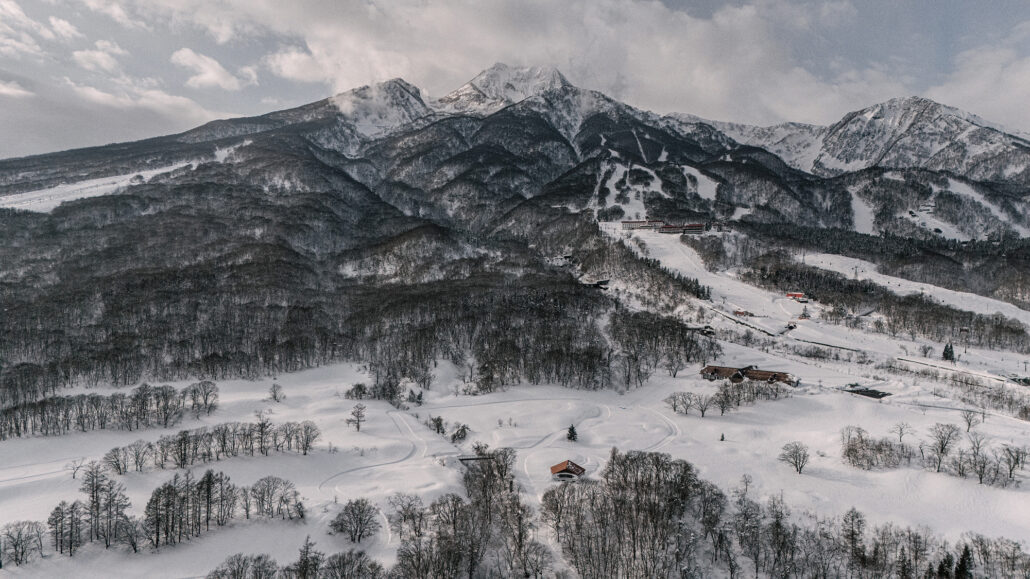
Hokkaido and Niseko
Hokkaido is winter at full strength, and it makes a different trade. In Kutchan, home to Niseko’s largest resort village, the whole of January brings around forty-seven hours of sunshine, a quarter of Tokyo’s. One winter wind explains the gap: crossing the Sea of Japan, it gathers the moisture it drops as snow on the mountains facing it, and reaches Tokyo and the Pacific side dry and clear. The snow is the reason to come. In a typical February it’s at its deepest, around 180 centimetres, and January averages about minus five and a half degrees, with nights close to minus ten. Sapporo is milder, by local standards: about minus three.
Niseko’s main lifts are planned to open on 28 November 2026 and run into May, and the Sapporo Snow Festival fills the city from 4 to 11 February 2027. Do your friends ski? Then this is the place, for couples who do and for guests who’d happily spend the days around a wedding on a mountain. We plan weddings in Niseko.
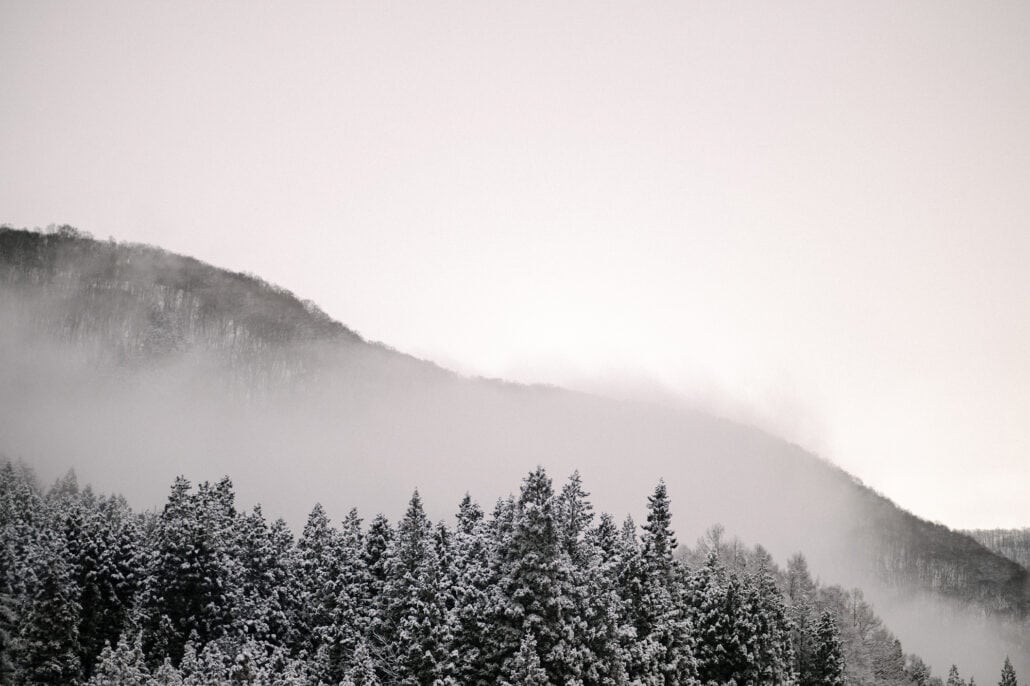
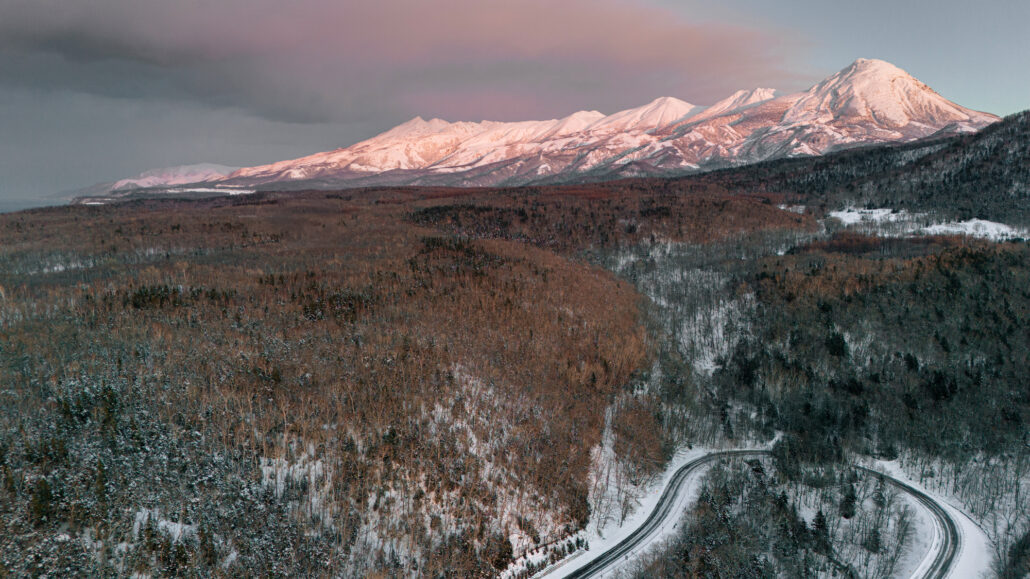
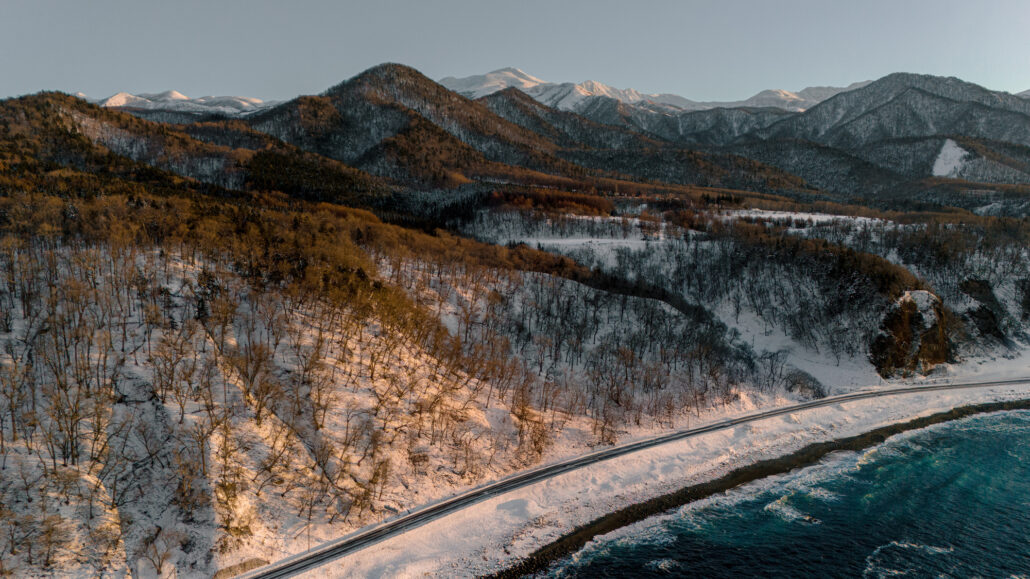
The two photographs below come from a New Year of our own, on the Shiretoko Peninsula, the national park at Hokkaido’s far northeastern tip. We often spend New Year at home in Australia; this past one, we stayed in Japan and went north. Our work keeps us among people, and we live in one of the biggest cities on earth. We love both, but now and then we need to be alone, with space around us and a quiet that lets you feel how big the world is. Deer cross the road. The sun is down before four, and the cold makes the light soft and sparkling, almost like mist. The drift ice hadn’t come in yet; it arrives later in the winter. We watched the year’s last sunset there, and hatsuhinode, its first sunrise, the next morning. New Year’s Day went on a search for shima-enaga, the tiny white long-tailed tits nicknamed snow fairies. To fly the drone for these frames, one of us (I won’t say who) pushed her thumbs out through the finger holes of her gloves, lost the feeling in them, and cried a little. We’re two beach girls, and we’d go back tomorrow.
Kyoto in Winter
Kyoto’s late November and early December belong to autumn: it’s the peak of the leaves, not their end. True winter comes after. Snow falls on Kyoto on about sixteen days in an average January, but it rarely stays, and a white morning at a temple is a few days’ luck rather than a plan. What winter reliably gives Kyoto is cold, clear air and quieter streets, which suit a small wedding well.
Dates to Plan Around
- The New Year. Government offices close from 29 December to 3 January, and banks from 31 December. Much of the country goes home to family. If you’re filing a marriage notification in Japan, do it outside that week.
- Shirakawa-go’s winter light-up: 11, 17, 24 and 31 January 2027, by advance booking only. It may be cancelled in heavy snow.
- Lunar New Year: Saturday 6 February 2027.
- The Sapporo Snow Festival: 4 to 11 February 2027.
- Niseko’s season: lifts planned from 28 November 2026.
How We Plan a Winter Wedding
Winter rewards the couples who plan it as winter, rather than as spring with coats on. We plan a winter wedding around three things: the light, the warmth and the road. The ceremony goes where the light will be. Every outdoor moment has a warm room close by and a hot drink waiting. Every journey has a driver who knows the road in snow and time to spare. And we tell your guests what to pack, because the best-dressed person at a winter wedding is the one wearing thermals under everything.
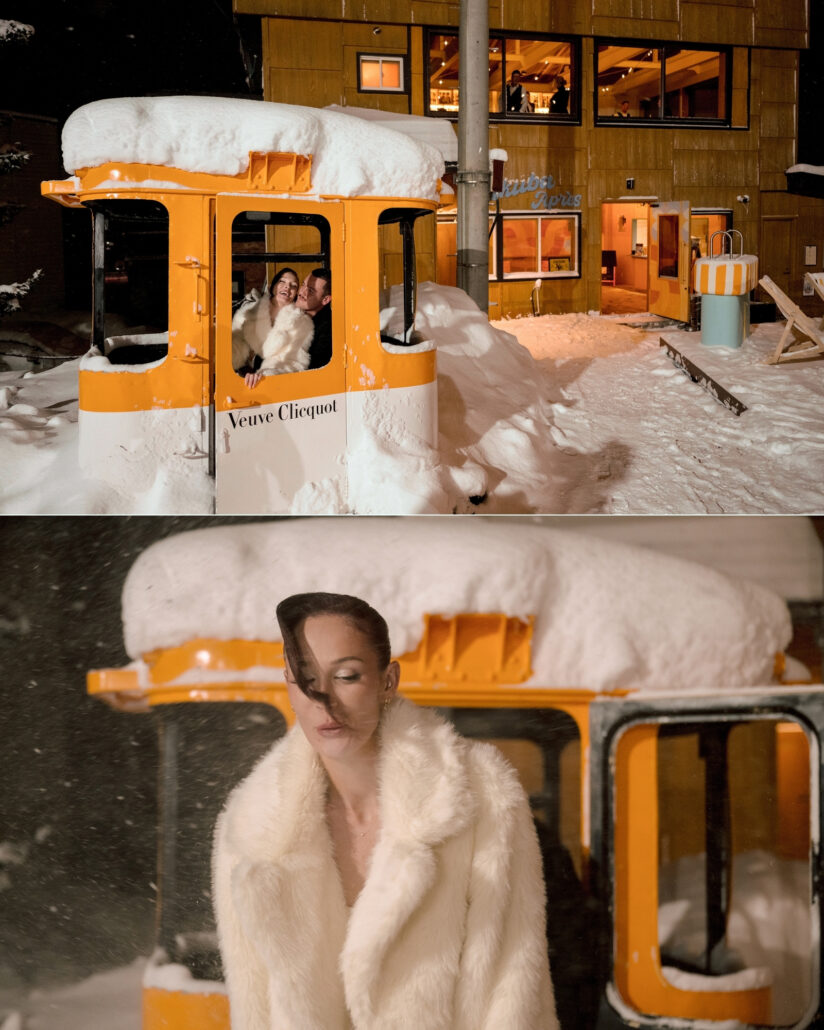
Tokyo sees about eight centimetres of snow in an entire year. If you want snow, we’ll take you to it.
More Questions About Winter Weddings in Japan
Is winter a good time for a wedding in Japan?
Yes, if you plan for it. On the Pacific side it’s the clearest, driest season of the year, and in the mountains it’s snow country. Expect cold, short days and quieter places.
Can you see Mt Fuji in winter?
More often than in any other season. From central Tokyo, Fuji is visible on about nineteen mornings in an average January, against fewer than two in June.
Does it snow in Tokyo?
Rarely, and lightly: about eight centimetres in a whole year on average. For a snow wedding, go to the mountains.
Does it snow in Kyoto?
Snow falls on about sixteen days in an average January, but it seldom settles. Plan for cold and clear, and treat a snowy morning as a gift.
What should guests wear to a winter wedding in Japan?
Warm layers, a proper coat and shoes with grip, with thermals underneath if any part of the day is outdoors. In snow country, boots for walking and shoes to change into.
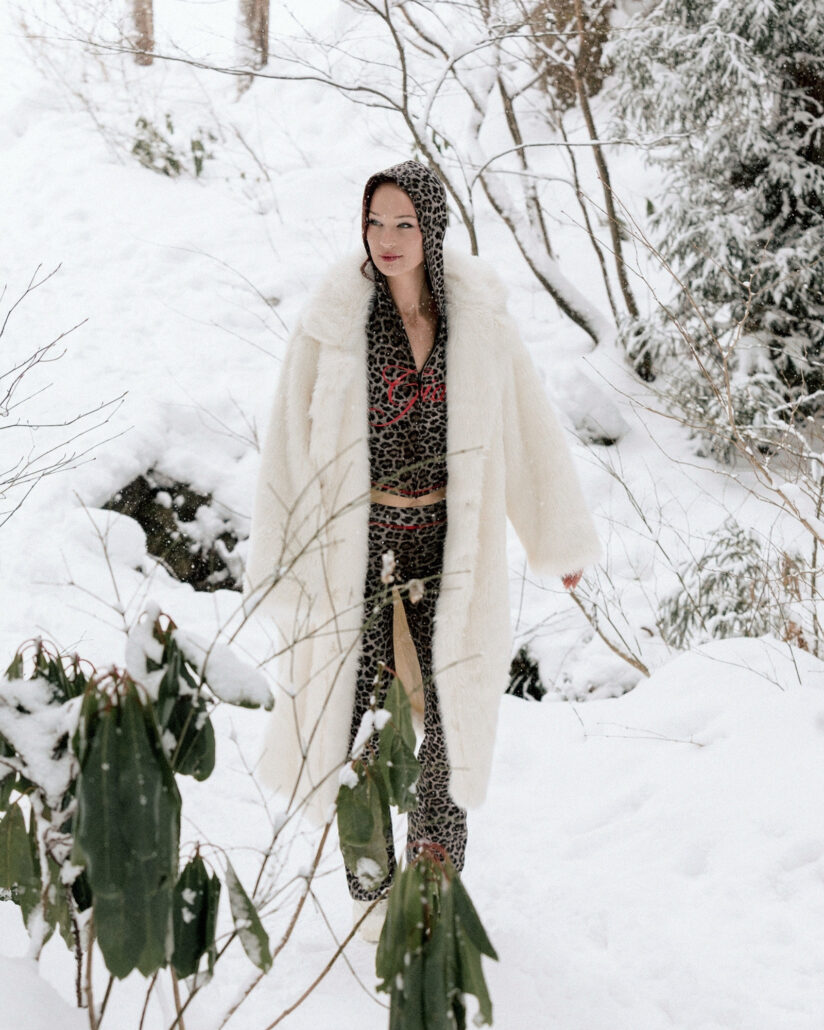
Where can you have a snow wedding in Japan?
A snow wedding in Japan belongs in the mountains and on the Sea of Japan side, where snow lies deep from January into March: Hakuba and Nozawa Onsen in Nagano, Yuzawa and Minamiuonuma in Niigata, and Niseko in Hokkaido. Karuizawa often has lighter snow, closer to Tokyo. Hakuba and Niseko suit a wedding of friends who ski; Niigata’s snow country suits an elopement.
How cold is Hokkaido in winter?
Hokkaido is colder than most guests expect. In Sapporo, January averages about minus three degrees Celsius, with daytime highs just below freezing. In Kutchan, home to Niseko’s largest resort village, the January average is about minus five and a half, and nights fall close to minus ten. Pack as if for a ski trip, because in Niseko that’s what it is.
When is the Sapporo Snow Festival in 2027?
From 4 to 11 February 2027.
Fuji keeps its own hours in every season. In winter, it keeps more of them for you.
Updated November 2026. Weather figures are long-term averages, and every winter is different. Sources: Japan Meteorological Agency, climate normals, 1991 to 2020, for Tokyo, Sapporo and Kutchan (Japanese); Tokyo Metropolitan Government, days Mt Fuji was visible (Japanese); Fuji City, Mt Fuji visibility record (Japanese); National Astronomical Observatory of Japan, sunrise and sunset (Japanese); Niseko United, lift schedule; Sapporo Snow Festival; Shirakawa-go Tourist Association, winter light-up (Japanese); NEXCO East, winter driving (Japanese).