In Japan, nobody at the front of your ceremony needs a licence. Not a celebrant, not a friend, not a priest. No wedding ceremony here makes anyone legally married. The law happens on paper, at a city or ward office or back home, so your wedding officiant in Japan is there for one reason only: you want to hear them say it.
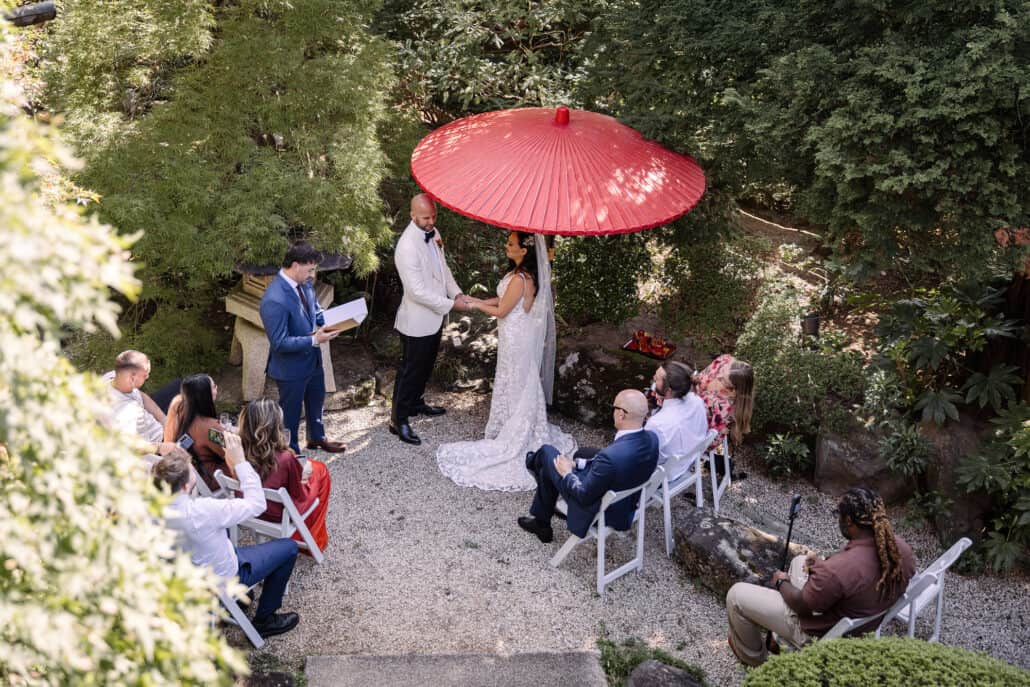
At a garden wedding in Tokyo, two friends led the ceremony. Her college friend had written it. His friend from Tokyo spoke part of it in Japanese, in the midday sun, and a groom who spoke Japanese before English heard his own wedding arrive in his first language. Both families got to feel like the home side.
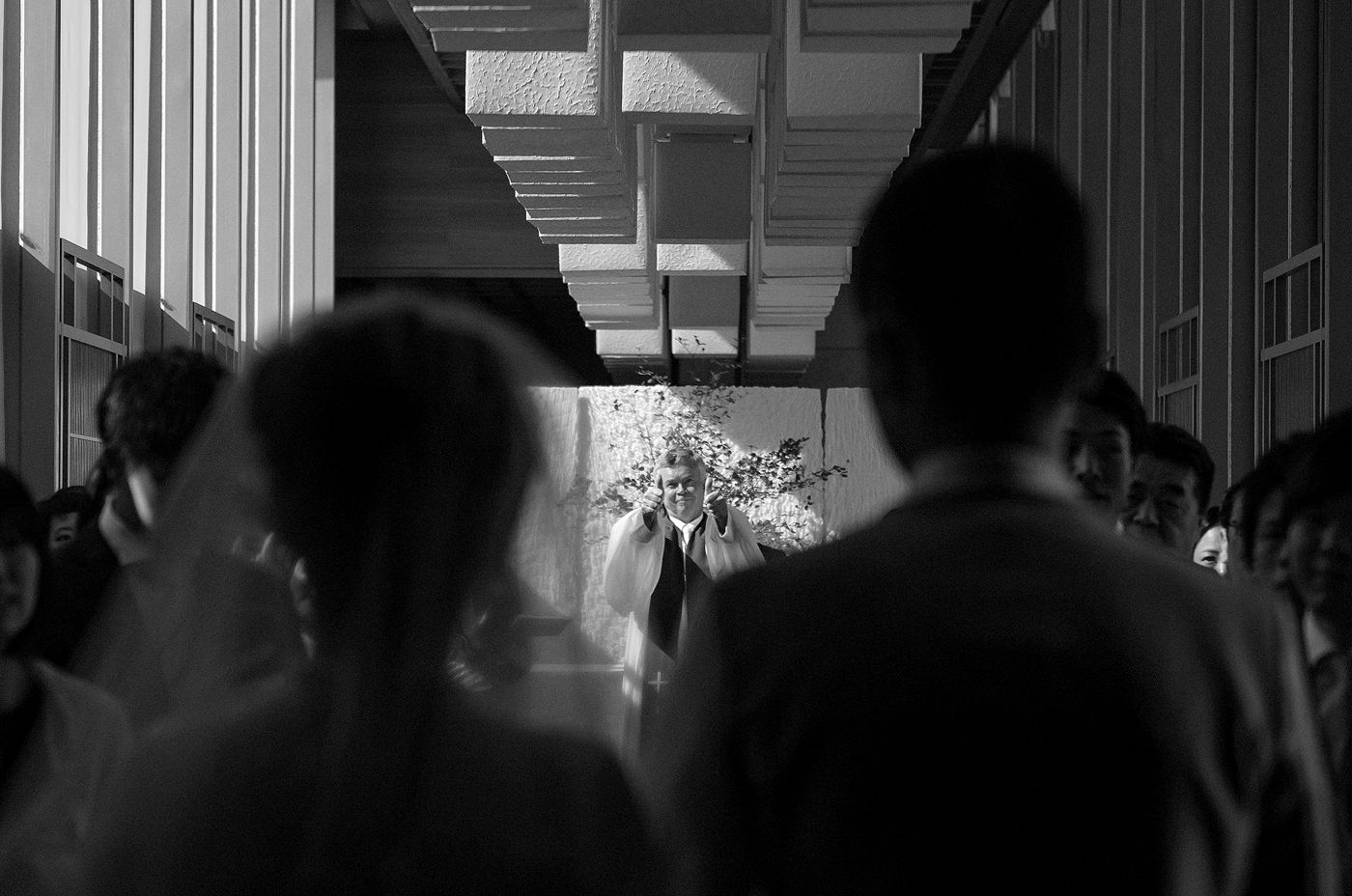
The groom also had advice for getting through it. Whenever she started to cry, she was to look at how much their officiant was sweating.
The law asks nothing of the person at the front of your ceremony. You can ask everything.
The Short Answer: Who Can Be a Wedding Officiant in Japan
A wedding officiant in Japan can be anyone you choose. A ceremony of your own can be led by a celebrant, a friend, someone from your family, someone from our team or the two of you alone, in whichever languages your families speak. A Shinto or Buddhist ceremony is led by the shrine’s or the temple’s own priests, in Japanese, in the order they set. If you want to be legally married, that happens separately: at a ward office in Japan, or at home under your own country’s rules.
| Who leads | What they bring | Language | Where it works |
|---|---|---|---|
| Someone who knows you | Every word carries the years behind it | Yours, often with a line of Japanese | A garden, a ryokan, a forest, a field, a beach |
| Someone from our team | A year of planning together, and the whole day in their head | English | Anywhere, and especially an elopement |
| A celebrant | A structure, and the words to hold it | English, Japanese or both | Anywhere a ceremony of your own can happen |
| A Shinto priest | A rite before the kami, the shinzen-shiki | Japanese | At a shrine, in the shrine’s own order |
| A Buddhist priest | A quieter rite, and a rarer one | Japanese | At a temple |
| The two of you | Nothing between you but what you’ve decided to say | Yours | Anywhere you can be alone |
Someone Who Knows You
Most of our couples marry legally at home and hold their ceremony in Japan, and many of them ask someone they love to lead it.
Japanese couples have a name for this kind of wedding: jinzen-shiki, a ceremony before the people. The guests are the witnesses, and they approve the marriage, often with applause. Anyone can lead it. In the Tokyo area it has grown from about one wedding in six in 2018 to just over one in four in 2024.
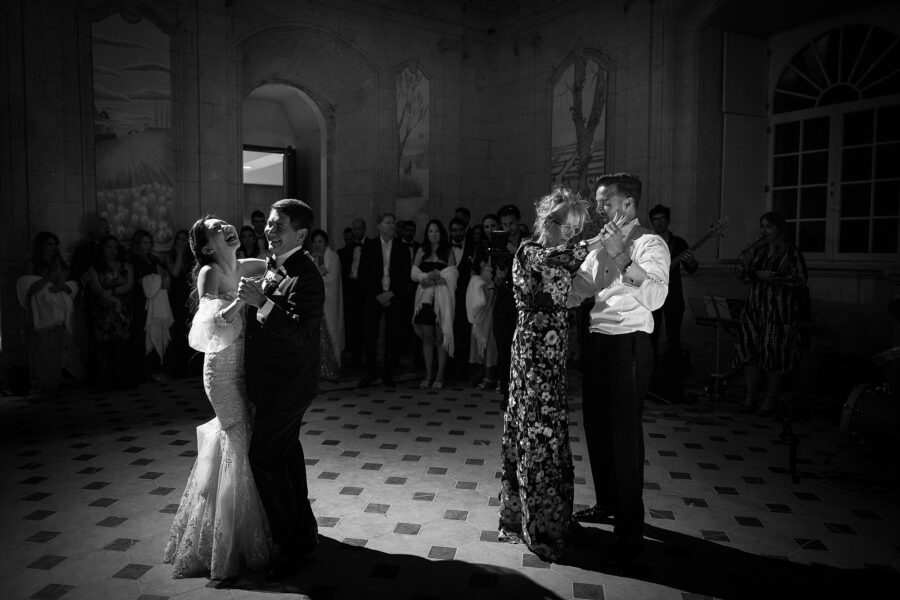
At a house music wedding at Jinya, her father walked her in and her brother married them. At another Jinya wedding, the groom’s sister led the ceremony and told everyone what the maalai garlands of his Sri Lankan Tamil heritage mean: accepting each other as partners for life, accepting each other’s families, and a willingness to work things out together for as long as the marriage lasts. At an onsen wedding, a friend who had known the groom since childhood brought a line of Japanese for the occasion: anata no soba ga watashi no okiniiri no basho. Together with you is my favourite place to be.
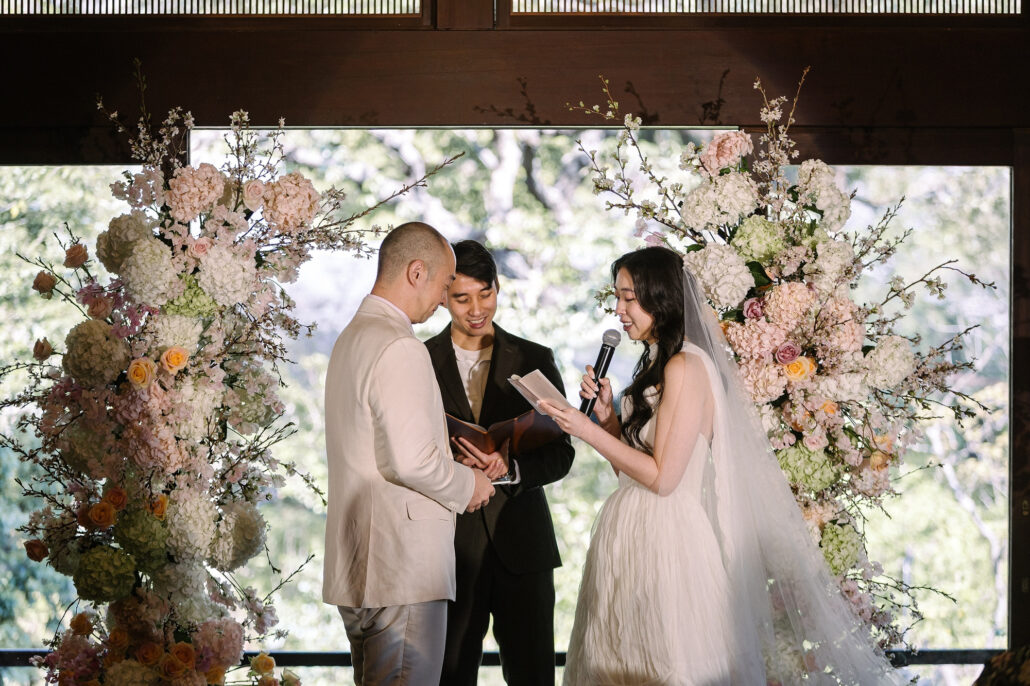
Nobody hired could have said any of it. That’s the gift of a friend at the front. Nothing needs introducing, and every sentence carries the years behind it.
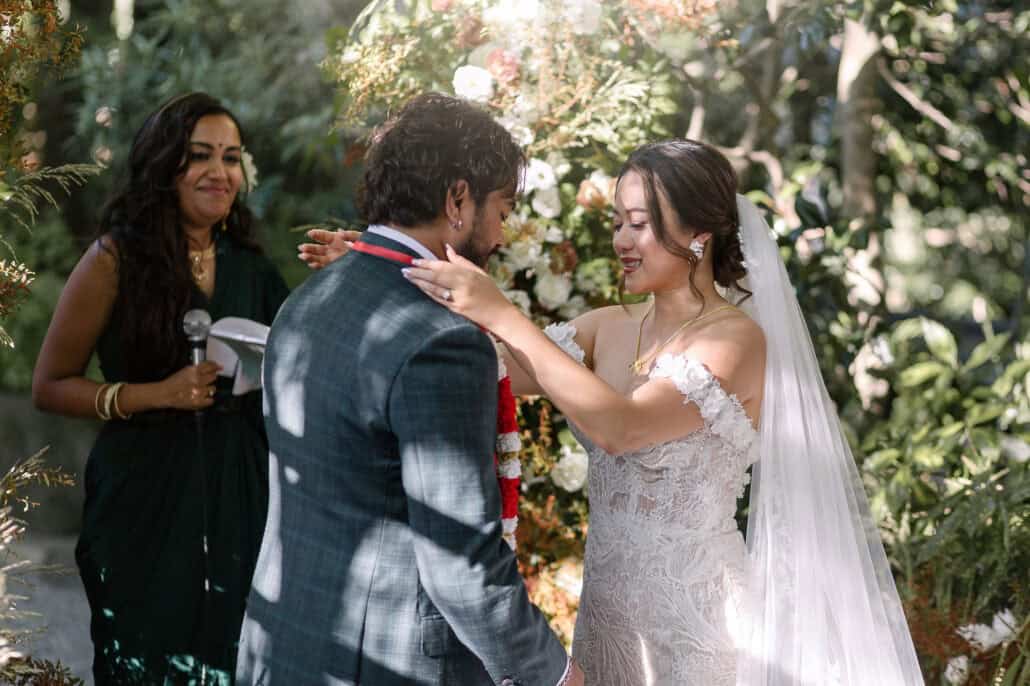
It does ask a lot of them. Most people who lead a wedding have never led one before, and they’re doing it in a country they may never have visited, in front of everyone they love. So we shape the ceremony with them. We agree the order, and where each tradition sits: the sake, the rings, a reading, a cord to tie or crowns to hold. We decide which lines are in which language, who holds the rings until they’re needed, and where everyone stands so nothing comes between your guests and your faces. On the day they get a microphone they’ve already tried, and a quiet minute before they begin.
Someone From Our Team
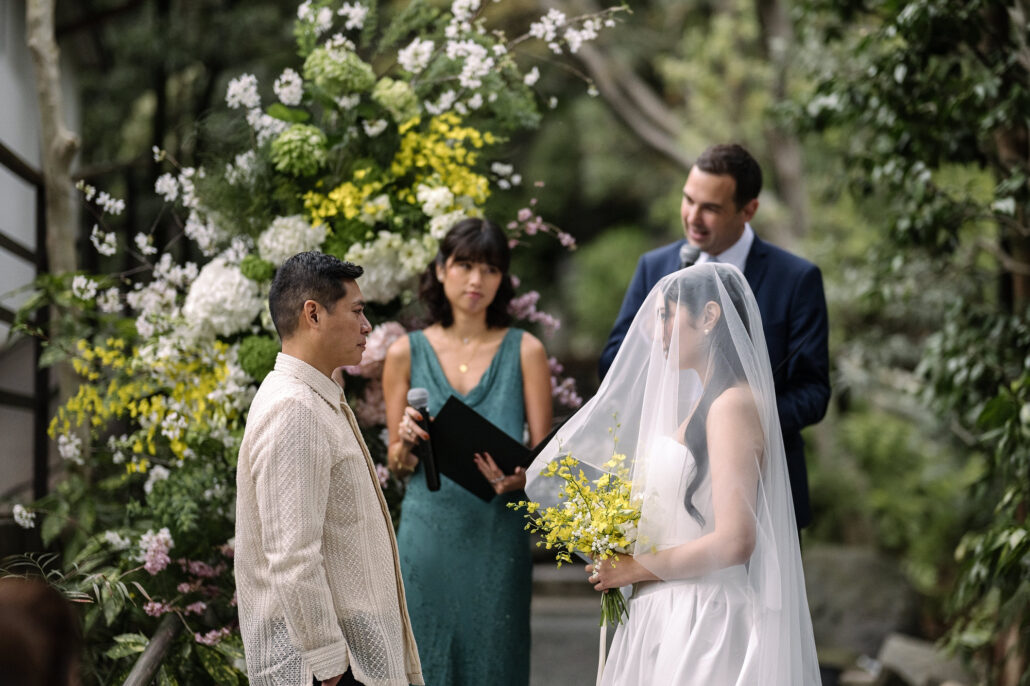
By the wedding day, the people who know your wedding best are often us. So for many of our elopements, and for some of our weddings, the person at the front is one of our team.
We’ve spent a year planning together. We know why you chose the place, and what you want the day to feel like. We know the story of how you met, and which version of it you tell. We know the joke that will make your guests laugh and the line that will undo you. Leading the ceremony is the natural end of a conversation that started a year before.
For an elopement it can be the most natural choice of all. There’s nobody else there to ask, and it means the whole morning is held by people you already trust. We write the ceremony with you, in your own words, and the person who reads it to you is someone who has been beside you the whole way.
A Wedding Celebrant in Japan
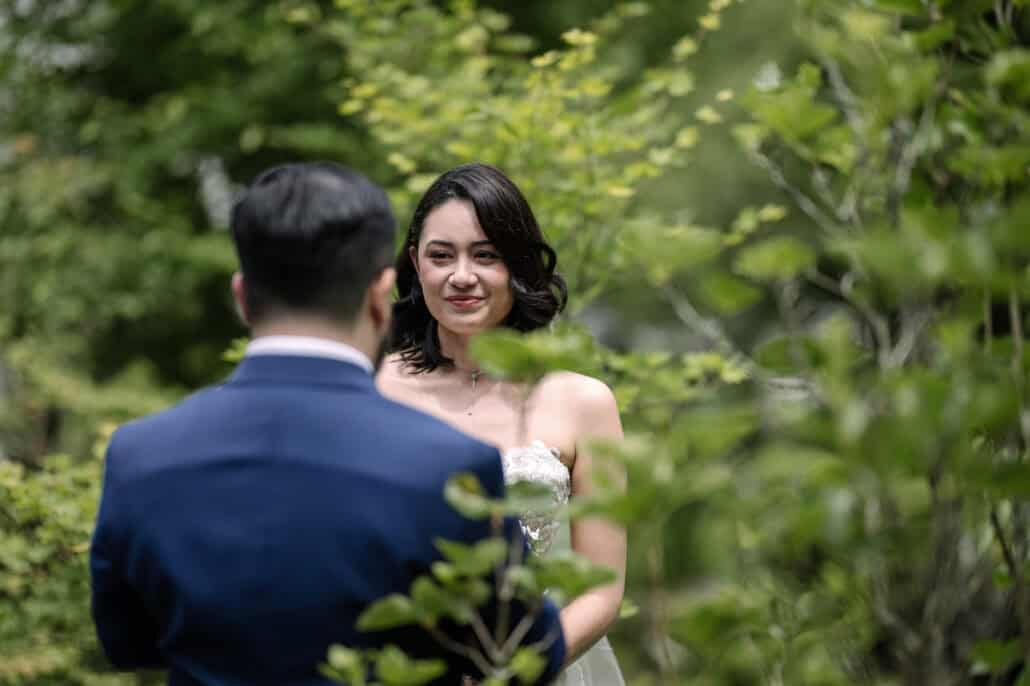
Sometimes nobody in your circle wants the job, or everybody would rather simply be there. A celebrant brings a structure and the words to hold it, and in Japan, often two languages.
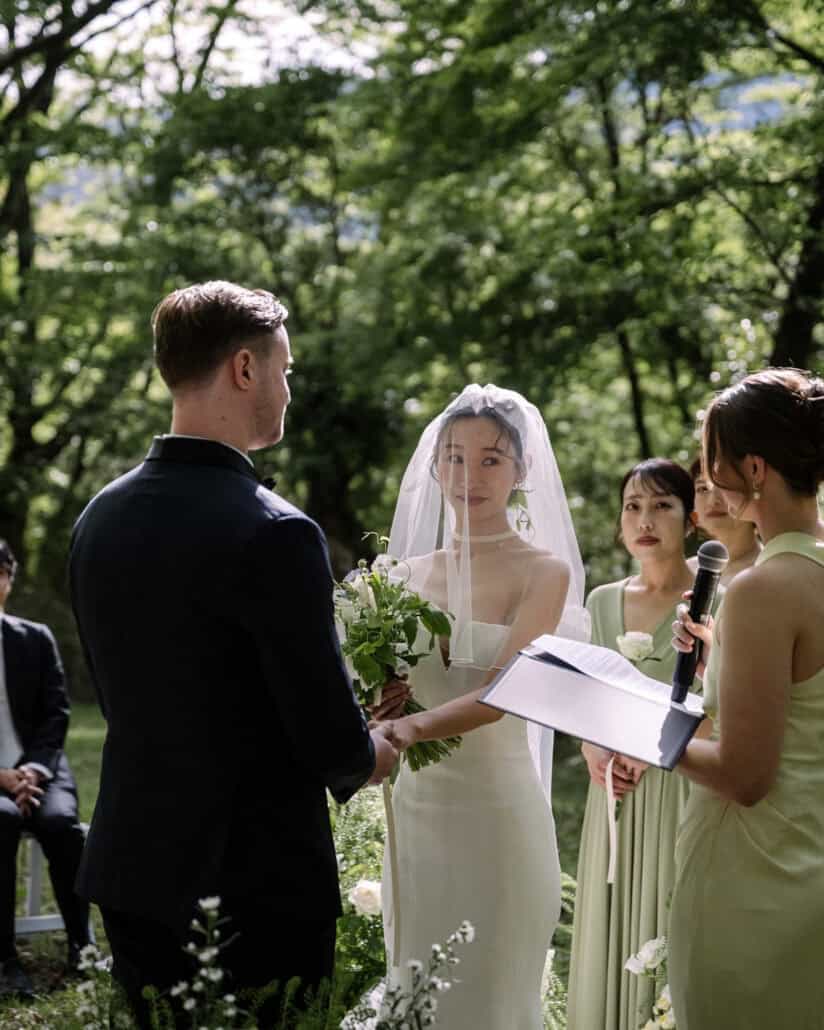
The best ones listen before they write. At a forest wedding in Hakone, the officiant spoke about the place as forest, fire and water, a landscape with volcanic life beneath it. Then came san-san-kudo, the three shared cups of sake, which the officiant framed as the past, the present and the future. The couple said their vows in English and Japanese.
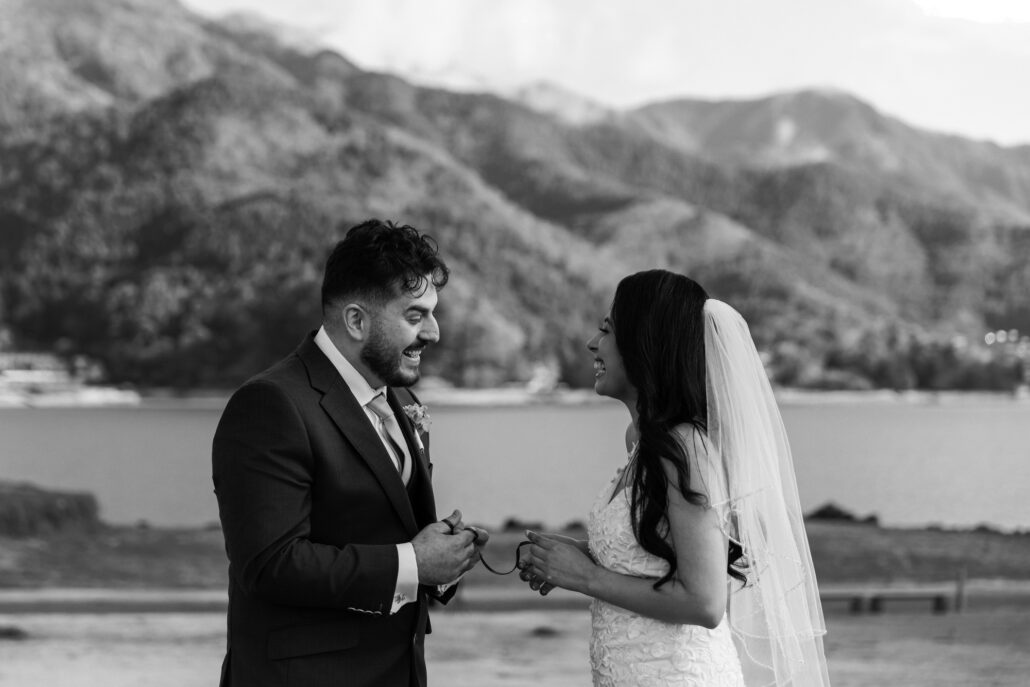
At Mt Fuji, a celebrant told the old Chinese story of the red thread: the person you’re meant to marry is tied to you from birth by a cord no one can see. It can be stretched by distance or tangled by life, but it never breaks. Theirs had already been stretched a little.
A celebrant needs no licence here, for the same reason a friend doesn’t, and there are celebrants in Japan who lead ceremonies in English. When couples ask, we introduce celebrants we’ve watched work, and we take no commission or referral fee from any of them.
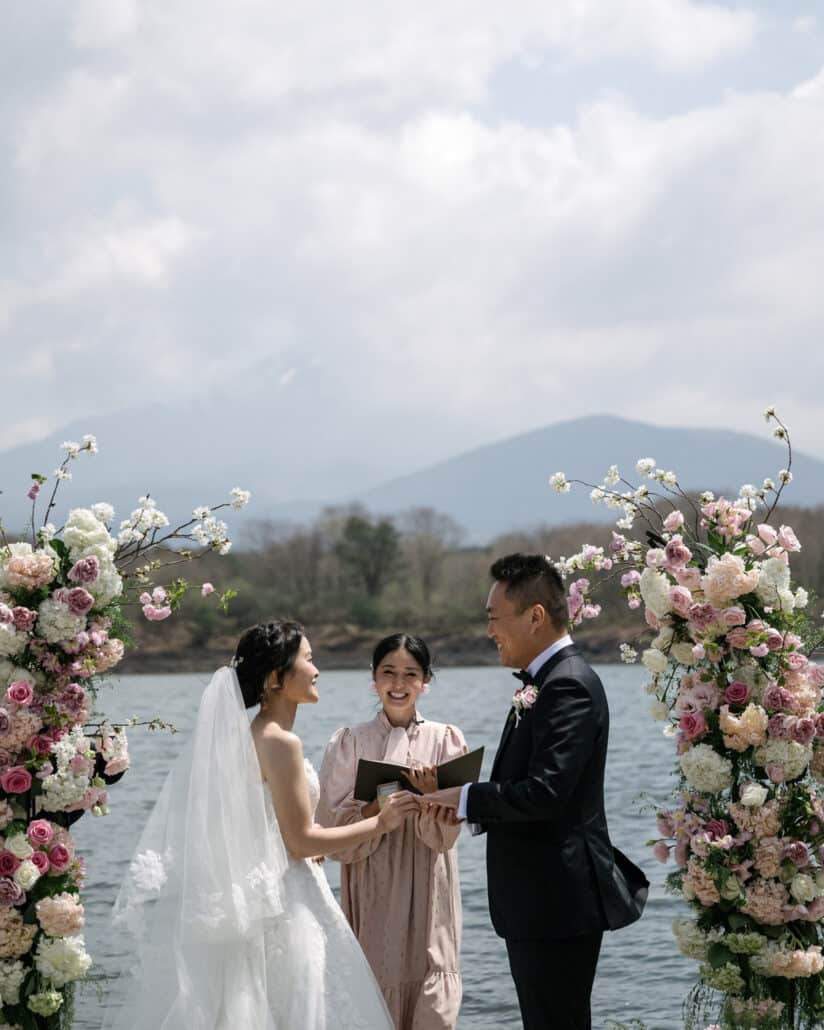
For couples who’d like a professional, we bring in Allie Sakakibara. We first met her as a guest at a Park Hyatt Tokyo wedding. She’s an exceptional bilingual MC, raised in the American Midwest and at home in Japan for more than twenty years, and she turned out to be a beautiful celebrant too. At Lake Shoji she led one couple’s ceremony on the shore, before a long dinner at a winery on the Shizuoka side of Mt Fuji. She can make a room laugh in English and in Japanese, which is rarer than it sounds.
A Shinto or Buddhist Priest
A Shinto wedding at a shrine, the shinzen-shiki, is a ceremony before the kami: a religious rite, not one designed around you. The shrine’s priests lead it in Japanese, with shrine maidens beside them, in an order each shrine sets. Most follow the same shape: a purification, the presiding priest’s prayer to the kami, san-san-kudo, the couple’s vows read aloud, an offering of a sakaki branch, and sake shared between the two families. Some shrines add a ring exchange or a sacred dance. It’s short, and it isn’t staged for visitors. That’s part of its weight, and many shrines welcome couples from overseas who understand what they’re taking part in. Our Shinto wedding guide covers what to expect.
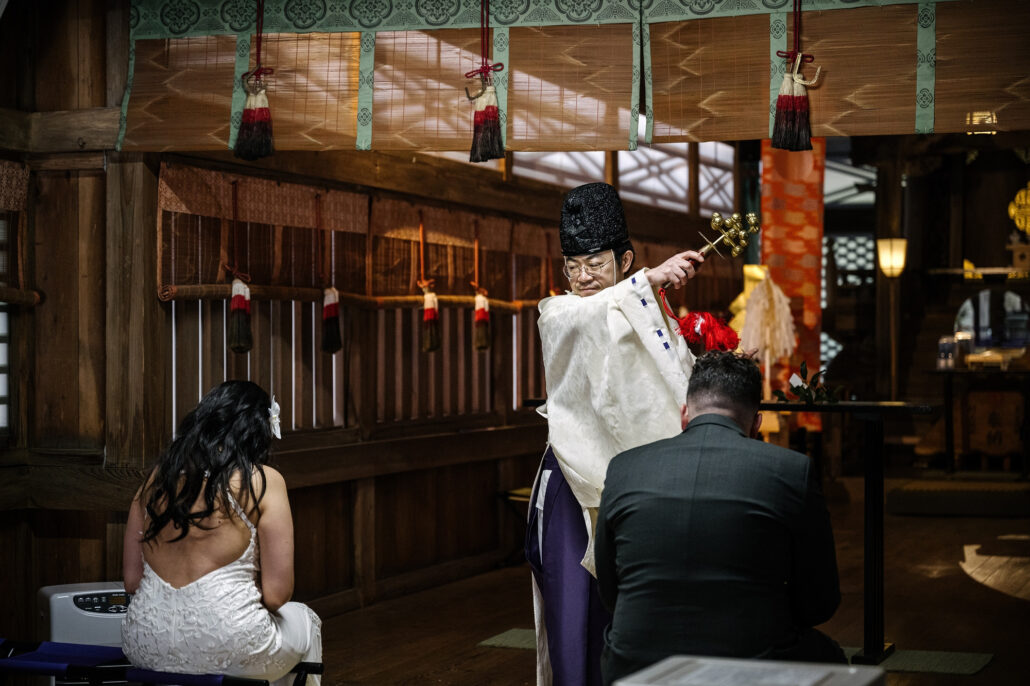
Even a short blessing is led with care. At a Tokyo shrine, the priests showed one couple each step as it came: the bows, the shared sake, the prayer at the offering box, the bell.
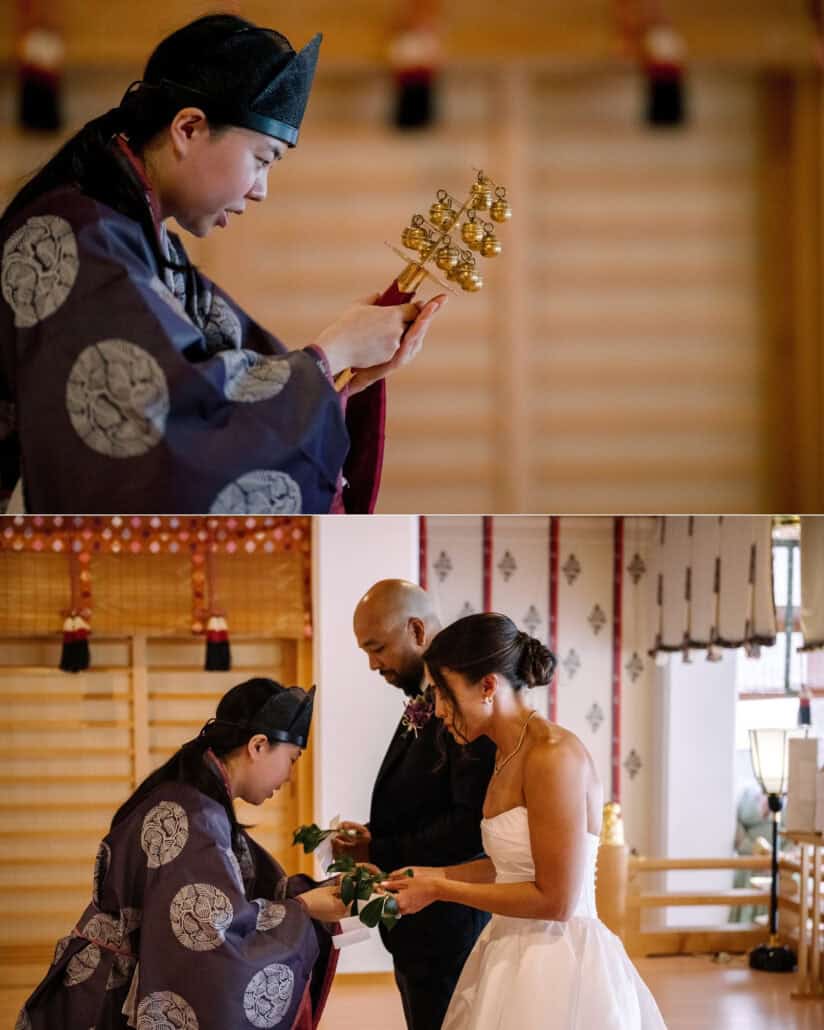
Some couples want both. At Mt Fuji, the couple who heard the red thread story by the lake went on to a shrine, where a priest led them through the rite and they offered the evergreen branches a Shinto blessing asks of you. Their celebrant had told a Chinese story about a thread. The priest stood for an older Japanese one, about a marriage, a mountain and the blossom.
A Buddhist ceremony is rarer and quieter. In Zexy’s 2024 survey of couples in the Tokyo area, fewer than one couple in a hundred chose one. At Nishi Hongwanji in Kyoto, a priest leads the couple through their vows, an offering of incense and a short talk, and gives them prayer beads to keep. At a temple at the foot of Mt Fuji, a priest moved among the guests pouring sake into each red lacquer cup.
Japan’s hotels and wedding halls also have chapels, and a Christian-style wedding is still the most common ceremony in the Tokyo area: just over half of couples in Zexy’s 2024 survey. For most Japanese couples it’s a style rather than a faith. If faith is the reason you want a church wedding, ask who will lead it.
The Two of You
Some couples want nobody at the front at all. In Niigata, one couple’s plan for their ceremony was a single line: “We will just do our vows and rings.” They stood together on a stone bridge over the water in a garden and read each other words they’d written themselves.
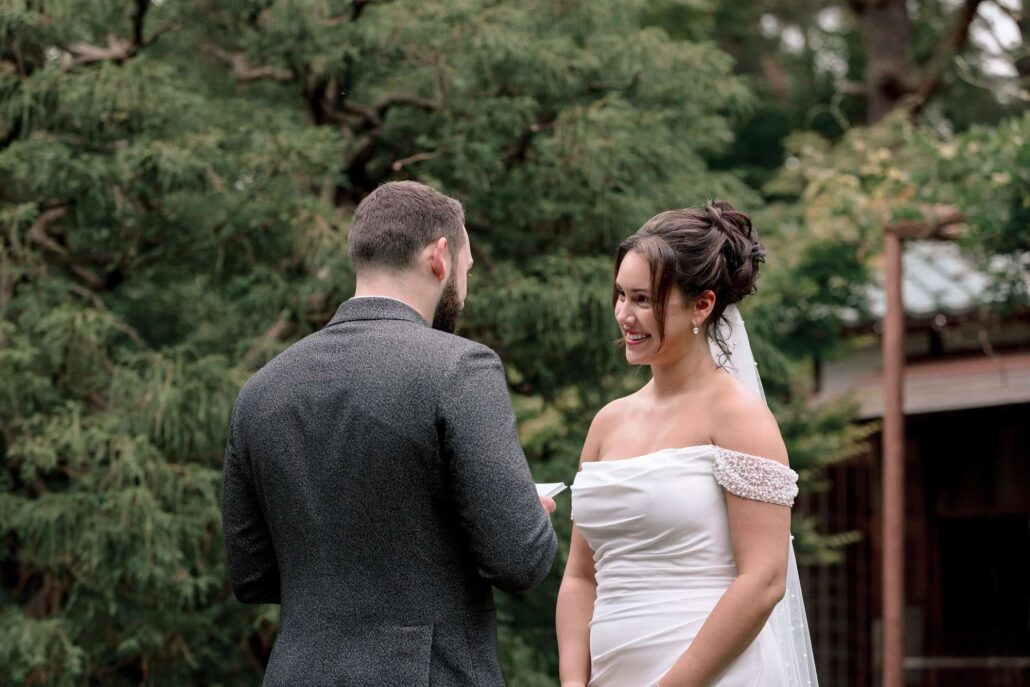
There’s nothing to hide behind in a ceremony like that, and that’s the point. No one sets the pace and nobody performs. It asks more of two people than a full wedding does, and it gives more back.
Whoever Leads, We Shape It With You
The person at the front is one decision among many, and it shapes all the others. A friend changes what can be said. A priest changes where you can be. A celebrant changes how the two languages in the room meet. So we shape the ceremony around whoever you choose: the order, the traditions you’re bringing and the ones you’d like to borrow, the sound, the light, and the minute afterwards when nobody has anything to do but be married.
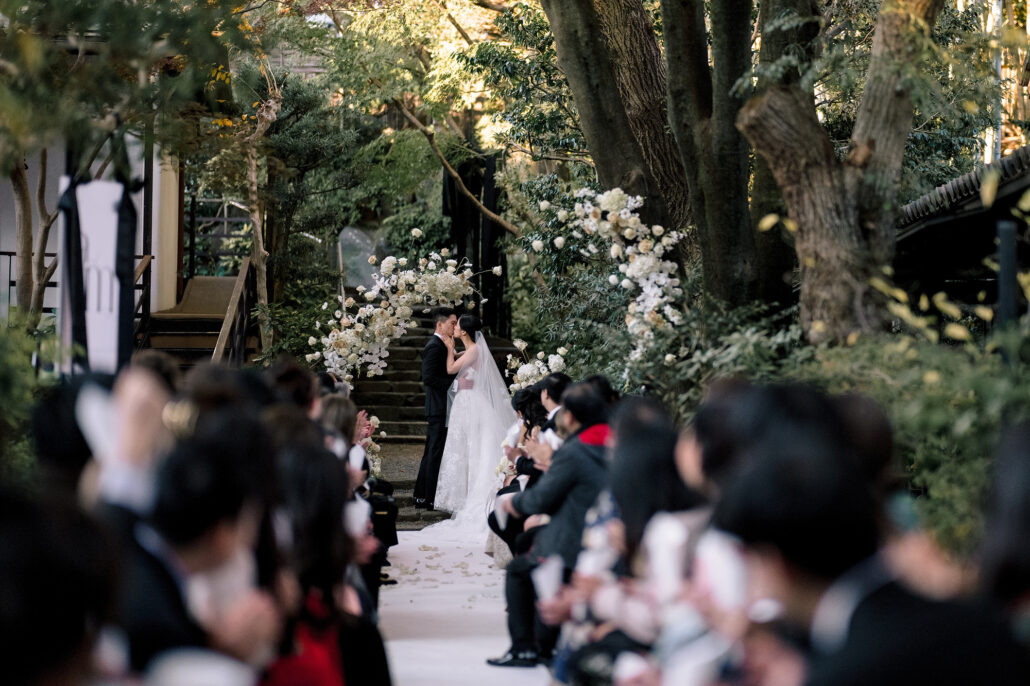
Choose the voice you’ll want to hear when you look back.
If You Want to Be Legally Married Too
In Japan, the ceremony and the legal marriage are entirely separate. To marry legally here, you file a marriage notification, the konin todoke, at a city or ward office, with two adult witnesses. Our Japan Wedding Guide walks through the steps, and getting legally married in Japan covers which order suits you. Most couples marry legally at home instead, where the rules about who can marry you are your own country’s: in Australia, an authorised celebrant; in England and Wales, a registrar, or an authorised person at a religious ceremony; in the United States, it depends on the state.
More Questions About Wedding Officiants in Japan
Does a wedding officiant in Japan need to be licensed?
No. No wedding ceremony in Japan is legally binding, so nobody needs a licence to lead one. A legal marriage is made by filing a marriage notification at a city or ward office.
Can a friend marry us in Japan?
Yes. A friend can lead your wedding ceremony in Japan, because no ceremony here is legally binding and nobody needs a licence to lead one. If you also want to be legally married, do that at home under your own country’s rules, or at a ward office in Japan. Many of our couples are married by a close friend or someone from their family.
Can we hold our ceremony in Japan if we’re already legally married?
Yes, and most of our couples do. They marry legally at home, before or after their trip, and hold their ceremony here. A ceremony in Japan has no legal part, so it can be led by anyone you choose, in any language.
Does a wedding ceremony in Japan have to be religious?
No. A ceremony of your own has no religion in it unless you bring one. Japanese couples call this form the jinzen-shiki, a ceremony before the people, and by 2024 it was just over one wedding in four in the Tokyo area. A shrine’s or temple’s rite is religious, and some of our couples have both.
Can we write our own vows?
Yes. In a ceremony of your own, the vows are yours: written together, written apart, or kept from each other until the moment. We shape the ceremony around them, and our piece on vows is a good place to start. A shrine’s or temple’s rite keeps its own words, and your vows can sit beside it, in a ceremony of your own on the same day.
Can we have a Shinto ceremony and say our own vows?
Yes, on the same day. The shrine’s rite keeps its own order and its own words, in Japanese, so your own vows belong in a ceremony of your own, in a garden, a ryokan or a forest. A shrine blessing can follow, and some of our couples do both.
Can someone from your team lead our ceremony?
Yes, and at 37 Frames it often happens, especially for elopements. After a year of planning together, we know the two of you and the spirit of the day as well as anyone there. We write it with you, in your words.
Do we need an English-speaking celebrant?
Only if you want one. A ceremony of your own can be in English, in Japanese or in both, led by a bilingual celebrant like our fabulous friend, Allie Sakakibara, by someone from our team or by someone you love. A shrine’s or temple’s rite will be in Japanese.
Can the ceremony be in two languages?
Yes, and it’s often the most moving part. At a forest wedding in Hakone, the couple said their vows in English and Japanese. At a garden wedding in Tokyo, one friend led in English and another in Japanese. Our guide to a bilingual wedding in Japan covers the rest.
What if we don’t want anyone to lead?
Then nobody does. You can say your vows and exchange rings on your own, wherever you choose to be. If nobody else is there, it’s an elopement. And it’s all yours.
Whoever Knows You Best
The law here has nothing to say about who marries you. That leaves the choice where it belongs: with the two of you, and the voice you want to hear.
Updated November 2026. A planning overview, not legal advice: for a legal marriage, confirm the rules with the office where you’ll file, in Japan or at home. Sources: Japan’s Ministry of Justice, the marriage notification (Japanese), and Civil Code, Article 739; Jinja Honcho, the Shinto wedding (Japanese); Nishi Hongwanji, Buddhist weddings (Japanese); Recruit, Zexy wedding trend survey 2024, Tokyo area (Japanese); Zexy, the jinzen-shiki (Japanese); Nippon.com, weddings in Japan; Australia’s Attorney-General’s Department, marriage celebrants; GOV.UK, planning your ceremony.