For well over a century, the first snow on Mt Fuji was declared by a person looking at it.
Every autumn, staff at the weather office in Kofu watched the summit and named the day it turned white for the season. On average, that day falls on 2 October. The latest on record was 7 November 2024, in a year when the summit stayed bare well into autumn. From this season, the call belongs to a computer model of snow depth instead. The mountain hasn’t changed. The person looking up has been retired.
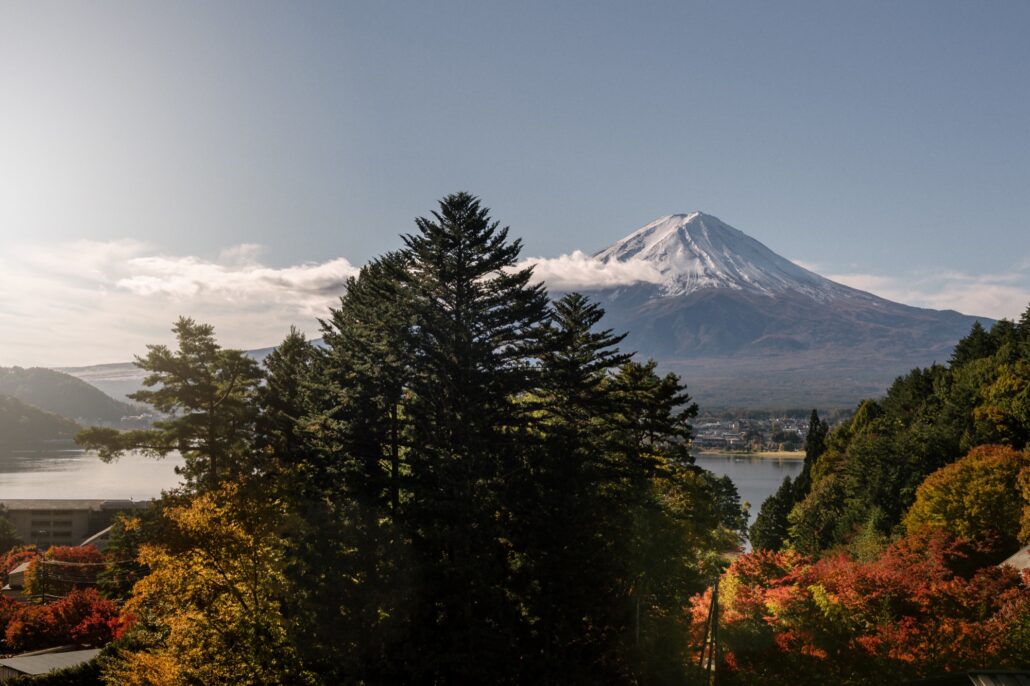
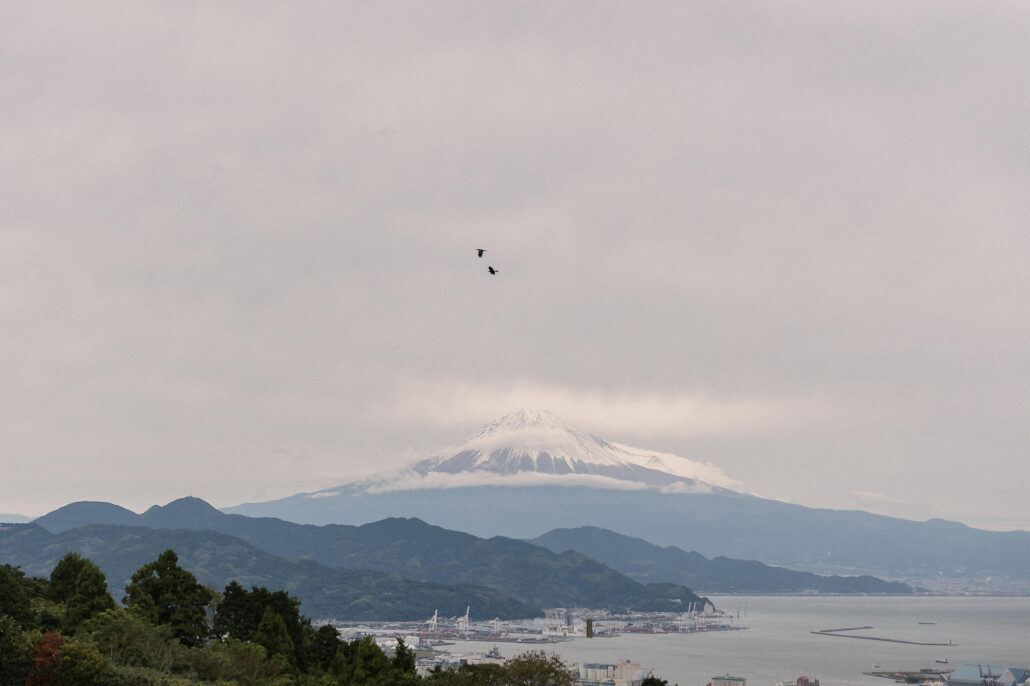
As we write in mid-October, the summit is still bare.
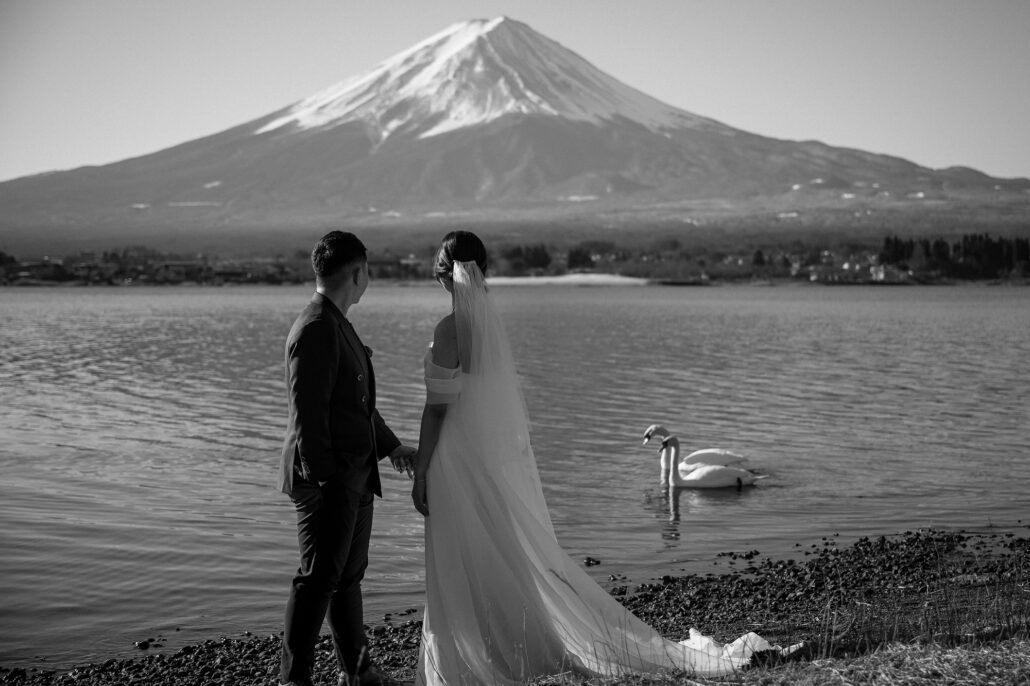
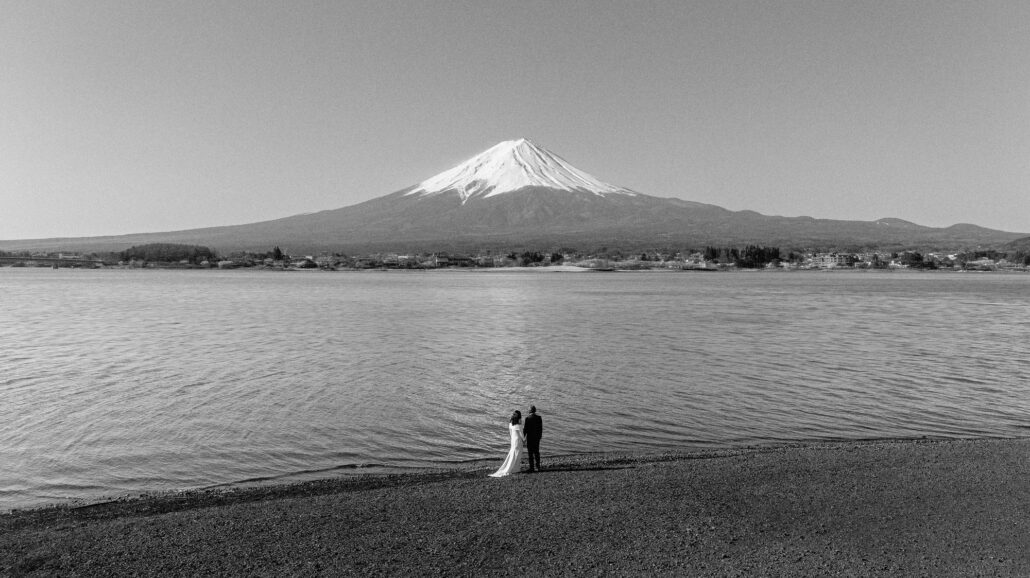
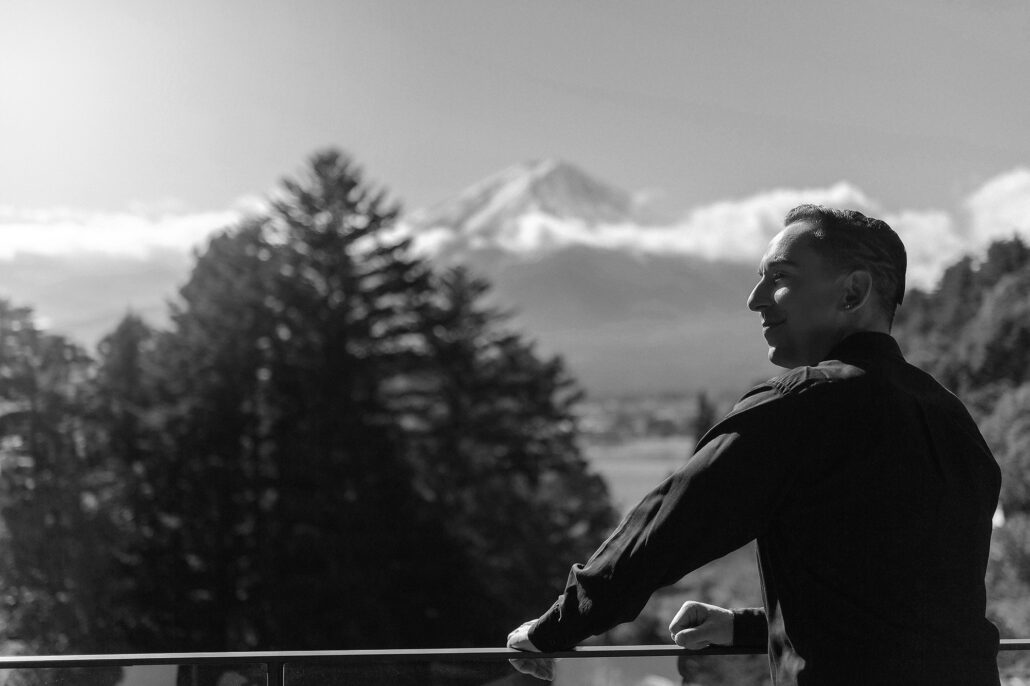
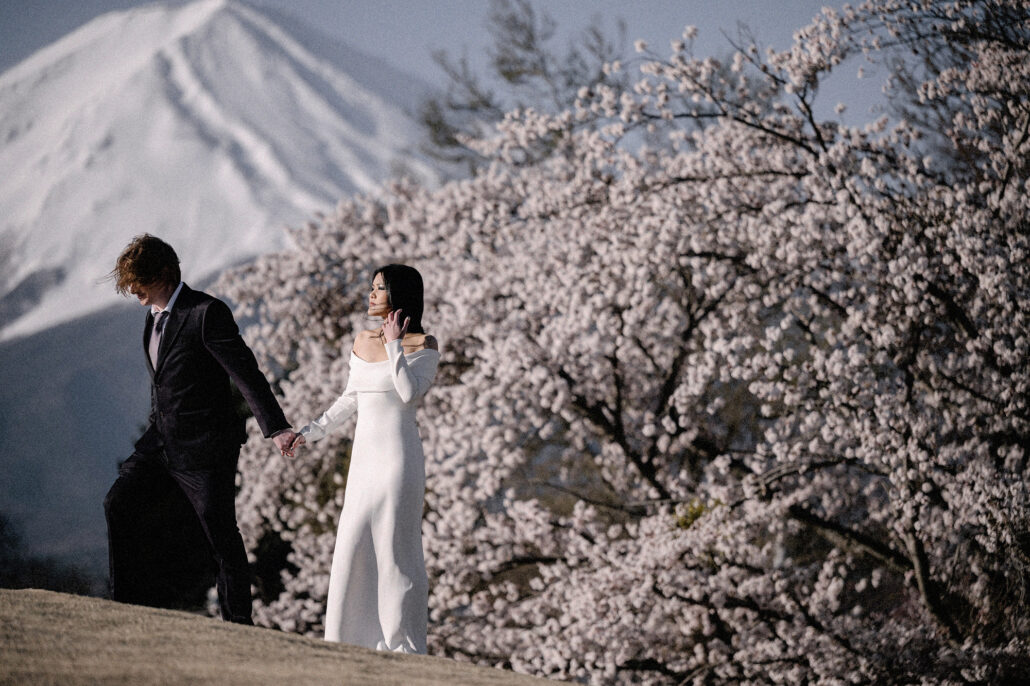
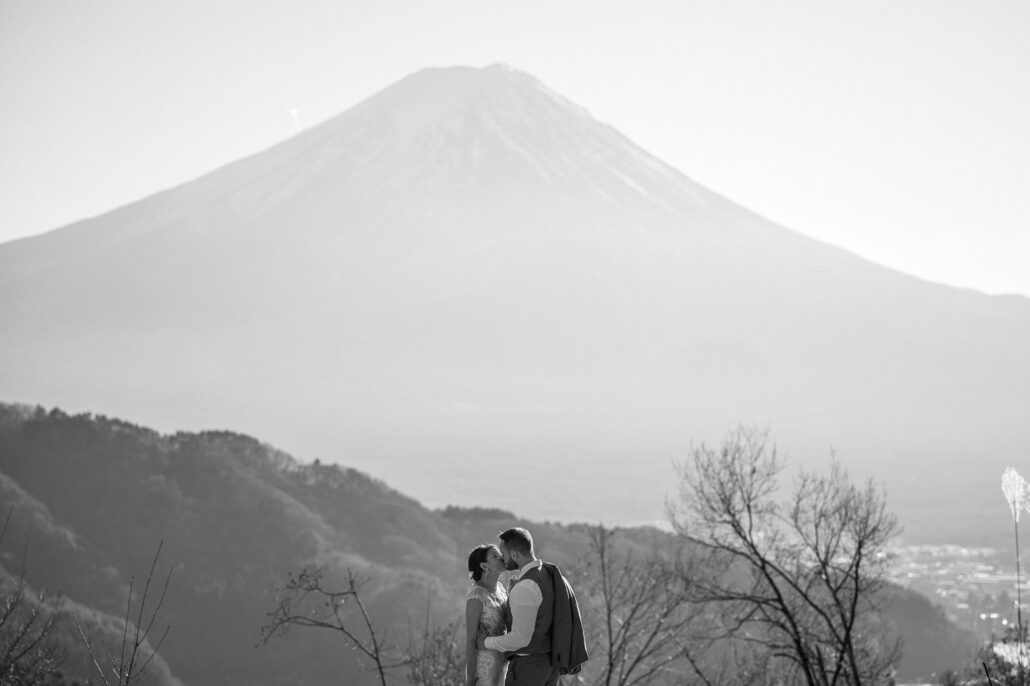
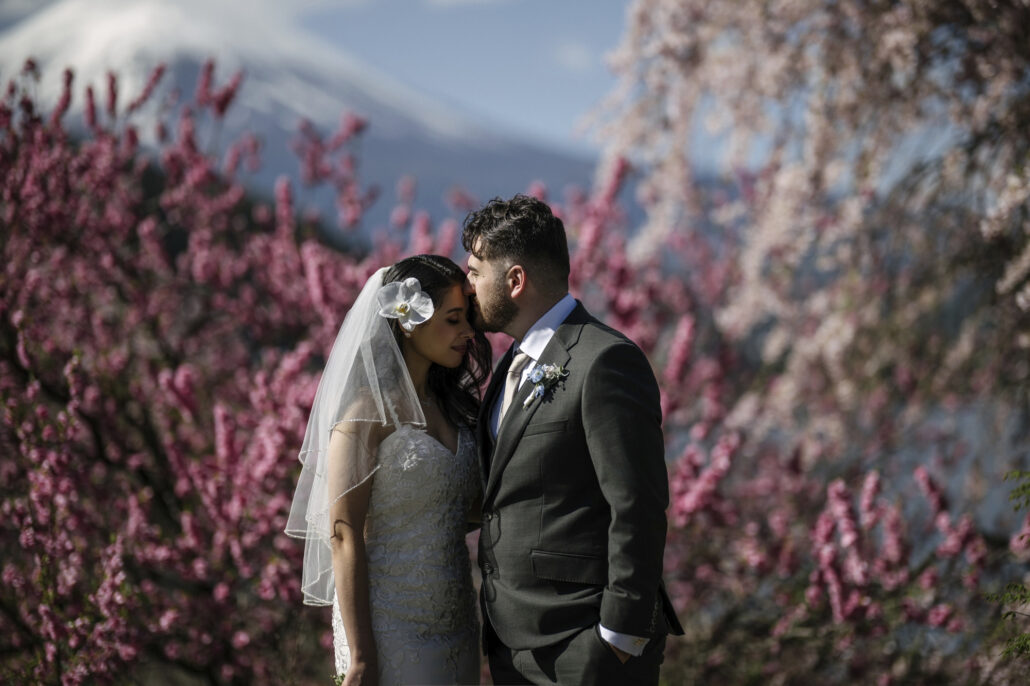
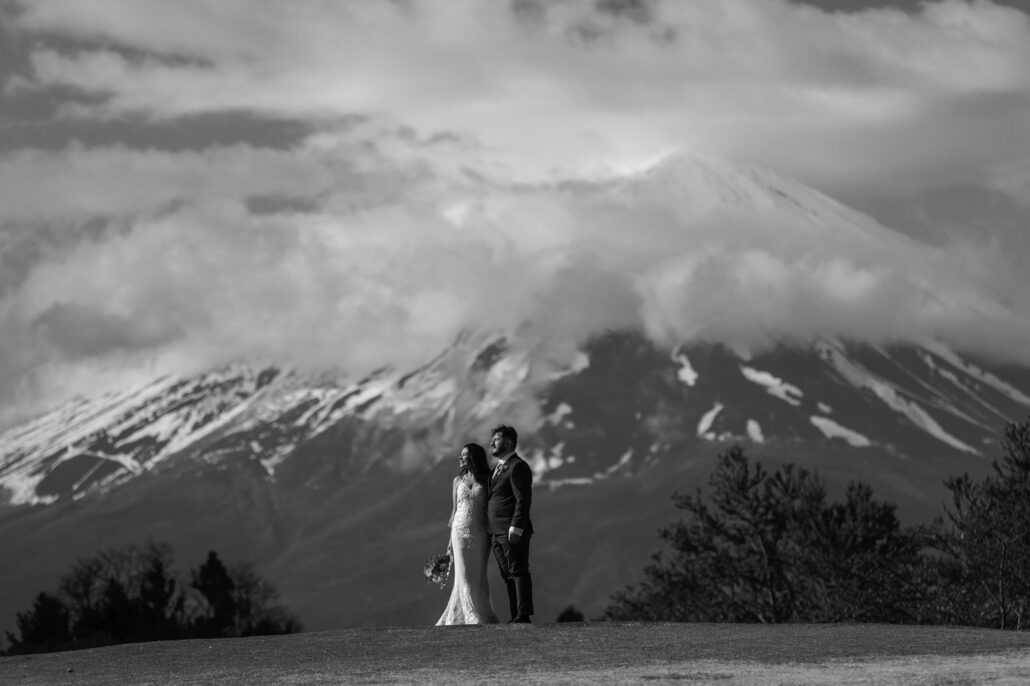
The rest of Mount Fuji weather is still read the old way, by people standing at the lakes and looking up. We spend a good part of every year doing exactly that, usually before sunrise, on behalf of couples who have come a long way to stand in front of this mountain.
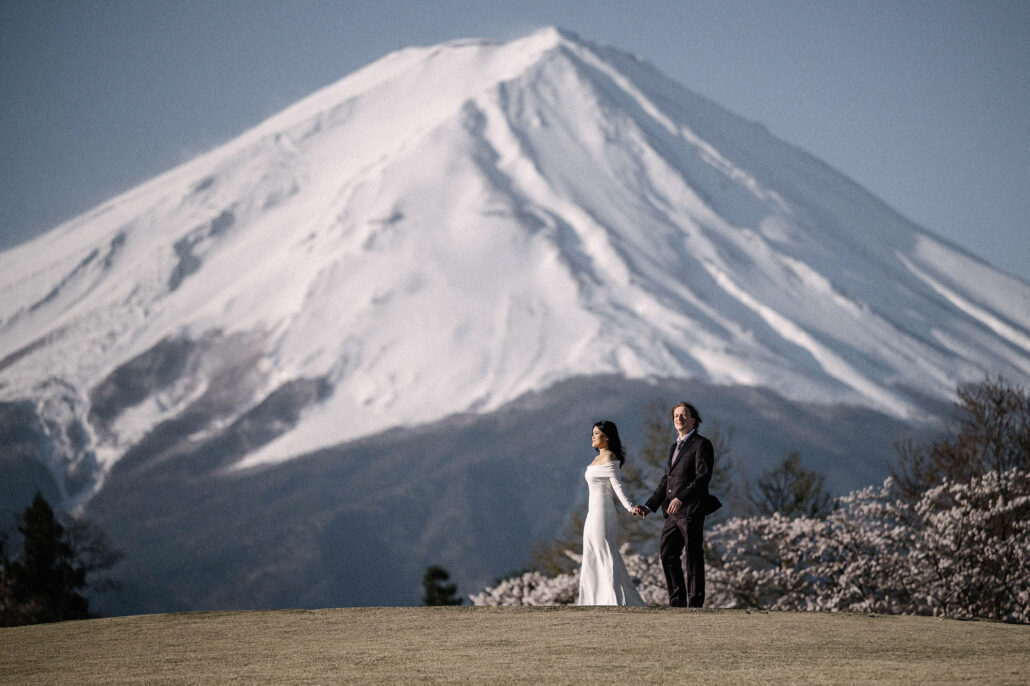
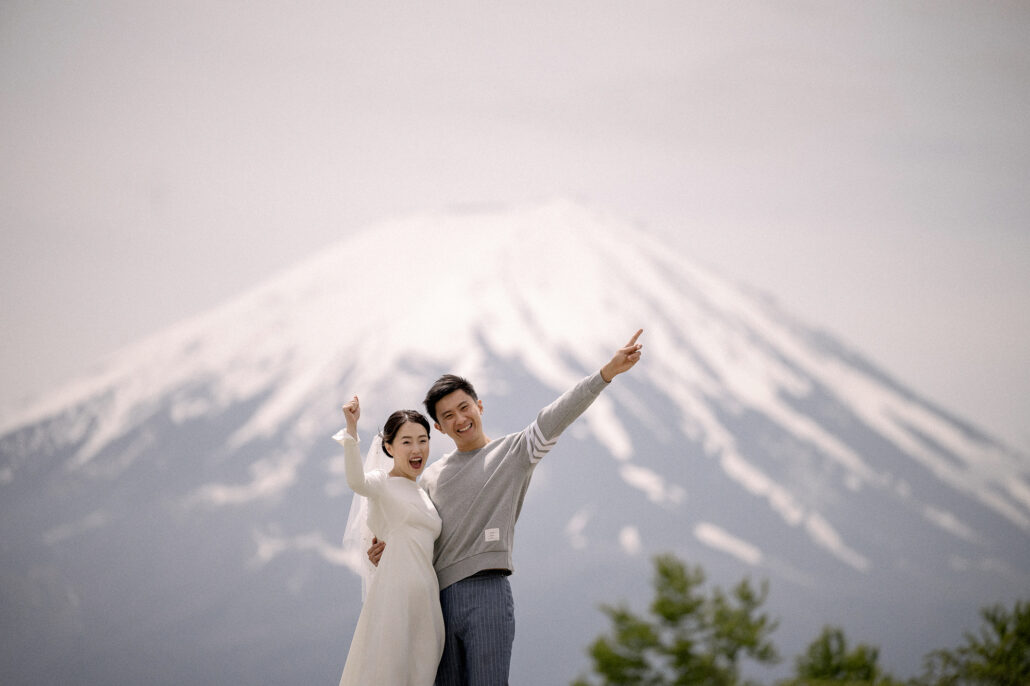
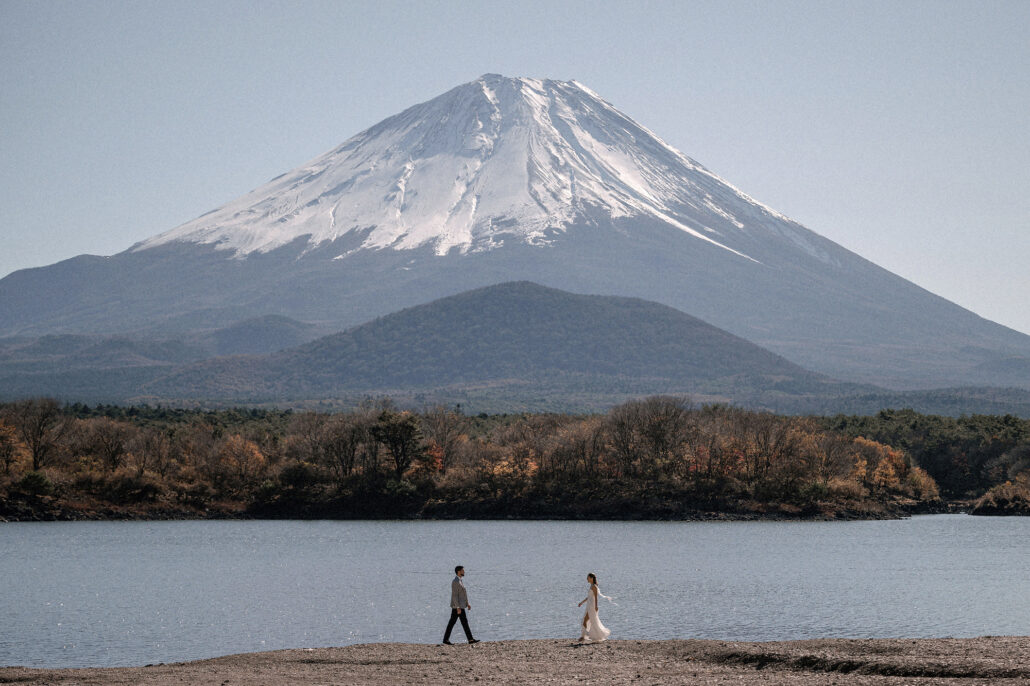
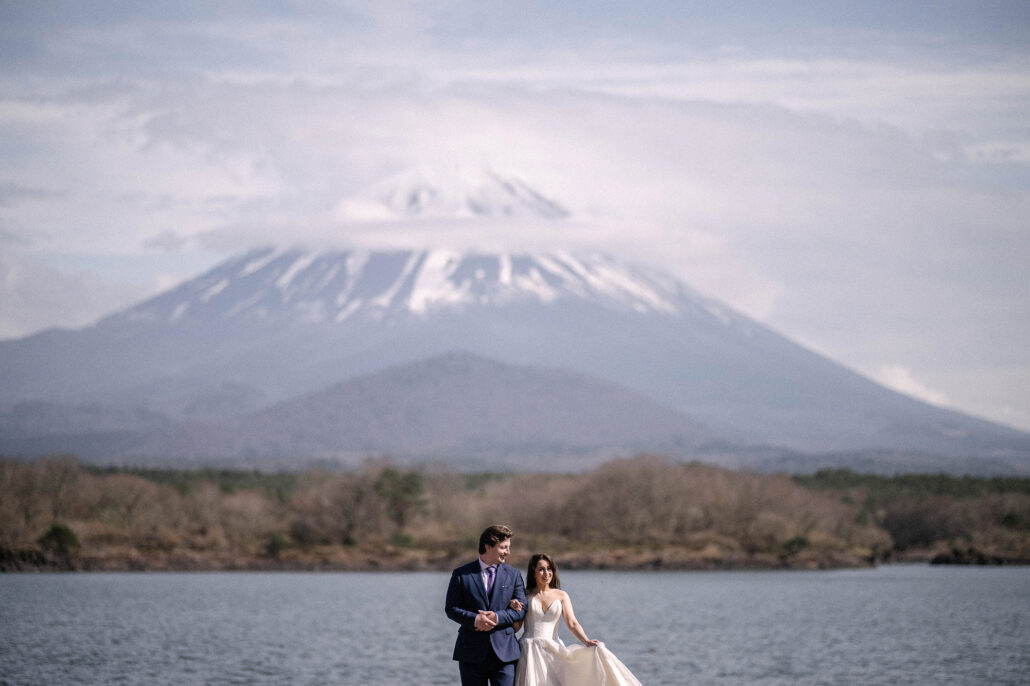
When Fuji Wears a Hat
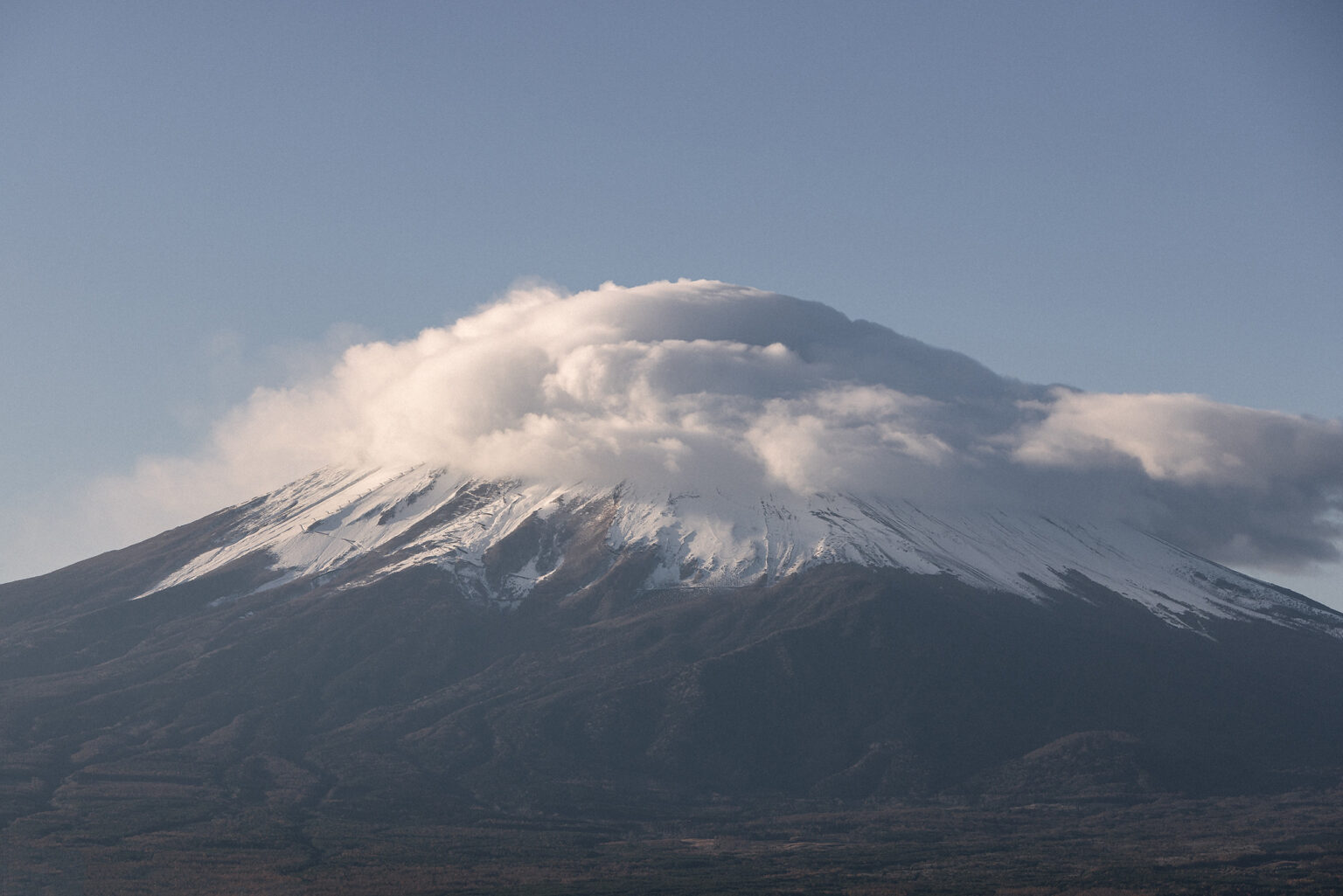
Around the Fuji Five Lakes, there’s a saying almost everyone seems to know: when Fuji wears a hat, rain is coming. The hat is a kasagumo, a cap cloud, a smooth lens of white that settles over the summit and holds its shape while the wind pours through it. One hat means rain. Two, stacked, mean wind and rain. When a tsurushigumo, a hanging cloud, appears off to one side of the mountain as well, the conversation moves from whether to when.
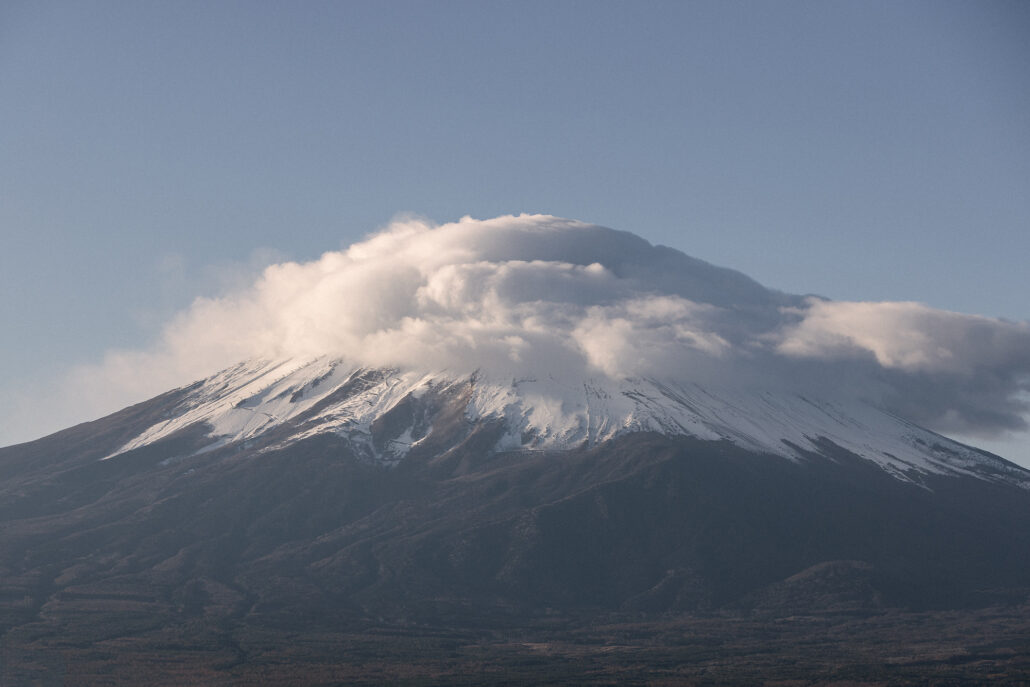
It isn’t superstition. A cap cloud forms when strong, moist wind is forced up the mountain and cools into cloud at the top, which tends to happen as a weather system moves in. Yamanashi’s tourism office puts the chance of rain within a day of a cap cloud at about seven in ten. A three-year study led by the University of Tsukuba, watching the mountain through live cameras, found that hanging clouds form mainly from waves of air set rolling by Fuji itself, on days when the air high above is moist.
So when a couple asks us what the weather will do at Fuji, the most honest forecast isn’t always on a phone. Sometimes it’s on the mountain, the evening before.
The Count Who Filmed Clouds
In 1927, a meteorologist named Masanao Abe, the heir to an old feudal family, built an observatory on the hills at Gotemba, on Fuji’s eastern side, and pointed cameras at the mountain. For about fifteen years he photographed and filmed the clouds that gathered there, sometimes with two cameras set five hundred metres apart so the pictures could be read in three dimensions. He wanted to see how a cloud actually moves over a mountain, and in speeded-up film, he could.
His archive sat in a garden shed in Tokyo for decades before it reached the University of Tokyo’s museum. The films are strange to watch. A lens cloud stays perfectly still above the summit while everything inside it streams through.
We find it reassuring that a scientist with his own observatory needed fifteen years. Nobody masters this mountain’s weather. You learn its habits.
Nobody masters this mountain’s weather. You learn its habits.
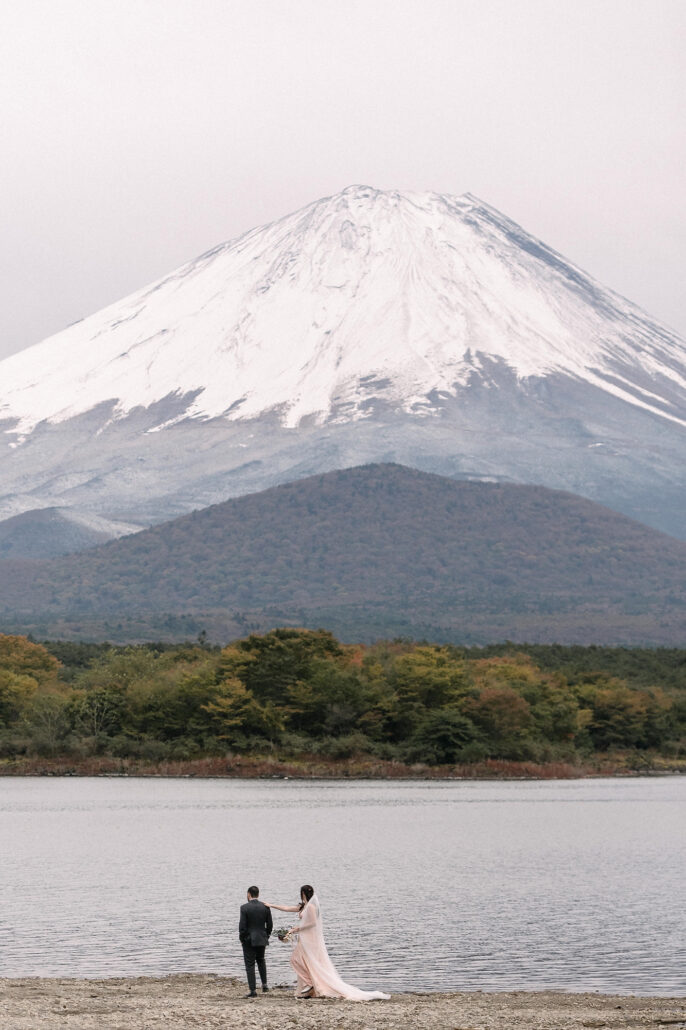
Red Fuji, Pink Fuji, Diamond Fuji
Some of Fuji’s best-known faces aren’t luck at all. They’re weather and timing.
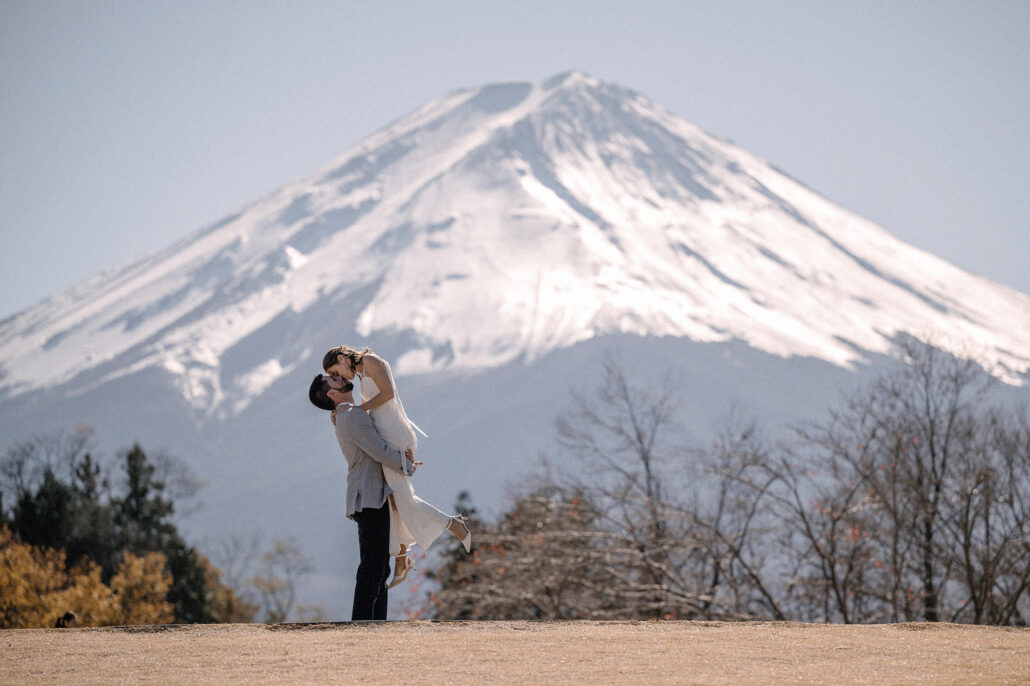
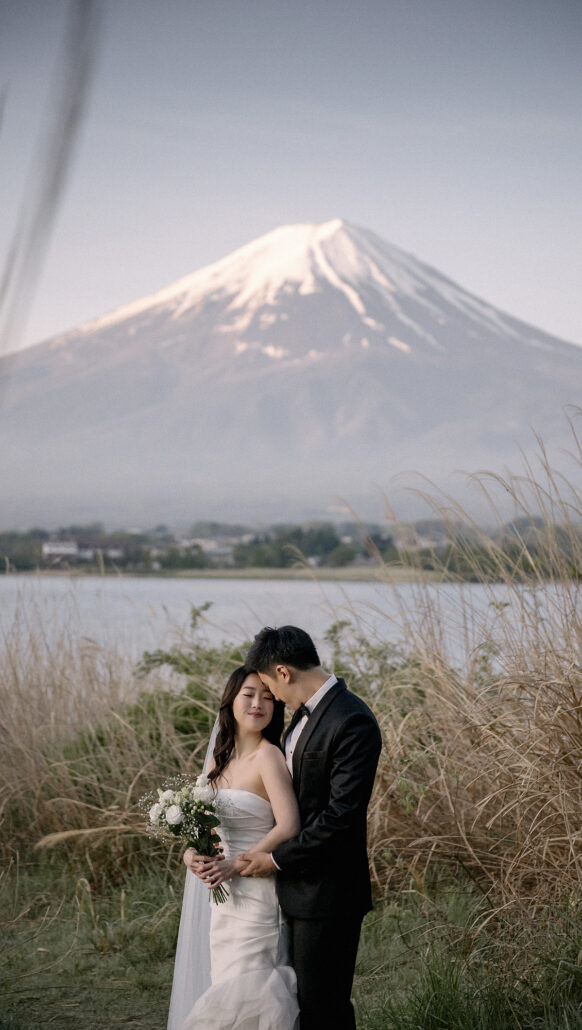
On late-summer and early-autumn mornings, before the snow, the first sun can turn the bare cone a deep rust red. Hokusai printed it that way in Fine Wind, Clear Morning, the red Fuji of his Thirty-six Views. In winter the same low light lands on snow, and for a few minutes at sunrise and sunset the summit glows pink. Locals call it beni-Fuji.
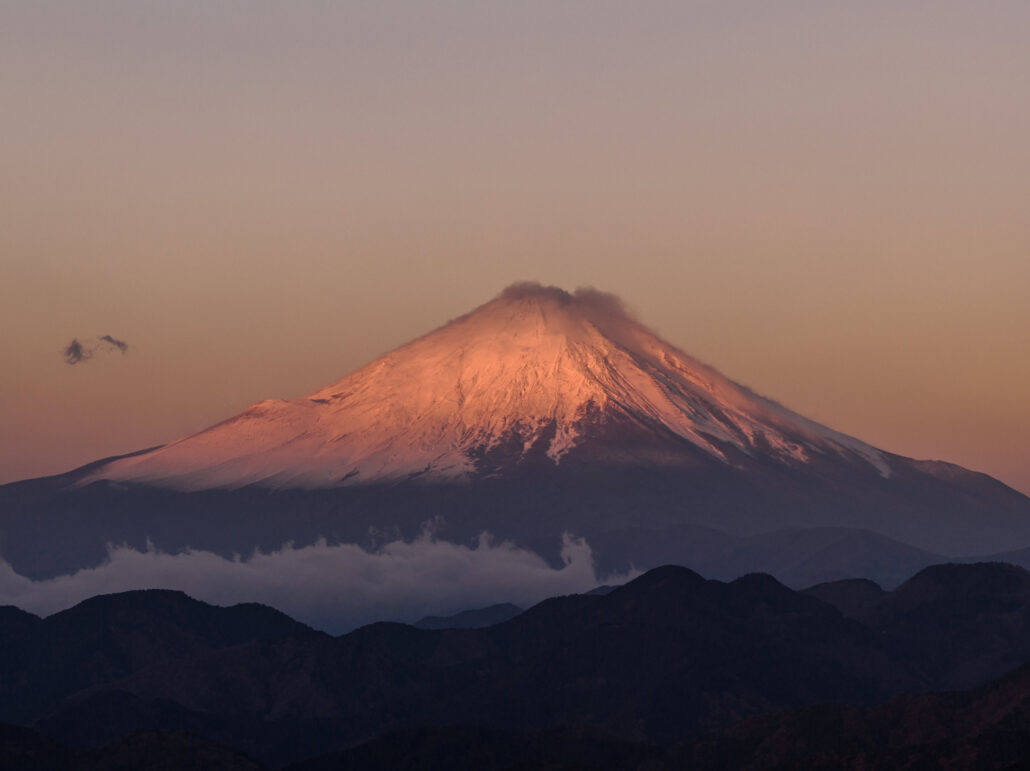
Then there’s diamond Fuji, when the sun sets exactly on the summit and the peak flares like a cut stone. From the shores of Lake Yamanaka, on the mountain’s north-east side, it happens on clear evenings from about mid-October to late February. The spot shifts along the shore from day to day as the sun’s path moves, and the people who wait for it know exactly where to stand on which date.
None of it can be promised. All of it can be planned for, which isn’t the same thing, and is far more useful.
When Mount Fuji Shows Itself
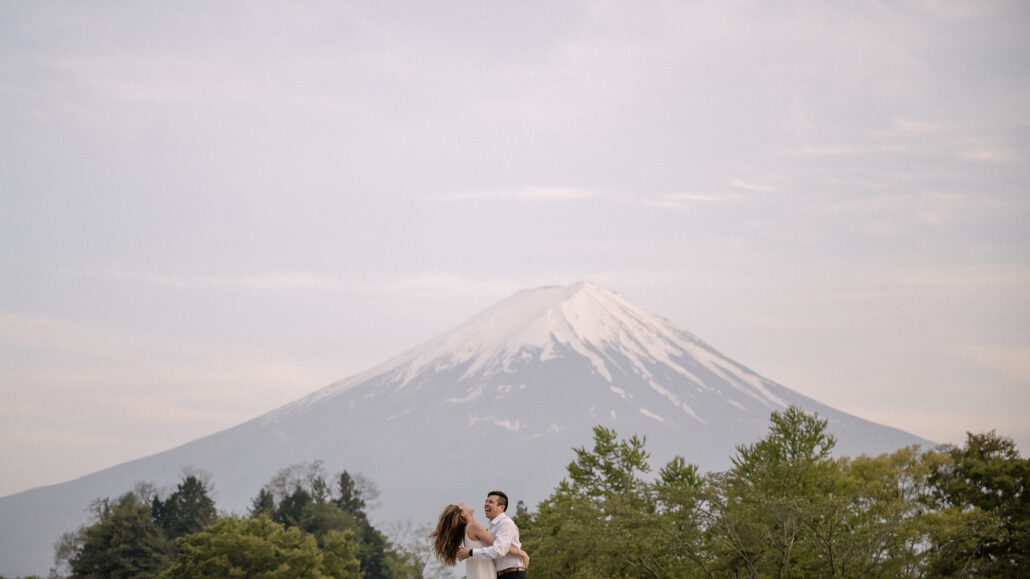
Winter is the clearest season. Cold, dry air from the continent scrubs the sky, and the mountain is out on more days between November and February than at any other time of year. Summer is the opposite. Heat and humidity build haze, and Fuji can vanish for days at a time while the sky directly overhead stays blue. Spring and autumn sit between, and autumn is usually the kinder of the two.
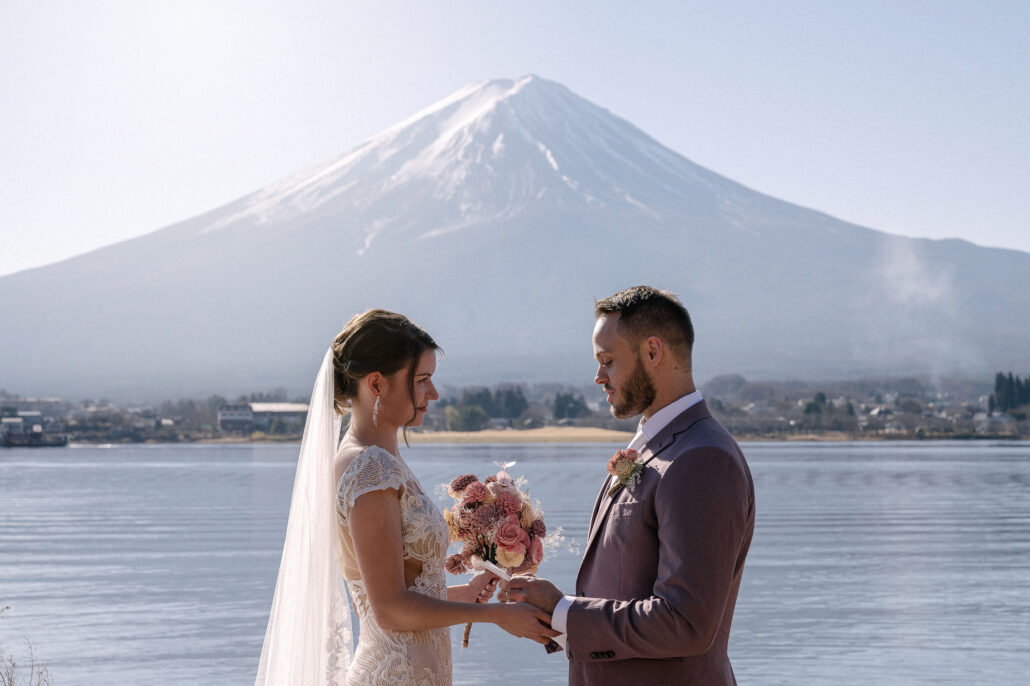
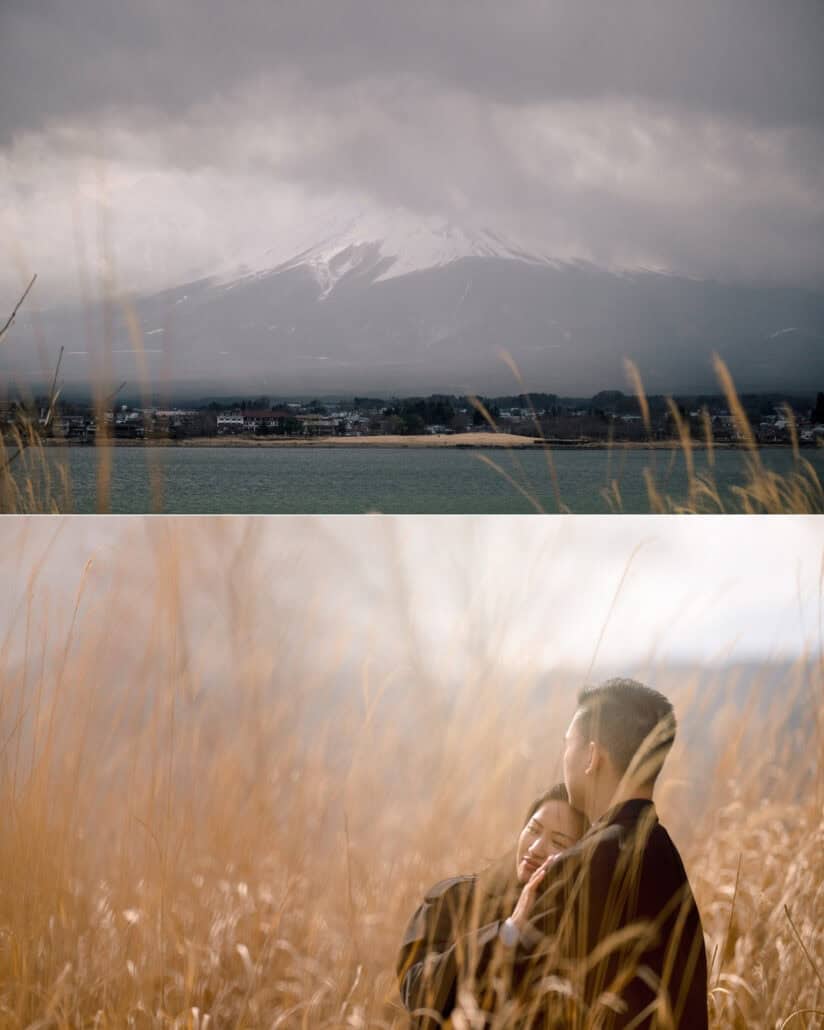
Mornings beat afternoons, almost always. As the day warms, cloud climbs the slopes, and a mountain that was perfectly clear at breakfast can be wrapped to the shoulders by lunch. So the Fuji moments in a day we plan tend to come early, and nothing else in the day depends on them.
We get up very early.
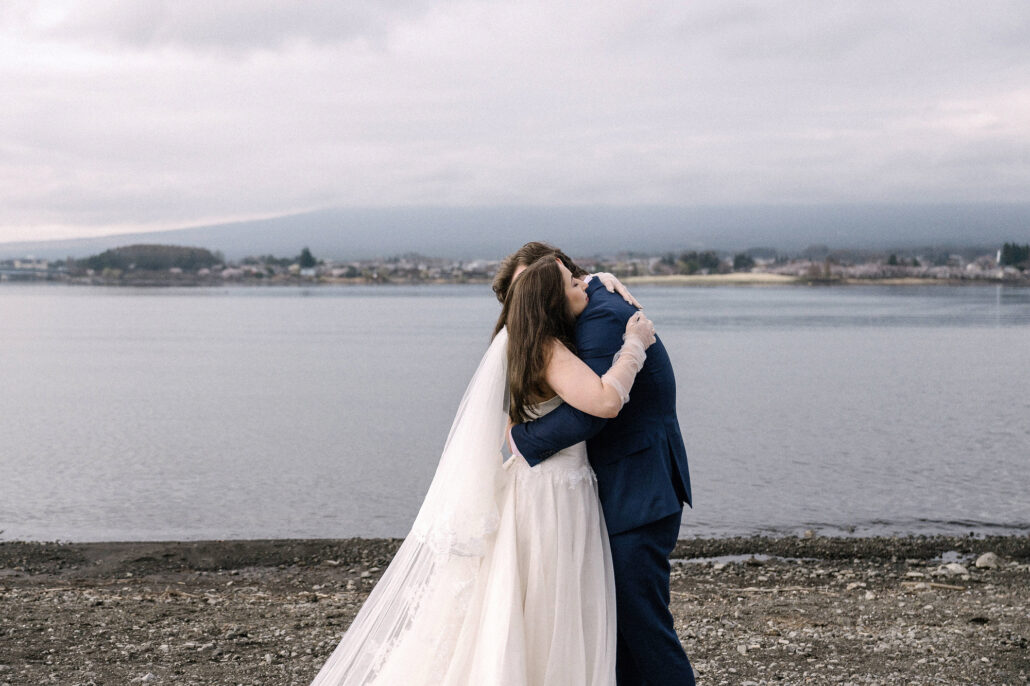
And sometimes the mountain simply doesn’t come. We’ve stood with couples in a February whiteout and through a day of autumn rain. We’ve also watched a whole wedding get up from dinner because Fuji had decided to join them, and moved a proposal around the sky until the mountain finally appeared. Ask any of those couples which kind of day they’d rather have had. They’ll tell you theirs.
Planning a Day Around a Mountain
When a couple tells us they want Fuji, we take it seriously. That means choosing a season that gives the mountain its best chance, building the day so the Fuji moments come early, and reading the summit the evening before. It also means choosing places that are just as good with the mountain hidden: a lake in mist, a shrine among old cedars, a long lunch in a thatched village. Then whatever the mountain decides, the day still belongs to them.
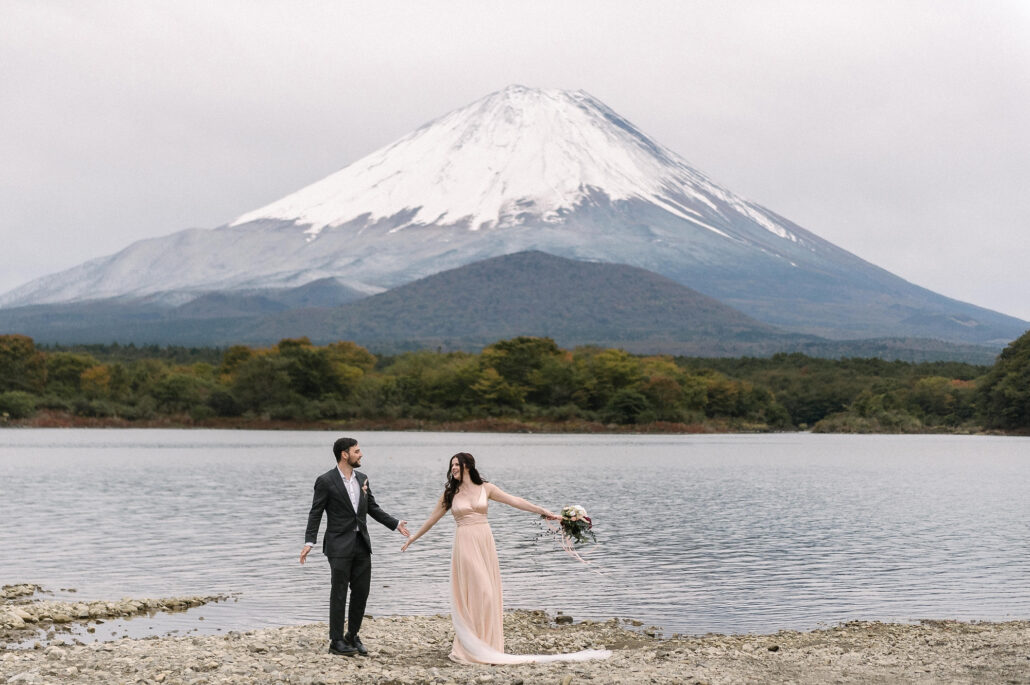
A forecast tells you what the sky might do. The mountain tells you what it’s about to do, if you know how to look. Couples who come for Fuji get both, and a plan that doesn’t need either.
A forecast tells you what the sky might do. The mountain tells you what it’s about to do, if you know how to look.
The Hat Still Needs Someone to Look Up
For well over a century, somebody in Kofu looked up each autumn and decided when Fuji’s winter had begun. A computer does that now. The rest of the mountain’s weather still needs a person at the lake before dawn, checking the summit for a hat.
On the mornings that matter to our couples, that person is usually one of us.