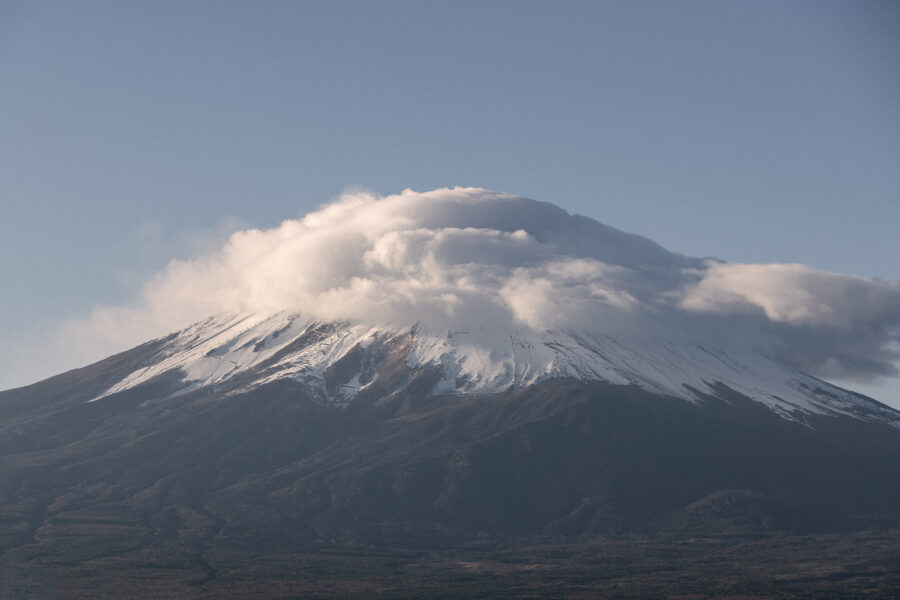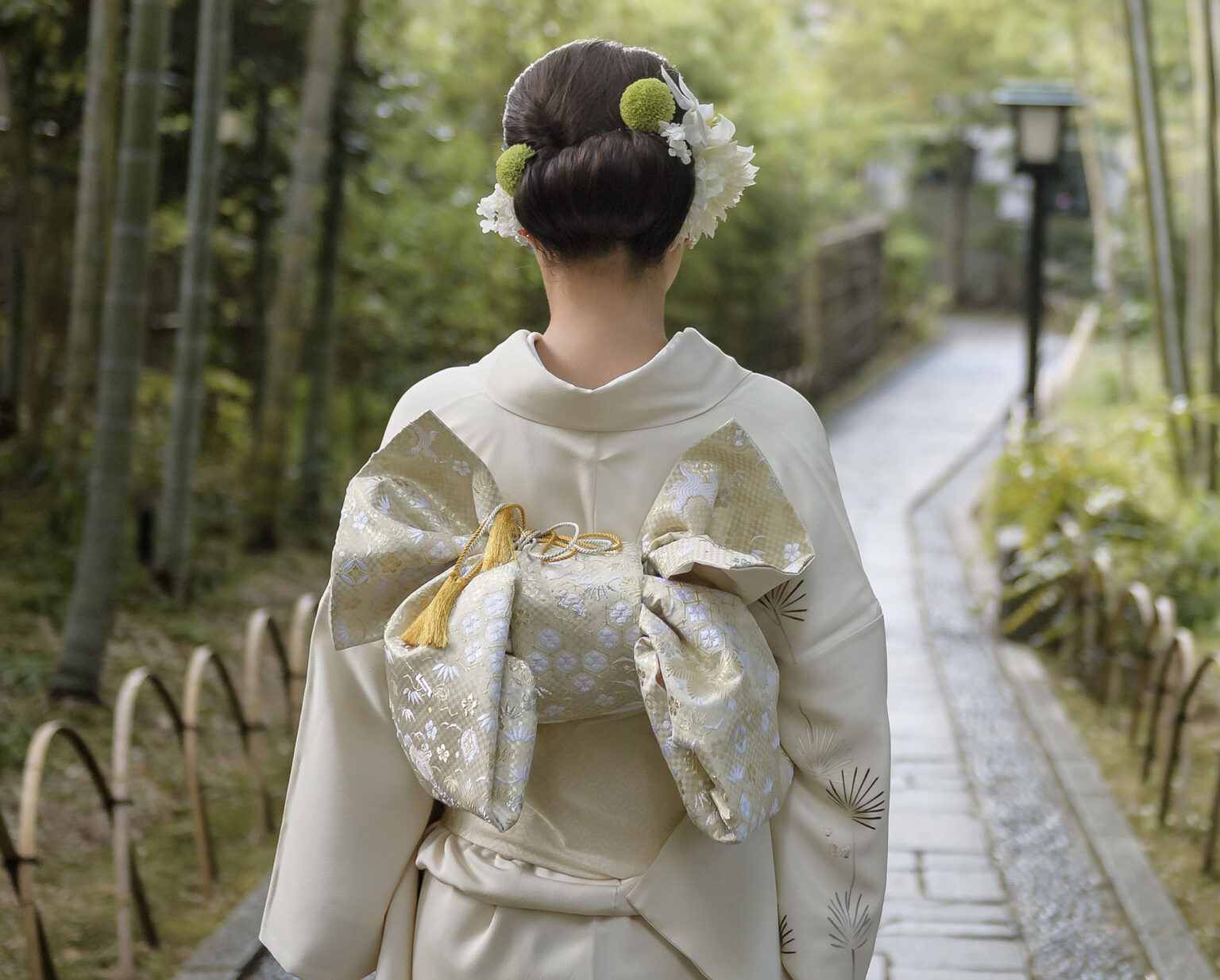
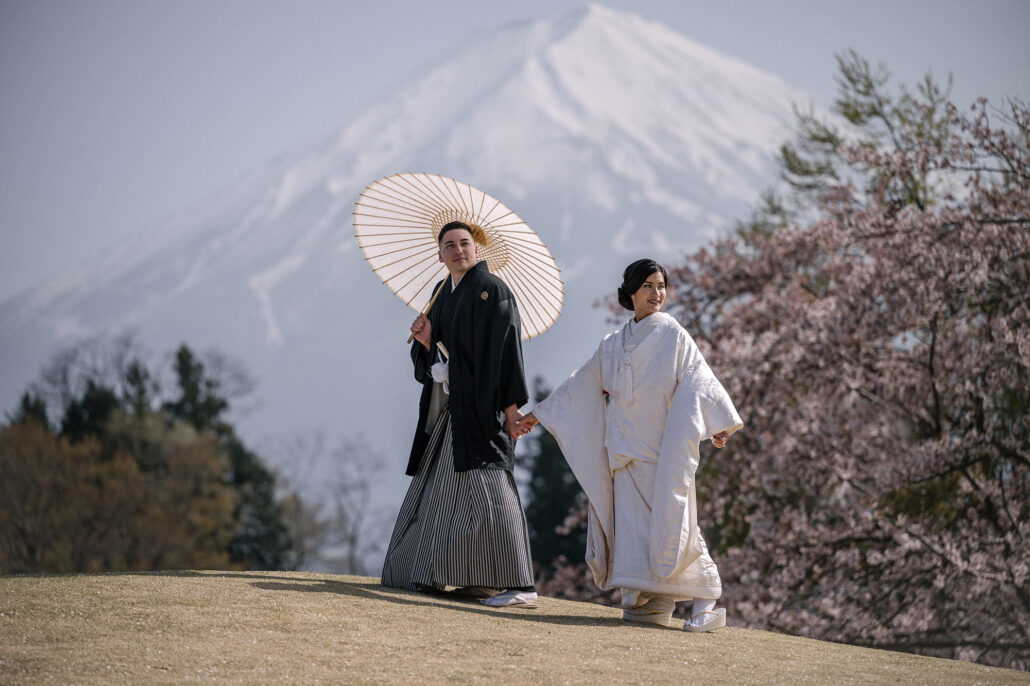
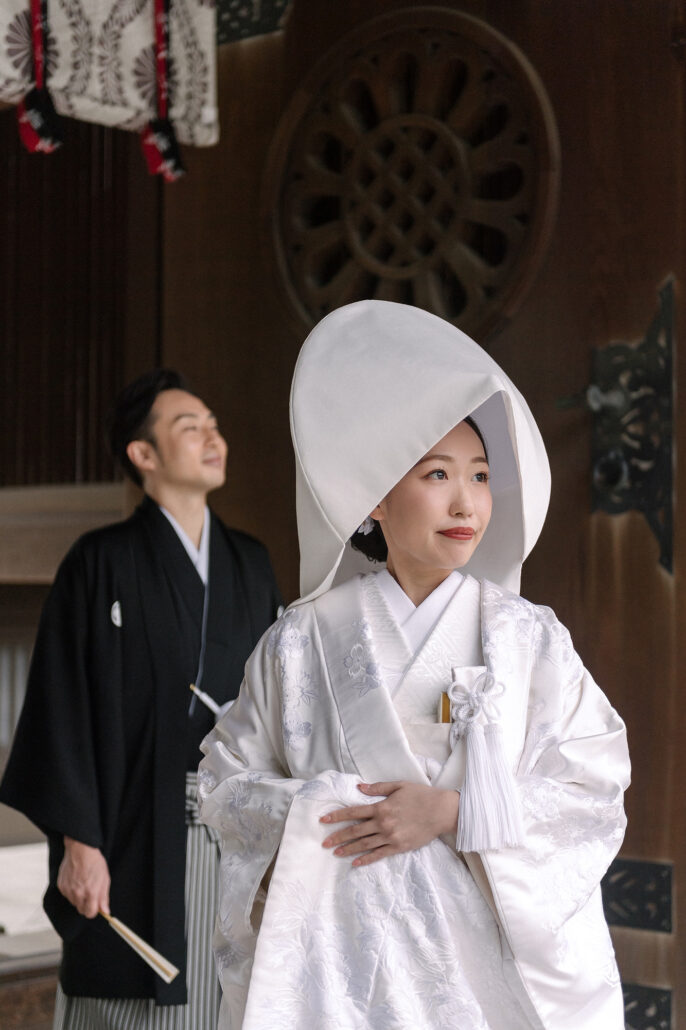
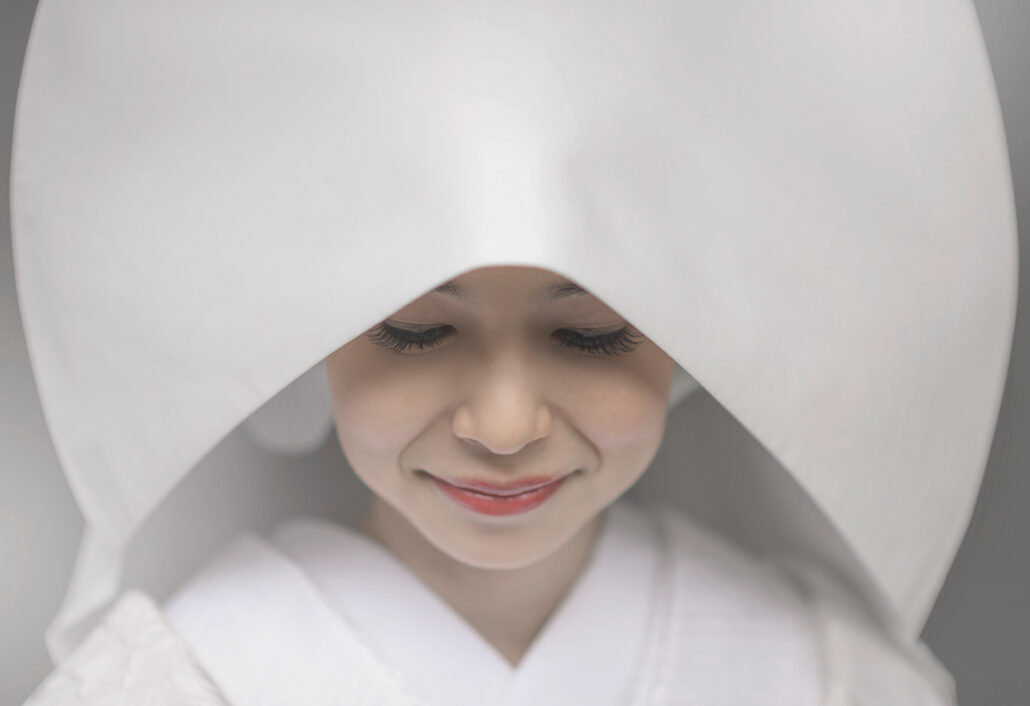
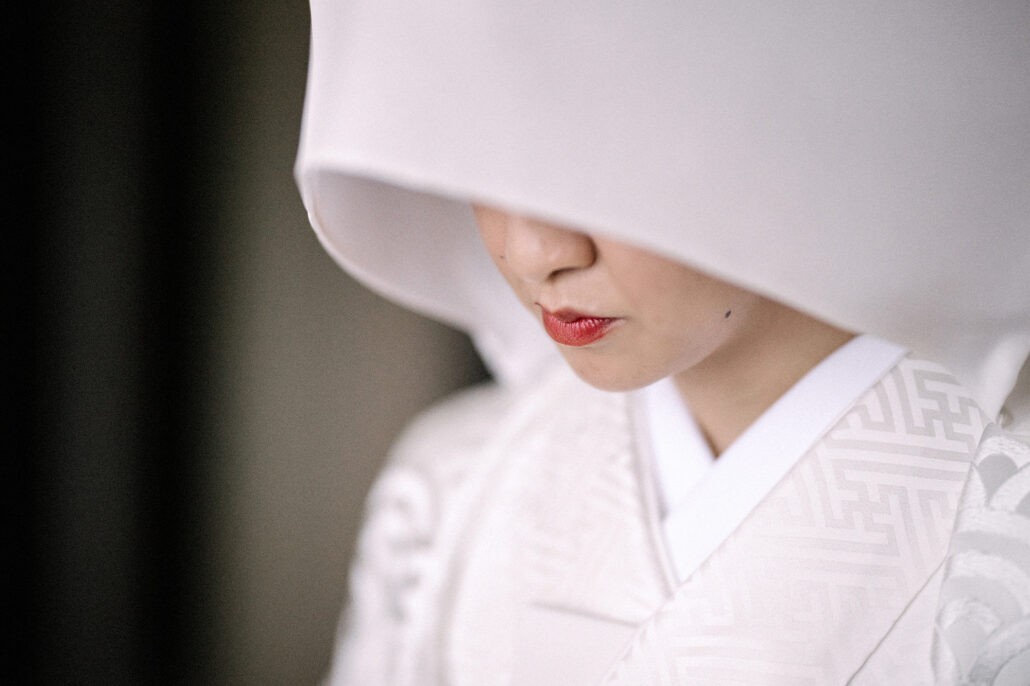
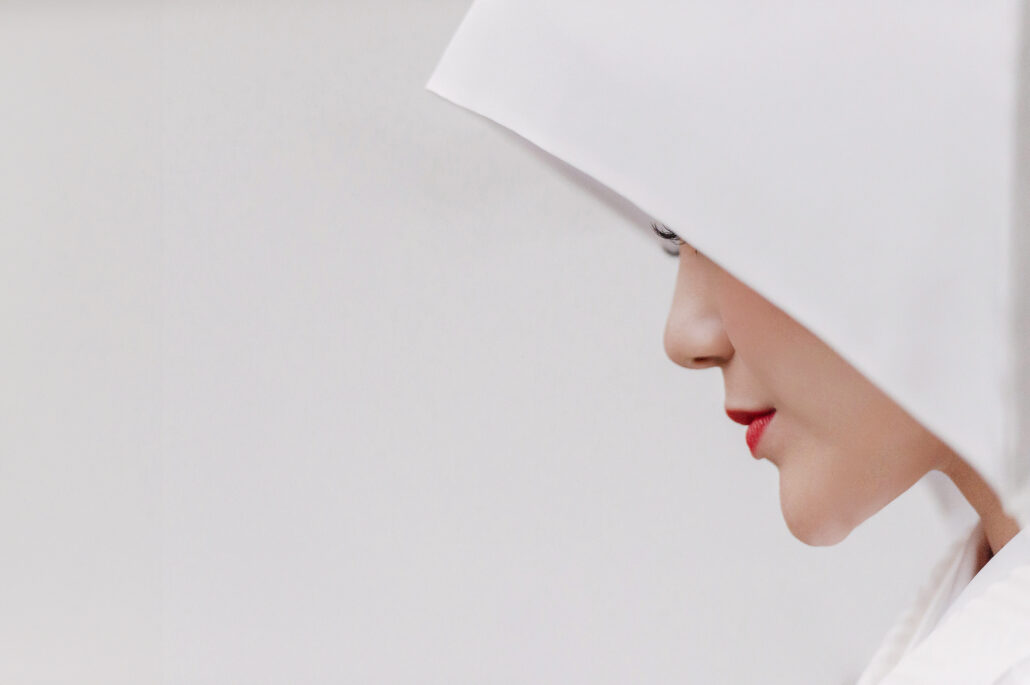
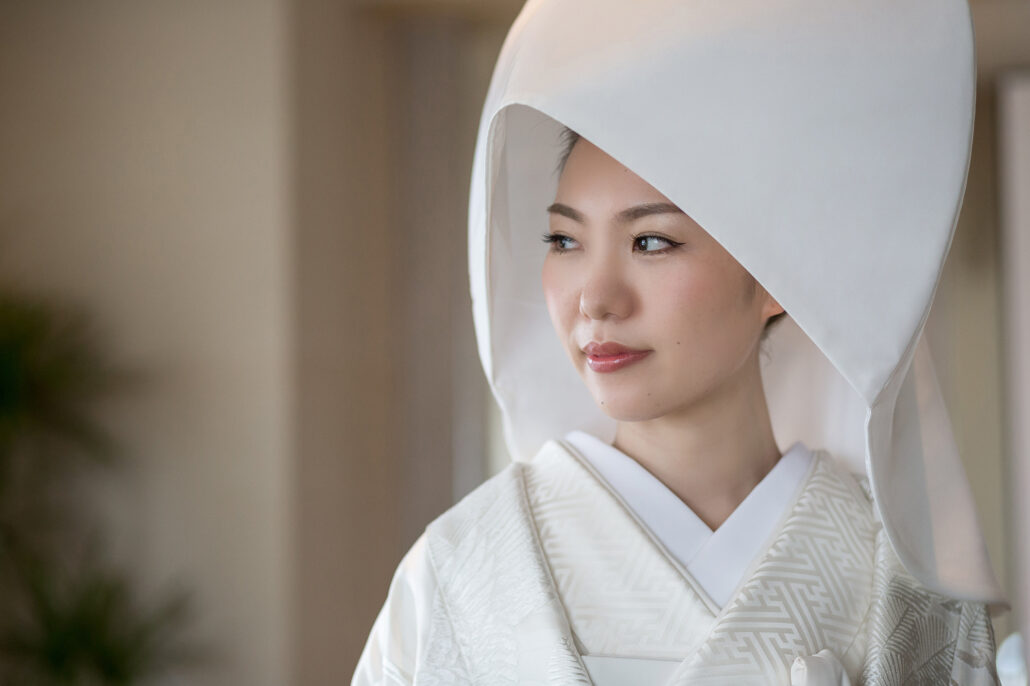
When the first snow settles on the summit of Mt Fuji, Japanese has a word for it. The mountain is wearing its wataboshi. A poem from a journey to see Fuji in 1432 already used the image, and people still say it today. It’s also the name of the white silk hood a bride wears with the shiromuku, the all-white Japanese wedding kimono.
Japan’s bridal wardrobe is full of small surprises like that. The uchikake, the great trailing robe of Japanese bridal dress, was once what women of samurai households wore over their kimono on formal days, from autumn into spring. Today, as the V&A in London puts it, uchikake are worn only by brides.
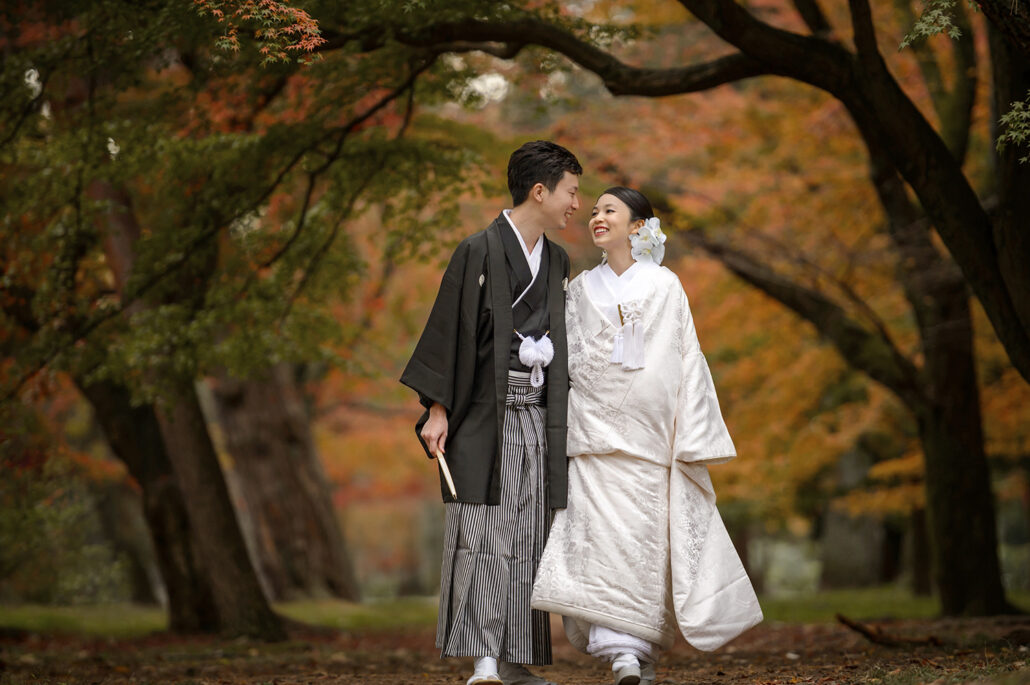
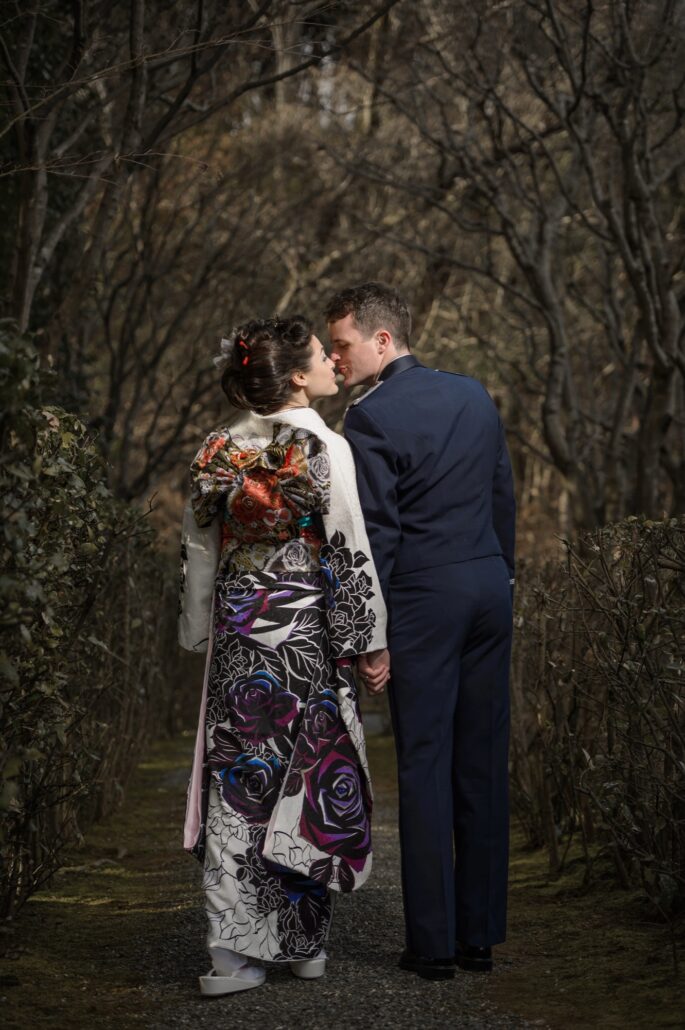
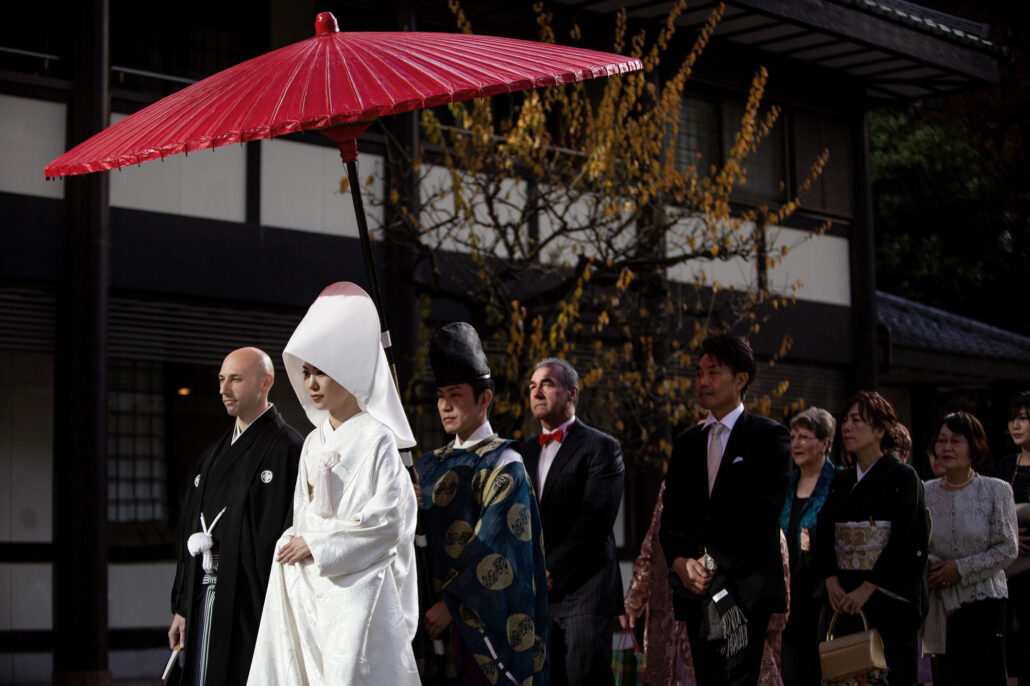
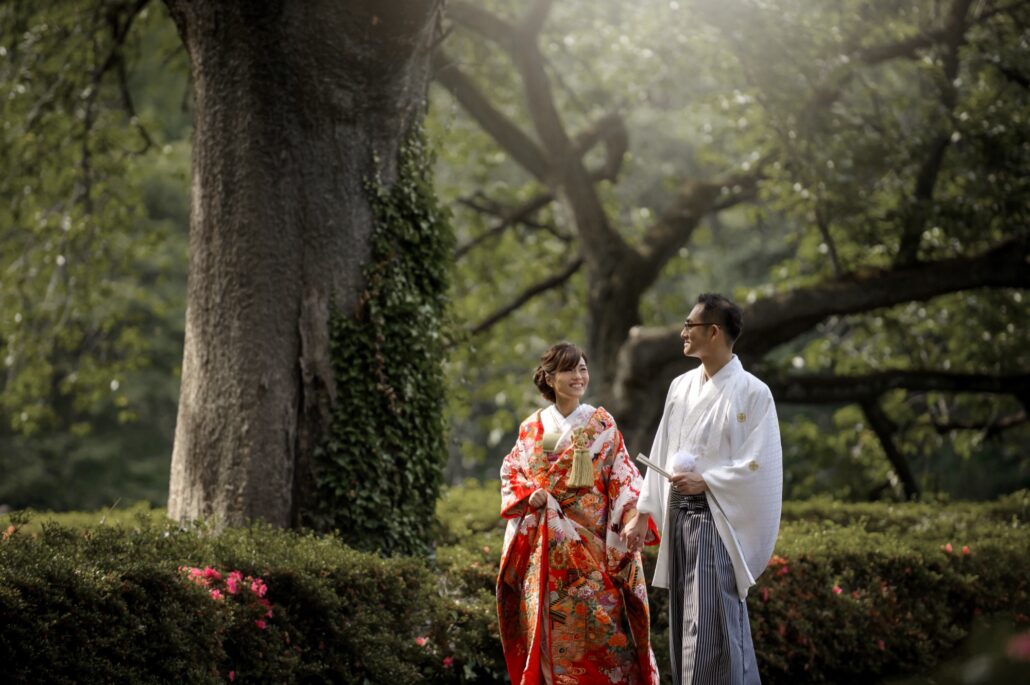
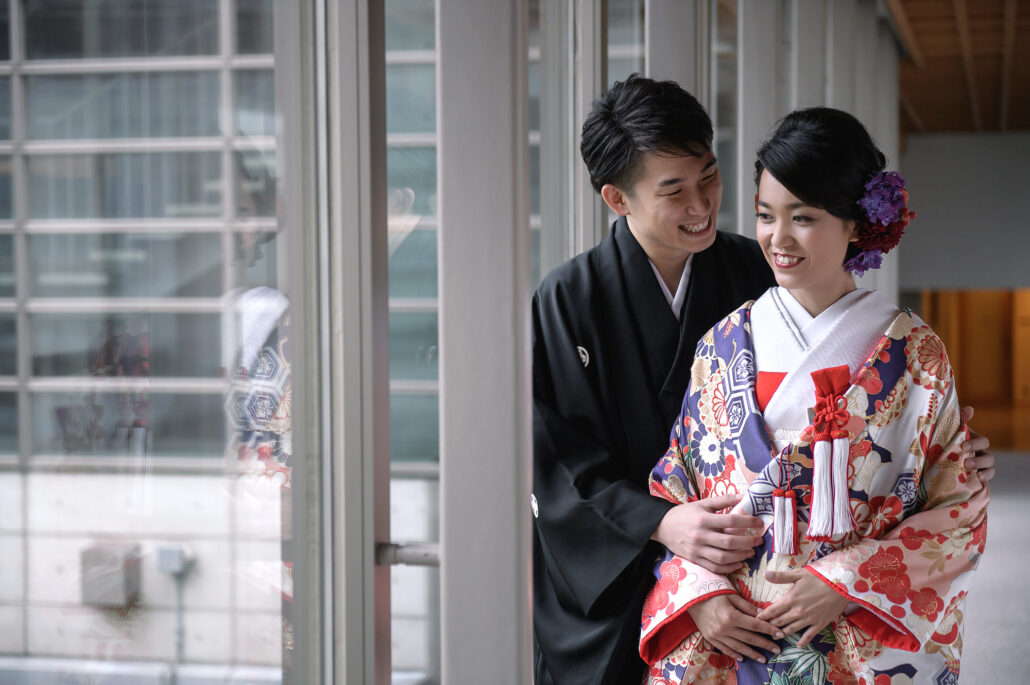
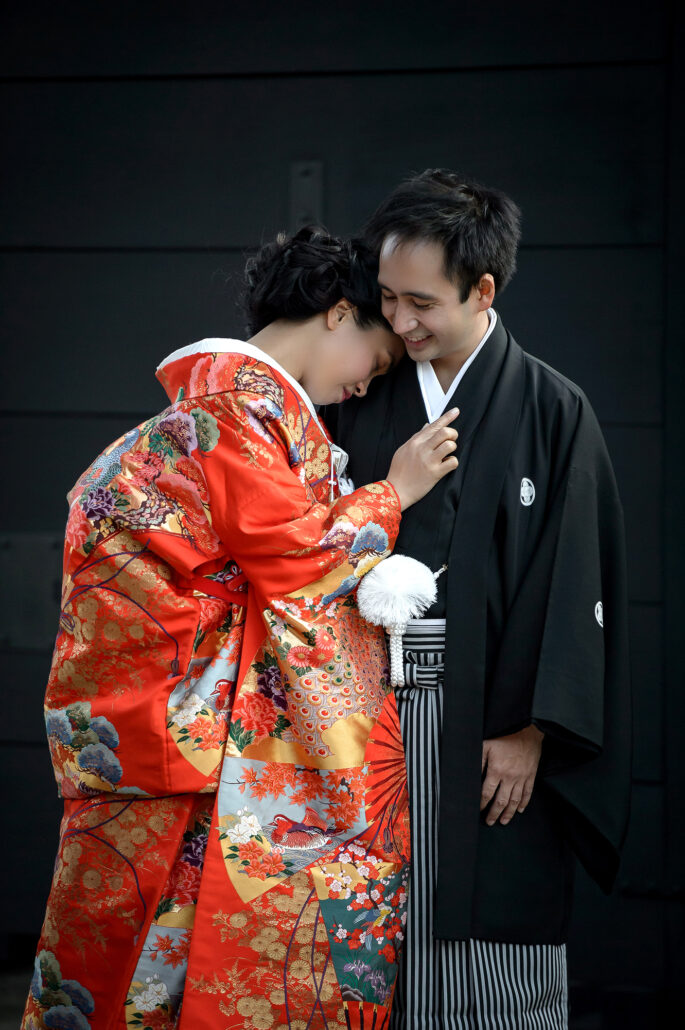
The short answer, then. A Japanese wedding kimono is usually one of two things: the shiromuku, white from the outer robe down to the sandals, worn for the ceremony, or the iro-uchikake, the same trailing robe in colour, often worn after it. The groom wears black crested montsuki with striped hakama. What makes it work is the right garment, a trained dresser, and time.
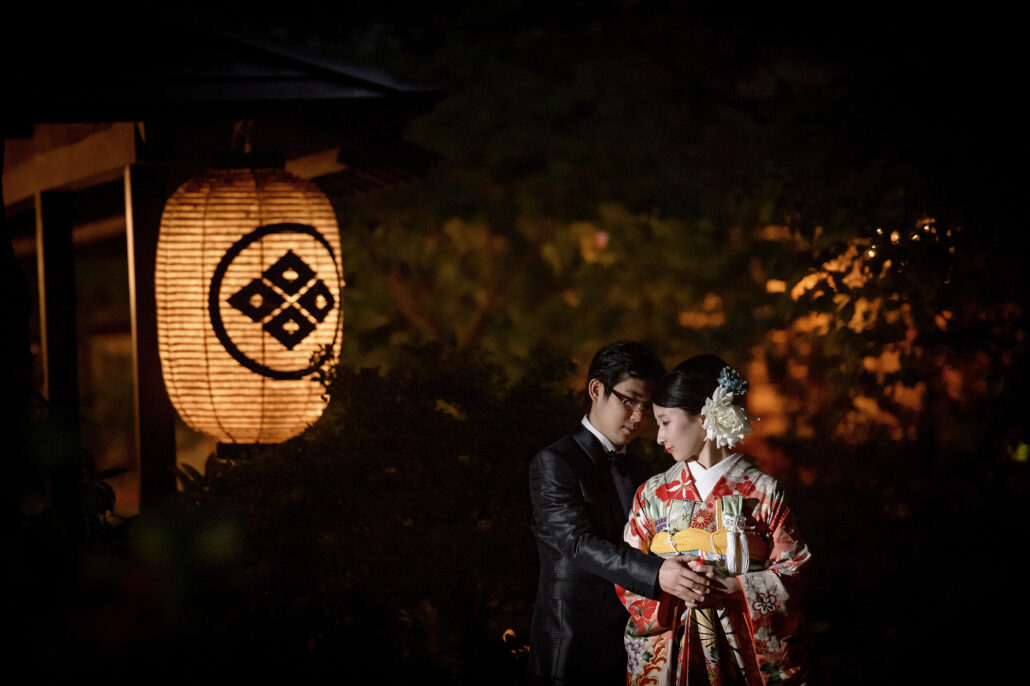
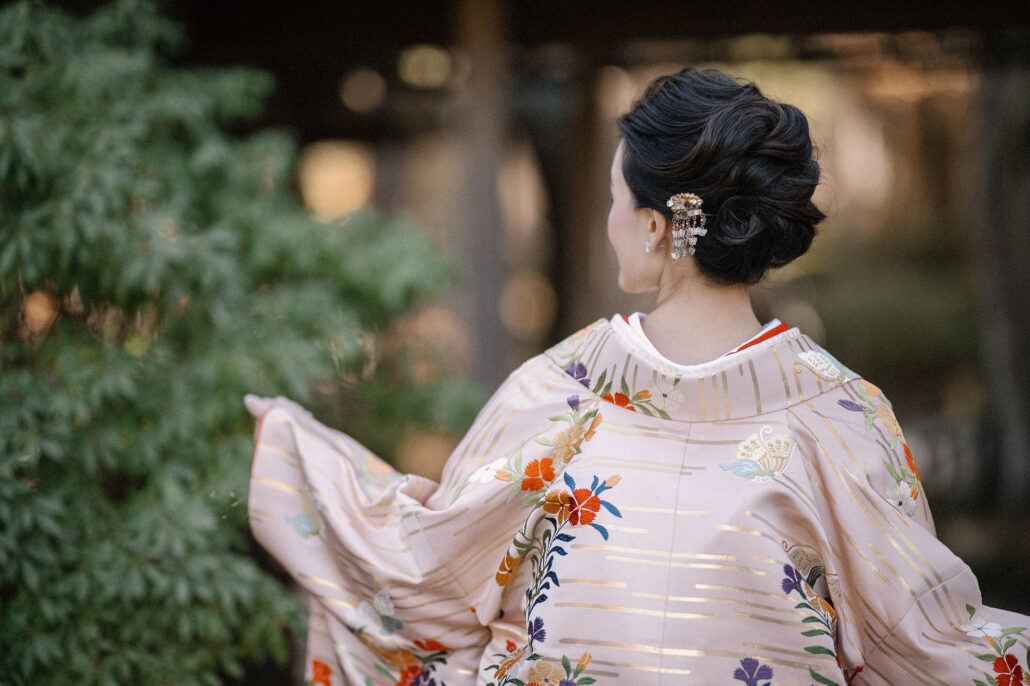
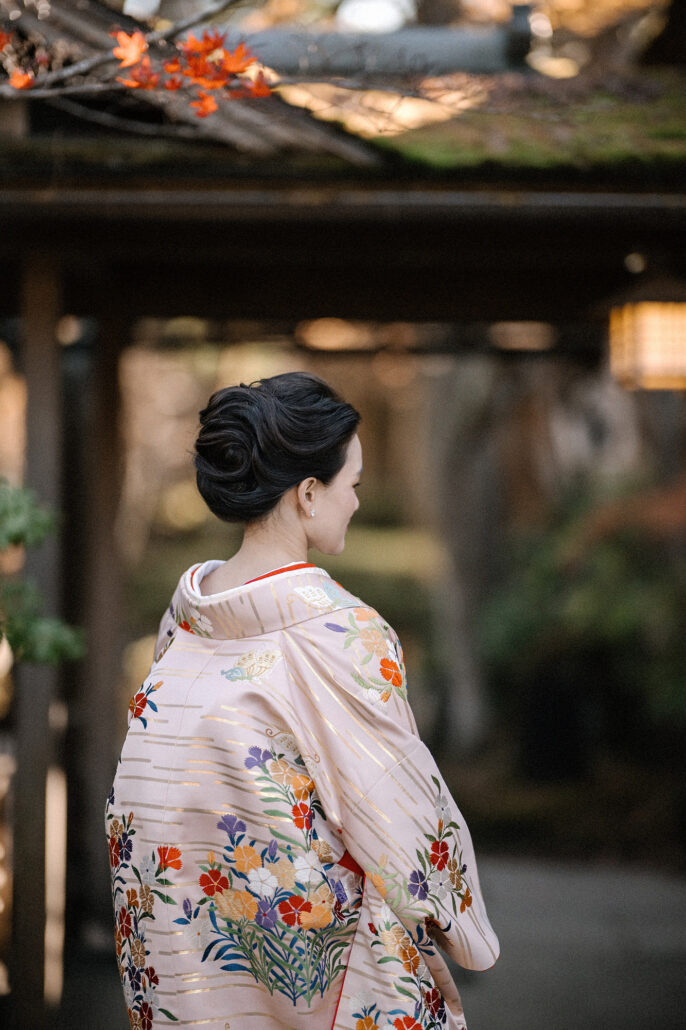
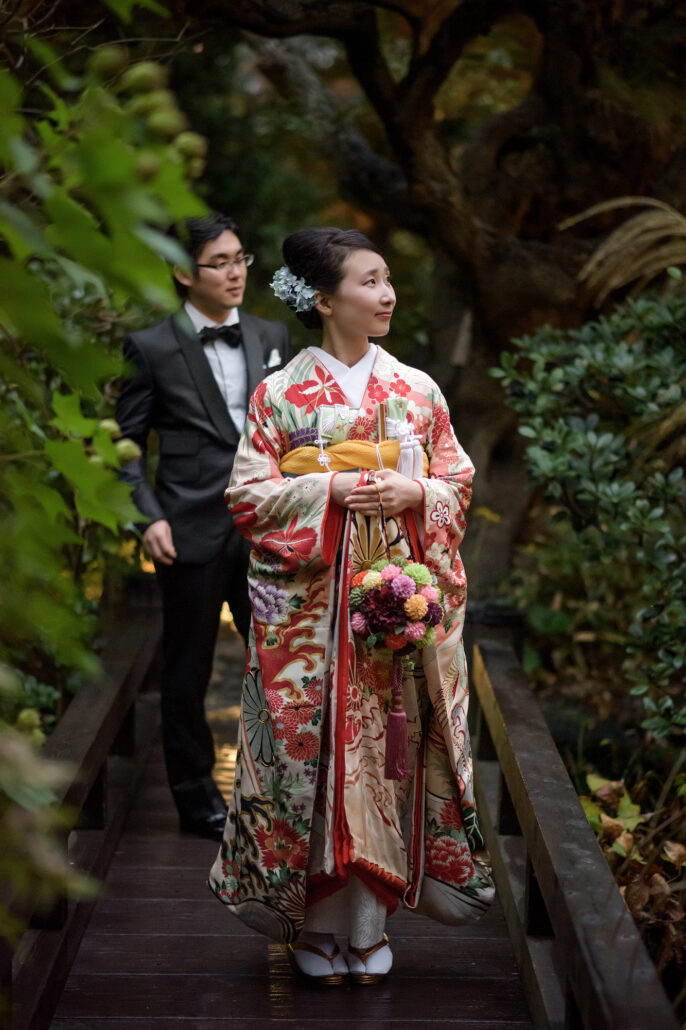
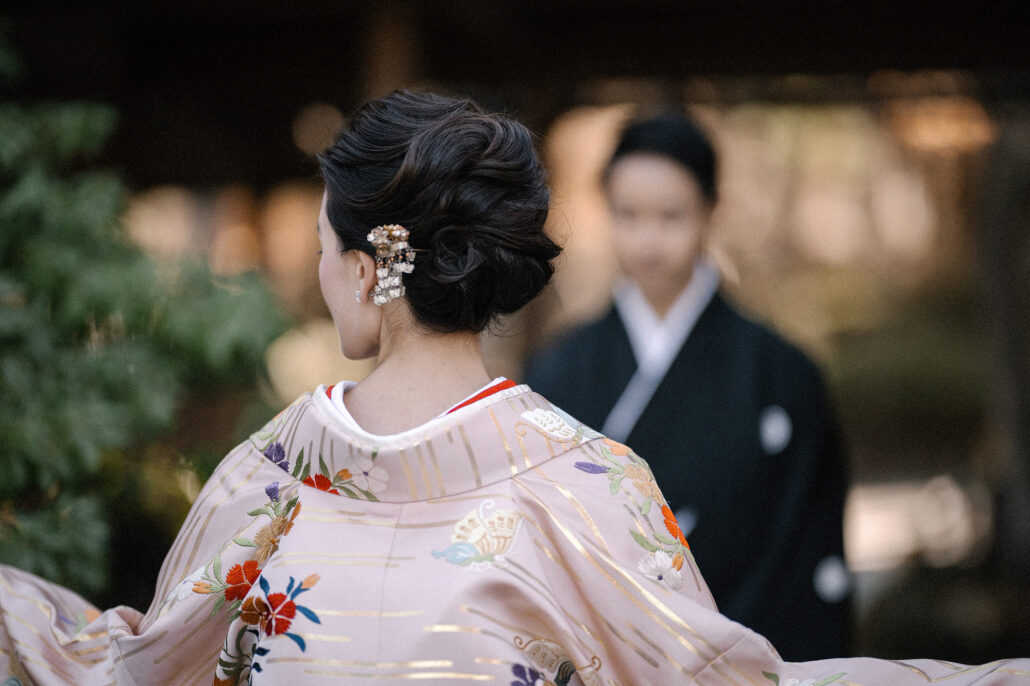
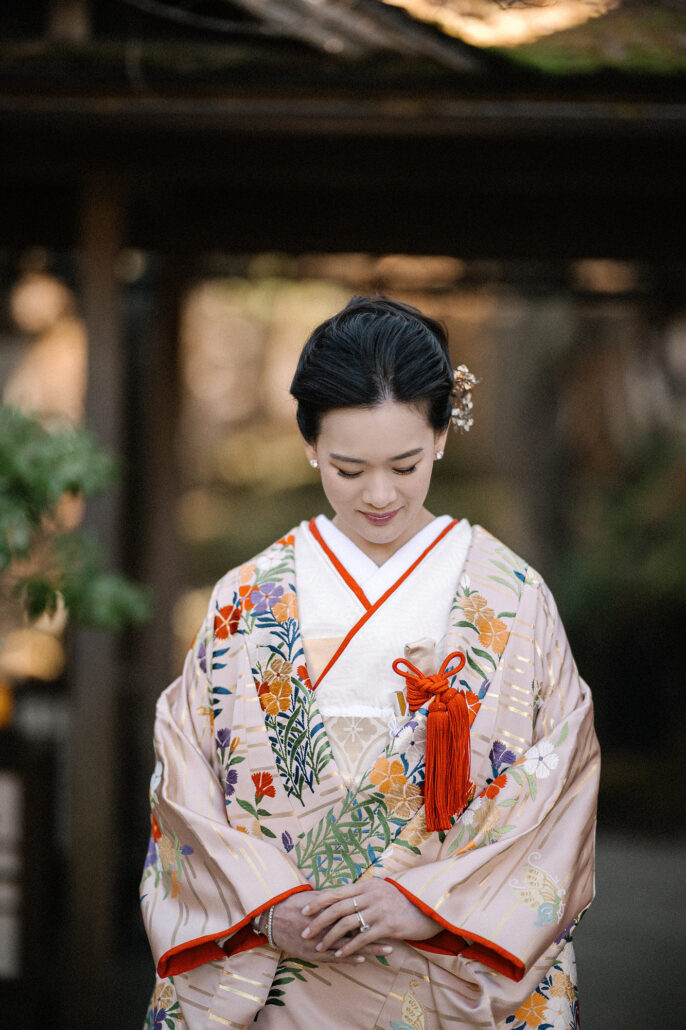
One of our brides waited a month for hers. It was a historical uchikake, the palest pink with flowers and bands of gold, and she put it on in a ryokan garden at the foot of Mt Fuji with the maples at full colour. To wear a historical kimono is to be trusted with something. It has outlived the people who first wore it, and for one afternoon it’s yours to carry, carefully, before it’s folded away for whoever comes next.
The Japanese Wedding Kimono, Garment by Garment
Kimono simply means “a thing to wear”, as Japan’s tourism board points out. Bridal kimono are the most formal things to wear in the country.
Shiromuku: Why Japanese Brides Wear White
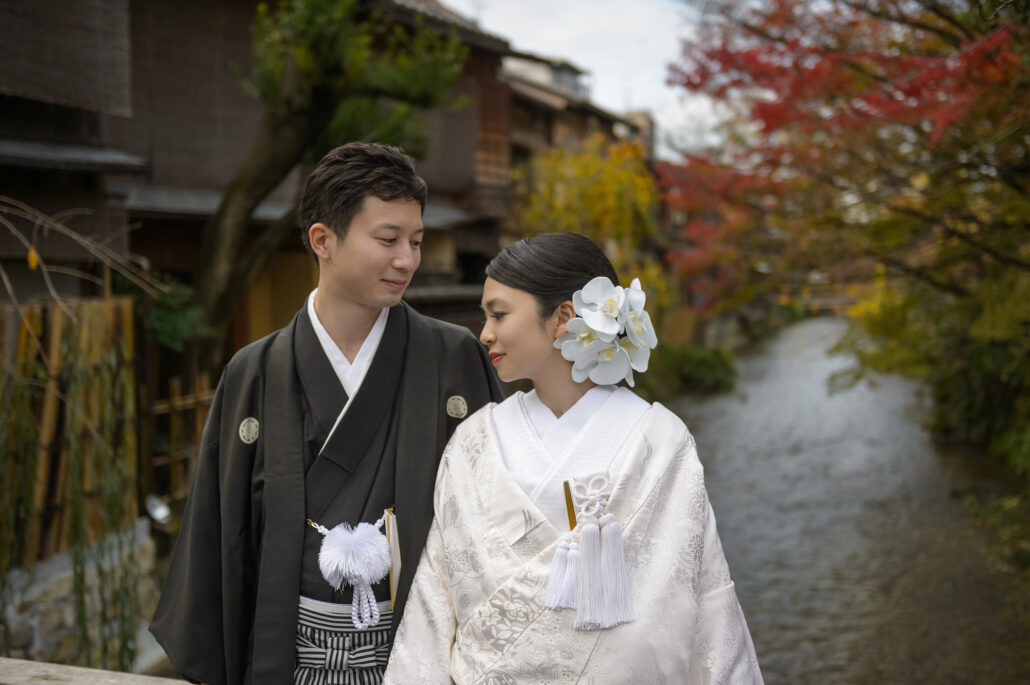
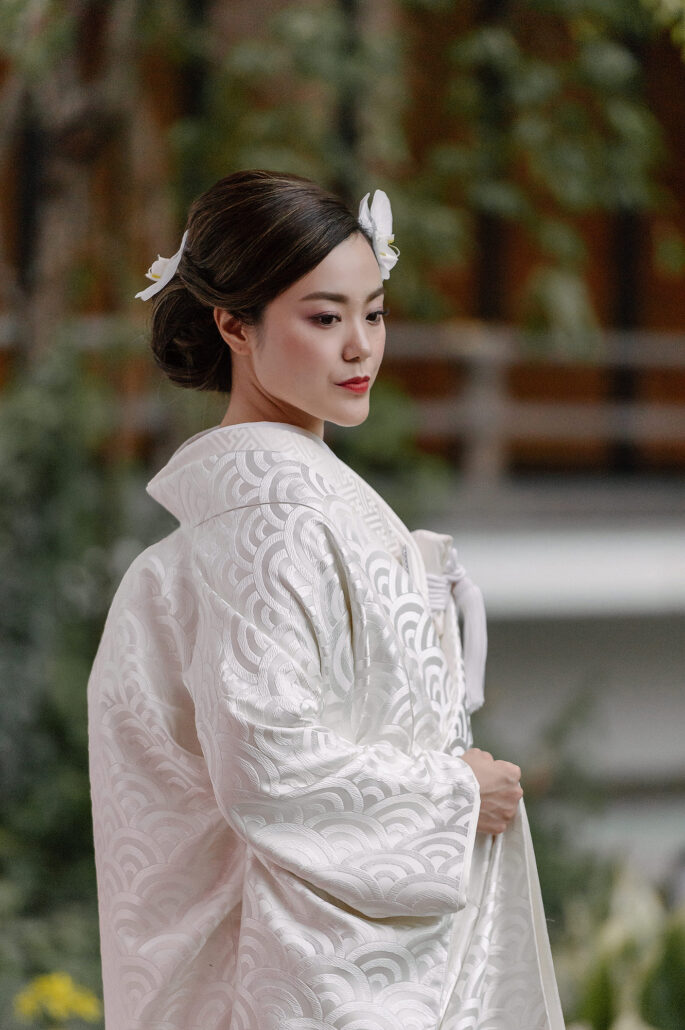
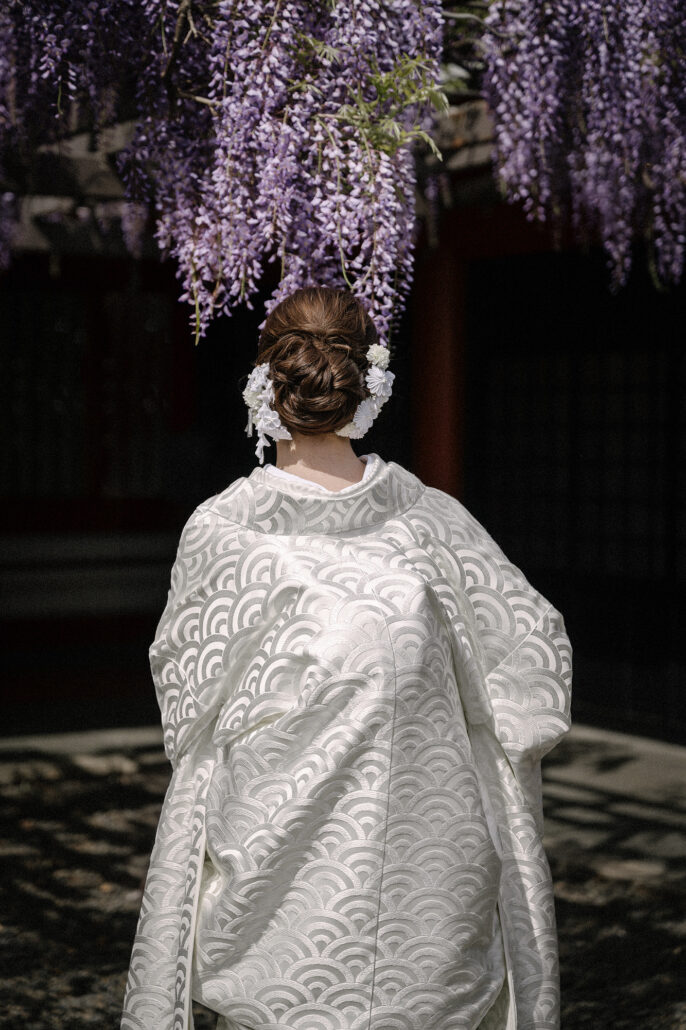
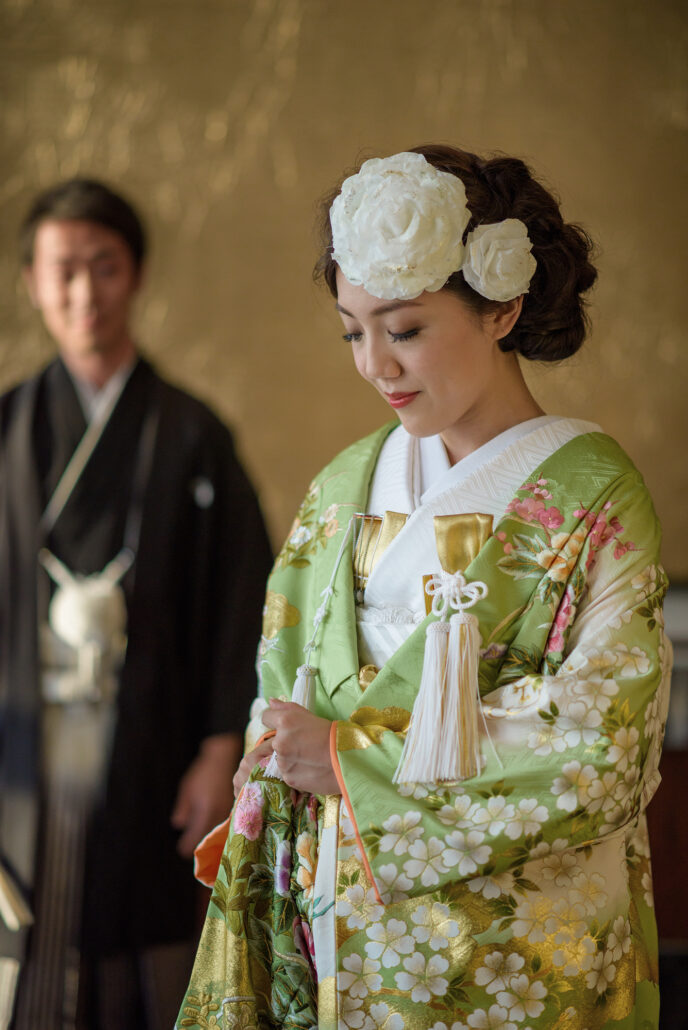
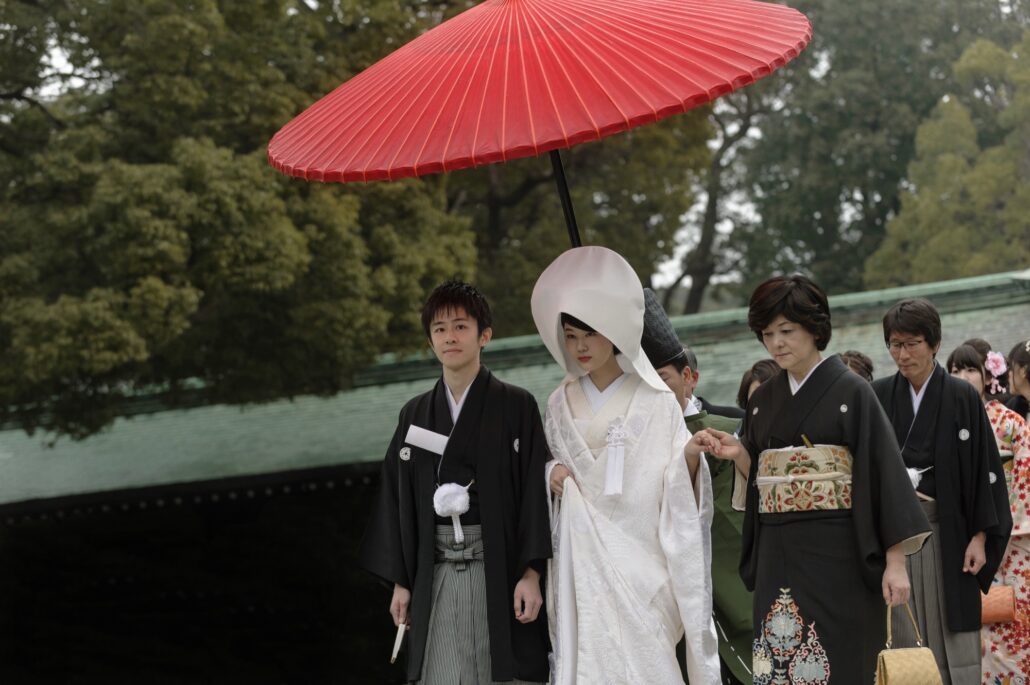
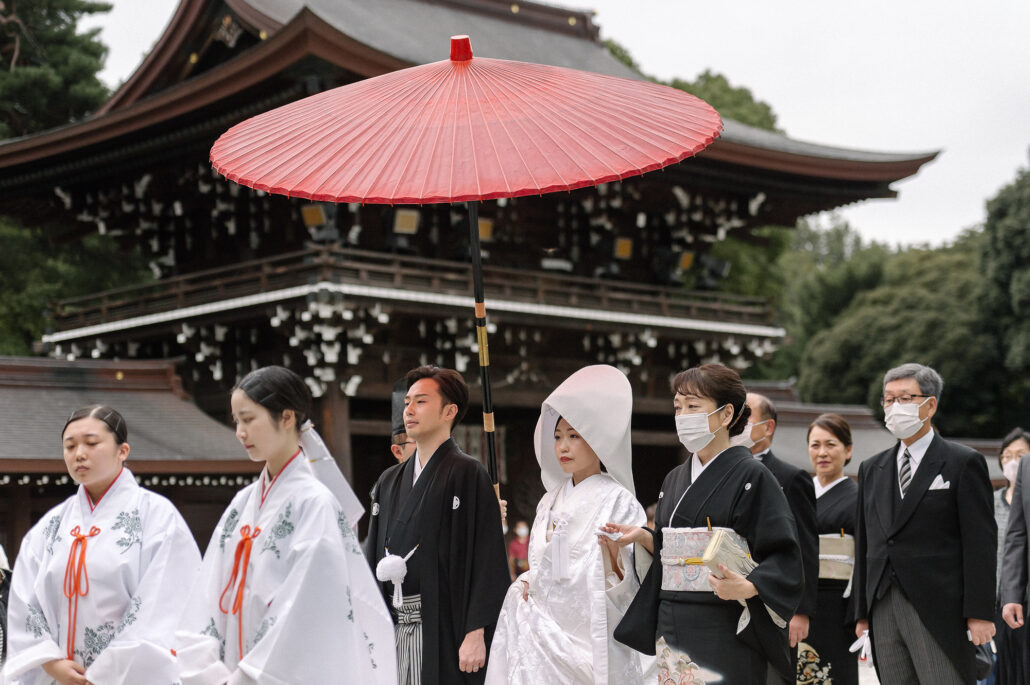
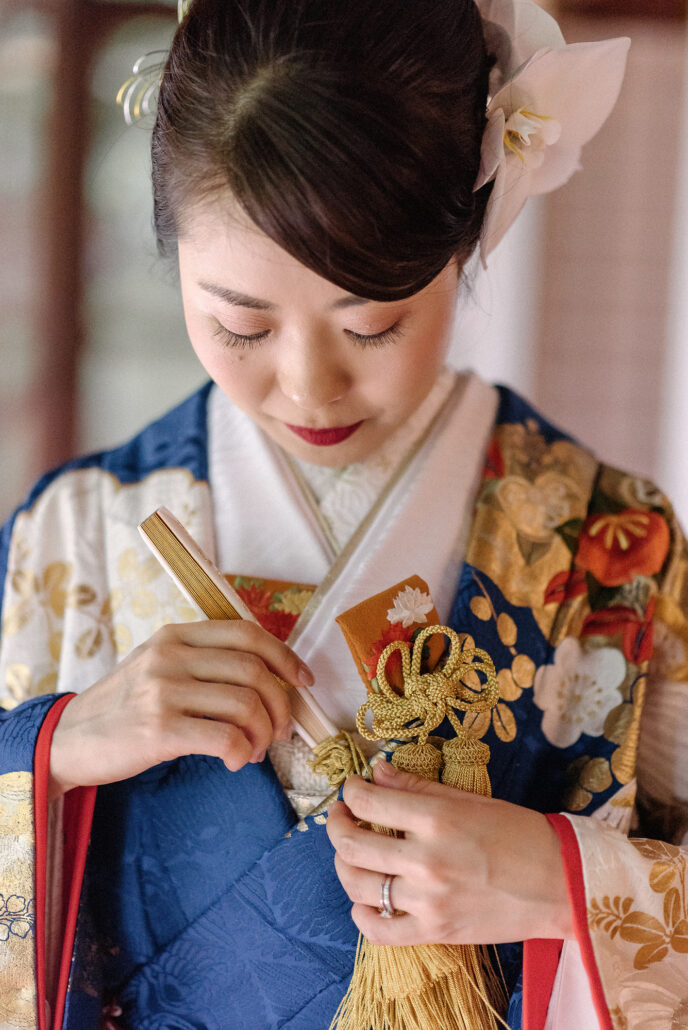
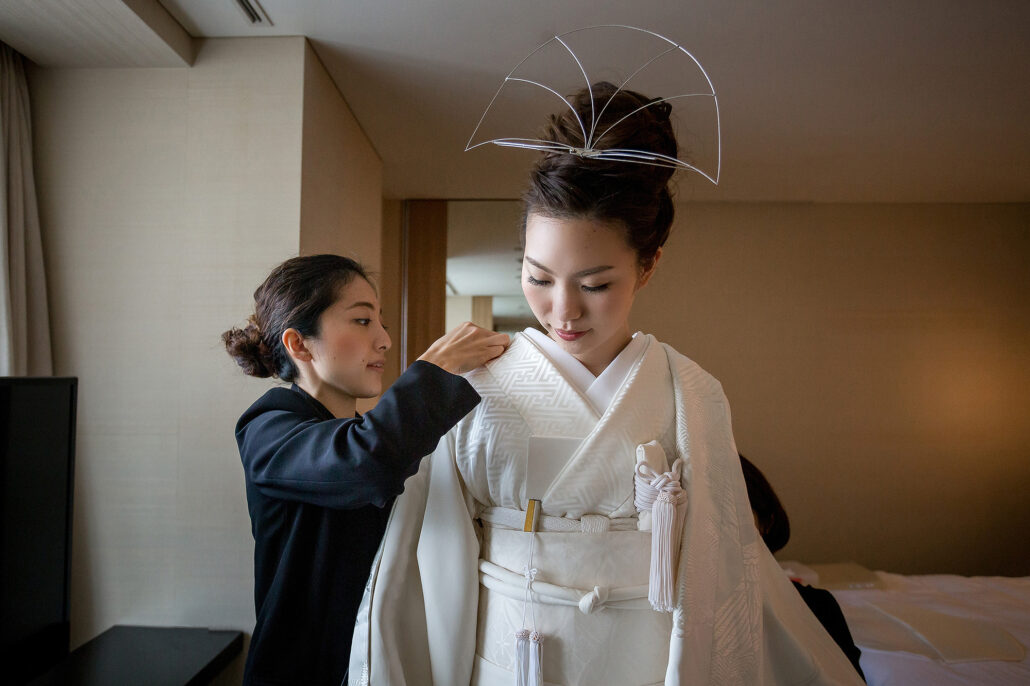
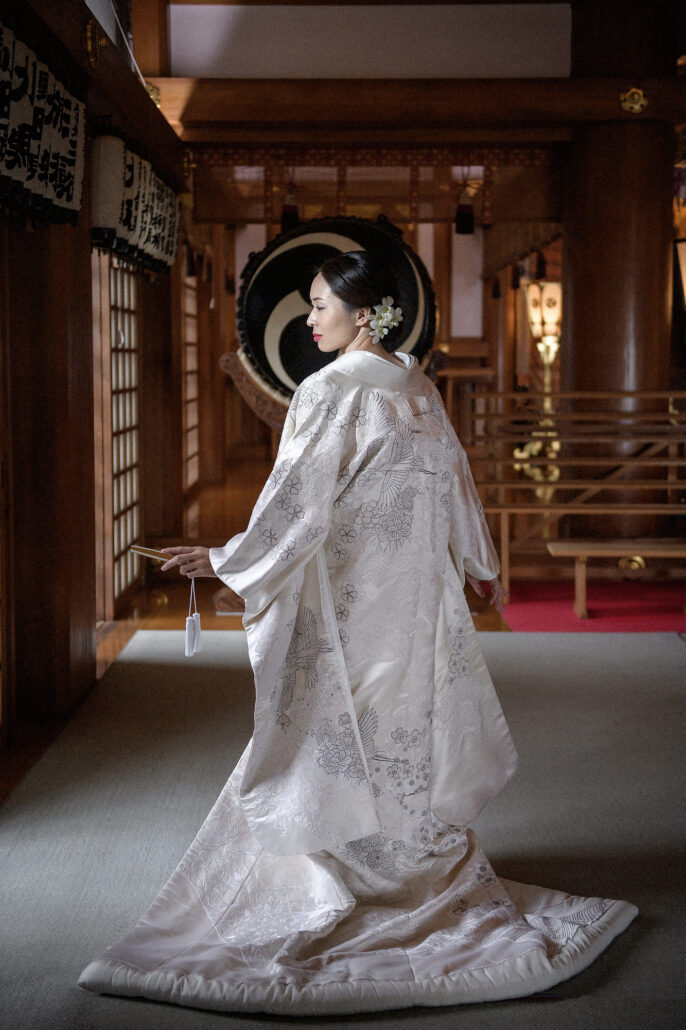
The shiromuku has been worn since the Muromachi period, and everything in it is white: the uchikake, the kimono beneath it, the obi, the head covering, even the zori sandals. Muku means without impurity. In older Japan, white was the dress for rites before the gods, a sign that body and mind had been made clean. It’s still the most treasured of the bridal kimono, and the classic choice for the ceremony itself.
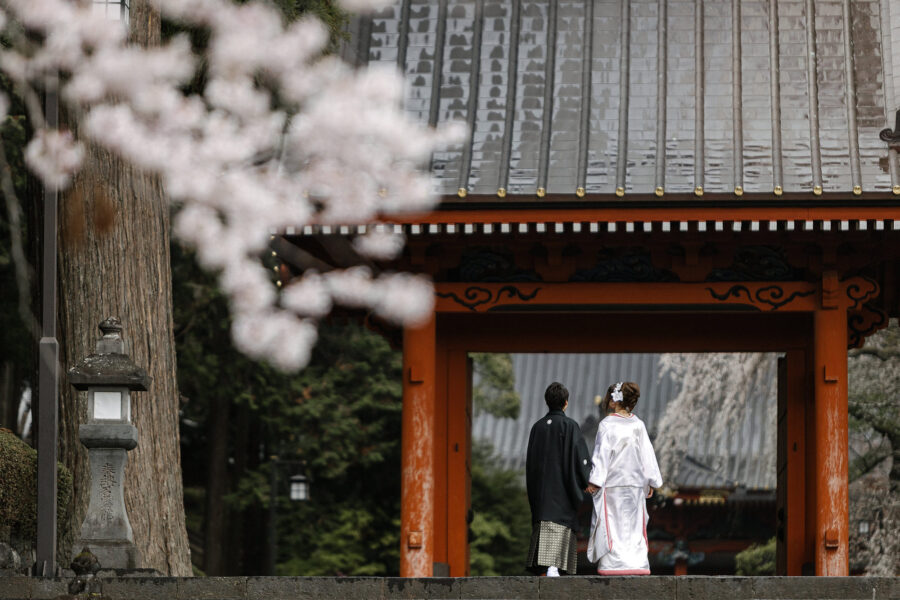
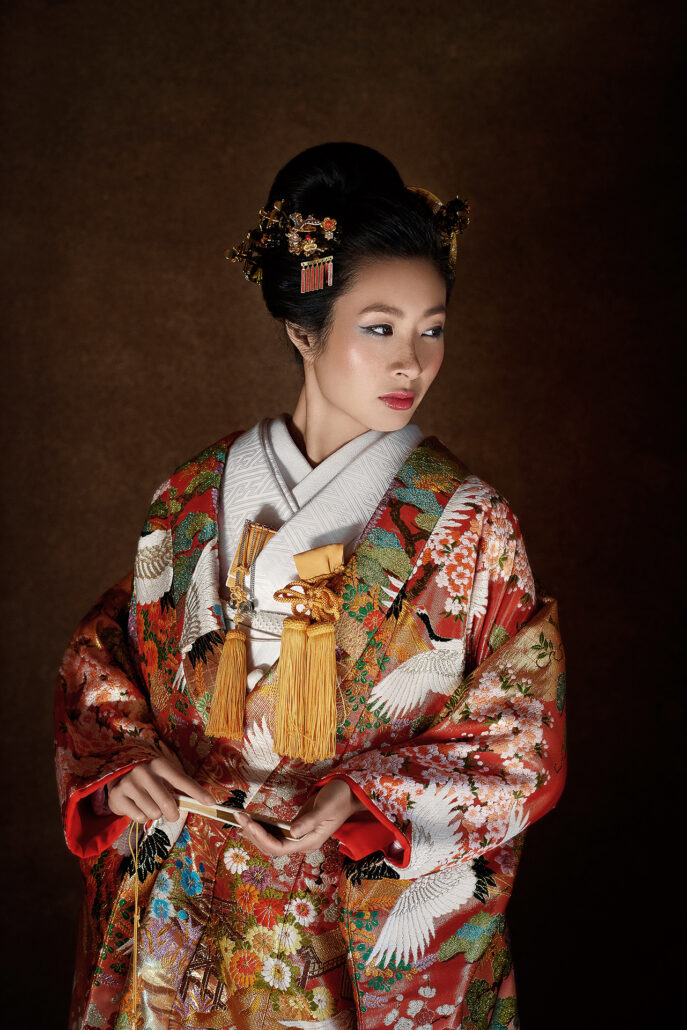
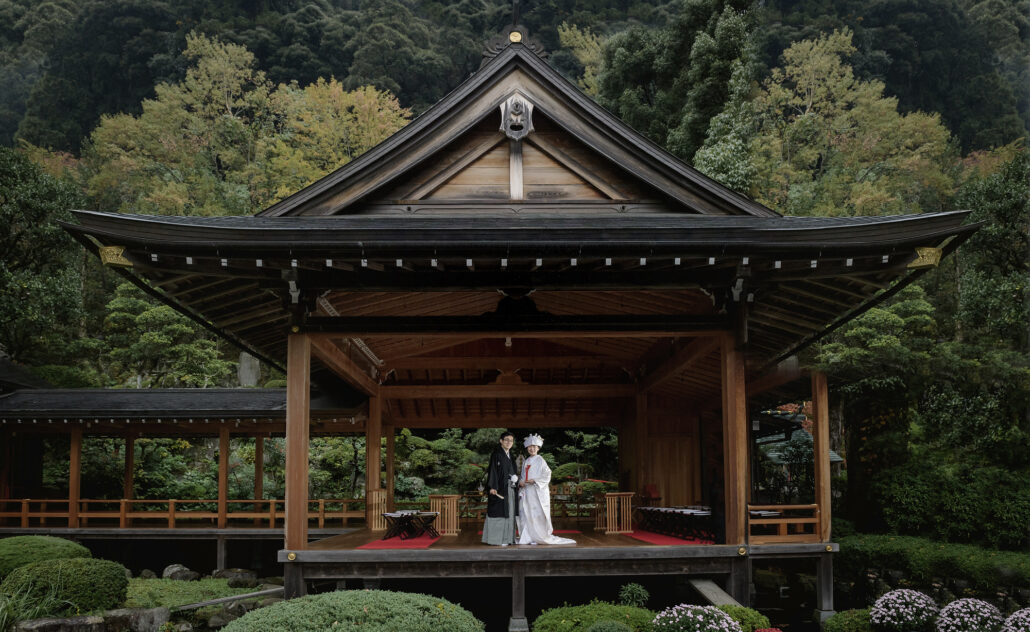
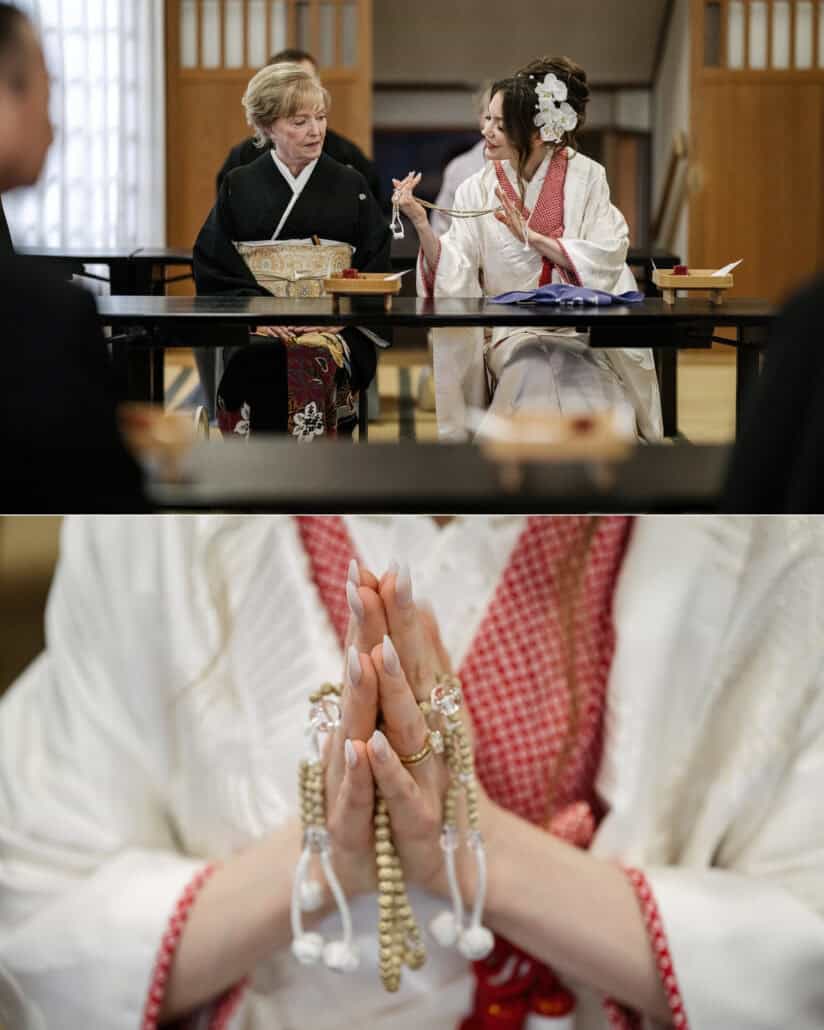
White is rarely alone, though. At a Buddhist temple wedding below Mt Fuji, the bride’s shiromuku carried red brocade at the collar and cranes in the silk. Cranes have long stood for longevity in Japan. Red and white together, kōhaku, are the colours of celebration.
Iro-uchikake: Colour, Weight, and How It Differs from a Shiromuku
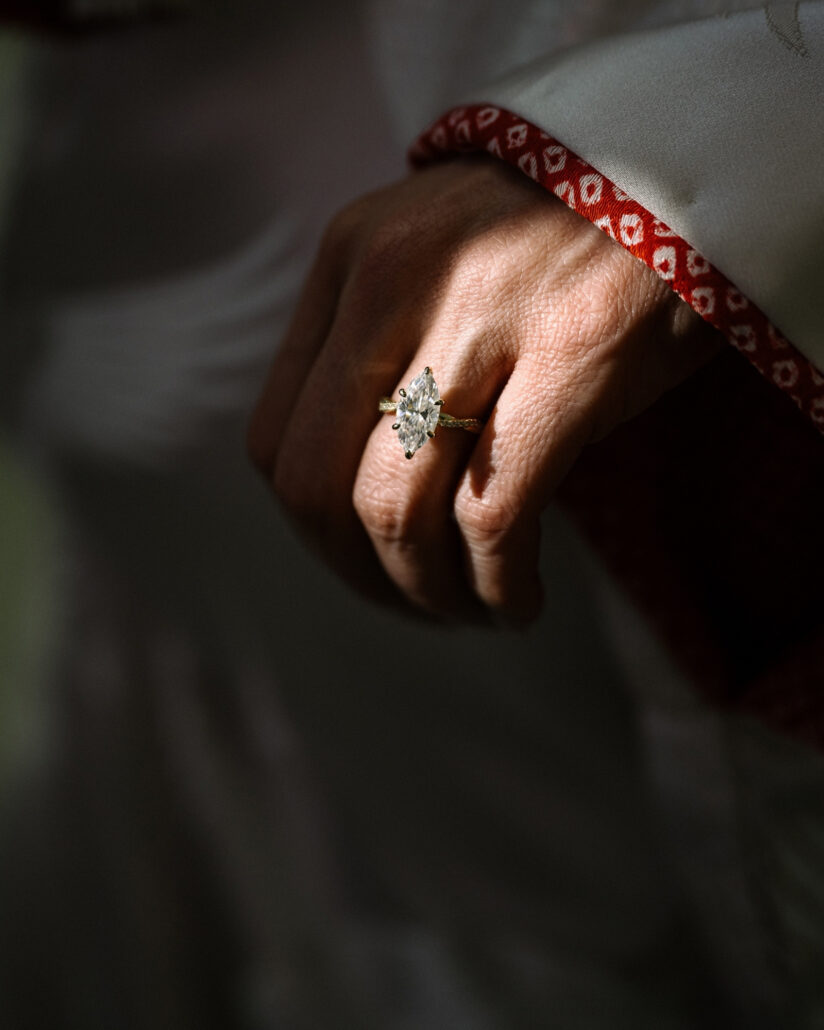
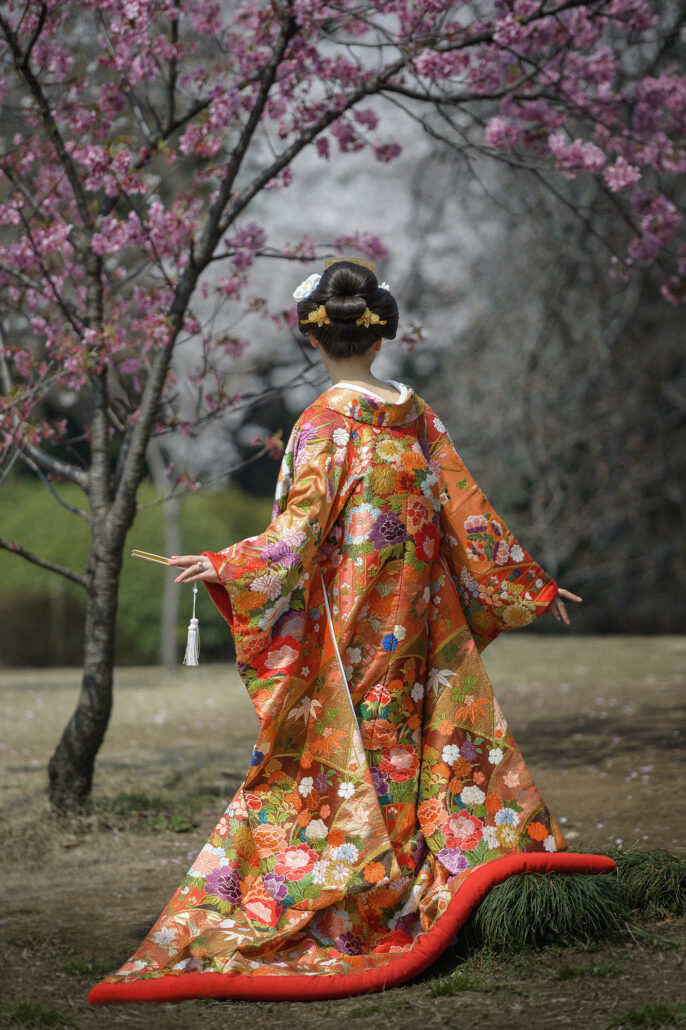
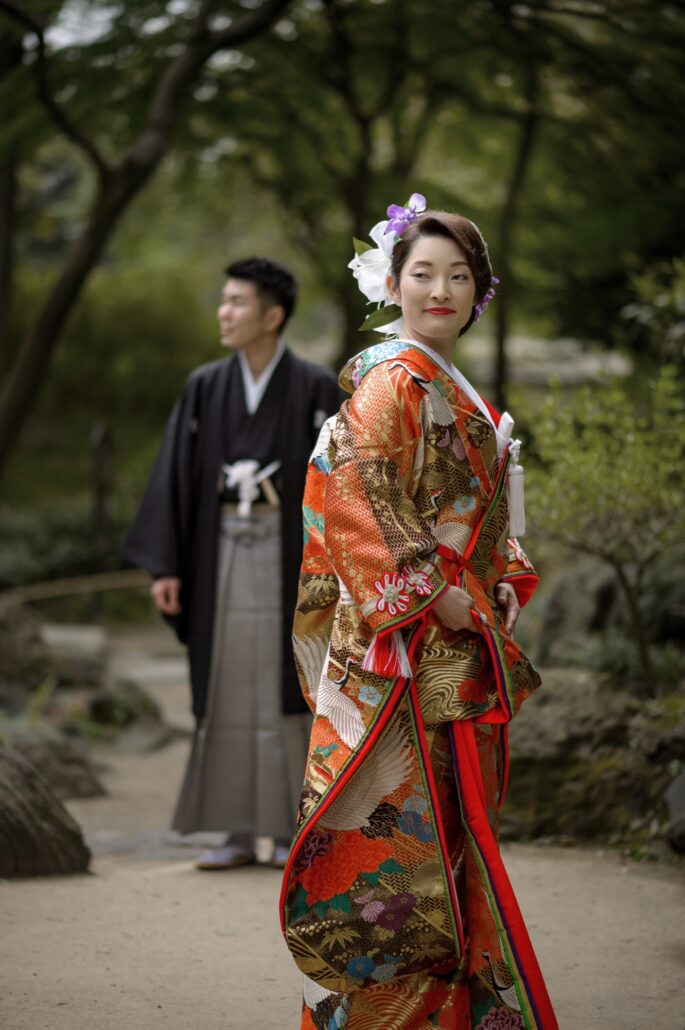
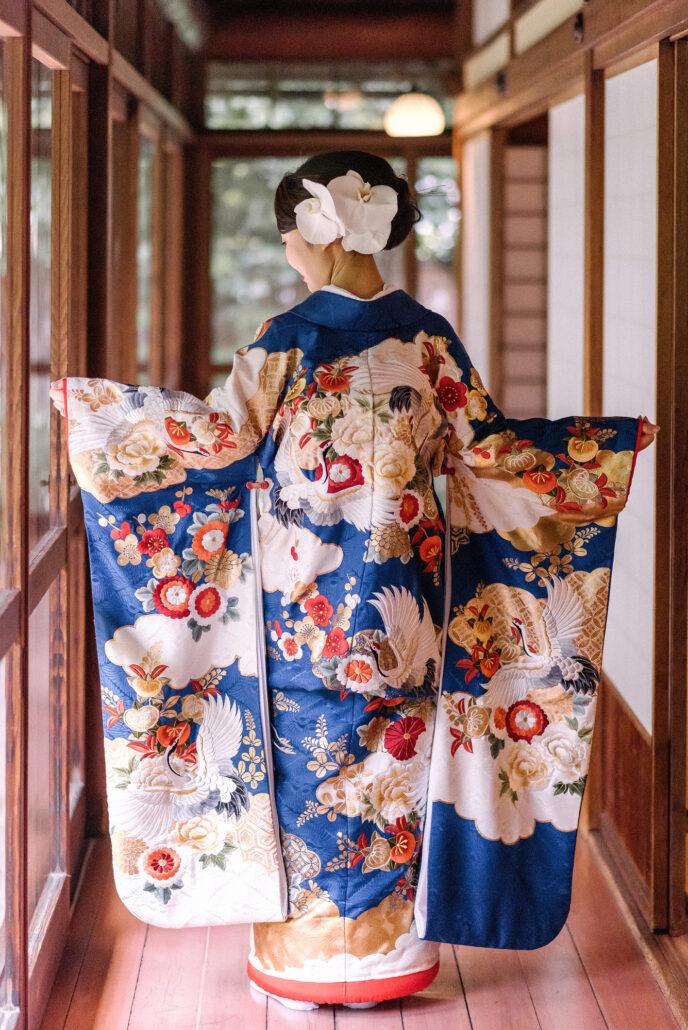
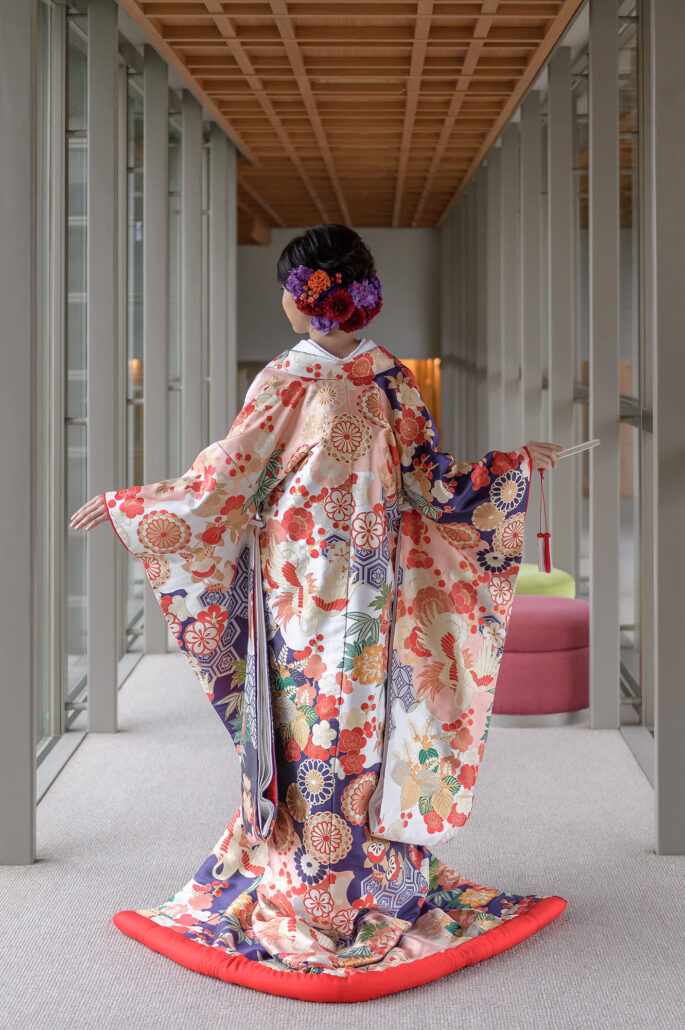
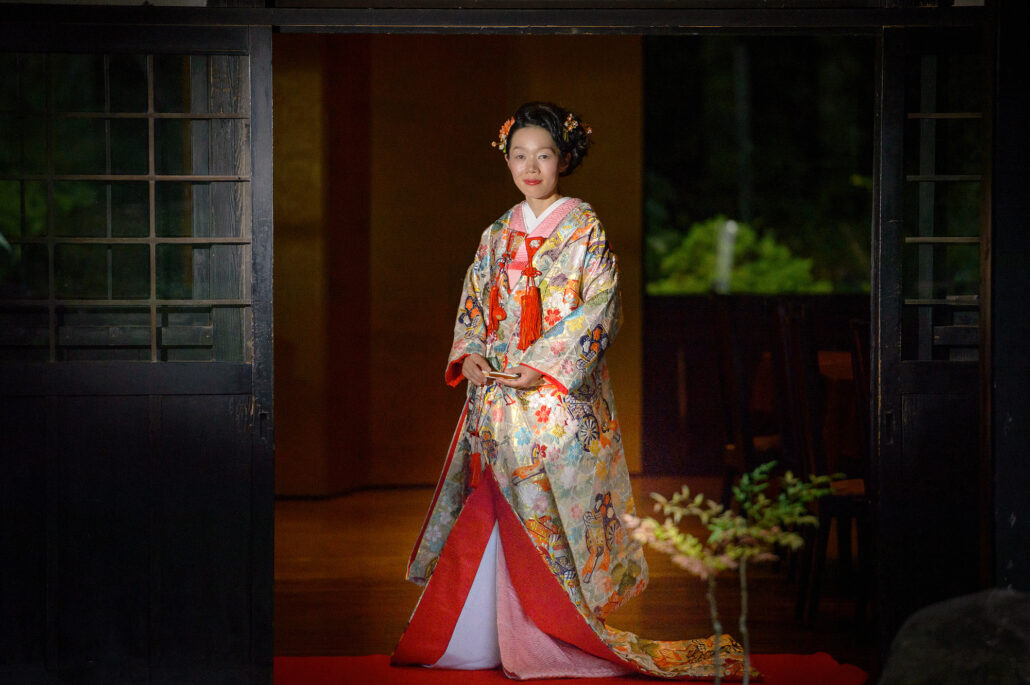
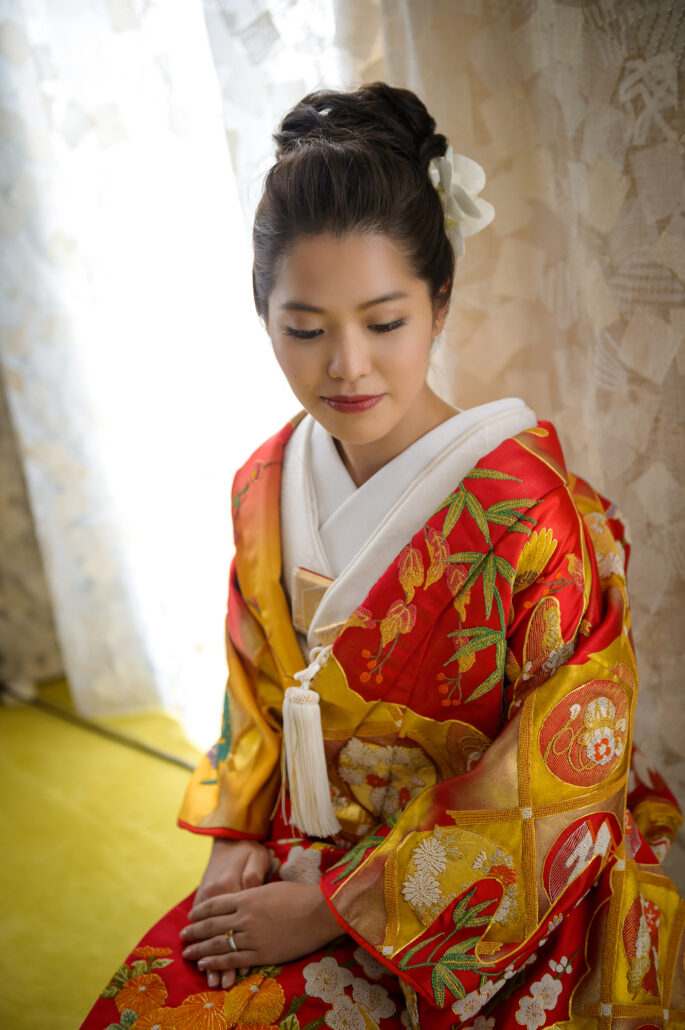
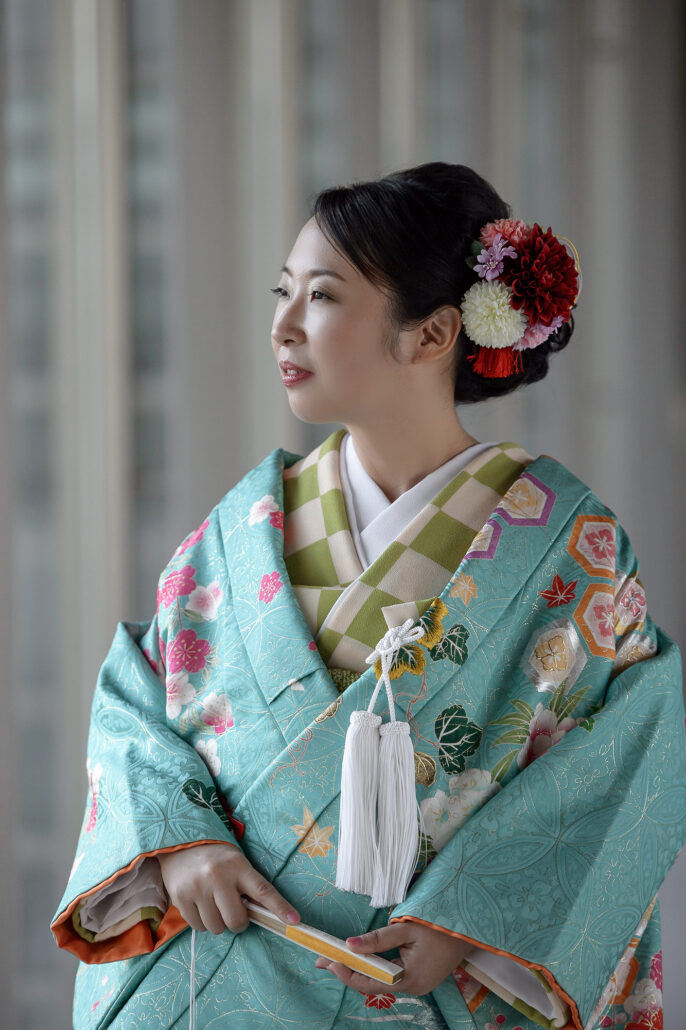
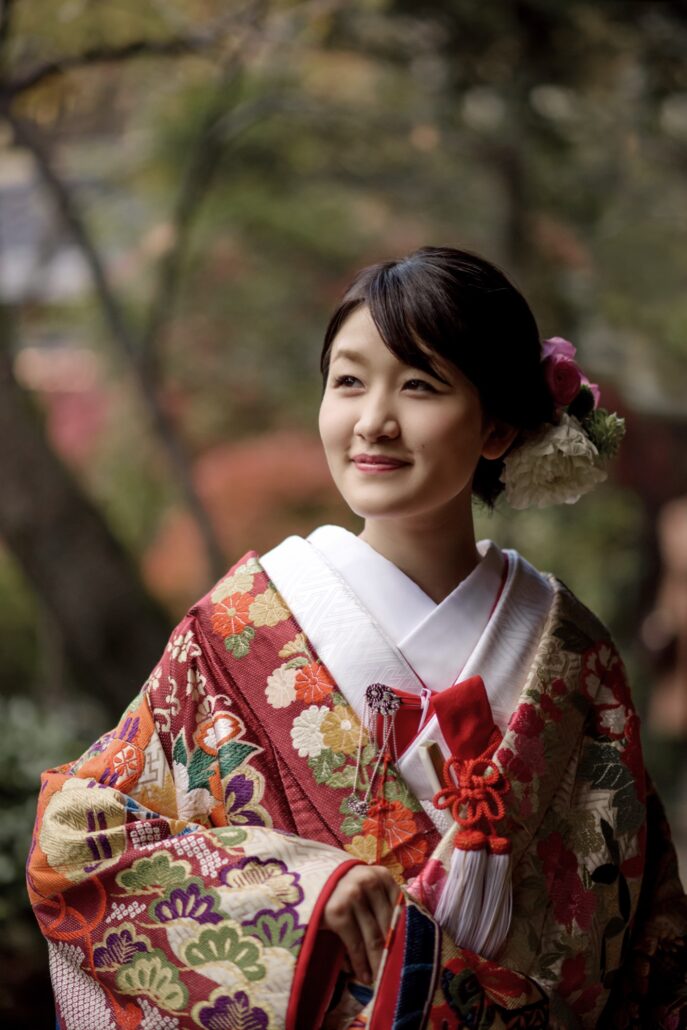
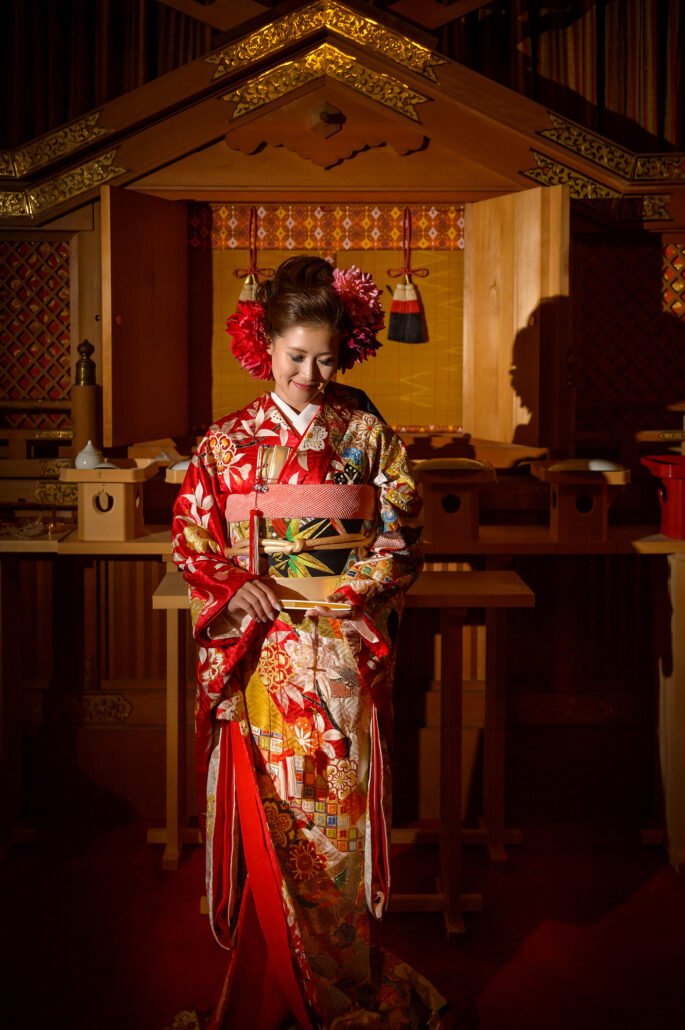
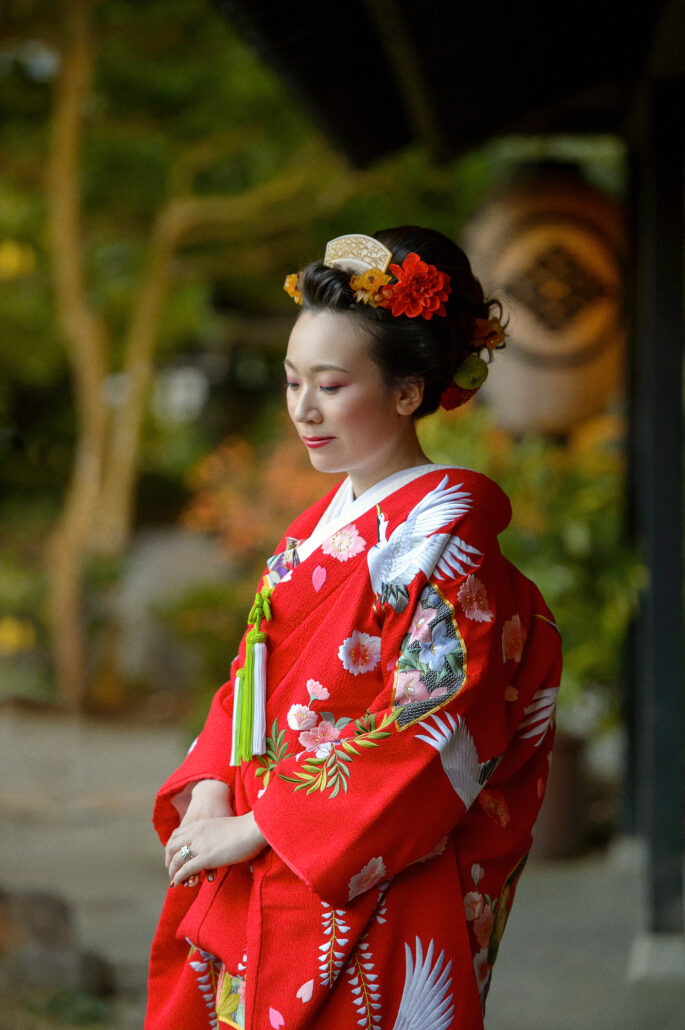
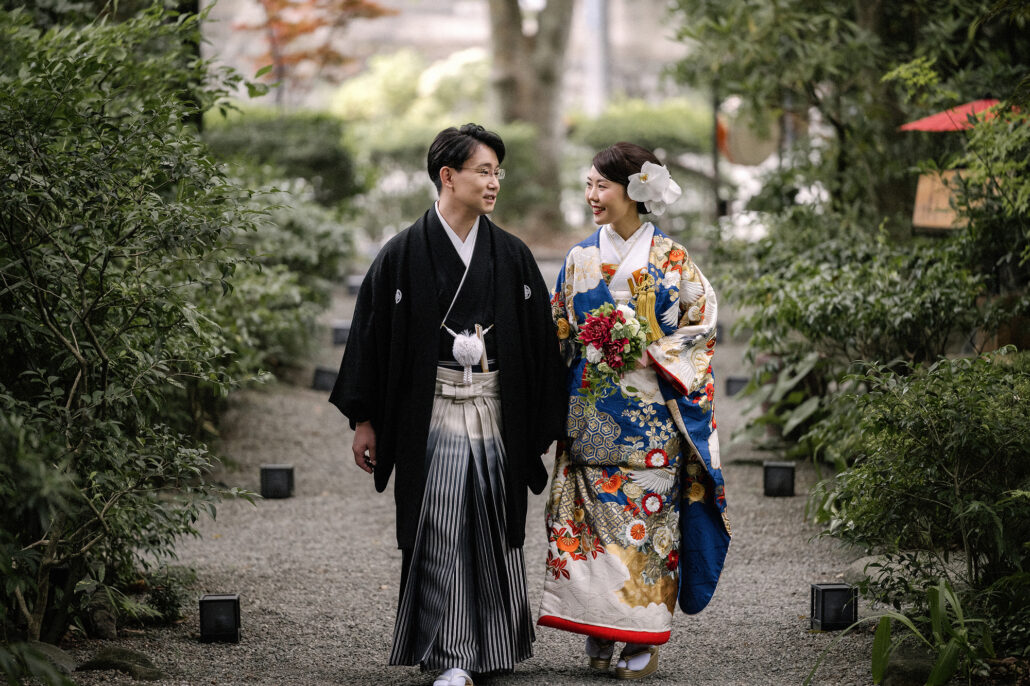
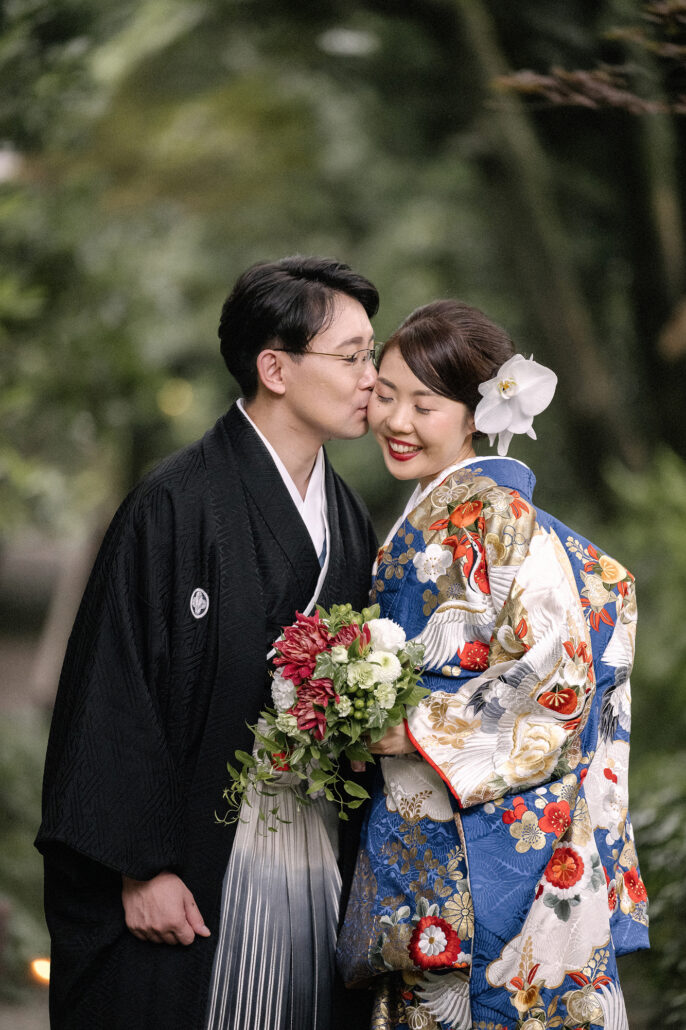
Shiromuku or uchikake? The answer is simpler than the names suggest. A shiromuku is an uchikake worn in white over white. An iro-uchikake is the same outer robe in any colour but white, worn open over the kimono and usually decorated with auspicious motifs: cranes, tortoiseshell, flowers, each a wish for long life and prosperity.
It’s built with real volume. Sleeves about a metre long, a body of almost two metres, the hem and cuffs thickly padded. That weight is why it moves the way it does. At Fuji, the pink uchikake swung out in a blur of colour as she turned. You don’t stride in an uchikake. You arrive.
Hikifurisode and Furisode: The Trailing Hem
The hikifurisode is a long-sleeved kimono with a padded hem left to trail behind. It came into wide use in the late Edo period as the wedding dress of women from samurai families, and it’s traditionally paired with the tsunokakushi.
Its cousin, the furisode, has the same swinging sleeves but no train. It’s the formal kimono of unmarried women, and many Japanese brides who marry in a gown change into one for the reception, wearing it a last time before married life.
Wataboshi and Tsunokakushi: The Bride’s Headdress
The wataboshi began as a cap of silk floss worn against the cold. By the Edo period it covered a bride’s hair and much of her face. Then weddings came to be about presenting the bride to the family, and, as one Japanese encyclopaedia notes, a hood that deep hid the very face everyone had come to see. The covering grew shallower.
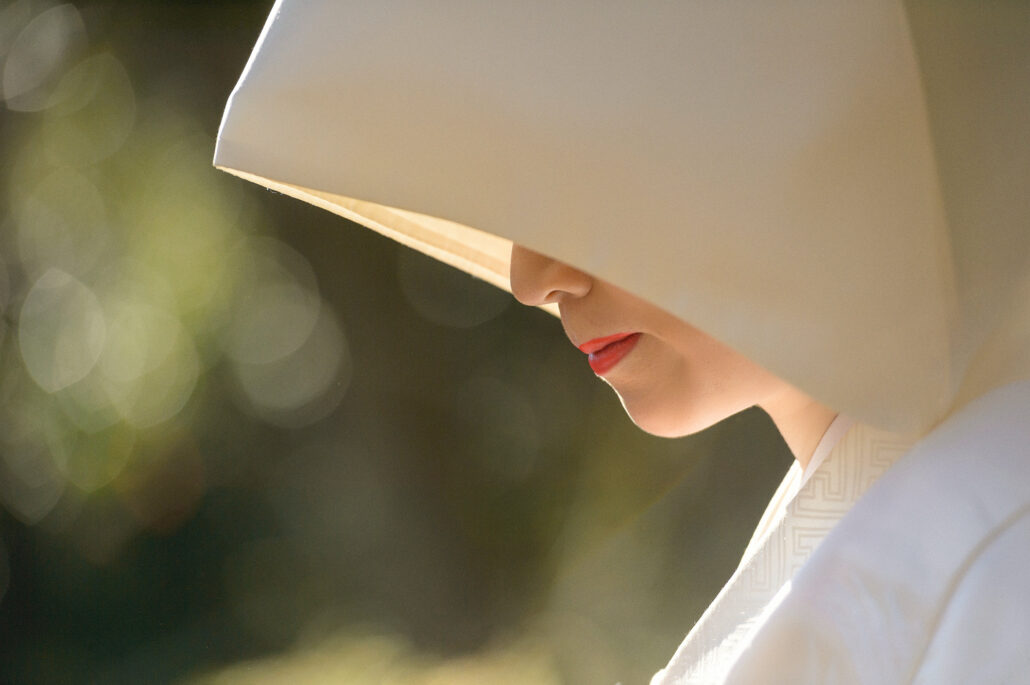
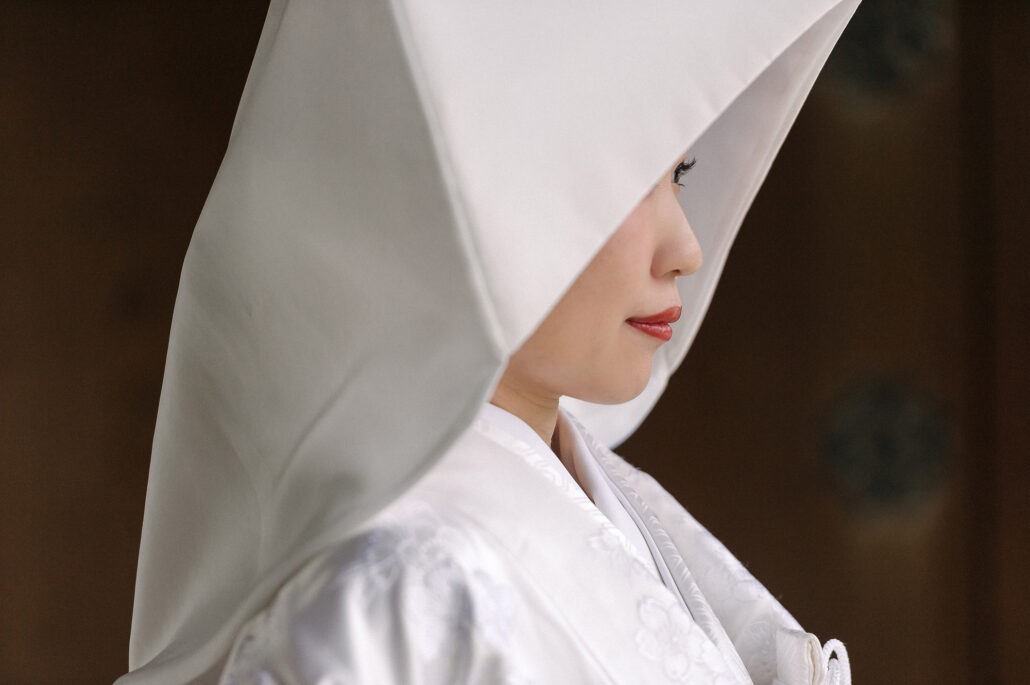
The tsunokakushi is what most brides wear instead: a strip of white silk about fifteen centimetres wide, lined in red, pinned over the traditional bridal hairstyle. The name means horn hider, and you’ll read everywhere that it hides a bride’s horns of jealousy. Japan’s own encyclopaedias call that a folk explanation, a lesson aimed at women in a feudal society. The headdress started somewhere plainer. Edo women of means wore it outdoors to keep dust off their hair, and it only took its bridal name in the Meiji era. We like knowing that. It changes what you’re putting on.
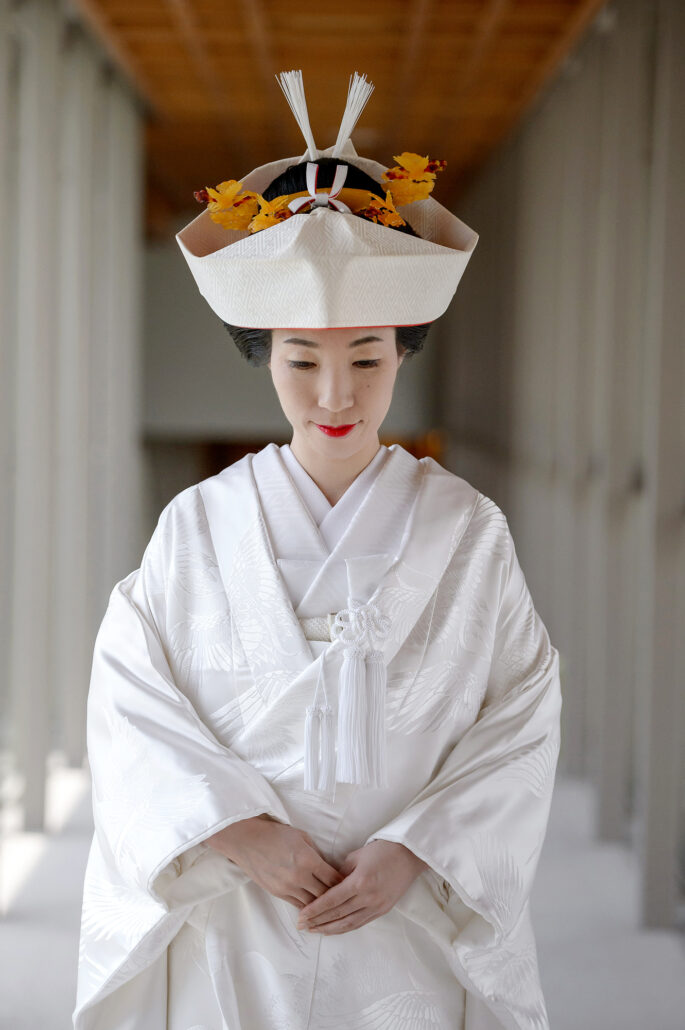
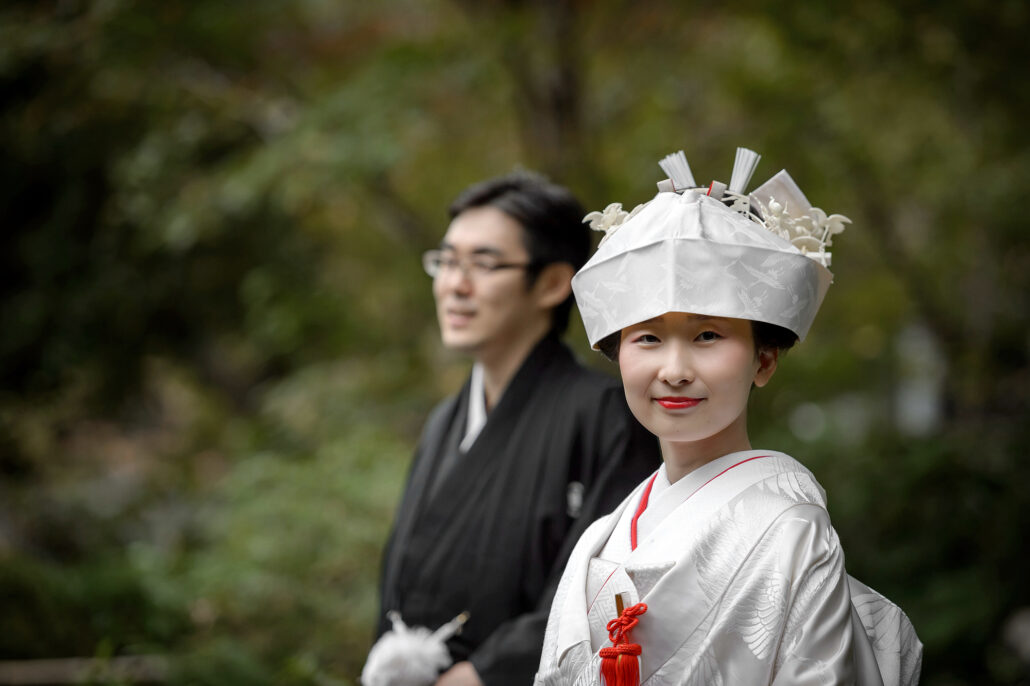
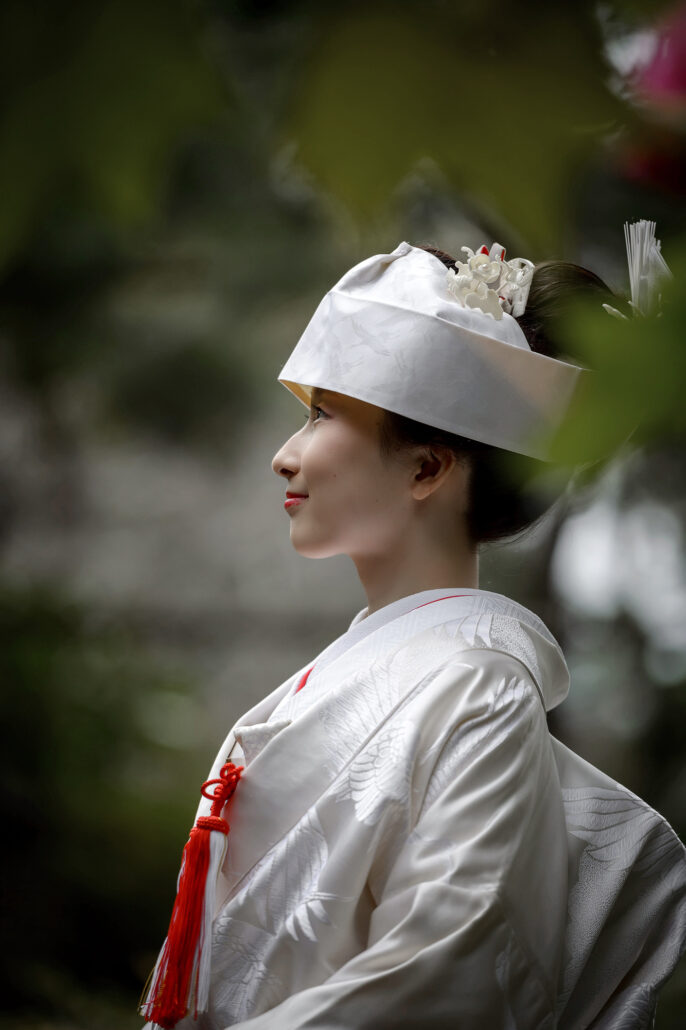
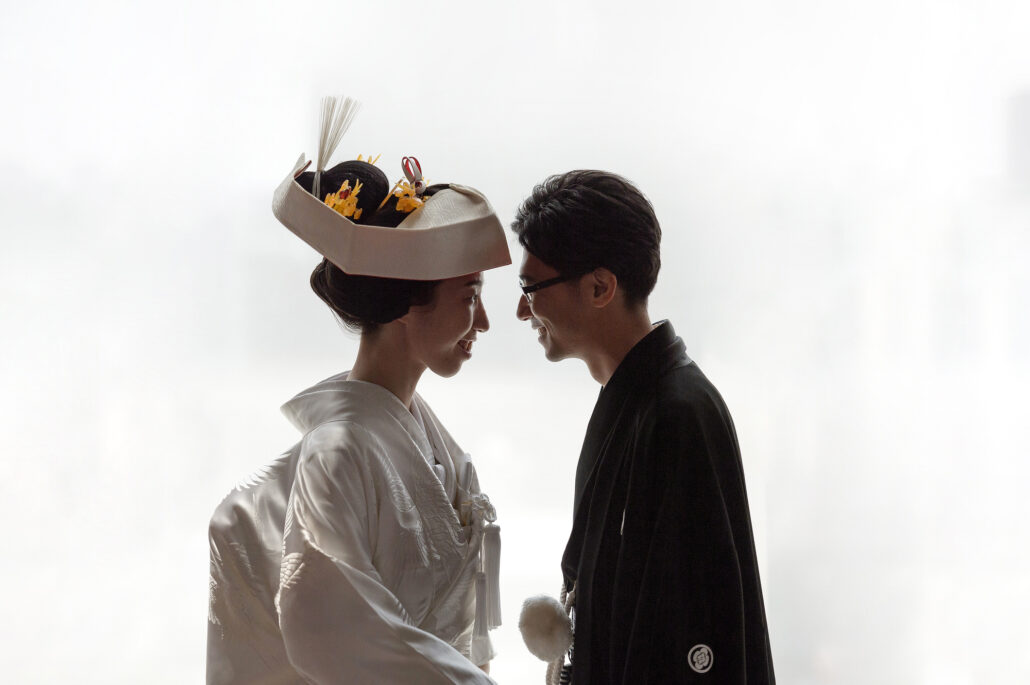
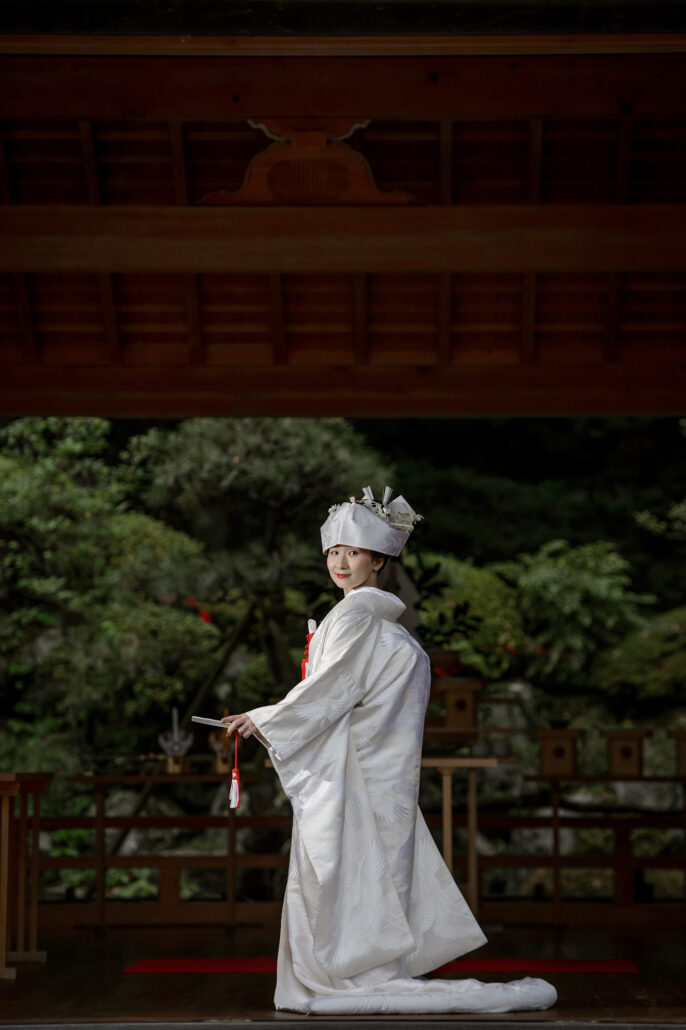
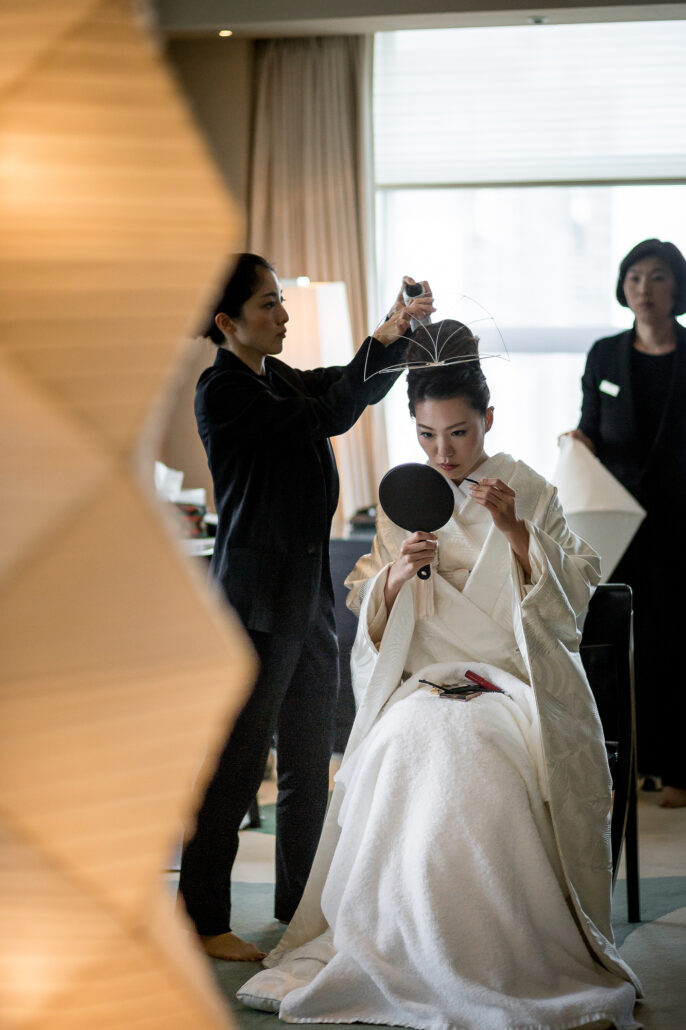
Both sit over nihongami, the traditional bridal hairstyle. Every nihongami is built from the same four parts, the front, the sides, the back and the topknot, gathered up and set with combs and kanzashi pins. By the end of the Edo period, Japanese women wore some 280 of them. Brides kept one: the bunkin takashimada, the tallest form of a topknot once worn by women in service at great households, and bridal dress since the Meiji era. Not every hair artist can do it, which is why we find the ones who can.
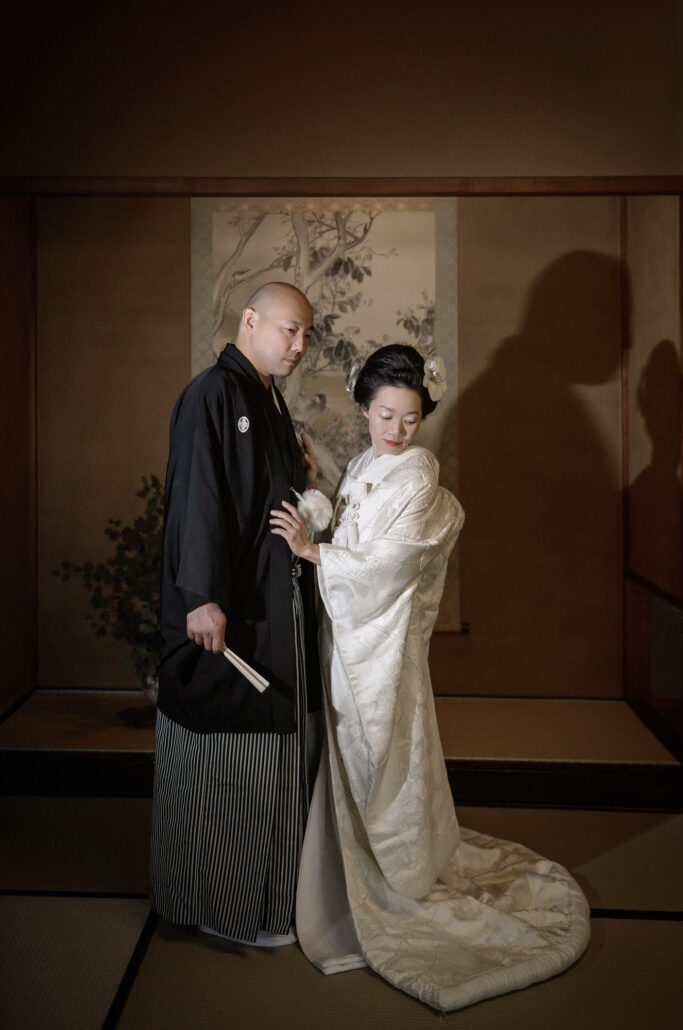
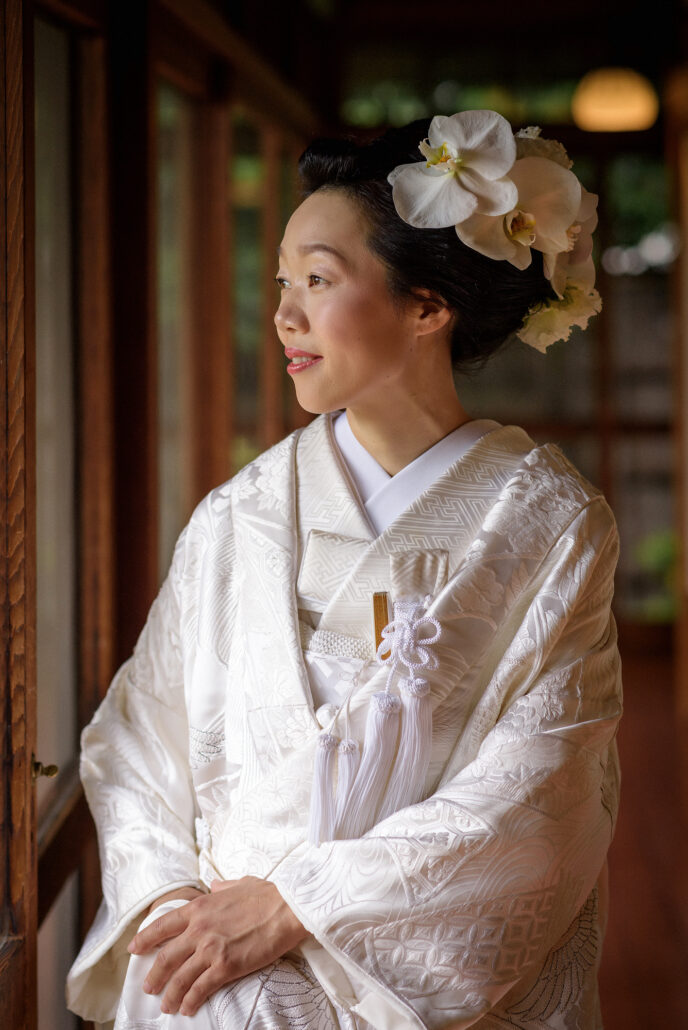
Neither headdress is compulsory. In Japan itself, more brides now choose their own hairstyle with kimono instead of a wig or headdress. The temple bride wore white orchids in her hair with her shiromuku. The bride at Fuji wore a single ornament.
Montsuki and Hakama: What the Groom Wears
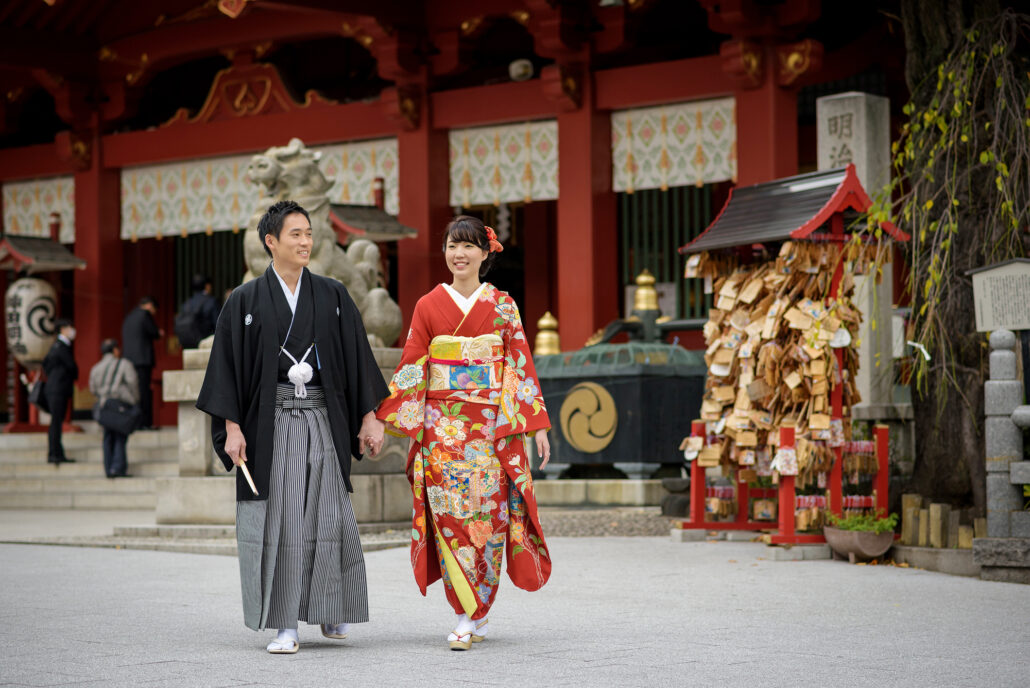
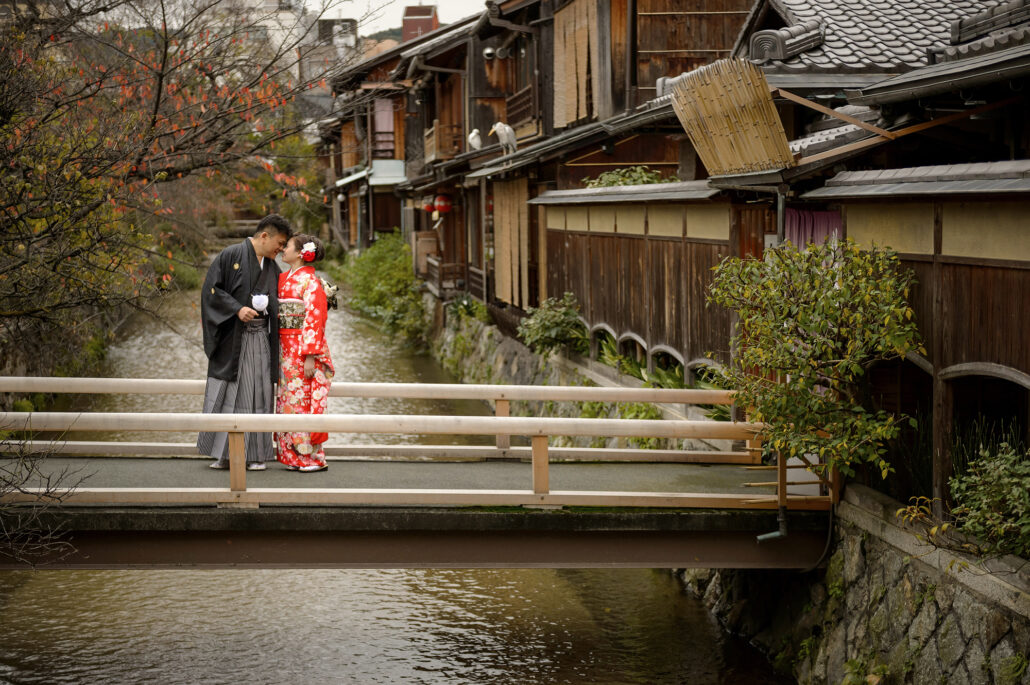
Montsuki means crested. A groom’s full formal dress is a black kimono and haori jacket bearing five family crests, worn with striped hakama, traditionally in a silk called Sendaihira. It’s the most formal dress a man can wear in Japan, and it only became the standard after the Meiji Restoration did away with the kamishimo, the old ceremonial dress of the samurai.
Family and Guests in Kimono
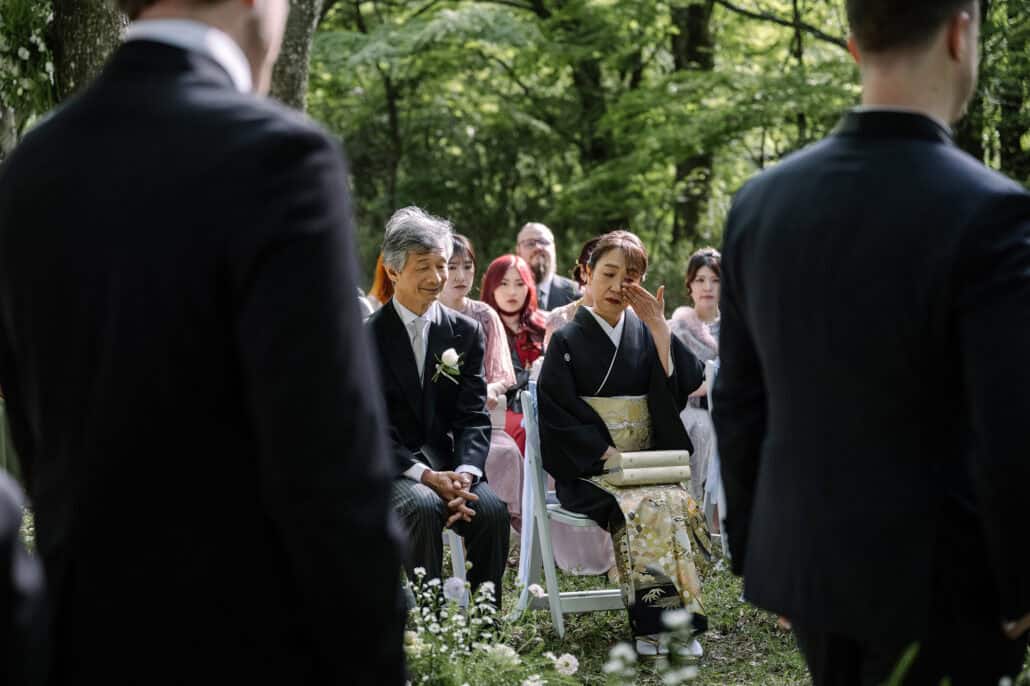
For married women in the family, the black tomesode is the most formal dress: crested, and patterned only below the waist. Married women from outside the family wear a coloured one. At a forest wedding in Hakone, the bride’s mother wore formal black kimono with a gold obi, and lifted a hand to her eyes in the front row.
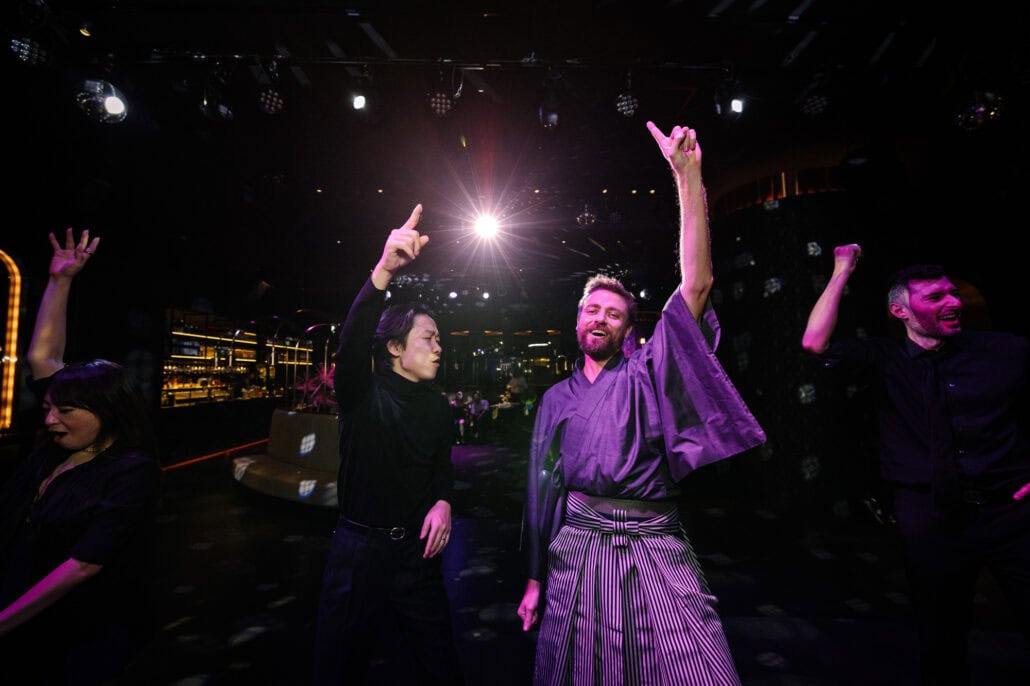
When a mother wants to wear kimono, her dressing goes into the plan alongside the bride’s, so she’s ready and unhurried when the moments she crossed the world for begin. Guests can wear kimono too. At one Tokyo Bay party, a guest in kimono and striped hakama was out on the dance floor with the groom, both of them pointing at the ceiling. For everyone else, our guide to attending a wedding in Japan covers what to wear.
Can Foreigners Wear a Kimono for a Wedding in Japan?
Yes. Japan’s own tourism board invites visitors to wear kimono, and it isn’t disrespectful when it’s done with care. What matters is how.
We often say Japan should feel lived in, never worn like a costume. A kimono rented for an hour on a busy street is a souvenir, and that’s fine for a souvenir. A wedding asks for more, and above all a clear sense of what’s religious and what’s cultural.
Kimono is dress. A shrine wedding is a Shinto rite and a temple wedding a Buddhist one, and each takes place inside a living place of worship with its own requirements. The shrine ceremony most people picture is also younger than it looks: it took its familiar form from the Meiji era onward, modelled on imperial weddings. Wearing shiromuku doesn’t make a day Shinto, and a ceremony isn’t something to borrow for its look. Our guide to a Shinto shrine wedding in Japan explains how that side works.
Done well, an unfamiliar ceremony needn’t leave anyone outside it. Long before the temple wedding, the couple sent us seven moments they wanted to keep. The list began with a bow to a priest and ended with a speech from a guest, and every one placed another person inside the memory.
Kimono for the Ceremony, or a Day of Its Own
For the ceremony, the kimono belongs to the rite. The temple couple wore shiromuku and hakama at Taiseki-ji, the head temple of Nichiren Shoshu below Mt Fuji, bowed to the chief priest at the entrance, and afterwards stood with both chief priests and the whole family for a photograph at the door. The clothes and the ceremony said the same thing.
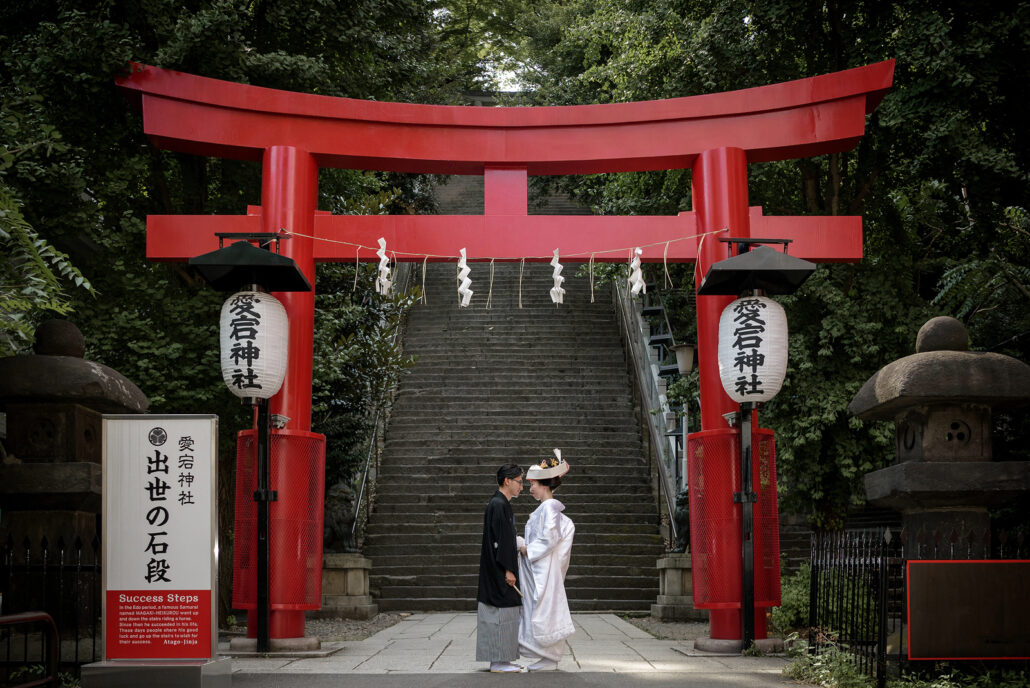
On a day of its own, kimono follows a Japanese habit called maedori, literally “taking before”. The dictionary groups it with coming-of-age day and shichi-go-san, the children’s shrine celebration: the formal portraits are made ahead of the occasion rather than on it. The logic is practical. A garment that takes hours to put on deserves a day with nowhere else to be.
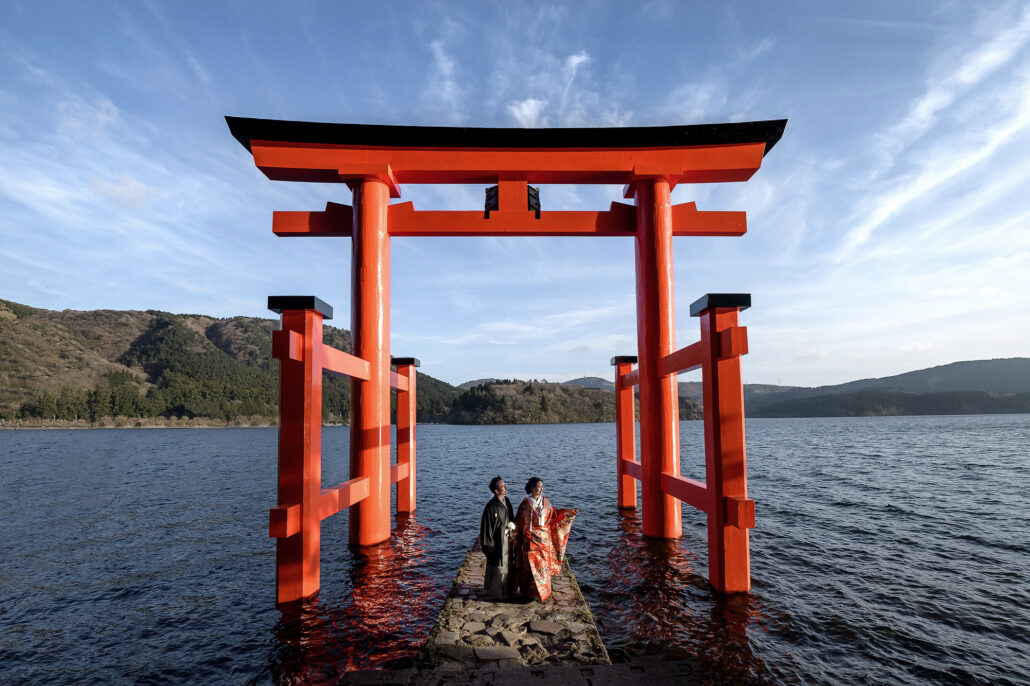
That’s how the bride at Fuji wore hers, the year before they married. Her gown came first, in a cold wind that drove whitecaps across Lake Kawaguchi and didn’t let up all morning. The uchikake came after lunch. Behind all of it sat a spare day held in reserve and a route that kept them close to the mountain whatever it decided to do. By evening the wind had blown the cloud off the summit.
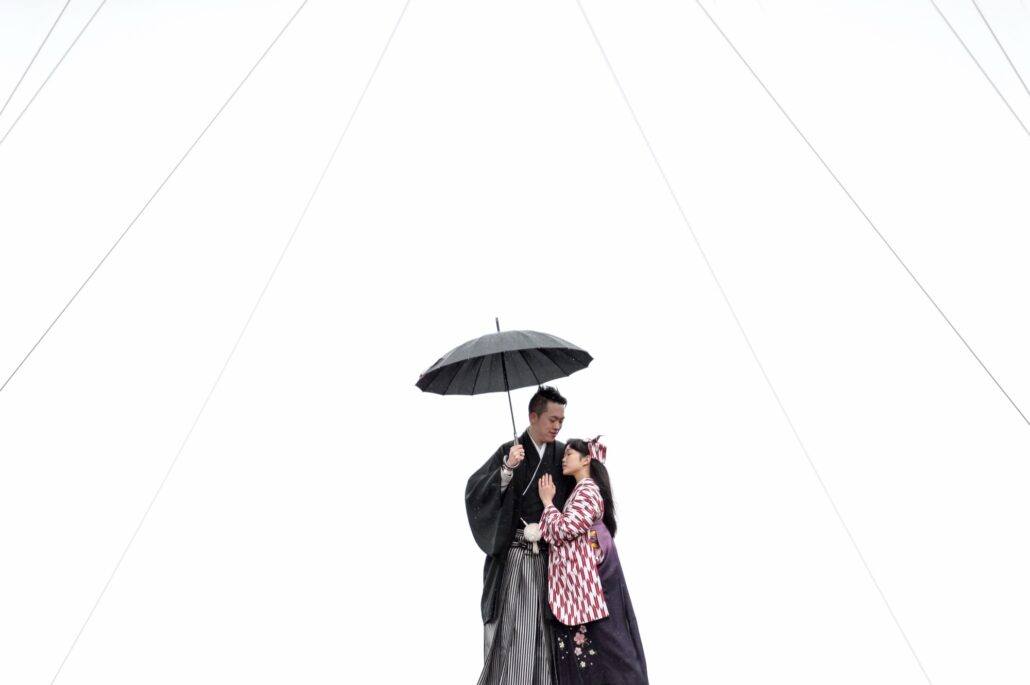
Another couple, on their first trip to Japan since getting engaged, had asked us early on how to bring their own cultures into what they wore. In Tokyo it was Japan’s turn. Rain pushed it back a day. We arranged the kimono, they chose their own at the shop and were dressed there, and then they walked to Naruko Tenjin Shrine in Nishi-Shinjuku, which keeps a small Fuji of its own, built from the mountain’s lava.
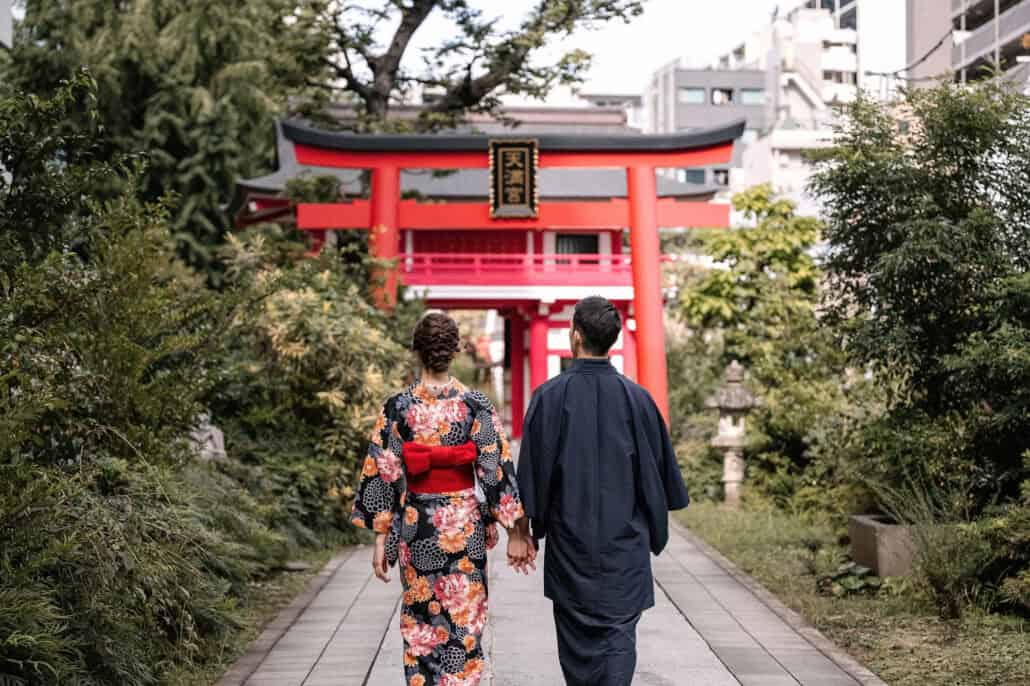
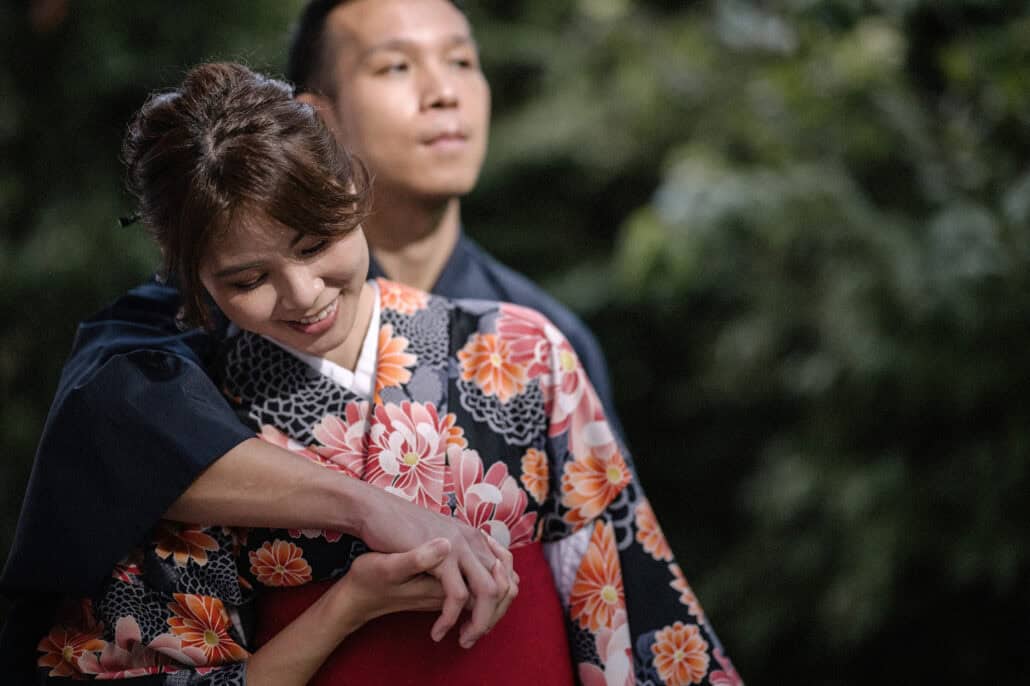
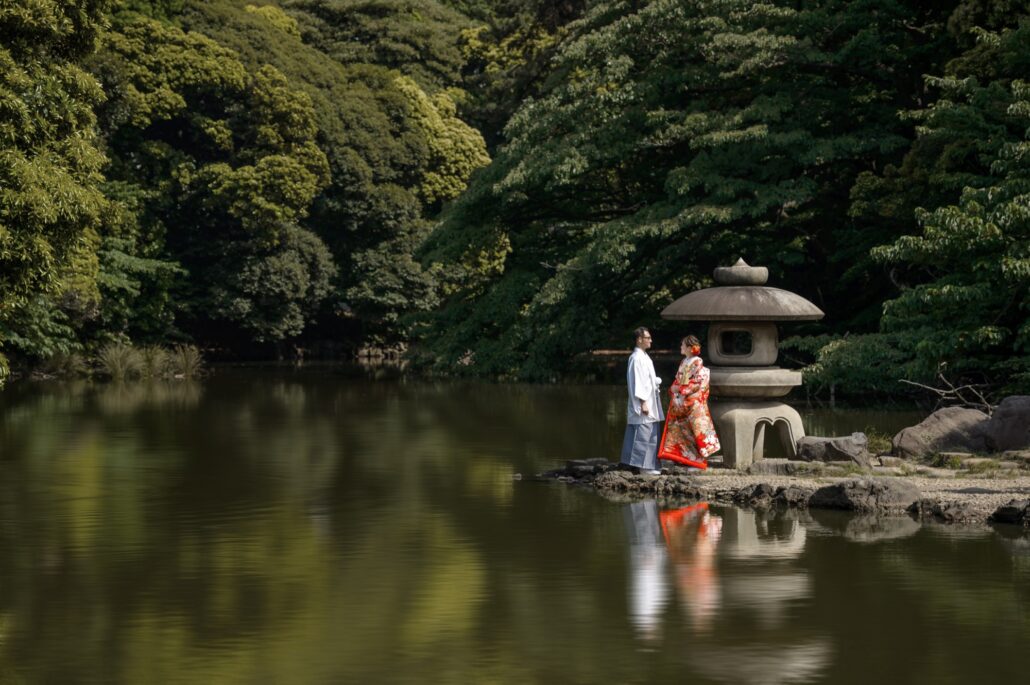
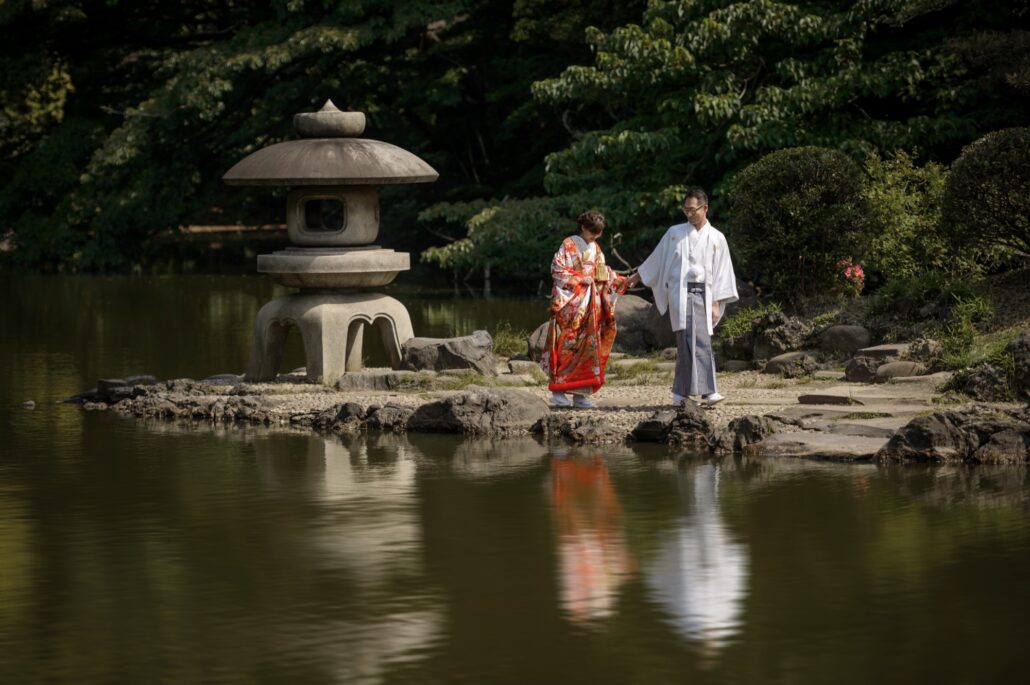
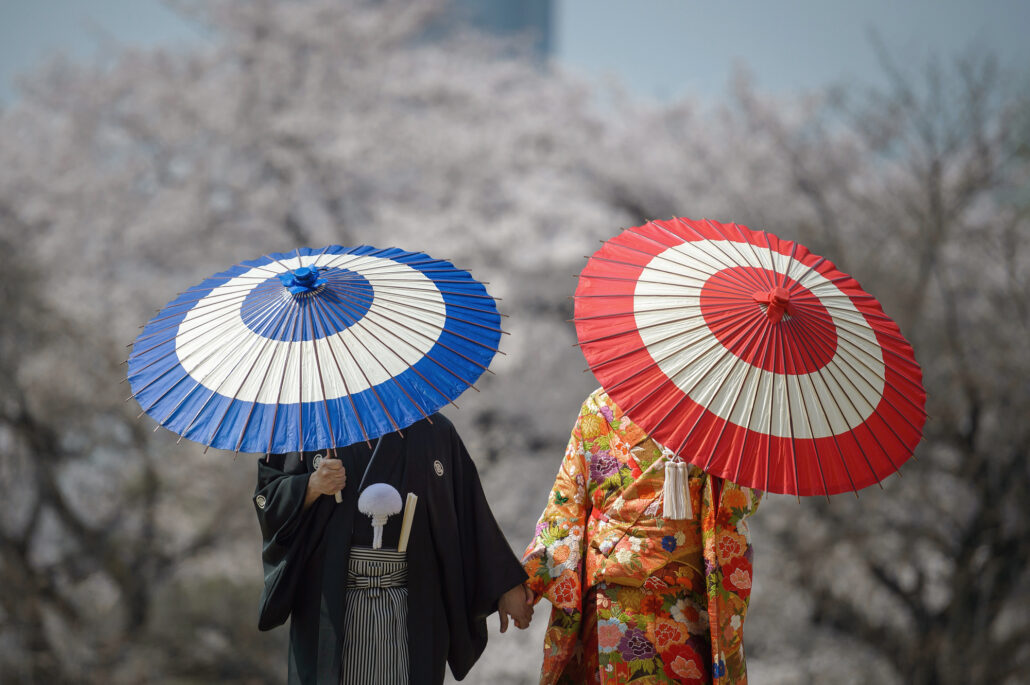
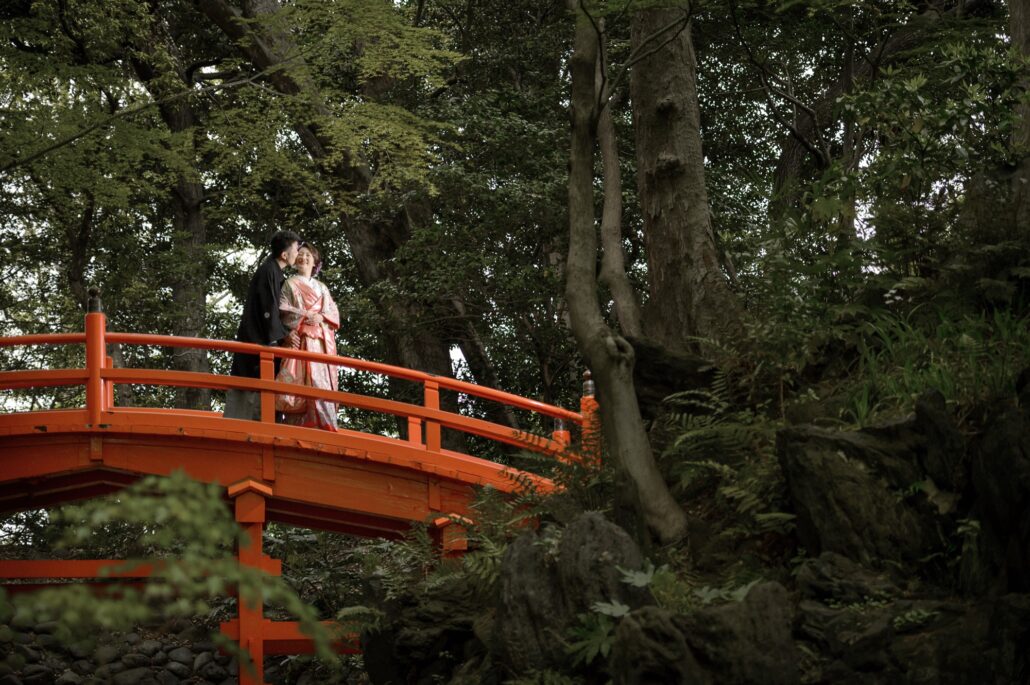
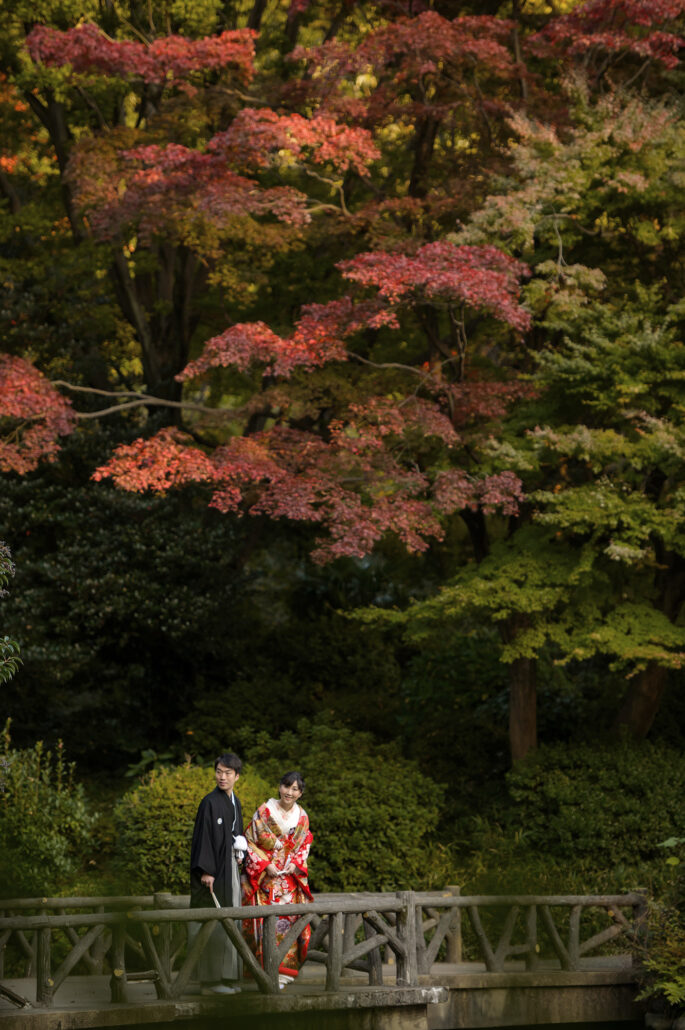
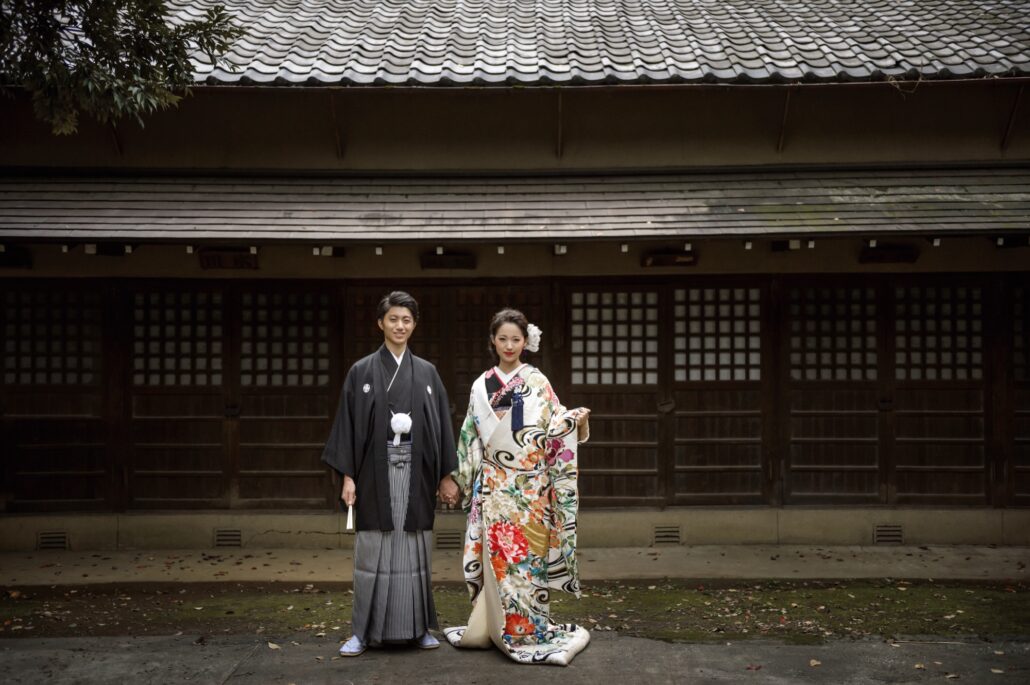
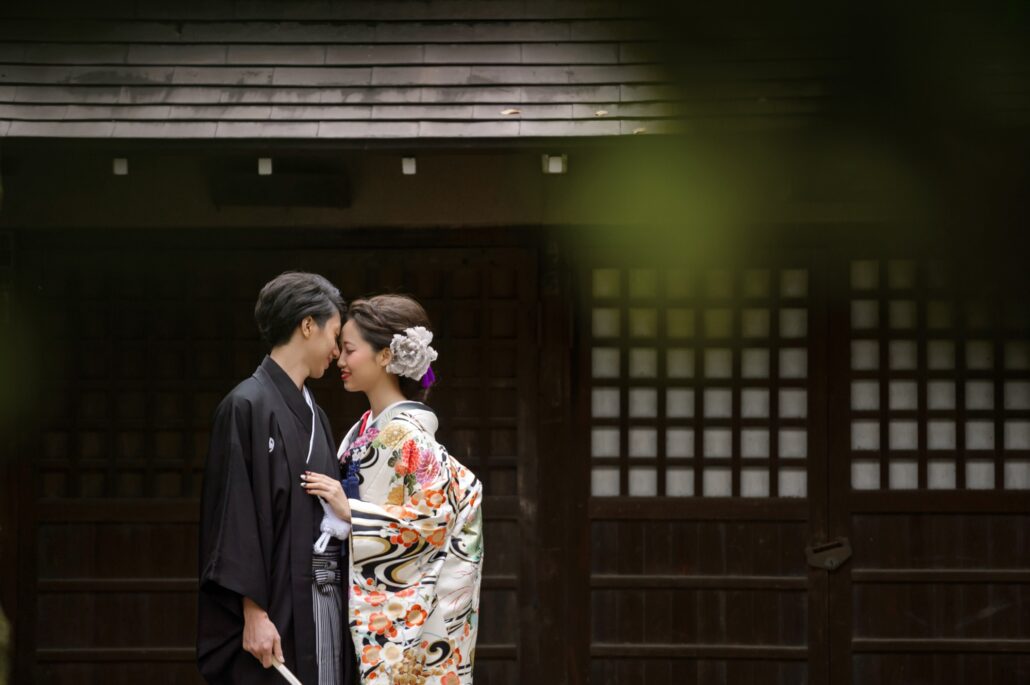
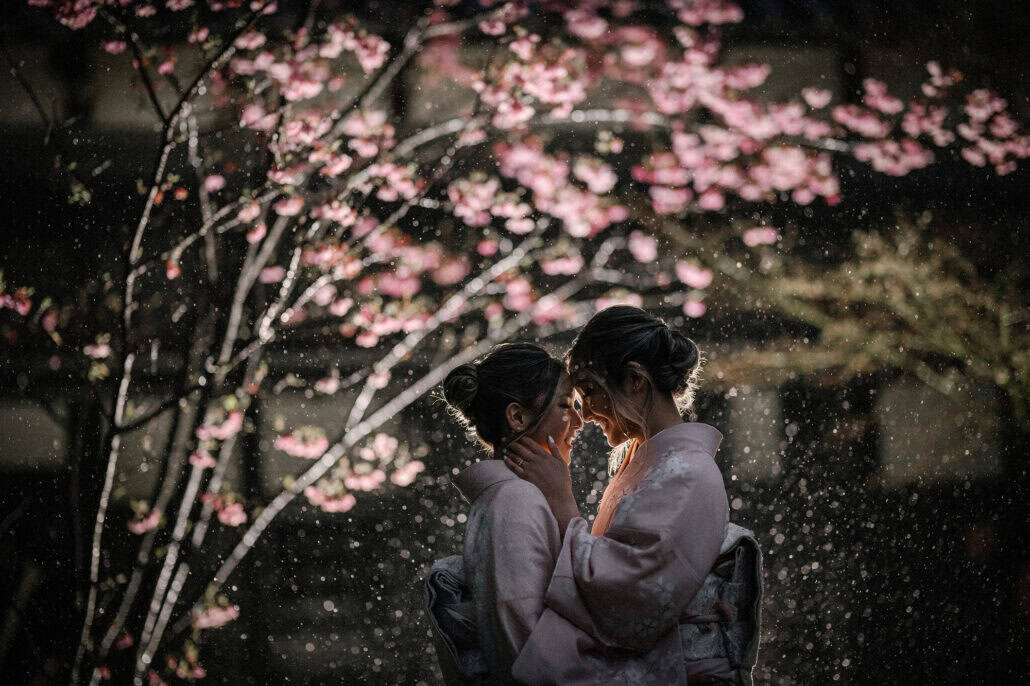
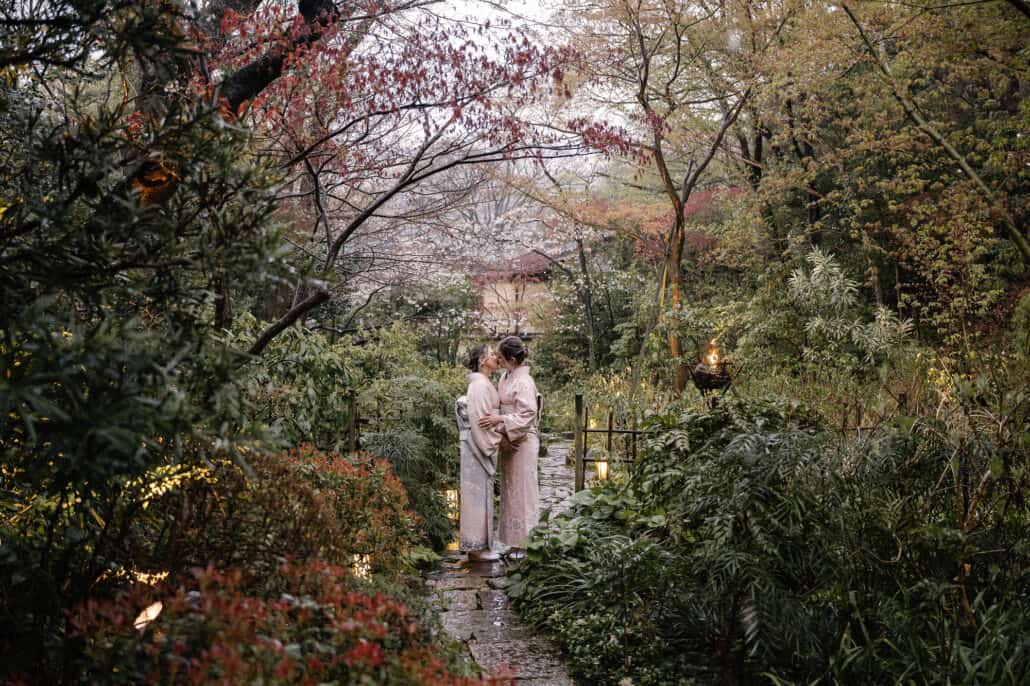
At Jinya, a ryokan in Tsurumaki Onsen, two brides gave one afternoon of their two-day celebration to pastel kimono, and the garden took on a different shape and movement. That’s what a change of dress can do: show you a place twice.
When couples ask where to wear kimono, we tell them to start with the place that means something to them, not the one that photographs best. Sometimes those are the same place. At Fuji, they were.
Kitsuke: Why Dressing in a Wedding Kimono Takes Hours
Kitsuke is the craft of dressing someone in kimono. For a bride it takes specialist dressers, and every layer is folded, wrapped and tied by hand. The kakeshita, the kimono worn under the uchikake, is itself a survival: it’s the robe samurai-class women once wore beneath their outer robes. A trained dresser also knows the details Japan notices. The left panel always crosses over the right. Right over left is kept for dressing the dead.
Dressing in kimono and styling a traditional hairstyle can take hours. In Japan, that time is simply expected. For a couple flying in, it has to be built in from the start, so it reads as part of the day rather than a delay to it. It’s some of the quietest work a wedding planner in Japan does, and some of the most important. At Fuji, an impeccable hair and makeup team turned a ball gown into a kimono in the space of a lunch and made it look unhurried. It looked unhurried because it was planned. The bride had done her hair and makeup trial in Tokyo a month earlier.
Our guide to how far in advance to plan a wedding in Japan explains why kimono belongs in the plan early. Kimono is often one part of a much larger set of decisions, and our guide to planning a wedding in Japan covers the venue, ceremony and supplier questions worth settling before anything is booked.
Rain, Heat and Silk
Edo women knew the problems. To walk outdoors in an uchikake they gathered the hem in their hands, which gave the robe a second name, kaidori. In summer they slipped it off their shoulders and tied it at the waist. A trailing hem still needs a hand on gravel, steps and wet stone, and layered silk is a gift in a November garden and a real weight in high summer.
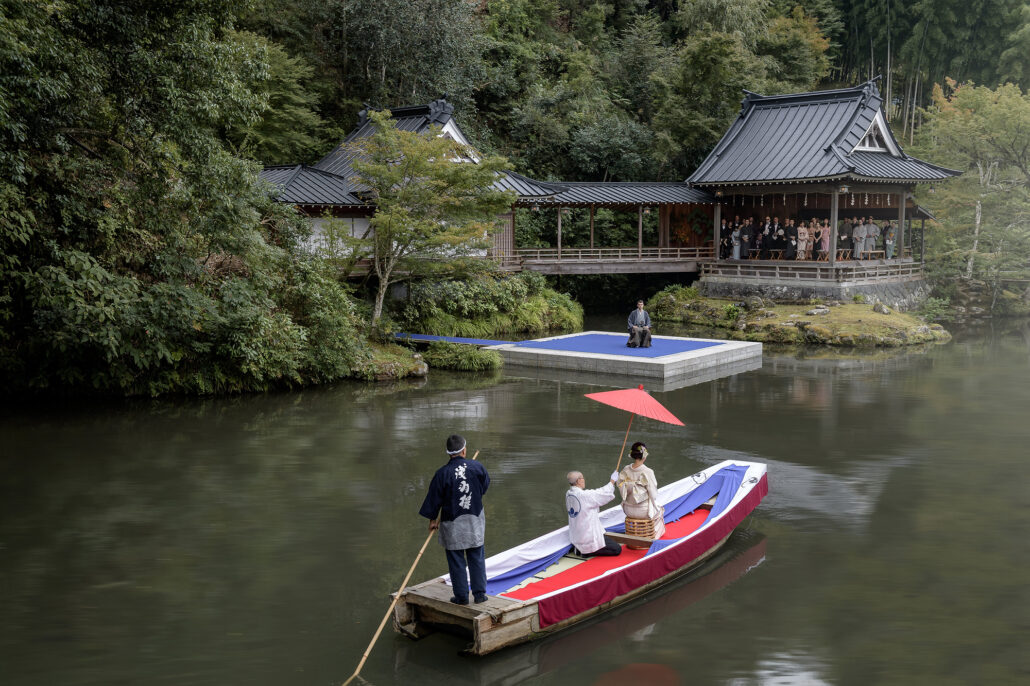
Then there’s rain. Silk shouldn’t sit in a downpour. We plan every outcome as a real option, so umbrellas, covered routes and a dry place to wait are already part of the day. When rain moved one ryokan ceremony in Kanagawa indoors, the room it moved into had been planned as carefully as the garden.
At the temple, the blossom sky turned to rain. Wet stone darkened around the couple’s feet, and the groom carried a red paper umbrella across the vermilion bridge. The rain belonged to the day because the plan had room for it.
Iro-naoshi: Changing Looks Across One Day
Japan has a word for a bride’s change of dress: iro-naoshi, literally a change of colour. In Muromachi samurai weddings, the bride stayed in white for days after the ceremony before changing into colour. By the middle of the Edo period, the change had moved to the wedding night itself. Today it happens at the reception, and the V&A describes the classic version: shiromuku for the Shinto ceremony, then a bright red uchikake before the party.
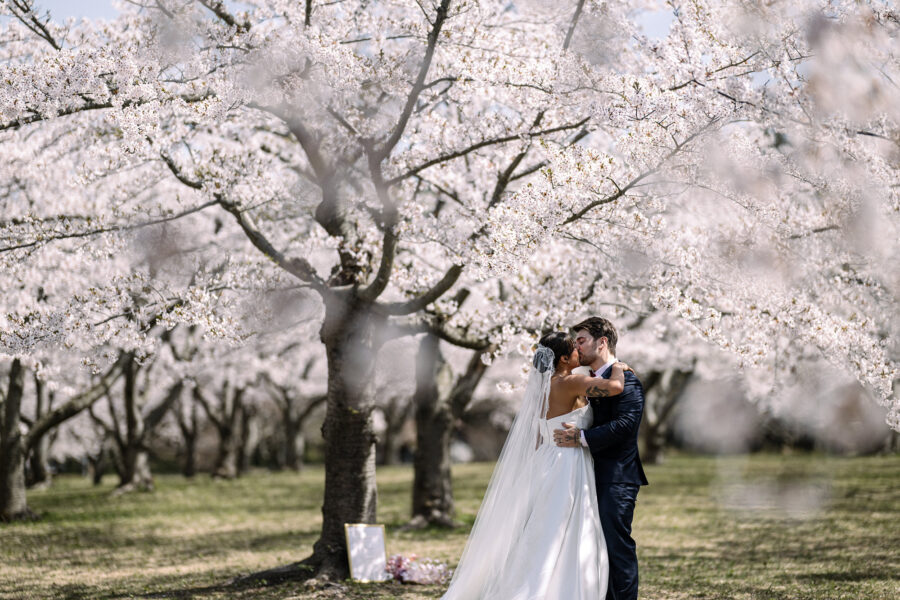
The temple bride wore her shiromuku for the ceremony and a gown with a long veil in the cherry grove later, and walked into the reception house under falling petals.
Our advice is simple. Every change is time spent in a dressing room rather than with your people. Choose one or two looks, give each a place that suits it, and let the day breathe between them.
Renting a Wedding Kimono in Japan, and Who Arranges It
Rental is part of how the uchikake became the country’s everyday bridal dress: as it spread, the uchikake took the place of the furisode brides once wore. The range is wide, from simple cotton day rentals to embroidered bridal silks and, now and then, historical pieces.
What decides the result is the people around the kimono: the dresser, the hair artist, and the plan that gives them time. Then come the parts nobody sees. A mother’s tomesode. A ceremony’s requirements, in Japanese. A dry route if it rains. A quiet room between looks. Our wedding planning in Japan holds all of it in one plan, and our photography and film team knows where each look will be worn.
Quick Answers
What is the Japanese wedding kimono called?
The all-white bridal kimono is the shiromuku, worn for the ceremony. A coloured outer robe is an iro-uchikake, often worn after the ceremony or on a day of its own. The groom’s formal dress is montsuki, a black crested kimono and haori, with striped hakama.
Can foreigners wear a Japanese wedding kimono?
Yes. Japan welcomes visitors in kimono, and couples from abroad wear shiromuku and uchikake for ceremonies and around them. What makes it respectful is how: the right garment for the occasion, a trained dresser, and an understanding that kimono is cultural dress, while a shrine or temple ceremony is a religious rite.
What do Japanese brides wear on their heads?
Traditionally a wataboshi, a large white silk hood worn with the shiromuku, or a tsunokakushi, a band of white silk lined in red, pinned over the bridal hairstyle. Neither is compulsory. A growing number of brides in Japan wear their own hairstyle instead, with an ornament or flowers.
How long does it take to put on a wedding kimono?
Plan for hours rather than minutes once hair is included. Specialist dressers work layer by layer, and a traditional hairstyle takes time of its own. Built into the day from the start, the dressing becomes a calm part of it.
Who arranges a wedding kimono in Japan?
For an afternoon in town, a good rental shop. For a wedding, the dresser, hair artist, timing, family kimono, rain plan and the ceremony’s own rules all have to meet in one plan, much of it arranged in Japanese. That’s the work of a Japan wedding planner, and it’s most of what makes the day feel unhurried.
What the Kimono Asks of You
A bridal kimono asks for time, care and a little humility. Learn what it means. Let someone trained dress you. Wear it somewhere that suits it.
Give it those, and it gives something back. For a few hours you’re carrying a piece of Japan that was here long before you, and will be here after you.