In late summer, Japan’s cicadas sing loud enough to compete with a pair of vows. Nobody puts them on the guest list. They come anyway.
An outdoor wedding in Japan means planning for every guest you didn’t invite: the season, the rain, the wind, the ground underfoot, the light and, in August, the cicadas. None of them is a reason to marry indoors. Some of our favourite ceremonies had most of them at once. They go into the brief, and the earlier they’re in it, the better the day goes.
In 2026, Tokyo had rain on thirty-seven consecutive days, from the end of August into October, a record for the city. We had weddings in the middle of it. We’ve woken on many wedding mornings and watched the sky together with our couples, and we make the call together, calmly, because every outdoor ceremony we plan is planned twice and the rain plan has been talked through long before. Did you picture yours outside? Then here’s how we’d plan it.

Outdoor Wedding Venues in Japan, and Who Owns the View
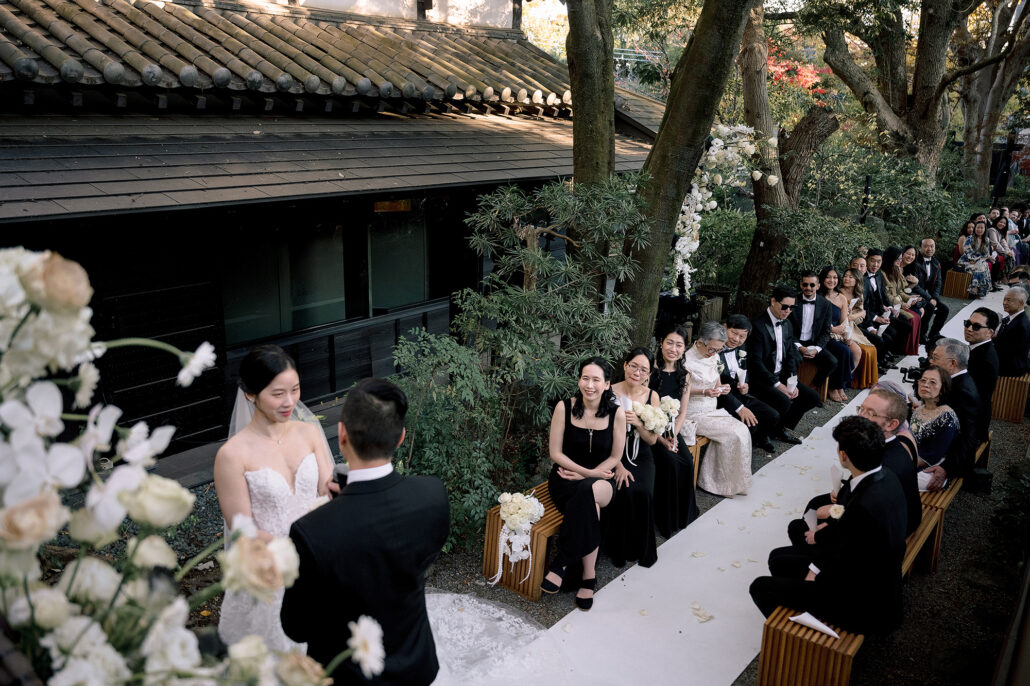
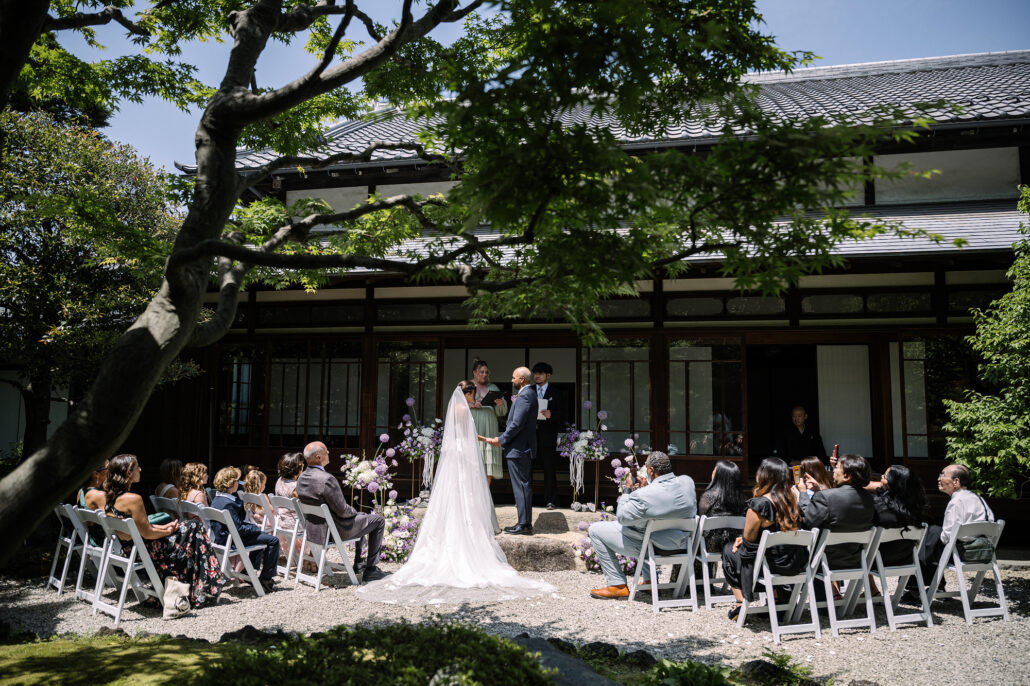
Why marry outside at all, in a country with so many beautiful rooms? Because a Japanese garden is made to be walked into. The moss, the stone lantern, the sound of water somewhere you can’t see: outside, the place takes part in the ceremony, and the season is there for every word of it.
Almost every beautiful place in Japan answers to somebody. A shrine has its priests, its festivals and its own way of doing things, and a ceremony there is theirs to lead. A city park belongs to everyone who walks through it, so most won’t host a private ceremony at all, and the ones that allow a professional shoot want a permit and time to issue it. National parks need permits too. The garden of an old inn belongs to a house with neighbours and a reputation it has spent generations keeping. A private garden opens when its owners trust the people asking.
So the first question isn’t only where you’d love to marry. It’s who can say yes, and what they’ll need to hear before they do. We start that conversation early, and how likely a yes is becomes part of choosing the place. Jinya, the old inn at Tsurumaki Onsen, held its ceremonies indoors until we asked to take one out into the garden. We promised a rain plan, for that wedding and every one since.
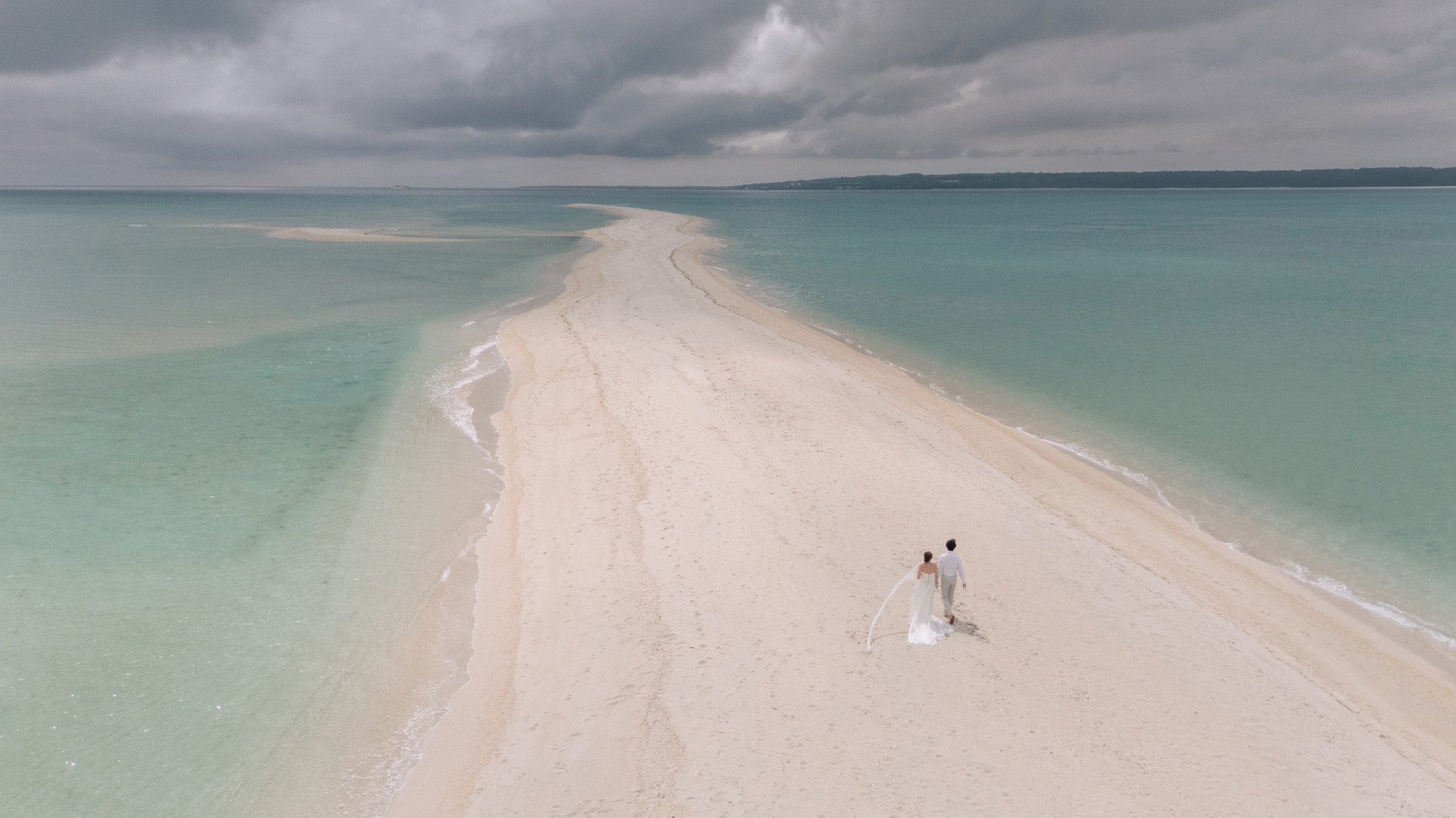
Some of the places we love for an outdoor wedding in Japan come with a house behind them: the garden of a ryokan, a private garden in the hills of north Kyoto, a Japanese garden in Kawagoe, the garden of a traditional house in Tokyo. Others are open ground, where everything arrives with us: a lawn above a lake with Mt Fuji across the water, a beach in Okinawa, our bamboo forest in Tochigi. The first kind has its rain plan built in. The second needs one built, and that changes both the planning and the cost. In either, someone is looking after the place, and that someone said yes. Our guide to getting married in Japan covers how each kind of venue hosts a wedding.
The Best Season for an Outdoor Wedding in Japan
The season decides more than the date. For an outdoor ceremony where settled weather matters most, our answer is autumn, from late October through November. Every other season makes its own case, and asks for its own planning.
Outdoor Weddings in Japan: What Each Season Brings
| Season | What it brings outdoors | What we plan for |
|---|---|---|
| Spring, March to May | Blossom and new green; spring winds; hanabie, the cold that comes back while the trees are in flower; cedar pollen from about February into April | Layers, a sheltered spot for the vows, a place where the trees open at different times |
| Rainy season, June to mid July around Tokyo and Kyoto | Tsuyu: soft, steady rain and the greenest gardens of the year. Okinawa’s runs from May into June, Tohoku’s into late July; Hokkaido has no rainy season to speak of | A room for the ceremony as beautiful as the garden, planned and ready |
| High summer, late July and August | Heat, humidity, cicadas, long light; typhoon season begins | A ceremony late in the day, shade, water, fans, insect repellent at dusk |
| Early autumn, September to late October | Typhoons, and the autumn rain front; October is still Tokyo’s wettest month | Watching the forecast from weeks out; one clear decision |
| Late autumn, late October to November | Settled days in most years, cool evenings, colour moving south and down from the mountains | Warm layers and blankets at dusk, a reception room that looks onto the garden |
| Winter, December to February | Clear, cold days; Mt Fuji at its most visible; snow in the north and the high country | A short ceremony, a warm room a few steps away |
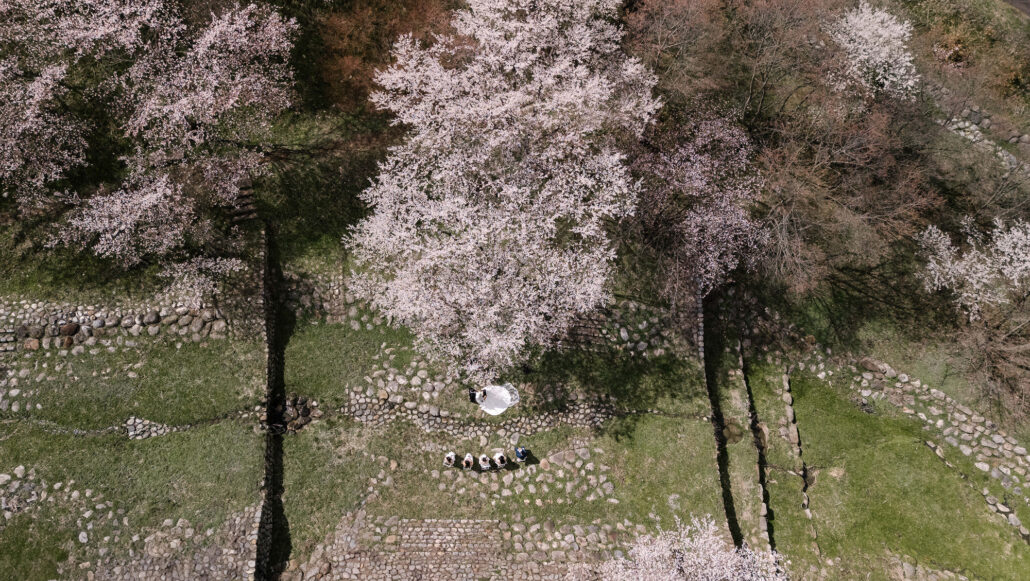
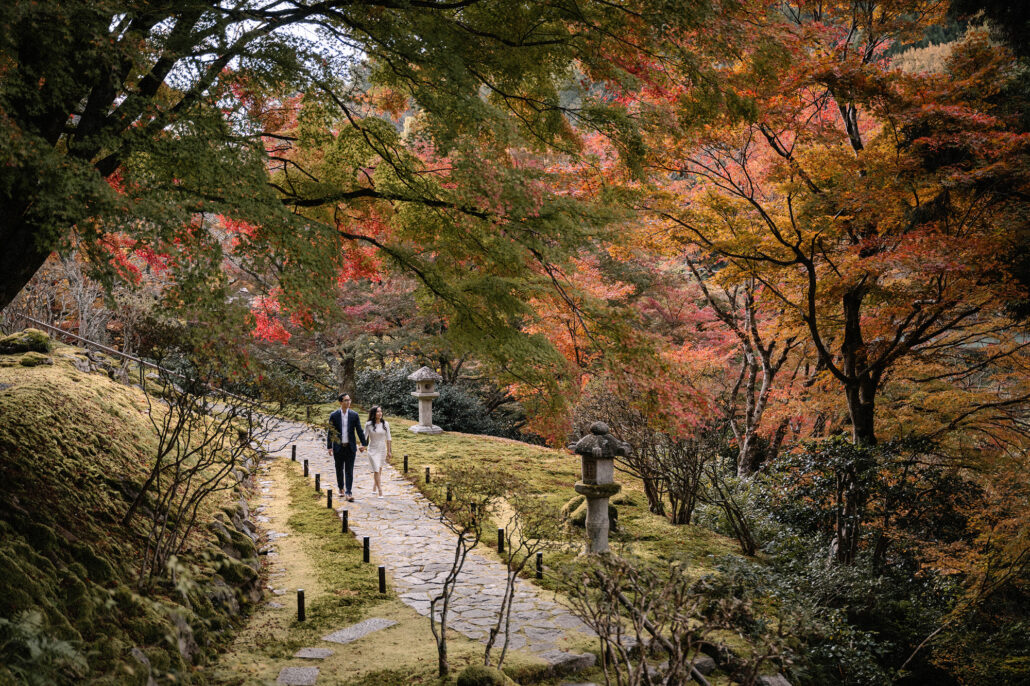
Autumn is the season most couples ask us for, and in most years it earns it. Once the rain front moves off, the days settle, the evenings cool and the maples colour first in the north and the mountains, reaching Kyoto’s gardens by late November. Spring is the other favourite, and its blossom comes with weather of its own: wind at the height of it, the occasional cold snap, and cedar pollen, which matters more than you’d think when half your guests have hay fever and the ceremony is under trees. Our guide to cherry blossom season 2027 covers how we plan around a bloom nobody can date.
Early summer is the rainy season. Around Tokyo it runs from early June into the middle of July in most years, more a long grey drizzle than a storm, and the gardens are never greener. In Okinawa it comes earlier and lifts by the end of June, and the summer that follows belongs to the sea, between typhoons. High summer everywhere else is hot and humid, so an outdoor ceremony moves towards the end of the day, and shade, water and fans go on the list. Winter is underrated. The air is clear, Mt Fuji is at its most visible, and the ceremony is short and bright, with a warm room waiting a few steps away. Season by season, our guide to the best time of year for a wedding in Japan goes further.
If It Rains on Your Outdoor Wedding in Japan
The best rain plans in Japan are rooms built to look outward: a hall with a wall of glass onto the garden, a veranda under deep eaves, a tatami room with its doors slid back so the rain becomes part of the ceremony instead of the reason it moved. We choose that room as carefully as the garden and design for both, so the call is a choice between two finished plans.
We never plan an outdoor wedding without an option.
We watch the weather from weeks out and adjust the designs as the forecast firms up. The call itself is ours to make with you, once. If it’s pouring, we make it the day before. If it’s close, we make it that morning. Then the florists and everyone else start building, and everyone stops looking at the sky. Clear umbrellas come out for guests who want to step into the garden anyway, there’s a dry route for the dress, and towels wait where nobody sees them until they’re needed. A garden in the rain, seen from a room with its doors open, is often more beautiful than the same garden in sunshine.
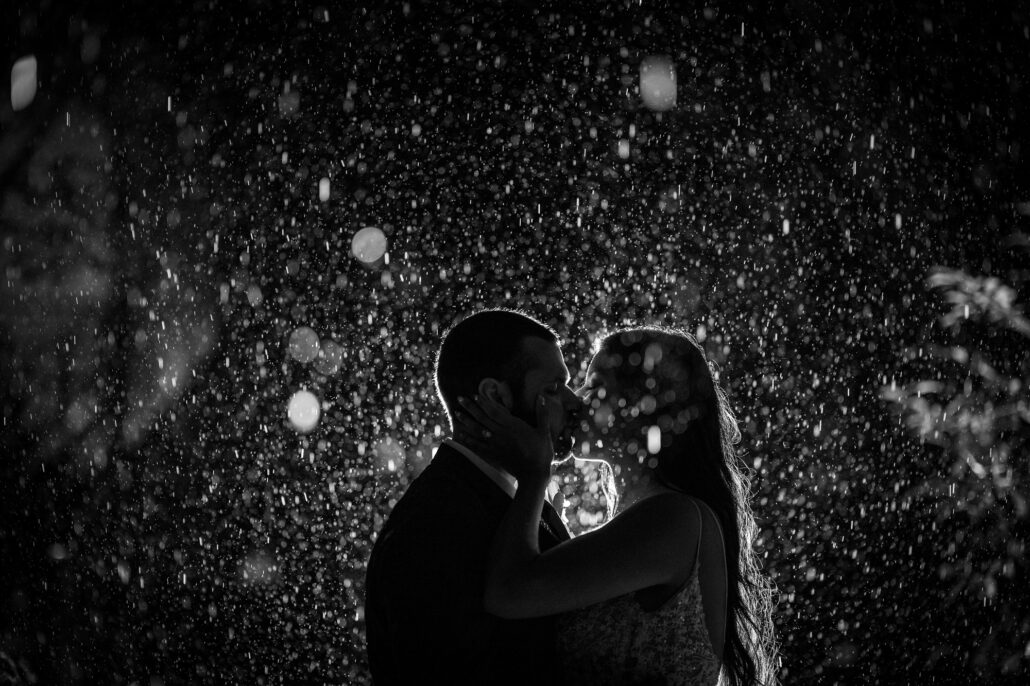
One of the weddings in those thirty-seven days was at Jinya in mid-September, with their guests staying under the inn’s roof. The terrace and the garden portraits went to the rain, and the house took everything else. Their story is It Was Meant to Rain, and the title is their own.
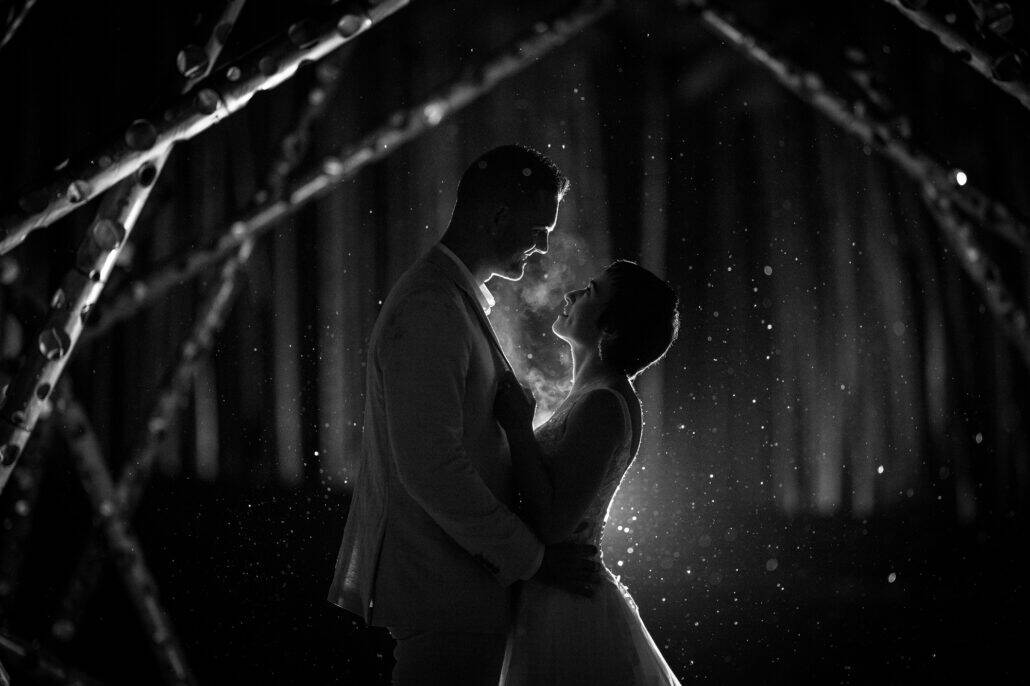
Rain does things for photographs that sunshine can’t. Lit from behind, every drop becomes light. On a night in our bamboo forest, a couple who had wanted to say their vows in the rain did exactly that.
Typhoon Season in Japan and Your Wedding Date
Guidebooks tend to file typhoons under August and September. The storms don’t always keep to it. Typhoons come close to Japan in October in most years, and one of the most destructive in recent memory came then: Hagibis made landfall in mid October 2019. In 2026, Typhoon Champi passed Okinawa’s Sakishima Islands on 23 and 24 October.
None of that rules out autumn. It goes into the plan. A typhoon gives warning: the Japan Meteorological Agency publishes each storm’s likely track up to five days ahead, so there’s time to decide calmly. When a storm is heading towards a wedding week, we’re watching it with you from the first forecast and the rain plan is ready. Most of the time a typhoon passes, turns away or arrives as a day of heavy rain.
In August 2023, a couple eloped in a ryokan garden with a cellist playing, the day before Typhoon Lan made landfall. The covered spaces were ready, the forecast was checked through the day, and the vows were said in the garden on a day that couldn’t decide between rain and sun.
Light and Sound at an Outdoor Wedding Ceremony in Japan
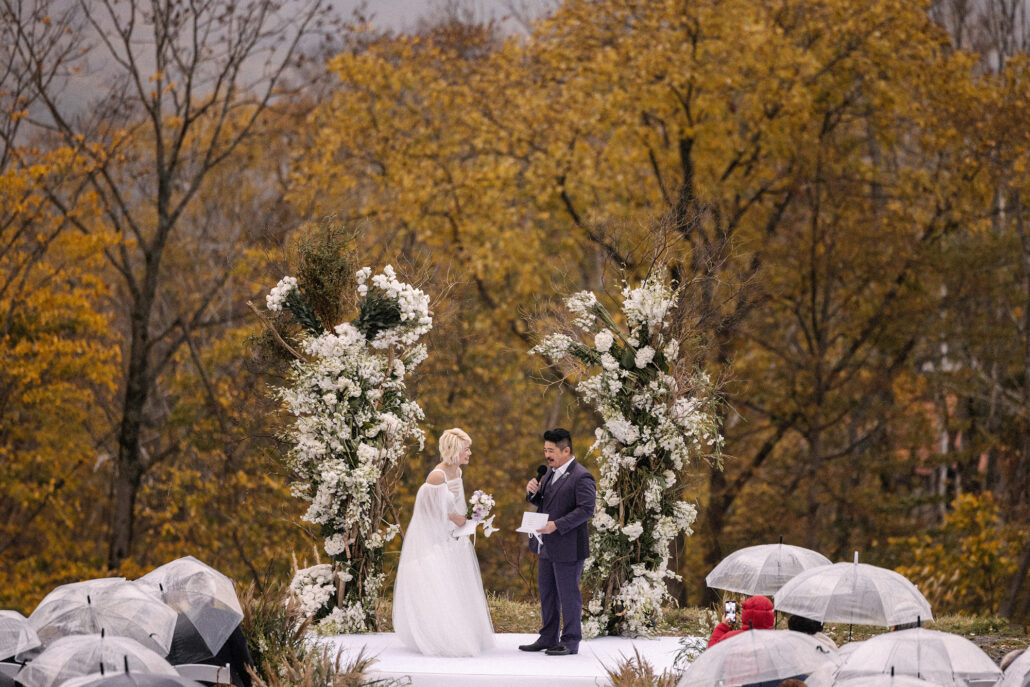
Outdoors, the hour decides as much as the place does. Midday light in summer is hard, and the end of the day is kinder to faces, flowers and anyone in a suit. In winter the light goes early, so a ceremony that would sit comfortably at the end of a summer afternoon moves forward. We plan an outdoor ceremony around where the light will be, then build the rest of the day around that. Midweek, when our weddings often fall, a garden has fewer people at the edge of the frame and more of the place left to the two of you.
Indoors, a room holds a voice. Outside, wind takes it, water covers it and, in summer, the cicadas compete with it. A small, discreet speaker lets guests at the back hear the vows without turning the ceremony into a performance. We set the ceremony so any breeze carries the vows towards the guests rather than away. And if you want your vows kept, they need a microphone close to the two of you.
A camera across a lawn hears the wind better than it hears a promise.
So what would you like to hear in the pauses between the words? The sea, a forest, a temple bell somewhere down the hill? Outdoors you get to choose, and the choice is part of choosing the place.
Shoes, Shade and the Ground at a Japanese Garden Wedding
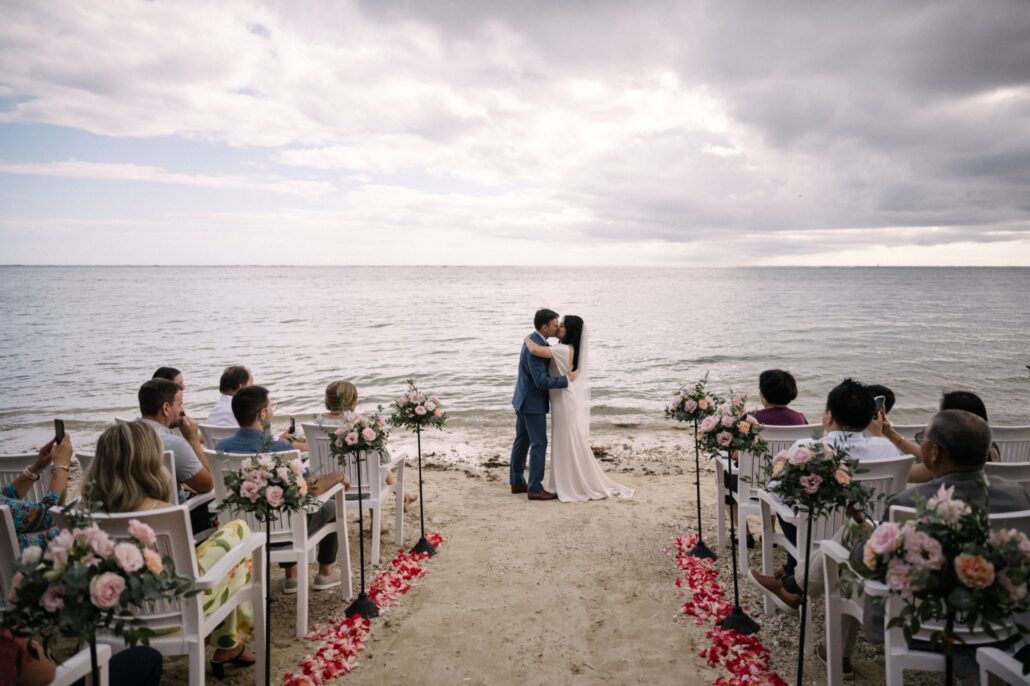
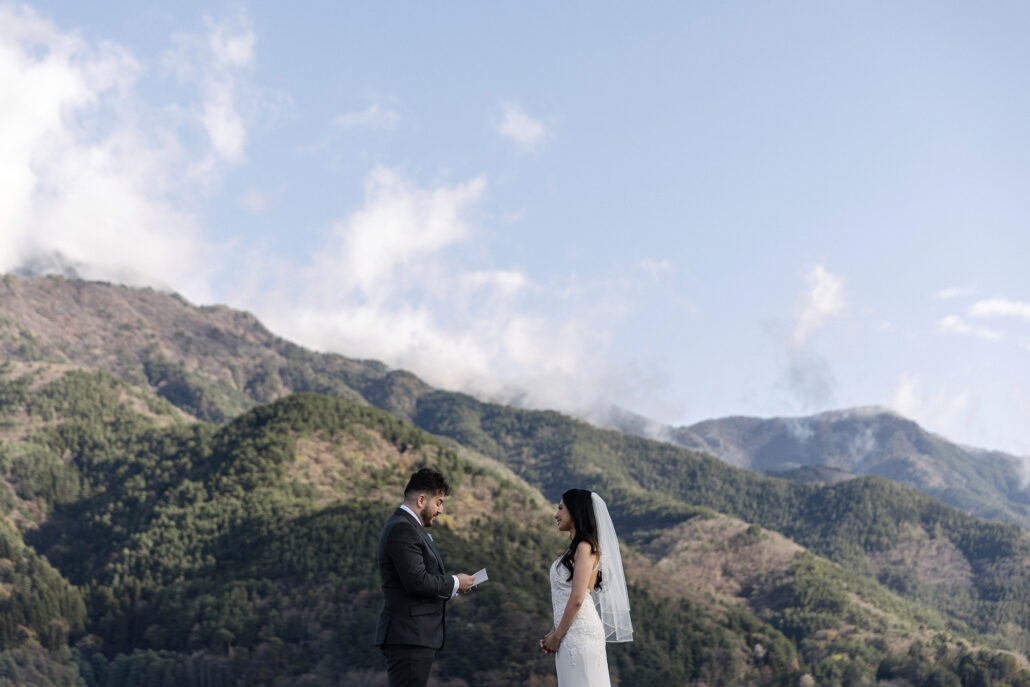
Japanese gardens are made of gravel, moss, stepping stones and stone stairs, beautiful and unforgiving for heels. Lawns swallow stilettos. Zori and kimono take small steps. We walk every route in the shoes that will be worn. Some gardens guard their moss so closely that heels aren’t welcome on it at all, and a pair of flat shoes in the bag saves a conversation with a gardener.
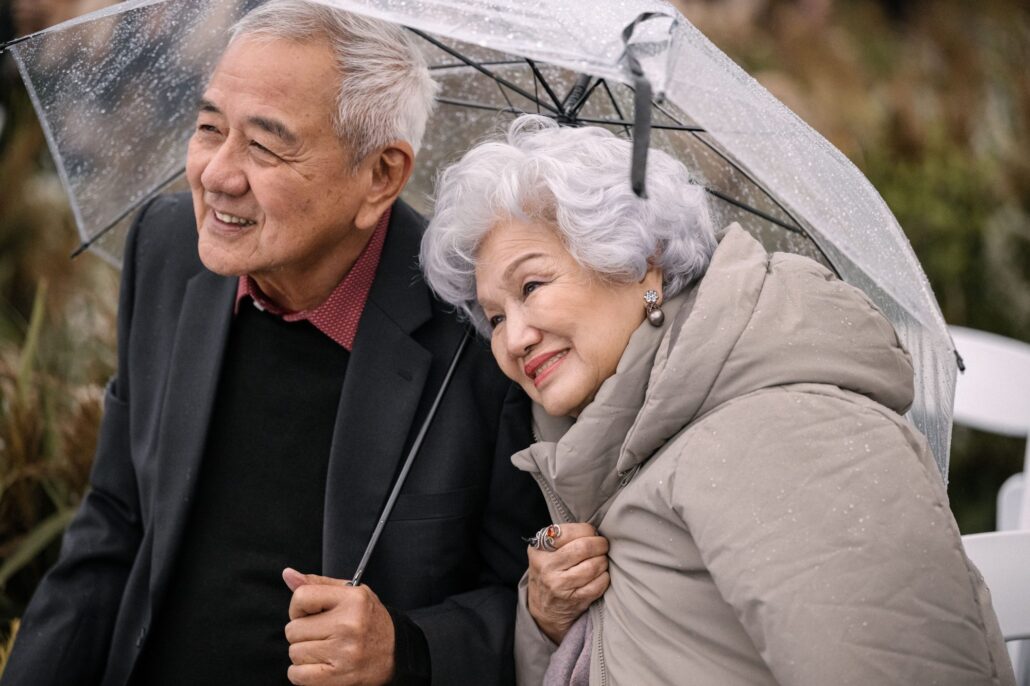
We plan an outdoor ceremony around its oldest guest: how far they walk, where the shade falls at that hour, how long they sit in the weather. An umbrella against the sun matters as much as one against the rain. Get it right, and they stay for all of it.
Outdoor Weddings in Japan: Quick Answers
Can you have an outdoor wedding in Japan?
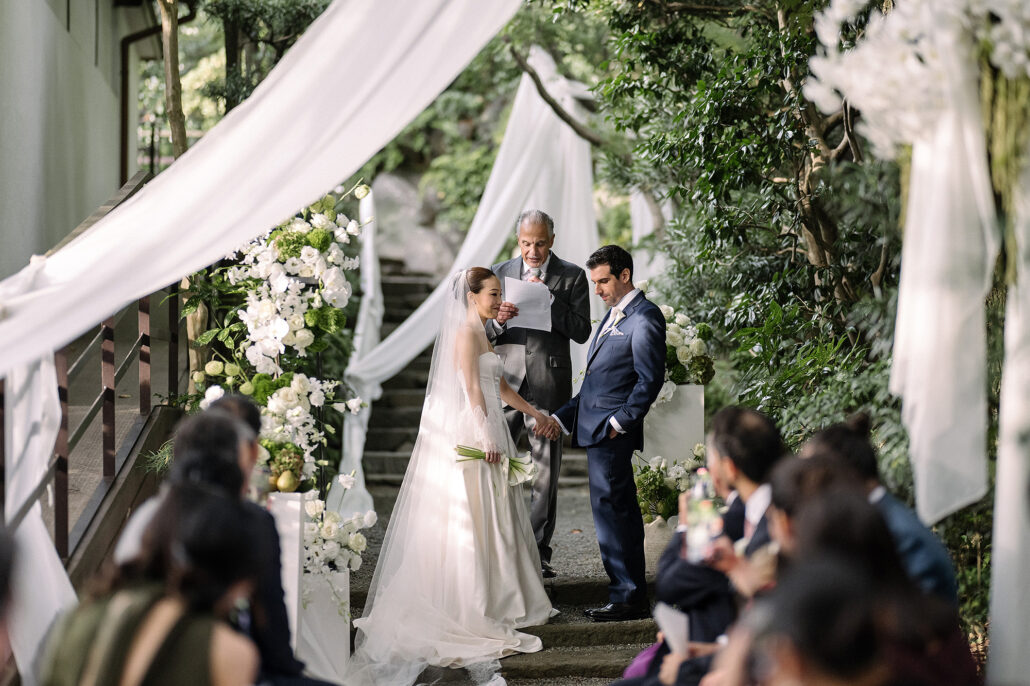
Yes, wherever a host says yes: the gardens of inns and private houses, lawns facing Mt Fuji, Okinawa’s beaches, forests. Public parks stay open to everyone, so a private ceremony needs a place with someone to host it, such as a garden, an inn, a temple or a venue. Every outdoor ceremony we plan is planned twice, with a beautiful room ready in case it rains.
What is the best month for an outdoor wedding in Japan?
For settled weather, late October through November in most years, after the autumn rain front has gone and before the cold sets in. Spring brings blossom, wind and the odd cold snap; winter brings clear air and Mt Fuji at its sharpest. Around Tokyo, June to mid July is the rainy season and high summer is hot, so ceremonies then move to the end of the day.
What happens if it rains on our outdoor wedding?
You marry in the room we planned for exactly that: a hall that looks onto the garden, a veranda under deep eaves, a tatami room with its doors open. It’s chosen as carefully as the garden, and its design is finished before the day. We make the call with you once: the day before if it’s pouring, that morning if it’s close. Clear umbrellas let anyone who wants to step outside do so. Rain is often kind to photographs.
When is typhoon season in Japan?
Typhoons come closest to Japan from August to October, most often in August and September, and October storms are common. Each storm’s likely track is published up to five days ahead, so there’s time to plan. We watch the forecast with you from the first sign and have the rain plan ready.
Can we move our wedding date if the forecast is bad?
No. A wedding or an elopement in Japan keeps its date: the venue, the vendors and the guests who’ve crossed the world are all there for that day. So we plan it twice, the garden and the room chosen for rain, and the day goes ahead. When it’s done, couples wouldn’t have wanted it any other way.
Can we book a backup date for a proposal or photo shoot?
Yes. For a proposal or a pre-wedding shoot, we can hold a backup date for you for a nominal fee. No one else is booked that day. It’s simply there, should you want it.
Where can we have a garden wedding in Tokyo or Kyoto?
In Tokyo, in the gardens of traditional houses and inns, often a few streets from the city’s busiest corners; our Tokyo garden wedding is one. In Kyoto, in private gardens that open for a wedding when their owners trust the people asking, as our guide to marrying in a private garden in Kyoto explains. Both need a host’s yes, so that conversation is part of choosing the place.
How much does an outdoor wedding in Japan cost?
The place moves the cost far more than the garden does. A venue with rooms, a kitchen and a rain plan built in takes less to make beautiful than open ground where everything arrives with us. Our weddings with guests average about ¥10M to ¥16M (about US$63K to US$100K) for seventy to a hundred people, often with rooms included, and some run to several times that. Elopements are most often ¥1M to ¥3M (about US$6.4K to US$19K). Our wedding cost guide and elopement cost guide have the detail.
One Particular Day, Outside
Plan for the weather, the season, the ground and the light, and they stop being risks and start being part of the day. Guests remember the clear umbrellas, the wind in the veil, the sound of the forest during the vows. A ceremony indoors can be perfect. A ceremony outside belongs to one particular day in one particular place. Because there’s always a beautiful room waiting if the sky closes in, you can choose that day without holding your breath.
The cicadas will come anyway. Plan for them, and they become part of the sound of the day.
Written in October 2026. Sources: Japan Meteorological Agency (rainy season normals for 1991 to 2020, typhoon approach statistics, five-day typhoon track forecasts, and Tokyo’s record run of consecutive rainy days, 27 August to 2 October 2026).