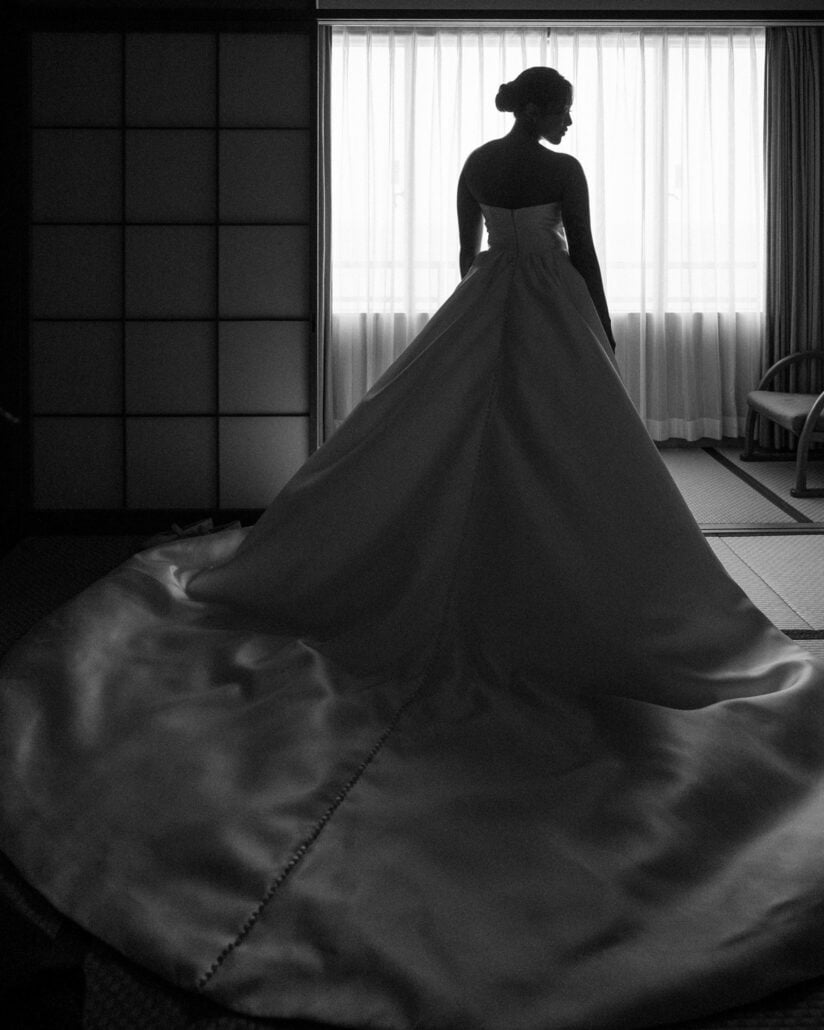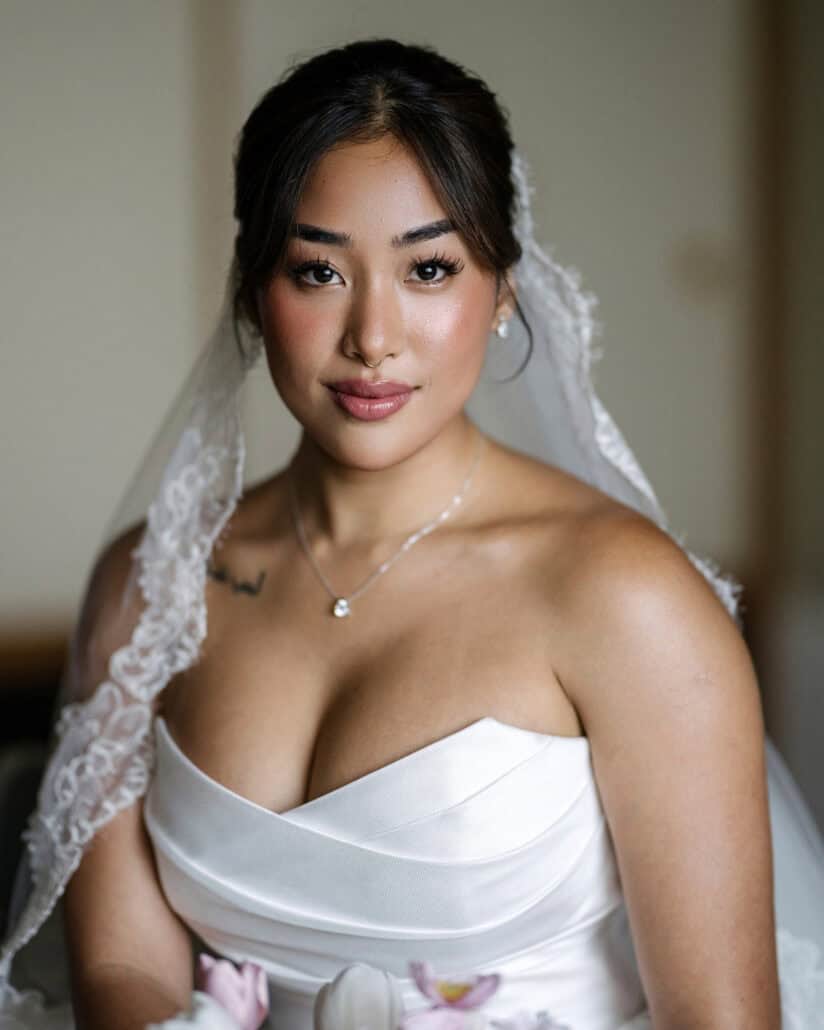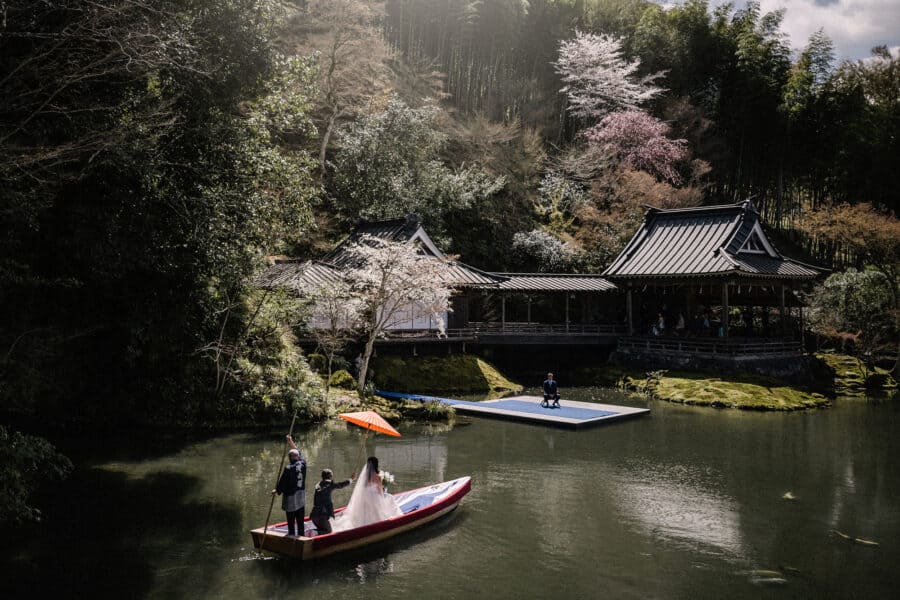
Every spring, Japan’s cherry blossoms move north. Long after Tokyo has had its turn, the season keeps travelling, until it reaches the northern end of Honshu. They followed it almost all the way.
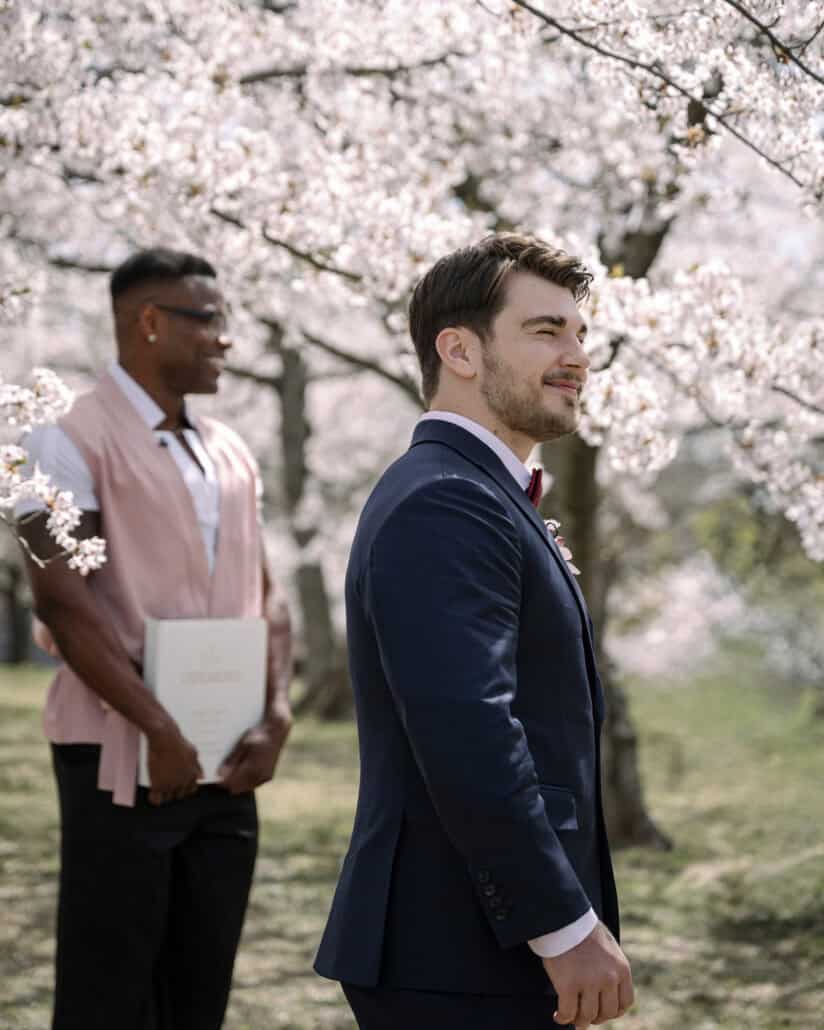
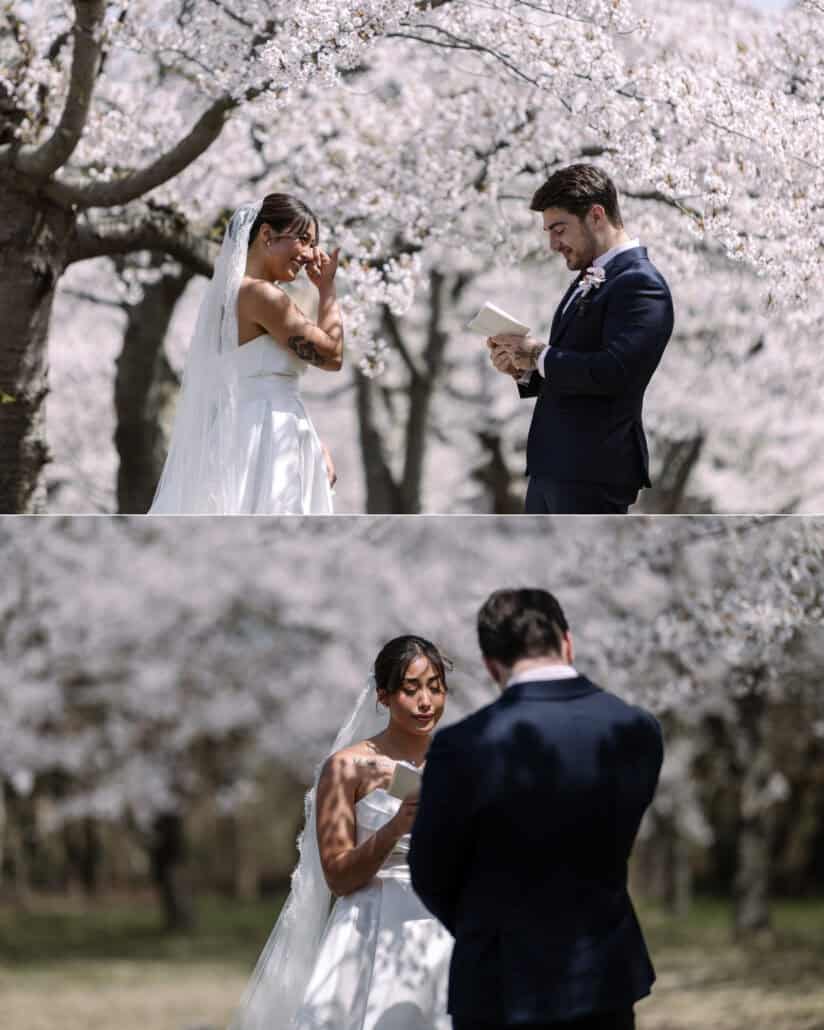
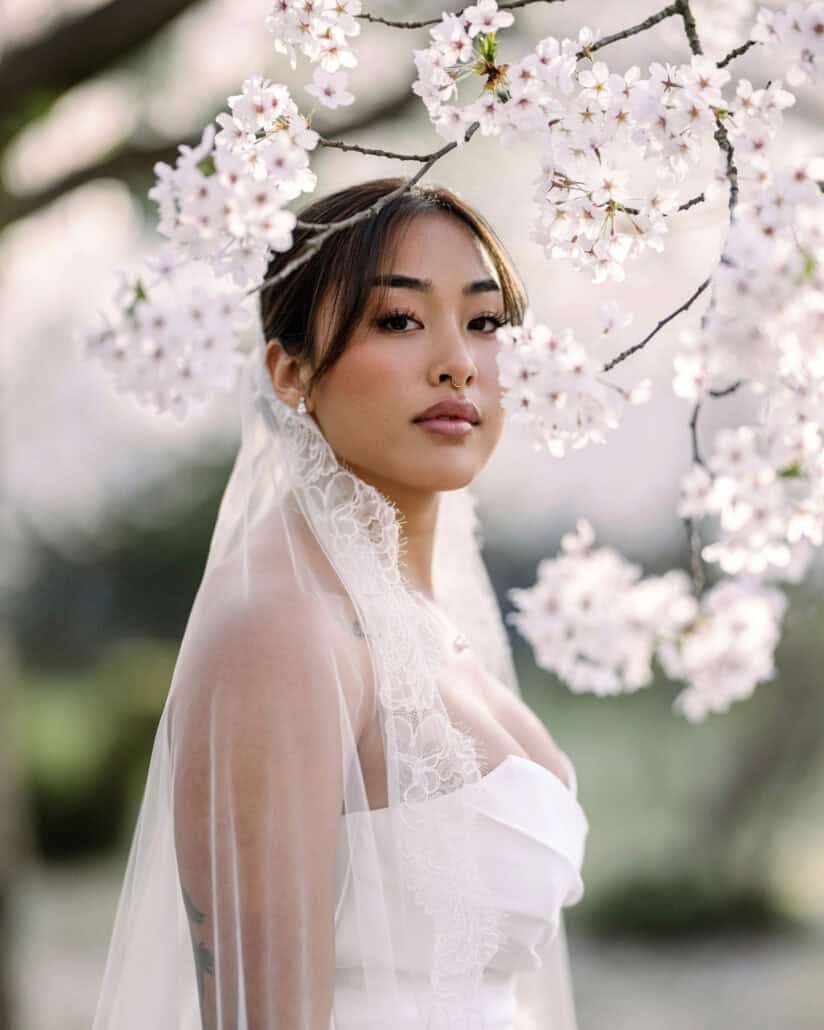
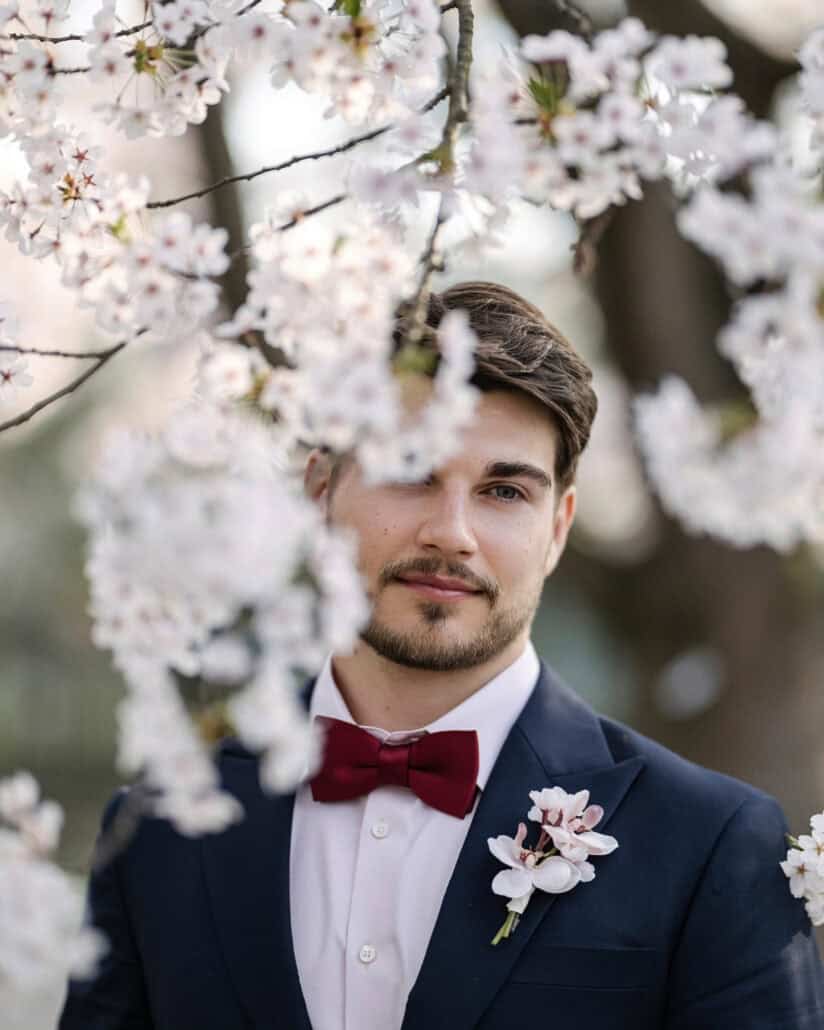
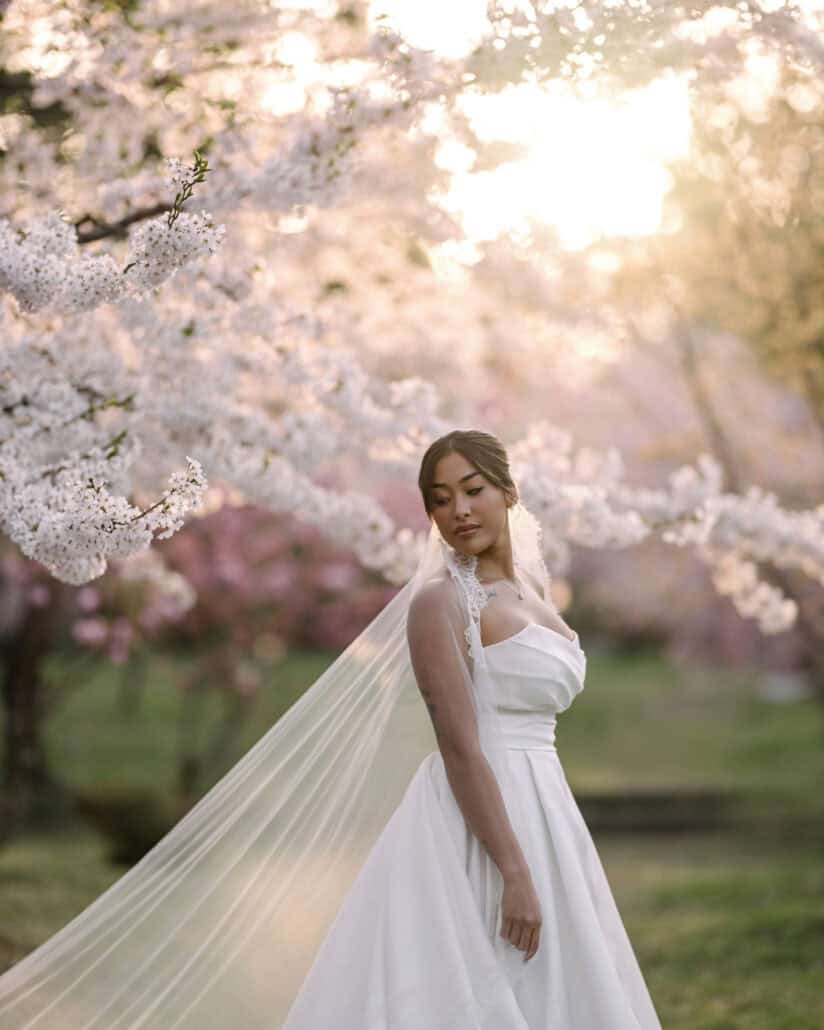
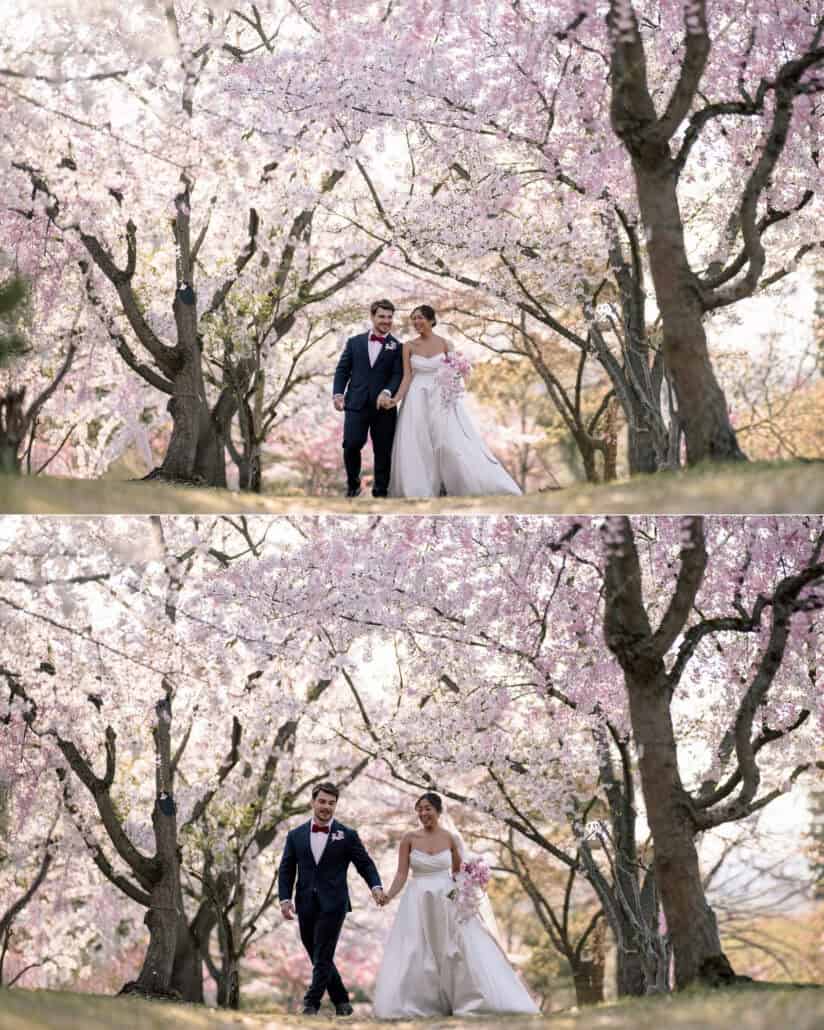
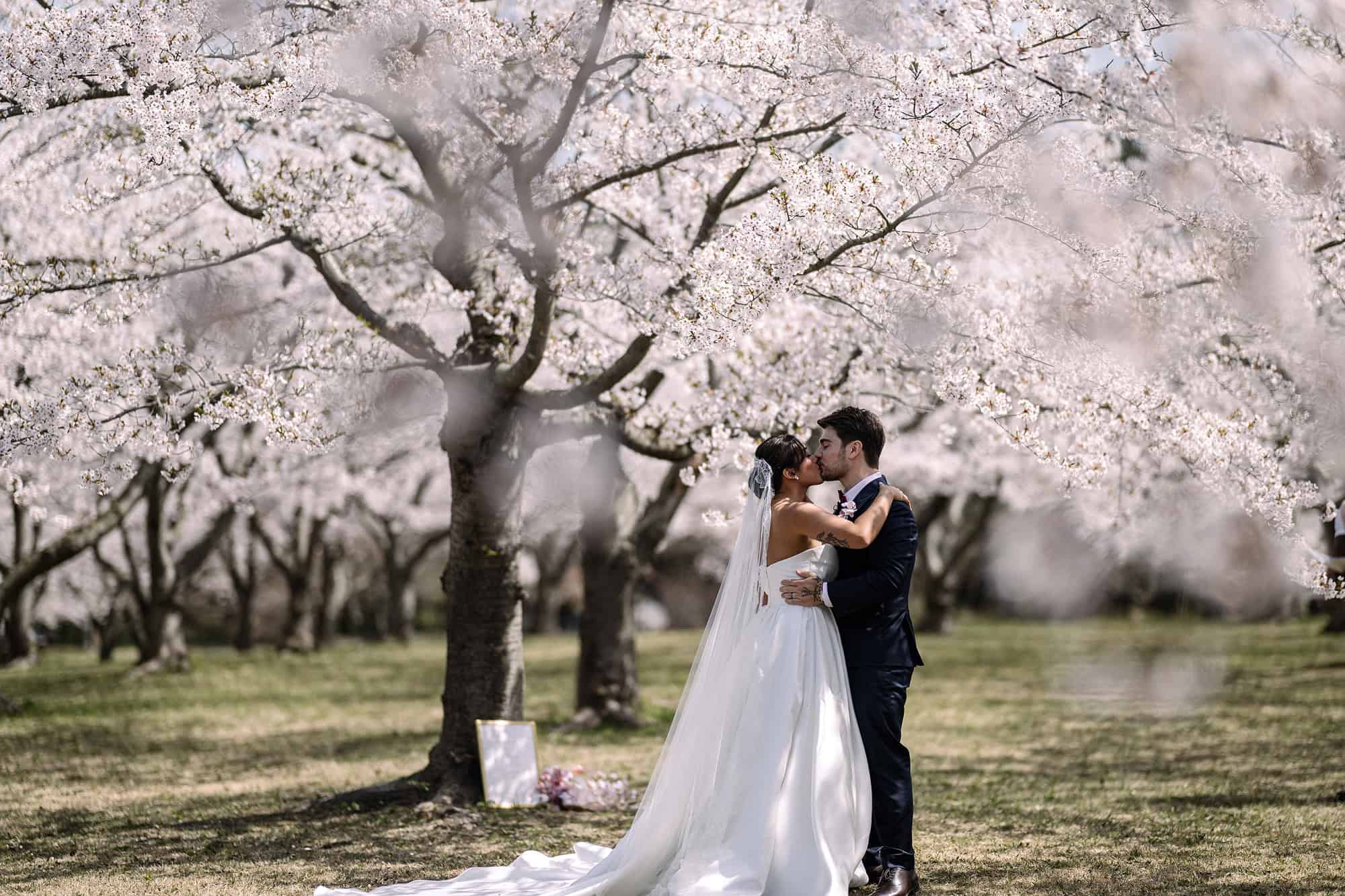
In late April, our bride and groom had their cherry blossom wedding in Japan in a quiet place in Aomori, beneath trees still completely in bloom. Just before his vows, standing under thousands of cherry blossom trees, he offered an important clarification.
It’s not tears. I have allergies.
We understood. Anything that happened to his eyes later was pollen.
Following the Blossoms North
Cherry blossom season in Japan is easy to love and hard to plan around. The bloom moves. The weather has opinions. A date that worked one year can mean something quite different the next.
For this Aomori wedding, Dee planned around the blossoms themselves, with Sumika alongside her. The region, the trees, the light and the shape of the day all mattered. By late April, the main blossom season in Tokyo has usually passed. Further north, there can still be whole avenues of cherry trees doing exactly what you’d hoped they might.
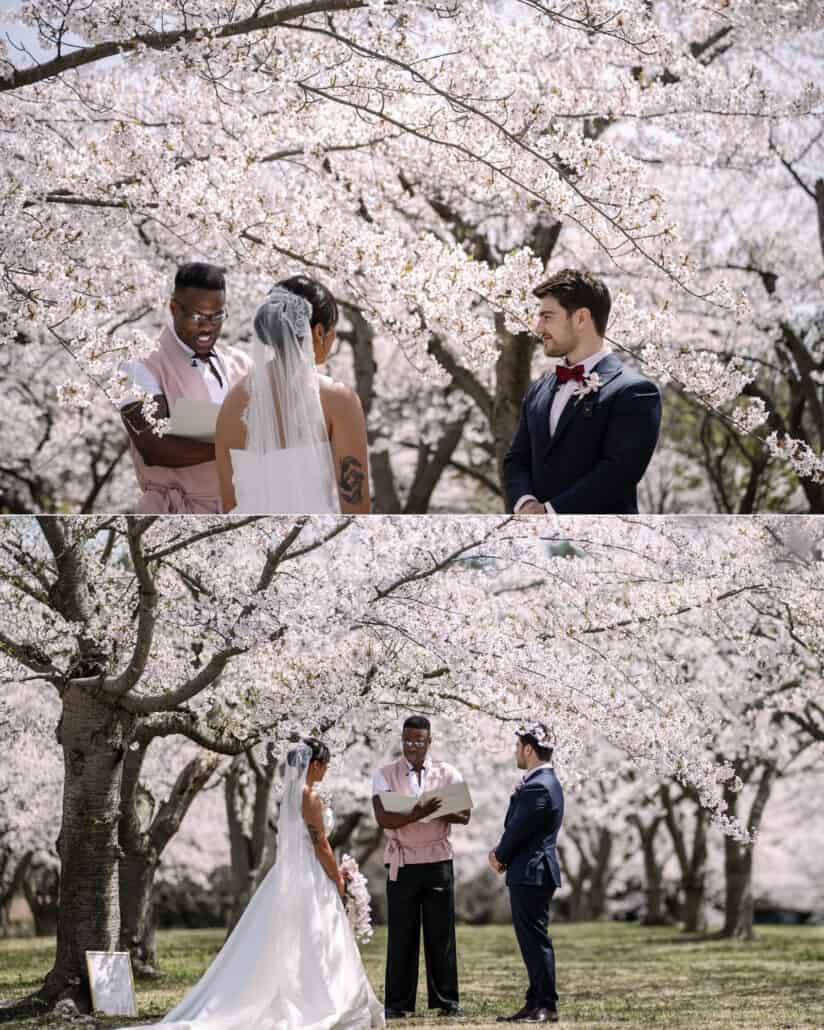
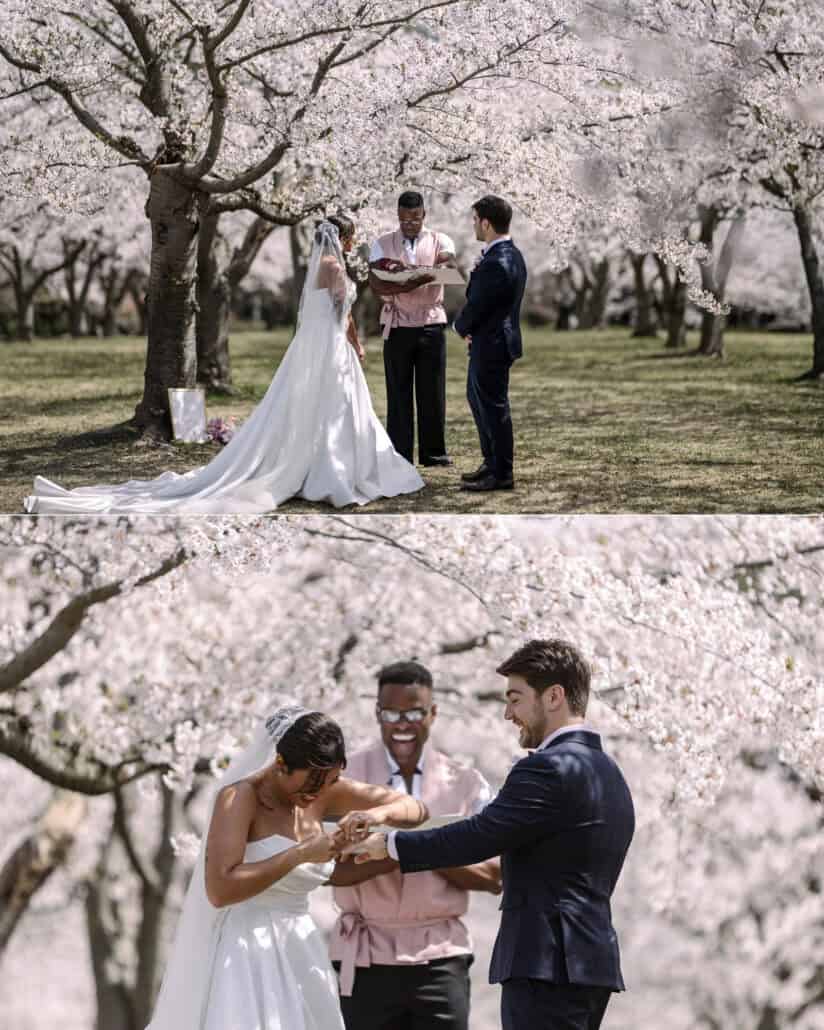
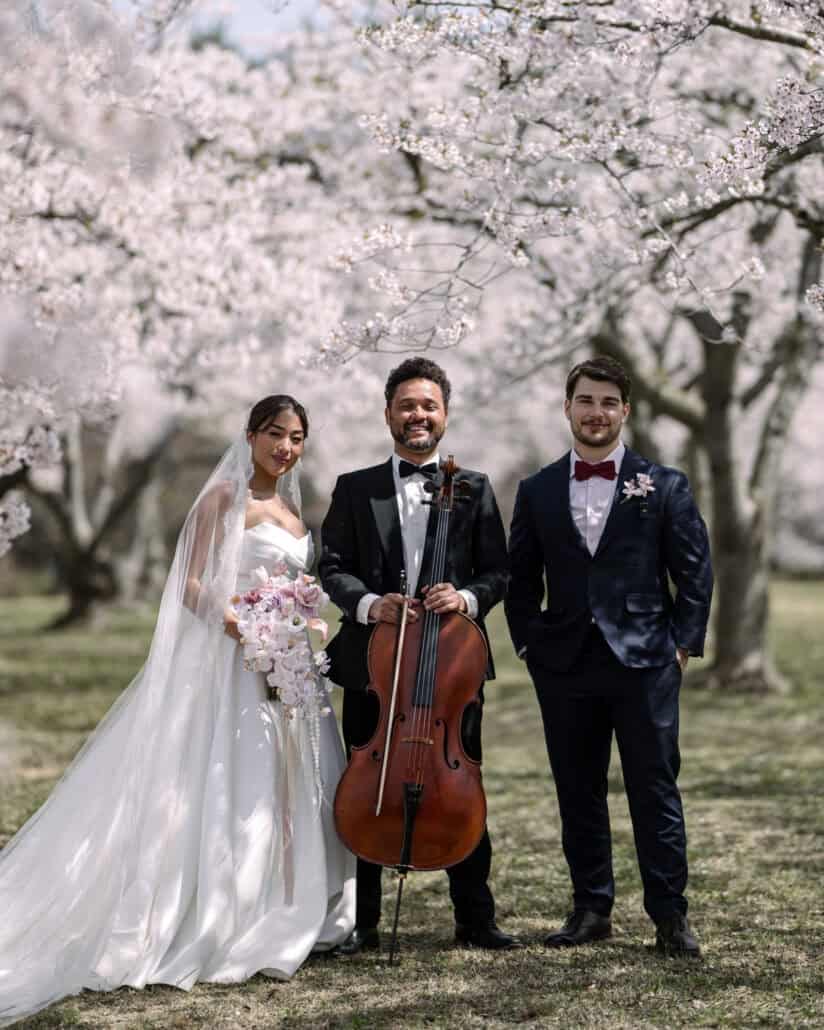
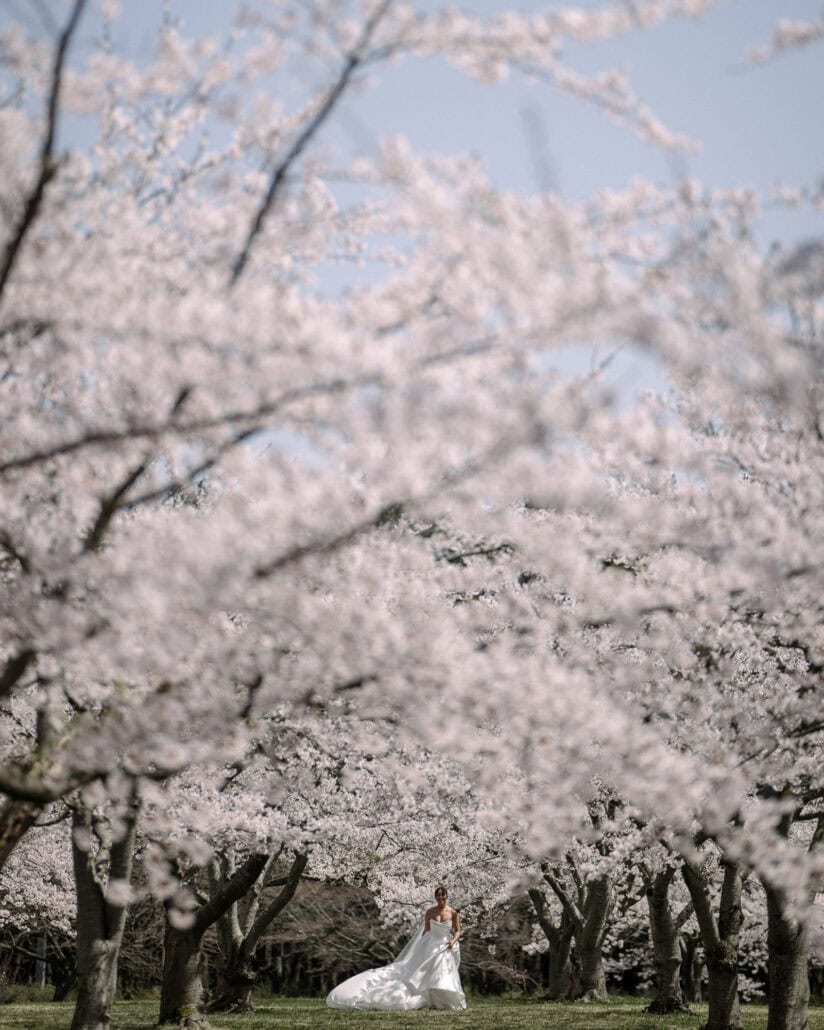
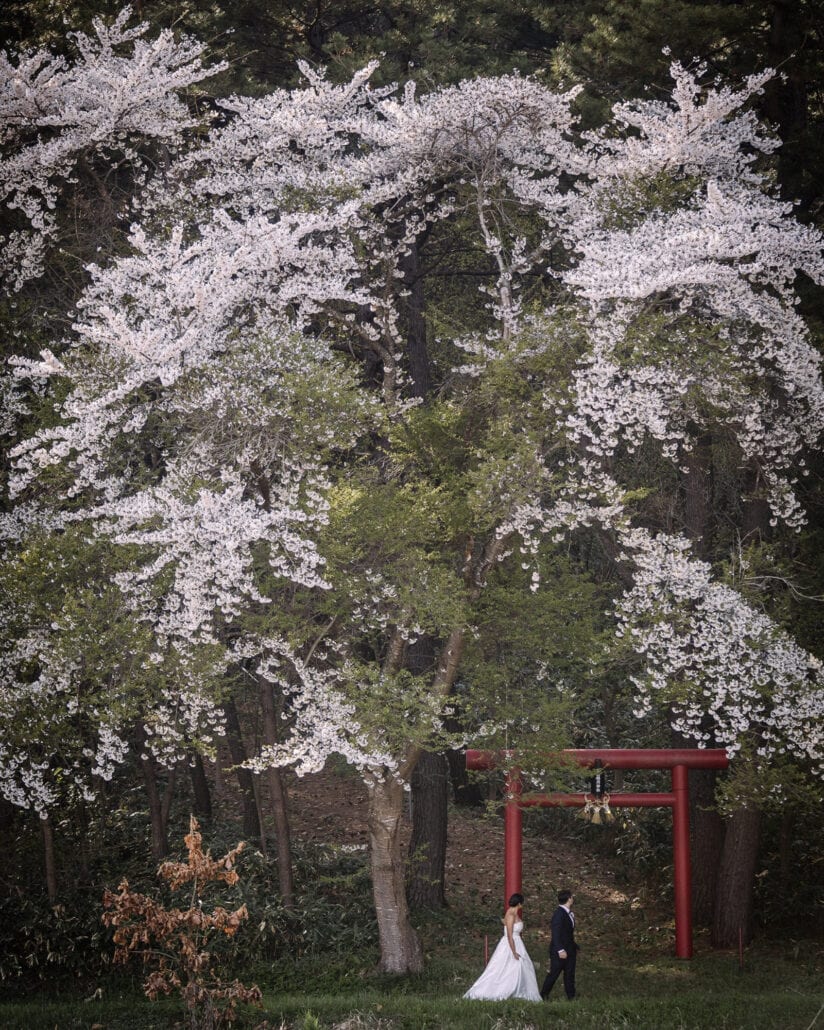
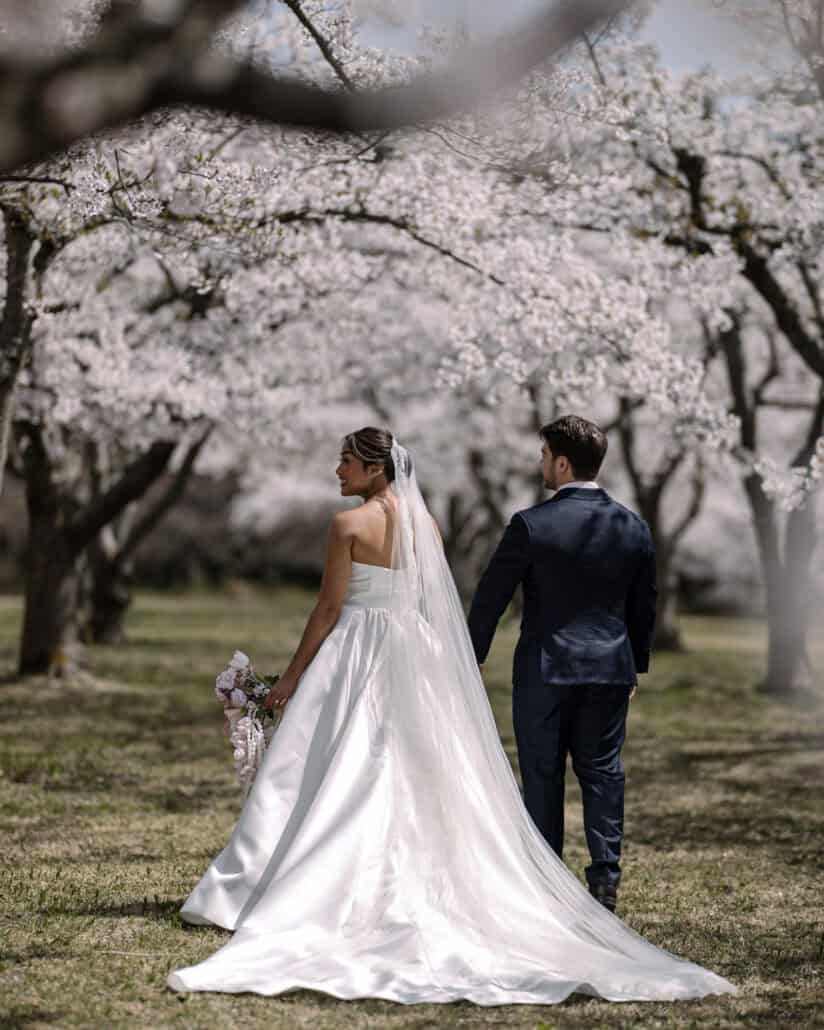
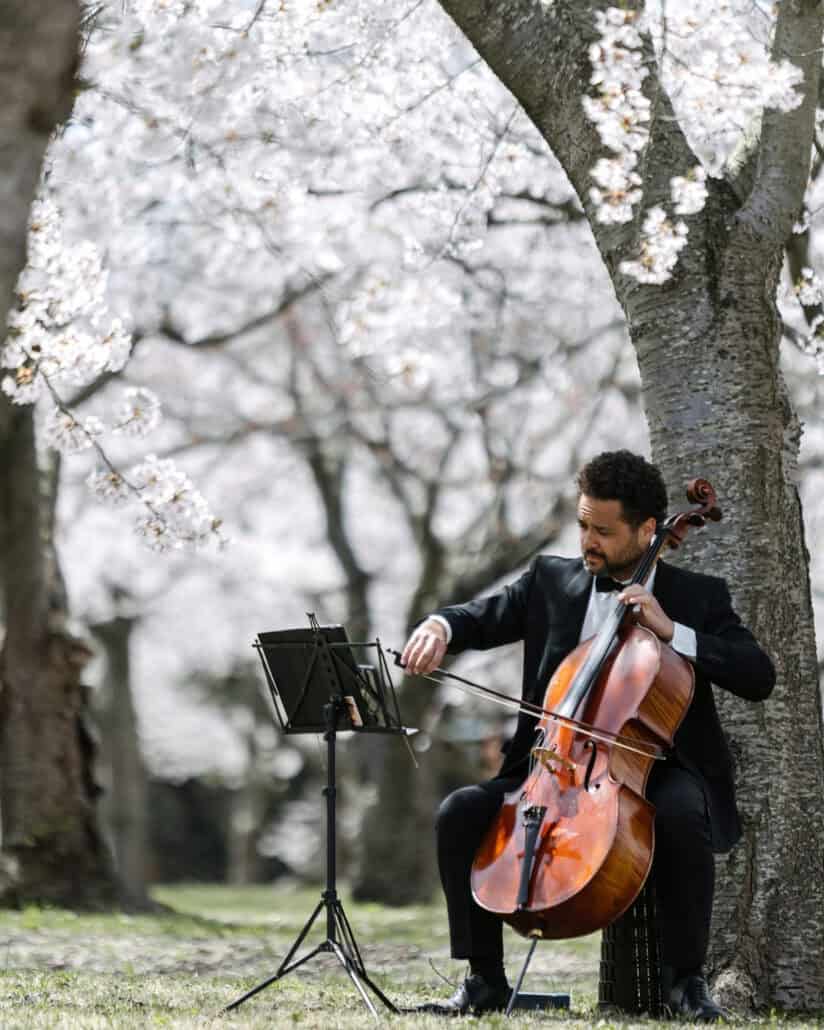
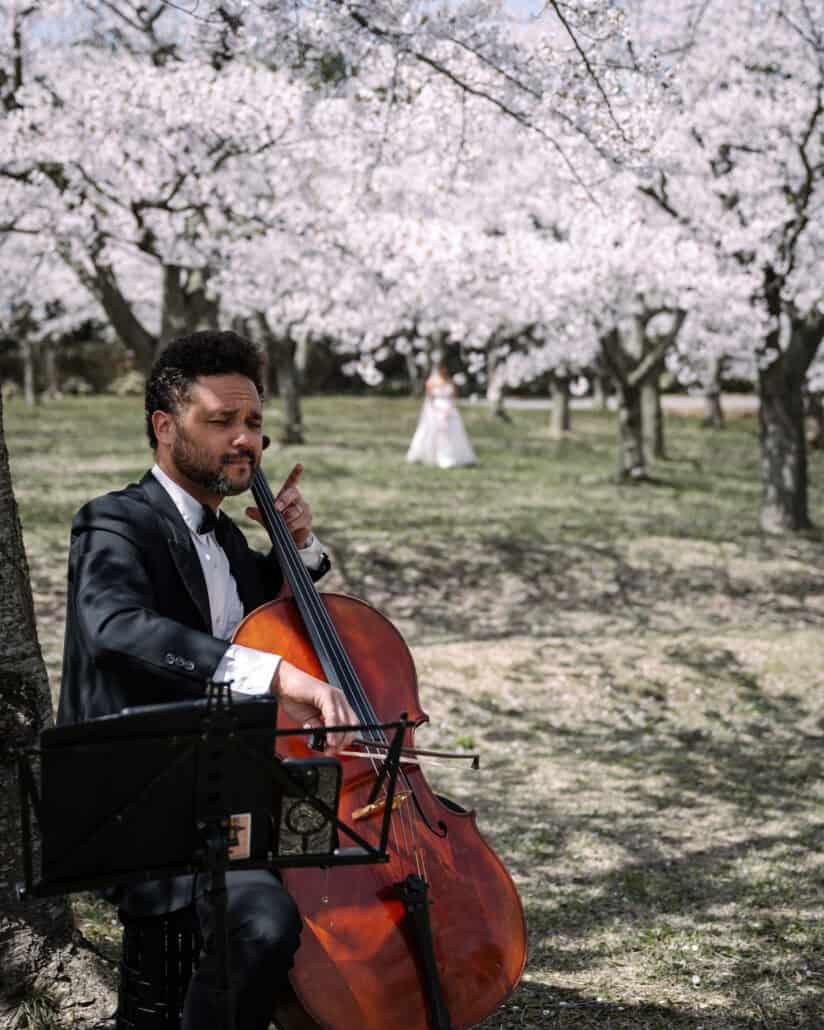
That spring, the bloom ran about ten days early, even in the north. By their wedding day, Tokyo’s trees had long since turned green. In Aomori it was the last day of full bloom, and the grove was white overhead. Grass underfoot. Old branches reaching across the space where they’d say their vows. Their two friends were there. One would lead the ceremony. A cellist sat beneath the trees.
There’s a particular pleasure in arriving somewhere you’ve thought about for months and finding that the thing you came for is happening all around you. You’re standing in it.
People sometimes ask us for a private cherry blossom ceremony. In a public park in Japan, there’s no such thing. The blossoms belong to everyone, and that’s part of why they matter. What experience gives you instead is a bigger map: where the bloom arrives late, which mornings stay empty, which trees stand where nobody thinks to look. Their grove was so beautifully quiet.
Planning a cherry blossom wedding in Japan means leaving room for the season to influence your decisions. It’s why the best time to get married in Japan depends so much on which part of Japan you mean. For these two, it meant going north. And then standing still long enough to take it in.
He Said It Was the Allergies
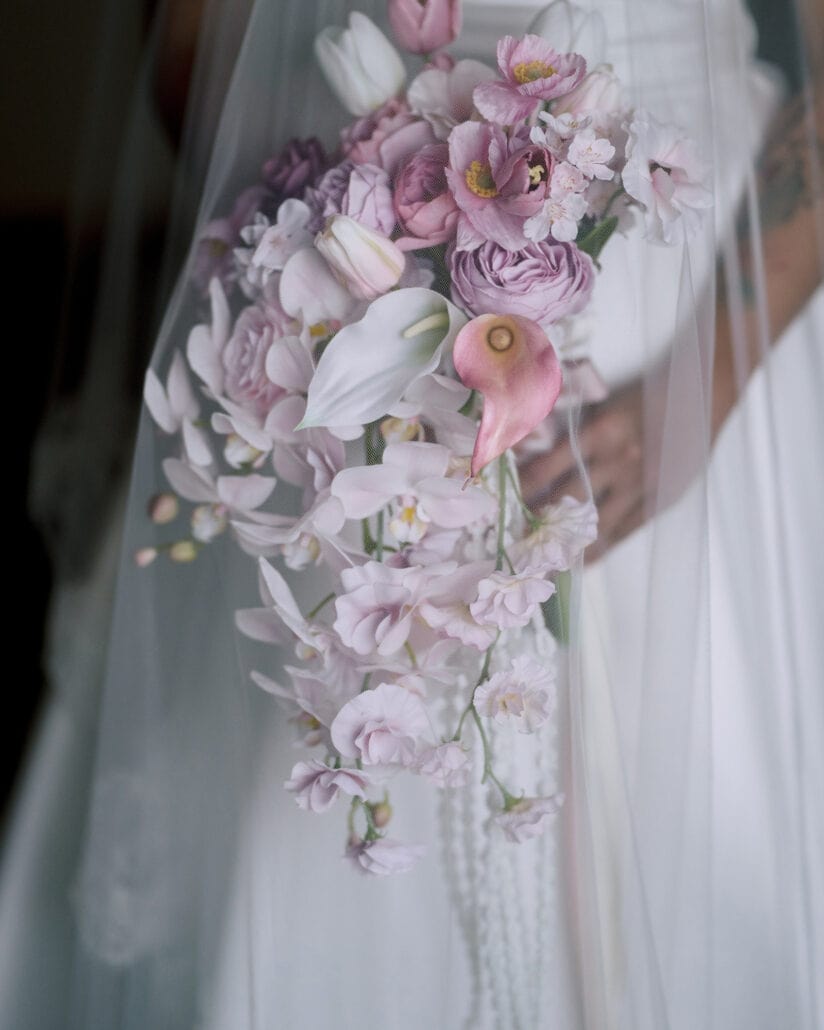
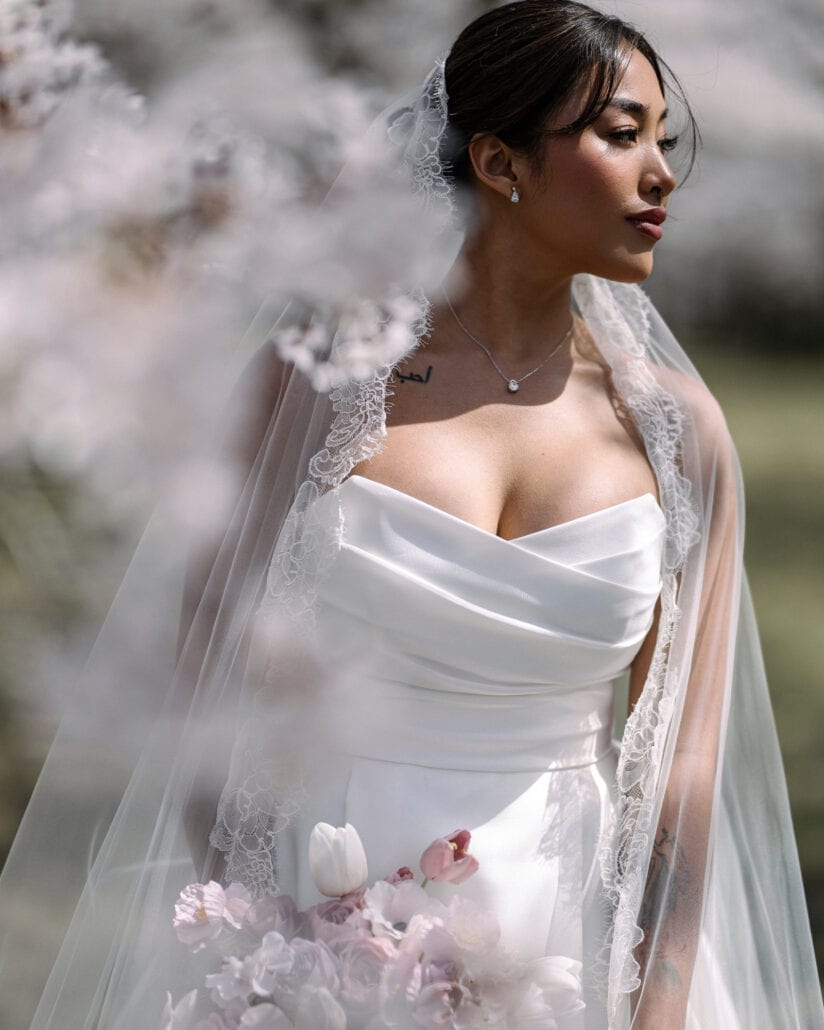
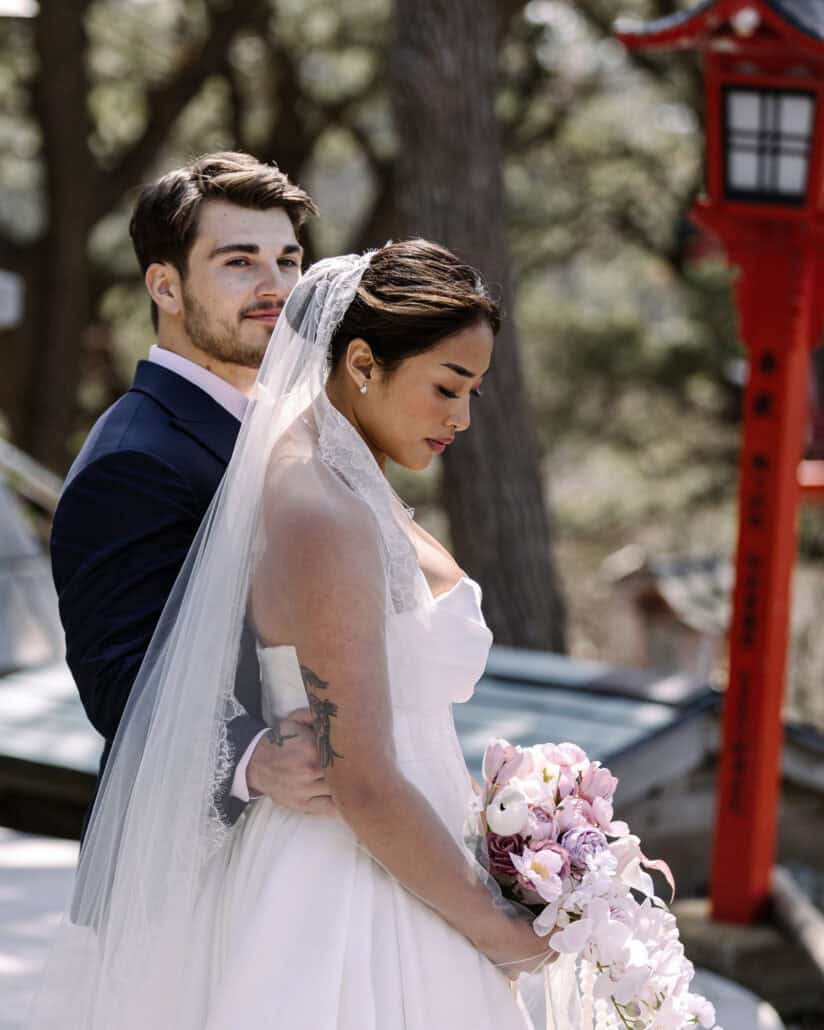
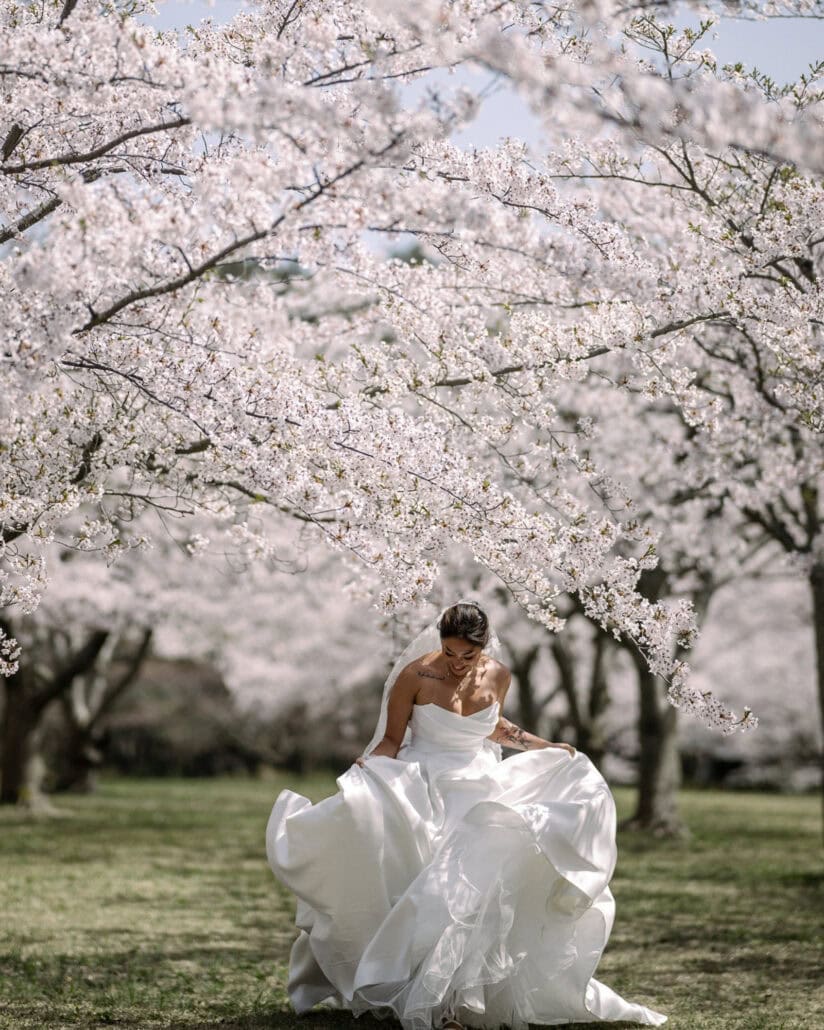
She walked in alone through the blossoms while the cellist played “Can’t Help Falling in Love”. A black tuxedo beneath the trees. A cello. Her bouquet bringing pink into all that white. Some entrances need very little explanation.
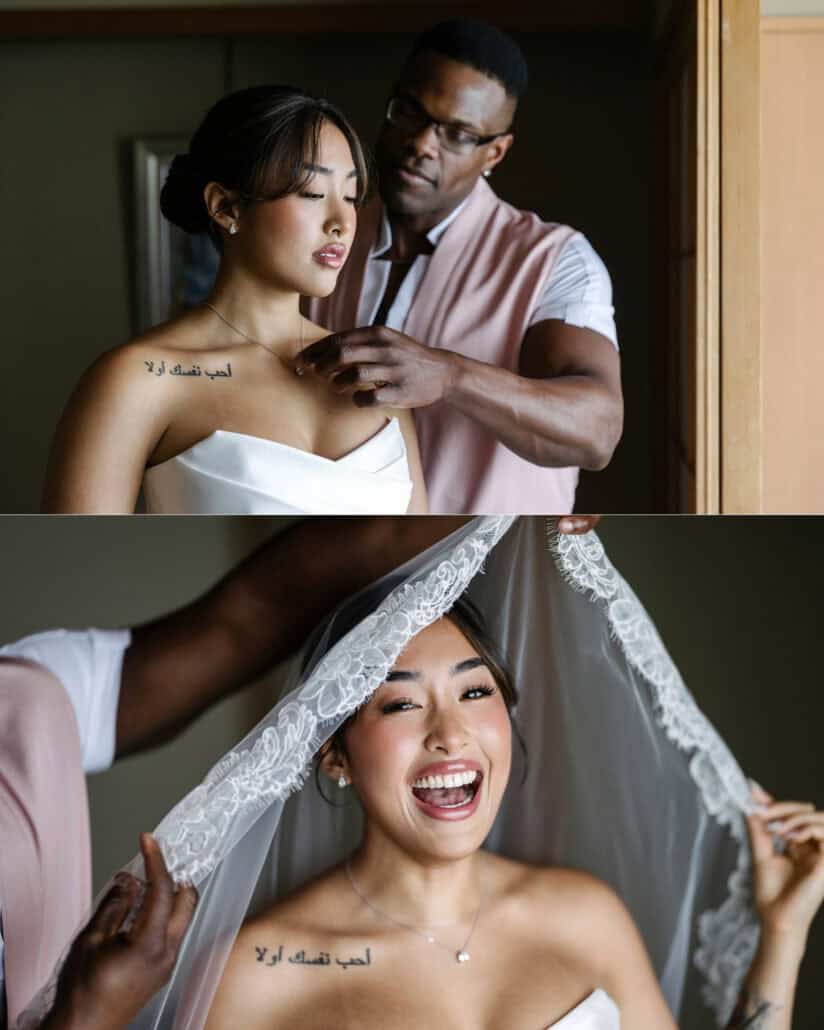
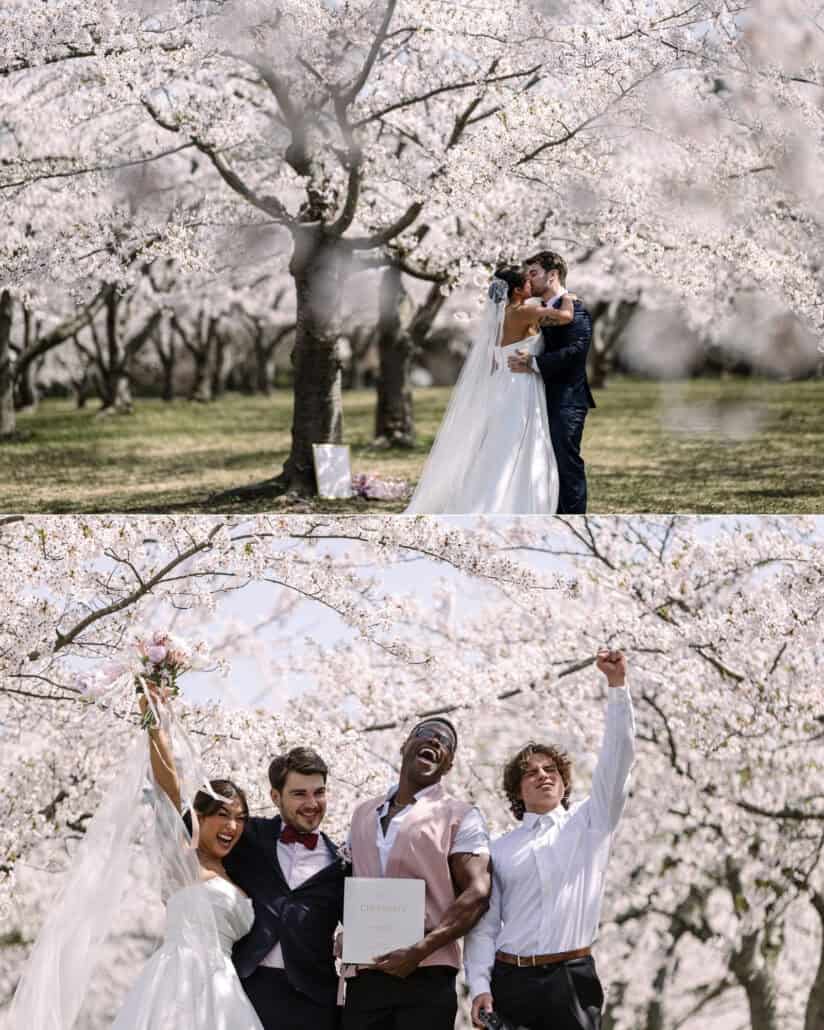
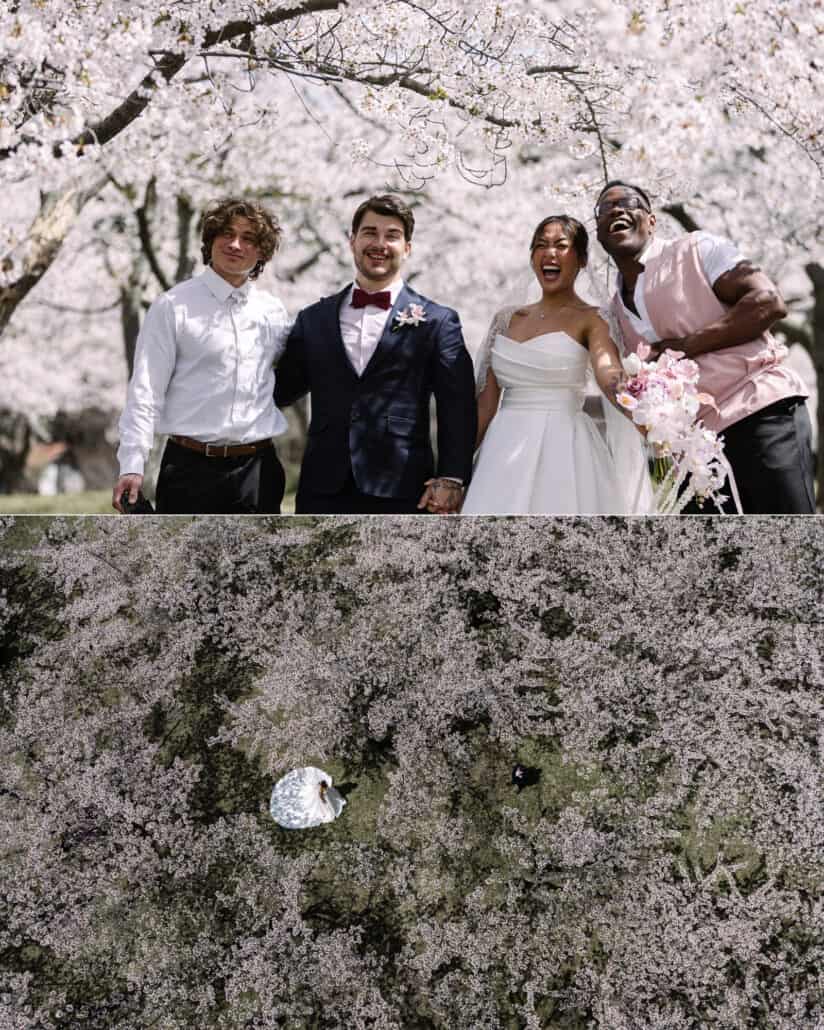
Their friend stood waiting in a pink waistcoat, holding a booklet marked “Our Ceremony”. He’d built his address by speaking to each of them separately, which is an excellent way to prepare a wedding ceremony and a dangerous way to protect anyone’s dignity.
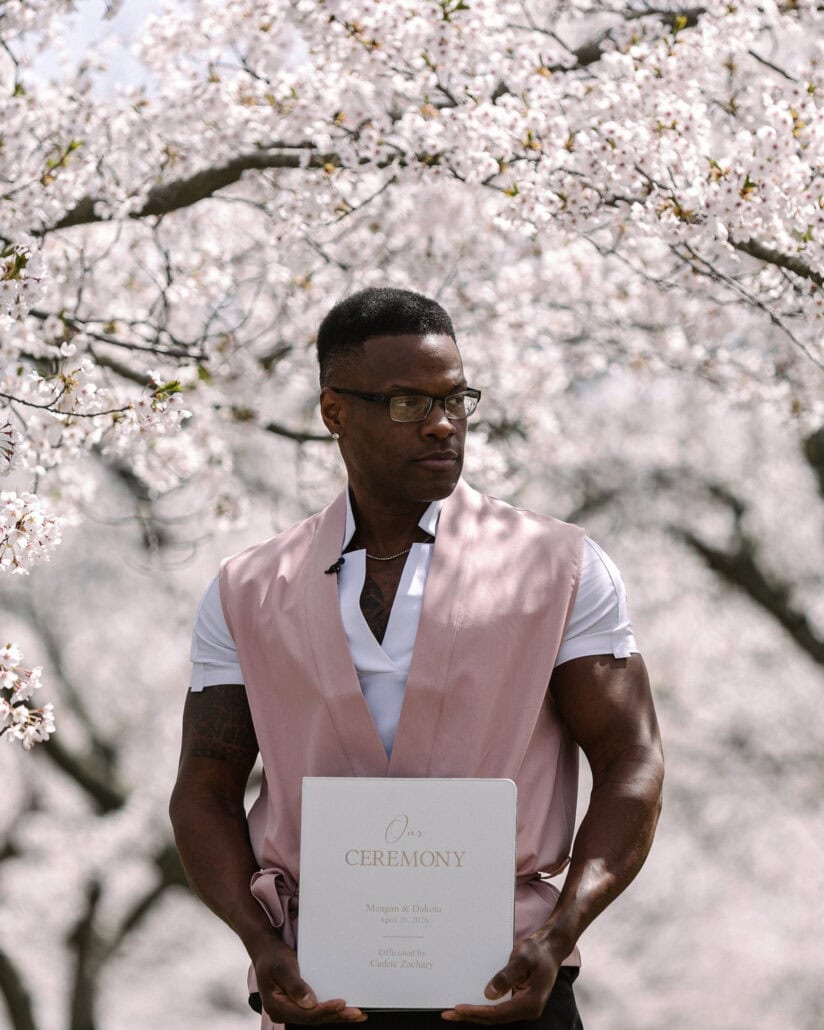
There’d been “immediate bipartisan agreement” about who took longer to get ready. The bride. “No debate, no recount.”
Her “lip balm economy” received attention. So did his commitment to flossing after every meal, apparently like a man “preparing for a surprise dental audit at all times”. And when asked who was more likely to start a spontaneous dance party, both had pointed to the groom.
Underneath the teasing was a recognisable portrait of two people. Best friends who could move “from deep, meaningful conversation to complete nonsense in about three seconds flat”. People who wanted to build things together, travel, eat well and document what happened along the way.
That’s what a friend can bring to a ceremony. The small, ridiculous details sit comfortably beside the things that matter most, because they’ve been there to see both.
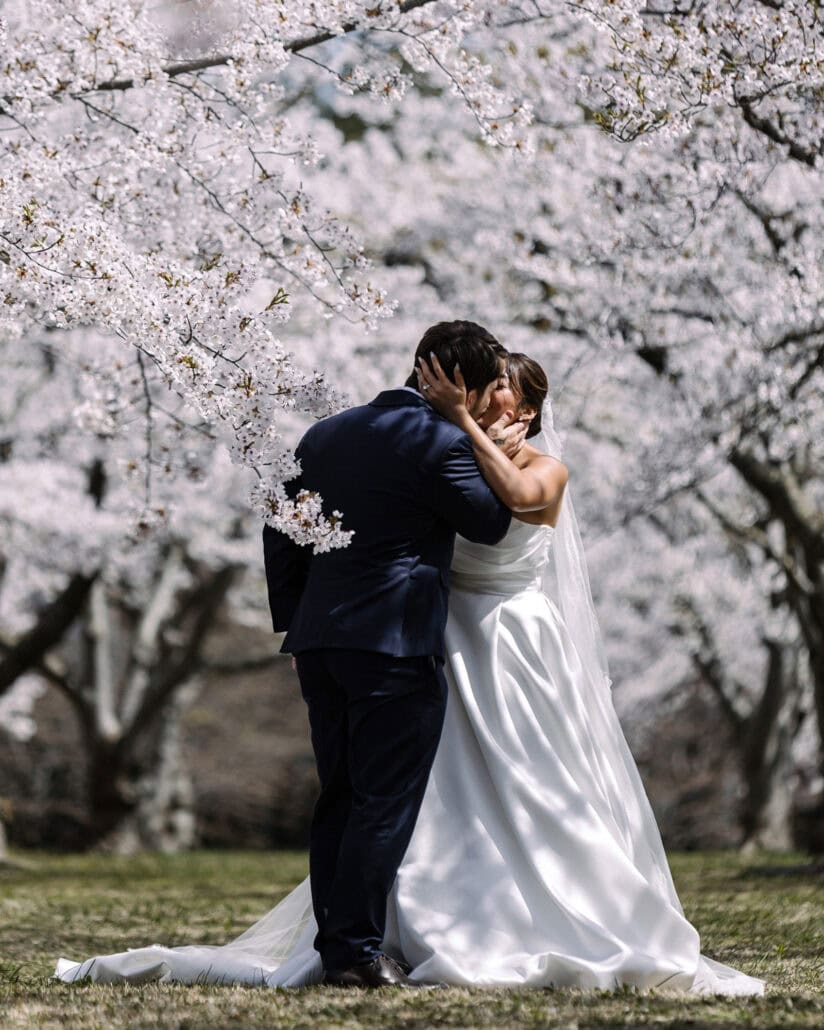
Then came the vows. He got his allergy explanation in first. And then he cried.
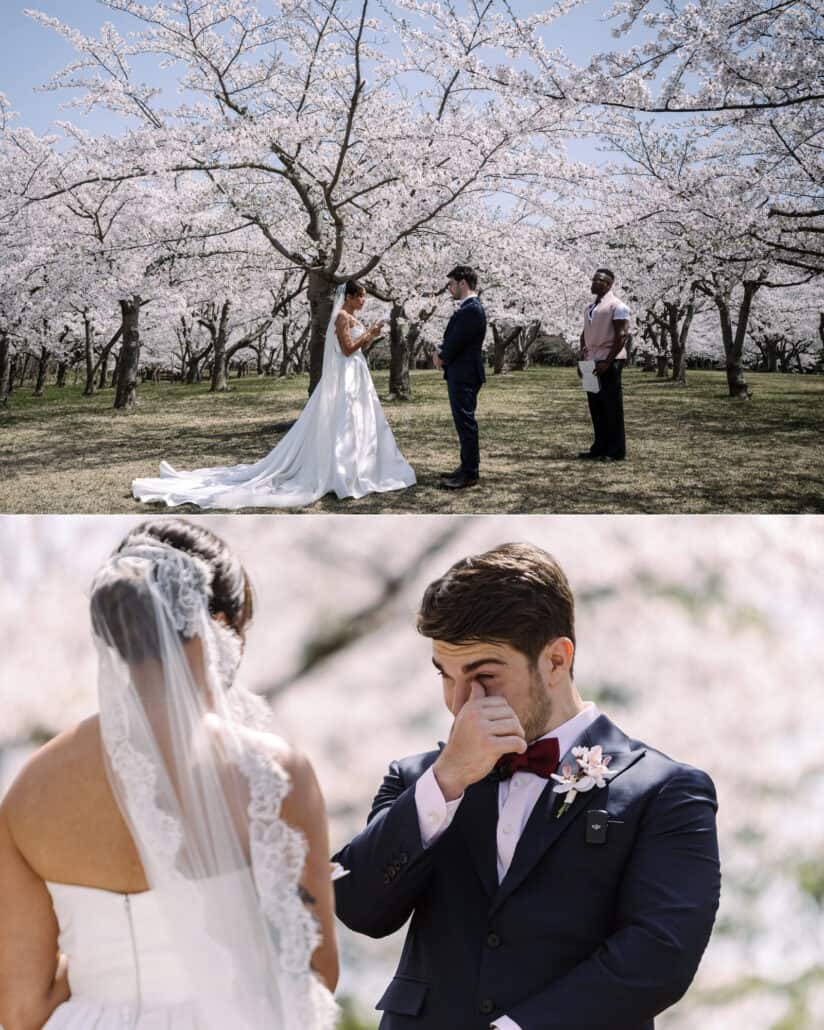
She began hers with: “I’m also allergic.”
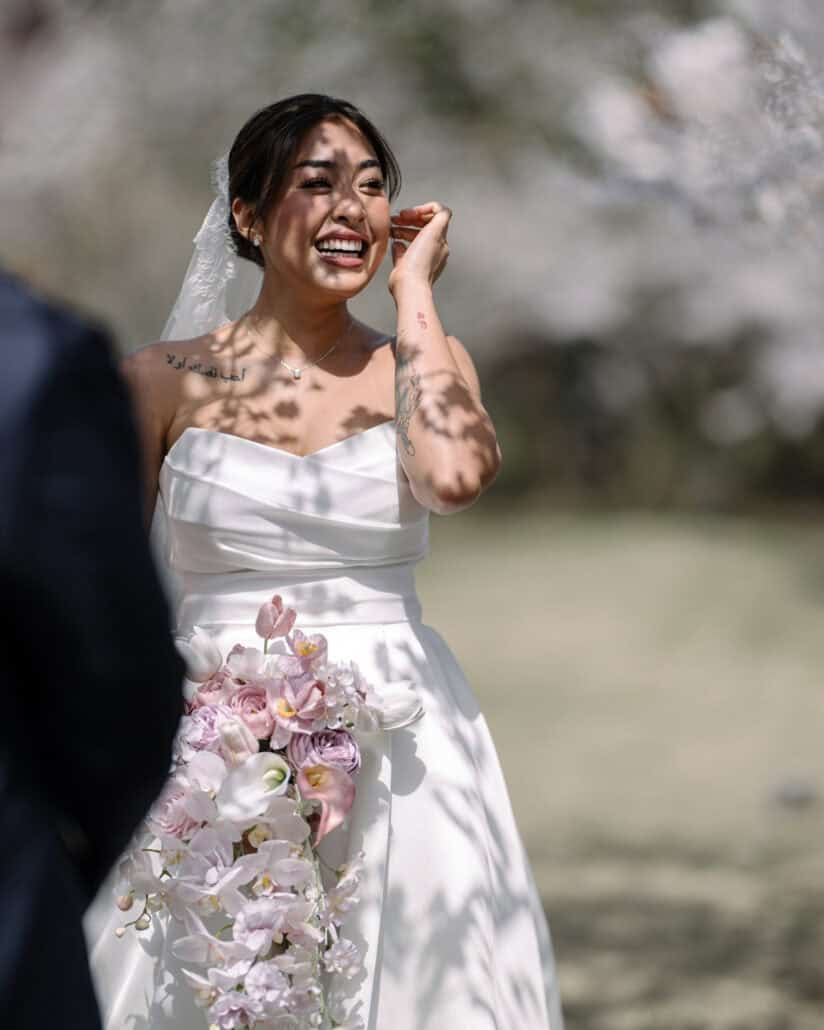
By then, the entire 37 Frames team was crying too. We were standing behind cameras while these two exchanged their vows beneath the blossoms and nobody on our side of the ceremony was doing a particularly convincing job of pretending their eyes were dry.
When the microphones came off, Dee called out: “We all have allergies, darling!” That finished us.
There was room for all of it at once. He could cry. She could make him laugh. The people documenting the ceremony could get completely swept up in it and become part of the joke too.
Nothing needed to become more solemn in order to mean more.
And a few minutes later, as if their friend’s research required independent verification, came two admissions. “I actually have my lip balm with me.” “I have my floss.” A thoroughly fact-checked ceremony.
The First Dance They Weren’t Having
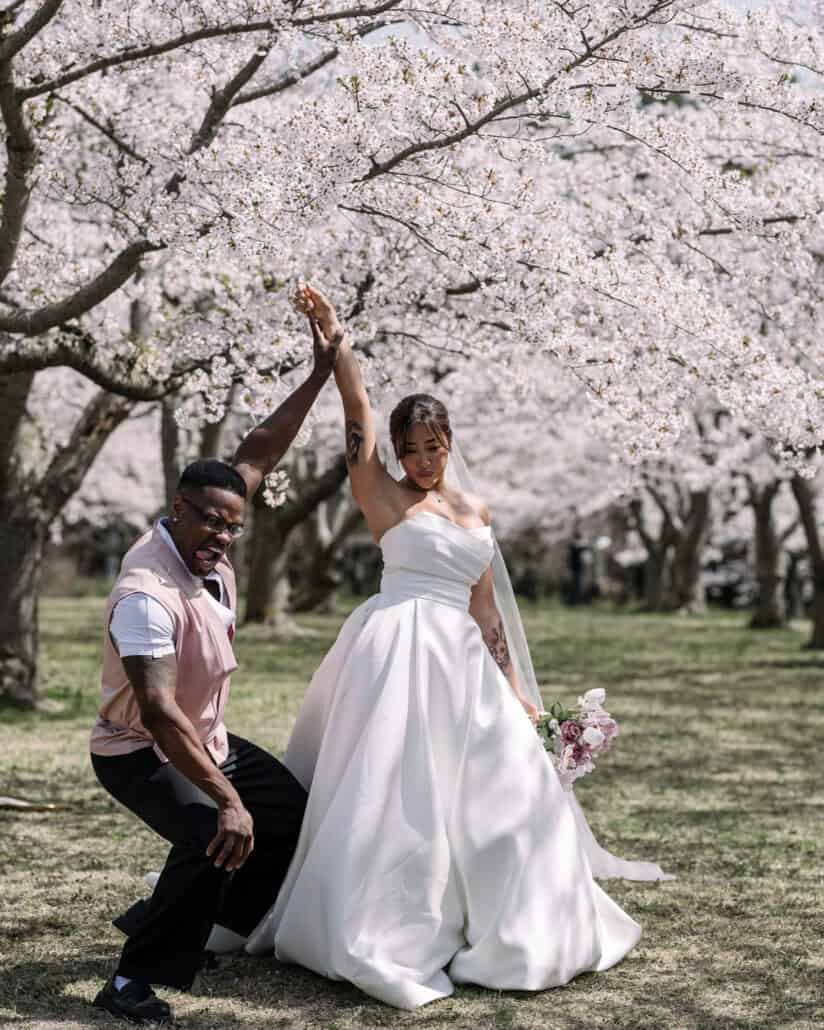
They’d already decided they weren’t doing a first dance. Then the ceremony finished. The cellist kept playing. So they danced. Their friend had clearly been right about the groom.
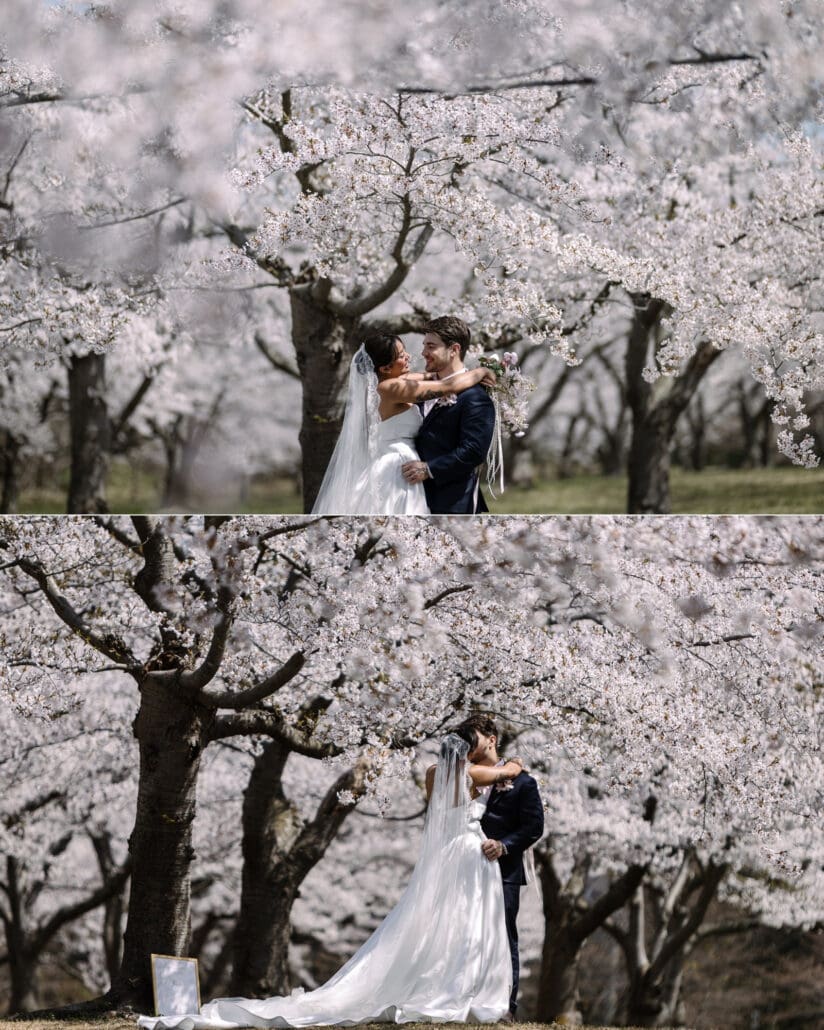
There’s something about that sequence we love. A decision made beforehand, then a moment that arrived with a better suggestion. The music was still there. So were the blossoms. So were they.
From the ground, it looks like the first dance they said they weren’t having. From above, they’re two small figures surrounded by an enormous expanse of white, moving together beneath the trees.
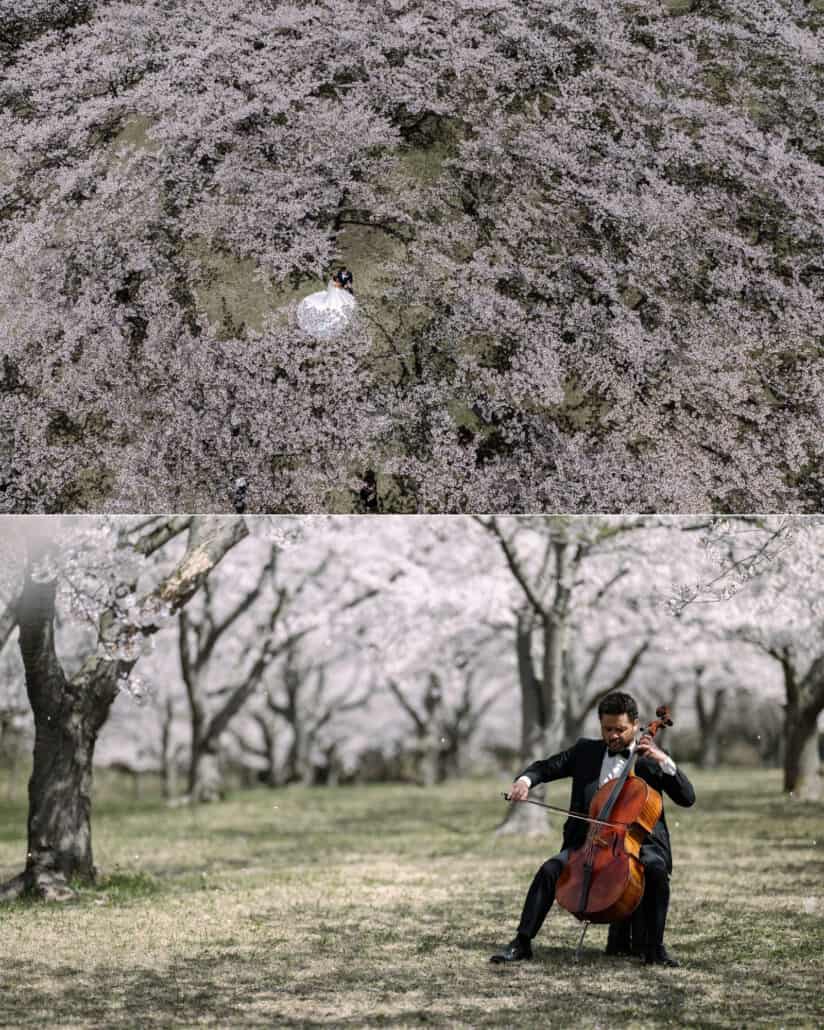
The scale of it changes when you see the aerial photographs. You can follow the branches outwards and realise how much blossom there was beyond the little space they were standing in. But your eye still comes back to those two people.
That’s one of the pleasures of giving a wedding day enough room. Something can happen simply because, in that moment, you want it to. A live cello ceremony became a first dance. The dance became another part of the day they hadn’t known they’d remember.
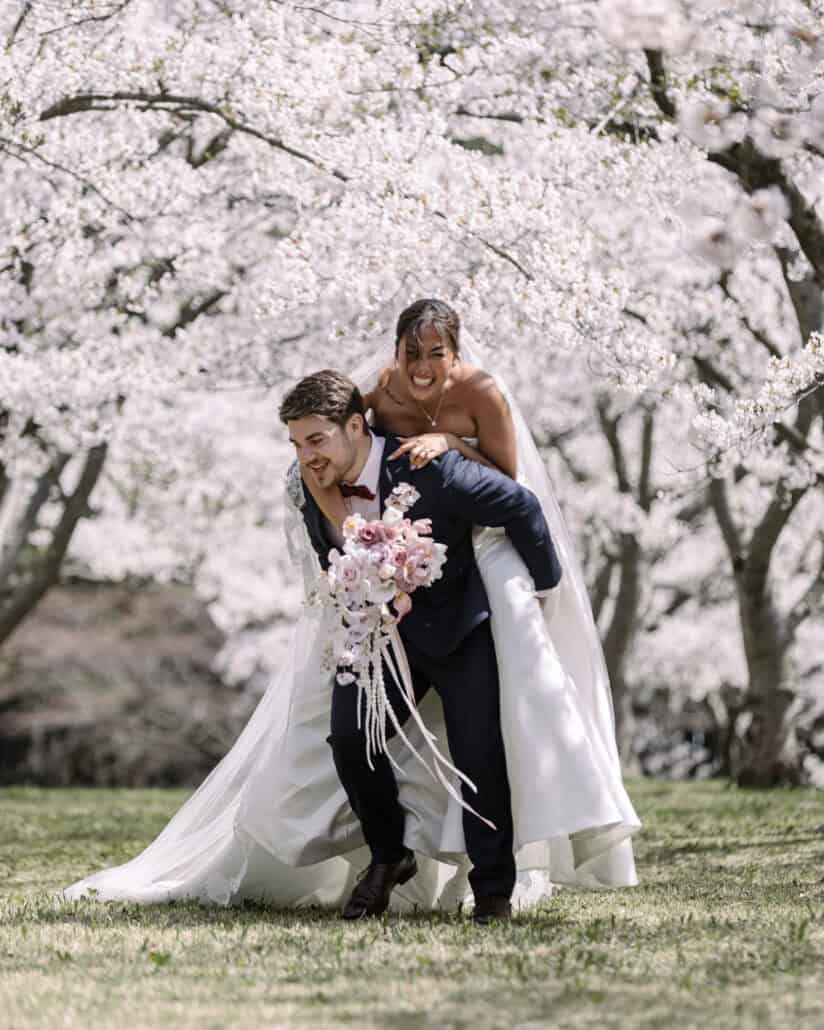
Afterwards came a piggyback, a race and our bride running through the grove with her skirt in her hands. “She’s so fast the drone can’t,” someone began. We never got the rest of that sentence. She was moving.
An Afternoon to Be Together
An elopement takes its shape from what the couple chooses to keep. For these two, that meant the adventure of following the blossoms north. Two friends. A ceremony led by someone who knew them. Live music. Time to dance, run around and be ridiculous together. And an afternoon still ahead of them.
We talk a lot about giving people more than one rushed day. Sometimes that means several days in different places. Sometimes it begins with the way you arrange the hours you already have. Theirs was paced to the light. Getting ready. The ceremony. The shrine after lunch. Hirosaki for the last two hours of sun, and the festival at dusk.
A little breathing room after the vows. Time for the music to carry on. Enough space for the person who’s just made you cry to put you on their back and run through the trees.
Those things become part of the memory too. When they think about getting married in Aomori, the vows and the nonsense will be right there together. Not a perfect couple, their friend had said. A real couple.
A Shinto Shrine Blessing at Takayama Inari Shrine
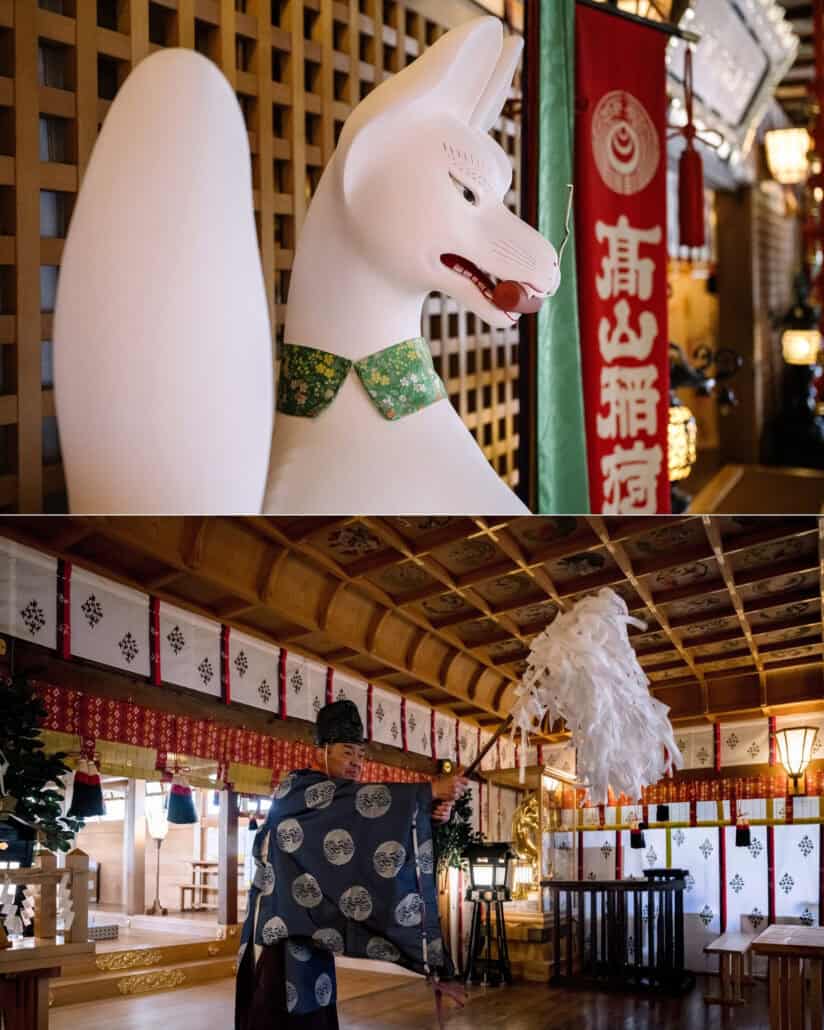
The afternoon brought a different sound. Inside Takayama Inari Shrine, a priest struck the great taiko as prayers were offered for their marriage.
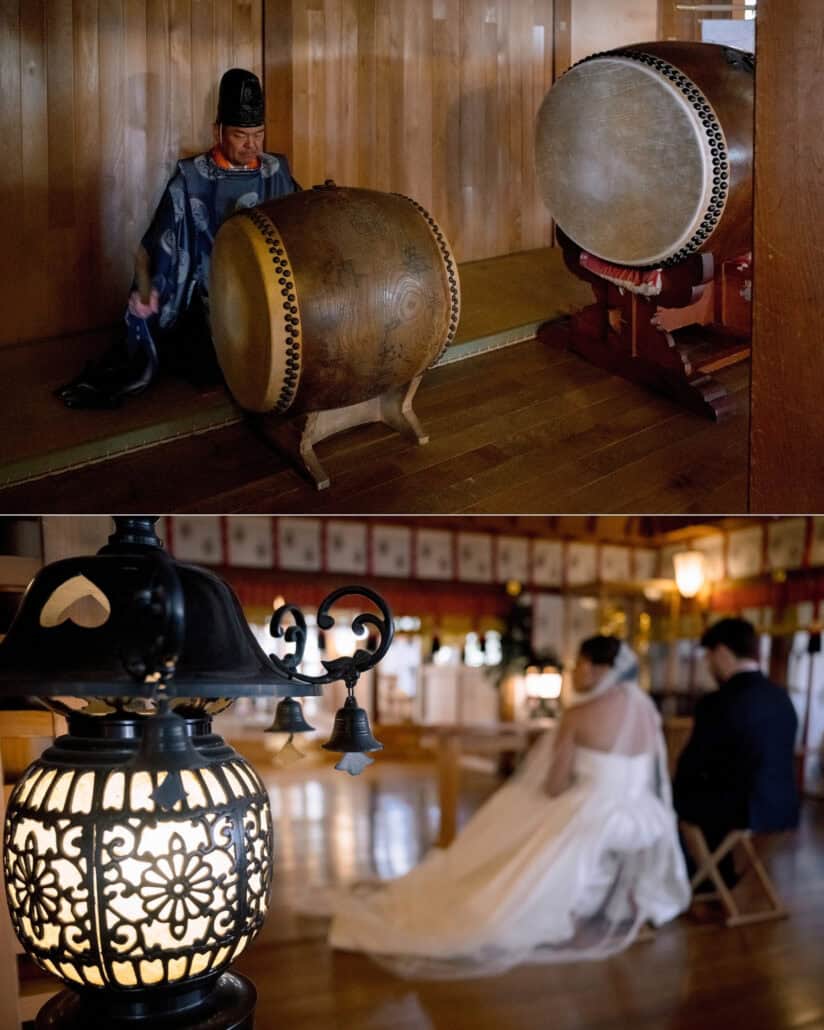
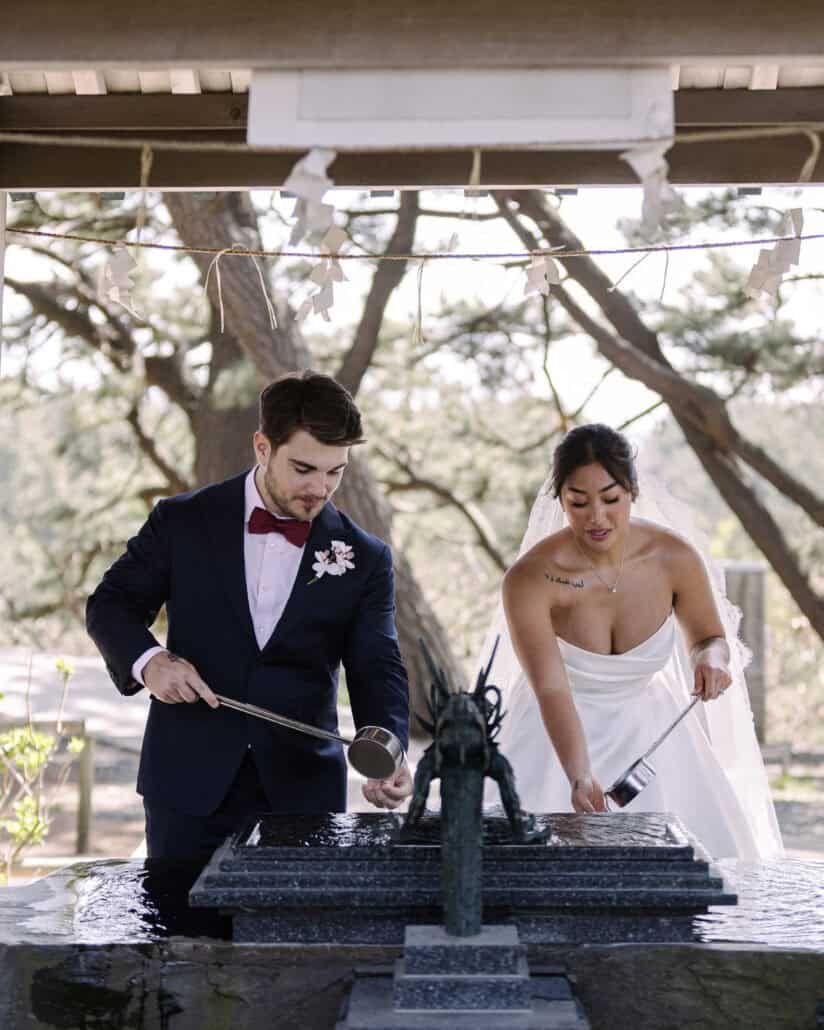
Before entering, they’d rinsed their hands at a stone basin with a dragon spout. Inside the hall were priests in blue robes, golden bells hanging from red cords and flowers painted across the coffered ceiling. There was plenty to look at. There was also something to take part in.
A purification wand passed over them. They offered a tamagushi branch, turning its base towards the altar. The priest guided them through two deep bows, two claps and one final bow. Their marriage was reported to the kami.
On the shrine’s own calendar, their wedding day was an ichiryū-manbai-bi, a day when whatever you begin is said to multiply ten thousand times. Among the prayers Takayama Inari offers are a good match and a harmonious marriage.
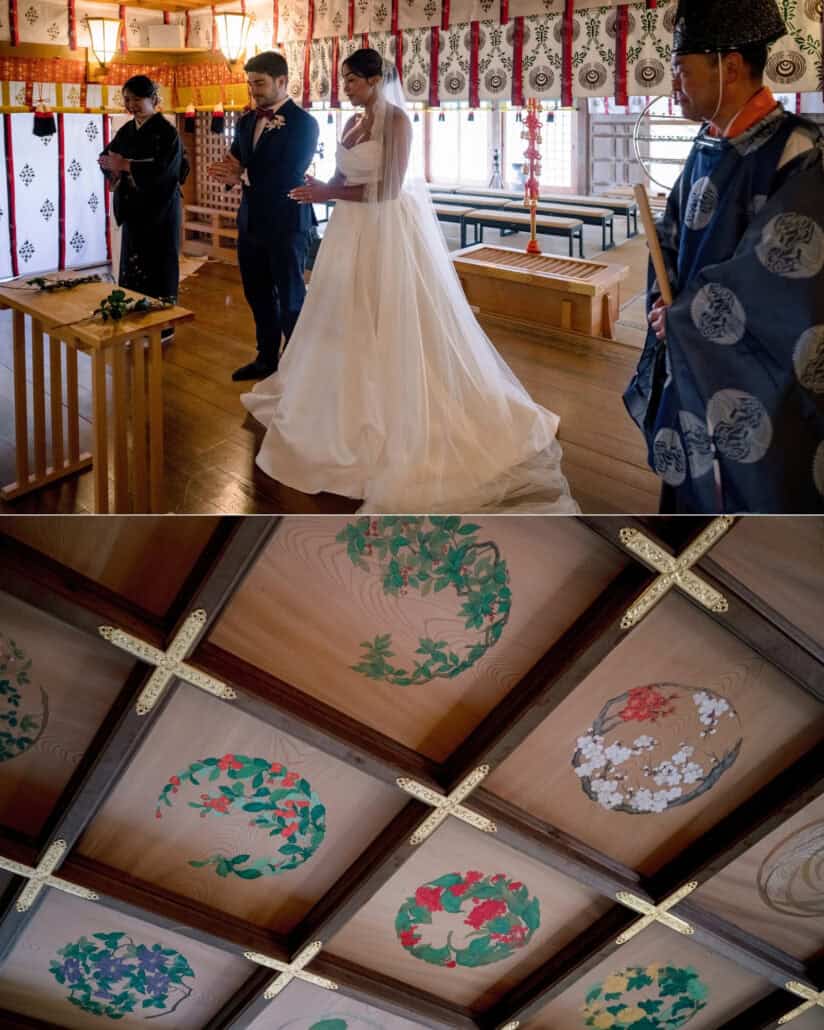
For their Shinto shrine blessing, the shrine welcomed them into its own practice, with people there to guide them through it. Their part was to follow, listen and take the moment seriously. We photographed and filmed with the shrine’s permission.
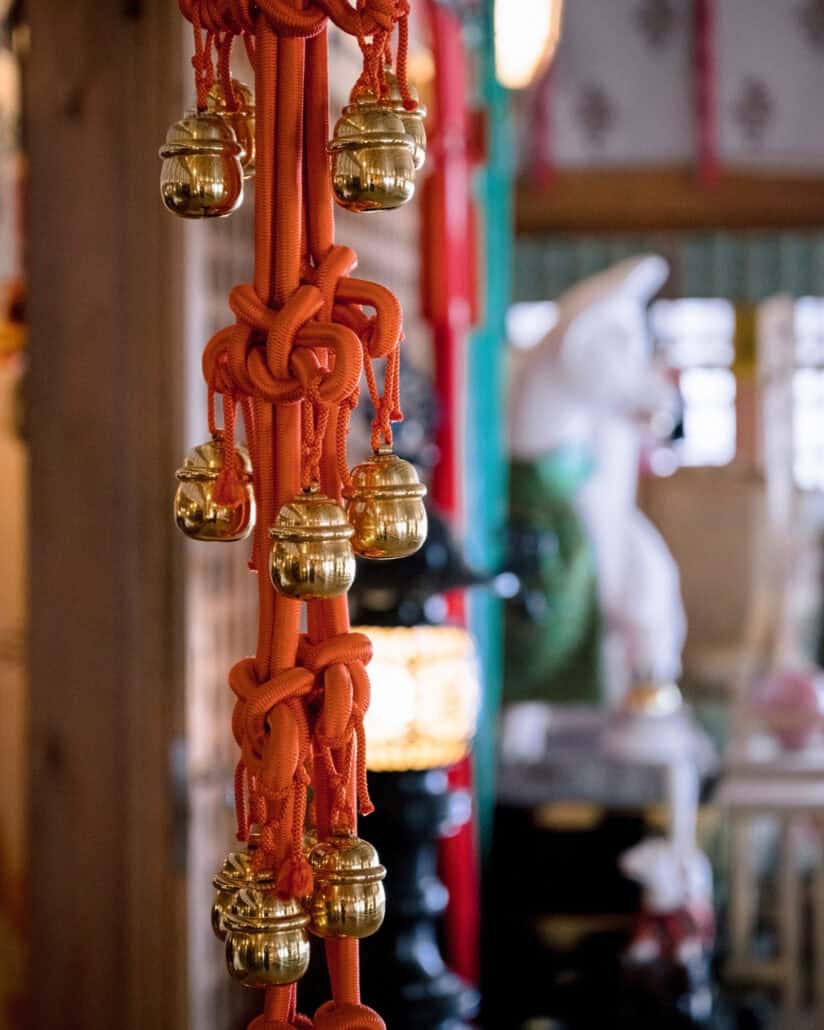
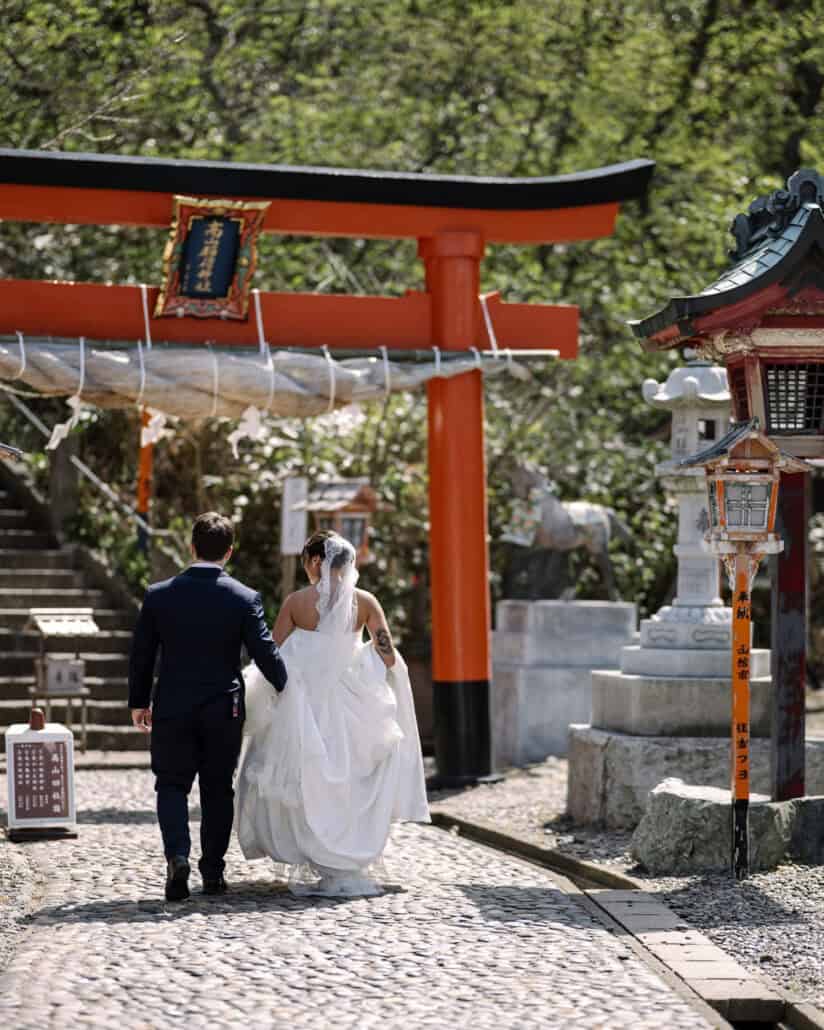
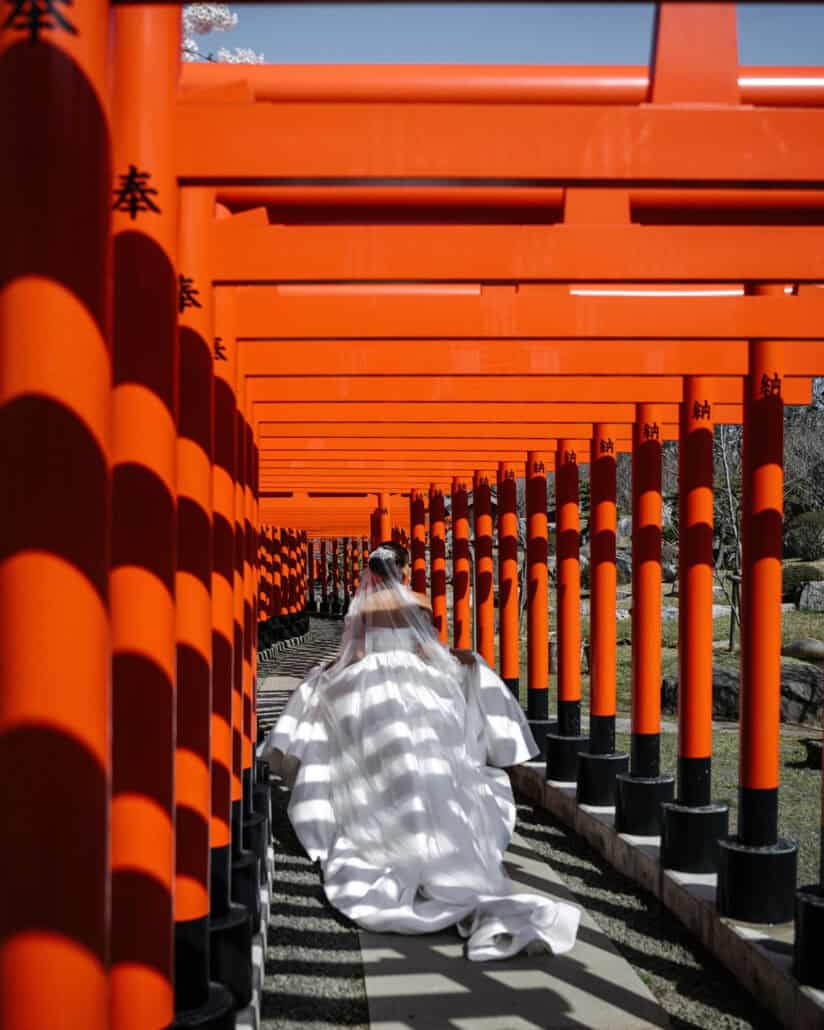
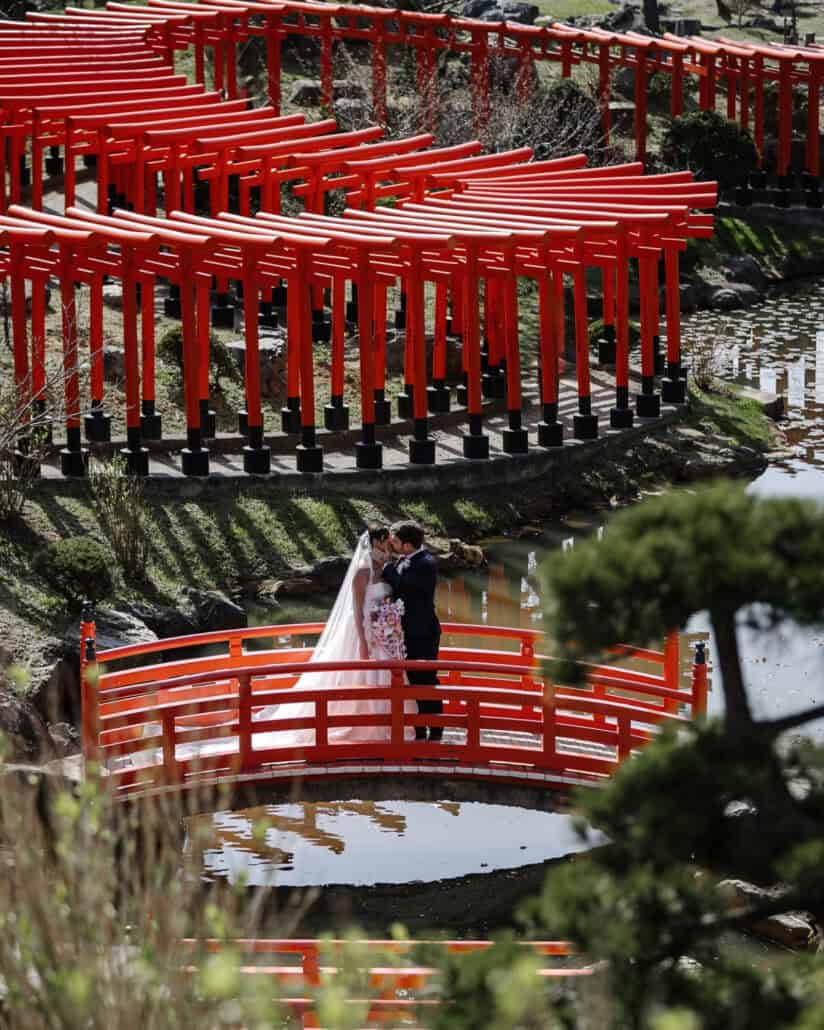
Afterwards, they walked beneath the winding red torii, where cherry blossom hung over the gates, and stood on the arched bridge above the pond. White fox guardians watched from around the shrine. Red gates curved through the garden.
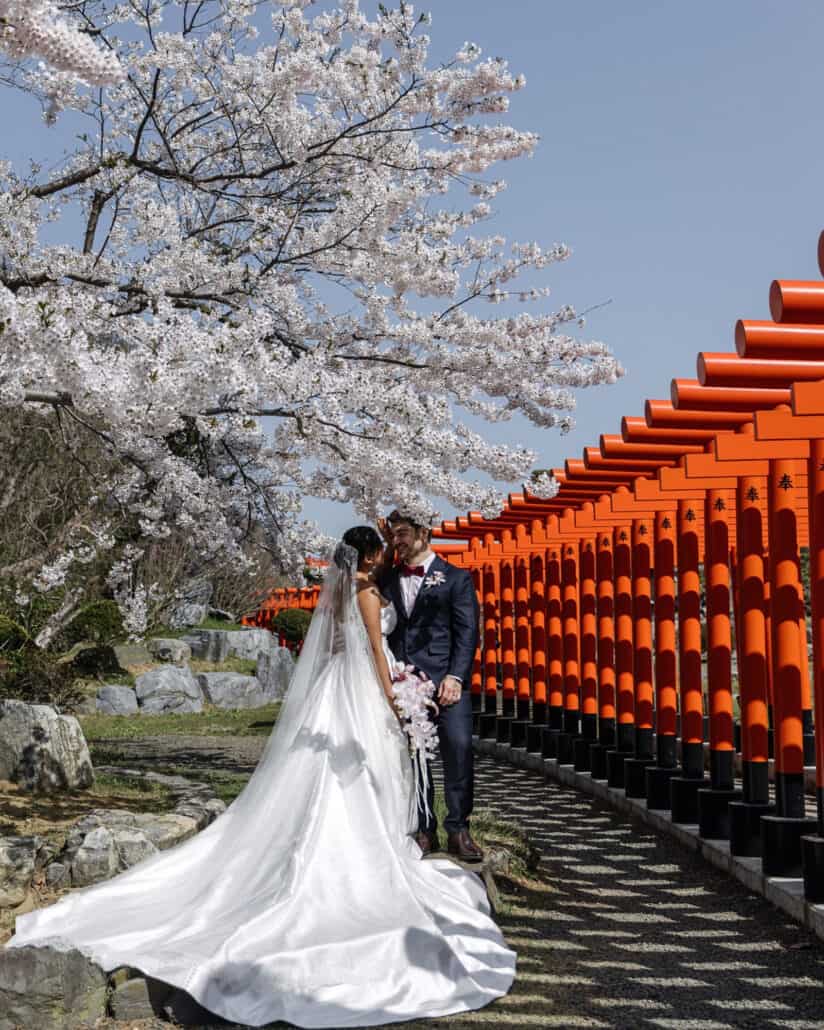
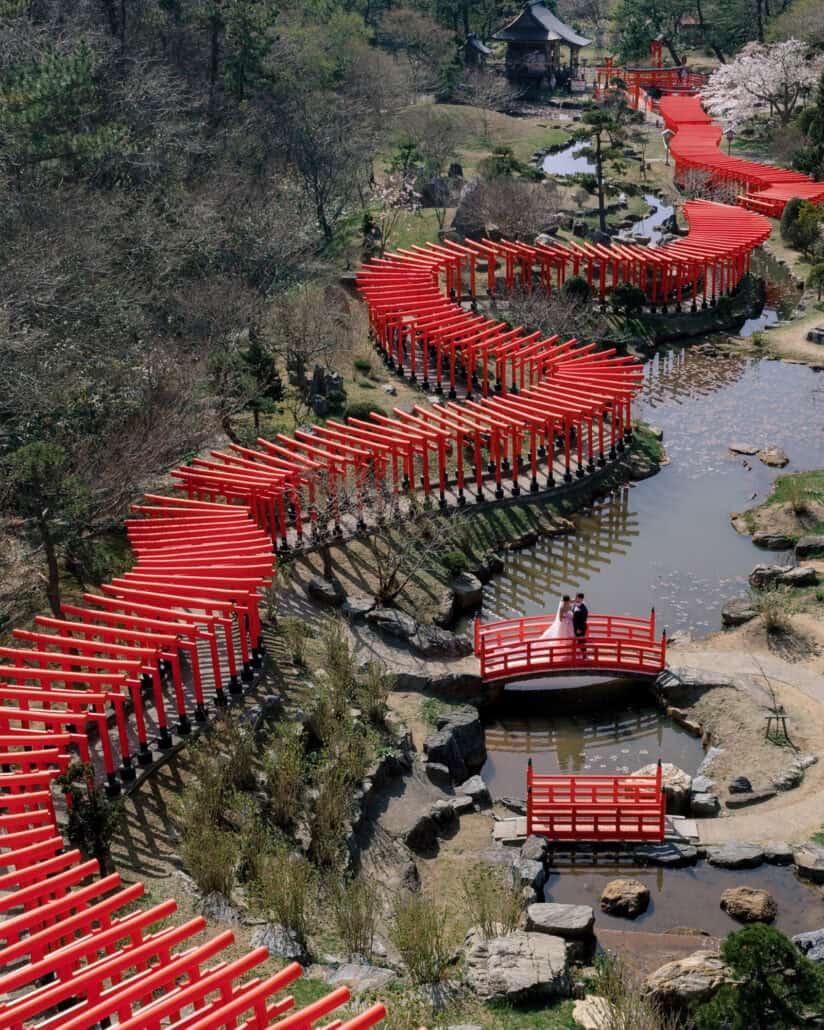
The day had changed pace again. Earlier, there’d been a cello beneath the trees and a friend making jokes about dental hygiene. Here, there were prayers, the sound of the drum and two people learning where to place their hands. Both belonged to the same wedding.
That’s part of what makes a day in Japan like this stay with you. You bring your own reasons for being here, and the places you visit contribute something you couldn’t have written into the story yourself.
Hirosaki, and the People Who Know What Trees Need
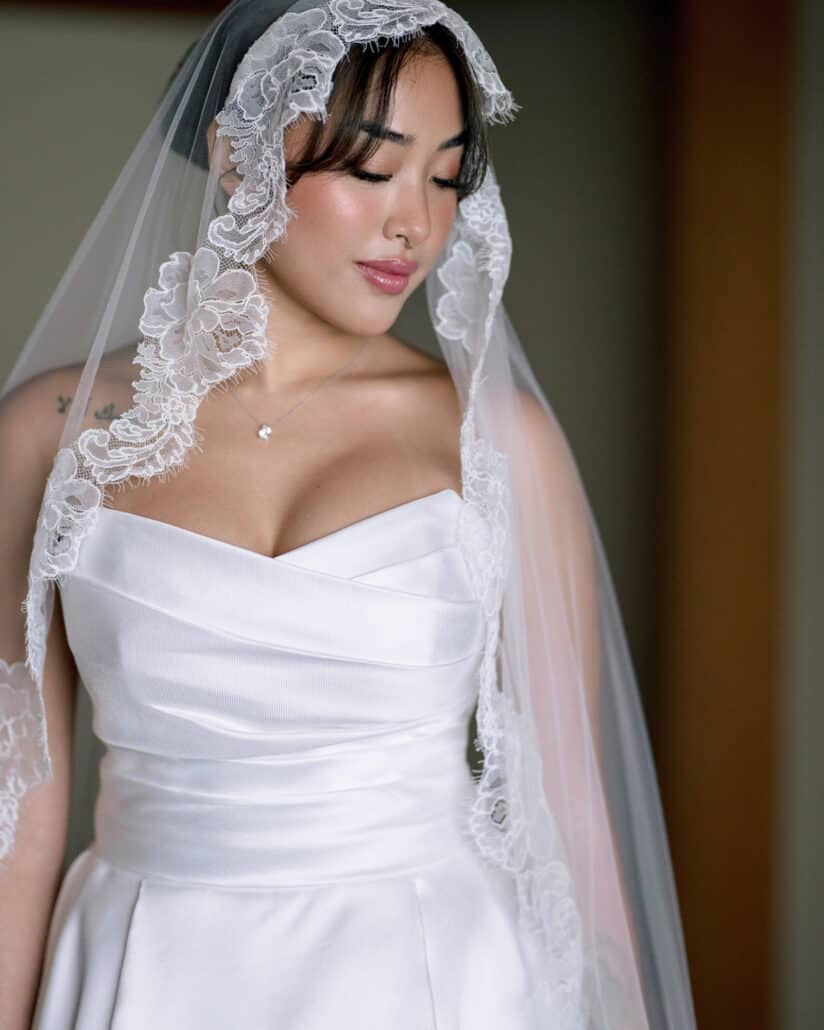
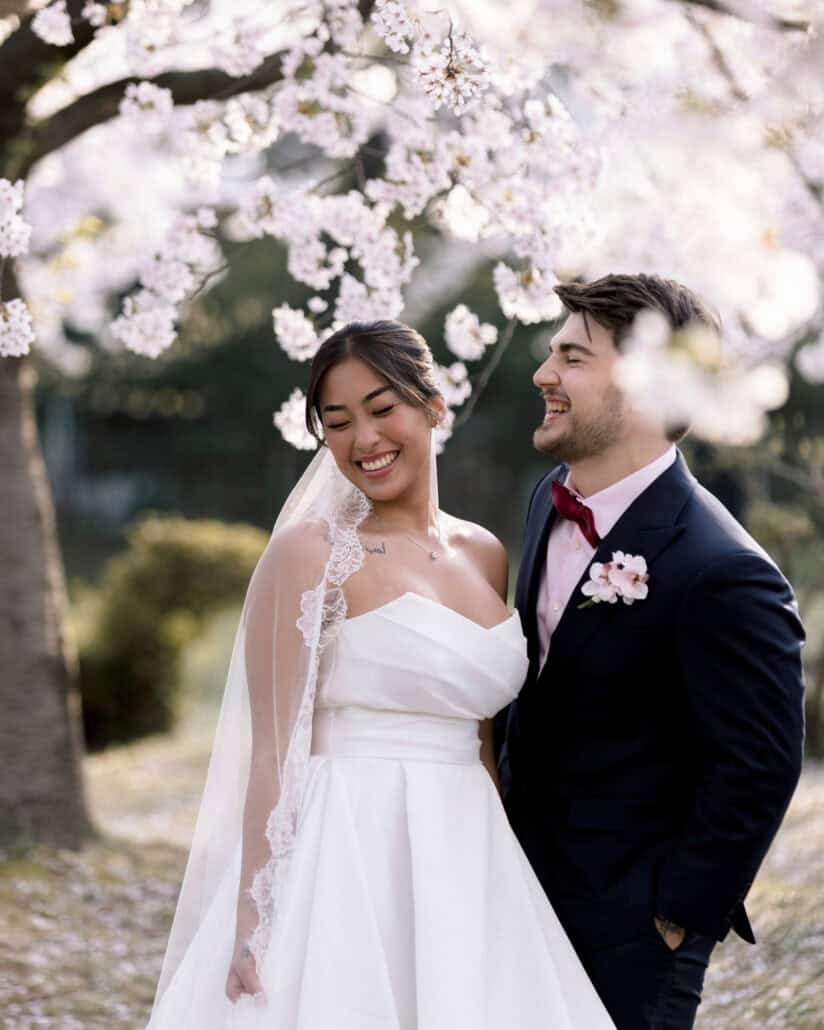
By late afternoon, we were in Hirosaki. The light was turning gold. Her veil kept lifting in the breeze. “Go with the wind!” At a certain point, the weather had become part of the photography team.
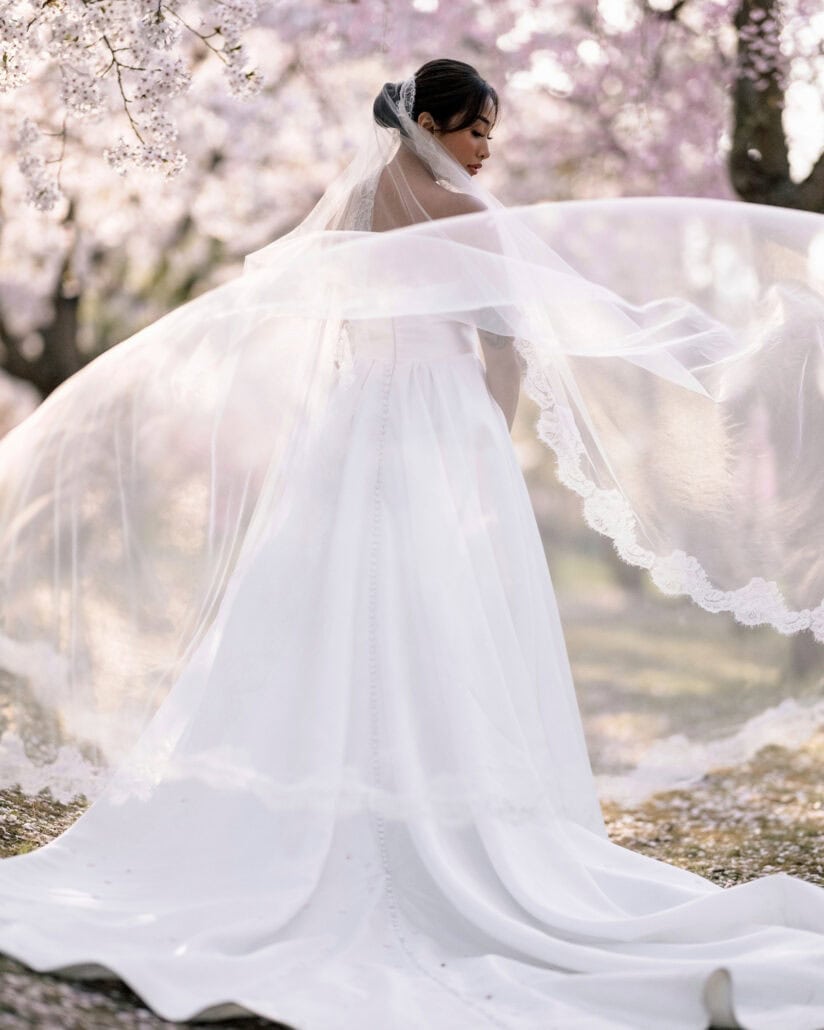
Hirosaki’s cherry blossoms have a story worth knowing, especially when you’re standing beneath them. This is apple country, and that shaped what happened to its sakura.
There’s an old Japanese warning against pruning cherry trees. Hirosaki’s caretakers looked at what local apple growers understood about managing orchards and tried something different. They pruned the cherry trees. The trees responded. Today the park holds about 2,600 of them, 52 varieties, and a single bud here gives four or five flowers.
That knowledge became part of the Hirosaki method, an approach to caring for the trees that’s helped old cherries keep flowering with extraordinary abundance. The park’s oldest Somei-Yoshino was planted in 1882. Still here. Still flowering.
We like that a place people travel so far to photograph owes something to the practical knowledge of people who knew how to grow apples. Behind those few weeks of blossom is work carried out across years, by people thinking about how a tree will look long after the current season has passed. It gives you something else to see when you look up.
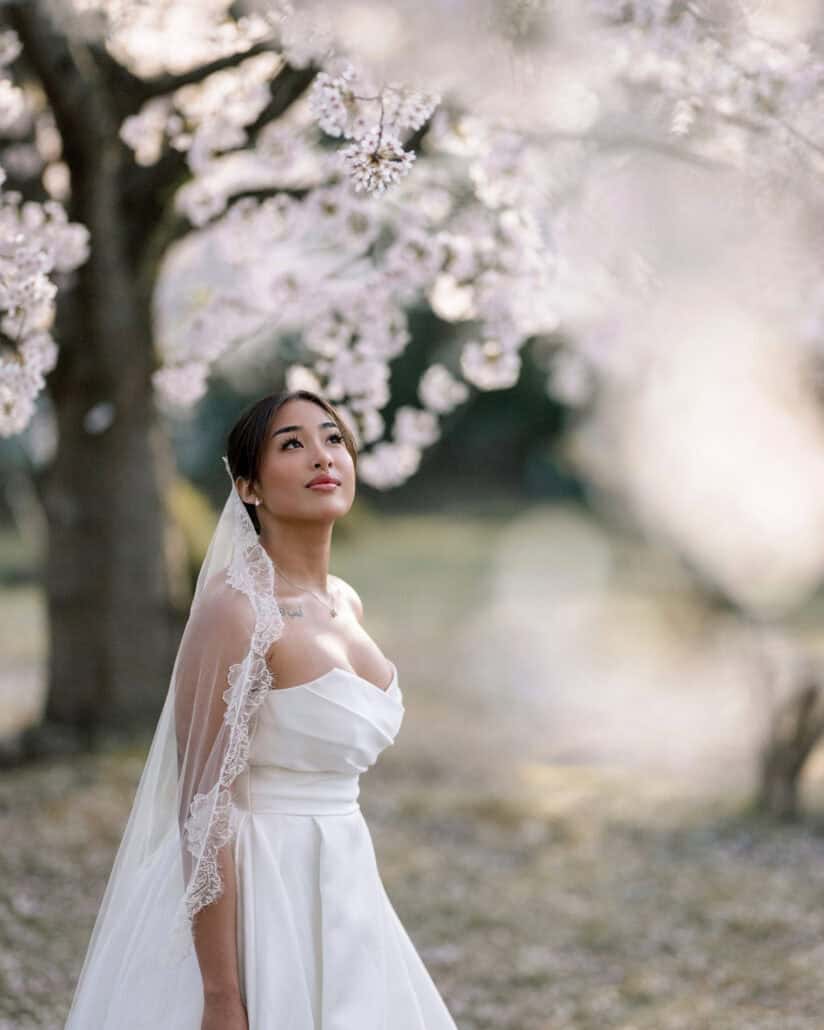
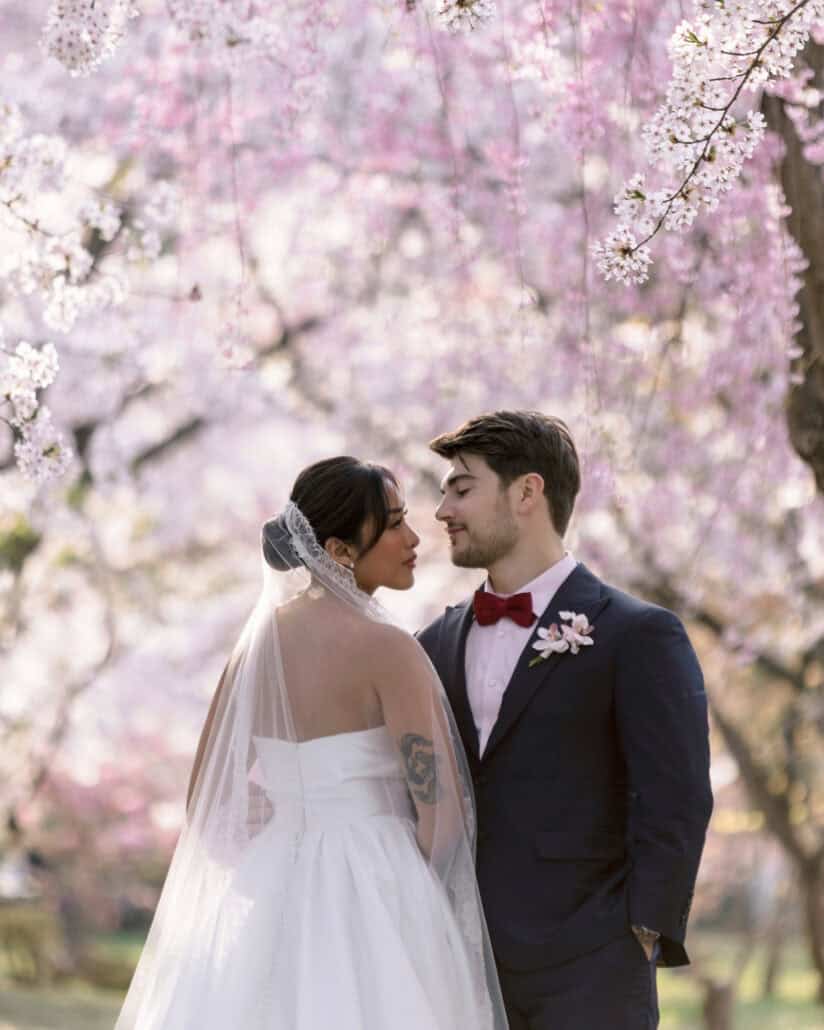
On this particular afternoon, the Somei-Yoshino were at the end of full bloom. Pink weeping cherries were opening, while petals were already collecting on the moat. Hanaikada. Flower rafts. The blossoms were overhead and on the water at the same time.
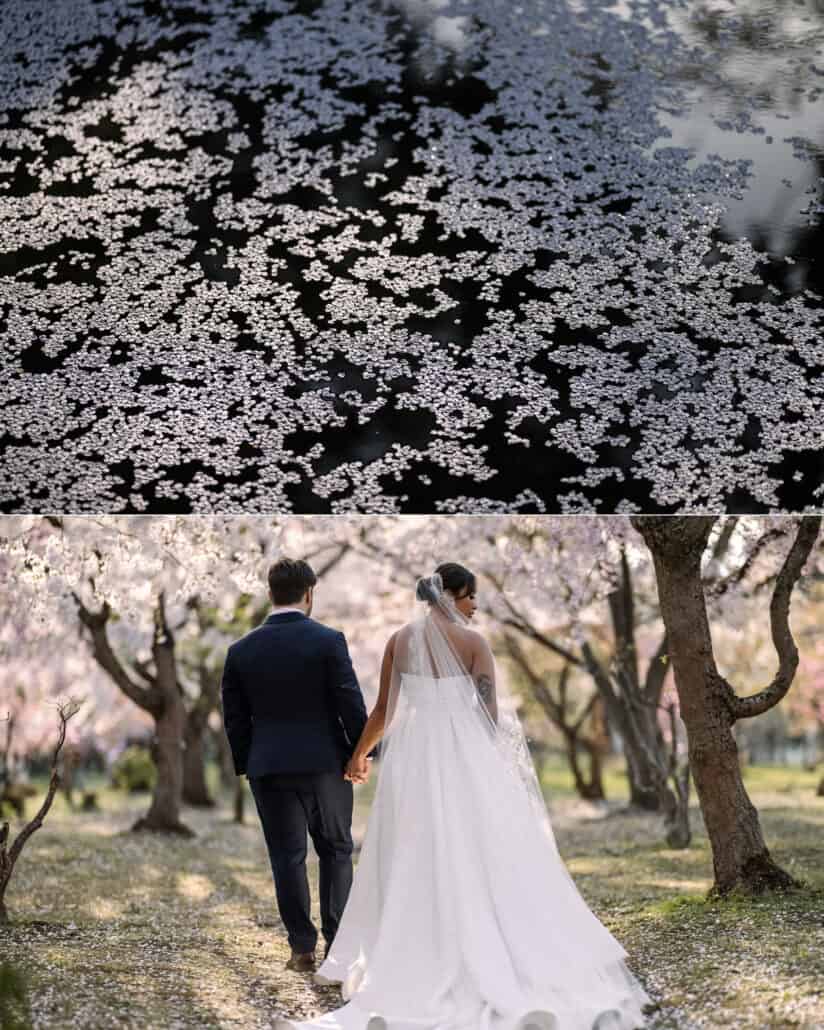
Her veil lifted again. The light came through it. “Oh my god, the light!” We remain capable of eloquence at work. Just not always at the precise moment it’s required.
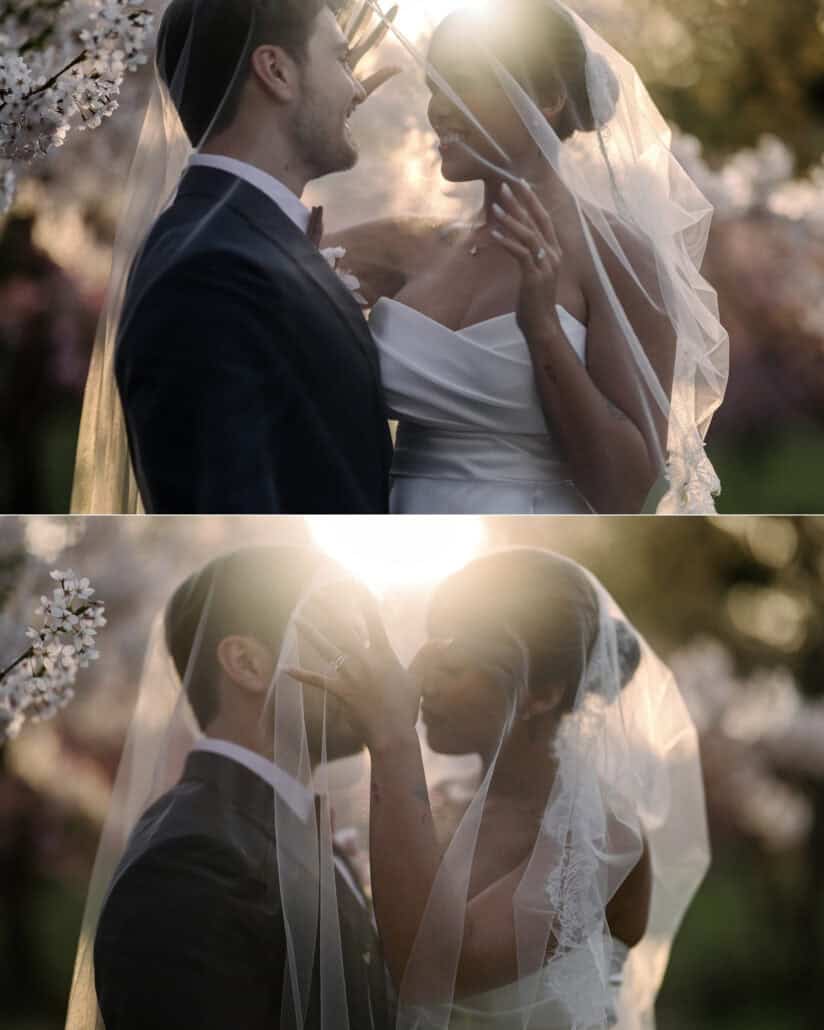
There’s more about Hirosaki’s cherry blossoms here, but that afternoon they were also simply the place where these two got to spend the last sunlight of their wedding day. After everything they’d already done, there was still this.
And then the earth moved. Literally. While we were in Hirosaki that afternoon, a magnitude 7.7 earthquake struck off the Sanriku coast. We felt it mid-portrait. “Earthquake.” “Really?” Hey baby. We made the earth move.
A Wedding Day With Candied Strawberries
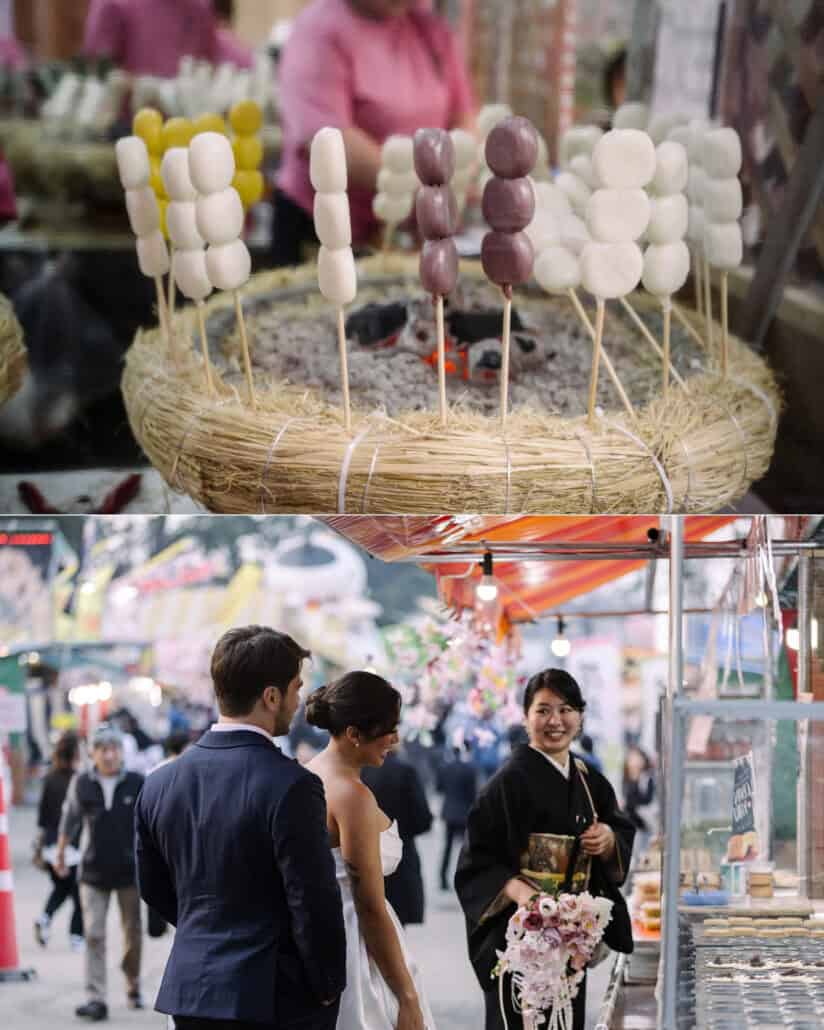
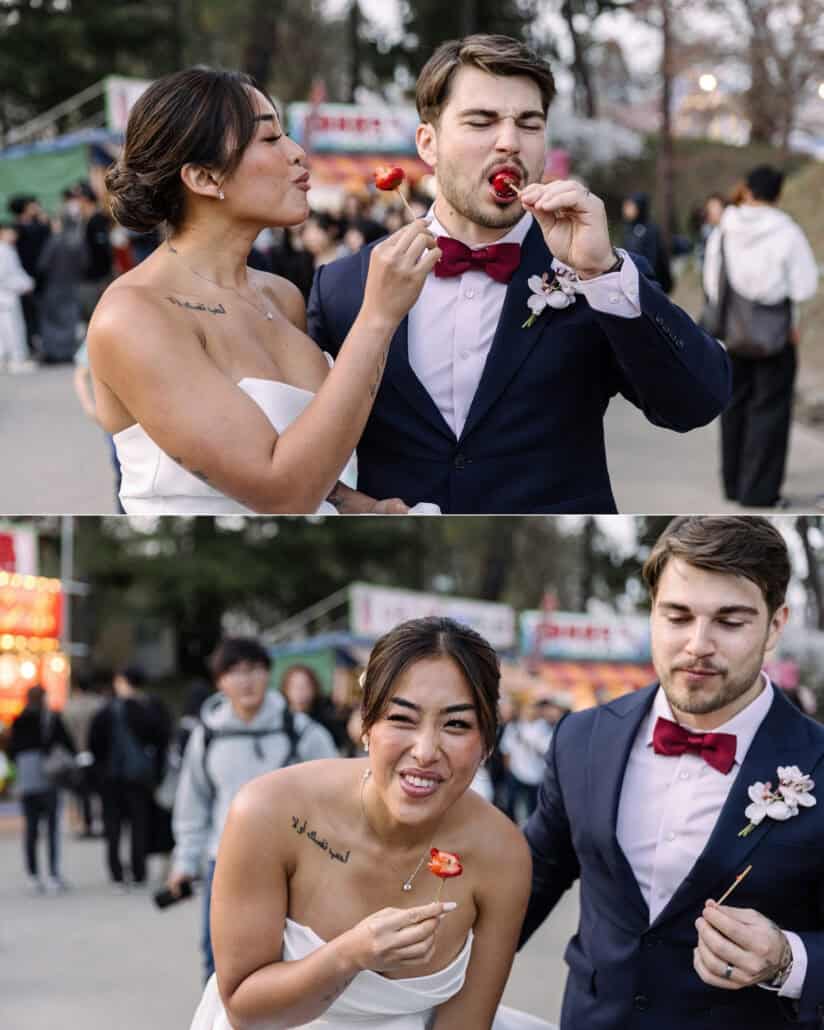
Then came the festival. By dusk, they were among the stalls at the Hirosaki Sakura Festival, with dango, candied strawberries and a stallholder calling out that the crab was delicious. We’d reached the part of the wedding day where eating something on a stick was entirely appropriate.
“Don’t lose any teeth.” A sensible warning, particularly given the groom’s commitment to dental maintenance.
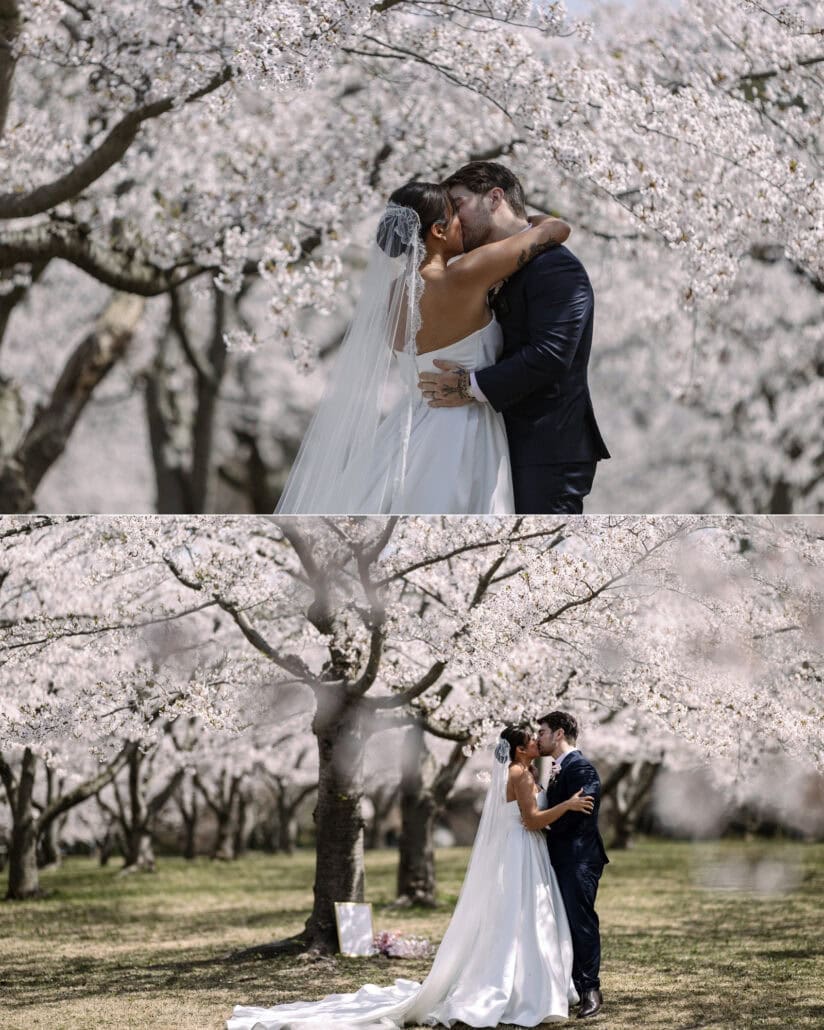
The idea was a kiss in the middle of the festival, with the passing crowd blurring around them. The crowd had other ideas. They stopped to watch. Fair enough. A bride and groom kissing beneath the cherry blossoms will occasionally interfere with pedestrian flow.
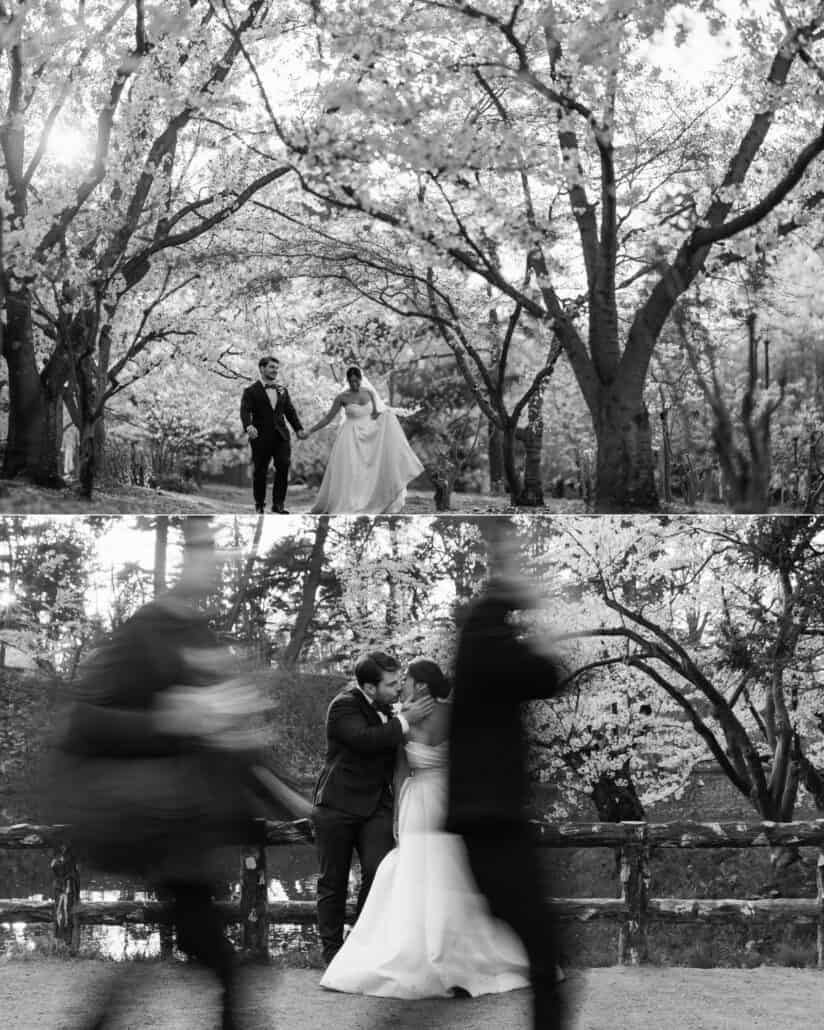
There was a last kiss on a bridge over the cherry-lined moat.
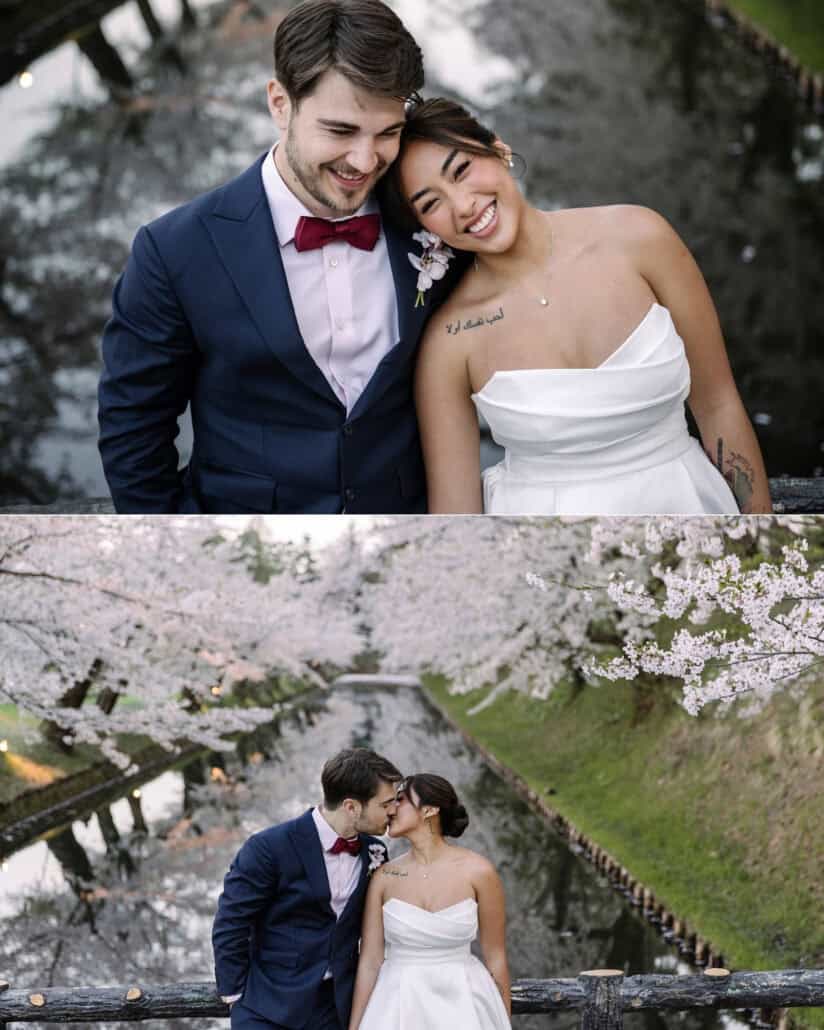
And somewhere between the ceremony and the candied strawberries, the day had grown to hold much more than its central occasion. Music. Their friends’ voices. A dance. Prayers at the shrine. The wind taking her veil. People at a festival pausing to watch two strangers kiss.
This is why we care about giving a wedding time to unfold. You get to remember a whole day together.
Their Wedding Film
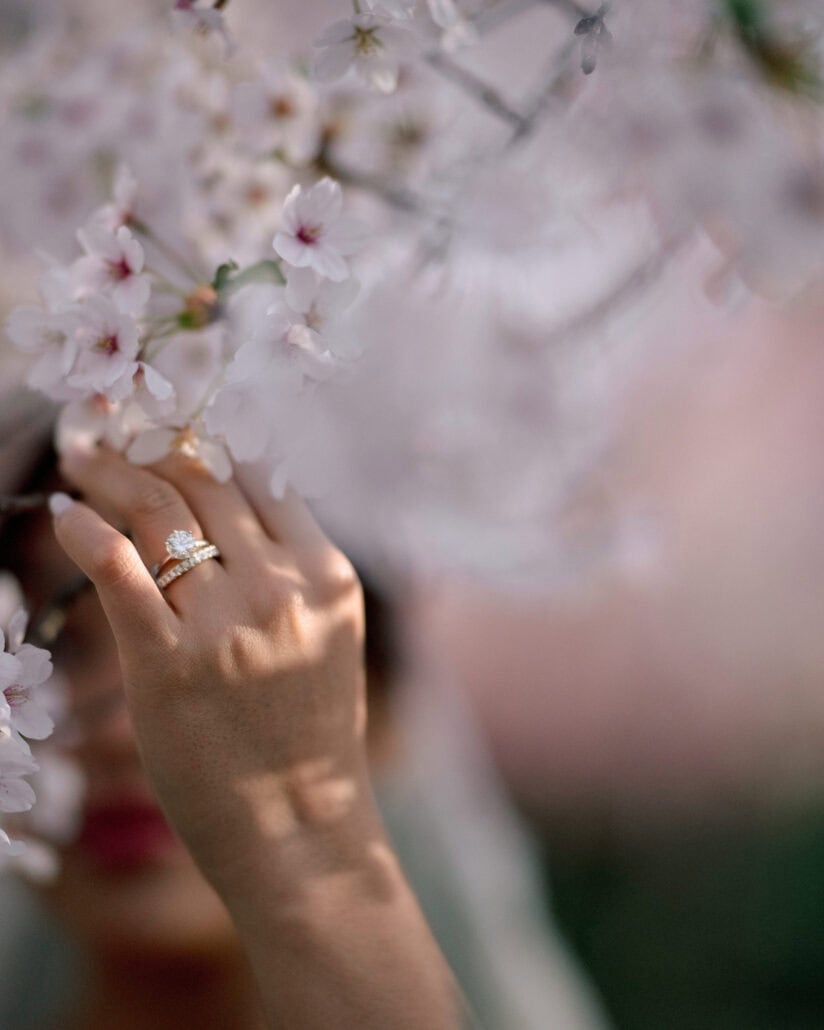
The photographs keep certain things still. Blossoms overhead. A hand during the ceremony. The space between two people just before one of them starts laughing.
Film keeps something else. His attempt to blame the pollen. Her answer. Dee calling out when it became clear the entire team had apparently developed the same allergy. The cello beneath the trees. Their friend’s voice. The drum inside the shrine. The movement of a first dance they hadn’t planned to have.
And their vows, spoken by the people who wrote them. The film lets you hear what happened there.
It also follows them a little further than this post does. Six days after Aomori, we met again in Tokyo. There’s another evening’s worth of photographs and stories from that reunion. We’re giving it a post of its own.
Tokyo after the wedding. Coming soon.
The Blossoms They Went Looking For
By the following morning, the rain had arrived. But they’d had this day.
They’d followed spring north and stood beneath thousands of cherry blossom trees. Their friend had led the ceremony. The cello had kept playing. A shrine had welcomed them. Hirosaki had given them golden light, petals on the water and something sugary to eat before the day was done.
And through all of it, they’d been recognisably themselves. The couple who could move from deep conversation to complete nonsense in three seconds flat. The bride with the lip balm. The groom with the floss. The two people who weren’t having a first dance, until they were.
They’d chosen to do something extraordinary together, and there was room inside it for all their ordinary, particular, ridiculous ways of being.
That’s what we’ll remember. Along with the groom blaming his tears on the trees, his bride immediately joining him, and the entire team behind the cameras discovering they’d apparently developed the same condition.
Allergies and all.