Most guidebooks put Kyoto’s autumn leaves at their best in mid November. The Japan Meteorological Agency, which records the same maple at its Kyoto observatory every year, puts the average day that tree turns fully red at 5 December. In 2024 it didn’t get there until 20 December, the latest on record. Last year it was 10 December.
Both answers are true. They’re just measuring different things. The guidebooks are talking about the famous temples in the east and west of the city, where the colour starts in mid November. The agency is recording the day one tree has almost no green left at all. Between them sits a season far longer than most visitors plan for, moving from the mountains down into the city over about four weeks.
For a wedding, that changes everything. Late November into early December isn’t the tail end of autumn in Kyoto. It’s the peak. A couple marrying in the first week of December is marrying in full colour, not at the start of winter.
Late November into early December isn’t the tail end of autumn in Kyoto. It’s the peak.
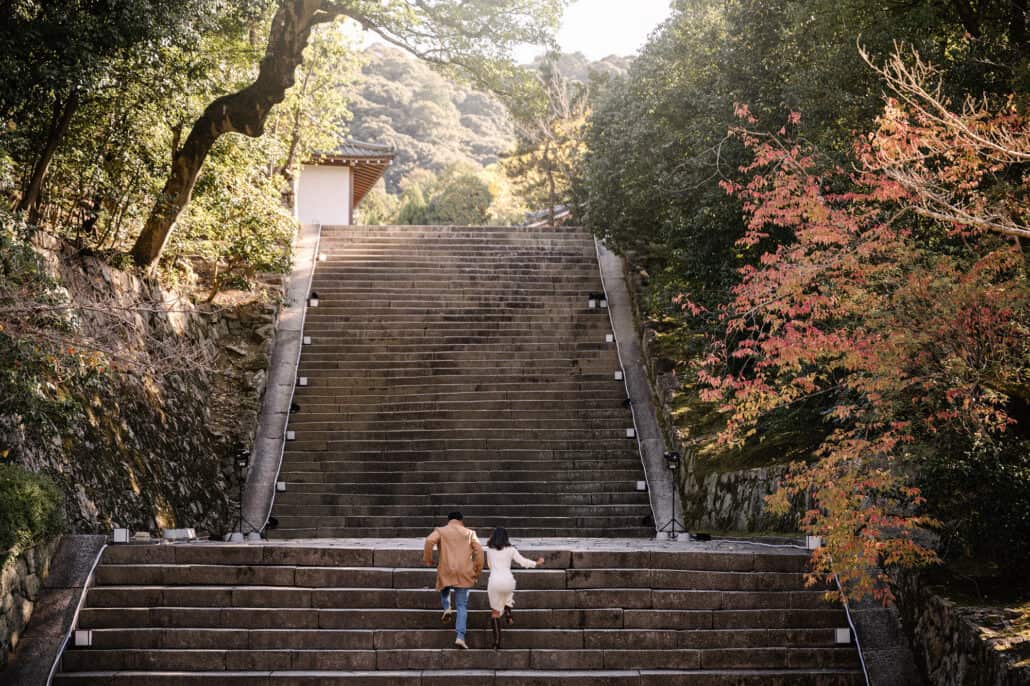
When Kyoto’s Autumn Leaves Peak
The colour comes down the hills. Takao, in the mountains north-west of the city, turns first, with Saimyoji usually at its best around 10 November. Enryakuji on Mt Hiei peaks in early November. Then it reaches the city: the Kyoto City Tourism Association, which collects the usual peak from each temple and garden, lists Kiyomizu-dera, Eikando, Tofukuji, Arashiyama and most of the best-known places at mid to late November. Shimogamo Shrine, in the middle of the city, comes last, from early December.
The agency’s two long-run averages bracket it neatly. Its Kyoto ginkgo turns fully yellow, on average, on 24 November. Its maple turns fully red on 5 December. If you want one line to plan around, it’s this: from mid November in the hills, late November into early December across the city.
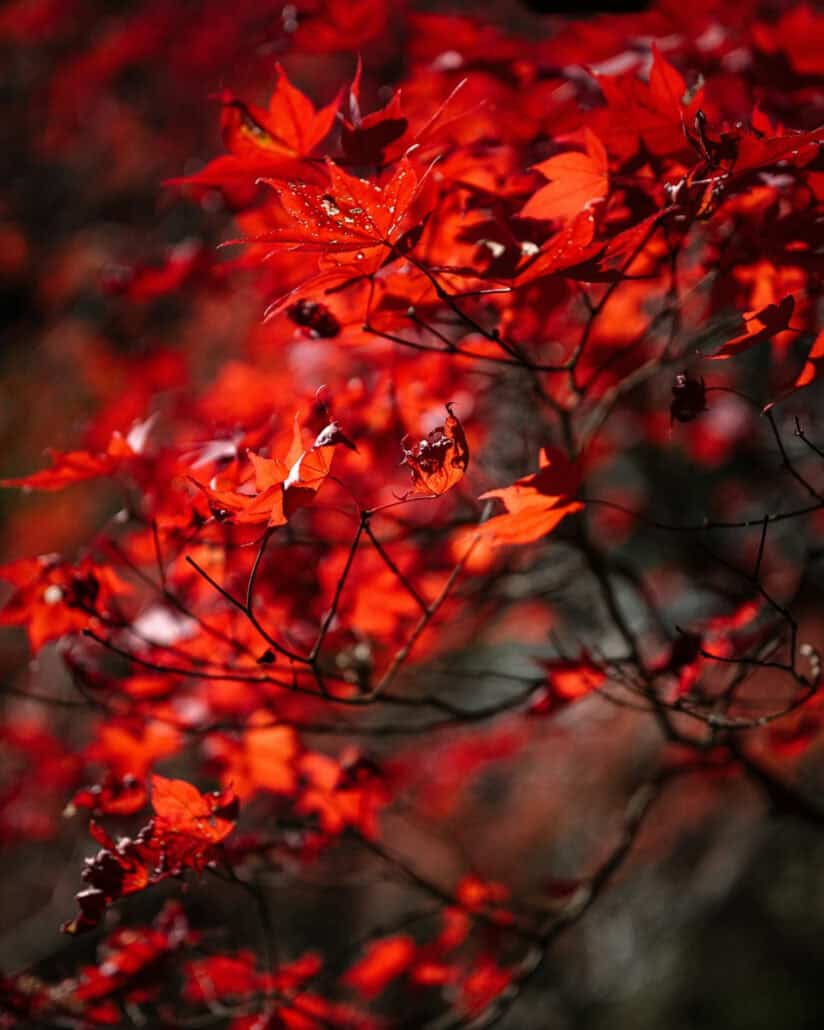
This year looks a little later than usual. In September, the first forecast from Japan Meteorological Corporation put Kyoto’s ginkgo at around 27 November and its maple at around 11 December, and in early November the colour in the city was only just beginning, with the hills at Takao ahead. The Tourism Association updates its colour survey through the season, and we check it the way other people check the weather.
How the Crowds Really Work
November is Kyoto’s busiest month. The city’s own figures say so, and 2025 was a record year, with 62.79 million visitors. But the same survey holds a detail that’s easy to miss: the busiest month is only about a third busier than the quietest. Kyoto is busy all year. November is simply the top of a very high plateau.
Kyoto is busy all year. November is simply the top of a very high plateau.
What changes in autumn is where everyone stands, and when. The famous temples fill from mid morning, the city’s major hotels ran at 86.9 percent occupancy in November last year, and the inns share the season with school trips. You won’t have Kiyomizu-dera to yourself at eleven in the morning in late November. Nobody does.
The city publishes a crowding map, rating popular spots on five levels with forecasts by time of day and live cameras at some of them. It’s worth opening on the morning you go. It also says, honestly, that even the “hidden Kyoto” places get busy when the leaves turn.
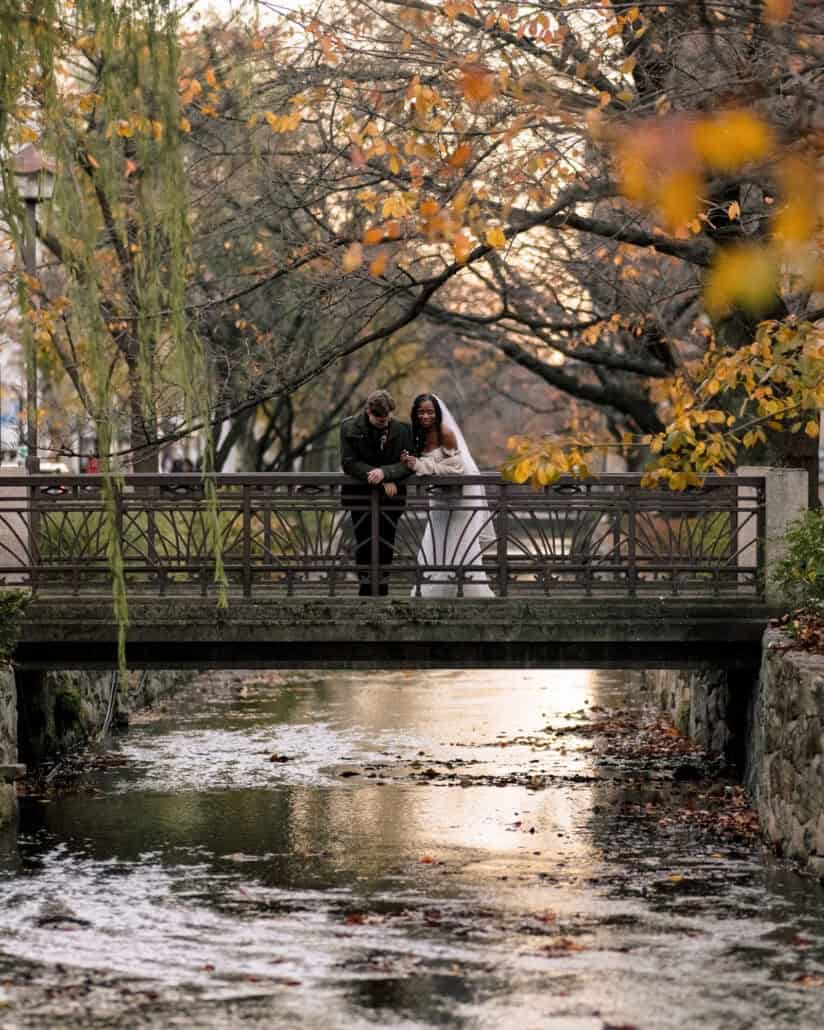
Go Early
The simplest way to have Kyoto in autumn is to start before it does.
Kiyomizu-dera opens its gate at 6:00 every morning of the year. In Arashiyama, Tenryuji opens its Sogen Pond Garden early, from 7:30, between 14 and 30 November this year, and the bamboo path nearby has no gate at all. Guides that track Arashiyama put its busiest hours from mid morning to mid afternoon. An hour after sunrise, it’s a different place.
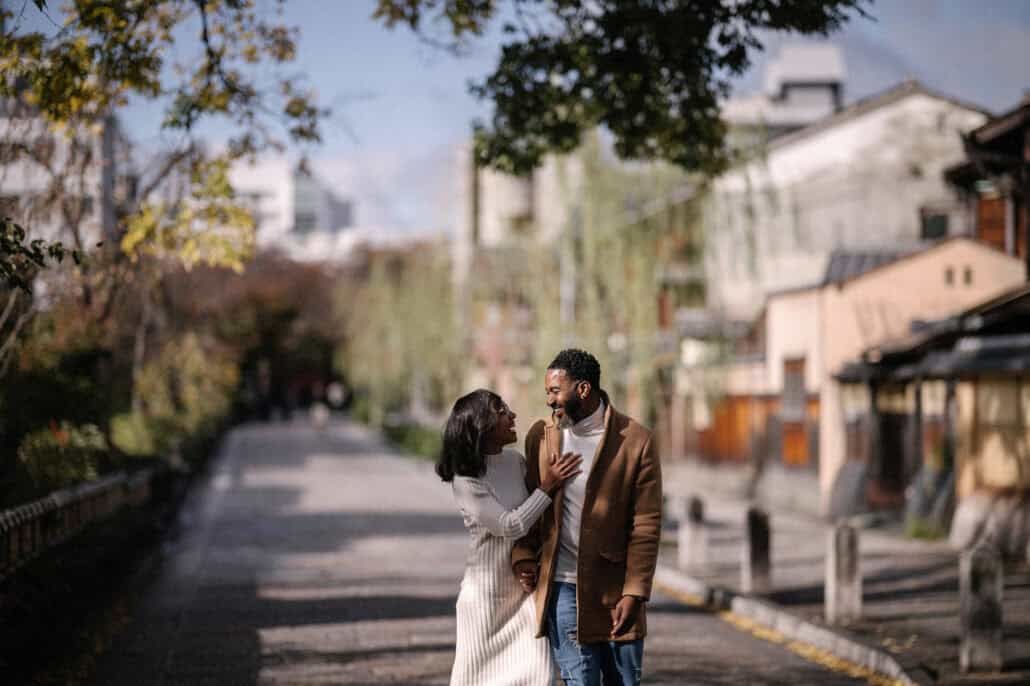
Eikando works the other way. Tickets are sold only on the day, entry is timed during its autumn exhibition, and the temple can stop admitting visitors early when it’s crowded. Go first thing, or go in the evening.
Or Go Late
Several temples open after dark for the season, and the light changes the leaves completely.
This year Kiyomizu-dera opens in the evening from 21 to 30 November, with the gate open until 21:30 and no booking needed. Eikando’s night illumination runs from 20 November to 6 December. Kibune Shrine holds its autumn light-up from 7 to 24 November.
One evening event you won’t find this year is Hosenin’s in Ohara, which has been cancelled for 2026.
The Quieter Valleys
Kyoto’s foliage isn’t only in the centre, and some of the loveliest of it is a bus or train ride away.
Ohara, in the hills to the north-east and around an hour by bus from Kyoto Station, has Sanzenin, with colour from early November into early December, and Jakkoin, from mid November into early December. Takao is earlier than the city, so it’s the place to go if you’re in Kyoto in the first half of November and want full colour. North of the city, Kurama and Kibune are a short train ride up into the hills, with Kuramadera at its best in mid to late November.
Further out, the Tourism Association lists places most visitors never reach. In Nagaokakyo, south-west of the city, Komyoji has a long path under the maples, with a special autumn opening from 14 November to 6 December. It’s the kind of place that makes you wonder why everyone is queueing somewhere else.
A Wedding in Kyoto’s Peak Autumn
We plan Kyoto weddings in this window, and the season shapes the plan from the start.
Couples can book us up to 18 months ahead and planning starts a year out, and for late November in Kyoto that year matters. The good rooms go early. So does the right place for the ceremony itself, somewhere calm by design rather than calm by luck. We keep the famous temples for an early walk before the gates fill, or an evening under the lights, and the day itself somewhere the couple and their people can actually hear each other.
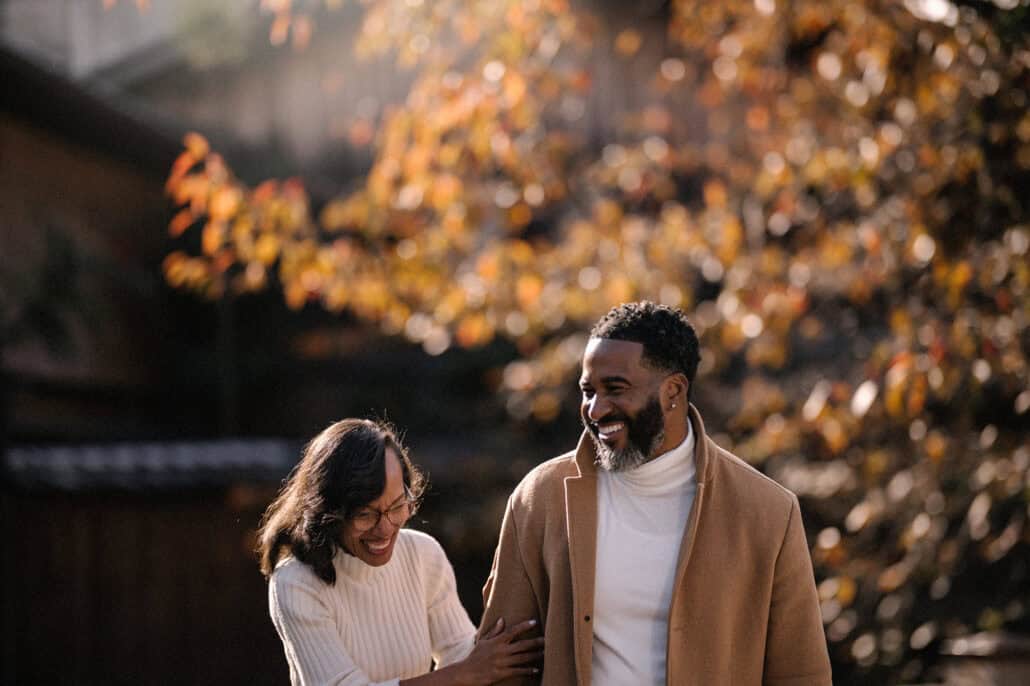
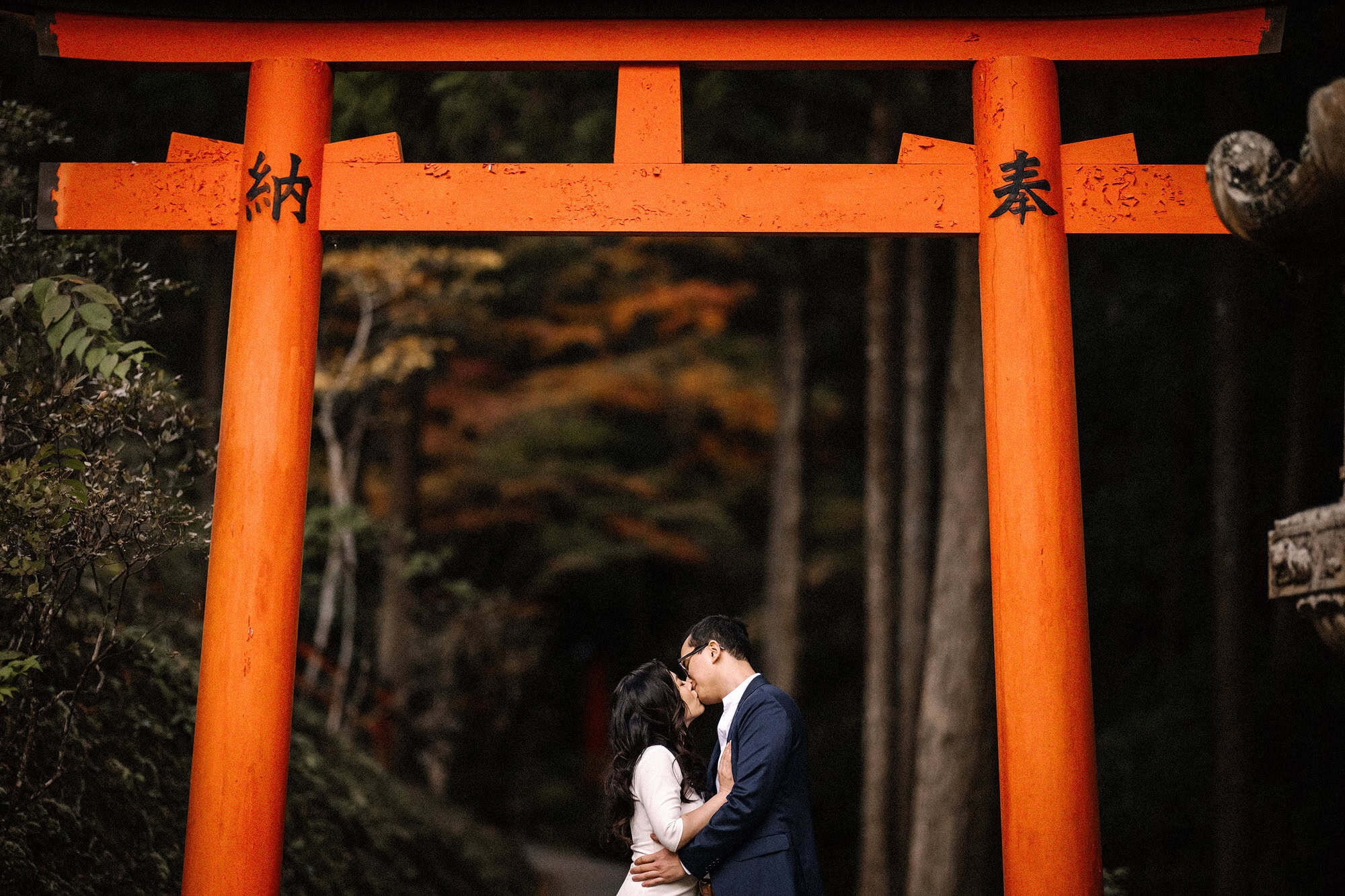
Our weddings often run midweek, and in Kyoto in autumn that’s a quiet advantage. So is the date. A couple who married with us here in early December walked through a city in full colour, at the peak of autumn, on a date many people assume is too late.
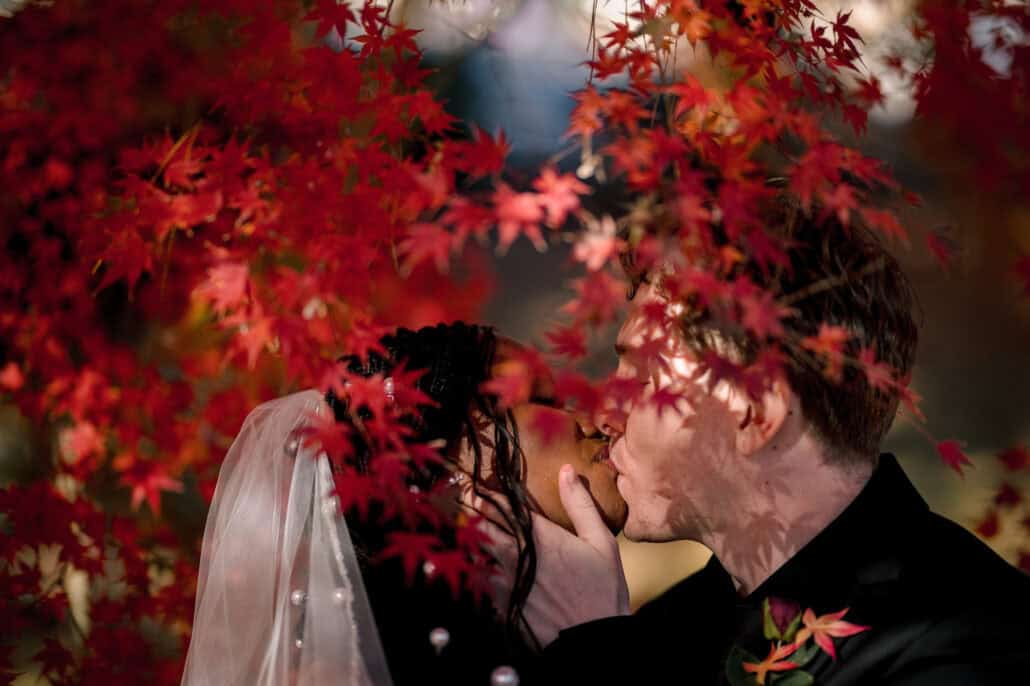
Another couple came to Kyoto in late November for photos before their wedding in the mountains of Nara, and found the maples at full colour.
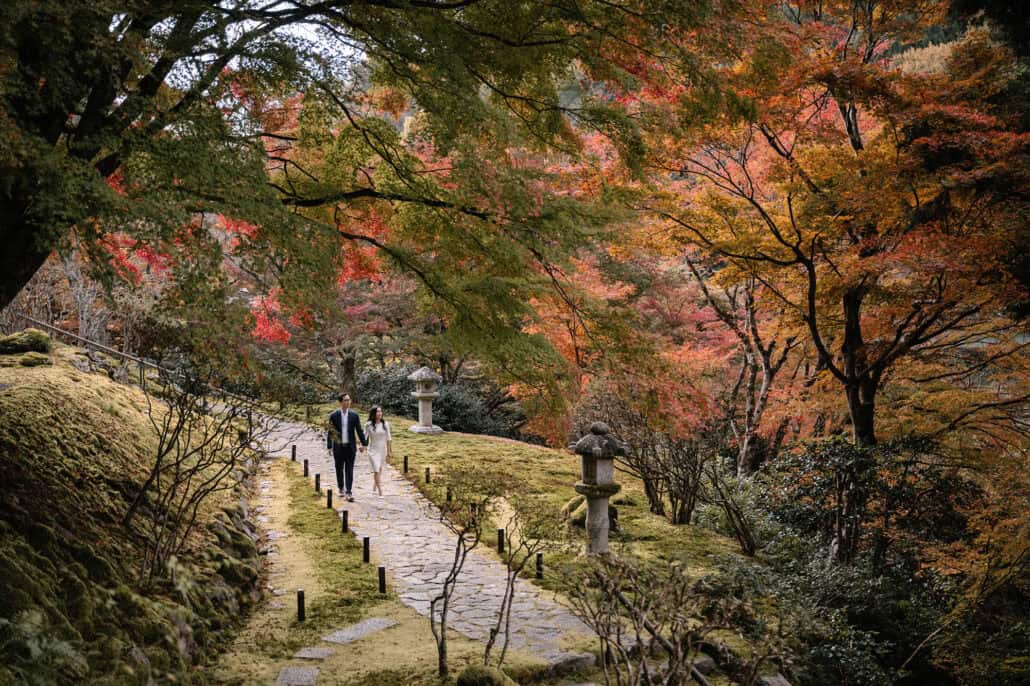
For the rest of the year, our guide to the best time to get married in Japan goes season by season.
Quick Answers
When do Kyoto’s autumn leaves peak?
From mid November in the mountain districts such as Takao and Mt Hiei, and from mid to late November into early December across the city. The Japan Meteorological Agency’s Kyoto maple turns fully red on 5 December on average, and later in each of the last two years.
Is early December too late to see the autumn leaves in Kyoto?
No. Early December is still peak colour in much of the city. Shimogamo Shrine is usually at its best from early December, and the agency’s average date for its Kyoto maple is 5 December.
Where can you see Kyoto’s autumn leaves without the crowds?
Go early or go out of the centre. Kiyomizu-dera opens at 6:00 every day, and Tenryuji opens its garden from 7:30 in late November. Ohara, Takao, and Komyoji in Nagaokakyo are quieter than the central temples, though nowhere in Kyoto is empty at the peak.
Are there autumn night illuminations in Kyoto in 2026?
Yes. Kiyomizu-dera opens in the evening from 21 to 30 November, Eikando from 20 November to 6 December, and Kibune Shrine holds its light-up from 7 to 24 November. Ohara’s Hosenin evening event is cancelled this year.
When should we book a Kyoto autumn wedding?
As early as you can. Couples can book us up to 18 months ahead, and planning starts a year out. November is Kyoto’s busiest month, so the best rooms and places go first.
Updated November 2026. Sources: the Japan Meteorological Agency’s Kyoto observations, the Kyoto City Tourism Association’s autumn colour page and crowding map, Kyoto City’s 2025 tourism survey, and the temples’ own sites.
The City’s Calendar, Not the Guidebook’s
Kyoto doesn’t do autumn in a weekend. It does it over a month, from the hills to the shrine in the middle of the city, and the colour often arrives later than people expect. Plan around the city’s calendar rather than the guidebook’s, keep the famous places for the edges of the day, and let the rest of it happen somewhere you can hear yourselves think.