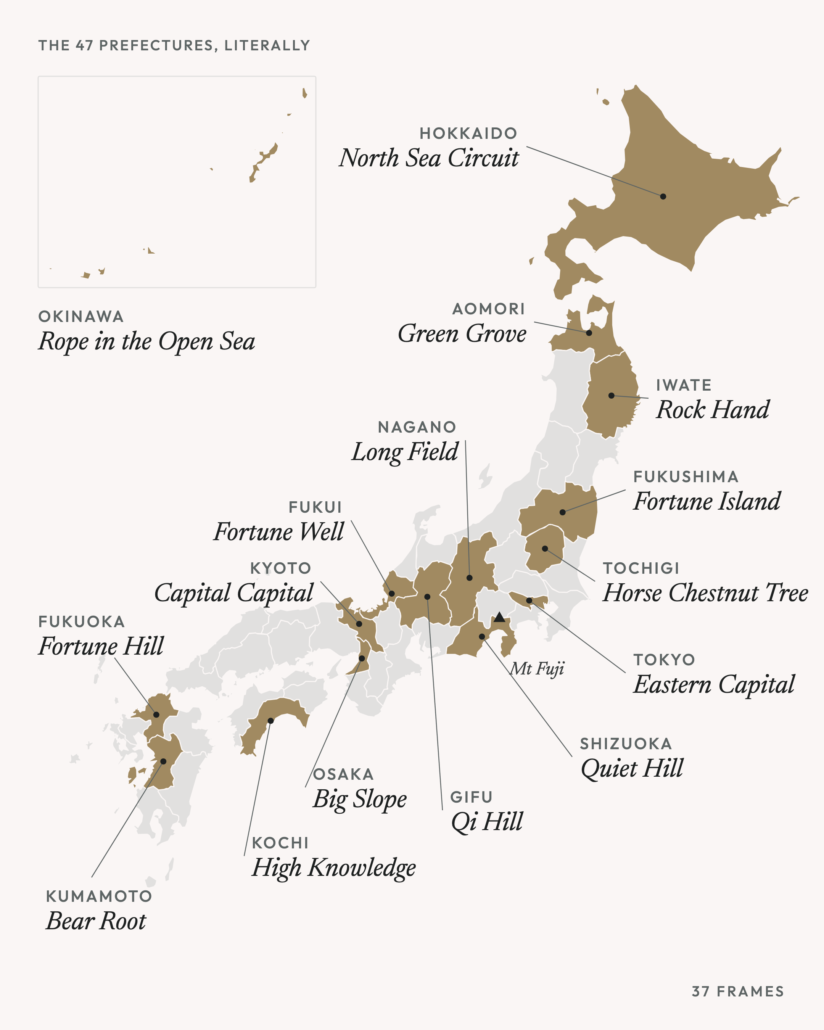
Every so often a map of the Japanese prefecture names, translated literally, does the rounds online. On the latest, Hokkaido was North Sea Circuit. Iwate was Boulder Hand. Chiba, Thousand Leaves. Kumamoto, Bear Source. Gifu was left untranslated, and Saga carried a question mark.
It’s a charming map, and like most translations from Japanese, it’s right in the way a dictionary is right. The characters do say those things.
A literal translation reads the spelling, not the name.
Nobody in Chiba hears Thousand Leaves, any more than anyone in Oxford hears cattle crossing a river. A name stops being words the day you live in it.
Many Japanese prefecture names were spoken for centuries before anyone wrote them down. When someone finally did, they chose the characters: for the sound, for luck, and now and then to get away from a word nobody wanted on their door. A few came from somewhere stranger: a riot, and a city council that tied twice.
The 47 are also younger than they look. In 1871 the Meiji government abolished the feudal domains and drew prefectures in their place, more than three hundred at first, then merged and split them for seventeen years into something close to today’s map. Most took the name of a castle town, or of an old district where the new office happened to sit. A few were renamed on purpose, and a few kept a name nobody meant to keep.
So we took the journey the map invites, north to south, and checked each name where it’s kept: the prefectures’ own pages, the eighth-century gazetteers, a city assembly’s records from 1890. These are the stories we’d tell you between stops.
Hokkaido and Tohoku: An Ainu Word and a Demon’s Handprint
Hokkaido’s name was chosen from a shortlist. In 1869 the new government asked the explorer Matsuura Takeshirō to name the great northern island, until then called Ezo. Of his six suggestions, the one the government built on followed the pattern of Japan’s ancient road circuits, the Tōkaidō and the rest, and he wrote it 北加伊道, with kai at its centre.
Kai was an Ainu word. Matsuura wrote that an Ainu elder on the Teshio River had told him his people called themselves kainā, and that kai meant someone born in this land. Historians read his travel diaries with some care, since not everything in them happened quite as written. The government kept the sound and changed the character, writing kai as 海, sea. So the map’s North Sea Circuit is right. The word taken out of the middle was the islanders’ own.
Aomori, at the top of Honshu, is the map’s Blue Forest. In Japanese 青 covers both blue and green, and the name goes back to 1624, when the domain built a port here and named it after a green landmark that ships used to find the harbour. A domain-era record gives the landmark’s height, a little over three metres, which is an odd thing to measure about a forest. In the Tsugaru dialect, mori can also mean a small hill. Japan’s Blue Forest may have been a modest green rise above the bay.
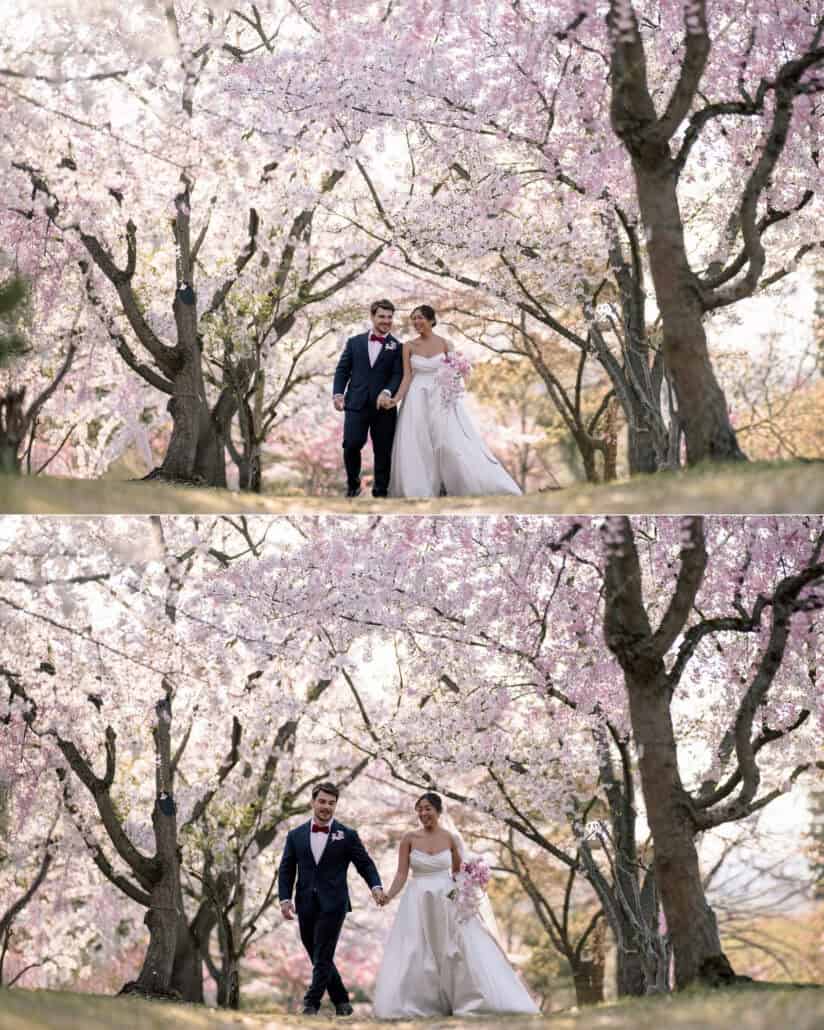
In Hirosaki the cherry trees open weeks after Tokyo’s have finished, so a spring missed in the south can be found again in the north.
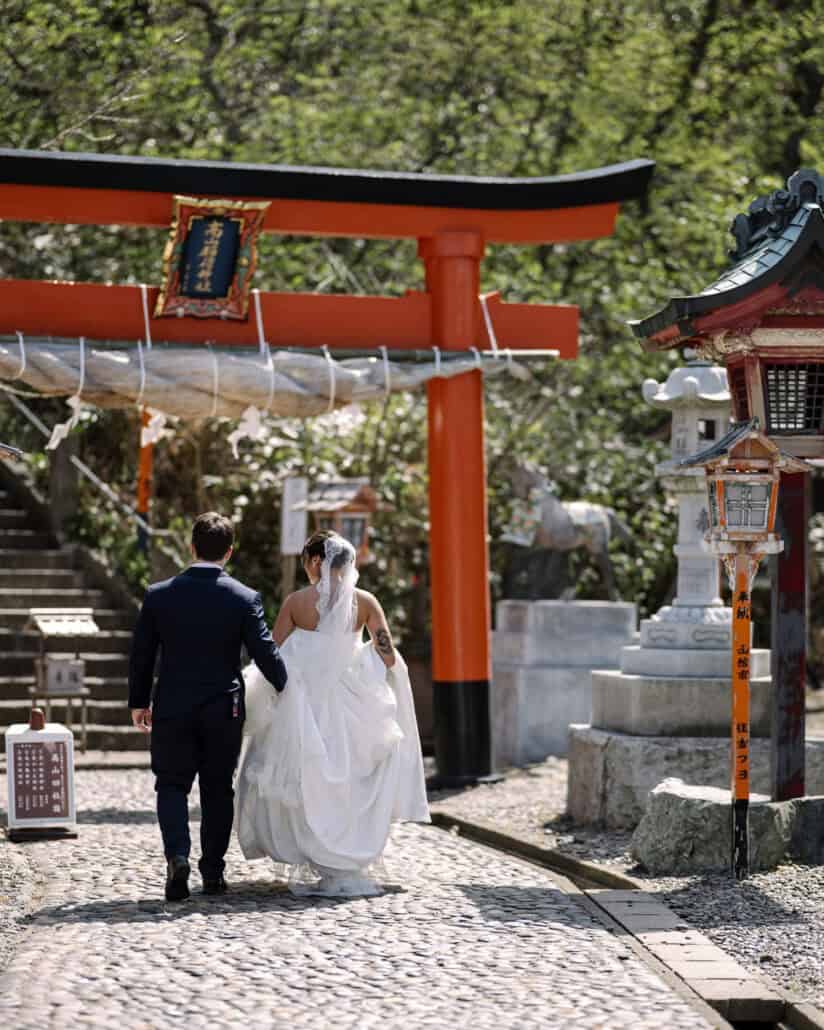
Iwate, Rock Hand, comes with a demon. Behind a temple in Morioka, three enormous stones stand at Mitsuishi Shrine. A demon called Rasetsu was terrorising the people, so they prayed to the spirit of the stones, which caught it. Before it was allowed to leave, the demon pressed its hand into the rock as a promise never to come back, and the place has been called Iwate ever since. As recently as 2016, a prefectural paper still gave the handprint as the origin of the name.
The stones are real. A geologist writing for Japan’s Geological Survey notes that they’re granite, two of them about six metres tall, most likely carried down by rivers long ago. He calls the other local story, that Mount Iwate threw them there in an eruption, “suspicious, or rather wrong”. Nobody has ruled out the demon.
Tokyo and Kanto: An Eastern Capital and a Port That Wasn’t There
Tochigi is the horse chestnut; the map’s Chestnut Tree is a different tree. Of the prefecture’s theories about the name, our favourite is a shrine roof seen from a distance, its crossed timbers counted as ten. We go to Tochigi for bamboo rather than chestnuts: our bamboo forest there is the quiet alternative to Arashiyama’s crowds.
Saitama reads Cape Jewel, but the characters spell an older name, Sakitama, which appears in the Man’yōshū, Japan’s oldest anthology of poetry. In the poem, ducks on the little marsh of Sakitama beat their wings as if to brush the frost from their tails. The same slip of the tongue, ki to i, turned Ōkita into Ōita.
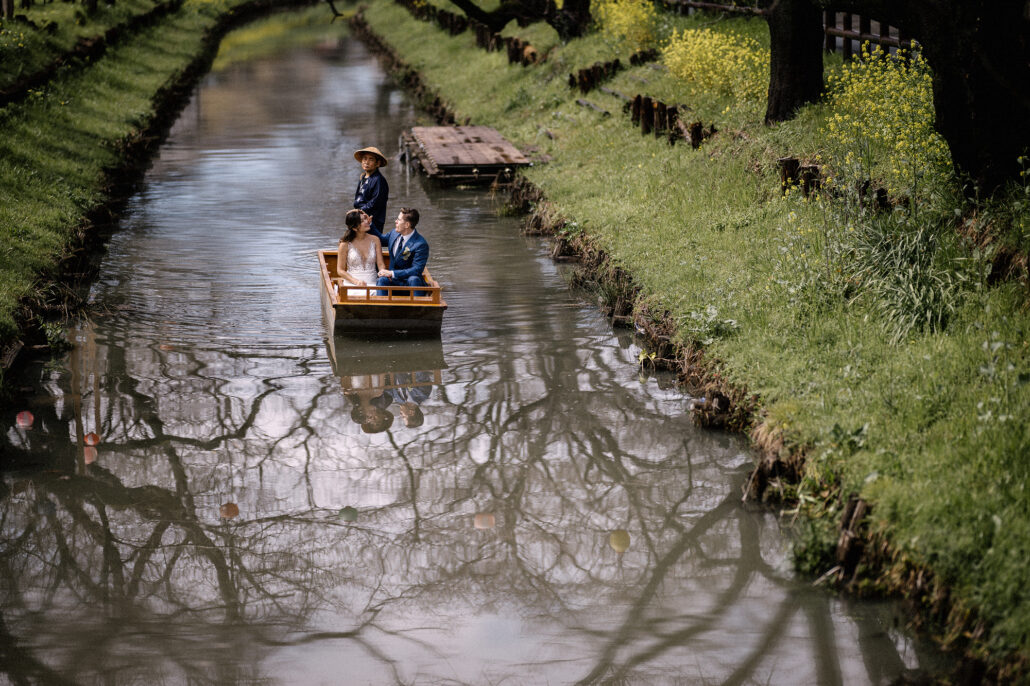
In Saitama’s old castle town of Kawagoe, on a spring that ran late, we once spent the morning ringing everyone we knew in town to find a single weeping cherry in bloom. A small private shrine had one, and opened its gate.
Chiba’s name is older than the clan that later took it. It turns up in 755, written in sounds, in a Man’yōshū poem by a frontier guard from the Chiba plain, who compared the girl he had left behind to the young leaves there.
Tokyo means exactly what the map says. In 1868 Edo was renamed 東京, the eastern capital, because it lies east of Kyoto. For years people couldn’t agree how to say it, Tōkyō or Tōkei, and its edges kept moving: the Tama districts of western Tokyo belonged to Kanagawa until 1893.

Kanagawa’s characters read god, a sound and river, so River of Spirits is the natural guess. They were chosen for their sound. The name itself belongs to a port. The treaties of 1858 named Kanagawa as a harbour for foreign ships, and the shogunate, wary of foreigners on the Tōkaidō highway, opened it instead at a small village across the water called Yokohama. The magistrate’s office kept the name the treaty had promised, and so did the prefecture.
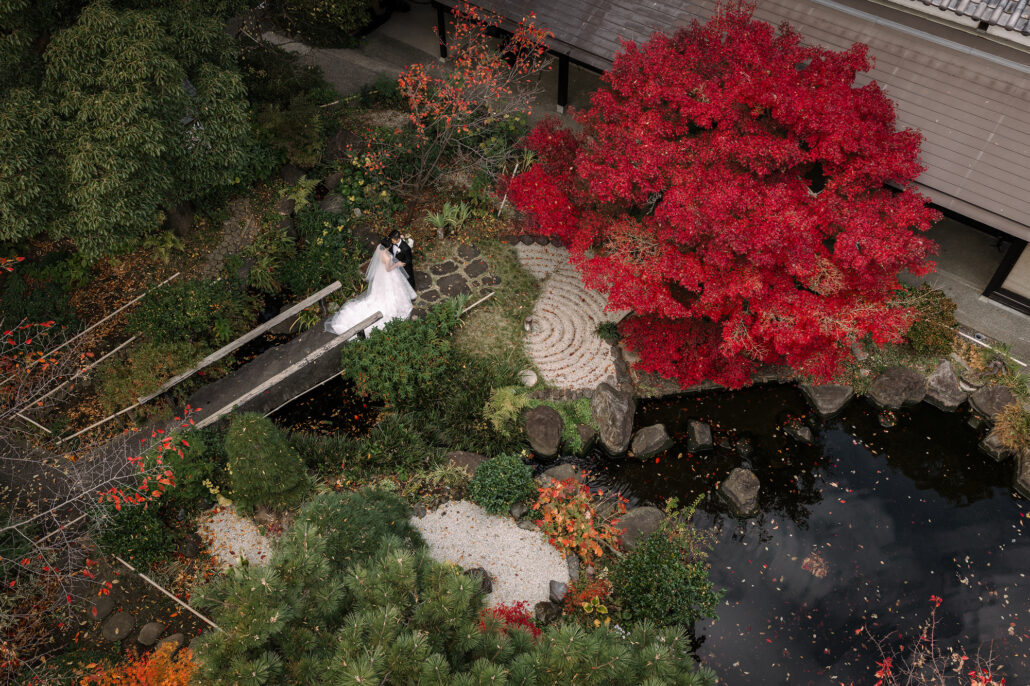
Inland, at Tsurumaki Onsen, the old inn Jinya used to keep its weddings indoors. We asked whether one could move out into the garden, and promised a rain plan for every wedding that did. The garden has held a great many ceremonies since.
Fukui: A Lord Who Wouldn’t Live With Defeat
In 1624 Matsudaira Tadamasa arrived as the new lord of a castle town called Kitanoshō, and renamed it. Kita, north, is written 北, and 北 is also the second half of 敗北, defeat. No lord wants defeat in his address. He wrote the name 福居, where fortune lives, and around 1700 it became 福井, fortune well, said to be after a well by the castle that still survives beside the prefectural office.
In 1871 the American teacher William Elliot Griffis, hired by the domain, translated the name as Well of Blessing. So the name has carried a blessing in English for a century and a half.
Few overseas visitors reach Fukui, the home of Echizen paper, lacquer and knives. We’ll be there for a wedding in spring 2027.
Nagano, Gifu and Mt Fuji: A Riot and a Warlord’s Mountain
Nagano was very nearly called Nakano. Within months of the prefecture’s creation, a riot in Nakano burned down its office. When the office reopened at a temple in the village of Nagano, the prefecture took the village’s name, and one sound changed for good. Long Plain, the map says, and the characters agree.
In the Nagano Alps, where Hakuba is, a winter ceremony is quieter than people expect, because fresh snow takes the sound out of a valley.
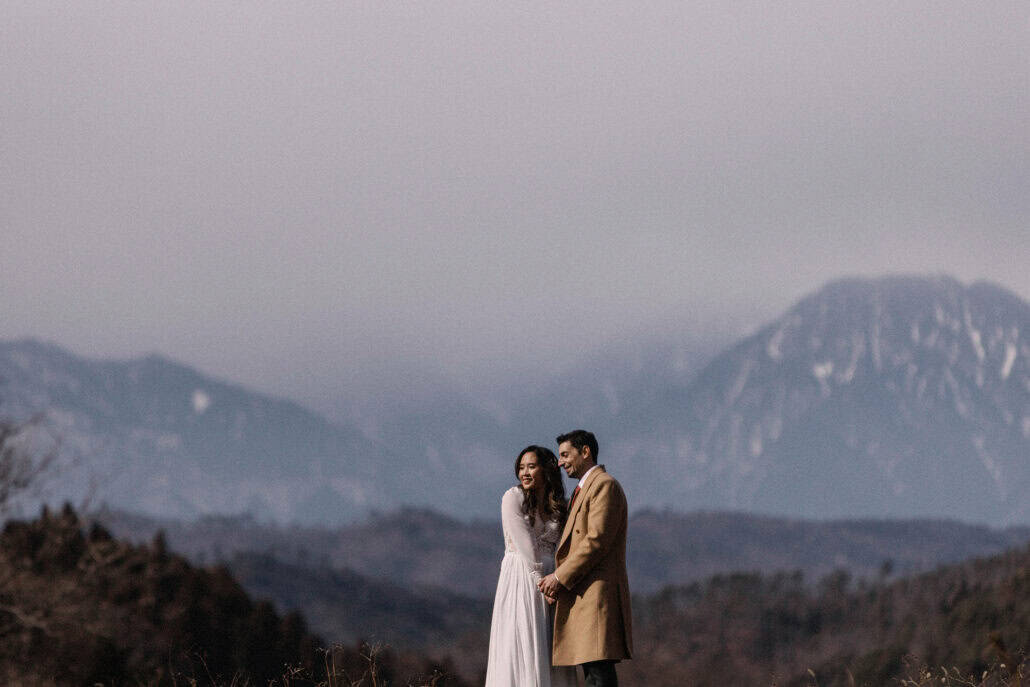
Gifu, the name the map left untranslated, comes from China. When Oda Nobunaga took the castle at Inabayama, a Zen monk offered him three names for the town below. He chose Gifu: gi from Mount Qi, where King Wen of Zhou rose to settle the realm, and fu, a hill. A warlord who meant to rule Japan named his base after the mountain where an ancient king began. The name was already in use among monks before he arrived, and it appears in an inscription from 1499. He made everyone use it.
Nobunaga came from next door, in Owari, now the west of Aichi. The map’s Loving Knowledge is a fair reading of Aichi’s characters. They spell Ayuchi, the name of a tidal flat in a Man’yōshū poem, with cranes crossing it. The prefecture took the name in 1872 because its governors wanted to stop saying Nagoya.
Shizuoka, Quiet Hill, began with a duplicate. In 1869 the town of Fuchū, where the last shogun’s family had retired, was told to find a new name, because Japan had more than one Fuchū. The shizu is said to come from a hill nearby, Shizuhatayama, which is written with 賤, humble. The name the town took is written with 静, quiet.
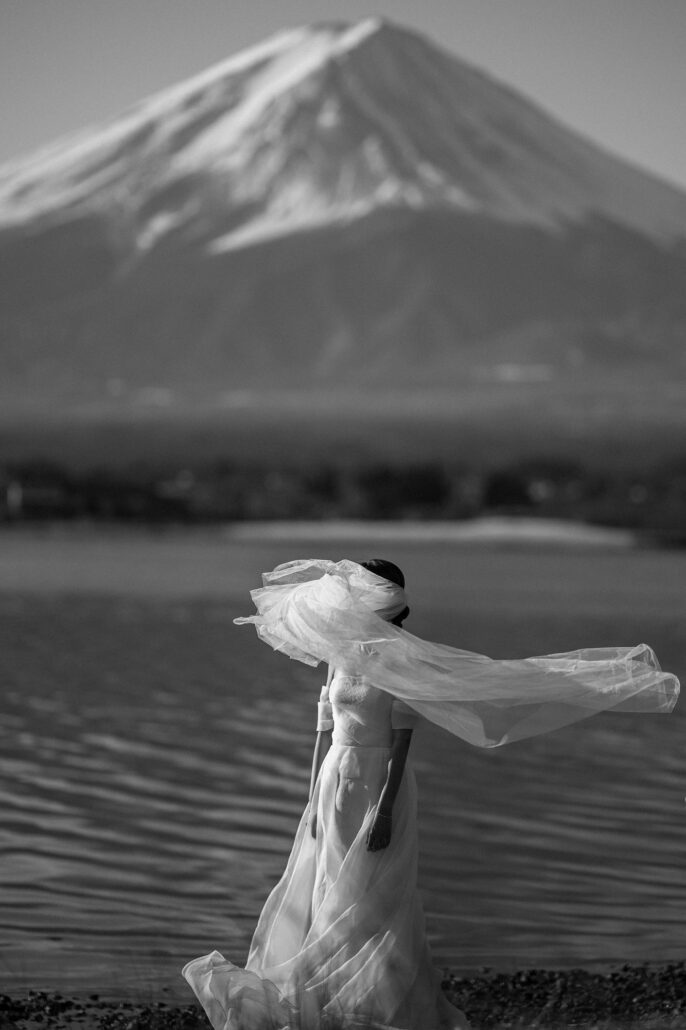
Mount Fuji stands over Shizuoka and Yamanashi both. Yamanashi, Mountain Pear, offers two theories for its name, a wild pear that grew there in abundance or mountains levelled into fields, and doesn’t choose between them. Its side of the mountain, the Five Lakes, is where we spend many of our winters, because winter mornings are when Fuji shows itself.
Kyoto, Osaka and Kansai: A Capital Called Capital
Kyoto is 京都, which comes out as capital capital. For most of Japanese history kyō simply meant the capital, wherever it happened to be, and the city was nearly three hundred years old before 京都 settled as its name. Its maples peak later than the guidebooks say, from late November into early December.
Osaka grew from Ozaka, small slope, into Ōsaka, big slope. The character for slope changed too, from 坂 to 阪, with no decree behind it, only decades of people writing the one they thought luckier. The story that it was changed because 坂 could be read as a samurai rebelling is a good one. It’s also folklore.
Mie, Threefold, comes from a hero’s aching legs. In the old chronicles, Yamato Takeru, on his last journey home, says his legs feel bent in three, and the place took the name. It became the prefecture’s name in 1872 only because its office had moved to Yokkaichi, in the district of Mie.
Shiga was renamed by a governor who believed a name could hold people back. Matsuda Michiyuki argued that Ōtsu tied the province to the shogun’s old order, and asked for a name without the baggage. He chose the ancient district name, Shiga, so old that nobody knows what it means.
Nara, Japan’s first permanent capital, vanished from the map for eleven years, folded into its neighbours from 1876 to 1887, before it was restored. Its name may simply mean level ground.
Chūgoku and Shikoku: Land Pulled From the Sea
West of Kansai, the names are older than the paperwork, and most arrive with a legend attached.
Shimane’s name was given by a god. The Izumo Fudoki of 733 says the district was named by the god who found Izumo too small and pulled pieces of land across the sea to make it bigger. The map’s Island Root is right on the characters, but the root is only a suffix. The word means island.
Tottori, Bird Catching, is traditionally traced to the Nihon Shoki. An emperor’s son could not speak, even at thirty, until he saw a swan cross the sky. The man sent to catch it was given the title of chief of the bird-takers.
A goddess gave Ehime, Beloved Princess, its name. The Kojiki, compiled in 712, describes the island of Shikoku as one body with four faces, and gives the face of Iyo the name Ehime. The prefecture took it in 1873.
Kagawa, Fragrant River, has a legend of an ancient tree in the hills whose scent fell into the river and flowed all the way to the sea. The present Kagawa, formed in December 1888 after being abolished twice, was the last ken created in Japan.
Kōchi’s castle hill was first written 河中山, between rivers, which proved accurate: it kept flooding. In 1610 the monk Kūkyō rewrote it 高智, high wisdom, after the Pure Land of Monju, the bodhisattva of wisdom, and in time it became 高知, high knowledge. A flood plain, renamed for wisdom.
Kyushu and Okinawa: A Tied Vote and a Rope in the Open Sea
The Kuroda lords named their castle town Fukuoka, after the family’s old home in Bizen, and the prefecture took the name in 1871. The merchant town beside it, Hakata, was centuries older. When the two became one city in 1889 it was called Fukuoka, and in February 1890 the Hakata members of the assembly moved to rename it Hakata. They had the numbers, 17 seats to 13.
The chairman, a Fukuoka man, adjourned the debate more than an hour early, “for sunset”. A committee costed the change at 55 yen 70 sen, with no known benefit. On the day of the vote the assembly tied 13 to 13, and on a second vote it tied again. Two Hakata members hadn’t voted with their side. The name stayed Fukuoka. Hakata kept the station, the port and the ramen.
The map left Saga with a question mark. The old gazetteer of Hizen gives two legends. One tells of a violent god on the river upstream that let half of all travellers pass and killed the rest, until two wise women, sakashime, made figures of people and horses from the earth of the lower fields and calmed it. The place, it’s said, was named for them. The god, most likely, was the river in flood.
Kumamoto’s bear arrived by notice. The castle town was written 隈本, kuma as in a bend or a nook, until 1607, when Katō Kiyomasa finished his new castle and an order went out to write it 熊本, kuma as in bear. The city’s own researchers call it a lucky name, chosen for a new castle.
Kagoshima, Deer Child Island, admits it doesn’t know: fawns, an old word for a volcano, or the sailors who once lived there. With Sakurajima smoking across the bay, the volcano theory has the strongest supporter.
The journey ends where the land does. Okinawa’s characters read Rope in the Open Sea, a fair reading of the kanji and a beautiful image for a chain of islands. They spell a sound, and the islands’ own word is Uchinaa. It was written down as early as 753, in the life of the monk Ganjin, whose ships reached an island of that name, and what it first meant, nobody knows. Okinawa became a prefecture in 1879, when Japan annexed the Ryukyu Kingdom. The order was carried to Shuri Castle by Matsuda Michiyuki, the same official who had renamed Shiga.
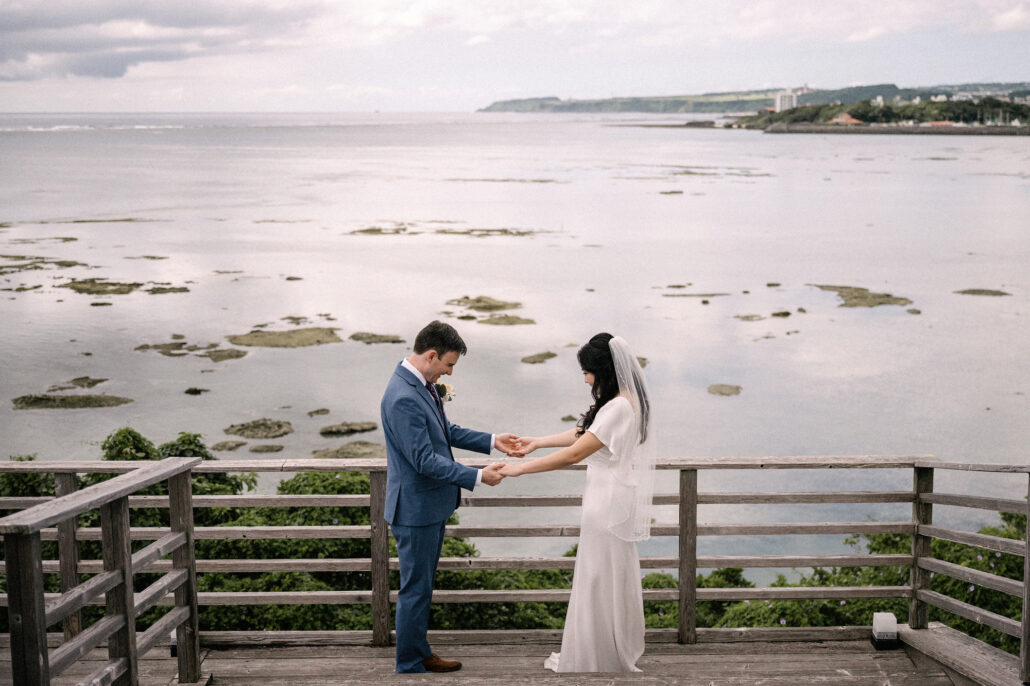
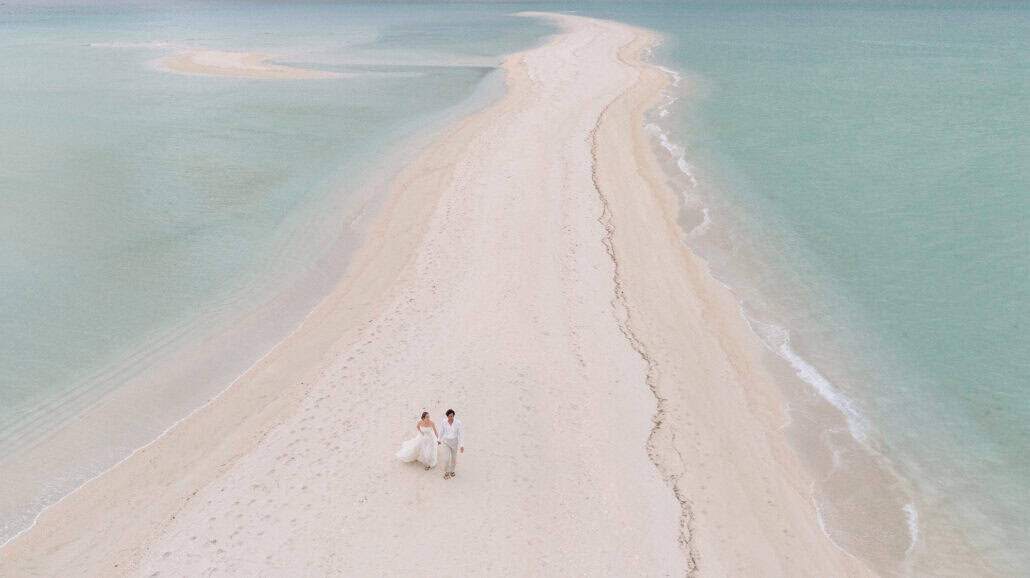
At Hyakuna Garan on the main island, we plan ceremonies around the tide. Miyakojima, further south, has almost no rivers, so rain soaks through coral limestone instead of running into the sea, and the water stays clear enough to see the bottom from the boat.
What Japanese Prefecture Names Really Mean
Read character by character, the 47 names give you a slightly surreal Japan: a sea circuit, a hand in the rock, a thousand leaves, a bear. Read as history, they give you people.
Two places on this journey mean something to us that no map would give them. Jinya is the inn whose garden we asked to hold weddings in, with a promise of a rain plan. Kawagoe is the spring that ran late, and the shrine that opened its gate.
What a place comes to mean is decided later, by who was there and what they did.
Japan still names things for their sound. The 22nd of November, 11/22, is Ii Fūfu no Hi, Good Couples Day, because the numbers can be read ii fūfu, a good married couple. Couples who marry in Japan choose a country to become part of their own story.
If you named somewhere for what happened to you there, what would you call it?
All 47 Japanese Prefecture Names Translated, and What They Mean
| Prefecture | Literally | The story in a line |
|---|---|---|
| Hokkaido 北海道 | North Sea Circuit | Named in 1869; Matsuura’s kai, an Ainu word, was rewritten as “sea” |
| Aomori 青森 | Green Grove | Named in 1624 for a small green landmark that guided ships into harbour |
| Iwate 岩手 | Rock Hand | A demon’s handprint on the stones of Mitsuishi Shrine (legend) |
| Miyagi 宮城 | Shrine Fort | An ancient district name; the meaning is uncertain |
| Akita 秋田 | Autumn Rice Field | Spelled differently in the oldest records; origin unknown |
| Yamagata 山形 | Mountain Shape | Perhaps “the mountain side”; named after the town |
| Fukushima 福島 | Fortune Island | Once 吹島, windblown island; the wind was swapped for luck (legend) |
| Ibaraki 茨城 | Briar Fort | A fort of thorns in the eighth-century Hitachi Fudoki (legend) |
| Tochigi 栃木 | Horse Chestnut Tree | Origin unknown; one theory is a shrine roof counted as ten timbers |
| Gunma 群馬 | Horse Herd | Began as Kuruma, cart |
| Saitama 埼玉 | Cape Jewel | Spells Sakitama, a marsh in a Man’yōshū poem |
| Chiba 千葉 | Thousand Leaves | A lucky spelling of a name first written in sounds, in a Man’yōshū poem of 755 |
| Tokyo 東京 | Eastern Capital | Edo, renamed in 1868 because it lies east of Kyoto |
| Kanagawa 神奈川 | God, Na, River (a sound spelling) | The treaty port it named opened at Yokohama instead |
| Niigata 新潟 | New Lagoon | No record we found says which lagoon was new |
| Toyama 富山 | Rich Mountain | First written 外山, outer mountain; off the map until 1883 |
| Ishikawa 石川 | Stone River | The district where the office sat for a year, not Kanazawa |
| Fukui 福井 | Fortune Well | Renamed in 1624 by a lord who wanted “defeat” out of the name |
| Yamanashi 山梨 | Mountain Pear | A wild pear, or levelled mountains; the prefecture doesn’t choose |
| Nagano 長野 | Long Plain | A riot burned the office in Nakano; it reopened in Nagano |
| Gifu 岐阜 | Qi Hill | Nobunaga’s choice, after a mountain in ancient China |
| Shizuoka 静岡 | Quiet Hill | Renamed in 1869; said to be after a hill written with “humble” |
| Aichi 愛知 | Love, Know (a sound spelling) | Ayuchi, the tidal flat named in a Man’yōshū poem |
| Mie 三重 | Threefold | Yamato Takeru’s legs, “bent in three” (legend) |
| Shiga 滋賀 | Nourish, Celebrate (a sound spelling) | Chosen to leave Ōtsu and the old order behind |
| Kyoto 京都 | Capital Capital | Kyō simply meant the capital, wherever it was |
| Osaka 大阪 | Big Slope | Once “small slope”; 坂 became 阪 by habit, not decree |
| Hyogo 兵庫 | Armoury | Its first governor was Itō Hirobumi |
| Nara 奈良 | (a sound spelling) | Perhaps “level ground”; off the map from 1876 to 1887 |
| Wakayama 和歌山 | Poem Mountain | Its bay was written “young” before it was written “poetry” |
| Tottori 鳥取 | Bird Catching | Traced to the bird-takers of the Nihon Shoki (legend) |
| Shimane 島根 | Island Root | Simply “island”, named by the land-pulling god (Izumo Fudoki) |
| Okayama 岡山 | Hill Mountain | The name of one small hill, where the castle stands |
| Hiroshima 広島 | Wide Island | Said to be named in 1589, when Hiroshima Castle was begun |
| Yamaguchi 山口 | Mountain Mouth | Probably where the road entered the mountains |
| Tokushima 徳島 | Virtue Island | A lucky character; one lord dropped the name, a later one brought it back |
| Kagawa 香川 | Fragrant River | A tree’s scent in the river (legend); the last ken created, in 1888 |
| Ehime 愛媛 | Beloved Princess | A goddess’s name from the Kojiki, taken in 1873 |
| Kochi 高知 | High Knowledge | Once written “between rivers”; rewritten “high wisdom” in 1610 |
| Fukuoka 福岡 | Fortune Hill | After the Kuroda home in Bizen; the city kept it on a tied vote in 1890 |
| Saga 佐賀 | Assist, Celebrate (a sound spelling) | Two legends: a land that flourished, or wise women who calmed a river (Hizen Fudoki) |
| Nagasaki 長崎 | Long Cape | A town laid out on the cape for Portuguese ships in 1571 |
| Kumamoto 熊本 | Bear Root | Once 隈本, a bend; the bear became official in 1607 |
| Oita 大分 | Great Divide | A later spelling of Ōkita, great fields |
| Miyazaki 宮崎 | Shrine Cape | Perhaps “before the palace”, said to be Emperor Jimmu’s |
| Kagoshima 鹿児島 | Deer Child Island | Origin unknown: fawns, a word for volcano, or sailors |
| Okinawa 沖縄 | Rope in the Open Sea | Spells Uchinaa, first written in 753; the meaning is unknown |
Quick Answers
What do Japanese prefecture names mean?
Read character by character, most have a simple meaning: Akita is Autumn Rice Field, Chiba Thousand Leaves, Kumamoto Bear Root. But many names were spoken long before they were written, and their characters were chosen for sound, luck or politics. Kanagawa, Aichi, Shiga, Nara, Saga and Okinawa are sound spellings, so the story behind each is the better translation.
Why are they called prefectures in Japan?
Prefecture comes, through French, from the Latin praefectura, a district run by an official put in charge from the centre. That is what Japan’s were: when the domains were abolished in 1871, each new ken had a governor appointed from Tokyo, and governors were appointed until 1947. Today there are 47: one to (Tokyo, a metropolis since 1943), one dō (Hokkaido, a circuit, after Japan’s ancient road divisions), two fu (Osaka and Kyoto) and 43 ken.
What do Tokyo and Kyoto mean?
Tokyo means eastern capital. Edo was renamed in 1868 because it lies east of Kyoto, the old imperial capital. Kyoto’s own name, 京都, comes out as capital capital: for most of Japanese history kyō simply meant the capital, and the city was almost three hundred years old before 京都 became its fixed name.
What does Hokkaido mean?
Literally North Sea Circuit: hoku, north; kai, sea; dō, circuit, after Japan’s ancient road divisions. The explorer Matsuura Takeshirō proposed the name in 1869 with kai at its centre, an Ainu word he understood to mean someone born in this land. The government kept the sound and wrote it with the character for sea.
What does Okinawa mean?
The characters read Rope in the Open Sea: oki, the open sea away from the shore, and nawa, rope. But they spell a sound, the islands’ own name, Uchinaa, which was written down as early as 753. Its first meaning is lost; the sound has outlived it.
Is the viral map of literally translated prefecture names right?
Mostly, on the characters. Where the kanji spell a sound rather than a meaning, as with Aichi and Kanagawa, a literal reading is fair to the characters, and the story behind the name tells you more. Tochigi is the horse chestnut rather than the sweet chestnut, Saga’s name comes with two old legends, and Gifu is Qi Hill, after a mountain in China.
Sources: each prefecture’s own pages on the origin of its name; the Kojiki, the Nihon Shoki, the Man’yōshū and the Izumo, Hitachi and Hizen fudoki; the Fukuoka City Assembly’s history; the Tokyo Metropolitan Government’s chronology; the Geological Survey of Japan; Nihon Kokugo Daijiten and Nipponica. Pre-1873 dates are given in the old calendar. Written November 2026.