Every language keeps a record of what its speakers thought worth naming. Japanese named sunlight falling through leaves. It named the pause between two notes, the edge where a house meets its garden, and the particular ache of watching something beautiful that won’t last. English, for the most part, left those things unnamed.
Every language keeps a record of what its speakers thought worth naming.
Most of these beautiful Japanese words have no tidy English translation. We live and work in Japan, and each one has shaped the weddings we plan here, and how we photograph and film them, sometimes in ways we only noticed afterwards. Every essay stands on its own. Start with whichever word catches you.
Beautiful Japanese Words for Light, Space and Time
Ma (間): The Space Between Things
The character is a gate with the sun shining through the gap. Ma is the pause between notes and the empty floor of a tatami room. After the last speech at a wedding, we don’t start the music straight away.
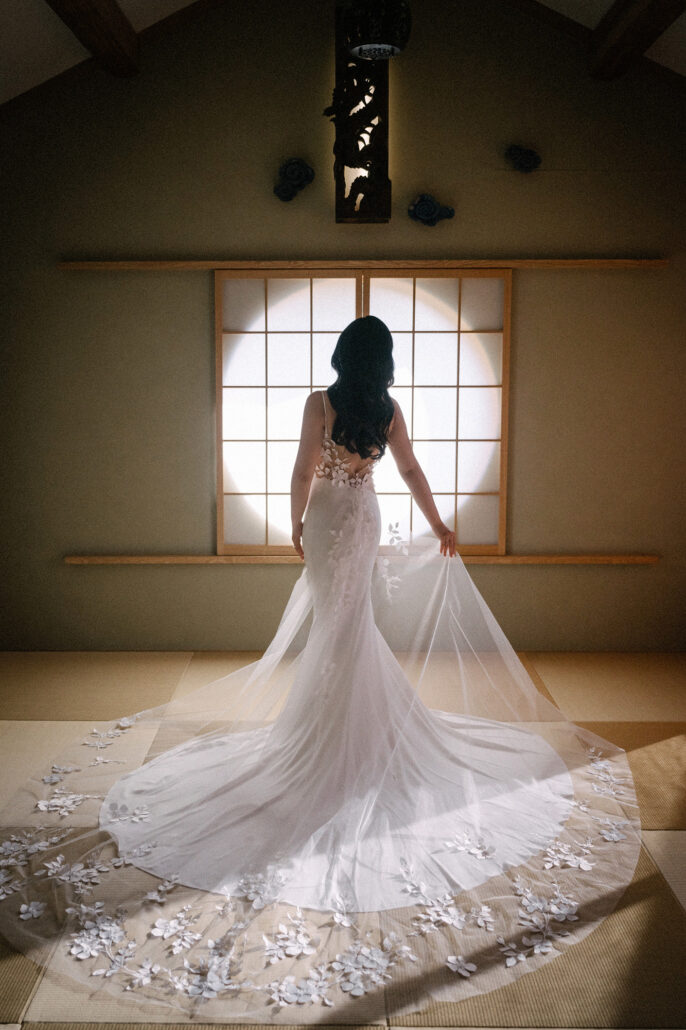
Komorebi (木漏れ日): Sunlight Through Leaves
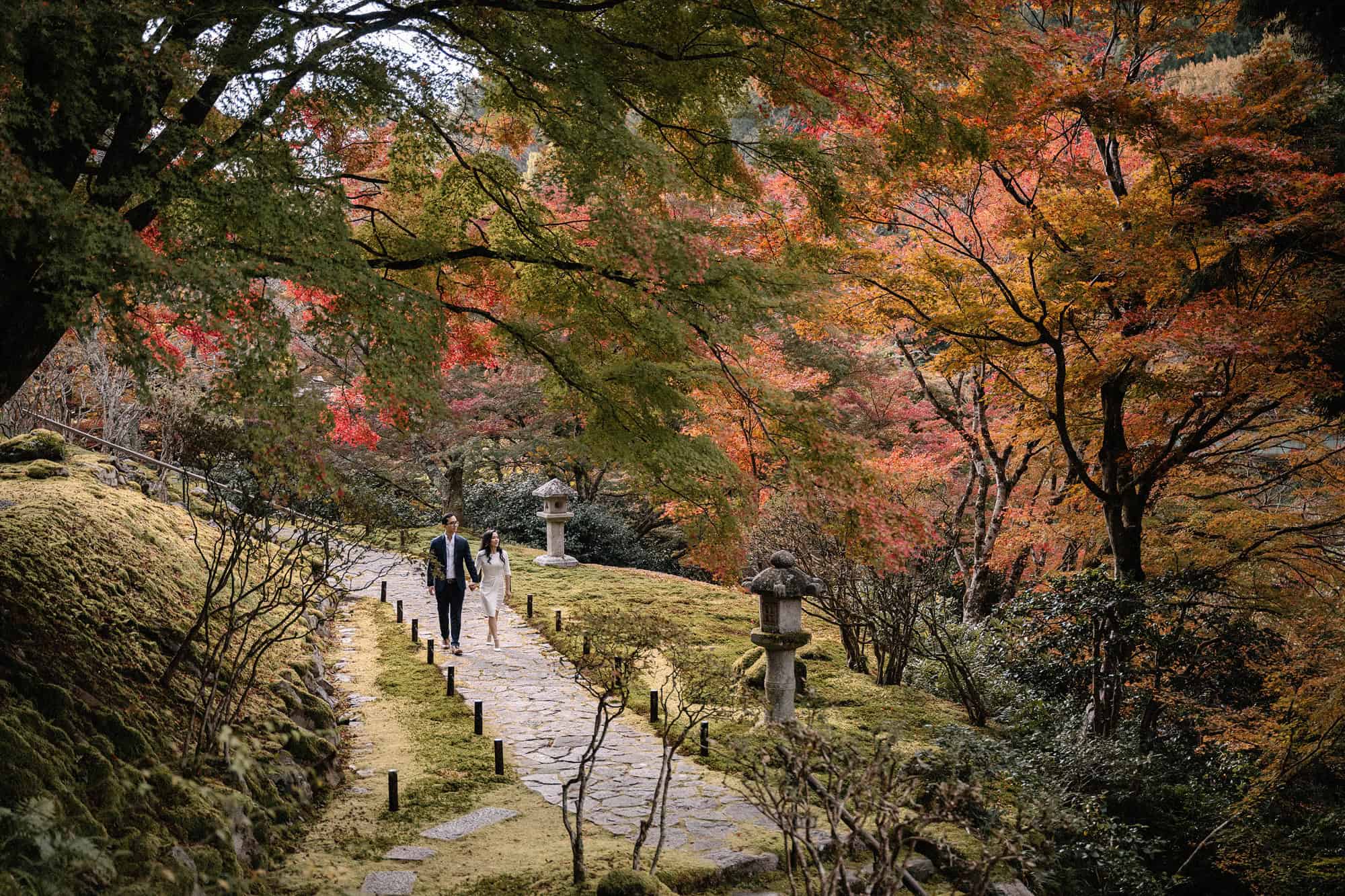
Light that has come through a canopy of trees and landed in moving pieces on the ground. A language that names this is paying attention to light, which is most of what photography is.
Yūgen (幽玄): The Feeling Beneath the Feeling
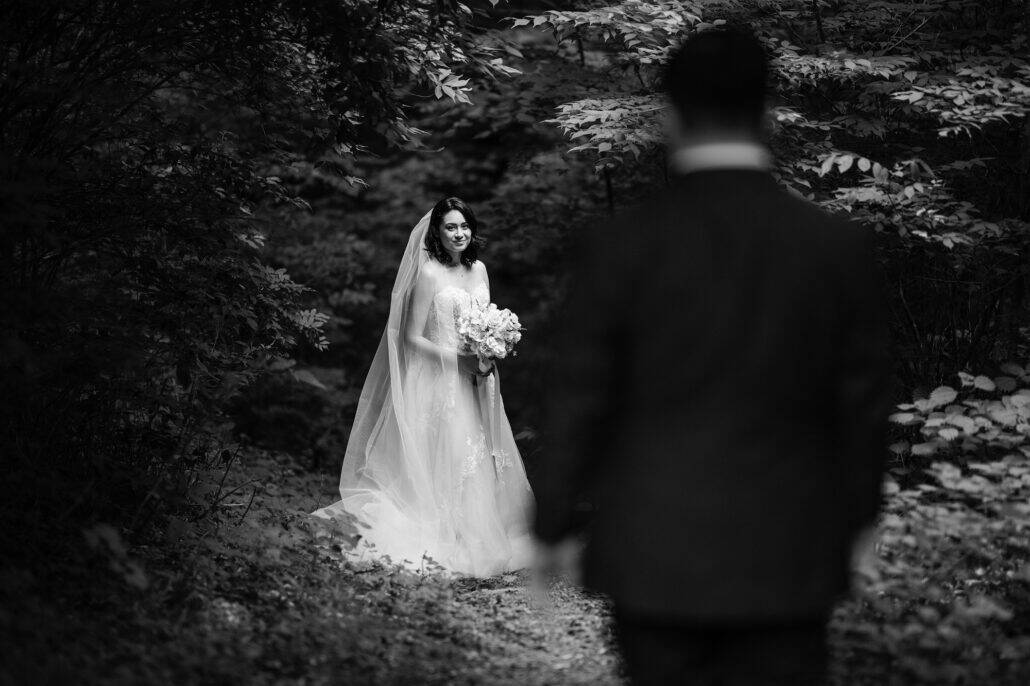
A beauty sensed more than seen: mountains disappearing into mist, a sound that stops before you’re ready. The word came into its own in medieval poetry and Noh theatre, and it’s the quality we look for in a frame that doesn’t explain itself.
The 72 Seasons (七十二候): A Year Measured in Days
The old Japanese almanac splits the year into seventy-two short seasons of about five days each, with names like “the east wind melts the ice” and “the first lotus blossoms”. It’s a calendar for people who notice change in detail. One of our couples went home and had theirs tattooed, matching: the north wind takes the leaves.
Ukiyo (浮世): The Floating World
It began as a Buddhist word for this sorrowful, passing world. In the Edo period a pun on its sound turned it into the floating world of theatres, teahouses and pleasure lived in the moment, and it gave its name to ukiyo-e woodblock prints.
Japanese Words for Feeling and Impermanence
Mono no Aware (物の哀れ): Being Moved by Things That Pass
The feeling of being touched by something precisely because it won’t stay. The scholar Motoori Norinaga found it at the heart of The Tale of Genji, and he didn’t mean only sorrow: delight counted too. Our essay finds it somewhere few people think to look, in their twenties.
Wabi-sabi (侘寂): Beauty in Imperfection
Two words that grew into one. Wabi is a plain, quiet simplicity; sabi is what time leaves on things. A tea bowl with an uneven rim, weathered wood, moss on stone.
Ichi-go Ichi-e (一期一会): One Time, One Meeting
A phrase from the tea ceremony: treat this gathering as if it will never happen again, because it won’t. The same people in the same room on the same day, exactly once.
Hanami (花見): Looking at Blossom
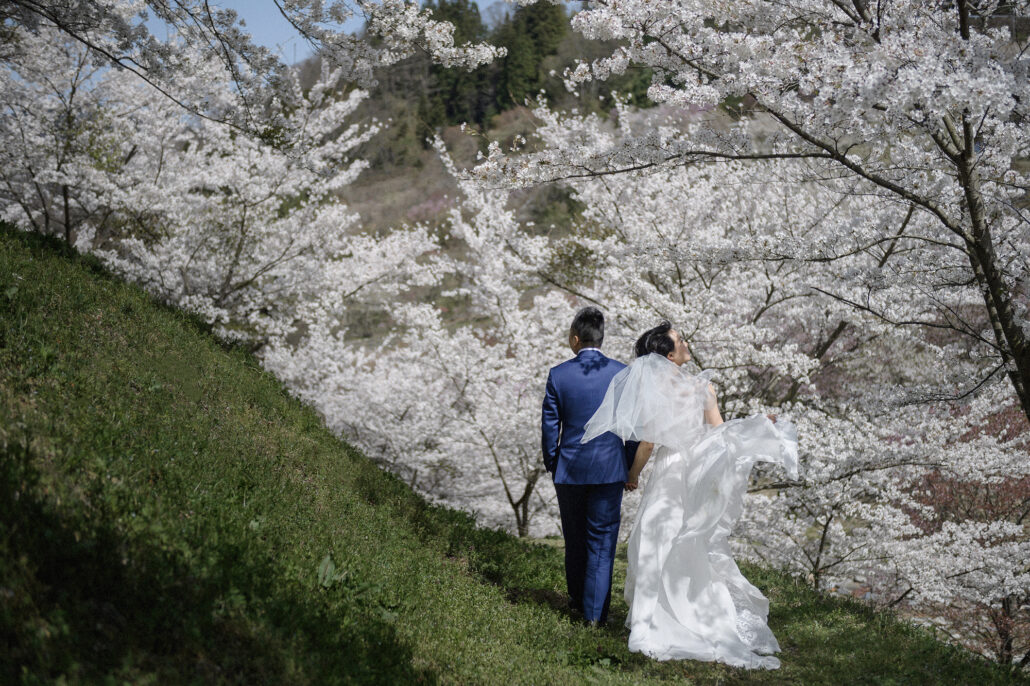
Flower viewing: picnics, parties and late walks beneath the cherry trees for the week or two the blossom lasts. A wedding has one date and the blossom keeps its own calendar, so we plan where the trees will be open on the day, from early weeping cherries to later double-flowered ones and gardens higher up.
Furusato (故郷): The Hometown That Stays With You
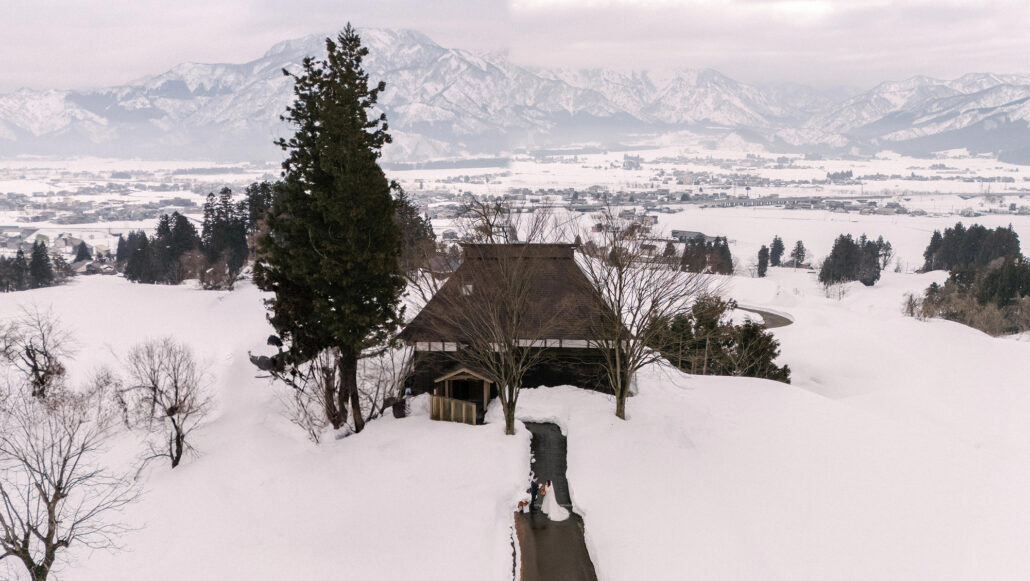
The place you come from, and the pull it keeps on you long after you’ve left. Furusato is more a feeling than an address.
Japanese Words for People and Connection
En (縁): The Ties That Bring People Together
One character for both the edge of a thing and the bond between people: it’s the en in engawa, the veranda where a house meets its garden. Japan’s gods are said to gather at Izumo each autumn to decide it. At a destination wedding, guests arrive as strangers, and by the second evening the edges have begun to meet.
Wa (和): Harmony
Harmony, balance, and the sense of a group moving together. Wa is also an old name for Japan itself, which is why it’s the wa in washoku, washi and wagyū.
Omotenashi (おもてなし): Hospitality That Anticipates
Hospitality offered wholeheartedly, often before anyone has thought to ask. You feel it at a ryokan when your shoes have been turned to face the door. At a wedding, most of it happens out of sight: someone already waiting at the top of the stairs before a grandmother needs a hand.

Tsuki ga Kirei (月が綺麗): The Moon Is Beautiful
Japan’s most famous way to say “I love you” without saying it, usually credited to the novelist Natsume Sōseki. He almost certainly never said it. What the phrase captures about love that doesn’t need announcing is true all the same.
Japanese Words for Calm and Nature
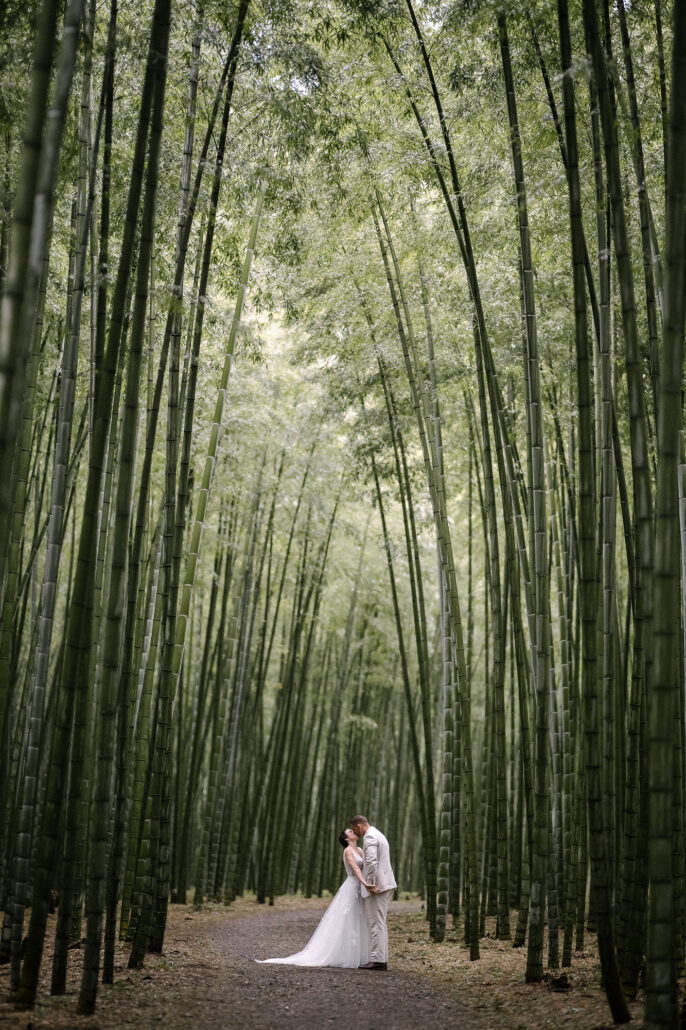
Shinrin-yoku (森林浴): Forest Bathing
A word coined by Japan’s Forestry Agency in 1982 to bring people back into the woods. The science that followed is smaller and stranger than the wellness slogans. In one review, stress hormones were lower even before the forest sessions began, as if part of the calm arrives on the way there.
Nagomi (和み): Calm and Balance
The softening that happens when people and things settle into harmony. It shares its character with wa, and it’s the feeling of a long dinner at the end of a good day, when nobody needs to be anywhere else.
Craft and a Good Life
Kintsugi (金継ぎ): Repairing With Gold
Mending broken pottery with lacquer and gold, so the repair becomes the most beautiful part of the bowl. A philosophy that treats history as something to show rather than hide.
Ikigai (生き甲斐): A Reason for Being
The thing that makes the morning worth getting up for. In Japan it’s usually small and close at hand, a garden, a craft, a grandchild, far from the four-circle diagram that circulates online, which was drawn in the West.
Kaizen (改善): Continuous Improvement
Small changes, made steadily, that add up to something better. It’s how Japanese manufacturing changed the world. For us it’s the quiet work between weddings: the way we work keeps improving, and each wedding stays its own.
Tsundoku (積ん読): The Unread Pile
Buying books and letting them stack up unread. The word dates from the Meiji era, a play on piling things up and on reading, and it may be the most forgiving word in any language. Is there a pile beside your bed?
What Beautiful Japanese Words Have Taught Us About Weddings
These words explain our work better than we can. Ma is why the day has room in it. Omotenashi is why guests are looked after before they think to ask. En is why we like a wedding to run over more than one day. Mono no aware is why we photograph and film the season as much as the event.
Ma is why the day has room in it. Omotenashi is why guests are looked after before they think to ask.
Japanese took the trouble to name the pause, the light through the leaves, the tie between people and the ache of things that pass. Those are the parts of a wedding we look after most closely. New words join the series as we write them.