In the first cherry blossom forecasts that winter, Tokyo was expected to bloom well before the Friday these two had chosen for their Kawagoe elopement, and full bloom on the day looked entirely possible. We told them nobody can promise blossom, and we were quietly hopeful anyway.
Then March turned cold. Japan has a word for the cold that can return during blossom season: hanabie. The Japan Meteorological Agency declared Tokyo’s first blossoms on the day of the elopement itself, well behind the first forecasts. In Kawagoe, about an hour from Tokyo, the trees along the river were still in bud.
A cherry blossom forecast is a good guess, made in good faith, about something that answers to the weather and nothing else. What interested us that day wasn’t the blossom they missed. It was what spring looks like when you arrive at its beginning instead of its peak.

Old Japan and New, in a Single Day
Their first email came from the US in the spring of 2023, two lines asking about cherry blossom season the following year. They wrote again in June: “We’ve been following your Instagram and 37 Frames continues to be our favorite.” And again in July. They were not people in a hurry.
We’d sent two ideas, Jinya and Kawagoe, the castle town north of Tokyo that people call Little Edo. They chose Kawagoe, and a day with two halves: old Japan in the morning and Tokyo at its loudest by night. “We love the idea of the contrast between old and new Japan,” she wrote.

In the morning, that meant the old merchant town. Kawagoe’s clay-walled kura were themselves shaped by adaptation: after the great fire of 1893, the merchants rebuilt with fire resistance in mind.
A Red Thread in a Timber Merchant’s Garden
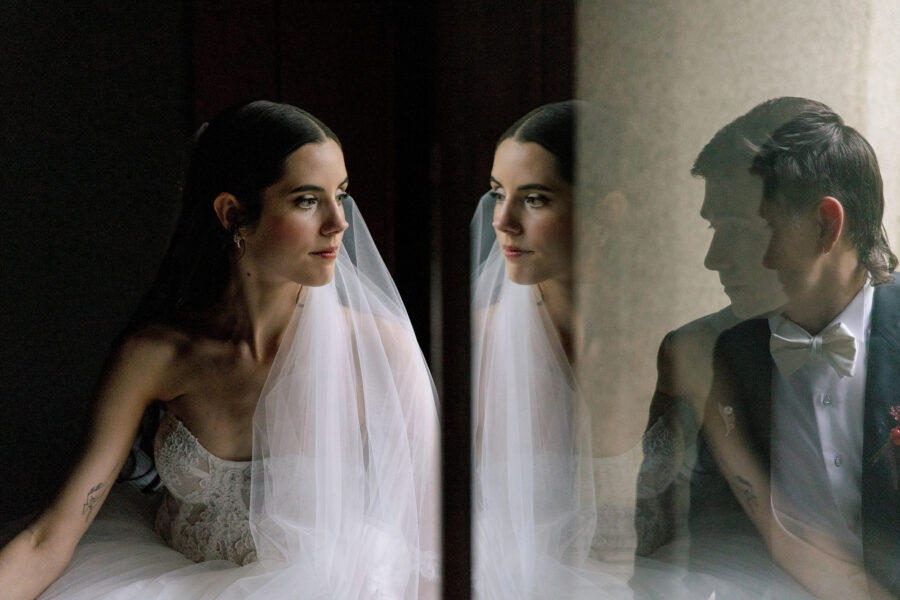
The ceremony was at Tantoku, a garden made by a family who opened a timber business in Kawagoe in 1869. The founder’s house, built in 1901, still stands beside it, and its shoji turn hard morning light into something soft enough to get ready in.

They exchanged their own vows and rings in the dry garden of raked gravel and moss. Then, at their own request, a red thread: the old East Asian belief that two people meant for each other are tied by an invisible red string from birth. Seven of the people they love most watched from home, on a screen.


They walked in to Can’t Help Falling in Love and out to Nat King Cole’s L-O-V-E. Then matcha in the old house, before the river.

The Shingashi in Bud
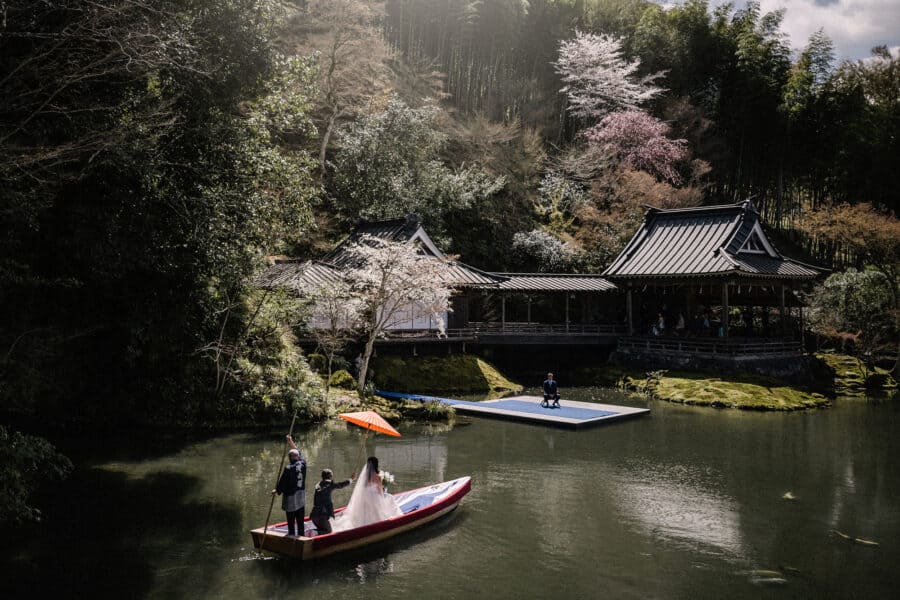
Three days before, Tantoku let us know the trees along the river wouldn’t be open. The boat would run anyway, a private one that came through people we know in Kawagoe, and they took it.
The Shingashi runs behind Kawagoe Hikawa Shrine, and its bends were cut in the 1600s so it would hold enough water for the cargo boats that ran to Edo. The railway took that trade long ago. So they had the river the way almost nobody sees it in spring. A week later the banks would be packed and the boats queued end to end under the blossom. That Friday there were no crowds and no queue, just the two of them and the boatman on still water, under branches holding their buds for another week. It wasn’t a lesser version of the river. It was the river a week earlier, quieter, and theirs.


A Cherry Blossom Forecast Can’t Account for One Tree
The headline forecasts most people follow are built around somei-yoshino, the cherry that fills so many of Japan’s parks and riverbanks. Other varieties keep different time. Weeping cherries often open earlier.
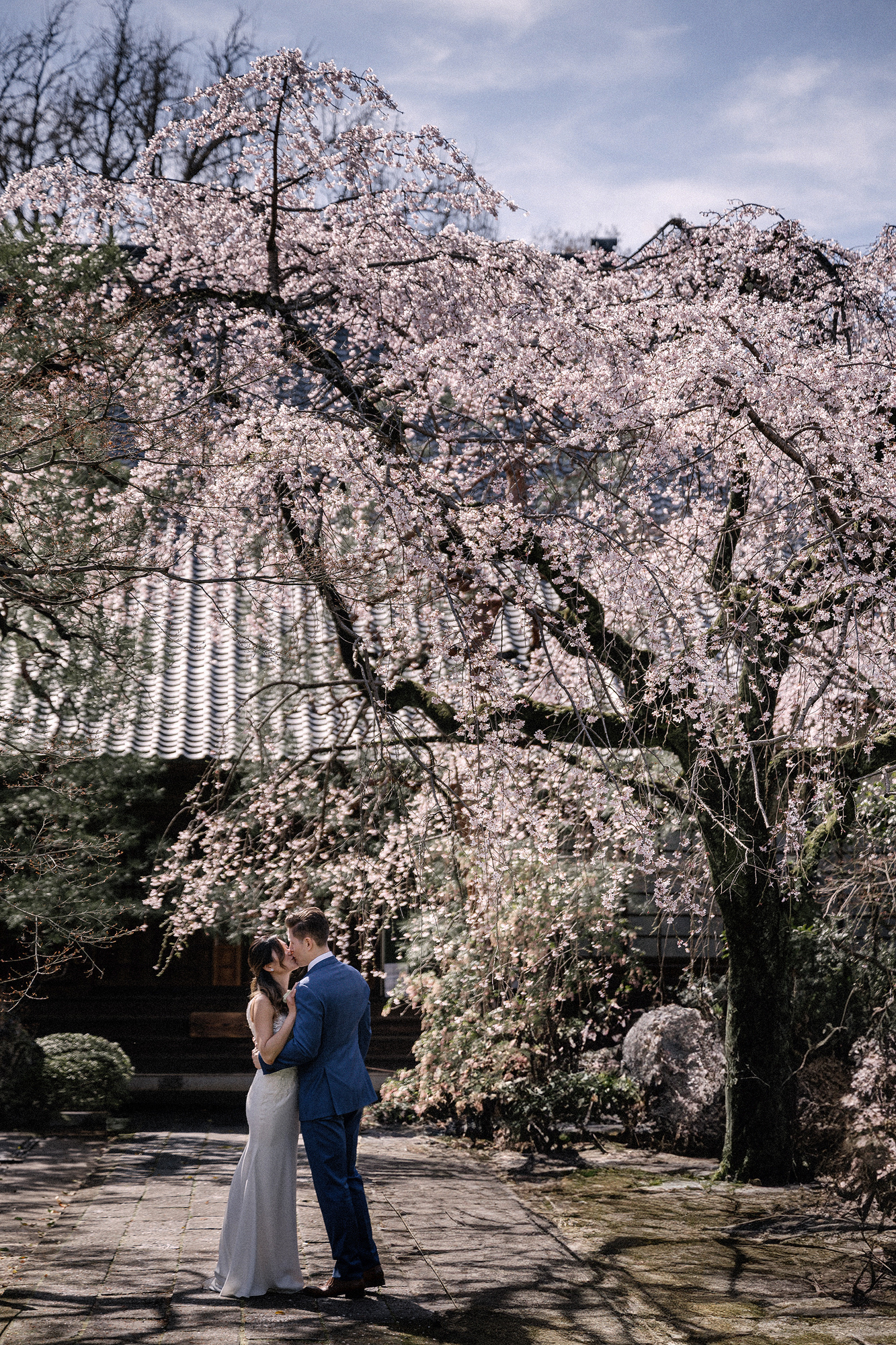
So while they were on the river, we were on the phone, ringing everyone we know in Kawagoe with one question: is anything in bloom, anywhere? Someone knew. At a small private shrine nearby stood one enormous weeping cherry that had already begun. We asked whether we might bring our couple in, and the answer was yes, given with real kindness.

In a town still waiting for its blossom, there it was: a great curtain of early flowers, and nobody under it but the two of them. No forecast had mentioned it. It took people who knew the town, and a shrine willing to open its gate.

Little Edo to Shibuya
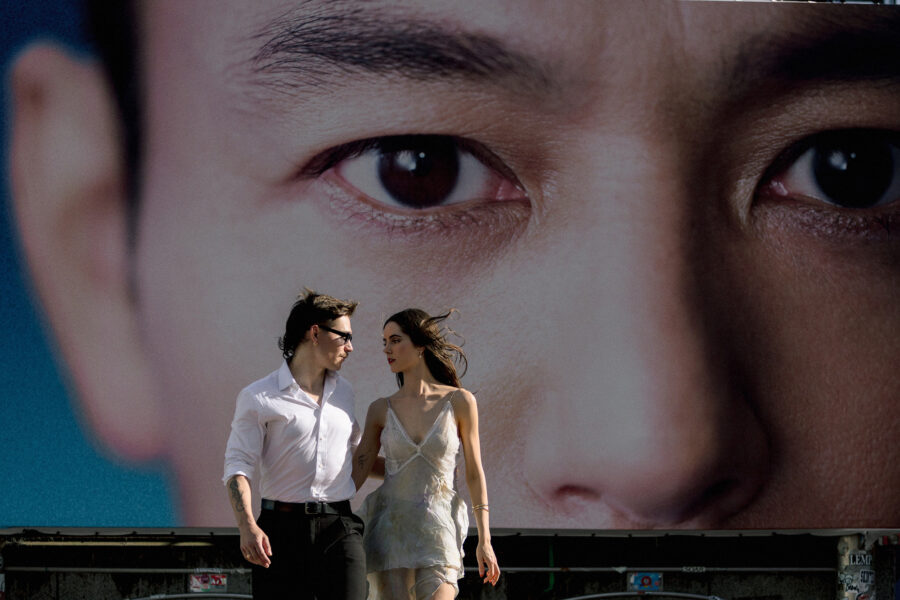
Then the other half of the contrast they’d asked for. As the day turned to night they were on the open rooftop of Shibuya Sky. From up there, the day they’d had looked very small and very far away: a garden, a river, one tree. Below them, Tokyo was just getting started.

The Beginning of Spring
Within a week the Shingashi was in full bloom, petals rafting on the water, and the crowds came to see it.
Peak bloom is what everyone plans for. The beginning is quieter, it doesn’t keep to anyone’s forecast, and you only see it if you’re already there. They were. A garden at the very start of the season, a red thread around their fingers, a river still in bud, and one weeping cherry that hadn’t waited for the rest.