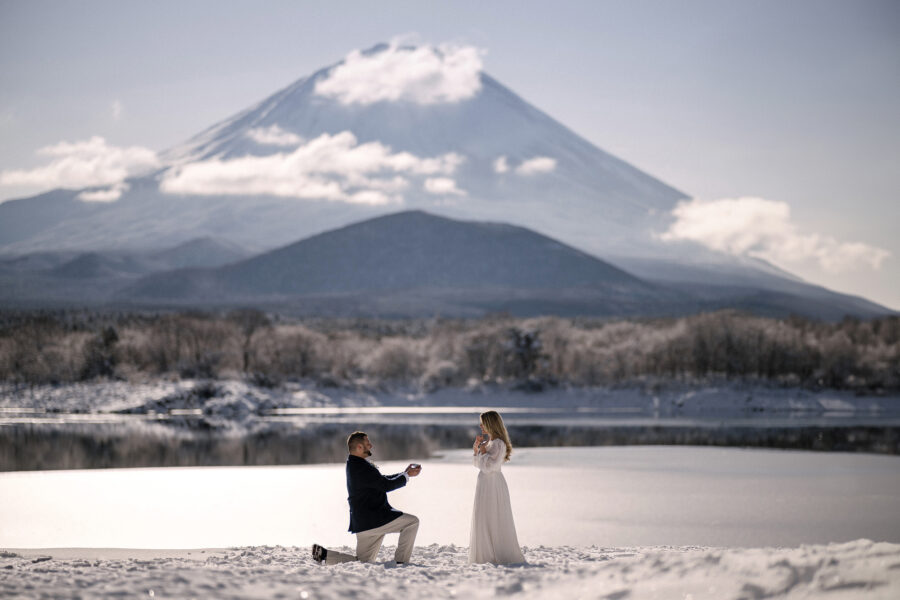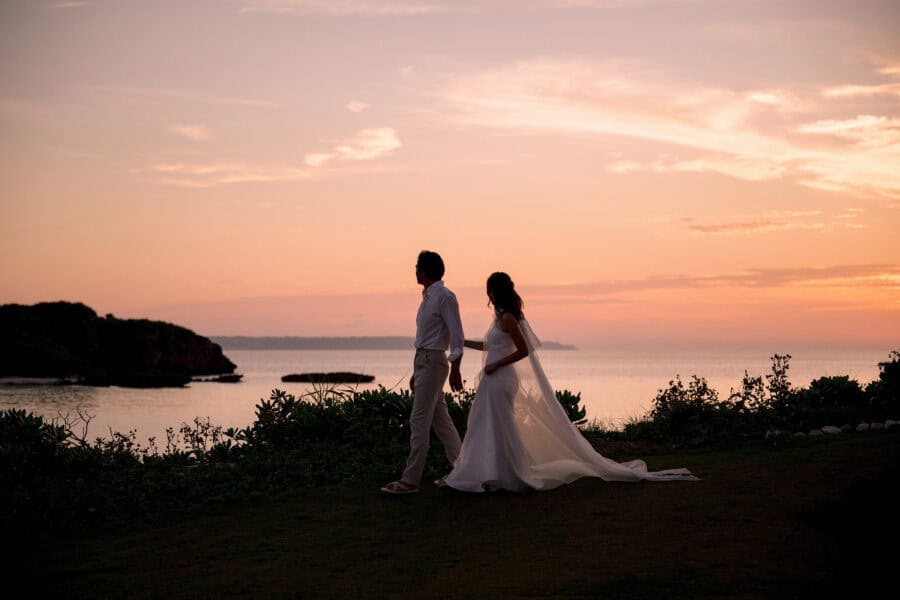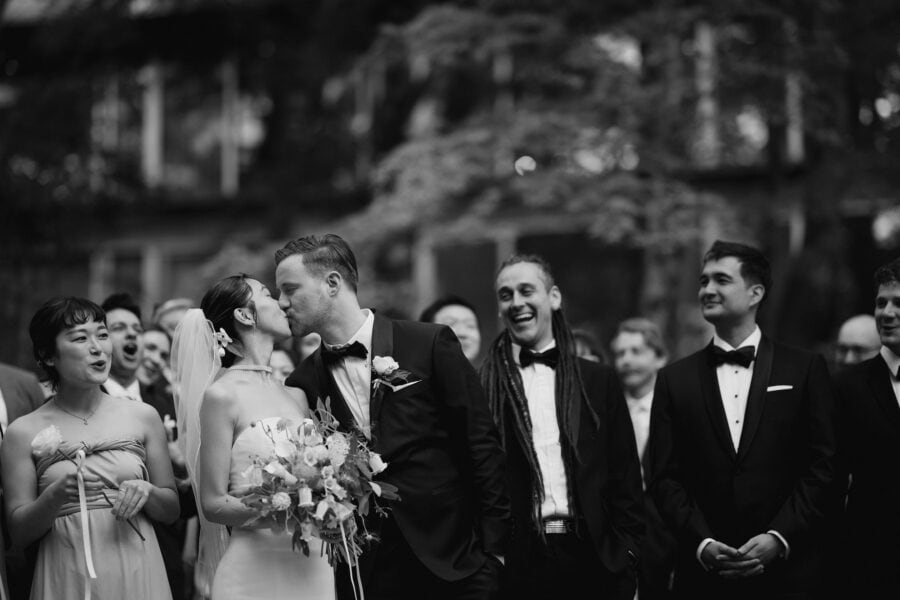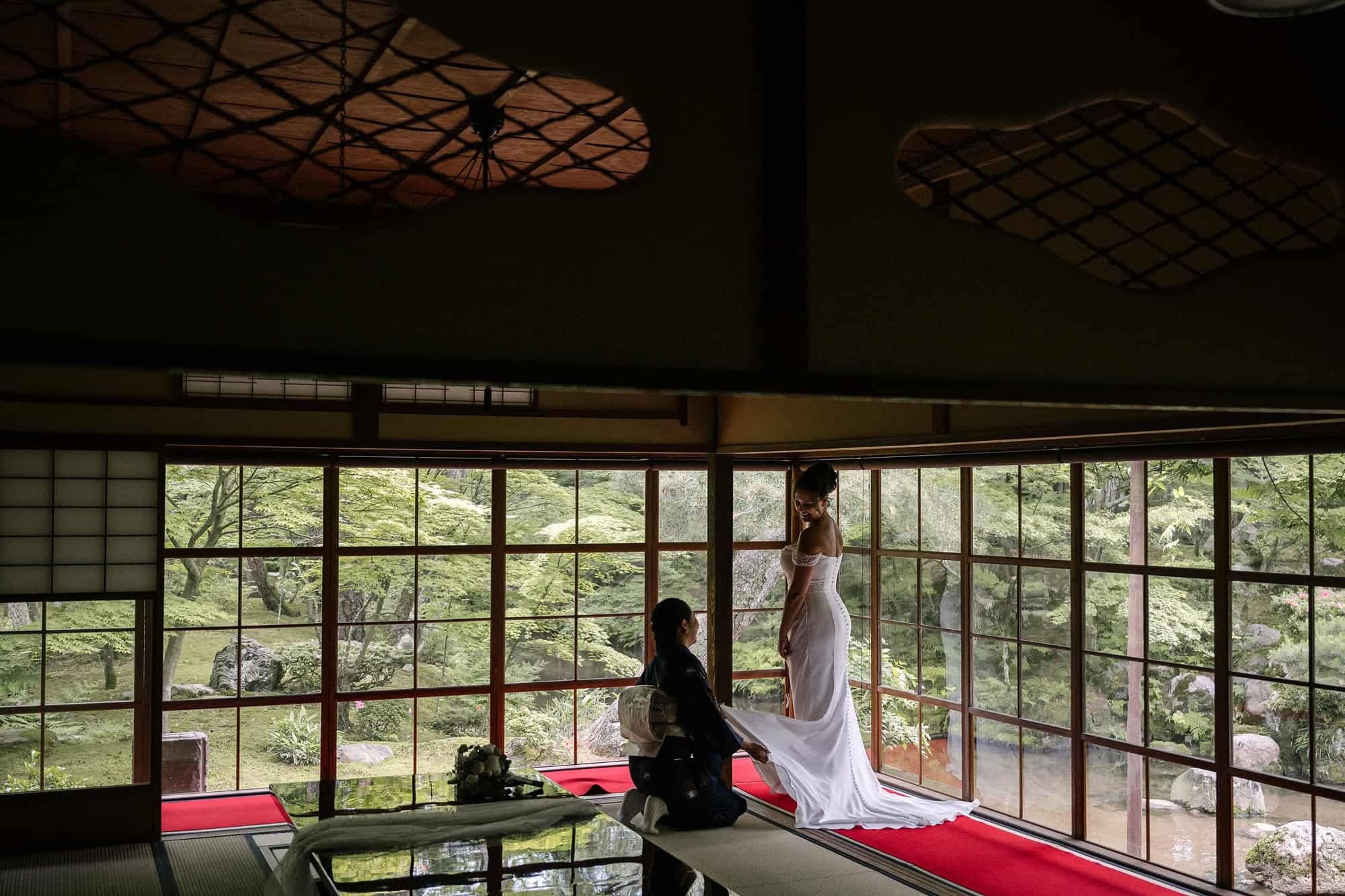
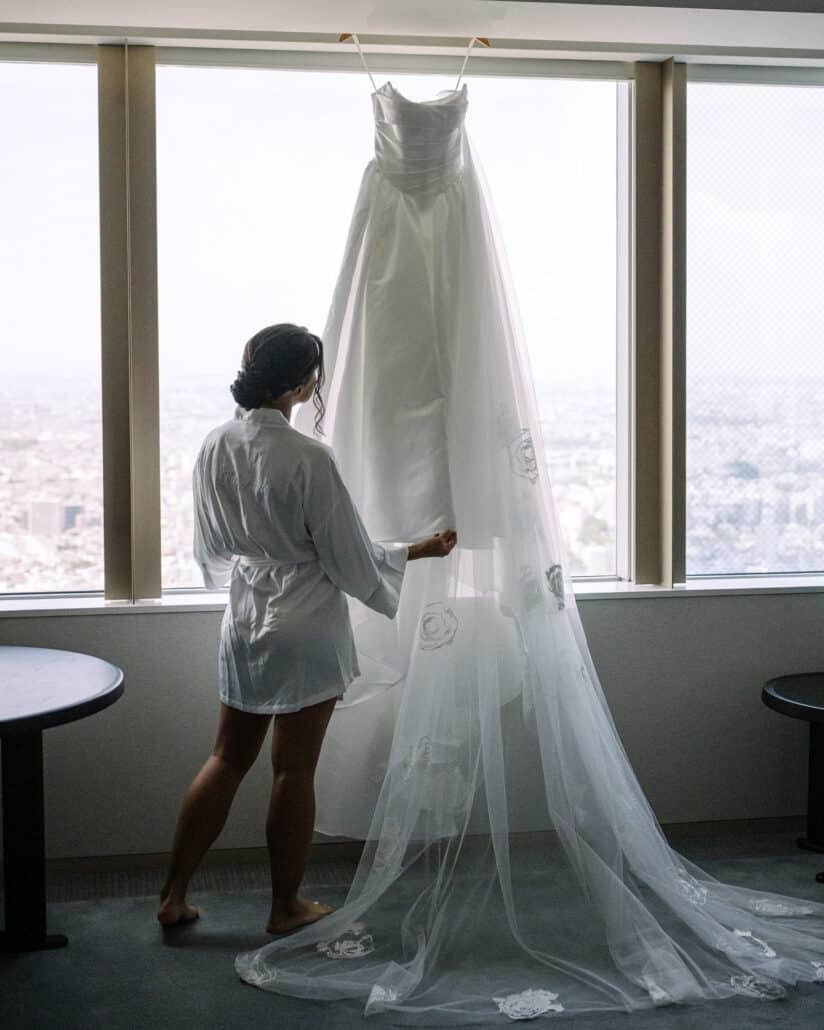
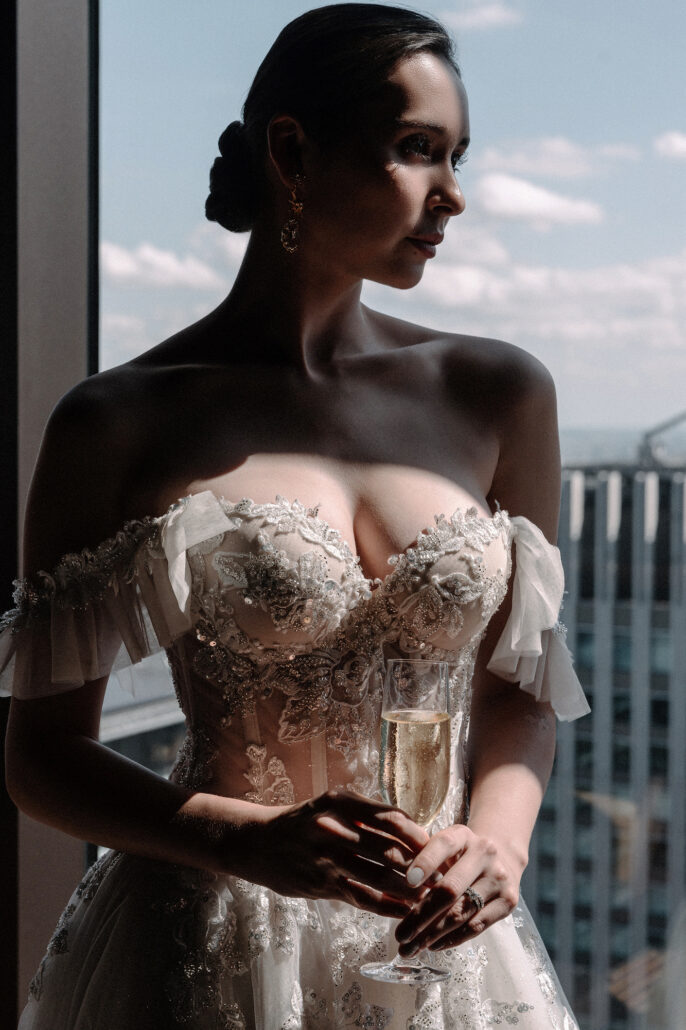
At the Park Hyatt Tokyo, a bride’s wedding dress hung in a window on the top floors of a Shinjuku tower, with the whole city spread out below it. She got ready beside it in a white robe, and while she did, Fuji sat clear at the far edge of Tokyo, about a hundred kilometres away. You float above the city for a few hours before you walk into it.
Getting ready for a wedding in Japan runs on two clocks. Hair and makeup keeps one, and keeps it well. We keep the other: who’s in the room and in what order, and what’s ready before anyone needs it. It’s where the day’s pace is set, and where its first photographs are made.
Getting ready isn’t the part before the day. It’s the first part of it.
How Long Getting Ready Takes for a Wedding in Japan
In Japan, a bride is through hair and makeup in about two hours. The dress, the veil and the accessories take about an hour more, so an elopement morning runs about three hours.
For a wedding, we plan three hours or more, depending on how many people are getting ready together. Bridesmaids and mothers who are helping you have their hair and makeup first, so each one adds to the morning, and that time belongs to them. Friends drop in. The bridesmaids are in their wedding robes, the champagne is opened, and the dress and veil go on with the people you love there to see it. The bridal portraits are made before anyone leaves the room. If the day holds more, a first look and its portraits among them, the morning gets more room too.
When it starts depends on what comes after it. Before a sunrise ceremony, you go straight from the chair to the aisle. Before an afternoon one, there’s often a first look, and portraits in between.
| What | How long |
|---|---|
| Hair and makeup | About 2 hours |
| The dress, veil and accessories | About 1 hour more |
| Getting ready for an elopement | About 3 hours |
| Getting ready for a wedding, with bridesmaids and family | 3 hours or more, depending on how many are getting ready together |
| Changing from shiromuku to iro-uchikake | About 20 minutes with good dressers |
Our own timings, from the weddings we plan.
Who Gets Ready First
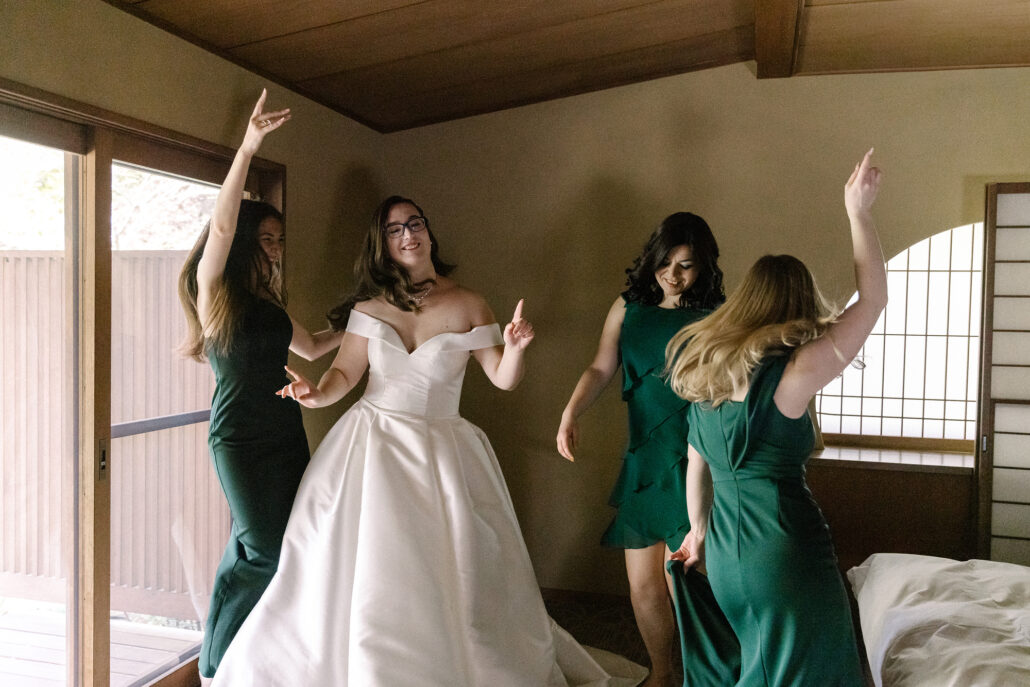
The order of the room is worked out bride by bride, so that it never crowds, and it starts with who’s helping. If your bridesmaids are going to help you into your dress, they need to be ready before you are: hair and makeup done, dressed, and back in the room. The same goes for your mother, if she’s the one putting on your veil or fastening a necklace at the end. So the people with a part to play go through the chair first, and you step into the dress with all of them around you.
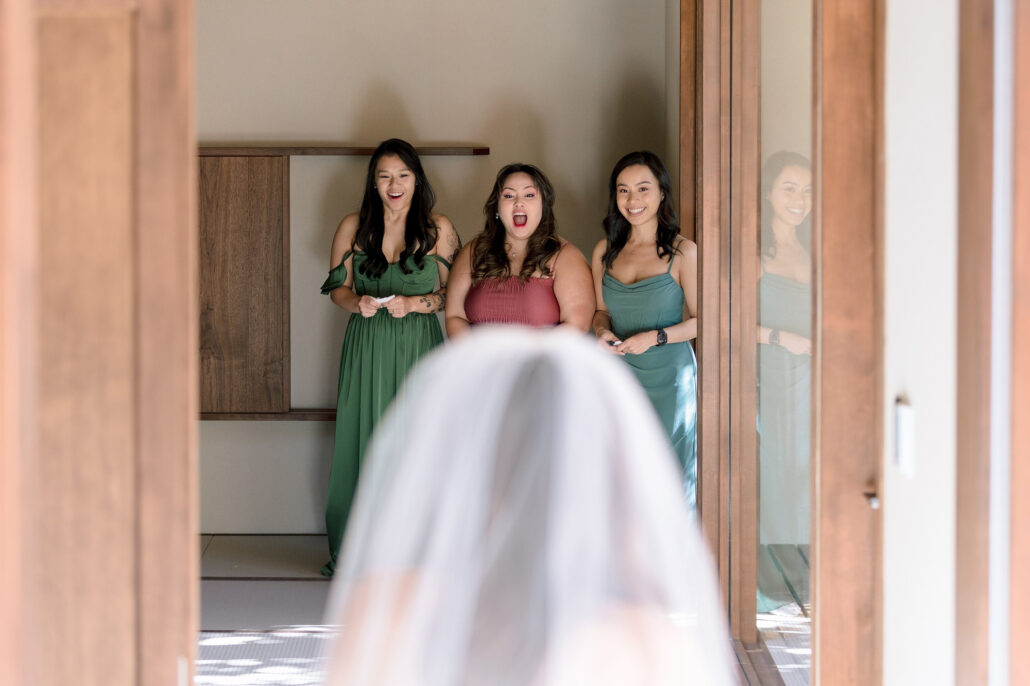
If your parents aren’t helping you dress, we’ll often give them a first look of their own. The family comes in just as you’re ready, before you go to anyone else, and for a few minutes the room is only family.
One bride’s friends made her promise: no cameras until all of them had been through hair and makeup. A fair boundary. We kept it.
The Flat Lay: Your Wedding Details on the Morning
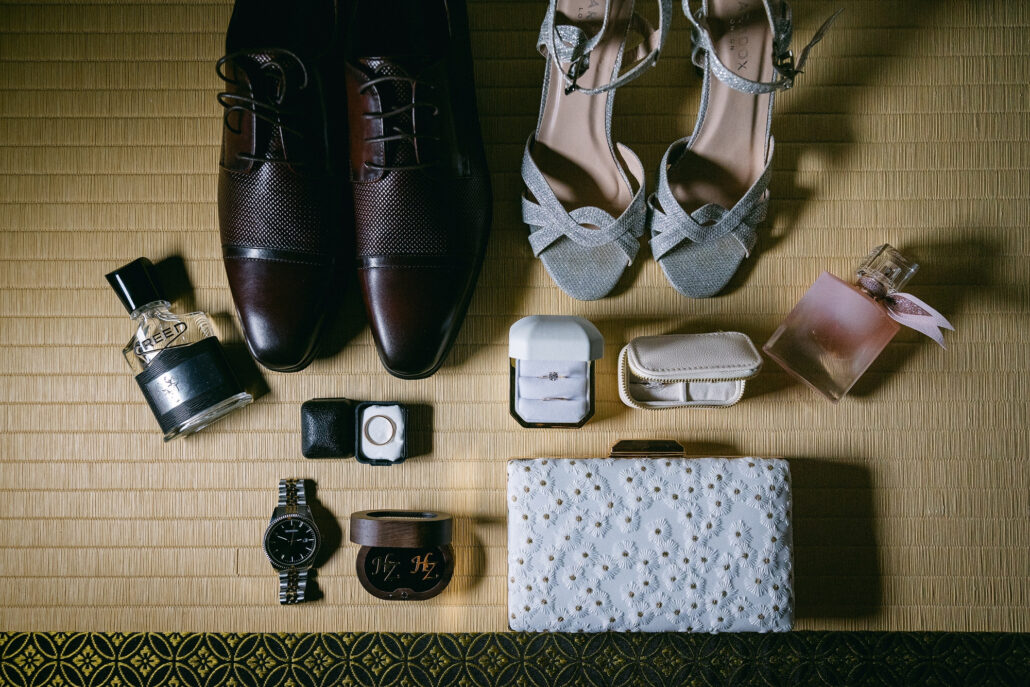
The first photographs of the day are of things. Your rings, your shoes, the dress and everything that goes with it are waiting in one corner of the room when we arrive, gathered the night before or set aside first thing, and we make the flat lay straight away, while the room is still quiet and hair and makeup carry on undisturbed.
At Mt Fuji, one couple got ready apart and exchanged gifts across the distance: perfume for her, personalised cufflinks for him.
Where to Get Ready: a Hotel, a Ryokan or a Whole House
Where you get ready decides how the morning feels, and often where the two of you first see each other.
A ryokan works differently from a hotel. Check-in is mid-afternoon, so a wedding morning at a ryokan means staying the night before, and that’s the best part of it. You wake up in a room that’s already yours, after a dinner and a night in the house, and the dressers and artists come to you. Nobody spends the morning finding their feet. At Asaba, the two of them got ready in separate suites, each with their own people, in tatami rooms with windows onto the garden.
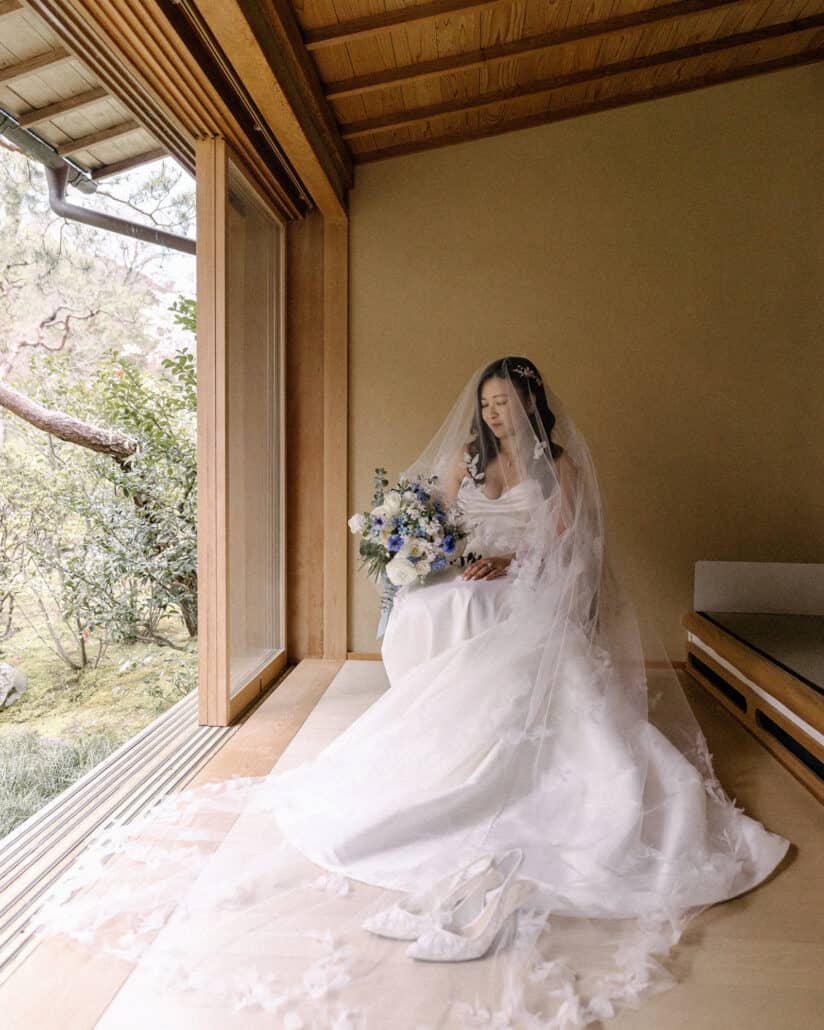
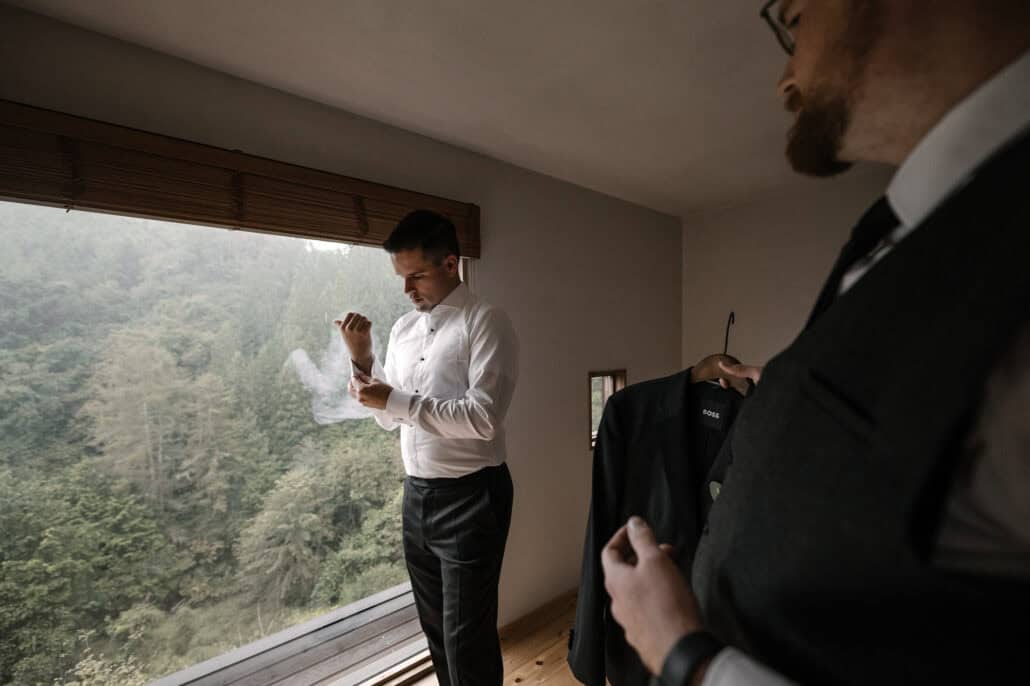
Some couples have a whole house. In the mountain village of Kosuge, a bride got ready in the great house the silk farmers built, while her groom and his brother got ready a little way off, in another old building on the hillside.
Wedding Hair and Makeup in Japan
The hair and makeup artists we work with in Japan stay all day, which surprises couples who know weddings at home. They’re there for every touch-up, in a room we keep aside for it, and when there are no bridesmaids to gather up a long train, they’re the ones helping you from place to place. In a gown, you can go anywhere the photographs want to go.
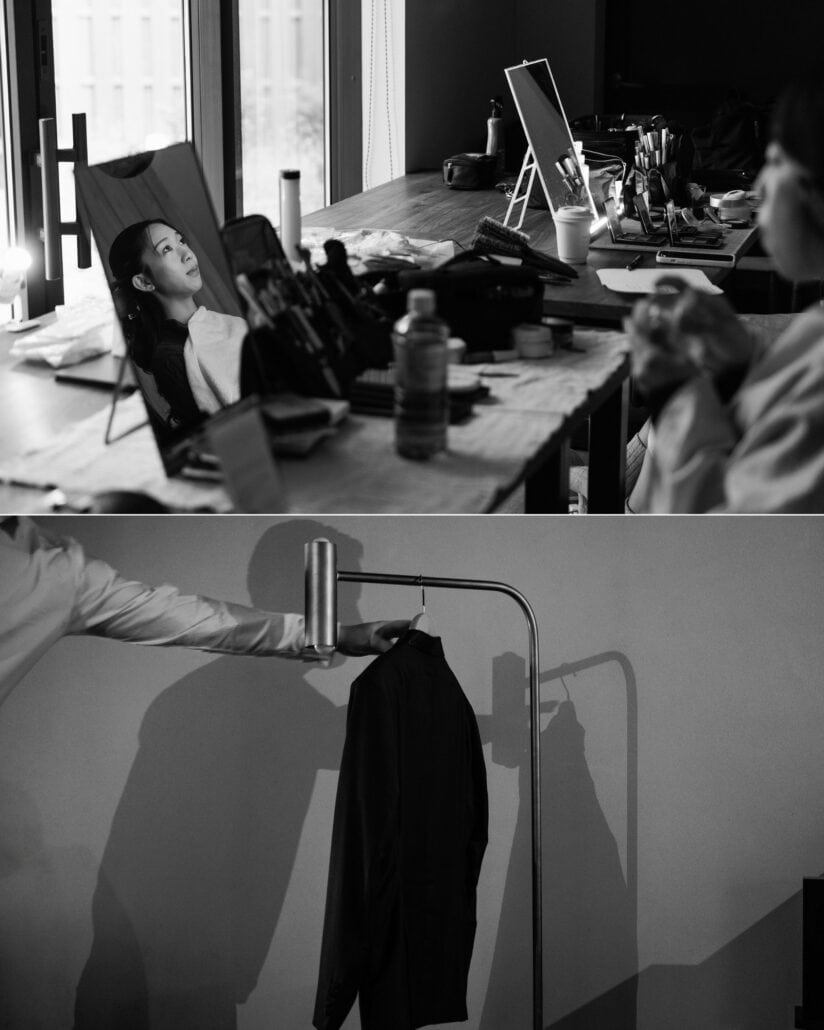
Every artist and dresser we bring is one we know and have vetted. In Japan, doing hair and makeup as a business also needs a national licence.
Many of our couples do their trial as soon as they land, a couple of days before the wedding. A few leave it until the day before, on purpose: they wear the trial to the welcome dinner, and wake up on the morning already sure of it. Will they know hair like yours? The trial is where you see it for yourself.
A First Look or the Aisle: Portraits and the Light
Seeing each other before the ceremony, at a garden bridge or a timber gate, or for the very first time at the end of the aisle, is really a decision about your portraits: when they happen, and in what light. The first look is newer than the tradition it sits beside, and a great many of our couples choose it now.
With a first look, most of the portraits are done before the ceremony, and you walk out of it straight into cocktail hour with your family and friends, and all the adrenaline of what just happened. Keep the aisle, and the portraits happen after the ceremony, during cocktail hour instead. That hour belongs to your guests anyway: there’s music, often our flair bartenders, and everyone catching up.
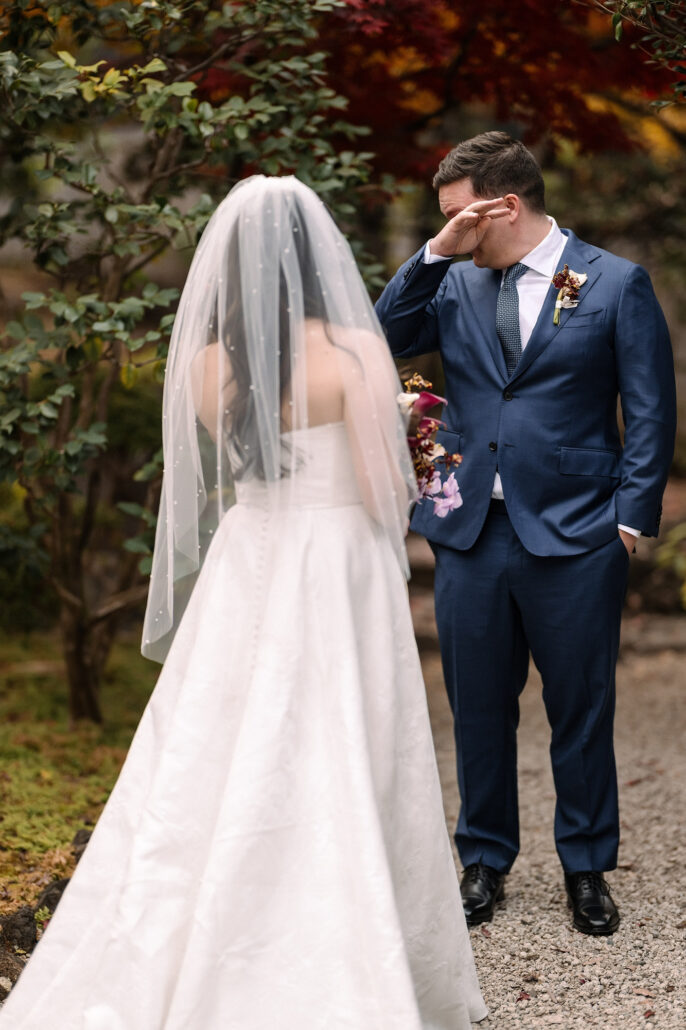
The light often settles it. Before an afternoon ceremony, first-look portraits fall in the brighter middle of the day. After the ceremony and cocktail hour, the light is often turning golden. That’s why many couples do both: a first look for most of the portraits, which still look beautiful in the middle of the day, then ten or fifteen minutes together after the ceremony for the golden light or the sunset, before they join everyone.
Some brides keep the aisle because they want that moment whole. Some would rather not move around in the dress before the ceremony. Others want the portraits done early, so the hours after it are free. If you could only keep one, which would it be: the moment at the end of the aisle, or the hour after it?
Kimono Dressing on the Wedding Morning
Most of our brides marry in a gown. Some choose kimono, for the ceremony or for part of the day, and the morning is planned around it.
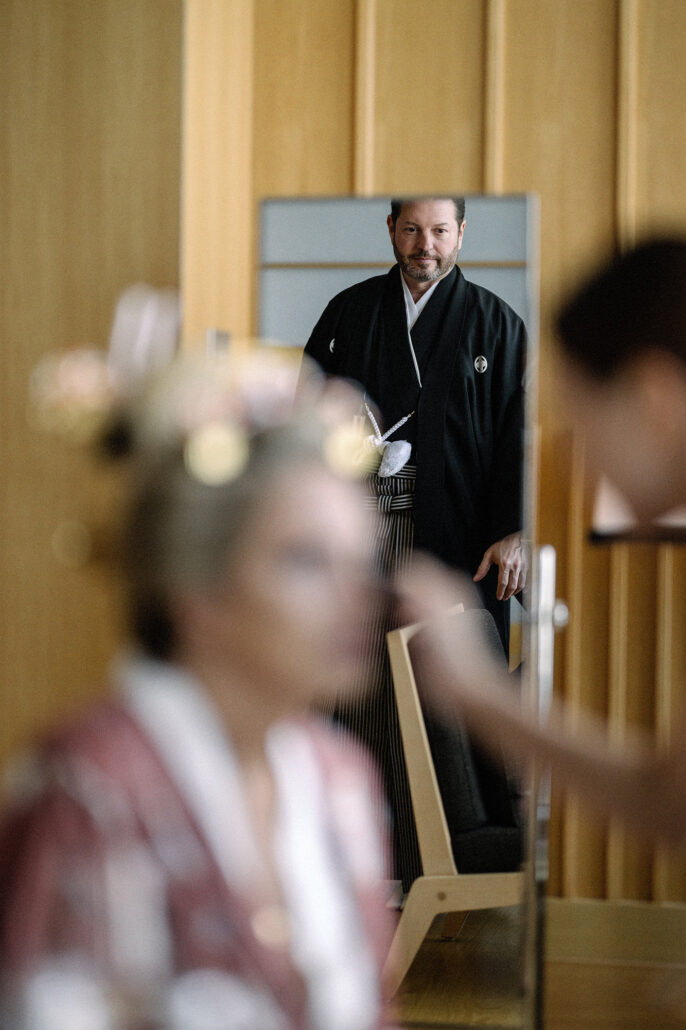
Most of ours have the dressers come to them, at the hotel or the ryokan; others are dressed at a kimono studio, and either way it’s a lovely part of the morning. No one puts on a wedding kimono without a dresser. A change from the white shiromuku of a shrine ceremony into a coloured iro-uchikake takes about twenty minutes with good dressers, and our guide to the Japanese bridal kimono goes through every layer.
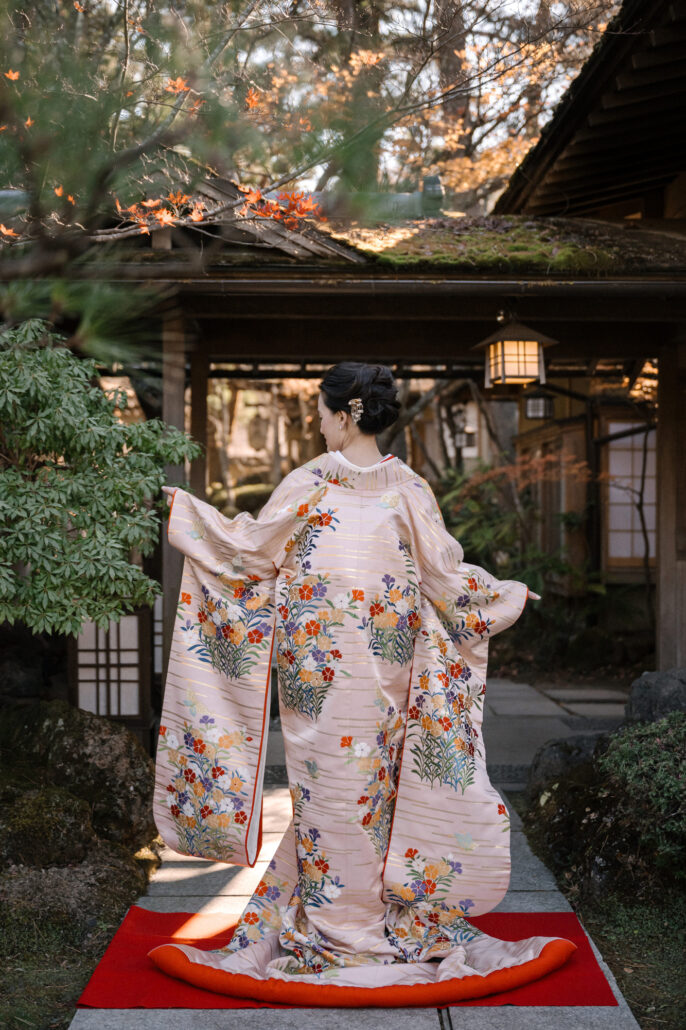
Kimono changes the photographs too. It isn’t meant to touch the ground, so for portraits a red carpet is laid down and the kimono is set on it, fold by fold. One of our photographers is trained in kimono setting for photography, so every line is right before the shutter goes. It’s a still, composed kind of portrait. If you’d love photographs full of movement, a gown gives you the whole place to run through. If it’s the stillness you love, kimono is made for it.
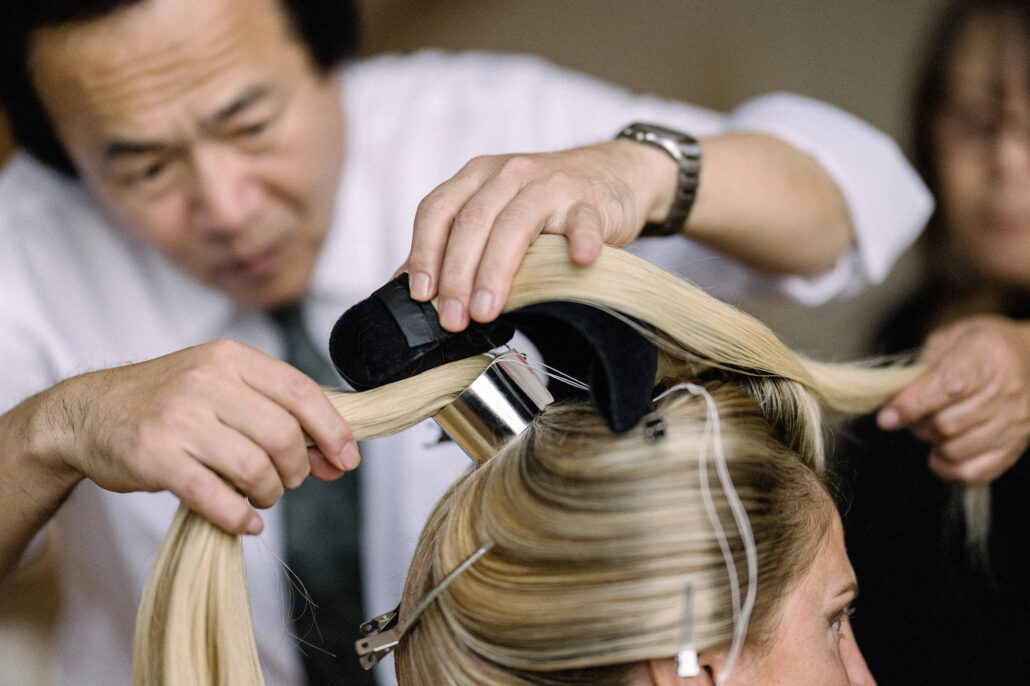
The hair is its own decision. A katsura, the traditional bridal hairstyle made up and fitted to your head, is fitted beforehand, so it suits a bride who can come to Japan early: one of ours flew in about three months ahead for her kimono and katsura fittings. For another, at Aman Tokyo, a nihongami master built the style in her own hair, section by section, over a padded form. Her hair was blonde. It didn’t matter in the least. Our nihongami guide tells the rest.
The Groom Getting Ready
A groom in a suit has room to improvise. In Hakuba, with snow coming down outside, one groom and his groomsmen got ready in a dome in the snow, with a YouTube tie tutorial playing and an Asahi in every hand.
It worked.
At Akiu, a groom dressed with his brother and friends in a wooden room with the shoji slid open to the green. In Hakone, the groom and his friends got ready in a pavilion open to the trees, with bow ties, whisky, and a letter to read.
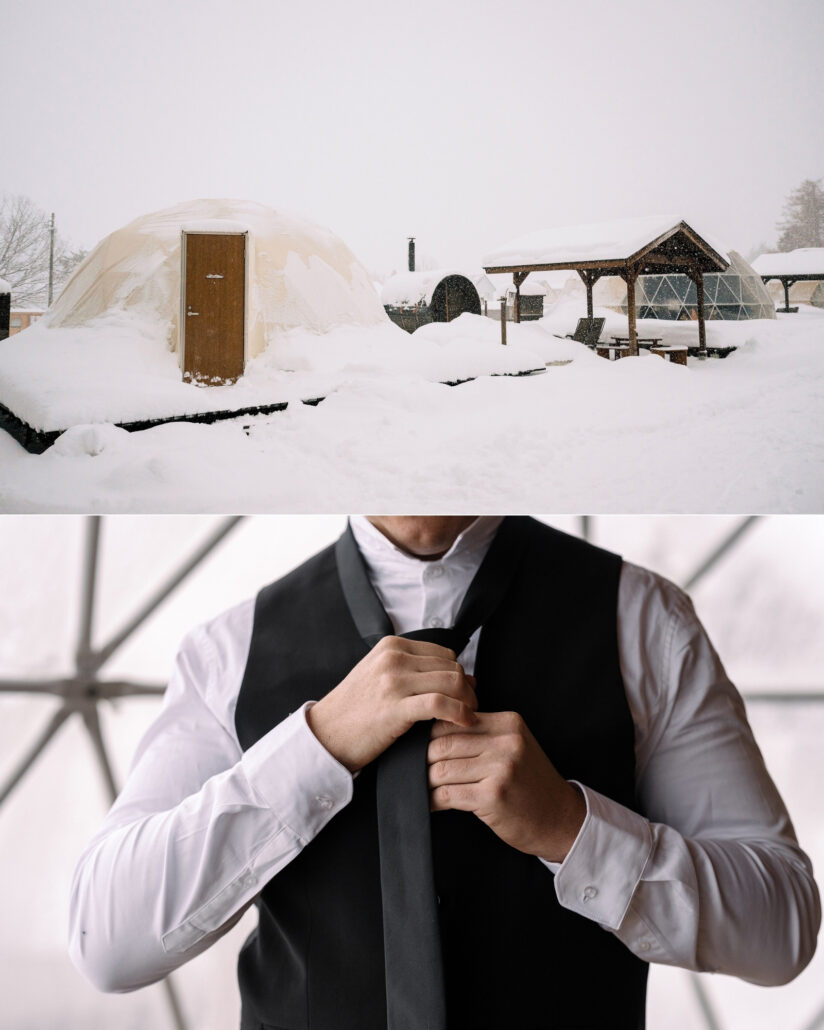
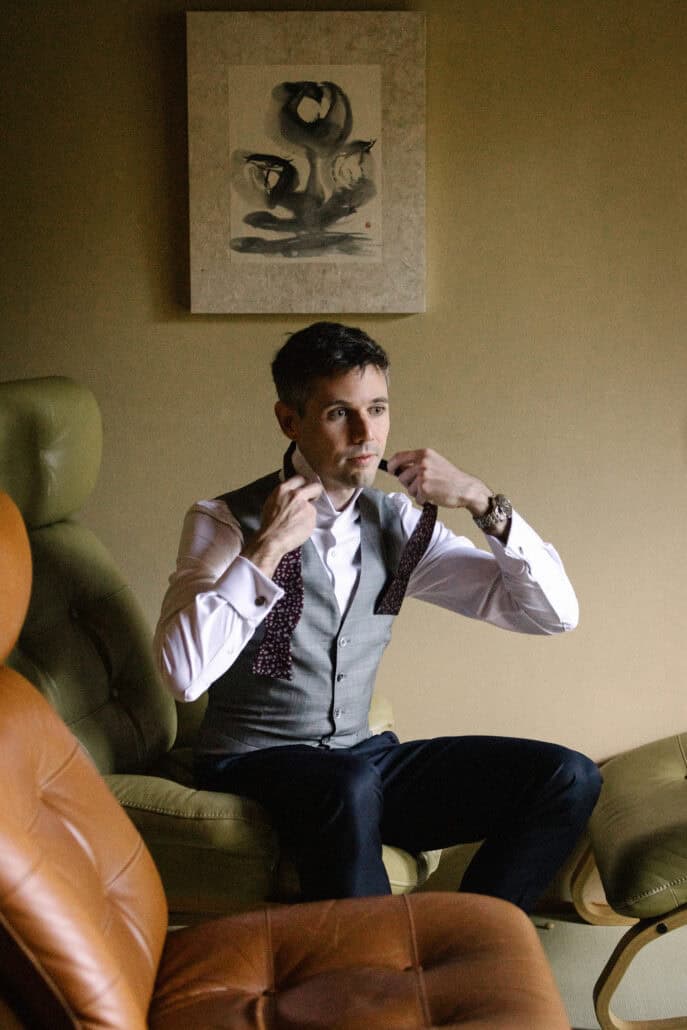
A suit will forgive a tutorial. Montsuki and hakama won’t. A groom in kimono is dressed by a professional, just as his bride is.
How We Plan the Wedding Morning
We plan the morning backwards from the first moment that matters: a sunrise ceremony, a first look, portraits in the best light. And just before you leave, we keep a few minutes clear.
Every wedding morning needs a few minutes with nothing in them at all.
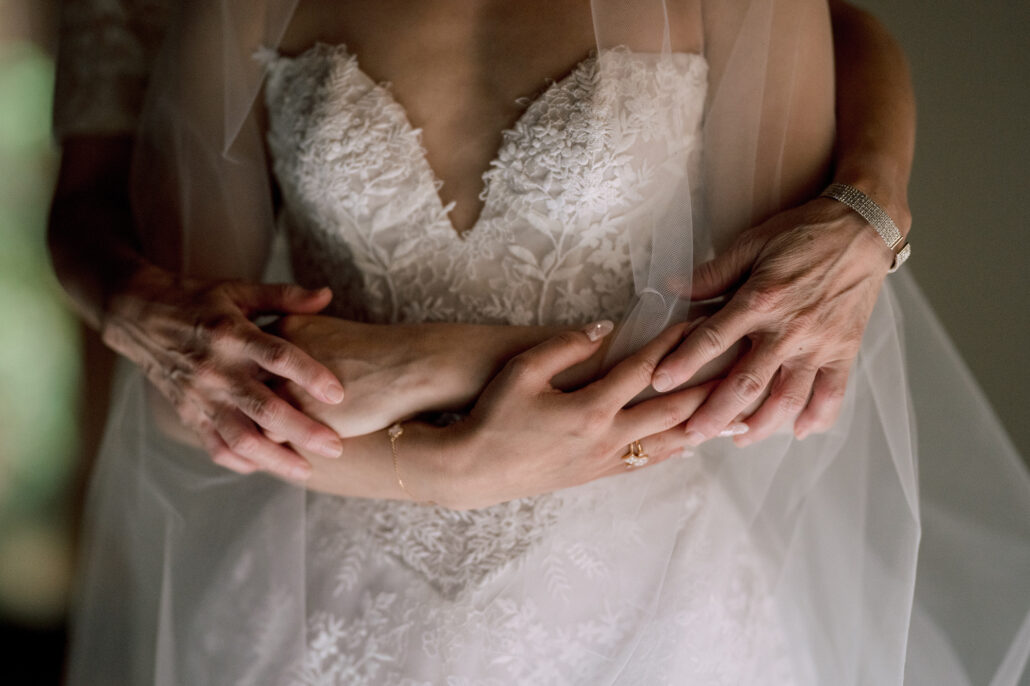
We photograph the morning as it happens. The good pictures are already there: an older hand over the bride’s, a dress in a window, a groom learning his tie from YouTube while the snow came down.
More Questions About Getting Ready in Japan
How long does it take to get ready for a wedding in Japan?
Hair and makeup takes about two hours, and the dress, the veil and the accessories about an hour more, so an elopement morning runs about three hours. For a wedding, we plan three hours or more, depending on how many people are getting ready together, so everyone helping you is ready too, and there’s room for the bridal portraits before anyone leaves. When it starts depends on what comes after it: a sunrise ceremony, or a first look and portraits.
Who should get ready first, the bride or the bridesmaids?
Whoever is helping you. If your bridesmaids are helping you into your dress, or your mother is putting on your veil, they have their hair and makeup done and get dressed before you, so they’re back in the room and ready. It’s worked out bride by bride, so the room never crowds, and you step into the dress with your people around you.
Should we have a first look before the ceremony?
It depends what you’d rather keep: the portraits done early, or the moment at the aisle whole. A first look moves most of the portraits before the ceremony, so you can join cocktail hour with your guests. Keeping the aisle puts the portraits during cocktail hour, often in golden light. Many couples do both: a first look, then ten or fifteen minutes after the ceremony for the golden light.
Do hair and makeup artists stay all day at a wedding in Japan?
The artists we work with in Japan do, which surprises couples who know weddings at home. They’re there for every touch-up through the day, and when there are no bridesmaids to gather up a long train, they help the bride from place to place. It means you can go anywhere the photographs want to go.
When should we do a hair and makeup trial?
Many of our couples do theirs as soon as they land, a couple of days before the wedding. Some do it the day before, so they can wear the look to the welcome dinner and wake up sure of it. Either way, it’s where you see the artist’s work on your own hair and skin.
How long does kimono dressing take?
The Japanese bridal magazine Zexy puts kimono dressing at fifteen to thirty minutes on average, and a change from the white shiromuku into a coloured iro-uchikake takes about twenty minutes with good dressers. Brides and grooms in kimono are both dressed by professionals. Traditional hair takes longest, three or four hours in your own hair by Zexy’s count, and our kimono guide goes through every layer.
Can we get ready at a ryokan?
Yes. Check-in at a ryokan is mid-afternoon, so you stay the night before and wake up in a room that’s already yours, after a dinner and a night in the house. The dressers and the artists come to you, and nobody spends the morning finding their feet.
Give the morning the time it asks for, and when you step into the dress, everyone you need will already be in the room.
Updated November 2026. Timings vary with the artist, the dress and the venue; we confirm yours as we plan the day. Sources: Japan’s Ministry of Health, Labour and Welfare, cosmetology licensing (Japanese); Zexy on kimono dressing times and nihongami and katsura (Japanese); Japan Tourism Agency, staying at a ryokan.