At home, a wedding morning begins in your own wardrobe. At a destination wedding, it begins in a suitcase. The gown, the suit, the silk for the welcome dinner and the shoes for the after-party have all crossed an ocean folded, and every one of them has to look as if it never did.
For many of our couples, the night before the wedding is the welcome dinner: half reunion and half rehearsal, the first evening everyone they love is in one room. It’s no night to be looking for an iron. We’ve learned that over a great many mornings in hotel rooms, ryokan and old houses across Japan, and it’s why the night before is prepared long before it. Some of it is settled in the planning, months ahead, and some by the two of you before anyone packs. The last of it is done before anyone goes down to dinner.
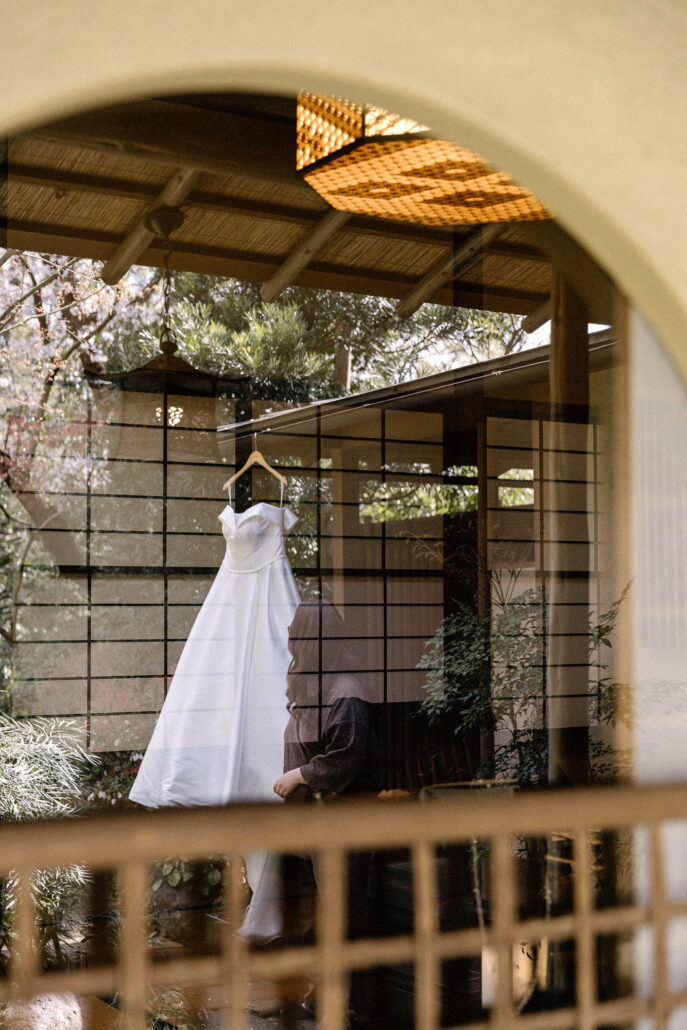
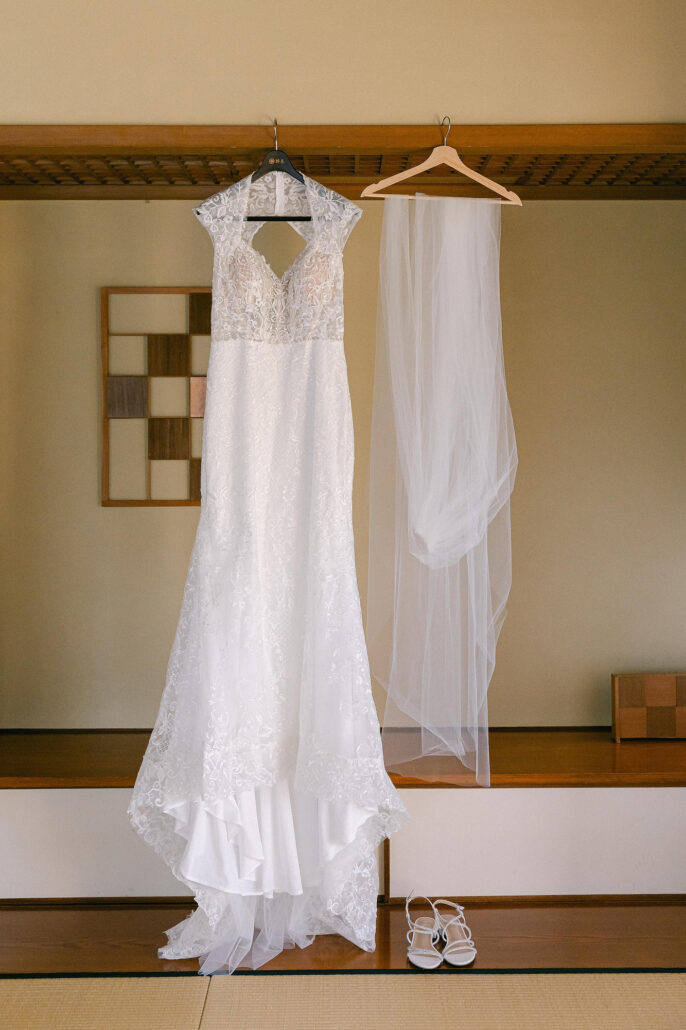
Steaming the Wedding Dress in Japan
If you arrive in Japan with a few days to spare, the gown, the suit and anything else that matters can go to a professional steaming service in Tokyo, arranged in the planning, and come back pressed and hung, delivered to your hotel, the house or the venue itself. There’s a cost, and it’s worth it. It’s the route we’d choose every time: silk, tulle and lace are safer with a professional than under a borrowed iron, and nothing arrives at a wedding looking better.
If you’d rather do it yourself, bring a steamer, and make sure it suits Japan’s 100 volts before it goes in the case. Don’t count on borrowing one. The large international hotels may have a steamer to lend. Smaller hotels rarely do, and out in the countryside, where many of our favourite weddings happen, it’s safest to assume they won’t.
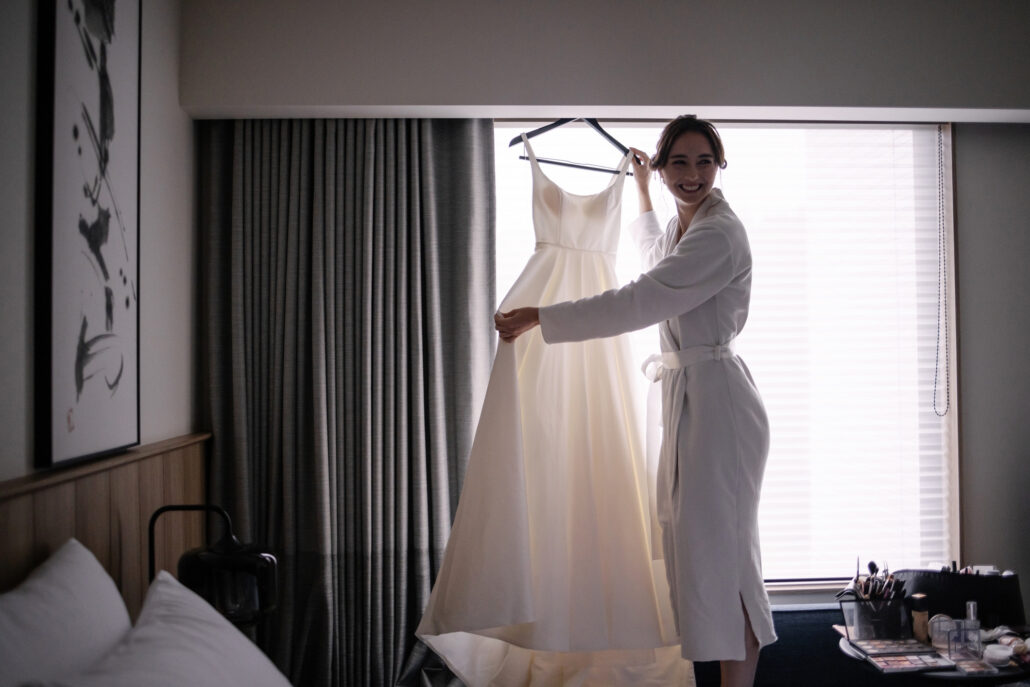
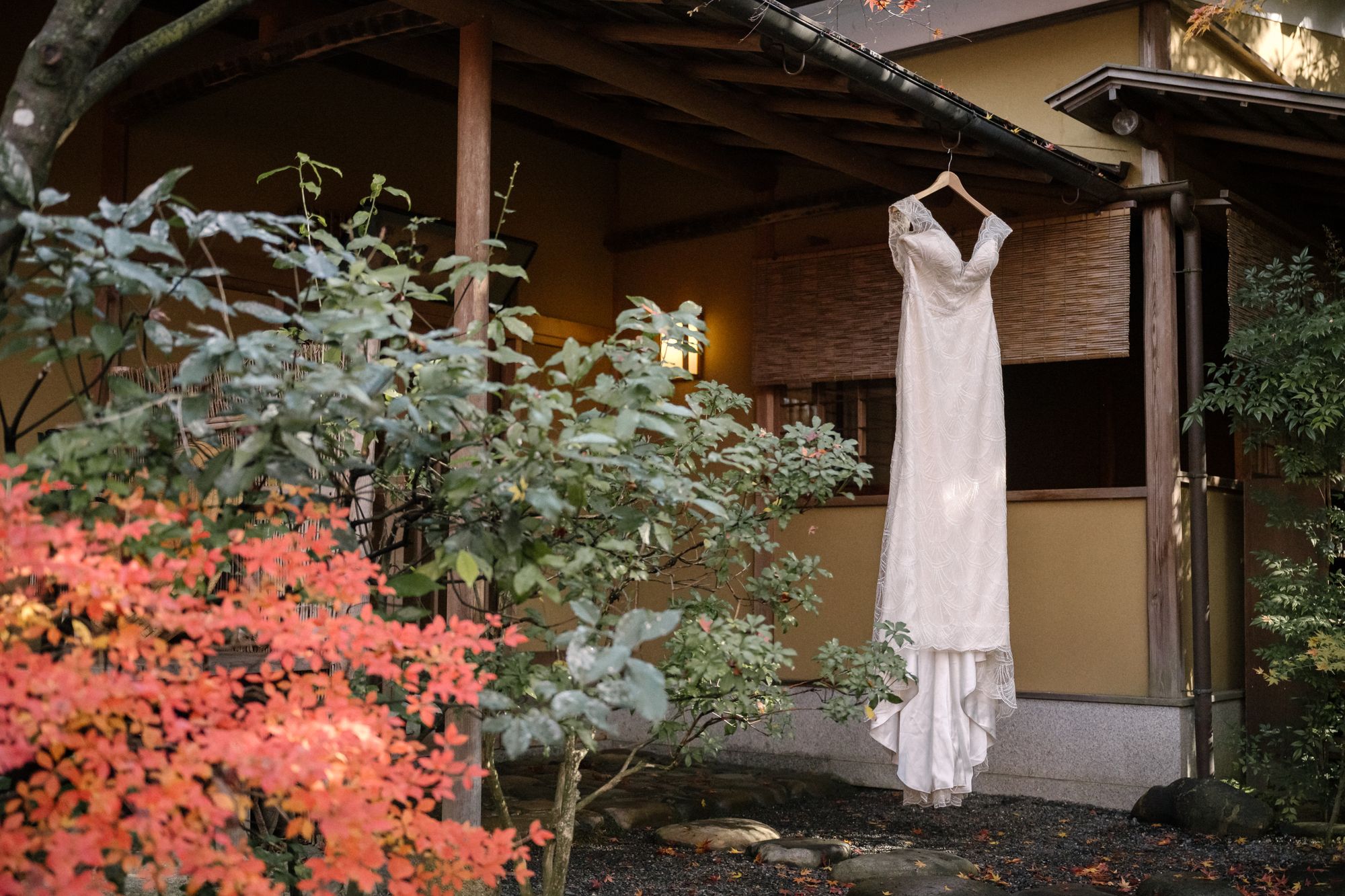
Once something is pressed, it hangs. It doesn’t go back in the case. In a ryokan, it’s worth knowing before you arrive whether there’s somewhere high enough for a gown to hang. The gown itself travels with you, in the cabin on the flight and in your own hands between cities, while Japan’s luggage forwarding service, takkyūbin, carries the big cases on to your next hotel, by the following day on most routes.
Irons in Japanese Hotels and Ryokan
Many Japanese hotel rooms don’t keep an iron in the wardrobe. You ask at the front desk and one is brought up, and a hotel may have only a couple to go round. For two people that’s no trouble. For fifty guests dressing for the same dinner, it’s a queue. So when your guests are staying together, we ask the hotel how many irons it keeps well before anyone arrives. A ryokan will have an iron. It won’t have fifty.
When a hotel or a ryokan is reserved entirely for your wedding, what Japan calls kashikiri, one of its rooms can be set aside for pressing and steaming. Everyone prepares at their leisure, and nobody queues at the desk.
Your Wedding Planner Is Not a Steamer
Pressing a gown is a craft of its own, and on a wedding morning our team is deep in another. By then the planning team is at the venue, where a day planned over many months is coming together, and every supplier who arrives needs someone who knows the plan. The photographers are working from the first frame. An hour spent steaming a dress is an hour taken from all of that, and so from the day itself.
So the pressing is arranged as part of the planning, months before anyone packs, never left to the night before, and it goes to people whose craft it is. Everything will be pressed and waiting. We just won’t be the ones holding the iron.
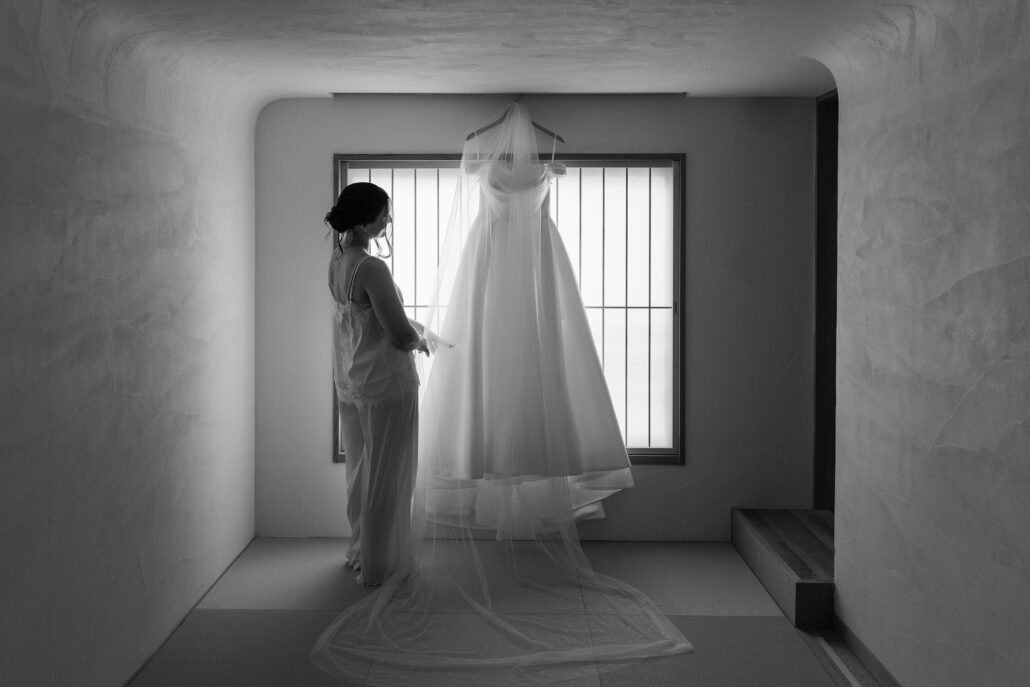
A ryokan will have an iron. It won’t have fifty.
Telling Your Guests Where to Press and Steam
We plan with the two of you, not with each of your guests, so everything we know comes to you first: how many irons the hotel keeps, where in Tokyo a suit can be steamed, which room will be set aside for pressing. Passing it on is the one part we hand back to you, in the welcome note, weeks before anyone packs. Otherwise the questions arrive on the wedding morning, one guest at a time, at the ryokan door, and every answer takes your planner away from you.
Every Outfit Change, Accounted For
A change of outfit is a change in the day. The welcome dinner, the ceremony, the change for the evening, the after-party: every look for the celebration should be known to your planner, not only to your hair and make-up artist. Then every accessory is accounted for, and nothing goes missing between one part of the day and the next.
How many looks are you planning? Each one that comes later in the day travels in its own labelled bag, its shoes and jewellery inside, so it can move quickly to the venue and your planner knows which bag belongs to which part of the day. A look we know about moves through the day without anyone noticing.
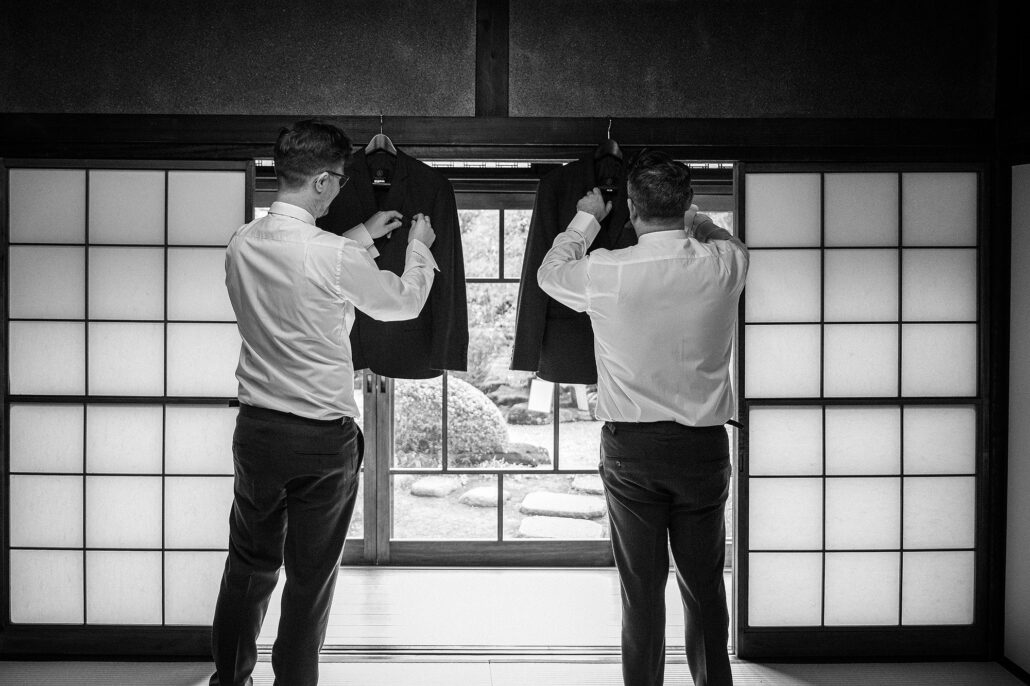
The Wedding Morning Starts the Night Before
A wedding morning has a quiet of its own. Hair and make-up take their time, and the people you love drift in and out with champagne. It’s one of the best parts of the day to photograph, and it stays that way only if nothing in it has to be found.

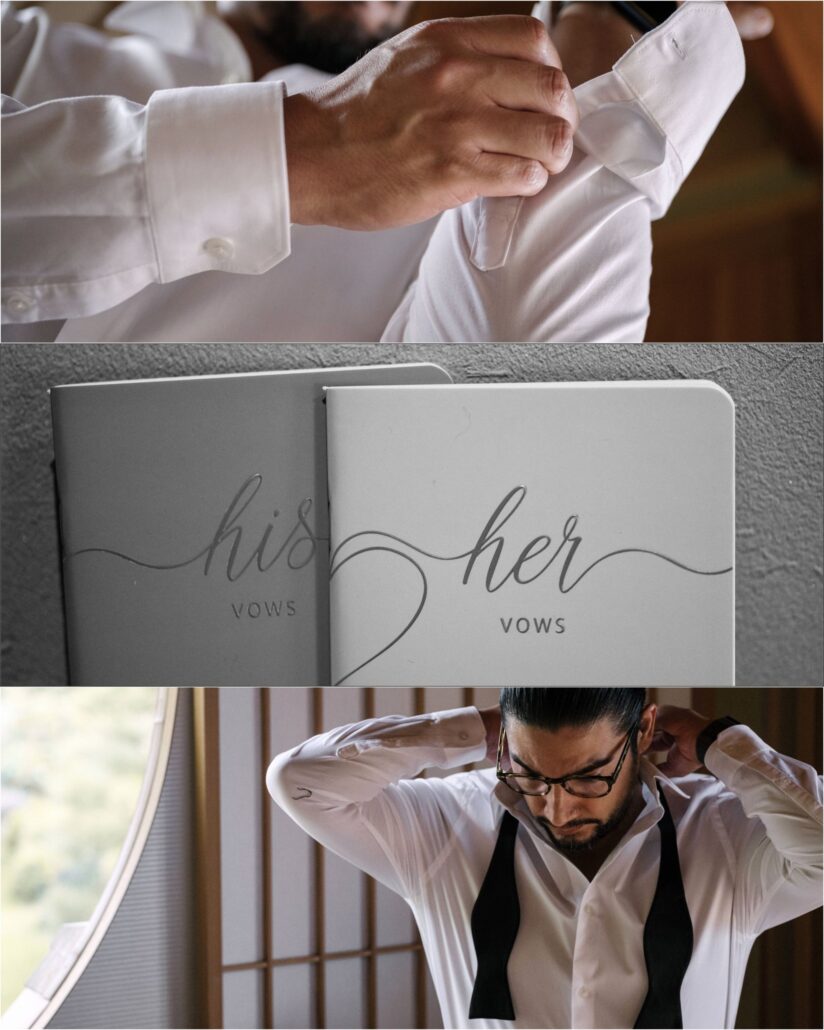
So before the welcome dinner, there’s one last look through with your planner, and every outfit is prepared and laid out, whether it needed pressing or not. The details go together too, in one bag or one corner of the room: the rings, the shoes, the earrings, the invitation, and the vows, written on paper. In the morning they’re handed to the photographers, who style and photograph the flat lay while hair and make-up carry on undisturbed. Nobody has to ask where anything is, dig through a suitcase or ring a bridesmaid in another room. A wedding morning runs smoothly on a little preparation the night before.
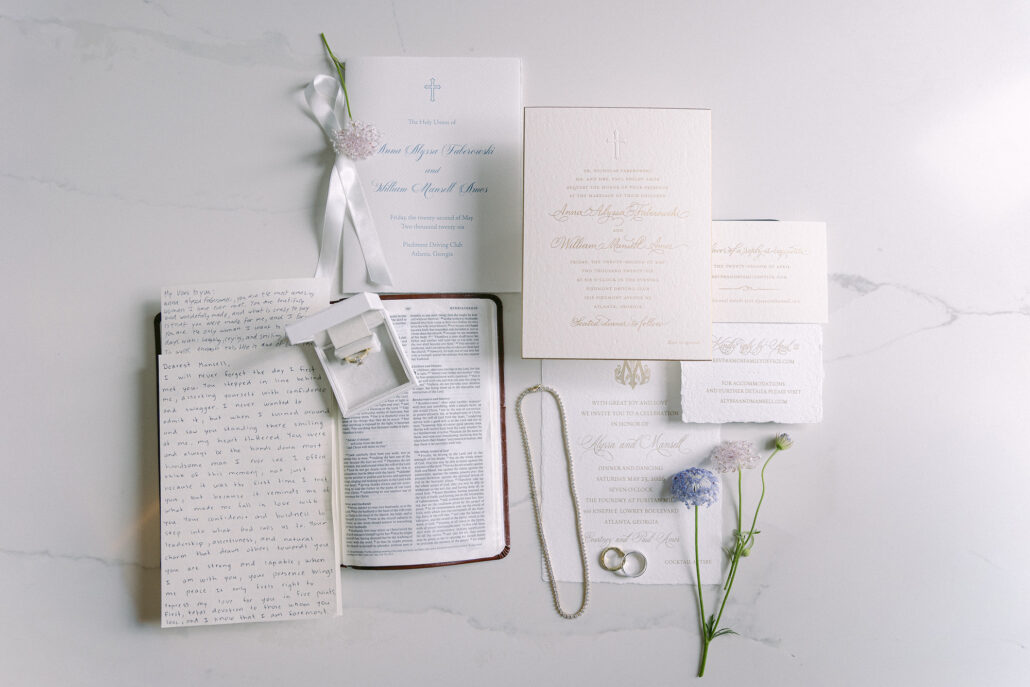
Tell us, too, about anything with a history. Is something coming with you that belonged to someone before you? If we know it exists, it finds its way into the day and into the photographs. If we don’t, it can spend the wedding in an unpacked suitcase.
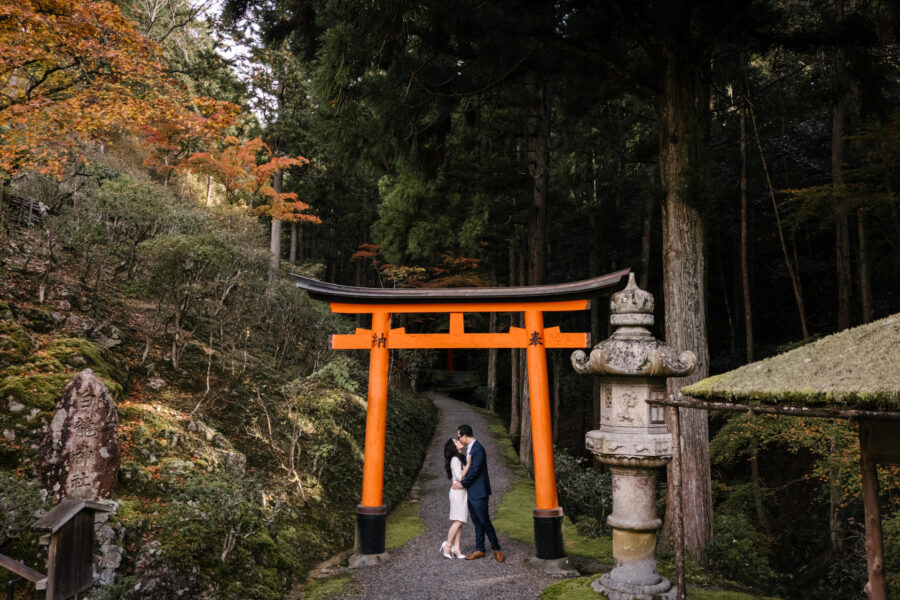
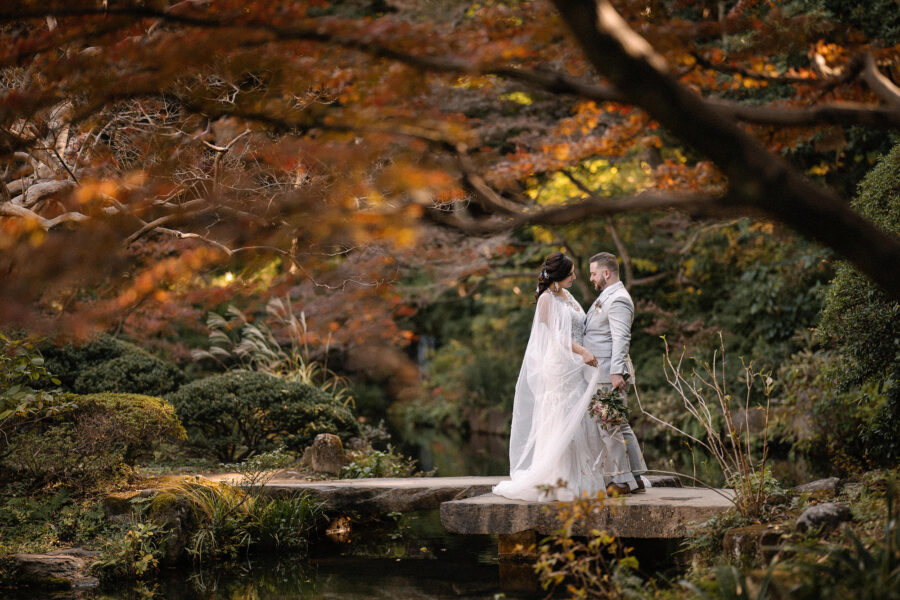
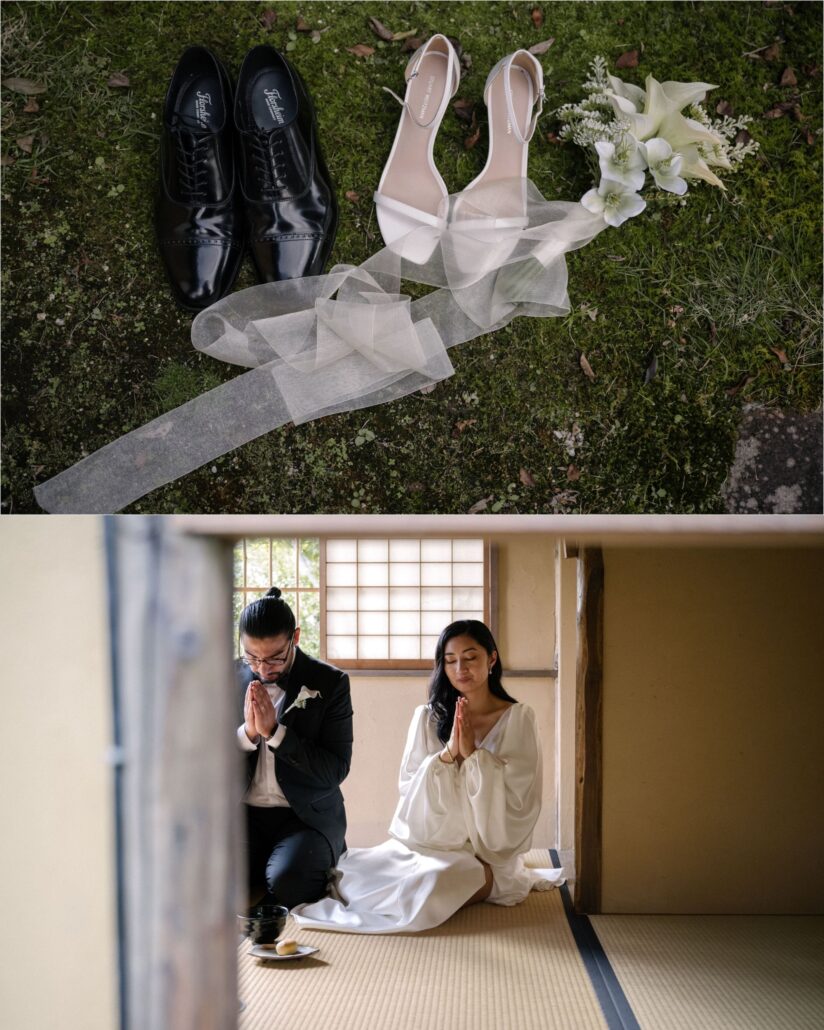
And think about the ground when you choose the shoes for each part of the day. A shrine path is often gravel, and a garden is moss and stepping stones. Many of the loveliest rooms in Japan ask for shoes to come off at the door, too: a ryokan, a temple hall, an old house. Sooner or later, somebody’s socks will be in a photograph. Choose them accordingly.
Breakfast on the Wedding Morning
On a wedding morning, breakfast is the first thing to slip, and the day ahead is long. So it’s settled the evening before: if the hotel serves breakfast, it’s worth going down for it, and if you’d rather stay in the room, we can look at having something brought up. Even a hotel with room service takes the order better the night before.
A ryokan serves breakfast at its own hour, often as a full meal, so the morning is planned around it rather than through it. Many smaller hotels have no room service at all, and if that’s the case, it’s better to have it prepared the night before than on the morning itself. A bridesmaid or someone in the family can go out and fine you something, but remember they’re getting ready too, and they deserve the morning as much as you do.

A wedding morning runs smoothly on a little preparation the night before.
The Welcome Dinner, the Night Before the Wedding
For many couples at a destination wedding, the welcome dinner is the night before the wedding itself. Some hold it two nights before, which gives everyone a day in between. Either way it’s a welcome party and a rehearsal dinner in one, and nobody at that table wants to be thinking about the jobs of the night before, least of all you. That’s the whole reason they’re done first.
So the evening is only for pleasure. As it ends, the bags for the later looks are all sorted ready for the day ahead, or ready to travel to the venue, while the gown, the suit and the details stay with you. Then go to bed. The people who love you will still be there in the morning.
Night Before the Wedding Checklist
- Steaming arranged in the planning, or your own steamer packed.
- Everything pressed and hanging.
- Your guests told, in the welcome note, where to press and steam.
- Every look known to your planner, the later ones each in a labelled bag.
- The details in one bag or one corner, the vows on paper, ready for the photographers in the morning.
- Breakfast arranged.
- The bags for the later looks in your planner’s hands as the evening ends.
Quick Answers About the Night Before a Wedding in Japan
What should you do the night before a destination wedding in Japan?
As little as possible, if the planning has done its work. For many couples the night before is the welcome dinner, so its jobs are finished first: the gown steamed and hanging, the guests told where to press, every outfit known to the planner, the details gathered for the morning’s photographs and breakfast ordered. The evening itself belongs to the people who’ve travelled to be there.
Do hotels in Japan have irons?
Most hotels in Japan can lend an iron, though often from the front desk rather than in the room, and a smaller hotel or ryokan may keep only one or two. If several guests will want one on the same evening, ask the hotel ahead how many it has. When a hotel or ryokan is reserved for your wedding alone, a room for pressing and steaming can be arranged in the planning.
Do Japanese hotels have steamers?
Some of the large international hotels in Japan have a steamer to lend, but it’s never a given. Smaller hotels and ryokan seldom do, and in the countryside it’s safest to assume there won’t be one. For the gown and the suit, a professional steaming service in Tokyo that delivers to your hotel or venue is the surest route.
Can I bring my own steamer to Japan?
Yes. Japan runs at 100 volts, with flat two-pin plugs. A steamer from the US will work, though it heats more slowly than at home. One from the UK, Europe or Australia needs to be dual voltage (the label should cover 100 volts), plus a plug adapter.
Who steams the wedding dress at a destination wedding in Japan?
A professional steaming service in Tokyo, arranged months ahead as part of the planning, so the gown arrives pressed and waiting at your hotel, the house or the venue. Your planner arranges it rather than doing it: on the wedding morning the planning team is at the venue, bringing the day together, and the photographers are already at work.
Should the welcome dinner be the night before the wedding?
The welcome dinner can be the night before the wedding, and for many couples it is, with the wedding the next day. Two nights before gives everyone, the two of you included, a day in between. Either way, the preparation happens before the dinner, never after it.
Everything at a destination wedding comes out of a suitcase. By the morning of the wedding, none of it should still be in one.