Nihongami and Kimono at a Japanese Wedding
Couples often write to us about kimono. The question underneath is nearly always the same: can we wear Japan’s bridal tradition, and can we wear it properly? The tradition has two halves. The hair is nihongami, shaped by hand and pinned with ornaments. The robe is the Japanese wedding kimono. In Japan, some traditions are handed to you with real care. These two ask for the same care back.
The short answer is yes. Wearing them well asks for respect, some fluency in how things are done here, and access to the specialists who still do this work by hand. Get those right and the whole morning changes with them.
What Is Nihongami?
Nihongami simply means Japanese hair. It’s the umbrella name for the traditional women’s hairstyles of Japan, used to tell them apart from the Western styles that arrived in the Meiji era. Each one is built from four parts: the front (maegami), the sides (bin), the back (tabo) and the topknot (mage). Between the late Edo period and early Meiji, some 280 styles were in use, and a woman’s hair could tell you her age, her standing and whether she was married.
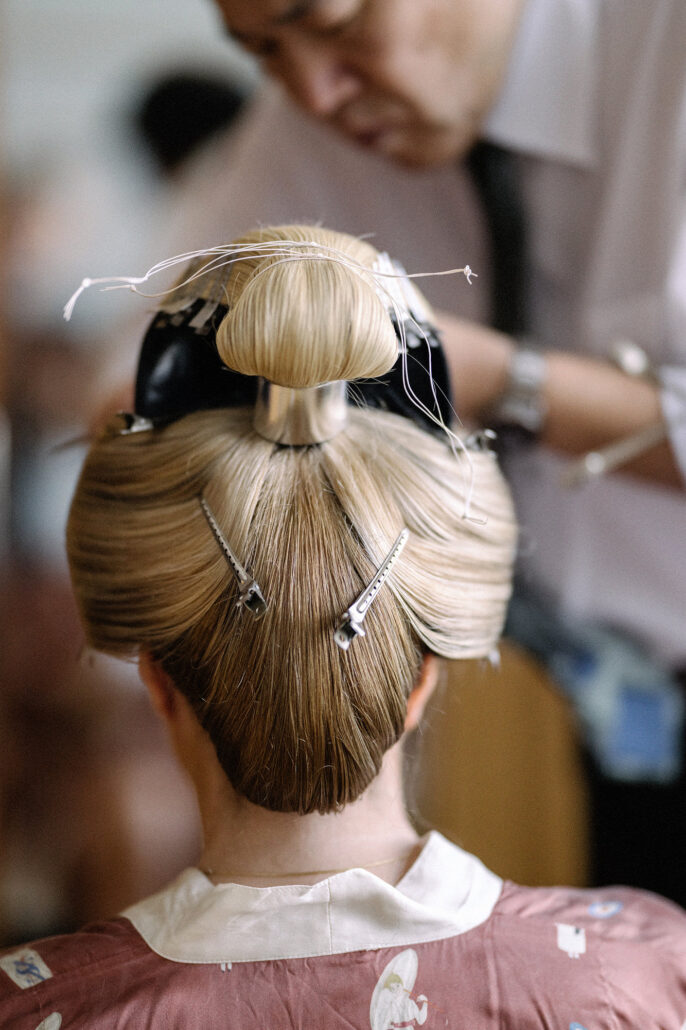
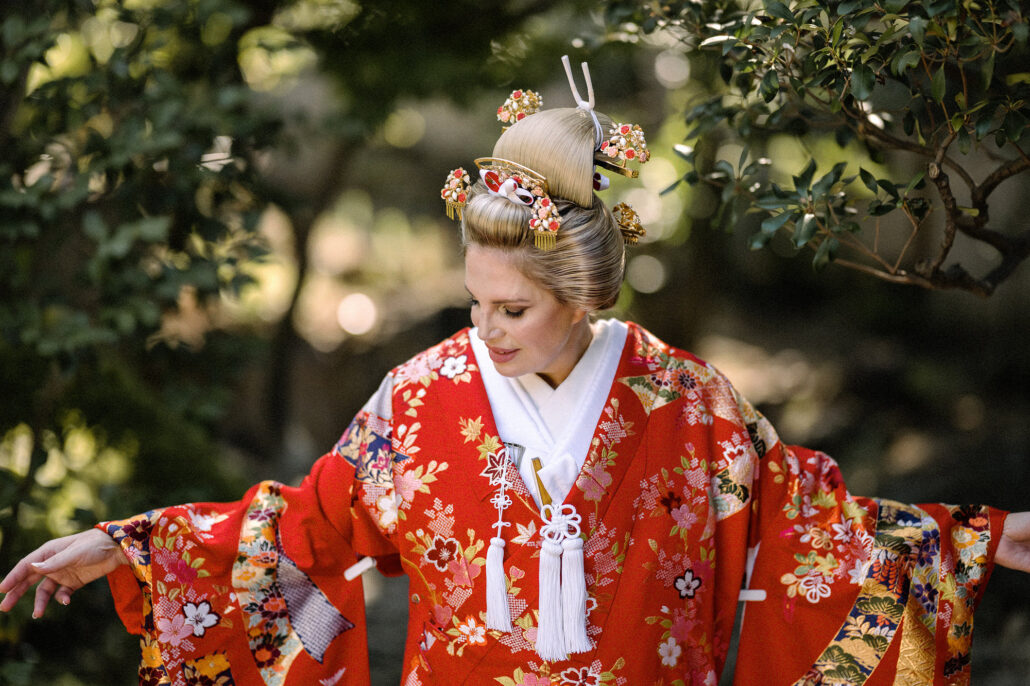
The bridal style is the bunkin takashimada, a shimada topknot raised high at the root, today worn mainly by brides and finished with kanzashi hairpins and combs. It isn’t something you learn from a video. It’s a specialist craft, and the best hairdressers spend years perfecting it.
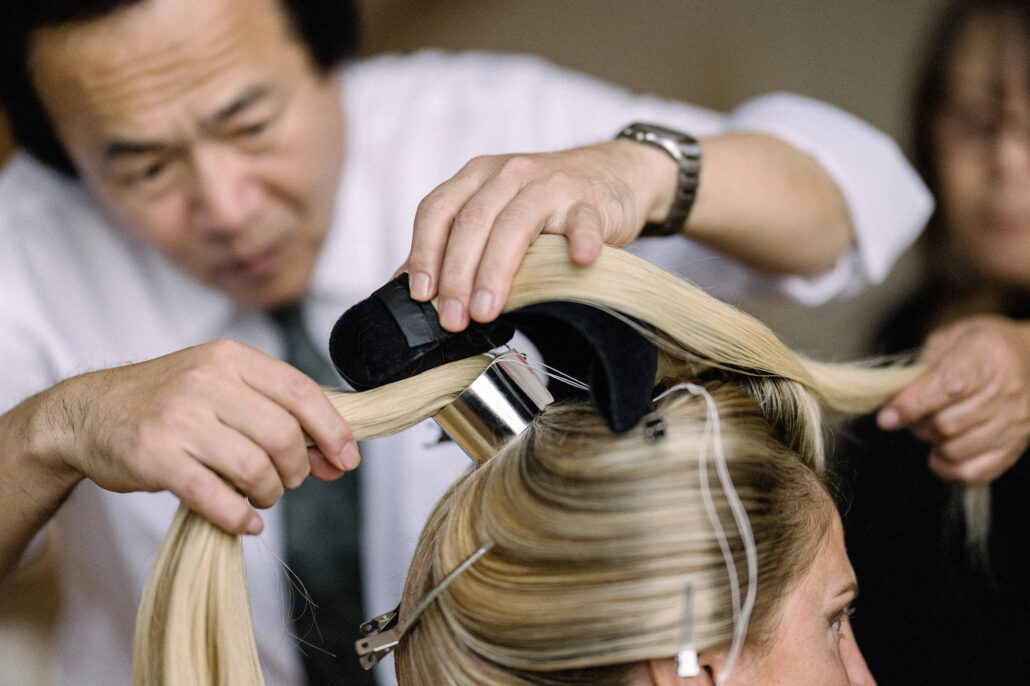
We once had one of Japan’s most respected nihongami masters travel into Tokyo for our bride. Watching him work was a performance in itself. He built her own hair up section by section over a padded form, smoothing, binding and pinning with the authority of long practice. When he stepped back, she looked regal, and entirely like herself.
Nihongami Wig or Your Own Hair?
The bridal style is often worn as a wig, a katsura fitted to the bride’s head. It can also be dressed in your own hair, as it was for our bride. Both are real choices. Which suits you depends on your hair, your kimono and what happens after the ceremony, and we work it out with you and the hairdresser well before the morning. And yes, it works on hair that isn’t Japanese. Hers was blonde.
Shiromuku and Iro-Uchikake: The Japanese Wedding Kimono
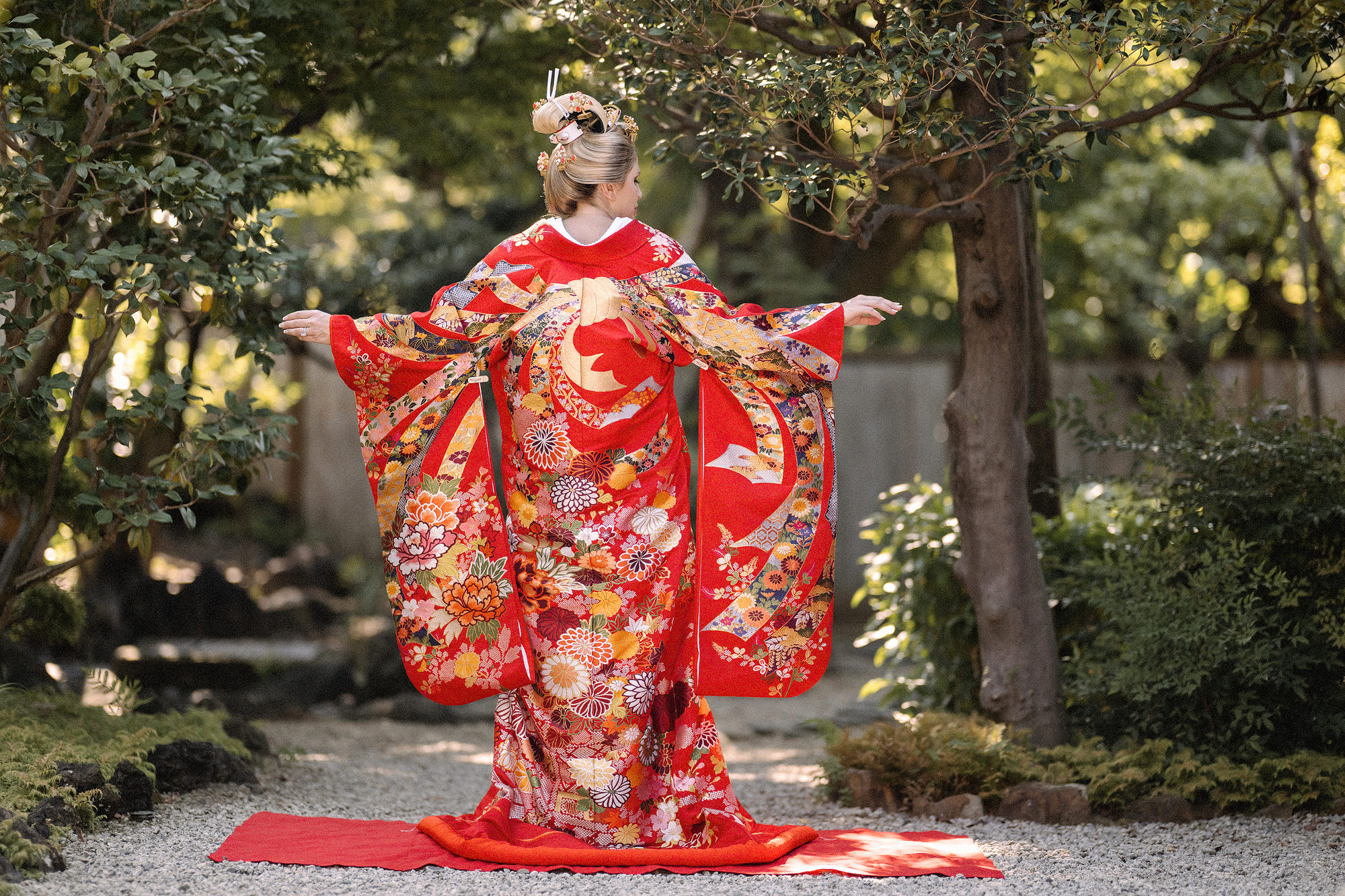
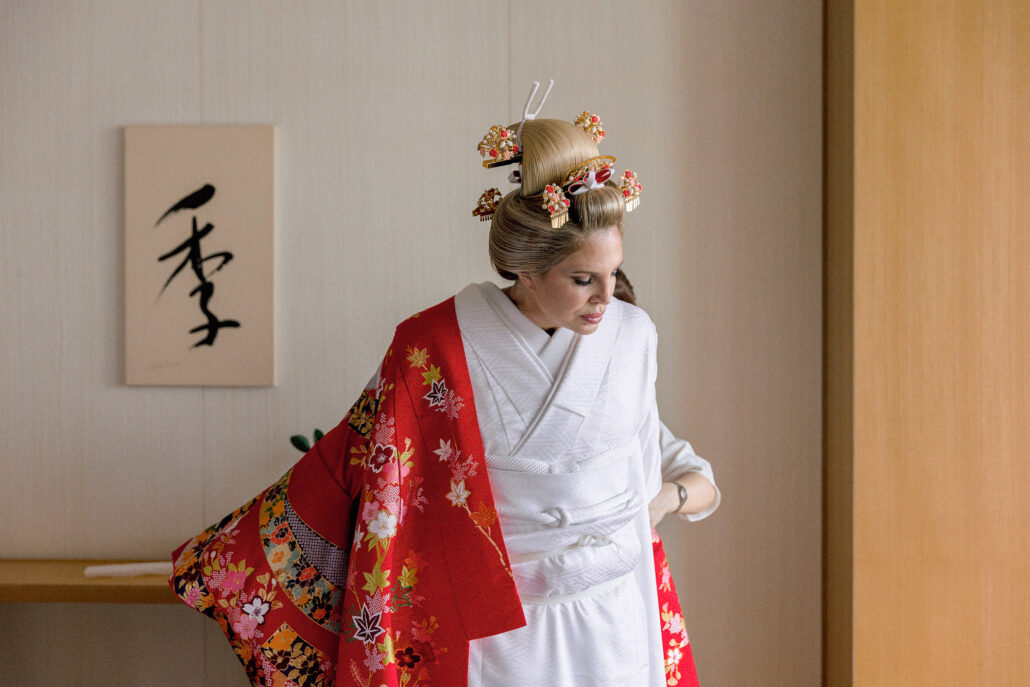
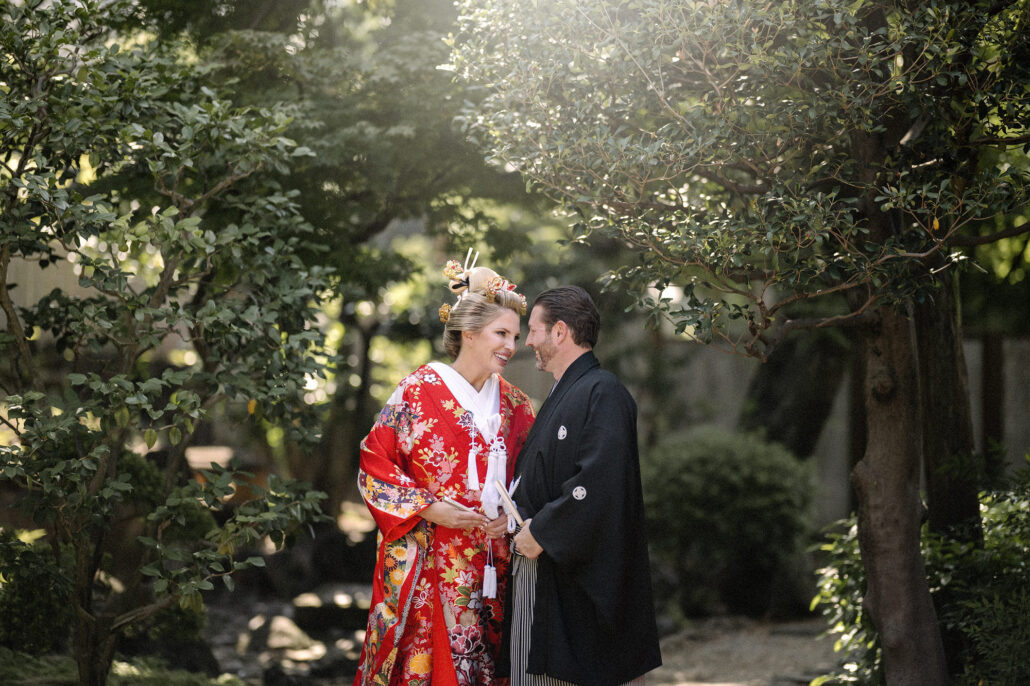
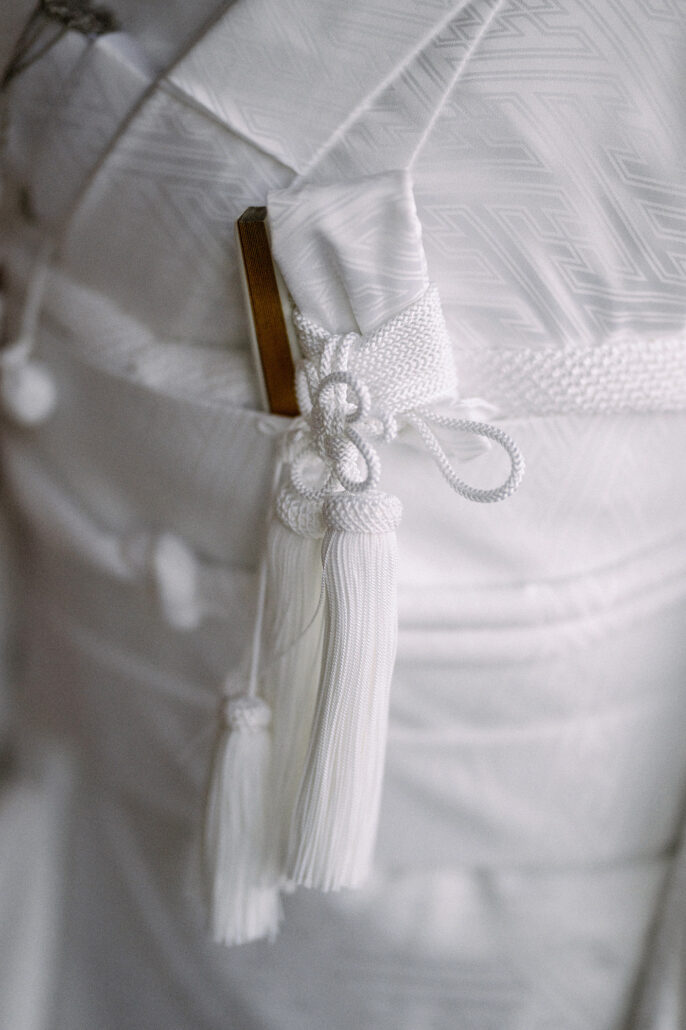
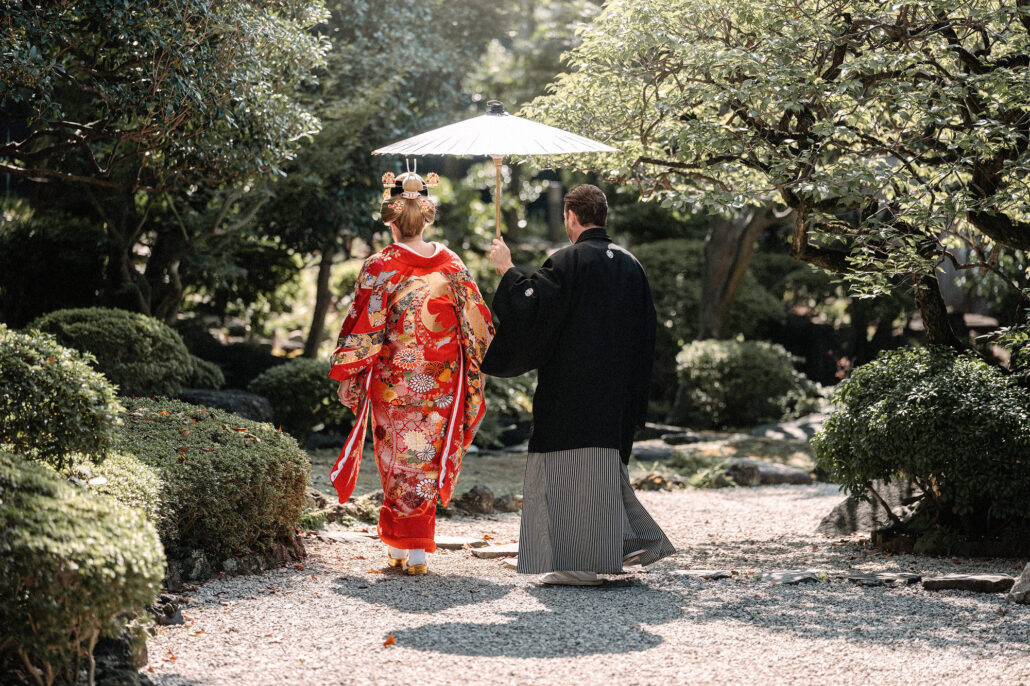
Then there’s the kimono, and most brides choose between two. The shiromuku is white from the outer robe to the sandals, and has been worn since the Muromachi period. Muku means without impurity, and white was the colour of sacred rites and of rebirth. It’s still the robe many brides wear for a shrine ceremony. The iro-uchikake is the same long, padded outer robe in colour, covered in cranes, tortoiseshell and other motifs that carry wishes for long life and prosperity. Our guide to the Japanese bridal kimono goes through every layer.
Dressing a bride in kimono, kitsuke, is a skill of its own. There are several layers, cords and an obi, each tied and tucked by a dresser who knows where every fold should sit. By the time the outer robe goes on, the bride is moving differently. A trailing hem has to be gathered in the hand to walk outdoors, which is where the robe’s other name, kaidori, comes from.
Kimono for an Afternoon, Kimono for a Wedding
Japan is generous with kimono. Visitors are encouraged to try it, and rental shops in Tokyo and Kyoto will dress you for an afternoon of walking and photographs. It’s a lovely way to spend a day, and we’d never talk anyone out of it.
A wedding asks for something else.
A bridal kimono is a different garment, worn for a different reason, by a bride who will spend most of a day in it. When our couples choose these traditions, we bring in the best people in the craft, and we plan the day around what the tradition needs rather than what’s quickest. Respect for the culture comes first. The photographs follow.
Planning Nihongami and Kimono Into Your Wedding Day
1. The Right Hands
In Japan, nihongami and bridal dressing are separate crafts. Not every hairdresser does nihongami, and not every dresser works with bridal robes. We work with the best artisans in both, so when a couple asks, we already know who to call, and who will suit their hair, their kimono and their day. It’s one of the quieter reasons couples hire a wedding planner in Japan.
2. The Meaning in the Motifs
Nothing on a bridal kimono is there by accident. Cranes and tortoiseshell patterns are wishes for a long life and prosperity. White carries purity and a fresh start. We talk couples through what’s on the robes they’re considering, so the one they wear says something they actually mean.
3. A Morning Built Around It
Kimono dressing and nihongami can’t be hurried. It can take hours. We build the morning around it: who is in the room, when family arrives, how far the bride has to walk in a trailing hem, and when to step outside for the light. Then nobody is watching the clock.
4. Tradition First, Then Your Story
Changing outfits partway through is a Japanese wedding custom of its own, iro-naoshi, when a bride leaves the white of the ceremony for colour. Some of our brides wear nihongami and kimono for the ceremony, then change into a gown for the reception. Others pair kimono with Western touches. There’s no single right version. There is a right order: the tradition comes first, and everything personal sits on top of it.
A Real Story: Aman Tokyo, One-of-a-Kind Kimono
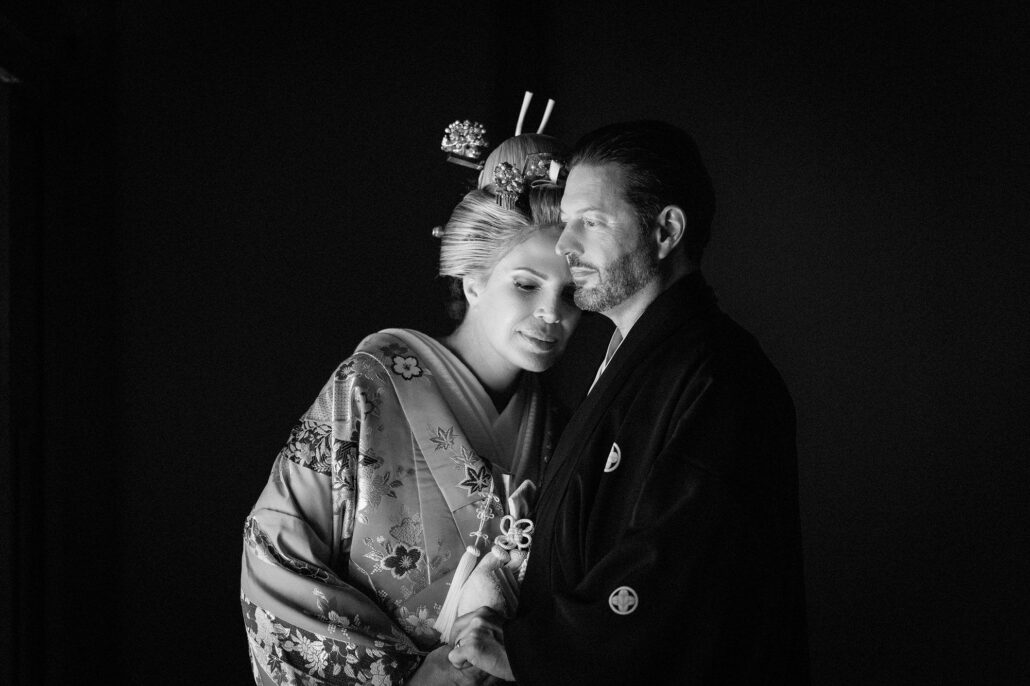
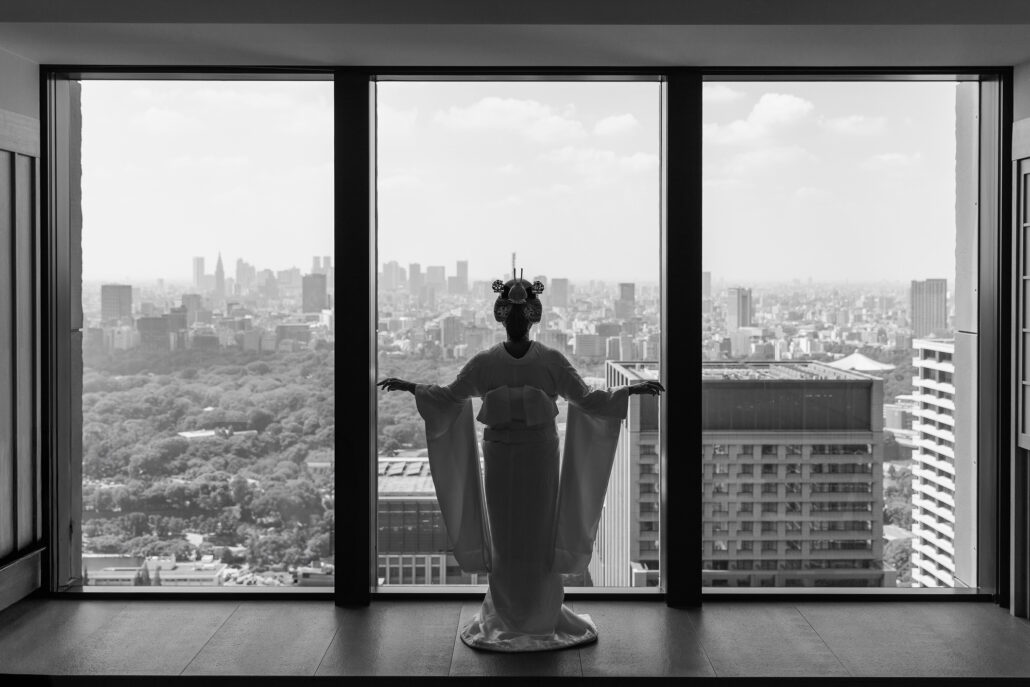
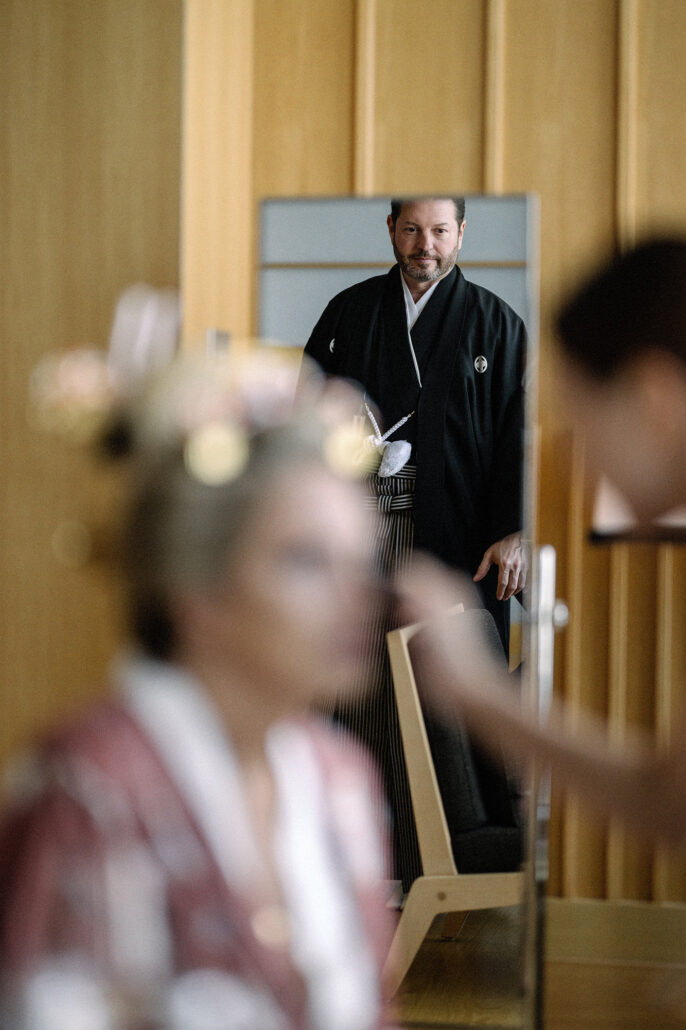
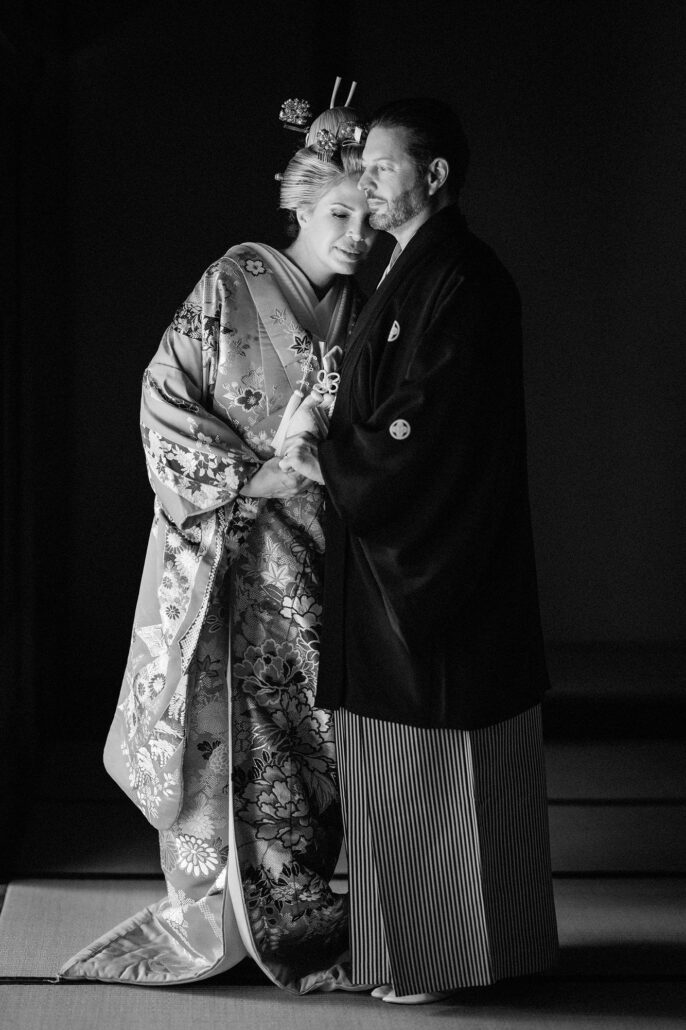
One of our couples from Chicago began their wedding day at Aman Tokyo, high above the city. The bride wore a one-of-a-kind kimono, her hair dressed in nihongami by the master who had travelled in for her, and her groom wore black crested montsuki with striped hakama. Watching her get ready was emotional, even for us. Layer by layer and pin by pin, she settled into it until it looked like it had always been hers.
Later, at a garden venue in Tokyo, they exchanged vows. There were goosebumps, ours included.
Why Couples Choose Tradition
For couples coming from abroad, wearing these traditions is a way of honouring where they’ve chosen to marry. They decided the day means something, and that the place it happens in is part of that meaning. A kimono worn with the hair, the dressing and the unhurried morning that go with it says so without anyone having to explain.
Our part is making that possible without it becoming one more thing to carry. We know the craftspeople, the etiquette and the time it all takes, and we hold that structure so the couple can stay present in it. That’s what it means to plan a wedding in Japan with us, from the first kimono question onwards.
A Living Craft
Nihongami and kimono are still in the hands of people who have given their working lives to them. Wearing them on your wedding day in Japan means being trusted with that work for a day, and bringing a little of it home.
Done properly, these traditions don’t make a wedding look Japanese. They make it feel Japanese.
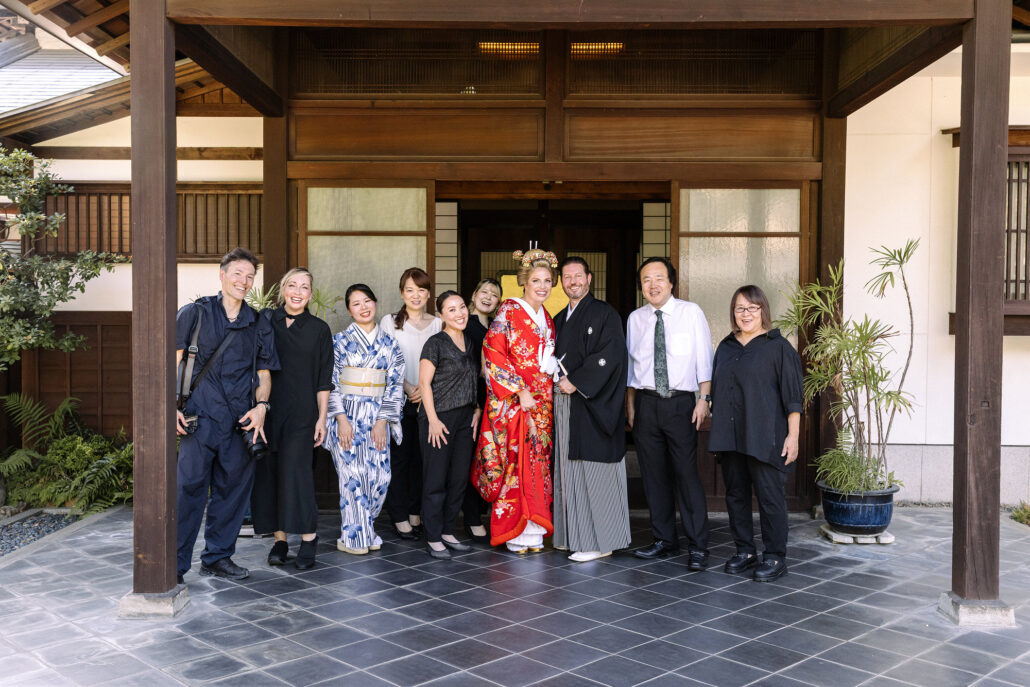
Planning, photography and film by 37 Frames.