“This was the place we went for the first time. I remember these stairs.”
Five o’clock on a Wednesday in May, somewhere in Shinjuku, two newlyweds stopped at a flight of stairs most of Tokyo walks past without a second look. About ten years earlier, they’d climbed them together. She had flown to Japan to visit him, and somewhere on that trip it stopped being a casual visit.
Their Tokyo garden wedding had started that morning at the Park Hyatt, with Mt Fuji in the window, moved through a house built in 1920 and a shrine older than most countries, and was about to finish under a thunderstorm. The stairs were the one part of the day nobody could have planned.
Our fabulous groom was born in the States to a Japanese mother. He spoke Japanese before English, spent his summers here with his grandparents, and at 21 moved in with them for two years. For our incredible bride, this was trip number six. His grandparents were there, and his uncle, and his mother’s childhood friends.
Tokyo is too big for anyone to know all of it, so everyone who spends real time here ends up with a private version: a station exit, a noodle counter, a flight of stairs. When a couple like this marries here, the day becomes the city recognising them back.
It was also twenty-seven degrees in the shade, and the ceremony was at noon, in full sun. The weather had plans for the evening too.
Getting Ready at the Park Hyatt Tokyo
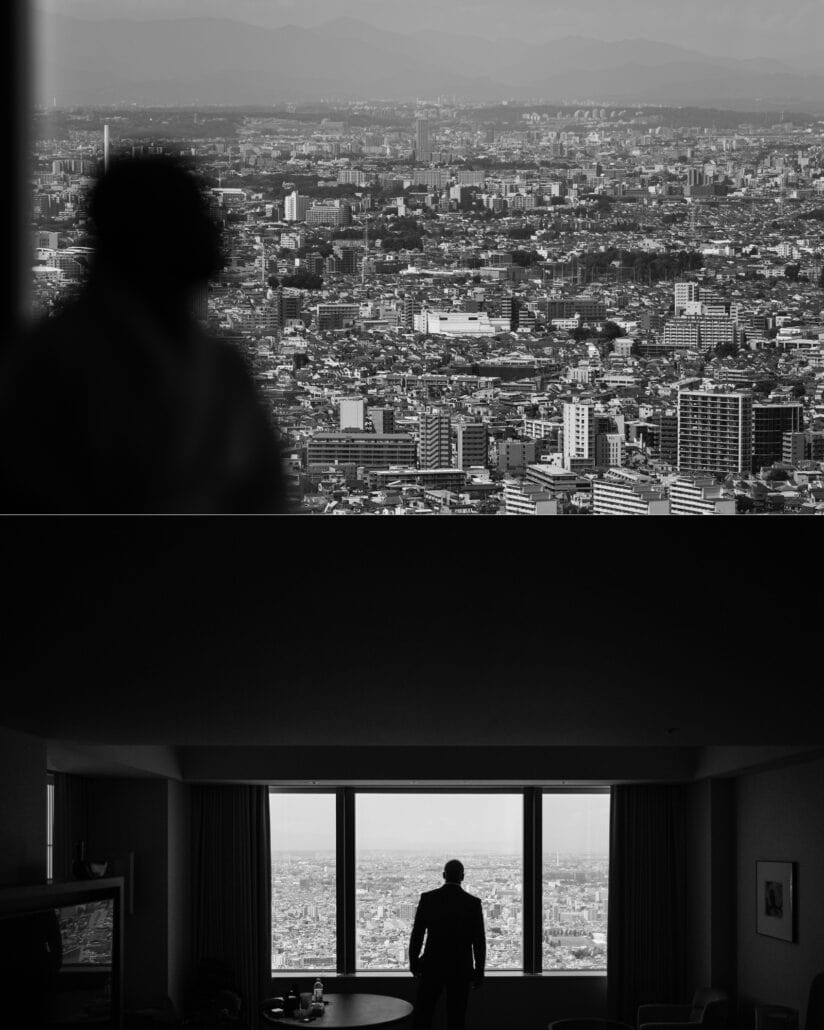
They got ready at the Park Hyatt Tokyo, our home away from home. The hotel sits on the top fourteen floors of Kenzo Tange’s Shinjuku Park Tower, under its glass peaks, freshly restored by Jouin Manku and reopened in December 2025. From up there Tokyo runs to the horizon on every side. You float above the city for a few hours before you walk into it, which is how a Tokyo wedding day should start. And that morning, while they got ready, Fuji was out: clear, about a hundred kilometres away, sitting at the far edge of the city. The oldest recorded way of honouring the mountain is exactly that. You look at her from a distance.
Where a couple gets ready matters more than people expect. It’s hours of the day, not minutes, and the room sets the pace for all of them. Give a wedding party light, space and a view, and the morning slows down on its own.
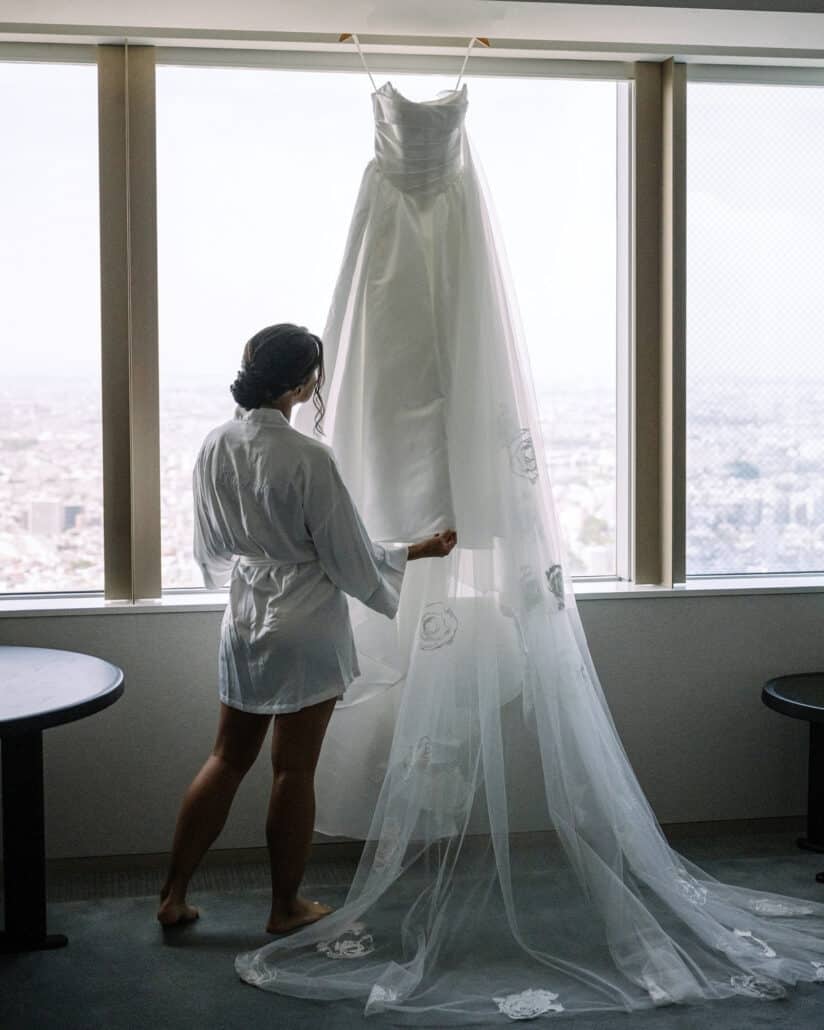
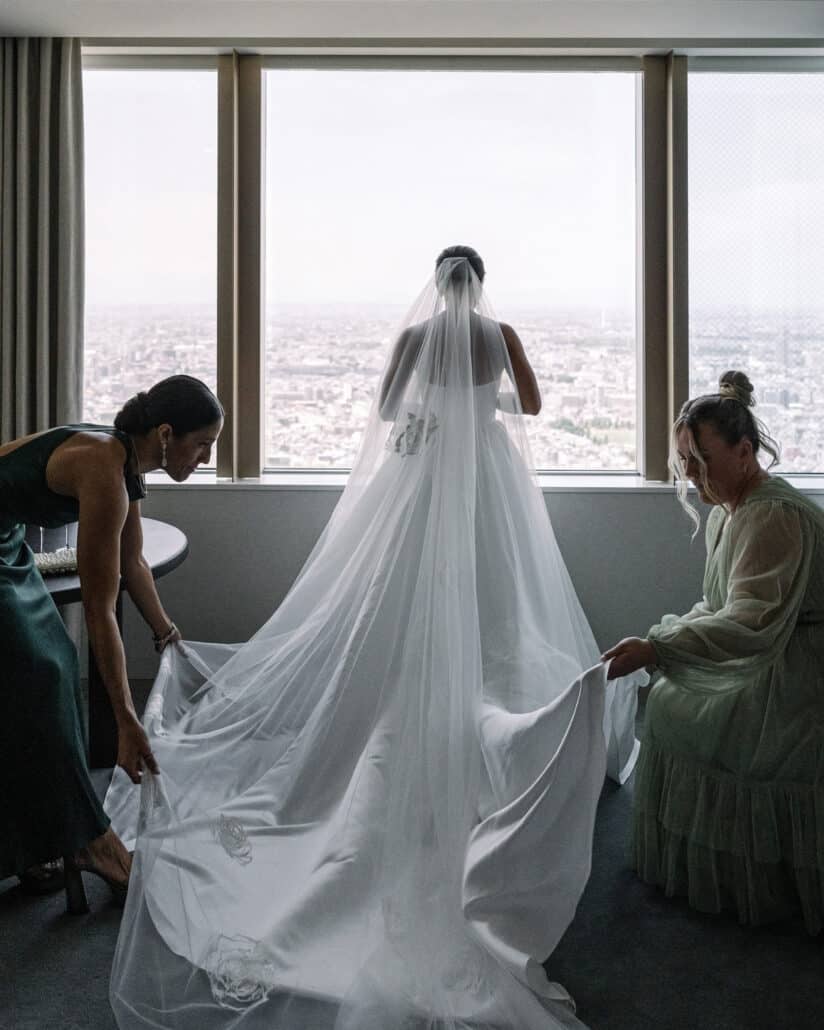


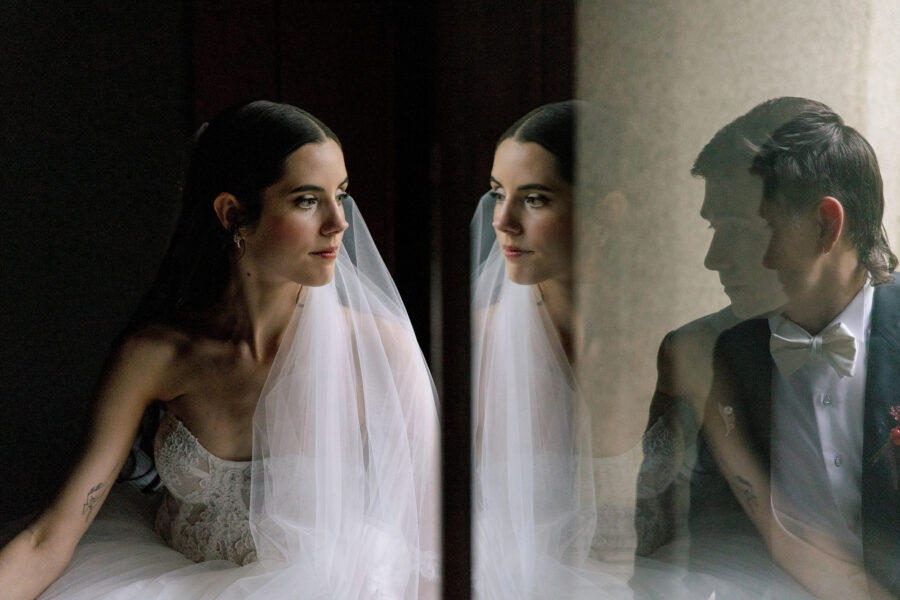
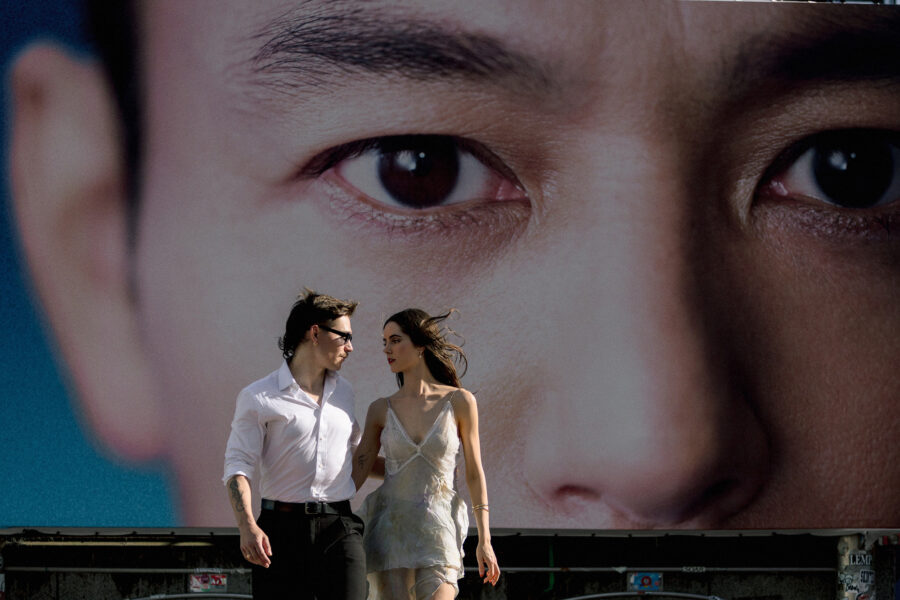
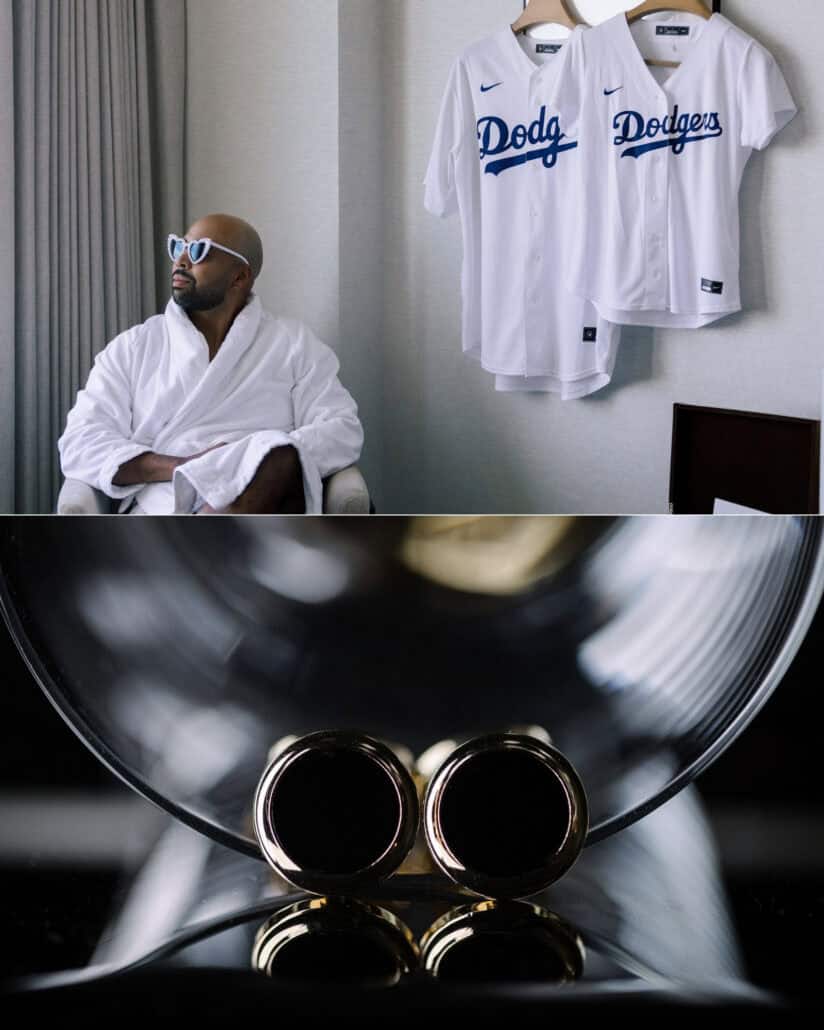
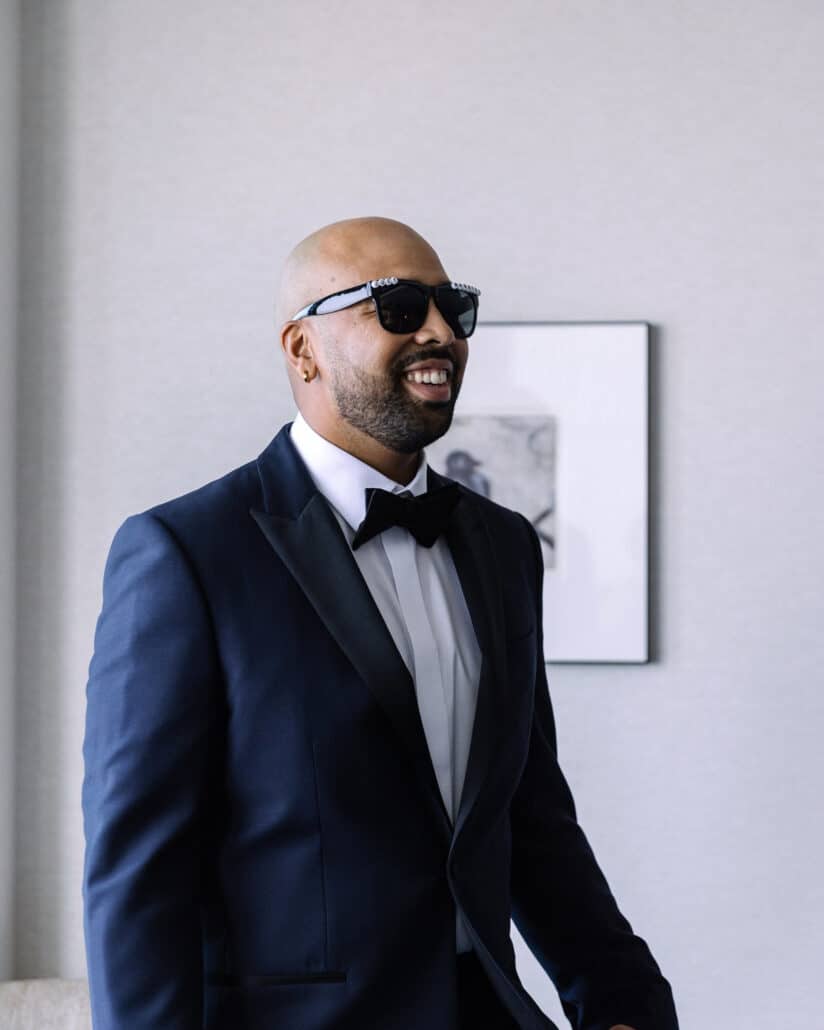
Her dress hung in that window, over the city. The two of them jumped on the bed in hotel robes, holding up matching Dodgers jerseys, which in Japan right now counts as dressing local. His friends had packed a pair of sunglasses “so we can do it in like Shinjuku”. Tokyo vibes.
Remember the sunglasses.
A Traditional Japanese House Wedding in Tokyo
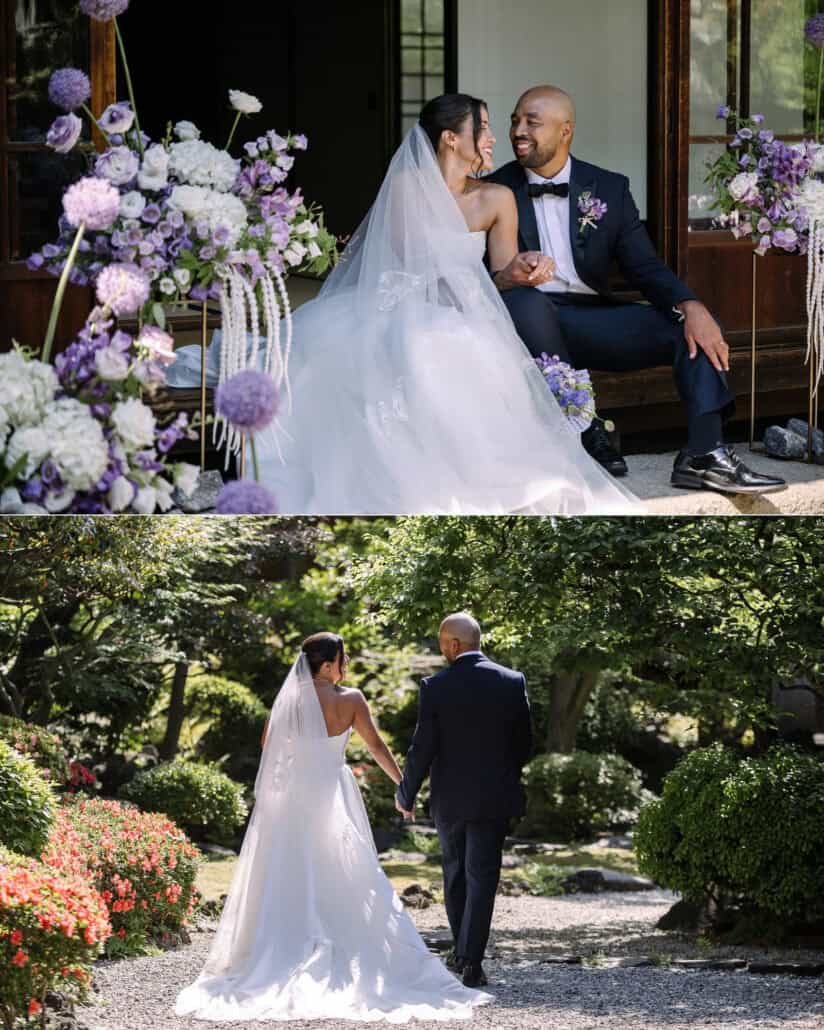
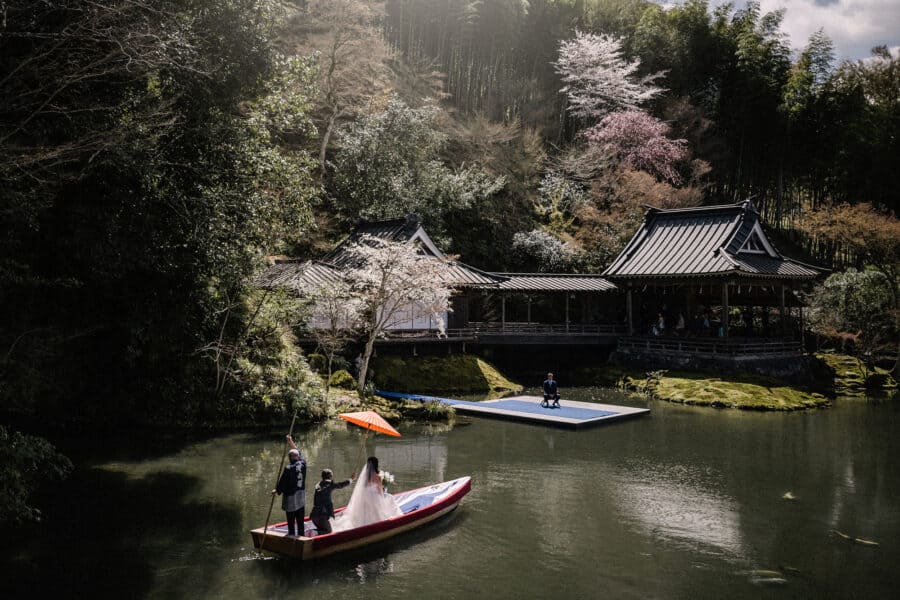
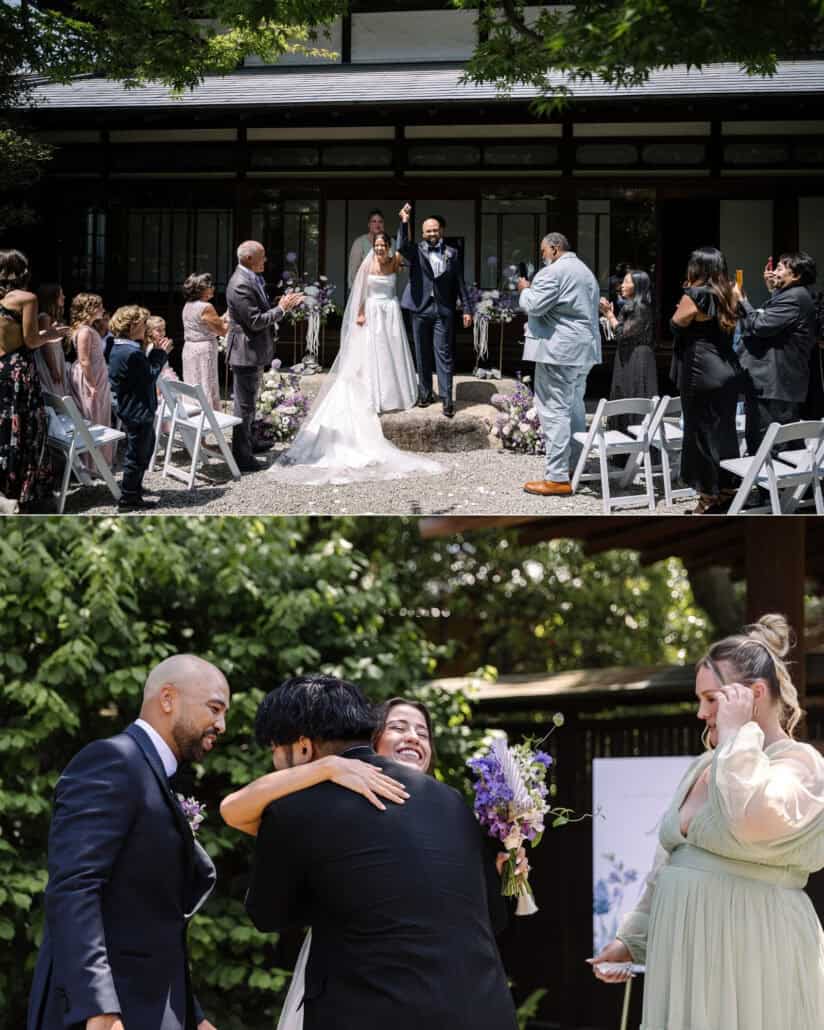
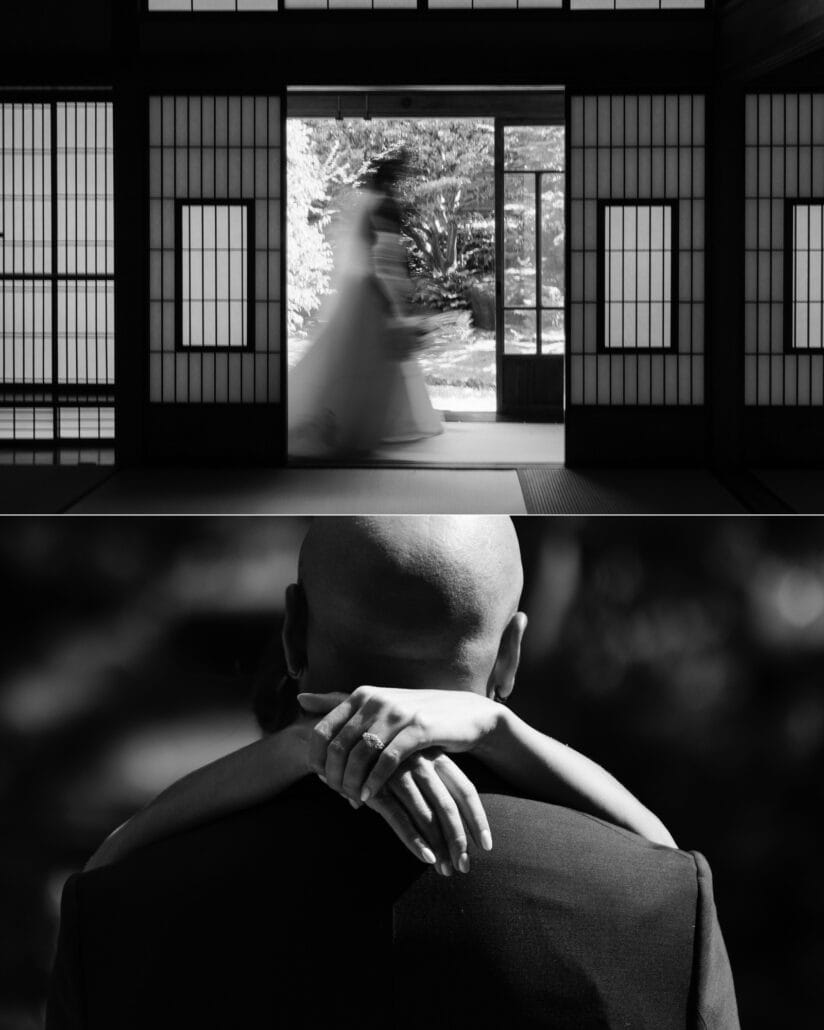
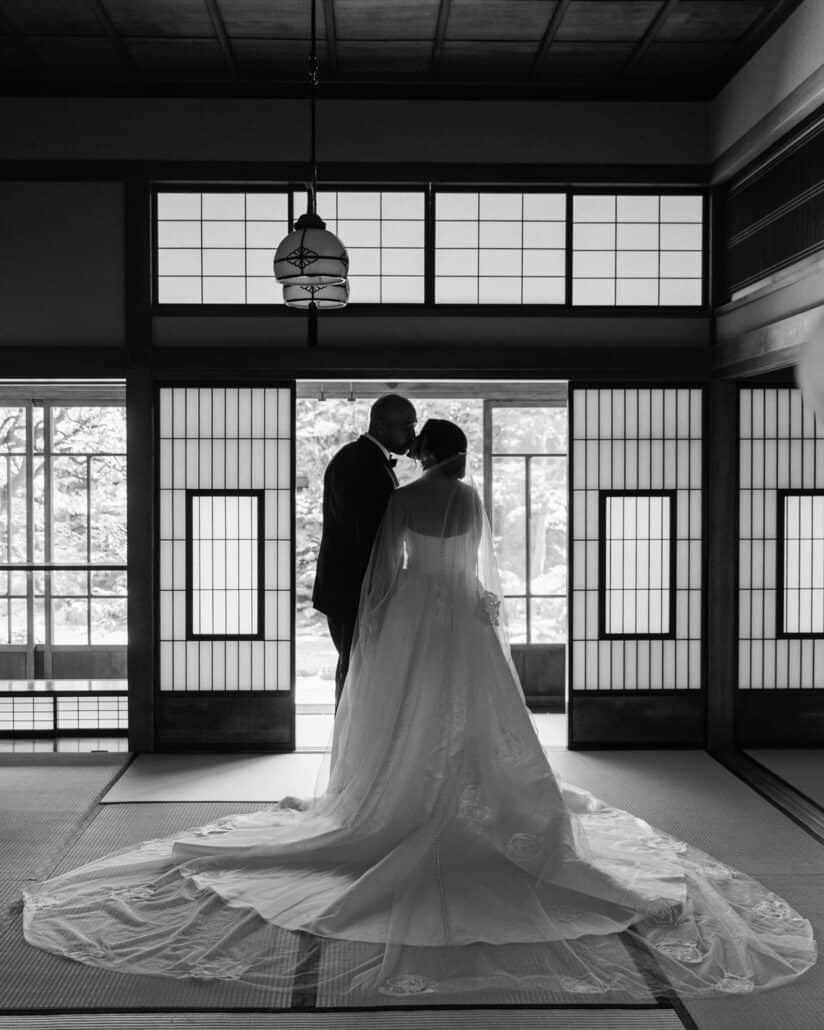
The ceremony was at a beautiful traditional Japanese house. It was built in 1920 by a shrine carpenter, as the Tokyo home of a merchant family from Aomori: tatami rooms, shoji screens, old timber polished by a century of socks, and a stunning Japanese garden. Houses like this survive in Kyoto and in the countryside. In Tokyo they’re rare now.
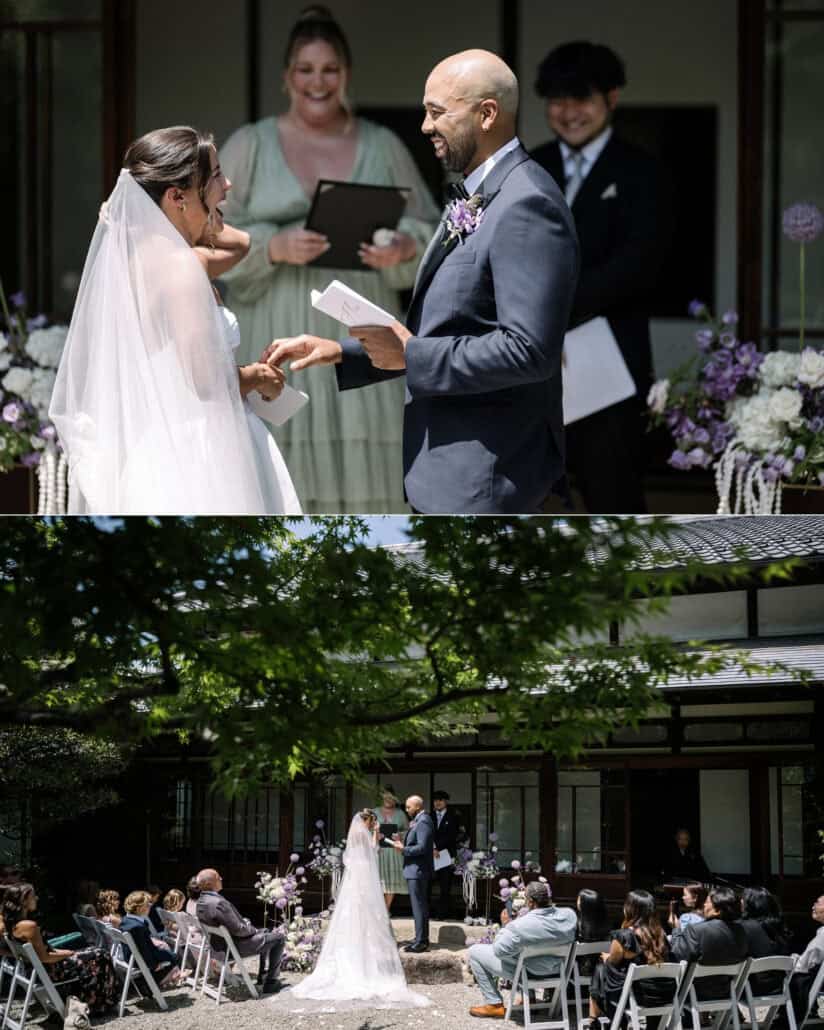
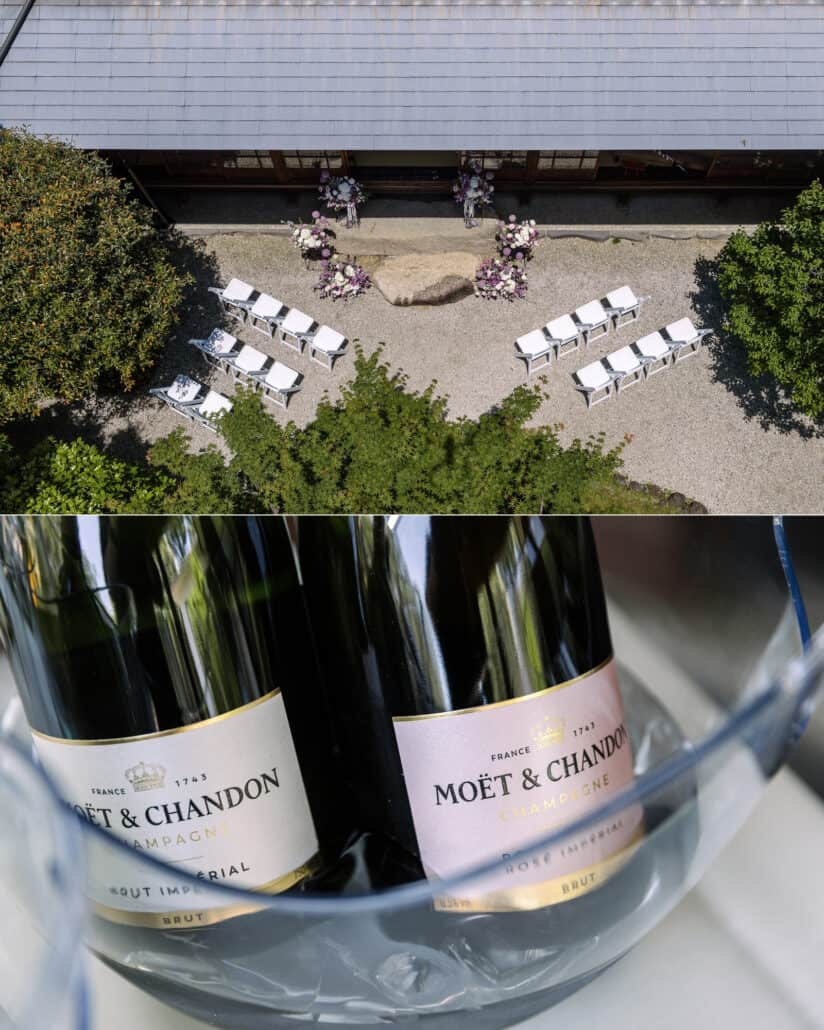
We love a house like this for a wedding like this one. It was built for a family to live in, and a century later it still feels that way. You take your shoes off at the door. People perch on the edge of the veranda. Children find the corners. A ceremony here happens at home, and for a day about two families, that’s the whole point.
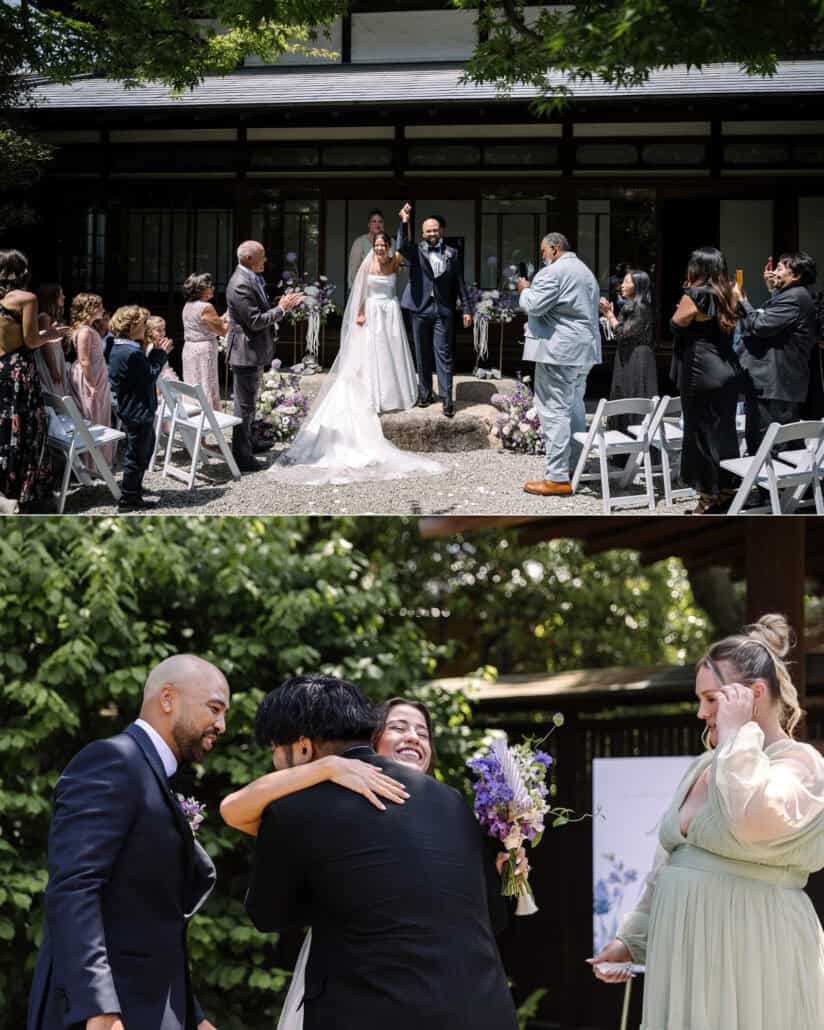
At noon, in full sun, we promised to get everyone into the shade as fast as we could. The answer came straight back: “No, it’s perfect.”
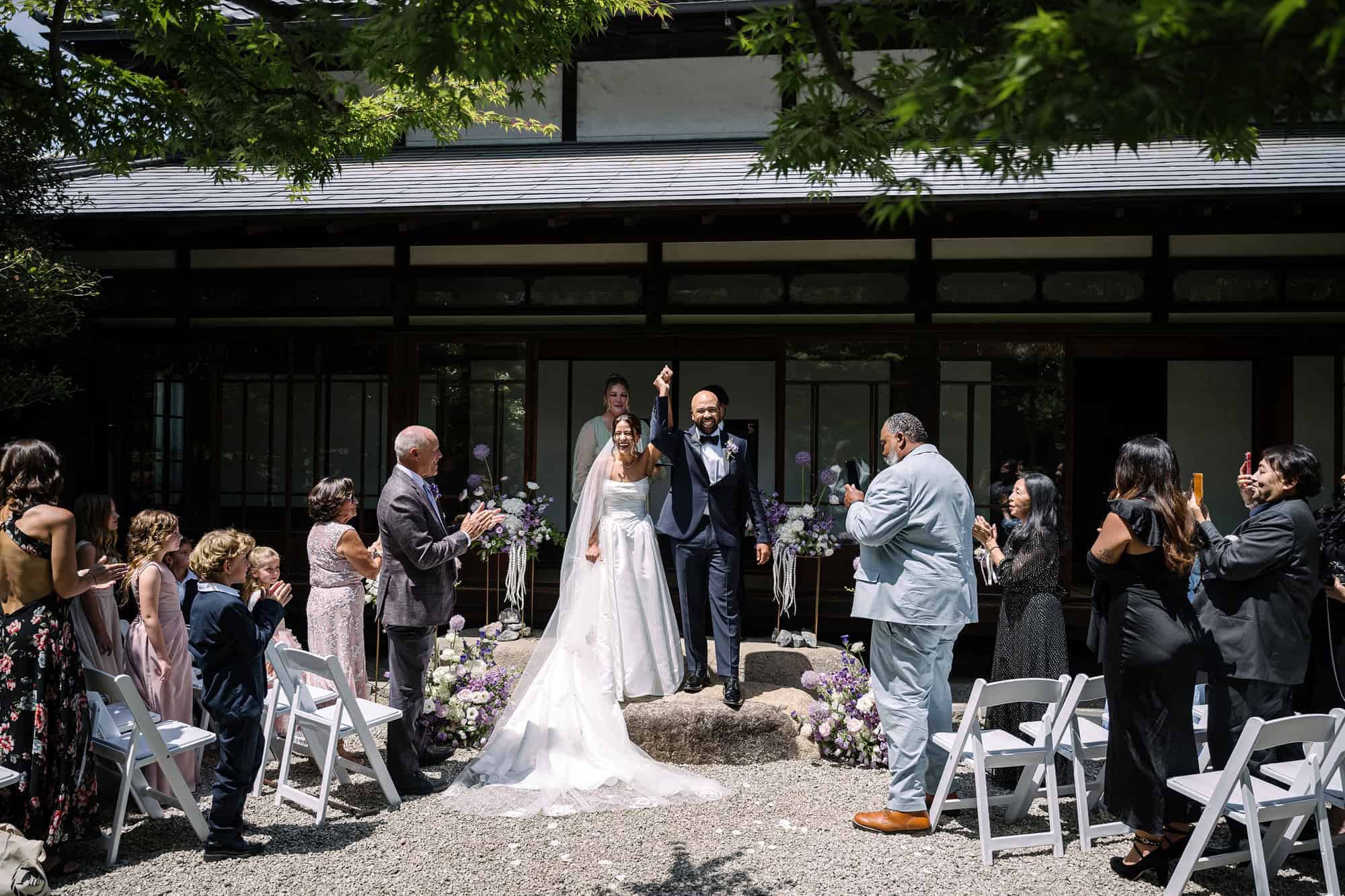
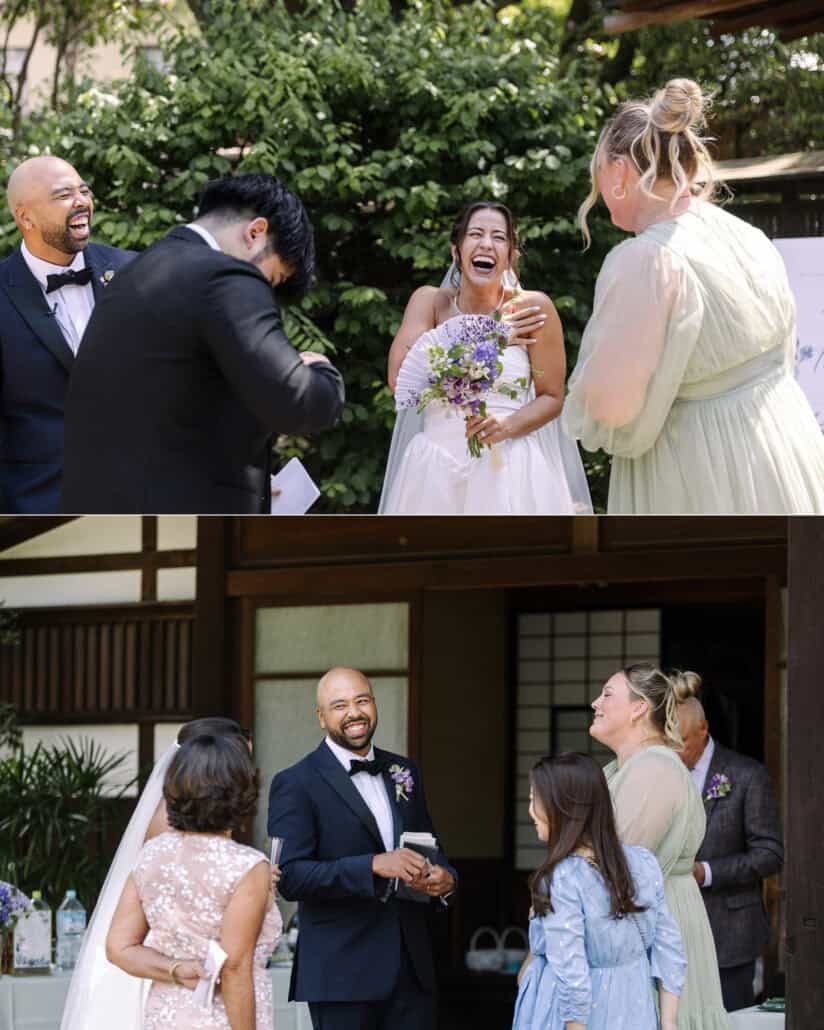
A koto opened the processional. It’s a plucked instrument, so each note arrives and then fades, and in the gaps you can hear exactly where you are. She walked in with her parents to a great stone in the garden, and they married there among purple and white flowers. Two friends led it: her college friend, who wrote the ceremony, and his friend from Tokyo, who spoke in Japanese in the midday sun. For a man who spoke Japanese before English, part of his own wedding arrived in his first language. That’s the quiet gift of a Japanese American wedding in Japan: both halves of the family get to feel like the home side.
It helps that in Japan the legal side of a marriage happens on paper, at a ward office or back home, and the ceremony carries no legal weight of its own. That leaves the people at the front free to be whoever knows you best.
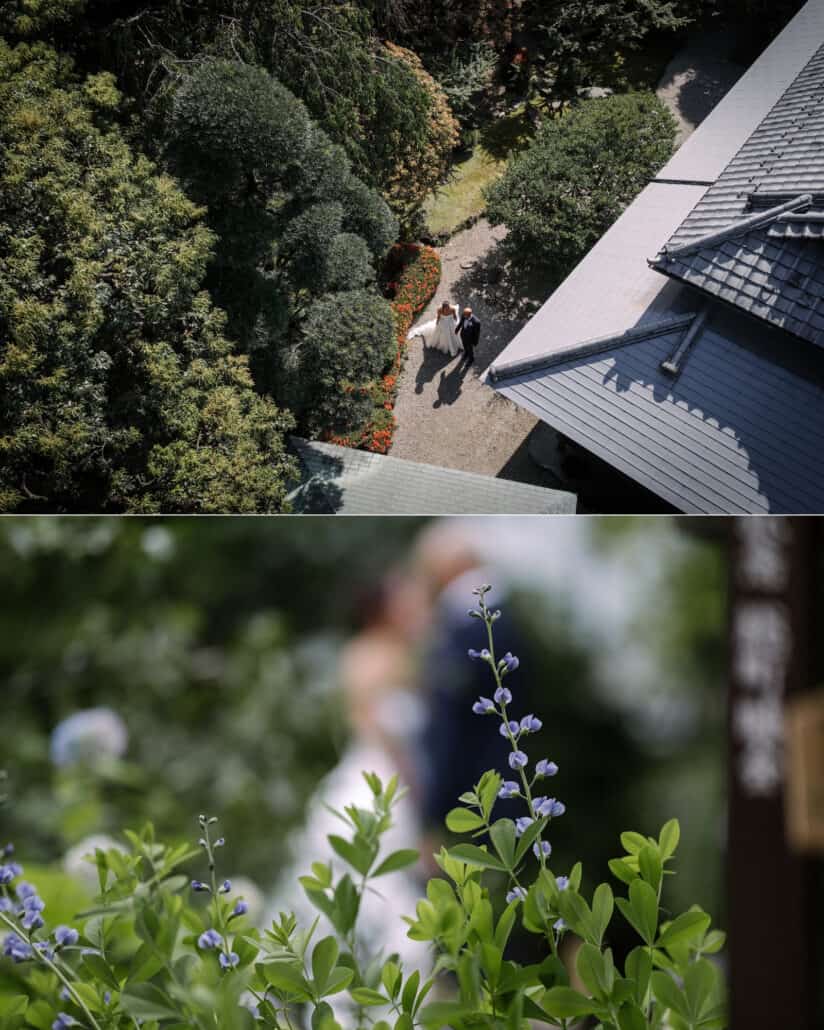
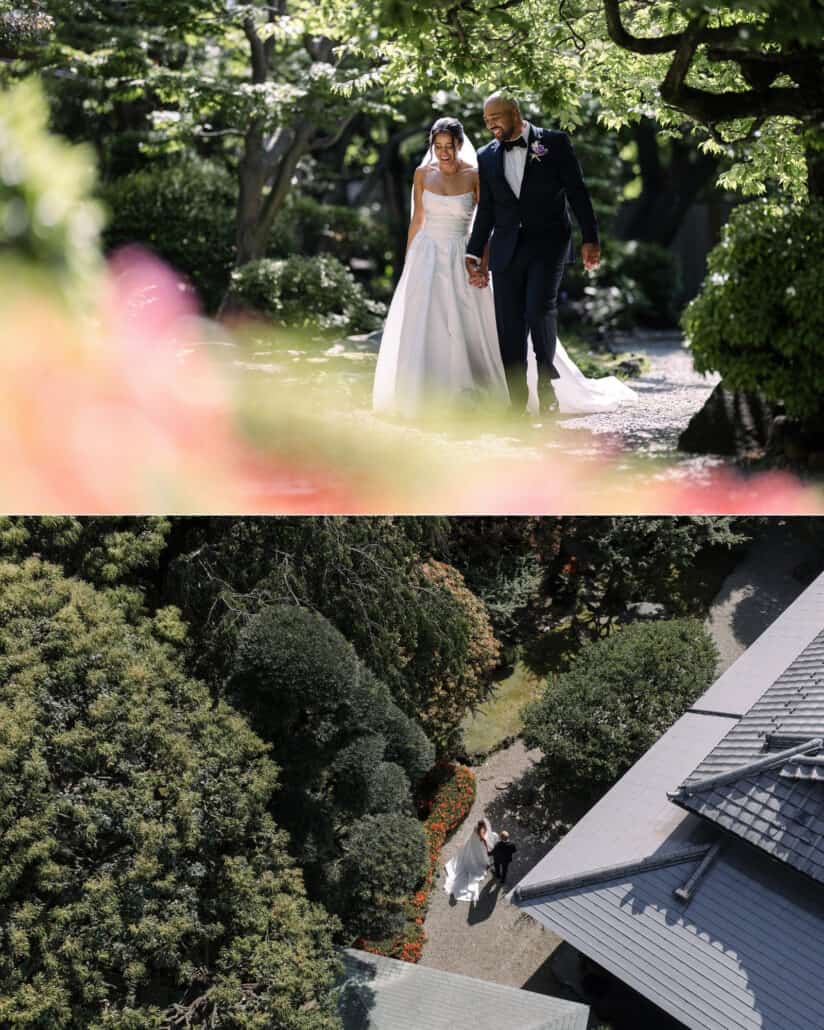
The nieces and nephews carried the rings. The vows stay with them. The first reviews came in the moment it was over: “Got married!” and “It was hot.” Both accurate. He also had a tip for getting through it: whenever she was crying, he told her to look at how much their officiant was sweating. Haha!
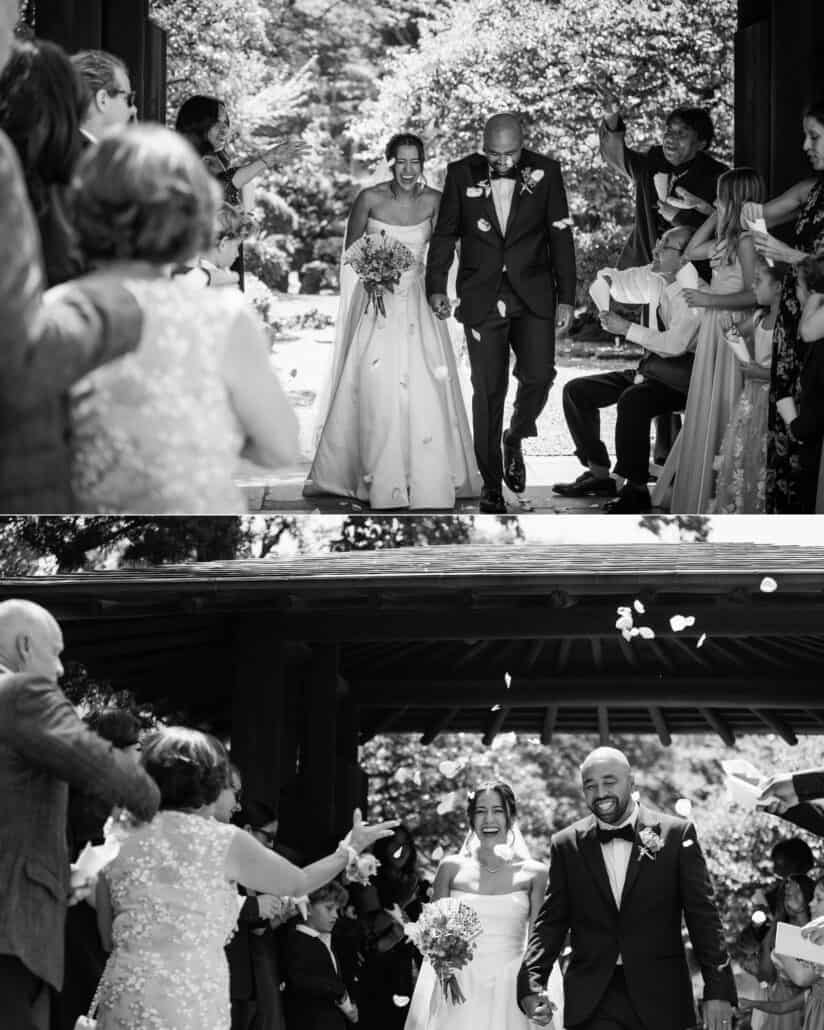
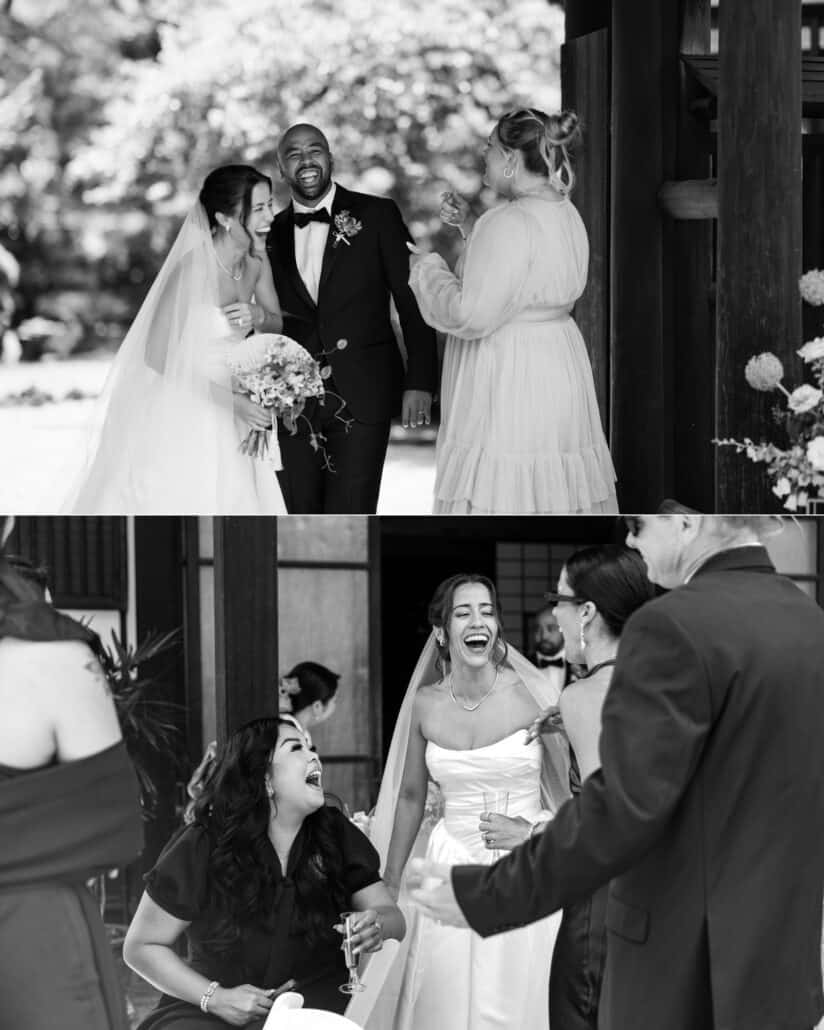
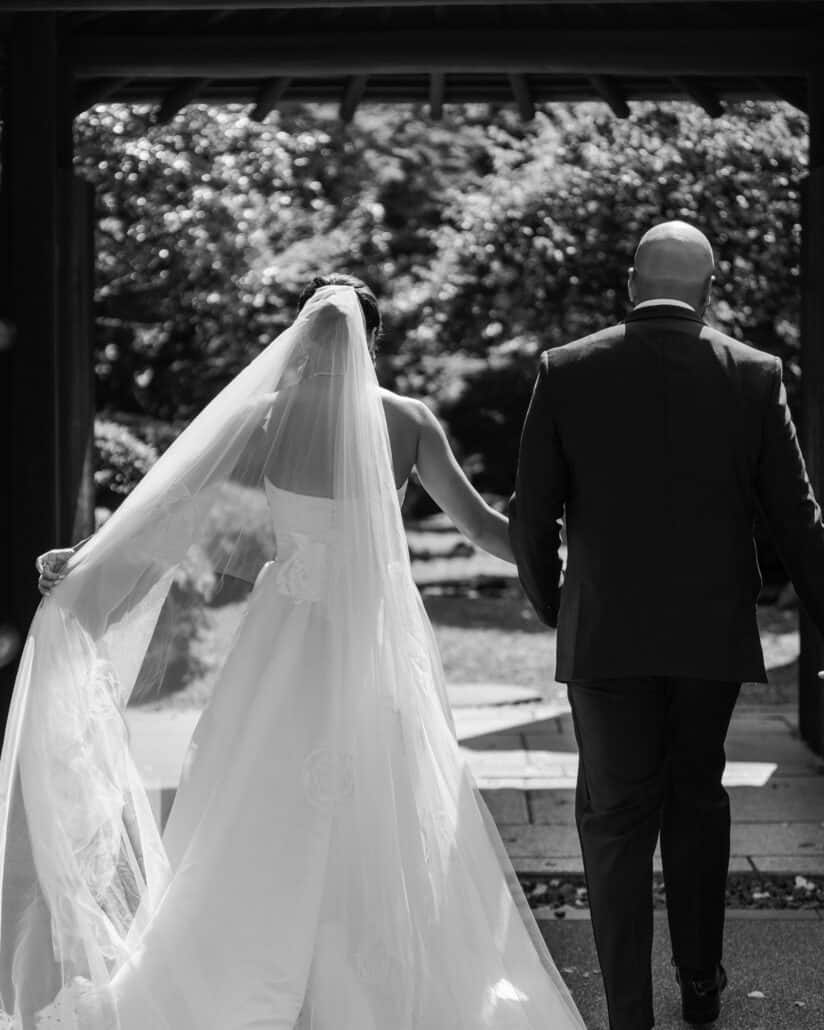
Then the flower shower through the old wooden gate, with the little ones under instructions from Dee to throw with drama. The youngest was six. Group photos in the shade of the gate, water going round, then portraits in the garden, on the tatami and along the veranda, while “Dancing in the Moonlight” played in broad daylight and our drone drifted low over the old roof.
A Shrine Blessing in Tokyo: Naruko Tenjin
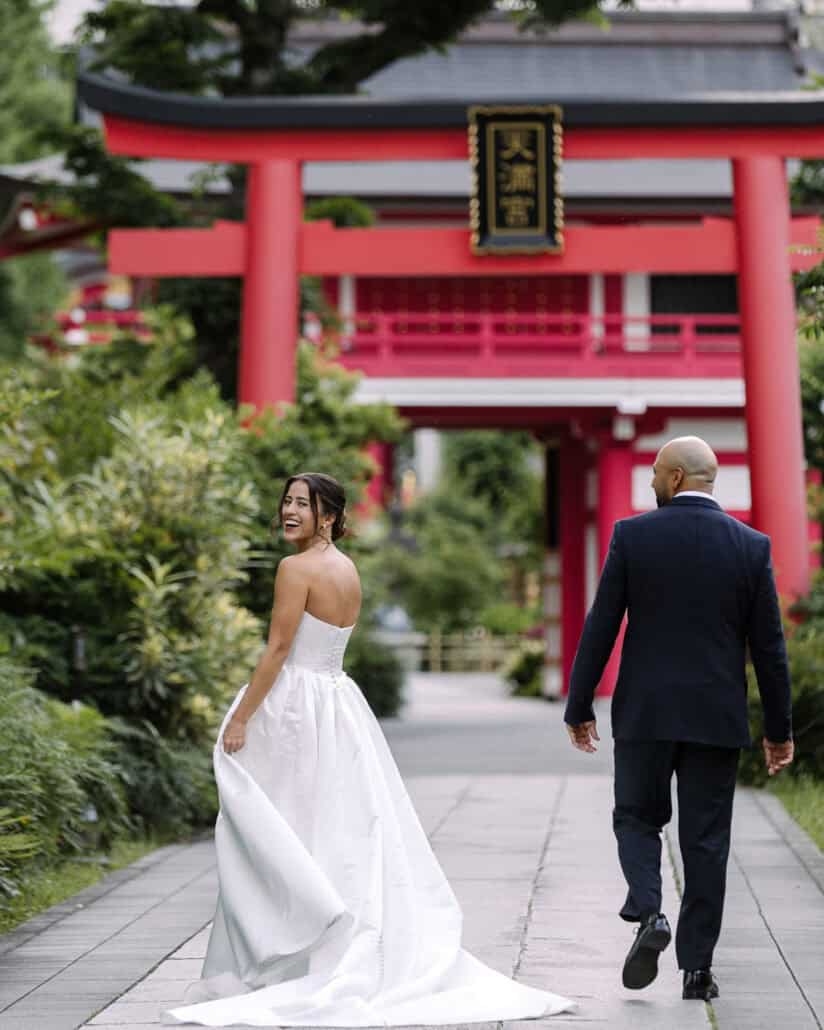
In the afternoon they went to Naruko Tenjin Shrine in Nishi-Shinjuku for a blessing. It’s said to date from 903 and is dedicated to Sugawara no Michizane, the scholar enshrined as Tenjin, which is why students come here before exams. Its vermilion hall stands with the glass towers of Nishi-Shinjuku right behind it: eleven centuries in the foreground, the skyline at its back.
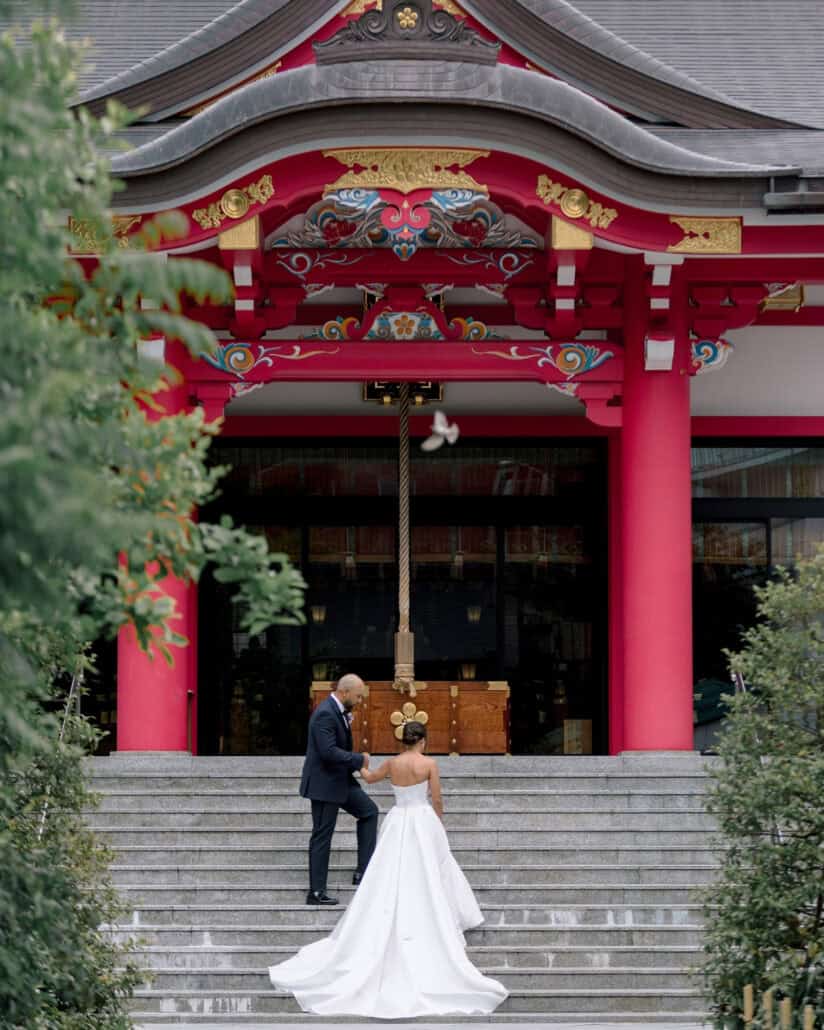
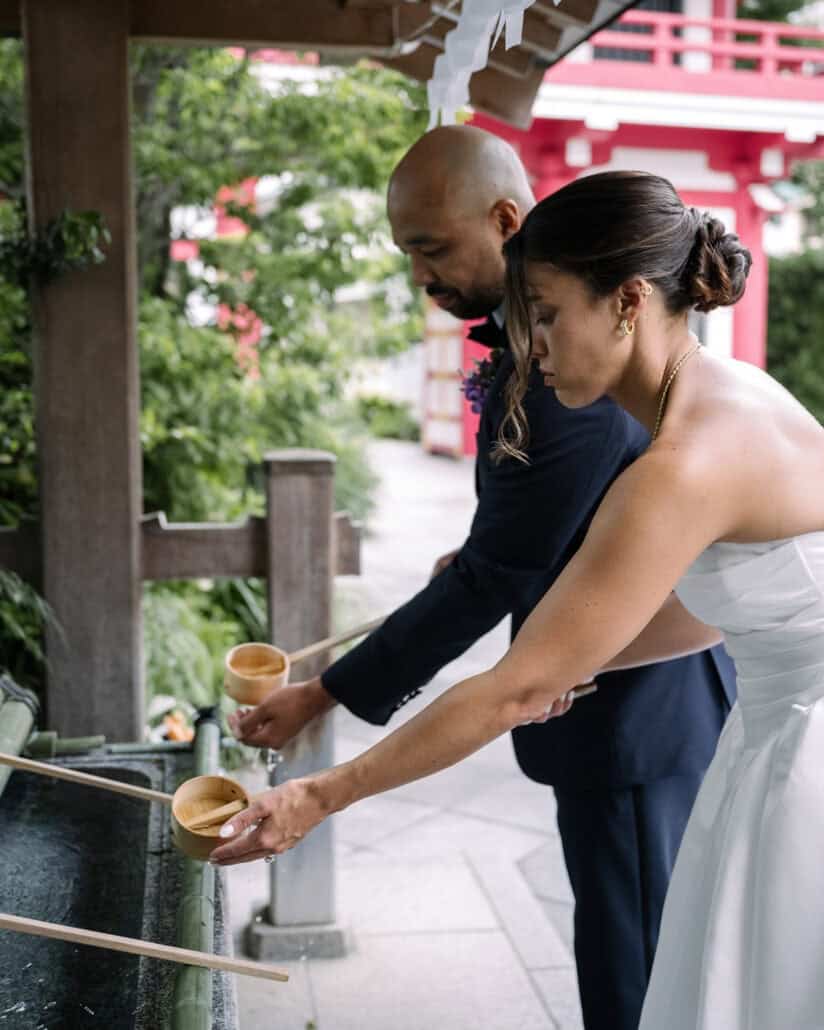
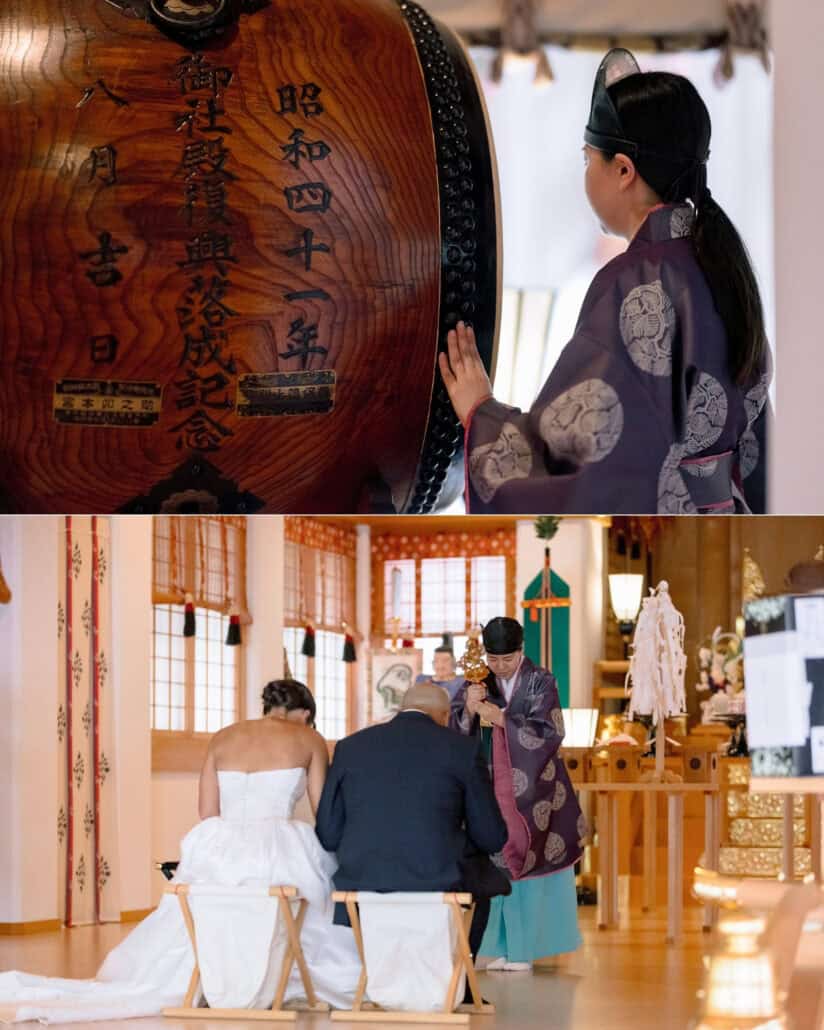
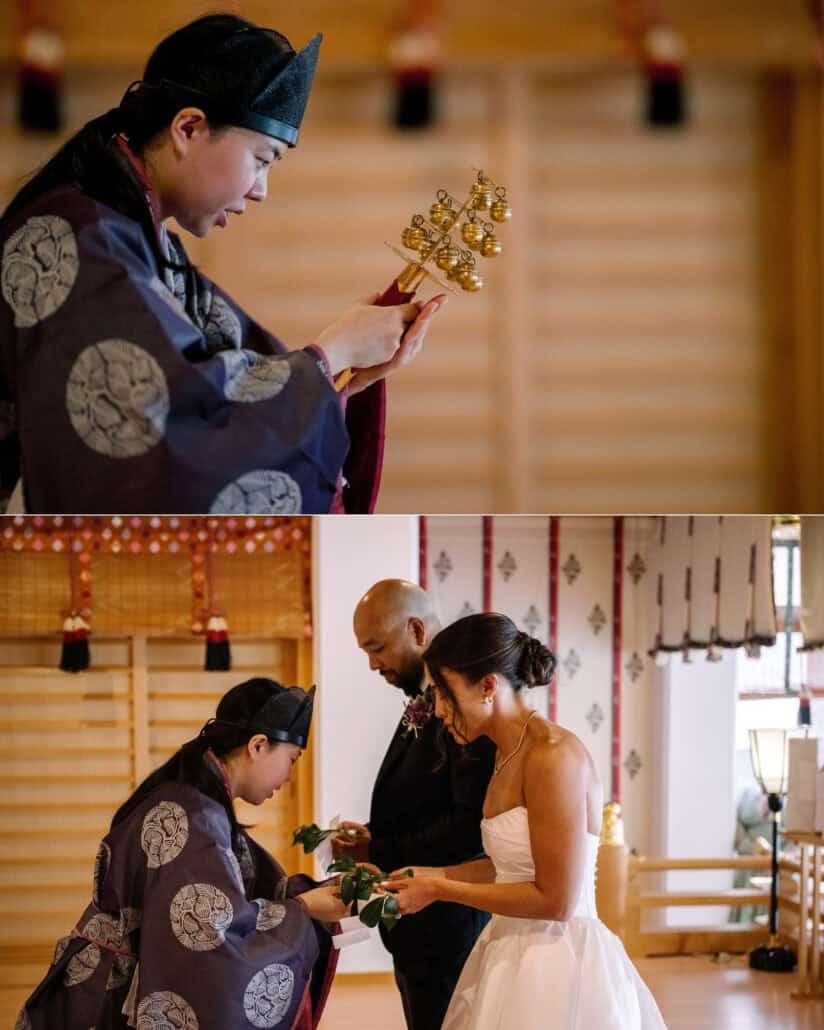
They rinsed their hands at the stone basin and climbed to the hall, where a priest struck the great taiko, marked with Tenjin’s plum blossom. The priests walked them through every step with real kindness: the bows, the shared sake, the prayer at the offering box, the bell. A shrine blessing asks nothing of an international couple except presence. You’re shown when to bow, when to drink and where to stand, and the priests carry the rest.
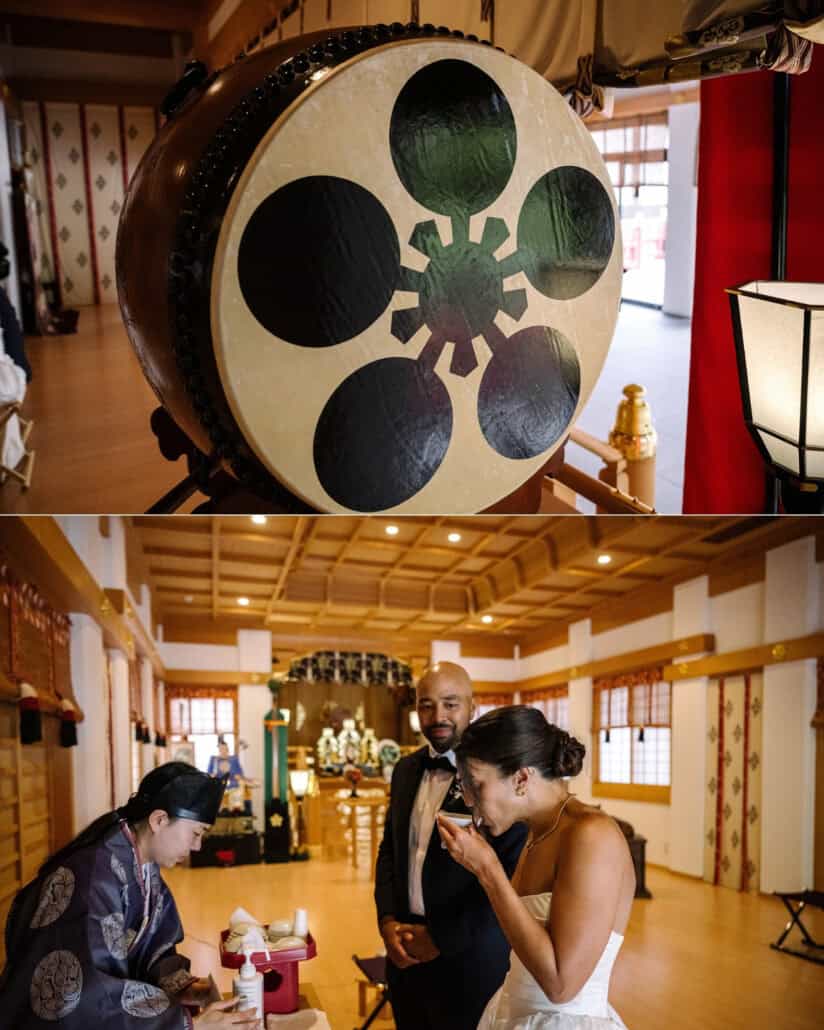
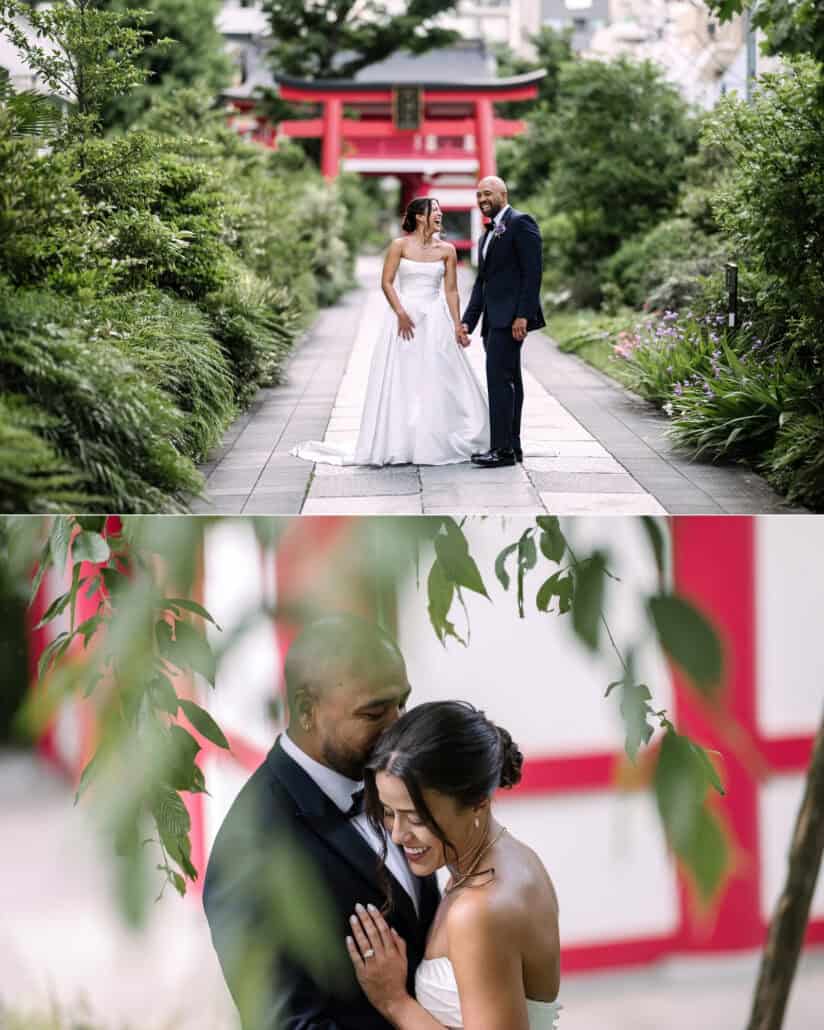
Red prayer plaques lined the path, fortunes were knotted in rows, and the shrine sent them off with its blessing in an envelope bearing the same plum blossom.
And then there’s the little mountain. In the grounds of Naruko Tenjin stands a small Mt Fuji, about twelve metres of lava carried from the real one and built in 1920, the same year as the house. Mounds like this began in Edo, built by Fuji devotees who couldn’t manage the long pilgrimage, so the mountain could be climbed close to home.
That morning, they’d seen Fuji the old way, from a distance, across a whole city. That afternoon, they stood beside a piece of her that someone had carried into Tokyo so it would be near. Far away, then close enough to touch. It’s a fair description of the day, and of the ten years before it: two people who started out a long way apart, and two families who ended it in the same room.
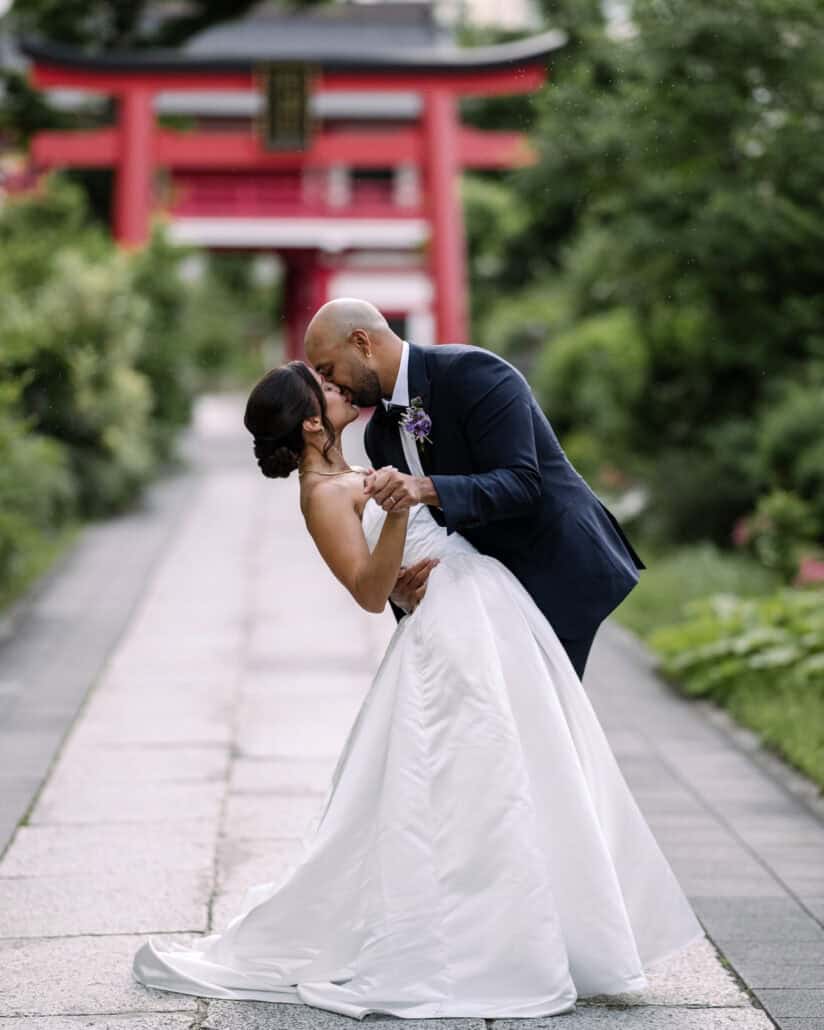
Portraits under the torii, and her first ever dip, in a dress nobody was sure could handle one. It could.
Shinjuku After the Shrine: Kabukicho and Omoide Yokocho
After the shrine she changed into her mother’s wedding dress, remade a generation later as a short party dress. Her mother got married in it. Her daughter took it to Kabukicho.
They crossed Shinjuku on foot: the big crossing on the edge of Kabukicho under the Godzilla head, the middle of the road while the lights held the traffic (“We have no cars”), a slightly forced dance, in their words, a lift in the street, then Omoide Yokocho, lanterns lit and shutters half down.
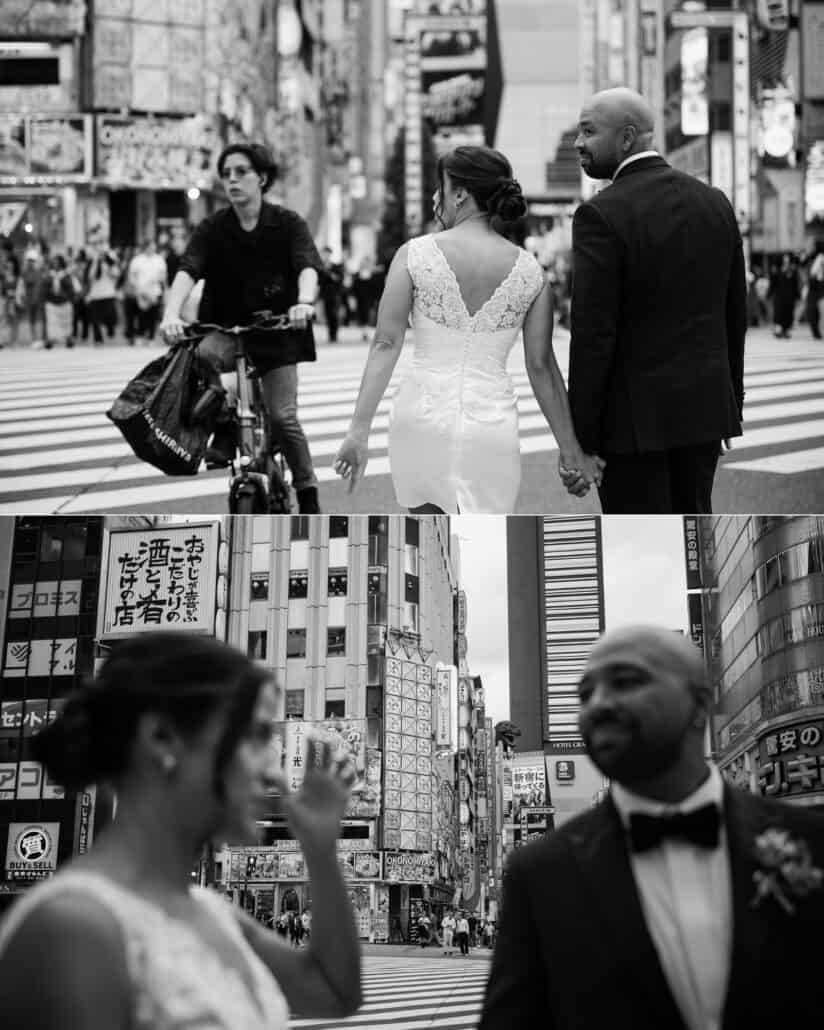
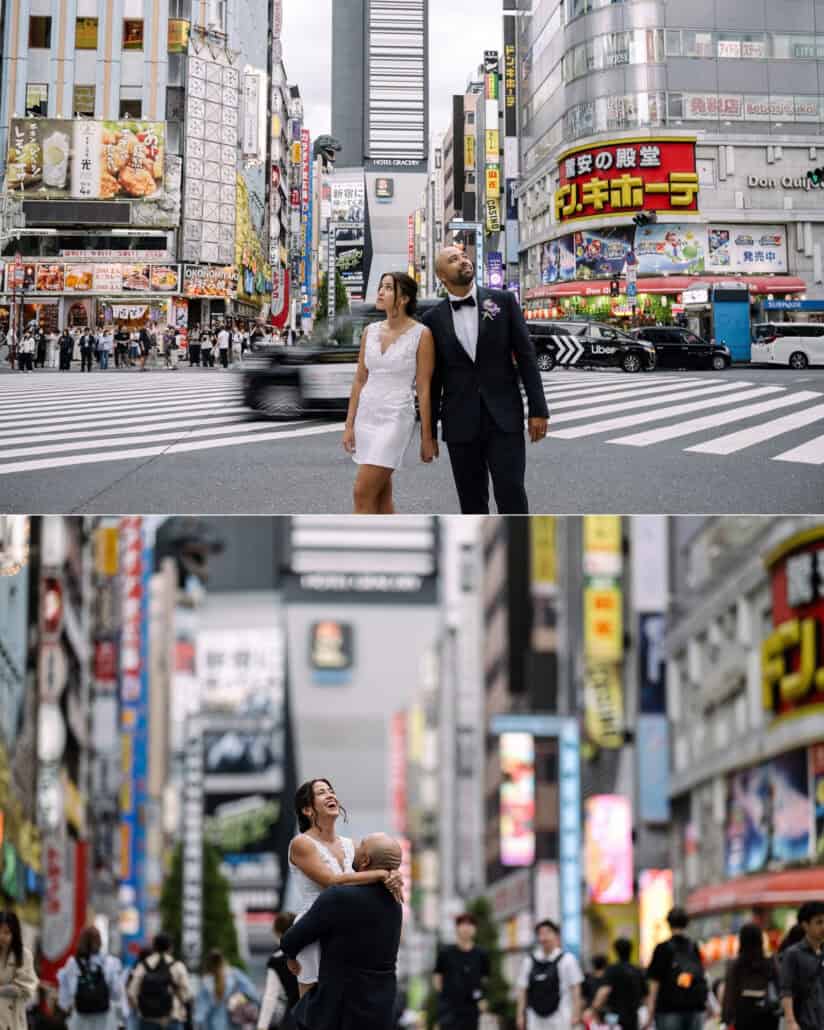
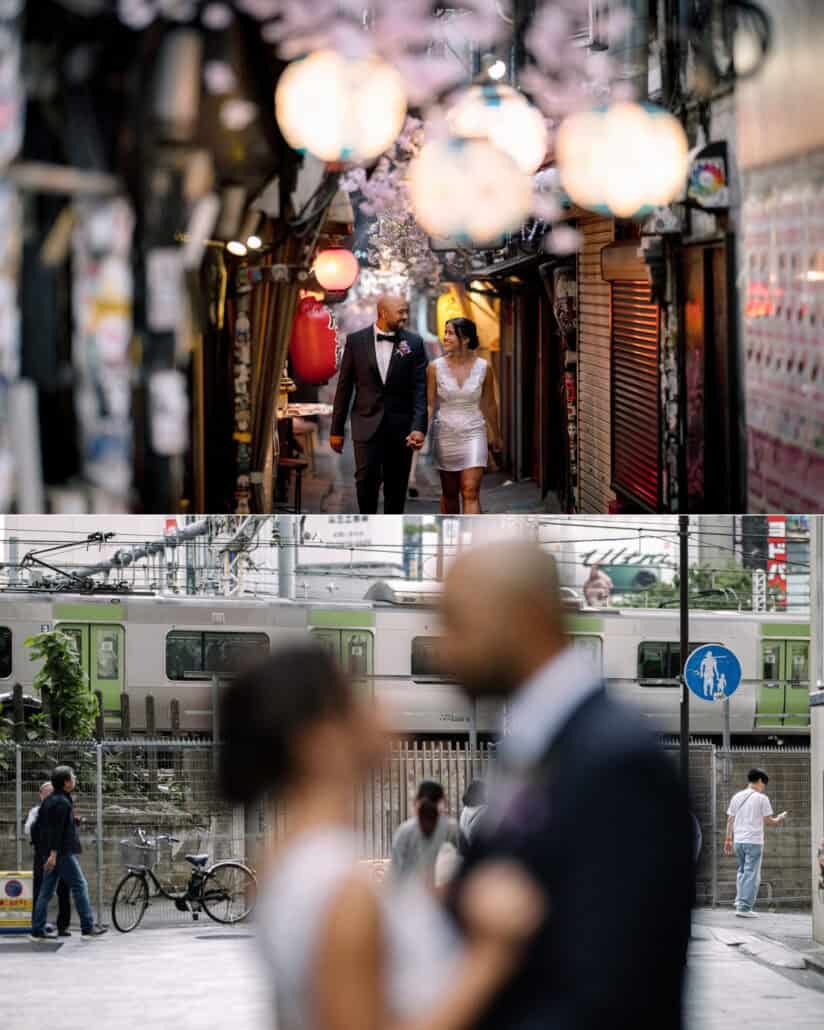
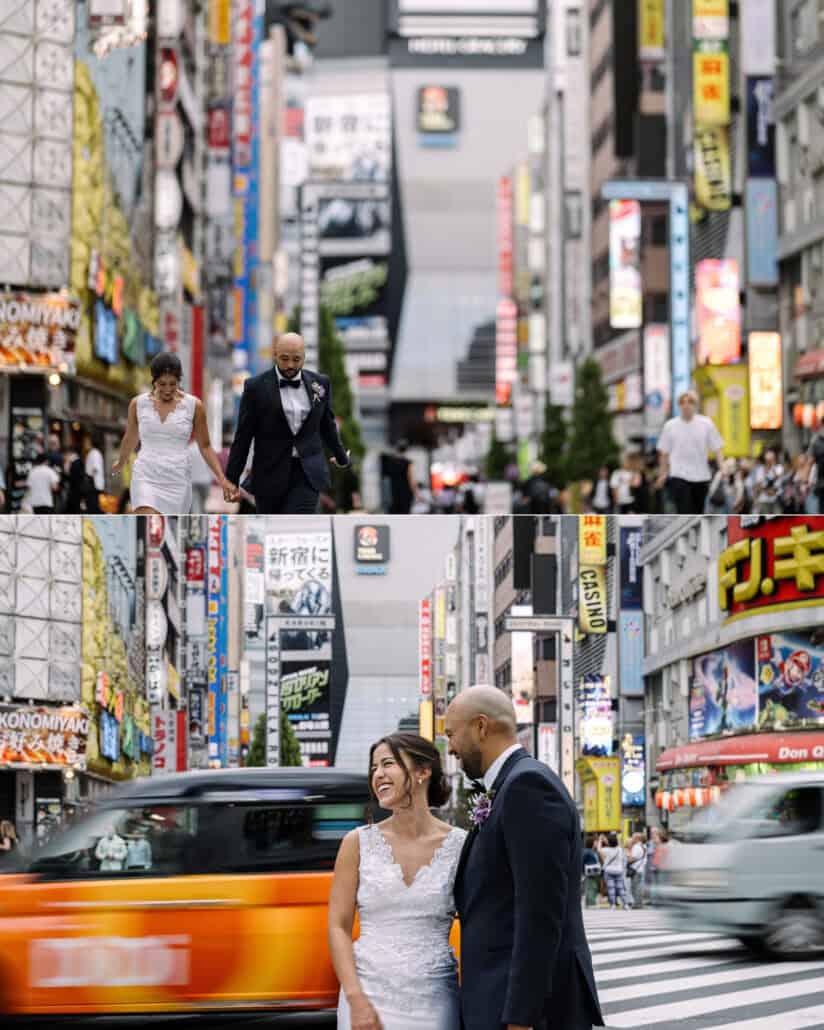
We’ve walked couples through Kabukicho before. This time they walked us. Around five, Tokyo started handing things back. First the spot where they got engaged. Then those stairs, and the line at the top of this post, followed almost immediately by the most honest sentence of the day: “I think we should try to get a beer.”
Then someone asked, “Is it raining?” It was. The storm had arrived.
Count it up and the day had walked through most of Tokyo’s history: a shrine from 903, a house from 1920, an alley that grew out of the postwar black market, and a 1990s tower with a restoration finished five months earlier. Then a flight of stairs from about ten years ago, which mattered more than all of it.
We know this city well, and we could never have scouted those stairs. We’ve written about weddings as anchors, fixed points a couple returns to while the rest of life keeps moving. These two turned up with theirs already set.
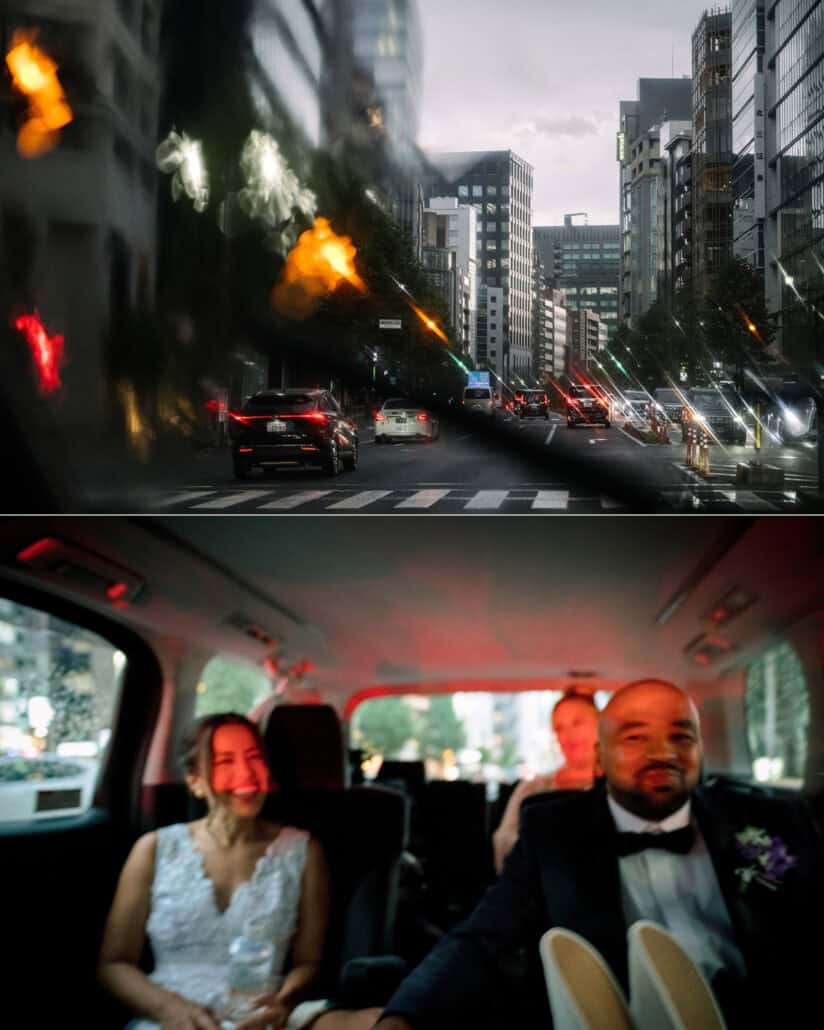
In the car to the reception, the honeymoon came up. They were staying at another Park Hyatt, and a hotel in Cambodia had already emailed to ask which of its eight kinds of pillow they’d like. The plan here in Tokyo after the wedding though: “it’s basically a food tour, we’re really just excited to eat.” Good people.
Kagami Biraki at Anchor Point
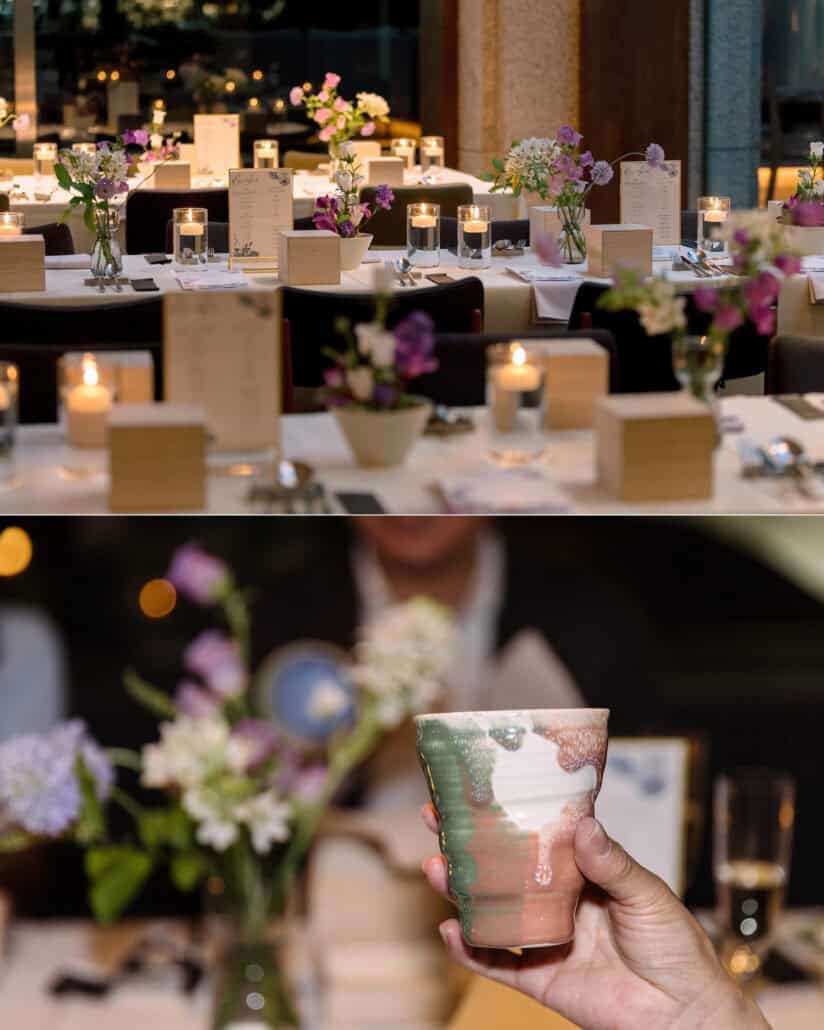
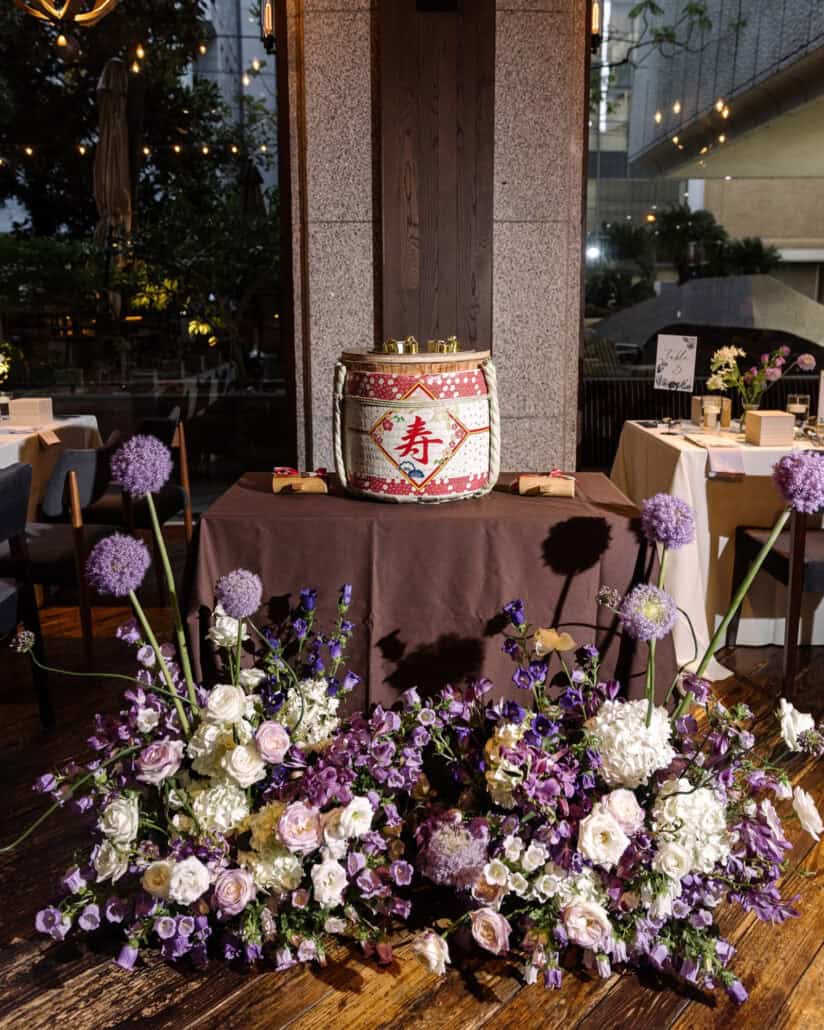
The reception was at Anchor Point, and she was back in her gown. Candlelit tables sat inside tall windows, with trees and string lights beyond the glass and purple and white flowers around a sake barrel marked 寿, kotobuki, celebration. Small wooden boxes waited among the flowers. Dee welcomed everyone “to fabulous Tokyo” and warned them about the “very, very mysterious and beautiful boxes”. She wasn’t wrong.
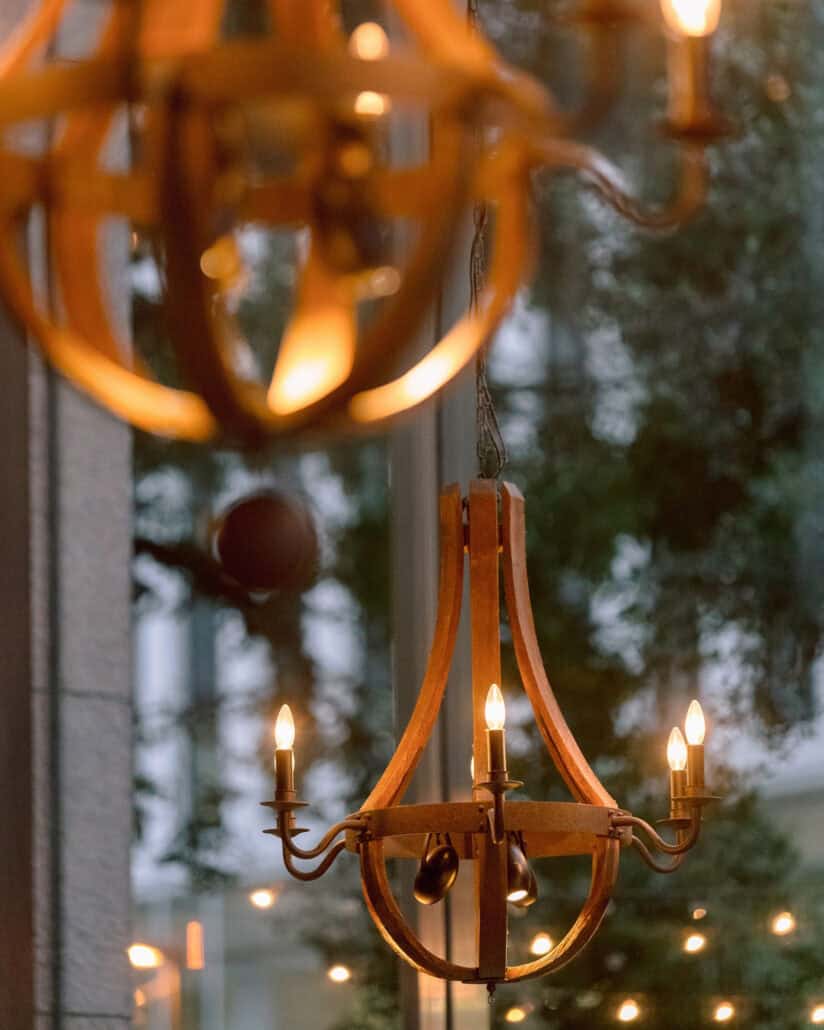
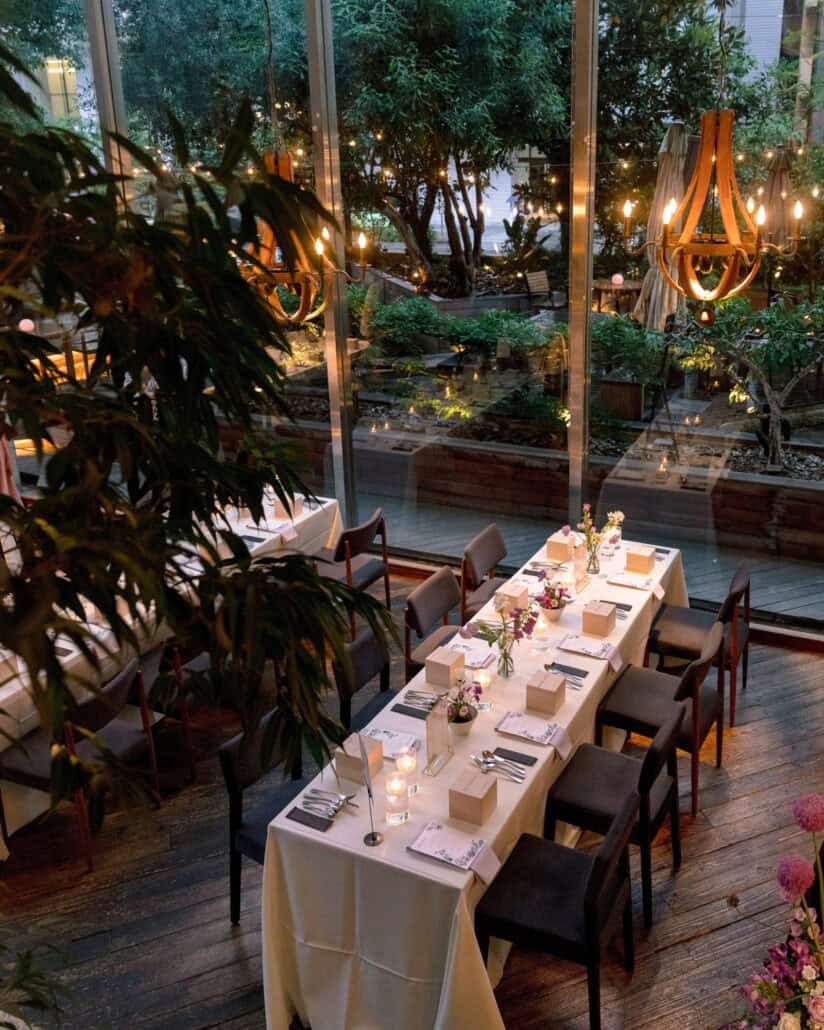
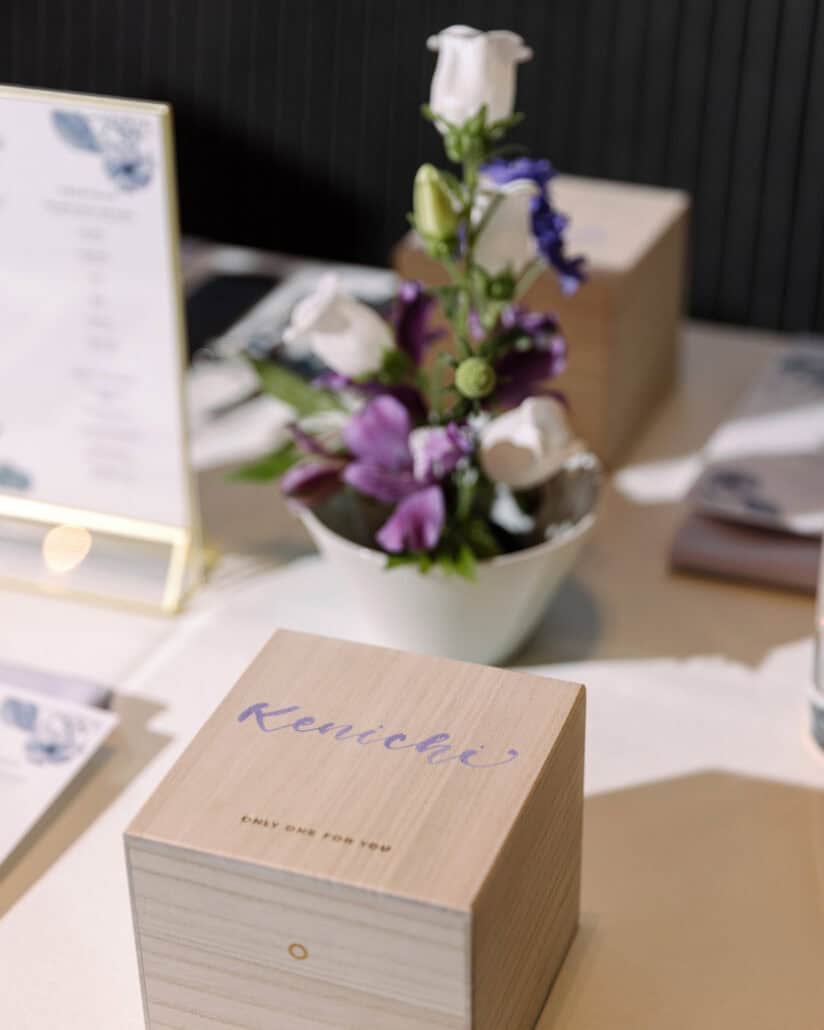
Dee explained the kagami biraki to a room of San Diego and Tokyo: the lid of the barrel is the kagami, and its round shape stands for harmony. Three practice calls of “Yoisho!”, and by the third we’d stopped being able to tell which side of the family anyone was on. Then the mallets came down, petals fell over the two of them, and outside the storm hit its peak, right on cue. After a day that hot and steamy, the thunder felt like applause.
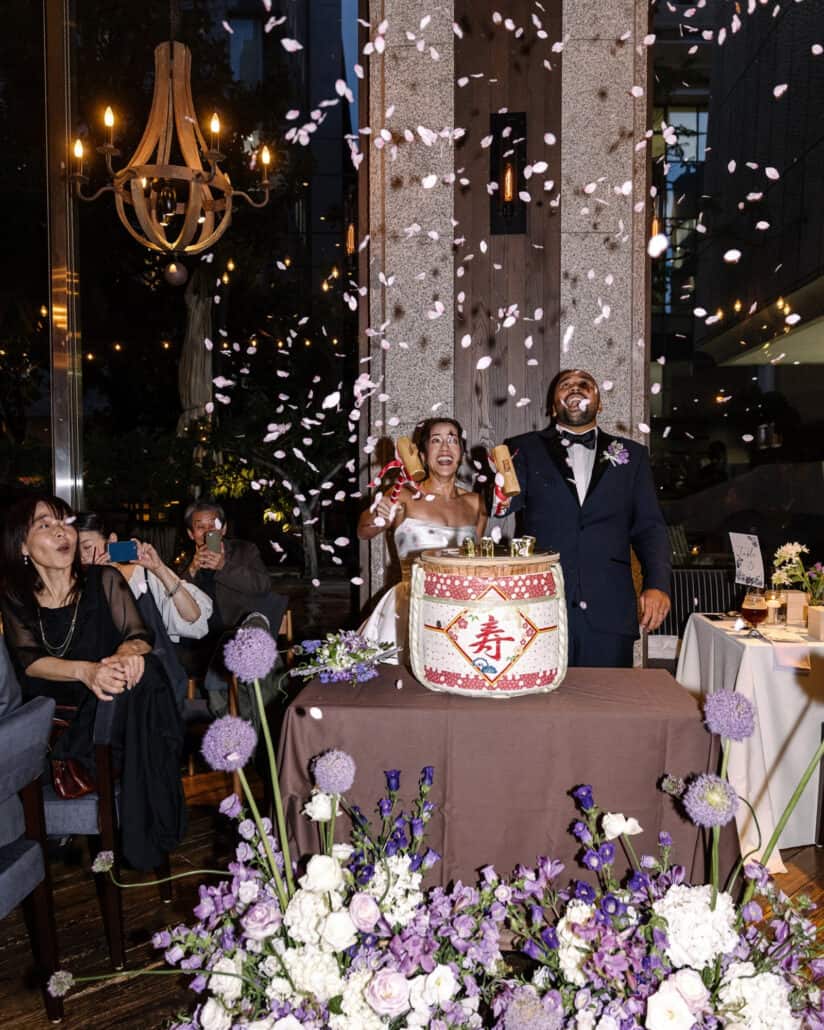
Ichi-go ichi-e is the idea that every gathering happens exactly once. This one had the heat of the afternoon still in it, rain on the windows, and two families shouting the same word at the same moment. That’s the room we build a day towards.
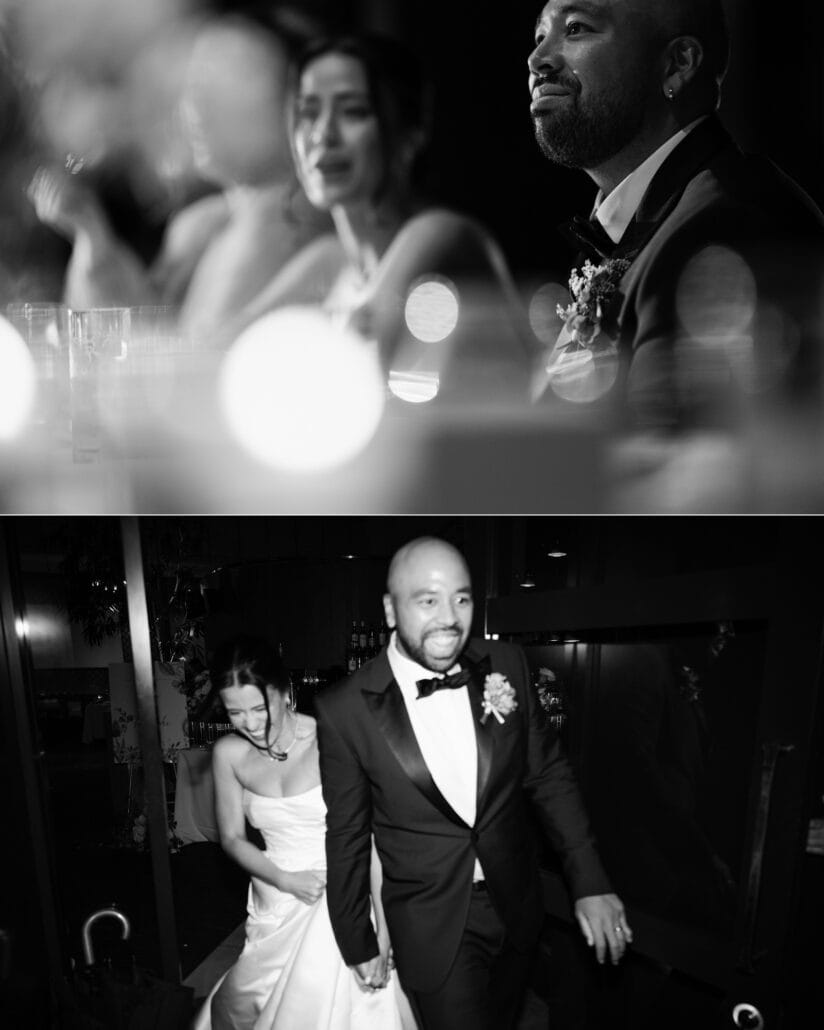
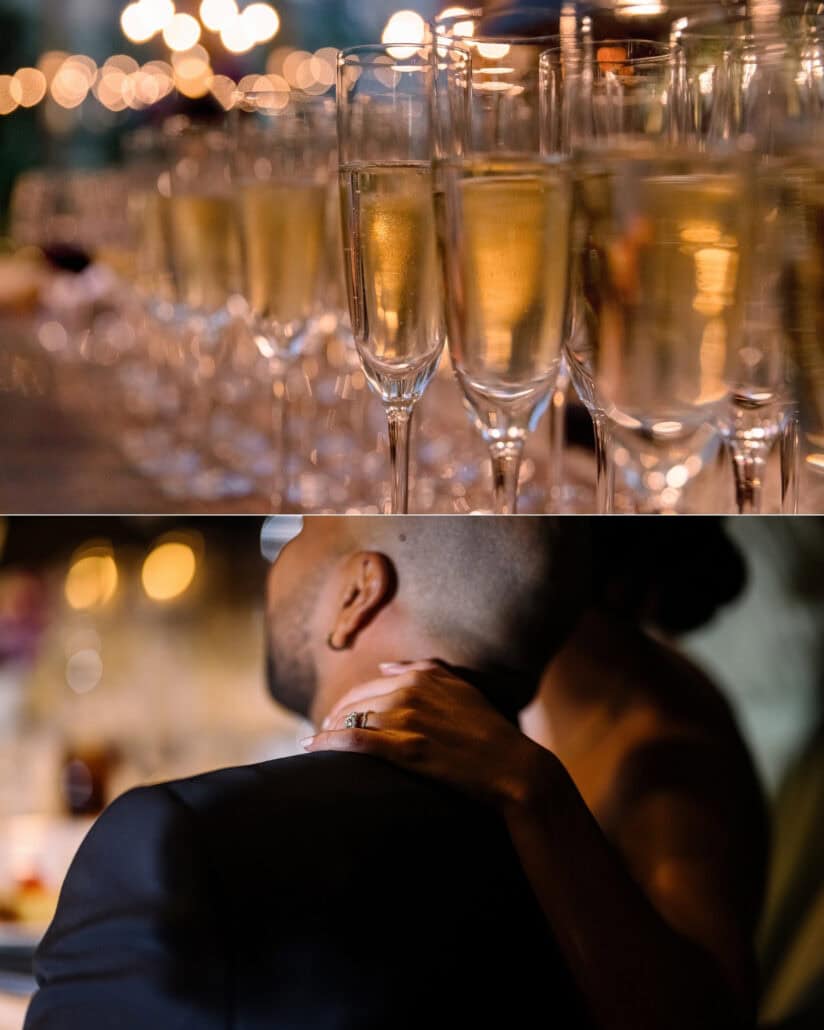
Then the toasts. Her husband of a few hours thanked her parents “for really, and I mean really, accepting me into their family.” His father spoke about all of them being together. Her father kept it simple: “You can call it lucky, you can call it blessed, or you can call it both, I don’t really care, but we’re just grateful.”
At the guestbook, a small niece was asked, “Do you know how to write an I?” Everyone starts somewhere.
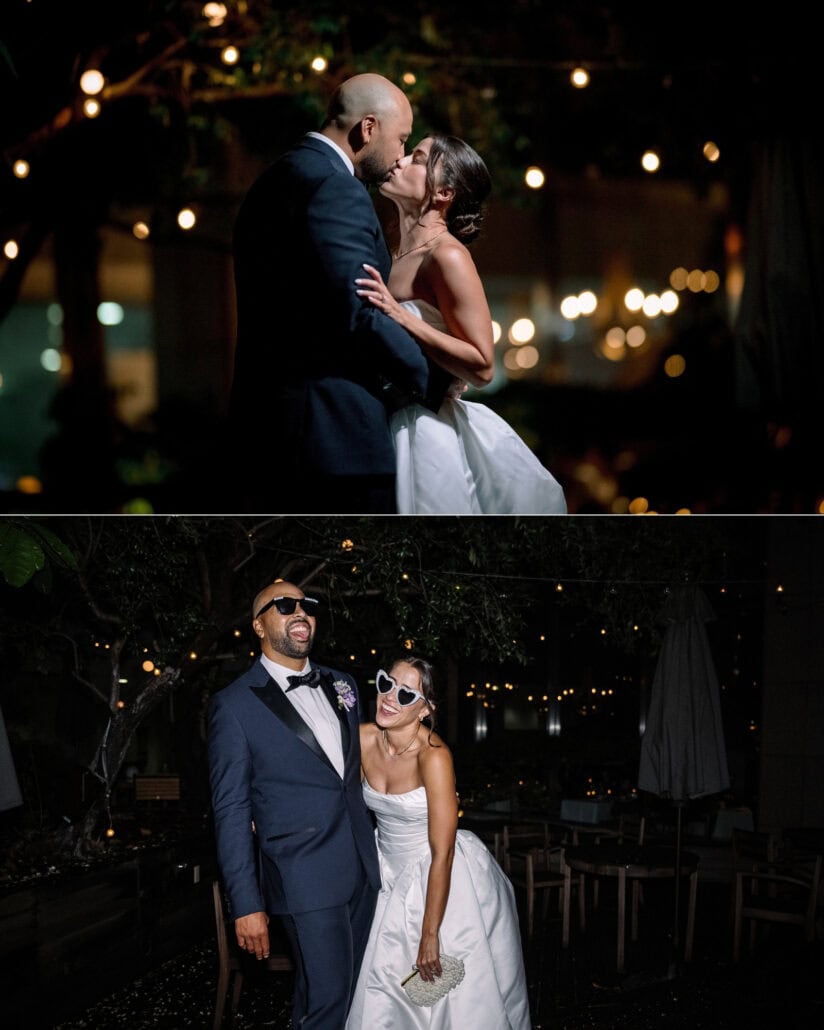
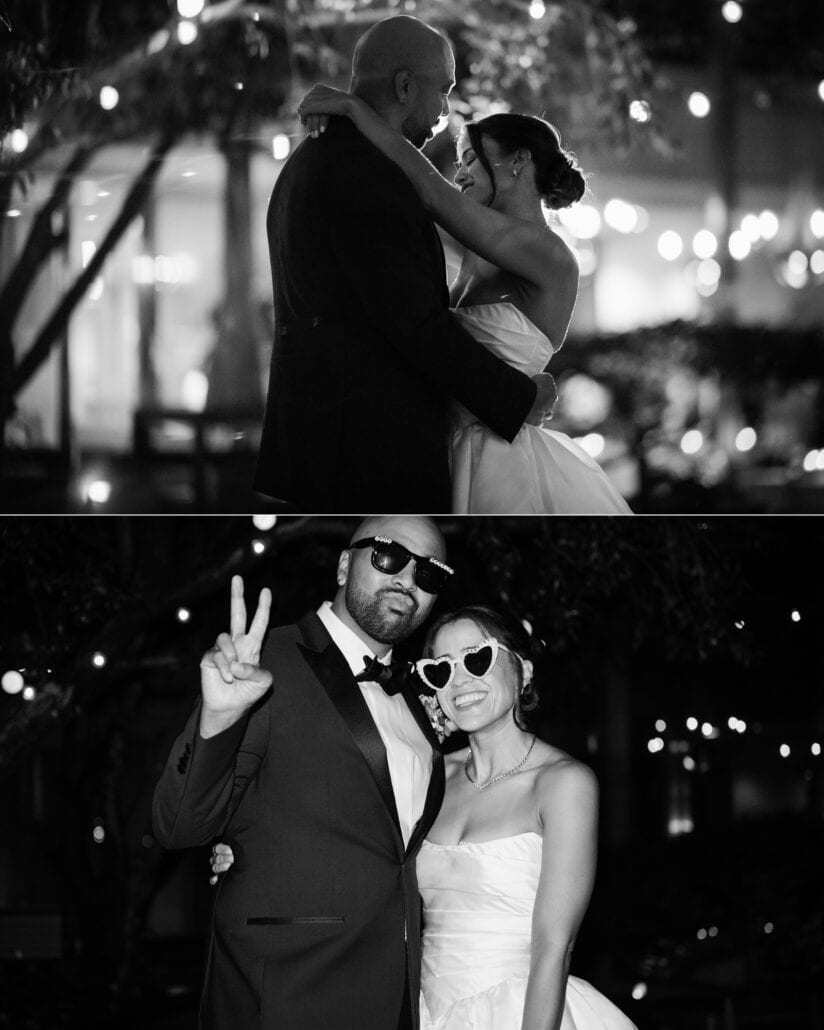
Late in the night the sunglasses came back out. Heart-shaped, for her.
The Place That Started It All
On the drive across town that morning, he’d told our filmmaker their whole story in his own words. The films will carry it, along with the koto, the thunder and two fathers on their feet. Their highlight film is below.
The highlight film is their day set to music. It’s only half of what we made for them. They also have a vow film of the whole wedding, told in the day’s own sound: their vows in their own voices, the speeches, the room as it really was. That one is just for them.
About ten years ago, Tokyo was where she came to visit him. Now it holds the place they got engaged, a flight of stairs, a house from 1920, a little Fuji and a room that shouted “Yoisho!” through a thunderstorm. Not bad for a casual visit.
His last words of the night: “Thank you for truly making this night unforgettable, in the place that started it all off for the two of us.”