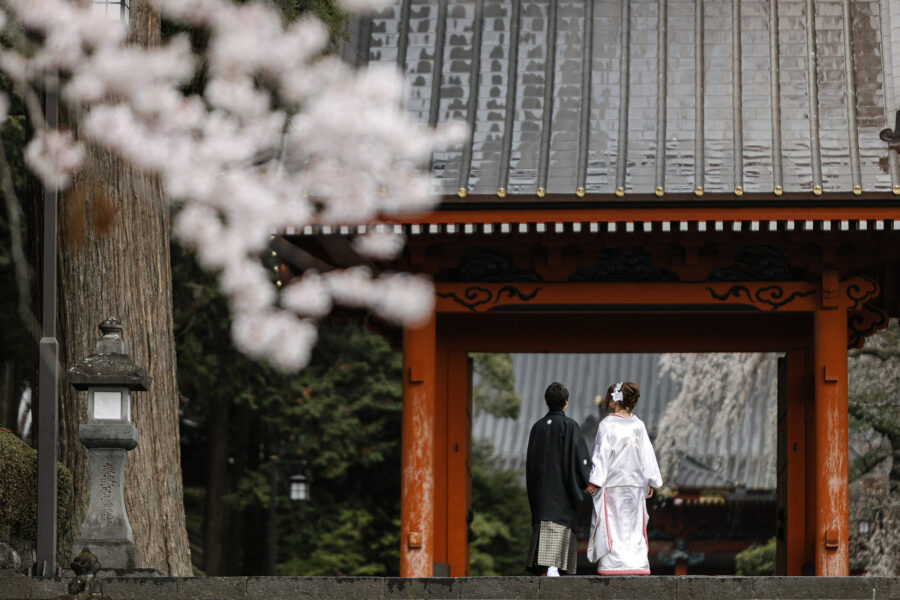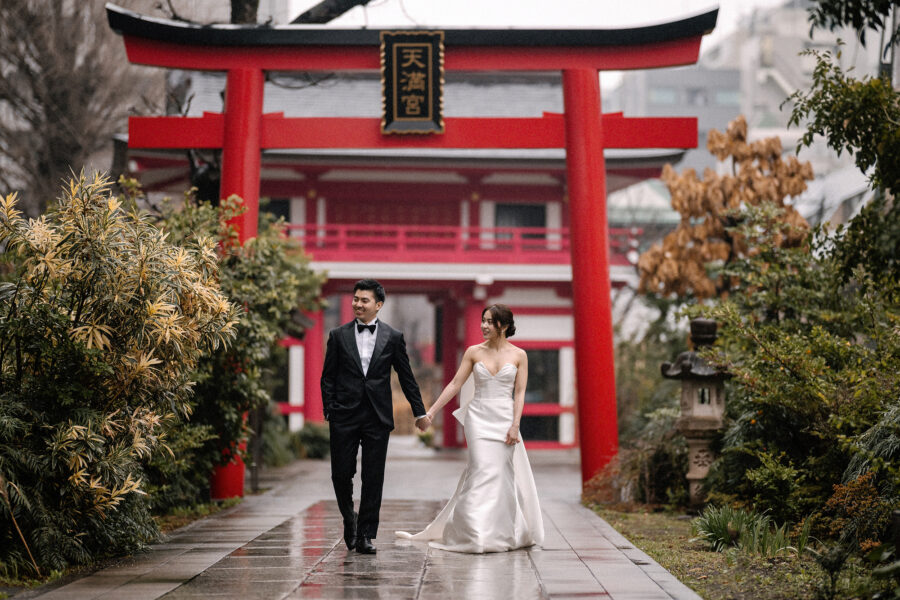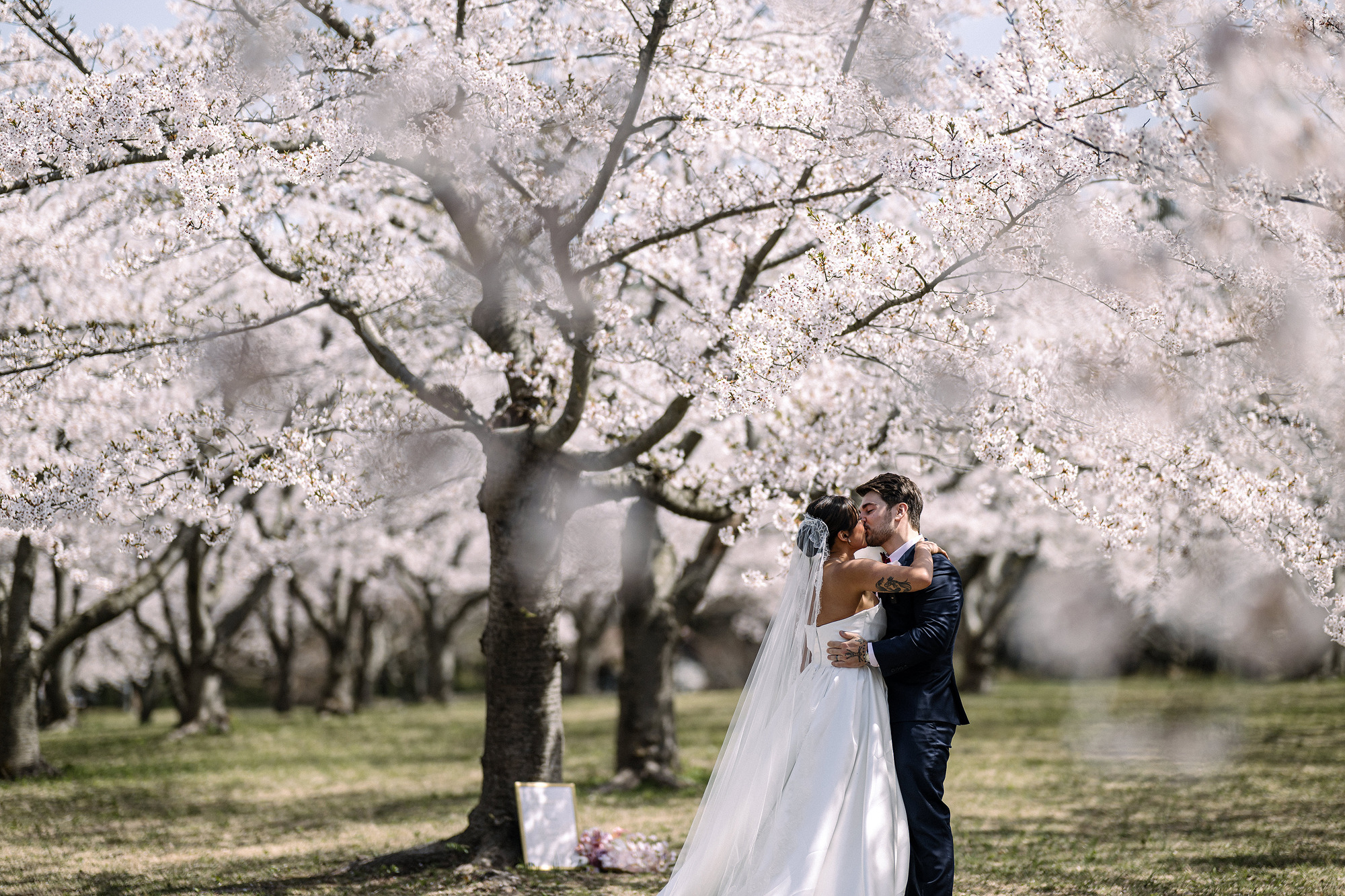
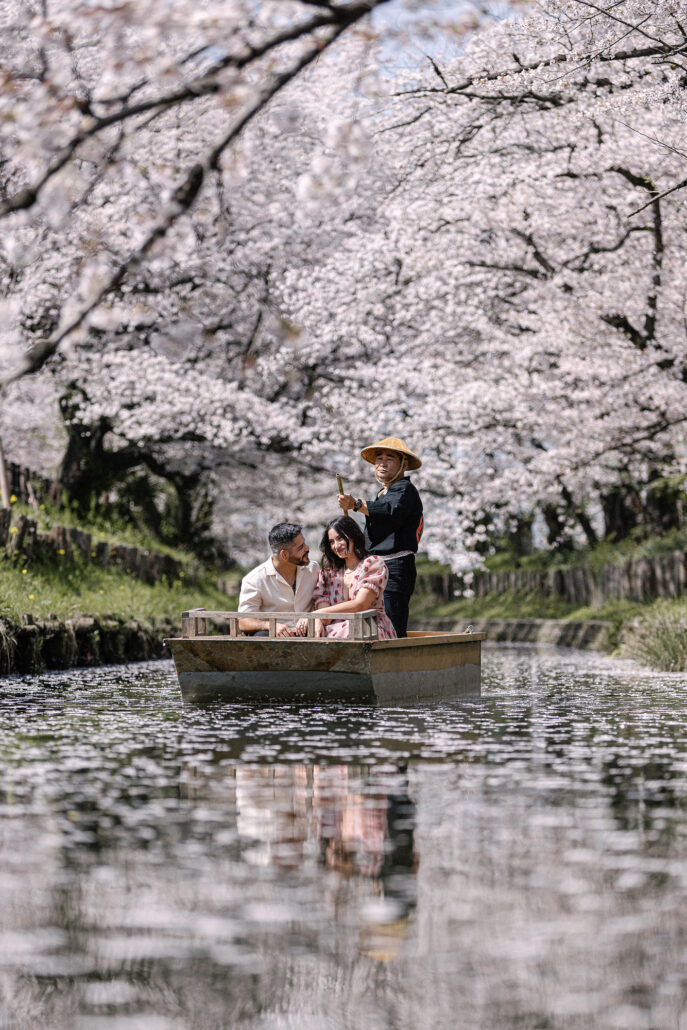
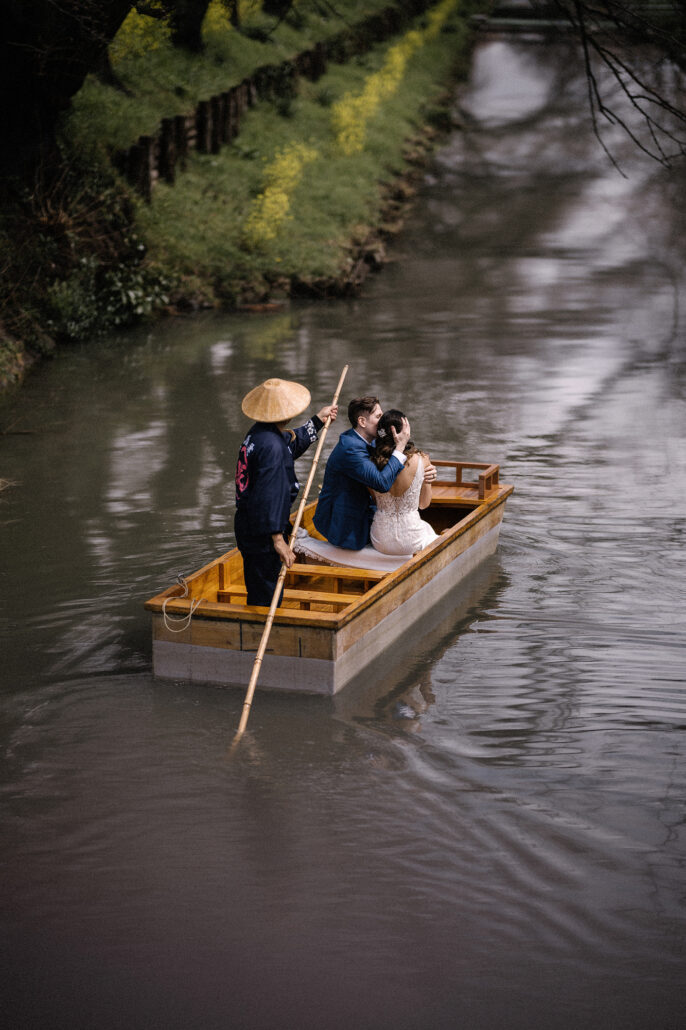
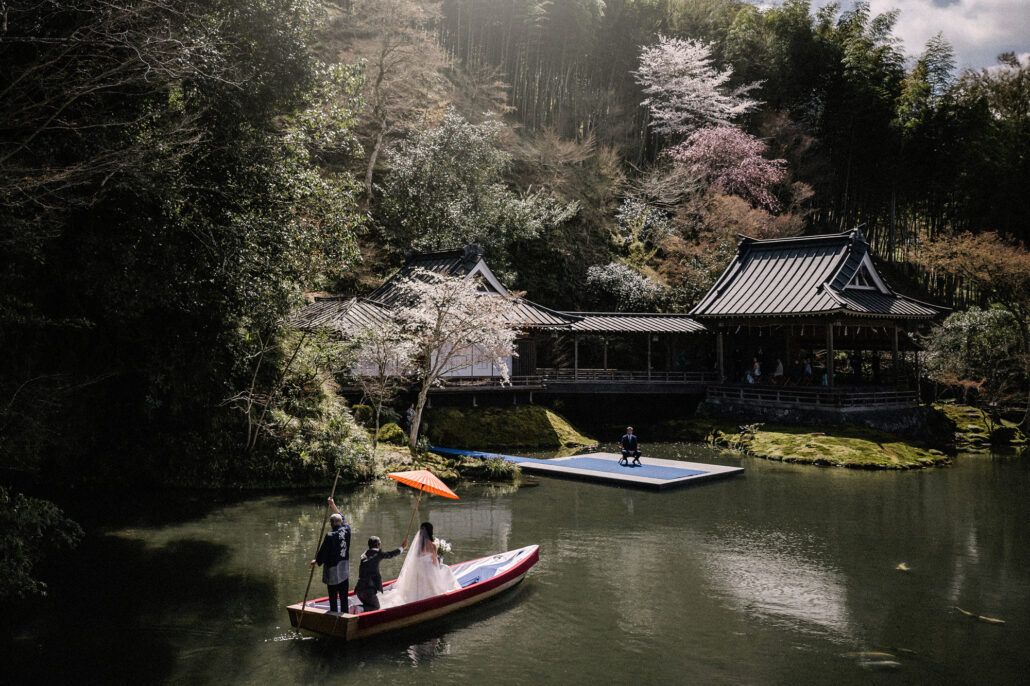
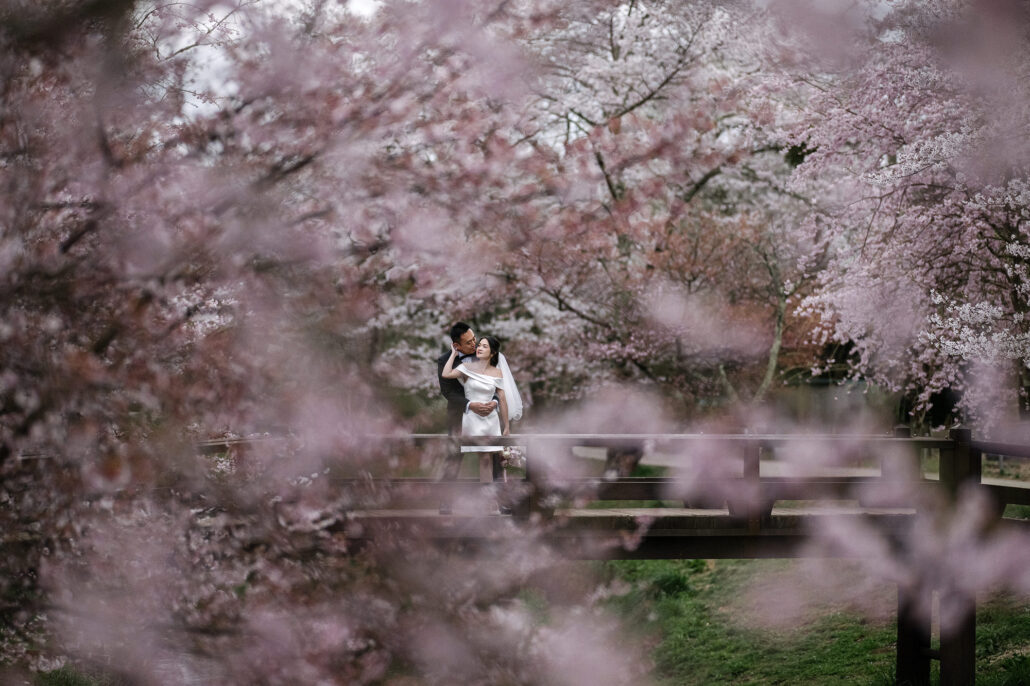
On 29 March 2023, one of our couples took a wooden boat along the Shingashi River in Kawagoe, under cherry trees in full bloom, with petals falling into the water around them. On 29 March 2024, another couple took a wooden boat down the same river on the same date. The branches over them were bare, still in bud.
That’s the season, honestly told. Nobody knows yet when cherry blossom season 2027 will begin in Japan: not the hotels already taking bookings for it, not the travel sites already printing dates, and not the Japan Meteorological Agency, which most people assume is in charge of the forecast. It hasn’t forecast the blossom since 2010. It still records it, on one sample tree per city, and declares the season open when five or six flowers appear. The forecasts come from private companies, and the first of them for 2027 isn’t due until December at the earliest.
In 2024, those first forecasts had put Tokyo’s blossom comfortably ahead of that second couple’s Friday. Then March turned cold, and the agency declared Tokyo’s first blossoms on the day of their elopement itself, the latest date in ten years. Two springs later it went the other way. A couple who married in Aomori in late April arrived to find Tokyo’s trees long since green; in the north the bloom had run about ten days early, and their grove was on its last day of full bloom.
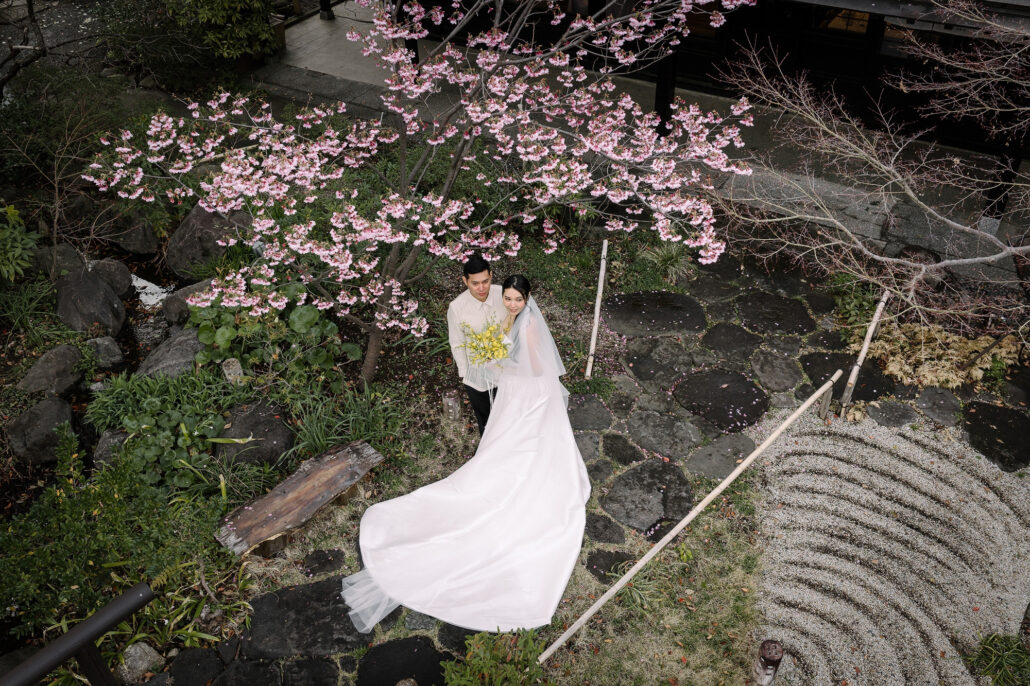
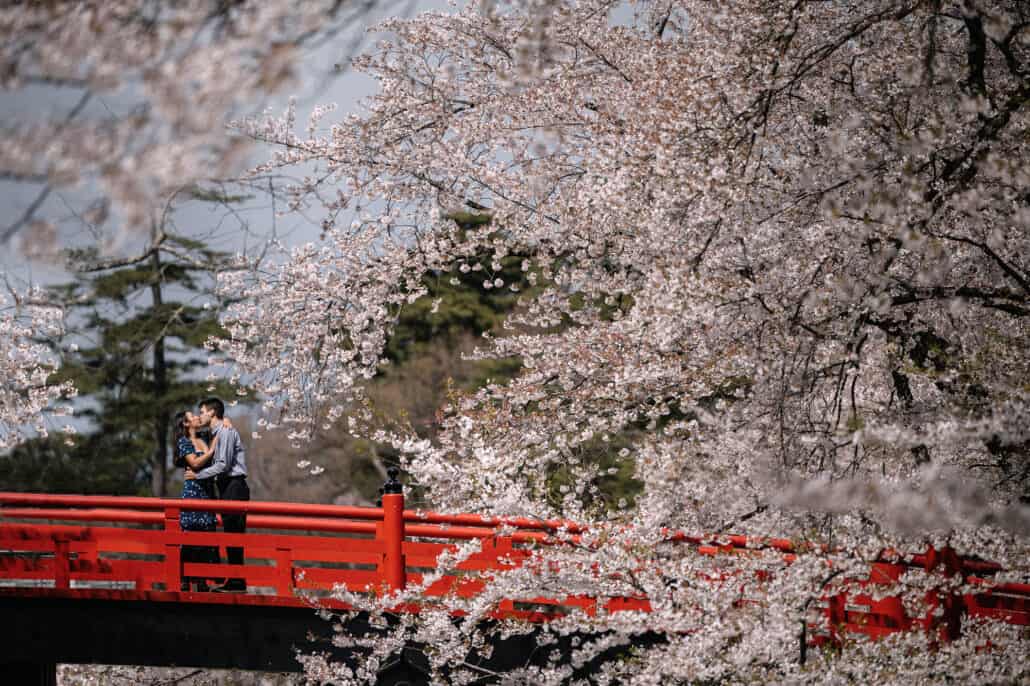
Neither couple could move their date, and neither needed to. The Kawagoe couple found their blossom in a single early weeping cherry at a small private shrine, after we rang everyone we knew in the town and the shrine said yes. The Aomori couple had chosen one of the last places the season reaches. In every spring we’ve worked, we’ve always found somewhere.
Cherry Blossom Season 2027: The Short Answer
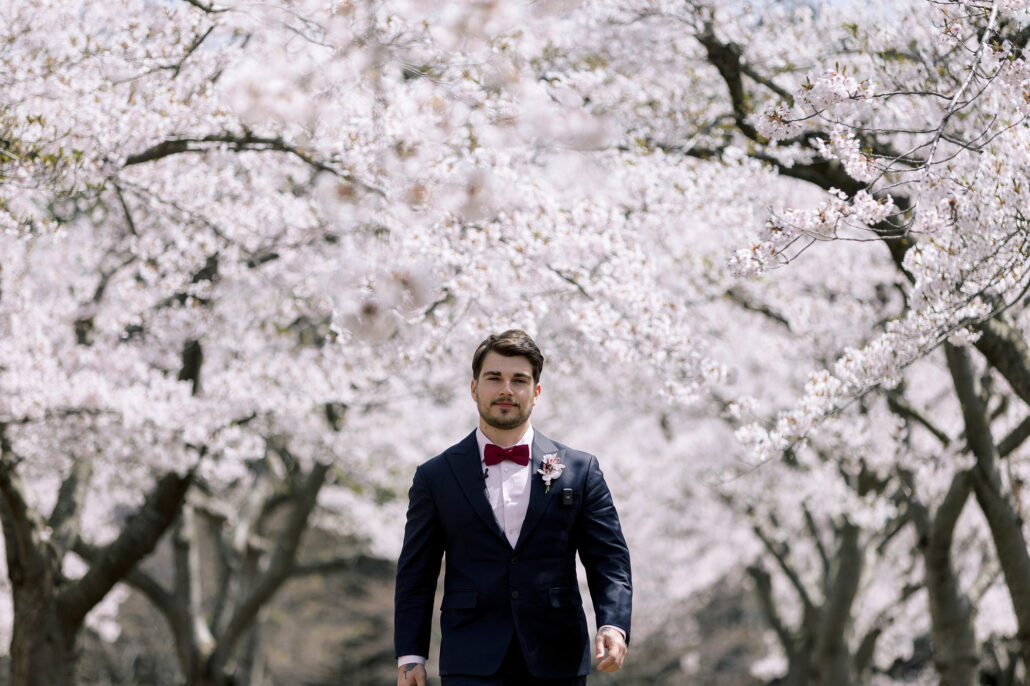
Cherry blossom season 2027 in Japan will most likely open in the second half of March in Tokyo, Kyoto, Osaka and Fukuoka and reach full bloom there in late March or the first days of April. Then it travels north through April, reaching Aomori and Hirosaki in the second half of the month and Hokkaido around the start of May. Okinawa’s cherries come first, in January, and the Kawazu cherries of the Izu peninsula in February.
Nobody can give you exact dates yet, and anyone who does is guessing. In the last ten springs, Tokyo’s first blossoms have opened anywhere from 14 to 29 March. And in two of the five seasons one leading forecaster has reported on, its first forecast missed by nine days or more. A wedding still has one date, booked long before any of that is known. What we plan is where that date takes place.
What Ten Springs Tell Us
These are the Japan Meteorological Agency’s own records for the Somei-yoshino, the cherry that fills most of Japan’s parks and riverbanks. First bloom means five or six flowers open on the city’s sample tree. Full bloom means about eighty percent.
| City | Usual first bloom | Usual full bloom | First bloom, 2017 to 2026 | 2026 first bloom |
|---|---|---|---|---|
| Fukuoka | 22 March | 31 March | 12 to 27 March | 24 March |
| Tokyo | 24 March | 31 March | 14 to 29 March | 19 March |
| Kyoto | 26 March | 4 April | 16 to 31 March | 23 March |
| Osaka | 27 March | 4 April | 19 to 30 March | 26 March |
| Kanazawa | 3 April | 8 April | 23 March to 4 April | 29 March |
| Sendai | 8 April | 13 April | 26 March to 8 April | 31 March |
| Aomori | 22 April | 26 April | 7 to 19 April | 13 April |
| Hirosaki Park | 22 April | 27 April | 7 to 20 April | 11 April |
| Sapporo | 1 May | 6 May | 15 to 30 April | 18 April |
“Usual” is the agency’s 1991 to 2020 average. Hirosaki Park’s figures are from the park’s own records.
A few things the table shows that a brochure won’t. In any one city, the opening moves across about two weeks from year to year, and over the agency’s full record since 1953, Tokyo’s has run from 14 March to 11 April. South to north is only the rough shape of it: Tokyo’s sample tree, in the grounds of Yasukuni Shrine, opened before Osaka’s in every one of the last ten years, and before Fukuoka’s in six. And one spring tells you very little about the next. In 2026 Sapporo opened thirteen days early, while Fukuoka, far to the southwest, was two days late.
Once it starts, it moves quickly. In Tokyo and Kyoto, full bloom has followed the first flowers by six to twelve days. In the north it’s compressed: Aomori has gone from first flowers to full bloom in three to five days, and Hirosaki Park has logged a full bloom of between two and five days in each of the last ten springs. Spring in Aomori doesn’t hang about.
When the 2027 Cherry Blossom Forecasts Arrive
Three forecasters lead in Japan, and none has announced a date for 2027. Their last seasons give a fair idea.
| Forecaster | First forecast for 2026 | Expect the first for 2027 |
|---|---|---|
| Japan Meteorological Corporation | 18 December 2025 | Mid to late December 2026 |
| Weathernews | 8 January 2026 | The second week of January 2027 |
| Japan Weather Association (tenki.jp) | 29 January 2026 | Late January 2027 |
The forecasts get very good, but late. By its own published reports, Japan Meteorological Corporation’s first forecast of a season has been out by about two days in its best recent years and nearly ten in its worst. By about 21 March, days before the main openings, it has come within five days in each of the last three seasons. That’s a useful week to know about. It also arrives months after the flights, the rooms and the venue needed booking.
You can’t book the blossom. You can book a date in the right place.
One Date, and Where It Happens
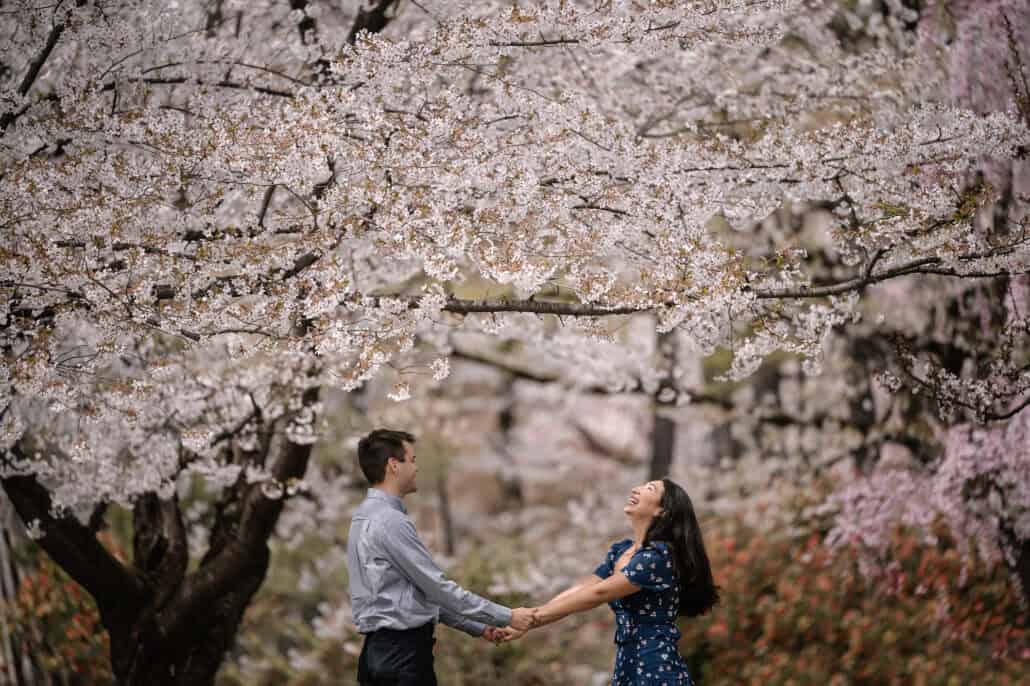
You book one date. Your guests book their flights around it, and it doesn’t move. What we plan is where it happens: in an area where the trees don’t all keep the same time, so that whatever the season does that week, something nearby is likely to be in bloom. A riverbank still in bud can sit a few minutes from a weeping cherry that opened early. A garden higher up can hold its blossom after the city’s has gone. It works because cherry blossom isn’t one tree.
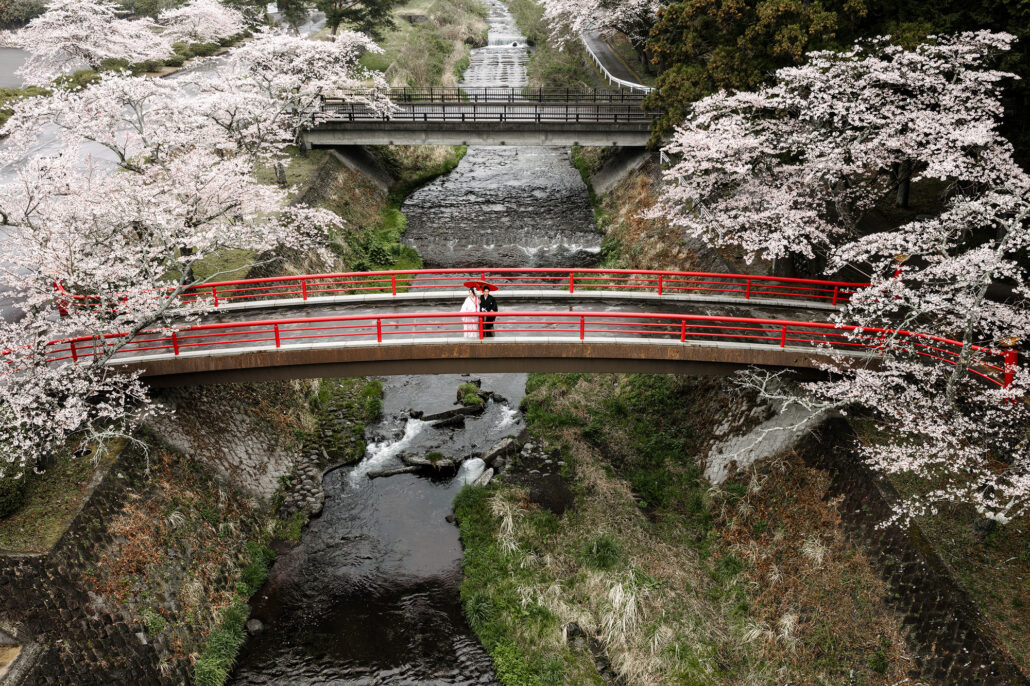
Early cherries. Okinawa’s deep pink kanhizakura usually open in mid January and reach full bloom in early February. In Izu, the Kawazu cherries run through February and into March; the 2027 festival is set for 6 February to 7 March.
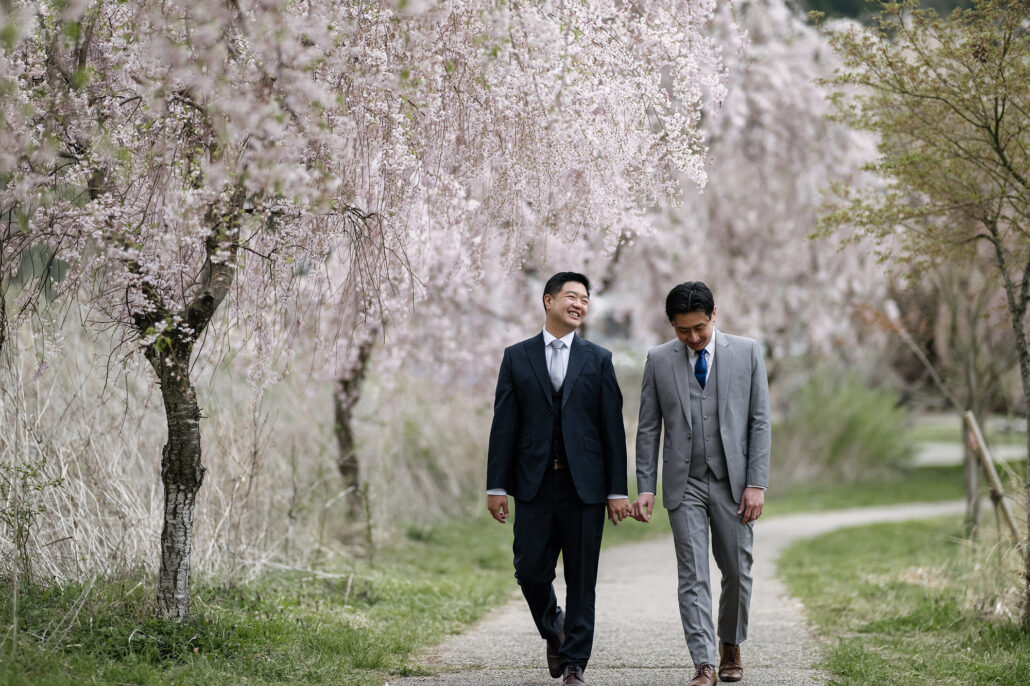
Weeping cherries. Some open well ahead of the Somei-yoshino around them. In Tokyo in 2026, the weeping cherry in Rikugien garden peaked about a week before the city’s sample tree reached full bloom. Not every weeping cherry keeps that schedule, which is why, on that bare-branch Friday in Kawagoe, we were on the phone asking people who know the town rather than reading a chart.
Late cherries. The double-flowered yaezakura come about two weeks after the Somei-yoshino. The Osaka Mint opens its avenue of more than a hundred varieties for one week each spring, and in each of the eight years it was held since 2017, that week began between 5 and 13 April.
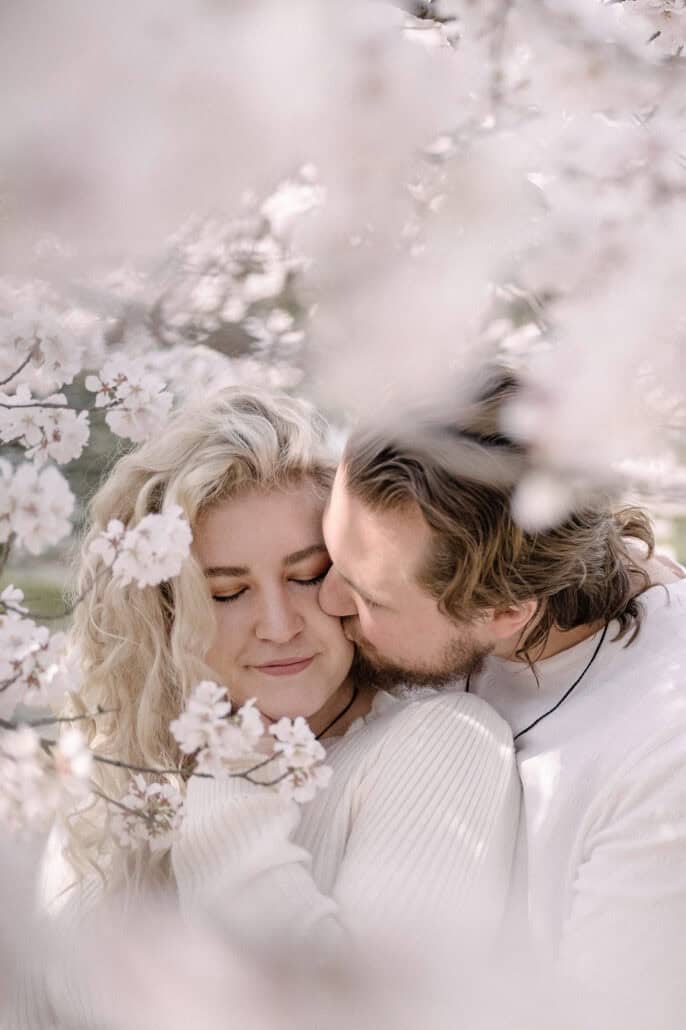
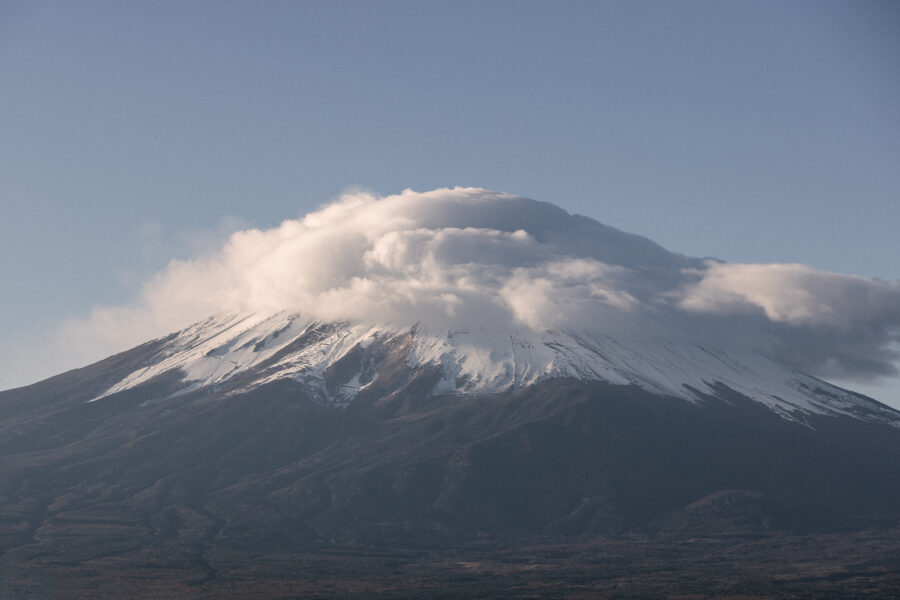
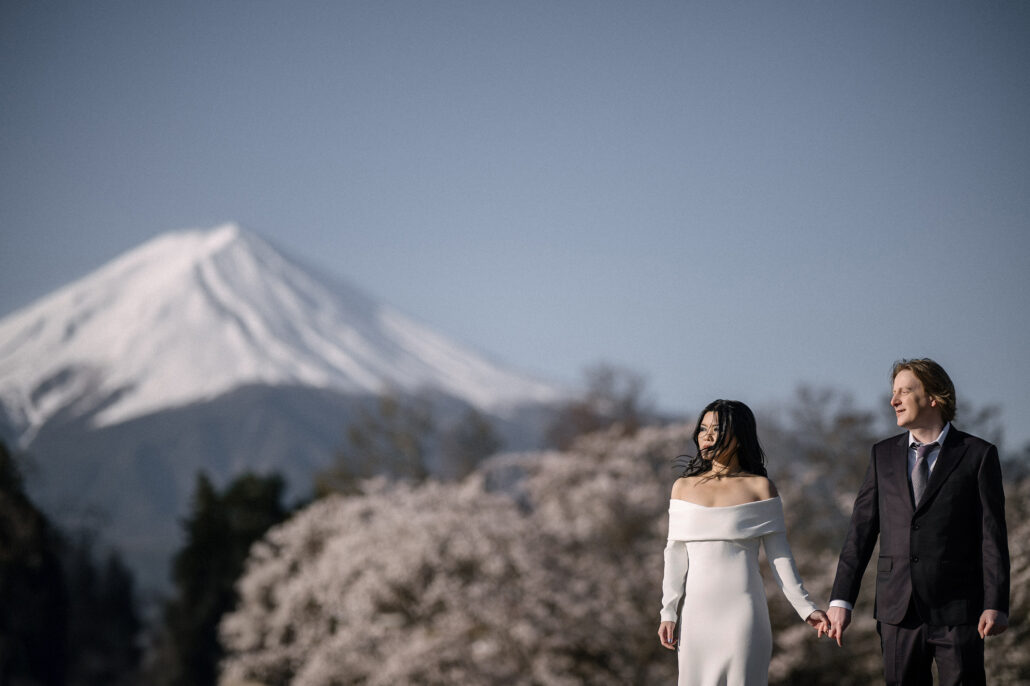
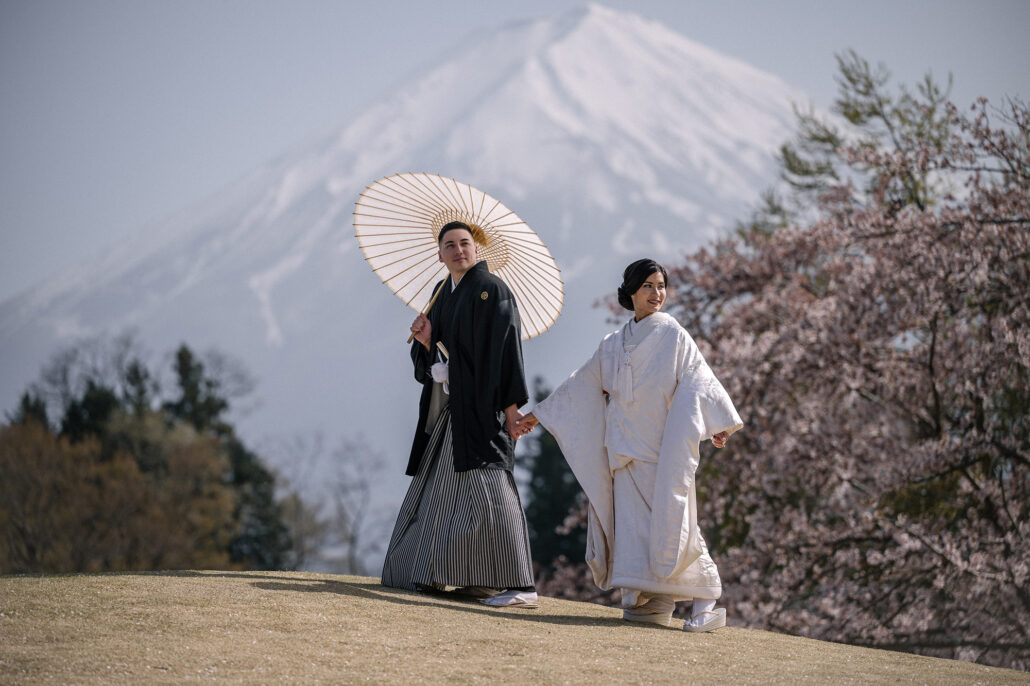
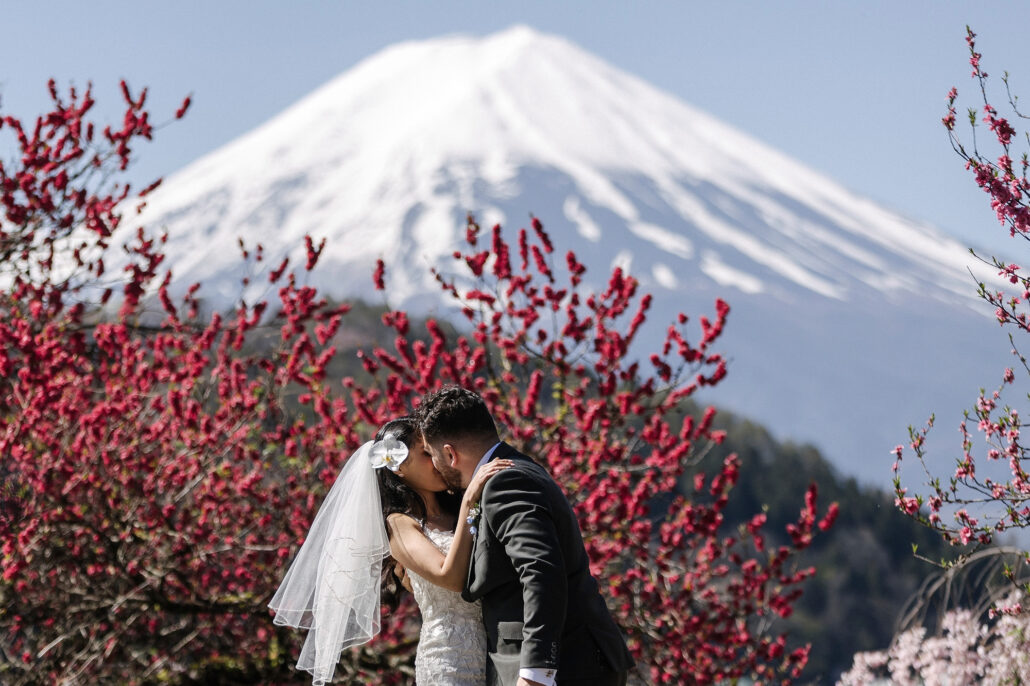
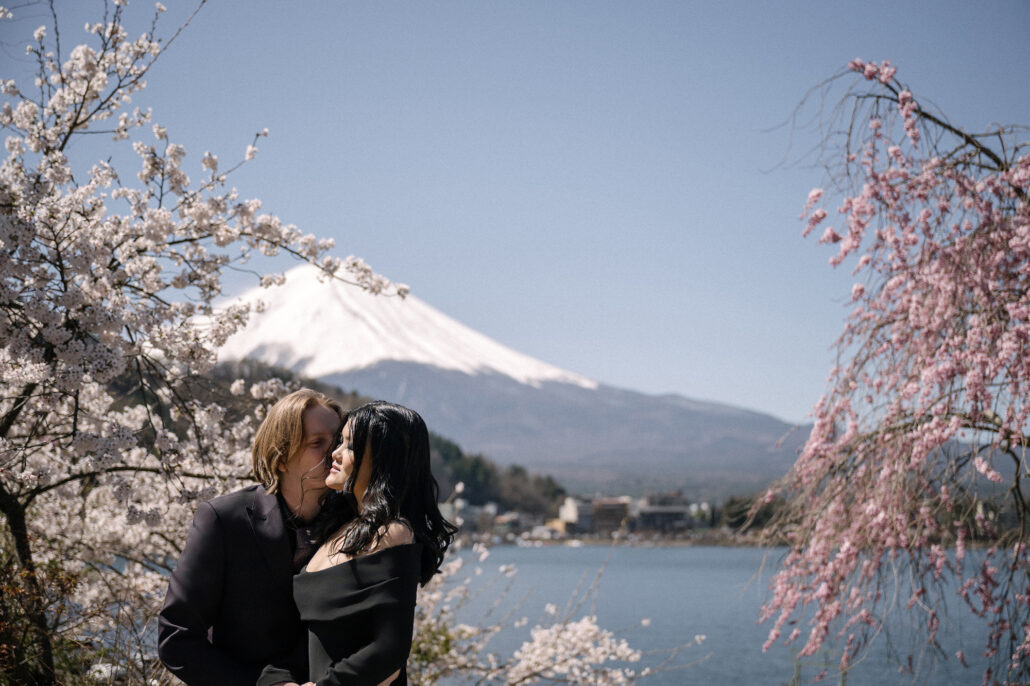
A little altitude. On Yoshino’s mountain in Nara, full bloom reached the lowest slopes on 1 April 2026 and the highest on 9 April. One mountain, eight days. Around Lake Kawaguchiko at Mt Fuji, the Somei-yoshino are usually at their best in early to mid April, after Tokyo’s have gone. That’s when our red thread ceremony at Fuji Five Lakes took place, in full cherry blossom season.
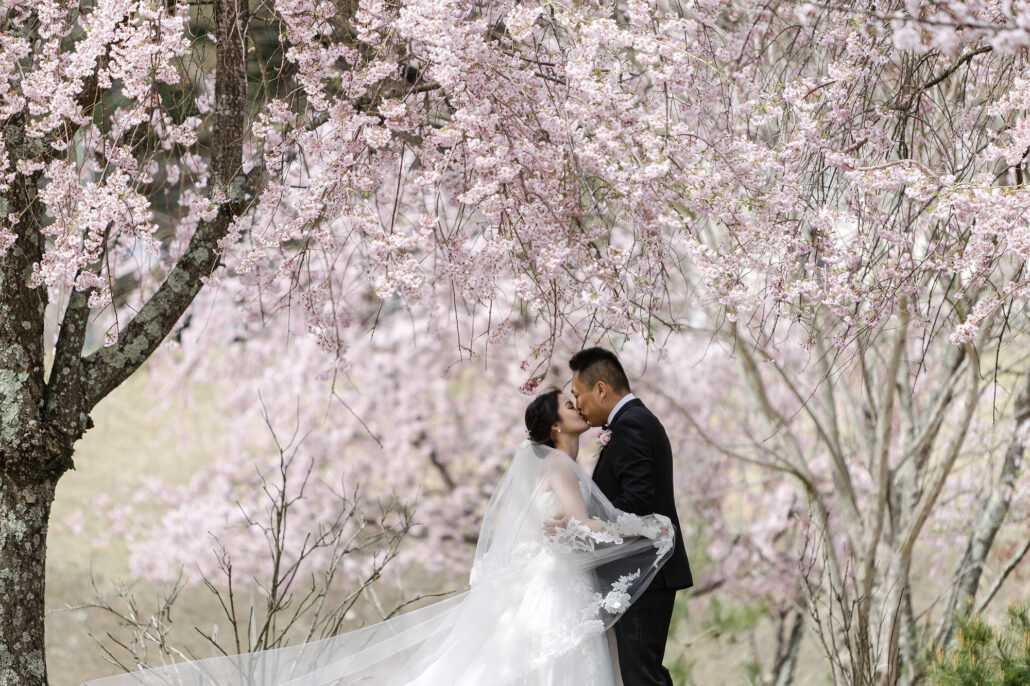
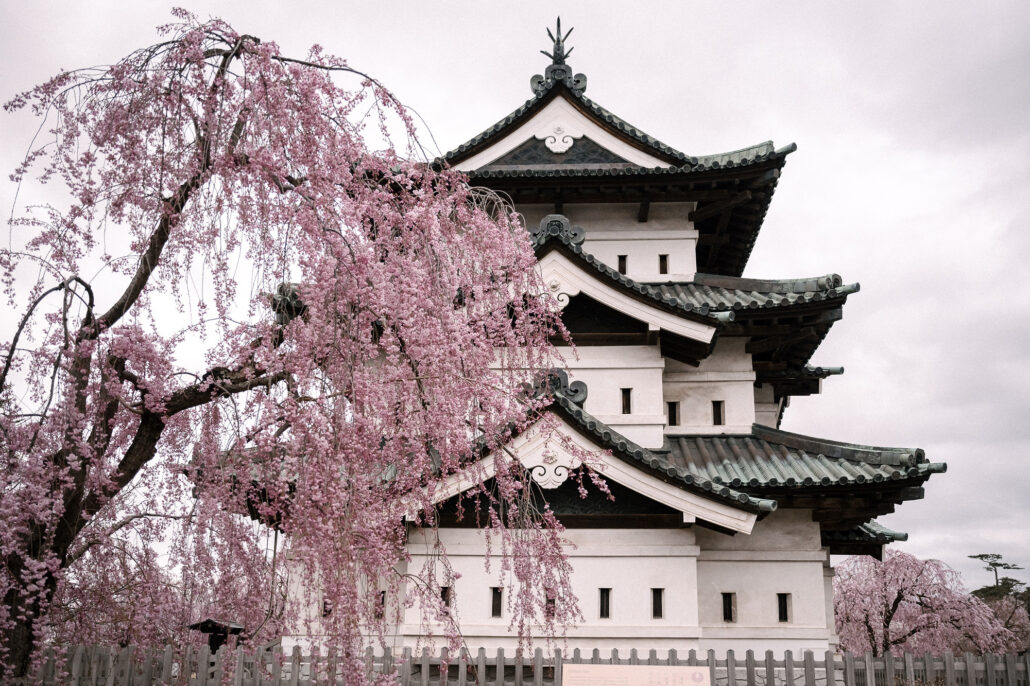
The north. Hirosaki’s festival is set for 16 April to 5 May 2027, and Hokkaido’s season begins around the start of May. A couple who miss Tokyo’s blossom by a week can often find it again by going north, which is what our couple in Aomori did on purpose.
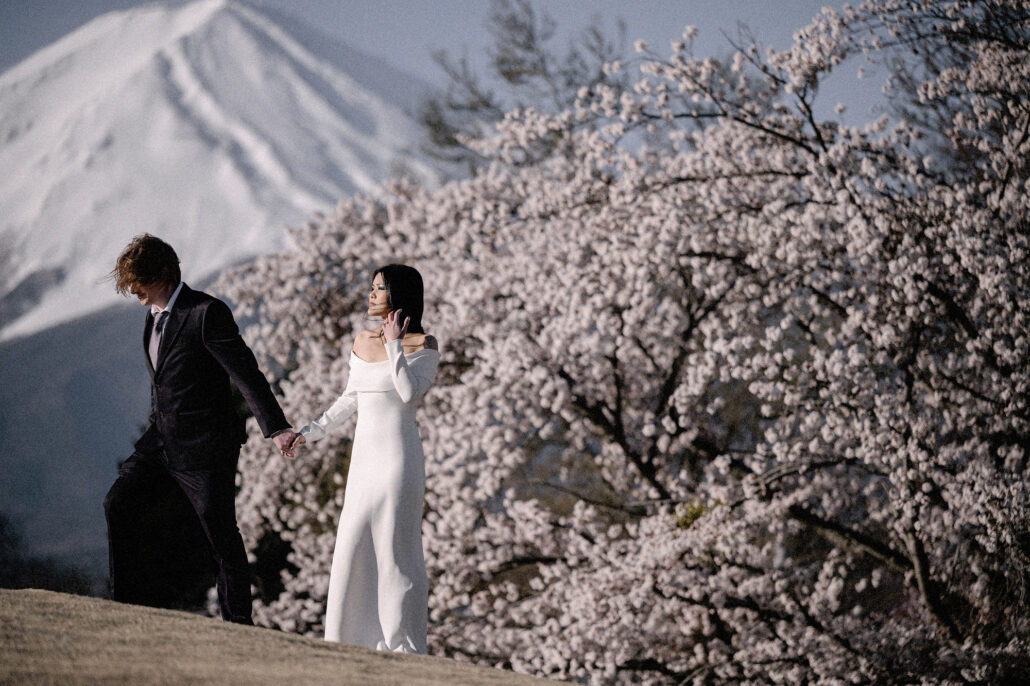
Quiet Cherry Blossom Spots in Japan
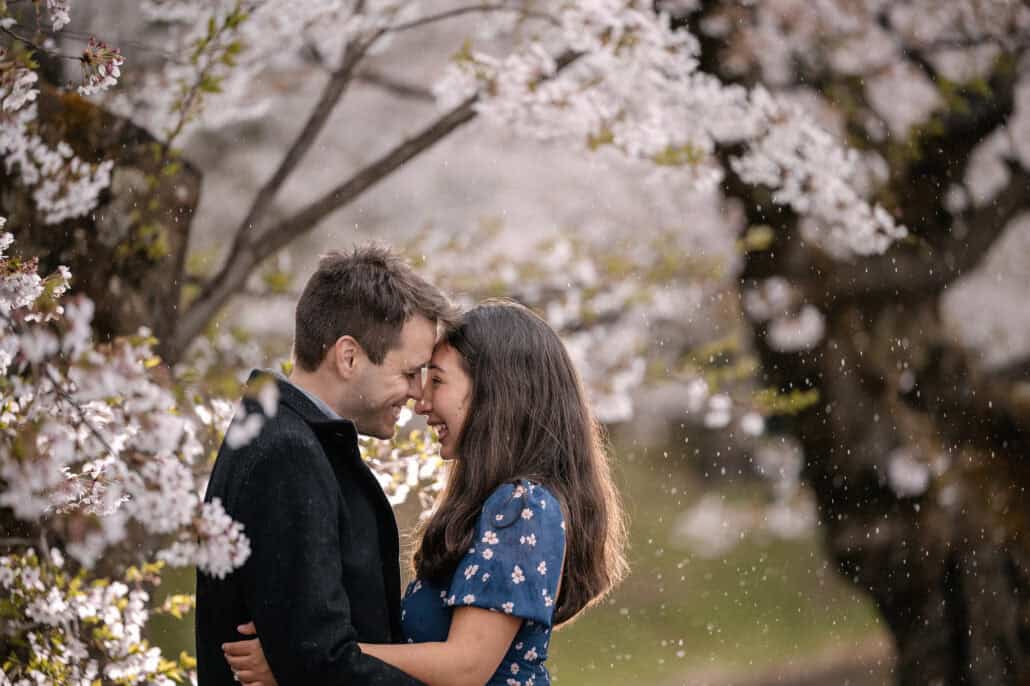
Once a cherry tree becomes famous, it becomes one of the most photographed trees in the country. A little fence goes up around it, and there are always people in front of it. But there are thousands of places in Japan where you’ll find a cherry tree nobody told you about: beside a small shrine, at the edge of a field, at the end of somebody’s road. With a little work, a little know-how and a conversation with the right people, we can often get our couples to one of them.
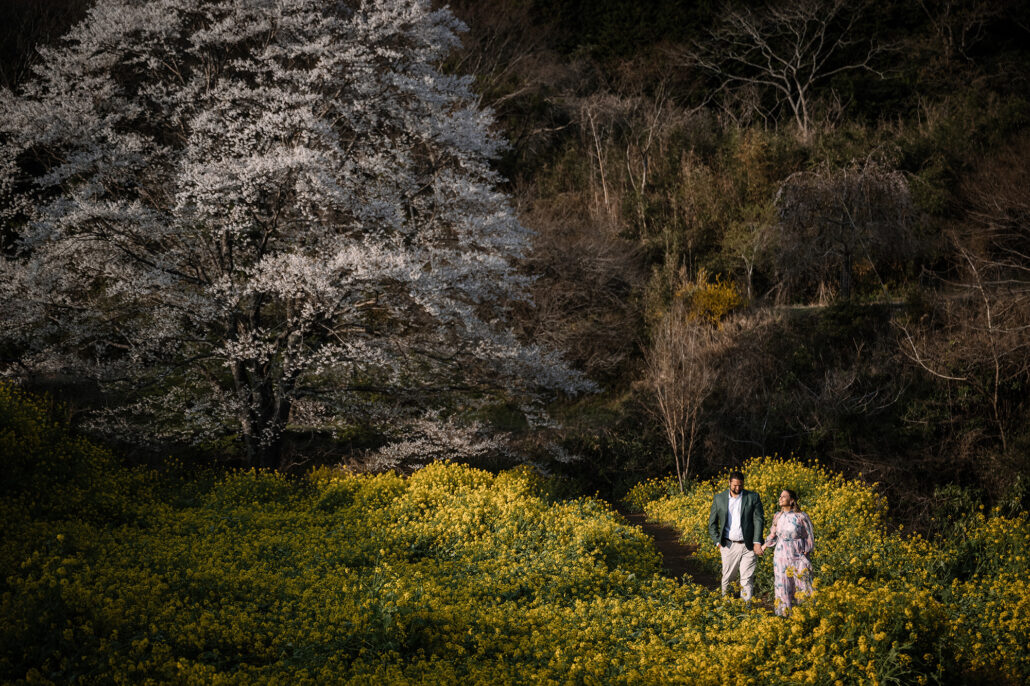
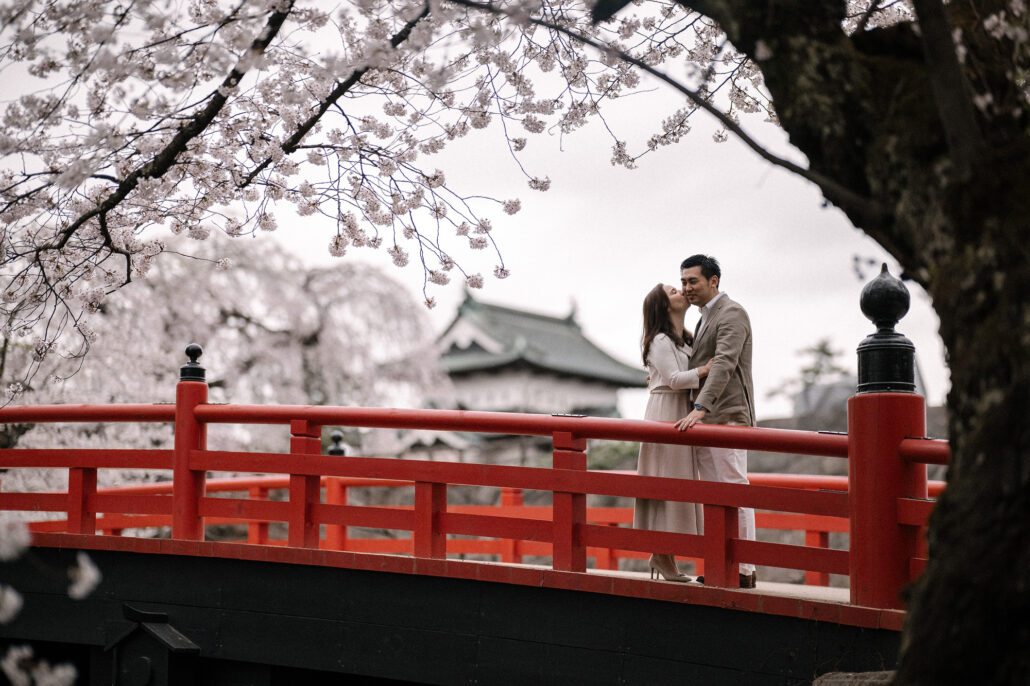
Our favourite blossom moment of all was the first time we saw Hirosaki, in Aomori, when we flew north for a proposal in the park. It was breathtaking. We walked in and realised that, for the first time, we didn’t have to hunt for angles with nobody in the background, or look for the one branch that would make a couple seem surrounded by blossom. They simply were. In the part of the park we were in, there was hardly anyone at all.
Hirosaki is far busier now. We still know its quiet corners. That’s the trade that comes with sharing a place like this: the more it’s shared, by us as much as anyone, the busier it becomes, which is why some of our favourite trees will never appear in a post.
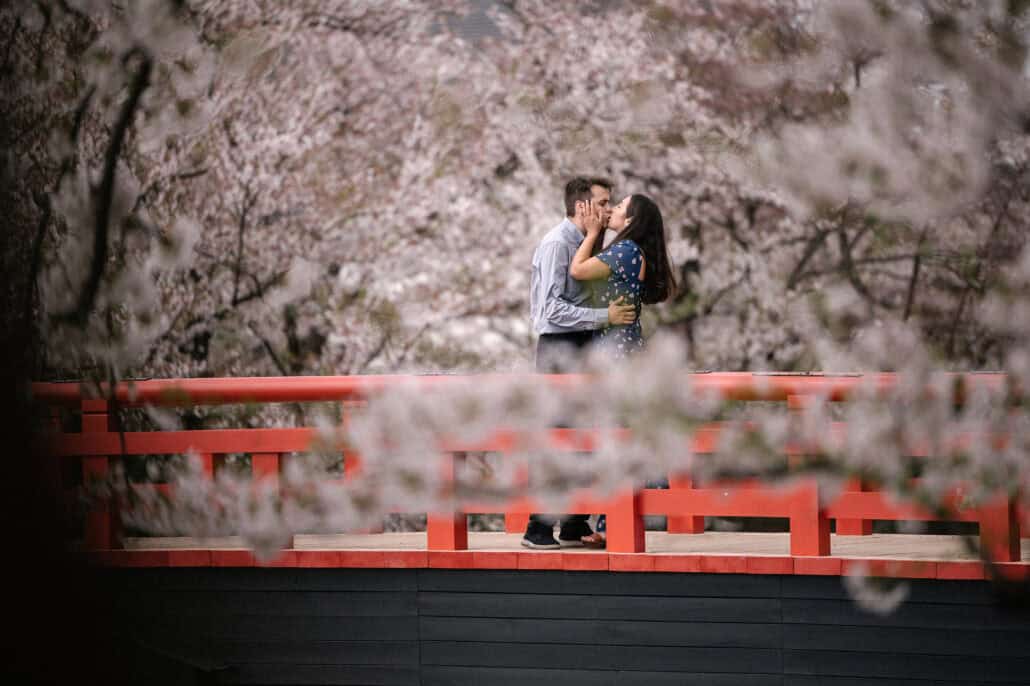
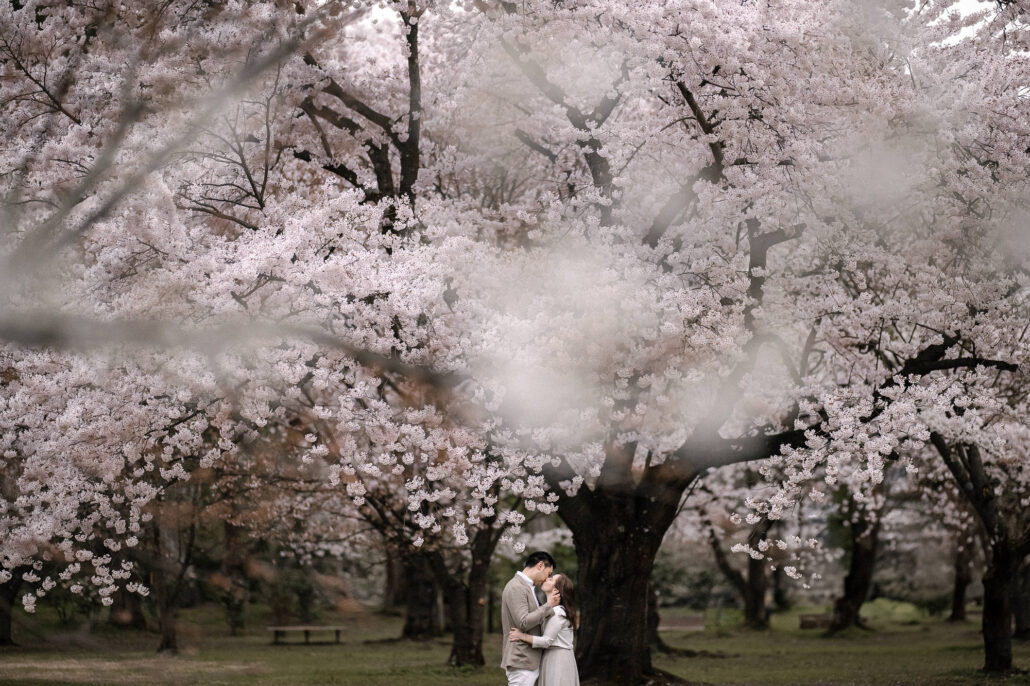
Rain, Wind and Hanabie
Rain is part of spring here. The agency’s thirty-year averages give Tokyo about nine days of measurable rain in March and again in April, and Kyoto much the same, with around four days a month of proper rain, ten millimetres or more.
Japanese has words for the rest of it. Hanabie is the cold snap that returns while the cherries are out and holds everything back; a cold late March stalled the blossom across much of Japan in 2024, the spring of Kawagoe. Hana arashi is the strong wind at the height of the blossom that strips the branches.
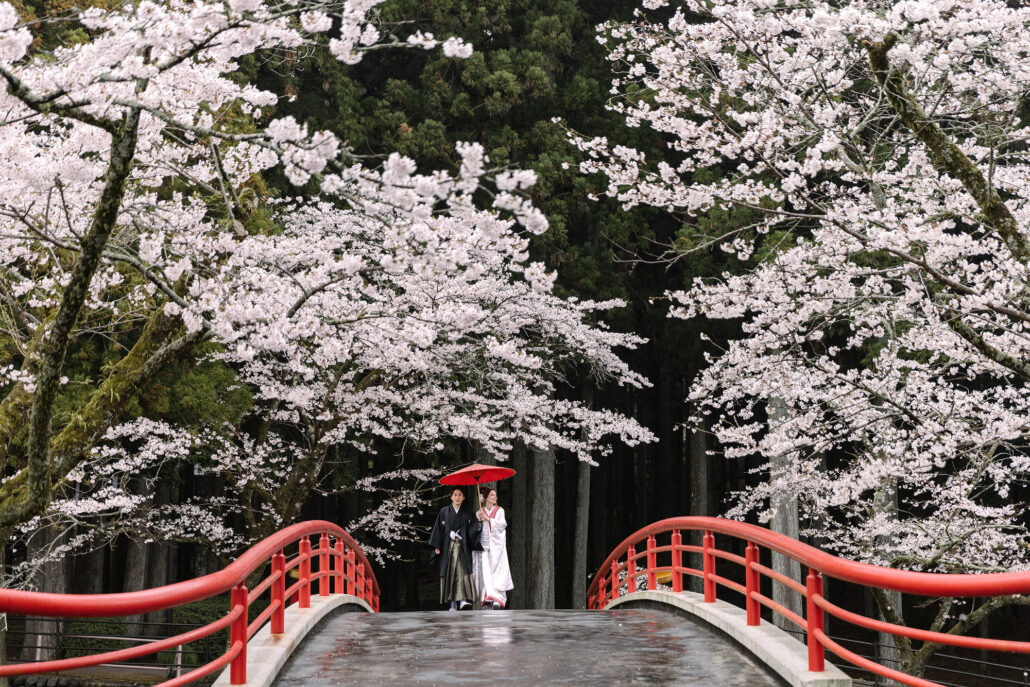
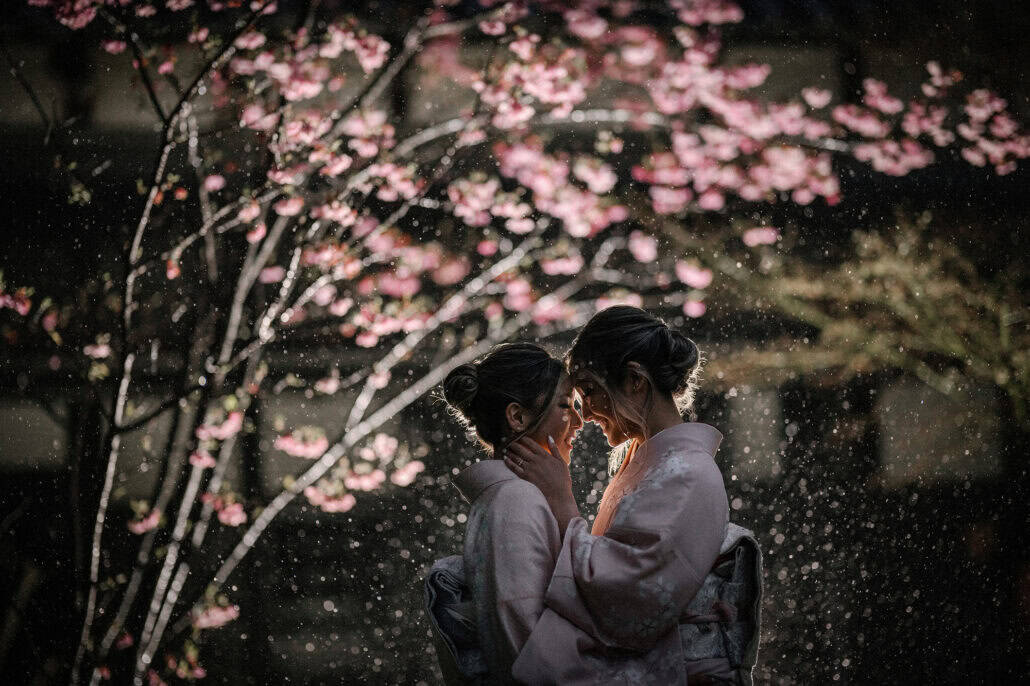
So every blossom wedding we plan has a second version of the day, chosen as carefully as the first: rooms that look out onto trees, a covered walkway, an inn whose garden is as beautiful wet as it is dry. Our rainy day elopement at Jinya, in cherry blossom season, is what that looks like when the second version is the one you get.
The end of the blossom has its own season, too. At Hirosaki, the park’s keepers say the petals floating on the moat are at their best about three days after full bloom. Some of the most beautiful spring photographs we’ve made were taken after the trees began to let go.
The Blossoms Belong to Everyone
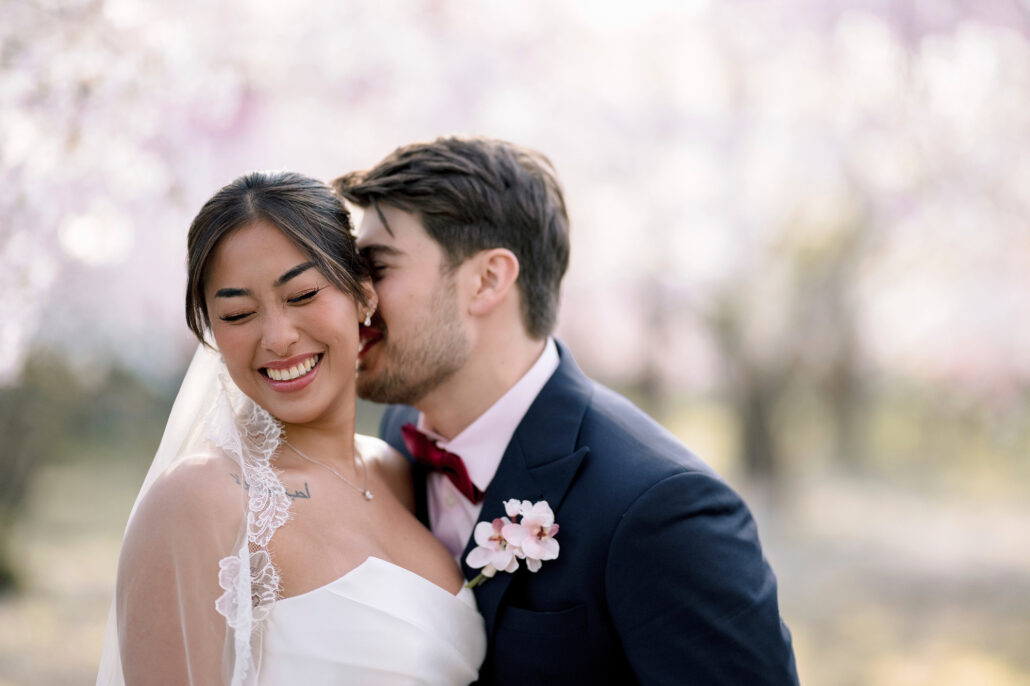
People sometimes ask us for a private cherry blossom ceremony in a park. In Japan, there’s no such thing, and we wouldn’t want there to be. Hanami is shared. The parks stay open to everyone, and their rules exist to keep it that way. In Kyoto’s city parks, a professional wedding shoot needs a permit charged by the hour, ¥4,600 (about US$29) for photography and ¥9,400 (about US$59) for film, applied for in advance, at least two weeks ahead for most parks. In Tokyo, Meguro ward closes its riverside path to filming from mid March to mid April, and Inokashira Park allows no permitted filming at all in blossom season.
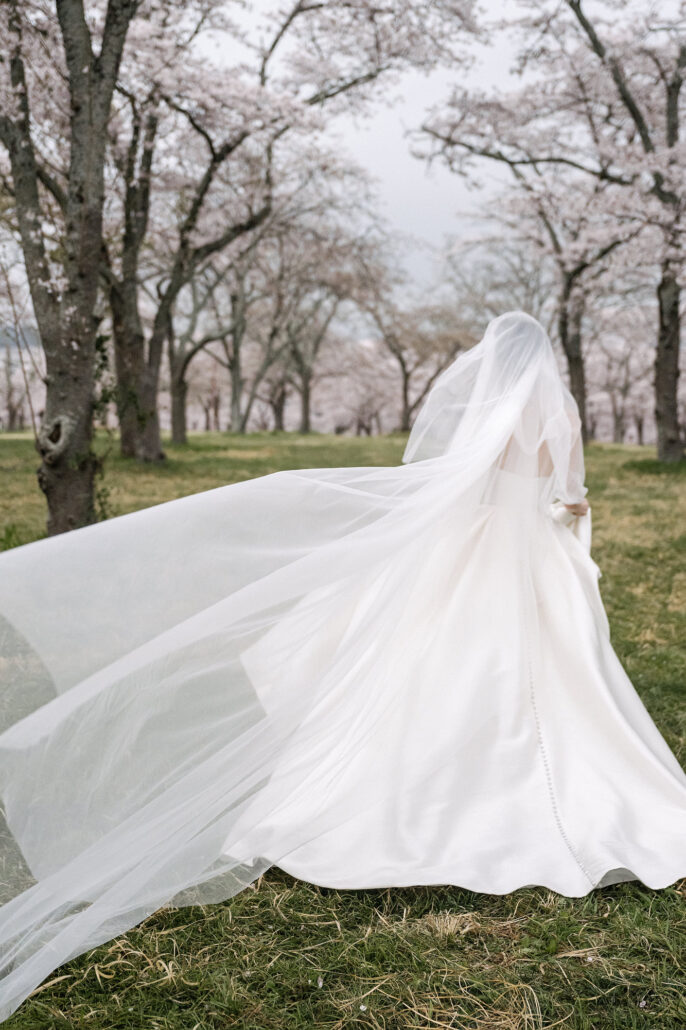
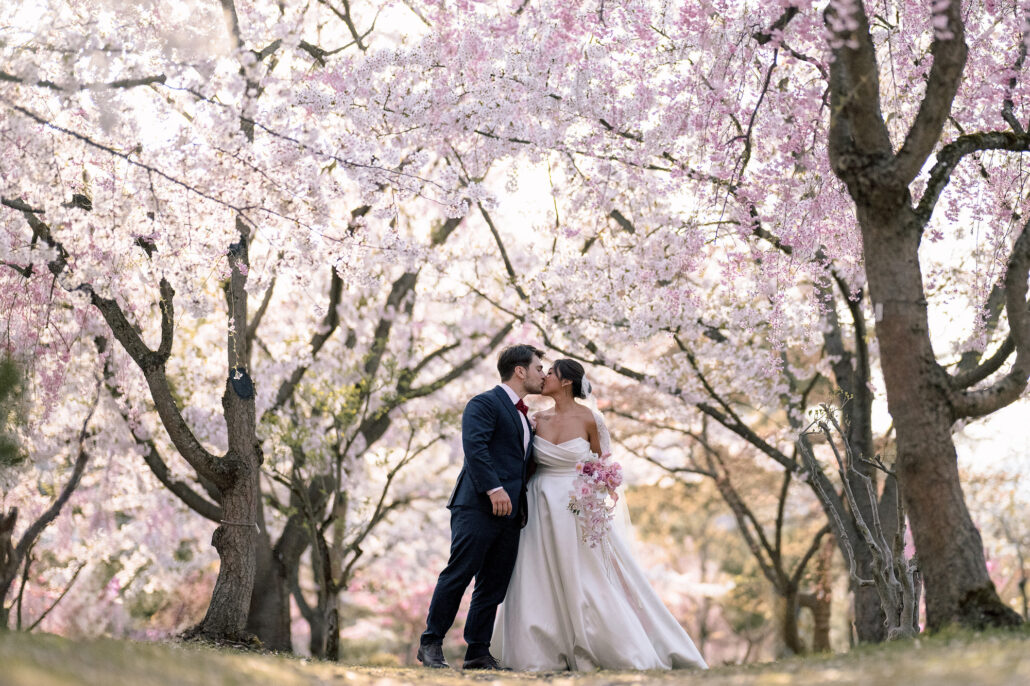
A blossom wedding, then, is mostly a matter of knowing where the trees are that nobody else is standing under: a temple garden that hosts the ceremony, an inn like Asaba, where the hill behind the pond turns white and pink with blossom in early spring, a private garden in Kyoto that opens for our couples, with a cherry tree of its own, a gate that opens because someone asked properly. And we know two places, both public, where a grove of cherry trees runs on almost as far as you can see and hardly anyone comes.
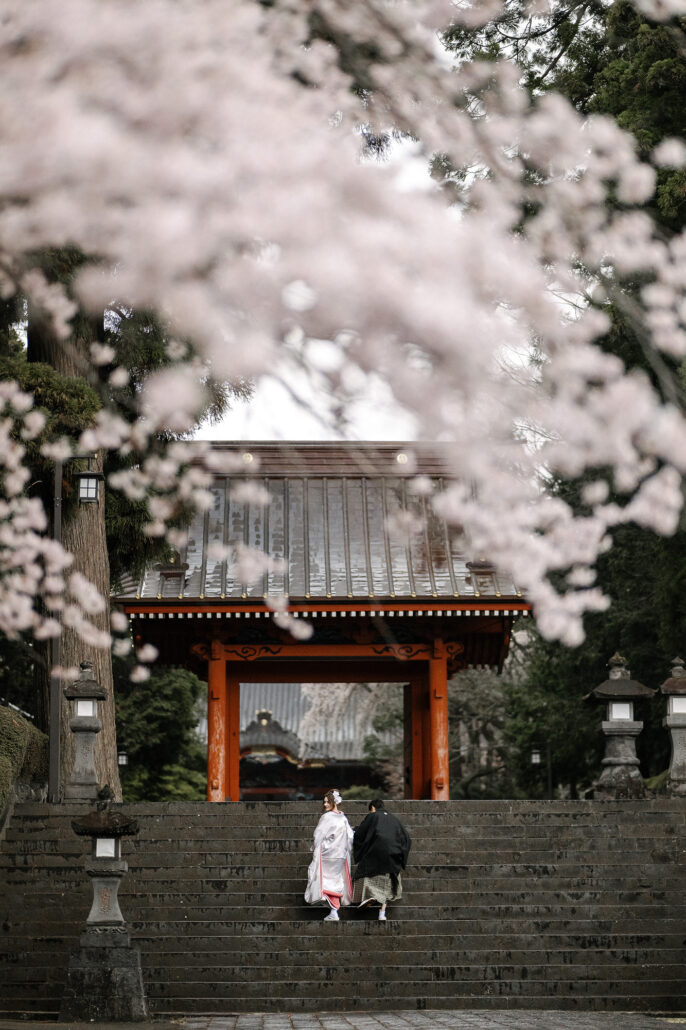
Timing helps as much as place. Our weddings often run midweek, and in spring that matters more than ever.
The same tree on a Tuesday morning is a different place from the same tree on a Saturday afternoon.
Booking for Cherry Blossom Season 2027
Easter 2027 falls on Sunday 28 March, inside the usual window for Tokyo, Kyoto and Osaka. Kyoto’s tourism association notes that visitors from America, Europe and Australia rise around Easter every year. The city’s main hotels were 89.5 percent full in April 2025 and 85.1 percent full in April 2026, when the average room rate reached ¥31,296 (about US$198) a night, the highest April since its records began in 2014. That’s an average across a whole month and more than a hundred hotels. On peak blossom nights in Kyoto and around Mt Fuji, the rooms couples actually want can run to three times that and more. A wedding needs more than one room.
Couples can book us up to eighteen months ahead, and planning begins about a year out. For a spring wedding, guest rooms are the first thing we’d hold, long before any forecast exists, in places that work in every version of the season. We keep each season small, and spring fills first, so the earlier we talk, the more of Japan is still open.
Quick Answers About Cherry Blossom Season 2027
When is cherry blossom season 2027 in Japan?
Most likely late March to early April in Tokyo, Kyoto, Osaka and Fukuoka, then north through April to Aomori and Hirosaki in the second half of the month and Hokkaido around early May. Okinawa’s cherries bloom in January and Izu’s Kawazu cherries in February. Exact dates aren’t known until the forecasts arrive, and even then they move.
When will the 2027 cherry blossom forecast be published?
The Japan Meteorological Agency doesn’t forecast the blossom. The private forecasters published their first 2026 forecasts on 18 December 2025, 8 January and 29 January 2026, so expect the first 2027 forecasts between mid December 2026 and late January 2027.
How long does cherry blossom season last?
In one place, about a week from the first flowers to full bloom in Tokyo and Kyoto, six to twelve days in the last ten springs, and full bloom itself holds for a few days before wind and rain start taking the petals. In the north it’s faster: three to five days from first flowers to full bloom in Aomori. Across the whole country, with early and late varieties, the season runs from January in Okinawa to early May in Hokkaido.
Can we have a private cherry blossom ceremony in a park?
Not in a public park. Parks stay open to everyone, and in Kyoto’s city parks a professional wedding shoot needs a permit charged by the hour. A private ceremony under blossom belongs in a garden, temple, inn or venue that can host it.
What if the blossom isn’t out on our wedding day?
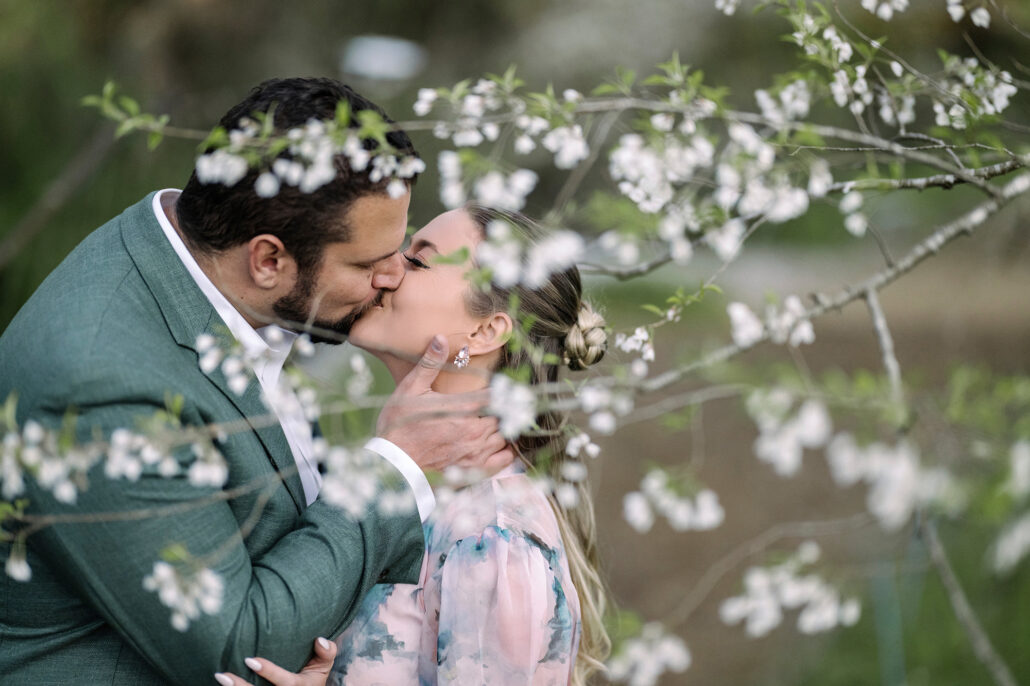
Your date stays, so we plan the place around it: somewhere the trees keep different time, with an early weeping cherry, a later double-flowered one or a garden a little higher up within reach. On the same river in Kawagoe, on the same date a year apart, we had full bloom once and bare branches the next spring, and on the bare-branch day we still found a weeping cherry in bloom nearby. And the end of the blossom, petals on the water, is a season of its own.
How far ahead should we book a cherry blossom wedding in Japan?
As early as you can. Couples book us up to eighteen months ahead, and in spring the guest rooms go first: Kyoto’s main hotels were about 85 to 90 percent full in April in both 2025 and 2026.
Where the Blossom Will Be
Tokyo’s sample tree will open its first five flowers of 2027 on a morning nobody can name yet, at the end of a winter nobody has had. Your date can’t wait for it, and it doesn’t have to. What can be chosen now is everything around that date: a place where the trees keep different time, a second plan as good as the first, and rooms held before the forecasts send everyone else looking. Then, whatever the blossom does that week, we’ll know where to look.
Written in October 2026. Sources: Japan Meteorological Agency, first-bloom and full-bloom records and 1991 to 2020 normals (Japanese); Japan Meteorological Corporation, Weathernews and the Japan Weather Association (Japanese); Hirosaki City and the Hirosaki Sakura Festival; Yoshino Town; the Osaka Mint; Kawazu Town; Kyoto City’s park photography standard and park fees; the Kyoto City Tourism Association’s hotel reports for April 2025 and April 2026 (all Japanese).