Most couples choose a wedding videographer by watching highlight films. That’s a reasonable place to start and a poor place to finish. A highlight film is three or four minutes of the best light from the best weddings, cut to music. It tells you a filmmaker has taste. It doesn’t tell you what they’ll do in a shrine where cameras are restricted, in a garden where the wind takes every word, or in the minute after your father starts his speech and loses his place.
So here are the questions we’d ask, if we were the ones choosing. Some of them sound technical. All of them are really about what you’ll have in twenty years.
Is a Wedding Videographer Worth It?
Photographs keep how a day looked. Film keeps how it sounded: the vows in your own voices, the laugh that came halfway through a speech, the noise a room makes when two people walk in married. Couples who skip film rarely regret the money they saved. Some of them regret the voices.
If you’re unsure, watch a full ceremony edit rather than a highlight film, with the sound up. You’ll know quite quickly whether it’s something you’d want.
Can I See a Whole Film?
Ask to see one complete wedding from start to finish, not just the highlights. A full film shows how a filmmaker handles the parts that aren’t beautiful by default: a ceremony in flat light, a speech that runs long, a room that’s too dark. It also shows whether they cut for feeling or for the clock, and whether the film still holds when the music stops.
How Do You Record Sound?
This is the question that separates filmmakers most clearly, and the one couples least often ask. A camera’s own microphone hears everything in the wrong order: the wind, the traffic, the guest coughing in the second row, and only then the vows. The voices that matter need a microphone close to them, on the two of you or the officiant, and a plan for wind outdoors.
Ask what happens if a microphone fails, and whether they record the speeches separately. The answer tells you how much they care about the thing you’ll go back for most.

Will You Ask Us to Do Anything Twice?
Some filmmakers stage key moments for a better angle: the first look again, the walk down the aisle again, the kiss from the other side. Others don’t. Neither is wrong, but you should know which you’re booking. We don’t stage or repeat anything, because a moment performed for a camera is a different moment, and everyone in the room can feel it. The look of our films comes from where we stand and from the planning, never from asking a couple to act.
How Do You Work With the Photographers?
At many weddings, photographers and filmmakers are separate companies who meet on the morning of the day. They compete for the same few metres in front of the couple, and it shows. When photography and film are one team, they plan positions together, stay out of each other’s frames and share a sense of what the day is about.
For weddings planned by 37 Frames, our planning and photography teams work together from the beginning, and film from our Creative Team is an optional addition. We don’t work alongside outside photography or film teams, for exactly this reason.
Do You Know the Rules Here?
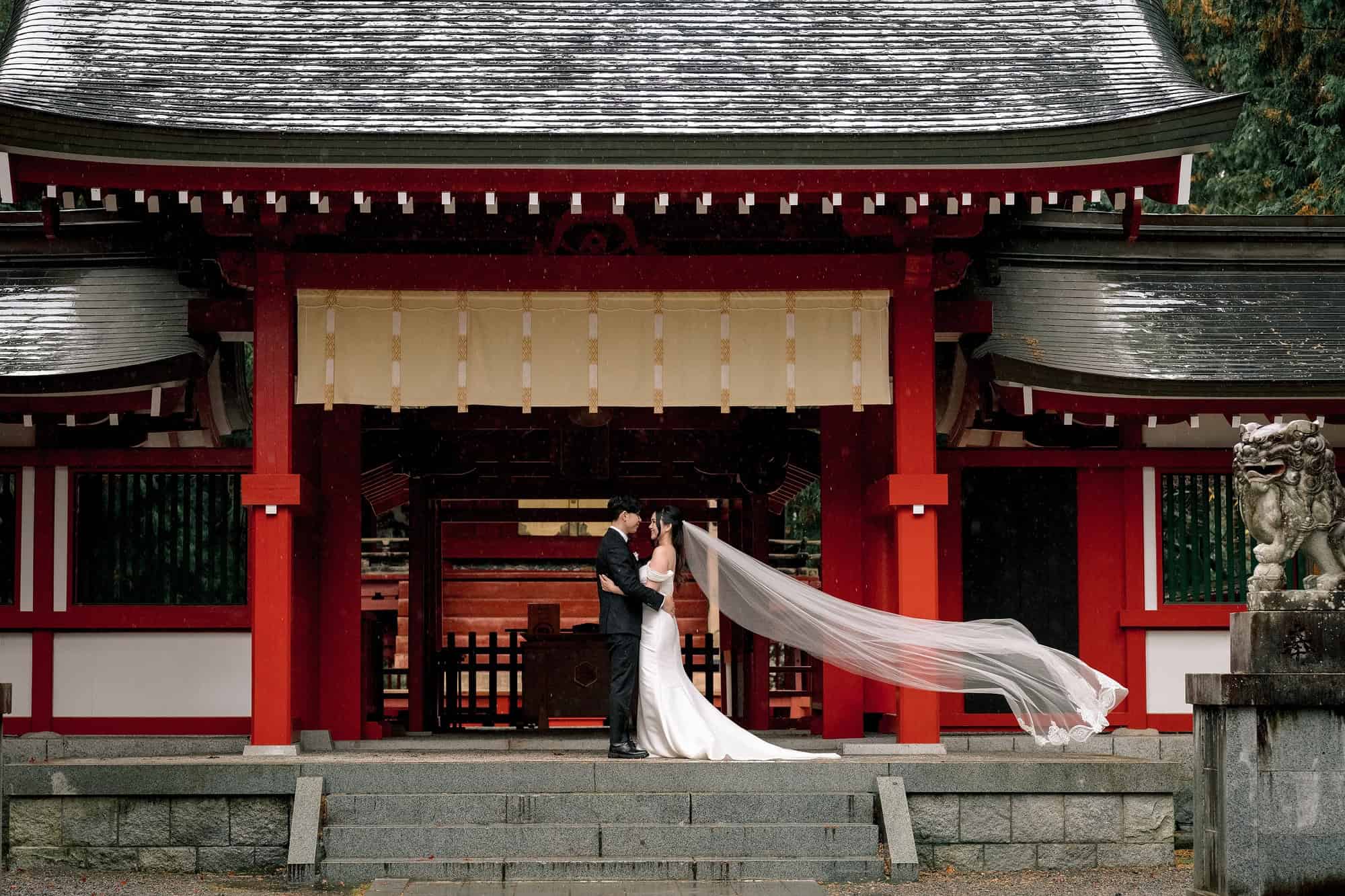
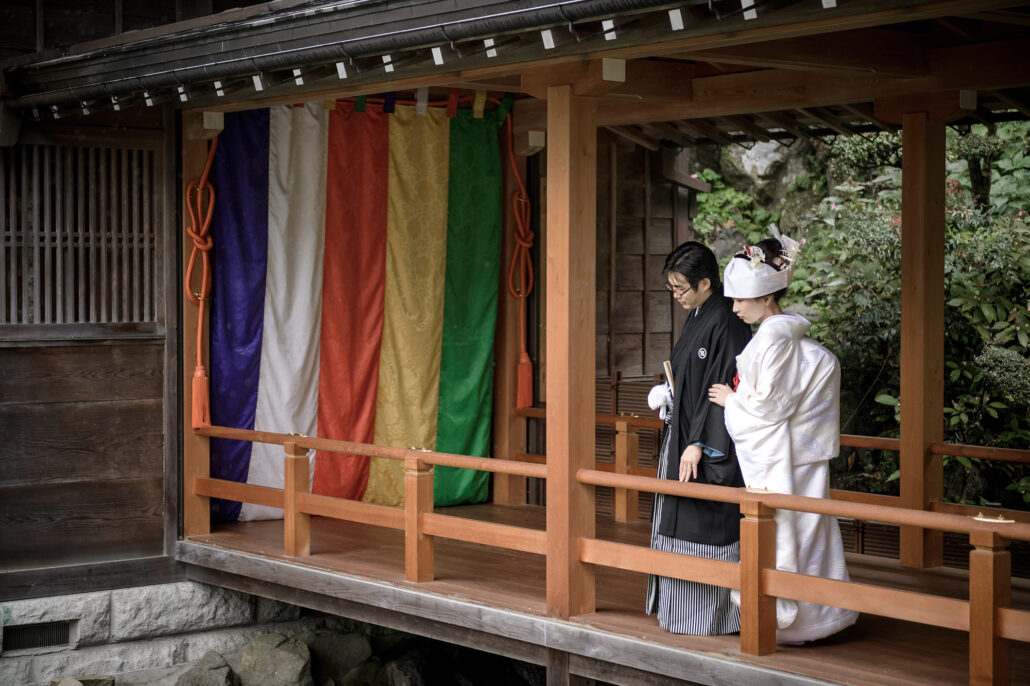
Japan has rules a filmmaker from abroad may not expect. Shrines decide where cameras may stand during a ceremony, and at some shrines parts of the rite can’t be filmed at all. Drone flights are tightly regulated, and many cities, parks and shrines don’t allow them. Ryokan have quiet hours and other guests. A filmmaker who knows this plans around it from the start. One who doesn’t finds out on the day, usually at the worst possible moment.
Ask how they’ve handled those rules before, and whether they speak with the venue in Japanese or through someone else.
What Do You Need From the Plan?
Much of what makes a film look like cinema is decided before anyone films anything: where the light falls at the hour of the ceremony, which way the couple faces, whether the walk to dinner passes anything worth slowing down for. A good filmmaker will ask about the plan early, and a good planner will build those answers in. Our guide to what a cinematic wedding film really means goes into how planning and film are designed together.
What Will We Get, and When?
Ask for the list: a highlight film, a full ceremony, the speeches, a vow film, short versions for sharing. Ask how long each takes and how you’ll receive it. A vow film, built around your own words rather than a soundtrack, is often the one couples watch most.
Twenty Years From Now
Every one of these comes back to the same thing. In twenty years, the dress will be in a box and the venue may have changed hands. The film will still have your voices in it, and the voices of people who may not be here any more. Choose the filmmaker who seems to understand that, and the rest of the answers tend to follow.