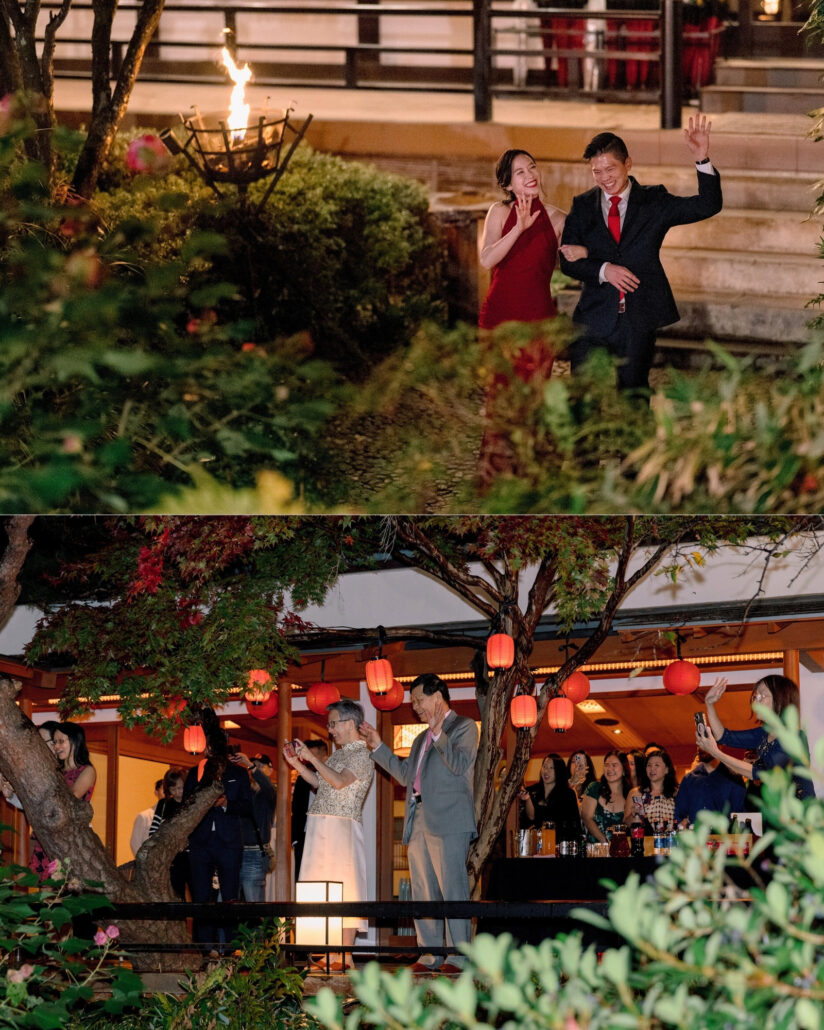
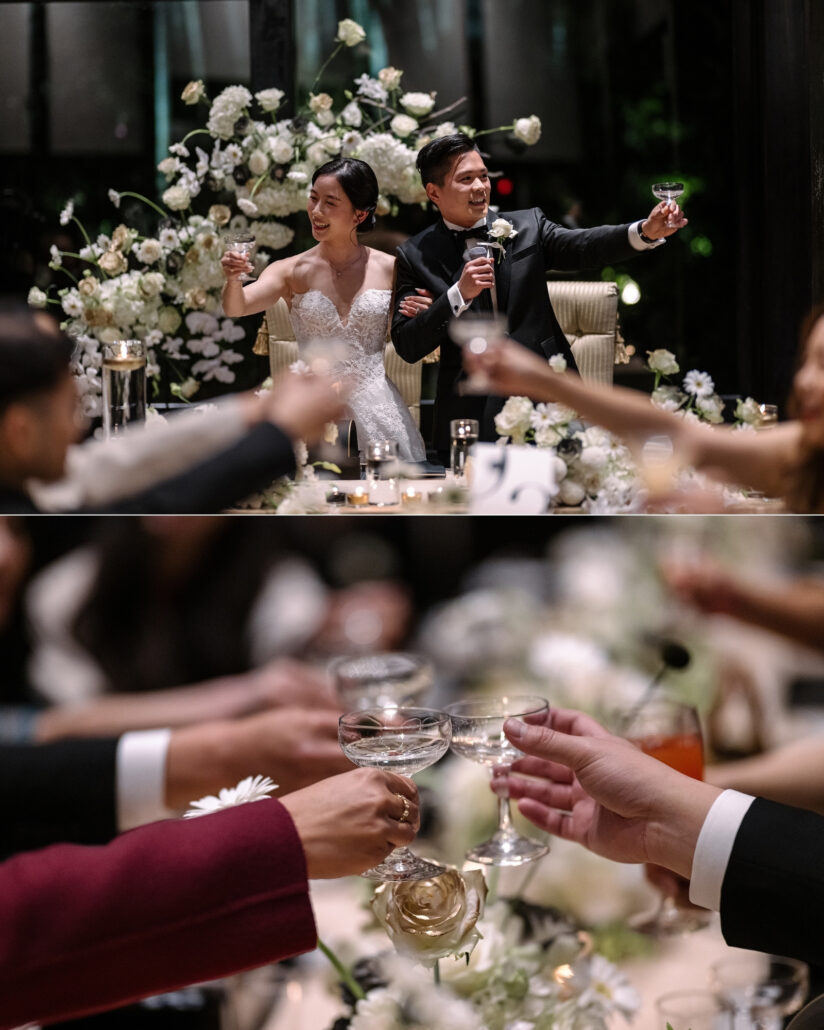
On the first night, the groom stood up to welcome everyone and gave them three warnings for “these next 48 hours”.
“Get ready to stretch your bellies.”
“Prepare your liver.”
“Prepare to get no sleep.”
Seventy-one people had come from across the United States, Europe and Asia, and for two nights in November they had Jinya to themselves. The whole of it: every room, every bath, every path through the garden. This is the story of a ryokan buyout wedding, and of how every one of those warnings came true.


A Ryokan Buyout Wedding at Jinya, an Hour From Tokyo
Jinya sits at Tsurumaki Onsen, about an hour from Tokyo, at the foot of the Tanzawa mountains. It began in 1918 as a villa for receiving important guests. More than a century later, receiving people is still what it does best.
A ryokan is a house of early nights. Dinner is served in courses, the baths are open until late, the corridors go quiet, and other guests are sleeping down the hall. Most inns will give a wedding a beautiful day and a polite ending.
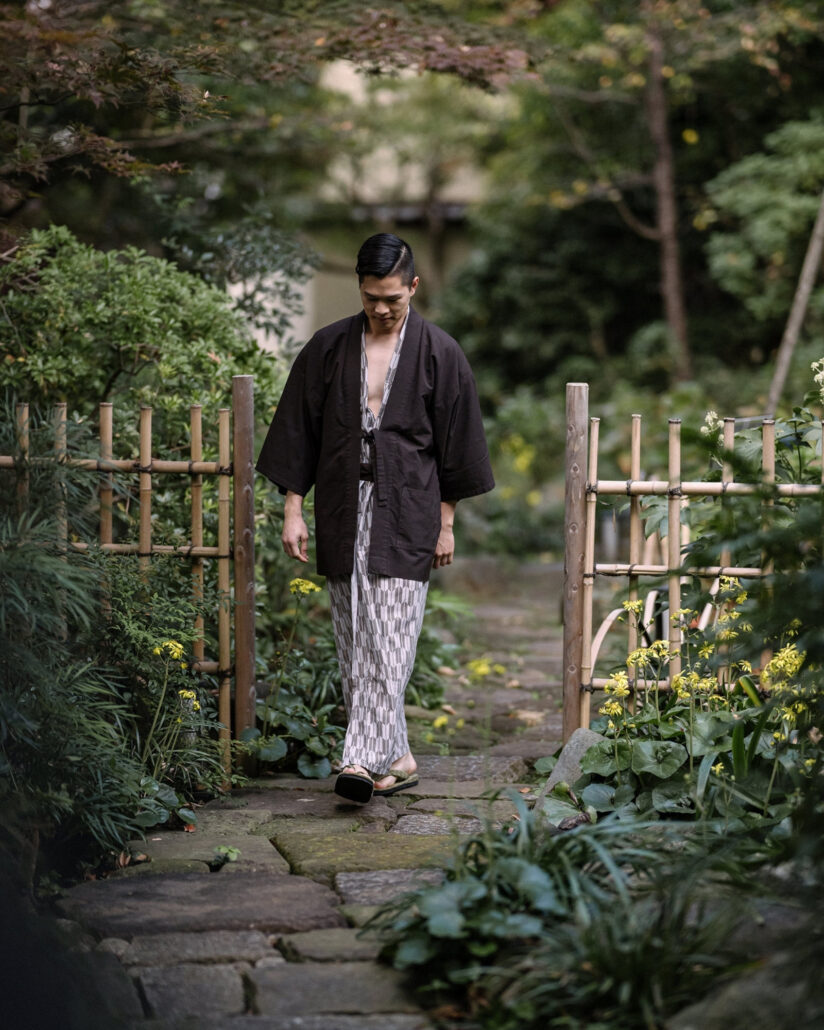
A buyout changes what’s possible. When you take the whole inn, no other guests are booked. Every room, bath and garden path is yours. Guests wander between the reception and the hot springs in yukata. Grandparents go to bed in a room down the hall. Nobody watches the clock for the last train.
What a buyout doesn’t change is where the inn sits. Jinya has neighbours, and the music has a firm finish. The best weddings we plan treat that as part of the deal. This one did it beautifully.
Our fabulous groom and our incredible bride wanted that for everyone, and they wanted it for two nights. They collected the room fees from their guests themselves and paid the inn in one go, so that the stay felt like a gift. Fifty-four people slept at Jinya. The others came out from Tokyo and nearby hotels by private coach, and Dee rode out with them. The couple’s parents asked for rooms next to each other. We made sure of it.


Why Two Nights
If there’s one thing we’d tell any couple planning a destination wedding in Japan, it’s to give your people a first night.


People fly a long way for a wedding like this. Many of them have never met. On a single day, they meet in a receiving line and part at midnight. Give them an evening first, and by the time the ceremony begins they already know each other’s names, who’s sitting with whom, and which uncle has the best stories. The wedding day starts warm instead of starting from zero.
A second night does the rest. It means nobody has to leave the party to catch a coach. It means a morning after, together, with all the stories still fresh. And at a ryokan, it means everyone gets two nights in the hot springs, which tends to make a crowd of strangers into something closer to a household.

Night One: A Welcome Party at Jinya
Warning number one: stretch your bellies.
The welcome party was for every guest, staying or not. Low tables dressed with Japanese-pattern runners. Beer from Sapporo, Asahi and Kirin on ice in a big wooden tub, which Jinya’s head chef approved personally. Yuzu-honey soda for anyone pacing themselves.
Dinner was a curry buffet, and the chef made it his own. We’d planned beef, chicken and vegetable. He suggested swapping the chicken for a mild curry made with Ise-ebi, Japanese spiny lobster. Seafood curry is everyday food in Japan, and Sumika, our planner, promised it was good. The couple said yes. It was delicious.
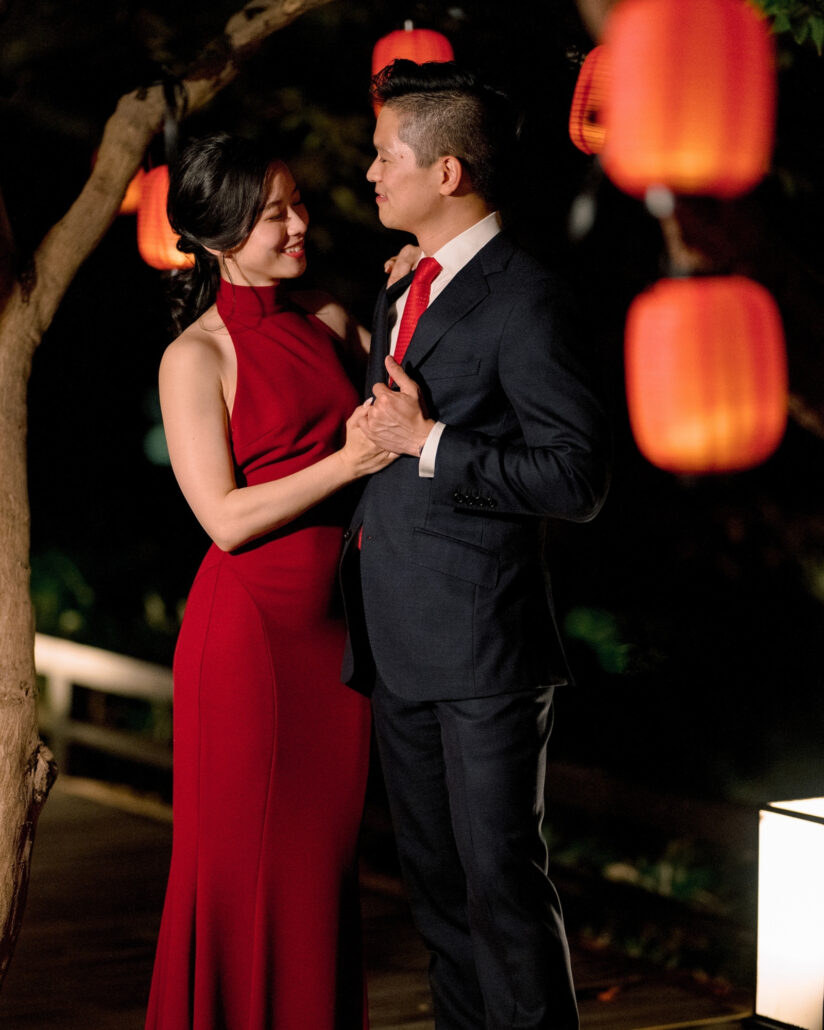
She arrived in a red dress, and the room cheered as if the wedding had already happened.

Mochitsuki at the Welcome Party
Then the mortar came out.
Mochitsuki is the pounding of steamed rice into mochi in a great wooden mortar, one person swinging a heavy mallet while another turns the rice between strikes. It’s loud, it’s rhythmic, and it’s impossible to watch without wanting a turn. The two of them went first, in happi coats, while the whole room counted the strikes out loud. Then the guests queued up for the mallet.
The mochi went straight to a bar of toppings: strawberry with sweet red bean, kuromitsu syrup, and roasted soybean kinako with peanut. (The story of why mochi belongs at a wedding is told in their wedding film.)
By the end of the first night, people from every corner of their lives were calling each other by name, and the first warning was well underway.


Getting Ready at Jinya, With Iki Espresso
On the wedding day, before anyone had a drink in their hand, there was coffee. They’d asked for it by name: Iki Espresso, one of Tokyo’s best-loved coffee bars, set up at the inn for the morning and pulling flat whites and cortados for everyone.
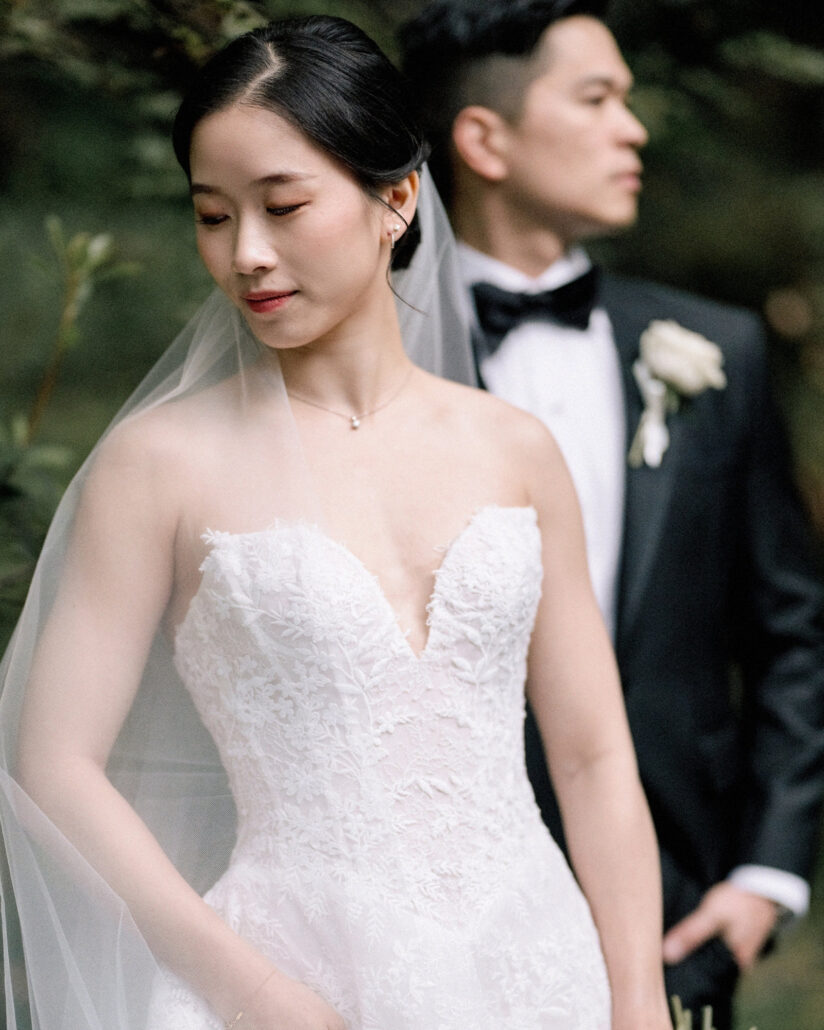
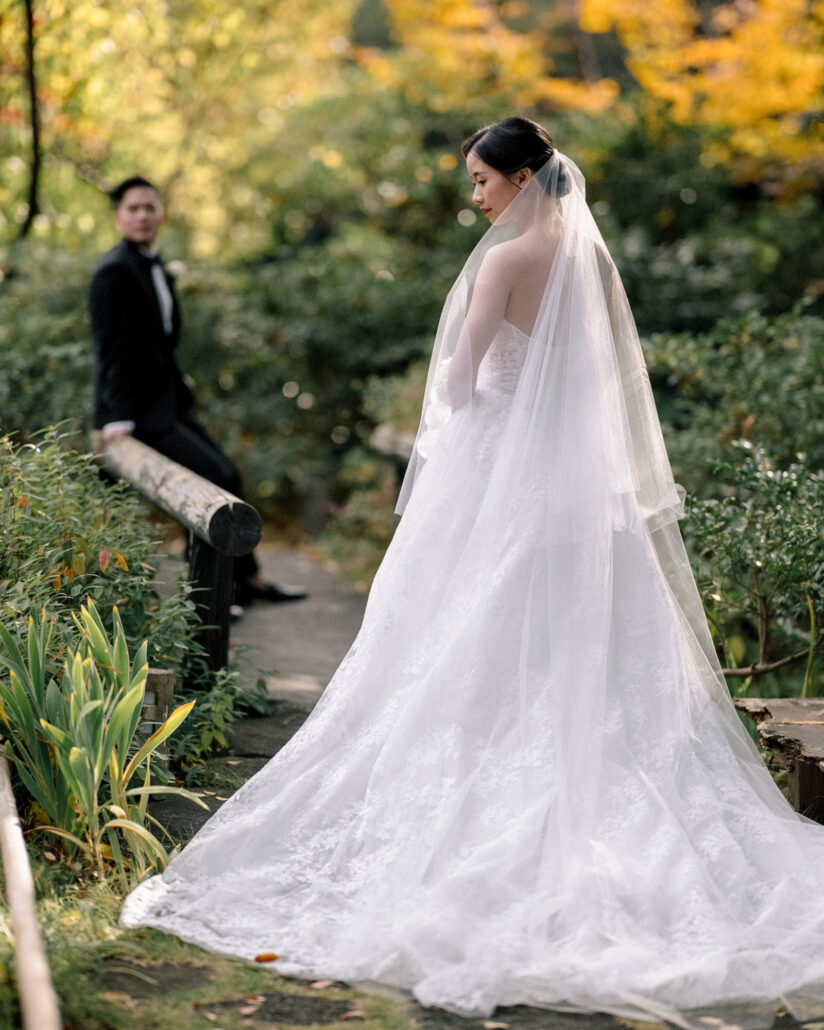
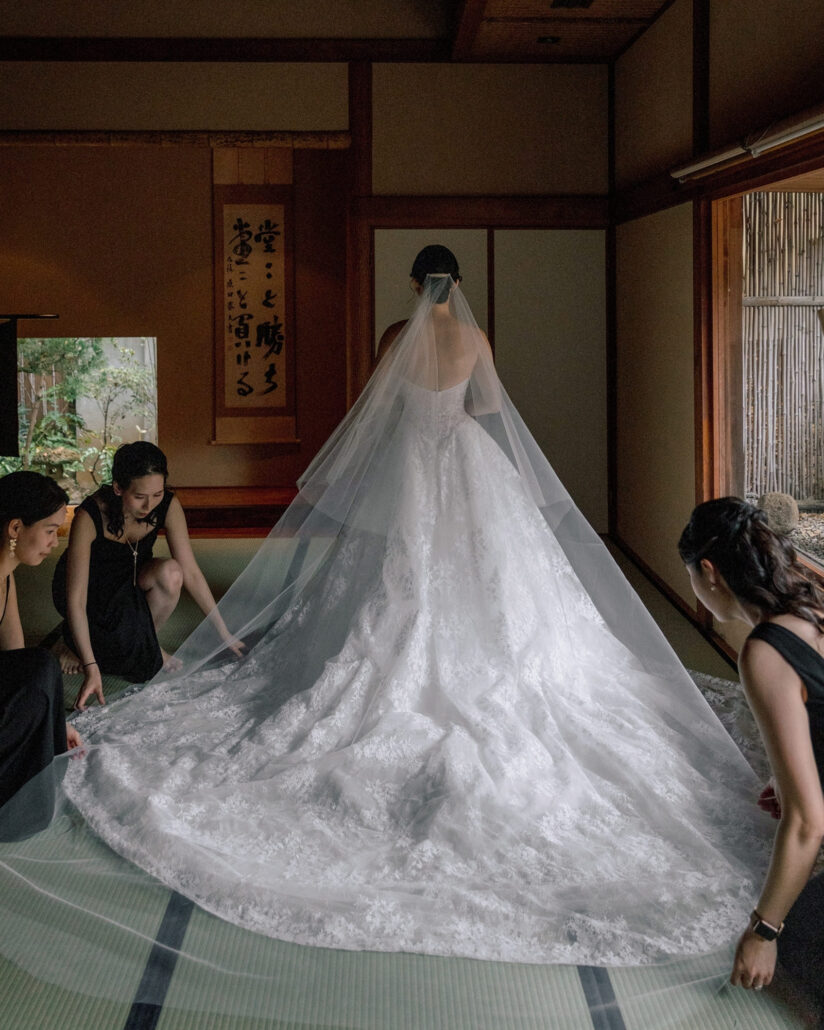
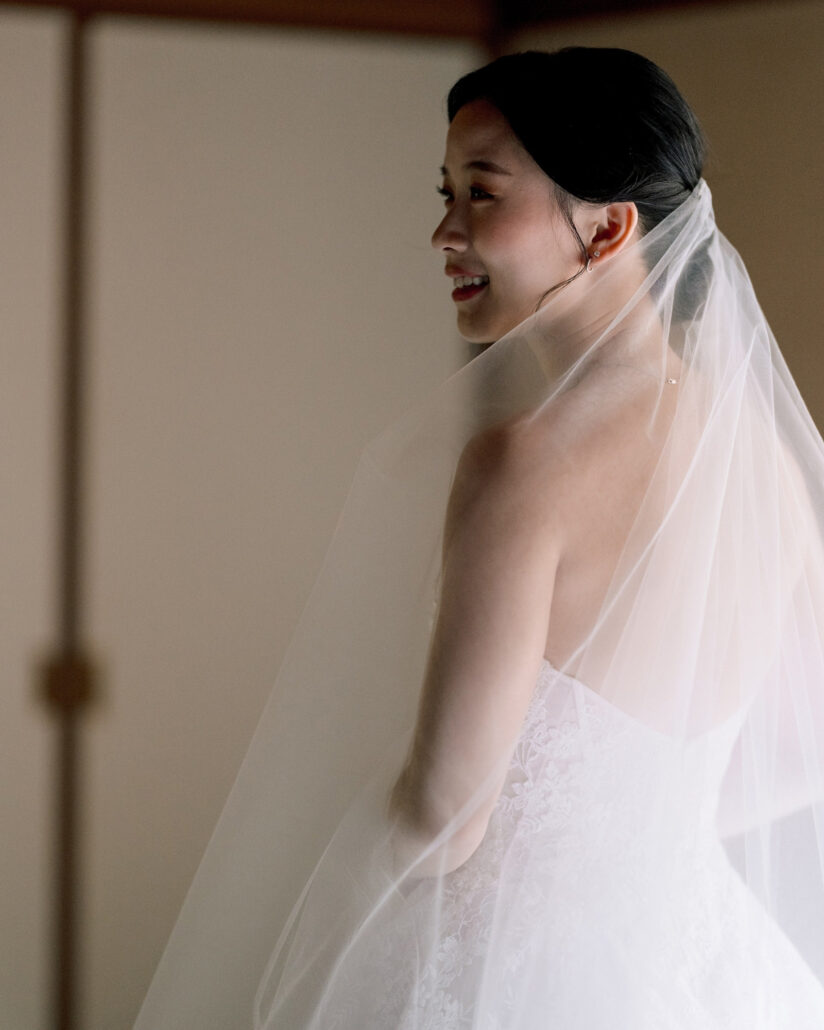
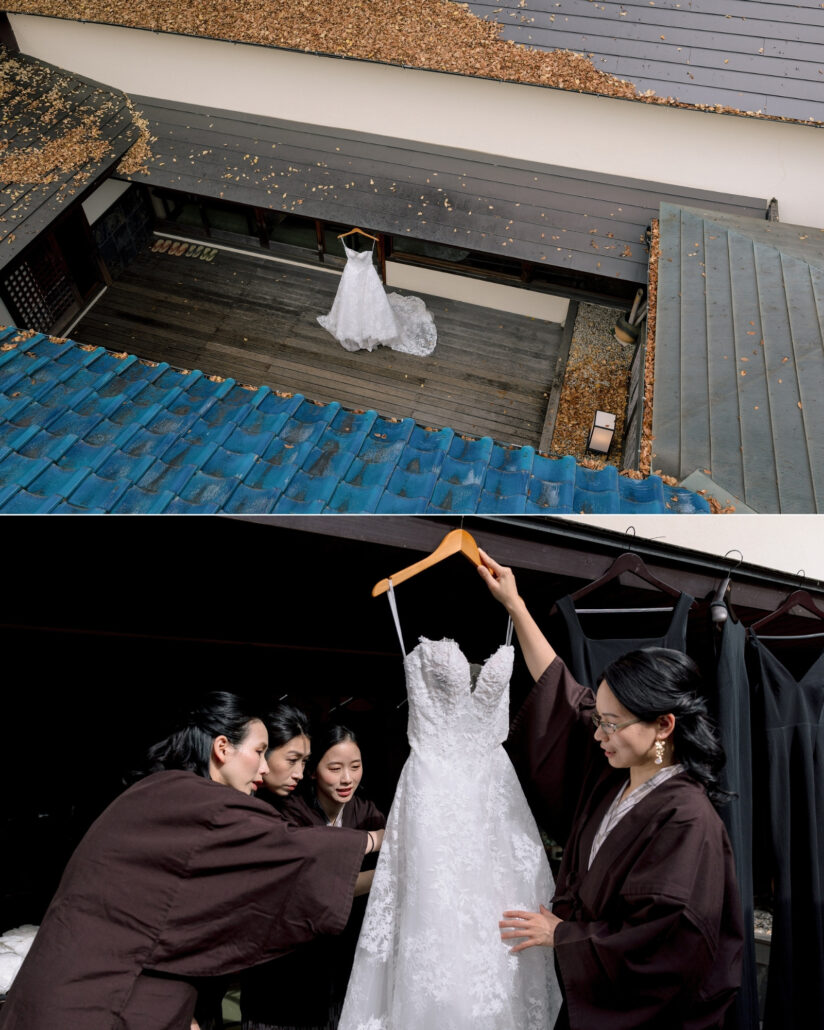
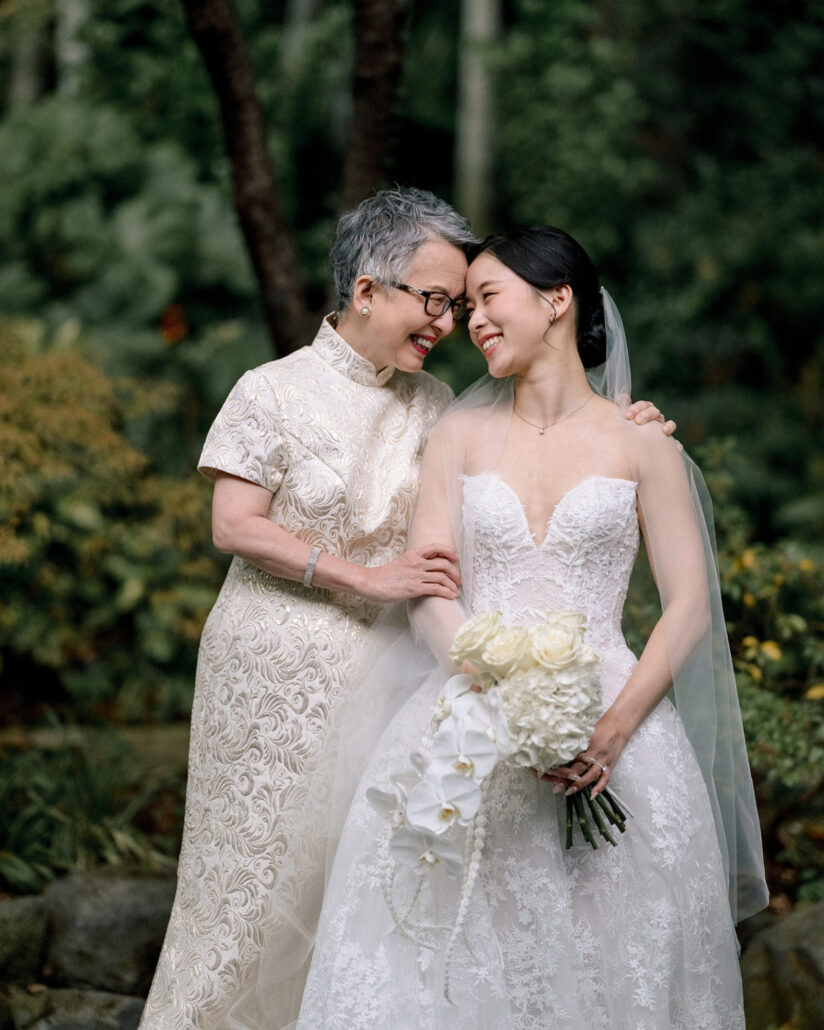
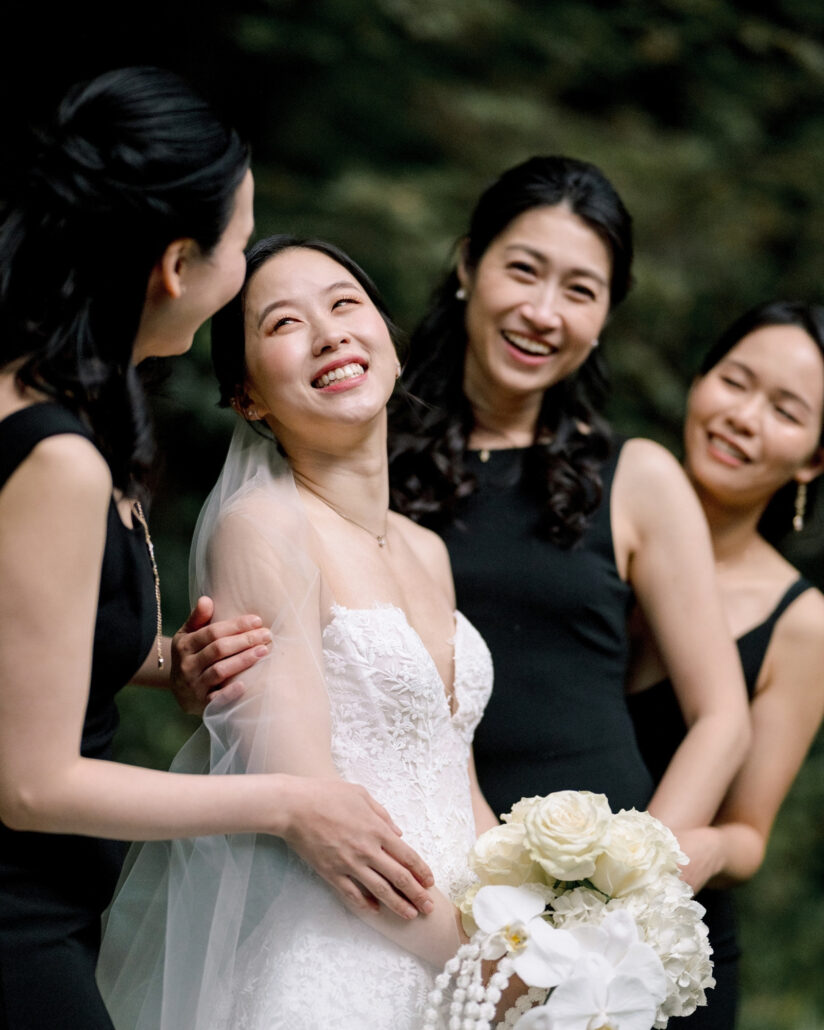
His morning had his two oldest friends, his sister standing with him, and a bow tie that needed more instructions than anyone expected. Hers had her sisters, her mother, the veil, and a room that clapped at every step. A room near theirs had been turned into a steaming and ironing room for the guests, with steamers, rails and green tea, so nobody had to iron a shirt in a ryokan bathroom.


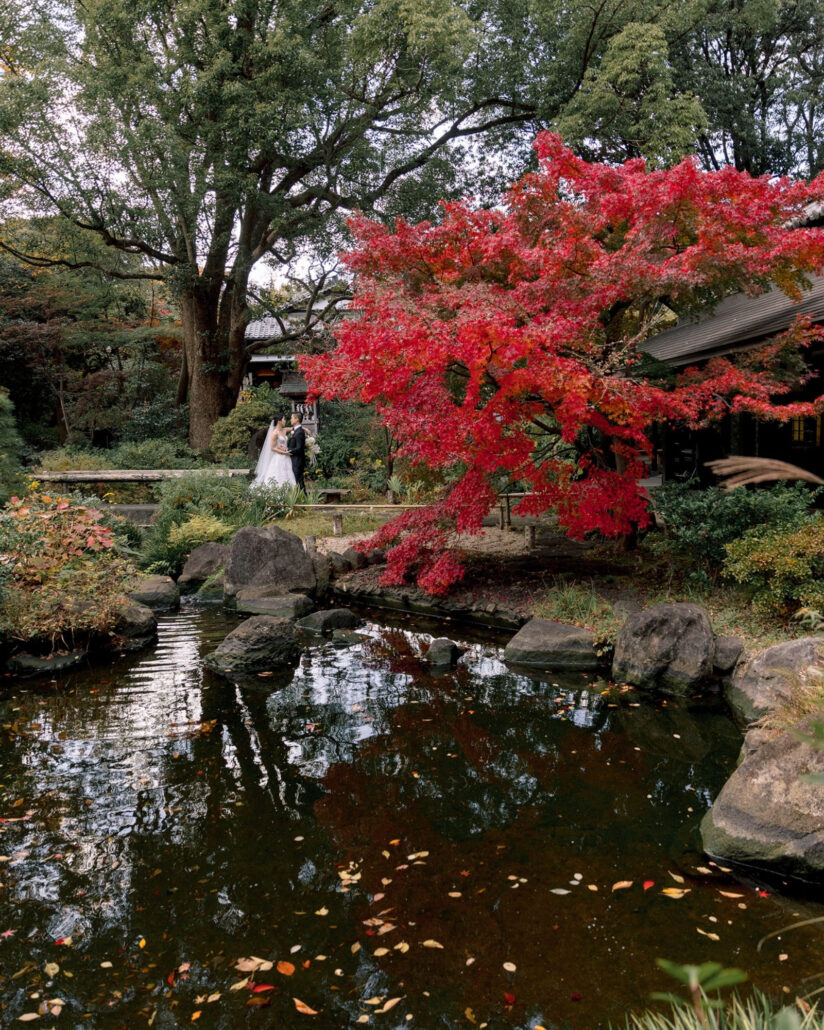
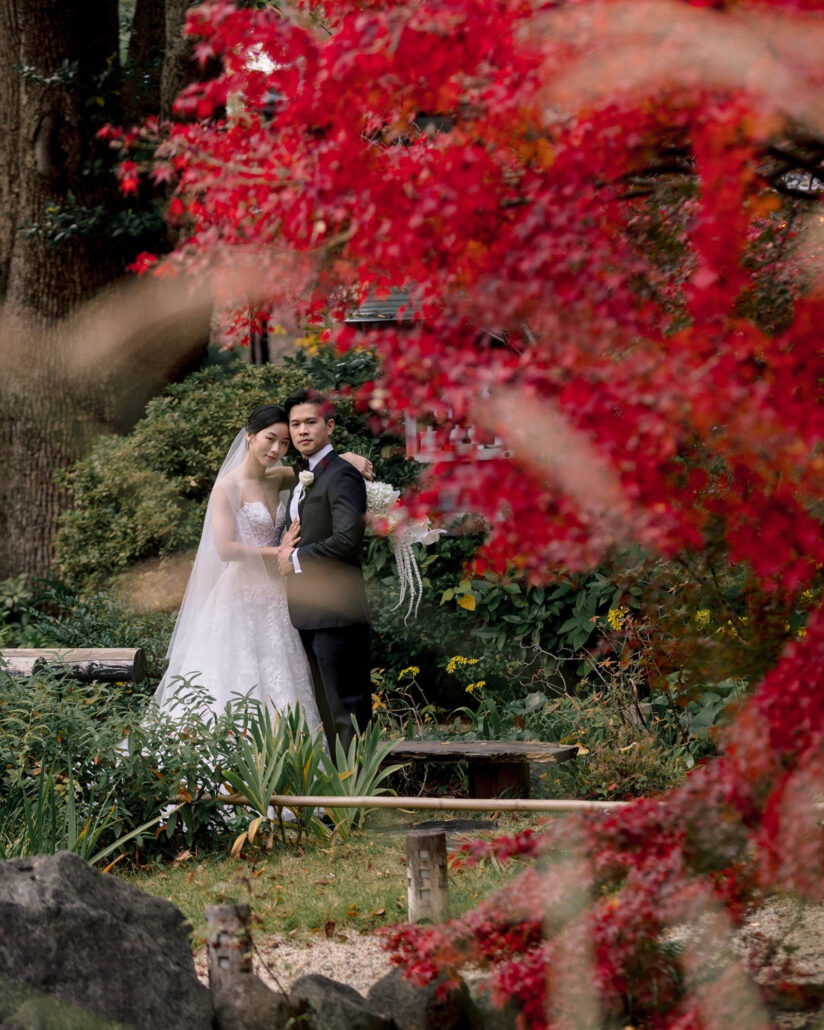
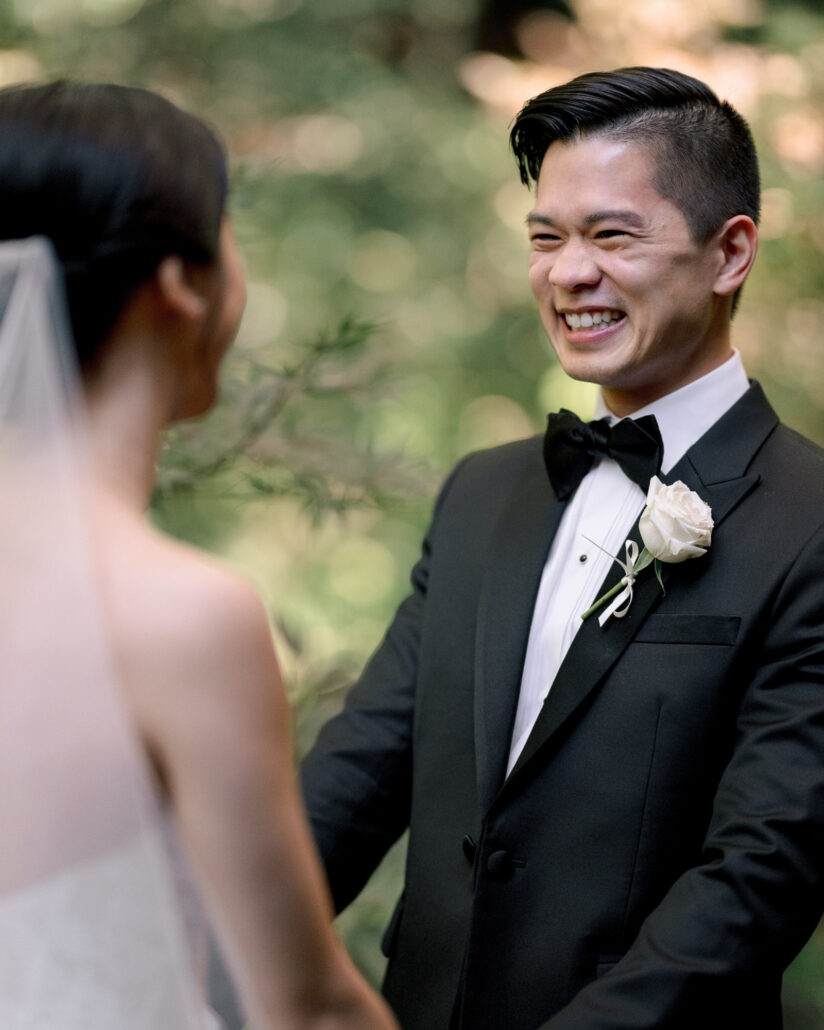
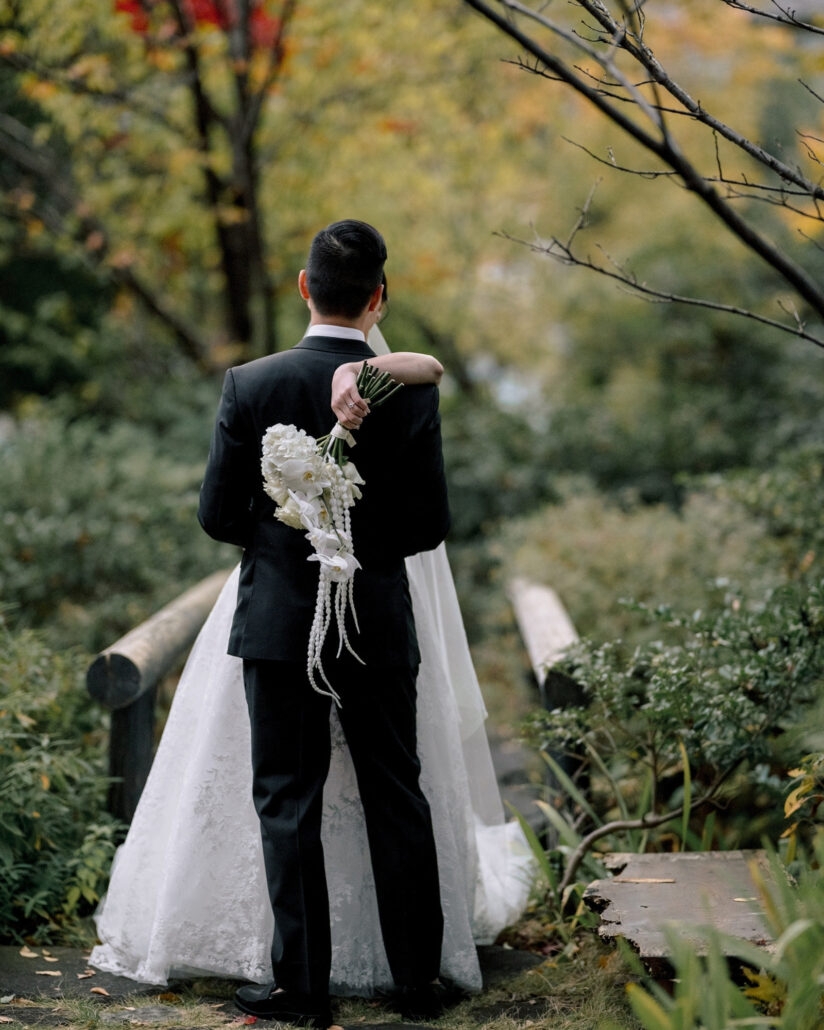
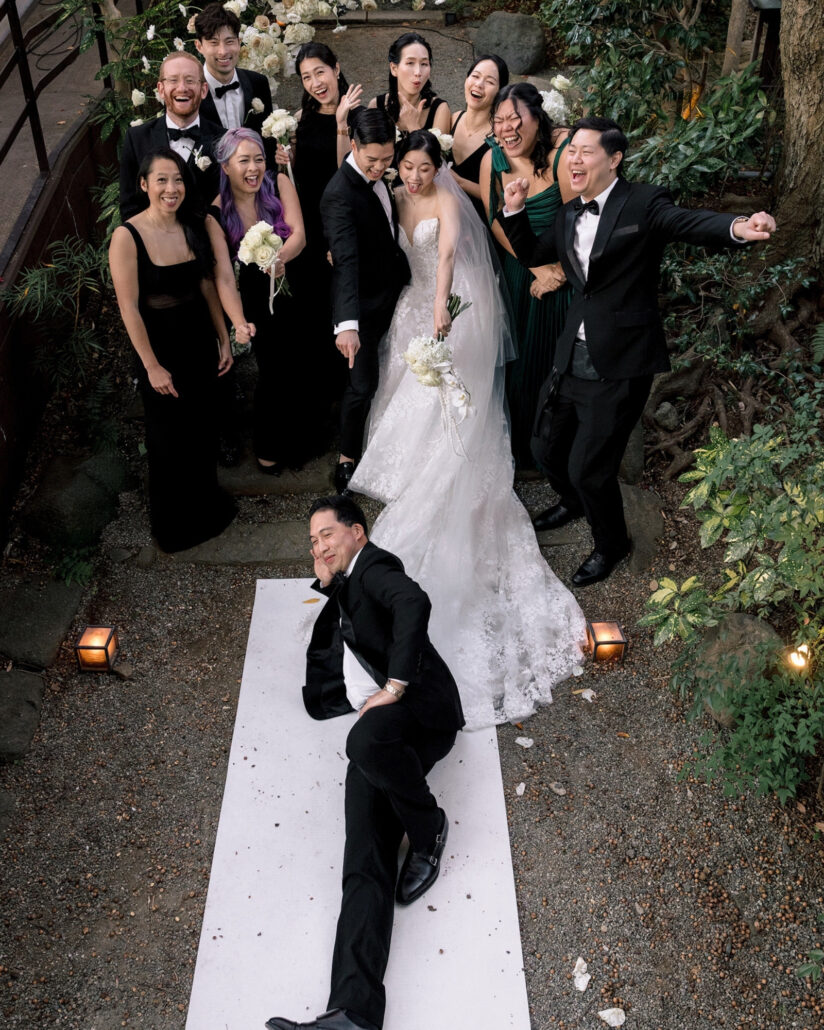
In the garden, they saw each other first, away from everyone. The maples were at their reddest. He cried.


A Garden Ceremony at Jinya
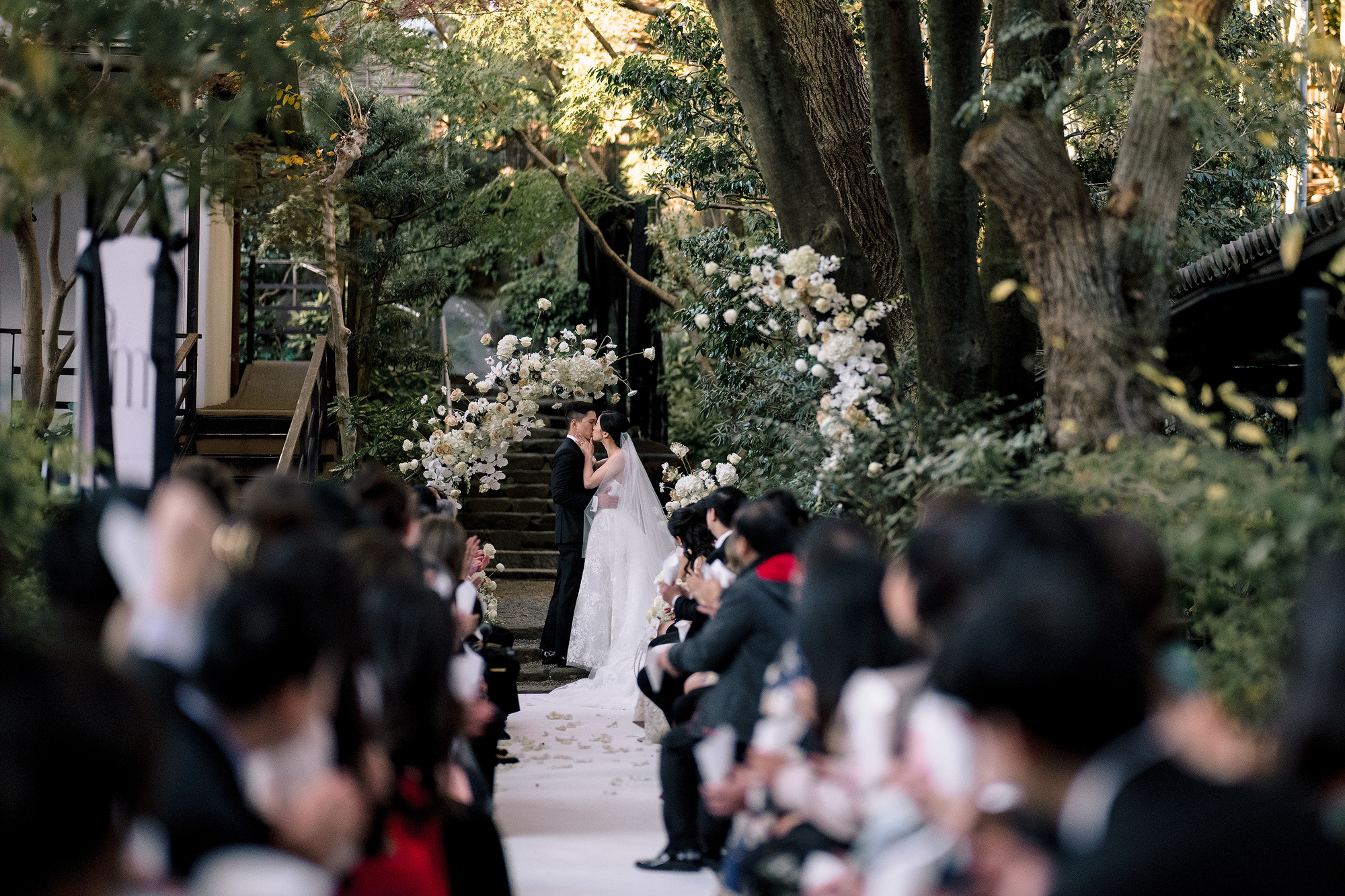
The ceremony was outdoors, at the end of a long aisle through Jinya’s garden, under trees that had already turned.
That wasn’t always possible. Jinya had always held its ceremonies indoors, the way weddings in Japan usually are. We asked to take one out into the garden, because couples who come from around the world want to say their vows inside nature, not looking out at it. And we promised there would always be a rain plan. There always is. Some of our favourite Jinya weddings have used it.
Japan has an old word, kotodama, for the spirit that lives in words: the belief that what you say aloud carries a power of its own. Someone told us recently that Jinya’s garden has never looked more beautiful, and it’s true. That’s the gardeners’ work, first and always. But the trees in that garden have now listened to a great many vows, and we like to think some of those words have stayed.
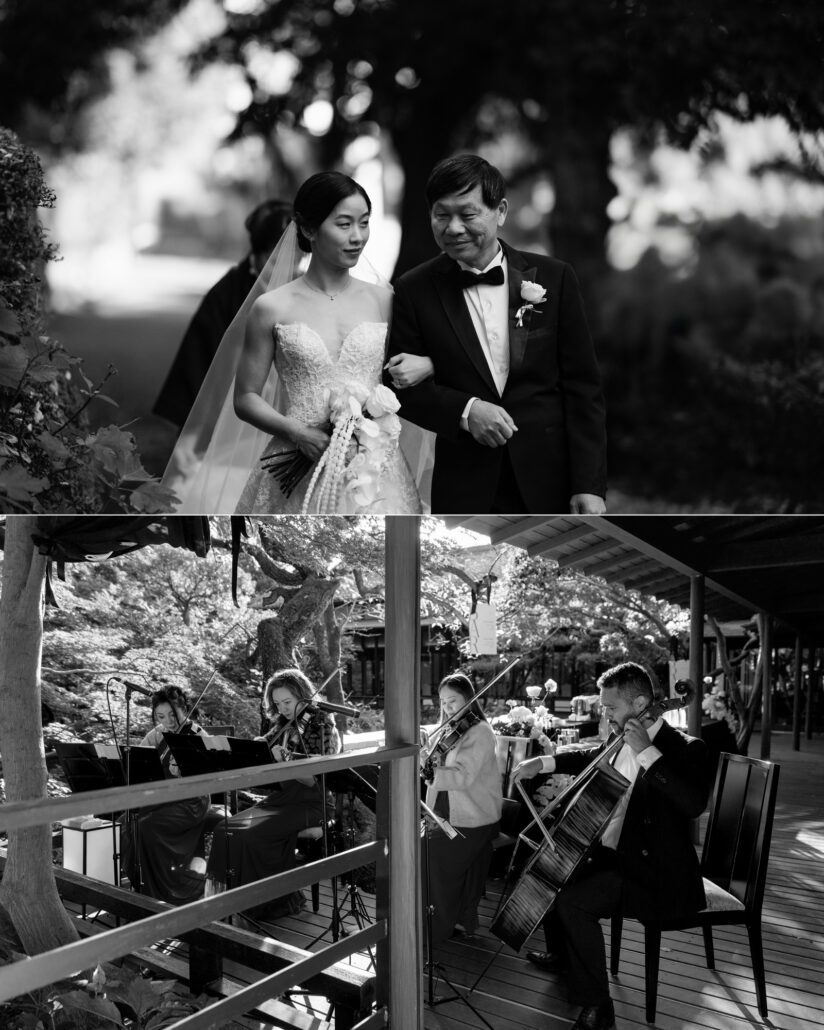
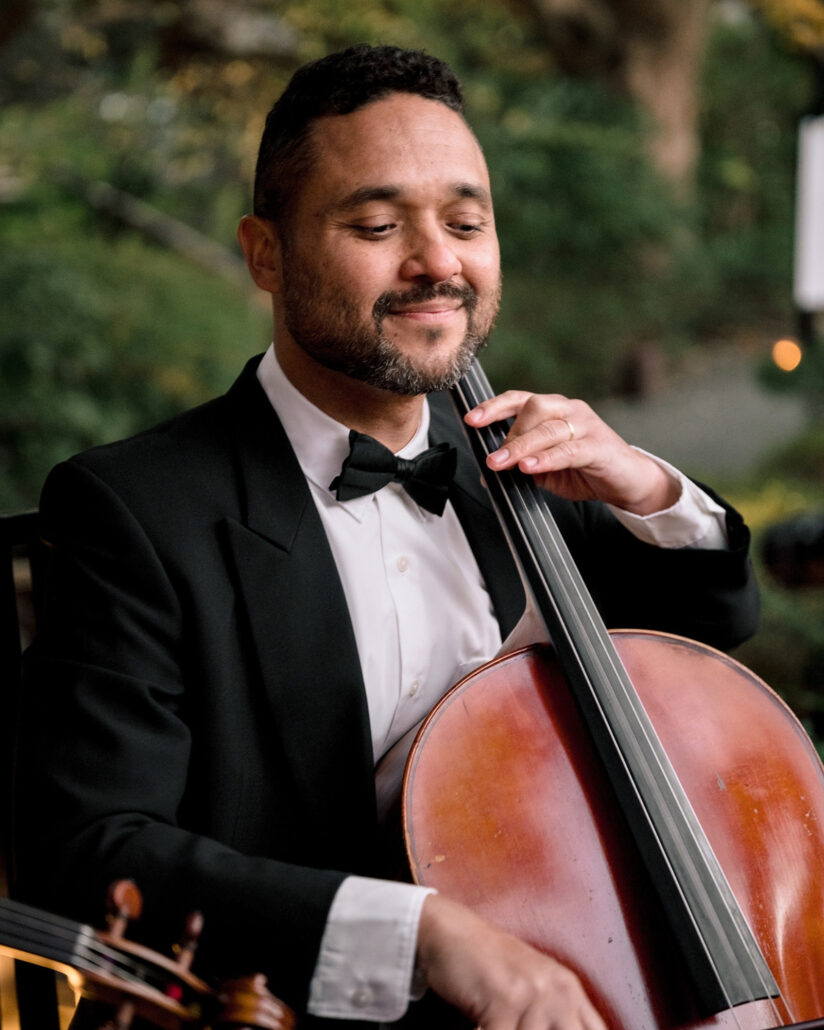
They didn’t want the usual ceremony music. They wanted theirs: the electronic music they love, Gryffin, Porter Robinson, Kygo, Dabin. Nobody had ever written those songs for strings, so the cellist leading the quartet wrote the arrangements himself, one song at a time. When he sent the couple his first demo, of Feel Good, they were so happy with it they dropped the idea of adding a singer. On the day, the guests took their seats to Feel Good and Shelter played on two violins, a viola and a cello. Two speakers carried the sound down the length of the aisle, so even the back row heard every note.


Then the flower boys. Two grown men, entering to Soda Pop from KPop Demon Hunters, scattering petals with total and admirable commitment. It was the biggest laugh of the whole two days, and it came just before the quietest part of it.


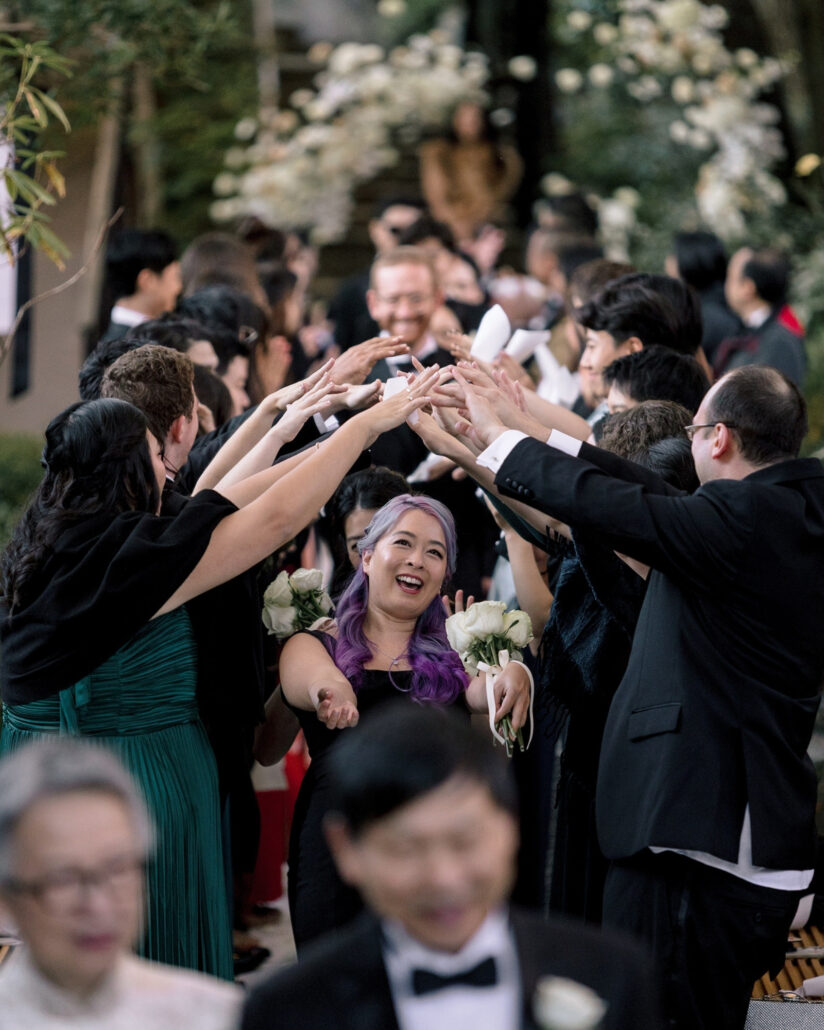
She walked in on her father’s arm to Alive. They walked back out, married, to Tie Me Down.

The Vows
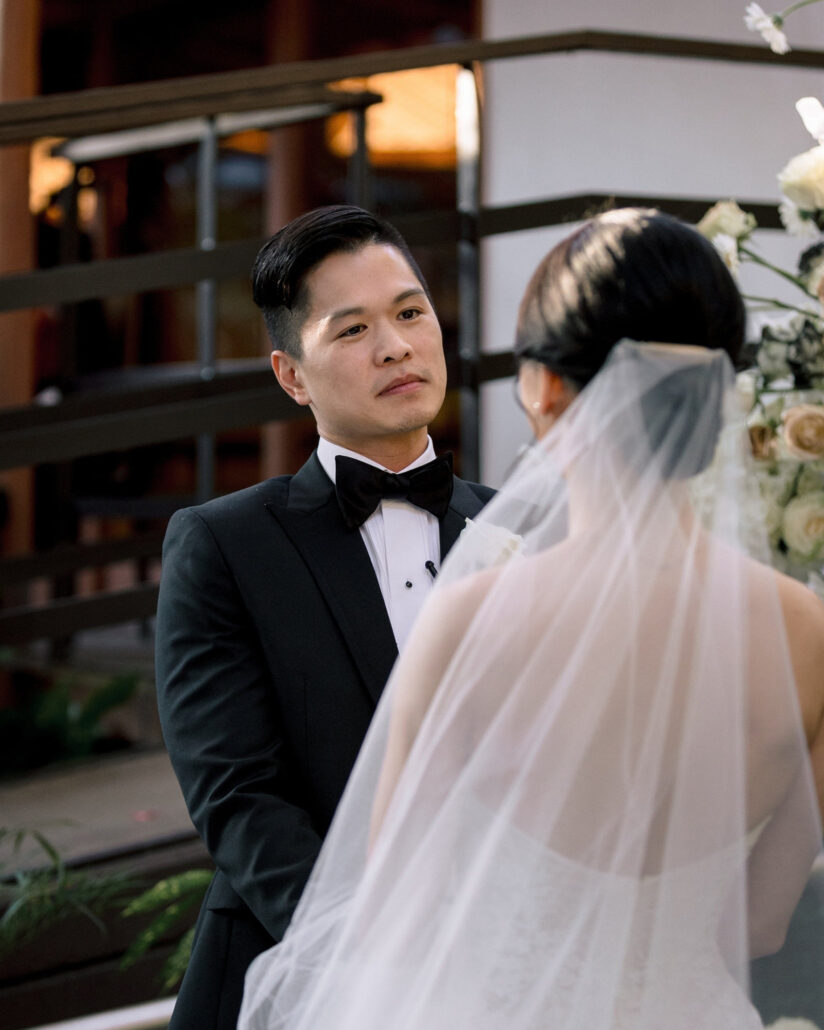
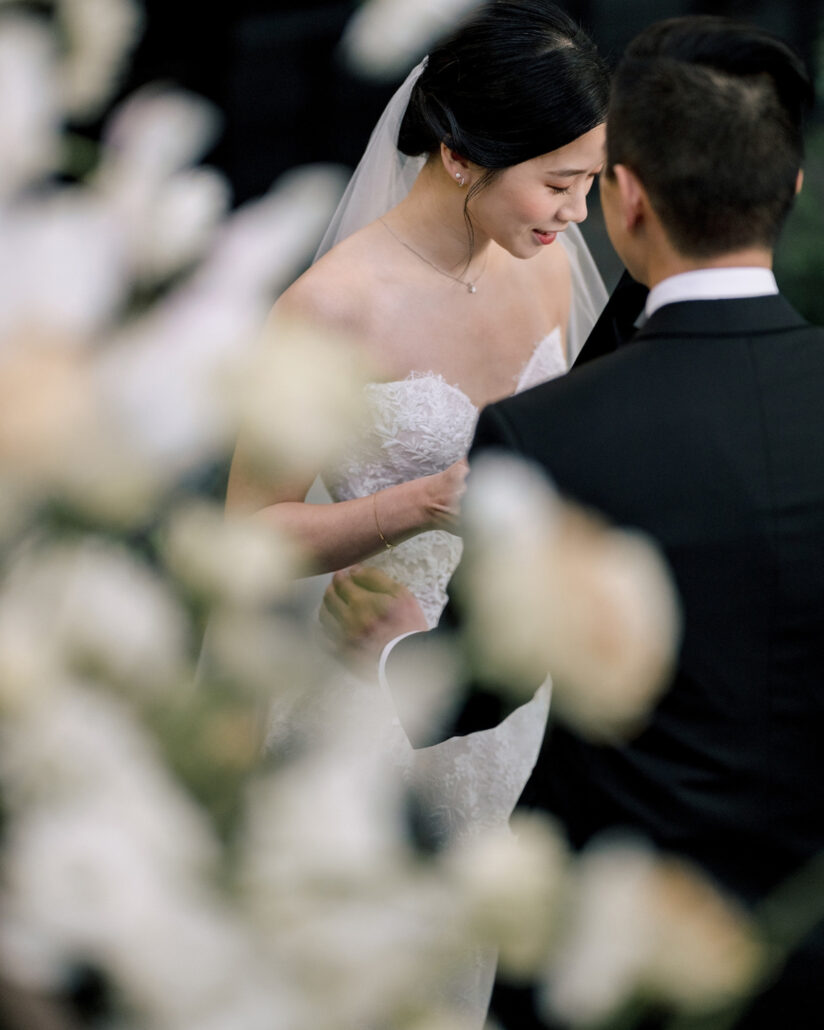
A close friend led the ceremony, and it was theirs to shape. They’d asked for it unplugged. No phones, only faces.
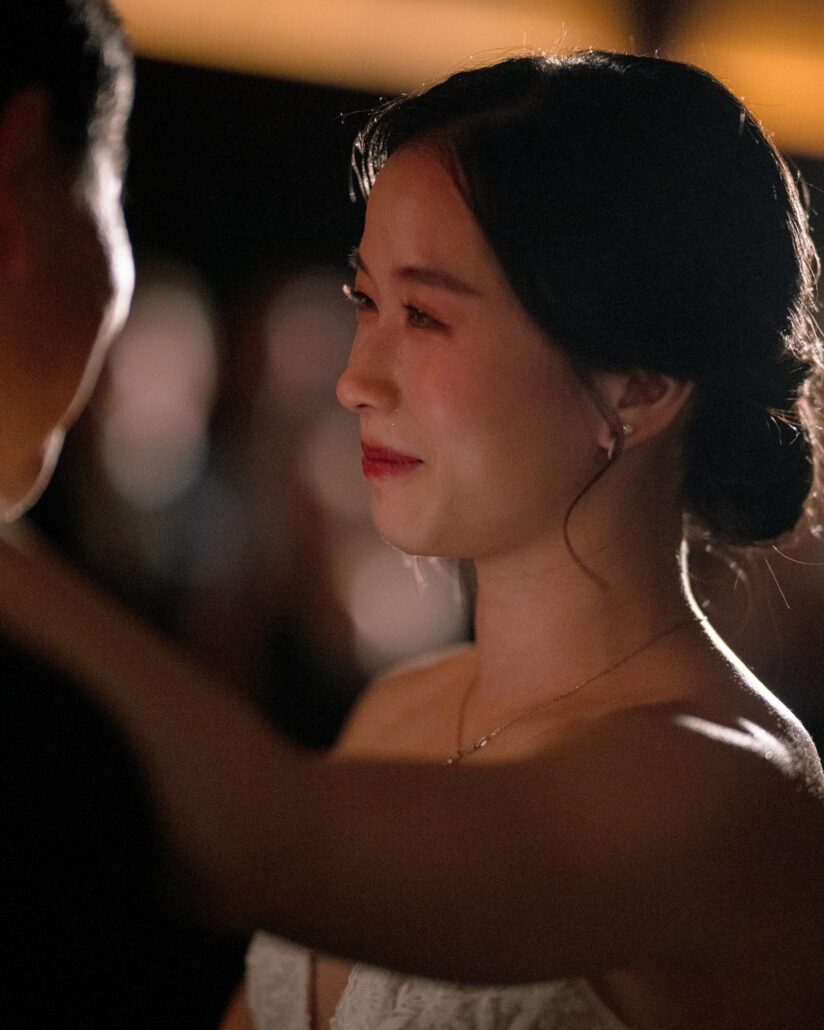
She read her vows from pages she’d written. He spoke without a note in his hand, for a long time, and nobody wanted him to stop. Even the vendors were in tears.
Their vows are kept whole, in their own voices, in their wedding film. They belong to them, so we’ll leave the words there.


Cocktail Hour in the Garden, Made Longer
Most cocktail hours in Japan last exactly that. They asked for two, so there’d be time for photographs with every group and they’d still get to enjoy their own party. They got it.
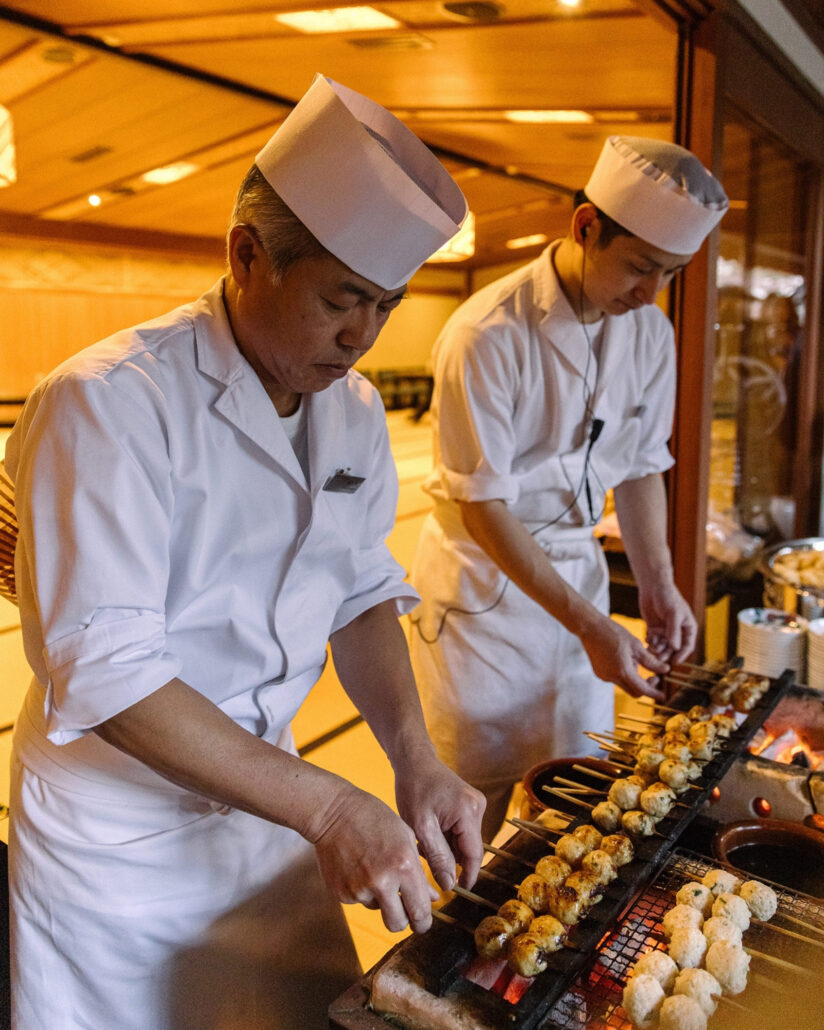
There was yakitori on the grill, shaved ice, and matcha with wagashi, the tea sweets Jinya serves its guests. The quartet moved on to music from Bridgerton, with a few Studio Ghibli songs in the mix. And there were two signature cocktails, one each: a light, sweet passion-fruit drink for her, and an espresso martini for him.


The Reception, Behind a Noren
The reception room had a noren on its door, made just for them.
A noren is the split fabric curtain that hangs in Japanese doorways: over the entrance of a ramen shop, a sento, a family business. Hanging one out says you’re open and you’re welcome. You duck through it, and you’re somewhere else. It was the right thing to walk through into the night.
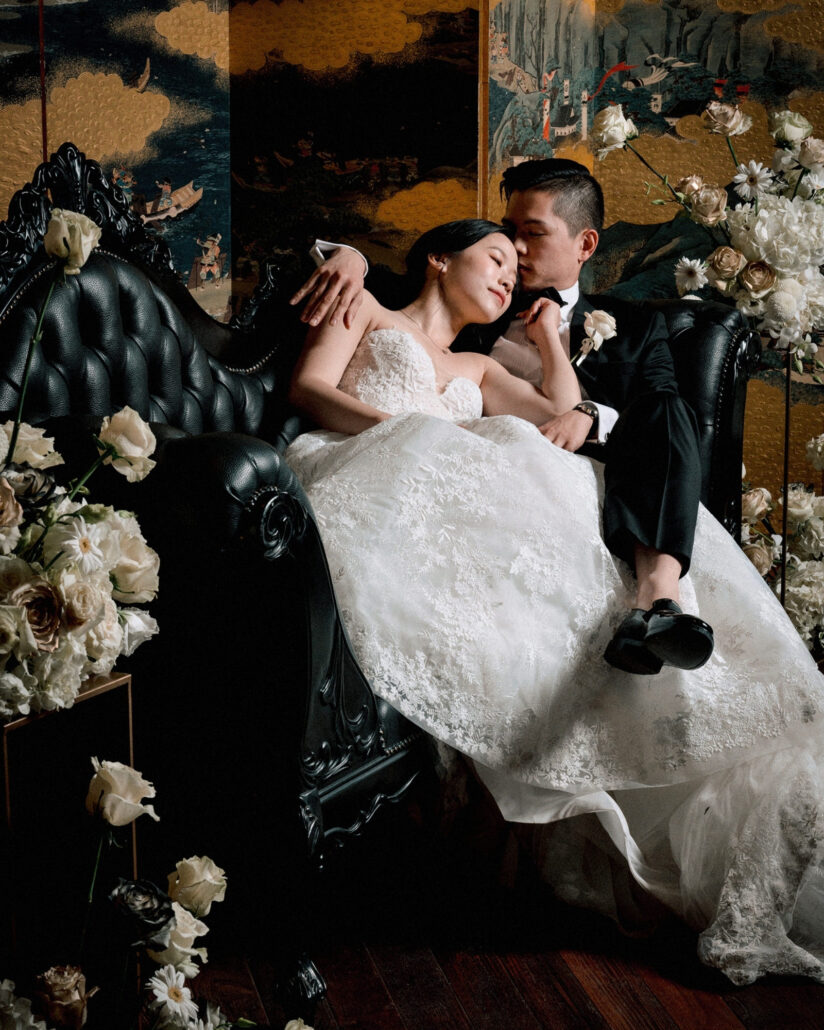
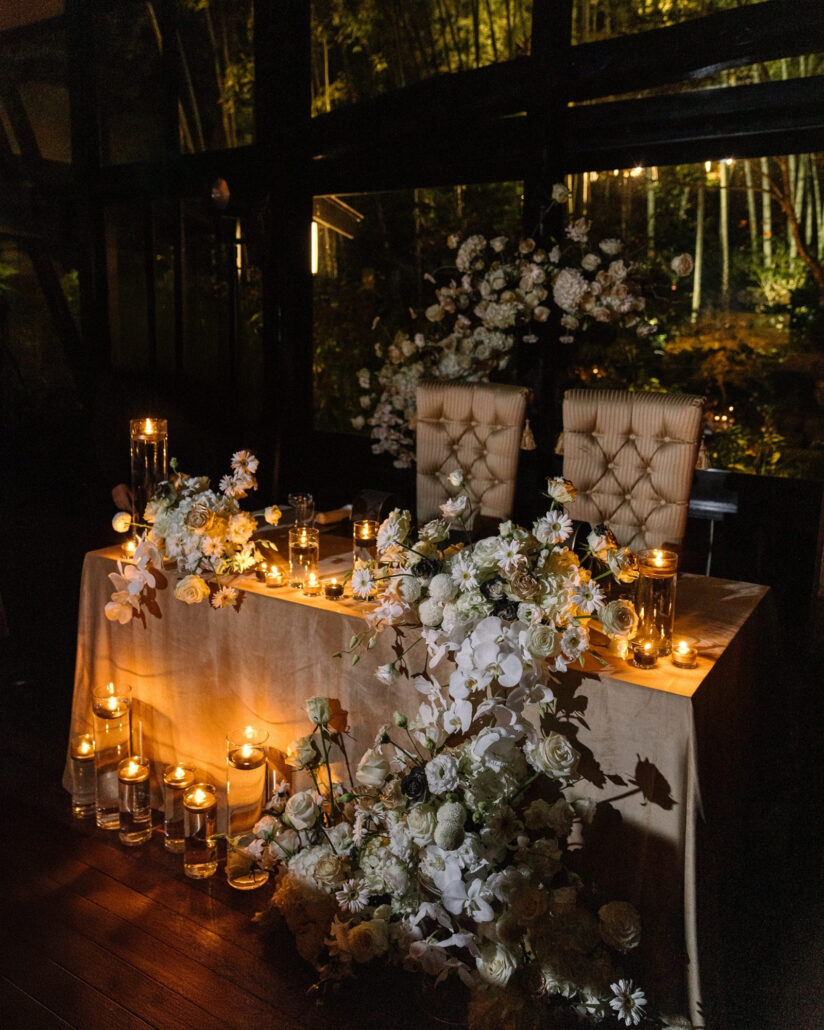
They came through it under a spotlight, with their wedding party dancing in behind them. Inside: a kaiseki dinner for seventy-one, with every allergy and preference handled course by course, including a gluten-free menu cooked separately for one guest; flowers everywhere; hundreds of candles; a cake from Jinya’s own patisserie; and a photo lounge in the old banquet hall, furnished with sofas we’d had sent ahead.


Flair Bartenders and an Open Bar
Warning number two: prepare your liver.
They’d been clear from the start. “We want an open bar.” And about the after party: “Yes to shots!”
So we brought in a team of world-champion flair bartenders and built them a bar from scratch, ordered bottle by bottle weeks before: Japanese gins including one from Kyoto, shiso and nashi pear and cherry blossom liqueurs, white peach, passion fruit, gold leaf, fresh shiso and perilla blossom, and edible violas and snapdragons to float on top of the glasses. Shakers went into the air until the last song.


A First Dance With Choreography
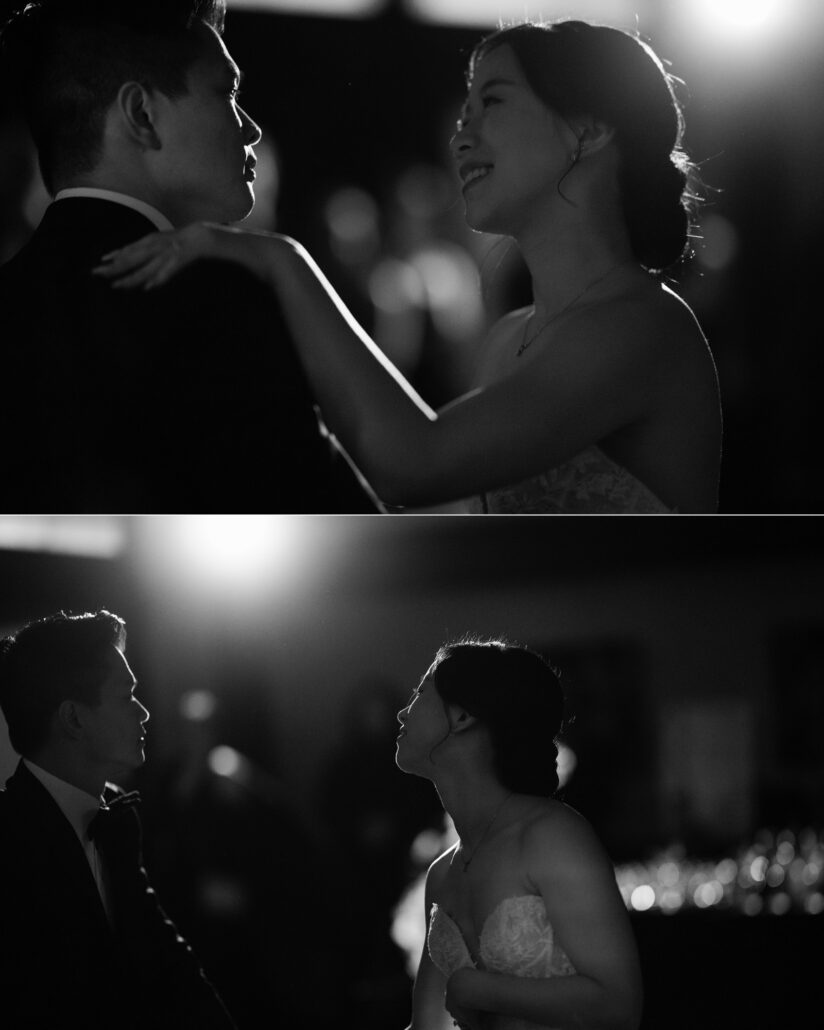
Their first dance began slowly, to Best Is Yet to Come. Then, exactly on cue, it cut to Soda Pop, and their entire bridal party took the floor in a routine they’d rehearsed in secret. Then Golden, and the DJ took over from there.
Every one of those cuts was timed to the second. Our DJ mixed them in advance so the choreography would land. It landed.


The Last Song
The last dance was Shelter, the song the strings had played in the garden that afternoon, now with the bass in. The floor closed into a circle around the two of them, and everyone sang it, badly and beautifully.
Then the music stopped, because that was the agreement. And this is the part of the weekend we talk about most.
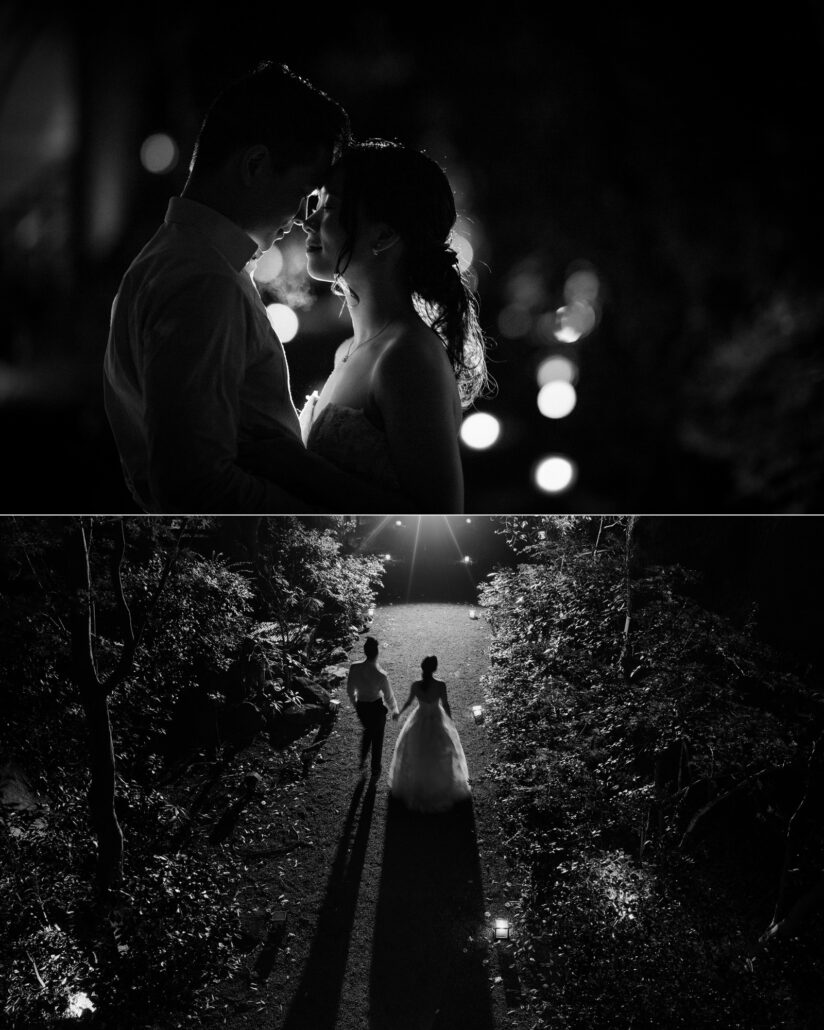
Nobody called for one more. Seventy-one people, still euphoric from the night they’d just had, didn’t try to keep the dance floor going. They took the party back to their rooms. Friends visited friends down the corridors, the talking and the laughing carried on, and the house was still theirs. But the volume came down, the way it does when a crowd disperses, and the night carried on in quieter rooms.
Jinya had given them its whole house and let them celebrate as hard as they liked. Bringing the night down to the inn’s pace was how they said thank you.
Warning number three: prepare to get no sleep. Between two nights of celebrating and a brunch the next morning, they got very little. The neighbours got all of theirs.


The Morning After: Brunch at Jinya
On the last morning, there was brunch for everyone, the guests who’d stayed and the ones who came back out for it, with a traditional Japanese breakfast and a Western one side by side. Sixteen rooms had a late checkout, so nobody had to rush to pack.
Seventy-one people, very little sleep, one more meal together, and every story from the night before told again from three different angles. That’s what the second night is for.


Planning a Ryokan Buyout Wedding in Japan
When couples ask us what a ryokan buyout involves, these are the questions we start with.
How many people will stay? A buyout works best when most of your guests stay the night. Here, fifty-four of the seventy-one did, and the rest came in by coach from Tokyo.
How many nights? One night gives you the wedding and the party. Two nights give you the welcome party and the morning after, which is where a group becomes a gathering.
What happens on the first night? Plan it as carefully as the wedding. Food that invites people to move around, something everyone can take part in (a mochi mallet is hard to beat), and nothing too formal.
Can the party go all night? The celebrating can. The dance floor can’t. Even with the whole inn to yourselves, a ryokan sits in a community, and the music has a hard stop. After that the house is still yours: people drift back to their rooms, visit each other and keep talking. What ends is the volume. The inn’s neighbours were there long before the wedding, and they’ll be there long after it. So plan the finale. Make the last song the biggest moment of the night, then let the night move to quieter rooms. Jinya lets you celebrate hard. In return, you respect the way the inn, and Japan, runs. Couples who do that leave with the inn’s respect as well as its memories, and an inn that trusts you is an inn that says yes to the next idea.
Who handles the guests? As your destination wedding planner in Japan, we look after the room plan, dietary needs, coaches from Tokyo, early check-ins, the bar, the sound, the late checkouts and the dozens of small things in between, so that the two of you can be guests at your own wedding.
And the photographs? Two nights give us more than a day ever can: the welcome party, the morning light in the garden, the circle on the dance floor, the brunch. Our photography and film team were there for all of it.

Seventy-One Guests, Two Nights, One House
Jinya was built, more than a century ago, as a house for receiving guests. For two nights in November it received seventy-one, fed them lobster curry and kaiseki, poured them everything in that bar, and sent them home on very little sleep.
The groom gave three warnings. All three came true.

1 comment
Comments are closed.