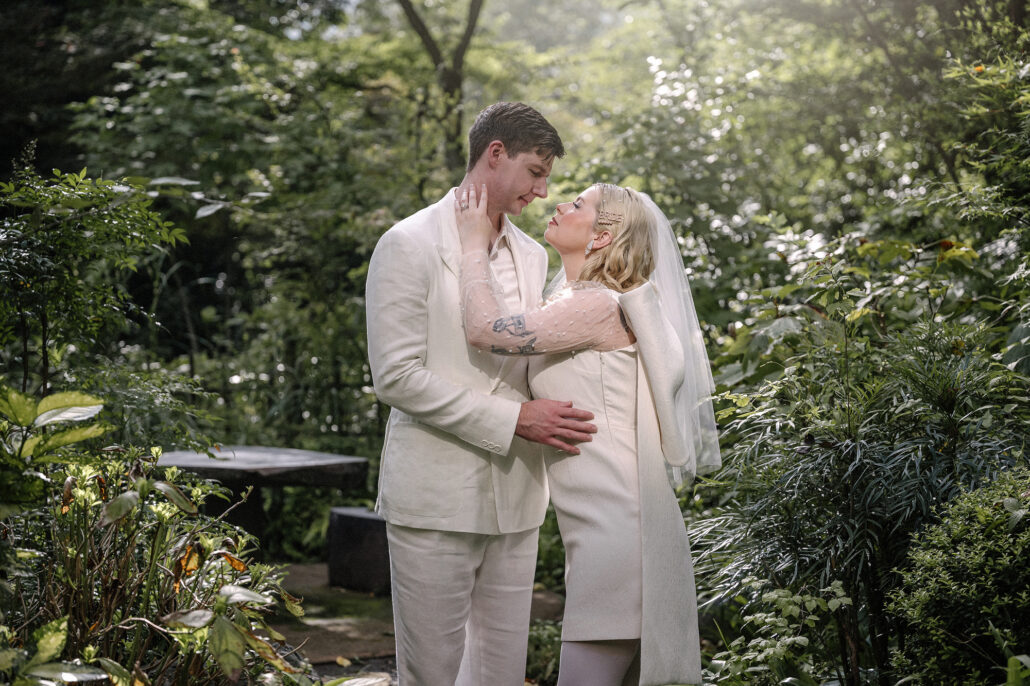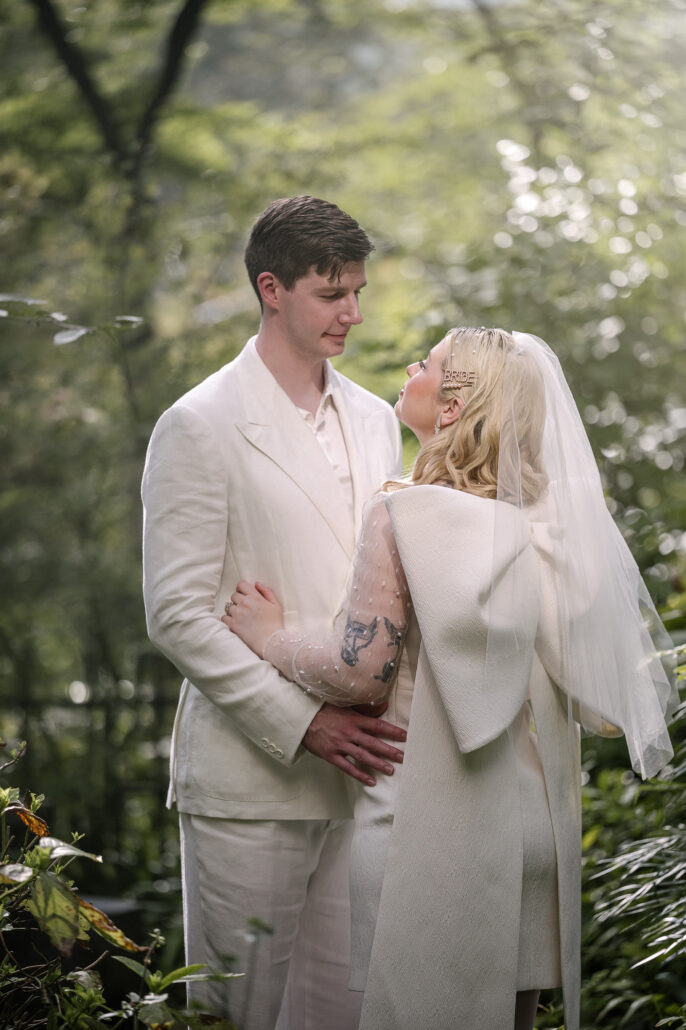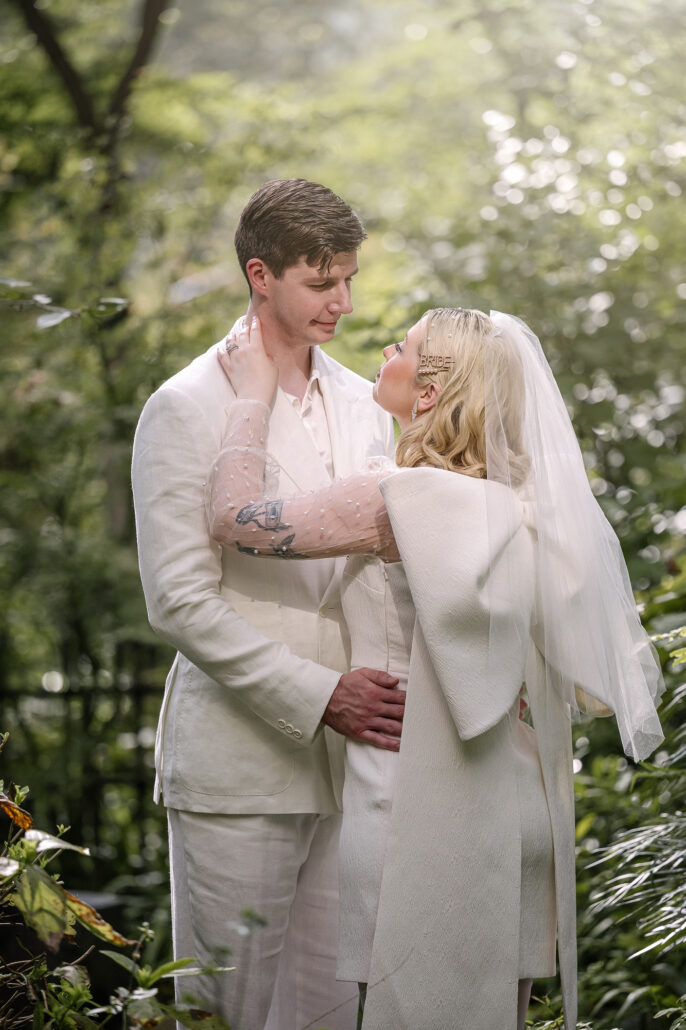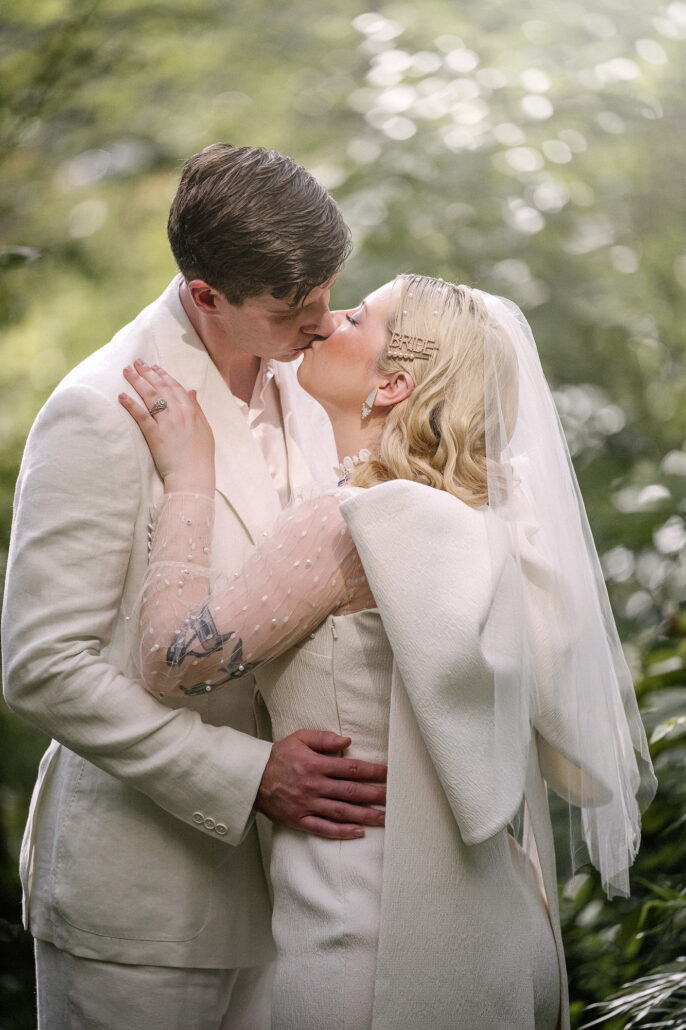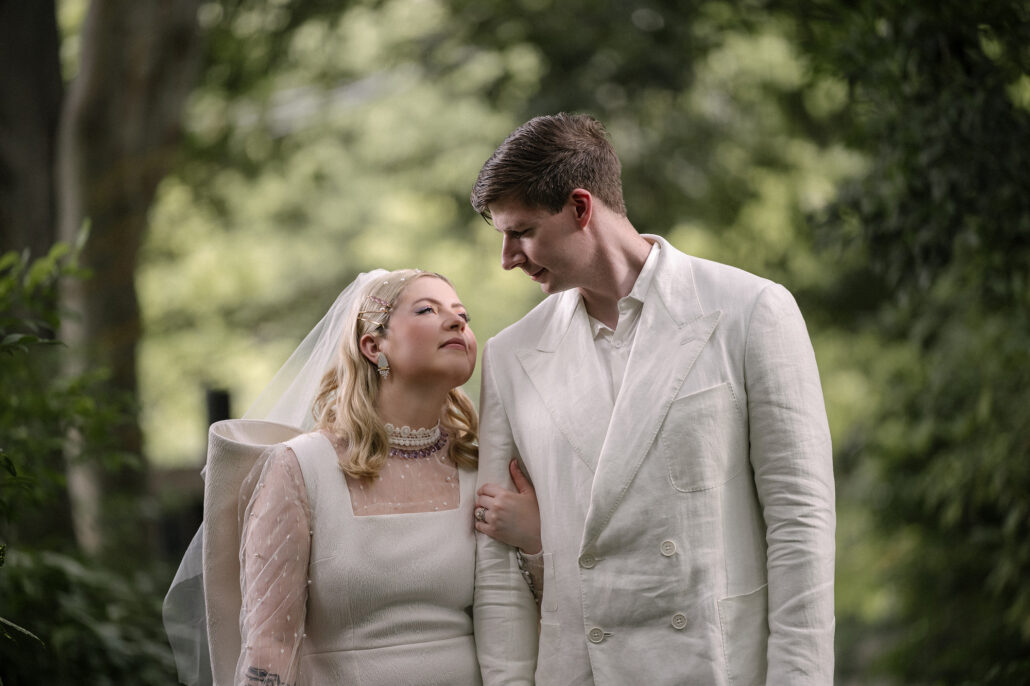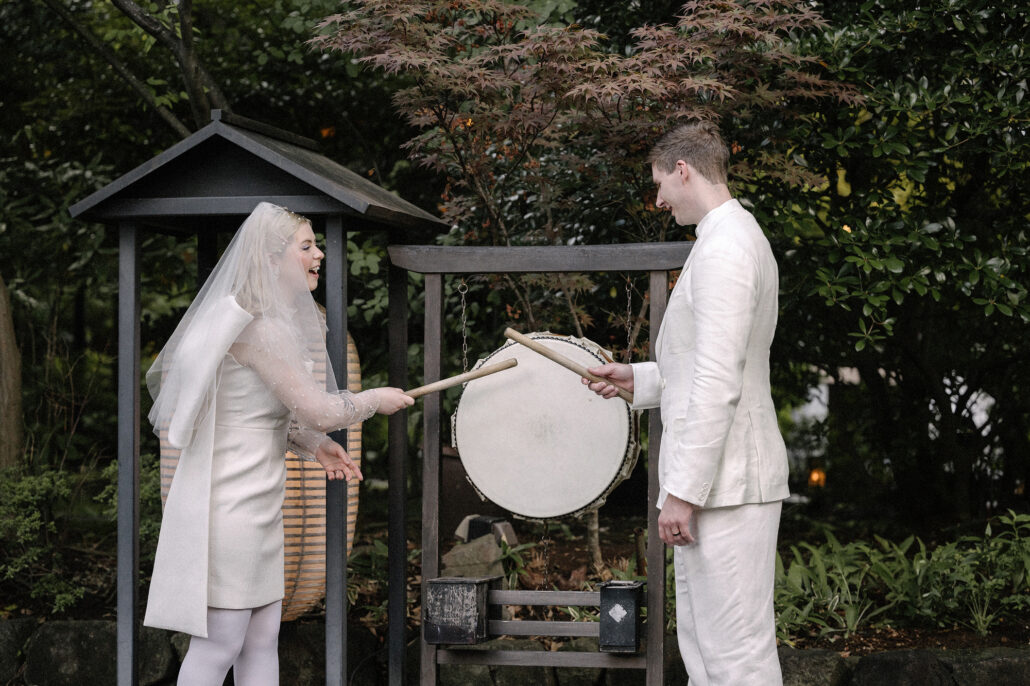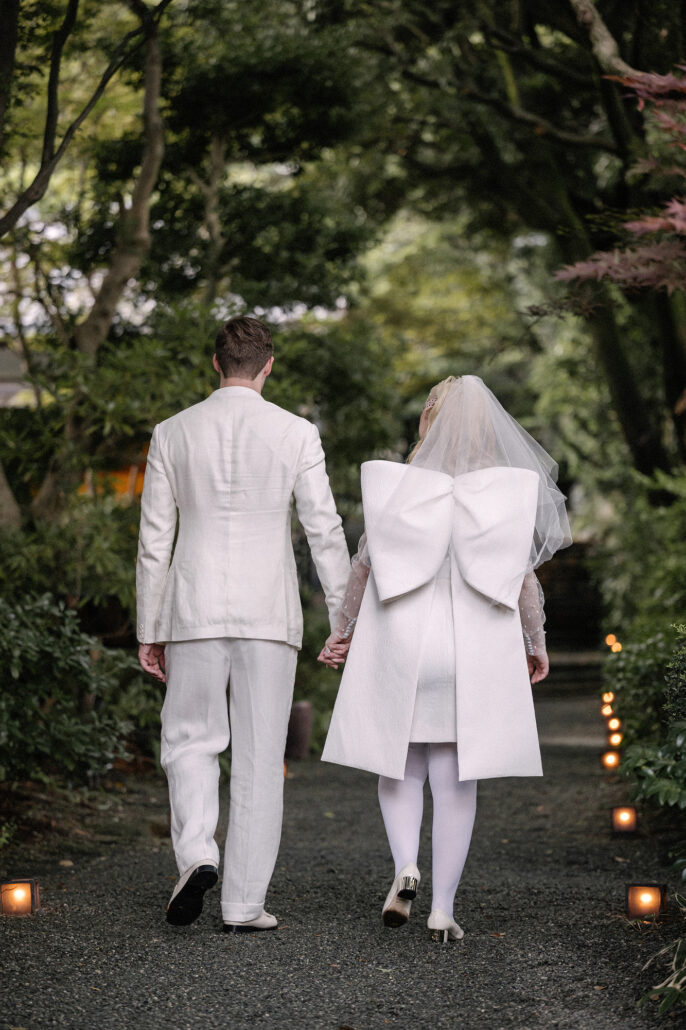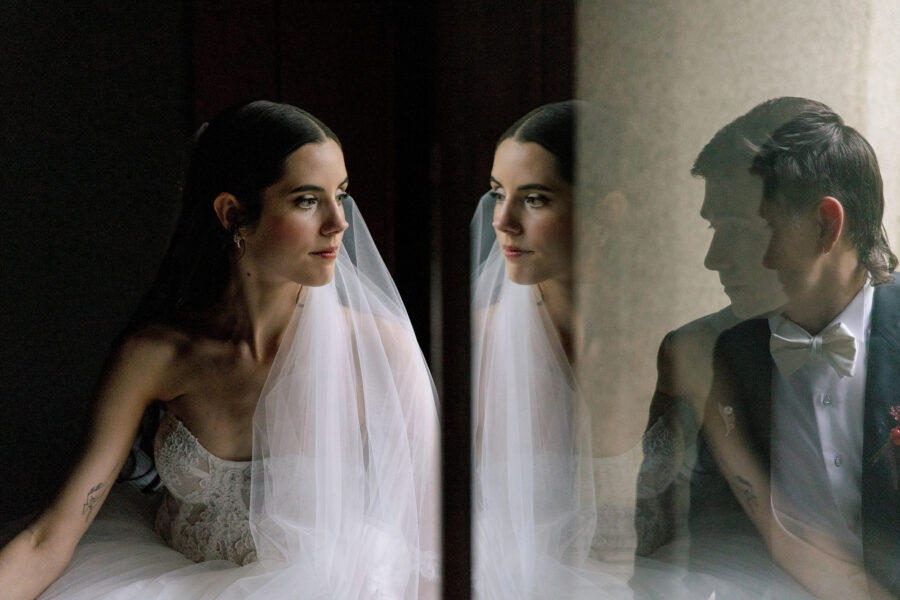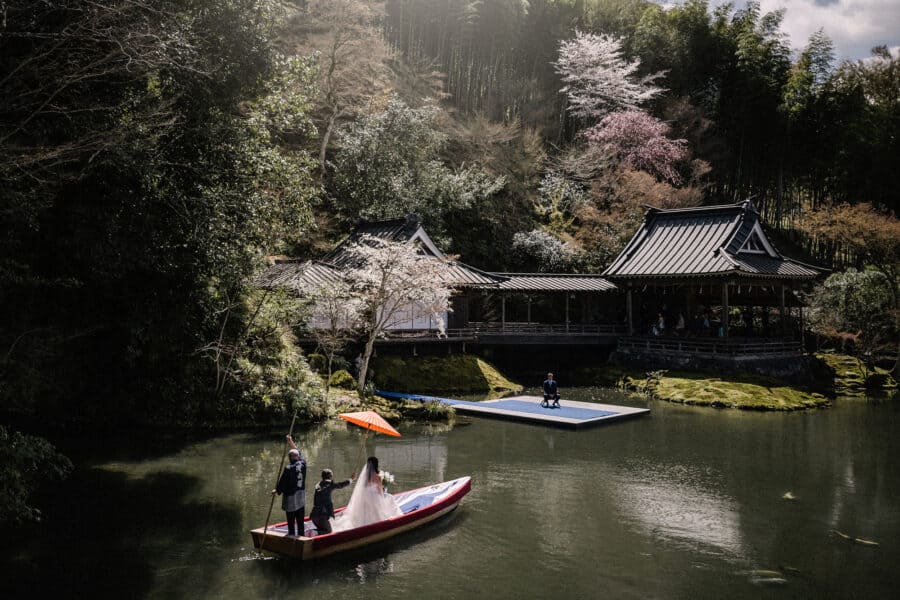
Their first email asked for Mt Fuji in August.
By the time they married, the mountain was nowhere in sight. Almost nothing about the day felt like a compromise.
There is a particular kind of flexibility involved in planning a summer elopement in Japan. You choose the place carefully, plan for it thoroughly, and then leave enough room for the place to remain itself.
August has its own realities: heat, humidity, the whole country travelling for Obon, and Mt Fuji often disappearing into summer haze. We told them all of this. Their answer was wonderfully pragmatic. More than anything, they wanted the weather to be tolerable.
That changed the conversation, and eventually it brought us to Jinya.
Planning a Summer Elopement in Japan
We looked north first. Hokkaido offered cooler air, but we also explored places closer to Tokyo: a farmhouse in the mountains, a garden hotel by Lake Kawaguchi, a private garden north of the city, and Jinya, the old inn at Tsurumaki Onsen.
They read everything. Jinya, they decided, satisfied almost everything they’d been looking for.
There was one difficulty. That summer, the inn was opening only a few days each week.
We asked anyway.
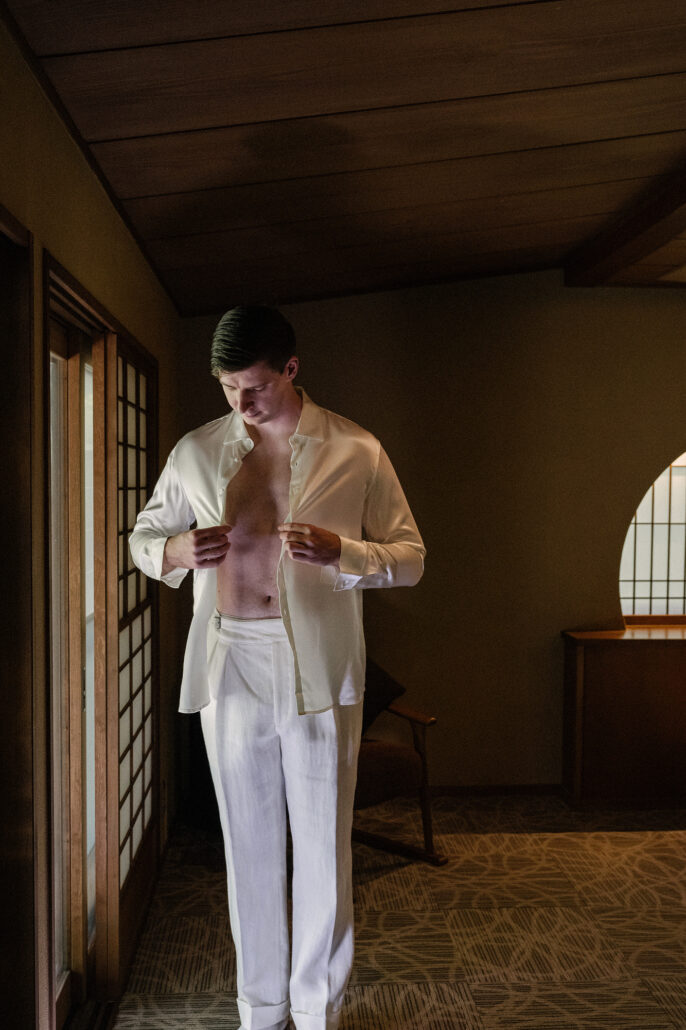
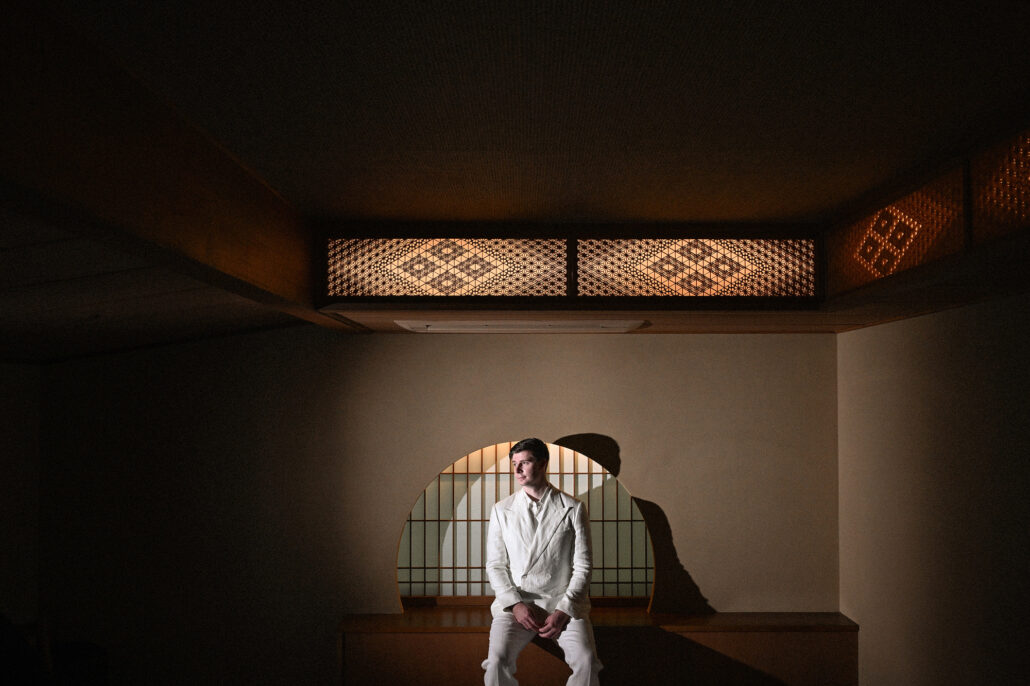
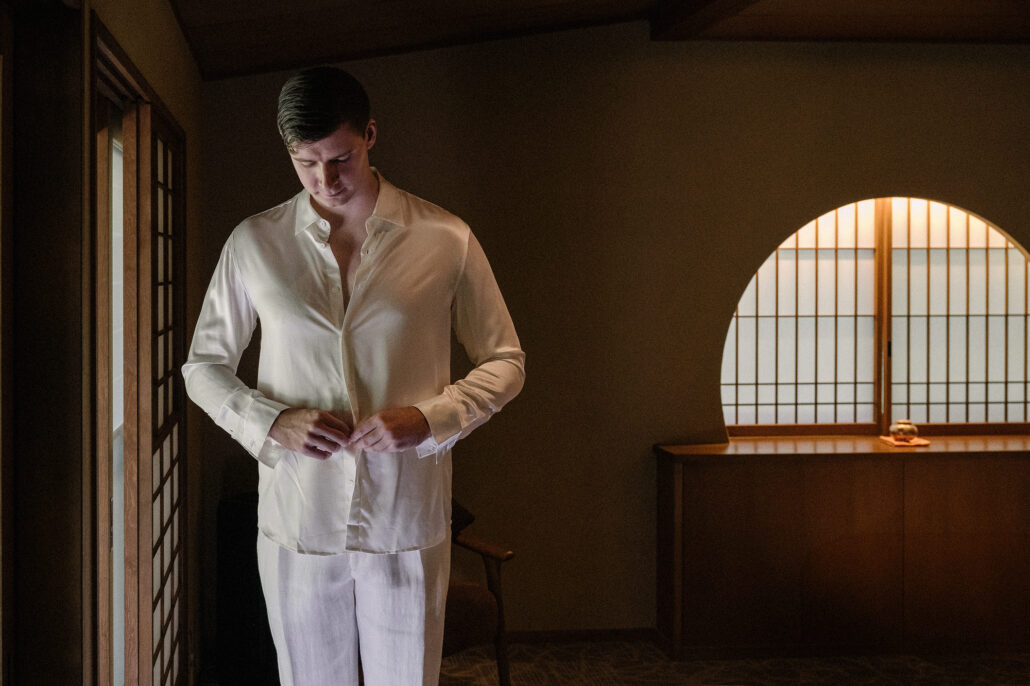
For those two nights, the doors opened. They stayed in Karikuraan, Jinya’s detached suite, with the old garden immediately outside and a private dinner on the evening of the wedding.
The original picture had changed completely. The reason for coming to Japan hadn’t.

Knowing What to Keep
Flexibility doesn’t mean surrendering everything. Some things mattered precisely because they came from home.
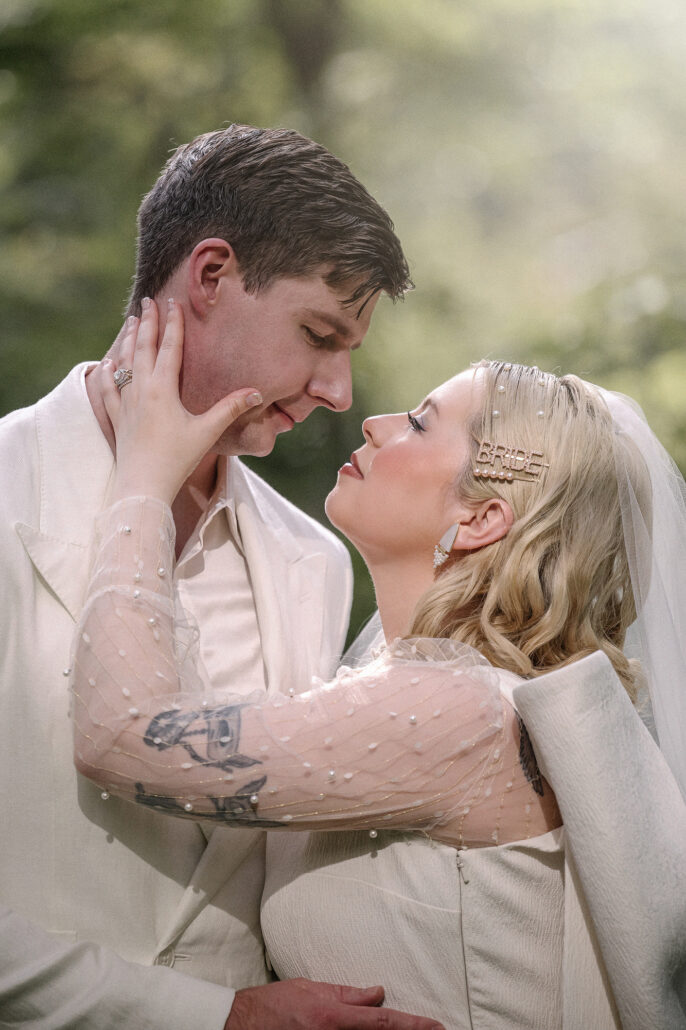
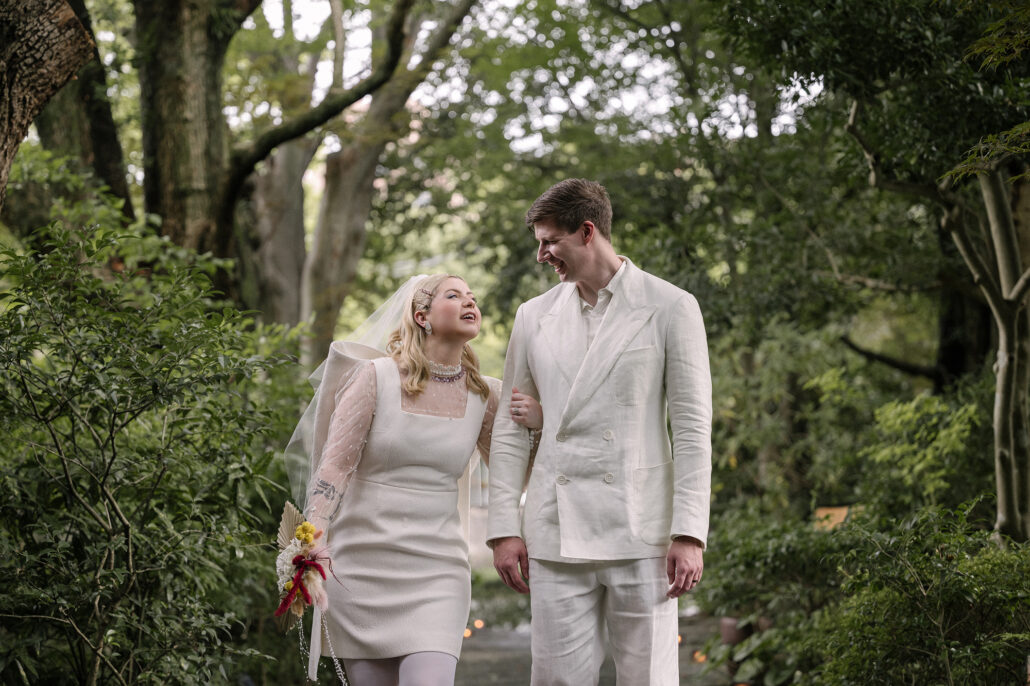
She wanted to make her own bouquet. We looked into an ikebana lesson and what could be organised locally, but in the end she made it before travelling, working on the silk flowers with her mother and carrying the finished bouquet to Japan in her suitcase.
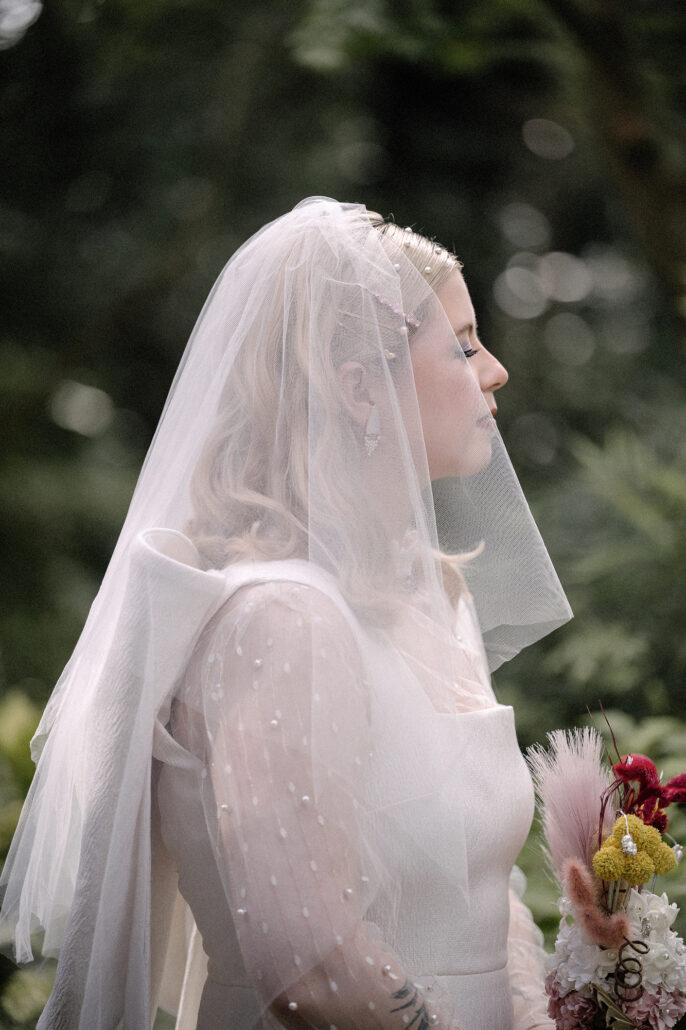
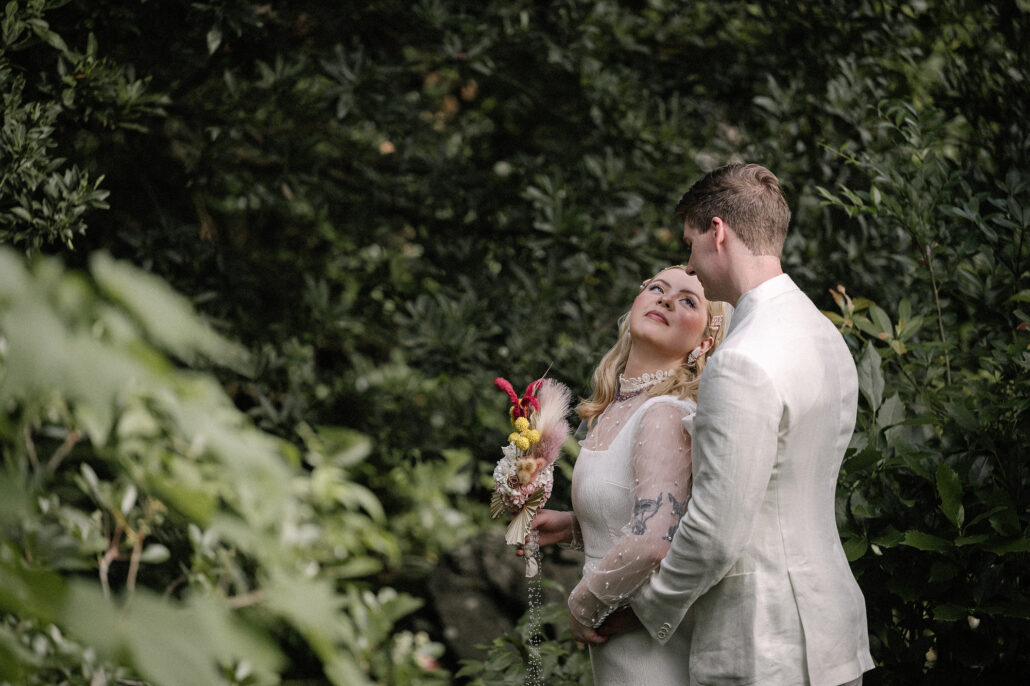
She did her own makeup too, because she knew herself well enough to know she’d feel calmer that way.
Those decisions changed the atmosphere of the morning. Fewer people in the room. Less scheduling. Less performance.
More space.
It’s easy to think of wedding planning as the accumulation of things. Sometimes the better decision is knowing which things to leave out.
Ghibli Beneath the Trees
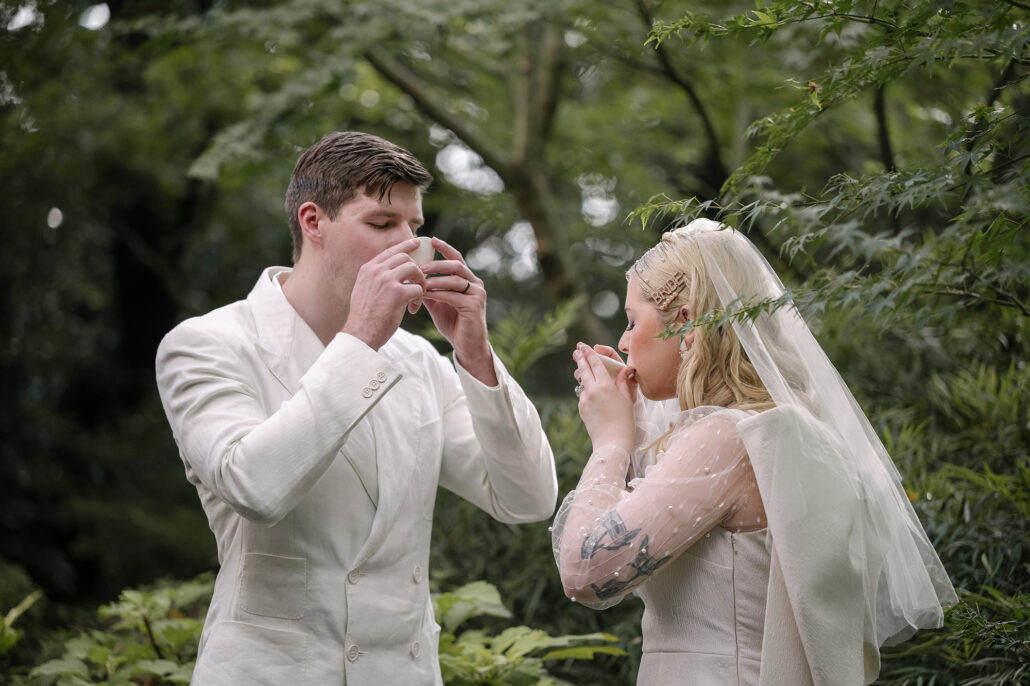
Music mattered. They both love Studio Ghibli and wanted those films in the ceremony, so a cellist played beneath the trees in Jinya’s garden: The Path of the Wind from My Neighbor Totoro, Carrying You from Castle in the Sky, Always With Me from Spirited Away, and finally Pachelbel’s Canon.
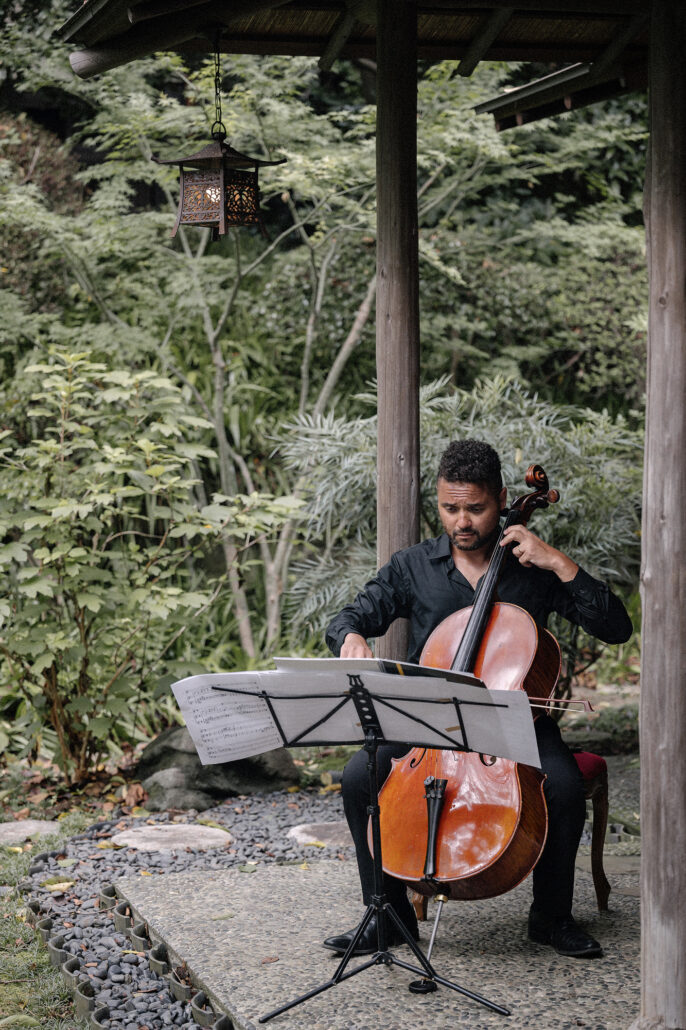
There was already something lovely about hearing that music stripped back to a single cello in an old Japanese garden. Then the setting added another layer. The family who own Jinya are relatives of Hayao Miyazaki, who stayed here as a boy after the war and played in this same garden.
Nobody had chosen Jinya for that connection, which made it feel all the better. The Path of the Wind, on a cello beneath those trees, sounded less like a reference to Japan than something returning to a place it already knew.
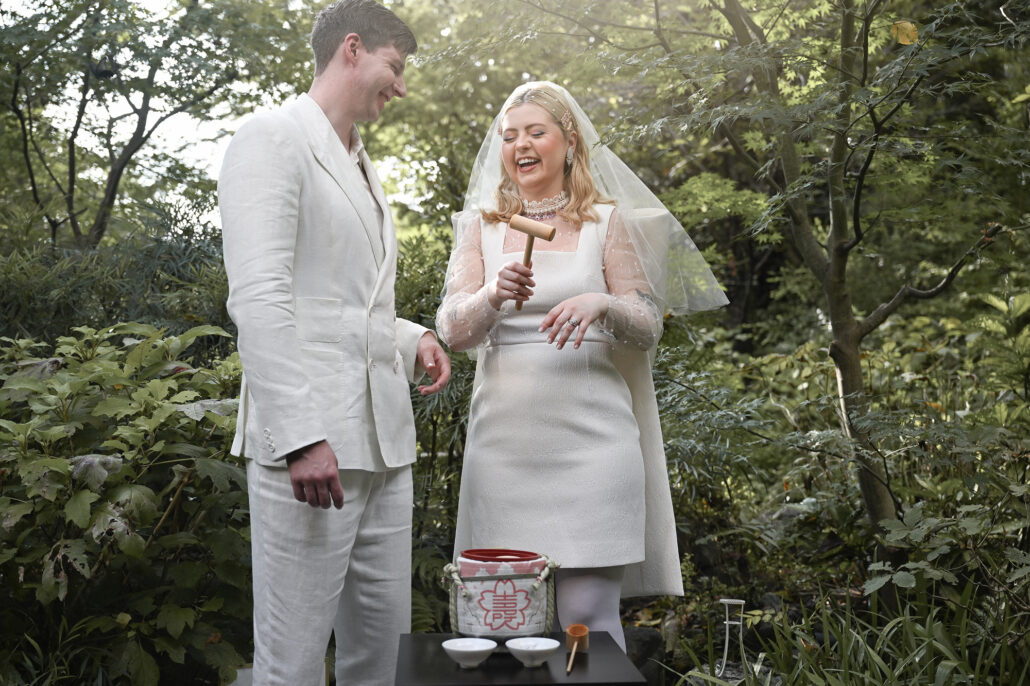
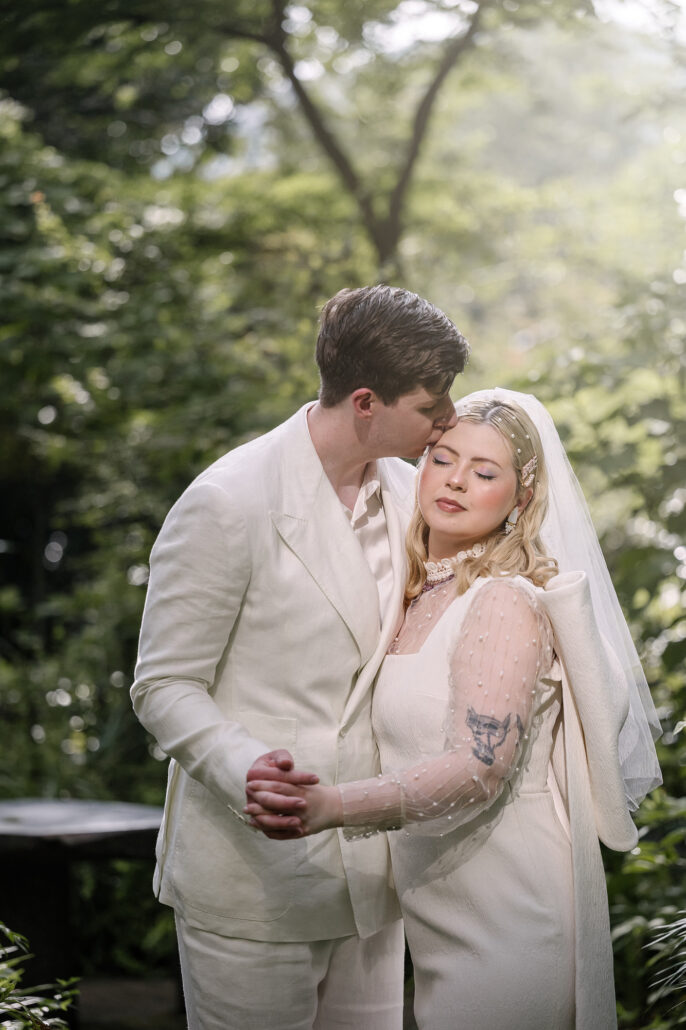
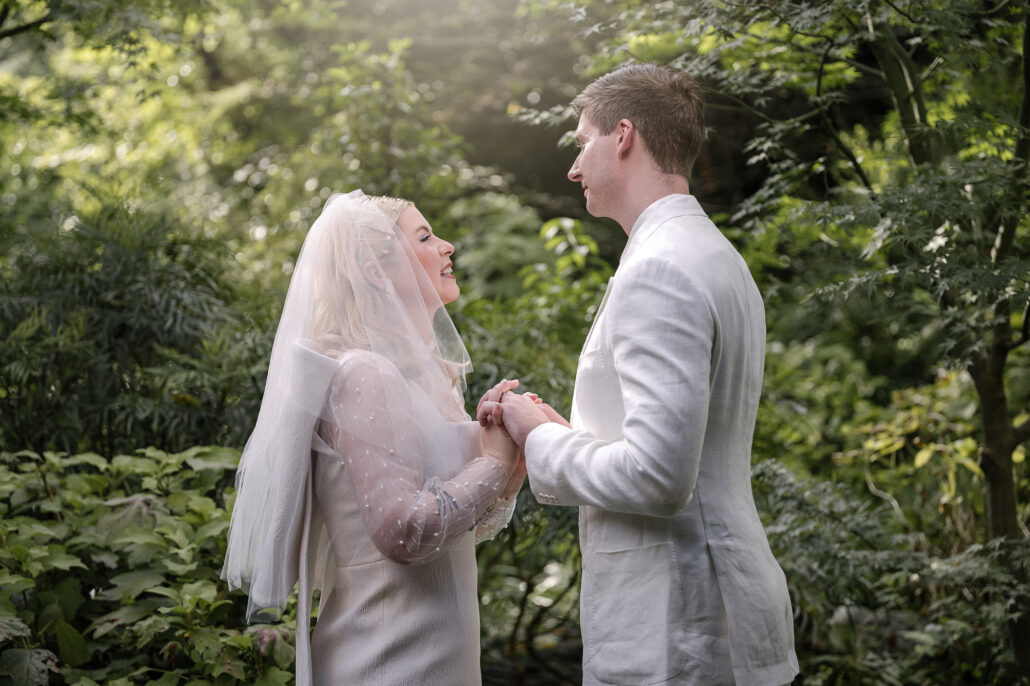
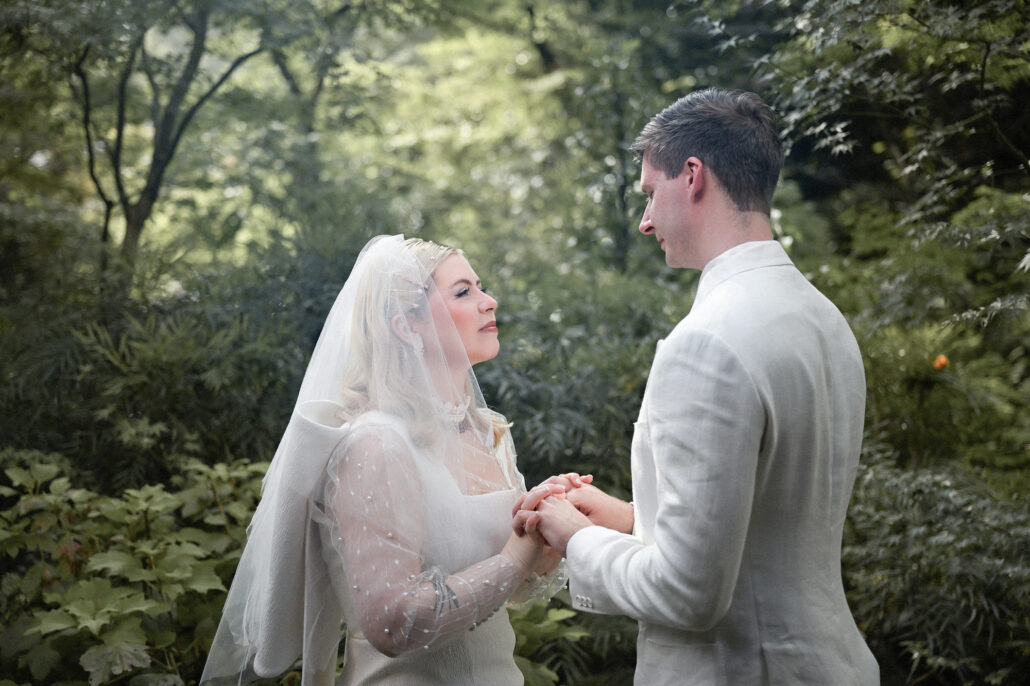
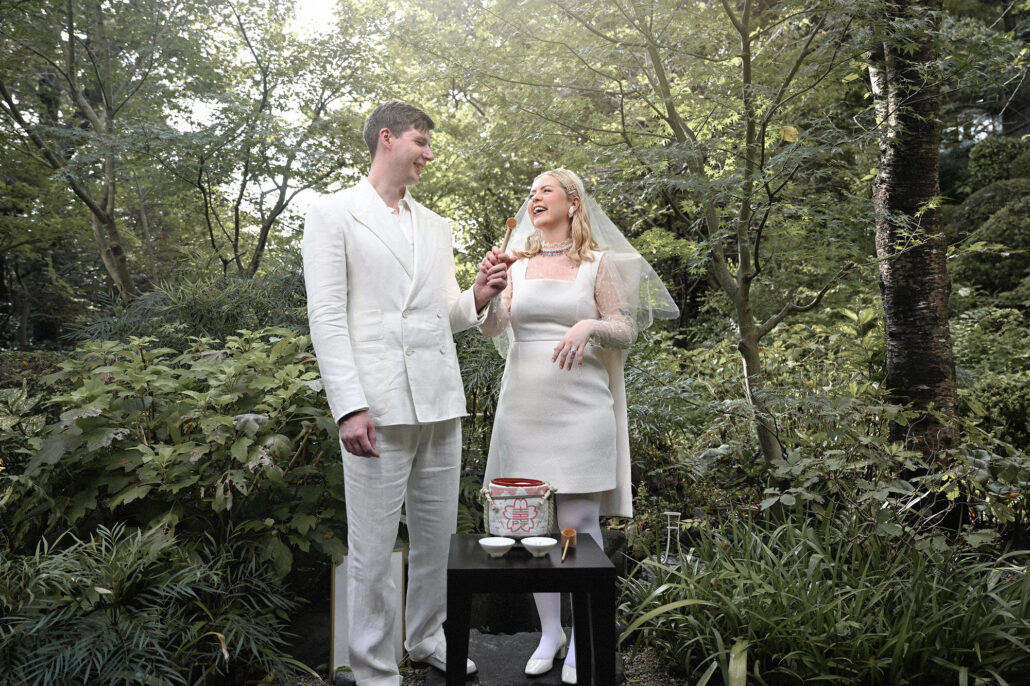
They exchanged their own vows and rings there. Two people, a cello, and a garden with considerably more history than any of us.
The Day Before the Typhoon
Meanwhile, Typhoon Lan was moving towards Japan.
This is the less romantic part of destination wedding planning, and one we take just as seriously as everything else. Weather can’t be negotiated with. It can, however, be planned around. We had covered spaces ready in case the rain arrived early, and kept watching the forecast as the system moved closer.
The wedding day gave us almost every version of August: rain, brief sun, a wind that moved continuously through the trees, mist, more rain, and the dense, unmistakable warmth of a Japanese summer. None of it stayed still for very long.
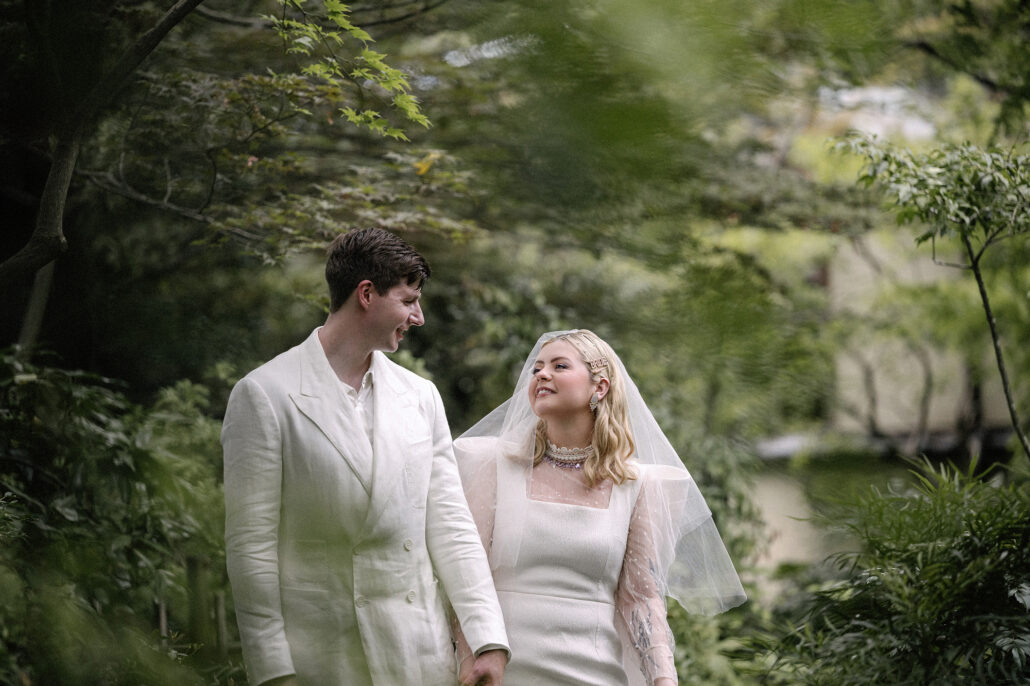
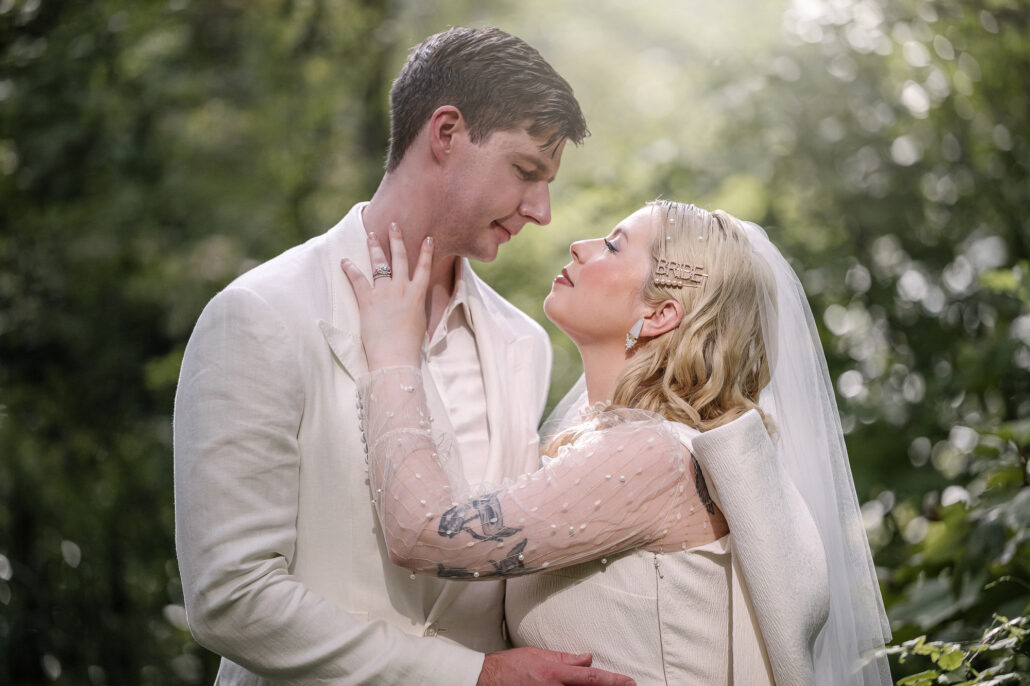
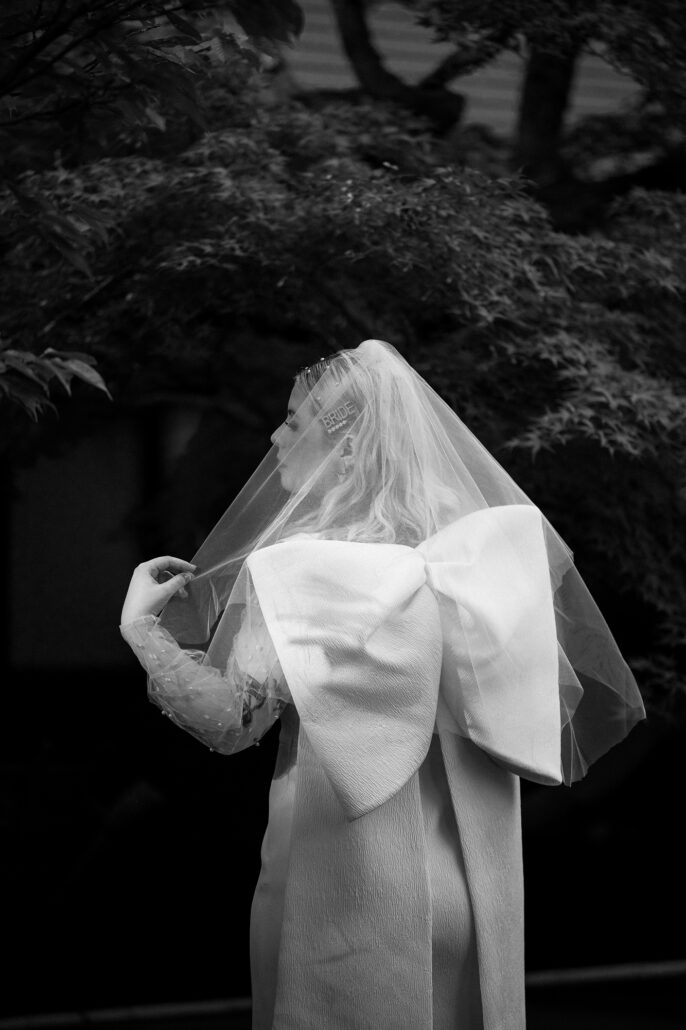
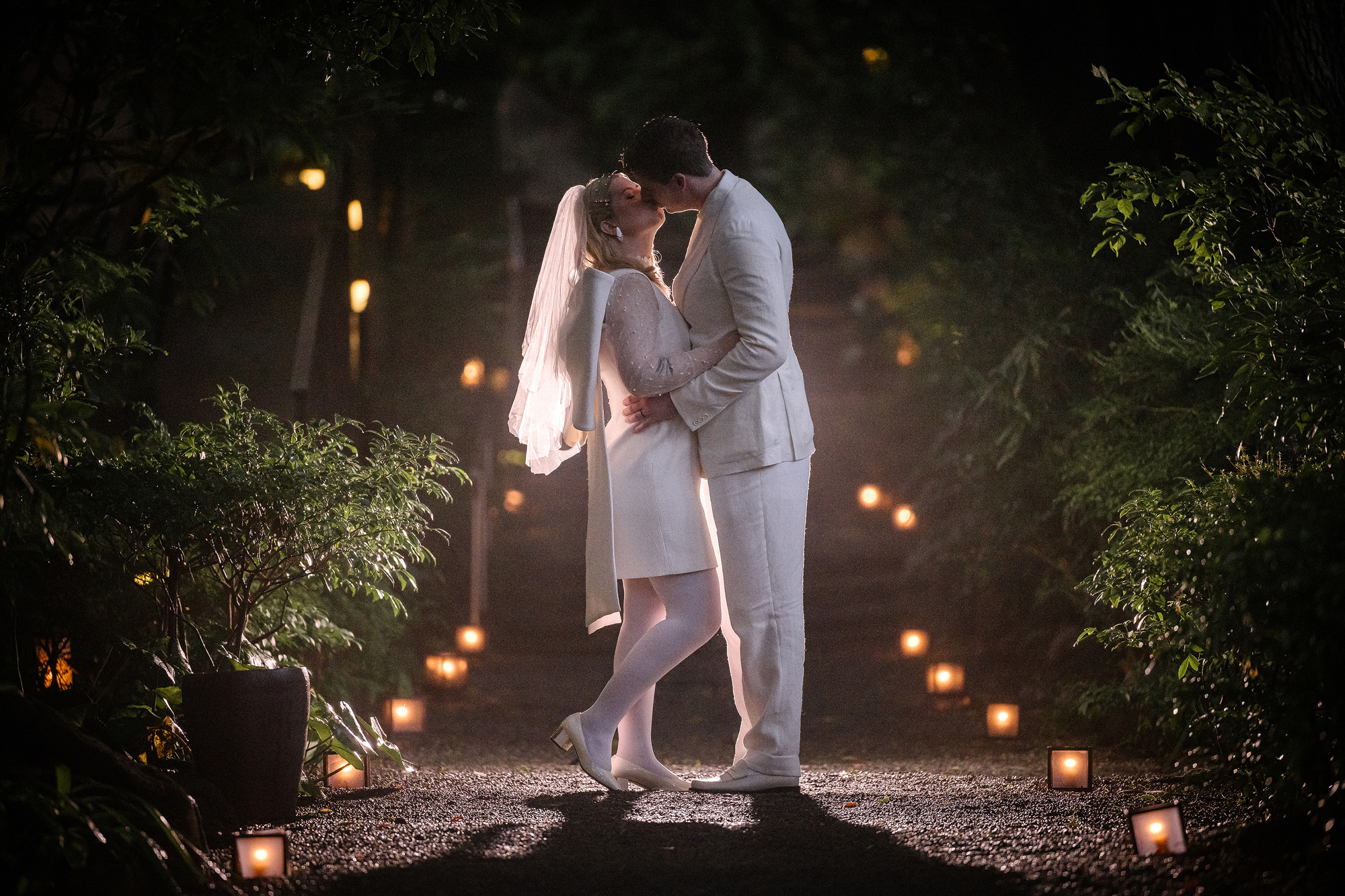
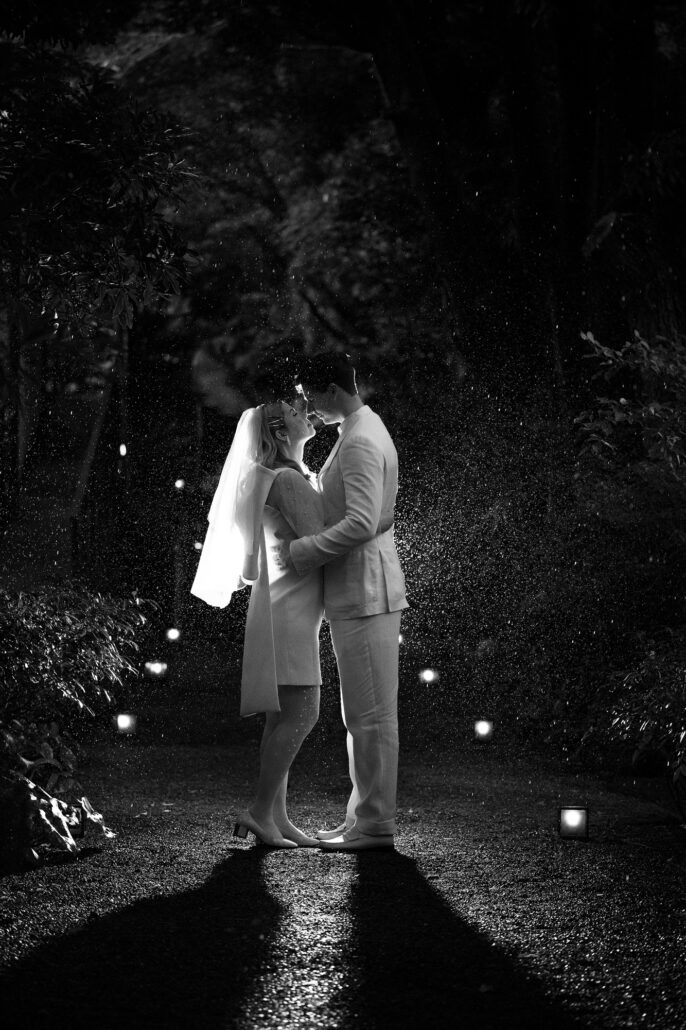
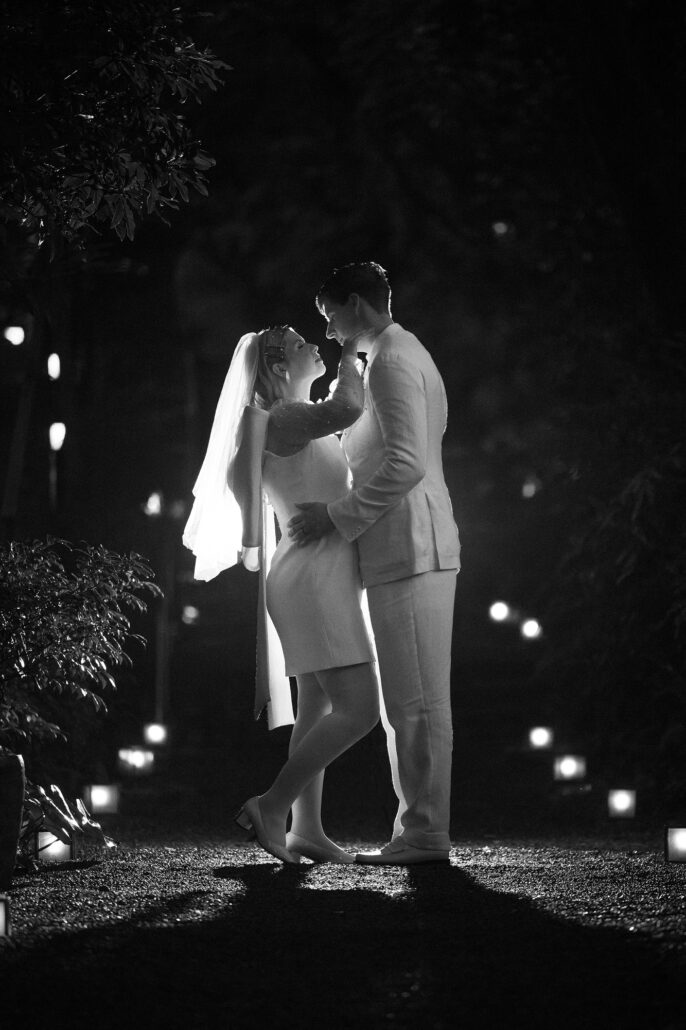
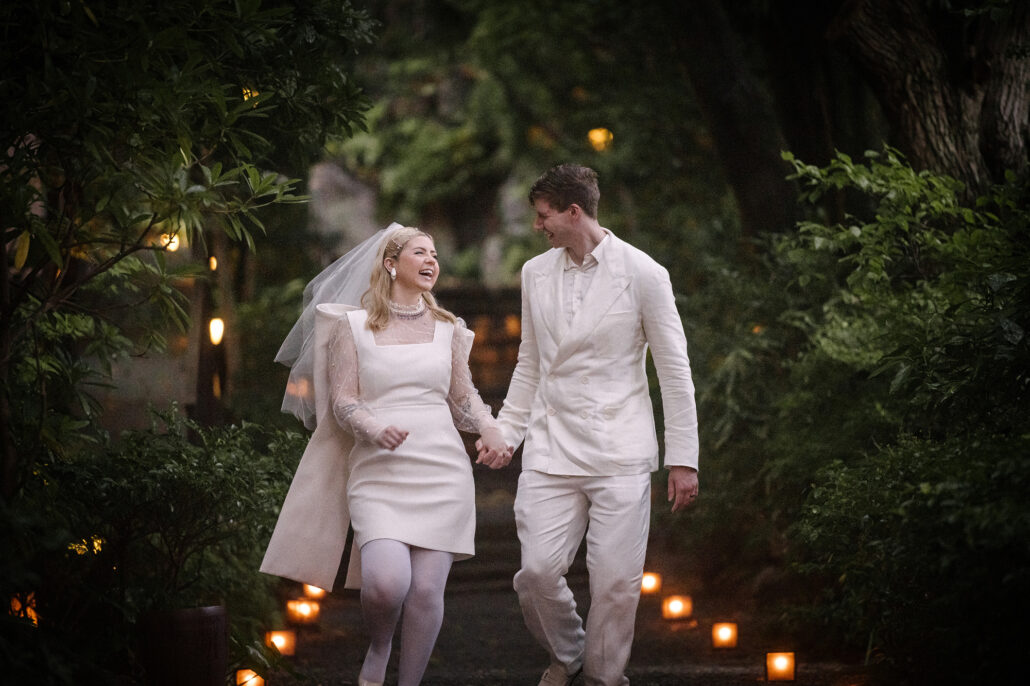
Neither did the garden. Leaves moved across the frames. Stone darkened with rain. The lanterns seemed brighter as the afternoon turned grey, and water hung in the air.
The mountain they’d first written to us about stayed hidden. Jinya didn’t.
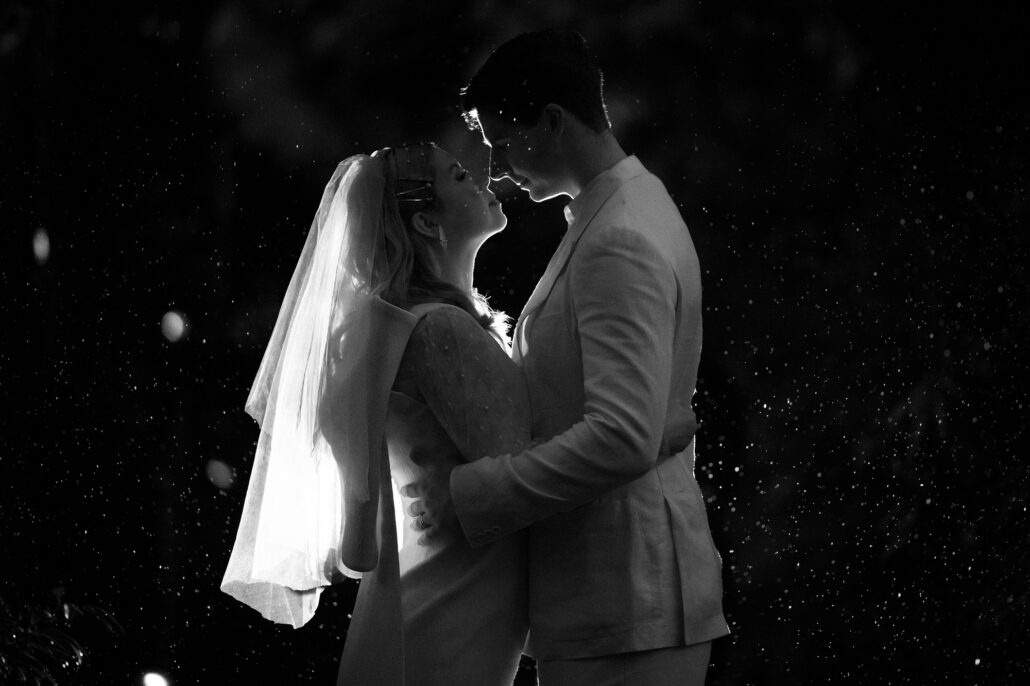
By evening, the wet paths were reflecting lantern light and the garden had become somewhere quite different from the place we’d photographed that morning. That’s the strange generosity of weather. It doesn’t always give you what you planned. Sometimes it shows you something else.
The Version of Japan They Received
There’s a temptation with destination weddings to imagine that good planning means reproducing the picture you had in mind before you arrived.
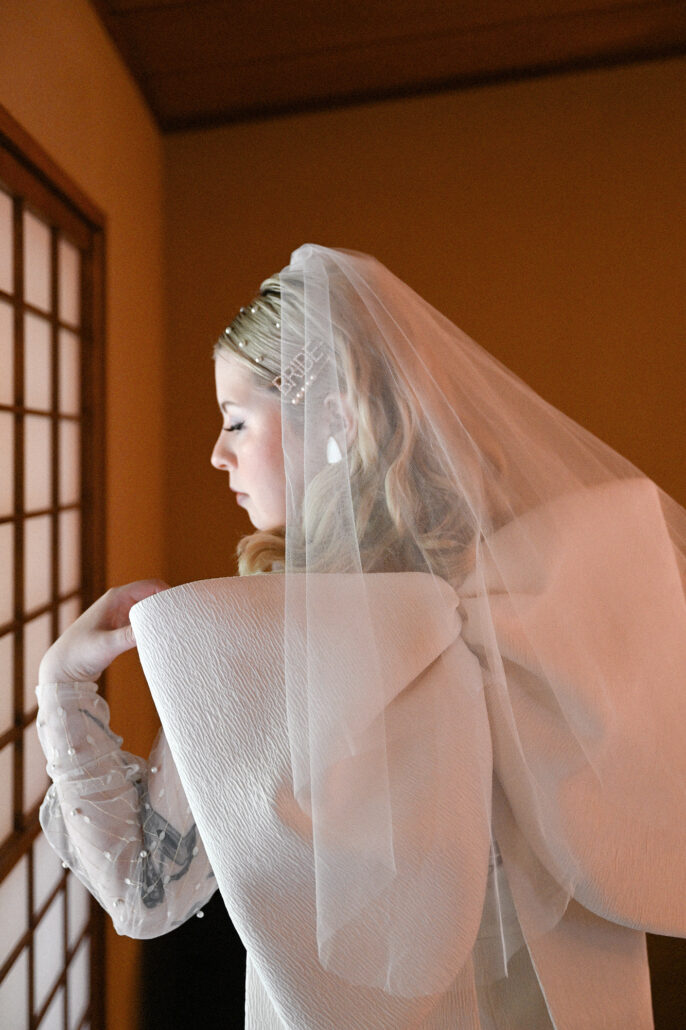
We think it’s almost the opposite. Good planning protects what matters enough that everything else is allowed to move. The mountain can disappear. The rain can arrive. The wind can take hold of a veil. And the day can still belong completely to the people inside it.
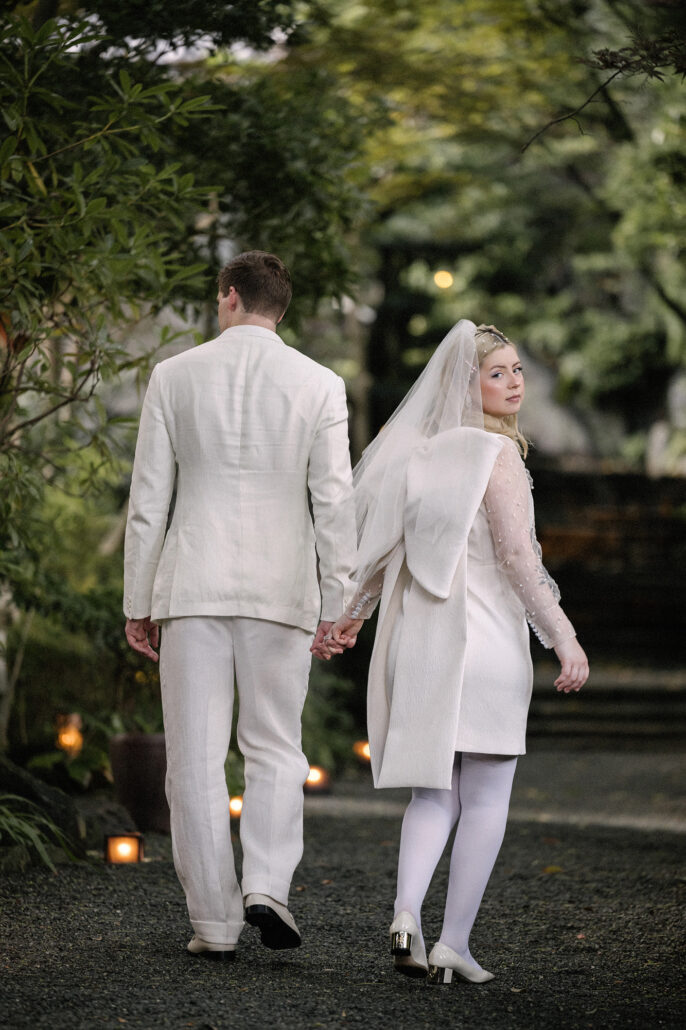
For these two, what remained was a bouquet made at home with her mother, Ghibli played on a cello beneath trees with their own tie to its maker, private vows in an old garden, summer rain, wet stone, and lanterns appearing one by one as the light faded.
None of it was the backup version. It was simply the version of Japan they received.
Typhoon Lan made landfall the following day.
By then, they were married.