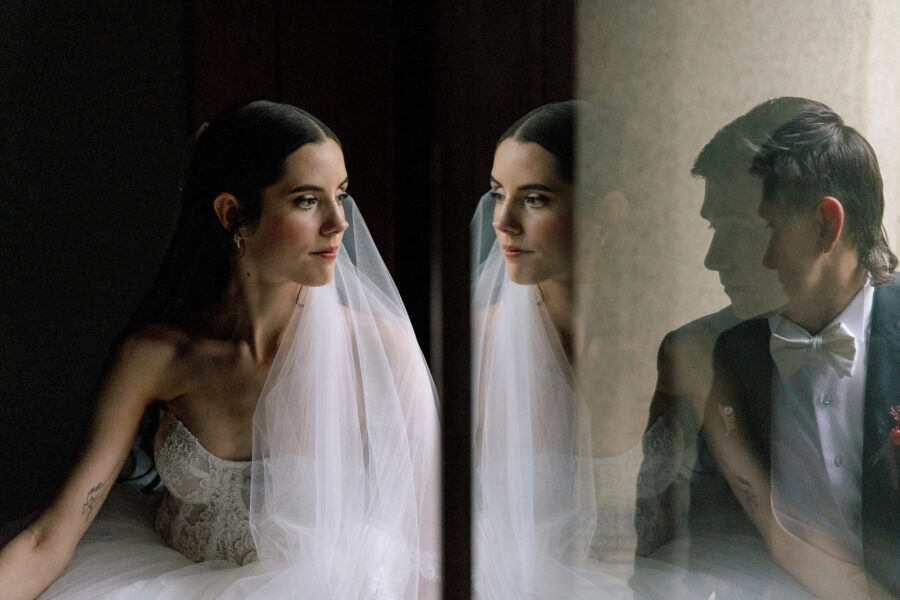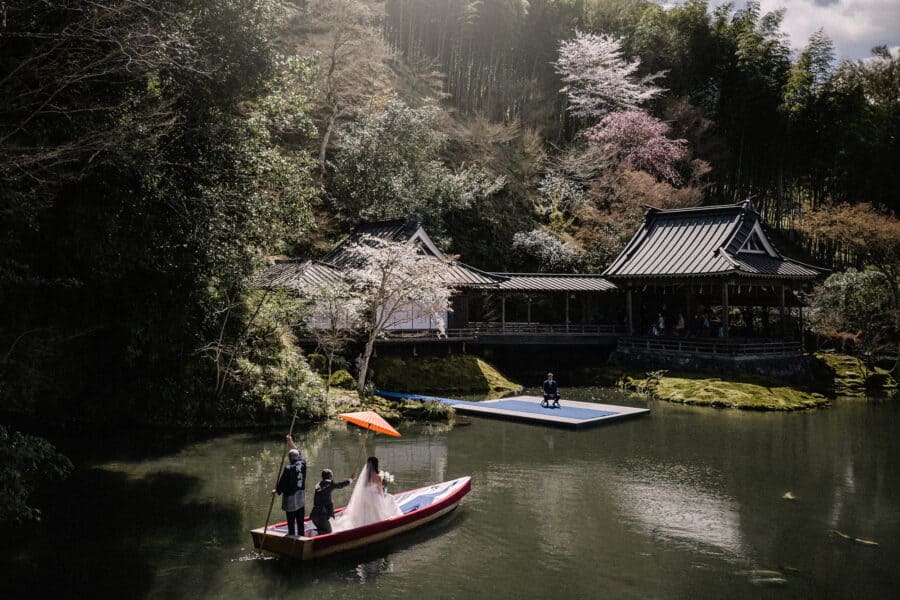
The Japan Times on the table that morning was dated Tuesday 7 May 2024. Golden Week was over, Tokyo was going back to work in a light and patient rain, and a couple from London, a long way from home, had other plans for the day.
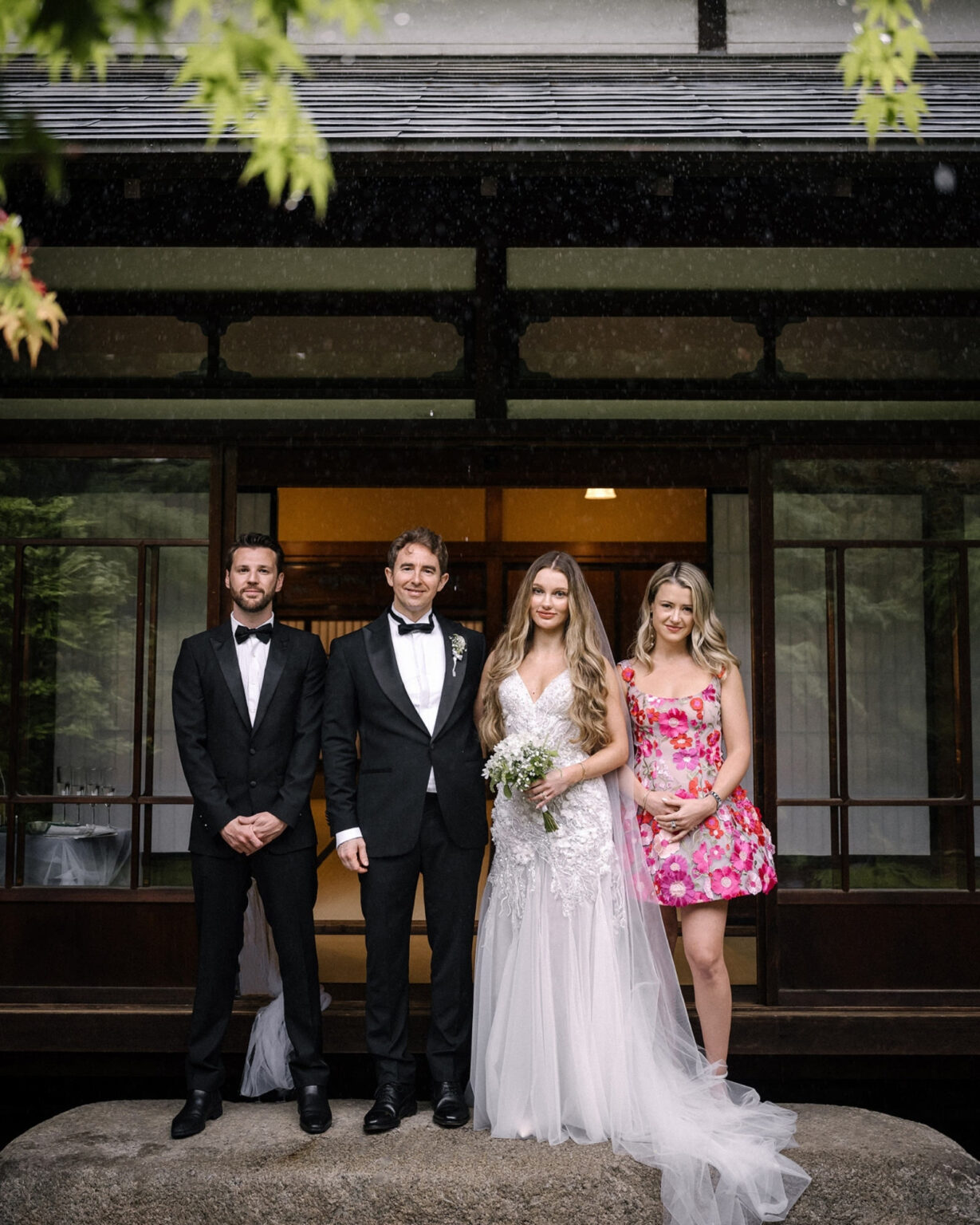
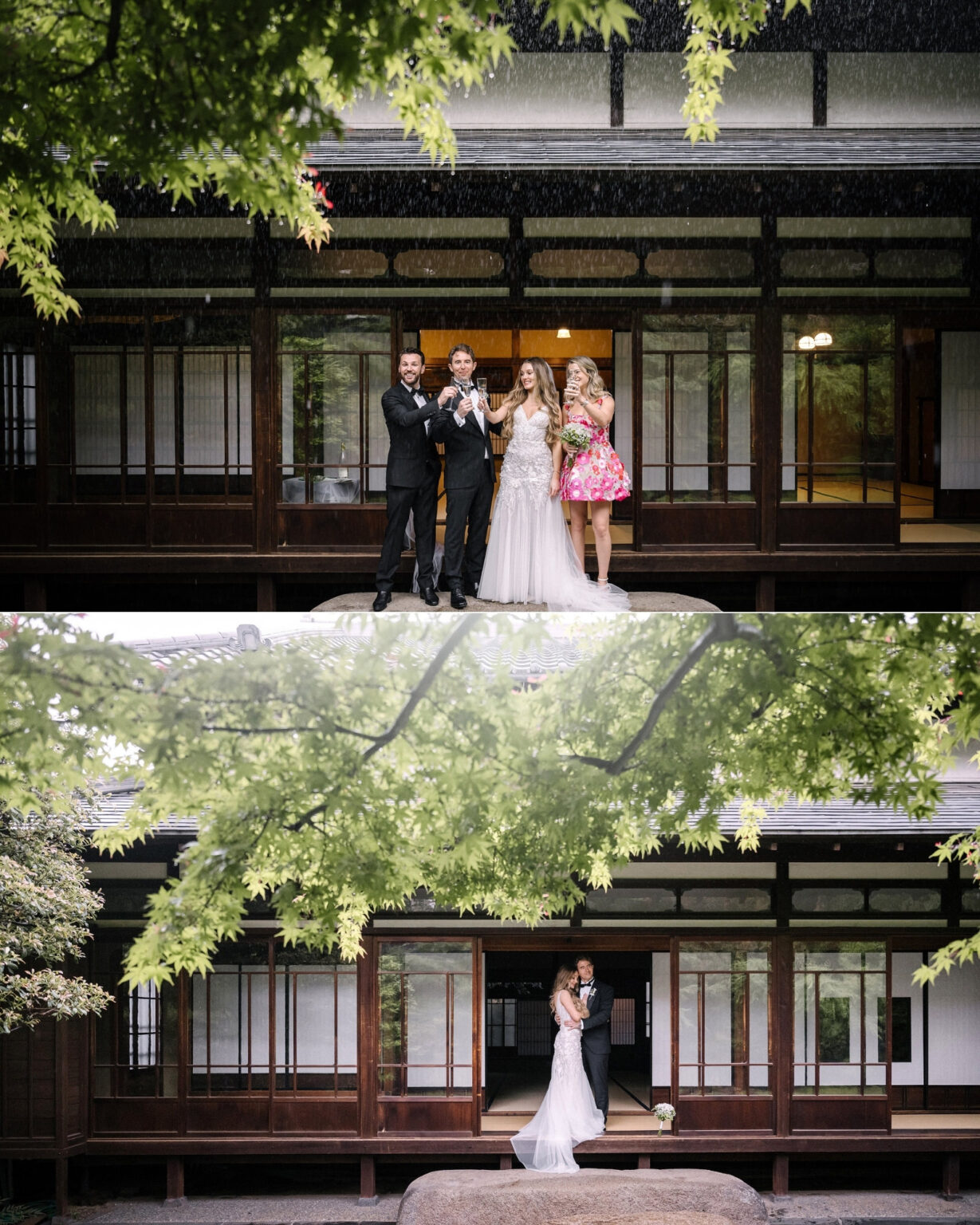
The wedding had first been set for the Wednesday. It moved a day earlier because her best friend couldn’t get the Wednesday off work, which is as good a reason for a date as any we know. It was a Tokyo garden wedding for four, an intimate wedding bordering on an elopement: the two of them and the two friends they wanted beside them. Vows at a historic Japanese house just as the rain stopped. Then a short lace dress, a long veil and a night in Shinjuku, taken in the gaps between the showers.
Morning at the Capitol
They had stayed at The Capitol Hotel Tokyu on an earlier trip, so the day began somewhere they already knew. The hotel stands where the Tokyo Hilton used to. In the summer of 1966 the Beatles spent five days there while they played the Budokan, kept inside for most of it by the security around their visit. The old hotel closed in 2006, and the one that replaced it, designed with Kengo Kuma, opened in 2010. It has been a good place to hide from Tokyo for a long time.
With London time still in their bones, the ceremony was set for the afternoon. She got ready with music on, champagne open and her vows still being finished. Across the hall, the groom and his friend worked through the morning on coffee and protein drinks. Each side had its own idea of preparation.


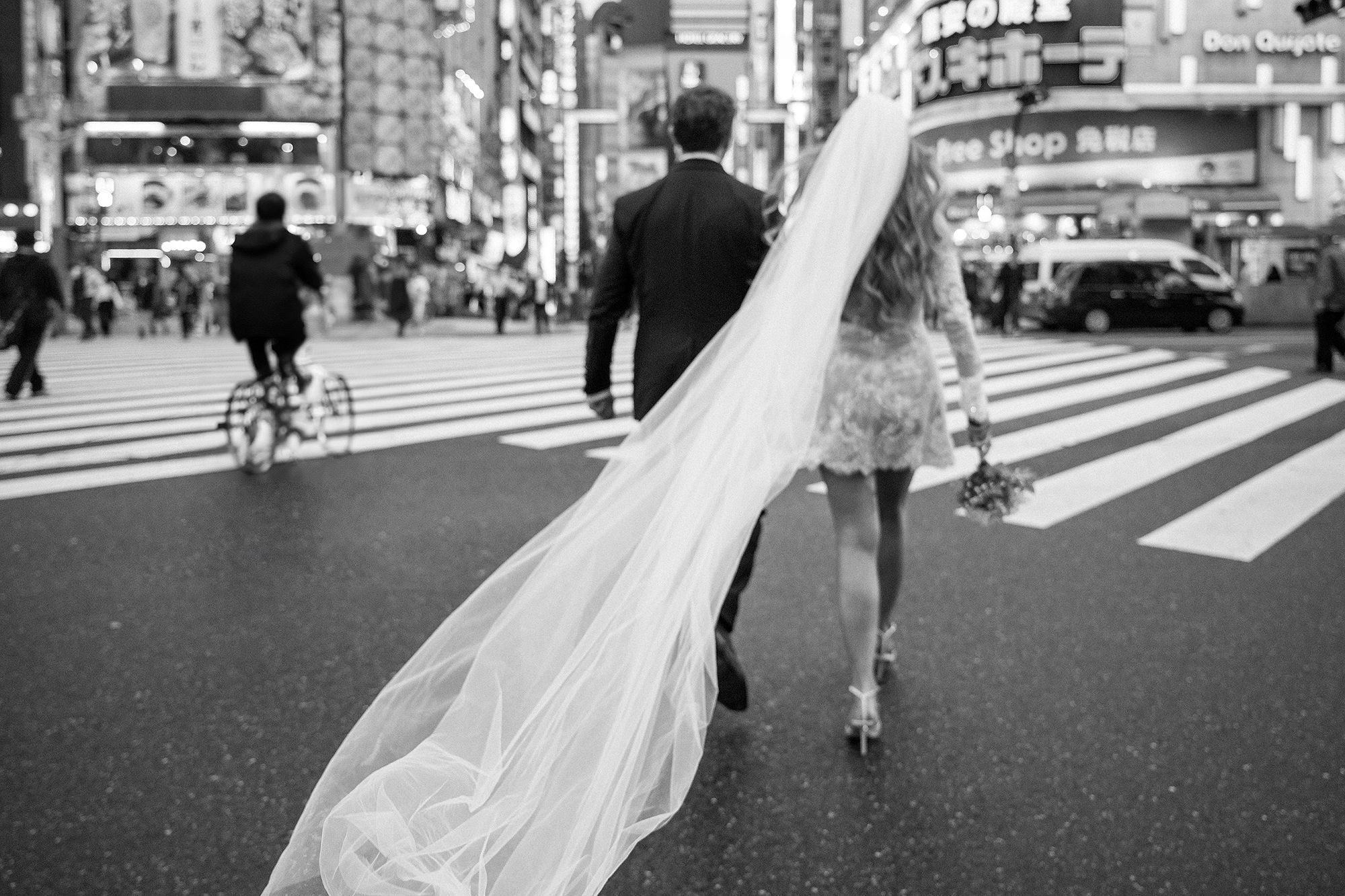
Her veil was beautifully long. It would see a good deal of Tokyo before the night was out.
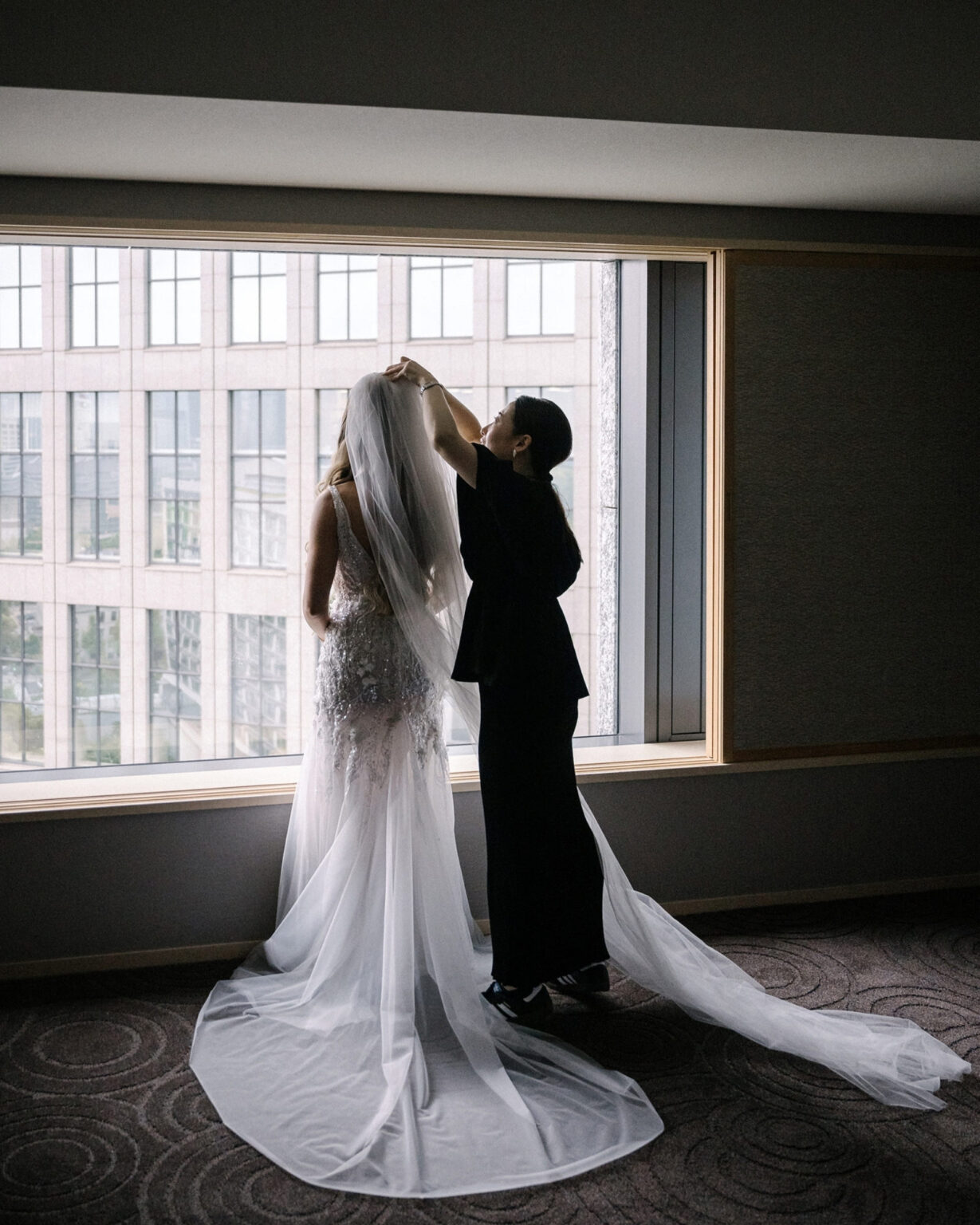
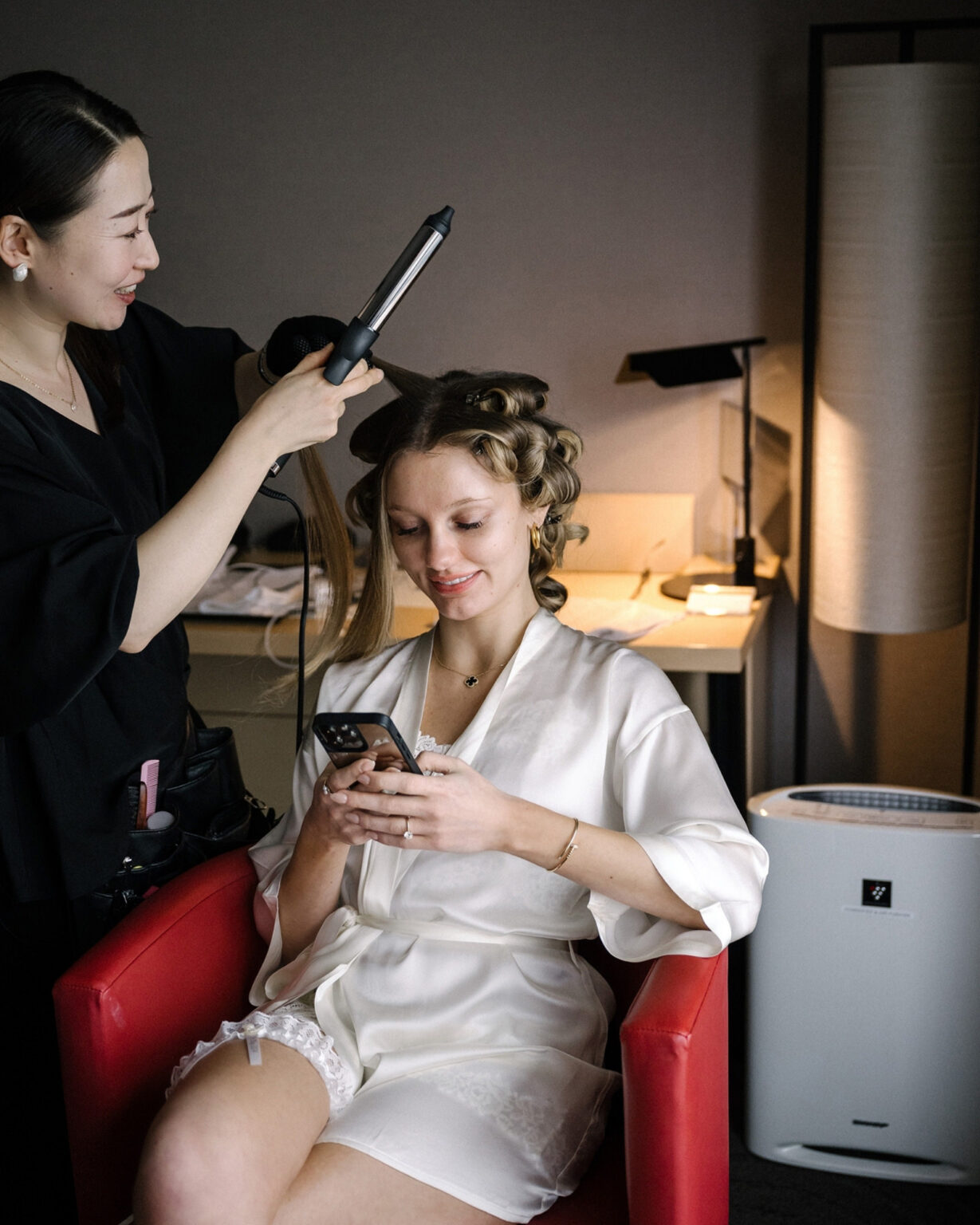




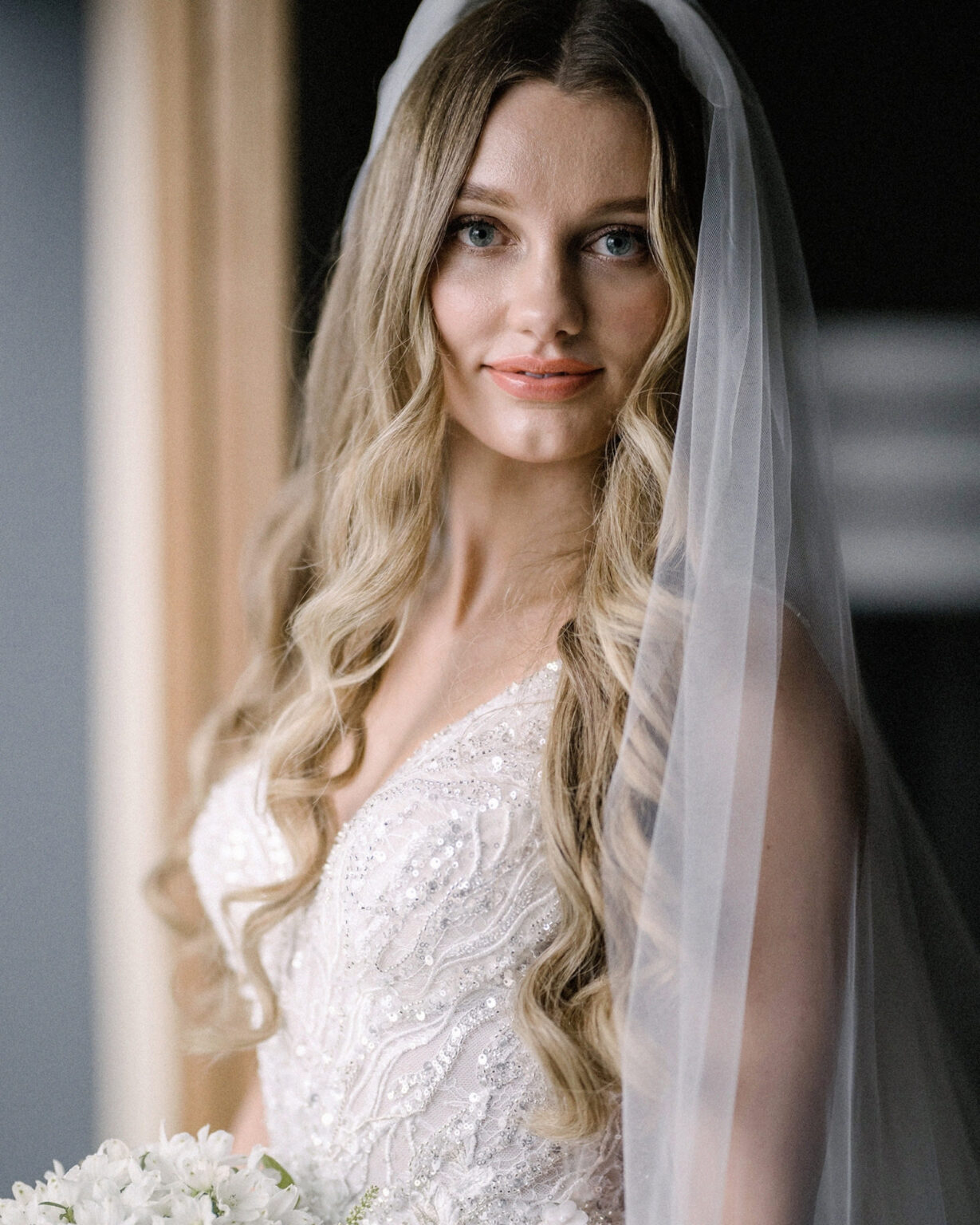
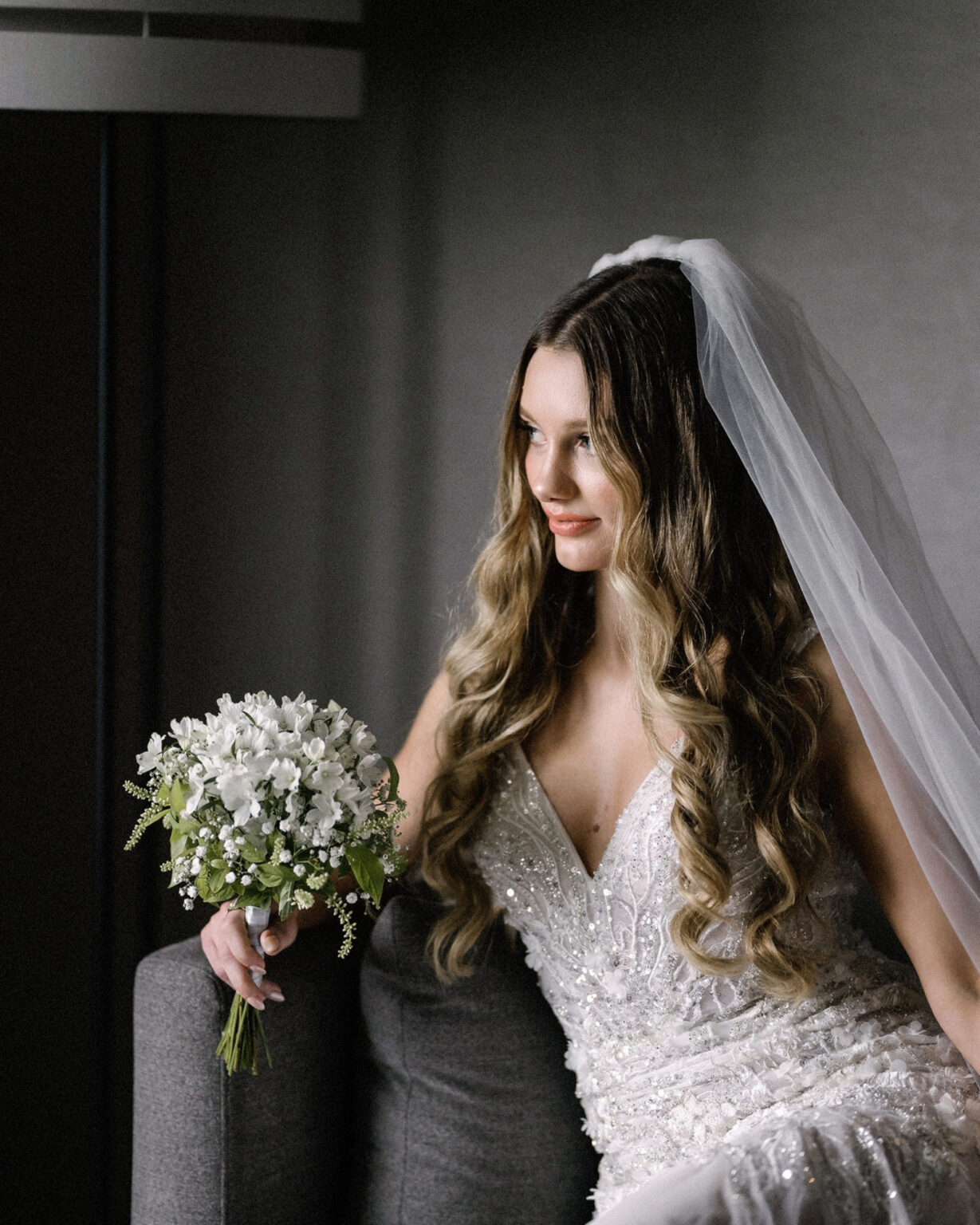
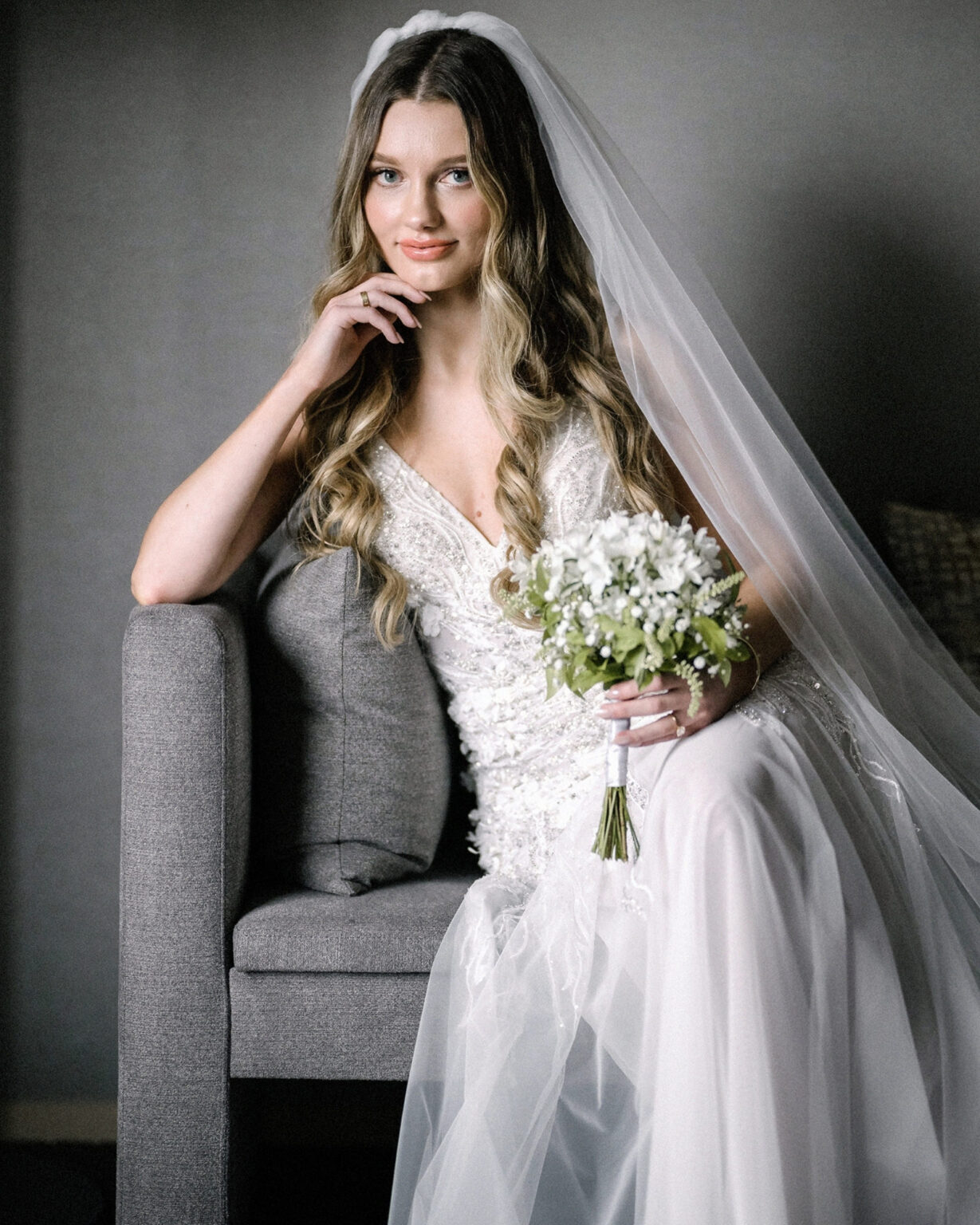

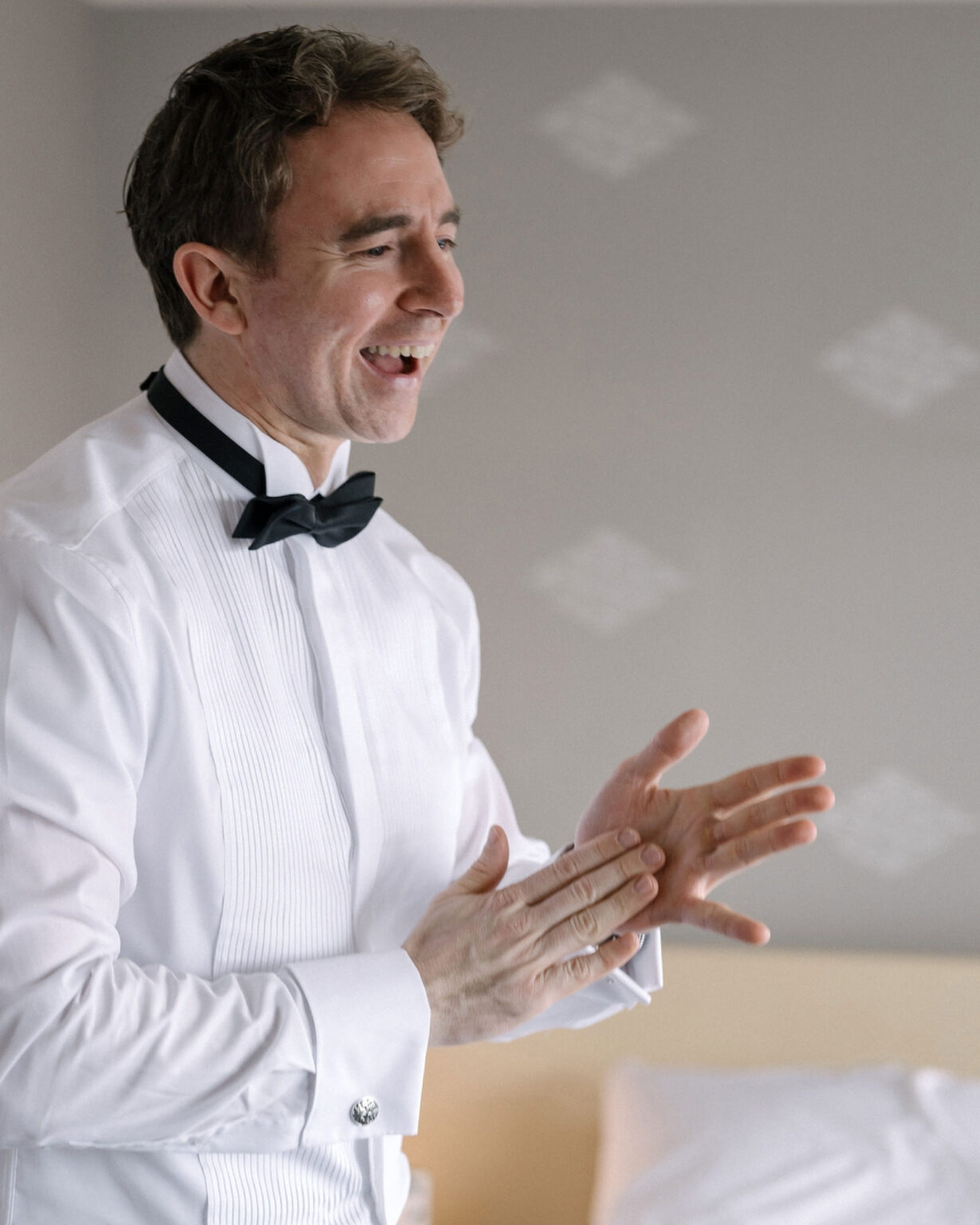




They left the hotel separately, so that the first time he saw her would be in the garden.
A Tokyo Garden in the Rain
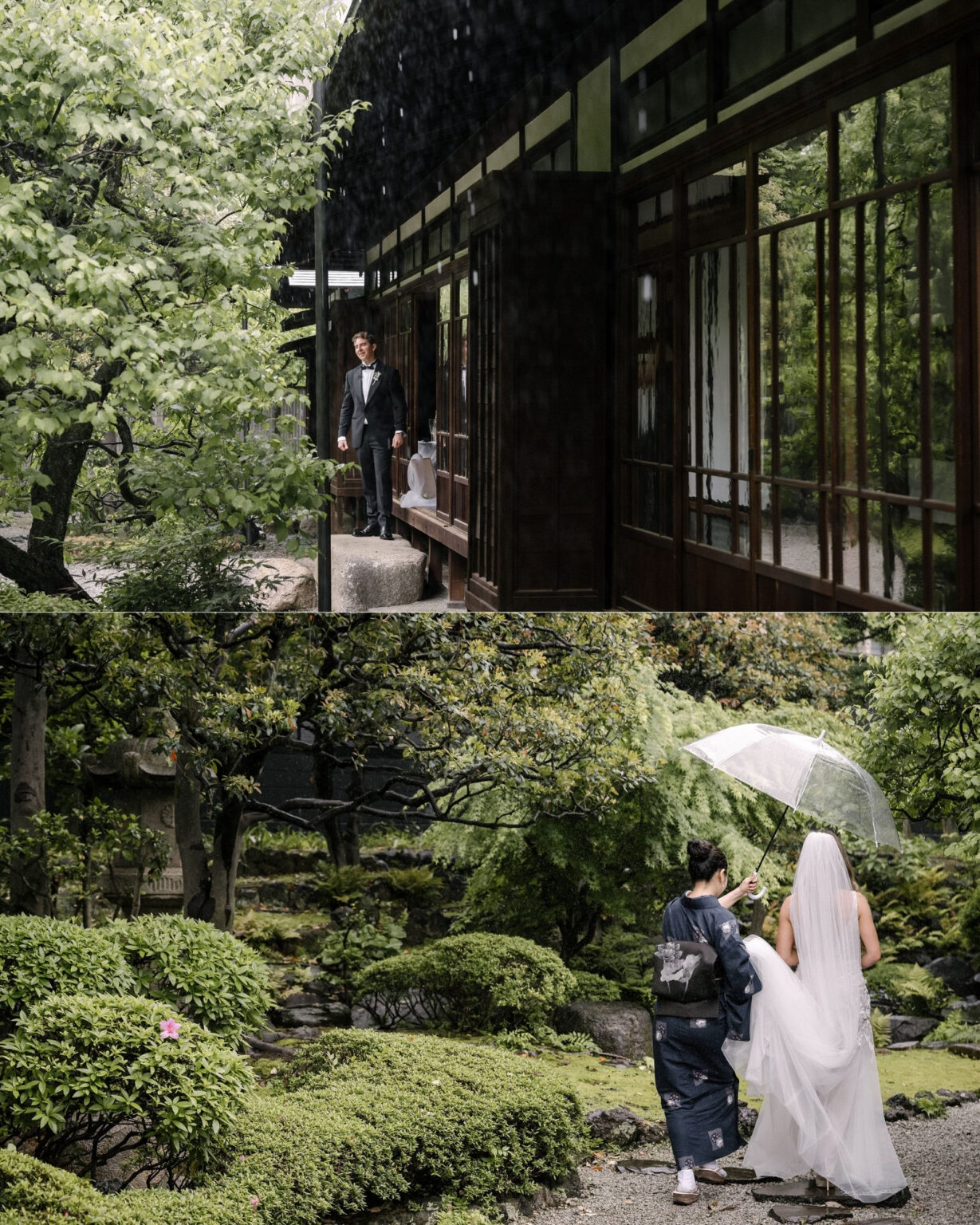
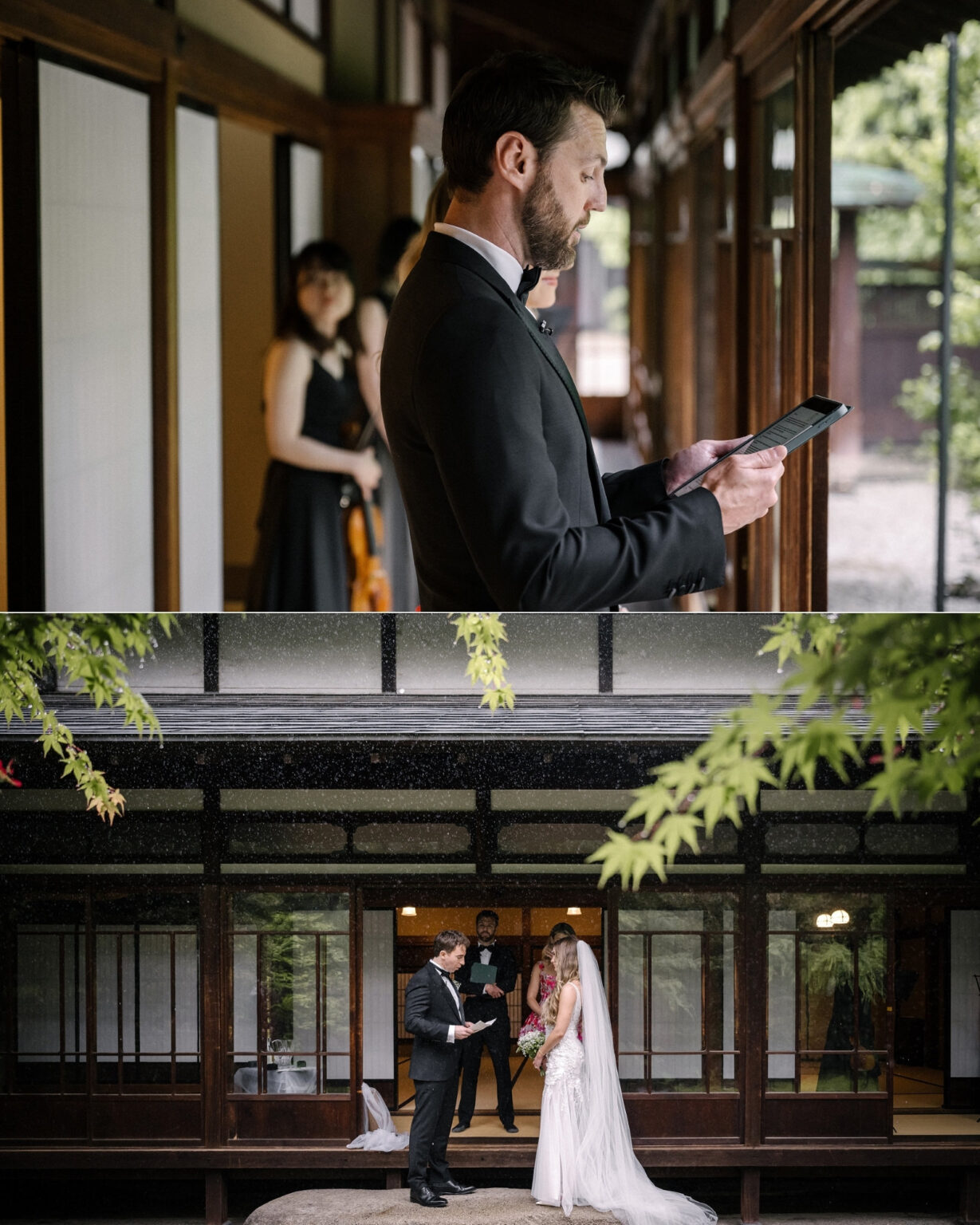
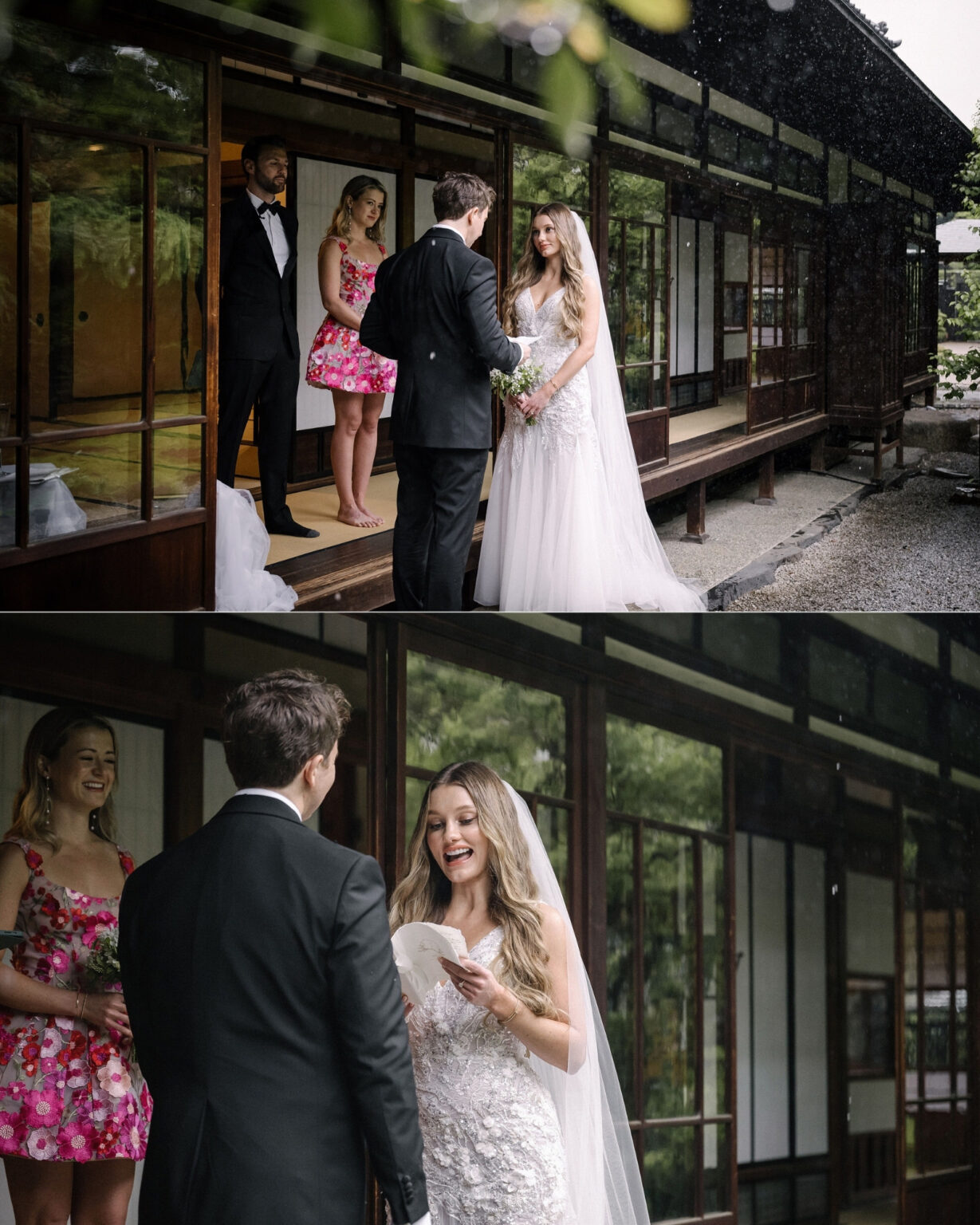
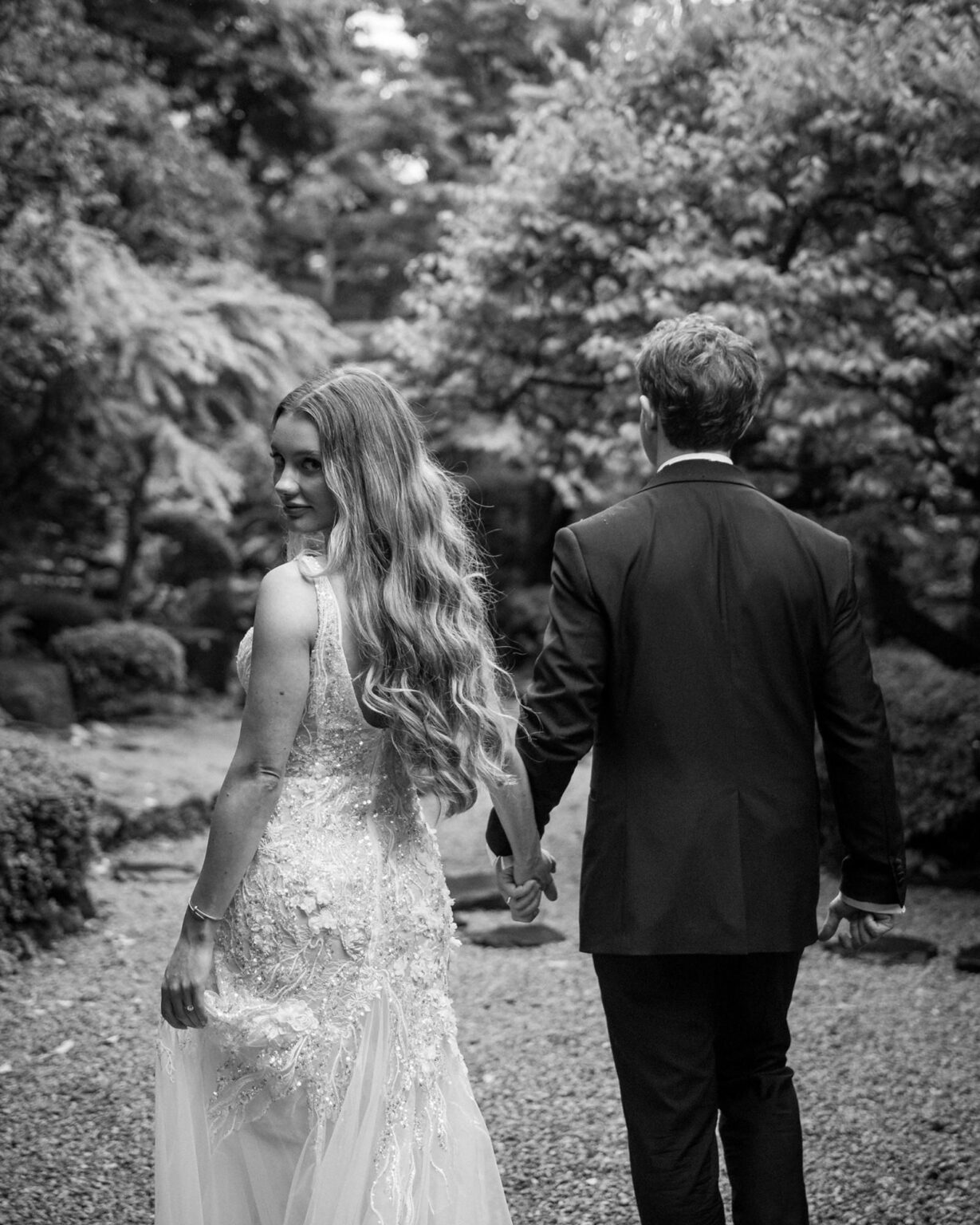
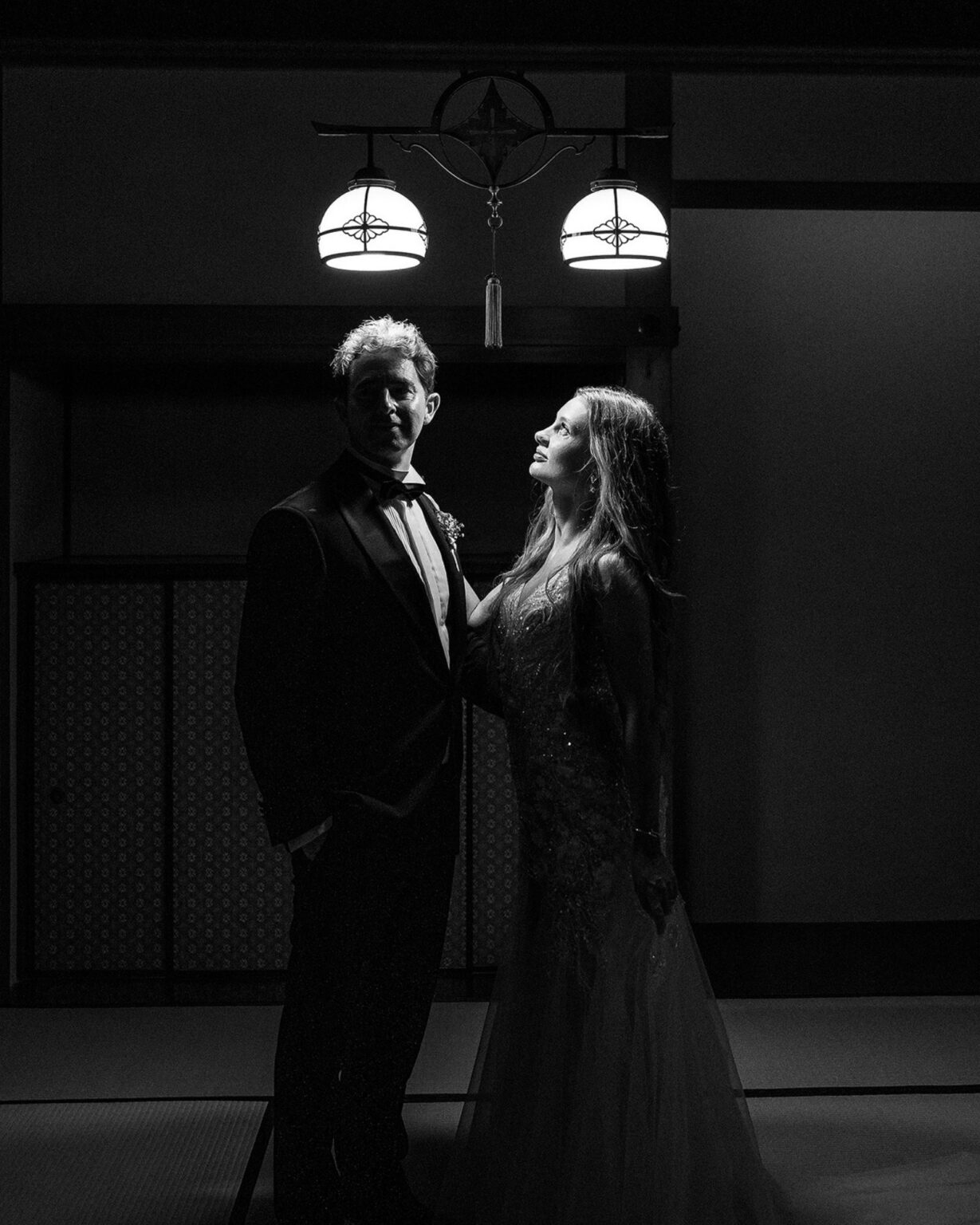
The ceremony was at a historic Japanese house and garden in Tokyo that we first came across more than a decade ago, on a photo shoot for Nikon. We thought then that someone should marry there one day, and it has since become one of the places we love to bring our couples, for elopements and intimate weddings alike. It’s a wooden house with deep eaves and tatami rooms, a veranda that opens onto the garden, and moss, stone and maples all around it.
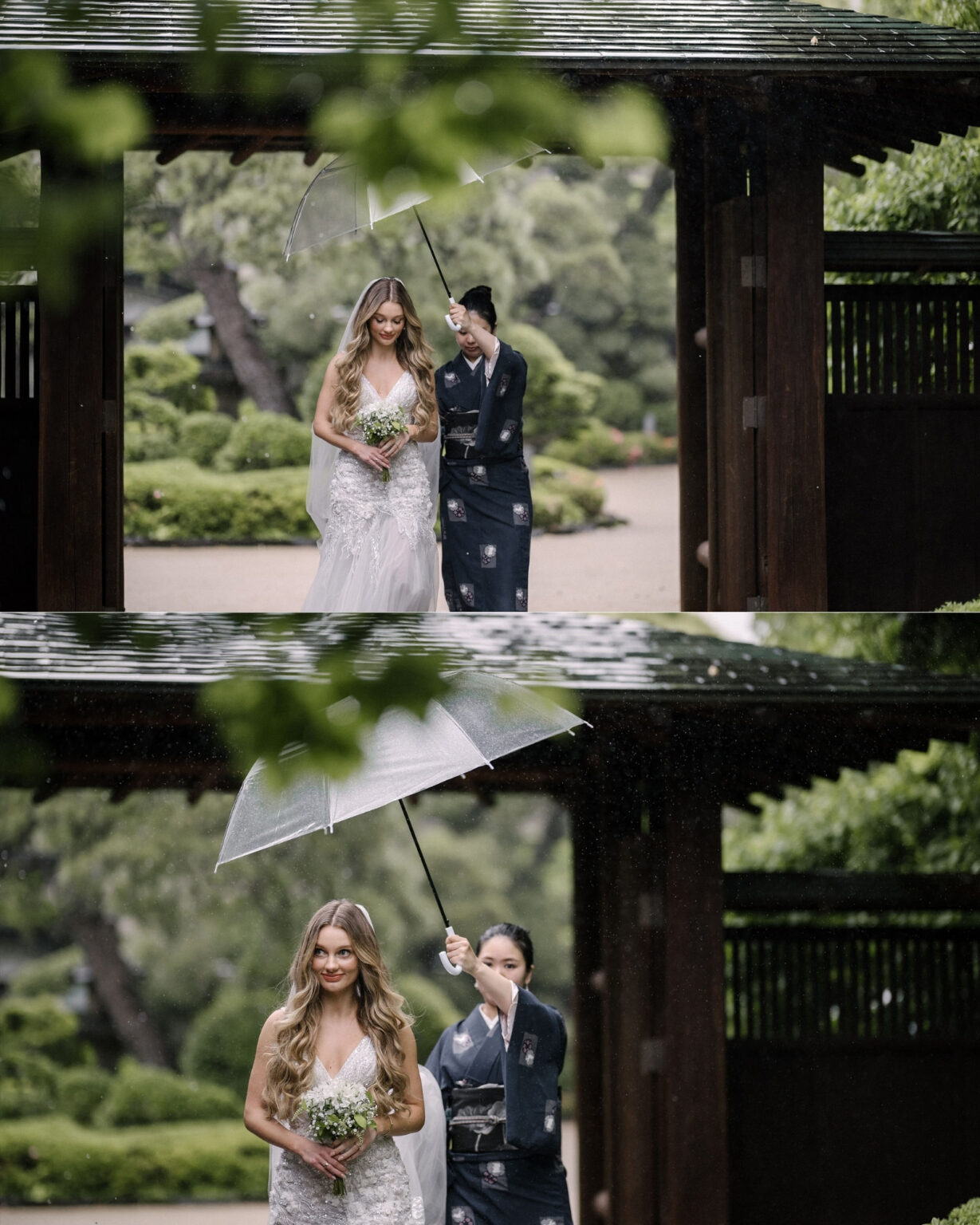
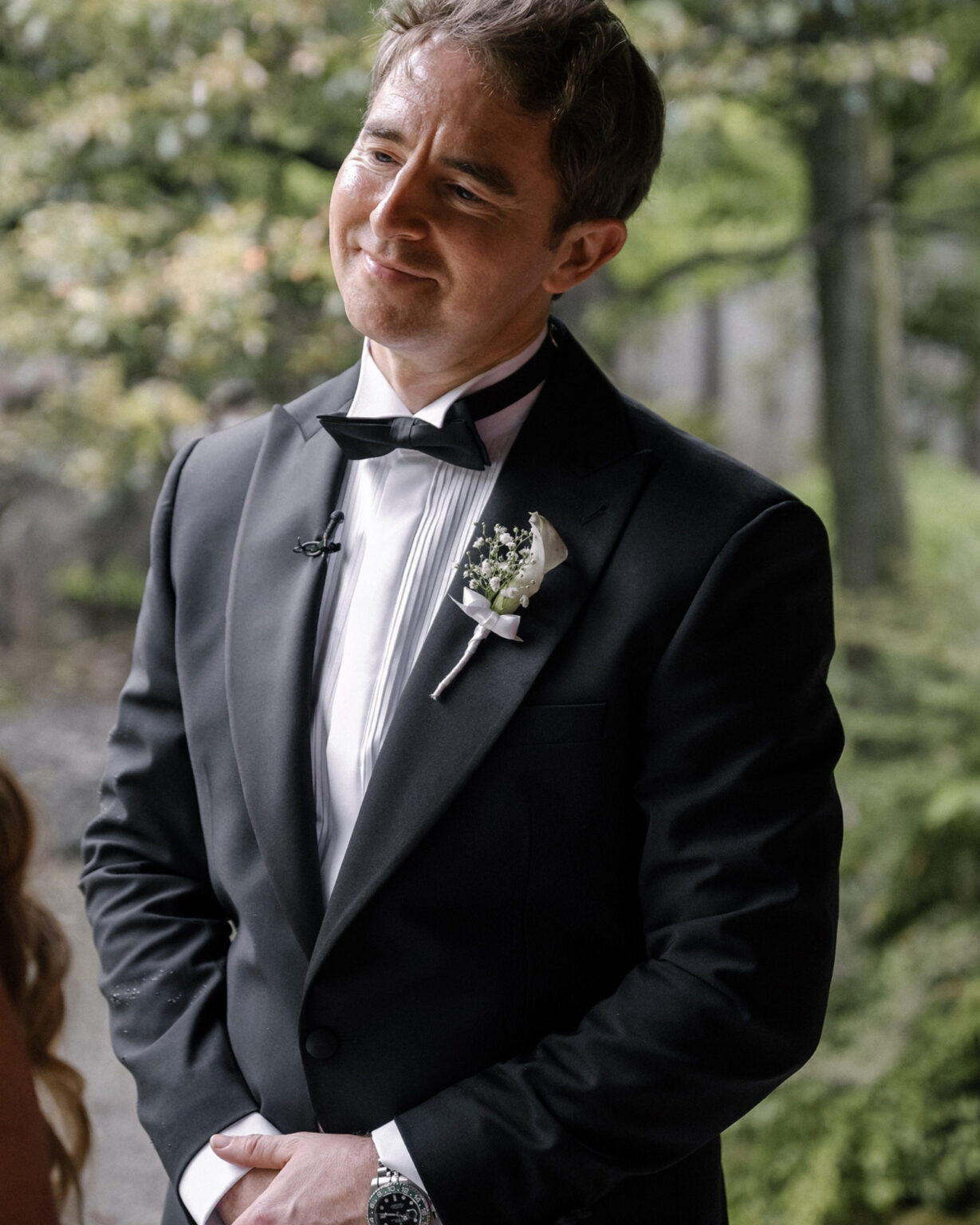
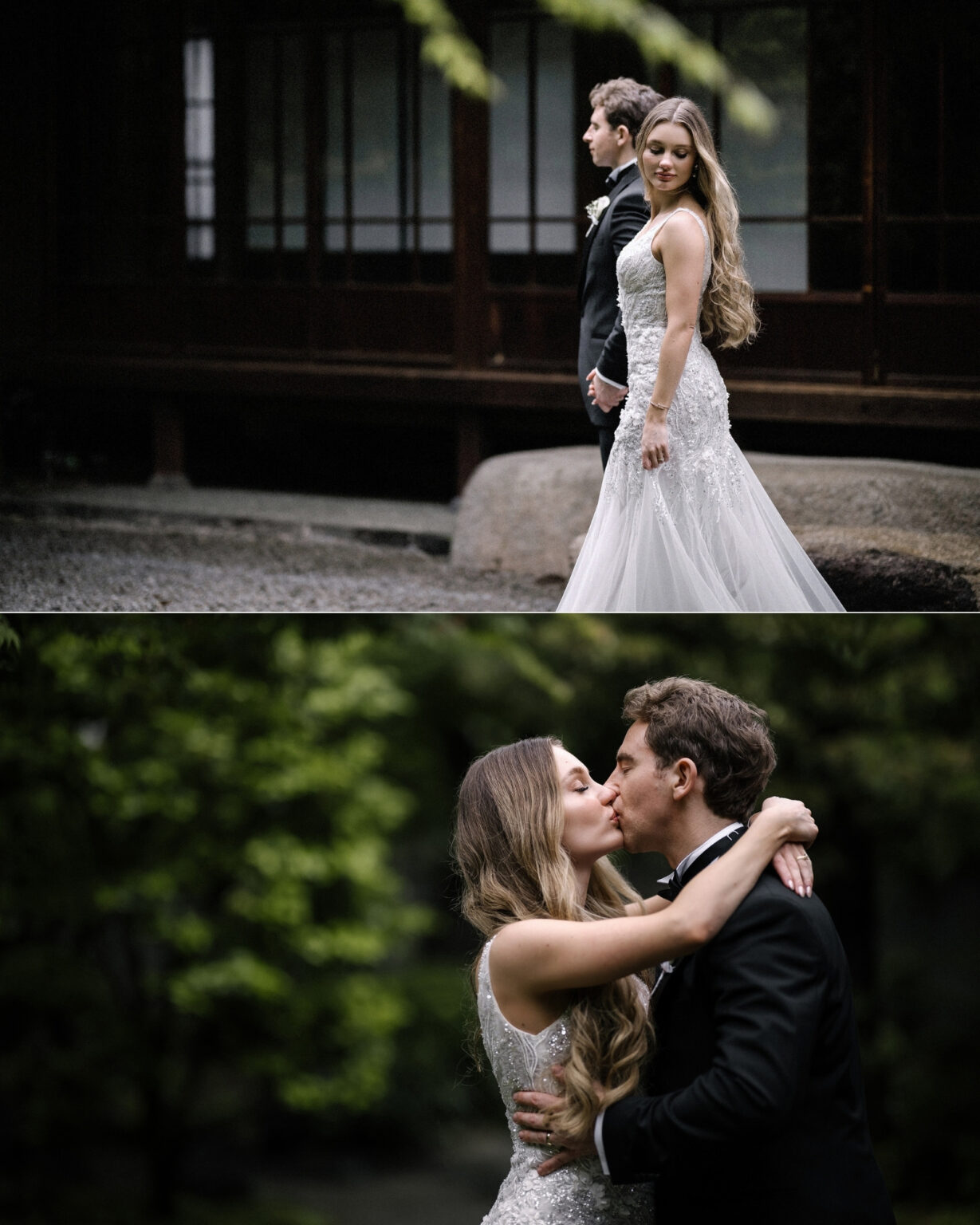
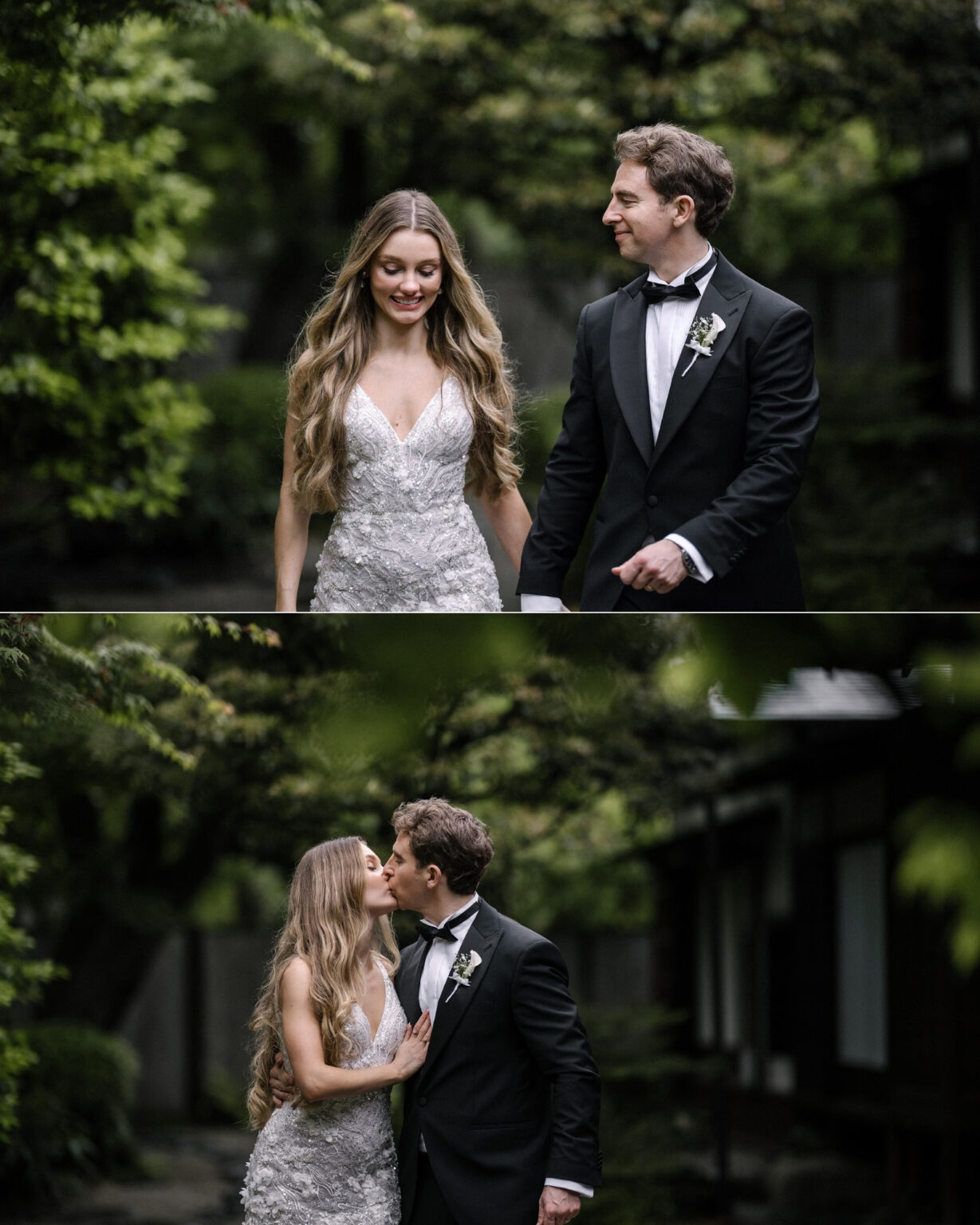
There were no flowers there but hers: a small, simple bouquet of white, and a matching flower on his lapel. The house and the garden were left to be exactly what they are. He waited on the veranda while she crossed the garden under a clear umbrella, the gravel dark with rain and the maples in their new spring green.
A Japanese garden is made for rain. The moss, the stone and the deep eaves all expect it.
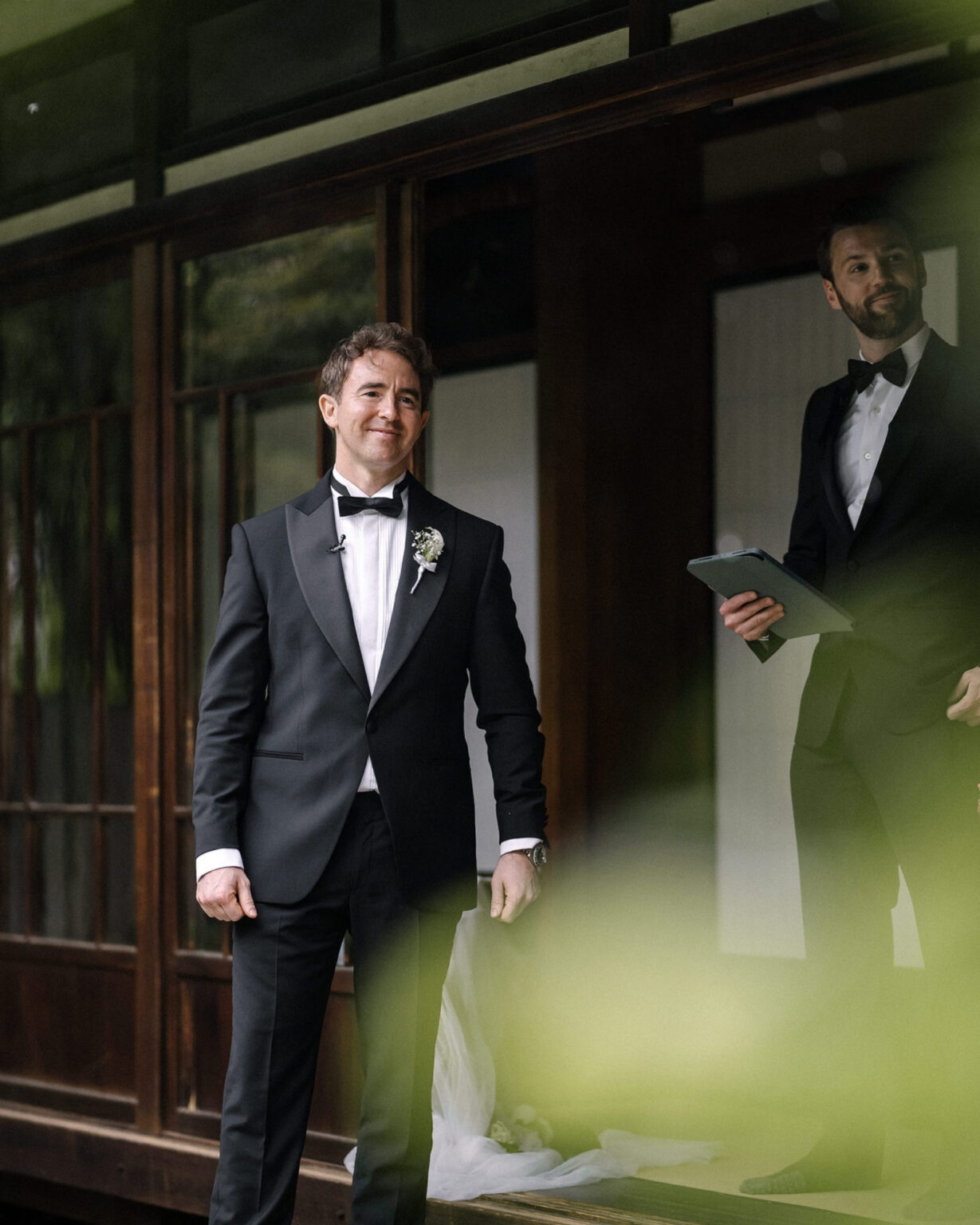
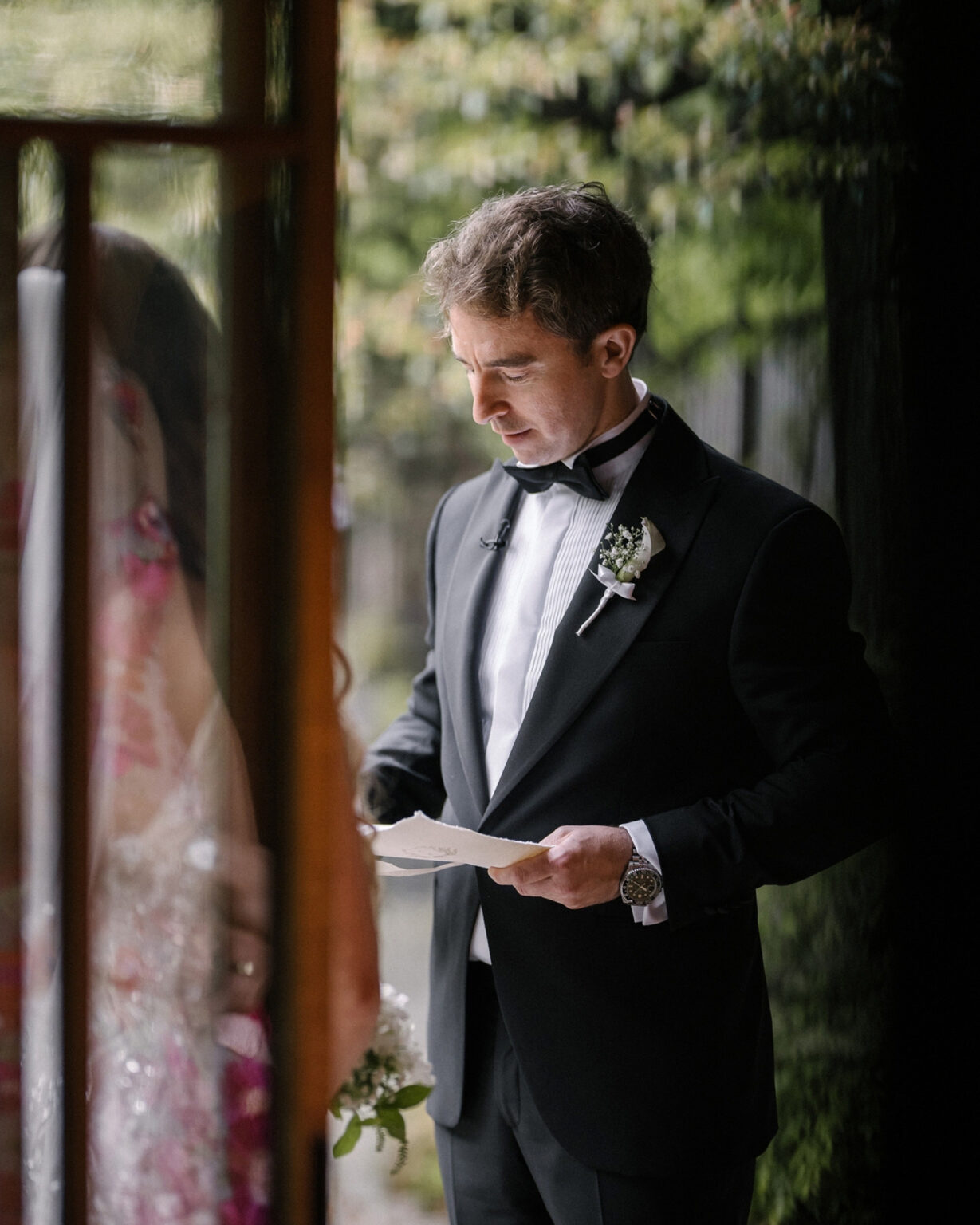
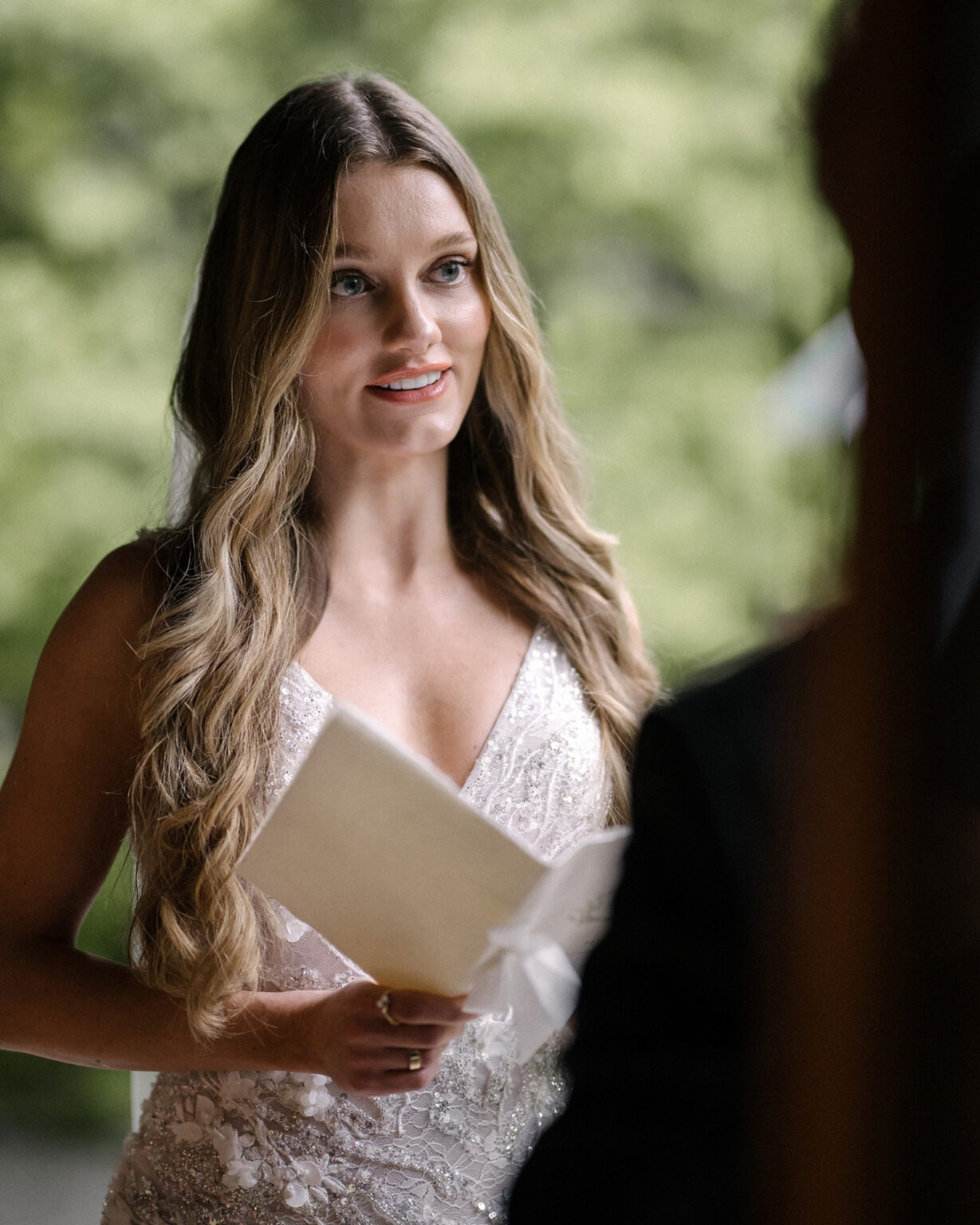
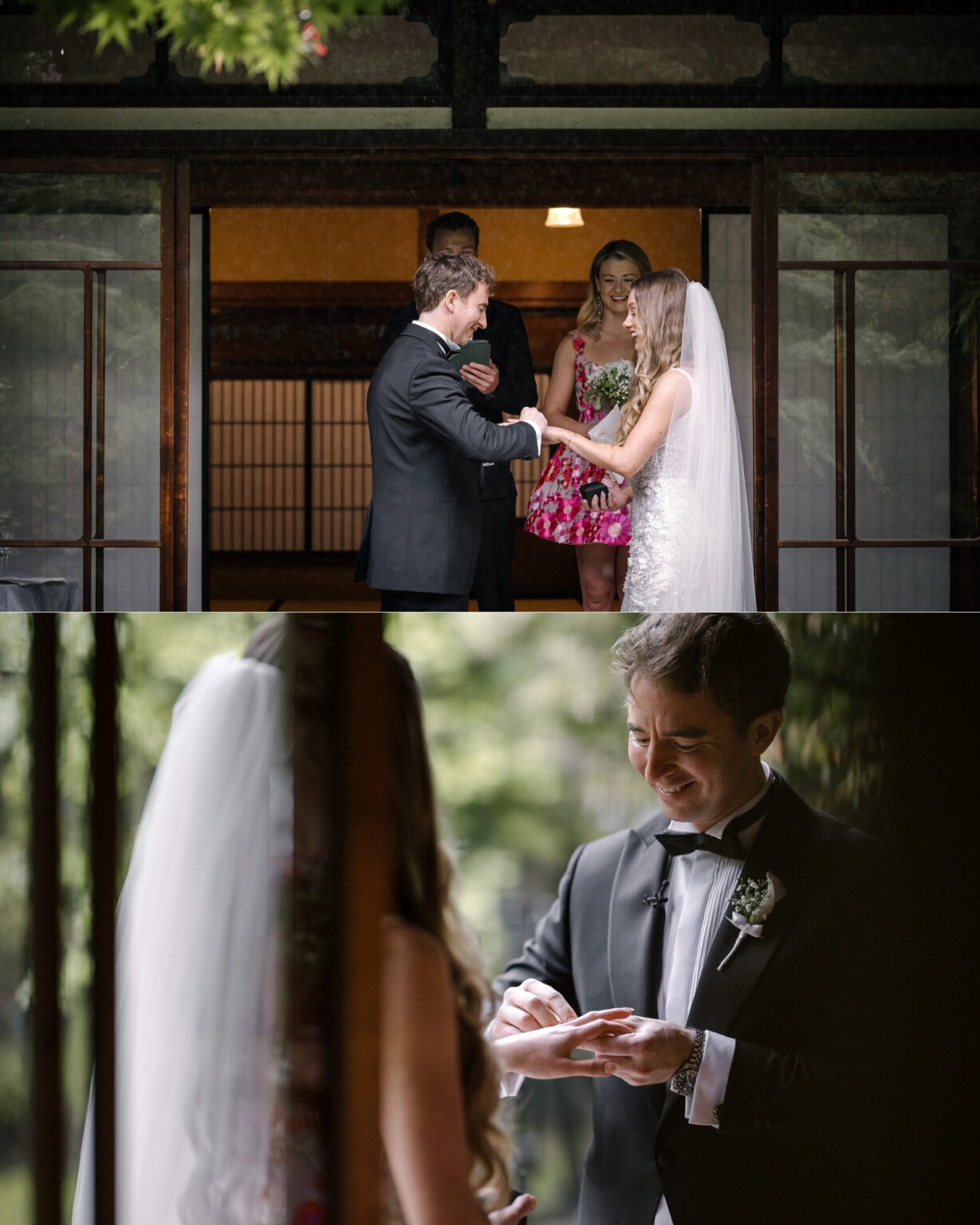
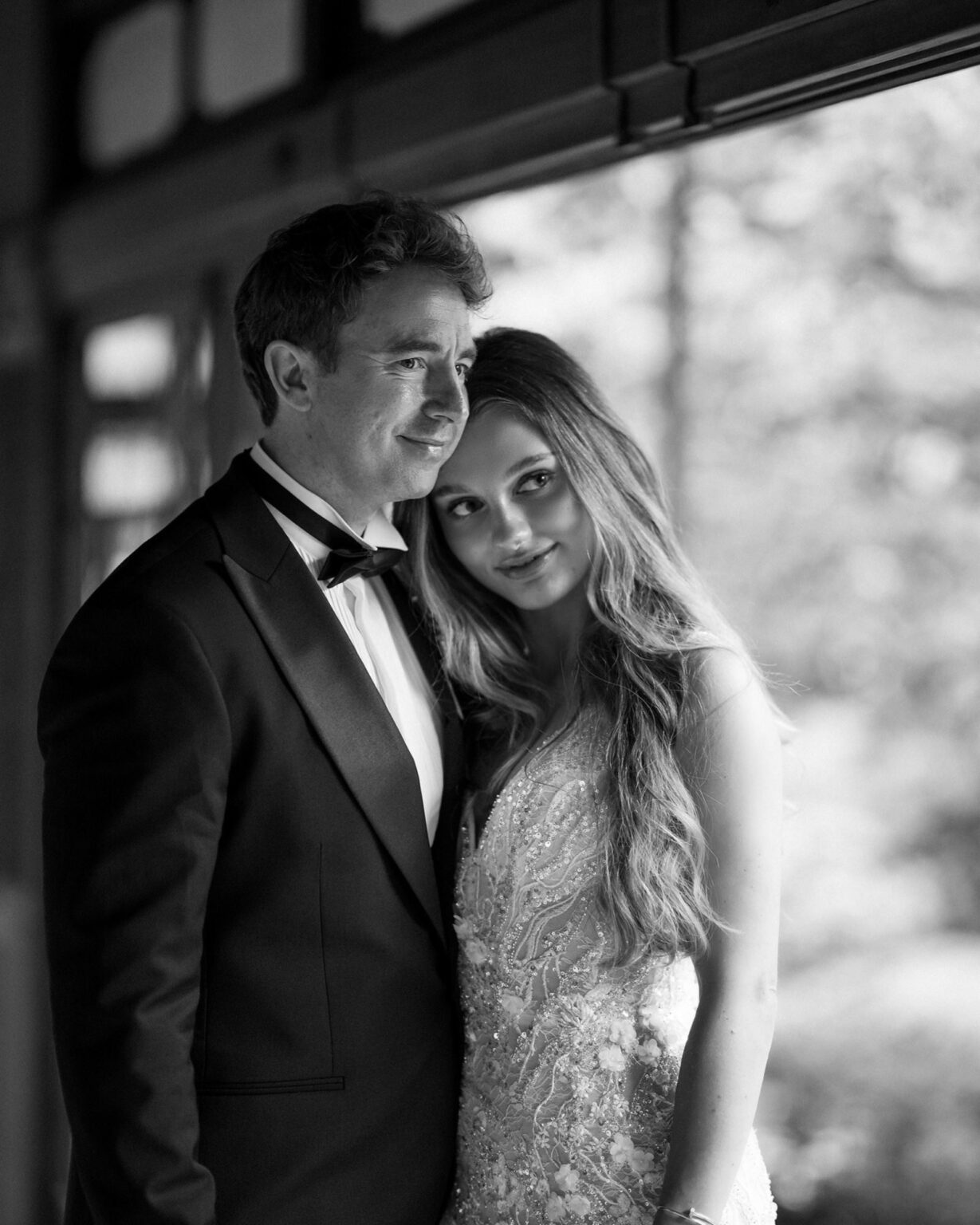
Two violinists in black played under the eaves, in arrangements of songs the couple had chosen themselves: God Only Knows for him to walk in to, Rather Be for her. Their friend led the ceremony, and they read their vows to each other from paper. Most of what they said stays with them. But each, writing separately, had arrived at the same word. In his, he promised: “You’ll always be my home.” Hers began: “Wherever we are in the world, being with you feels like home.”
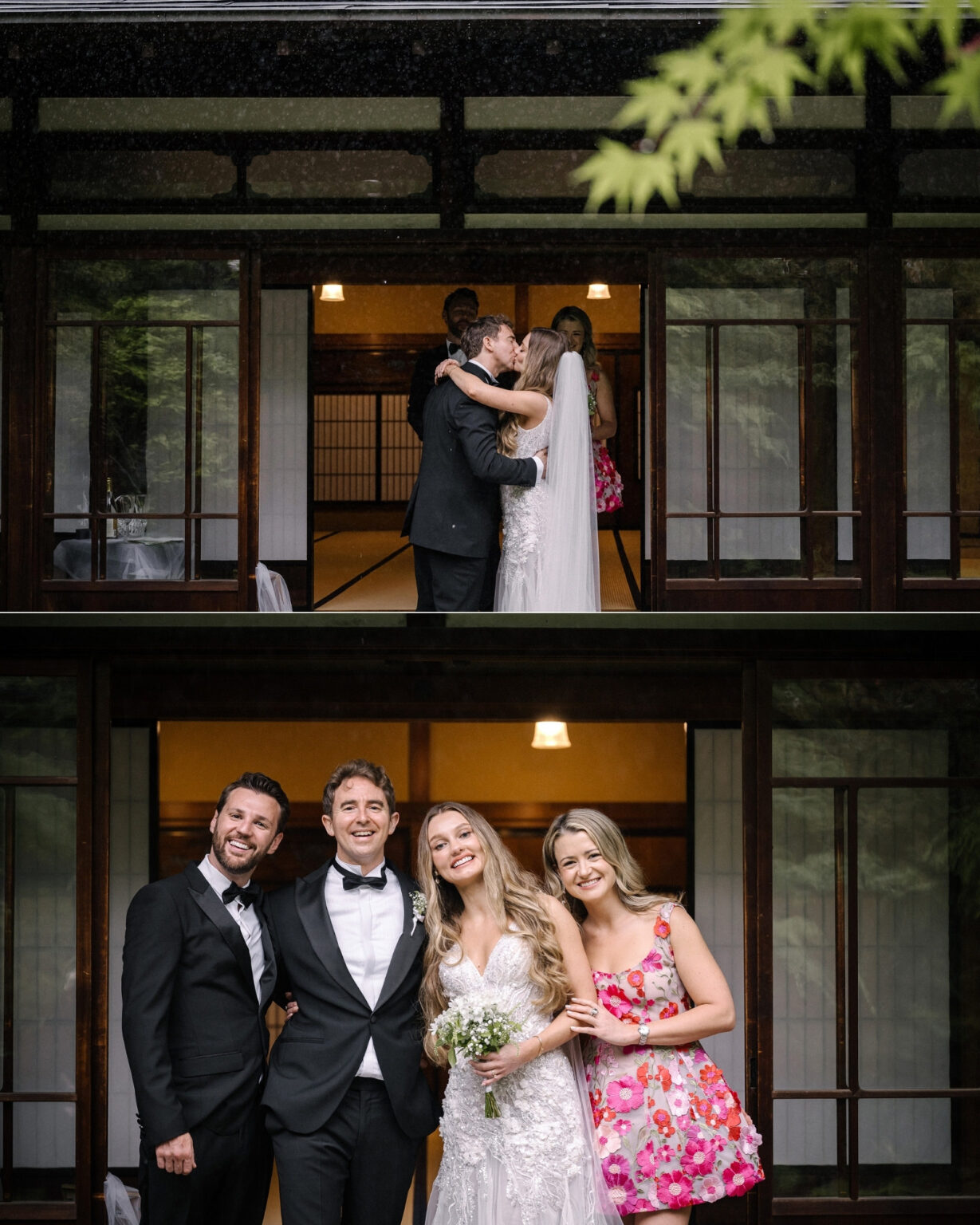
By the time the vows had ended, the rain had stopped. Then the rings, and at the kiss, as the couple had asked, the violins went straight into the Thong Song. The garden has been there a long time. It took it in its stride.
Sake on the Tatami
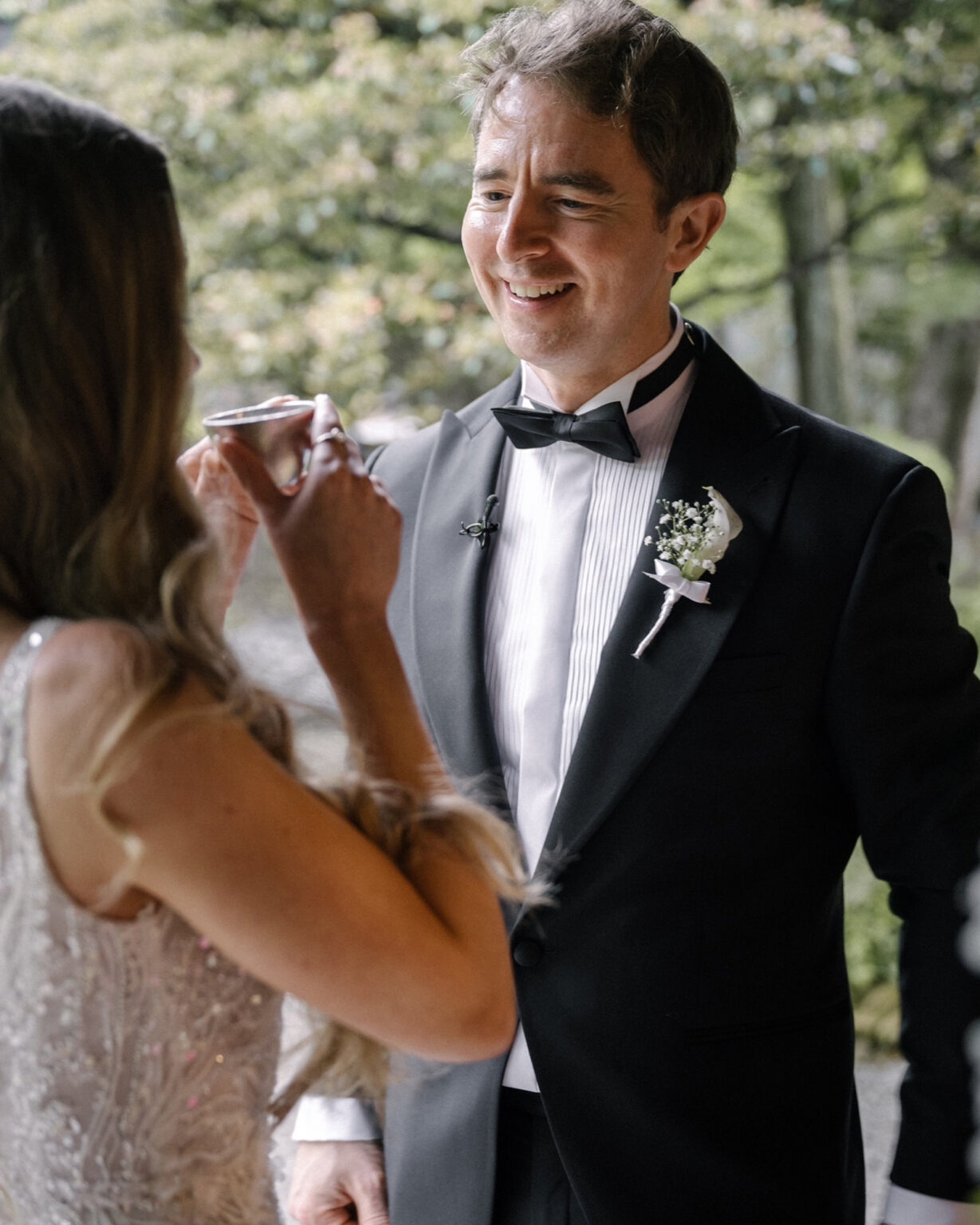
They love sake, so there was a barrel to open. Kagami-biraki is the opening of a sake barrel with wooden mallets, and then the sharing of the sake inside. The round wooden lid is known as the kagami, the word for mirror, for the round mirror its shape recalls. Japanese prefers opening to breaking, since breaking would be bad luck at a wedding. It’s a ritual built for a room full of people, and it works just as well for four.
There was something to eat on the tatami, with umbrellas leaning against the wooden pillars and the garden dripping outside, and then time in the garden itself. That’s one of the quiet advantages of a wedding this size. Nobody is waiting indoors for the couple to come back.
Shinjuku, Between the Showers
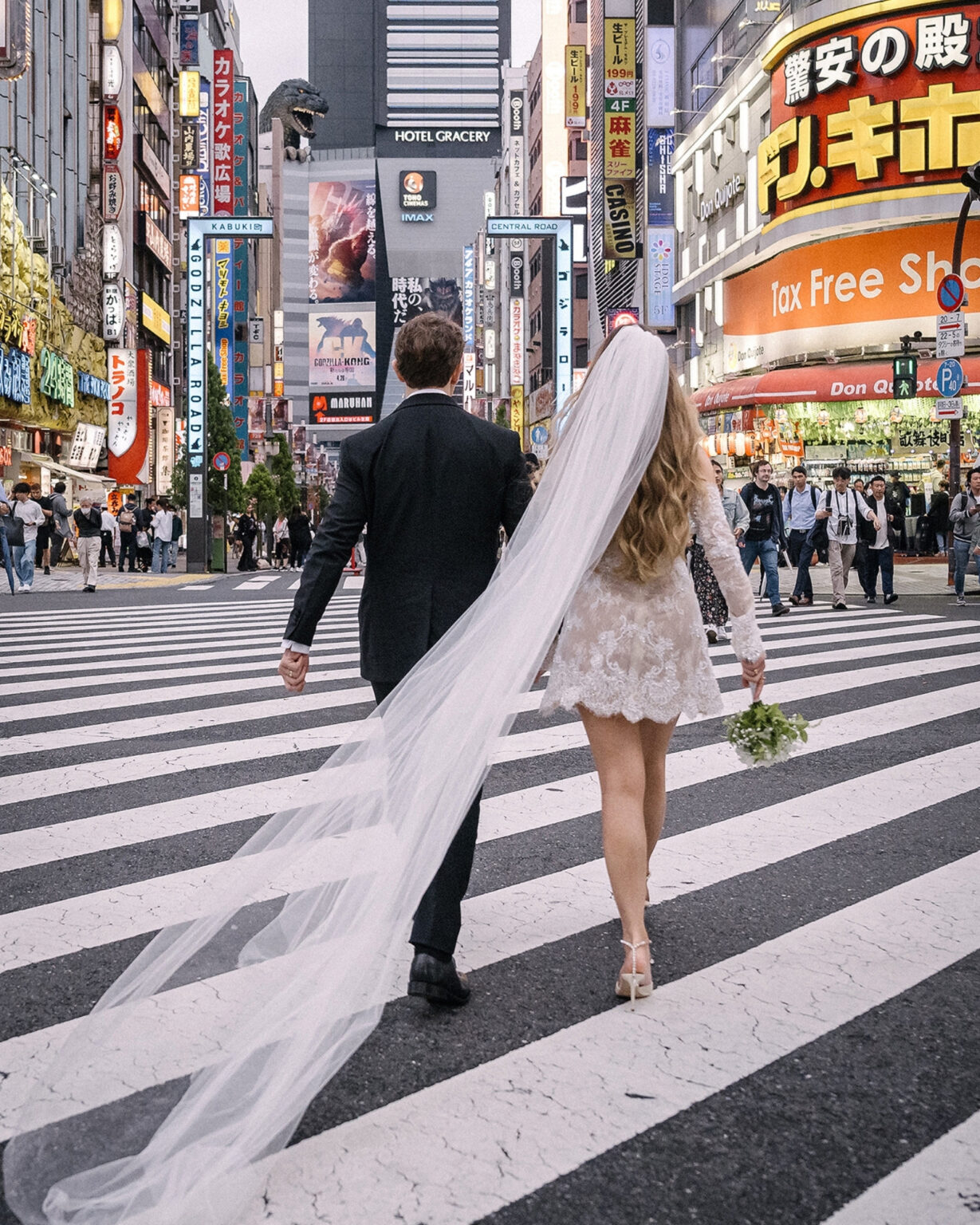
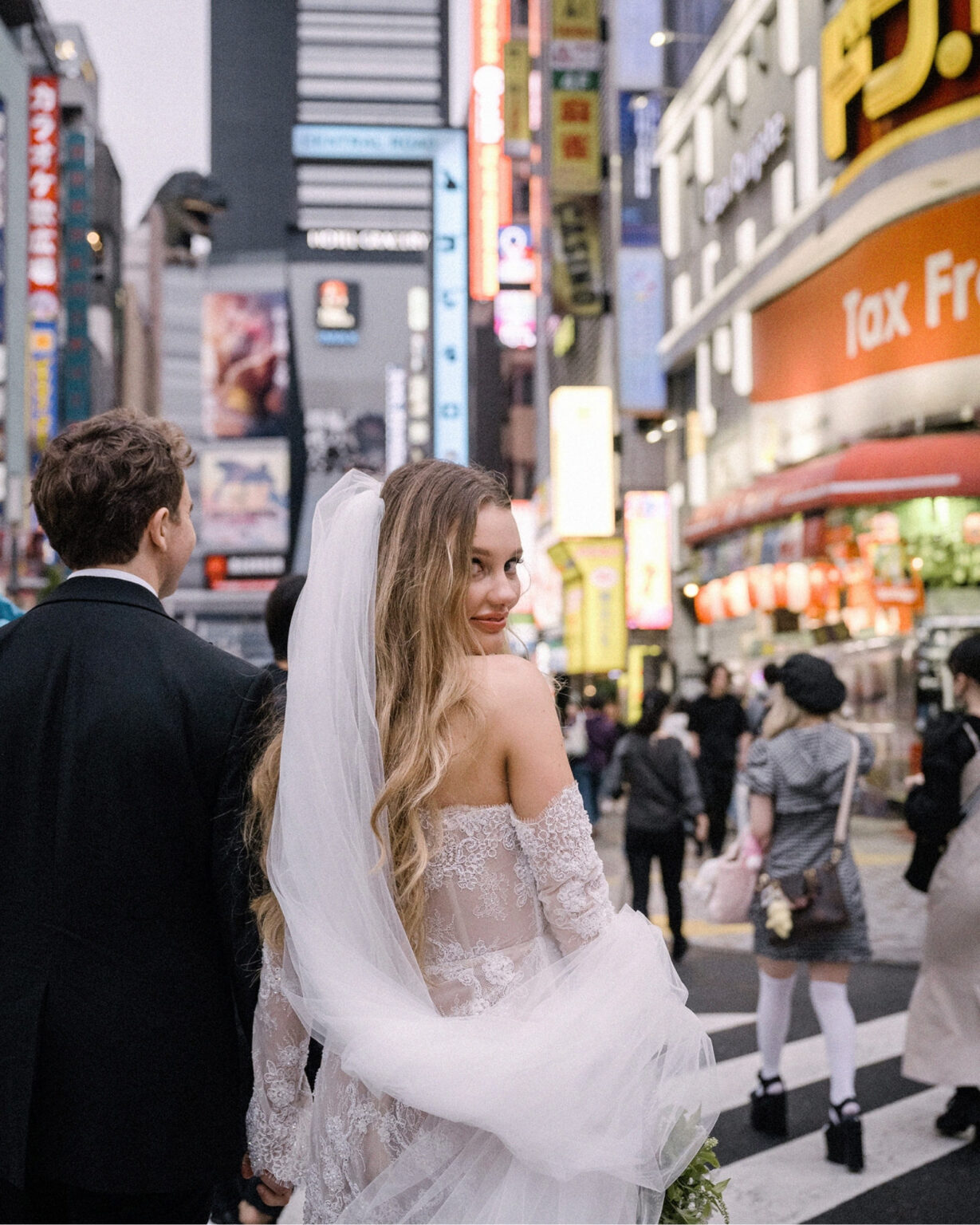
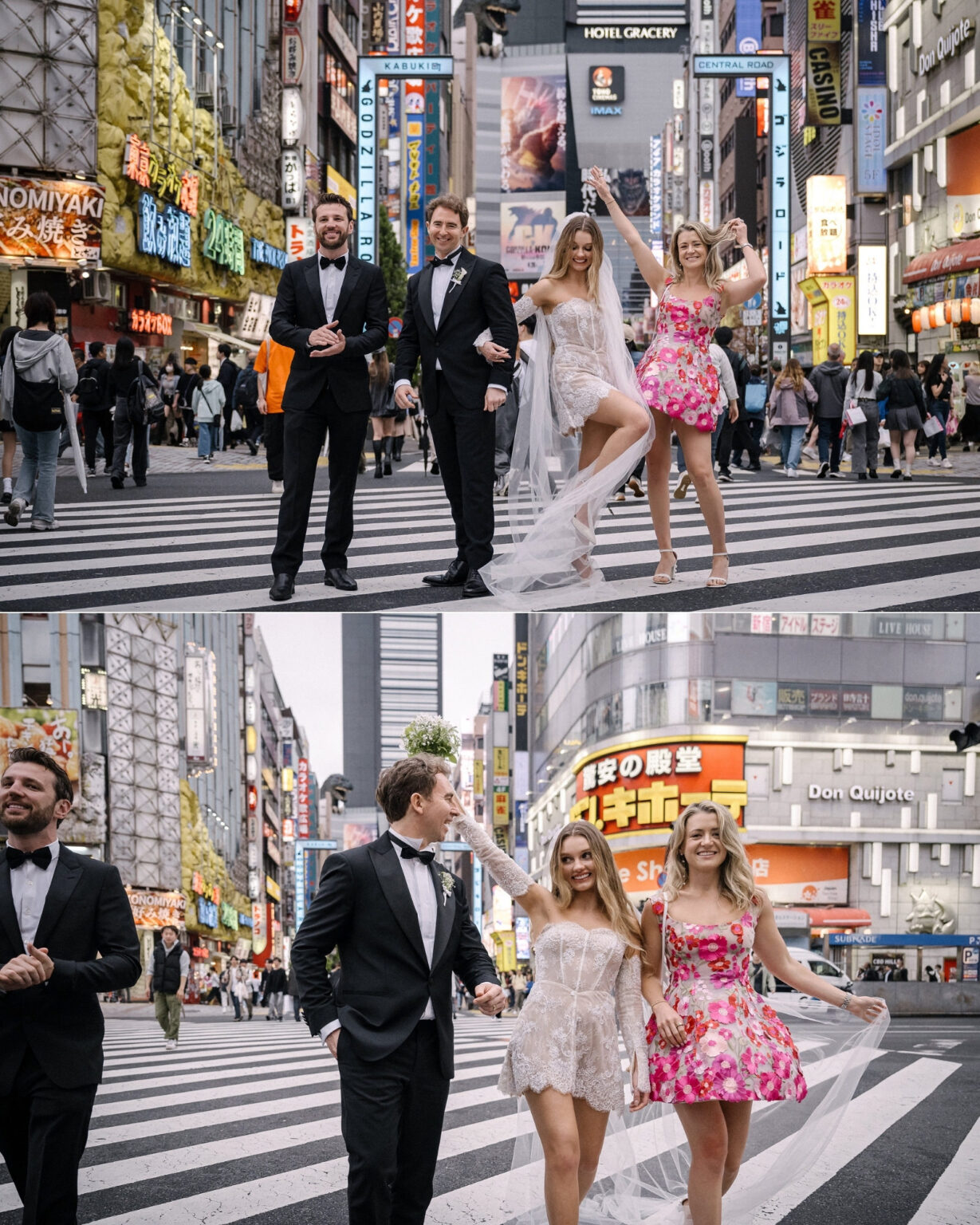
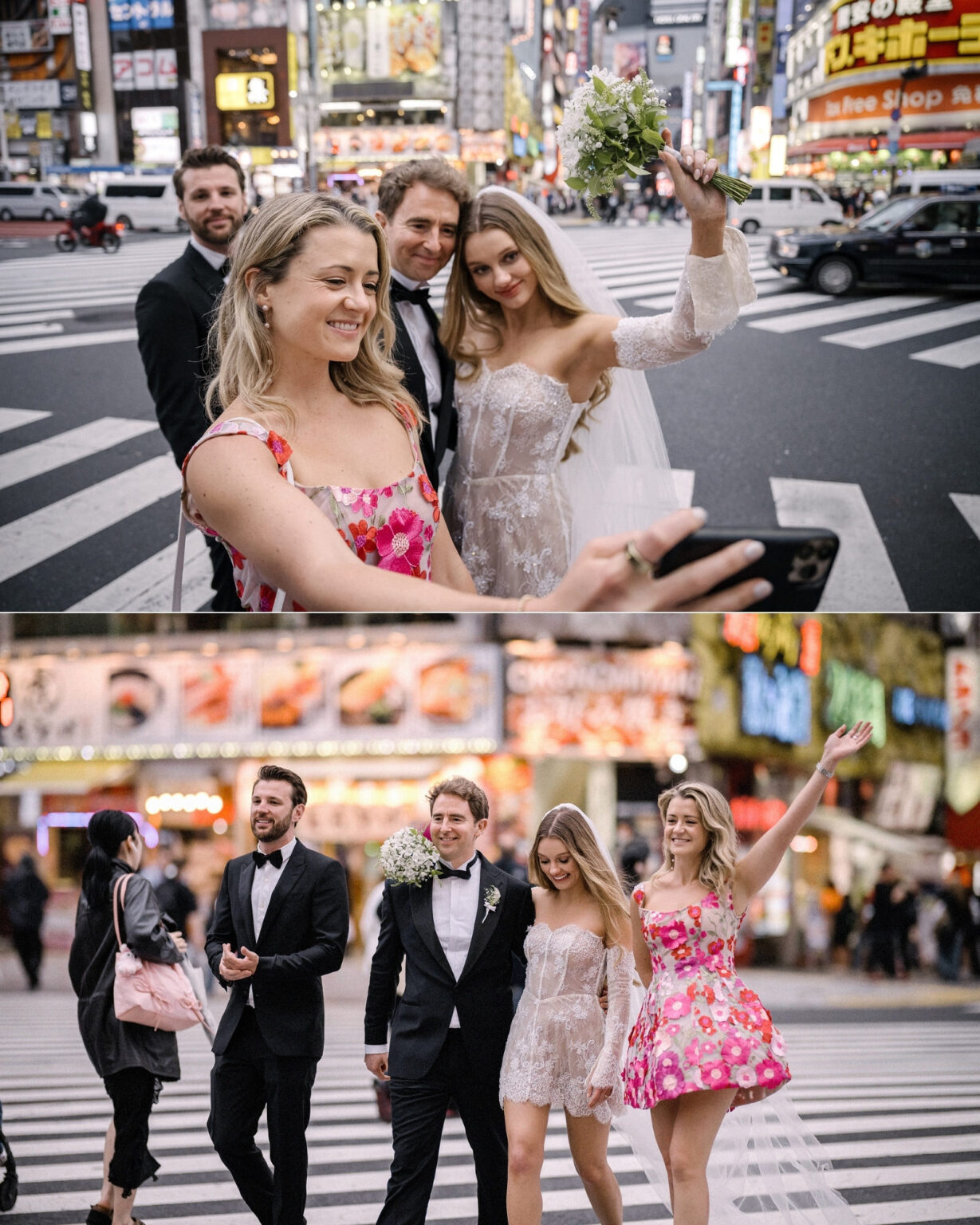
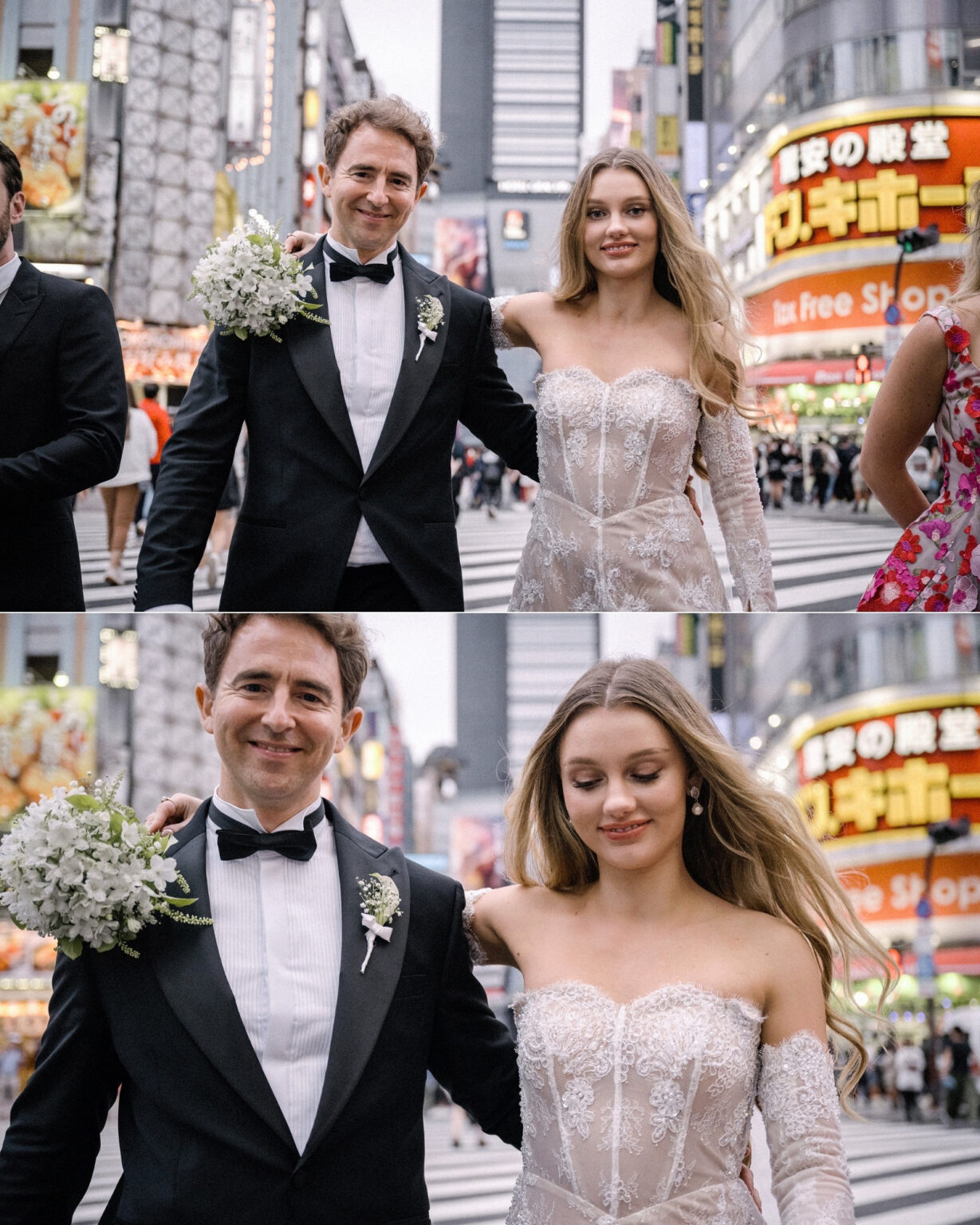
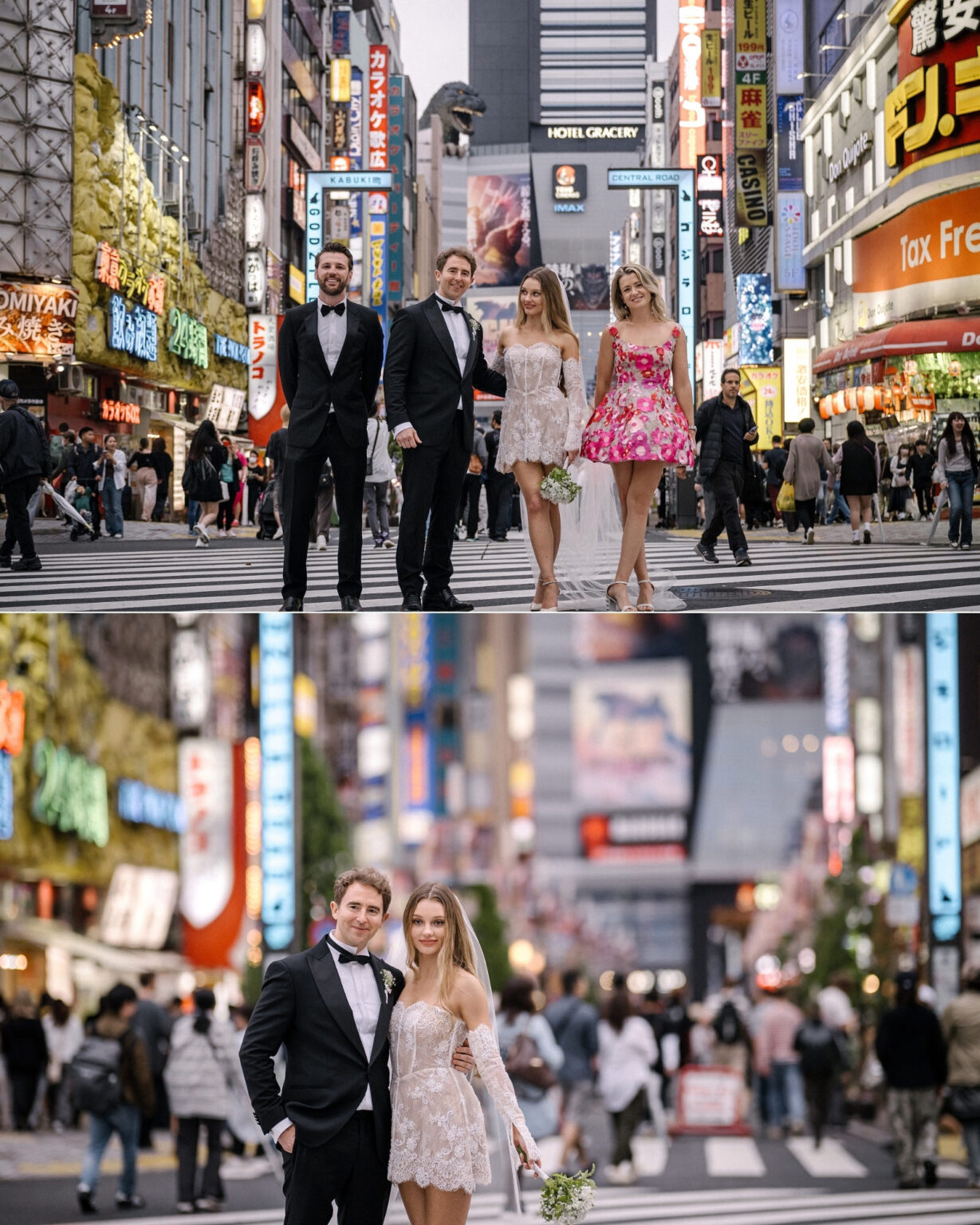
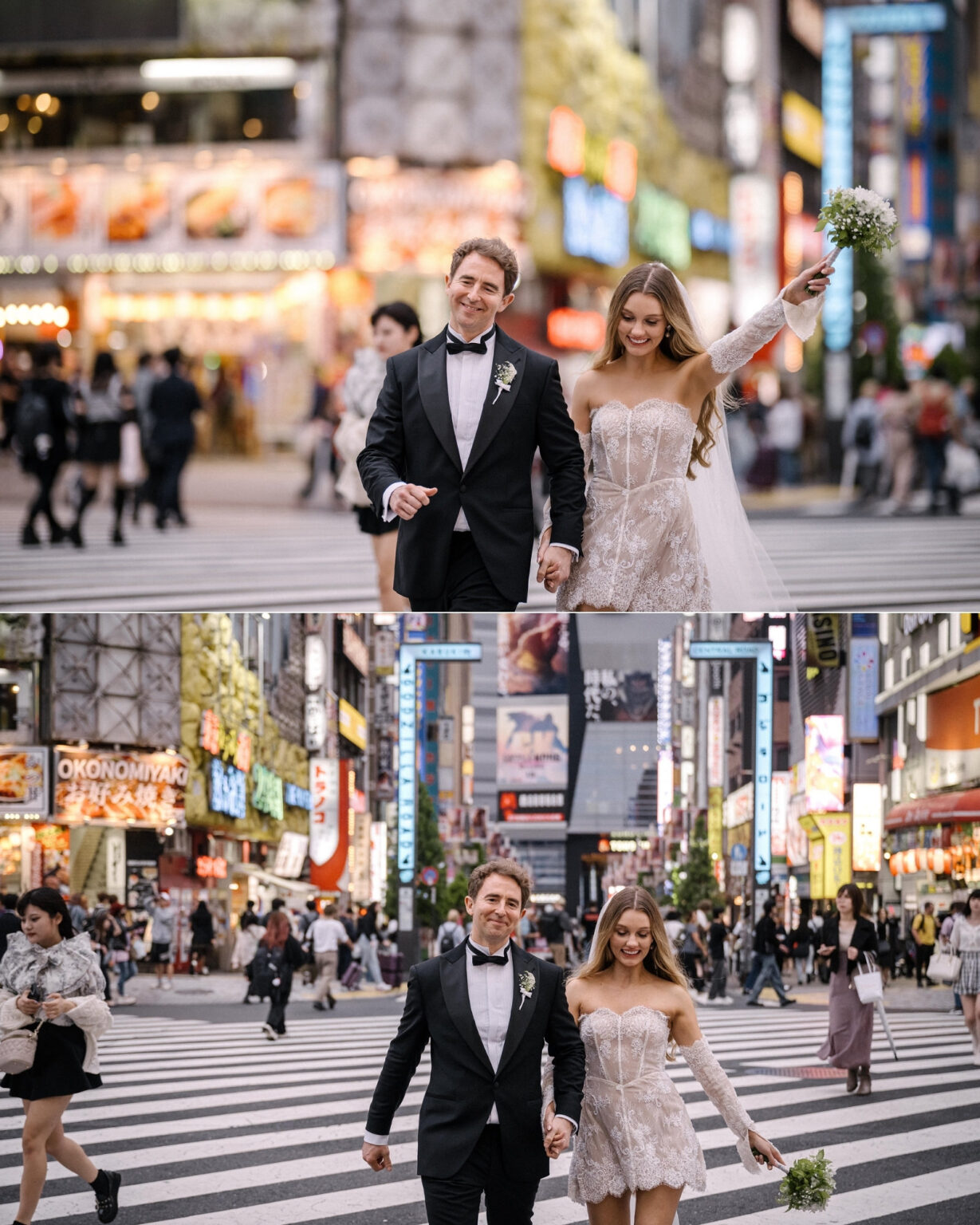
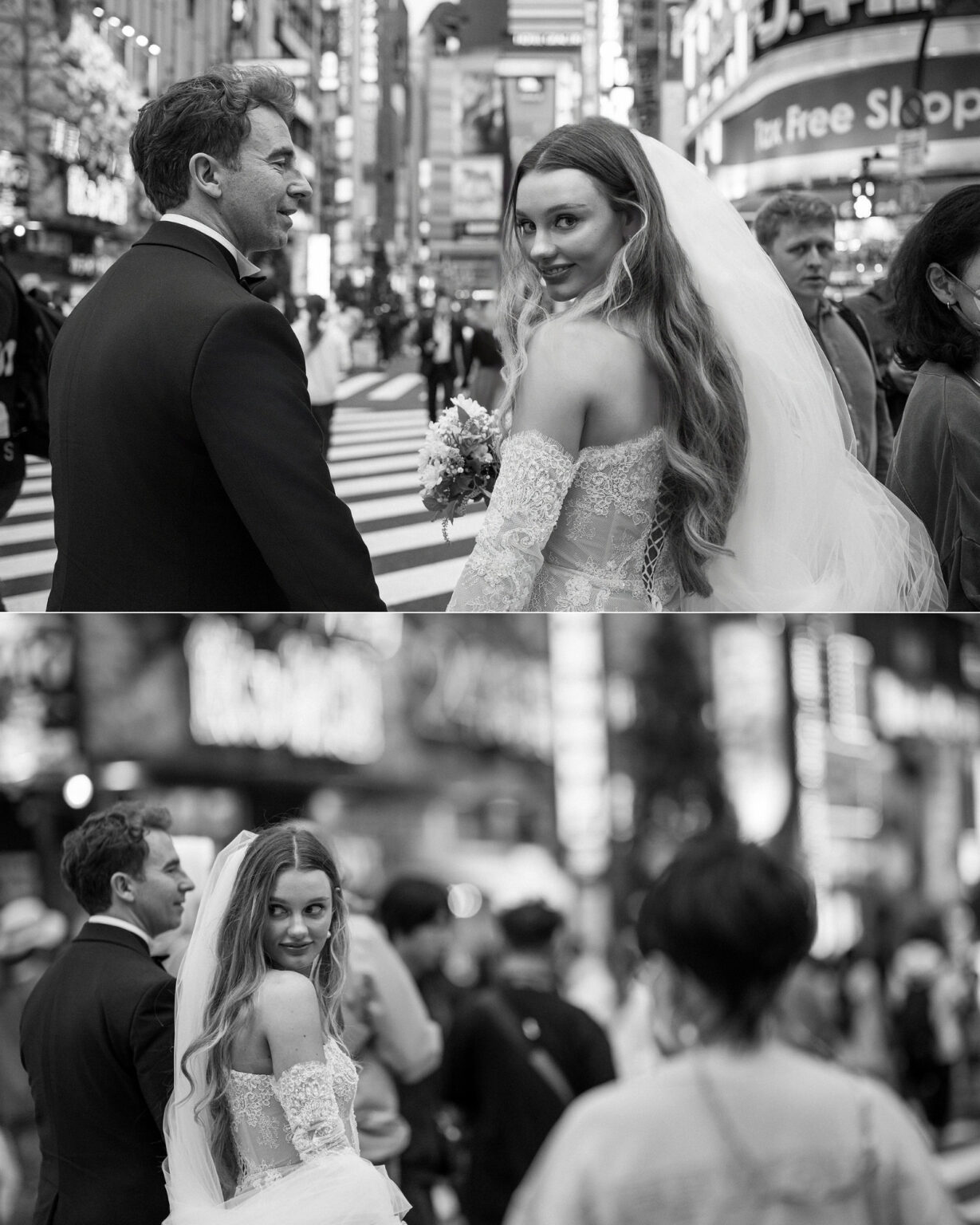
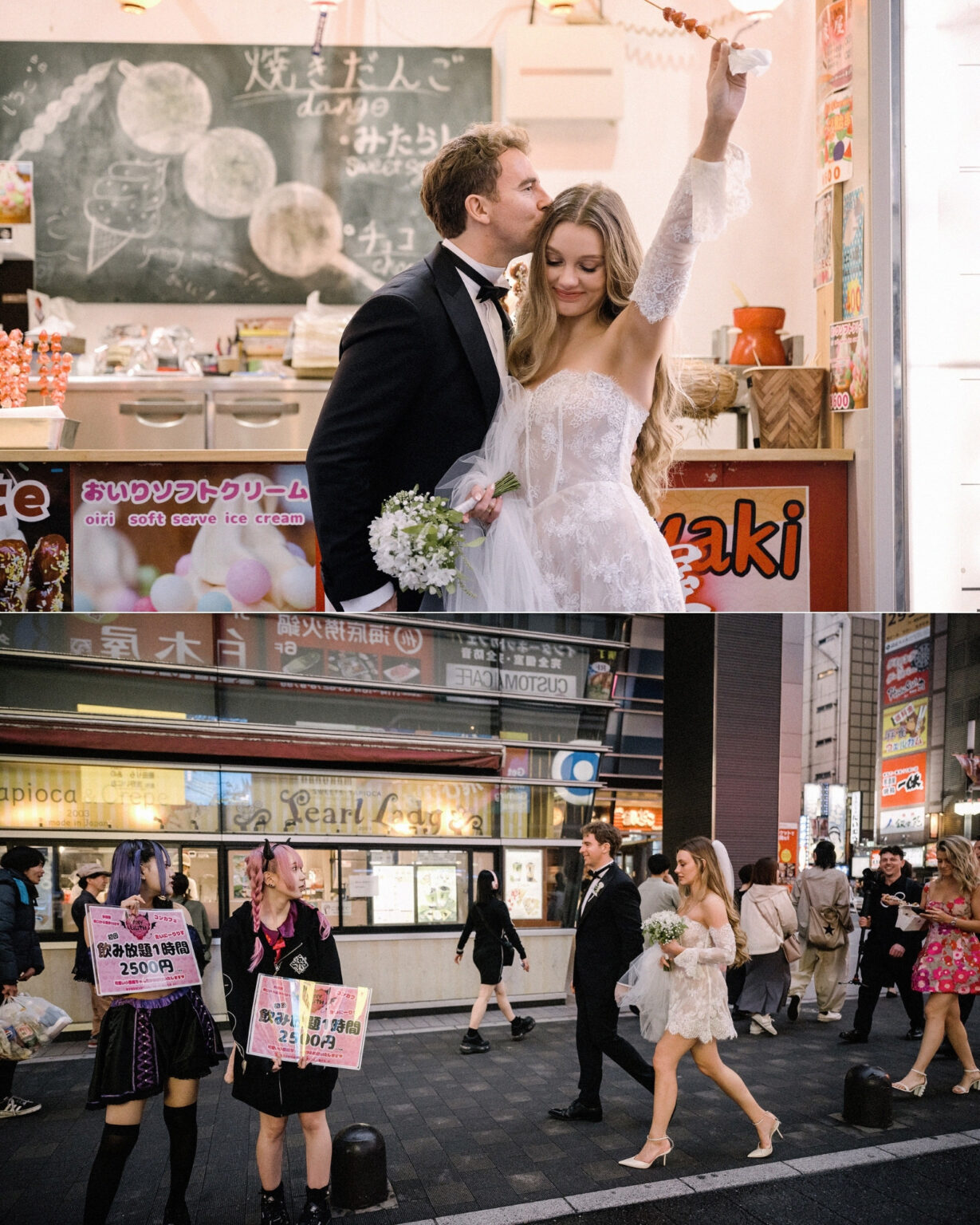
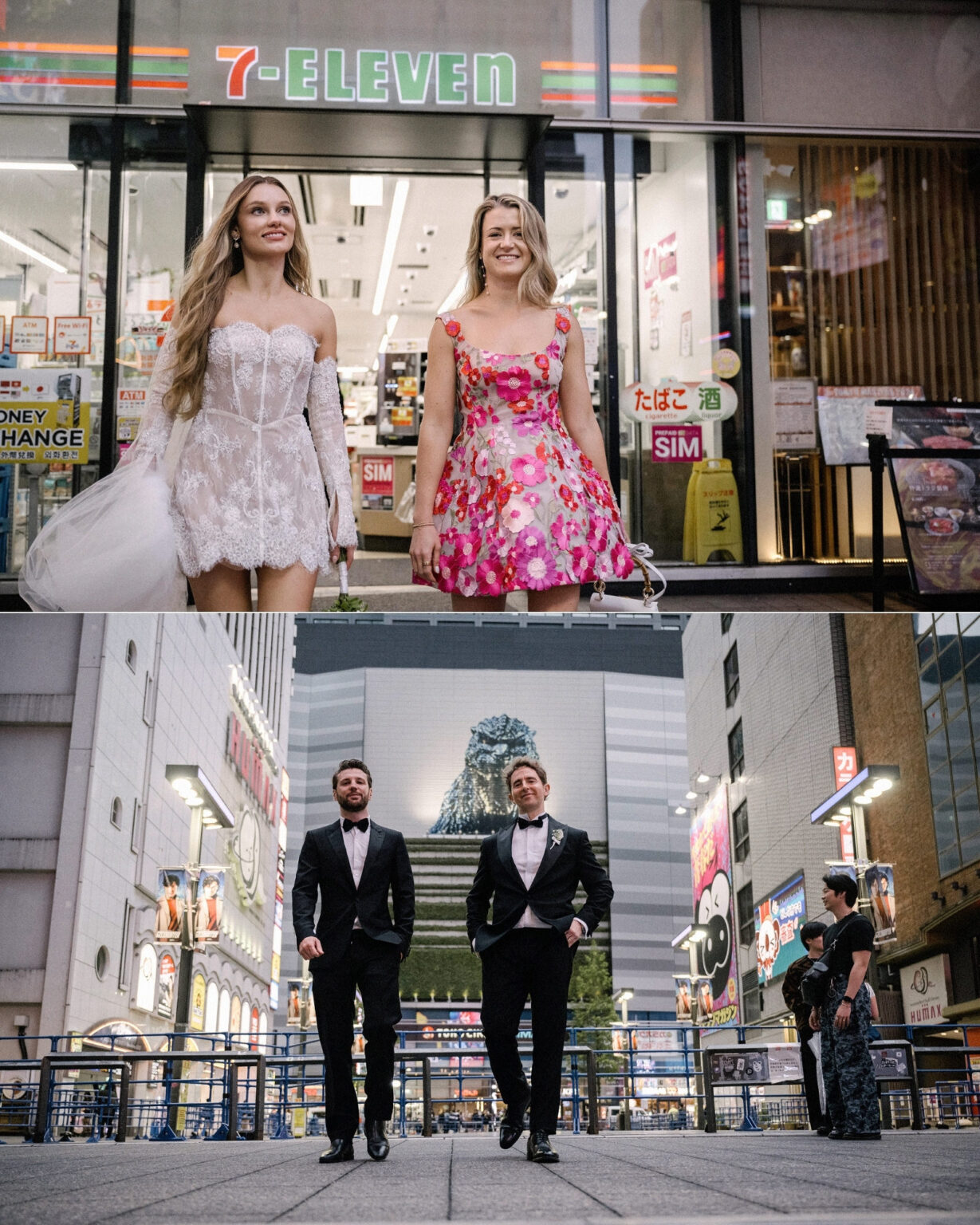
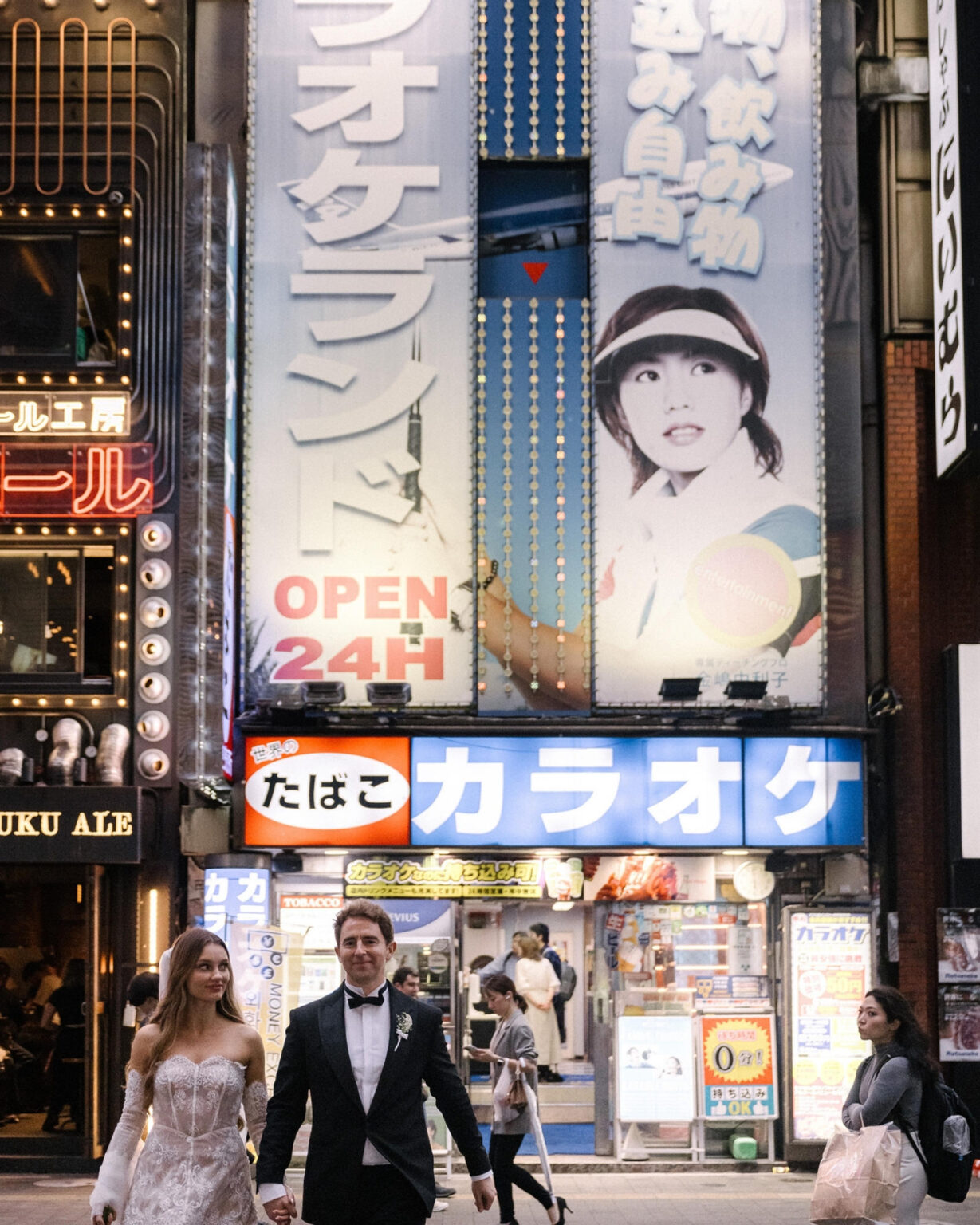
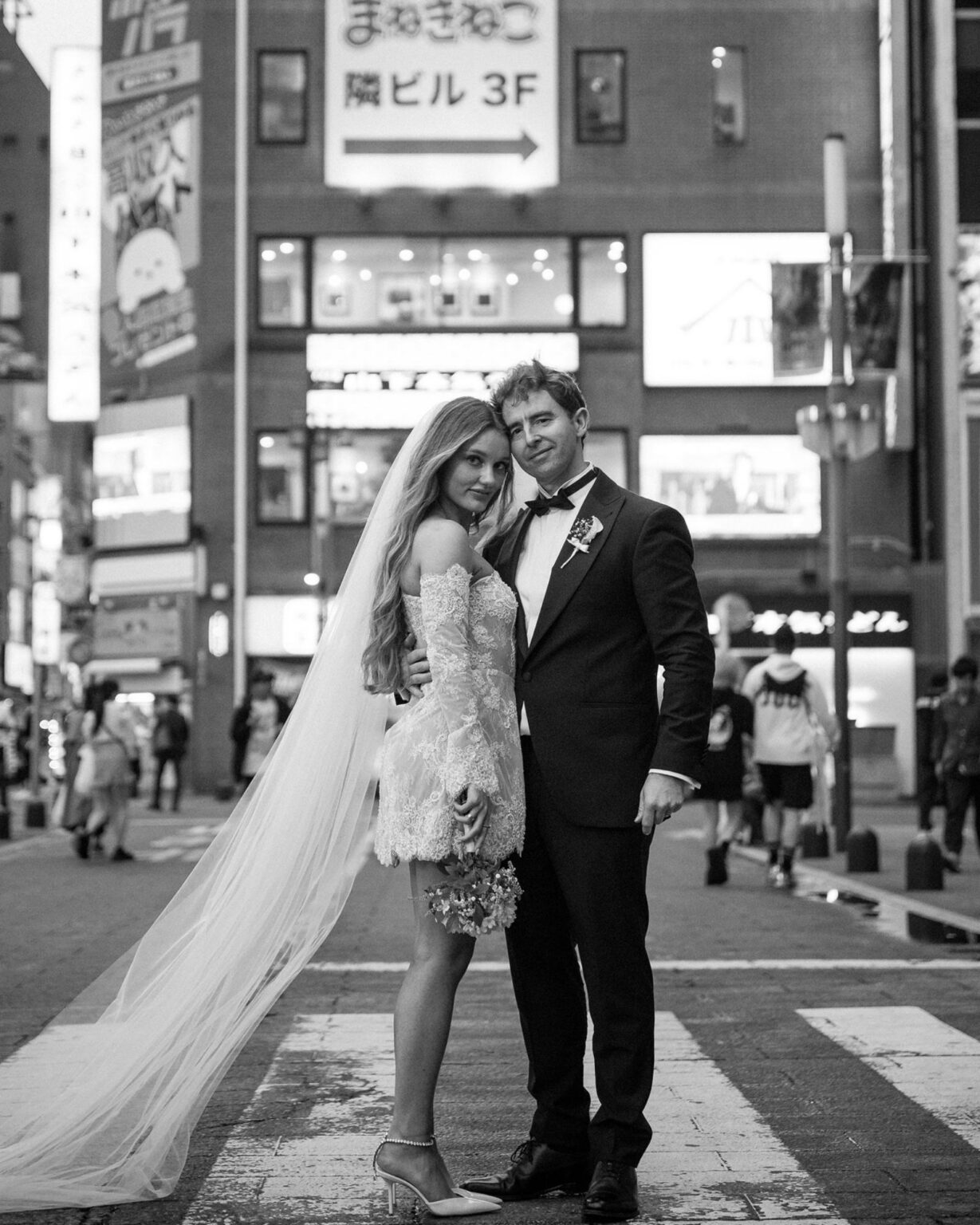
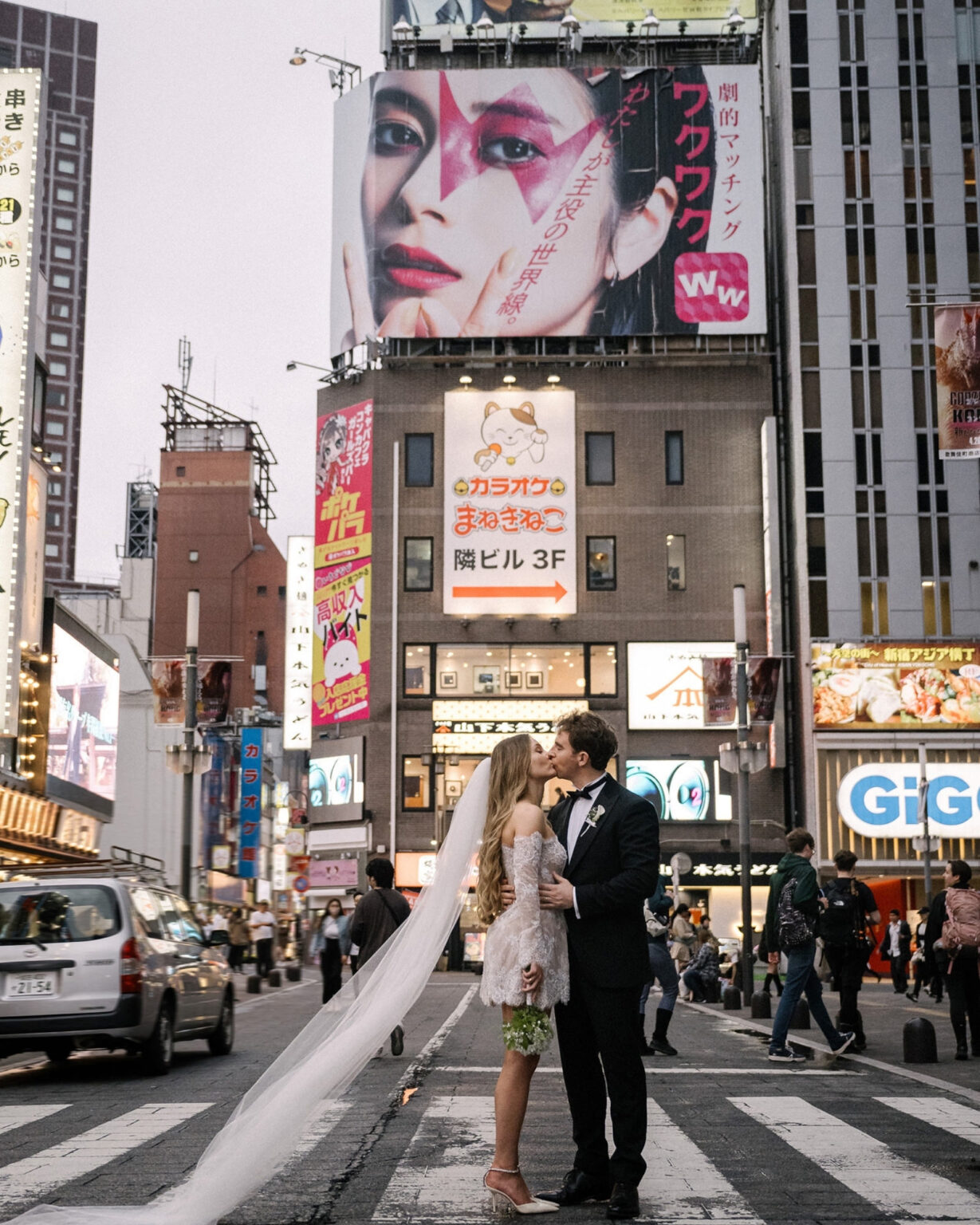
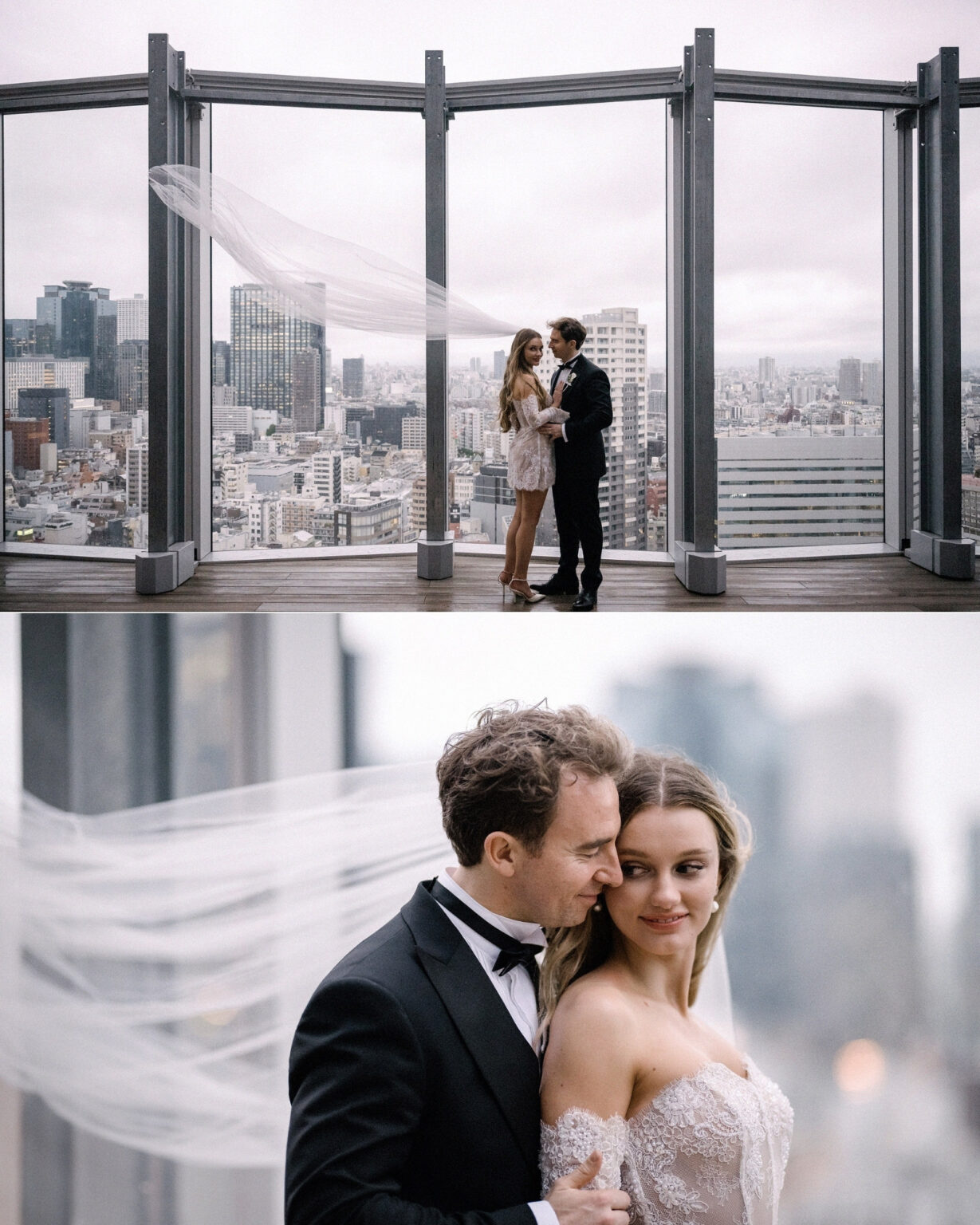
What they wanted after the quiet of the garden was the city: kept moving, with the neon coming on. An observation deck would have meant a queue, so the evening went to the streets instead. For the city she changed into a short lace dress and kept the veil.
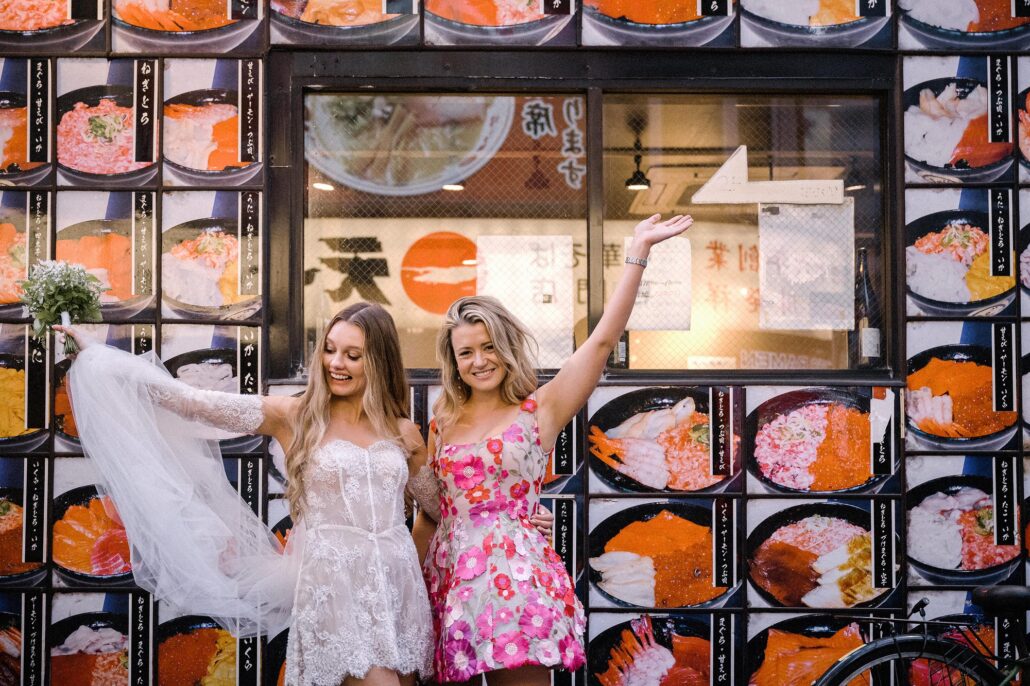
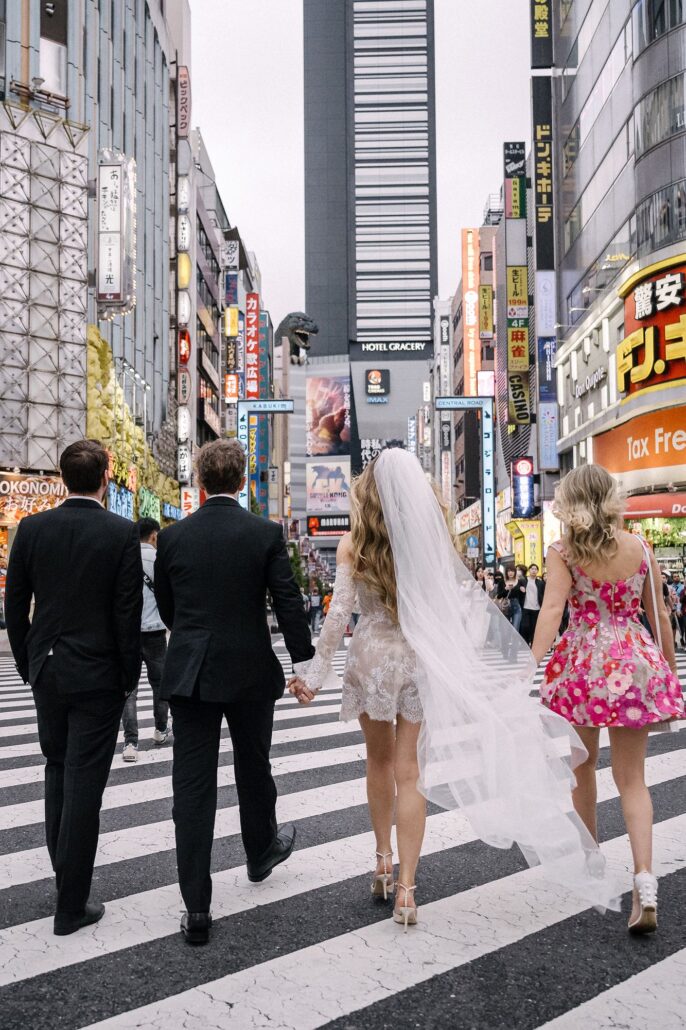
The rain came and went all evening, so we worked with the gaps. When it eased, we were out on the street, and when it came back, we moved on. Kabukicho is Shinjuku at full volume, and a wedding party of four in black tie, lace and pink florals fits into it better than you’d think. Godzilla’s head looks down from the eighth floor of a hotel there, which is where he lives now.


A Rooftop, Opened Early
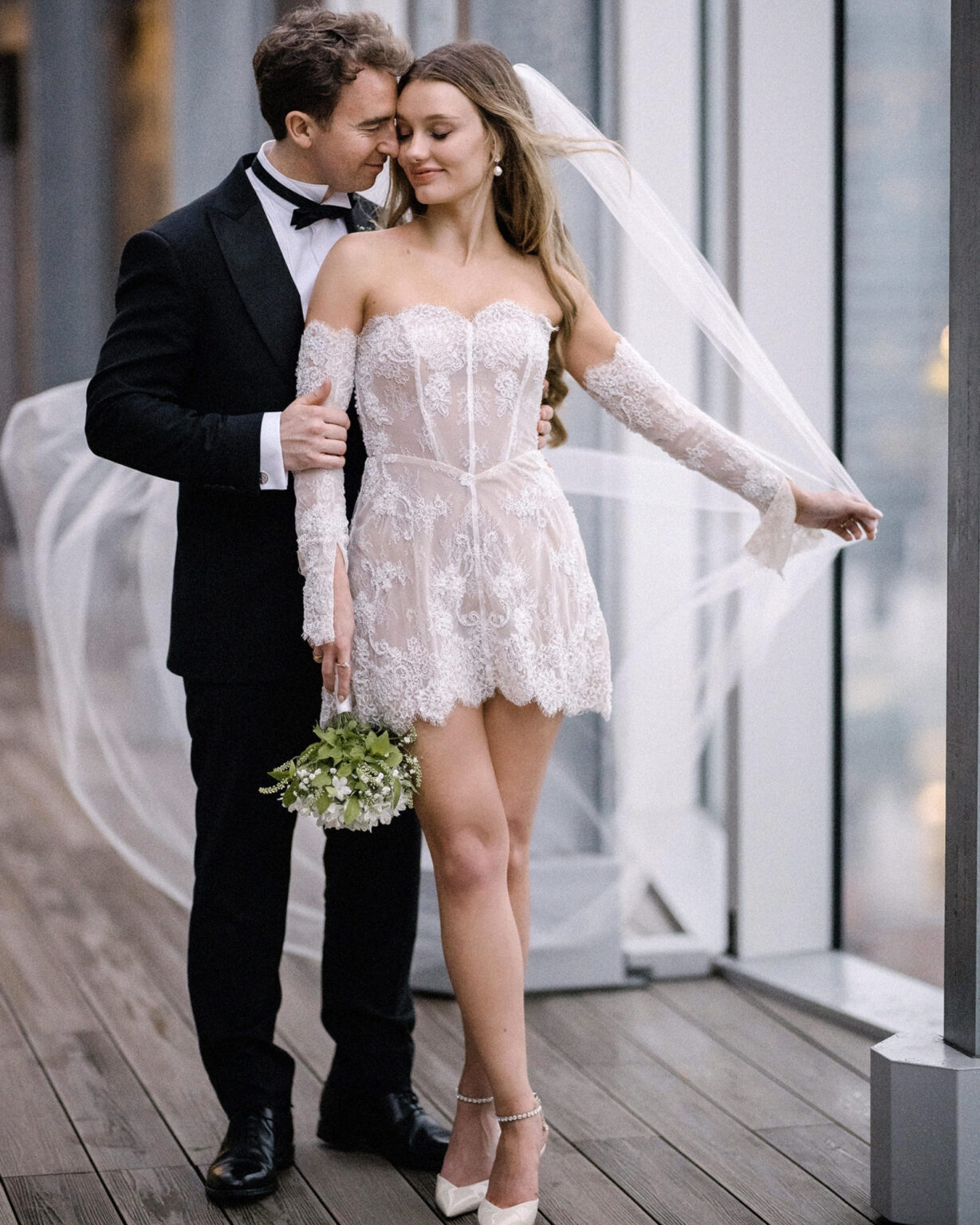
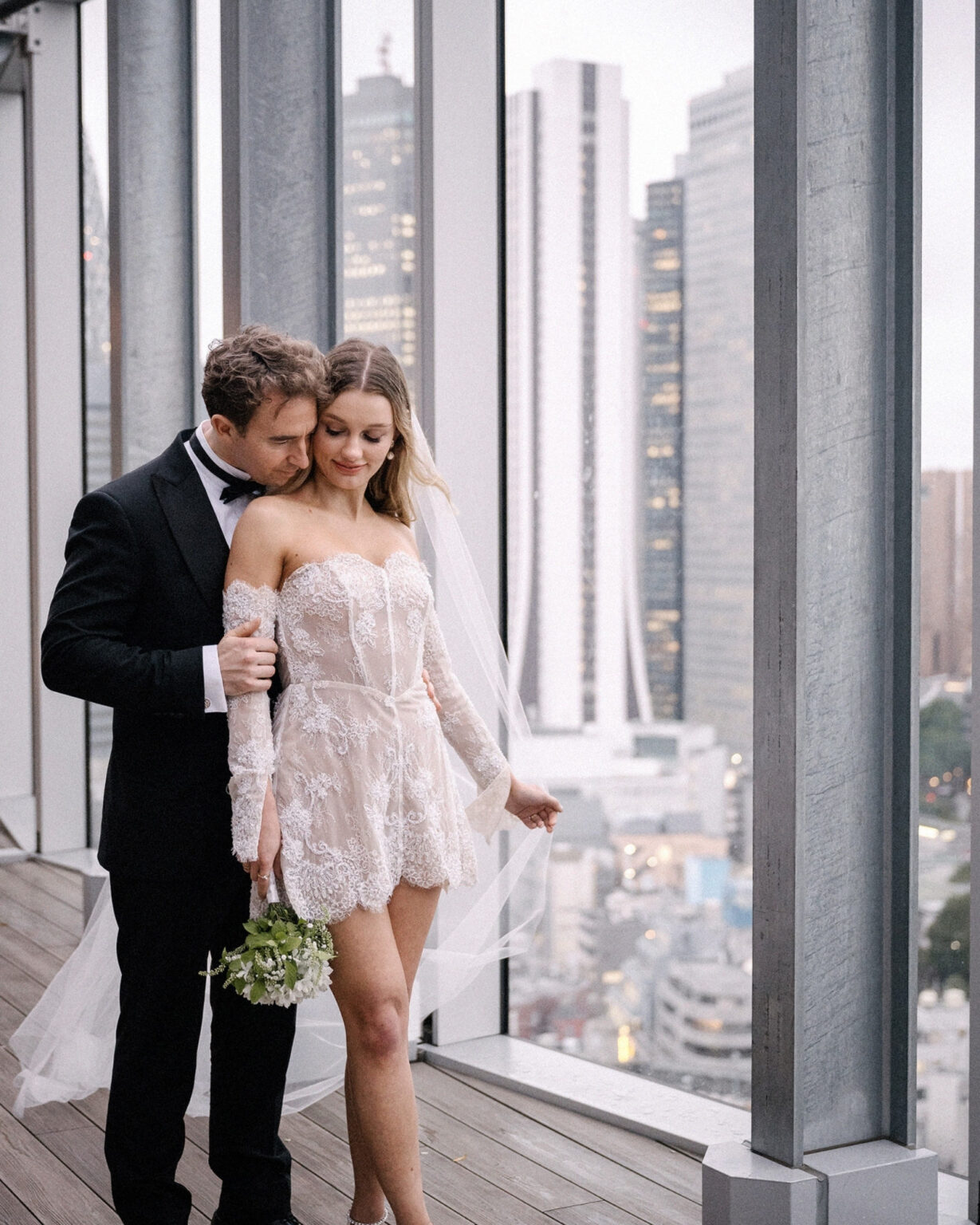
JAM17 is the bar and terrace on the seventeenth floor of Tokyu Kabukicho Tower, run by the hotel above it. In May 2024 the tower was barely a year old, and we were the first to bring a wedding up to its terrace. That happened the way so much happens here. A friend at another Tokyo hotel made an introduction: her husband had just become the banquet manager at this one. He heard what we had in mind, a cocktail hour for four people, and opened the terrace early so they could have it. It’s a terrace made for a Tokyo elopement. This time, we simply made room for two friends.
Most of what makes a day like this possible happens before anyone arrives, in a conversation between people who trust each other.
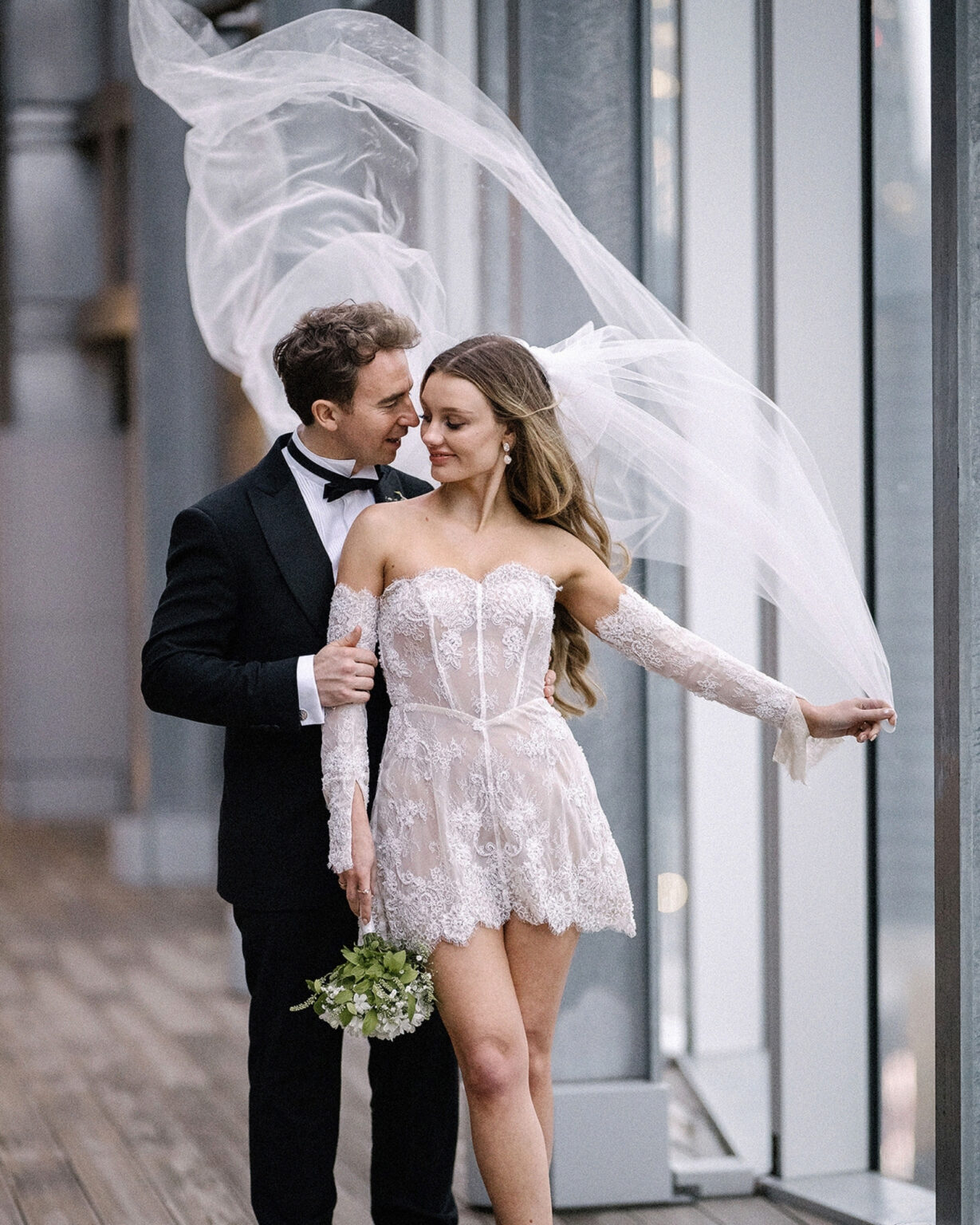
Inside, under a wall of lilac light, there was a bouquet toss with exactly one possible catcher. Dinner, afterwards, was teppanyaki in Akasaka.




A Wedding for Four
A wedding this small is sometimes taken for a scaled-down version of a bigger one. It’s planned the other way round. Everything is chosen for the people who are there: a garden house that holds four well, music close enough to talk over, a rooftop that only needed to be open for an hour. Because the day is built around so few people, it can move when the weather does.
The same thinking holds whether it’s an elopement for two or a wedding for forty. We plan every wedding in Tokyo from the guest list outward: the people first, then the places that can hold them well.
A year later, back in London, they marked their first anniversary at a Japanese restaurant. And for the cover of their album, they didn’t choose a portrait of the two of them. They chose the four of them walking away across a crossing in Shinjuku, the veil trailing behind: a long way from London, and entirely at home.
What to Know About a Tokyo Garden Wedding
- Spring rain isn’t the rainy season. Tokyo’s tsuyu normally begins around 7 June and ends around 19 July (Japan Meteorological Agency averages). Rain in May comes and goes, and a garden with a house and deep eaves works in either weather.
- Golden Week runs from late April into early May, when hotels and trains are at their busiest. The days after it are quieter, and our weddings often run midweek.
- Tokyo’s historic houses and private gardens can host a wedding, though not through a booking website. They open through introductions and the right permissions, which is part of what planning is for, so the date and the place are best settled early.
- JAM17’s terrace is open-air, on the seventeenth floor of Tokyu Kabukicho Tower in Shinjuku, which opened in April 2023. It suits a Tokyo elopement or a cocktail hour for a few friends, weather permitting.
- Some call a wedding this size a micro wedding. We call it an intimate wedding. An elopement, in our words, is the two of you alone; an intimate wedding adds the people you can’t imagine the day without, up to about twenty. Beyond that, in Japan, it’s a full wedding, and we plan those too. Most couples marry legally at home and give Japan the ceremony. Planning an intimate wedding in Tokyo starts with who’s coming, then the places that suit them.