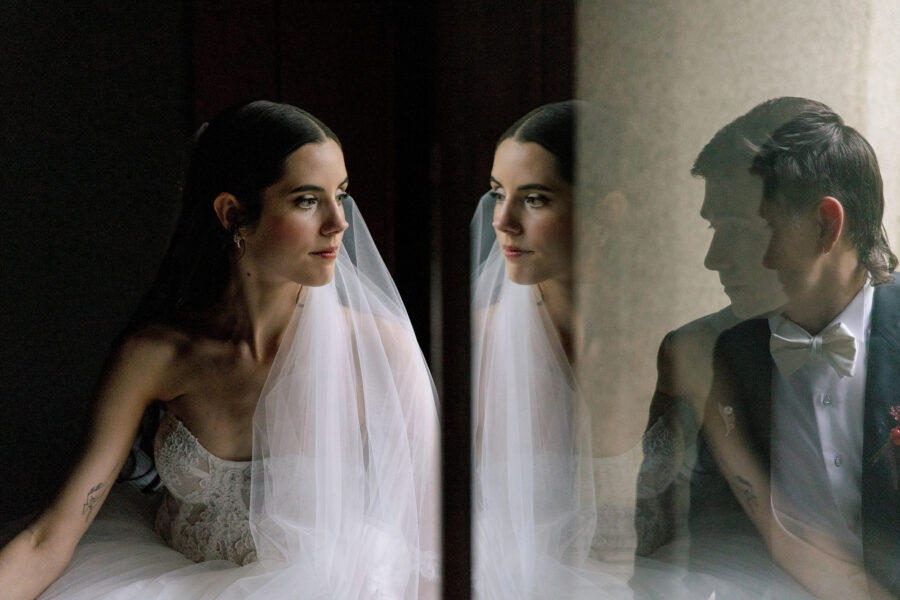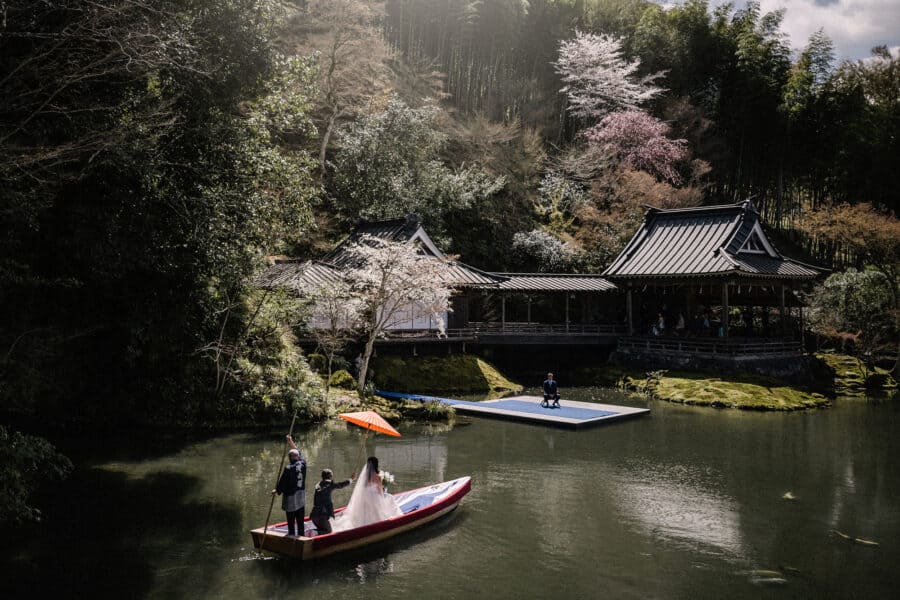
These Hakone engagement photos were supposed to be a proposal. He found us online and wrote to us through our website with a plan: he’d ask her in Hakone, somewhere quiet and natural, because she’s more introverted and a little camera-shy, and a crowded viewpoint was never going to be her moment. Then the ring arrived in the mail before they’d left for Japan, and she found it. Neither of them could wait. He asked at home, and she said yes.

We love this story for its honesty. He built a plan around exactly who she is, and then love simply refused to keep to the itinerary. So the Hakone morning changed its job. It became the celebration instead: their engagement photos, and the first professional shoot either of them had ever done. They asked for candid, relaxed pictures rather than a performance, which is how we’d want to make them anyway.
A question takes seconds to ask. The answer needs somewhere to go. We think the celebration is the part of an engagement people most often underplan, and these two gave theirs a mountain at dawn and then, a week later, a city.
First Light on Taikanzan
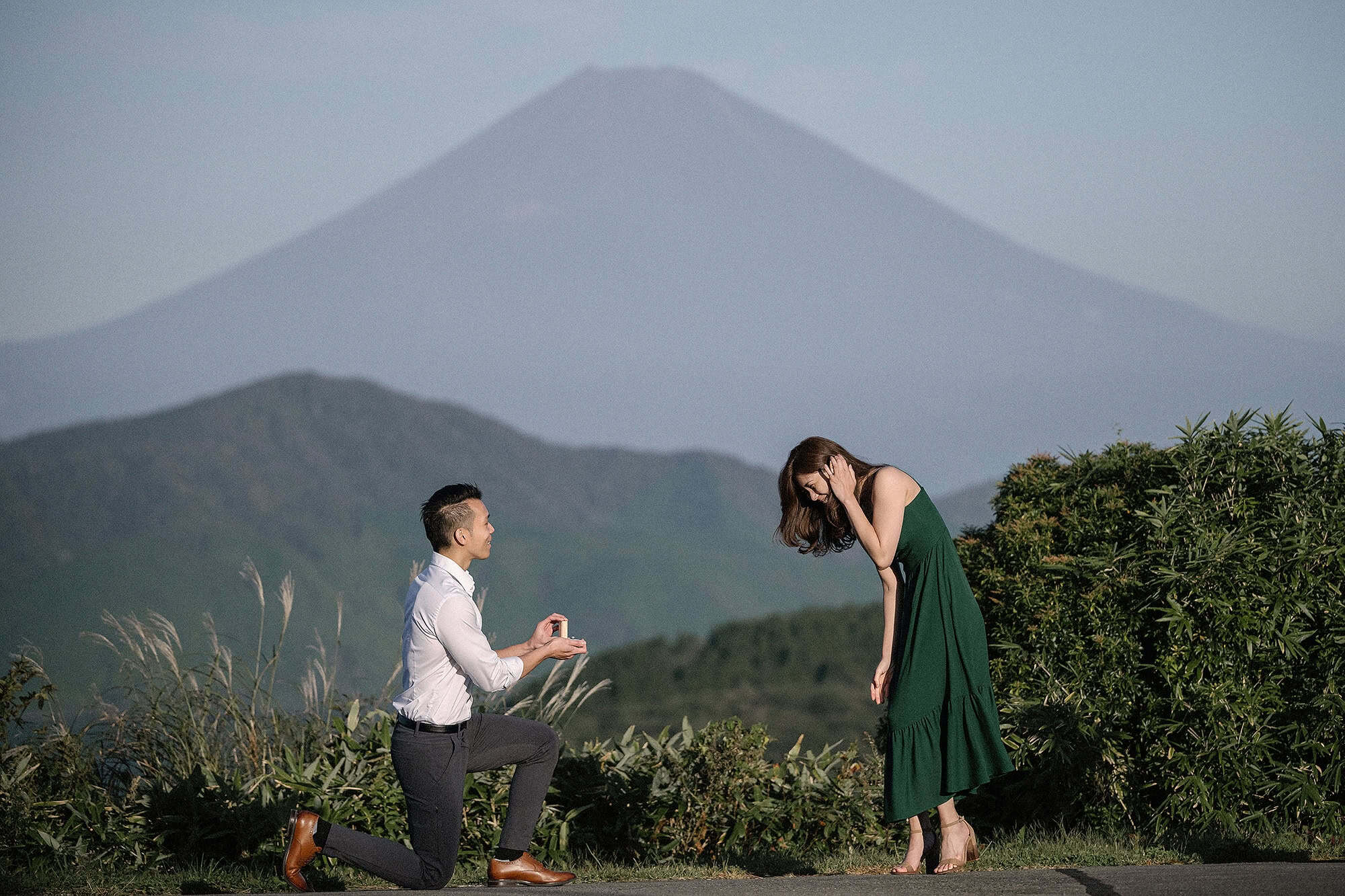
Mt Fuji is a mountain most people meet from a distance. At the Fuji Five Lakes it’s close enough to fill the sky. From Hakone it keeps its distance, standing beyond Lake Ashi and the green rim of the hills. Taikanzan sits on that rim, about 1,015 metres up on the southeast edge of the Hakone caldera where the Turnpike ends, and on a clear day it looks out over the whole lake to Fuji. Clear is never guaranteed, so we moved the shoot back a day for a better chance and were out before sunrise. Fuji came out.
For someone a little shy of cameras, dawn on a mountain is its own kind of shelter. The roads are empty, the light is soft, and the only audience is Fuji. The ridge was edged with bamboo grass and susuki, the pampas grass Japan counts among the seven flowers of autumn. So on that ridge, with the mountain there to see it, he proposed again. She said yes again. She’ll never get tired of saying it.

On the old Japanese calendar, that morning was the first day of mizu hajimete karuru, water begins to dry: the five days when the rice fields are drained ahead of the harvest. The growing is done by then. What’s left is the gathering in. That’s exactly what this morning was. The question had already been asked and answered at home. Hakone was where they gathered it up and gave it a place, and asked it once more under Fuji.


The Cedars of the Old Tōkaidō
From the rim they came down past the old Hakone Checkpoint to Moto-Hakone, where the Tōkaidō, the great road between Edo and Kyoto, still runs under its cedars. In 1618 the shogunate ordered them planted. Matsudaira Masatsuna, lord of Kawagoe, is said to have done the planting, and more than four hundred of those trees still line the half kilometre between Moto-Hakone and Onshi-Hakone Park, close to four centuries old and protected as a national historic site. They were planted for a plain, practical reason: to shade travellers from the summer sun and shelter them from the winter wind.
Nobody who planted them would meet the people they sheltered. That’s the quiet logic of good hospitality, and it’s close to the job we do when we plan a day like this: the shelter goes up long before anyone arrives, so that when they do, all they have to do is walk. On their first trip to Japan as an engaged couple, these two were the latest in a very long line of travellers the trees were planted for.

A Word Written for the Water
Further along the lake, past Onshi-Hakone Park, Hakone Shrine has stood at the water’s edge since 757, when the monk Mangan enshrined its gods at the present site. Its torii in the lake is much younger. It went up in 1952 to celebrate the investiture of the Crown Prince, now the Emperor Emeritus, and Japan’s independence under the peace treaty. In 1964, for the shrine’s 1,200th year and the Tokyo Olympics, it was given a plaque reading 平和, peace, in the hand of Yoshida Shigeru, the prime minister who signed that treaty. Of all the shrine’s torii, it’s the only one built in the ryōbu style, with smaller pillars bracing each leg.
The plaque faces the lake. From the steps where people stand, you can’t read it at all; it’s only visible from the water, written for whoever is on their way across. The couple stood beneath it that morning with the word turned the other way, towards everyone still coming. Most of what an engagement promises is written that way round. It’s read by the people who arrive later: the families, the friends, and the life that’s still making its way across the water.


A Week Later, a Small Fuji in Shinjuku
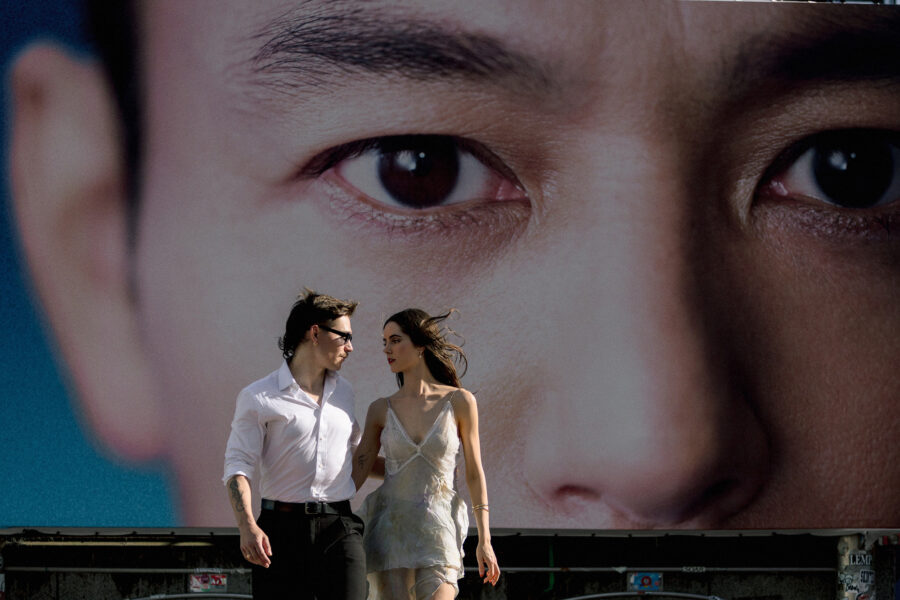
Rain pushed Tokyo back a day, and by the time we met them again the old calendar had turned to kōgan kitaru, the wild geese arrive. Early on they’d asked us about bringing their own cultures into the story through what they wore. In Tokyo it was Japan’s turn. We arranged the kimono: they chose their own at the shop and were dressed there, with her hair and makeup done before we set out.
Our first stop was Naruko Tenjin Shrine in Nishi-Shinjuku, which is older than almost anything around it. In 903, when word reached the east that Sugawara no Michizane had died at Dazaifu, two of his retainers carried a statue of him, carved in his lifetime, from the capital to what was then the village of Kashiwagi, and enshrined him here as a god of peace and letters. Peace again, a week after the torii. The towers of Nishi-Shinjuku have grown up around it since.
Within its grounds stands a Fuji. It was built in 1920 with lava carried from the mountain itself, and at about twelve metres it’s the largest of the six fujizuka still standing in Shinjuku. Edo was full of Fuji confraternities, so many that people spoke of the city’s 808, formed to climb the sacred mountain and pray at its shrines. Climbing a fujizuka was held to bring the same blessing as climbing Fuji, which put the mountain within reach of anyone in the city.
The couple had made the real journey a week earlier, up before dawn to stand facing Fuji across Lake Ashi. Then Tokyo, a city that spent centuries bringing the mountain home to its people, had one waiting for them in Shinjuku.
The shrine keeps a pair of its own, too. Its sacred trees are two ginkgos planted as husband and wife, the female tree at the centre of the grounds and the male beside the Fuji mound, and the shrine says some visitors lay a hand on the trunks as if in conversation. Two trees planted apart and still counted as one pair: it’s a fair description of a good marriage, and a kind one to meet early in an engagement. The grounds also hold a small Sengen shrine to Konohanasakuya-hime, the goddess of Fuji, whom the shrine likens to the cherry blossom and honours, among other things, for matchmaking.


From Omoide Yokocho to the Bay
The rest of the afternoon belonged to the city at its least ceremonial. Omoide Yokocho began as a street-vendor market in the burnt ground just after the war, and it still runs on around sixty restaurants, most of them grilling offal and yakitori. Odaiba’s name goes back further, to the daiba, the gun batteries the shogunate built out in the bay after Perry’s ships arrived in 1853. Both began in hard times, one a market in a burnt-out city and the other a line of guns against the world, and both now belong to people out for a good evening.


Rain came in over Tokyo Bay late in the afternoon and moved off in time for the sunset behind Rainbow Bridge. We were glad of both. That’s what the Tokyo half was for: less a record of anything than the engagement’s first night out, a shrine, an alley, a crossing and a shoreline, with no question left to ask.


The Celebration Is the Point
The question was asked at home, in private, which suited her better than any viewpoint could have. Everything after it was celebration. Hakone gave them the real mountain, far off across the water. Shinjuku gave them the one Edo built so that the mountain could come home.
That’s what we’d urge on anyone planning an engagement in Japan. Ask wherever it feels right, even if that turns out to be your own kitchen, then give the answer a day of its own, somewhere worth the early start, with nothing left to plan. The photographs that come after a yes always look different. The nerves have gone, and what’s left is two people who already know the answer, getting used to the sound of it.