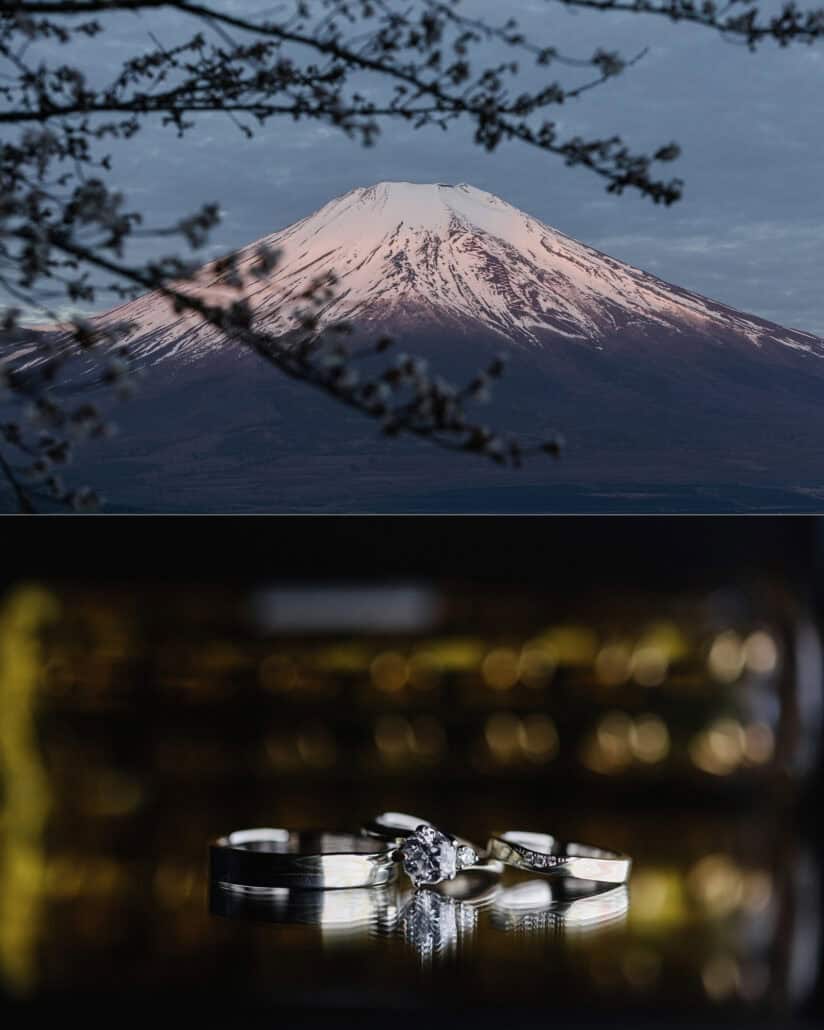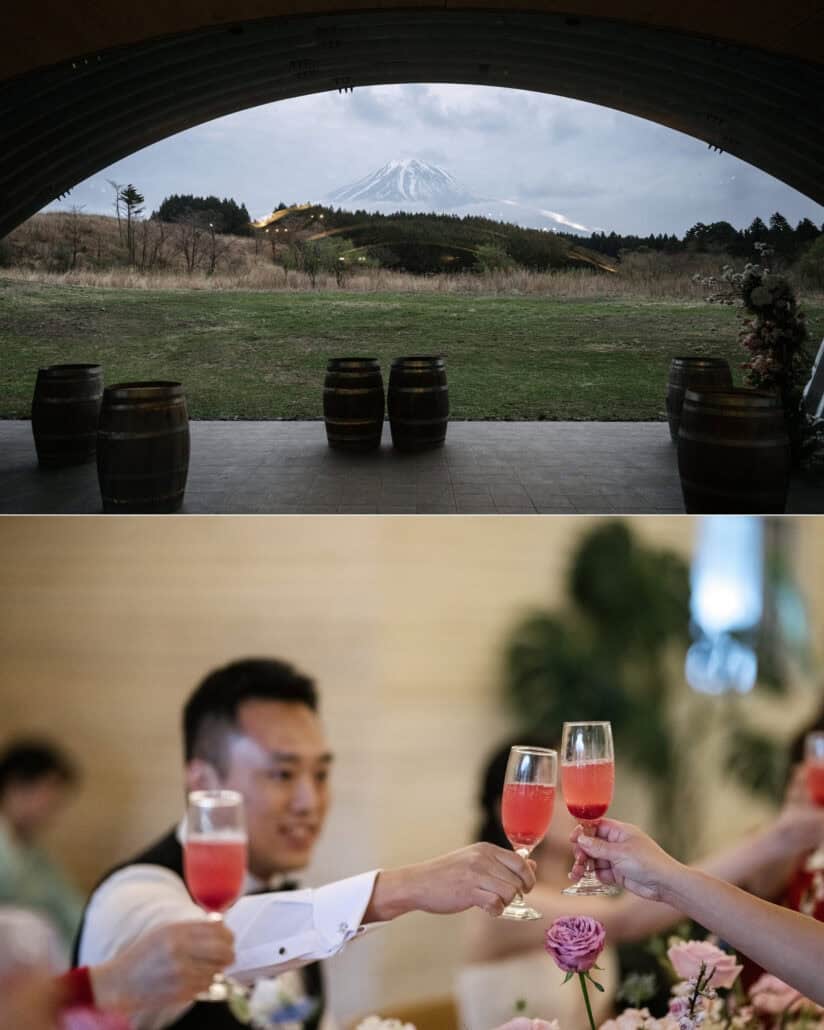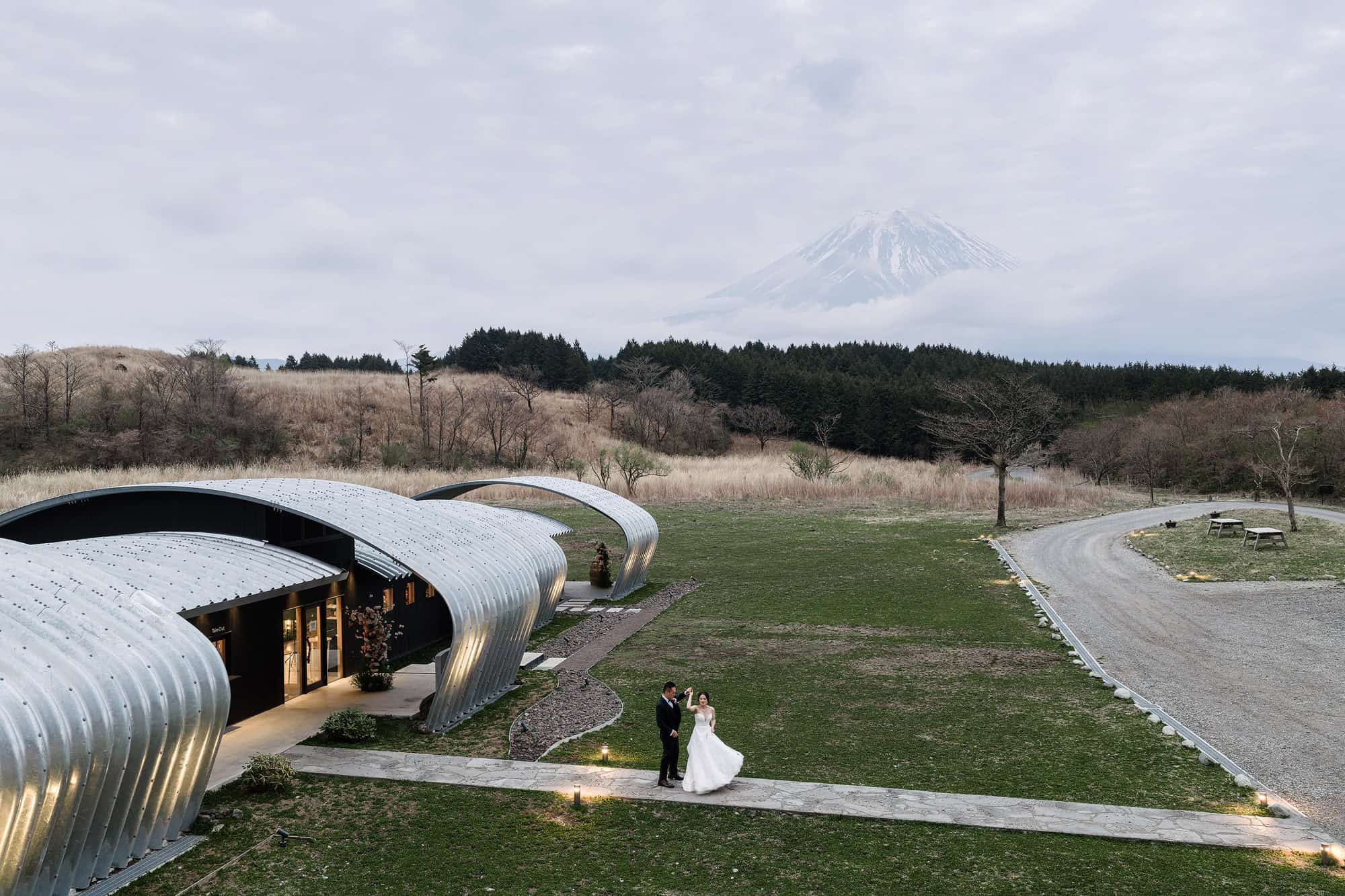
The bride’s father had barely finished his speech when the whole wedding got up from dinner. Outside, above the silver vaults of Fujisan Winery, Mt Fuji had emerged from the clouds. If you want to understand what makes this a unique wedding venue in Japan, begin there: with a room full of people leaving a very good meal because something extraordinary had happened beyond the windows, and everyone wanted to see it together.
All afternoon, the mountain had kept its own counsel. Now it stood clear in the dusk, snow streaking its slopes, while the wedding gathered on the path below and waved. Fuji had missed the ceremony. It came for the speeches.
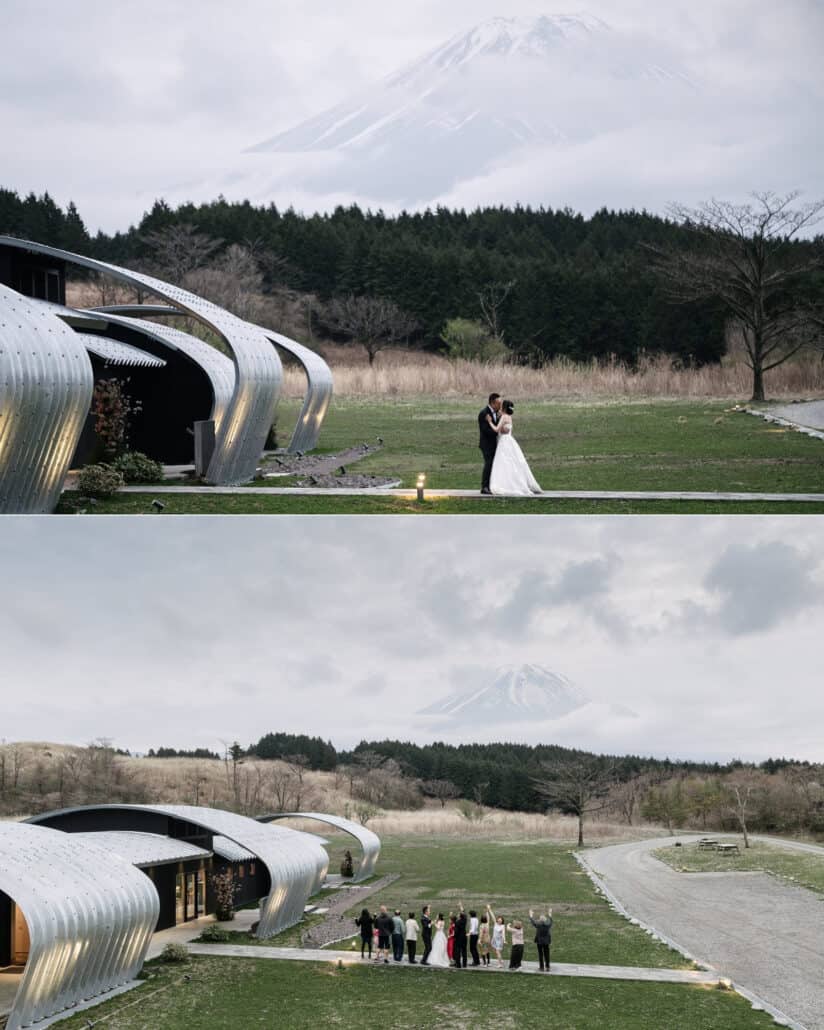
The father had been talking about the impossibility of imagining, when his daughter was born, that he would one day find himself in Japan celebrating her marriage. A few moments later, there they all were, looking up at the proof of how far a life can travel beyond its earliest expectations.
A Unique Wedding Venue in Japan, With a Longer View
Fujisan Winery sits in Nebara, in the Asagiri Highlands on the Shizuoka side of Mt Fuji. It calls itself the winery closest to the mountain, and its vineyards began with a wonderfully persuasive idea: good grapes come from places with beautiful views. The search also had a practical purpose. Higher ground offered the cooler conditions needed to preserve acidity in the fruit, and here the vines grow at around 900 metres.
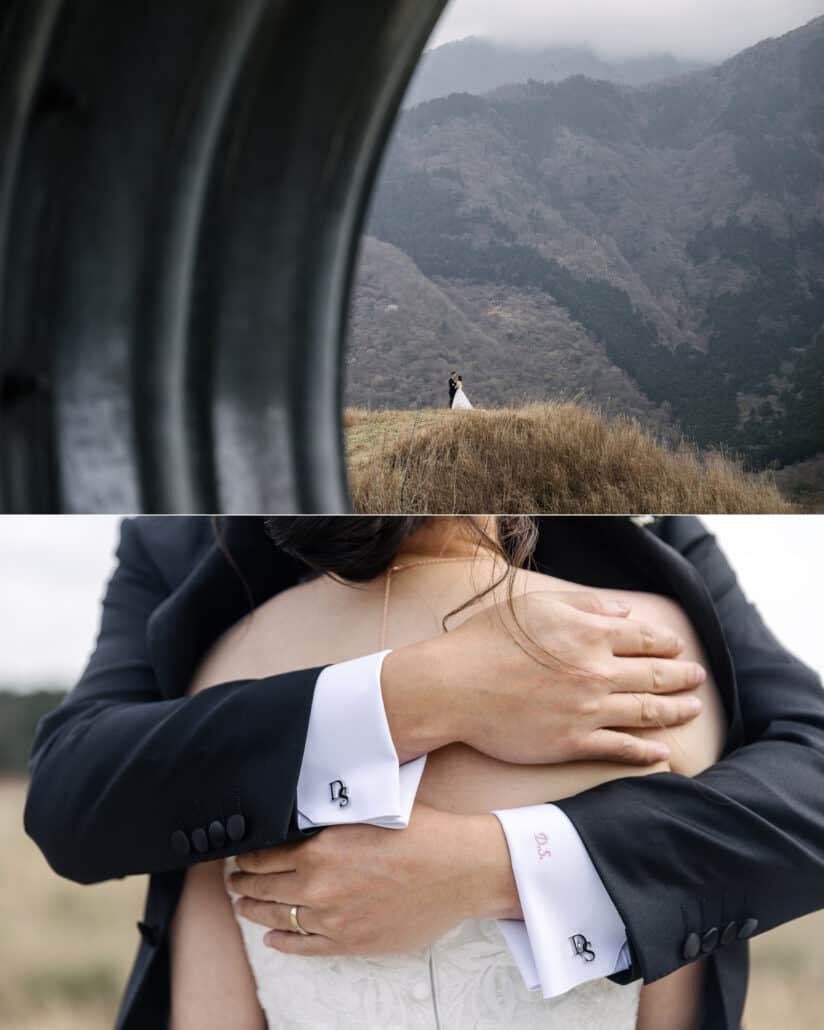
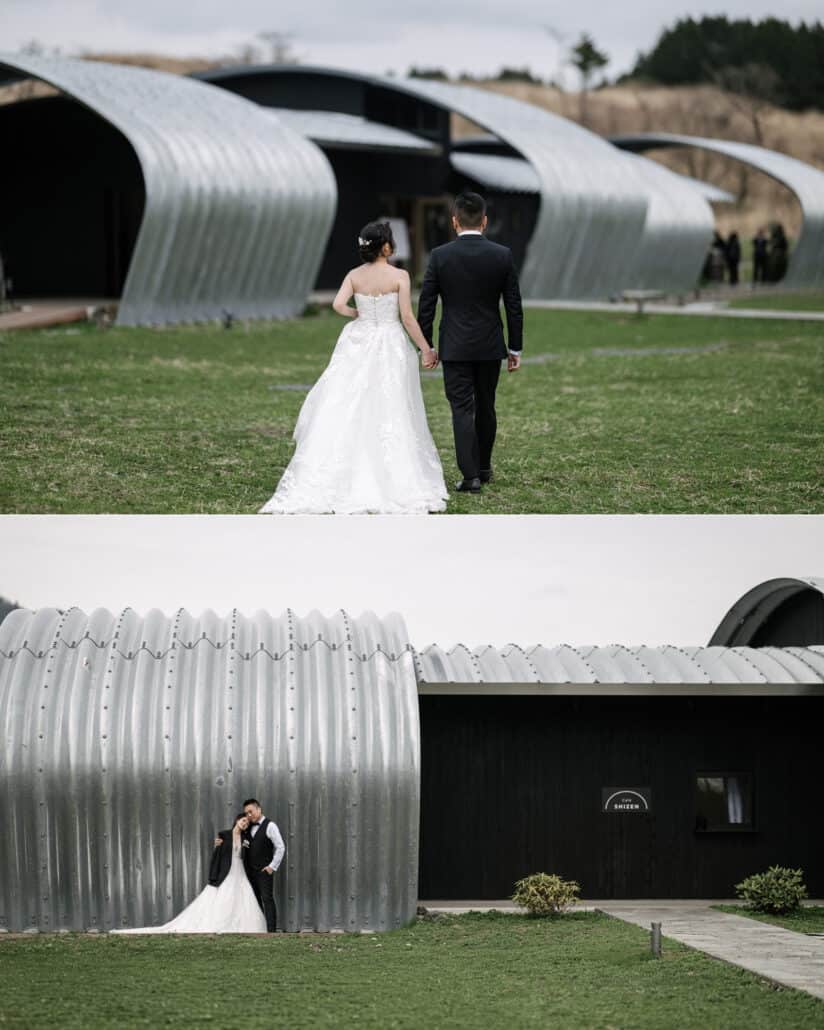
From above, the silver vaults sit in a landscape whose scale belongs firmly to Fuji. On the afternoon before the wedding, the mountain was clear and white behind them. Golden highland grass caught the light on the rise above the buildings, where the couple would later stand together; down on the lawn, there was room for everyone to gather among the barrels.
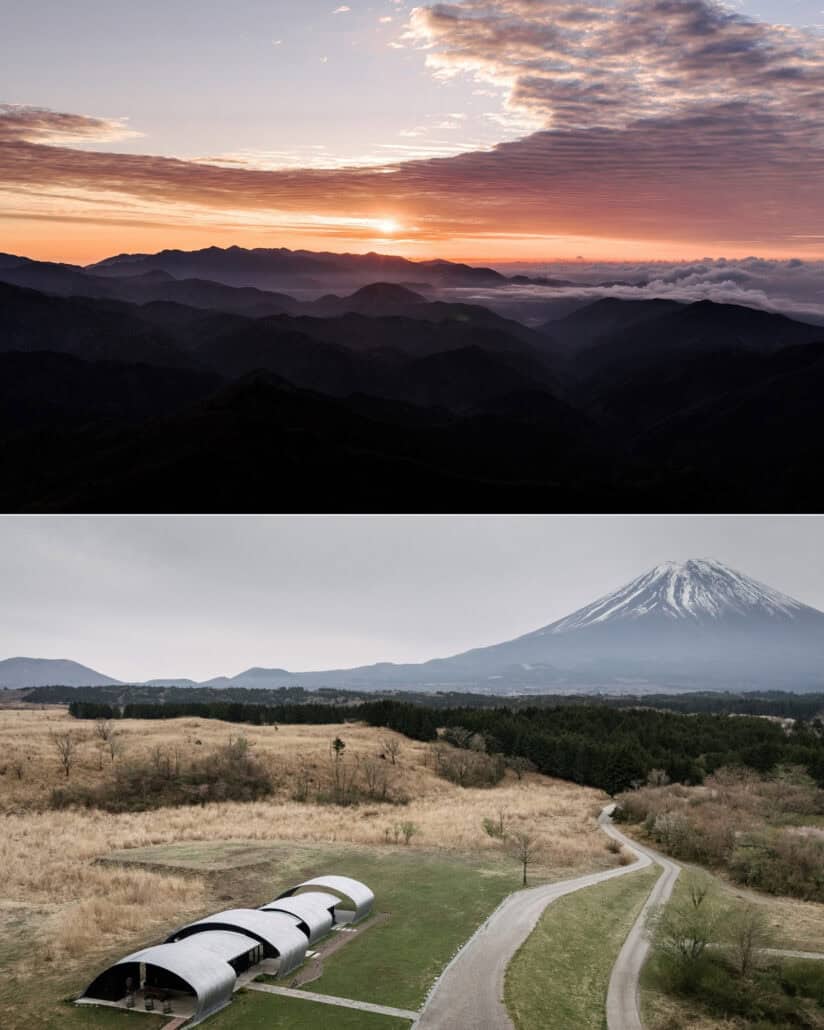
It is tempting to call all of this a backdrop. The grass alone says otherwise.
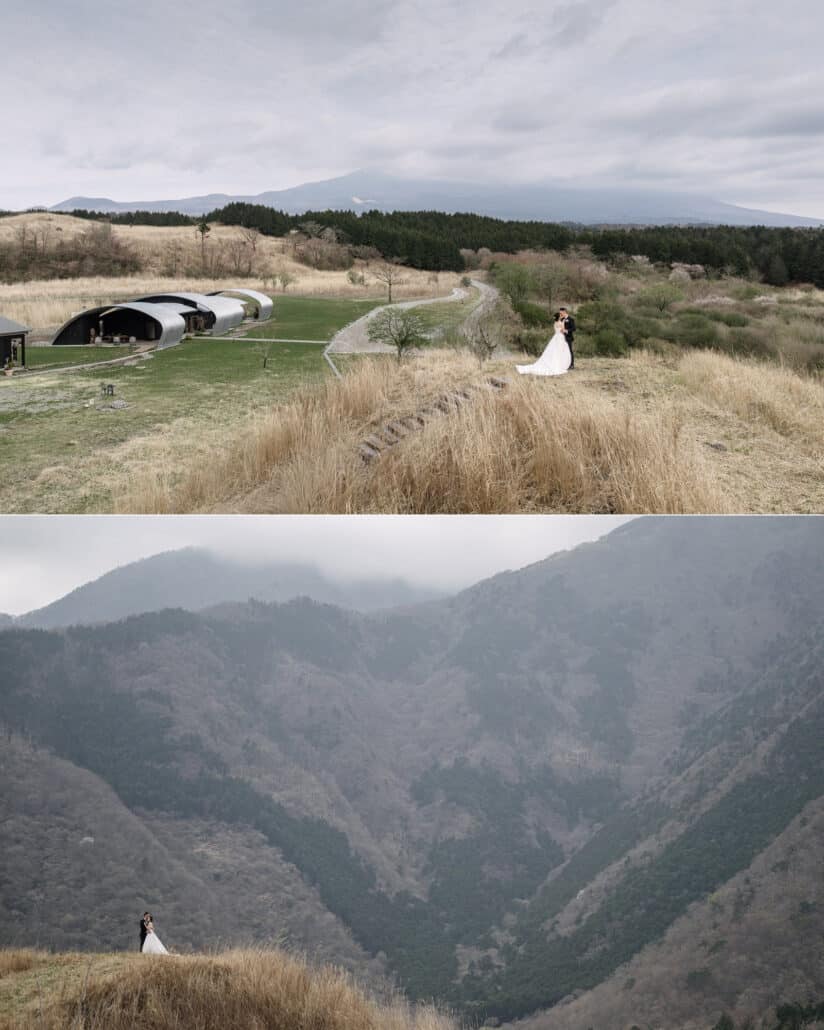
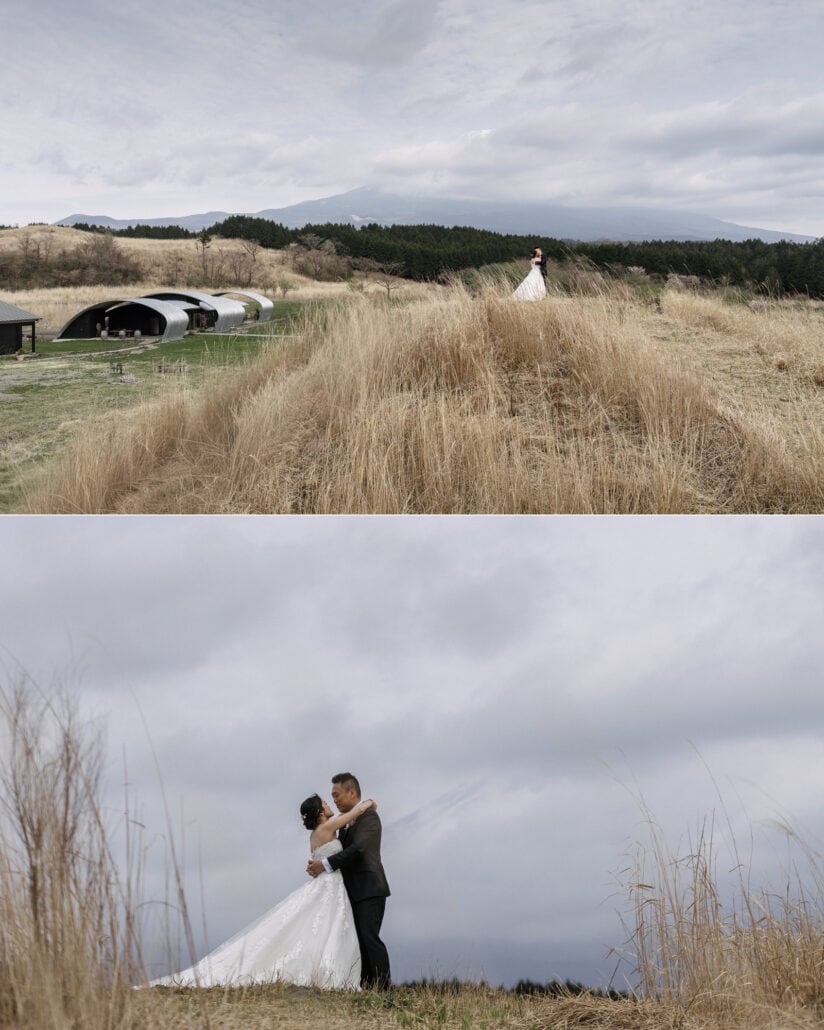
Nebara was a horse relay station on the Nakamichi Ōkan, the old route connecting Kai and Suruga. Armies used it in the sixteenth century; later, salt and seafood travelled along it. The surrounding grassland fed the horses and supplied thatch for roofs. Its open appearance was maintained by people cutting, gathering and burning, work continued through generations.
The spring burning has a history of more than three hundred years. Part of the grassland is now recognised as a source of thatch for repairing protected historic buildings. Something growing beneath a wedding couple’s feet may eventually help keep another piece of Japan standing.
We love places with this sort of continuity. The beauty has a use; the use has a history; the history is still being made by somebody getting up and doing the work. You feel the difference when you spend time there, even before you know why.
The Mountain Keeps Its Own Hours
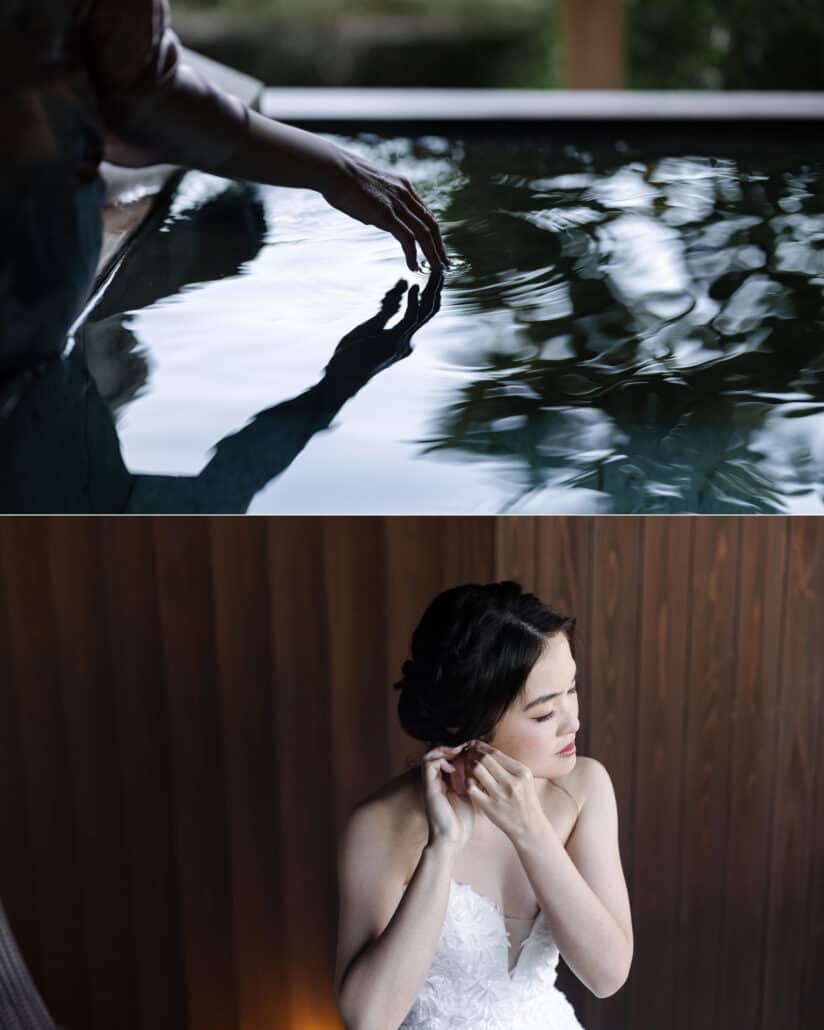
At sunrise over Lake Yamanaka, the snowcap had turned crimson above a sea of cloud. This is beni-Fuji, the particular red of snow-covered Fuji catching the early light. The dark-wood inn where the couple prepared for their wedding held the mountain in its windows and, below the deck, in the still water.
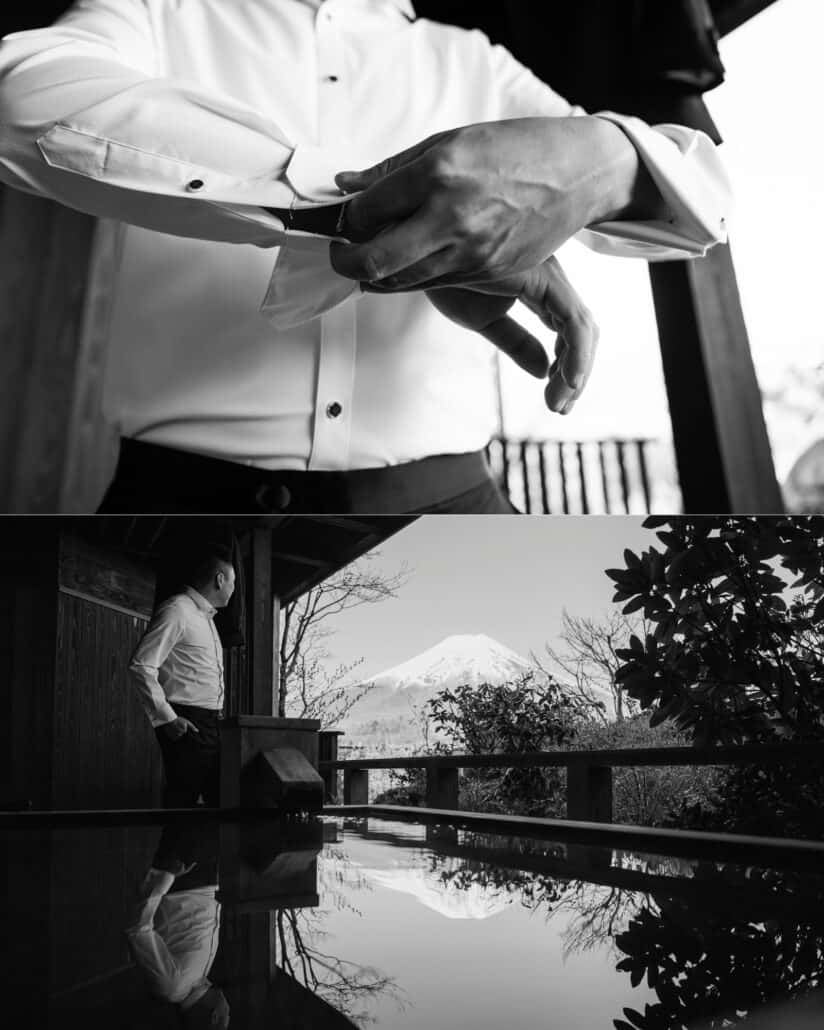
The evening before, they had spent forty minutes simply looking at it. We understand this entirely. There are views that make conversation feel like an unnecessary interruption.
“We have a plus one at our wedding,” they said. “It’s Mount Fuji.”
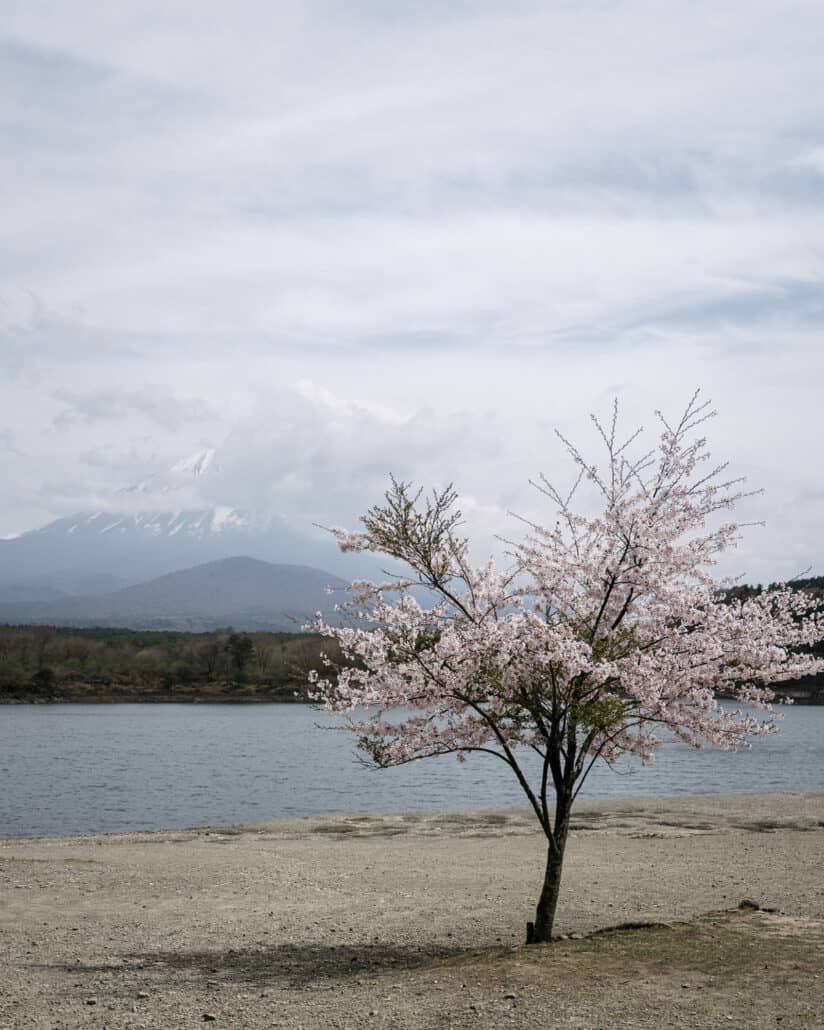
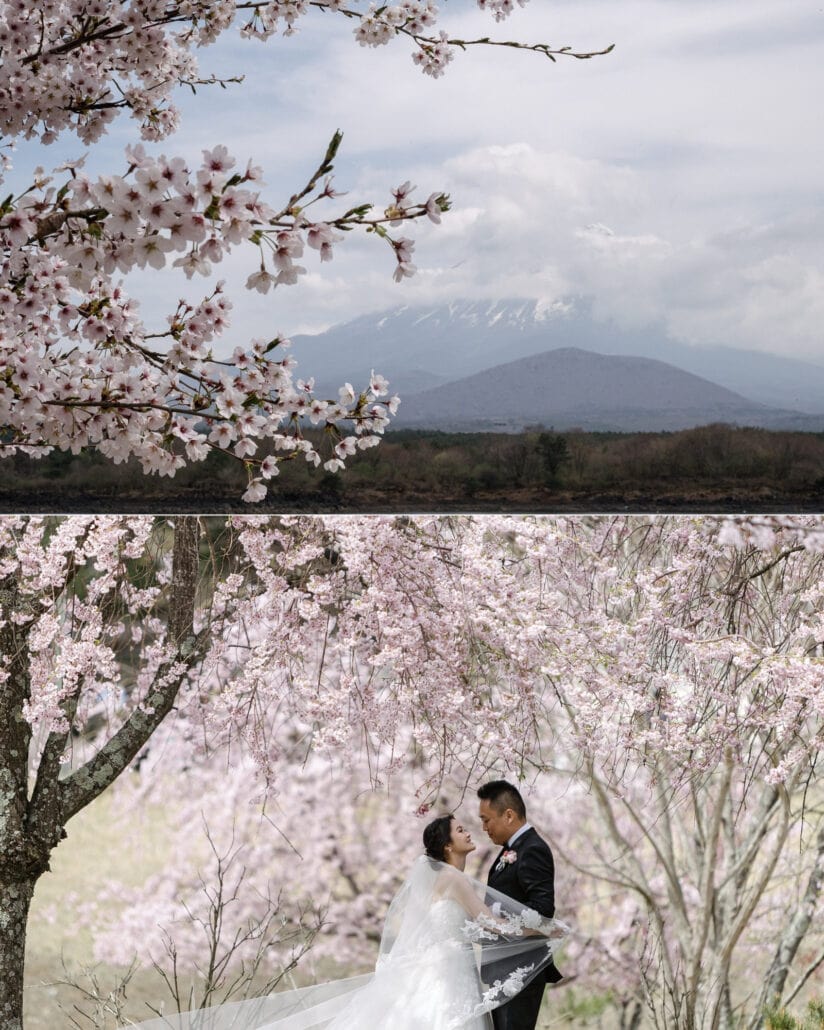
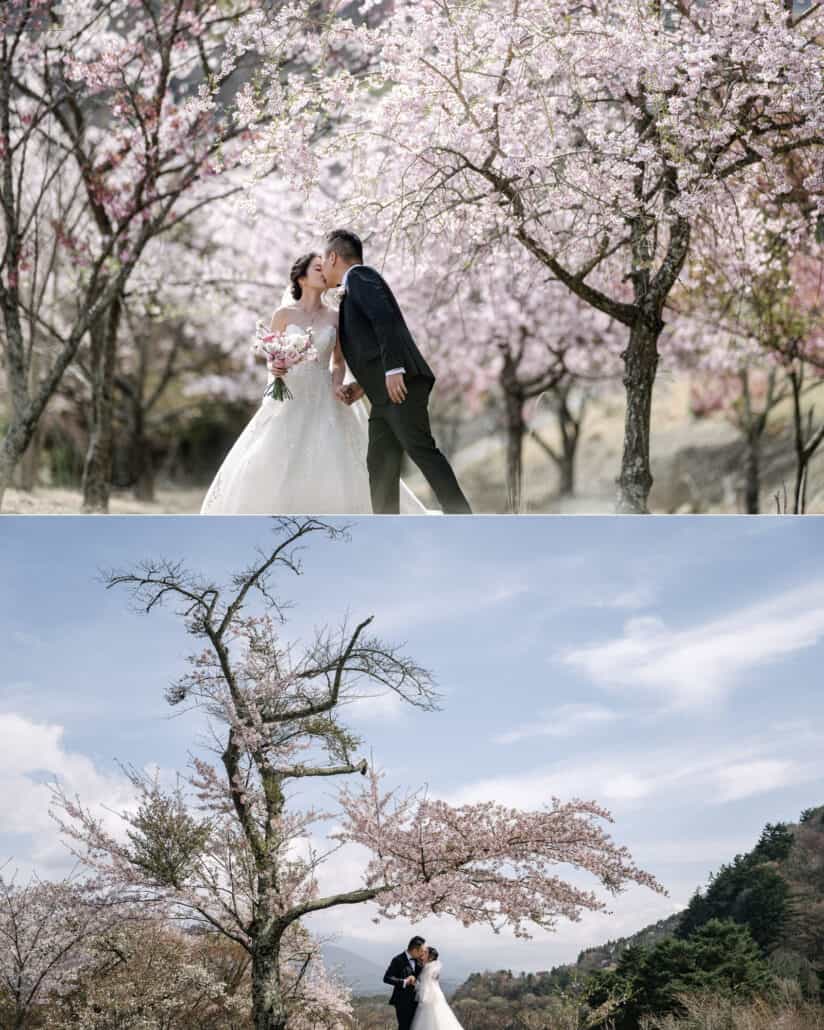
By the ceremony, their plus one had disappeared into cloud. The cherry trees were in full bloom, the lake was moving in the wind, and the people they had brought to Japan were taking their seats. The day had plenty to hold it.
When we plan a wedding around Fuji, we make room for that independence. The mountain can be visible at breakfast and hidden by lunch. A place worth choosing needs to offer a beautiful experience across those changes, so that the pleasure of being there lasts all day, and a clear view becomes something you receive with delight rather than something the day owes you.
The unannounced arrival at dinner made its own case for leaving a little room in the schedule.
Two Stops on an Old Road
The village at Lake Shoji was a post town on the same route that ran through Nebara. Long before the lake and winery became two places in a wedding itinerary, the land between them already held a history of people passing through.
Lake Shoji belongs to Mt Fuji’s World Heritage landscape. Its name is thought to recall the purification pilgrims undertook in its waters before climbing the mountain. From the north shore, the smaller Mt Ōmuro sits before Fuji in a view known as kodaki Fuji: Fuji holding a child. Ōmuro is a volcanic cone formed on the mountain’s lower slopes, which gives the affectionate name a geological foundation too.
A British traveller who explored the foot of Fuji in the nineteenth century considered this its finest view. He opened a European-style hotel here in the 1890s, promoted the district as the Switzerland of the East, and eventually became a Japanese citizen. His grave remains near the lake. Sometimes the place you travel to becomes the place you choose to stay.
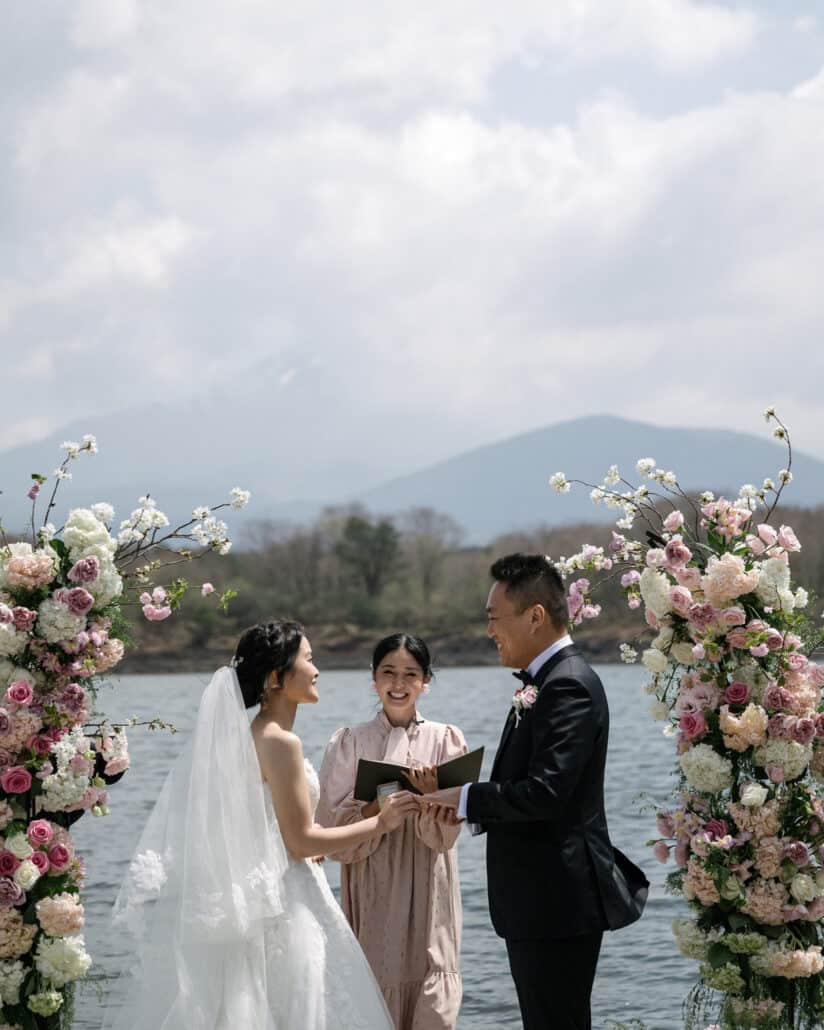
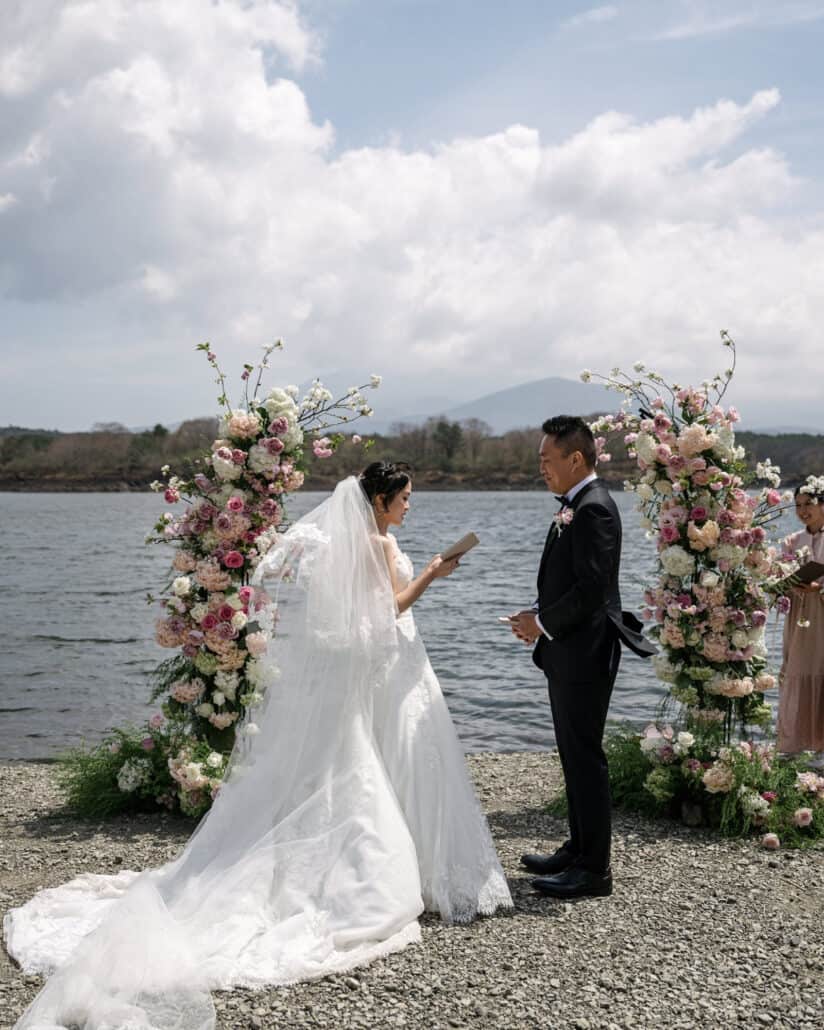
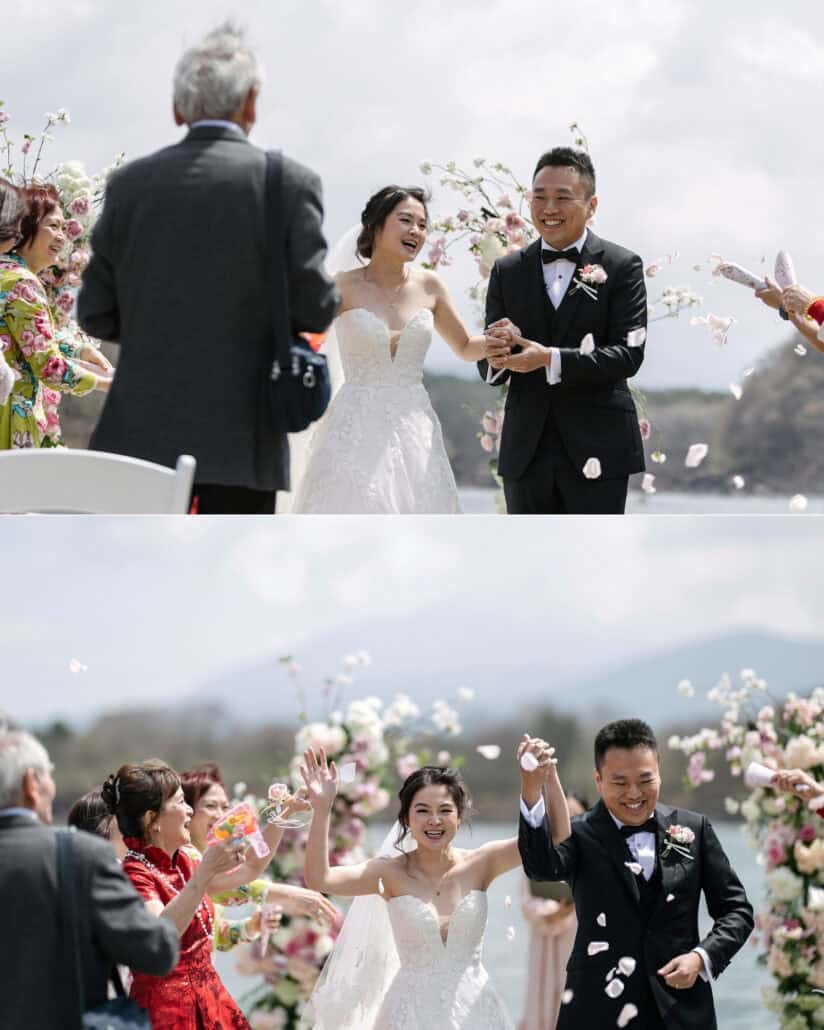
For this ceremony, white chairs faced the water between two pillars of pink and white flowers. Lake Shoji is a public shore, and arranging a wedding here involved months of permissions within more than a year of planning. That care allowed the couple to arrive and be fully present in a place that also continued to welcome other people. Before the ceremony, the bride’s mother was already making friends with passers-by.
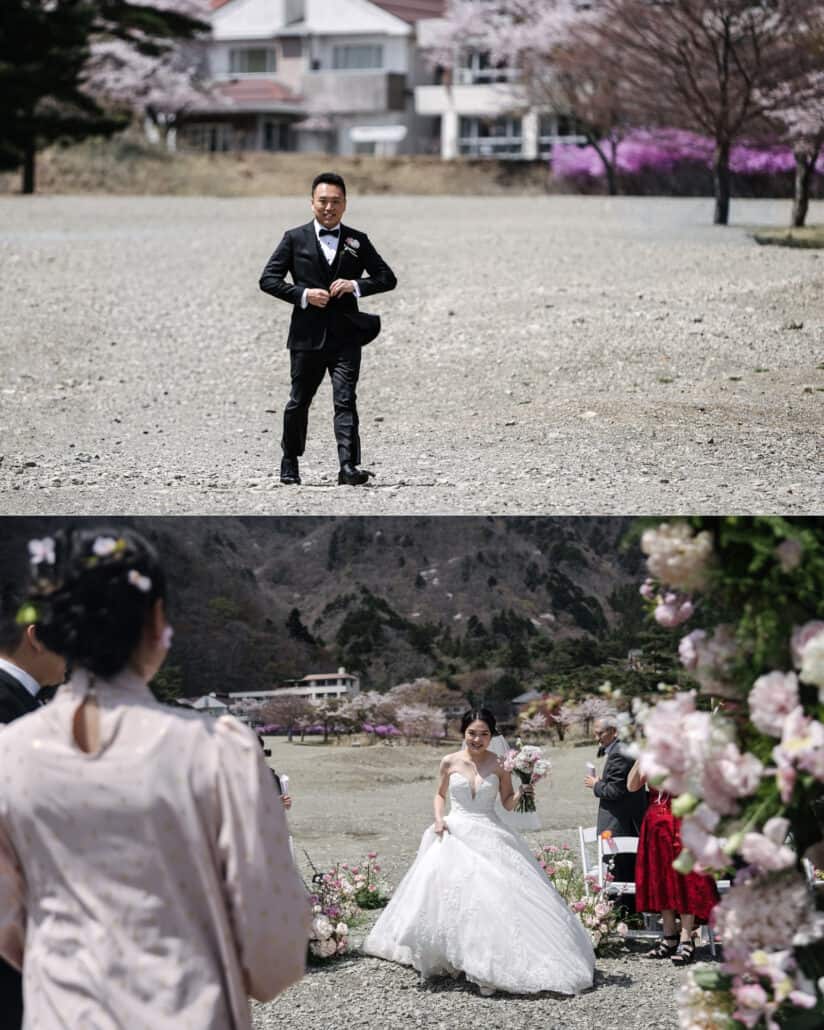
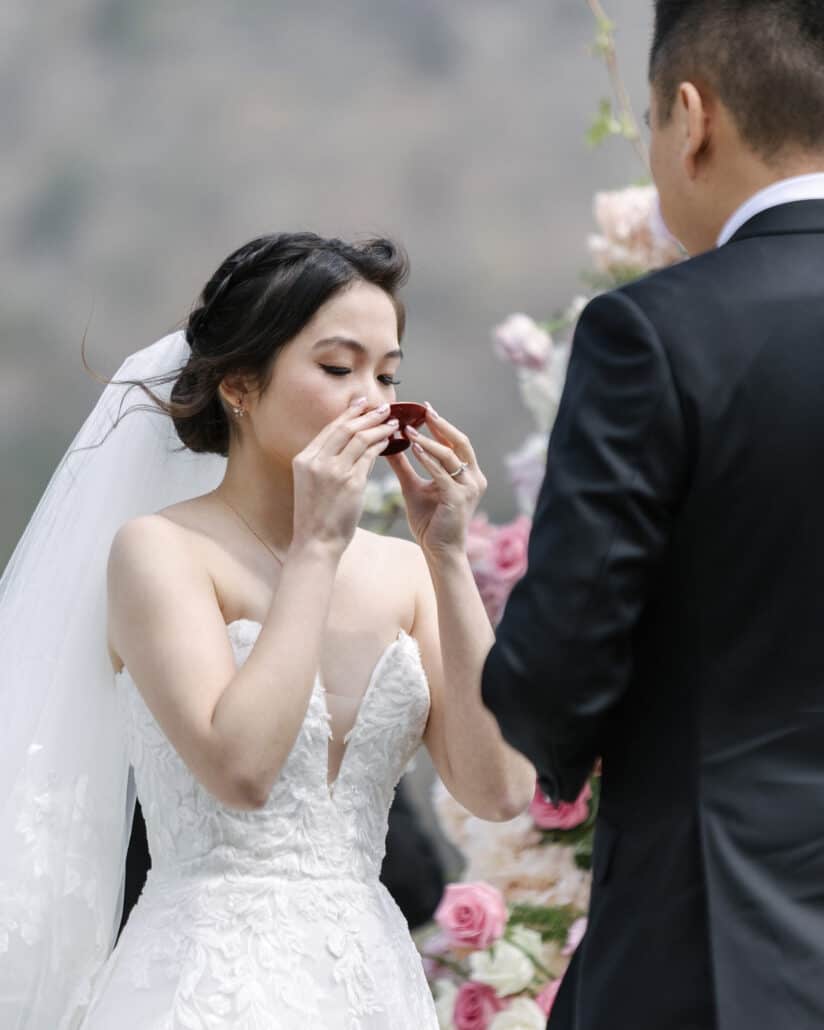
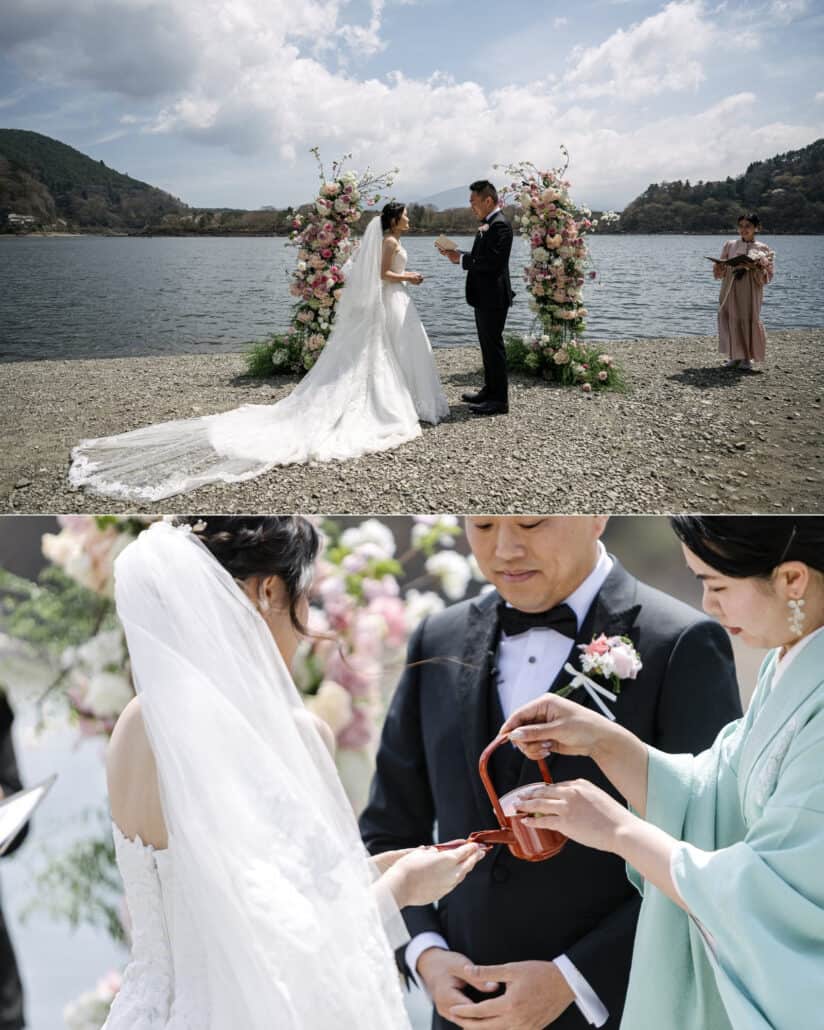
The couple spoke their vows with the wind coming across the lake. Sumika, in a pale green kimono, poured sake into red lacquer cups for san-san-kudo, the three-by-three exchange they had chosen to include. The ceremony brought their own words and a Japanese wedding ritual into the same space, considered around the people taking part.
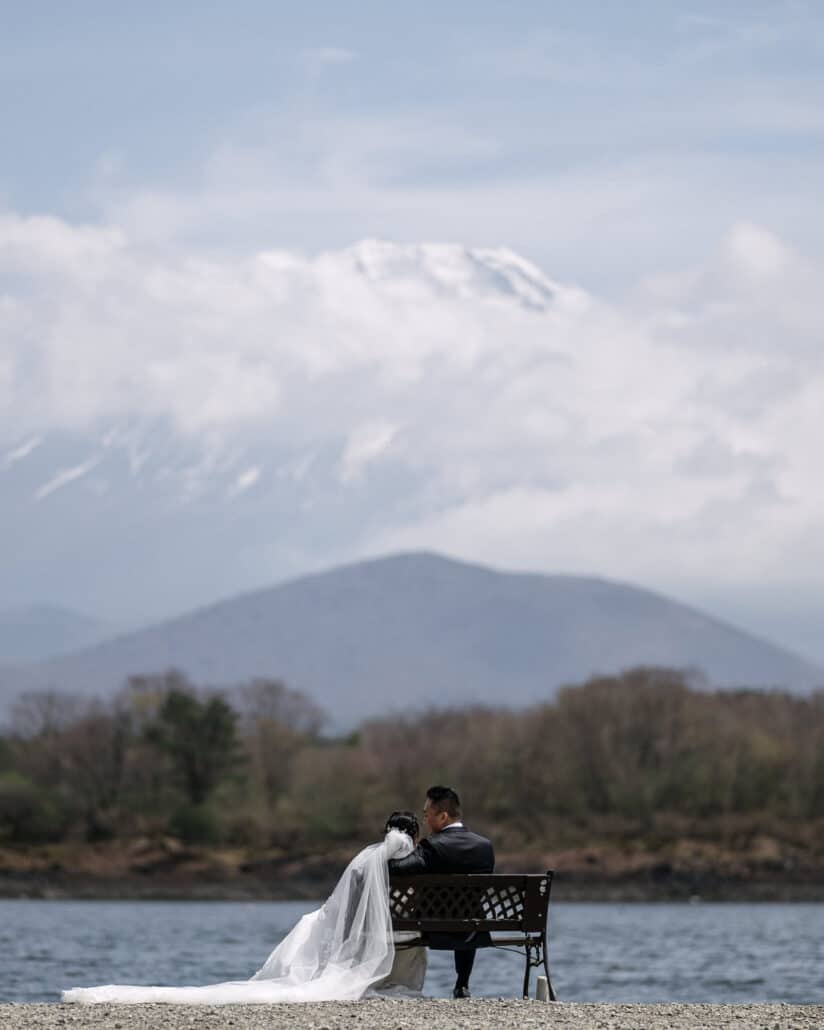
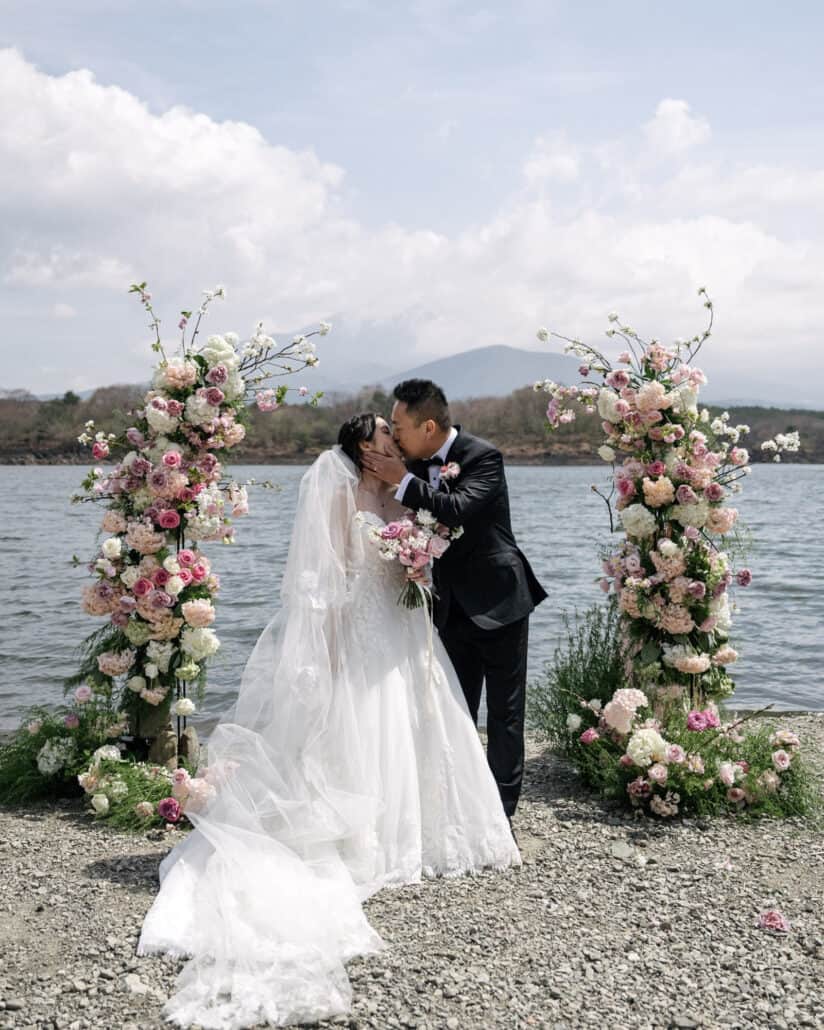
Their first kiss belonged to that shore, that wind, that gathering. At the recessional, the petals rose and the wind carried them onwards. Fuji remained behind the clouds, leaving its smaller companion in view.
A Garden Full of Moving Blossom
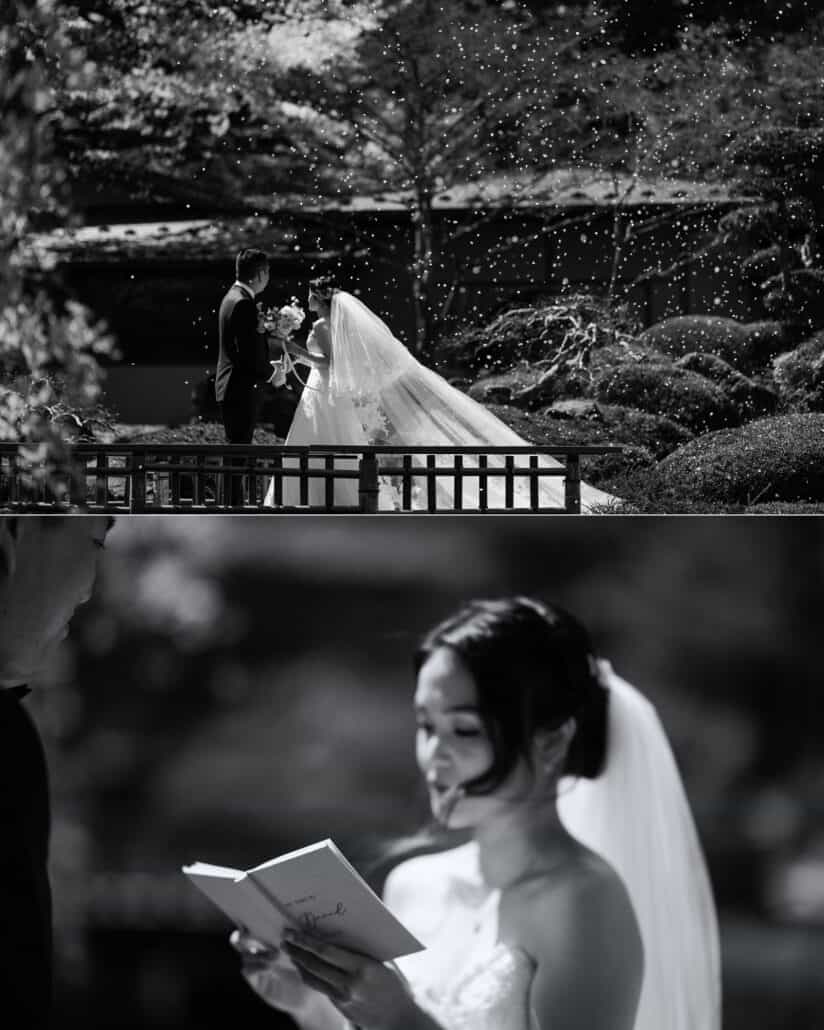
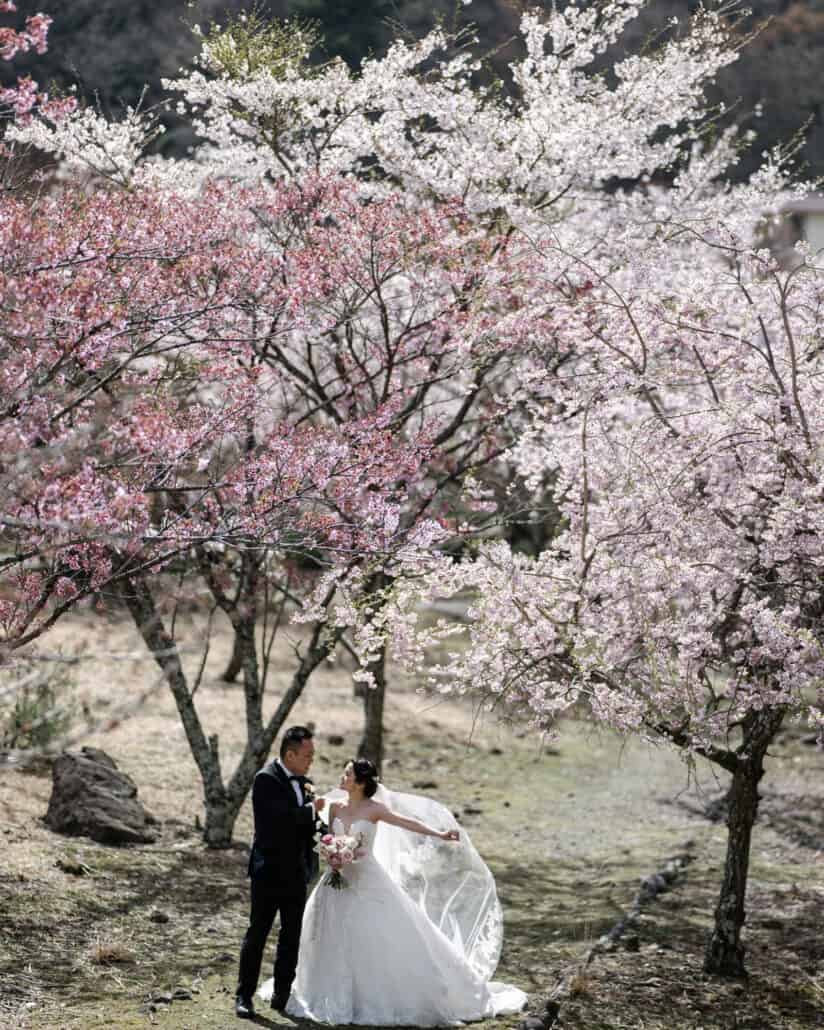
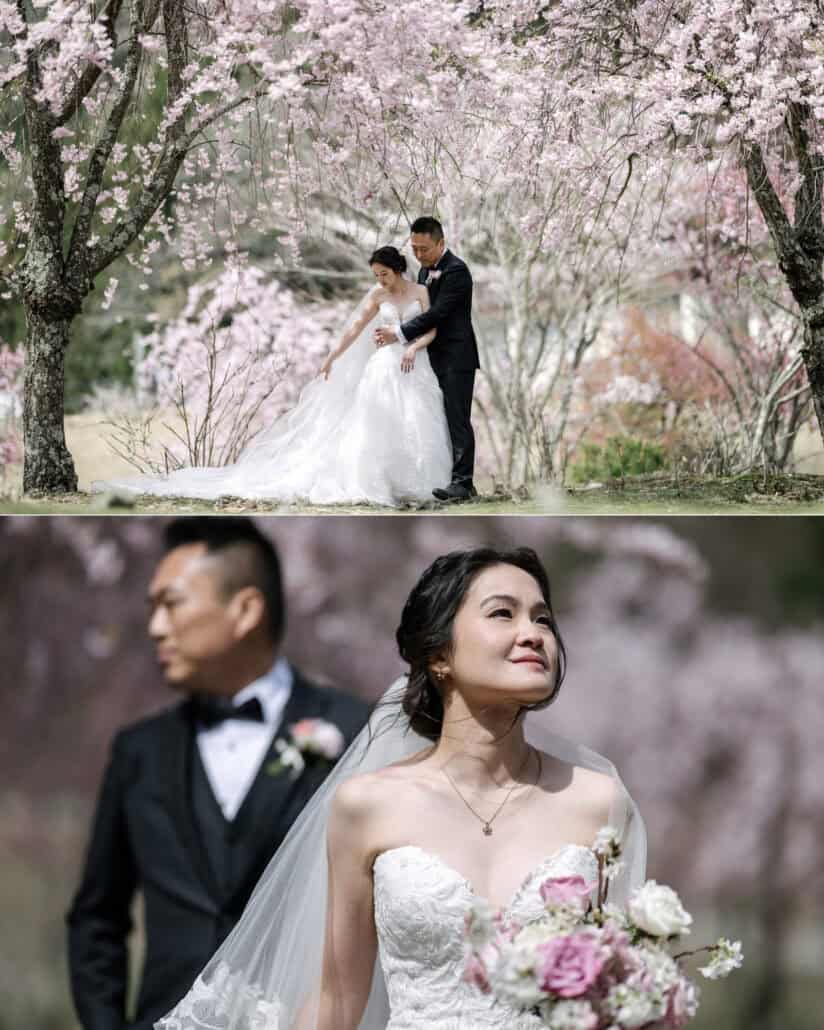
Earlier, in the inn’s garden, a small wooden bridge led towards a weeping cherry. The bride had finished getting ready, and the groom was waiting on the other side. Around them, the garden was in full bloom.
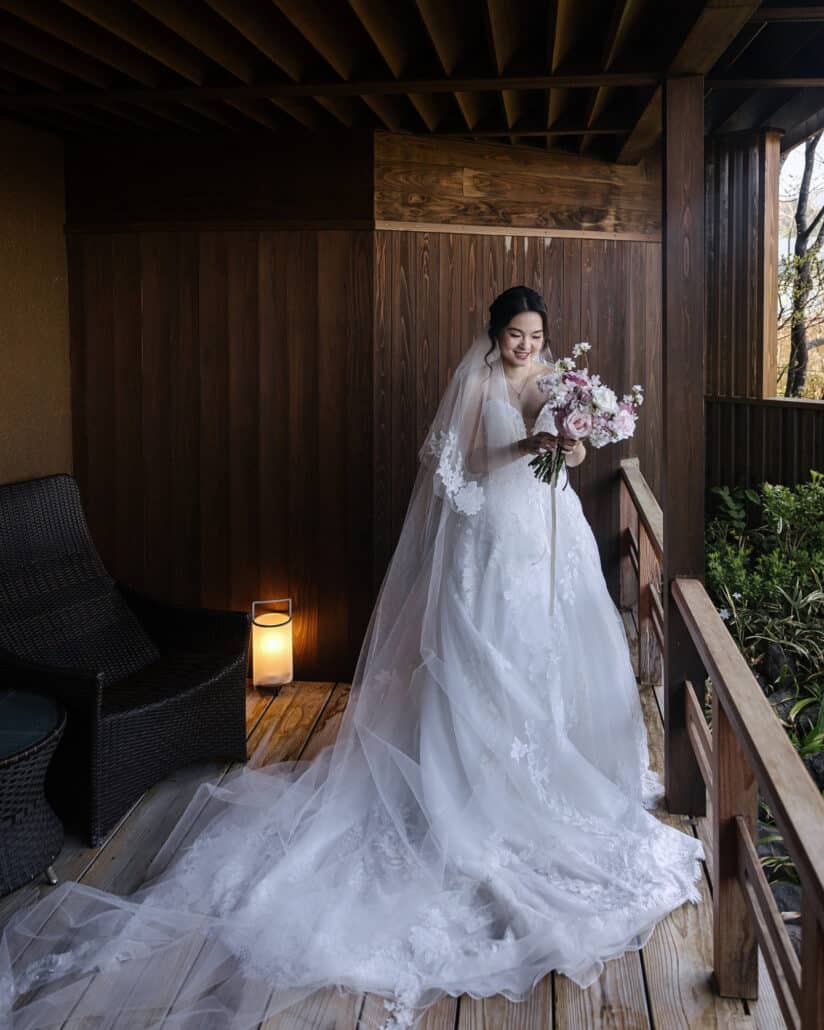
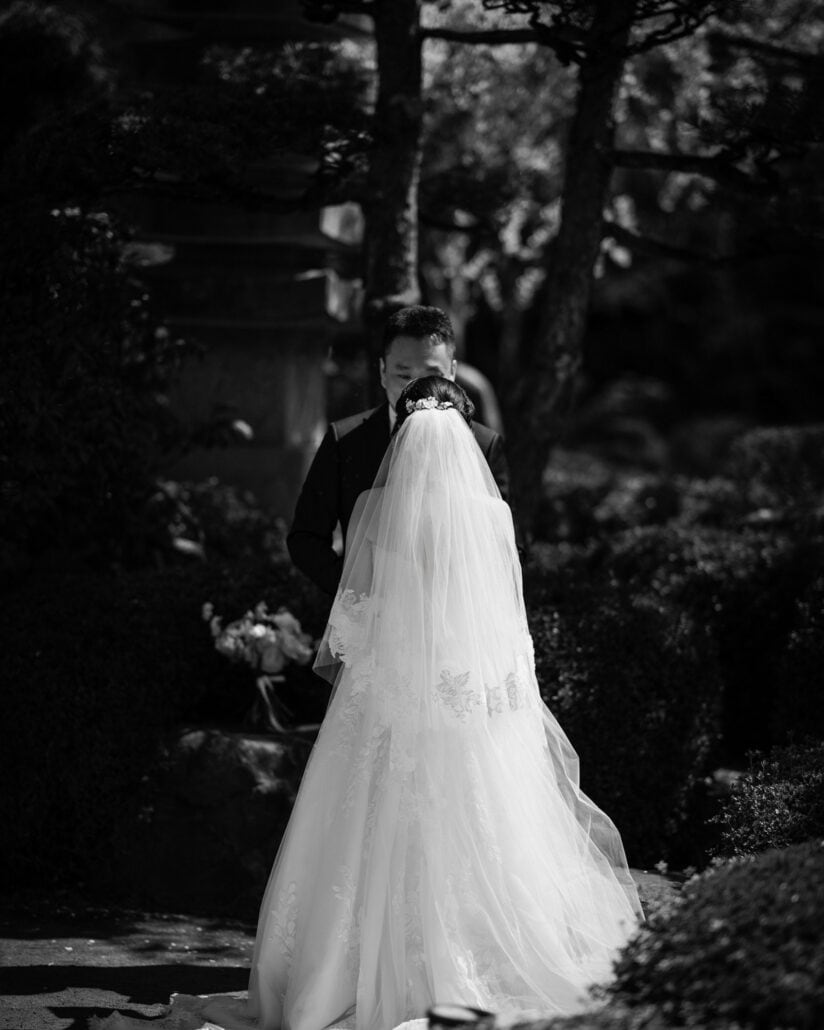
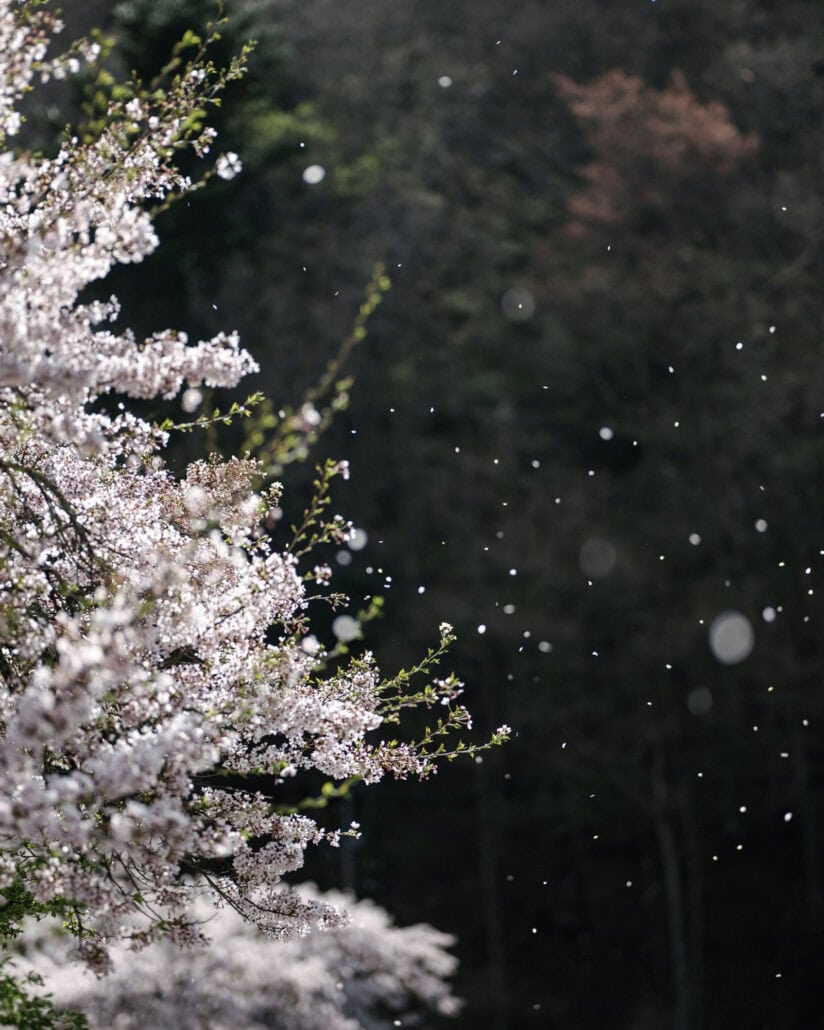
A gust came through the garden as they kissed, and the weeping cherry let go. Japan has a word for this: hanafubuki, a flower snowstorm, the moment full bloom meets wind. It comes for a day or two each spring, and no one can schedule it. Every petal here was real, and not one of them waited for a cue.
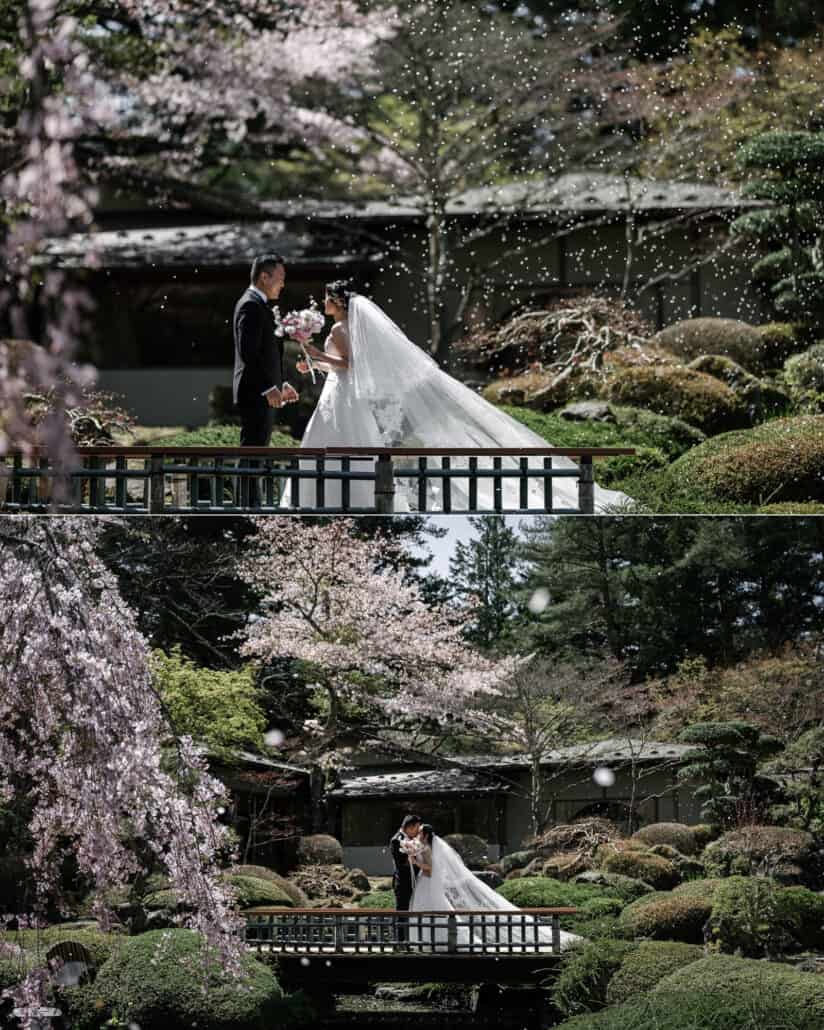
Cherry blossom has an entirely different presence when it moves. You can see a tree in full bloom and admire its shape, but a shower of petals involves you. It catches in your hair, crosses your face, lands on the person opposite you. For a moment, the season becomes something you are standing inside.
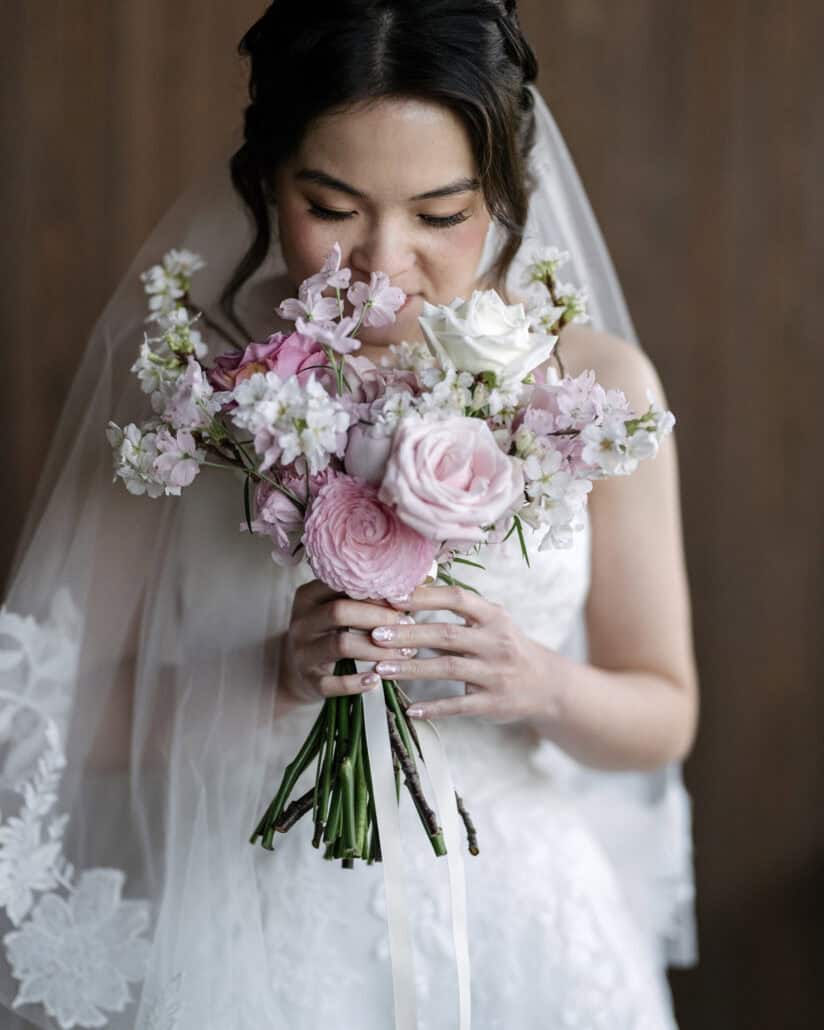
They read private vows beneath the weeping branches, from two small books. Later, on the shore, the veil caught the same wind, lifting away from the bride in a long, pale line.
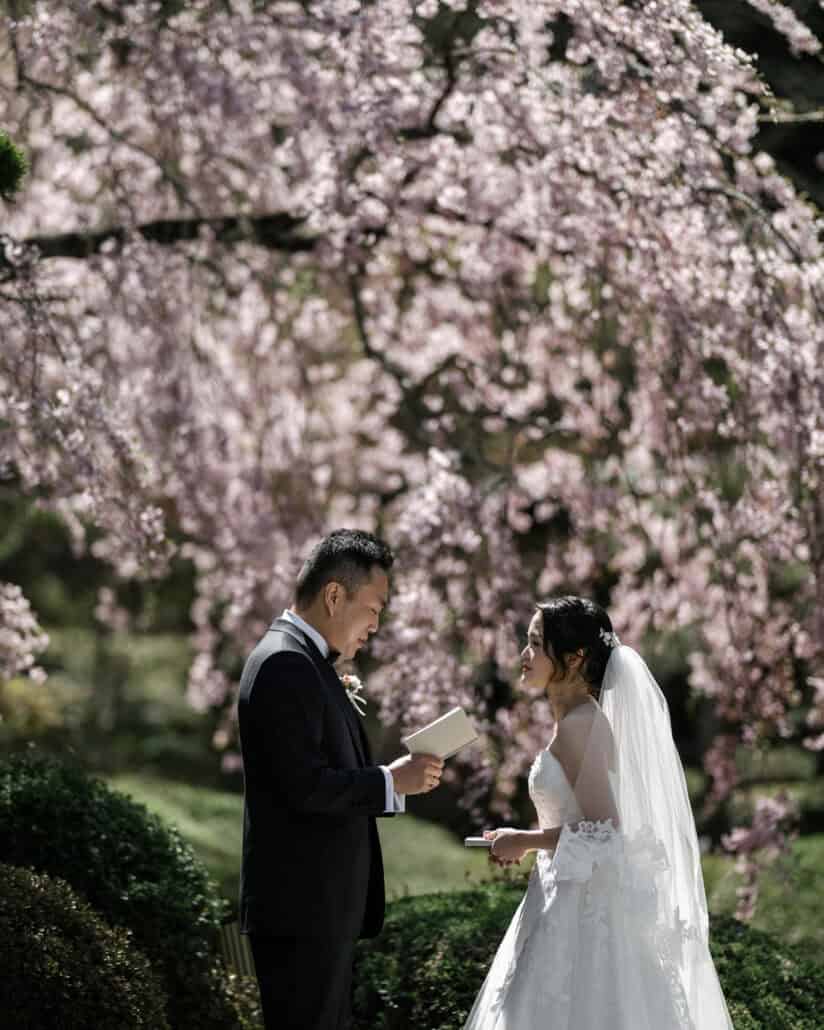
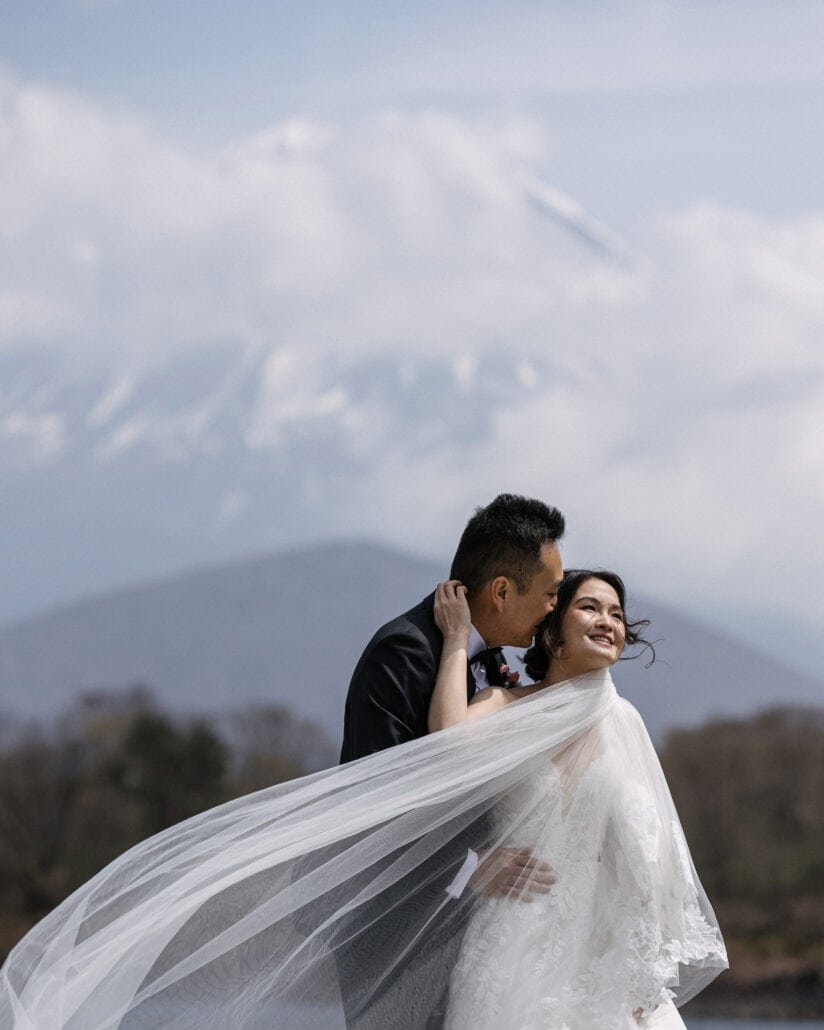
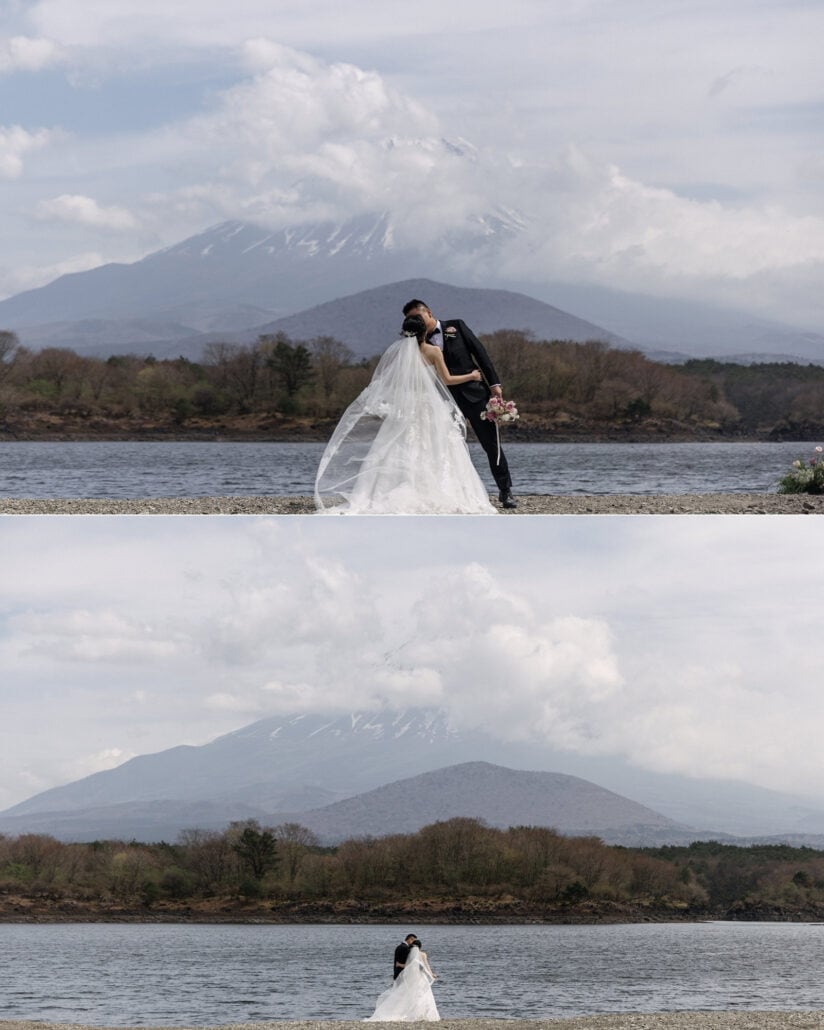
Our wedding content creator was there too, gathering the small, immediate moments around the larger celebration. A wedding can be remembered at several distances: the landscape that held everyone, the expressions at the ceremony, the glimpse of someone you love just before they realise you are looking.
Japan’s seventy-two small seasons offer a way of paying attention to these fine changes. Bloom opening, bloom loosening, petals moving through a garden: spring contains all of them. When couples ask about the best time to marry in Japan, the answer often begins with what they hope to feel while they are here.
Take Your Time. There Is Dinner.
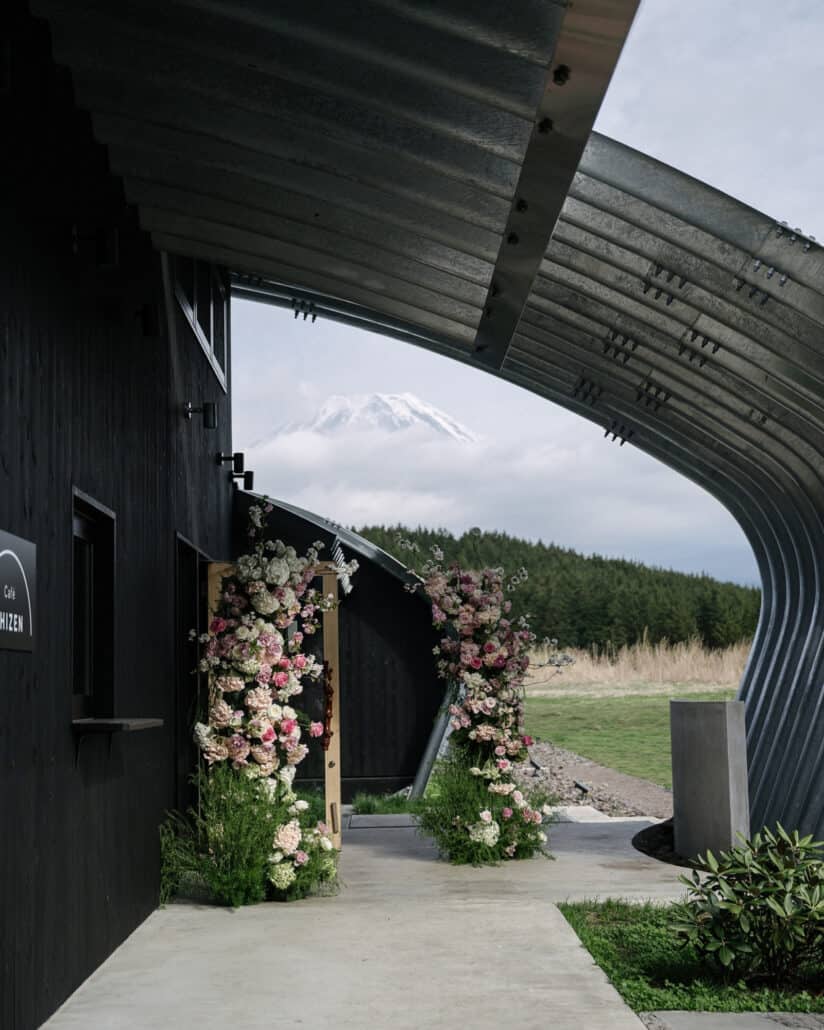
Café Shizen, which opened on the winery grounds in summer 2024, offers advice we would happily put on a wedding invitation: since you have come all the way to Fuji, take your time. For this celebration, the café closed to the public and became the couple’s reception space.
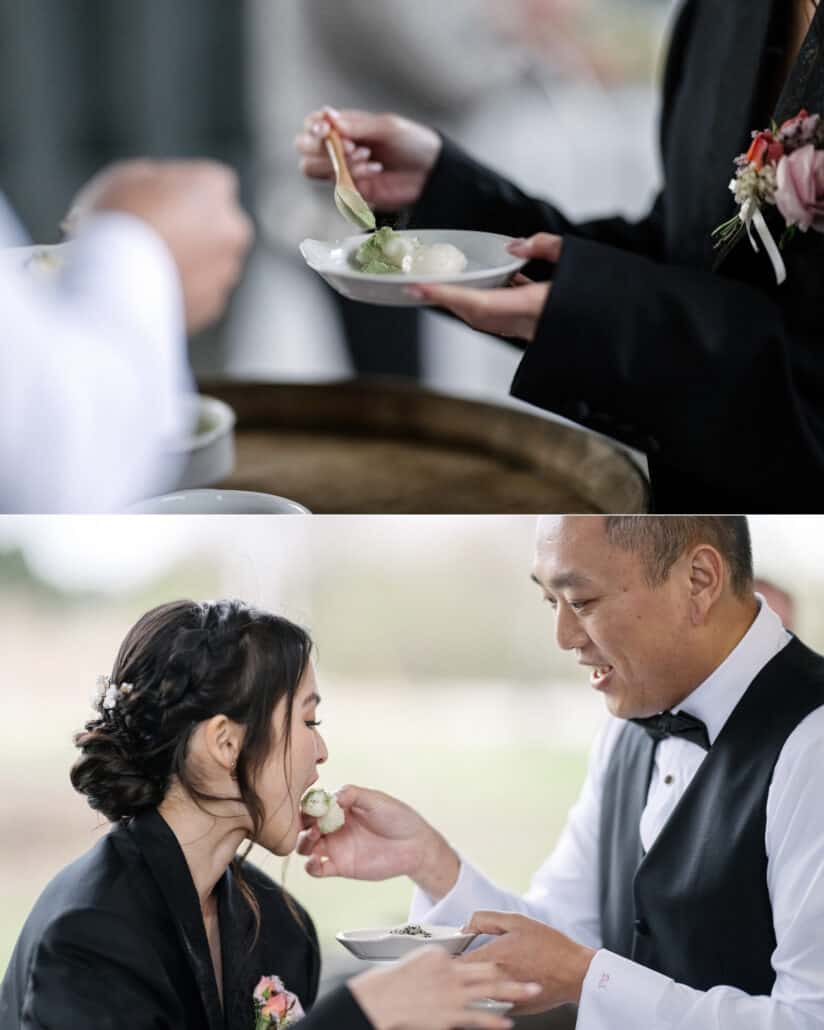
Before dinner came mochitsuki, pounding steamed rice with a wooden mallet on the lawn. A woman in kimono turned the rice between strikes. When she took the mallet herself, the encouragement came in Mandarin and English. The Japanese rhythm of yoisho carried the action along.
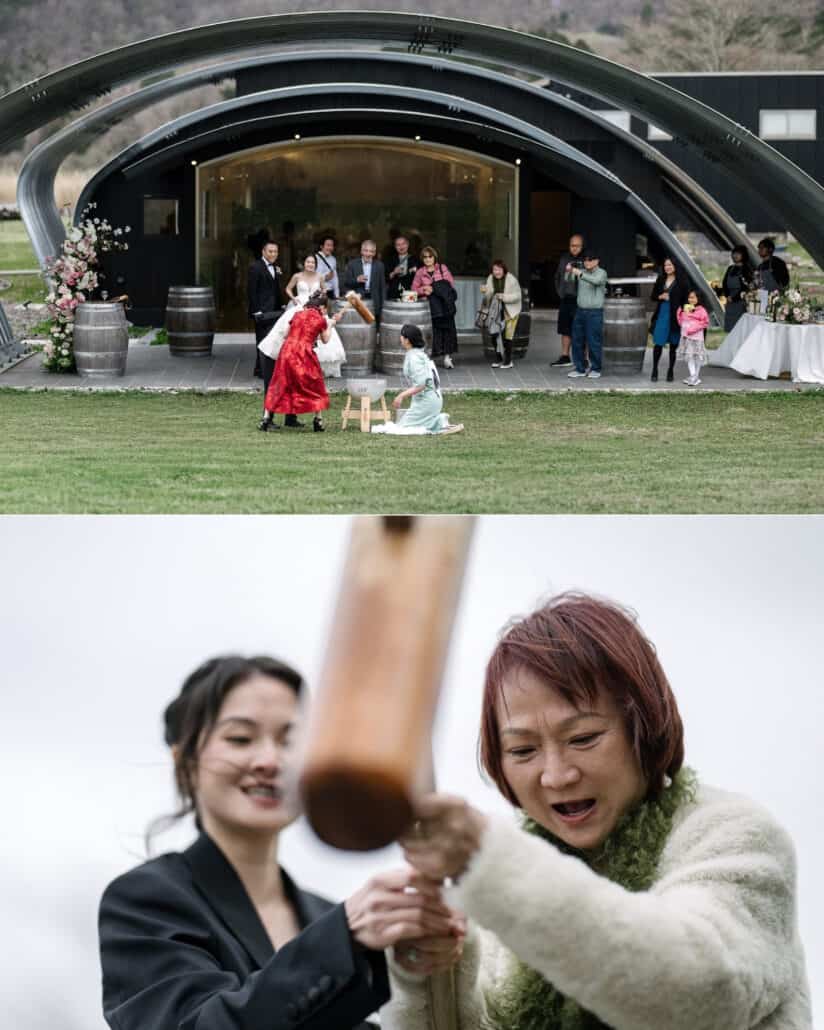
There is something especially satisfying about giving wedding guests an experience they can enter together. They have travelled with different histories, languages and degrees of familiarity with one another. Within minutes, they have a shared rhythm, a shared anticipation, and something to laugh about over dinner.
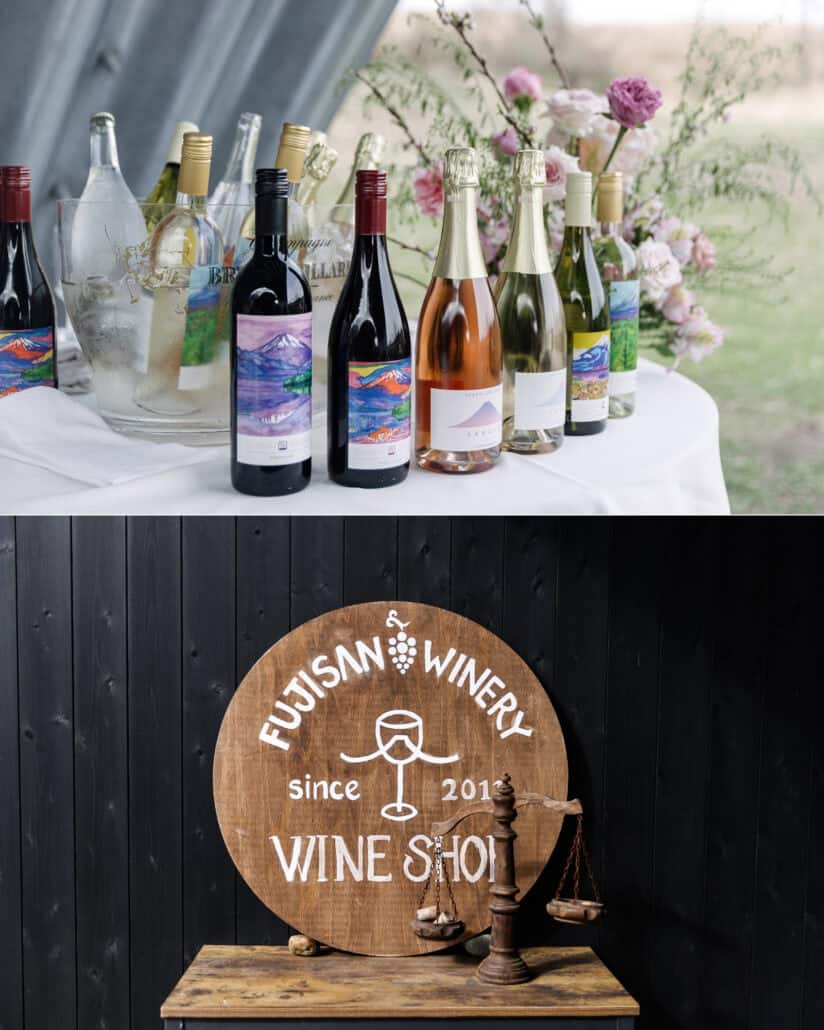
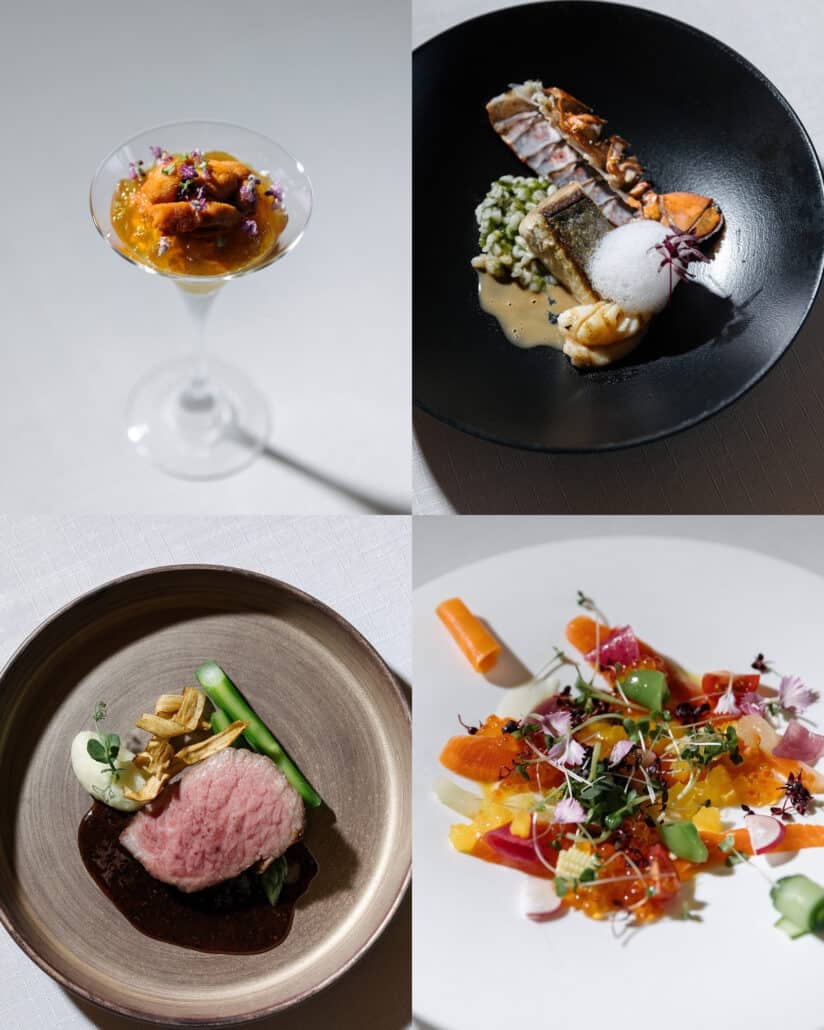
Inside the wooden vaulted hall, long tables held courses of food and the winery’s own wines, labelled with paintings of Fuji. Everyone opened a small wooden box to find a cup handcrafted in Kyoto, each one unique. These were gifts made to continue into ordinary life: a wedding remembered in the hand, perhaps years later, on a perfectly unremarkable morning.
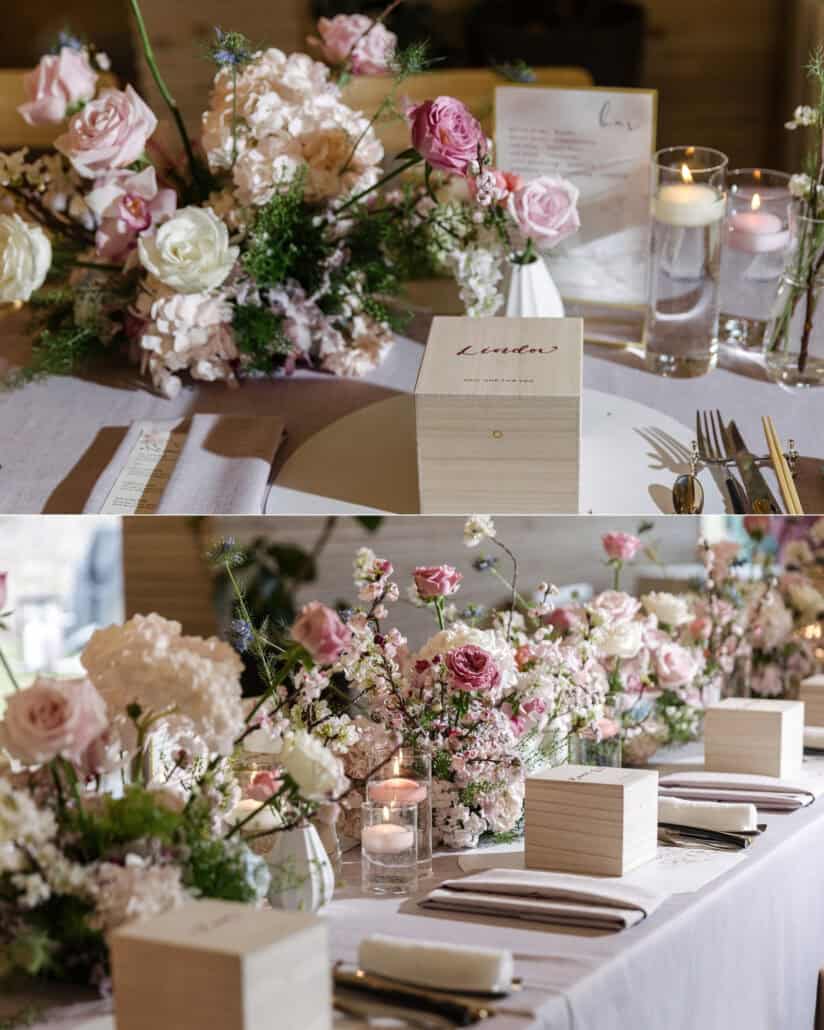
The couple’s cat had a cup too.
The Fort You Keep Building
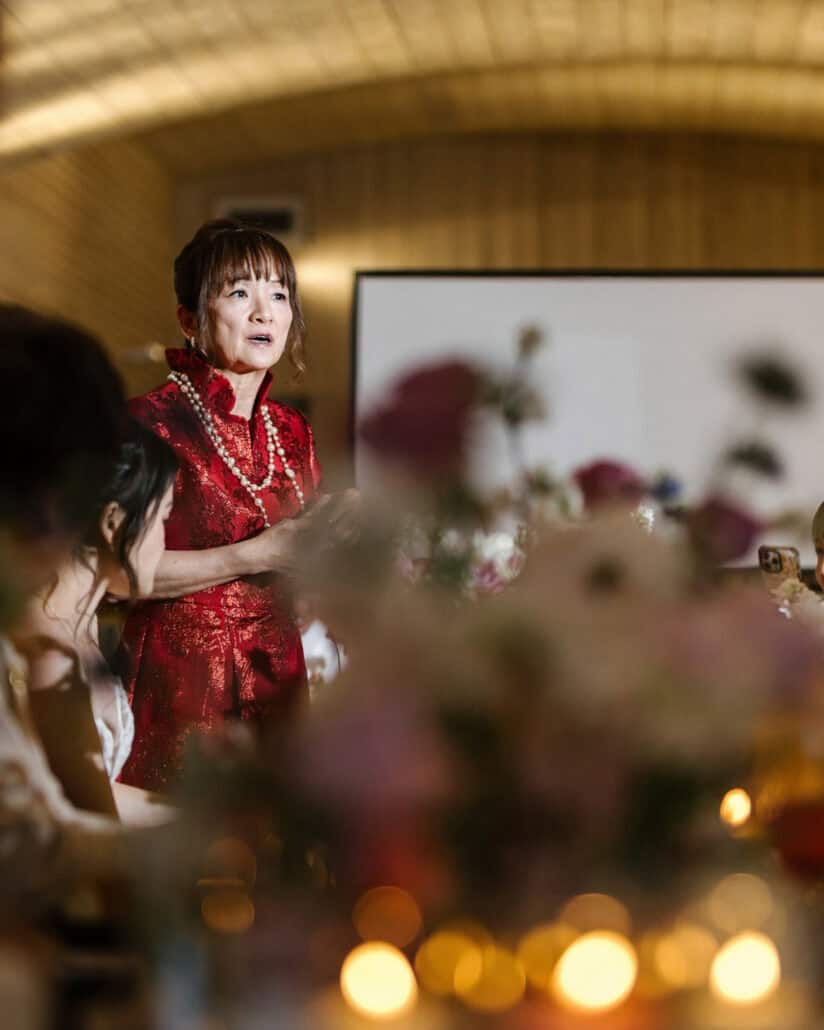
The speeches arrived between courses, giving the room time to listen, eat and return to conversation. The bride’s mother spoke in Mandarin and English, describing a daughter who had followed her own path since her teens. In the marriage, she saw laughter and grounding, each person bringing something the other could lean towards.
Of the two of them, she said, “They don’t just eat, they celebrate.”
The groom’s mother offered her wishes in Mandarin for a long life together, for growing old side by side, and thanked the bride’s parents. His sister returned to the forts she and her brother had built as children: small places that were safe, creative and fun. She was handing the fort-building over to his wife, with the understanding that sometimes it would need putting back together.
We have heard many beautiful ways of talking about marriage. This one stayed with us because a childhood fort is so particular. It is made from what is available, held together by imagination, and becomes important because of the person you let inside. A chair and a blanket can acquire the emotional dimensions of a whole country.
To hear a sister recognise that quality in her brother, and offer it forwards into his marriage, is to understand something a photograph of the two of them alone could never explain. This is why the people around a couple matter so much to our work. They carry earlier versions of the person standing before us. For a little while, those versions become visible together.
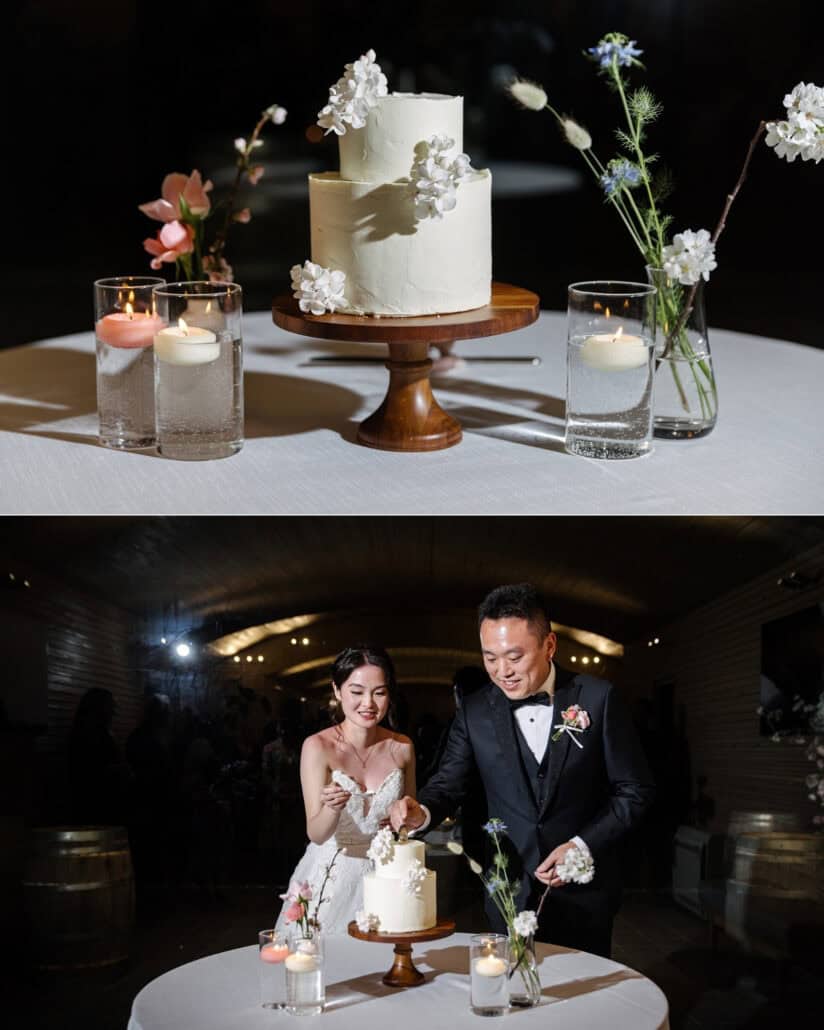
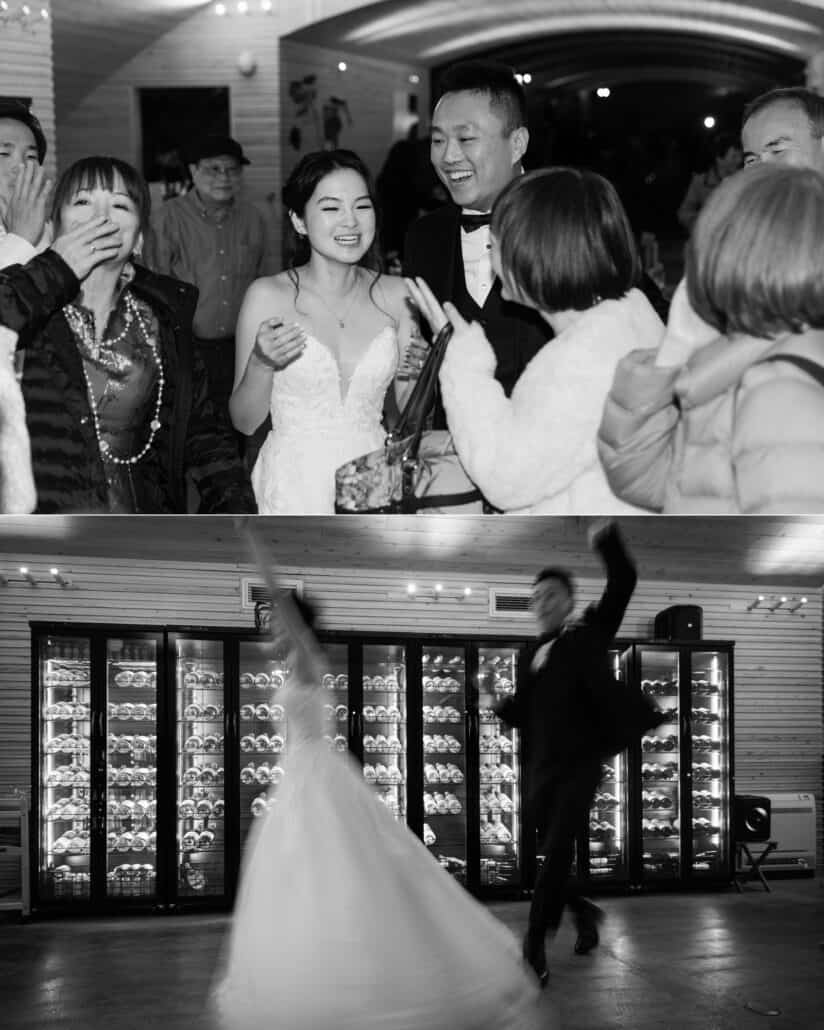
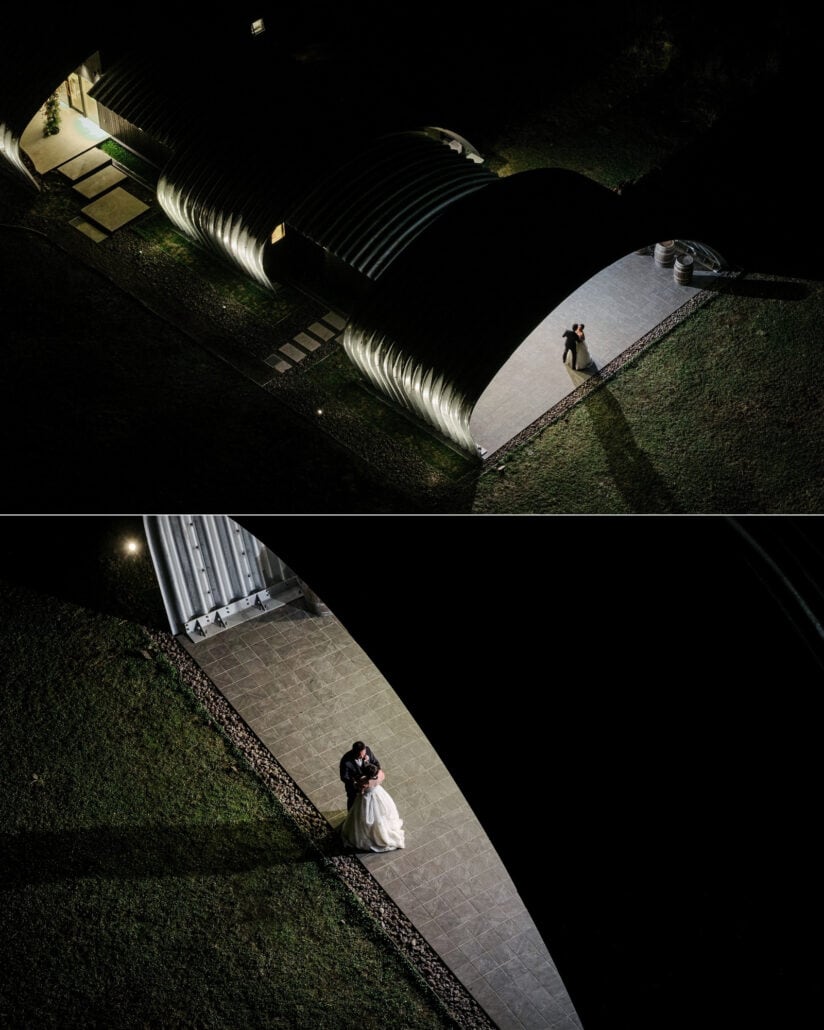
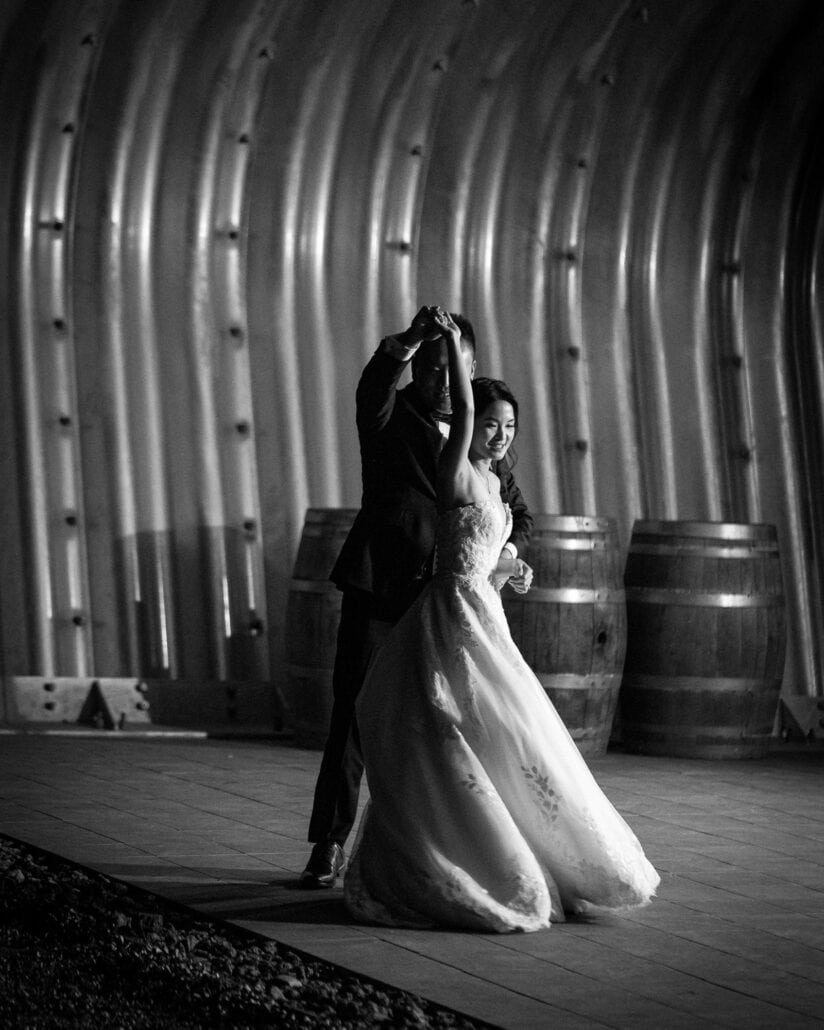
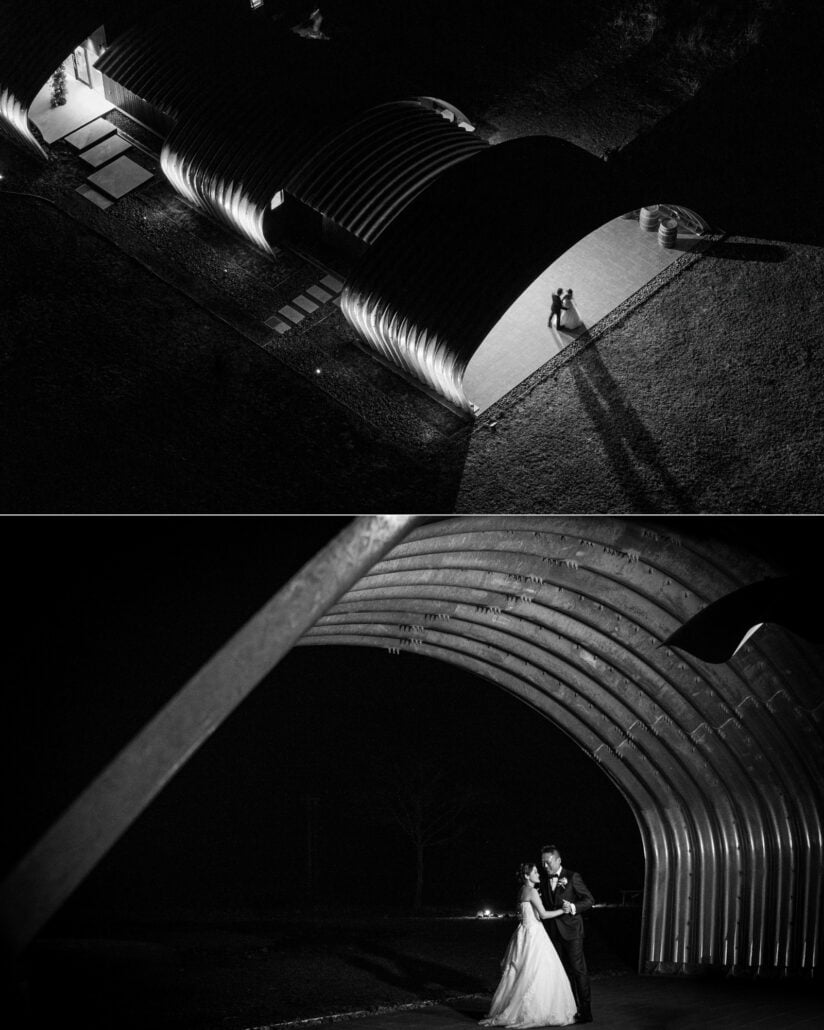
There was cake, and a first dance to Ed Sheeran and Beyoncé’s “Perfect Duet” beneath a steel vault lined with barrels. There were thanks to parents and chefs, and dancing that took the celebration into the night. Outside, the silver buildings glowed against the dark.
What the Film Brings Back
The photographs and film hold the distance between the lake and the highlands, the softness of the blossom, the movement of a veil, the pleasure of a room gathered around food. The highlight, set to “Evermore” by Generdyn, returns the couple to the landscape in which all of this became theirs.
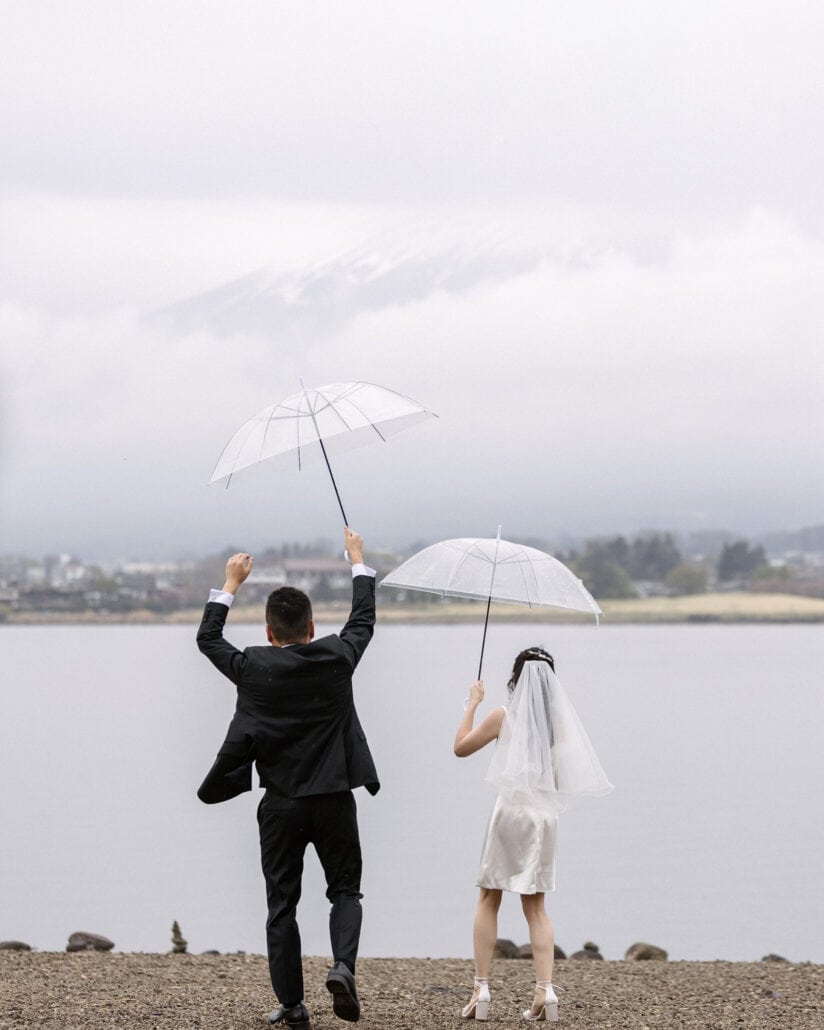
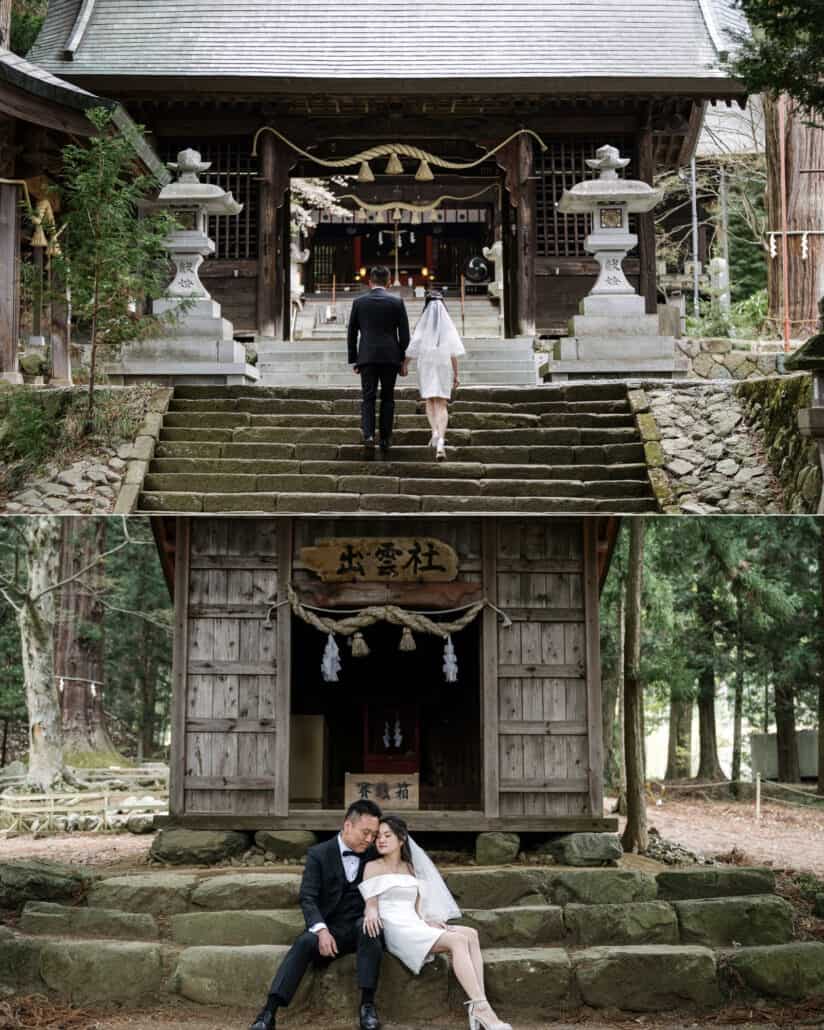
The following morning brought another kind of time together: a stream beneath cherry trees, rain on Lake Kawaguchi, and old cedars at a shrine. That quieter continuation has its own post.
For us, the image that keeps opening this wedding up is still the room getting to its feet. A father’s words about the distance between an imagined future and a real one; the sudden appearance of a mountain; dinner waiting while everybody stepped outside.
So much care goes into bringing people to a wedding. Finding a place, making the arrangements, creating the conditions in which they can relax and enjoy being there. And sometimes the reward is this: something happens that nobody could have scheduled, and all the people you love are already close enough to share it.