You can hear a bilingual wedding before you see it. Someone tells a story in English and half the room laughs. A few seconds later the translation lands and the other half laughs, a little louder, partly at the story and partly at the wait. Nobody minds. By the second speech, people have started laughing at the pause itself.
Many of the weddings we plan in Japan bring two languages into one room, and some bring four. A Japanese family and an Australian one. An American couple whose grandparents speak mostly Japanese. Friends from three continents at one table. A bilingual wedding needs a little more planning than a wedding in one language, and nearly all of it comes down to one thing: making sure nobody spends the day watching when they could be taking part.
Decide What Gets Said Twice
Not everything needs translating in full. The first decision is which moments belong to everyone, word for word, and which can be summarised.
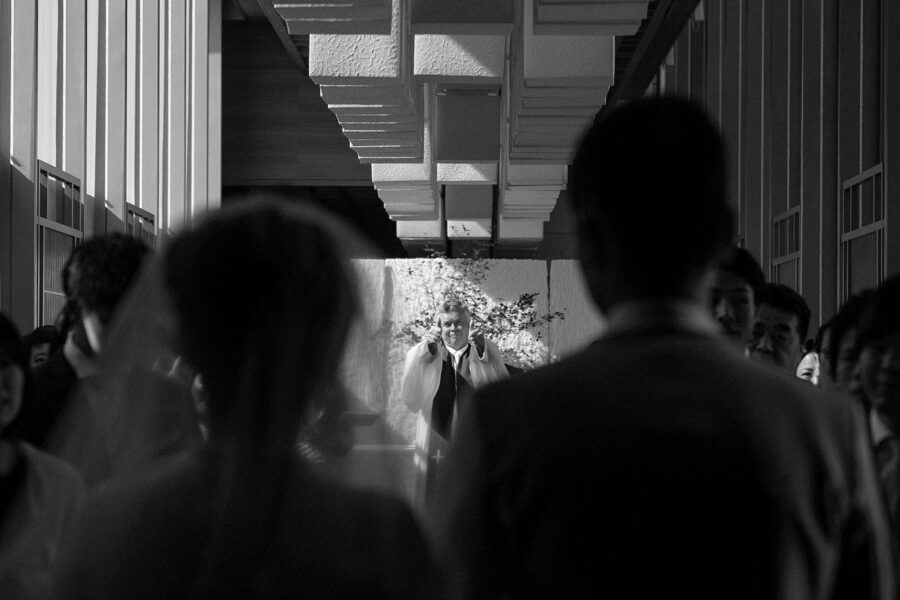
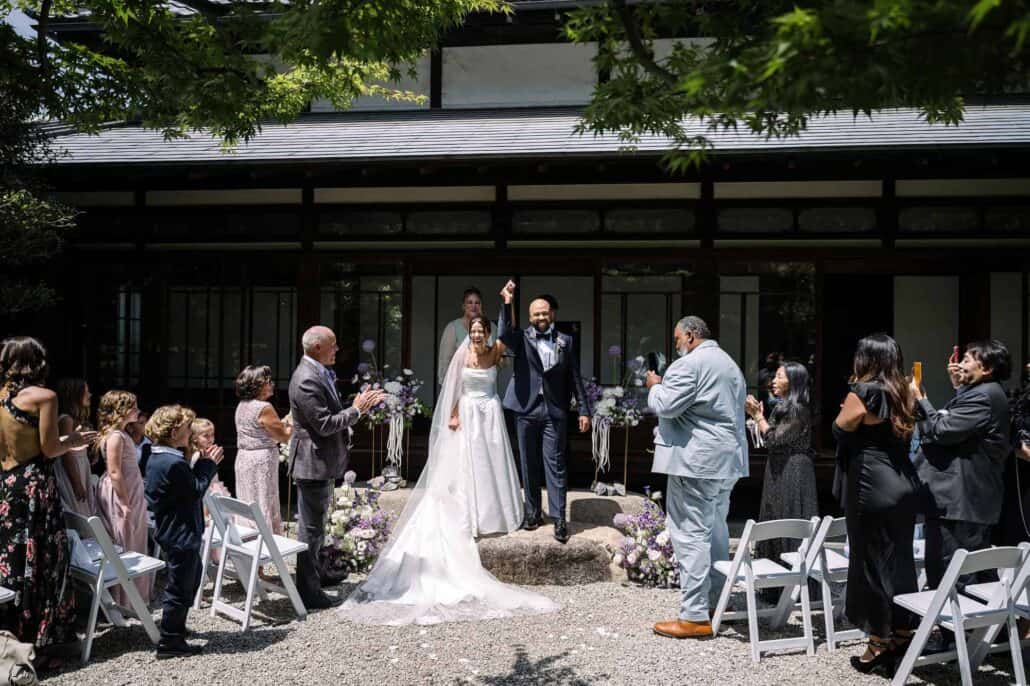
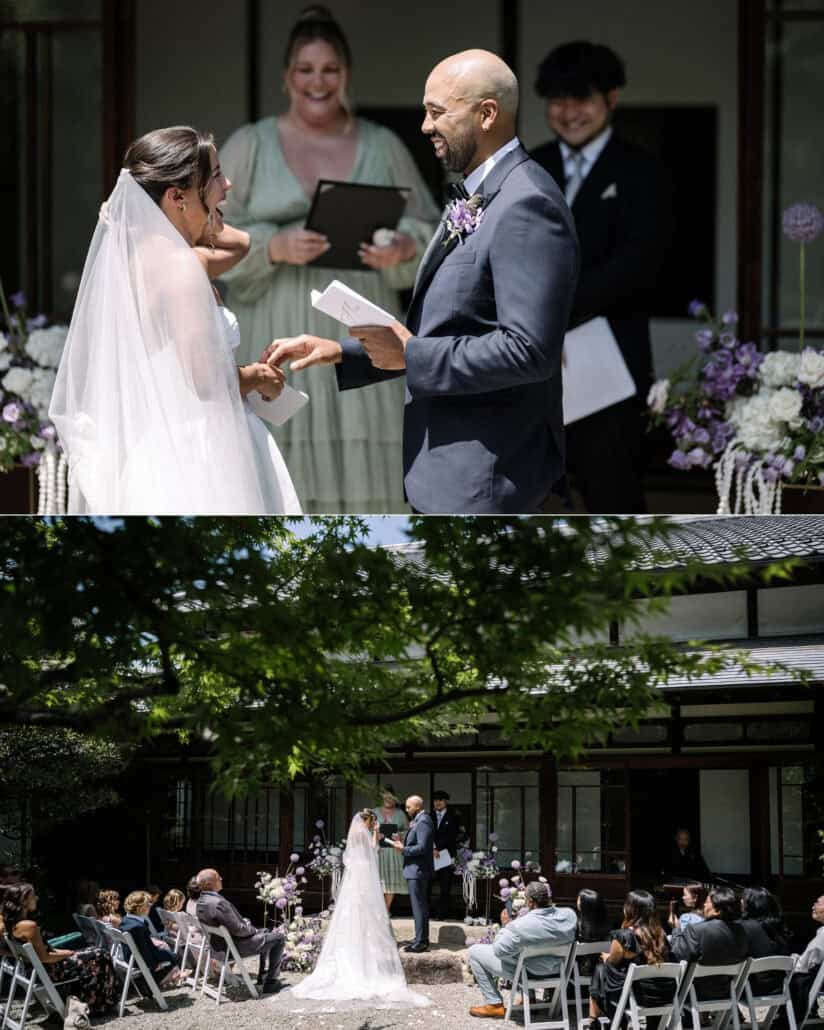
The vows usually stay whole. Some couples say them in their own languages, each to the other, with a printed translation for the guests. Others learn a few lines in the other’s language, which tends to undo the front row. The officiant’s part can be shared between two people, one for each language. We’ve seen ceremonies led that way, the words passing back and forth between them more like a conversation than a lecture with subtitles.
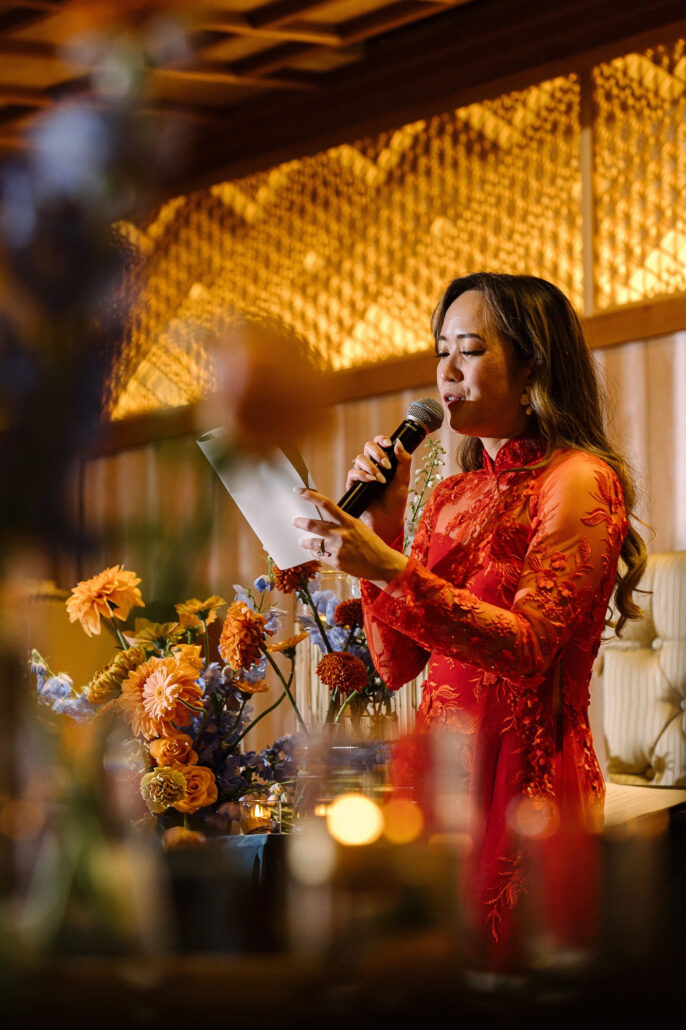
Speeches are where the time goes. A five-minute speech translated line by line becomes ten, and four speeches become most of an evening. Ask speakers to keep to a few minutes and to send their words ahead, so the translation can be prepared rather than improvised. A summary in the second language often works better than a full translation. The feeling carries, and the room keeps its rhythm.
Who Translates Matters
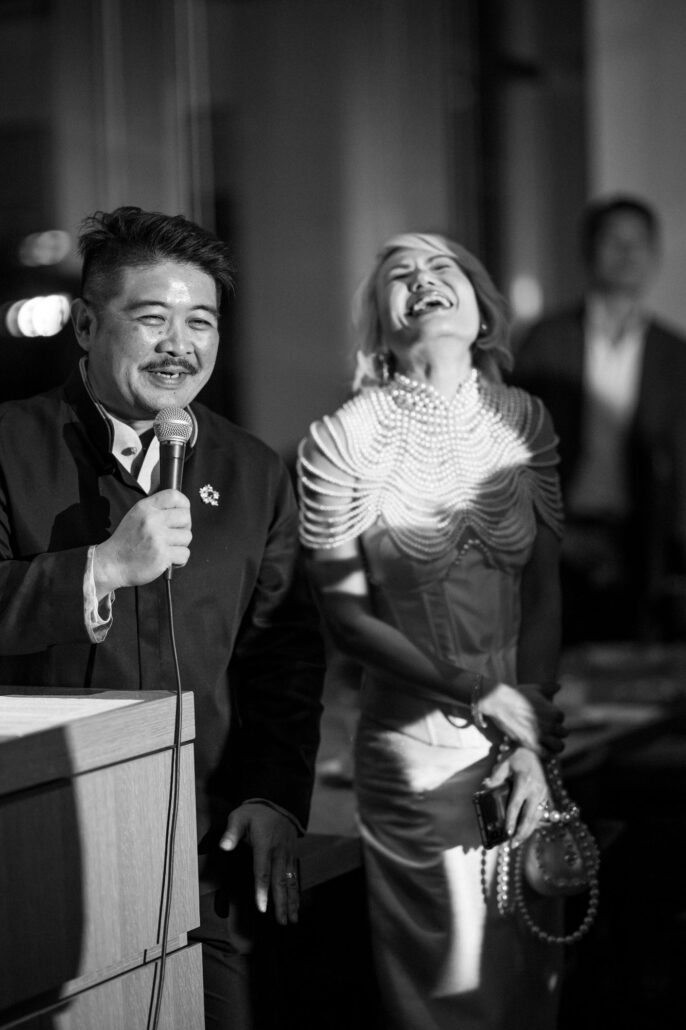
It’s tempting to ask a bilingual cousin. Don’t. Translating a father’s speech while trying to enjoy your own family’s wedding is a job, and a hard one. A professional interpreter, or a bilingual master of ceremonies who can carry the evening in both languages, gives everyone their evening back, the cousin included.
Brief them like a guest of honour. Send the order of the day, the names and how to say them, the stories likely to come up and the private jokes that need a word of context. An interpreter who knows that the incident in Lisbon is a story everyone loves will translate it as one.
What Travels and What Doesn’t
Puns rarely survive translation. Wordplay, rhymes and references to one country’s television disappear in the gap. Stories travel well. A story about the first time she met his parents, told plainly, works in any language, because the room laughs at the situation rather than the words.
Japanese weddings have their own etiquette for speeches, too. There’s a tradition of imi kotoba, words avoided at a wedding because they suggest an ending: to cut, to part, to return, to break. Doubled words, such as “again and again”, are traditionally left out as well, because they hint at marrying more than once. Most international guests will never notice. A Japanese grandmother will. A good interpreter steers around them without being asked, and anyone writing a speech in Japanese should know they’re there.
At many Japanese weddings, the evening closes with a speech of thanks from the groom’s father on behalf of both families. Couples with a Japanese family can keep it, and it can be given in two languages or by both fathers. It’s often the moment when the two families stop being guests at the same event and start speaking to each other.
The Details Nobody Sees
Most of a bilingual wedding is planned in places guests never notice. Put a bilingual friend at every table where the languages mix, so the conversation has a bridge. Print the menu in both languages, especially at a kaiseki dinner, where every course has a name and a reason. Send both families the shape of the day in their own language a week before, so nobody spends the ceremony wondering when to stand.
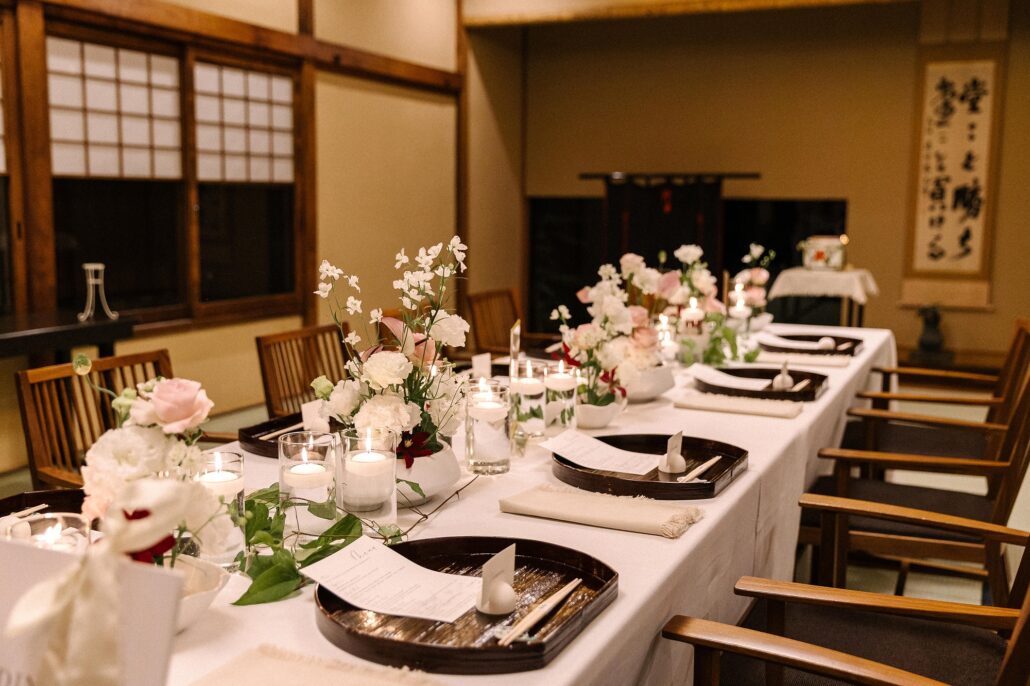
Screens and projected subtitles suit a hotel ballroom. In a ryokan or a garden they rarely suit the room. A card on each chair with the vows in both languages does the same job, and it goes home in a pocket.
The Moments That Need No Translation
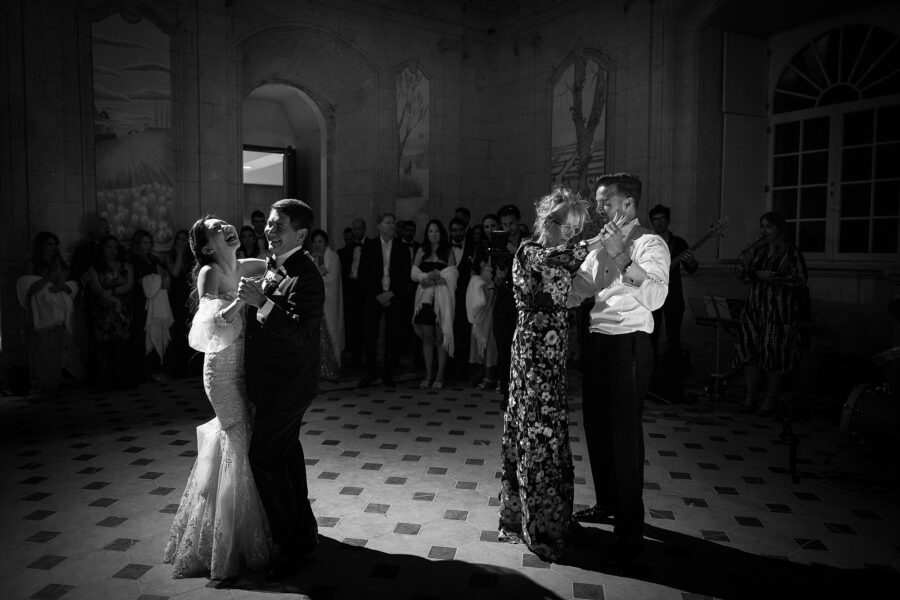
For all the planning, the moments people remember from a bilingual wedding are usually the ones nobody translated: two families laughing at the same thing for different reasons, a grandmother and a best friend holding each other with barely a word in common, a toast that needs no explaining.
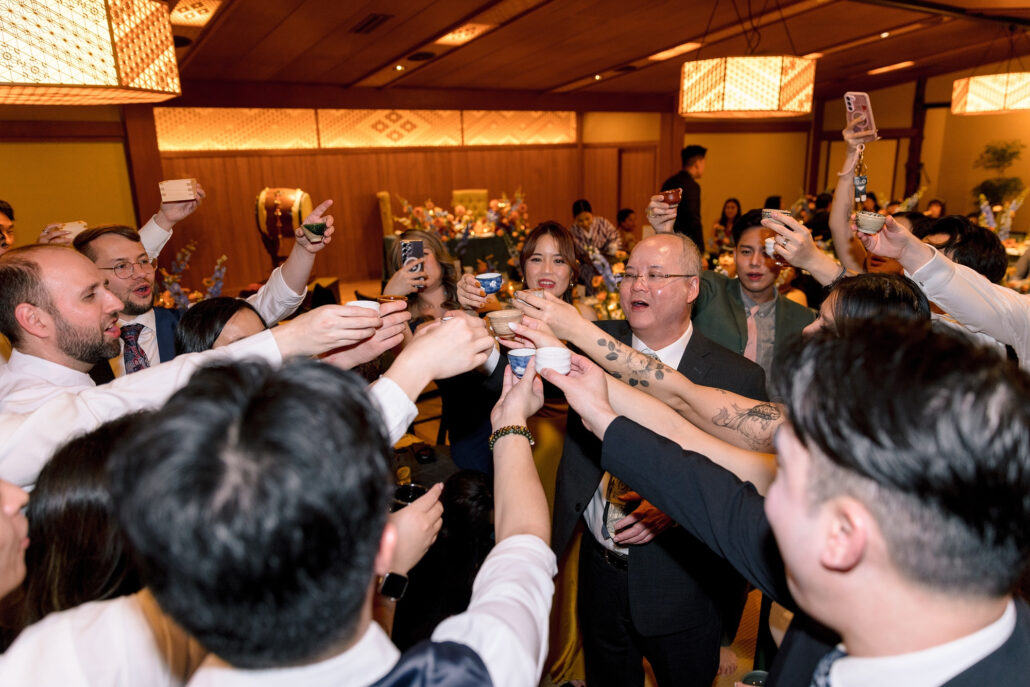
Plan the words carefully. Then leave room for the moments that don’t need any.