Originally published 27 March 2019. Updated November 2026. We’ll update this guide to LGBTQ weddings in Japan when the Supreme Court rules.
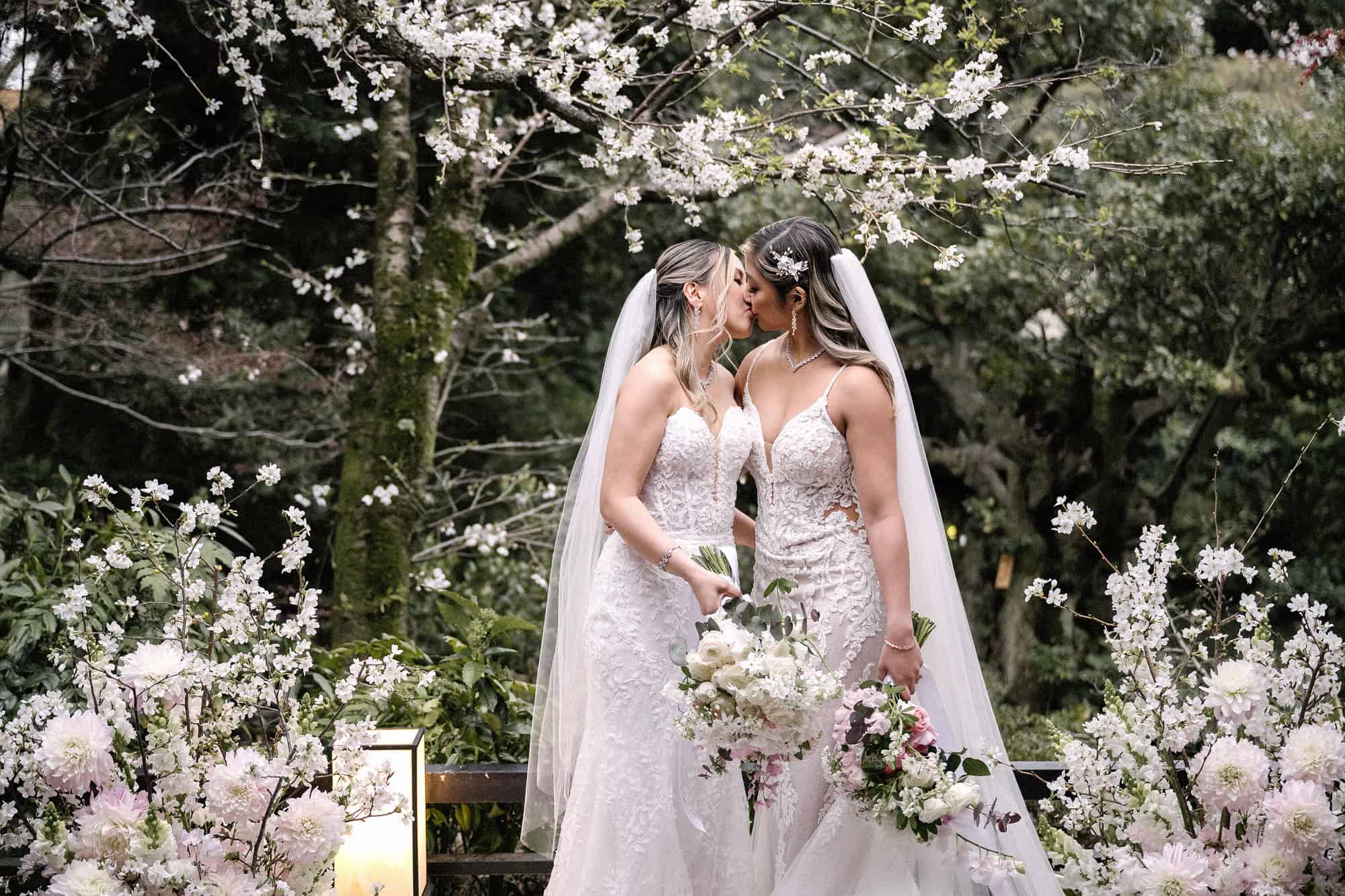
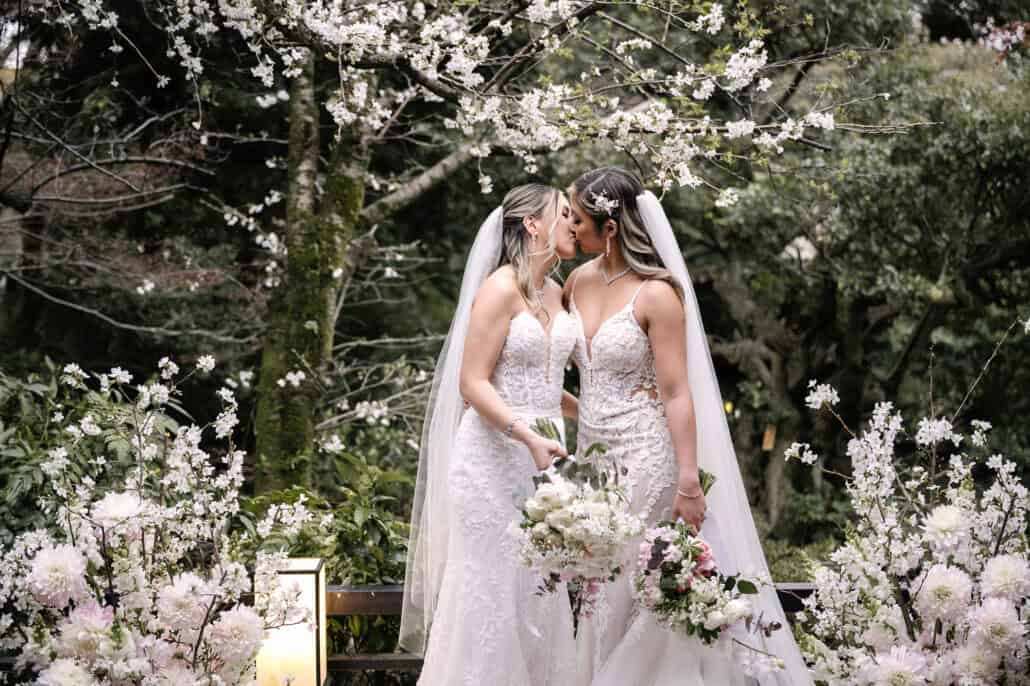
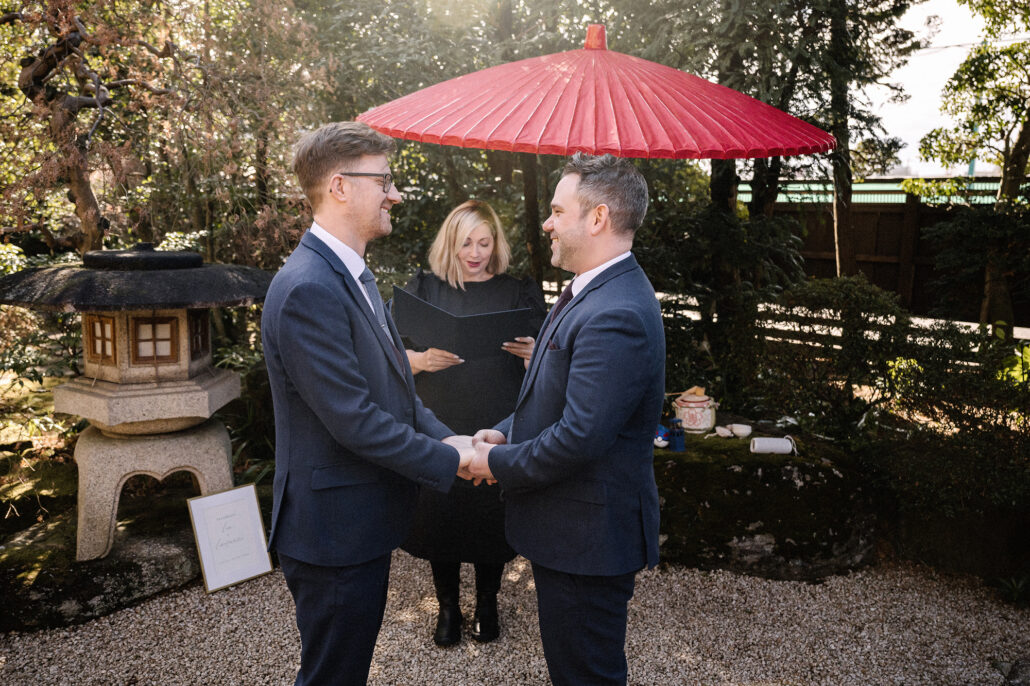
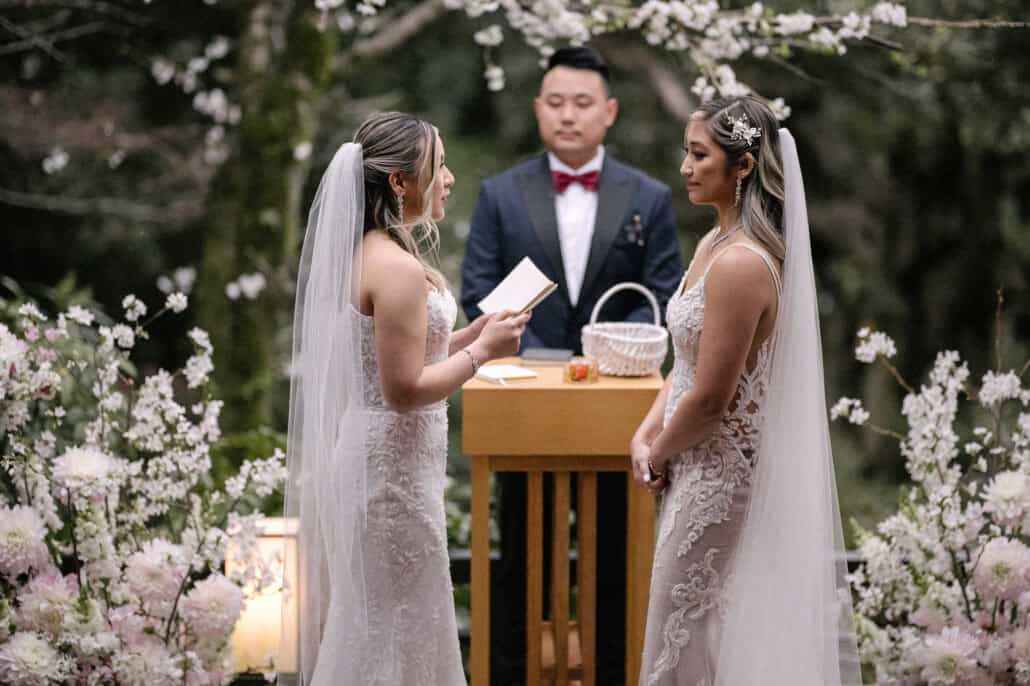
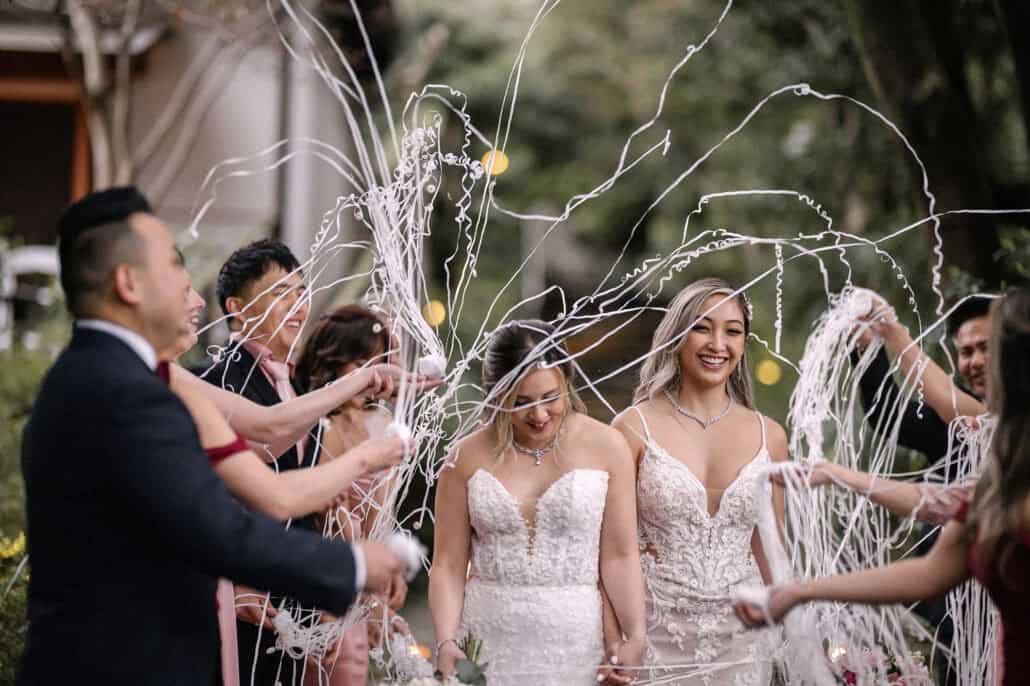
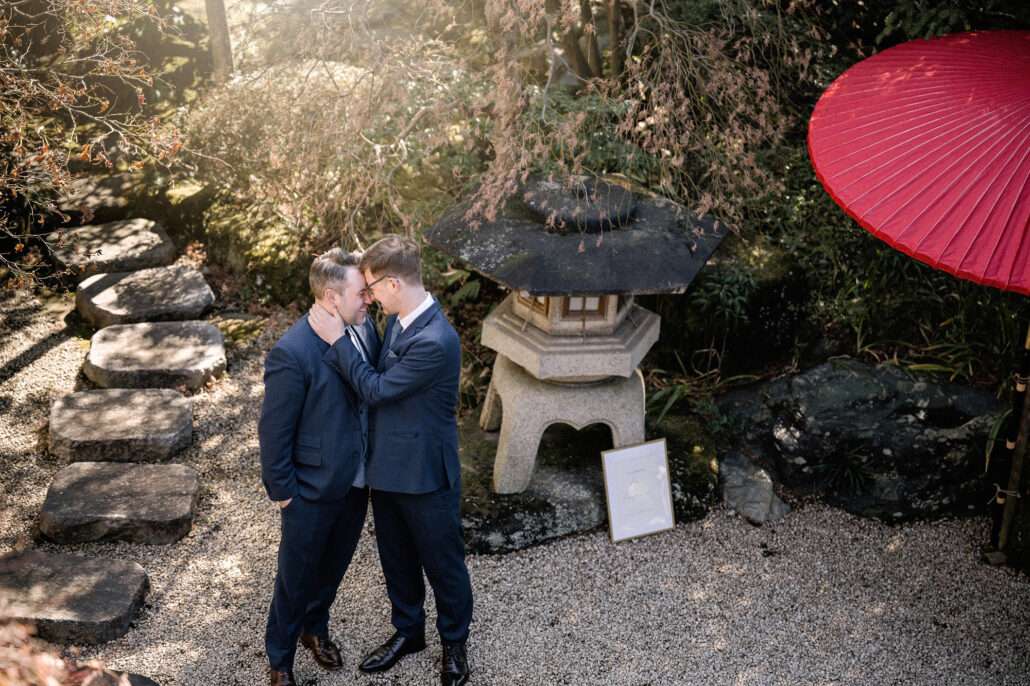
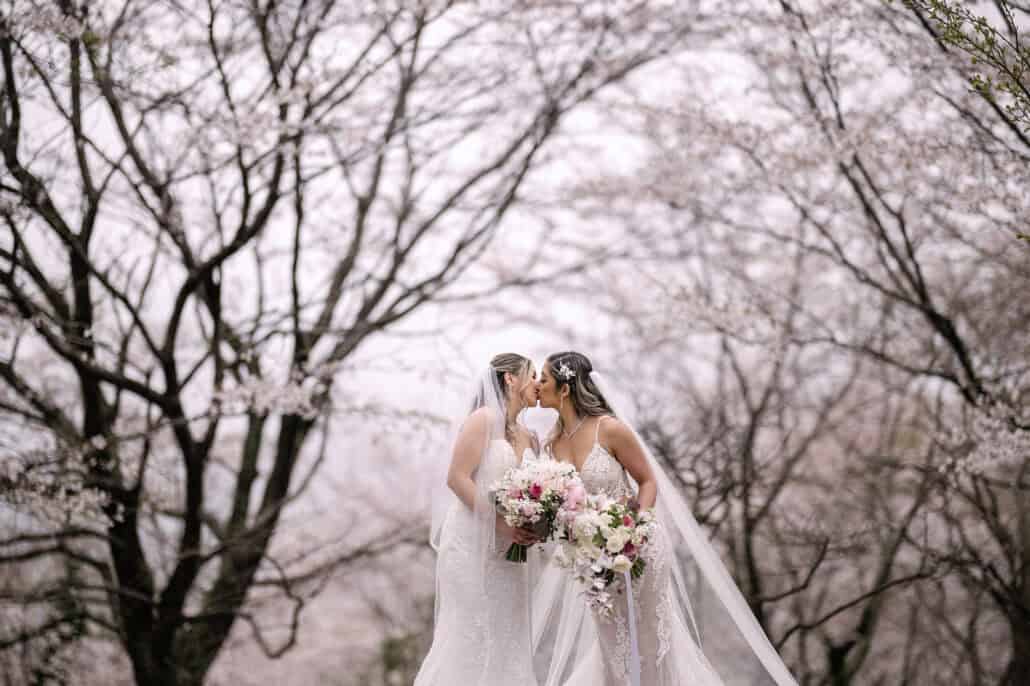
At Jinya, in cherry blossom season, each of two brides read her vows from a small book of her own, and afterwards their guests made an arch of arms for them to walk beneath. In Kawagoe, on Valentine’s Day, two grooms made their promises under a red parasol in an old garden, then sat down to tea with the two friends who’d come with them. Neither marriage could be registered in Japan. Neither wedding needed it to be.
A ceremony in Japan carries no legal weight for anyone: two brides, two grooms, or a bride and a groom. Every wedding here celebrates a decision already made. The law decides who can register a marriage in Japan, and for two women or two men that question is before the country’s Supreme Court. What a wedding holds is something else: who came, what was promised in front of them, and where the photographs end up.
What LGBTQ Couples Can Do in Japan Today
- Hold your wedding here: yes. A ceremony of your own and a celebration are open to every couple, and the day is yours to shape.
- Marry legally: at home, or in a country that allows it. That’s the route most of our couples take, and Japan gets everything else.
- Register a marriage in Japan: not for now. Only a man and a woman can register a marriage here today, and that’s the law before the Supreme Court.
- Partnership certificates: for couples who live in Japan. Many cities and prefectures issue them. They aren’t marriages, and they’re for residents rather than visitors.
Marriage Equality in Japan: Where the Law Stands
We first wrote this guide in March 2019, to say that Japan was finally a growing choice for LGBTQ couples marrying away from home. “As it should be,” we said then, and that part hasn’t changed. The country around the weddings has. Partnership certificates, first issued by two Tokyo wards in 2015, now cover places where more than nine in ten people in Japan live, and the question of marriage itself has reached the Supreme Court.
Six cases brought by couples from 2019, in Sapporo, Tokyo, Nagoya, Osaka and Fukuoka, have reached the high courts. Five of the six rulings found the current law, which allows marriage only between a man and a woman, unconstitutional. The sixth, the Tokyo High Court’s second, in November 2025, upheld it.
| High court | Ruling | Finding |
|---|---|---|
| Sapporo | 14 March 2024 | Unconstitutional |
| Tokyo (first case) | 30 October 2024 | Unconstitutional |
| Fukuoka | 13 December 2024 | Unconstitutional |
| Nagoya | 7 March 2025 | Unconstitutional |
| Osaka | 25 March 2025 | Unconstitutional |
| Tokyo (second case) | 28 November 2025 | Constitutional |
At the centre of every case is a sentence from 1946. Article 24 of Japan’s constitution says marriage “shall be based only on the mutual consent of both sexes”. The consent and equality language in the occupation’s draft that February came from Beate Sirota Gordon, then 22, who had lived in Tokyo as a girl. The draft said marriage would be founded “upon mutual consent instead of parental coercion”: two people would choose each other, and their families would no longer choose for them. Eighty years on, the courts are asking whether the same words leave two women or two men outside. In 2024 the Sapporo High Court read them as words about two people: the freedom to marry, it said, concerns a partnership between two human beings, and protects every couple equally. The clause was written to protect a choice, and a choice is what each couple in this guide brought with them.
On 25 March 2026, the Supreme Court sent all six appeals to its Grand Bench, all fifteen justices, which is where Japan decides its largest constitutional questions. It will be the Court’s first ruling on whether two men or two women can marry. As of November 2026, no hearing date has been announced, and a judgment could come in 2027. Nobody outside the Court knows what it will decide. For couples who live in Japan, some law has already moved: in September 2025 the government added nine more laws under which partners can be treated as being in a marriage-like relationship. The couples who filed the first of the six cases, in 2019, are still waiting.

What a Supreme Court Ruling Would Change
If the Court finds the law unconstitutional, parliament would still need to change it, and that can take time. A ruling would matter most to couples who live in Japan, who could then register a marriage where they live. For couples flying in to marry, it would change where two people may sign.
We’ve had that phone call before. On 26 June 2015 we were on a rooftop in Puerto Vallarta, in Mexico for a wedding the following week, watching rainbow flags go up across the town before we’d quite worked out why. Then the phone rang. It was a couple we were working with on their wedding in Atlanta that September, and the United States Supreme Court had just ruled that the right to marry was theirs too. “We were always still going ahead regardless of the ruling,” they told us. “But this is momentous. It’s going to make the wedding even more incredible.”
Going ahead regardless, and still momentous. A wedding doesn’t need the law to be whole, and the law still matters. We’d never ask anyone to choose between the two.
Couples who can register a marriage in Japan mostly sign at home anyway, as we advise, because the paperwork here can take several days out of a trip. Our guide to getting legally married for a wedding in Japan explains how it works. Planning for 2027 or 2028? Plan as the law stands today. If it changes before you fly, you’ll have one more choice to make, never one less.
A Ceremony of Your Own: LGBTQ Wedding Ceremonies in Japan
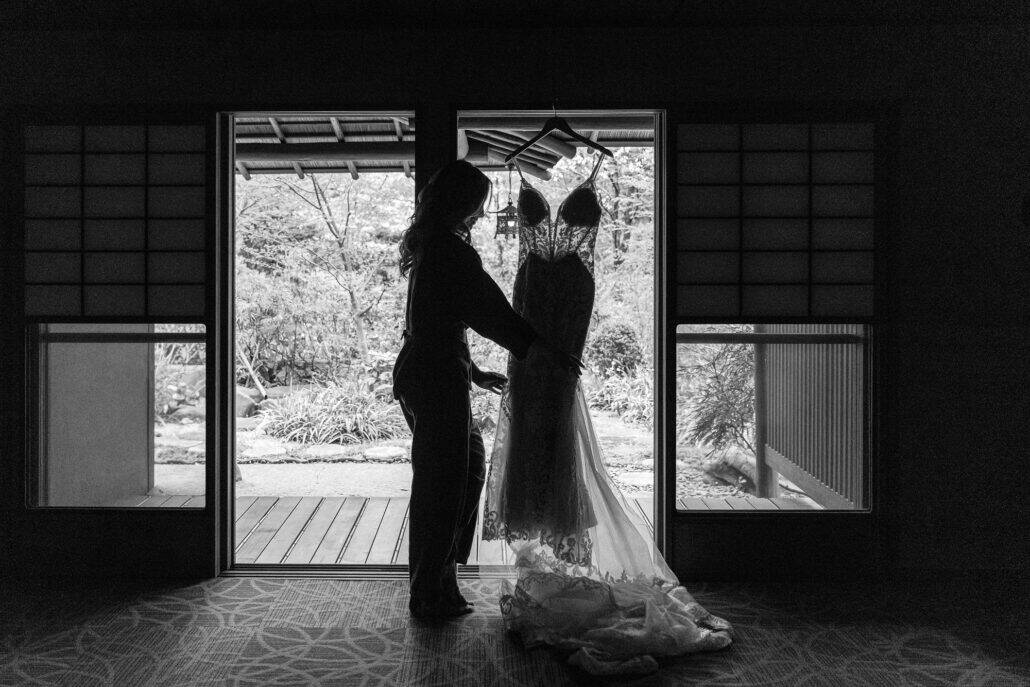
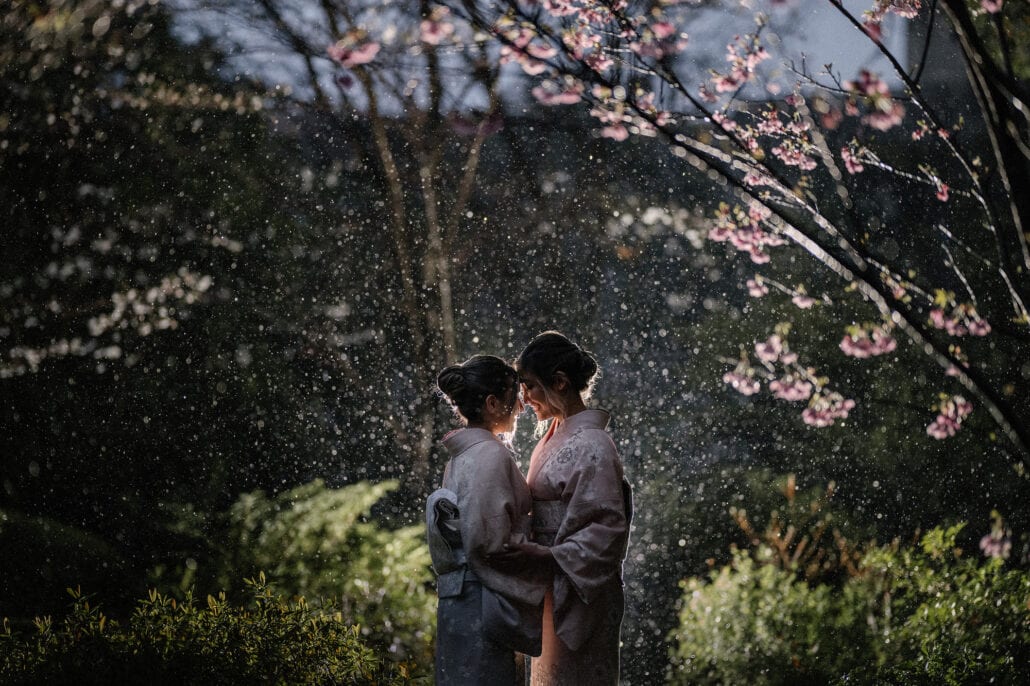
The weddings we plan for two brides or two grooms are ceremonies of their own, led by someone they choose, in whichever languages their families speak. At Jinya, the brides had their hearts set on cherry blossom, in a spring that wouldn’t settle: the forecasts kept moving. So Dee and the florists built branches of real blossom into the ceremony itself, where the season couldn’t be late, and let the garden come into flower in its own time. It did. A violin duo played and bridesmaids in burgundy and red stood close. While they got ready, someone fastened a pearl necklace for one of them in a quiet room, and on one afternoon of the two days they walked the garden in pastel kimono. A kimono’s weight slows a walk, and a garden you’ve already seen becomes a different place. That evening a banquet hall full of family and friends turned the dinner into a party.
A shrine is a different matter, because each shrine decides for itself. In 2023 a shrine in Hyōgo held a Shinto wedding for two grooms, its priest shaping the rite for them. So we ask the shrine on your behalf before a date is set, and our guide to a Shinto wedding in Japan explains how the ceremony works.
Will We Be Welcome?
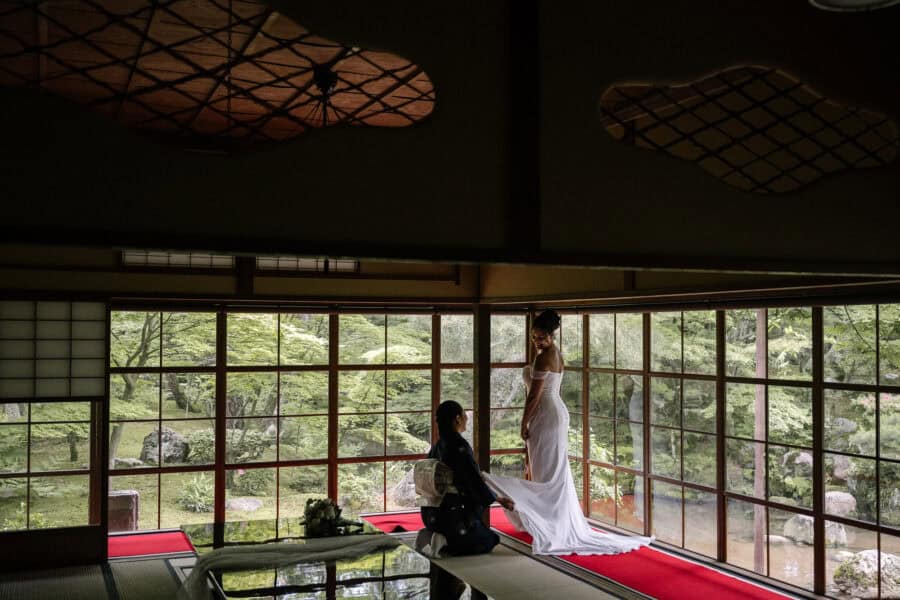
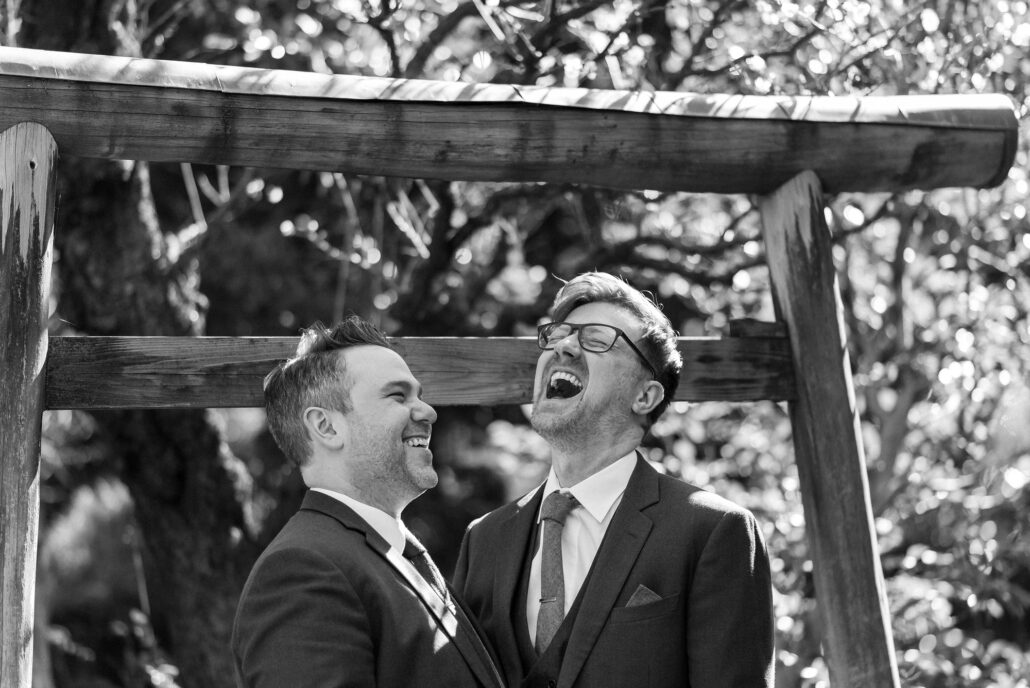
It’s the question under every other one. In Kawagoe, the house answered it. Two grooms from Northern Ireland had asked for a tea ceremony “for all of us”: a bowl for each of the four, rather than a rite for the couple while their friends watched. Tantoku’s okami, the woman who keeps the house, led it herself. Dee had told them her service was among the finest and most sincere we’d been offered anywhere. At a wedding like this, the people in the room are the whole record, and these two had made their only guests part of the rite.
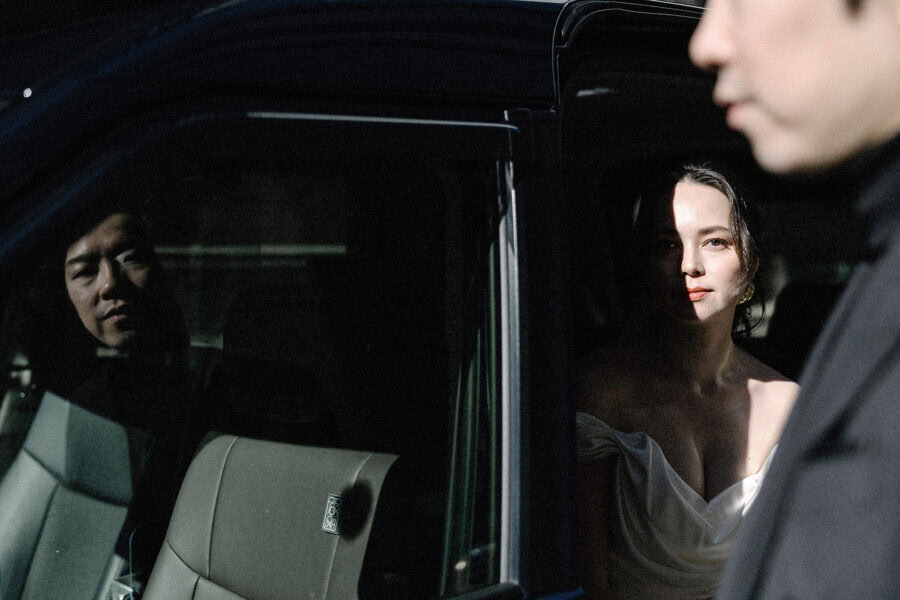
Their wedding in old Kawagoe had been a long time coming. They booked in December 2021, when Japan was closed to visitors and would stay closed for most of another year, and kept faith with a country they hadn’t yet been allowed to see. Their brief asked for “a garden quite traditional but ending in a sky bar”. The day ended in a Shibuya crowd instead, which gave them the old-to-new contrast anyway. We still miss their accents. On the day we gave them a print of a map marked with the garden’s coordinates. It’s framed in their living room now, and it “means the world to us”, they wrote. They asked for the same map on the cover of their album, and asked us to choose its photographs ourselves.

What a Proposal Carries Home
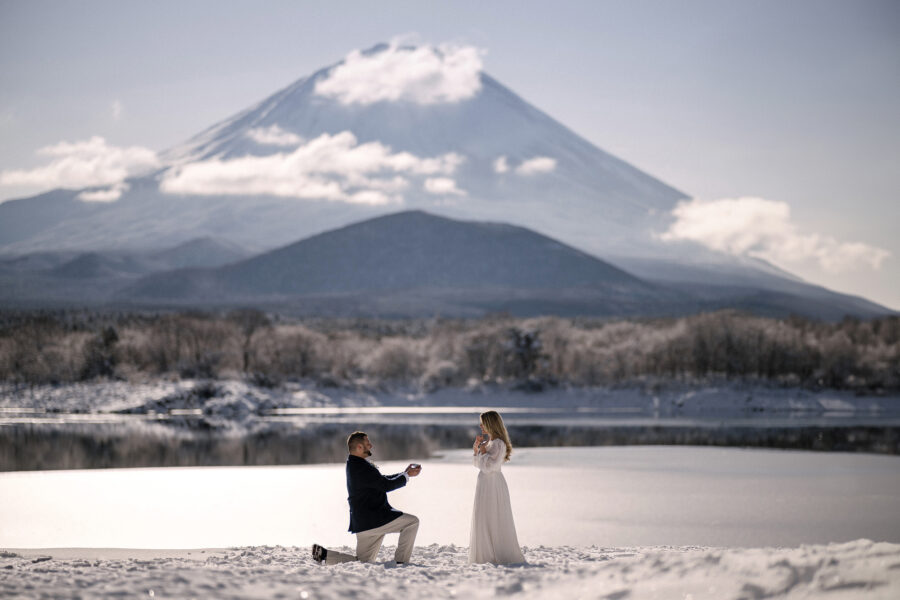
Some weddings start with a question, and one of ours took the best part of a year to prepare. A woman from the UK planned it with us for the girlfriend she’d met five years before, to the day: a morning at Tenku no Torii above Lake Kawaguchi, her girlfriend unaware of the proposal and of where they were flying. Fuji was for the girlfriend, who had always wanted to see Japan, and, in her words, “a nod to her family”, who love to hike things. She asked at the gate on the hill. At Lake Shoji afterwards, the mountain came out of the cloud.
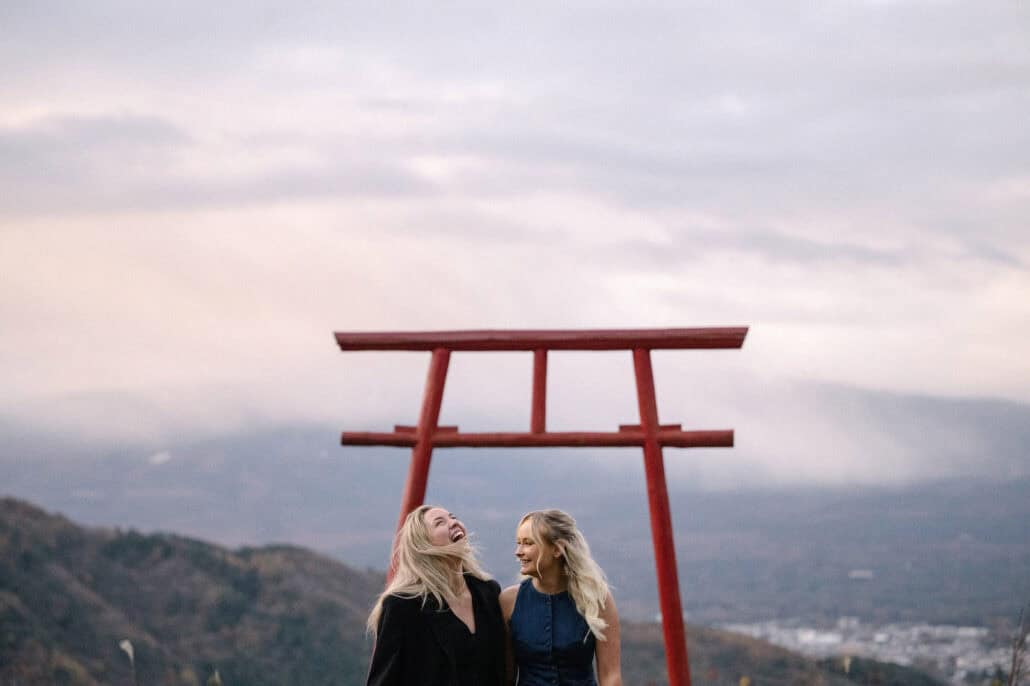
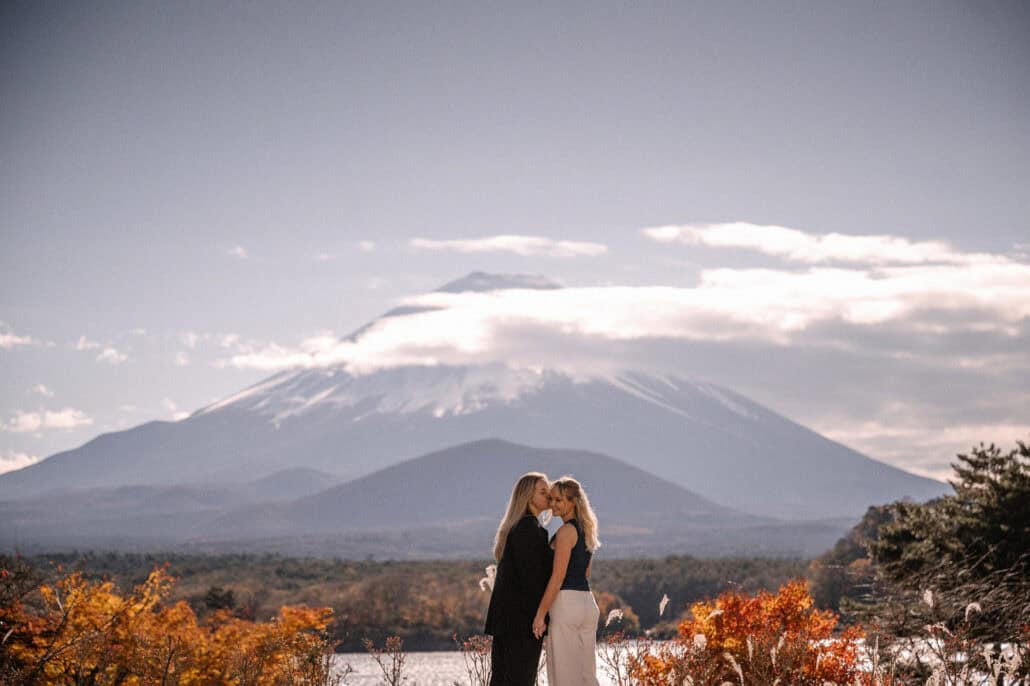
That Christmas, the photographs were the presents. Their grandmothers, at 80 and 92, were delighted, and the prints went up on their parents’ and grandparents’ walls.
A register records that a marriage took place, and one day Japan’s may record theirs.
What a register can’t record is who was glad.
At Jinya it was a banquet hall of family and friends, and in Kawagoe two friends each handed a bowl of tea. After the proposal, it was two grandmothers who put the photographs on their walls.
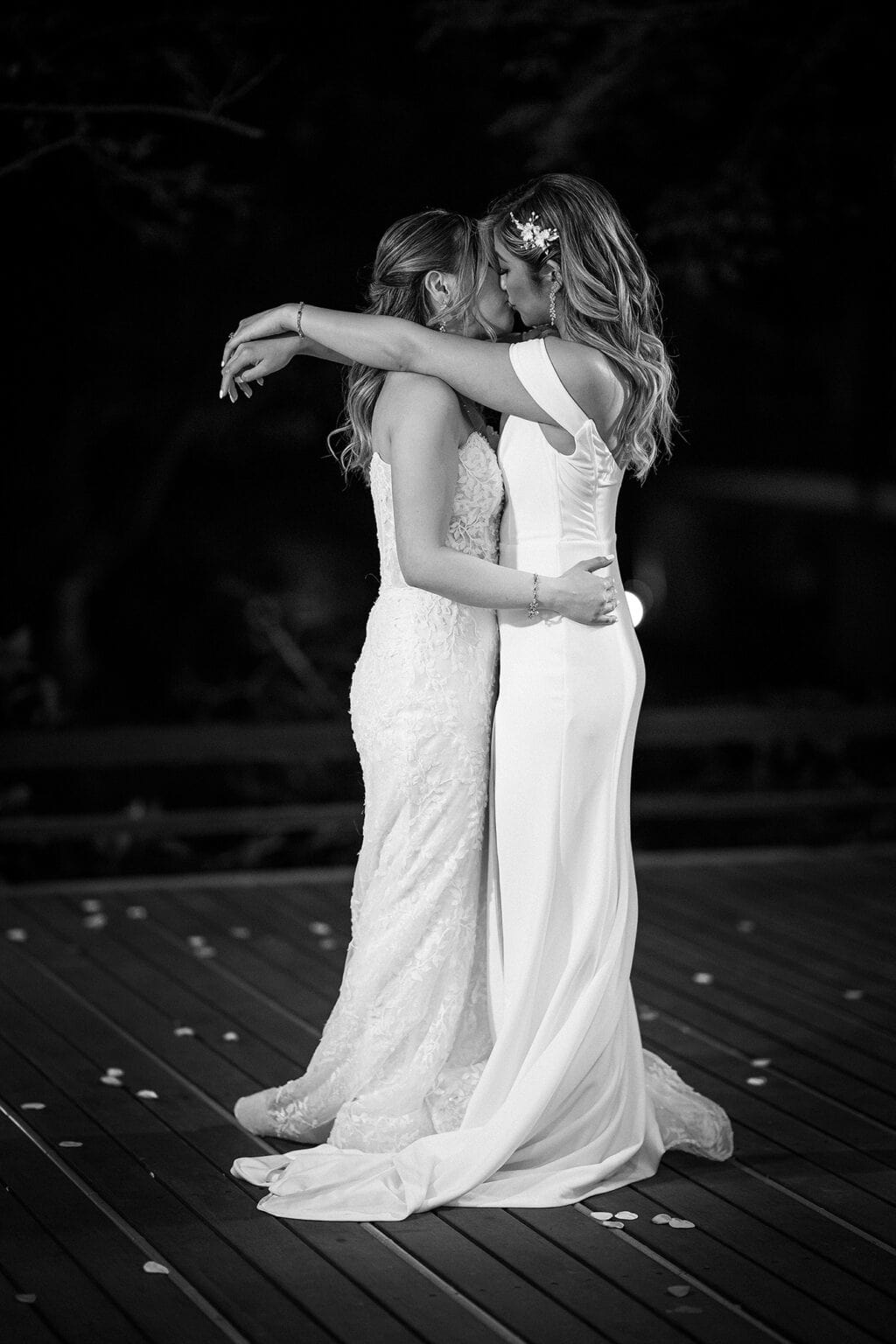
If the law changes, two brides or two grooms will have one more thing to decide: where to sign. Everything else is already theirs.
Quick Answers About LGBTQ Weddings in Japan
Can we have an LGBTQ wedding ceremony in Japan?
Yes, and it’s open to every couple. A ceremony in Japan carries no legal weight for anyone, so our couples marry legally at home or in a country that allows it, and the wedding here is the celebration: a ceremony of your own, led by someone you choose, in the place you love.
Can two men or two women legally marry in Japan?
Not today. City and ward offices accept marriage notifications only from a man and a woman, and the question is before Japan’s Supreme Court, which sent six appeals to its Grand Bench in March 2026. Our Japan wedding guide covers the legal side for every couple.
When will Japan’s Supreme Court rule on marriage equality?
No date has been set. As of November 2026, the Grand Bench has announced no hearing, and a judgment could come in 2027. If it finds the law unconstitutional, parliament would still need to change it.
Can visiting couples get a partnership certificate in Japan?
No. Partnership certificates are issued by cities and prefectures to people who live, work or study there, and they aren’t marriages. Couples visiting to marry do the legal part at home, or in a country that allows it.
Can two brides or two grooms have a Shinto shrine wedding in Japan?
It depends on the shrine, because each one decides for itself. In 2023 a shrine in Hyōgo held a Shinto wedding for two grooms. We ask on your behalf, and our guide to the Shinto ceremony explains what happens at the shrine.
Is Japan welcoming to LGBTQ couples?
In our experience, warmly. In Kawagoe, the okami of an old house led a tea ceremony for two grooms and their two friends herself. We choose the places we suggest with care.

Sources: Jiji Press and Kyodo News on the Supreme Court Grand Bench referral, 25 March 2026; high court rulings as reported by Jiji Press, AP and the Washington Blade, 2024 to 2025; AP on the Sapporo High Court’s reading of Article 24, 14 March 2024; Jiji Press on the September 2025 cabinet decision; National Diet Library, the GHQ draft constitution of February 1946, Article XXIII; The Japan Times on Beate Sirota Gordon, 2013; nippon.com on partnership systems, from the Shibuya Ward and Nijiiro Diversity survey, May 2025 (Japanese); Unseen Japan and Kobe Shimbun on the Hyōgo shrine, 2023; the first version of this guide, 27 March 2019; our 2020 journal post on the morning of 26 June 2015. Checked November 2026.