In October 2020, a couple we’d been planning with since January signed their marriage papers at home. On paper, they were married. The vows were another matter. They were, in their words, “saving our vows for our ceremony with you guys!”
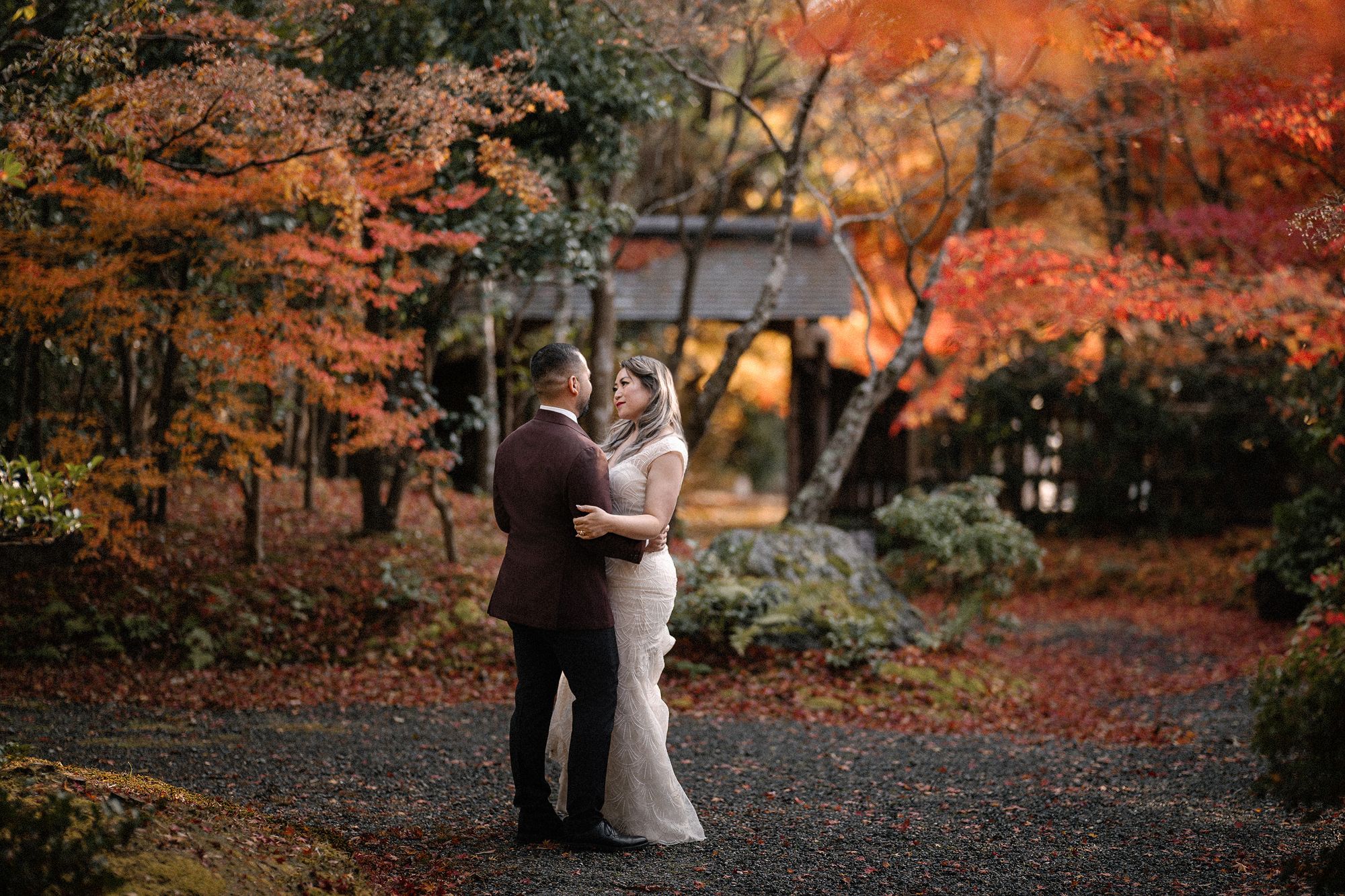
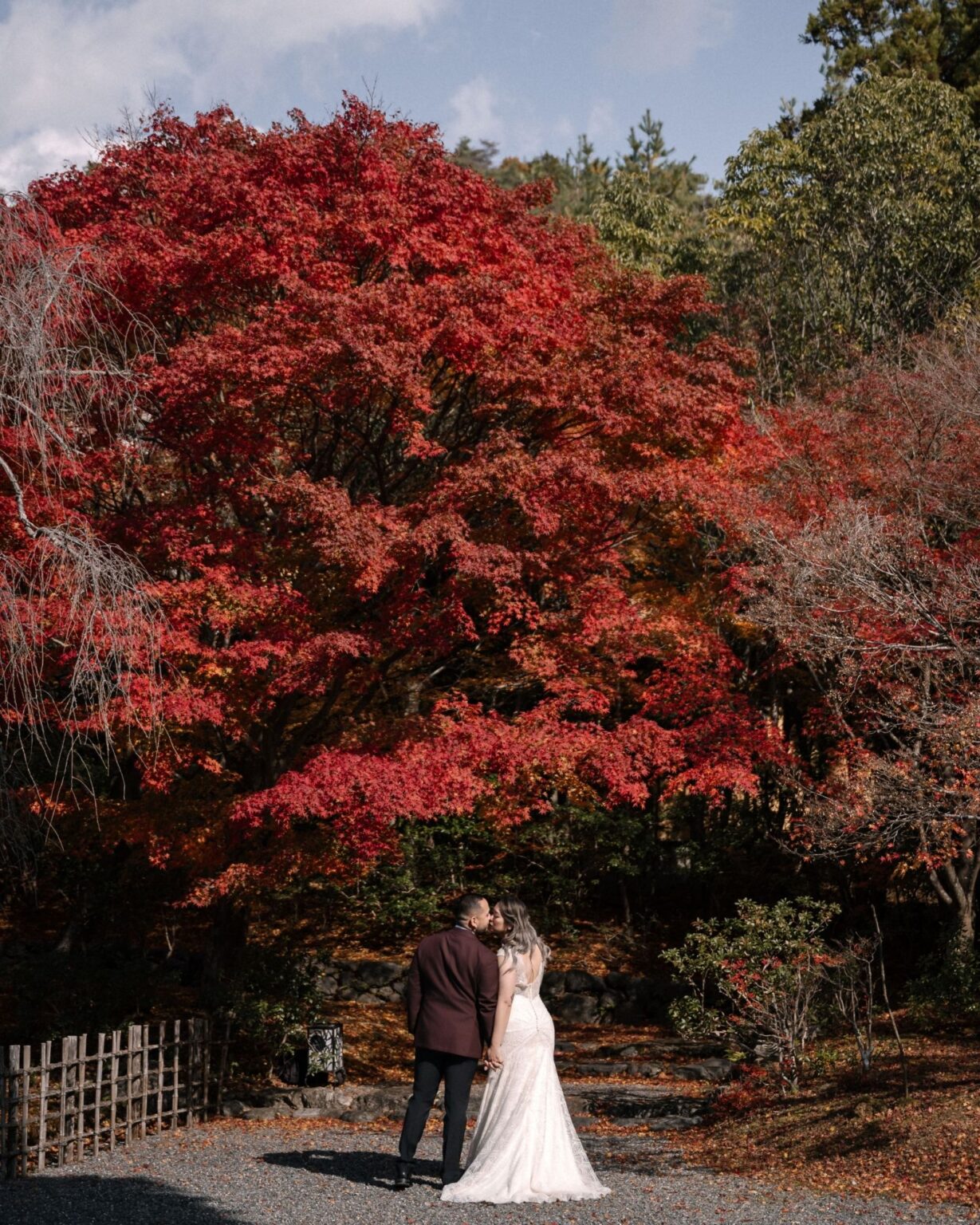
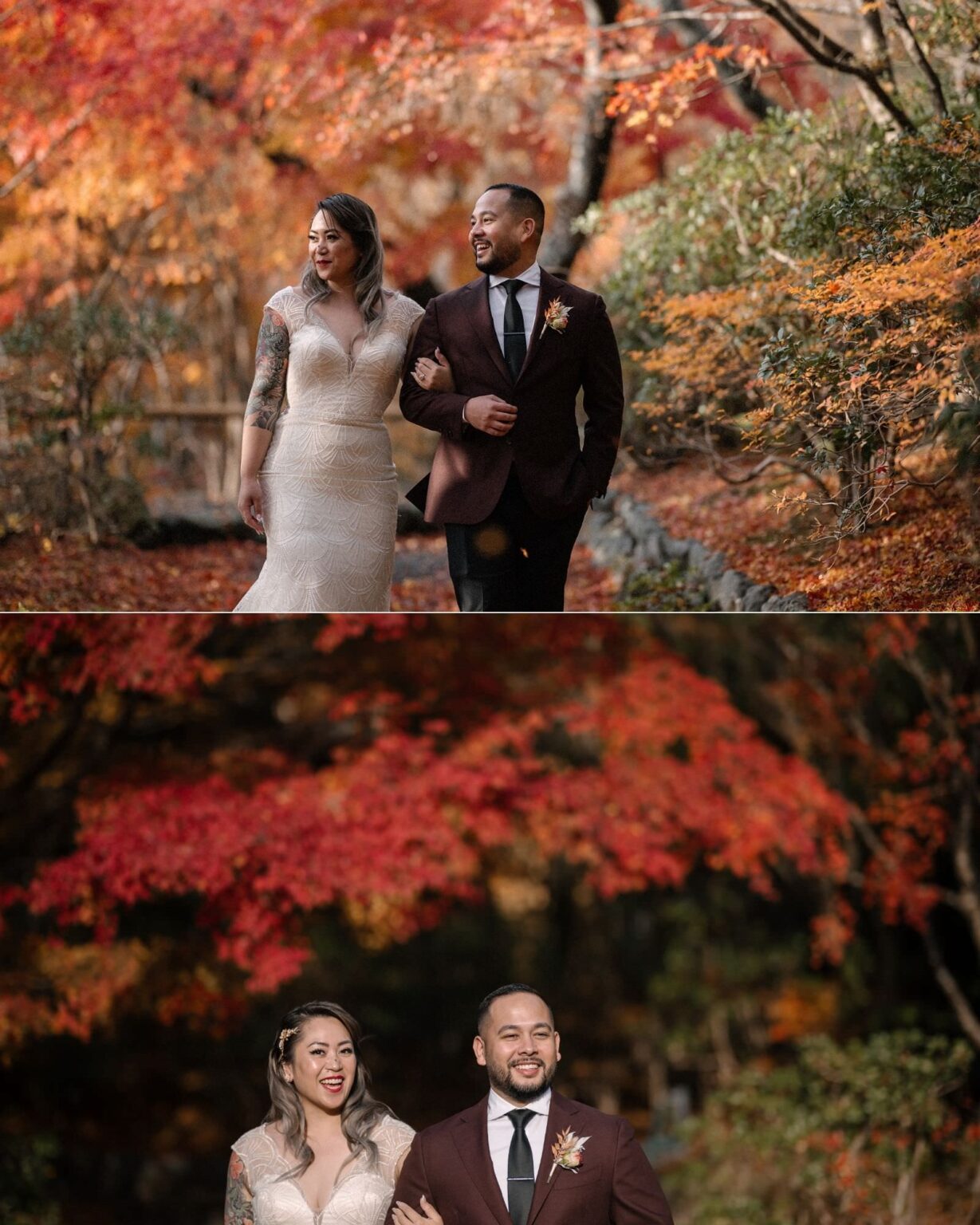
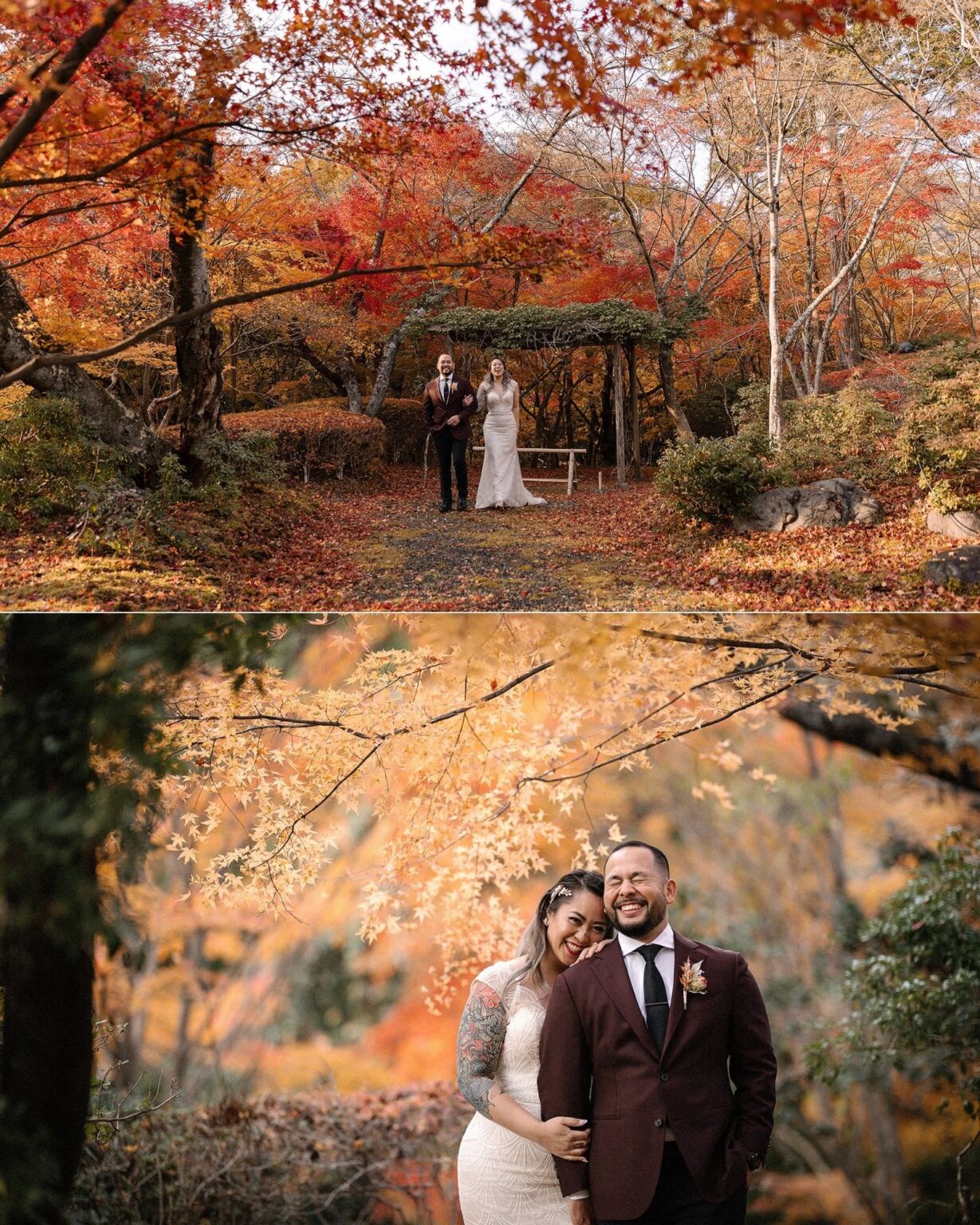
It was three more years before they said them. In that time Japan closed and reopened, a spring date gave way to work that couldn’t move, and their family grew by one. On a morning in late November 2023 they finally said them out loud, under the maples of a garden in the hills on the edge of Kyoto, with their three daughters and his mother beside them. It was an intimate wedding in Kyoto of exactly the size they wanted: six of them, a few of us, and the trees at their height.
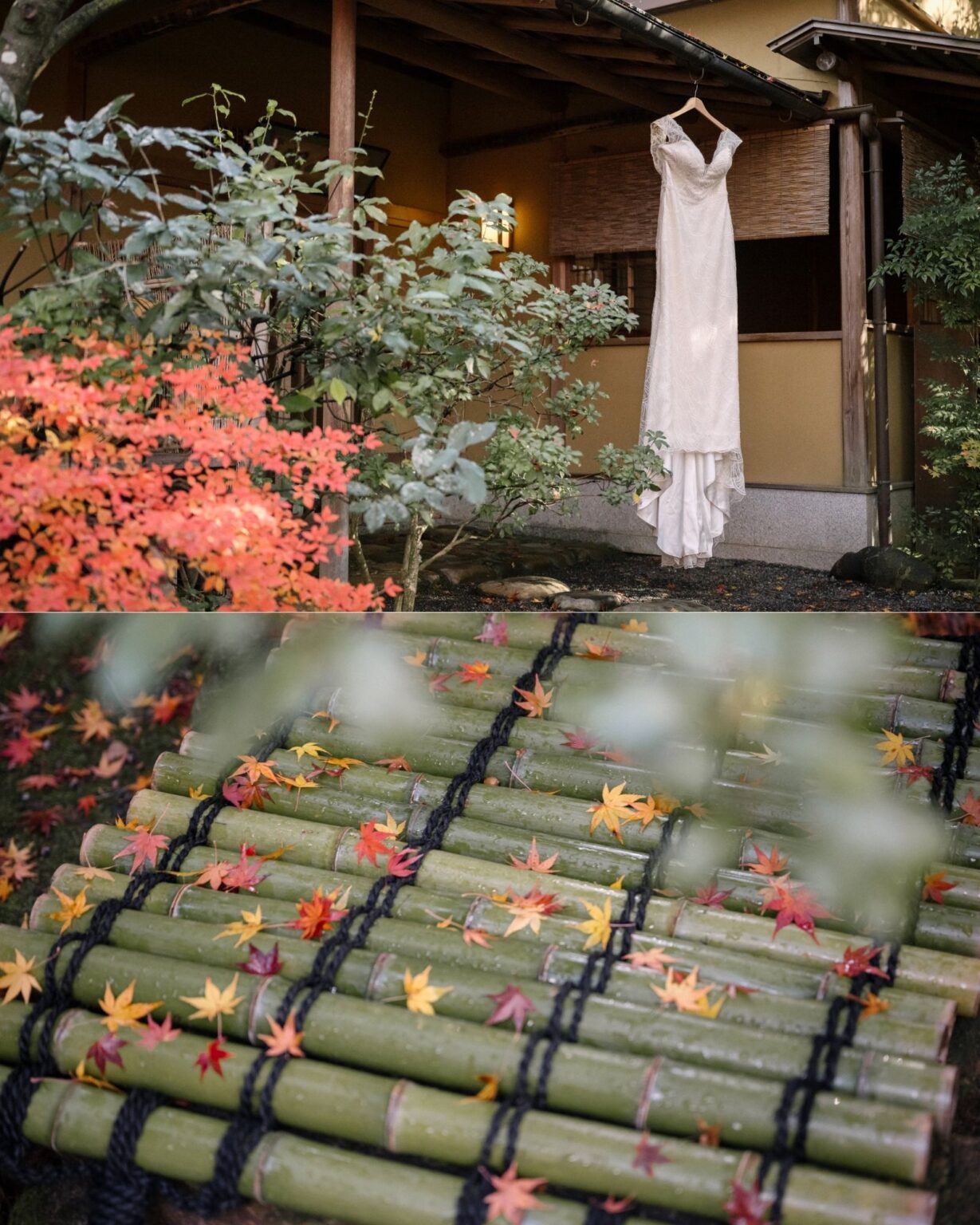
Saved for Japan
They loved Japan, and to them it was simply the right place to marry. It wasn’t their first visit, and part of the appeal was discovering somewhere new. The first plan, in early 2020, was spring, with cherry blossom in mind and a date in May.
May 2020 went the way of most plans that year. The date moved to October, the borders stayed shut, and the papers were signed at home without us. Legally, the wedding was done. The part they actually cared about was still waiting.
They came back to Japan before the wedding did, on an anniversary trip to Osaka and Tokyo, and went home more ready than ever. A date in spring 2023 was planned and then moved, for the most ordinary reason there is: work that couldn’t be rearranged. The next date was 28 November. That one held.
A lot of weddings planned for 2020 quietly turned into something else: a quick ceremony at home, a party in the garden, a promise to do it properly one day. Theirs waited. They were married, they had two small daughters and then three, and they still wanted to stand somewhere that meant something to them and say the words out loud. Japan had been part of their story for years before any of this. It seemed only right that it got the vows.
Across nearly four years of planning, what stands out is how little the wish itself changed. The dates moved, and so did the season. The vows stayed exactly where they’d put them.
Paperwork makes a marriage legal. It’s rarely the part anyone remembers.
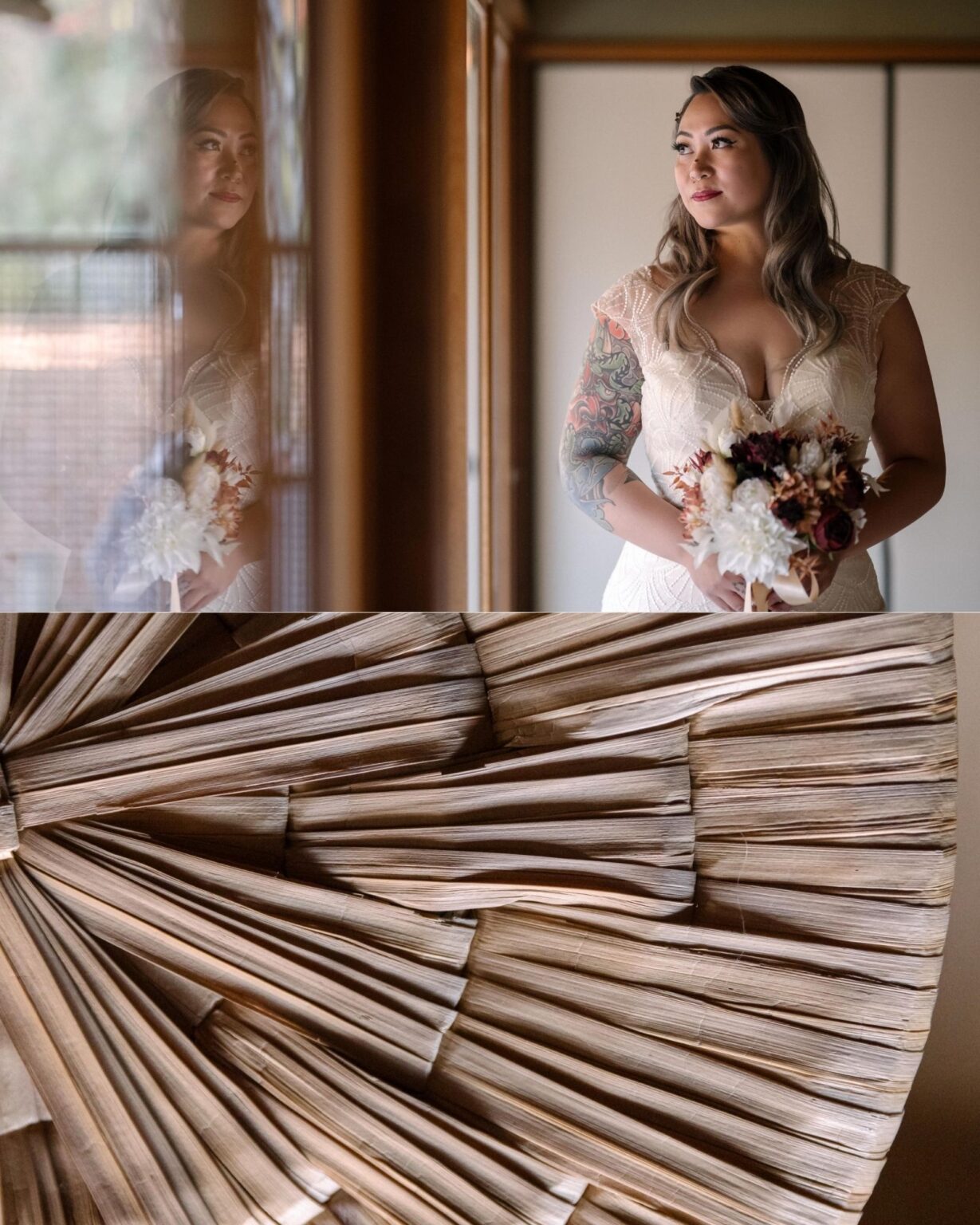
The Kyoto People Dream Of
Cherry blossom was the first idea. By the autumn of 2023 it had become maples: momiji.
So many people dream of a wedding under the maples in Kyoto. Late November is when the city’s colour is at its height, and it’s also one of the busiest times of Kyoto’s year. The famous temple gardens are full, and finding somewhere private to say your vows, in that city and in that season, can be genuinely difficult.
Japan is a country of introductions and connections. Very often, the network is the key to a door that would otherwise stay closed.
We’ve lived and worked here for decades, alongside an incredible Japanese team, and every so often a place crosses our path that still stops us in our tracks. This is the Japan people dream of. Places like this exist. Without local connections, they’re just very hard to find.
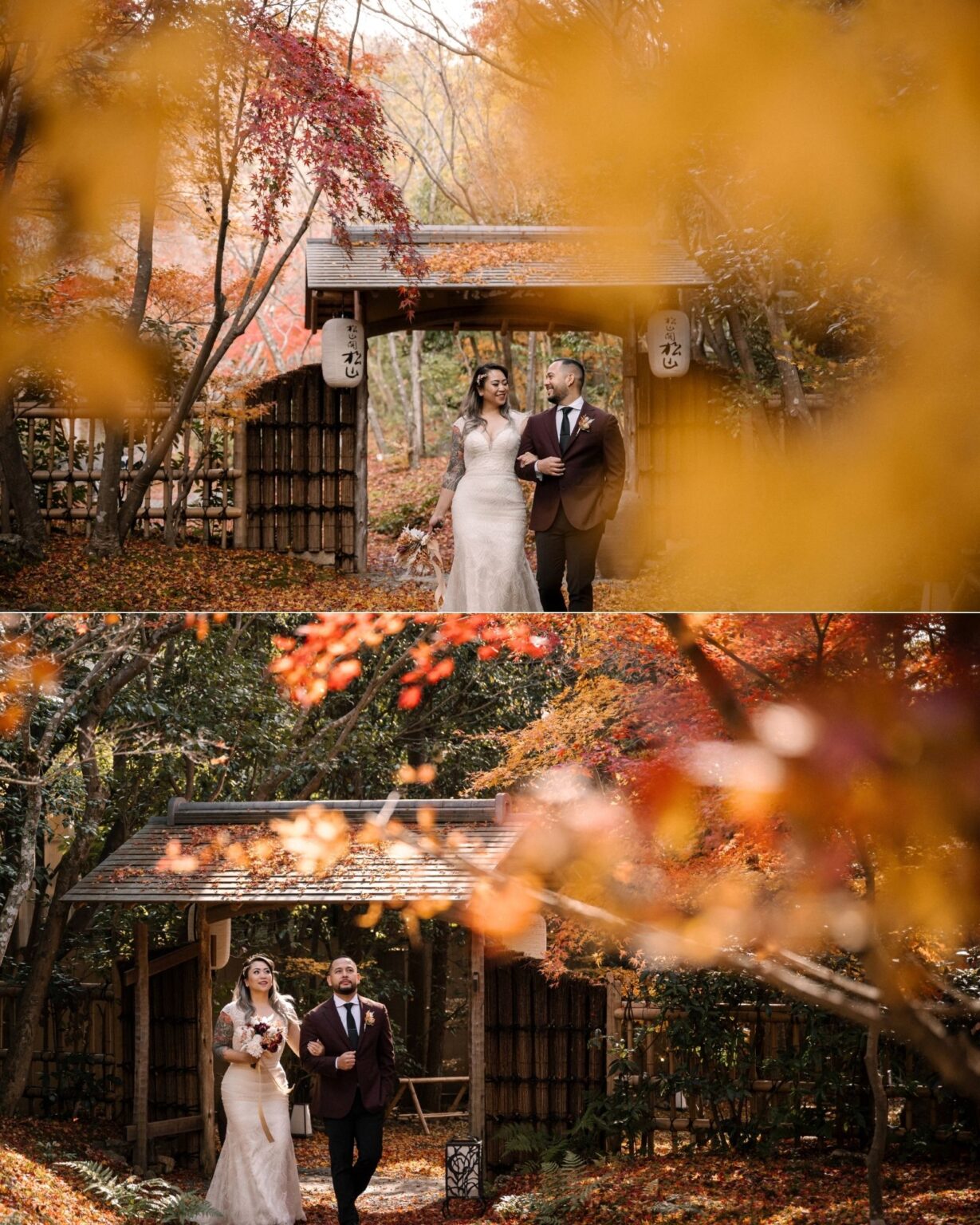
The garden where these two married is one of them. Its owner gave us his permission to share it, on one condition: that it’s never named or tagged. He has no wish to become the next Instagram hotspot. He would rather keep it for special people, the ones who feel deeply. Perhaps like yourselves.
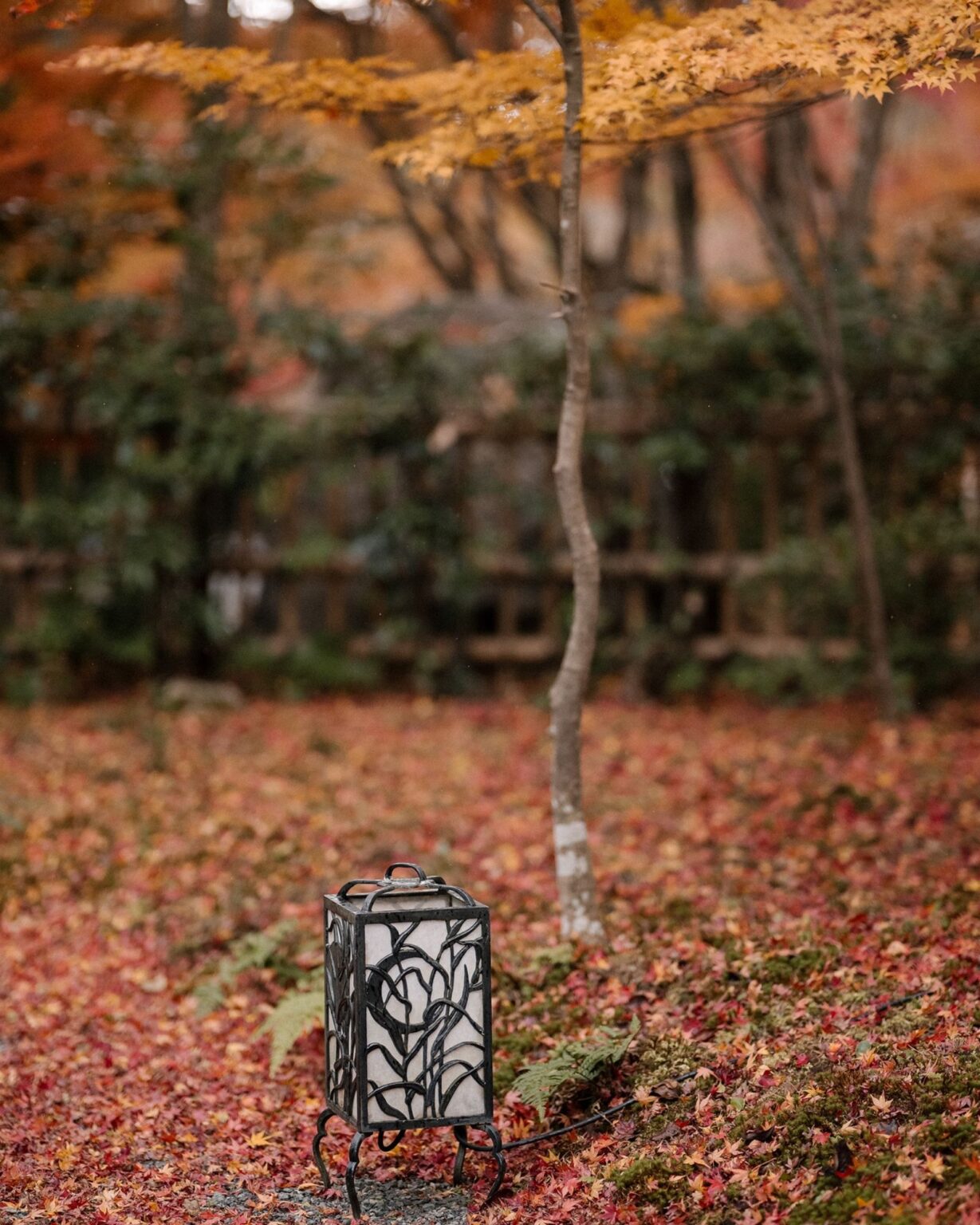
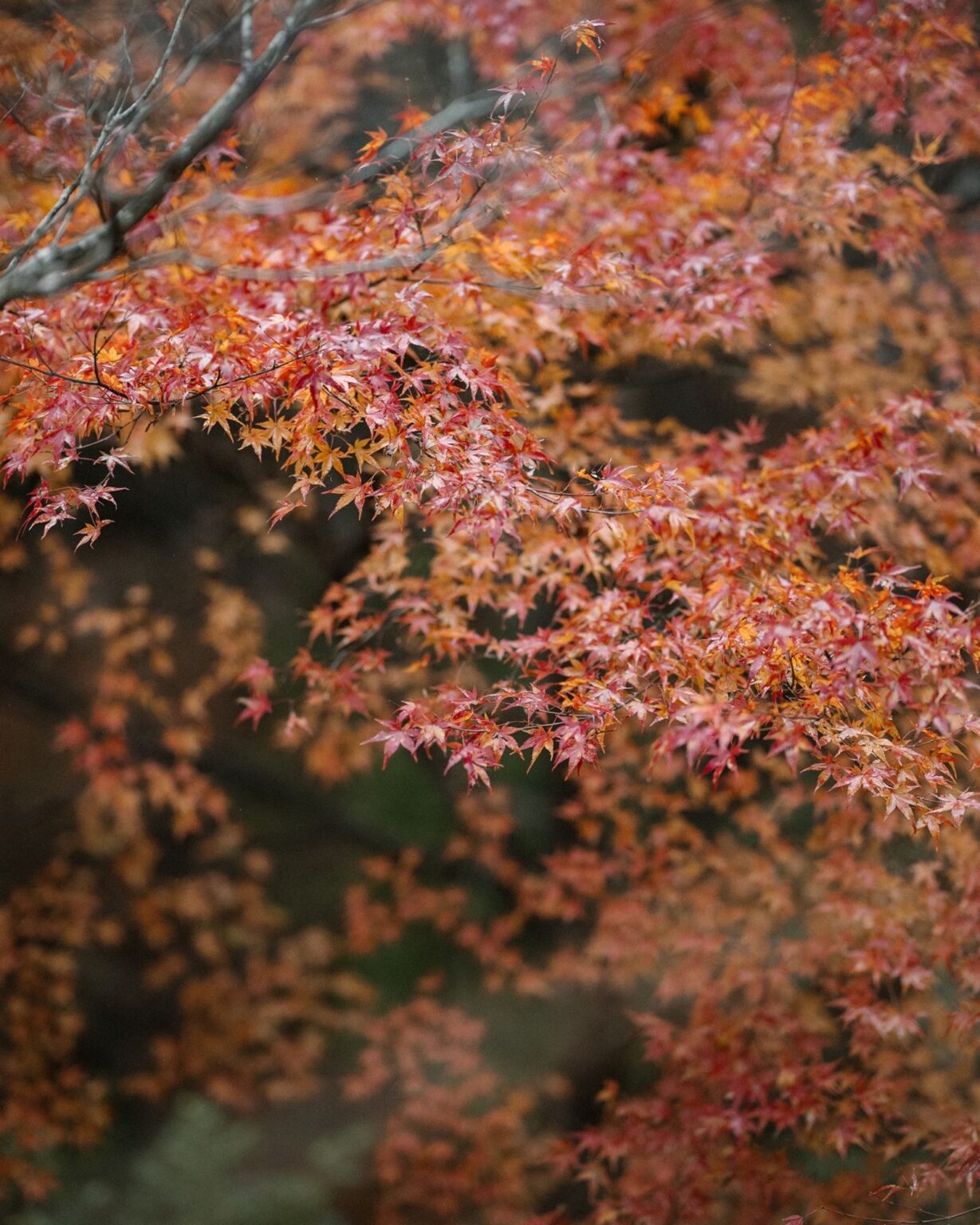
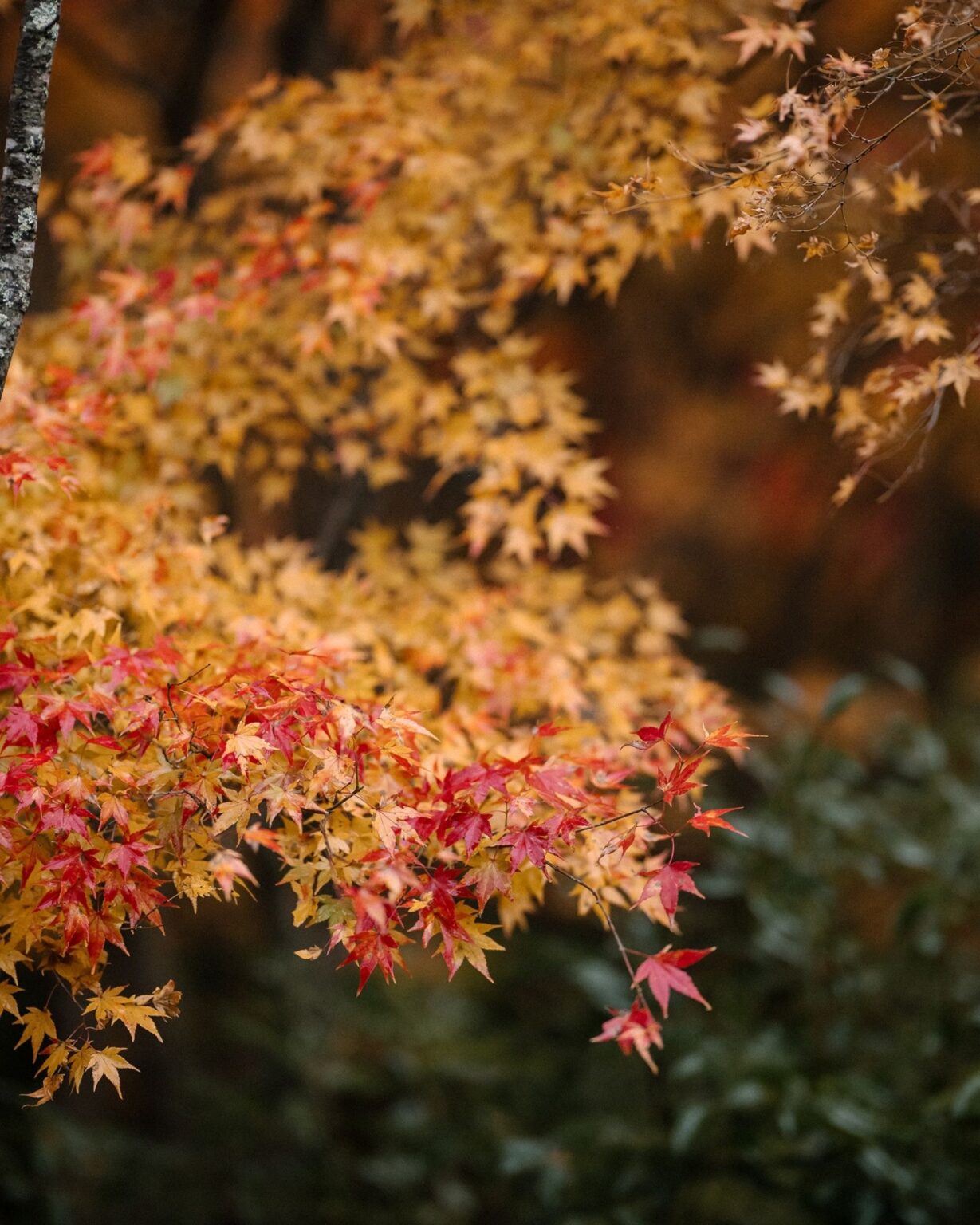
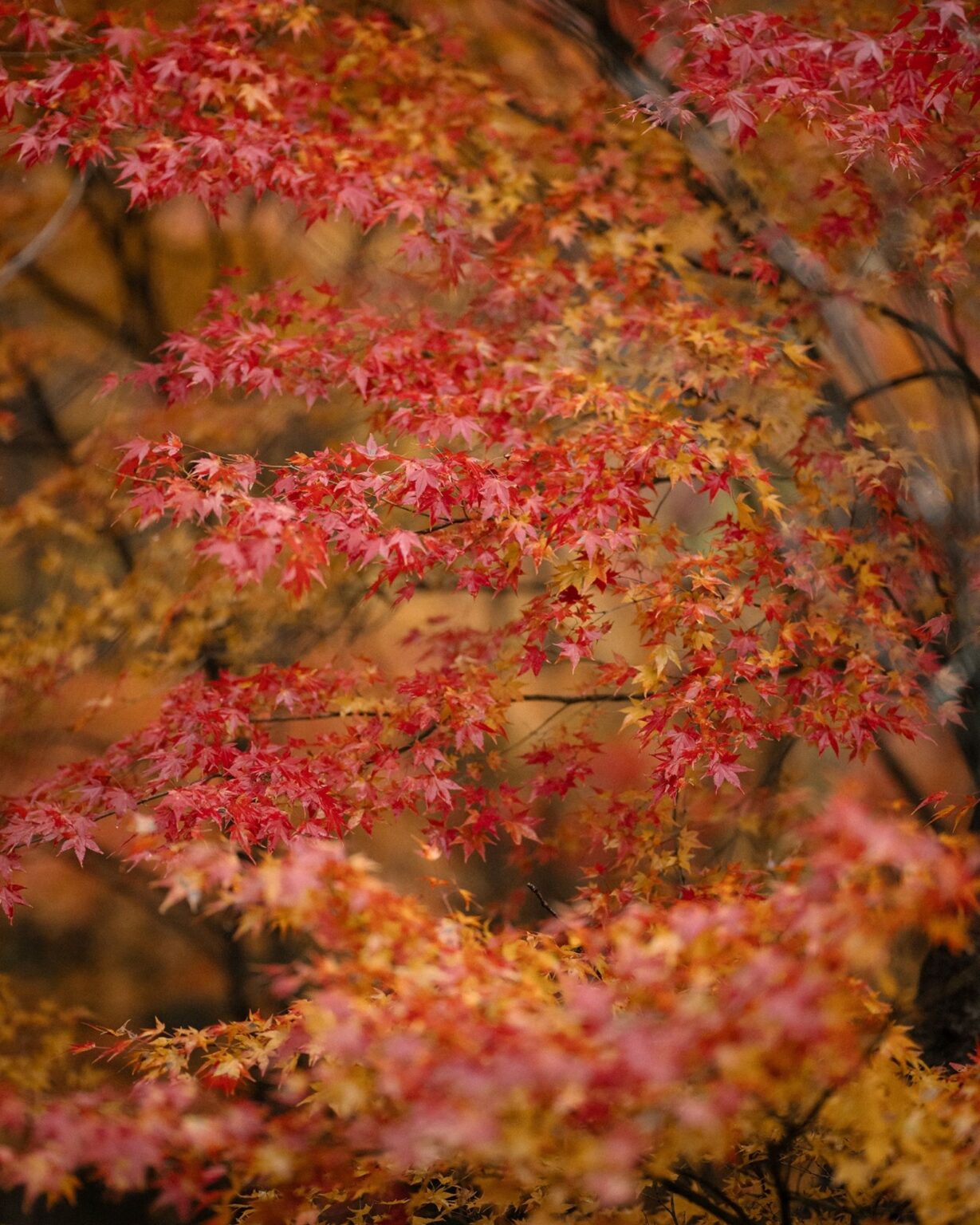
Yes to All the Maple Trees
One short film of the garden was enough. They booked it straight away. “Yes to all the maple trees.”
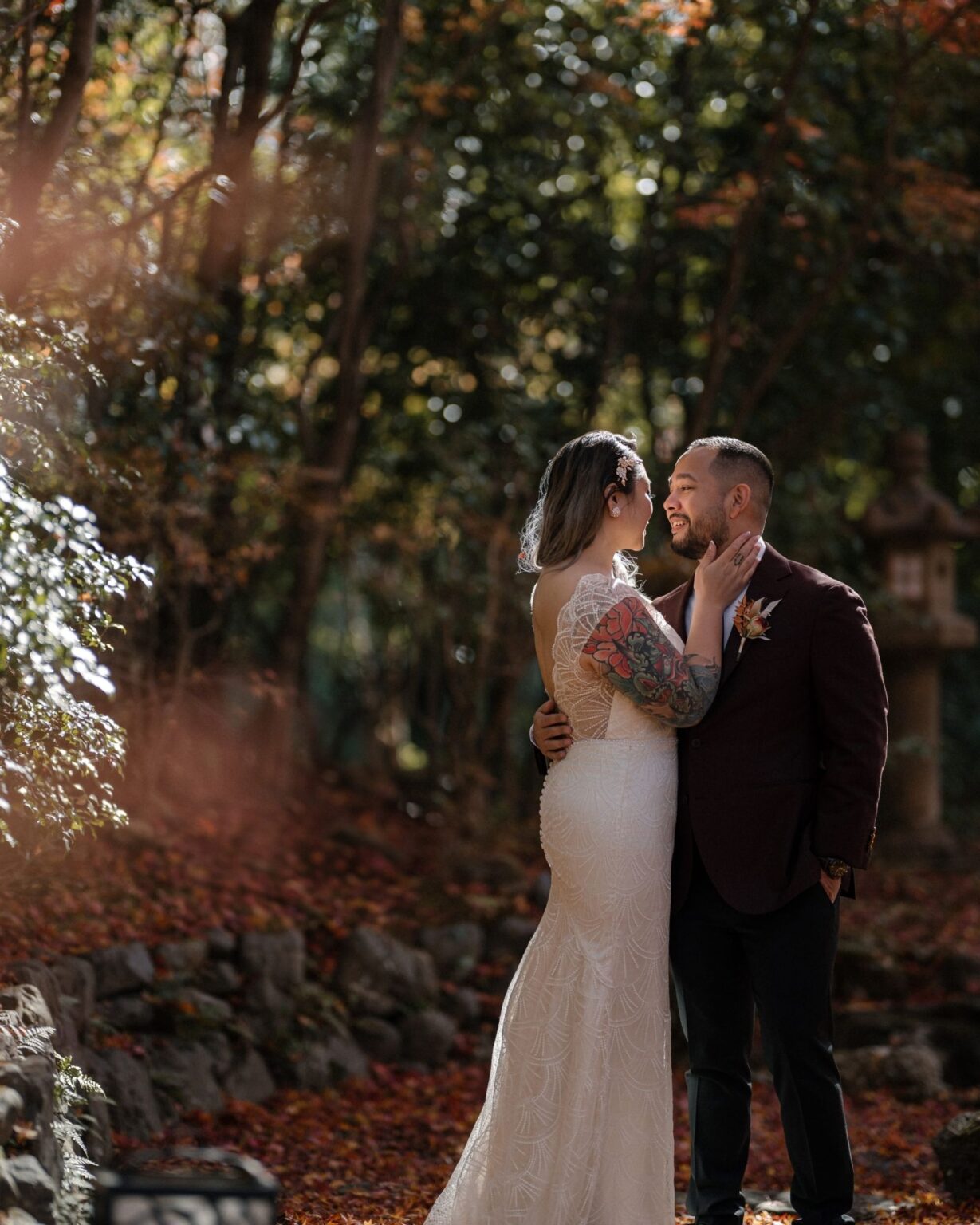
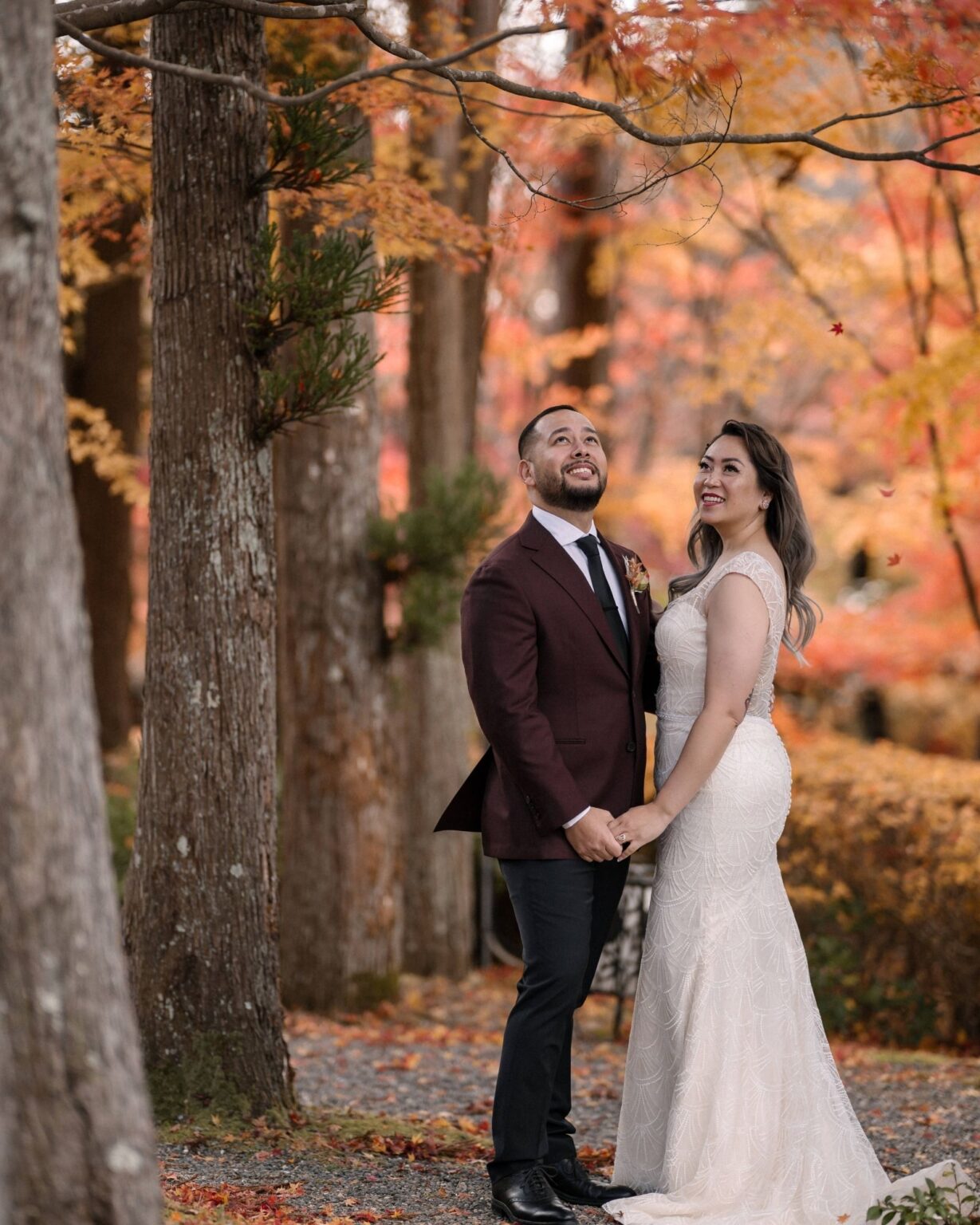
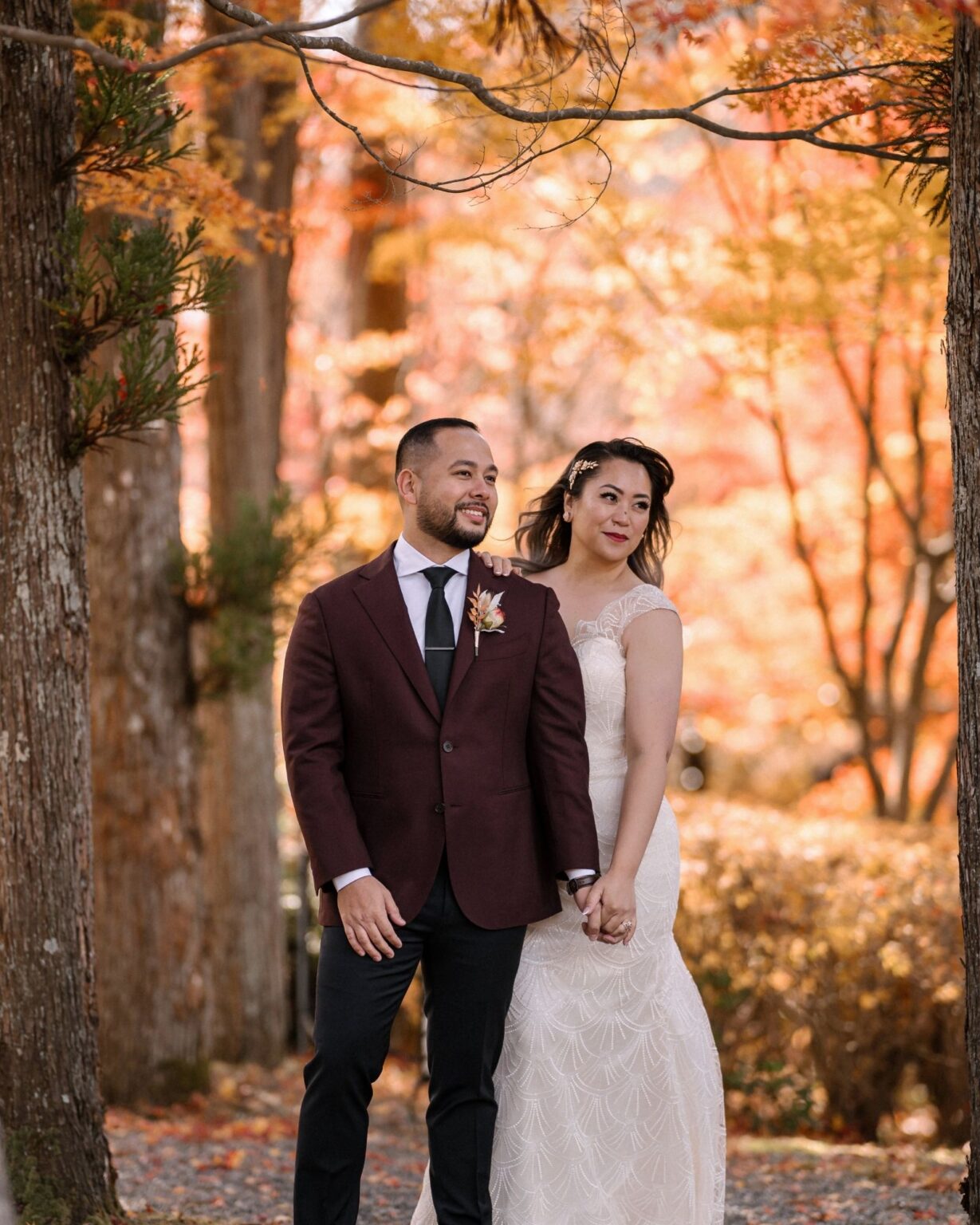
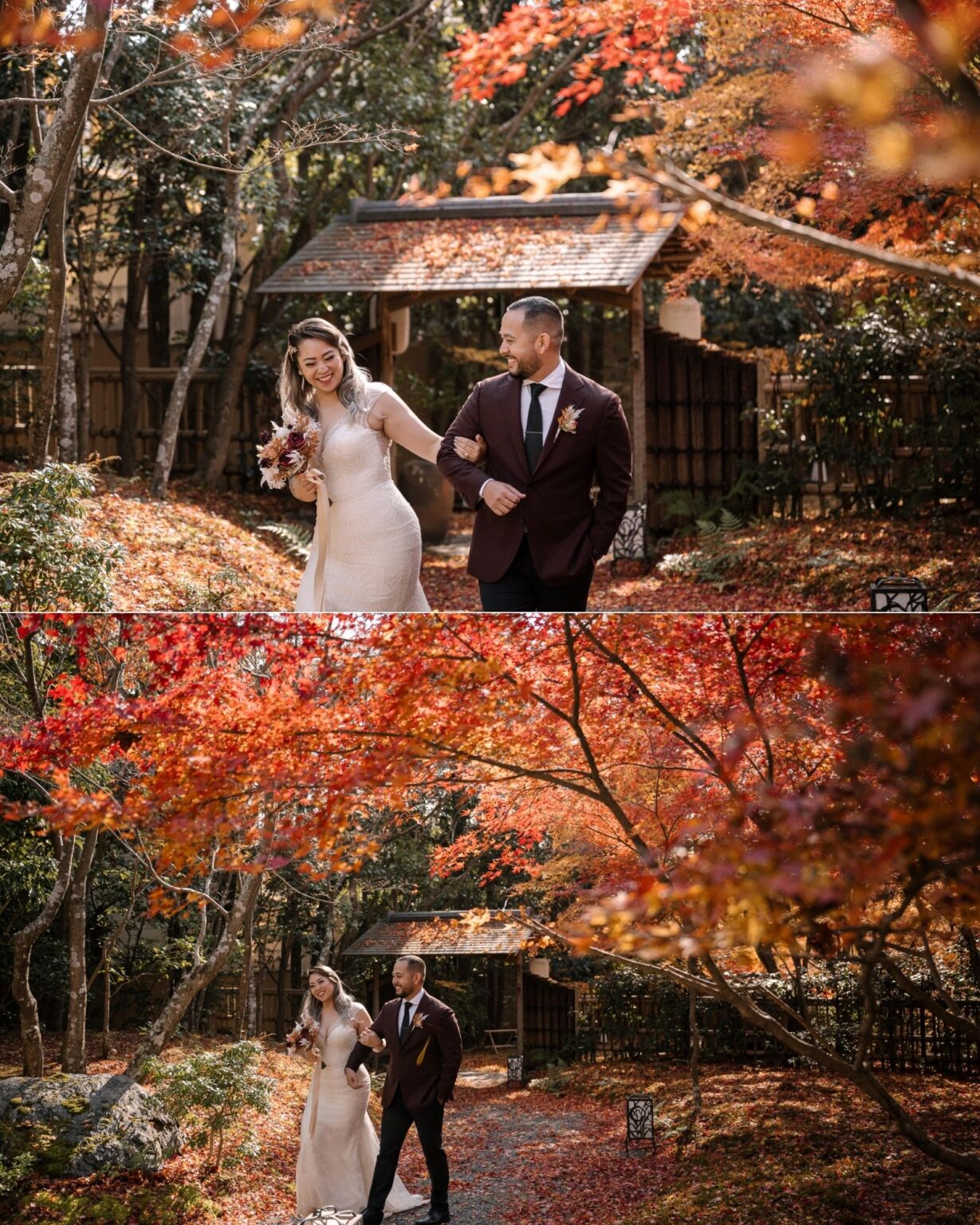
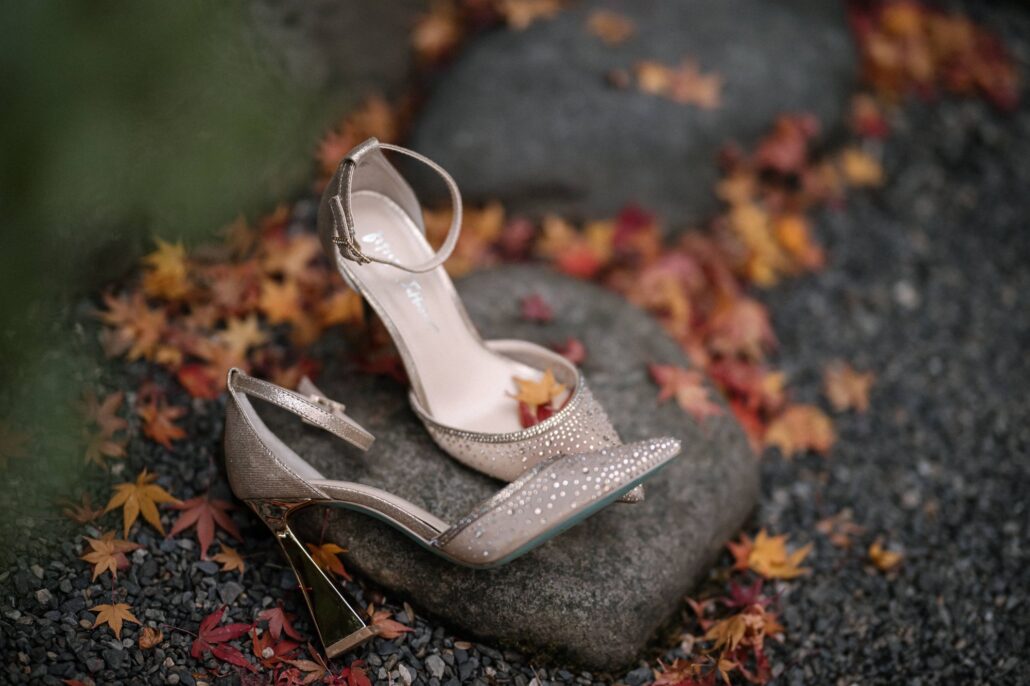
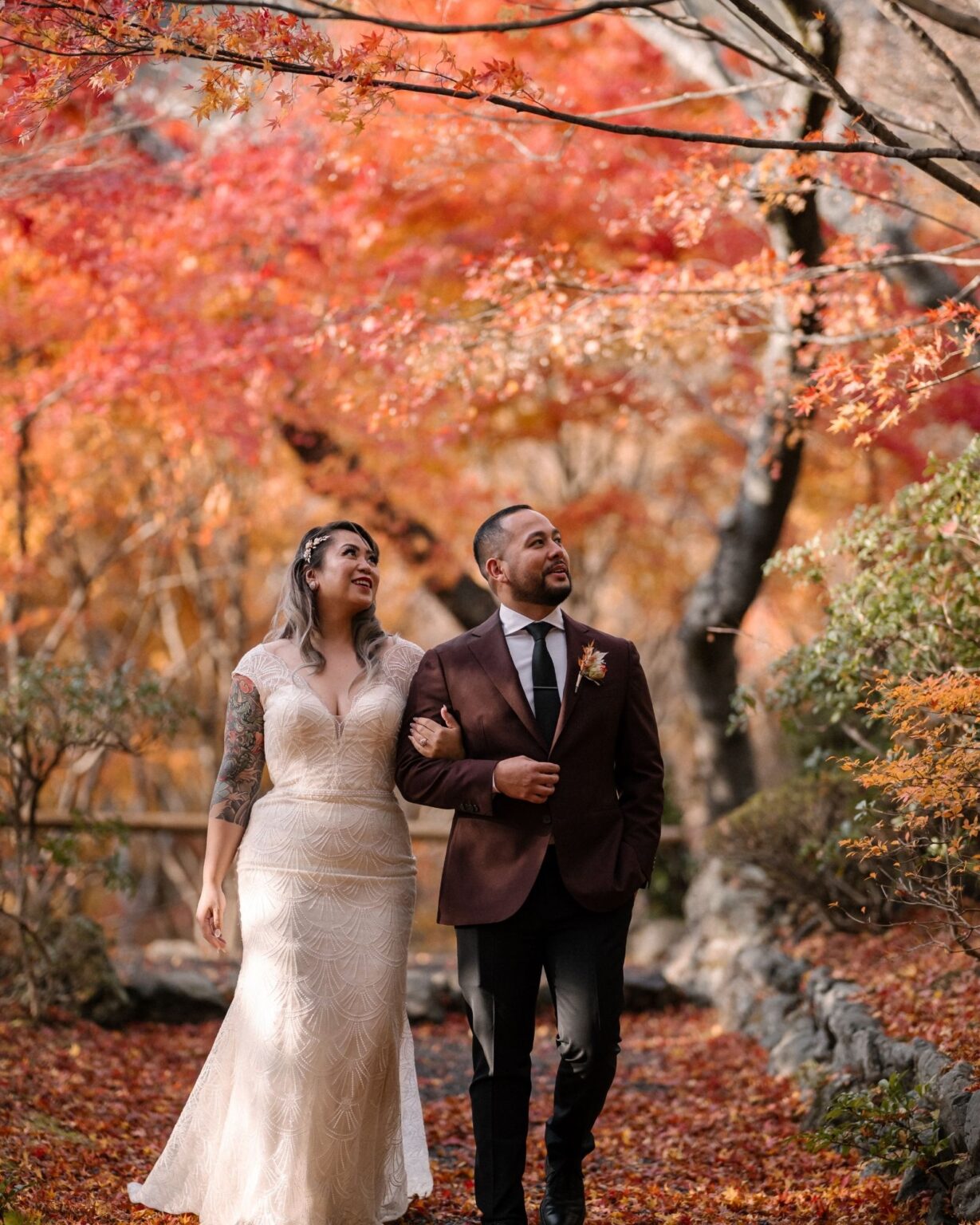
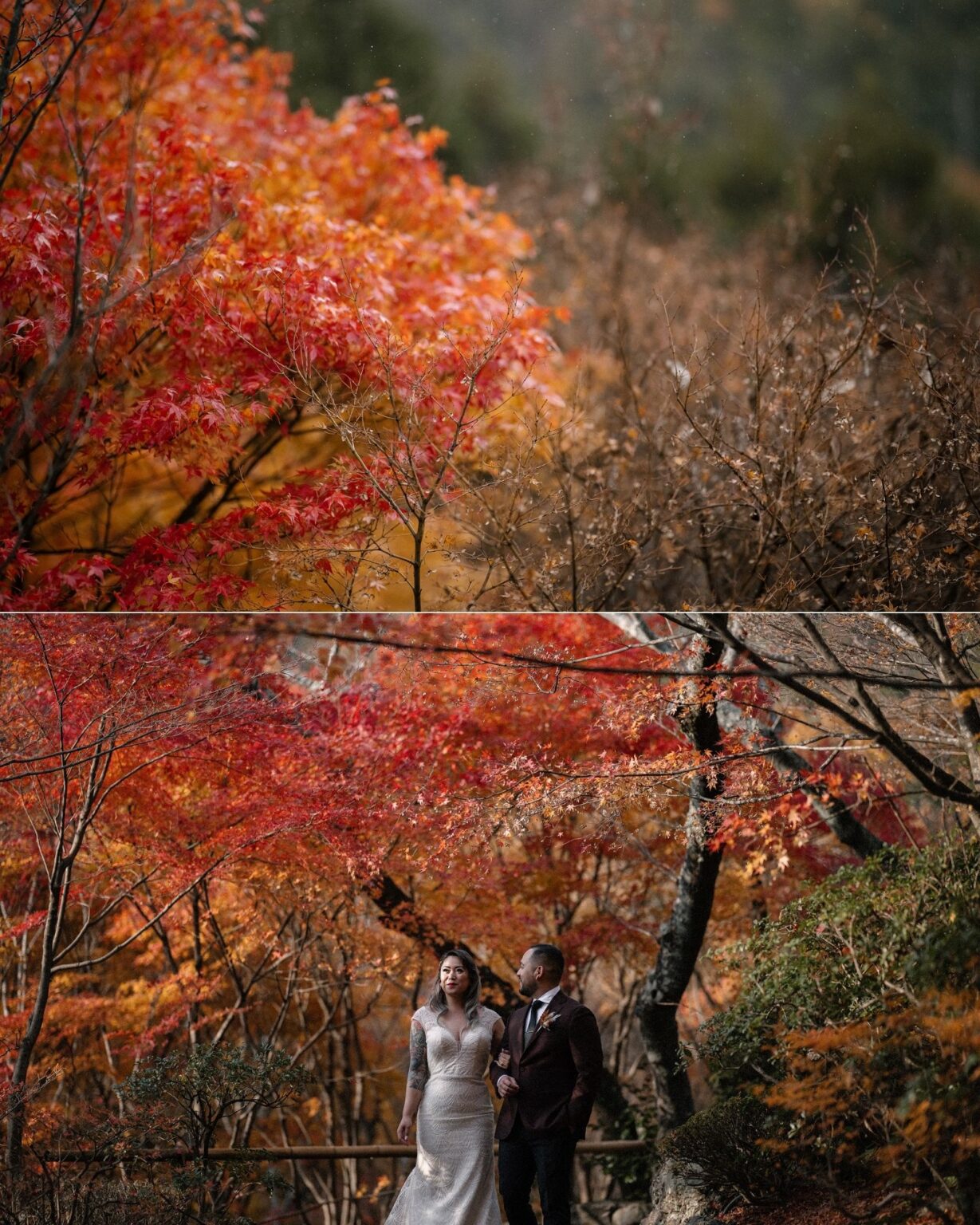
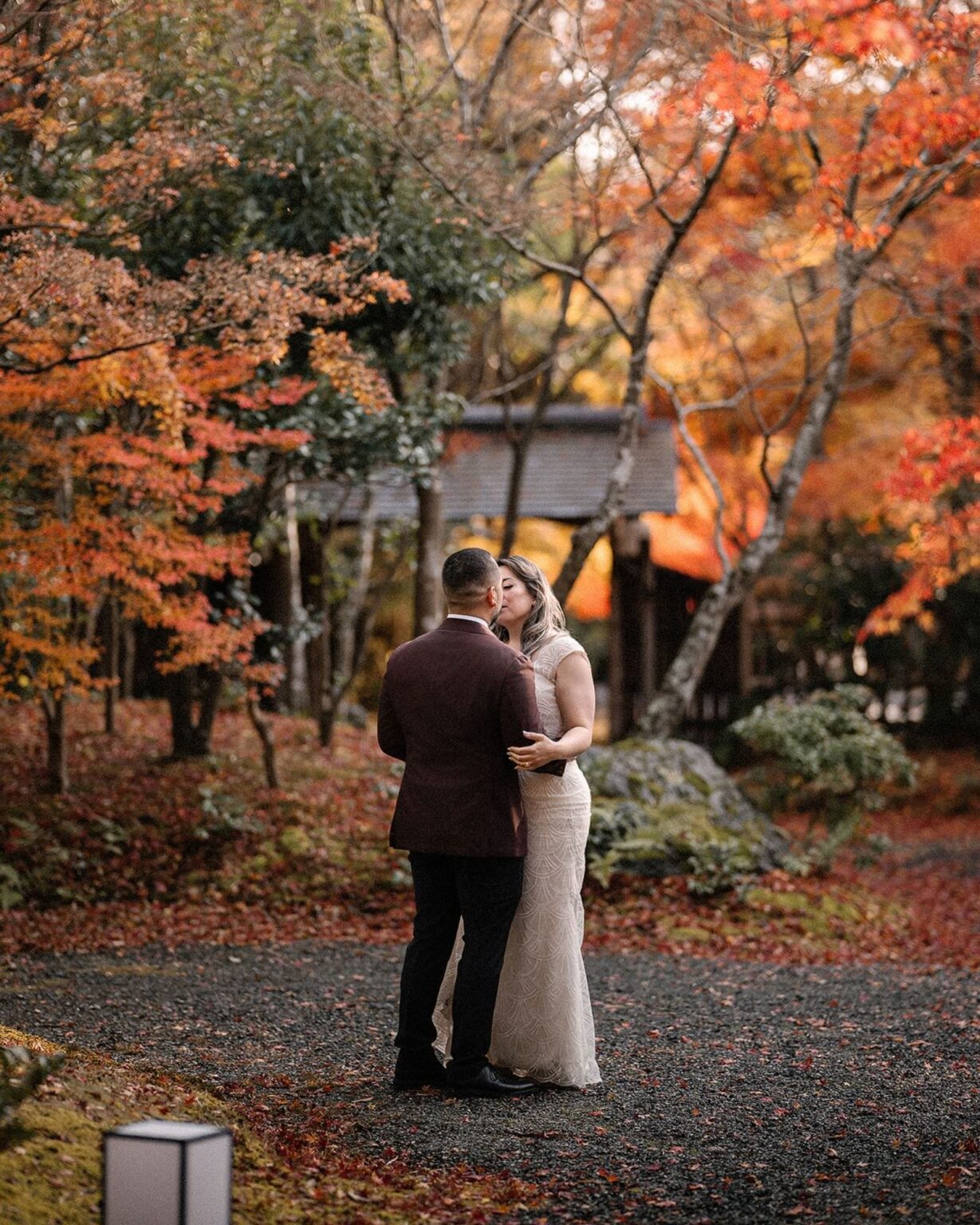
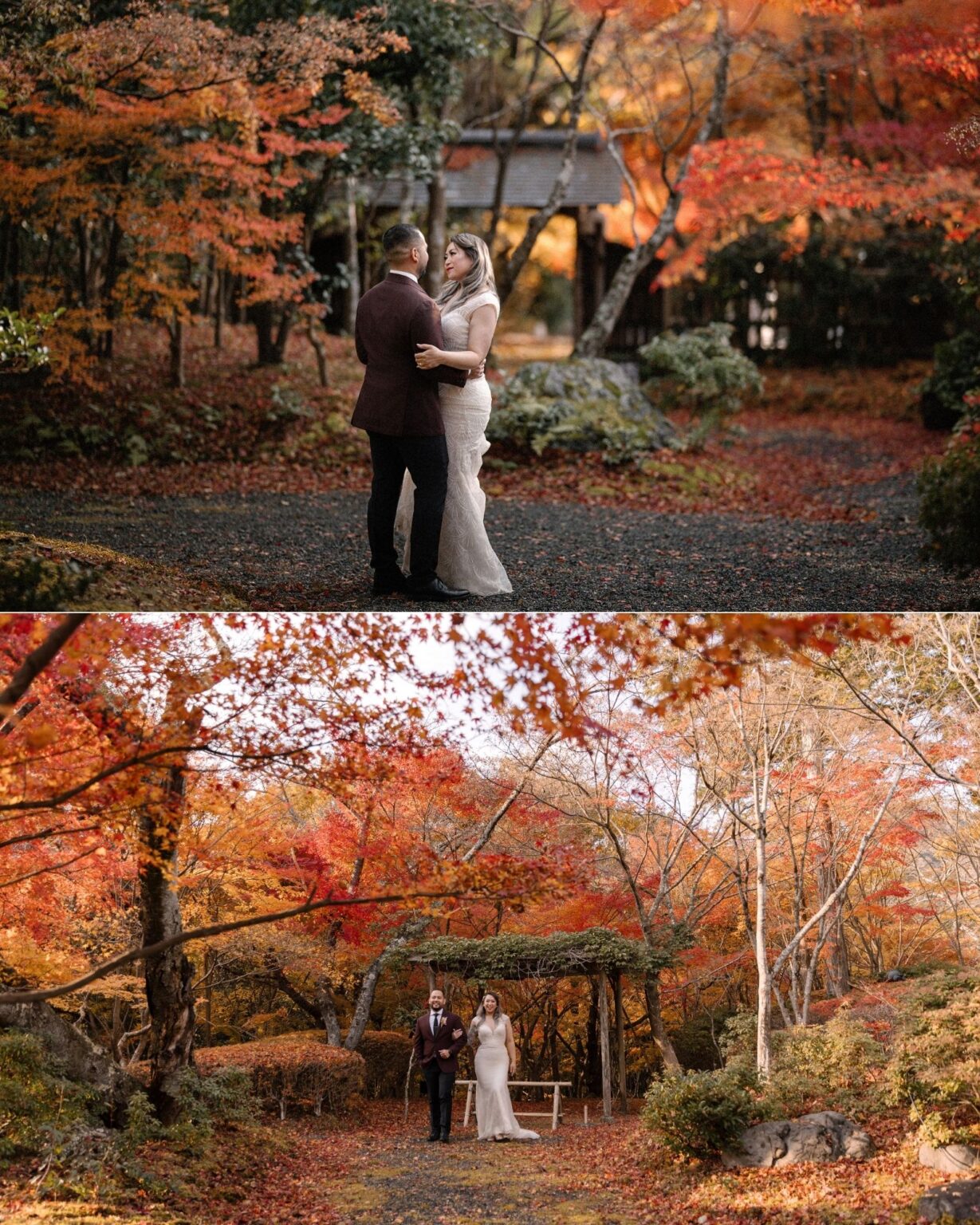
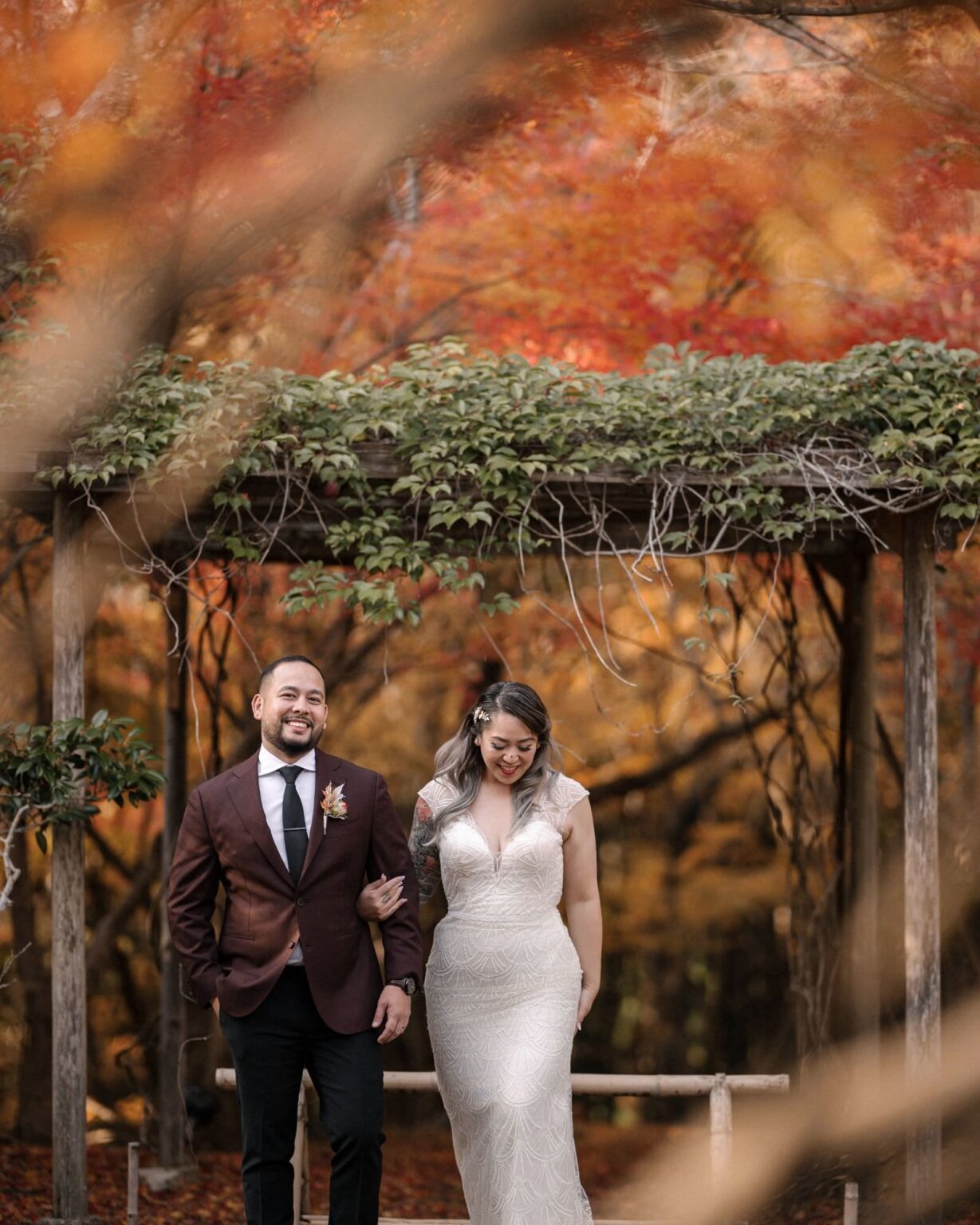
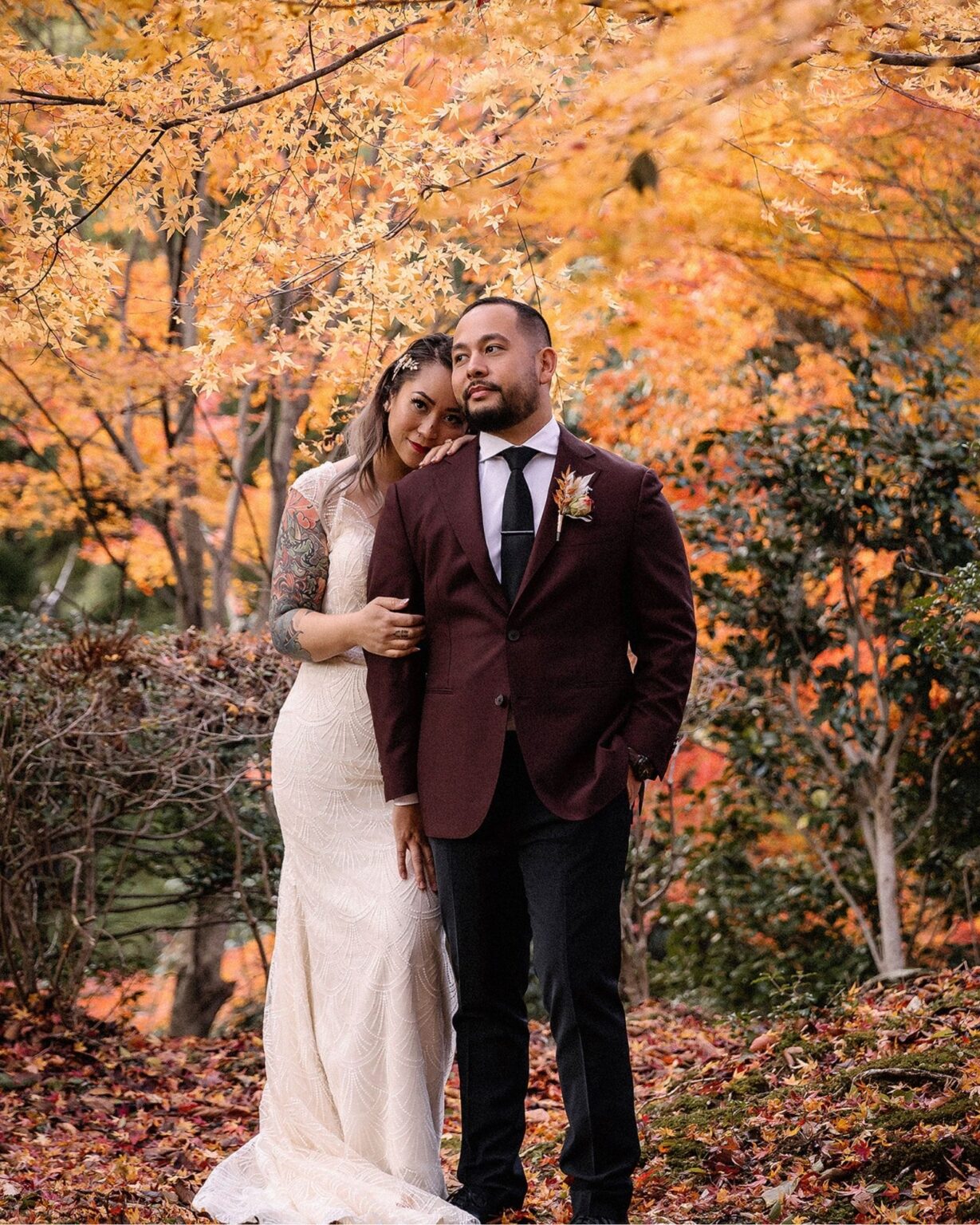
Tall cedars stand among the maples there, so the red comes and goes against dark green, with moss on the stones underfoot. On the morning itself, under the maples, there were six of them and a few of us, and nobody else’s camera in the frame.
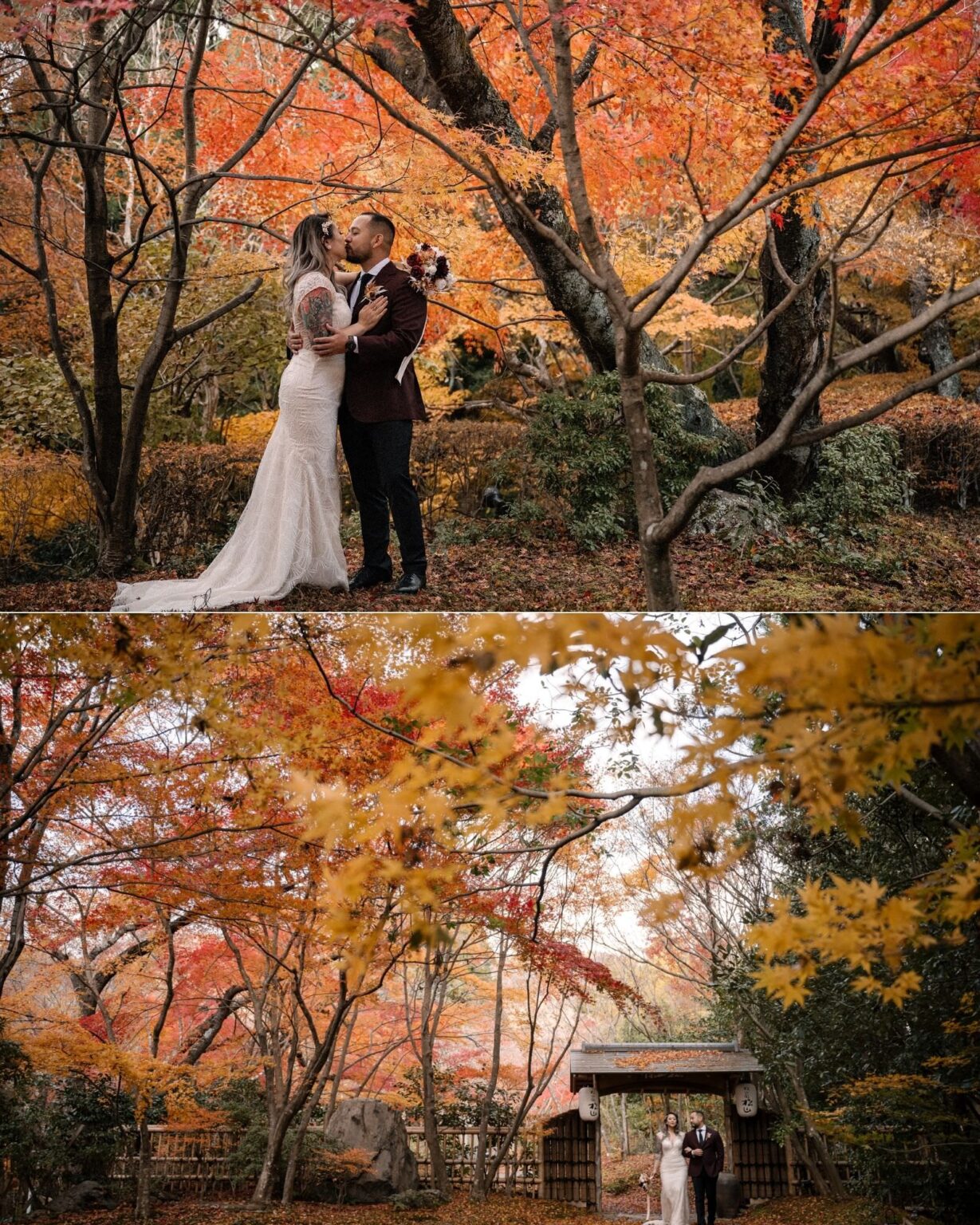
It had taken nearly four years to see the two of them under those maples, with the leaves coming down around them. Finally was the word.
Three Girls in White
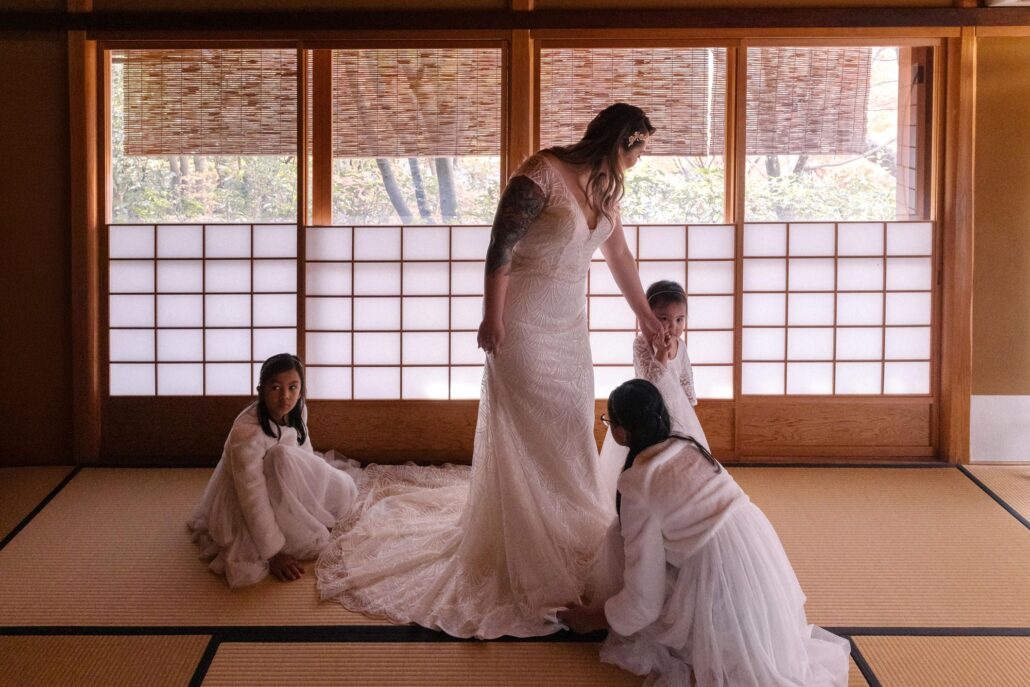
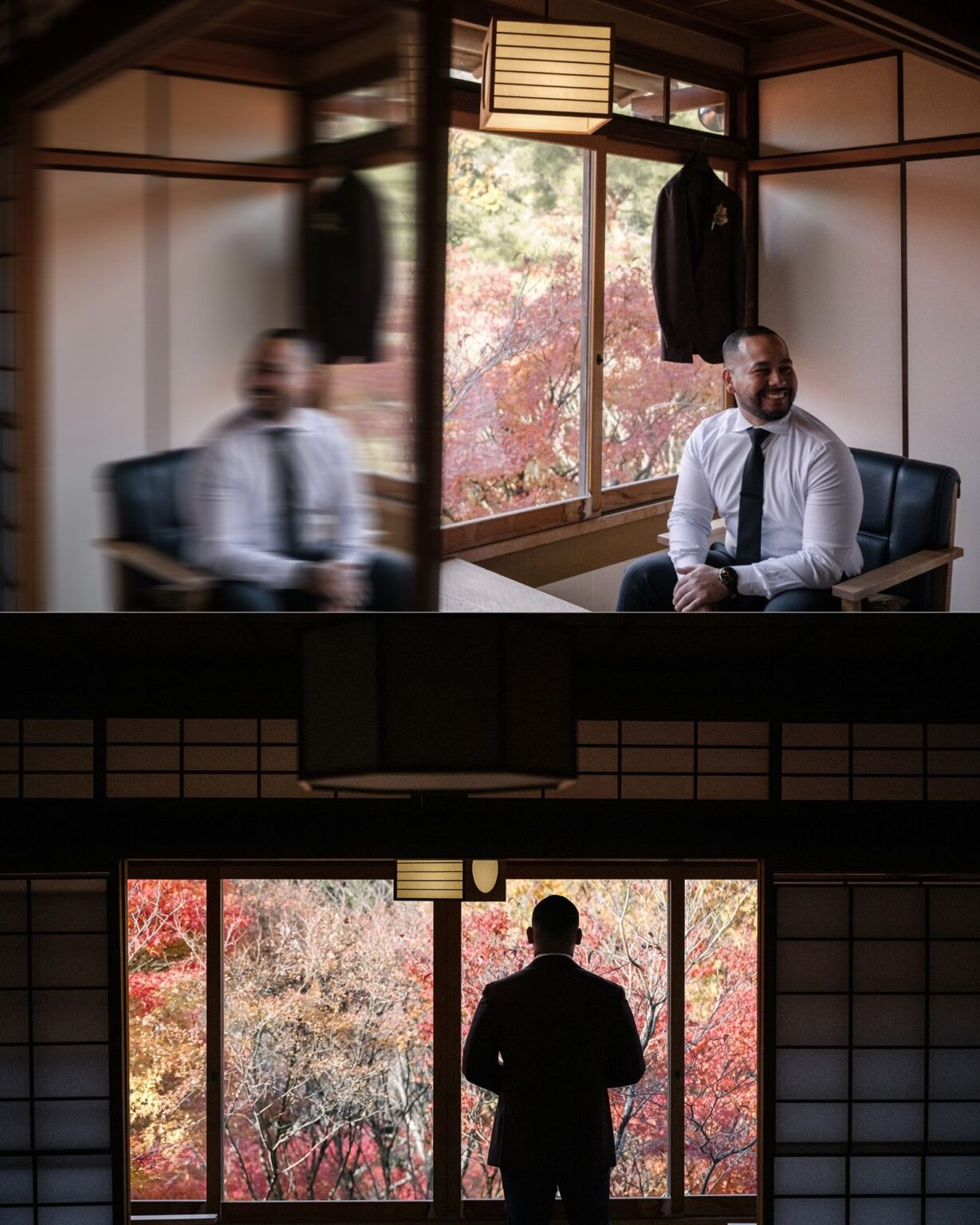
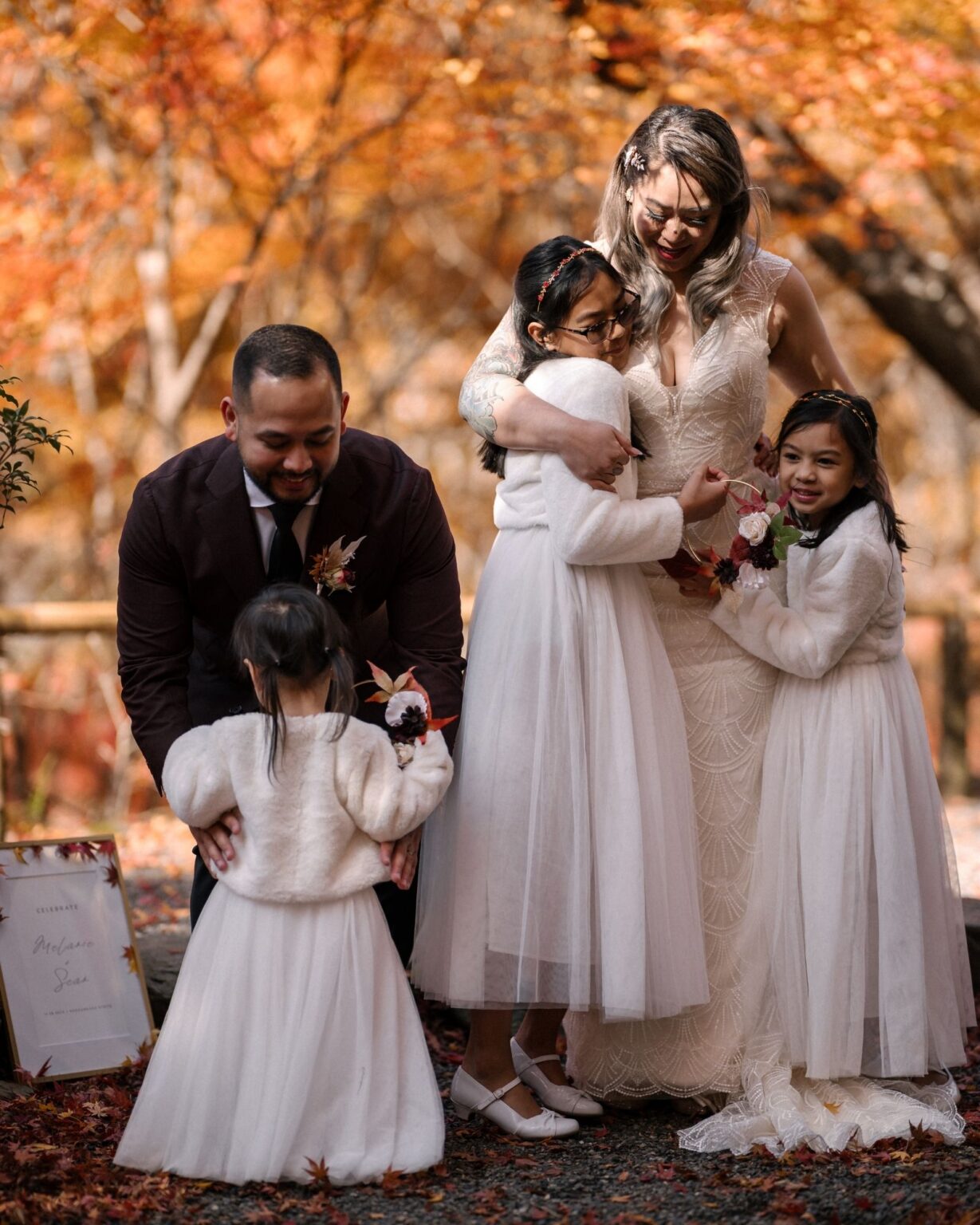
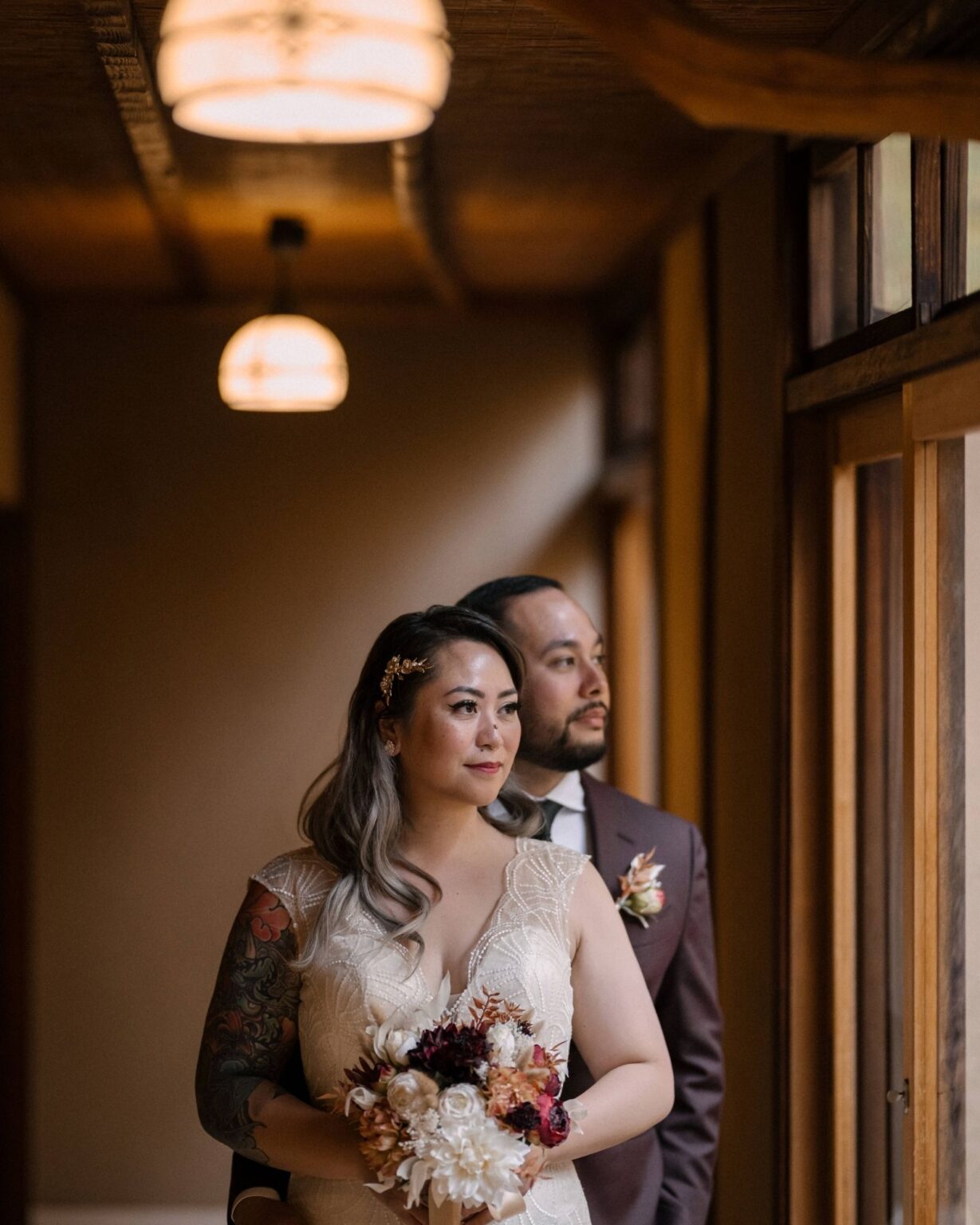
When planning began, they had two daughters. By the wedding there were three, the youngest just two years old. The morning began in a quiet room with sliding paper doors, the girls in white dresses fussing over their mother’s train while their father waited in another room.
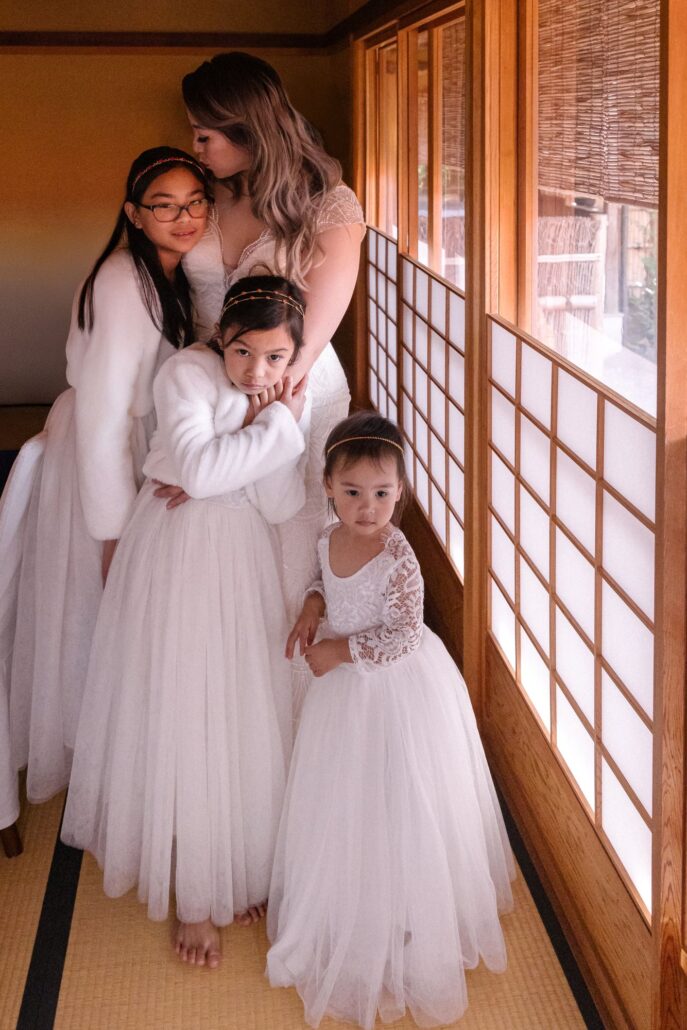
Each of the girls had a small posy of her own on a gold hoop, dried flowers and red leaves in the colours of their mother’s bouquet: burgundy, ivory and rust.
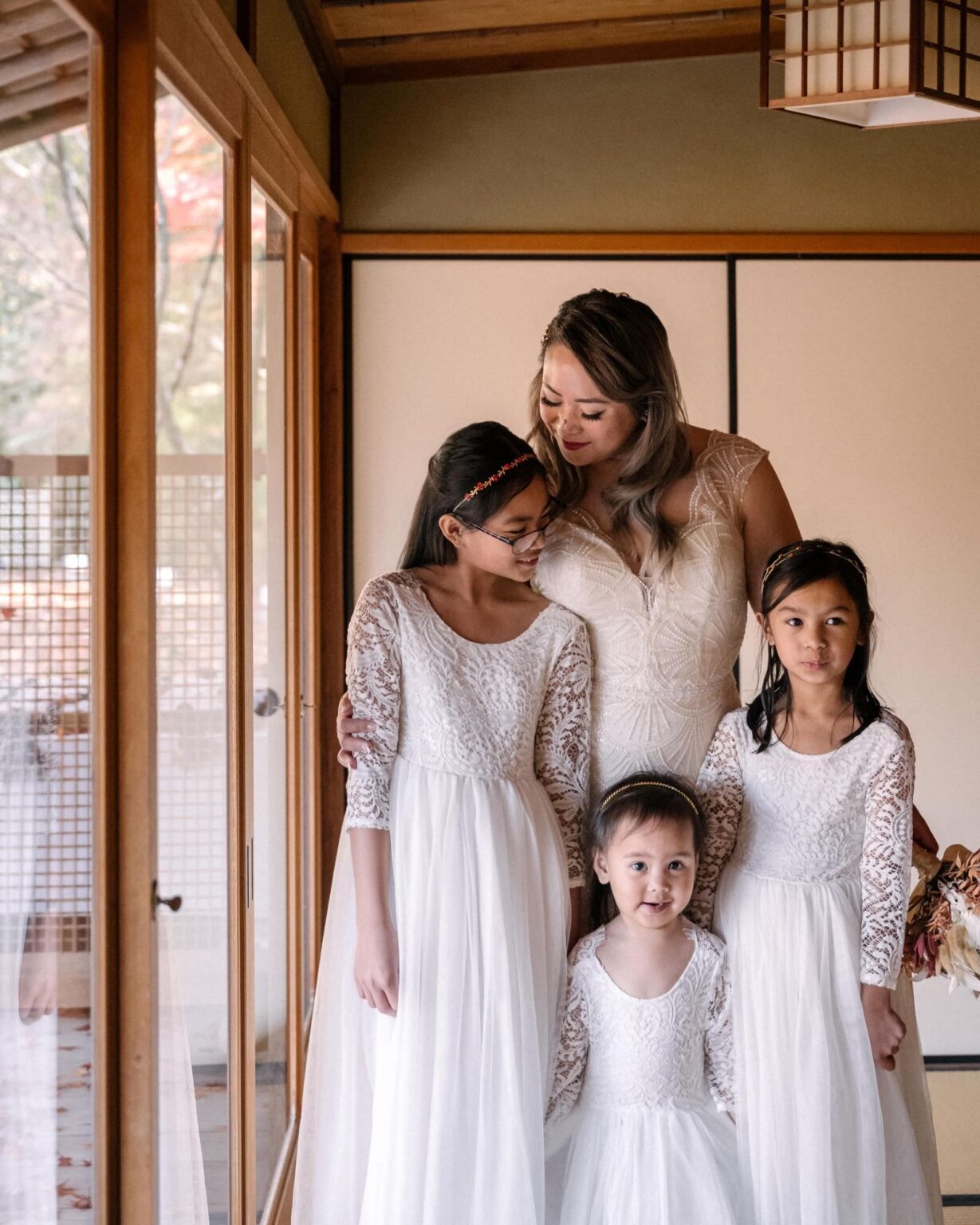
A wedding with a two-year-old in it is planned differently, and this one was. There was a private room for the morning and for everyone’s things, children’s meals at lunch, and a car for the afternoon. We kept train journeys to a minimum, which is sensible planning for anyone travelling with three small girls and a wedding dress.
The Vows, Finally
With six people there’s no back row. Everyone stood close enough to hear every word, which matters more than usual when the words have been saved for three years.
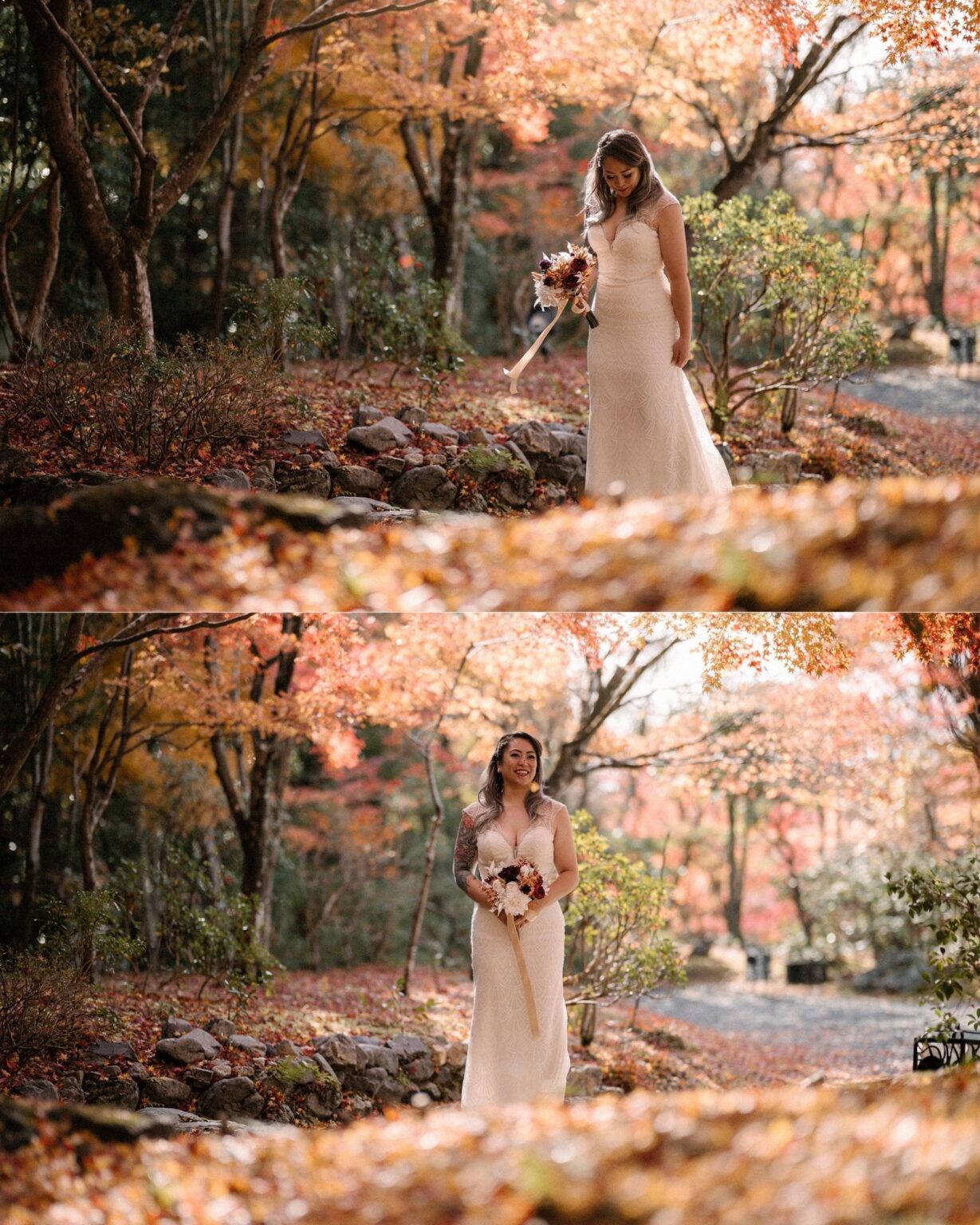
He waited under the maples with his back to the path while she walked down it.
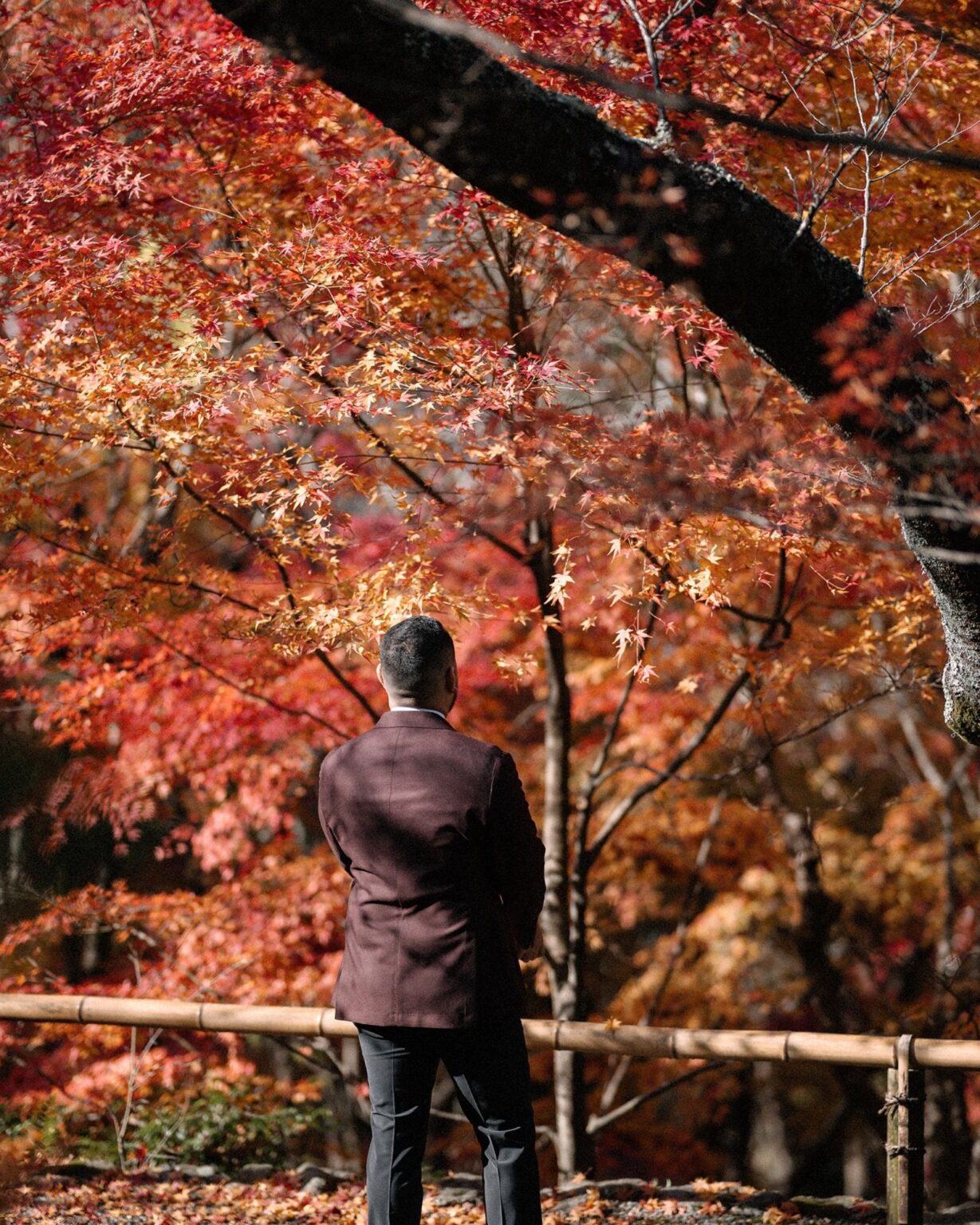
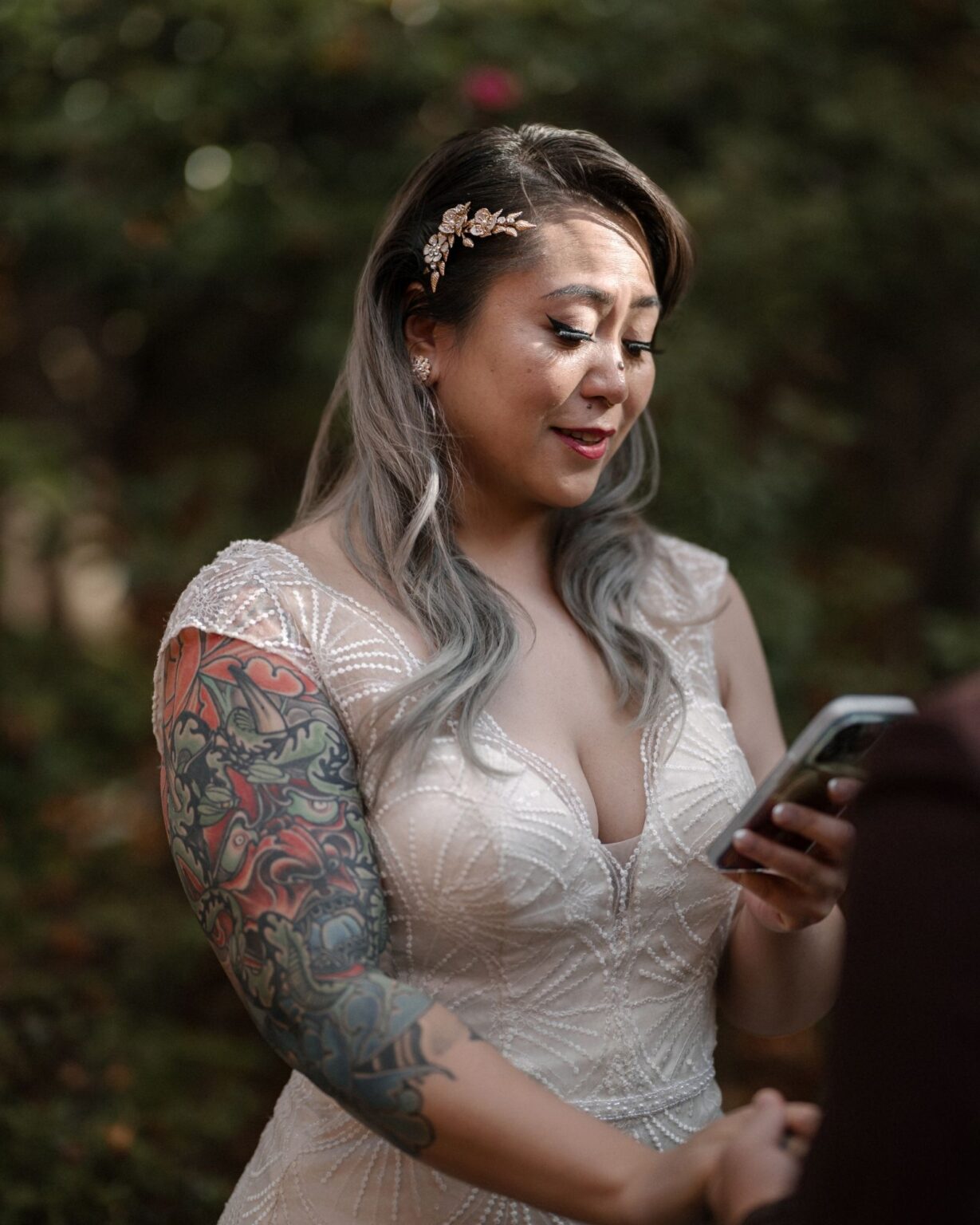
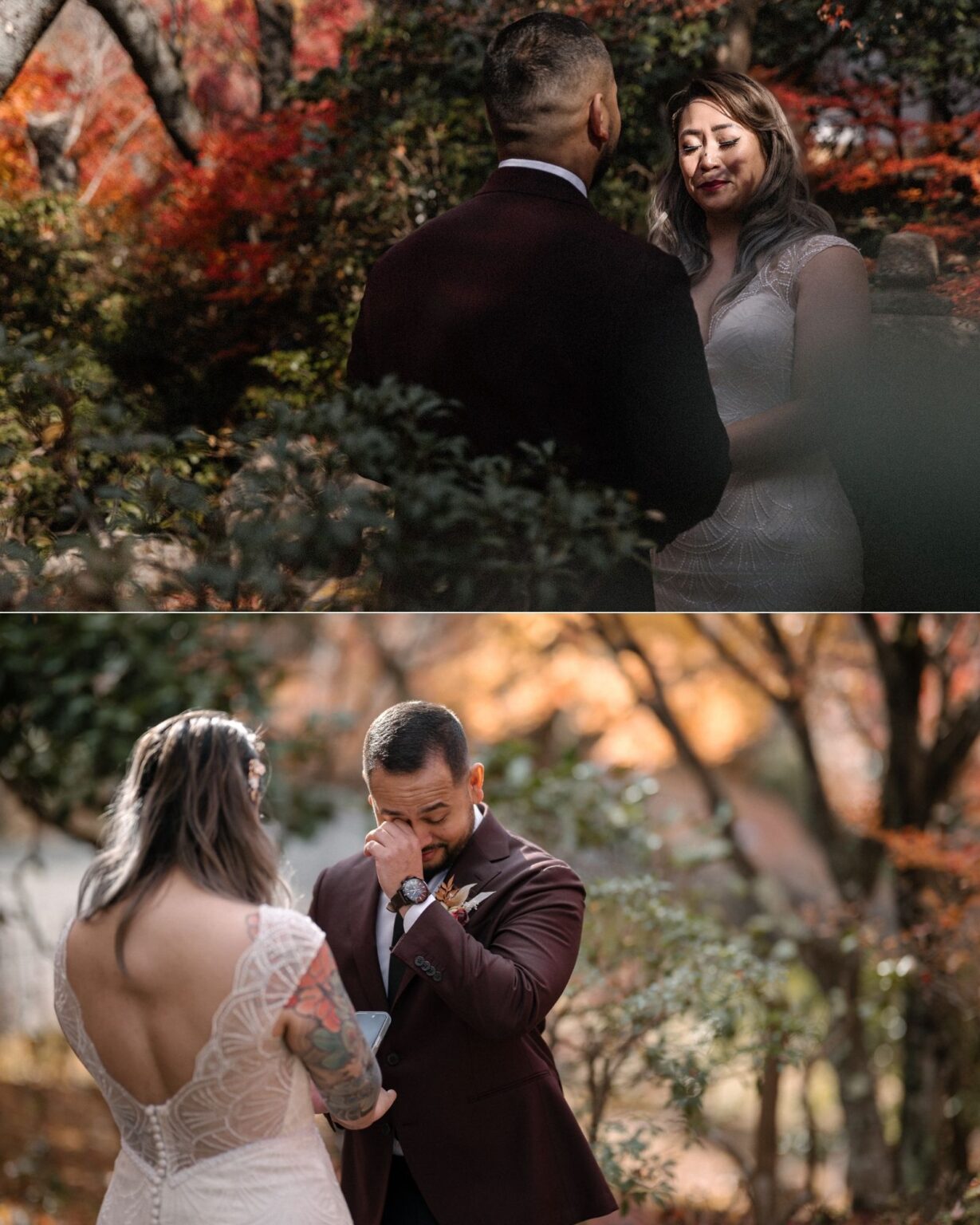
They read their vows from their phones, which is where most of us keep the important things now. She went first, and while she read, he needed a moment, and took it. Three years of saving them came down to two small screens and a few minutes under the trees. We won’t print what they said. That part was theirs.
There were two songs. One was theirs, Best Part by Daniel Caesar and H.E.R. The other, Kina Grannis’s version of Can’t Help Falling in Love, was for her late father, who loved the Elvis original and used to play it on his guitar.
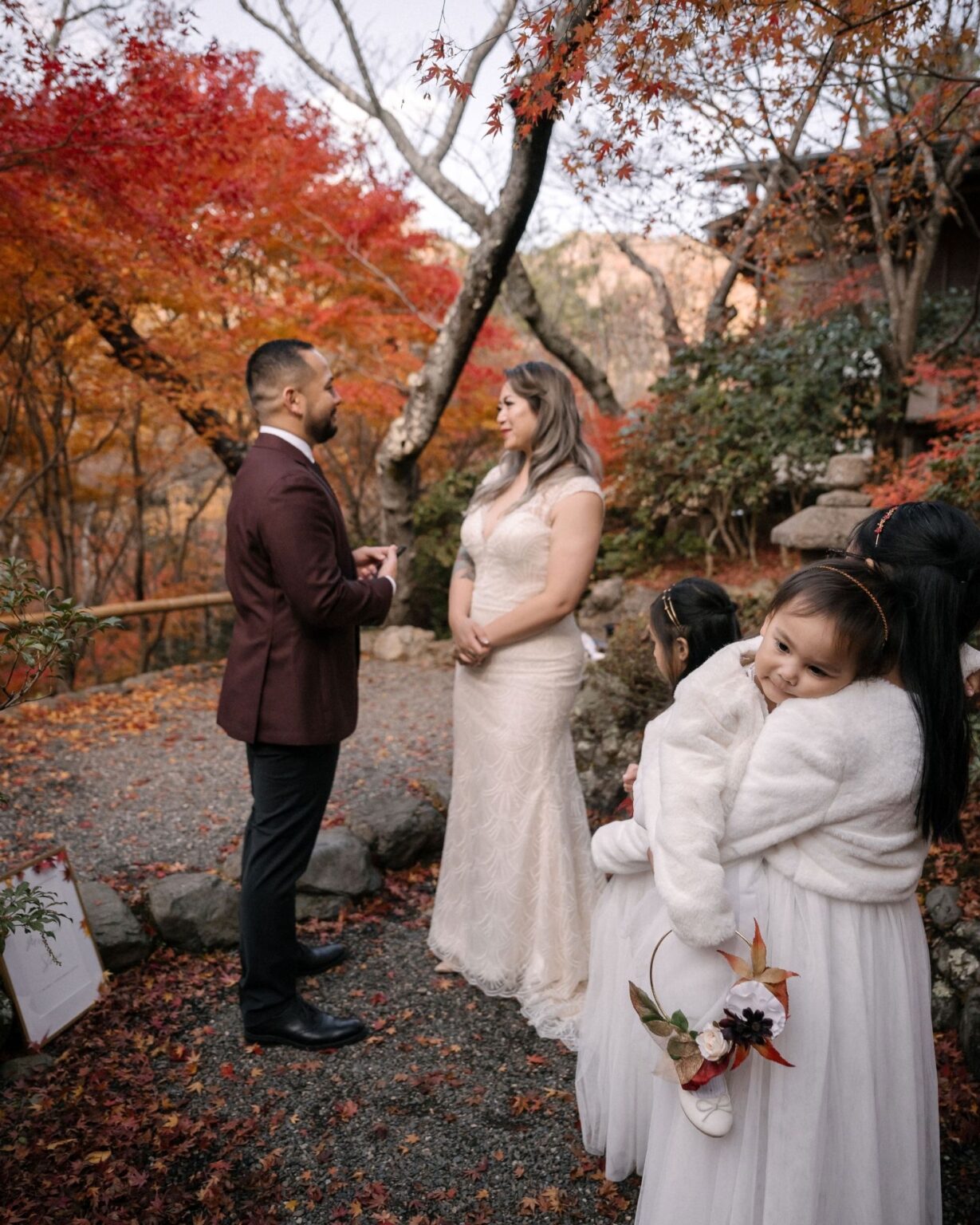
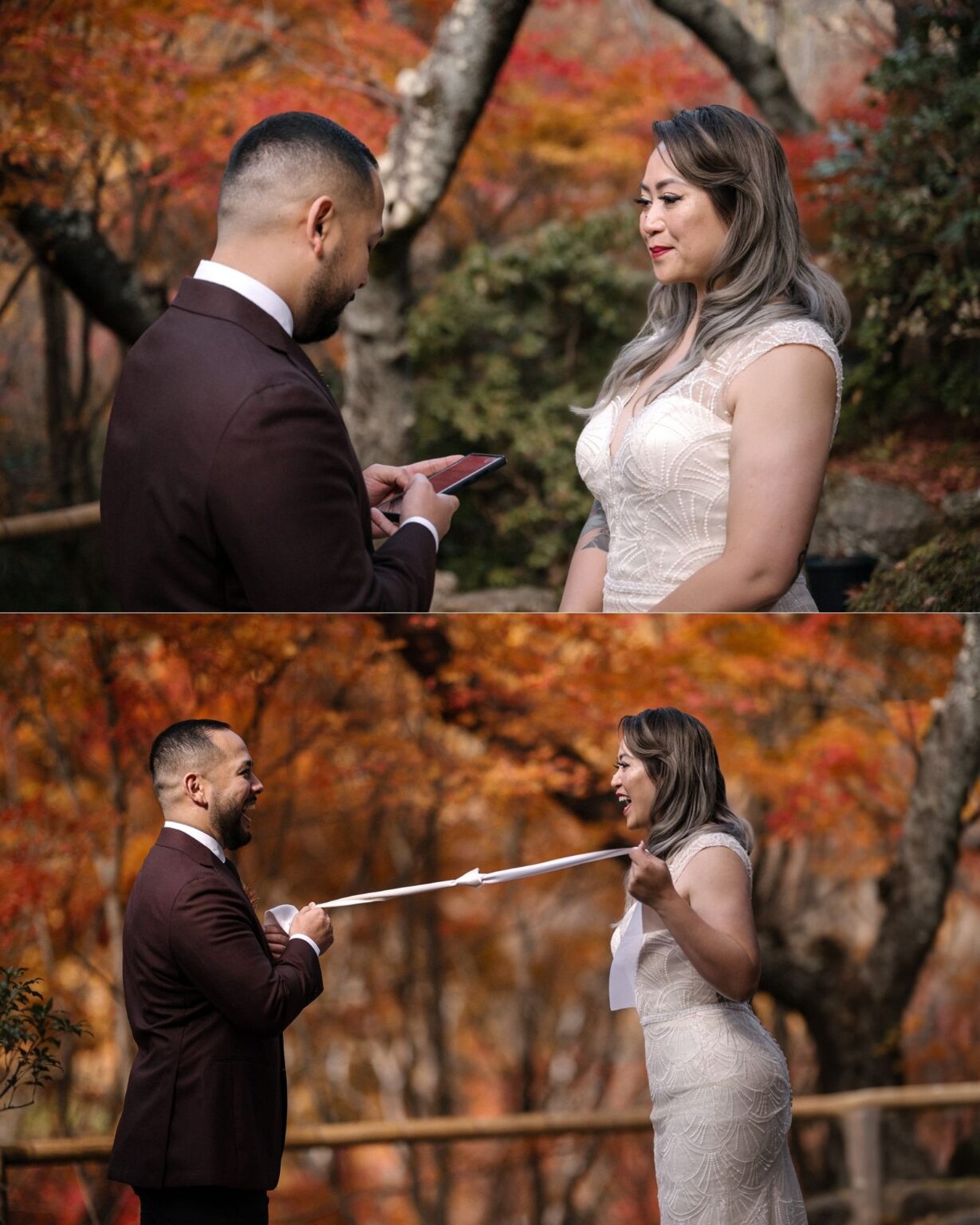
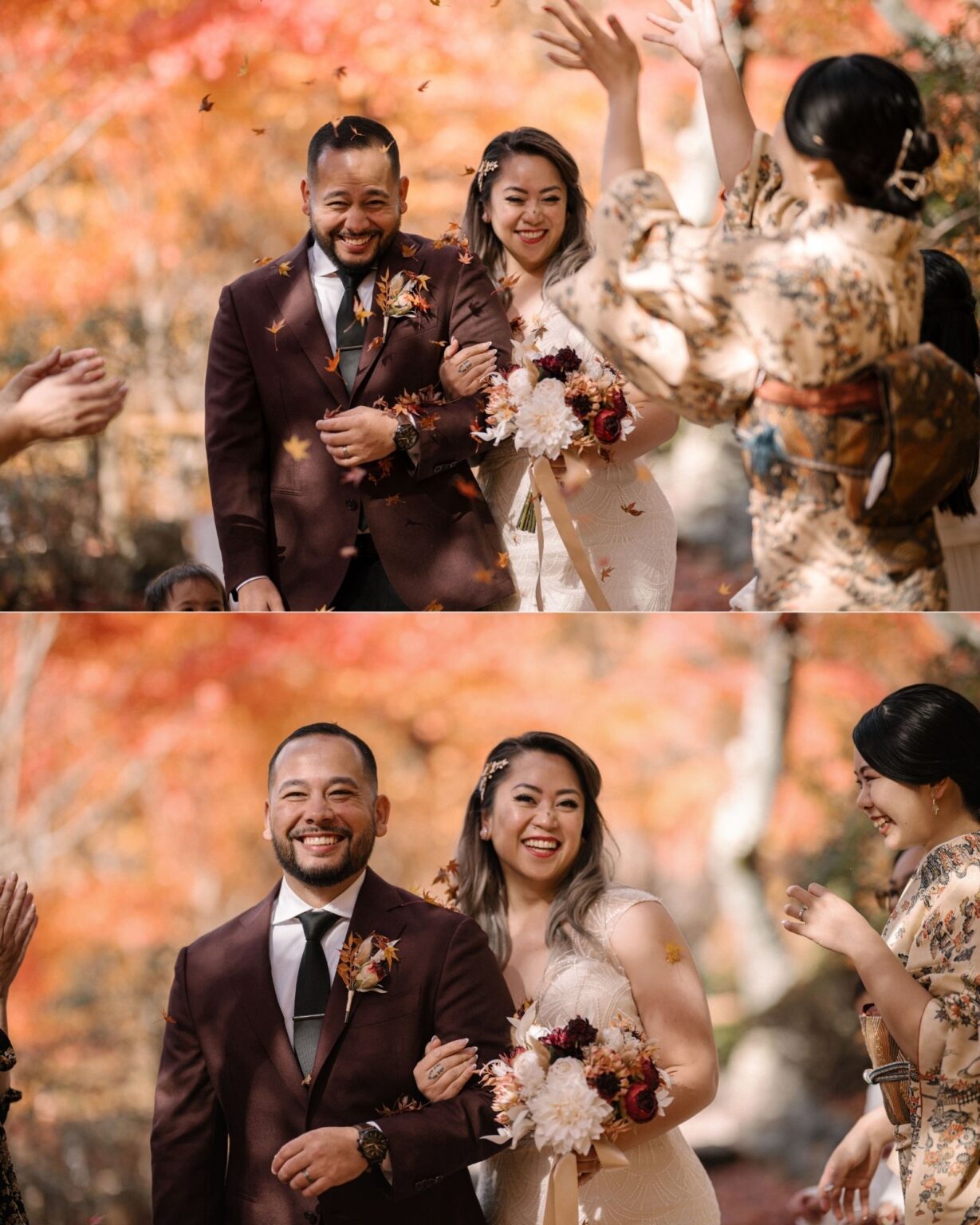
The red string they had imagined at the very start became, in the end, a length of pale ribbon, and they tied the knot with it. Then, instead of confetti, handfuls of fallen maple leaves from the garden went up over them and came down all over everyone. They were married under the maples in the truest sense.
Tea From the Owner
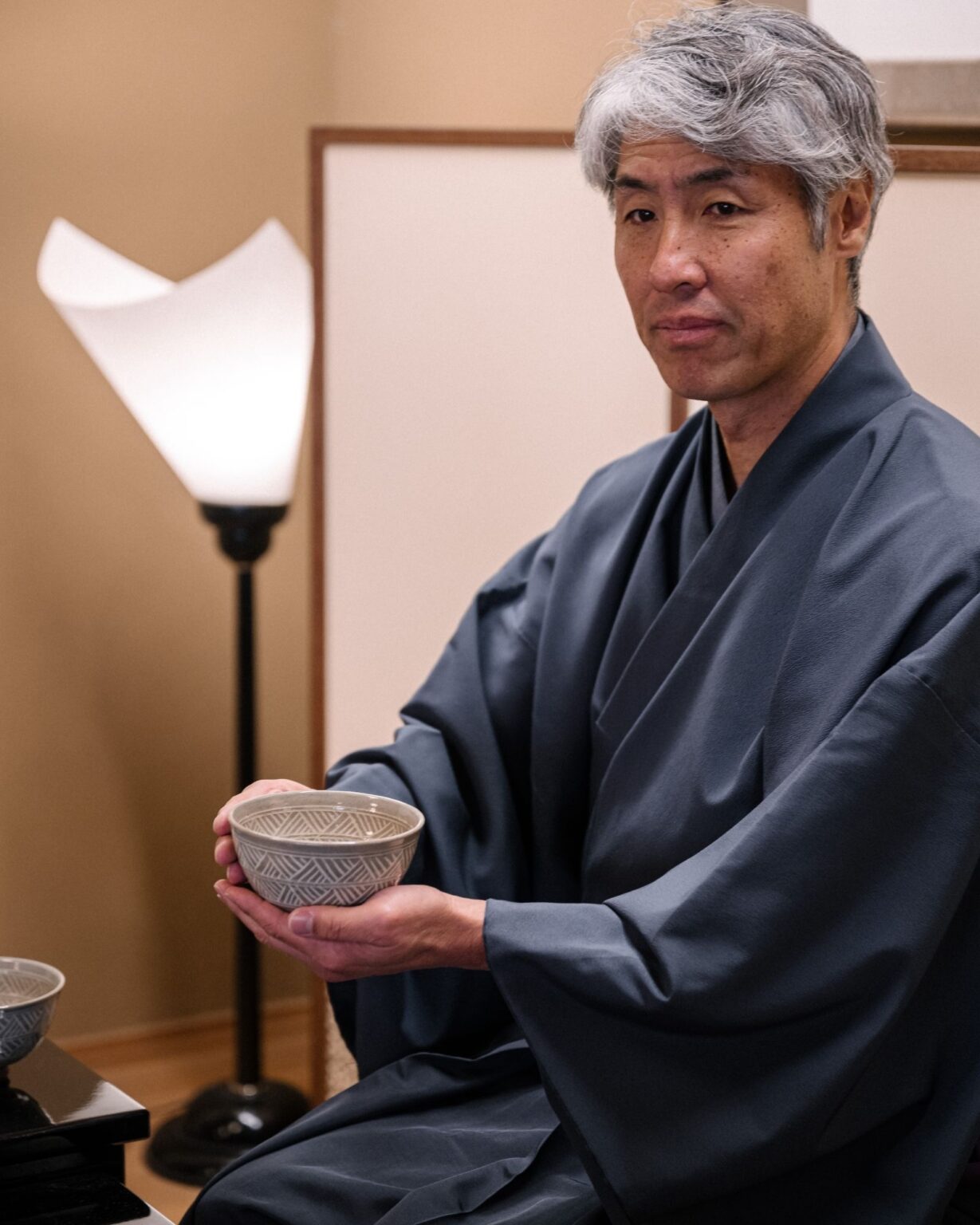
After the portraits came tea, and the owner of the garden made it himself.
A tea ceremony is hospitality reduced to its essentials: one host, one bowl at a time, every movement made for the person in front of him. Being served tea that way by the person whose garden you’ve just been married in is a different thing from being served tea.
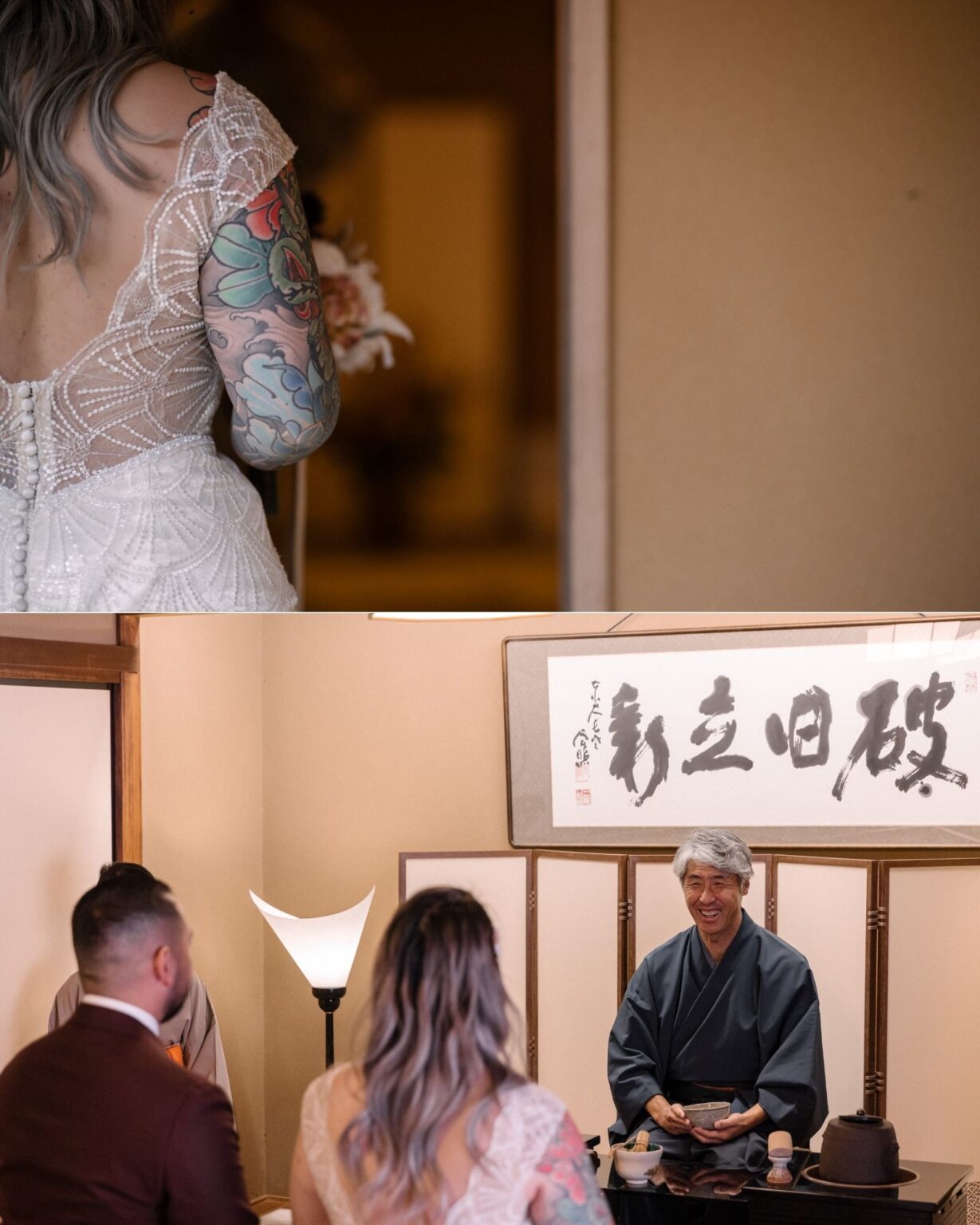
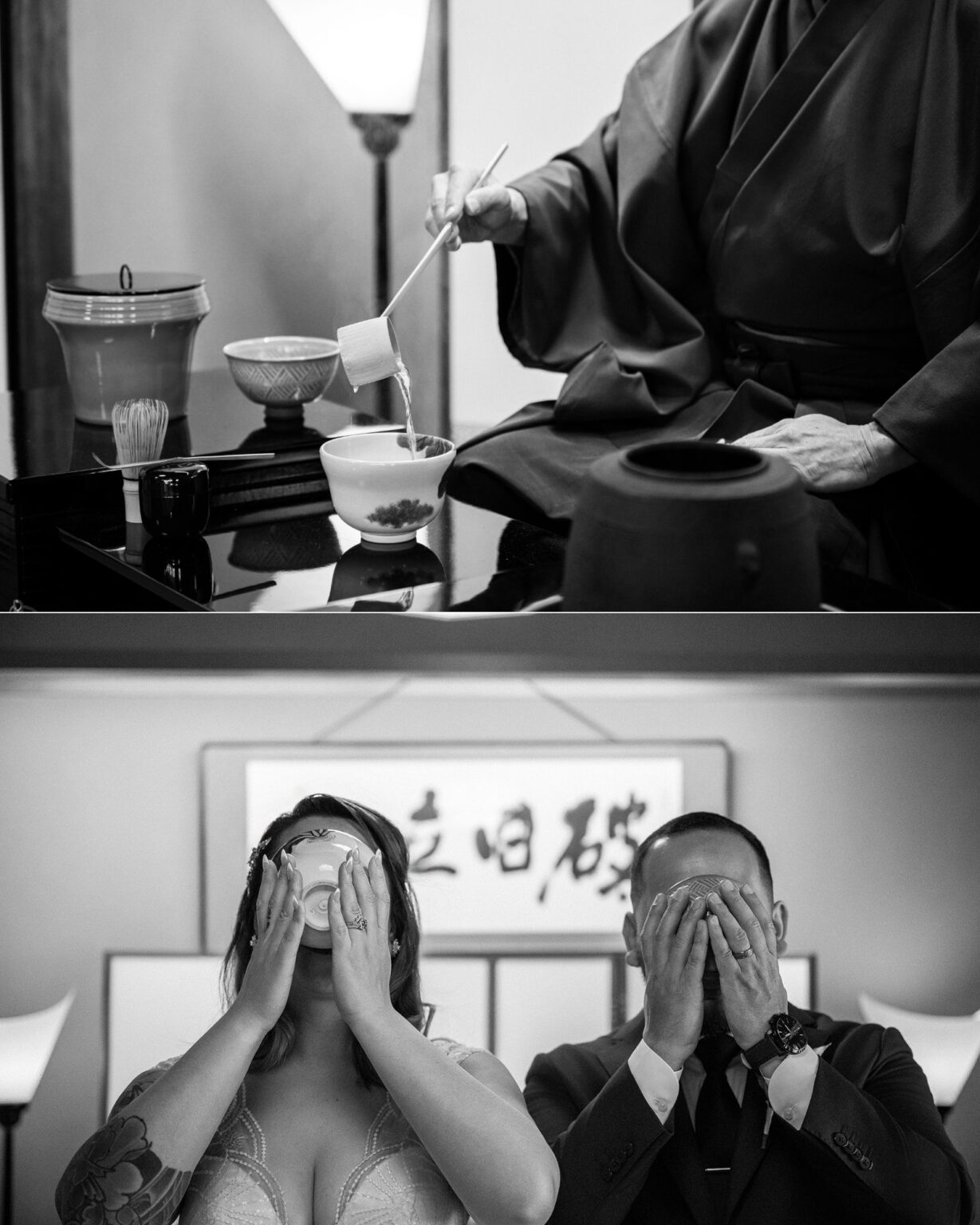
Lunch was just the six of them. More than once that day, the family said they didn’t want to leave. Back home, they wanted to write to the owners themselves.
Gion, and a Vermilion Torii
The afternoon was the two of them.
Early in their story there’s a photograph of the two of them kissing on stone steps beneath the vermilion torii at Inari. The afternoon was planned around the feeling of it rather than the place.
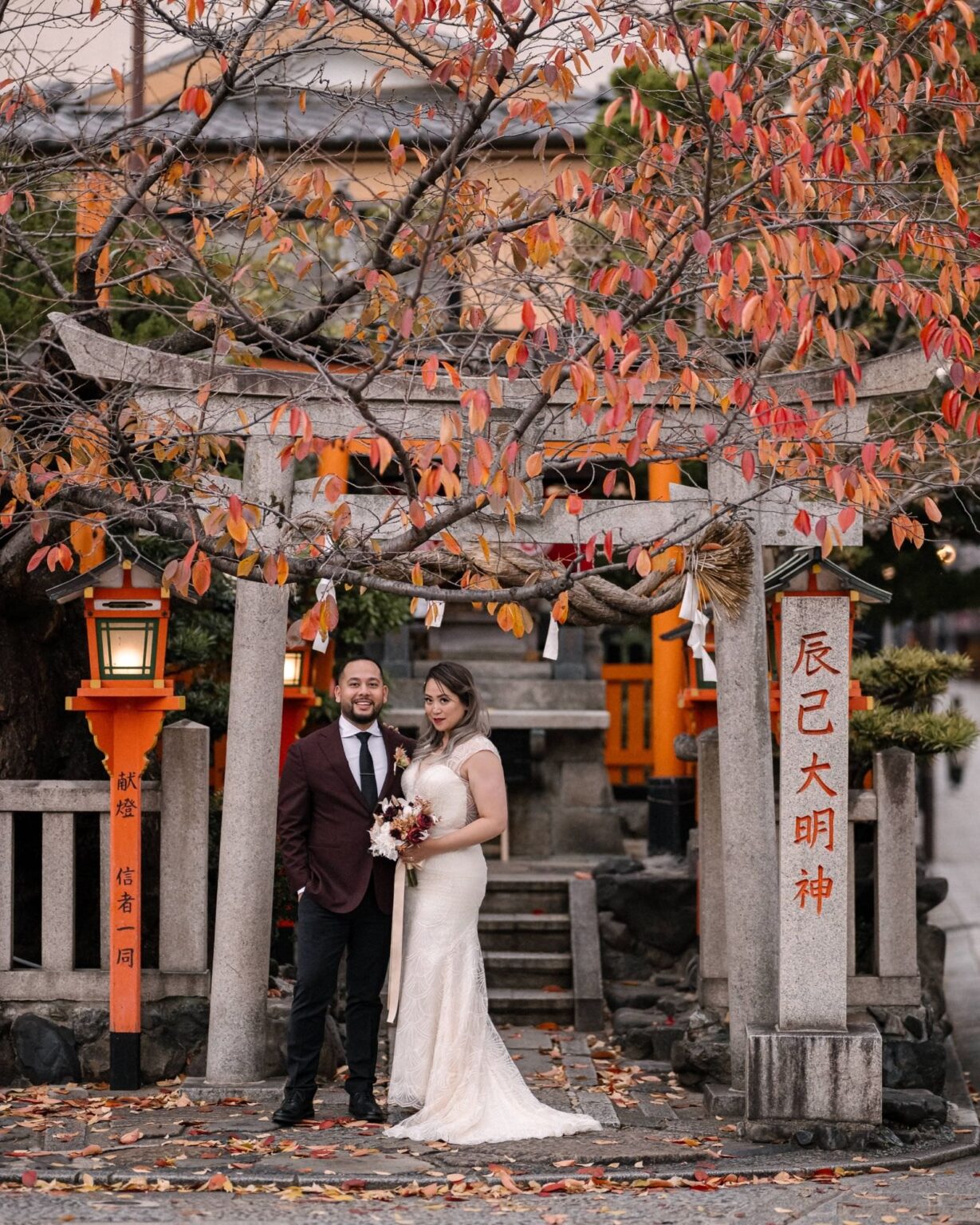
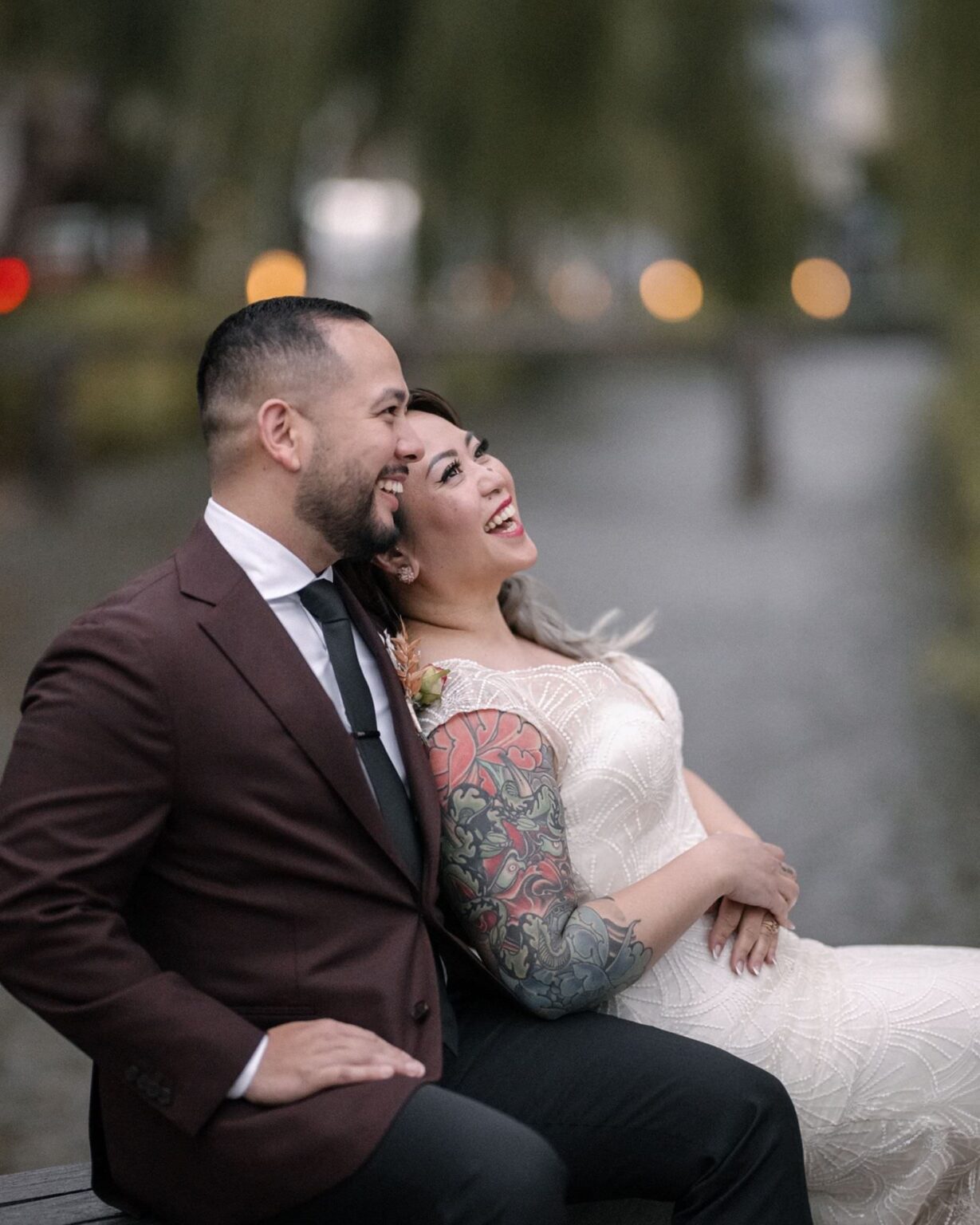
So the afternoon went to Gion: the canal at Shirakawa, the willows, the old wooden streets, and the small shrine of Tatsumi Daimyojin by the bridge, where the vermilion posts and lanterns stand close enough to touch.
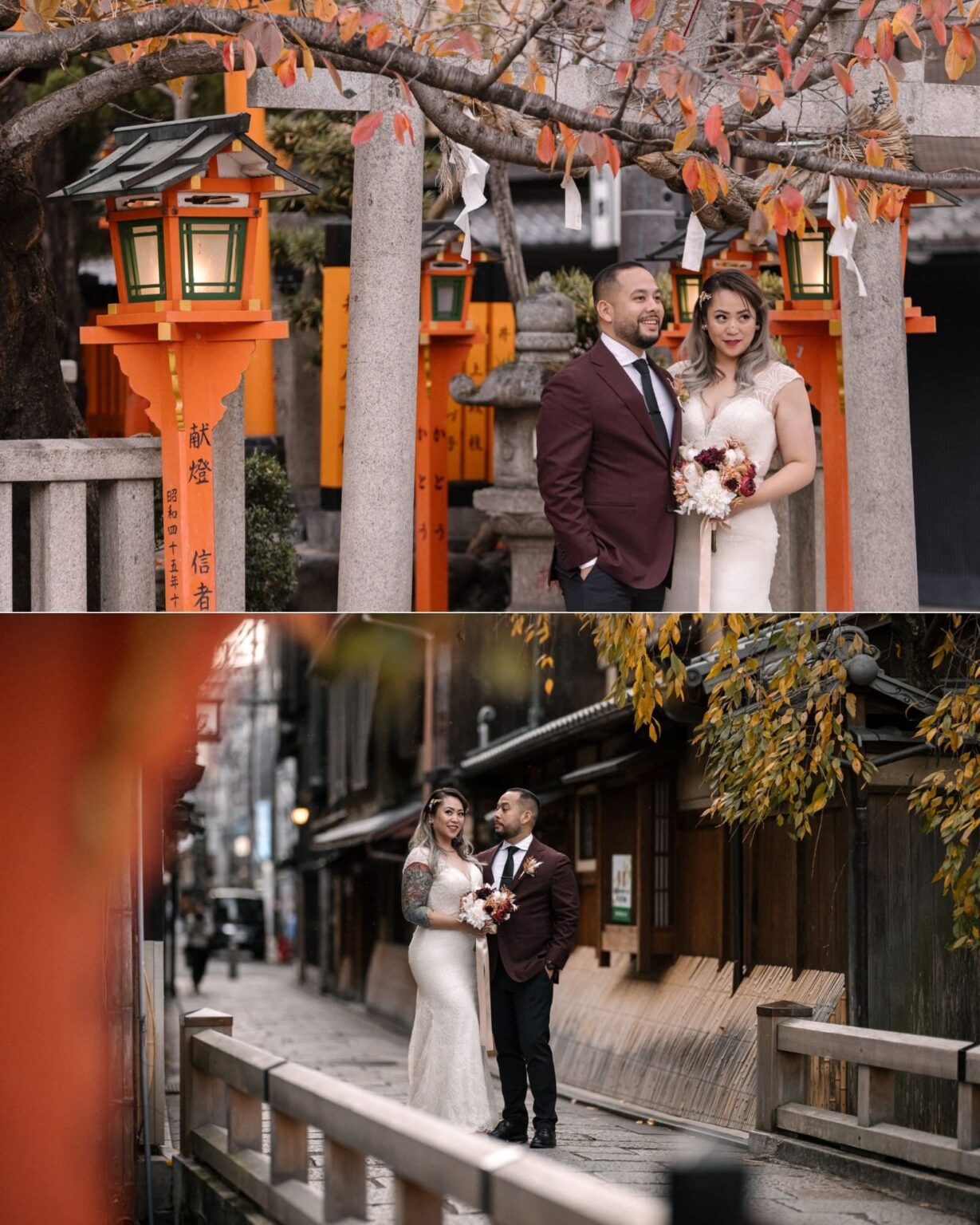
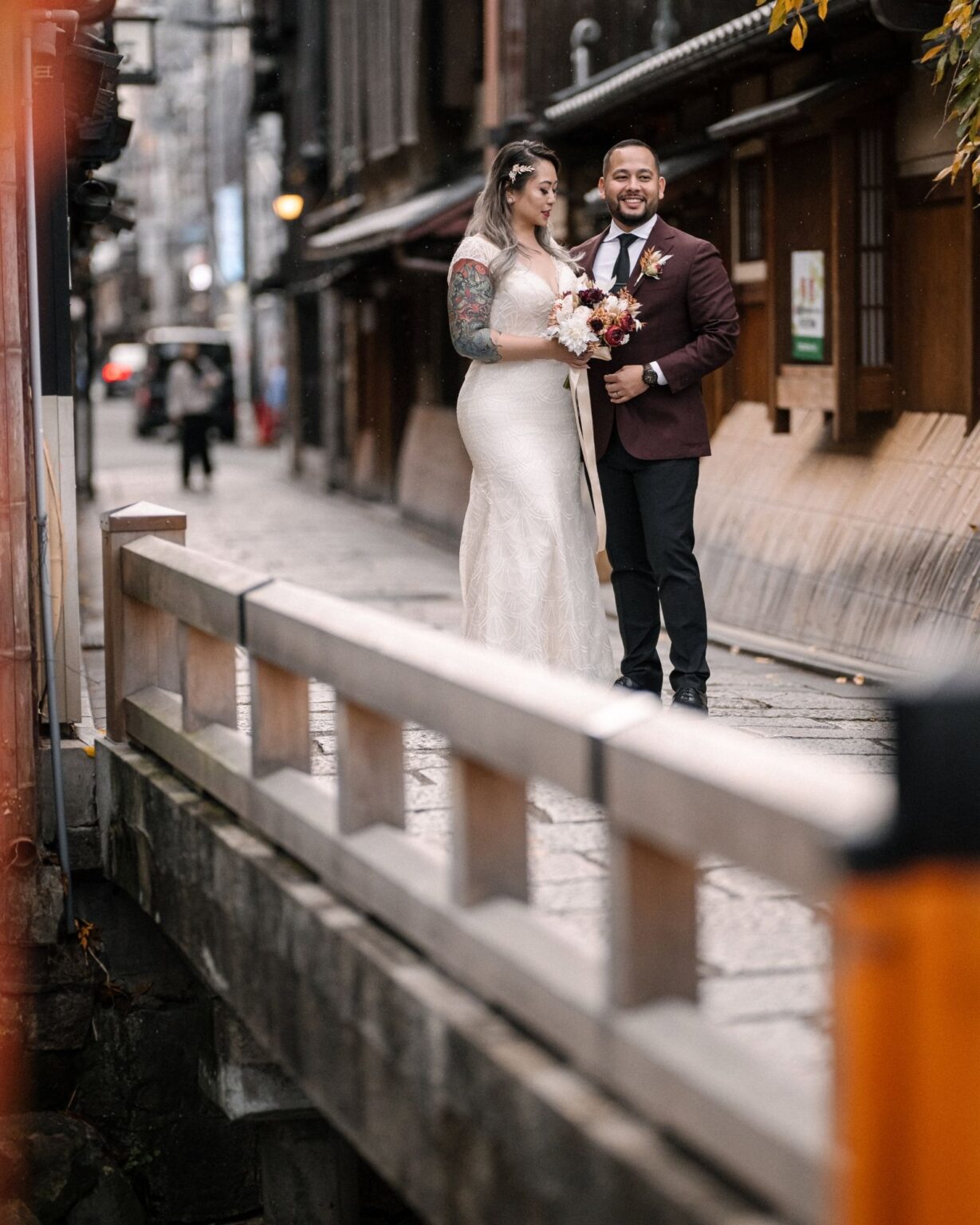
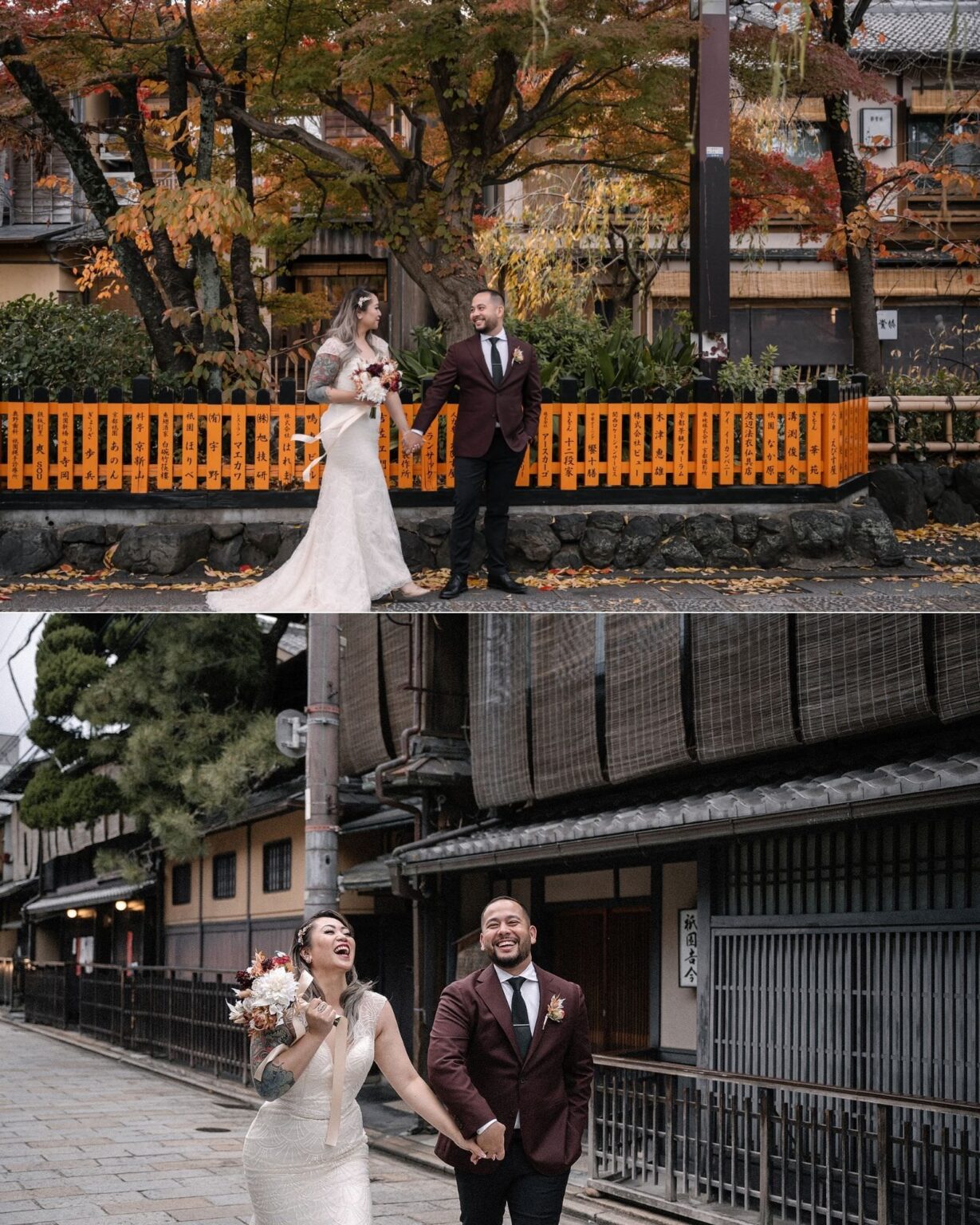
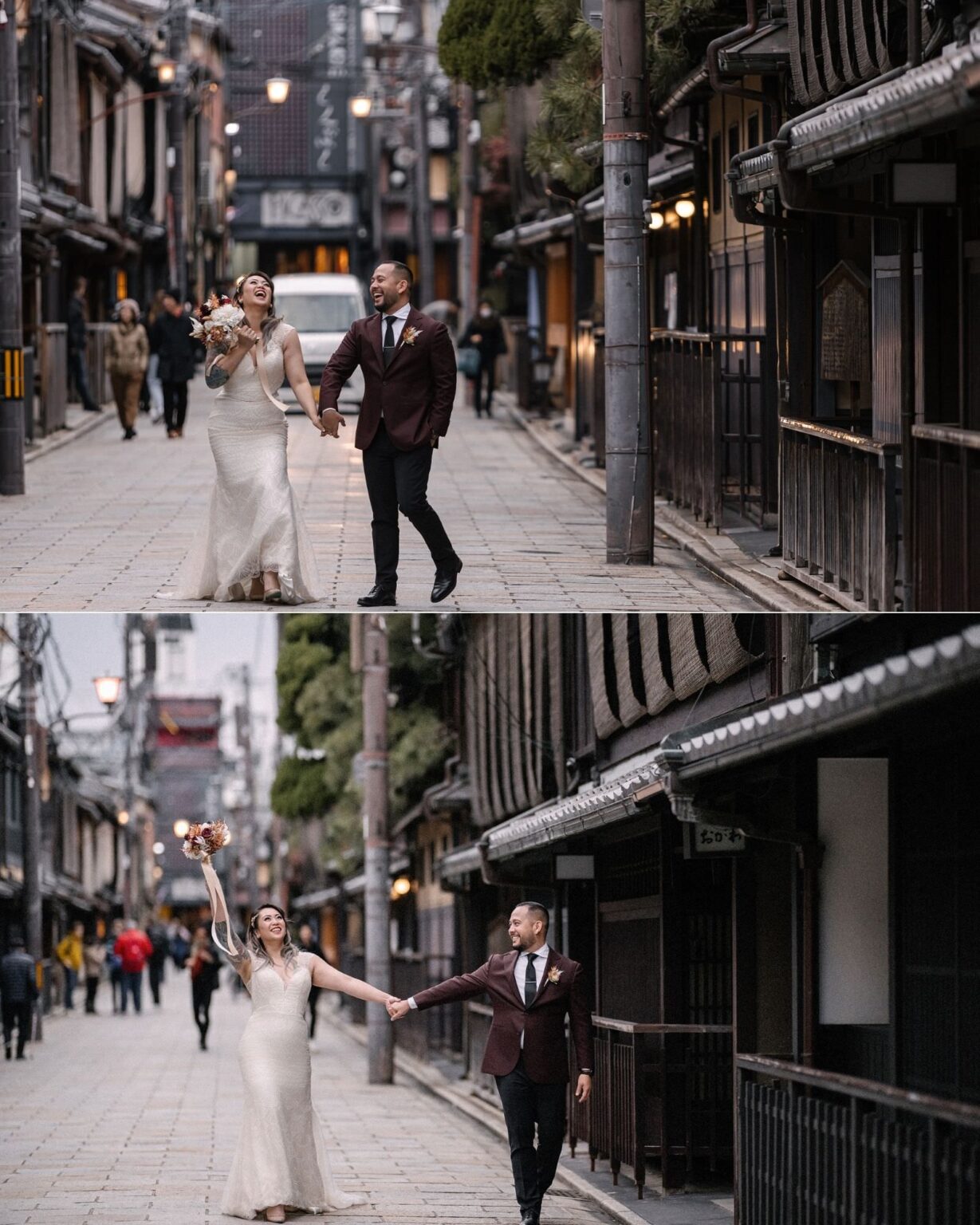
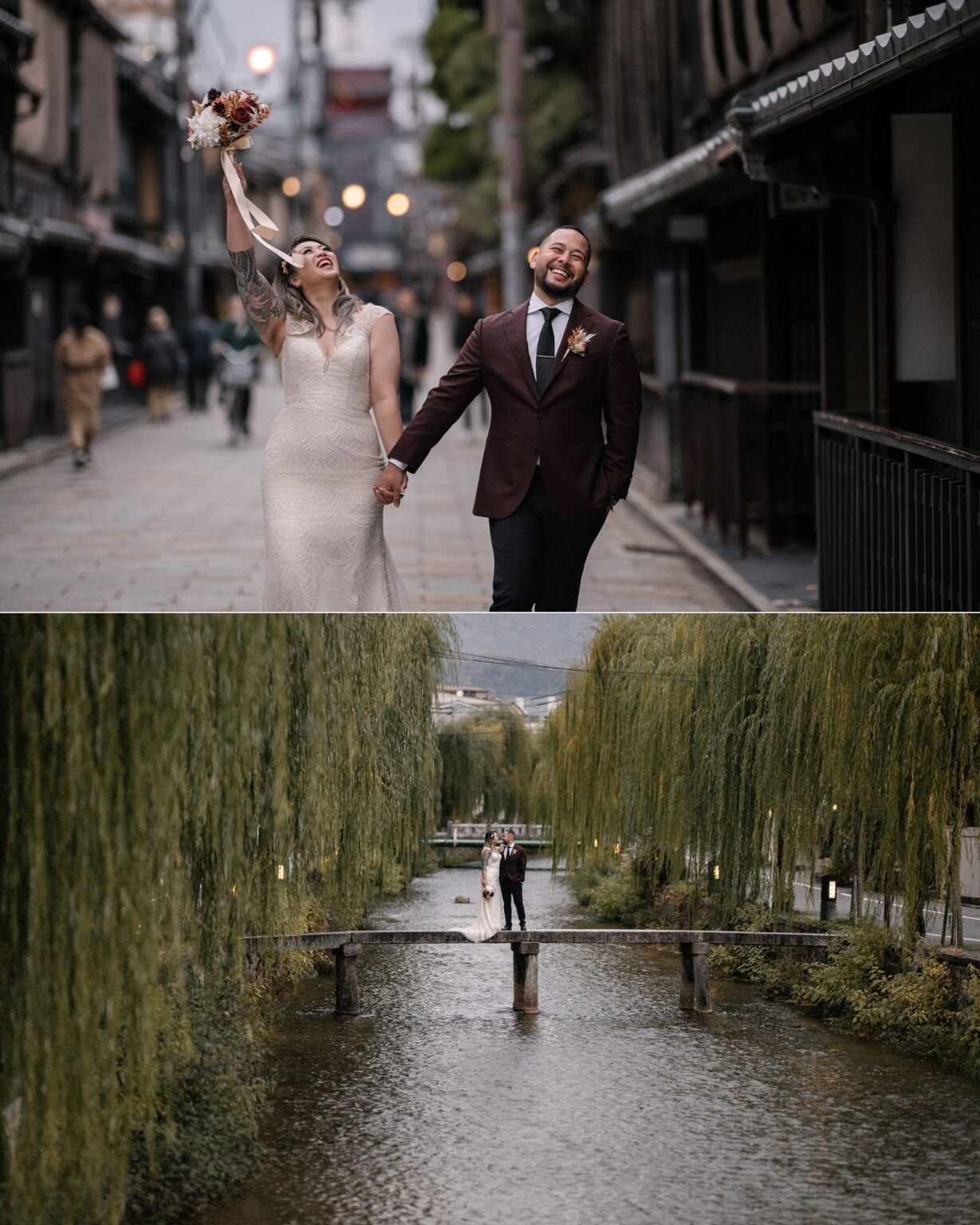
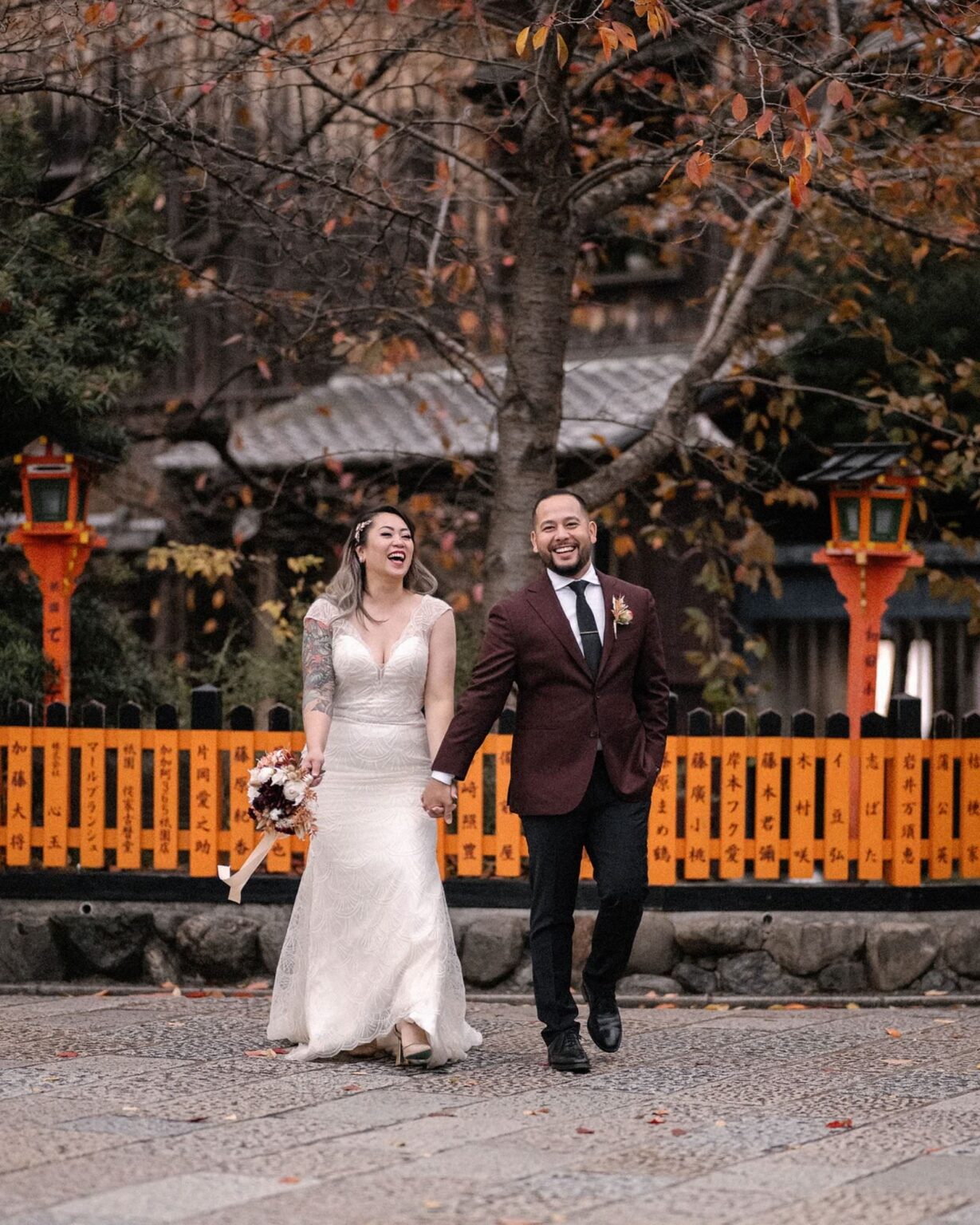
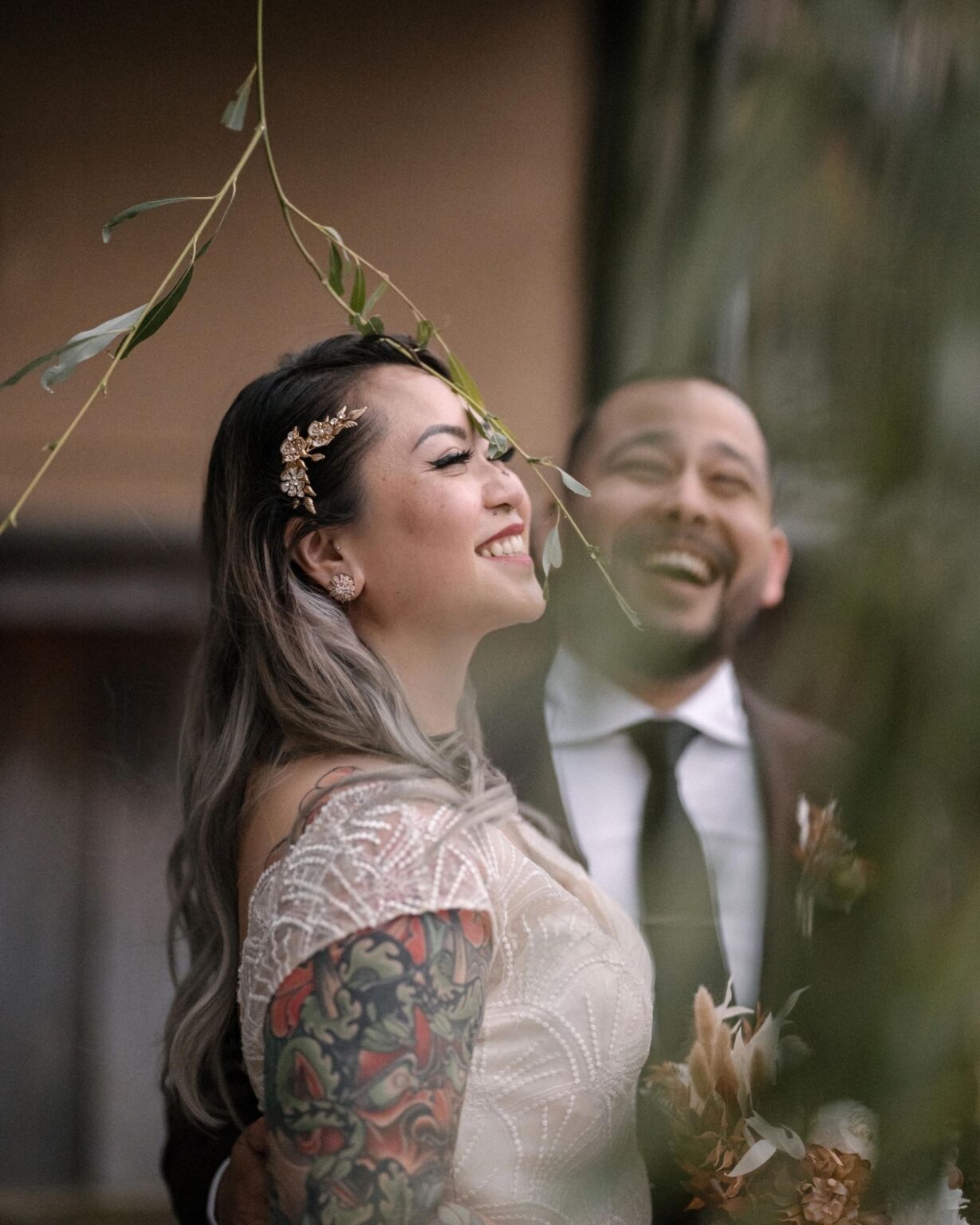
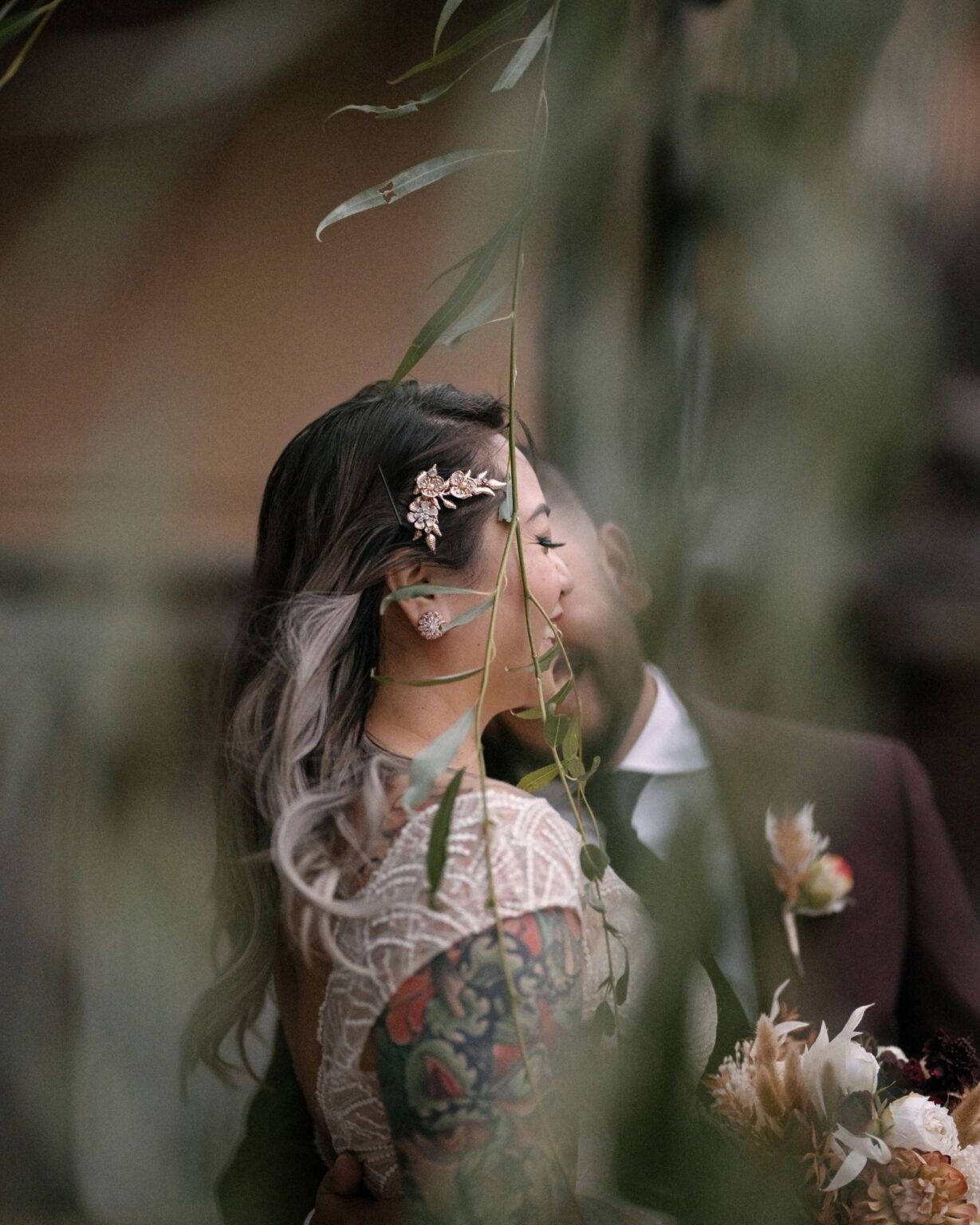
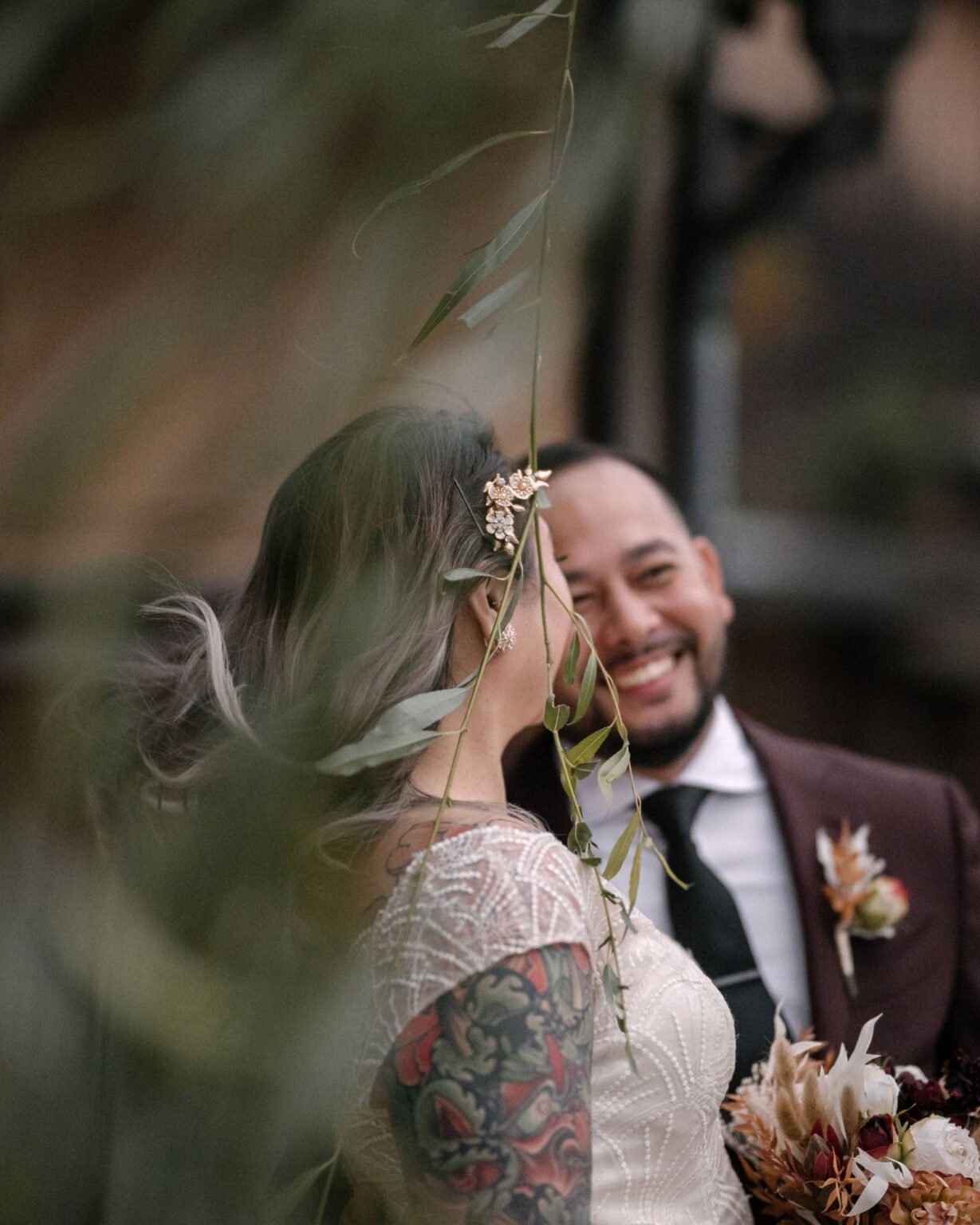
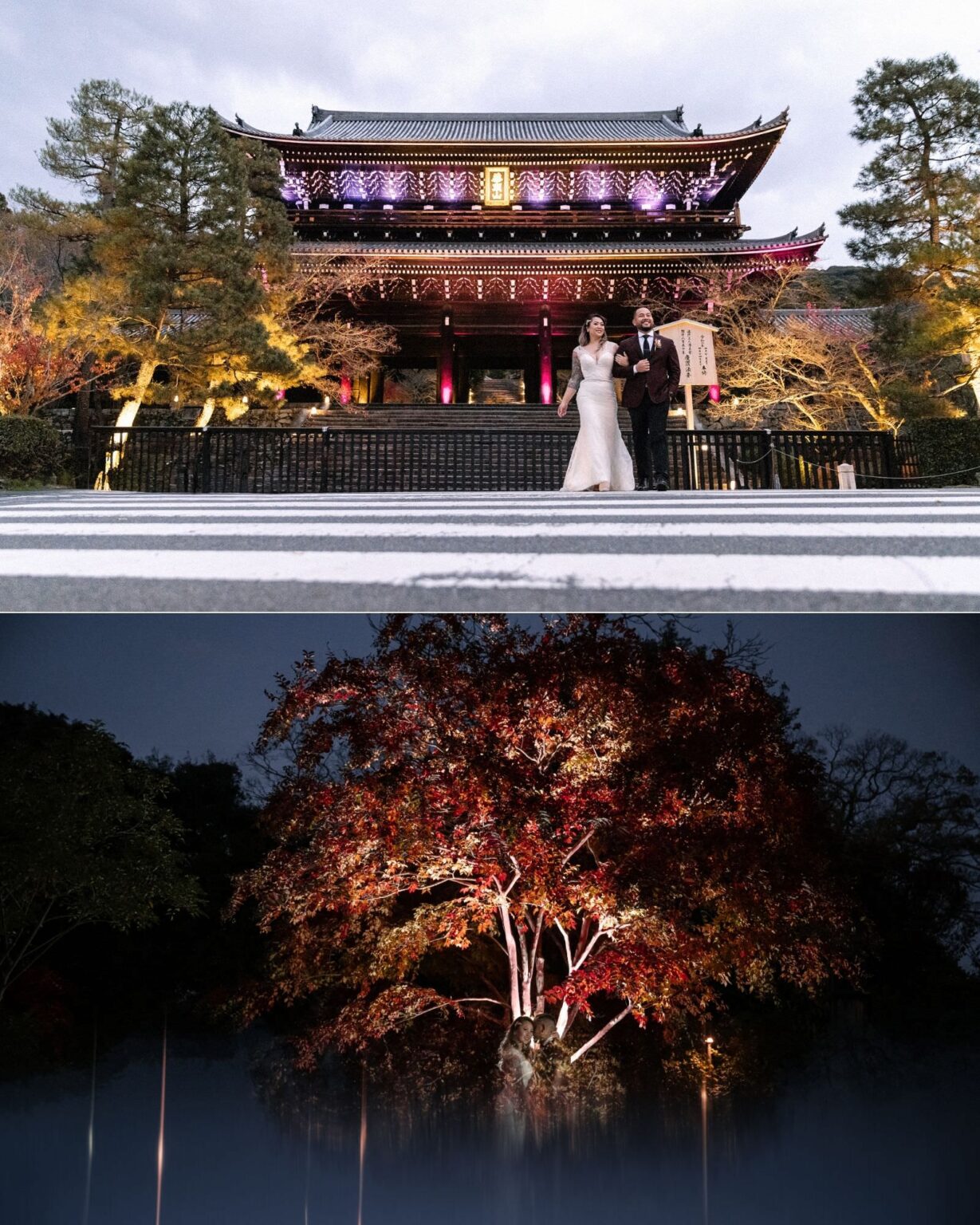
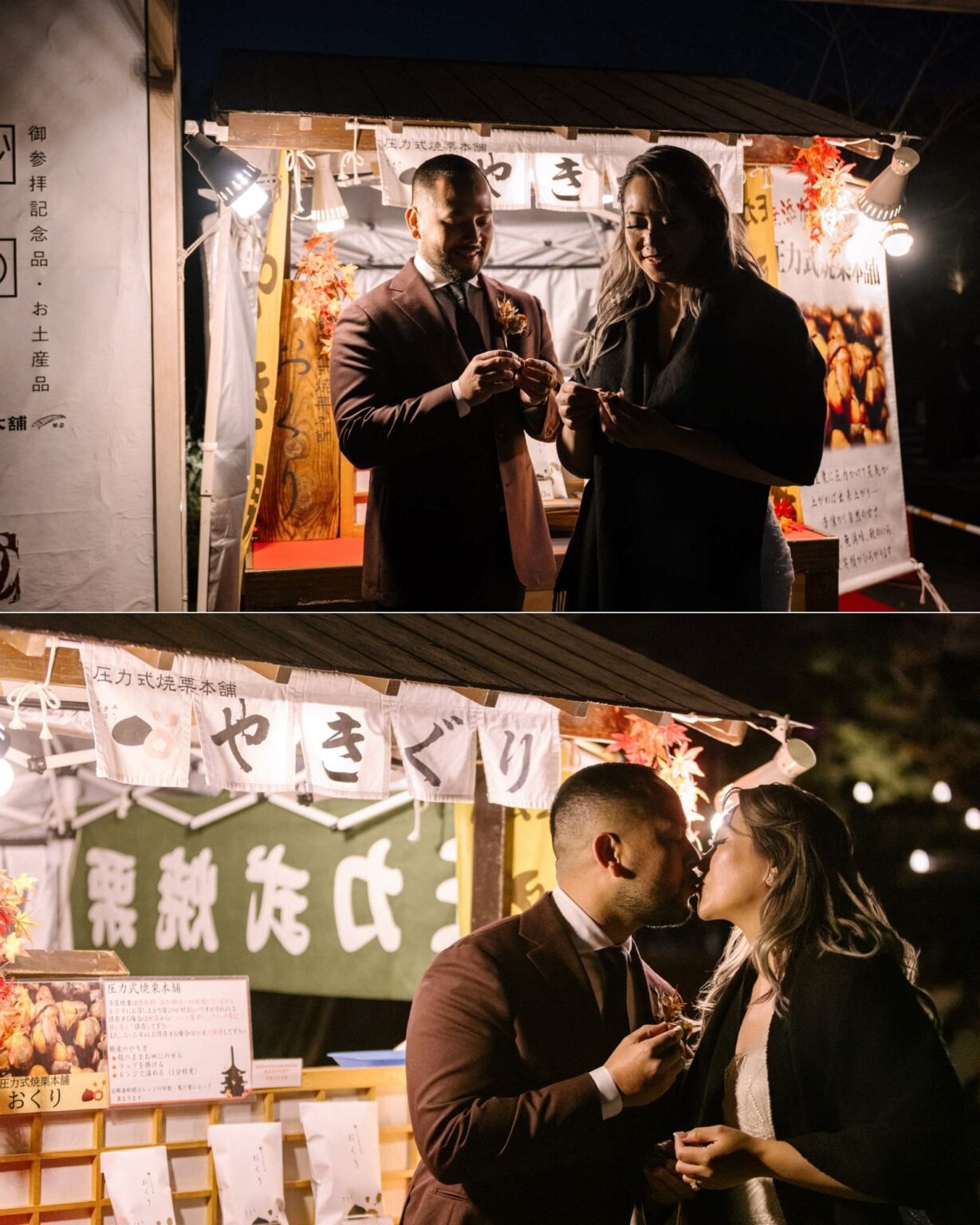
By dusk the temples were lighting up for the autumn evenings. One of their last stops was a stall selling roasted chestnuts, where they stood and peeled yakiguri under the stall’s lamps. Three years of saving the vows, and the day wound down with chestnuts.
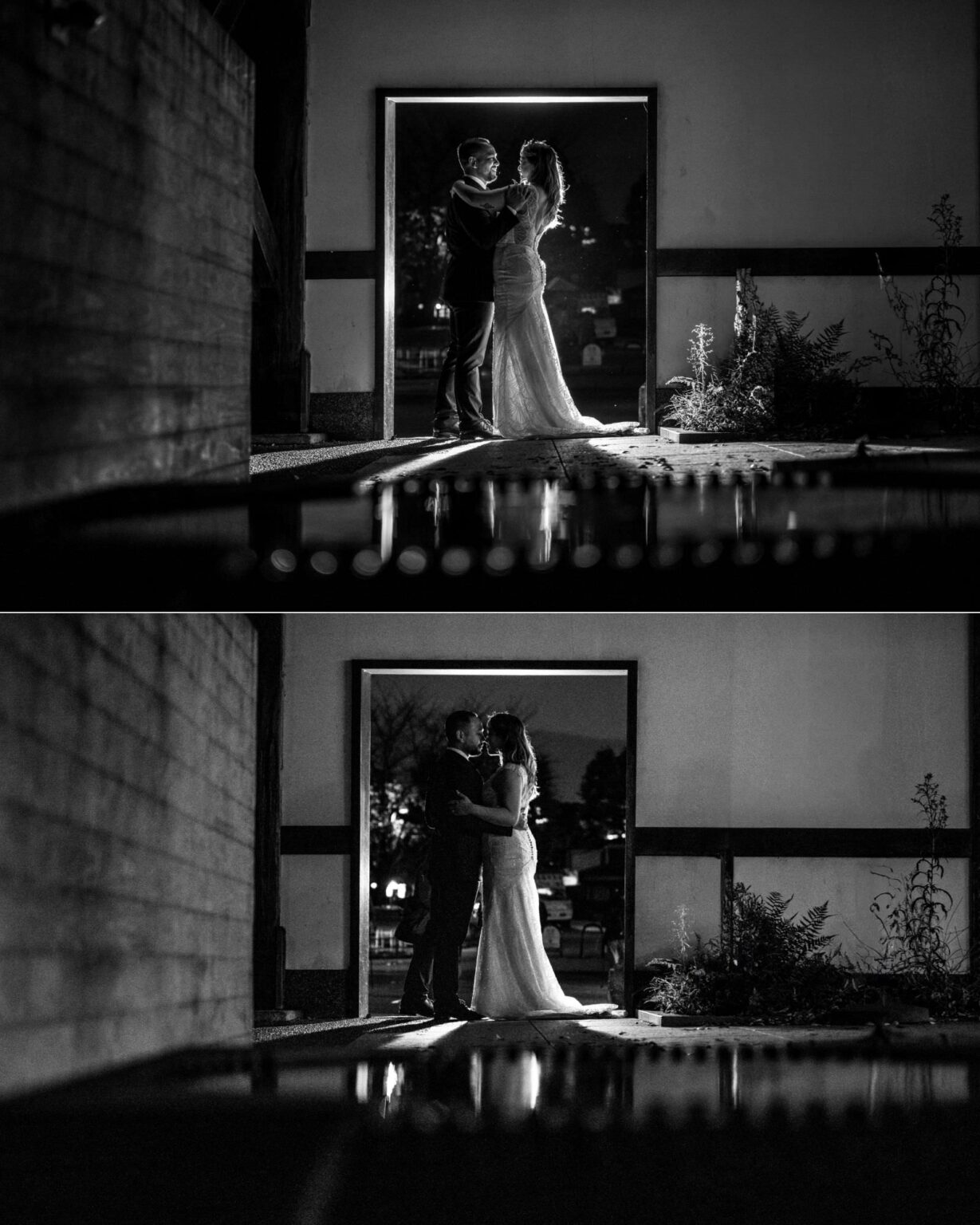
By the time they stood under those maples, they’d been married for three years. That morning, with their three girls beside them, they finally got to say so.
What to Know About Kyoto in Autumn
- Kyoto’s maples peak late. Across the city, the colour is at its height from late November into early December. The Japan Meteorological Agency’s observation maple in Kyoto is mostly red by 5 December in an average year (1991 to 2020).
- Late autumn is one of Kyoto’s busiest times, so the famous temple gardens are at their fullest exactly when the colour is. A private garden, or a very early start, is how a ceremony stays quiet.
- Many temples open after dark in late autumn for evening light-ups, which makes dusk worth staying out for.
- A ceremony in Japan isn’t legally binding on its own. Most of our couples marry legally at home and give Japan the vows. Planning an intimate wedding in Kyoto starts with the season and the size, then the place.