In May 2024, the town of Fujikawaguchiko put up a black mesh screen beside a road, twenty metres long and two and a half metres high. Its job was to hide Mount Fuji from one stretch of pavement.
Have you seen the photograph? From that stretch, the mountain sits perfectly above the roof of a convenience store. To get it, crowds crossed the road against the traffic, blocked the entrance to a clinic and left their rubbish behind, until the picture became a byword for overtourism in Japan. The town spent ¥1.3M (about US$8.3K) on the screen. Within a day, someone had poked a hole in it. Within a week there were about ten, all at eye level.
The screen came down that August, ahead of a typhoon, and the town said it would stay down as long as people’s manners held. The view itself had never been the problem. How people stood in front of it was.
The Bill Arrives: Overtourism in Japan and Beyond
The screen was one town’s answer. Across Japan and well beyond it, the most photographed places have started setting their own terms.
In Kyoto, Kiyomizu-dera, one of the most visited temples in Japan, has banned wedding shoots, cosplay and fashion shoots from its grounds, along with tripods and drones. Fushimi Inari asks that nobody walk its grounds in a wedding dress. Yasaka Shrine lets no outside photographer work there for pay, and Heian Jingu firmly declines commercial shoots. Even the city’s parks charge by the hour for a professional wedding shoot.
In Nara, Kasuga Taisha keeps its grounds for its own weddings: nobody married elsewhere is to be photographed there in wedding clothes, Japanese or Western. In Gion, a neighbourhood council put up signs warning of a ¥10K (about US$64) fine for photographing on its private lanes, and later for walking into some of them at all. The signs have no legal force. The lanes are where people live and where geiko and maiko walk to work. The signs were a way of asking.
In 2026, Venice charged day visitors to enter the old city on its busiest days, from April to late July, and the city’s guidance was clear that wedding guests paid too, unless they qualified for an exemption. For 2027, it has already proposed more days. In Iceland, since May 2026, drone permits in some protected areas go only to commercial and professional work, and a ceremony in one of those places needs its own permit. In 2023, one wedding of about twenty guests at a protected site was granted one, with a ranger overseeing it. In India, a temple in Karnataka has banned pre-wedding and post-wedding shoots from the street around it.
Read one at a time, these look like local rules. Read together, they say the same thing.
The places we photograph are tired of being treated as scenery.
Never Backdrops: Wedding Photos at Japan’s Temples and Shrines
Look at who the rules are written for. Kiyomizu-dera’s notice bans the wedding shoot, and Kasuga Taisha’s rule leaves the shrine’s own weddings alone. Both are written for the wedding dress that arrives without a wedding.
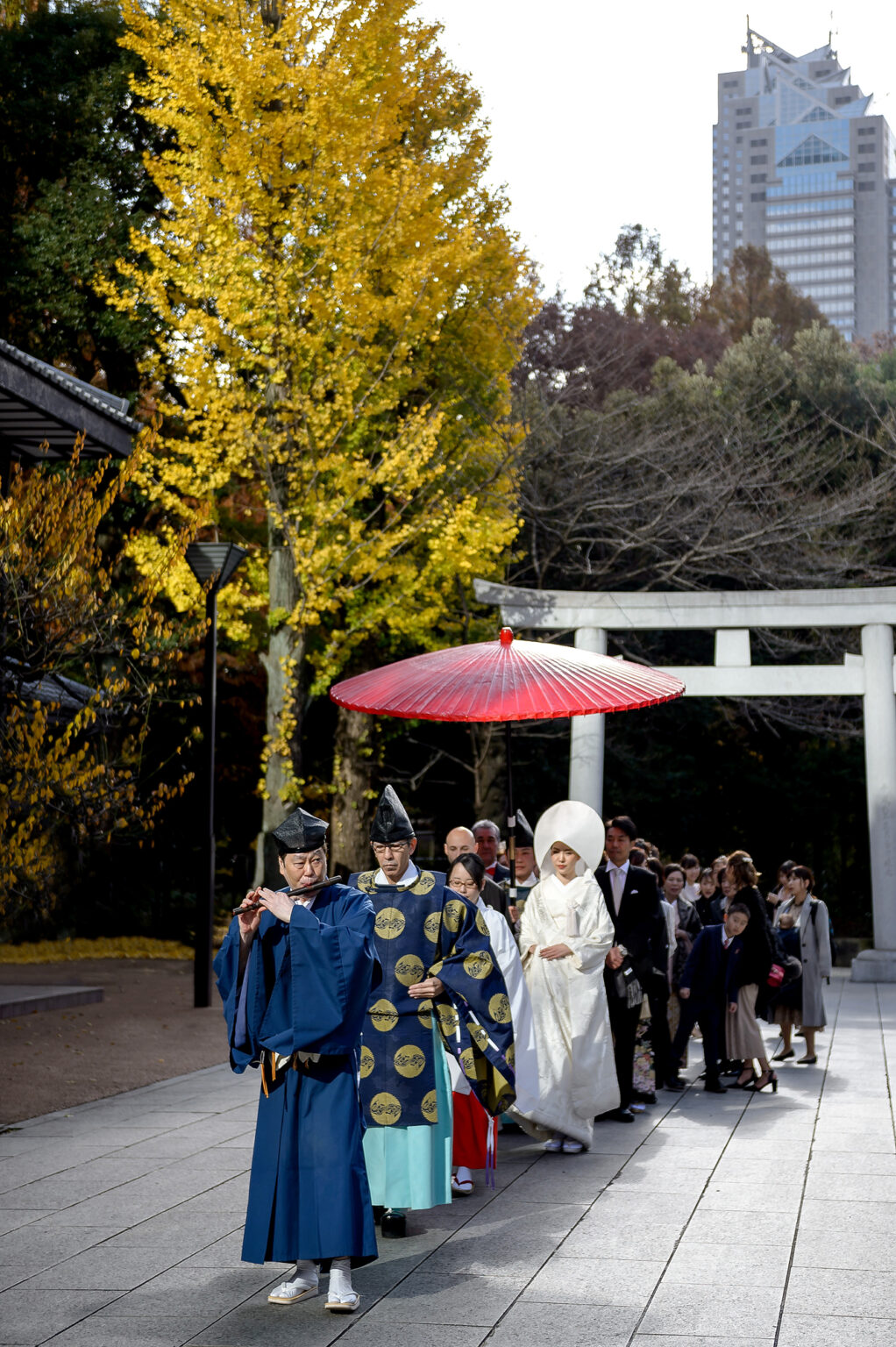
A wedding held at a shrine still happens on the shrine’s terms. Its priests lead the rite, and the shrine decides where a camera may stand while they do. And for an offering, on their own terms, a few of Kyoto’s loveliest shrines still open their grounds to our couples.
In Japan, whoever keeps a place has always decided what can happen in it. What’s new is that they’ve started writing it down. Every place on that list belongs to someone. A temple courtyard is where someone comes to pray. A shrine hillside is a shrine.
We think they’re right.
Asking Properly: Permission for Wedding Photos in Japan
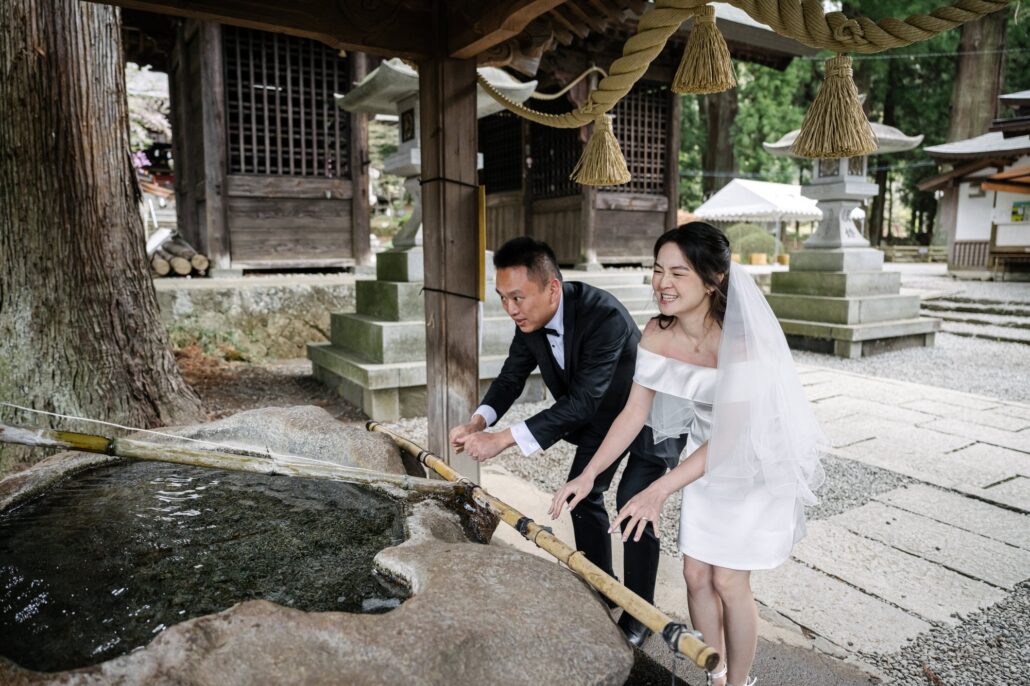
Asking properly takes time: a permit can take weeks, sometimes months. Many of the places our couples love most were never built for weddings: gardens, hillsides, old houses, the grounds of shrines and temples, each with terms of its own. Asking means conversations in Japanese, often several, with whoever keeps the place: a shrine office, an owner, a neighbourhood council. Sometimes the answer is no. We take a no as seriously as a yes. The next couple will need that door to still be open.
The permission is part of the design.
That Icelandic wedding had a ranger beside it, and we’d count that as a good brief: about twenty people, a protected place, and someone whose job is to make sure it stays protected after they leave.
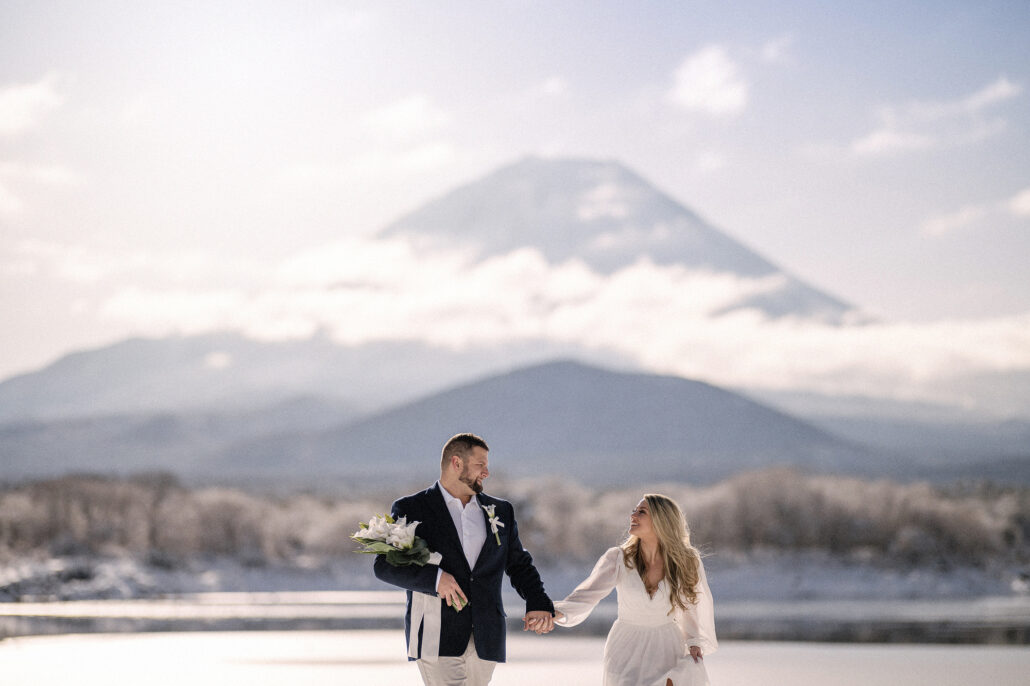
In the same town as the screen, a red gate stands alone on a hillside above Lake Kawaguchi, facing Mount Fuji. Tenku no Torii belongs to Kawaguchi Asama Shrine, and in 2022 one of our couples asked to marry beneath it. The shrine had never held a wedding there. It took us months of meetings with the shrine, working through exactly what the ceremony would involve: six family members, a cellist, their own vows, and an understanding that the hillside came first. Then the shrine said yes. The wedding fell about three weeks after Japan reopened to travellers, and there was nobody else on the hill.
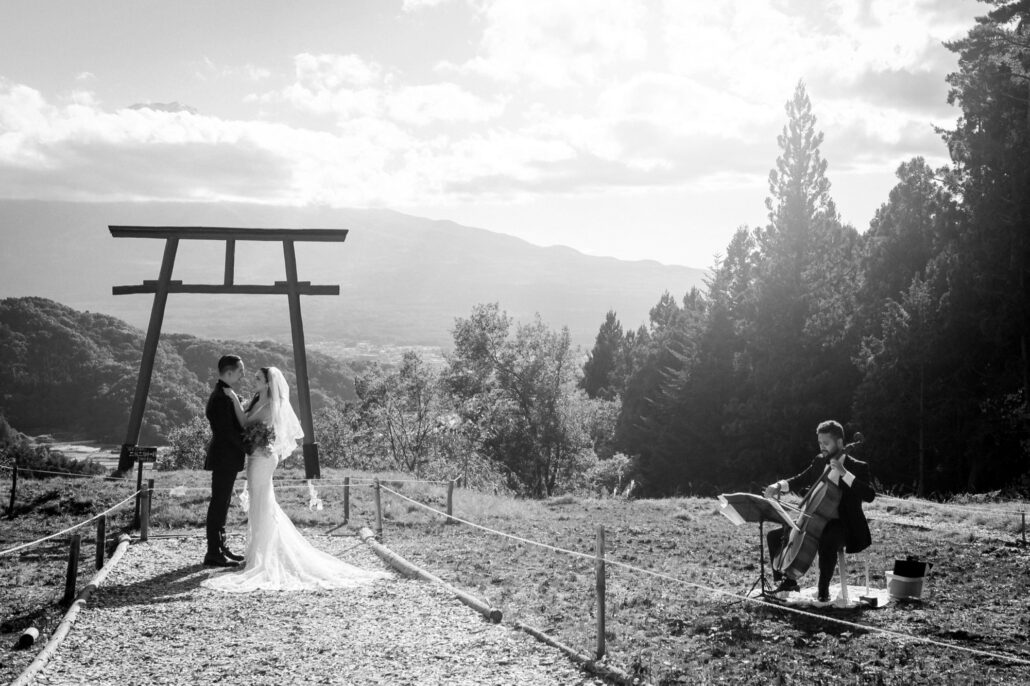
For a while afterwards, we’d ask for permits to photograph couples beneath the gate at sunrise. We went back recently, with family visiting. The wait for a turn under the gate ran to an hour or two, and even at sunrise the hill is full of cameras. The shrine won’t close the hill to the public for anyone, nor should it, and we wouldn’t ask it to. Our couples’ vows go somewhere just as quiet, where the yes has already been given.
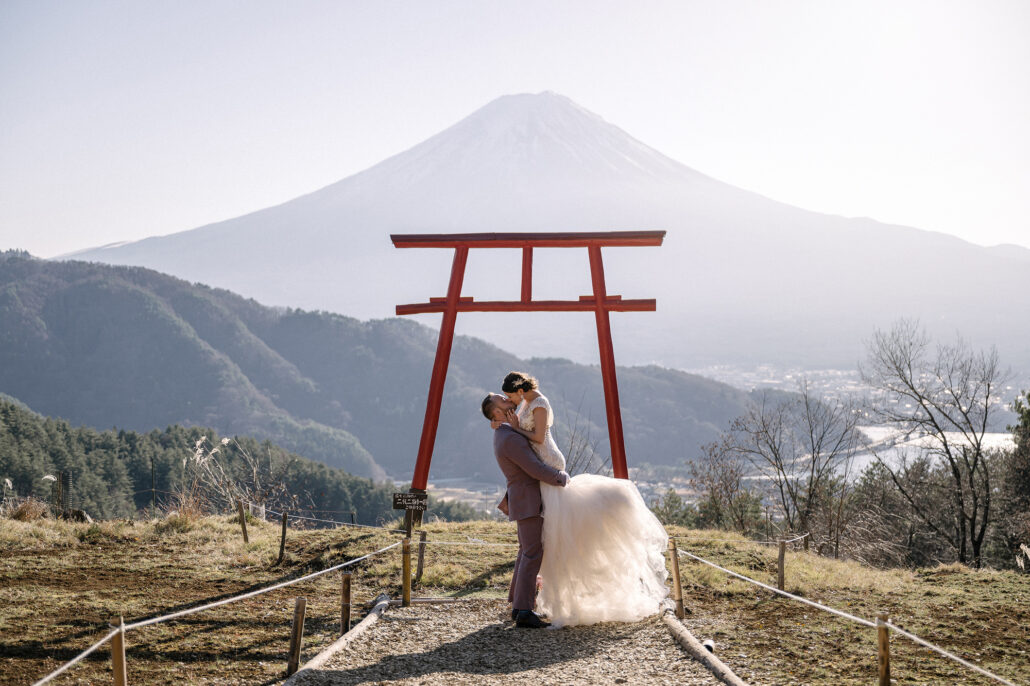
In every wedding and elopement we plan in Japan, permission comes before the first frame, and it reaches past the ceremony: where a drone may fly, which path stays open, whose doorway stays a doorway. An old inn’s quiet hours, a shrine’s rules about where a camera may go: they read as restrictions until you understand them, and then they read as hospitality.
The Arashiyama Bamboo Forest, and a Quieter One North of Tokyo
Kyoto’s Arashiyama bamboo forest is world-famous, and famously crowded: on a busy day you can barely make your way along the path. The city had close to 63 million visitors in 2025, more than in any year before.
The bamboo has paid for it. In October 2025, a city inspection found about 350 stalks carved with letters and names. In November, as a trial, the city and a local group cut down about twenty stalks along one stretch of the path, so that the people walking it can no longer reach the bamboo there. After dark this autumn, the backdrop has its own ticket booth: the grove’s evening light-up, until 8 November, is ¥1,500 on the night (about US$10). By day the path is still free.
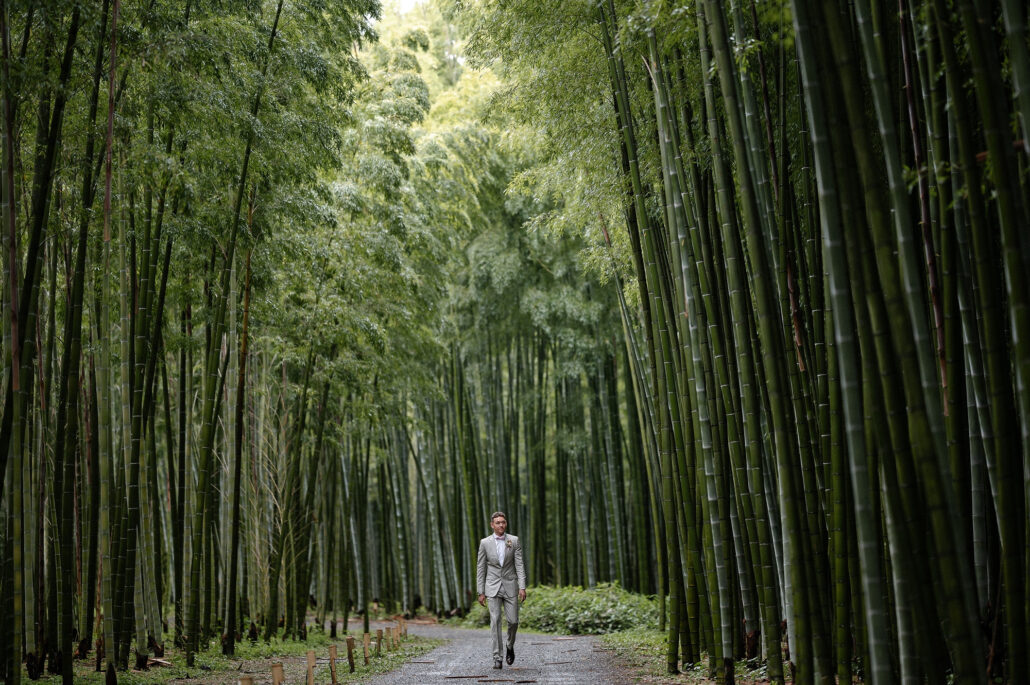
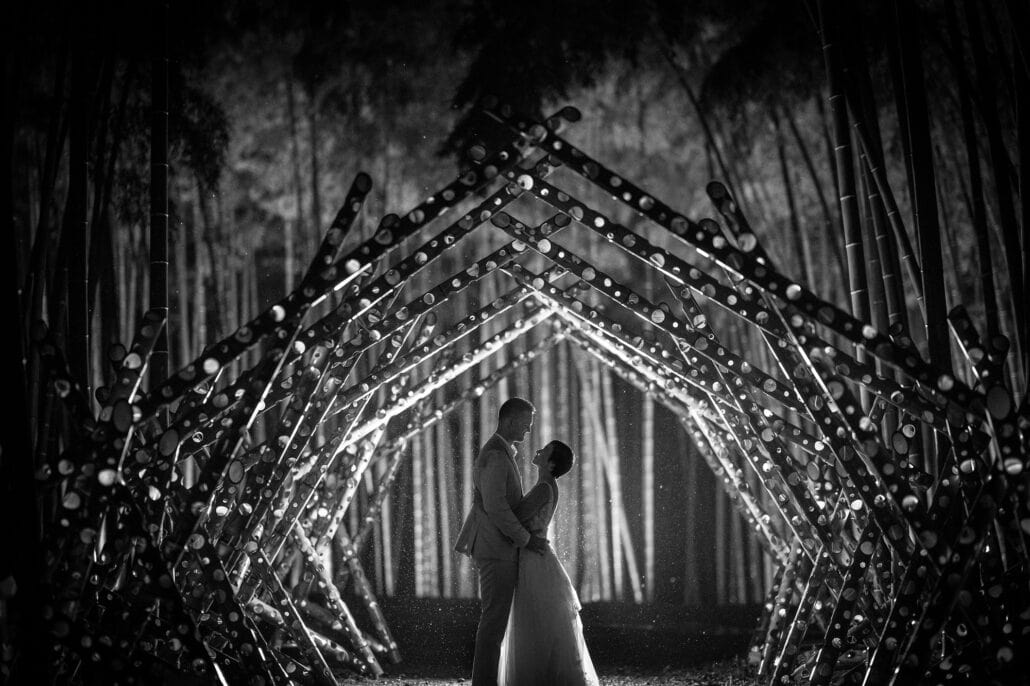
When couples see our bamboo photographs, their first question is where. The answer is Tochigi, north of Tokyo, where our bamboo forest near Tokyo opens for our couples. For a wedding, it’s our alternative to Arashiyama, and it’s quiet for the reason this piece keeps coming back to: the owners know we’re coming, and the hours are agreed before the couple arrives. They walk the path at their own pace, under tall moso bamboo.
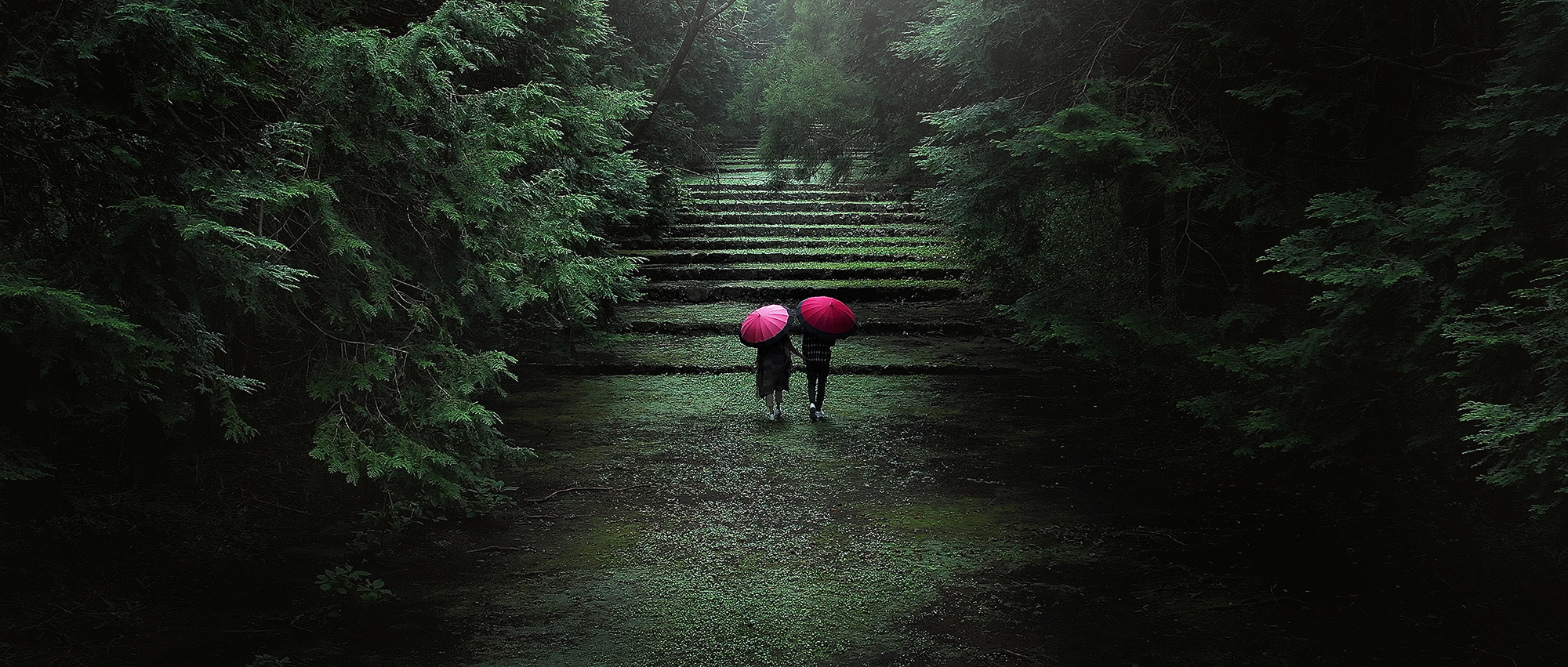
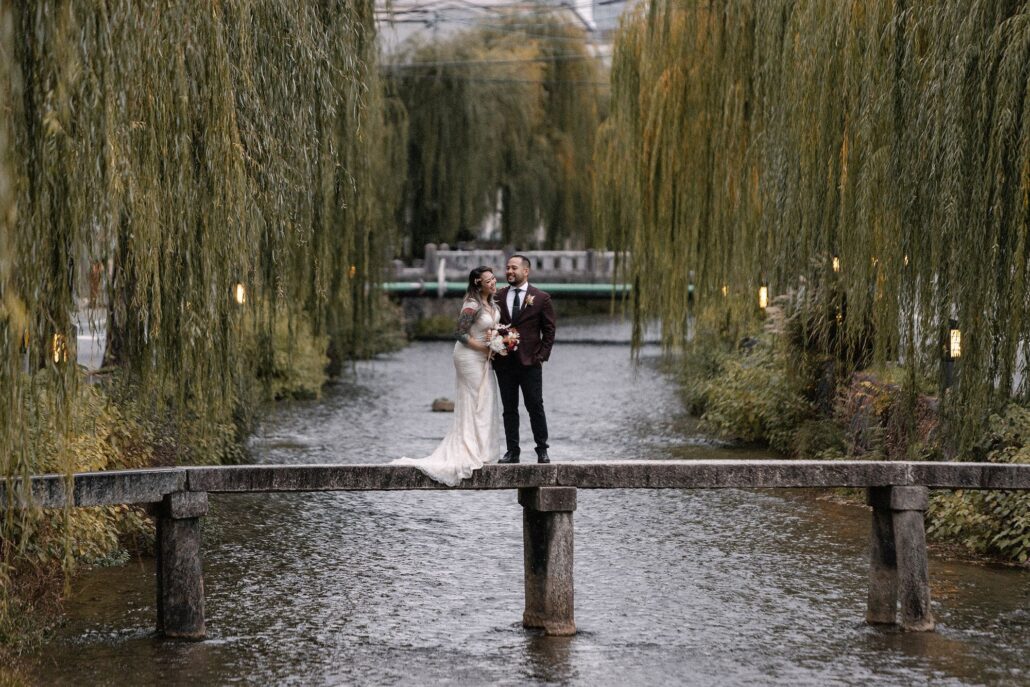
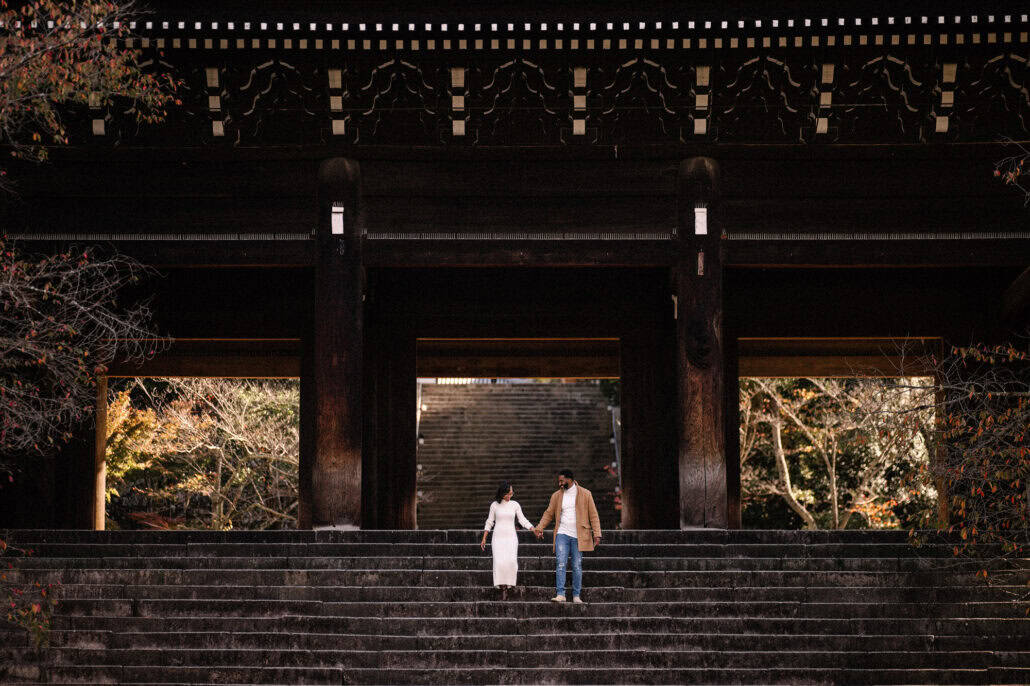
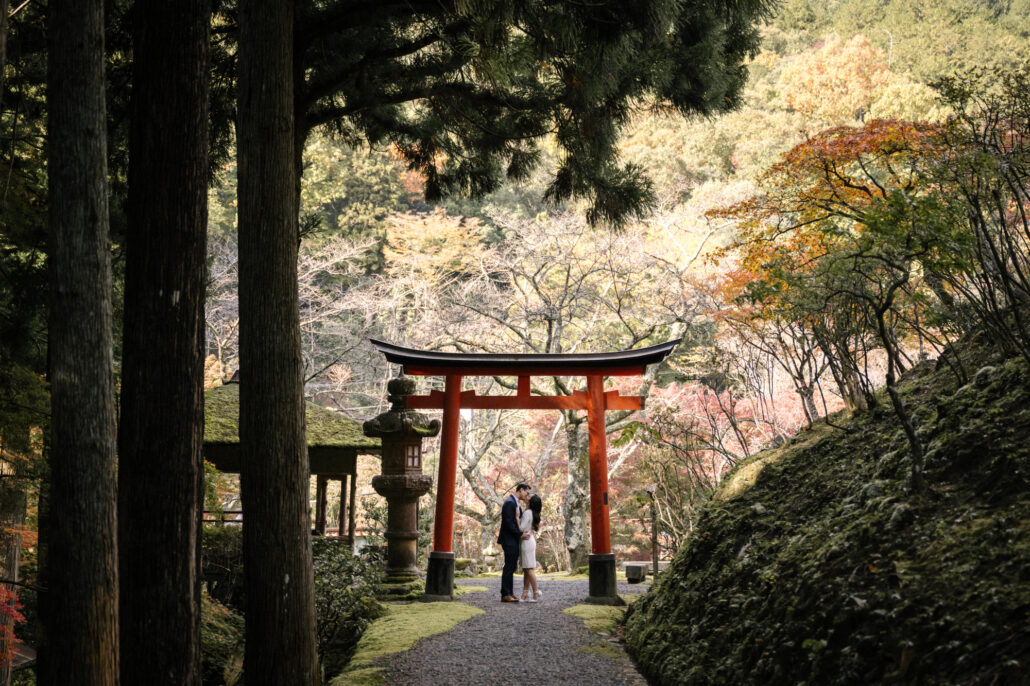
Kyoto keeps its quiet too, at the right hour or by arrangement: a canal bridge on the Shirakawa, the stone steps beneath Chion-in’s great gate, a torii between the cedars.
Garden and Shrine Weddings in Japan, When the Place Says Yes
The reward for asking properly is a place that’s glad you came.
When a shrine’s priests or a garden’s owners know exactly what’s going to happen, and have agreed to it, they’re on the couple’s side. The day doesn’t have to hurry past anyone. Nobody is glancing over their shoulder.
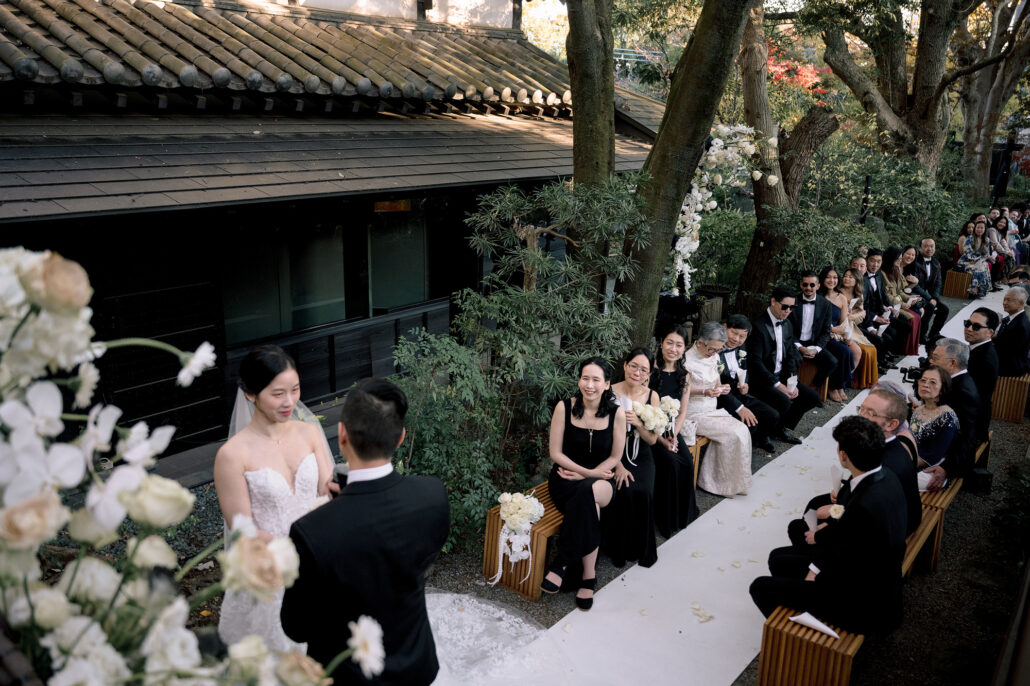
The couple at Tenku no Torii got ready that morning at Fufu Kawaguchiko, a hotel above the lake that doesn’t host weddings. For one afternoon, it made an exception and opened its grounds to us. So when a couple brings us a place they’ve fallen for, our first question is the one we’d ask you now. Who looks after the place you’re picturing?
Back to the Mt Fuji Convenience Store Screen
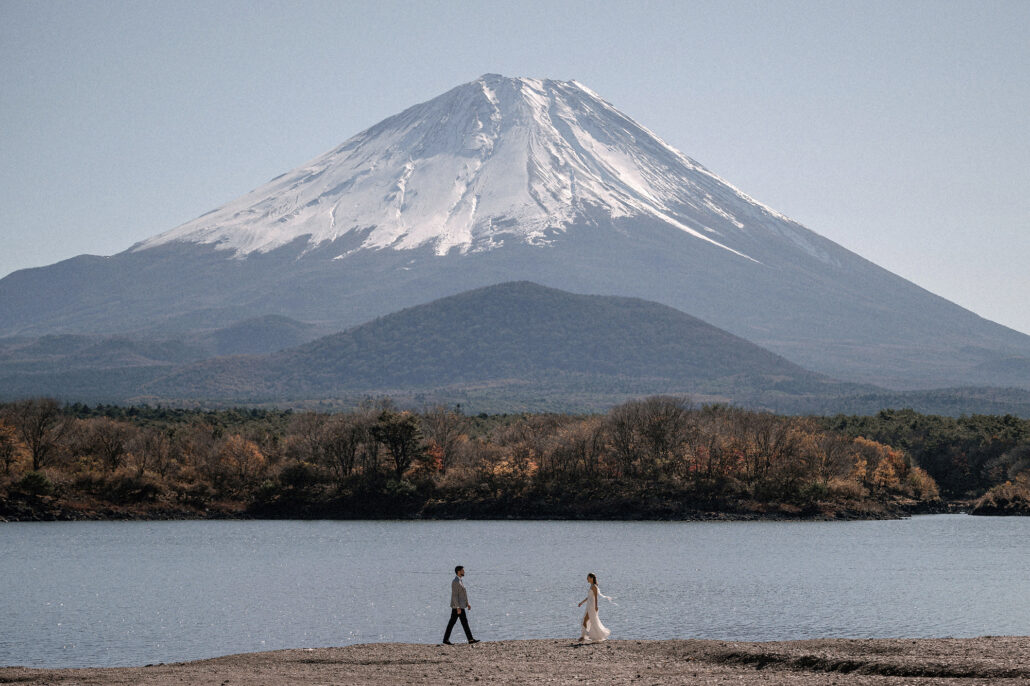
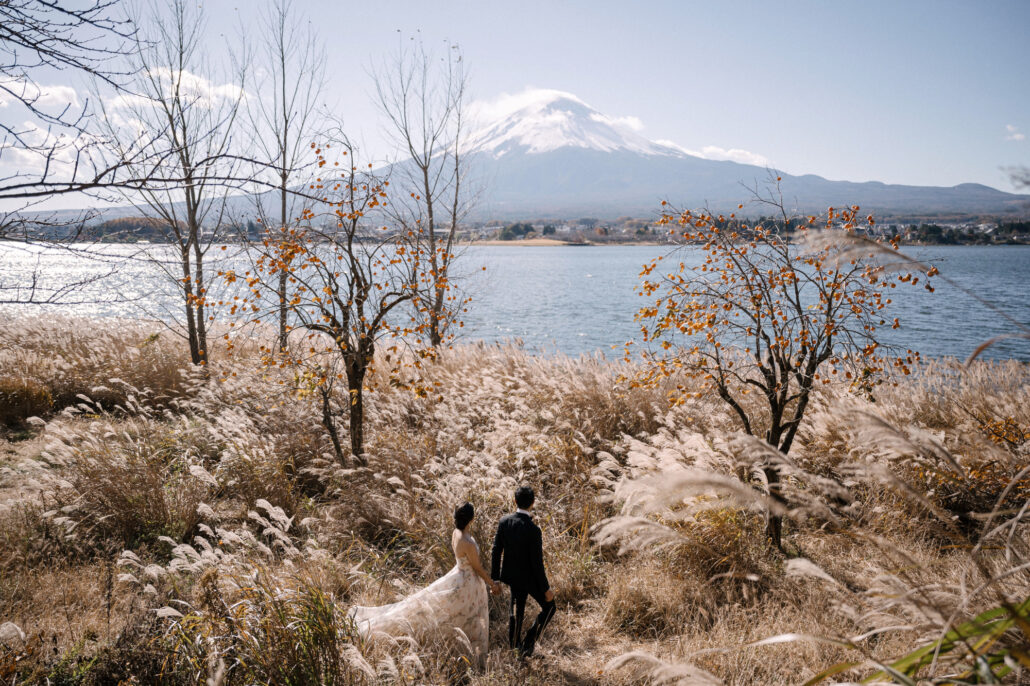
Fujikawaguchiko never banned photography. It tried hiding the view, watched people poke holes in the screen, took it down before a typhoon, and in 2025 put up a lower barrier that stops people crossing the road while leaving the mountain where it was.
The town never wanted to hide Fuji. It wanted the people who came for it to remember that it’s a place where people live. Most of the world’s beautiful places want the same thing now. Come, look, photograph, marry there if you’re lucky enough to be welcome. Just remember it was someone’s before it was your backdrop, and ask.
Overtourism and Wedding Photos in Japan: Quick Answers
Can you take wedding photos at Kiyomizu-dera?
Not for a wedding shoot. Kiyomizu-dera’s notice to visitors, dated October 2023, forbids wedding, cosplay and fashion shoots in its grounds, and photography with drones, tripods or monopods. Kyoto still has temples and gardens that welcome a wedding by arrangement. We ask each one well ahead, in Japanese, on its own terms.
Is photography banned in Kyoto?
No. Visitors can still photograph almost anywhere outdoors in Kyoto. What the city’s best-known places restrict is the shoot. Kiyomizu-dera bans wedding shoots outright; Fushimi Inari, Yasaka Shrine and Heian Jingu turn away commercial photographers; the city’s parks charge professionals by the hour. In Gion, signs on some private lanes warn of a ¥10K (about US$64) fine for photographing there.
Is the Mt Fuji convenience store screen still up?
No. Fujikawaguchiko took the screen down in August 2024, ahead of a typhoon. In August 2025, the town put up a lower barrier, about 1.4 metres high, across the road from the store. It stops people stepping into the traffic, and Mount Fuji can still be seen above the store.
Is there a less crowded alternative to the Arashiyama bamboo forest for wedding photos?
Yes. Arashiyama’s bamboo path in Kyoto is public and one of the busiest sights in the city, so a wedding there shares it with everyone else. For our couples, we plan weddings and elopements in a bamboo forest near Tokyo, in Tochigi, with its owners’ agreement and quiet hours set before the day.
Written October 2026. Rules, fees and dates change: check them with the place itself, or with us. Sources: Kiyomizu-dera, notice to visitors (2023); Fushimi Inari Taisha, requests to visitors (2022); Yasaka Jinja, photography in the grounds (2024); Heian Jingu, notice to visitors; Kyoto City Tourism Association, photography in city parks; Kasuga Taisha, photography notice; Kyoto City, 2025 visitor survey; Akita Sakigake Shimpo, on the bamboo cut at Arashiyama (November 2025); Kyoto City Tourism Association, the 2026 light-up; City of Venice, entry fee; Iceland’s Nature Conservation Agency (drone permits, 2026); AP, on the Mt Fuji screen (2024).