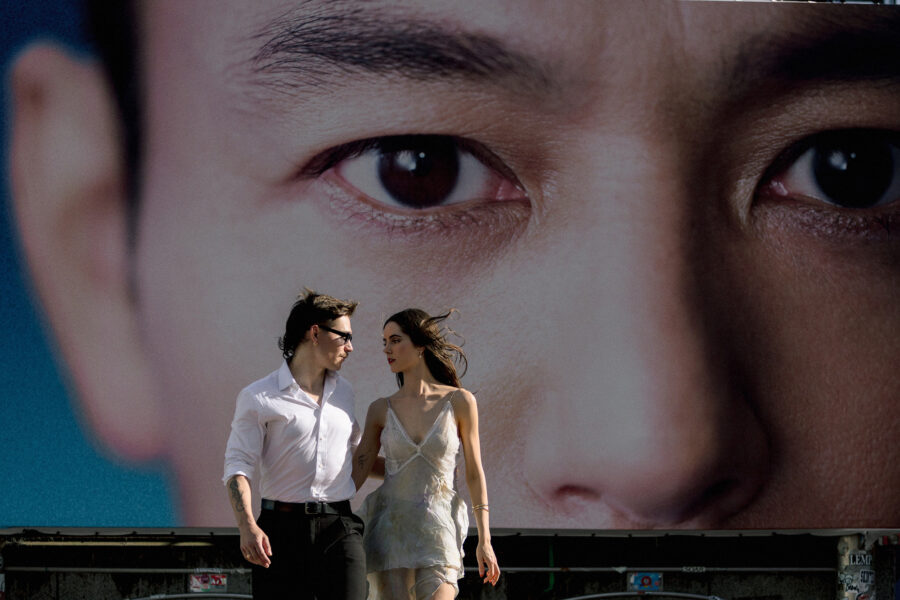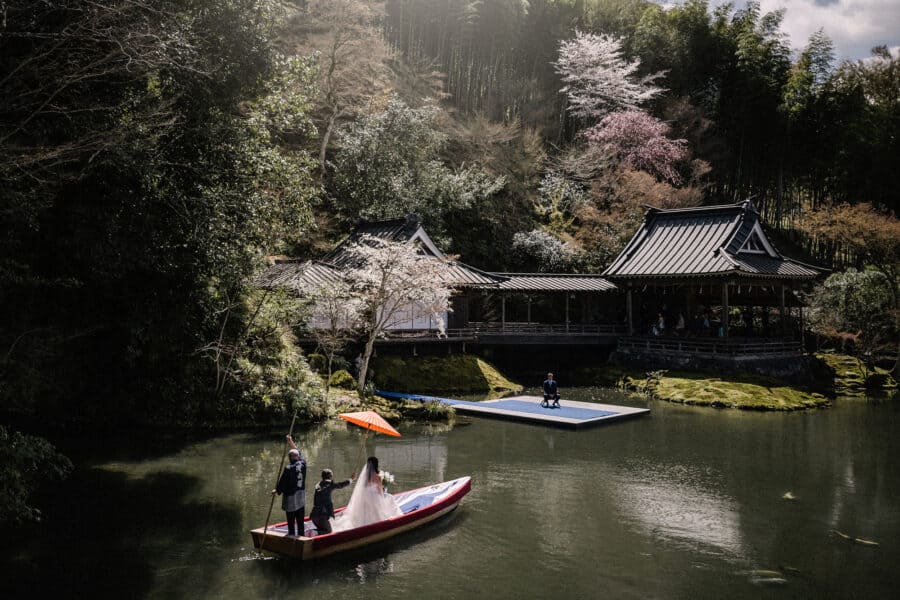
They found us in the summer of 2021, when nobody could get into Japan.
The borders were closed to visitors and would stay closed for more than a year. Most people were cancelling plans, not making them. These two, in London, filled in our enquiry form anyway: a Fuji Five Lakes elopement in spring 2023, and could we tell them about the private island? They’d found us through our lakeside photographs. We met on Zoom a couple of weeks later, and they booked that month.
Booking a country you can’t visit yet takes a particular kind of nerve. You’re trusting a place you can’t walk around, and people you’ve only met on a screen. Dee wrote to them the following spring: “I’m just so happy you had the foresight to book.” She meant it. We still talk about it.
A Fuji Five Lakes Elopement Worth Moving
Then life filled up, in the good way. Nine months out, they asked to move the whole thing to the same season in 2024. We moved it to a Friday in mid-April, timed for the cherry blossom, and kept everything else as they’d imagined it.
In between, they married at home in the UK. Most of our couples do. A legal marriage in Japan is possible, but it takes days out of the trip, with paperwork before you leave home and translations afterwards. Dee’s advice is always the same: do the legal part at home, and give Japan the rest.
So when they finally reached Kawaguchiko, Japan wasn’t the wedding. It was the part that belonged only to them. She’d packed silk flowers and the hair pieces from the UK day, and did her own hair and makeup that morning, so a little of the first wedding came with them into the second.
What they’d asked for, in their words: “outdoor, off-track, adventurous, elegant.” Adventurous and elegant don’t often turn up in the same sentence. We liked them for it straight away.
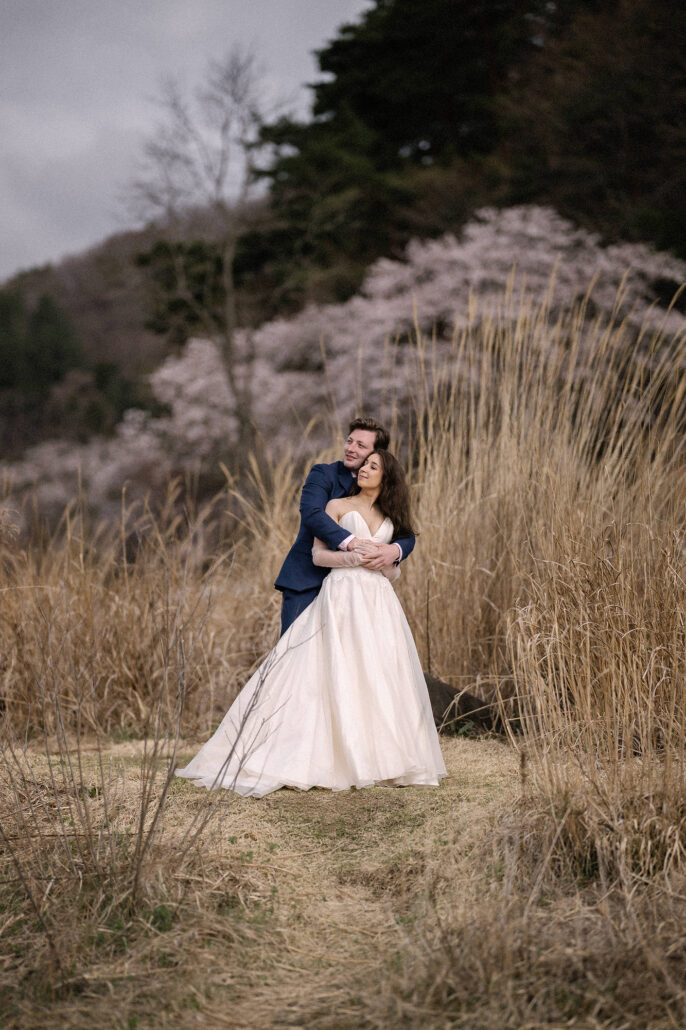
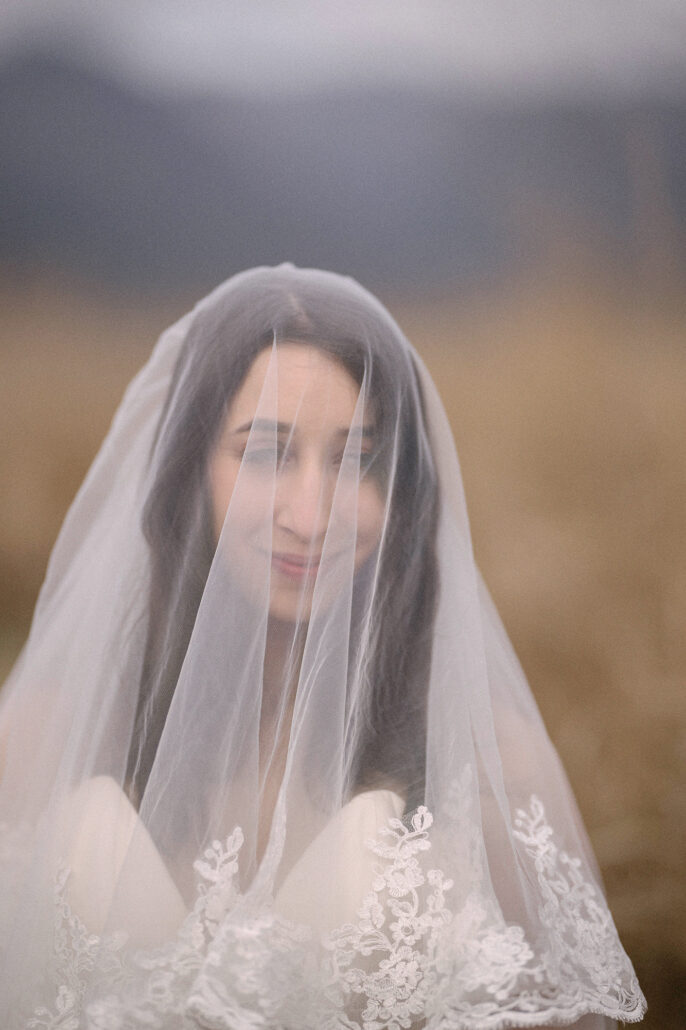
Vows by Lake Kawaguchi
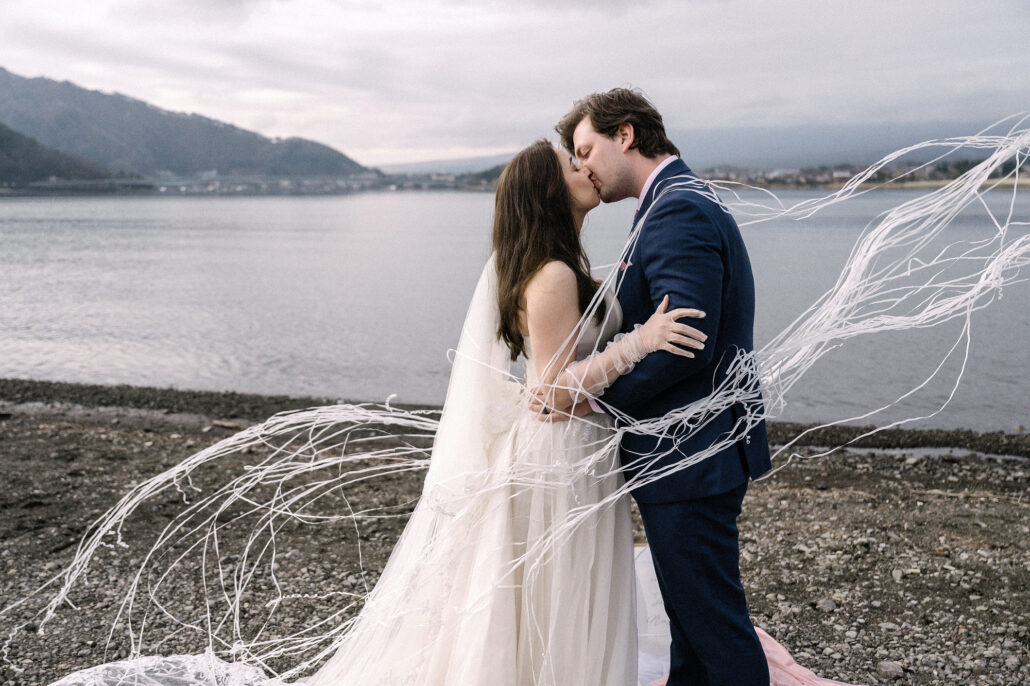
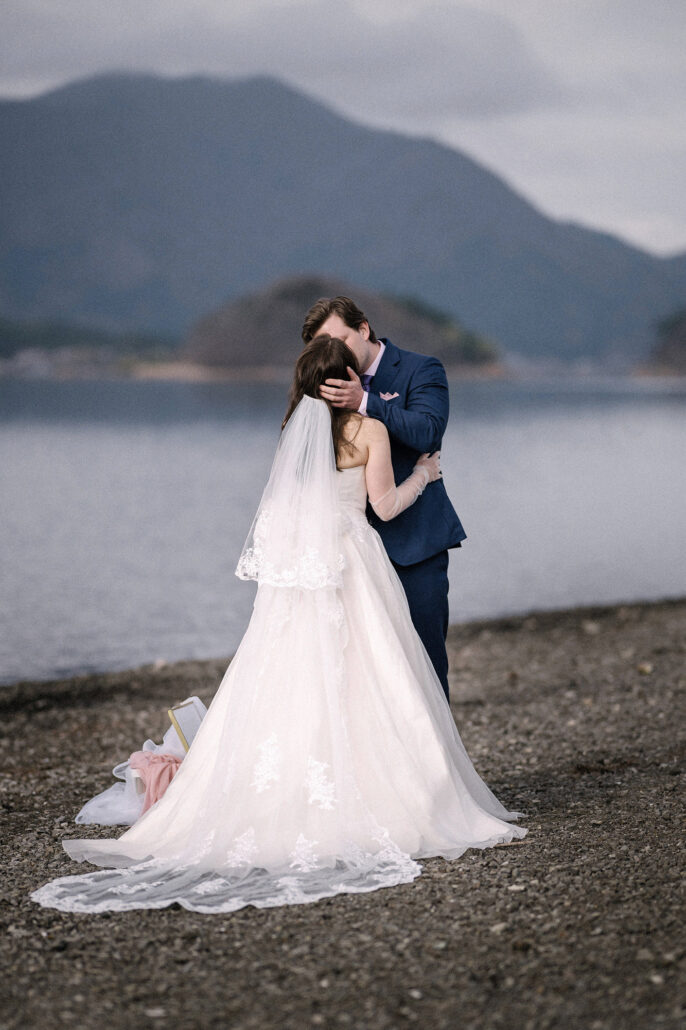
We started early. In spring the mountain is most often clear first thing, the wind is calmer, and the shore is quiet before the day’s visitors arrive.
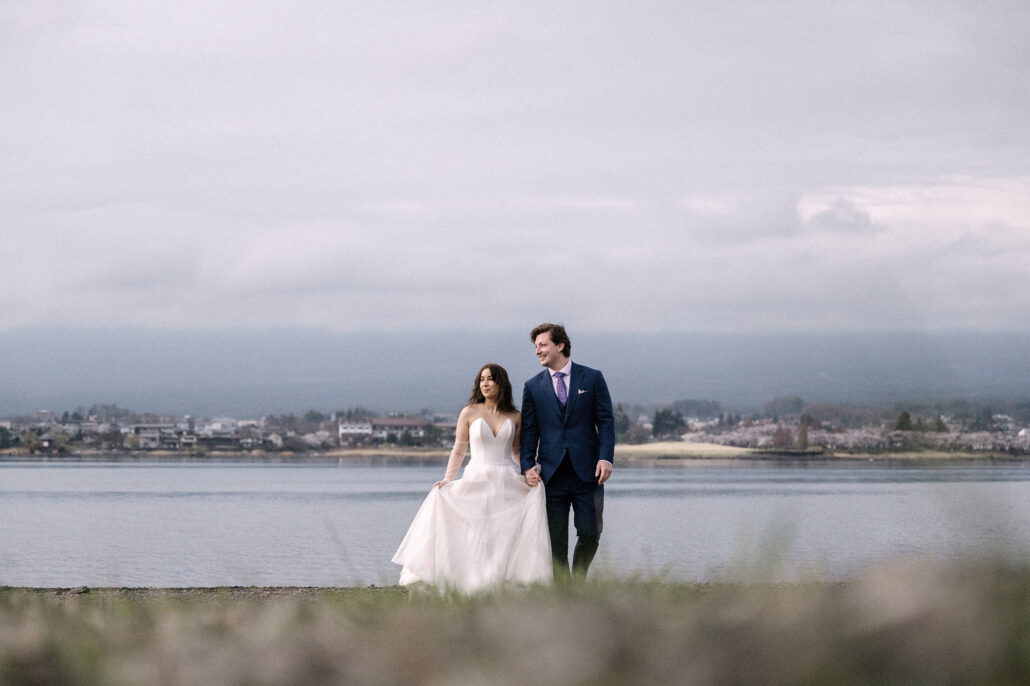
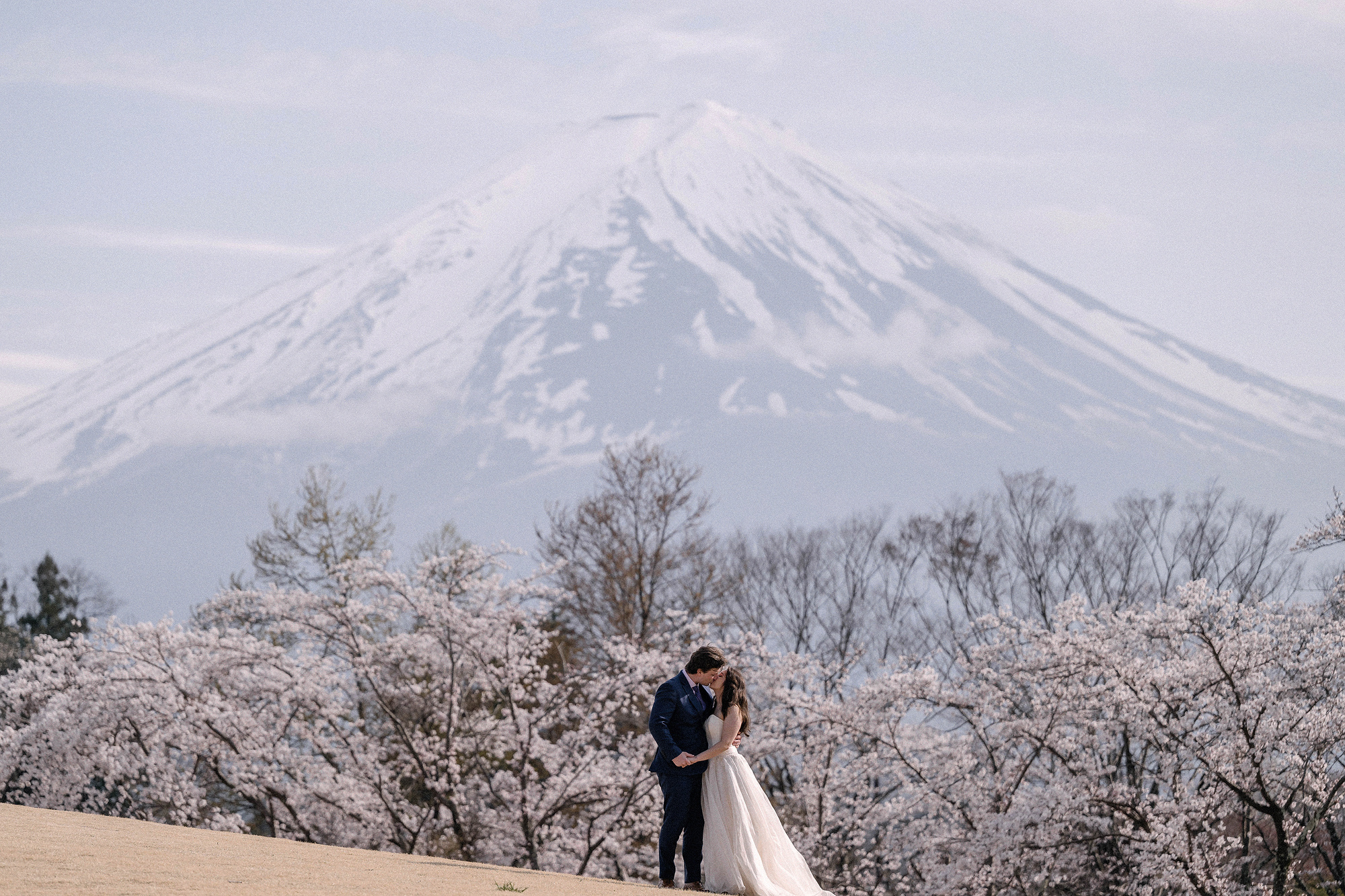
That morning was grey, and Fuji was nowhere to be seen. Anyone who spends enough time here learns that the mountain keeps its own hours. It can sit inside cloud all morning, and on another grey day stand out sharp and clear. We plan for the light we have and leave room for the rest.
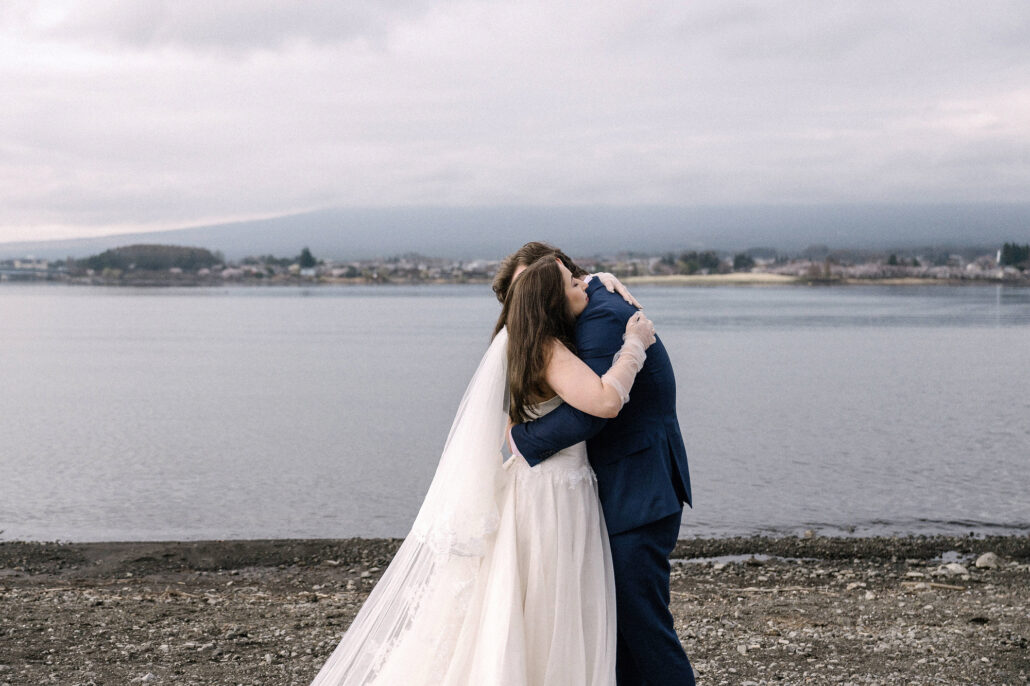
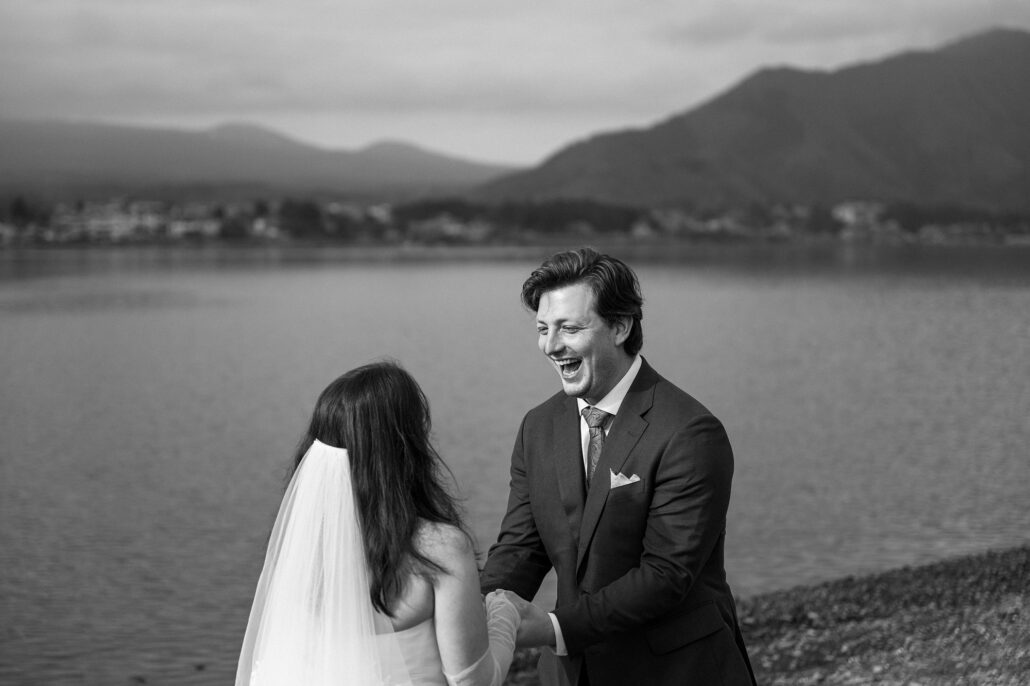
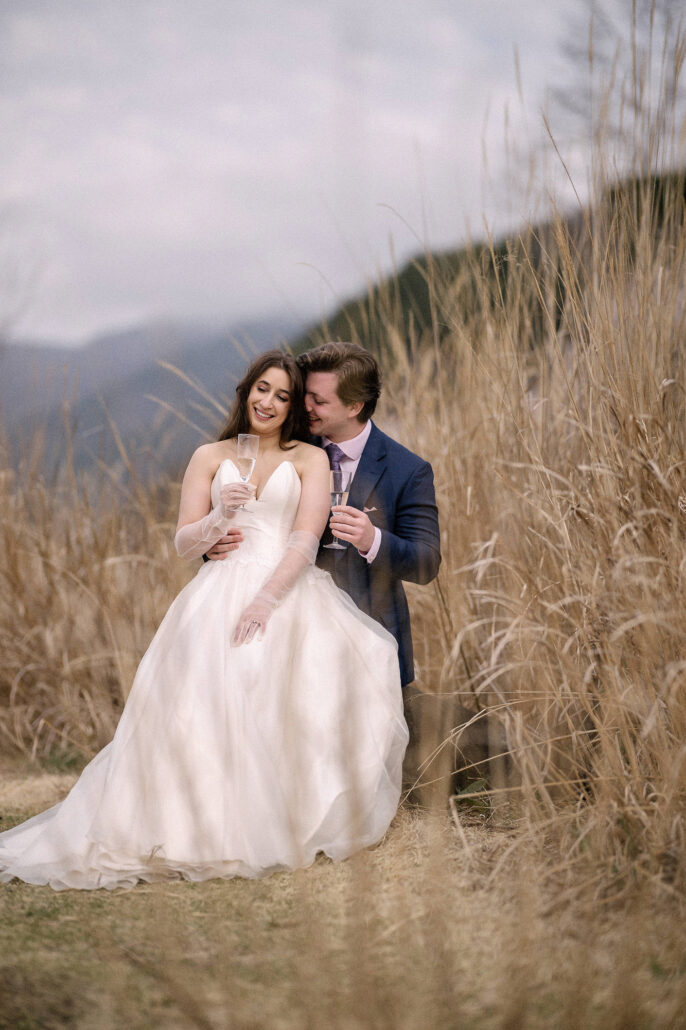
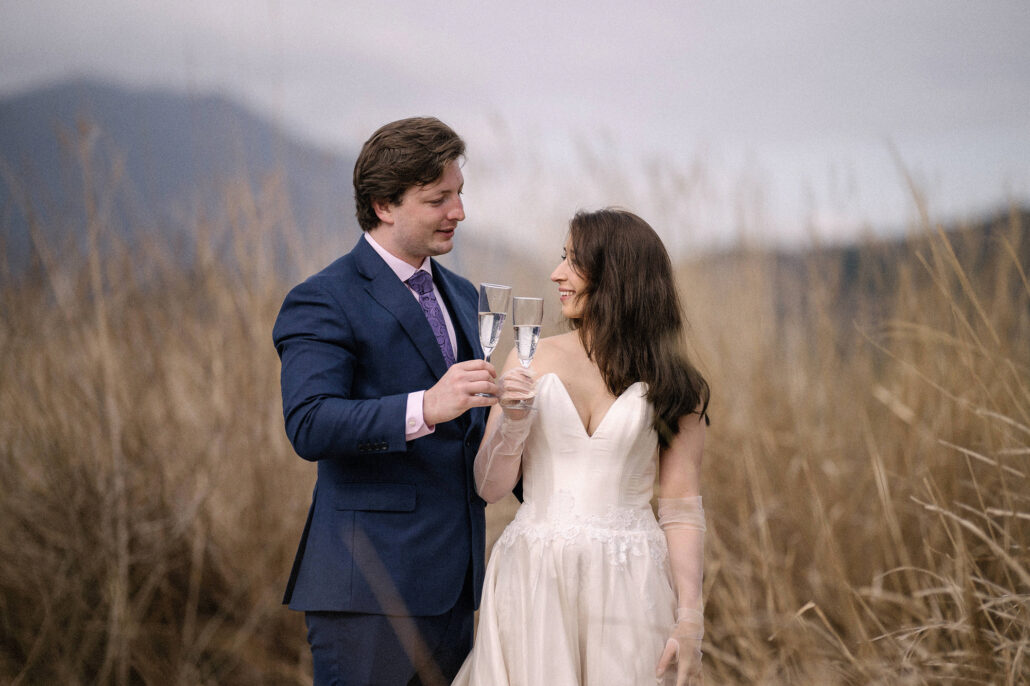
So they said their vows by Lake Kawaguchi with the mountain hidden behind them, then raised champagne, and then sake. For two people who had trusted a country they couldn’t visit, waiting a few more hours for a mountain was nothing.
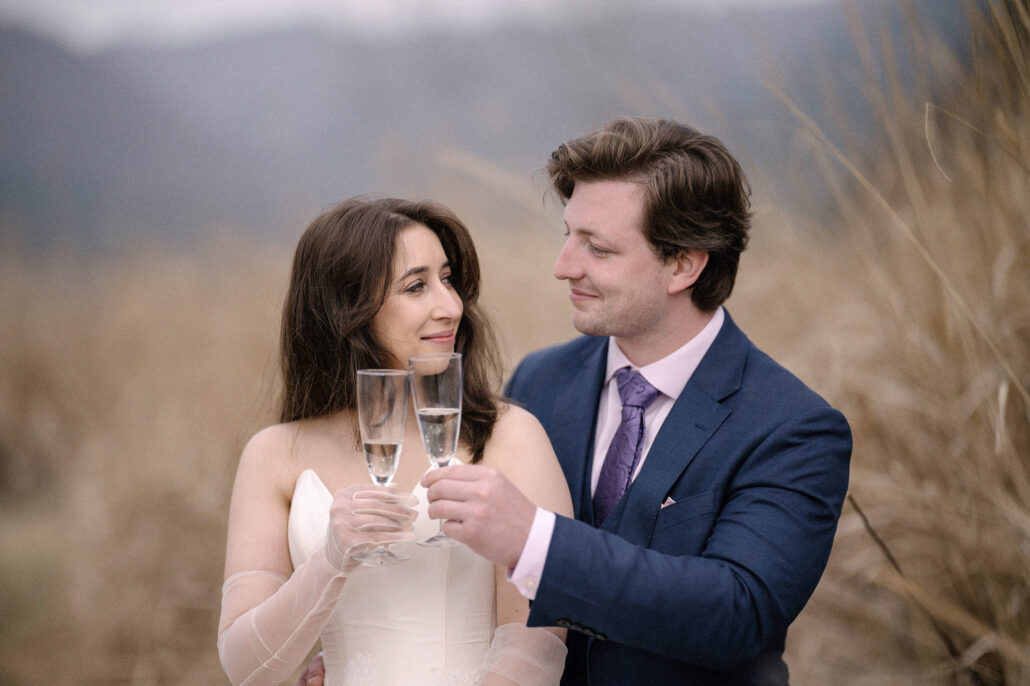
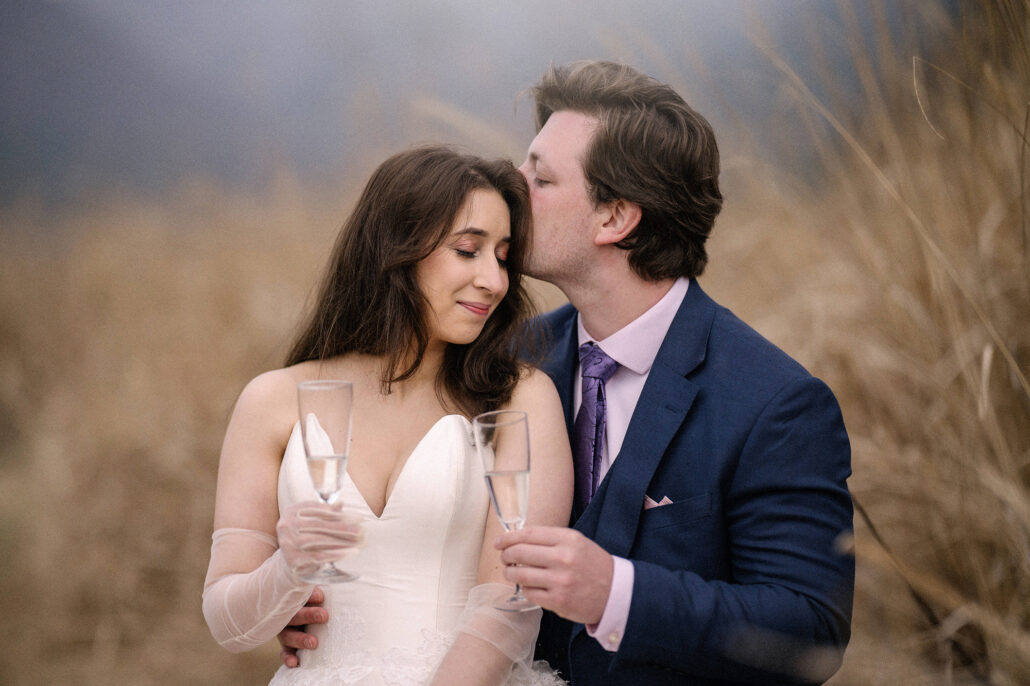
Tenku no Torii and the Old Cedars
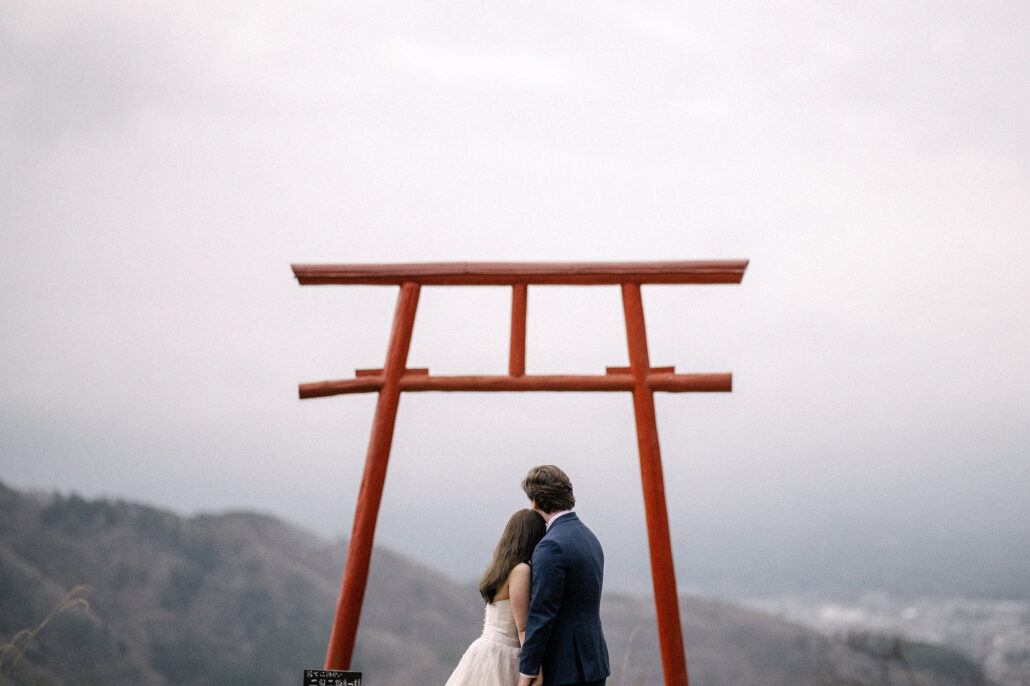
From the lake we went up to Tenku no Torii, the red gate on the hillside that frames Fuji between its posts on a clear day. That morning it framed cloud. Then down to Kawaguchi Asama Shrine, founded to calm the mountain after it erupted in the ninth century, where the cedars are said to be more than a thousand years old.
It’s a good place to slow down after vows. Big trees, cool air, gravel underfoot. Nobody needs to say much.
A Slow Lunch at Saiko, in the Thatched Village
The picnic was the heart of their plan, and we chose the place for it with care.
On the shore of Lake Saiko, a little west of Kawaguchiko, there’s a village of thatched farmhouses with Fuji standing behind them. The roofs are kabuto-zukuri, shaped like a samurai helmet and steep enough to shed the snow. It looks as though it has always been there.
It hasn’t. In September 1966 a typhoon brought a landslide down on the old village of Nenba. Almost every house was lost, and many of the people who lived in them. For forty years there was little there. Then the houses were rebuilt as they had been, and in 2006 the village opened again as Iyashi no Sato, a place for craftspeople and for anyone who wants to see how people once lived at the foot of the mountain. Knowing what it came through, you notice the care in every roof.
Dee’s gourmet picnics are how we give elopement couples a slow lunch instead of breaking the day for a restaurant. Some are laid out on a blanket by a lake. Theirs was indoors, in a room we’d booked inside one of the thatched houses. Dee brought out the bentos, and we slid every shoji open onto the roofs and the hill behind them. The mountain was still in its cloud.
They’d once asked about paddling out to the little shrine island in Lake Kawaguchi. In the end they chose the lunch. Having seen the day, we think they chose well.
Lake Shoji and Blossom by the Roadside
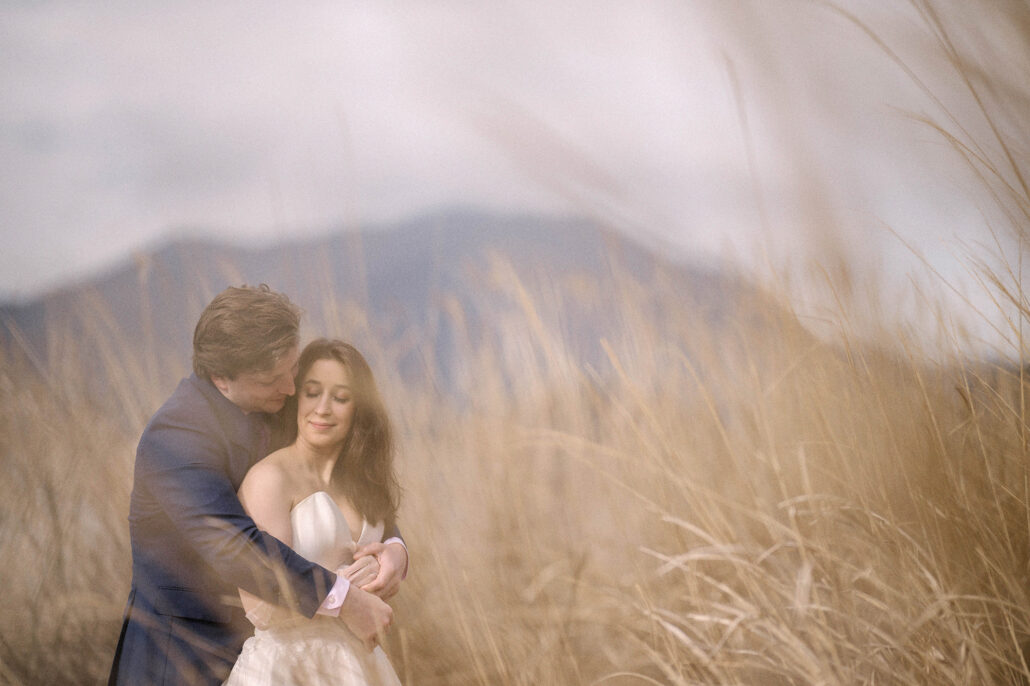
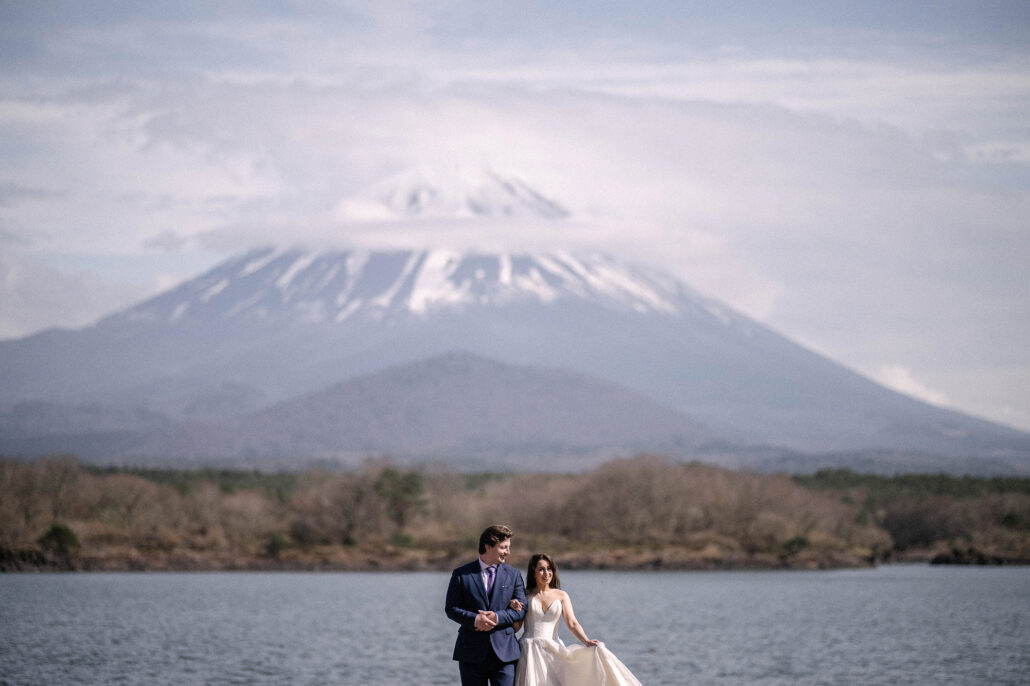
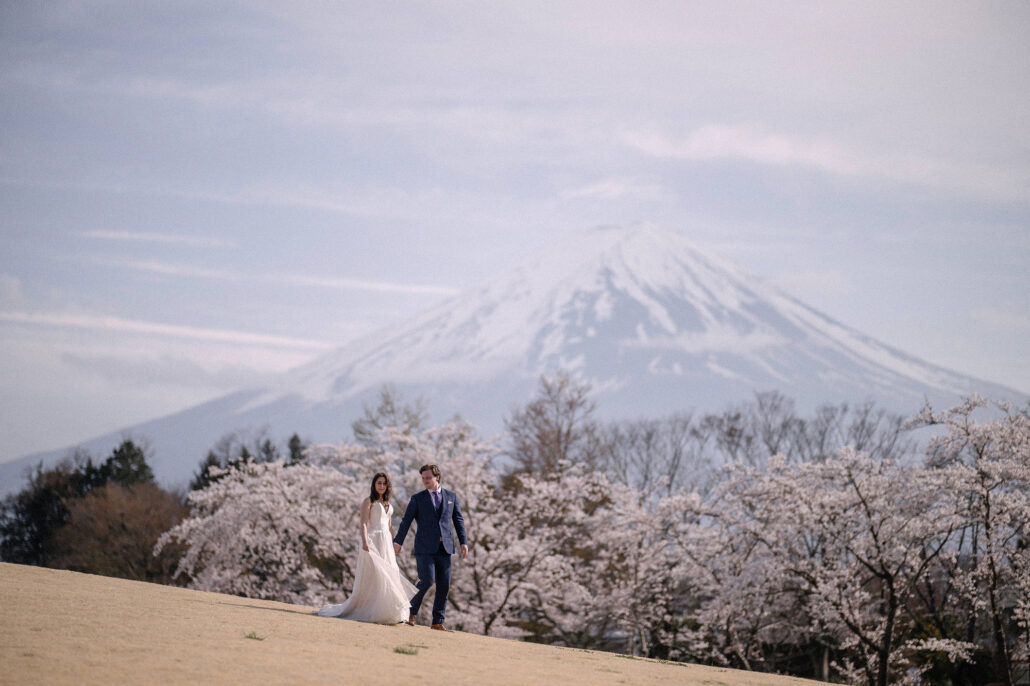
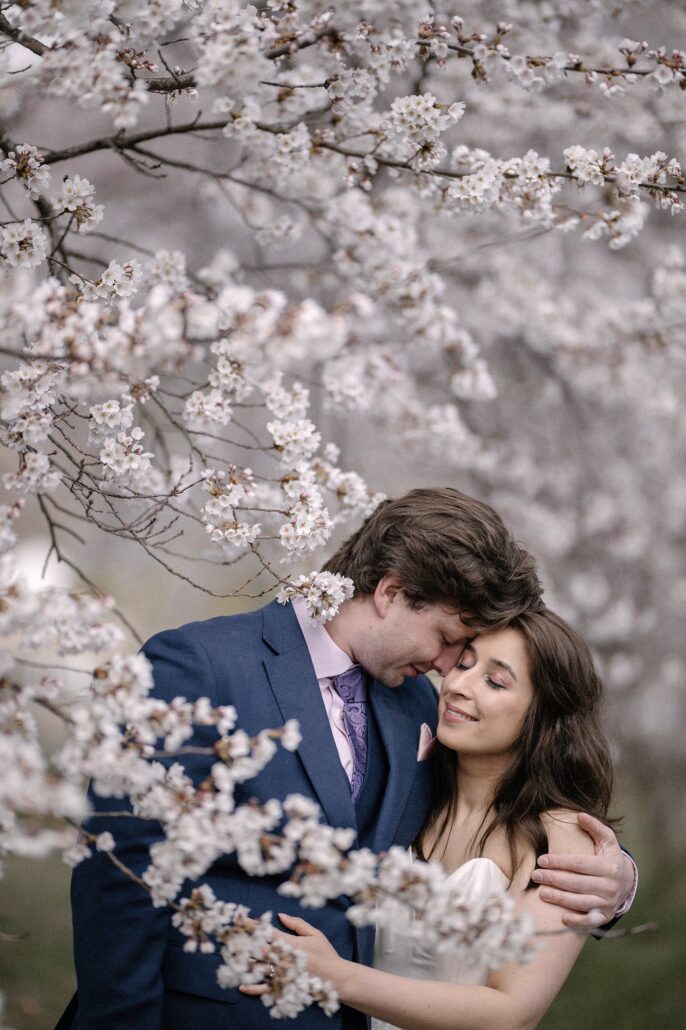
In the afternoon we went to Lake Shoji, the smallest of the Fuji Five Lakes and usually the quietest. That’s where Fuji came out, clear and still white with snow, as if it had been there all along. It had.
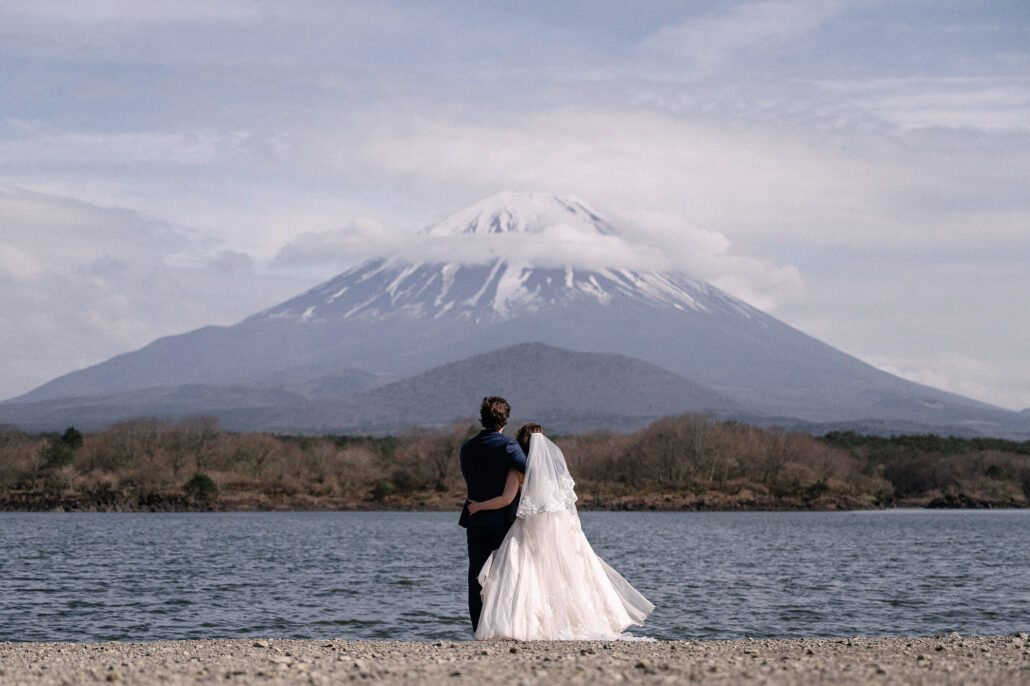
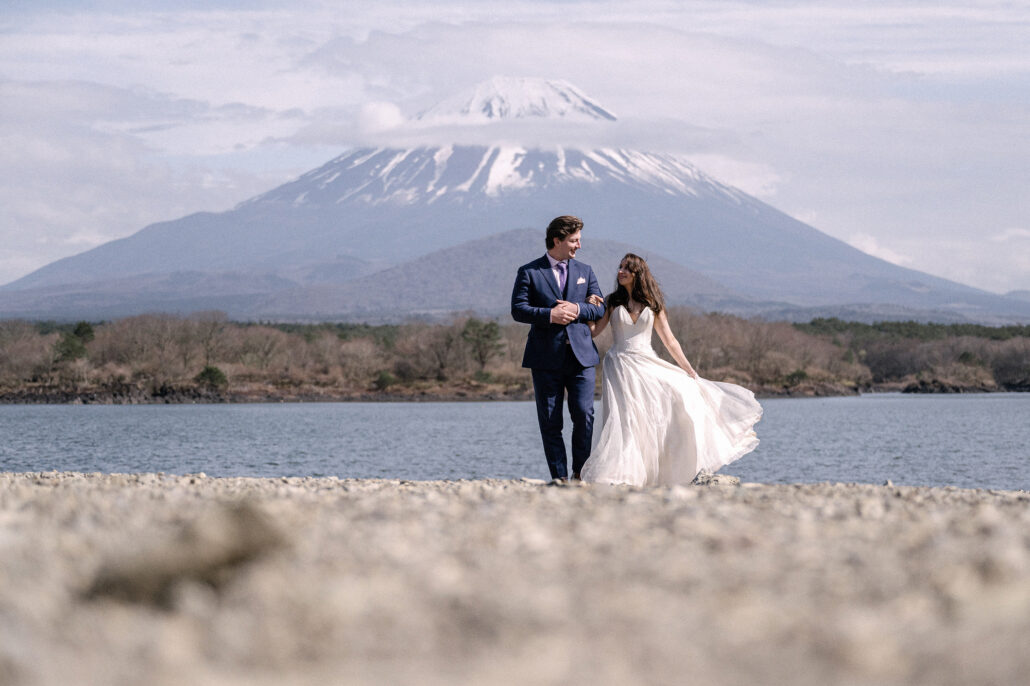
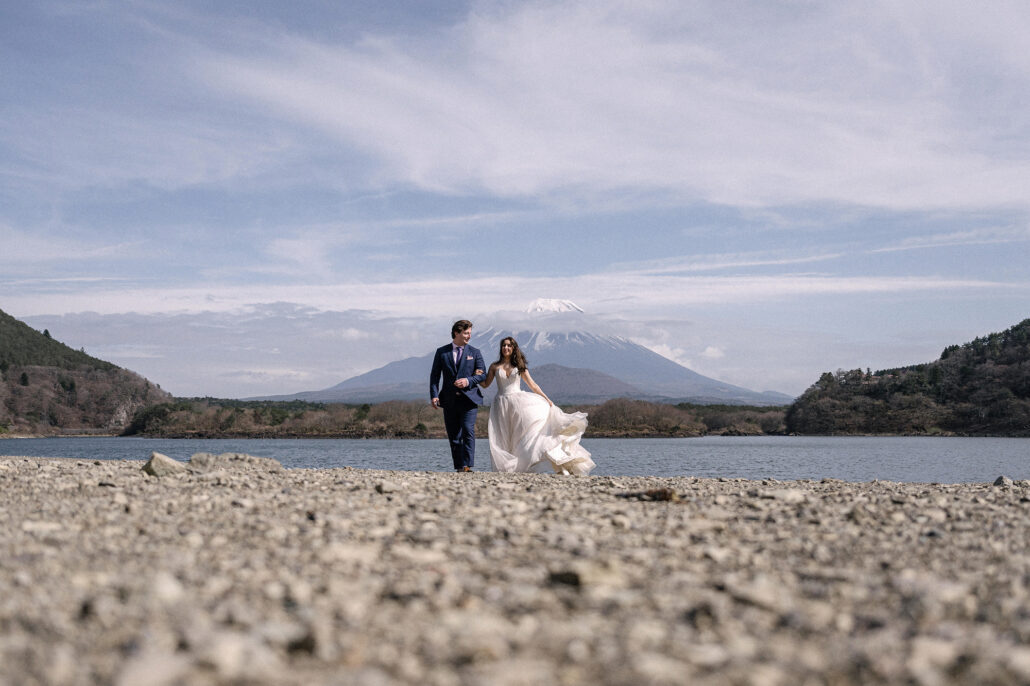
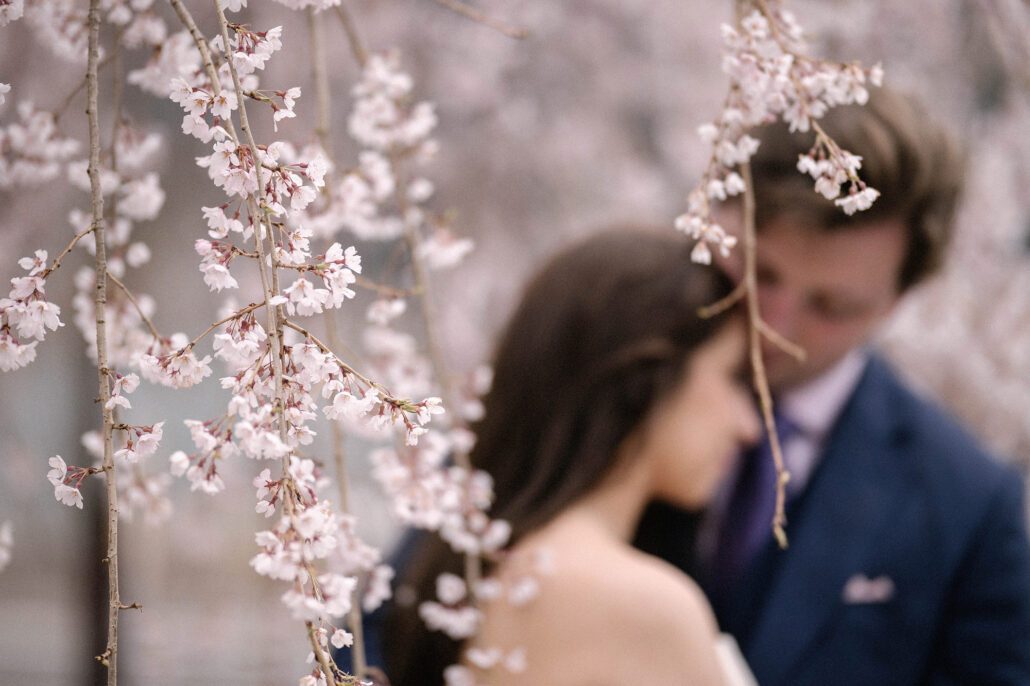
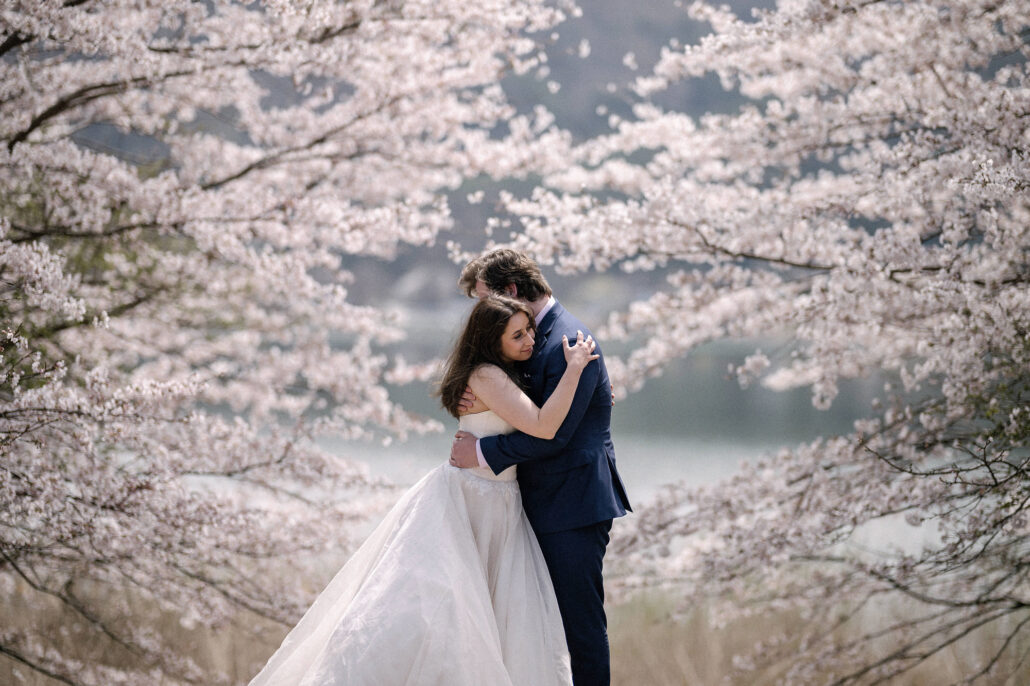
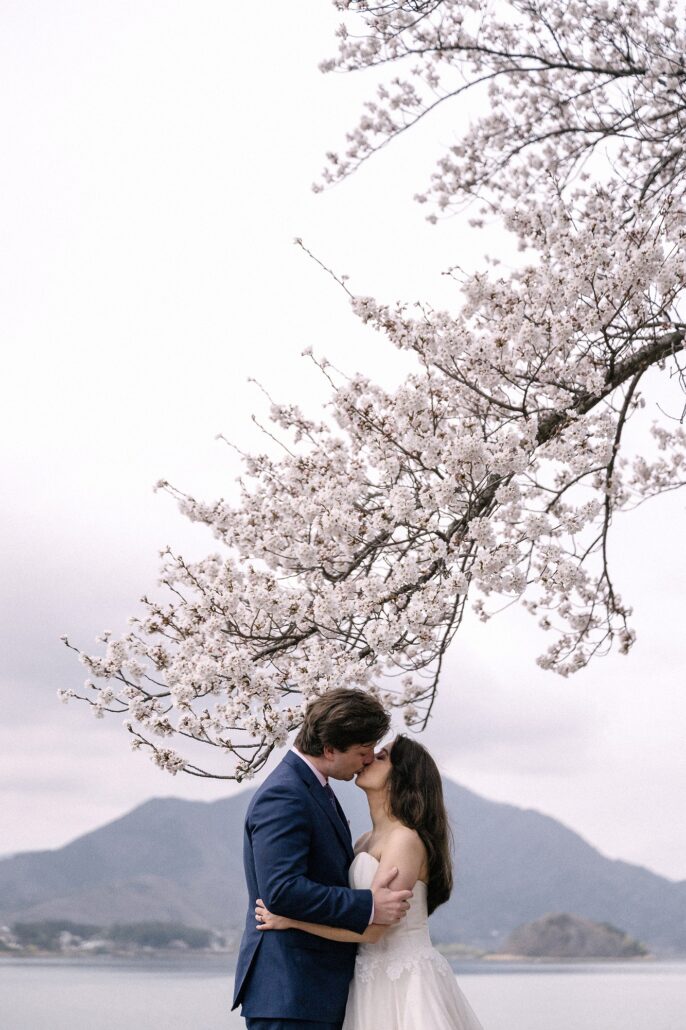
Spring asks one thing of every couple: flexibility. You can’t book the blossom. A tree in full bloom on one date can be bare on the same date the next year. So we leave room in the day, and some of the loveliest blossom we found that afternoon wasn’t at any place on the plan. It was by the roadside between them, trees you’d never find on a map, and we stopped wherever they were.
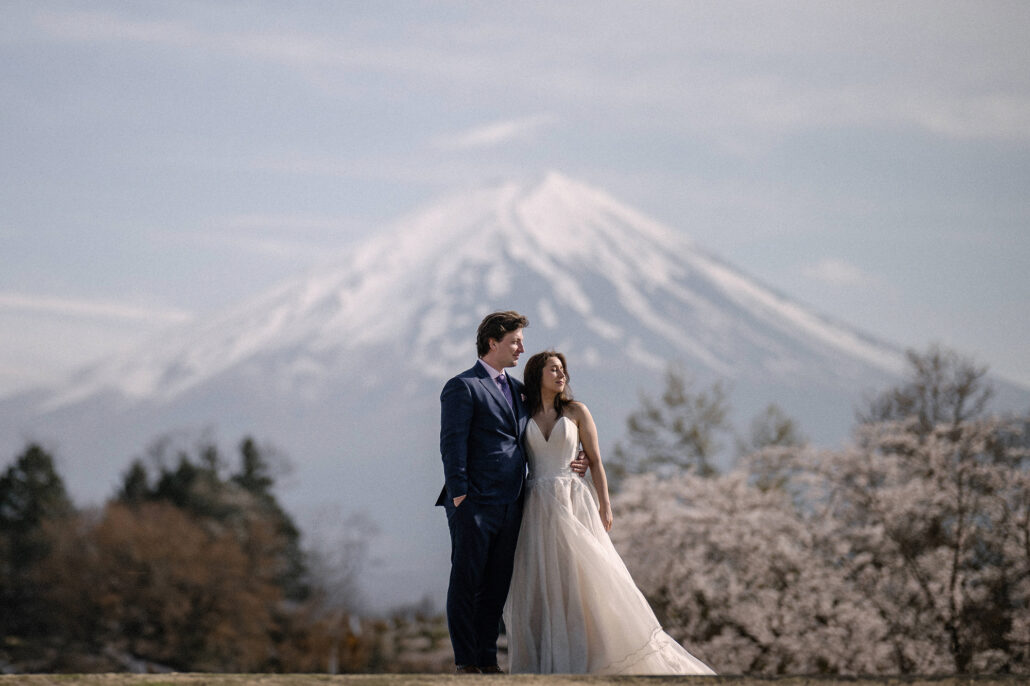
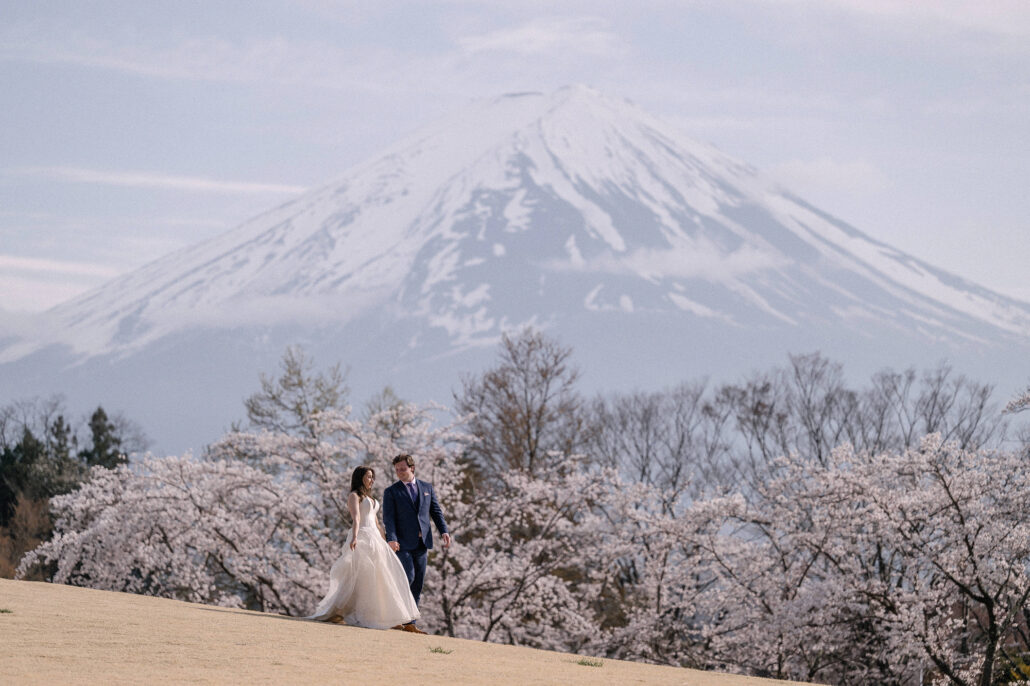
Then back to Kawaguchiko as the light went, to finish where the day began.
Nearly Three Years to the Lakeshore
When the photographs arrived, they wrote: “Thank YOU so much again for such an incredible Japan Elopement experience.”
Most of what made the day happened long before it. A decision made while the country was closed. A date moved without fuss. A bag packed with flowers from the first wedding. By the time they reached the lake, the waiting was the easy part. They’d had years of practice, and the mountain only asked for a morning.