There was no music. They had been very clear about that.
On a cold morning at the end of November, in a small garden in Shinjuku, two people stood beside a pond and read their vows to each other. No processional, no exchange of rings, nobody waiting in rows of chairs.
It was a symbolic ceremony in Tokyo, although the phrase feels more administrative than emotional. They had already been legally married for more than a year and a half. This was something else.

The Legal Part Had Already Happened
Their first email arrived in August 2021, while Japan’s borders were still closed. They imagined coming the following summer, just the two of them. Japan stayed closed, so in April 2022 they married at home, in a civil ceremony with their immediate family.
That wasn’t a placeholder wedding. It was their wedding.
But Japan still mattered. They had always wanted the trip to be tied to something significant, and being legally married didn’t make that wish disappear. Their plans moved to their first anniversary, then moved again, until at the end of 2023 the country and the timing finally aligned. By then they’d been married for most of the time we had known them, and they still wanted to say their vows in Japan.

That distinction is worth paying attention to. A legal ceremony establishes a marriage. It doesn’t necessarily contain everything people want to say about one.

A Symbolic Ceremony in Tokyo
Over those two years we considered very different versions of Japan together: a farmhouse in the Kiso Valley, bamboo in Kamakura, gardens crossed by red bridges. In the end they chose Tokyo, and more specifically, both versions of it: the one that can become almost completely quiet, and the one that famously refuses to.
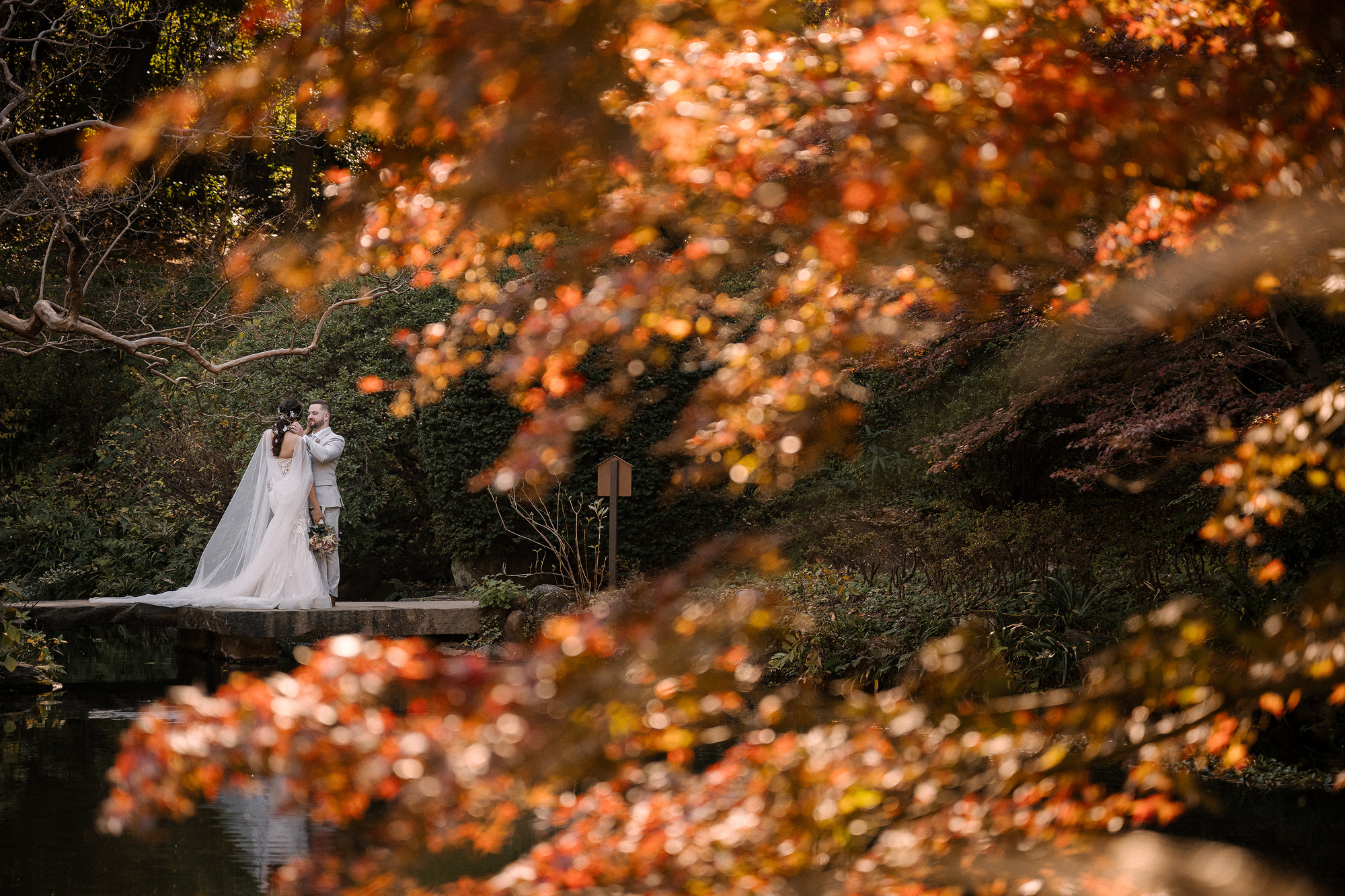
Their ceremony took place at Kansen-en, a small public garden in Shinjuku whose history reaches back to the Edo period. Its name means “garden of the sweet spring”, after the spring water once prized here for tea. By late November the garden had moved into autumn. Maples leaned over the pond, fallen leaves gathered along the paths, and the stone bridges crossed water holding the trees in reflection. It was public without feeling exposed, and it needed very little added to it.

What a Ceremony Needs
Wedding planning talks about the ingredients of a ceremony surprisingly often: music, an entrance, rings, readings, some ritual to mark the move from one state to another.
They needed almost none of them. Their rings had been on since April 2022. Nobody needed to tell them they were married. And they decided against music because this was a public garden, and they wanted to respect its quiet rather than impose themselves on it.

That left the vows. They stood together beside the pond and read them, and when the words were finished, the ceremony was finished too. There is confidence in knowing when nothing else needs to be added.
A Japanese garden is particularly good at this. Its paths slow you down. Views arrive gradually rather than all at once. A bridge exists because there is somewhere to cross, but it also changes the angle from which you see everything else. Nothing needs to shout for attention. For a ceremony stripped back to two people speaking carefully to each other, that restraint felt right.


From the Most Private Part to the Least Private Place
Afterwards, Tokyo changed volume.
The picnic we’d planned was defeated by the temperature, which is one of late November’s more efficient ways of settling an argument. Lunch moved indoors. Then we went to Shibuya.
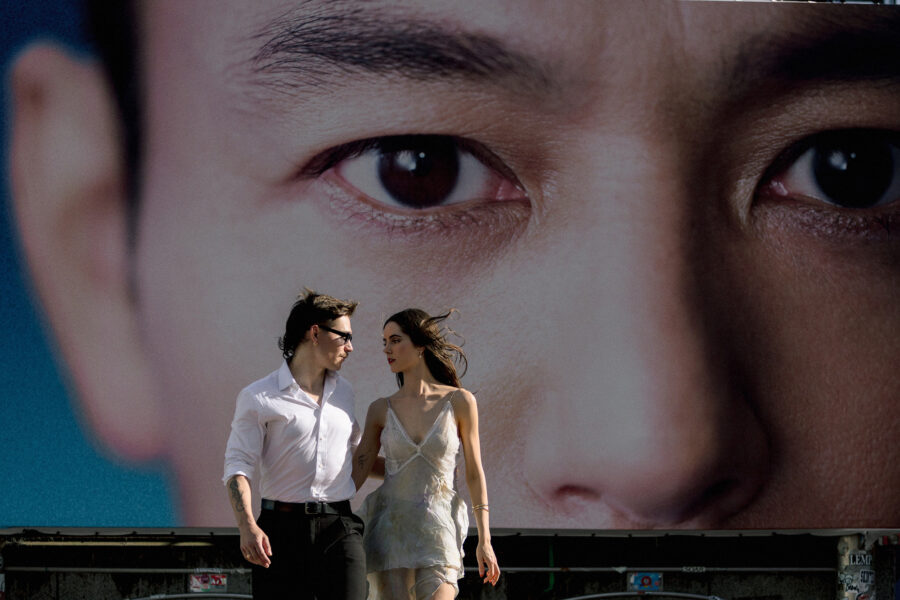
There was a logic to putting the day in this order. Their vows had been heard by almost nobody. Now they could walk into one of the least private places in the city. At the Shibuya scramble, thousands of people cross at every change of the lights. Nobody is there to watch a wedding. Everyone has somewhere else to be.

There’s a particular freedom in that kind of anonymity. They could stand in the middle of one of Tokyo’s most recognisable places and have almost no claim on anyone’s attention. The private part had already happened. Now they could simply move through the city married.


Tokyo From Above
We finished at Shibuya Sky for the last light.
The view from the rooftop does something strange to Tokyo. At street level the city is almost impossible to take in as a whole. You experience it in fragments: one crossing, one station, one alley, one platform at a time. From above, the fragments begin to join. Shinjuku rises in the distance. Between the towers sits the dark canopy of Meiji Jingu, a forest planted by hand a century ago that looks, from this height, as though it had always been there. Below, the traffic moves through Shibuya, and the city lights come on before the daylight has quite gone.


For two people who had spent more than two years trying to get back to Japan, there was something fitting about finally seeing Tokyo from that distance. They had planned the trip before they were married, and postponed it after. Now, at last, they were standing above the city together.
Later, after dark, there were mirror balls and a red neon sign that said Paradise. Tokyo occasionally handles metaphor without asking permission.

What Made It a Ceremony
The phrase symbolic ceremony is useful when we need to explain legal status. It’s less useful for explaining what actually happens between two people.
Nothing was legally altered in the garden that morning. Their rings were already being worn. There was no document waiting for a signature. What changed was that something they had carried through more than two years of postponements finally had a place to happen. The words they’d wanted to say in Japan were said. The garden held them quietly, then the gates opened back onto Tokyo and the day grew louder.
That’s all a ceremony really needs to do. Give meaning a shape. Give words a place. And know when they are enough.