In the summer of 1982, Japan’s Forestry Agency started a campaign. It wanted people to go back into the country’s forests, to look at them properly again, and to support the slow work of growing them. It needed a name. So it borrowed the shape of two words everyone already knew. Kaisuiyoku is sea bathing. Nikkōyoku is sunbathing. The agency put shinrin, forest, in front of the same ending, and shinrin-yoku was born.
That year the first forest-bathing gathering was held at Akasawa, an old cypress forest in the mountains of Nagano, which now calls itself the birthplace of forest bathing. Nobody had measured anything yet. The word came first. The science came later, and it turned out to be smaller and stranger than the slogans that followed.
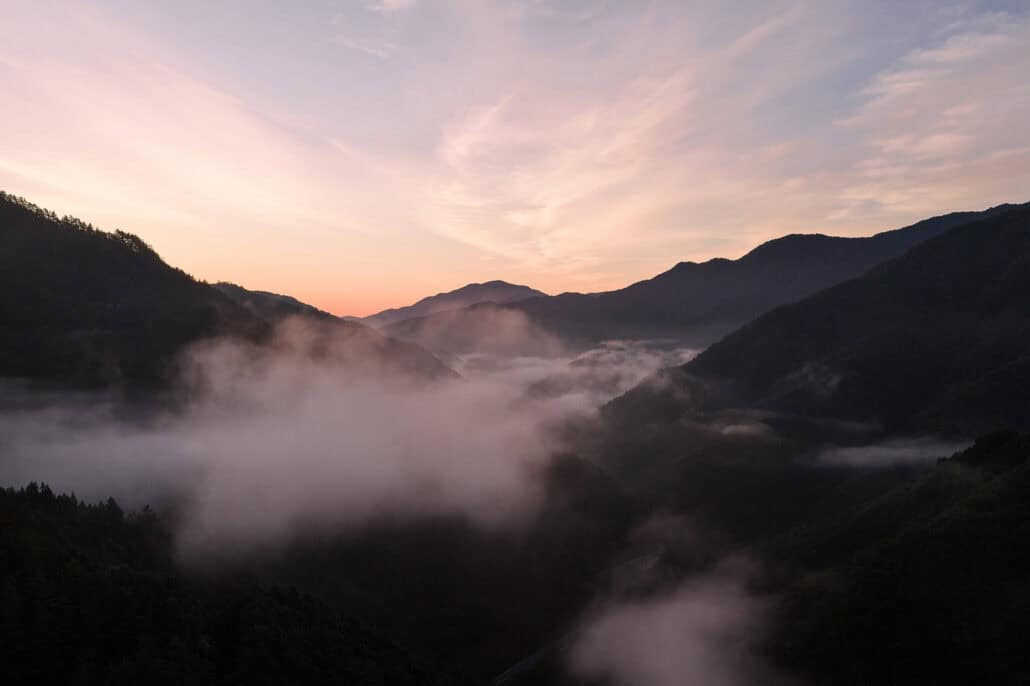
What the Forest Did to Twelve Men
In the mid-2000s, a Tokyo immunologist named Qing Li took twelve men, aged between thirty-seven and fifty-five, on a three-day trip into a forest. Before and after, he measured the activity of their natural killer cells, the part of the immune system that goes after infected and abnormal cells. It rose by about half. It went up in eleven of the twelve.
He kept going. In a later study, a similar group made one trip to a forest and one to a city, walking about the same amount on each. Only the forest raised their immune activity, and the effect lasted at least a week. The forest air carried alpha-pinene and other oils that trees give off, known as phytoncides. The city air had almost none. In another study, men slept three nights in a city hotel with hinoki cypress oil vaporised in their rooms, and their immune activity rose there too, without a tree in sight.
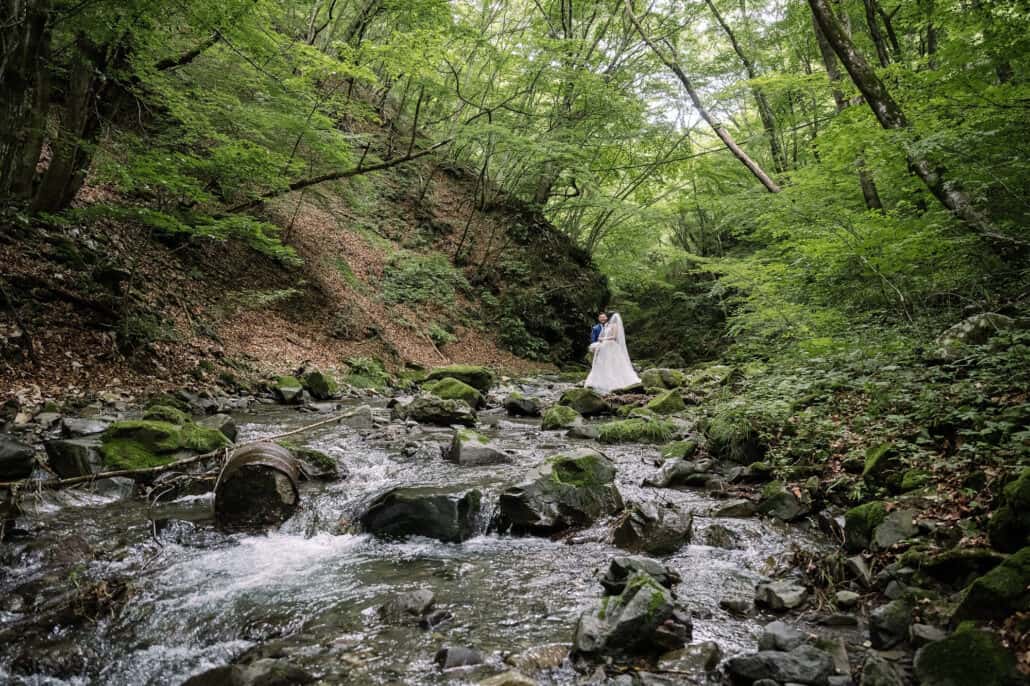
Twelve men isn’t a lot of men. Each of these studies followed twelve or thirteen people, most came from one research group, and nobody was randomly assigned. A 2021 review of thirty-three studies found the signals encouraging and the study designs weak. The forest may well be good for your immune system. The evidence so far is a promising sketch.
Two Hundred and Eighty Students in Twenty-Four Forests
The most thorough work on shinrin-yoku and the body came from Yoshifumi Miyazaki’s team at Chiba University. They took 280 young men to twenty-four forests across Japan. Each spent about fifteen minutes looking at a forest and fifteen walking in it, then did the same in a city. In the forest, their cortisol, the hormone most closely tied to stress, was between thirteen and sixteen per cent lower. Their pulse was lower too, and the part of the nervous system that governs rest was far more active.
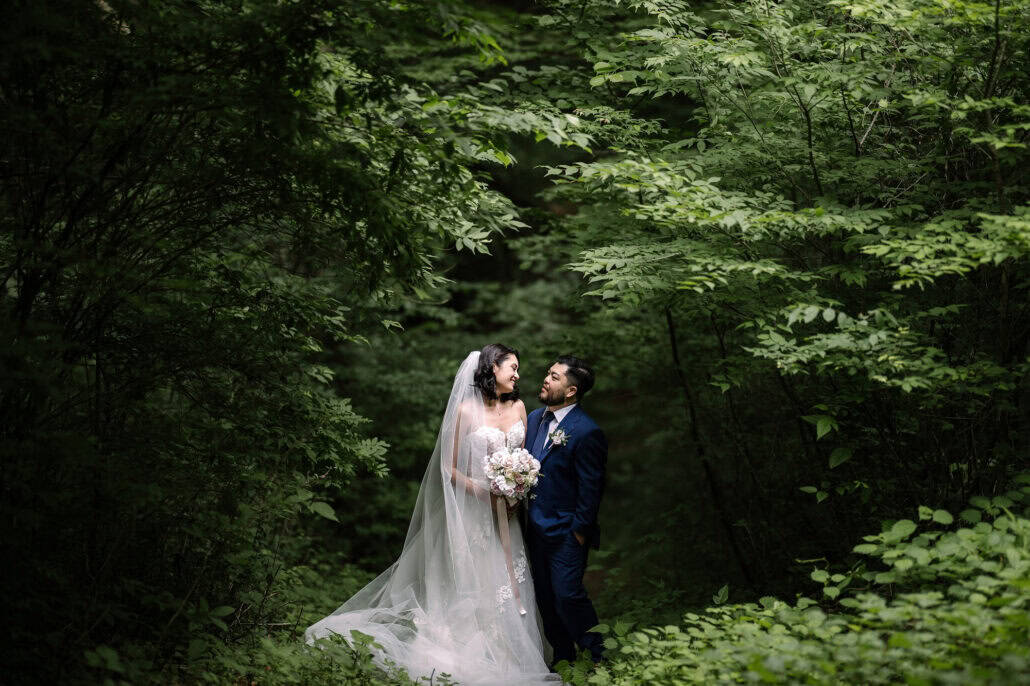
None of it is dramatic. But every measure moved the same way, and it moved in half an hour.
On 18 April 2006, Japan certified its first Forest Therapy Bases, chosen partly on how people’s bodies responded in field tests. There are now more than sixty certified forest therapy bases and walking roads, from Hokkaido to Okinawa.
The Body Starts Before the Trees
The detail we like best comes from a 2019 review that pooled eight forest studies. Cortisol was lower after the forest sessions, as expected. It was also lower before they began. The authors put it down to anticipation, or something close to a placebo. People who knew they were about to walk among trees had already started to relax.
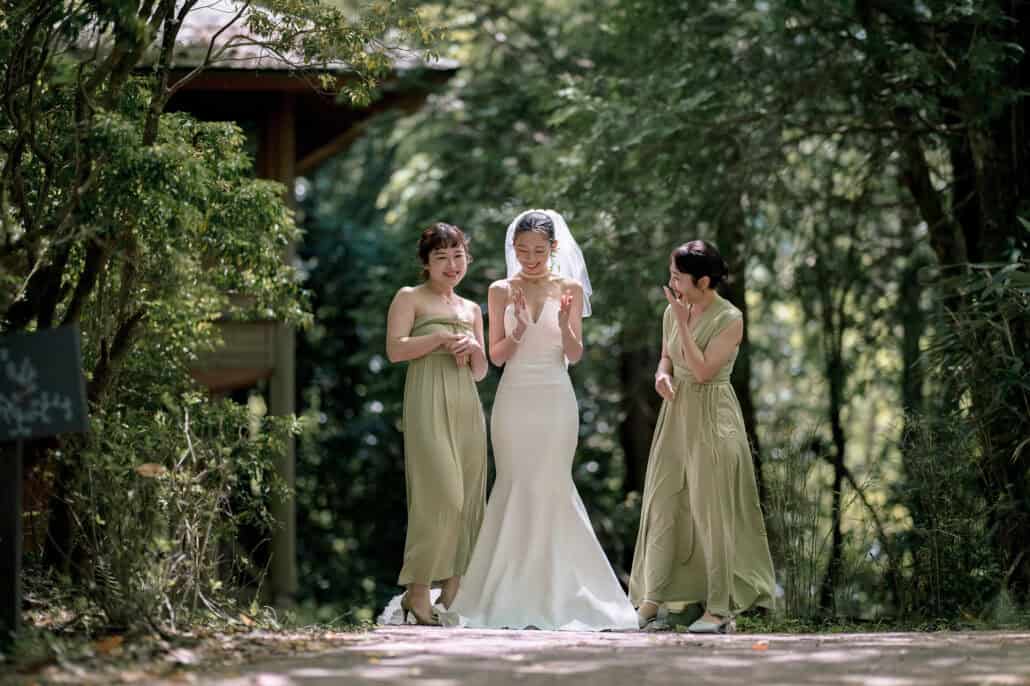
Part of what the forest does, it seems, it does before you get there.
It’s also the closest thing we’ve found to a scientific description of what planning is for. A couple who knows the day is held, who knows where the cars will be and what happens if it rains, starts putting the weight down weeks before the wedding. Uncertainty is its own kind of city.
Uncertainty is its own kind of city.
A Morning Among Trees
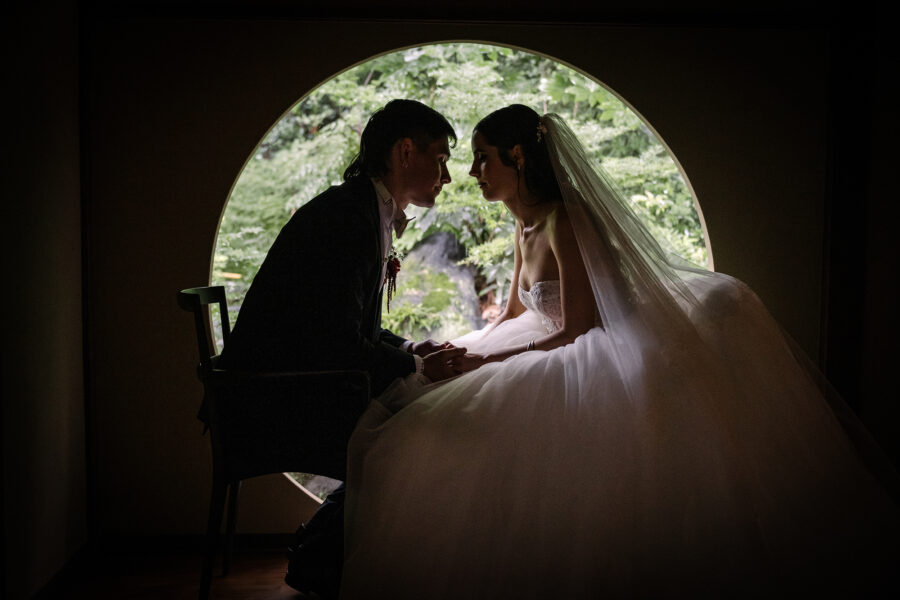
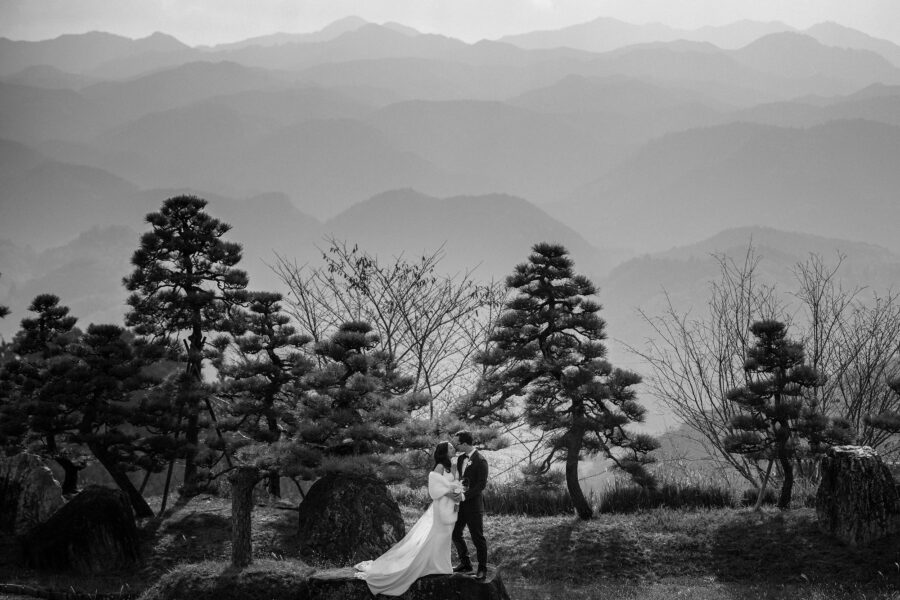
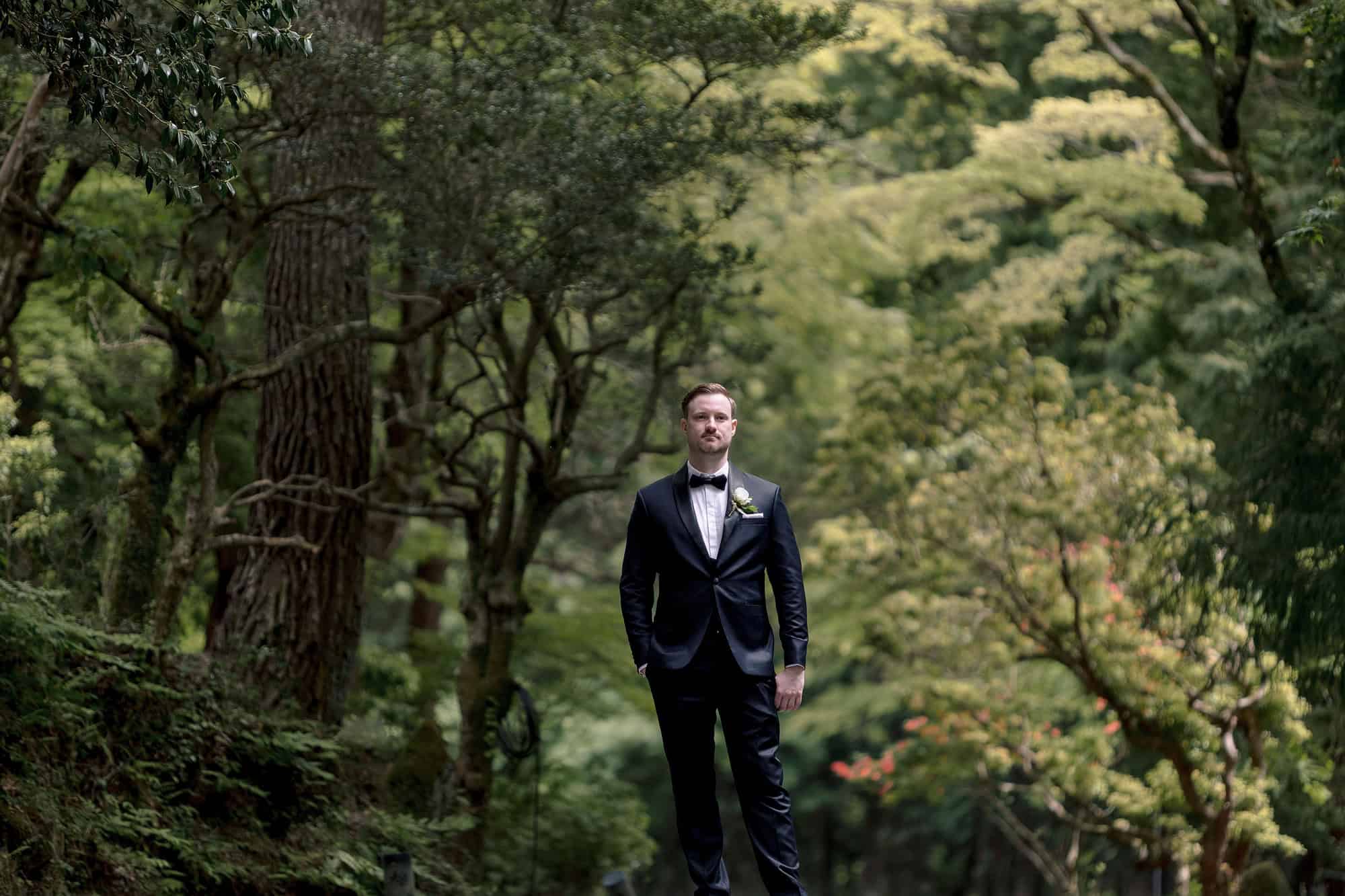
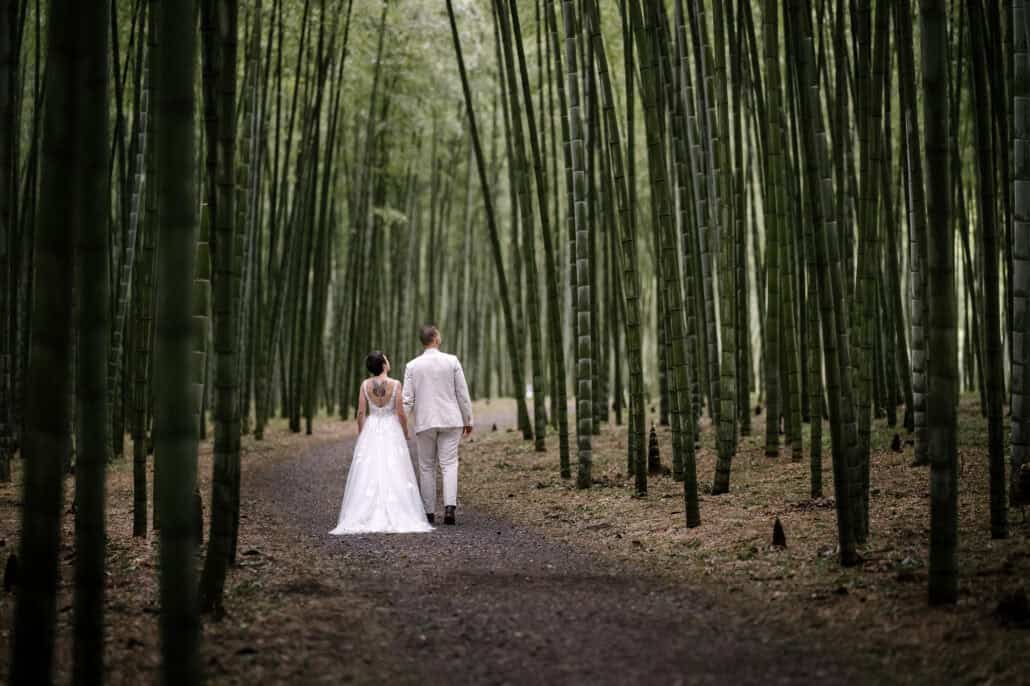
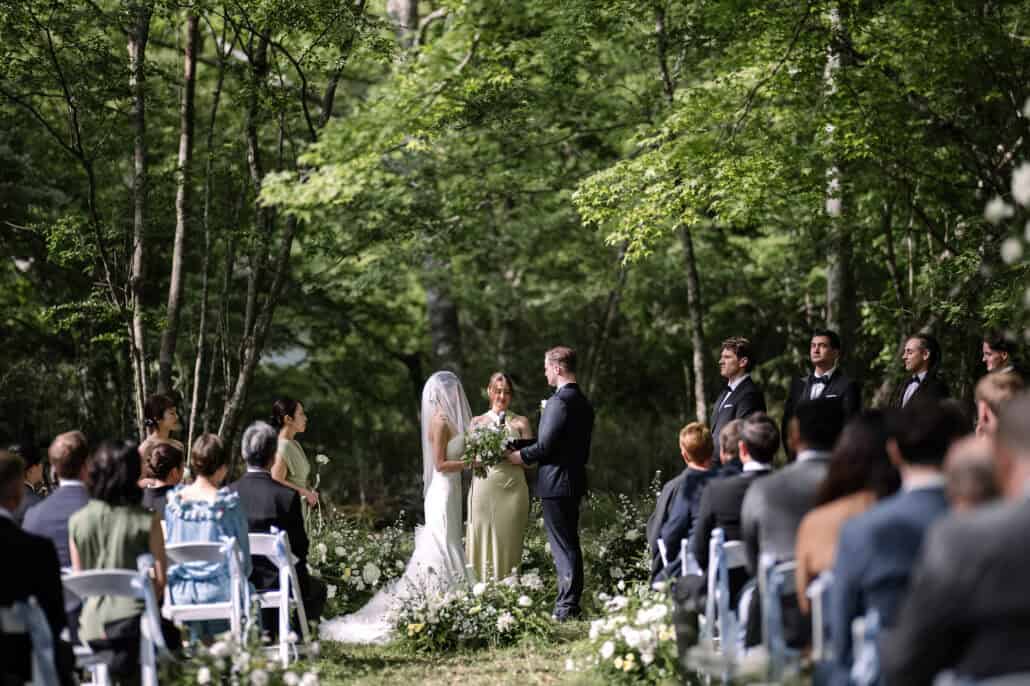
Japan makes this easy. About two thirds of the country is forest, and it comes close: cedar avenues leading up to mountain shrines, bamboo on the edge of Kyoto, the old cedars along the Hakone road. Some of our couples marry in the forest. Others simply walk in it, the morning of the wedding or the day after, with nobody needing them anywhere.
If we could prescribe one thing for a wedding morning, it would be an hour among trees before anyone picks up a hairbrush. No agenda. Just the walk. The research says it lowers your pulse. We’d recommend it for the quiet alone.
If we could prescribe one thing for a wedding morning, it would be an hour among trees before anyone picks up a hairbrush.
What the Word Asks
The word was always the best instruction. You don’t do anything in a bath. You get in and let it surround you. The Forestry Agency wanted people to look at their forests again, and more than forty years later that’s still all shinrin-yoku asks: go in, slow down, look up.
Earth has about three trillion trees, a few hundred for every person alive. There’s no shortage of places to start.
More from our Japanese word series: komorebi, sunlight through leaves; nagomi, calm and balance; and ma, the space between things.