About a hundred days after a birth, a mother and her baby in old Japan would change out of white and into colour. There was a word for it: iro-naoshi, a change of colour.
The same word turned up at the end of mourning. In parts of the countryside, into the last century, mourners came home from the grave, changed into everyday clothes and sat down to ordinary food again. And it was used after a wedding, when a bride who had married in white changed into colour, and the furnishings of the room went from white back to their usual colours.
At weddings it’s said with a polite o in front: oironaoshi. The oldest example in the Nihon Kokugo Daijiten, Japan’s largest historical dictionary, comes from a court diary in 1479, and its editors can’t say whether the word began with births or with brides.
White at the edges of a life
Put those together and a pattern appears. White in Japan began as the clothing of sacred rites, and over the centuries it came to mark a birth, a wedding and a farewell.
Wedding magazines still like to say a bride wears white so she can be dyed in her new family’s colours. The costume historian Nagasaki Iwao calls that a folk explanation. He reads the white as the unaltered state: clean, then sacred, close to the Shinto sense of birth, death and rebirth.
Which makes the colour the more interesting half. White was how you crossed a threshold. Colour was how you came back, into ordinary life and among people, a little changed.
White was how you crossed a threshold. Colour was how you came back.
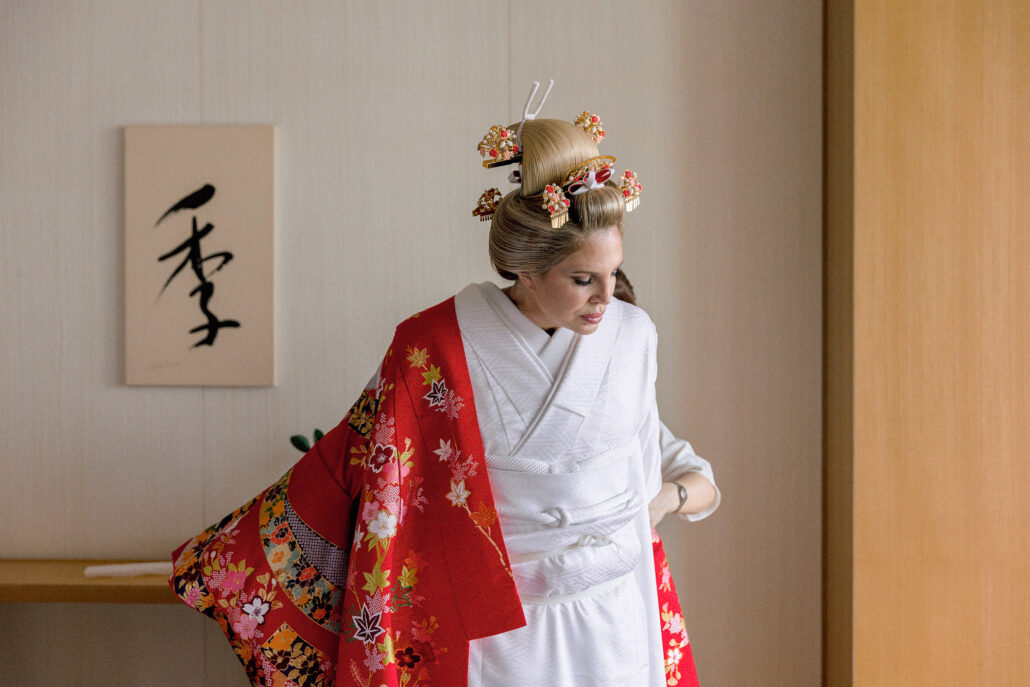
Even the old wedding versions weren’t only about the bride. In one early Edo manual for women, bride and groom both change, each into a robe sent by the other’s family as a gift. The robes themselves are in our guide to Japanese bridal kimono.
The second look, rediscovered
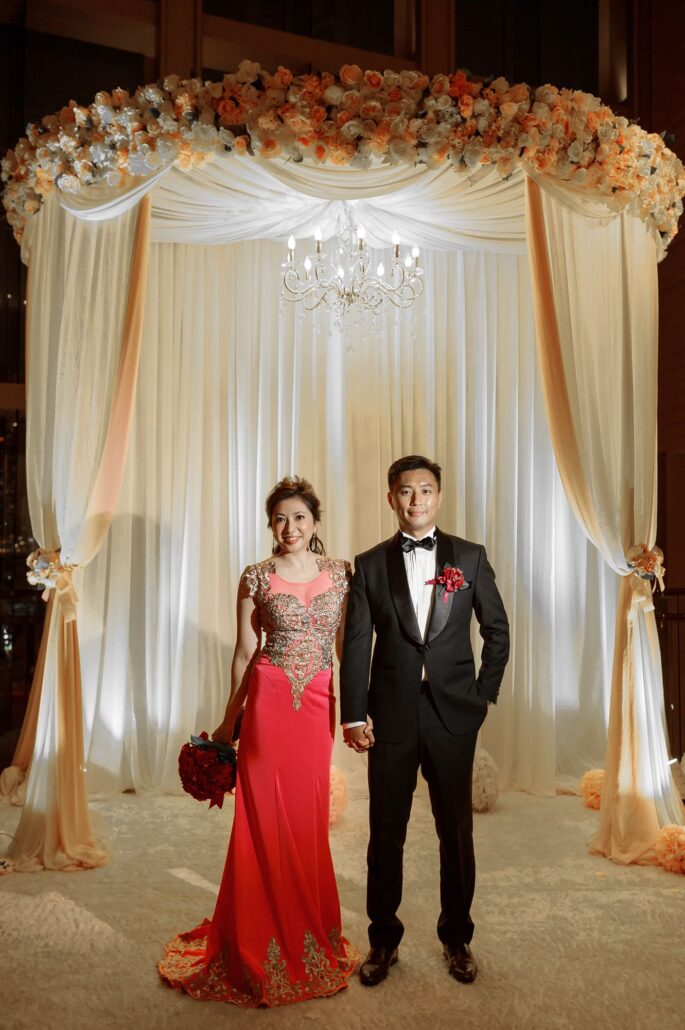
Bridal fashion has lately reached the same idea from the other side of the world. In 2025 Vogue reported that many brides now change across the celebrations: for the reception, the after-party, the dinner the night before. Vivienne Westwood’s 2027 bridal collection is built around dresses that change on the day, with an overskirt that comes away to a pearl-fringed mini, and a mini offered as the alternative to buying a second dress.
This September, the stylist Briana Andalore married at her husband’s family’s estate in New Jersey in custom Viktor&Rolf. At the start of cocktail hour her friends removed the skirt’s extra tiers in front of the guests, and underneath was a mini. She wore six looks in all.
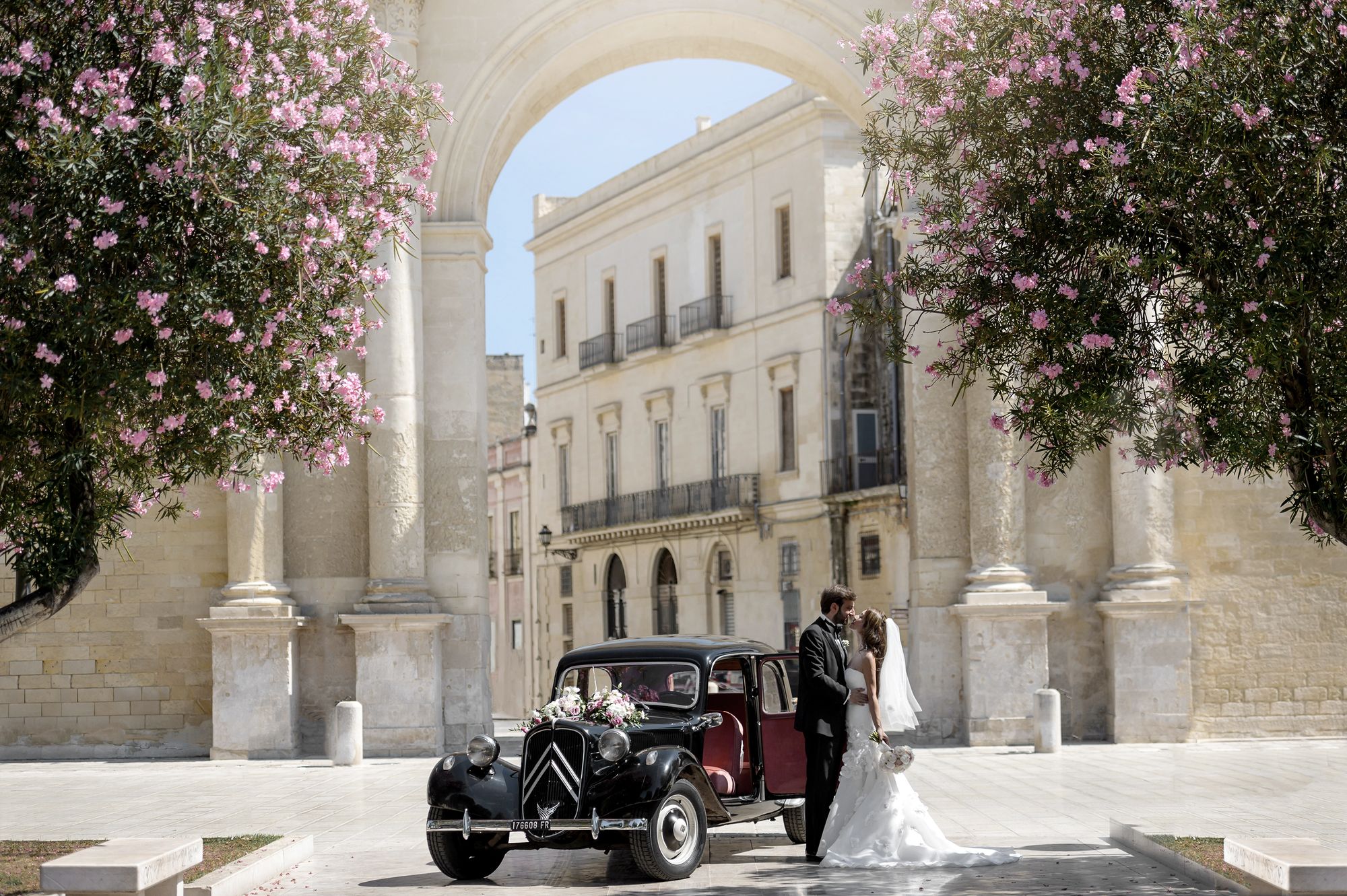
We fell for the label years ago, at a wedding in Italy. The bride was a designer at Armani at the time. Her first dress was custom Viktor&Rolf. Her second was Armani. Of course it was.
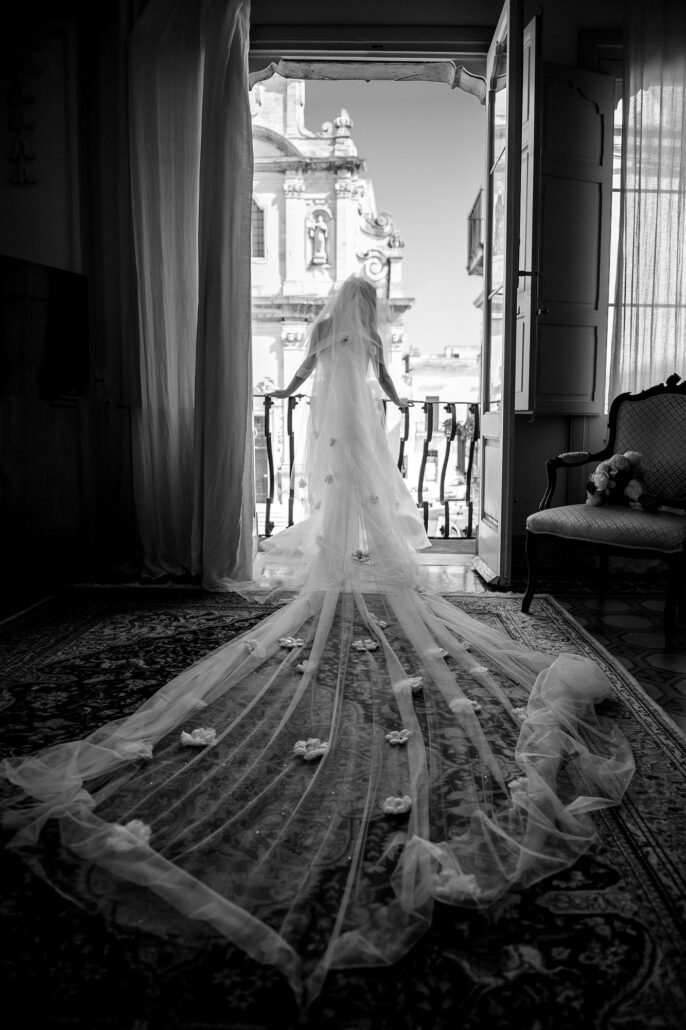
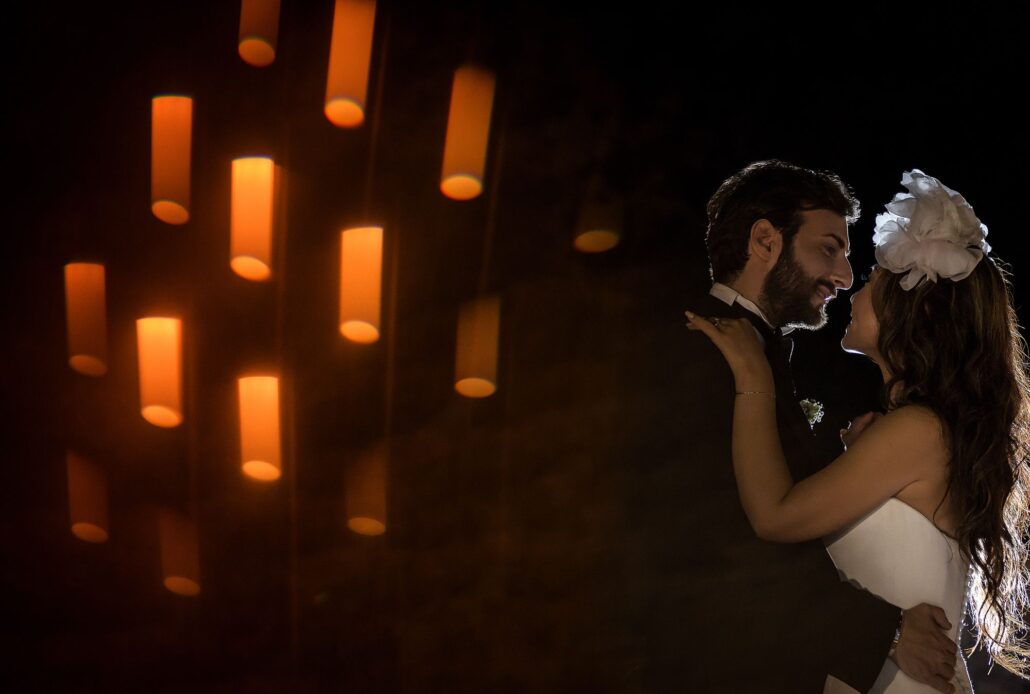
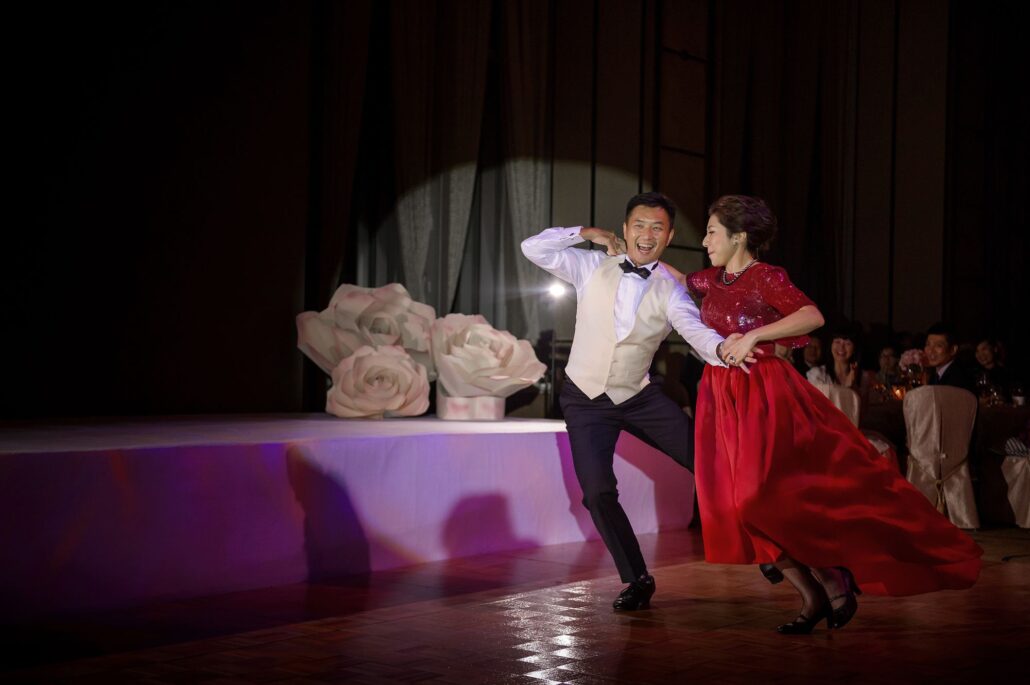
Japan has had a second look for centuries, and today it comes with a programme and a door to walk out of. Partway through a Japanese reception the bride leaves, the room carries on without her, and she comes back in colour. Couples even choose who walks her out: most often a sister or brother, then a friend, her mother, a grandparent. Some leave it to chance and ask the first guest who signed in.
Grooms change too. In Zexy’s 2024 survey, more than four in ten wore a second outfit, and back in 2011 many of them simply changed into a tuxedo in another colour, to match the bride. The brides have barely moved: in the Tokyo area, about two in three wore exactly two outfits in 2011, and about two in three still did in 2024.
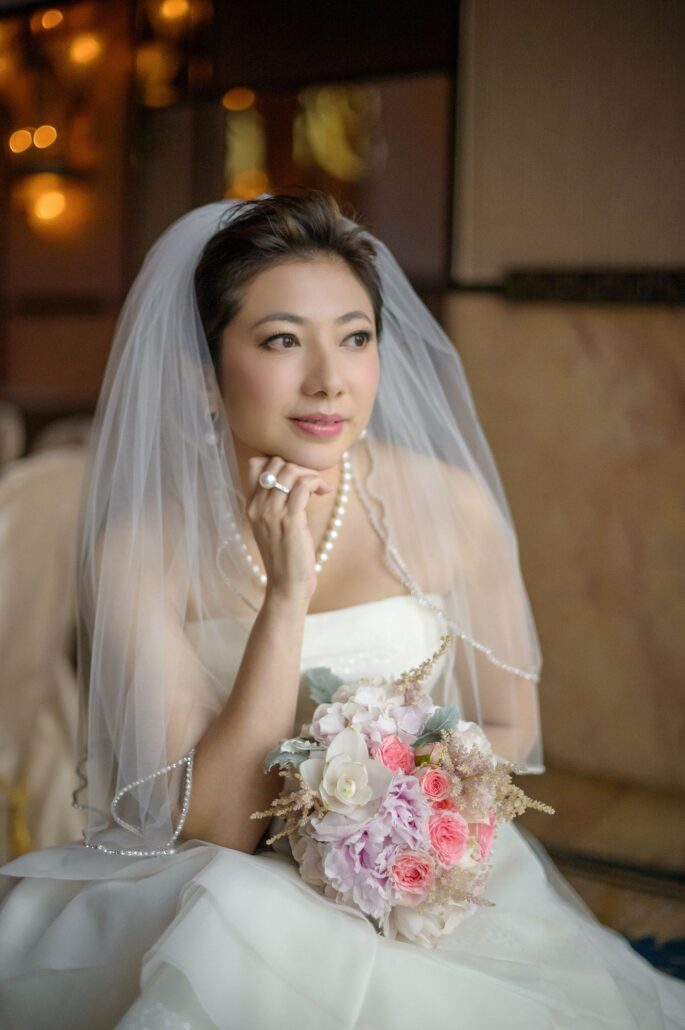
Japan isn’t alone. Across much of Asia, changing through a wedding is custom. More than a decade ago, at a wedding at the Four Seasons in Hong Kong, our bride wore five dresses. Now the custom has travelled, and in the West it reads as a trend. Not quite five yet, though New Jersey has managed six.
What a second wedding dress is for
Most of our couples fly in, and nobody expects them to follow a Japanese reception programme. Plenty of our brides change anyway. The ones we remember best were coming back to something.
One bride, after her shrine ceremony in Tokyo, changed into her mother’s wedding dress, remade a generation later as a short party dress, and wore it to Kabukicho. At a winery in Akiu, another changed into red partway through the reception, for a Chinese tea ceremony her mother had brought to the day. A third, in our bamboo forest, changed into a short dress for the night, and the two of them went straight back out into the rain.
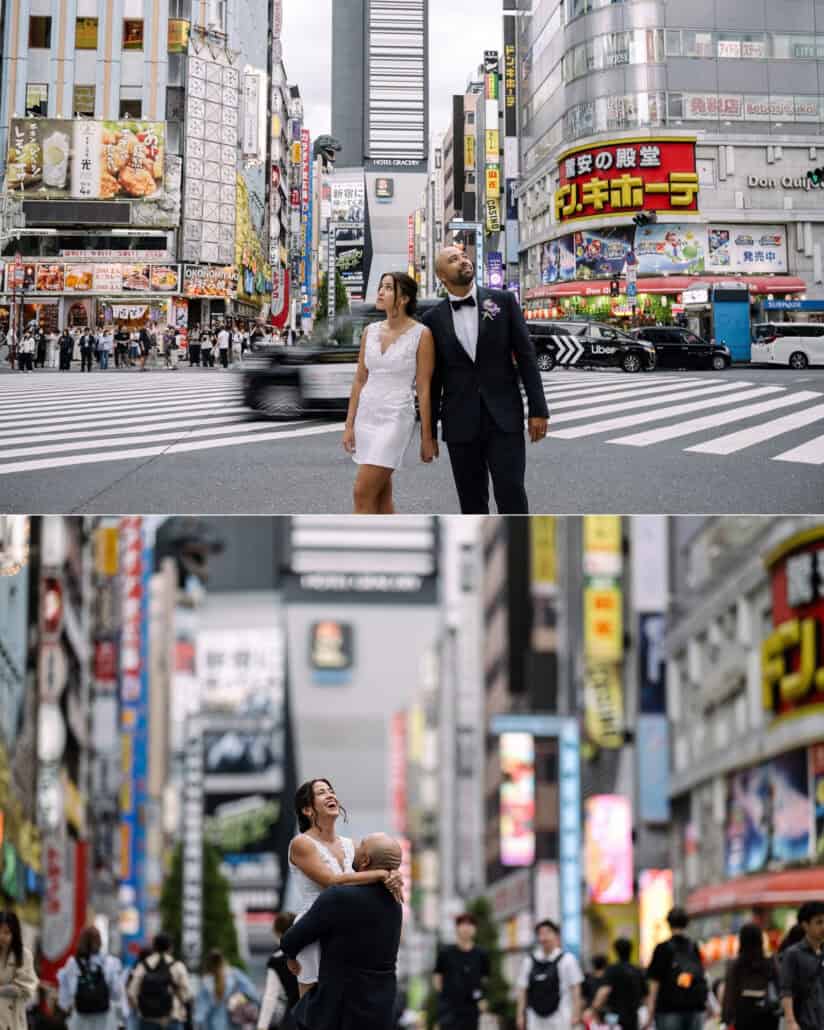
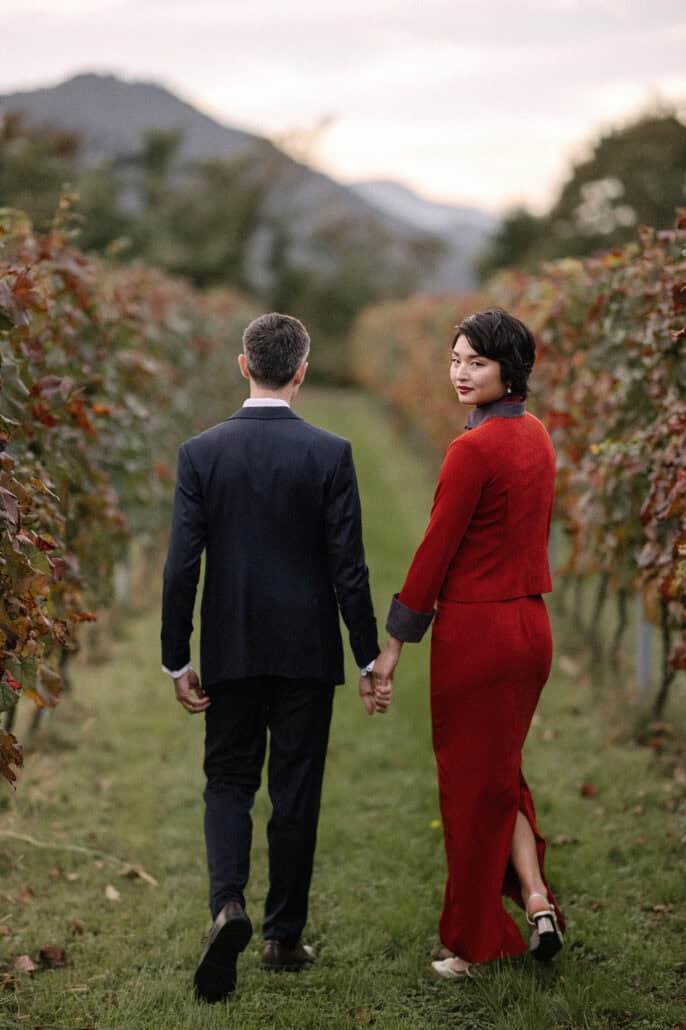
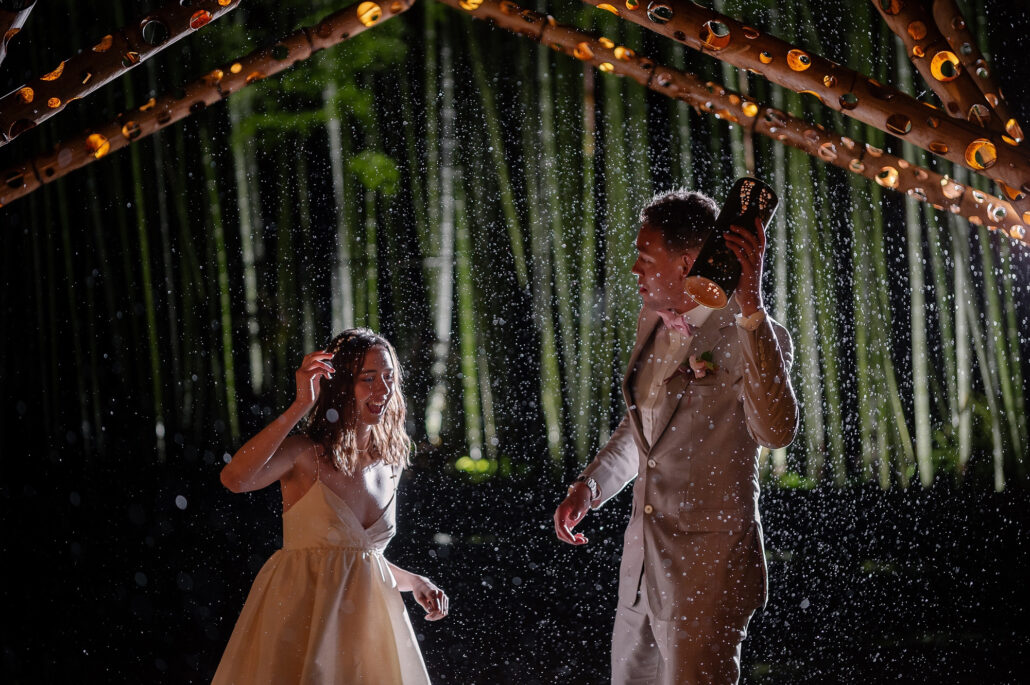
Two of those changes went back to a mother. The third went back into the weather.
A change takes time. A Tokyo hotel allows about half an hour from dress to dress, and longer into kimono. So we plan it into the day. We think about where she’ll come back to and in what light, who stays with her while she changes, and what the new dress lets her do that the first one couldn’t: dance, sit on tatami, walk the lanes after dark, go out in the rain.
A second dress earns its place by what it lets you do next.
Iro-naoshi never described a reveal. It described the moment a rite was over and ordinary life could start again, in colour. At a wedding, that’s the part with all your people in it. It deserves a good dress.