Japan has a kind of building most countries don’t. A government report on the bridal industry describes the specialist wedding hall as a business “not seen in countries such as the US or China, and unique to Japan”: a building made for weddings, staffed for weddings, and busiest at weekends, especially on the lucky days of the old six-day calendar.
That building is the key to wedding packages in Japan. According to the same report, a city hotel earns around 70 percent on a room and around 5 percent on a wedding banquet, and specialist halls run on margins just as thin. A building like that only pays for itself when it’s full, on as many Saturdays as possible, with a menu, a dressing room, a florist and a photographer already inside. The package is how it fills.
So, the short answer: yes, there are plenty of wedding packages in Japan, and many are good at what they do. They suit couples who want a well-run day in a building designed for it. We don’t sell them, and this is why.
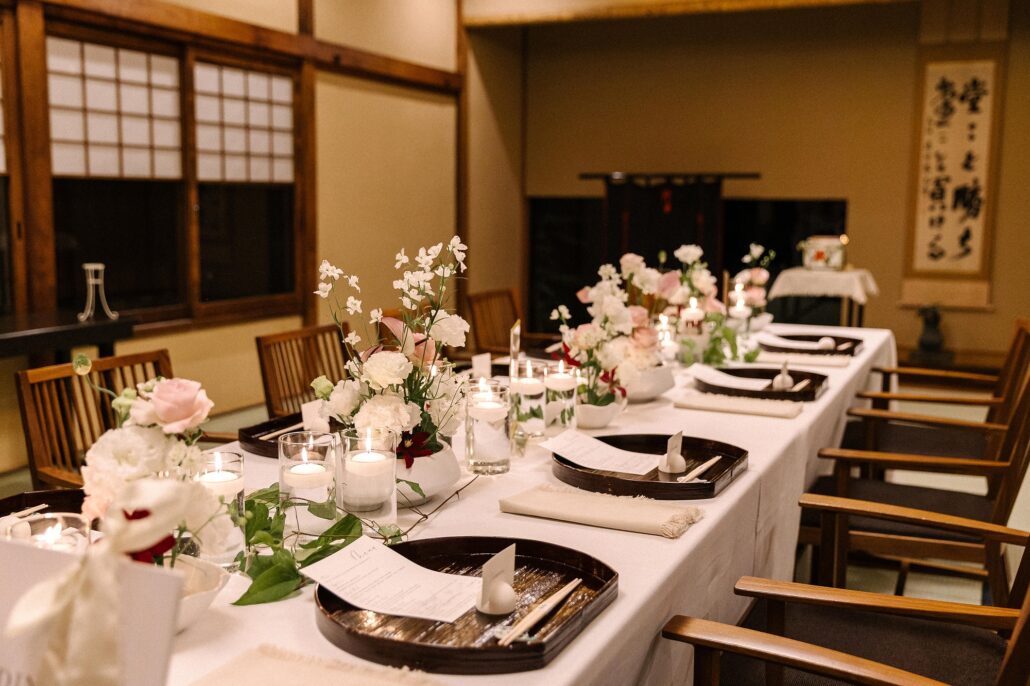
How Wedding Packages in Japan Work
A package, or pack plan, bundles the ceremony, the reception, the costume, the flowers and the photographs into one price at one venue. In Recruit’s 2024 Zexy survey of couples who held a ceremony or reception, about six in ten used one, and around two in three in the Tokyo area.
Almost everything on the day comes from the venue’s side. In the same survey, 92.7 percent of couples who had wedding-day photographs used the venue’s own or partner photographer, and nearly all venue flowers came from the venue’s florist. Of the brides who brought their own dress, nearly half paid a bring-in fee to wear it.
The building sets the calendar too. Half of Japanese ceremonies fall on a Saturday and nearly three in ten on a Sunday. Only about one in nine happens Monday to Friday.
And the price moves. Nearly eight in ten couples paid more than their first quote, by an average of almost a million yen among those whose bill went up, mostly for upgraded food, costume, photographs and video.
None of this is a trick. It’s how a building with thin margins and a full weekend diary stays open. Japan’s consumer centres give simple advice to anyone booking one: ask for a fresh quote after every meeting, ask when the cancellation fees begin, and don’t sign at a bridal fair on the spot.
Who a Package Suits
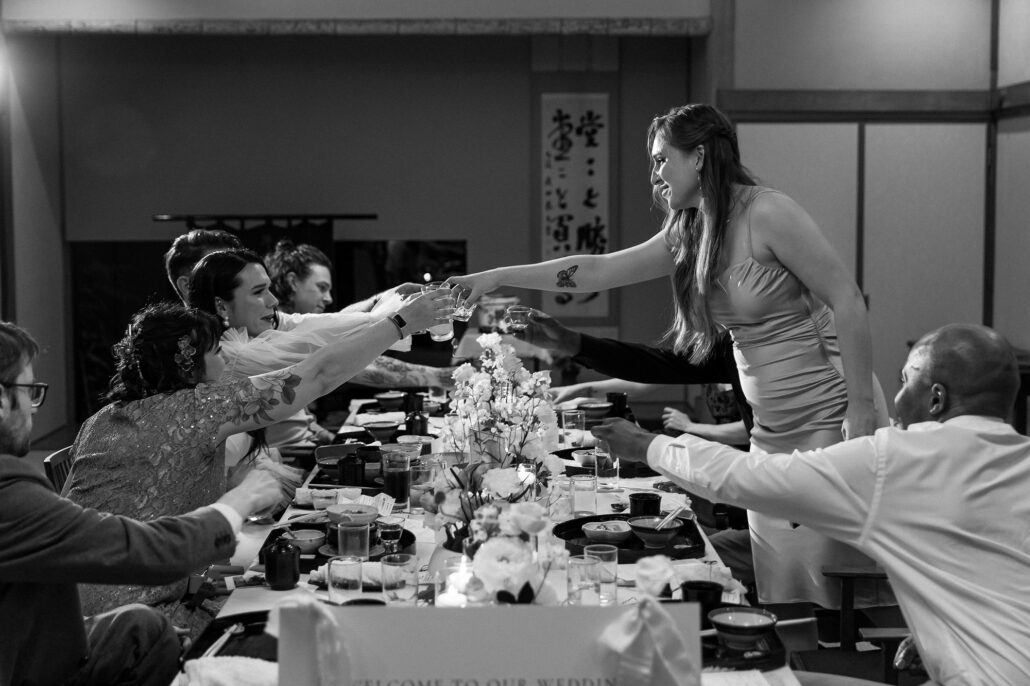
Plenty of people, and that’s great. A couple marrying in their home town with fifty or so guests (the Japanese average is 52), a set ceremony and an afternoon reception gets a smooth, professional day at a known price. Many Japanese couples skip the ceremony altogether and book a photo shoot instead: in the 2025 survey, more than six in ten newlyweds had professional photographs taken, and around one in six did that and nothing else.
Japan is very good at packaged services, from rail passes to bento boxes. A good wedding package belongs to the same tradition: one thing, done well, many times over. A destination wedding, we’ve found, is a different business altogether.
Why We Don’t Sell Packages
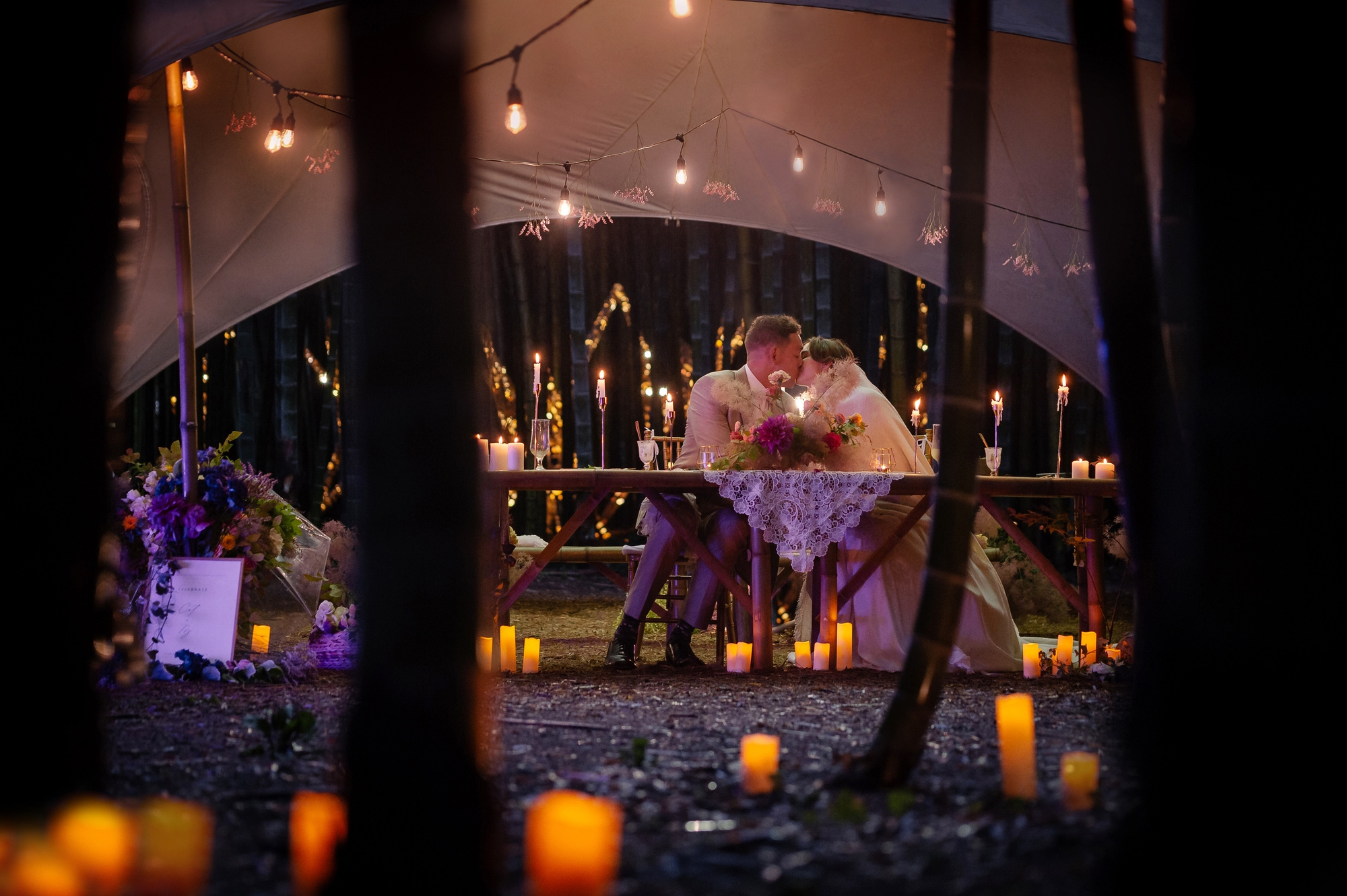
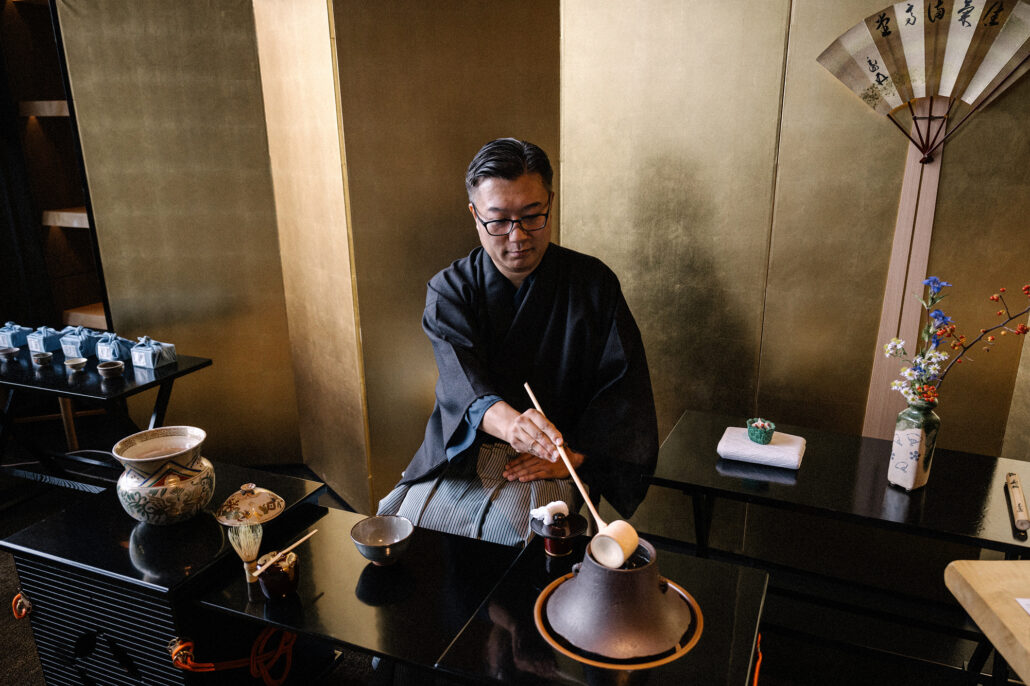
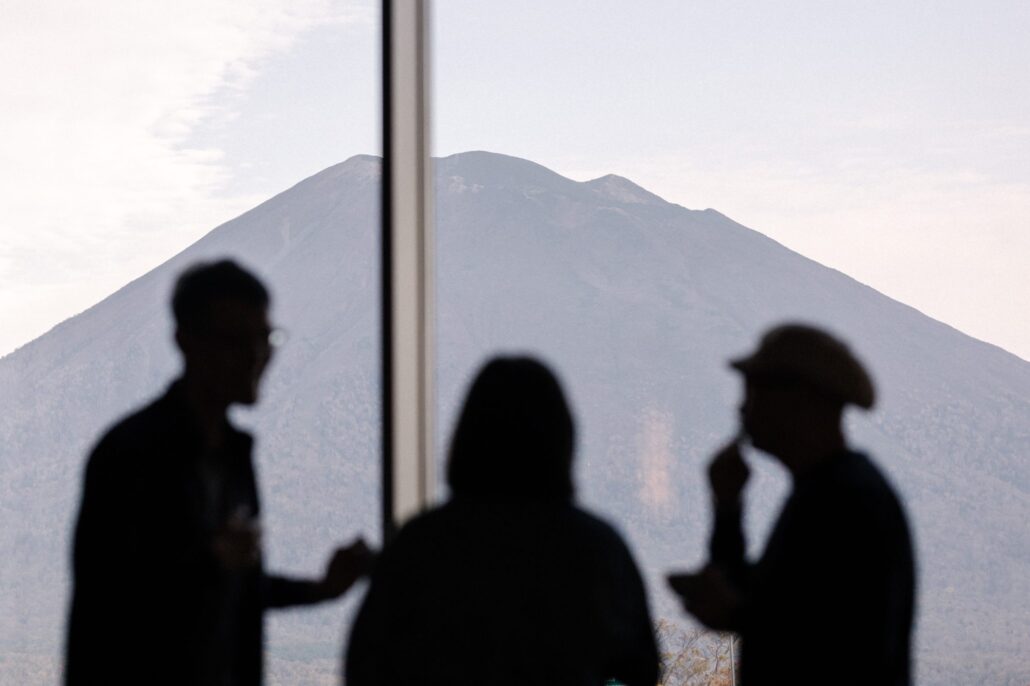
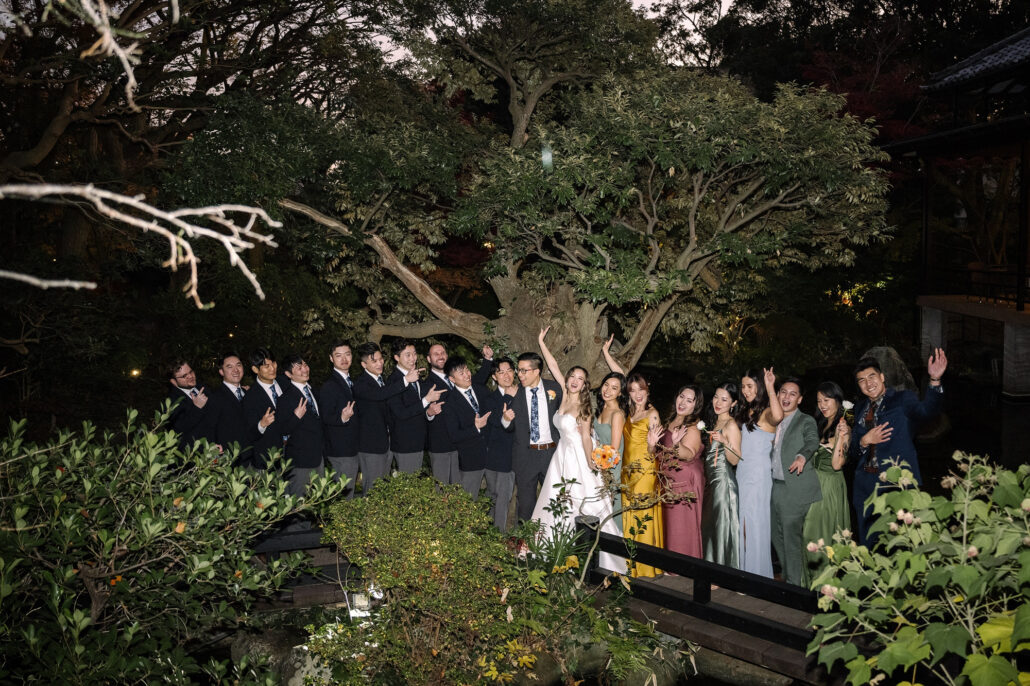
What our couples ask for doesn’t fit in one. A ryokan given over to one wedding for two days. A welcome dinner the night before, with a mountain in the window. A ceremony in a garden that had never hosted one, or a bamboo grove with a canopy built for a single night. A day that often falls midweek, because that’s when the places we love are quiet.
A package works by repeating. Our weddings don’t repeat. Every venue is worked out for that couple, every timeline is written from scratch, and the people working on the day are chosen for that wedding: a tea master for the welcome, a kitchen happy to rewrite a menu for one guest, a florist who knows exactly what the season is doing that week. Planning, photography and film are one team, so the people making the pictures were part of the plan from the first conversation.
Where the Cost Goes
Original places. The venues our couples choose often aren’t wedding venues at all. The rooms, the hours and the house rules are worked out one conversation at a time, in Japanese.
Time. A celebration over two or three days has two or three days of planning inside it, and a rain plan for each.
People. The creatives we bring together are highly trained, and each one is chosen for that wedding.
Two languages. Every contract is written in one language and translated into the other. Every message to a venue, a shrine or a kitchen passes through someone who speaks both, and who reads what isn’t said in both. Even one Tokyo ward office notes on its own website that its counter calls in an English interpreter from another department, and that email in Japanese goes more smoothly. Much of the work of a wedding in Japan is done twice.
If You’re Looking for a Cheap Wedding in Japan
We’d rather be honest with you than vague. Japan does simple beautifully: dinner with the people you love in a good restaurant, a walk through an old neighbourhood in your best clothes, a photo shoot somewhere you’ll always remember. If budget comes first, those are lovely ways to mark a marriage here, and a studio photo plan is good value.
What Japan does less easily is bespoke and cheap at the same time. Bespoke here means new places, two languages and a team built around you, and that costs more than a room that hosts a wedding every Saturday. If that isn’t the wedding you want, a package may be exactly right, and there’s nothing second-best about it. Our guide to what a wedding in Japan costs explains what the money buys when it’s planned our way.
Quick Answers
Are there all-inclusive wedding packages in Japan?
Yes. Hotels, wedding halls and resort chapels sell packages that bundle the ceremony, reception, costume, flowers and photographs, using the venue’s own team. About six in ten Japanese couples who hold a ceremony or reception use one.
How much does a wedding in Japan cost?
For Japanese couples, Recruit’s 2024 survey put the average ceremony and reception for a packaged wedding at about ¥3.44 million nationally and ¥3.75 million in the Tokyo area, for around 52 guests, before gift money. Destination weddings for international couples are planned differently, and our cost guide covers them.
Can I bring my own photographer to a package venue?
Many venues restrict outside photographers or charge a bring-in fee. In 2024, 92.7 percent of Japanese couples used the venue’s own or partner photographer for their wedding-day photographs.
Does 37 Frames offer wedding packages?
No. Every wedding we plan is designed from the start around the couple, the place and the season, with planning, photography and film working as one team.
Updated October 2026.
A Very Good Machine
A wedding hall is a very good machine for a Saturday. The couples who find us tend to want something a machine can’t make: a place that wasn’t built for weddings, on a day of the week nobody else wanted, with the time to make it theirs.