Many of the couples who write to us about a wedding in Japan arrive with it already half imagined: a Pinterest board, a folder of screenshots, a run of TikToks saved late at night. Some of them tell us, in the same first email, that they want nothing that’s been done before.
We love those emails. Every idea in them has been done before, of course, which is how it reached the screen. It’s where ideas live now, everyone’s, ours included.
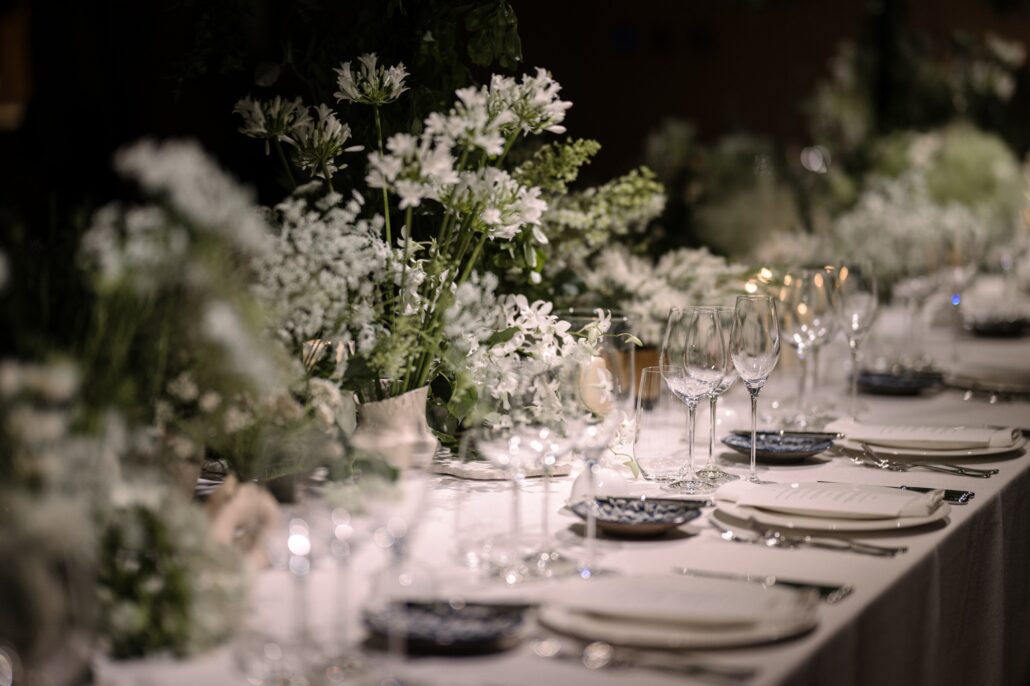
The Wedding Mood Board Is Where It Starts
Some couples want this year’s look and say so. Others want to stand a little apart from it. Plenty want both.
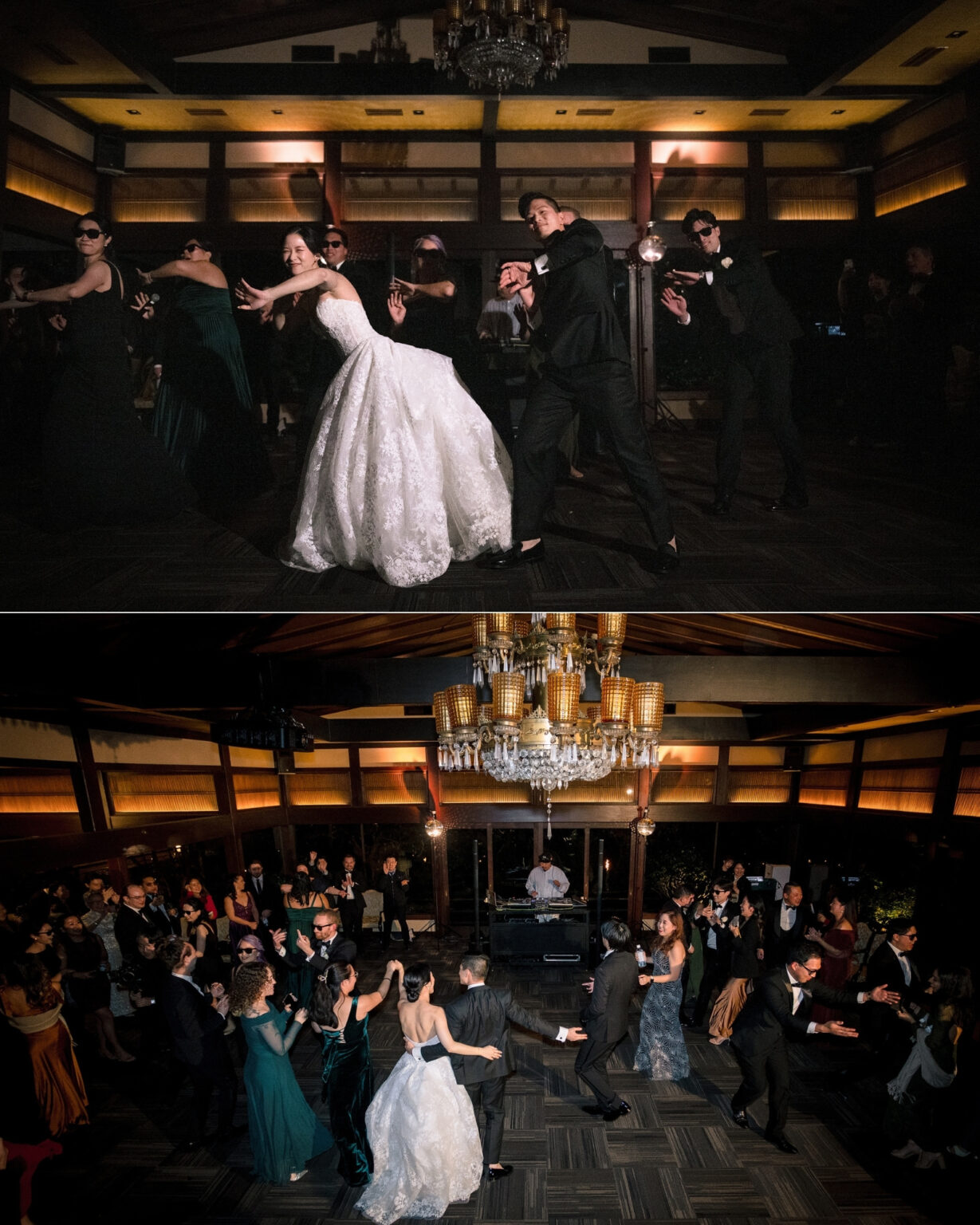
We’ve seen welcome signs hang from lanterns, stand on boards, sit on drinks, fold into paper cranes and fall in long drapes of fabric, and there was a story behind every one. One first dance cut, exactly on cue, to Soda Pop, and the whole bridal party took the floor in a routine they’d rehearsed in secret. Another was a waltz two people had choreographed to Enya.
What none of the boards can do is choose.
A board holds a hundred good ideas, and a wedding has room for very few of them.
We’ve come to hear “nothing that’s been done before” as a different request: don’t let ours be interchangeable with anyone else’s. So the original part of a wedding now is the edit: gathering every saved idea, sorting out which belong to these two people, letting the others go, and bringing what’s left to life in the place they’ve chosen. Even a couple who asks for this year’s look doesn’t end up with an algorithm-driven wedding.
The Same Inn, Twice
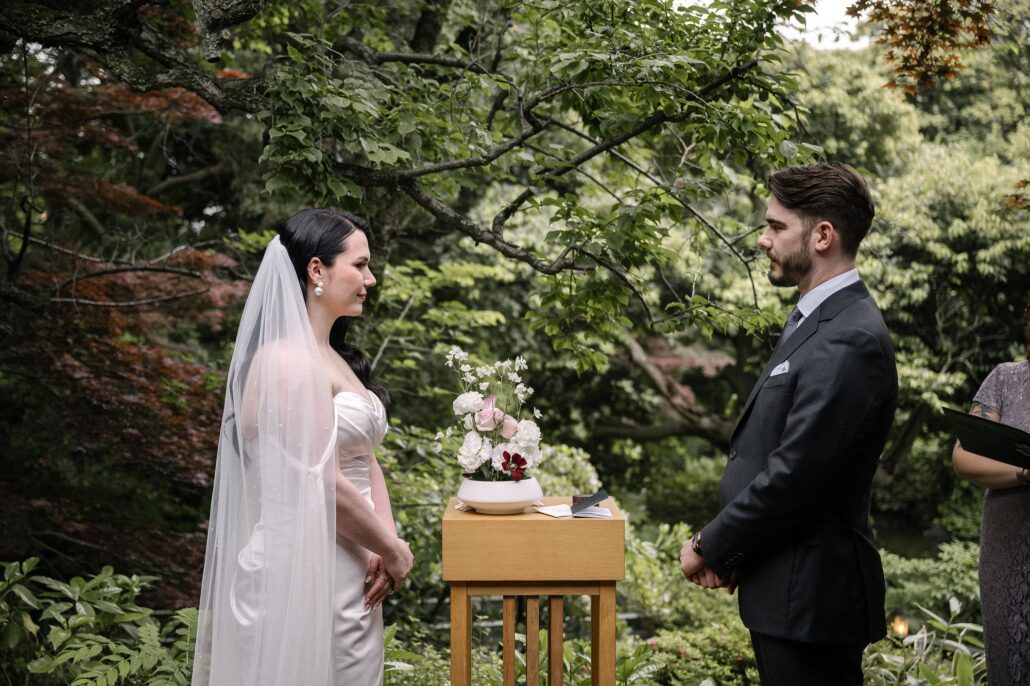
A couple living in London once asked us for European editorial elegance, in Japan: grand, clean, sculptural. Her roots are in Japan and Thailand, his in Greece. What they wanted, underneath the references, was a feeling, and Japan has a word for it: kanso, elegant simplicity. Their luxury ryokan wedding at Jinya was built on it. The brief came down to a few rules, and we held to them for months: one flower, the white calla lily, some four hundred single stems in glass. When the cake designer offered calla lilies in sugar, we took them off. A room can have too much of even the right flower.
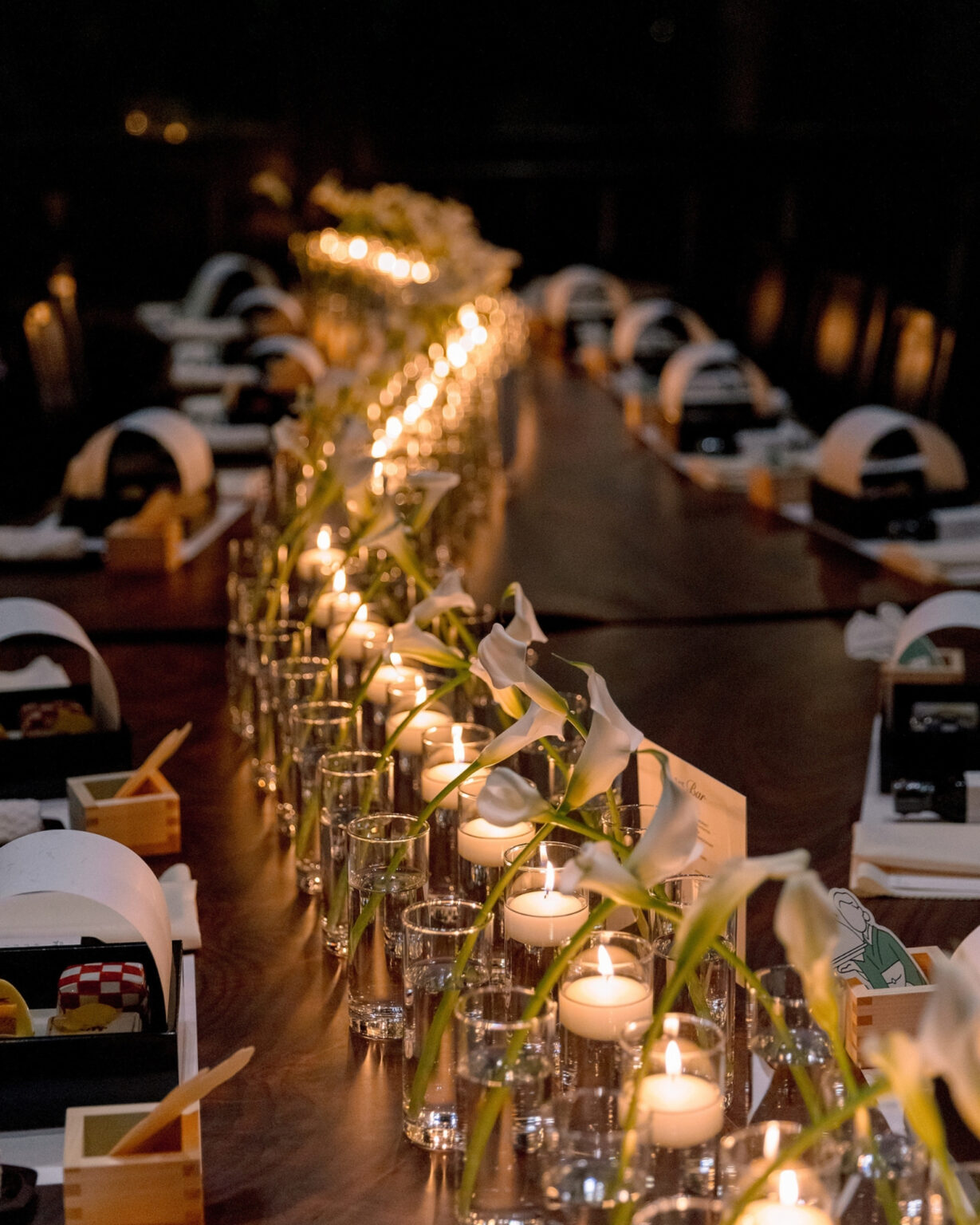
The inn edited too: it has its own fire rules for candles, and the room was lit within them. Behind the ceremony, fabric and white orchids hid a silver handrail, so nothing modern sat in the frame. That one is a photographer’s edit, and we make it before anyone picks up a camera.
Their gift for guests began on a screen: an olive oil infused with yuzu, which they’d found online. Japanese citrus and Greek oil, her side and his in one bottle. We went to a grower. His usual oil was Spanish, but when we asked, he admitted the Greek was better, and he chose green yuzu, picked before it ripens, for a fresher scent. The idea came from the feed. The bottle came from the place.
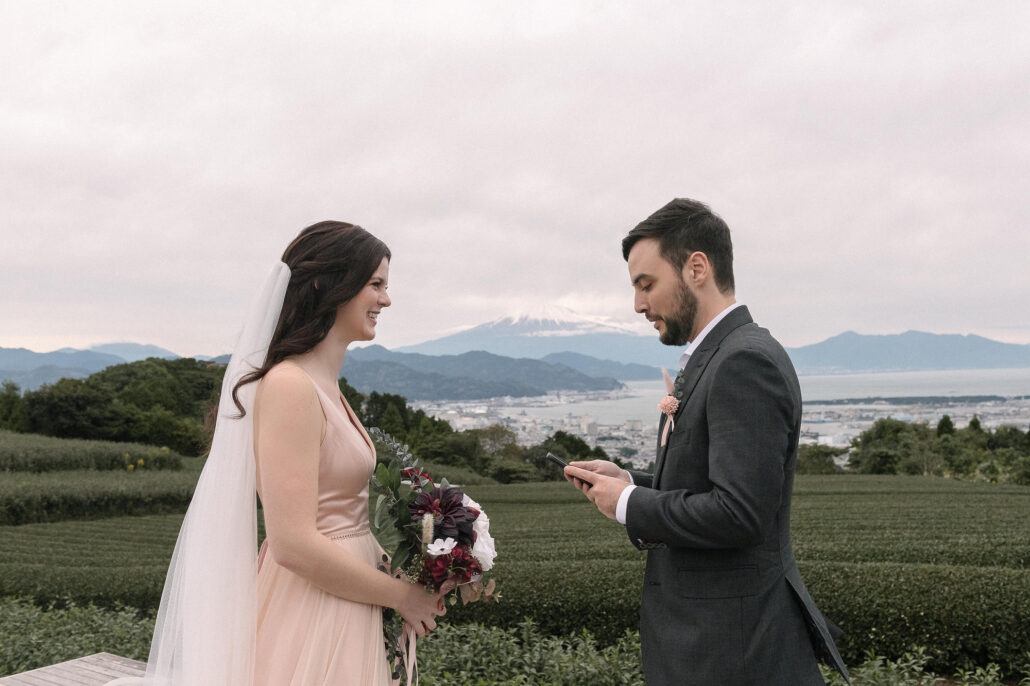
The same inn held a May wedding that looked nothing like it. One was about sixty guests over two nights, the calla lilies and a DJ flown in from Sapporo to play vinyl. The other was a single table, a koto playing the film music they loved, and flowers the bride arranged with her friends on the deck outside her room the afternoon before, with an ikebana eye for space, line and balance. Their guests drew fortunes the two of them had written themselves. The Japanese details weren’t there to be looked at. Guests had something to do with them.
Both weddings pounded mochi. At the calla lily wedding, about ten pairs of guests took turns at the mallet, the two of them first and last. In May, it was the answer when we asked about a first dance: “No first dance. We just want to do the mochi pounding!”
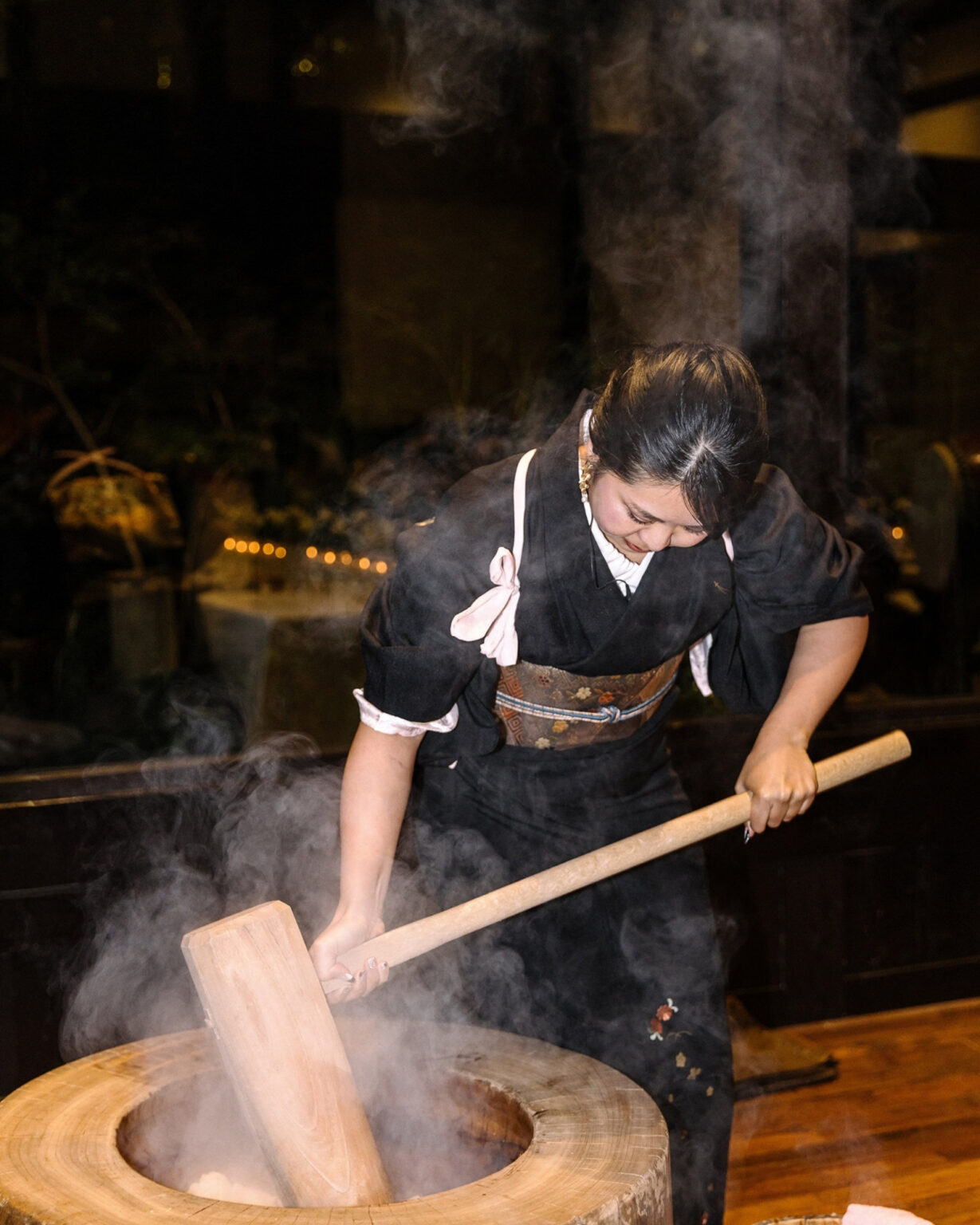
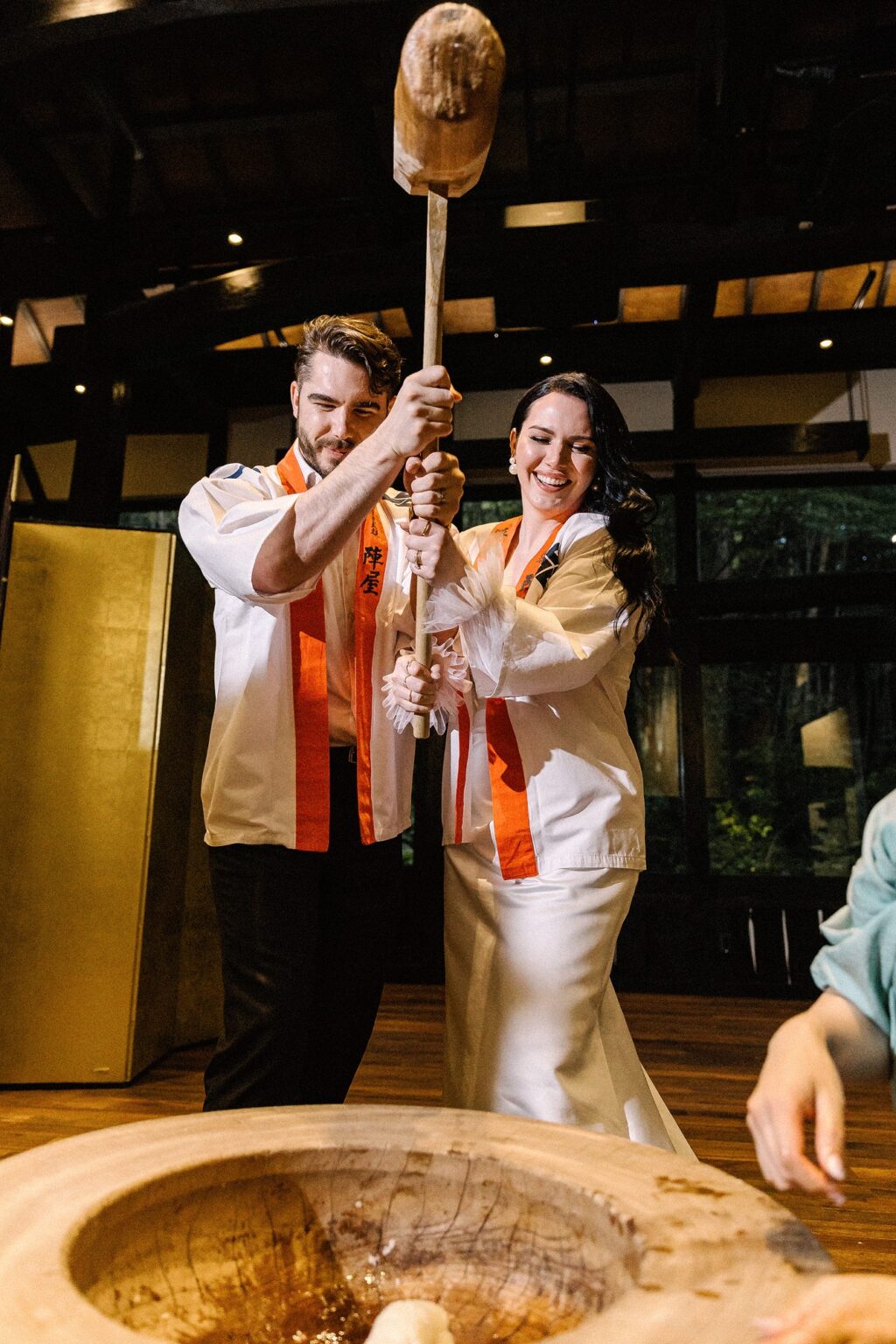
The same idea, at the same inn, edited two ways. No two of our weddings have been the same, even under one roof.
Your Wedding Aesthetic, or Ours?
Our own taste runs all through this journal, in the Japanese ideas we keep coming back to: ma, shakkei (the borrowed landscape), the seventy-two seasons. They’re the filter everything passes through on its way to the day.
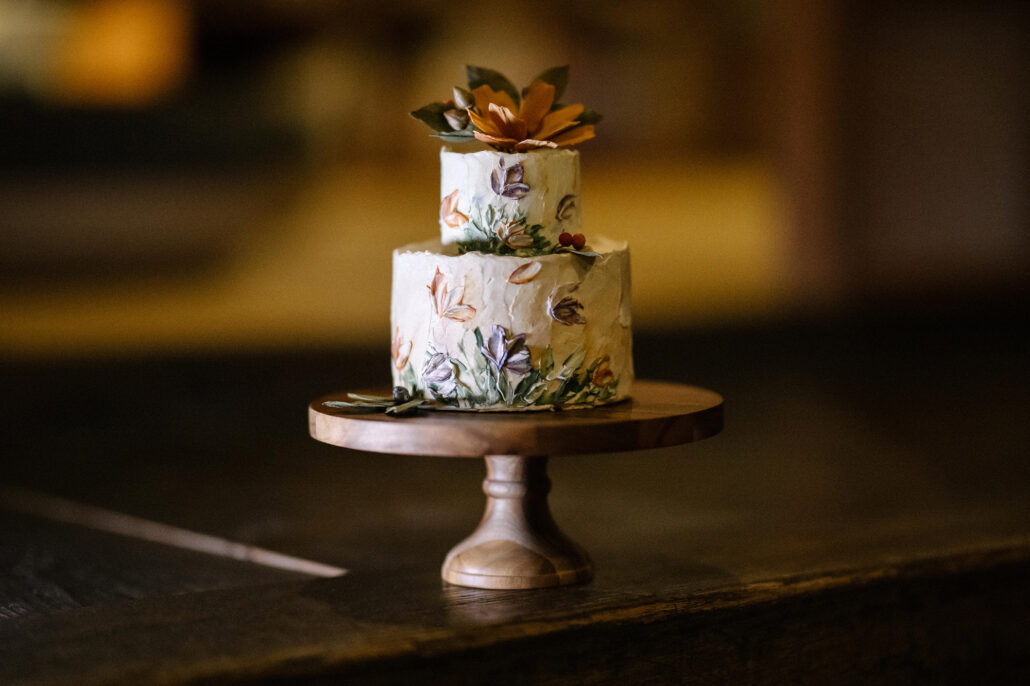
But a wedding we plan isn’t a wedding in our style. Over the planning we spend a hundred hours and more with a couple before the day, and by the end we know how they think. It would be strange, after all that, to hand them our idea of beautiful. What we listen for, underneath the board, is the story: who they are, where they come from, who they wish could be there. It has to be theirs.
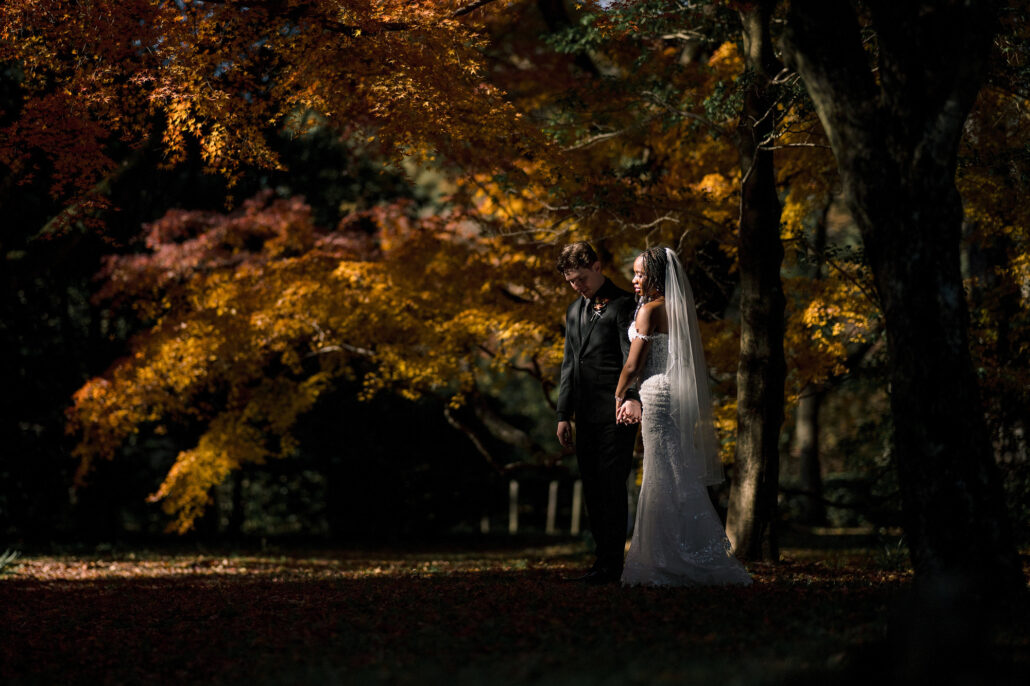
What a Detail Carries
A photograph sewn into a father’s tie is all over the internet now. So are words stitched into a veil. We’ve seen both at our own weddings in Izu, and it never mattered for a moment that the idea had been done before.
The details that last are the ones that carry someone.
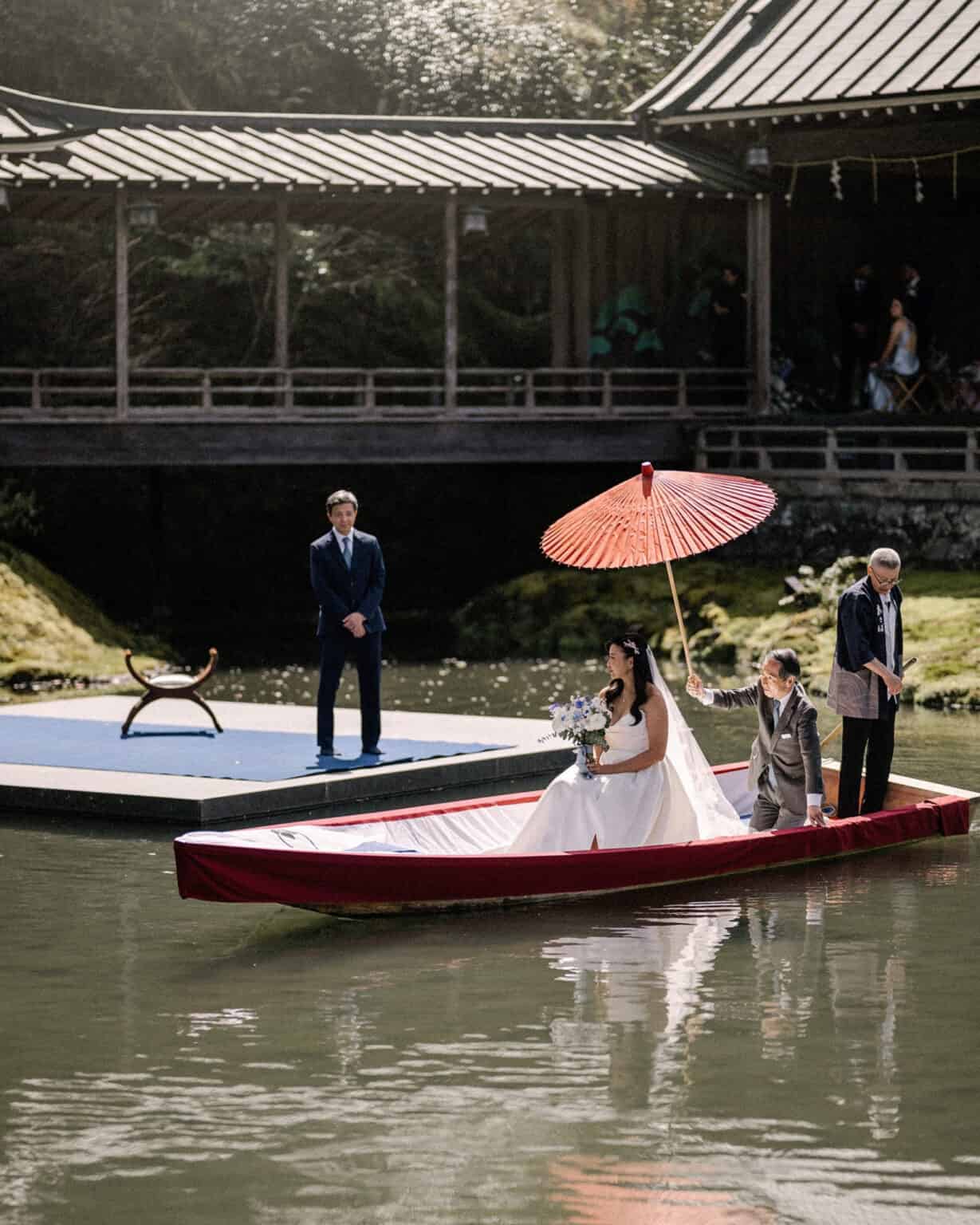
At Asaba, the bride had her father’s tie lined with a photograph of the two of them together. Then she crossed the pond. A boatman poled the small wooden boat over the water, one of the inn’s staff knelt beside her with a red paper umbrella, and the guests watched from the Noh stage, the hill behind them white and pink with blossom. Her father was waiting on the floating platform to walk her onto the stage. A bride arriving by boat is a considerable entrance. He’s the part we remember.
Not every one is solemn. In Tokyo, a bride changed after the shrine into her mother’s wedding dress, remade a generation later as a short party dress, and took it out into Kabukicho.
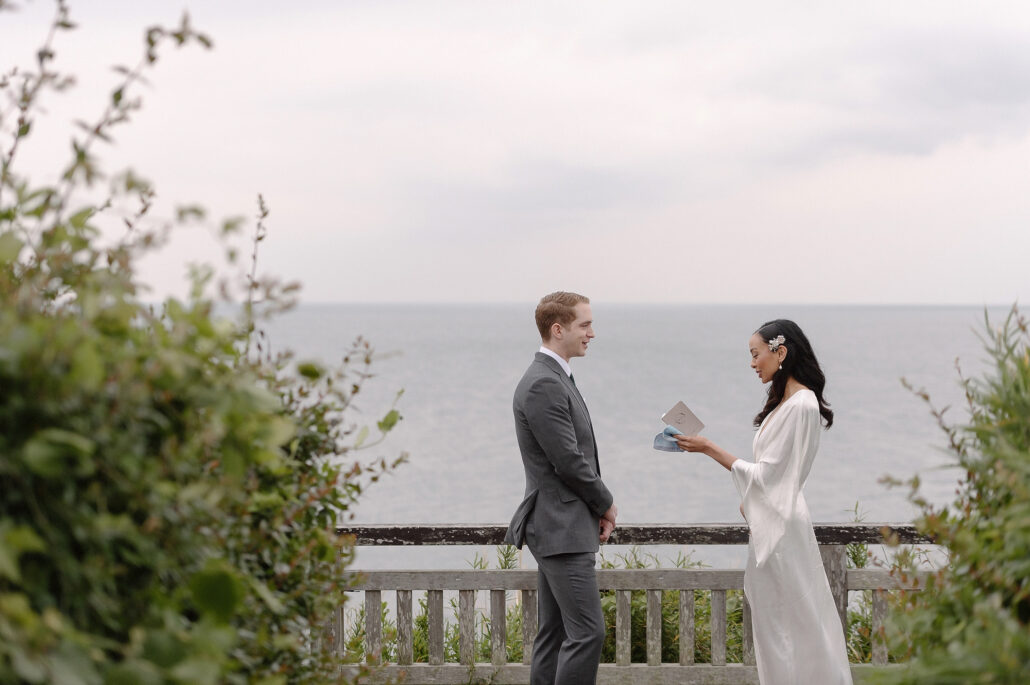
Above Sagami Bay, it was an elopement, just the two of them, with their families joining from home on a screen. His mother loved the ocean and didn’t live to see the day. The bride brought a framed photograph of her, a surprise for him, so she’d be there as they married. When they were planning, we’d said that being by the sea would be a tribute in itself. With water in every direction, it was. His cufflinks carried their wedding date: “After all this time?” on one, “Always” on the other.
At a spring wedding at Jinya, the couple stood up at the reception with two sacks of rice for their parents, the gift Japan calls taijū-mai. Each weighed exactly what one of them had weighed at birth, “so they remember where we came from and what they did to bring us where we are today.” The weight of a newborn, handed back to the people who once carried it. Her grandmother, at 92, had flown in from New York, and a great-uncle of 93 came by train from Kyoto on his own.
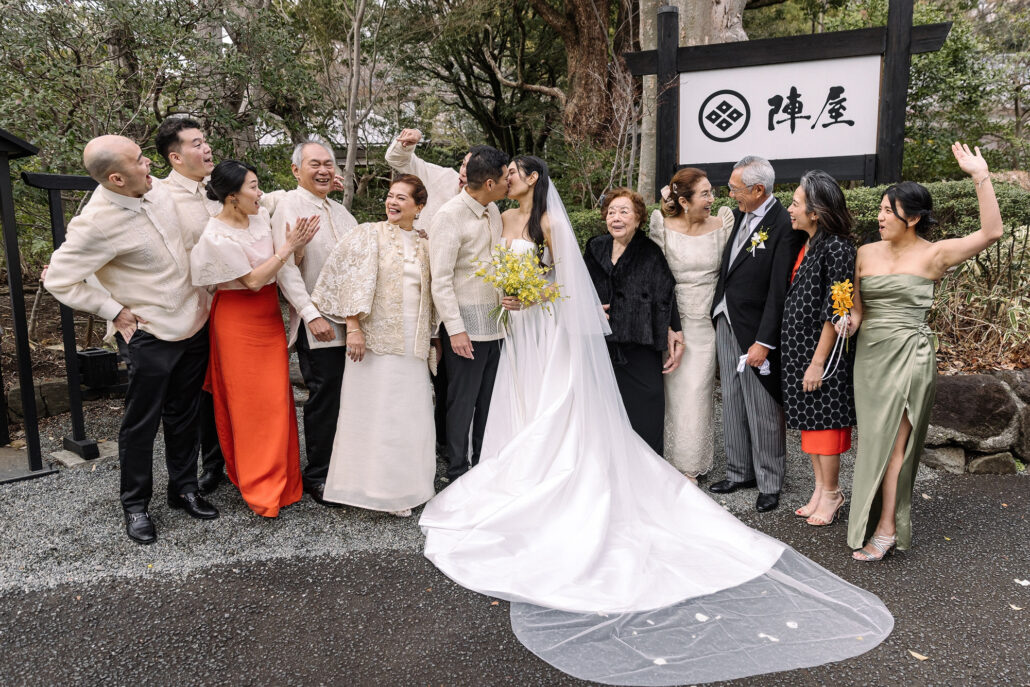
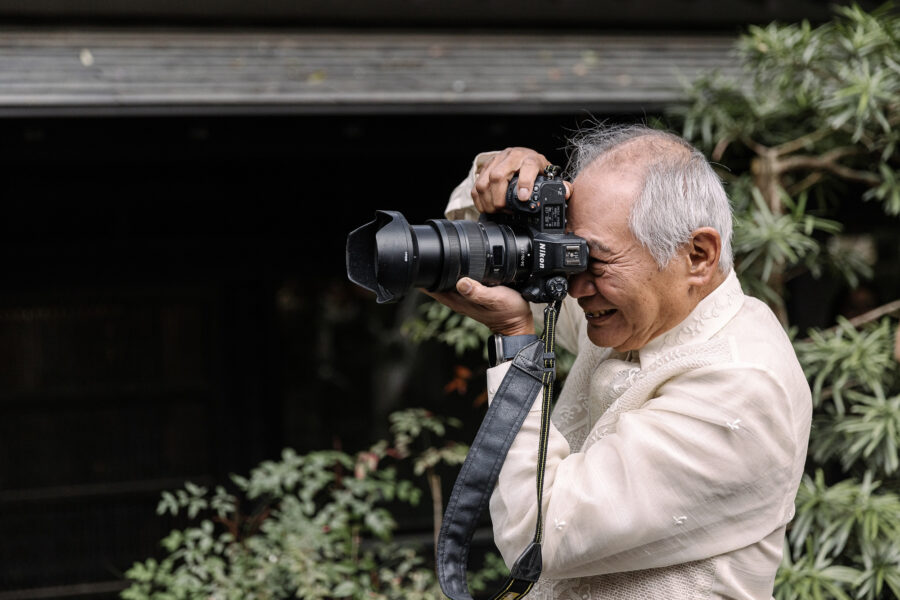
The groom’s father had been a famous fashion photographer in the Philippines, long since retired, and it was years since he’d picked up a camera. After the family photographs, we put one of ours in his hands and asked him to take the official portrait. He took sixty-seven frames in two minutes. By all accounts, his son doesn’t cry. By the last frame, he was.
None of these needed to be new. They needed to be someone’s, and through all the noise, that’s the focus. Making every wedding different is our job, and this is where most of it happens: gathering everything, sorting it, finding the detail that carries the most and bringing it to life, then holding everything else so the two of them can be present for it.
Keep One Thing
So keep saving. The board is a good place to start. Then look at it again, and ask yourself: if you could keep only one thing on it, which would it be? And who is it for?
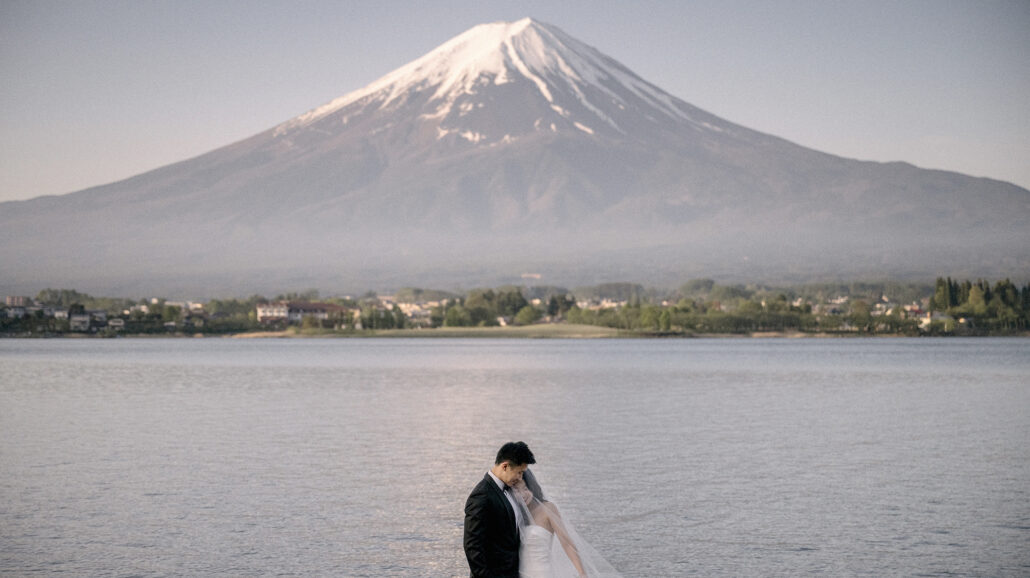
Every idea on that board has been done before. The wedding hasn’t.