There are no castle lawns in Japan. We’ve looked.
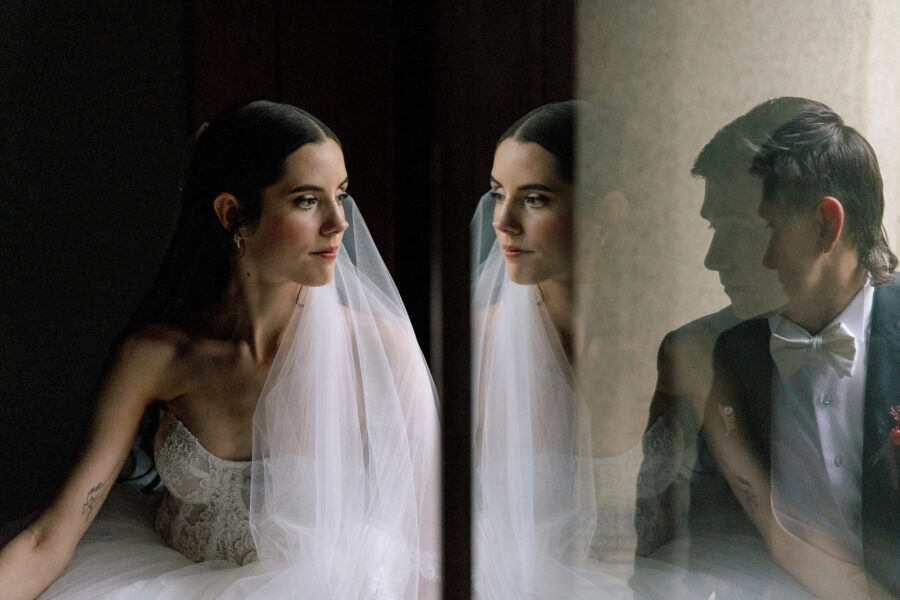
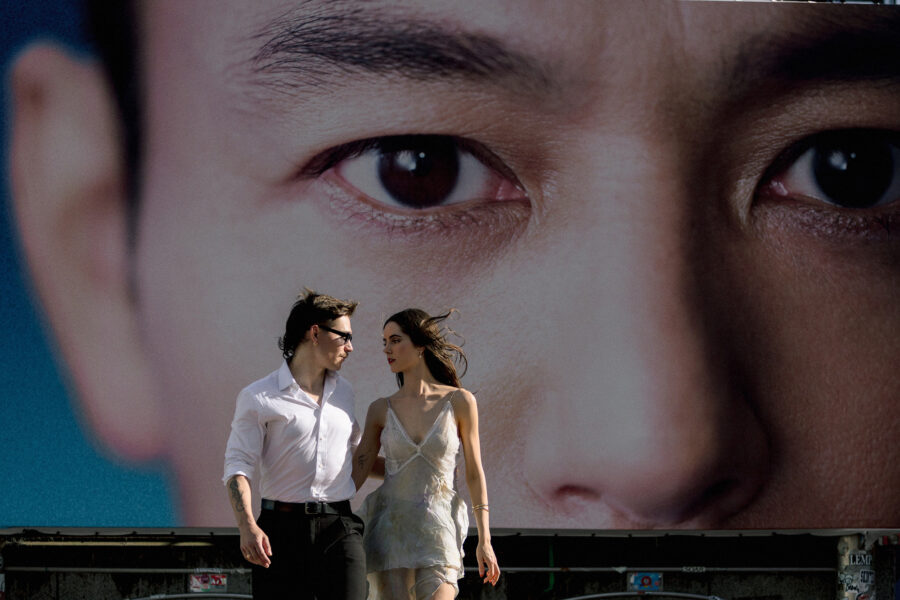
So when a couple living in London asked us for a wedding with the feel of European editorial elegance, grand and clean and sculptural, in Japan, we had to think about what that really meant. Her roots are in Japan and Thailand. His are in Greece. What they were really after was a feeling: space, restraint, beautiful things placed with intention.
Japan has a word for that. Kanso, elegant simplicity. And there are places in Japan with the soul to carry it.
This is the story of a luxury ryokan wedding at Jinya, the old inn at Tsurumaki Onsen, and of two days spent proving that a Japanese inn can feel as editorial as anywhere in Europe, without pretending to be anywhere else.


A Luxury Ryokan Wedding, Over Two Days
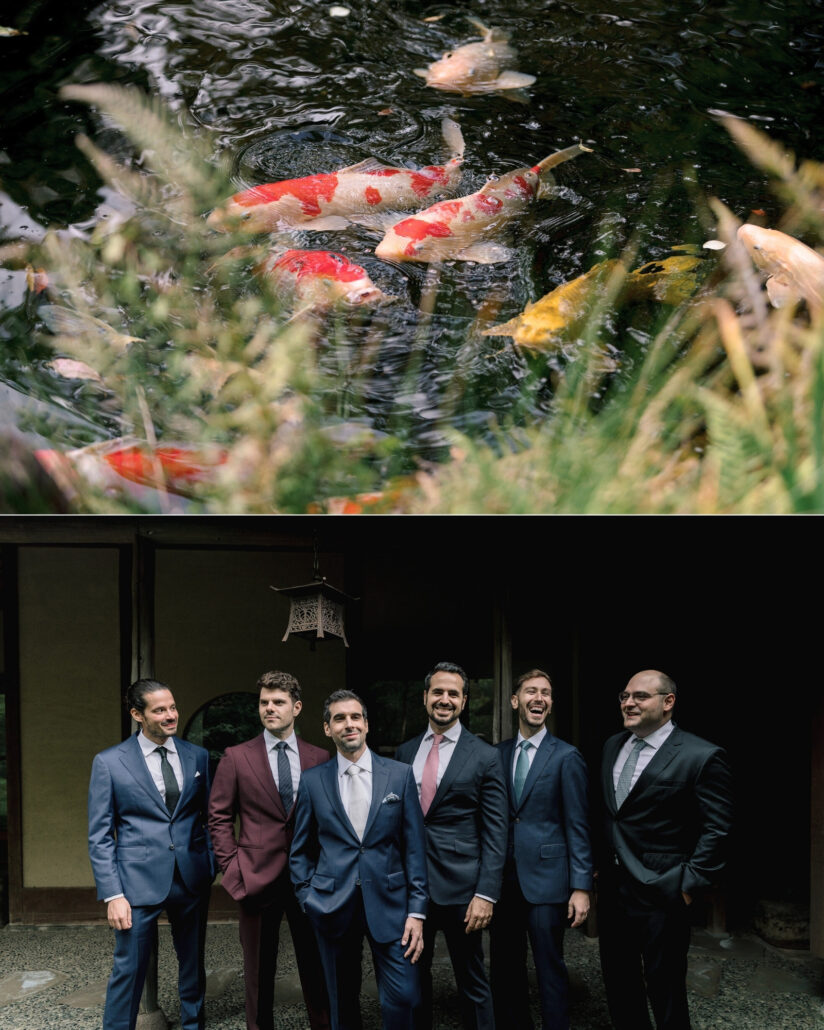
The first decision was the biggest: the whole of Jinya, for two nights, so that every room could check out late and nobody had to rush.
About sixty guests came, from Greece, Thailand, Japan and across Europe. Most stayed at the inn. The rest came out each day by coach from a hotel nearby.
A buyout is the frame that makes a ryokan wedding feel luxurious, and most of that comes down to time: two evenings instead of one, a morning after, and an inn that belongs to your people for as long as they’re there. (Another Jinya couple took the same idea even further in their ryokan buyout wedding.)


Night One, in Yukata
The welcome party was on the terrace, and the dress code was the inn’s own. Every guest, staying or not, was handed a yukata at the front desk.
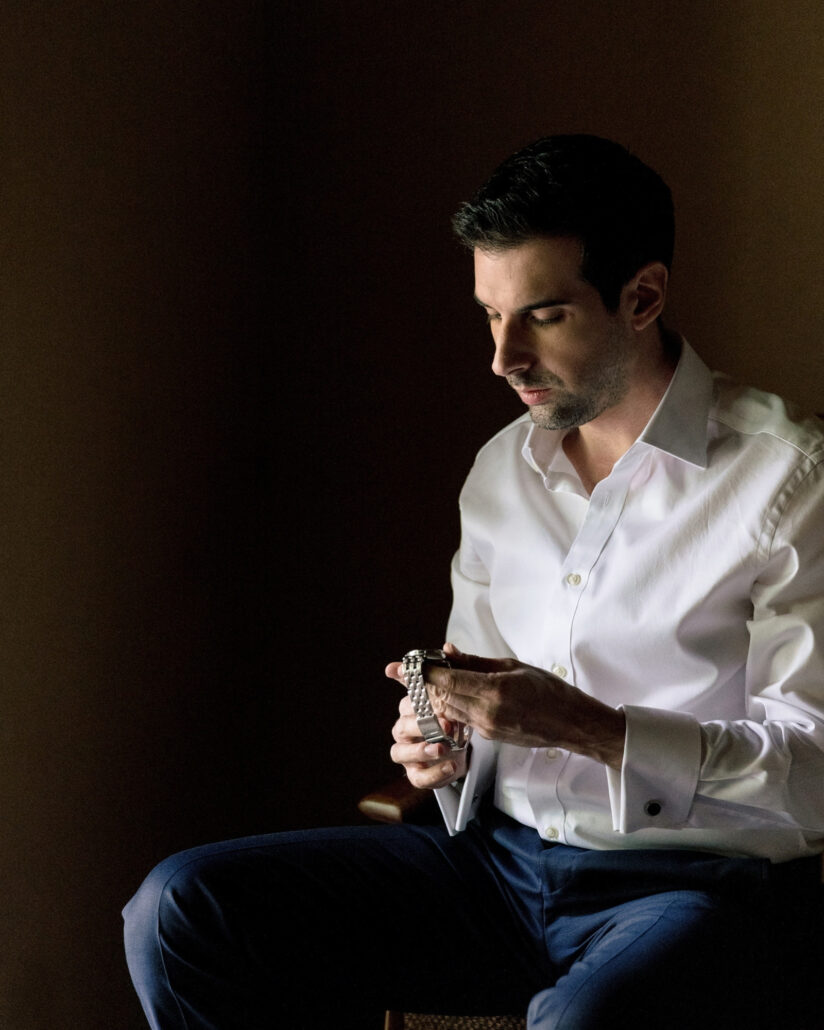
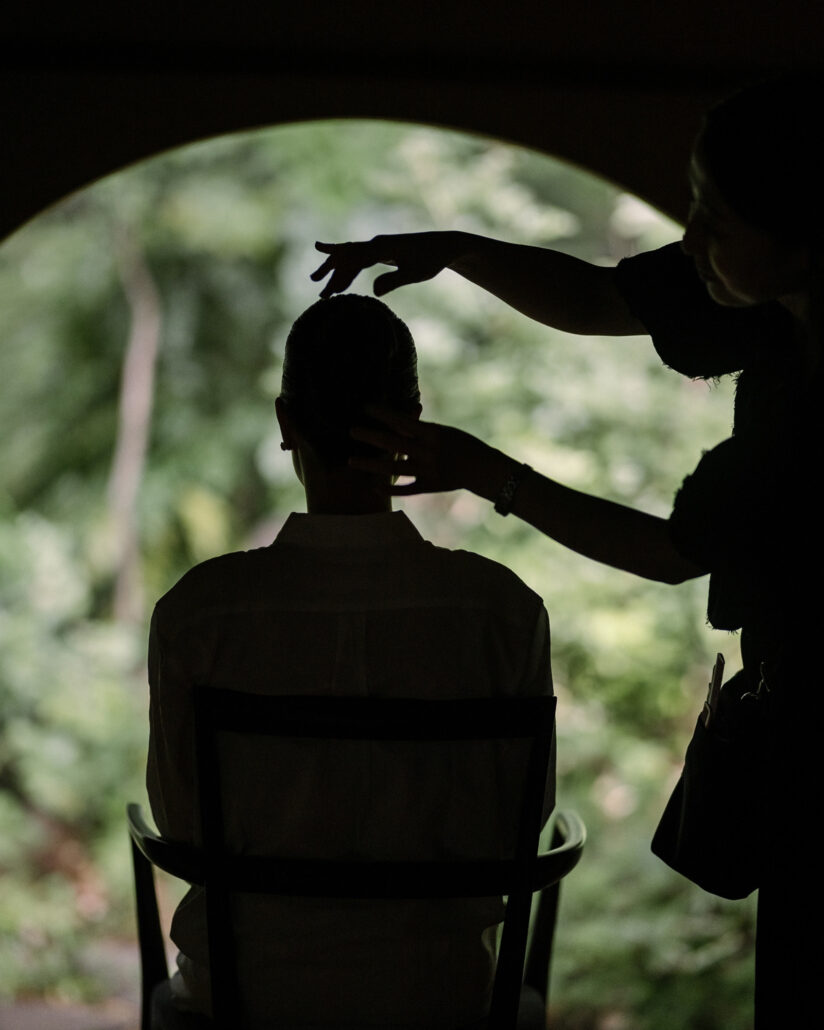
She wore a houmongi kimono and he wore a haori, dressed by a kimono specialist who set her hair on the spot. There was curry, and three Japanese beers set out side by side on ice as a tasting. By the end of the evening, sixty people from all over the world were sitting on a terrace in Japan in matching cotton robes, which is about as far as anyone can get from a receiving line.
Kanso, Translated
The design brief came down to a few rules, and we held to them for months.
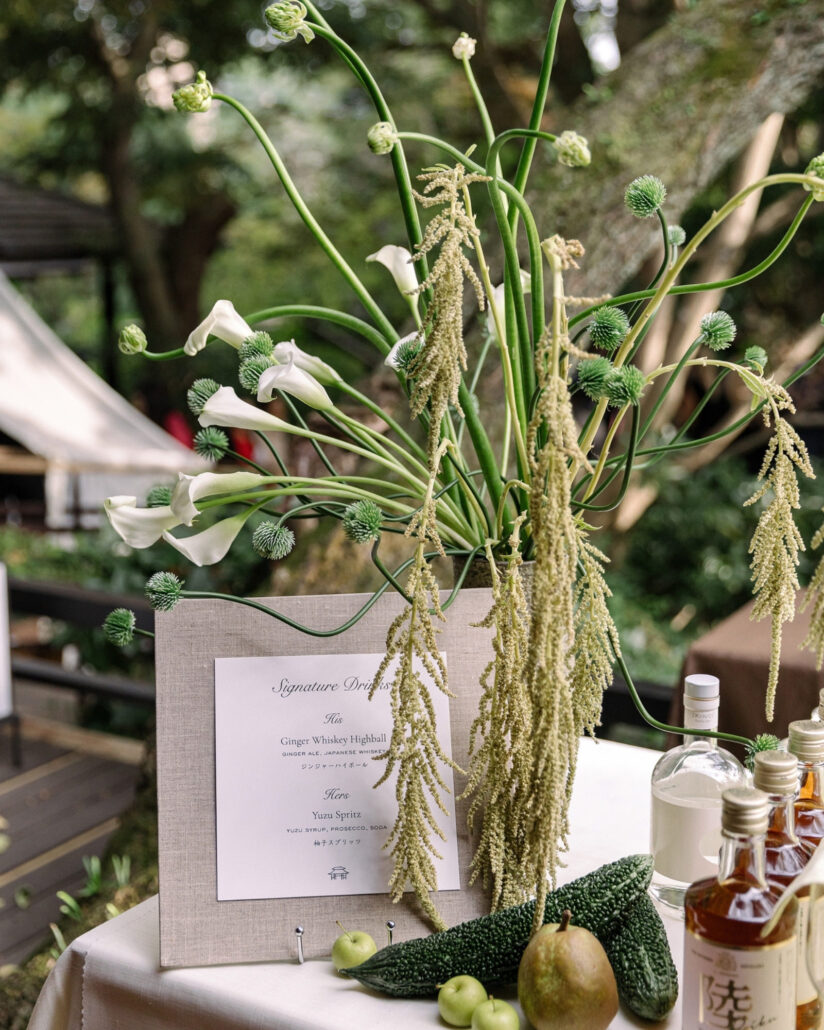
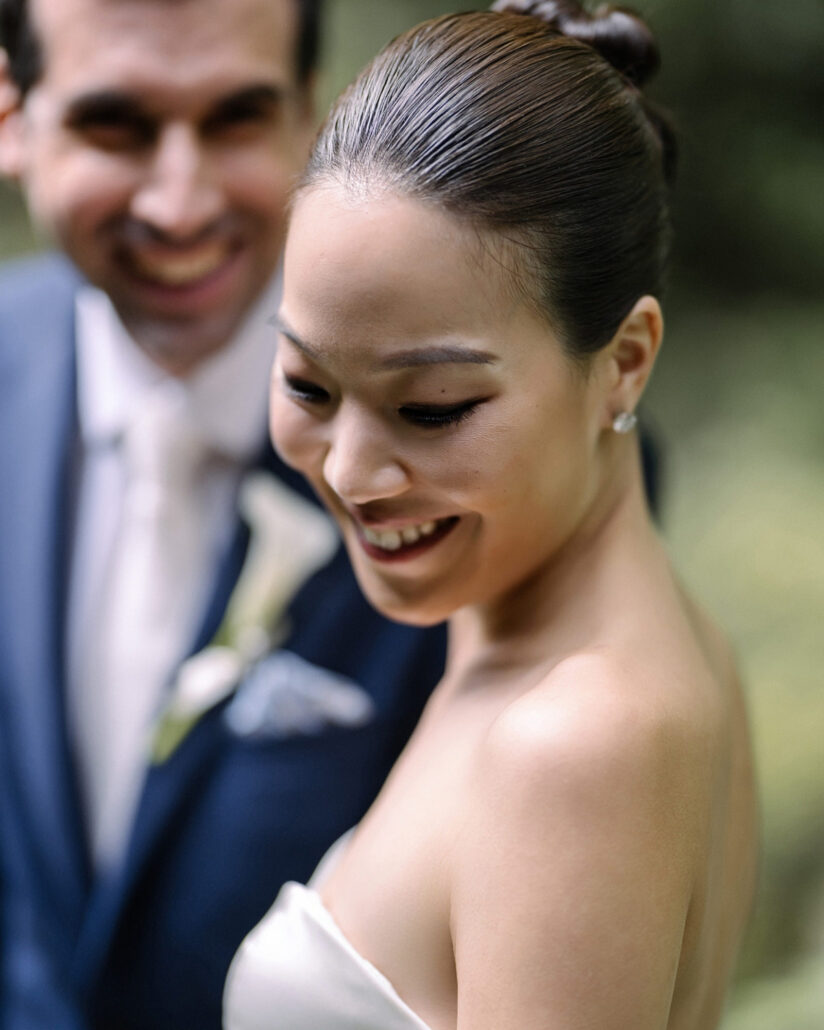
One flower: the white calla lily, with a little green and nothing else. Empty space treated as part of the design rather than something to fill. Sculptural, never crowded. A palette of soft whites, stone, olive green and antique silver.
The calla went everywhere: her bouquet, the buttonholes, and some four hundred single stems in glass along the reception tables. We were so strict about it that when the cake designer offered calla lilies in sugar, we took them off. A room can have too much of even the right flower.


A Ceremony on Jinya’s Walkway
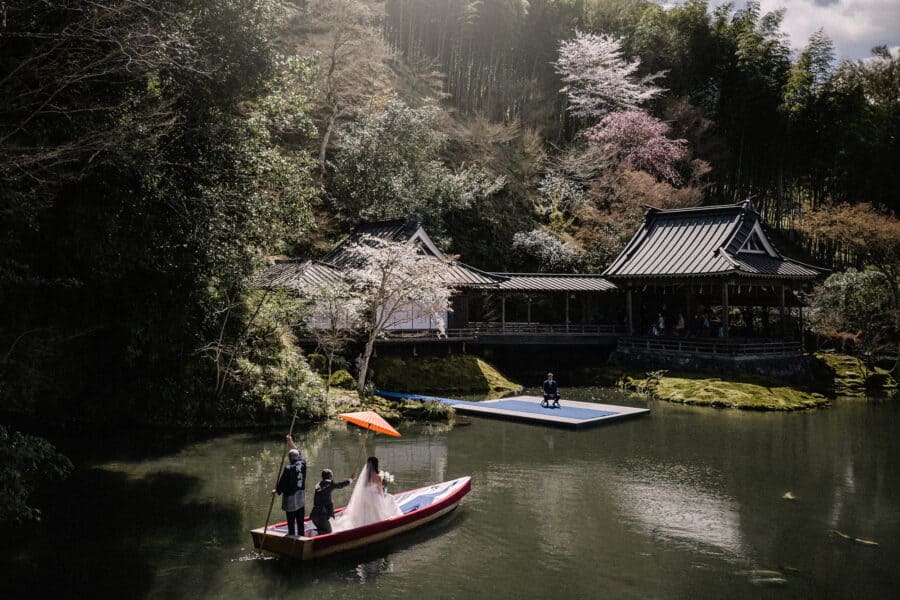
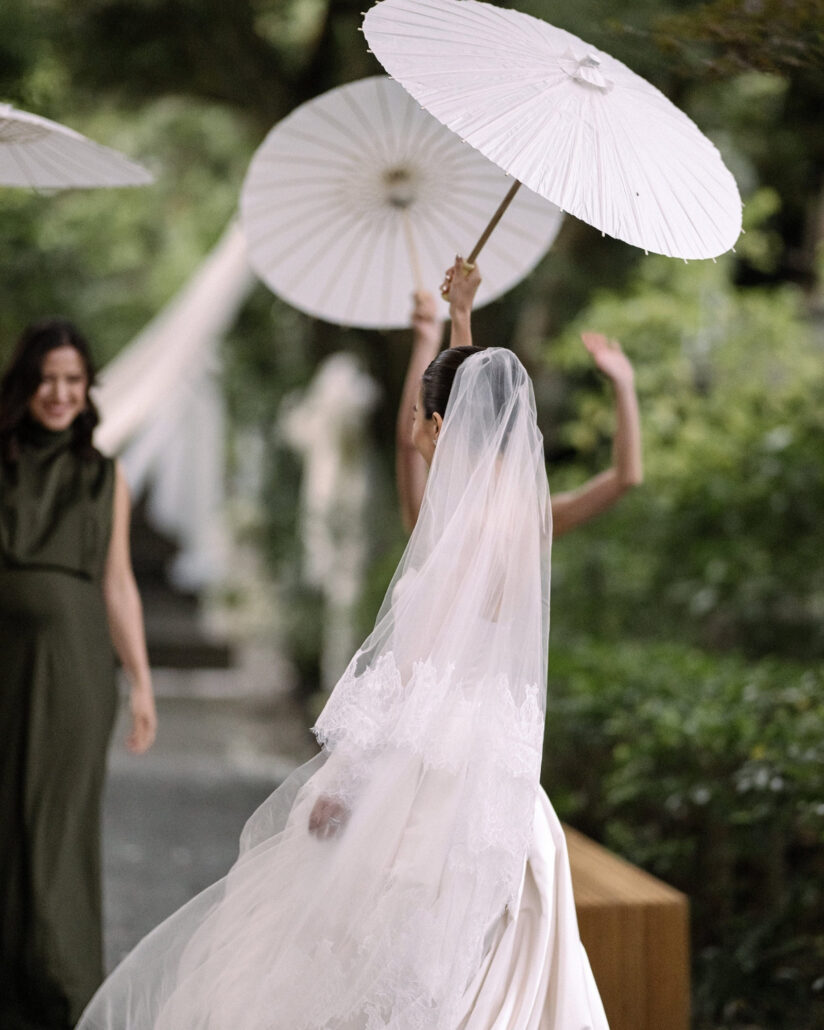
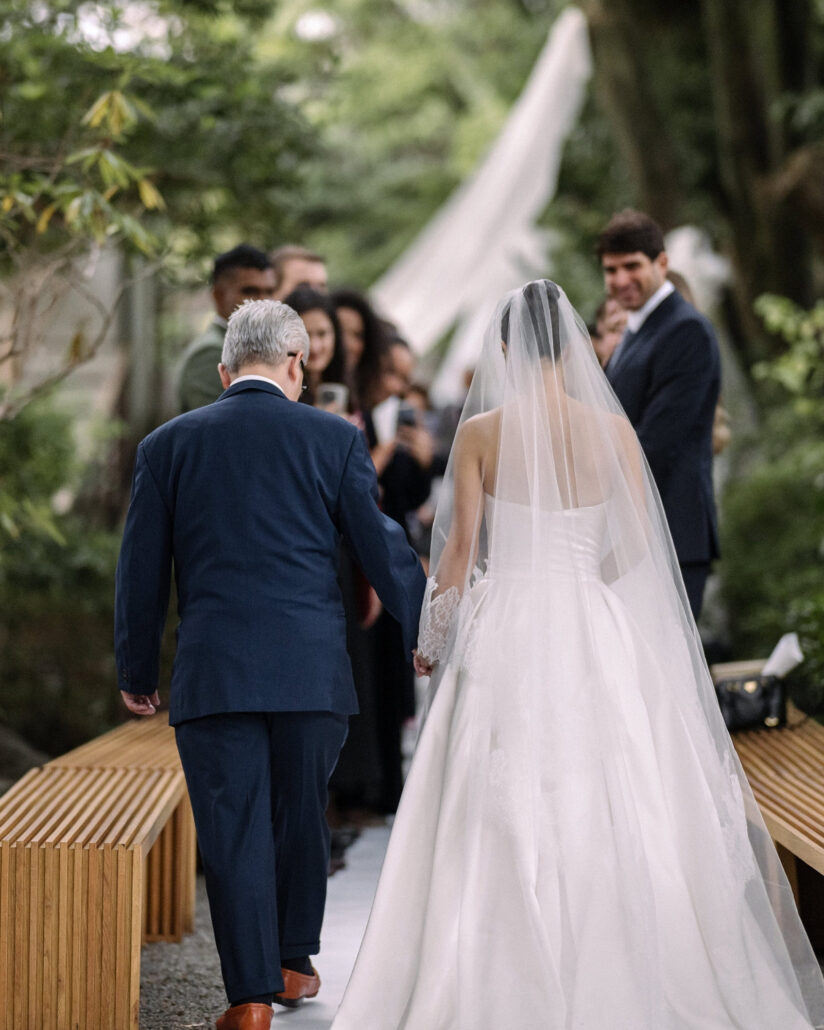
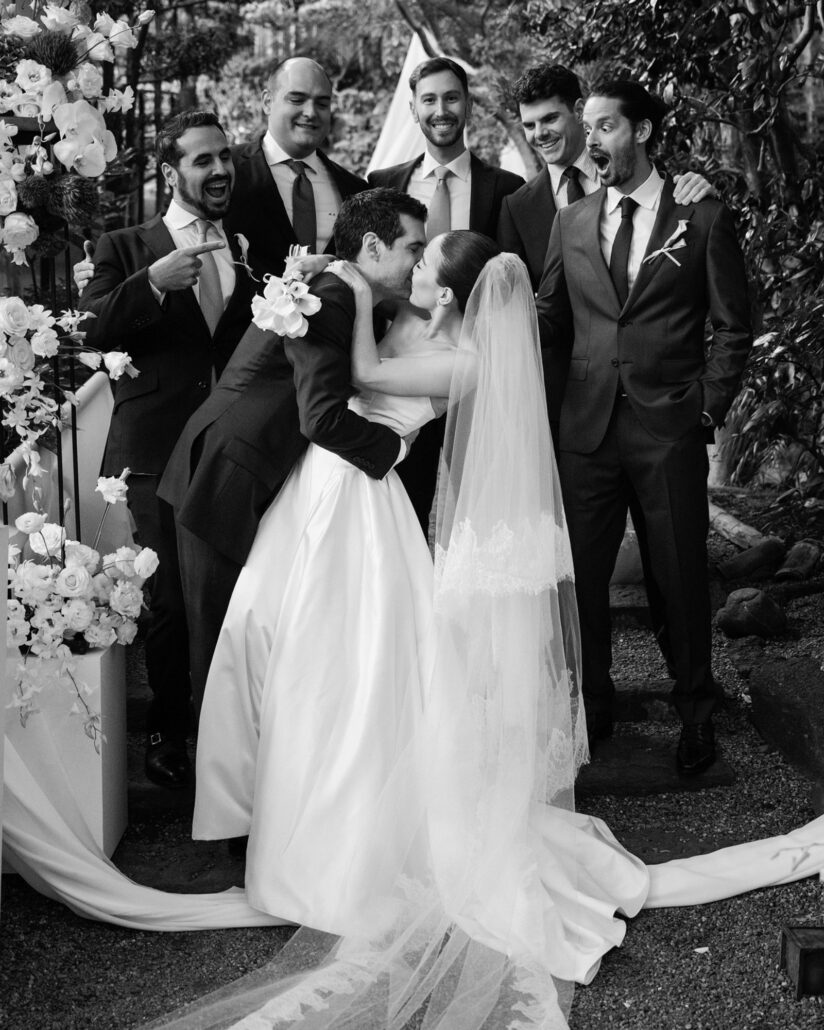
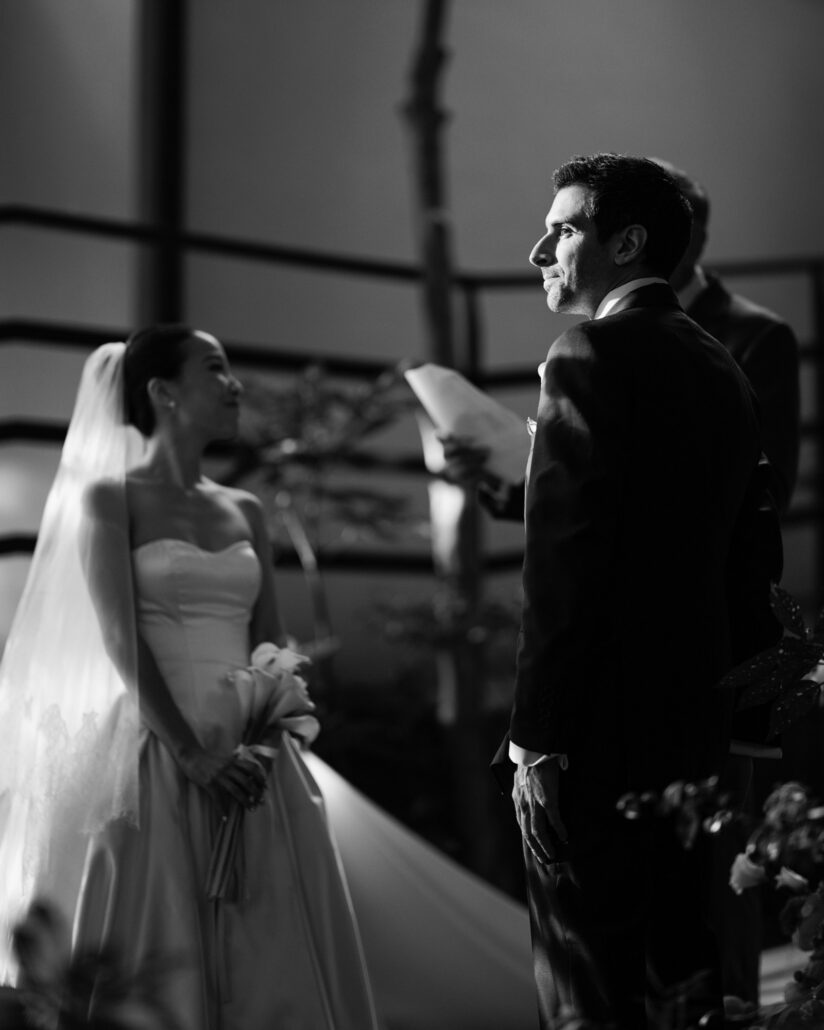
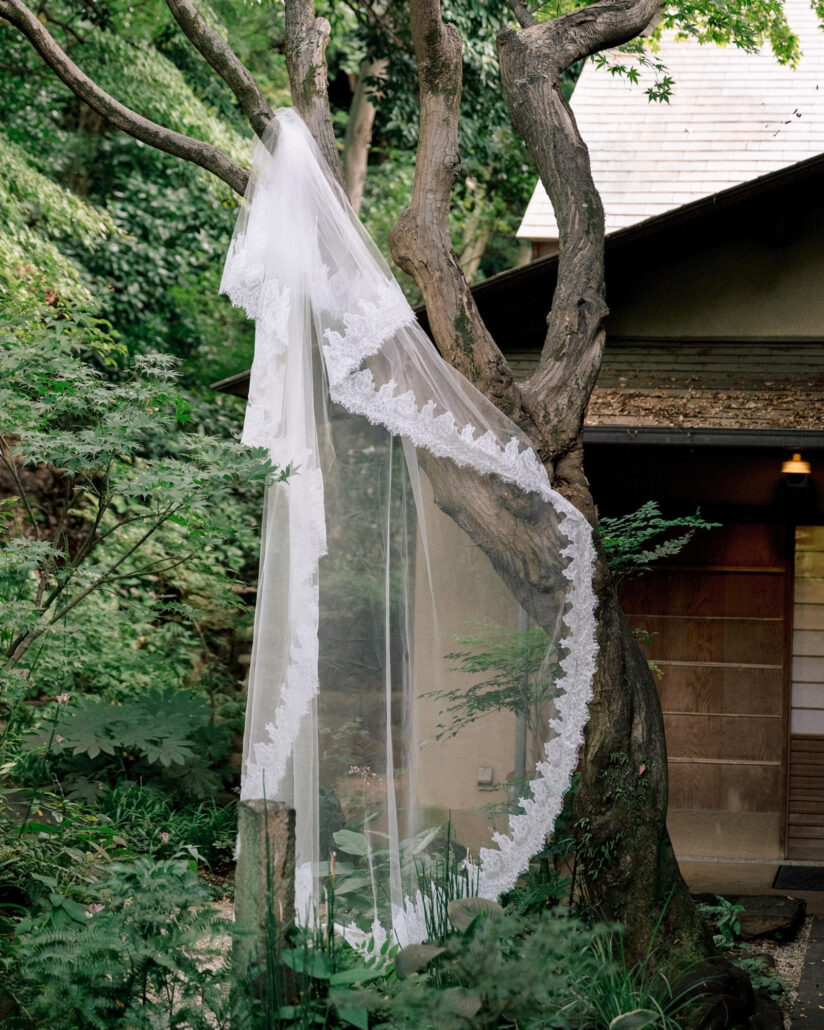
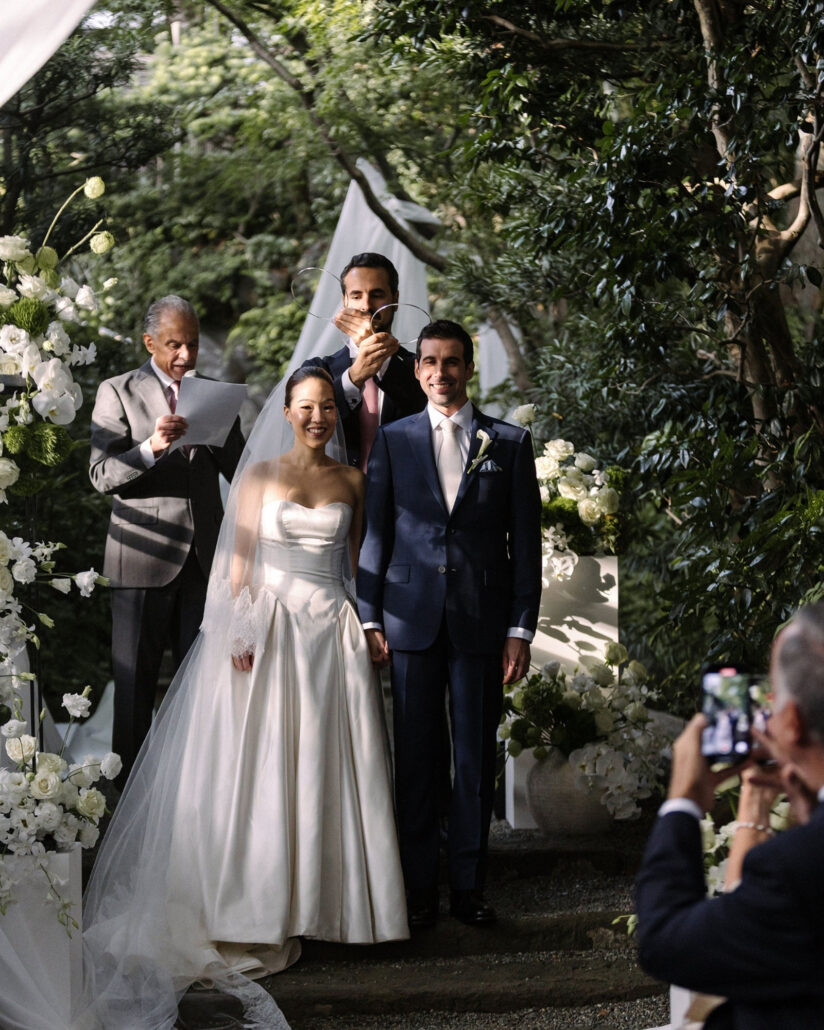
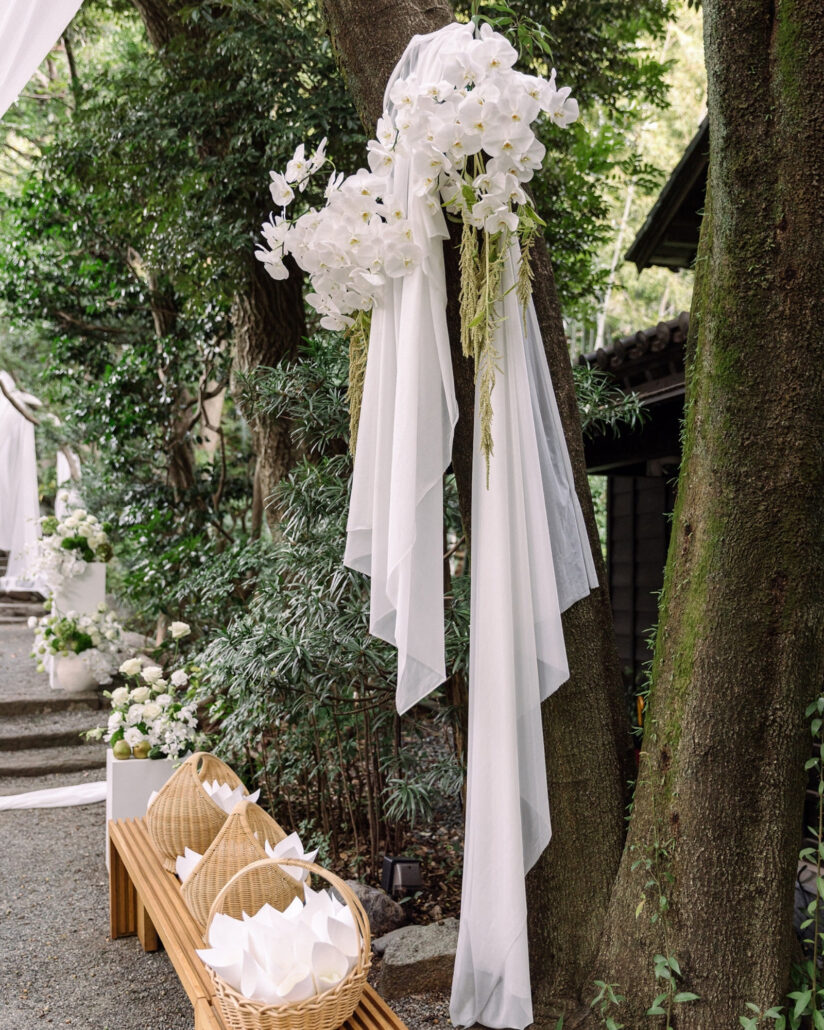
The ceremony was outdoors, on the inn’s main walkway, with Jinya’s wooden benches in single rows either side of a white carpet and the two of them at the top of the stone steps. Fabric and white orchids softened the trees above them and hid the silver handrail behind them, so nothing modern sat in the frame.

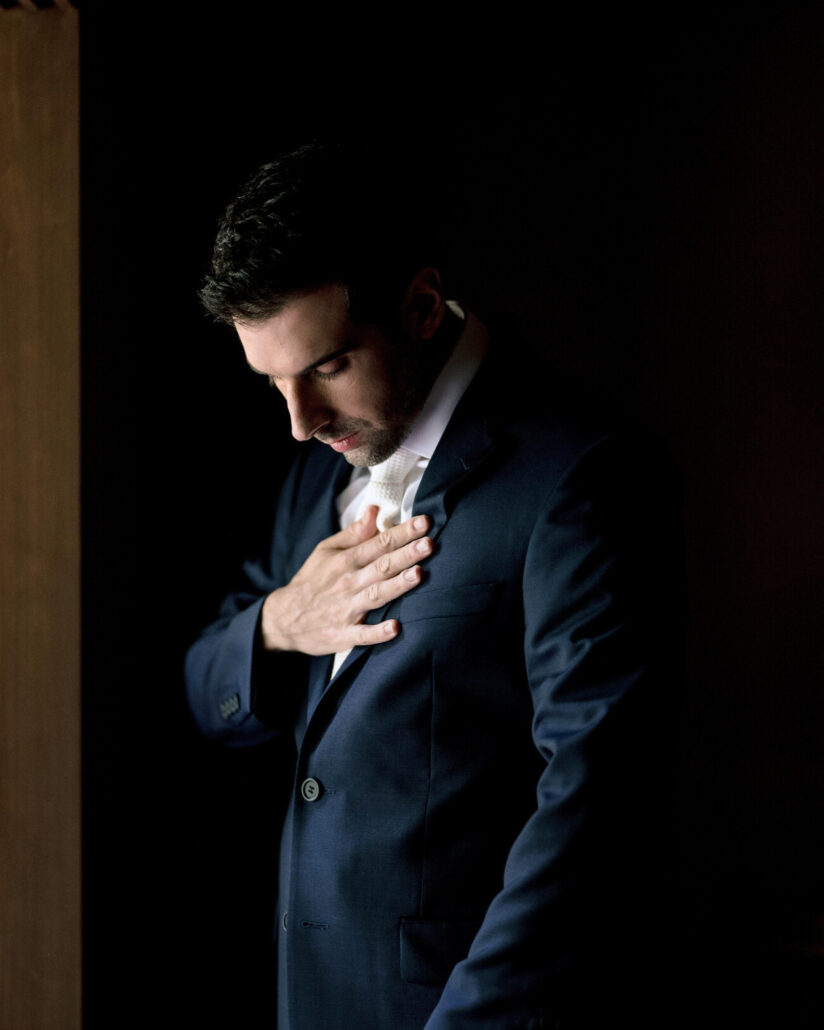


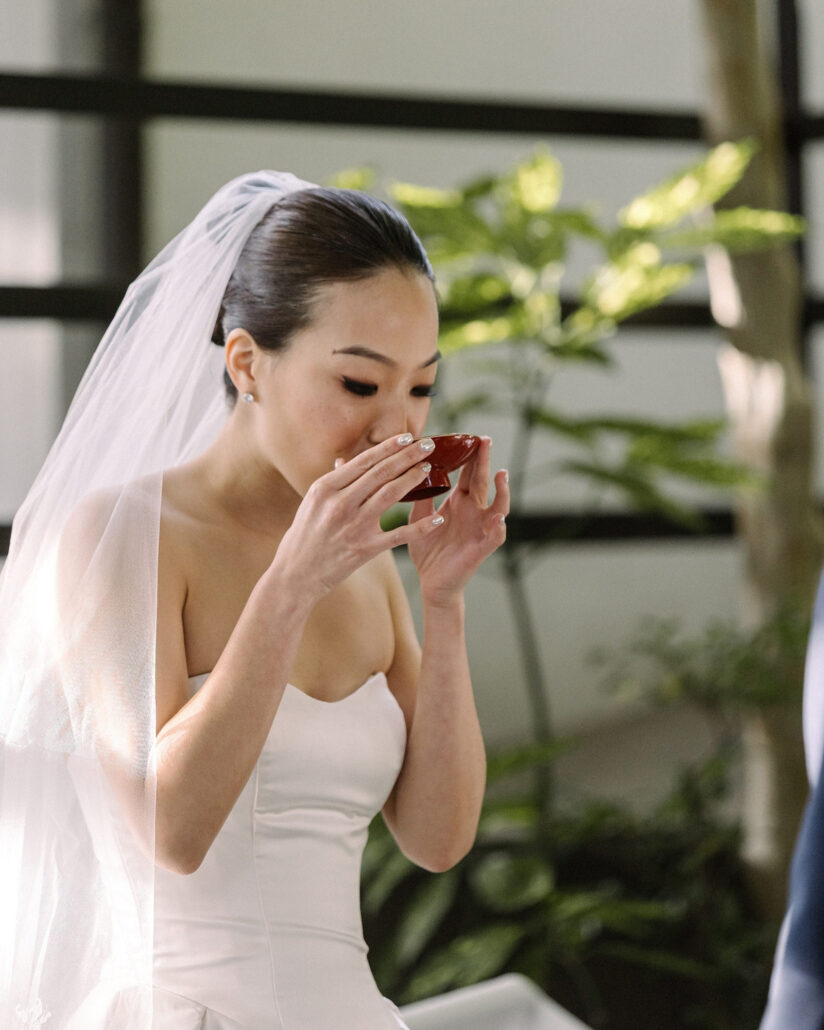
Two traditions met in the middle. First san-san-kudo, the Japanese sharing of sake in three cups, three sips each. Then the Greek stefana: two crowns, joined by a ribbon, held over their heads by the groom’s oldest friend. A friend led the ceremony. The petals came at the end.


A Vintage Rolls Royce at the Inn
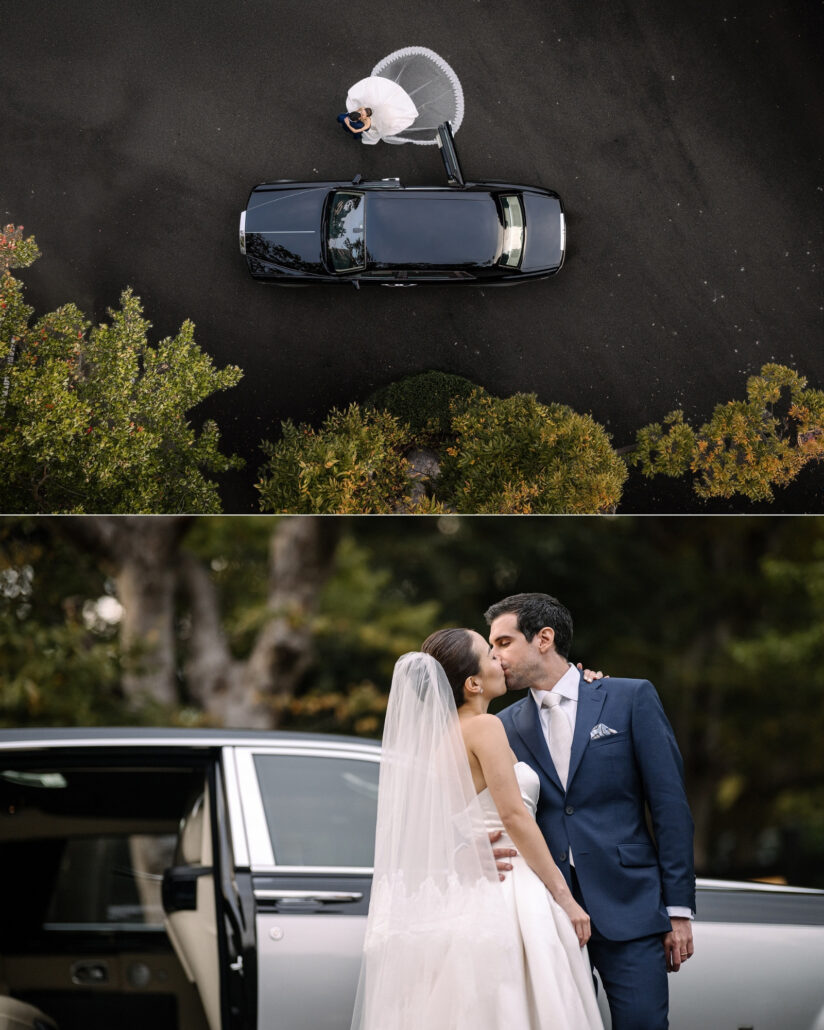
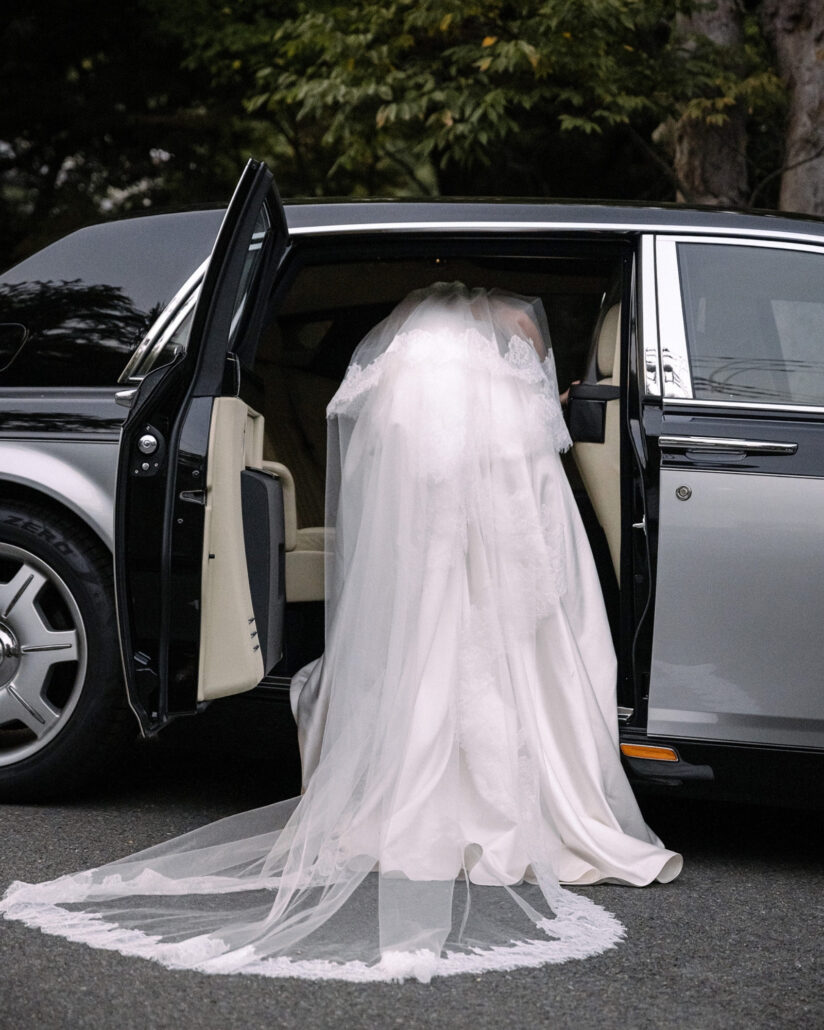
Afterwards, a vintage Rolls Royce stood on the drive. A European classic outside a Japanese inn: it was the brief in a single picture.


Yuzu and Olive
The gift for every guest started with something the couple found online: an olive oil infused with yuzu. Japanese citrus, Mediterranean oil. Her side of the family and his, in one bottle.
We went to the grower. His usual oil was Spanish, and Greek oil would cost several times as much. When we asked, he admitted he’d once used it and that it was better, fruitier, and he’d only stopped because of the price. That settled it.
Yuzu is harvested in autumn, so the timing was a gamble until the last weeks. In the end he used green yuzu, picked before it ripens, for a fresher scent. Eighty-five small bottles went into gift boxes, with simple black and white labels on washi paper and a message from the two of them on the back of every one. Two large bottles went to cocktail hour, to pour over focaccia baked in Tokyo and brought down for the occasion.


The Banquet Hall, by Candlelight
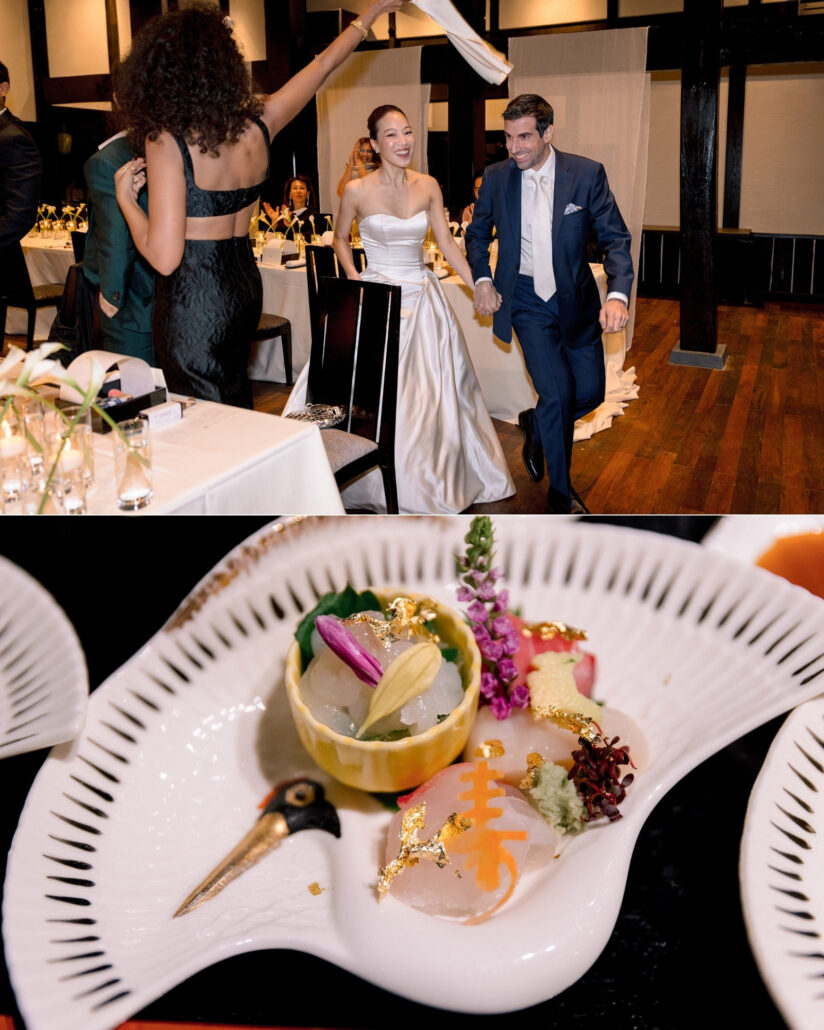
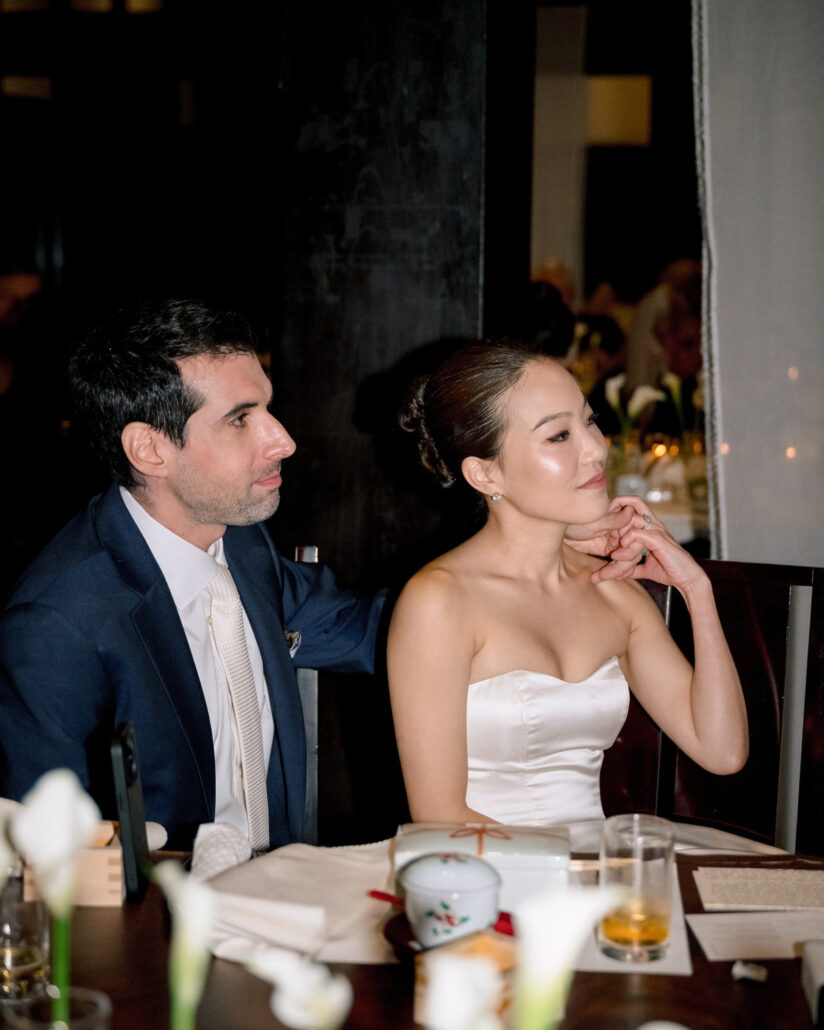
The reception was in Jinya’s old banquet hall, under its high beams.
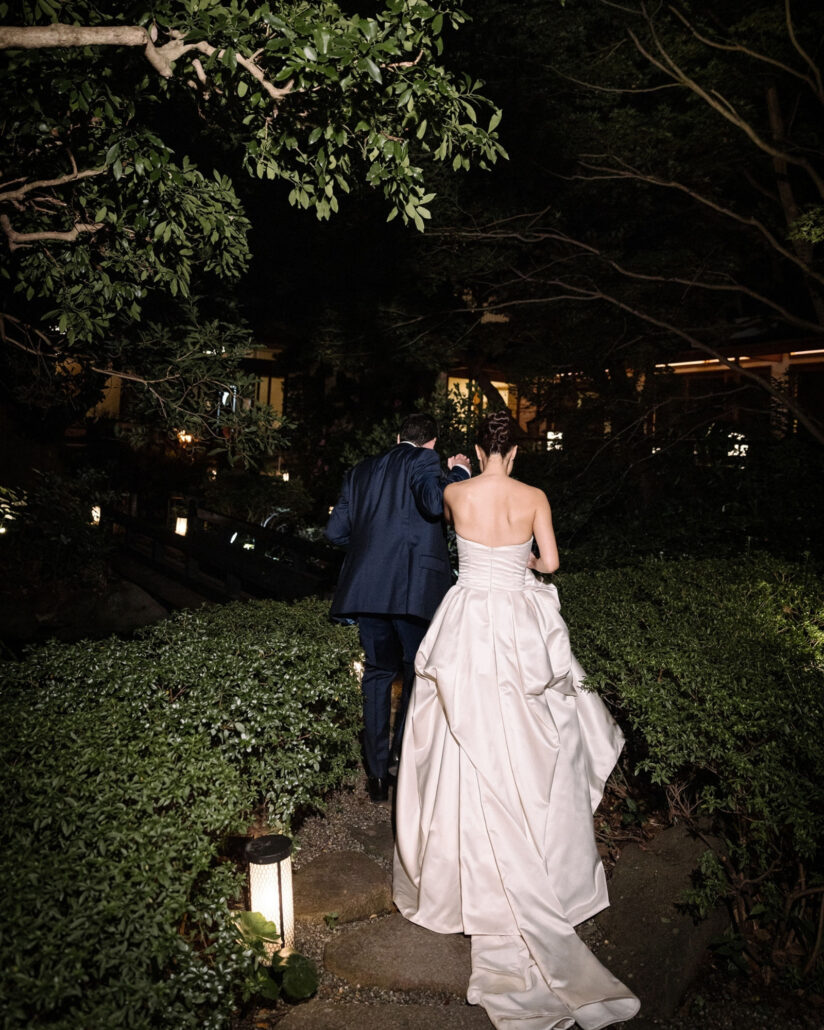
There was no head table. Instead, four long tables ran the length of the room, joined to one of Jinya’s own single-slab wooden tables, with the couple moving to sit at a different table every course or two. Down the centre of each ran a near-continuous line of calla lilies and ivory candles, about two hundred candles in all. Paper lanterns hung outside the door on bamboo poles, with the seating plan beneath them.
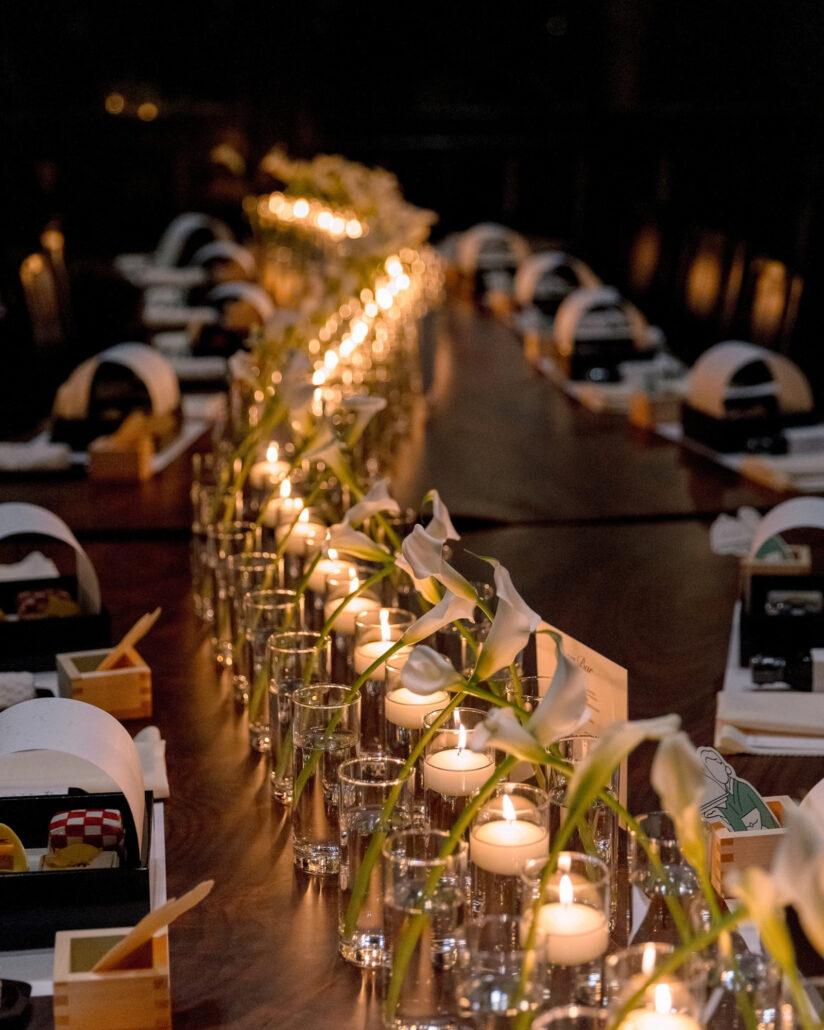

The details carried the brief all the way down. Menus printed on washi-textured card, in eight versions for every dietary need. The first course wrapped in plain white paper instead of the inn’s usual red and white. The cake, two tiers: a top tier of sugar art and a bottom tier of matcha.
Four Languages and One Barrel of Sake
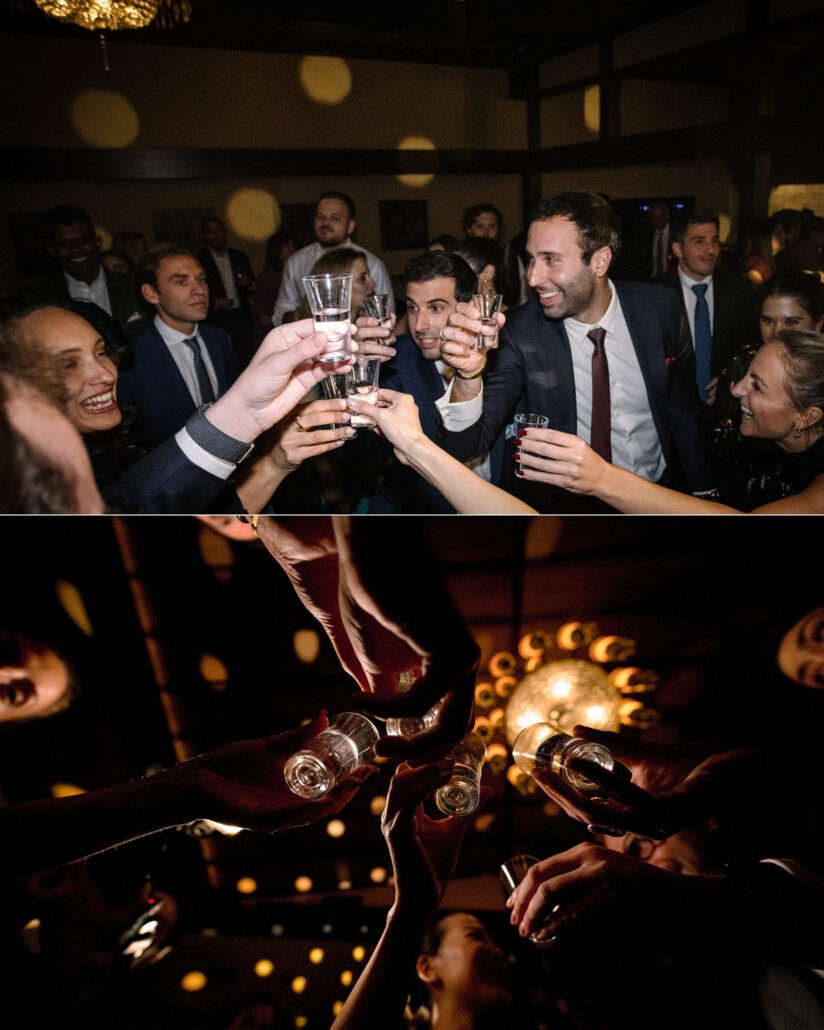
They walked in and went straight to the sake barrel for kagami biraki, the mallets coming down to a shower of confetti. The toast went round the room in four languages: “Cheers, Yamas, Mod Gaew, Kanpai!”


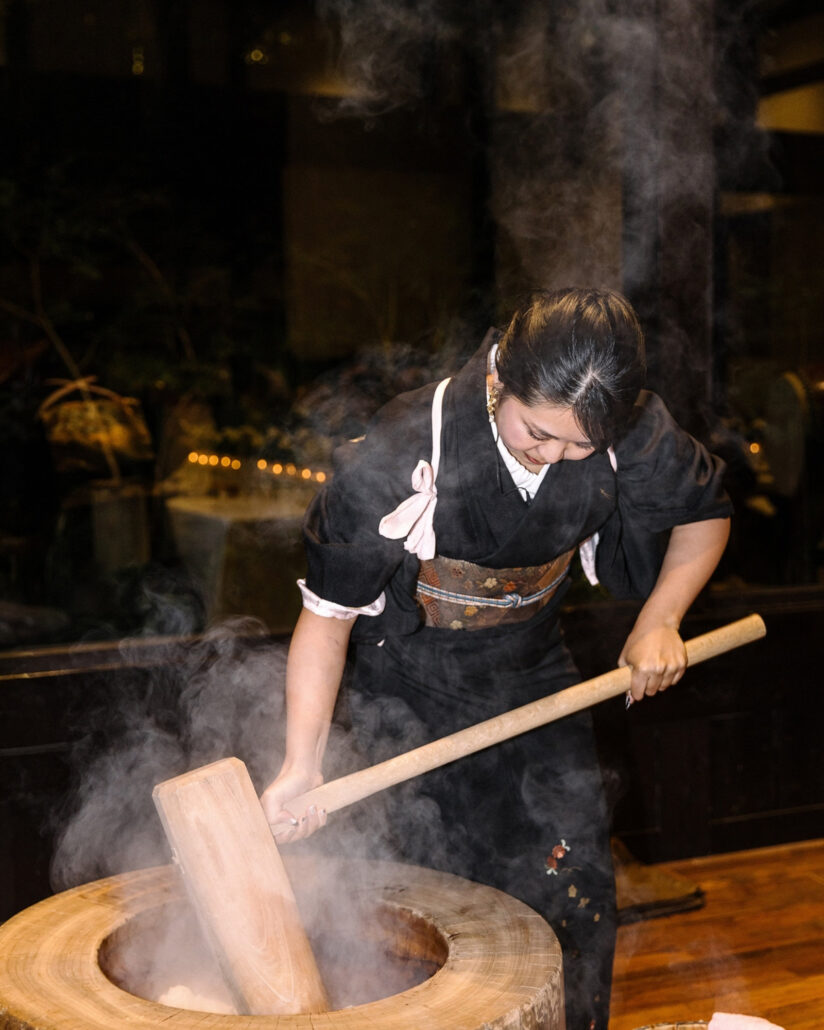
Then the speeches, and the room in tears more than once. Then mochi, pounded by about ten pairs of guests in turn, the two of them first and last.

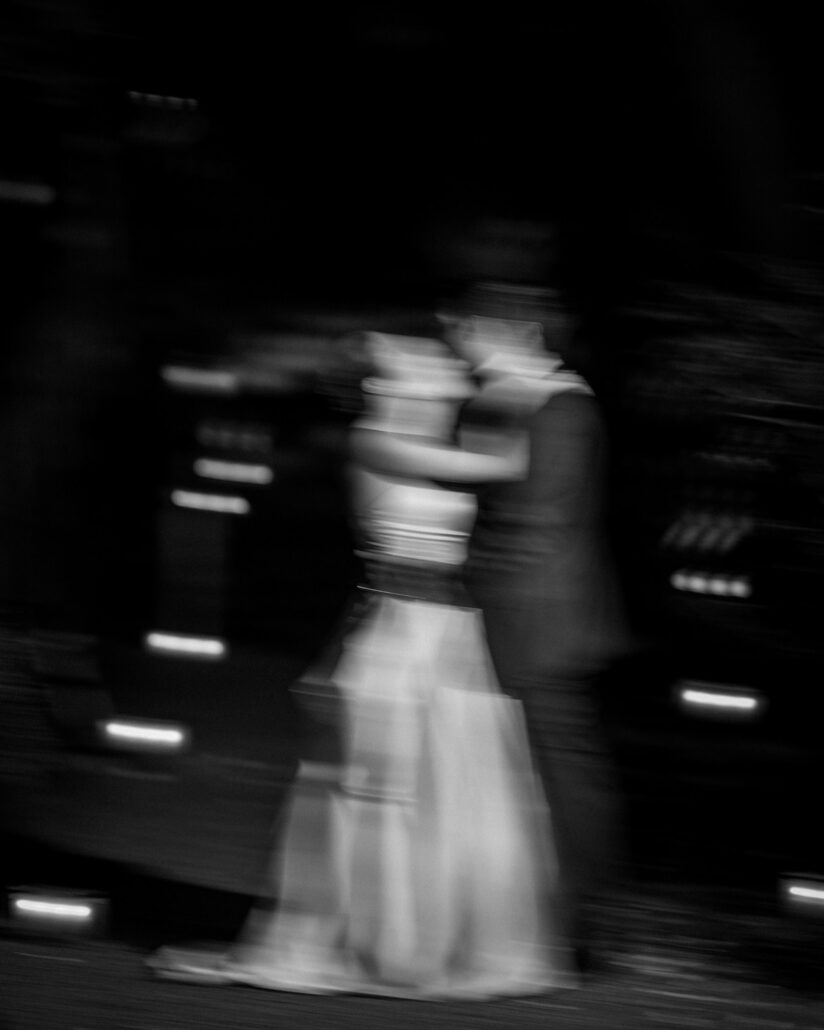
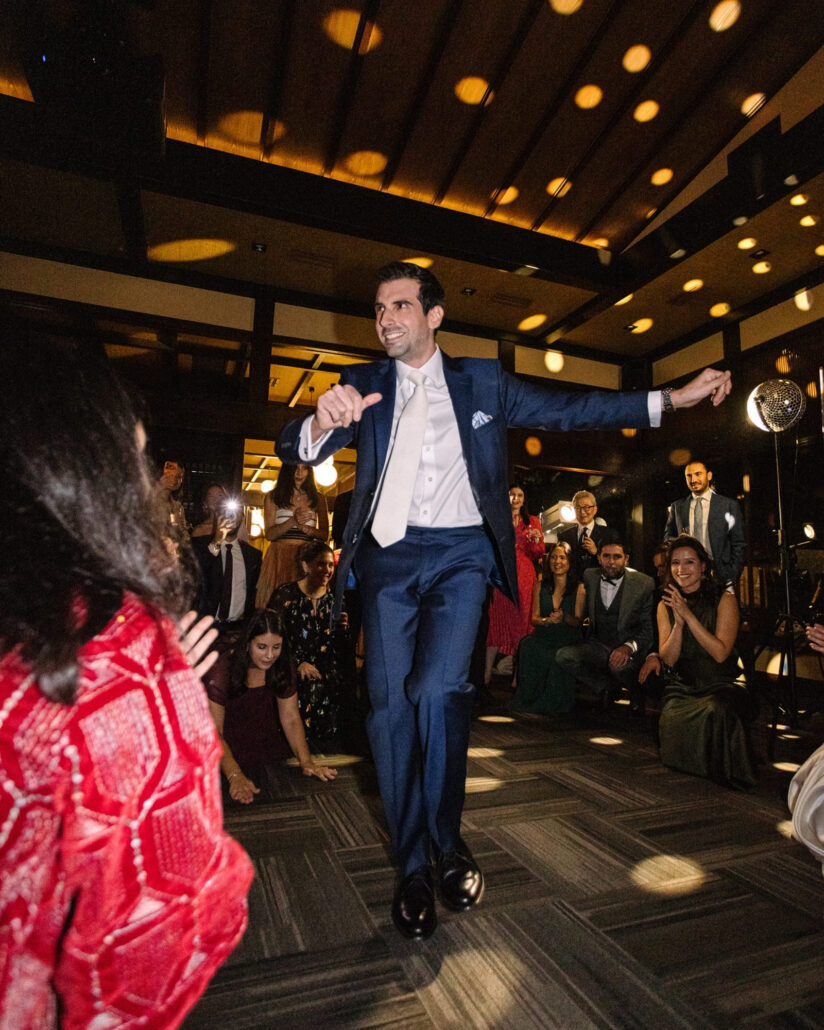
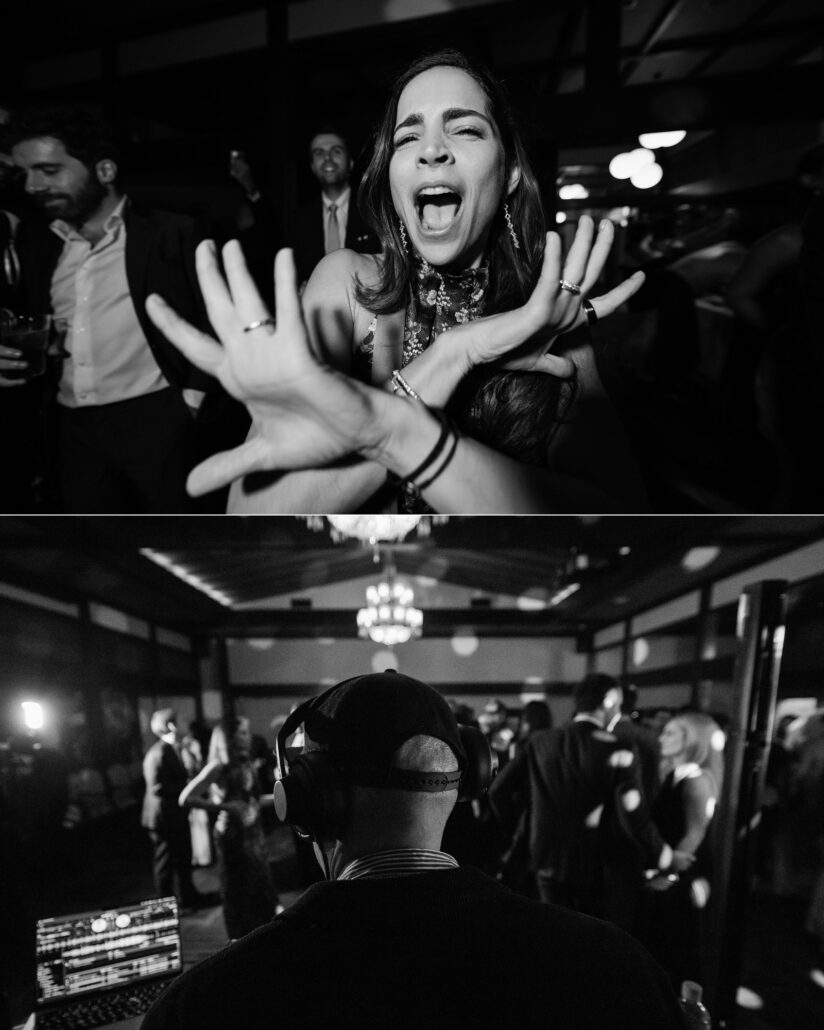
When the dancing began, it was to Billy Joel’s Just the Way You Are, with a DJ flown in from Sapporo playing vinyl, and the Greek circle dances not far behind. The last song was Wonderwall. Then the music stopped, and the night stayed theirs.


Planning a Luxury Ryokan Wedding in Japan
What makes a ryokan wedding feel luxurious? Time and restraint. A buyout gives you the time: the whole inn, more than one night, and nobody else’s schedule. Restraint gives you the look: one flower, fewer things, each one chosen.
Can you bring traditions from home to a ryokan? Yes. Greek stefana and Japanese san-san-kudo sat side by side here, and a friend led the ceremony. A good ryokan welcomes your traditions as long as they’re planned with care for the house.
Can a Japanese inn look like a European editorial? It can feel like one. The trick is not to disguise the inn. Hide the handrail, keep the beams, light it with candles and let the building do the rest.
As your destination wedding planner in Japan, we design the room, source the makers and handle the details, from the inn’s fire rules for candles to the paper the starters come wrapped in. And our photography and film team were there from the yukata to the last song. The film from this wedding has its own post.
One Bottle, Two Countries
Somewhere in kitchens in London, Athens and Bangkok, there may still be a little of that oil left: green yuzu from Japan and olive oil from Greece, with a note from two people on the back.
It’s not a bad way to remember a wedding.

Planner/Production | Dee Green & Sumika Kawaguchi @37frames @sumika_37frames
Film & Photography | @37frames
Venue | Jinya Ryokan @jinya1300
Florals | @ecstaticflowers.regalodesign
HMU | Yuri Kondo @yuri.hairmakeup
DJ | @djtama
Bread Tower | @brod.jp
Olive Oil | @hidakankitsuen
Sound | @synk_sound
Kimono dresser | @beniya_kitsuke
Cake | Queenie Couture @queeniecakecouture