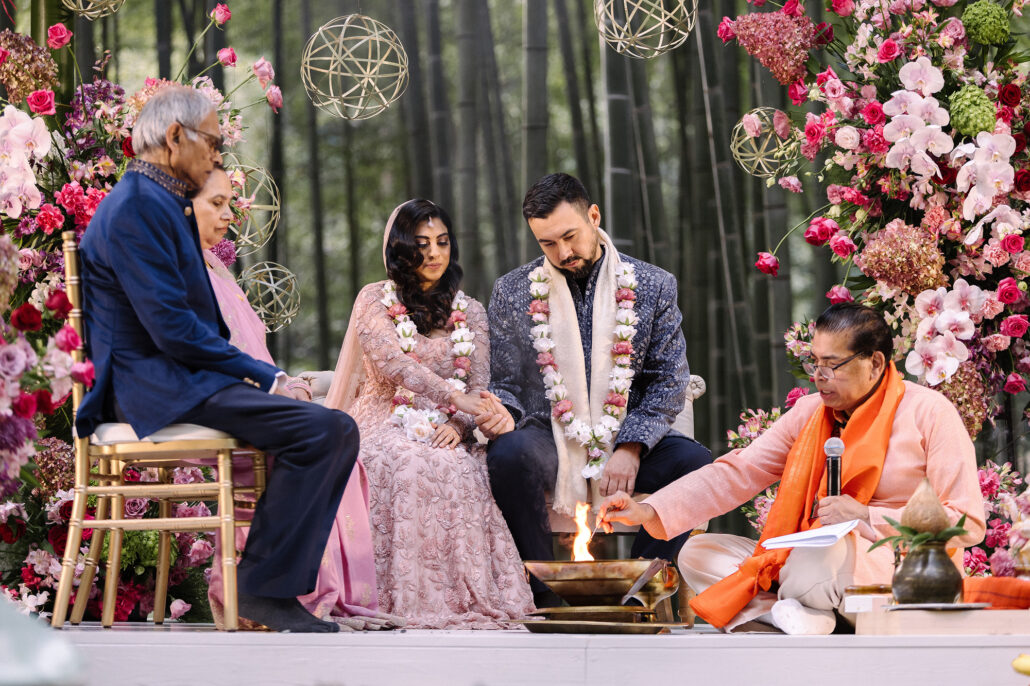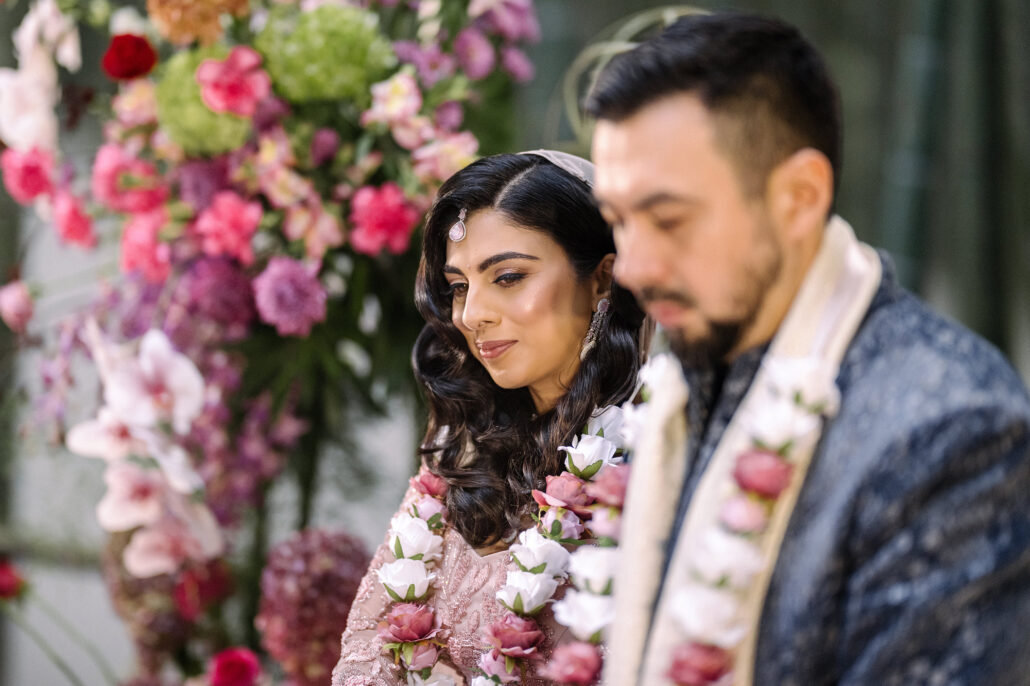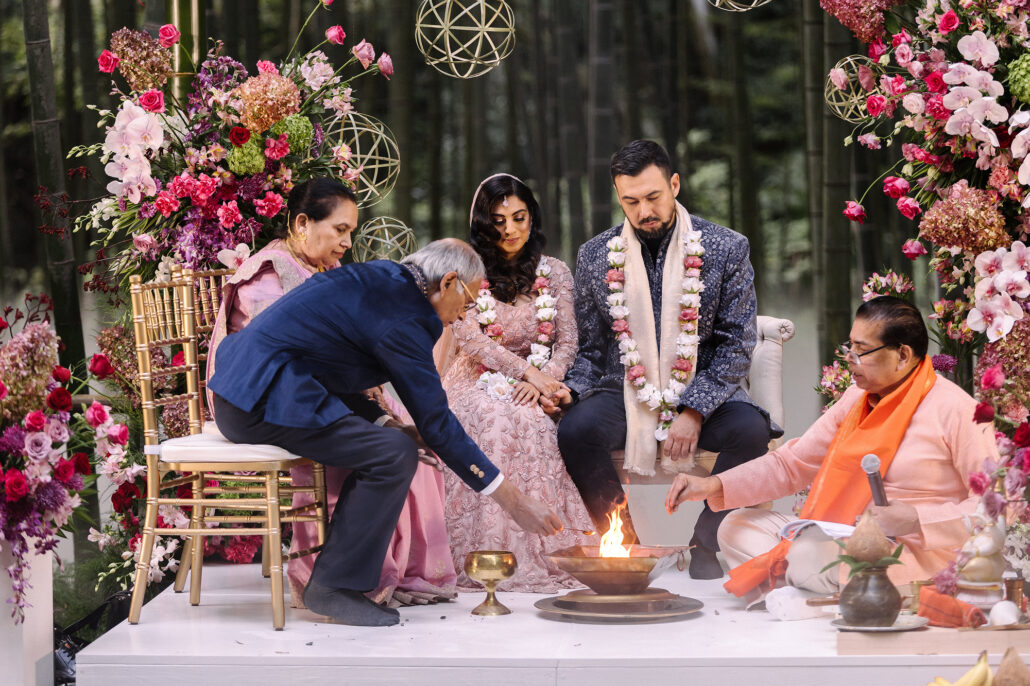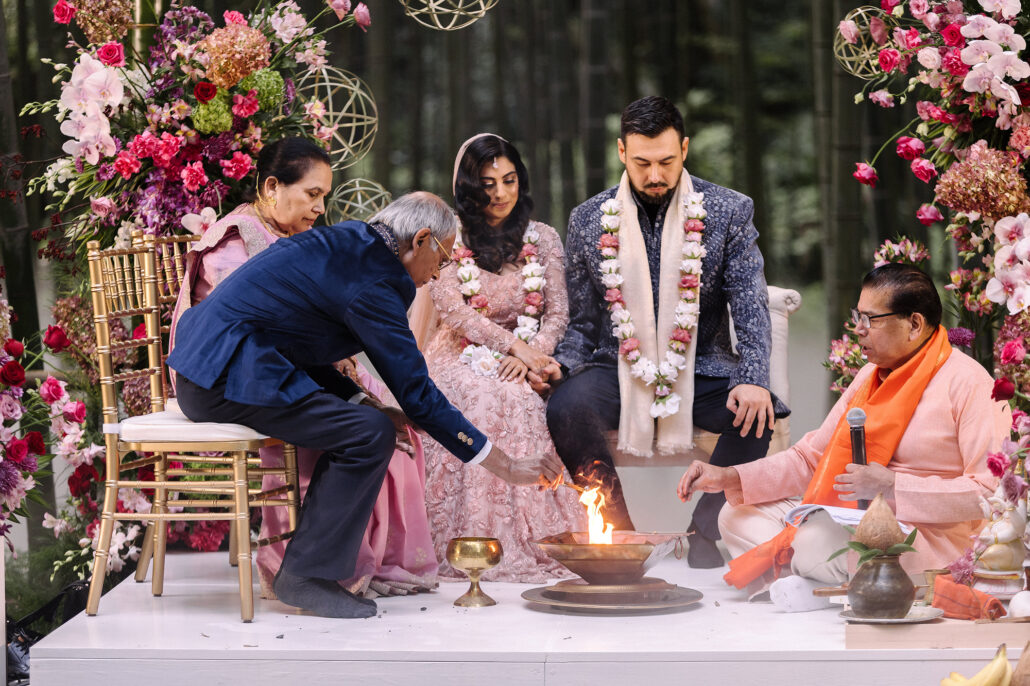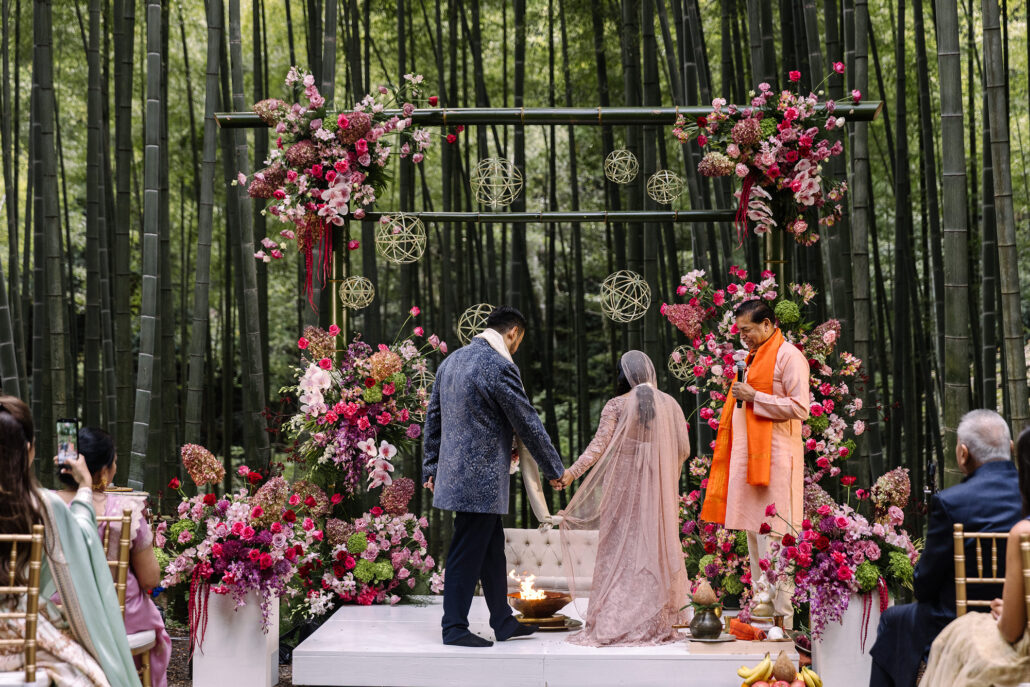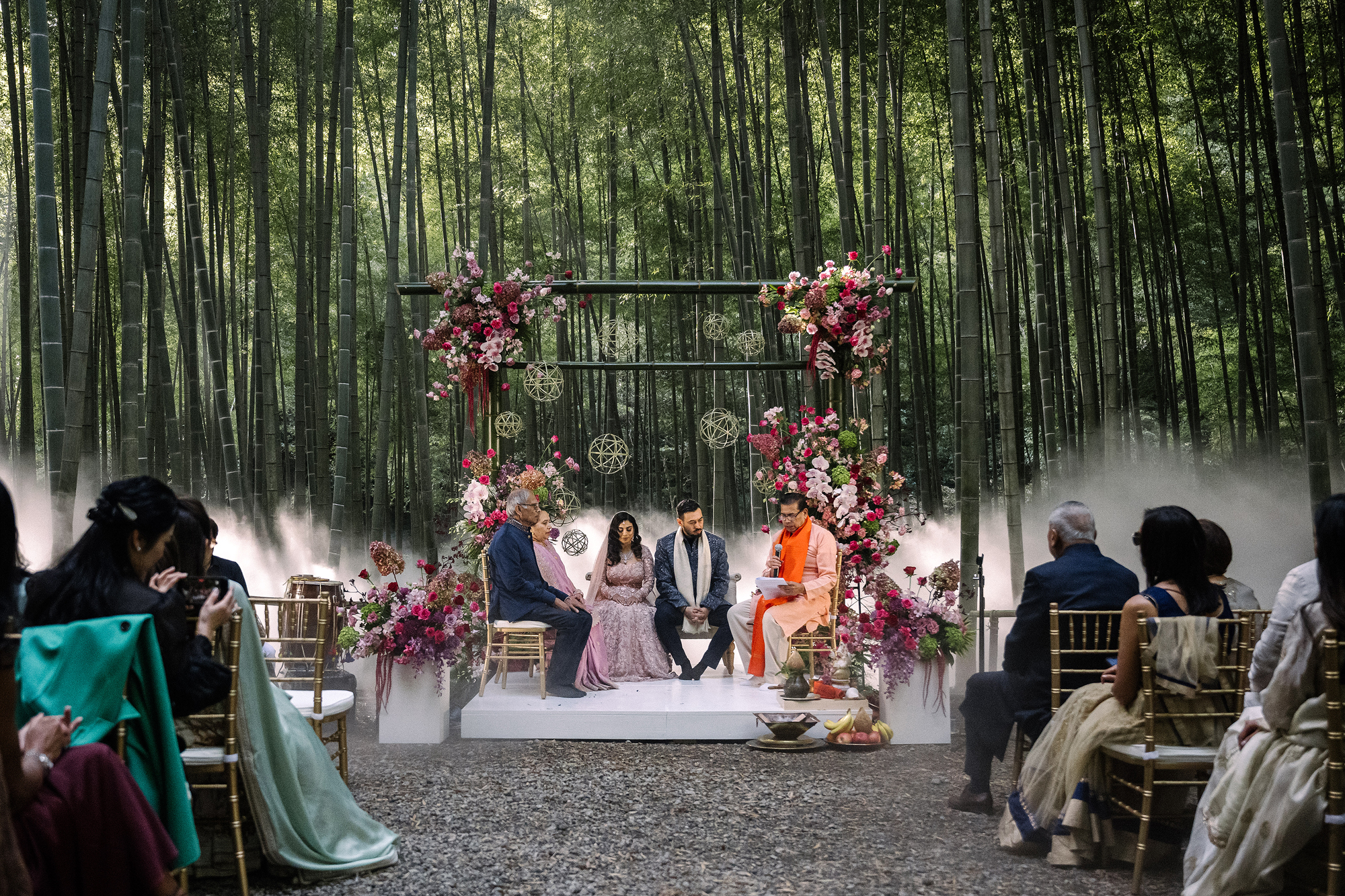
The couple sit with the priest on the bamboo mandap as mist drifts behind the guests, a Hindu wedding in a bamboo forest in Tochigi.

They All Say Yes: An Indian Wedding in a Japanese Bamboo Forest

An Indian wedding in a bamboo forest in Tochigi, Japan, in October 2026, with guests from nine countries. In Sanskrit one word means both bamboo and a family line, and under a mandap made of bamboo, each family gave the other a child.

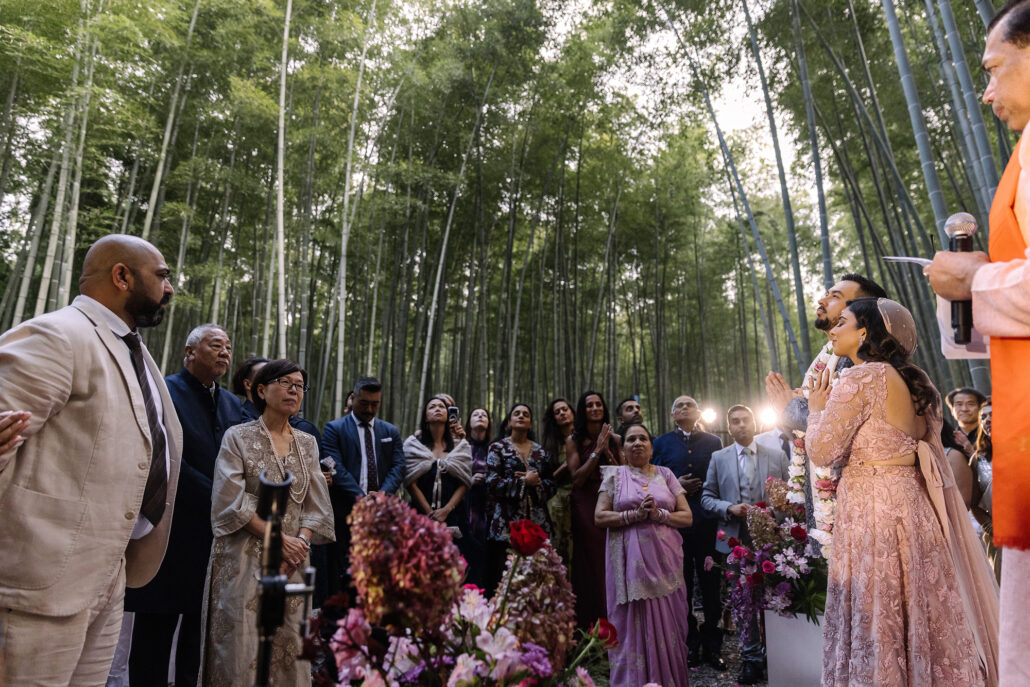
Halfway through an Indian wedding in Japan, in a bamboo forest in Tochigi, the priest asked the bride’s father to close his eyes. He was to ask his father, his grandfather and his great-grandfathers whether the marriage had their blessing.

He gave their answer: “Yes, they all say yes.”

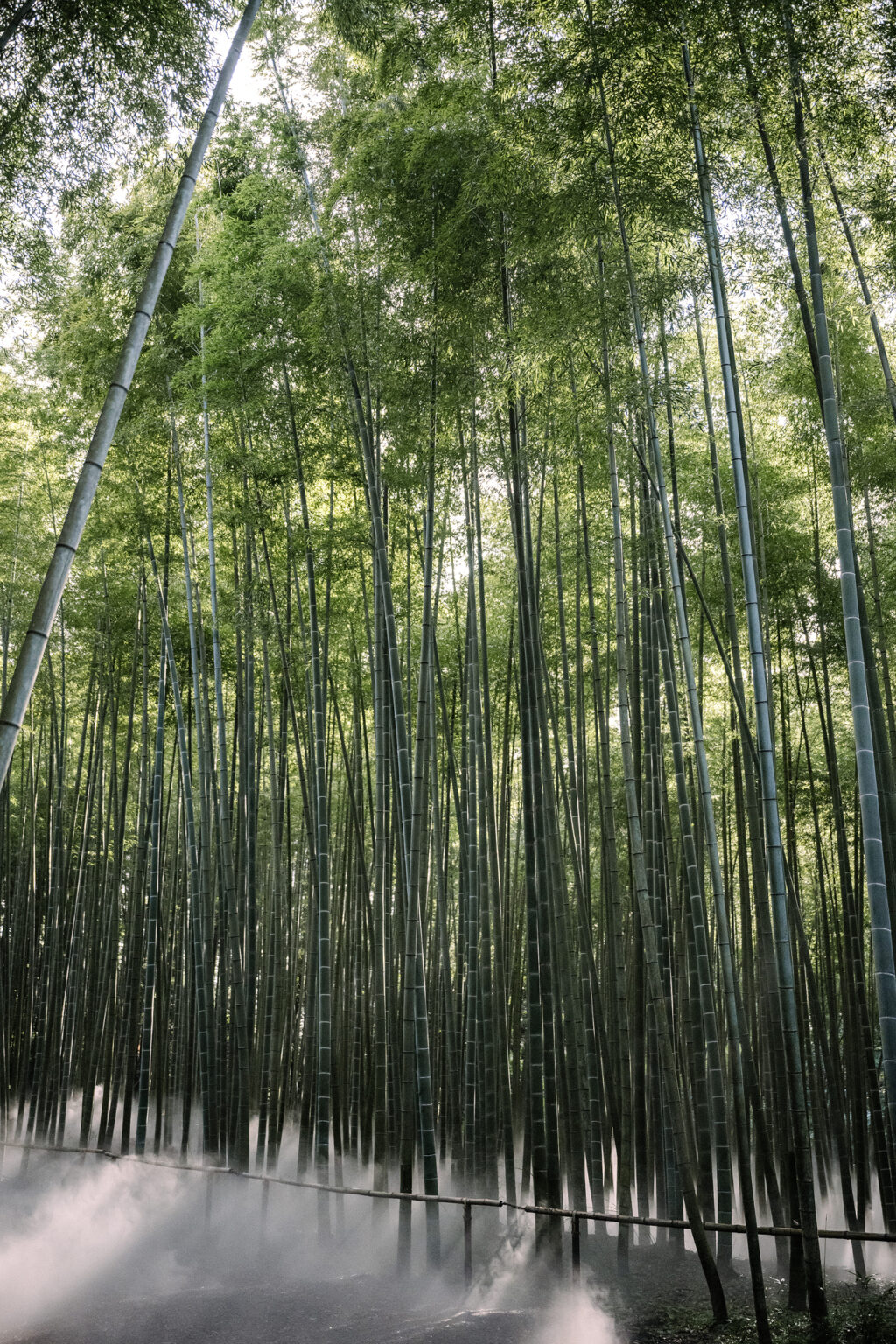
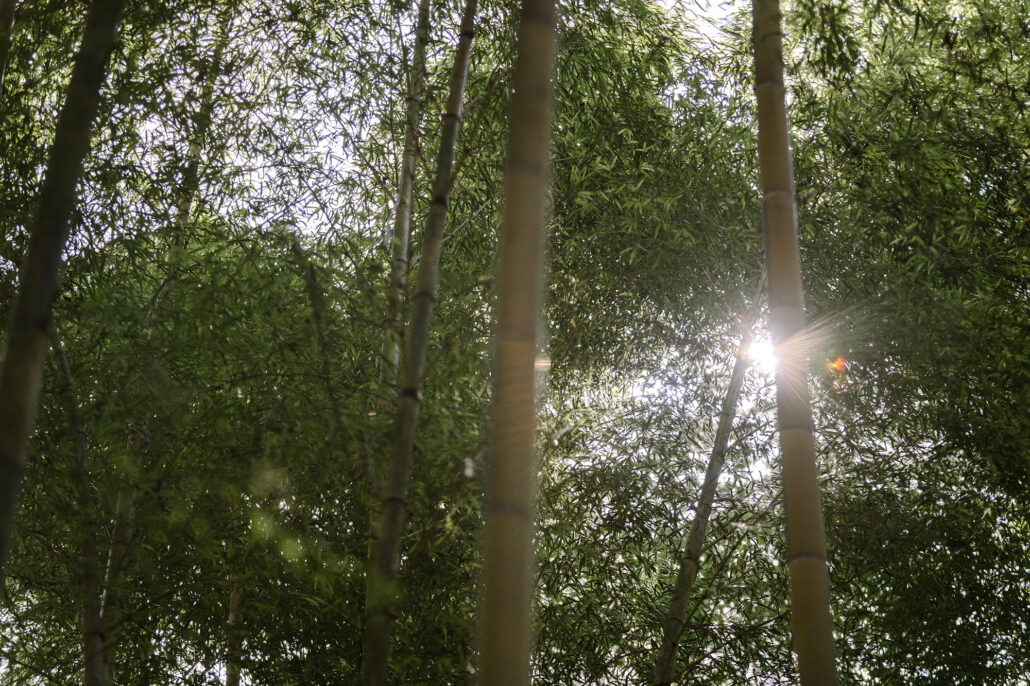
The forest has a depth you notice before anything else. The canes stand so close and so tall that the rows run back further than the eye can follow, and the light reaches the ground in pieces: komorebi, the Japanese word for sun through leaves, except that here it comes through bamboo and moves whenever the wind does. It’s difficult light to photograph. We wouldn’t swap it.

It’s a working farm of about a hundred thousand canes, and the family who own it thin it every year. In 2023 Japan’s Agency for Cultural Affairs named part of it the first bamboo forest in its programme to supply the repair of the country’s historic buildings: the bamboo in farmhouse roofs, in the cores of earthen walls, in the finish of tea rooms. Its bamboo also stands in luxury hotels in central Tokyo.

In Sanskrit, the language of the rites, the word for bamboo is vaṃśa. It also means a family line. The great Sanskrit dictionary traces that second sense to the joints of a bamboo cane, set one after another like the generations of a family.
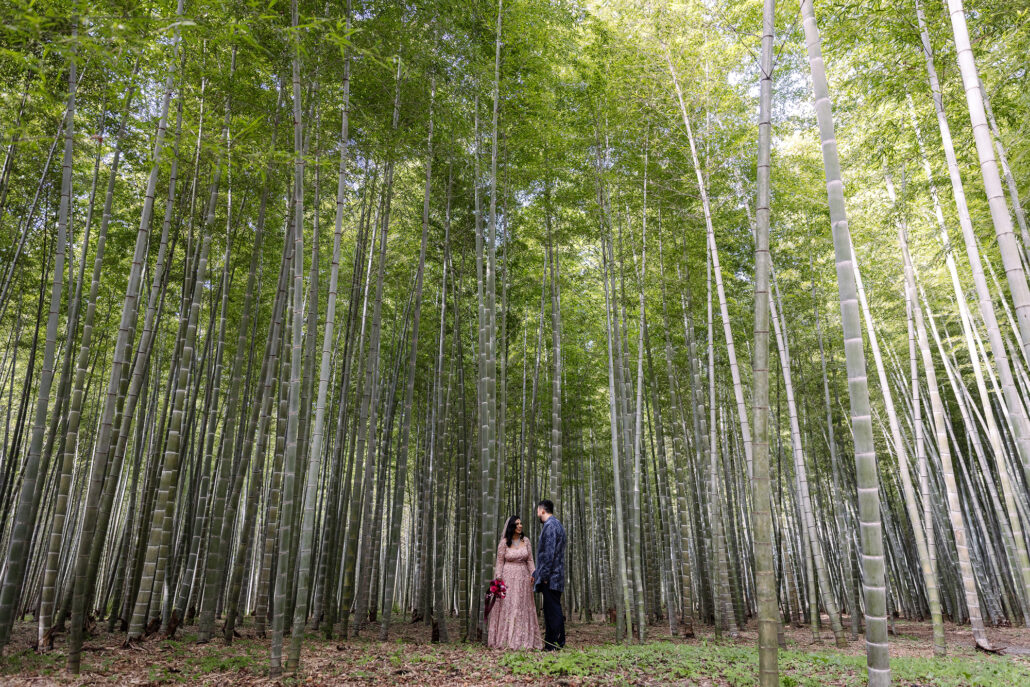
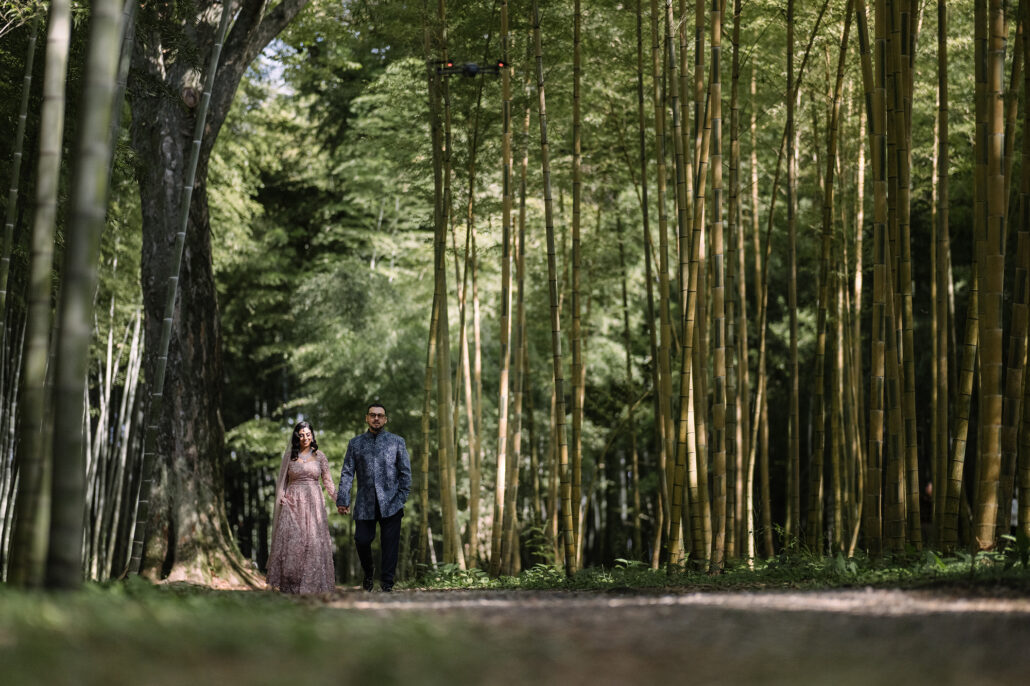
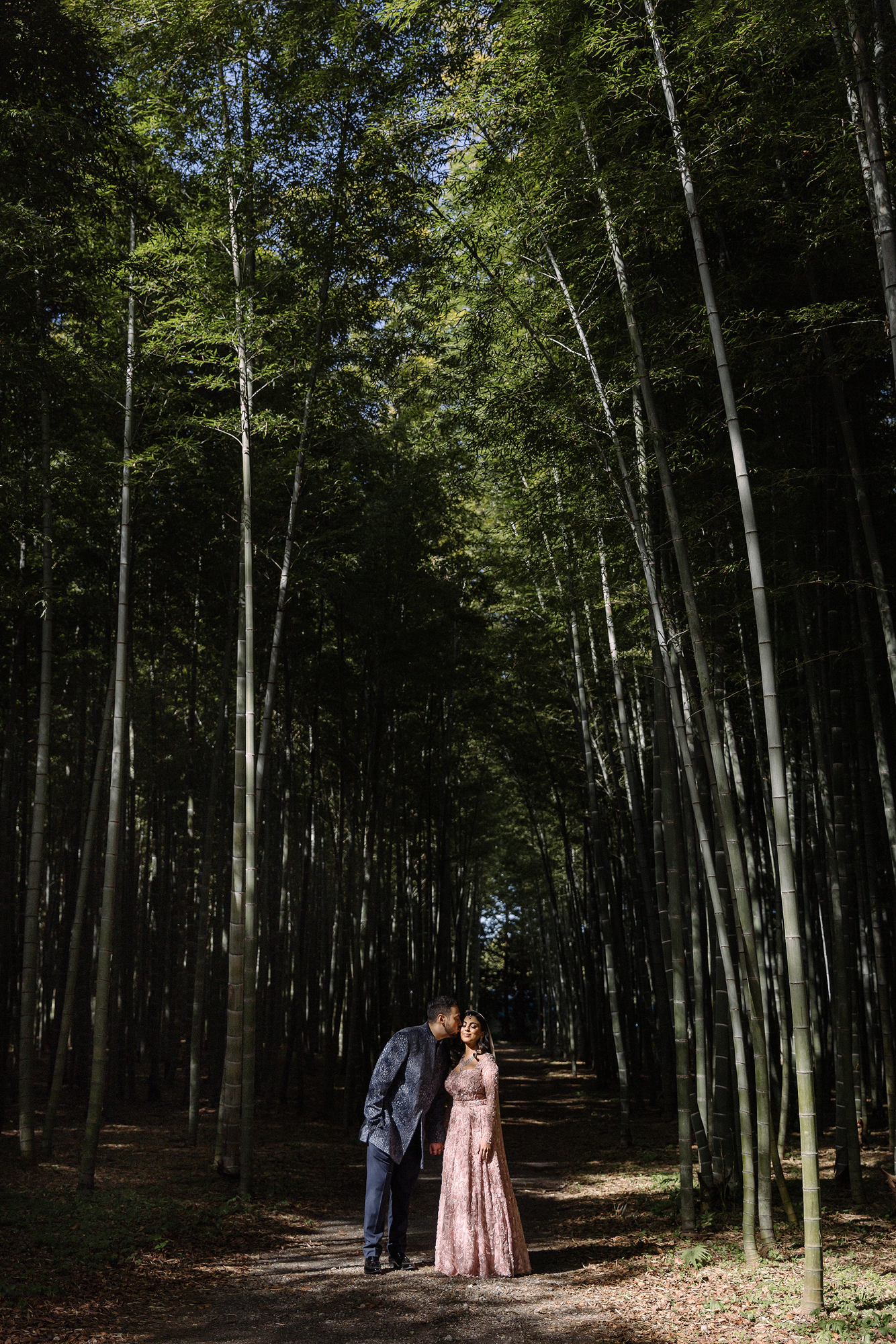
The couple stand tiny at the foot of towering bamboo, the depth of a bamboo forest in Tochigi chosen for an Indian wedding in Japan.

Everyone Said It Was Impossible

She had looked at places all over the world before she chose this one. Dee arranged with the farm for the two of them to walk the forest on their own, and it was the golden bamboo that decided it.

It had begun, long before, as an elopement, and grew into a full Indian wedding with both families and guests from nine countries. Her word for what she wanted was fusion, and it’s hard to get more fusion than an Indian wedding in a Japanese bamboo forest. We’d held elopements and intimate weddings among these canes before, one of them at night and one an easy trip from Tokyo, but never a full wedding with every guest, and for the two of them that was part of the appeal.

On the night, she told the room how fast it had all come together: “In August, when we came to Japan, we made a very rash decision of putting a wedding together in three months. Pretty much every single person we talked to said it was impossible.” The plans changed more than once on the way, and each time it was Dee who reshaped them. As the bride put it to her afterwards, “You never once made us feel like it was too much.”

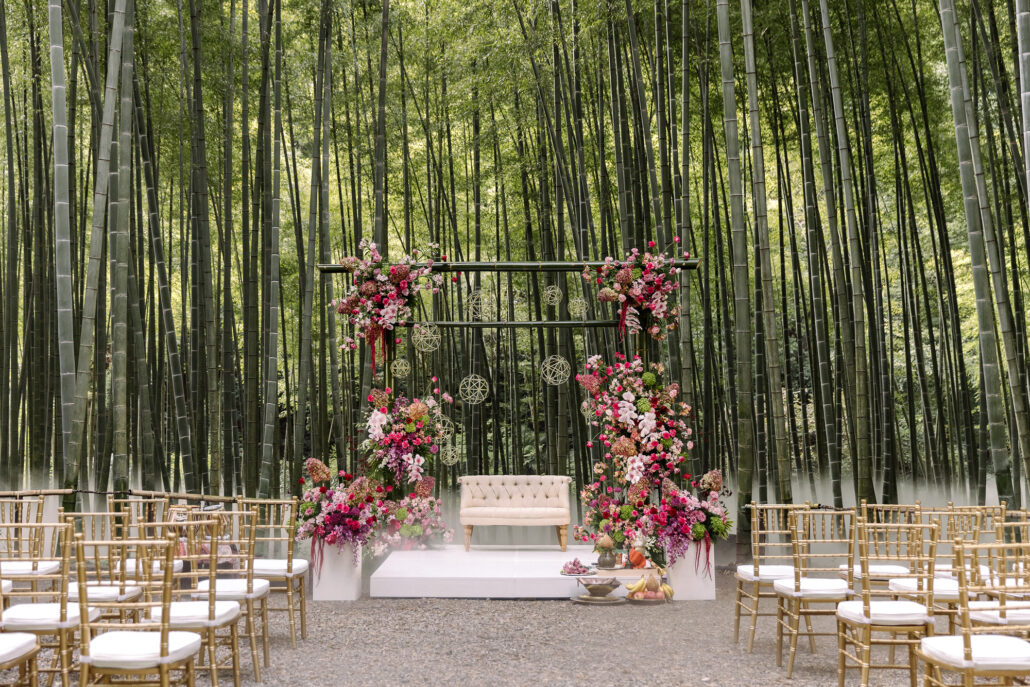
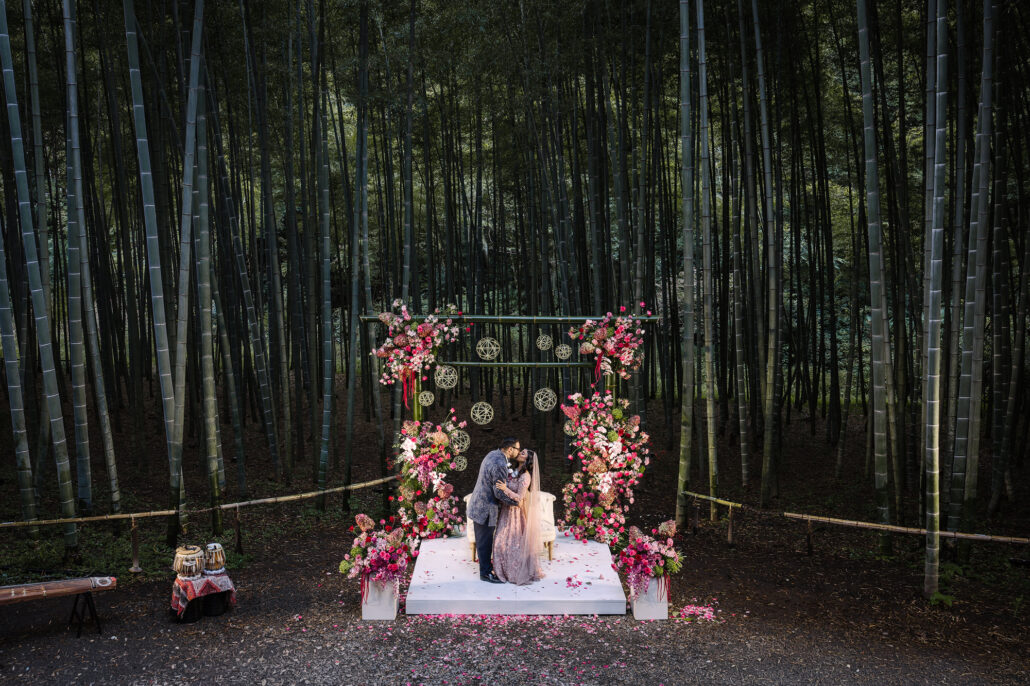
The biggest decision was the mandap. We didn’t want a traditional one: it had to carry the fusion, and it had to be made from the forest around it. So we asked the farm to build it for us, from their own bamboo. They had never made one. Dee designed it with the bride and talked it through with the farm, and because the more elaborate designs couldn’t be raised in a day, the mandap became a torii, the gate that marks the way into a Japanese shrine: two great canes and two crossbars.

The couple wanted the canes thick. Bamboo grows long and thin, and even moso, Japan’s largest bamboo, typically runs about ten centimetres across, so the family and their team searched the farm for the thickest they could find. They found two, fifteen centimetres across, so thick that setting them in the ground took some engineering. The torii went up the day before, so the morning would hold no surprises. It turned out beautifully.
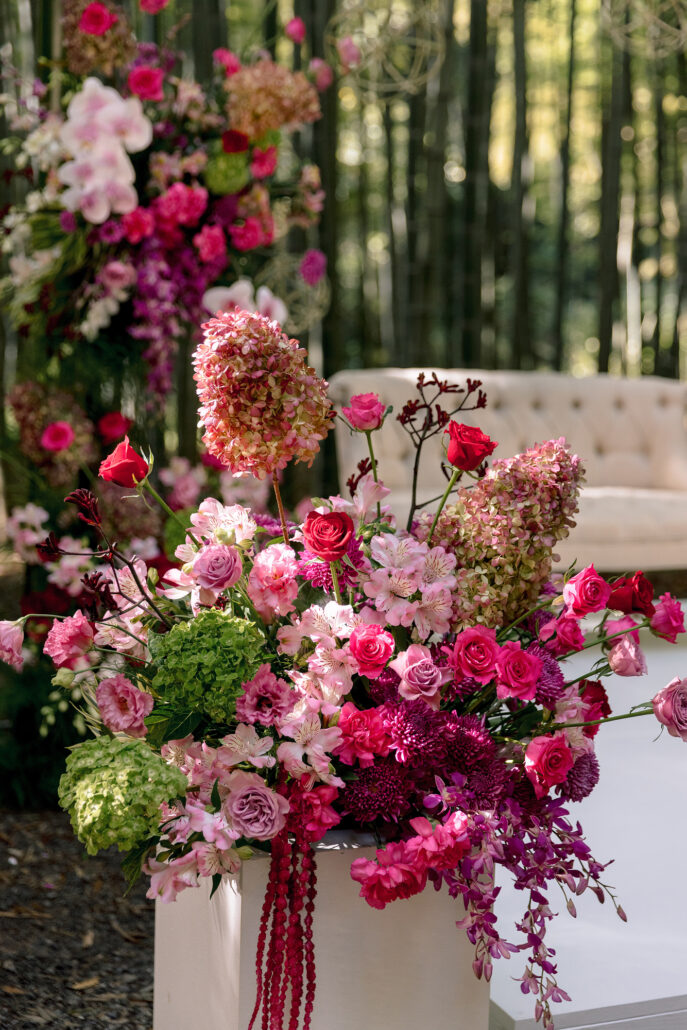
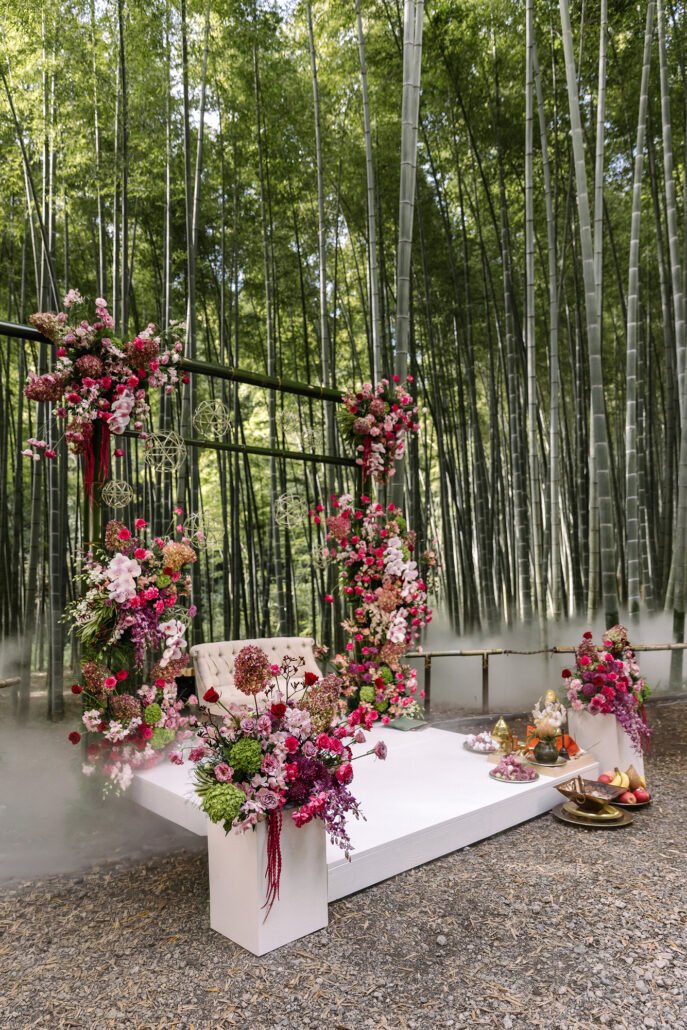
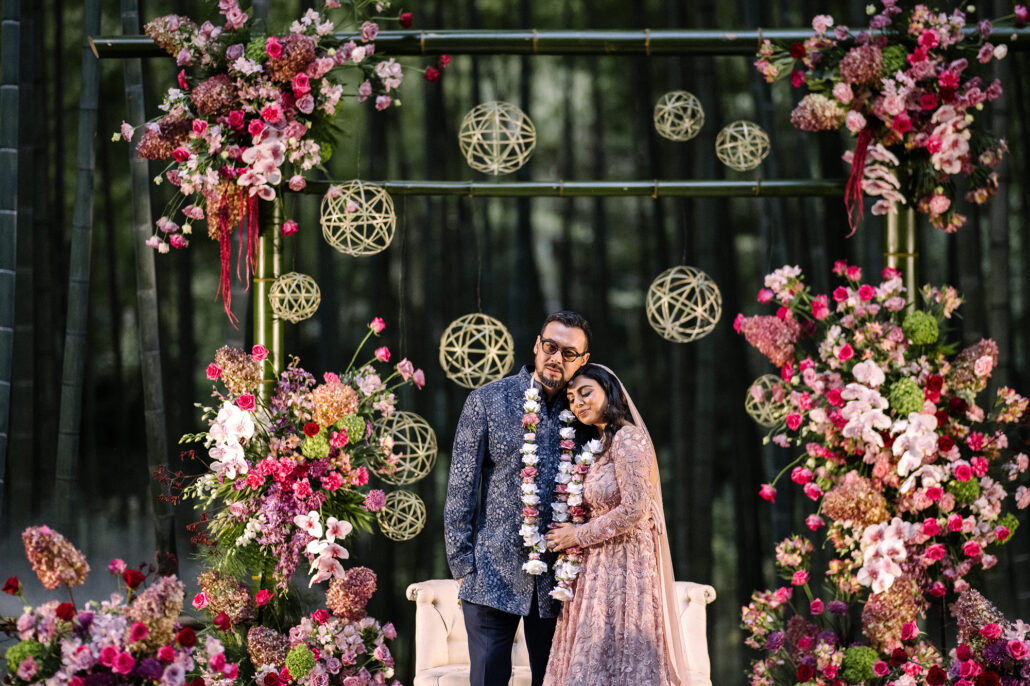
Pink roses, orchids and hydrangea spill from a white plinth beside the mandap sofa, mandap decoration for a bamboo forest wedding in Japan.
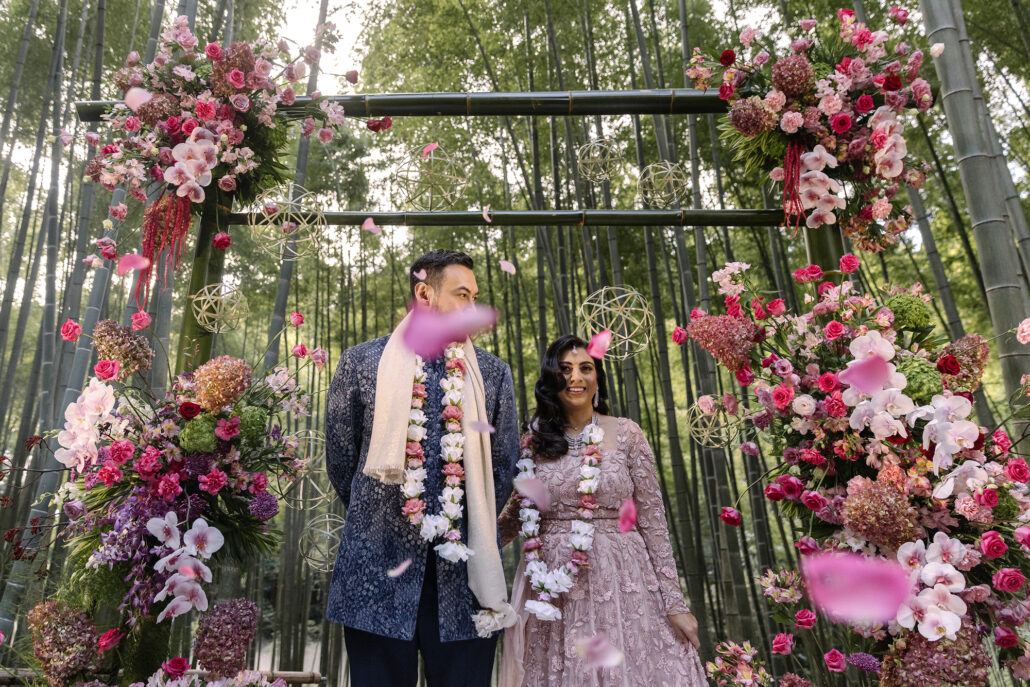
Mandap decoration of pink flowers and lattice spheres on a bamboo mandap shaped like a torii gate, set for an Indian wedding in Japan.

The canopy of one tradition took the shape of the other’s gate.
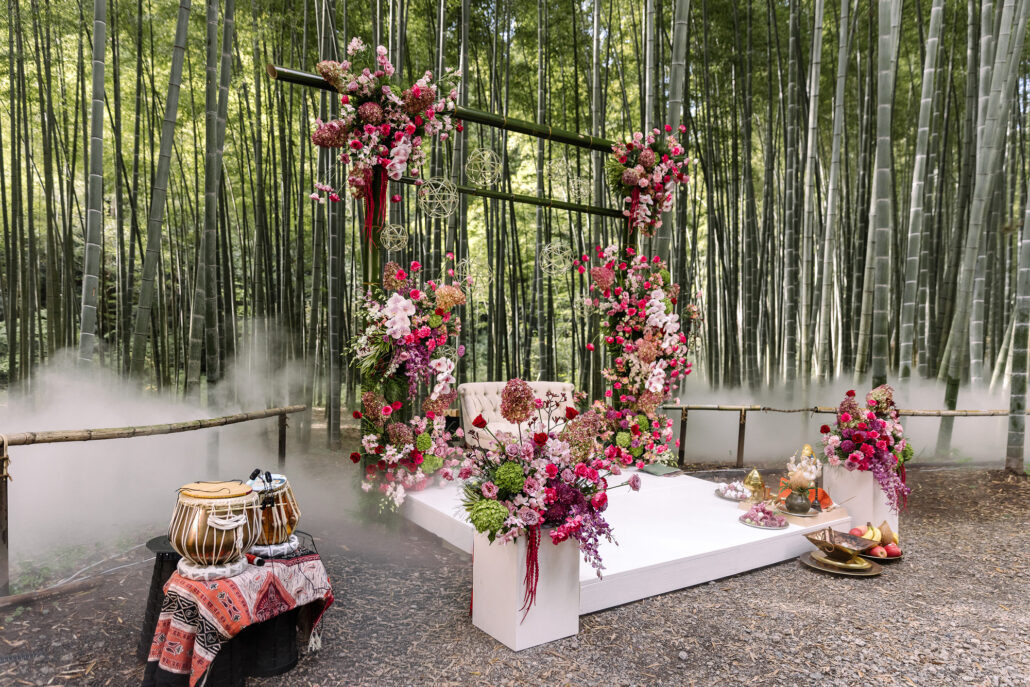
Mist rolls across the flowered bamboo mandap as a pair of tabla drums waits on a patterned cloth, set for a Hindu wedding in Tochigi.
The bamboo mandap, two posts and crossbars like a torii gate, waits with flowers and gold chairs, Indian wedding decor in a Japanese bamboo forest.

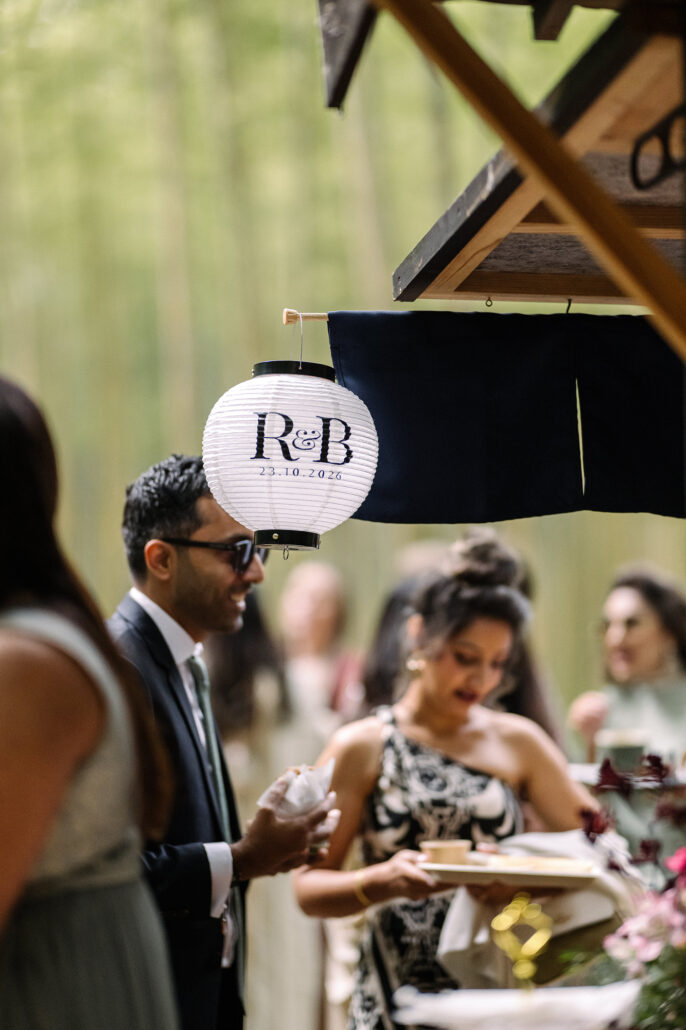
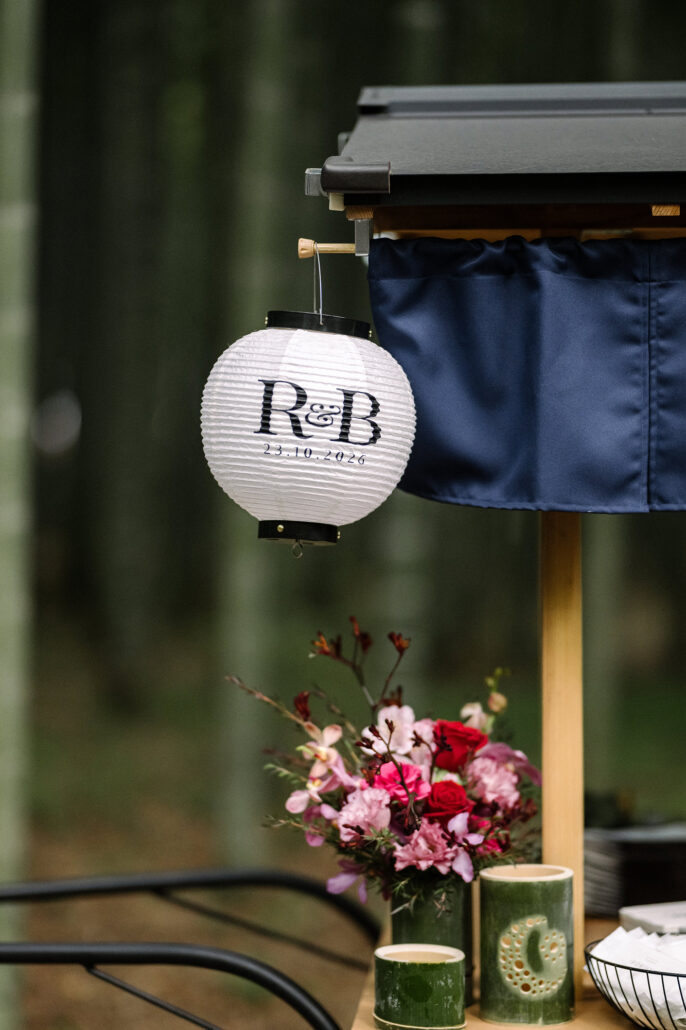
Then the yatai, the wooden handcart stalls of a Japanese festival. We went looking for a pair beautiful enough for the forest and found them at a rickshaw maker in Asakusa. Bringing them up from Tokyo, and in through a working farm without disturbing it, was a production of its own. Dressed with noren curtains and custom-made lanterns with the couple’s monogram, they brought a Japanese festival into an Indian wedding.
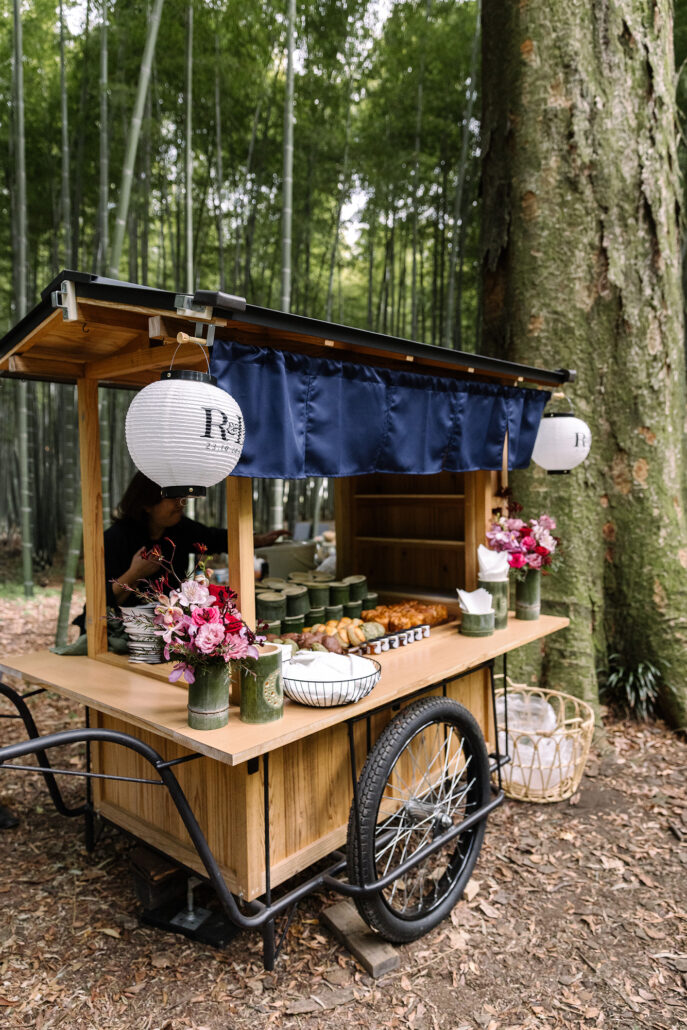
A wooden yatai handcart with a navy noren curtain and white monogram lanterns stands beneath a giant tree in the bamboo forest in Tochigi.
A paper lantern printed with the couple's monogram hangs from a yatai beside pink flowers and green bamboo cups, Indian wedding decor in Japan.

Private Vows in the Bamboo Forest

The groom pulls on his navy sherwani against a bright hotel window on the morning of an Indian wedding in a bamboo forest in Tochigi.
The groom fastens the buttons of his embroidered navy sherwani before a Hindu wedding in a Japanese bamboo forest.
A black and white portrait of the groom by the window in his sherwani, waiting for his Indian wedding in Japan to begin.
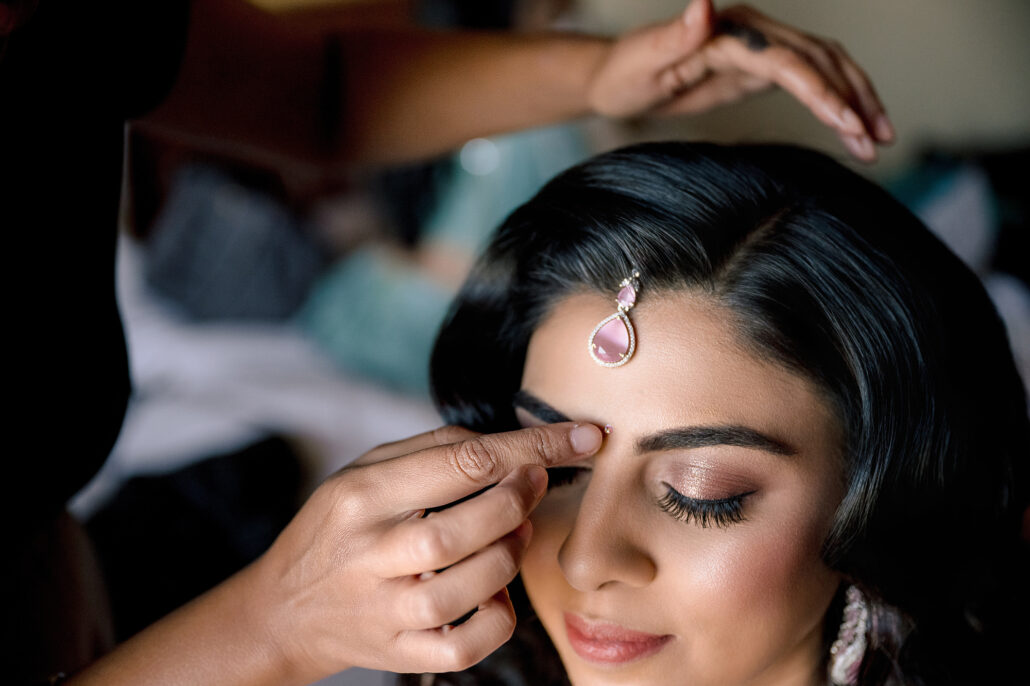
A hand settles the pink maang tikka on the Indian bride's forehead as she gets ready for her wedding in a Japanese bamboo forest.
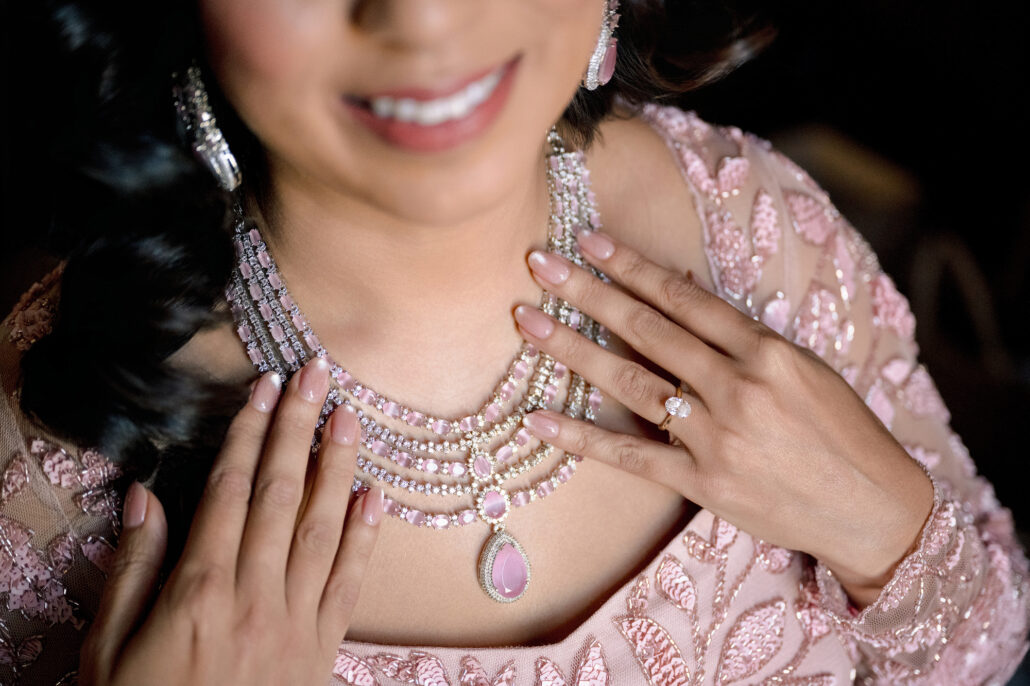
The bride's hands rest on her layered necklace of pink stones, engagement ring on her finger, the morning of her Hindu wedding in Tochigi.

Her hair and makeup were done by a friend, Sandeep, and done beautifully.

Before the families, the priest or a single guest, there were only the two of them in the bamboo. Her first words when he turned round were “I can’t believe it. We’re here.” Then they said their vows, to each other and nobody else.
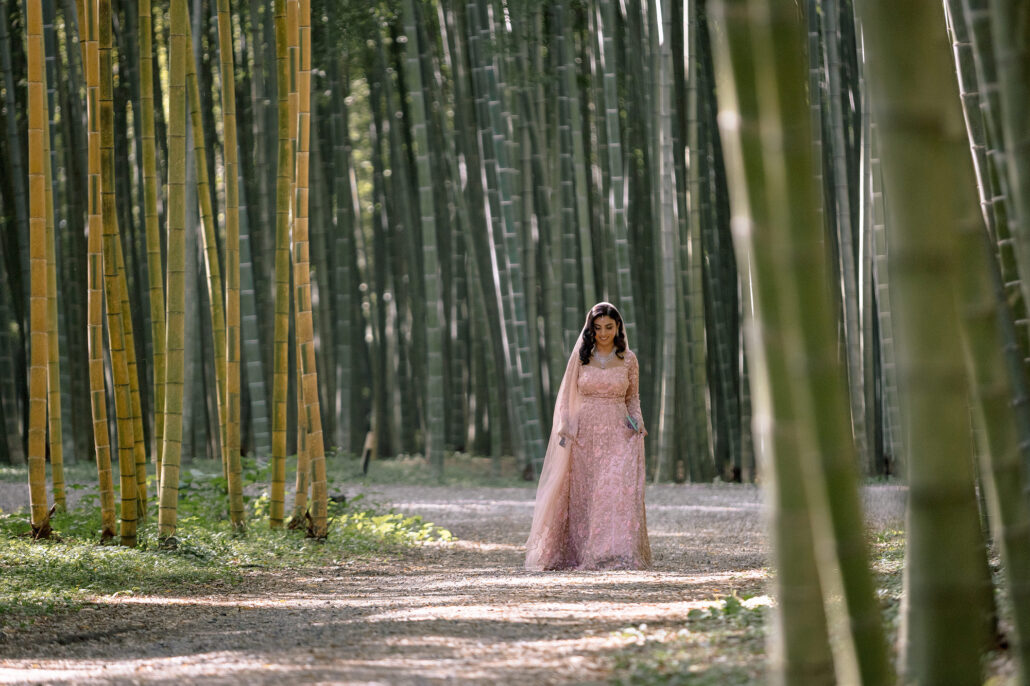
  • The Indian bride walks a path between golden and green bamboo toward her first look, in the bamboo forest in Tochigi where she married.
  • Sunlight breaks through the canopy of a Japanese bamboo forest in Tochigi, the komorebi of an Indian wedding morning.
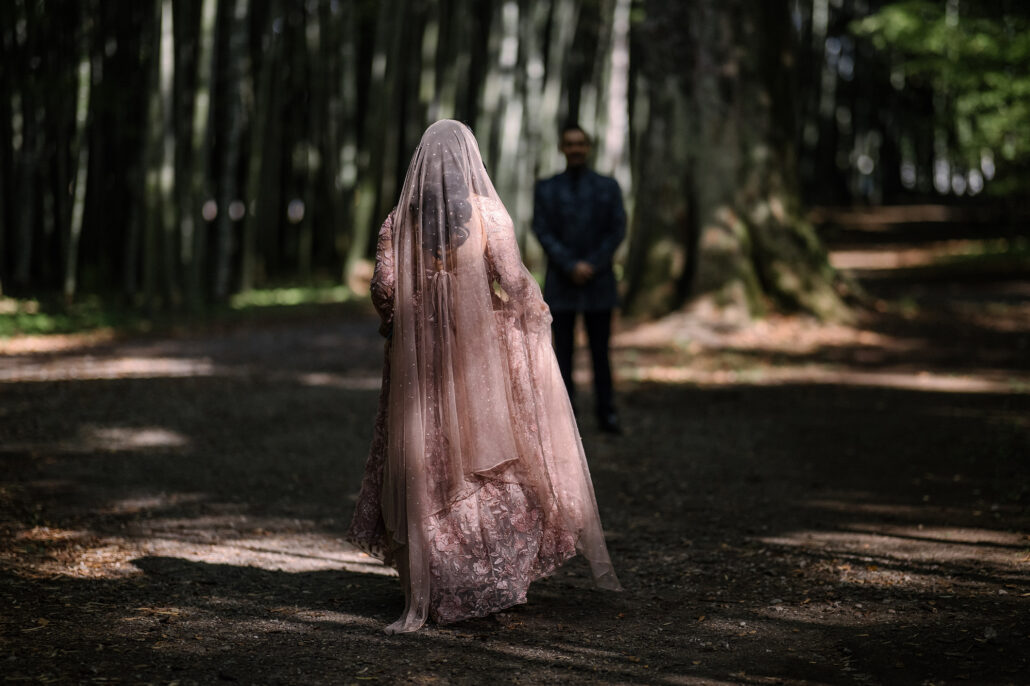
  • Veil trailing through dappled light, the bride walks toward the groom for their first look in a Japanese bamboo forest in Tochigi.
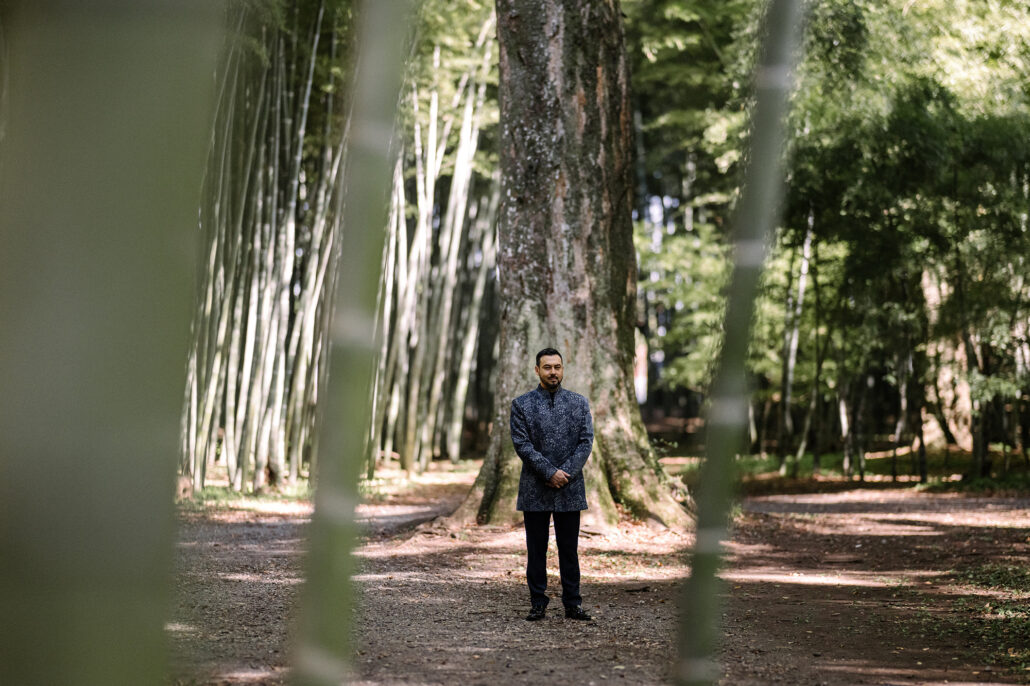
  • The groom waits alone in his navy sherwani before a giant old tree for the first look, framed by bamboo, at a bamboo forest wedding in Japan.
  • The groom holds his private vows in a navy card among green bamboo, minutes before the first look at his Indian wedding in Japan.
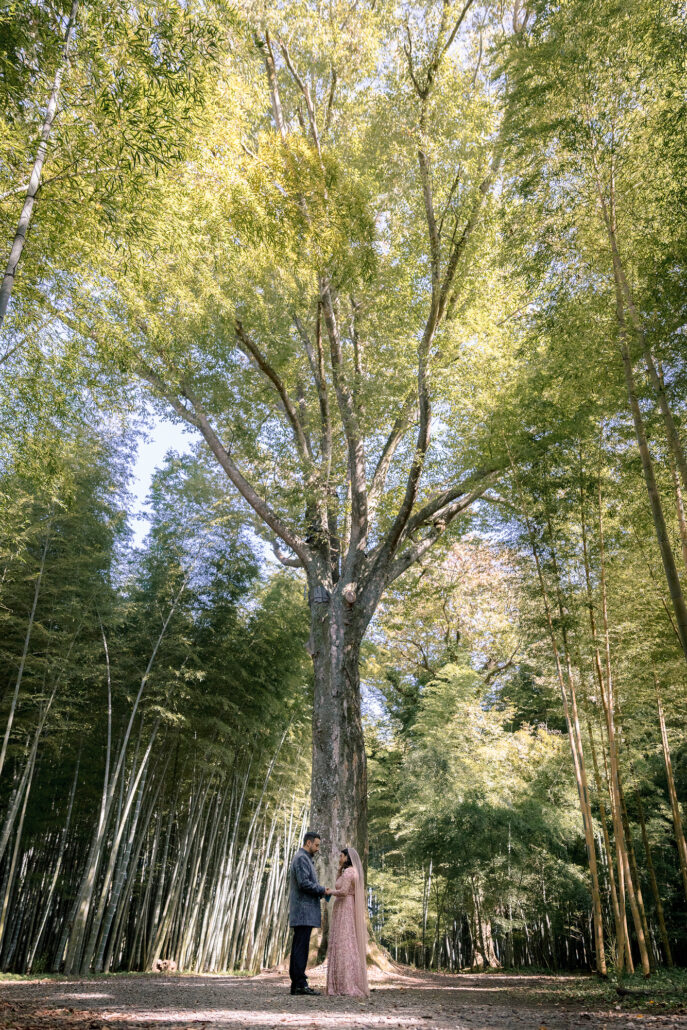
The couple stand small beneath a giant old tree among tall bamboo, the scale of the bamboo forest in Tochigi where they married.
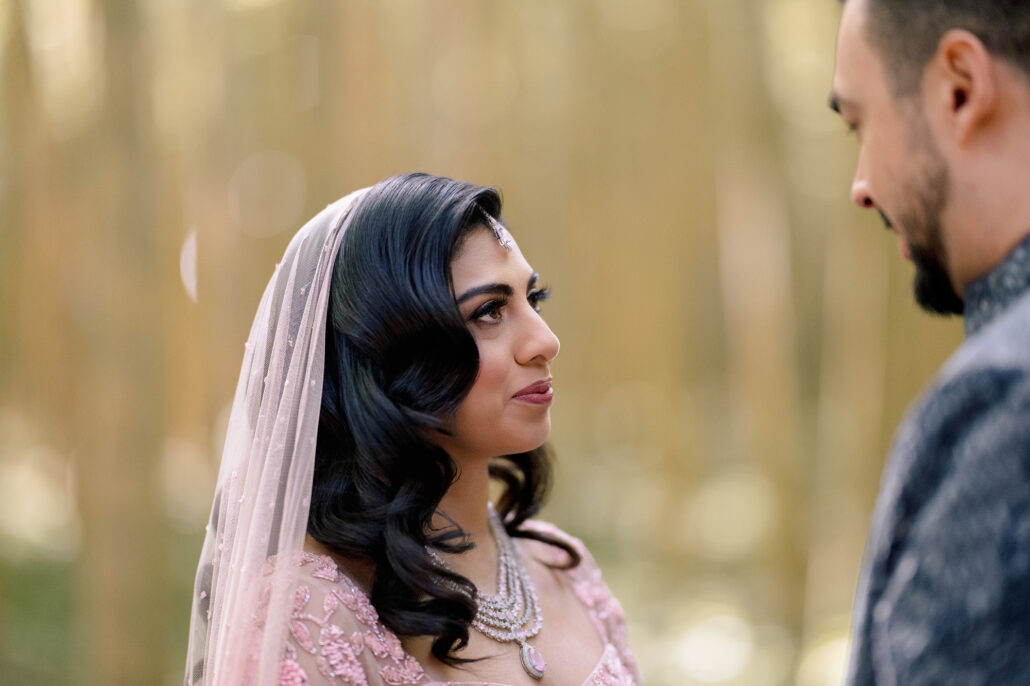
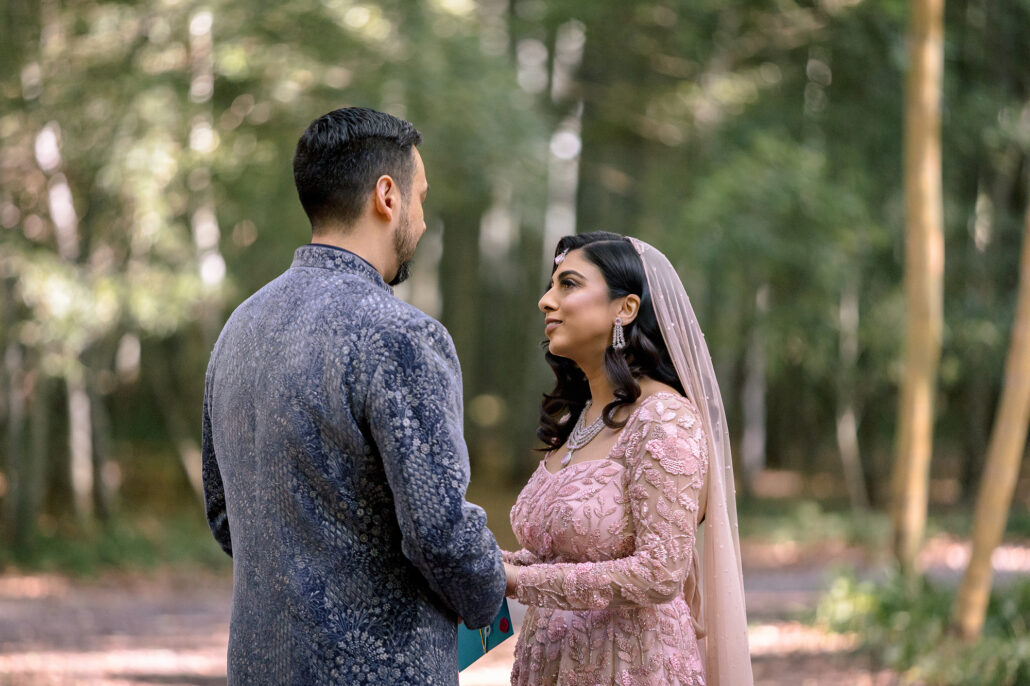
The bride looks up at the groom at their first look, golden bamboo soft behind them, before their Indian wedding in Japan.

Somewhere in his came a warning that he might cry, which those who know him will tell you is rare. He has a standard line about it: the last time was Free Willy. At dinner that night he updated the record. “When I first saw her this morning, that was the first time I cried.”
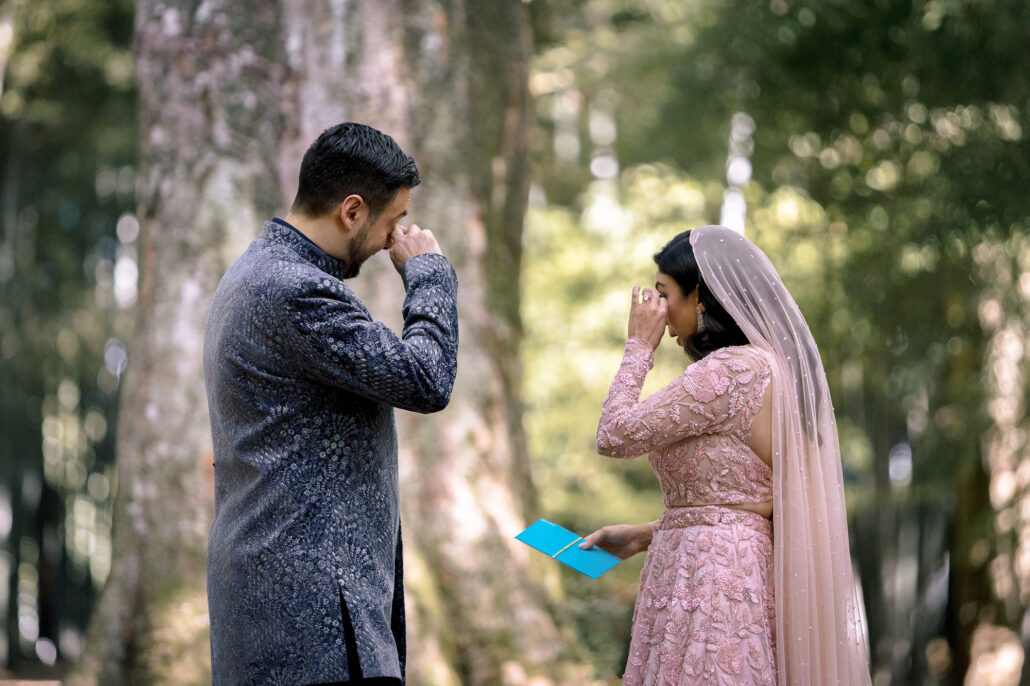
Both wipe their eyes as the bride holds her blue vow card, private vows before the Hindu wedding ceremony in a bamboo forest in Japan.
The couple hold hands while the bride reads her private vows from a blue card, the bamboo forest in Tochigi all around them.
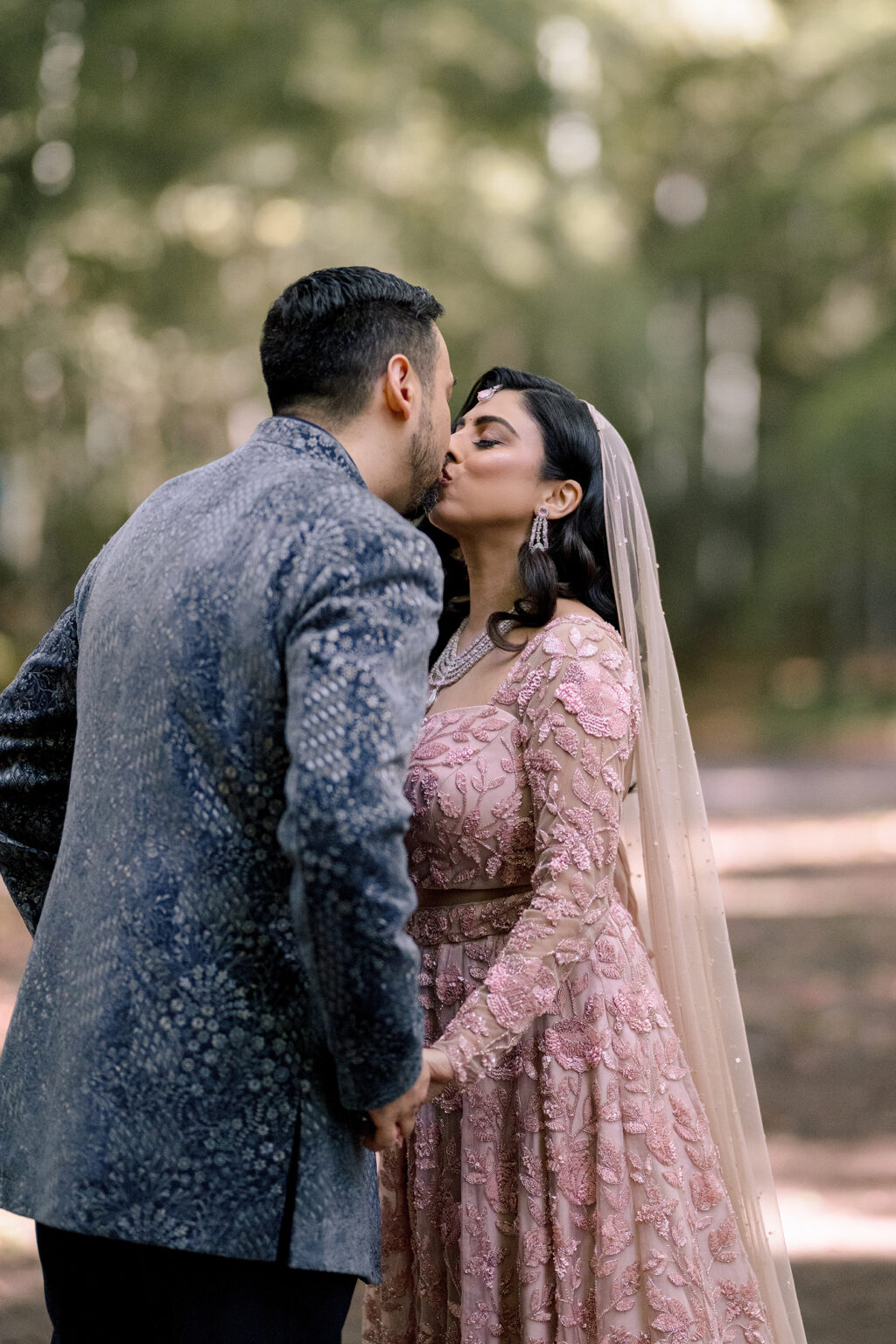
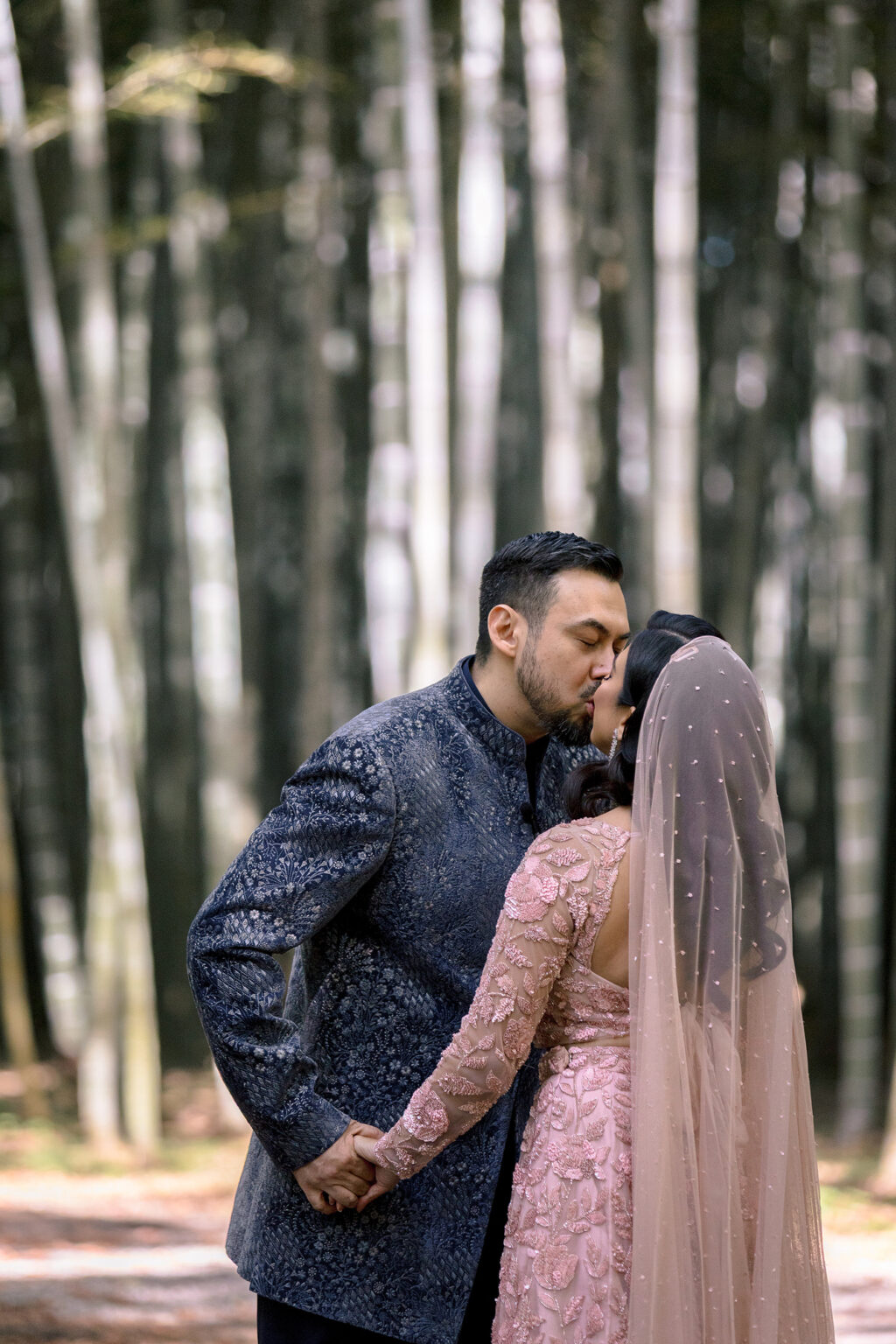
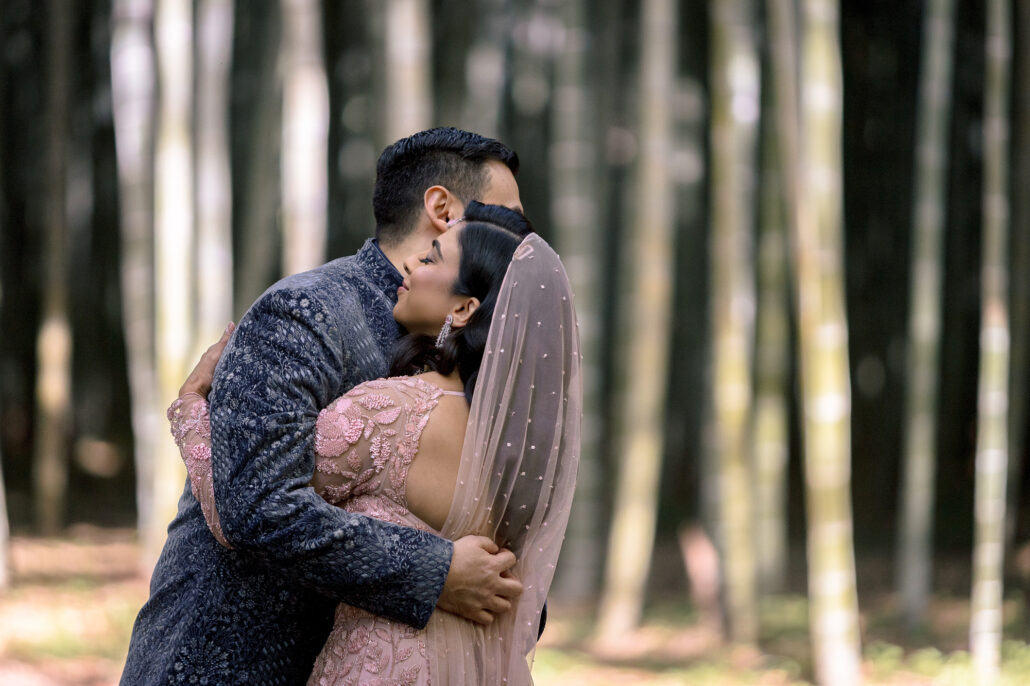
  • The bride and groom kiss after their first look, bamboo soft behind them, at a bamboo forest wedding in Japan.
  • The couple kiss in front of pale bamboo stalks, her veil falling down her back, on the morning of their Indian wedding in Tochigi.
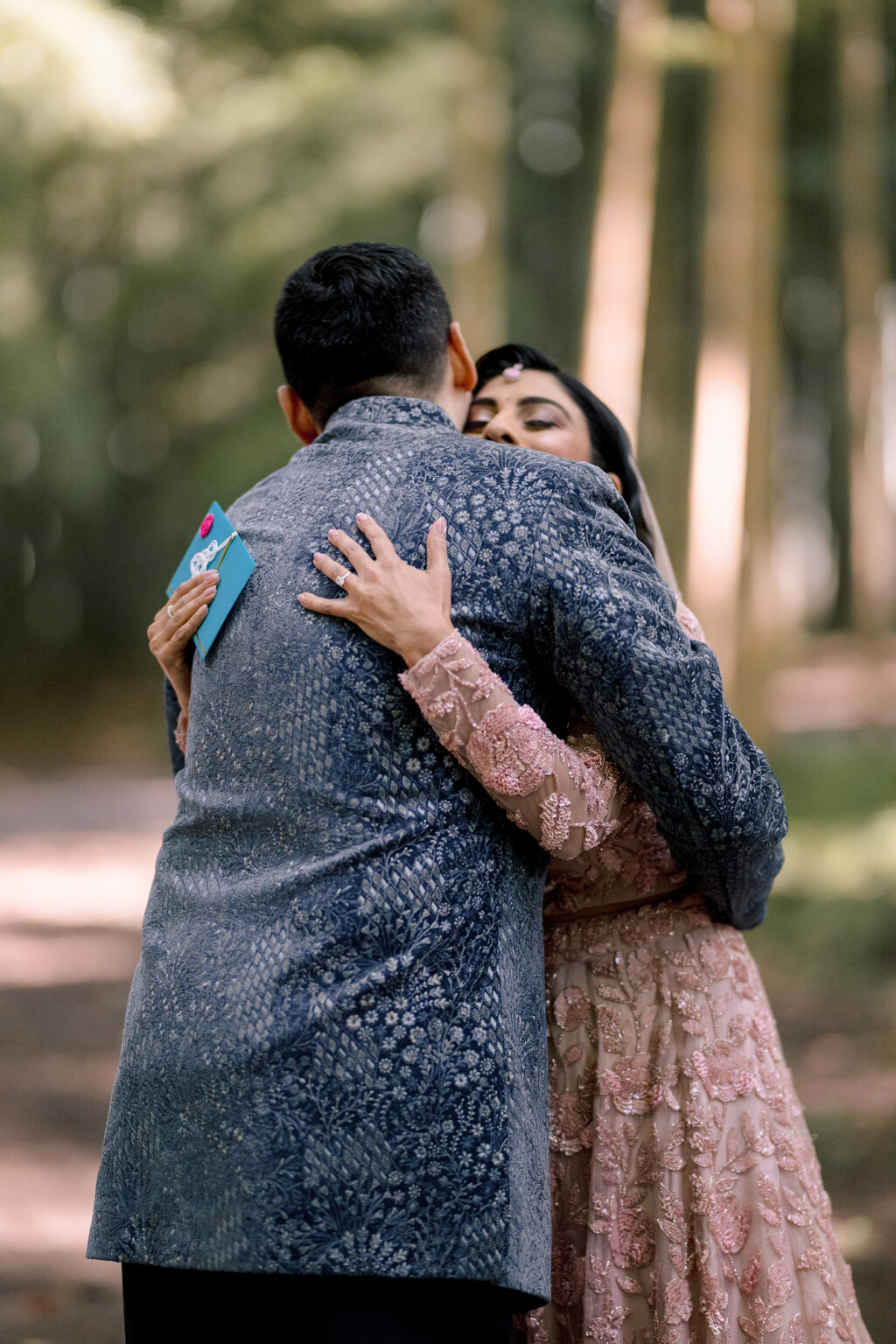
  • The bride holds her blue vow card behind the groom's back as they embrace, private vows done, in a bamboo forest in Japan.
The groom pulls the bride close after their private vows, eyes closed, in a bamboo grove on the morning of their Indian wedding in Japan.

Hers went back to a date she had never wanted to go on, 3,897 days earlier, arranged by a friend who had pretended to be her on a dating app and chosen him. She had the number to the day. Standing among the canes, she said simply, “We’re here in our favourite place.”
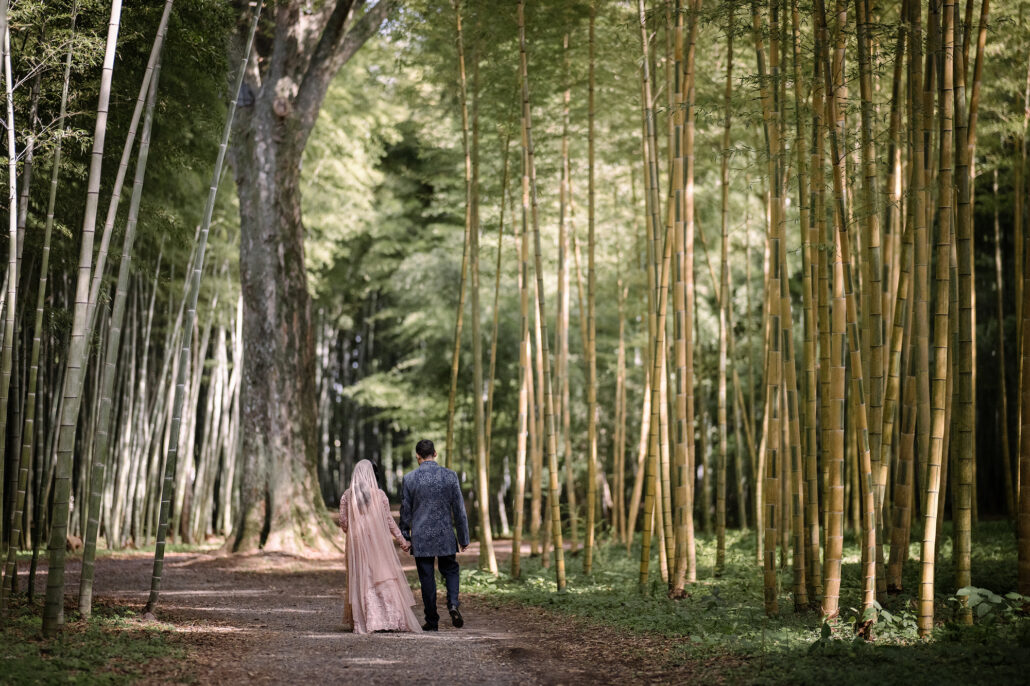
Golden bamboo rises far above the couple as they walk away along the path through a Japanese bamboo forest in Tochigi.
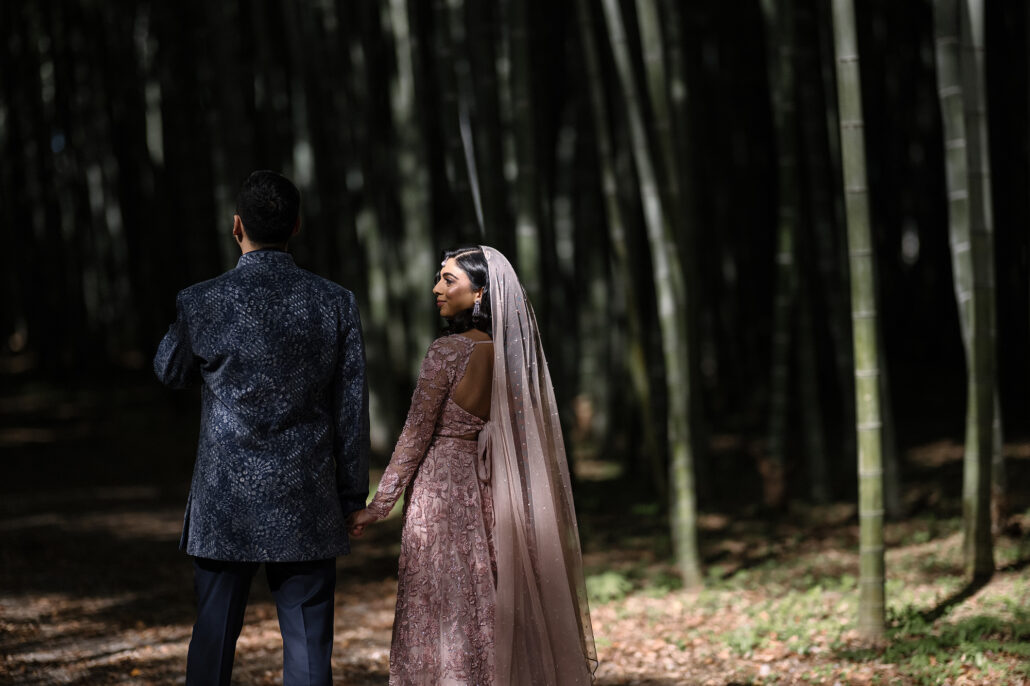
  • The bride glances back in her pink lehenga, the groom beside her in shade, deep in the bamboo on the day of their Indian wedding in Japan.
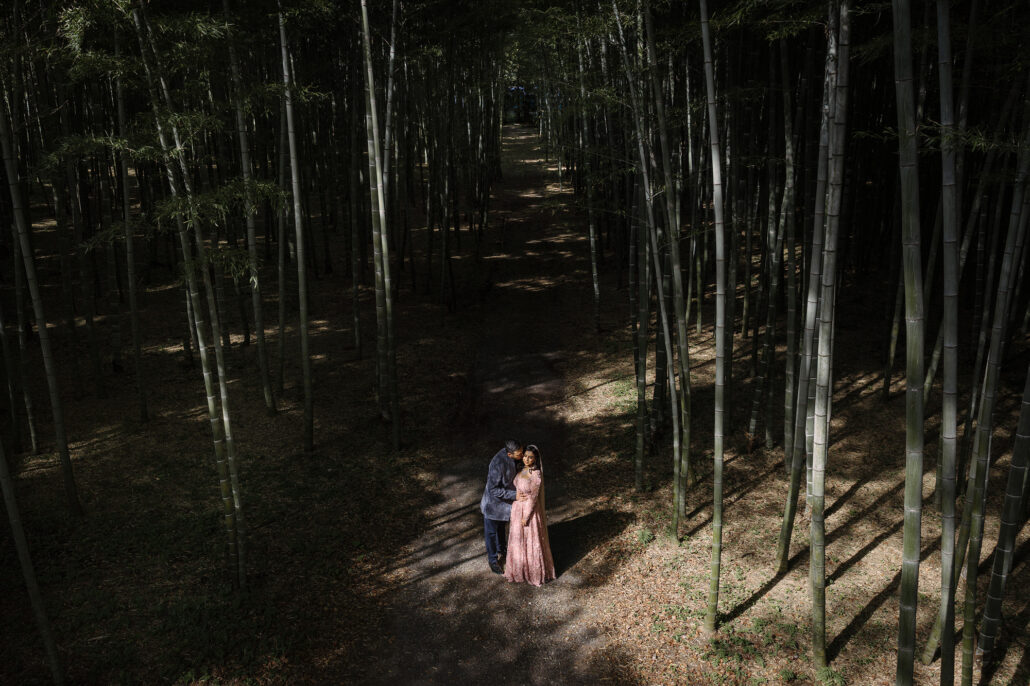
  • From above, the couple embrace in a shaft of sunlight on a dark bamboo path, the morning of their Indian wedding in Tochigi.
  • The bride and groom walk hand in hand under walls of golden and green bamboo, a bamboo forest wedding in Japan before the guests arrive.
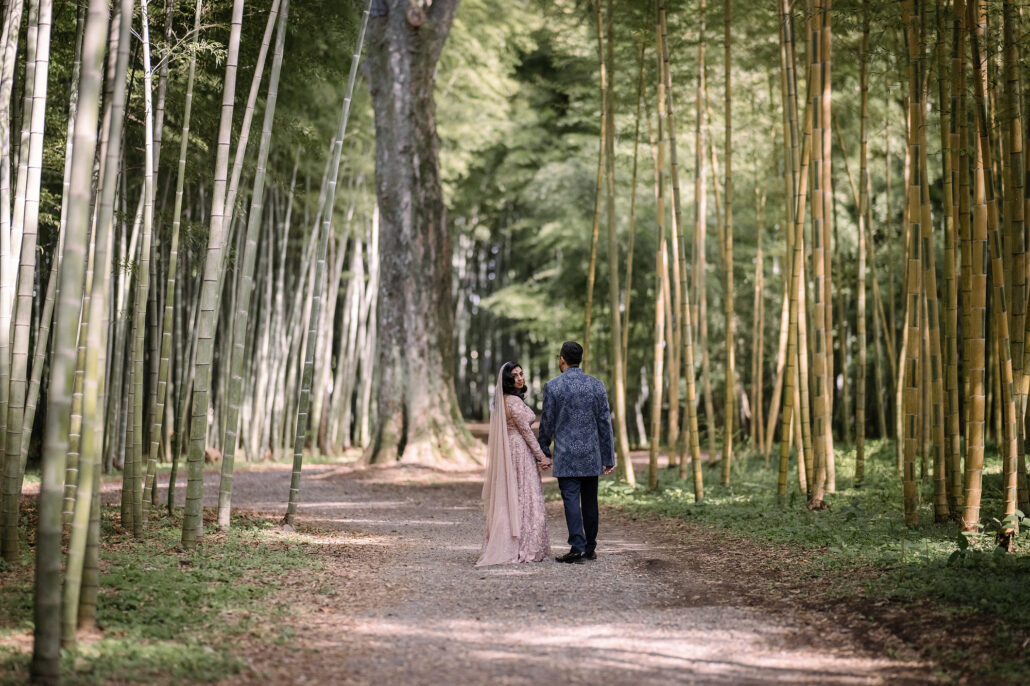
  • The couple walk away down a path lined with golden bamboo and a giant tree, the bride glancing back, in a bamboo forest in Tochigi.
  • Dappled light falls on the path as the couple walk into dark green bamboo, a quiet stretch of the bamboo grove in Tochigi where they married.
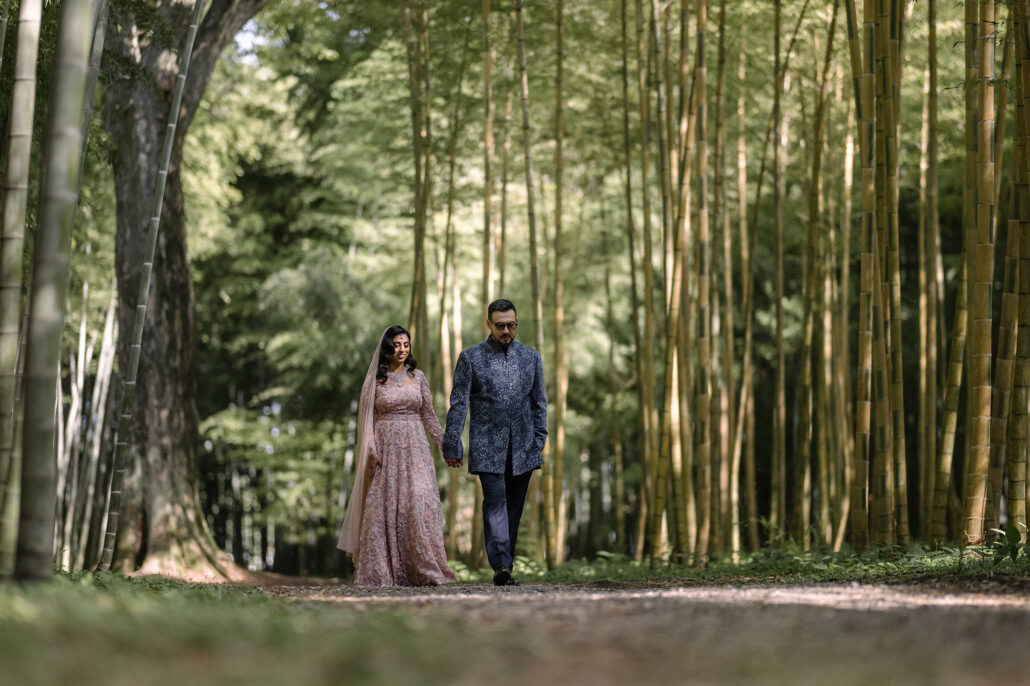
  • In her pink lehenga and his navy sherwani, the couple walk toward the camera through golden bamboo at their Indian wedding in Japan.
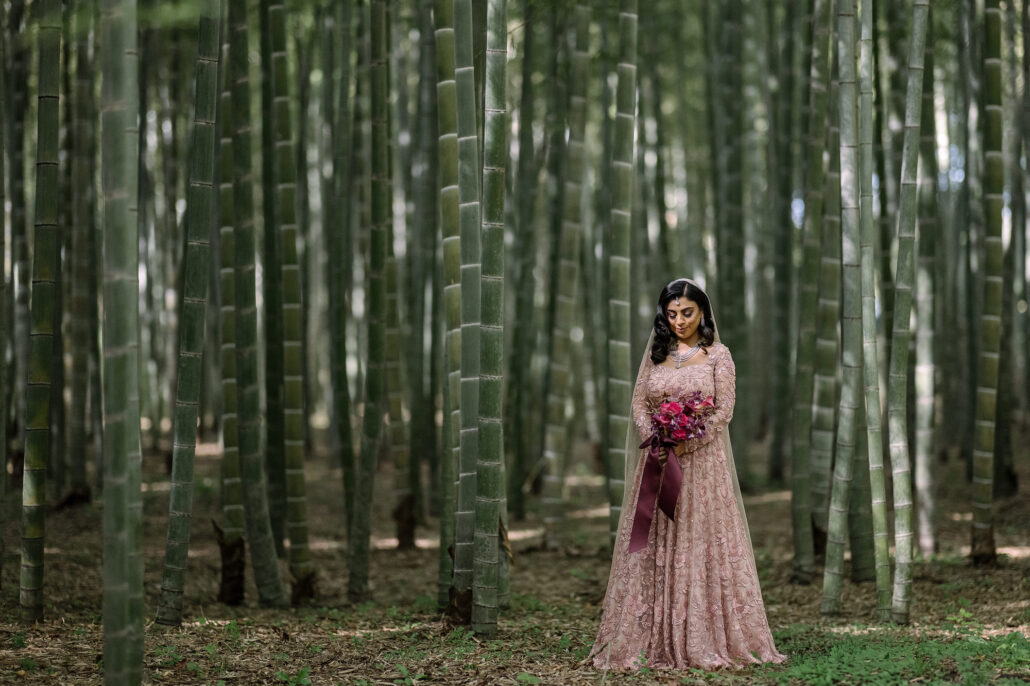
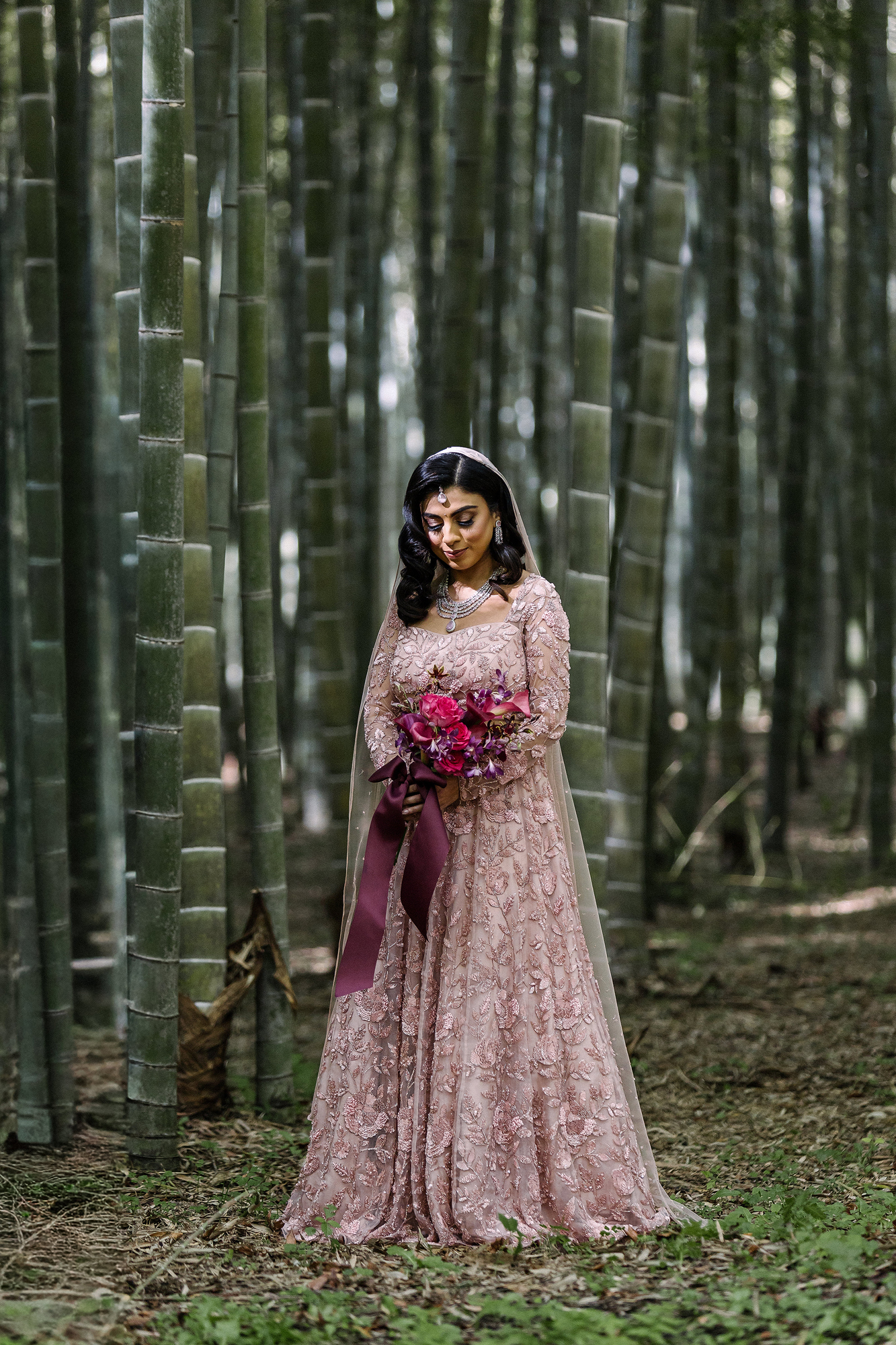
  • The Indian bride stands alone among straight green bamboo culms, bouquet low, in a quiet corner of the bamboo forest in Tochigi.
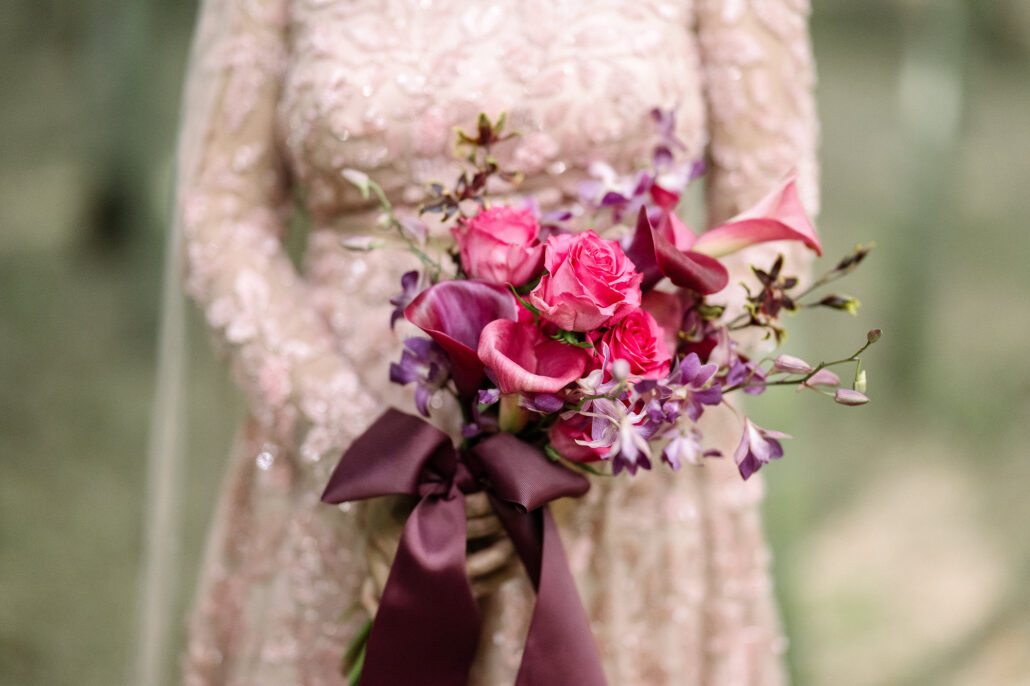
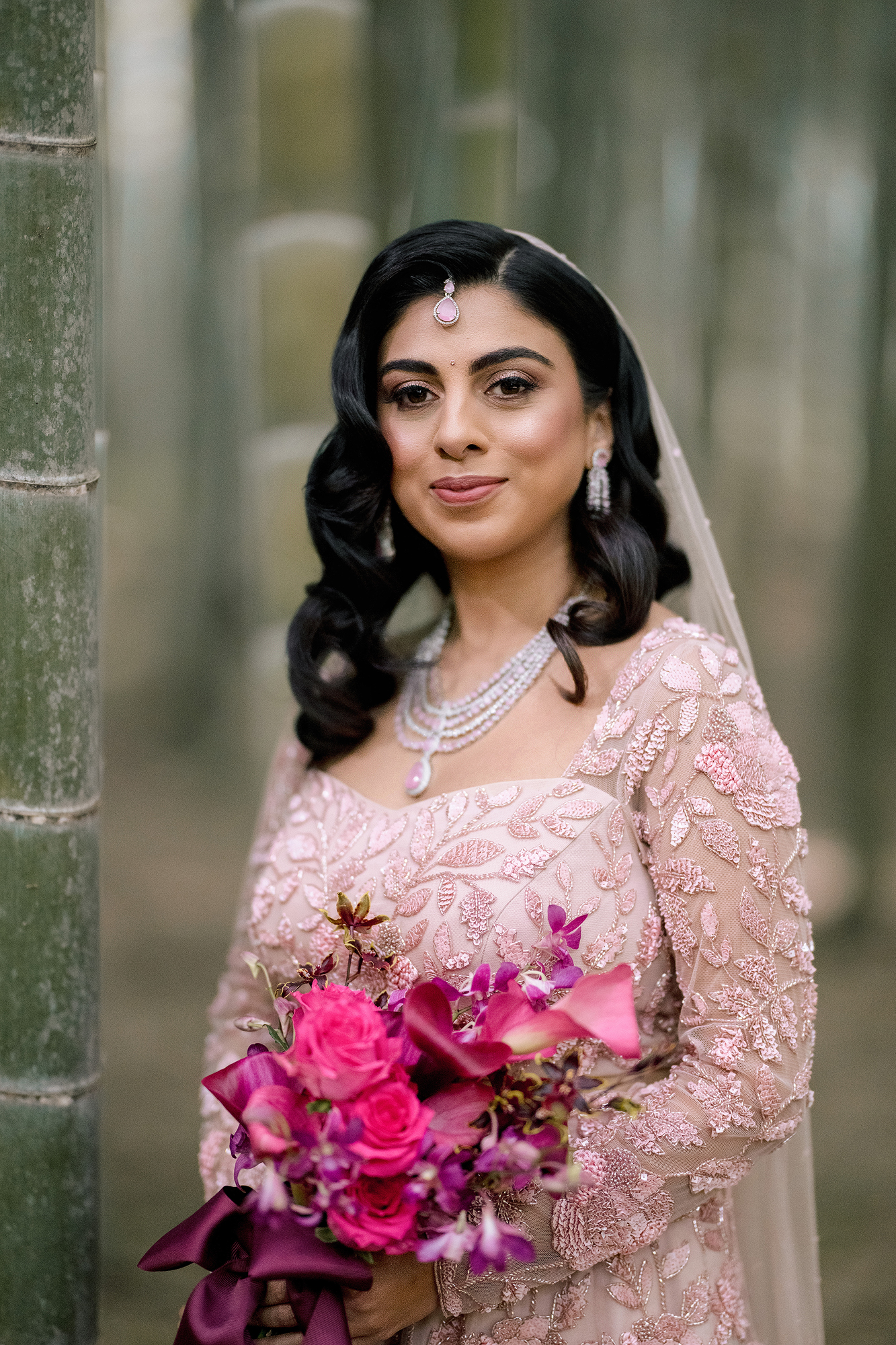
  • The bride holds her bouquet of pink roses, calla lilies and purple orchids in burgundy ribbon against her lehenga, at an Indian wedding in Japan.
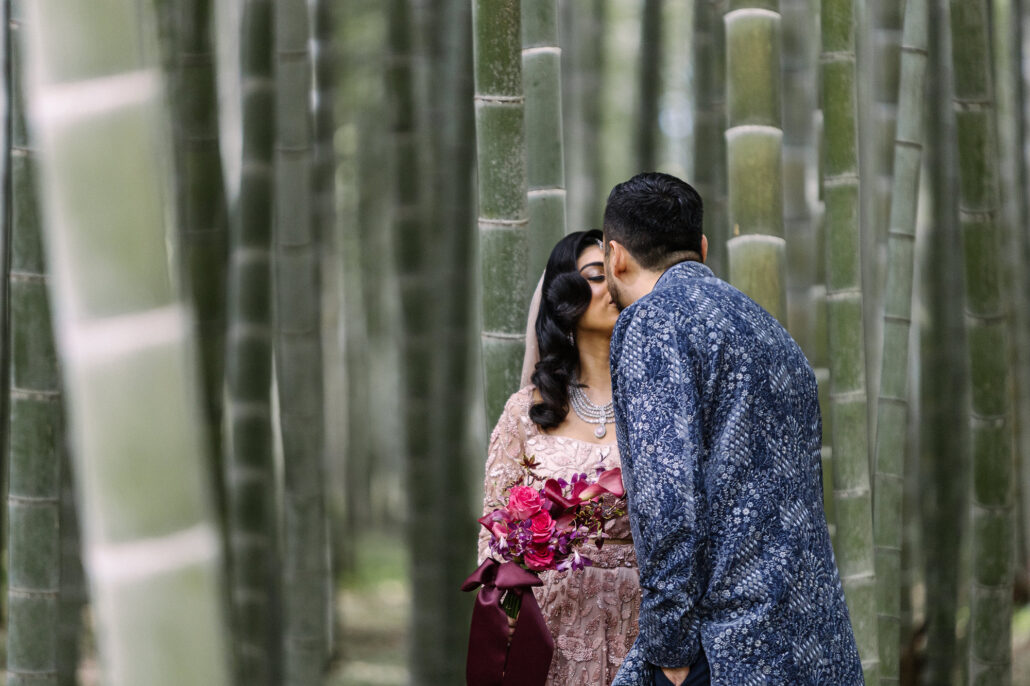
  • Framed by thick bamboo culms, the groom kisses the bride as she holds her bouquet, a bamboo forest wedding in Japan.
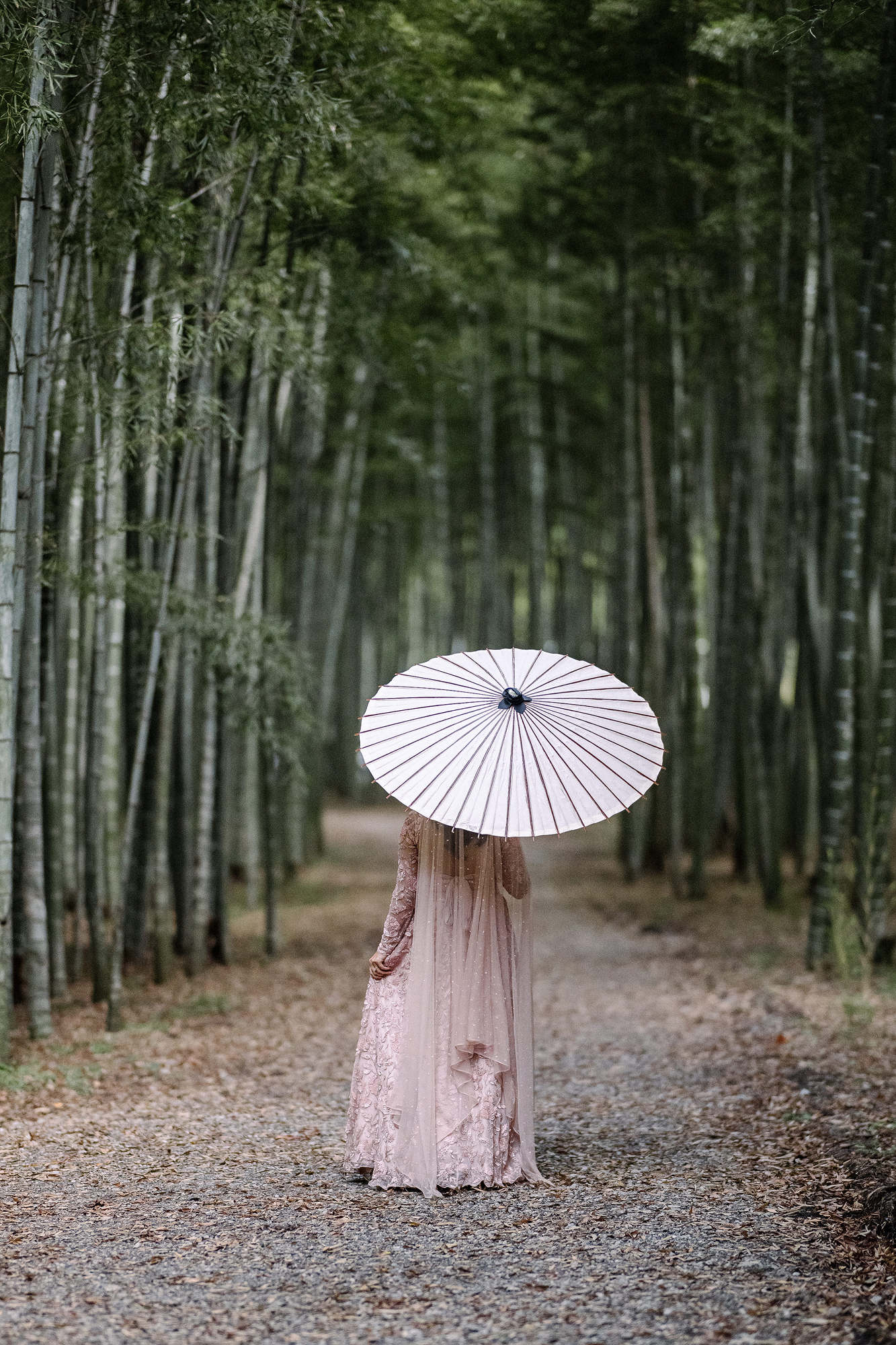
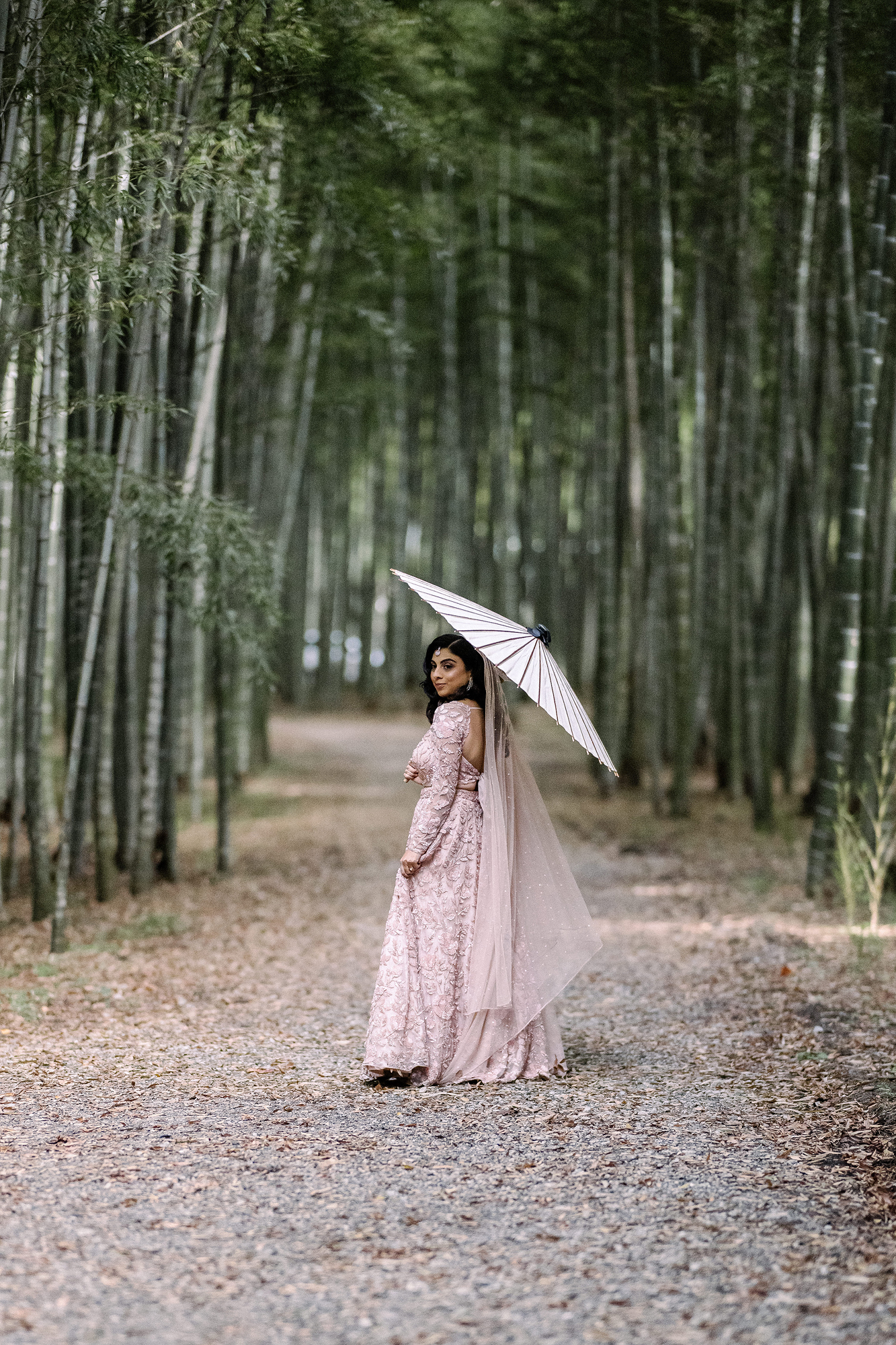
  • Seen from behind, the bride walks the bamboo path under a white Japanese paper parasol, her lehenga trailing on the gravel in Tochigi.
  • The Indian bride turns under a white paper parasol on a gravel path through the bamboo, a Japanese touch at her fusion wedding in Tochigi.
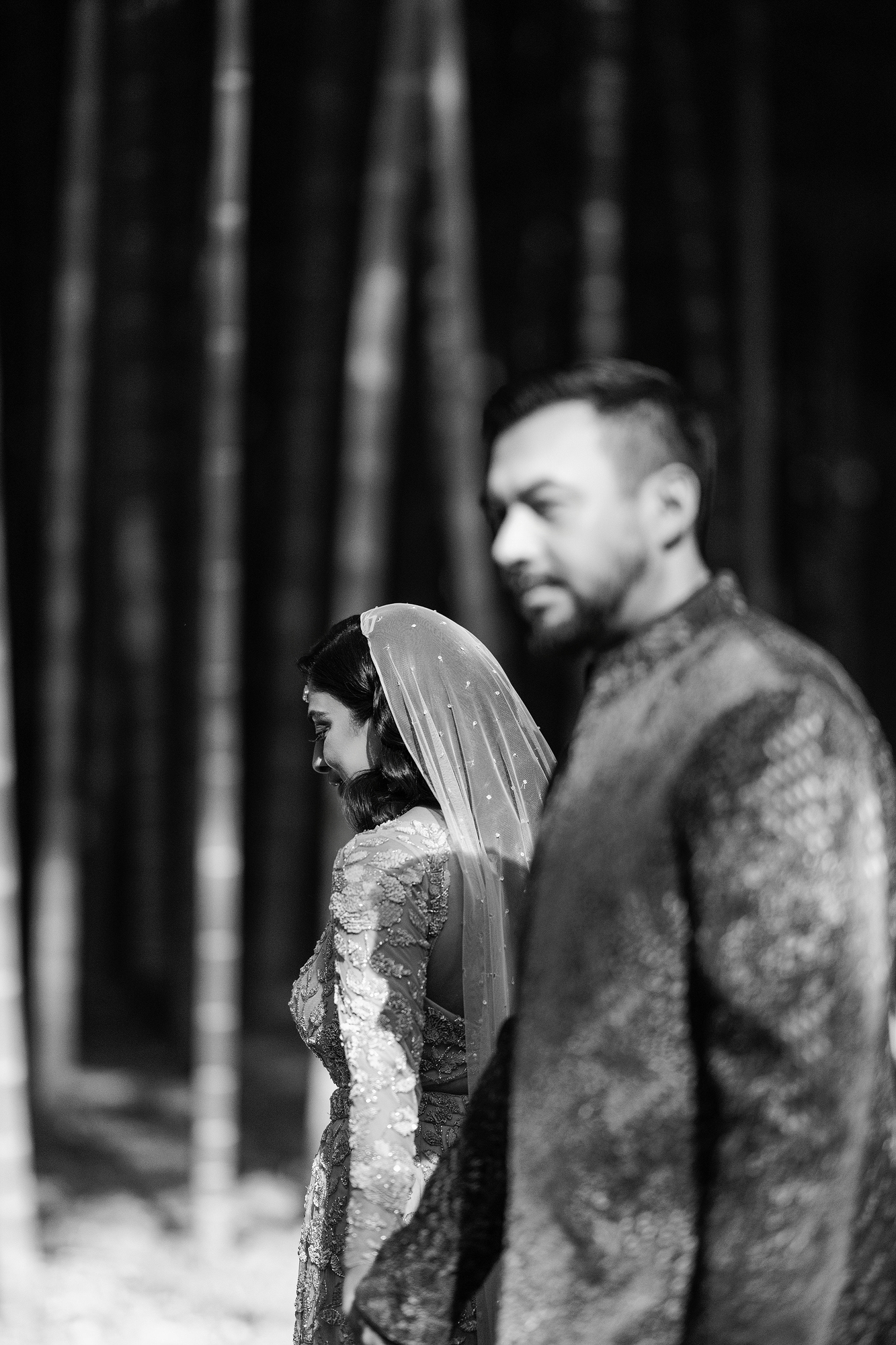
  • A black and white frame of the bride looking down beneath her veil, the groom in his sherwani beside her, among bamboo in Tochigi.
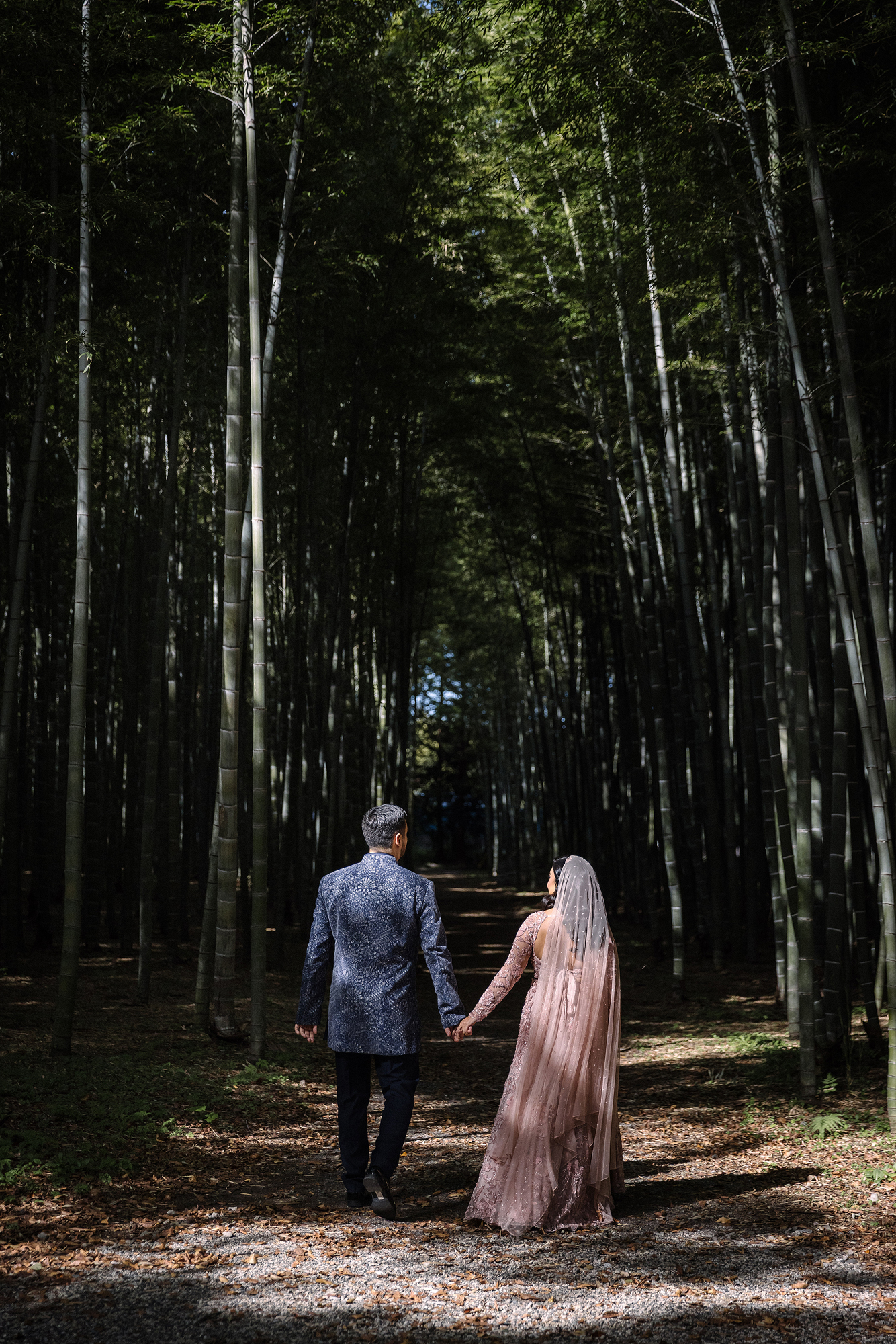
  • Hand in hand, the couple walk a dappled path into dark bamboo before the guests arrive for their destination wedding in Japan.
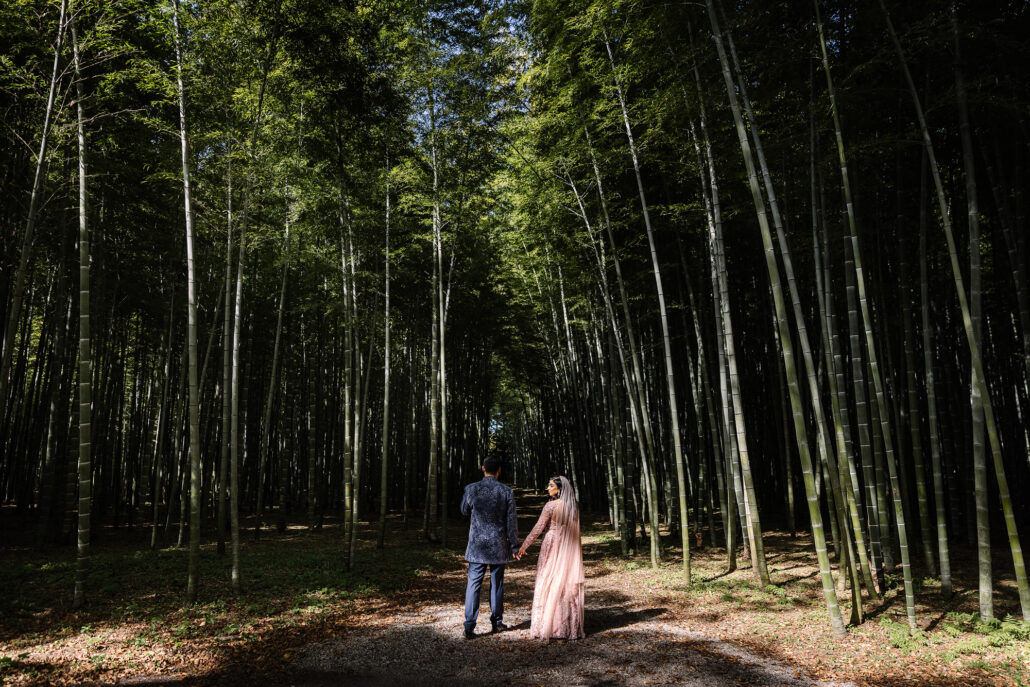
  • Far down a dark avenue of tall bamboo, the couple kiss in a patch of light, a bamboo forest wedding in Tochigi, Japan.
  • The bride stands among thick green bamboo in her embroidered pink lehenga and veil, bouquet in hand, at her Indian wedding in Japan.
  • The Indian bride holds a bouquet of pink roses, calla lilies and orchids tied with burgundy ribbon beside a bamboo culm in Tochigi.

The Baraat: Two Indian Drums and a Japanese One

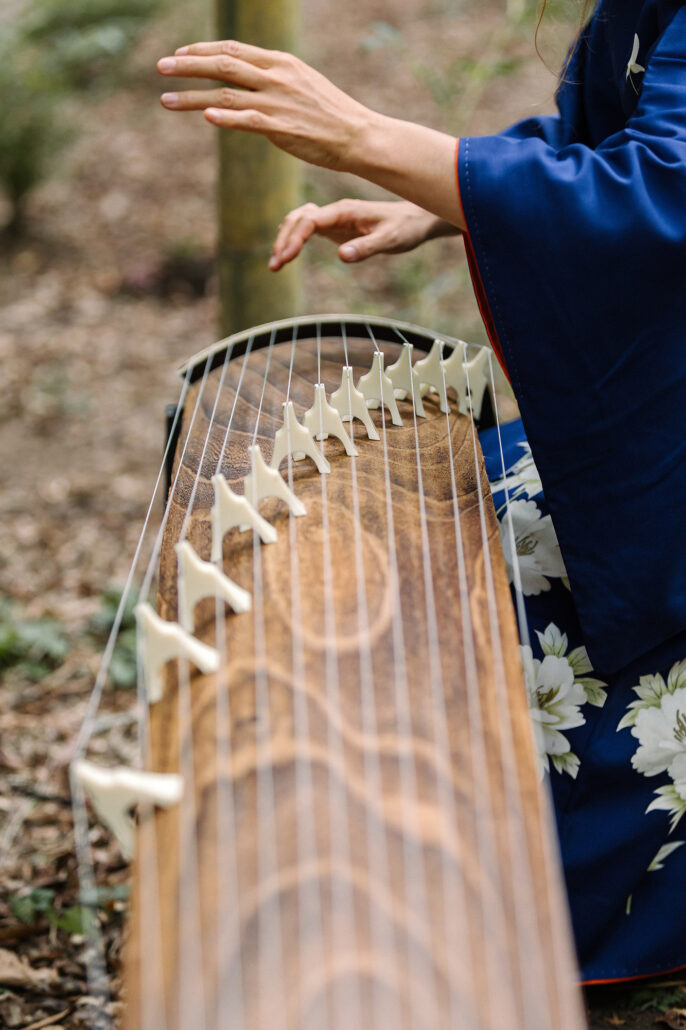
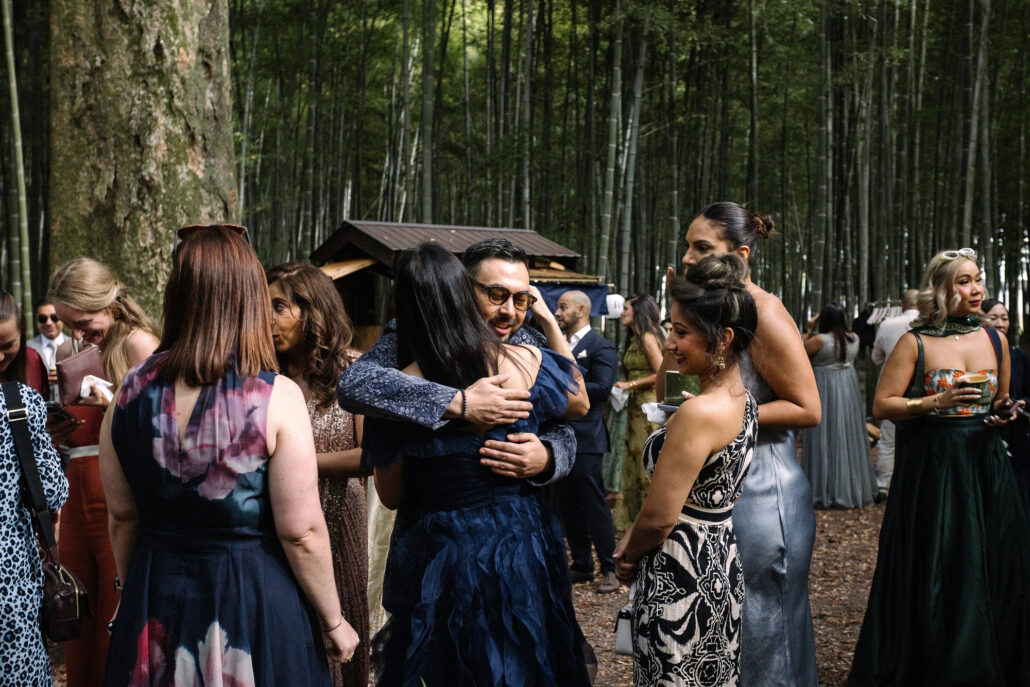
The guests arrived to matcha and chai in bamboo cups the farm made for the day, while a koto played. One of our favourite moments came before anything had begun: guests from nine countries walking in and seeing, as everyone does first, how far back the forest goes.
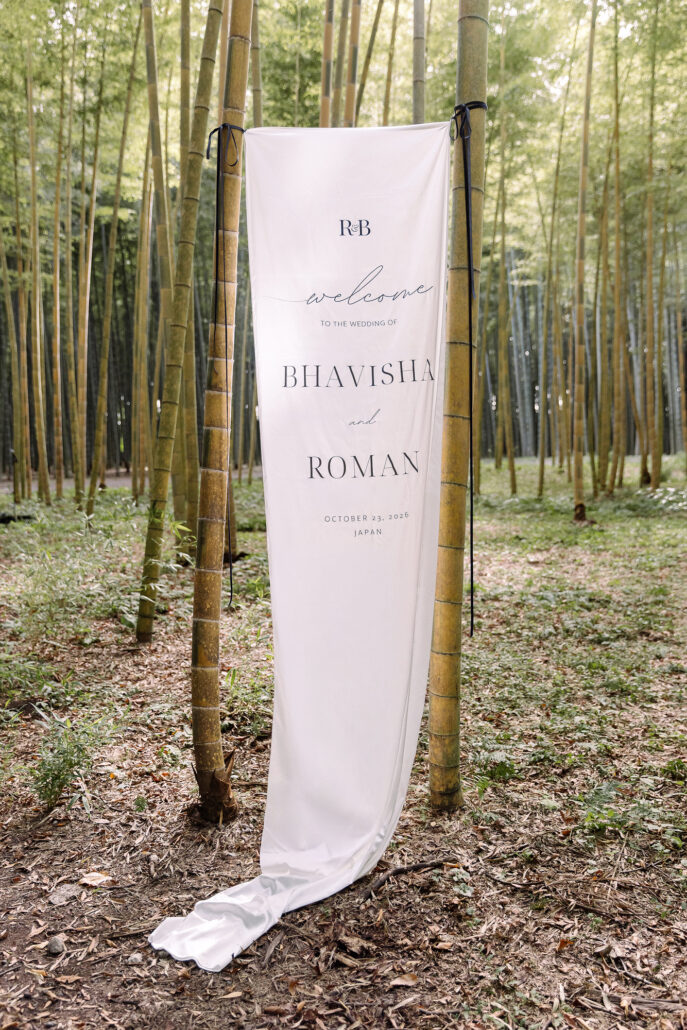
A white welcome banner with the couple's monogram hangs between bamboo culms on black ribbons, greeting guests to an Indian wedding in Japan.
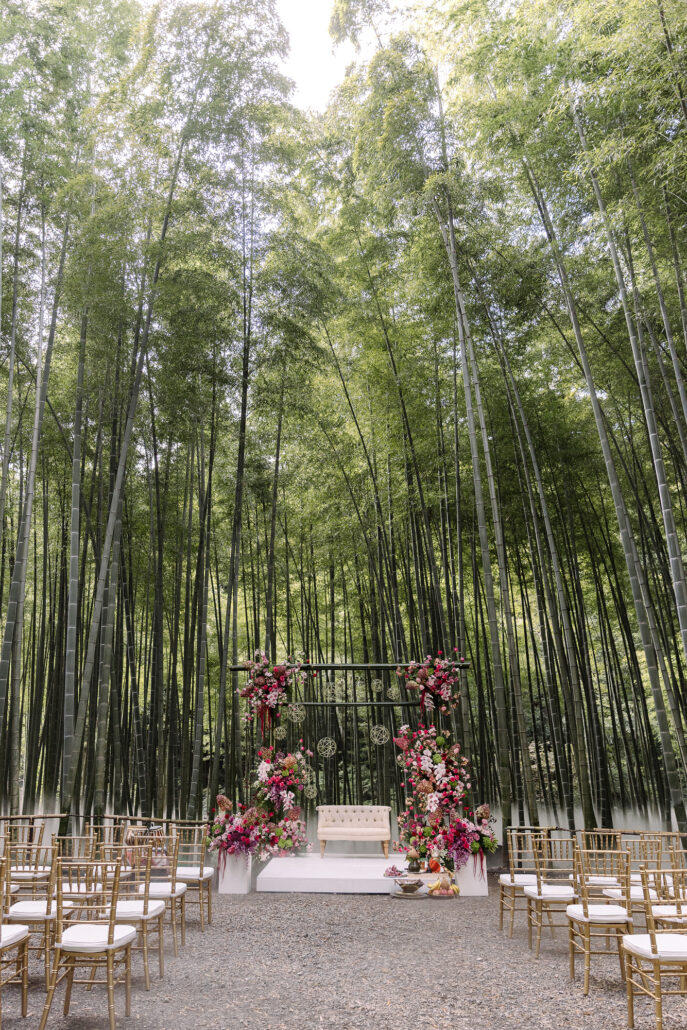
Gold chairs with white cushions face the flowered bamboo mandap beneath towering bamboo, ready for a Hindu wedding ceremony in Tochigi.
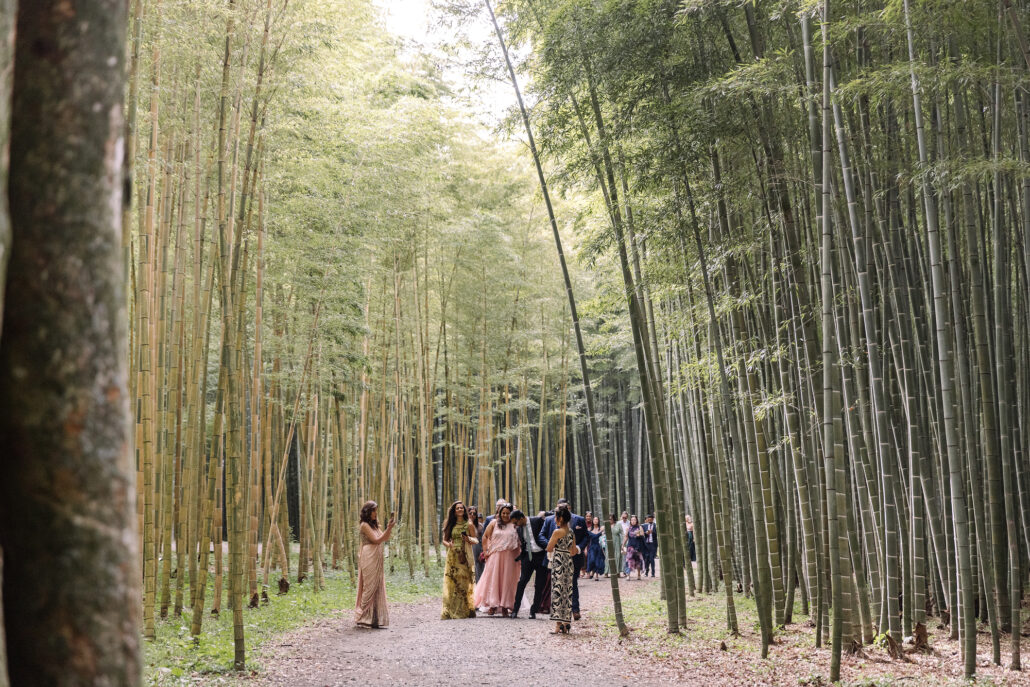
Guests walk in along a broad path between tall bamboo, arriving for an Indian destination wedding in a bamboo forest in Japan.
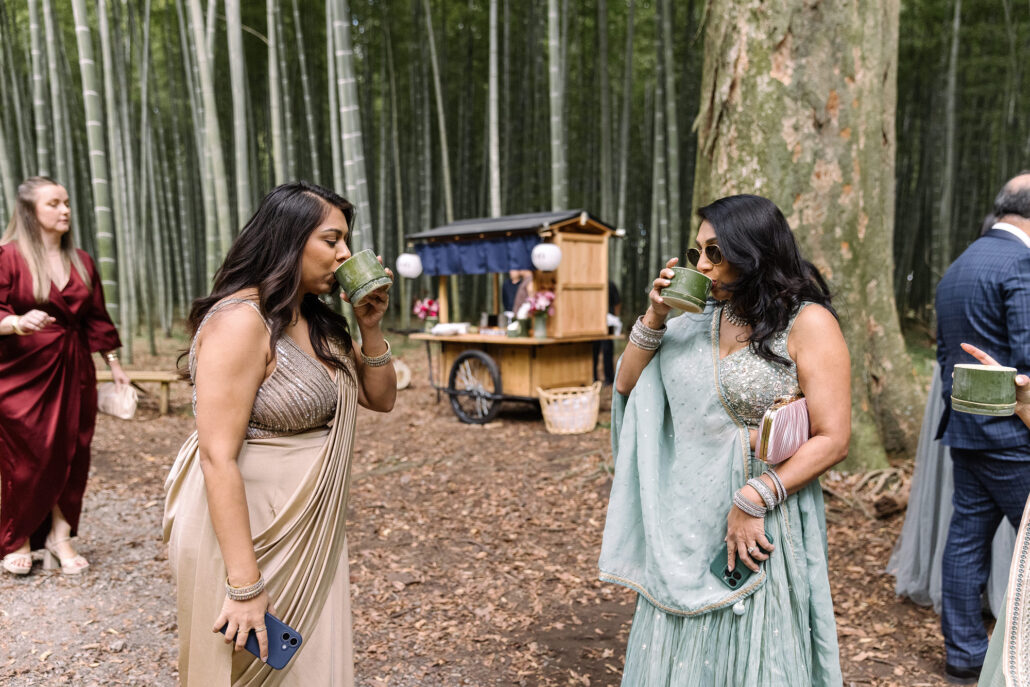
Two guests in Indian dress drink from green bamboo cups at the welcome, a yatai handcart behind them, at an Indian wedding in Tochigi.
A musician in a blue kimono plays the koto for the guests' welcome at an Indian wedding in a Japanese bamboo forest.
Guests gather at a wooden yatai stall under a white monogram lantern during the welcome to an Indian wedding in a bamboo forest in Japan.

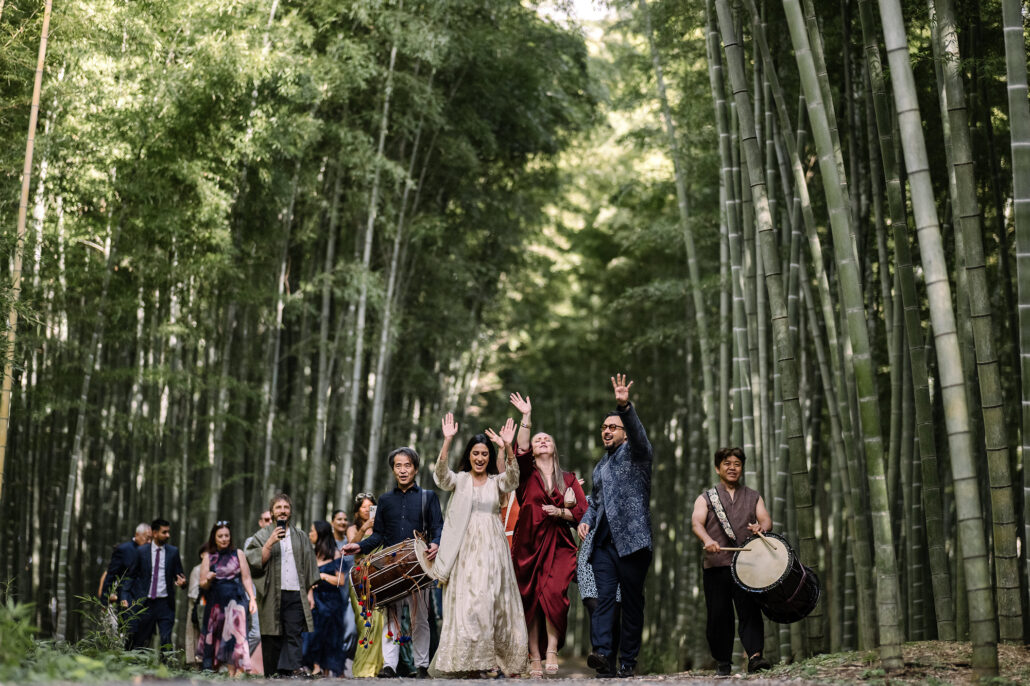
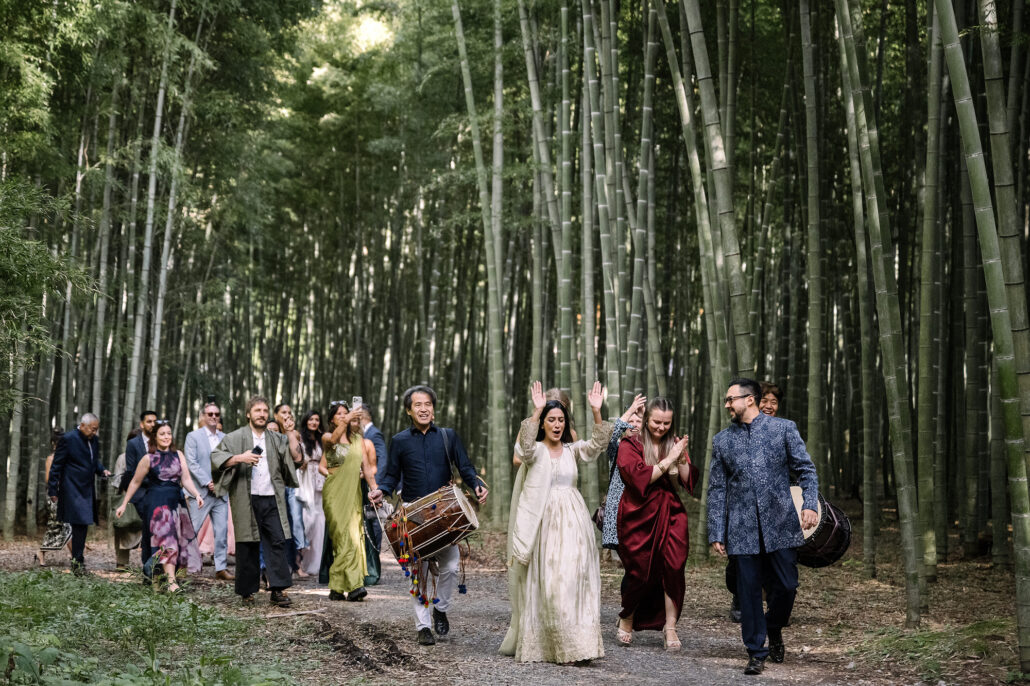
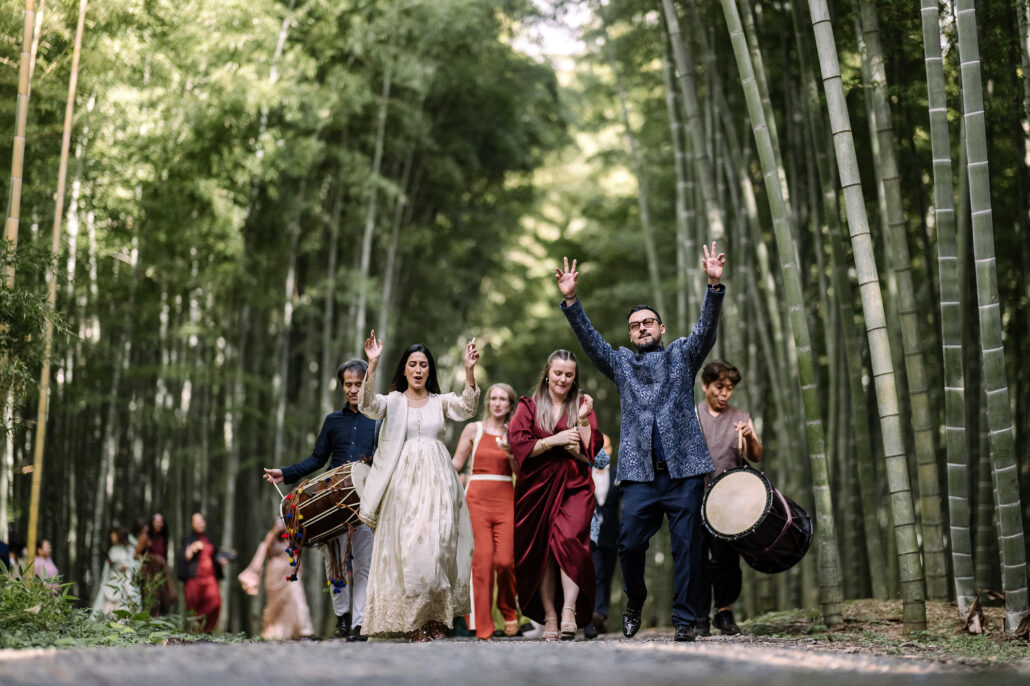
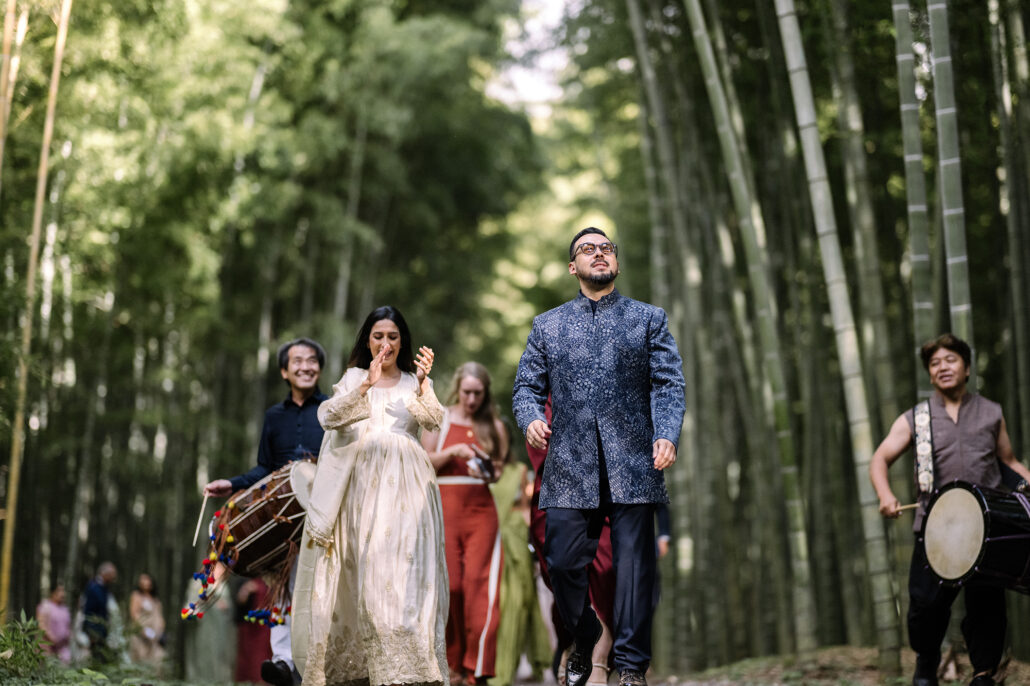
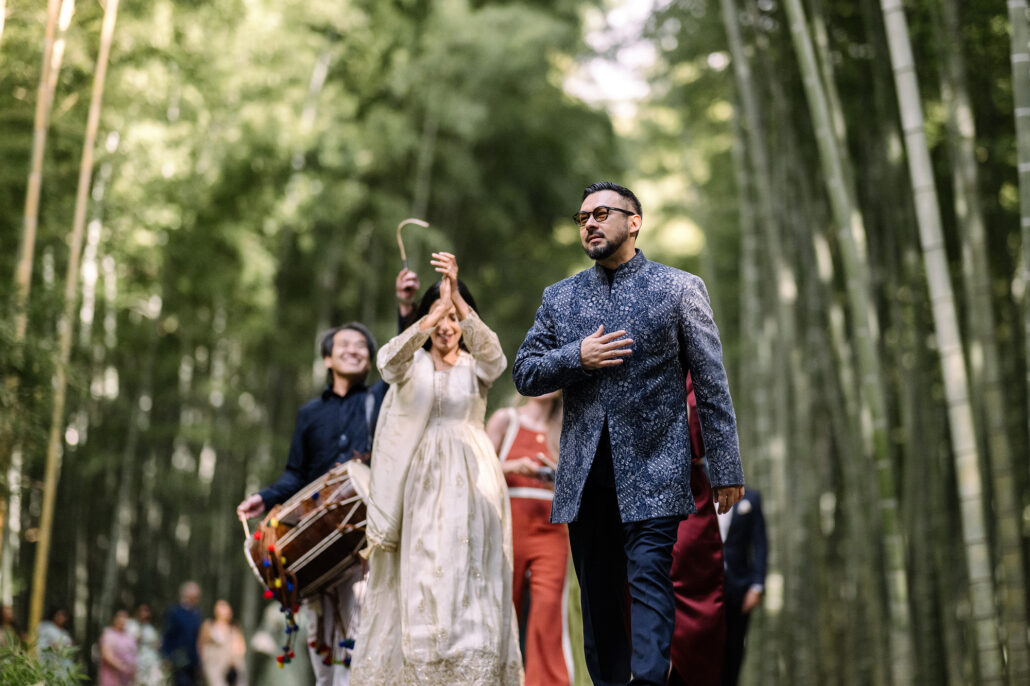
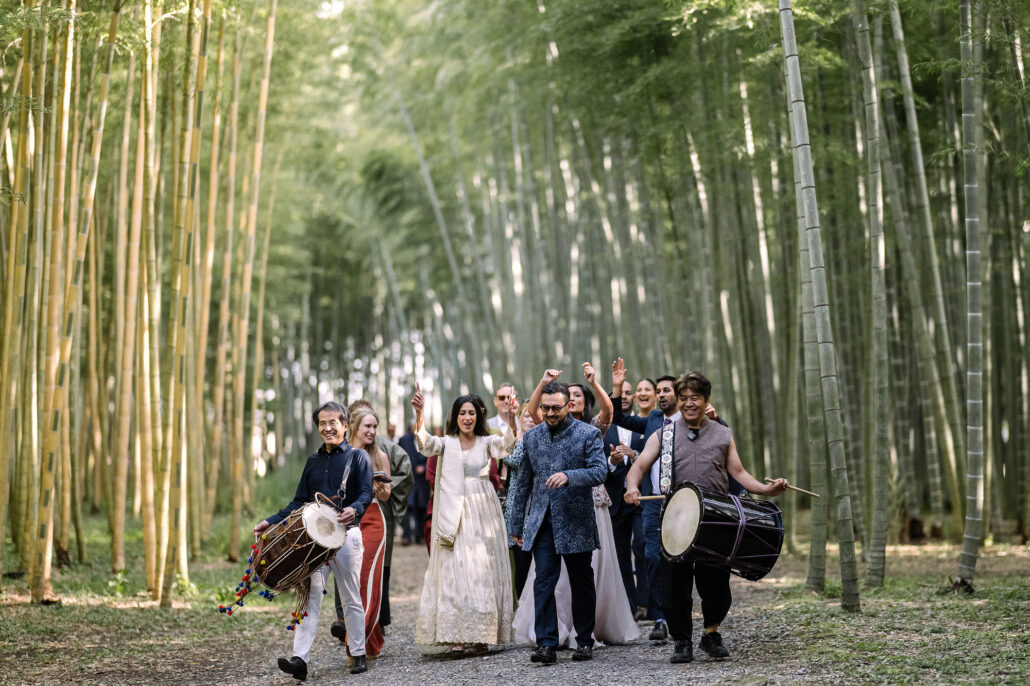
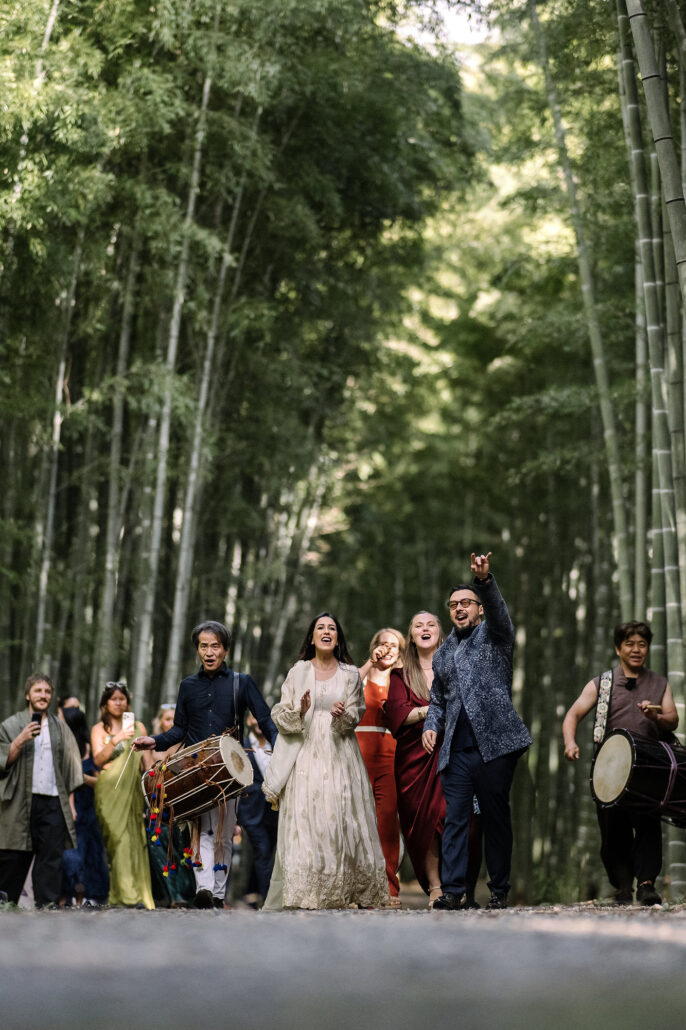
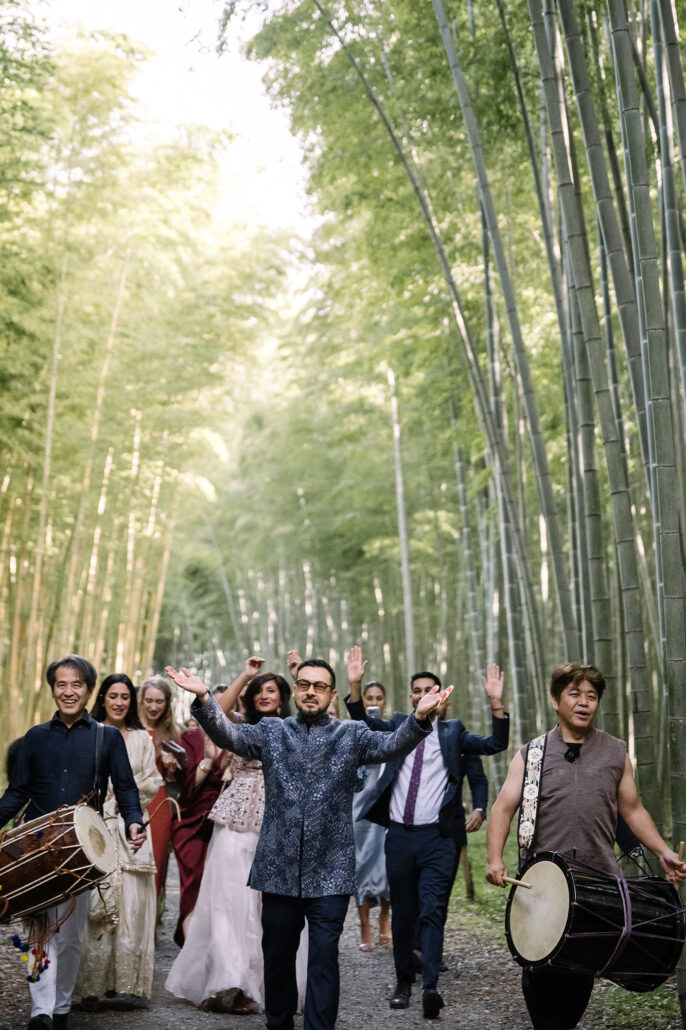
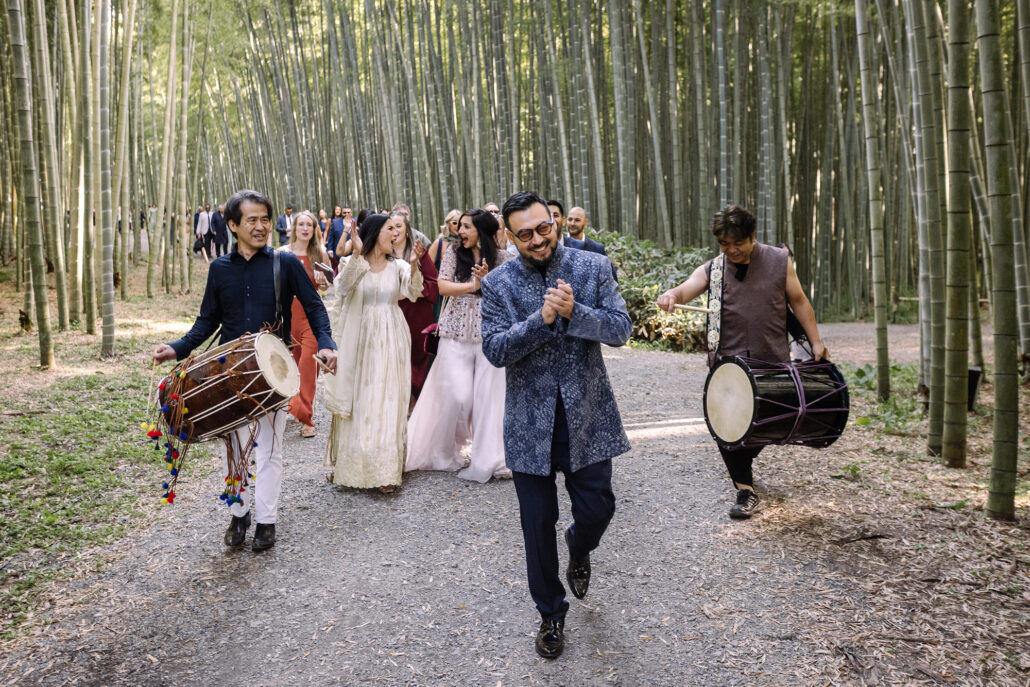
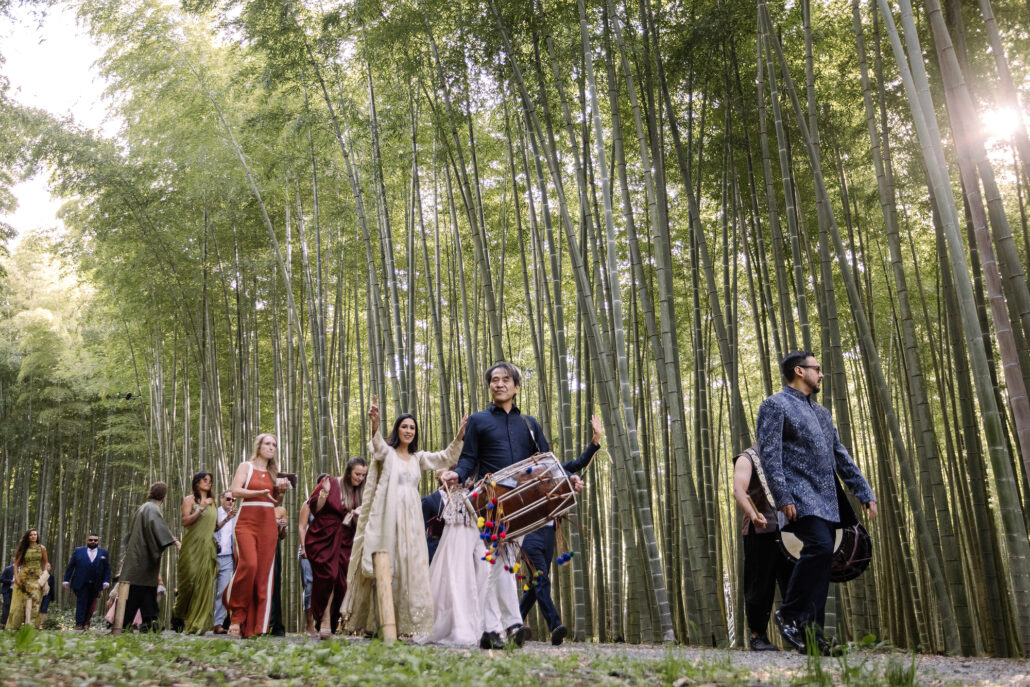
The groom’s baraat wound round the golden bamboo to two dhol and a taiko, played by Japanese drummers, and the guests danced the whole way, heckling with real commitment (“Work it.” “Japan’s next top model.”). We’ve watched grooms arrive at their baraat on a horse in Hawaii, on a wagon in the United States and once, in India, on an elephant. Some of our favourites will always be the ones like this: on foot, with everyone dancing.
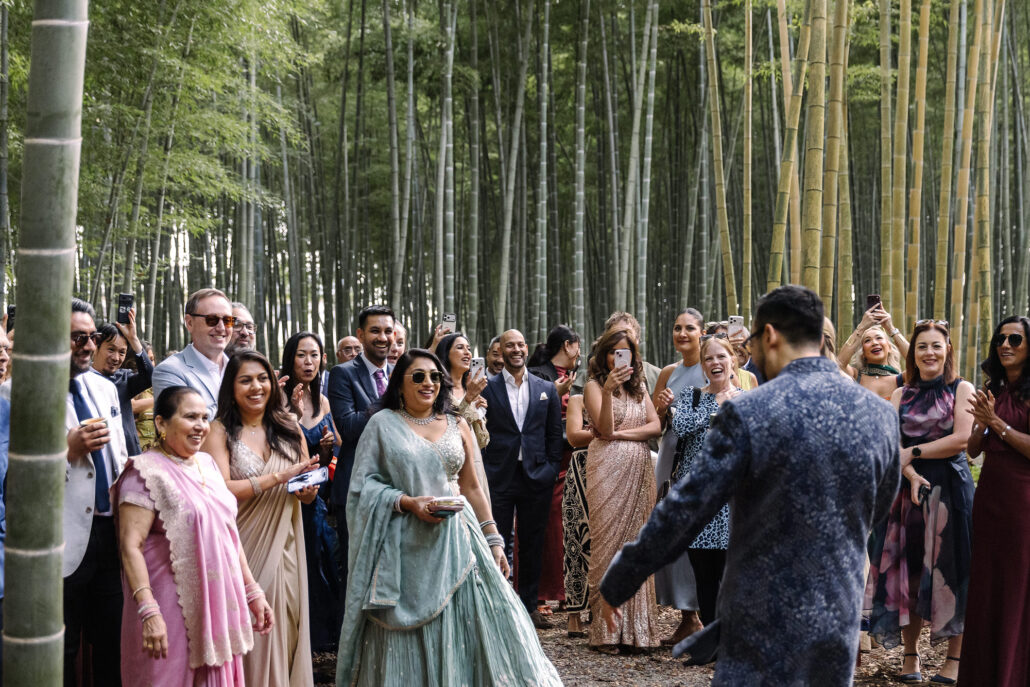
  • Seen from behind, the groom dances toward guests in saris and suits as the baraat begins in the bamboo forest in Tochigi.
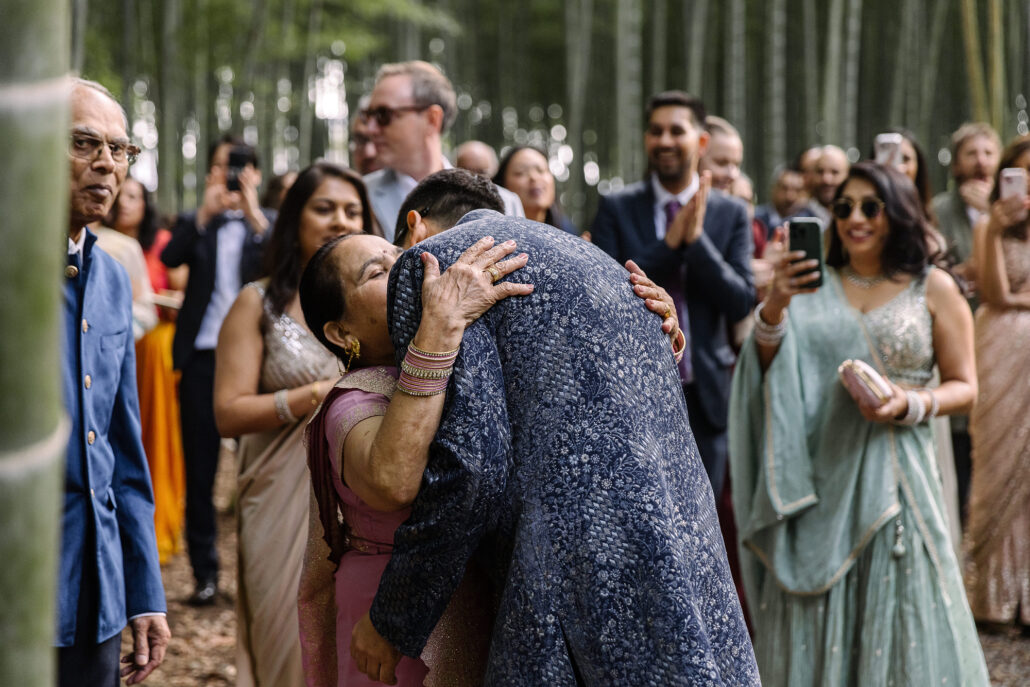
  • A woman in a pink sari pulls the groom into a hug as guests film, before the baraat at an Indian wedding in a bamboo forest in Tochigi.
  • The groom hugs a guest among friends in evening dress as his baraat gathers, a yatai stall behind them, in a Japanese bamboo forest.
  • Guests throw their arms up as the baraat moves through a Japanese bamboo forest, drums leading the groom toward his Hindu wedding.
  • Guests dance behind a dhol drummer and the groom, the baraat carrying Indian wedding traditions down a bamboo path in Japan.
  • The groom leaps with both arms up between the drummers, his baraat in full swing beneath the bamboo at an Indian wedding in Japan.
  • In his navy sherwani, the groom looks up into the bamboo as drummers flank his baraat and guests clap, at an Indian wedding in Tochigi.
  • Hand on his heart, the groom walks the last of his baraat as a guest claps behind, at an Indian wedding in a Japanese bamboo forest.
  • Two drummers lead the groom and his dancing guests along a path through golden bamboo, the baraat of an Indian wedding in Japan.
The groom raises an arm as his baraat dances down a bamboo avenue behind two drummers, an Indian wedding tradition in Tochigi, Japan.
Arms wide, the groom dances in his baraat between a dhol player and a second drummer, guests behind him in a Japanese bamboo forest.
  • The groom claps along between a dhol player and a second drummer as the baraat crosses the bamboo forest in Tochigi, Japan.
  • Sunlight through the bamboo falls on the baraat as the groom dances beside a drummer and his guests at an Indian wedding in Japan.
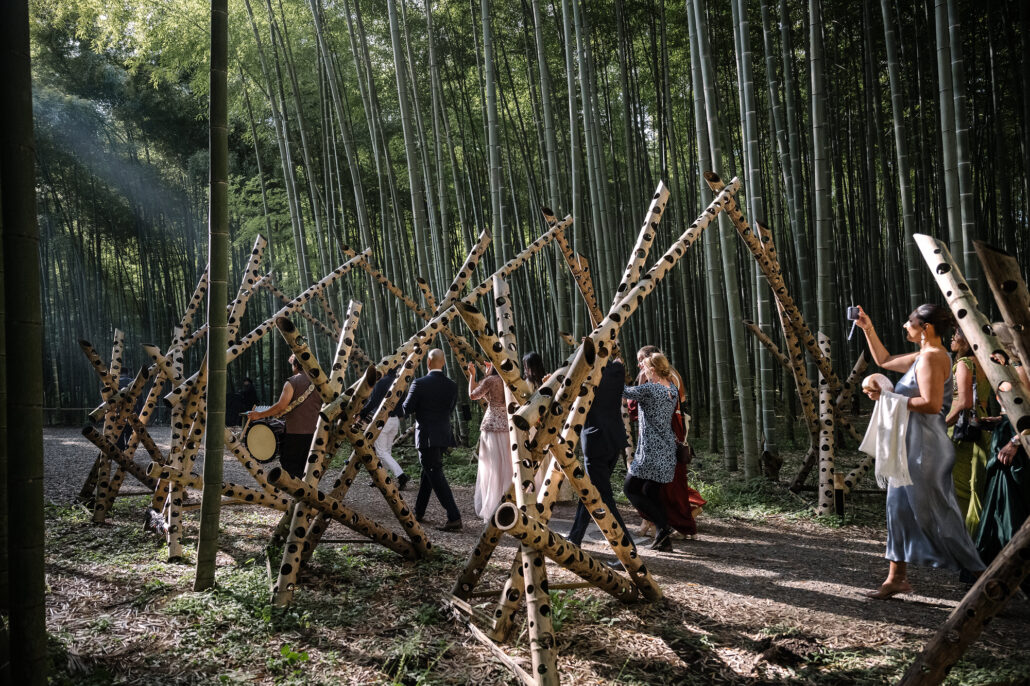
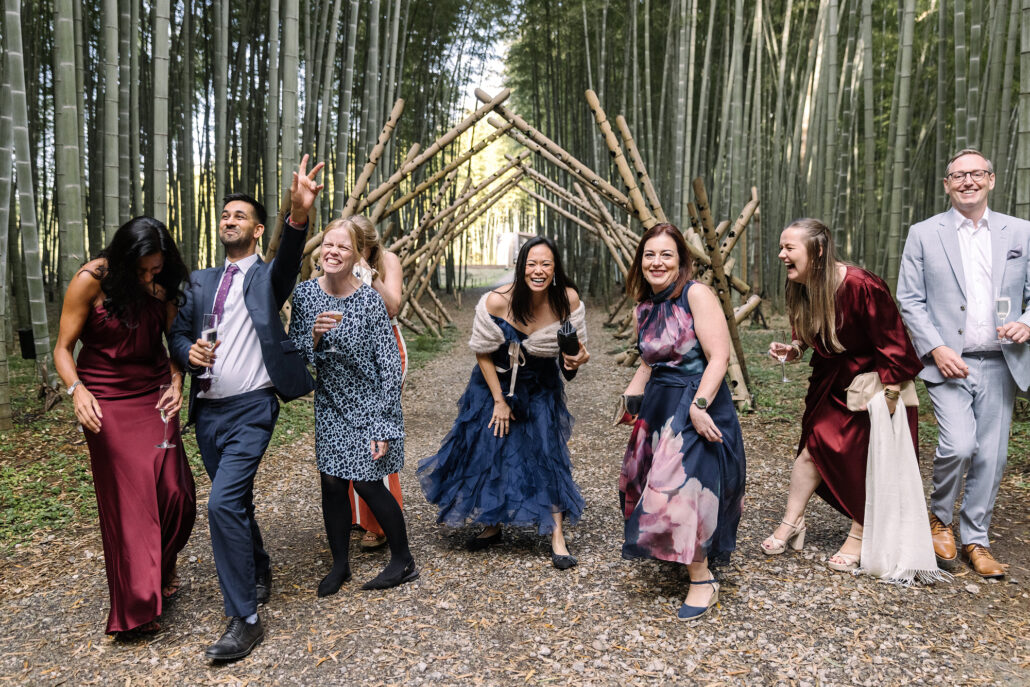
  • Guests walk through a bamboo art installation of crossed, hole-cut poles on their way to the Hindu wedding ceremony in Tochigi.
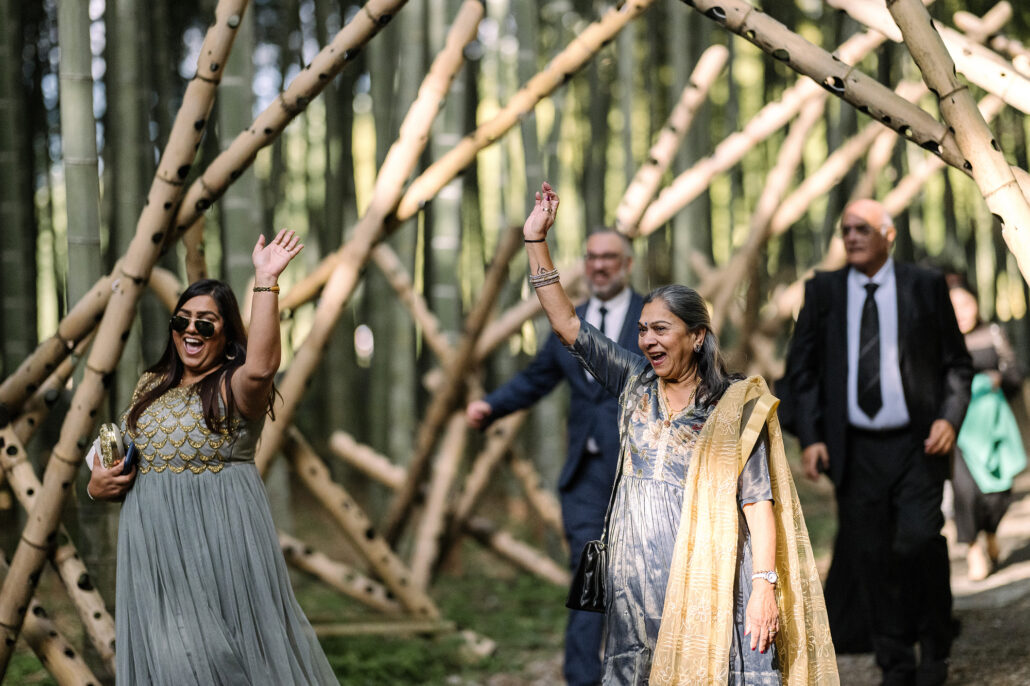
  • Guests cheer as they come through a bamboo arch of crossed poles, heading for the mandap at an Indian wedding in Japan.

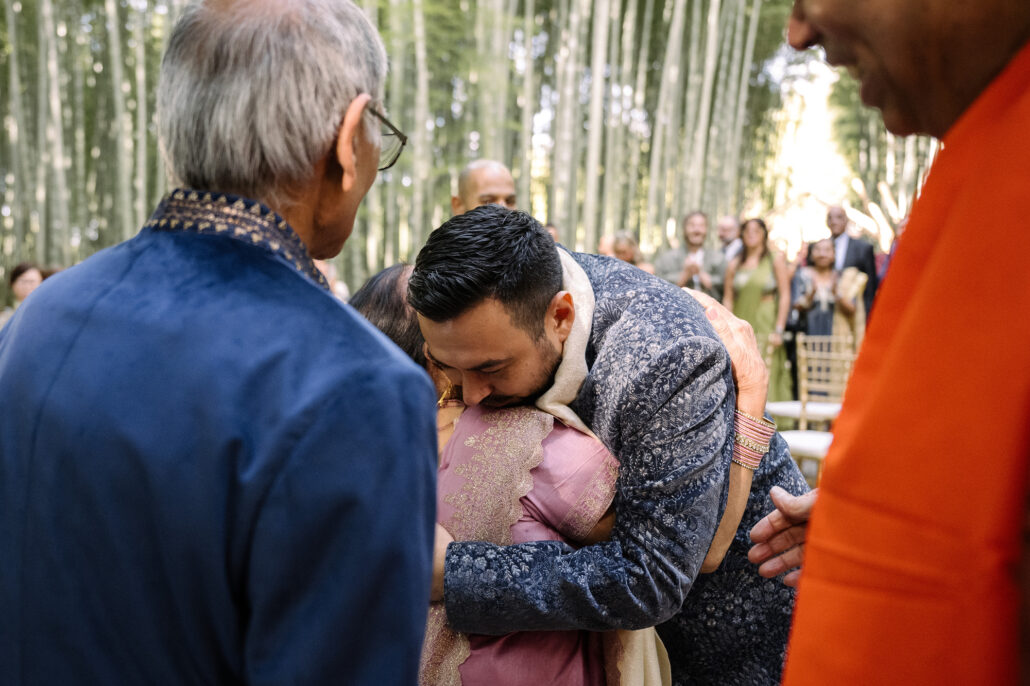
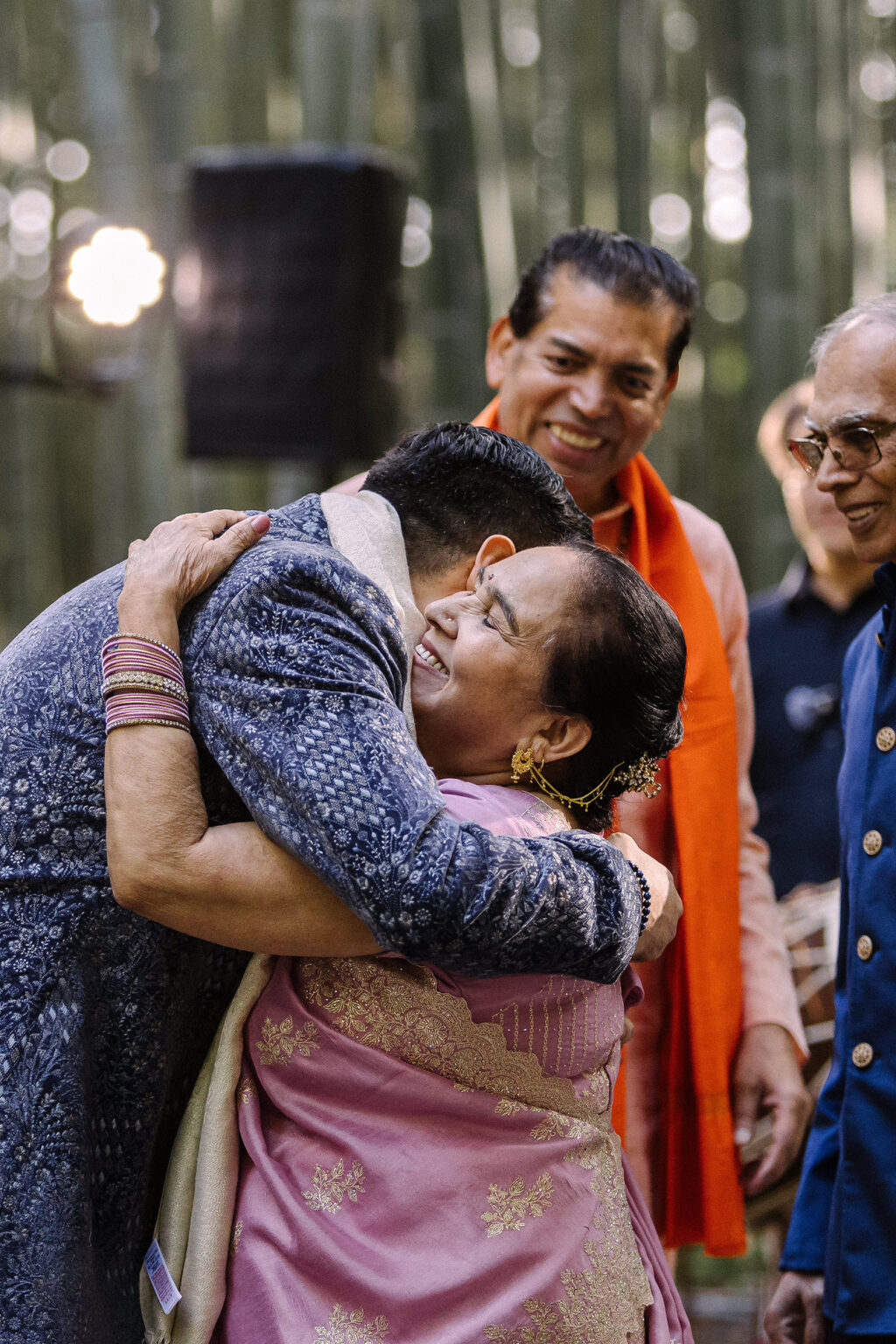
At the end of the path, her parents stepped forward to welcome him.
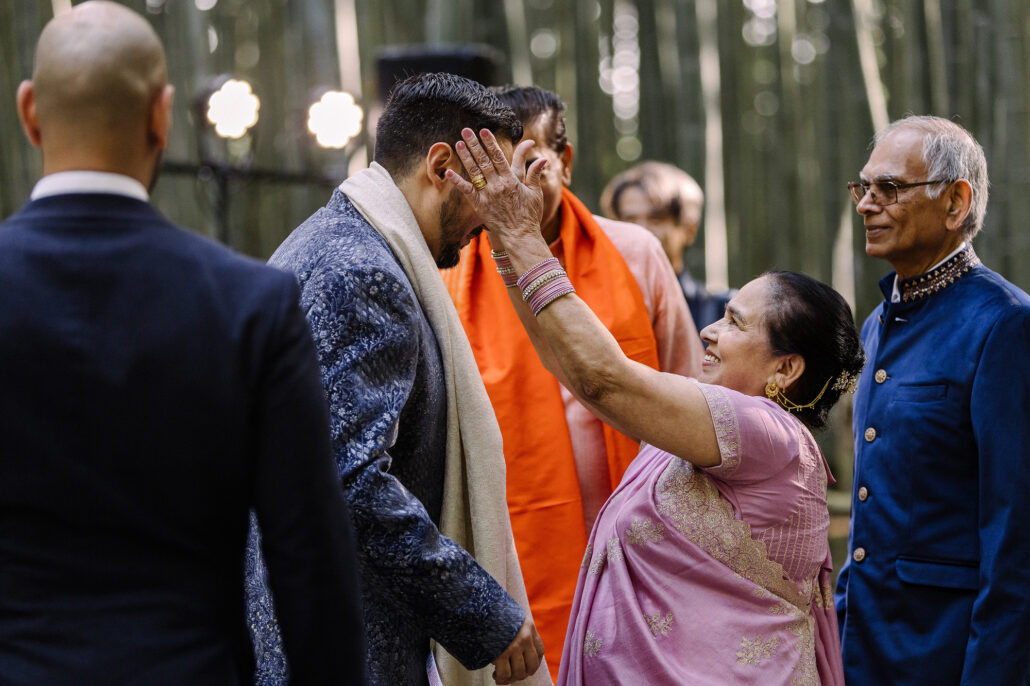
At the end of the baraat, a woman in a pink sari touches the groom's face in welcome, an Indian wedding tradition in a Japanese bamboo forest.
The groom bends into an embrace with family in pink as men in blue and orange look on, the welcome at an Indian wedding in Japan.
Family hug the groom at the end of his baraat, a man in an orange scarf smiling behind, at a Hindu wedding in Tochigi.

Into the Mist

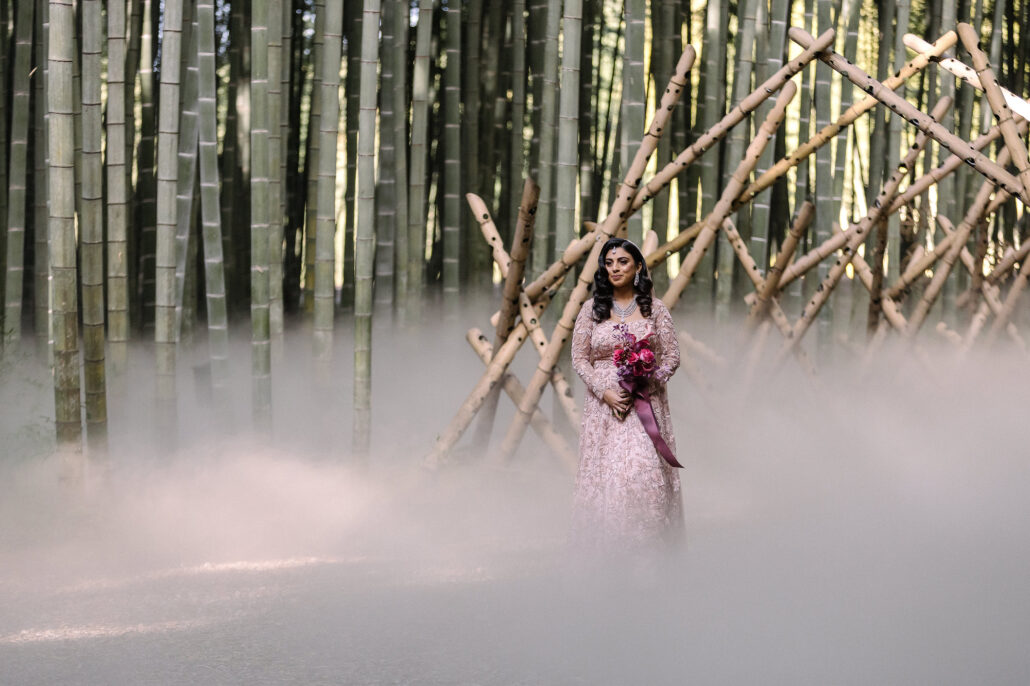
She chose to walk in alone. When the priest asked why, she had an answer ready, and a practical one after it. “It’s just dramatic. There’s going to be mist coming out.”
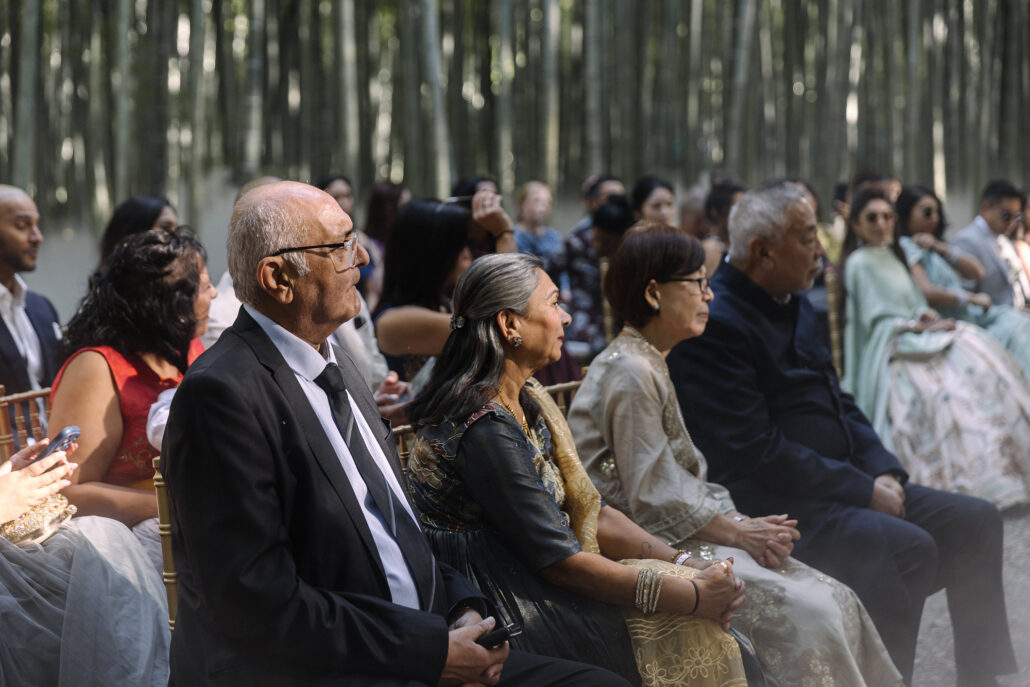
Guests in the front row watch the Hindu wedding ceremony from gold chairs, mist and bamboo behind them, in Tochigi, Japan.
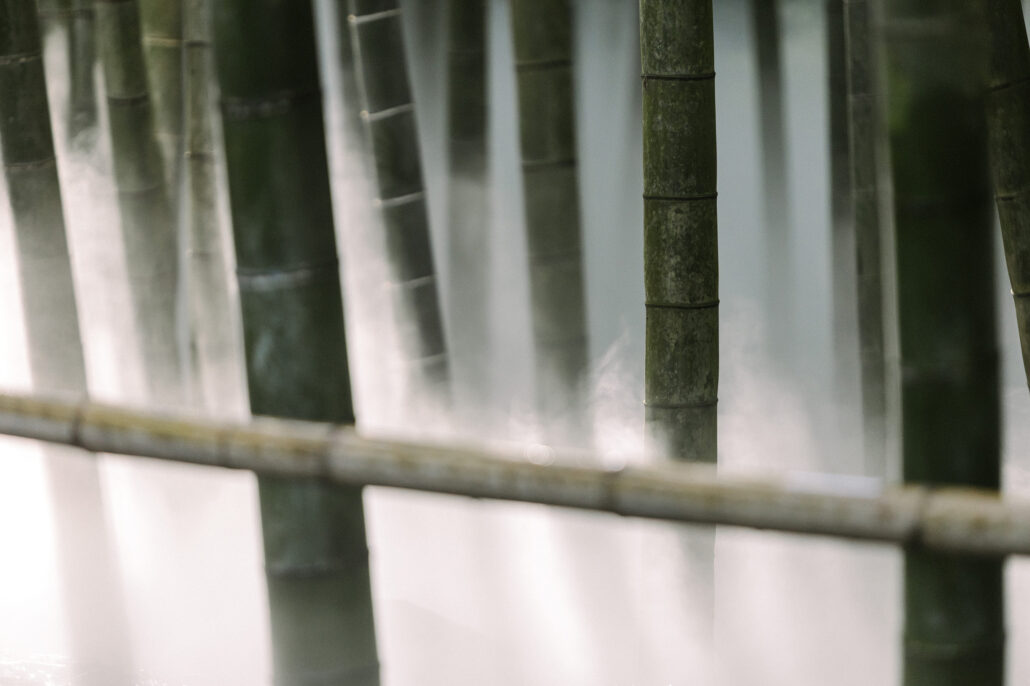
Mist pours between bamboo stalks behind a bamboo rail, the Japanese bamboo forest in Tochigi during an Indian wedding ceremony.
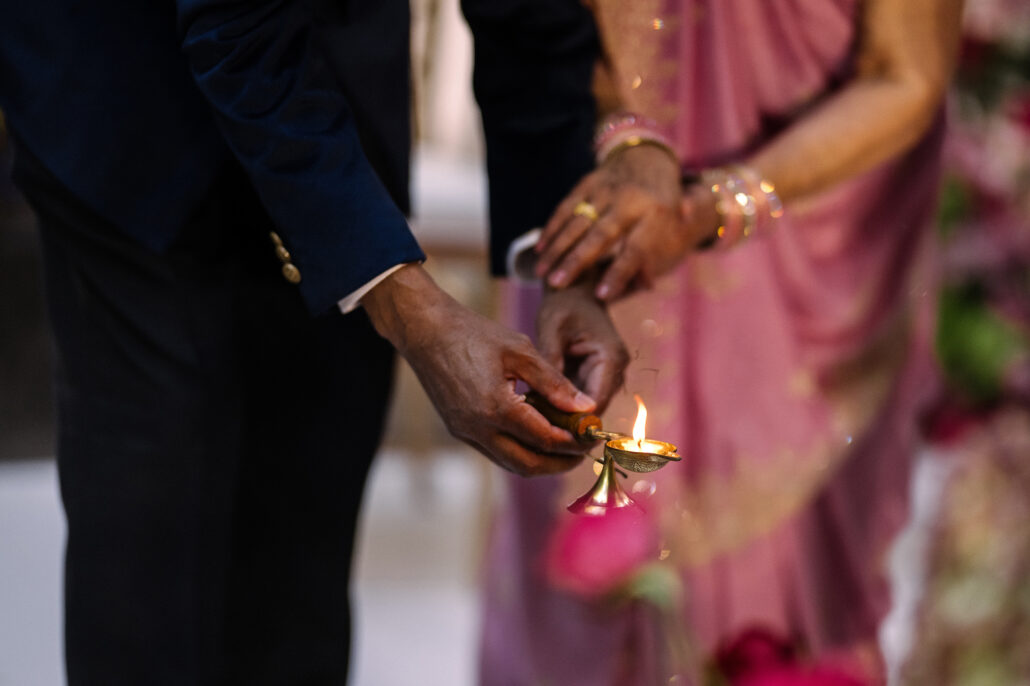
Family hands light a small brass oil lamp to open the Hindu wedding ceremony, one of the Indian wedding traditions kept in Tochigi.
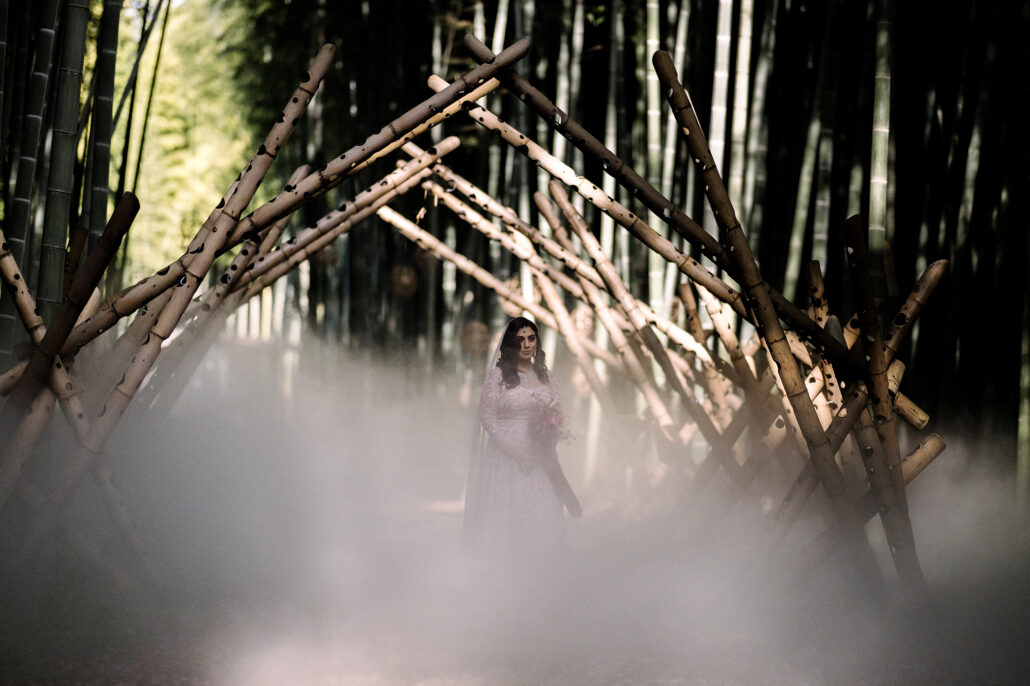
The bride appears alone through a bamboo arch into the mist, her entrance to the Hindu wedding ceremony in a bamboo forest in Japan.

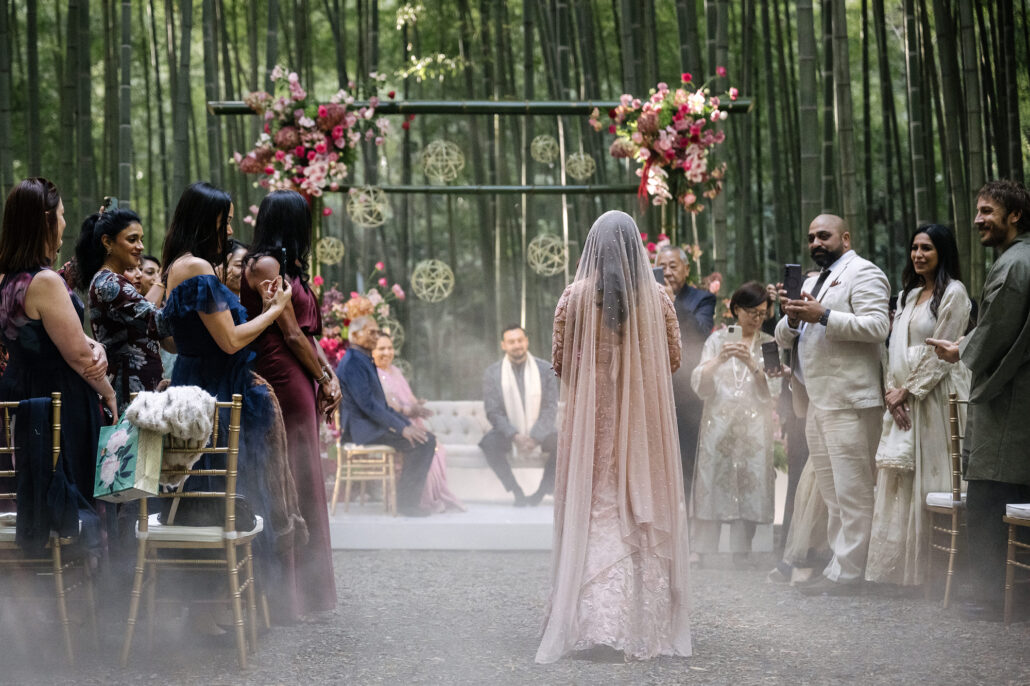
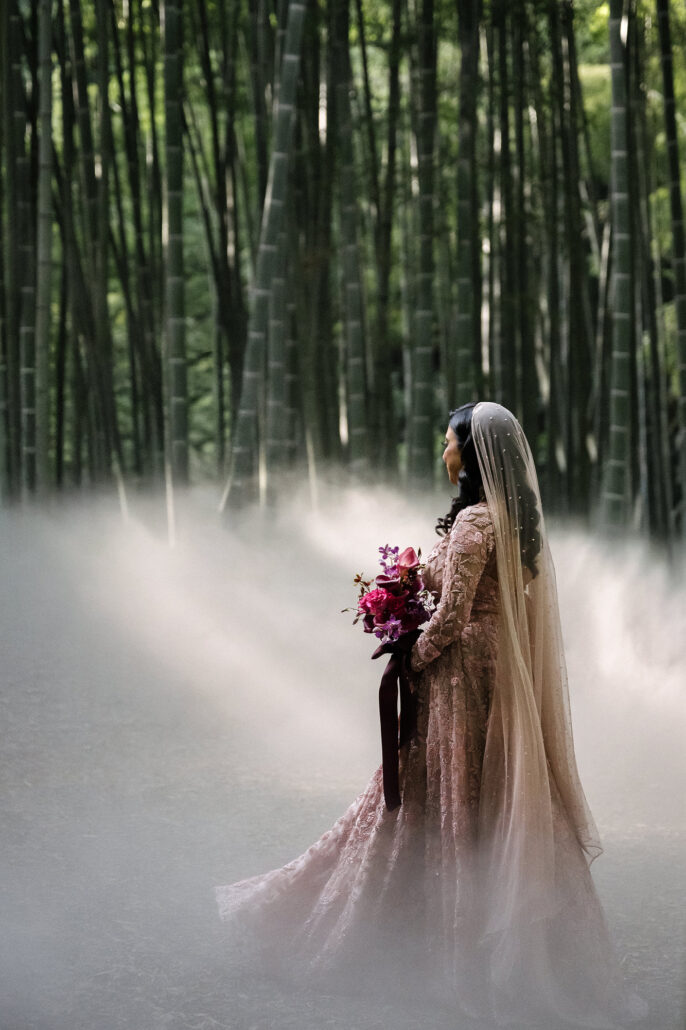
There was. We had spent part of the day before setting the mist with the farm, for her walk. It came in low across the ground as she passed through a bamboo arch, one of the farm’s own pieces, towards the mandap and everyone on their feet. Of everything that day, it’s the moment we’d keep: a forest that runs back further than the eye can follow, gone white behind her.
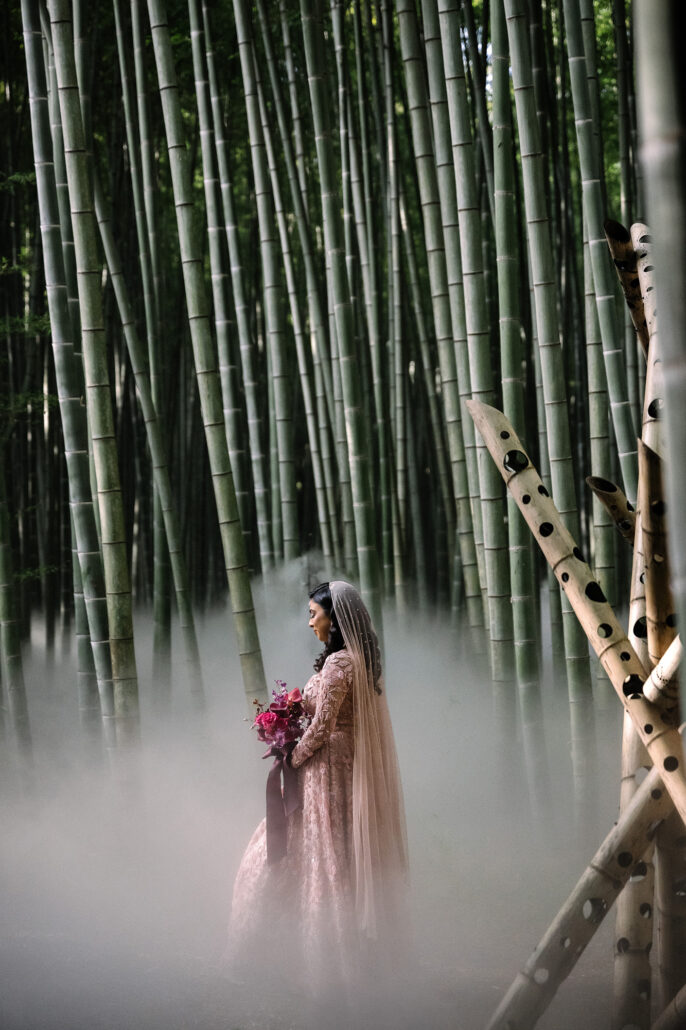
Mist hides the hem of her lehenga as the Indian bride walks alone past a bamboo art installation, deep in a Japanese bamboo grove.
Rays of sunlight cut through the mist as the Indian bride walks with her train behind her, a destination wedding in Japan.
Walking alone through the mist, the Indian bride carries her bouquet past a bamboo art installation in the bamboo forest in Tochigi.
The Indian bride smiles at the end of her walk through the mist, bouquet in both hands, at her wedding in a bamboo forest in Japan.
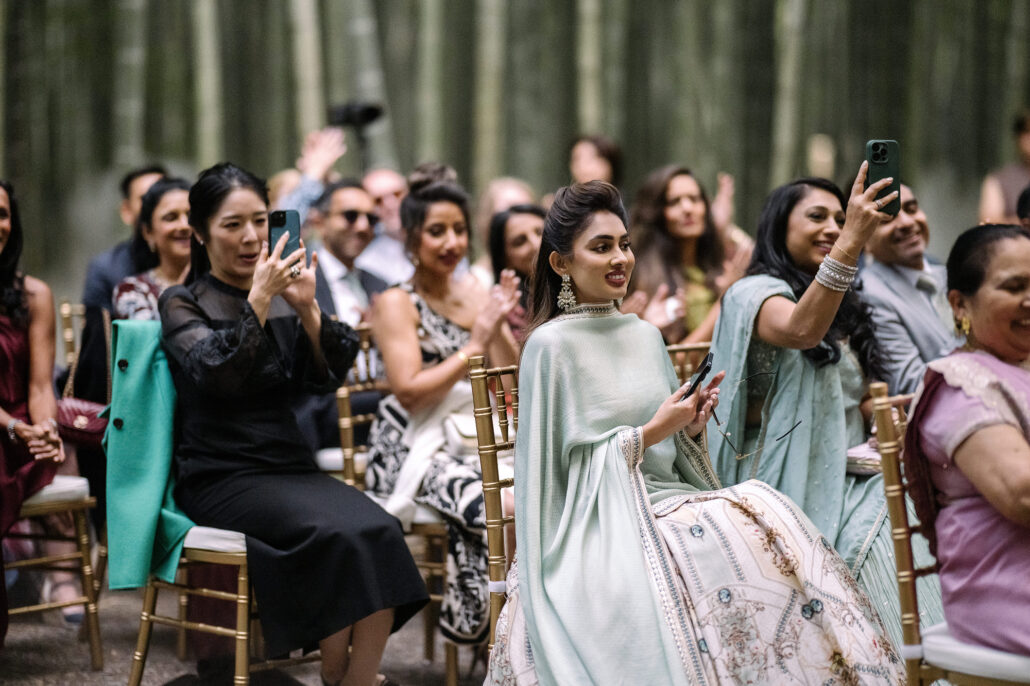
Guests stand with phones raised as the bride comes down the aisle through mist toward the groom at the bamboo mandap in Tochigi.
Low mist runs along the ground beneath straight, towering bamboo, the Japanese bamboo forest in Tochigi during a Hindu wedding.

A Hindu Ceremony Under a Bamboo Torii

The priest has lived in Japan for thirty-four years. He explained every step in English as he went, for the guests who had never seen a Hindu wedding, the groom’s parents among them; the groom’s mother is Japanese. Early on, he told everyone it was the first time he had held a ceremony in a place this beautiful. He also mentioned that it was supposed to rain.
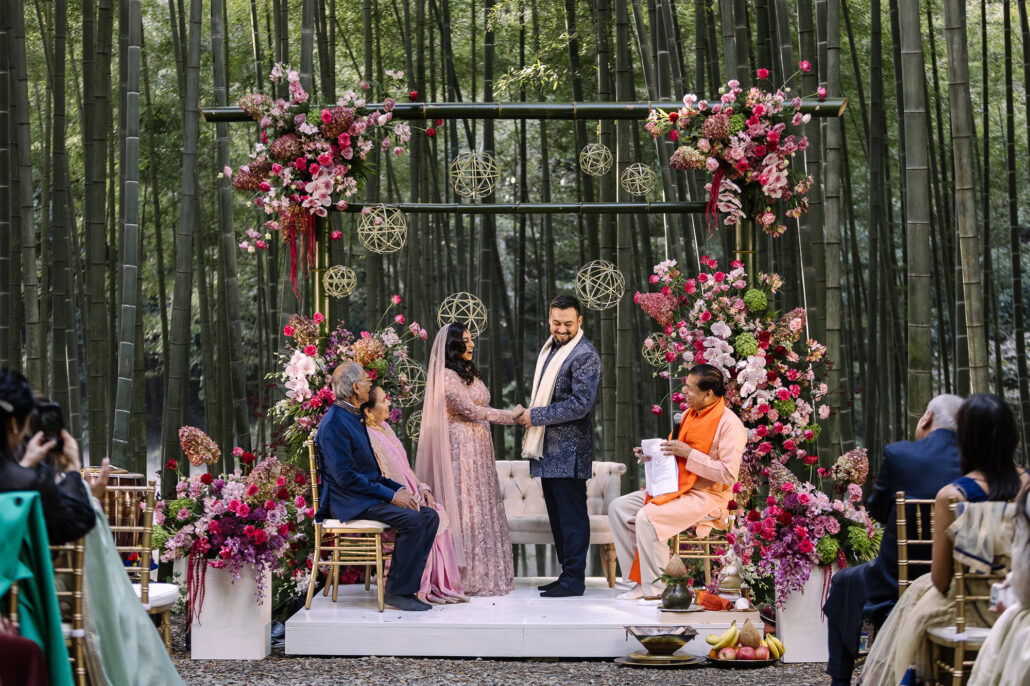
Hand in hand on the bamboo mandap, the couple stand before the priest with family seated beside them, a Hindu wedding in Japan.

In the sankalpa, the declaration in Sanskrit that sets a rite in its place and time, the address began in Bharatakhanda, an old name for the land of India, and arrived in Japan.
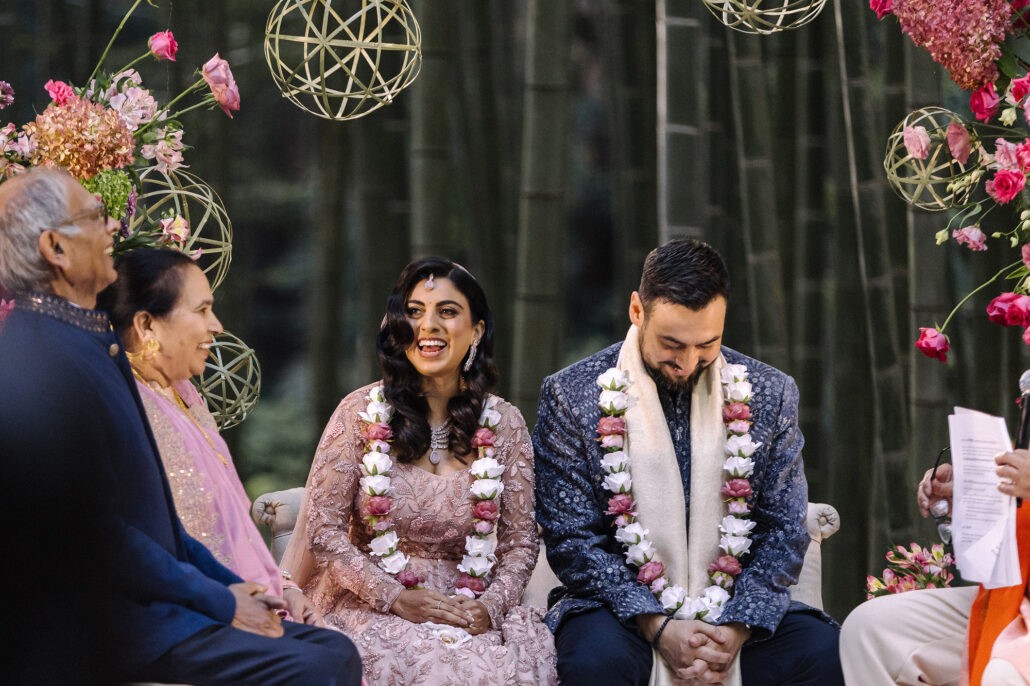
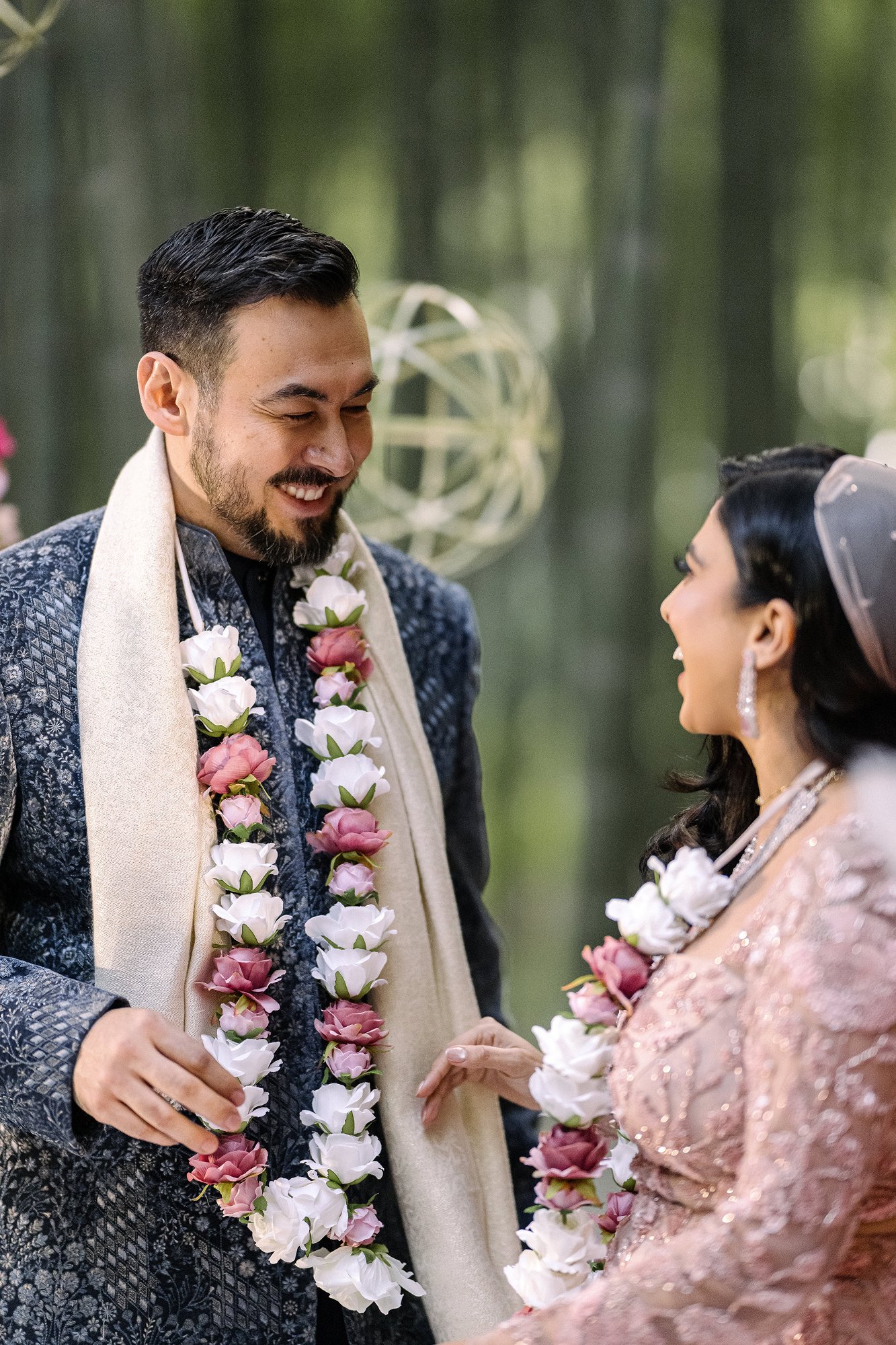
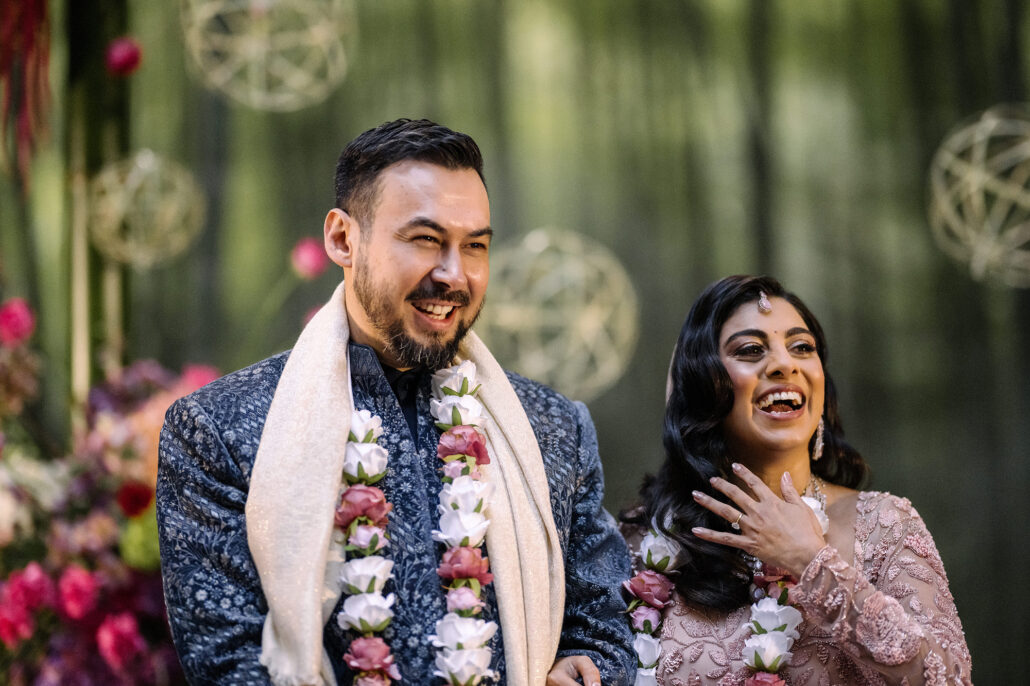
Wearing the varmala garlands they have just exchanged, the bride laughs beside the groom as family sit close on the mandap in Tochigi.
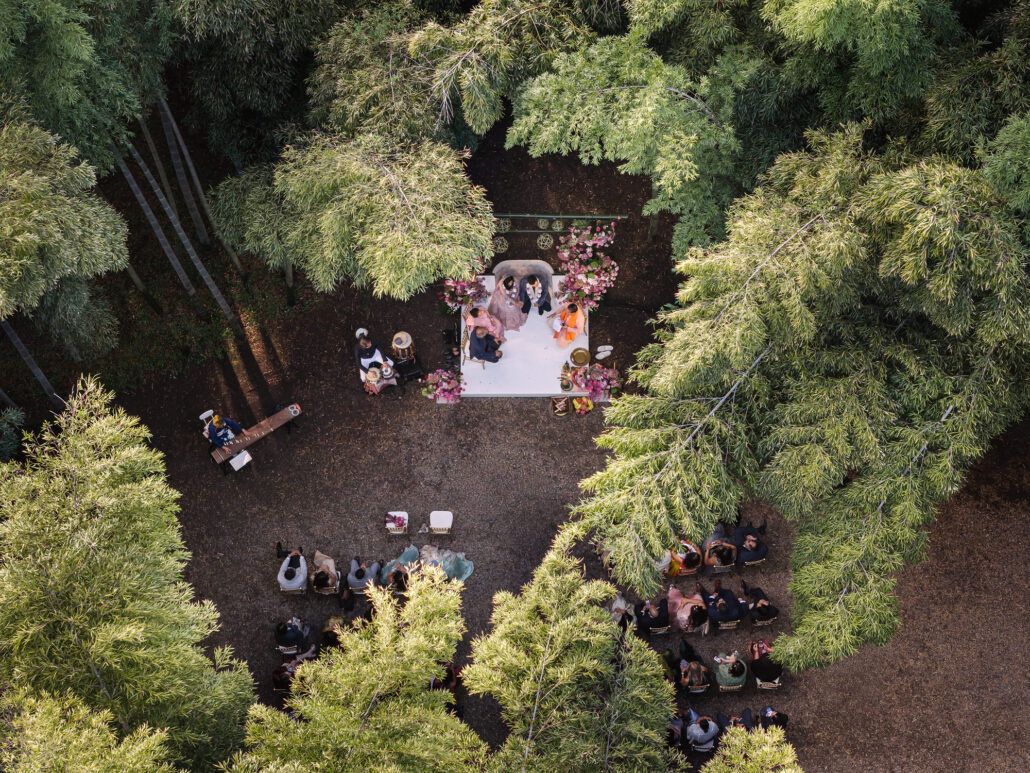
From the air, the mandap and its guests sit in a small clearing under the bamboo canopy, a Hindu wedding in a bamboo forest in Tochigi.

The ceremony began with great-grandfathers and ended at the feet of both sets of parents. After the varmala, the garlands exchanged under the torii, came the kanyadaan, the giving away. The ancestors had to be asked, the priest explained, because “later on, they will come back as your children.” So her father closed his eyes, and they said yes. “So I am giving my daughter to you,” he said. “Till now I have taken care of her. From today onwards, you are going to take care of her.” Then the groom’s family answered: “I am giving our son to you.”

Two families, each giving the other a child, under a frame made of bamboo.
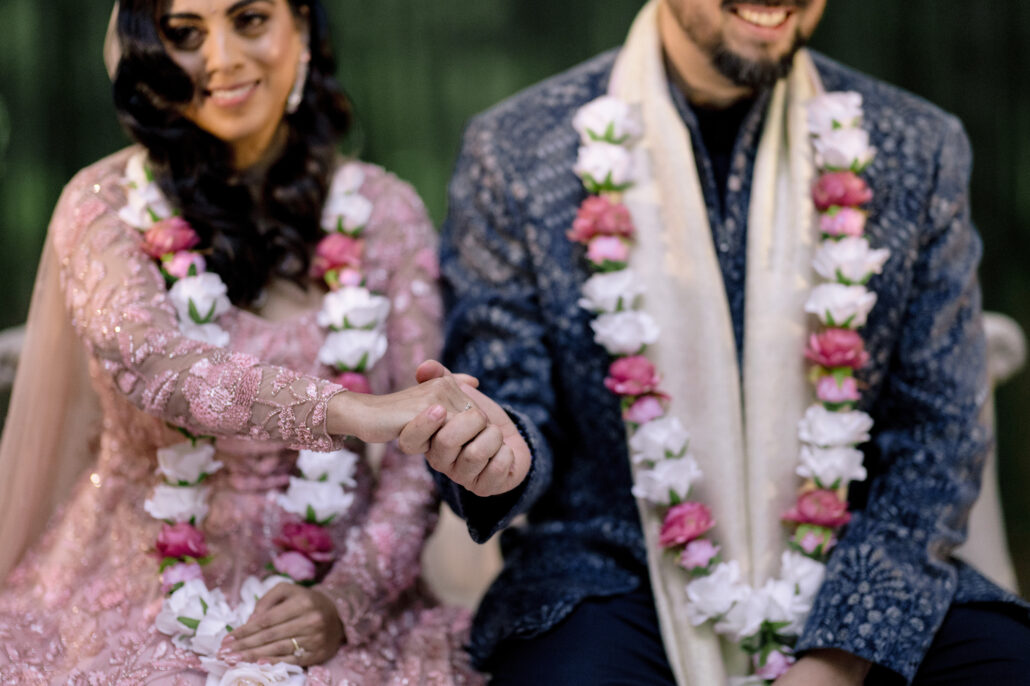
The bride's hand rests in the groom's beneath their varmala garlands during the kanyadaan, an Indian wedding tradition in a Japanese bamboo forest.

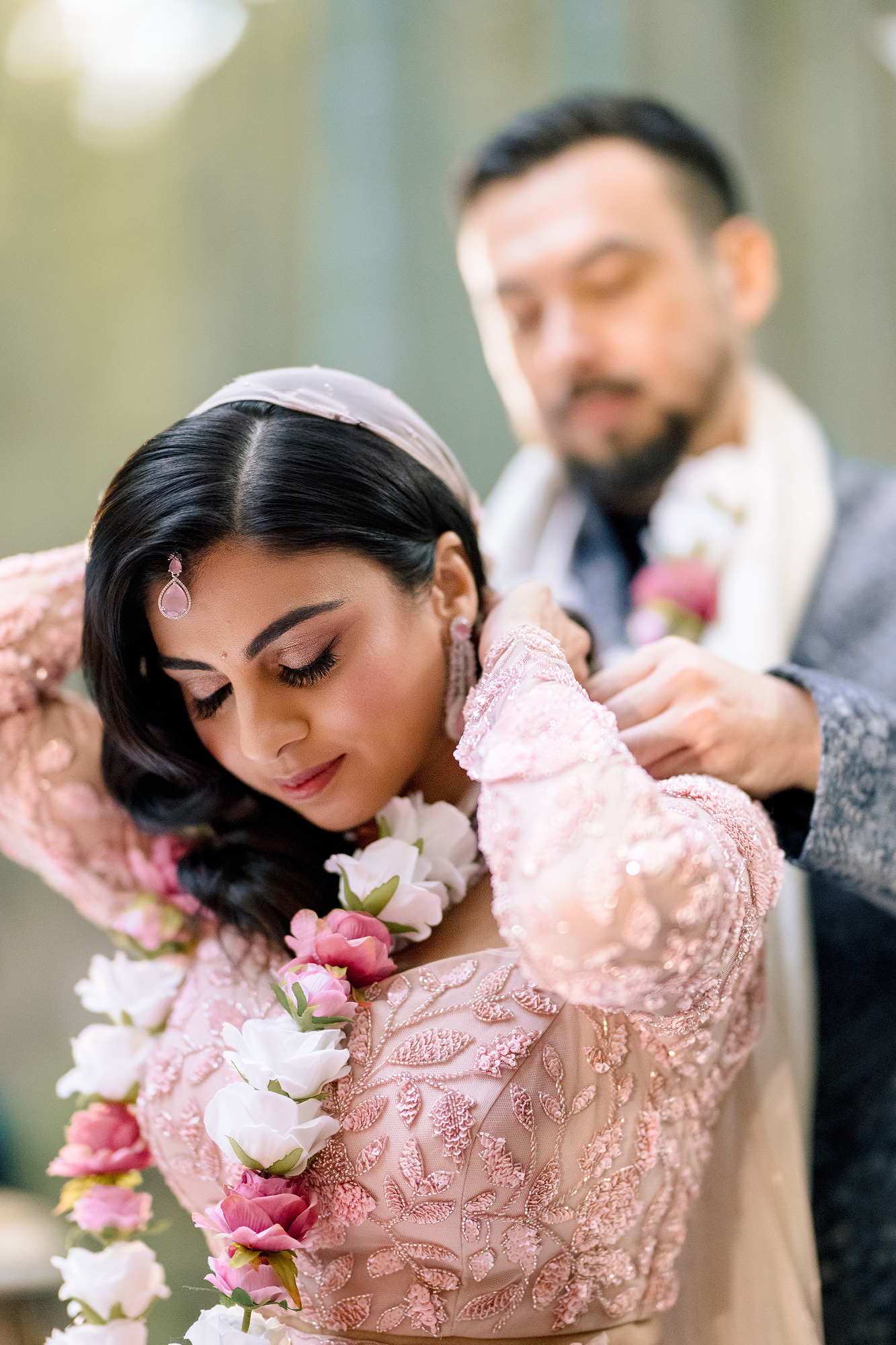
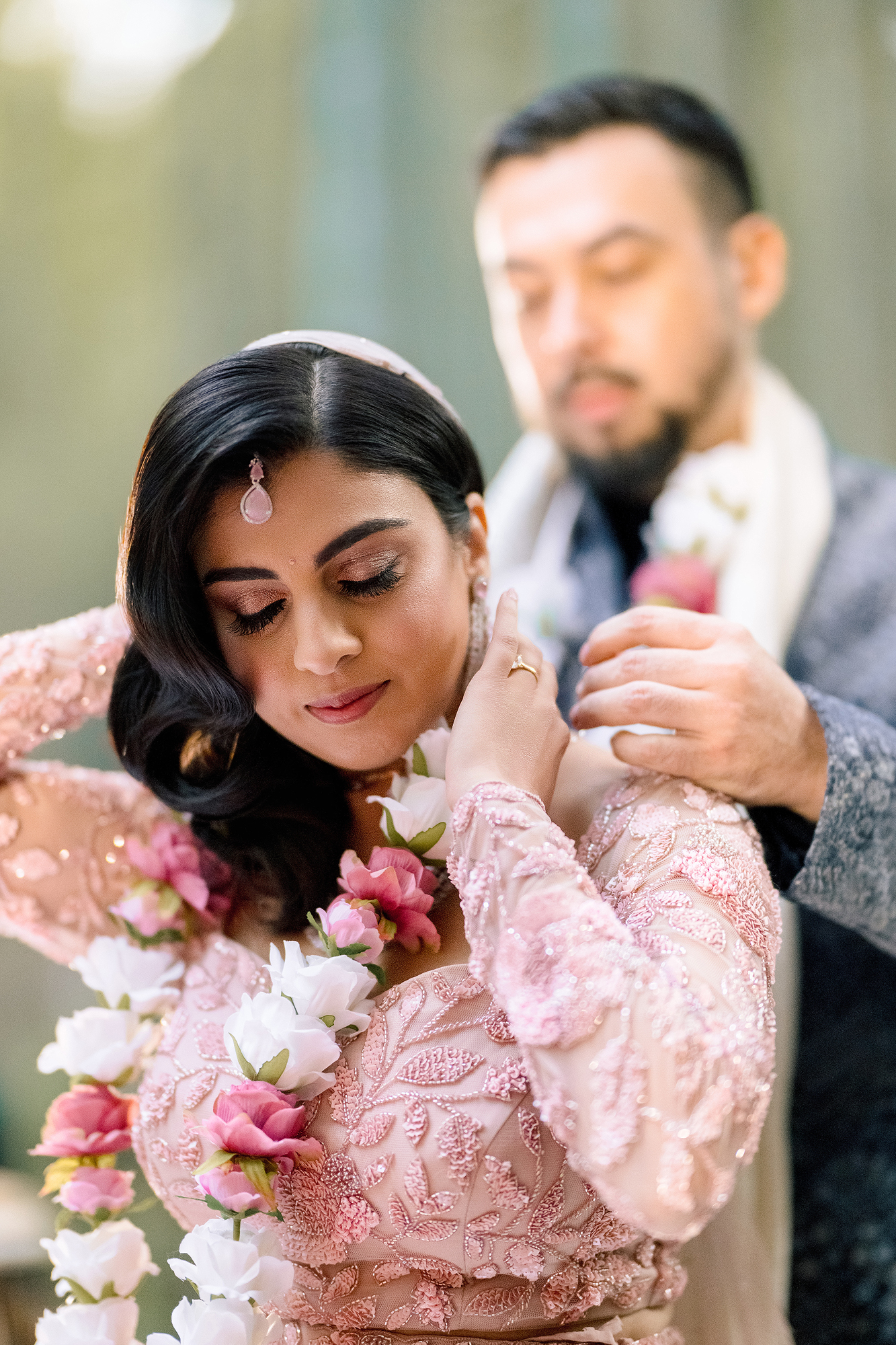
Her youngest sister tied the knot that joined them. They walked the pheras, four rounds of the sacred fire, one for each of the four aims of a life. He fastened the mangalsutra at her neck, and the clasp took long enough for someone to warn the guests they might be there a while. Then seven steps together, a promise in English at each and flowers thrown at every one, among them a promise to be happy in all six seasons, in a country that by one old count has seventy-two. Last, they bent to touch the feet of both sets of parents.
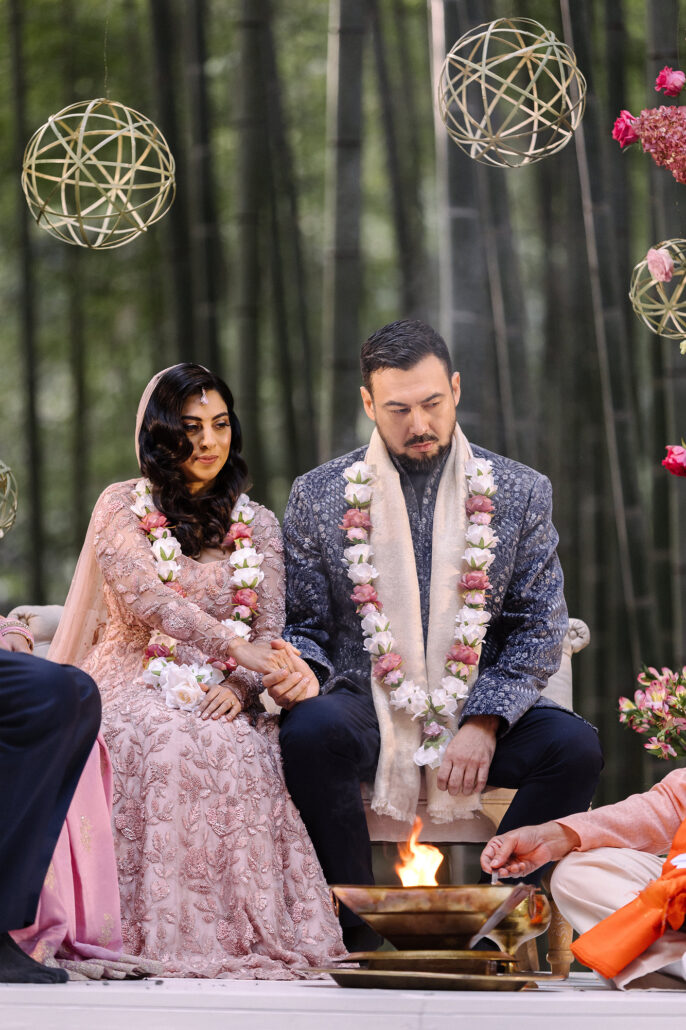
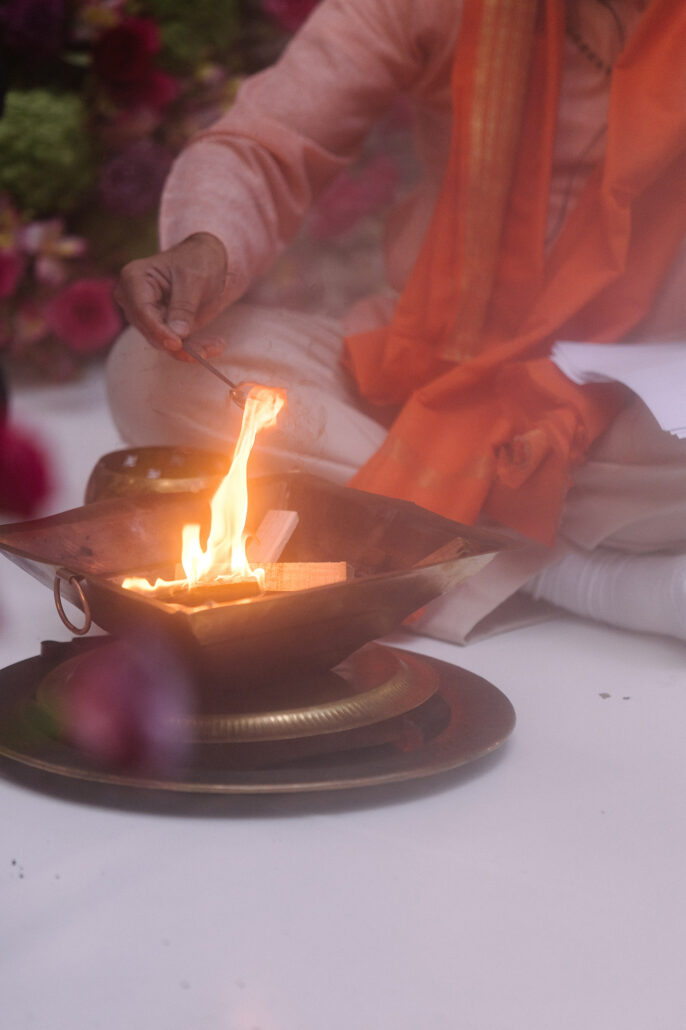
The couple sit before the sacred fire on the mandap, lattice bamboo spheres hanging above them, at a Hindu wedding in Tochigi, Japan.
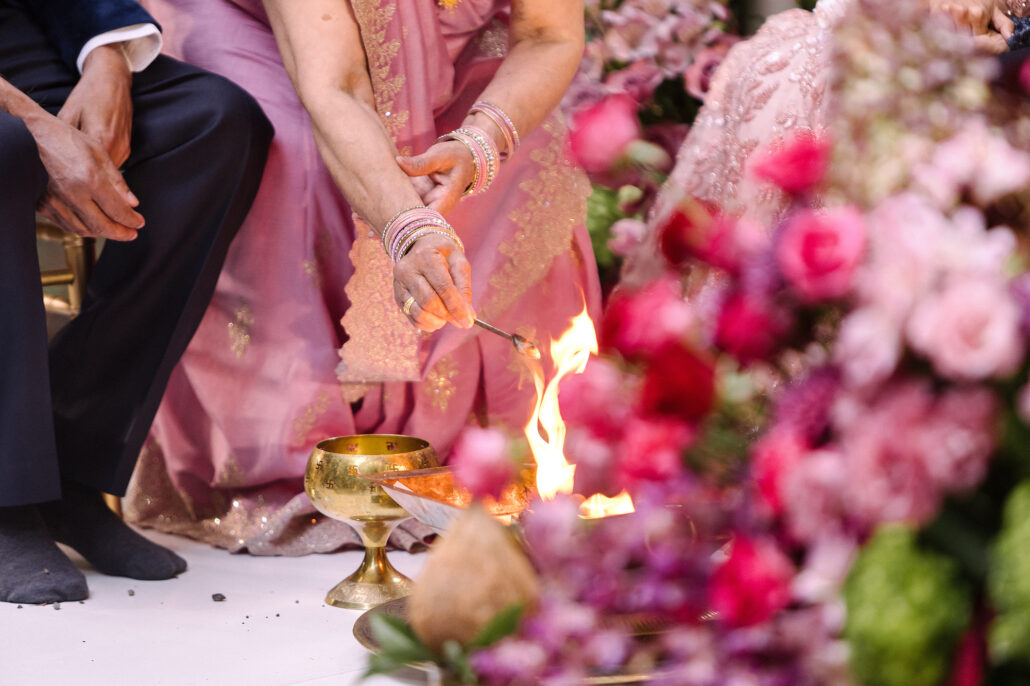
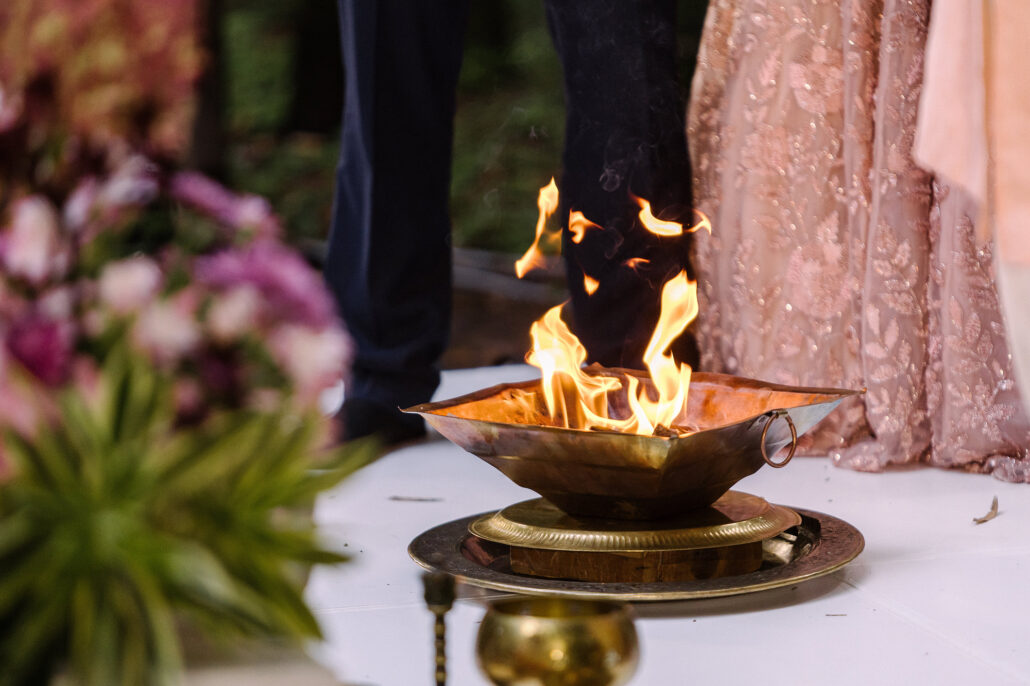
The priest's hand tends the havan fire in its brass bowl, smoke and flowers around it, during a Hindu wedding in Tochigi, Japan.
  • The priest feeds the sacred fire as the couple sit garlanded on the mandap, the havan at the heart of an Indian wedding in Japan.
  • The Indian bride smiles through the pink flowers of the mandap decoration as the groom looks down beside her, at a Hindu wedding in Japan.
  • Family lean in to make offerings to the sacred fire with the priest, the couple seated behind them on the bamboo mandap in Tochigi.
  • An offering goes into the fire as the priest guides the havan, flowers banked on either side of a Hindu wedding mandap in Japan.
  • A hand in pink bangles drops an offering into the sacred fire behind roses and orchids, Indian wedding traditions kept in Tochigi.
The groom leads the bride around the sacred fire on the flowered mandap, the pheras of a Hindu wedding in a bamboo forest in Japan.
Flames rise from a brass bowl as the couple's feet pass during the pheras, at an Indian wedding in a Japanese bamboo forest.
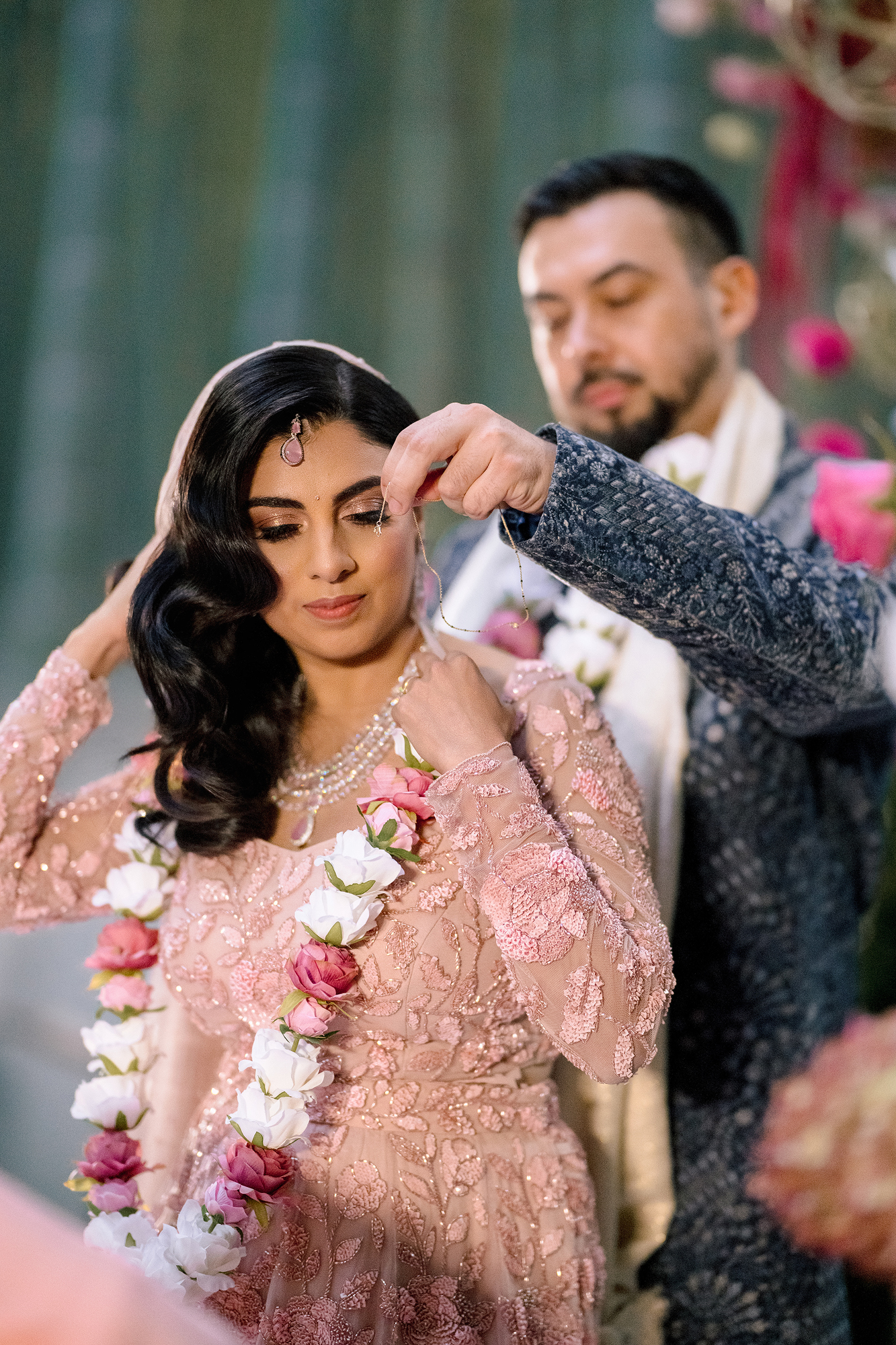
  • The groom fastens the mangalsutra at the back of the bride's neck as she lifts her hair, a Hindu wedding rite in a bamboo forest in Tochigi.
  • Eyes lowered, the Indian bride holds her hair aside while the groom ties the mangalsutra, at her wedding in a Japanese bamboo forest.
  • The bride smiles as the groom finishes the mangalsutra clasp, one of the Indian wedding traditions at a bamboo forest wedding in Tochigi.
  • The couple laugh face to face in their varmala garlands, lattice spheres behind them, at an Indian wedding in a bamboo forest in Japan.
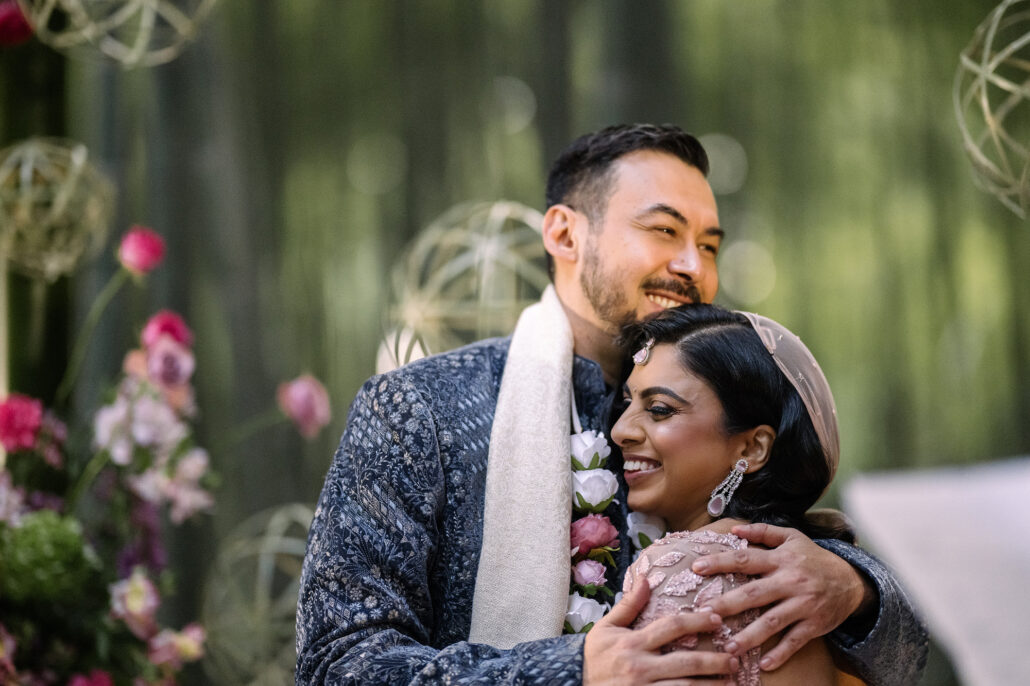
  • The groom wraps the bride in a hug, both still in their varmala garlands, as the Hindu wedding ceremony nears its end in Tochigi.
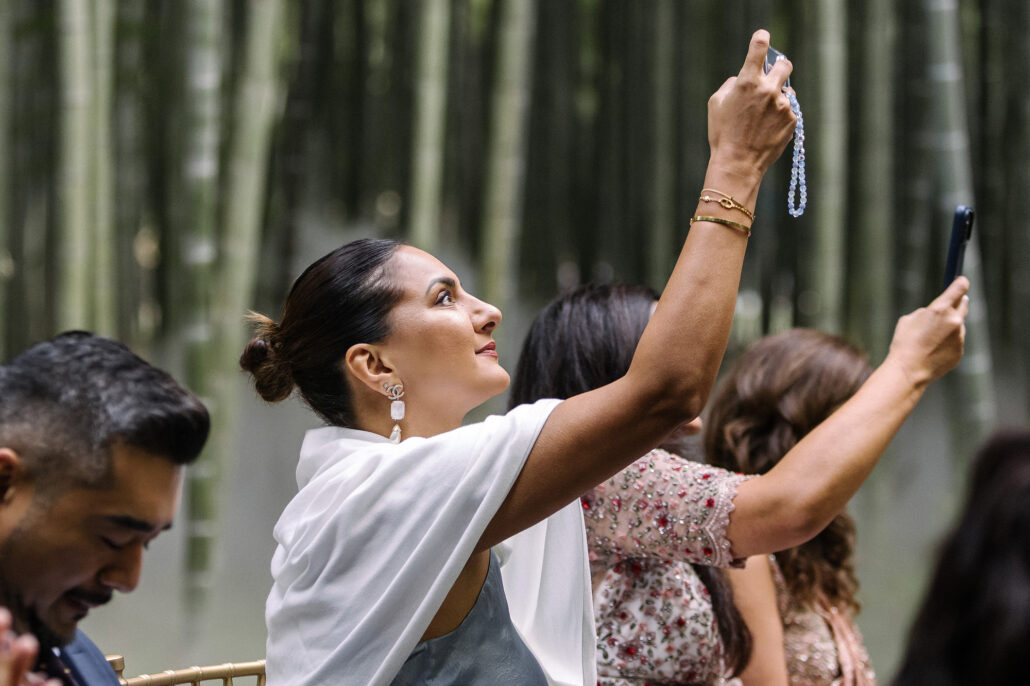
  • A guest in a white wrap raises her phone high to film the ceremony, bamboo behind her, at an Indian wedding in Japan.
  • Seated guests in saris and evening dress lift their phones and smile at the mandap during a Hindu wedding in a bamboo forest in Tochigi.
  • Pink petals fly at the couple under the bamboo mandap during the saptapadi, the seven steps of a Hindu wedding in Tochigi, Japan.
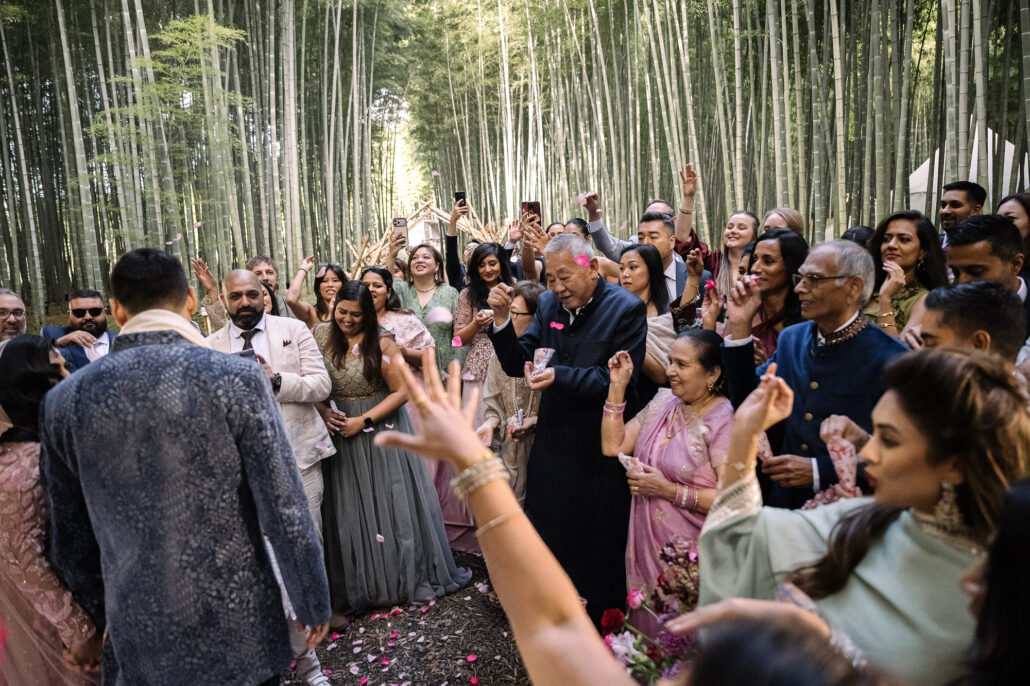
  • Guests throw rose petals as the groom passes during the saptapadi, the aisle strewn pink, at an Indian wedding in a Japanese bamboo forest.
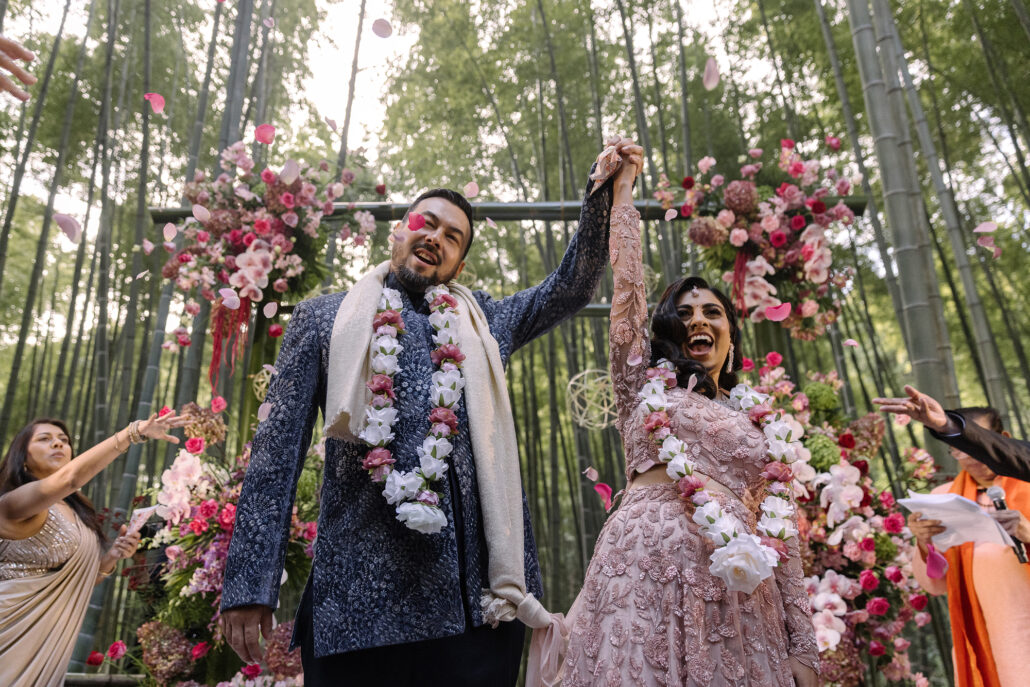
  • The couple raise their joined hands as petals fly, just married at the bamboo mandap of their Indian wedding in Tochigi, Japan.
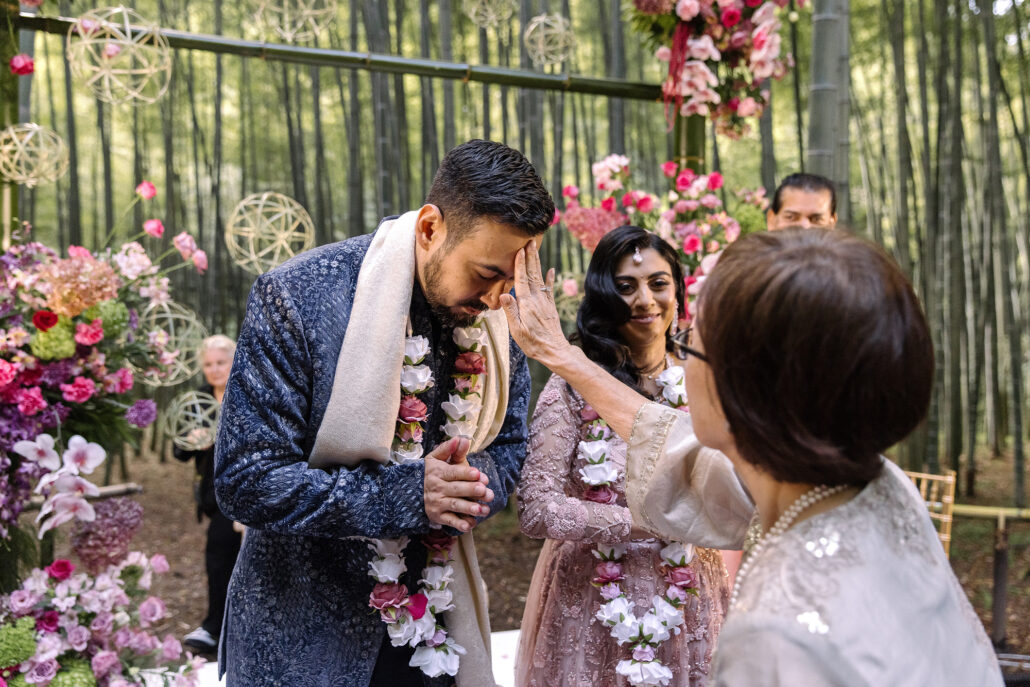
  • The groom's mother touches his forehead in blessing as the bride smiles behind, family blessings at a Hindu wedding in Japan.
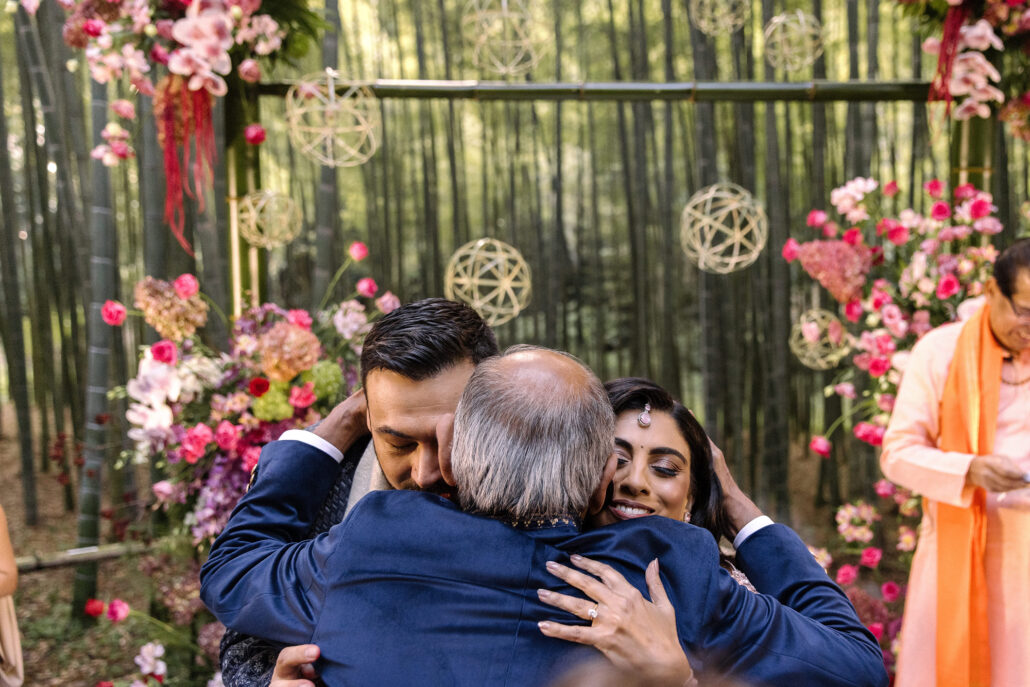
  • A grey-haired man in a navy blazer holds the groom close as the bride looks on, family blessings after the Hindu wedding in Tochigi.
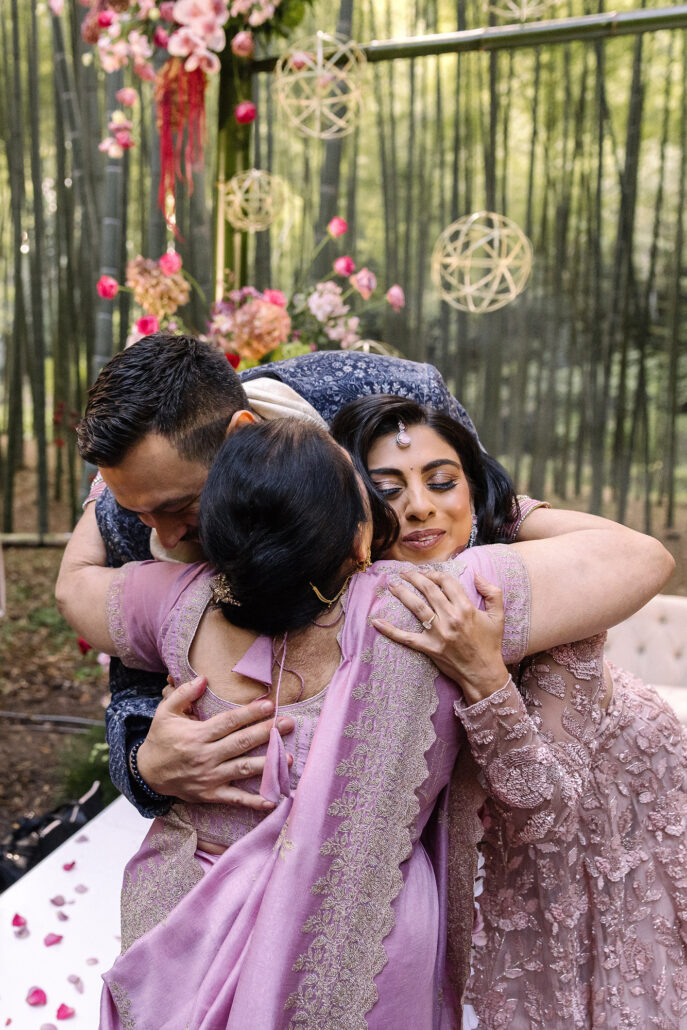
The bride's mother, in a lilac sari, hugs the bride and groom at once, family blessings at the mandap of a Hindu wedding in Tochigi.
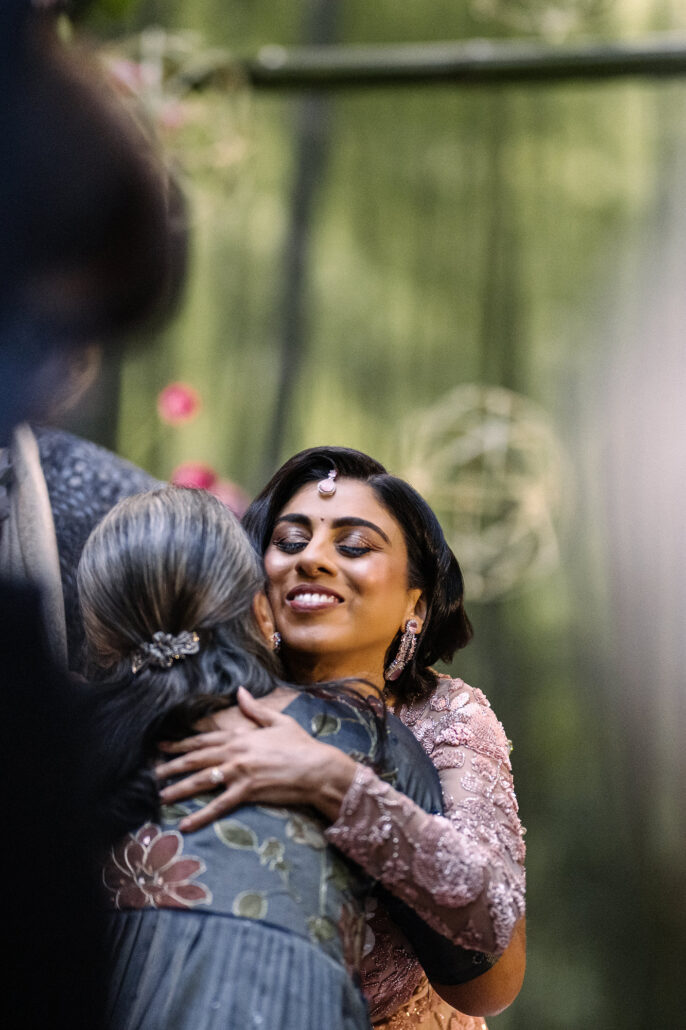
Eyes closed and smiling, the Indian bride embraces a grey-haired elder of the family beneath the bamboo mandap in Tochigi, Japan.
  • Just married, the groom grins and the bride laughs with a hand to her chest, varmala garlands on both, at an Indian wedding in Japan.
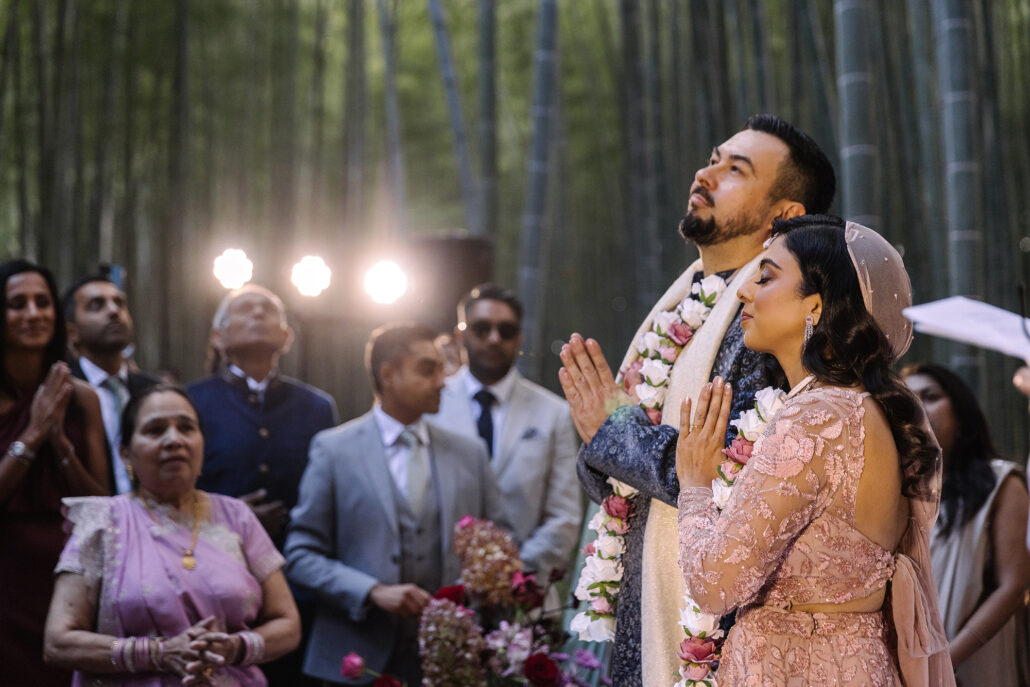
  • Palms pressed together, the couple face the light for the closing prayer as guests stand around the mandap at a Hindu wedding in Tochigi.
  • Hands joined in namaste, the bride and groom close the ceremony among family and guests, an Indian wedding in a bamboo forest in Japan.

During the family photographs afterwards, the tabla and koto players tuned to each other, a D passed from one to the other, and they began to play together. Nobody had planned it. It took about as long to arrange as it takes to tune.
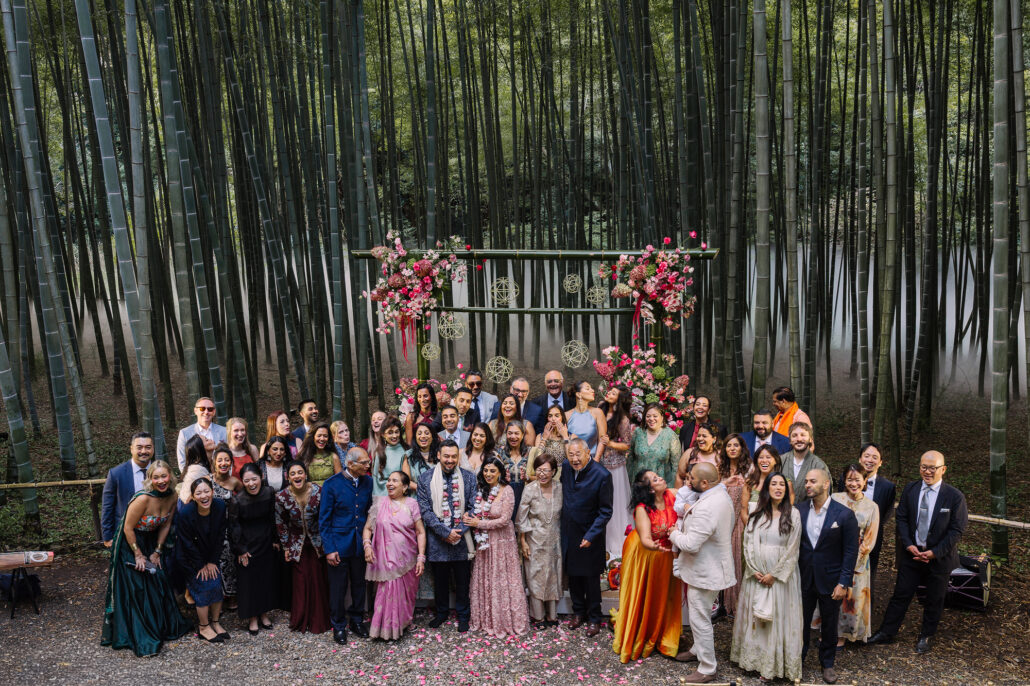
All the wedding guests gather in front of the bamboo mandap for a group photo, framed by tall bamboo, at an Indian destination wedding in Japan.

San-San-Kudo at Cocktail Hour

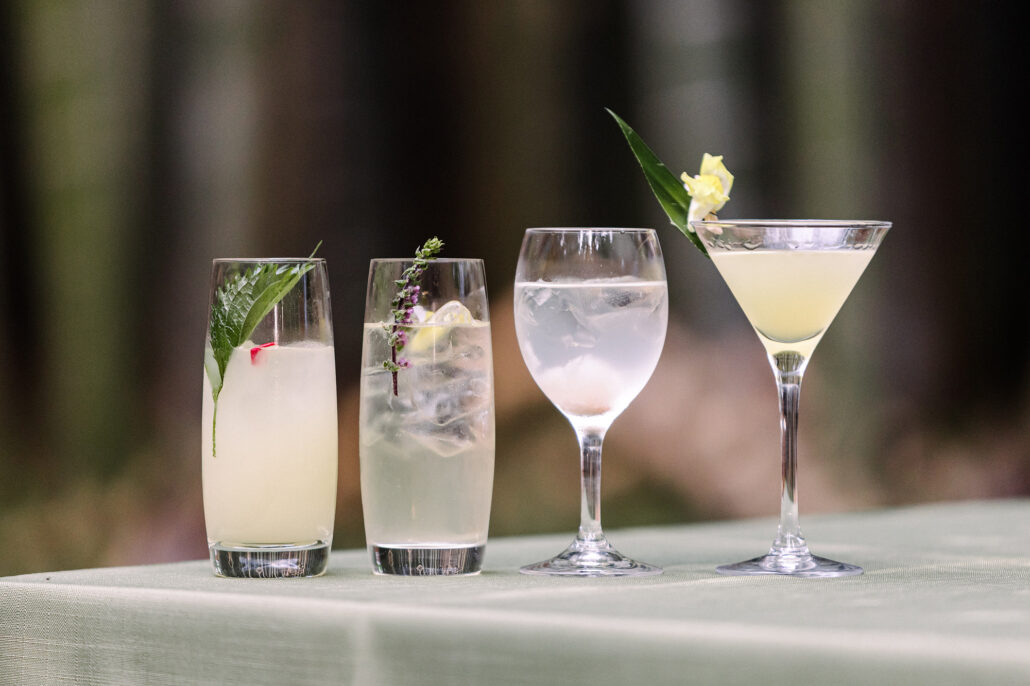
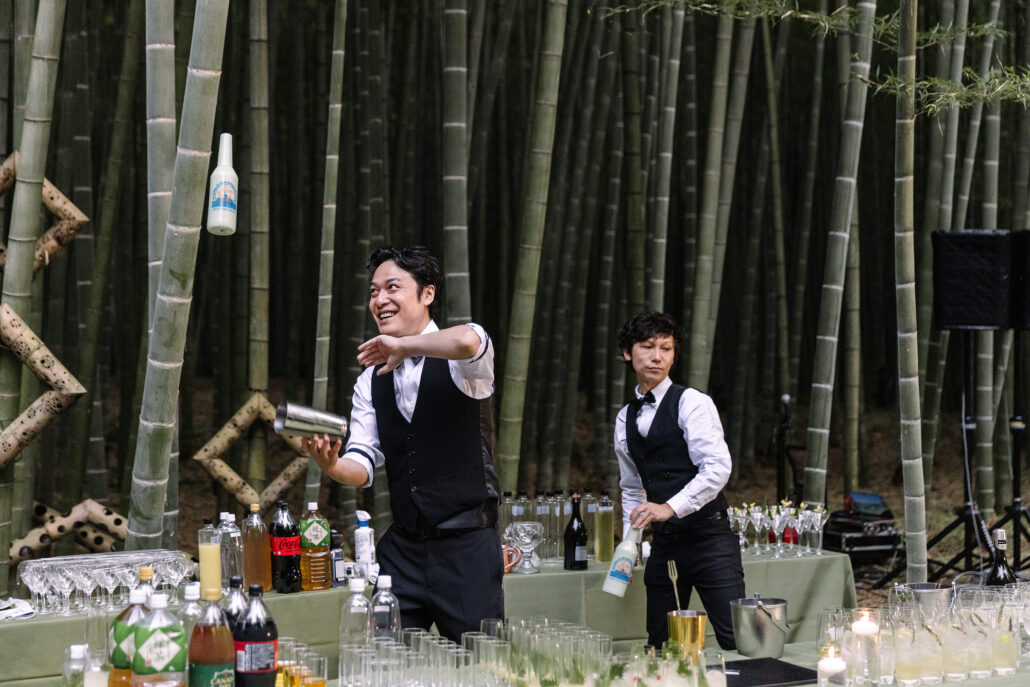
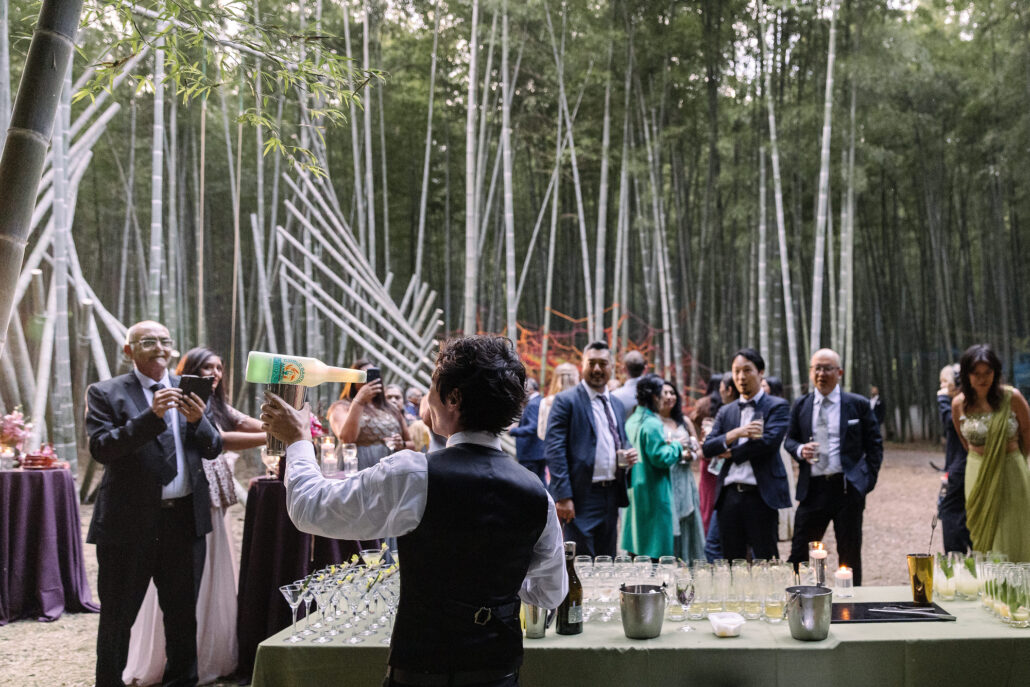
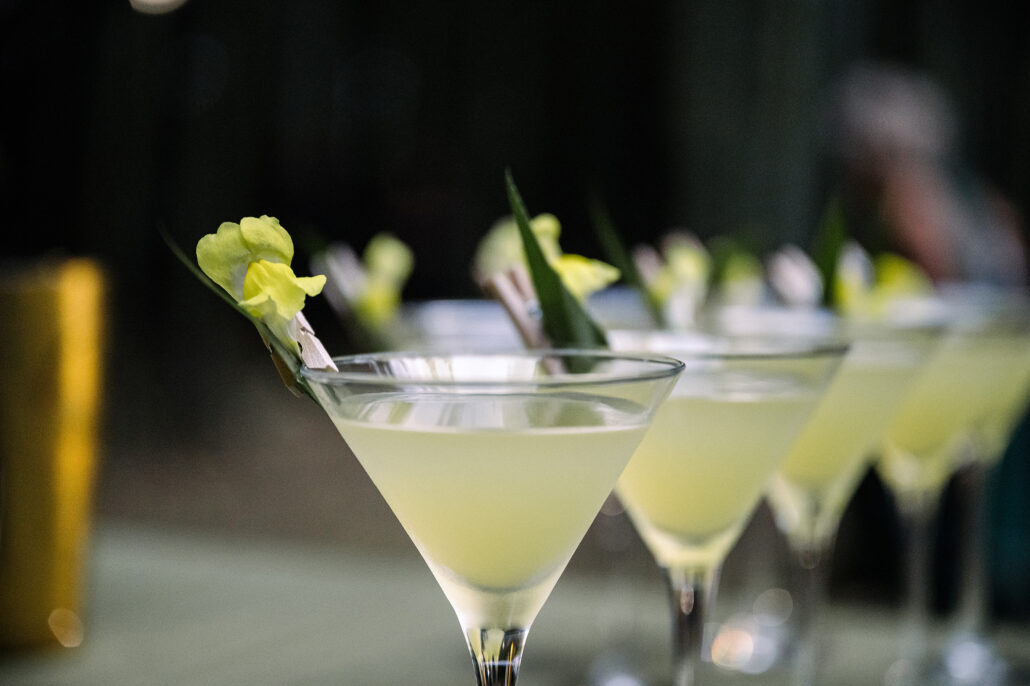
Mitsu’s flair bar had bottles in the air and three cocktails written for the three places the couple’s life runs between. The Pearl, lychee and osmanthus, for Hong Kong. The Emerald City, pandan gin and calamansi, for Singapore. The Rising Sun, a yuzu highball made with two Japanese whiskies, for Japan.
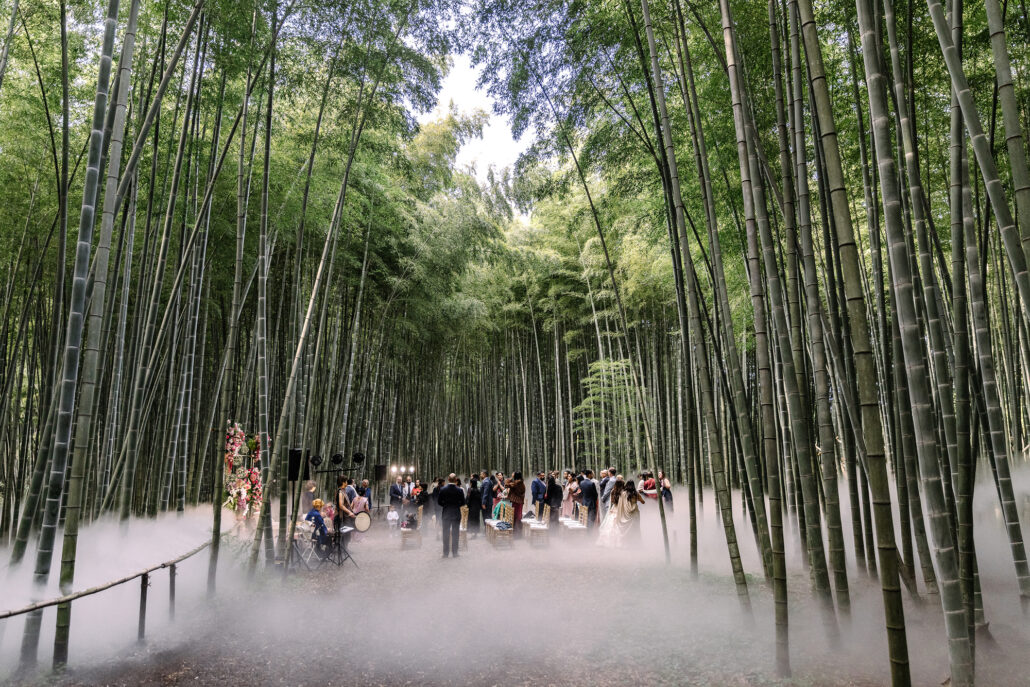
Mist settles over the path after the ceremony as guests linger far down a bamboo avenue in the bamboo forest in Tochigi, Japan.
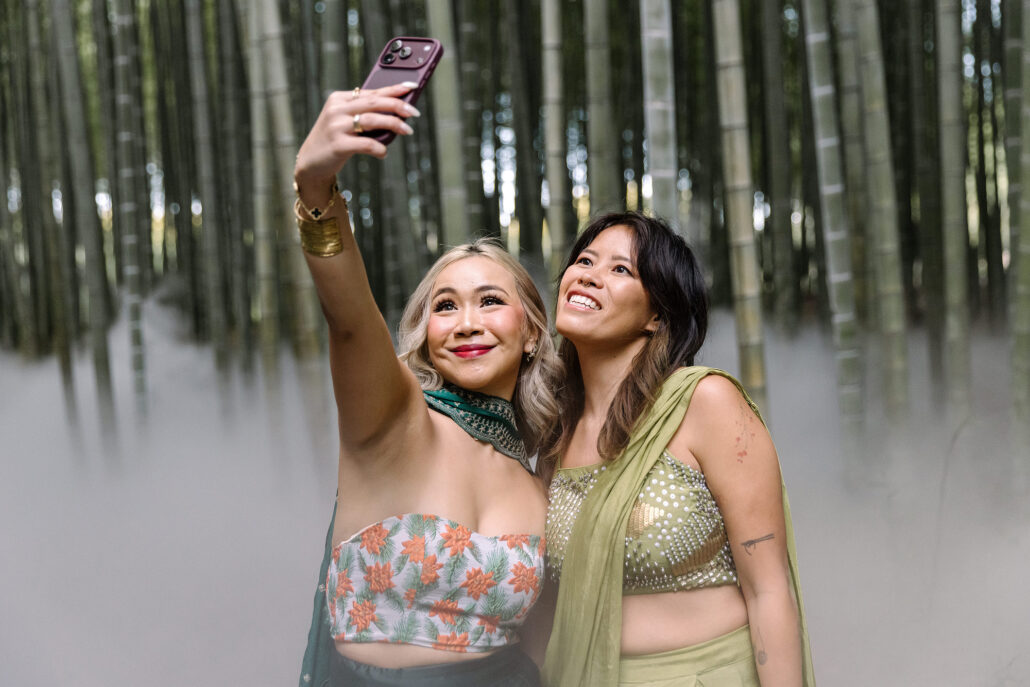
  • Two guests in Indian dress take a selfie in the mist between bamboo culms after the ceremony, a bamboo forest wedding in Japan.
  • Guests with drinks in hand dance in front of a bamboo arch of crossed poles on the way to the cocktail party of an Indian wedding in Tochigi.
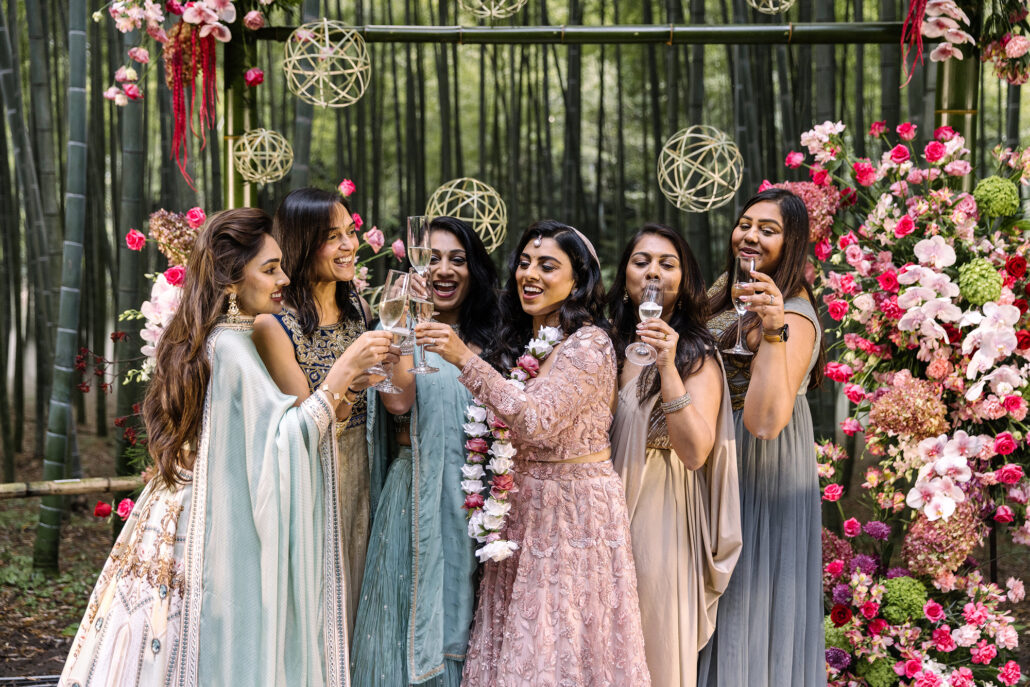
  • The Indian bride raises a glass with her friends beside the flowered mandap, her varmala still on, after her Hindu wedding in Japan.
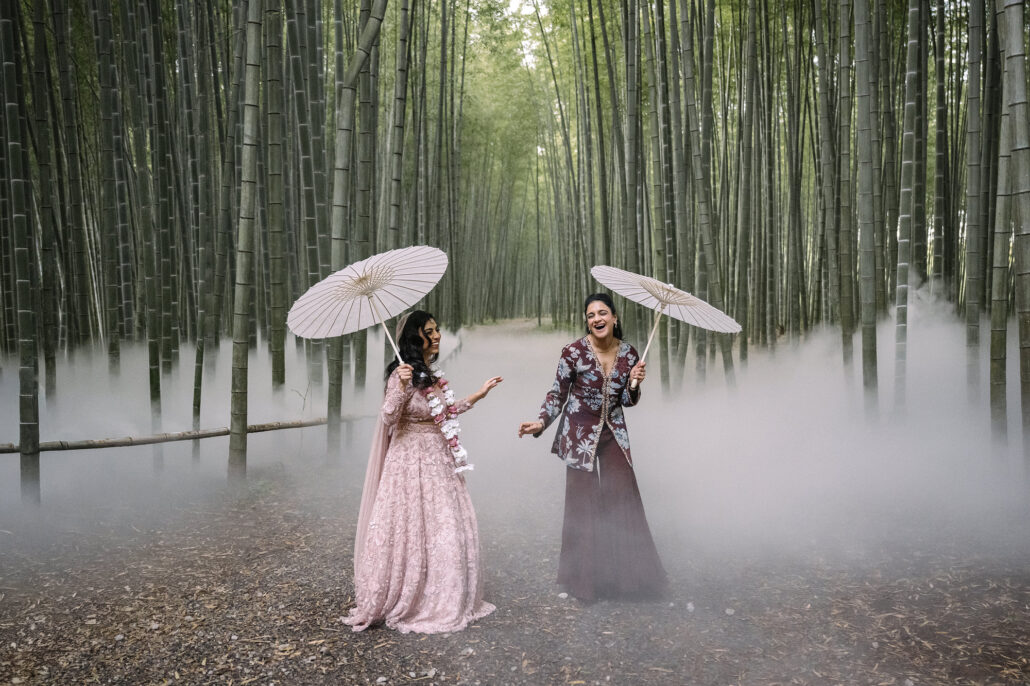
  • Under paper parasols, the bride and a friend laugh in low mist on a bamboo path, an Indian fusion wedding in a Japanese bamboo forest.
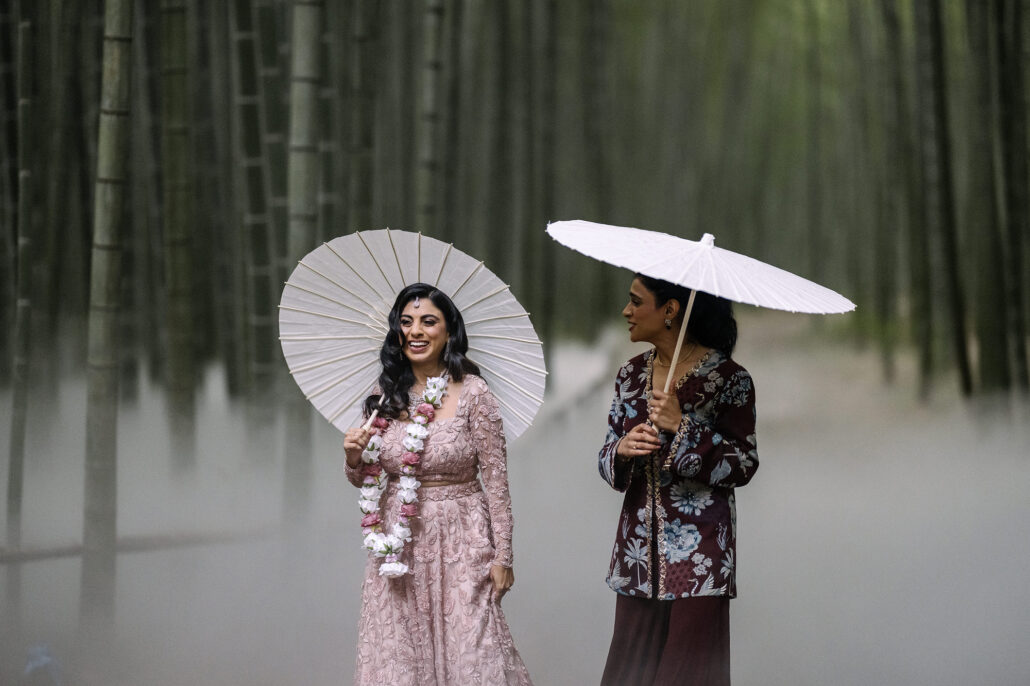
  • The bride and a friend in a floral jacket hold white paper parasols in the mist, a Japanese touch at an Indian wedding in Tochigi.
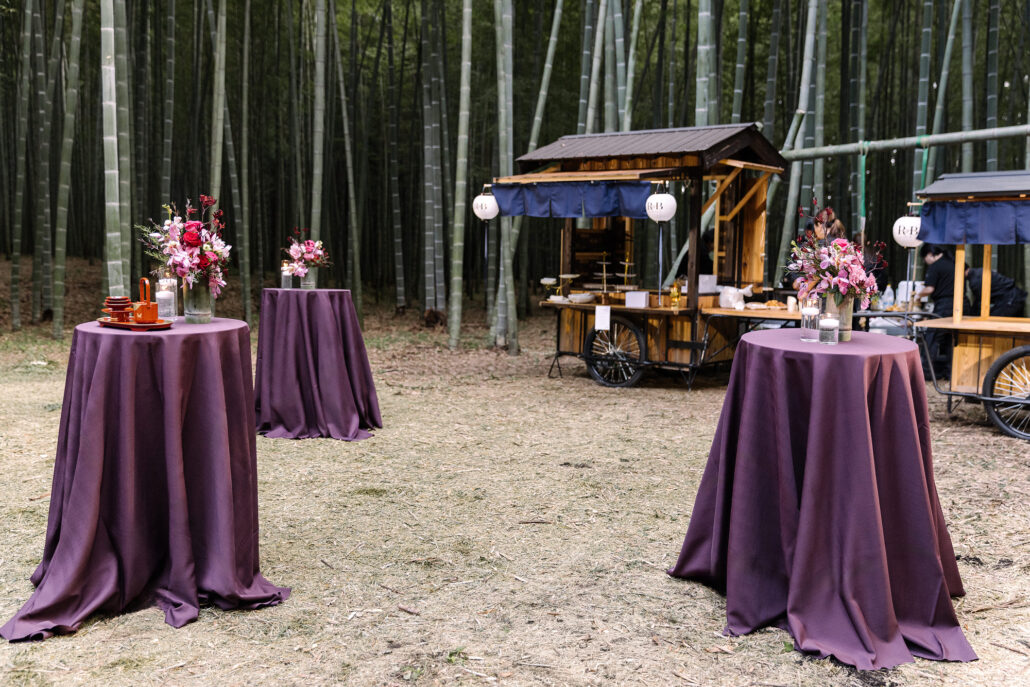
  • Cocktail tables in plum linen carry pink flowers beside two wooden yatai handcarts, the cocktail party in the bamboo forest in Tochigi.
  • Four cocktails stand on a pale green table, garnished with herbs, a lychee and a yellow flower, at an Indian wedding in a Japanese bamboo forest.
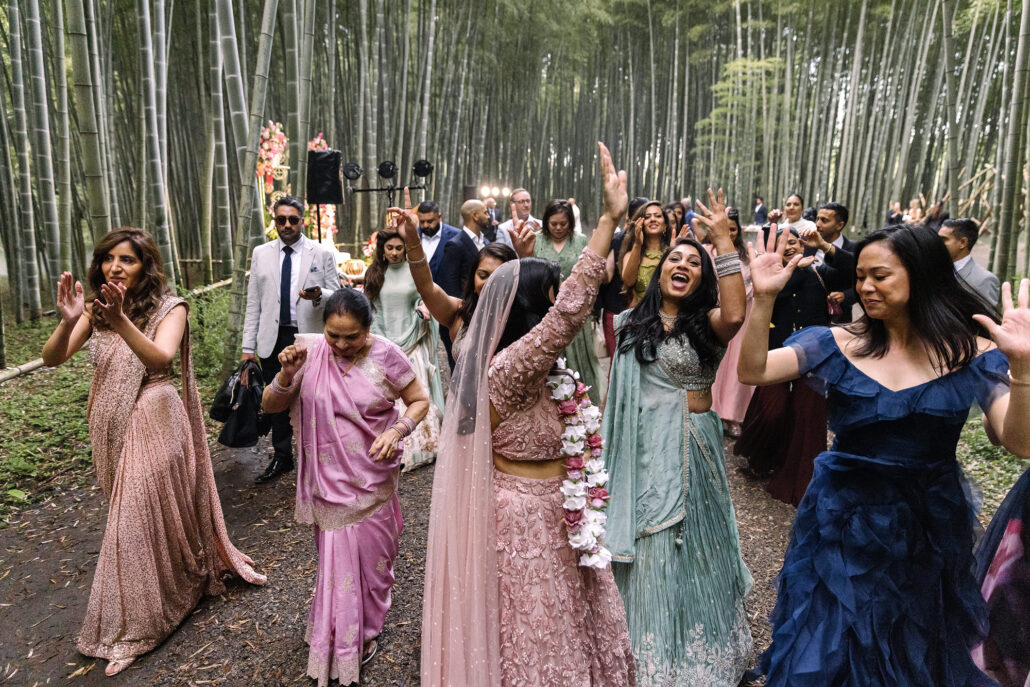
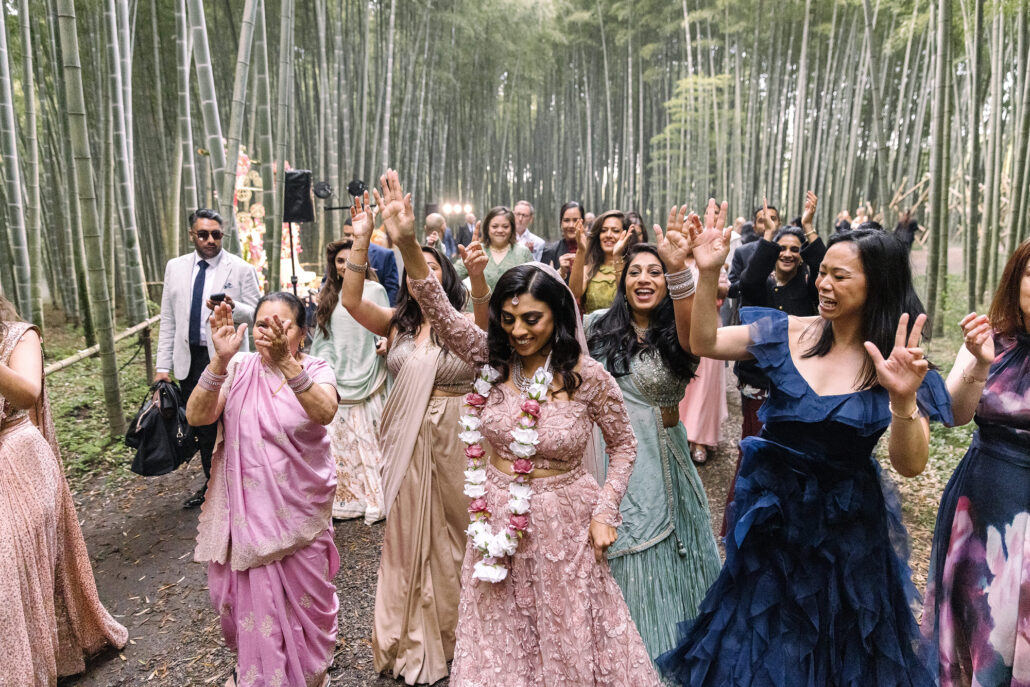
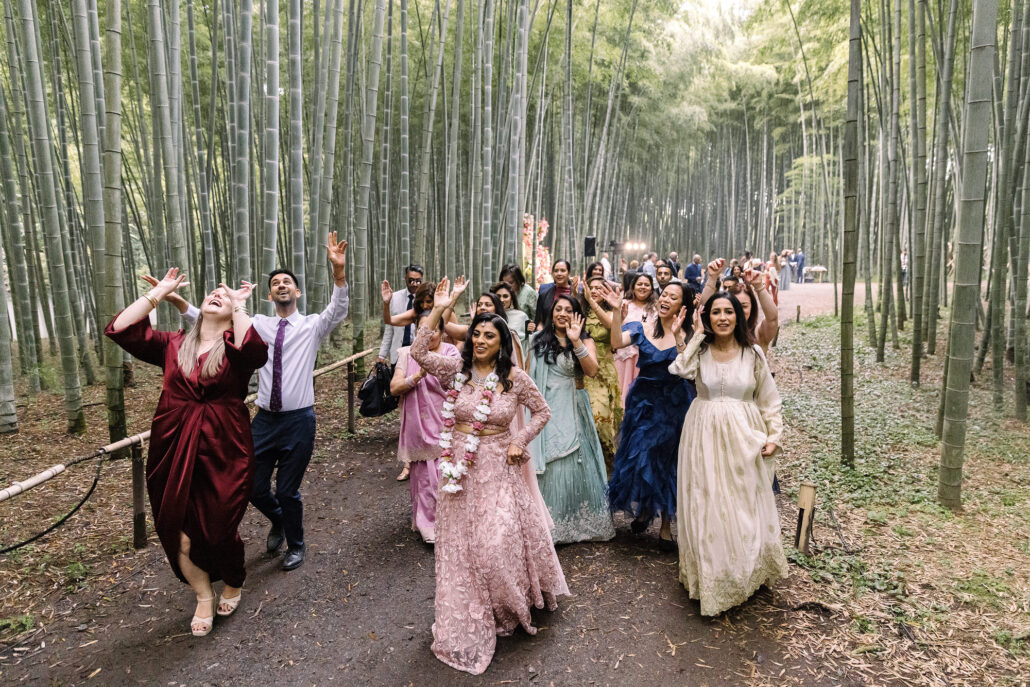
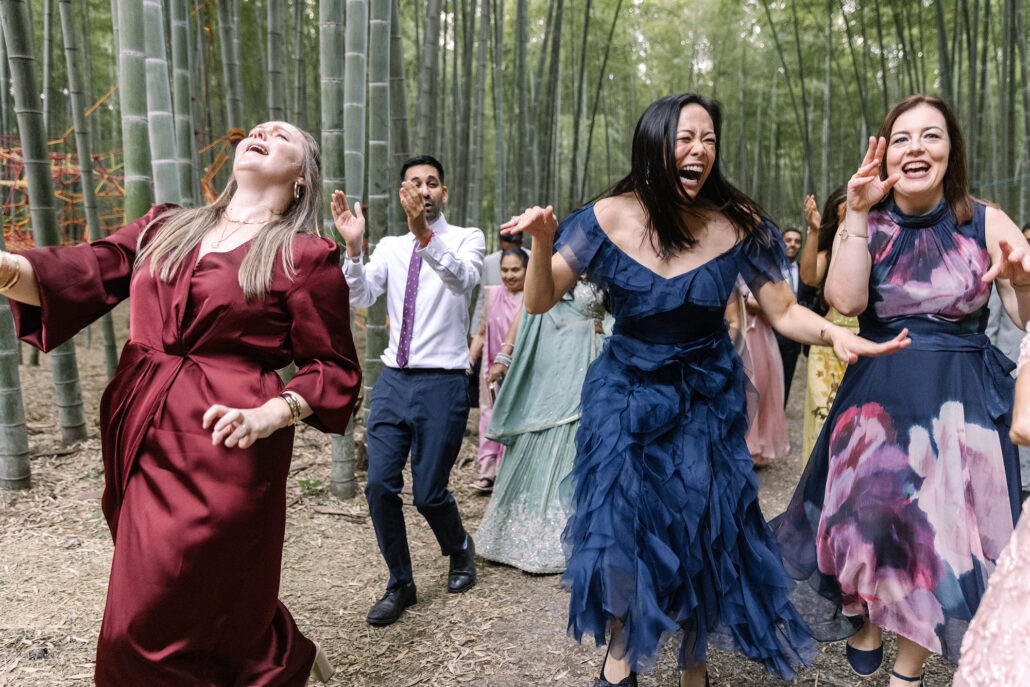
  • Guests dance with their hands in the air around the bride at the cocktail hour of a bamboo forest wedding in Japan.
  • The Indian bride dances in her varmala among guests in saris and gowns as the cocktail hour turns into a party in a Japanese bamboo forest.
  • Dancing guests fill a bamboo path behind the bride, a fusion wedding of India and Japan carried on in the bamboo forest in Tochigi.
  • Guests in satin, ruffles and florals laugh mid-dance at the cocktail hour of an Indian wedding in a Japanese bamboo forest.
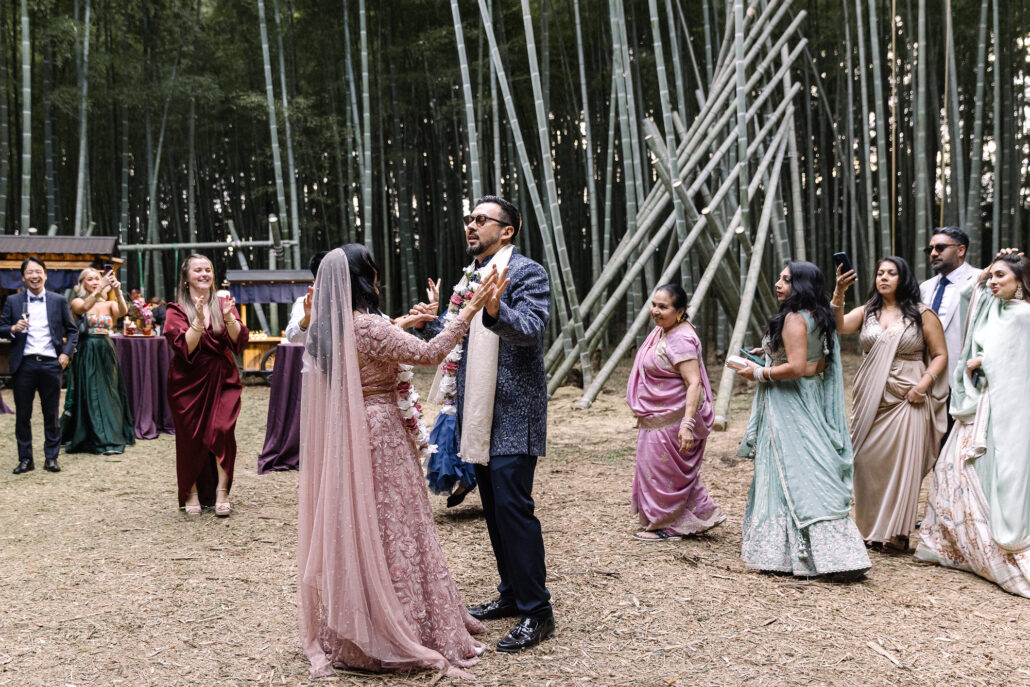
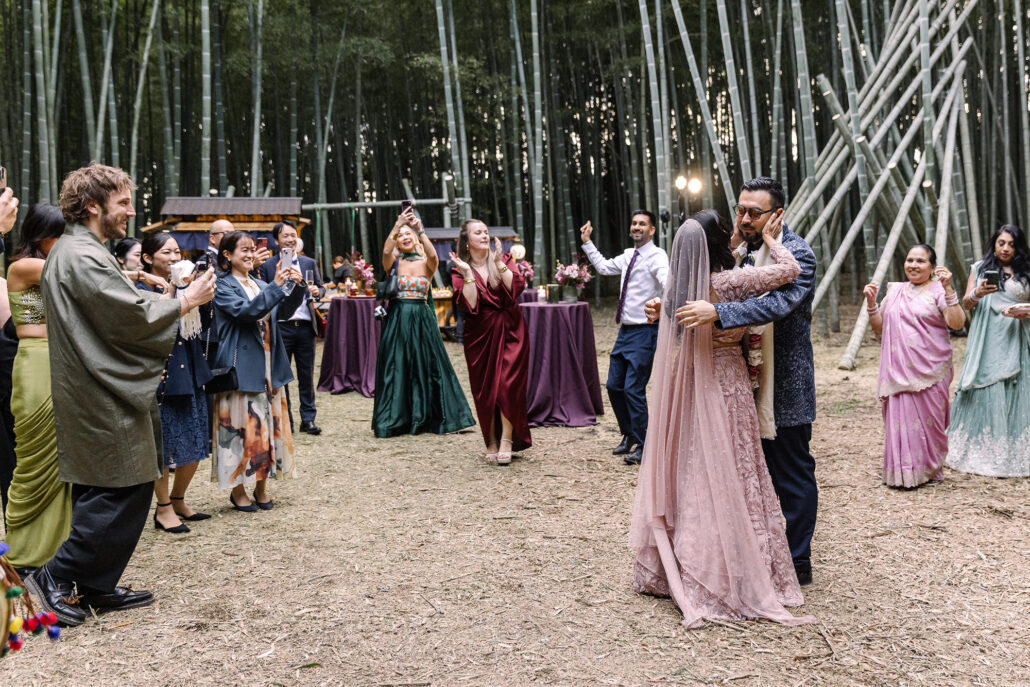
  • Guests in saris dance around the bride and groom on the forest floor at the cocktail hour of their Indian wedding in Japan.
  • The bride and groom dance together among guests at the cocktail party of their Indian wedding, leaning bamboo poles behind, in Tochigi.
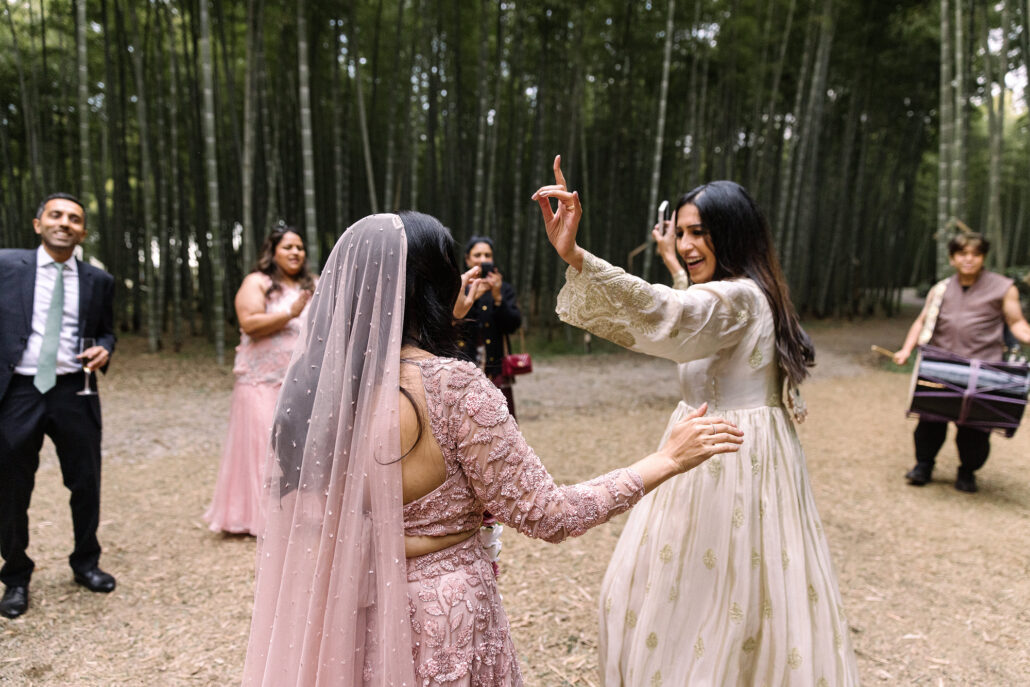
  • The bride dances with a friend in cream as a drummer plays behind them, the cocktail hour of an Indian wedding in Tochigi, Japan.

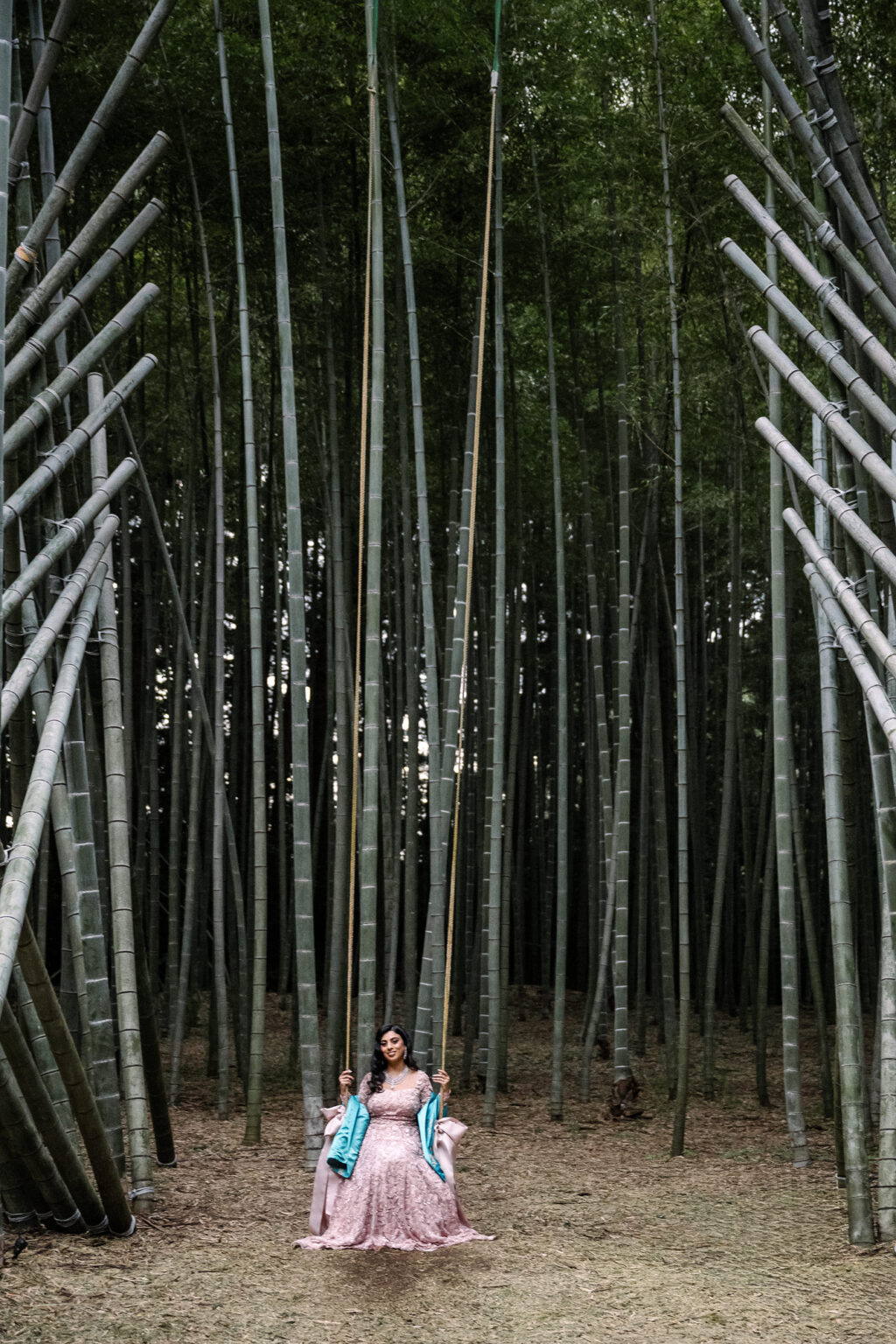
The yatai stood under the canes with their lanterns lit, and the bride took a turn on the farm’s bamboo swing. When the mist came round again, the two of them walked back into it.
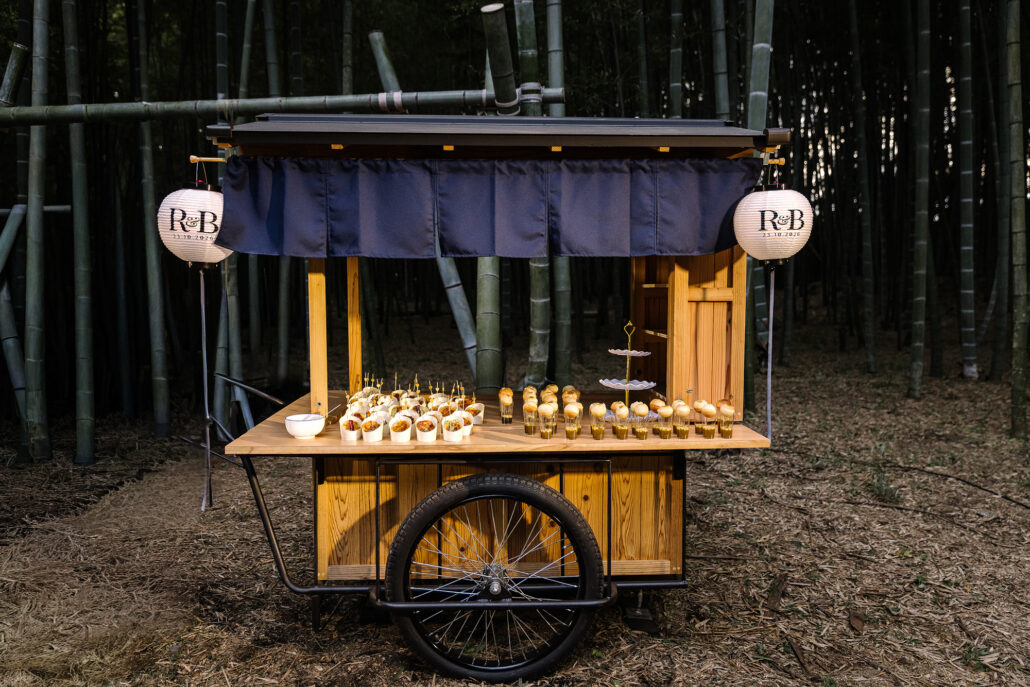
A wooden yatai handcart hung with two monogram paper lanterns and a navy noren stands among bamboo at a destination wedding in Tochigi.
  • From a drone, the couple kiss alone on the bamboo mandap with petals scattered round it, after their Hindu wedding in Tochigi, Japan.
  • The bride rests her head on the groom's shoulder, framed by the mandap decoration of pink flowers and spheres, after their Indian wedding in Japan.
  • A bartender throws a bottle high in a flair show at the bamboo forest bar, the cocktail party of an Indian wedding in Tochigi, Japan.
  • Guests watch as a bartender pours from a bottle held high at the cocktail bar of a destination wedding in a Japanese bamboo forest.
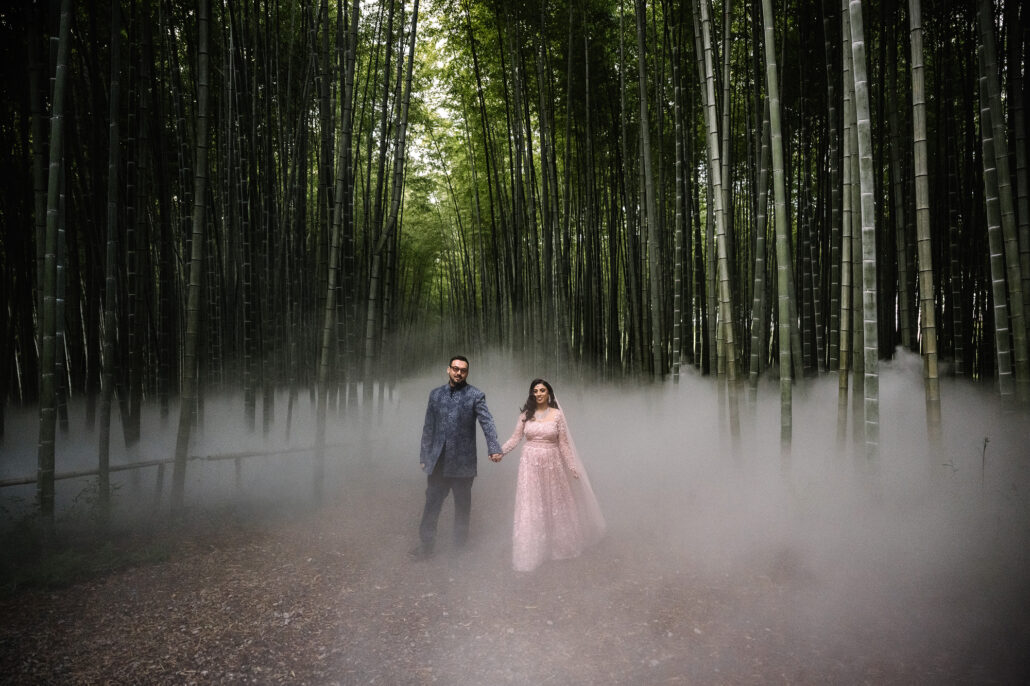
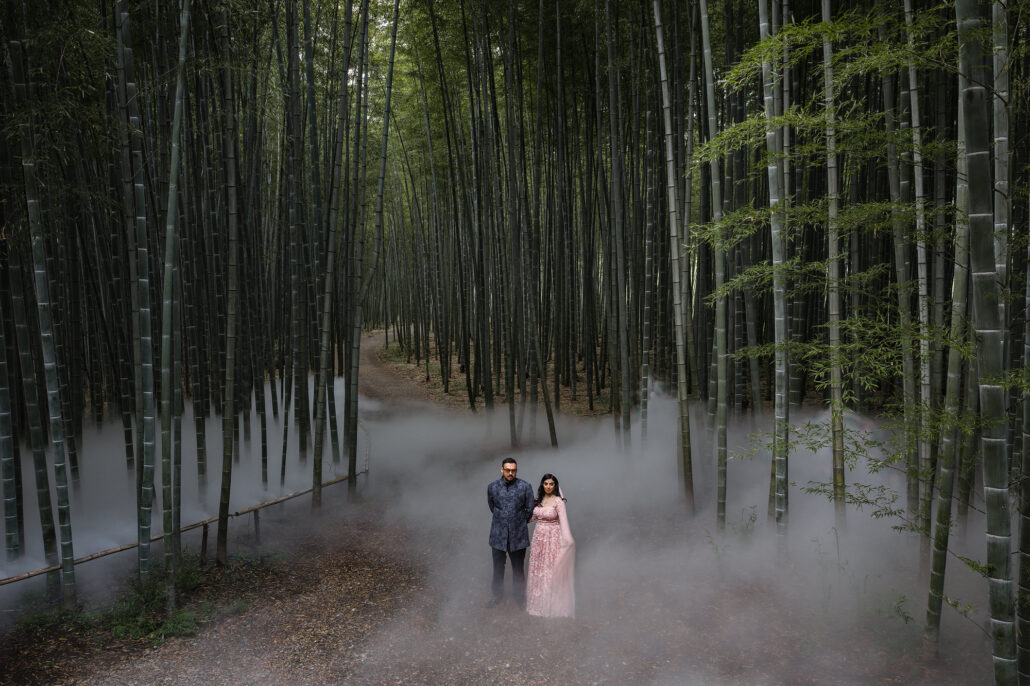
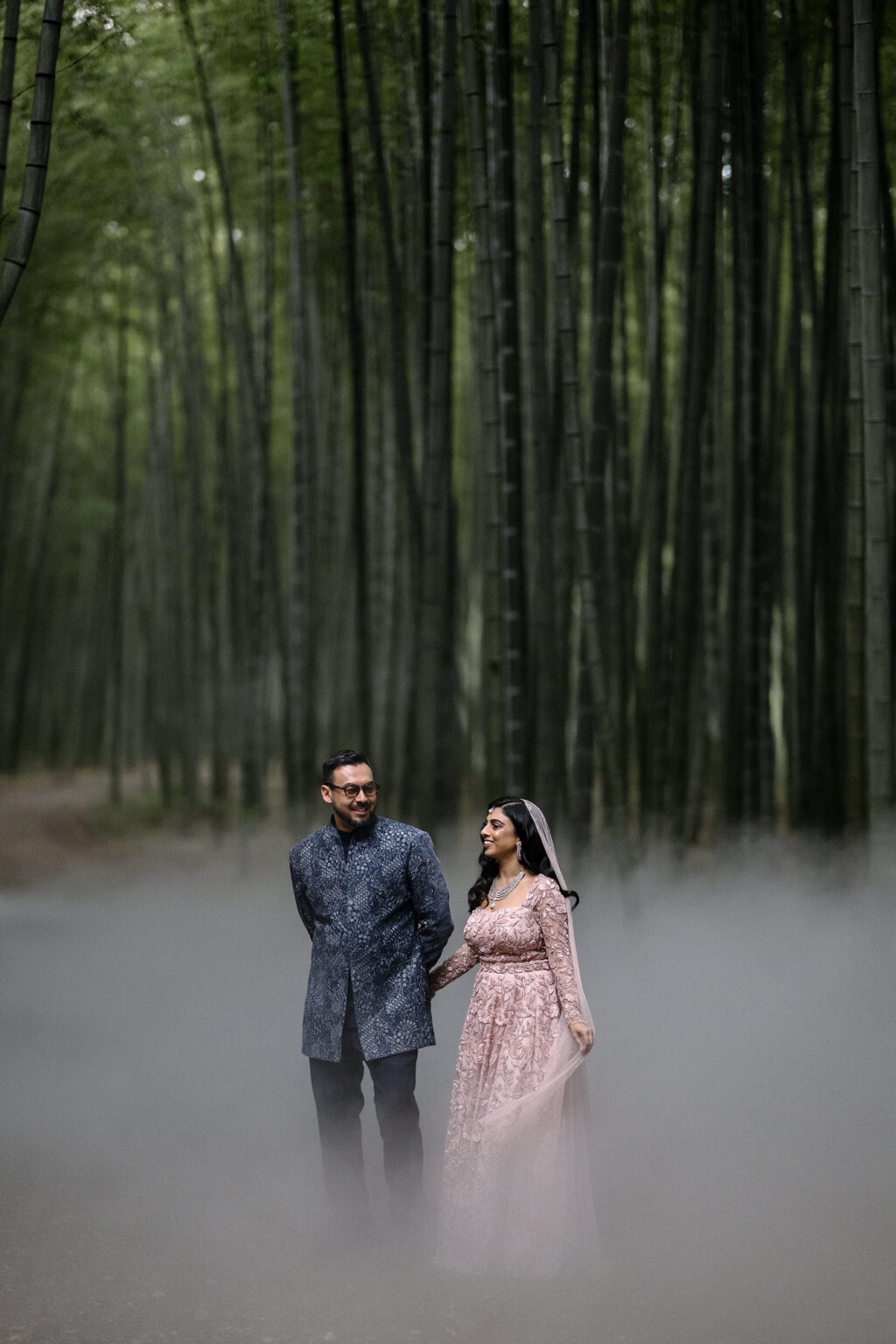
The couple stand hand in hand in a drift of mist on a bamboo path in the afternoon light, a bamboo forest wedding in Japan.
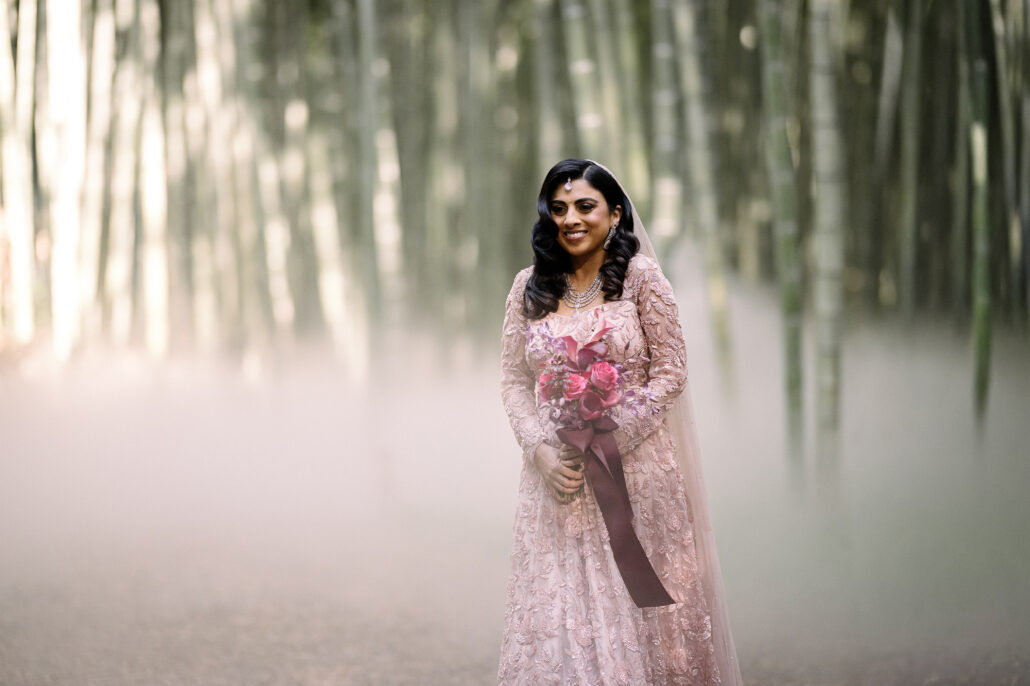
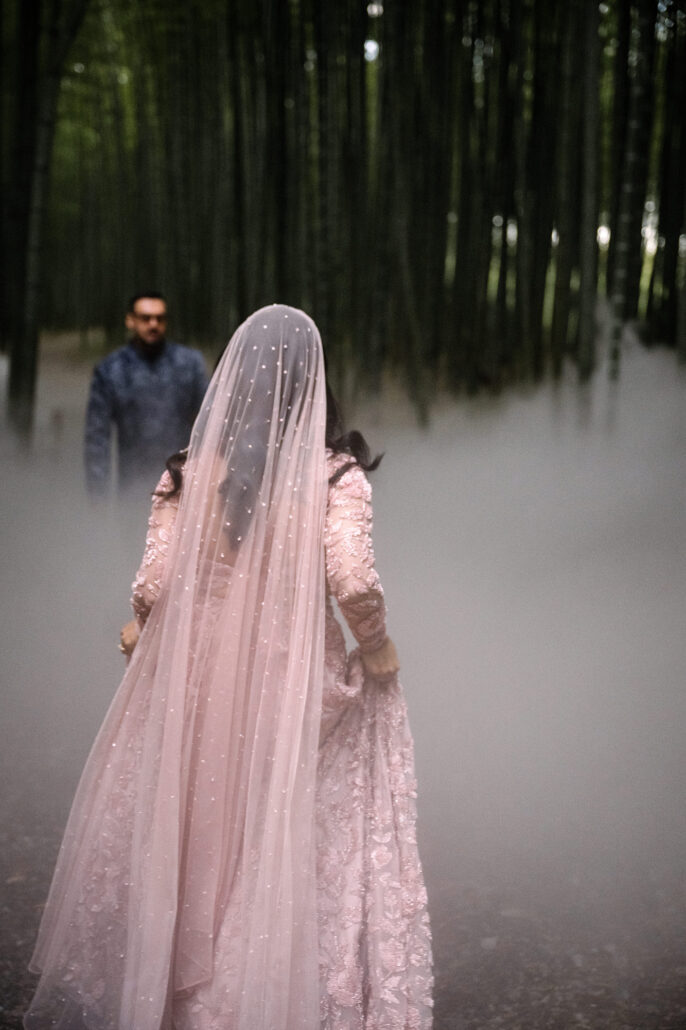
Seen from behind, the bride's beaded veil falls over her lehenga as she walks toward the groom through mist in a Japanese bamboo forest.
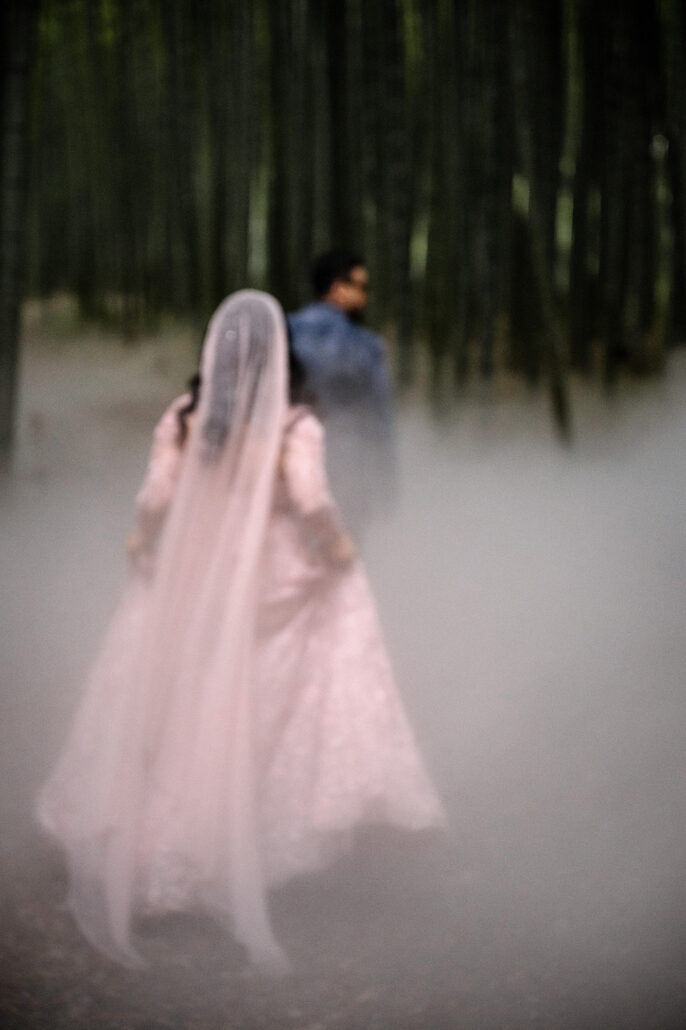
Veil and lehenga flowing, the Indian bride walks through mist with the groom soft behind her in the bamboo forest in Tochigi.
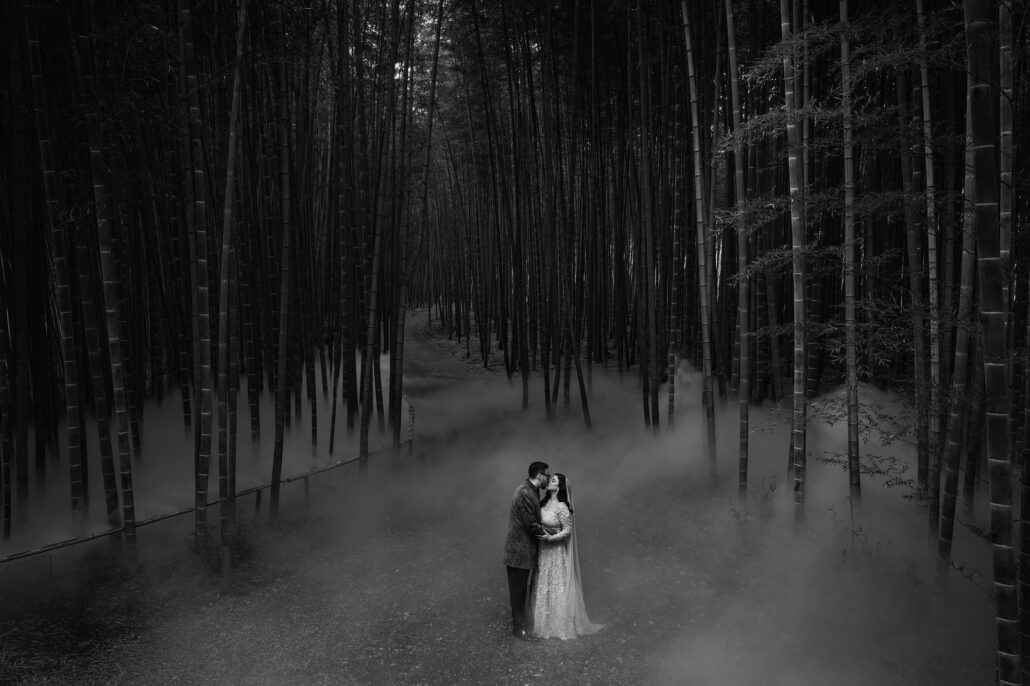
Seen from a drone, the couple stand in mist where the path bends through the bamboo forest in Tochigi on the day of their Indian wedding.
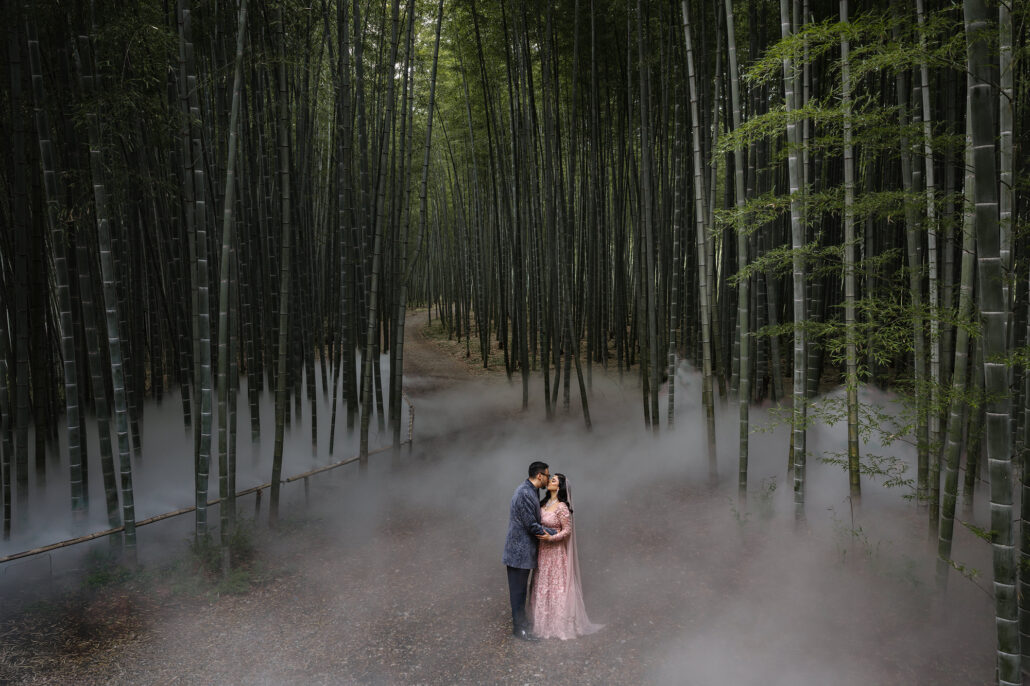
  • From a drone, the couple kiss in a drift of mist on a bend of the path, a Japanese bamboo forest rising on all sides in Tochigi.
  • In black and white, the couple kiss in mist among dark bamboo, seen from a drone, on the day of their Indian wedding in Tochigi.
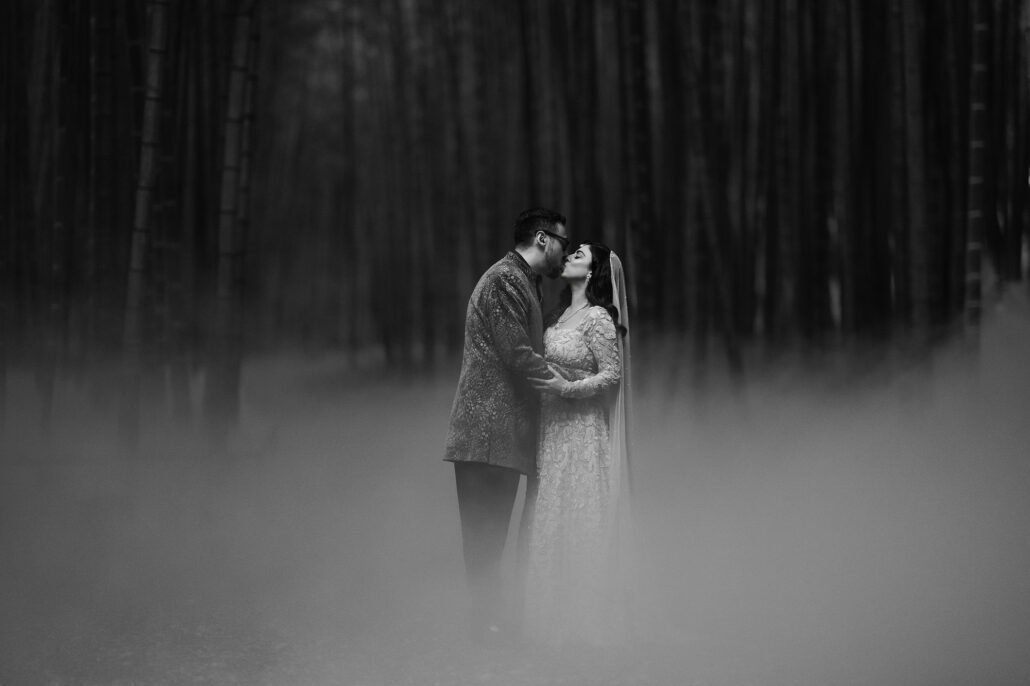
  • A black and white frame of the groom kissing the bride in thick mist, bamboo dark behind them, at a destination wedding in Japan.
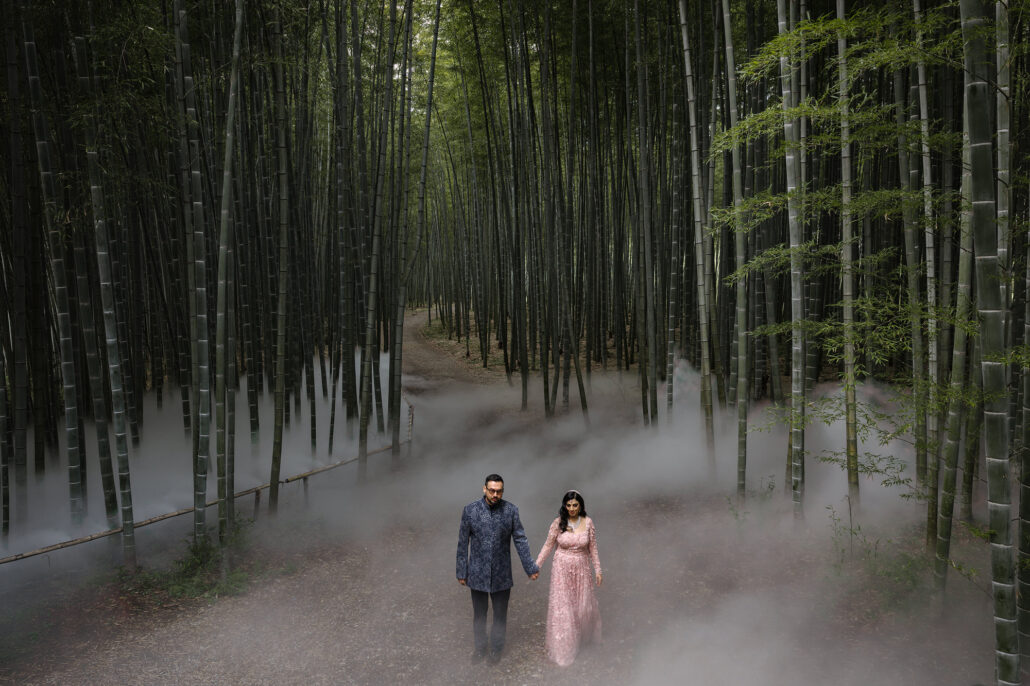
  • Hand in hand, the couple walk through mist along a bamboo avenue, seen from a drone, on the day of their Indian wedding in Tochigi.
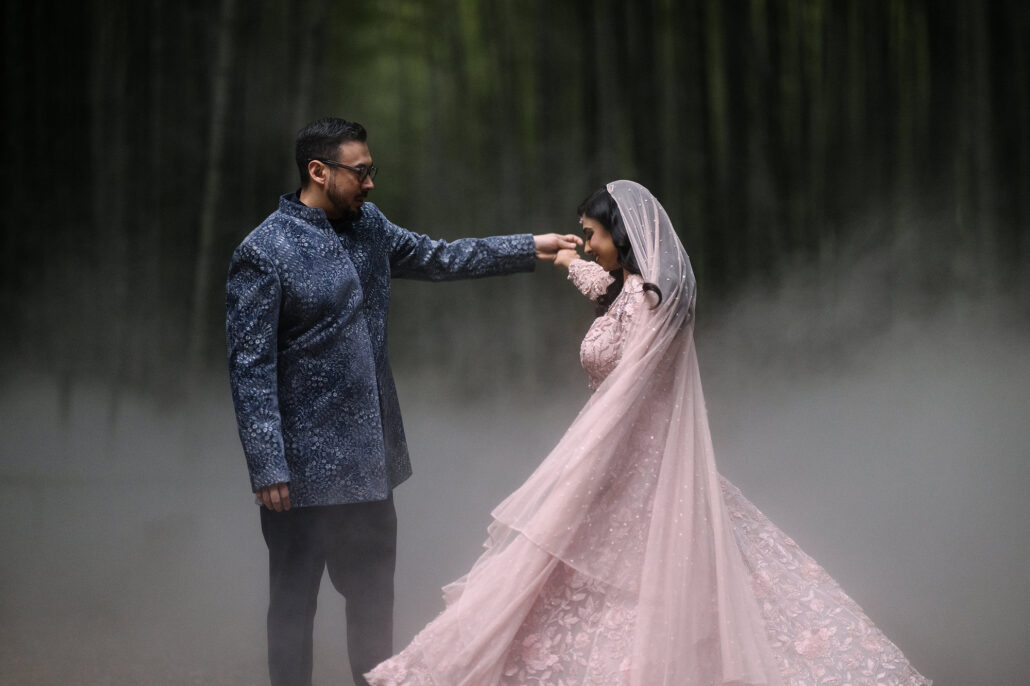
  • The groom twirls the bride so her pink lehenga and veil flare out in the mist, a bamboo forest wedding in Tochigi, Japan.
  • The bride looks up at the groom as they stand in mist under tall dark bamboo, a destination wedding in a bamboo forest in Tochigi.
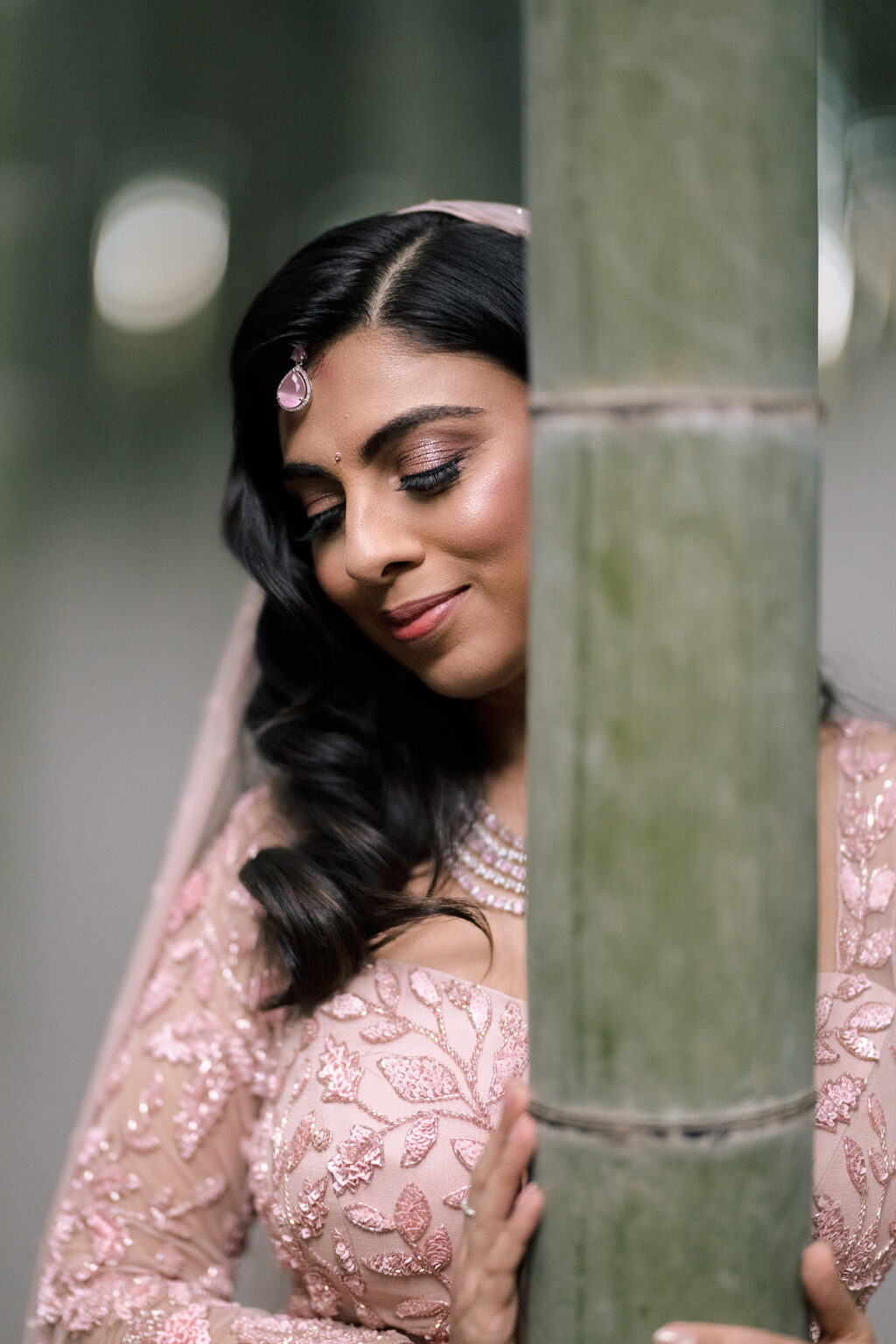
  • The Indian bride leans on a single bamboo culm with eyes lowered, maang tikka and pink lehenga, after her wedding in a Japanese bamboo forest.
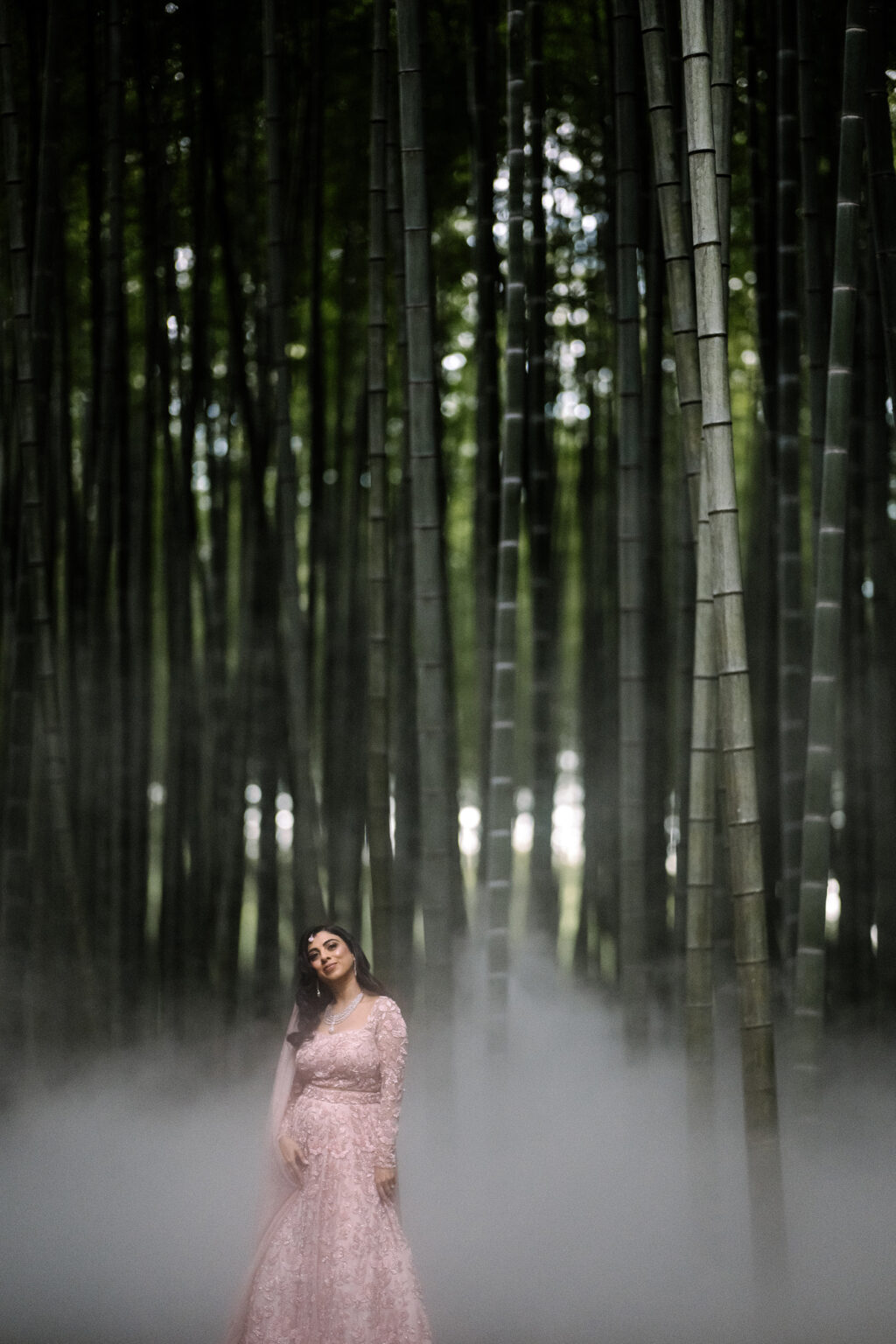
  • The Indian bride stands alone in rising mist between dark bamboo stalks, a portrait from her Hindu wedding day in Tochigi, Japan.
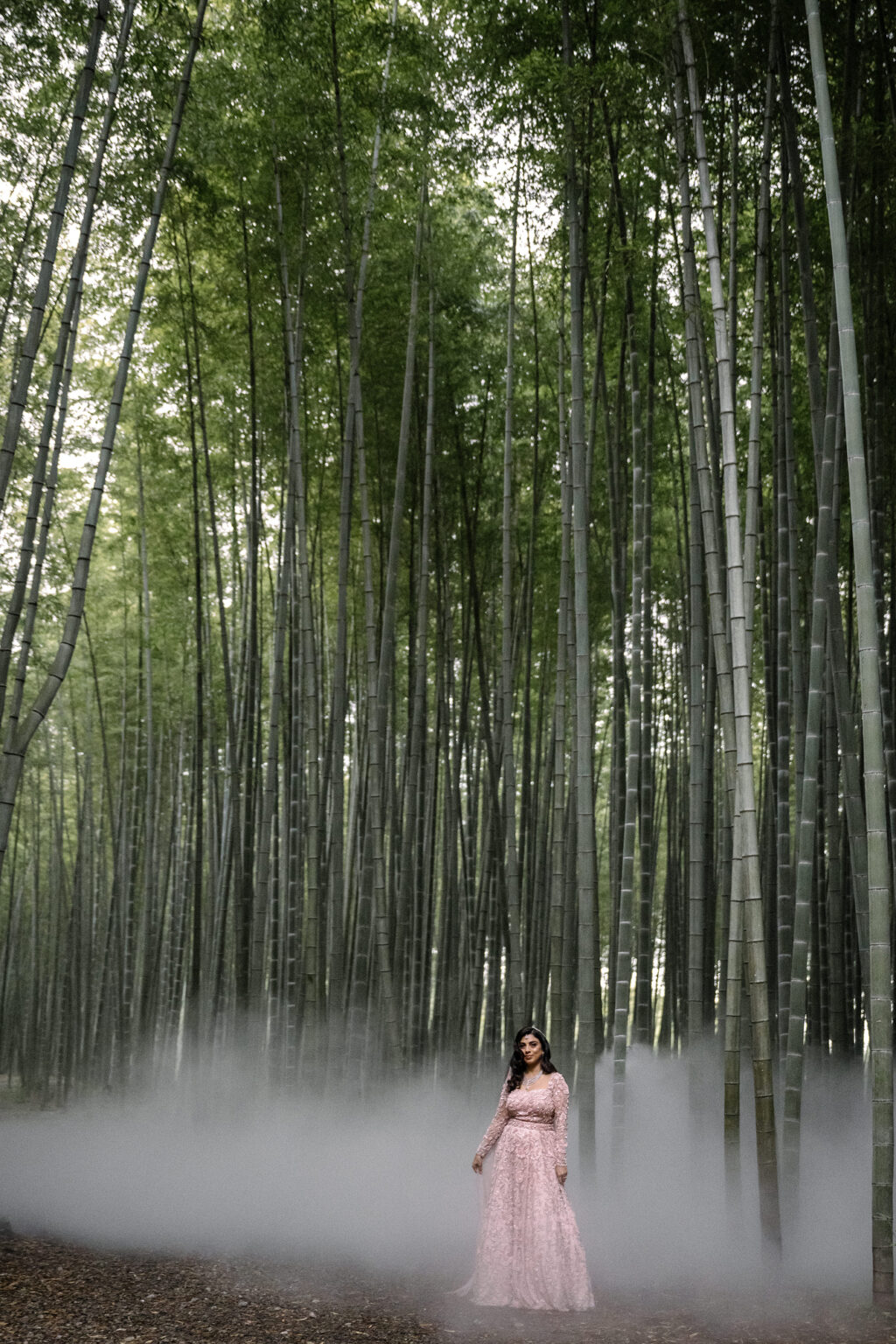
  • Small beneath towering bamboo, the bride stands in a bank of mist, the height of the bamboo forest in Tochigi where she married.
  • The Indian bride sits on the bamboo swing, a teal pashmina over her lehenga, among tall culms of the bamboo forest in Tochigi, Japan.

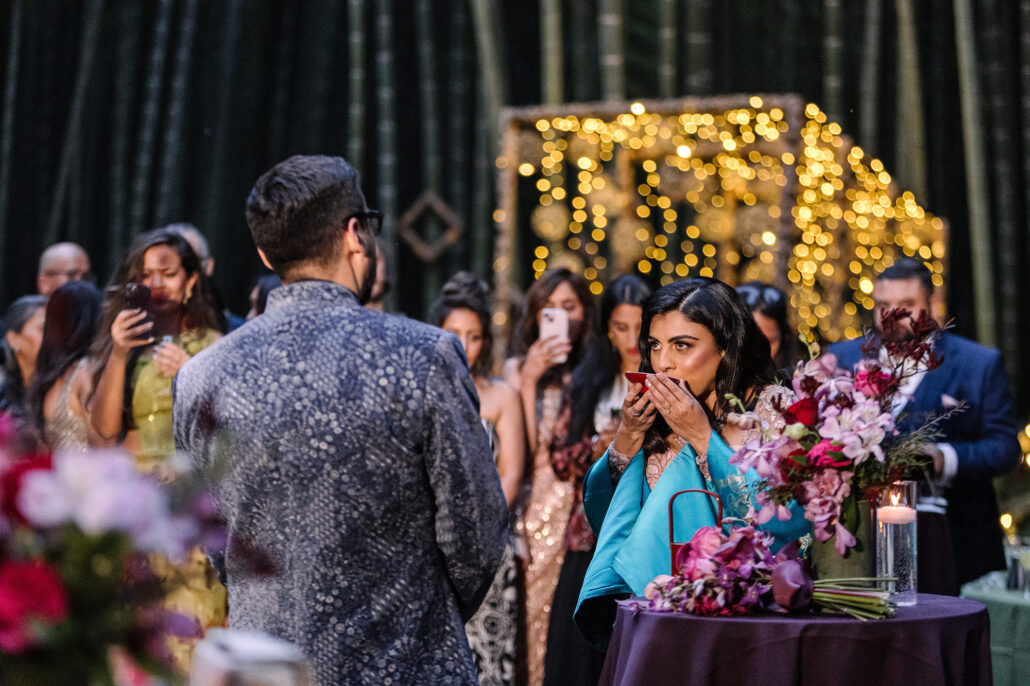
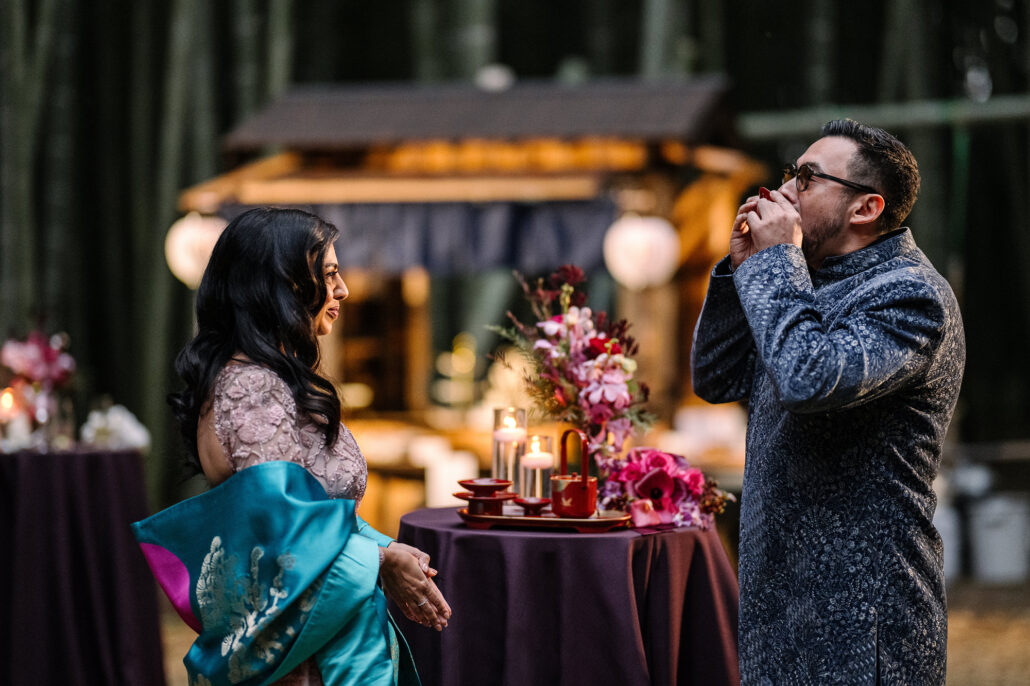
The couple wanted a fusion in every part of the day, so the forest had a Japanese vow too. At the cocktail hour, among the bamboo, came the san-san-kudo: three cups of sake, three sips from each. A childhood friend of the groom’s led it, and gave the three cups to the past, the present and the future. Sumika poured.
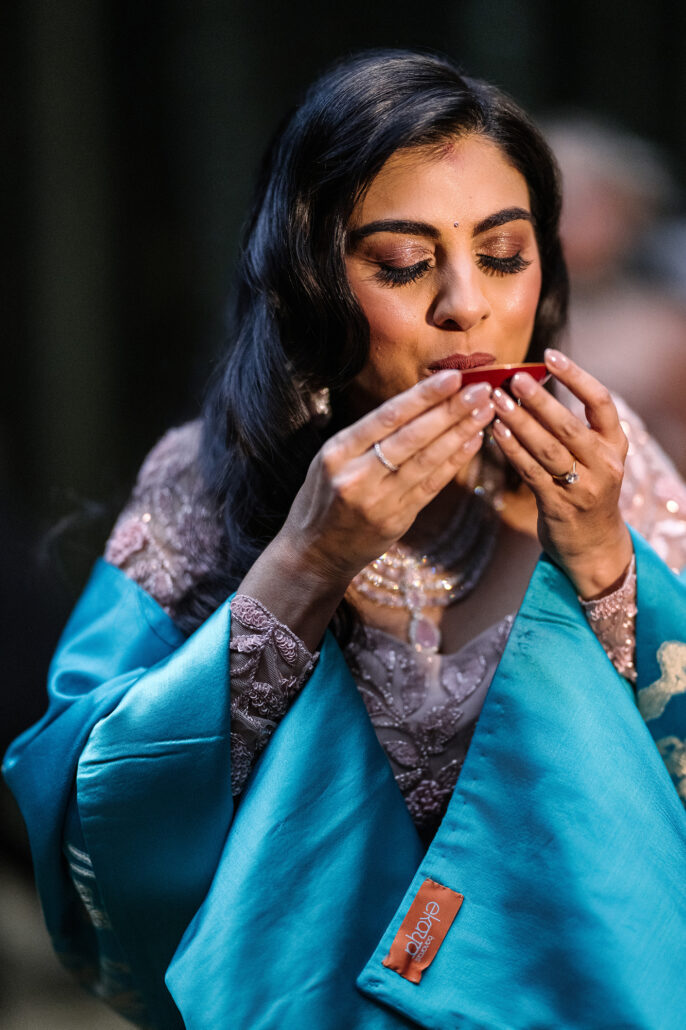
Wrapped in a teal pashmina, the bride sips from a red cup for the san-san-kudo, a Japanese sake vow at her Indian wedding in Japan.
The groom drinks from a red sake cup as the bride waits in her teal pashmina, the san-san-kudo at the cocktail hour, Tochigi, Japan.
Guests film as the bride drinks from a red cup beside flowers and candles, the san-san-kudo sake vow at her fusion wedding in Tochigi.
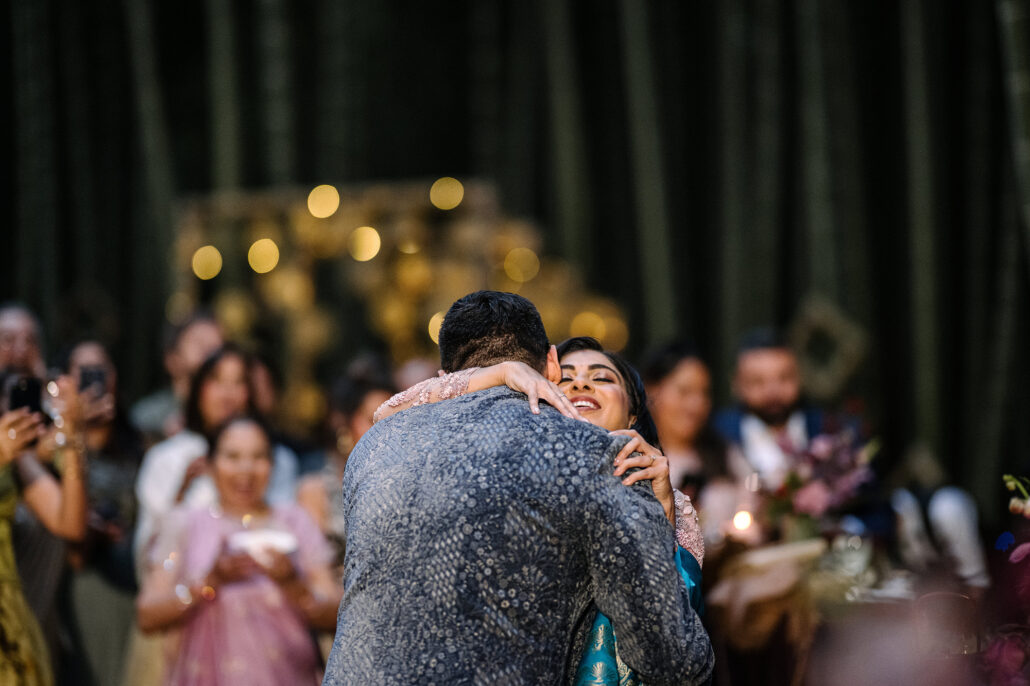
The groom pulls the bride into a hug after the sake vow as guests cheer under strings of lights, the cocktail hour of an Indian wedding.
Pale cocktails stand in a row of martini glasses, each garnished with a yellow flower and a leaf, at a bamboo forest wedding in Japan.

The Bamboo Forest at Night

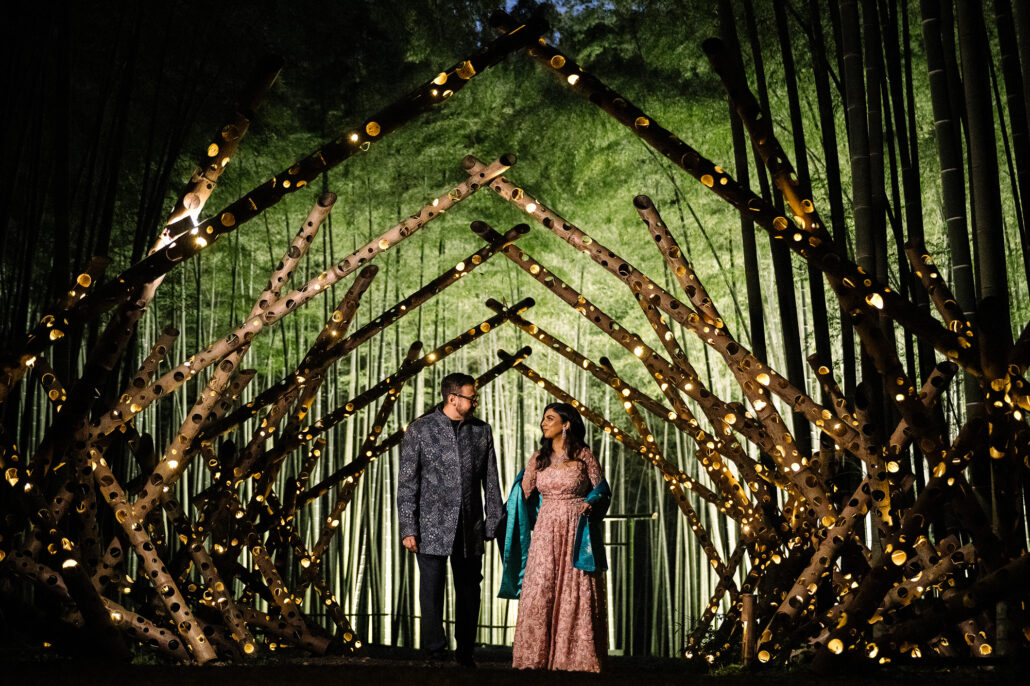
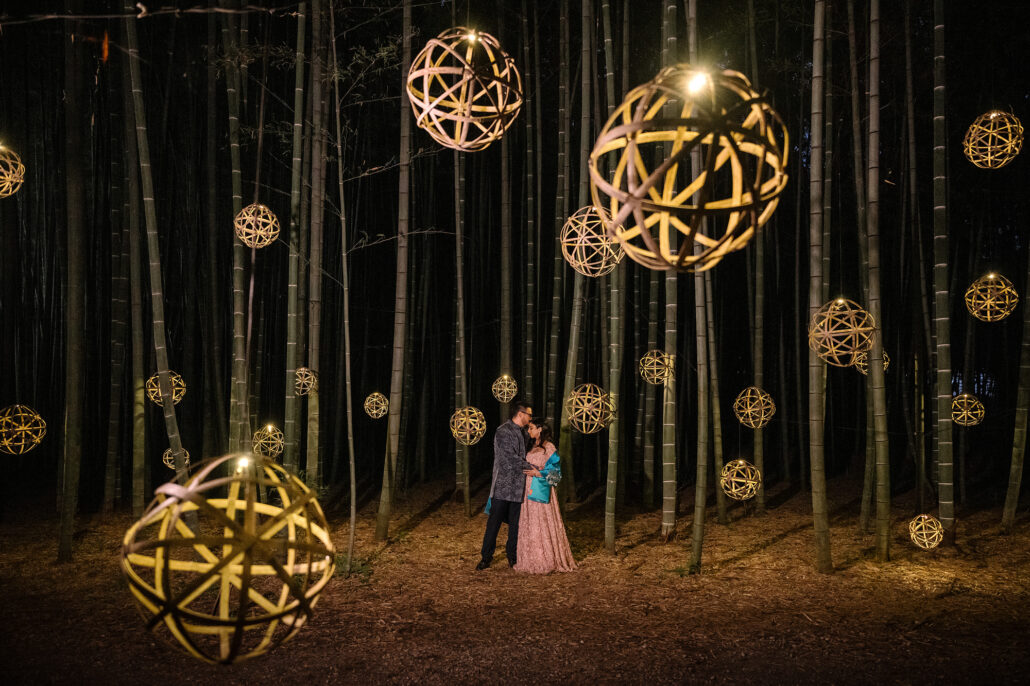
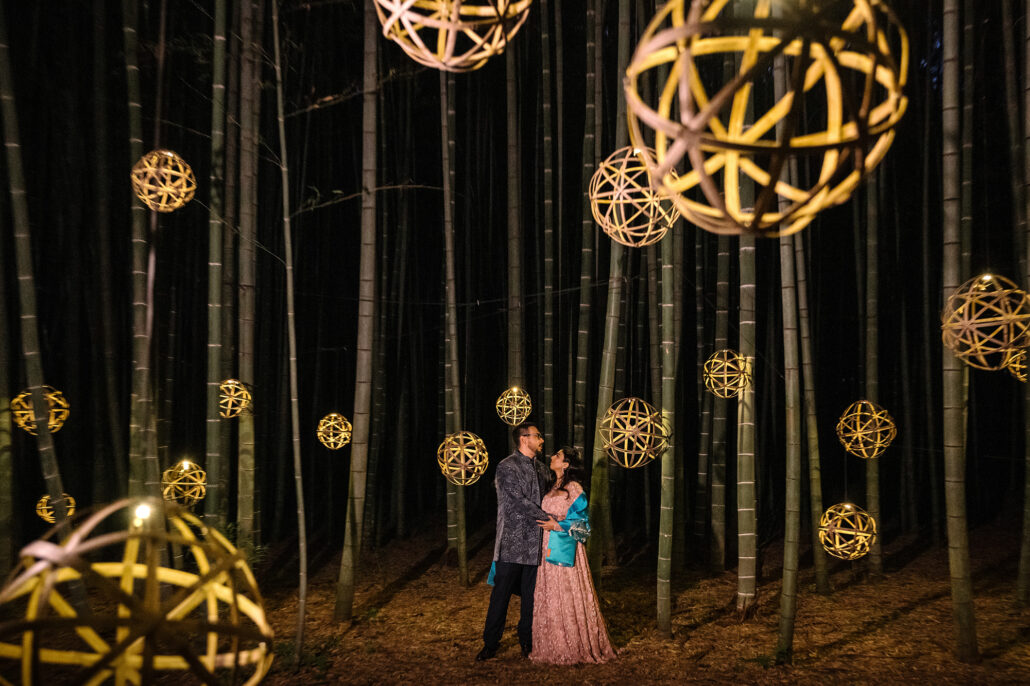
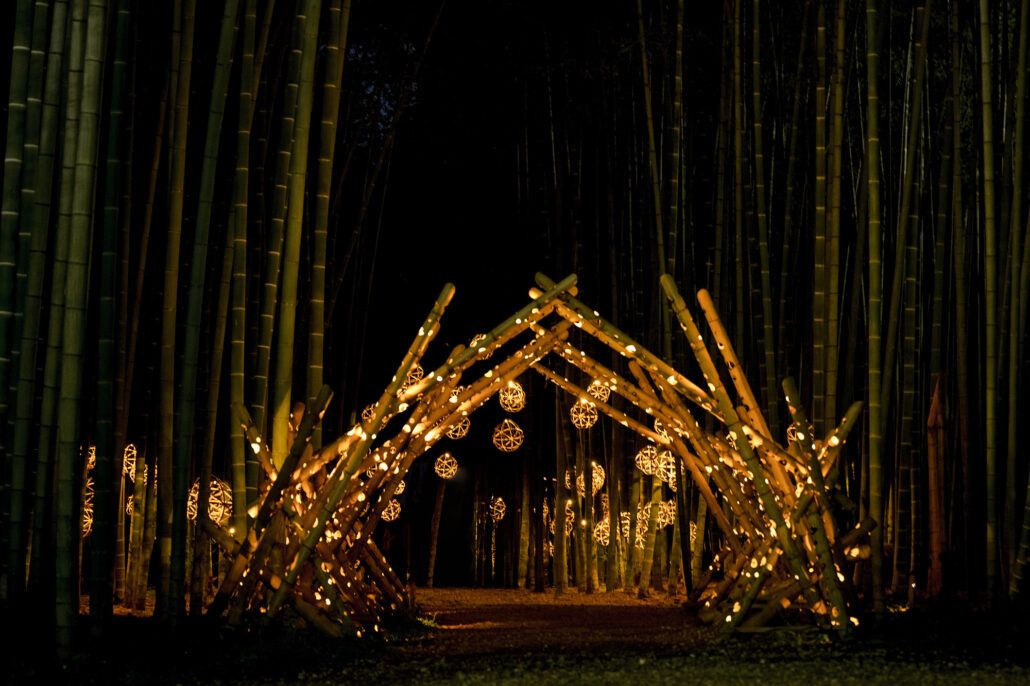
At dusk the farm lights the forest: lit bamboo spheres among the canes, a tunnel of light, the forest’s own name glowing gold.
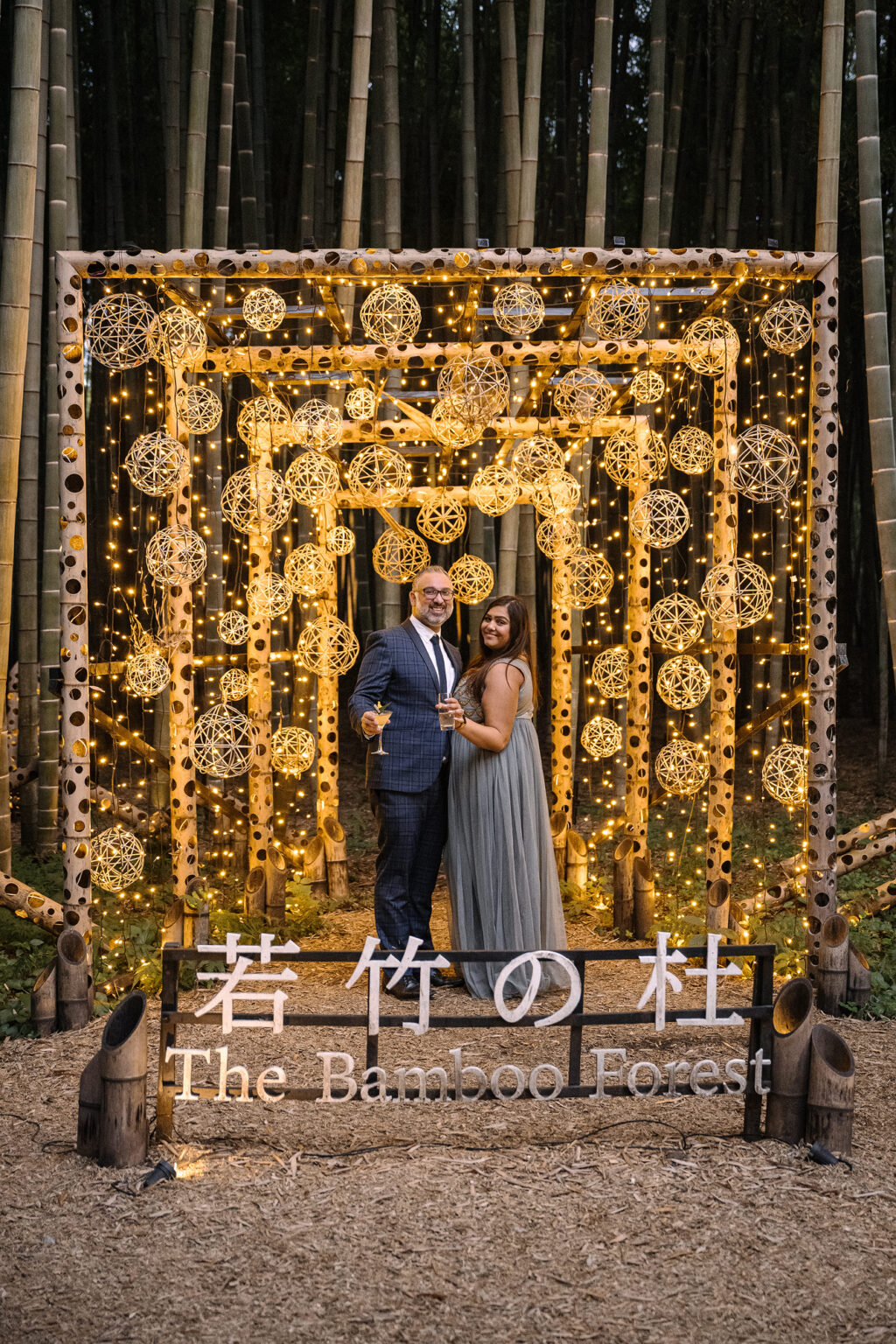
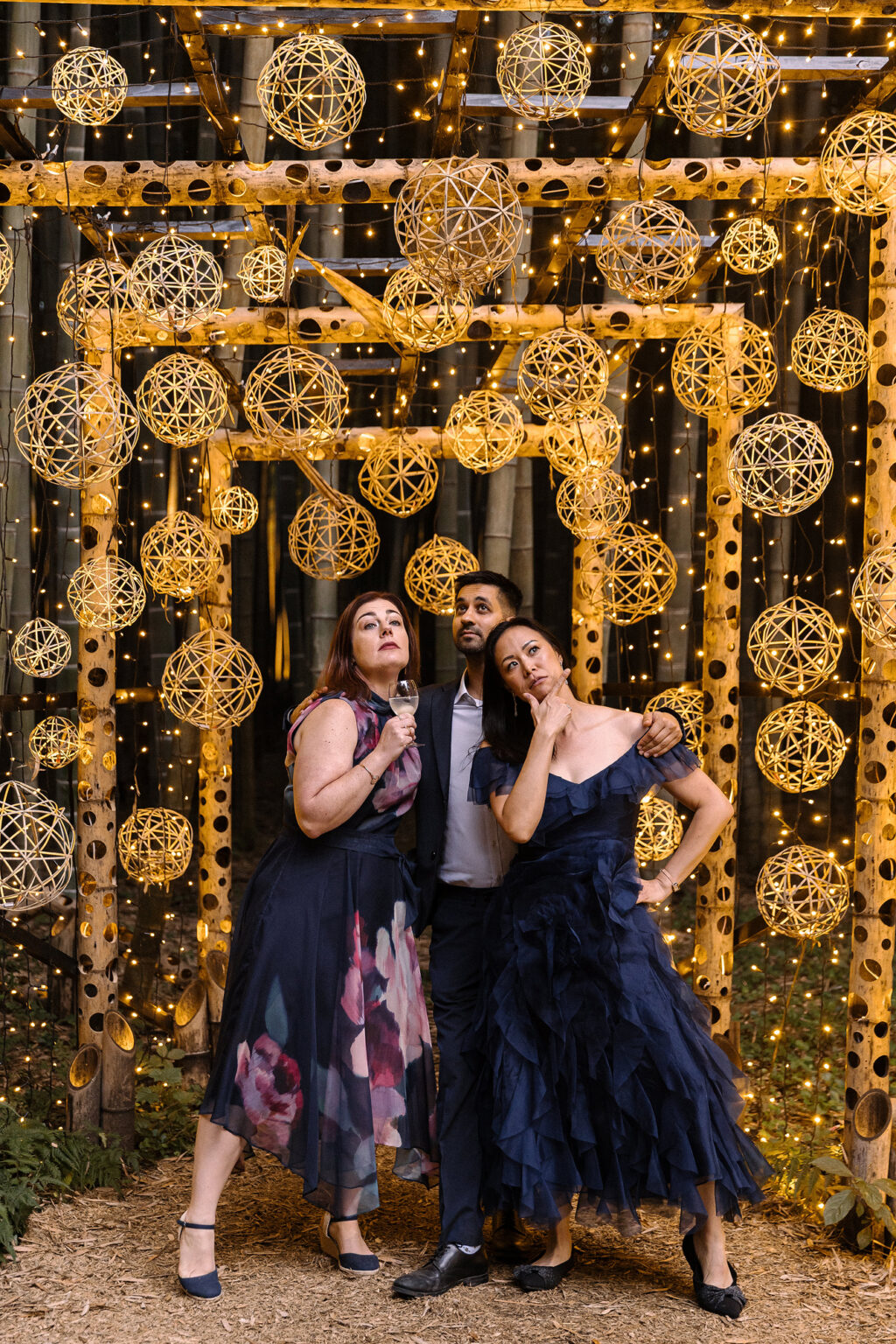
  • Two guests stand in a gateway of lights and lattice spheres behind the lit Wakatake no Mori sign, illuminations in the bamboo forest in Tochigi.
  • Three guests lean together in a gateway strung with lights and glowing bamboo spheres, illuminations at a bamboo forest wedding in Japan.
  • Lattice bamboo spheres glow among strings of fairy lights as the bamboo forest in Tochigi lights up for the evening of an Indian wedding.
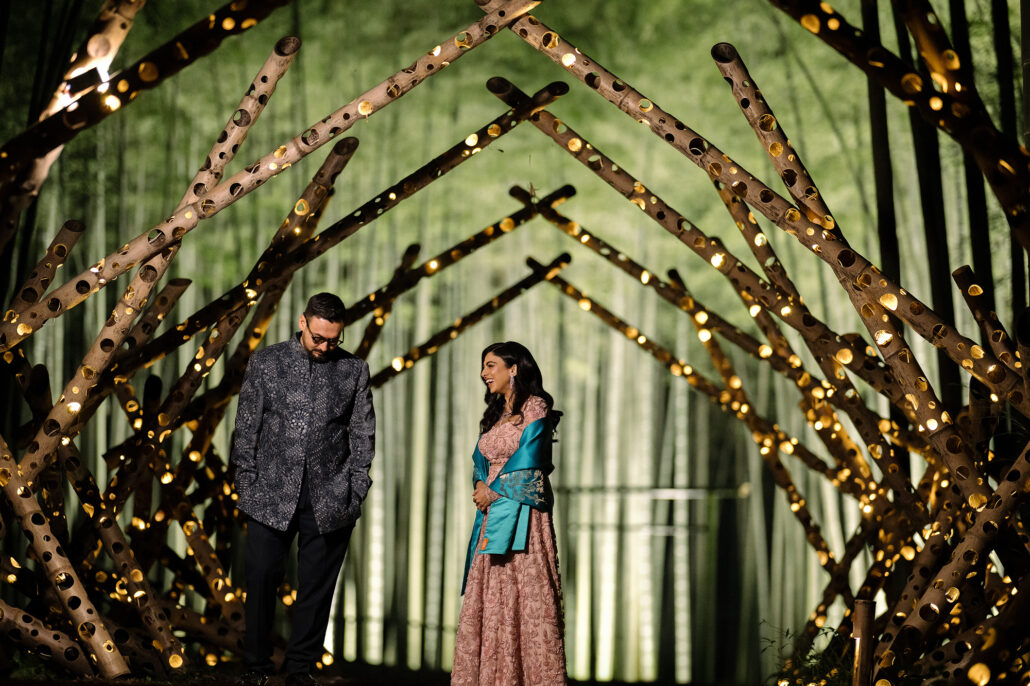
The couple stand beneath a bamboo arch lit from within, the bamboo forest lit up at night behind them in Tochigi after their Indian wedding.
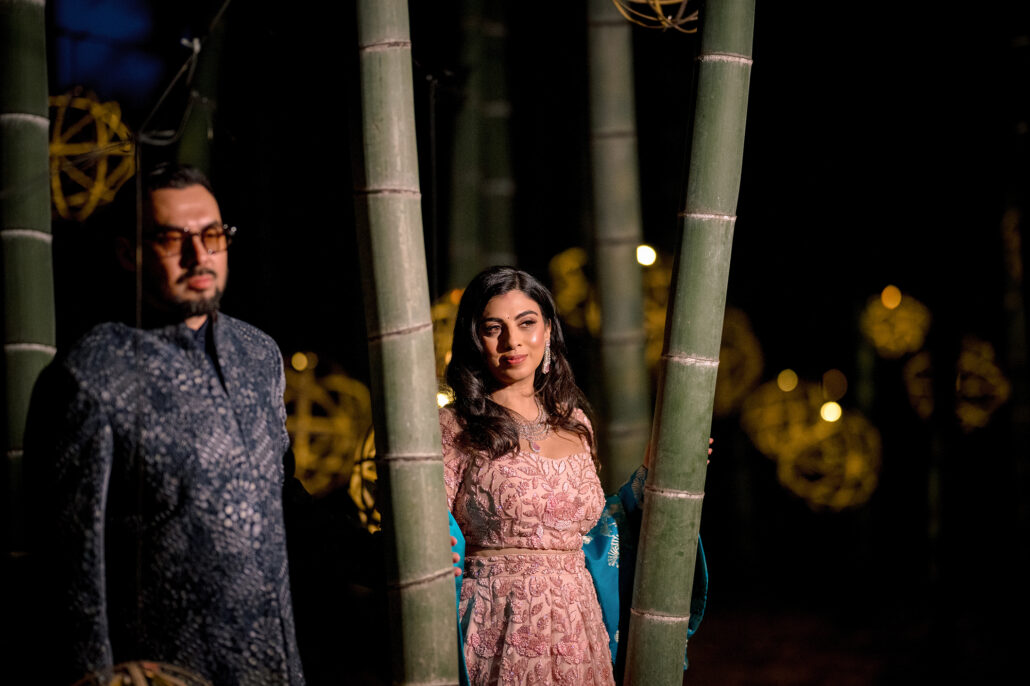
  • The groom and the bride, a teal pashmina over her lehenga, stand under a glowing bamboo arch in the bamboo forest in Tochigi lit up at night.
  • Glowing lattice spheres hang in the dark around the couple, illuminations in the bamboo forest in Tochigi on the night of their Indian wedding.
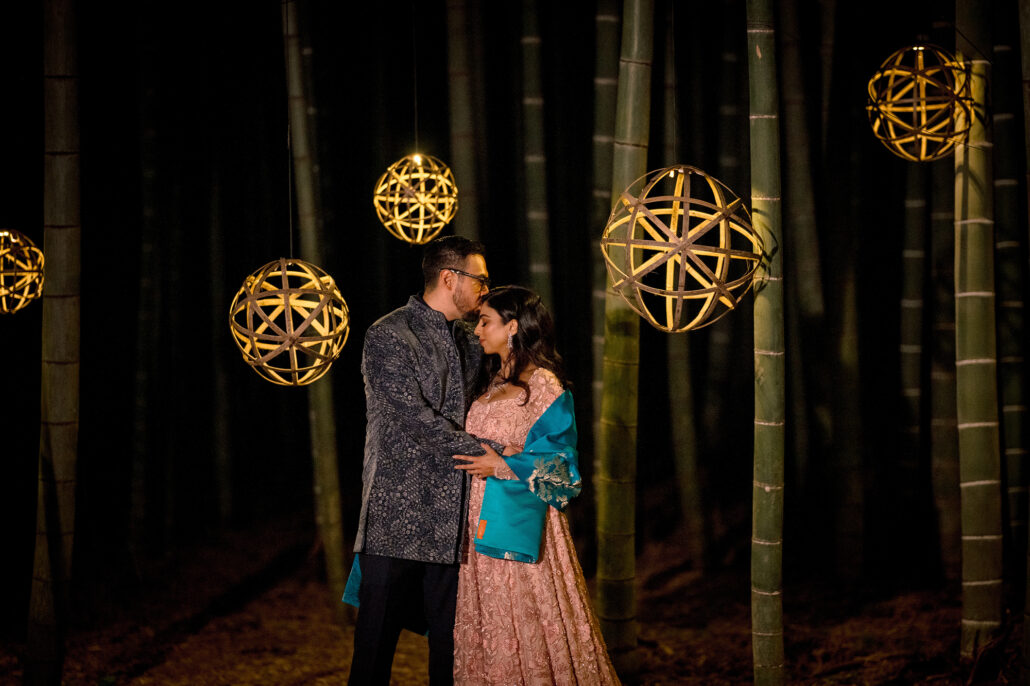
  • The groom holds the bride close among glowing lattice spheres hung through the dark bamboo, a bamboo forest wedding in Japan at night.
  • Spheres of light hang at every height around the couple, the night illuminations of a Japanese bamboo forest in Tochigi.
  • The groom and the bride stand on either side of a bamboo stalk at night, glowing spheres behind them in the bamboo forest in Tochigi, Japan.
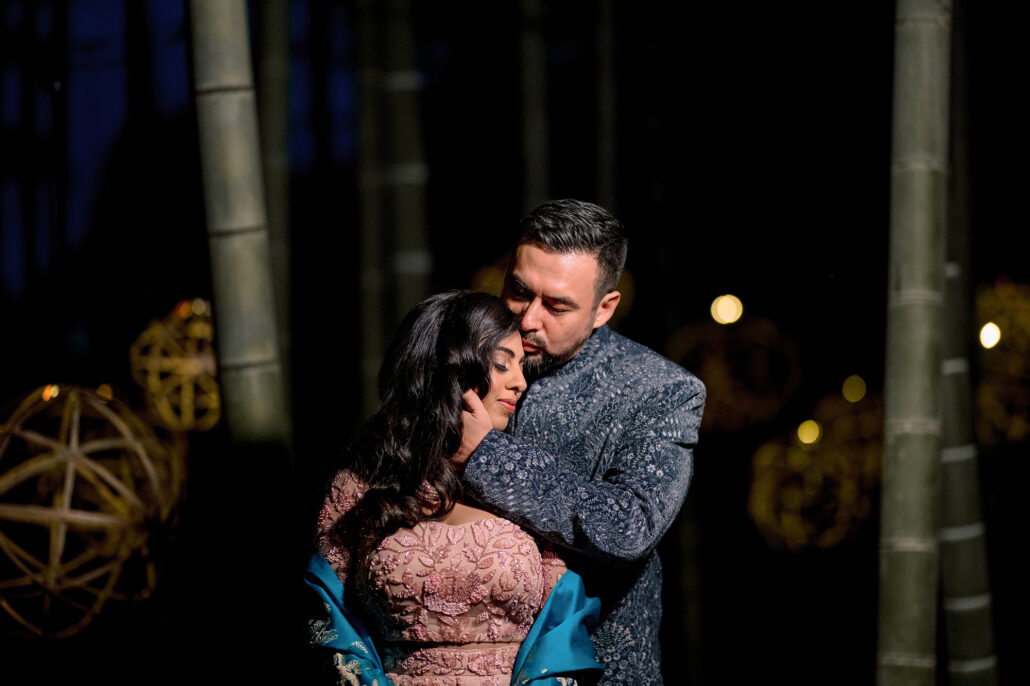
  • Wrapped in a teal pashmina, the Indian bride leans into the groom's embrace among glowing lights in the bamboo forest in Tochigi at night.
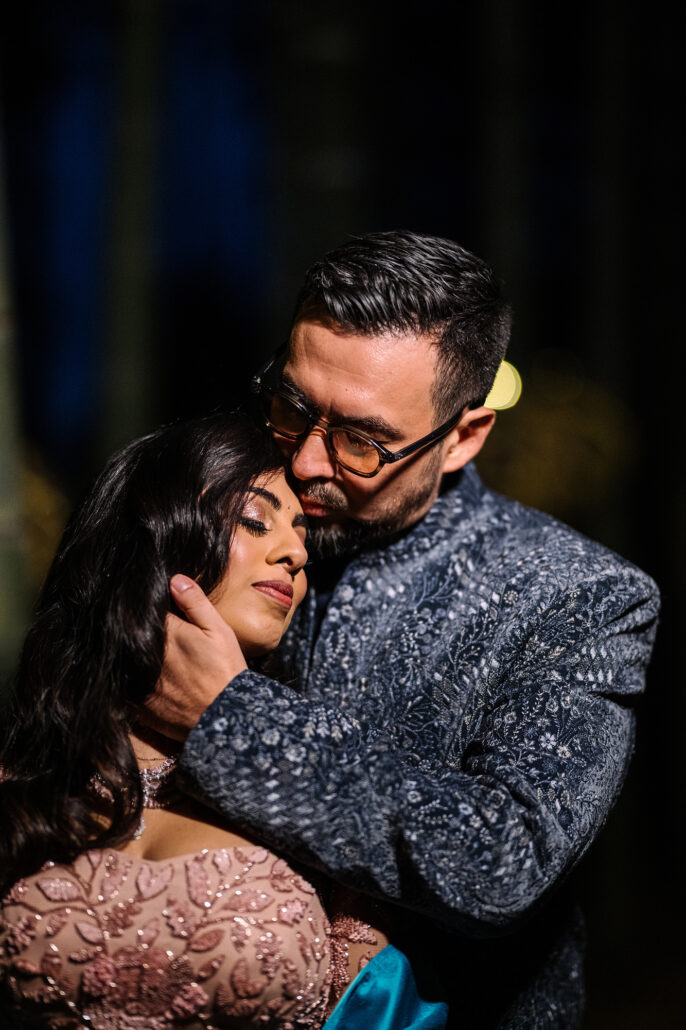
The groom holds the bride's face to his cheek, navy sherwani against pink lehenga, the night of their Indian wedding in the bamboo forest in Tochigi.
A bamboo arch glows gold at the end of a dark path, lit spheres beyond it, the bamboo forest in Tochigi lit up at night for an Indian wedding.

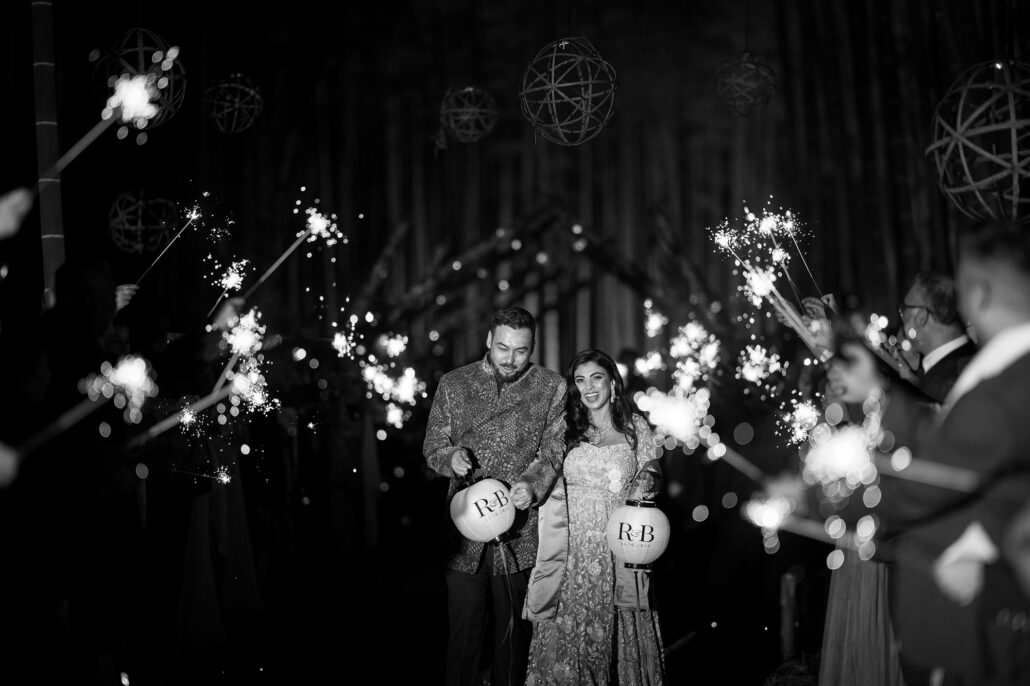
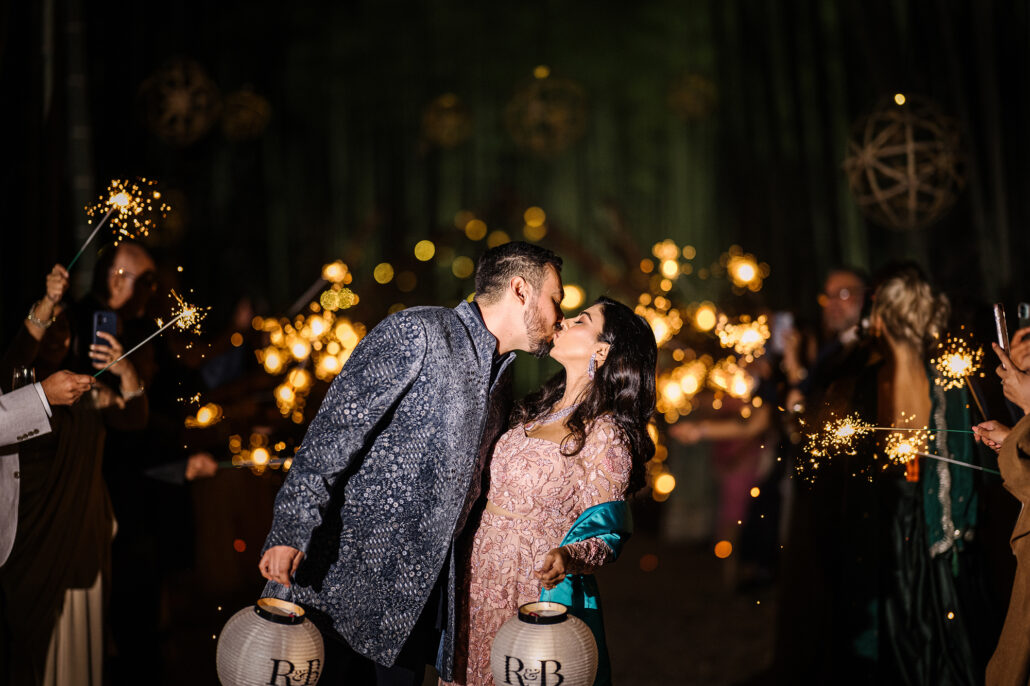
The couple walked out between two lines of guests holding sparklers, which was their own idea, and a good one.
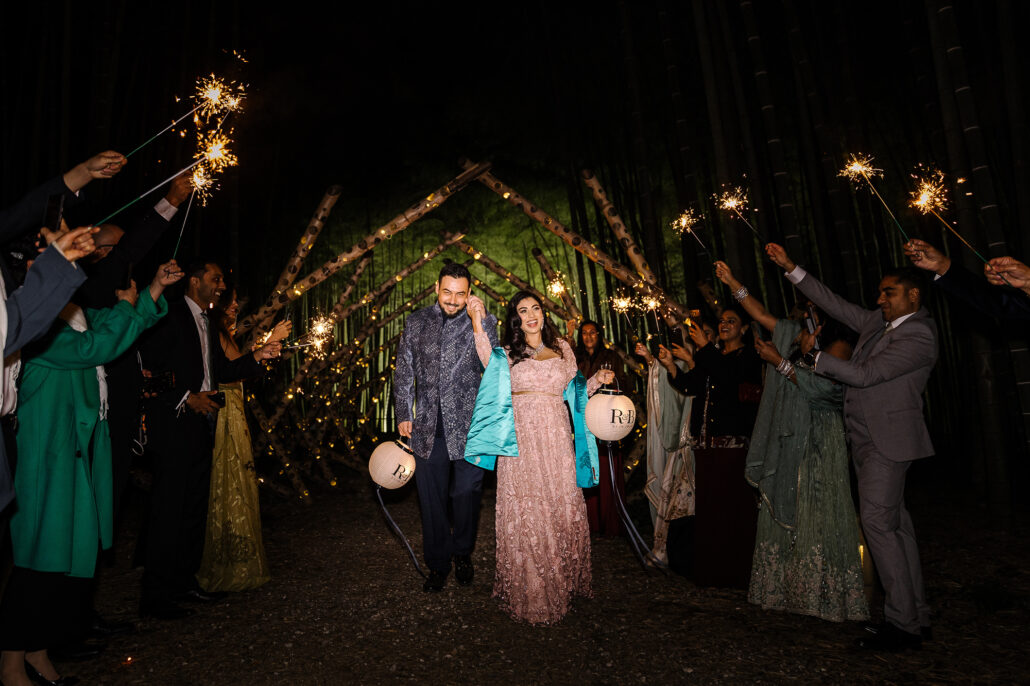
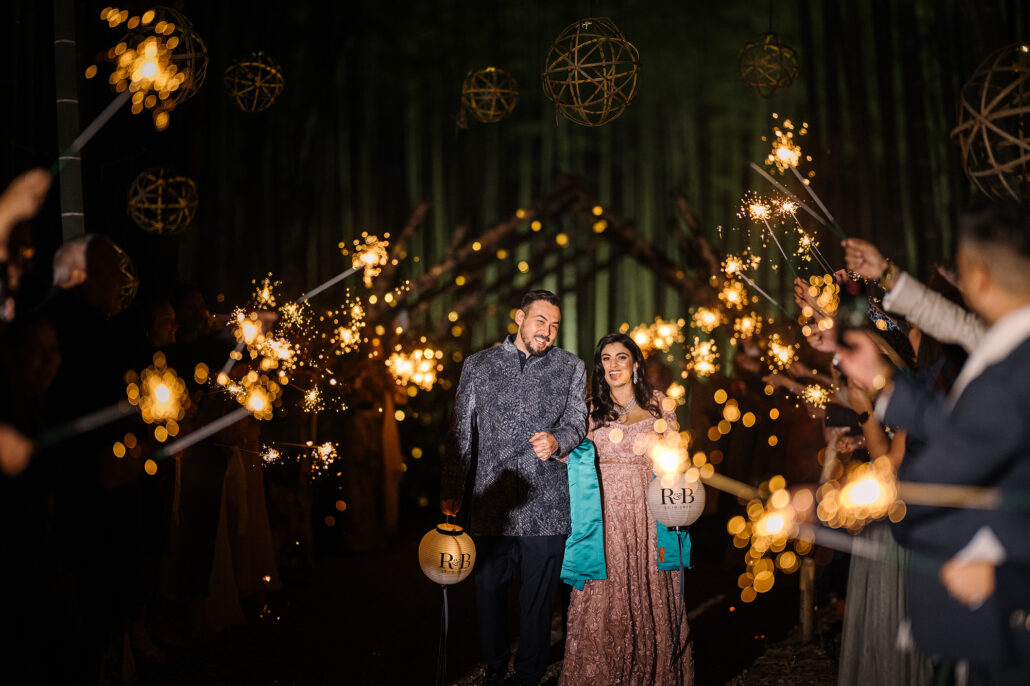
  • The couple walk between two lines of guests with sparklers raised, monogram lanterns in hand, a bamboo forest wedding send-off in Tochigi.
  • Sparklers burn around the bride and groom as they carry paper lanterns printed with their monogram out of the bamboo forest in Tochigi.
  • In black and white, sparklers fill the frame around the couple and their monogram lanterns as they leave their Indian wedding in Tochigi.
The groom kisses the bride between sparklers, both still holding monogram lanterns, the last moments of their Indian wedding in the bamboo.

We’d seen what the sky could do here. Once the forest had won them over, the two of them came back with Dee and Sumika, so Dee could walk them through the day as she saw it unfolding. That visit ended in a storm: within thirty seconds the rain was up to our ankles, and on the road back to the station there was at least ten centimetres of water. Some places are a leap of faith. We take creative risks, never without a second plan, and a covered space stood ready all day. It wouldn’t have been the bamboo.

The rain came the next day and stayed for three. The day itself didn’t see a drop.

A Son, Not a Son-in-Law

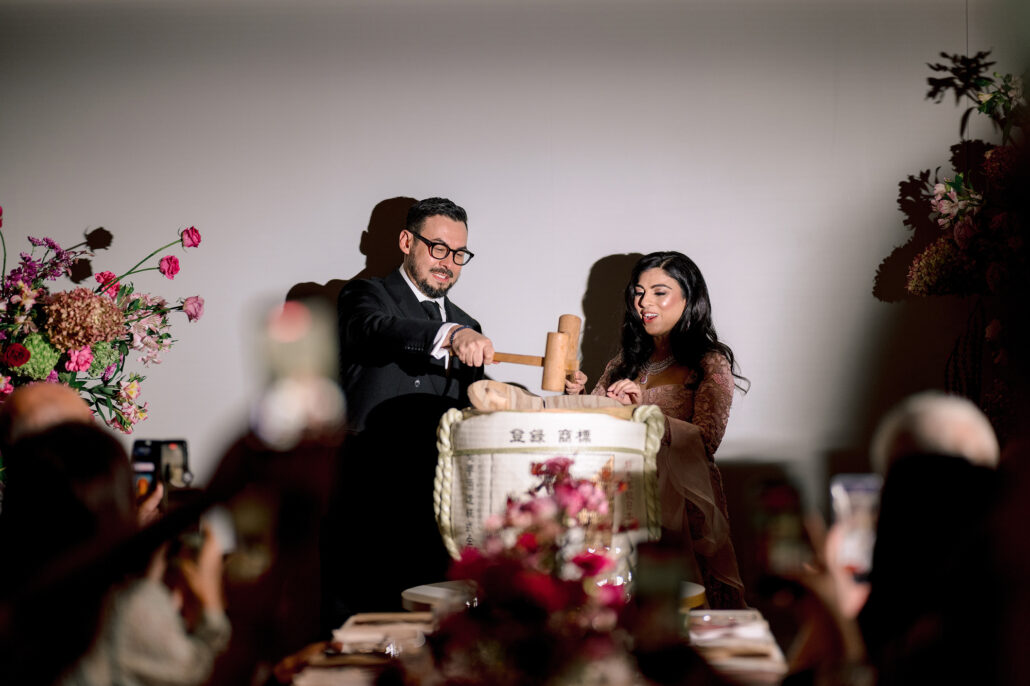
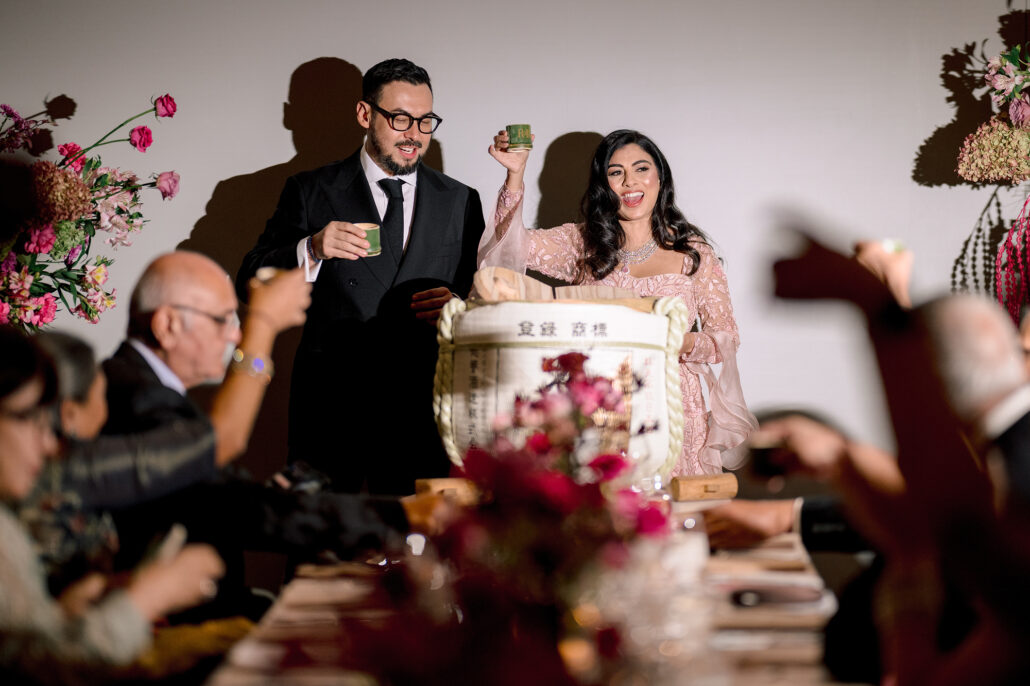
Dinner was at Angelo Court in Utsunomiya, where Mariko put the whole evening together for us at a speed we still admire. The room was ours to perfect: every tablecloth at the same length, and every napkin steamed by Sumika the night before, long after midnight. The evening opened Japanese style, with kagami biraki: the round wooden lid of a sake barrel, called the kagami, broken open with wooden mallets while the room shouted along.
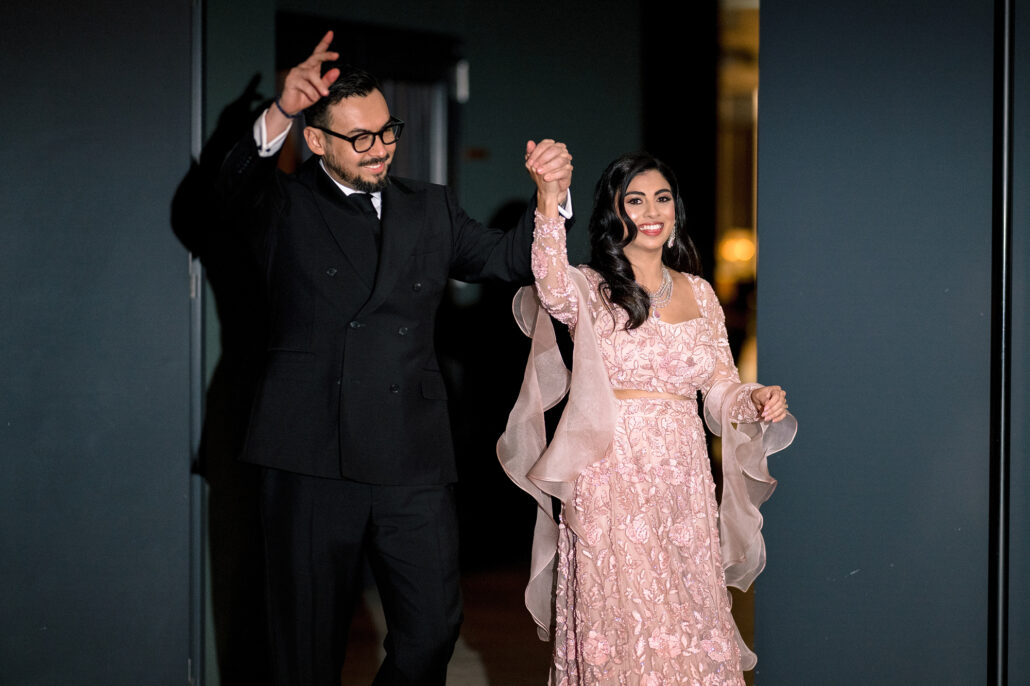
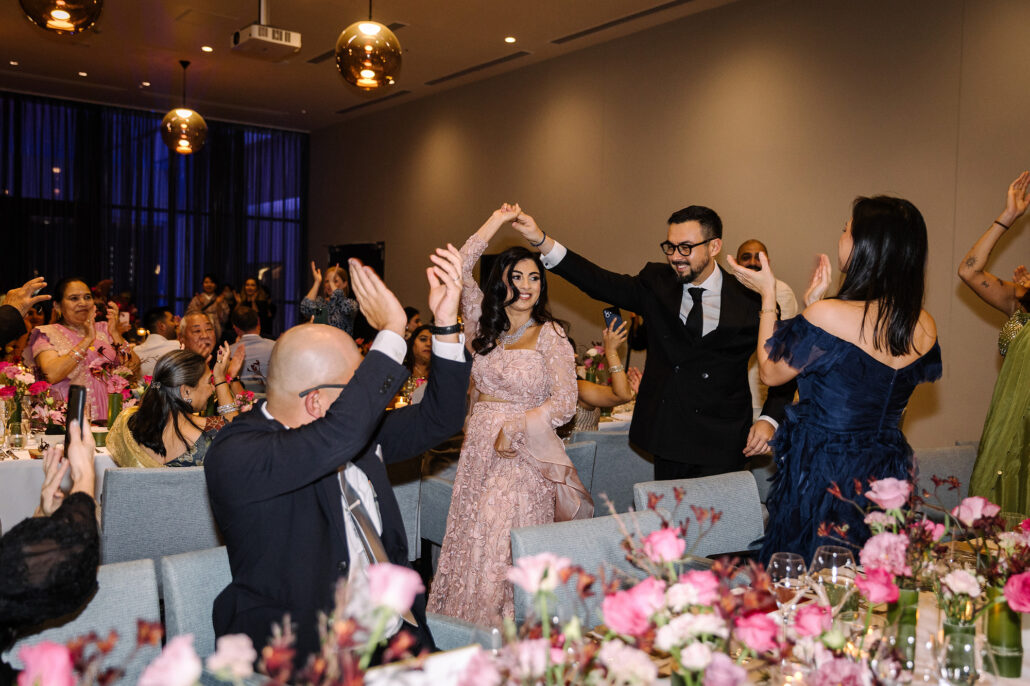
The groom raises a hand and the bride lifts a ruffled sleeve as they enter the reception at Angelo Court Utsunomiya after their Indian wedding.
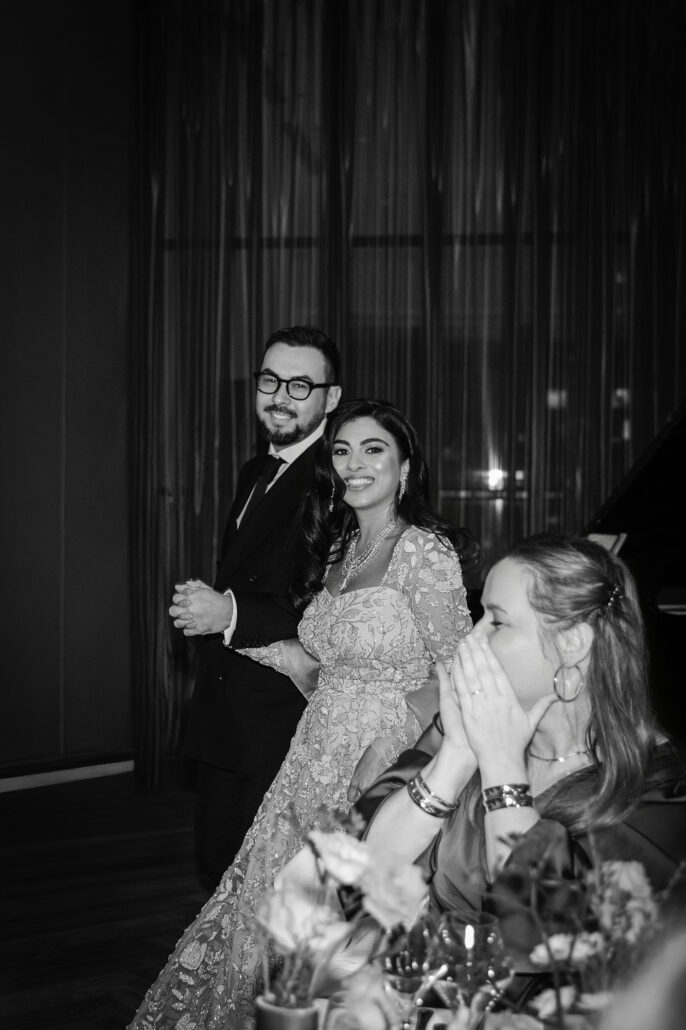
A guest covers her face in delight as the couple walk in, a black and white frame from the reception at Angelo Court Utsunomiya.
The groom twirls the bride as she laughs and a guest films on her phone, their entrance to the reception at Angelo Court Utsunomiya.
Guests clap and cheer as the couple dance into the reception at Angelo Court Utsunomiya, pink flowers along the tables.
The bride and groom swing wooden mallets to open a sake barrel for kagami biraki at the reception at Angelo Court Utsunomiya.
The couple raise bamboo sake cups after kagami biraki as guests toast with them, a Japanese ritual at the reception at Angelo Court Utsunomiya.
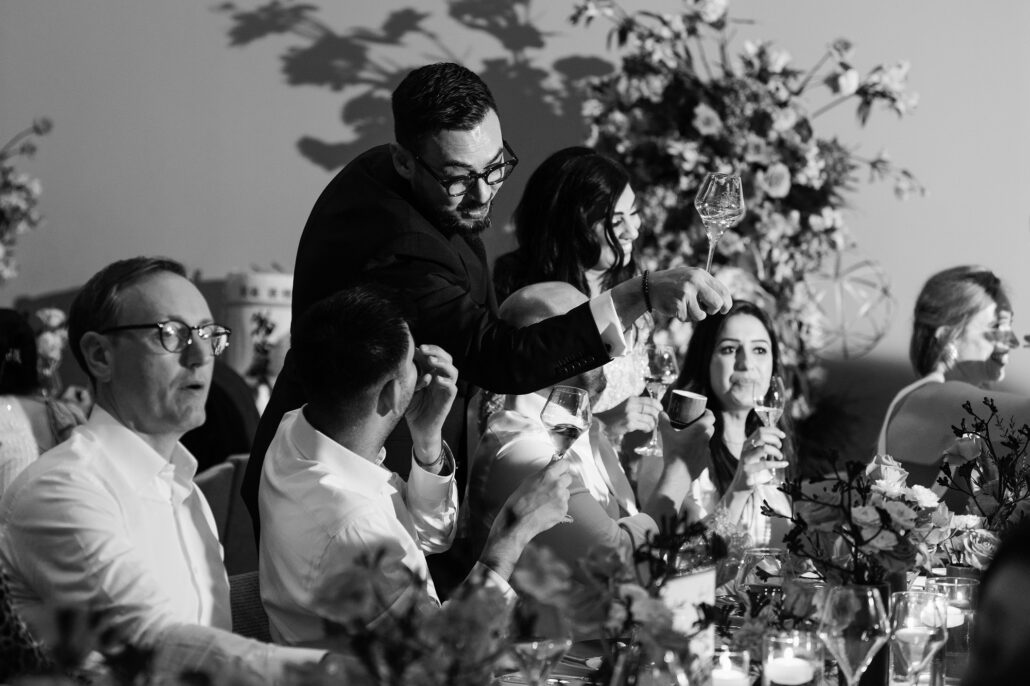
In black and white, the groom leans across the table to clink glasses with guests at dinner, the reception at Angelo Court Utsunomiya.
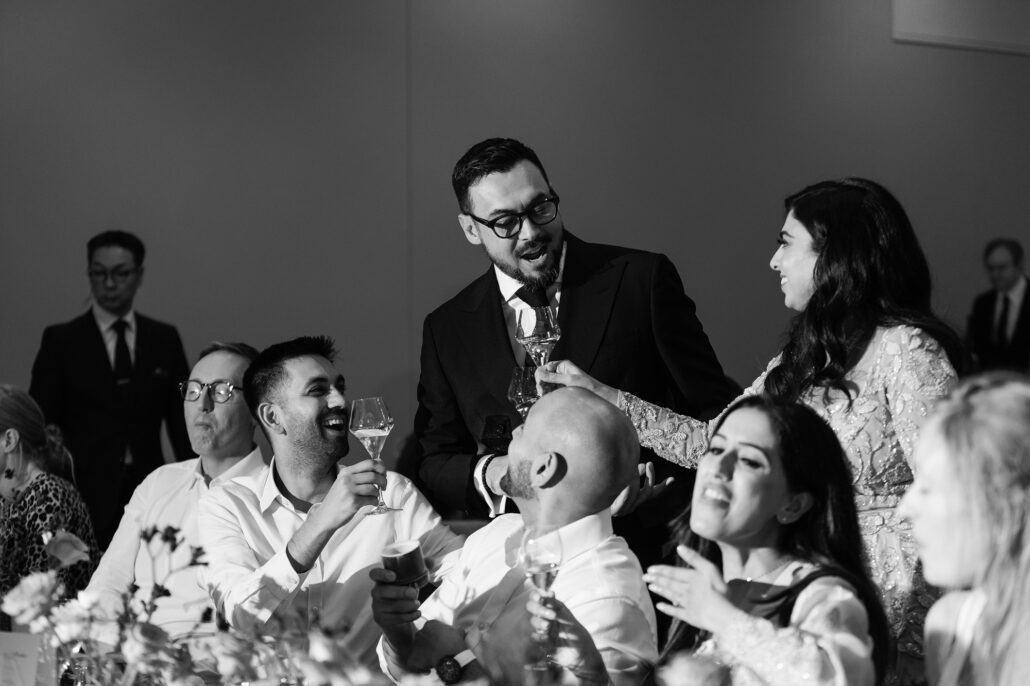
The groom raises his glass and the bride laughs with guests at their table, a black and white frame from the reception at Angelo Court Utsunomiya.

Her father spoke. “Today we are not just gaining a son-in-law,” he said. “We are gaining a son.”

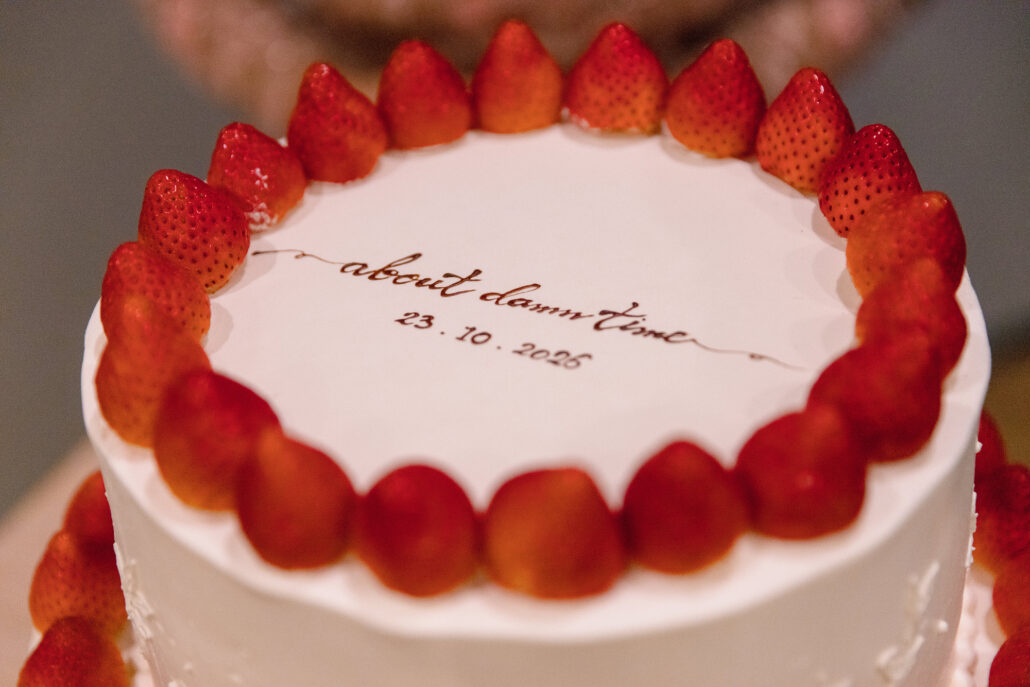
The cake was strawberry, because Tochigi grows more of them than anywhere else in Japan, and it was iced “About. Damn. Time.” Ten years and eight months, by the bride’s count.
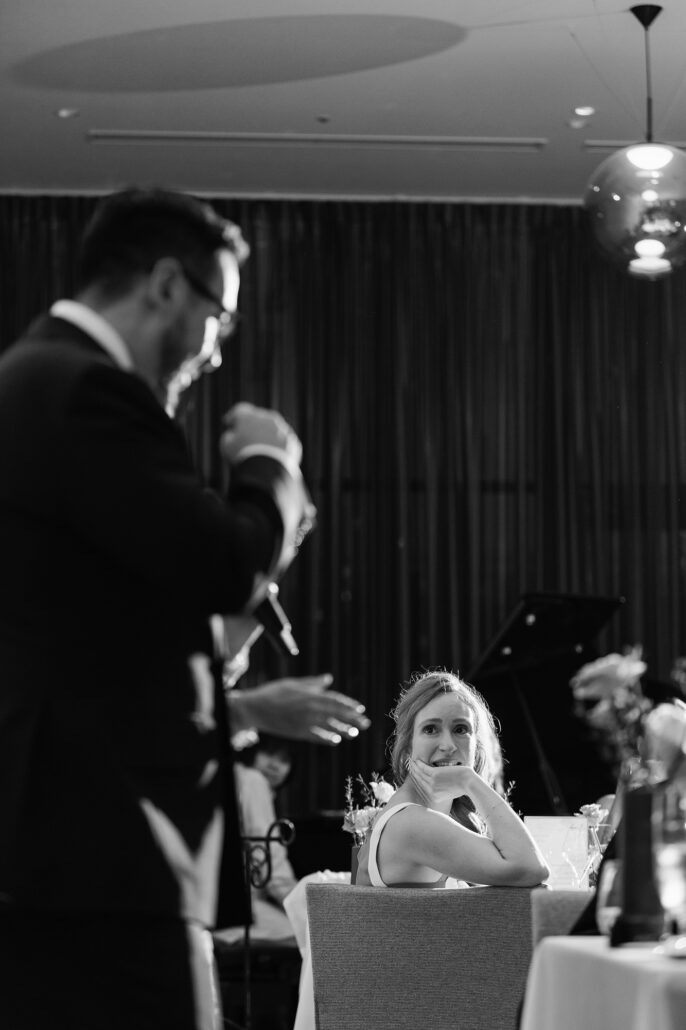
In black and white, the groom gives his speech with a microphone as a guest smiles from her table, the reception at Angelo Court Utsunomiya.
A white wedding cake crowned with fresh strawberries carries the wedding date in icing at the reception at Angelo Court Utsunomiya.

A jazz duo played, because Utsunomiya is a jazz city, and partway through their set the couple got up and danced to it. The musicians haven’t forgotten it.
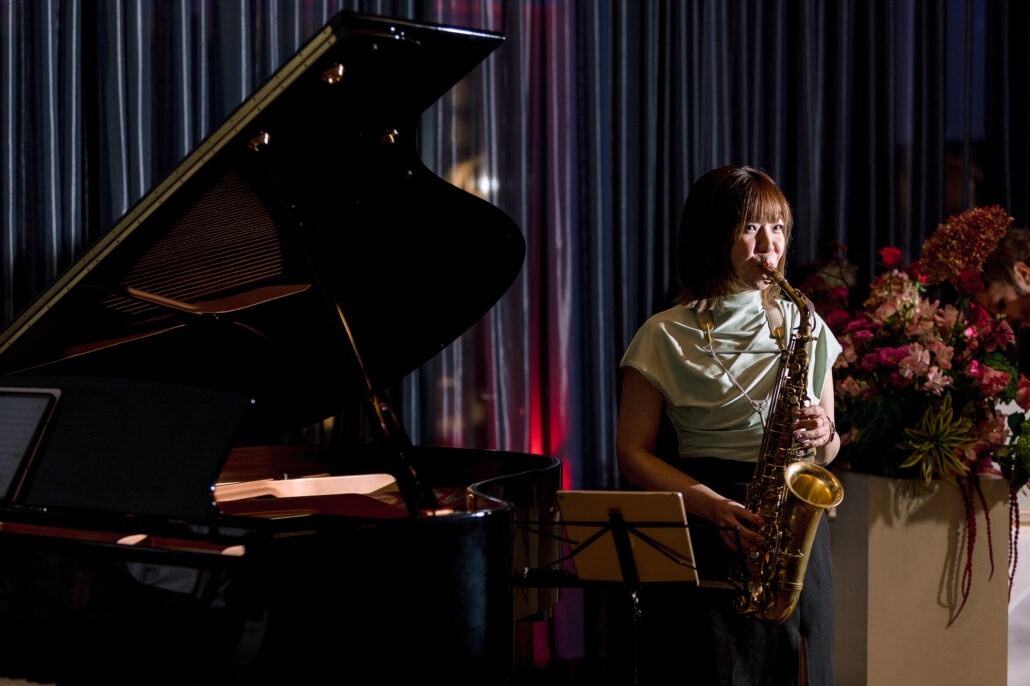

A saxophonist plays beside a grand piano, flowers at her side, as the jazz duo plays through dinner at the reception at Angelo Court Utsunomiya.
In black and white, the couple dance in silhouette against a spotlight to the jazz duo at the reception at Angelo Court Utsunomiya.
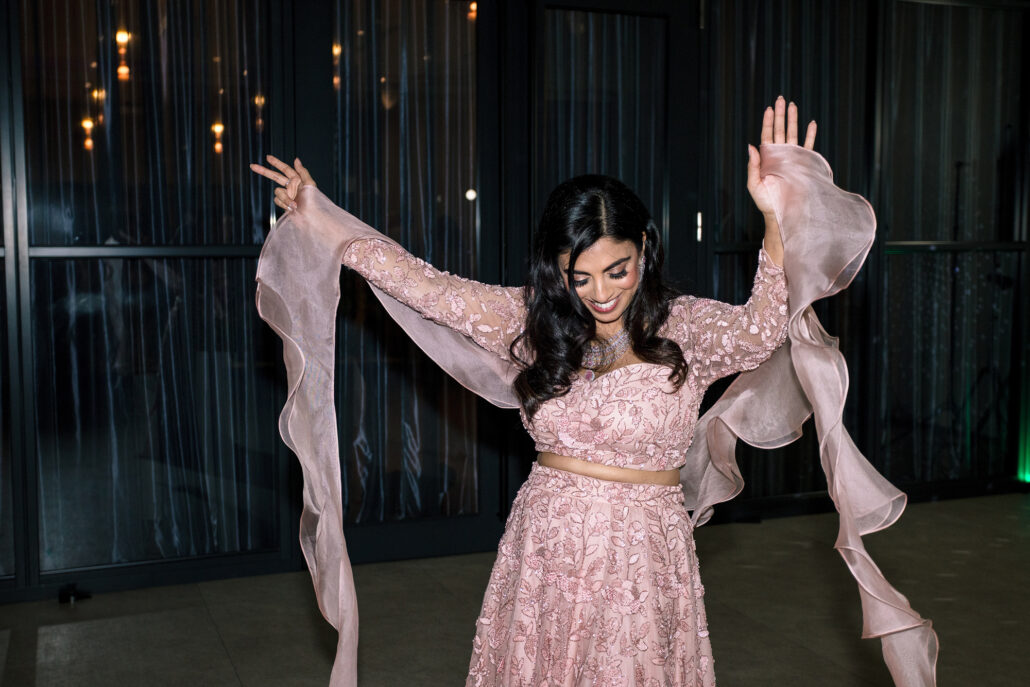
  • The Indian bride dances with her arms up, sheer ruffled sleeves flying, on the dance floor at the reception at Angelo Court Utsunomiya.
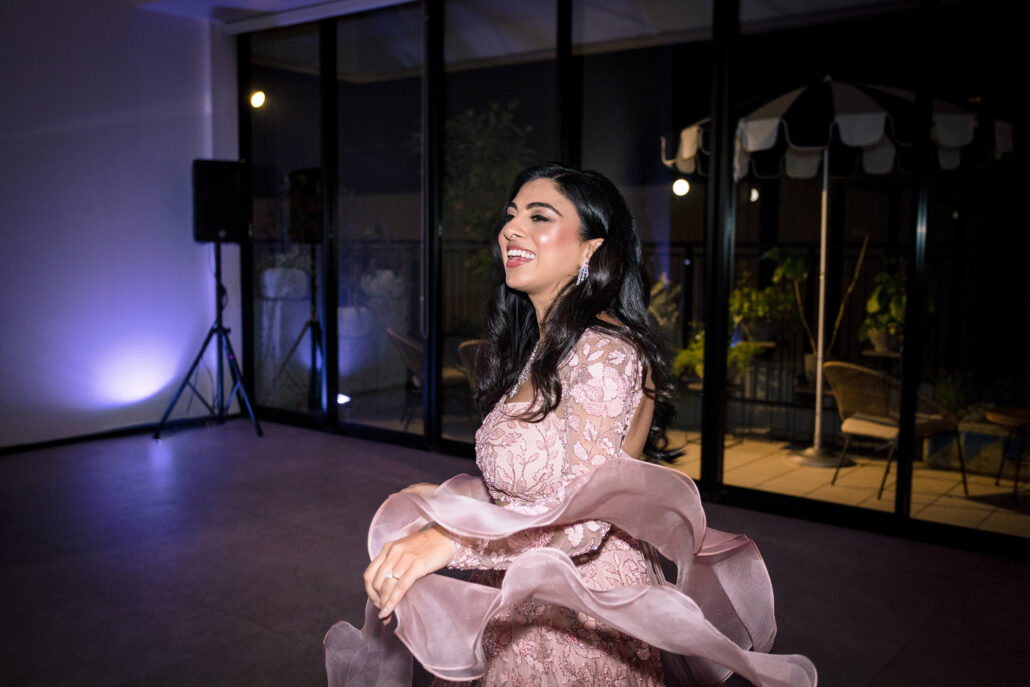
  • The bride spins on the dance floor, sheer ruffles swirling, a lit terrace beyond the windows of the reception at Angelo Court Utsunomiya.
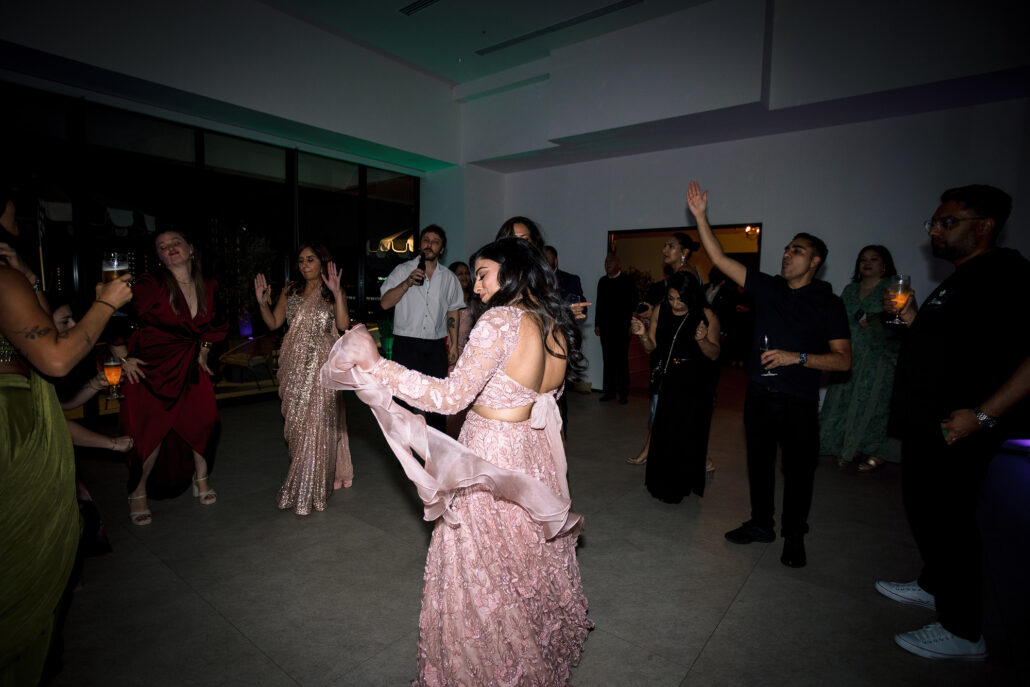
  • The Indian bride dances in the middle of the floor with guests and raised drinks around her, at the reception at Angelo Court Utsunomiya.
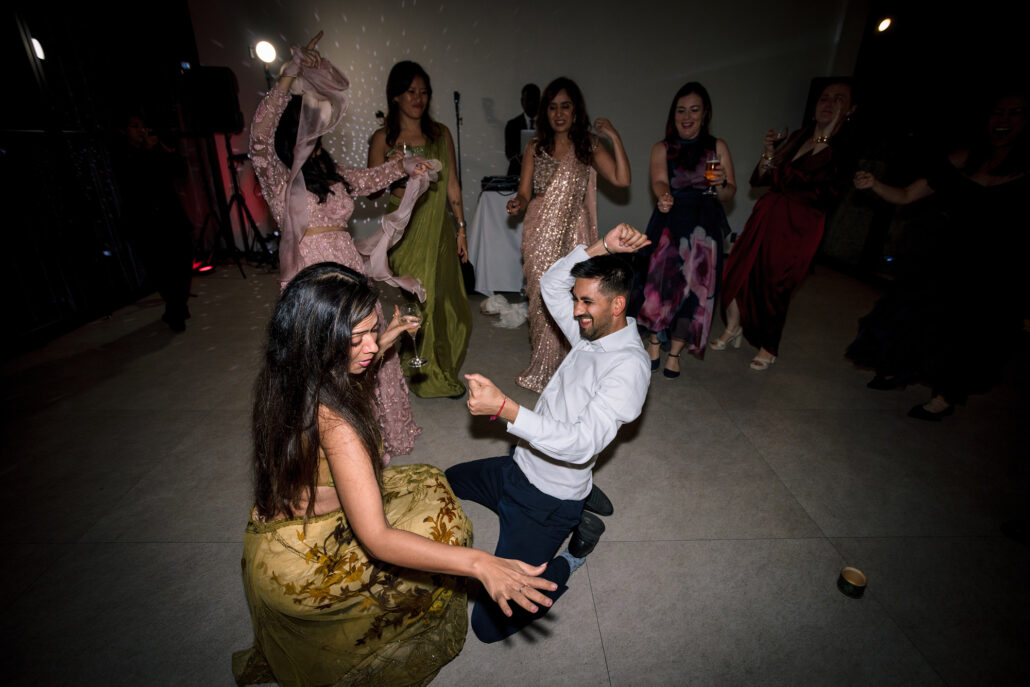
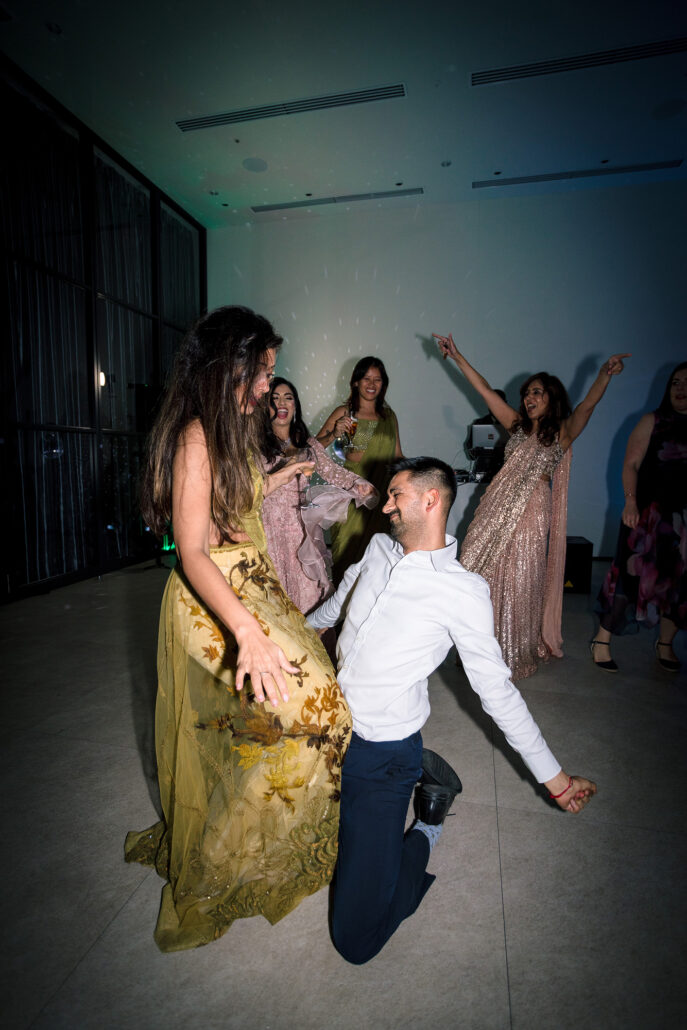
  • A guest in a white shirt dances on his knees, arms up, under mirror-ball light at the reception at Angelo Court Utsunomiya.
  • Two guests dance low to the floor while others laugh behind them, the party after an Indian wedding, at the reception at Angelo Court Utsunomiya.
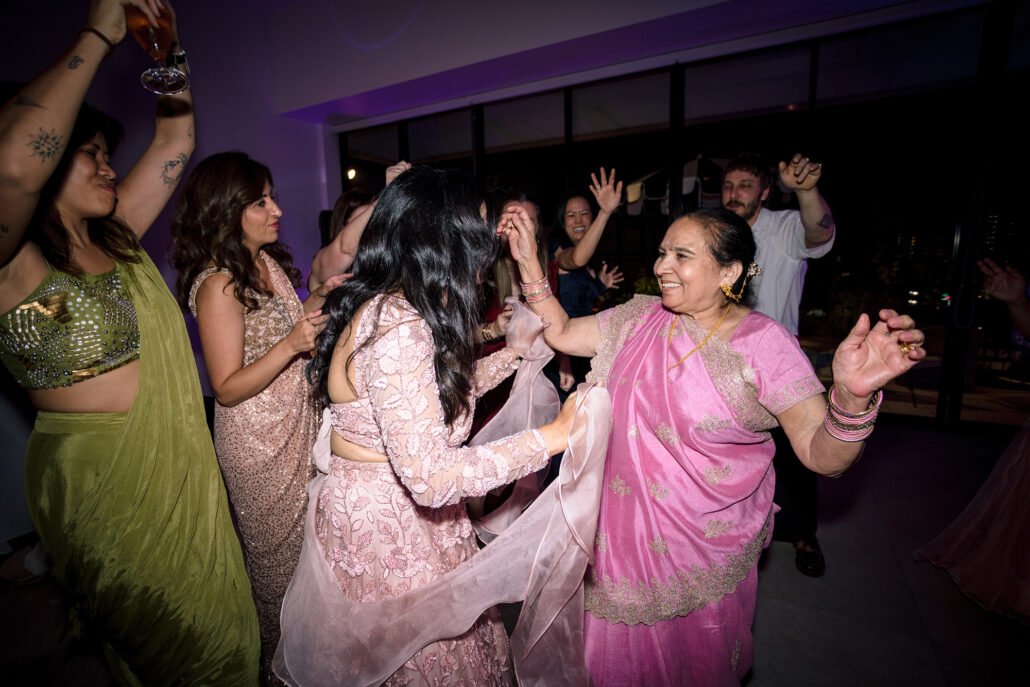
  • The bride dances with a woman of the family in a pink sari, guests in saris around them, at the reception at Angelo Court Utsunomiya.
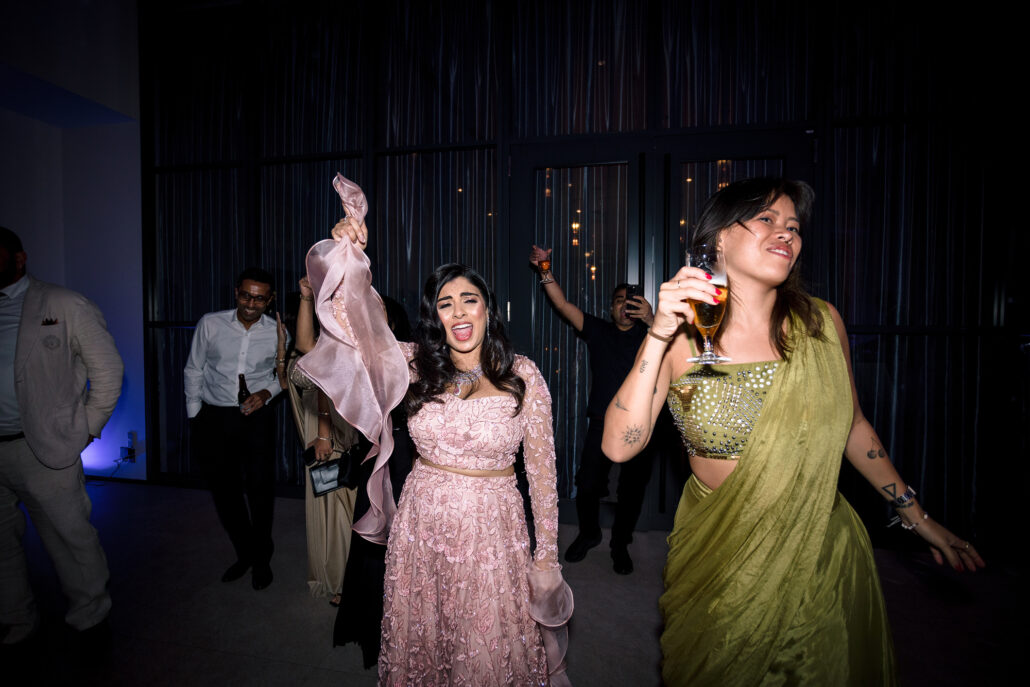
  • Arms in the air, the bride dances beside a guest in a green sari holding a beer, the party at the reception at Angelo Court Utsunomiya.
A guest drops to his knees to dance in front of a guest in gold as others cheer, the dance floor at the reception at Angelo Court Utsunomiya.
The groom presses his palms together and smiles as the first dance begins under a mirror ball at the reception at Angelo Court Utsunomiya.

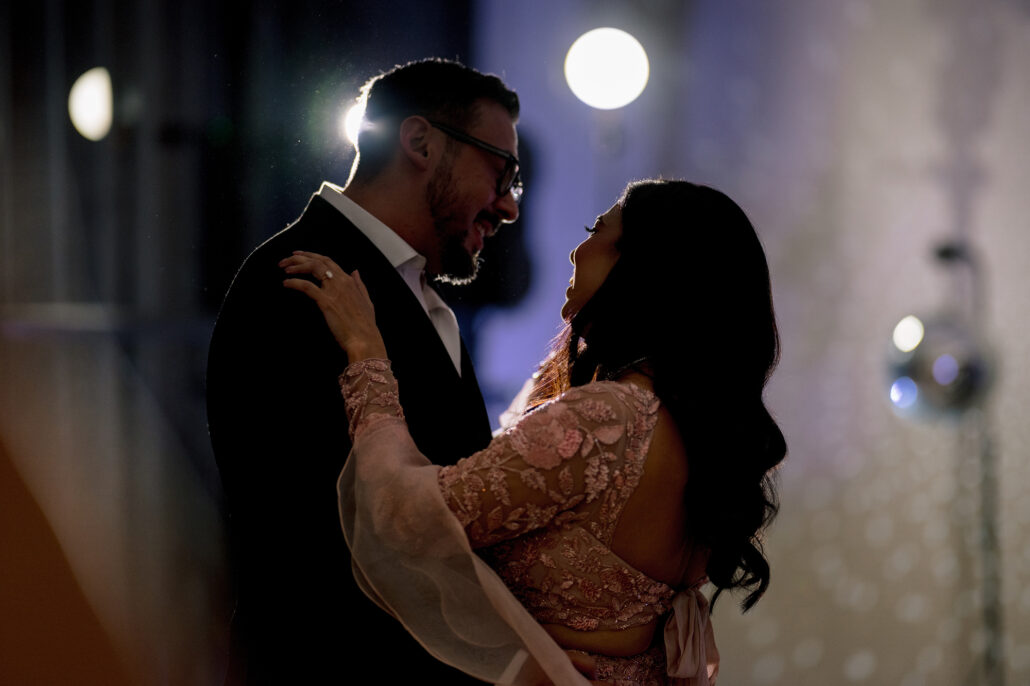
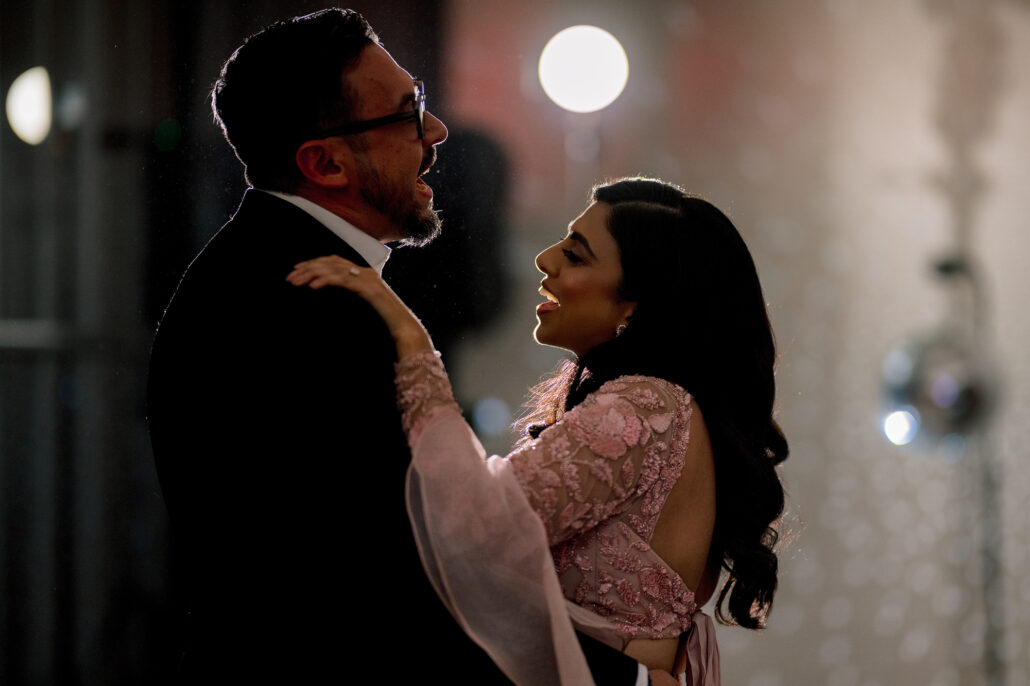
The first dance was to “I Don’t Want to Miss a Thing”, with the whole room singing it back at them.
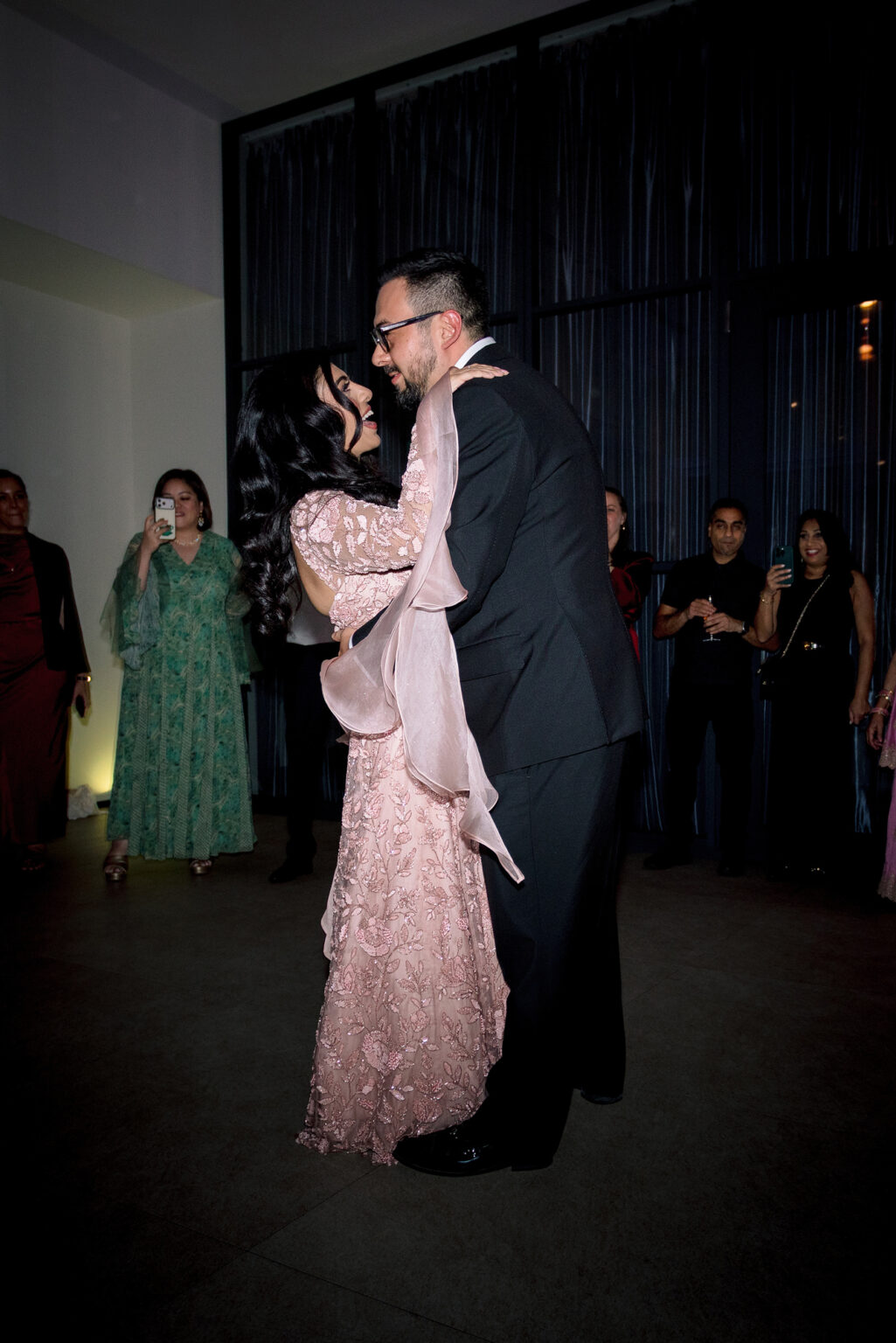

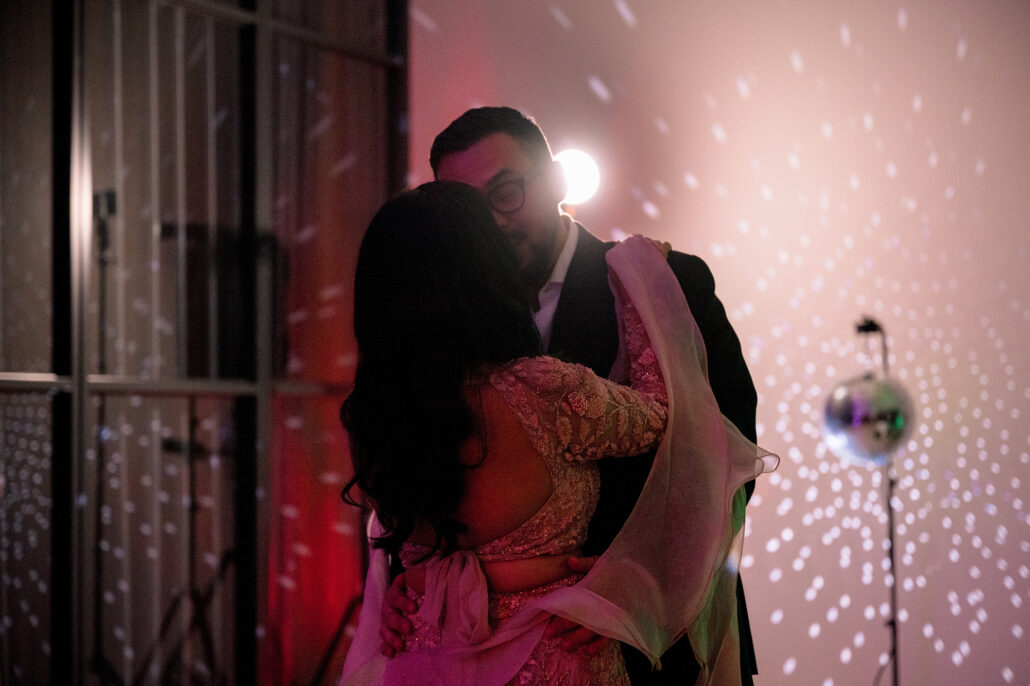
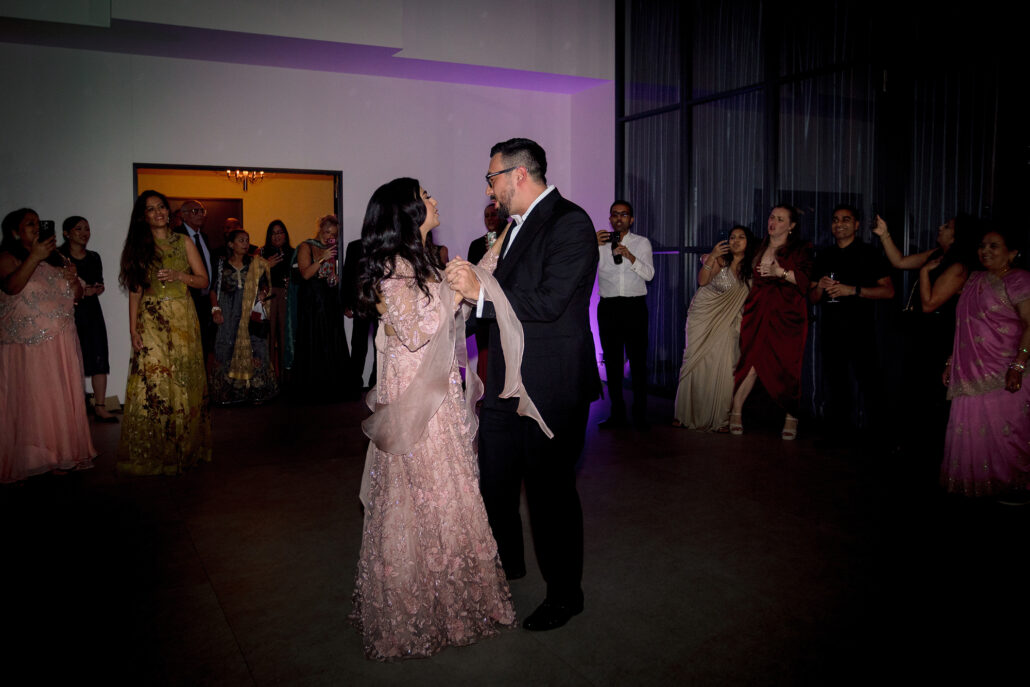
The couple share their first dance as guests film from the edge of the floor, the reception at Angelo Court Utsunomiya after their Indian wedding.
  • In black and white, the groom kisses the bride during their first dance at the reception at Angelo Court Utsunomiya after their Indian wedding.
  • Mirror-ball light scatters over pink walls as the couple kiss in their first dance at the reception at Angelo Court Utsunomiya, Tochigi.
  • The bride's hand rests on the groom's shoulder, her ring catching light, during their first dance at the reception at Angelo Court Utsunomiya.
  • The groom sings to the bride in their first dance, a black and white frame from the reception at Angelo Court Utsunomiya.
  • Face to face, the couple sing to each other through their first dance at the reception at Angelo Court Utsunomiya after their Indian wedding.
  • The bride sings up at the groom, a hand on his shoulder, during the first dance at the reception at Angelo Court Utsunomiya.
  • Under a warm spotlight, the bride and groom dance close and sing through their first dance at the reception at Angelo Court Utsunomiya.
  • Guests line the walls and film as the couple dance their first dance at the reception at Angelo Court Utsunomiya after an Indian wedding in Japan.

In the bride’s words afterwards, we made it possible for them “to simply be present”.
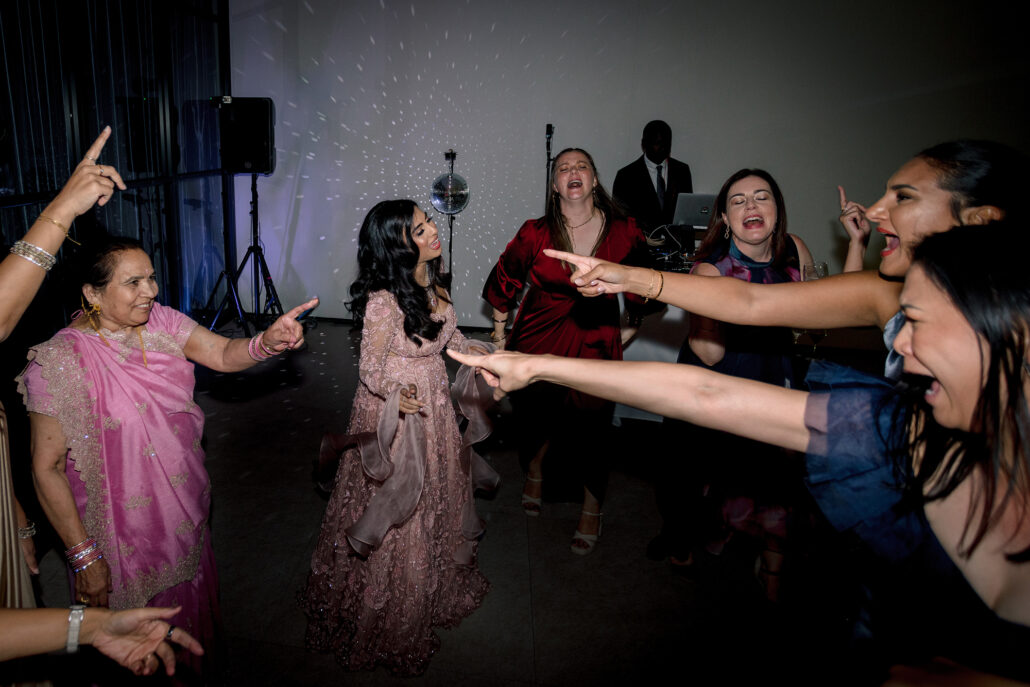
  • Guests point and sing to the bride across the dance floor, a woman in a pink sari among them, at the reception at Angelo Court Utsunomiya.
  • One guest throws a peace sign and another points at the camera, cheering at the after-party at the reception at Angelo Court Utsunomiya.
  • A mirror ball scatters squares of light across a purple wall at the after-party, the reception at Angelo Court Utsunomiya after an Indian wedding.

In the forest that afternoon, his family had given a son. That night, her father said they had gained one.

The couple kiss beside the DJ booth under scattered mirror-ball light, late in the after-party at the reception at Angelo Court Utsunomiya.

With Thanks

To Mitsu and his team at the flair bar. To Southly, a small restaurant the couple love, who cooked the welcome food and then filled both yatai at cocktail hour, canapés at one and pani puri at the other. It was their first wedding, and they were as excited as anyone in the forest. To Ecstatic Flowers, whose pinks and greens dressed the mandap and then travelled on to dinner. To Mariko and everyone at Angelo Court. And to the Wakayama family and everyone at Wakayama Farm, whose forest this is, and whom we’re glad to come back to every time. A wedding here is never just a visit. Two people who had walked the forest on their own came back with everyone they love, and afterwards called it their forever happy place.

What to Know About an Indian Wedding in Japan, in a Bamboo Forest

The forest. It’s a working bamboo farm, owned by one family. The ceremony and portraits are planned around the farm’s day, and everything a wedding needs is brought in: stage, chairs, sound, the bar. Weddings there come through us.

The mandap. We design it with the couple and commission the farm to build it from its own bamboo, in a shape bamboo does well. Here that was a torii on two canes fifteen centimetres across, raised the day before so the wedding morning held no surprises.

The mist and the light. The farm’s mist can be set for a moment, as it was for her walk. Dappled light through bamboo is difficult to photograph, which is why the timings and the photography are planned together from the start.

The rain plan. A covered space stayed ready all day. It wasn’t needed.

Quick Answers

Can you have an Indian wedding in Japan?

Yes. This one had a baraat with two dhol and a taiko, the varmala, the kanyadaan, the sacred fire and the pheras, the mangalsutra and the seven steps, led by a priest who has lived in Japan for more than thirty years and explained each rite in English. Dinner was planned with no beef or pork, and with touches from both families’ kitchens.

Can you get married in a bamboo forest in Japan?

Yes, if the family who own the forest agree and everything is brought in: the stage, the chairs, sound, a bar, a mandap if you need one, and a covered space in case of rain. We’ve held elopements and intimate weddings in this forest in Tochigi, and this was our first full wedding there, with every guest.

Is there a bamboo forest near Tokyo?

Yes. This one is in Tochigi, about an hour from Tokyo by bullet train and then a short drive, with green and golden bamboo, mist, and lights that come on at dusk. It’s a quieter alternative to Kyoto’s famous Arashiyama bamboo grove, and close enough for guests flying into Tokyo to make a day of it.

Can a Hindu wedding include Japanese traditions?

It can. This one added the san-san-kudo, three cups of sake shared as a vow, at the cocktail hour, and kagami biraki, opening a barrel of sake, at dinner. The art is placing each where it means something to the families, rather than stacking rituals into one long ceremony.