In May 1974, the Museum of Modern Art in New York opened a small show by one of the most famous photographers in the world. Richard Avedon had been making fashion pictures for Harper’s Bazaar since the mid-1940s, and Hollywood had already put Fred Astaire in a musical partly inspired by him. This was his first solo museum show in the city where he lived and worked, and there wasn’t a model in it. Every portrait on the wall was of one man: his father.
There was no opening party. He had photographed his father over the last years of his life, without flattery, and printed most of the portraits larger than life. People argued about them. The two men had a complicated relationship, and the former director of Avedon’s foundation has written that making those pictures helped bridge it.
Some men can’t say it across a table. Give them a reason to be in the same room and something to do with their hands, and it gets said anyway.
Some men can’t say it across a table. Give them something to do with their hands, and it gets said anyway.
One spring, in a garden in Japan, we watched it happen the other way round.
The Father of the Groom
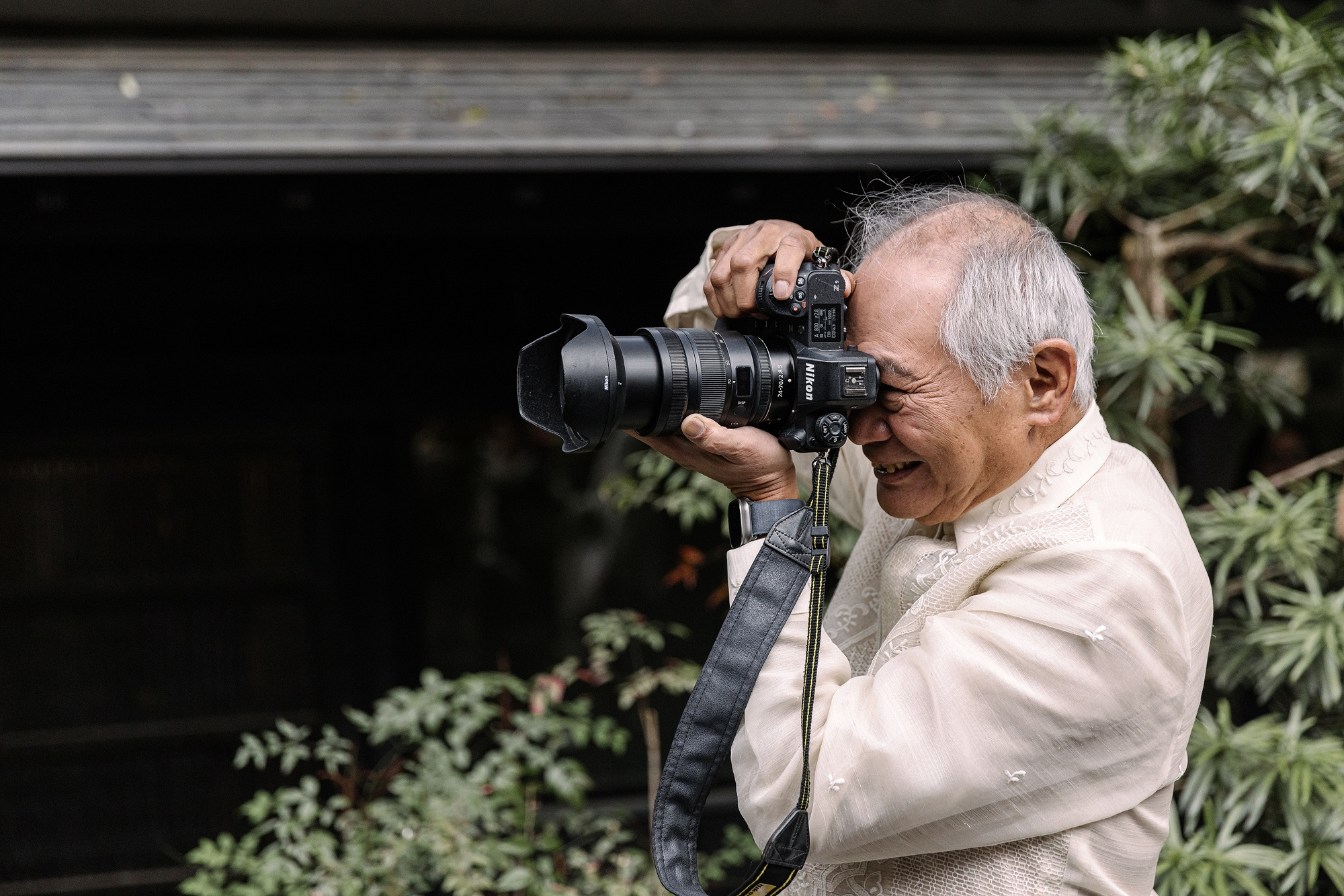
In the Philippines he’d been a very famous fashion photographer. He had long since retired, and it was years since he’d picked up a camera. This was his son’s onsen wedding at Jinya.
By all accounts, he doesn’t say much. By all accounts, his son doesn’t cry.
Earlier that afternoon he’d been a father like any other: barong, phone up, pipe in his mouth, laughing.
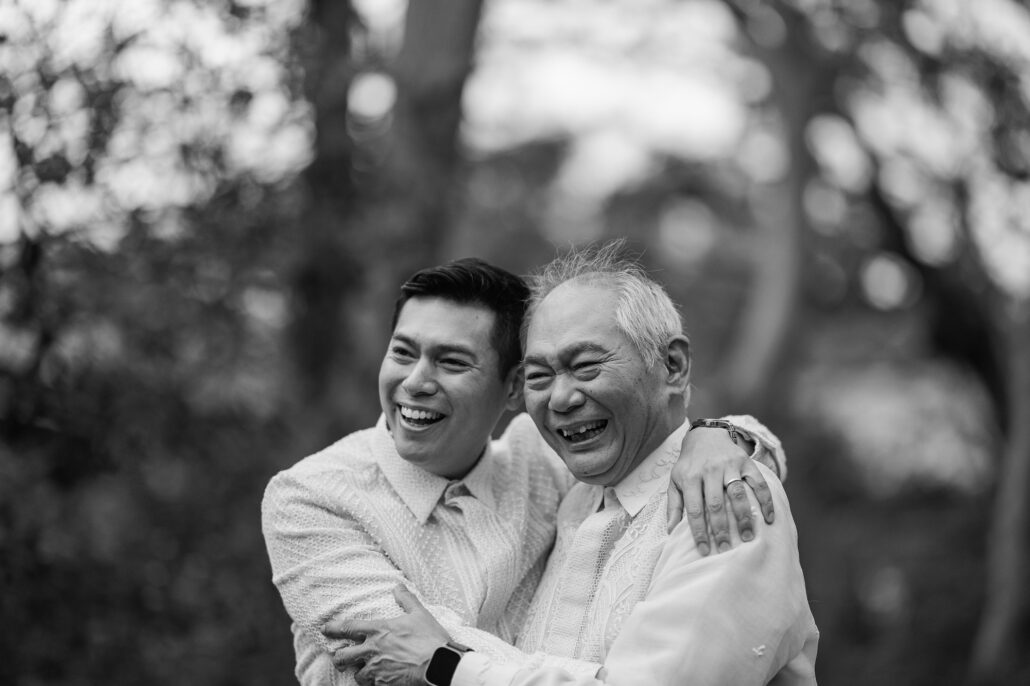
Then, when the family photographs were done and the guests had gone off to cocktails and a cello and harp, we put one of our cameras in his hands and asked him to take the official portrait.
He took sixty-seven frames in two minutes.
What the Camera Wrote Down
A digital camera keeps notes. Every frame records the moment it was taken, how far the lens was zoomed, how far away it was focused, which way up it was held. Almost nobody reads them. We read his.
All sixty-seven are upright. He turned the camera on end before the first frame, because magazine pages are upright and some habits don’t retire, and he never turned it back.
The first eleven are soft. The camera was focusing past them, into the garden. It wasn’t his camera, and it had been years. He’d made his name on film, and this machine is a computer with its own ideas about where to look. Then there’s a pause of nine seconds, and from the twelfth frame on he has it. After a lifetime, a camera stops being something you hold. It becomes the part of you that looks.
He works where a fashion photographer starts, far enough back to get everything: the whole gown, its train running down the stone steps, the wall of flowers behind them, the yellow orchids in her hands. They’re beautiful pictures. You could run them in a magazine.
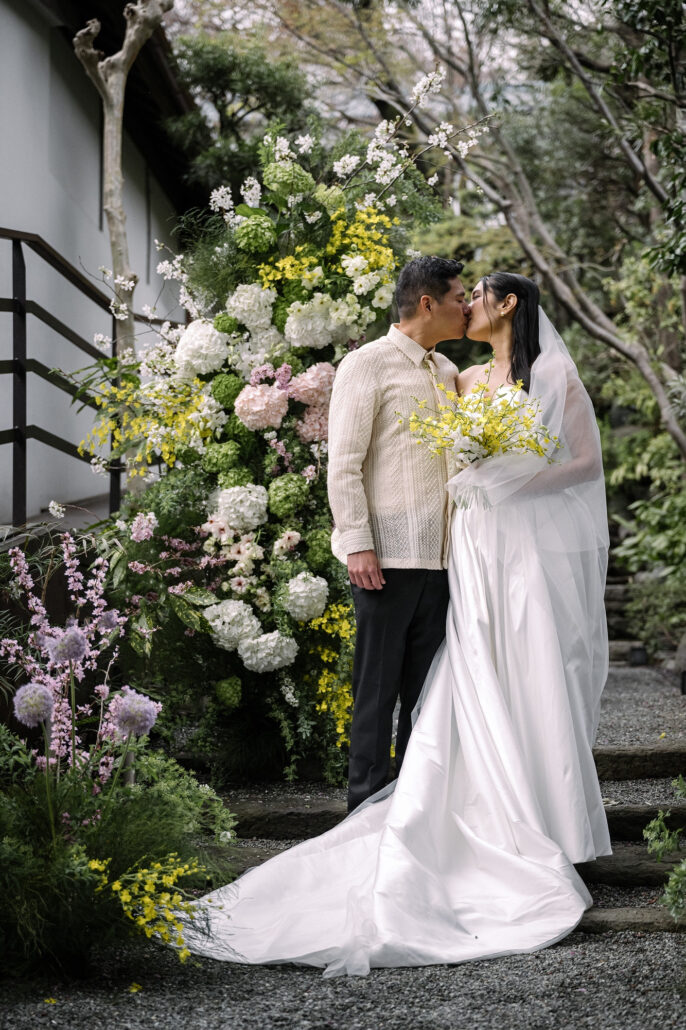
But he keeps zooming closer. He does it three times and never once goes back. By the thirty-seventh frame the lens has reached its limit, and for seven frames he stays there, about five and a half metres away, with nowhere left to go.
Then the notes go quiet for fifteen seconds.
When the lens ran out, he walked.
The next frame is focused at under two and a half metres. The train has gone, and the steps, and the flowers have turned to colour behind them. By the last frame he’s about a metre and a half away, and what’s left is the orchids and two faces.
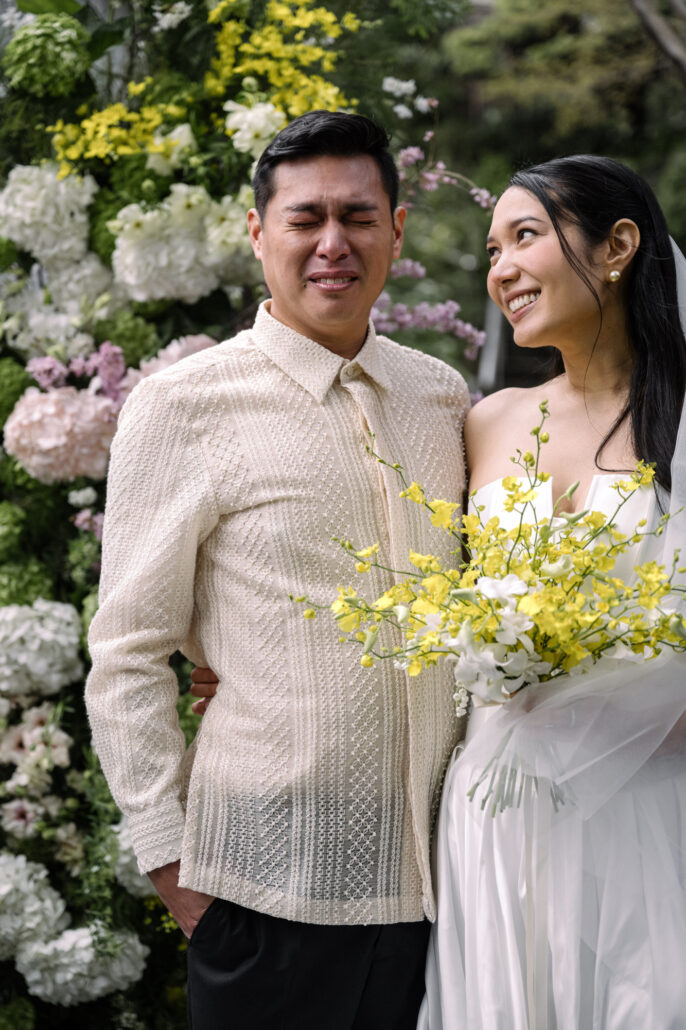
His son is crying. She has stopped looking at the camera by now. She’s looking at him, then kissing his cheek, then resting her head against his. His father keeps shooting. There are gaps now, half a minute at one point, and what was said in them is theirs. The last eight frames come in a little over three seconds.
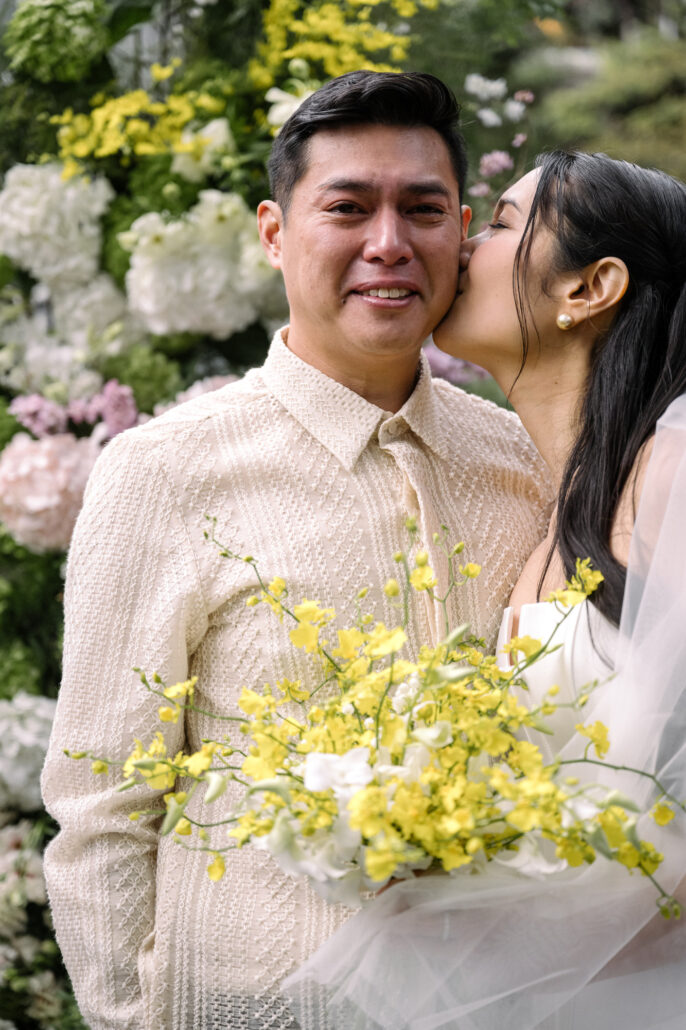
You wouldn’t run those in a magazine. You’d keep them.
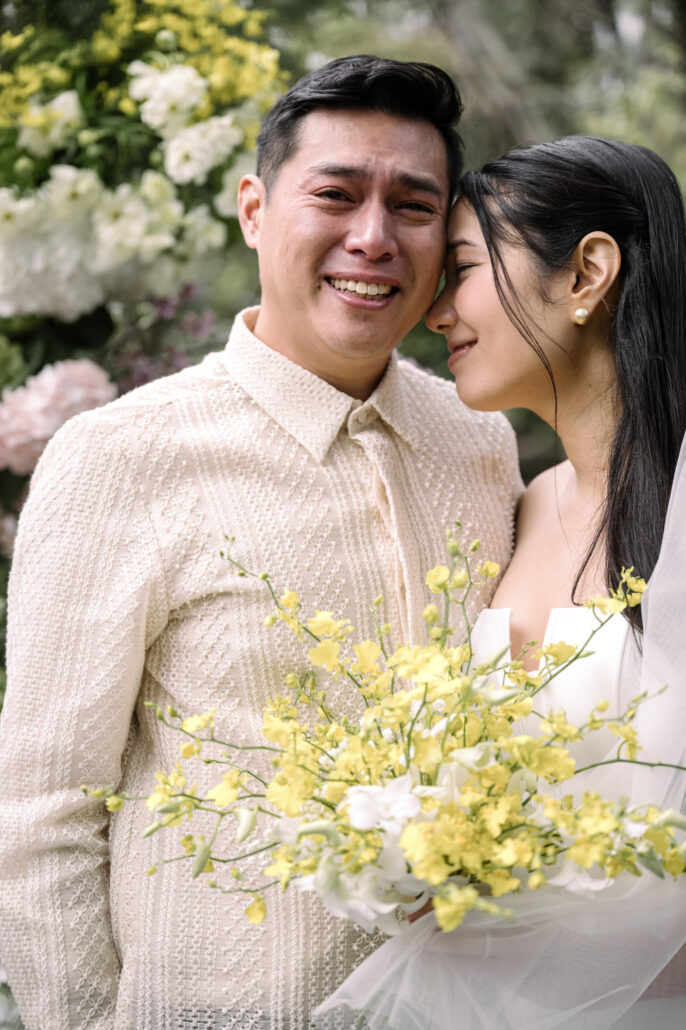
A portrait is a kind of permission. No father gets to stand a metre and a half from his grown son and look at his face for the better part of a minute. A photographer does, and nobody asks him why.
He Doesn’t Cry
We should say that the groom doesn’t cry. Everyone at the wedding was clear about this. “I’ll be honest, I don’t cry,” he said that night, at the microphone. “I really don’t. That’s just sake coming out of my eyes.” His sister, at the cake: “Try not to cry on it. He never cries. Never.” When the film of the day played at the reception, the rule was that if he cried, everybody drank.
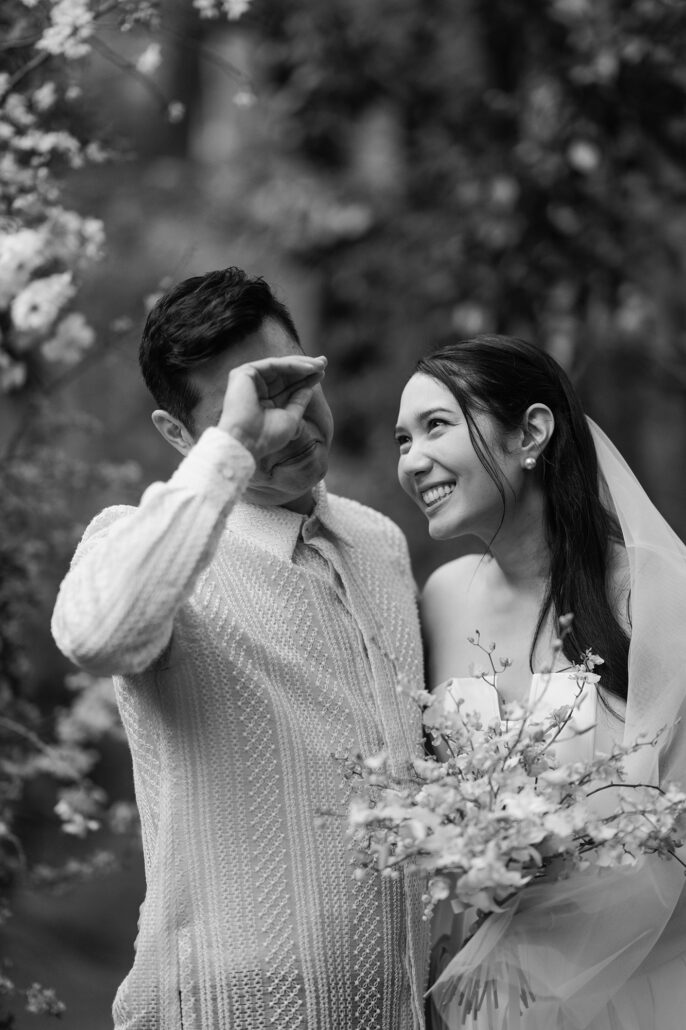
Seconds after his father’s last frame, one of our cameras has him with a tissue to his face and his bride laughing at him.
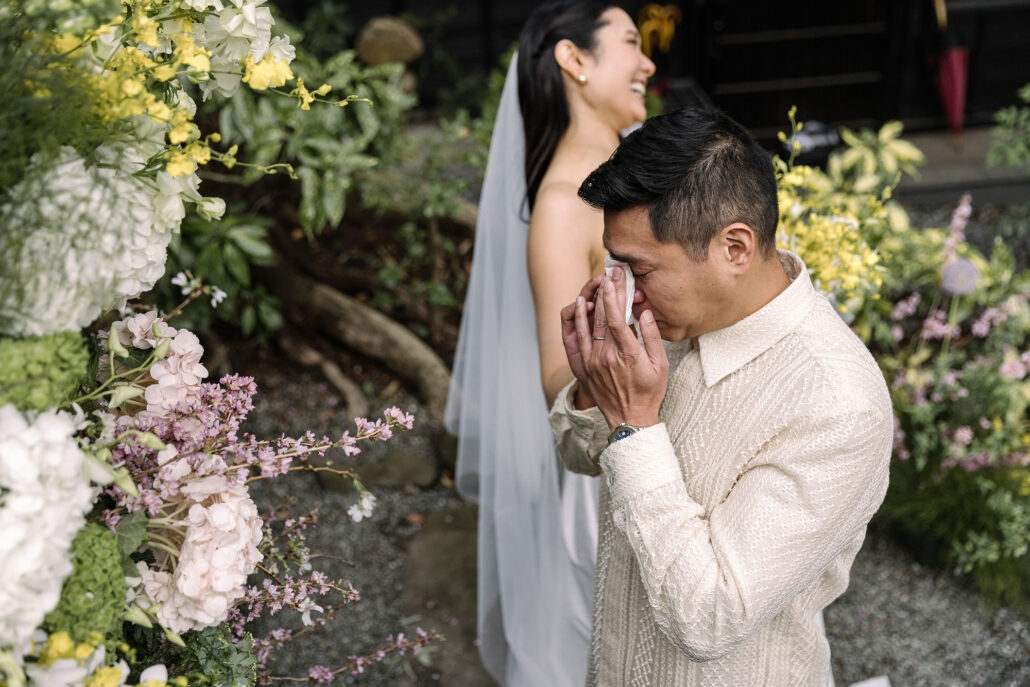
In fairness, there had been sake at the ceremony. His father had poured it.
Fourteen Minutes
That night, the man who doesn’t say much stood up to speak. “Okay, everybody listen,” his daughter told the room, “because my dad doesn’t really talk. So, this is the only time you’re going to hear him speak.”
His son’s brief had been short. Welcome everyone, thank the guests for coming from all over the world, welcome the parents to the family. “And I said, okay, that’s it,” he told them. “Okay, but I wanted to share something.”
He spoke for fourteen minutes.
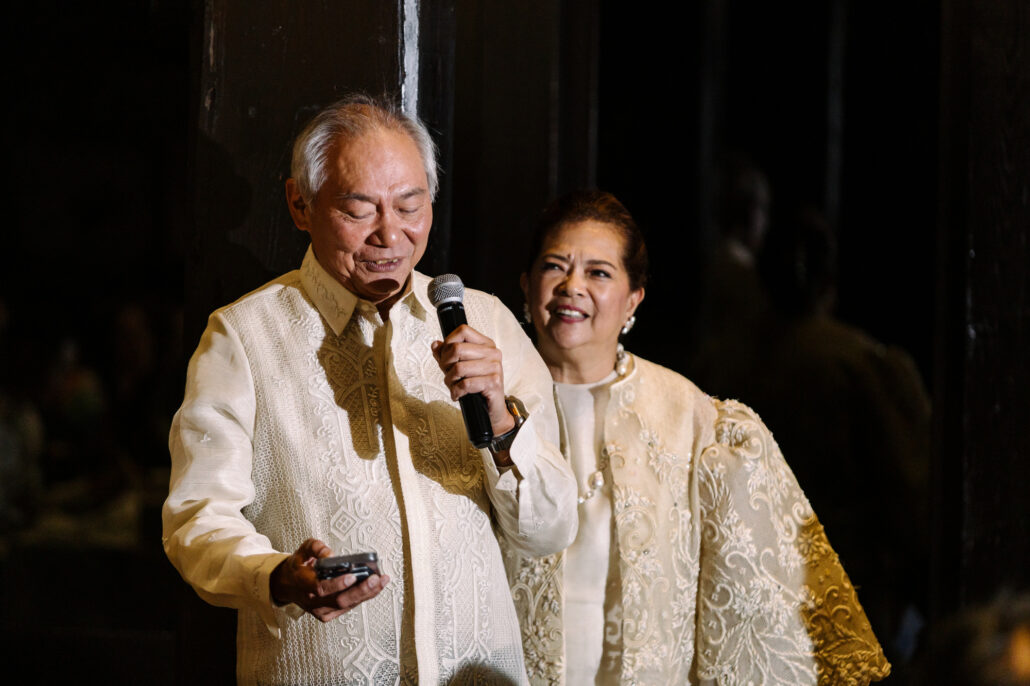
He went through his son’s life by way of his friends. “When I walk through this reception, I keep seeing different stages of my life because of the different friends he’s had.” Of another son, who never needed his help, he said: “So I kept him company by leaving him alone.” Then he came to his son’s work. He builds houses, and watching him, his father said, he remembered his own father, “who built for the Filipino people.” And then, carefully: “So, he is completing, I would assume, the cycle.”
He finished by welcoming her parents. “Whether you like it or not, we’re your family. And with that family comes all these friends. Their family. So, you will be shocked. And be prepared. Welcome.”
His wife took the microphone next. “I haven’t heard my husband talk that much,” she said. “And I’m forty-two years married. Wow. What a treat.”
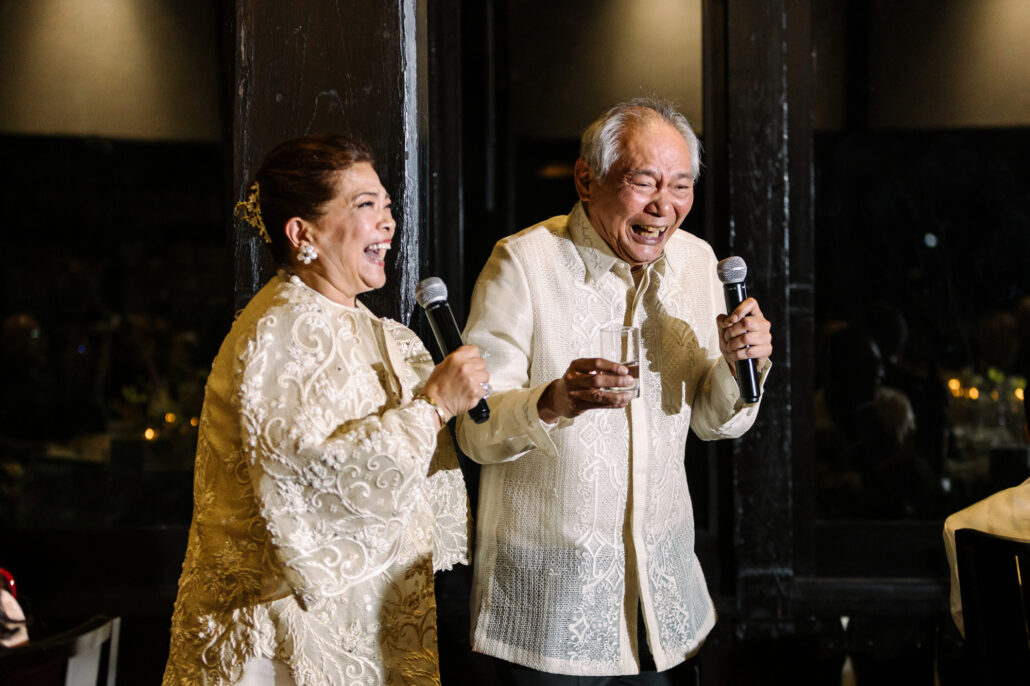
It was a wonderful speech. He had already given it, in the garden, in two minutes, with a camera in his hands.
What They Do With Their Hands
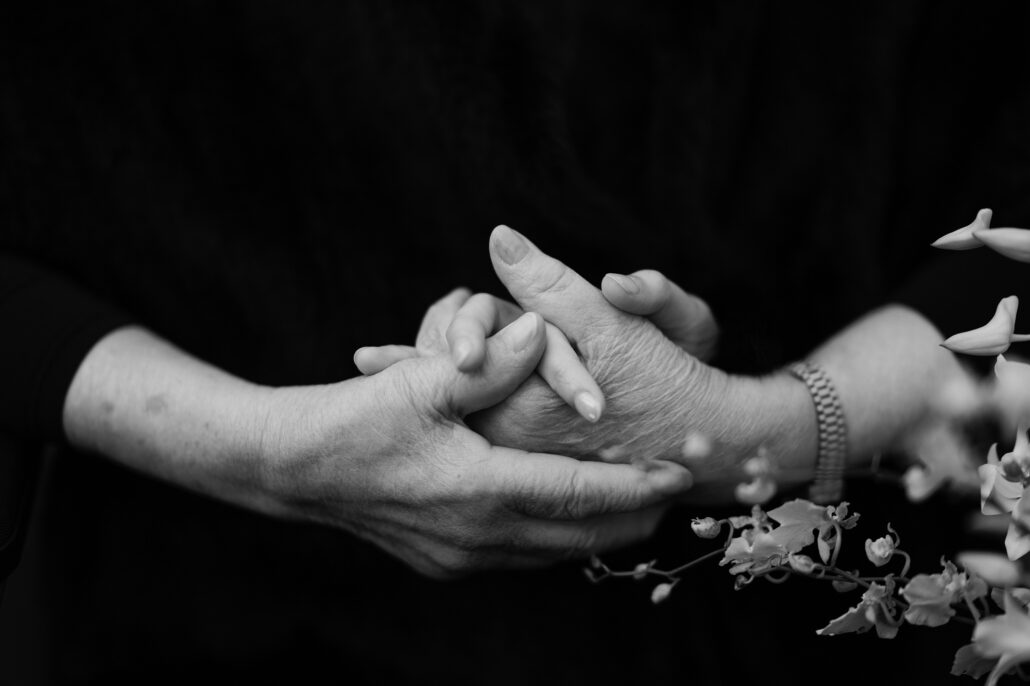
Who in your family won’t say it across a table? We’ve written before about the sentences people use instead, and some of them aren’t sentences. What does that person do with their hands? It’s the kind of thing we ask, early. Handing over a camera takes a second. Knowing who to hand it to is the planning.
The Second-Best Wedding Portrait in the Family
We took that portrait too, from a few steps away. It’s a good photograph, and it’s the second-best one in the family.
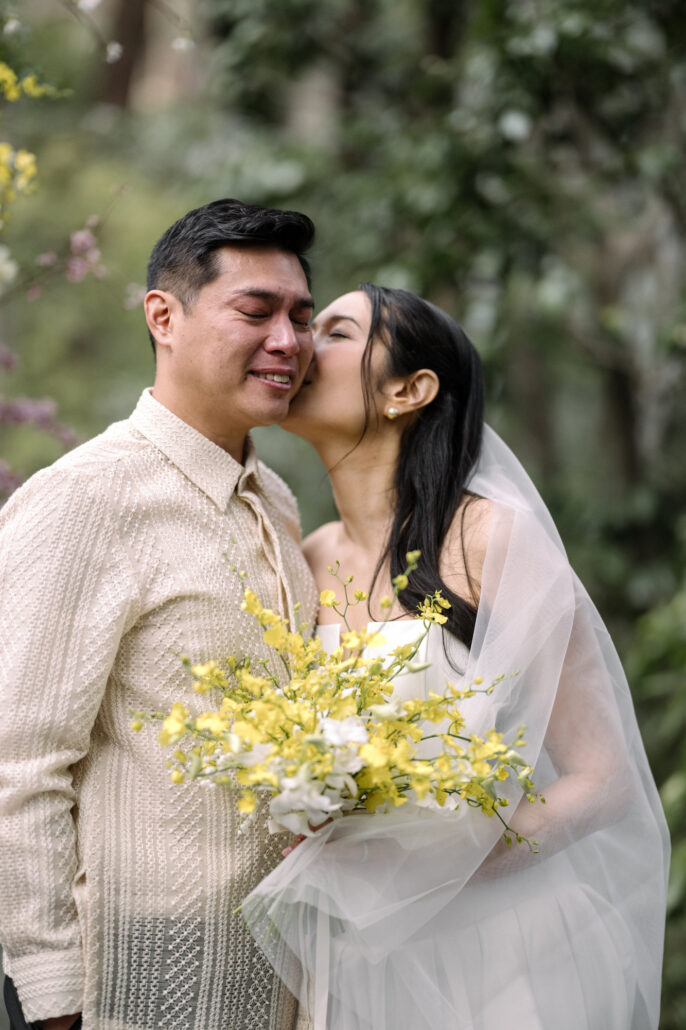
Avedon’s portraits of his father took years, and they went on the walls of the Museum of Modern Art. These went into a family’s gallery, in among ours. We’ve looked at a great many wedding portraits in our time. We can’t think of another where the photographer ran out of lens and kept coming.
The rest of their day is in their film, below, and the whole of their wedding is here.