Skye, dreamed of for decades, where the ground is the largest landslide in Britain and still going.
This post starts a day early, on the road that delivered us, because the drive to Skye deserves better than a summary.
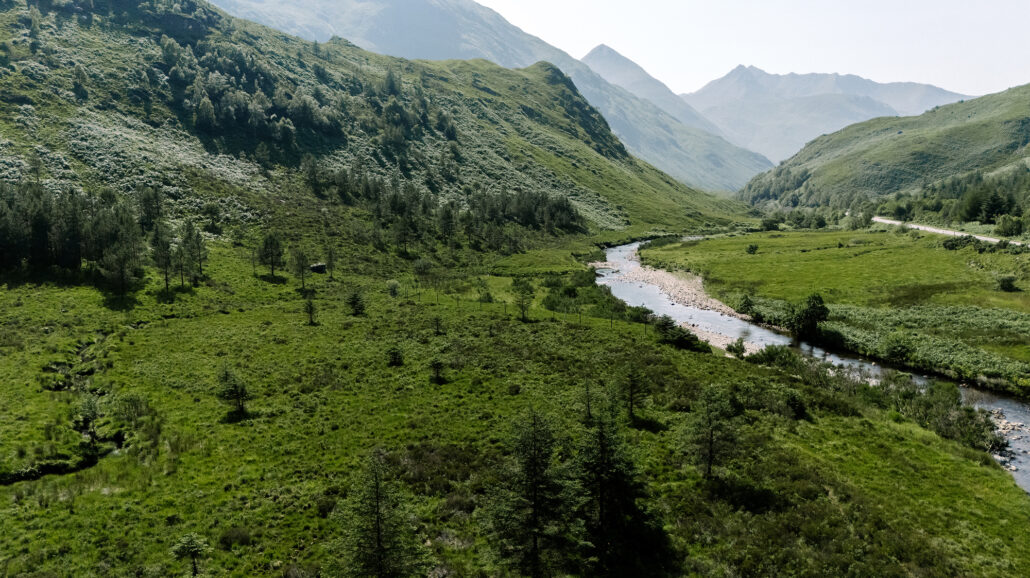
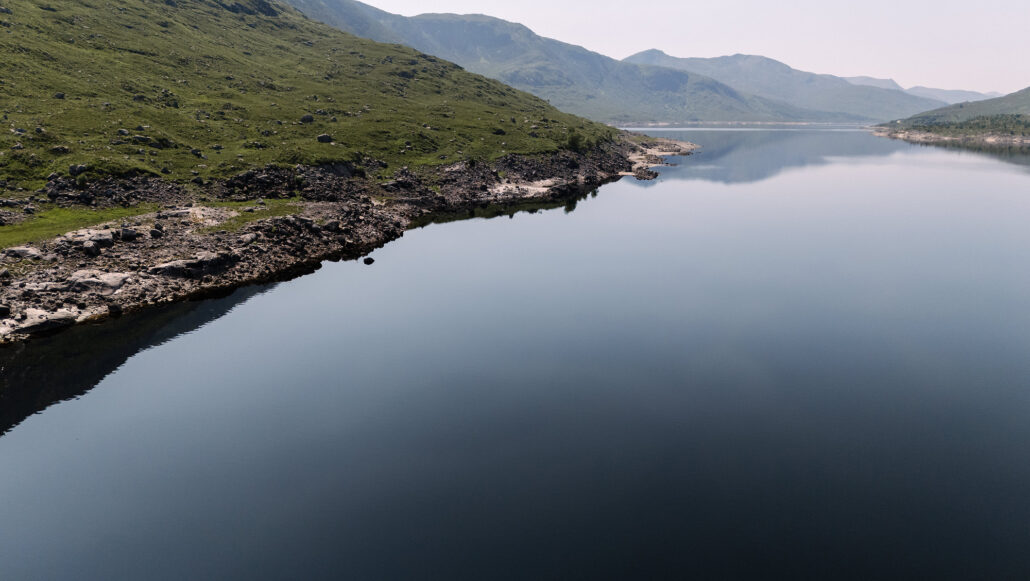
After the train morning at Glenfinnen, we went back through Fort William, up past Loch Cluanie, which pulled the same trick Rannoch had pulled the day before, enormous light over open water and a lay-by we didn’t argue with, and into Glen Shiel, where the mountains go abruptly vertical on both sides and the 1719 rising, the one nobody remembers, was put down in the only battle ever fought in the glen.
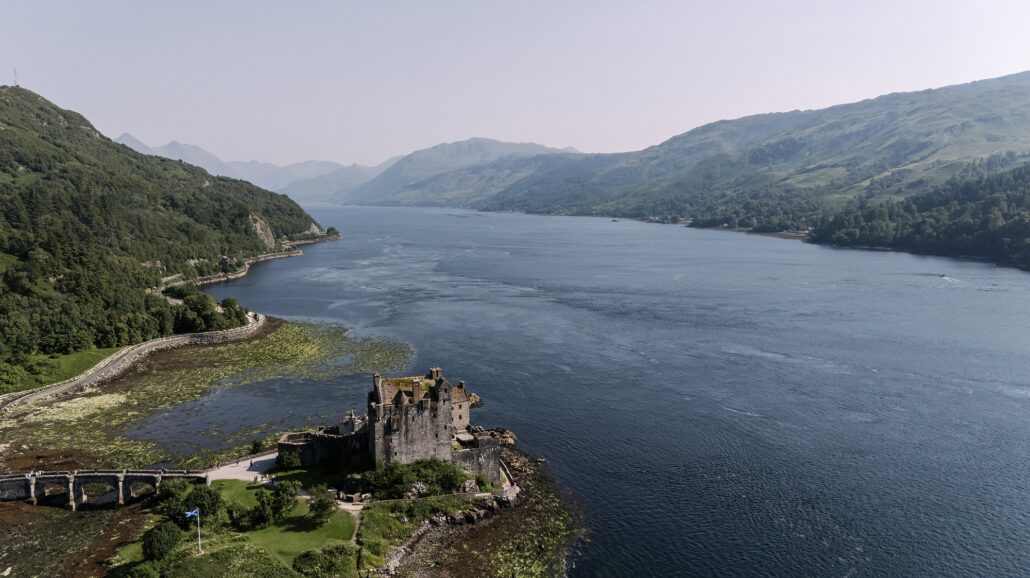
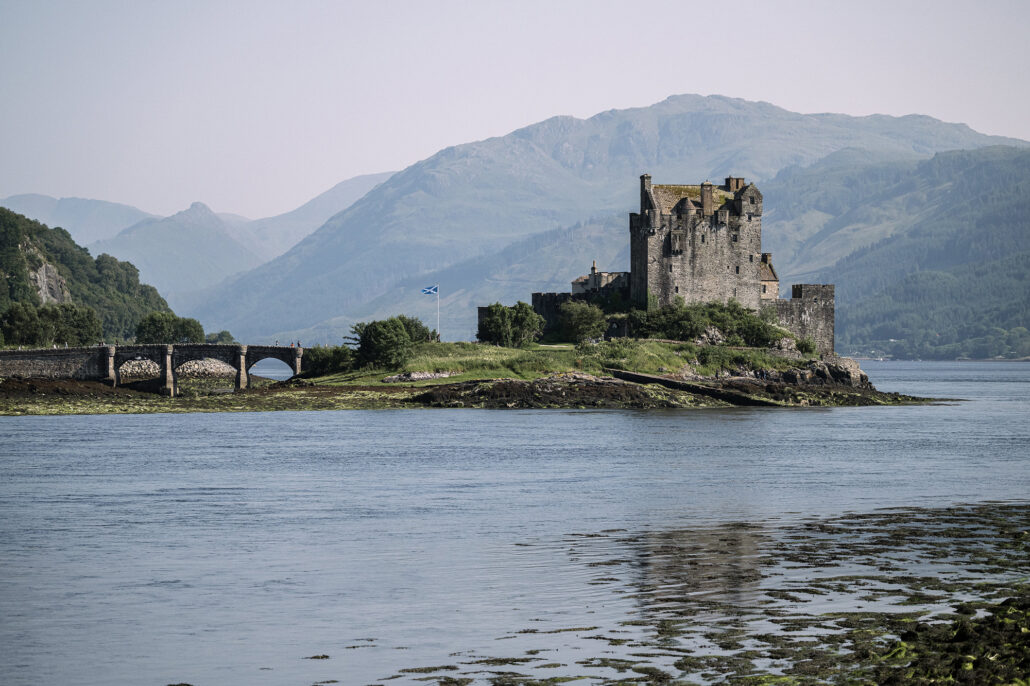
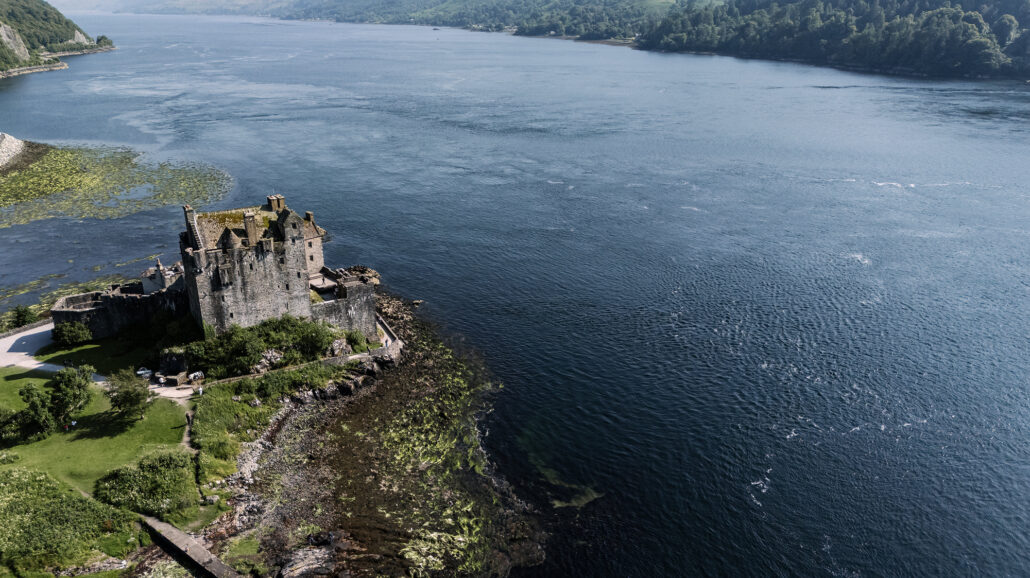
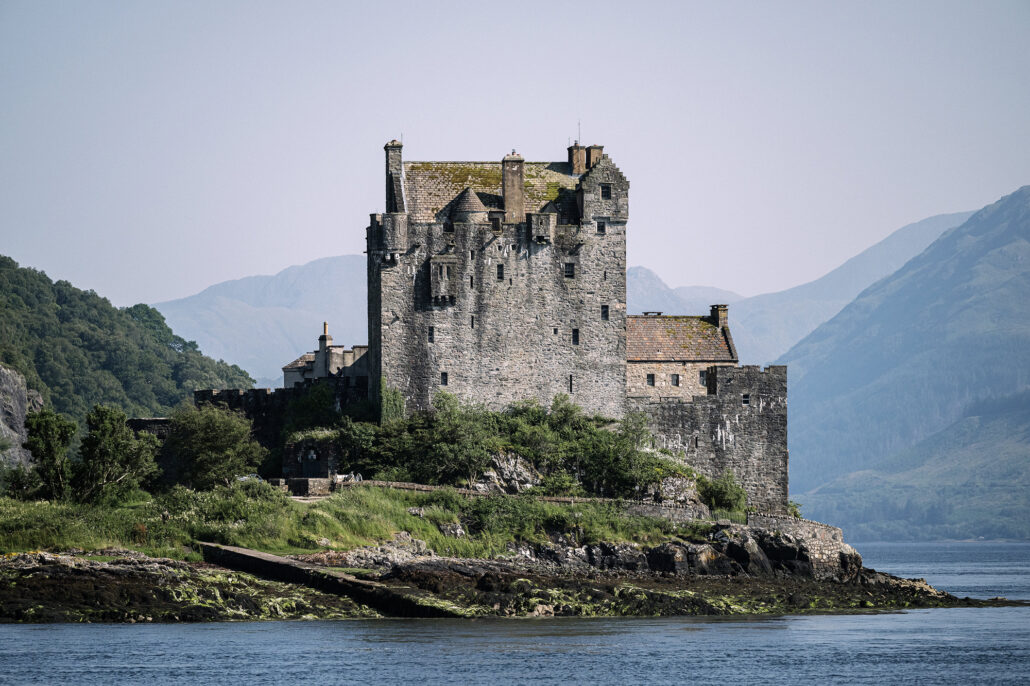
Which explains the castle waiting at the end of it. Eilean Donan held the late gold the way it’s held it on ten thousand shortbread tins, and the shortbread is a small lie of continuity. In 1719 the castle was garrisoned by Spanish soldiers for that same forgotten rising, and three Royal Navy frigates simply blew it to pieces. It sat in ruins for two centuries. What you photograph today is a meticulous reconstruction finished in 1932, which makes the most photographed castle in Scotland younger than the concrete viaduct we’d stood under that morning. You’ll also recognise it as the clan home from Highlander and a background star of a few dozen other films; this castle has an agent and works constantly. We put the drone up, with permission, and can report what every photographer works out on arrival: it’s better from the ground, across the loch, at exactly the distance the shortbread tins figured out first. The tins were right. The tins are always right.
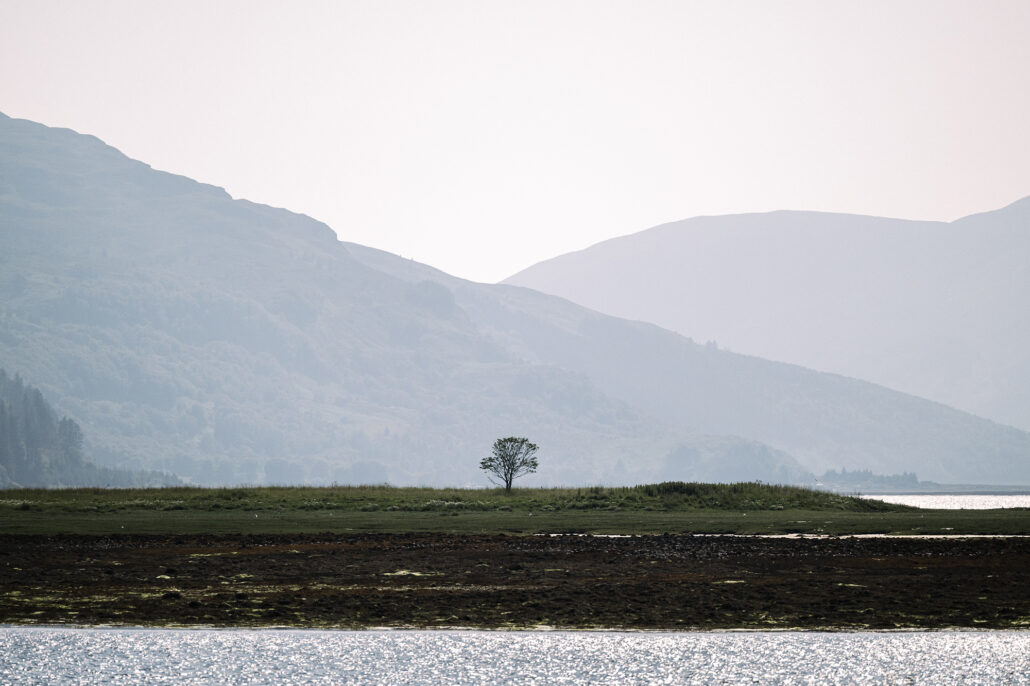
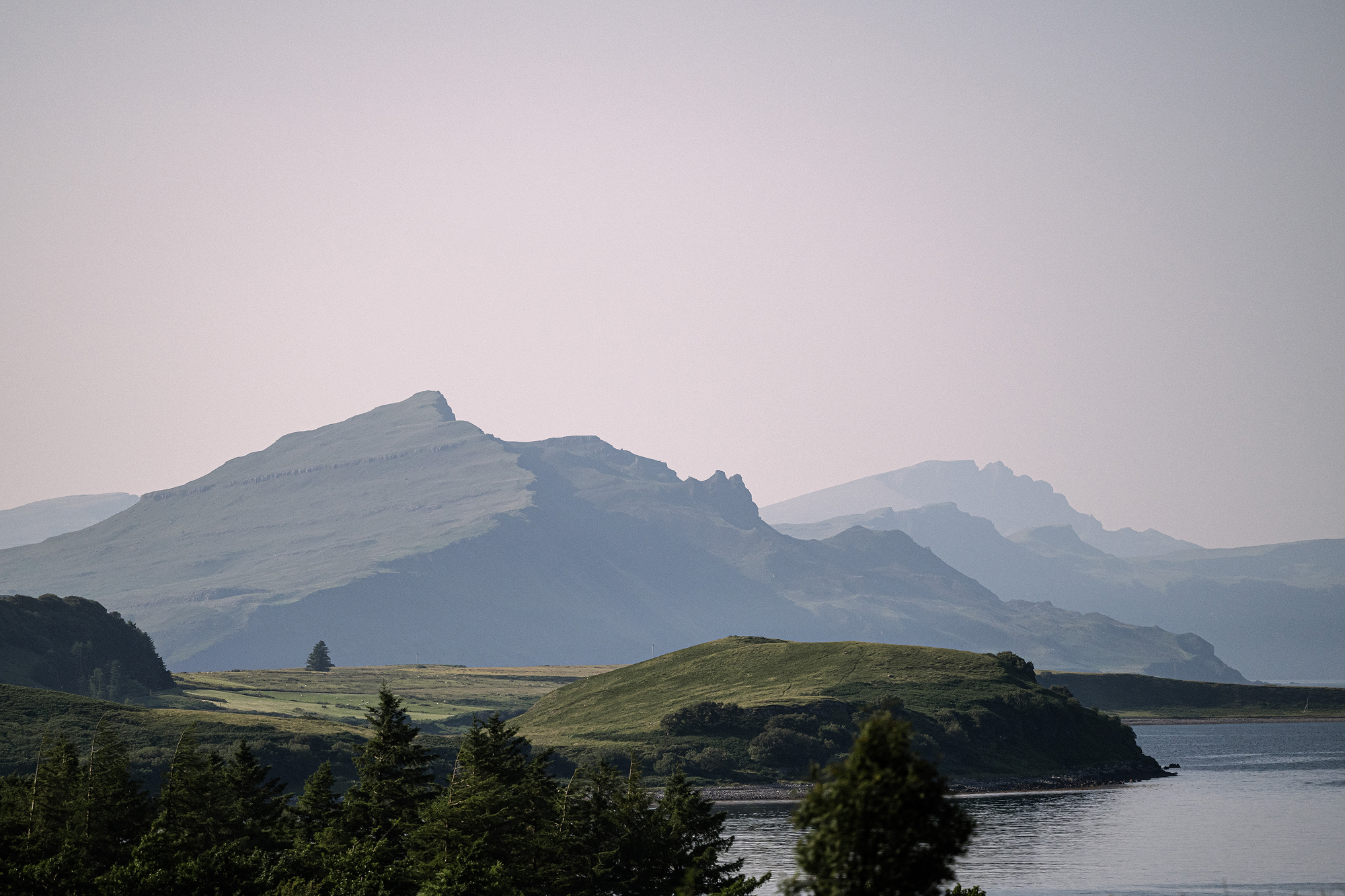
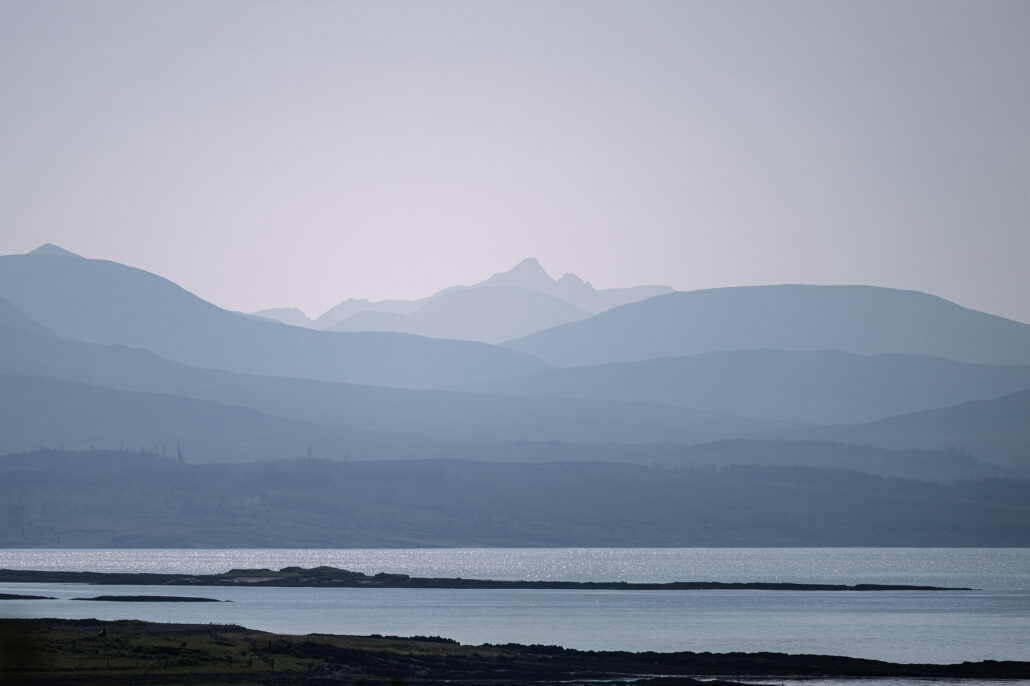
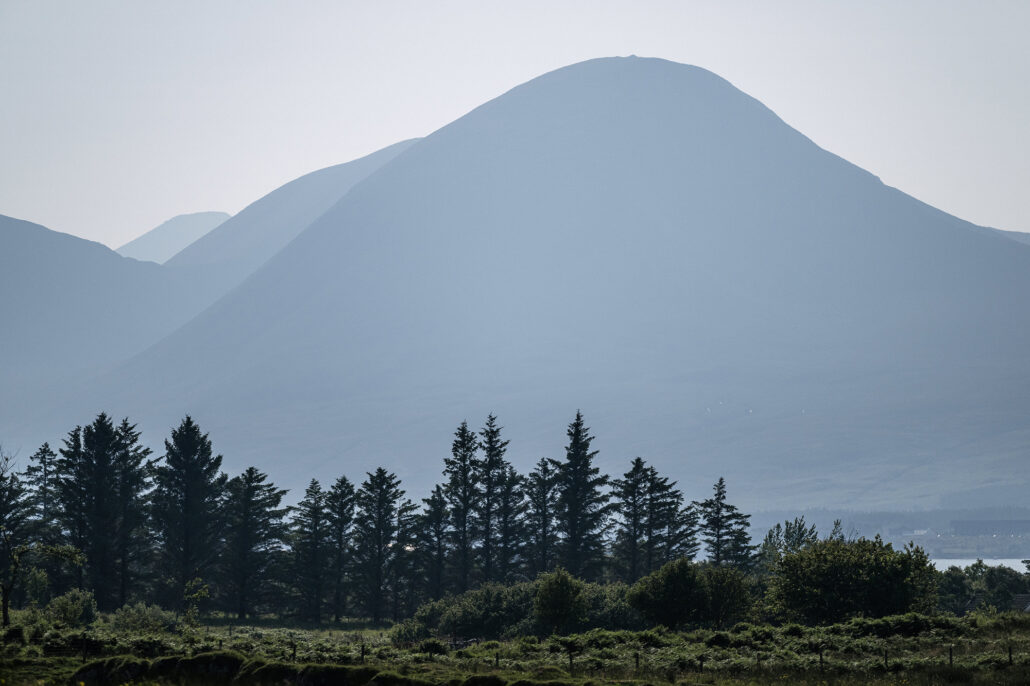
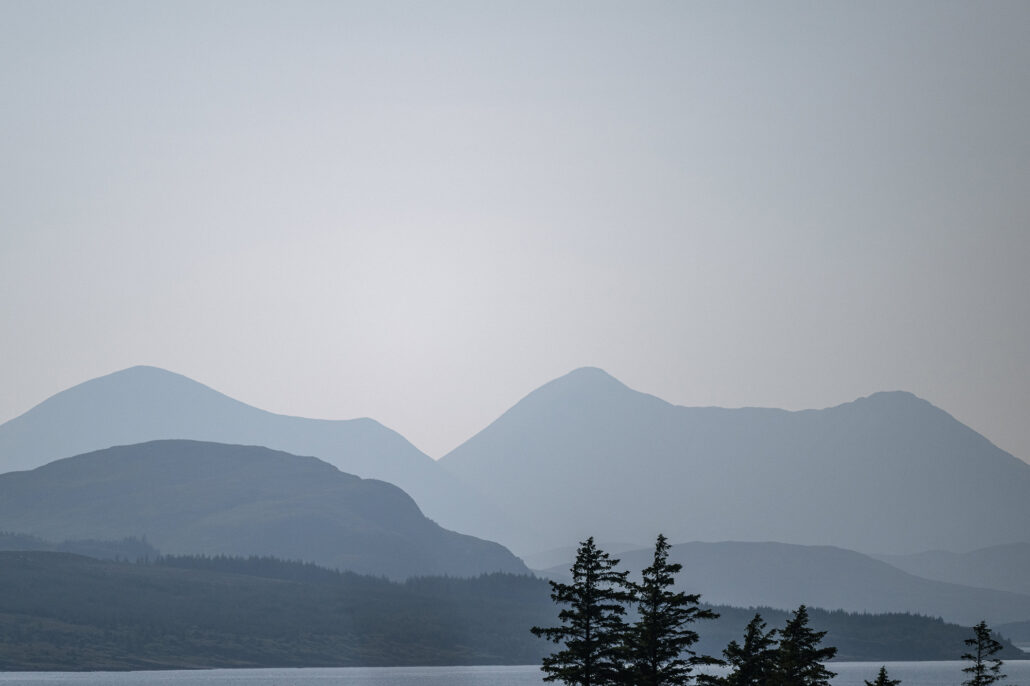
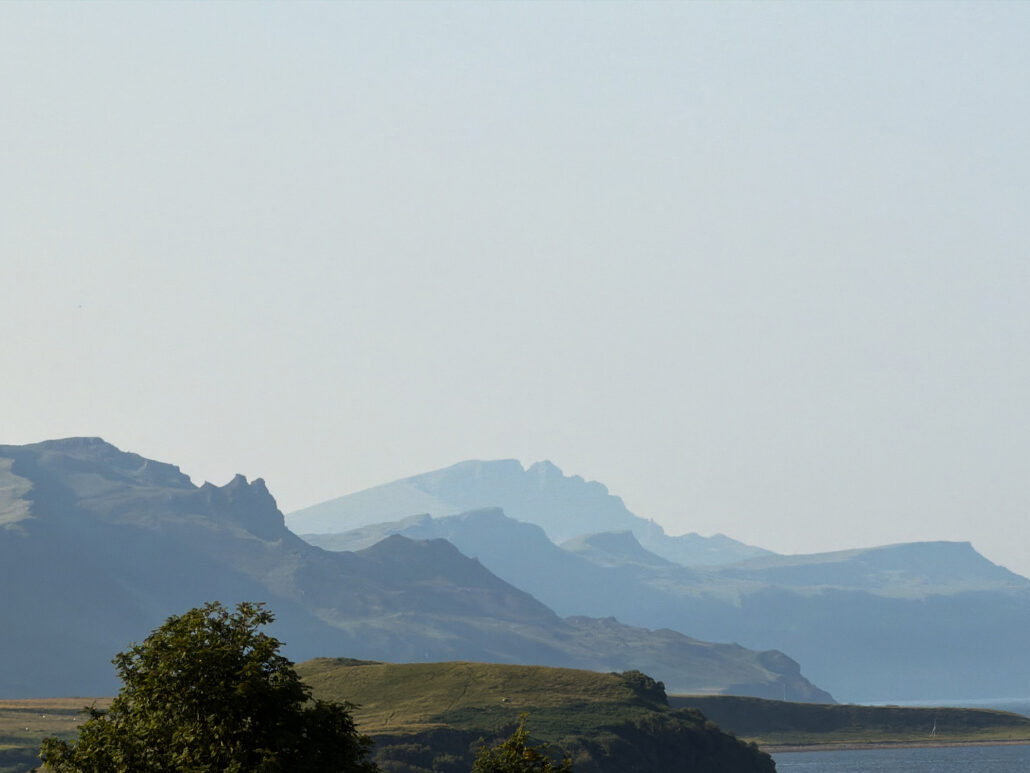
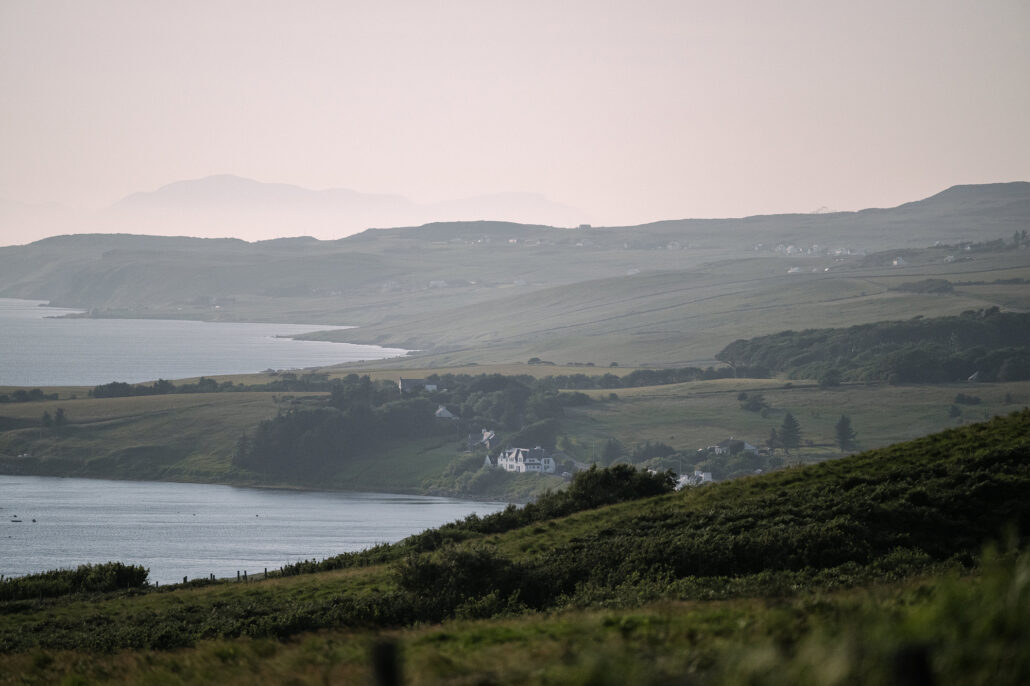
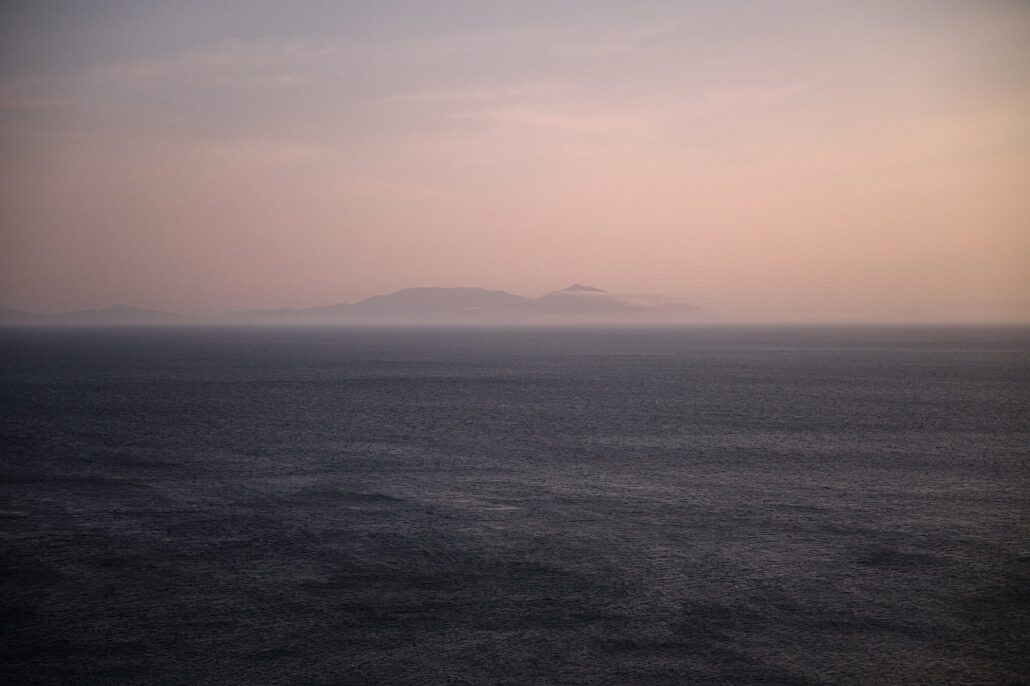
Then the bridge that ties the mainland to the island we’ve wanted longest, and one more stop, at the first viewpoint on the Skye side, which almost nobody takes. There they were at the horizon’s edge: the mountains, hazy, outlined, real, after decades of imagining them. Over the sea to Skye, finally. That’s the Skye Boat Song made literal, the one Outlander borrowed for its theme tune, a lullaby about a prince fleeing the wreck of the exact rising we’d watched begin the morning before. We may have hummed it. There were no witnesses.
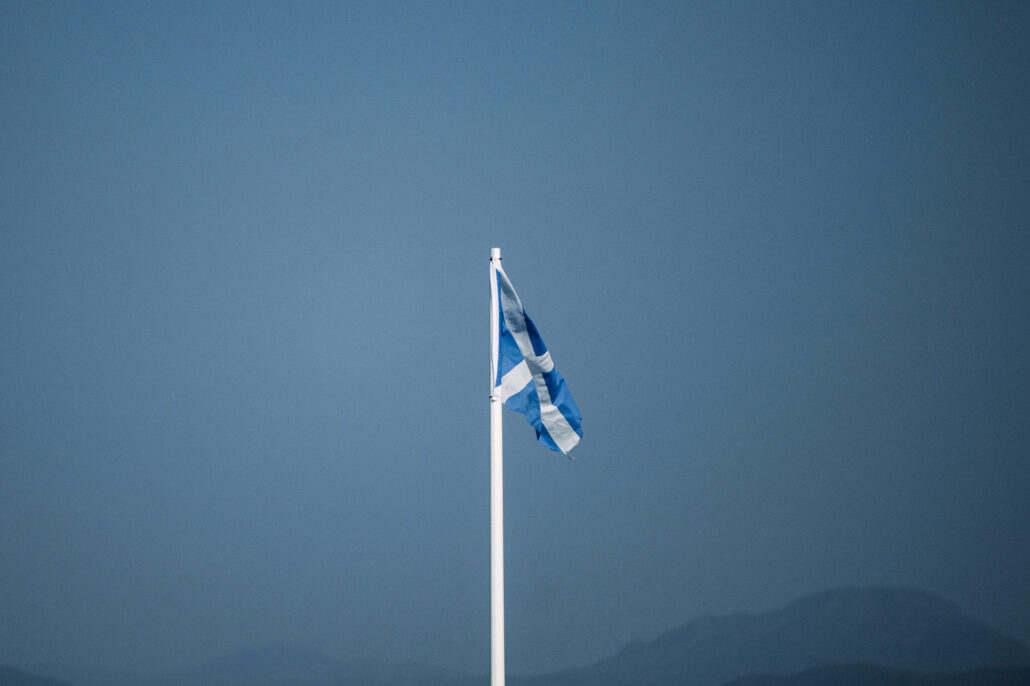
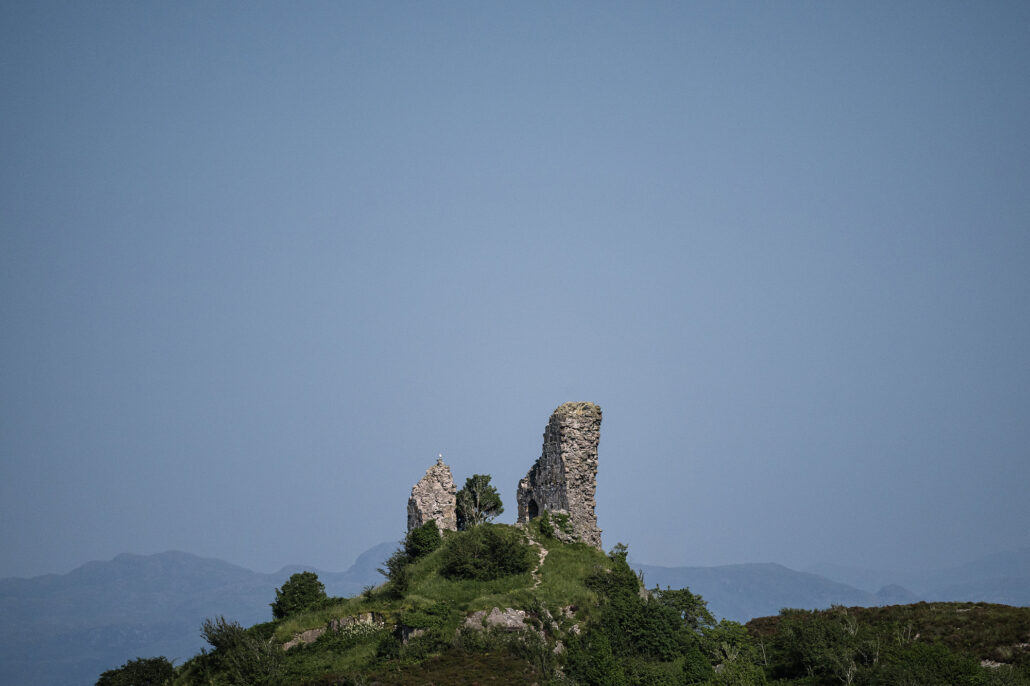
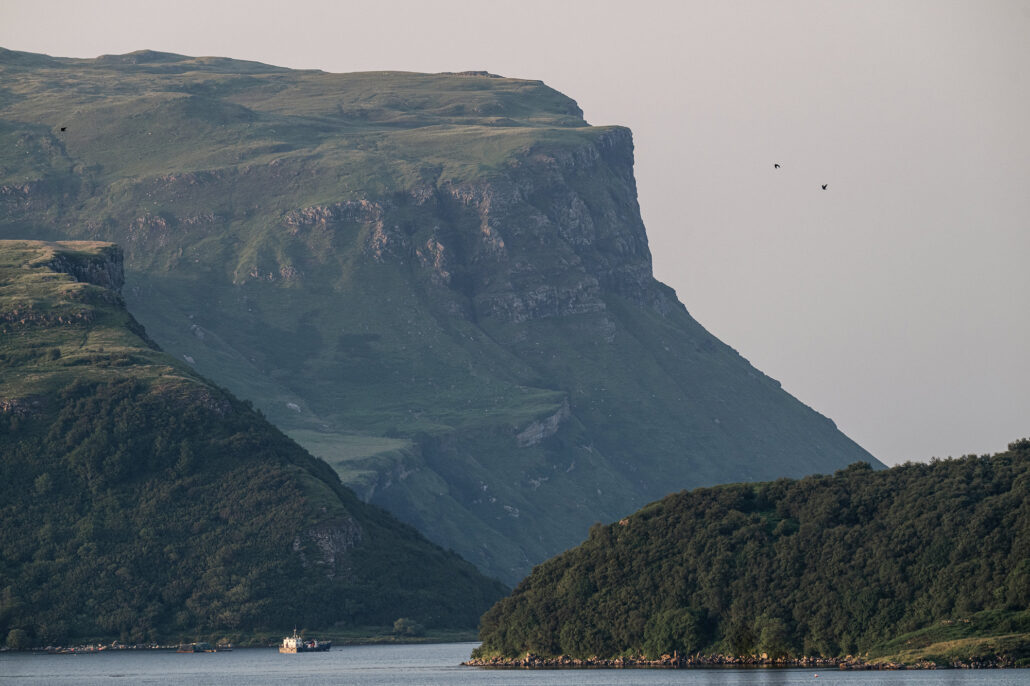
We slept that night with the island finally under us, and woke to find out what it does to plans.
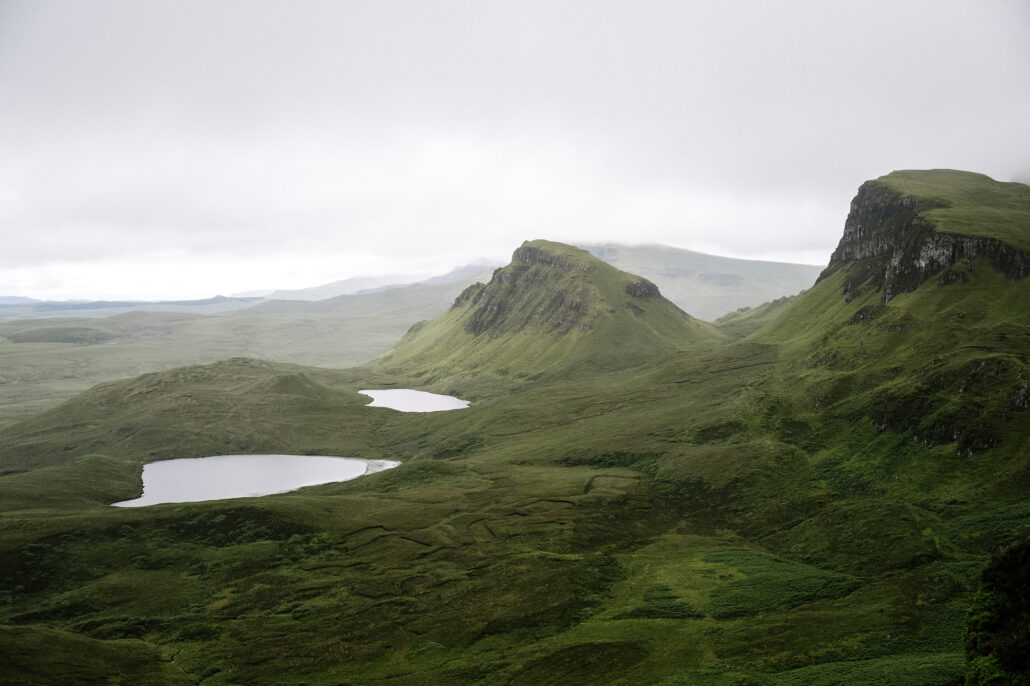
The ground on the east side of Skye is not solid. It’s the largest landslide in Britain, and a small part of it is still moving while you stand on it.
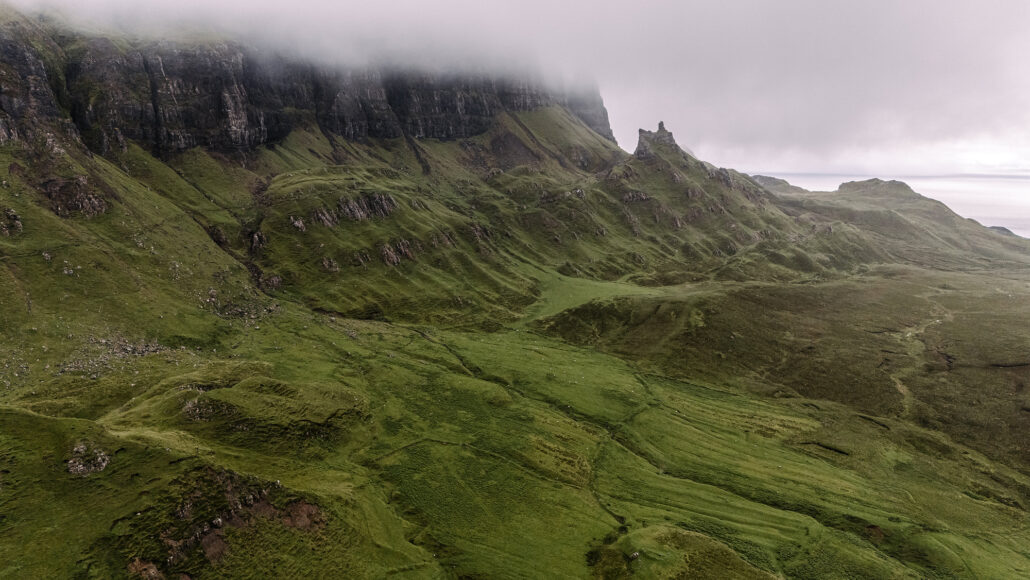
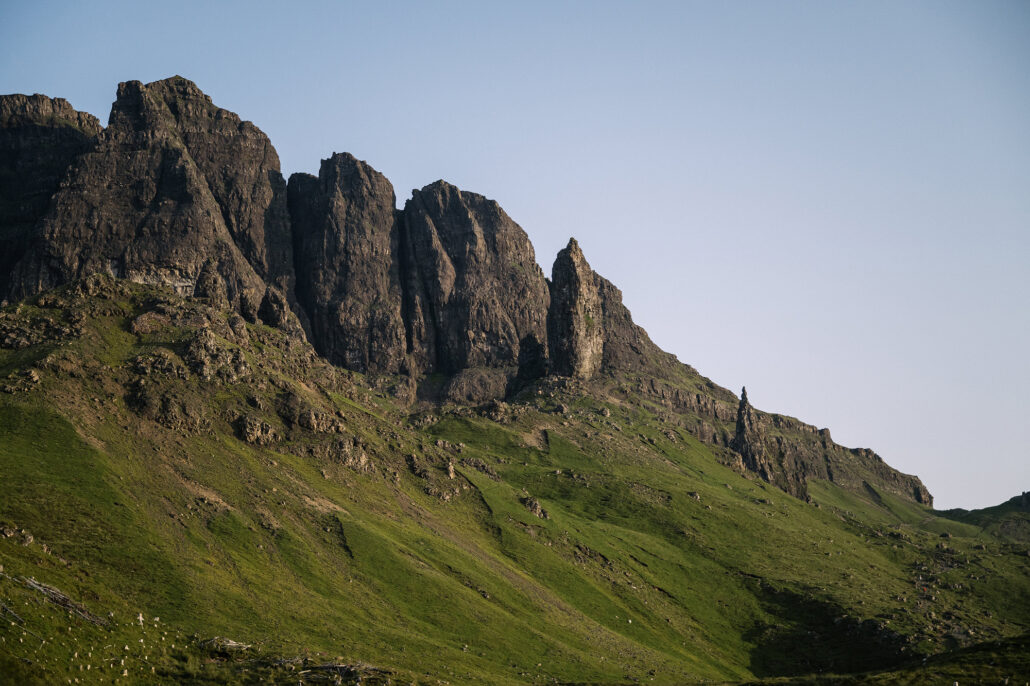
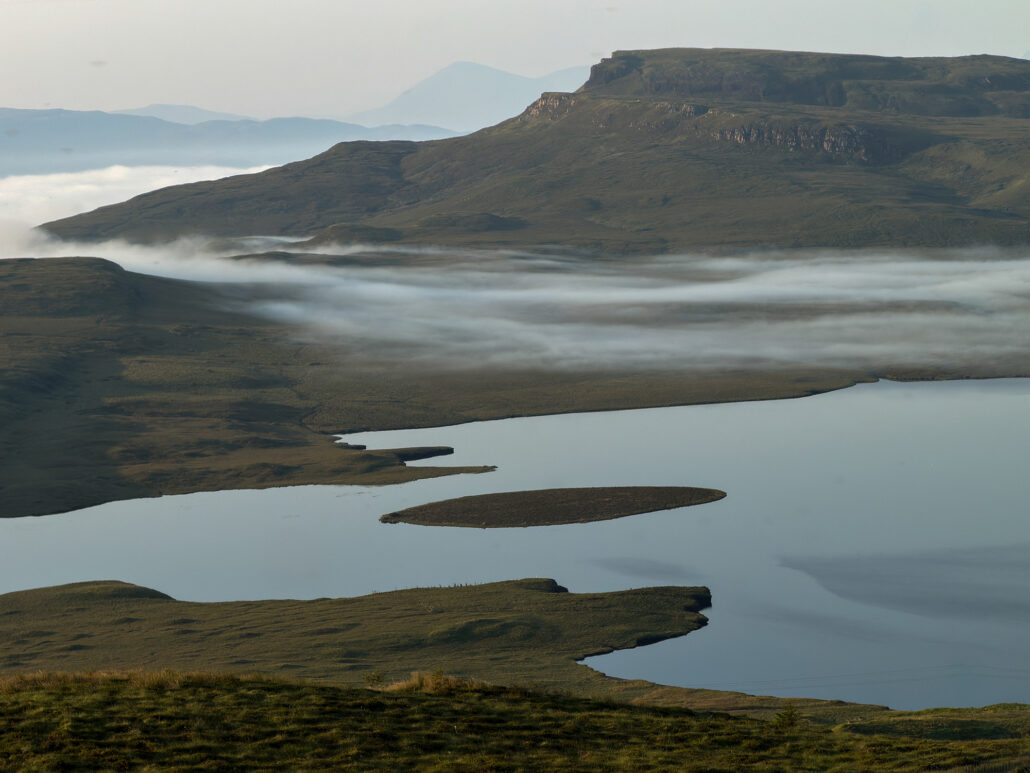
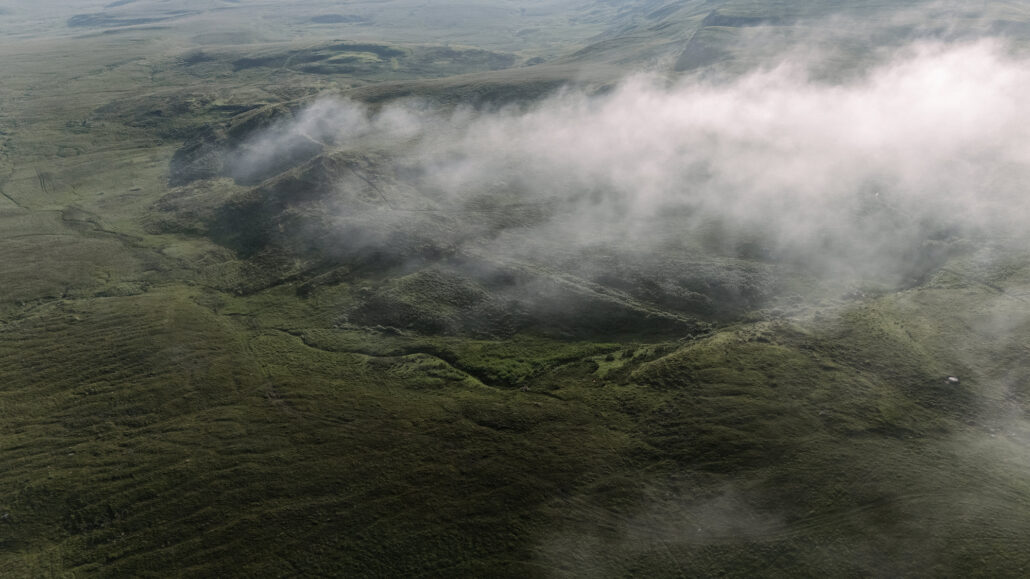
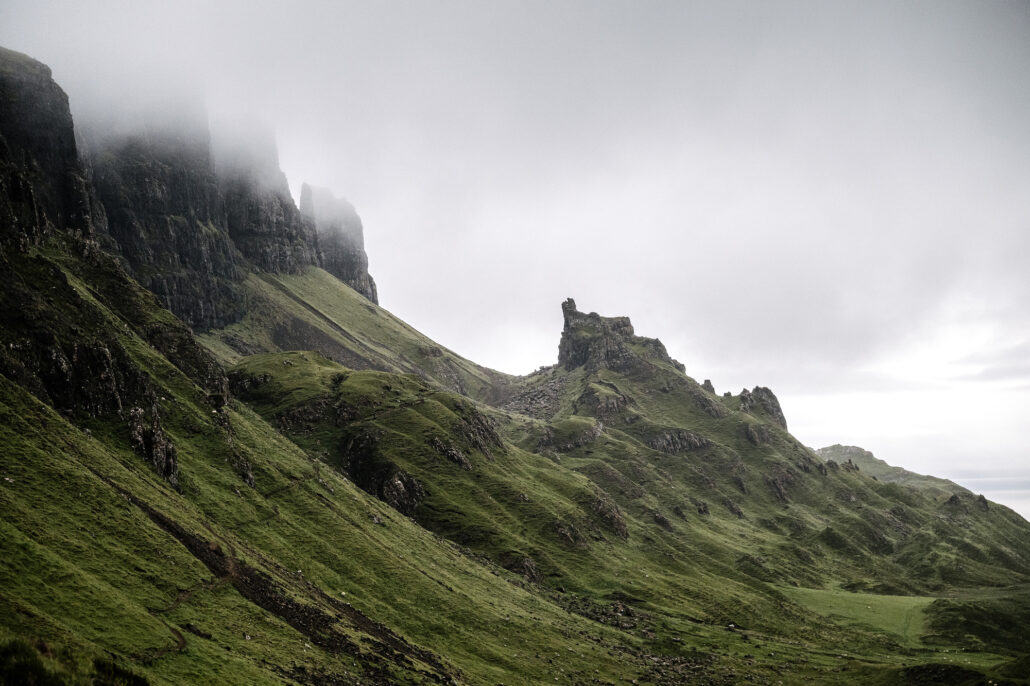
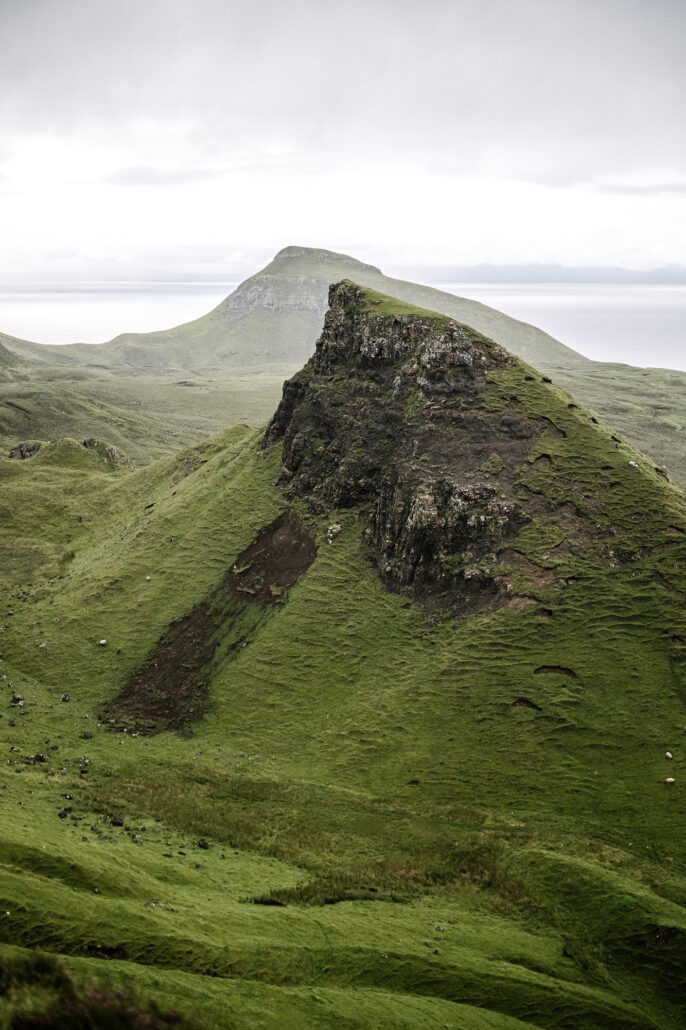
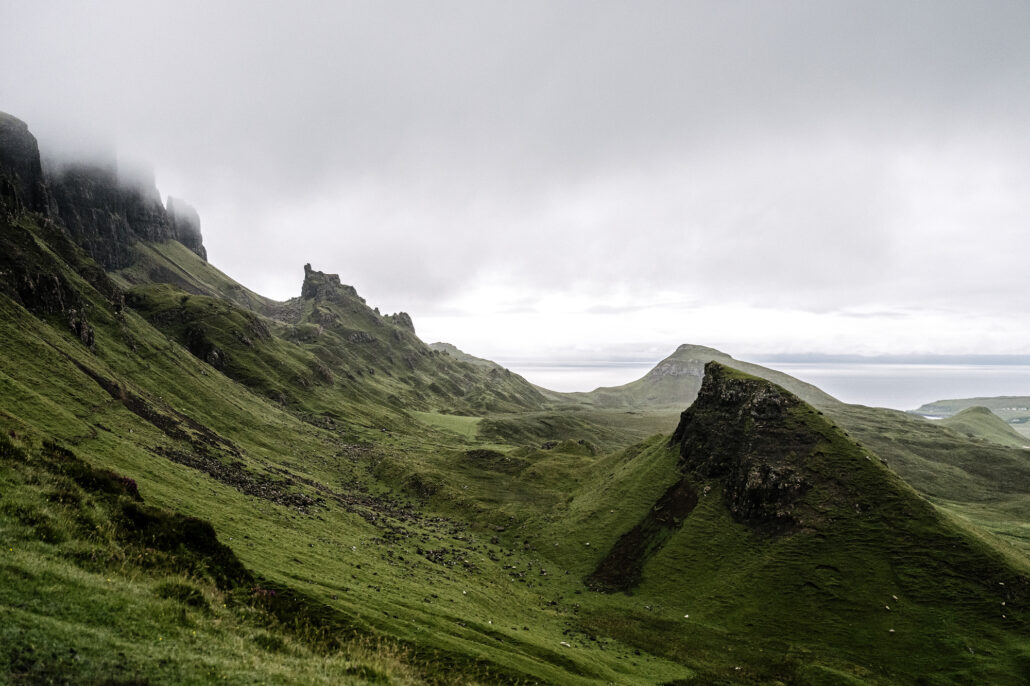
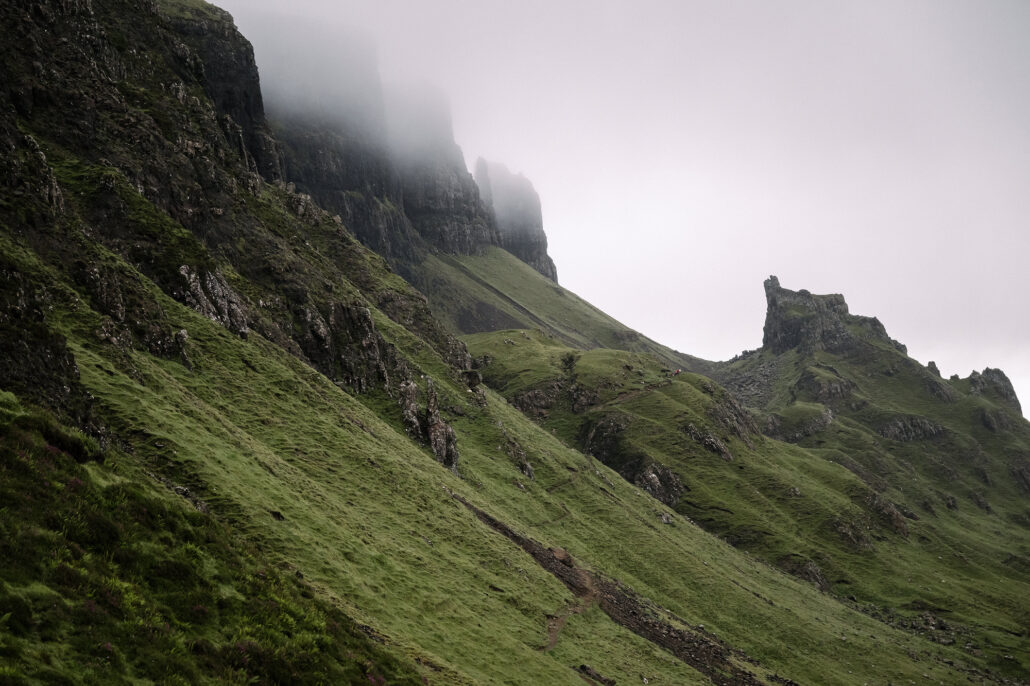
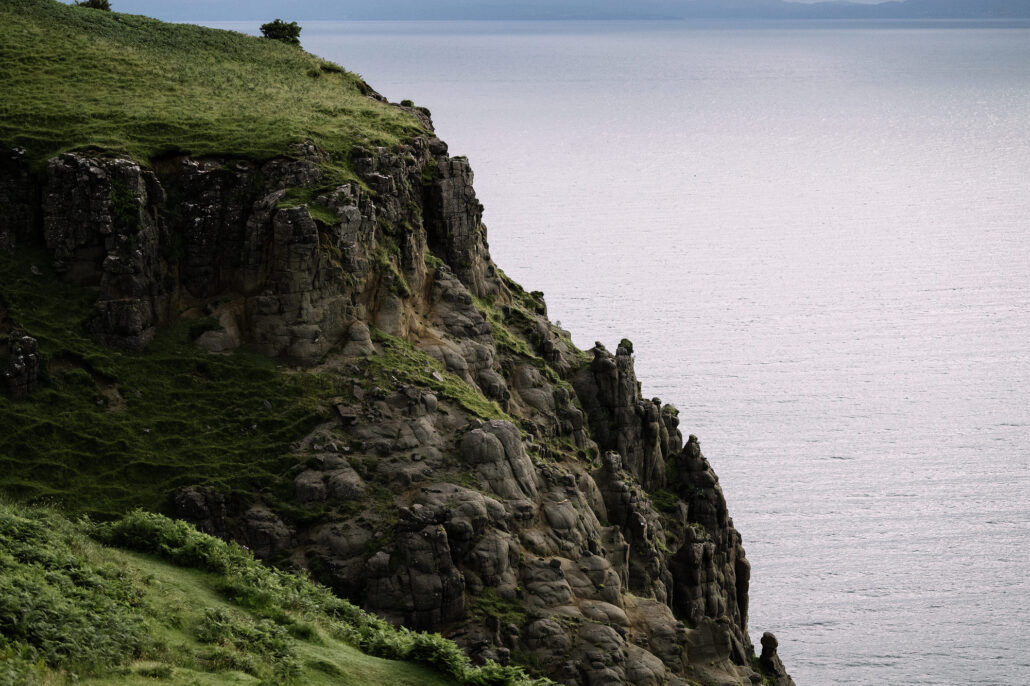
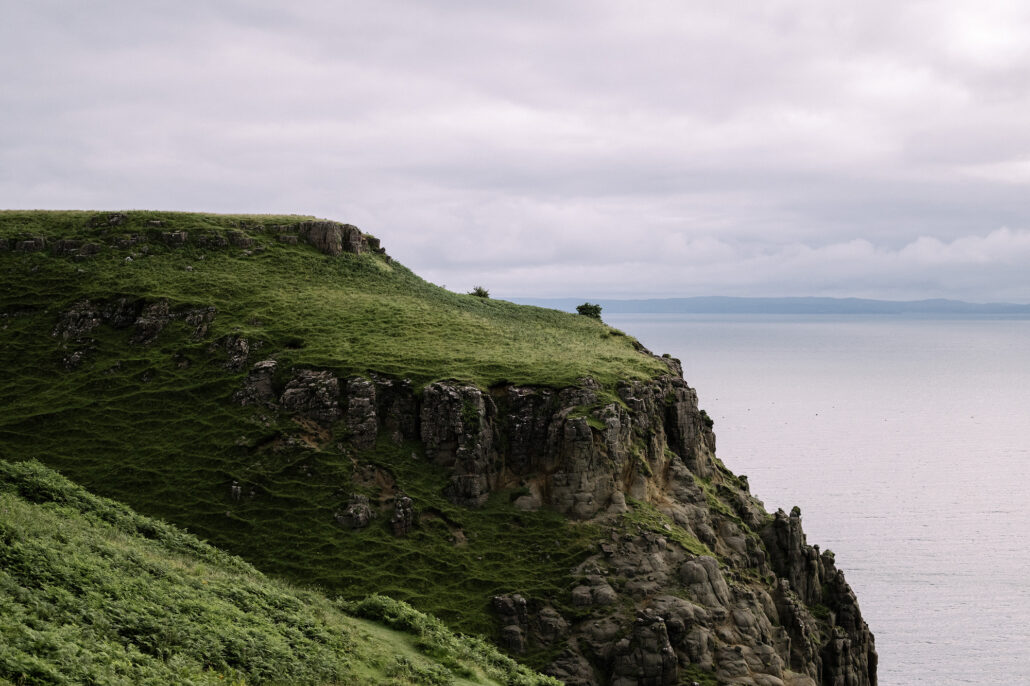
The whole eastern wall of the Trotternish peninsula, around twenty kilometres of cliffs and terraces and improbable standing pinnacles, is one connected slip. The recipe was slow and simple. Heavy flows of basalt lava, stacked up to three hundred metres thick, settled over soft Jurassic clay, and eventually the shelf couldn’t hold the weight. The edge of the island sheared off and slumped toward the sea in enormous rotated blocks. The Old Man of Storr, that fifty-five-metre splinter everyone photographs, and the green spires of the Quiraing further north, are simply the pieces of that collapse that happened to land upright.
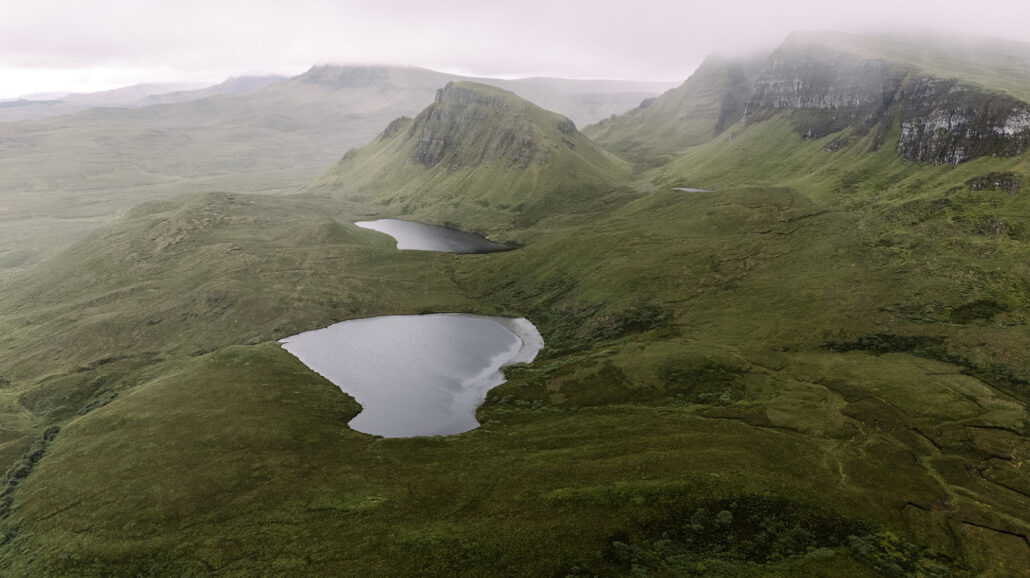
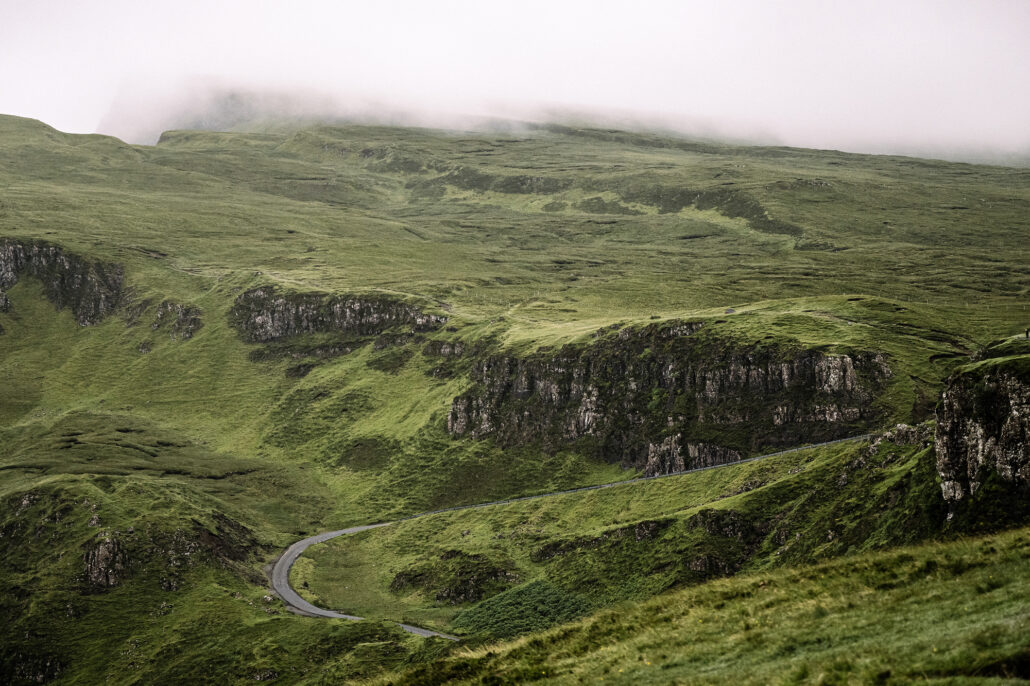
Most Scottish landscape was carved by glaciers and then left in peace. This one is different. It’s still going. One section, the Quiraing, never settled down with the rest: it’s sliding seaward at an average of two to three centimetres a year, slow enough to read as scenery, fast enough that the single-track road along its base near Flodigarry buckles and has to be patched back into line most years. The most honest geologists on Skye are the council road crew. No instruments, no papers, just an annual appointment with a hillside that refuses to stop.
We came to photograph the most beautiful island in Scotland and spent two days documenting a catastrophe in extreme slow motion, with sheep on it.
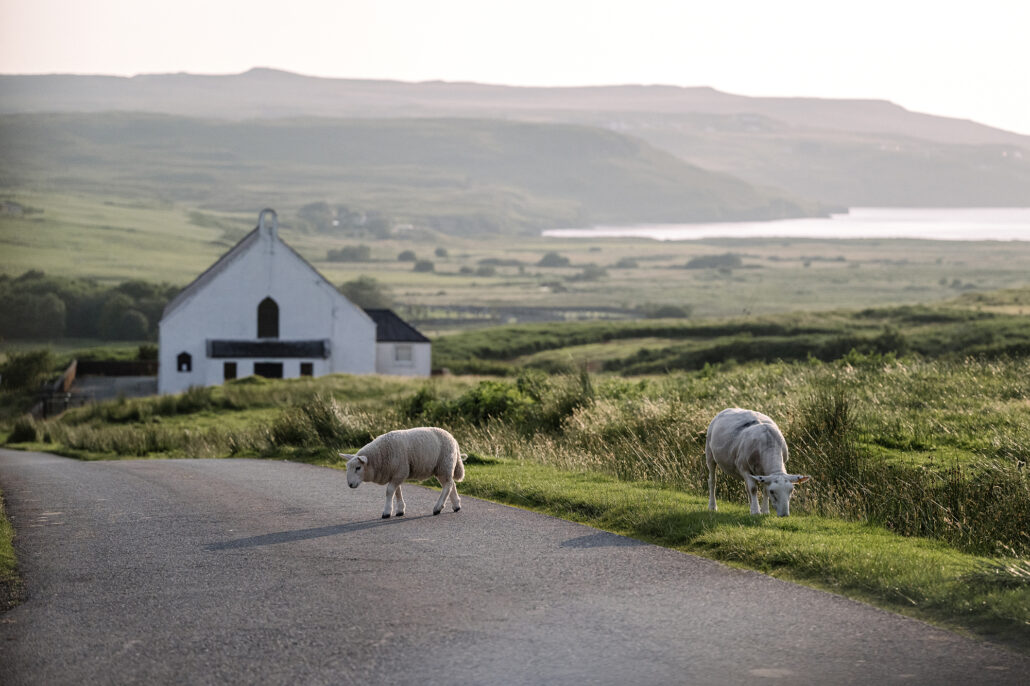
Why Skye is so haunted (blame the ground)
This is what standing on moving ground does. It explains the stories.
Nobody fills solid, sensible country with giants and fairies. You get myth where the land behaves like something alive: where a pinnacle stands up out of a hillside like a buried thumb, where a flat green table hides itself among the cliffs, where the road needs mending every spring because the ground walked off with it overnight. Skye is the most story-soaked island in Scotland, the Misty Isle, and it earned every legend the honest way, by being too alive to explain. People needed the giant, because the alternative, that the earth itself is quietly falling into the sea, was somehow the harder thing to live beside.
We’d wanted to stand here for longer than almost anywhere on the planet. Decades of it. All those years in Britain, all of Wales, and never once Skye, just the idea of it, built and rebuilt and saved. And now the bridge, and the island, and the ground underfoot quietly on the move.
The price of the postcard
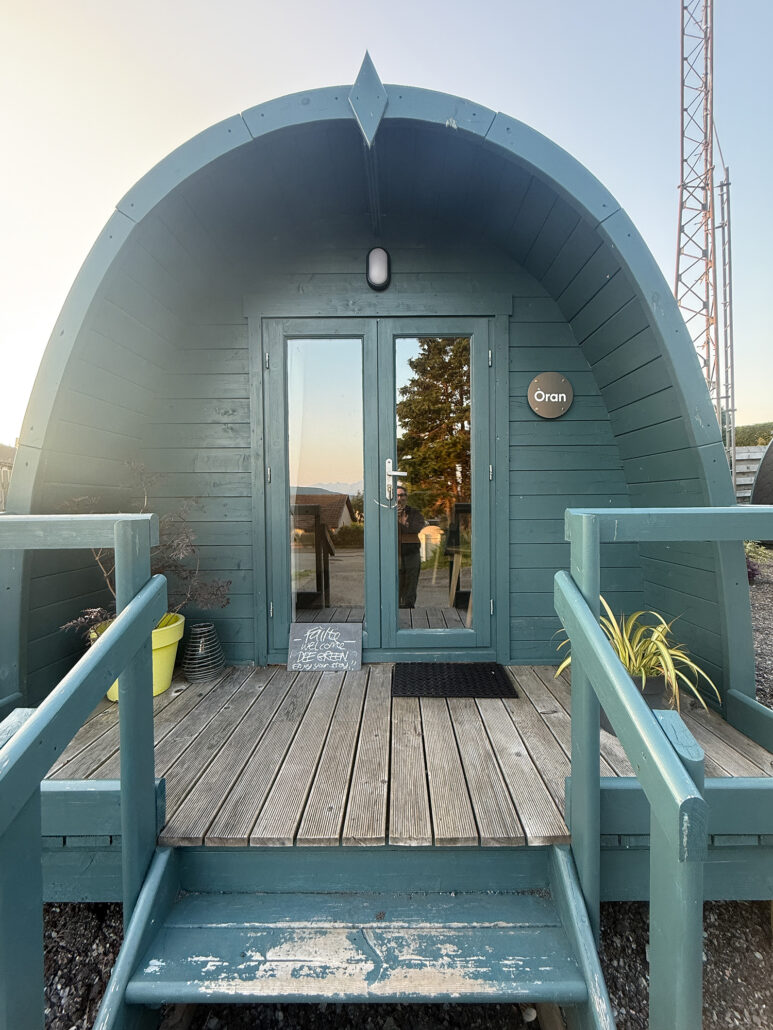
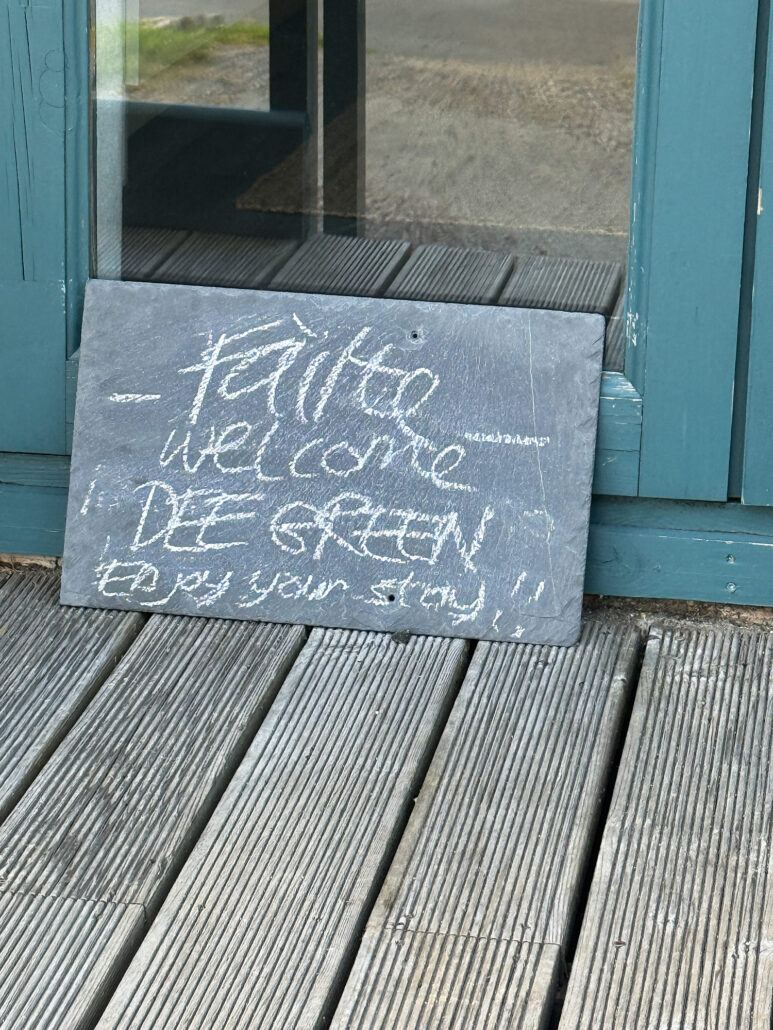
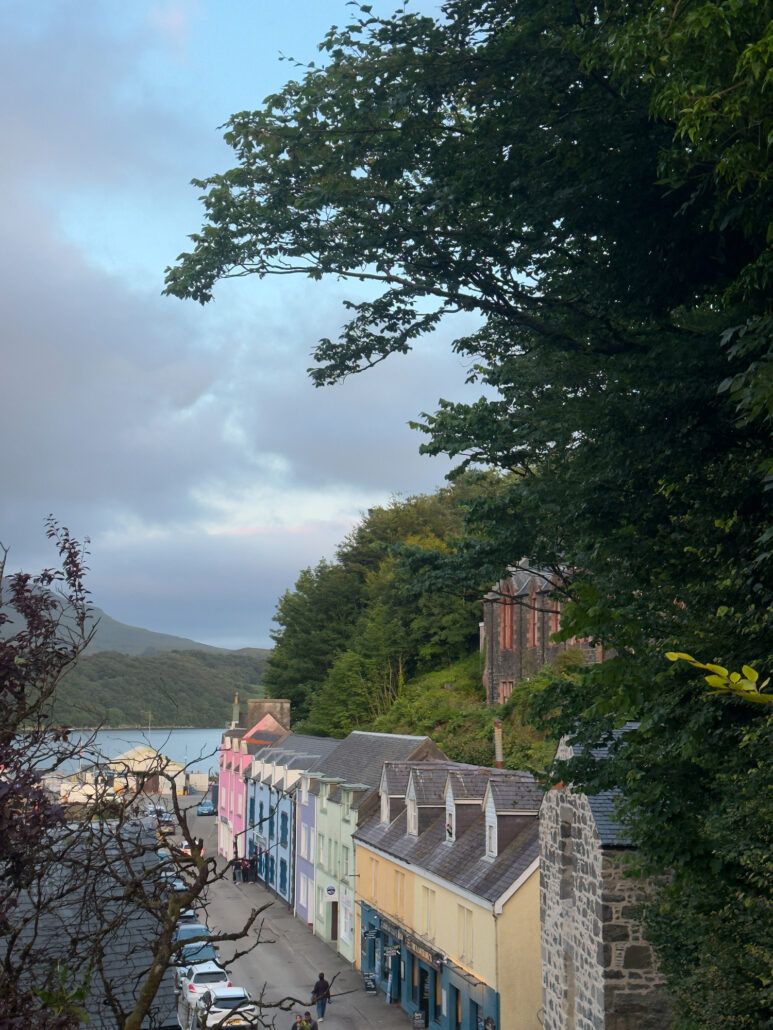
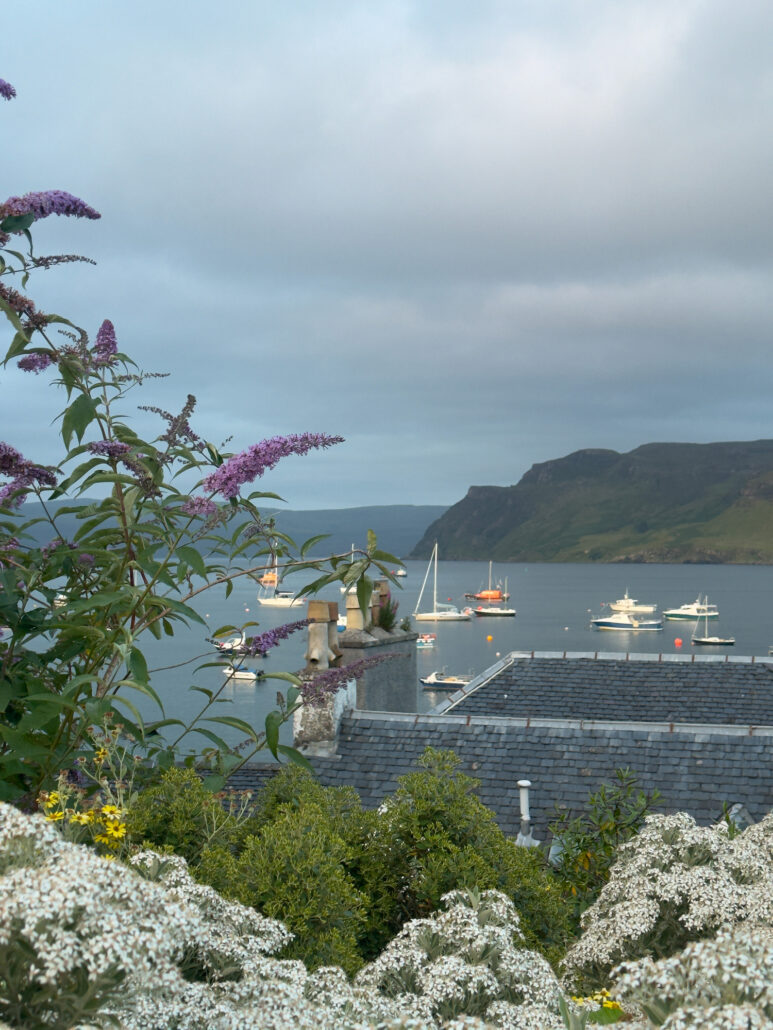
We’d rolled into Portree at half past ten the night before and checked into pods run by the island’s radio station, which is every bit as charming as it sounds, the harbour’s coloured houses glowing below in the late light. The photograph this island is famous for happens at sunrise on the Old Man of Storr, which means the only uncrowded hour is the one almost everyone is asleep for. So the alarm went at half past three, and nobody made us do it.
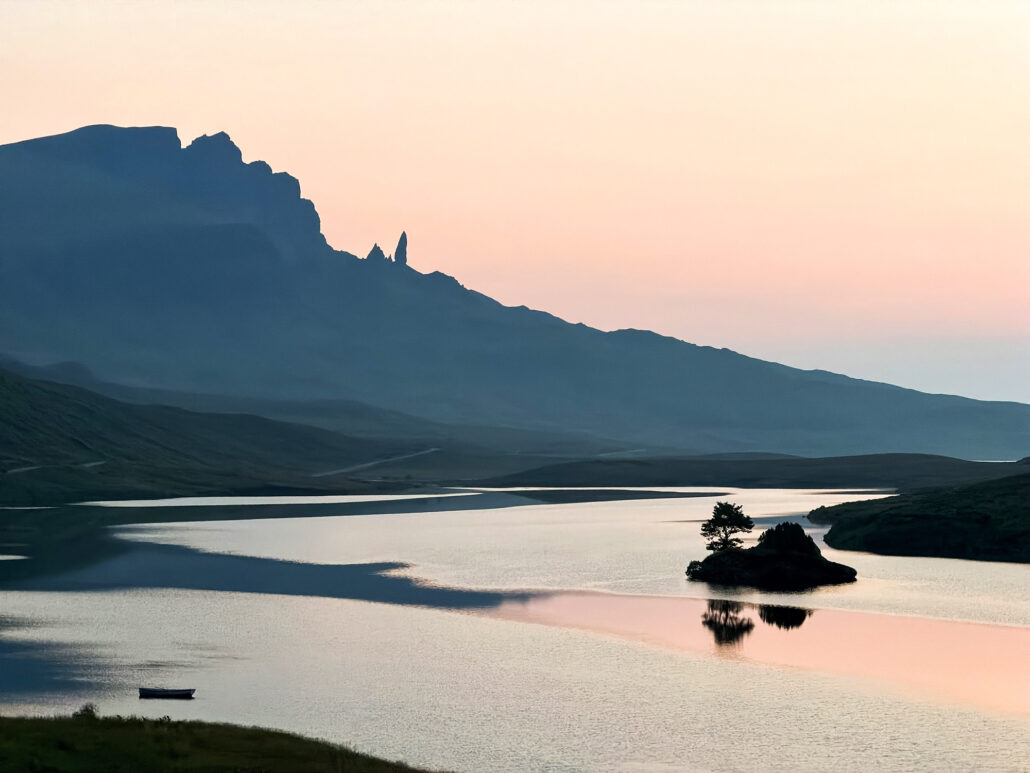
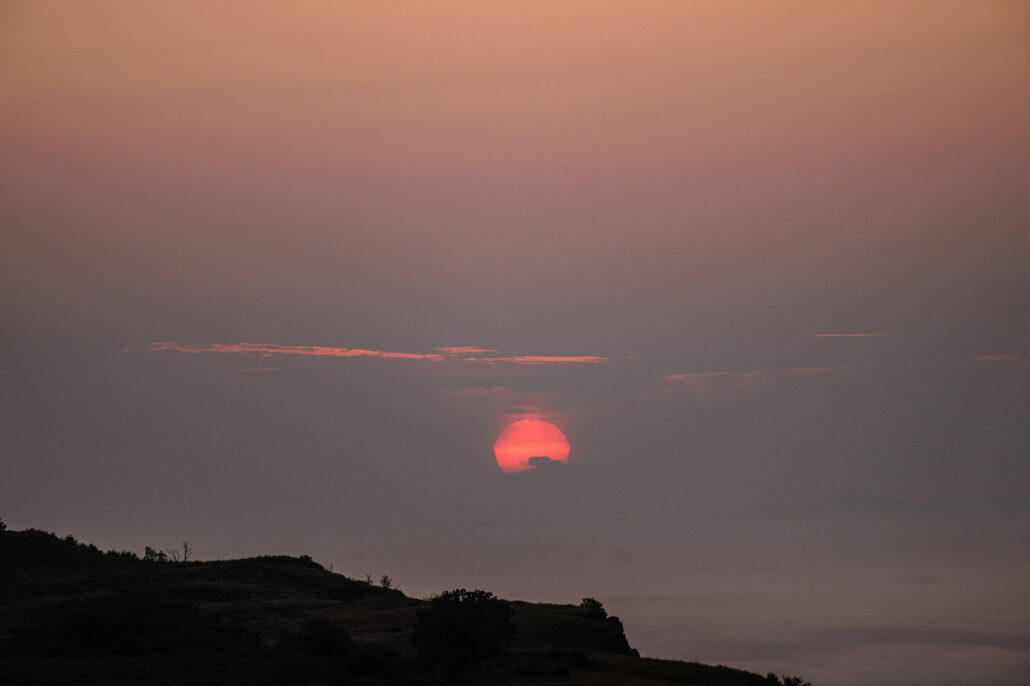
What the postcard leaves out is the next forty-five minutes: a steep, muddy, exposed climb, hauling the kit you swore at midnight you’d pack light, performed by two people who are, it has to be said, not as fit as we once were. There was a frank exchange of views about whose idea this had been. Somewhere on the side of the hill, Tracey’s Oura ring buzzed warmly to tell her she’d reached her activity goal, as though the entire ordeal had been its own clever plan.
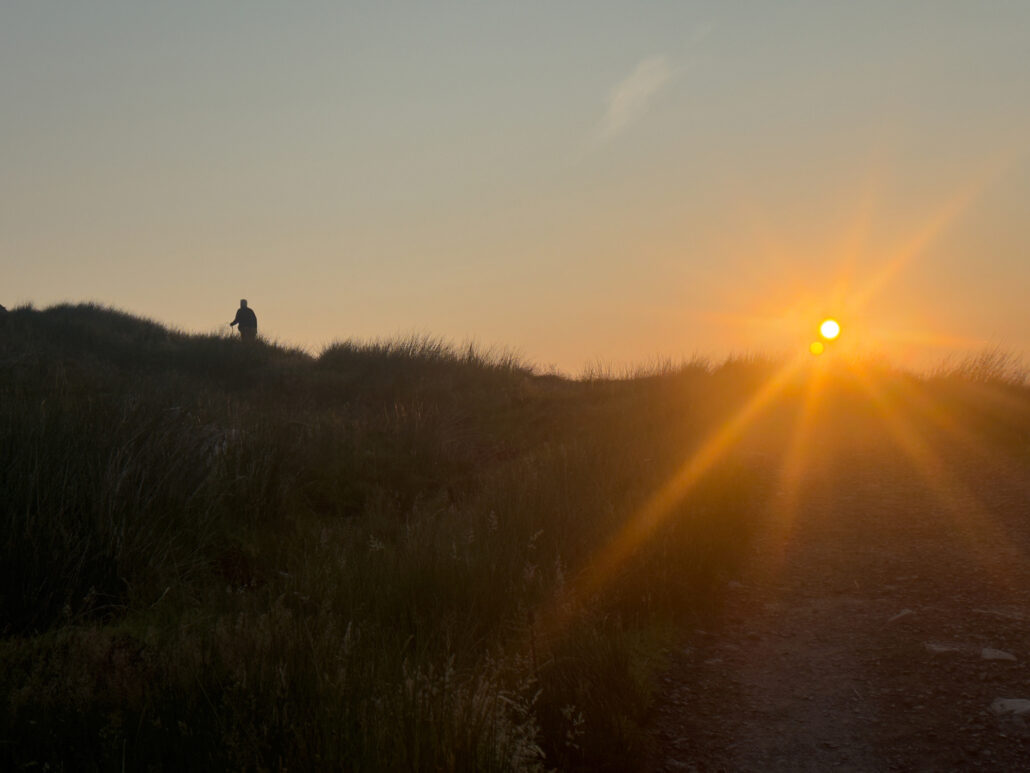
Stopping, we learned quickly, was the error. The Highland midge had followed us across the bridge, and a drone pilot, to a midge, is a catered event. The moment Trace stood still to fly, they arrived in their millions, and we mean the word almost literally: there is footage from that hillside in which her face cannot be seen. Not obscured. Not visible. We kept moving when we could and donated blood when we couldn’t.
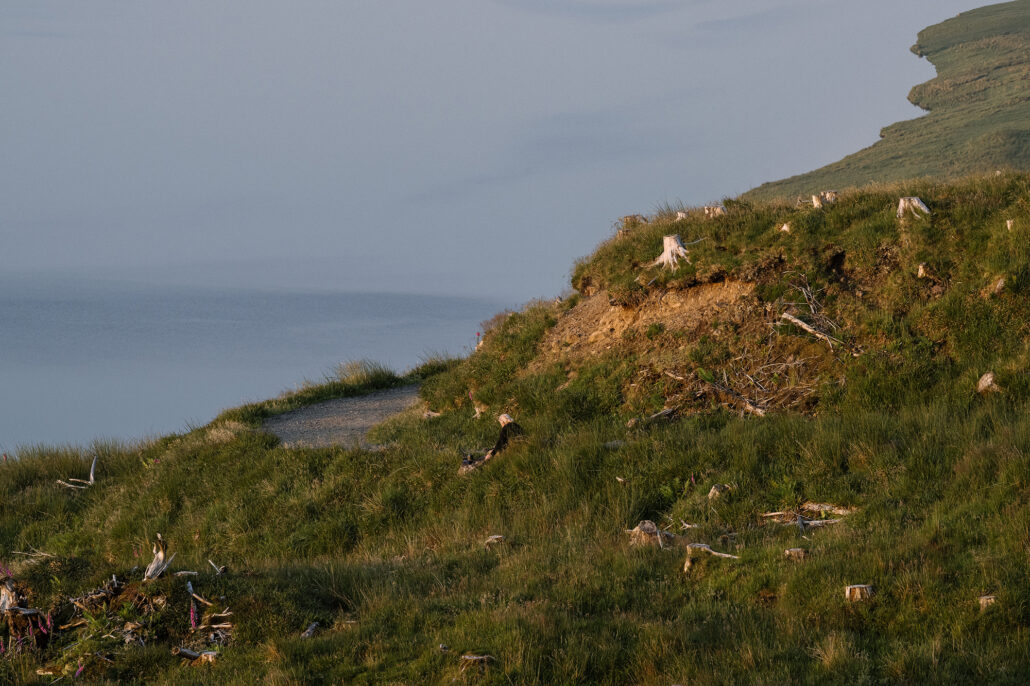
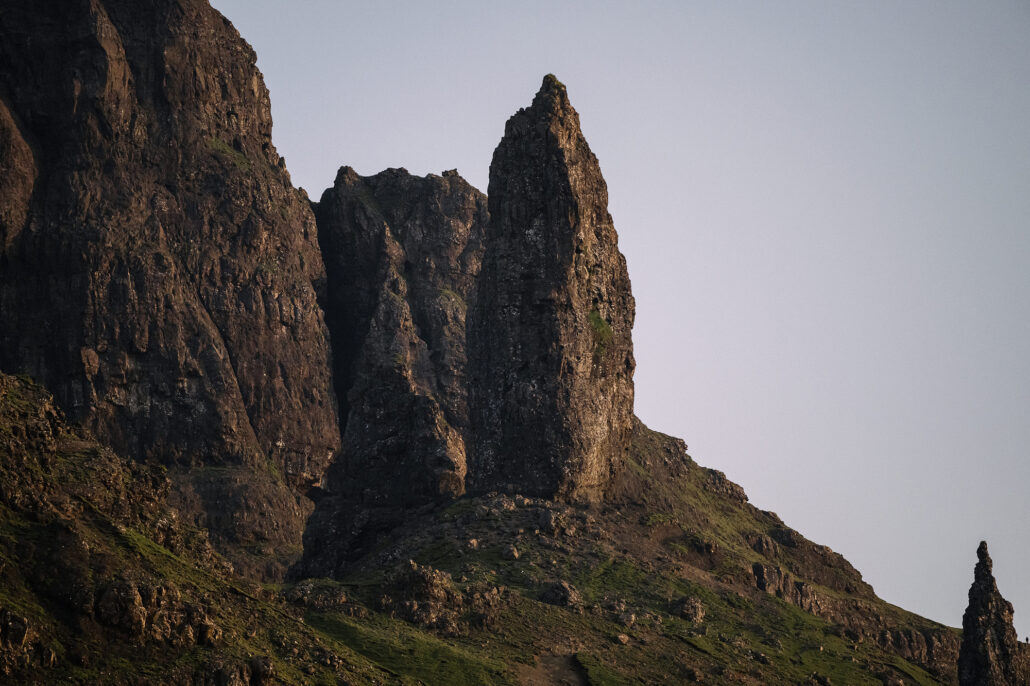
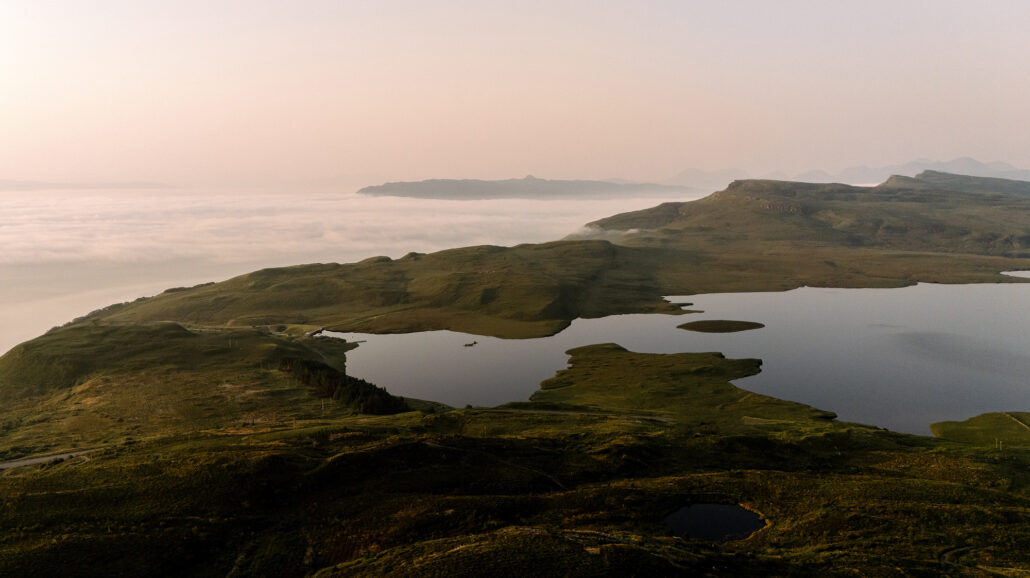
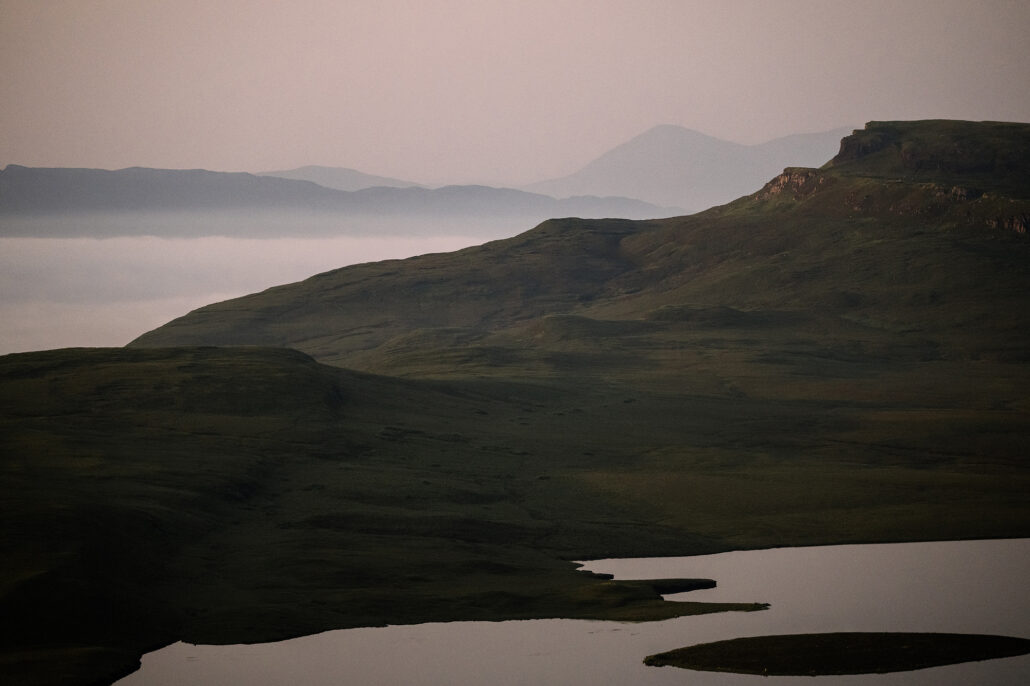
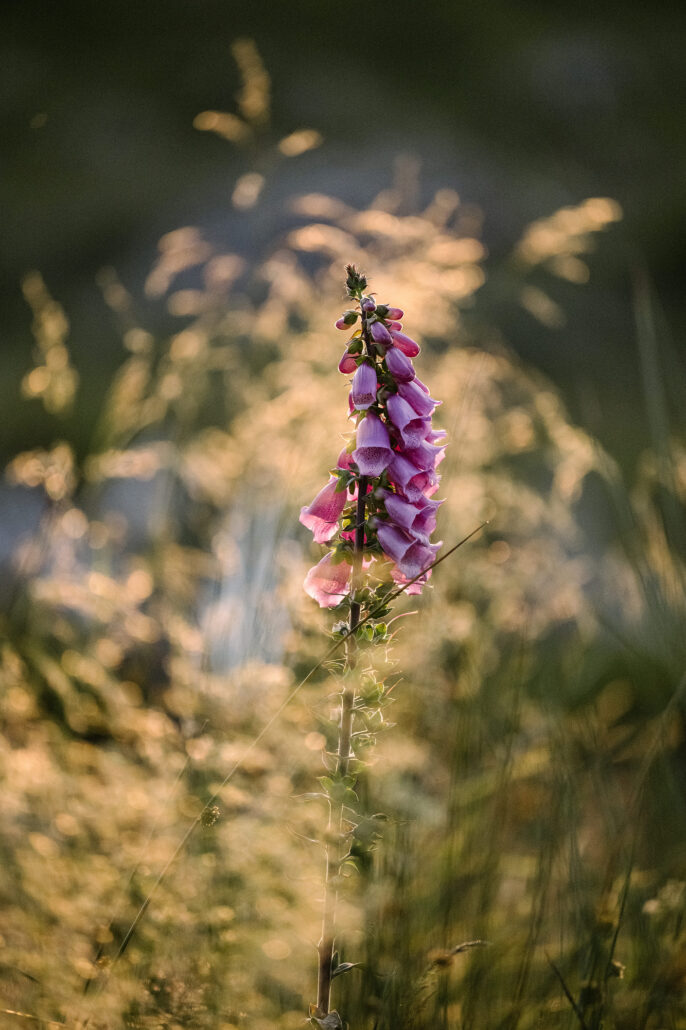
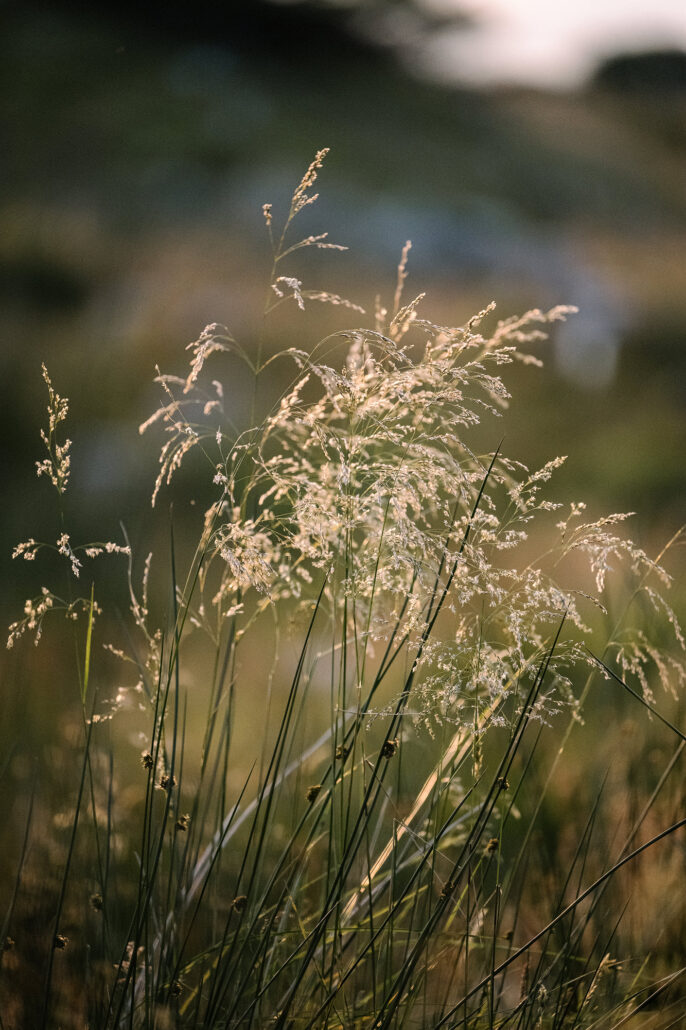
And then the path tops out into the Sanctuary, the great amphitheatre of pinnacles below the cliffs, and the sky does whatever it’s decided to do behind a fifty-five-metre spire of rock, and you forget, completely and instantly, that you have a body at all.
Haar
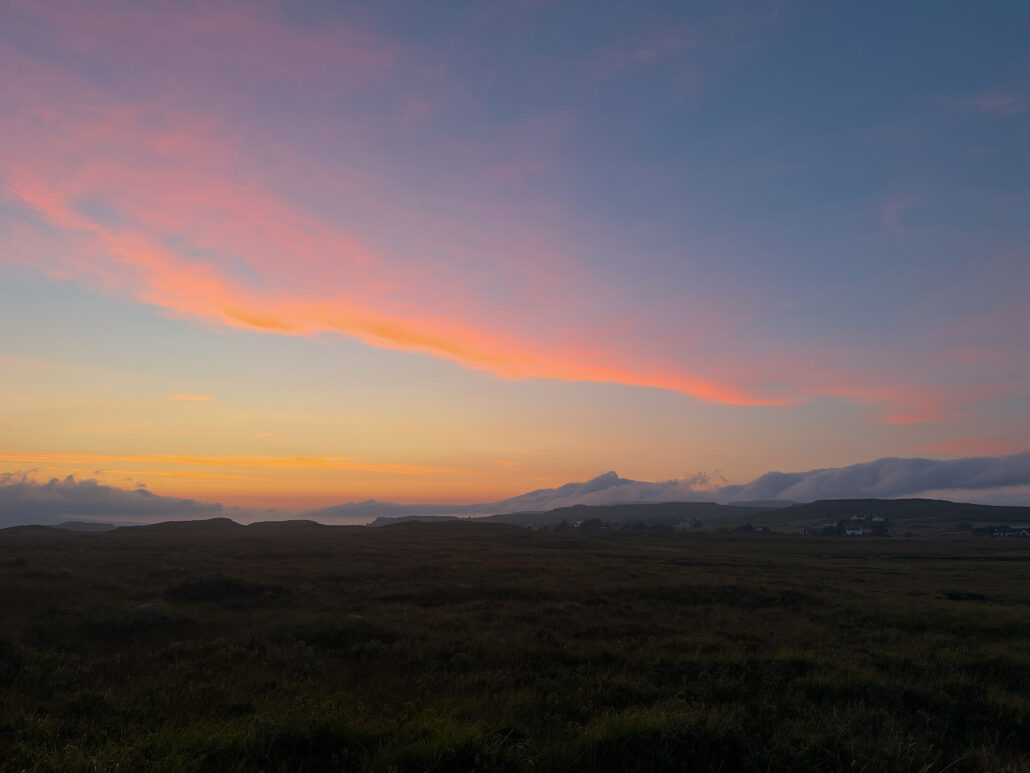
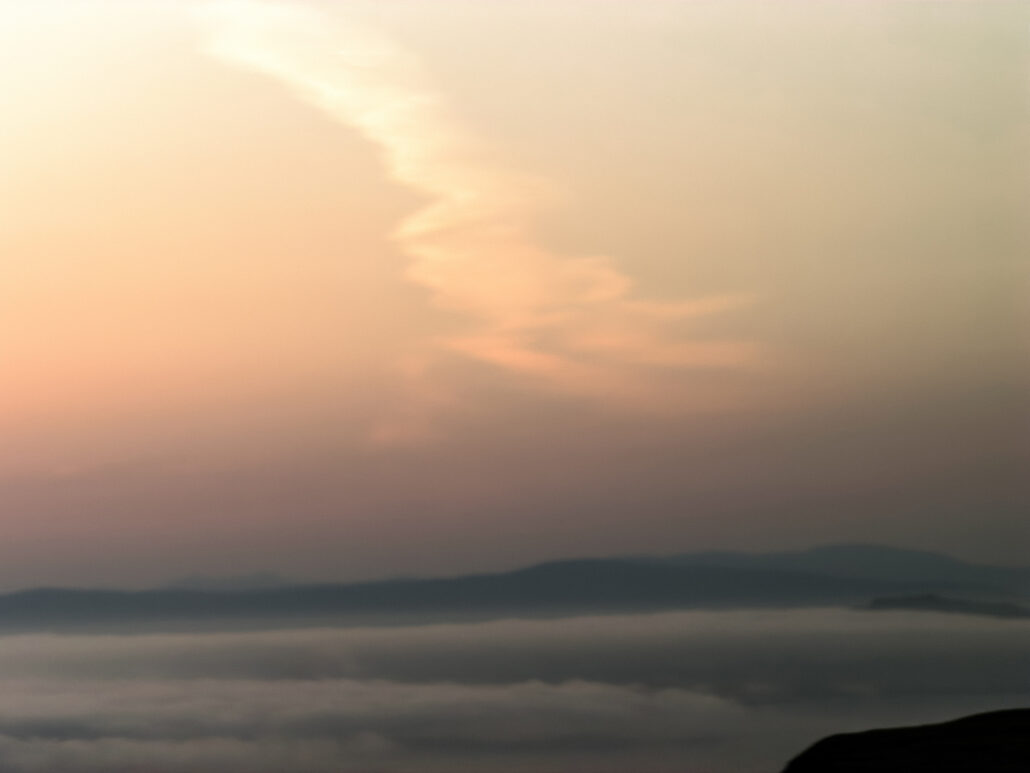
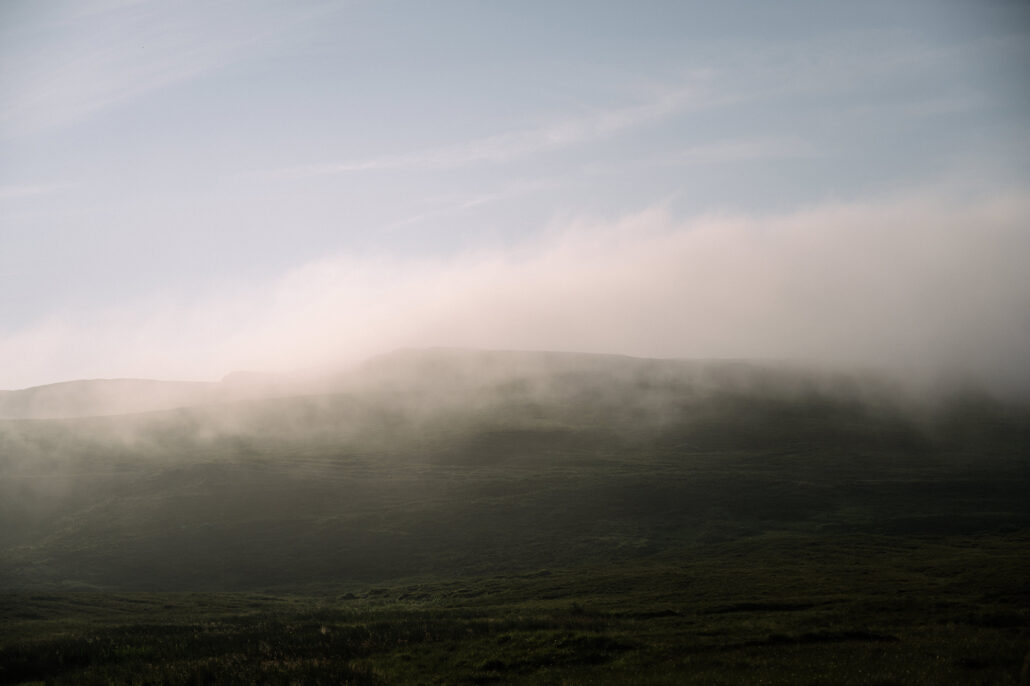
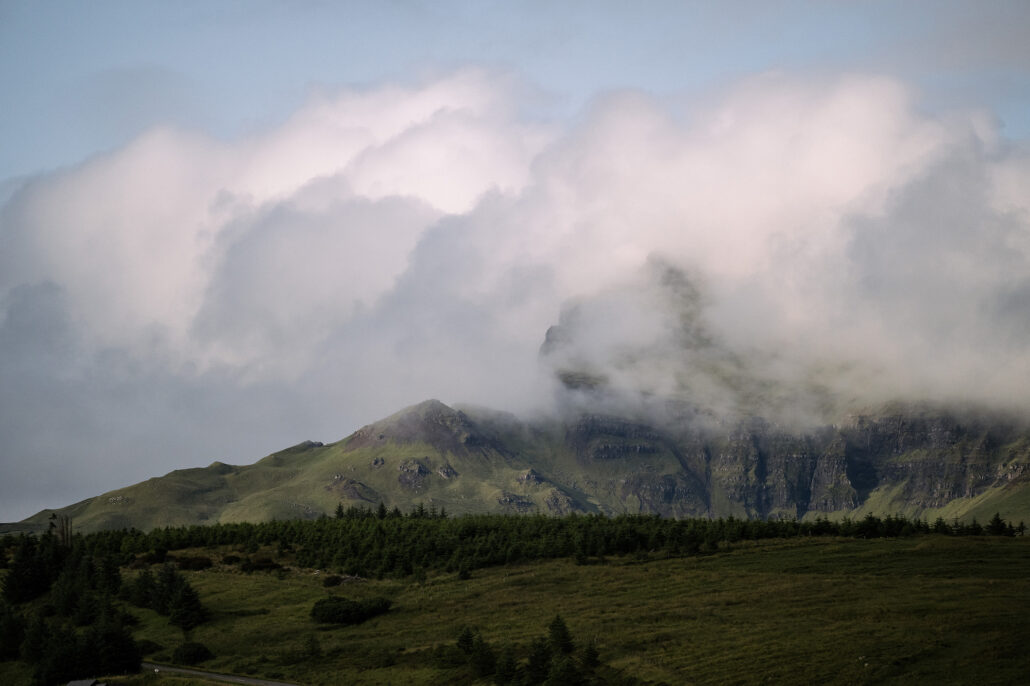
What the sky had decided, this particular morning, was to stage something we’ll be describing for the rest of our lives. The sunrise came up soft pink, and underneath it, out across the Sound of Raasay, a wall of sea fog was advancing on the island. Not drifting. Advancing. A slow-motion tsunami the full width of the horizon, lit rose along its crest, coming at Skye the way weather comes at a place that has never once been in charge of its own morning. The east coast calls this haar, and we’re borrowing the word because nothing smaller fits. We’d met fog before on this trip, in a bay far north of here, where it handed us icebergs one at a time. This was fog as a single decision.
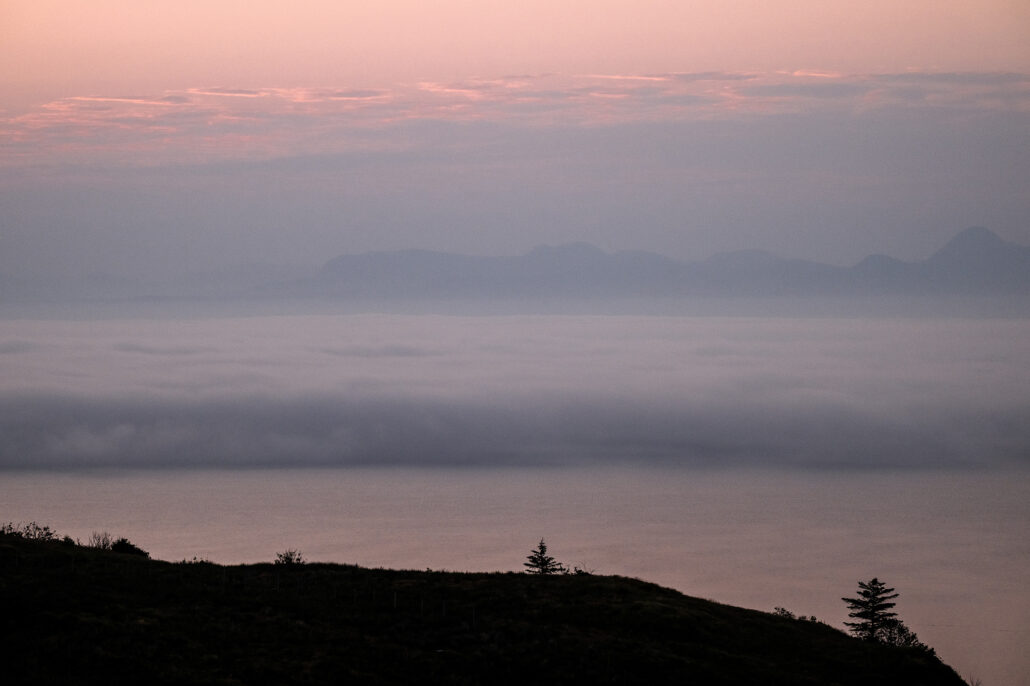
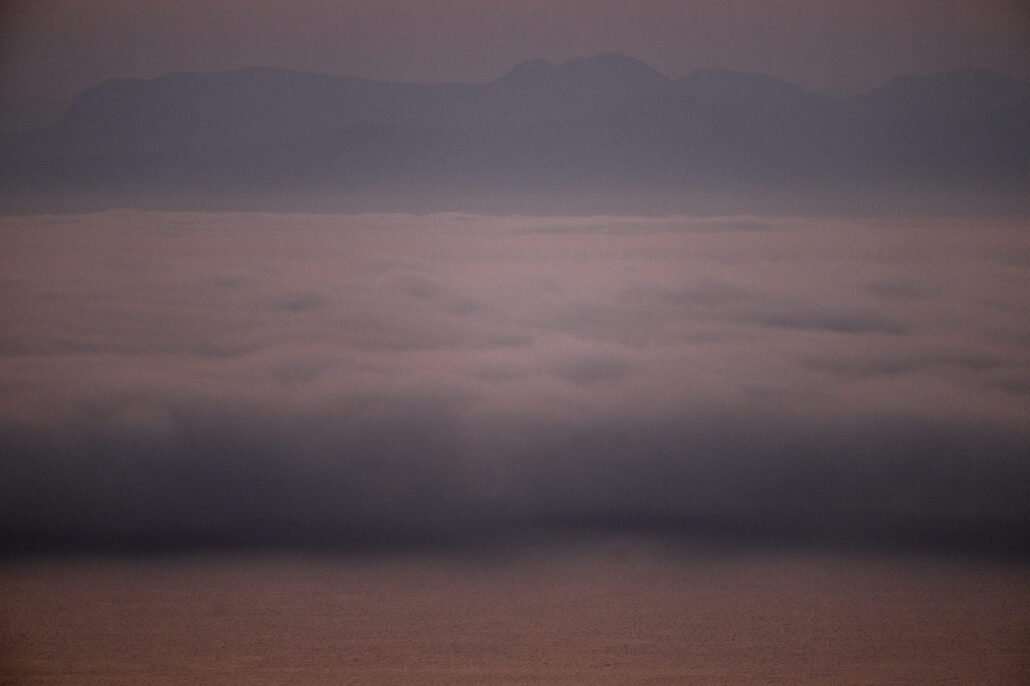
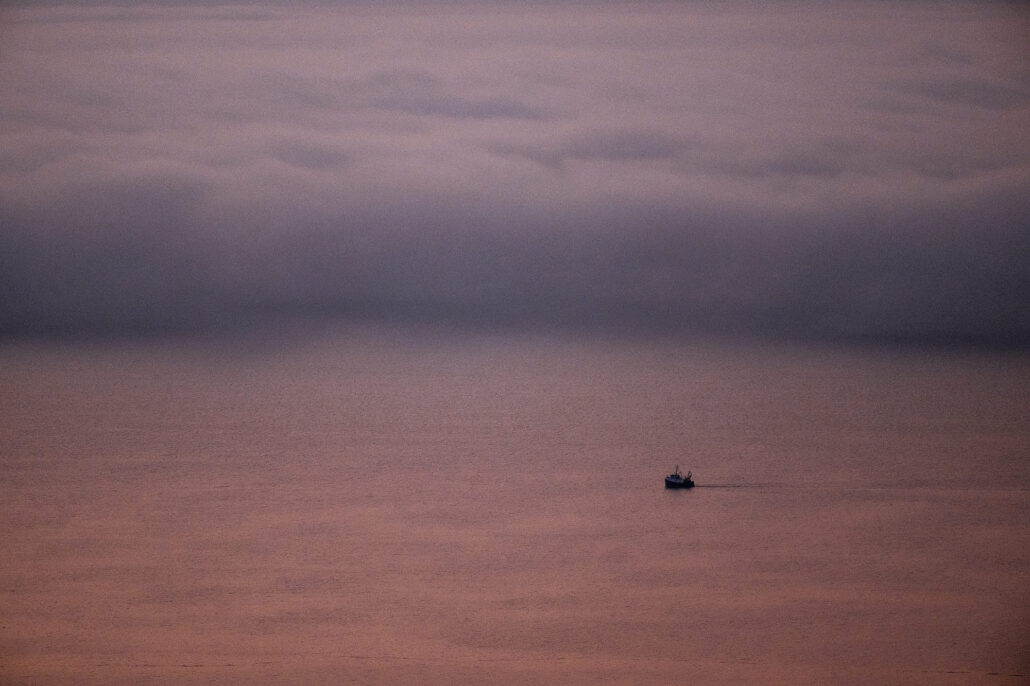
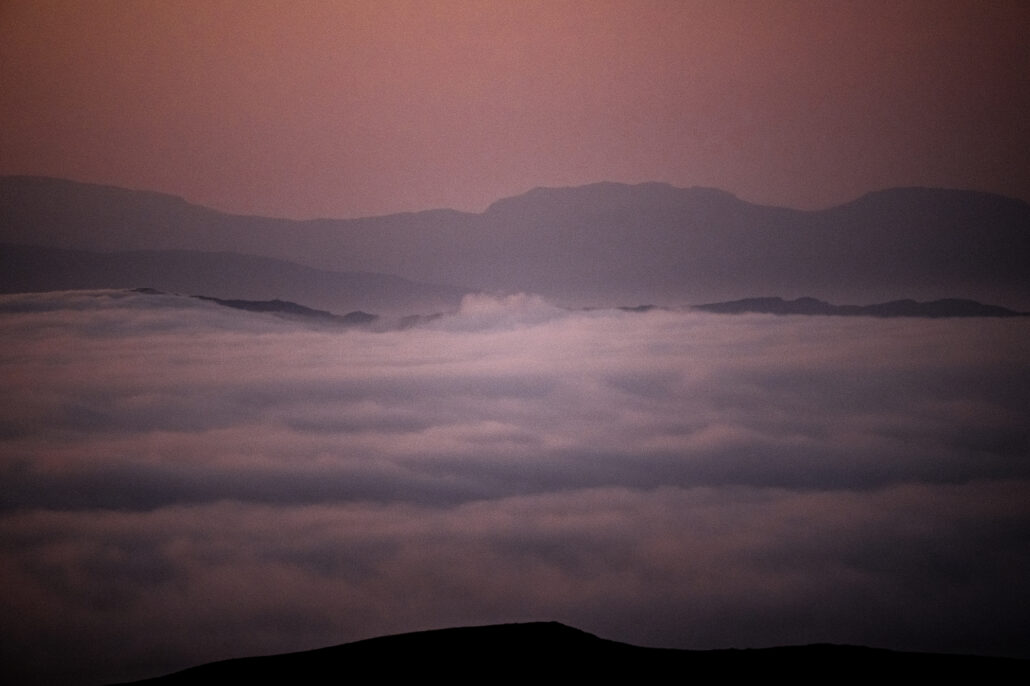
We didn’t take the last rise to the summit. Hikers coming down were talking about how fast the wall was moving, and we’ve learned to treat local concern as data. Instead we dropped back down the hill, found a vantage, and did the better thing, which was watch the haar arrive and swallow the landscape whole, ridge by ridge, in minutes. First lesson of Skye, learned before six in the morning: sometimes the weather is the main attraction, and the famous rock is just the seat you watch it from.
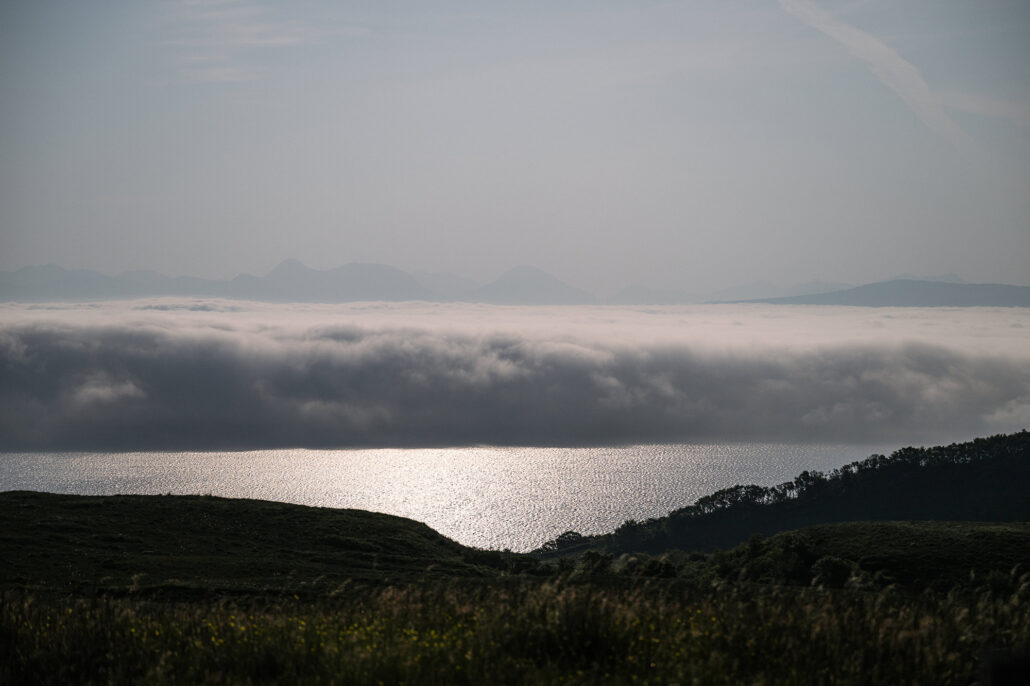
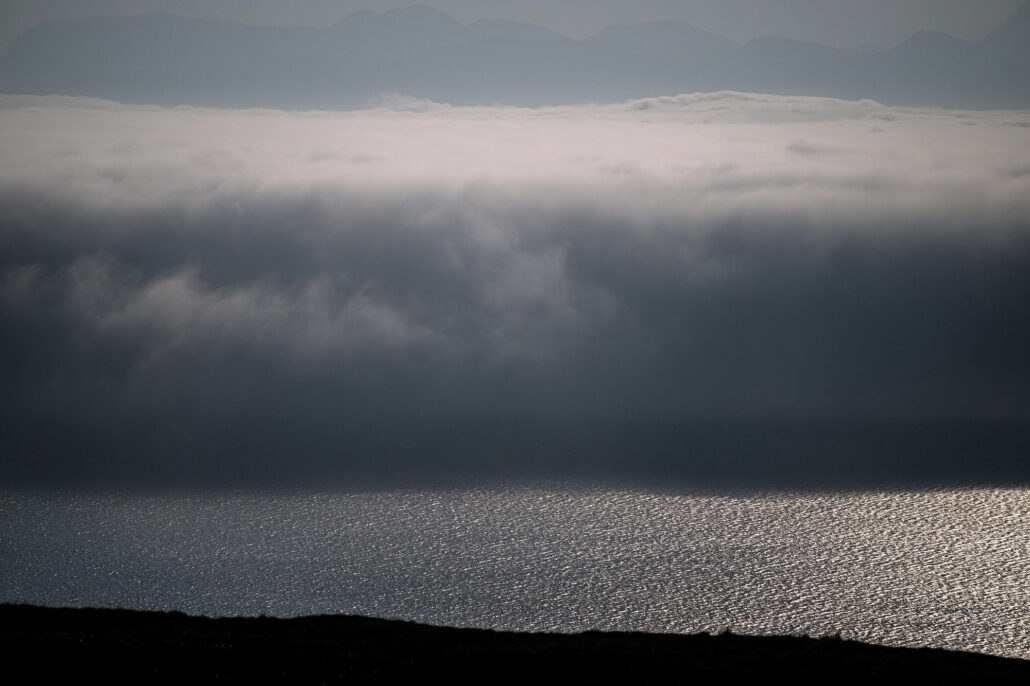
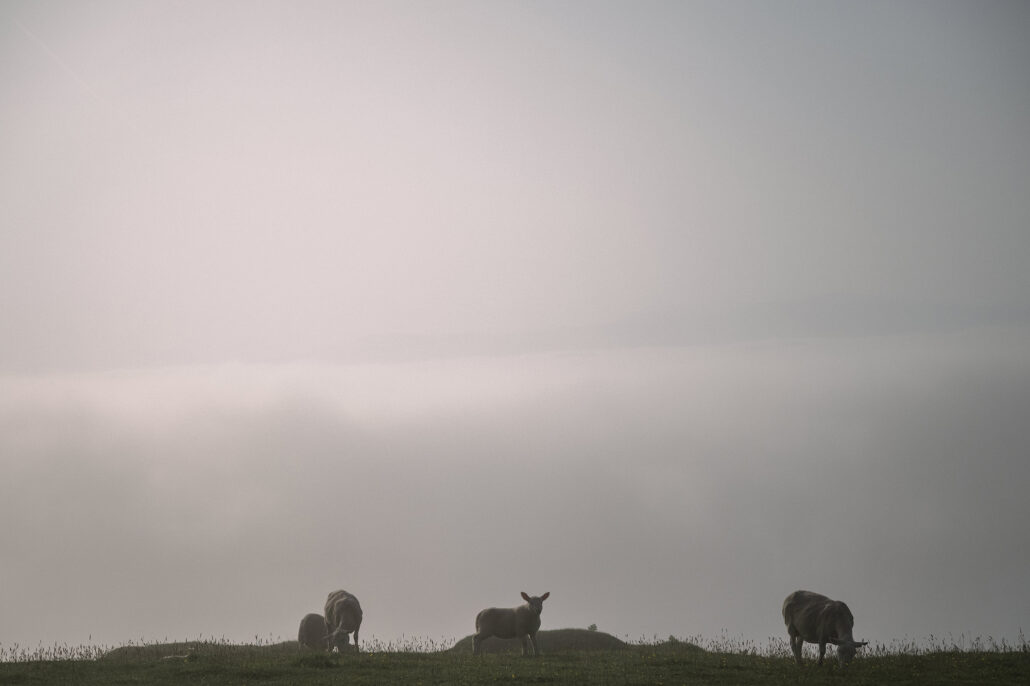
The haar then ran the rest of the morning’s agenda for us. Brother’s Point, the hike we’d planned next, stopped existing: headland, cliffs, sea and all, gone into the white, and there’s no argument to be had with a view that has been withdrawn. So we drove back to Portree and slept, deep and unembarrassed, because we’d been up since half past three, and because the entire point of giving an island several nights is that you can let the weather rewrite a day without losing it. Skye makes the decisions here. We’d stopped pretending otherwise by mid-morning.
We would set the same alarm twice more before the island finished with us.
Giants, thumbs, and the Old Man of Storr
The Norse named the Old Man flatly, from the decks of their ships: Storr, the big one. Hollywood agrees and keeps renting it; this is the skyline that opens Prometheus, standing in for an alien planet, which tells you everything about how it feels in person. The Gaelic version is better than both. Skye, it says, was once an island of warring giants, and when one of them was killed up on this ridge the land swallowed him whole and left just his thumb standing above the ground. You climb up into the wreckage of a real landslide and the island hands you, free of charge, the exact reason it has to be a giant. Standing in the Sanctuary at dawn, you don’t doubt the story for a second. You can see where it came from.
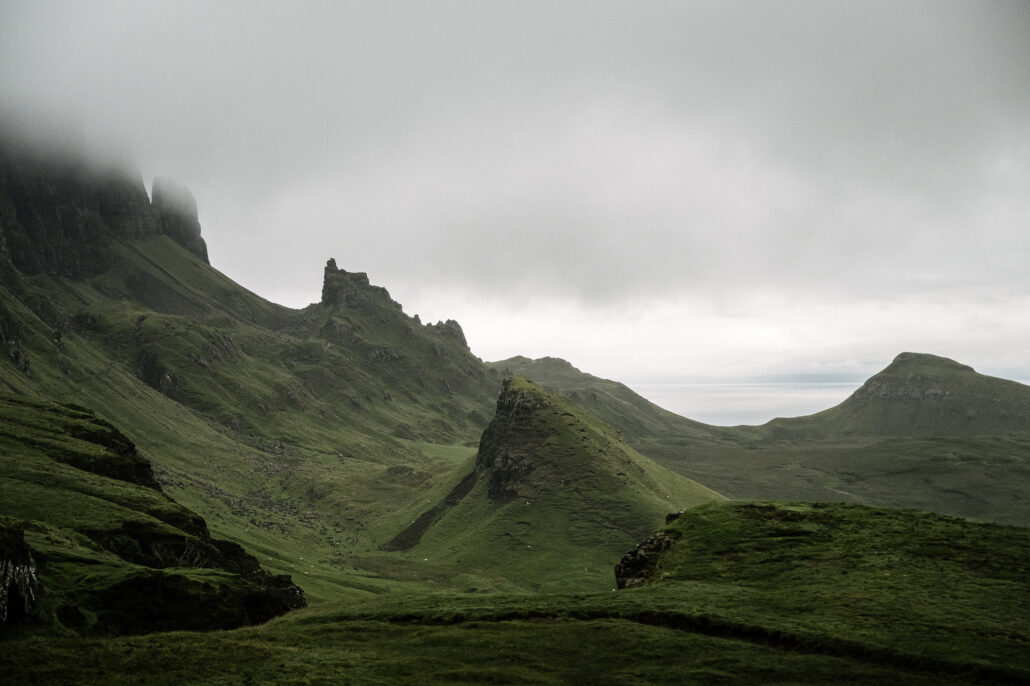
The Quiraing has its own furniture, all named by people with no time for poetry. The Needle is a jagged spike of rock. The Prison reads, from the right angle, as a fortress keep. And hidden up among the pinnacles, invisible from below, is the Table: a flat green platform that slipped down whole from the summit plateau and now sits level enough for a game of shinty, walled in by rock. Islanders used to drive their cattle up there and hide them when raiders came off the sea. The end of the world, used as a barn.
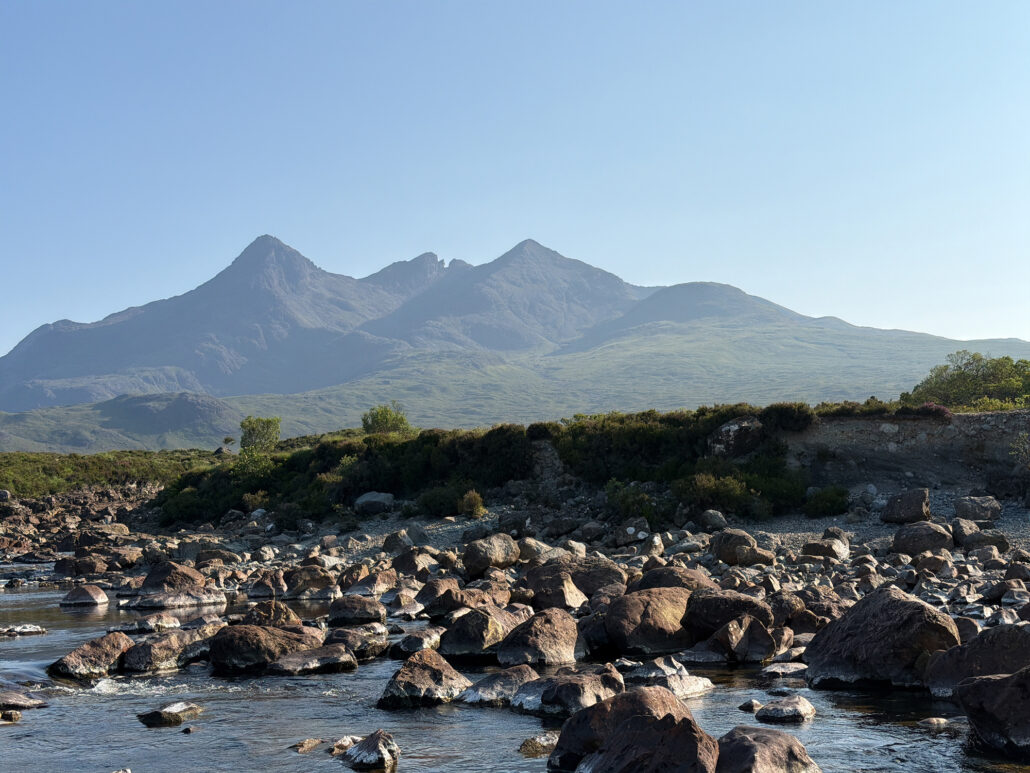
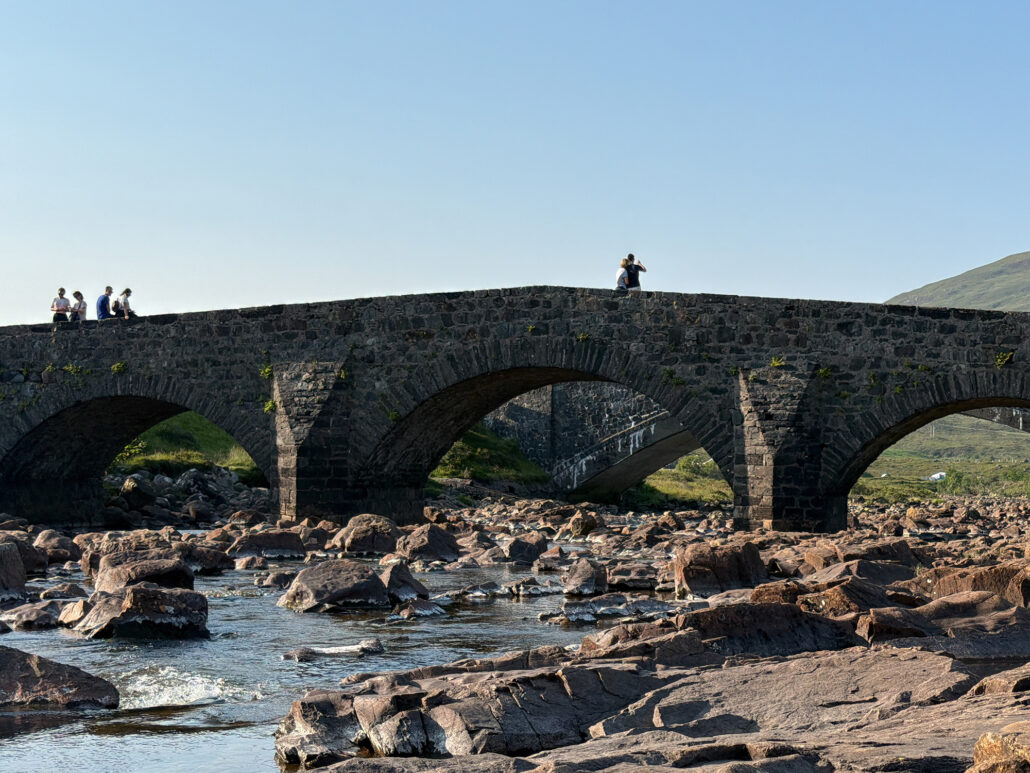
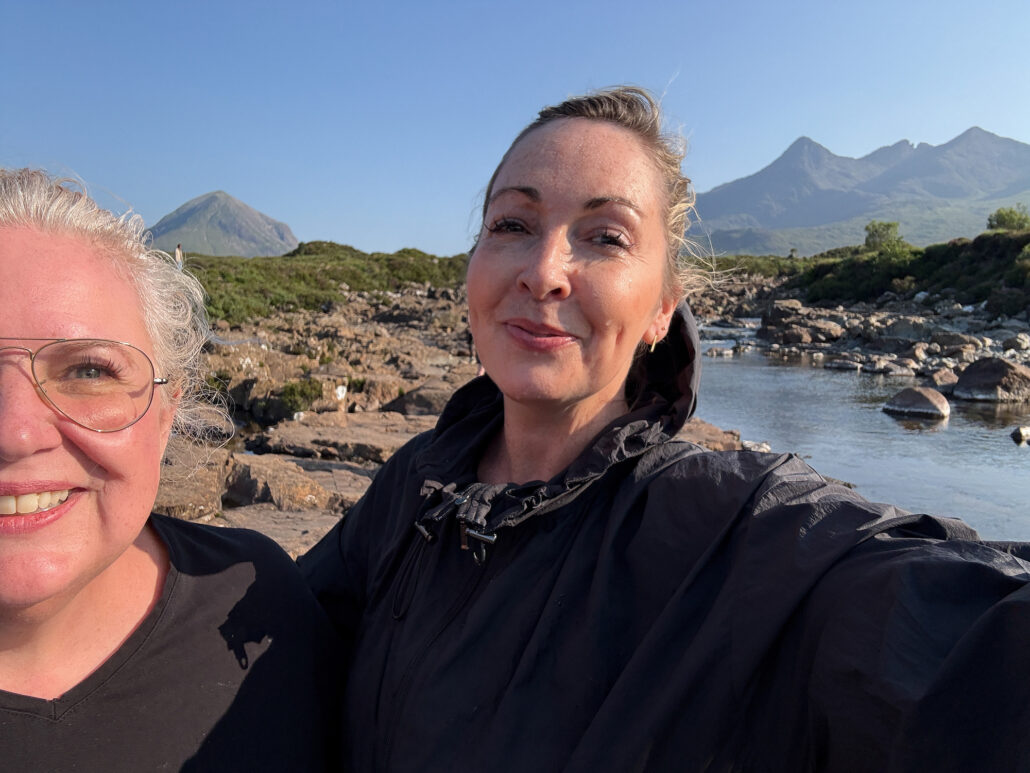
And on the way home, Sligachan, where an old stone bridge frames the Black Cuillin and a cold peat-brown river runs underneath. The legend says that if you hold your face in that water for seven seconds, you’re granted eternal beauty. The evidence base is thin. Dee went in anyway, face first into meltwater straight off the Black Cuillin, a temperature the word freezing undersells, and in the shock of it forgot the seven-second rule entirely. So the resulting photograph is one grown adult drying her face on a riverbank, eternally beautiful pending a technicality, mildly hypothermic, and quietly attended by the midges who hold that bridge as a home fixture after eight. She’s appealing the ruling.
Single-track roads, and the day one broke
Skye’s roads are the island’s other geology: single-track with passing places, a system that runs entirely on eye contact and goodwill. We learned its failure mode on the way to the Fairy Pools, where one broken-down car sealed the one-lane road and roughly a hundred cars and motorhomes calcified into the moor while everyone waited for the tow truck.
What actually happens when a road stops on Skye is that a village forms. We made friends with the stuck. Stories were traded, snacks were shared, the weather was discussed with real expertise. Meanwhile Dee’s toilet situation, self-assessed, climbed from a seven to a nine, and the tow truck arrived at the exact moment the emergency threatened to become public knowledge. The entire road cheered. We choose to believe the cheer was for the truck.
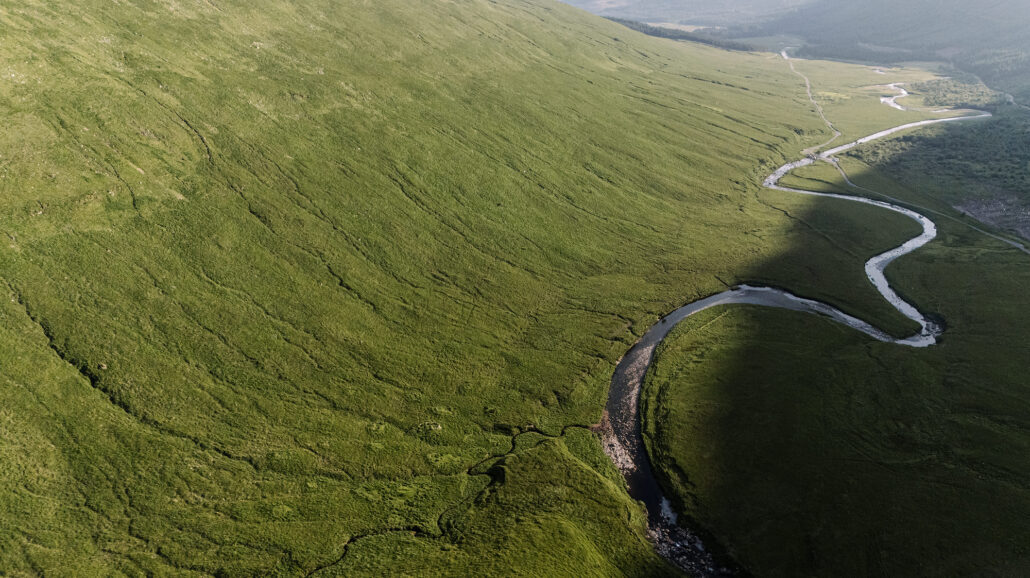
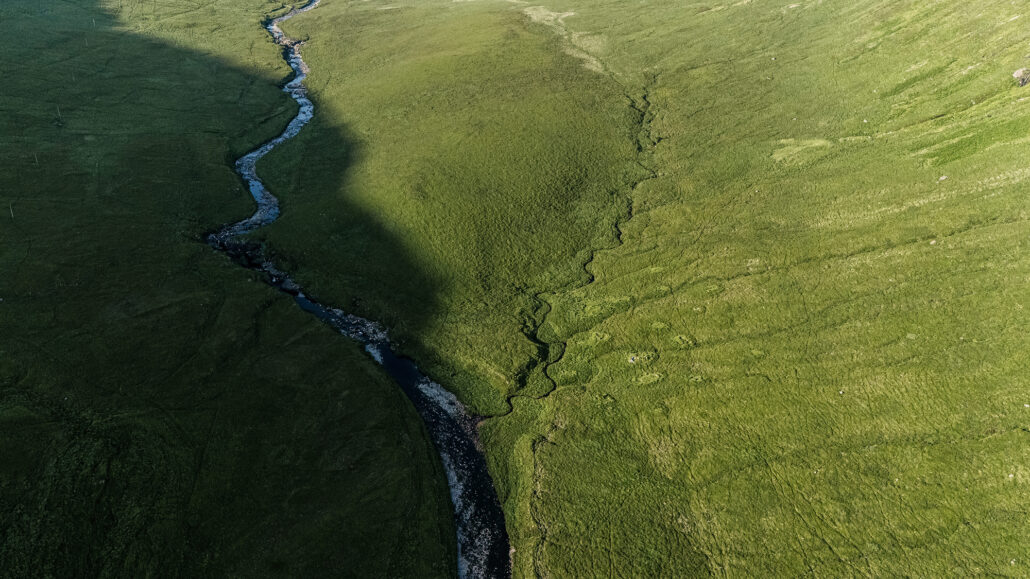
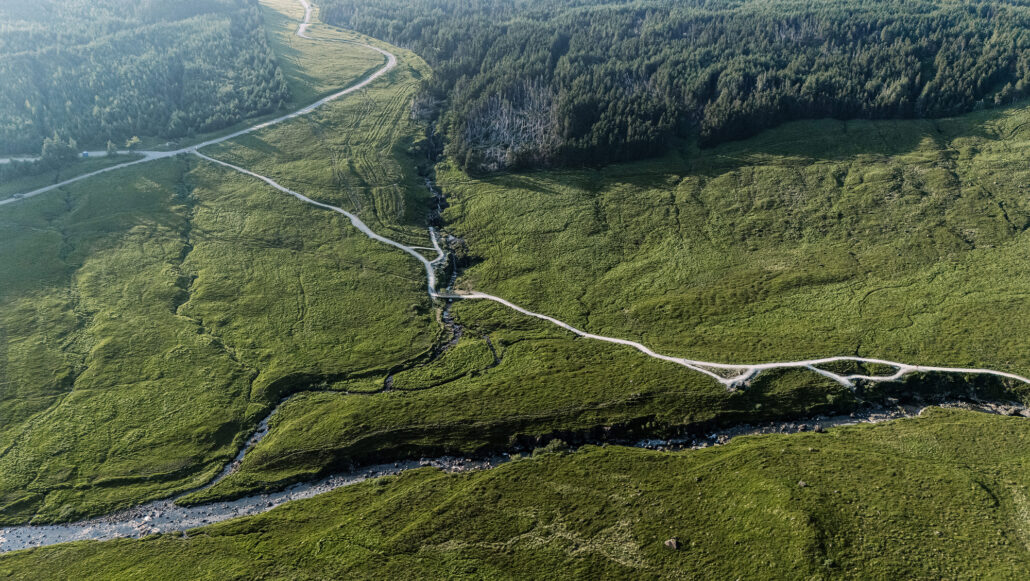
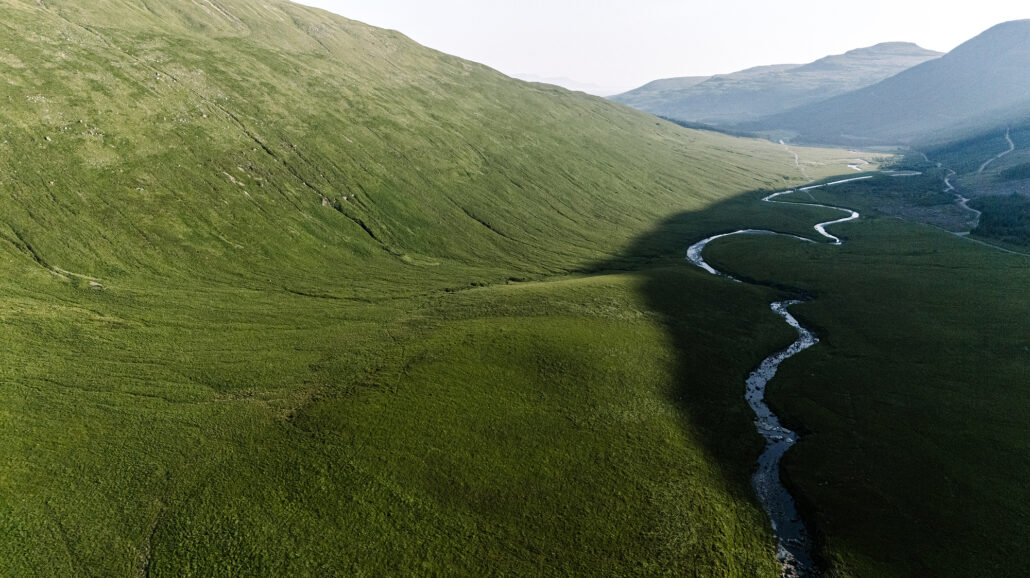
By the time we reached the pools themselves, the two-hour delay had spent the light. The sun was behind the Cuillin and the shadow was rolling up the hillsides at a pace you could watch, so the visit became a drone flight in the last of it, the pools going deep blue from the air, still beautiful, just no longer ours for the day. They joined the list we keep.
The wind has the last word
Skye doesn’t really do still. The island’s other voice, under all the stories, is the wind, and it’s everywhere on the menu.
Up the coast at Kilt Rock, a hundred-metre cliff pleated like tartan with a waterfall dropping straight off the top into the sea, the real attraction is said to be the safety fence. The wind comes through the railings and plays them like a reed instrument, one long low drone that on a blowing day outperforms the waterfall it’s there to guard, and in a hard enough gust the waterfall itself gives up and blows back over the lip, refusing to land at all. We never made it there to hear it. The island keeps a fence in reserve for us.
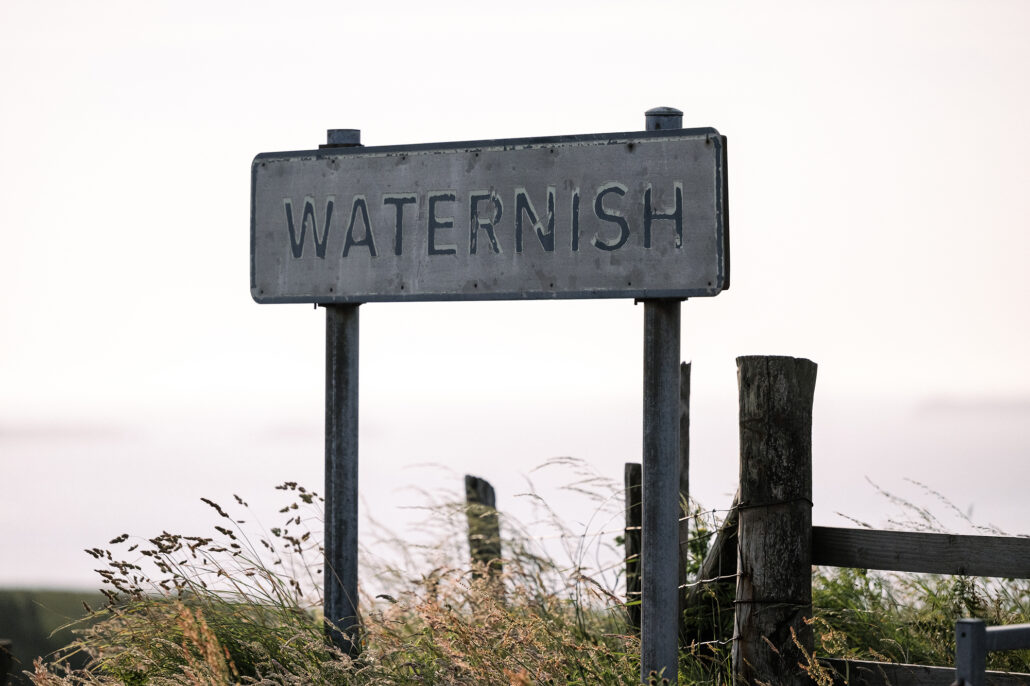
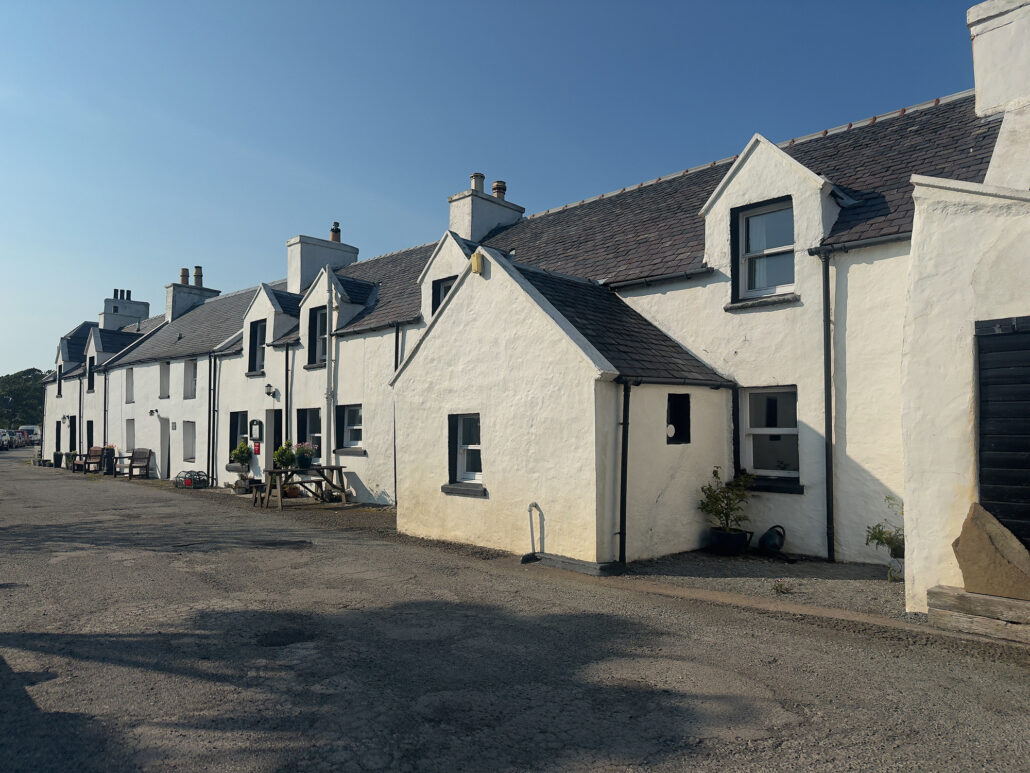
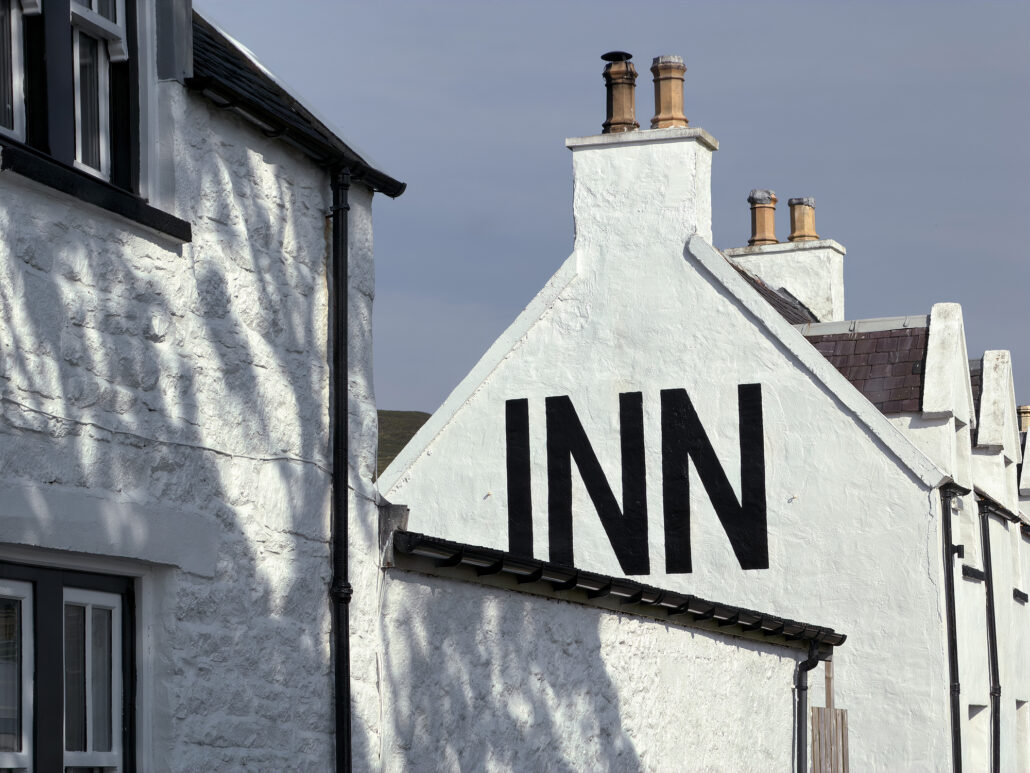
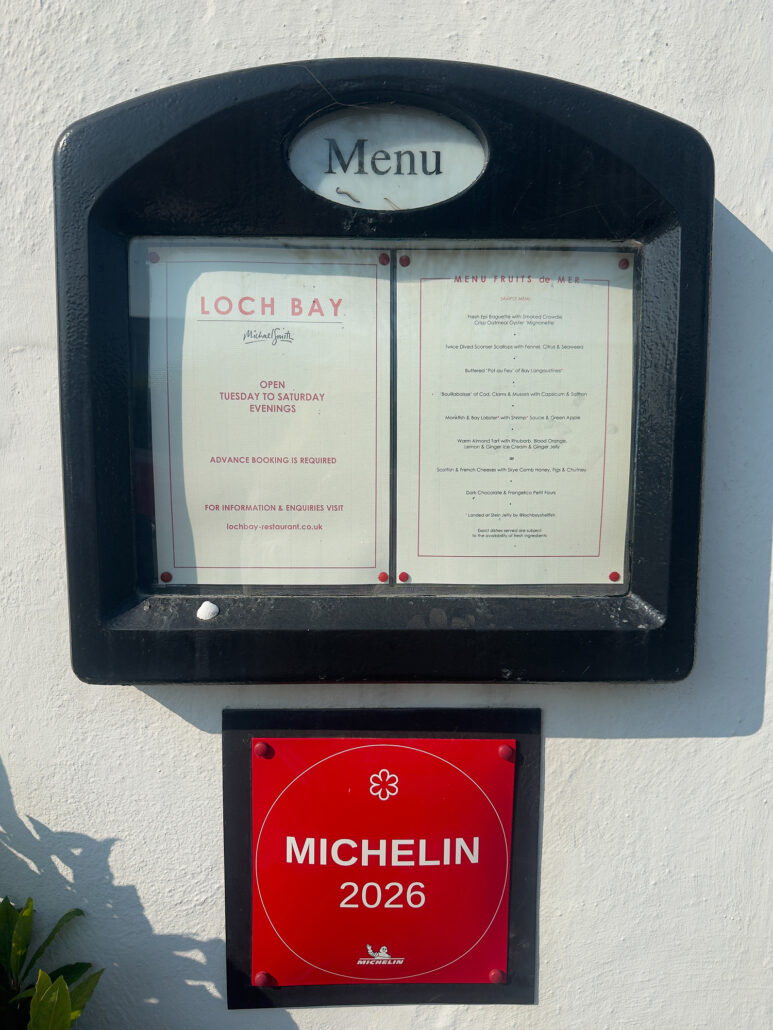
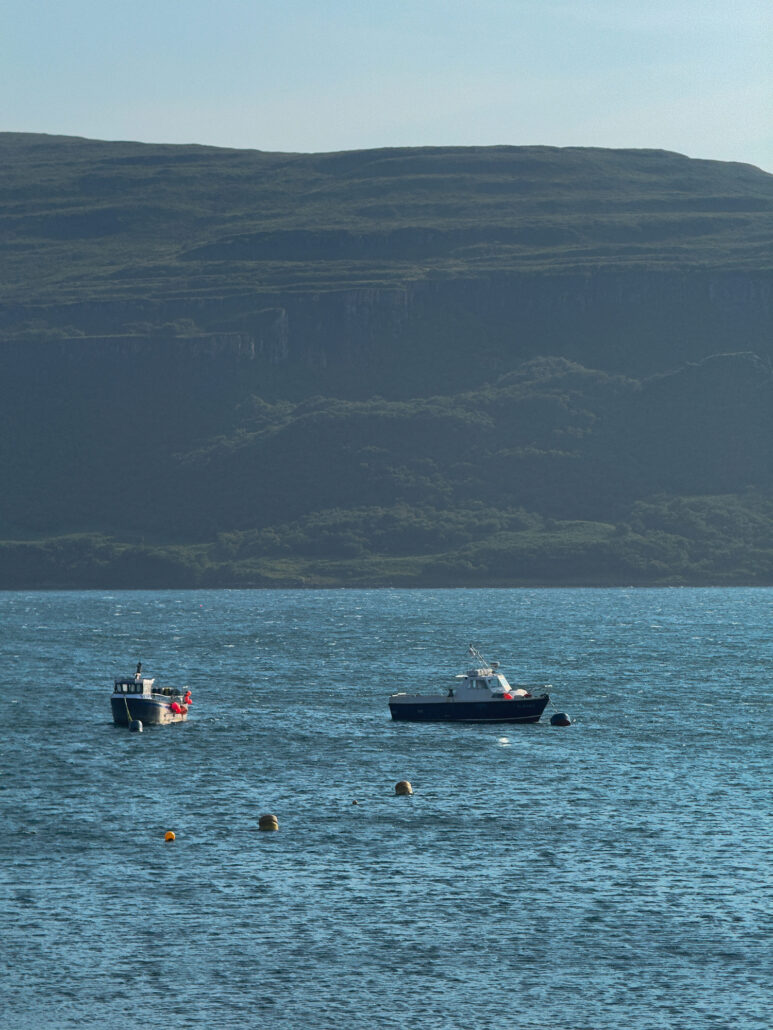
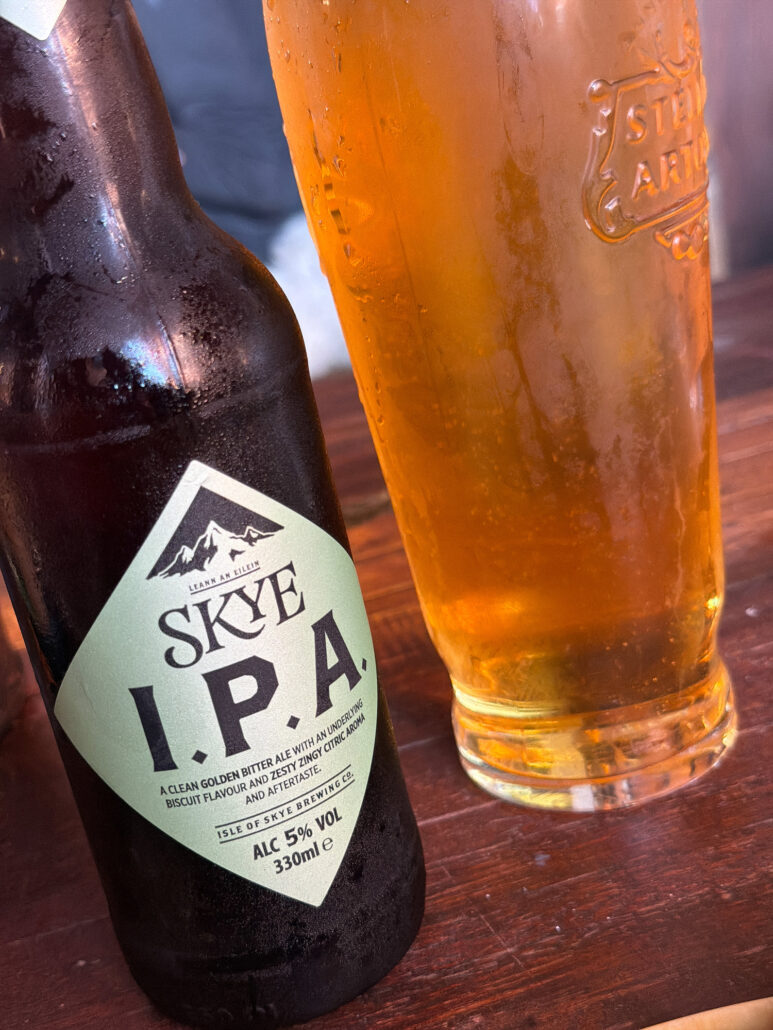
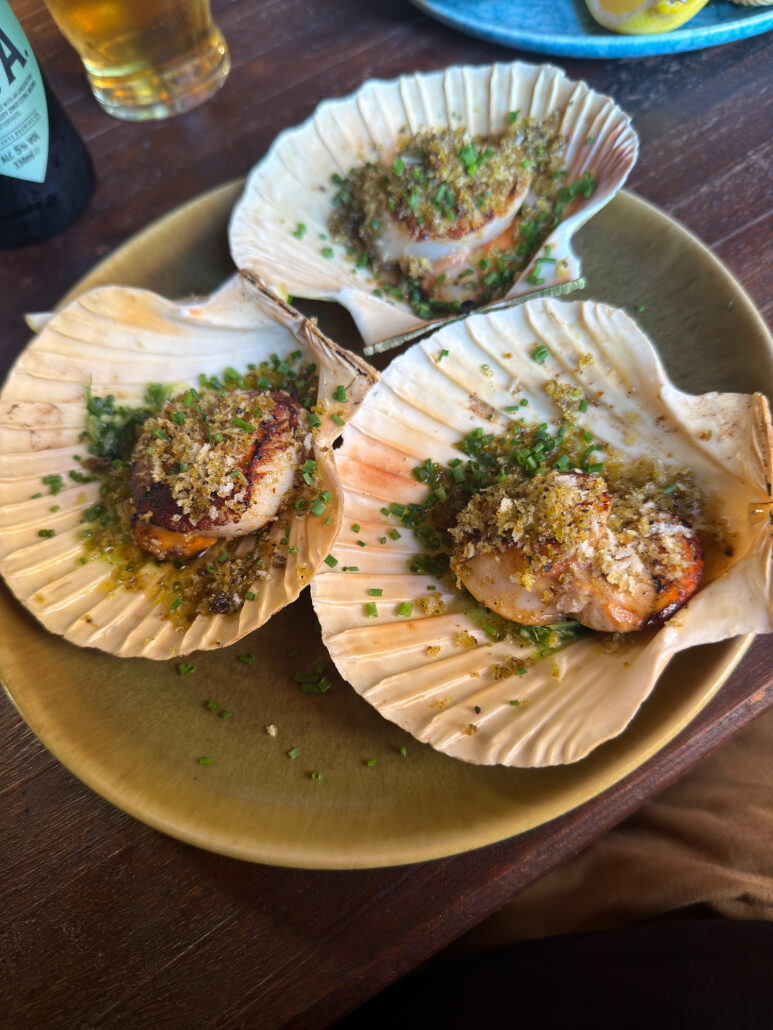
That evening we drove out to Waternish first, to the Stein Inn, the oldest inn on the island, pouring since around 1790, and ate hand-dived scallops that had been under the water in front of the building that morning, with fish and chips and a local IPA in a room that has been feeding sea-tired people for more than two centuries. One of the meals of the trip, and the simplest.
Then Neist Point, the far western full stop of the island, a white lighthouse on a cliff shaped like a ram’s head, where the land simply runs out of arguments and stops. It’s the windiest place Skye offers, a headland that manufactures its own gusts. The light was first lit in 1909 by the Stevensons, the engineering family who built most of Scotland’s lighthouses, one of whom, Robert Louis, quit the family firm to go and write Jekyll and Hyde instead. So the same double-living Edinburgh shadow we met up in the Old Town has its fingerprints on the brightest point on Skye. Four months before that lamp was first lit, a steamer called the Doris struck the rocks below in fog and went down, and she’s still on the bottom there now. The lighthouse has stood in that wind for over a century and hasn’t once turned around to look.
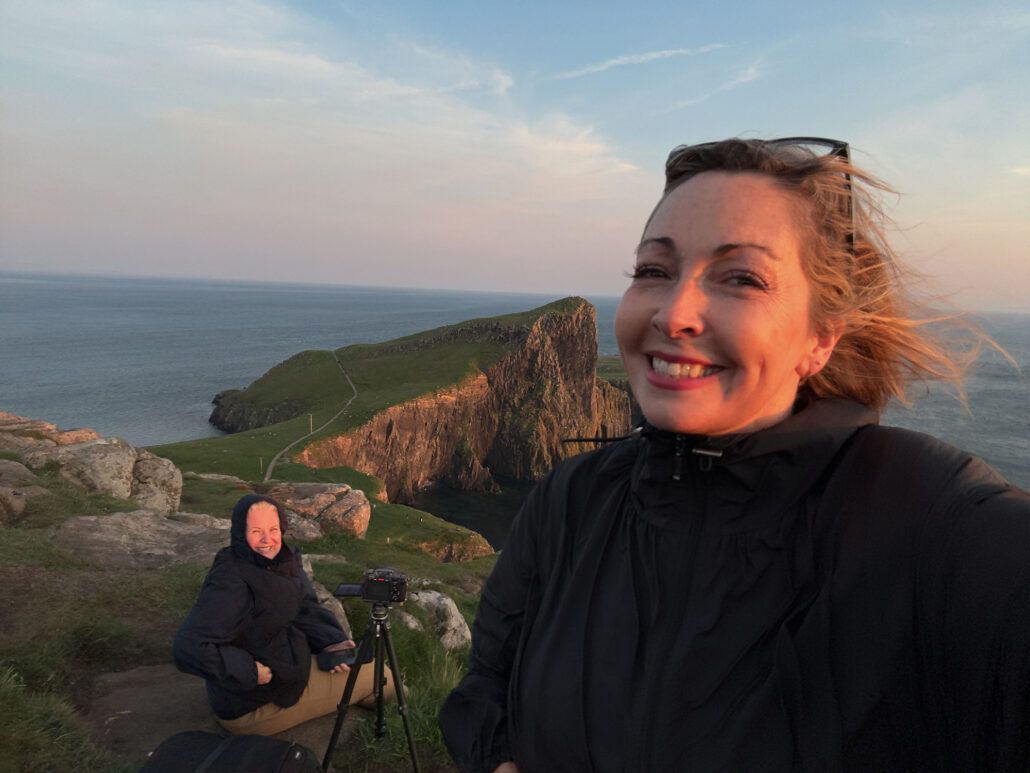
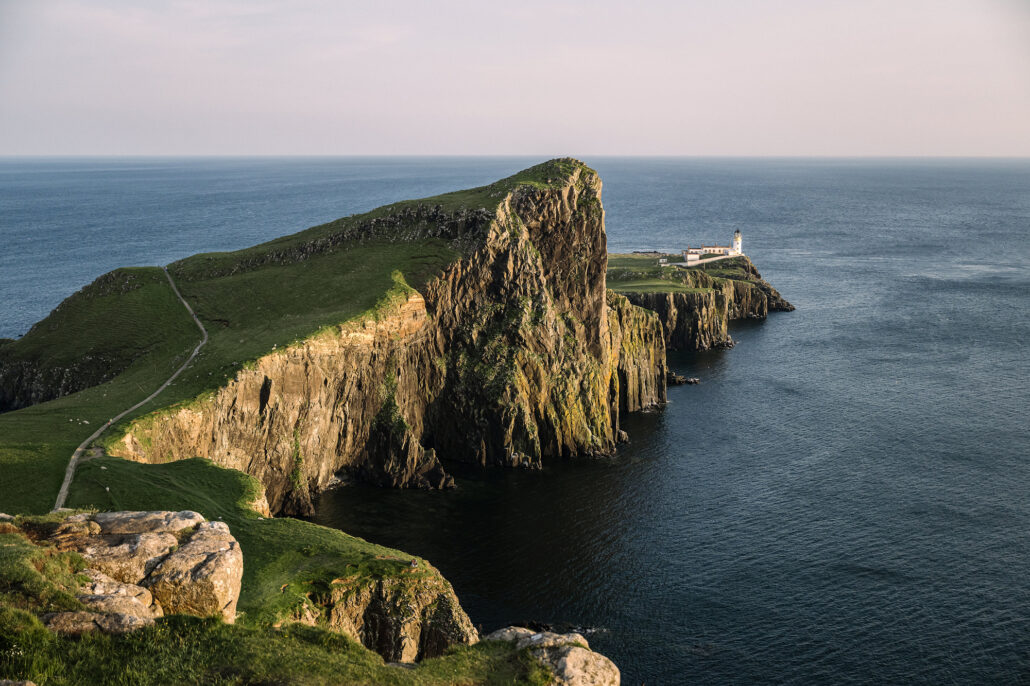
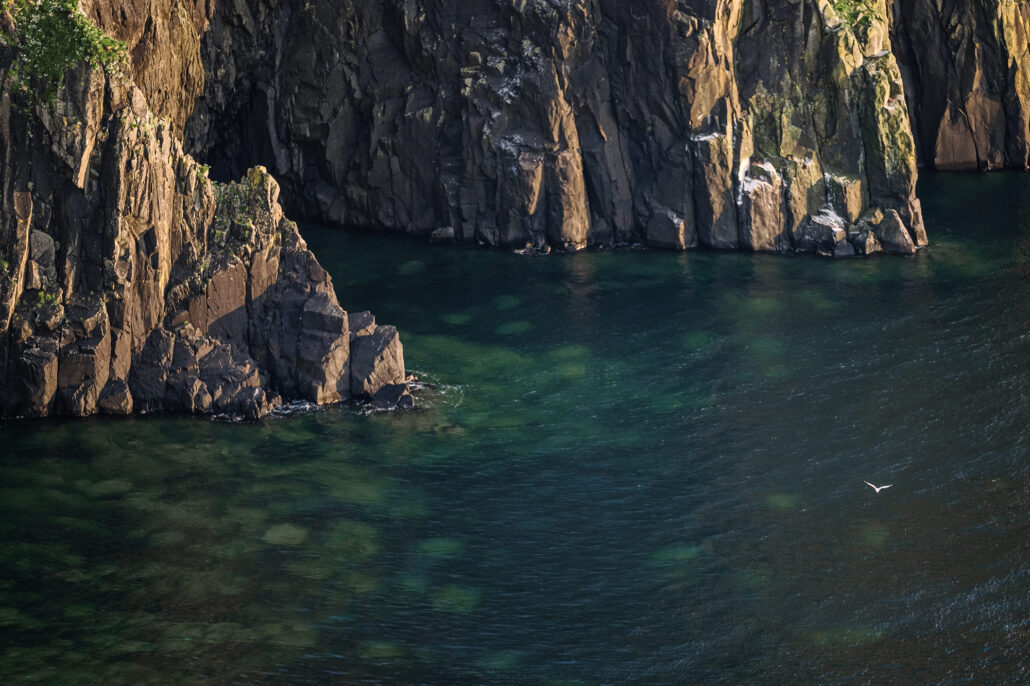
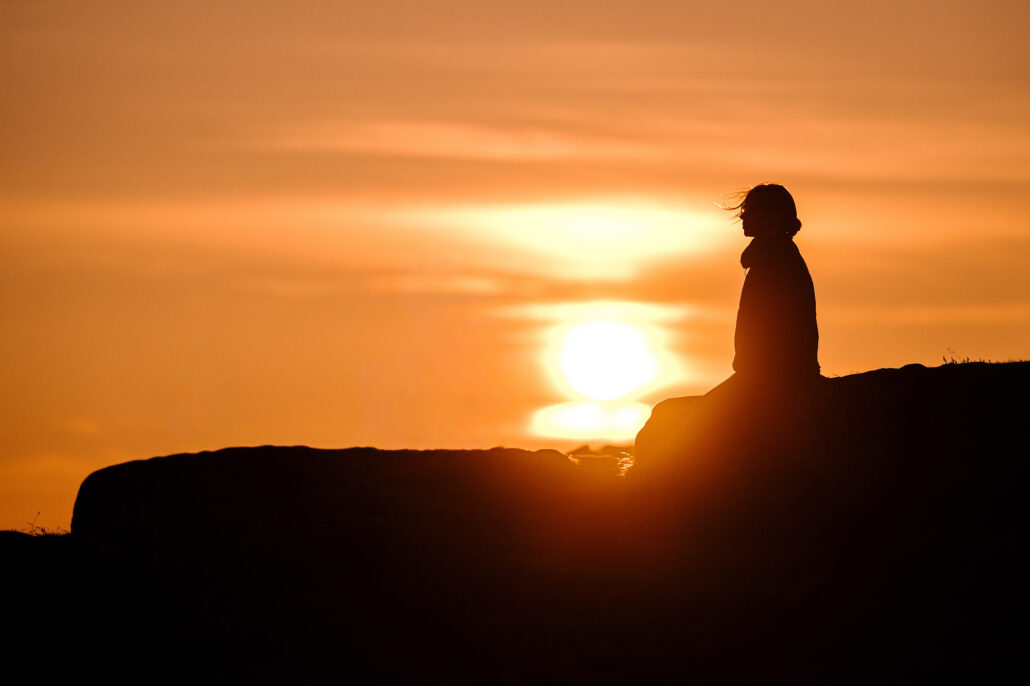
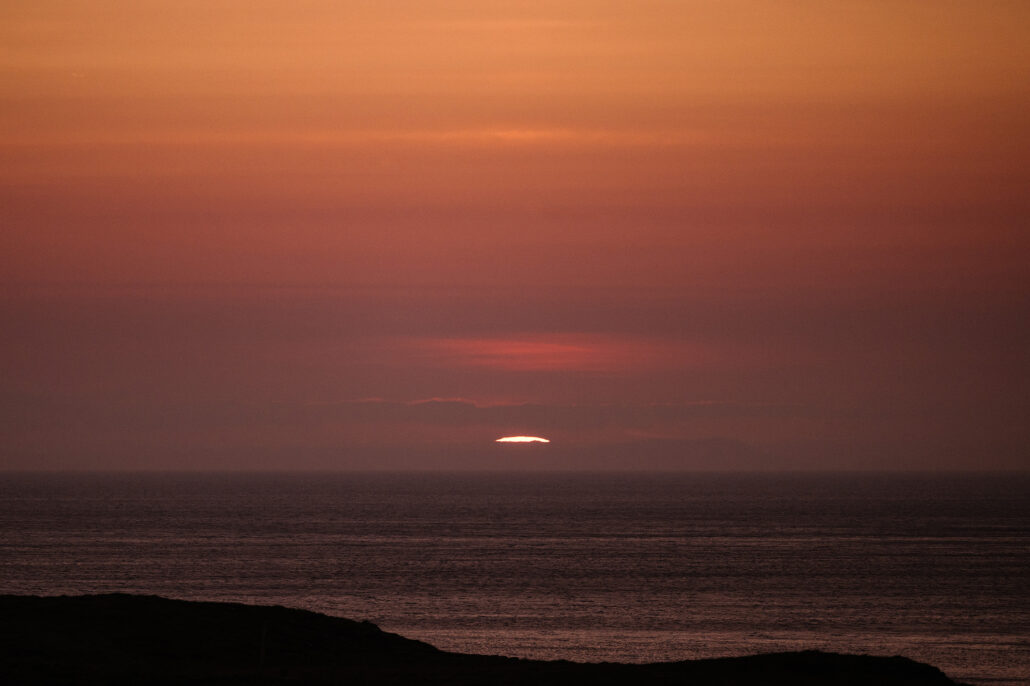
We gave it the whole evening, because at this latitude in July the sun holds off until ten and dinner fits comfortably before a sunset. It was very windy. It was worth every knot of it. We sat on the clifftop in the roar while terns, Arctic ones we think, carved the updrafts around the headland, and did the only correct thing at Neist, which is nothing. You sit. The Atlantic performs.
The drive home was long the way every Skye drive is long, the map’s half hour becoming ninety minutes of single track and passing-place diplomacy, and the island had one more show scheduled. In the last of the light, a band of low cloud stretched itself across the sky ahead of us, and it wasn’t drifting. It was rotating. A long horizontal cylinder turning slowly on its own axis, a tornado lying on its side, and we drove directly beneath it and looked straight up into the turning. The likeliest explanation is a roll cloud, a rare piece of atmospheric machinery built where layers of air move at different speeds. The honest explanation is that Skye wasn’t finished. Three spectacles in one day: the haar at dawn, the gale at sunset, a rotating cloud for the road home. We got back to the pods and slept like the recently unplugged.
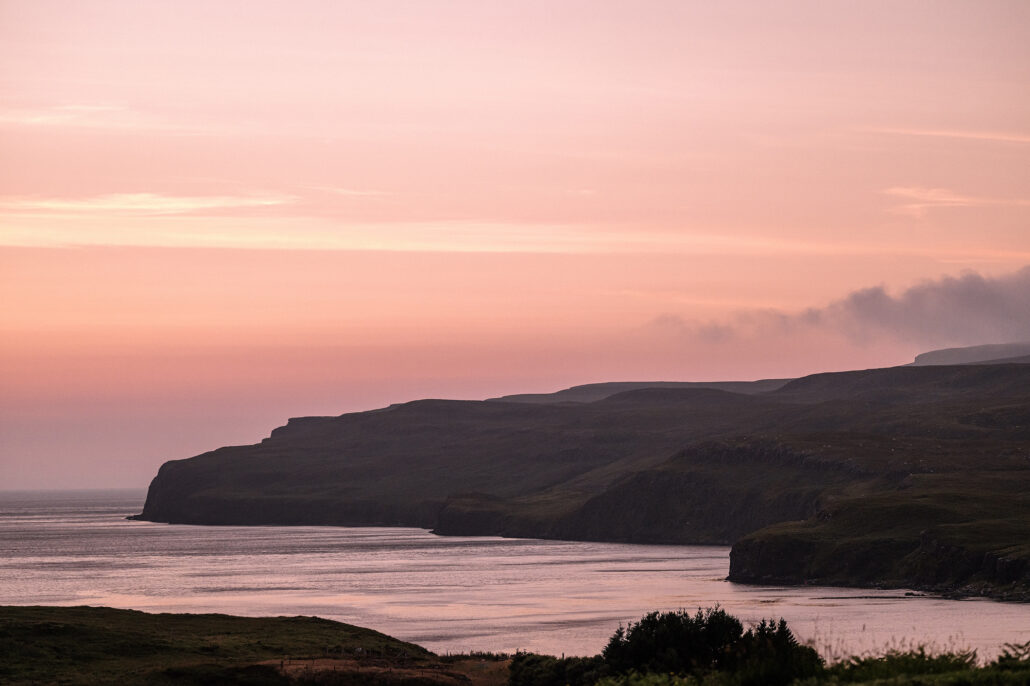
The day the island introduced itself
The second alarm never stood a chance. We woke at half past three to fog you could have leaned on, visibility gone before the kettle boiled, and for once we didn’t negotiate. The Quiraing would keep. We went back to bed, and later that morning did something we almost never permit ourselves mid-trip: nothing much, on purpose. Some work. A slow wander into Portree.
And this is where Skye changed the subject. With the landscapes withdrawn, the island introduced its people instead. Lunch came from a food truck called Taste of Skye, a business its owner told us happened almost by accident and now turns out the kind of regional comfort food you’d plan a day around. We dithered between the roast chicken, the mince and tatties and the steak pie, solved it by ordering two of the three, and regret nothing. Then the conversation outran the food by an hour. The owner and his daughter keep Irish Dexters, the small old breed, and talk of Tracey’s dad and his Herefords back in Australia followed within minutes, and suddenly we were deep in cattle on a harbour street on Skye, strangers finding the common ground travel is supposed to make you work for. Some places do it for you.
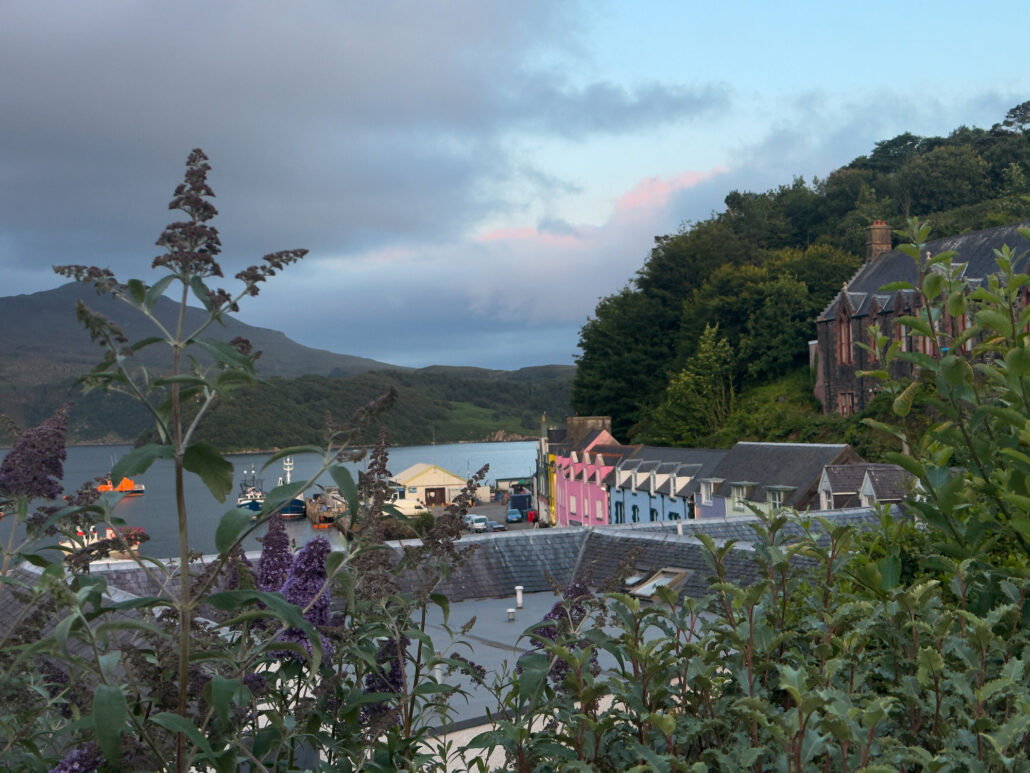
Then the Isle of Skye Candle Company, which is a candle shop the way the Green Welly is a petrol station: technically. Local makers wall to wall, and behind the counter a man named Duncan who turned out to be the island’s unofficial information service. We talked for ages. We left with candles and a revised itinerary.
And Susie, from Skye Community Radio, who told us the thing that made us love our beds twice over: the pods we were sleeping in fund the station. Every night’s stay helps keep the island’s radio on air. So we kept it on everywhere after that, in the car, in the pod, and learned the island by ear: events, history, weather, and, gloriously, the midge report. One bulletin announced with confidence that the midges were not currently out in force. We looked at each other, bitten from head to toe, and understood completely. Of course none were about. They had all, every last million of them, found us.
The famous viewpoints stayed shut all day, and it was one of the best days on the island. We came to fall for the landscapes. The fog introduced us to the people instead, and the trade, we’d like this on the record, ran in our favour.
The rematch
On the last morning the alarm went at half past three for the third time, because we had unfinished business with a rock. The Storr was fogged in again, but differently. Not the wall advancing off the sea; cloud in residence, moving through the pinnacles like it lived there. We started by staying low with the drone, flying the gaps as they opened, the landscape appearing and vanishing beneath her like a print developing. Then went for the top.
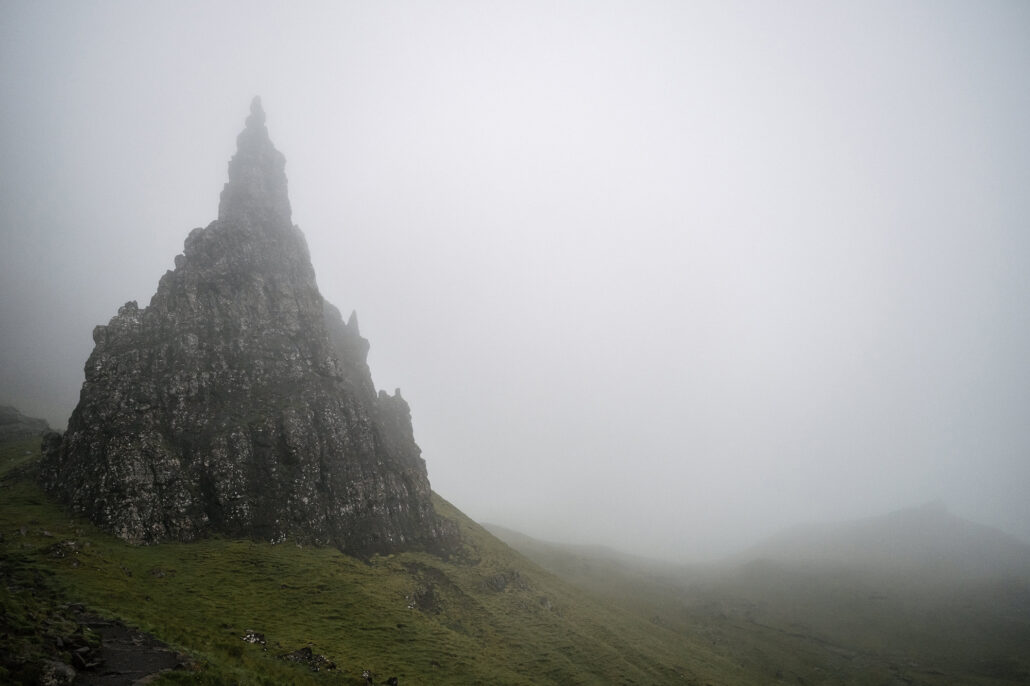
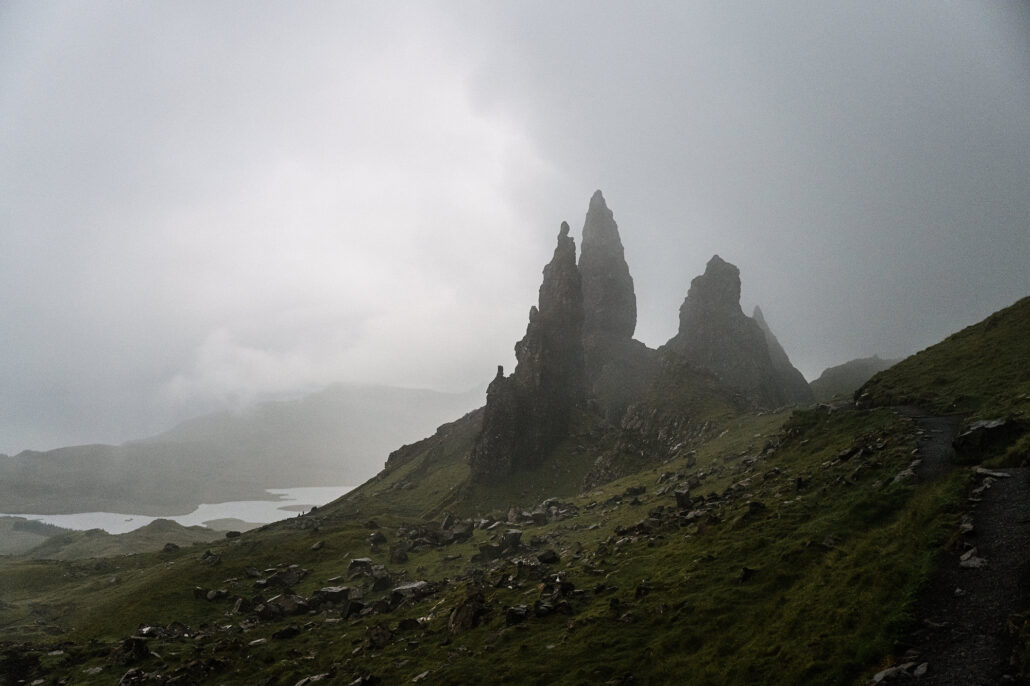
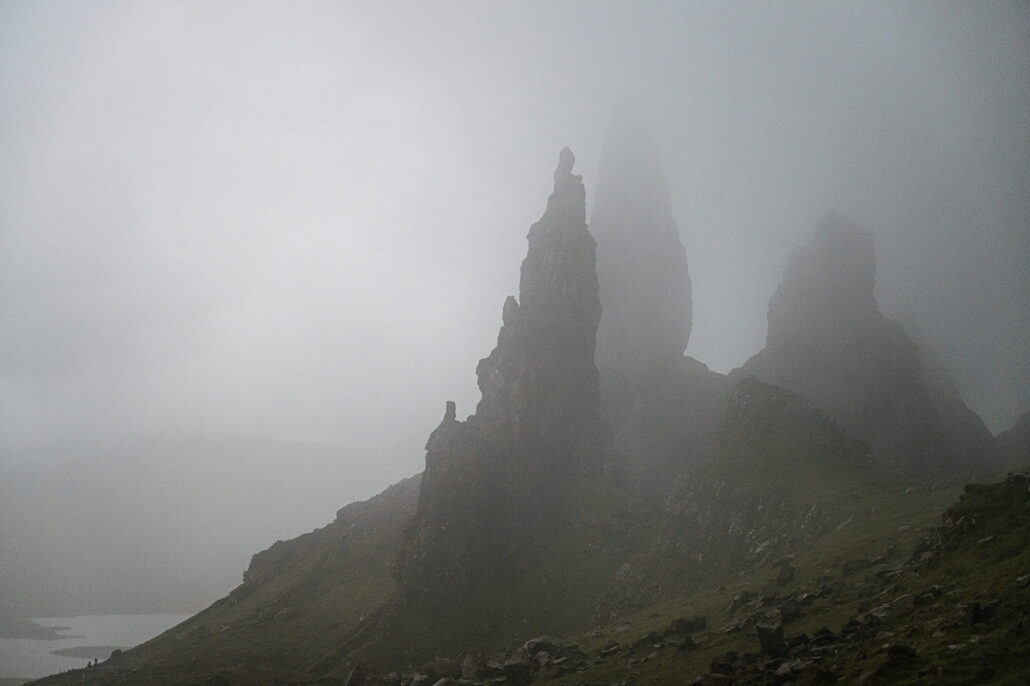
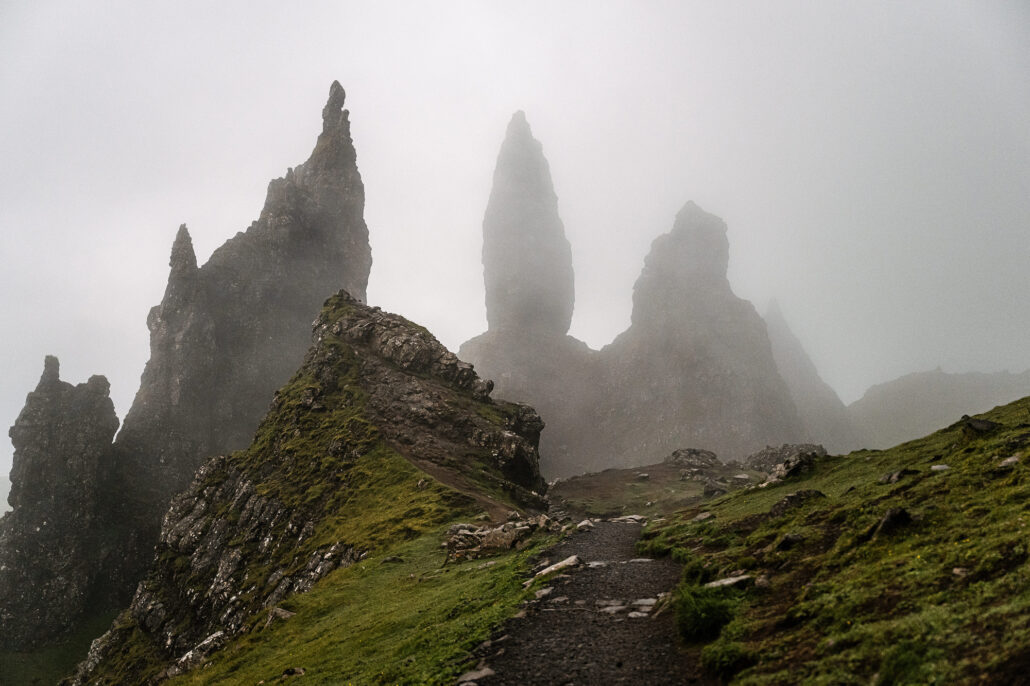
The mist closed to metres. A sheep fell in beside us and escorted us most of the way up, with a small supporting cast of rabbits materialising out of the white. And then, near the summit of the Old Man of Storr, in fog, at an hour most of the world files under night, Dee walked into a wedding.
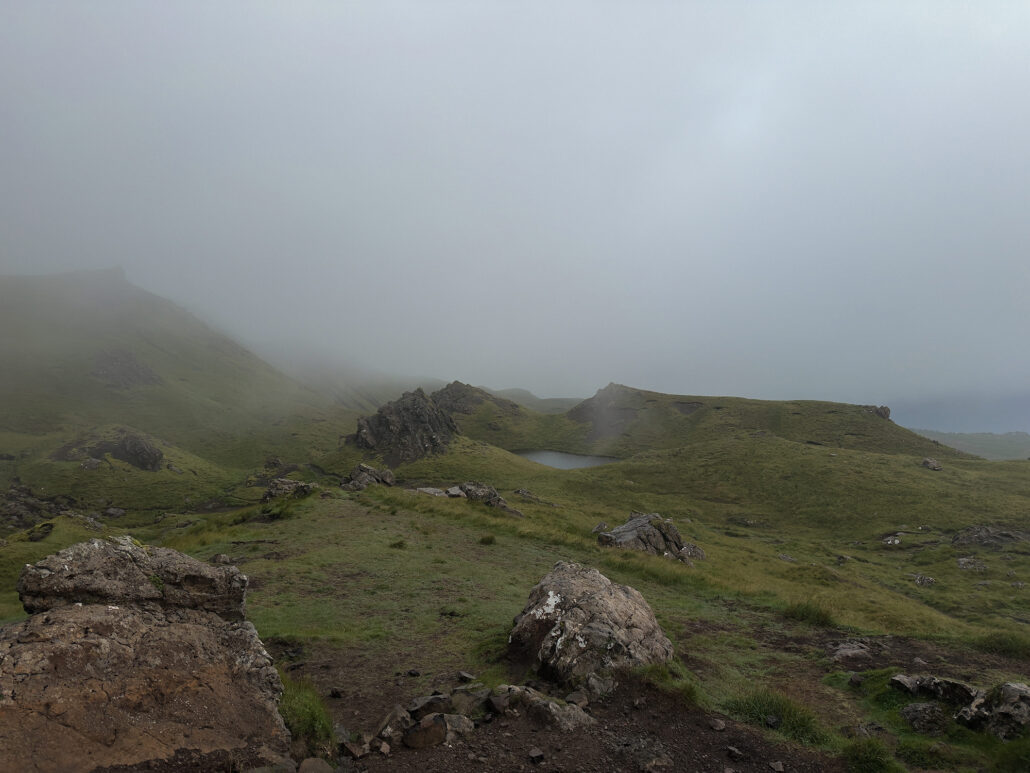
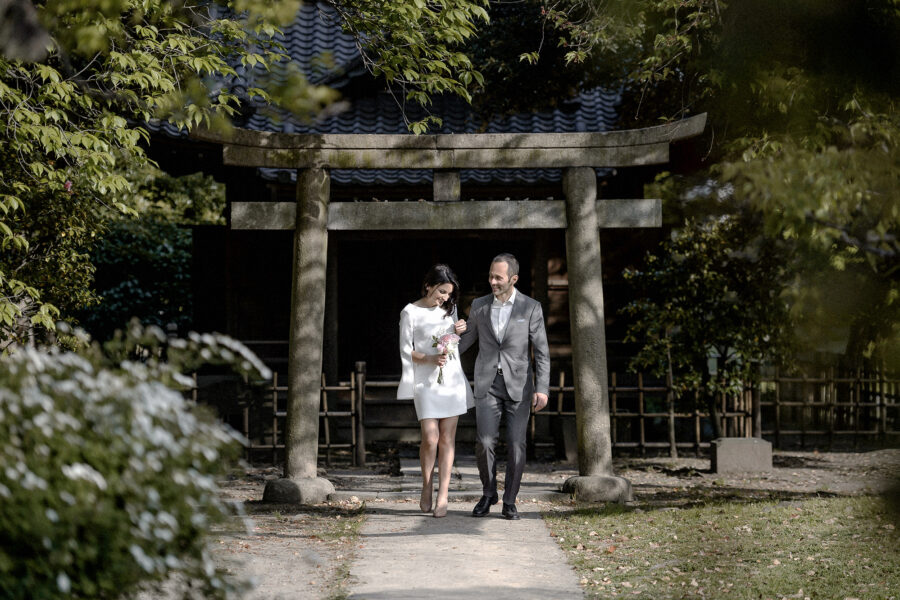
A couple, up among the crags, getting married. Out of the mist: figures, vows, the whole quiet machinery of the thing we build for a living, self-assembled on the most unstable hill in Britain. We didn’t intrude. Some days you’re the planner, and some days you’re a stranger in the fog keeping a respectful distance from someone else’s beginning, accompanied by a sheep. But let the record show that Dee crossed the planet to stop planning weddings for a month, climbed a mountain at four in the morning and found a wedding at the top. There’s no moral. There’s barely a sentence. Weddings follow her. We’ve stopped fighting it.
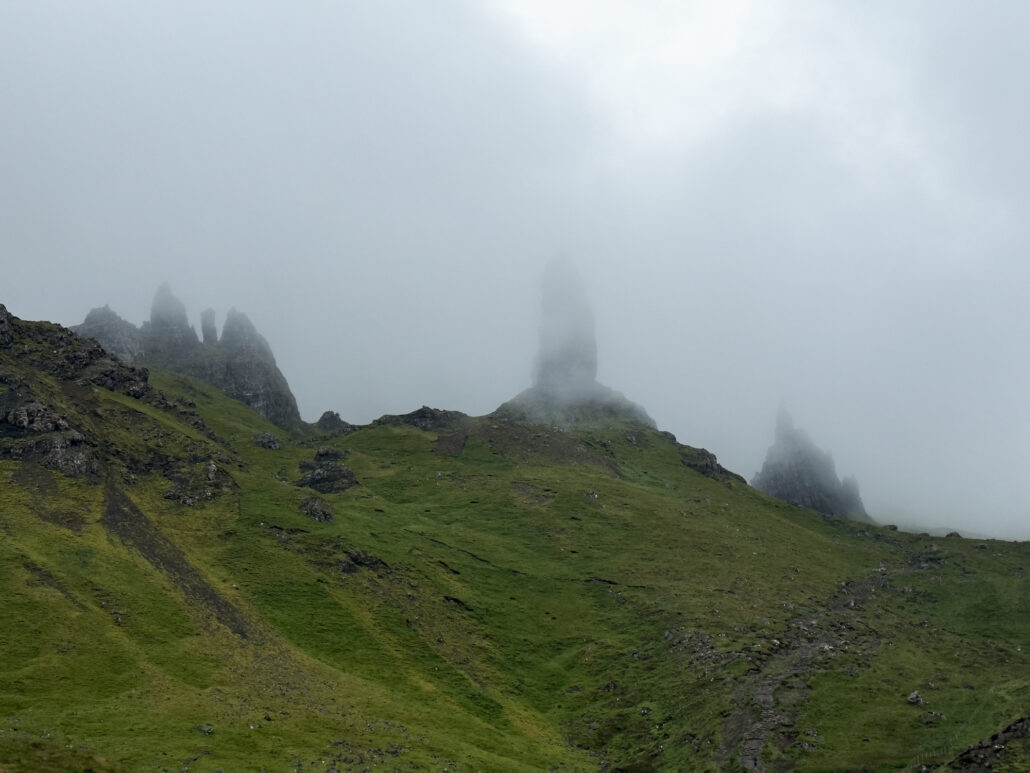
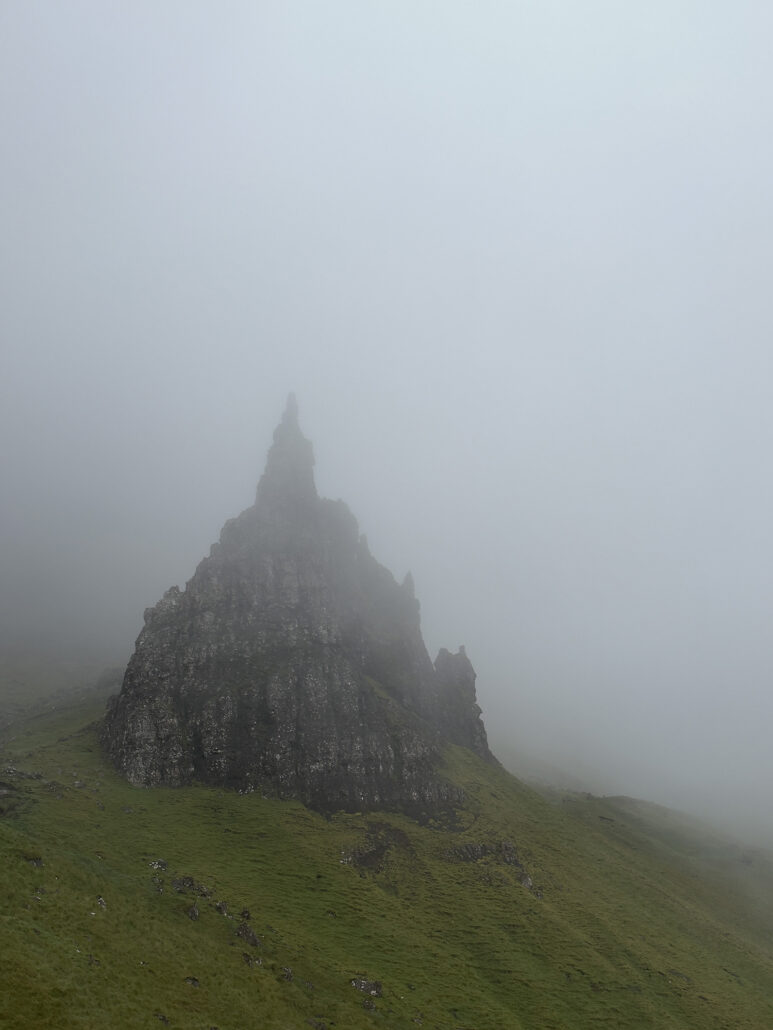
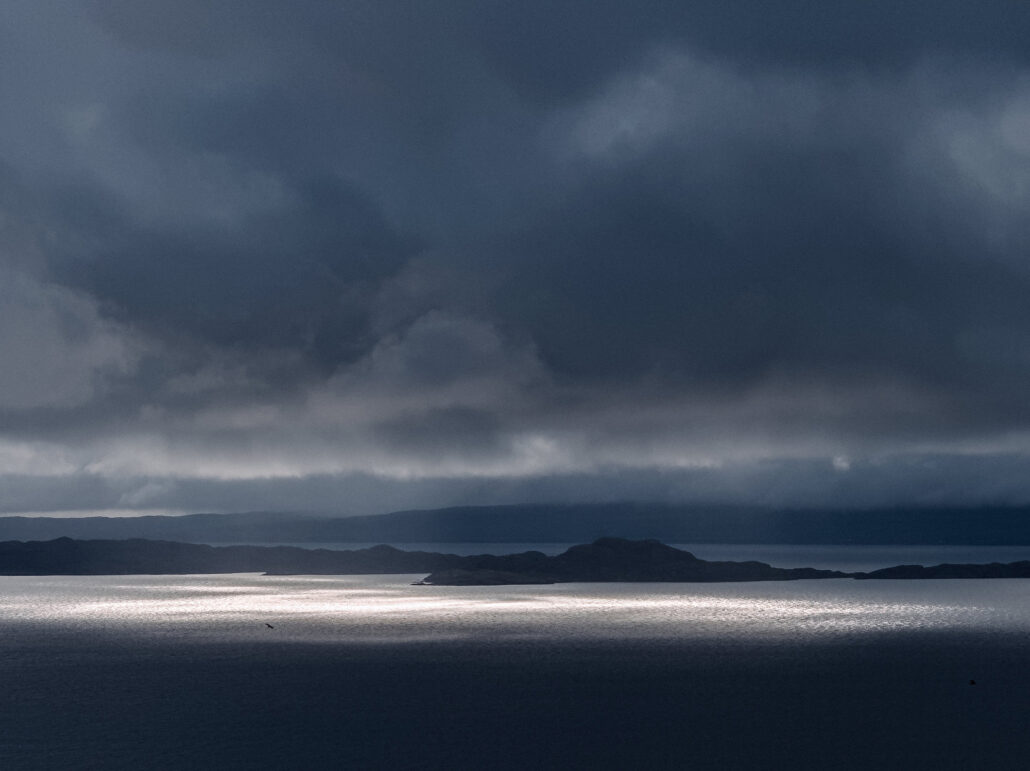
We also came down with one frame through a tear in the fog that might be the photograph of the whole trip. The mountain made us earn it across three alarms, and then paid in full.
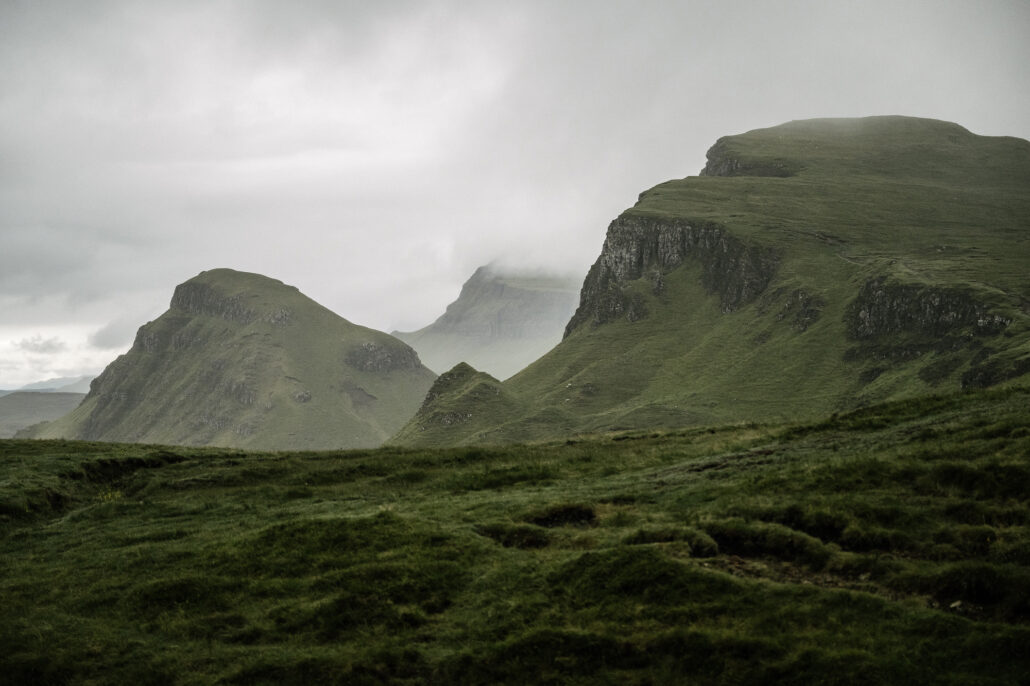
The Quiraing got its visit at last on the way out, in light rain: a short stretch of the path on foot, the rest by drone in the gaps, the slipping ridge dark and gleaming and entirely itself. Fairy Glen we left unvisited on purpose, along with Brother’s Point and the singing fence, because a wise island keeps you owing it. Then the long ninety minutes back across to the bridge, and over it, and that was Skye. We didn’t say much in the car.
What we came all this way for
We’d wanted Skye for decades, and it was everything the long version in our heads had promised and several things it hadn’t, most of them to do with mud and wind speed. And even Skye, in the end, is a stop on the way. The reason is a few days east, in a pool in Glasgow.
What a thing to be handed on the way, though. An island we’d waited half a lifetime for, that turned out to be a slow-motion landslide wearing the most beautiful scenery in Britain, that answered its own moving ground with giants and hidden cattle and seven seconds of cold water for eternal beauty. We’d built a still picture of Skye over all those years, and the real one wouldn’t hold still for a second. It never has, for anyone. That, in the end, is the whole secret of the place. The postcard is a lie of stillness. The island is alive, and falling, and rewriting every plan you bring it, and we got to stand on it for three days while it moved.
And it was, in the end, exactly the trade the fog kept offering. We came for landscapes and left carrying people: cattle talk on a harbour street, Duncan’s revised itinerary, Susie’s radio funded by our own beds, a midge report we can personally refute, and two strangers marrying in the mist at the top of a moving mountain.
We’ll be back. Filed, like the ferry we watched leave Uig for the islands beyond, under next time.
Read more Greenland/Scotland travel stories here:
The Night the Fjord Disappeared