One midnight of gold on the Ilulissat icefjord, and a promise kept.
If you’ve been travelling with us this week, you know the setup. Jonas, a private charter booked months ago on a friend of a friend’s total conviction, and one promise, confirmed in his own few words at the harbour: the most beautiful icebergs, in the most beautiful light. Two nights in, he’d handed over an evening of flat silver that showed the town the meaning of its own name, and then a fog that took the bay away entirely and sent whales instead. Extraordinary, both.
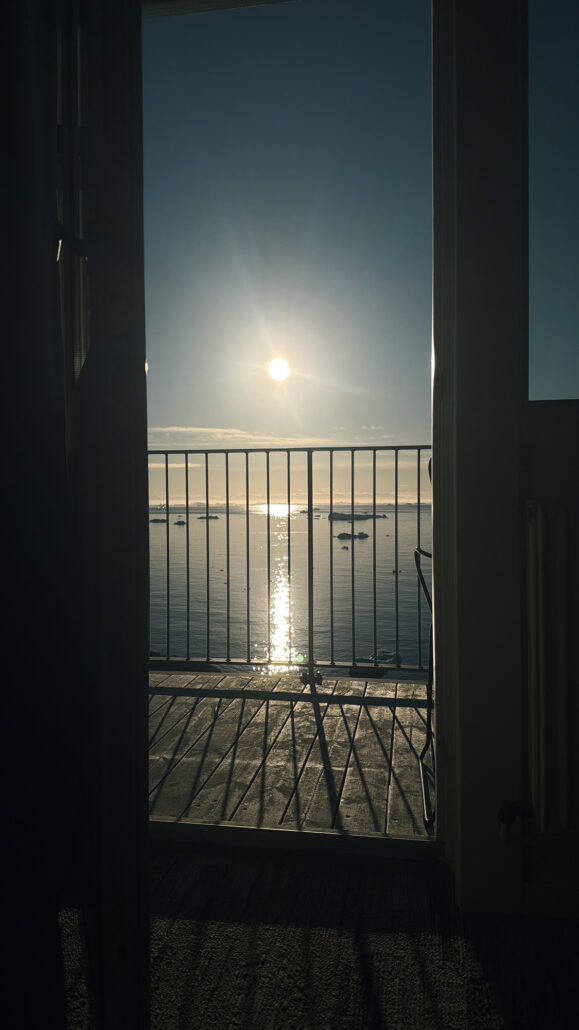
The fog sat on the bay all the next day. And then, in the evening, it lifted like a curtain remembering its cue. Blue sky, a smattering of cloud, and Jonas coming alongside the hotel’s deck at eleven with the quiet look of a man whose forecast had come in.
The light we’d all imagined
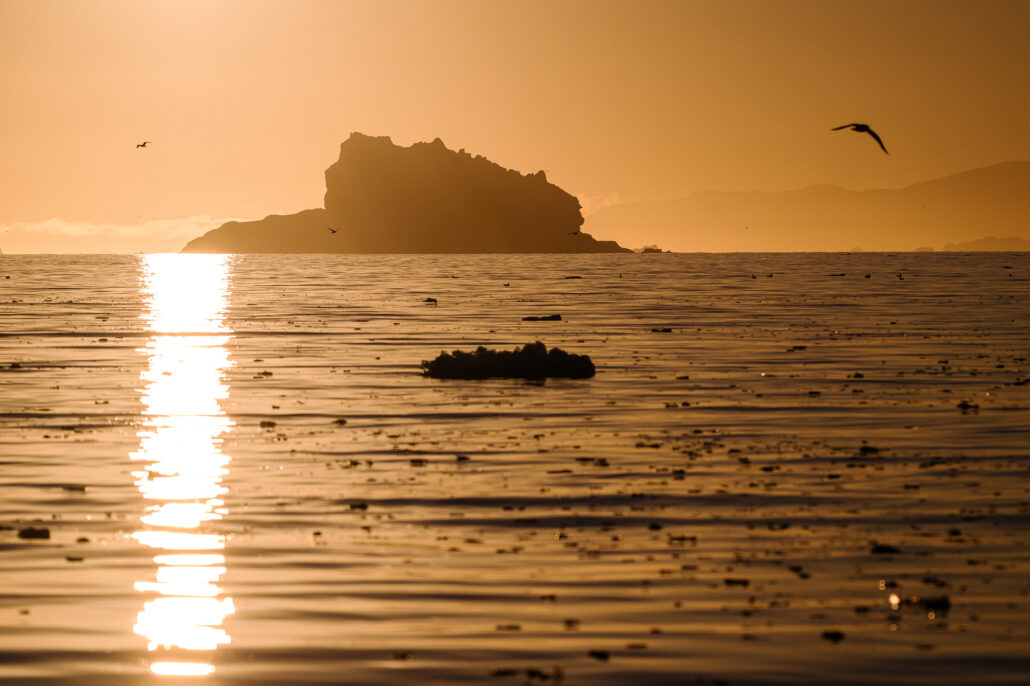
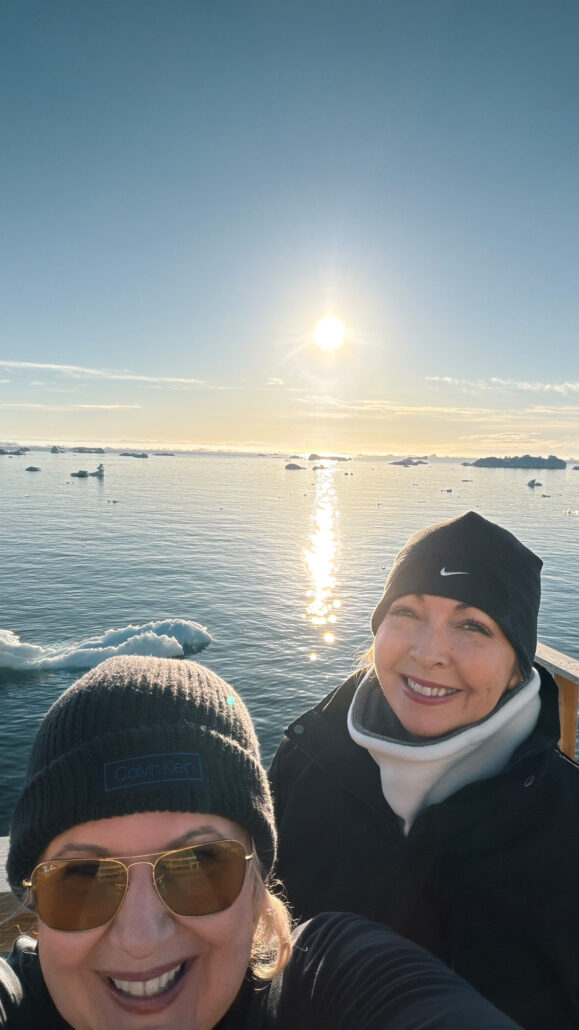
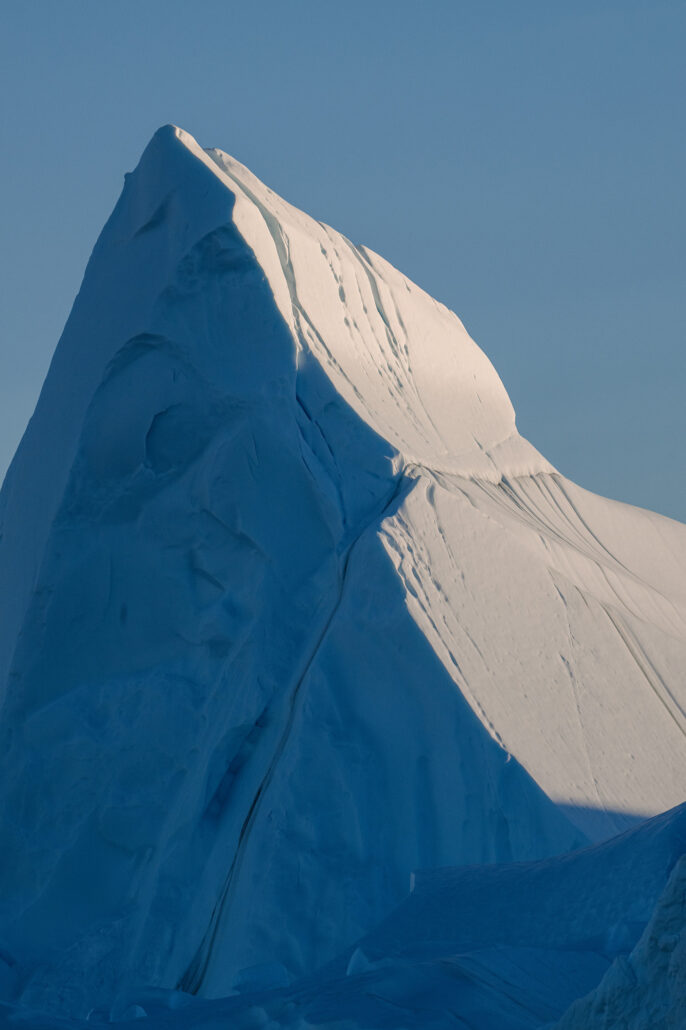
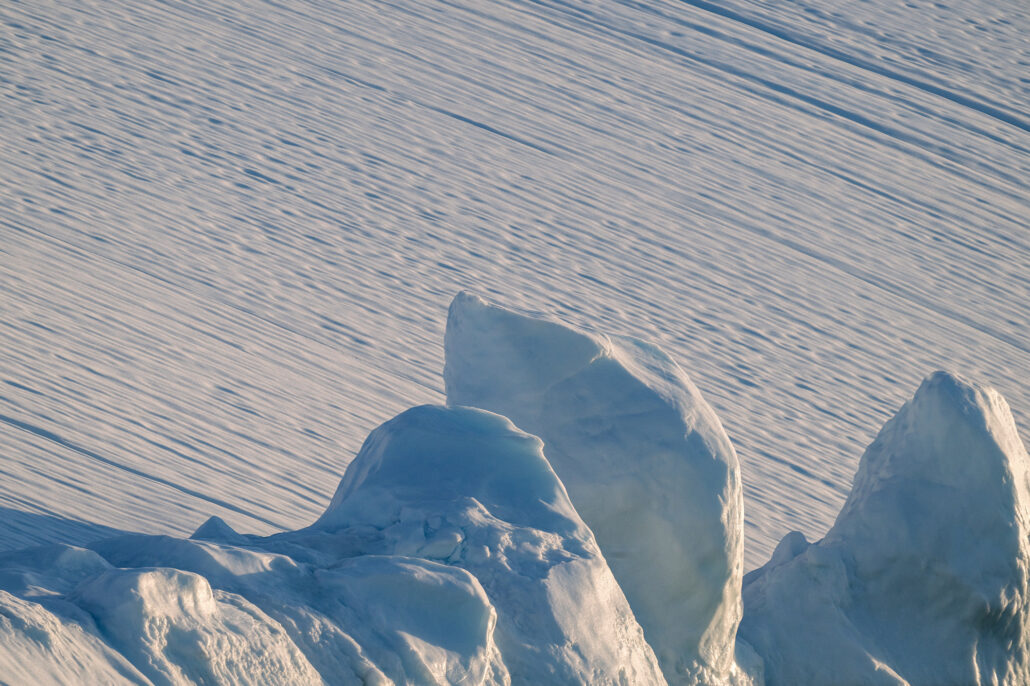
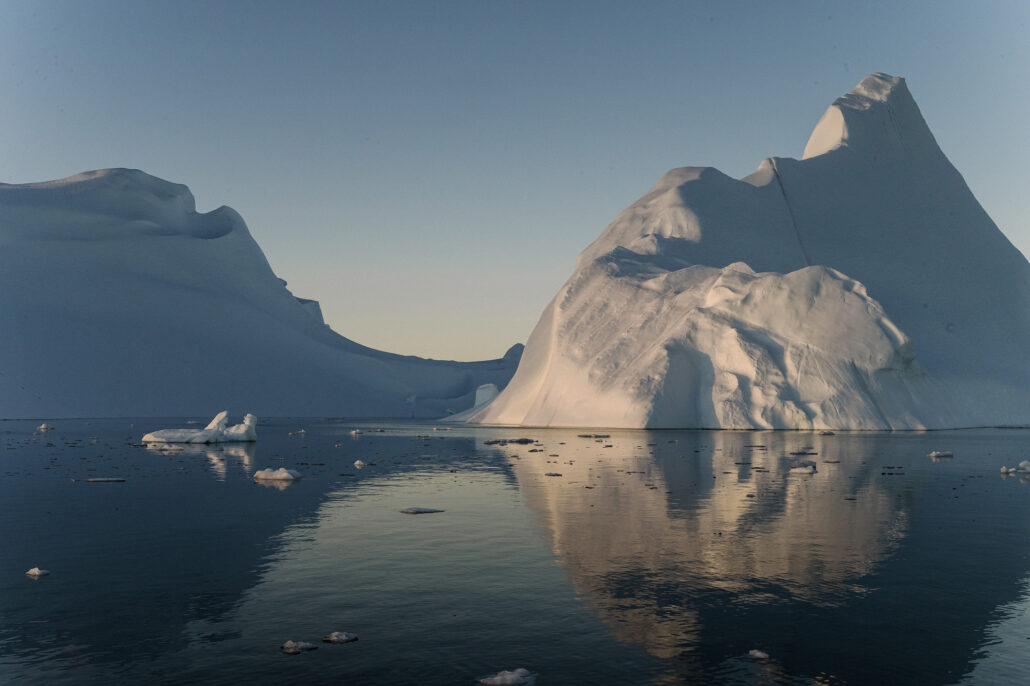
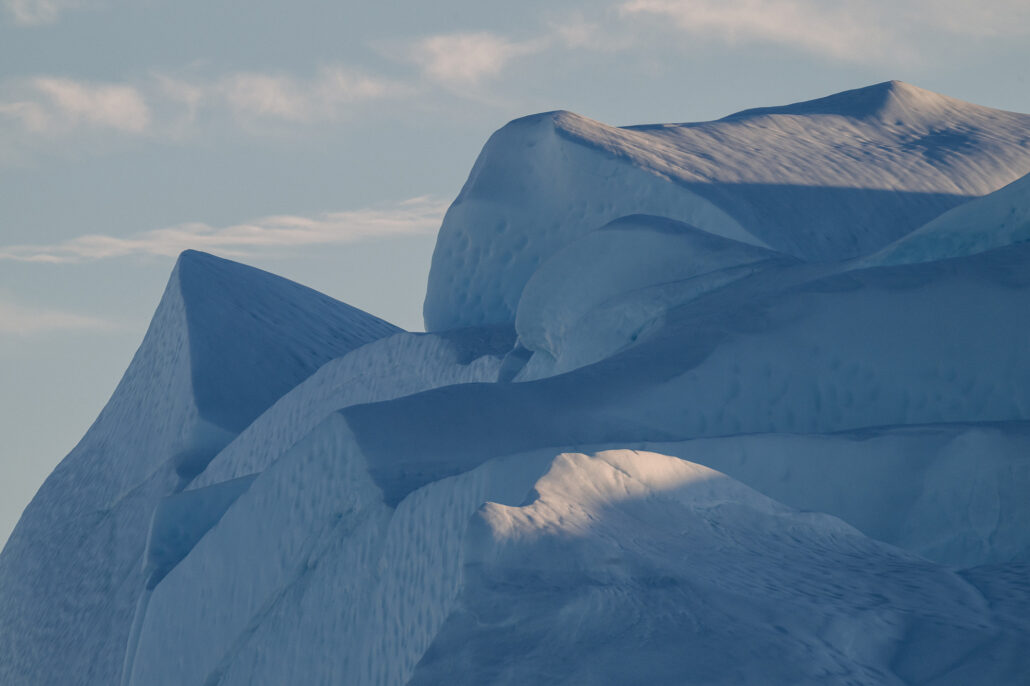
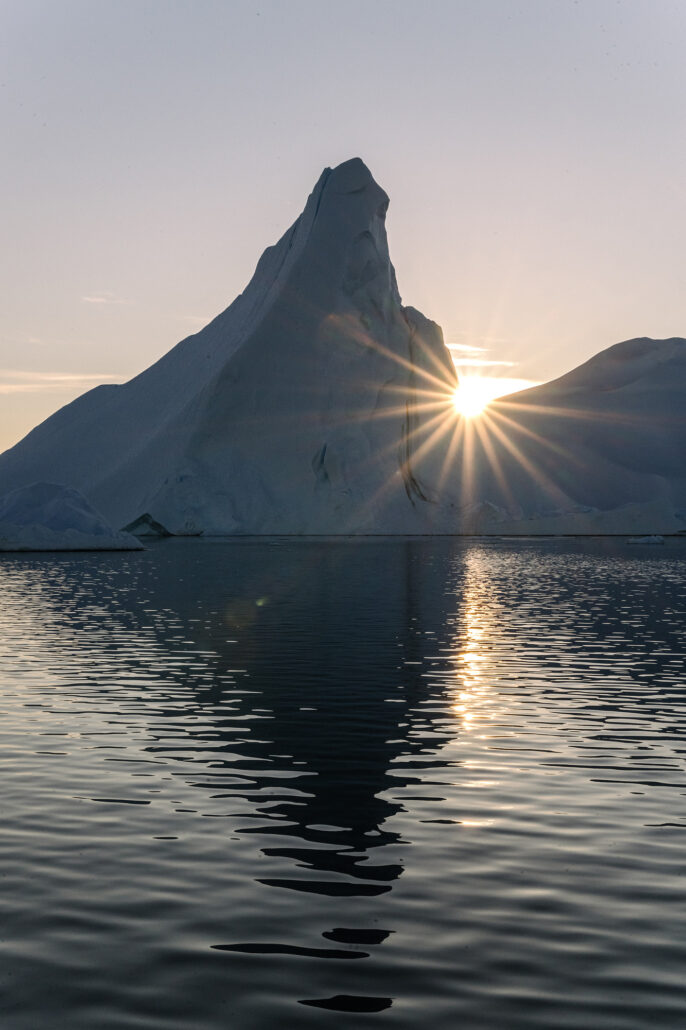
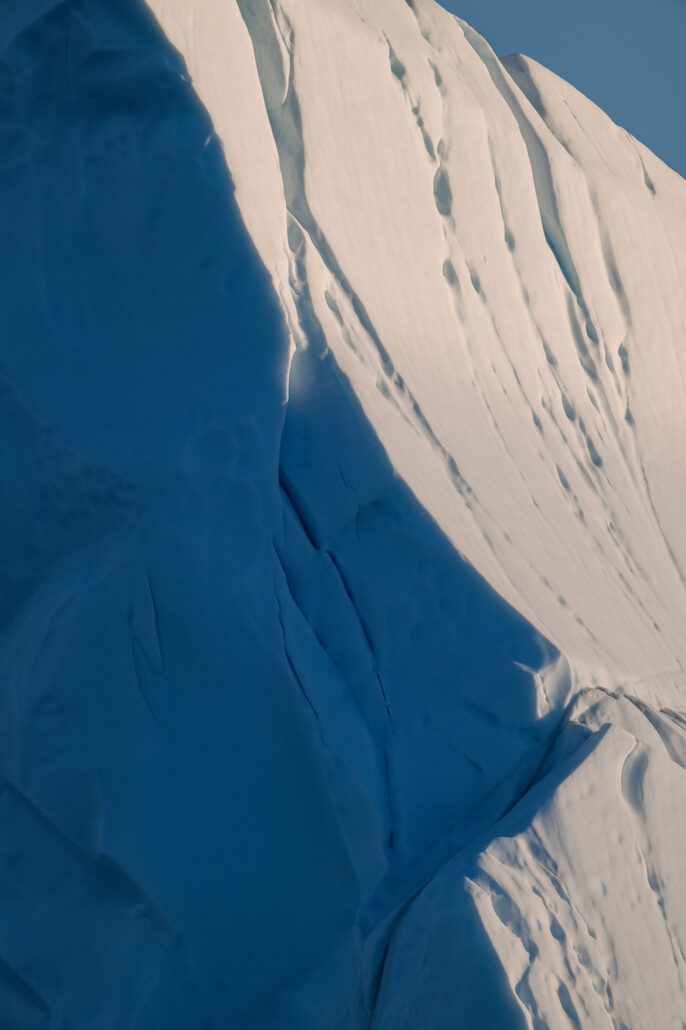
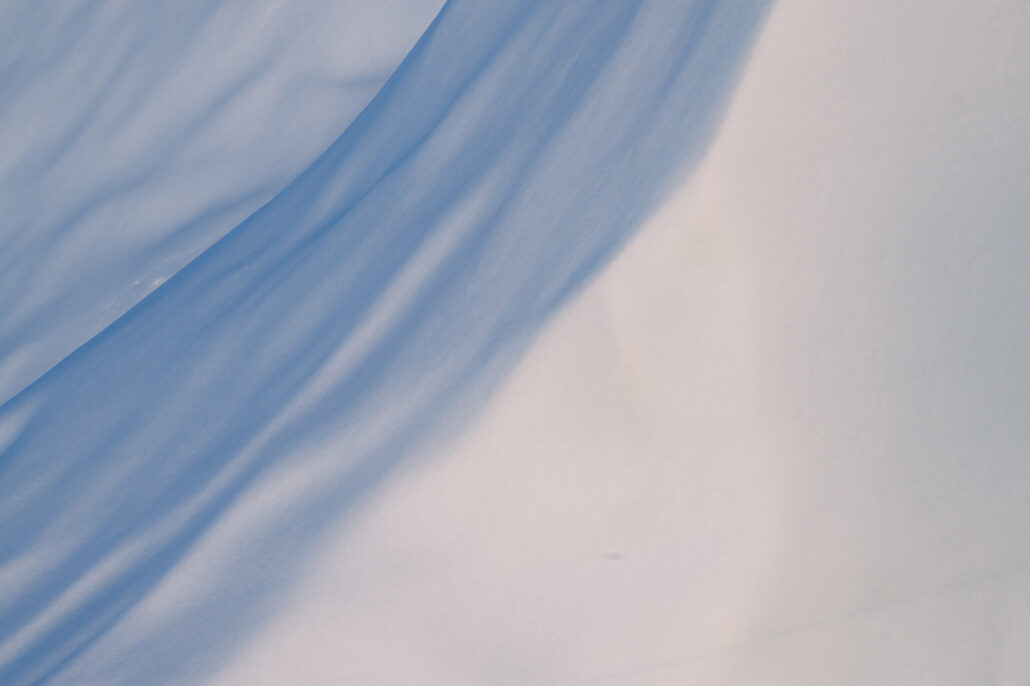
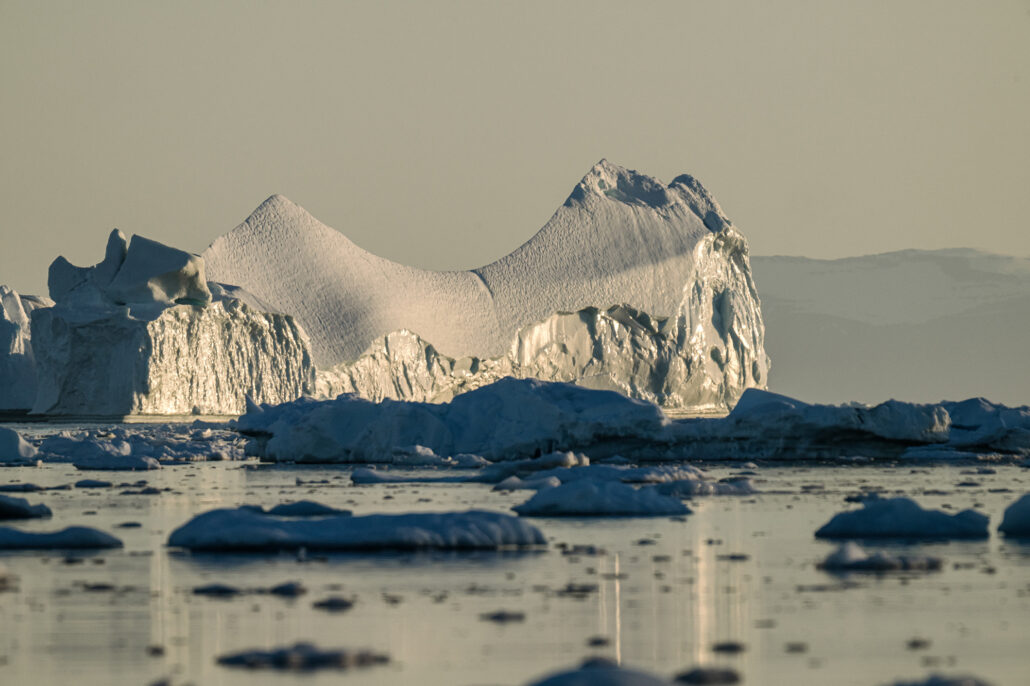
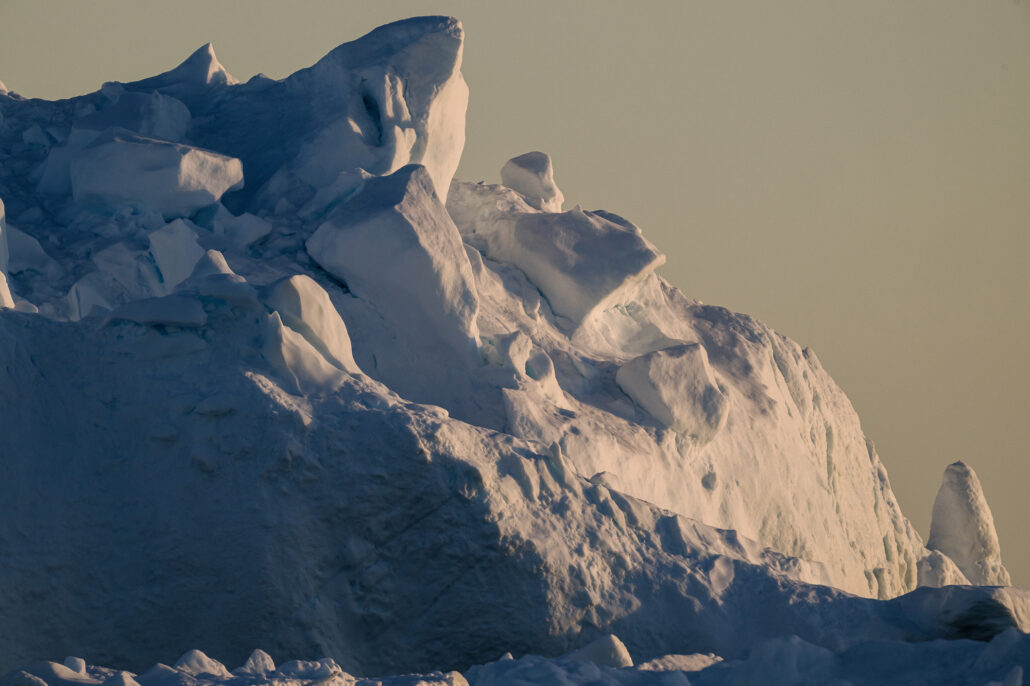
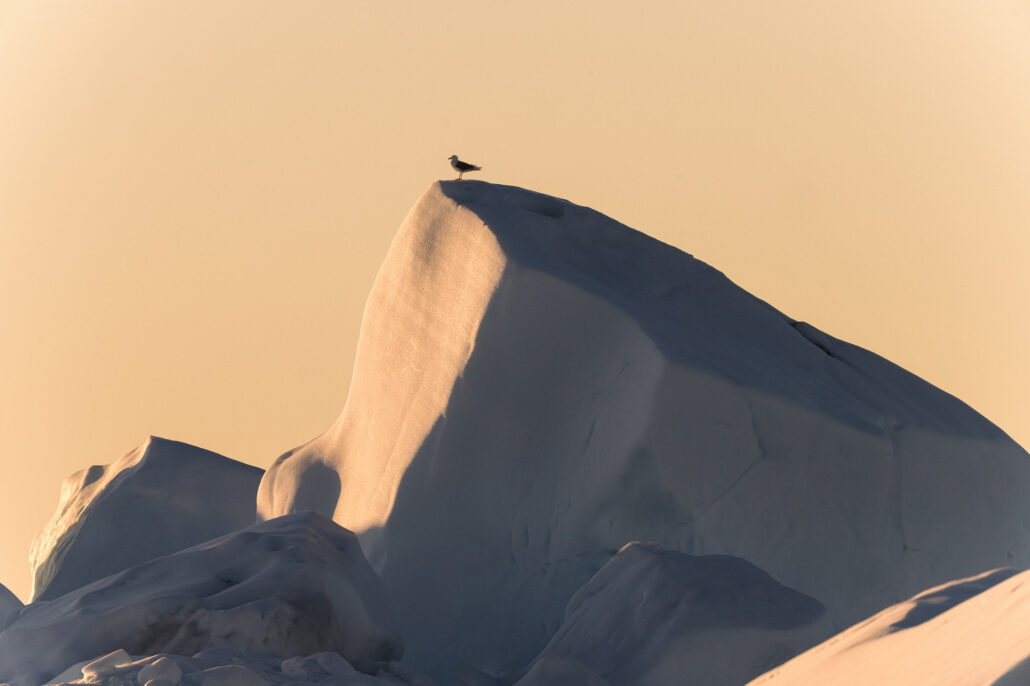
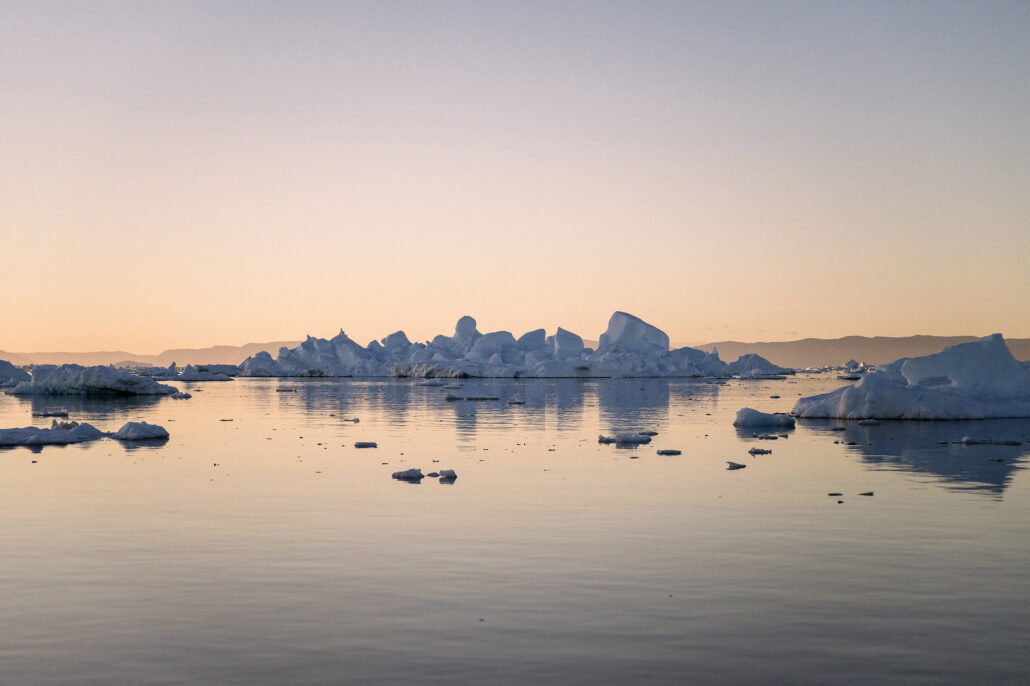
The sun doesn’t set in Ilulissat in early July. It drops low and rakes sideways, and at around midnight it does something to the ice that we have spent our working lives chasing. The bergs go gold. Not warm-gold, the way a sunset is. A clean, low, level cool gold that comes at them from the side and finds every fracture and hollow, and then, slowly, over an hour or two, it cools through amber into a hard silver-pewter as the sun slides along the horizon without ever quite leaving. Under it, the turquoise. Around it, the blue.
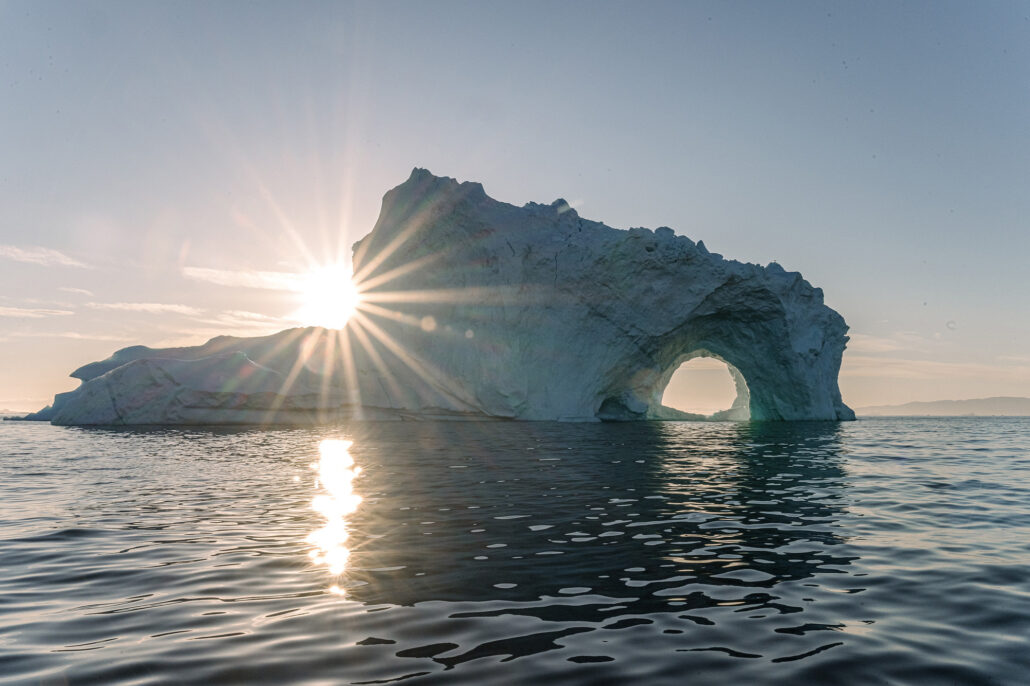
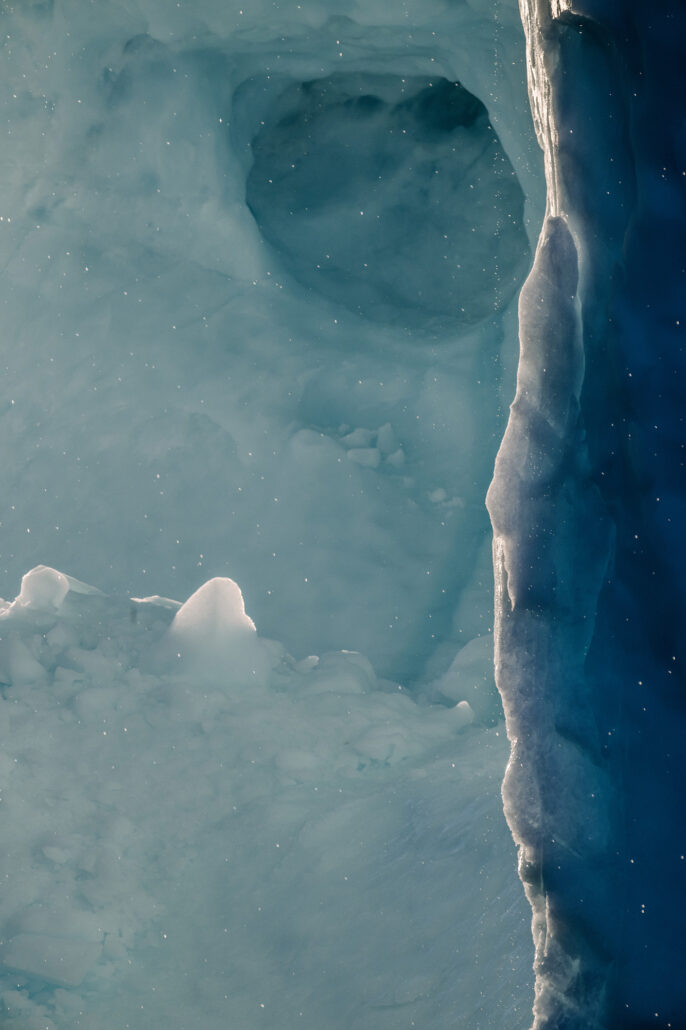
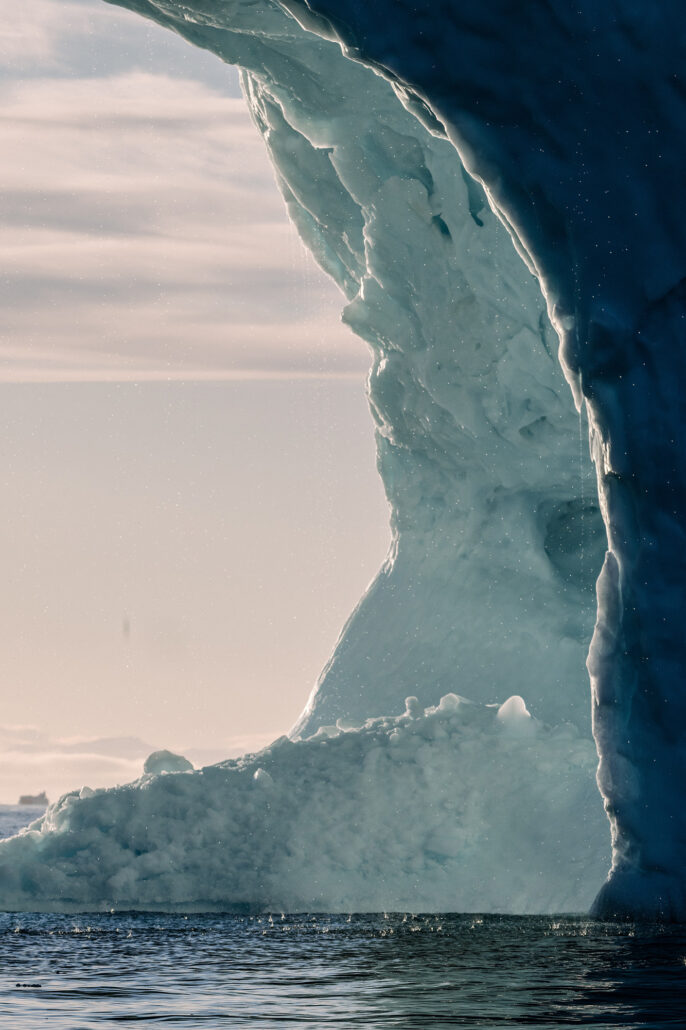
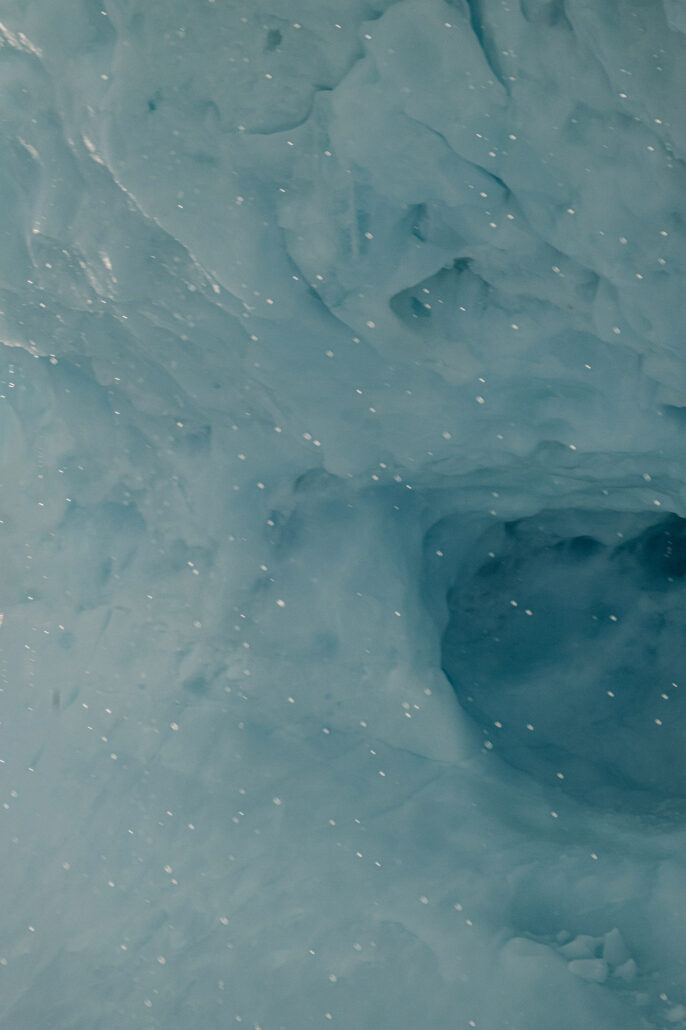
You don’t get one good moment of this and lose it. You get hours of it. We’d brace for the light to die, the reflex of two decades of chasing it, and it just wouldn’t. It kept arriving. The problem stopped being whether we’d get the shot and became whether we could keep standing up long enough to keep taking it. We didn’t talk much. There was nothing to add.
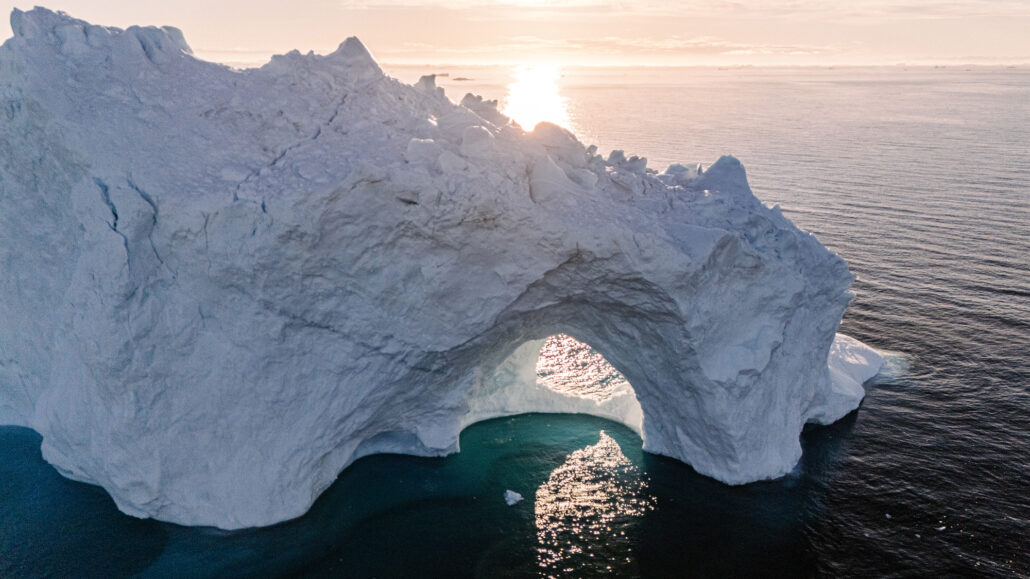
Jonas knew exactly where to be for each phase of it. He’d read the water, nudge the boat a hundred metres, cut the engine, and there it was, the frame, waiting for us as if he’d ordered it. We loved that he knows this light better than we ever will, and he was generous enough to lend it to us for four days.
The berg that came back
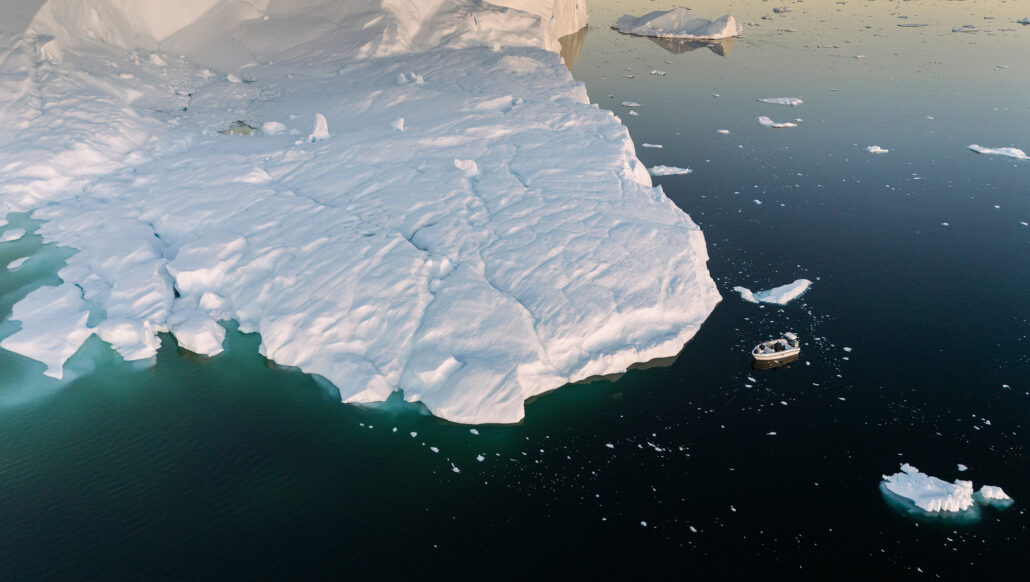
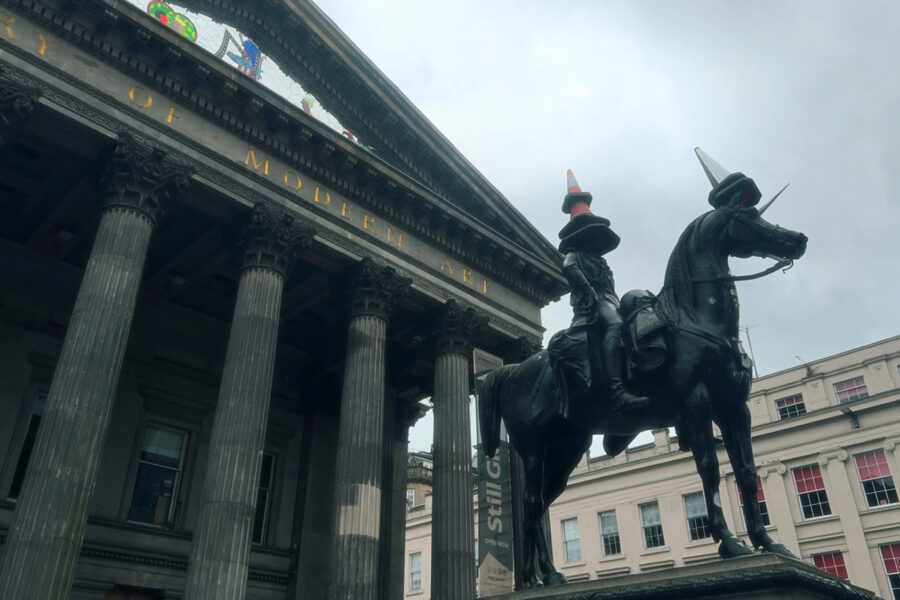
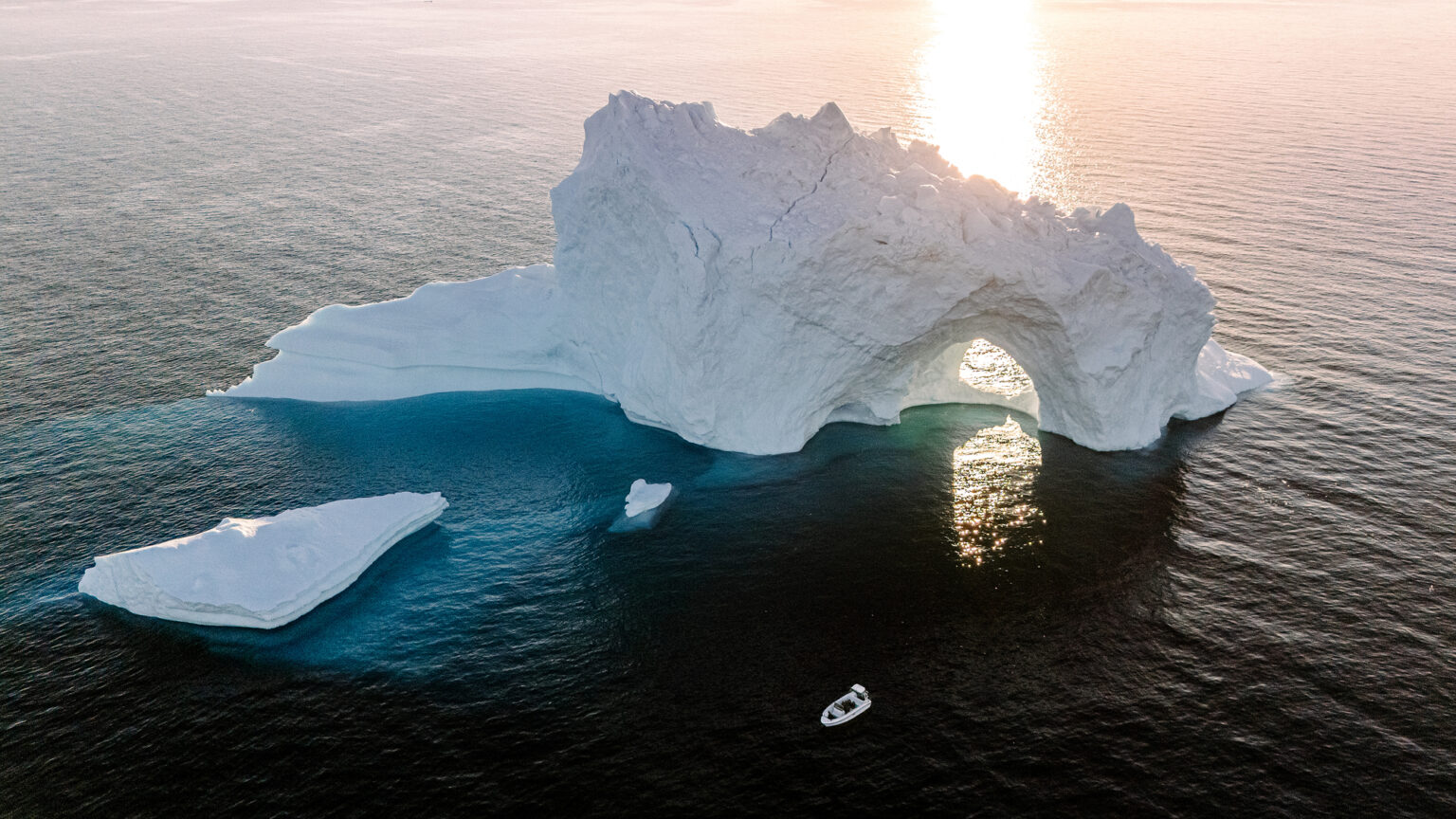
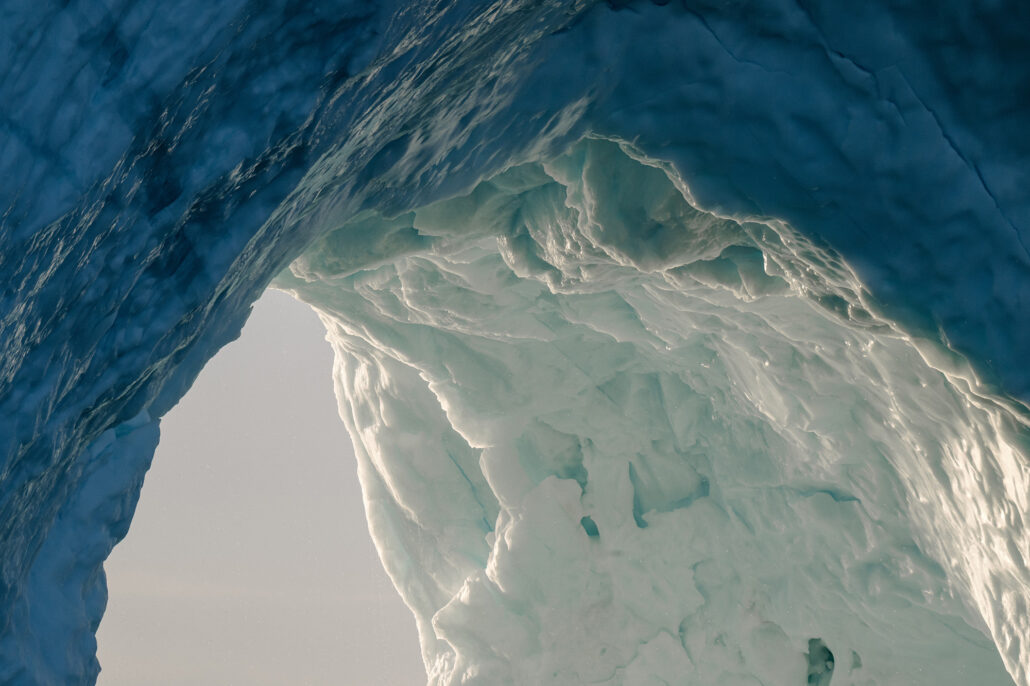
He started us at a single giant, holed clean through, and said that it belonged in his top five. Of all the ice of a working life on this water, this one, tonight. We shot it from every angle a boat and a drone allow, above it, around it, through the arch. And the longer we worked it, the surer we became that we already knew it. It was our first-night berg. Three days on, it had drifted in closer, and the hole through its heart had opened wider.
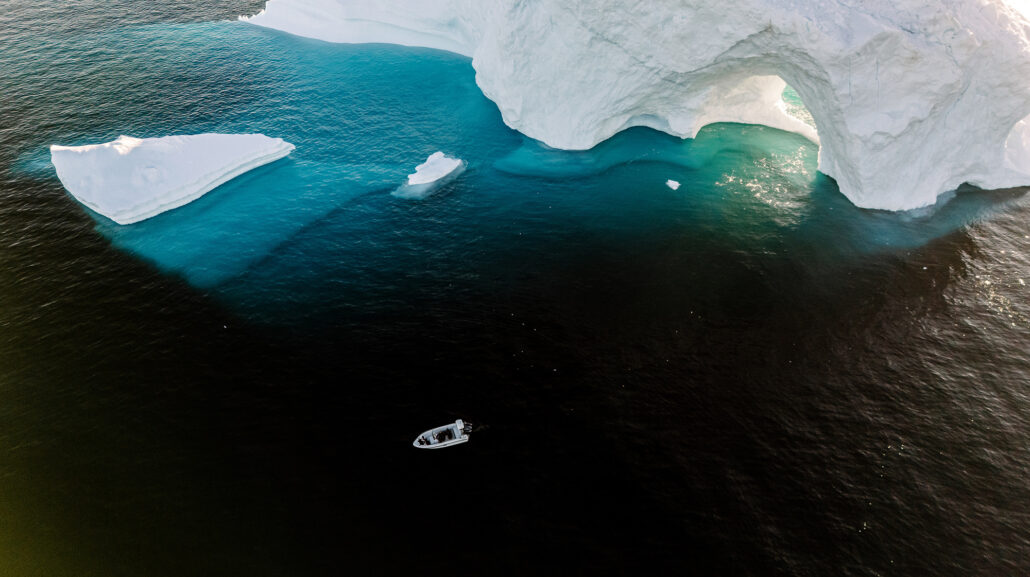
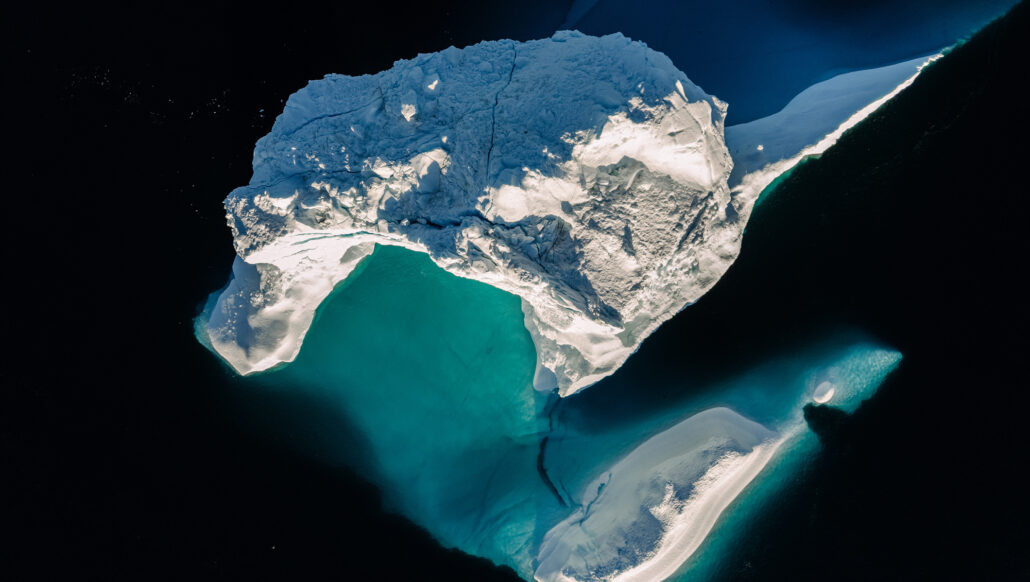
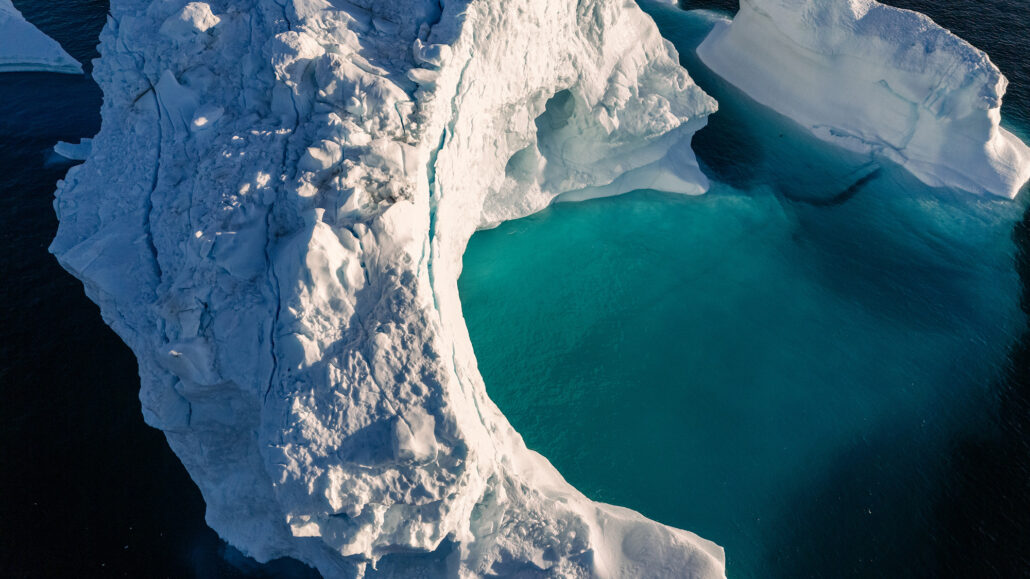
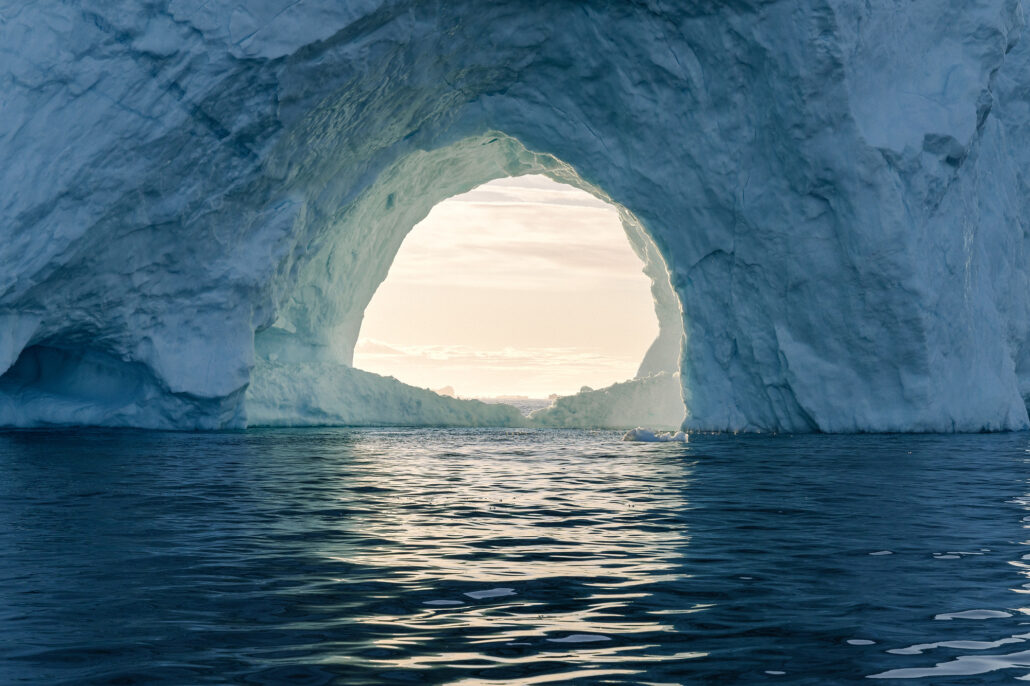
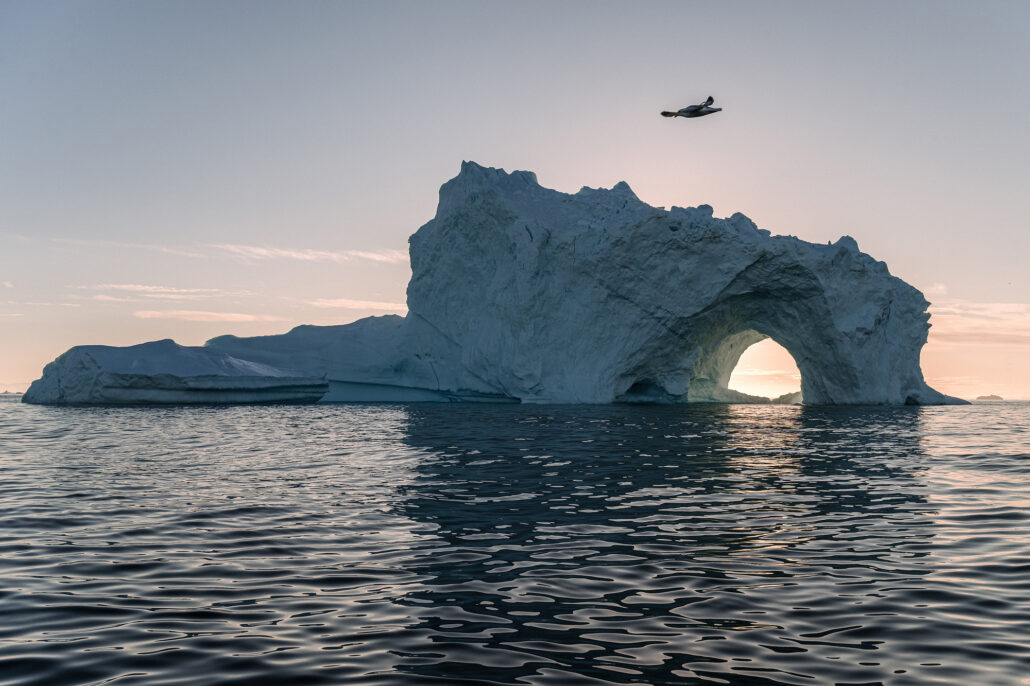
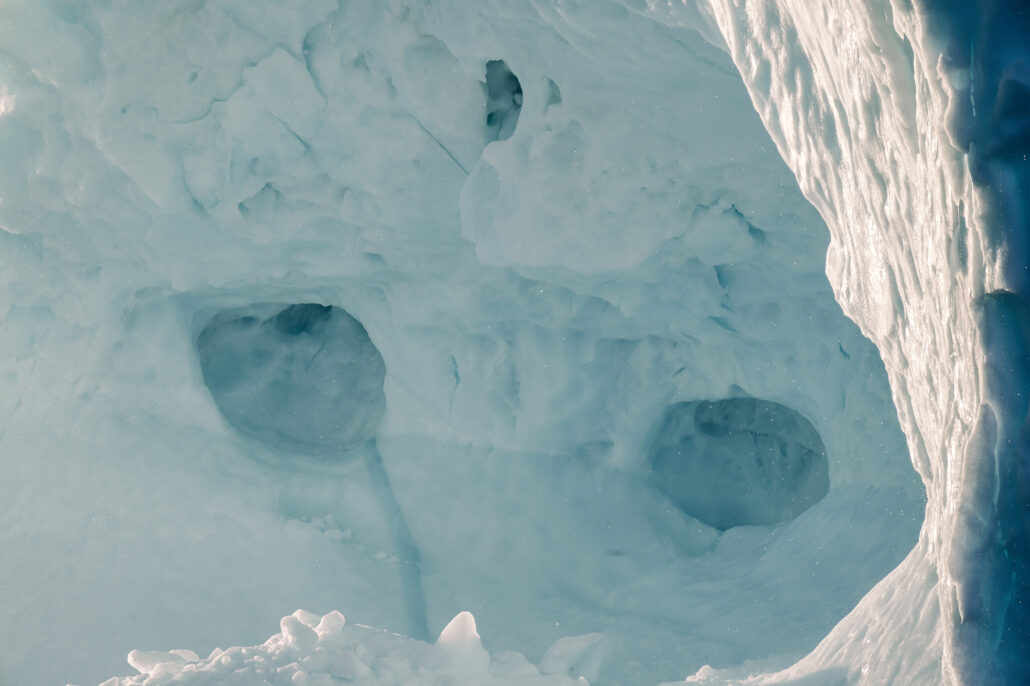
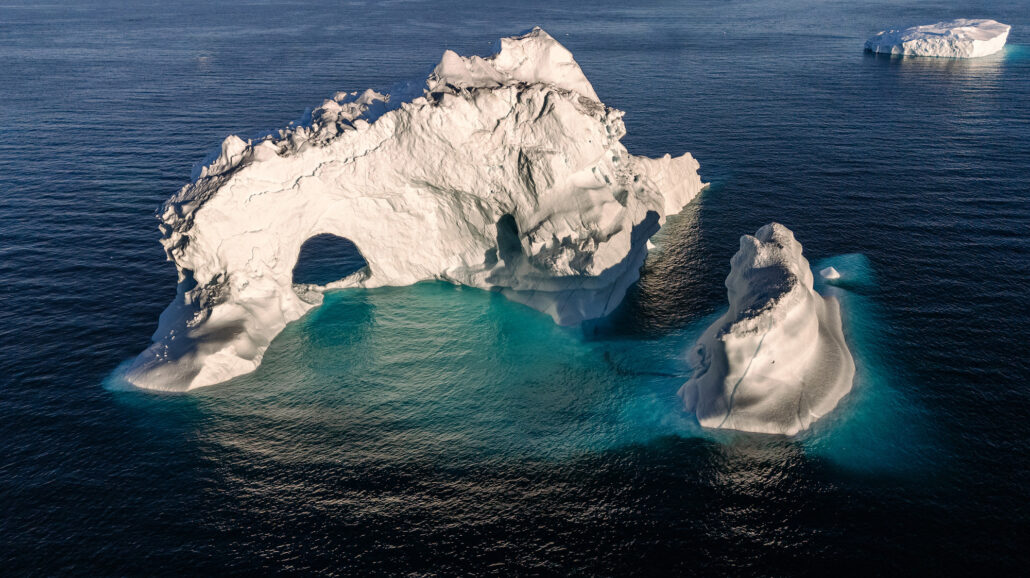
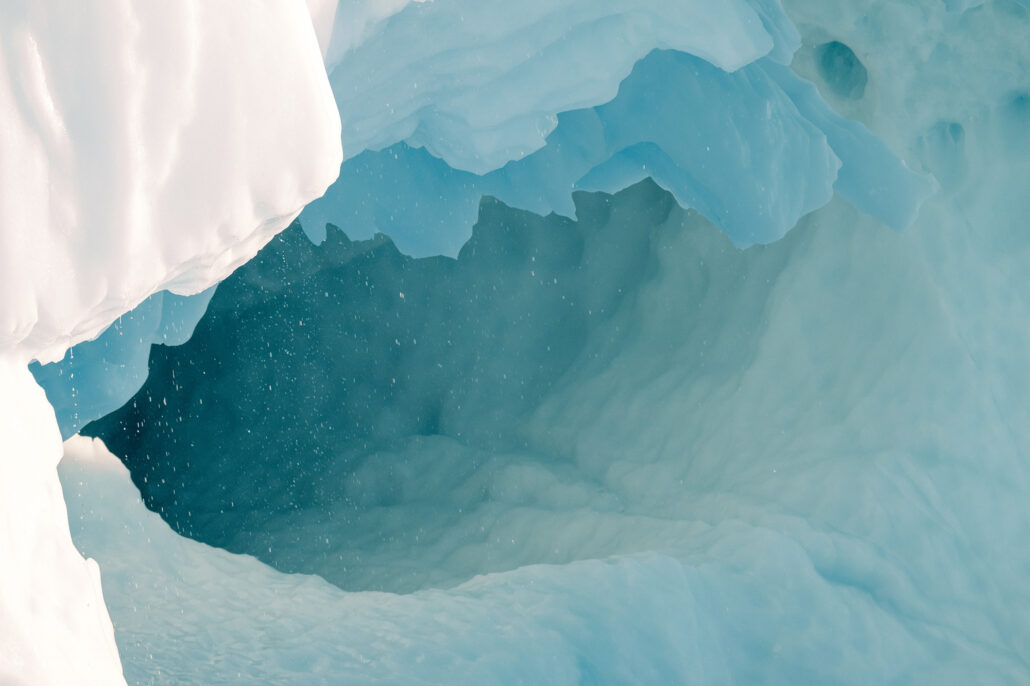
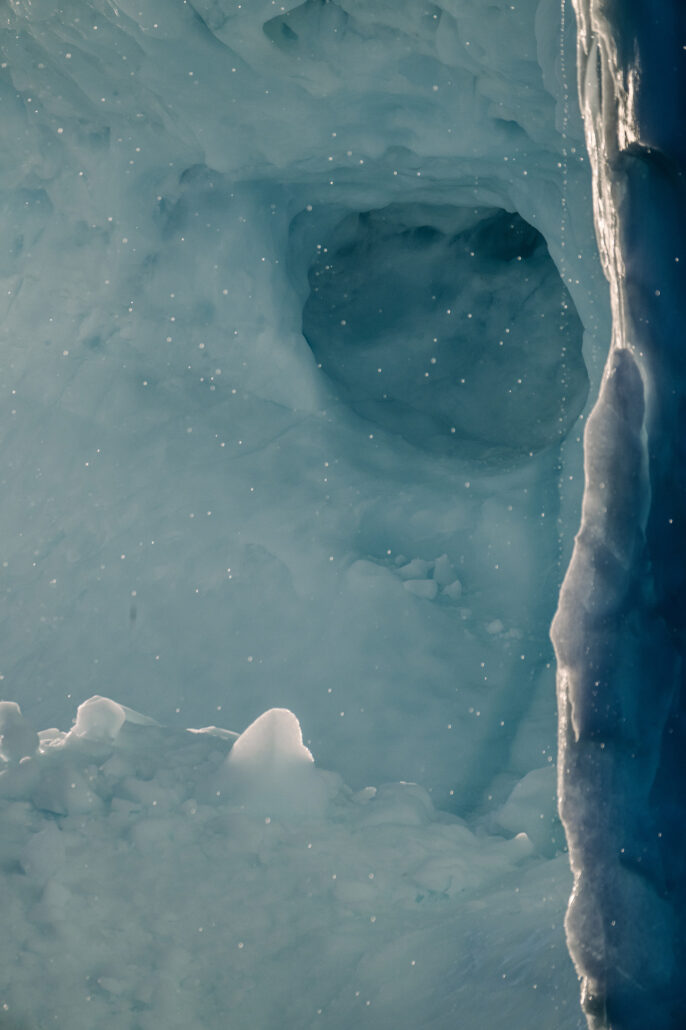
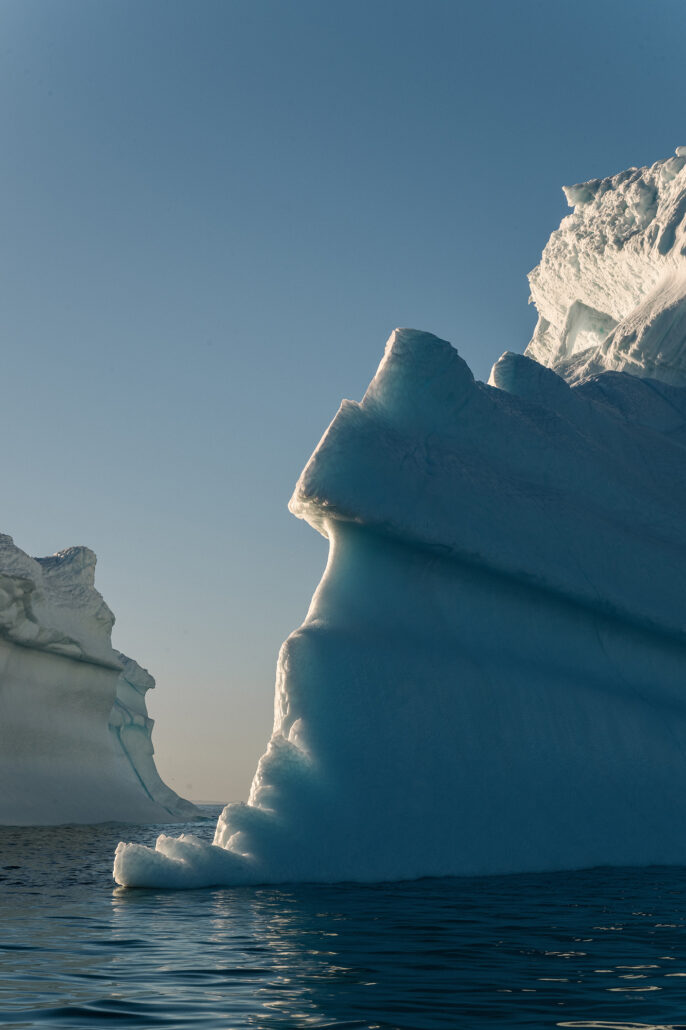
Nothing out here holds still. The bergs drift, turn, shed and regroup; the water you cross at midnight is a different exhibition by morning, and the odds of meeting the same iceberg twice are roughly the odds of meeting a stranger twice in a city of millions. And the fjord had just introduced us to one of the finest bergs of Jonas’s entire career, and it turned out to be one we’d already met, three days further into its own unmaking and more beautiful for every one of them. An iceberg is never finished. It is only ever mid-sentence. The most beautiful thing either of us has seen in this country was two centuries in the making, days or weeks from coming apart, and improving the whole way down.
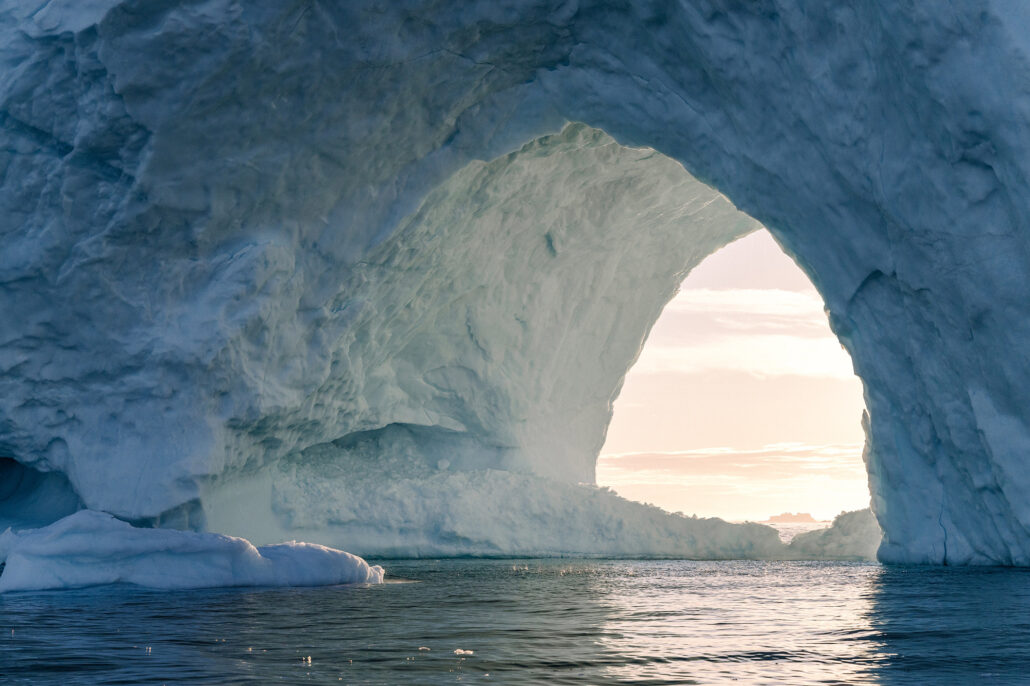
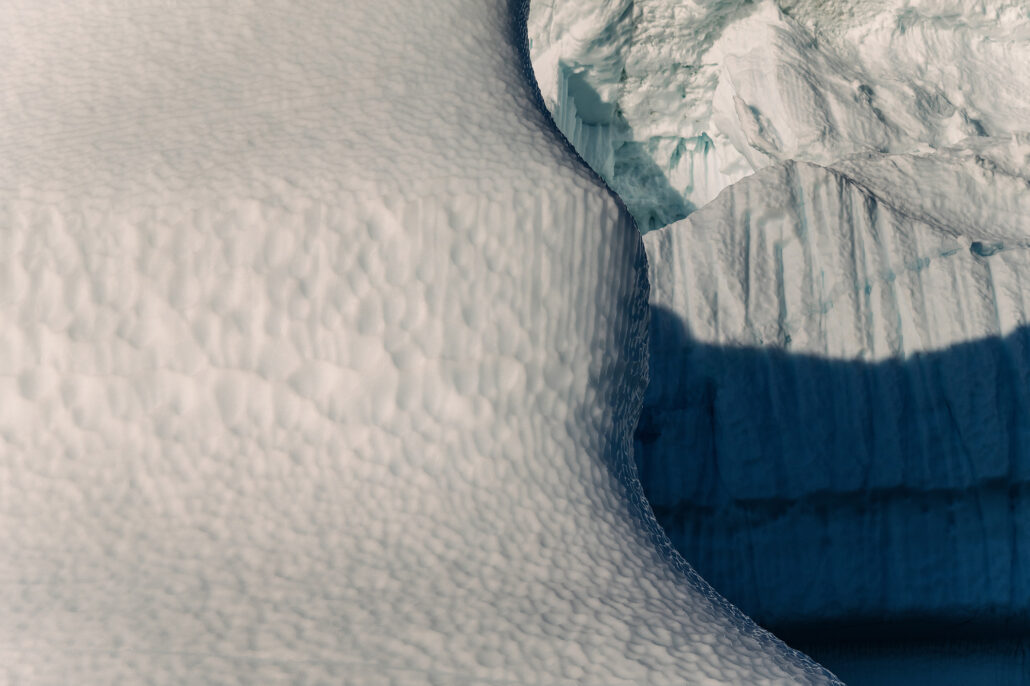
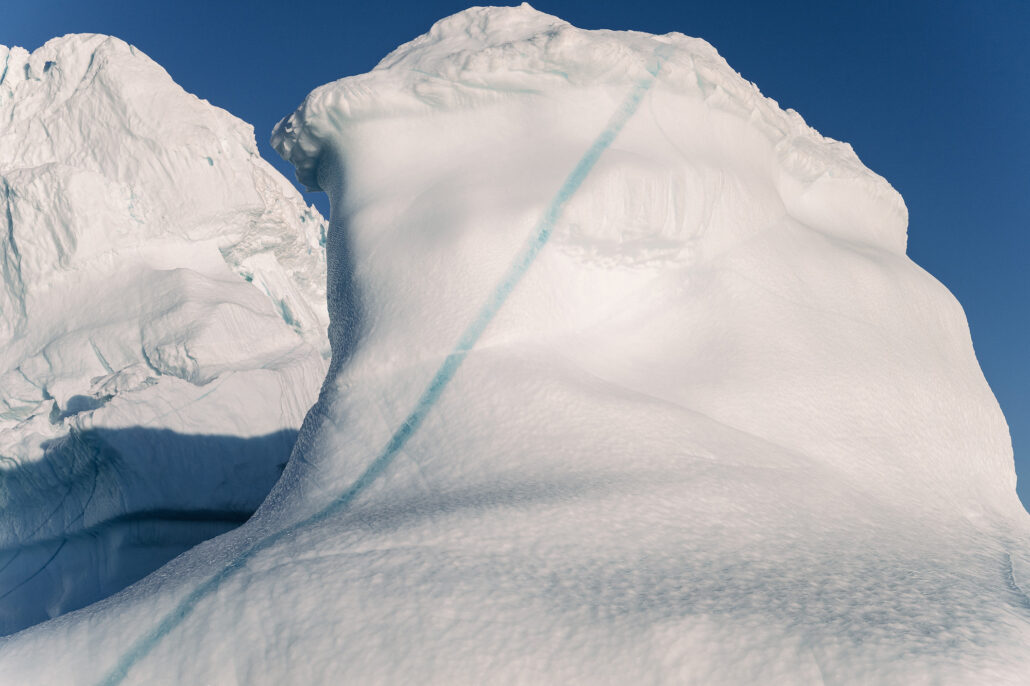
The drone, for the record, came home to a deck that would not stay level, in a chop that turned every landing into a small negotiation, and there was, we can now admit, some drama. We got it done. The thumbs did not survive. The thumbs never survive.
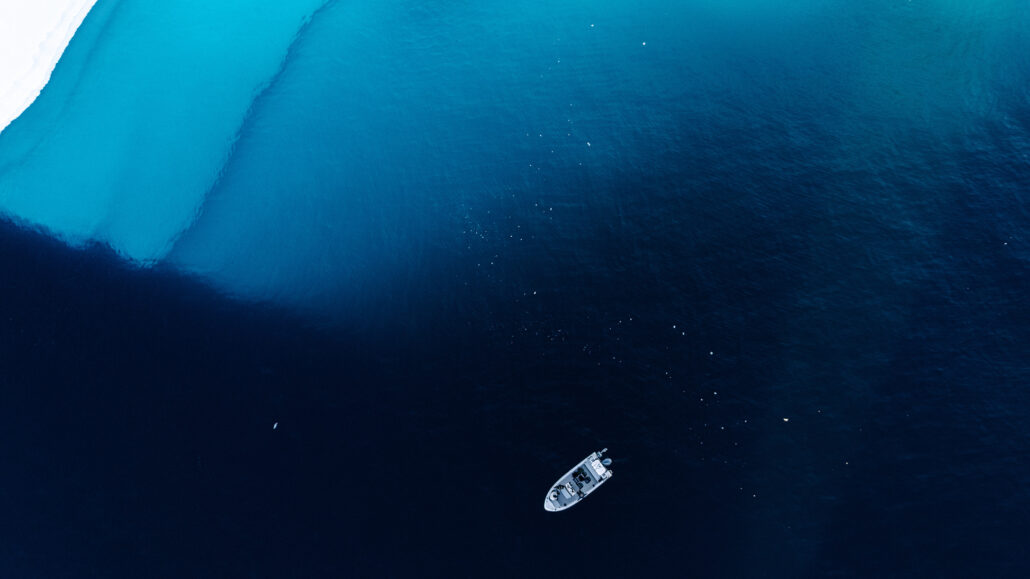
A disco on Disko Bay
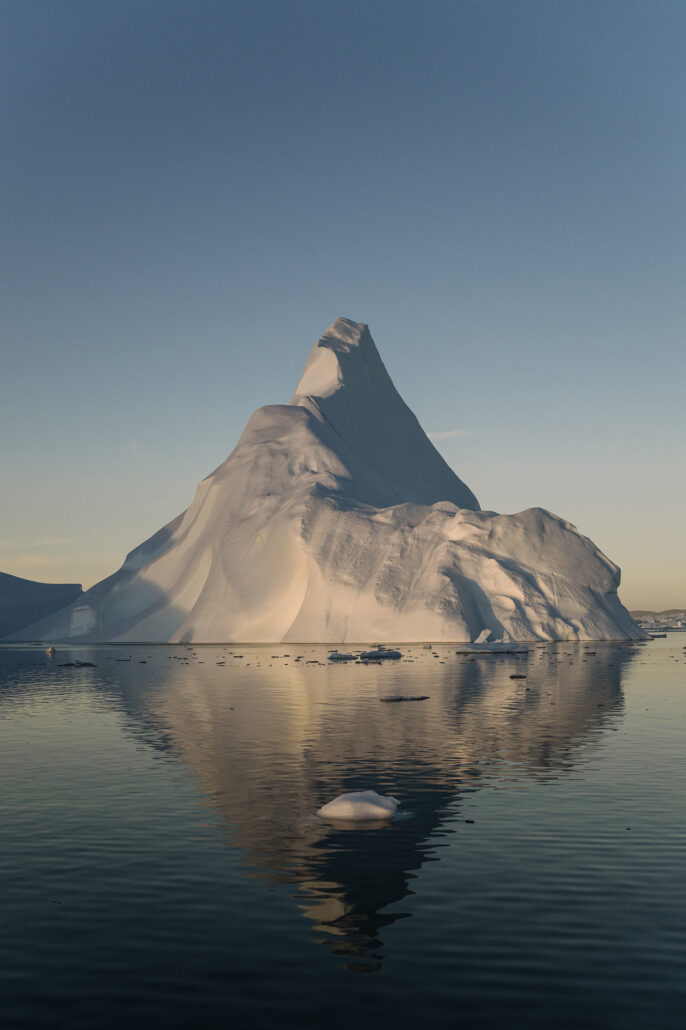
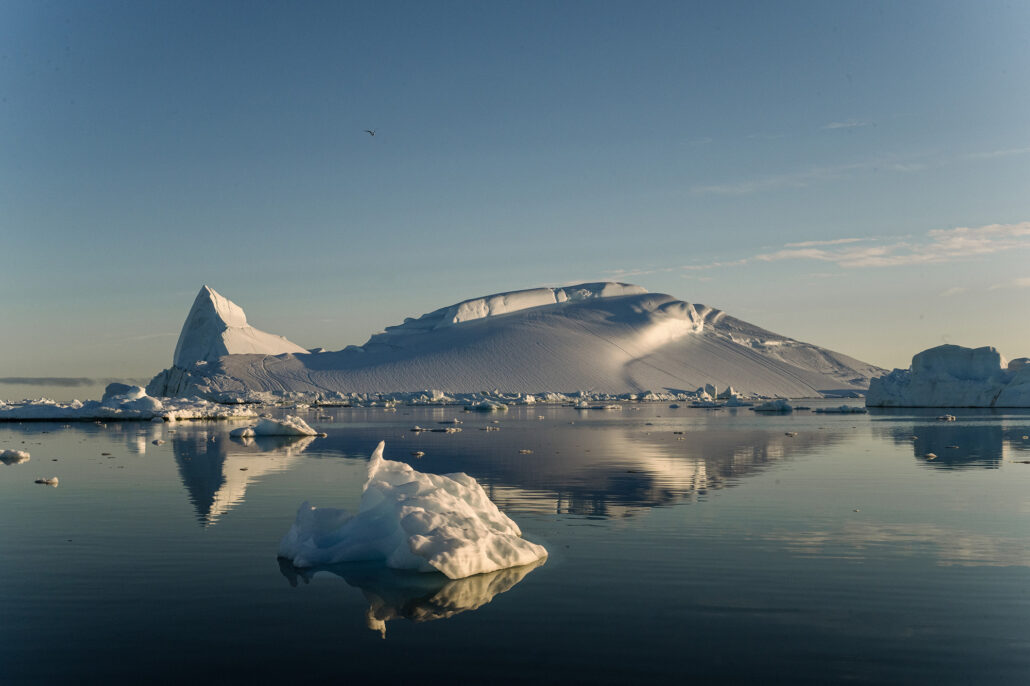
Then Jonas took us into an ice field to end the night. Sheltered water, no wind, the bergs packed close and the sea gone to glass, every soft colour in the sky finding a copy of itself somewhere below. An iceberg shaped like a pyramid stood over its own reflection. And in the middle of all that, one of us enacted a plan she has been carrying, not entirely as a joke, for most of her life. Dee threw a disco on Disko Bay.
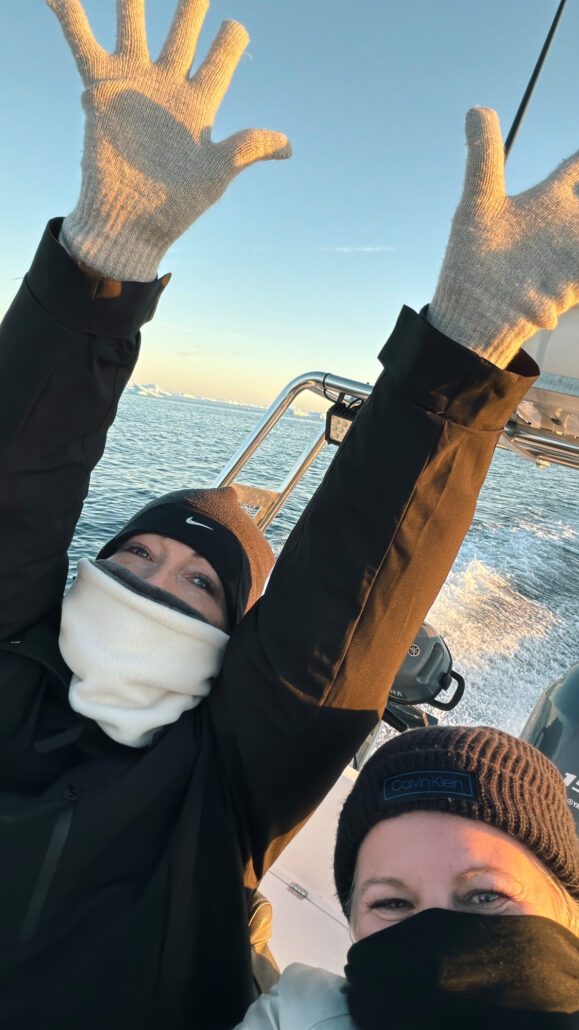
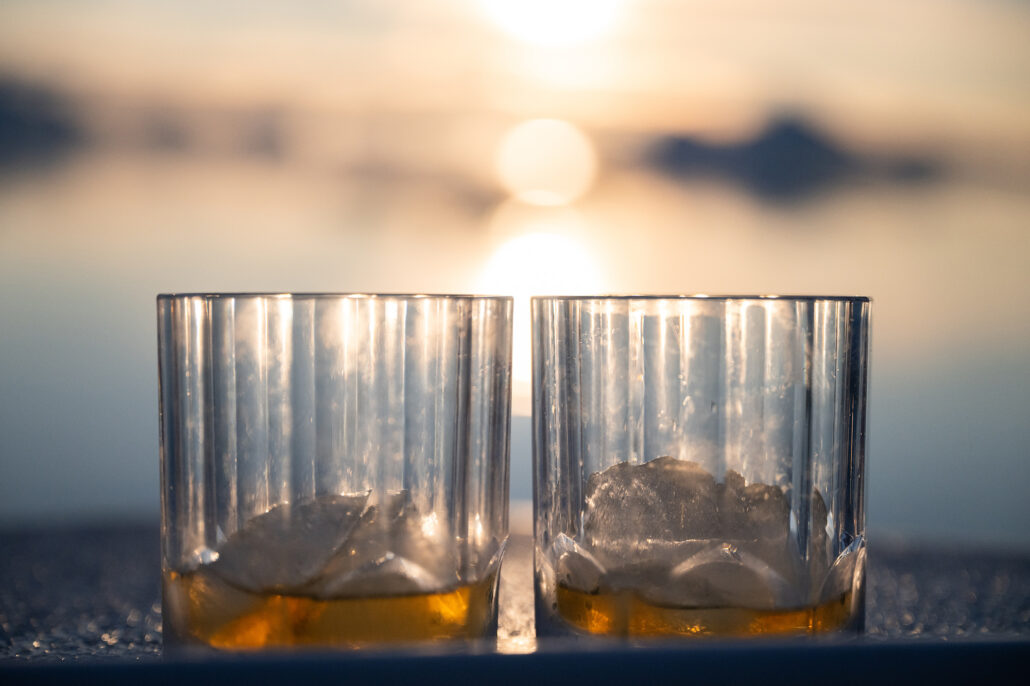
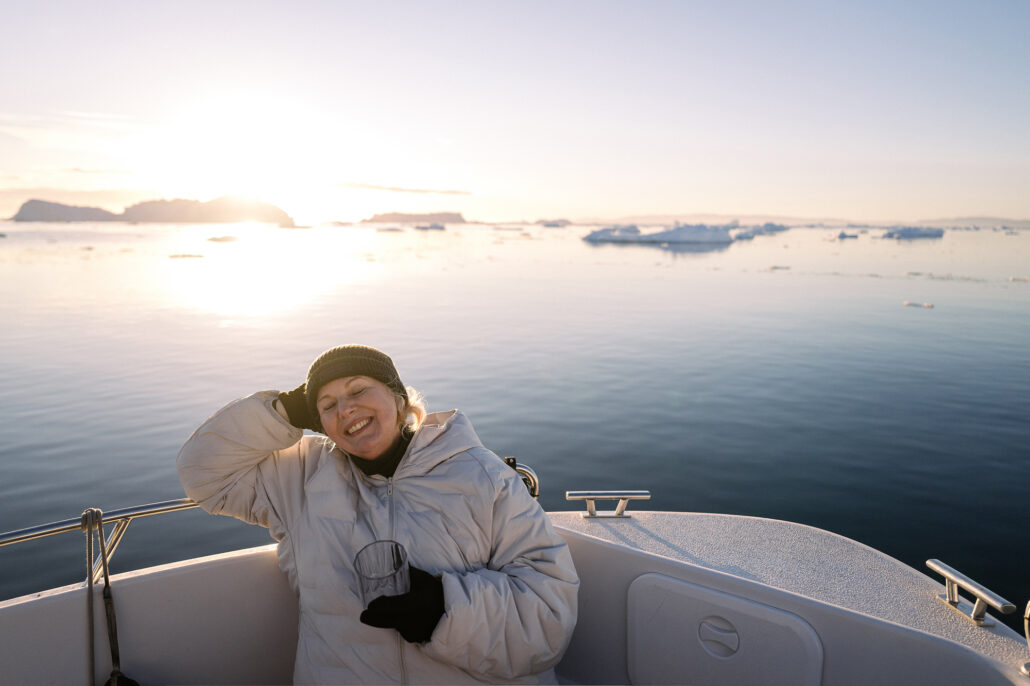
Earth, Wind and Fire went out over the water. Jonas cracked a bottle of whiskey and went over the side for the ice, and this is the part worth knowing: glacier ice fizzes. The bergs are compressed snow, and the air that fell with that snow is still inside them, squeezed into bubbles and held under pressure for centuries, and when the ice melts into a glass the pressure lets go, pop by pop. Sailors call the sound bergy seltzer. Every crack in the whiskey was a small parcel of very old air getting out. The whiskey was good. The ice was better. So we danced on a boat at one in the morning, drinking the drink and breathing weather that fell before anyone we’re descended from was born, and we apologised to the whales for wrecking their wabi sabi. We secretly suspect they enjoyed the set.
Then the music stopped and we just floated. Talked a little. Mostly looked. And it should be said plainly, because we suspect this whole trip is going to keep circling it: for that hour, in the best light either of us has ever stood in, we had one of the best nights of our life.
A place that performs for no one
The part that has stayed with us, the idea we keep turning over, is this.
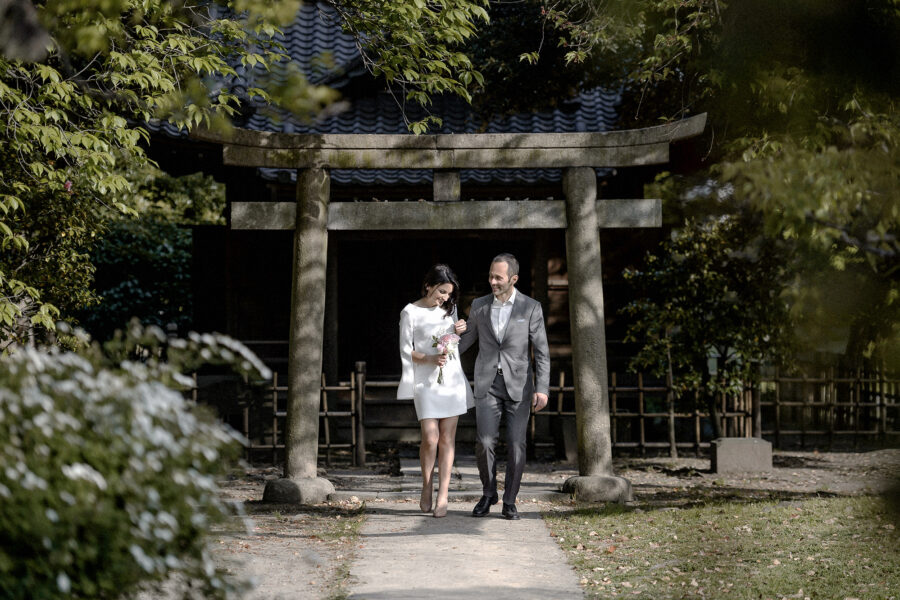
We plan and document things for a living. Weddings, mostly. We are professional witnesses, paid to be the eyes in the room, to make sure the moment is seen and kept. It’s good work and we love it. And out on that fjord, surrounded by some of the most extraordinary forms either of us has ever stood in front of, we kept being struck by the same quiet fact.
None of this is performing. The ice doesn’t calve more beautifully because a camera is pointed at it. Most of these bergs will never be photographed by anyone. The gold light lands on all of them equally, the famous ones near the boardwalk and the thousand others further out that no lens will ever find, and it would land exactly the same if we had never come. The fjord was doing this every midnight for centuries before us and will do it every midnight after, with no audience, no applause, no need for either.
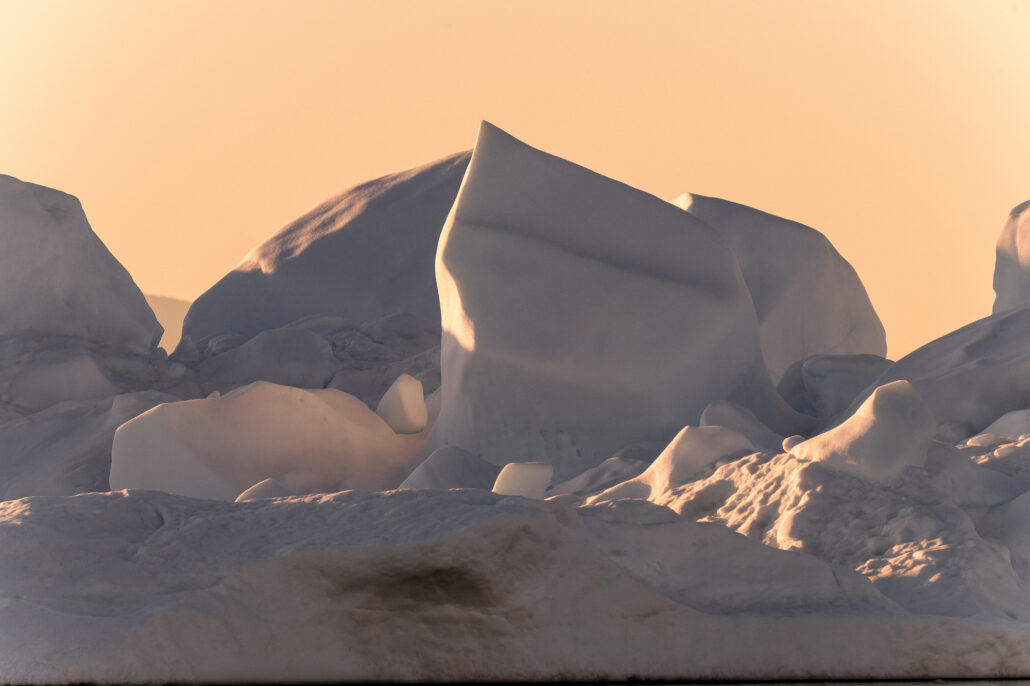
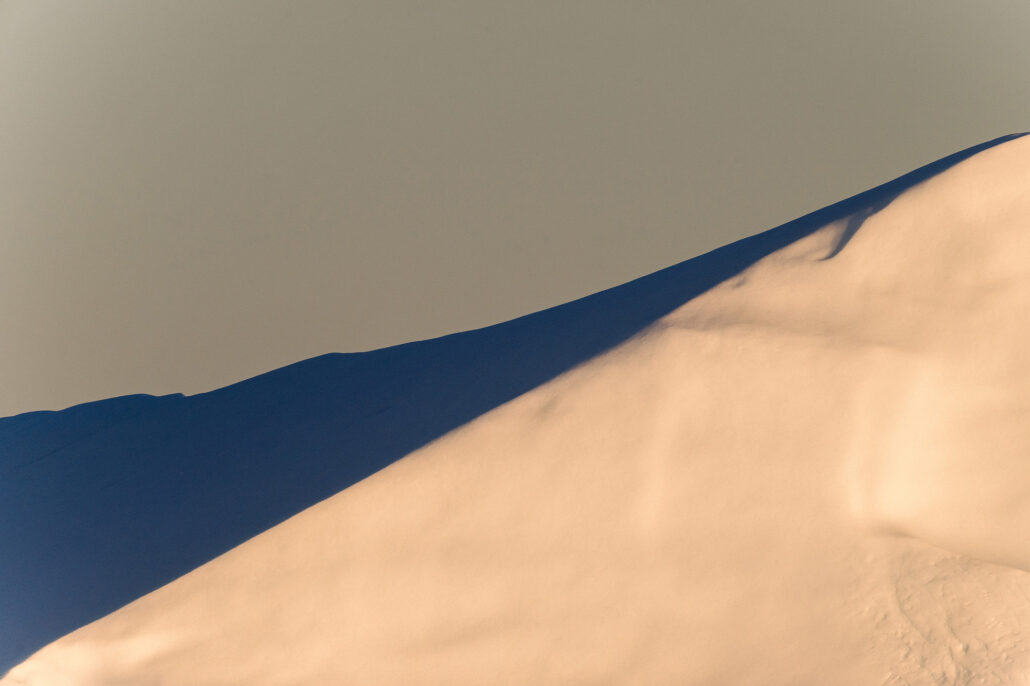
For two people whose whole job is to witness, there’s something almost vertiginous in standing inside enormous beauty that has no interest in being witnessed. And then, underneath the vertigo, something that settles you right down. You’re not necessary here. You’re just lucky. Those turn out to be lovely things to be.
You’re not necessary here. You’re just lucky. Those turn out to be lovely things to be.
Snow older than writing
It helps to know what you’re actually looking at.
The ice in these bergs is not last winter’s. It fell as snow on the centre of the ice sheet and was pressed down and fed slowly through the fastest glacier in the northern hemisphere, a journey that takes centuries from the inland dome to the open sea. The ice catching that midnight gold, the ice fizzing in the whiskey, left the surface of the world as snowfall before written history. We were photographing weather that fell before anyone had invented a word for any of it. We know how that sounds. It sounded that way to us too, and we were there.
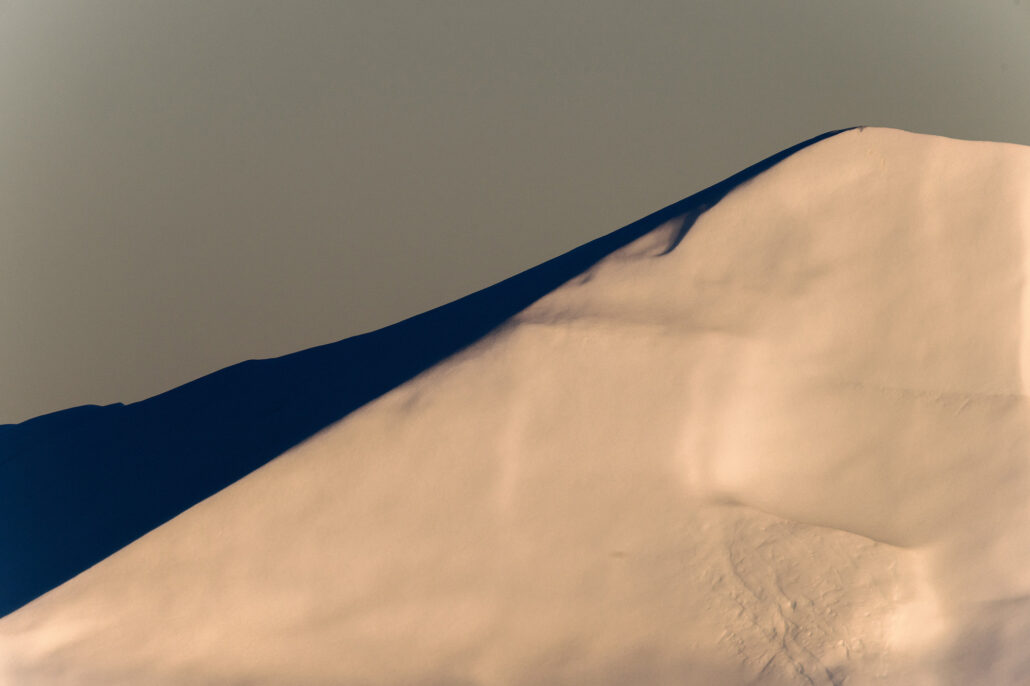
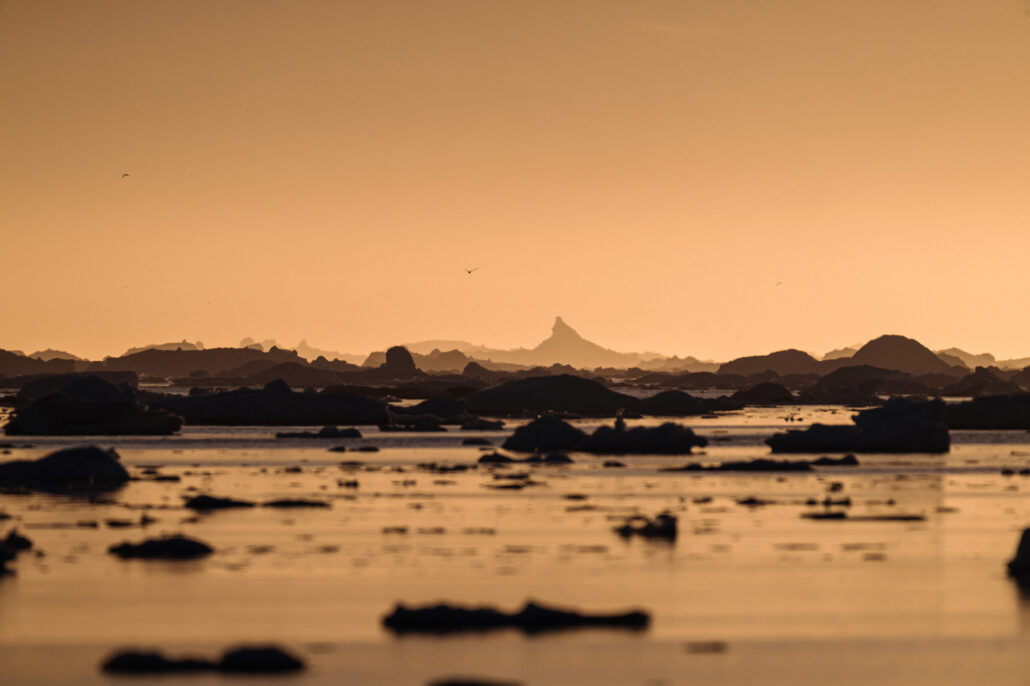
That’s the quiet joke of some of the most beautiful light we’ve ever worked in. It’s lighting something that has been patiently on its way to this exact moment for longer than people have kept records, and it will keep doing it long after our frames are forgotten. It was three in the morning in full daylight when Jonas idled the boat back toward the shore on the last night, a light that felt like neither night nor morning.
He’d promised us the most beautiful icebergs in the most beautiful light, and he handed the promise over three nights running, in three different currencies. Flat silver, then fog, then gold. Each one complete. None of them repeatable.