4 minutes and 44 seconds of film. Two completely different energies inside it. Here is what it takes to build a day that can hold both.
Most wedding films pick one emotional register and stay there. Slow and cinematic. Or fast and fun. Rarely both, and when they try, the switch usually sounds forced. The viewer can feel the edit working. The moment the music changes, something in the film breaks.
There is a reason for that. A film can only hold two registers if the day itself held two registers. If the ceremony and the reception were designed to feel continuous, the film has no real pivot to work with. The editor can drop a different song in, but the footage will not support the change. The switch will sit on top of the day instead of inside it.
Taylah and Will’s Hakuba wedding was designed differently. The day was built to have a break in it. A moment where the register would shift completely and the rest of the wedding would be a different kind of thing. The film exists because the day existed. The switch works because the day was built to switch.
What the film does
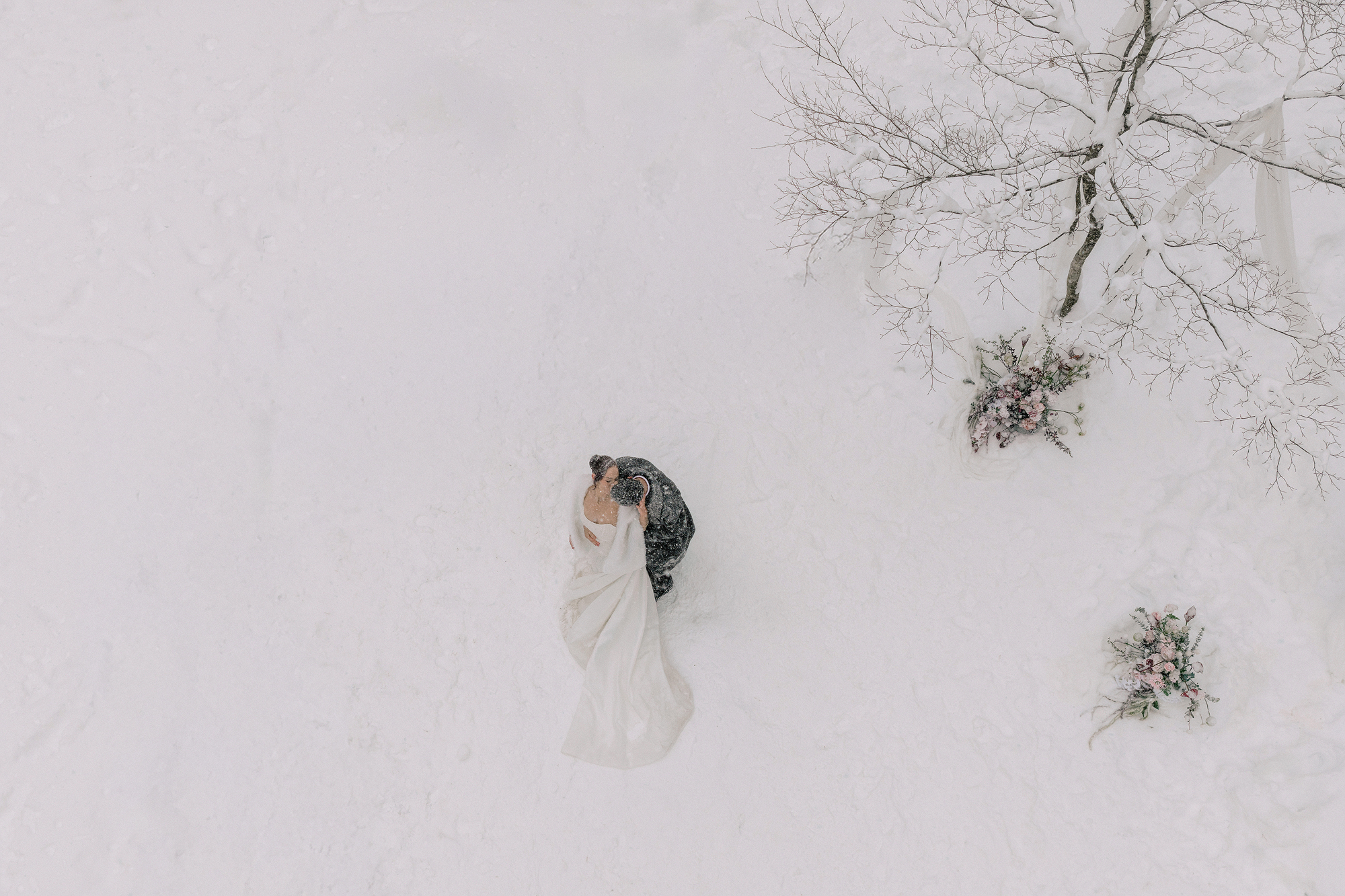
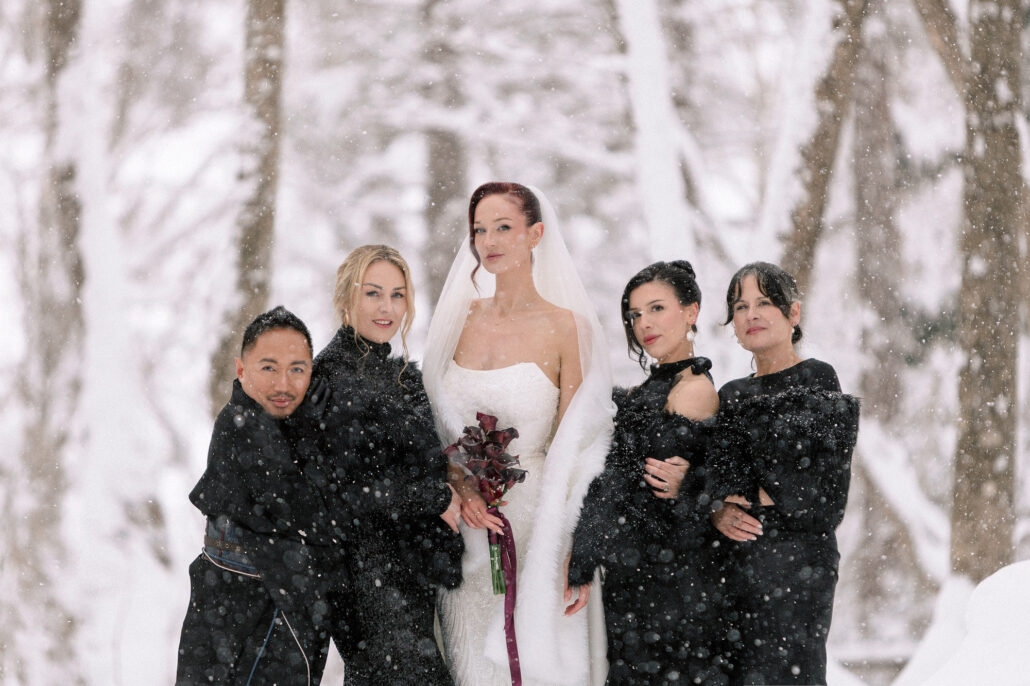
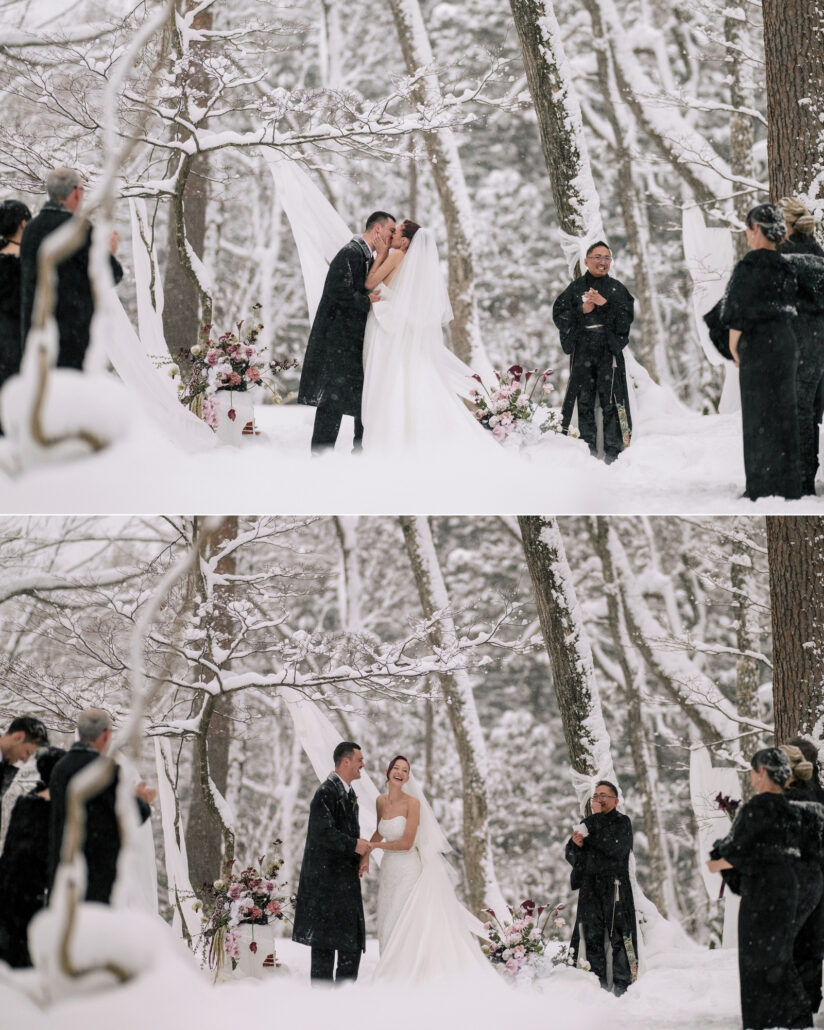
The first half is reverent. Cedar trees. Snow falling through a forest ceremony. The music is patient. The pacing is slow. The camera stays back. There is no attempt to heighten the moment because the moment is already doing the work.
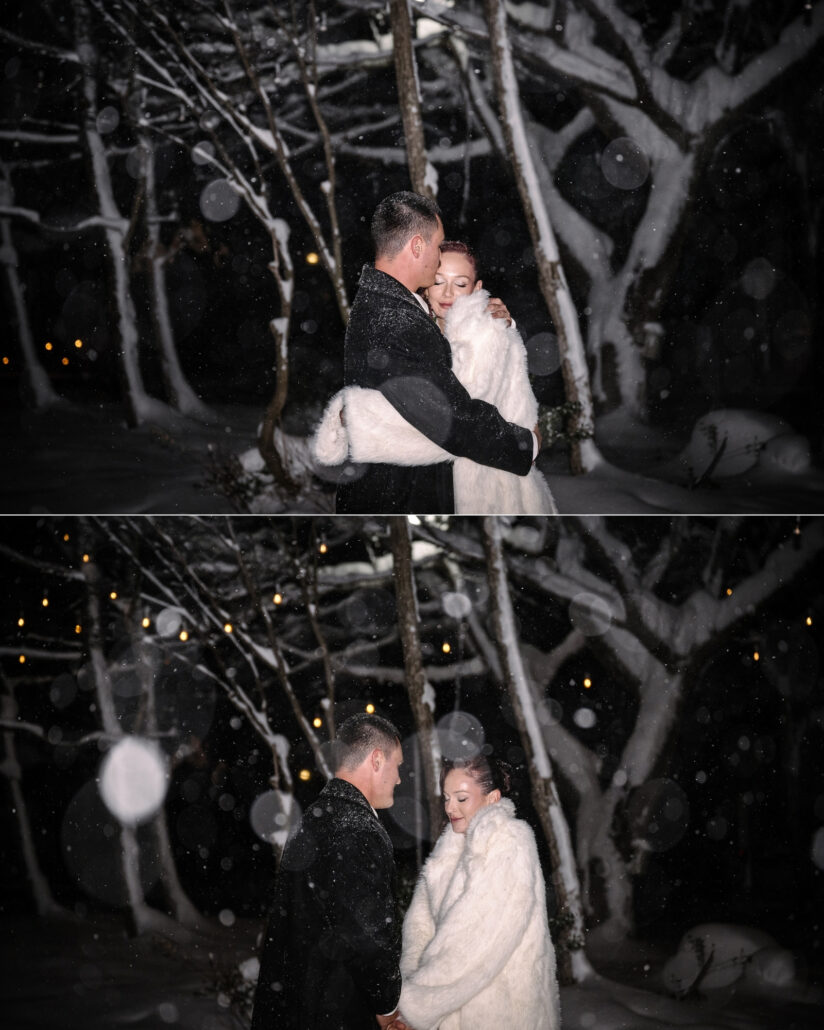
Then the film cuts and Marvin Gaye and Tammi Terrell take over. Ain’t No Mountain High Enough. And the rest of the film is a different film. Champagne on snow. A first dance in falling powder. People red-faced from the cold and the bubbles. The camera moves closer. The cuts are faster. The whole thing becomes a party that the first half had no way of predicting.
Same day. Same couple. Same crew. Two completely different registers, edited with enough confidence to let both halves be fully themselves.
Why a lot of wedding films can’t do this
The standard approach to editing a wedding film is to find a consistent emotional through-line and smooth everything into it. Ceremony footage gets scored with music that also suits reception footage. Reception footage gets edited at a pace that also fits the ceremony. The goal is cohesion. One continuous feeling for eight hours of day, compressed into four minutes.
That approach works for weddings where the day itself was continuous. Most weddings are. The ceremony is a slightly more serious version of the reception. The reception is a slightly looser version of the ceremony. One register, two intensities. A skilled editor can make that feel like a real film.
The problem comes when the day was genuinely two things. When the ceremony was quiet enough to hear cedar branches move, and the reception was loud enough to shake the bar. Trying to score those two moments with the same musical logic flattens both of them. The quiet loses its weight because the edit is already pointing forward to the party. The party loses its wildness because the edit is still tethered to the reverence of the opening. You end up with a film that is technically cohesive and emotionally dishonest.
The braver choice is to let the two halves be two halves. To build the pivot into the film because the pivot was built into the day. To trust the viewer to feel the switch.
The architecture underneath
The architecture underneath
A wedding that holds two registers is not an accident. It is built, months in advance.
Before a single vendor is booked, the planning team and the film team sit down and talk about what the day needs to feel like, scene by scene. Where the register shifts. What each half needs in order to hold its own weight. Which moments need silence and which moments need music underneath them. The handover of tone between the two halves of the day is planned, not discovered in post.
That synthesis is why the film feels composed. Not because the edit is clever. Because the day was designed with the film in mind from the first conversation. The planning team knew the ceremony had to be quiet enough for the film to have a reverent opening. The film team knew the reception had to be loud enough for the film to earn its second half.
This is the real argument for designing experience and imagery together. The day can do things that a less-integrated day cannot.
What Hakuba allowed
Not every destination could hold this shape. Hakuba can because the village itself already operates in two registers.
Hakuba is a serious mountain. It has powder that attracts skiers from everywhere in the world. It also has an après culture that is genuinely world class. The same village that gives you a silent cedar forest in the afternoon gives you a whisky bar overlooking the Nakiyama slope at dusk. The place knows how to do both. A wedding built here inherits that range.
Most couples who come to us for a Hakuba wedding think they are choosing between a forest ceremony and a ski resort celebration. They are not. They are choosing to have both, in sequence, in a village that makes the transition feel natural. Hakuba does not ask you to pick a register. It gives you two.
What the film is really showing
If you watch the film with sound on, the thing you are really watching is a day that was trusted to be two things.
A couple who were not afraid to plan a quiet ceremony and a loud celebration in the same afternoon. A planning team who built a timeline that could hold the shift. A film team who let both halves breathe on their own terms and resisted the temptation to smooth them into one feeling. A village that had the range to host both.
That is what is rare. Not the snow. Not the forest. Not the après-ski bar. All of those things can be booked. The rare thing is the willingness to design a day that does not resolve into a single mood. The willingness to let the film have a real pivot, because the day had one.
Watch the film
The full four minutes and forty-four seconds is at the top of this post. Watch it with sound on. The music change at the midpoint is not a trick. It is the whole point.
If you are thinking about a winter wedding in Japan and want to talk about what is possible when planning and film are designed together, start a conversation here.
See their full wedding blog post here: https://37framesphotographyblog.com/luxury-snow-wedding-hakuba-japan/