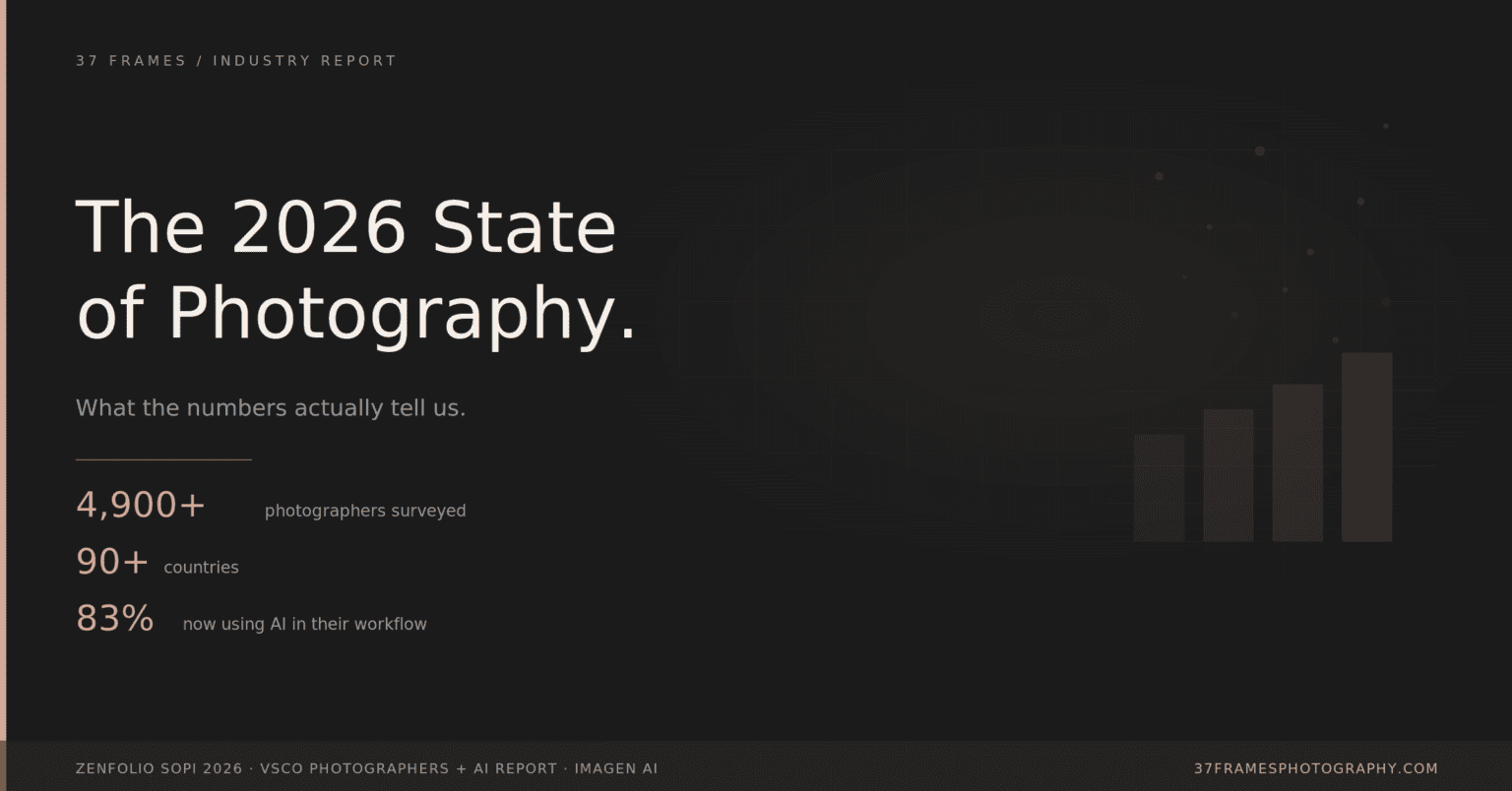
The seventh annual Zenfolio State of the Photography Industry Report dropped this week. Nearly 5,000 photographers across 90+ countries. Nine sponsor partners including PPA, Imagen AI, and Them Frames. It’s the biggest photography industry survey out there, and the findings are worth sitting with.
Not because they’re surprising. Because they confirm something a lot of us already feel.
The Business of Photography Is Getting Heavier
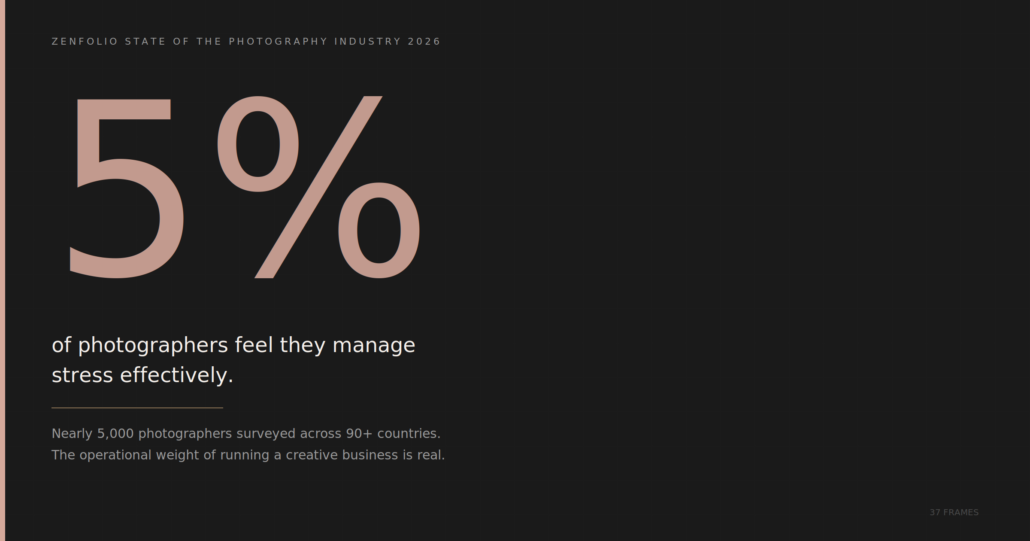
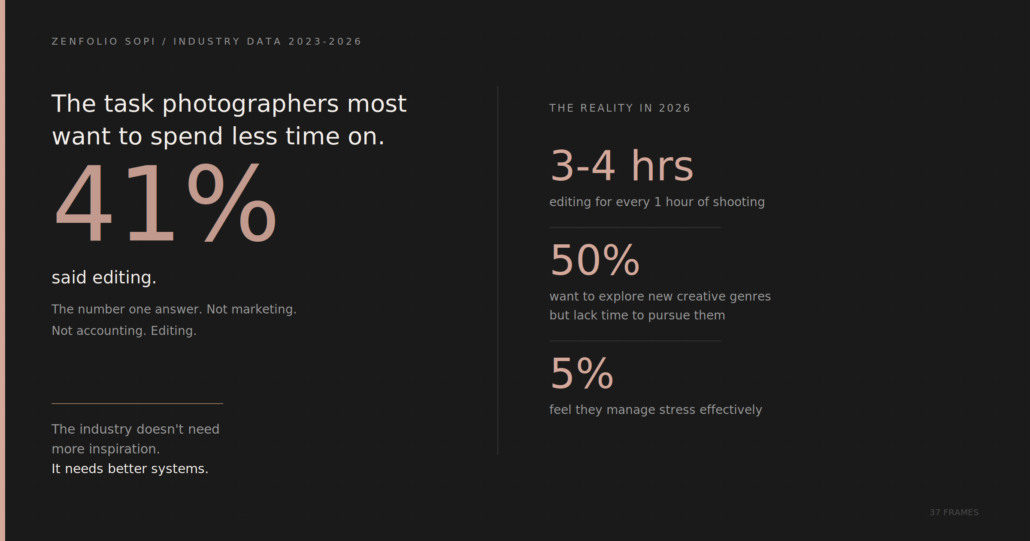
The headline stat that will travel furthest: only 5% of photographers feel they manage stress effectively. Five percent. That number should stop you.
This isn’t a report about cameras or creative trends. It’s about the weight of running a small creative business in 2026. The compounding effect of admin, client communication, post-production, marketing, accounting, and everything else that sits between shooting and living.
Zenfolio CEO John Loughlin put it plainly. Photographers face unprecedented complexity. Rapid tech shifts and economic headwinds are hitting at the same time. For sole operators and small studios, that pressure lands on one or two people.
Photographers Want to Create, Not Administrate
Almost 50% of respondents plan to explore a new genre this year. Art, landscape, documentary. These aren’t just creative whims. They’re revenue plays. Photographers are looking for new income streams because the old ones are getting harder to sustain on their own.
But here’s the tension. Where does the time come from?
That question has been sitting at the centre of every industry report for years. Back in the 2023 Zenfolio survey, 41% of photographers said editing was the task they most wanted to spend less time on. It was the number one answer. Not marketing. Not accounting. Editing.
Three years later, project management systems are still underutilized. Many photographers are still tracking projects with spreadsheets or mental notes. The operational side of the business hasn’t caught up with the creative ambition.
AI Moved from Debate to Default
The VSCO Photographers + AI Industry Report, also released recently, surveyed 401 photographers specifically about AI adoption. The findings are clear.
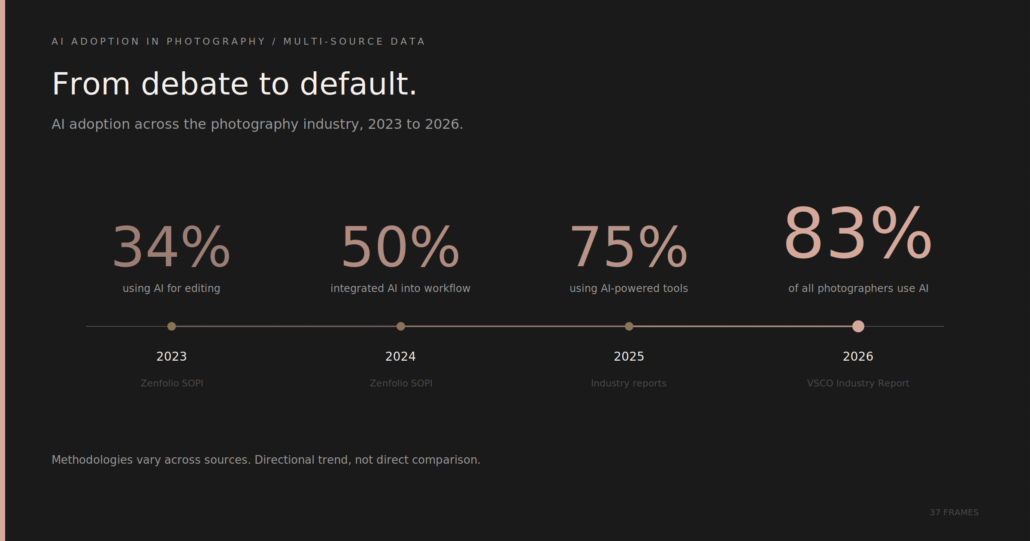
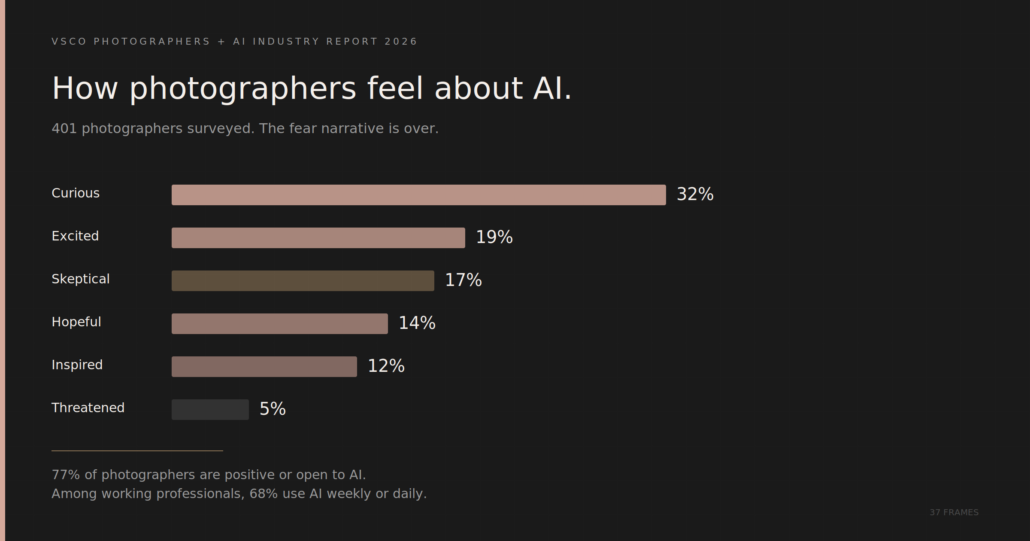
83% of all photographers are now using AI in their workflow. Among working professionals, 68% use AI tools weekly or daily. That’s double the rate of hobbyists. Only 5% feel threatened. The rest sit somewhere between curious and fully committed.
The fear conversation is over. What replaced it is more interesting. Photographers aren’t using AI to replace creative decisions. They’re using it to clear the path so creative decisions get more of their attention.
Culling. Batch editing. Client emails. Social captions. Marketing copy. The operational weight that sits between the shoot and the life.
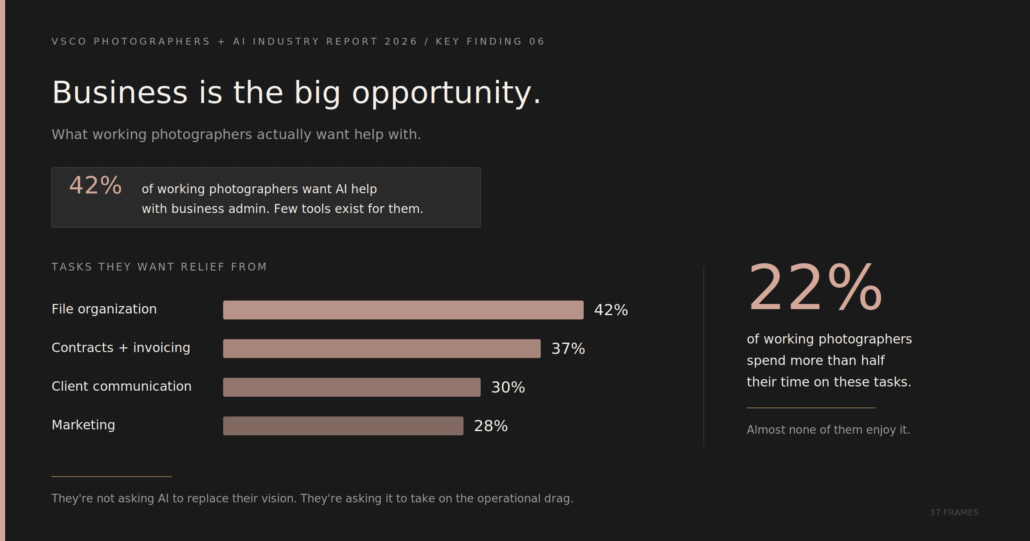
But here’s the finding from the VSCO report that stopped me. When working photographers describe what they actually want AI help with, the list doesn’t read like a creative brief. It reads like a small business operations manual. File organization. Contracts and invoicing. Client communication. Marketing. 42% of working photographers want AI help specifically with business administration. And 22% of them are spending more than half their working hours on tasks like these. Tasks that almost none of them enjoy.
The gap is enormous. Photographers aren’t asking AI to replace their creative vision. They’re asking it to take on the operational drag so they can get back to the work that brought them here in the first place.
The Time You Save Only Matters If You Spend It Right
This is where the data gets interesting for anyone who runs a client-facing business. Because saving time on editing is only half the equation. The other half is what you do with it.
Across every year of the Zenfolio survey, one thing has stayed constant: word of mouth is the primary business driver for photographers. Not paid ads. Not SEO. Not social media. Personal relationships and referrals. That hasn’t changed in seven years of data.
The 2025 report found that photographers who offer personalized post-shoot experiences, like in-person viewing appointments, see up to a 20% increase in revenue compared to those who rely on online-only delivery. The 2026 report doubles down on this, with an explicit focus on how photographers are growing and sustaining client relationships.
Think about that alongside the stress numbers. Photographers know that the client experience is what drives referrals, repeat bookings, and premium pricing. But when you’re drowning in post-production, project management, and admin, the client relationship is the thing that gets compressed. The follow-up call that doesn’t happen. The album consultation that gets pushed. The thank-you that never gets sent.
The real cost of a slow, heavy workflow isn’t just the hours. It’s the quality of attention you bring to the people who hired you.
This is something we think about constantly at 37 Frames. Dee’s entire role exists because we believe planning is a relationship, not a transaction. The couples who come to us for destination weddings in Japan are making one of the biggest decisions of their lives. They don’t need faster turnaround. They need to feel held through a complex, unfamiliar process. That takes presence. And presence requires capacity.
Where Imagen Fits for Us
This is where we talk about Imagen. Not as a sales pitch. As context.
We’re Imagen ambassadors because it solved a real problem. Tracey shoots across multiple locations, multiple lighting conditions, often across multiple days. A destination wedding in Hakone or Miyakojima or the Scottish Highlands can produce thousands of frames. Maintaining consistent colour and tone across all of that is not romantic work. It’s just slow.
Imagen learns your editing style. Not a preset. Not a filter. Your actual decisions, trained from thousands of your own edited images. When a gallery comes back, it’s not finished. But it’s close. Really close. We still retouch. We still make creative decisions on the images that matter most. We still design albums. We still handle social content. But the foundation edit, the part that used to consume entire days, happens in minutes.
What we do with the hours we get back is the point. We spend them on planning calls with couples. On refining album designs. On building the kind of client experience that makes people tell their friends about us. The editing efficiency isn’t the product. The relationship is.
We Have a Profile You Can Use
One thing worth mentioning. We have a public editing profile on Imagen called Modern Classic. It’s free to use. If you’re a photographer looking for a starting point that sits in the editorial, warm-but-not-heavy space, it might save you a lot of time building your own profile from scratch.
And if you want to try Imagen, You do get 1,500 free edits to trial it. That’s a whole wedding. No commitment. Just run a gallery through and see what comes back.
The Bigger Picture
What strikes me about the 2026 data isn’t any single stat. It’s the pattern.
Photographers are passionate. They’re resilient. They’re more willing to experiment with new genres and new tools than at any point in the last seven years of this survey. But they’re also under more pressure than ever. Costs are up. Stress management is almost nonexistent. The operational infrastructure most photographers rely on is held together with hope and habit.
The industry doesn’t need more inspiration. It needs better systems.
AI isn’t going to solve everything. But the photographers who are using it well aren’t using it to cut corners. They’re using it to buy back time for the parts of the work that actually matter. The creative decisions. The client relationships. The life outside the screen.
That’s the story this year’s data tells. And it’s the one worth paying attention to.
We’re Imagen ambassadors because Imagen changed how we work. If you’d like to try it, our code gets you 1,500 free edits, and our Modern Classic profile is free to use inside the platform. Imagen
The full 2026 Zenfolio State of the Photography Industry Report is available free at zenfolio.com/sopi. The VSCO Photographers + AI Industry Report can be downloaded at vsco.co/research/photographers-ai.