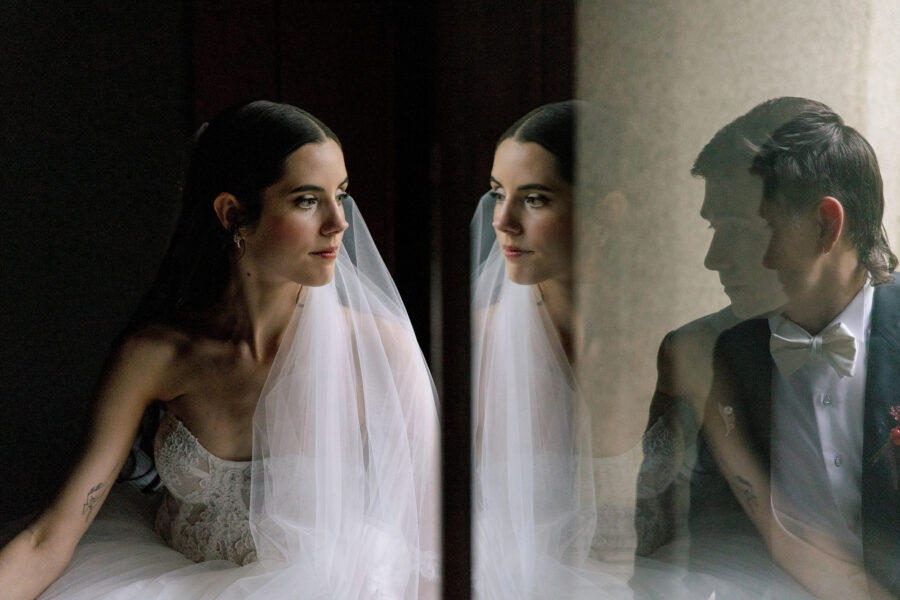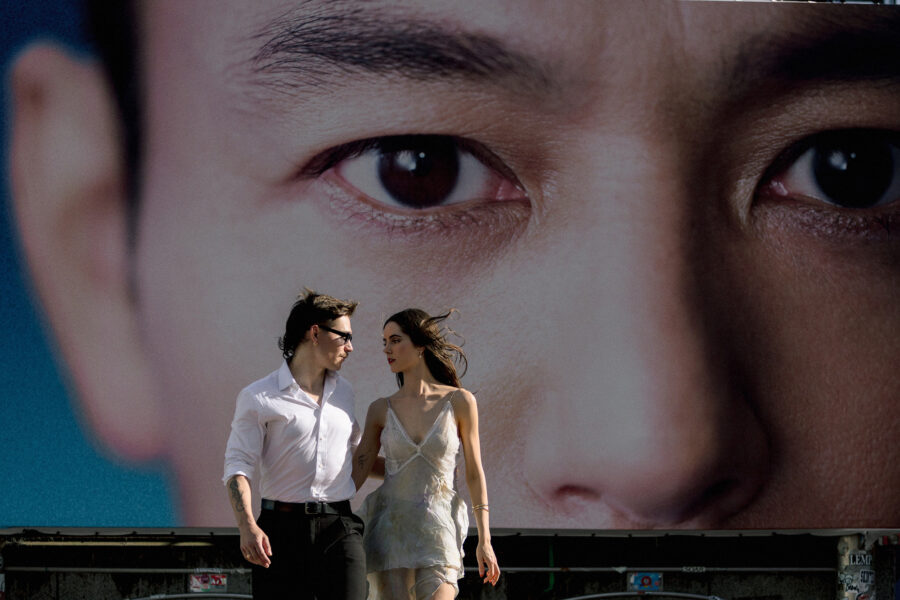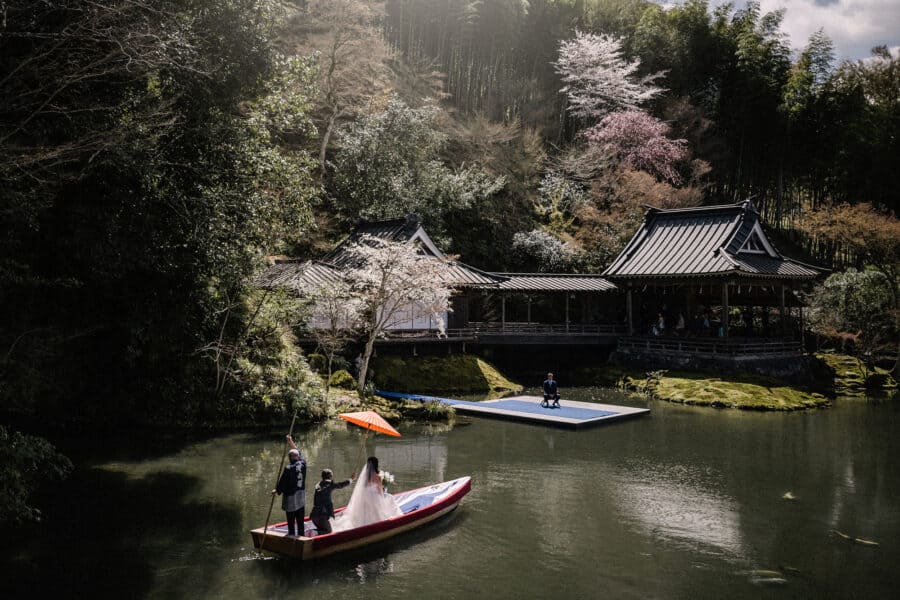
Nine years before her own wedding, she was a guest at her sister’s.
That was 2014, in Yokohama, and we were the photographers. So when she began planning a Toranomon Hills wedding of her own, her first email to us began: “I immediately thought of you both.” Then: “It was such a special and unforgettable day and we still look back at the beautiful photos.”
She already knew how we worked. She had experienced it from the other side of the room nine years earlier.

A Toranomon Hills Wedding Above the City
They were living in New York by then, but they had met in Tokyo, and she had lived and worked here. They looked at the countryside first, including Jinya in the hills of Kanagawa. In the end they chose the city itself. Tokyo wasn’t somewhere they’d discovered for a wedding. It was already theirs.


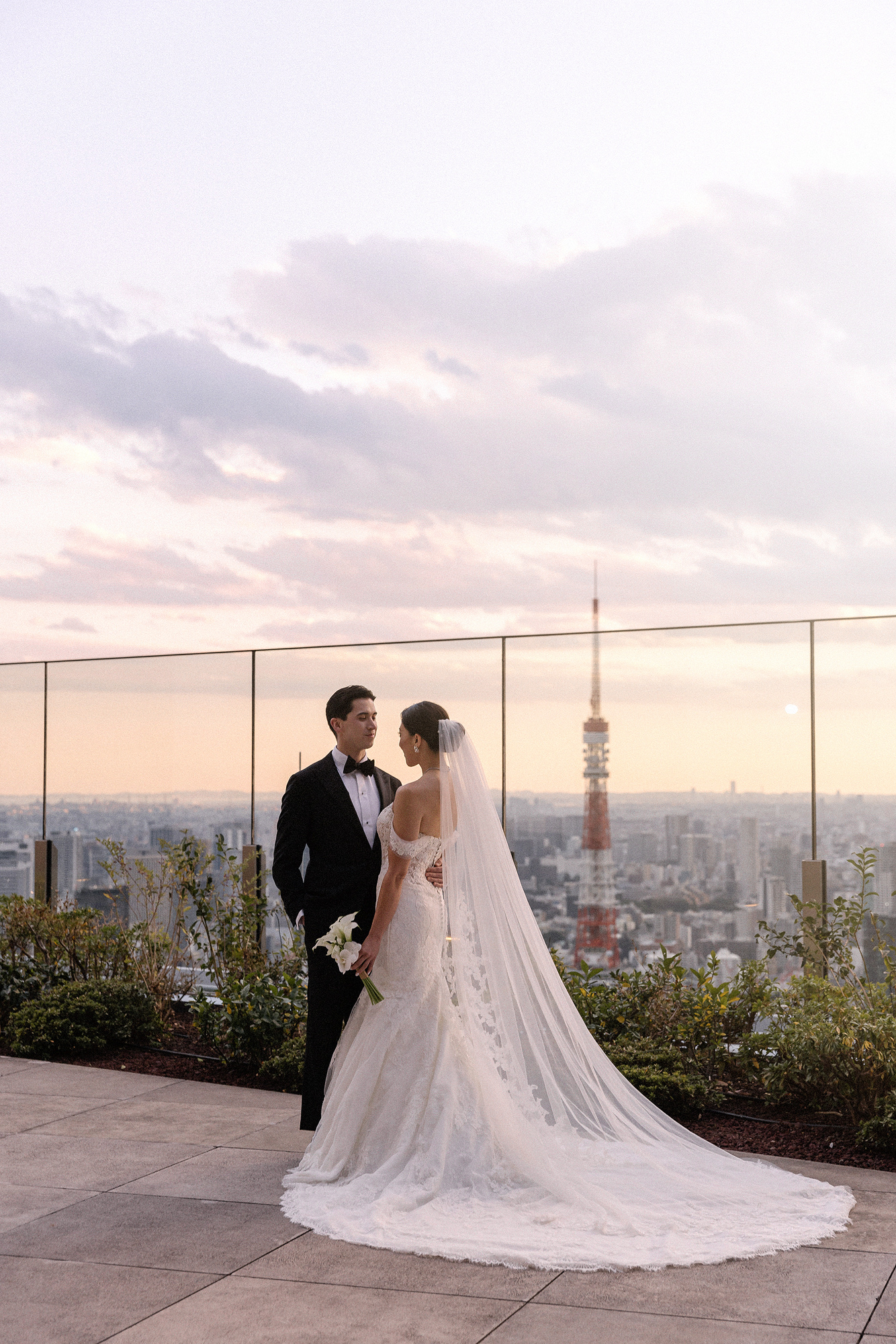
Toranomon means Tiger Gate. It was one of the outer gates of Edo Castle, on its southern edge, and the gate is long gone while the name stayed. Andaz Tokyo opened at the top of Toranomon Hills in the summer of 2014, the same year we photographed her sister’s wedding. Nine years later she married at the very top of it, with the city running all the way to the horizon.


A Ceremony Before People
They chose a jinzenshiki. In Japanese it means, simply, a ceremony before people: the promise is made before family and friends rather than a deity, and the people gathered there become its witnesses. There’s no priest, which puts rather more responsibility on the guests.
For two people who wanted all of their people in the room, it made sense. A close friend married them. A harpist and a cellist played. He walked in with both his parents, and she walked in with both of hers.
Only the first look belonged entirely to the two of them. After that, the day opened outward.

Some of those witnesses went back a long way. Her mother and her sister helped her into her dress, and the sister was the bride we’d photographed in 2014. Ahead of her into the chapel came the flower girl and the ring bearer, her sister’s two children. Nine years earlier she had stood as a witness at their parents’ wedding. Now they walked in ahead of her at hers.


When the Witnesses Spoke
There was a flower shower on the terrace, with the city lit up beyond the glass.


At dinner the witnesses spoke: friends, both sets of parents, and a guest who stood up to explain kagami biraki to the room before the two of them broke open the sake barrel. Kagami means mirror, the old name for the round lid of the sake cask. Kagami biraki, opening the mirror, marks a celebratory beginning: the lid is broken open with wooden mallets and the sake is shared.
It’s a small thing, a guest standing up to explain a custom to everyone else. It carried the same instinct into dinner. Guests weren’t being treated as an audience to somebody else’s day.


A Schedule With Almost Nothing on It
The first dance was theirs.


The rest of the night belonged to everyone: a sake bar, then the rooftop with a DJ, high above Toranomon. The schedule for that part had almost nothing on it. That was the point.


When the album design came back months later, he wrote: “The album so perfectly captures the magic of our day!”
Nine Years Later
Nine years earlier, she had watched her sister marry, and then watched those photographs become part of the family’s record of it.
Now the positions had changed. Her sister was beside her. Her sister’s children walked ahead of her into the ceremony. Their parents were there. Friends stood up and spoke. A room full of people watched another marriage begin.
Tokyo was where these two had first found one another. It made sense that they came back to the city when they wanted everyone else to see what had followed.
Nine years earlier, she had been one of the witnesses. This time, the room was full of hers.